From the FasterSkier archive — posts syndicated from athletes’ and coaches’ own blogs between 2004 and 2012, kept online as published. Current coverage is at fasterskier.com.

Tag: University of Colorado

  • In-Depth Race Coverage: Slow Heats with Tight Finishes in the SoHo SuperTour Classic Sprint

    In-Depth Race Coverage: Slow Heats with Tight Finishes in the SoHo SuperTour Classic Sprint

    By Rachel Bachman Perkins and Ben Theyerl 

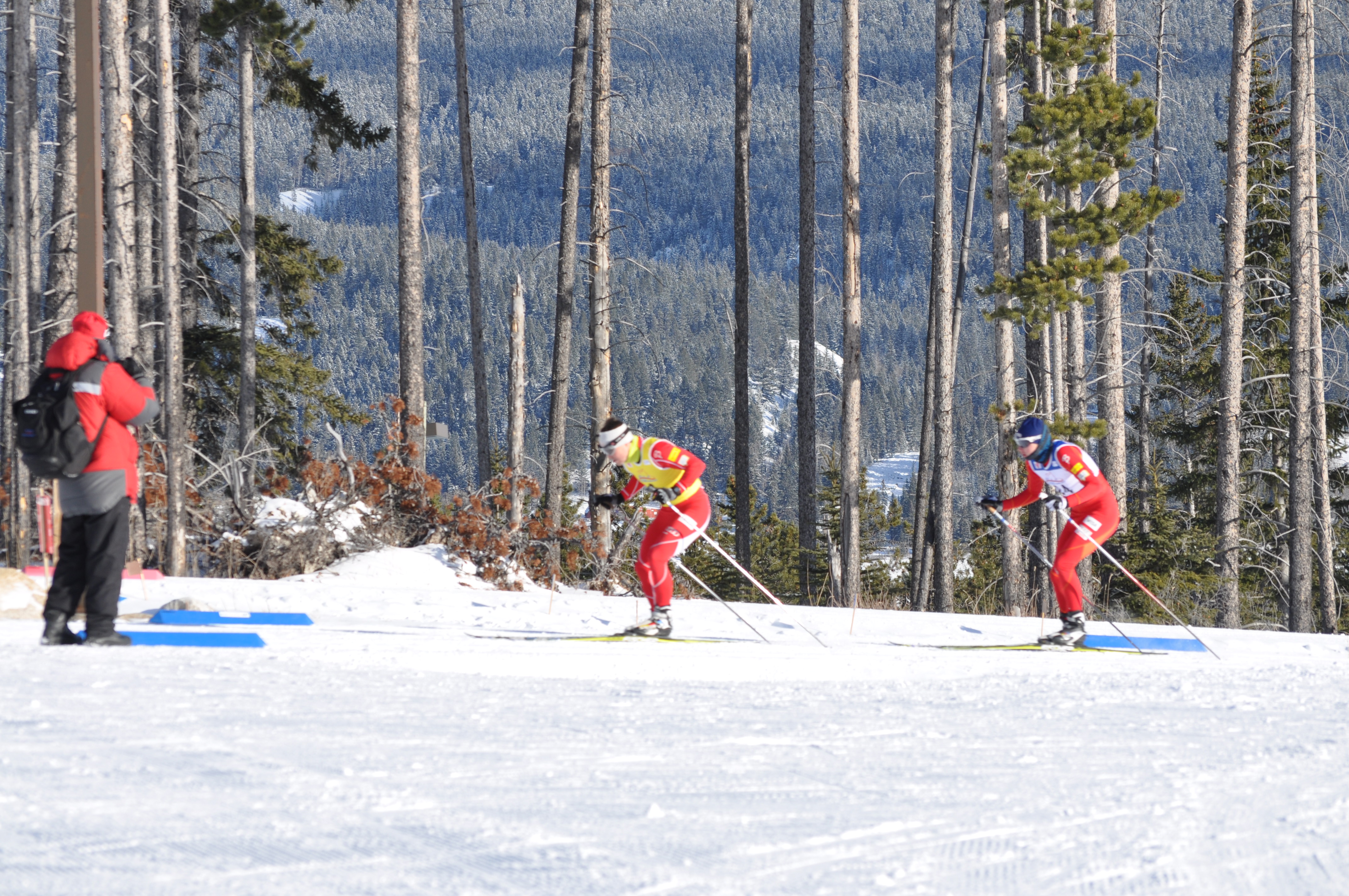
    Precipitation was no longer a threat for the final day of racing in Soldier Hollow on Friday, a 1.5-kilometer classic sprint offered alongside the 2022 U.S. Cross Country Championships, yet classified as SuperTour only. However, athletes still faced unseasonably warm weather as blazing sun brought temperatures into the low 50’s on course during the midday heats. 

    Howling wind and rippling bibs could be heard as background noise as Adam Verrier called the event on the livestream, creating extra work for the athletes who would fight through degrading course conditions throughout the heats. This extra work showed in the times on course; with the combination of freestyle technique and significantly faster course conditions, Sunday’s sprint races featured times over a minute faster on average. A similar difference was seen even between the qualifier today at 9 a.m., when temperatures were still colder and tracks firmer, and the heats which began at 12:30 p.m. 
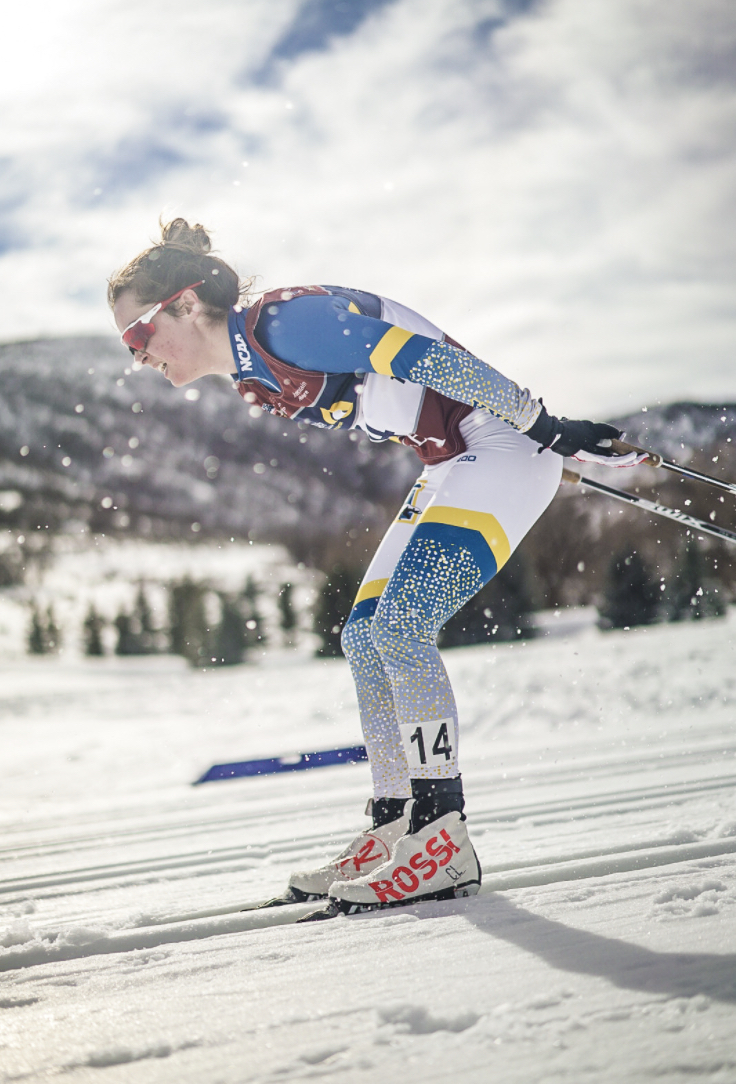
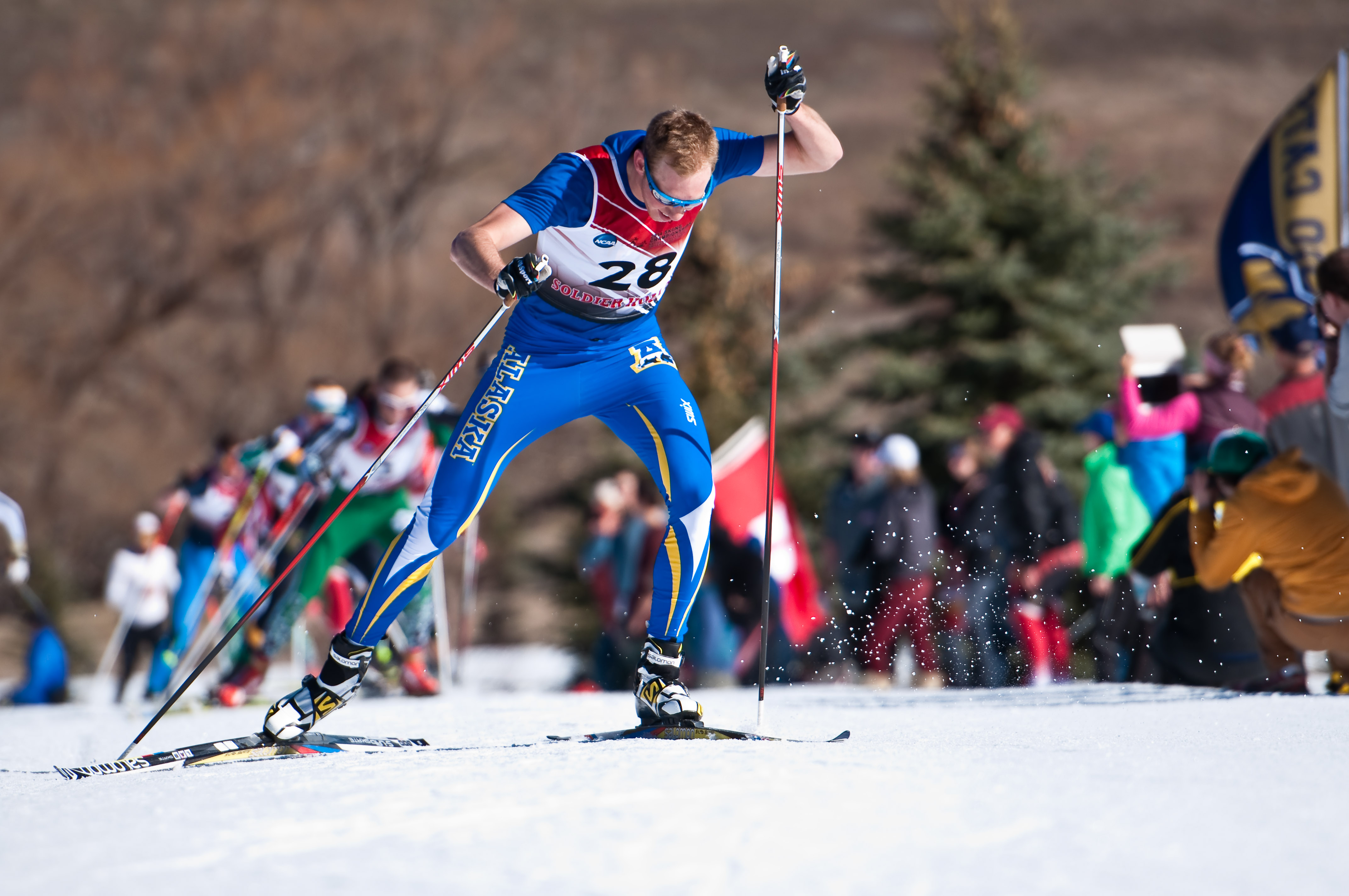
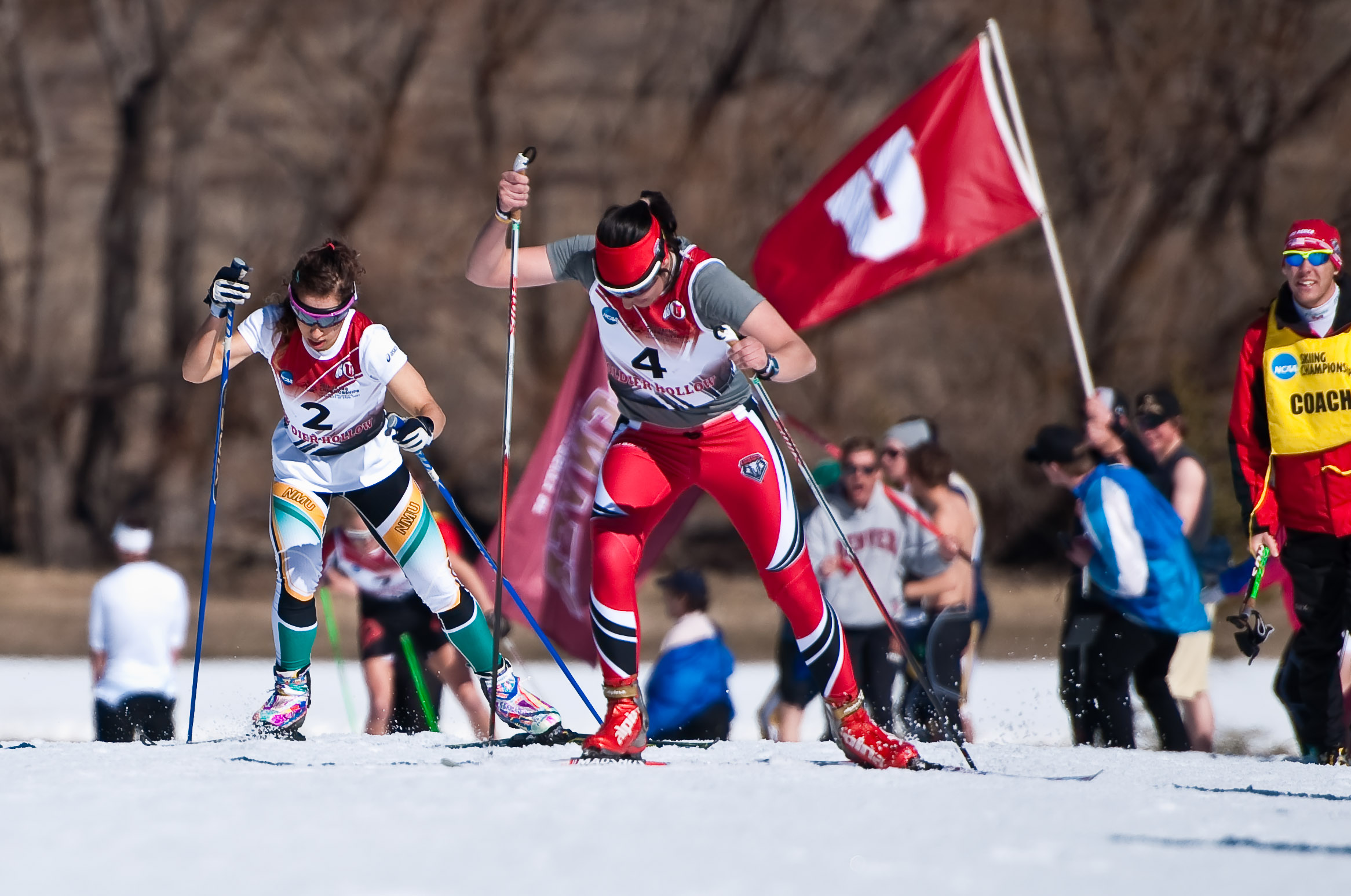
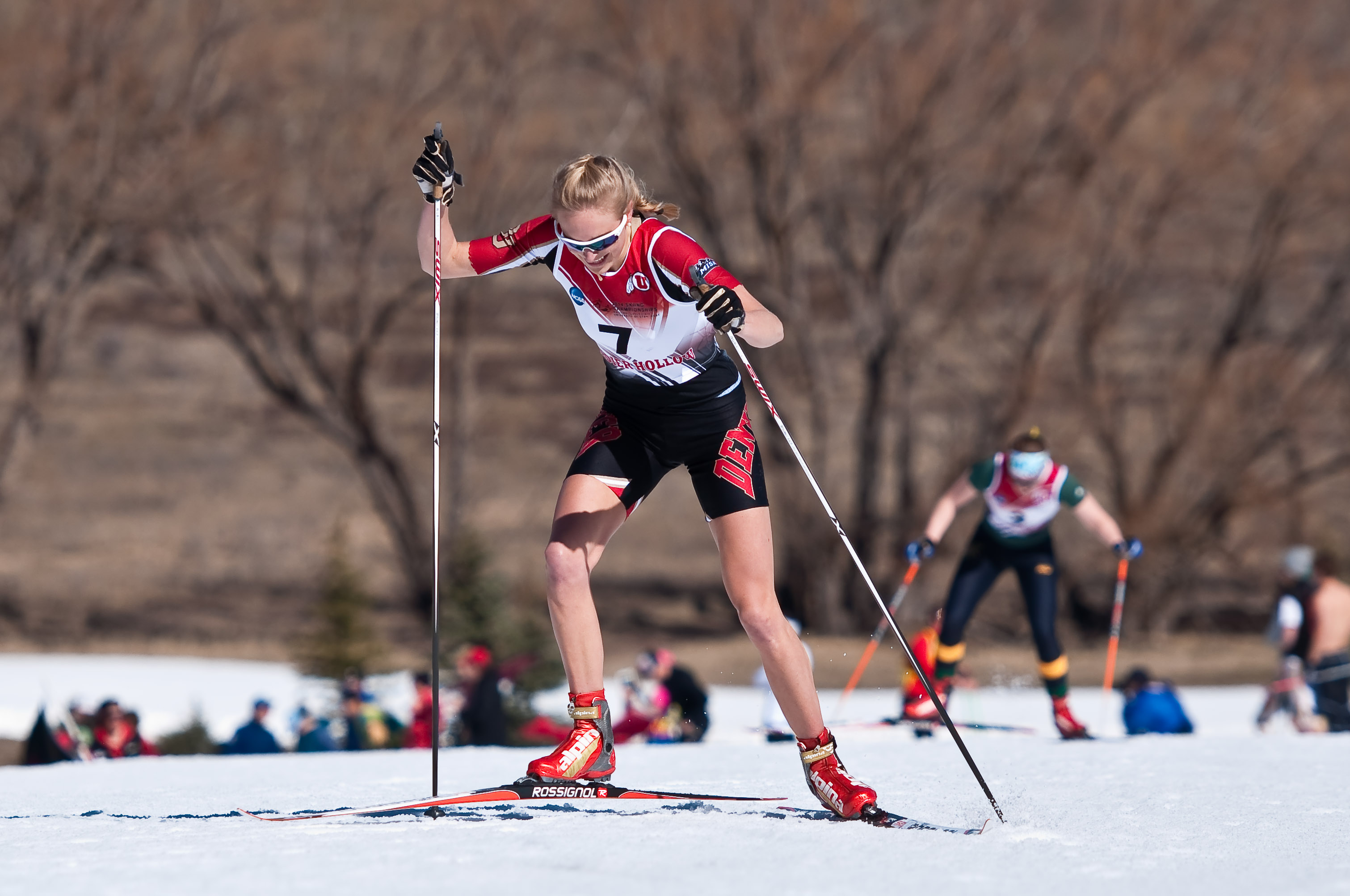
    Warm temperatures, degrading tracks, and loose granular spray set the stage for a challenging classic sprint in Soldier Hollow. (Photo: Tobias Albrigtsen / @untraceableg)

    “Sprint” seemed to perhaps be a misnomer, as times in the women’s heats climbed over five minutes and were well above four minutes in the men’s heats. Combined with a qualifier, this meant athletes who raced through the final saw between 16 and 20 minutes of racing, testing their endurance and fitness differently from the average sprint event.   

    Women’s Race: Katharine Ogden on Top from Qualifier to Final

    On the heels of a second place finish in yesterday’s 15k classic, Katharine Ogden (USST/SMS T2) set the bar in the qualifier, finishing in 3:51.79.

    Julia Richter (U of Utah) was the second fastest qualifier (+0.77), ahead of Lauren Jortberg (BSF Pro) in third (+1.48). Both Ogden and Jortberg won their quarterfinal to advance comfortably into the semis, however, Richter took fifth in Heat 4 and did not advance.

    In the first semifinal, two Craftsbury teammates Annika Landis and Caitlin Patterson led the way in the opening climb, with Ogden and Sydney Palmer-Leger (USST/U of Utah) sitting in third and fourth a few strides behind. Descending from the high point, a third Craftsbury racer, Michaela Keller-Miller, had pulled to the front, but was quickly overtaken by Patterson and Ogden as the pack headed into the final short herringbone climb before the long descent toward the stadium. Patterson and Ogden sat in low tucks, letting their fast skis glide as long as possible before transitioning to doublepole as they headed over the bridge and into the finish. 
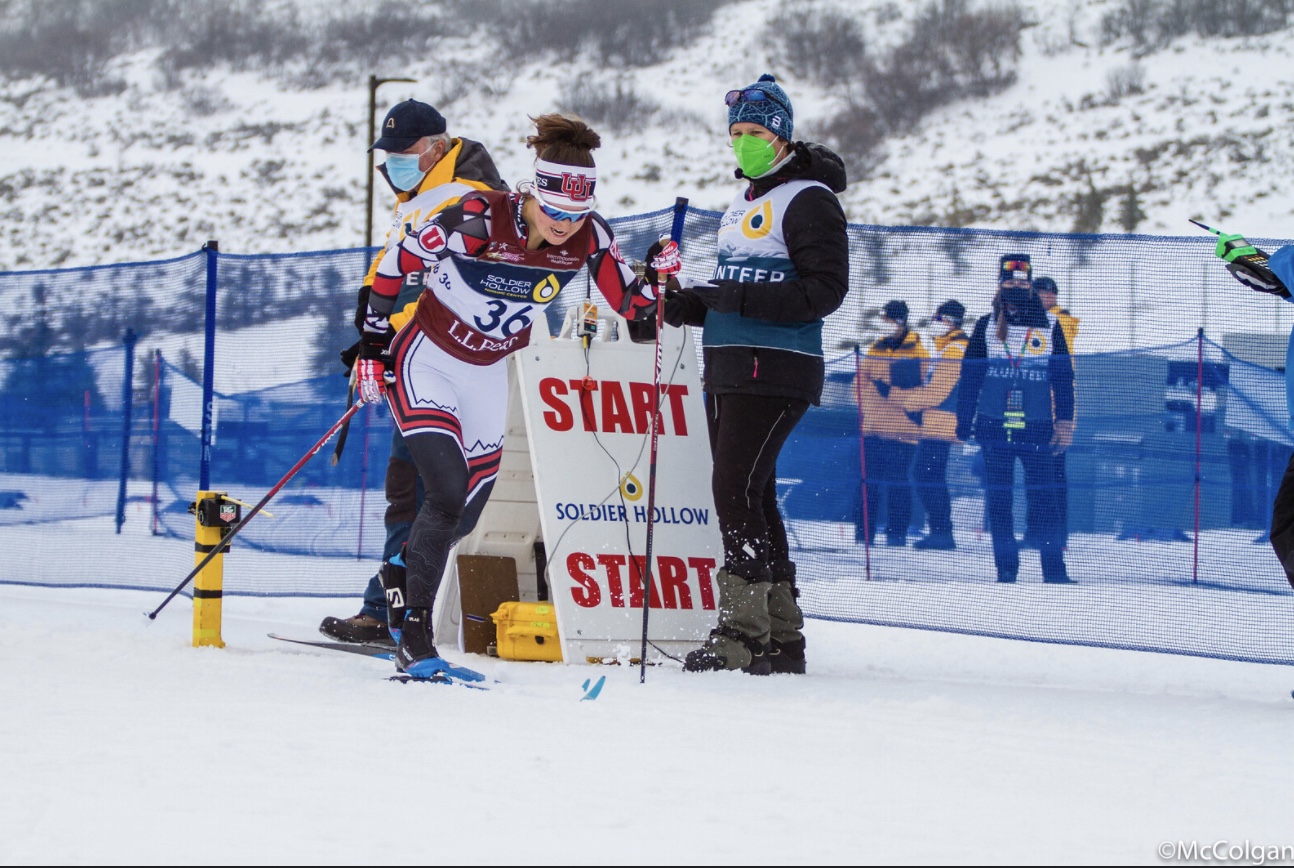
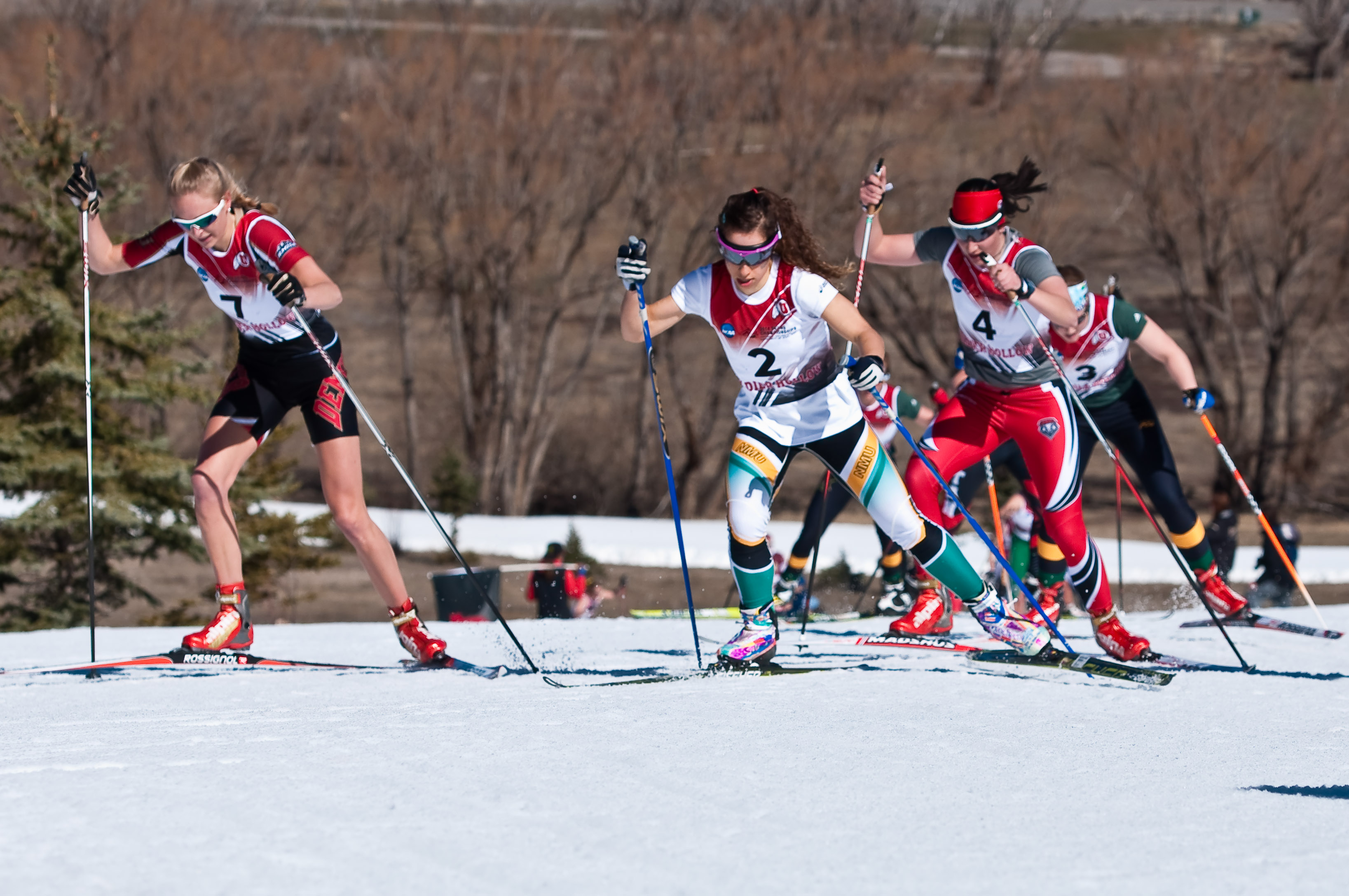
    Sydney Palmer-Leger heads out for the 10k interval start classic race during the 2022 U.S. Cross Country Championships in Soldier Hollow. (Photo: John McColgan)

    Upping the power in the final 200m, Palmer-Leger accelerated to make contact with Patterson as the women crossed over the bridge, but Patterson had better glide in the quick descent from the bridge’s exit, maintaining an advantage as they headed into the final stretch. Patterson tucked in on the tails of Ogden in the left-most track to go one-two in the heat, with Palmer-Leger not quite in the fight for an automatic qualifier spot finishing 1.5 seconds behind Patterson in third. 

    In the second semi, Bridger Ski Foundation (BSF) Pro Team members, Lauren Jortberg and Hannah Rudd lead the charging, looking as if their skis were gliding well as they pushed the downhills, perhaps with compromised kick as both showed signs of slipping in the final punchy climb. 

    In the long glideout, Lauren Jortberg moved from the far left side of the course outside of the track into the second track, losing some time on Rudd who had stuck with the second track from the start. Nevertheless, both held a significant gap over the remainder of the heat as they doublepoled over the bridge and into the finish lanes. Rudd took the win in 4:55.52, roughly +0.7 seconds ahead of Jortberg in second. 

    A few meters behind, Craftsbury teammates Margie Freed and Alexandra Lawson raced side by side to third and fourth, and as the heat proved to be seven seconds faster on average than the first, both advanced to the final.

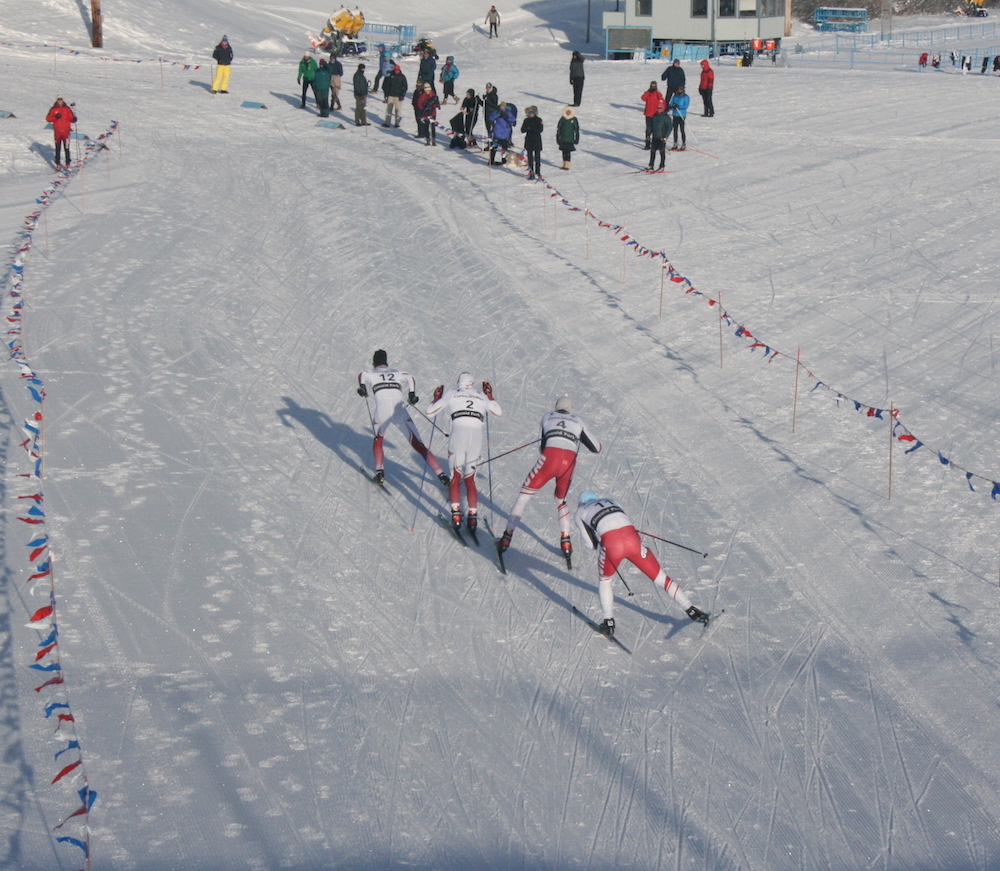
    As the women’s final headed out of the stadium and toward the first climb, Lauren Jortberg who was the first in a train of two BSF skiers, had her ski stepped on as she was switching from doublepole to a run outside the track. This caused Jortberg to stand up, spin sideways and crash in slow motion. Rudd, who was just behind, quickly moved around Jortberg without going down, soon taking the lead charging up to top of the first climb with Patterson, Freed, and Ogden close behind.

    Patterson looked strong with solid kick as she chased a slipping Rudd up and over the final long climb, but it was Ogden on fast skis who quickly moved into second on the subsequent downhill.

    Over the last punchy climb the women ran. Heading into the long glideout, Ogden was off the front in the left-most track, but Rudd and Patterson remained within reach a few ski lengths behind. Descending off the bridge, the top three accordioned together, all choosing the same track with Ogden confidently leading the way to the finish. Patterson, who was in third, moved into her own lane to the right, slowly gaining ground on Rudd as they headed to the line. 
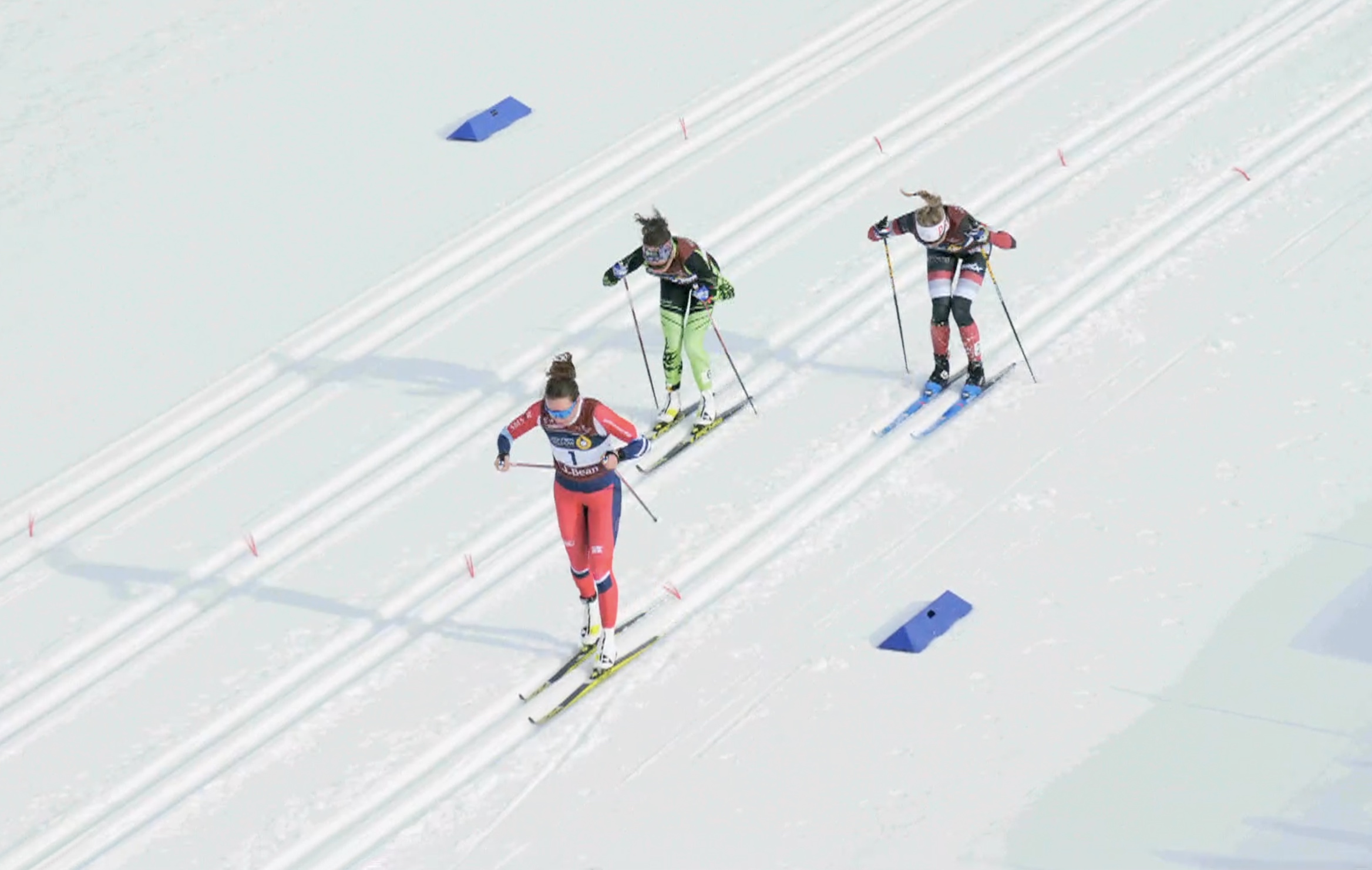
    Katharine Ogden leads Caitlin Patterson and Hannah Rudd to the line during the SuperTour classic sprints in Soldier Hollow. (Photo: Livestream Screenshot)

    Ogden maintained her lead to stop the clock in 5:01.63, while Patterson edged out Rudd for second (+0.98) and third (+1.53), respectively. After regaining contact with the pack following her crash, Jortberg finished fourth (+6.64), with Lawson fifth (+7.11), and Freed sixth (+21.55).

    “I was having a lot of fun out there today!” Ogden wrote to FasterSkier after the race. “The sprint was definitely on the long side, especially late in the day, but that did not significantly affect my strategy; I am confident in my endurance as well as my short duration power. I was really excited to have fast skis from Pat [O’Brien] and it was fun to experience the high level of sprinting in the U.S. currently. I also haven’t really done a full sprint day in a while so that was a lot of fun! It was also so impressive to see Caitlin get her fourth podium in as many races and to see Hannah Rudd have an incredible breakout performance today!”
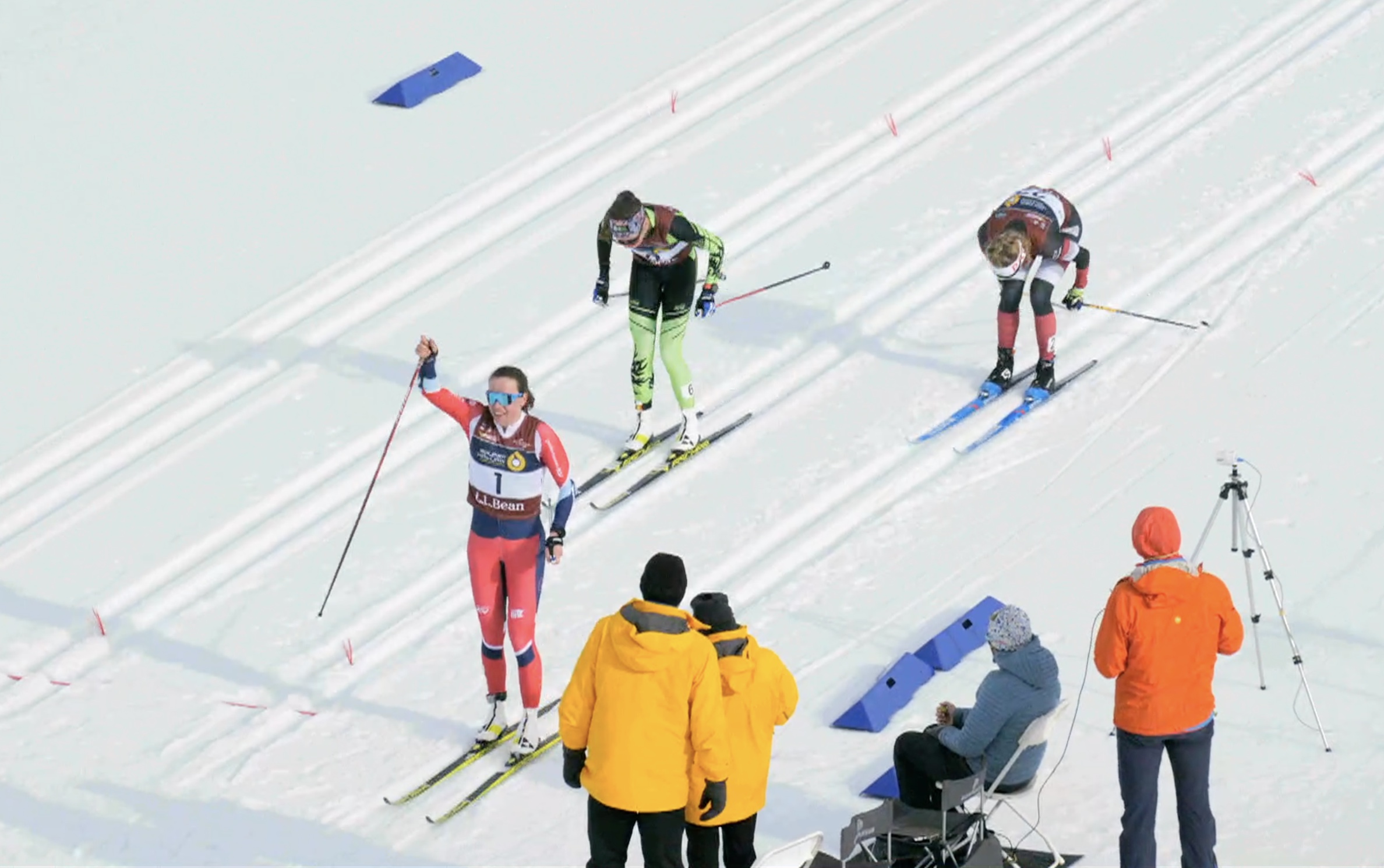
    Katharine Ogden celebrates her win in the classic sprint while Caitlin Patterson edges out Hannah Rudd for second and third. (Photo: Livestream Screenshot)

    In a post-race email, Patterson reflected on her experience racing through the heats. 

    “My racing today went fairly well, and it was a beautiful day to be out skiing and spectating,” wrote Patterson. “The sun-warmed snow became quite wet and broken apart for the heats, and combined with the wind, it certainly made a long sprint with plenty of herringbone and some sloppy tracks. I tried not to really think about the time duration much, it was mostly about getting from start to finish, however long it would take. All of the heats required some scrappy skiing, moving around through the slush and timing the length of the tuck. Now I’m really looking forward to some recovery after a good week!”

    Patterson also spoke to the week of racing in Soldier Hollow, where she finished on the podium four times in as many races, including wins in both the 10k individual classic and the skate sprint. But she was not the only person in a green suit putting together a successful week. Yesterday, she shared the distance classic podium with teammate Adam Martin. On Tuesday, Crafstbury went 3-4-5 in the 20k skate, with Lawson and Freed leading a chase group behind Frankowski and Patterson. And today, five CGRP women raced in the semis, with three advancing to the final. 

    “Everyone at Nationals is really feeling the fatigue, and myself and my team were no exception out there today. The race coughs are becoming quite terrible from so many days of racing at altitude, which is not the most fun to be coughing uncontrollably in this time of COVID. However, I was really proud of our whole team, with 5 women in the top 10! We have a really strong group, as evidenced by the performances in the distance races too; it came as no surprise to me that the women were awesome today, because training and doing intervals all summer and fall we’ve been neck-in-neck and pushing each other.”
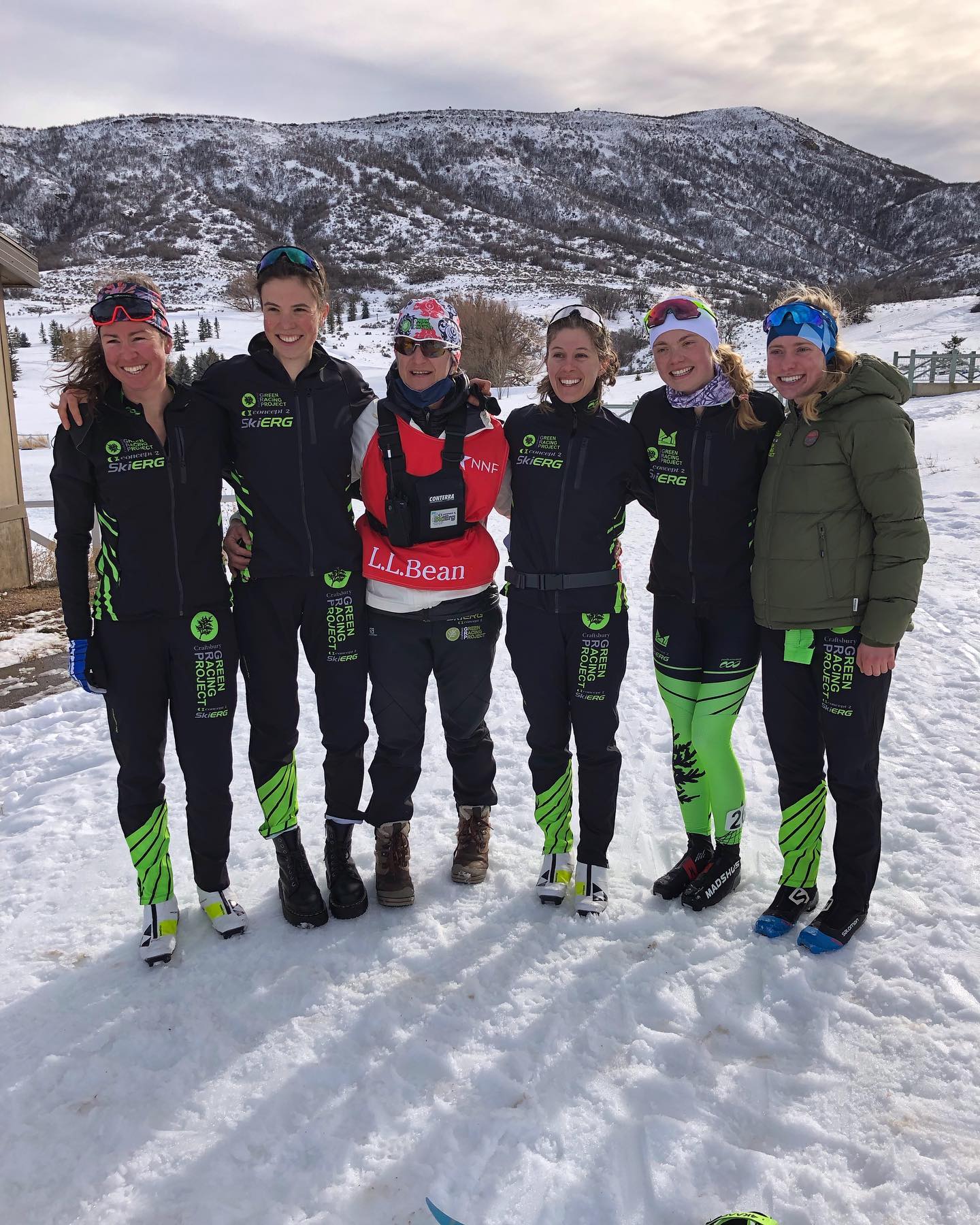
    The women of Craftsbury with coach Pepa Miloucheva. CGRP put five women into the semifinal and three into the final of the SuperTour classic sprint in Soldier Hollow. (Photo: Facebook Crafsbury Green Racing Project)

    For Rudd, this was her first career SuperTour podium. Originally from Plymouth, MN, she graduated from University of Alaska Anchorage (UAA) in May, 2020 before heading to Bozeman to join the newly minted BSF Pro Team. Placing in the top-10 in each of the three stages of the 2022 U.S. Cross Country Championships, Rudd has steadily worked her way up the results list, finishing 10th in Sunday’s freestyle sprint, 8th in the 20k mass start free, and 6th in the 10k interval start classic. She ends her week in Soldier Hollow on a podium high note. 
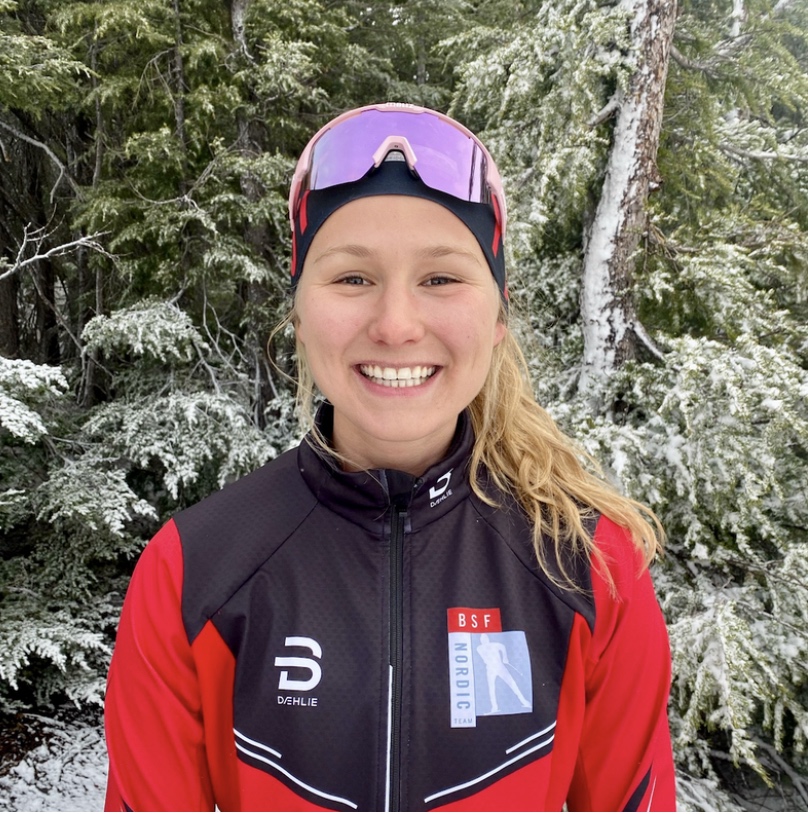
    Hannah Rudd is a member of the BSF Pro Team based in Bozeman, MT. (Photo: bridgerskifoundation.org)

    “Yesterday was a pretty exciting day for me!,” Rudd wrote to FasterSkier after the race. “The sprint course at Soldier Hollow this year was very challenging as it included three solid climbs. During the qualifier, the course remained very firm and fast. However, the temperature quickly began to rise throughout the day, and by the time the quarterfinals began, the sun was baking the course, the wind was blowing, and temps were nearing 50 degrees. This made the snow begin to transform and slow down and turned the tracks into mashed potatoes in some sections. 

    “I woke up in the morning feeling quite tired from the past week of racing so I was not sure how the day was going to play out,” Rudd continued. “I ended up qualifying in 22nd, so it was clear that I had some work to do in the heats. I felt like I was able to gain momentum and energy throughout the day, and progressed through the quarters, and semis and onto the final. Going into the final, I knew that my team’s skis were running really well so I tried to ski big and relaxed and put myself in a good position for the last downhill. It was pretty neat to be in a final with my BSF teammate Lauren Jortberg, who is an incredible sprinter and someone that I have learned a lot about sprint racing from over the past few years. I was extremely excited to land myself a spot on the podium and think it will help me to continue building momentum and confidence for the rest of the season!” 

    The podium ceremony for the women’s final following the SuperTour classic sprint in Soldier Hollow. Katharine Ogden took the win ahead of Caitlin Patterson and Hannah Rudd, with Lauren Jortberg 4th, Alexandra Lawson 5th, and Margie Freed 6th. (Photo: Facebook Craftsbury Green Racing Project)
    Men’s Race: Colorado’s Magnus Bøe Upsets Schoonmaker in the Final 

    In qualifying, JC Schoonmaker (USST/UAA) showed why he has been the U.S. Ski Team’s most reliable fixture of World Cup Classic heats this season, winning the qualifying with a time of 3:08.43, 6.42 seconds ahead of 2nd place Peter Holmes (Sun Valley SEF). Andreas Kirkeng (University of Denver) rounded out the top 3 (+6.57), in a field where the top 30 were all within 20 seconds of each other.

    With a dominant performance in qualification, the racing throughout the day always seemed to have one eye on where Schoonmaker was in the field. In his quarterfinal, Schoonmaker looked to start conservatively from the back of the field, which led the whole heat to sit back as well. When he moved to the front at the beginning of the first climb, the race surged forward with him. No one could match him, however, and he finished with a comfortable lead, with Kjetil Bånerud (NMU) taking the 2nd semifinal spot (+1.02).
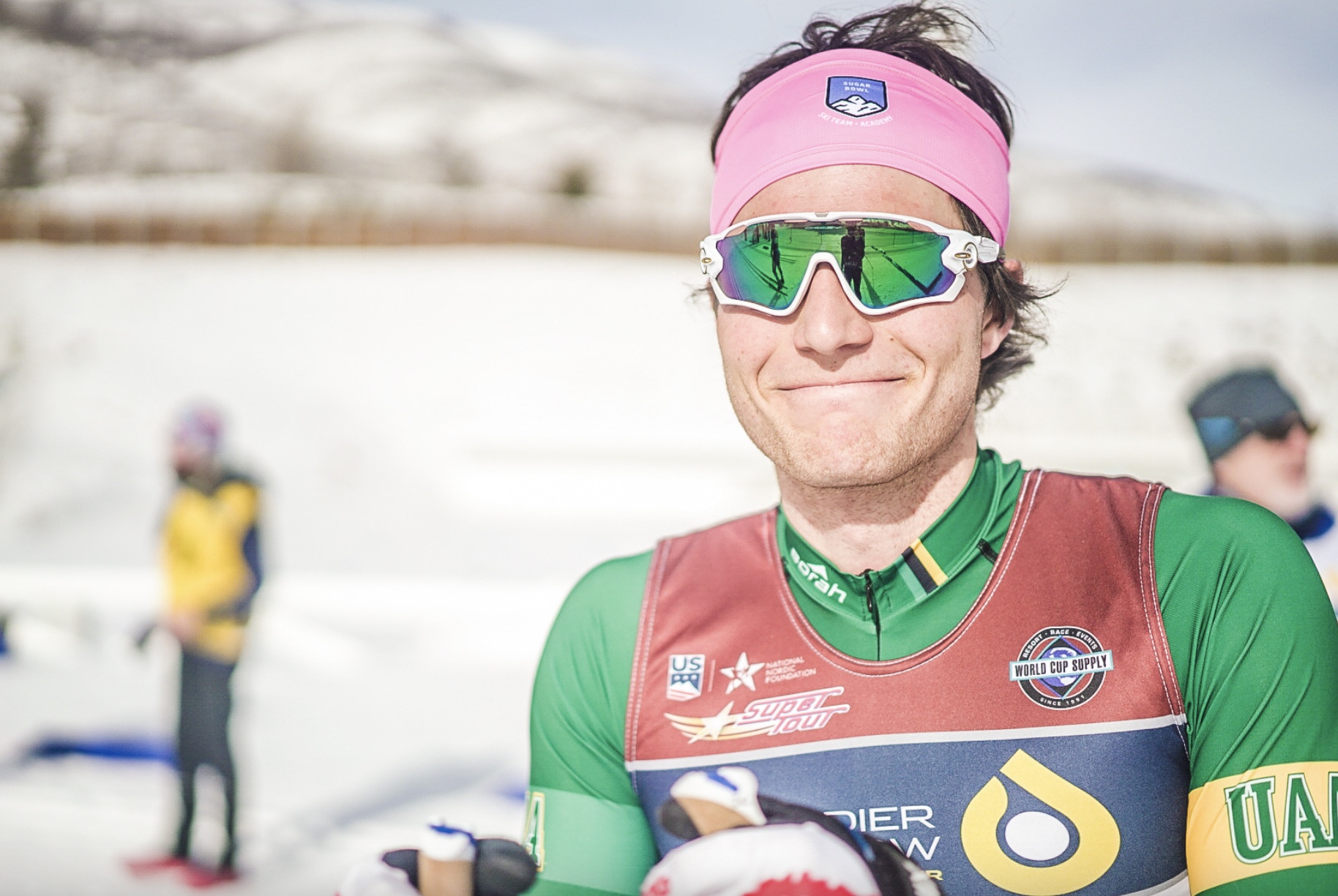
    JC Schoonmaker prepares for a sunny and warm classic sprint in Soldier Hollow. (Photo: Tobias Albrigtsen / @untraceableg)

    The following two quarterfinals also previewed the competitors, and their preferred way of attacking the course, that would define the semifinal and final racing later on.

    The second heat set a stark contrast in pace to the previous heat, with Noel Keefe (U of Utah) and Bill Harmeyer (SMS T2) leading the field out hard from the gun. Hunter Wonders (APU) and Johnny Hagenbuch (SVSEF) were able to keep with the pair though, and ended up out-sprinting Keefe and Harmeyer going into the finish. Still, the duel between Keefe and Harmeyer led to a blistering pace for the heat overall, and they would claim the lucky loser spots for the semifinals.

    Then came the 3rd quarterfinal, featuring winner of today’s most aggressive racer award (unofficially handed out here, by Fasterskier), Ian Torchia (SMS T2), who in every heat he was in today would hammer out to the front of the pack while others seemed content to let the field play out. He was joined in the heat by Magnus Bøe (U of Colo.), who made his move on the first climb, stayed out in front, and came through in first place. Torchia, meanwhile, held onto second to advance automatically to the semifinal.

    The semifinals marked more an amalgamation of race strategies than anything unique. But it was an amalgamation – which requires multiple parts. And indeed, on a course known for rewarding smart-racing, and in conditions – above freezing, on man-made, wind-swept snow – that reward smart waxing as well.
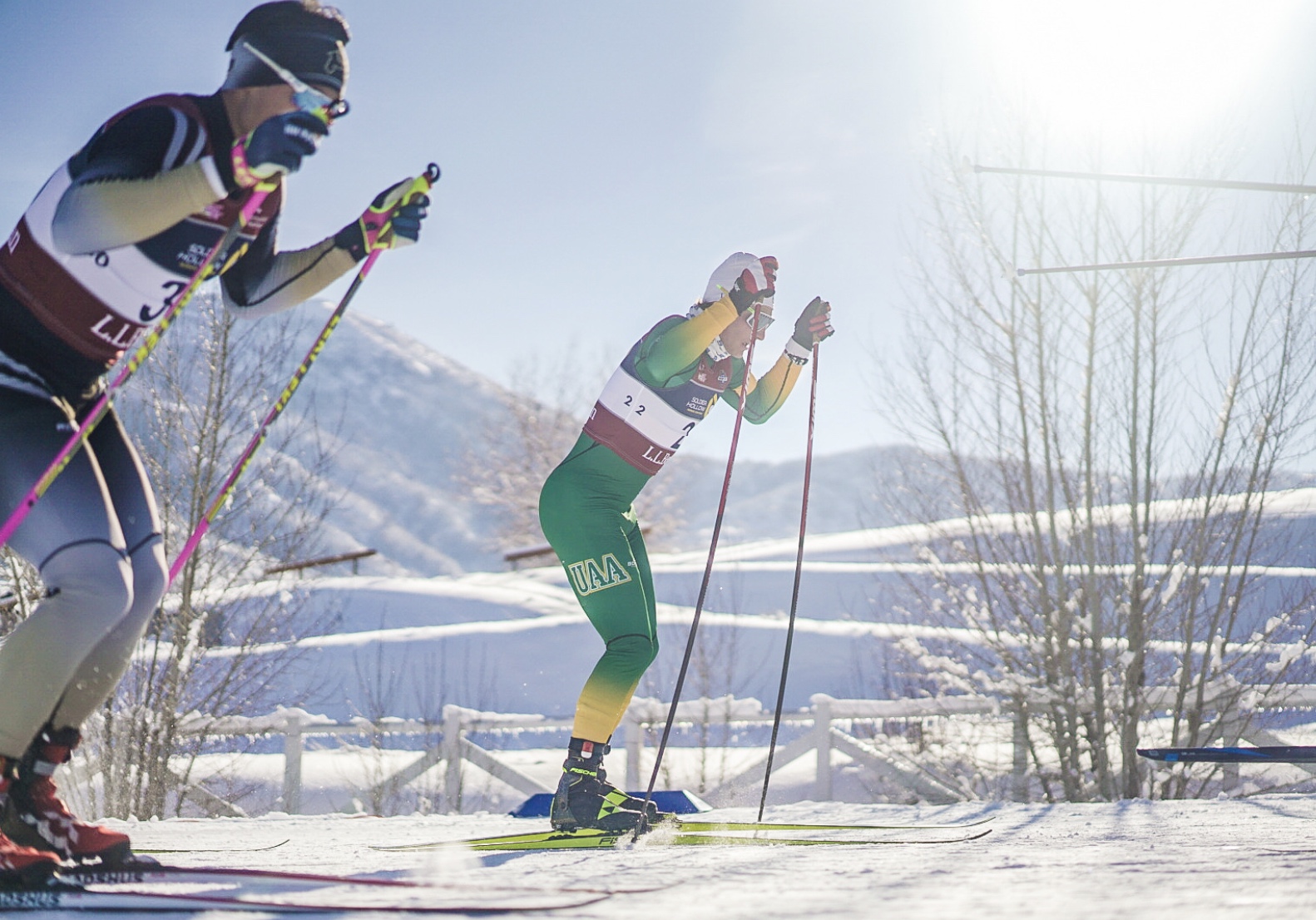
    Magnus Bøe and JC Schoonmaker are off the line during the 2022 U.S. Cross Country Championships freestyle sprint stage. (Photo: Tobias Albrigtsen / @untraceableg)

    The first semifinal featured Schoonmaker and Bøe, both of which stayed back in the back during the early part of the course. Going into the first climb, Bøe took a look back, saw Schoonmaker and Harmeyer were sitting in fifth and sixth place, respectively, and decided to attack. He led over the top, into the downhill, and up the final climb. Schoonmaker successfully did maneuver through the pack to counter the move, and on the final climb took the outside line up, cutting in to tuck behind Bøe going into the final downhill. When they came up, Schoonmaker had used the draft to put himself out front, while Bøe held off a late-surge from Hunter Wonders (APU) to take the second qualifying spot into the finals.

    The second semifinal was again led out by Ian Torchia, who was then followed by former sprint National Champion Tyler Kornfield (APU). Kornfield seemed content to sit behind Torchia until the first climb, when he put in a burst of speed and broke open the field. The smartest racer, however, may have been Karl Schulz (SVSEF), who rode Kornfield’s attack, and then drafted, to go into the final climb with speed. By the time he hit the downhill, he had a gap which would remain unclosed. Kornfield, who had gone into the downhill in second, found himself joined by Noel Keefe and Ian Torchia into the final sprint for the second spot. As it would happen, all three would make it through to the finals, with Kornfield in second, and Keefe and Torchia being rewarded for their efforts early in the race by claiming the two lucky loser spots to the final.

    The A-final then looked like this: JC Schoonmaker, Magnus Bøe, Karl Schulz, Tyler Kornfield, Noel Keefe, and Ian Torchia.

    JC Schoonmaker races the qualifier during the SuperTour classic sprints in Soldier Hollow, UT. (Photo: Tobias Albrigtsen / @untraceableg)

    With memories of Schoonmaker’s dominating qualifier in mind, it seemed like the field orbited around him off the line. Schulz found himself in front, but not going full bore to open the field up. Even Torchia, when he did make a move to the front, didn’t seem to do so with the same force that had marked his quarter and semifinal attacks. Schoonmaker waited until the first climb to move to the front, and then the final really was on. Schultz seized on the attack, and then put an extra-push into the downhill to try and open up an unclosable gap like he had in his semifinal. It was a good move, but one that didn’t prove to have the same force as his previous attack, and going into the final climb he was joined up with Bøe and Schoonmaker. 

    Then, Schoonmaker’s pace seemed to drop-off, with a few noticeable slips that progressed into a herringbone. Bøe, meanwhile, went for the herringbone from the get-go. He was the one that made contact with Schulz before the course gave way to a final downhill on the day. Schultz held a gap on the field through the glideout and over the bridge, but it proved not to be enough of a margin to feel comfortable in the final stretch. Meanwhile, Schoonmaker had fallen back to fifth.

    Utilizing his dominating doublepole sprint, when they hit the final 100m it was all Bøe, who closed a significant gap to catch Schulz in the final 50 meters. Looking as if he was leaping forward with each push, Bøe switched lanes, overtaking Schultz just before the line and letting out a fist pump as he realized a SuperTour – and collegiate – victory in a time of 4:08.28. Pushing to the line, Schulz was a close second (+0.35). (Video clip here.)
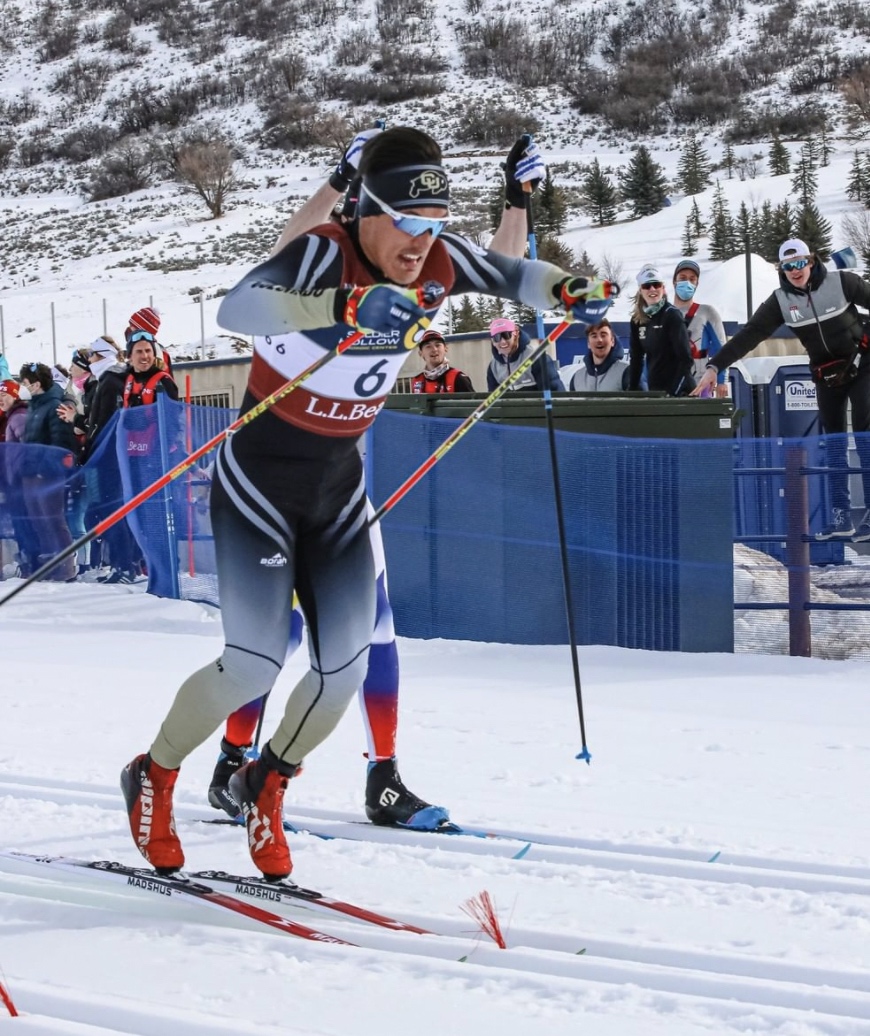
    Magnus Bøe overtakes Karl Schultz just before the finish of the men’s classic sprint final. (Photo: Instagram @cubuffs)

    After a gap, Schoonmaker, who was fighting for the final podium spot alongside Kornfield and Torchia, crossed the line outside of the track in third place (+4.53). Kornfield was a half second back from Schoonmaker for fourth (+5.10), with Torchia fifth (+5.64), and Keefe sixth (+11.02).

    After the race Bøe explained that he changed his tactics in the heats relative to Sunday’s freestyle sprint, though he joked he thought it wise not to reveal everything. 

    “Today was a windy and slow-condition day,” Bøe wrote in an email. “There was headwind in the first half, and tailwind in the second half. Hence, pulling during the first half would be pointless. Furthermore, the second half, particularly for the last downhill there was very little to gain on the slipstream, due to the low speed and the ‘suctiony’ snow (cold conditions create better glide for the person coming behind on ‘heated tracks’). Therefore during all my heats I pretty much went all out from the top of the last uphill all the way to the finish, which on sunday would’ve been a suicide.”

    Bøe walked through the final, including how he reacted to lead changes and adjusted his strategy when the race began to play out differently than anticipated. 

    “The final started off very slow, but then the positioning battle developed gradually from under the bridge. My main focus was to keep my eyes on JC, since he was clearly the favorite of the day, and I knew I would do well if I laid it up to beat him. Hence I never fell for the temptation of passing him, even though I had many chances of doing so. However, he did get tired during the last climb and tried to get others to pass him. This is when Karl took off and gained a massive gap that at first seemed too late to close. As soon as I realized that JC might not be able to catch up, I committed to catching Karl by myself. I made sure to put in a great push before the downhill straight, and did the ‘supertuck’ to gain every single inch I could. Once I started double poling towards the last bend it was just heads down and maximum effort. Was never certain I would catch Karl, I thought maybe he’d have something left at the very end. But lucky for me he didn’t and I had just enough to pull it off.”
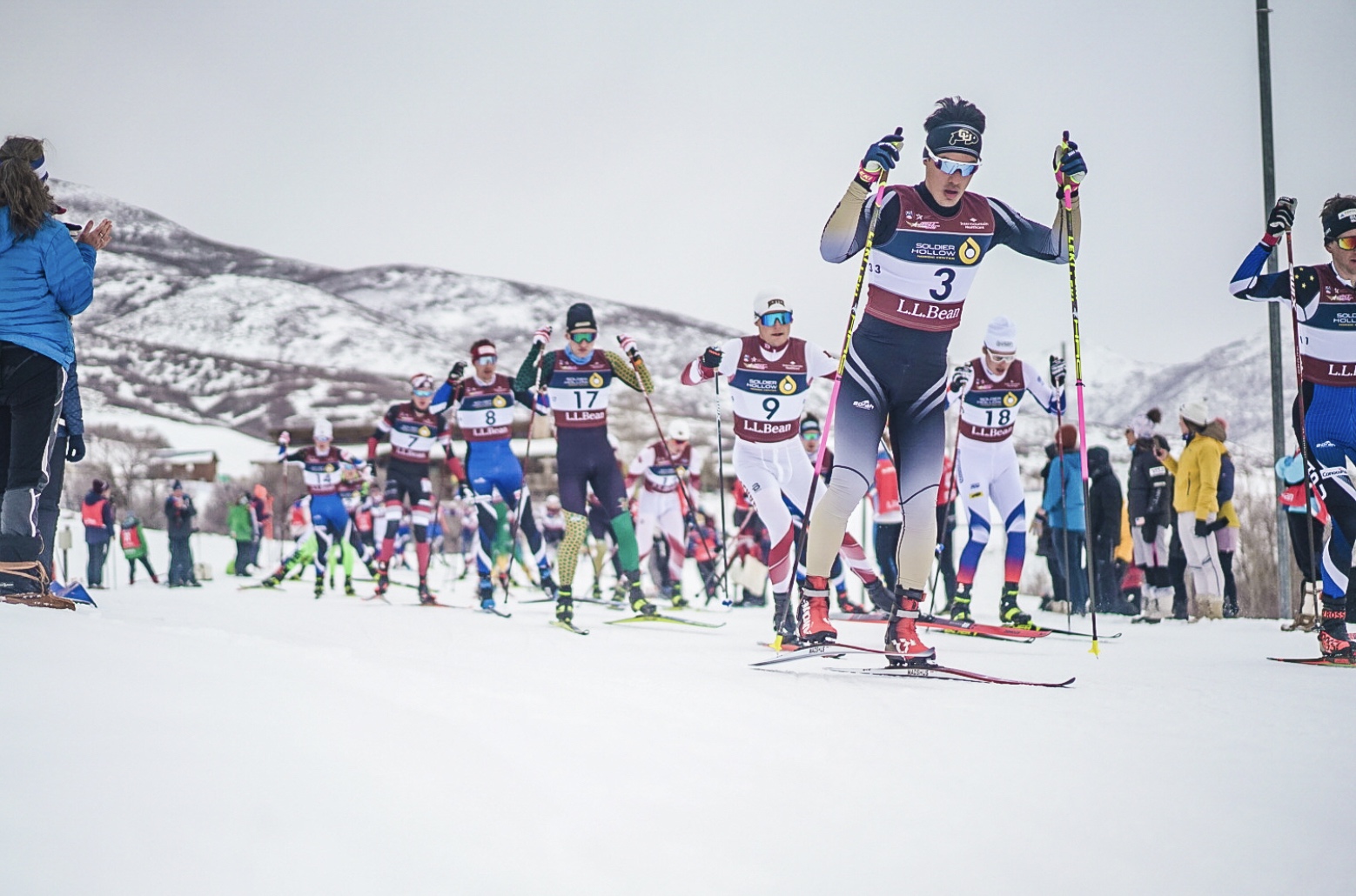
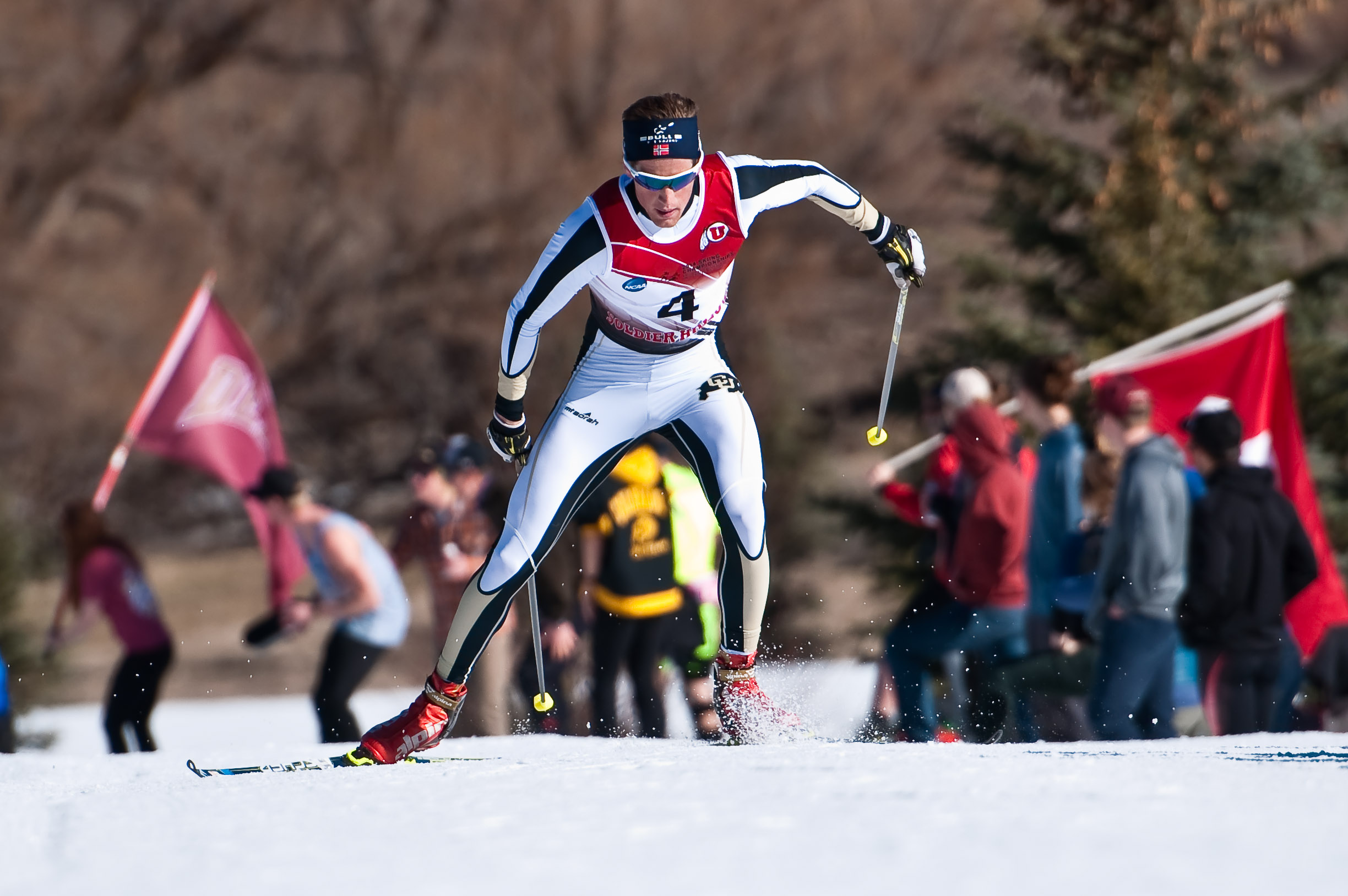
    University of Colorado’s Magnus Bøe heads out for the men’s 30k mass start free during the 2022 U.S. Cross Country Championships in Soldier Hollow. (Photo: Tobias Albrigtsen / @untraceableg)

    A dual citizen of Korea and Norway, 23-year-old Bøe has already built a robust resume in international ski racing, including competing for Korea during the 2018 Olympics in Pyeongchang. Earlier this week, Bøe was fifth in Sunday’s freestyle sprints and finished 11th in the 15k classic. His only down race of the series happened in the 30k mass start freestyle, where he finished 43rd (+12:30.9).

    “This week of racing has been up and down, from a miserable 30km where I got lapped, to today’s win. It’s been a lot of fun, and not least has been helpful for my shape. Next up is the Super Tour in Sun Valley, which I am looking forward to. Think I would be able to build on top of what I gained during this week.”

    For Schultz, today also marked a career-first SuperTour podium. The 23-year-old Lake Placid, NY Native raced for the University of Vermont (UVM) until graduating in May, 2020, then heading to Sun Valley. Schultz had a podium just-miss earlier this year in a freestyle sprint where he finished fourth during the opening weekend of SuperTour racing in Duluth, MN. 

    “I was pretty fatigued from the three races prior,” Schultz wrote after the race. “I knew there was a decent headwind on that first climb, so I decided I’d tuck in behind up and over the first climb. I figured I’d need to save my strength for the final climb and long finishing straight, so I played my cards well and pushed where I needed to, and it just worked perfectly. I’ve learned sprinting is about preserving energy for critical parts of the course, it couldn’t have gone better.”

    “And I won’t lie,” Schultz continued. “The spectators and everyone cheering allowed me to find another gear, especially up the last climb. I dug deeper than I have before.”
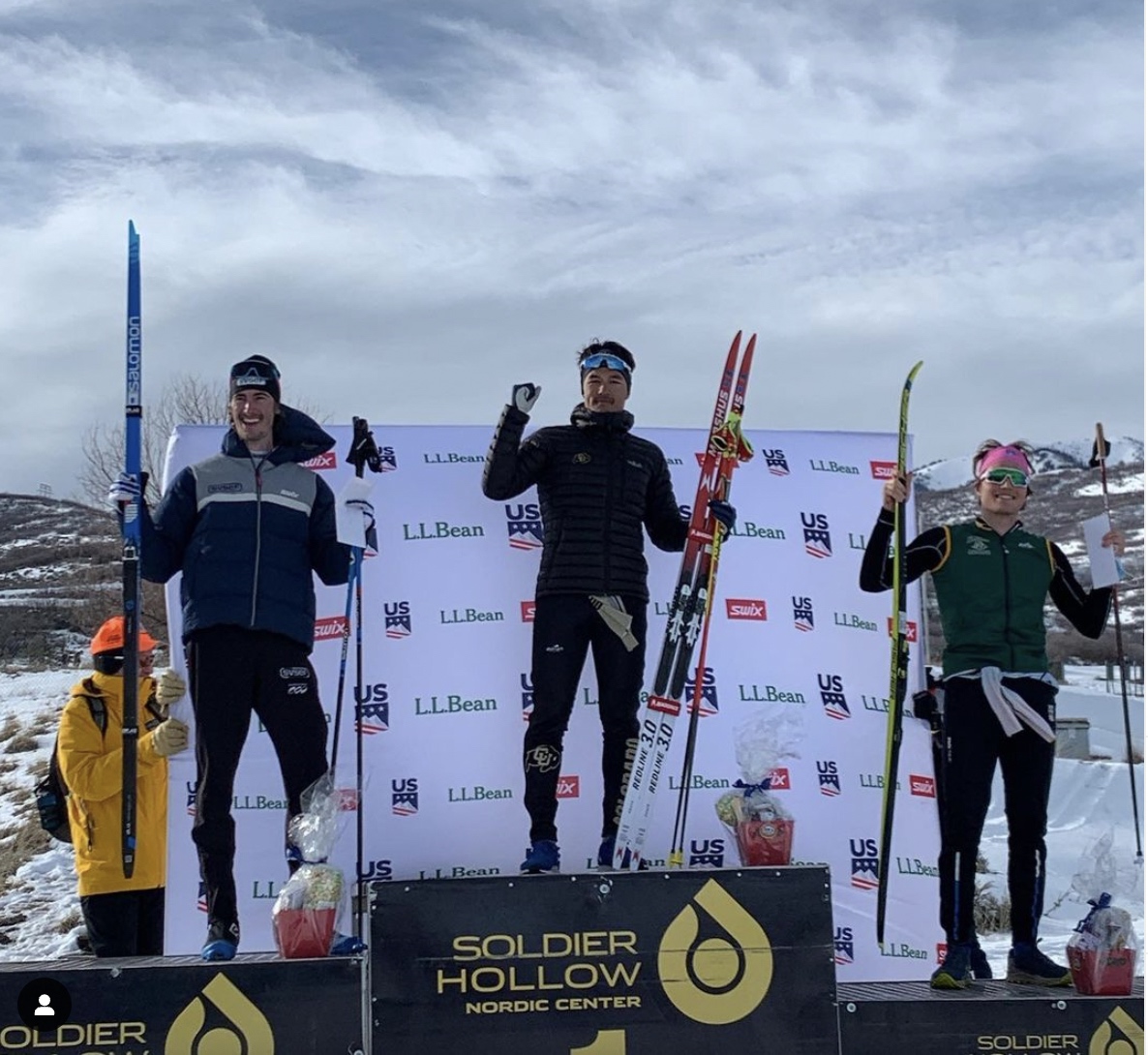
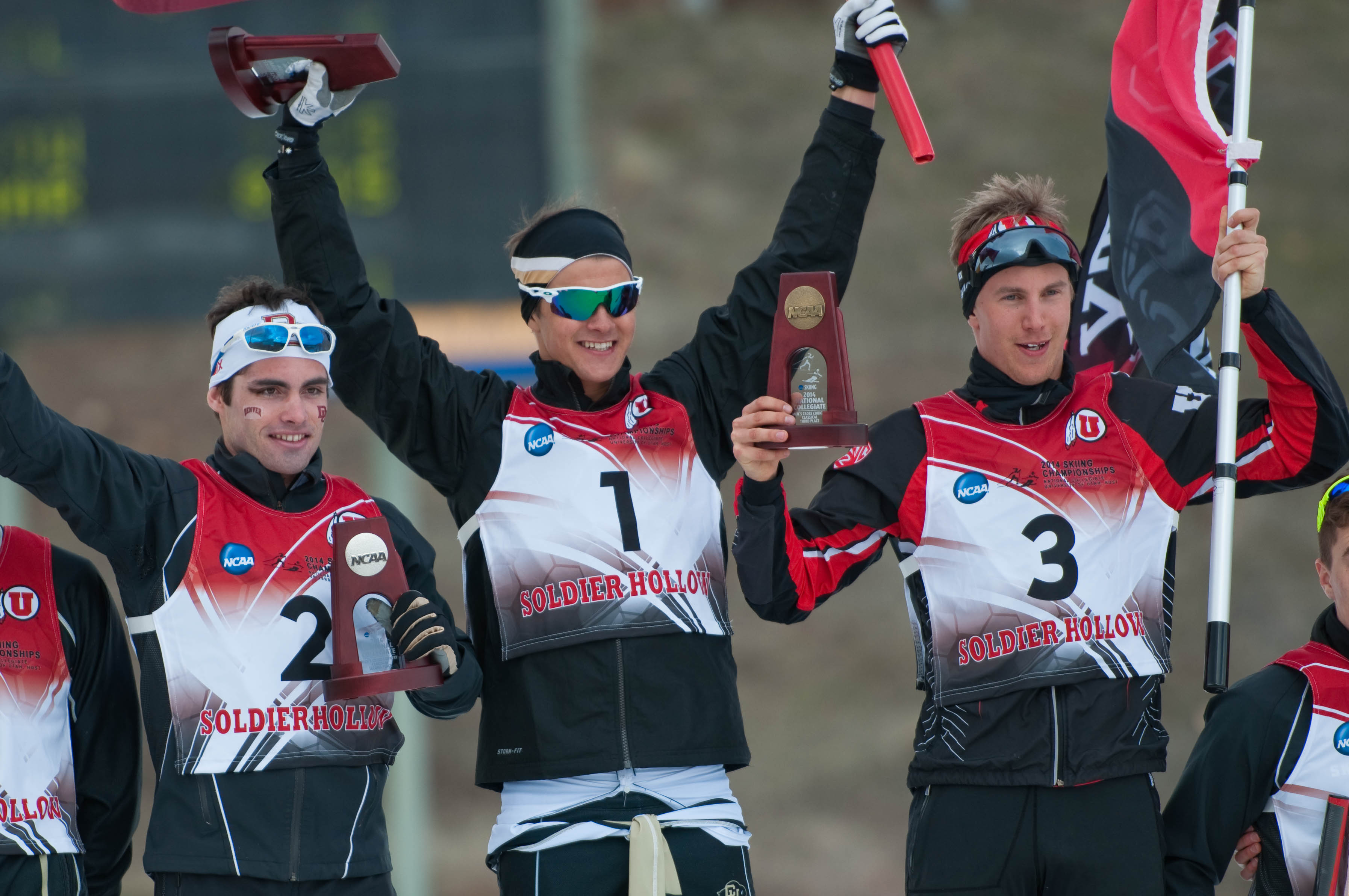
    The men’s podium of the SuperTour 1.5k classic sprint in Soldier Hollow: Magnus Bøe took the win ahead of Karl Schultz and JC Schoonmaker. (Photo: Instagram @nysefnordic)

    Writing to FasterSkier after the race, Schoonmaker explained how changing conditions forced athletes to make tough decisions about skis as well as tactics. 

    “It was a pretty crazy difference from this morning to the afternoon,” Schoonmaker explained. “The morning was icy and fast and the heats got really sloppy and slow.  I had amazing skis in the morning and in the heats I struggled a bit with choosing whether to go for more kick or glide. I ended up asking for less kick to free the ski up a bit and I’m still not sure what was the right call. It was just really challenging conditions.”

    Schoonmaker also explained that he had made fewer adjustments to the technique he had found such success with in Sunday’s skate sprint, however, the final proved to break the mold of what has historically proven to be the recipe for Soldier Hollow sprint racing.

    “For this course I tried to take a somewhat similar approach as in the skate race by respecting the draft on the last downhill and trying to be careful about the guys behind me there. In the quarterfinal I felt I was able to ski away and create a big enough gap so that I couldn’t get sucked back in by the draft. In the semifinal, I tried to stay more in the pack and use the draft for myself. The final was tricky because I was going to try and use the draft again but Karl put in a really good move on the last hill that I couldn’t match. Then I was leading the rest of the pack and I decided to push over and try to catch Karl rather than go to the back to find the draft. It ended up not working out so great, but I’m happy with the day and the tough effort.” 

    We conclude a week of racing at Soldier Hollow, then, with a race that highlighted the strength and depth of the domestic circuit of U.S. skiing at present. Variable conditions on a technical course, which racers approached with tactics as diverse as the regions they hail from, indicated that this is a field that represents top-level racing. It was a testament to the development and growth of the sport in this country that a top-level racer like Schoonmaker can come off the World Cup and find a field where every heat is raced with closeness and intensity in his own country. That bodes well, and is a great place to leave the last national gathering of the US ski racing community before its best representatives look to take a crack at the Olympic Games in Beijing next month.

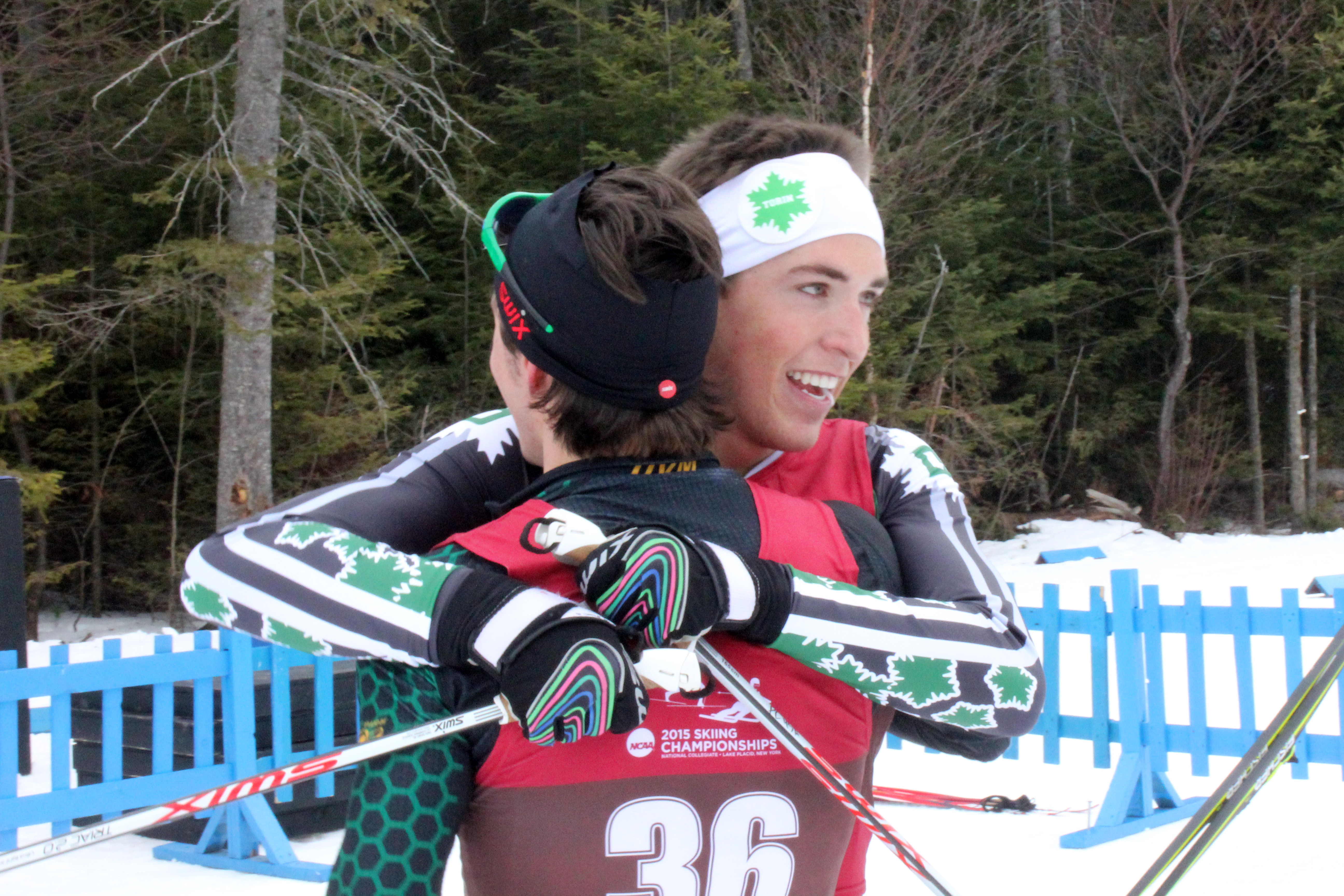
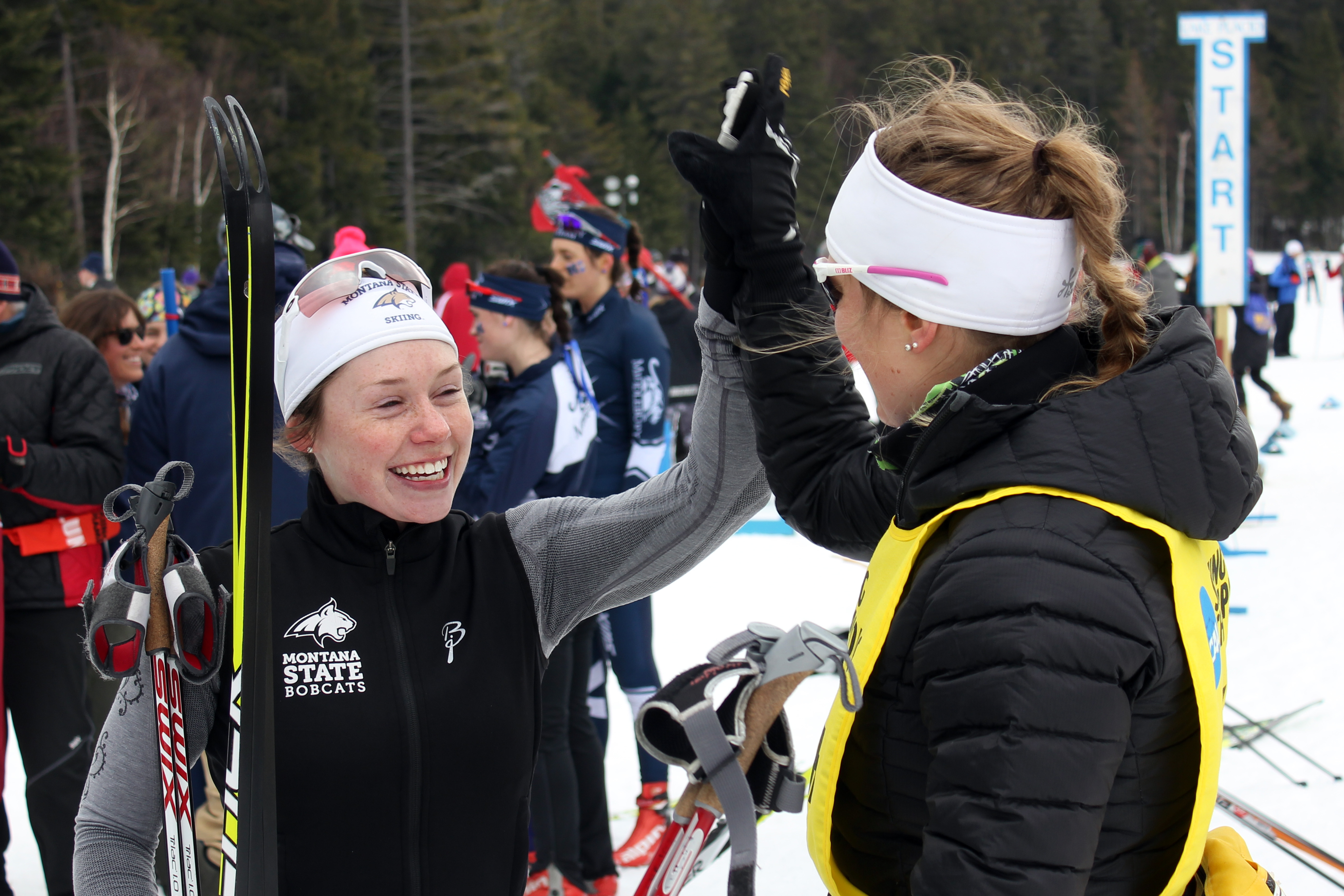
    The spirit of the sport captured at the finish line as Alaska Winter Stars athlete Meredith Schwartz embraces her coach at the finish of the classic sprint in Soldier Hollow. (Photo: Tobias Albrigtsen / @untraceableg)

    FasterSkier extends congratulations to all athletes who competed in Soldier Hollow this week, commending their efforts in a fiercely competitive field through a variety of race formats and course conditions. Also, a big thank you to Tobias Albrigtsen and John McColgan, who generously shared their photos with us throughout the week. Stayed tuned for an upcoming gallery highlighting many of the fantastic images that were not included in our reports. 

    Full Results:

    Qualification | Women’s Final | Men’s Final

    Livestream Replay

  • University of Colorado Seeks Assistant Nordic Ski Coach

    University of Colorado Seeks Assistant Nordic Ski Coach

    (Job posting)

    Job Summary

    The Athletics Department at the University of Colorado (CU) Boulder is now welcoming applications for an Assistant Nordic Ski Coach.  The purpose of this position is to assist in the day to day operations of the ski program and Nordic ski team. This position works closely with the head Nordic coach to organize both in season and out of season training and assists with the training and development of current student-athletes. Contributes to the continuous evaluation of the current team members as well as incoming recruits. Assists in the management and administration of all phases of the ski program and team, including recruiting.

    This position is responsible for promoting the philosophy and objectives of the intercollegiate athletics program.  This shall include adhering to the principles of the Athletic Department’s Mission Statement, Diversity and Inclusion Mission Statement, Core Values, Policies and Procedures, as well as the rules and regulations of the University, the Pac 12 Conference and the NCAA.

    buy tretinoin online

    Who We Are

    As one of 34 U.S. public research institutions belonging to the prestigious Association of American Universities (AAU)—and the only member in the Rocky Mountain region—our goal at CU Boulder is to directly affect Colorado communities through collaborative research, innovation and entrepreneurship. Our faculty, staff and students work with the broader community to establish unique connections that have lasting outcomes—both across Colorado and around the world.

    clomid, yaz buy online

    Responsibilities

    • Assist Head Nordic Ski Coach in teaching, instructing, and coaching student-athletes in practice and competition settings, to include training preparation and execution with student-athletes, on-site waxing of skis, and analysis (video and otherwise) of student-athletes’ techniques.
    • Participate in the creation and promotion of a world-class and holistic student-athlete experience.
    • Identify, evaluate, and secure prospective student-athletes in the recruiting process.
      • Develop recruiting materials.
      • Assist in planning of unofficial and official recruiting visits.
    • Track selection and inventory of equipment for Nordic student-athletes as well as maintain the equipment.
    • Assist with administrative work in the Ski Office, including compliance and University paperwork and documentation.
    • Maintain a positive, collaborative working relationship with the various support staff members working with the ski program.
    • Special Events and Community Service:
      • Assist with all special events and functions related to the Ski program including alumni events, fundraising events and community service.
    • Adhere to the core values stated in the Athletic Department’s strategic plan. Demonstrate a thorough knowledge of NCAA, Pac-12 Conference, RMISA Conference, University, and departmental rules and regulations.

    We offer

    The anticipated starting salary for this position is $40,000.00-$45,000.00

    Requirements

    Bachelor’s degree and a minimum of three years of Nordic ski racing or Nordic ski coaching experience.

    What You Will Need

    • Good communication skills and the ability to work under stress.

    What We Would Like You To Have

    • Knowledge of NCAA rules.

    Special instructions

    To apply, please submit the following materials:

    • A current resume.
    • A cover letter that specifically addresses how your background and experience align with the requirements, qualifications and responsibilities of the position.

    You will not be asked to upload references at this time.

    Review of applications begins immediately. Materials must be submitted via the link below:

    https://colorado.avature.net/jobs/JobDetail?jobId=11530.

  • Eliška Albrigtsen (Formerly Hájková) Heading Three CXC Programs

    Eliška Albrigtsen (Formerly Hájková) Heading Three CXC Programs

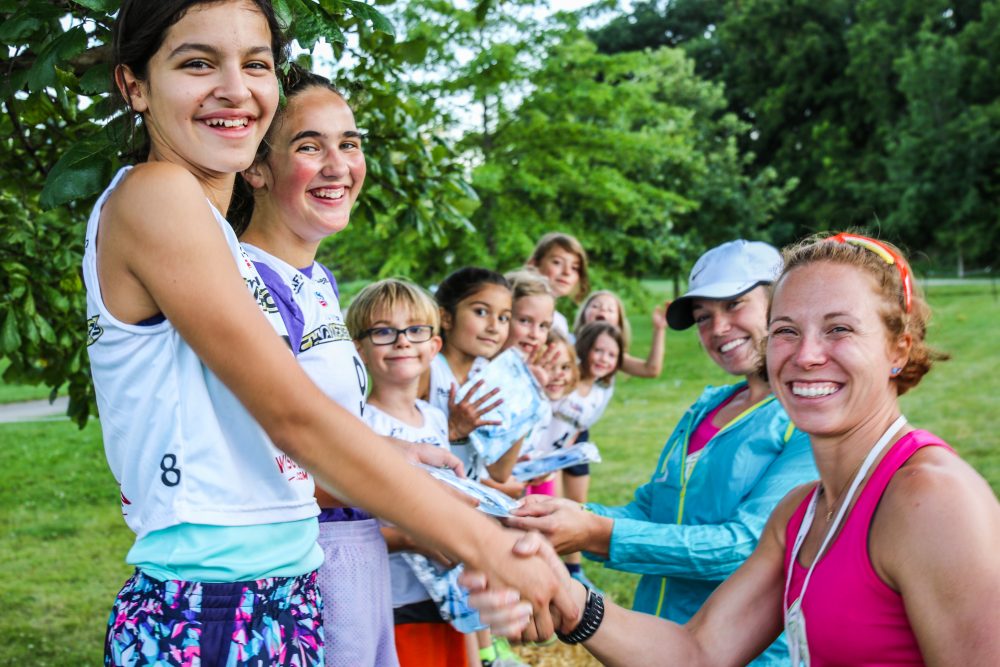
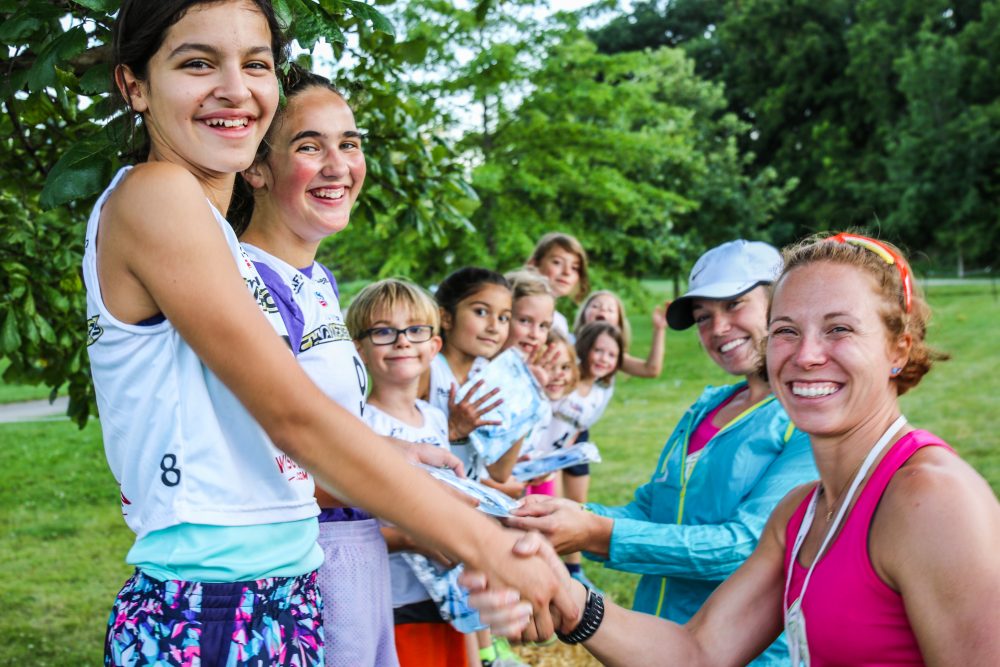
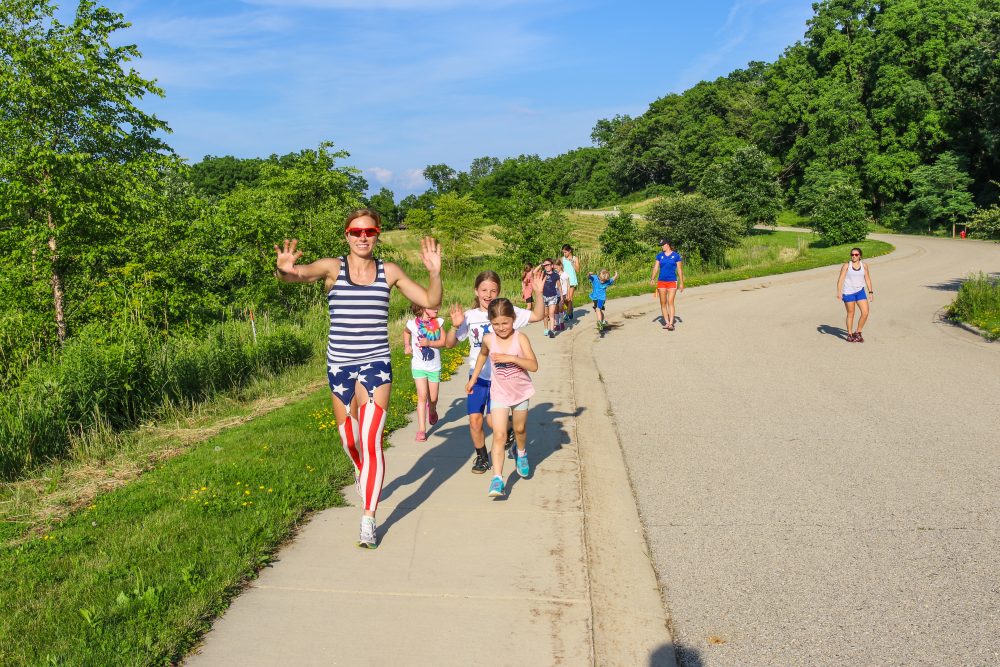
    Eliška Hájek Albrigtsen (formerly Hájková, front right) with Madison Nordic Ski Club’s Trail Kids this summer.(Photo: Tobias Hájek Albrigtsen)

    Many mornings, Eliška Hájek Albrigtsen’s husband, Tobias Albrigtsen, has to peel her out of bed. Living the life of an early bird like her spouse is nowhere near the top of her list — partly because she spends most nights prodding her hubby awake as he finishes his work, partly because she is strung out between four jobs of her own.

    Being in charge of three ski programs while assisting a fourth is not where the 29 year old envisioned herself when she moved to Madison, Wisconsin, this past June to work for Central Cross Country (CXC). But a lot can change over the course of a summer and for Albrigtsen (formerly Hájková), a lot did.

    After relocating to the Badger State’s capital from Lake Tahoe, California, to serve as CXC’s Community Olympic Development Director, Albrigtsen’s responsibilities began to accrue.

    It started with the addition of coaching CXC’s online master’s program. Then she had an interest in helping with CXC’s Paralympic and adaptive athletes. Finally, in late August, Andy Keller left his head-coaching position with the CXC Team to join Northern Michigan University (NMU) as an assistant coach, and Albrigtsen was in a prime spot to take over the reins. 

    “When Andy took the assistant coaching job at NMU, it was kind of natural that I got the CXC Team head coach position,” Albrigtsen, a Czech Republic native, said during a recent phone interview. “For me, it’s not like a big promotion, it’s just more stuff to do while I still do all the stuff I was doing before. I have a lot of responsibilities all of a sudden that I didn’t start with.”

    Among those responsibilities, she has been busy making informative videos for CXC Academy under the job title of Community Olympic Development Coach.

    Getting stuff done — and a lot of it, efficiently — seems to be somewhat second nature for Albrigtsen. Back in 2016, she placed sixth in the senior women’s distance race at U.S. nationals, despite having three jobs and indicating that the only training she had done in preparation was with her Boulder Nordic Junior Racing Team (BNJRT) athletes during practice sessions.

    While attending the University of Colorado-Boulder (CU), she finished in the top 10 of 45 out of 48 races over the course of her college career, according to a CU press release, all while maintaining above a 3.5 grade-point average.

    Eliska Hajkova (CU), racing against Sophie Caldwell (Dartmouth) and Corey Stock (CSU) during a sprint semifinal in 2012. Hajkova graduated in 2013 and after marrying, changed her last name to Hájek Albrigtsen. (Photo: James Doucett)

    After three seasons coaching the BNJRT in Colorado, Albrigtsen moved to Kings Beach at the north end of Lake Tahoe last year, where the juggling act continued. There, she served as the head coach for Tahoe XC, while also volunteering with the Auburn Ski Club’s elite athletes, taught private ski lessons for Tahoe Donner, coached an online master’s program, and once again raced U.S. nationals, placing 12th in the 20 k classic mass start. 

    She’s also raced more than two dozen World Cups, most recently in 2014.

    Though Albrigtsen indicates that she “never stops officially training or racing” this year might be a little different as it will be her first season coaching senior elite skiers. Still, the idea of more challenging practice sessions is enough to draw her in, even if it means scaling back her training a bit. As a coach she brings not only race experience, but the empathy and understanding of an athlete.

    “With U14 kids, I mean, I was challenging them, but I was not getting challenged,” she reflected. “I think being challenged as a coach, being able to hang out with your athletes, you really see and you can really feel their pain. When you’re right on their butts and doing every exercise, you can see, ‘OK, I know that in the Level 4 on the fifth minute, during the sixth interval you died, so let’s figure that out.’ I think that’s one of my powers, that I can really be there when it’s happening.”

    When asked of her strengths as a coach, CXC Executive Director Yuriy Gusev was quick to respond.

    “Her racing experience, number one,” he said on the phone. “And [she’s] just very energetic and hardworking and organized.”

    Albrigtsen will work with three CXC Team skiers this winter: Felicia Gesior, Kyle Bratrud and Sam Elfstrom. All three graduated from NMU, are currently based out of Marquette, Michigan, and will set their focus on the first few SuperTour races and U.S. nationals before re-evaluating their season goals. The fourth CXC Team member, Nichole Bathe (who graduated from the University of Alaska Fairbanks) remains on roster, but headed to Europe earlier this fall to train in Norway with a goal of making the 2018 Winter Olympic Games for Great Britain’s national team.

    Until the first week of SuperTour racing in early December, the amount of time the other three CXC elite skiers and Albrigtsen work together will depend on the athletes. Albrigtsen wanted to keep the summer and fall schedule fairly flexible so her athletes would not feel restricted in the amount of paid work or fundraising they could accomplish while training for the upcoming season.

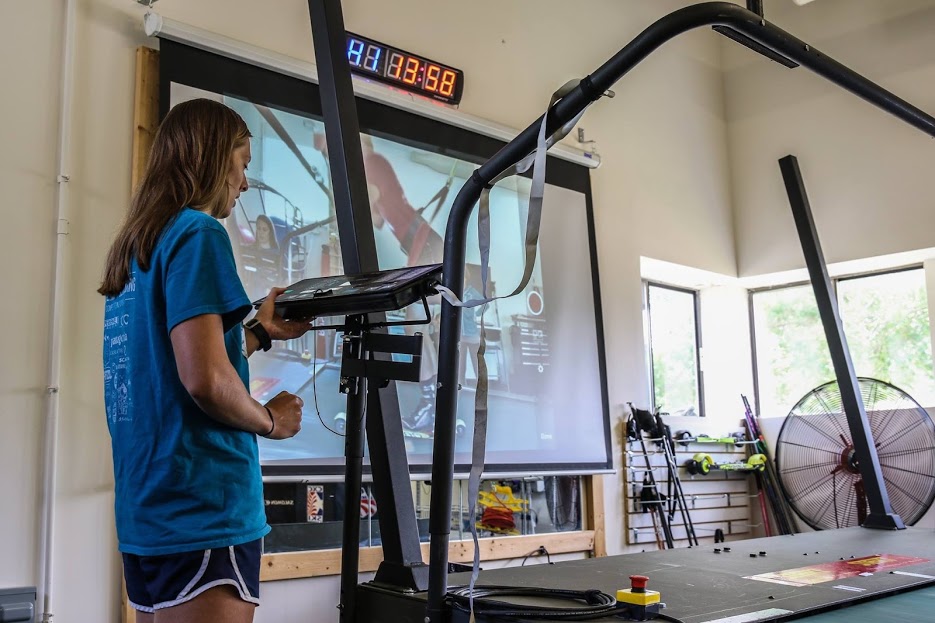
    For example, Gesior made a trip to Madison earlier this fall for a training session on CXC’s rollerski treadmill with Albrigtsen, but will spend most the next few weeks training in Marquette and preparing for a fundraiser she’s organizing: the Bergkönig trail run on Nov. 11. The event features 10 k, 5 k and 1 k races and was originally created by Maria Stuber and Bryan Cook in an effort to raise money for local cross-country skiers looking to continue their ski careers post-college.

    Gesior also works as a substitute teacher in Marquette, and most of her training this summer and fall has been with the NMU women’s team. Similarly, Bratrud and Elfstrom train with the NMU men’s team.

    Felicia Geisor of the CXC Team prepares to hop on the treadmill in early September. (Courtesy photo)

    “I think that’s OK that they follow [NMU],” Albrigtsen said, “That’s kind of the program that really took them where they are and they have something to top it. They don’t train like college skiers; I mean, it’s their job right now so they do train more. But the base is very similar and [NMU Head Coach] Sten [Fjeldheim] is being really nice about allowing them to train with them. Not all college coaches are that way, so we’re definitely really lucky.”

    According to Gusev, partnerships like the one CXC has with NMU and other programs in the Midwest are the reason for CXC’s expansion. Over the last decade, he said CXC has grown from a $50,000-dollar organization to a million-dollar one.

    “It’s all of those partnerships,” Gusev said of the CXC programs’ continued growth. “They’re incredible organizations so we’re able to work with all of them together and help them work together.”

    The organization hopes to continue its expansion with the addition of a $12-million-dollar training complex just outside the Madison suburb of Middleton, Wisconsin, which is currently in the planning stages. The facility would not only include a competition venue, but snowmaking equipment, a lit rollerski loop, and 30,000-square-foot facility open for recreational use as well.

    The idea behind the complex, Gusev indicated, would be to provide CXC athletes with a training venue, while simultaneously encouraging community members to get outside and active, using skiing as an example. The center already has one complex, the CXC Center of Excellence in Madison, complete with rollerski treadmill. 

    “With the CXC Team, our number-one goal is to support the athletes that need the support. That’s as simple as that,” Gusev said. “But overall, our goal as an organization is to grow the sport at all levels.”

    To Albrigtsen, the new facility is another reason Madison and CXC seemed like a good choice for her and her husband, Tobias, who is CXC’s media and communications coordinator, when moving from Tahoe to the Midwest. That, and the cost of living. 

    “We always talk about what can Midwest offer that other regions can’t. We don’t have the mountains, we don’t have the best winters, but what we really have is the best quality of life,” Albrigtsen said.

    “You can live much cheaper here than anywhere else in U.S. and still make somewhat good money,” she continued. “Not everybody, especially in the U.S., there’s maybe 10-15 people who can do this professionally and get paid being skiers, otherwise you have to work and that’s something Midwest does have to offer. You can have a normal life and be a skier. You can do it here.”

    While Albrigtsen’s “normal life” is somewhat busier than others might prefer, she is in no way deterred.

    “I am a total sport addict, and I think every coach has to be, otherwise it’s not really worth it,” she said. “Tobias and I, we’re just trying to do what we love and give something back.”

    Give something back, and get a little training in at the same time, even if it’s in between her multiple jobs.

    “My motivation is also to fit in my jeans, wearing tight dresses,” Albrigtsen added with a laugh. “I have a five-year-younger husband so I have to take care of myself.” 

    Eliska Hájek Albrigtsen (formerly Hajkova) leading a Fourth of July run with Madison Nordic Ski Club’s Trail Kids this summer. (Photo: Tobias Albrigtsen)
  • Myrseth, Madlener Win RMISA Mass Starts in Anchorage

    Myrseth, Madlener Win RMISA Mass Starts in Anchorage

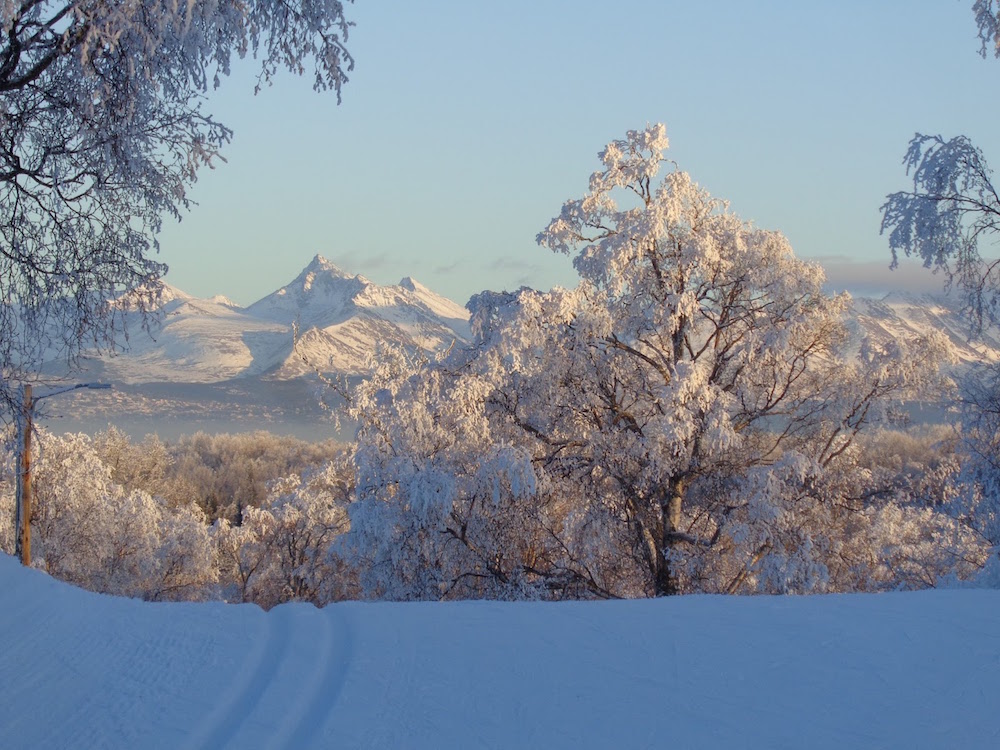
    The Chugach Mountains as seen from the Lekisch Loop, part of the course for the weekend’s races, at Kincaid Park in Anchorage, Alaska. (Photo: Adam Verrier)

    ANCHORAGE, Alaska — So how cold was it at Kincaid Park Sunday morning for the last of four Rocky Mountain Intercollegiate Ski Association (RMISA) races held in the Anchorage area this week?

    “It’s f—ing cold,” said women’s winner Merete Myrseth of the University of Utah. “It was cold,” said men’s winner Moritz Madlener of the University of Denver. “Now we fly back to Denver and get warm.” [Unavailable for comment] were the two skiers who required an ambulance for cold-related injuries following the women’s race.

    For the record, temperatures were consistently at or above zero degrees Fahrenheit all morning, so readily FIS-legal. (The International Ski Federation, which sanctioned all of this week’s races, has a temperature cutoff of -20° C, or -4° F, in order for a race to be held.) The real problem was the wind, which blew steadily from the north at around 10mph all morning.

    Unless the real problem was the humidity. The city of Anchorage is, well, a natural anchorage, bordered by Cook Inlet to the north and Turnagain Arm to the south. The Kincaid stadium is well under a kilometer away from the shores of the ice-choked Pacific Ocean; athletes were within 150 meters of the Turnagain Arm beach at one point on Sunday’s race course. Humidity was over 90% all morning. By any measure, conditions were somewhere between “raw” and “brutal.”

    At least atmospherically speaking. The ski trails were in superb shape following 30″ of snow in the month of January, if slow due to temperatures below zero Saturday night into Sunday morning.

    The first race of the day, the men’s 20-kilometer freestyle mass start, saw its start moved one hour later due to cold conditions. In that time the temperature rose from -2° F to zero.

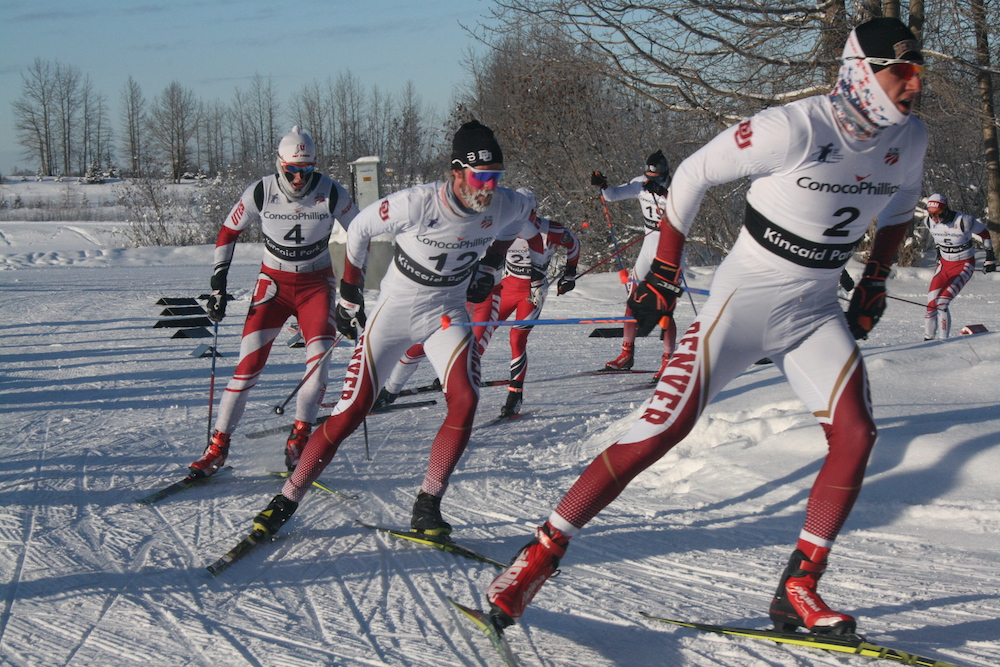
    Denver’s Moritz Madlener (2) leads Dag Frode Trollebø of Denver (12) and Kevin Bolger of Utah (4) in the men’s 20 k skate at Kincaid Park in Anchorage, Alaska. (Photo: Adam Verrier)

    When the race started, Denver’s Madlener quickly moved near the front as the field of 42 racers headed north out of the stadium to make their way up Elliott’s Climb. (For Anchorage readers, or anyone else familiar with Kincaid: the course went up Elliott’s and down Rollercoaster; up and down the Gong Hill; through the lower tunnel out to Mize’s Folly; take the first right onto Hairpin; take the first left at the top of Hairpin onto the 2.9 k Lekisch. Men did two laps of this, for 15 k, then a final 5 k lap that cut out Elliott’s. Women did two laps of the 7.5 k course for 15 k total.)

    “I was in the front pack pretty much the whole race,” Madlener recounted in an in-person interview with FasterSkier. “Tried to, you know, set the pace every now and then to get rid of people. Which worked pretty well; I think four of us got away after maybe 12 [kilometers]. And then we stayed together for the rest of the race, and then the last couple hills we kind of separated.”

    Madlener ultimately crossed the line in 52:39.2, edging teammate Dag Frode Trollebø by 2.6 seconds. Martin Bergström of the University of Utah followed in third (+10.4). “That’s a great feeling” to share the podium with a teammate, Madlener told FasterSkier.

    Madlener recalled that he had “a really good start” to his season at U.S. nationals – he earned two podiums there, second in the classic sprint and third in the 15 k skate – before he got sick “and had to catch up. And the races so far here in Alaska weren’t that great,” he continued, “so I was very happy to win today.”

    This week marked Madlener’s second time racing in Alaska; he previously competed in the last RMISA race series held in Anchorage, in early 2015. That week was marked by warm weather, rain, and shortened courses.

    Madlener is a fan, of Alaska in general and particularly the full courses that athletes got to race on this year.

    “I think it’s beautiful,” Madlener said of Alaska. “It’s like – I would say it’s like a big theme park; people are surfing and flying around and fishing. I really enjoy it. And the courses – again, two years ago, were not so great, but this year there’s a lot of snow, they’re pretty amazing courses. Like a rollercoaster.”

    Merete Myrseth of Utah enters the stadium approaching the finish in the women’s 15 k skate at Kincaid Park in Anchorage, Alaska. (Photo: Adam Verrier)

    Sunday’s race course featured a total of eight A-climbs for the men in 20 k, and six A-climbs for the women in 15 k. There was an average of 34 meters of climbing per kilometer on the main 7.5 k loop.

    Four racers, roughly a tenth of the field, were DNFs in the men’s race, likely due to a combination of the hills and the cold. Two skiers did not finish the women’s race. An additional eight opted not to start.

    The first words out of Madlener’s mouth when asked about his race were, “It was – first of all it was cold, obviously.” Myrseth, the women’s winner who skis for Utah, voiced similar sentiments: “It was cold, really cold,” she began her race summary. (By the time of the women’s race start at 12:30 p.m., temperatures had climbed to 1.6° F.)

    “I was unsure if I would start the whole race because it was so cold, actually too cold for me,” Myrseth told FasterSkier in a brief in-person interview while shivering in the windy stadium soon after her finish. “But it went really easy in the first half of the lap,” she continued, and she felt good. “So I decided to speed up when I came to hills”; there Myrseth created a gap that she kept all the way to the finish.

    But not without difficulty. “I didn’t feel good,” Myrseth said. “My feet, I couldn’t feel my feet, it was so cold. So I had to just, like, double pole over the hills, I was so tight in my feet and lost my balance, it was just so hard to keep balancing. But I made it to the finish line. And I am so happy that Guro took the second place.”

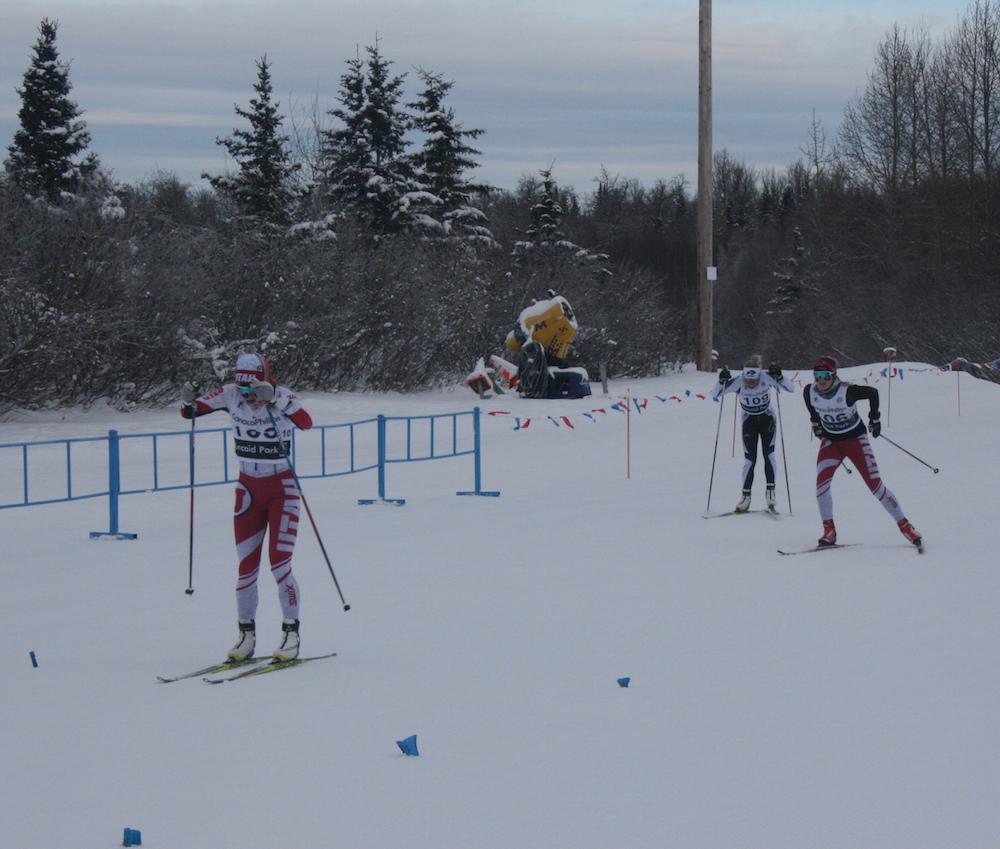
    Merete Myrseth of Utah (l) in the finishing chute en route to the narrow victory over Guro Jordheim of Utah (106) and Christina Rolandsen of Colorado (109) at Kincaid Park in Anchorage, Alaska. (Photo: Adam Verrier)

    Myrseth crossed the finish line in 46:28.3 for 15 k, double poling the last few meters to the finish. As she noted, she was followed by teammate Guro Jordheim in a close second (+0.5). Christina Rolandsen of the University of Colorado was not far back in third (+1.8). There was then a 30-second gap to a chase pack containing places fourth through sixth. 32 skiers finished the women’s race.

    This week marked Myrseth’s first time racing in Anchorage or even visiting Alaska. So what did she think? “I love it,” said the native of Øverbygd, Norway. “It’s f—ing cold, but it reminds me of Norway, my home. I’m used to it. But it’s so nice; I really like it here.”

    Sunday’s race marked the fourth race of the week in the Anchorage area for RMISA athletes. Recaps of the first three races follow below.

    Sunday results: FIS men and FIS women | NCAA-only results

    ***

    1.4 k freestyle sprint

    On Tuesday, February 7, RMISA athletes, plus a handful of skiers from Alaska Pacific University (APU) with sterling sprint credentials, raced a 1.4-kilometer freestyle sprint at Kincaid. Conditions were impeccable, with pure blue skies, temperatures in the high teens, and last month’s fresh snow mixed in with the base of manmade snow covering the sprint loop.

    In the women’s race, Merete Myrseth of Utah posted the fastest time in qualifying, 3:25.77, followed by Becca Rorabaugh of APU (+2.14) and Utah’s Guro Jordheim (+3.65). All three skiers made the A-Final, where Myrseth took her first victory of the week. The overall podium, which was also the college podium, was Jordheim in second and Anika Miller (Montana State) in third. Casey Wright (UAA), Rorabaugh, and Jasmi Joensuu (Denver) were fourth through sixth.

    Times were not available for any of the heats.

    In the men’s race, Dag Frode Trollebø (Utah) set the pace in qualifying in 2:48.80. He was followed by APU’s Logan Hanneman (+1.52) and Utah’s Martin Bergström (+3.33).

    Three of the six skiers in the men’s A-Final were locals (in the broad sense of being from Alaska; the Hanneman brothers are from Fairbanks, not Anchorage). And it was the Hanneman show in the final, as the elder Reese Hanneman took the victory over his younger brother Logan. Trollebø was third. Kevin Bolger of Utah, last seen winning the classic sprint national championship at Soldier Hollow, Bergström, and APU’s Forrest Mahlen rounded out the final finisher spots in that order.

    The collegiate podium for the men’s race was Trollebø, Bolger, and Bergström. (APU is not an NCAA-affiliated athletic program.)

    While sprinting may be on the horizon for NCAA skiing in general, it had yet to make an appearance on the RMISA circuit.

    “This was the first sprint that I know of in my, what – 10 years of RMISA coaching now and we’ve never had just a straight invitational sprint,” University of Alaska Anchorage Head Nordic Coach Andrew Kastning told FasterSkier in person following Sunday’s distance skate races.

    Kastning said that the addition of a sprint in Anchorage stemmed from a desire for a change of pace, and to avoid repetition in a single week with four races. “So when we sat down last spring and were deciding the schedule,” he said, “we’d been hearing for a few years now from our athletes that the fives, 10s, 15s, and 20s [kilometer race format] every weekend just kind of got boring, and we wanted to mix it up. So we counted the qualifying round as an invite at U.S. Nationals, and then we ran the full sprint [this week] and counted that. … So we just wanted to mix it up a little up here. Especially with four races in a short period of time, you don’t want to be doing all the same distances and the same courses.”

    So did the college athletes appreciate the chance to contest a sprint race in the middle of the RMISA race season? “Some of them do,” Kastning said. “There’s always a sprint specialist in the crowd who gets to shine. And I know there were kids on the podium, or in the top-10 at least, that aren’t normally in a distance race. So it allows some athletes to play to their strengths and shine a bit when they maybe wouldn‘t in a 20 k race, they can in a sprint.”

    On the non-collegiate side, APU skier Reese Hanneman, a sprint specialist, was thrilled to have a mid-season sprint race with high-level competition on his adopted home course. “I wish there were more sprint races in the middle of the season,” Hanneman told the Alaska Dispatch News.

    Full FIS results: men and women | | NCAA-only results

    ***

    4 x 5 k classic relay

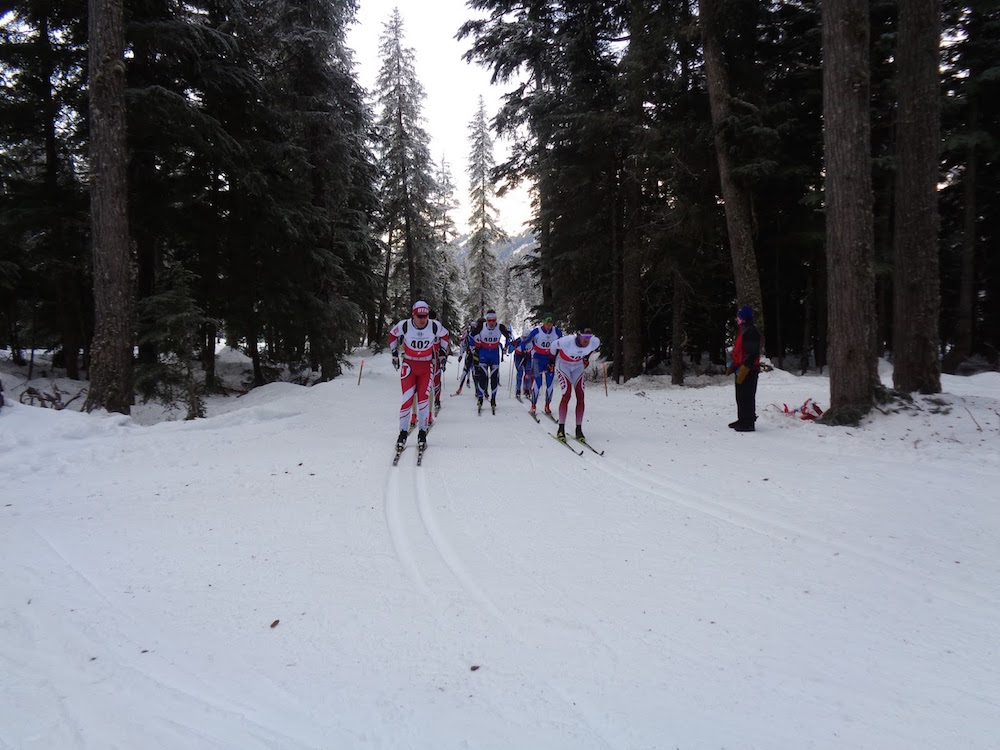
    Utah’s Martin Bergström (402) leads Denver’s Dag Frode Trollebø (right) and APU’s Reese Hanneman (center) at the start of the mixed-gender classic relay in Girdwood, Alaska. (Photo: Adam Verrier)

    The next day, Wednesday, February 8, skiers made the 45-minute drive down Turnagain Arm from Anchorage to Girdwood for a classic relay race. Girdwood is perhaps best known in ski circles as home to the Alyeska Resort alpine area, which boasts an average annual snowfall of 669″ and (when it’s clear) sweeping views of the mountains and glaciers overlooking Turnagain Arm. Publications as diverse as Powder magazine and National Geographic have lauded Girdwood as a quintessential locals ski town (“Best For: Off-the-beaten-path powder hounds with an aversion to glamour”).

    Girdwood also has a proud nordic heritage, though you have to look a little harder to find it. It is home to APU skier Chelsea Holmes, who will be competing at World Champs in Lahti later this month. And it hosted the 1969 Junior Nationals, on trails cleared from the continent’s northernmost coastal rainforest for this purpose.

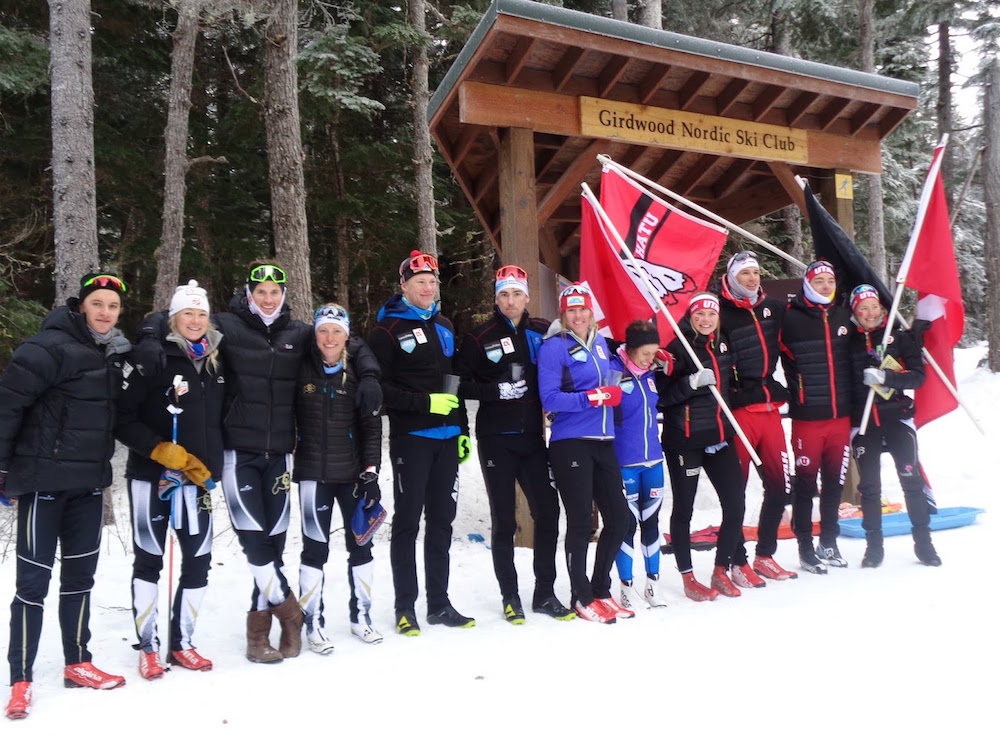
    As discussed in more detail on former U.S. Ski Team member Tim Kelley’s invaluable blog, Alaska Lost Ski Areas Project, the trails faded back into the woods at some point during the 1970s. High-level nordic skiing in Girdwood then languished for over thirty years, until the early part of this decade, when the Girdwood Nordic Ski Club oversaw construction of a new 5 k loop. The reborn nordic trails have since hosted a handful of local high school races in periods of poor snow conditions in Anchorage, but it is safe to say that Wednesday’s relay was the most significant cross-country ski race held in Girdwood since 1969.

    APU (1st), Colorado (2nd), and Utah (3rd) make up the podium for the mixed-gender classic relay in Girdwood, Alaska. (Photo: Adam Verrier)

    Athletes raced in a mixed-gender 4 x 5-kilometer classic relay in the epochal event, man/woman/man/woman. It was once again APU leading the way, as the team of Reese Hanneman, Rosie Frankowski, Logan Hanneman, and Rorabaugh crossed the finish line for the victory in 57:33.7. Second overall, and first among collegiate teams, was Colorado (Mads Ek Strøm, Jesse Knori, Petter Reistad, Christina Rolandsen), 25.6 seconds back. They were followed by Utah (Bergström, Jordheim, Bolger, Myrseth) (+1:02.6). Fourth overall, and third for the NCAA podium, was Denver (Trollebø, Linn Eriksen, Moritz Madlener, Joensuu) (+1:25.4).

    “Everybody was psyched on a new format and a new trail in a beautiful location,” Kastning told FasterSkier of Wednesday’s race.

    Kastning added that the relay, like the previous day’s sprint, was new territory for RMISA racing. “We’ve never had a relay that’s counted for anything,” he said. “I think the relay captures college skiing well, with the mixed gender and the team aspect, men and women working together to try and reach the podium.”

    Full results | NCAA-only results

    ***

    5/10 k classic individual start

    Three days later, Saturday, February 11, skiers were back in Anchorage for individual start distance classic races, 5 k for the women and 10 k for the men. Race time was moved forward from 10 a.m. to noon, which allowed temperatures to rise from 2° F up to 8°.

    Saturday’s course was by some measures the hilliest of the week, clocking in at a healthy 39 meters of climbing per kilometer of distance. The upper limit for FIS homologation is 40 m/km. (The course covered the final two-thirds of Sunday’s 7.5 k course – notably Gong Hill, Mize’s Folly, Lekisch.)

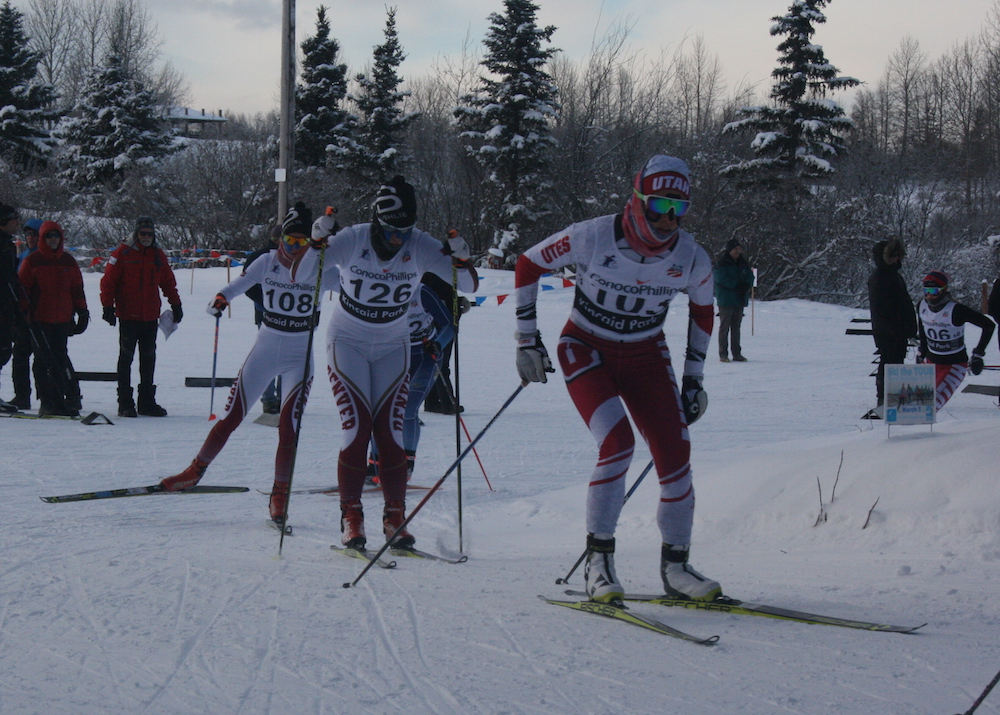
    Merete Myrseth of Utah (103) leads Denver’s Jasmi Joensuu (126) and Taeler McCrerey (108) in the women’s 15 k skate at Kincaid Park in Anchorage, Alaska. (Photo: Adam Verrier)

    Rorabaugh started near the end of the field in the women’s 5 k classic, which had 39 starters. Two A-Climbs later she crossed the finish line in 15:47.0, which held up as the fastest time of the day. Colorado skier Knori was second (+4.2), followed by her teammate Rolandsen in third (+8.2). Jordheim of Utah (+13.8) was fourth overall to round out the collegiate podium, just ahead of APU’s Frankowski in fifth (+15.0).

    It was Rorabaugh’s first 5 k classic FIS race in this country in over five years.

    The men raced two laps of the same course for a 10 k classic. Denver’s Trollebø was again on the podium, posting the day’s fastest time of 26:51.60. He was followed by Utah’s Bolger in second (+15.0) and Colorado’s Reistad in third (+19.3). Utah skier Bergström (+29.2), immediately followed by Denver skier Madlener (+29.4), rounded out the top five.

    Full FIS results: men and women | | NCAA-only results

    ***

    Overall team results

    The week’s four races were technically scored as parts of two college invitational race series. In the Seawolf Invitational, encompassing the sprint and relay from the first part of the week, plus two alpine races held at Alyeska in January, the University of Utah took the overall team title with 665 points. The University of Denver (569 points) and the University of Colorado (549 points) followed. The order was the same if the standings are broken out by exclusively nordic results: Utah, Denver, Colorado.

    The weekend’s distance races combined with two other January alpine races to make up the week’s second race series, the UAA Invitational. Combined standings were unchanged here, as Utah (661 points) took the victory over Denver (636 points) and Colorado (544 points). On nordic results alone the ranking was the same: Utah, Denver, Colorado.

    RMISA racing continues with the RMISA Championships/NCAA West Regional in Colorado in late February, then (for qualifying skiers) NCAA Championships in New Hampshire in March. Nordic races will be held at Jackson Ski Touring Center.

    Kastning explained that RMISA schools take their biennial trip to Alaska in years when NCAA Championships are set for the East Coast, “because it’s lower elevation. So other teams like to get some sea-level racing,” he said. “And so it helps our whole region do better I think at NCAAs, because you get some tempo racing, a different kind or style of racing than you do when you’re racing at 9,000 feet.”

    From left, Dag Frode Trollebø of Denver, Moritz Madlener of Denver, Kevin Bolger of Utah, and Martin Bergström of Utah enter the stadium in the men’s 20 k skate at Kincaid Park in Anchorage, Alaska. (Photo: Adam Verrier)
  • Under 23 Questions with Jesse Knori

    American Jesse Knori (University of Colorado-Boulder) racing to 19th in the women's classic sprint qualifier on Tuesday at U23 World Championships at Soldier Hollow in Midway, Utah. She went on to finish 15th overall.  (Photo: FlyingPointRoad.com)
    American Jesse Knori (University of Colorado-Boulder) racing to 19th in the women’s classic sprint qualifier on Tuesday at U23 World Championships at Soldier Hollow in Midway, Utah. She went on to finish 15th overall. (Photo: FlyingPointRoad.com)

    In an effort to showcase the North Americans competing at this week’s International Ski Federation (FIS) 2017 USANA Nordic Junior World Championships and U23 Cross Country World Championships at Soldier Hollow in Midway, Utah, we asked those qualifying athletes several questions about themselves — actually, we had them fill in the blanks. Here we have 22-year-old Jesse Knori, of the University of Colorado-Boulder Ski Team, who’s representing the U.S. at her first U23 Worlds.

    On Tuesday, Knori placed 15th in the classic sprint, and on Thursday, she finished 32nd in the women’s 10 k freestyle.

    ***

    “My full name is Jesse, but you can call me Jesse (or Knori as long as you pronounce the K). I was born in Jackson Hole, Wyo., raised in Jackson Hole, and one thing you should know about my hometown is I am 6th generation Jackson Hole.

    Jesse Knori (University of Colorado-Boulder) representing the U.S. at 2017 U23 Worlds at Soldier Hollow in Midway, Utah. (Photo: Bernie Nelson)
    Jesse Knori (University of Colorado-Boulder) representing the U.S. at 2017 U23 Worlds at Soldier Hollow in Midway, Utah. (Photo: Bernie Nelson)

    I started cross-country skiing when I was 16, thanks to my swim coach who told me to either train year round for swimming or do another endurance sport. Turns out I left swimming for skiing 🙂

    I currently train in Boulder, Colo., with the University of Colorado Ski Team.

    If I’m not skiing, you might find me mountain biking, backcountry skiing, swimming, playing beach volleyball, or drawing floorplans.

    If I had to pick a favorite book, it would be an empty sketch book for me to draw in. (I know! Not a regular book *plot twist)

    One of the things I’m most excited about for U23/Junior Worlds at Soldier Hollow is getting to race against the top U23 athletes in the world at one of the most weather changing, exciting courses I’ve ever raced on!

    (Left to right) U.S. U23 Worlds teammates Jesse Knori, Corey Stock, Nichole Bathe, and Kelsey Phinney on a training day before 2017 U23 World Championships racing began at Soldier Hollow in Midway, Utah. (Photo: Paddy Caldwell)
    (Left to right) U.S. U23 Worlds teammates Jesse Knori, Corey Stock, Nichole Bathe, and Kelsey Phinney on a training day before 2017 U23 World Championships racing began at Soldier Hollow in Midway, Utah. (Photo: Paddy Caldwell)

    One race I’m especially targeting there is just experiencing the skiathlon. I’ve never raced in one and I think the energy of it all will be an amazing 15k.

    The best advice anyone ever gave me about skiing or racing was somewhere along the lines of ‘you’ve done all the hard work, go out and have fun’. There is something so remarkable about the type of people nordic skiing attracts and to just all be able to go out and push our bodies and smile afterwards is what nordic skiing is all about.

    One of the best race memories I have is NCAA 15k classic race last year in Steamboat. The weather was bathing-suit hot, the tracks had long disappeared before our start and it became such a mental game. I love when race conditions are subpar, I think it challenges you as a person and it is exciting to test your body and mind when it isn’t perfect skiing on fast tracks on extra blue.

    If I could meet one World Cup skier, it would be Stina Nilson.

    If I don’t end up being a professional skier, I’ll probably be an interior designer for Kitchen and Baths or a Landscape Architect.

    I’m missing three weeks (*heading straight to Alaska for college races after this) of school to be here, and my professors are probably thinking, ‘What is cross country skiing?’

    You can follow me on Instagram @jknori or Twitter @JesseMKnori.”

  • Have What It Takes for American Ninja Warrior? Reid Pletcher Takes a Stab at It

    Have What It Takes for American Ninja Warrior? Reid Pletcher Takes a Stab at It

    Reid Pletcher (SVSEF) in the his first World Cup team sprint in Quebec City on Friday. Pletcher and Sylvan Ellefson (SSCV/Team HomeGrown) combined to finish 24th in their first team sprint since racing together as J1s.
    Reid Pletcher, formerly of the Sun Valley Ski Education Foundation, competing in the 2012 World Cup freestyle team sprint in Quebec City.

    FasterSkier recently caught up with Reid Pletcher, a former University of Colorado-Boulder skier and Sun Valley Ski Education Foundation (SVSEF) racer. Below is a summary of what Pletcher, 27, has been up to since he retired from skiing in 2013, including his most recent endeavor to become an American Ninja Warrior.

    ***

    More than 3,000 hopefuls submitted applications to the U.S. reality television series American Ninja Warrior (ANW) in 2014. Of those applicants, only 400 were selected for the Season 6 qualifying rounds. Applying to ANW is almost akin to applying to an Ivy League school, with ANW acceptance rates hovering just above the single digits. The application itself is a four-hour endeavor, involving a series of multiple-choice questions, short answers, long-form essays, and a two- to three-minute personal video.

    Furthermore, even if some of the obstacles on ANW, a spin-off of a Japanese TV series Sasuke, look a little comical from an outsider’s perspective, ANW courses often challenge even the toughest athletes in terms of strength, balance, control, and speed. Many competitors spend years training for the show. Producers take into careful consideration not only an applicant’s “Life Story,” but also his or her physical and athletic background.

    All things considered, one would have to be either semi-superhuman or semi-insane — or perhaps both — to meet the show standards. It may come as no surprise then, that when former nordic racer, Reid Pletcher applied to be on Season 8 of ANW, the show’s producers found he fit the bill.

    However, Pletcher, originally from Ketchum, Idaho, had no idea he would be offered the opportunity to appear on the show and compete in the qualifying rounds — taking place this Friday in Oklahoma City — until three weeks ago.

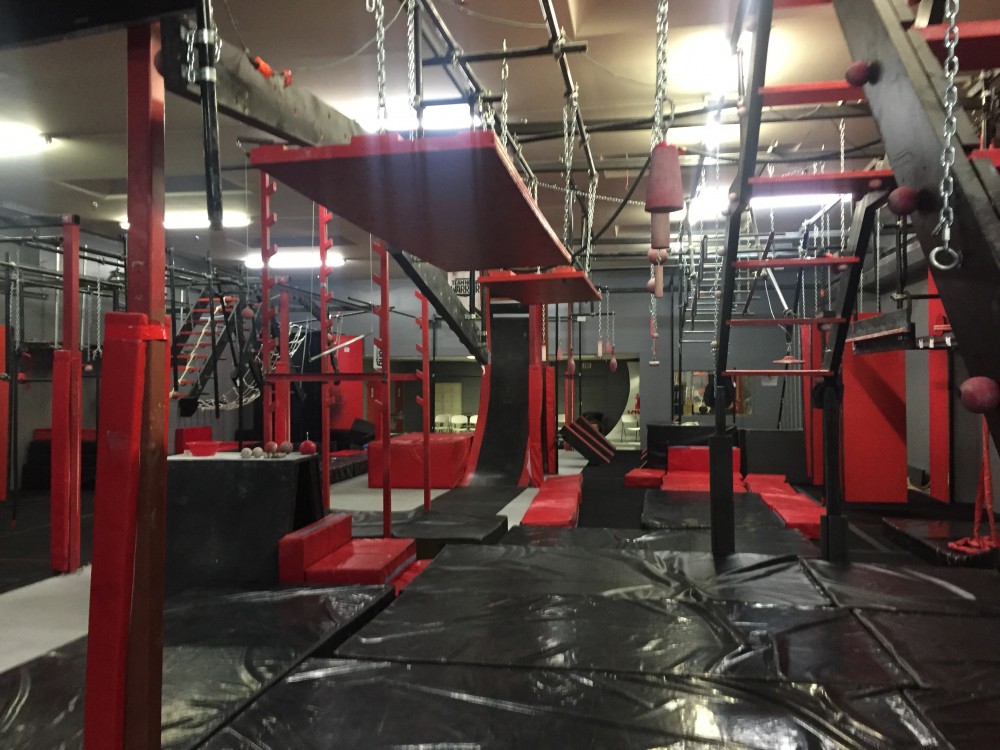
    An American Ninja Warrior gym Reid Pletcher trained at in Salt Lake City, Utah. (Photo: Courtesy Photo)
    An American Ninja Warrior gym where Reid Pletcher trained in Salt Lake City, Utah. (Courtesy photo)

    “The last time you could put in the application was mid-February and the [show website] said, ‘You’ll know within a couple weeks,’ and it had been like two months [with no word], so I just assumed I hadn’t made it,” Pletcher said in a phone interview.

    Pletcher submitted his online application last November and spent December through January training, until he broke his hand while playing soccer. After the hand injury, though still plenty active, he was nowhere near the 100 pull-ups a day he had been doing for two months.

    “I had kind of just given up on Ninja Warrior,” Pletcher said. “So I just kept going to class, doing nothing, hanging out and then did a couple river trips with the family and got my cast off and the day after I got my cast off, like a week ago, or two weeks ago now, someone calls me and is like, ‘Hey, this is American Ninja Warrior to congratulate you on qualifying for Season 8 American Ninja Warrior in Oklahoma City.”

    With two weeks to get back into ANW shape, Pletcher was neither bleak or big-talk about his chances to advance through the qualifying rounds. His first visit to an official ANW gym was only a week ago. Even with limited ANW obstacle experience, Pletcher is positive about his potential.

    “I’m in official damage control where I can’t get in insane shape in the two and half weeks that they gave me,” Pletcher said. “I think they keep it under the radar, like they don’t want people to know too early.”

    “I can’t blow myself out in three weeks because you know I can’t change my whole physiology and anatomy in three weeks,” he added. “I just need to stay steady, do nothing too ambitious and just do the best I can.”

    Pletcher’s ‘Life Story’: How He Won the Hearts of ANW Producers

    It’s no wonder Pletcher’s application stuck out to ANW producers. The former nordic racer’s history is anything but normal.

    After winning his first individual NCAA Championships title in the spring of 2011 while racing for the University of Colorado-Boulder (CU), Pletcher endured a harrowing climbing accident, in which he broke his skull. Though he would eventually recover and race again, qualifying for the Canadian World Cups in 2012, a few things for Pletcher would never be the same.

    Reid Pletcher (l) guiding U.S. Paralympic nordic skier, Jake Adicoff  during the 2014 Winter Olympic Games in Sochi, Russia. (Photo: Courtesy Photo)
    Reid Pletcher (in yellow bib) guiding U.S. Paralympic nordic skier Jake Adicoff during the 2014 Winter Olympic Games in Sochi, Russia. (Courtesy photo)

    “I still can’t smell,” Pletcher said of lingering side-effects he still experiences from the fall. “I lost my smell and I lost a significant part of the English language, but I can talk now, so that’s good.”

    “I couldn’t say nouns for a year and a half, like fork, knife, spoon,” he added. “I knew what everything was, I just couldn’t come up with the word. It was the weirdest thing. I still can’t really smell and I’m on some medication for chemical imbalances and stuff, but other than that I’m all engines running.”

    For about a year and a half after the accident, Pletcher continued to ski race. He graduated from CU with a degree in finance and went on to compete professionally for the Sun Valley Ski Education Foundation (SVSEF) elite nordic team.  He won the first SuperTour sprint of the 2012/2013 season and qualified for the 2012 Quebec and Canmore World Cups the next month. However, those December 2012 races would be his last; he ultimately stepped down from ski racing due to side effects from his head injury.

    Yet, it was not the end of his cross-country ski career. After spending a summer leading river trips in Stanley, Idaho, through a company called Mackay Wilderness River Trips, Pletcher received a call from the U.S. Paralympic Nordic Ski Team. They wanted Pletcher to work as a guide for visually impaired skiers.

    “The U.S. Paralympic Ski team called me the winter after I stopped river guiding, the 2013/2014 season and said ‘Hey, if you’re not racing for yourself, do you want to race for visually impaired athletes?’ ” Pletcher explained.

    He decided to go for it and began to training full time with Jake Adicoff, an up-and-coming members of the U.S. Paralympics team. He and Adicoff trained in Sweden for a month and competed in events around the world. Within the year, Adicoff had qualified for the 2014 Winter Olympics in Sochi, Russia.

    “Pretty unbelievable experience,” Pletcher said. “We raced five events together in Sochi.”

    Pletcher Starts Speed Skating

    The rush and euphoria of the Olympic Games is enough to motivate even the non-athlete, sports-enthusiast. For people like Pletcher, it was the spark that reignited his race fire.

    “After going to the Olympics I found the urge to want to race again for myself,” Pletcher said. “But I wanted to try a different sport because I didn’t want the stress and expectations [of skiing] … So I went with speed skating.”

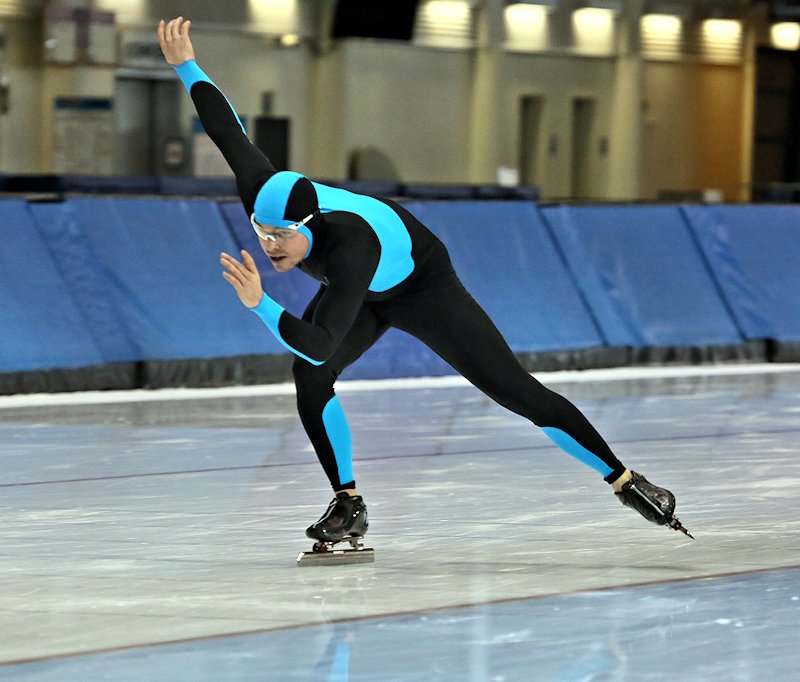
    Reid Pletcher speed skating at the Utah Olympic Oval. (Photo: Courtesy Photo)
    Reid Pletcher speed skating at the Utah Olympic Oval. (Courtesy photo)

    After making a few phone calls and purchases, Pletcher moved to Salt Lake City, Utah with $1,400 dollar speed skates in tow, to train full-time at the Utah Olympic Oval.  Though he indicated that the crossover from nordic skiing to speed skating is historically strong, he also admitted that his limited experience in the sport — in fact, none — made for a difficult transition at first.

    “I just called the Olympic Oval and I visited them a couple times a month prior and was like, ‘Hey, can I just show up and start skating? Like how does this work?’ ” he said. “I was a terrible ice skater — I had only skated maybe ten times in my life before — when I showed up.”

    But being years behind some of the fastest speed skaters in the country didn’t seem to bother Pletcher. If anything, he seemed more confident in his abilities, despite his lack of experience.

    “I had pretty ambitious plans,” he explained. “In speed skating, everything is based off time. If you hit this time, you’re on this team. And my goal was to try and hit every single A-time in six months in my first winter after never speed skating before.”

    According to Pletcher, team status is determined by time. There are three different times a speed skater can strive for: ‘A’ times, ‘B’ times, and ‘C’ times, with ‘A’ times being the most advanced. Pletcher also indicated that there are two types of speed skating: short track, which is classically paired with Olympic speed skater Anton Apolo Ohno, and long track. Pletcher chose long track. 

    In long track, speed skaters race in pairs usually around a 400-meter distance oval, with one competitor starting in an outer lane and one competitor in an inner lane. After a lap, the two skaters switch lanes, so that both ultimately cover the same distance. Results are based on time, with the shortest races taking an average of 35 seconds and the longest races taking an average of six minutes.

    “It took a while for me to figure my sh*t out, but three months in, I was putting some pretty consistent times down,” he said. “And by the end of the season I was super super close to all the ‘A’ times. I was probably about four or five percent off of each of the times.”

    After finishing his first season within reach of the ‘A’ times — despite also having bilateral knee surgery the previous summer — Pletcher knew he still had more to give in the sport of speed skating. However, an opportunity to lead trips on the 104-mile Middle Fork sections Idaho’s Salmon River, pulled Pletcher away from his new professional pastime.

    “The Mackay Wilderness River Trips offered me a significant raise and trip leading on the Middle Fork and that’s pretty much like the top end, what everyone wants to achieve in their river guiding career,” Pletcher explained.

    With that, he decided to postpone the speed-skating dream. He returned to Boise, Idaho, where he is currently living, and began going back to school at Boise State University. Prior to beginning his first semester of mechanical engineering courses this fall, he ventured back to the river for the summer.

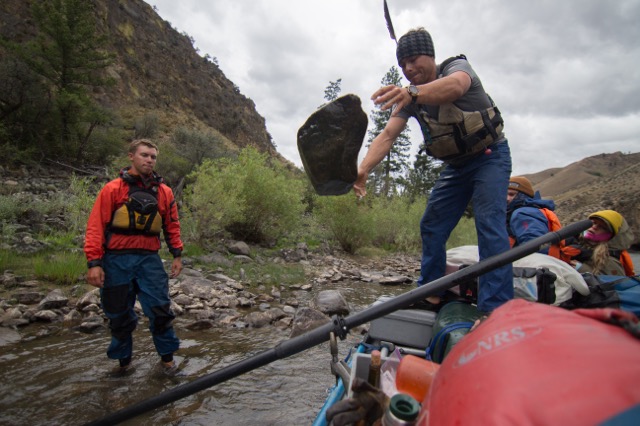
    Reid Pletcher (r) hucks a rock in order to dislodge a trapped oar from the raft during a Mackay Wilderness River Trip. (Photo: Courtesy Photo)
    Reid Pletcher (r) hucks a rock in order to dislodge a trapped oar from the raft during a Mackay Wilderness River Trip. (Courtesy Photo)

    “It’s kind of soul-crushing manual labor sometimes with 22 hour days, but it’s worth it,” he said of river guiding. “Starting June 1st and ending October 1st; seven days on, one day off, seven days on, one day off, I kind of disappear from the world for a while.”

    Yet when winter rolled around, Pletcher realized that for the first time, his usual race season would not include training or racing full-time. Queue American Ninja Warrior.

    “So I didn’t have much to do this winter and this is where Ninja Warrior comes in,” Pletcher said. “My ex-girlfriend, Mali Noyes just texted me and was like, ‘Hey, apparently there’s a Ninja Warrior gym in Salt Lake and there’s going to be tryouts and you should try out, you’re a shifty little guy. That’s, like, exactly what you do. You could be perfect for Ninja Warrior.”

    With that, Pletcher submitted his “Life Story” to ANW, pushing much of he above mentioned experiences in his application video. With a long list of uncommon circumstances, Pletcher was awarded a spot in the show’s Season 8 qualifier.

    “The producer called me for an interview,” Pletcher said. “And she was like, ‘Yeah I just watched your video. Holy sh*t, that was intense.’”

    “I’m glad I stood out,” he added. 

    Pletcher, the Next American Ninja Warrior?

    With two days to go before Season 8 of ANW qualifiers kicks off in Oklahoma City, Pletcher plans is to take it as it comes. On top of having to work with a recovering hand injury, and limited amounts of ANW gym experience, he explained he will most likely be racing in the wee hours of the morning.  

    “I think they do it all through the night because it looks better in the lights,” he said. “So it goes from 10 p.m. to 4 a.m. And most of the families with kids go first for logical reasons. I’m just kind of a lone wolf there, so I’m most likely going to go at 3 in the morning.”

    With only 30 advancing to the second day — those who complete the entire course and those who cover the greatest course distance in the least amount of time — Pletcher plans to watch for the ‘problem obstacle’ and put down as fast a time as possible to that point.

    “My strategy is basically, I’m going to watch as many people as I can before I go,” he said. “I’m going to watch where everyone’s falling and then just try in a controlled way, to get there slightly faster than most other people are getting there.”

    If Pletcher makes it through the first day, he will have to complete the same obstacle course again, along with an extra half-course segment, the following day (Saturday, May 14) to advance to ANW finals. This year, ANW finals will take place mid-June in Las Vegas. Only 15 individuals from the Day 2 qualifier advance to the finals.

    “I’ve trained with three or four other people I’ll be competing against and I have a pretty good feeling, let’s put it that way,” Pletcher explained of his competition. “I mean, I’m a pretty ambitious kid … In the back of my mind, I know I’m strong enough to get to Vegas.”

    If Pletcher qualifies for the Las Vegas finals, ANW will pay for his travel and lodging. However, Pletcher must fund himself at the qualifier to get there. If Pletcher were to make it all the way through the final–which includes a back-to-back four stage course–in the fastest amount of time, he would win $1 million dollars.

    “There are no awards at all except for the one person that wins,” Pletcher explained, adding that last year marked the first year in history where two finalists completed the fourth stage, but only one walked away with the million dolla prize and the other with nothing. 

    “There’s no paycheck for anyone, ” Pletcher said, “So you really got to love it. I mean I could see the drive. I’m the type, where I get through it and I’m like ‘I could do so much better, I’m going to spend all year doing it and I will crush it next year,’ I’m that type of mentality.”

    Regardless of his end result, he relayed that the experience of applying and attempting ANW is worth the effort.

    “It’s going to be an adventure,” Pletcher said. “It already is.”

    Season 8 will premiere June 1 on NBC.

  • Wednesday Workout: Savoring Spring with CU Coach Bruce Cranmer

    Wednesday Workout: Savoring Spring with CU Coach Bruce Cranmer

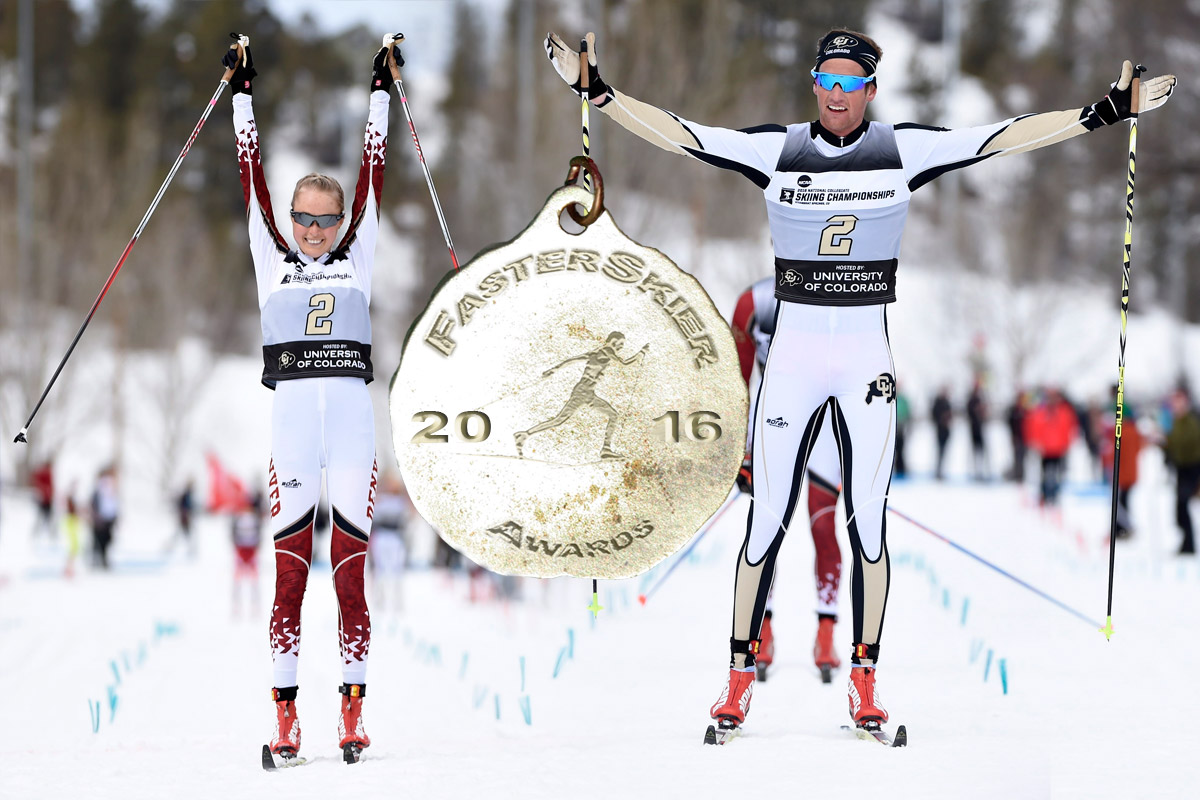
    Mads Strøm, the University of Colorado-Boulder's two-time 2016 NCAA champion, at the collegiate championships in Steamboat Springs, Colo., this past March. (Photo: CU)
    Mads Strøm, the University of Colorado-Boulder’s two-time 2016 NCAA champion, at the collegiate championships in Steamboat Springs, Colo., this past March. (Photo: CU)

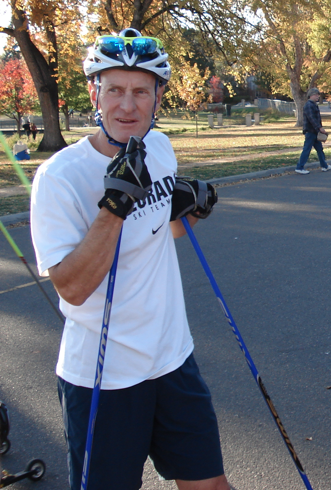
    Fifteen years into his tenure as head nordic coach at the University of Colorado (CU) in Boulder, Bruce Cranmer has guided his teams to NCAA Championships in 2006, 2011 and 2013. As head cross-country coach at the University of Vermont (UVM) from 1989 to 2000, his teams won four NCAA titles. He’s kind of like the Geno Auriemma (UConn women’s basketball coach) of the ski tracks — shepherding young athletes to championships and into adulthood while trying to cultivate their best athletic performances.

    So Cranmer comes with experience and he’s doubly blessed with living in an (editor’s note— we did not use the word “the”) endurance-sport capital. His nordic skiing athletes have, at their doorsteps, a host of world-class trail runs, road biking routes, and a 25-mile drive to high-alpine ski tours.

    University of Colorado-Boulder Head Coach Bruce Cranmer in 2012.
    University of Colorado-Boulder Head Coach Bruce Cranmer in 2012.

    Cranmer said April is a recovery month for his student-athletes.

    “I’m not pressuring them too much in April,” he explained in a recent phone interview. “I think it’s important to emphasize a rest period because when you start back training you don’t want to go, ‘I’m already burned out.’ ”

    During the conversation, Cranmer mentioned several times that his wants his skiers to find something they love doing this time of year. Come May, when the training loads increase and more focused ski training takes priority, Cranmer asserts skiers should feel fresh.

    “You want to feel to feel a little bit hungry, ready to go,” he said. “I think it’s important to have a little bit of a break from training for a lot of the guys I know they already out hiking, backcountry skiing, and doing stuff like that anyway because they just like the activity of it. 

    “I look at May as kind of the beginning on the new training year,” he added. “As far as getting back, I always like the guys to diversify before they crank up the running miles and do a bunch of rollerskiing. I’ve always pushed the guys to do stuff they also enjoy so they are not starting off cranking off rollerski miles in May and the come October and go, ‘I am so burned out, I just can’t stand to go roller skiing again.’ ”

    Here’s Cranmer’s recommendation for some stellar April-May workouts. (Sorry, no rollerskiing workouts yet.) If you happen to live in Boulder or nearby in the Front Range, time to get outside. Odds are, if you’re there already, you’ve been doing that.

    The Workout: Cranmer’s Early Spring Recommendations

    “Spring is in all its splendor in Colorado, which can mean two to four feet of snow or 75 degrees,” he explained in an email. “This is a relaxing and resting period for the CU Ski Team with exams just around the corner. As far as a Wednesday Workout for this time of year, I recommend first and foremost, make it fun and something you really enjoy doing. I think this is a great time to focus on non-specific training, my favorite is backcountry skiing. There’s still tons of snow in Colorado, we [recently] got two to four feet [one] weekend in the mountains near Boulder, and I skied until I could barely stand up. Backcountry provides a great workout skinning up and lots of fun going down. However, I know not everyone has the snow or the equipment to go back country so here are a few suggestions.

    – I suggest for our skiers to bike up Flagstaff Mountain, which is right on the edge of town. It’s a steep climb of 2142 feet in 5 miles with an average grade of 11 percent. It takes about an hour if you start from somewhere in town, but the record from the base is under 25 minutes.

    – For those athletes that don’t like biking, I recommend an easy run-hike up Green Mountain, which takes about an hour to the top, and begins from Chautauqua Park. The vital stats: 6.47 miles round trip and a total elevation gain of 2,288 feet.

    – For those athletes studying hard for exams there’s a quick jog up Mount Sanitas. It’s 1.4 miles to the top with 1,323′ of elevation gain. Although unconfirmed, the record up is 14 minutes, 12 seconds — that’s fast — by endurance king Kilian Jornet.”

    Link to an interactive map of Boulder Mountain Parks

  • FasterSkier’s Collegiate Skiers of 2016: Mads Strøm and Linn Eriksen

    FasterSkier’s Collegiate Skiers of 2016: Mads Strøm and Linn Eriksen

    FasterSkier's Collegiate Skiers of 2016: Mads Strøm and Linn Eriksen. (photo: Curtis Snyder of the CU Sports Information Dept. and Jamie Schwaberow/NCAA Photos).
    FasterSkier’s Collegiate Skiers of 2016: Mads Strøm and Linn Eriksen. (photo: Curtis Snyder of the CU Sports Information Dept. and Jamie Schwaberow/NCAA Photos).

    With the 2015/2016 season officially in the rearview, FasterSkier is excited to unveil its annual award winners for this past winter. Votes stem from the FS staff, scattered across the U.S. and Canada, and while not scientific, they are intended to reflect a broader sense of the season in review.

    We kicked off the series Monday with Juniors of 2016: Katharine Ogden and Sean Doherty. This second set of honors goes to outstanding male and female skiers on the U.S. NCAA collegiate circuit. 

    ***

    Mads Strøm, University of Colorado-Boulder

    Even after tallying four wins in a row and six victories this past season, the University of Colorado-Boulder (CU) junior Mads Ek Strøm was still nervous before his final competitions of the 2016 college race season.

    Nerves, however, didn’t stand a chance with the 24-year-old Norwegian.

    By the time he finished the men’s 10-kilometer freestyle — the first of two nordic races at the NCAA Skiing Championships event this year in Steamboat Springs, Colo. — Strøm had skied to his seventh win of the season and fifth win in a row, securing himself as the most distinguished CU skier of all time.

    Prior to Strøm, the most season wins accomplished by a CU skier were six, set first in 1989 by Per Kare Jakobsen and then again in 1999 by Ove Erik Tronvoll.

    “I was so nervous,” Strøm said of coming into the 10 k, according to CUBuffs.com. “I just had to find good skis, good pacing, and push it as hard as possible. It was definitely the best win of the year. Pulling it off when it matters the most is great.”

    An Oslo native, Strøm began attending CU in 2014. He made his debut on the NCAA Championships podium during his freshman year, when he won the 2014 men’s 20 k freestyle race at Soldier Hollow in Midway, Utah.

    One podium only warranted more. After his freshman year, Strøm continued to chase the top spots, garnering 25 career podium finishes and 13 individual titles by the time he won this year’s men’s 10 k event, according to CU’s Sport Information Specialist Curtis Snyder.

    However, Strøm’s goal for this college season wasn’t to win just one of the NCAA Championships races. He wanted both.

    “Obviously I wanted to win,” Strøm had told FasterSkier after he finished second in the men’s 15 k classic mass start Sun Valley SuperTour in December — before the college season started. “I haven’t gotten quite there yet because I have been training almost 100 hours every month since May. I’ve planned that in one month from now I’m going to be in better shape and my plan is to win both races at NCAA’s.”

    Strøm’s plan to wait and win worked. When he crossed the finish line first in the men’s 20 k classic mass start, the second nordic race of NCAA Championships, Strøm accomplished his season goal and much more.

    After winning eight out of 12 races in the collegiate race schedule, Strøm now holds the record for most season victories of any CU skier, alpine or nordic.

    “He became the fifth CU skier to sweep the individual NCAA Championships in program history, joining John Skajem (alpine, 1987), Line Selnes (1988, Nordic), current Nordic assistant Jana Weinberger (2006, Nordic), Maria Grevsgaard (2008, Nordic) and Lucie Zikova (2008, alpine),” Snyder wrote in an email regarding Strøm’s NCAA podium sweep.   

    The Norwegian’s achievements this season don’t end with the collegiate race scene. Strøm also finished fourth and ninth at the SuperTour season opener in West Yellowstone, Mont., in the 15 k freestyle and sprint, respectively. 

    The following SuperTour in Sun Valley Idaho, also saw Strøm ski to second in the men’s 15 k classic mass start and 11th place in the classic sprint.

    Strøm, who plans to major in business and would like to one day compete at the Olympics, will return to CU next year for his final nordic ski season as a senior.

    Linn Eriksen, University of Denver

    One out of two. For every two college races University of Denver (DU) sophomore Linn Eriksen raced this year, she won one. That includes the final nordic college race of the season at NCAA Championships: the women’s 15 k classic mass start.

    Also from Oslo, Eriksen, 21, commanded this year’s NCAA Championships mass start, striding away to a 19.9-second victory over the University of New Mexico’s (UNM) Kati Roivas.

    Though Eriksen has stood at the top of the podium before as Norway’s four-time Junior National Champion, her victory in this year’s 15 k was her first NCAA title, as well as her first NCAA podium appearance. 

    Her breakthrough at this year’s NCAA’s also helped the Denver Pioneers to their 23rd national championship.

    “Moritz [Madlener] and Linn [Eriksen] have led the team all year and they did it again today,” DU head nordic coach David Stewart said according to a DU press release.  “Linn skied a masterful race, leading from start to finish, breaking away on the last lap to ski to a solo win.”

    Eriksen’s other notable accolades from the season include first-place finishes in women’s 5 k freestyle and 15 k classic at the Montana State University invite, victories in both races at the UNM invite, second place in the 5 k freestyle at the University of Utah invite, third place in the 15 k classic CU invite, second place in the 5 k freestyle at the DU Regional race, and her top-10 finish in the first race of NCAA Champioships, the 5 k freestyle where she placed eighth.

    After finishing the season as an All-American in both NCAA Championships races, Eriksen’s name will not go unnoticed at the start of next year’s college race season, her junior year.

  • Wednesday Workout: Crust Cruising with CU’s Petter Reistad

    Wednesday Workout: Crust Cruising with CU’s Petter Reistad

    Petter Reistad (front), who recently finished his freshman season at the University of Colorado-Boulder, crust cruising in 2013 in Sognefjellet, Norway. (Courtesy photo)
    Petter Reistad (front), who recently finished his freshman season at the University of Colorado-Boulder, crust cruising in 2013 in Sognefjellet, Norway. (Courtesy photo)

    Itching for an excuse to say ‘Sayonara’ to scheduled skiing and ‘Hello’ to more impromptu spring-skiing experiences? Look no further as this week, FasterSkier provides an ideal Wednesday Workout for the nordic wanderer, courtesy of Petter Reistad of the University of Colorado-Boulder (CU).

    ***

    Sunscreen, sunglasses and snow. When it comes to spring workouts, it’s not just the freeing feeling of skiing around in Ray-Bans and beach-like weather that makes crust skiing an essential workout for this time of year, it’s also the satisfaction that spontaneous skiing provides after a season of structured ski training.

    Petter Reistad, coming off his freshman season a CU and an All-American in both races at this year’s NCAA Skiing Championships, says the best training plan for the spring is no plan at all.

    “What I like about spring is that you can do what you want, you don’t have to follow a plan anymore,” said Reistad, a 21-year-old from Bærum, Norway, on the phone. “It’s really nice to, instead of following a trail for a 15 k loop, to just go and aim for a mountain. You can ski up [to the top] and then ski [back] downhill where ever you like.” 

    For those lucky enough to have mountains and snow nearby, Reistad’s spring training regimen proposes a simple schedule: Pick a peak and send it.

    Petter Reistad (r), taking advantage of the last bit of snow during a crust cruising trip in Skeikampen, Norway back in 2011. (Courtesy Photo)
    Petter Reistad taking advantage of the last bit of snow during a crust-cruising trip in Skeikampen, Norway, back in 2011. (Courtesy photo)

    “Going for a trip like that is a little bit more of an expedition, than just a normal workout,” Reistad said. “But nothing is like being free on skis and the spring crust gives you an awesome opportunity to do so.”

    In terms of snow crust, the spring season also provides the cream of the crop. For Reistad, spending a few spring workouts trekking mountain tops on skis is not only about the novelty of blazing trails where none were before, but also experiencing some of the season’s premium crust-cruising moments.

    “The reason why [this workout] is also a good thing to do in the spring is that during the rest of the season, you have more snow and different cold kinds of snow,” he said. “But in the spring, colder temperatures up in the mountains [combined with] the snow heating up during the day, forms this really nice crust.”

    While Reistad has done plenty of crust skiing in Norway, this year will mark his first adventure cruise on Colorado snow crust. Before making moves for the mountains, however, he plans to first catch up on schoolwork. Predicting that snow will stick around in the Rockies until mid-May, he and a few other CU teammates, including fellow Norwegian, Mads Strøm, who won both men’s nordic races at this year’s NCAA Championships, will set out for Crested Butte, Colo. 

    “It has been a really good year,” Reistad said regarding his first year of college ski racing in the U.S. “I’ve been second in some races this year and I must say, it’s really good to have [Strøm] on the team. Having good teammates is important because you can both train with them and compete even harder with them … it is more fun when you give them something to think about during the race … and I would really like to beat [Strøm] once next season. That’s a goal for next year.”

    Reistad will have that chance next ski season, during his sophomore year and Strøm’s senior year at CU. 

    The Workout

    – Start sometime early in the morning, 7 a.m. seems a solid choice, according to Reistad

    – Spend an undetermined amount of time skiing snow crust

    – Mid-workout, stick a bottle of soda in the snow for later

    – Spend more undetermined amounts of time skiing snow crust

    – Stop and enjoy a cold soda (if you can recall its original location)

    – Re-apply sunscreen and spend a little more time crust cruising before the sun makes the snow too soft to ski on

    Total Workout Time: Depends on when you start and how strong the sunshine is, but Reistad estimates 3-4 hours should do the trick

    Reistad’s Crust-Cruising Checklist

    In order to find freedom within the spring crust cruising workout, Reistad recommends shedding training schedules and sticking to the bare minimum. A few items he suggests as indispensable to a spring ski trip are listed below, followed by the workout itself. 

    1. Sunglasses and Sunscreen: Carrying cases of clothing is less of a priority for the CU skier when it comes to cruising snow crust. “I’m excited because you don’t need that much clothes as in the regular season because it’s just heating up so amazing in the spring,” Reistad said. “So sunglasses and sunscreen are the most important things [to pack] because you get so sunburnt.”
    2. Oranges and Chocolate: Not your average culinary combination, Reistad argues that the mixture of sweet and tangy makes for the most desired treat during a spring trip to the mountains. “In Norway, a very typical thing to eat around this time of year — Easter and spring — is oranges,” he said. “So I will pack some chocolate and some oranges. That’s just a great combo.”
    3. A Bottle of Coke: Share a soda on snow crust. “Nothing is like a cold Coke on a trip like that,” Reistad said. “Make sure to make it cold in the snow in the middle of the trip before drinking it.” 
    4. A Camera Phone: For any cross-country skier looking to make the crust-cruise workout complete, Reistad also says shameless self-promotions on social media make the workout all the more worthwhile. “You should probably bring your phone, too, to make sure to Instagram the whole thing after,” he said. “A trip gets so much better when you can show it off to everyone.” 

    (Ed. note: FasterSkier recommends having a phone with you at all times during workouts in the event of an emergency.)

  • Faces Painted, APU Mixed Relay Gets Down to Business with Third-Straight Win

    Faces Painted, APU Mixed Relay Gets Down to Business with Third-Straight Win

    In three editions of the SuperTour Finals, the mixed relay has been the season-ending staple. On Thursday, the two-time defending champions in the 4 x 5-kilometer coed event, Alaska Pacific University (APU) made it a three-peat with a 33.3-second win. Say that three times fast.

    They did so with Erik Bjornsen skiing the opening classic leg, followed by Rosie Brennan as the female classic skier, then Scott Patterson skiing the first freestyle leg, and finally Chelsea Holmes anchoring the final freestyle leg. Put those four together and what do you get? A dominating APU performance from start to finish.

    With Bjornsen racing the scramble leg, APU took control from the start and never relented. While he opted to stride, two of his biggest rivals double poled on skate skis — Simi Hamilton, of the Stratton Mountain School (SMS) T2 Team, and Noah Hoffman, of “Vailbury Green,” which included two men from the Vail Ski & Snowboard Club (SSCV) and two women from the Craftsbury Green Racing Project (CGRP).

    Taking advantage of the striding advantage, Bjornsen gained a gap on the hill and never looked back throughout his two laps on the 2.4 k course.

    At the first exchange, Bjornsen clocked in at 11:26.9, 14.7 seconds up on the chasers, led by Ben Saxton of SMS T2^2. Meanwhile, Hoffman tagged in eighth, 25.5 seconds back, and Hamilton came through in 15th of 31 teams, nearly a minute behind Bjornsen.

    Following up on Bjornsen’s lead, Brennan had the task of staying away despite dangling within reach of the field.

    “I just tried to think about keeping the pressure high and getting out of sight,” Brennan said in a post-race phone interview. “I just had to put my head down and not think about it too much.”

    In the second leg, Brennan only ceded 1.9 seconds to Ida Sargent, who took Vailbury Green from eighth to second by the second handoff, posting the fastest female second-leg split in 13:21.6. APU was still clear of the field by 23.4 seconds at the second handoff, but the race for the podium was far from settled.

    Another hybrid club team, with two University of Colorado-Boulder (CU) men and Craftsbury women — “The Green Buffaloes” — handed off 5.2 seconds behind Vailbury Green and just 0.7 seconds head of SMS T2^2.

    In the third leg, APU continued pushing as Scott Patterson blazed the fastest leg in 11:06.09, increasing the gap to 35.6 seconds. CU’s Mads Strøm, coming off back-t0-back NCAA titles, brought the Green Buffaloes up to second at the third exchange, 34.4 seconds behind APU, but was still shadowed by Tad Elliott of Vailbury Green, 1.2 seconds back.

    Although it appeared that APU had the win secured, Jessie Diggins was skiing the anchor leg for SMST2’s first team and is known as a clutch closer on the World Cup stage. Although SMST2 remained outside the top five for the first three legs, the final outcome was far from decided. Meanwhile, three strong races from APU set up Holmes for a strong anchor leg.

    “I was just focused on skiing good 5 k to give us a little playing room with Jessie and make sure we had it under control and take some pressure off Chelsea,” Patterson explained on the phone.

    2016 SuperTour Finals
    Mixed Relay Top 10:


    1. APU 1
    2. Vailbury Green
    3. SMST2
    4. The Green Buffaloes
    5. APU 2
    6. Northern Michigan University
    7. SMS T2^2
    8. APU 3
    9. University of New Mexico
    10. Sun Valley SEF

    With nearly 35 seconds between her and the Green Buffaloes and Vailbury Green, Holmes raced uncontested to secure the win for APU 1 in 48:57.9. Meanwhile, Caitlin Patterson of Vailbury Green overtook their rivals, the Green Buffaloes to claim second, 33.3 seconds behind APU 1.

    True to form, Diggins blasted the anchor leg to bring SMST2 from sixth and 1:23 minutes back to third place at the finish (+51.9), besting the Green Buffaloes in fourth by 28.6 seconds.

    “It was about having four good races on the same day, using our strengths, and having good skis,” Holmes said on the phone.

    In addition to the strength of the winning team, APU showed the depth of its program with three teams in the top 10. APU 2, with Reese Hanneman, Becca Rorabaugh, David Norris, and Jessica Yeaton, placed fifth, and APU 3, with Lex Treinen, Lauren Fritz, Eric Packer, and Rosie Frankowski, was eighth.

    The laid-back atmosphere of Spring Series and non-traditional nature of the mixed relay is conducive to teams adding some lightheartedness to the day — in the form of team names, constumes or otherwise. Although APU kept it simple with its team name, there might have been some magic in the face paint.

    Racing will conclude Saturday with the U.S. Distance Nationals 30 and 50 k classic mass starts.

    — Gabby Naranja and Alex Kochon contributed reporting

    Results

    More photos via Lazenbyphoto.com

  • Caldwell, Mayerhofer Claim NCAA Freestyle Titles as Colorado Takes Early Lead

    Caldwell, Mayerhofer Claim NCAA Freestyle Titles as Colorado Takes Early Lead

    The men's 10 k freestyle interval start podium at the 2015 NCAA Championships in Lake Placid, N.Y. Taking the top three spots were Dartmouth's Patrick Caldwell, Denver's Moritz Madlener (not pictured), and Colorado's Rune Malo Ødegård.
    The men’s 10 k freestyle interval start podium at the 2015 NCAA Championships in Lake Placid, N.Y. Taking the top three spots were Dartmouth’s Patrick Caldwell, Denver’s Moritz Madlener (not pictured), and Colorado’s Rune Malo Ødegård.

    LAKE PLACID, N.Y. — Excitement was high in upstate New York as the 2015 NCAA Skiing Championships kicked off in Lake Placid with the men’s 10 kilometer and women’s 5 k freestyle interval starts. Dartmouth’s Patrick Caldwell claimed his first national title, while the University of Utah’s Veronika Mayerhofer led a western sweep in the women’s race.

    While Lake Placid has faced a colder-than-average winter, Wednesday welcomed temperatures in the 40s and occasional sun. Snow was hard packed for the men’s race, and conditions were incredibly fast despite the difficulty of the course.

    Caldwell finished the 10 k with a time of 25:09.1. The University of Denver’s Moritz Madlener placed second, just 2.1 seconds off the Big Green skier’s winning time. The Univeristy of Colorado’s Rune Malo Ødegård finished third, 26 seconds behind.

    Fellow Buff, Mads Ek Støm (+29.8) took fourth, as Montana State University’s Forrest Mahlen (+1:00.7) finished fifth.

    Dartmouth's Paddy Caldwell hugs Vermont's Rogan Brown at the finish of the 10 k freestyle at the 2015 NCAA Championships in Lake Placid, N.Y.
    Dartmouth’s Paddy Caldwell hugs Vermont’s Rogan Brown at the finish of the 10 k freestyle at the 2015 NCAA Championships in Lake Placid, N.Y.

    Starting in bib 40, Caldwell was the last skier to begin the two-lap race on the challenging Women’s Cross Country Olympic 5 k course at the Mt. Van Hoevenberg Nordic Center. Given the conditions, the Dartmouth sophomore said he entered the race planning to begin fast and maintain high speed until the finish line.

    “With the fast conditions I just wanted to go as hard as I could. I tried to get a fast pace from the start and hold it,” he said in a post-race interview.

    Caldwell notched the fastest time at the halfway mark, 8 seconds ahead of Madlener. As the Big Green’s skier traversed the second lap his lead over Madlener gradually decreased – at one point it reached 10 seconds but eventually whittled down to 2 seconds. Cakdwell said that he was fading fast by the last kilometers. “The wheels were coming off at the end but I was able to hold it just long enough,” Caldwell said in an interview.

    After his victory, Caldwell said that the 10 k freestyle was a target of his in the 2015 season. “I was definitely shooting for this race,” he said. “This is one of my favorite events. I definitely wanted to have a good one today.”

    Caldwell is also a member of the U.S. Ski Team D-Team. Given his position between collegiate and national team skiing, the 20-year-old faced a decision – focus solely on skiing or continue racing for Dartmouth. Caldwell chose to spend the winter at school and said that his focus of the season has been to have strong individual and team performances in Lake Placid.

    Moritz Madlener of The University of Denver skied to second in the 10 k freestyle at the 2015 NCAA Championships in Lake Placid, N.Y.
    Moritz Madlener of The University of Denver skied to second in the 10 k freestyle at the 2015 NCAA Championships in Lake Placid, N.Y.

    In second place, Denver sophomore Madlener earned his best finish at a NCAA Championships. Last year the German skier placed fifth in the 10 k classic individual start and said his goal was to top the result in either race in Lake Placid. Although he hoped to place better than fifth, Madlener never expected to land on the freestyle podium. The Pioneer said that he was surprised by his second place finish because he is traditionally performs better in the classic technique and didn’t feel strong in the days prior to Wednesday’s race.

    Although Madlener was one of the highest ranked skiers he started his race in bib 1, a position that he said had benefits and a drawbacks. “In some ways it’s a disadvantage because you don’t know what the other guys are doing, but I think I had better conditions. I didn’t get information about the others and I think that was good too because you start thinking during the race what the others are doing,” he said.

    Madlener has played second fiddle to the dominating Colorado duo of Ødegård and Strøm for the entirety of the western collegiate season. He said it felt good to finish higher than third, especially at the year’s most important races. “There’s always been two Norwegian guys in our region who got third and fourth today. They always tease me and tell me it’s my favorite spot to be third, so I thought today I’m going to show them that I like the second spot too,” he said with a smile.

    Ødegård, a senior at CU and two-time NCAA champion, said that the 10 k was one of the best freestyle races of his career. He explained that he paced his race to start slow and finish strong.

    “I felt like I had a really strong race, it’s probably one of the best skate races I’ve ever done,” the Norwegian said. “I felt like started smart and I skied faster and faster throughout. I couldn’t believe I was behind because I had a super, super strong race.”

    One of the later starters, Ødegård explained he spent much of the race chasing Madlener’s time, which he was ultimately unable to match. He said was impressed with Caldwell’s finish, especially given the slowing conditions that the last starters faced.

    “I lost a lot from the top and the end of the last lap. Probably conditions were slowing a bit down there in the last lap but you saw by Caldwell that it was possible to beat it. I just wasn’t strong enough,” he said, adding that he was looking forward to Friday’s classic mass start. Ødegård won the 2013 and 2014 classic races at the NCAA Championships.

    The women's podium in 5 k freestyle at the 2015 NCAA Championships in Lake Placid. Utah's Veronika Mayerhofer took the win, while Denver's Sylvia Nordskar placed second and Emilie Cedervaer claimed third.
    The women’s podium in 5 k freestyle at the 2015 NCAA Championships in Lake Placid. Utah’s Veronika Mayerhofer took the win, while Denver’s Sylvia Nordskar placed second and Emilie Cedervaer claimed third.

    Mayerhofer Victorious in 5 k 

    In the women’s 5 k freestyle the University of Utah’s Veronika Mayerhofer skied to a convincing win with a time of 14:21.4. She bested Denver’s Sylvia Thorson Nordskar by 13.2 seconds. Emilie Cedervaern of the University of New Mexico raced to third, 15.8 seconds back from the victor.

    The first American skier, Montana State’s Cambria McDermott (+15.9), finished fourth and 0.1 seconds from third. In fifth was Utah’s Sloan Storey (+22.7).

    The women began their race two hours after the men to slightly warmer temperatures and softer snow. Despite the change, the course remained fast and intact for all 40 starters. The western women swept the top 11 to dominate the 5 k. The eastern skiers originally hoped to capitalize on a home course, but their best finish on the day came from Mary Kate Cirelli in 12th. The central regions best finisher was Jordyn Ross in 13th.

    Mayerhofer, a freshman, entered Wednesday with low expectations. She had a cold in the days prior to the race and was feeling flat in training. At the start of the race Mayerhofer said her race felt slow. Everything changed after a coach told her she had a one second lead over Nordskar in the first kilometers. According to the Austrian, the news of the lead motivated Mayerhofer to fight for the win and reach the next level of exertion.

    The Ute said that she had no particular strategy while fighting on the challenging course that featured several kilometers of climbing. “In a 5 k you have to go as fast as you can,” she said. “Through the first kilometer you have to not kill yourself because it’s a tough course. I think it’s one of the toughest. We are very used to high elevation so you never know how you’re going to feel.”

    Veronika Mayerhofer en route to a win in the 5 k freestyle at the 2015 NCAA Championships in Lake Placid.
    Veronika Mayerhofer en route to a win in the 5 k freestyle at the 2015 NCAA Championships in Lake Placid.

    Mayerhofer said that she enjoys the collegiate circuit because of its focus on the team rather than the individual. With her teammate, Storey also in the top five, Mayerhofer said she was happy to see the team’s training be rewarded at the end of the season.

    “It’s my first year of college racing and I was so happy that I could go to the NCAAs,” she said. “I really enjoyed it so much because it is so much for the team and not just individual racing, because cross country skiing is so much on your own. It’s maybe less pressure and everyone is so happy for you.”

    Nordskar entered Wednesday’s race with little training or racing logged since the start of the new year, as she sat out much of the season due to illness. Her last race before the Championships was at the Colorado Invite in late January. Although she complained of breathing troubles, Nordskar said she was happy to race again after the draining illness. “I’ve been sick the whole last month and haven’t been able to train,” she said. “That has been difficult but I think I’ve done a good job to comeback and now race.”

    Like her DU male counterpart, Nordskar was also the first starter and set the time to beat early on in the race. She said that while the course was challenging, she enjoyed racing at the Olympic venue.

    “It was a very hard race but I really liked the course. It’s some brutal hills,” she said. “I really pushed myself today. It was fun and I’m satisfied with my race today even though I couldn’t get to the very top, which was my goal.”

    Cambria McDermott, fourth place and top American finisher in the 2015 NCAA 5 k, high fives Montana State University Head Coach Kristina Trygstad-Saari.
    Cambria McDermott, fourth place and top American finisher in the 2015 NCAA 5 k, high fives Montana State University Head Coach Kristina Trygstad-Saari.

    In third was Cedervaern, a New Mexico Junior from Falun, Sweden. The trip to Lake Placid was the Swede’s first NCAA Championships.

    “That was good. I was very tired after 2.5 k so I just tried to hammer all the way in,” she said of her race. “5 k is too short to think and I was just trying to hammer the whole way.”

    McDermott, a senior at Montana State, said her achievement as the 5 k’s first American was especially satisfying because she was able to share it with her friends and family in attendance. “I’m really excited. It was an awesome course. It was a lot of climbing but I had fast skis and that made it pretty quick,” she said. “I was so happy that my family here to cheer me on and all my friends from home.”

    NCAA Standings

    With the first races of the 2015 NCAA Championships complete, the University of Colorado leads the points with 155. The Buffs have won the last two Championships in the East and Wednesday’s race gives them a good beginning to their quest for their 28th championship title. They will have to overcome the University of Utah which sits in second and less than 25 points behind.

    The NCAA championships continue on Thursday with the giant slalom at Whiteface Mountain,

    2015 NCAA Championships standings after Wednesday (link):

    University of Colorado 155

    University of Utah 131

    University of Vermont 106

    University of New Mexico 106

    University of Denver 93

    Dartmouth College 88

    Montana State University 77

    Northern Michigan University 76

    University of Alaska – Anchorage 56

    Williams College 29

    Results: men | women

  • Denver Wins 22nd NCAA Championship; Strøm and Severrus Claim Individual Titles

    Denver Wins 22nd NCAA Championship; Strøm and Severrus Claim Individual Titles

    Denver's Sylvia Nordskar leads Rosie Frankoski of Northern Michigan and Eva Severrus of New Mexcico in the second lap of the 15 k freestyle mass start at the NCAA Championship in Midway, Utah. Nordskar finished third, while Frankowski finished second and Severrus finished first.
    Denver’s Sylvia Nordskar leads Rosie Frankoski of Northern Michigan and Eva Severrus of New Mexcico in the second lap of the 15 k freestyle mass start at the NCAA Championship in Midway, Utah. Nordskar finished third, while Frankowski ended in second and Severrus crossed the line in first.(Photo: http://bertboyer.zenfolio.com) All proceeds from photo sales will be directly donated to NNF.

    “It’s special but it’s also something that we really expected.”

    That was the sentiment of the University of Denver’s nordic head coach Dave Stewart after his team not only claimed the overall NCAA title, but also the overall nordic title in Midway, Utah, on the final day of the national collegiate skiing championships.

    The win marks the 22nd overall championship for Denver, the most any school has ever won. It is also the university’s eighth championship since 2000 and Stewart’s fourth title.

    “It means a lot. The goal of our program is to win the NCCA championship. We have that expectation and that history,” he said in a post-race interview.

    After handily winning both men’s and women’s nordic races on Thursday, the team did’t fare as well in the mass starts with two skiers making the top 10.

    “We had an amazing day on Thursday and not so good of a day today, but we came out on top for nordic, and I’ve never done that for nordic in my eight years of coaching.”

    The Denver nordic team has built off strong training and an excellent team atmosphere all year to claim the championship. After winning the regular-season RMISA title, the Pioneers were hungry for the NCAA crown.

    The title will certainly mark a great end to the college careers of six graduating seniors. Makayla Cappel, Trygve Markset, Katie Gill, Elena Breed, Jessica Jortberg, and Connor Wallace will leave Denver this spring on the tails of another historic NCCA win.

    Men’s 20 k: Colorado Break Away

    University of Colorado’s Mads Strøm entered Saturday’s 20 k freestyle mass start with determination. Thursday’s 10 k classic, in which he had finished fourth, had not gone well for him and he was ready to gain redemption.

    Mads Strøm of Colorado leads the field in the men's 20 k freestyle mass start during the last day of the 2014 NCAA Championships. Strøm handily won after breaking away on the last lap.
    Mads Strøm of Colorado leads the field in the men’s 20 k freestyle mass start during the last day of the 2014 NCAA Championships. Strøm handily won after breaking away on the last lap.(Photo: http://bertboyer.zenfolio.com) All proceeds from photo sales will be directly donated to NNF.

    From the shot of the gun he kept within the pack, biding his time until he could make his move at the opportune moment.

    Roughly halfway into the race, the freshman from Norway looked back to gauge the competition. To his surprise the majority of the field was on his and his fellow teammate Rune Østegård’s tails.

    “I tried to make a move on the third lap just to see if anyone was able to keep up and we were able to open up a gap. So I knew that I had to ski really fast on the last lap to make up a big enough gap because coming up from behind was such an advantage,” he said of his tactics in the second half of the race. “I used all the motivation from Thursday.”

    And create a gap he did. Joined by Østegård, Strøm gave it his all as he climbed the hills of the Hollow, a gradual yet unforgiving kilometer of uphill leading out of the stadium. As the pair continued their attack around the course, the pack trailed farther and farther behind them.

    Suddenly, he was alone. Østegård, Strøm’s “best friend and biggest competitor,” had fallen back halfway through the 5 k loop, thus leaving the top spot at the most esteemed college race of the season ripe for the taking.

    Skiing into the final stretch, there was no one to see but Strøm. Barely looking tired, he elatedly crossed the finish line, knowing he had won his first NCAAs.

    University of Alaska Fairbanks' Max Olex races up the last hill of the men's 20 k mass start at the 2014 NCAA Championships. He passed seven people on the hill en route to his second place finish.
    University of Alaska Fairbanks’ Max Olex races up the last hill of the men’s 20 k mass start at the 2014 NCAA Championships. He passed seven people on the hill en route to his second place finish. (Photo: http://bertboyer.zenfolio.com) All proceeds from photo sales will be directly donated to NNF.

    “This was one of two goals. That was nationals in Norway in January, which I did really good,” the freshman said. “And then there was, of course, NCAAs. I really wanted to win both races, that was my goal.”

    Behind Strøm in second was Max Olex, a senior at the University of Alaska Fairbanks who never made the podium in a collegiate race before Saturday. The German, who broke his shoulder blade in November, had a slow start to the season. Coming into NCAAs he decided to have an open mind.

    “It’s always a goal at NCAAs to make the better half of the field, especially for me, looking at the season seeing how it went,” Olex said. “I came here this morning and I knew that these are my conditions and I had the matching skis. I knew what I was training the last two years. I trusted in what I did here and that was what I got today.”

    “Definitely the best race of my life,” he added.

    Coming in third was New Mexico’s Mats Resaland, a sophomore from Norway. After initially racing at the front of the pack, he soon realized there was no need to waste energy.

    “It was kind of crowded out there. In the first lap I was in the front but then I dropped back because there was nothing to stress about,” he said. “It’s four laps, and I picked up seven spots on the last hill.”

    Women’s 15 k: And Then There Were Three

    The women’s 15 k freestyle mass start wasn’t as cut-and-dry as the men’s race. From the beginning of the distance race, Denver’s shining star, Sylvia Nordskar led the pack with the hopes of dropping most of the competition.

    Eva Severrus of the University of New Mexico leads Rosie Frankowski of Northern Michigan up Hermod's Hill at Soldier Hollow in Midway, Utah. Severrus won the NCAA Championship by outlasting Frankowski in the final stretches of the 15 k.
    Eva Severrus of the University of New Mexico leads Rosie Frankowski of Northern Michigan up Hermod’s Hill at Soldier Hollow in Midway, Utah. Severrus won the NCAA Championship by outlasting Frankowski in the final stretches of the 15 k.(Photo: http://bertboyer.zenfolio.com) All proceeds from photo sales will be directly donated to NNF.

    “I was going in the lead to try and split up the group. We did, so that was good, but I got very tired after that,” she explained.

    Rosie Frankowski of Northern Michigan University started in the front and did her best to stay at a relaxed pace as the Norwegian led.

    “We went up the first hill and everyone was together the first lap and it was a pretty relaxed pace. It was smart because it’s at altitude,” she said.

    “Then on the downhill I did not do it well and I snowplowed a bunch and so I lost a lot of places and then in the stadium I knew that I had an uphill and that I needed to try and work it back. In the second lap it started separating a little bit. I was in the front pack.”

    While Nordskar led and Frankowski navigated the downhills, Eva Severrus, a Slovenian from the University of New Mexico, was waiting to make her move.

    “I just tried to stay with the girls in the front,” she said. “Then I took over the lead one kilometer before the [stadium] in the second lap.”

    From there it was a three-way race between Severrus, Frankowski and Nordskar as all the other competitors struggled to stay in striking distance. Exhausted from leading in the increasingly choppy conditions, Nordskar started to lose ground and the other two started to pull away.

    “Then we were three at the last loop and I just had to fight so hard to keep up with them. It got so soft and that’s not my favorite conditions,” she said.

    Up ahead, Severrus and Frankowski were battling for the top position. On the hills, Frankoski would use her climbing strength to challenge the Slovenian, while on the downhills Severrus would pull away.

    Finally Severrus glided away, leaving Frankowski behind on one of the long downhills of the course. Despite the gap, Severrus was still nervous.

    Sylvia Nordskar of the University of Denver skied her way to third place in the 15 k mass start at the 2014 NCAA Championships.
    Sylvia Nordskar of the University of Denver skied her way to third place in the 15 k mass start at the 2014 NCAA Championships. (Photo: http://bertboyer.zenfolio.com) All proceeds from photo sales will be directly donated to NNF.

    “I was so scared that she would catch me because I’m dying,” she said of her final meters.

    It seemed that Severrus’ fears were justified as the two skiers made their way up Hermod’s Hill, the last climb before the finish. After skiing aggressively, Frankowski inched closer and closer. Near the top of the hill Frankowki made contact with the University of New Mexico skier.

    However, the final downhill would prove to be Frankowski’s weakness as Severrus pulled away once again. This time there was no hill for Frankowski to make up time.

    “I tried to catch her at the top of Hermod’s and then just tried to hang on and tried to make it into the finish without falling,” said Frankowski of her competitor.

    Frankowski crossed the finish line in second, the only American to make the podium in a nordic race throughout this year’s NCAAs.

    Coming in after Frankowski, was Nordskar who ended her day in third, her second podium of NCAAs.

    “I’m so excited. That was the goal this season,” she said of her finish and her team’s overall win.

    — Audrey Mangan contributed reporting

    Results: Men’s 20 k | Women’s 15 k
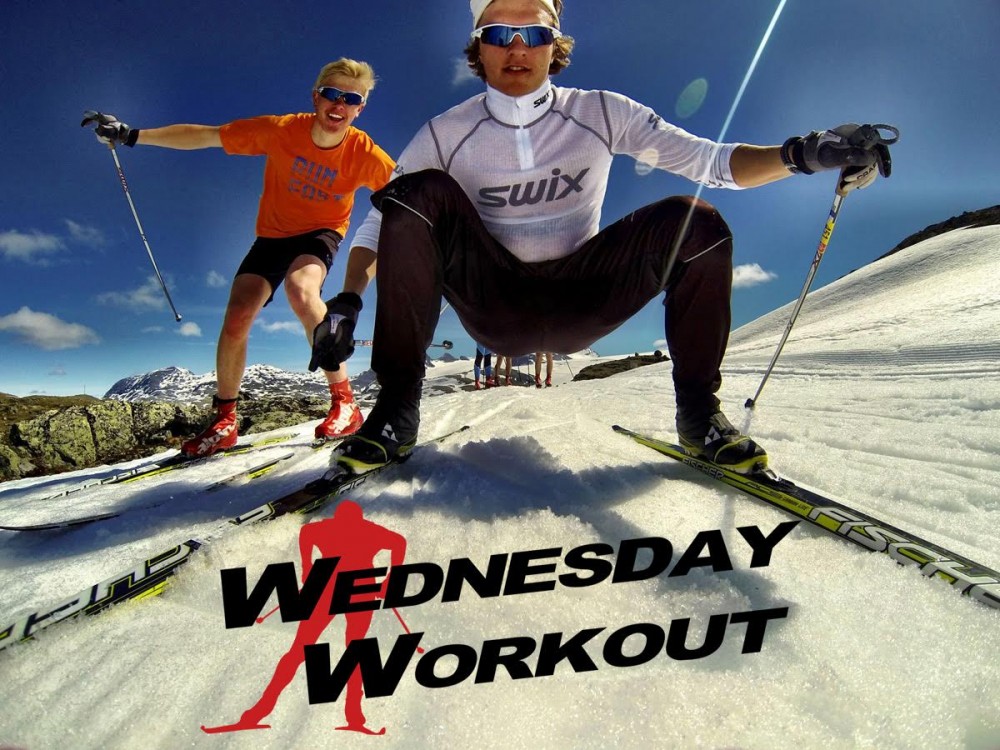
    Overall standings

  • Ødegård Defends Title; Denver Dominates at Second Day of NCAAs

    Ødegård Defends Title; Denver Dominates at Second Day of NCAAs

    Rune Ødegård (Colorado) stands atop the podium for his win in the 10 k classic at the 2014 NCAA Championships. Pierre Guedon (Denver) and Niklas Persson (Utah) followed in second and third for a European sweep.(Photo: http://bertboyer.zenfolio.com) All proceeds from photo sales will be directly donated to NNF.
    Rune Ødegård (Colorado) stands atop the podium for his win in the 10 k classic at the 2014 NCAA Championships. Pierre Guedon (Denver) and Niklas Persson (Utah) followed in second and third for a European sweep.(Photo: http://bertboyer.zenfolio.com) All proceeds from photo sales will be directly donated to NNF.

    FasterSkier’s coverage is made possible through the generous support of Madshus.

    “It’s almost cheating, having that good of skis,” Rune Ødegård of the University of Colorado joked after wining the men’s 10 k individual classic at the NCAA Championships Thursday. The junior from Molde, Norway defended his 2013 10 k classic title in spectacular form, with a time of 24:34.5.

    “It’s been a goal all season, winning NCAA again. It’s a good feeling right now,” said the 24-year-old of his win.

    Rune Ødegård en route to his repeat win in the men's 20 k classic at the 2014 NCAA Championships in Midway, Utah.(Photo: http://bertboyer.zenfolio.com) All proceeds from photo sales will be directly donated to NNF.
    Rune Ødegård en route to his repeat win in the men’s 20 k classic at the 2014 NCAA Championships in Midway, Utah.(Photo: http://bertboyer.zenfolio.com) All proceeds from photo sales will be directly donated to NNF.

    Thursday’s NCAA races were held at Soldier Hollow in Midway, Utah, the venue of the 2014 U.S. Cross Country Championships, but the scene could not have looked more different than it did in January.

    Instead of a blanket of snow and bluebird skies often associated with the venue, the clouds were abundant and grey, there was hardly any snow to be seen, and temperatures were in the 50s. The ground would have been completely brown and barren had it not been for the white trail of manmade snow that snaked around the site of the 2002 Olympics.

    Such conditions are often terrible for waxing, especially for western teams who are used to pristine extra-blue days. Today, however, they got it right.

    Ødegård started 15 seconds behind the University of Vermont’s Scott Patterson, a favorite in Thursday’s race who ended his day in 24th.  Originally planning to catch Patterson and work together, the norwegian changed his mind.

    “I soon realized that I had so fast skis that it was better for me to go at it alone after catching up with him,” he said. “Obviously it worked out really well.”

    After passing Patterson, Ødegård picked off the competitors in front of him one-by-one, a difficult feat when racing in the top seed.

    “I saw people ahead of me all the time, and it gives me kick to catch up to people.”

    While racing the twists and turns of the Soldier Hollow 5 k, Ødegård knew the race would be won on the transitions of the course rather than the large climbs.

    “It’s all about being smart and using energy where you can and not killing yourself up Hermod’s. (the largest climb of the course). Everyone skis that hill pretty much the same pace, it’s all about using the rest of the course,” he said.

    Pierre Guedon of the University of Denver finished second in Thursday's 10 k classic at the 2014 NCAA Championships. He was part of an effort that rocketed the pioneers into first place after two races.
    Pierre Guedon of the University of Denver finished second in Thursday’s 10 k classic at the 2014 NCAA Championships. He was part of an effort that rocketed the pioneers into first place after two races. (Photo: http://bertboyer.zenfolio.com) All proceeds from photo sales will be directly donated to NNF.

    For Ødegård, the win represents not only a personal legacy in the NCAA Championships, but also a family tradition. Two of his siblings were both part of the Colorado ski team with his sister, Unni, who was a member of the NCAA Championship teams in 1998 and 1999 and his brother, Gier, who was part of the second place team in 2002.

    Hoping to continue the legacy, Ødegård thinks that both he and his team have what it takes to claim a national title again.

    “It’s a new day,” he said of Saturday’s race. “I know me and Mads [Strøm] are strong skiers so we try to go for the two top spots. That’s going to be the goal.  I know it will be tough. It’s NCAAs. its why we’re here; it’s what we were training for all season.”

    Colorado currently sits in third behind Denver and Utah.

    Second place finisher Pierre Guedon, a sophomore at the University of Denver, stared his first year at the school with a bang. After transferring from five years of school in his native France, the 25-year-old has had a breakout season with the pioneers.

    Initially discouraged with his second place starting position in Thursday’s race, Pierre rocketed out from the gate to catch the first starter and eventual third place finisher Niklas Persson of the University of Utah. The pair skied together for the majority of the race, using each other as motivation throughout the course.

    “I don’t like to have an early bib, because we don’t have good splits,” he said. “But the coaches were all around the track. I knew I was doing a good race.”

    For Guedon, the result was more about his team than his individual result.

    “It was an amazing team performance for the girls and guys. We knew that we had a good team. We crushed it all season long,” he said.

    It was  indeed a good day for Denver. Not only did Guedon finish second, but teammates Moritz Madlener and Trygve Marskat placed fifth and eighth, earning them 89 points.

    Niklas Persson of the University of Utah placed third at the 2014 NCAA Championships 10 k classic. The Utes who are hosting NCAAs are hoping to win the national title after finishing second three years in a row.(Photo: http://bertboyer.zenfolio.com) All proceeds from photo sales will be directly donated to NNF.
    Niklas Persson of the University of Utah placed third at the 2014 NCAA Championships 10 k classic. The Utes who are hosting NCAAs are hoping to win the national title after finishing second three years in a row.(Photo: http://bertboyer.zenfolio.com) All proceeds from photo sales will be directly donated to NNF.

    The men’s success in tandem with the women’s 80 point performance rocketed Denver into first in the rankings, 55 points ahead of the University of Utah.

    Dave Stewart, head coach of the Denver nordic team, was ecstatic with this team’s results.

    “It was one of our strongest days ever at NCAAs. We looked to improve over the season and have some of our best races of the season, so it’s really great to see that,” he said. Stewart sited waxing and the athlete’s patience as a key to today’s success.

    As the team shifts their focus to Saturday’s mass start, there is once main goal.

    “Our goal is always to win this thing,” said Stewart.

    But Denver isn’t going to be able to claim the NCAA title without a fight.

    Coming in third place, Persson, a sophomore of the University of Utah, made his team’s intentions very clear. “We want to win. This is our home course and we are here to win. That’s definitely the goal. So it’s important for the team that we do well,” he said.

    NCAA racing continues Friday with the slalom races held at Park City Mountain Result. Saturday will mark the conclusion of NCAA racing with the much-anticipated 15 k and 20 k freestyle mass starts. It will be then that the 2014 title is decided and the goals that each team has been working towards this year will either be realized or re-shelved for next season.

    Team Standings (after two of four events):

    Denver           299

    Utah                248

    Colorado         240

    New Mexico   232

    Vermont          186

    Men’s 10 k classic results

  • 2014 NCAA Preview: Colorado, Utah, Vermont, and Others Hungry for Title

    Photo: Flyingpointroad.com (All proceeds benefit NNF)
    An NCAA banner hangs at the 2013 NCAA Skiing Championships in Vermont. The 2014 Championships are set to begin Wednesday in Park City Utah. Photo: Flyingpointroad.com (All proceeds benefit NNF)

    FasterSkier’s coverage is made possible through the generous support of Madshus.

    One-hundred and forty-eight. That’s the number of skiers who have descended upon the ski town of Park City, Utah, to participate in the 2014 NCAA Skiing Championships. The championships will be hosted by the University of Utah, who last had the honor in 2000. The four day event, which consists of two alpine and two nordic races, begins Wednesday and continues through Saturday.

    The cross country portion of the event will take place at Soldier Hollow in Midway, Utah, the site of the 2002 Olympic Games and many national events, including the 2014 U.S. Cross Country Championships.

    The weather in Utah looks to be warm and wet with highs in the mid 40s to lower 50s and precipitation expected on Thursday and Friday, making for tricky waxing and racing conditions. 

    Given the nature of course, sloppy conditions, the field, and the stakes, the competition is set to be fierce. Several schools will be in the hunt for the title of america’s fastest skiing school, but only one will walk away with the championship title.

    Last year at the 2013 NCAA Championships in Ripton, Vt., it was the University of Colorado that came out on top followed by the University of Utah and the University of Vermont. Colorado’s chances in Utah seem a more slim in 2014, as they were unable to win a collegiate weekend all season. However, with a strong showing for men’s nordic, the Buffs may be able to make up for their other weaknesses.

    The University of Utah is hungry to break a three-year-streak of finishing second at NCAAs. After winning last weeks Rocky Mountain Intercollegiate Ski Association (RMISA) Championships, Utah goes into this week’s races with confidence and energy. Having the home advantage should certainly help Utah as well. However, if they want the title that’s slipped out of their hands the past three years, they’ll have to rely less on their alpine team and see better results from their nordic squad.

    It would be asinine to discount the University of Vermont, whose skiers have been looking especially strong this year. In the 2012 Championships they demonstrated that they could tackle western altitudes with ease in Bozeman, Mont. And with Soldier Hollow looking to be warm and wet this week, the conditions may favor eastern skiers who are used to rough easter weather.

    The East

    The eastern skiers are as strong as ever this year with the undefeated University of Vermont setting its sites on another NCAA victory. The 2012 champions have a strong team in both alpine and nordic which has contributed to their uncontested dominance this season.

    Anja Gruber (University of Vermont) racing to fourth in Saturday's 10 k classic mass start at Soldier Hollow for her best U.S. nationals result by more than 20 places. (Photo: Bert Boyer/http://bertboyer.zenfolio.com/) All proceeds from photo sales will be directly donated to NNF.
    Anja Gruber (University of Vermont) racing to fourth in the 10 k classic mass start at Soldier Hollow for her best U.S. nationals result by more than 20 places. (Photo: Bert Boyer/http://bertboyer.zenfolio.com/) All proceeds from photo sales will be directly donated to NNF.

    The east finds its greatest strength in its women. Anja Gruber, a native of Germany, has been UVM’s shining star this year, and finishes the regular season as the top-ranked skier in the Eastern Intercollegiate Ski Association (EISA). Last year’s NCAA 5 k classic champion, she placed fourth at the 2014 U.S. nationals at Soldier Hollow on the same course where the NCAAs are being held. Throughout the season the senior has been a top contender in the EISA circuit, consistently winning all but one classic race and finishing in the top three in every freestyle race.

    UVM’s talent doesn’t stop there, with sophomores Linda Danvid-Malm of Umea, Sweden and Stephanie Kirk of Anchorage, Alaska, showing that Gruber isn’t the only catamount with claws. Danvid-Malm has been dominant in freestyle, winning three out of six EISA races this season. Kirk, who competed in Italy as part of the U23 World Championships, has been a consistent performer as well highlighted by a spectacular win in the 15 k skate mass start at the EISA Championships at Middlebury College last weekend.

    Annie Hart of Dartmouth College has been the only real threat to Vermont’s dominance all season, having been the only non-UVM woman in the east to win a scored collegiate race this season. Consistently on the podium in classic races, Hart finally saw her hard work pay off at the EISA championships when she won the 5 k classic. With the same event being held on Thursday, Hart is hungry for a national championship title. Corey Stock, also of Dartmouth, has had a decent season as well, ranking fifth in the eastern points standings.  

    While not as dominant as their women, the UVM men shouldn’t be taken lightly. Their lead skier, Scott Patterson of Fairbanks, Alaska, has won three of the six collegiate races he’s participated in this season. Patterson made the headlines earlier this year when he riskily tried to break away from the men’s field in the 30 k mass start. Unsurprisingly, the move failed on the national level, but a similar move with in a collegiate field may be what Patterson needs to secure a title..

    Sophomore Jorgen Grav is another UVM skier to watch in Soldier Hollow. The Oslo, Norway native finished fifth in the EISA rankings, followed by teammate Rogan Brown of Durango, Colo., in sixth.

    Silas Talbot (DAR)
    Silas Talbot of Dartmouth racing in the 2013 NCAA Championships at Middlebury, Vermont.

    Two Dartmouth College skiers have the chance to dethrone the dominant catamounts. Paddy Caldwell and Silas Talbot have both been atop the results this year both winning multiple carnival races. Caldwell skied to a convincing win in the men’s 20 k freestyle at the ESIA Championship and was named 2014 rookie skier of the year for the region.

    A notable emission from this year’s NCAA Championships will be Ben Lustgarten of Middlebury College. Lustgarten had a spectacular year which started with strong skiing at the 2014 U.S. National Championships, continued with racing at the U23 World Championships, and finished with a win in the 10 k classic (by 50 seconds!) at the EISA Championships. Lustgarten would have been a top contender in Soldier Hollow this year but due to an knee injury he sustained in the 20 k mass start at the EISA Championships the senior will be on the sidelines.

    —

    The West

    Unlike the east, there has been no clear contender for the top spot in the west. At the beginning of the season it looked as if the University of Denver might be ready for another NCAA Championship, but by the time the RMISA Championships was over last week, Denver had finished fourth, roughly 60 points behind the winner, the University of Utah. Despite the end-of-season falter, Denver still held the top spot in the regular season standings demonstrating their potential.

    Sylvia Nordskar (University of Denver), fourth
    Sylvia Nordskar of the University of Denver racing in West Yellowstone, Montana earlier in the 2013/2014 season.

    Sylvia Nordskar of Bærum, Norway, is the most-likely woman from the West to capture an NCAA title. The University of Denver freshman has either won or placed second in every collegiate race that she has competed in this season and has no signs of stopping.

    Senior Makayla Cappel, a Sun Valley native skiing for Denver, became a late-season standout after winning the 5 k classic and taking third in the 15 k freestyle mass start at the RMISA Championship in Minturn, Colo. After dealing with illness upon her return from the World University Games in Italy, Cappel recovered from a slow start to her season to rocket herself onto the first team All-RMISA. Rounding out the Denver women is Silje Benum, who has also had many top finishes this season.

    Only two non-Denver skiers have been able to top Nordskar this season. The first is Marine Dusser of the University of Alaska Anchorage, who was third in the women’s 15 k in 2013 and has had several wins in the RIMSA circuit this year. The second is Slovenian Eva Severrus of the University of New Mexico, a freshman who has helped New Mexico improve its standings in the west.

    Sloan Storey of the University of Utah is another western woman to watch. Storey joined the U.S. contingent at the Junior World Championships in Italy earlier this year and made first team All-RMISA after and exemplary collegiate season.

    Rune Oedegaard (CU) 8th place classic
    Rune Ødegaard racing in the West Yellowstone Super Tour.

    Like its women’s team, the Denver men were the top team in the west during the regular season. The trio of Moritz Madlener, Pierre Guedon and Trygve Markset made the Pioneers proud in 2014 and hope to continue the trend into the NCAA Championships. However, they’ll need to have a better performance than they did at the RMISA Championships, where they garnered only 46 points compared to the University of Colorado’s 93.

    Norwegians Rune Ødegård and Mads Strøm, a junior and freshman, have been the top skiers from Colorado throughout the latter half of the 2014 collegiate season. After sitting out the first two weekends of collegiate racing the duo has consistently been in the top five. Ødegård won last year’s 10 k classic at the 2013 NCAA Championships and looks to continue that success into 2014.

    The University of Utah men have shown that the best skiers in the west aren’t just based in Colorado. Niklas Persson, Oscar Ivars, and Noe Bellet have all performed well this season, garnering spots on the second team All-RMISA. However, all three will need to up their game if they want to outpace the Catamounts and the Buffs.

    Colorado, Denver, and Utah have had steady competition from the 2013 RMISA skier of the year, Lukas Ebner of the University of Alaska Anchorage. The senior, who hales from Germany, hopes to build on a season that has included multiple podiums.

    —

    Central

    The Central Collegiate Ski Association (CCSA) has traditionally trailed the east and west in terms of results at past NCAA Championships, which is reflected in the small numbers of qualifiers from the region. Despite that fact, there are several top performers who have a chance at an NCAA podium in Utah. 

    Rosie Frankowski of Northern Michigan University in the 20 k freestyle mass start at U.S. Nationals at Soldier Hollow.
    Rosie Frankowski of Northern Michigan University in the 20 k freestyle mass start at U.S. Nationals at Soldier Hollow.

    Rosie Frankowski, a senior of Northern Michigan University, has had an excellent season and looks to continue her speed into her time in Utah. Frankowski finishes her regular season as the top skier in the CCSA.

    Freshman Nicole Bathe of University of Alaska Fairbanks has turned out to be quite the powerhouse in classic races. Bathe has had excellent start to the season after finishing third in the classic sprint at the 2014 U.S. Cross Country Championships.

    Fellow Fairbanks  teammate Logan Hanneman looks to be the top male competitor for the CCSA in Utah. The junior finished fifth in the freestyle sprint at U.S. Nationals earlier this season.

    —

    Whether Colorado can reclaim its title, Utah can snap its second place curse, or Vermont use the sloppy conditions to their advantage, the NCAA Championships will be an exciting display of talent from the fastest skiers in the country.

    The 5 k and 10 k classic will take place this Thursday at 10 a.m. and 12 p.m. MST. The Championships will conclude with the 15 k and 20 k freestyle mass starts on Saturday, also at 10 a.m. and 12 p.m, MST. Watch the action unfold live on the NCAA site and check FasterSkier for reports.

  • Changing of the Guard: USSA President Marolt to Guide Shaw

    Changing of the Guard: USSA President Marolt to Guide Shaw

    U.S. Ski and Snowboard Association President and CEO Bill Marolt gives a tour of the USSA Center of Excellence in Park City, Utah to Germany Ski Association President Alfons Hoermann. Marolt and Hoermann are members of the International Ski Federation's Council.
    U.S. Ski and Snowboard Association President and CEO Bill Marolt (r) with Alfons Hörmann, president of the German Ski Association, during a 2010 tour of the USSA Center of Excellence in Park City, Utah. Marolt and Hoermann are members of the International Ski Federation’s Council. (USSA photo)

    When you’re in charge of the U.S. Ski and Snowboard Association (USSA), you can’t view your job with a shortsighted lens.

    For 18 years, Bill Marolt led the premier governing body of American snow sports, setting the bar high with the goal of more Olympic medals than any other nation. And since the Winter Olympics come every four years, that made it easy to stick around.

    “We put together a four-year plan and we execute pretty carefully along those plans,” Marolt said in a recent phone conversation. “It made sense to transition after Sochi and let the next CEO take over.”

    Former Olympic alpine ski racer Tiger Shaw named new CEO of USSA. USSA photo
    Former Olympic alpine ski racer Tiger Shaw was recently named the new CEO of USSA. He will start as chief financial officer on Oct. 1 and assume the full position as president in the spring of 2014. (USSA photo)

    That chief executive officer would be Tiger Shaw, a two-time Olympic alpine skier and nine-time national champion. In late August, USSA announced that the Stowe, Vt., native would be taking over as president and CEO after the 2014 Winter Olympics in Sochi, Russia.

    A former Olympian and U.S. alpine team director, Marolt, 70, was going to finish out another quadrennial first.

    “It’s not work in the sense of work,” he said. “You like what you’re trying to do. You like the athletes. You like the people you work with. You like the focus of trying to have athletic success.”

    Growing up in Aspen, Colo., Marolt won four NCAA Championships and went to the 1964 Olympics before retiring in 1968. A year later, he became head coach at the University of Colorado (CU), where he led the Buffs to seven NCAA titles from 1969 to ’78.

    Marolt spent the next six years directing the U.S. Ski Team (USST), and his athletes won three gold and two silver medals at the 1984 Sarajevo Olympics. After that season, he returned to CU as athletic director, and over the next several years, his Division-I program tallied several more NCAA titles and a national football title in 1990.

    In 1996, Marolt returned to the big leagues at USSA as president and CEO.

    “When I started, it was basically alpine, nordic and jumping,” he said. “Now we’ve added snowboard and freeskiing … We’re almost twice as big, and in sheer numbers, that’s a challenge.”

    In 2008, USSA fell into an economic recession with the rest of America, which took years to climb out of. For the next two seasons, the organization made budget cuts and entered the 2010 Olympics with less financial resources than previous years, Marolt said.

    “We had to reduce the size of our staff,” he said, noting that programs also suffered. “The worst places were development and where you try to build for the future. Slowly we’re coming back from that.”

    During his tenure, Marolt saw the completion of the Center of Excellence in 2009 in Park City, Utah, where he’s currently living, and the Olympic upgrades to Soldier Hollow in nearby Midway. In 2011, the U.S. Ski Team Speed Center opened for athletes at Copper Mountain in Colorado.

    “We have added a lot of world-class support facilities,” Marolt said. “Our staff is much bigger; when I arrived we really had no high-performance staff. … We’ve changed it a lot and it’s all in that line of going for the best in the world.”

    Bill Marolt, USSA president and CEO for the last 18 years (USSA photo)
    Bill Marolt, USSA president and CEO for the last 18 years (USSA photo)

    In 2010, Marolt started talking about retiring after the 2014 Olympics. It seemed far enough away, but allowed for a smoother transition, he said. A year ago, USSA ramped up the search for his replacement, reaching out to about 100 people, according to Shaw.

    “They cast a very wide net across all sports,” Shaw said on the phone from Hanover, N.H., where he’s living until the end of the month. “I’m not really sure who all the candidates were.”

    USSA contacted select individuals and asked for input regarding the new hire. It helped that Shaw was a USSA athlete alumni trustee and a former athlete of Marolt’s during a time when the USST “was a difficult team to make,” according to Marolt.

    Shaw said he wasn’t an outstanding athlete by his measure of Olympic medals (although he did notch eight World Cup top-10 results), but he understood the lifestyle and environment elite athletes needed to thrive.

    “One thing that changed considerably [was] how we trained and prepared,” he said. “We were shooting in the dark. Especially strength and non-event specific training, any given team is much more uniform in how it’s prepared and ready. … It wasn’t nearly as scientific or results-based as it is now.”

    “Thanks to sports science and our physiology team, we get it better than most of the countries and they’re sniffing around us to try to figure out what we’re doing,” he added. “That wasn’t the way it used to be.”

    Over the next few months, Shaw, 52, will serve as chief operations officer while Marolt and USSA Vice President Luke Bodensteiner head up athletics through Sochi and into next spring.

    Shaw has spent the last two years as sales and marketing manager for Global Rescue, an East-Coast company that provides international travel support for corporations and individuals seeking security on their trips.

    “People go fishing in some of the craziest places,” Shaw said.

    So how did one job lead to another, and how did he end up taking a job with USSA in Park City? Shaw said he wasn’t sure if his Eastern roots helped his application, but he thinks it’ll be an asset to the company.

    “I have a huge network in the East and it always pains me to hear anybody talking about USSA and East vs. West,” he said. “What about the Midwest, and Pennsylvania and southern [regions]? There are a huge number of competitors in those areas. I hope to pull those regions together.”

    A ski racer at the core who ventured into sales and his own business ventures throughout his career, Shaw spent 12 years as a volunteer coach for the Ford Sayre ski team in Hanover near his alma mater, Dartmouth College.

    “My kids grew up ski racing and I’m also very close to the nordic program here,” he said. “I’ve always loved that. It was my passion as an athlete and my passion as a volunteer. I didn’t choose that as a career path; I was interested in starting companies.”

    When the USSA position came up, he encouraged himself to go for it.

    “It’s always fascinated me because it’s a major business job,” Shaw said. “It’s incredibly complex … from a relationship standpoint and building networks and understanding athletes.

    “I inherit an incredibly strong organization, how to keep it that strong and how to move forward is not going to be easy but honestly that’s what it’s been my dream,” he said.

    Starting Oct. 1, he’ll jump in by taking a number of trips, meeting sponsors, stakeholders and members, and getting to know athletes across all USSA sports. He also plans to try the various sports: “I can snowboard and I’m not a bad skate skier, so I intend to do those things,” he said. “I’m not going to do the large hill.”

    “One of the things I want to do during this, I guess you could say, quiet period is learn about all these sports that have not been a big part of my life: cross-country and jumping, snowboarding, slopestyle,” he said. “That’s important because the number of sports has grown considerably and who knows where it might go. The key thing is to support and maintain where we’ve been the best and build where we aren’t the best.”

    “It’s not necessarily going to remain alpine-centric,” he added. “Who knows? You have to have your eyes wide open and be able to shoot your paradigm. Especially on the cross-country side … what they’ve been doing is frankly amazing.”

    Kikkan Randall (USA) wins her second straight FIS Sprint Crystal Globe on March 20 in Stockholm.   (Photo: Fischer/Nordic Focus)
    Kikkan Randall (USA) wins her second straight FIS Sprint Crystal Globe on March 20 in Stockholm. (Photo: Fischer/Nordic Focus)

    Shaw brought up Kikkan Randall’s sprint dominance the last two seasons, including her World Championships gold in the team sprint with teammate Jessie Diggins. With such success, paired with methods of watching live races or staying updated on results, Shaw said the popularity of lower-profile sports is growing.

    “I think there’s going to be some interesting things going on with Sochi,” he said of social media’s impact. “How many sports are there that USSA governs? Twenty-six? That’s incredible, and you can’t cram that into a two-hour show that’s designed for TV audiences.”

    That’s why USSA is paying attention to how much people are looking up online.

    “Sixty percent of the information people are getting off the internet now are going to mobile devices,” he said. “Digital means, social media, Pintrest, Facebook, Twitter, those are the communication tools that produce instant measurement and can go viral. Television is different that way; it’s so important still, but there’s so many other ways to consume and follow your sport.”

    So what does that mean for sports that get the most attention, whether through webpage views or television viewership? That’s the tricky part, Shaw said.

    “From a budget standpoint, we’ve grown and we’re bigger than we’ve ever have been,” he said, but with that comes additional pressure and strain on providing equal resources for each sport.

    “Bigger isn’t always better,” he said. “We are bigger mainly because of all the added sports. We have to understand in each sport how the grassroots work. It’s different in every sport.

    “It’s not easy to figure that out, but I do know that some sports need more money at a lower level,” Shaw added, referring to newer sports that don’t have deep roots in ski academies like nordic and alpine. “I think everyone would argue that everyone needs more money or more resources.”

    Another problem is how to go about funding programs. Most of the money is needed in development, but when you go one tier down on the pyramid, with elite or professional athletes at the top, the number of clubs, programs and people needing assistance grows considerably.

    “There’s been lots of debate … especially in jumping; there’s been a lot of growth in these new sports,” he said, specifically referring to USA Ski Jumping, which is independent of USSA. “Do they need a lot of money from USSA? Probably, but the neat thing is, on the fundraising side there’s a lot of capability from passionate people that want to support it.”

    “I’m confident that we can raise the money,” he said. “I don’t know where and how it needs to go. I’ll look to Bill and Luke who’ve been guiding it for years to figure out where it needs to go and find the optimal way to apply it.”

    In the meantime, Marolt is going to stay involved with fundraising for USSA through programs that are already in place, he said. He’s still the International Ski Federation (FIS) vice president and a U.S. Olympic Committee board member, and is considering moving back to Colorado with his wife, who’s originally from Golden. His youngest daughter just had her first child, and Marolt was headed south to visit them in Phoenix.

    As for memories at USSA, Marolt said he’s proud of the organization’s overall growth and emergence as a world leader in sports science.

    “For any CEO, kind of the standard is, did you leave it better than you found it? And I would say yes to that,” Marolt said. “We created a $60 million-dollar endowment. We started a U.S. Ski Team academy. We’ve added a lot.

    “I think it’s been a good run,” he added. “We’ve had good success and that’s all exciting, but the most fun is what’s ahead. … I think Tiger’s the right guy and he has the right platform. … We’ll have a great leader.”

  • Reid and Havlick are FasterSkier’s Collegiate Skiers of the Year

    Reid and Havlick are FasterSkier’s Collegiate Skiers of the Year

    Joanne Reid (University of Colorado) and Miles Havlick (University of Utah) are FasterSkier's 2013 Collegiate Skiers of the Year.
    Joanne Reid (University of Colorado) and Miles Havlick (University of Utah) are FasterSkier’s 2013 Collegiate Skiers of the Year.

    After a one-year hiatus, our Skier of the Year awards are back. We start with the collegiate category, where for the first time in FasterSkier’s history of giving such prizes Americans took both of the top honors: NCAA freestyle champions Miles Havlick (University of Utah) and Joanne Reid (University of Colorado).

    Miles Havlick (USA/University of Utah)

    Havlick (Photo: Flyingpointroad.com)
    Havlick (Photo: Steve Fuller/Flyingpointroad.com)

    When it came time to nominate athletes in the college division, Havlick was at the top of a very short list. There is no question he deserves the honor; in college skiing all roads lead to NCAA Championships and his performance there was the storybook ending to a stellar college career. Not only did the senior from Boulder, Colo., defend his 2012 20 k NCAA title this year, which is no easy feat, he did so against one of the most competitive fields the NCAA has ever seen. The freestyle race, with its dramatic sprint finish and Havlick’s six-tenths winning margin, is not one to be forgotten any time soon. And at an event that’s all about team, Havlick was the first of all three Utes in the top five in the mass start, which propelled Utah from fourth to second on the last day of the Championships. For Havlick, it was a “perfect” ending to his time in Utah’s black and red.

    Leading up to NCAAs, the signs were all there that Havlick was bound for success in Vermont; he won six out of ten RMISA regional races and never once finished outside the top 10. At the Montana SuperTours prior to the beginning of the college season, he just missed out on a trip to Canmore, Alberta, as an American representative on the World Cup. He’s our 2013 award-winner because of his achievements in college skiing, but when Havlick makes the transition to racing professionally after graduation he’s bound to shake up the men’s field at the national level.

    Joanne Reid (USA/University of Colorado)

    Joanne Reid leads her Colorado University teammates, Eliska Hajkova (4) and Maria Nordstrom (9) early in Saturday's 15 k freestyle mass start at the 2013 NCAA Championships. Reid won by nearly 27 seconds and Hajkova was second. (Photo: Steve Fuller/flyingpointroad.com. All photo sales benefit NNF)
    Joanne Reid leading CU teammates Eliska Hajkova (4) and Maria Nordstrom (9) in the 15 k freestyle at NCAA Championships. Reid won by nearly 27 seconds and Hajkova was second. (Photo: Steve Fuller/Flyingpointroad.com.)

    The skier-of-the-year choice was also clear in the women’s collegiate category. Joanne Reid, in a ridiculously dominant senior season, won eight out of ten regional races leading up the final showdown in Ripton, Vt. At NCAAs, she added another ‘W’ to her resume in the 15 k mass start classic to lead CU to an improbable come-from-behind team win on the final day. It’s hard to call a team with 18 NCAA Championships in its trophy case (now 19) an underdog, but that’s what the Buffs were when they entered the last day of NCAAs 54 points down to the University of Vermont. Colorado relied on its nordic women for the lion’s share of the team score, and with the pressure on Reid delivered a 27-second victory over teammate Eliska Hajkova. Reid later said was unaware of her gap on the rest of the field until she realized the crowd would fall silent after she skied by.

    A look back at Reid’s previous record demonstrates just how big a jump she made in the last year: though she’d already been on the NCAA podium as a sophomore in 2011, winning is quite a different thing. Illness plagued the Palo Alto, Calif., native midway through last season, and prior to this year she had only two collegiate wins to her name. What happened next, of course, is history: in the last few months Reid more than quadrupled her win record as she tore through the RMISA circuit like it was no big deal. Reid comes from an intimidating lineage of elite endurance athletes, but with her new individual NCAA title she’s on her way to creating a powerful reputation of her own.


    Honorable Mention:

    David Norris (USA/Montana State University)

    David Norris’ wide-reaching accomplishments this year are worth noting. He particularly didn’t stand in the college circuit, but that was because he skipped half the season to race internationally — first at a little thing called the World Cup in Canmore, then at U23 World Championships in the Czech Republic. In between he was third in the 30 k classic at U.S. Nationals to Torin Koos and Erik Bjornsen. Norris finished a respectable 11th and 12th in the NCAA races, and immediately thereafter he jumped on a plane to compete for the U.S. at OPA Cup Finals in Italy. When he returned, he continued racing at Spring Series. It’s been said that college and skiing are difficult to pursue at the same time, but Norris and his coaches proved this year that the logistics are doable.

    Sam Tarling (USA/Dartmouth College)

    Like Norris, Tarling put together solid performances both in and out of the college circuit this year. A repeat NCAA title remained elusive for the Mainer, but like Norris the Dartmouth senior accrued impressive results domestically and internationally. Tarling was fifth in the 30 k at U.S. Nationals, joined Norris in representing the U.S. at U23 World Championships, and despite having to miss the first two EISA carnivals he was the second-ranked Eastern qualifier to NCAAs, where he finished 10th and seventh in the 10 k and 20 k, respectively. He joined Norris again in Toblach, Italy, for OPA Cup Finals, where was the top American man in the mini-tour final standings. After SuperTour Finals Tarling announced he’s going pro, and if past results are any indication he’s headed for big things next year.


    medal-final-layer-2013Previous winners:

    2011

    Maria Graefnings (SWE/UU)

    Sam Tarling (USA/Dartmouth)

    2010

    Antje Maempel (GER/DU)

    Franz Bernstein (GER/UVM)

    2009

    Antje Maempel (GER/DU)

    Vegard Kjoelhamar (NOR/CU)

    2008

    Maria Grevsgaard (CZE/CU)

    Marius Korthauer (GER/UAF)


  • Reid, Hajkova Land Top Two to Lift CU to NCAA Title

    Colorado University, the 2013 NCAA skiing champions. (Photo: Steve Fuller/Flying Point Road. All photo sales benefit NNF)
    Women’s 15 k freestyle mass start winner, Joanne Reid holds up the University of Colorado’s first-place trophy at the 2013 NCAA Skiing Championships on Saturday at the Rikert Nordic Center in Ripton, Vt.. (Photo: Flyingpointroad.com/All photo sales benefit NNF.)

    RIPTON, Vt. – Joanne Reid knows exactly what it takes to win. The University of Colorado senior has been no stranger to the podium in her four years at Boulder, placing third as a sophomore at the 2011 NCAA Skiing Championships.

    But this season was an exception. In 10 total Rocky Mountain Intercollegiate Ski Association (RMISA) races, Reid won eight of them. Her unrivaled dominance made the 20-year-old from Palo Alto, Calif., the clear-cut RMISA MVP.

    The question was: how would she fare against eastern-collegiate skiers on what was essentially their home turf at Rikert Nordic Center in Vermont? On Thursday, in the first of the two-day nordic NCAA Championships, Reid placed fourth in the women’s 5 k classic individual start. It was the first time she hadn’t made the top two all season.

    Saturday was a different story. With teammate Eliska Hajkova, Reid was confident they could get out front in the 15-kilometer freestyle mass start and stay there. Just as they’d done all season (including when they swept the podium with teammate Maria Nordstrom at regionals), they planned to feed off each other to achieve what they both wanted: the podium.

    Joanne Reid leads her Colorado University teammates, Eliska Hajkova (4) and Maria Nordstrom (9) early in Saturday's 15 k freestyle mass start at the 2013 NCAA Championships. Reid won by nearly 27 seconds and Hajkova was second. (Photo: Steve Fuller/flyingpointroad.com. All photo sales benefit NNF)
    Joanne Reid leads her Colorado University teammates, Eliska Hajkova (4) and Maria Nordstrom (9) early in Saturday’s 15 k freestyle mass start at the 2013 NCAA Championships. Reid won by nearly 27 seconds and Hajkova was second. (Photo: Flyingpointroad.com)

    The CU seniors led from the start: Reid in a blue headband, Hajkova in a pink one. The way they were skiing, that was one of a few ways you could tell them apart.

    Changing leads throughout the first and second laps, Reid took charge for good on the third and final loop around a twisty, turning and technical 5 k course. Hajkova remembers her dropping the pack – with Marine Dusser of the University of Alaska-Anchorage (UAA) and Mary O’Connell (Dartmouth College) – on the third of several hills.

    “She kind of went and we couldn’t follow,” said Hajkova, who hails from the Czech Republic. “We were, like, falling apart.”

    About a half kilometer from the finish, Reid entered Rikert’s spectator-packed stadium in first without any contenders in sight. She cruised around the field’s final curve more than 30 seconds ahead, grabbed a CU flag a few hundred meters before the finish, and carved some turns while making her way across the line.

    Reid finished in 38:17.8 for her first NCAA title, 26.8 seconds ahead of Hajkova, who outlunged Dusser for second. The RMISA MVP runner-up, Dusser placed third for the second-straight race at NCAAs, 0.4 seconds behind Hajkova.

    Colorado University’s top-two sweep put the Buffs in prime position against the University of Vermont (UVM) for the combined alpine-nordic NCAA team title. Trailing by 54 points to start the day, CU overtook UVM by 16 points after the women’s race.

    Thanks to some solid men’s performances in the following 20 k, CU rolled to a 43-point victory over the University of Utah (which put three men in the top five) and topped UVM by 56 points. Last year, UVM edged CU for the team win, but in 2011, CU took it.

    “Our girls were not such a surprise because they were consistent and forming all season,” said CU head coach Richard Rokos, who’s in charge of both the university’s alpine and nordic programs. “I was a little surprised that UVM didn’t put a little more resistance on us.”

    Joanne Reid (Colorado University) after winning Saturday's 15 k skate mass start for her first NCAA title at the 2013 championships in Ripton, Vt.
    Joanne Reid (University of Colorado) with her mom Beth after winning Saturday’s 15 k skate mass start for her first NCAA title at the 2013 championships in Ripton, Vt. Beth Heidin won a NCAA nordic title at the 1983 championships. (Photo: flyingpointroad.com)

    With Reid, it was somewhat of a blast from the past. Her mother Beth Heiden skied for UVM and won the 1983 NCAA Nordic Championships. Before that, she was the all-around world speed skating champion in 1979, the 1980 world road cycling champ and a bronze-medalist speed skater at the 1980 Olympics.

    “I saw her at the finish line and it was great,” Reid told BuffZone.com. “It’s cool that we have both now won NCAA individual titles … Every time I go skiing with her, they just list all her awards so now I have one that she has. I just need a few more world championships in other sports now to catch up.”

    Reid’s uncle, Eric Heiden, won five gold medals at the 1980 Olympics, and set four Olympic records and a world best there. According to the CU website, he was the only athlete in the history of speed skating to have swept five events in a single Olympics.

    Colorado University seniors Joanne Reid (l) and Eliska Hajkova celebrate placing first and second, respectively, in Saturday's 15 k freestyle mass start at the 2013 NCAA Championships at Rikert Nordic Center in Ripton, Vt. (Photo: Steve Fuller/flyingpointroad.com)
    University of Colorado-Boulder seniors Joanne Reid (l) and Eliska Hajkova celebrate placing first and second, respectively, in Saturday’s 15 k freestyle mass start at the 2013 NCAA Championships at Rikert Nordic Center in Ripton, Vt. (Photo: Flyingpointroad.com)

    On Saturday, Reid put down a commanding performance of her own and said she couldn’t have done without her teammate.

    “It’s always better if I can have this one right next to me,” she said of Hajkova. “That’s what makes it really complete.”

    After a somewhat relaxed first lap, the CU women led a group of four the last two loops with Dusser and O’Connell, who placed fourth.

    “I was more comfortable in front and I just kept skiing how I felt,” Reid said. “I guess I ended up in front.”

    Hajkova said they had “great skis,” which Dusser noticed early on. The former French national-team biathlete wasn’t having as much luck with hers.

    “I tried to keep my energy and stay behind Eliska,” Dusser said. “But she was a better sprinter. I was tired at the end so she beat me by not a lot, but that’s a race.”

    A 2011 NCAA champion in the 15 k classic, Hajkova said placing second to Reid was about as much as she could’ve asked for after struggling to get healthy since last fall.

    “I couldn’t dream for more,” Hajkova said. “If I had been second to somebody else, and Joanne didn’t win, it would be a little bit sad, but this, I’m just on top of my happiness.”

    Dusser, too, was thrilled with another podium in her first NCAA Championships. Unsure what her plans are next year, she’s hoping to ski another year at UAA, but said it depends whether she can get another scholarship.

    “I would like to stay in Alaska,” Dusser said. “It was out too quick with biathlon and I don’t regret. I really like nordic skiing; I really like the spirit of NCAA race. It’s a lot of fun and people are really nice and I like my team.”

    Thursday’s runner-up, O’Connell finished 33.3 seconds behind Dusser (1:00.5 after Reid). Silje Benum of Denver University was fifth (+1:03.2) and the University of New Hampshire’s Anya Caldwell Bean was another 5.4 seconds back in sixth.

    “Top ten I thought it would be awesome,” Bean said. “But I didn’t really know what to expect.”

    She avoided several crashes, but top contenders like Elizabeth Guiney (UNH), Anja Gruber (UVM) and Annie Pokorny (Middlebury College) did not. Guiney placed 16th, Gruber ended up 21st and Pokorny did not finish after falling on a downhill less than two kilometers into the first lap.

    After hitting a tree in Thursday’s 5 k and knocking her hips out of alignment, Pokorny wasn’t sure she would be able to compete Saturday. Finally able to bend at the waist again that morning, she decided she could.

    “It would’ve been fine if I stayed on my feet,” Pokorny said while watching the men’s 20 k on crutches.

    She completed the first lap, but ultimately did not finish. After an initial look at her injury, Pokorny believed she had bruised her femur.

    Women's 15 k freestyle mass start podium at 2013 NCAA Championships at Rikert Nordic Center in Ripton, Vt. (Photo: Steve Fuller/flyingpointroad.com)
    Women’s 15 k freestyle mass start podium at 2013 NCAA Championships at Rikert Nordic Center in Ripton, Vt. From left to right: Annie Hart (Dartmouth/8th), Anya Caldwell Bean (UNH/6th), Mary O’Connell (Dartmouth/4th), Marine Dusser (UAA/3rd), Joanne Reid (CU/1st), Eliska Hajkova (CU/2nd), Silje Benum (DU/5th), Rosie Frankowski (NMU/7th). (Photo: Flyingpointroad.com)

    As for the rest of the field, Rosie Frankowski of Northern Michigan University placed seventh, Dartmouth’s Annie Hart was eighth, Utah’s Rose Kemp (who also fell) was ninth, and Denver’s Makayla Cappel finished 10th.

    At the end of the day, the happiest coach had to be Rokos. He said getting his alpine and nordic teams to combine for a national title was tricky, especially because of the nature of downhill racing.

    “On the nordic side, it’s a race to go and ski your best and race fast,” Rokos said. “In alpine, all year long we go pretty much the same until NCAA Championship and then we put them in a dilemma, ski fast but finish, and there is no compromise between those things.”

    He told his alpine squad they had to finish and was proud of those athletes for using such discipline. And while UVM beat CU on the downhill runs at Middlebury College’s Snow Bowl, the Buffs made up for it at Rikert.

    “Every single person on the team made a great contribution,” Rokos said of Colorado’s 18th NCAA victory, his seventh with the team since 1991.  “It’s teamwork and it came that way.”

    He also credited the team’s success to head nordic coach, Bruce Cranmer, in his 13th season with the Buffs.

    “Both Eliska and Joanna are in their last year; they were maturing athletically throughout all their career with CU and they have a great coach,” Rokos said. “[He] did a great deal of work with them and it paid off.”

    Women’s results

    2013 NCAA 15 k champion Joanne Reid waves a Colorado University flag after helping her team to a national title. (Photo: Steve Fuller/flyingpointroad.com)
    2013 NCAA 15 k champion Joanne Reid waves a Colorado University flag after helping her team to a national title. (Photo: Flyingpointroad.com)

    For more photos from the 2013 NCAA Skiing Championships, visit Flying Point Road Photography. All proceeds go to the National Nordic Foundation (NNF).

  • NCAA Champion Gelso Set to Join Sun Valley

    Colorado's Matt Gelso (photo: Curtis C. Snyder)
    Matt Gelso racing to his NCAA title in the 10 k classic in Steamboat Springs, CO (photo: Curtis C. Snyder)

    Champions may be made in the summer, but if Matt Gelso is any proof, they don’t have to be made on rollerskis.

    Gelso, the 2010 NCAA champion in the 10 k classic, detests rollerskiing. It’s dangerous, he says, and it can cause compartment syndrome. And it hurts his elbows.

    “If there’s one thing that’s going to make me quit skiing, it’s going to be too much rollerskiing in the summer,” Gelso said.

    But while collegiate athletes might be able to sneak by without putting in big hours on the roads, Gelso recognizes that to make it at the next level, he’ll need to do more. That’s why he’s opted to join the Sun Valley Ski Education Foundation’s (SVSEF’s) Olympic  Development Team for the next year.

    “In the summer, I’ve been notoriously unstructured with my training,” Gelso said in an interview Wednesday. “A little bit more structure—especially forcing you to rollerski more—is something that I think is going to be very beneficial, and I like that about Sun Valley.”

    After four years at the University of Colorado, Gelso will join a proven program in SVSEF—one that has helped turn out two current U.S. Ski Team (USST) members in Simi Hamilton and Morgan Arritola. But he’s not in too much of a hurry to get there.

    The skiing in the Tahoe area, where Gelso lives, is still excellent: he said that he put in three hours on snow on Wednesday morning. And there are also a few triathlons to complete before relocating to Sun Valley later this summer.

    With the move, and with a planned increase in training, Gelso said that he’s not betting on immediate success this coming year, though he does mention qualifying for the U-23 Championships and World Championships as potential goals.

    After putting in between 500 to 530 hours during each of his four years at Colorado, Gelso is hoping to do at least 600 hours this year—and he knows that he may not be able to adapt immediately to the new setting and the jump in volume.

    “Adjusting to that is going to take some energy and time,” he said. “The basic idea is you need to give it a year or two, at least, to get your feet under you.”

    Meanwhile, Gelso said that he’s especially excited about the buffet of outdoor opportunities that Idaho has to offer—a big factor in his decision to move there. Rock climbing, kayaking and hiking will keep Gelso occupied during the hours that he’s not spending on rollerskis.

    Gelso doesn’t have any big trips planned, although he will travel to the U.S. Ski Team’s (USST’s) National Training Group camp in Park City starting next week. Two other camps with the USST, in Sun Valley and Lake Placid, are also possibilities.

    Gelso, a former USST member, was dropped from the team last year along with two other collegiate athletes, which generated no small amount of controversy—especially when USST staff maintained that NCAA programs were not compatible with international success. But despite losing his spot on the national team, Gelso said that he had no regrets about his time at Colorado, citing the high level of support he received when he was competing there.

    “The education, the skiing support, trainers, weight room, doctor’s appointments, waxing, traveling—the amount of support that the University of Colorado gave me was incredible…I would absolutely do the same thing [again],” said Gelso.

    “As far as the USST, they do their thing,” he said. “They have their program, and I have my program, and when they’re compatible, that’s great. When they’re not, no big deal.”