From the FasterSkier archive — posts syndicated from athletes’ and coaches’ own blogs between 2004 and 2012, kept online as published. Current coverage is at fasterskier.com.

Tag: University of Denver

  • Brennan and Hagenbuch Skate Away with Wins in Sun Valley SuperTour 5/10k Interval Start Free

    Brennan and Hagenbuch Skate Away with Wins in Sun Valley SuperTour 5/10k Interval Start Free

    By Rachel Bachman Perkins and Ben Theyerl 

    The final weekend of SuperTour racing in Period II, and the final weekend within the Olympic qualification window, kicked off Saturday at the Lake Creek Nordic Center in Ketchum, Idaho. Part of the 2022 Sun Valley Nordic Invitational, the SuperTour races were held in conjunction with a Montana State University RMISA event and an Intermountain XC junior national qualifier. 

    Highlighting the size of the event, there were 157 female athletes in the field. With 141 senior and U18 men racing in the 10k, and another 46 racing in the men’s U16 5k. Spanning all age groups, an additional 70 U14 athletes and another 18 U12 athletes raced a 3k and 2k course, respectively.  In all, nearly 400 cross country skiers, from Olympians to 10-year-olds in their first seasons on skis, made their way around the tracks in Lake Creek. 
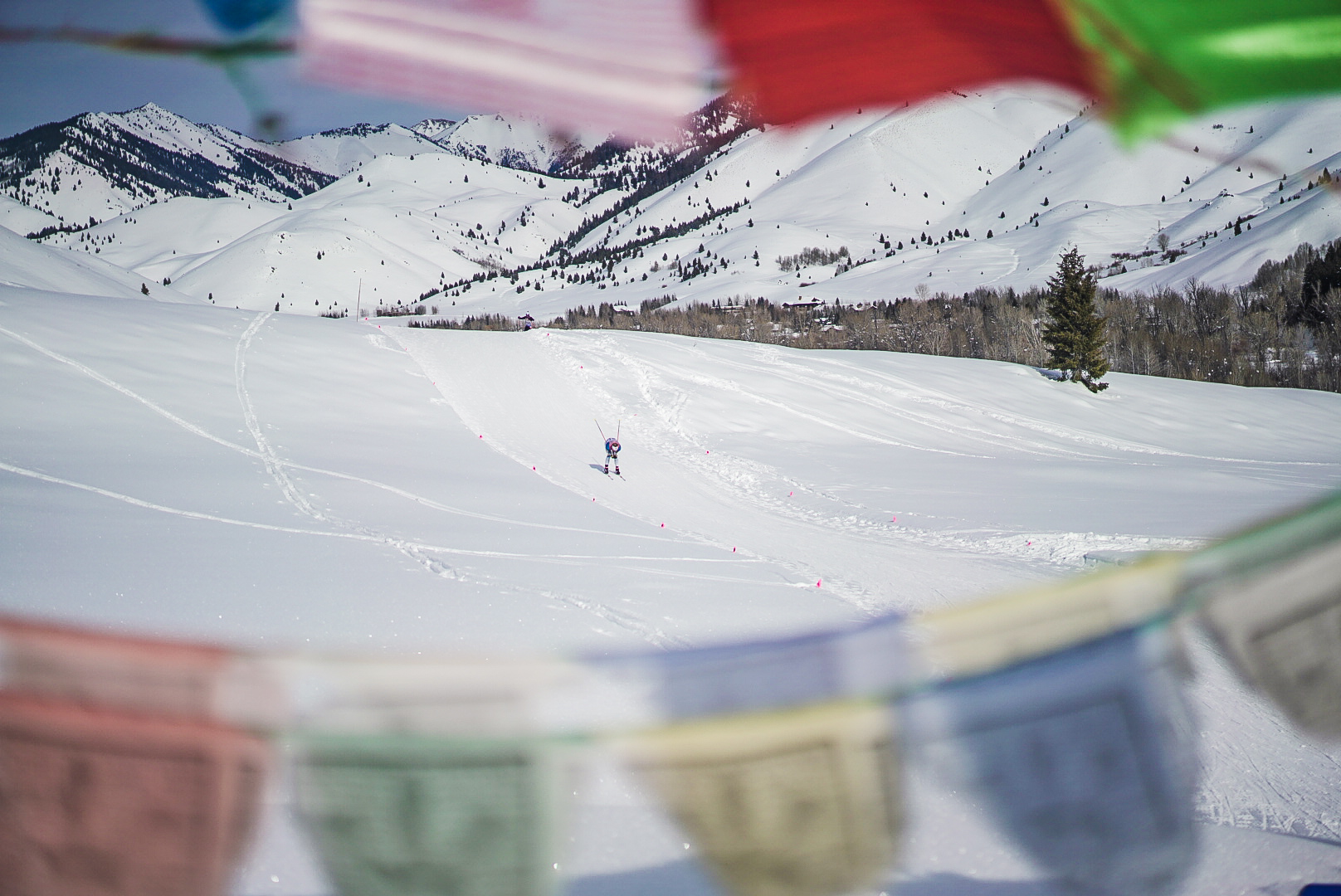
    An athlete races the 10k interval start free on the Lake Creek trails in Ketchum, ID. (Photo: Tobias Albrigtsen / @untraceableg)

    As the World Cup events in Les Rousse, France and Planica, Slovenia were both cancelled due to rapidly increasing coronavirus caseloads with the omicron variant, several athletes who might have headed back to the World Cup for these events found their way to Sun Valley instead, meaning fields were more in line with the U.S. Cross Country Championships than a typical SuperTour. 

    On the women’s start list for the 5-kilometer individual start skate, which kicked off the weekend of distance racing, were six women who have spent at least part of their season racing on the World Cup: Rosie Brennan (USST/APU), Caitlin Patterson (CGRP), Katharine Ogden (USST/SMS T2), and three University of Utah athletes who are also members of the U.S. Ski Team, Sophia Laukli, Novie McCabe, and Sydney Palmer-Leger. 

    Likewise, the men’s 10k field included seven World Cup athletes: David Norris (APU), JC Schoonmaker (USST/UAA), Scott Patterson (USST/APU), Hunter Wonders (USST/APU), Zanden McMullen (USST/APU), Luke Jager (USST/U of Utah), and Zak Ketterson (Team Birkie). 

    Given Ketchum’s elevation of roughly 5,950’, approximately the same as the courses in Soldier Hollow, Utah and those Olympic team members will face in Ziangjiakou in February, the events provided another opportunity to spend time training at the elevation and to hone their approach to racing at altitude. Overnight lows in the single digits meant cold air and snow temps at the start of the women’s race, another important similarity to forecasted Olympic conditions.

    According to co-chief of competition Kelley (Sinnott) Yeates, livestream was not available during the Sun Valley Nordic Invitational due to connectivity issues along the courses. As such, FasterSkier’s reporting this weekend is based on live timing and the feedback of those on-site. 

    Of the course, Sun Valley native Johnny Hagenbuch provided insight into the 5km loop that was raced today in an email to FasterSkier: “The new courses at Lake Creek are very difficult: they essentially removed all the flat from the old course and replaced it with the biggest climb at Lake Creek.”

    Senior Women’s 5k Free:

    Without the ability to view the race and no intermediate splits in the live timing, the women’s race results left little room for suspense. Given her dominant performance in the 20k skate during the U.S. Cross Country Championships, it was no surprise to see Rosie Brennan’s name top the list. Brennan smashed the 5k loop, finishing in 14:28.6, a full 48.6 seconds faster than the next woman.  
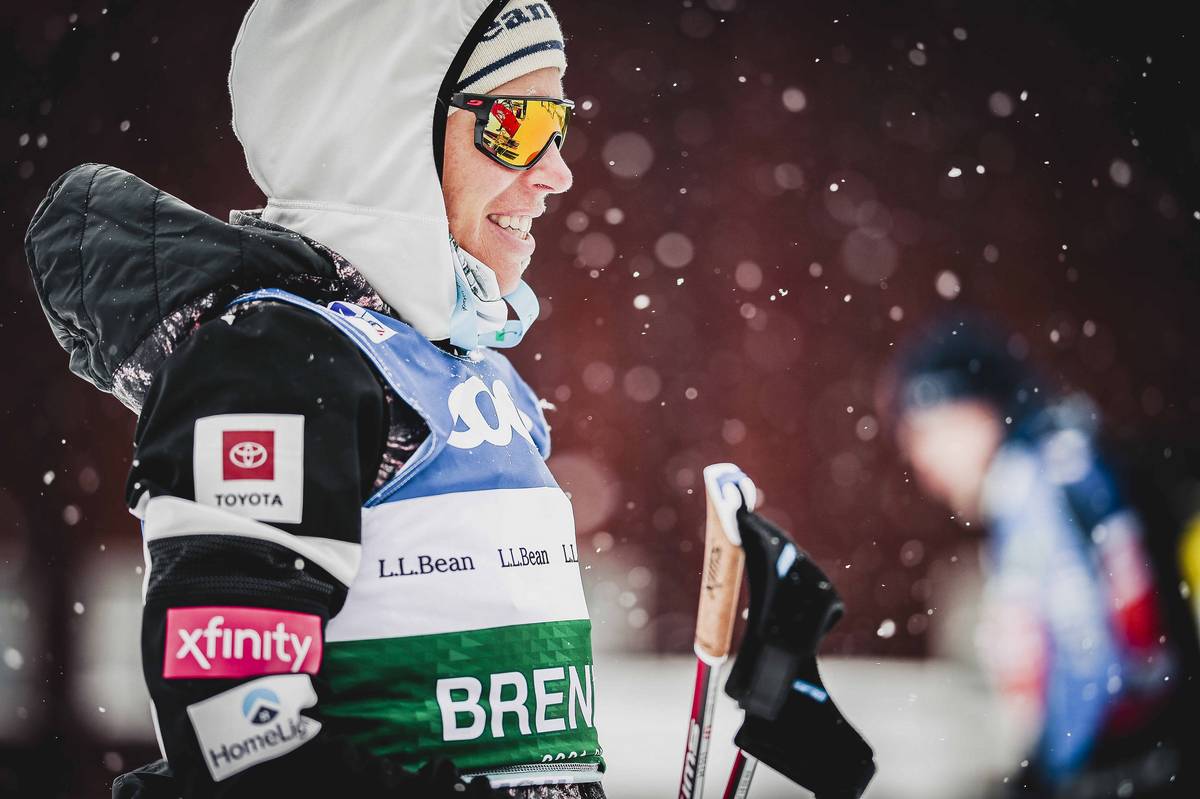
    Rosie Brennan enjoys a wintery training day before the weekend of World Cup racing in Davos, SUI. (Photo: NordicFocus)

    “I decided to come to Sun Valley after the World Cups in France were canceled,” Brennan wrote to FasterSkier in a post-race email. “My coach, Erik Flora, has been up here all week with the rest of my APU teammates, so it made sense for me to come here to be able to work with my coach and teammates. That has been the total silver lining of the World Cups being canceled. Erik is not allowed to come to the Olympics, but is my personal coach and someone who I trust and value immensely, so getting this extra week to work on things with him has been such a welcome surprise.” 

    Now several weeks into an extended altitude block, Brennan has been training near her childhood home in Park City, UT. The races in Soldier Hollow put her back on familiar tracks with hometown advantage, and the nostalgia continued today. 

    “It has been a full circle moment for me this weekend as I spent many years racing JN Qualifiers in Sun Valley growing up, so to be back here doing so now as I prepare for the Olympics has brought back all kinds of memories from my whole ski career. My high school and college coach were also out there today cheering and it’s been really special to have this extra time in the U.S. to share moments with people like that who have helped in getting me to where I am today.”

    Brennan had originally planned to rejoin the U.S. Team in Europe, but following the cancellations of the two remaining World Cups before the Olympics, has shifted her plans to limit her risk of covid exposure, as a positive test might jeopardize her ability to travel to China, regardless of the severity of her case.

    “With travel being risky on all kinds of levels today, I decided to just stay put after the World Cup cancellations and make the most of the training opportunities I have here in the U.S. before heading to Beijing. This weekend is serving as a replacement for the races I would have done in France and also another opportunity to test my limits at altitude. We just incorporated the races into a little intensity block to get my engine running again after a good volume block.”
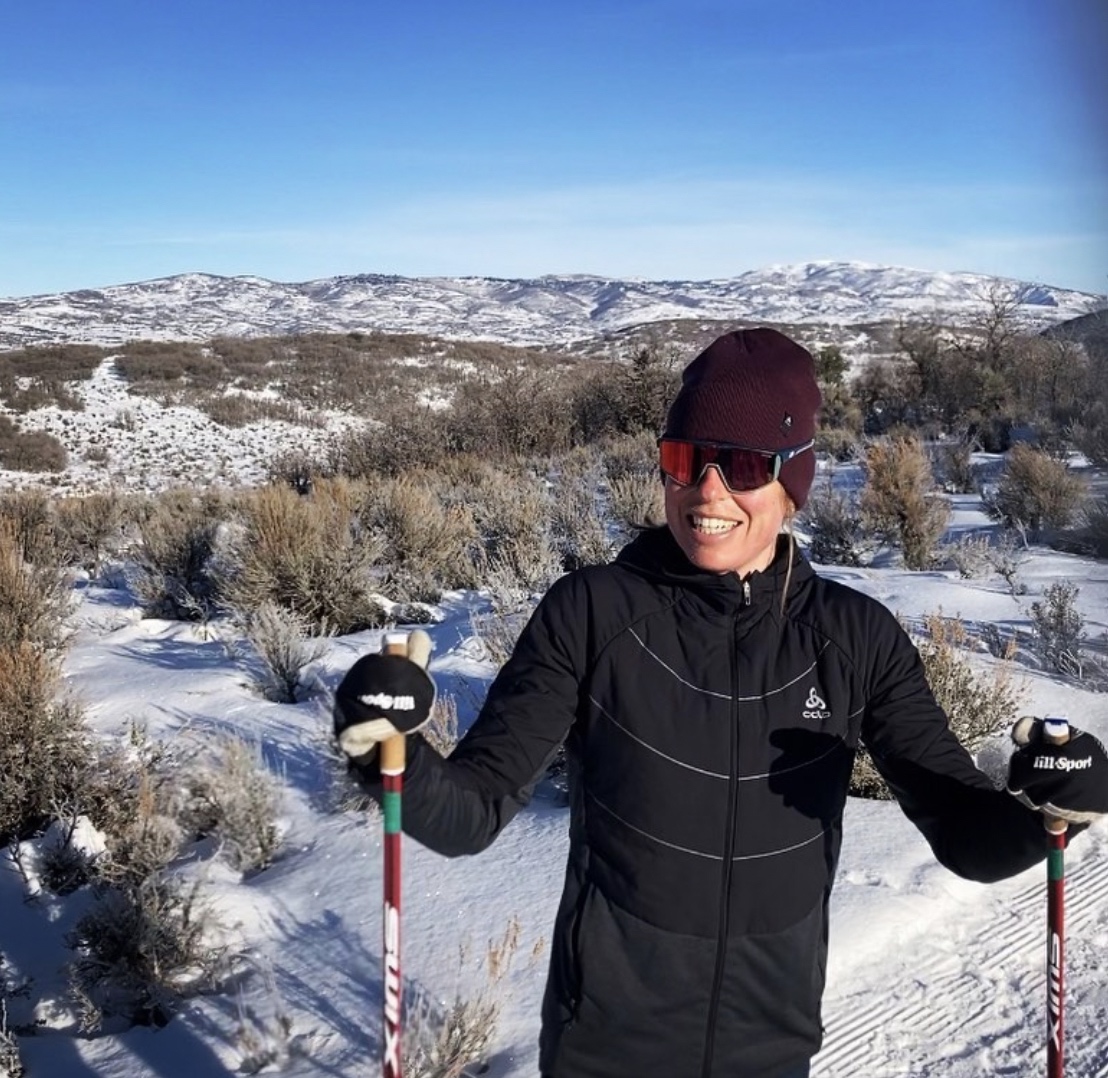
    Rosie Brennan logs hours on home trails during an extended altitude camp near Park City, UT. (Photo: Instagram @rosiewbrennan)

    Speaking to her feelings holistically as she prepares for the Olympics, entering the Games on the heels of a career-best 2020/21 season with a host of early-season indicators that she can be a medal contender, Brennan spoke to the stress athletes face amidst the pandemic, which has added layers of complexity in traveling to Beijing and entering the Olympic bubble. 

    “It’s definitely a stressful lead up to the Games with COVID raging everywhere, a multitude of requirements and things that need to get done to be allowed into China, and figuring out all the details of being prepared for such a long travel to a very foreign country with lots of restrictions. I am doing my best to just stay on top of all the requirements, stay far away from everyone I can, and chip away at the things I need to be prepared for. The training at home has been great and having a coach to work with is so helpful, so from an actual racing perspective, I am feeling good and optimistic. I feel very lucky to have a home base in Park City and that the venues in the area provide good preparation for the Games.” 
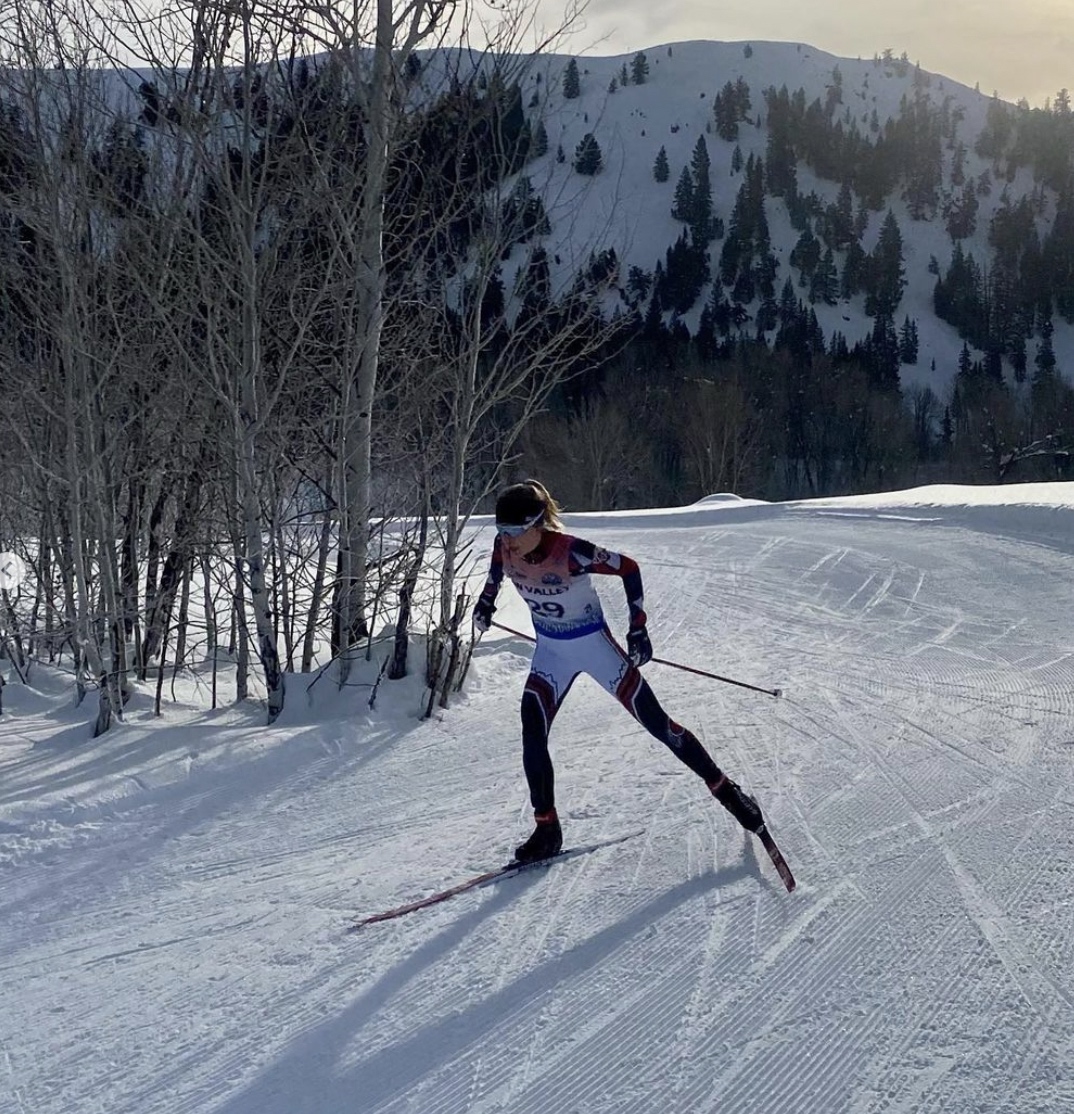
    Sophia Laukli races to second overall and finishes the top collegiate racer in the women’s 5k interval start free in Ketchum, ID. (Photo: Instagram @utahskiteam)

    Recovered from racing the Tour de Ski, where both women notched top-10 finishes on the hill climb, Sophia Laukli (USST/U of Utah) took second place (+48.6) today, with Novie McCabe four seconds behind in third (+52.6). Katharine Ogden (USST/SMS T2) was fourth (+52.0) for the women, with Rosie Frankowski (APU) next (+59.8) to round out the top-five. 

    With their top-three overall finishes, Laukli and McCabe also took home top results in the collegiate standings on behalf of the University of Utah. With teammate Sydney Palmer-Leger in 7th overall (+1:32.5), the Ute’s swept the RMISA podium.

    “Today was definitely quite the race,” wrote Laukli after the race. “I was really looking forward to it since I love 5k skates, and courses with lots of climbing. I was also excited to get back into racing after the tour, especially on the domestic circuit which I was starting to miss. I was very happy with how the race ended up today, and it was actually a bit of a surprise (results-wise) just based on how I felt during it. I know I was not alone by getting rather cold out on course, but it felt like quite the shock to the system and difficult to get in a good groove—sometimes that will happen though! While it was probably one of the hardest 5ks I’ve ever done, it’s an awesome course and I just had fun getting back into racing after a short break.”

    Commenting on her recovery post-Tour de Ski and her goals over the next couple of months, Laukli continued, “I took the past couple weeks very easy in my training, with minimal intensity, to recover from the tour. I wanted to take advantage of that racing block to really get into my best racing shape so taking a step back in training right after was important. The rest of the season is still a bit up in the air, but I know these races at altitude will be great preparation if I do end up at the Olympics. Either way, I’m planning to continue doing some college races and hopefully NCAAs, so these races will be good prep for that as well.”
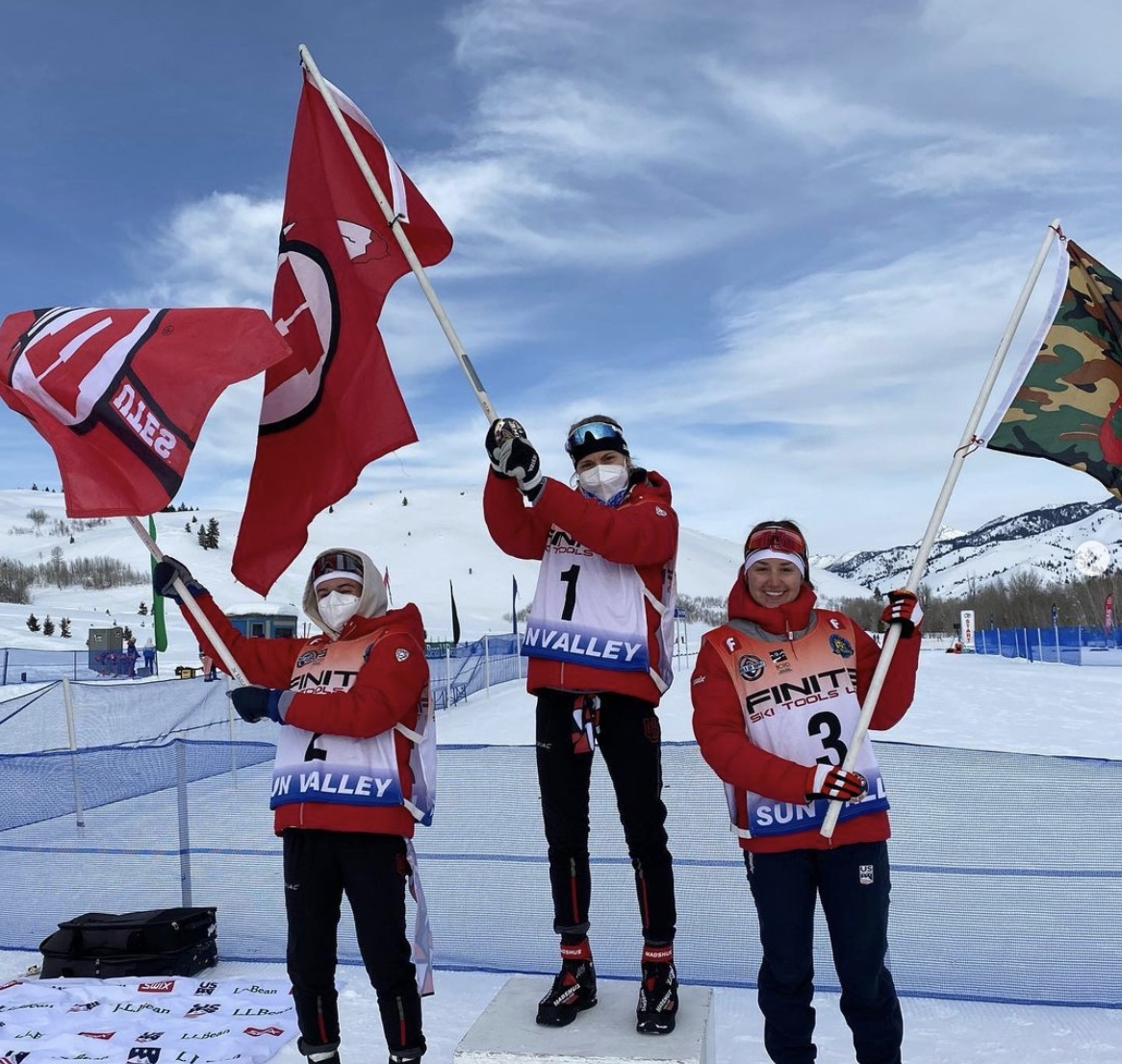
    With Sophia Laukli and Novie McCabe also taking second and third on the overall podium, Sydney Palmer-Leger brought the Ute’s home for a collegiate podium sweep. (Photo: Instagram @utahskiteam)

    Other noteworthy results include the retired, but nevertheless still a contender, Caitlin Gregg, who hopped into the race while still serving as a co-head coach of the Midwest’s Team Birkie. Gregg finished in 8th (+1:37.5), just ahead of the day’s top Craftsbury skier, Alexandra Lawson. 

    Also, Caitlin Patterson, who earned a spot on the podium in each of the events at the U.S. Cross Country Championships and SuperTour in Soldier Hollow, finished 17th, nearly two minutes behind Brennan. In a post-race Instagram story, Patterson wrote that she had been very cold during the race with numb legs and toes, which left her feeling like a “floppy fish popsicle.” Despite finishing below where she was perhaps aiming, Patterson remains in second place behind Frankowski in the SuperTour overall standings, and in second behind Brennan in the Olympic qualification rankings for distance racing.   


    Senior Men’s 10k Free: 

    The men’s field would race the same lap the women did, but twice. That meant there was a time checkpoint at the halfway mark to indicate how the race was shaping up, yielding interesting insights into just how tight a spread the top of US men’s skiing is right now. With World Cup athletes, elite-level domestic racers, and top collegiate skiers from the West, there were plenty of names to watch. 
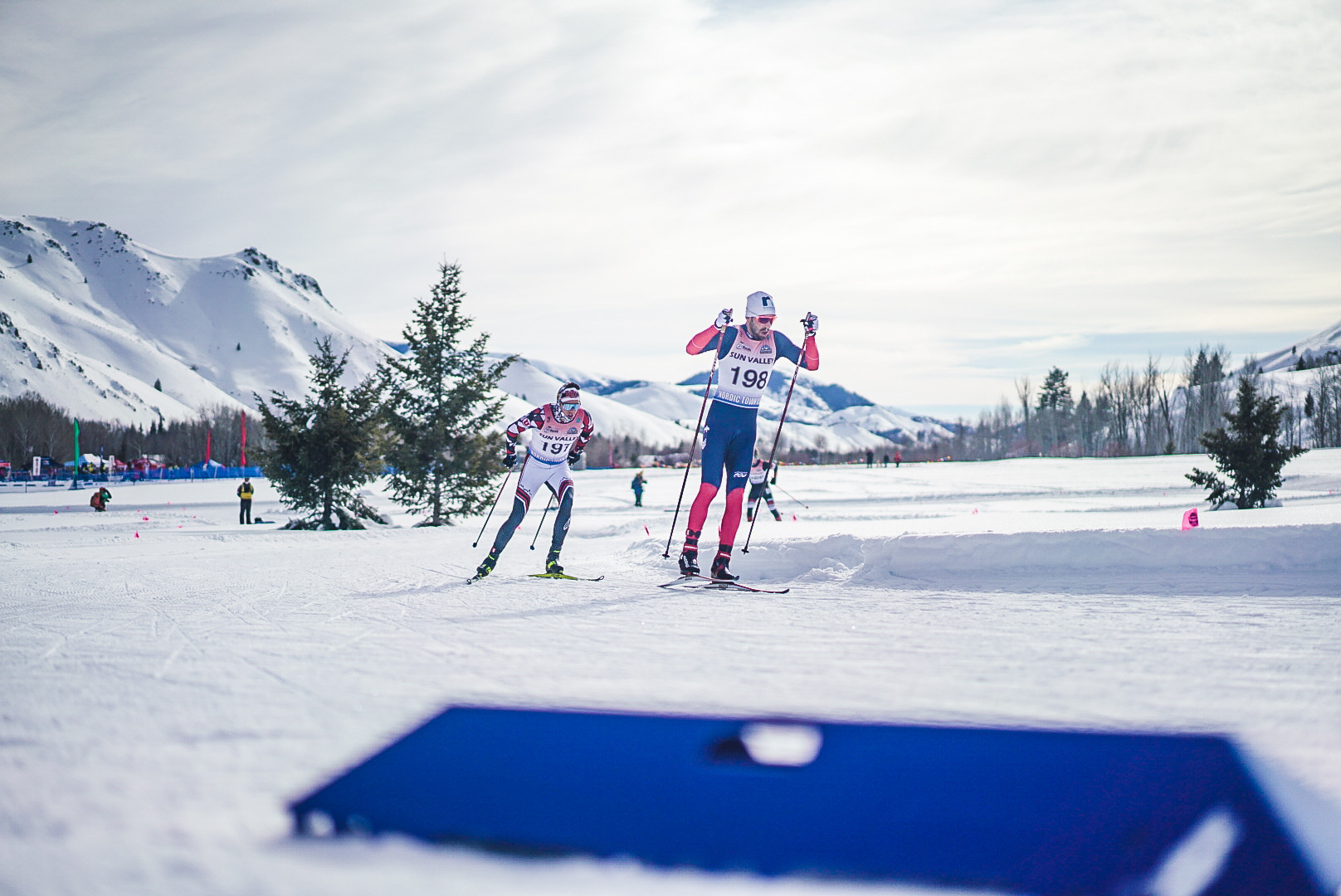
    Ian Torchia (SMS T2) leads Sam Hendry (U of Utah) during the SuperTour 10k individual start in Ketchum, ID. (Photo: Tobias Albrigtsen / @untraceableg)

    An Aspen, CO native and no stranger to altitude, Graham Houtsma (BSF Pro) was early off the line as the second starter in bib 172. Houtsma came across the 5km split as the early leader at 13:30.3. His mark would look to be the point around which the top of the field clustered for the first part of the race. Then, Scott Patterson (USST/APU) came through in bib 194 and raised the bar. His split topped Housma by a full 30 seconds (13:00.2), and would be chased as the remainder of top-seeded athletes lapped through.

    Before diving into that group, however, a caveat. A couple of the top skiers today weren’t assigned splits at all in the live timing, including overall SuperTour leader Adam Martin (CGRP), Johnny Hagenbuch (USST/SVSEF), and top-collegiate finisher, Bernhard Flaschberger (U of Denver). That gave an incomplete picture of what the race looked like through one lap, setting the stage for a few surprises in the eventual final results.
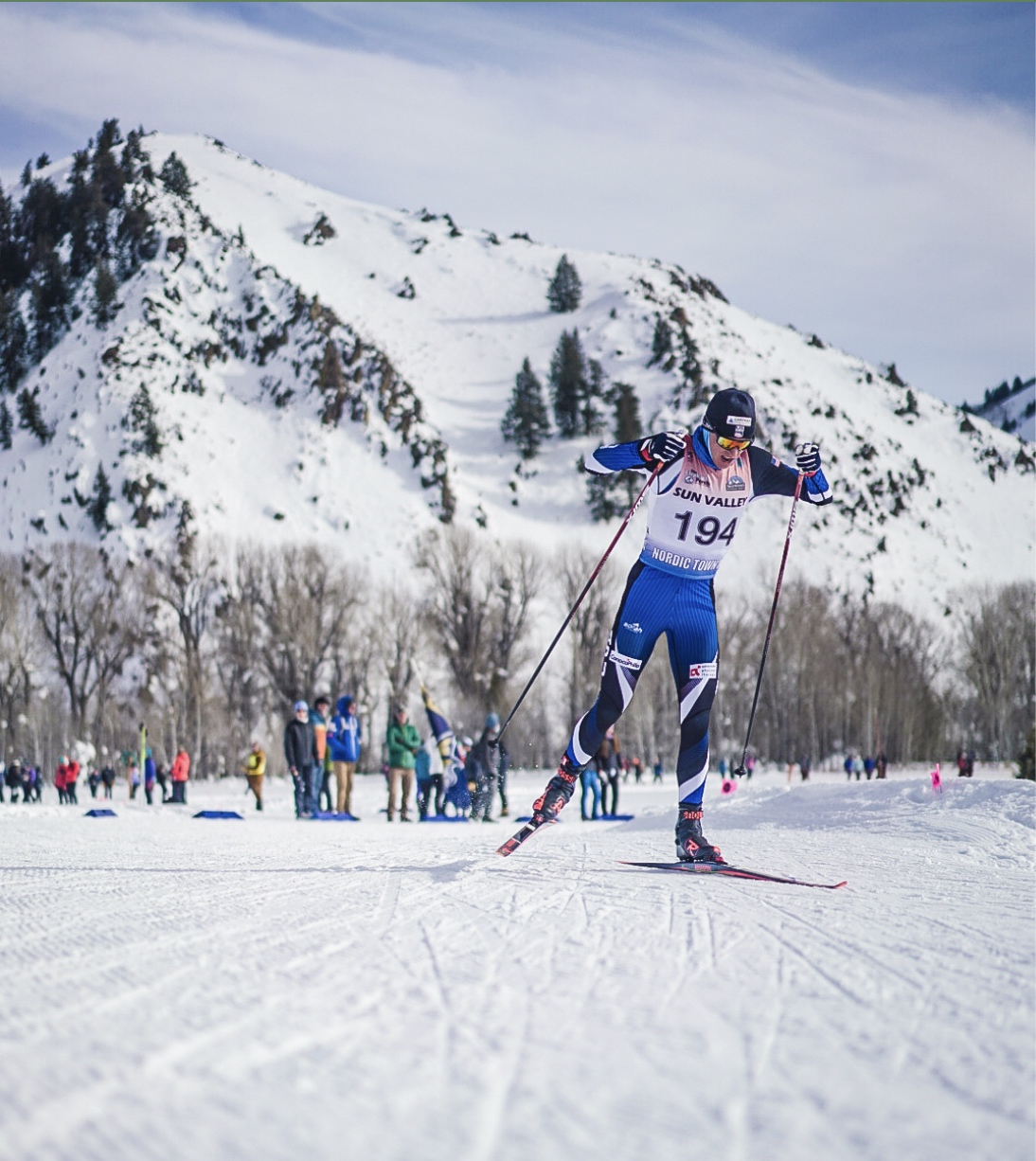
    Scott Patterson skis to fifth in the 10k individual start free in Sun Valley. (Photo: Tobias Albrigtsen / @untraceableg)

    So what did we know through 5km? If you were just observing, you would have seen Patterson overtaken by one, and only one, skier. Teammate Hunter Wonders (APU) completed the first lap of the course 3 seconds ahead of Patterson at 12:57.9. The field that had splits looked to be shaping up into a tight affair, with the top 5 skiers all within 15 seconds of each other. That included Wonders in the lead (12:57.9), with Patterson next (+2.3), Ian Torchia third (+8.5) seconds, David Norris (APU) in fourth (+10.0), and Finn O’Connell (BSF Pro) in fifth (+12.1). Based on eventual results, it is safe to assume that Hagenbuch, Flaschberger, and Martin all went through in the 13:00 min pack too. 

    At the finish, Wonders would cross the line in first place at 26:28.7, and slightly increase his lead over the pack in the second lap. Over Torchia, it had grown to 8.5 seconds, and Patterson 20.9 seconds. But it would be the skiers of the “mystery 5k” splits that really made a difference in defining today’s results. Hagenbuch came in soon after Wonders, and crossed the line in 26:15.4. It would prove to be a mark no one could top on the day. Bernard Flaschberger too, would slotted himself into the top of the pack – finishing less than a second ahead of Ian Torchia to claim 3rd.

    The top 5 of the final results then, looked finished like this: Johnny Hagenbuch with the win in 26:15.4, Hunter Wonders in second (+13.3), Bernhard Flaschberger in third (+27.0), Ian Torchia in fourth (+27.5), and Scott Patterson fifth (+34.2).
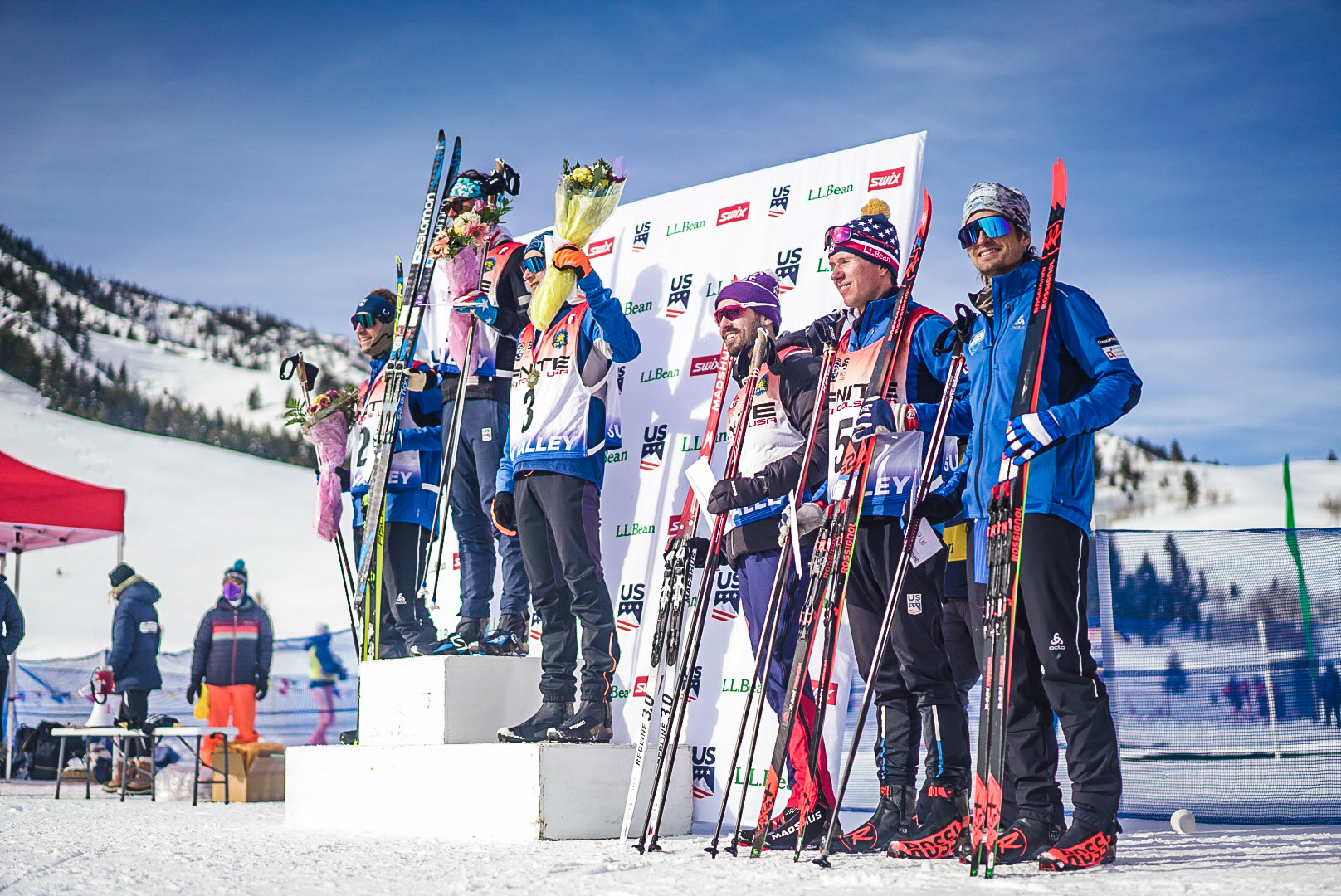
    The men’s podium of the SuperTour 10k individual start skate in Sun Valley, including the top-six athletes. (Photo: Tobias Albrigtsen / @untraceableg)

    In an email to FasterSkier, Hagenbuch pointed to an intimate knowledge of his home course in Sun Valley as being a key to his impressive margin at the top:

    “The conditions were firm and well skied-in, and it was fairly fast. I have skied a whole lot here at Lake Creek in my years, and I knew the race was going to be super hard. I think it’s important to focus on the transitions and more rolling parts of the courses at Lake Creek, as just about everyone will be suffering on the climbs. I tried to ski [with a] really big, powerful V2 on the more gradual north end of the course; the strategy for the uphills was mostly to step on and off the skis quickly.”

    With his results, Hagenbuch wins his first SuperTour of the season, on his home course, to boot. Not too shabby for a Saturday morning in Ketchum. He also did so in convincing fashion, rising above a field of seasoned SuperTour athletes to claim a definitive win by a stout margin. It will also improve his 5th place overall in the SuperTour standings, replacing two 6th place finishes from early in the season at Duluth.

    On his win, Hagenbuch wrote, “frankly it’s quite a relief to have done well today, as I feel I haven’t really expressed my shape to the fullest for a variety of reasons this season… I’m just taking it day-by-day, [and] it was a real treat to have so many friends and family to cheer me on at home in a field that was deeper than U.S. Nationals.”
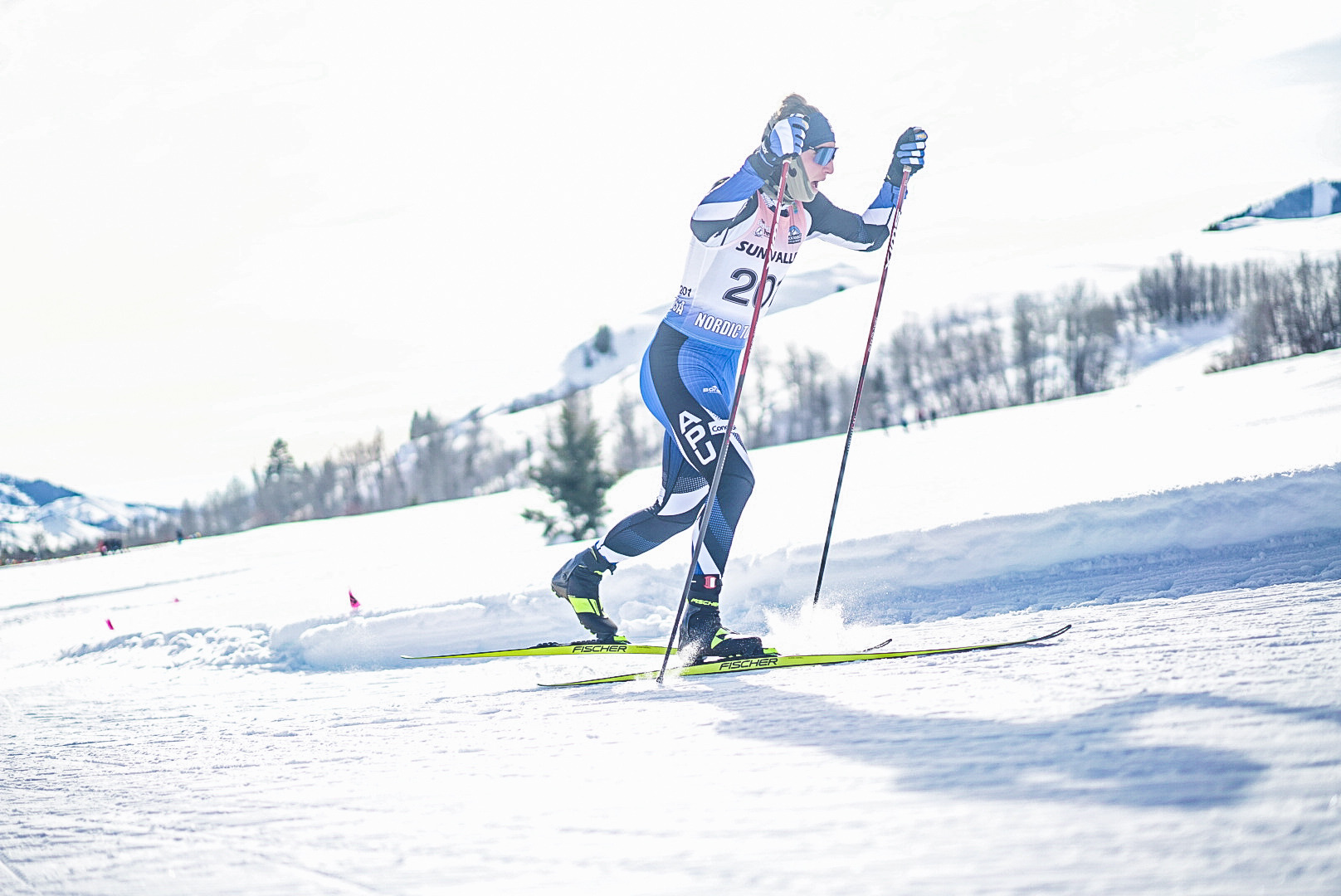
    Hunter Wonders skis to second place in the men’s 10-kilometer individual start skate race in Ketchum, ID. (Photo: Tobias Albrigtsen / @untraceableg)

    Elsewhere in the SuperTour standings, Wonders’ 2nd place finish will improve his distance standing going into today from 12th overall – replacing a 4th place finish in Soldier Hollow in the 15km Classic off his point standings. Overall SuperTour leader Adam Martin finished 7th (26:57.6) on the day, while 2nd place holder JC Schoonmaker was 21st (28:04.3).

    “Today was a solid effort,” Wonders wrote to FasterSkier after the race. “It’s been a while since I’ve been home to Alaska and that’s started to weigh on me this week. Leading into the racing I was low energy trying to get my feet back under me after nationals in Utah. It was a good confidence boost and a pleasant surprise when I realized I was having a good day on the course today.”

    Shedding light on the course conditions for those unable to watch, Wonders continued, “It was amazing conditions for a race, not too cold with firm grooming which is always welcome. 10k is pretty short, so I knew I had to take it out hot. I was a little concerned about blowing up, but realized that the course had more recovery when you’re at race pace versus easy skiing. The high part of the course is brutal but it sets you up into a ripping decent to the finish. Overall, it was a great day and I’m happy with my racing and thankful for my teammates keeping my spirits up this week and the coaches hooking me up with some great skis.” 

    In the RMISA collegiate standings, the Utes again had a strong podium showing. With Flaschberger taking the win for Denver, Walker Hall (U of Utah) Sam Hendry (U of Utah) skied into the next two collegiate spots to solidify the overall lead for Utah this weekend.
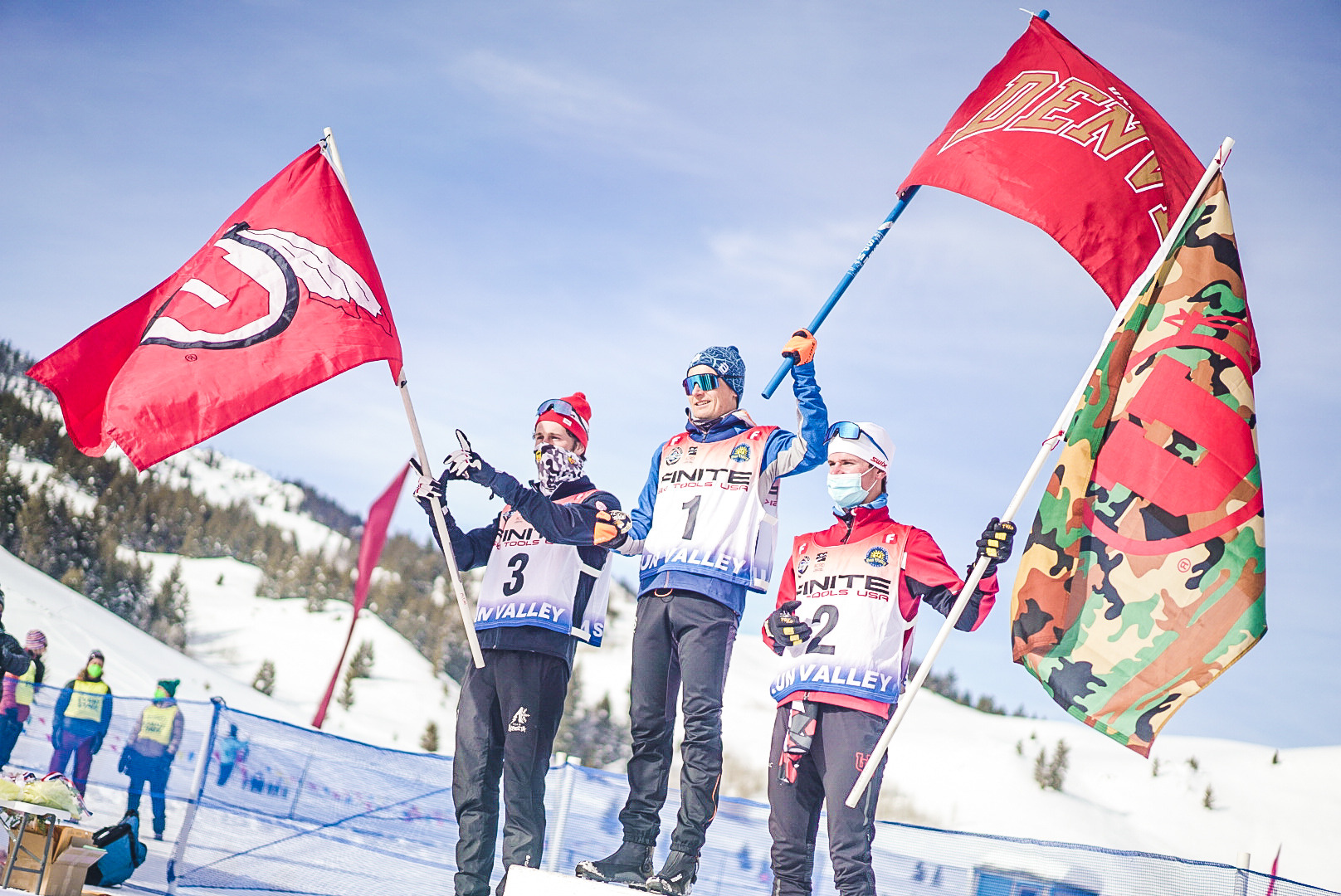
    The RMISA men’s podium of the 10k interval start classic in Sun Valley: Bernhard Flaschberger took the win for the University of Denver, ahead of Utah’s Walker Hall in second and Sam Hendry in third. (Photo: Tobias Albrigtsen / @untraceableg)

    Full Results  
    Women’s 5k Free

    Men’s 10k Free

  • FasterSkier News Round-Up (Updated)

    FasterSkier News Round-Up (Updated)

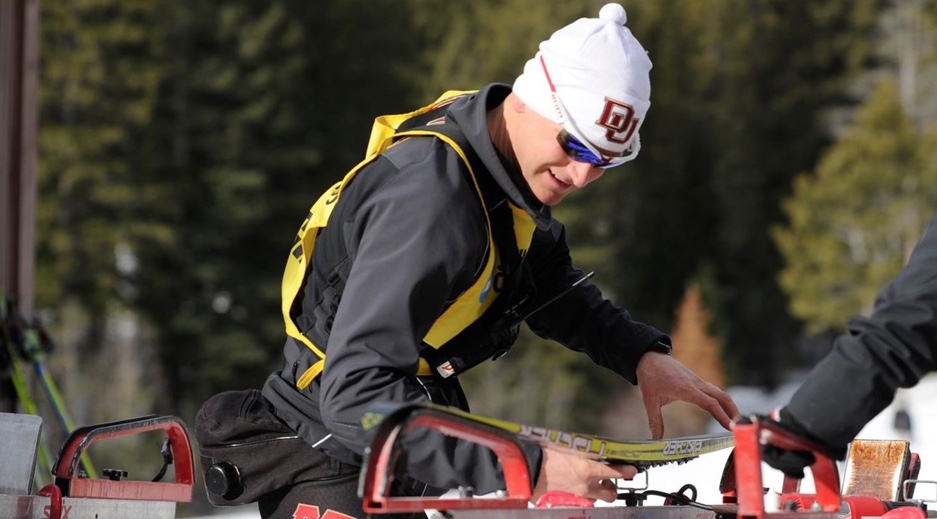
    Dave Stewart transitions from the University of Denver to the Steamboat Winter Sports Club.

    After twelve years as the Nordic Head Coach at the University of Denver (DU), Dave Stewart will be stepping down. Under Stewart’s leadership, DU earned six NCAA Division I national championships in skiing. Stewart’s long list of accomplishments includes a 2016 co-Nordic Coach of the Year honor and five Rocky Mountain Intercollegiate Ski Association (RMSIA) Coach of the Year awards.

    Dave Stewart waxing skis for the University of Denver. (Photo: University of Denver press release.)

    Stewart will remain in Colorado as he moves to a new position with the Steamboat Winter Sports Club. Stewart will begin his new job in June as the club’s new Athletic Director. His move to Steamboat brings him closer to family members that reside in the town.

    “My wife’s family is up there, her dad and brother, her brother works for the club and is a freestyle coach there,” Stewart said on the telephone with FasterSkier. “And then we love Steamboat too. It is a great community. Being back in the mountains, my wife is from Lake Placid and I am from Vermont so that is a huge drive too. And we have a two-year-old and to get him up in the mountains and expose to some snow a little bit more is a big draw for us as well.”

    Stewart knows the club well as five members of the DU ski team raced with the Steamboat Springs Winter Sports Club as juniors. Moving into an administrative role, Stewart said he welcomes the new broadened opportunity in Steamboat to work with athletes across several different sports.

    “It is almost like a community service working at the club,” said Stewart. “They are right there in town and getting kids out on snow.”

    At DU, Stewart was tasked with not only winning but fostering a collegiate experience that combines both sport and academics.

    “I am sure I will miss coaching,” Stewart reminisced. “I have been involved with cross-country ski racing for a very long time as an athlete and a coach. I have enjoyed it very much. Working with people in this age group, you know, it is like there dream to come and be a student-athlete and pursue those goals, as an athlete and a student, I am going to miss that. There is no question about it. You cannot be a ski coach forever. You get to a point where you are looking to transition to something else. And to maybe a role that is interacting with sport at a different level, more of an administrative role. I think I have some good experience from here to be able to have a good impact on young athletes and coaches in that way. This is a good opportunity to step in that direction. “

    Mathias Ahrens steps away from his role with Biathlon Canada.

    In Canada, Mathias Ahrens left his position of coaching the Canadian National Biathlon team this past April. Ahrens spent 15 years with the team. He becomes the Head Coach at the Biathlon Alberta Training Center.

    A name familiar to cross-country ski fans, Justin Wadsworth – a former U.S. Olympian, U.S. Ski Team coach and Head Coach of the Canadian National Ski Team — has been named interim Head Coach.

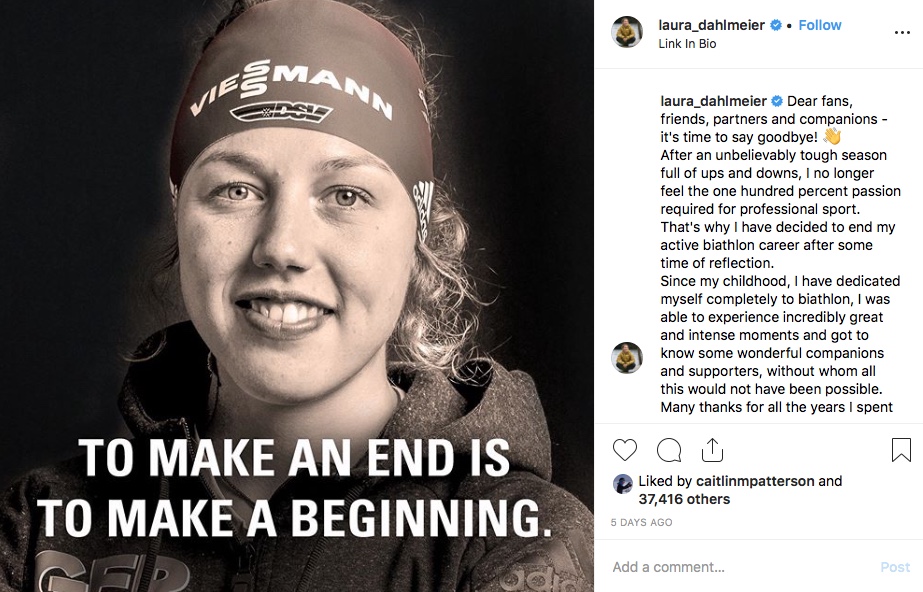
    German biathlon star Laura Dahlmeier has retired from the sport at the age of 25. 

    In a storied career, she began competing internationally in 2011. She won 22 individual World Cup races, earned seven golds, three silver, and five bronze medals at the IBU World Championships. Five of those World Championship medals were earned in Hochfilzen, Austria in 2017. Dahlmeier also won two Olympic golds along with Olympic bronze in PyeongChang.

    In a post on Instagram, Dahlmeier said the past season during which she struggled to perform at her historic highs, prompted her to seek a change.


    “After an unbelievably tough season full of ups and downs, I no longer feel the one hundred percent passion required for professional sport. That’s why I have decided to end my active biathlon career after some time of reflection,” Dahlmeier wrote.

    Dahlmeier was hospitalized in August and September of 2018 and although she returned to the World Cup, her energy levels were not the same. However, this past season she stood on the World Cup podium three times and won two bronze medals at the 2019 IBU World Championships.

    buy metronidazole online

    Sweden’s Ida Ingemarsdotter announces her retirement.

    Thirty-four-year-old Ida Ingemarsdotter has called it a career after racing on the cross-country World Cup since 2004. The Swede finished last season ranked sixth in the overall sprint standings and 15th in distance. Despite her strong season, Ingemarsdotter stated she lacked the motivation for another season at the elite level.

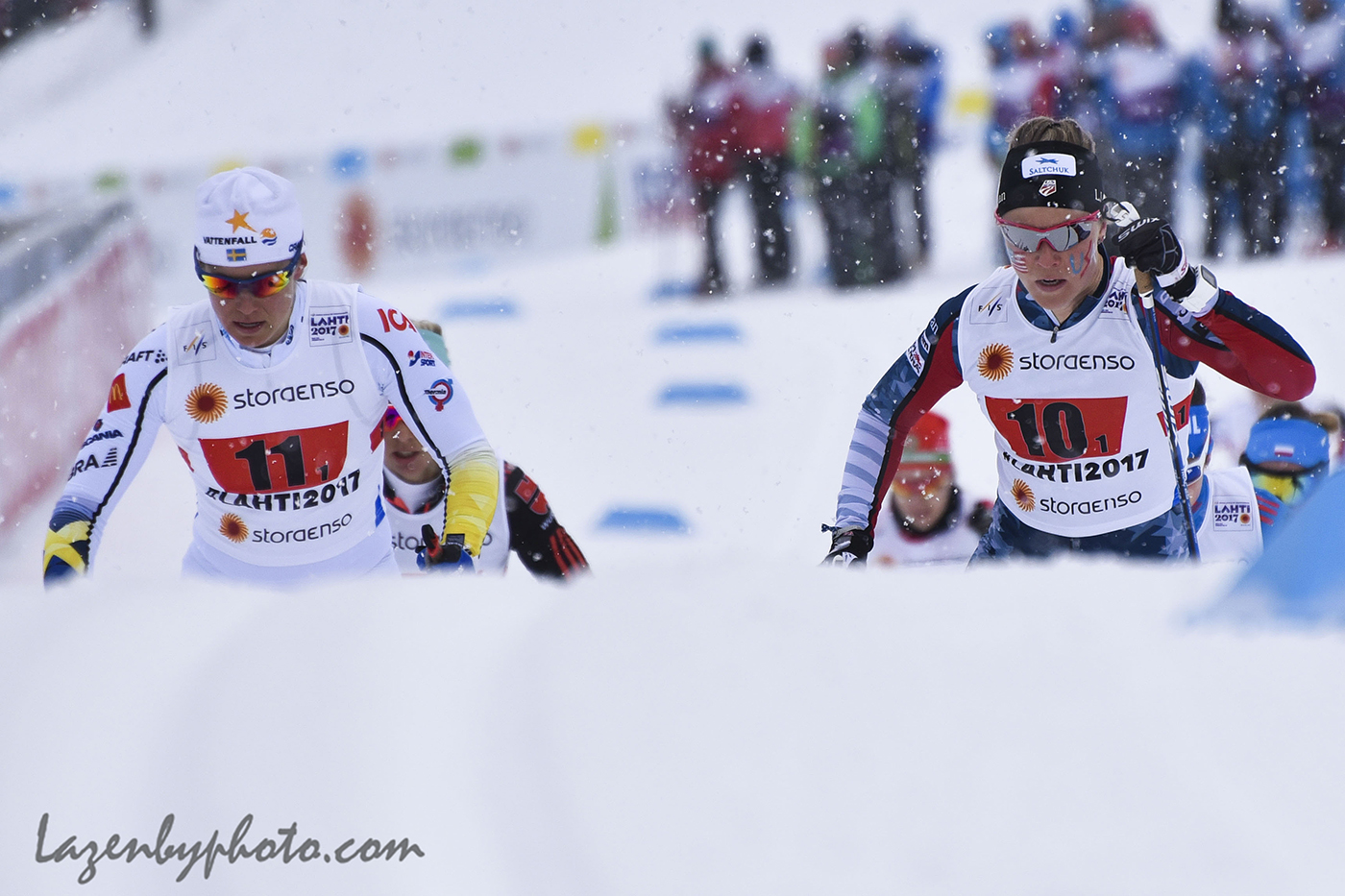
    Sweden’s Ida Ingemarsdotter (11) and American Sadie Bjornsen (10) go head to head in the women’s classic sprint final at 2017 World Championships in Lahti, Finland.

    She stood on two individual World Cup sprint podiums last season and placed in the top-10 eight times.

    Her medal haul includes five World Championship silver medals and one gold. She also won two Olympic medals, a gold, and bronze in Sochi.

    Ingemarsdotter explained in a press release that her best day skiing came during the women’s 4 x 5-kilometer relay at the Sochi Olympics.

    “The biggest day in my sports life was when I took Olympic gold in relay 2014 together with Anna Haag, Charlotte Kalla and Emma Wikén. Everything went our way and it was a real dream day where tears were mixed with laughter and a strange feeling that we did something nobody thought we would succeed with,” Ingemarsdotter said according to a translation of the Swedish National Team’s official retirement announcement.

    The University of Alaska Anchorage announces a new cross-country coach. 

    In a press release on May 10, the University of Alaska Anchorage (UAA) announced that cross-country ski coach Andrew Kastning had stepped down to pursue other opportunities. His coaching replacement is Trond Flagstad.

    No stranger to the UAA program, Flagstad began as an assistant coach in cross country running and skiing at the school back in 2001. Flagstad was head nordic coach from 2004 to 2011. Most recently, Flagstad was ski coaching in Norway.

    “I am very excited to be back at UAA and in the Seawolf family,” said Flagstad according to the UAA press release. “I am looking forward to working with all the great coaches and the talented student-athletes at UAA, especially with the ski team. My goal of winning the NCAA skiing championships with the UAA ski team hasn’t changed since the last time I was here, and after coaching in Norway for three years, I know I am better prepared as a coach to reach those goals. I am excited to recruit and develop young skiers from Alaska to help us win races and championships. In addition I have created some very valuable friendships and connections in Scandinavia and Europe. I have some new ideas and a coaching philosophy that I believe will benefit the UAA ski team, especially the Nordic team on our way to a championship title. I am thrilled to have this opportunity and to move our family back to the house we built up on the hillside.”

  • Wednesday Workout with New DU Assistant Mads Strøm

    Wednesday Workout with New DU Assistant Mads Strøm

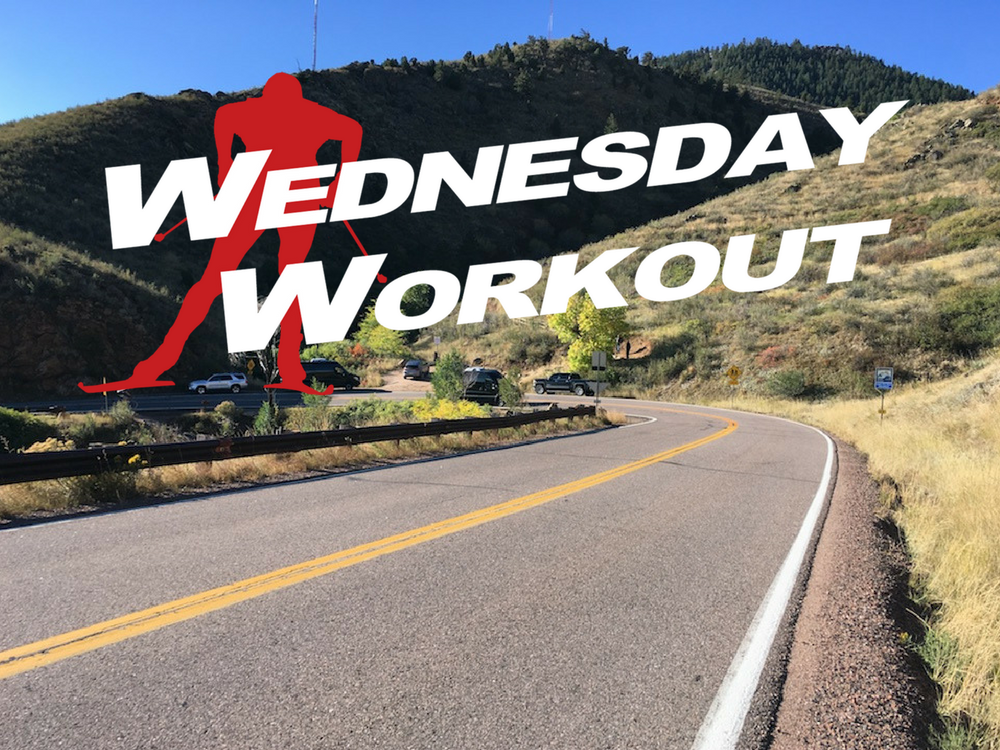
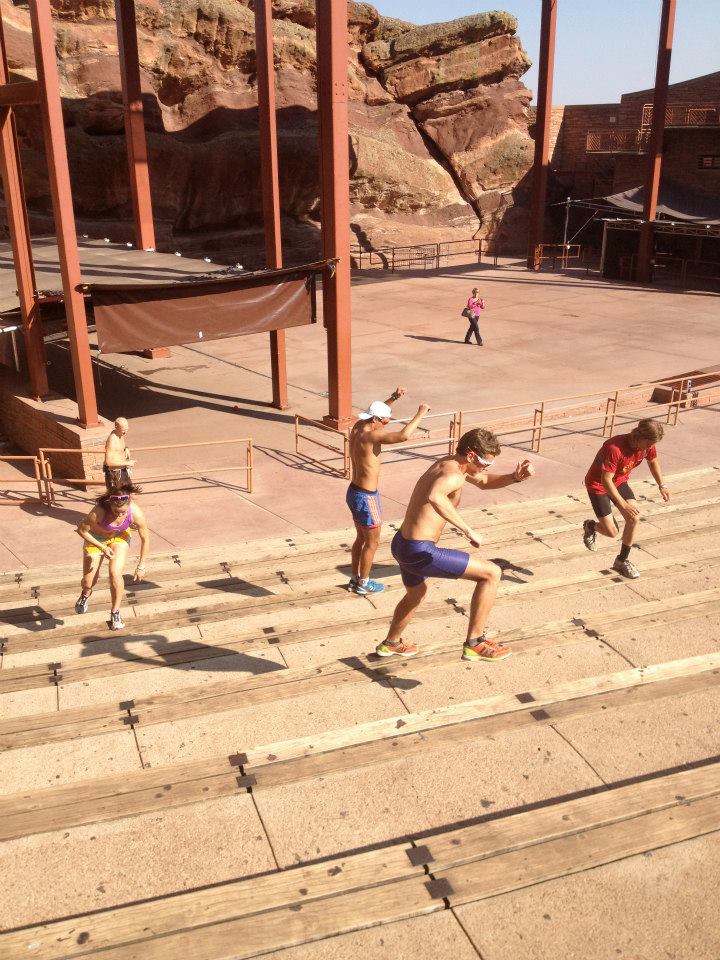
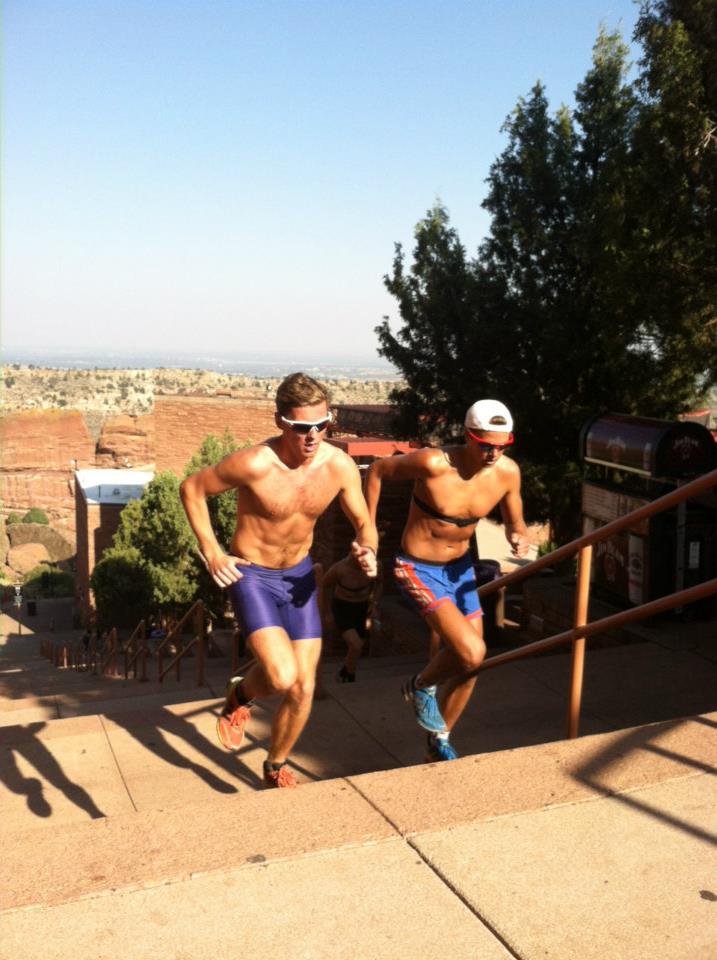
    A glance at Lookout Mountain in Golden, Colorado, where the DU Ski Team held an uphill skate workout last month. (Photo: Mads Ek Strøm)

    At the end of Mads Ek Strøm’s senior year at the University of Colorado-Boulder (CU), the 26-year-old Norwegian had some decisions to make. He started by looking for a job in the U.S., specifically in the finance industry, in addition to pursuing a master’s degree in finance.

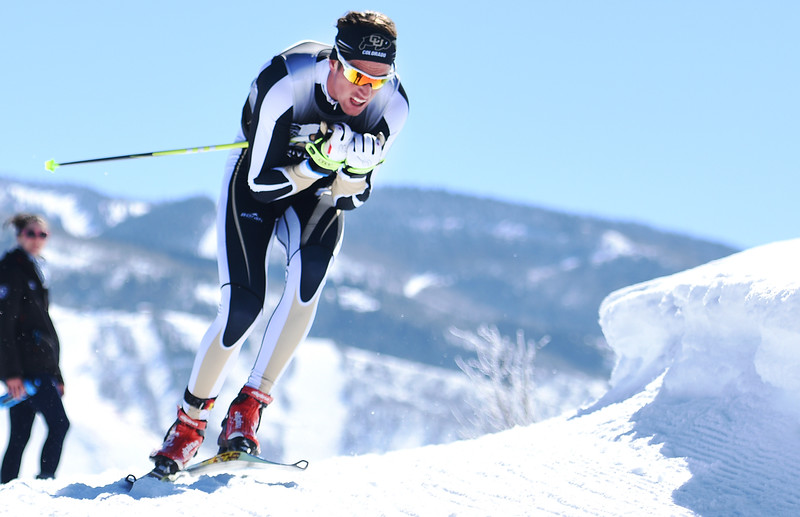
    Mads Ek Strøm of the University of Colorado-Boulder racing to a first place finish in the men’s 10 k freestyle race at the 2016 NCAA Skiing Championships in Steamboat Springs, Colo. (Photo: CUBuffs/Buffzone.com)

    Then the three-time National Collegiate Athletic Association (NCAA) champion — who won back-to-back races at the 2016 championships and came 0.5 seconds from a fourth NCAA title last year — got a call from Dave Stewart, head coach of the University of Denver (DU) Ski Team.

    DU’s assistant coach for the last six years, Hakon Johansen, had accepted a position as head coach of the Chinese biathlon federation, which is aiming to strengthen its snow-sports teams in advance of the 2022 Beijing Winter Olympics, Stewart explained in an email to FasterSkier.

    “When I started thinking about a new coach, Mads was a top choice immediately based on his experience as a competitor, as an NCAA student-athlete and from what I know he invested in his own training and in his teammates,” Stewart wrote of the Oslo native. “I have a lot of faith in a coach who is motivated to pass on to his athletes what he learned from his own experiences.”

    Strøm, a seven-time first-team All American and the winningest male skier in CU history, accepted the offer and started at DU at the beginning of the semester about a month ago. DU announced Strøm’s hiring as assistant nordic coach on Sept. 15.

    “I couldn’t say no when the offer from DU came along,” Strøm wrote in an email. “It’s been awesome so far and it was a great way to still be a part of the skiing community.”

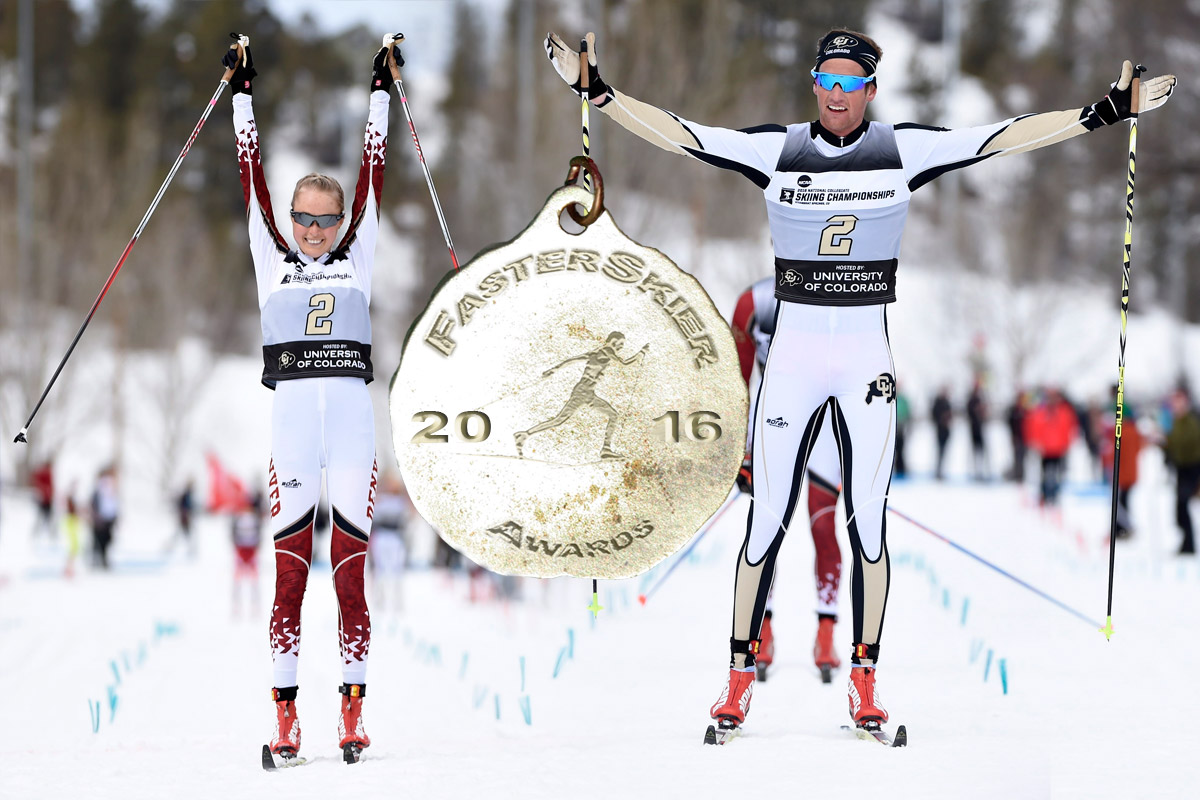
    Mads Strøm (r) and Linn Eriksen were FasterSkier’s Collegiate Skiers of 2016. Strøm is now an assistant coach at DU and Linn Eriksen, also from Oslo, Norway, is a senior at DU. (Photo: Curtis Snyder of the CU Sports Information Dept. and Jamie Schwaberow/NCAA photos).

    His responsibilities include discussing training plans with athletes and helping them reach their goals, he explained.

    “As a coach, I really hope I can help the all the athletes develop as skiers but also as human beings,” Strøm added. “Their goals are my goals and hopefully we can bring back the national championship to Denver for the 24th time. I really want to develop skiers and potentially find and help US skiing to another level.”

    “Mads has hit the ground running here and has been received well by our team,” Stewart noted. “We have a very motivated and fun team this year. A few young new faces and enough experienced returners among both women and men to lead the way. As always, our goals will be to be better than we have been before both individually and as a team and win NCAA’s.”

    We asked Strøm for a Wednesday Workout, and he shared one of the best ones he knows: Level 3 uphill skate intervals.

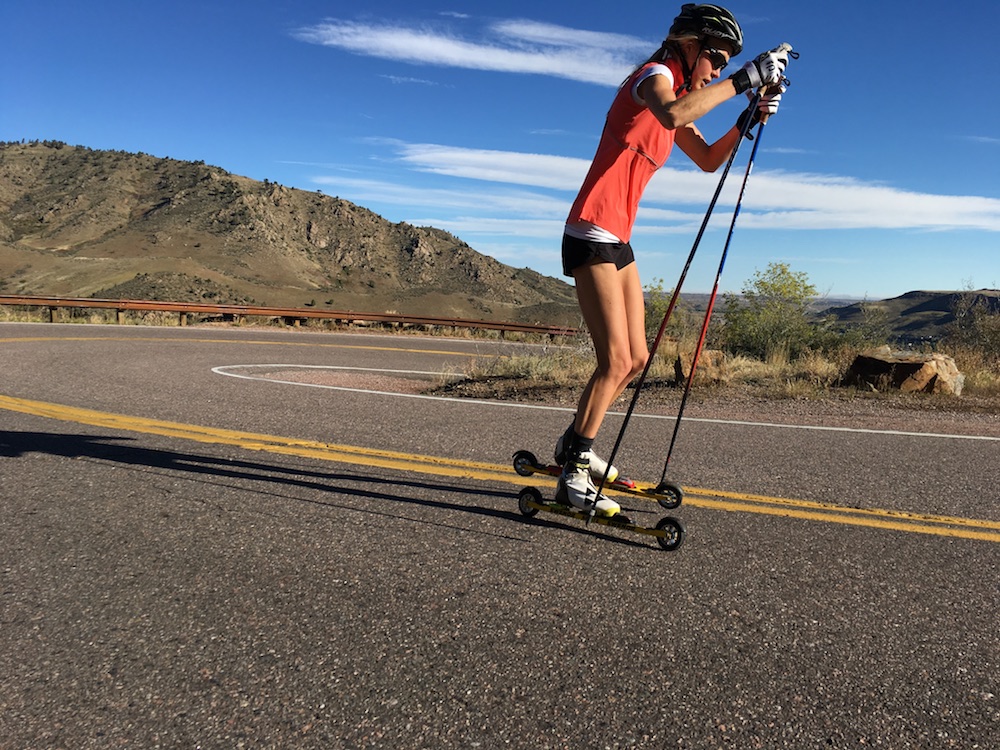
    DU senior Linn Eriksen skating up Lookout Mountain in Golden, Colorado, last month. (Photo: Mads Ek Strøm)

    “You get to increase your VO2 (Level 3-4) and you get lots of repetitive movement which makes you able to work on technique over a longer period of time in ‘race pace’,” he explained.

    “Before the workout try to make it THE workout of the week, as the interval sessions are the ones that makes you a better skier,” Strøm wrote. “Try to create a training plan where you are rested both physically and mentally the morning of the workout. The second session of the day should be a recovery workout (double poling with core strength or just easy running for 45 minutes to an hour).”

    The Workout: Level 3 6-8 x 8-minutes skate uphill

    1. Warmup: Easy skiing for 30 minutes, some minor speed increases to make the body ready for a hard workout.
    2. The Interval: 6 to 8 times 8-minutes uphill skate. Try to pace it so that every single interval is slightly faster. The last one should be in the form of 30/30, where you try increase the pace for 30 seconds and then rest for 30 seconds and do it 8 times; to increase speed and the tolerance for lactic acid to make it race specific.
    3. Cool down: 10 minutes of Level 1 and 5 minutes of Level 2 to remove as much lactic acid as possible. Remember food and drink after the workout as soon as possible (protein bars, Gatorade, etc.)
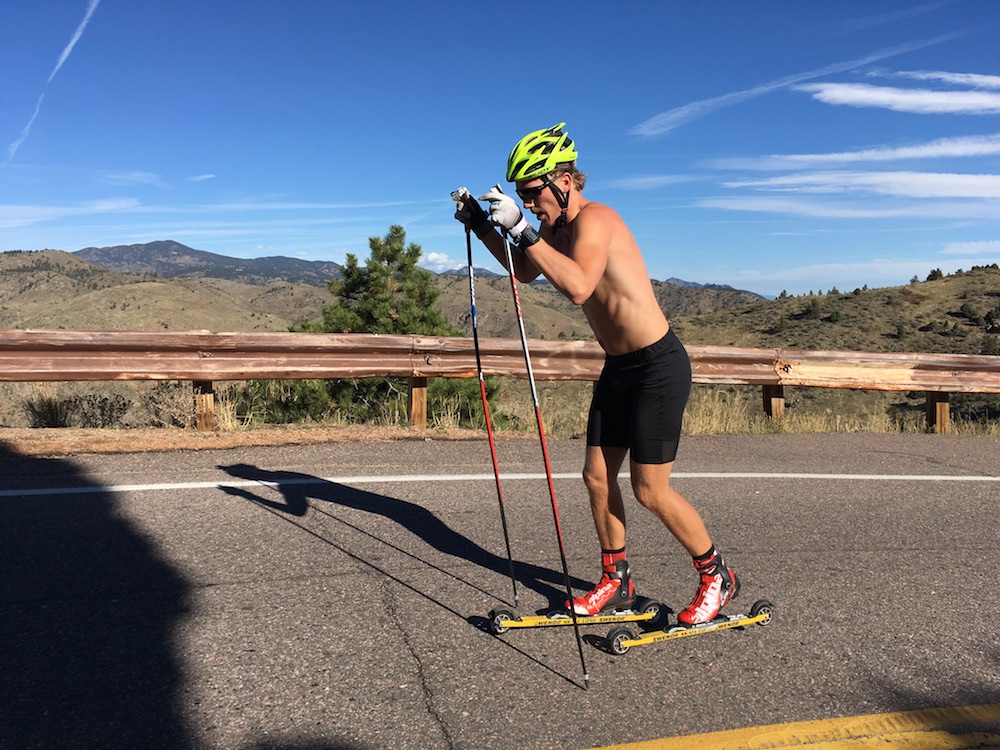
    DU sophomore Eivind Kvaale skating up Lookout Mountain in Golden, Colorado, last month. (Photo: Mads Ek Strøm)


  • Myrseth, Madlener Win RMISA Mass Starts in Anchorage

    Myrseth, Madlener Win RMISA Mass Starts in Anchorage

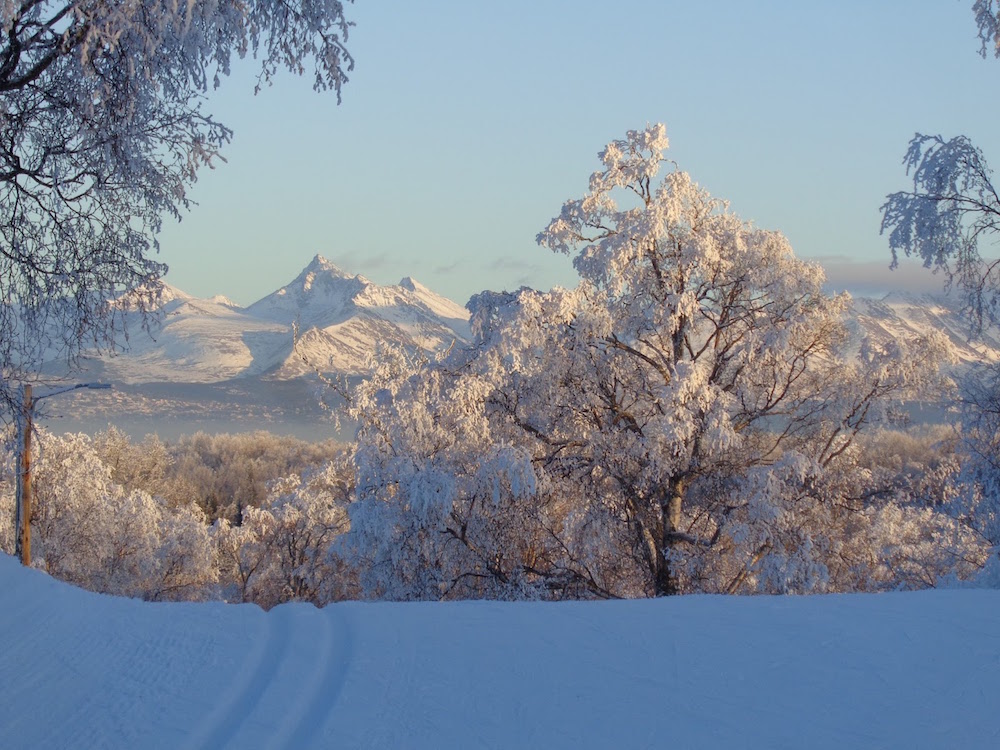
    The Chugach Mountains as seen from the Lekisch Loop, part of the course for the weekend’s races, at Kincaid Park in Anchorage, Alaska. (Photo: Adam Verrier)

    ANCHORAGE, Alaska — So how cold was it at Kincaid Park Sunday morning for the last of four Rocky Mountain Intercollegiate Ski Association (RMISA) races held in the Anchorage area this week?

    “It’s f—ing cold,” said women’s winner Merete Myrseth of the University of Utah. “It was cold,” said men’s winner Moritz Madlener of the University of Denver. “Now we fly back to Denver and get warm.” [Unavailable for comment] were the two skiers who required an ambulance for cold-related injuries following the women’s race.

    For the record, temperatures were consistently at or above zero degrees Fahrenheit all morning, so readily FIS-legal. (The International Ski Federation, which sanctioned all of this week’s races, has a temperature cutoff of -20° C, or -4° F, in order for a race to be held.) The real problem was the wind, which blew steadily from the north at around 10mph all morning.

    Unless the real problem was the humidity. The city of Anchorage is, well, a natural anchorage, bordered by Cook Inlet to the north and Turnagain Arm to the south. The Kincaid stadium is well under a kilometer away from the shores of the ice-choked Pacific Ocean; athletes were within 150 meters of the Turnagain Arm beach at one point on Sunday’s race course. Humidity was over 90% all morning. By any measure, conditions were somewhere between “raw” and “brutal.”

    At least atmospherically speaking. The ski trails were in superb shape following 30″ of snow in the month of January, if slow due to temperatures below zero Saturday night into Sunday morning.

    The first race of the day, the men’s 20-kilometer freestyle mass start, saw its start moved one hour later due to cold conditions. In that time the temperature rose from -2° F to zero.

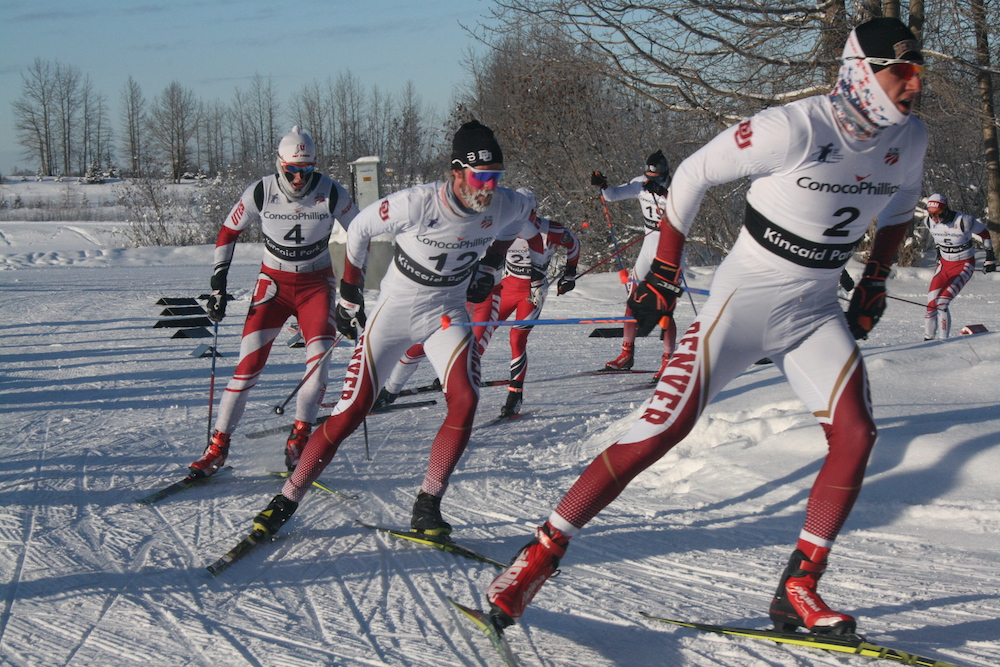
    Denver’s Moritz Madlener (2) leads Dag Frode Trollebø of Denver (12) and Kevin Bolger of Utah (4) in the men’s 20 k skate at Kincaid Park in Anchorage, Alaska. (Photo: Adam Verrier)

    When the race started, Denver’s Madlener quickly moved near the front as the field of 42 racers headed north out of the stadium to make their way up Elliott’s Climb. (For Anchorage readers, or anyone else familiar with Kincaid: the course went up Elliott’s and down Rollercoaster; up and down the Gong Hill; through the lower tunnel out to Mize’s Folly; take the first right onto Hairpin; take the first left at the top of Hairpin onto the 2.9 k Lekisch. Men did two laps of this, for 15 k, then a final 5 k lap that cut out Elliott’s. Women did two laps of the 7.5 k course for 15 k total.)

    “I was in the front pack pretty much the whole race,” Madlener recounted in an in-person interview with FasterSkier. “Tried to, you know, set the pace every now and then to get rid of people. Which worked pretty well; I think four of us got away after maybe 12 [kilometers]. And then we stayed together for the rest of the race, and then the last couple hills we kind of separated.”

    Madlener ultimately crossed the line in 52:39.2, edging teammate Dag Frode Trollebø by 2.6 seconds. Martin Bergström of the University of Utah followed in third (+10.4). “That’s a great feeling” to share the podium with a teammate, Madlener told FasterSkier.

    Madlener recalled that he had “a really good start” to his season at U.S. nationals – he earned two podiums there, second in the classic sprint and third in the 15 k skate – before he got sick “and had to catch up. And the races so far here in Alaska weren’t that great,” he continued, “so I was very happy to win today.”

    This week marked Madlener’s second time racing in Alaska; he previously competed in the last RMISA race series held in Anchorage, in early 2015. That week was marked by warm weather, rain, and shortened courses.

    Madlener is a fan, of Alaska in general and particularly the full courses that athletes got to race on this year.

    “I think it’s beautiful,” Madlener said of Alaska. “It’s like – I would say it’s like a big theme park; people are surfing and flying around and fishing. I really enjoy it. And the courses – again, two years ago, were not so great, but this year there’s a lot of snow, they’re pretty amazing courses. Like a rollercoaster.”

    Merete Myrseth of Utah enters the stadium approaching the finish in the women’s 15 k skate at Kincaid Park in Anchorage, Alaska. (Photo: Adam Verrier)

    Sunday’s race course featured a total of eight A-climbs for the men in 20 k, and six A-climbs for the women in 15 k. There was an average of 34 meters of climbing per kilometer on the main 7.5 k loop.

    Four racers, roughly a tenth of the field, were DNFs in the men’s race, likely due to a combination of the hills and the cold. Two skiers did not finish the women’s race. An additional eight opted not to start.

    The first words out of Madlener’s mouth when asked about his race were, “It was – first of all it was cold, obviously.” Myrseth, the women’s winner who skis for Utah, voiced similar sentiments: “It was cold, really cold,” she began her race summary. (By the time of the women’s race start at 12:30 p.m., temperatures had climbed to 1.6° F.)

    “I was unsure if I would start the whole race because it was so cold, actually too cold for me,” Myrseth told FasterSkier in a brief in-person interview while shivering in the windy stadium soon after her finish. “But it went really easy in the first half of the lap,” she continued, and she felt good. “So I decided to speed up when I came to hills”; there Myrseth created a gap that she kept all the way to the finish.

    But not without difficulty. “I didn’t feel good,” Myrseth said. “My feet, I couldn’t feel my feet, it was so cold. So I had to just, like, double pole over the hills, I was so tight in my feet and lost my balance, it was just so hard to keep balancing. But I made it to the finish line. And I am so happy that Guro took the second place.”

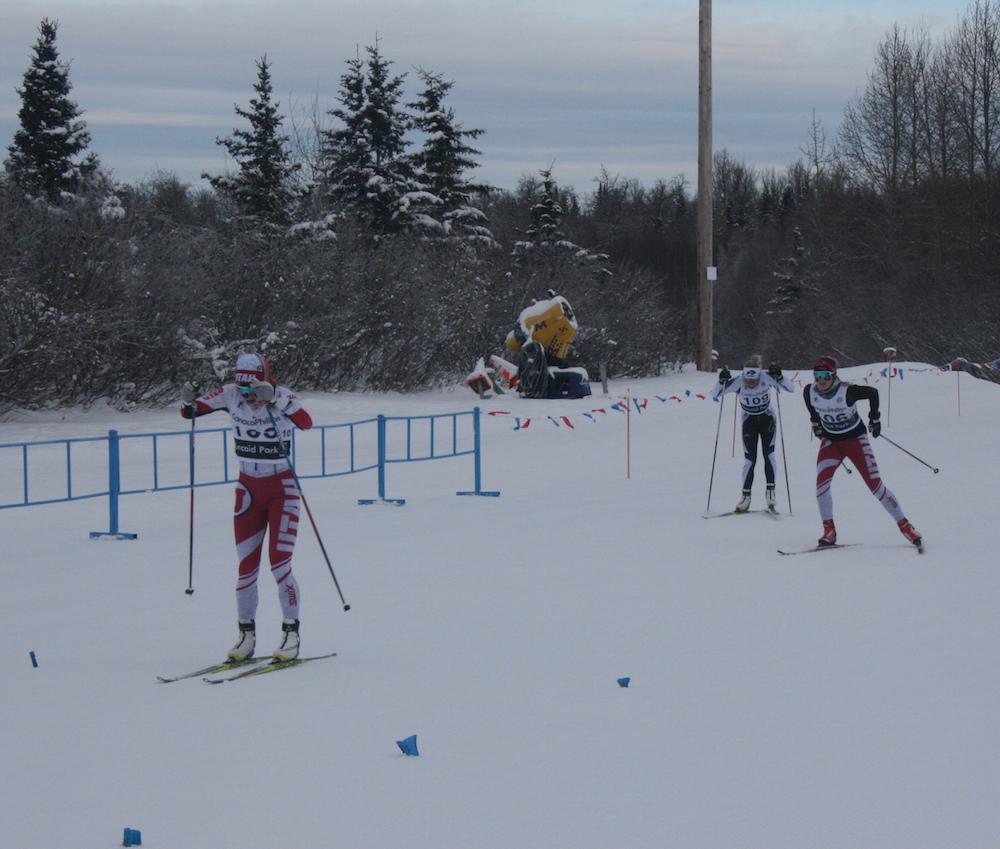
    Merete Myrseth of Utah (l) in the finishing chute en route to the narrow victory over Guro Jordheim of Utah (106) and Christina Rolandsen of Colorado (109) at Kincaid Park in Anchorage, Alaska. (Photo: Adam Verrier)

    Myrseth crossed the finish line in 46:28.3 for 15 k, double poling the last few meters to the finish. As she noted, she was followed by teammate Guro Jordheim in a close second (+0.5). Christina Rolandsen of the University of Colorado was not far back in third (+1.8). There was then a 30-second gap to a chase pack containing places fourth through sixth. 32 skiers finished the women’s race.

    This week marked Myrseth’s first time racing in Anchorage or even visiting Alaska. So what did she think? “I love it,” said the native of Øverbygd, Norway. “It’s f—ing cold, but it reminds me of Norway, my home. I’m used to it. But it’s so nice; I really like it here.”

    Sunday’s race marked the fourth race of the week in the Anchorage area for RMISA athletes. Recaps of the first three races follow below.

    Sunday results: FIS men and FIS women | NCAA-only results

    ***

    1.4 k freestyle sprint

    On Tuesday, February 7, RMISA athletes, plus a handful of skiers from Alaska Pacific University (APU) with sterling sprint credentials, raced a 1.4-kilometer freestyle sprint at Kincaid. Conditions were impeccable, with pure blue skies, temperatures in the high teens, and last month’s fresh snow mixed in with the base of manmade snow covering the sprint loop.

    In the women’s race, Merete Myrseth of Utah posted the fastest time in qualifying, 3:25.77, followed by Becca Rorabaugh of APU (+2.14) and Utah’s Guro Jordheim (+3.65). All three skiers made the A-Final, where Myrseth took her first victory of the week. The overall podium, which was also the college podium, was Jordheim in second and Anika Miller (Montana State) in third. Casey Wright (UAA), Rorabaugh, and Jasmi Joensuu (Denver) were fourth through sixth.

    Times were not available for any of the heats.

    In the men’s race, Dag Frode Trollebø (Utah) set the pace in qualifying in 2:48.80. He was followed by APU’s Logan Hanneman (+1.52) and Utah’s Martin Bergström (+3.33).

    Three of the six skiers in the men’s A-Final were locals (in the broad sense of being from Alaska; the Hanneman brothers are from Fairbanks, not Anchorage). And it was the Hanneman show in the final, as the elder Reese Hanneman took the victory over his younger brother Logan. Trollebø was third. Kevin Bolger of Utah, last seen winning the classic sprint national championship at Soldier Hollow, Bergström, and APU’s Forrest Mahlen rounded out the final finisher spots in that order.

    The collegiate podium for the men’s race was Trollebø, Bolger, and Bergström. (APU is not an NCAA-affiliated athletic program.)

    While sprinting may be on the horizon for NCAA skiing in general, it had yet to make an appearance on the RMISA circuit.

    “This was the first sprint that I know of in my, what – 10 years of RMISA coaching now and we’ve never had just a straight invitational sprint,” University of Alaska Anchorage Head Nordic Coach Andrew Kastning told FasterSkier in person following Sunday’s distance skate races.

    Kastning said that the addition of a sprint in Anchorage stemmed from a desire for a change of pace, and to avoid repetition in a single week with four races. “So when we sat down last spring and were deciding the schedule,” he said, “we’d been hearing for a few years now from our athletes that the fives, 10s, 15s, and 20s [kilometer race format] every weekend just kind of got boring, and we wanted to mix it up. So we counted the qualifying round as an invite at U.S. Nationals, and then we ran the full sprint [this week] and counted that. … So we just wanted to mix it up a little up here. Especially with four races in a short period of time, you don’t want to be doing all the same distances and the same courses.”

    So did the college athletes appreciate the chance to contest a sprint race in the middle of the RMISA race season? “Some of them do,” Kastning said. “There’s always a sprint specialist in the crowd who gets to shine. And I know there were kids on the podium, or in the top-10 at least, that aren’t normally in a distance race. So it allows some athletes to play to their strengths and shine a bit when they maybe wouldn‘t in a 20 k race, they can in a sprint.”

    On the non-collegiate side, APU skier Reese Hanneman, a sprint specialist, was thrilled to have a mid-season sprint race with high-level competition on his adopted home course. “I wish there were more sprint races in the middle of the season,” Hanneman told the Alaska Dispatch News.

    Full FIS results: men and women | | NCAA-only results

    ***

    4 x 5 k classic relay

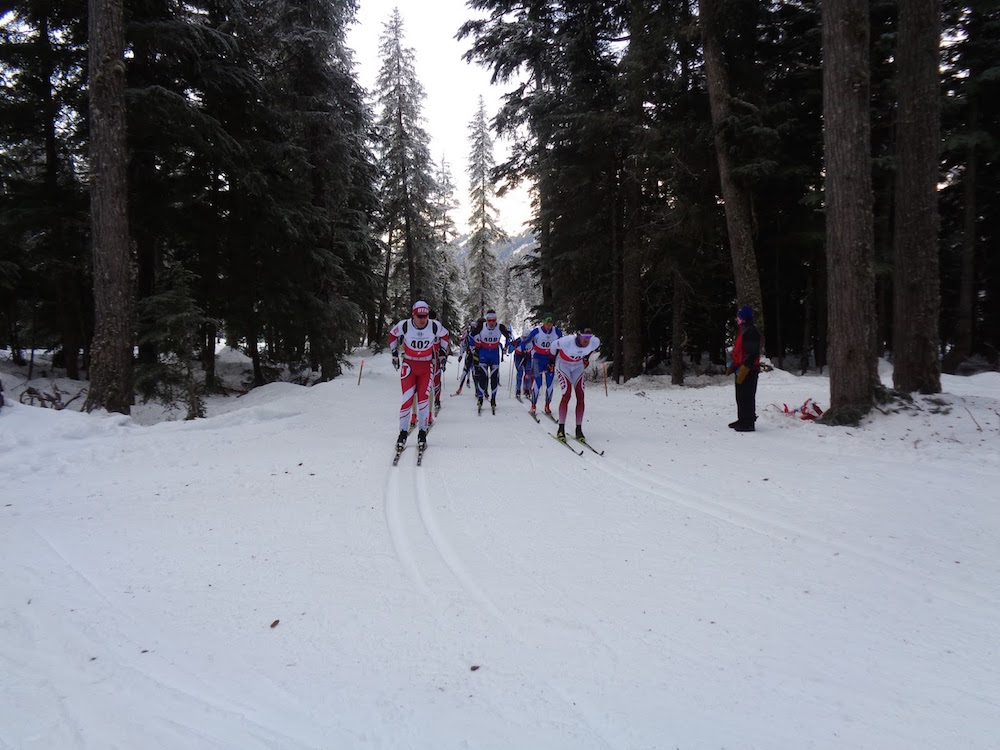
    Utah’s Martin Bergström (402) leads Denver’s Dag Frode Trollebø (right) and APU’s Reese Hanneman (center) at the start of the mixed-gender classic relay in Girdwood, Alaska. (Photo: Adam Verrier)

    The next day, Wednesday, February 8, skiers made the 45-minute drive down Turnagain Arm from Anchorage to Girdwood for a classic relay race. Girdwood is perhaps best known in ski circles as home to the Alyeska Resort alpine area, which boasts an average annual snowfall of 669″ and (when it’s clear) sweeping views of the mountains and glaciers overlooking Turnagain Arm. Publications as diverse as Powder magazine and National Geographic have lauded Girdwood as a quintessential locals ski town (“Best For: Off-the-beaten-path powder hounds with an aversion to glamour”).

    Girdwood also has a proud nordic heritage, though you have to look a little harder to find it. It is home to APU skier Chelsea Holmes, who will be competing at World Champs in Lahti later this month. And it hosted the 1969 Junior Nationals, on trails cleared from the continent’s northernmost coastal rainforest for this purpose.

    As discussed in more detail on former U.S. Ski Team member Tim Kelley’s invaluable blog, Alaska Lost Ski Areas Project, the trails faded back into the woods at some point during the 1970s. High-level nordic skiing in Girdwood then languished for over thirty years, until the early part of this decade, when the Girdwood Nordic Ski Club oversaw construction of a new 5 k loop. The reborn nordic trails have since hosted a handful of local high school races in periods of poor snow conditions in Anchorage, but it is safe to say that Wednesday’s relay was the most significant cross-country ski race held in Girdwood since 1969.

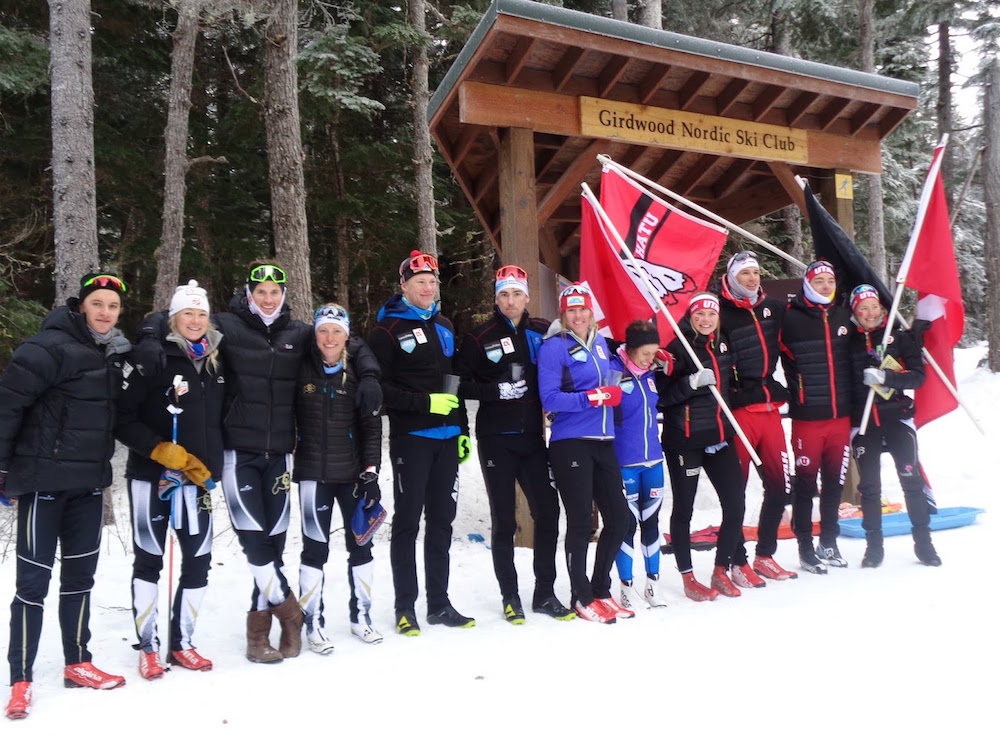
    APU (1st), Colorado (2nd), and Utah (3rd) make up the podium for the mixed-gender classic relay in Girdwood, Alaska. (Photo: Adam Verrier)

    Athletes raced in a mixed-gender 4 x 5-kilometer classic relay in the epochal event, man/woman/man/woman. It was once again APU leading the way, as the team of Reese Hanneman, Rosie Frankowski, Logan Hanneman, and Rorabaugh crossed the finish line for the victory in 57:33.7. Second overall, and first among collegiate teams, was Colorado (Mads Ek Strøm, Jesse Knori, Petter Reistad, Christina Rolandsen), 25.6 seconds back. They were followed by Utah (Bergström, Jordheim, Bolger, Myrseth) (+1:02.6). Fourth overall, and third for the NCAA podium, was Denver (Trollebø, Linn Eriksen, Moritz Madlener, Joensuu) (+1:25.4).

    “Everybody was psyched on a new format and a new trail in a beautiful location,” Kastning told FasterSkier of Wednesday’s race.

    Kastning added that the relay, like the previous day’s sprint, was new territory for RMISA racing. “We’ve never had a relay that’s counted for anything,” he said. “I think the relay captures college skiing well, with the mixed gender and the team aspect, men and women working together to try and reach the podium.”

    Full results | NCAA-only results

    ***

    5/10 k classic individual start

    Three days later, Saturday, February 11, skiers were back in Anchorage for individual start distance classic races, 5 k for the women and 10 k for the men. Race time was moved forward from 10 a.m. to noon, which allowed temperatures to rise from 2° F up to 8°.

    Saturday’s course was by some measures the hilliest of the week, clocking in at a healthy 39 meters of climbing per kilometer of distance. The upper limit for FIS homologation is 40 m/km. (The course covered the final two-thirds of Sunday’s 7.5 k course – notably Gong Hill, Mize’s Folly, Lekisch.)

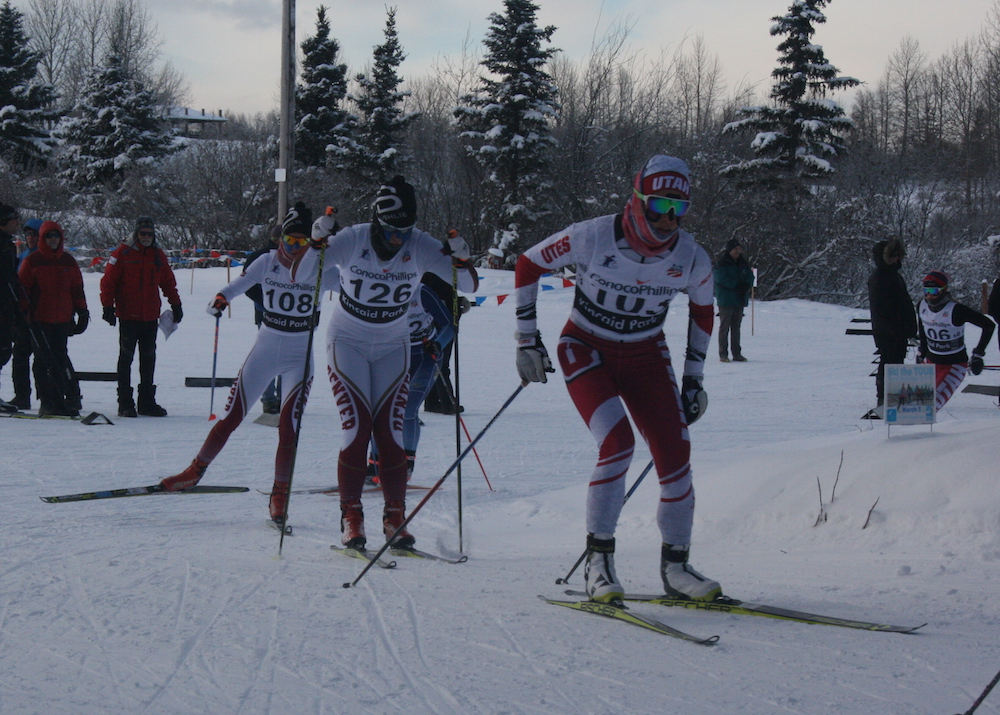
    Merete Myrseth of Utah (103) leads Denver’s Jasmi Joensuu (126) and Taeler McCrerey (108) in the women’s 15 k skate at Kincaid Park in Anchorage, Alaska. (Photo: Adam Verrier)

    Rorabaugh started near the end of the field in the women’s 5 k classic, which had 39 starters. Two A-Climbs later she crossed the finish line in 15:47.0, which held up as the fastest time of the day. Colorado skier Knori was second (+4.2), followed by her teammate Rolandsen in third (+8.2). Jordheim of Utah (+13.8) was fourth overall to round out the collegiate podium, just ahead of APU’s Frankowski in fifth (+15.0).

    It was Rorabaugh’s first 5 k classic FIS race in this country in over five years.

    The men raced two laps of the same course for a 10 k classic. Denver’s Trollebø was again on the podium, posting the day’s fastest time of 26:51.60. He was followed by Utah’s Bolger in second (+15.0) and Colorado’s Reistad in third (+19.3). Utah skier Bergström (+29.2), immediately followed by Denver skier Madlener (+29.4), rounded out the top five.

    Full FIS results: men and women | | NCAA-only results

    ***

    Overall team results

    The week’s four races were technically scored as parts of two college invitational race series. In the Seawolf Invitational, encompassing the sprint and relay from the first part of the week, plus two alpine races held at Alyeska in January, the University of Utah took the overall team title with 665 points. The University of Denver (569 points) and the University of Colorado (549 points) followed. The order was the same if the standings are broken out by exclusively nordic results: Utah, Denver, Colorado.

    The weekend’s distance races combined with two other January alpine races to make up the week’s second race series, the UAA Invitational. Combined standings were unchanged here, as Utah (661 points) took the victory over Denver (636 points) and Colorado (544 points). On nordic results alone the ranking was the same: Utah, Denver, Colorado.

    RMISA racing continues with the RMISA Championships/NCAA West Regional in Colorado in late February, then (for qualifying skiers) NCAA Championships in New Hampshire in March. Nordic races will be held at Jackson Ski Touring Center.

    Kastning explained that RMISA schools take their biennial trip to Alaska in years when NCAA Championships are set for the East Coast, “because it’s lower elevation. So other teams like to get some sea-level racing,” he said. “And so it helps our whole region do better I think at NCAAs, because you get some tempo racing, a different kind or style of racing than you do when you’re racing at 9,000 feet.”

    From left, Dag Frode Trollebø of Denver, Moritz Madlener of Denver, Kevin Bolger of Utah, and Martin Bergström of Utah enter the stadium in the men’s 20 k skate at Kincaid Park in Anchorage, Alaska. (Photo: Adam Verrier)
  • Under 23 Questions with Taeler McCrerey

    American Taeler McCrerey (University of Denver) racing to 40th in the women's classic sprint qualifier on Monday at 2017 Junior World Championships at Soldier Hollow in Midway, Utah. (Photo: FlyingPointRoad.com)
    American Taeler McCrerey (University of Denver) racing to 40th in the women’s classic sprint qualifier on Monday at 2017 Junior World Championships at Soldier Hollow in Midway, Utah. She went on to finish 20th in Wednesday’s 5 k freestyle for a career best at her first Junior Worlds. (Photo: FlyingPointRoad.com)

    In an effort to showcase the North Americans competing at this week’s International Ski Federation (FIS) 2017 USANA Nordic Junior World Championships and U23 Cross Country World Championships at Soldier Hollow in Midway, Utah, we asked those qualifying athletes several questions about themselves — actually, we had them fill in the blanks. Here we have 19-year-old Taeler McCrerey, of the University of Denver, representing the U.S. at her first Junior Worlds.

    On Wednesday, she raced to 20th in the 5 k freestyle, and she’s one of four U.S. woman on the start list for Friday’s 10 k skiathlon.

    ***

    “My full name is Taeler Linnea Mccrerery, but you can call me Taeler. I was born in Frisco, Colorado, raised in Frisco, Colo., and one thing you should know about my hometown is we have beautiful mountains.

    Taeler Mccrerey (University of Denver Ski Team) racing in the junior 5 k classic at the 2017 U.S. nationals at Soldier Hollow in Midway, Utah. (Courtesy photo)
    Taeler Mccrerey (University of Denver Ski Team) racing in the junior 5 k classic at the 2017 U.S. nationals at Soldier Hollow in Midway, Utah. (Courtesy photo)

    I started cross-country skiing when I was fourteen, thanks to my brother, Tucker. I currently train in Denver with the University of Denver Ski Team.

    If I’m not skiing, you might find me enjoying the sunshine.

    One of the things I’m most excited about for Junior Worlds at Soldier Hollow is representing the U.S on home soil! One race I’m especially targeting there is the 5 k freestyle.

    The best advice anyone ever gave me about skiing or racing was slow is controlled, and controlled is fast.

    If I could meet one World Cup skier, it would be Stina Nilsson.

    If I don’t end up being a professional skier, I’ll probably be a trauma nurse.

    I’m missing seven days of school to be here, and my teachers are probably thinking, ‘Is she still in my class?‘

    You can follow me on Instagram  at @taelerlinnea.”

  • On Crazy Championships Day, University of Utah’s Bolger Wins Classic-Sprint Title

    On Crazy Championships Day, University of Utah’s Bolger Wins Classic-Sprint Title

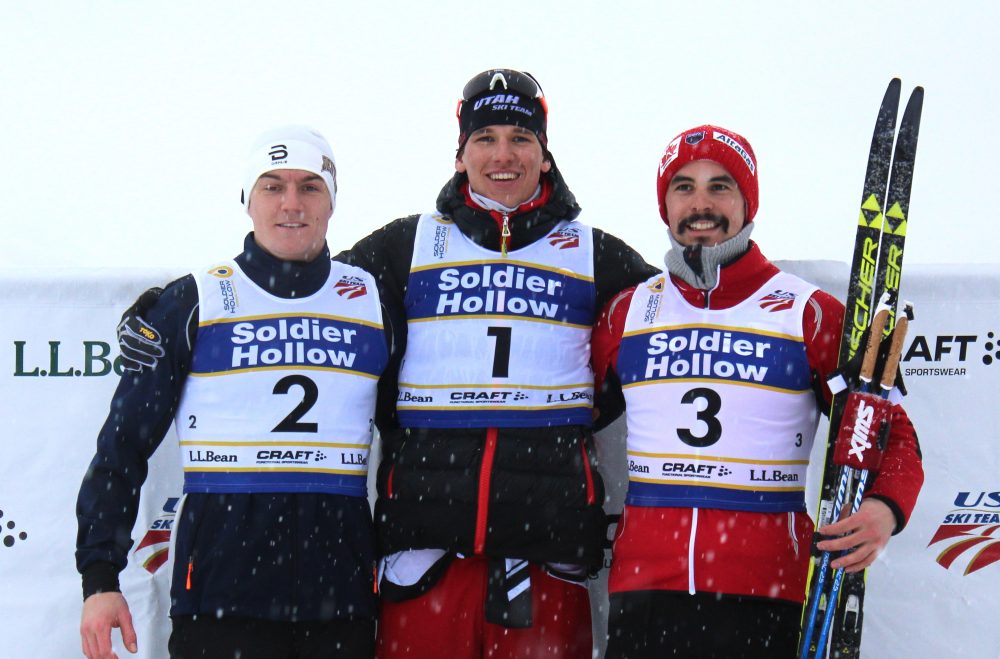
    Left to right: University of Denver skier Moritz Madelner, University of Utah's Kevin Boldger and Canada's Jesse Cockney on top of the podium for the men's 1.5-kilometer classic sprint n Sunday at U.S. nationals in Midway, Utah.
    Left to right: University of Denver skier Moritz Madlener, University of Utah’s Kevin Bolger and Canada’s Jesse Cockney on top of the podium for the men’s 1.5-kilometer classic sprint on Sunday at U.S. nationals in Midway, Utah.

    MIDWAY, Utah — Classic sprint day at U.S. Cross Country Championships. Nothing was simple. The 9:05 a.m. start time brought a daylong chess match for athletes and wax techs. Temperatures hovered near freezing all day — the entire spectrum of precipitation seemed to fall: drizzle, swollen wet snowflakes, and graupel.

    One by one the big names set off at 15-second increments. There was Bend Endurance Academy’s Dakota Blackhorse-von Jess, then Reese Hanneman, of Alaska Pacific University (APU), followed by an elite list of North America’s best sprinters absent those few racing on the World Cup.

    The men’s course featured three climbs, the last of which was positioned before a sweeping descent back into the stadium about 0.5 kilometers from the finish. Early on, even with the first few starters, it was evident on this hill that the chess match’s checkmate move pivoted on the wax.

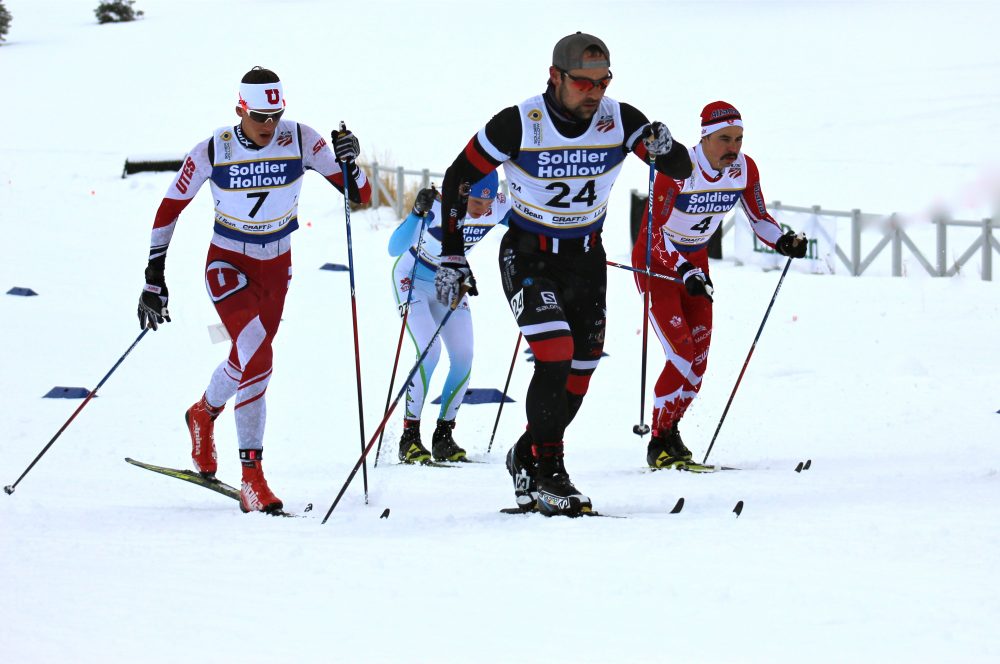
    Dakota Blackhorse vonn Jess of Bend Endurance (24) leads University of Utah's Kevin Boldger (7) during the first quarterfinal of the men's 1.5-kilometer classic sprint n Sunday at U.S. nationals in Midway, Utah.
    Dakota Blackhorse-von Jess (24) leads Kevin Bolger (7) and Jess Cockney (4) during the first quarterfinal of the men’s 1.5-kilometer classic sprint on Sunday at U.S. nationals in Midway, Utah.

    Up that hill, some skiers strode, many slipped. Some athletes employed a herringbone-run mash up, some double poled on skate skis. Others suffered the indignity of balled up snow under foot and the awkward dance of shedding that snow and attempting to make forward progress.

    APU Head Coach Erik Flora helped put the qualifier in perspective.

    “This is the first time ever that I have been in a sprint race when we haven’t had any men in the heats,” Flora said about his men’s results. “And that’s the first time in ten years.”

    For a club like APU, it’s clearly rare when a perfect storm impacts an entire men’s side.

    “I don’t think it was one thing, it was a combination of a few things,” Flora said after the racing was completed. “We have a few guys that came in sick and that didn’t help. And we have a lot of guys that are seeded really high in the start list with points and if you look through the top 30, there’s a lot of unusual places.”

    On many days, a high race seed correlates with good results.

    “But sometimes there are those days when being in a certain place in a seed helps. I think for the leading men it was a disadvantage today,” Flora added.

    Along with some recent sickness, the seeding and weather conditions, and skis that Flora noted weren’t “anything special”, APU’s qualifying positions portended a rough day for many.

    Some athletes’ misfortune opened doors for others. No one kicked that door open with more force than University of Utah’s 23-year-old Kevin Bolger. He was the only American in the men’s final and won his first-career national title outright by winning the final over second-place skier Moritz Madlener (University of Denver), and Canadian national-team member Jess Cockney in third.

    “100 percent. Absolutely,” Bolger said when asked if he was surprised by the end result. “Usually just qualifying for the heats is kind of my biggest goal. And today, I just, with the qualifying seventh I was in awe, actually.”

    Bolger qualified seventh in 3:41.69, only a few seconds behind best qualifier, Ben Saxton of the Stratton Mountain School (SMS) Elite Team, who rounded the 1.5 k course in 3:38.35.

    The Utah skier had a four-leaf-clover day. Bolger said his coach nailed the wax every round which complemented his fitness. In his quarterfinal, Blackhorse-von Jess set the tempo.

    “I knew he was a good sprinter, I kind of look around in my heats before each, kind of see who I’m around, who I can play with,” Bolger said. “And I saw he was there, I knew he wanted to get to the final, so I was like, ‘He’s going to try and race well.’ And I got in behind him, he made a move and I stuck with him.”

    On the back hill, where the skiers race up and away to the backside of the course, Blackhorse-von Jess played his hand.

    “I think he got 10 meters off on me,” Bolger said of Blackhorse-von Jess’s stamp of authority.

    But on the descent into the last kicker climb, Bolger’s skis were running.

    “And my skis just – they glided right up to him,” Bolger described. “And I came up to that hill and they kept going, and I was like, ‘All right, I’m going to run up this sucker.’ And I went for it.”

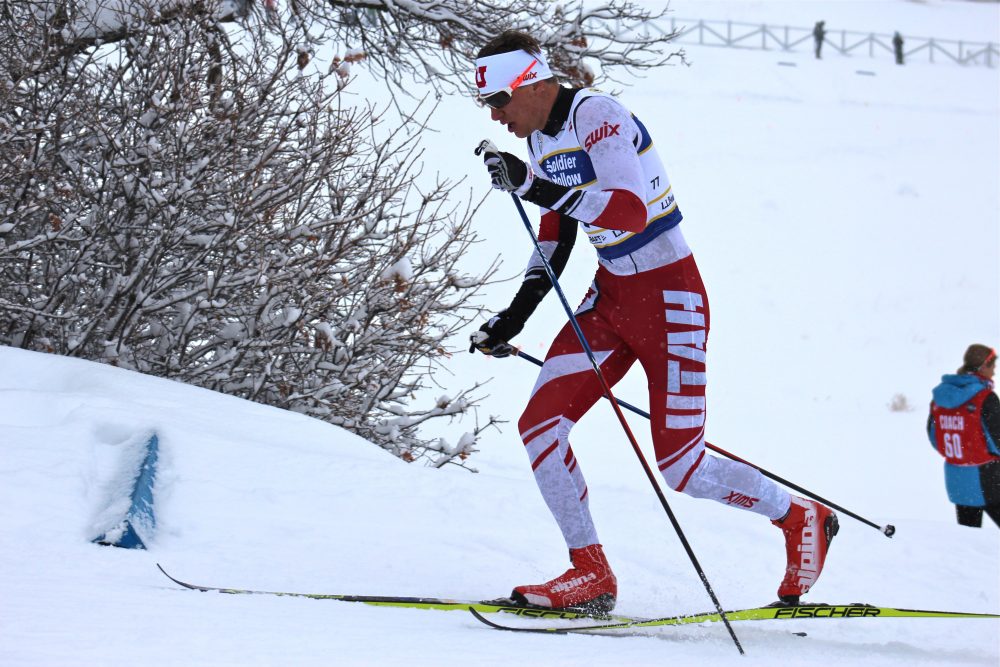
    The University of Utah's Kevin Boldger during the qualifier for the 1.5-kilometer classic sprint n Sunday at U.S. nationals in Midway, Utah.
    The University of Utah’s Kevin Bolger during the qualifier of the 1.5 k classic sprint on Sunday at U.S. nationals in Midway, Utah.

    Now Bolger was off the front widening a small gap. Behind, it appeared Blackhorse-von Jess’s skis momentarily stalled out, resulting in a fall and snapped pole. Unaware of changing fortunes behind, Bolger cruised in. But he’d not simply cashed out, satisfied with a quarterfinal win. He banked some important knowledge. He wasn’t slipping on his skis when kicking at decisive moments.

    “Knowing that I can charge up that [last] hill 100 percent and trust my skis, that’s huge, I think, in our sport,” Bolger said.

    Luck struck again in his semifinal — Bolger placed fourth in a fast first semifinal; he was the second lucky loser, both of whom came from his semifinal.

    In the final, Cockney made a bold move from the start, but the group behind yo-yoed, never losing significant contact. And on that same last hill, Bolger charged again.

    “I was like, ‘OK, I think this is the time to go,’ ’cause I don’t have quite the turnover in my double pole,” Bolger said. “I know I’m big, strong and powerful, but the turnover I think isn’t quite there. So I thought that that was my time to go.”

    Up and working over the top, Bolger was gone for his first national title.

    “It kind of hit me like 10 meters from the finish that I was gonna win this sucker, and I was like, ‘Holy sh*t,’ ” he said.

    Second-place finisher, 23-year-old Madlener is a student in the U.S. but grew up skiing in Germany. (It was Madlener’s second podium in as many races at senior nationals. He placed third in Saturday’s 15 k freestyle.)

    Madlener is a multiple NCAA podium placer.

    “I had second and third in NCAAs last year, and second the year before during my sophomore year,” Madlener explained in a post-race phone interview.

    Although pleased with his podiums at Soldier Hollow this week, he explained his year-end goal remains winning an NCAA individual title.

    “I want to win it at some point,” Madlener added. “This is my senior year, this year is it. I am aware it is difficult to win a race at NCAAs but that is my goal and of course to win again as a team, which I think we have a good chance to do.”

    Madlener told FasterSkier he will not be pursuing a post-collegiate ski career and has accepted a job that will eventually base him in Salt Lake City after graduation.

    The U.S. Podium

    As part of U.S. nationals, a separate, U.S.-only podium is also recognized. Bolger still stood atop in first, 22-year-old Sun Valley Ski Education (SVSEF) Gold Team member Jack Hegman was second, and his teammate Cole Morgan, also 22, third.

    Hegman and Morgan both skied in the second semifinal and neither advanced; Hegman finished third, Morgan fourth.

    For Hegman, it’s his last year as a U23 so his main goal this week at nationals is qualifying for U23 World Championships.

    “I’ve had two really solid races so far, so I’m pretty stoked on that,” Hegman told FasterSkier after the race, referring to Sunday’s classic sprint and Saturday’s 15 k skate. “Yesterday I ended up sixth, I think, fifth American, and second U23. So that was a really awesome race for me, I was pretty fired up.”

    Double poling was Morgan’s golden ticket. He qualified fifth on skate skis.

    “Then it started raining before the quarters,” Morgan explained. “I came out to do the warmup, and it was super icy when I warmed up, I was like, ‘Oh, I’m definitely going to double pole it again in the quarterfinal.’”

    In the third quarterfinal, Morgan took second place to automatically advance.

    Like Hegman, Morgan’s ride ended in the semis. But his goal of obtaining an U23 World Championship berth remains.

    New names, emerging names, and some old ones: a crazy day in SoHo.

    Results: Qualifier | Brackets (final)

  • Wednesday Workout: Alpine Touring & Backcountry Skiing with NCAA Champs DU

    Wednesday Workout: Alpine Touring & Backcountry Skiing with NCAA Champs DU

    University of Denver (DU) Head Nordic Coach Dave Stewart during a backcountry ski on Berthoud Pass in the Colorado Rockies in 2015. (Courtesy photo)
    University of Denver (DU) Head Nordic Coach Dave Stewart during a backcountry ski on Berthoud Pass in the Colorado Rockies in 2015. (Courtesy photo)

    Looking for a workout that’s been known to produce both NCAA Championship skiers AND a national title? After winning the overall at 2016 NCAA Skiing Championships in March in Steamboat Springs, Colo., the University of Denver (DU) shares a workout that — perhaps to no surprise — combines an alpine skier’s agility and strength along with the cardio fitness and adventure-loving attitude often exhibited among nordic athletes.

    ***

    Who says backcountry skiing and alpine touring are only workouts for the post-season springtime? For a little more than three years, the University of Denver nordic ski team has taken full advantage of the Rocky Mountain Range’s summits, not only as a way to work off the post-season blues, but as a means of in-season training as well.

    Denver University nordic skies Maja Solbakken, Josh Smullin, Sylvia Nordskar during a back-country ski on the Buffalo Pass in 2015 (Courtesy photo)
    University of Denver nordic skiers Maja Solbakken and Sylvia Nordskar with Steamboat Springs Winter Sports Club coach Josh Smullin (c) during a backcountry ski on Buffalo Pass in 2015. (Courtesy photo)

    DU Head Nordic Coach Dave Stewart (who helped lead the Pioneers to two individual NCAA titles as well as the overall team title last season) indicated that when packing for training camps, or even ski races, slipping a set of skins into duffel bags and an extra set of touring skis is a must.

    “A few years ago, some of our skiers got really fired up about alpine touring and backcountry skiing,” Stewart wrote in an email. “So we started to bring equipment with us to training camps and race trips as well as getting in some more skinning close to Denver when at home.”

    Taking the opportunity in between race weekends, or even training sessions, to venture up and off-trail on alpine skis also prevents from getting bogged down with the regular routine of training, according to Stewart.

    “Getting out on the backcountry equipment, off the trails and in the mountains is a mini-adventure and a break from the routine,” Stewart wrote. “It’s also outstanding training and adds some more variation, something we are always looking for.”

    The tours combine strength during descents with a low intensity cardio during the climbs. As Stewart pointed out, what makes backcountry skiing a beneficial workout for cross-country skiers is the way it brings together exploration and exercise.

    “We always have a few people on the team who love spending time adventuring in the mountains, so backcountry is a way for us to combine this with race training,” Stewart wrote. “It’s good for the body and mind.”

    Denver University nordic skier Trygve Markset during a back-country ski at Fish Creek, Steamboat Springs in 2014. (Courtesy photo)
    University of Denver nordic skier Trygve Markset during a backcountry ski at Fish Creek, Steamboat Springs, Colo., in 2014. (Courtesy photo)

    The Workout

    Purpose: Low-intensity workout that doubles as a break from the occasional routineness of in-season training

    Step 1: Pick a time

    • DU Head Coach Dave Stewart suggests melding alpine touring/backcountry skis into midweek training camps or even as a post-race day recovery workout.
    • “Find a good time for a tour, either the day after a race, on an afternoon midway through a training camp or on a sunny spring morning,” Stewart notes.

    Step 2: Get a Guide

    • Gathering information from someone knowledgeable about the safety of conditions is a priority for DU athletes looking to complete the workout.

    Step 3: Skin and Ski Up

    Stick your skins on and begin the uphill trek. Stewart suggests “see[ing] what you find over the next few hours,” as you work the ascent.

    Step 4: Ski Down

    After a few hours of uphill, dig into the descent.

  • FasterSkier’s Collegiate Skiers of 2016: Mads Strøm and Linn Eriksen

    FasterSkier’s Collegiate Skiers of 2016: Mads Strøm and Linn Eriksen

    FasterSkier's Collegiate Skiers of 2016: Mads Strøm and Linn Eriksen. (photo: Curtis Snyder of the CU Sports Information Dept. and Jamie Schwaberow/NCAA Photos).
    FasterSkier’s Collegiate Skiers of 2016: Mads Strøm and Linn Eriksen. (photo: Curtis Snyder of the CU Sports Information Dept. and Jamie Schwaberow/NCAA Photos).

    With the 2015/2016 season officially in the rearview, FasterSkier is excited to unveil its annual award winners for this past winter. Votes stem from the FS staff, scattered across the U.S. and Canada, and while not scientific, they are intended to reflect a broader sense of the season in review.

    We kicked off the series Monday with Juniors of 2016: Katharine Ogden and Sean Doherty. This second set of honors goes to outstanding male and female skiers on the U.S. NCAA collegiate circuit. 

    ***

    Mads Strøm, University of Colorado-Boulder

    Even after tallying four wins in a row and six victories this past season, the University of Colorado-Boulder (CU) junior Mads Ek Strøm was still nervous before his final competitions of the 2016 college race season.

    Nerves, however, didn’t stand a chance with the 24-year-old Norwegian.

    By the time he finished the men’s 10-kilometer freestyle — the first of two nordic races at the NCAA Skiing Championships event this year in Steamboat Springs, Colo. — Strøm had skied to his seventh win of the season and fifth win in a row, securing himself as the most distinguished CU skier of all time.

    Prior to Strøm, the most season wins accomplished by a CU skier were six, set first in 1989 by Per Kare Jakobsen and then again in 1999 by Ove Erik Tronvoll.

    “I was so nervous,” Strøm said of coming into the 10 k, according to CUBuffs.com. “I just had to find good skis, good pacing, and push it as hard as possible. It was definitely the best win of the year. Pulling it off when it matters the most is great.”

    An Oslo native, Strøm began attending CU in 2014. He made his debut on the NCAA Championships podium during his freshman year, when he won the 2014 men’s 20 k freestyle race at Soldier Hollow in Midway, Utah.

    One podium only warranted more. After his freshman year, Strøm continued to chase the top spots, garnering 25 career podium finishes and 13 individual titles by the time he won this year’s men’s 10 k event, according to CU’s Sport Information Specialist Curtis Snyder.

    However, Strøm’s goal for this college season wasn’t to win just one of the NCAA Championships races. He wanted both.

    “Obviously I wanted to win,” Strøm had told FasterSkier after he finished second in the men’s 15 k classic mass start Sun Valley SuperTour in December — before the college season started. “I haven’t gotten quite there yet because I have been training almost 100 hours every month since May. I’ve planned that in one month from now I’m going to be in better shape and my plan is to win both races at NCAA’s.”

    Strøm’s plan to wait and win worked. When he crossed the finish line first in the men’s 20 k classic mass start, the second nordic race of NCAA Championships, Strøm accomplished his season goal and much more.

    After winning eight out of 12 races in the collegiate race schedule, Strøm now holds the record for most season victories of any CU skier, alpine or nordic.

    “He became the fifth CU skier to sweep the individual NCAA Championships in program history, joining John Skajem (alpine, 1987), Line Selnes (1988, Nordic), current Nordic assistant Jana Weinberger (2006, Nordic), Maria Grevsgaard (2008, Nordic) and Lucie Zikova (2008, alpine),” Snyder wrote in an email regarding Strøm’s NCAA podium sweep.   

    The Norwegian’s achievements this season don’t end with the collegiate race scene. Strøm also finished fourth and ninth at the SuperTour season opener in West Yellowstone, Mont., in the 15 k freestyle and sprint, respectively. 

    The following SuperTour in Sun Valley Idaho, also saw Strøm ski to second in the men’s 15 k classic mass start and 11th place in the classic sprint.

    Strøm, who plans to major in business and would like to one day compete at the Olympics, will return to CU next year for his final nordic ski season as a senior.

    Linn Eriksen, University of Denver

    One out of two. For every two college races University of Denver (DU) sophomore Linn Eriksen raced this year, she won one. That includes the final nordic college race of the season at NCAA Championships: the women’s 15 k classic mass start.

    Also from Oslo, Eriksen, 21, commanded this year’s NCAA Championships mass start, striding away to a 19.9-second victory over the University of New Mexico’s (UNM) Kati Roivas.

    Though Eriksen has stood at the top of the podium before as Norway’s four-time Junior National Champion, her victory in this year’s 15 k was her first NCAA title, as well as her first NCAA podium appearance. 

    Her breakthrough at this year’s NCAA’s also helped the Denver Pioneers to their 23rd national championship.

    “Moritz [Madlener] and Linn [Eriksen] have led the team all year and they did it again today,” DU head nordic coach David Stewart said according to a DU press release.  “Linn skied a masterful race, leading from start to finish, breaking away on the last lap to ski to a solo win.”

    Eriksen’s other notable accolades from the season include first-place finishes in women’s 5 k freestyle and 15 k classic at the Montana State University invite, victories in both races at the UNM invite, second place in the 5 k freestyle at the University of Utah invite, third place in the 15 k classic CU invite, second place in the 5 k freestyle at the DU Regional race, and her top-10 finish in the first race of NCAA Champioships, the 5 k freestyle where she placed eighth.

    After finishing the season as an All-American in both NCAA Championships races, Eriksen’s name will not go unnoticed at the start of next year’s college race season, her junior year.

  • In Steamboat, a Denver Kind of Day as DU Wins NCAA Championships

    In Steamboat, a Denver Kind of Day as DU Wins NCAA Championships

    The University of Denver celebrates its victory during NCAA Division I Men's and Women's Skiing Championships at Howelsen Hill in Steamboat Springs, Colo. (Photo: Jamie Schwaberow/NCAA via DenverPioneers.com)
    The University of Denver celebrates its victory during NCAA Division I Men’s and Women’s Skiing Championships at Howelsen Hill in Steamboat Springs, Colo. (Photo: Jamie Schwaberow/NCAA via DenverPioneers.com)

    After the University of Denver (DU) alpine team pulled the Pioneers into the lead on Friday, surpassing Montana State University (MSU) by 15.5 points with one day remaining in the NCAA Skiing Championships, the DU nordic team took that lead and ran with it on Saturday for Denver’s 23rd national skiing title.

    DU won the four-day 2016 championships with 567.5 points, 76 more than the University of Colorado-Boulder in second and 82.5 ahead of University of Utah in third. Colorado (CU) hosted the championships at Howelsen Hill in Steamboat Springs, Colo., with two days of alpine racing interspersed with two days of nordic.

    “Alpine set us up with a lead that we were able to build on, so this was a balanced team win with both alpine and nordic adding almost the same points to the team total,” Denver Head Nordic Coach Dave Stewart said, according to a DU press release. “Alpine has had a dominant season and it was very special to put it all together this week at NCAA’s.”

    The men’s 20-kilometer and women’s 15 k classic mass starts ended the championships on Saturday, with CU sophomore Mads Strøm winning his second NCAA title in as many races at this year’s championships (and third overall in the last three years).

    Denver sophomore Linn Eriksen skied away from the 39-woman pack to win in 54:37.6 minutes, 19.9 seconds ahead of Kati Roivas of the University of New Mexico (UNM). Ane Johnsen (CU) placed third (+21.2) to round out the podium, while Denver had three in the top 12 with Aja Starkey in sixth (+42.9) and Taeler McCrerey in 12th (+1:10.0).

    In the men’s race, Strøm edged Denver’s Moritz Madlener by 1.7 seconds at the finish, winning the 20 k in 49:41.9 and thus becoming the third CU athlete in history (and sixth skier) to win at least three individual NCAA titles, according to a CU press release. Another 17 seconds back, Niklas Persson (Utah) placed third (+18.7). For Madlener, it was his second podium in as many races after placing third in Thursday’s 10 k freestyle.

    “I really had to focus – I’m happy that I had that rest yesterday,” Strøm said of Friday’s off day for nordic. “A lot of things happen when you win a race. A lot of people want to talk to you. I just had to recover a little bit and try to find some good skis again and just have a smart tactic. I just like to stay behind people, let them do the work and finish strong.”

    The 24-year-old Norwegian explained he switched up his strategy when his teammate Petter Reistad chose to double pole.

    “He didn’t use any kicks, so he had to go hard from the start and just try to ski away from people,” Strøm said. “That really helped me out because other teams had to chase him and I could slip in behind and just ski with them until they eventually caught him. I could just stay in a pack and just save as much energy as possible. My skis were really good and on the last lap I saw there were pretty much only three guys left. I knew all of us were pretty good sprinters so I just tried to tire them out a bit all the way to the top.”

    Mads Strøm racing to the first of his two consecutive wins at 2016 NCAA Skiing Championships: Thursday's 10 k freestyle in Steamboat Springs, Colo. Strøm won the men's 20 k classic mass start on Saturday by 1.7 seconds. (Photo: CUBuffs.com)
    Mads Strøm racing to the first of his two consecutive wins at 2016 NCAA Skiing Championships: Thursday’s 10 k freestyle in Steamboat Springs, Colo. Strøm won the men’s 20 k classic mass start on Saturday by 1.7 seconds. (Photo: CUBuffs.com)

    Coming into the final descent, Strøm told himself that second wouldn’t cut it.

    “I said, ‘OK, I’m going to sacrifice everything. Either I go down or I’m just going to gap,’ and I gapped.  I looked back, and I said, ‘OK, just sprint from here. Just go for it,’ ” he said.

    Reistad placed ninth (+1:35.4) as a freshman and the second CU Buff in the top 10. In the women’s race, Colorado had two skiers in the top five, with Johnsen in third and Jesse Knori in fifth (+36.2).

    Contributing to the team win, Denver had three men in the top 13 with Dag Frode Trolleboe in 10th (+1:42.3) and Lars Hannah in 13th (+2:21.3).

    Aside from winning the overall, Denver also had 15 All-Americans, the most of any team this year, according to an NCAA press release. On Saturday, Eriksen and Madlener were named to the women’s and men’s classical first teams, respectively, while Starkey and Trolleboe earned second-team honors.

    “I am so incredibly proud of the young men and women on our team,” Stewart said. “They came into this championship knowing that it would take nothing less than their best to win a title for DU, and they did just that. The conditions were challenging today with rising temperatures through the morning, but everyone brought such composure and focus to the race that I believe the tough conditions worked in our favor.

    “Moritz and Linn have led the team all year and they did it again today,” he added. “Moritz just missed his first individual national title in a close sprint finish, but his two podium performances this week were huge for the team. Linn skied a masterful race, leading from start to finish, breaking away on the last lap to ski to a solo win. Aja had the race of her life in sixth and Dag Frode had his two best races of the season when the team needed him.”

    Stewart added that the championships came during exam week, requiring every member of the team to take their final exams in advance.

    “These guys are truly model student-athletes and it is my pleasure to be able to coach them,” he said. “We are thrilled to be bringing our 23rd national title back to DU! To end the championship with two exceptional nordic performances, with both men and women winning the team score, was the best ending to the five championships wins I have been a part of over the last 10 years. This one tops them all!  To have all six of our nordic athletes earn All-American honors is just incredible. I’m speechless.”

    Results: Men’s 20 k | Women’s 15 k

    Top 10 men (20 k classic mass start)

    1. Mads Strøm (CU) 49:41.9
    2. Moritz Madlener (DU) +1.7
    3. Niklas Persson (UU) +18.7
    4. Ian Torchia (NMU) +40.2
    5. Adam Martin (NMU) +57.8
    6. Eli Hoenig (Williams) +1:01.3
    7. Kevin Bolger (UU) +1:05.5
    8. Jack Hegman (UVM) +1:07.6
    9. Petter Reistad (CU) +1:35.4
    10. Dag Frode Trolleboe (DU) +1:42.3

    Top 10 women (15 k classic mass start)

    1. Linn Eriksen (DU) 54:37.6
    2. Kati Roivas (UNM) +19.9
    3. Ane Johnsen (CU) +21.2
    4. Veronika Mayerhofer (UU) +28.4
    5. Jesse Knori (CU) +36.2
    6. Aja Starkey (DU) +42.9
    7. Nichole Bathe (UAF) +44.5
    8. Emilie Cedervaern (UNM) +44.9
    9. Olivia Amber (Colby) +53.1
    10. Eva Severrus (UNM) +1:02.2

    Thursday, March 10 

    Men’s Freestyle First Team

    1. Mads Stroem, CU

    2. Ian Torchia, NMU

    3. Moritz Madlener, DU

    4. Adam Martin, NMU

    5. Sawyer Kesselheim, MSU

    Second Team

    6. Petter Reistad, CU

    7  Nick Hendrickson, UU

    8. Lars Hannah, DU

    9. Jake Brown, NMU

    10. Jack Hegman, UVM

    Women’s Freestyle First Team

    1. Anika Miller, MSU

    2. Petra Hyncicova, CU

    3. Sloan Storey, UU

    4. Cambria McDermott, MSU

    5. Emilie Cedervaern, UNM

    Second Team

    6. Natalia Müller, UU

    7. Taeler McCrerey, DU

    8. Linn Eriksen, DU

    9. Ane Johnsen, CU

    10. Mary Kate Cirelli, UVM


    Saturday, March 12

    Men’s Classical First Team

    1. Mads Strøm, CU

    2. Moritz Madlener, DU

    3. Niklas Persson, UU

    4. Ian Torchia, NMU

    5. Adam Martin, NMU

    Second Team

    6. Eli Hoenig, WIL

    7. Kevin Bolger, UU

    8. Jack Hegman, UVM

    9. Petter Reistad, CU

    10. Dag Frode Trolleboe, DU

    Women’s Classical First Team

    1. Linn Eriksen, DU

    2. Kati Roivas, UNM

    3. Ane Johnsen, CU

    4. Veronika Mayerhofer, UU

    5. Jesse Knori, CU

    Second Team

    6. Aja Starkey, DU

    7. Nichole Bathe, UAF

    8. Emilie Cedervaern, UNM

    9. Olivia Amber, COL

    10. Eva Severrus, UNM

  • Caldwell, Mayerhofer Claim NCAA Freestyle Titles as Colorado Takes Early Lead

    Caldwell, Mayerhofer Claim NCAA Freestyle Titles as Colorado Takes Early Lead

    The men's 10 k freestyle interval start podium at the 2015 NCAA Championships in Lake Placid, N.Y. Taking the top three spots were Dartmouth's Patrick Caldwell, Denver's Moritz Madlener (not pictured), and Colorado's Rune Malo Ødegård.
    The men’s 10 k freestyle interval start podium at the 2015 NCAA Championships in Lake Placid, N.Y. Taking the top three spots were Dartmouth’s Patrick Caldwell, Denver’s Moritz Madlener (not pictured), and Colorado’s Rune Malo Ødegård.

    LAKE PLACID, N.Y. — Excitement was high in upstate New York as the 2015 NCAA Skiing Championships kicked off in Lake Placid with the men’s 10 kilometer and women’s 5 k freestyle interval starts. Dartmouth’s Patrick Caldwell claimed his first national title, while the University of Utah’s Veronika Mayerhofer led a western sweep in the women’s race.

    While Lake Placid has faced a colder-than-average winter, Wednesday welcomed temperatures in the 40s and occasional sun. Snow was hard packed for the men’s race, and conditions were incredibly fast despite the difficulty of the course.

    Caldwell finished the 10 k with a time of 25:09.1. The University of Denver’s Moritz Madlener placed second, just 2.1 seconds off the Big Green skier’s winning time. The Univeristy of Colorado’s Rune Malo Ødegård finished third, 26 seconds behind.

    Fellow Buff, Mads Ek Støm (+29.8) took fourth, as Montana State University’s Forrest Mahlen (+1:00.7) finished fifth.

    Dartmouth's Paddy Caldwell hugs Vermont's Rogan Brown at the finish of the 10 k freestyle at the 2015 NCAA Championships in Lake Placid, N.Y.
    Dartmouth’s Paddy Caldwell hugs Vermont’s Rogan Brown at the finish of the 10 k freestyle at the 2015 NCAA Championships in Lake Placid, N.Y.

    Starting in bib 40, Caldwell was the last skier to begin the two-lap race on the challenging Women’s Cross Country Olympic 5 k course at the Mt. Van Hoevenberg Nordic Center. Given the conditions, the Dartmouth sophomore said he entered the race planning to begin fast and maintain high speed until the finish line.

    “With the fast conditions I just wanted to go as hard as I could. I tried to get a fast pace from the start and hold it,” he said in a post-race interview.

    Caldwell notched the fastest time at the halfway mark, 8 seconds ahead of Madlener. As the Big Green’s skier traversed the second lap his lead over Madlener gradually decreased – at one point it reached 10 seconds but eventually whittled down to 2 seconds. Cakdwell said that he was fading fast by the last kilometers. “The wheels were coming off at the end but I was able to hold it just long enough,” Caldwell said in an interview.

    After his victory, Caldwell said that the 10 k freestyle was a target of his in the 2015 season. “I was definitely shooting for this race,” he said. “This is one of my favorite events. I definitely wanted to have a good one today.”

    Caldwell is also a member of the U.S. Ski Team D-Team. Given his position between collegiate and national team skiing, the 20-year-old faced a decision – focus solely on skiing or continue racing for Dartmouth. Caldwell chose to spend the winter at school and said that his focus of the season has been to have strong individual and team performances in Lake Placid.

    Moritz Madlener of The University of Denver skied to second in the 10 k freestyle at the 2015 NCAA Championships in Lake Placid, N.Y.
    Moritz Madlener of The University of Denver skied to second in the 10 k freestyle at the 2015 NCAA Championships in Lake Placid, N.Y.

    In second place, Denver sophomore Madlener earned his best finish at a NCAA Championships. Last year the German skier placed fifth in the 10 k classic individual start and said his goal was to top the result in either race in Lake Placid. Although he hoped to place better than fifth, Madlener never expected to land on the freestyle podium. The Pioneer said that he was surprised by his second place finish because he is traditionally performs better in the classic technique and didn’t feel strong in the days prior to Wednesday’s race.

    Although Madlener was one of the highest ranked skiers he started his race in bib 1, a position that he said had benefits and a drawbacks. “In some ways it’s a disadvantage because you don’t know what the other guys are doing, but I think I had better conditions. I didn’t get information about the others and I think that was good too because you start thinking during the race what the others are doing,” he said.

    Madlener has played second fiddle to the dominating Colorado duo of Ødegård and Strøm for the entirety of the western collegiate season. He said it felt good to finish higher than third, especially at the year’s most important races. “There’s always been two Norwegian guys in our region who got third and fourth today. They always tease me and tell me it’s my favorite spot to be third, so I thought today I’m going to show them that I like the second spot too,” he said with a smile.

    Ødegård, a senior at CU and two-time NCAA champion, said that the 10 k was one of the best freestyle races of his career. He explained that he paced his race to start slow and finish strong.

    “I felt like I had a really strong race, it’s probably one of the best skate races I’ve ever done,” the Norwegian said. “I felt like started smart and I skied faster and faster throughout. I couldn’t believe I was behind because I had a super, super strong race.”

    One of the later starters, Ødegård explained he spent much of the race chasing Madlener’s time, which he was ultimately unable to match. He said was impressed with Caldwell’s finish, especially given the slowing conditions that the last starters faced.

    “I lost a lot from the top and the end of the last lap. Probably conditions were slowing a bit down there in the last lap but you saw by Caldwell that it was possible to beat it. I just wasn’t strong enough,” he said, adding that he was looking forward to Friday’s classic mass start. Ødegård won the 2013 and 2014 classic races at the NCAA Championships.

    The women's podium in 5 k freestyle at the 2015 NCAA Championships in Lake Placid. Utah's Veronika Mayerhofer took the win, while Denver's Sylvia Nordskar placed second and Emilie Cedervaer claimed third.
    The women’s podium in 5 k freestyle at the 2015 NCAA Championships in Lake Placid. Utah’s Veronika Mayerhofer took the win, while Denver’s Sylvia Nordskar placed second and Emilie Cedervaer claimed third.

    Mayerhofer Victorious in 5 k 

    In the women’s 5 k freestyle the University of Utah’s Veronika Mayerhofer skied to a convincing win with a time of 14:21.4. She bested Denver’s Sylvia Thorson Nordskar by 13.2 seconds. Emilie Cedervaern of the University of New Mexico raced to third, 15.8 seconds back from the victor.

    The first American skier, Montana State’s Cambria McDermott (+15.9), finished fourth and 0.1 seconds from third. In fifth was Utah’s Sloan Storey (+22.7).

    The women began their race two hours after the men to slightly warmer temperatures and softer snow. Despite the change, the course remained fast and intact for all 40 starters. The western women swept the top 11 to dominate the 5 k. The eastern skiers originally hoped to capitalize on a home course, but their best finish on the day came from Mary Kate Cirelli in 12th. The central regions best finisher was Jordyn Ross in 13th.

    Mayerhofer, a freshman, entered Wednesday with low expectations. She had a cold in the days prior to the race and was feeling flat in training. At the start of the race Mayerhofer said her race felt slow. Everything changed after a coach told her she had a one second lead over Nordskar in the first kilometers. According to the Austrian, the news of the lead motivated Mayerhofer to fight for the win and reach the next level of exertion.

    The Ute said that she had no particular strategy while fighting on the challenging course that featured several kilometers of climbing. “In a 5 k you have to go as fast as you can,” she said. “Through the first kilometer you have to not kill yourself because it’s a tough course. I think it’s one of the toughest. We are very used to high elevation so you never know how you’re going to feel.”

    Veronika Mayerhofer en route to a win in the 5 k freestyle at the 2015 NCAA Championships in Lake Placid.
    Veronika Mayerhofer en route to a win in the 5 k freestyle at the 2015 NCAA Championships in Lake Placid.

    Mayerhofer said that she enjoys the collegiate circuit because of its focus on the team rather than the individual. With her teammate, Storey also in the top five, Mayerhofer said she was happy to see the team’s training be rewarded at the end of the season.

    “It’s my first year of college racing and I was so happy that I could go to the NCAAs,” she said. “I really enjoyed it so much because it is so much for the team and not just individual racing, because cross country skiing is so much on your own. It’s maybe less pressure and everyone is so happy for you.”

    Nordskar entered Wednesday’s race with little training or racing logged since the start of the new year, as she sat out much of the season due to illness. Her last race before the Championships was at the Colorado Invite in late January. Although she complained of breathing troubles, Nordskar said she was happy to race again after the draining illness. “I’ve been sick the whole last month and haven’t been able to train,” she said. “That has been difficult but I think I’ve done a good job to comeback and now race.”

    Like her DU male counterpart, Nordskar was also the first starter and set the time to beat early on in the race. She said that while the course was challenging, she enjoyed racing at the Olympic venue.

    “It was a very hard race but I really liked the course. It’s some brutal hills,” she said. “I really pushed myself today. It was fun and I’m satisfied with my race today even though I couldn’t get to the very top, which was my goal.”

    Cambria McDermott, fourth place and top American finisher in the 2015 NCAA 5 k, high fives Montana State University Head Coach Kristina Trygstad-Saari.
    Cambria McDermott, fourth place and top American finisher in the 2015 NCAA 5 k, high fives Montana State University Head Coach Kristina Trygstad-Saari.

    In third was Cedervaern, a New Mexico Junior from Falun, Sweden. The trip to Lake Placid was the Swede’s first NCAA Championships.

    “That was good. I was very tired after 2.5 k so I just tried to hammer all the way in,” she said of her race. “5 k is too short to think and I was just trying to hammer the whole way.”

    McDermott, a senior at Montana State, said her achievement as the 5 k’s first American was especially satisfying because she was able to share it with her friends and family in attendance. “I’m really excited. It was an awesome course. It was a lot of climbing but I had fast skis and that made it pretty quick,” she said. “I was so happy that my family here to cheer me on and all my friends from home.”

    NCAA Standings

    With the first races of the 2015 NCAA Championships complete, the University of Colorado leads the points with 155. The Buffs have won the last two Championships in the East and Wednesday’s race gives them a good beginning to their quest for their 28th championship title. They will have to overcome the University of Utah which sits in second and less than 25 points behind.

    The NCAA championships continue on Thursday with the giant slalom at Whiteface Mountain,

    2015 NCAA Championships standings after Wednesday (link):

    University of Colorado 155

    University of Utah 131

    University of Vermont 106

    University of New Mexico 106

    University of Denver 93

    Dartmouth College 88

    Montana State University 77

    Northern Michigan University 76

    University of Alaska – Anchorage 56

    Williams College 29

    Results: men | women

  • Interview: 1985 Overall World Cup Champion Anette Bøe

    Interview: 1985 Overall World Cup Champion Anette Bøe

    Anette Bøe displays her medals from the 1985 World Championships in Seefeld, Austria. She earned two gold, one silver, and a bronze at the Championships and was crowned Overall World Cup Champion later that year. (Photo: Anette Bøe/Facebook)
    Anette Bøe displays her medals from the 1985 World Championships in Seefeld, Austria. She earned two gold, one silver, and a bronze at the Championships and was crowned Overall World Cup Champion later that year. (Photo: Anette Bøe/Facebook)

    Anette Bøe has led a life filled with innovation and adventure.

    The Norwegian skier was the first woman on the international racing circuit to venture into the realm of skate skiing in 1984 despite a Norwegian distaste for the new technique.

    When she retired from professional skiing, she decided she wanted to try a new sport in order to “cool-down” and in the process earned a podium finish in the inaugural year of the mountain bike World Cup in 1989.

    She didn’t stop there. Fulfilling a childhood desire to play hockey, Bøe joined a professional team where she earned two Norwegian national championships.

    According to Bøe, her adventurous nature can be traced back to her hometown of Larvik, Norway.

    “It was a very active, small town and I was very lucky to grow up in that kind of community,” she said in a phone interview. “When we came back from school we were always on skates or skis.”

    In addition to the active environment she grew up in, Bøe attributed her entry and drive in nordic skiing to her father Albert. Before Bøe was born, Albert attended the University of Denver as one of the first Norwegians to receive a ski scholarship, under famed coach Willy Shaeffler.

    Bøe was born in 1957 and from then on her father used his experiences as a ski racer to ensure his daughter shared his love for the sport.

    “I think he had a plan with me because he loved cross-country skiing,” she said.

    1985 Overall World Cup Champion Anette Bøe kayaks on Norway's Helgeland Coast in a recent photo. (Photo: Anette Bøe)
    1985 Overall World Cup Champion Anette Bøe kayaks on Norway’s Helgeland Coast in a recent photo. (Photo: Anette Bøe)

    With guidance from her father throughout her developmental years, Bøe had dreams of becoming the best skier in the world, despite disapproval of such ambitions at the time.

    “It sounds crazy, but in the old days you couldn’t say that to anyone,” Bøe said of her aspirations. “Now it’s open. You can say that to anyone you want to, but in the old days you couldn’t say ‘I have a goal to be the best skier in the world.’”

    Her drive to succeed lasted well into the peak of her skiing career. In the 1980s she was training in St. Moritz, Switzerland where she interacted with many international teams and broadened her horizons outside of the often-isolated Norwegian team.

    Because of her familiarity with international teams such as the U.S. Ski Team, Bøe experienced the new technique of skating very early on in its conception.

    Bøe was selected for the Norwegian Olympic team in 1984, but despite winning a trial race, she was not picked to compete. She watched from the sidelines as skiers like Bill Koch used skating to their advantage. Later that season, Bøe followed suit and made the decision to abandon the kick wax on her skis, making her the first woman to skate on the international circuit.

    “No one on the girls side of the Olympics was skating but then I picked it up in the end of 1984 at the last ski race,” Bøe explained. “I took off the wax and I skated. I’m actually the first woman in the world to be skating without wax (on the international racing scene).”

    By 1985, Bøe had fully embraced the skating technique and earned two gold medals at the World Championships in Seefeld, Austria in addition to two other podium finishes. Later that year she was crowned the Overall World Cup Champion.

    Bøe also won the prestigious Holmenkollen Medal in 1985, Norway’s highest honor in in skiing.

    For the Norwegian, the creation of skating represented a new era not only for her but also for nordic skiing as a whole.

    “I think it was really good for cross country skiing when the skating came because everybody had a new chance,” she said.

    She pointed to the U.S. Ski Team as an example, saying that the innovative use of skate skiing opened the door for skiers like Bill Koch and Kikkan Randall to shine on the international stage and grow the sport outside the realms of Scandinavia.

    According to Bøe, the Norwegian national team was reluctant to embrace the new technique and suffered the consequences. She said she was fortunate to be training in St. Moritz at the time, so that she could practice the technique.

    “The Norwegians were in the back yard and all the other nations were in the front because they picked it up pretty quick,” she said. “We lost a generation in Norway of skaters because they were old-fashioned.

    “I was lucky to be in the right spot, in the right time and be open to changes. Every day being an athlete you need to find new ways.”

    Bøe retired from her cross country skiing World Cup career in 1989, but knew she still needed sport in her life.

    (Photo: Anette Bøe Skiskole)
    “I like to give something back (to others) what the sport gave to me,” Anette Bøe says of her relationship with cross country skiing today. (Photo: Anette Bøe Skiskole)

    During her first of many visits to America Bøe witnessed mountain biking for the first time, and was inclined to try it.

    “I was lucky because I have always been adventurous and wanted to do new things,” she said on her entrance into the new sport.

    By the end of 1989 Bøe had participated in the inaugural year of the mountain biking World Cup and took third place in a cross country style race, making her one of the first women in the world to earn a World Cup podium in mountain biking.

    By the early 1990s she was finished with bike racing, but her ventures into new realms of athleticism were far from over.

    During her career as a skier, Bøe had an encounter with a Norwegian women’s hockey team. Having always been intrigued by hockey from a young age, Bøe talked with the team. After her conversation she walked away thinking that as soon as she retired from skiing she would play hockey.

    Once her skiing career ended, Bøe did just that. She joined a local team and in the 1990s she and her teammates won two Norwegian national championships.

    In 2000 she was awarded the Honorary Prize of Egeber, a distinction bestowed on Norwegian athletes who excel in more than one sport, for her accomplishments in cross country skiing and hockey.

    Bøe found her experience as a hockey player very rewarding, not only because of her successes but also because of the team dynamic she discovered while competing on ice.

    “When I was a cross country skier I would always ski by myself and I was always depending on me,” she said. “But when you are on a team and depending on the team to play together, it’s totally another ball game. For me it was good, it was very interesting.”

    Since Bøe’s departure from professional competition, she has filled her time with a variety of endeavors. She’s worked in the Norwegian television and radio industry, as a manager for an ice hockey team, and as a packager for athletic firms and Olympic sponsors.

    One of her favorite projects is the ski school that she created ten years ago.

    Anette Bøe hopes to move to the U.S. soon to be closer to friends and her two children who live in Denver and Boston. (Photo: Anette Bøe Skiskole)
    Anette Bøe hopes to move to the U.S. soon to be closer to friends and her two children who live in Denver and Boston. (Photo: Anette Bøe Skiskole)

    “That’s giving me a lot because it’s nice to give something back to the sport,” Bøe said of her ski school. “I see people getting happy when they break the code; when they feel all their body weight is on one ski and they can kick and glide with total body control on the skis.”

    However, now that the 56-year-old has more time on her hands she thinks she might be ready for a change. At the movement, Bøe sees that change as a move to the U.S.

    Intrigued by her father’s stories of America as a young girl, Bøe always found the U.S. very attractive. On top of that, two of her children will be living in the country in the coming year: her oldest daughter, Thea, graduated from the University of Denver in 2013 and is still living in Colorado, while her youngest son, Oliver, will be attending a boarding school in Boston this coming year.

    Bøe has been searching for work in the U.S. but can only commit to a year due to uncertainly of whether her youngest son will stay stateside. Earlier this year, Bøe had secured a job in Massachusetts but due to her sister’s illness she was forced to decline.

    Much like many other accomplished foreign skiers in the country, Bøe envisions herself as a possible coach or public figure in the U.S. cross country skiing community.

    “I like to give something back (to others) what the sport gave to me,” she said.

    Whatever lies ahead for the 1985 Overall World Cup Champion, her ability to take advantage of her surroundings will likely ensure that her future is just as innovative as her past.

  • Photos: 2014 NCAA Championships

    Photos: 2014 NCAA Championships

    The University of Denver won the 2014 NCAA Championships for the 22nd time this past weekend in Park City, Utah. Check out some amazing photos of the event taken by superstar photographer Bert Boyer. All proceeds from photo sales will be directly donated to NNF. Buy them here: http://bertboyer.zenfolio.com

    2014 NCAA Championships: women’s 5 k classic report | men’s 10 k classic report | 15 k and 20 k freestyle mass start report

  • Denver Wins 22nd NCAA Championship; Strøm and Severrus Claim Individual Titles

    Denver Wins 22nd NCAA Championship; Strøm and Severrus Claim Individual Titles

    Denver's Sylvia Nordskar leads Rosie Frankoski of Northern Michigan and Eva Severrus of New Mexcico in the second lap of the 15 k freestyle mass start at the NCAA Championship in Midway, Utah. Nordskar finished third, while Frankowski finished second and Severrus finished first.
    Denver’s Sylvia Nordskar leads Rosie Frankoski of Northern Michigan and Eva Severrus of New Mexcico in the second lap of the 15 k freestyle mass start at the NCAA Championship in Midway, Utah. Nordskar finished third, while Frankowski ended in second and Severrus crossed the line in first.(Photo: http://bertboyer.zenfolio.com) All proceeds from photo sales will be directly donated to NNF.

    “It’s special but it’s also something that we really expected.”

    That was the sentiment of the University of Denver’s nordic head coach Dave Stewart after his team not only claimed the overall NCAA title, but also the overall nordic title in Midway, Utah, on the final day of the national collegiate skiing championships.

    The win marks the 22nd overall championship for Denver, the most any school has ever won. It is also the university’s eighth championship since 2000 and Stewart’s fourth title.

    “It means a lot. The goal of our program is to win the NCCA championship. We have that expectation and that history,” he said in a post-race interview.

    After handily winning both men’s and women’s nordic races on Thursday, the team did’t fare as well in the mass starts with two skiers making the top 10.

    “We had an amazing day on Thursday and not so good of a day today, but we came out on top for nordic, and I’ve never done that for nordic in my eight years of coaching.”

    The Denver nordic team has built off strong training and an excellent team atmosphere all year to claim the championship. After winning the regular-season RMISA title, the Pioneers were hungry for the NCAA crown.

    The title will certainly mark a great end to the college careers of six graduating seniors. Makayla Cappel, Trygve Markset, Katie Gill, Elena Breed, Jessica Jortberg, and Connor Wallace will leave Denver this spring on the tails of another historic NCCA win.

    Men’s 20 k: Colorado Break Away

    University of Colorado’s Mads Strøm entered Saturday’s 20 k freestyle mass start with determination. Thursday’s 10 k classic, in which he had finished fourth, had not gone well for him and he was ready to gain redemption.

    Mads Strøm of Colorado leads the field in the men's 20 k freestyle mass start during the last day of the 2014 NCAA Championships. Strøm handily won after breaking away on the last lap.
    Mads Strøm of Colorado leads the field in the men’s 20 k freestyle mass start during the last day of the 2014 NCAA Championships. Strøm handily won after breaking away on the last lap.(Photo: http://bertboyer.zenfolio.com) All proceeds from photo sales will be directly donated to NNF.

    From the shot of the gun he kept within the pack, biding his time until he could make his move at the opportune moment.

    Roughly halfway into the race, the freshman from Norway looked back to gauge the competition. To his surprise the majority of the field was on his and his fellow teammate Rune Østegård’s tails.

    “I tried to make a move on the third lap just to see if anyone was able to keep up and we were able to open up a gap. So I knew that I had to ski really fast on the last lap to make up a big enough gap because coming up from behind was such an advantage,” he said of his tactics in the second half of the race. “I used all the motivation from Thursday.”

    And create a gap he did. Joined by Østegård, Strøm gave it his all as he climbed the hills of the Hollow, a gradual yet unforgiving kilometer of uphill leading out of the stadium. As the pair continued their attack around the course, the pack trailed farther and farther behind them.

    Suddenly, he was alone. Østegård, Strøm’s “best friend and biggest competitor,” had fallen back halfway through the 5 k loop, thus leaving the top spot at the most esteemed college race of the season ripe for the taking.

    Skiing into the final stretch, there was no one to see but Strøm. Barely looking tired, he elatedly crossed the finish line, knowing he had won his first NCAAs.

    University of Alaska Fairbanks' Max Olex races up the last hill of the men's 20 k mass start at the 2014 NCAA Championships. He passed seven people on the hill en route to his second place finish.
    University of Alaska Fairbanks’ Max Olex races up the last hill of the men’s 20 k mass start at the 2014 NCAA Championships. He passed seven people on the hill en route to his second place finish. (Photo: http://bertboyer.zenfolio.com) All proceeds from photo sales will be directly donated to NNF.

    “This was one of two goals. That was nationals in Norway in January, which I did really good,” the freshman said. “And then there was, of course, NCAAs. I really wanted to win both races, that was my goal.”

    Behind Strøm in second was Max Olex, a senior at the University of Alaska Fairbanks who never made the podium in a collegiate race before Saturday. The German, who broke his shoulder blade in November, had a slow start to the season. Coming into NCAAs he decided to have an open mind.

    “It’s always a goal at NCAAs to make the better half of the field, especially for me, looking at the season seeing how it went,” Olex said. “I came here this morning and I knew that these are my conditions and I had the matching skis. I knew what I was training the last two years. I trusted in what I did here and that was what I got today.”

    “Definitely the best race of my life,” he added.

    Coming in third was New Mexico’s Mats Resaland, a sophomore from Norway. After initially racing at the front of the pack, he soon realized there was no need to waste energy.

    “It was kind of crowded out there. In the first lap I was in the front but then I dropped back because there was nothing to stress about,” he said. “It’s four laps, and I picked up seven spots on the last hill.”

    Women’s 15 k: And Then There Were Three

    The women’s 15 k freestyle mass start wasn’t as cut-and-dry as the men’s race. From the beginning of the distance race, Denver’s shining star, Sylvia Nordskar led the pack with the hopes of dropping most of the competition.

    Eva Severrus of the University of New Mexico leads Rosie Frankowski of Northern Michigan up Hermod's Hill at Soldier Hollow in Midway, Utah. Severrus won the NCAA Championship by outlasting Frankowski in the final stretches of the 15 k.
    Eva Severrus of the University of New Mexico leads Rosie Frankowski of Northern Michigan up Hermod’s Hill at Soldier Hollow in Midway, Utah. Severrus won the NCAA Championship by outlasting Frankowski in the final stretches of the 15 k.(Photo: http://bertboyer.zenfolio.com) All proceeds from photo sales will be directly donated to NNF.

    “I was going in the lead to try and split up the group. We did, so that was good, but I got very tired after that,” she explained.

    Rosie Frankowski of Northern Michigan University started in the front and did her best to stay at a relaxed pace as the Norwegian led.

    “We went up the first hill and everyone was together the first lap and it was a pretty relaxed pace. It was smart because it’s at altitude,” she said.

    “Then on the downhill I did not do it well and I snowplowed a bunch and so I lost a lot of places and then in the stadium I knew that I had an uphill and that I needed to try and work it back. In the second lap it started separating a little bit. I was in the front pack.”

    While Nordskar led and Frankowski navigated the downhills, Eva Severrus, a Slovenian from the University of New Mexico, was waiting to make her move.

    “I just tried to stay with the girls in the front,” she said. “Then I took over the lead one kilometer before the [stadium] in the second lap.”

    From there it was a three-way race between Severrus, Frankowski and Nordskar as all the other competitors struggled to stay in striking distance. Exhausted from leading in the increasingly choppy conditions, Nordskar started to lose ground and the other two started to pull away.

    “Then we were three at the last loop and I just had to fight so hard to keep up with them. It got so soft and that’s not my favorite conditions,” she said.

    Up ahead, Severrus and Frankowski were battling for the top position. On the hills, Frankoski would use her climbing strength to challenge the Slovenian, while on the downhills Severrus would pull away.

    Finally Severrus glided away, leaving Frankowski behind on one of the long downhills of the course. Despite the gap, Severrus was still nervous.

    Sylvia Nordskar of the University of Denver skied her way to third place in the 15 k mass start at the 2014 NCAA Championships.
    Sylvia Nordskar of the University of Denver skied her way to third place in the 15 k mass start at the 2014 NCAA Championships. (Photo: http://bertboyer.zenfolio.com) All proceeds from photo sales will be directly donated to NNF.

    “I was so scared that she would catch me because I’m dying,” she said of her final meters.

    It seemed that Severrus’ fears were justified as the two skiers made their way up Hermod’s Hill, the last climb before the finish. After skiing aggressively, Frankowski inched closer and closer. Near the top of the hill Frankowki made contact with the University of New Mexico skier.

    However, the final downhill would prove to be Frankowski’s weakness as Severrus pulled away once again. This time there was no hill for Frankowski to make up time.

    “I tried to catch her at the top of Hermod’s and then just tried to hang on and tried to make it into the finish without falling,” said Frankowski of her competitor.

    Frankowski crossed the finish line in second, the only American to make the podium in a nordic race throughout this year’s NCAAs.

    Coming in after Frankowski, was Nordskar who ended her day in third, her second podium of NCAAs.

    “I’m so excited. That was the goal this season,” she said of her finish and her team’s overall win.

    — Audrey Mangan contributed reporting

    Results: Men’s 20 k | Women’s 15 k

    Overall standings

  • Gruber Returns to Top of 5 k Classic Podium at NCAA Championships

    Gruber Returns to Top of 5 k Classic Podium at NCAA Championships

    The women's podium in today's 5 k classic at the 2014 NCAA Championships in Soldier Hollow. In first is Anja Gruber (UVM), second is Sylvia Nordskar (DU) and third is Eva Severrus (UNM). (Photo: Bert Boyer http://bertboyer.zenfolio.com) All proceeds from photo sales will be directly donated to NNF.
    The women’s podium in today’s 5 k classic at the 2014 NCAA Championships in Soldier Hollow. In first is Anja Gruber (UVM), second is Sylvia Nordskar (DU) and third is Eva Severrus (UNM). (Photo: Bert Boyer) All proceeds from photo sales will be directly donated to NNF.

    FasterSkier’s coverage is made possible through the generous support of Madshus.

    Anja Gruber didn’t surprise anyone but herself when she claimed the top spot in today’s 5-kilometer classic NCAA Championships at Soldier Hollow, Utah, hosted by the University of Utah. The humble 22-year old junior at the University of Vermont (UVM) repeated her victory from last year by skiing the course in 13:38.4.

    Conditions on the course were fickle, with only bare ground to be seen around the course, which was composed entirely of artificial snow. Temperatures were in the 50’s, with many skiers racing in shorts and short sleeves. That didn’t put a damper on Gruber’s enthusiasm, however.

    Anja Gruber (UVM) skis her way to the win in the 5 k classic at the 2014 NCAA Championships. (Photo: http://bertboyer.zenfolio.com) All proceeds from photo sales will be directly donated to NNF.
    Anja Gruber (UVM) skis her way to the win in the 5 k classic at the 2014 NCAA Championships. (Photo: Bert Boyer) All proceeds from photo sales will be directly donated to NNF.

    “It’s pretty exciting,” she said, without a trace of her native German accent. “After last year I wouldn’t have expected that I could do this again. I knew I was in good shape and I knew my classic skiing was pretty good, and I like this course and I knew that if my skis are good and I have a good day I can have a good race. But having a good race and winning are two different things, so it’s really really exciting.”

    Her performance allowed her to best 20-year old Sylvia Thorson Nordskar (+9.3), originally from Norway and a freshman at the University of Denver (DU), and 21-year old Eva Severrus (+22.6), originally from Slovenia and a freshmen at the University of New Mexico (UNM). Nichole Bathe, an 18-year old freshman at the University of Alaska Fairbanks (UAF) finished fourth (+29.3). Bathe is originally from Madison, Wisconsin.

    Nordskar said she wasn’t feeling that well, coming off of illness.

    “It was an okay race but not perfect because I’ve been sick for two weeks, and in those conditions I did a good race and I’m very happy with a podium,” she said. Her team is also in the lead, something that Nordskar could hardly be happier about.

    “I think both the [DU] guys and girls won today, so that is so cool! So fun! I really enjoy skiing here – we are a team and we have so much fun together.”

    Severrus only arrived at UNM in the beginning of 2014, and has obviously already made her mark in the ski program there. It has also made its mark on her.

    “Awesome result, awesome season behind me. I’m real happy with these results,” she said. The race was an interval start, and she skied the course alone.

    “Hammering all the time.” She said.

    Gruber’s race strategy was a bit more nuanced, but even after the race she seemed a little unsure of what she did.

    “I though that it was going to be a really fine line between pushing it too hard on that first hill and being too cautious. I tried to go out pretty hard but maybe not that hard,” she said, her tone indicating equivocation. “I guess it worked.”

    Sylvia Nordskar (DU) skis her way into 2nd place in the 5 k classic at the 2014 NCAA Championships. (Photo: http://bertboyer.zenfolio.com) All proceeds from photo sales will be directly donated to NNF.
    Sylvia Nordskar (DU) skis her way into 2nd place in the 5 k classic at the 2014 NCAA Championships. (Photo: Bert Boyer) All proceeds from photo sales will be directly donated to NNF.

    “Honestly, I felt really good,” she added, “which doesn’t happen so often, and so it’s really exciting [when it does]. I caught the girl in front me pretty fast, so I was like ‘whoa whoa whoa, watch out,’ but then you get a whole lot of rest [on the downhill] and I was being pretty careful [so I just decided to keep going].”

    Asked about her plans for Saturday, Gruber aimed high.

    “I think we didn’t have the best day as a team [today], and I think we’re gonna want some redemption for that. I know we’ve had really good skate races as a team and I think it’s the most exciting thing to race with my two favorite teammates.”

    Nordskar, for her part, felt the same as Gruber. But in classically Norwegian fashion, she was direct:

    “I want to win!” She blurted, but quickly adopted a more cautious tone. “But first I have to be healthy, and relax now. I’m glad there’s no race tomorrow so we have one day. But just to go and have fun and hopefully we have three girls in the front.”

    Women’s 5 k Classic Results
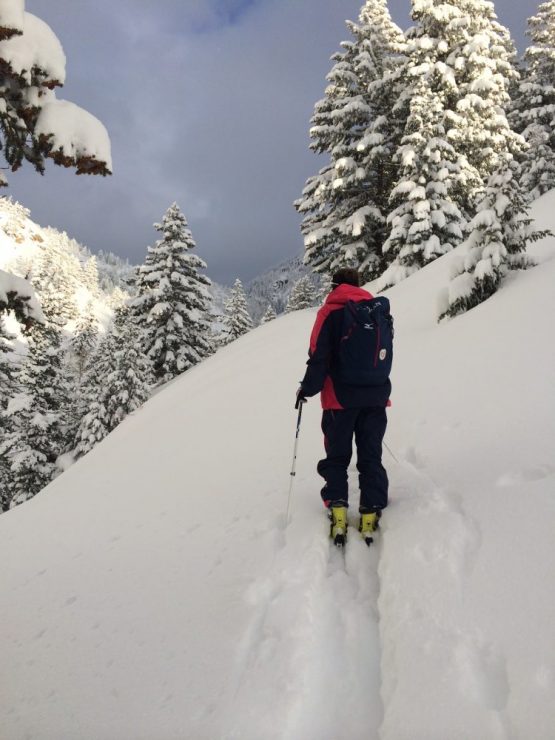
    Combined Team Results

  • Ødegård Defends Title; Denver Dominates at Second Day of NCAAs

    Ødegård Defends Title; Denver Dominates at Second Day of NCAAs

    Rune Ødegård (Colorado) stands atop the podium for his win in the 10 k classic at the 2014 NCAA Championships. Pierre Guedon (Denver) and Niklas Persson (Utah) followed in second and third for a European sweep.(Photo: http://bertboyer.zenfolio.com) All proceeds from photo sales will be directly donated to NNF.
    Rune Ødegård (Colorado) stands atop the podium for his win in the 10 k classic at the 2014 NCAA Championships. Pierre Guedon (Denver) and Niklas Persson (Utah) followed in second and third for a European sweep.(Photo: http://bertboyer.zenfolio.com) All proceeds from photo sales will be directly donated to NNF.

    FasterSkier’s coverage is made possible through the generous support of Madshus.

    “It’s almost cheating, having that good of skis,” Rune Ødegård of the University of Colorado joked after wining the men’s 10 k individual classic at the NCAA Championships Thursday. The junior from Molde, Norway defended his 2013 10 k classic title in spectacular form, with a time of 24:34.5.

    “It’s been a goal all season, winning NCAA again. It’s a good feeling right now,” said the 24-year-old of his win.

    Rune Ødegård en route to his repeat win in the men's 20 k classic at the 2014 NCAA Championships in Midway, Utah.(Photo: http://bertboyer.zenfolio.com) All proceeds from photo sales will be directly donated to NNF.
    Rune Ødegård en route to his repeat win in the men’s 20 k classic at the 2014 NCAA Championships in Midway, Utah.(Photo: http://bertboyer.zenfolio.com) All proceeds from photo sales will be directly donated to NNF.

    Thursday’s NCAA races were held at Soldier Hollow in Midway, Utah, the venue of the 2014 U.S. Cross Country Championships, but the scene could not have looked more different than it did in January.

    Instead of a blanket of snow and bluebird skies often associated with the venue, the clouds were abundant and grey, there was hardly any snow to be seen, and temperatures were in the 50s. The ground would have been completely brown and barren had it not been for the white trail of manmade snow that snaked around the site of the 2002 Olympics.

    Such conditions are often terrible for waxing, especially for western teams who are used to pristine extra-blue days. Today, however, they got it right.

    Ødegård started 15 seconds behind the University of Vermont’s Scott Patterson, a favorite in Thursday’s race who ended his day in 24th.  Originally planning to catch Patterson and work together, the norwegian changed his mind.

    “I soon realized that I had so fast skis that it was better for me to go at it alone after catching up with him,” he said. “Obviously it worked out really well.”

    After passing Patterson, Ødegård picked off the competitors in front of him one-by-one, a difficult feat when racing in the top seed.

    “I saw people ahead of me all the time, and it gives me kick to catch up to people.”

    While racing the twists and turns of the Soldier Hollow 5 k, Ødegård knew the race would be won on the transitions of the course rather than the large climbs.

    “It’s all about being smart and using energy where you can and not killing yourself up Hermod’s. (the largest climb of the course). Everyone skis that hill pretty much the same pace, it’s all about using the rest of the course,” he said.

    Pierre Guedon of the University of Denver finished second in Thursday's 10 k classic at the 2014 NCAA Championships. He was part of an effort that rocketed the pioneers into first place after two races.
    Pierre Guedon of the University of Denver finished second in Thursday’s 10 k classic at the 2014 NCAA Championships. He was part of an effort that rocketed the pioneers into first place after two races. (Photo: http://bertboyer.zenfolio.com) All proceeds from photo sales will be directly donated to NNF.

    For Ødegård, the win represents not only a personal legacy in the NCAA Championships, but also a family tradition. Two of his siblings were both part of the Colorado ski team with his sister, Unni, who was a member of the NCAA Championship teams in 1998 and 1999 and his brother, Gier, who was part of the second place team in 2002.

    Hoping to continue the legacy, Ødegård thinks that both he and his team have what it takes to claim a national title again.

    “It’s a new day,” he said of Saturday’s race. “I know me and Mads [Strøm] are strong skiers so we try to go for the two top spots. That’s going to be the goal.  I know it will be tough. It’s NCAAs. its why we’re here; it’s what we were training for all season.”

    Colorado currently sits in third behind Denver and Utah.

    Second place finisher Pierre Guedon, a sophomore at the University of Denver, stared his first year at the school with a bang. After transferring from five years of school in his native France, the 25-year-old has had a breakout season with the pioneers.

    Initially discouraged with his second place starting position in Thursday’s race, Pierre rocketed out from the gate to catch the first starter and eventual third place finisher Niklas Persson of the University of Utah. The pair skied together for the majority of the race, using each other as motivation throughout the course.

    “I don’t like to have an early bib, because we don’t have good splits,” he said. “But the coaches were all around the track. I knew I was doing a good race.”

    For Guedon, the result was more about his team than his individual result.

    “It was an amazing team performance for the girls and guys. We knew that we had a good team. We crushed it all season long,” he said.

    It was  indeed a good day for Denver. Not only did Guedon finish second, but teammates Moritz Madlener and Trygve Marskat placed fifth and eighth, earning them 89 points.

    Niklas Persson of the University of Utah placed third at the 2014 NCAA Championships 10 k classic. The Utes who are hosting NCAAs are hoping to win the national title after finishing second three years in a row.(Photo: http://bertboyer.zenfolio.com) All proceeds from photo sales will be directly donated to NNF.
    Niklas Persson of the University of Utah placed third at the 2014 NCAA Championships 10 k classic. The Utes who are hosting NCAAs are hoping to win the national title after finishing second three years in a row.(Photo: http://bertboyer.zenfolio.com) All proceeds from photo sales will be directly donated to NNF.

    The men’s success in tandem with the women’s 80 point performance rocketed Denver into first in the rankings, 55 points ahead of the University of Utah.

    Dave Stewart, head coach of the Denver nordic team, was ecstatic with this team’s results.

    “It was one of our strongest days ever at NCAAs. We looked to improve over the season and have some of our best races of the season, so it’s really great to see that,” he said. Stewart sited waxing and the athlete’s patience as a key to today’s success.

    As the team shifts their focus to Saturday’s mass start, there is once main goal.

    “Our goal is always to win this thing,” said Stewart.

    But Denver isn’t going to be able to claim the NCAA title without a fight.

    Coming in third place, Persson, a sophomore of the University of Utah, made his team’s intentions very clear. “We want to win. This is our home course and we are here to win. That’s definitely the goal. So it’s important for the team that we do well,” he said.

    NCAA racing continues Friday with the slalom races held at Park City Mountain Result. Saturday will mark the conclusion of NCAA racing with the much-anticipated 15 k and 20 k freestyle mass starts. It will be then that the 2014 title is decided and the goals that each team has been working towards this year will either be realized or re-shelved for next season.

    Team Standings (after two of four events):

    Denver           299

    Utah                248

    Colorado         240

    New Mexico   232

    Vermont          186

    Men’s 10 k classic results
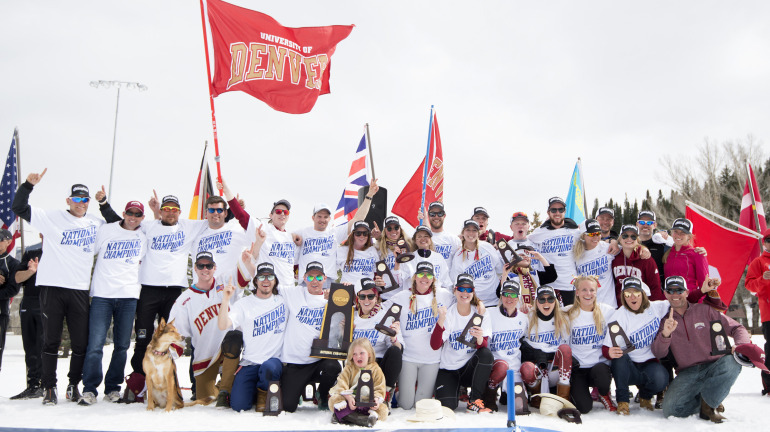
  • 2014 NCAA Preview: Colorado, Utah, Vermont, and Others Hungry for Title

    Photo: Flyingpointroad.com (All proceeds benefit NNF)
    An NCAA banner hangs at the 2013 NCAA Skiing Championships in Vermont. The 2014 Championships are set to begin Wednesday in Park City Utah. Photo: Flyingpointroad.com (All proceeds benefit NNF)

    FasterSkier’s coverage is made possible through the generous support of Madshus.

    One-hundred and forty-eight. That’s the number of skiers who have descended upon the ski town of Park City, Utah, to participate in the 2014 NCAA Skiing Championships. The championships will be hosted by the University of Utah, who last had the honor in 2000. The four day event, which consists of two alpine and two nordic races, begins Wednesday and continues through Saturday.

    The cross country portion of the event will take place at Soldier Hollow in Midway, Utah, the site of the 2002 Olympic Games and many national events, including the 2014 U.S. Cross Country Championships.

    The weather in Utah looks to be warm and wet with highs in the mid 40s to lower 50s and precipitation expected on Thursday and Friday, making for tricky waxing and racing conditions. 

    Given the nature of course, sloppy conditions, the field, and the stakes, the competition is set to be fierce. Several schools will be in the hunt for the title of america’s fastest skiing school, but only one will walk away with the championship title.

    Last year at the 2013 NCAA Championships in Ripton, Vt., it was the University of Colorado that came out on top followed by the University of Utah and the University of Vermont. Colorado’s chances in Utah seem a more slim in 2014, as they were unable to win a collegiate weekend all season. However, with a strong showing for men’s nordic, the Buffs may be able to make up for their other weaknesses.

    The University of Utah is hungry to break a three-year-streak of finishing second at NCAAs. After winning last weeks Rocky Mountain Intercollegiate Ski Association (RMISA) Championships, Utah goes into this week’s races with confidence and energy. Having the home advantage should certainly help Utah as well. However, if they want the title that’s slipped out of their hands the past three years, they’ll have to rely less on their alpine team and see better results from their nordic squad.
    It would be asinine to discount the University of Vermont, whose skiers have been looking especially strong this year. In the 2012 Championships they demonstrated that they could tackle western altitudes with ease in Bozeman, Mont. And with Soldier Hollow looking to be warm and wet this week, the conditions may favor eastern skiers who are used to rough easter weather.

    The East

    The eastern skiers are as strong as ever this year with the undefeated University of Vermont setting its sites on another NCAA victory. The 2012 champions have a strong team in both alpine and nordic which has contributed to their uncontested dominance this season.

    Anja Gruber (University of Vermont) racing to fourth in Saturday's 10 k classic mass start at Soldier Hollow for her best U.S. nationals result by more than 20 places. (Photo: Bert Boyer/http://bertboyer.zenfolio.com/) All proceeds from photo sales will be directly donated to NNF.
    Anja Gruber (University of Vermont) racing to fourth in the 10 k classic mass start at Soldier Hollow for her best U.S. nationals result by more than 20 places. (Photo: Bert Boyer/http://bertboyer.zenfolio.com/) All proceeds from photo sales will be directly donated to NNF.

    The east finds its greatest strength in its women. Anja Gruber, a native of Germany, has been UVM’s shining star this year, and finishes the regular season as the top-ranked skier in the Eastern Intercollegiate Ski Association (EISA). Last year’s NCAA 5 k classic champion, she placed fourth at the 2014 U.S. nationals at Soldier Hollow on the same course where the NCAAs are being held. Throughout the season the senior has been a top contender in the EISA circuit, consistently winning all but one classic race and finishing in the top three in every freestyle race.

    UVM’s talent doesn’t stop there, with sophomores Linda Danvid-Malm of Umea, Sweden and Stephanie Kirk of Anchorage, Alaska, showing that Gruber isn’t the only catamount with claws. Danvid-Malm has been dominant in freestyle, winning three out of six EISA races this season. Kirk, who competed in Italy as part of the U23 World Championships, has been a consistent performer as well highlighted by a spectacular win in the 15 k skate mass start at the EISA Championships at Middlebury College last weekend.

    Annie Hart of Dartmouth College has been the only real threat to Vermont’s dominance all season, having been the only non-UVM woman in the east to win a scored collegiate race this season. Consistently on the podium in classic races, Hart finally saw her hard work pay off at the EISA championships when she won the 5 k classic. With the same event being held on Thursday, Hart is hungry for a national championship title. Corey Stock, also of Dartmouth, has had a decent season as well, ranking fifth in the eastern points standings.  

    While not as dominant as their women, the UVM men shouldn’t be taken lightly. Their lead skier, Scott Patterson of Fairbanks, Alaska, has won three of the six collegiate races he’s participated in this season. Patterson made the headlines earlier this year when he riskily tried to break away from the men’s field in the 30 k mass start. Unsurprisingly, the move failed on the national level, but a similar move with in a collegiate field may be what Patterson needs to secure a title..

    Sophomore Jorgen Grav is another UVM skier to watch in Soldier Hollow. The Oslo, Norway native finished fifth in the EISA rankings, followed by teammate Rogan Brown of Durango, Colo., in sixth.

    Silas Talbot (DAR)
    Silas Talbot of Dartmouth racing in the 2013 NCAA Championships at Middlebury, Vermont.

    Two Dartmouth College skiers have the chance to dethrone the dominant catamounts. Paddy Caldwell and Silas Talbot have both been atop the results this year both winning multiple carnival races. Caldwell skied to a convincing win in the men’s 20 k freestyle at the ESIA Championship and was named 2014 rookie skier of the year for the region.
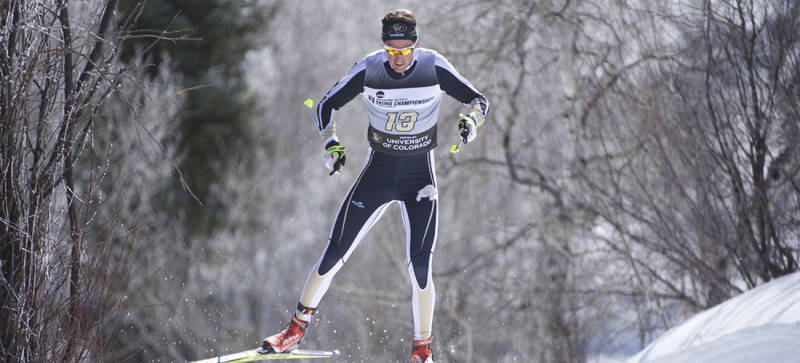
    A notable emission from this year’s NCAA Championships will be Ben Lustgarten of Middlebury College. Lustgarten had a spectacular year which started with strong skiing at the 2014 U.S. National Championships, continued with racing at the U23 World Championships, and finished with a win in the 10 k classic (by 50 seconds!) at the EISA Championships. Lustgarten would have been a top contender in Soldier Hollow this year but due to an knee injury he sustained in the 20 k mass start at the EISA Championships the senior will be on the sidelines.

    —

    The West

    Unlike the east, there has been no clear contender for the top spot in the west. At the beginning of the season it looked as if the University of Denver might be ready for another NCAA Championship, but by the time the RMISA Championships was over last week, Denver had finished fourth, roughly 60 points behind the winner, the University of Utah. Despite the end-of-season falter, Denver still held the top spot in the regular season standings demonstrating their potential.

    Sylvia Nordskar (University of Denver), fourth
    Sylvia Nordskar of the University of Denver racing in West Yellowstone, Montana earlier in the 2013/2014 season.

    Sylvia Nordskar of Bærum, Norway, is the most-likely woman from the West to capture an NCAA title. The University of Denver freshman has either won or placed second in every collegiate race that she has competed in this season and has no signs of stopping.

    Senior Makayla Cappel, a Sun Valley native skiing for Denver, became a late-season standout after winning the 5 k classic and taking third in the 15 k freestyle mass start at the RMISA Championship in Minturn, Colo. After dealing with illness upon her return from the World University Games in Italy, Cappel recovered from a slow start to her season to rocket herself onto the first team All-RMISA. Rounding out the Denver women is Silje Benum, who has also had many top finishes this season.

    Only two non-Denver skiers have been able to top Nordskar this season. The first is Marine Dusser of the University of Alaska Anchorage, who was third in the women’s 15 k in 2013 and has had several wins in the RIMSA circuit this year. The second is Slovenian Eva Severrus of the University of New Mexico, a freshman who has helped New Mexico improve its standings in the west.

    Sloan Storey of the University of Utah is another western woman to watch. Storey joined the U.S. contingent at the Junior World Championships in Italy earlier this year and made first team All-RMISA after and exemplary collegiate season.

    Rune Oedegaard (CU) 8th place classic
    Rune Ødegaard racing in the West Yellowstone Super Tour.

    Like its women’s team, the Denver men were the top team in the west during the regular season. The trio of Moritz Madlener, Pierre Guedon and Trygve Markset made the Pioneers proud in 2014 and hope to continue the trend into the NCAA Championships. However, they’ll need to have a better performance than they did at the RMISA Championships, where they garnered only 46 points compared to the University of Colorado’s 93.

    Norwegians Rune Ødegård and Mads Strøm, a junior and freshman, have been the top skiers from Colorado throughout the latter half of the 2014 collegiate season. After sitting out the first two weekends of collegiate racing the duo has consistently been in the top five. Ødegård won last year’s 10 k classic at the 2013 NCAA Championships and looks to continue that success into 2014.

    The University of Utah men have shown that the best skiers in the west aren’t just based in Colorado. Niklas Persson, Oscar Ivars, and Noe Bellet have all performed well this season, garnering spots on the second team All-RMISA. However, all three will need to up their game if they want to outpace the Catamounts and the Buffs.

    Colorado, Denver, and Utah have had steady competition from the 2013 RMISA skier of the year, Lukas Ebner of the University of Alaska Anchorage. The senior, who hales from Germany, hopes to build on a season that has included multiple podiums.

    —

    Central

    The Central Collegiate Ski Association (CCSA) has traditionally trailed the east and west in terms of results at past NCAA Championships, which is reflected in the small numbers of qualifiers from the region. Despite that fact, there are several top performers who have a chance at an NCAA podium in Utah. 

    Rosie Frankowski of Northern Michigan University in the 20 k freestyle mass start at U.S. Nationals at Soldier Hollow.
    Rosie Frankowski of Northern Michigan University in the 20 k freestyle mass start at U.S. Nationals at Soldier Hollow.

    Rosie Frankowski, a senior of Northern Michigan University, has had an excellent season and looks to continue her speed into her time in Utah. Frankowski finishes her regular season as the top skier in the CCSA.

    Freshman Nicole Bathe of University of Alaska Fairbanks has turned out to be quite the powerhouse in classic races. Bathe has had excellent start to the season after finishing third in the classic sprint at the 2014 U.S. Cross Country Championships.

    Fellow Fairbanks  teammate Logan Hanneman looks to be the top male competitor for the CCSA in Utah. The junior finished fifth in the freestyle sprint at U.S. Nationals earlier this season.

    —

    Whether Colorado can reclaim its title, Utah can snap its second place curse, or Vermont use the sloppy conditions to their advantage, the NCAA Championships will be an exciting display of talent from the fastest skiers in the country.
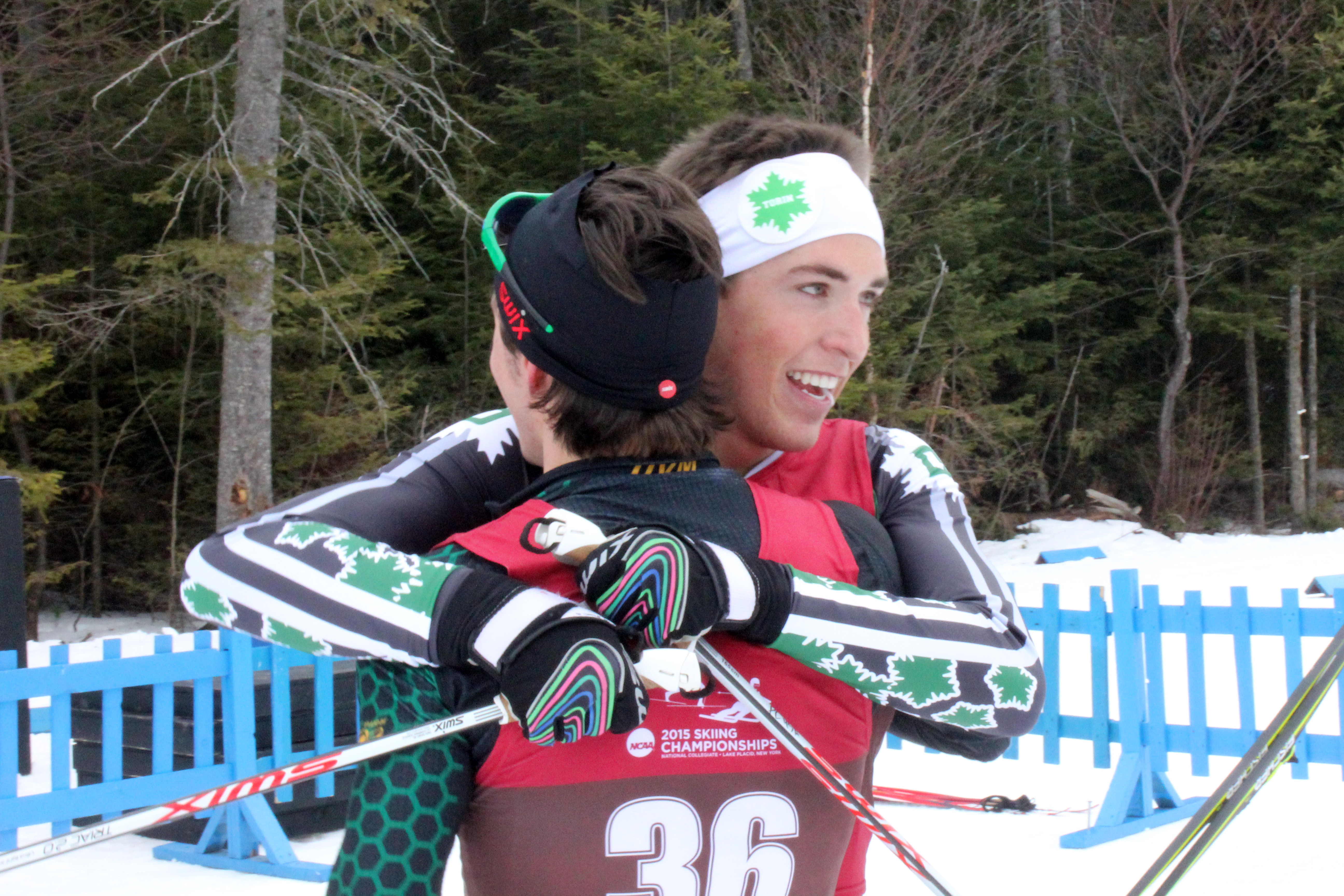
    The 5 k and 10 k classic will take place this Thursday at 10 a.m. and 12 p.m. MST. The Championships will conclude with the 15 k and 20 k freestyle mass starts on Saturday, also at 10 a.m. and 12 p.m, MST. Watch the action unfold live on the NCAA site and check FasterSkier for reports.

  • The College Workout: Stair Repeats with Denver University

    The College Workout: Stair Repeats with Denver University

    University of Denver athletes climbing Hermod's Hill at Soldier Hollow this January at U.S. Nationals.
    Joergen By Brevik and Trygve Markset of the University of Denver climbing Hermod’s Hill at Soldier Hollow this January at U.S. Nationals.

    There is a 300-step staircase that leads from below the stage at Red Rocks Amphitheater in Morrison, Colo., to the very top of the stadium seating. Thousands of people climb them every weekend in the summer months to enjoy live music, but on Saturday and Sunday mornings the steps are crowded with hundreds of elite and recreational athletes alike running up and down them. Few activities lead to the pain cave as efficiently as stair repeats, and as a result the massive rock formation has become a popular spot for training.

    DU athletes doing spenst drills on the stadium bleachers. (Courtesy photo)
    DU athletes doing spenst drills on the stadium bleachers. (Courtesy photo)

    The University of Denver Ski Team makes a trip to Red Rocks a few times every fall and spring to do a combined workout of specific strength and intervals on the stairs. Head coach Dave Stewart likes the amphitheater because it presents his athletes with the hardest terrain they will ever see —once they’ve conquered 300 stairs a bunch of times, A-climbs are a piece of cake.

    “I think it’s as much mental preparation as a good physical training session,” Stewart says. “It’s so challenging and so steep and so relentless that…Hermod’s Hill at Soldier Hollow doesn’t seem so tough any more.”

    The atmosphere at the amphitheater also keeps things interesting. Hundreds of people flock to the stairs in the summer to make themselves suffer, a kind of presence that nordic skiers don’t often have in the off-season.

    “One of the cool things about it is that other people are doing it at the same time,” Stewart says. “For nordic skiers, a lot of the training we do on rollerskis — you’re definitely the only people doing it. But you go to Red Rocks and there’s a handful of people running the stairs or running the bleachers or doing pushups, so it’s a really cool atmosphere… It’s kind of inspiring.”

    For this edition of the college workout, we’re doing stair repeats.  On top of being a good mental challenge it works the specific leg muscles you use to push of your skis, and will also increase lactate tolerance. DU does this workout in the off-season, but the average nordic enthusiast can do stair repeats at any time of year, weather permitting. Don’t live in Denver? Look to your nearest skyscraper!

    The workout:

    20 minute warmup

    15 minutes of spenst on the stadium bleachers. (These are done on deeper steps than the stairs. Spenst is a set of high-workload, low-repetition Plyometric exercises.)

    5 or 6 reps of ~2 minutes up the stairs at Level 4 (do the same distance each time and try to keep your time the same throughout the workout), with 4 minutes rest in between

    Cool down

    One of six intervals on the stairs (Courtesy photo).
    One of six intervals on the stairs (Courtesy photo).

    The short spenst session at the beginning of the workout works on lower body explosiveness, and is best done  before the intervals destroy your legs.

    “We’ve found that including the spenst early on, doing the more explosive shorter bounds early on, is a really good warm-up for doing the stairs afterwards,” Stewart said.

    As for the intervals themselves, make a point of keeping your time the same on every repetition. Stewart says the 300-step set of stairs takes his men between 1:45 and 2:00 minutes, and his women 2:00 to 2:30.

    How do you know you’re doing it right?

    “Your legs are shaking like crazy by the end,” Stewart says. “I used to do it with them and I don’t think I’ve ever done it without throwing up. So it’s pretty tough…it’s definitely the thoughest one we do.”


  • Ox Carts, Monkeys, and School Building; Haugen Converts Skiing Background to Non-Profit Success

    Ox Carts, Monkeys, and School Building; Haugen Converts Skiing Background to Non-Profit Success

    Espen Haugen racing for Denver University at U.S. Nationals

    If Nicaragua is not the last place you would look for a story about cross country skiing, it’s pretty darn close. But for former Junior National Champ and Alaskan Espen Haugen,  the small Central American country has become an obsession.

    Growing up, Haugen was an avid skier and member of the Alaska Pacific University (APU) team with such greats as former U.S. Ski Team member Nina Kempall and 2009 World Championship medalist Kikkan Randall, as well as James Southam and Lars Flora. Haugen was no slouch; he won a national championship as a J2, and placed as high as fourth at the Junior Olympics.

    For post-secondary education, Haugen decided to abandon Alaska in favor of the West. The University of Denver caught his eye, and he graduated in 2008 with two degrees: one in International Studies, and one in Geography. He skied competitively for Denver for three years, and fondly remembers his time spent on the team.

    It was while Haugen was at Denver that his horizons expanded beyond skiing. Working for a geography professor, Haugen visited Nicaragua to study the effects of tourism on the rural landscape, focusing specifically on the region of Tola, which sees tourism traffic for surfing. One trip was enough to suck him into the country: he returned five times as an assistant to professors, each time learning more about the Nicaragua, which was suffering from massive unemployment, a lack of education school infrastructure, and rampant poverty.

    From Haugen’s home in Alaska, he brainstormed ways to help. “I had been working as a substitute teacher and ski coach in Alaska after I graduated, and I am pretty familiar with the education system” said Haugen in an interview, “so I thought it would be a fun way to start, helping the local schools.”

    Haugen pops his head out of a water tank at a project site

    In 2008, after coming up with a few small projects, like sending school supplies, Haugen decided to do the equivalent of skiing the American Birkebiner on a week’s worth of training. “We realized we can’t just help by sending them paper and pencils — we really need to help rebuild the infrastructure of schools themselves,” he said. So he jumped right in, fundraising in Alaska and the Midwest to build 11 new schools in the region.

    In 2009, Haugen founded a charitable organization, Proyecto Remedios Educativos (PRE) –Projective Educative Remedies in English — to further develop his program of helping children in Nicaragua. The organization is non-profit in the largest sense of the word: Haugen draws no salary, the entire organization is run by volunteers, and as a result of the lack of overhead costs, every dollar goes into Nicaragua, either for the construction of schools or for school materials.

    The undertaking itself was massive, as the scope went well beyond Haugen’s original ideas. The projects he headed were community based, meaning he would bring in all the materials, turn them over to parents or teachers, then provide oversight. He found himself immersed in the construction of fences, installing locks, and “keeping the wheels greased.”

    Haugen’s work has paid off, as PRE has rebuilt 12 schools, and constructed an additional two from scratch for just $25,000, and all 14 sites are now fully stocked with textbooks. However, despite the enormous gains made, there is still much to be done in the region.

    With the organization going stronger than ever, Haugen spends as little time at home as your average World Cup racer – he estimated that he is in Nicaragua for 80 percent of the year. Last year he spent most of his winter, from January until July, in Nicaragua, making skiing a little bit more difficult, although he still manages to ski, at least at Christmas,“I love cross country skiing,” he said. “I want to continue help coaching, and do the community races…but Christmas-time is the most I can get .”

    But that doesn’t mean he is sitting around getting out of shape. Most of the school sites are in extremely remote locations inaccessible by car. Haugen’s most recent school involved a different kind of workout: He built a brick oven on site, while all the other building materials (rebar, cement, etc.), were moved in by ox cart. Just trying to get to schools, he often gets to run, walk or even mountain bike through the jungle, with only monkeys for company — which Haugen describes as “super gnarly, but good.”

    Haugen and helpers biking to a school site in Nicaragua

    As for skiing in Nicaragua, there is not much, but Haugen is able to bring his love for sport into the schools, which PRE encourages by donating soccer balls, baseballs, and other athletic supplies. “The kids are always super stoked to get anything,” he said, “but whenever we bring soccer balls or baseballs, the amount of excitement we get from that is much larger [than for textbooks].”

    As a former endurance elite athlete, Haugen says he has reaped the benefits of that lifestyle beyond the skiing world. “Being goal oriented… having that personal confidence transfers to the other side of life,” he said. “I can thank cross-country skiing a lot for that.”

    PRE is a certified charitable organization, and donations are tax deductable. For more information, or if you wish to donate to PRE please visit www.prehelps.org.

    One of Haugen's schools under construction