From the FasterSkier archive — posts syndicated from athletes’ and coaches’ own blogs between 2004 and 2012, kept online as published. Current coverage is at fasterskier.com.

Tag: University of Utah Ski Team

  • Novie McCabe’s Winding Trail to the Olympic-Season Start Line

    Novie McCabe’s Winding Trail to the Olympic-Season Start Line

    When Novie McCabe spoke with FasterSkier early last month, she was looking out the window of her place in Anchorage, waiting for winter to finally take hold. “We’re patiently waiting on snow,” she said. “But today might be the day.“

    Outside, the ground was still in its in-between phase—too brown for grooming, just white enough that fish-scale skis could work if you were stubborn and optimistic about it. Alaska in November often asks skiers to hover in that liminal space: ready but not yet racing; fit but not yet tested; hopeful but not naïve.

    This week, the waiting ends—at least for the top domestic circuit. The U.S. SuperTour season opens in Fairbanks and continues in Anchorage next weekend, but McCabe hopes her body will allow her to join the field. After a long, uncertain stretch, simply lining up for even one race would mark a meaningful step forward. The timing makes this the right moment to trace how she has arrived at this threshold, and how the places she has lived—Methow Valley, Salt Lake City, Anchorage, Europe—continue to shape the skier she is becoming.

    Laura, Sean, and young Novie McCabe. (Photo: Courtesy Photo)

    The Valley That Built Her

    The story begins in the Methow, where winter is less a season than an identity. “I grew up in the Methow Valley, which is like a small valley in north central Washington with a pretty big ski community,” McCabe recalled. “I think we have the most Ks in North America or something when the skiing is good.“

    Her mother, former U.S. Ski Team athlete Laura McCabe, and her mother’s longtime friend Leslie Hall helped build the Methow Valley Nordic Club from scratch. McCabe grew up inside the culture they created: open, community-driven, relentlessly outdoorsy, and—maybe most importantly—fun.

    “I was lucky enough to have a really big group of kids my age who all just kind of happened to be really close friends,” she said. “We would all just be active together and spend a lot of time outside… backpacking trips all the time together.“

    Skiing was less a pursuit than a language. Practice might include ultimate frisbee on skis or just exploring terrain with no agenda beyond movement. “That was the main thing that got me so excited about skiing—the community,” she said. “It was just what all my friends did.“

    These early years formed more than her fitness. They gave her a worldview: skiing should be joyful, shared, and balanced.

    “Stay Behind Us—It’s Supposed to Be Easy”

    That mindset came directly from her mother’s coaching style. “My mom… would do all the sessions with us,” McCabe said. The education was intuitive, rooted in feel rather than metrics.

    “It was very feeling-based,” she said. “Like, in L3 you should be able to talk to me and give me a sentence back at least when I ask you how you’re feeling.“

    Heart-rate monitors were used only sparingly—tools to complement the athlete, not dictate behavior. “We maybe did lactates once or twice the whole time I was in high school,” she said.

    One lesson, in particular, stuck with her. During easy sessions, her mom and Leslie Hall would say:

    “You guys have to stay behind us because it’s supposed to be easy.”

    The rule was simple, but the philosophy was profound: fundamentals come from awareness, not pressure.

    McCabe laughs that even today, in anything resembling an ultra-distance test, the result might still tilt toward her mom: “She might have the upper hand in anything longer than 50 k.“

    Novie McCabe during the 20 k Classic at the NCAA Championship hosted by Saint Laurence University in Lake Placid in 2023.  McCabe controlled a pack that also contained her teammates, Sophia Laukli and Sydney Palmer-Leger. McCabe led the UU women, who finished 1st, 3rd, and 5th, on the day that propelled the Utes to their 4th consecutive NCAA Championship. (Photo: (c) Nancie Battaglia).

    Utah and the COVID Bubble

    By the time she left the Methow, McCabe was ready for a bigger arena. She chose the University of Utah for its coaching, competitive team environment, and growth opportunities.

    “At that stage in my life, I was pretty ready for it,” she said.

    Her first year unfolded in the disruptive isolation of COVID—a strange, surreal time that somehow fostered uncommon cohesion.

    “It was the heart of COVID isolating, but honestly, kind of in a fun way,” she said. “We were just hanging out as a team all of the time.“

    Despite Utah’s reputation as an NCAA powerhouse, she never felt crushed by expectations. “It didn’t feel like a high-pressure situation,” she said. “They were there to help us get the best out of ourselves.“

    She balanced training with academics, majoring in political science and minoring in economics. Even then, she was thinking beyond skiing.

    Novie McCabe skiing for APU. (Photo: Courtesy Photo)

    Leaving Eligibility on the Table

    After her third year, she made a difficult decision: she left Utah with two years of NCAA eligibility remaining.

    “I just felt kind of ready to move on from the NCAA,” she said. The experience had been positive—”I think everyone should go NCAA… It’s so fun and great for development,”—but the structure had become limiting.

    She wanted freedom: to race World Cups without constant travel back to the U.S., to pursue her development without logistical whiplash.

    “I wanted the freedom to race as many World Cups as I wanted during the season and not fly back and forth so much.“

    Once she accepted that her path needed to diverge, the next step was obvious.

    Novie McCabe and Luke Jager. (Photo: Courtesy Photo)

    Anchorage and the APU Reboot

    Anchorage had already become a meaningful place—she had been coming there every summer since her first year at the University of Utah. Her partner, Luke Jaeger, is from there. And she had trained with APU coach Erik Flora for years.

    “It honestly wasn’t even much of a decision,” she said.

    Flora’s coaching became a stabilizing force. “Erik Flora is really awesome when things are going wrong,” she said. “He knows how to help athletes sort through challenges… It’s never a linear path to success in skiing or any sport.“

    APU offered a training environment grounded in trust and peer excellence. “This year there is a pretty big girls’ group,” she said. “Kendall Kramer, Quincy Donley, Annabel Needham, Haley Swirbul, we have a big crew.“

    Training with athletes like Rosie Brennan and Swirbul created a layered mentorship:

    “They have been and are some of the best in the world.“

    Anchorage became the center of her athletic and personal rebuild.
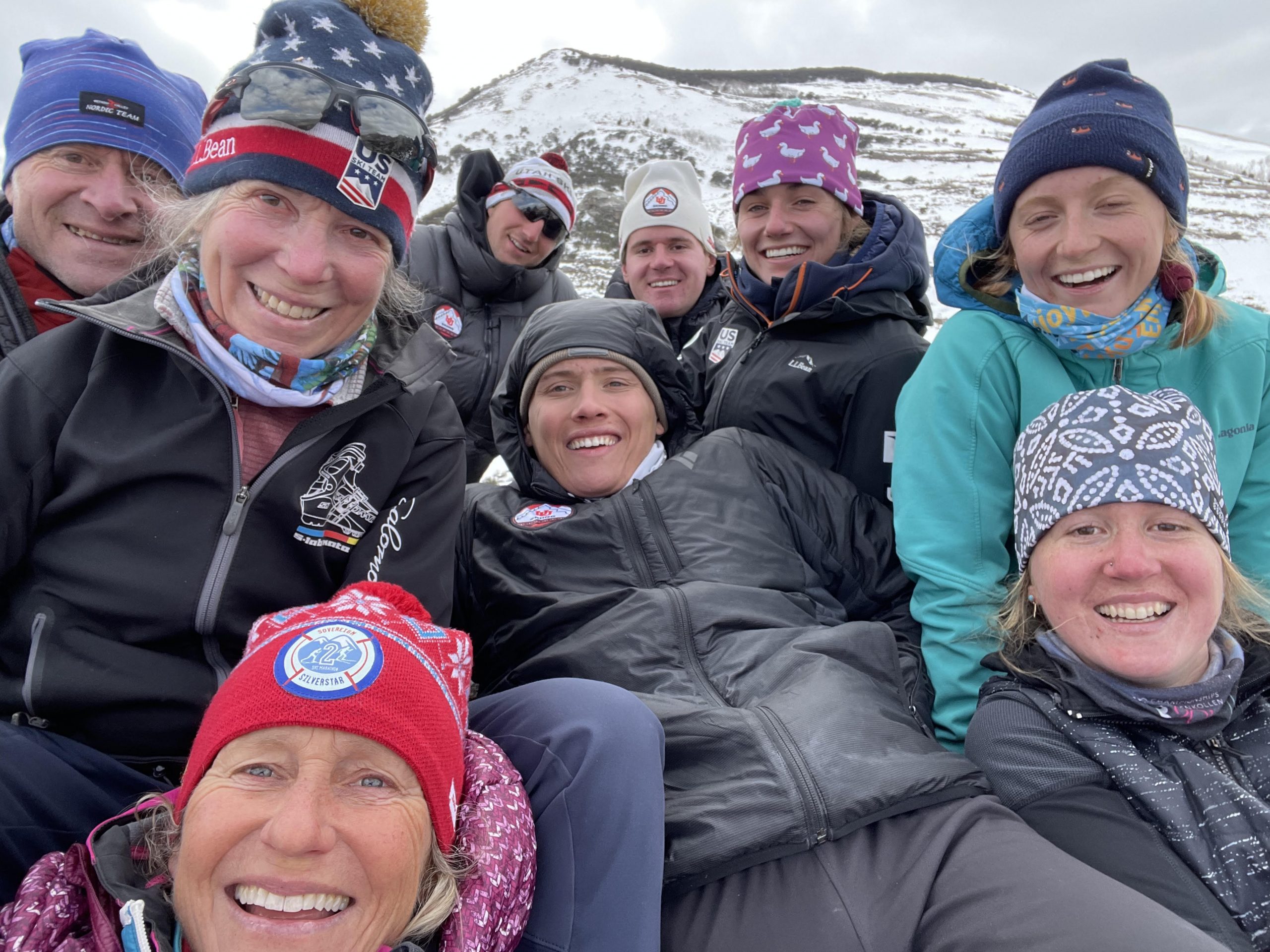
    Novie McCabe joined by family and friends for a climbing adventure. (Photo: Novie McCabe)

    The Year Without Racing

    McCabe didn’t race at all last winter, more or less. At the time, she explained this as part of a balance project—but in reality, the situation was more complicated.

    “I have historically been kind of bad at the balance thing,” she said. “My happiness is sometimes quite dependent on skiing.“

    That year became a forced reset, with significant emotional and physical consequences.

    “I think I’ve gotten better at it,” she said. “I’ve found some things that I really do like to do outside of skiing.” She mentioned baking, cooking, reading, and spending time outside in ways that weren’t tied to training logs.

    Yet she was still searching for answers.
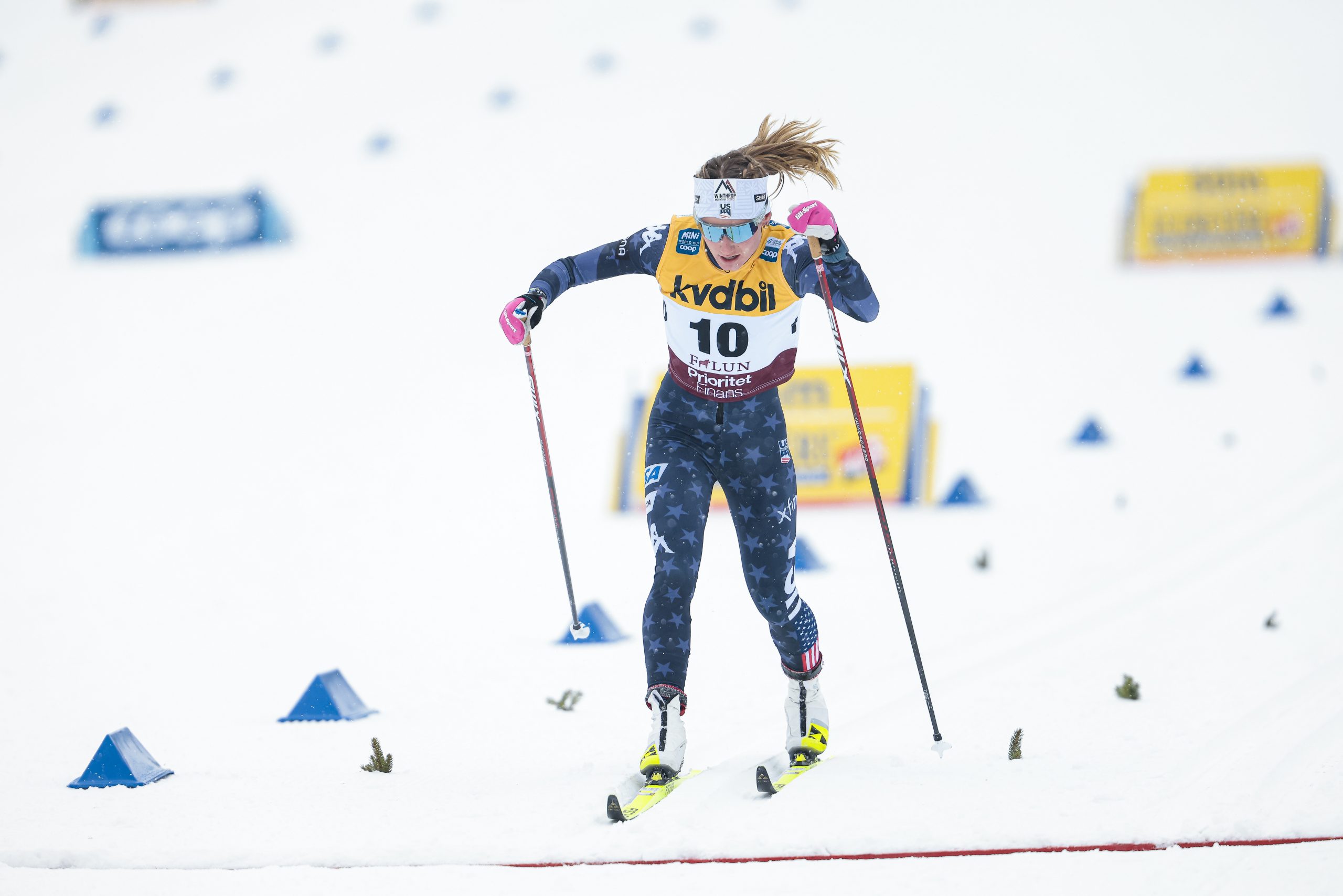
    One of Novie Mccabe’s (USA) career highlights was her top 15 finish in Falun, Sweden in a Classic race. (Photo: NordicFocus)

    A Quiet Battle Behind the Scenes

    After our original conversation, McCabe followed up with more context—an important layer we had not fully jumped into earlier. For the past two years, she has been navigating what she called “some mystery health challenges,” a swirl of symptoms that worsened last fall to the point where racing no longer felt possible.

    “The best guess of most of the doctors I have seen is some sort of post-viral or chronic fatigue thing,” she wrote, “possibly combined with some issues keeping my celiac and Hashimoto’s in check, but I am still not really sure what is going on to be honest.“

    She spent the winter searching for stability rather than start lines.

    “I have taken a pretty cautious approach to training this year and just been trying to build back into it super slowly and give a lot of extra attention to rest and recovery,” she said. “And I do feel like I made some solid progress.“

    Even now, she remains cautious. “The past two weeks have been a bit of a step backward,” she said. She’s not entirely sure she will race in Fairbanks. Her hope is modest: “One race there and one race in Anchorage, just to give myself a bit more recovery between hard efforts.“

    Still, the optimism in her message is unmistakable.

    “It means a lot to be back in a place where racing seems like more of a possibility.“

    “I will definitely consider it a win if I get to do some racing this year and make some more progress toward feeling like myself again.“
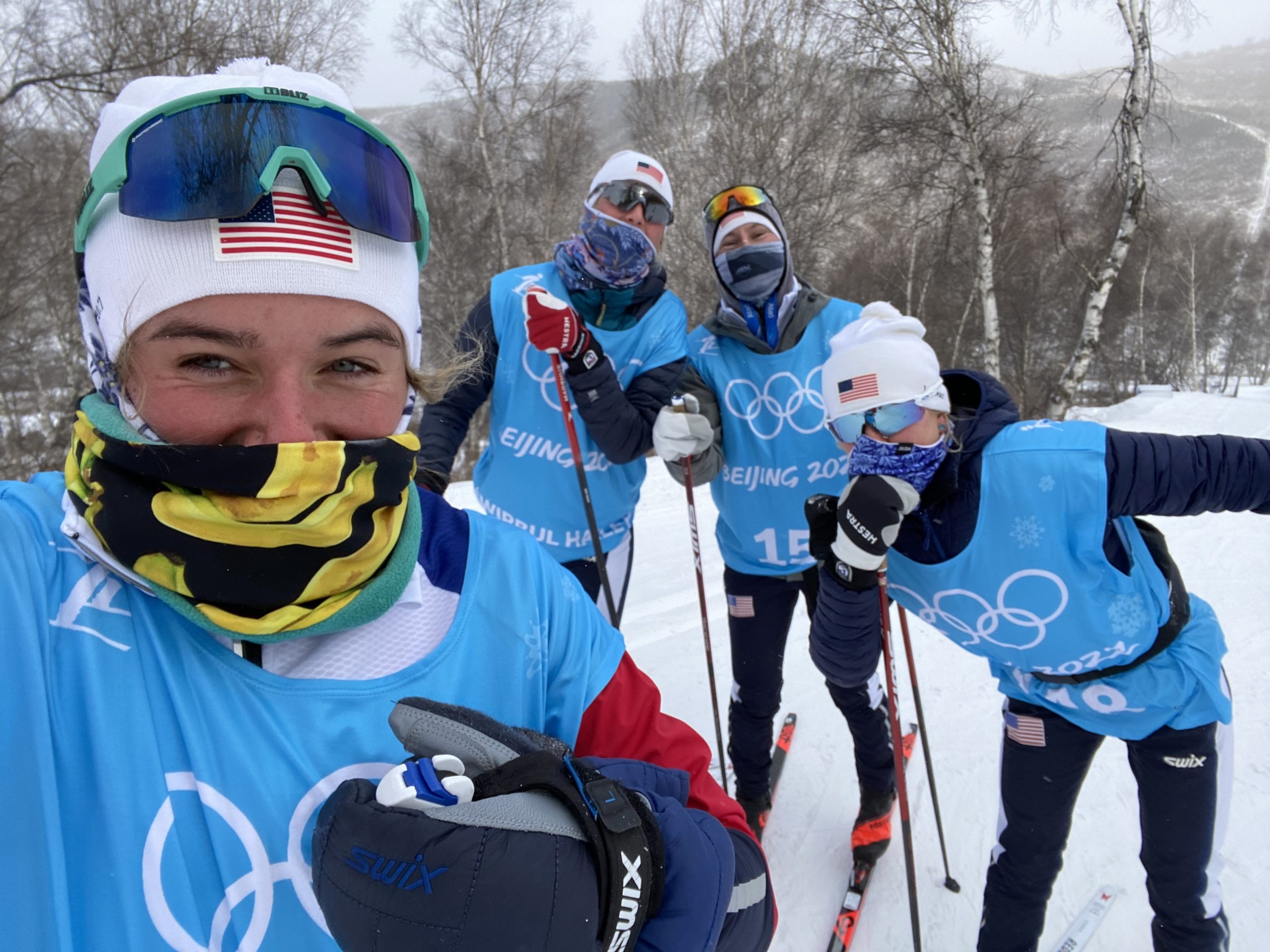
    McCabe credits her teammates with helping her develop the traits that won her recognition. Here she is training in Beijing with Hailey Swirbul, Hannah Halvorsen, and Sophia Laukli. (Photo: Novie McCabe)

    Team USA on the Road

    The U.S. Ski Team’s culture is widely celebrated—glitter, dance videos, and road-trip camaraderie. McCabe grew up watching those clips.

    “I would see their dancing videos from the World Cup and be like, ‘That just looks like the best time ever.’”

    But she knows now that joy is a decision, especially when you’re far from home. “Sometimes you have to decide that it’s going to be a good time,” she said. “Everyone does an excellent job of being good teammates.“

    That environment matters, especially in challenging seasons.
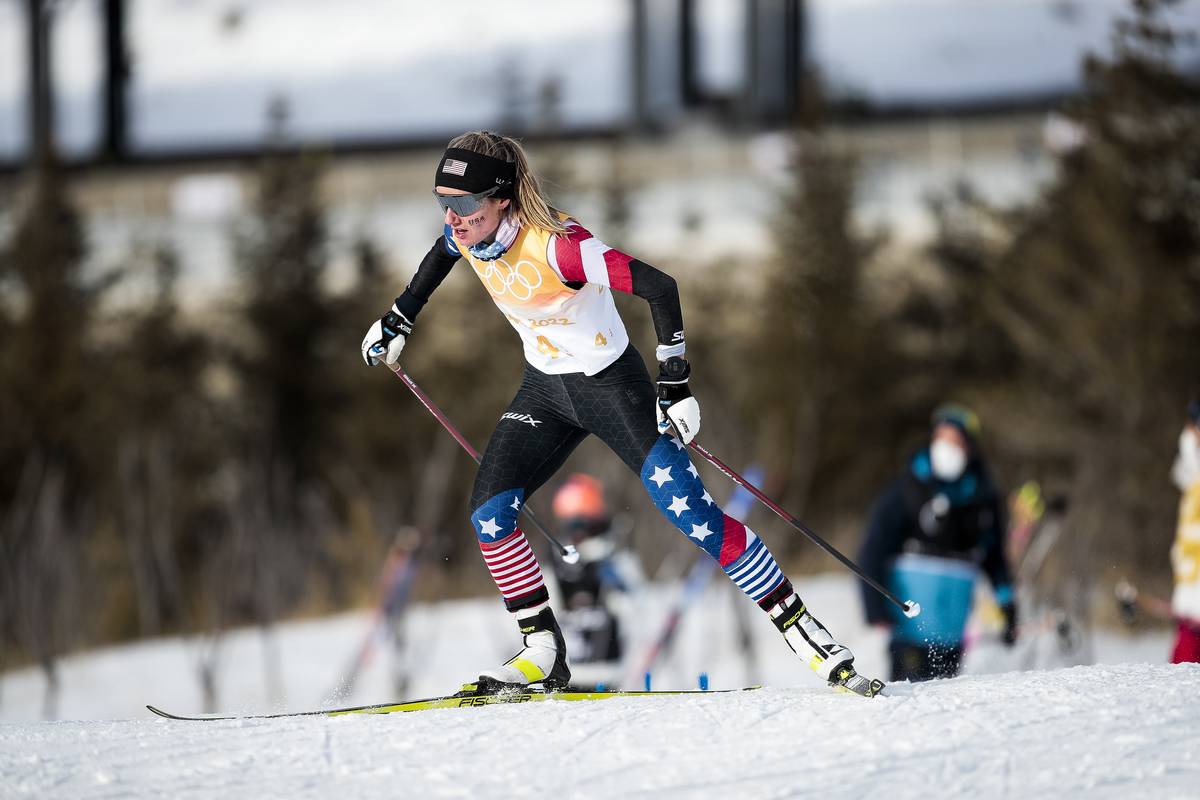
    Novie McCabe skates a strong third leg for Team USA in the 4 x 5 k relay at the Beijing Olympics in 2022. (Photo: NordicFocus)

    Europe: Brown Cheese, Ferris Wheels, and Perspective

    Her memories of Europe arrive in flashes of color rather than race results.

    “I love brown cheese,” she said. “You can get it here, of course, but it’s not as good.“

    She recalls Trondheim at Christmas—”Ferris wheel and everything“—and moments where she stepped outside the hotel room and let herself experience the place.

    These glimpses matter because they remind her of what she still wants from her career: a stable return to the World Cup, a chance to live in that rhythm again.

    And through all her travels, she keeps a single talisman:

    “Katherine Ogden made me a crochet octopus one year… I’ve brought it along as a good luck charm ever since.“
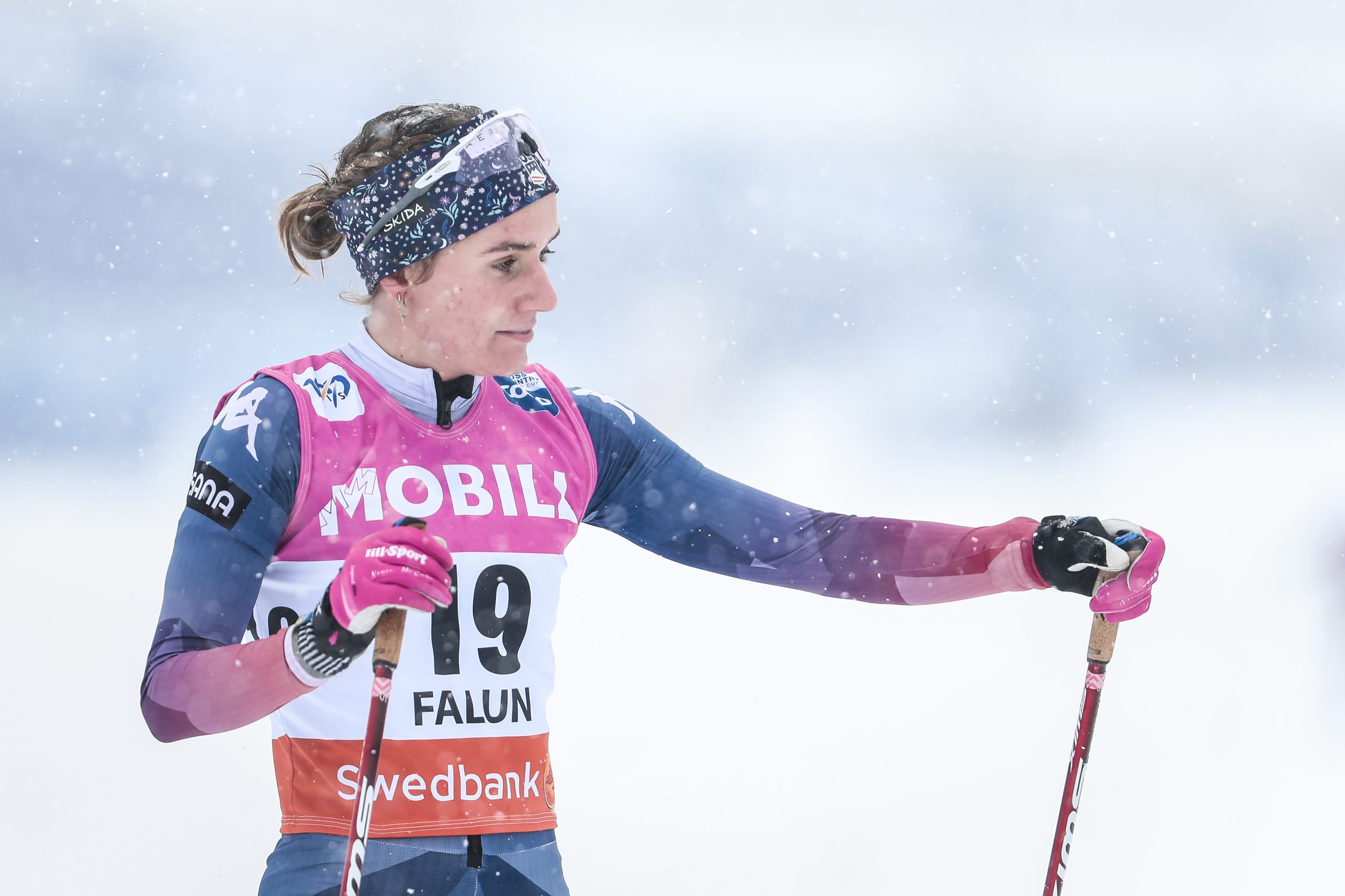
    Novie McCabe after the World Cup 10k in Falun, Sweden, in 2024. (Photo: NordicFocus)

    The SuperTour Returns — and She Hopes to Join It

    Which brings the story back to this week, and the opening races of the season. “I haven’t started a season domestically in like four or five years,” McCabe said. But she’s doing this season differently.

    She is hopeful she will race—one race in Fairbanks, one in Anchorage, if her body allows. More than anything, she wants to be thoughtful and patient.

    “My main goal is to make the Olympics,” she said. But this winter, her priority is health. “Being able to race and stay healthy and recover… that would look like a win for me.“

    The Olympic qualification system is, as she put it, “really complicated“—top-45 overall rankings, top-8 results, SuperTour contingencies. But she isn’t thinking that far ahead yet.

    She’s thinking about one start line. One bib. One race that feels like progress.

    Becoming Who She Meant to Be

    If you fast-forward five years, she still knows exactly where she wants to be.

    “I, for sure, dream about being one of the best skiers in the world,” she said. “I hope to be able to compete with the best one day.“

    She also knows this path no longer looks how she imagined it “four years ago.” But she has something she didn’t have then: perspective, patience, and a grounded sense of herself.

    Back in Anchorage early last month, the snow hadn’t fully arrived. It mirrored her season ahead—close, possible, not yet certain. The SuperTour begins this weekend, and McCabe is on the edge of stepping back into the environment she loves.

    Maybe in Fairbanks. Maybe in Anchorage. Maybe later.

    But the hope is real. The joy is returning. And somewhere in her bag, the crocheted octopus is still waiting.


    Love Stories Like This? Help Keep Them Coming.

    Feature interviews like this one take time, access, and care to produce. If you value thoughtful storytelling and independent ski journalism, please consider becoming a Voluntary Subscriber. Your support directly fuels the work we do to cover the people, places, and moments that make our sport special.

    Join the FasterSkier community!


  • FasterSkier’s Interview with University of Utah Head Coach Miles Havlick

    FasterSkier’s Interview with University of Utah Head Coach Miles Havlick

    Miles Havlick, University of Utah cross-country ski head coach. (Photo: University of Utah)

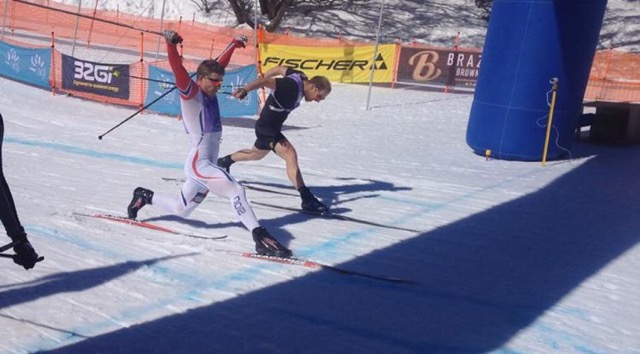
    The Internet is a wonderful time machine. Just a few search words and clicks away, there’s Miles Havlick, arms raised, crossing the line first  in the 20-kilometer freestyle mass start at the 2013 NCAA Skiing Championships.

    It was the second consecutive NCAA championship for the now 28-year-old Havlick — he won the 2012 NCAA title in the 20 k classic. As a standout skier at the University of Utah, Havlick made the jump to Sun Valley Ski Education’s Gold Team. He skied with the team from 2013-2016. Eventually, Havlick expanded on his undergraduate degree in exercise physiology and earned a master’s degree in the same field from the Norwegian University of Science and Technology in exercise physiology.

    Havlick completed his graduate work in 2018. He was based out of Trondheim, Norway at an academic institution renowned for its high quality cross-country specific research, and soon landed a job as the new University of Utah Head Cross Country head coach.

    Utah comes off a season where it replaced several coaches in its ski racing program, including its Director of Skiing. Fredrik Landstedt was announced as the new director in July, 2018.

    Below is our recent interview with Havlick. The coach responded to FasterSkier’s questions in writing.

    Miles Havlick (l) outlunges Australian National Team member, Phillip Bellingham for the win in the men’s 42-kilometer 2017 Kangaroo Hoppet at Falls Creek Resort.
    (Photo: AUSXC)

    ***

    FasterSkier: You went unrecruited from Boulder High School in Boulder, Colo., and you were a walk-on at Utah. Big picture, what experience best informs your coaching?

    Miles Havlick: My experiences as a racer certainly dictate my coaching decisions more than anything else. The lessons I have learned as a result of the highs and lows I have experienced as a competitor are my most valuable assets to advising my athletes in a more effective way.

    FS: What was it like for you as an unrecruited athlete out of high school and what were your skiing opportunities?

    MH: After high school, I decided to take a post grad year to ski with the Sun Valley Ski Education Foundation in Ketchum, Idaho. I found this year incredibly valuable in preparation for college life and easing the transition into the fast pace of RMISA skiing. This post grad year enabled me to train regularly with some of the top skiers in the country and learn from their professionalism, drive and dedication. It also provided an opportunity to learn how to take care of myself (cook, clean, get to bed early, etc.) without the additional stress of college classes. Those benefits along with the fact that I entered college a year older, stronger, and more mature (hopefully) really paid off! From there, I moved to Salt Lake City and began the most memorable years of my skiing career at the University of Utah.

    FS: Utah can be a rather tough place to break through as they recruit heavily from Europe. How does your experience at Utah shape how you will recruit, assess, and develop athletes?

    MH: Utah has typically maintained a relatively small team with roughly 6 men and 6 women on the Nordic side, allowing each athlete to optimize the resources available at the U. This also makes each member, whether joining the team as an American or from overseas, vitally important to the cumulative success of the team throughout the year. Foreign skiers in general tend to be very mature in terms of their knowledge of training philosophy and understanding their needs as an athlete. This is a result of skiing at a high level (often with a National or Development team) but also generally being a few years older than incoming American freshmen. I certainly benefited a lot from the wisdom and professionalism of my European teammates and hopefully I pushed them in daily training too – no Norwegian wants to let an 18-year-old American beat them in a rollerski speed! I continue to believe that the collaboration between American and foreign athletes in collegiate skiing is mutually beneficial and valuable for the development of cross-country skiing in the US.

    FS: You clearly were a top college skier while at Utah. What do you attribute your growth to as an athlete while attending Utah? We’re guessing you had many skiers to push your limits while training.

    MH: My most successful races in college were truly a reflection of the team. Our coaches really fostered a positive team atmosphere, which snowballed into a very productive environment at training, competitions and life at home. A goal I set early on was to learn something from each of my team members. Whether it was imitating their weight shift while skate rollerskiing up Emigration Canyon, showing up to practice with a contagiously positive energy, gritting the teeth for one more hard interval up Dry Creek, or just taking a spoonful of fish oil when feeling on the verge of sickness; there was always something to be learned from everyone.

    FS: We like this quote attributed to your dad. We found it in an old Daily Camera piece. Here’s the quote: “For me, sports teaches you how to set goals and to deal with disappointment, and every once in awhile you get to drink from this intoxicating cup of success,” said his dad, Scott.

    How have the sentiments articulated by your dad manifested for you as it relates to your ski career and how you might impart some wisdom on a younger generation of skiers?

    MH: As a former coach of mine always said, “we are only elite ski racers for a very short period of time in our lives, so we need to make the most of every single day”. In other words, we need to set goals, both long term and short term and get better in one way or another every single day and from every single training session. From the beginning of June, we really only have 160 days until the snow flies again. That is not a whole lot of time to make meaningful changes, so being diligent and purposeful during each training session is critical to improvement. If we are doing this, despite disappointing results, we can be confident that we are heading in the right direction and making progress towards our goals. Success along the way provides an important boost in motivation and reassurance that we are on the right path, but in the end what counts is knowing that you did your very best and enjoying the process, not just the end result.

    FS: What were the precise years you skied professionally. You won the Kangaroo Loppet in 2017, but you might have been a grad student by then.

    MH: I raced with the Sun Valley Gold Team from 2013 to 2016 before deciding to pursue a Master’s degree. Luckily, I got a lot of time on snow while coaching leading up to the Kangaroo Hoppet, just enough to counteract the time spent sitting at school desk over the previous year!

    FS: Can you provide us a run down of your coaching experience. We know you coached in Norway and in Australia, as well as served as a travel coach with the Australian National and National Junior Team.

    MH: Throughout my years with the Gold Team, we ran group clinics for Master skiers in addition to some one-on-one coaching on the side. I helped out as a volunteer coach for the University of Utah for several fall semesters before I the SuperTour season kicked off. Between my years in Norway, I worked as a coach with the Birkebeiner Ski Club in Mount Beauty, Victoria for Australia’s winter season culminating with the 2017 Kangaroo Hoppet. This opportunity also lead into working as an assistant coach and wax tech for the Australian Junior National Team at several events around Europe including the World Junior Ski Championships in Goms, Switzerland. I was also fortunate enough to support the Australian contingent of the Swix China City Sprint Tour in Yan’an, China last March.

    FS: You have an exercise physiology degree from Utah (2013) and master’s degree from Norwegian University of Science and Technology in exercise physiology in 2018. Why did you choose to study in Norway?

    MH: Norway is the epicenter of cross-country skiing, they offer great study opportunities and I wanted to experience something new.

    FS: What was the focus of your graduate thesis and what did you learn?

    MH: I was researching the application of altitude training in elite cross-country skiers and the resulting physiological adaptations. I was lucky enough to work with the Norwegian Olympic Training Center, some of the world’s leading researchers in training science, and experience how dark Norwegian winters actually are…

    FS: What can you tell us about the investment in Norway as it relates to applied academic research and cross-country skiing?

    MH: Norway is the best cross-country skiing nation in the world for a reason. The entire country is made up of enthusiastic sports fans with PhD students devoted to improving cross-country ski technique, equipment development and optimizing training.

    FS: How will your experience in Norway inform your ski coaching?

    MH: My time in both Norway and Australia opened my eyes to two unique skiing cultures and allowed me to reflect on the unique challenges and opportunities that we face here in the US. This insight complements my experiences as a racer and I believe will prove quite valuable in developing skiers at Utah. In the big picture, it has not been all that long since I was skiing at the U, but everything I have done since then has improved my ability to make more informed decisions about skiing and training. If I knew everything I know now when I was a freshman at Utah, I believe I could have been a much better athlete. This knowledge is what I hope to instill upon the athletes that I am lucky enough to work with.

    FS: Can we expect Utah to have a pipeline of skiers from Trondheim?

    MH: I wouldn’t say that, but Trondheim certainly has a rich culture of skiing and obviously all the ingredients to produce a large population of great skiers. I would certainly be excited to expose another Trønder or two to the resources and training environment that surrounds the University of Utah.

    FS: What do you see as your biggest challenges at Utah?

    MH: There is obviously a mountain of things I need to learn being a new coach of NCAA skiing, exemplified by the delay in getting this interview back to you. The greatest challenge for me is balancing coaching with all of the administrative components while also implementing all of the ideas that I have to take the program to the next level. I am very excited to be part of this talented Utah coaching staff, work with amazing collegiate athletes and helping to carry on the long-standing traditions of skiing excellence at Utah.

    FS: You come into a storied program that has gone through some major changes – the Head Nordic coach and head of skiing at Utah have been replaced within the last 12 months. What is the atmosphere like right now at Utah?

    MH: The team has been energetic and looking great this fall. Everyone is strong, healthy and really psyched to get the race season underway. I’m excited to see what we can do!


  • Wednesday Workout: Hill Repeats with Utah Junior Logan Diekmann

    Wednesday Workout: Hill Repeats with Utah Junior Logan Diekmann

    Logan Diekmann (University of Utah Ski Team) racing last winter. (Photo: The University of Utah Athletics/Logan Diekmann Instagram)

    This week, FasterSkier caught up with Bozeman, Montana, native Logan Diekmann, who’s entering his junior year at the University of Utah. Diekmann, 21, is spending this summer training in Salt Lake City, taking summer classes toward a degree in mechanical engineering.

    Diekmann grew up in Bozeman, skiing with the Bridger Ski Foundation (BSF) through elementary, middle and high school. After graduating as Bozeman High School’s valedictorian in 2015, he took a gap year with BSF. He applied to a number of schools, with the University of Utah eventually winning out.

    His first season as a Utes skier, he qualified for NCAA Championships as a team alternate. Earlier that year, he had two top-15 finishes and a fourth place in the Seawolf Invite freestyle sprint.

    This past January, Diekmann advanced to the heats for the first time at U.S. senior nationals, placing 14th overall in the skate sprint. His college racing progressed from there, as he notched five top-10’s and eight top-15’s on the Rocky Mountain Intercollegiate Ski Association (RMISA) circuit.

    “There was a lot of improvement from a fitness standpoint and from racing maturity standpoint,” Diekmann reflected on last season.

    While he was not selected to travel to 2018 NCAA Championships, he was pleased with his improvement from his freshman to sophomore years.

    “I mean, I was definitely disappointed not getting to go to NCAA’s this year, but looking back on the season, there were a lot of good takeaways,” he said. “My FIS points dropped 125 at the start of the season down to 73 by the end of the season.”

    According to Diekmann, much of this development came from his summer training sessions with Salt Lake City native and recent Montana State University graduate, Karsten Hokanson, as well as his Utah teammates.

    “Freshman year alone, training with guys who were four to six years older than me was kind of eye opening and hard and super challenging,” he said. “I get to ski with some of the Norway and Sweden and Europe’s second-tier national skiers that didn’t get to race the Olympics. I mean, I’ve definitely never been pushed the way I have here.”

    Many of his current college teammates hail from Scandinavia, which he views as a positive, though there is some controversy over college ski teams pulling foreign athletes, particularly when it comes to NCAA’s.

    “I think if I was not an athlete on the [NCAA Division 1] circuit, I would be kind of frustrated with the situation,” Diekmann said. “I’d be like, ‘What the hell? These foreign skiers are coming in and they’re taking eight of the All-American spots at NCAA’s. It takes spots away from domestic skiers who are trying to ski in college, which is super tough.

    “So I understand where other people are coming from when they have issues with it,” he continued. “But as an athlete, I think that there are very few downsides for me personally because I do get to train with really fast skiers who have skied on the national level in Europe or the world level on the World Cup. The insight they have and the training advice they have is pretty cool.”

    A five-time Junior Nationals competitor, Diekmann also qualified for and raced at 2017 Junior World Championships in Midway, Utah. There, he placed 27th in the classic sprint.

    This summer, he’s training with conglomerate of skiers, including Utah teammates Leah Lange and Jacob Engström, Hokanson, Daniel Fisher, Dartmouth’s Taryn Hunt-Smith, Brenna Egan of the University of New Mexico, and Ben Berend of the U.S. Nordic Combined Team.

    lioresal, buy erythromycin online, buy ofloxacin online

    “There’s always somebody to train with, which is sweet,” Diekmann said. “It’s not ideal not having a coach, but Karsten’s dad, Bill, used to coach the Wasatch team up in Park City, so he joins us for workouts occasionally, too, and can give technique advice and take video.”

    Asked to share his favorite workout, Diekmann chose hill repeats, which he does with Hokanson at least once a month at Sugar House Park in Salt Lake City.

    “It’s so simple; you can do it anywhere — I mean, out your backdoor if you’re in the right spot,” Diekmann said. “The other nice thing about this is you get a combo of hard L4 [Level 4] intensity, but you’re also getting in snappy, quick bounding that really activates those fast-twitch muscles that keeps you speedy and focuses on power.”

    The Workout: Level 4 hill-bounding repeats/intervals

    Terrain: Uphill, about 40 meters in length

    “Not super steep, but steep enough that you can bound pretty hard,” Diekmann explained.

    Warmup: 35 minutes with Level 3 interspersed toward end

    The set: 4 x 10 hill repeats

    • Should take about 20 seconds to get uphill
    • Walk back downhill (heart rate won’t get below 150 bpm by the time you get back down)
    • Usually takes about one minute to bound up and walk back down

    “It’s a nice way to incorporate L3 and L4 into one set of intervals,” Diekmann said.

    Cool down: 20-30 minutes easy

    Total time: Approximately 1 1/2 hours

  • University of Utah Seeks Director of Skiing

    University of Utah Seeks Director of Skiing

    (Job posting)

    Director of Skiing/Head Coach

    The University of Utah is seeking applications for a Director of Skiing for the men and women’s alpine and Nordic ski teams.

    This position includes organization and technical instructions for training and competition, recruiting, administration, and supervision of Alpine and Nordic Programs involving budget Management, scheduling, student athlete academic and welfare issues and other organizational needs.

    Qualifications

    Candidates must have extensive racing/coaching experience, preferable at the collegiate and/or F.I.S. Level. Bachelor’s degree required. Must be able to demonstrate knowledge and application of NCAA rules.

    Position is full time 12-month appointment

    This posting closes June 4, 2018

    Responsibilities

    1. Must be well versed and knowledgeable in the sport.
    2. Team should be consistently reach or surpass performance expectations and challenges for conference championship and post season play
    3. Maintain individual and squad discipline
    4. Ability to positively motivate, elicit team spirit and unity
    5. Provides atmosphere conducive to sportsmanship
    6. Supervises staff, assigns duties, and is accountable for actions of staff.
    7. Establishment of a well organized effective, and timely recruiting process.
    8. Aggressively pursues high caliber student-athletes to include conducting permissible correspondence/telephone calls, thorough evaluations, and contacts.
    9. Actively recruits within the state of Utah
    10. Follows proper procedures with Admissions and Financial Aid Offices
    11. Demonstrates commitment to and an understanding of NCAA and Conference regulations.
    12. Effectiveness in assuring assistant coaches’ and athletes’ adherence to rules.
    13. Demonstrates a commitment to academic integrity of student-athletes
    14. Help student-athletes make normal progress toward graduation at the University of Utah and maintain eligibility.
    15. Follows Department and university policies/procedures
    16. Assumes responsibilities and leadership within the department
    17. Works to develop strong public relations skills with media, boosters; participates in community service/speaking engagement events
    18. Exhibits good ethical and professional conduct.
    19. Demonstrates a commitment to creating a tolerant and diverse work environment
    20. Effectiveness in budget management.

    Please visit our website to apply: http://utah.peopleadmin.com/postings/77337