Tag: University of Wyoming

  • Trends in Age and Ski Performance: A Second Look by Ella DeWolf and Andrew Siegel

    Trends in Age and Ski Performance: A Second Look by Ella DeWolf and Andrew Siegel

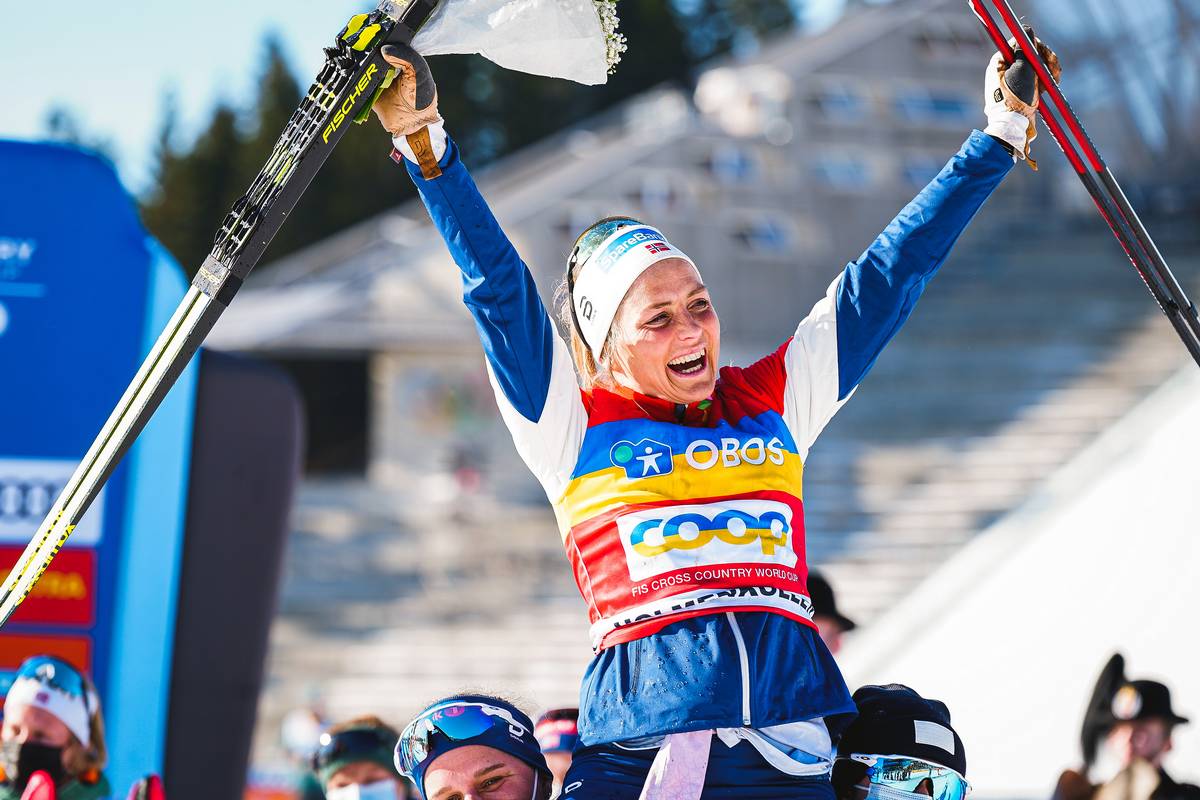
    Norway’s Therese Johaug celebrates her final 30 k race at Holmenkollen, before retiring at the end of the 2021/22 season at age 33. (Photo: NordicFocus)

    This article was submitted by a reader. To pitch a story or article to FasterSkier, reach out to info@fasterskier.com.

    In 2010, FasterSkier published an article titled “Analysis: Performance and Age”, written by Joran Elias, or as he is otherwise known, “The Statistical Skier.”  The piece attempted to parse the relationship between age and performance by comparing the ages of some of the world’s top skiers to their FIS points in a given year.  Elias was quick to acknowledge the limitations of the analysis, primarily that the data appeared to exhibit selection bias.  The oldest skiers on the World Cup, still racing well into their 30s, were likely still racing precisely because they were the best of the best, while those who were not performing as well retired sooner, and weren’t reflected in the data.  These data appeared to show a trend of improvement associated with getting older, but to what degree was this apparent trend a result of the selection bias?
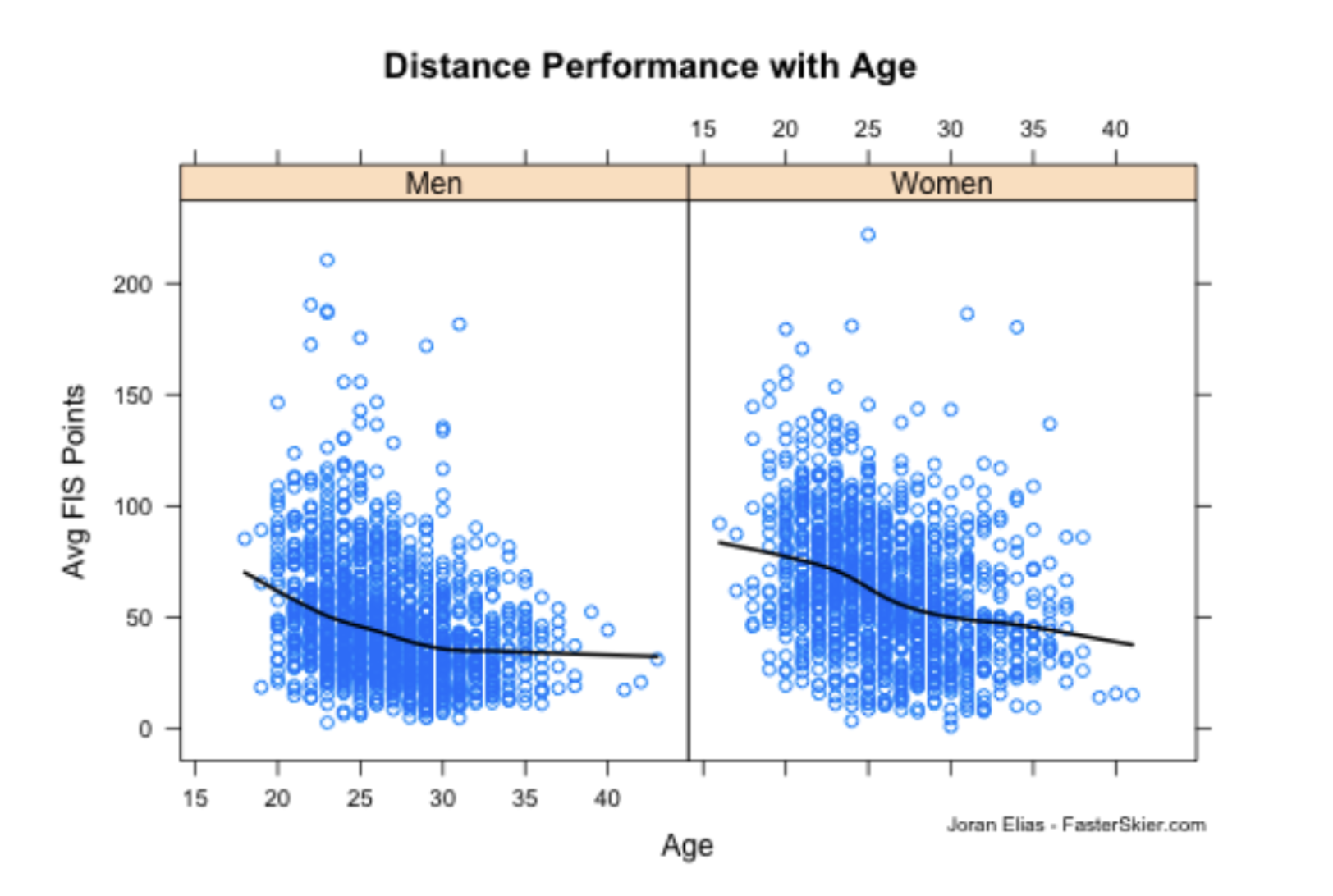
    Elias’ original figure showing distance performance by age, published on FasterSkier in March, 2010.

    In the now hallowed annals of the FasterSkier comments section, a commenter with a name none other than Dakota Blackhorse-von Jess, a veritable force in U.S. skiing for over a decade, posed a potential solution.  He asked, “Can you filter the dataset so that only athletes that are still competing at some reasonable later stage (say 30 or 32) are represented?” 

    It was a great question.  What would happen if we were able to look at careers that spanned a longer period of time and plotted the trajectories of those careers as the athletes aged?  This would mitigate the effects of attrition on the data and hopefully give us a clearer picture.

    The question of what happens to the performance of cross country skiers as they age has personal significance to the authors of this article.  Both of us are solidly into our 20s and deeply invested in the project of being competitive at the highest levels of ski racing.  At the University of Wyoming, we are both involved in furthering the development of a growing program which serves college graduates, many of whom are pursuing graduate studies alongside elite ski racing. 

    Athletes at this age often have the unenviable experience of watching as some members of their age cohort find success on the world stage while others do not.  It leaves us to wonder what is possible and what is likely for us to achieve as we move from teens to twenty-somethings to thirty-somethings.

    The recent success of Rosie Brennan on the World Cup and at the Olympics has contributed to reigniting a decades old conversation about age, skier development, and team selection.  One has to imagine that this “conversation,” at times less than cordial (as evidenced by archived comment threads on this website), has ended friendships, and who knows, maybe even a few marriages.  Brennan, who has seen striking improvement in her 30s, skied in college despite the U.S. Ski Team’s erstwhile insistence that promising young skiers should “strike while the iron is hot,” eschewing school and taking on international ski careers full time.  After Brennan’s 4th place in the 30km at the Beijing Olympics, U.S. Ski Team Head Coach Matt Whitcomb acknowledged that the previous development strategy may have been short sighted.  At this point, many of America’s most standout skiers have chosen to ski in college, adding renewed urgency to the question of age and development.  At the risk of adding fodder to an already crowded debate, let’s get into the data. 

    ***

    In hopes of combatting the potential selection bias of slower skiers retiring earlier, we focused on skiers that stayed in the game for at least 20 years, or at least held a FIS license and skied in 5+ FIS races per year for that long. To put that in perspective, the FIS points system has only been around since 1994, or 28 total seasons. As you can see in the figure below, the vast majority of skiers who ever hold a FIS license only hold one for a few years.  Those that continue to ski seriously enough to buy a FIS license for 20 years are a tiny, tiny fraction of the skiers. On average, these “20-season skiers” get their first FIS license around the age of 19 and continue past 40.  Additionally, every member of this group happens to fall loosely into the category of “professional skier,” having received at least one World Cup, World Championship, or Olympic start at some point in their career.

    We used FIS distance points from the last period of each season from 1994 to 2022.  While it would have been interesting to track sprint points as well, the more recent arrival of sprinting makes a long term analysis less feasible.  In the graph below, each black line represents the career trajectory of a “20-season skier.”  There are 40 athletes represented, 23 of whom are men and 17 of whom are women.  Interestingly, the ratio of men to women who hold FIS licenses for at least 20 years is more or less consistent with the ratio of men to women who have ever held one, suggesting that one gender does not have significantly more “staying power” than another in the highest levels of the sport.  The blue lines represent the overall trend.
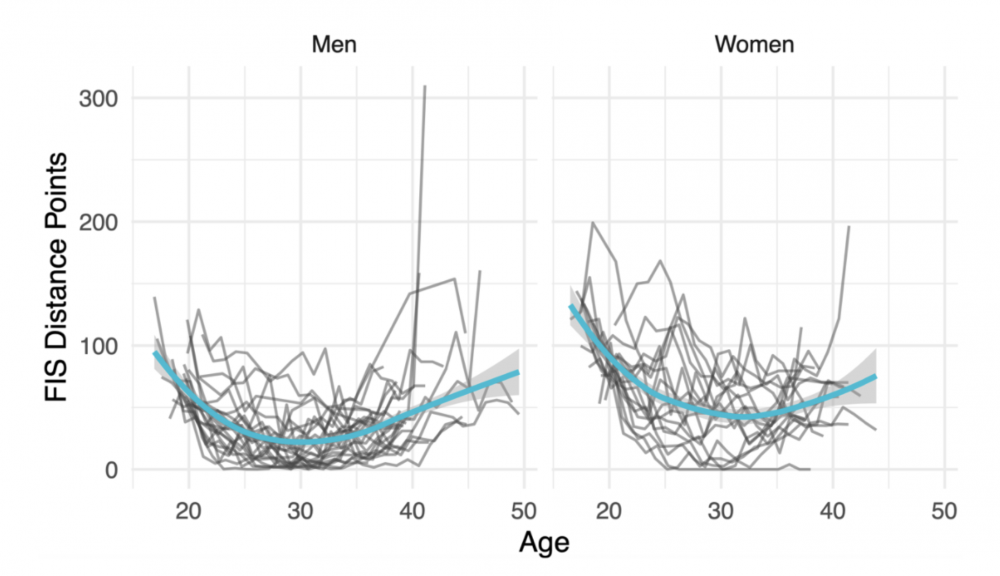
    Whereas Elias’ 2010 analysis shows a continuing downward points trend even as skiers reach their 40s, ours shows more of a u-shaped trend.  Skiers improve in their teens and 20s, reaching a peak around 30, then begin to experience an increase in points in their late 30s and 40s. This seems to suggest that athletes improve until they hit some peak age and then stop performing as well when they get older.

    We can, in fact, fit a trendline and calculate that peak age at which the average skier (or at least the average skier who skied seriously for 20+ years) hits their lowest points. That magic age based on these data happens to be 31.5 for men and 32.0 for women. However, the striking story shown by the mess of black lines is that no one is “the average.” There are clearly many other factors at play in determining a skier’s performance. Some athletes have their worst seasons in their late 20s while others have stellar seasons in their late 30s and even early 40s.  At nearly 41 years old, Italian Giorgio Di Centa stood at 2.9 FIS points, notching multiple top tens on the World Cup.  At 38, Marit Bjørgen stood at 0.9, never leaving the podium at the PyeongChang Olympics in 2018.  There is valuable information to be gleaned from both the aggregate and the individual. 

    These results were surprising given the disparity between the 2010 analysis and our own. Why did Elias find a continuing downward trend where we found an upward slope after 30? Was it possible that his results were driven strongly by attrition and selection bias as he suggested?  We went back to the data, this time including everyone with a FIS license, regardless of how many years they held one. We saw the same u-shaped trend as before.  Skiers continued to improve until their late 20s to early 30s before an upward slope in points as they reached their 40s. This was not just the case for elite world cup skiers, but more casual racers as well.  A similar trend is present whether exclusively analyzing skiers with points under 50 or over 500.  Additionally, the age of peak performance stays in the range of 29-32 regardless of the chosen points tier.

    Instead of analyzing within point tiers, what if we returned to our “20-season skiers” and segmented each athlete’s career into two pieces–one before their last World Cup, World Champs, or Olympic race–and one after?  This way we would be able to see the difference in performance between skiers at the height of their professional careers in comparison to the years that followed.

    The results of this breakdown make sense intuitively. When we separate the careers into “World Cup” and “post-World Cup” segments, the upward trend coincides with retirement and is much steeper for those athletes who have stepped away from World Cup racing.  People don’t ski as fast after their last season on the World Cup as they did before.  One possible explanation for this is that many athletes retire from the highest levels of international competition, stop training as seriously, and begin to perform worse as a result.  Another explanation is that athletes continue to ski on the World Cup until their performance stops improving, and then retire (or are forced to retire) as a result. 

    While our results alone can’t distinguish between these possibilities, it seems likely that some combination of them are responsible. Regardless, we believe including serious post-World Cup racing in our analysis allows us to gain valuable insight into the effects of age on performance and supports our conclusion of a peak age around 32. It is also important to reiterate that there are athletes for whom the trend is not representative in the first place.  Nothing about our analysis suggests the inevitability of career decline by the age of 32.
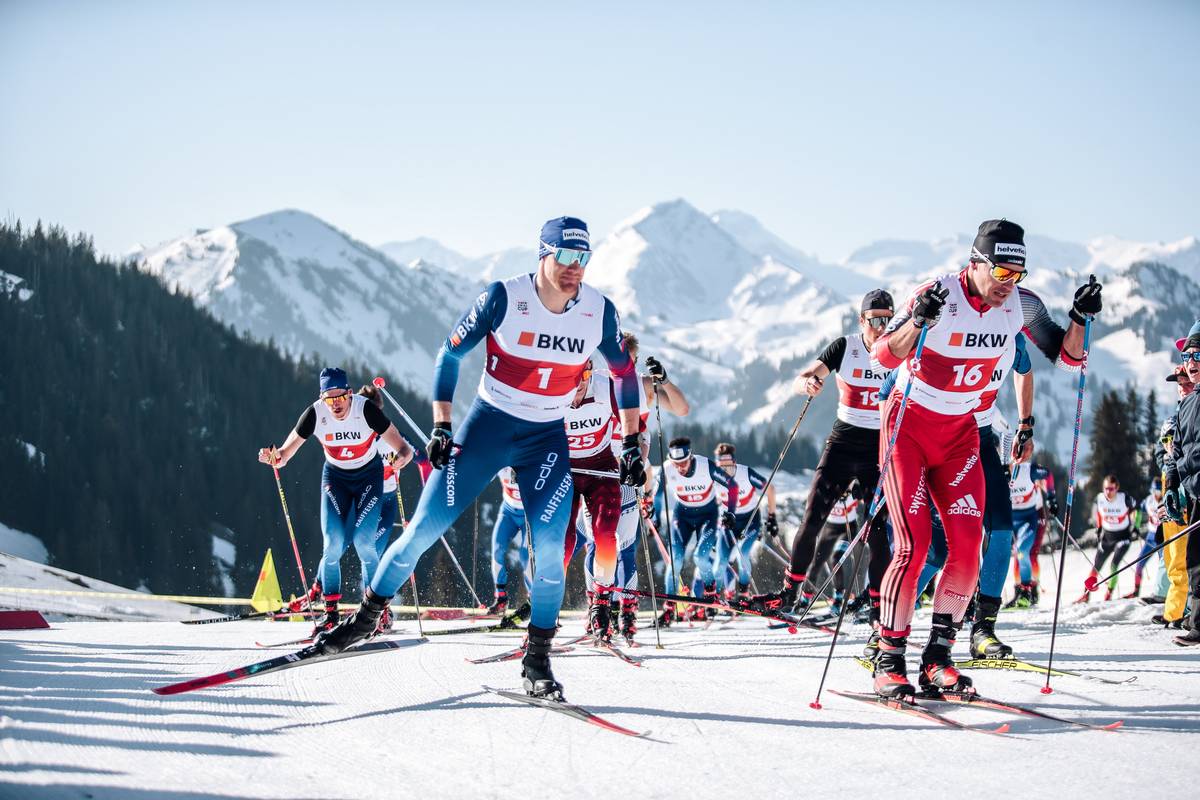
    The decorated Dario Cologna and his Swiss national teammate Jovian Hediger race the Pro Race Sparenmoos in Zweisimmen, SUI, part of the Swiss Championships, following their retirement from the World Cup in March, 2022 at ages 36 and 31, respectively. (Photo: NordicFocus)

    These results do seem to partially explain the discrepancy between our analysis and Elias’, but isolating the World Cup portion of their careers does not fully eliminate the trend of skiers eventually slowing down.  The graph is still “u-shaped.”  It appears that a reason for this is that the landscape of professional skiing has changed since the initial 2010 analysis.  Additional comparison of data before and after 2010 indicates that the phenomenon of points swinging upward with age is a relatively recent one, in part the result of a growing number of skiers continuing to race very seriously at older ages.  In other words, the effects of attrition have become less prominent since 2010 because there is simply less attrition. 

    Perhaps the more interesting question here is, what circumstances and structures have allowed this subset of skiers to race at such a high level for so long, while the majority of elite skiers have far, far shorter careers?  It may be worth asking how many people are forced to quit before their potential has been reached because they lack opportunities and support.  Prior to 2010, individuals over the age of 40 only made up 0.4% of total FIS license holders.  In the period since then, that proportion has more than doubled and there are over five times the total number of license holders over 40.  Athletes who are deemed too old to present the shimmering possibility of medals and crystal globes may not be getting as many resources, but they are showing up to train and race in increasingly high numbers anyway.  There are, after all, reasons to race besides winning medals.

    Ella DeWolf graduated from the University of Wyoming with her BS in molecular and microbiology and MS in botany. She continues to coach and race while working as a data analyst for an environmental consulting firm.

    Andrew Siegel graduated from the University of Vermont in 2021 and is now at the University of Wyoming–coaching, racing, and pursuing an MFA in creative writing. 

    This research was made possible by the generous support of the non-profit SNOW (Skiers Nordic of Wyoming).  


  • USCSA: The “Hidden Gem” Pathway for Non-NCAA Collegiate Skiers

    USCSA: The “Hidden Gem” Pathway for Non-NCAA Collegiate Skiers

    Last year, 174 athletes in the male and female U18 categories competed at Junior Nationals in Anchorage, AK. This number represents a small fraction of the cross country skiers throughout the country in that age category. As there are only about 30 NCAA programs nationwide that offer Division I or Division II cross country skiing, the opportunity for high-level training and racing narrows significantly after a skier graduates from high school. 

    However, the door to continue to pursue collegiate nordic skiing does not shut on an athlete who does not make or does not wish to compete for an NCAA team. While lesser known, the United States Collegiate Ski Association (USCSA) has created an opportunity for hundreds of additional skiers throughout the U.S. to continue to participate and compete in cross country skiing. In essence, USCSA is Division III skiing, however, because it is not under the NCAA jurisdiction, it allows for much broader entry, making it accessible to both club and varsity programs. 

    The mission statement states, “The USCSA asserts that student-athletes, of ALL levels and abilities, should have access to a quality and exciting venue of competition.”

    USCSA programs can be found throughout the majority of the country at schools like Cornell University, West Point, St. Olaf College, University of Wyoming, and Colorado Mesa University.

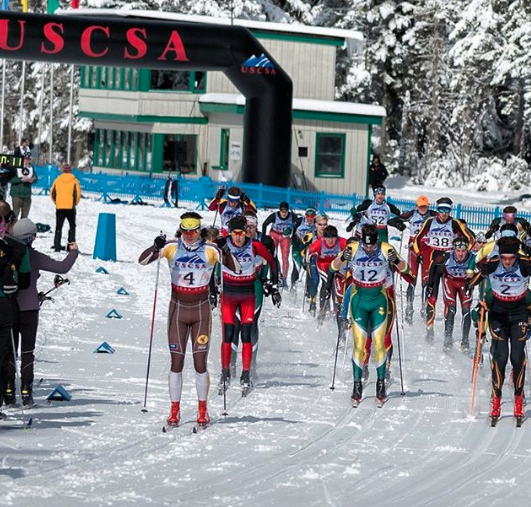
    Athletes take to the course during a mass start classic race at the 2019 USCSA National Championships in Jackson Hole, WY. (Photo: USCSA.com)

    Much like the NCAA, regional USCSA coordinators organize a season of races, each hosted by a member school, leading up to a regional championship in late February. These races are held at many of the same venues as the NCAA races. At the end of the season, the top teams and individuals from each region compete at a five-day national championship in early March in conjunction with the other snowsport disciplines of USCSA. These championships have been held at prestigious venues across the country including Jackson Hole, WY in 2019, Lake Placid, NY in 2018, and Mt. Bachelor, OR in 2017. 

    In contrast to an NCAA program, both men and women race the same distances in both sprint and distance events, promoting equality across genders. The USCSA also prides itself in being team-centric, emphasizing team scoring, as opposed to focusing on individual results.

    In most cases, USCSA programs are not exclusive, meaning teams or clubs are open to anyone, regardless of their previous experience or exposure to the sport. All athletes are welcome to participate in races. In contrast, an NCAA program may have a limited competition team. However, this inclusivity does not indicate that the programs are not competitive or that they would not serve a high-level junior skier. 

    “The flexibility of a USCSA team is incredible because you can have people that have never skied before to people that are – there are USCSA racers that have been Junior National Champions,” said Christi Boggs, Vice-President of Nordic Skiing at USCSA and nordic coach at the University of Wyoming (UWYO). “There are some really high-level racers, but it also allows for someone who just loves to do it to keep doing it or someone that wants to try it can try it.”

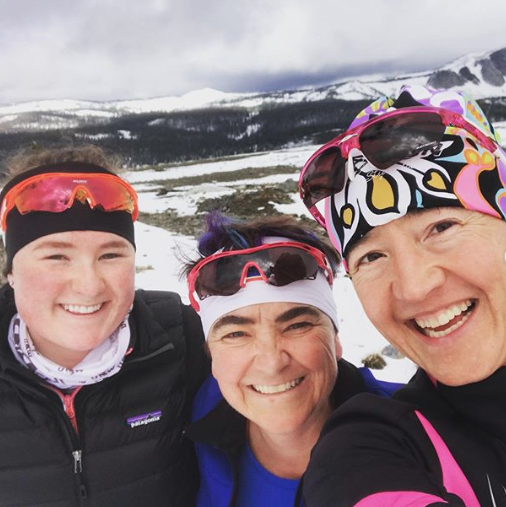
    Christi Boggs (center) of the University of Wyoming on a crust ski with her partner and fellow coach Rachel Watson (right) and athlete (left). Boggs is the Vice President of Nordic Skiing for USCSA. (Photo: Instagram @uwnordicski)

    A graduate of UWYO herself and a faculty member in the School of Culture, Gender, and Social Justice, Boggs has been overseeing the school’s club program for the last 22 years. During her own time as a student and athlete at UWYO, the nordic ski program was a Division I NCAA program and Boggs became a four-time All American, later pursuing biathlon and winning the Rocky Mountain Cup and North American Cup twice each. But like several other programs, the UWYO lacked the funding to support the program. It was cut in 1993.

    While top junior skiers typically do head to NCAA programs, Holly Brooks and Clare Egan, both USCSA alumn, show that the programs can still be stepping stones to elite competition. 

    In reflecting on her decision not to ski for an NCAA team, Egan described her high school self as “not a real serious athlete”, though she did win the Maine State Championships in 2006 and competed in Junior Nationals in both 2006 and 2007. She explained that she did not do any formal summer training in those days, and out of the three sports she participated and had talent in – she also ran cross country in the fall and track in the spring – none held priority for her. Though she did want to continue in athletics, she was very academically motivated and aspired to study abroad and to continue to play music during her college career as well.  To Egan, the idea of being limited as a Division I athlete was off-putting. 

    “When I applied to college, I wasn’t really sure what I wanted to do,” Egan recalled. “I got offered a Division I running scholarship, I got into Middlebury where I would have been focusing on skiing, and UNH, I was offered a scholarship that would have been a combination of running and skiing. But in the end, I decided that I didn’t want to be a full-time athlete at that point, which is what my impression of Division I was.”

    Egan ultimately chose Wellesley College, located 30-minutes west of Boston, MA. 

    While attending Wellesley College, Clare Egan competed in the USCSA in addition to racing in regional NENSA and EISA races. (Courtesy Photo)

    “I ended up picking Wellesley, among other things, because it gave me the opportunity to continue participating and competing in all the sports that I did without having it be Division I,” she explained.

    At the time, Wellesley did not offer cross country skiing, but the campus is located within five miles of the Weston Ski Track, so she knew that she could continue to ski. She would also be able to participate in New England Nordic Ski Association (NENSA) races. Egan also joined the varsity cross country and track teams. 

    “I guess right away my fall at Wellesley, I decided that I did want to do skiing and that I wanted to get involved in some way,” she said. “So I started a club through the student activities and got involved in USCSA.”

    By joining the USCSA, which she referred to as a “hidden gem”, Egan was able to race a full season in the Northeast, participating in USCSA and NENSA races as well as Eastern Intercollegiate Ski Association (EISA) carnivals. As was her hope, she studied abroad her junior year in Italy and Switzerland, where she skied regularly and raced in the Engadin Ski Marathon. In her senior year, Egan qualified individually for and competed at NCAA’s in addition to the USCSA national championships. As she had one remaining year of NCAA eligibility, her path then led her to the ski team at the University of New Hampshire and eventually to the Craftsbury Green Racing Project Team and now the US Biathlon Team. 

    While this trajectory is non-traditional for an Olympic athlete, it demonstrates that an athlete can be successful through a number of different pathways, some more direct than others. Egan attributes some of her longevity in the sport as her career has developed to being in a low-pressure and relatively unstructured environment for so long.

    buy metronidazole online

    “I can say that I’m not burnt out,” said Egan. “I think a lot of other people who are my age, they stopped a long time ago and maybe part of that is because they competed so intensely for so long already by the time they were 22. Whereas, I did not start doing year-round training until I was 23.”

    Egan could not state outright that had she skied four years in an NCAA program she would have fast tracked her career. But the flexibility that USCSA allowed her was a good fit for her and kept her involved with the sport through her collegiate career while focusing on academics. 

    “I do think that being able to stay involved with skiing in a way that worked with the rest of my life allowed me to – I was able to get involved with it again later because I stayed in touch with it,” she concluded. 

    Two-time Olympian Holly Brooks, who attended Whitman College in Walla Walla, WA, attributes more of her success in ski racing to her USCSA experience. 

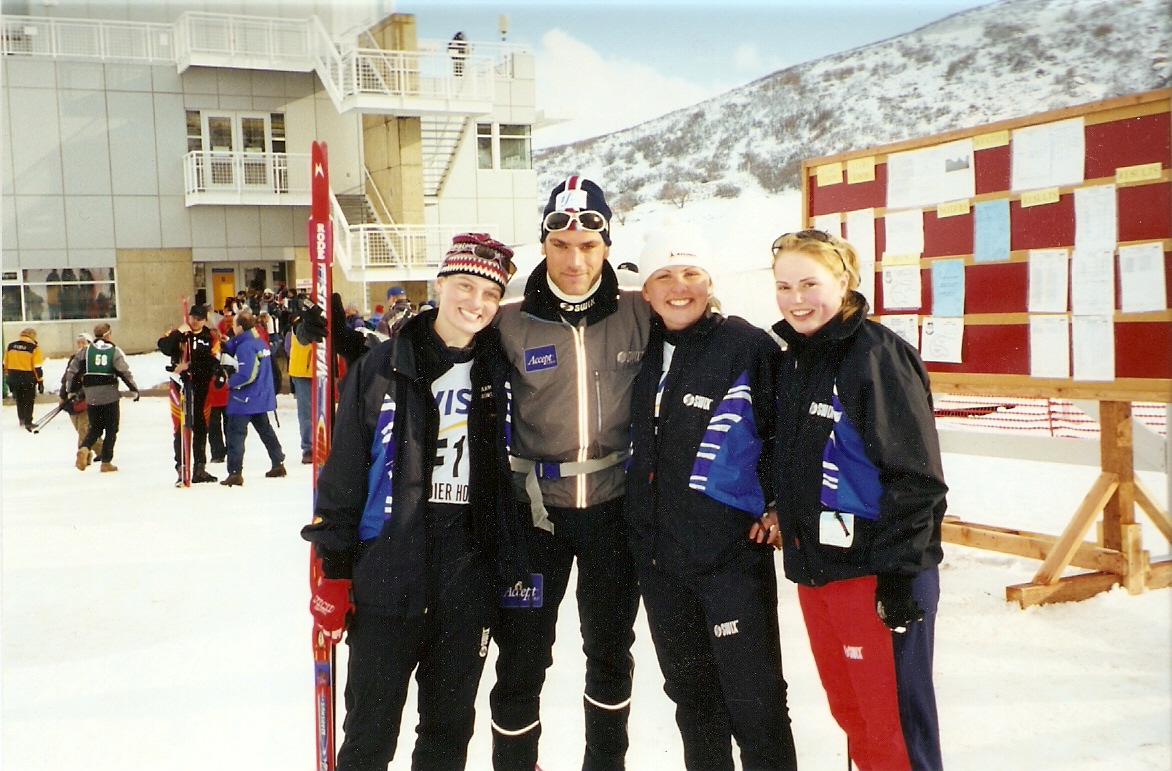
    Holly Brooks poses with her Whitman Nordic teammates and a Norwegian athlete after forerunning at a World Cup race in Soldier Hollow, UT, in 2001. She explained that they were excited to take a picture with a Norwegian. Little did she know she would one day be racing at the World Cup level herself. (Courtesy photo)

    My time at Whitman played a really important role in my ski career,” wrote Brooks in an email. “Coming out of Seattle I had never been on a bigger team before, and rarely had coaches other than my dad. I actually choose Whitman because it had a ski team and was on the west coast. I wasn’t nearly strong enough to go to any of the larger, more competitive NCAA programs. Once at Whitman, I had awesome teammates and coaching and my love for skiing grew and grew. 

    “USCSA didn’t really have a ‘regular season’ but Nationals seemed like a big deal and it was enough to motivate us to train hard every day,” she continued. “I have no doubt in my mind that had this opportunity not been available my time and interests would have turned to something else. In essence, USCSA skiing at Whitman served as an important placeholder for skiing in my life. It was the link between being a solo skier in Seattle, to getting me to Alaska, where I truly developed as an athlete.”

    In late May, the Aspen Institute held a forum titled the Future of the U.S. Olympic Movement: Reimagining Goals Beyond Medals. The forum touched on a range of topics including SafeSport, athlete mental health, and more holistic youth sports and development programs. A theme in the development conversation was creating opportunity from a grassroots level, that if an athlete wanted to continue in the sport and compete, they should be able to. The USCSA aligns with this grassroots approach in fostering development as its inclusivity promotes the retention of athletes in cross country skiing during a time frame that many stop participating as well as introducing newcomers to the sport.

    I do think that USCSA plays a really important role, that I wish more people knew about, as a way to keep people involved in the sport through that 18 – 22 time period,” expressed Egan. “You don’t just have to quit after high school if you’re not going to be a Division I athlete. That’s so ridiculous. Skiing, for some reason, is one of the few sports that we look at that way.” 

    Jim Allott was the head coach at Clarkson University for 19 years during which he led the Golden Knights to 7 USCSA national titles. (Photo: clarksonathletics.edu)

    This viewpoint was expanded upon by Jim Allott who recently retired from his role as head coach at Clarkson University in northeastern New York after 19 years. In seven of those years, either the Clarkson men or women were the top nordic team at the USCSA national championships. Both teams won in 2012.  

    “When you consider how many colleges are not NCAA or skiers for lots of different reasons don’t have the ability to make an NCAA team, you’re turning away hundreds of potential nordic athletes,” said Allott “If you think about what we see here in Potsdam where our regional is 10 to 12 teams, and then you look at our NCAA cohort with EISA, and they have a similar number of teams. So just in that one quick snapshot, you can see that we’ve doubled the number of nordic teams.” 

    Allott also echoed Egan’s words about athlete “burn out”, adding that the dynamic and culture of USCSA programs allows skiers to grow both their ability and love for the sport. Allott described the USCSA experience as “both positive and fulfilling.”

    It instills the passion that they will want to pursue it when they leave college, and that’s rare in a lot of college athletic sport situations. Many athletes are just done, they’re either just cooked and fried, or they really don’t continue in their sport.”

    During his tenure, Allott has seen many of his athletes continue to pursue cross country skiing after college, whether their involvement is recreational, in leadership roles within USCSA, or as a coach of a youth program. He described USCSA alumni as being “like the growth of a tree”, where each forms a branch to create a nationwide community connected by a common passion.

    “I take a fair amount of pride in how many of my athletes move on and get involved in the sport of nordic skiing,” said Allott. “That ranges anywhere from a Bill Koch level to high school coaching. The last 15 years, our USCSA regional coordinators have all been Clarkson nordic alumni.”

    Boggs seconded Allott’s sentiment about the prevalence of her former athletes in coaching and other areas of sport. She attributes this connection to the sport to the positive culture cultivated within the USCSA opportunity. 

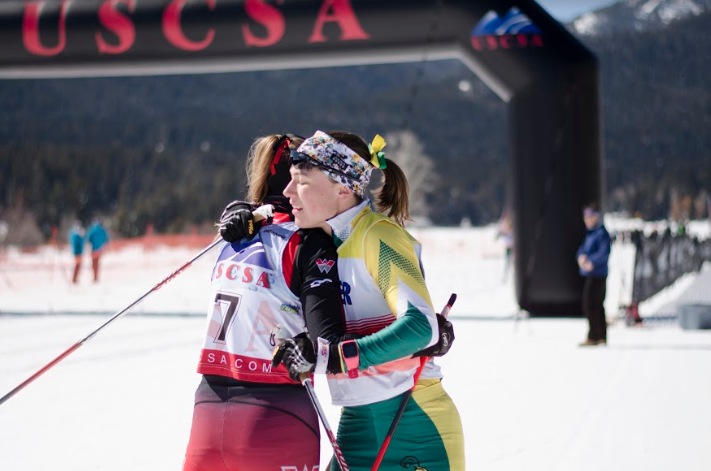
    An athlete from Clarkson University celebrates at the finish with a competitor from Western State Colorado University during the 2019 USCSA National Championships in Jackson Hole, WY. (Photo: USCSA.com)

    “All of that builds opportunity and pathways for athletes to become really important to the sport overall,” said Boggs emphatically. “I think that’s huge.”

    She continued that the nature of students attending USCSA member schools has the power to position them in roles where they can create a large impact on the overall American nordic ski community.

    “A lot of USCSA teams – they’re military academies and Ivy League [schools]. These are people that are really going places and getting graduate degrees and can really make a difference going forward. I think that is super important for building the sport.”

    Both coaches emphasized the impact of USCSA beyond the development of the skier to the transference of the life skills cultivated through the experience, which includes benefits such as better sleep, self-reliance, positive self-image, teamwork, and time-management. They expressed that these traits help alumni obtain and succeed in post-collegiate careers and to lead healthy and active lifestyles. 

    After taking the role of Cross Country Sport Development Manager last fall, Bryan Fish described a system of three metrics to track the success of US development: growth in the number of skiers, retention of those skiers, and lastly, improvement in performance. By promoting inclusivity and creating opportunity, USCSA supports this system, assisting in the development of a healthy and thriving American cross country ski community. 

    “If we don’t maintain and fight for diverse options for people to keep skiing I think our sport is doomed,” wrote Brooks on USCSA’s role in the growth of the sport in the US. “The beauty of cross country skiing is that it can be a lifelong sport. But… we need to make sure that opportunities exist for people to stay engaged.  We need enthusiasts, we need fans, we need coaches, groomers, ski parents, officials, donors, etc. The health of our ski community depends on having options. Unfortunately, the official ski program at Whitman folded years ago. I am thankful that the opportunity existed during my time there.” 

    Boggs reaffirmed this message, furthering the grassroots model of supporting the development of cross country skiing in the US.  

    “Our support base, the next generation of skiers and the support base for the skiers we have, don’t come from the elite athletes,” expressed Boggs. “It comes from all the people watching the races, the parents taking their kids to races, people that are just passionate and excited. That’s who is donating the money, and spending the time volunteering to coach, and driving kids to races. Those are all the people that get really excited. And I think USCSA is uniquely positioned for that.”

    To wrap up her beliefs about the role of USCSA in the success of American nordic sports, Egan offered a concluding message to support high school skiers amidst the “college conflict”.

    “If you’re thinking about being an athlete and you don’t necessarily want or don’t qualify to be on one of those Division I teams, you don’t have to give up skiing at all,” concluded Egan. “Someone might not be ready to do Division I in high school or they might not be interested, but there are plenty of athletes who have the passion and ability to stay involved and we shouldn’t exclude those people.”


  • For Some Countries, World University Games Offers Bragging Rights; For University of Wyoming, It’s the Trip of a Lifetime

    For Some Countries, World University Games Offers Bragging Rights; For University of Wyoming, It’s the Trip of a Lifetime

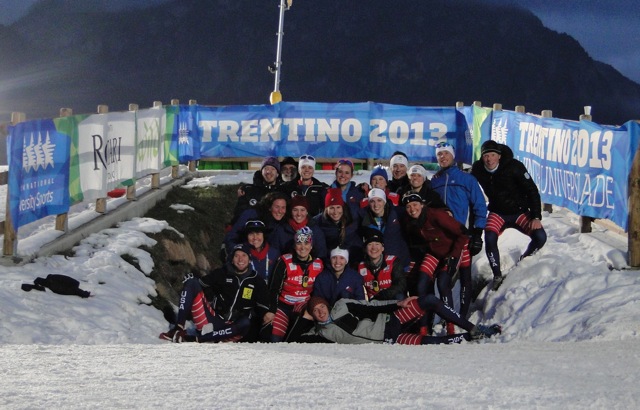
    The University of Wyoming ski team at World University Games in Trentino, Italy, in December 2013. Photo: UW Ski Team.
    The University of Wyoming ski team at World University Games in Trentino, Italy, in December 2013. Photo: UW Ski Team.

    The University of Wyoming has a unique ski team. Competing in the U.S. Collegiate Ski Association (USCSA) but also as an affiliate member of the Rocky Mountain Intercollegiate Ski Association (RMISA), the Western division of NCAA skiing, the team bridges a lot of ground.

    Their roster boasts skiers who competed at Junior Nationals in high school. It also includes athletes who had never skied before college. The squad is run not only as a sports team, but as a college course with an integrated curriculum for which athletes receive grades and credits. When it comes time for team selection, most spots are based on speed but a few are based on “Steamboat Points”, named after the university mascot and consisting of GPA, volunteer work, and practice attendance, among others.

    Oh, and one more thing: the team will be representing the United States at the World University Games in January, its third such trip. This year the competitions will be held in Slovakia in late January. Olympians and World Cup athletes will likely be in attendance; past podium finishers include Justyna Kowalczyk, Nikolay Chebotko, Maxim Vylegzhanin, Yulia Tchekaleva, Bettina Gruber, and Baptiste Gros.

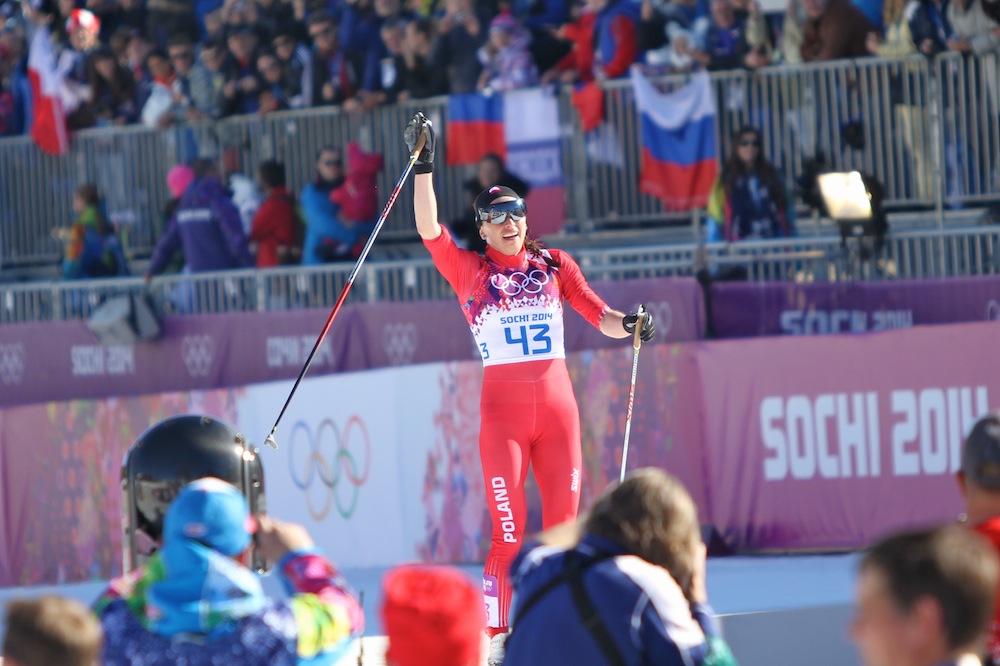
    Poland's Justyna Kowalczyk used a sweep of World University Games races as preparation before becoming one of the most sucessful skiers of the 2000's - for example here after winning gold in the 10 k classic individual start at the 2014 Olympics in Sochi, Russia.
    Poland’s Justyna Kowalczyk used a sweep of World University Games races in 2007 as preparation before becoming one of the most sucessful skiers of the last decade – for example here after winning gold in the 10 k classic individual start at the 2014 Olympics in Sochi, Russia.

    “Every year we don’t expect to be asked to do it again,” said Christi Boggs, one of the team’s co-coaches. “We assume that at some point some forces will come together and we won’t be asked. And that’s fine – we’ll do it when we have the opportunity, and when we don’t, we’ll do something else.”

    UW has won four men’s national titles since 2006 and six women’s titles since 2003. Boggs believes that their success at USCSA nationals is what prompted the United States International University Sports Federation (US-IUSF) to offer them the spot. (The United States Olympic Committee used to manage World University Games trips and selection, but abruptly cut all funding for it just before the 2009 Games).

    But when they reach the world stage, things go to a whole different level.

    “It’s a very interesting field because last year we literally had people who made Olympic teams racing,” Boggs said. “The Russians use this as a ‘B’ team competition, so they send their B team, which is freaking fast. They’re not really students, they just get someone to sign a form… Interestingly enough, the level of competition is actually not as high as the western RMISA competition. The FIS points are really similar.”

    Boggs isn’t quite honest about that. Last year the top Western NCAA skiers went to the Universiade, and while some did well, they didn’t win. Instead the results sheet was scattered with names like Michaeil Semenov of Belarus, whose 17th-place finish in the 50 k at the Olympics was one spot ahead of Petter Northug – and beating all of the North American entrants. Or Oeyre Silje Slind, who later that season finished fifth in the 30 k at Norwegian national championships – beating Heidi Weng in a sprint finish.

    UW athletes rarely break the top 50 and are minutes behind the winners.

    “You see some of them go to these games and get pummelled,” Boggs admitted. “Some of them, they’re not doing very well. But it inspires them to be better. Or it makes them think, if I get better, I could actually do this too. We’ve seen an incredible amount of that.”

    They do improve. Few racers do the trip twice, but William Via, for instance, received FIS points over 100 points lower at the 2013 games in Trentino than he had at the 2011 games in Erzurum, Turkey.

    Times and numbers don’t tell the full story of UW at the games.

    “Racing is one of the greatest joys in my life and to be racing internationally has been a dream of mine for years now,” team member Sam Wiswell wrote on the team blog last season. “[Here] I am, competing against some of the best in the world.”

    “The chances that I have been given overwhelm me,” wrote teammate Elise Sulser, who finished 49th in the 5 k and later won an individual title at USCSA National Championships. “I can only hope I can have the courage to take full advantage of the impacts, and end up completely spent in a gasping heap on the finish line knowing that the job was done fully well. Being content in knowing that I have nothing left to give is the best feeling in the world. Collisions, impacts, chances: make the most of the moments you’re given.”

    As Boggs pointed out, the difference between RMISA and the University Games is the depth of the field: aside from Russia, there are many countries who do send actual students. Against those teams, UW can compete, and the experience is very rewarding.

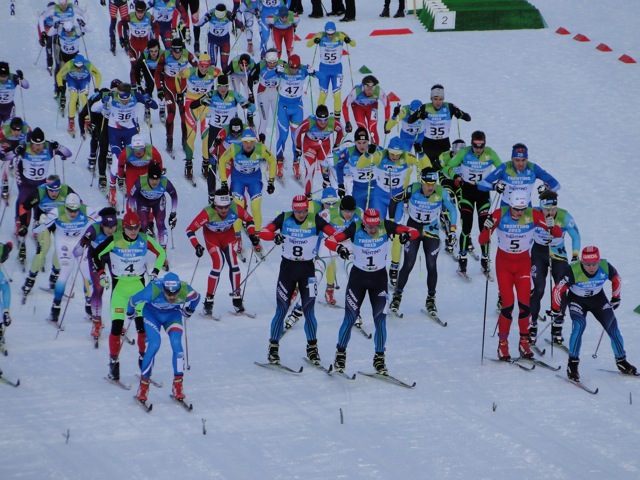
    The start of one of the World University Games races in Trentino. Photo: UW Ski Team.
    The start of one of the World University Games races in Trentino. Photo: UW Ski Team.

    Australia sends its national team, for example – and according to Boggs, some of her skiers can hang with them.

    “We compete clearly not at the World Cup level because we’re just not there,” she said. “But we compete with the other teams who are full-time students.”

    Sierra Jech, a USCSA national champion who aspires to continue skiing after college, said that the experience helps her, and others, do better in their races back in the U.S.

    “Once of the kids of that team is someone who started skiing in college,” she said. “I know he was extremely nervous… It’s more helpful in the NCAA races that we go to. The ones where just hanging on is hard. I’m more excited for them now than stressed out and nervous.”

    Boggs and her co-coach Rachel Watson say that they can watch their athletes grow before their very eyes at the Games.

    “It’s entirely life-shaping,” Watson said. “Increased poise, an ability to handle stressful situations, maturity, and definitely changes in the way they approach what would be a more stressful race at home – it no longer seems so stressful. It changes perspective.”

    Who Makes the Decisions?

    According to Boggs, the trip costs about $3500 per person. Part of that is airfare, and part goes to BTI – a trip company contracted by the US-IUSF to arrange everything for the teams going to the Games.

    And therein lies the rub for other college athletes who might like to attend: who can organize a trip where the money is due more than six months ahead of time?

    Most countries have some sort of selection criteria and send their fastest skiers who are registered students. The event is on par with the competition level of World Junior Championships or U23 World Championships (even more so in biathlon, where an actual senior World Championships medalist hit the podium; few North Americans compete because biathlon is not a college sport).

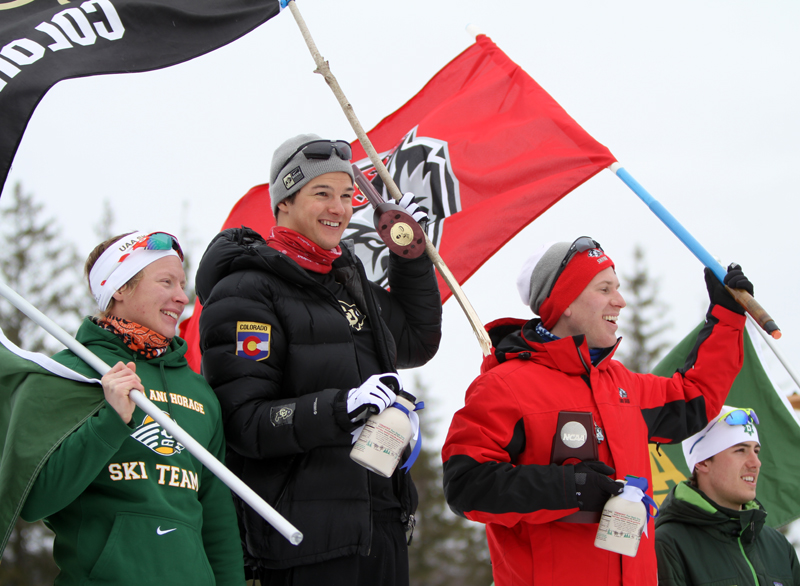
    Two-time NCAA champion Rune Oedegaard (CU, middle) finished 8th in the 10 k skate and 5th in the 30 k classic representing Norway at the 2013 Universiade; the American skiers he competes against in college races can't attend the championships.
    Two-time NCAA champion Rune Oedegaard (CU, middle) finished 8th in the 10 k skate and 5th in the 30 k classic representing Norway at the 2013 Universiade; the American skiers he competes against in college races can’t attend the championships.

    A number of European skiers who race at U.S. colleges always attend, as do the fastest students from Scandinavia, France, and Germany; Canadian skiers have sometimes spent time at a National Training Center or competed at age-level World Championships events before. But for American skiers of a similar caliber, the phrase “World University Games” probably isn’t even on the radar.

    It wasn’t always so, and some college coaches are interested in sending athletes. Last year, most of the Denver University team attended, with Europeans representing their own countries and one American athlete traveling with UW. And coaches have tried to pull something together.

    But the initial fee required by BTI presents a challenge. Athletes are likely not chosen months in advance, and there’s no organizing body to pay ahead of time and manage cash flow from competitors who commit come winter.

    “[Michigan Tech coach] Joe Haggenmiller led a few of us into looking hard at access to the World University Games,” Dartmouth College women’s coach Cami Thompson wrote in an e-mail. “We met a few times and talked to the U.S. Ski and Snowboard Association (USSA) and the National Nordic Foundation (NNF) about helping with the trip.  The issue is that the travel company… wanted $10K up front in early summer. As a loosely-knit group of college programs, we don’t have access to that money and while NNF was willing to work with us to try and figure it out – in the end it was time sensitive and just didn’t happen.”

    Contacted over e-mail, USSA Nordic Program Manager Joey Caterinichio said that her organization would be happy to have higher-caliber U.S. athletes go, but that USSA had no say in the decision-making process. She couldn’t remember the name of the US-IUSF or BTI.

    “It’s simple,” she wrote. “It’s not a USSA managed event. He who can pay the deposit by a certain date wins. There is no criteria.”

    Caterinichio explained that she had been involved in trying to draft selection criteria for a team made up of top NCAA skiers, but like Thompson, said that the deal just fell through.

    However, Thompson suggested that USSA was less than 100% supportive of a World University Games trip.

    “USSA is reluctant to support it if it means some top athletes choosing that over U23 Champs,” she wrote.

    Regardless of the many reasons that a top-level team doesn’t attend the Games, it means the U.S. is missing a valuable development opportunity. For a country that frequently laments a lack of international experience for its skiers, and the long time it might take some athletes to get used to racing in Europe, that seems like a loss.

    “I would certainly support any athletes who were interested in going, if it made sense from an athletic/financial standpoint,” Thompson wrote.

    Lifelong Experience

    Nobody at UW says that paying the fees to BTI is easy. The team receives some money from the university because the trip is run as a class and can thus receive funding as a study-abroad type trip. The rest of it comes from hours and hours of fundraising and volunteer work.

    But they can do it, so, as Caterinichio says, they get to go.

    And that might be perfect. Fierce competition is not the only focus of the University Games. The university federation (FISU) which organizes summer and winter Universiades has this as its philosophy:

    “The FISU (International University Sports Federation) was formed within university institutions in order to promote sports values and encourage sports practice in harmony with and complementary to the university spirit. Promoting sports values means encouraging friendship, fraternity, fair-play, perseverance, integrity, cooperation and application amongst students, who one day will have responsibilities and even key positions in politics, the economy, culture and industry. As allies or competitors, perhaps even as antagonists, these men and women will have learned how to collaborate and deal with every eventuality, whilst respecting the ethical code enshrined in these values. Promoting sports values and sports practice also implies giving a new dimension to the university spirit in study, research, and discipline, through the strong affirmation of the full humanist development of the individual and of society at large. This development is not just intellectual, but also moral and physical.”

    In that sense, the UW team is a genius fit for the event. For instance, the co-coaches’ decision to make the trip into a class fulfills many of those goals.

    Excerpt from the UW Ski Team’s Course Descriptions for 2014 Universiade
    Purpose/need/justification of project:
    In January 2015, the Nordic Ski Team at the University of Wyoming will attend the World University Games (WUG) in !trbské Pleso, Slovakia. The host country had only one year to prepare for this large-scale competition including accommodations, food, and transportation for over 1800 athletes, delegation members, and spectators.[1] Large sporting events like WUG have major impacts including: changes to the local economy, carbon emissions, increased waste generation, and personal impacts on community members. [2] These impacts all sum to create a “footprint” at both the local and global levels. This project as a whole aims to provide an analysis on each of these individual impacts and to examine our team’s footprint at WUG by taking environmental, societal, and economic perspectives.

    “We also have a class because we feel like it makes the experience a lot richer, and makes them consider things a lot more if they are not just ski racing, but they’re also involved in some curriculum,” Boggs said.

    She was careful to say that much of the actual work involved in the class is done before or after the trip itself, because the skiers do focus on racing when they are at the event.

    But some activities, like blogging and journaling, actually help them focus their energies.

    “Last year we had a class as well, and we just had a blog and focused on journaling during the event,” Jech said. “That really spurred us to want to do more. It was definitely beneficial.”

    And the trip provides a very unique experience, one that Watson and Boggs say is so important that they’ve decided to keep doing international trips even after the point if/when they are no longer asked to do the World University Games.

    “We’re taken people to the Games that have never been on planes, or have never been out of Wyoming, or have certainly never been to Europe, ever,” Boggs said. “That kind of experience is huge for young people.”

    Ultimately, Boggs and Watson hope that many of their athletes will stay involved in sport. They have seen results: when they travel to races inside and outside of Wyoming, they see many alumni either racing or coaching.

    The trip to World University Games helps with that.

    “It definitely made me realize that it’s possible to keep skiing and keep improving, even if it’s – college seems like the end for a lot of skiers,” Jech concluded. “This is definitely an event that inspires me to keep skiing. And I know that inspires other people to keep pushing, and to become coaches.”