From the FasterSkier archive — posts syndicated from athletes’ and coaches’ own blogs between 2004 and 2012, kept online as published. Current coverage is at fasterskier.com.
Members of the University of New Mexico ski team advocate for their team’s continued survival in this photo from spring 2017. (Photo: Save the UNM Ski Team)
The 2018/2019 season will be the last for NCAA skiing at the University of New Mexico (UNM), following a unanimous vote by the Board of Regents to cut skiing, along with two other teams, on Friday evening.
The Board’s decision is effective immediately. If nothing changes, then the men’s soccer team, women’s beach volleyball team, and men’s and women’s ski teams will play out this season, then be eliminated on July 1, 2019, at the start of the next fiscal year. Current scholarship athletes will see their scholarships honored through graduation, university representatives have stated. This promise is necessary to maintain the university’s NCAA eligibility.
The decision has been one month, two years, or 11 years in the making, depending on one’s perspective.
One month ago, the UNM Board of Regents made nearly the same substantive decision as it did on Friday, only to be forced into a do-over to cure what New Mexico Attorney General Hector Balderas claimed were procedural deficiencies with the first meeting that placed it in violation of the state’s Open Meetings Act. Friday’s session marked the second meeting on the same subject.
Friday evening, what the Board of Regents described as consistent and unresolved financial challenges led to the elimination of four sports teams. Many of the 53 speakers at the Board meeting used their allotted three minutes of public testimony to urge that the Board, for example, cut all sports’ budgets by a relatively small amount, rather than cut any sports teams outright. (Grammer’s Twitter feed, along with the feed for UNM student newspaper Daily Lobo, both provided comprehensive coverage of the meeting and of speakers’ testimony.) The Board did not adopt this solution.
Materials prepared by the Board in advance of the meeting estimated that making all of their recommendations, which includes “roster management” for some of the school’s other teams, would save “an estimated $1.148 million annually.” (See page 23 of this PDF.) “Some have debated those figures,” the Albuquerque Journal has reported.
According to the Board of Regents presentation, cutting men’s skiing would save, in round numbers, $316,000 dollars, and cutting women’s skiing the same amount. Cutting men’s soccer would save $606,000. Cutting women’s beach volleyball would save $10,000.
(These figures add up to $1,248,000. The Board’s suggestion that cutting these teams would save “$1.148 million” may be a typo for “$1.248 million.”)
FasterSkier previously reported in some detail on the expenses of the UNM Athletic Department, including the fact that football costs nearly as much in allocated expenses as 19 other sports combined. This previous coverage also established that skiing costs substantially less than the average sport at UNM, and quoted suggestions by ski-team advocates that cutting skiing would provide substantially less than the $600,000 dollars in annual savings announced by the school, given the operation of athletic scholarships and other related considerations.
Additional documents recently released by the university show that UNM football is projected to bring in $1.2 million in ticket revenue next fiscal year. (Page 25 of this PDF.) The football team will also earn $1.1 million in game guarantees for playing away games at other schools. “Football guarantee games enable one of the wealthiest athletics programs to play at home against a handpicked, less well-heeled opponent that it ostensibly beats,” USA Today has explained.
This is a total direct revenue of $2.3 million for UNM football. The football team has total annual expenses of roughly $9.1 million.
NCAA skiing at UNM dates to 1968; this is the fiftieth anniversary of the first ski team. As of 2013, a total of 702 athletes had donned cherry and silver race suits to ski for the university.
The ski team won the national championship in 2004, the first-ever NCAA team championship for a school that began playing football in 1892. The ski team was also national runner-up in 1992 and 2006, and has finished in the top nine teams at NCAA Championships for 36 years in a rowthrough 2018. The ski team has had 16 individual national champions, roughly one-third of UNM’s 50 individual national champions all-time.
A current roster for the 2018/2019 ski team has not yet been posted to the official UNM Athletics Department site.
Current members of the University of New Mexico ski team advocate for their team’s continued survival in this file photo from spring 2017. (Photo: Save the UNM Ski Team)
(Note: This article was updated Thursday afternoon with information about a pending lawsuit and quotes from a New Mexico state legislator and a representative of Southwest Nordic Ski Club.)
* * *
The men’s and women’s cross-country ski teams at the University of New Mexico (UNM), previously saved following a groundswell of support in spring 2017, may be on the chopping block again. A meeting has been scheduled for this Friday, Aug. 17, to consider a proposal to eliminate several sports teams at UNM, including both ski teams. The Board of Regents already voted unanimously to eliminate skiing (and several other sports) in a July 19 special session, but is effectively holding a do-over to cure claimed violations of the New Mexico Open Meetings Act.
The first meeting
On July 18, the Santa Fe New Mexican reported on a proposal, to be presented to the Board of Regents the following day, that would lead to the elimination of several sports at UNM: men’s soccer, beach volleyball (a women-only sport), men’s and women’s skiing, and the diving portion of the women’s swimming team.
On July 19, the Board of Regents convened. Despite the short notice of the subject of the meeting and the scope of proposed cuts, the Santa Fe New Mexican reported that board members met “in a packed ballroom” inside the UNM Student Union building.
“Hundreds of students and members of the public filled every seat and stood shoulder to shoulder at the back of the room to show their support for the teams and pleaded with the regents to take a different approach,” the New Mexican reported. “Some held handmade signs while dozens of others wore Lobo gear.”
UNM skiers (from left to right) Eva Severrus, Kati Roivas, Brenna Egan, Julie Ensrud, and Julia Devaux getting ready for their team’s Sand Hills time trial last September in Albuquerque, N.M. (Photo: Christian Otto)
Following more than two hours of public comment, UNM Athletic Director Eddie Nuñez presented to the regents his plans for cutting four sports. The seven-member board ultimately voted 6-0 in favor of Nuñez’s proposal; one regent was absent.
“The teams will be allowed to compete during the upcoming seasons, but all four will be cut by July 1, 2019,” the Santa Fe New Mexican reported as of July 19.
Coaching turnover
On July 20, Fredrik Landstedt was announced as the new skiing director at the University of Utah, after spending the previous 21 seasons coaching at UNM. “Utah has a strong winning tradition and the support that the University provides its ski team is incredible,” Landstedt said in a University of Utah press release.
Joe Downing, formerly the UNM head Alpine coach, will assume the role of interim skiing head coach at UNM, FasterSkier previously reported.
The second meeting
A few weeks later, the New Mexico Attorney General, Hector Balderas, publicly charged that the first meeting had violated the state’s Open Meetings Act. As reported in a third article in the Santa Fe New Mexican, Balderas and his legal team concluded from their review that “UNM violated state law and the actions the regents took July 19 are therefore invalid.” Balderas was specifically concerned with a lack of notice for the July 19 meeting, both in terms of timing (full details of the plan were first made publicly available Wednesday evening before a Thursday-morning meeting) and in terms of substance, or lack thereof.
The agenda for the July 19 special session was made public three days in advance of the meeting, the New Mexican reported, but contained only the description, “Discussion and action on athletics.”
On Aug. 9, Balderas ordered UNM to schedule another meeting that complied with the Open Meetings Act, the New Mexican reported. Balderas, who holds an elected position and is running for re-election, emphasized that he was addressing procedural irregularities with the process of noticing and holding the first meeting, as opposed to expressing a view on the board’s substantive decision.
“What I’m saying is they need to be transparent with their methodology, set the highest standard of review process and artfully communicate that with the general public,” Balderas told the Santa Fe New Mexican. “Their final outcome is up to them.”
On Tuesday of this week, Aug. 14, the UNM Board of Regents posted a notice of and agenda for the Aug. 17 special meeting. The agenda is available here.
The agenda begins, “The University of New Mexico Board of Regents will hold a special meeting on Friday, August 17, 2018 at 1:00 PM to cure claimed violations of the Open Meetings Act pertaining to its special meeting held on July 19, 2018.”
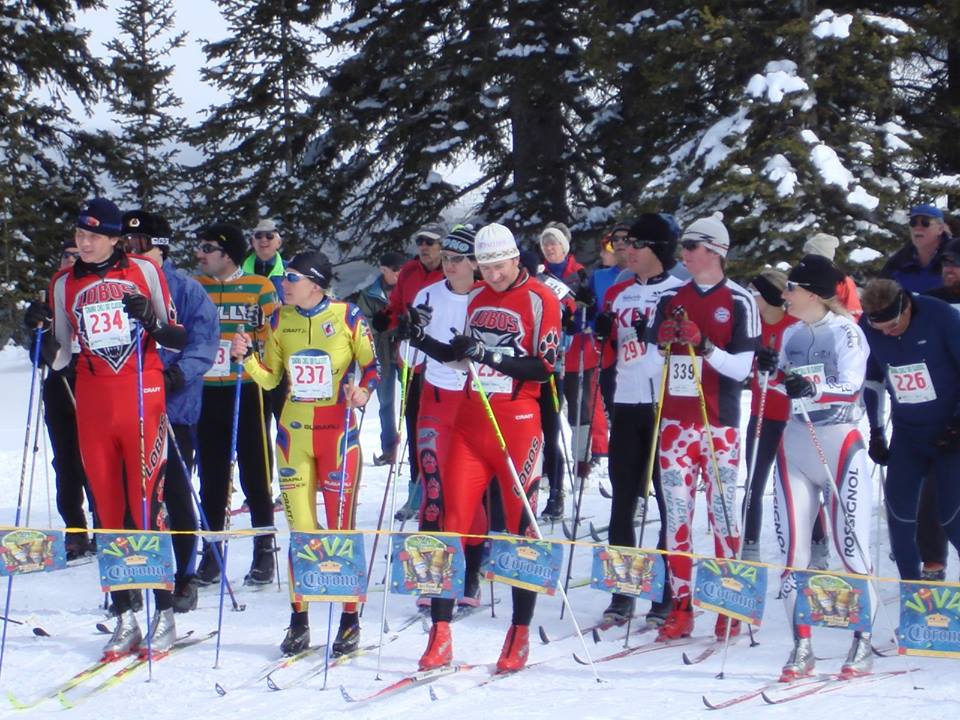
University of New Mexico athletes toe the line alongside citizen skiers at the Chama Chile Ski Classic in Chama, New Mexico. (Photo: Southwest Nordic Ski Club)
Item 4.ii. on the agenda is listed as: “Presentation of Administration proposal and plan relative to Athletics Department financial stability, to include considering the discontinuation of UNM Men’s Soccer, Men and Women’s Ski Teams, Beach Volleyball, and Diving as intercollegiate sports programs, Director of Athletics, Eddie Nuñez.”
Despite the charge by Attorney General Balderas regarding insufficient notice and process, as of Wednesday evening, attempts to visit the URL above, listed on the agenda, yielded a “404 Not Found” notice. The document could not be readily located elsewhere on the UNM website.
“UNM officials said Tuesday that there were no plans to drastically alter the proposal to cut sports, but that they would try to post online as much data and documents as possible to help the public understand how they crafted the proposal,” the Albuquerque Journal reported.
A cached version of what appears to be the correct link may be found here. The date of the document and the date of caching are not facially apparent. The cached document hosted by Google is 24 pages long. The Santa Fe New Mexican has separately referred to “a 24-page report made public Wednesday evening,” July 18. It appears from context and content that this is the same document described there that was previously presented to the Board of Regents.
The document currently available online, “University of New Mexico Department of Athletics Analysis and Review,” reviews budget challenges and the need to take further action to reduce the overall athletic department budget.
The report concludes, “it is the recommendation of the Director of Athletics that the President ask the UNM Board of Regents to approve the following actions: Effective July 1, 2019, UNM Athletics will no longer sponsor men’s and women’s skiing, beach volleyball and men’s soccer as varsity sports.”
The report also recommends, “UNM will honor the scholarships of all current student-athletes in the four affected sports through their graduations, as long as they remain in good academic standing.”
The final third of the document contains detail regarding UNM revenues and expenses. The report shows that, in round numbers, the school will spend $11.3 million on athletic department salaries in Fiscal Year 2019, $3.3 million on payroll benefits, $5 million on “services,” $4.8 million on grant-in-aid, $2.1 million on “supplies,” and $3.8 million on travel.
The UNM athletic department, like the vast majority of athletic departments in this country, is not self-supporting. The department is projected to bring in $6.6 million in direct revenue in Fiscal Year 2019. (The Washington Post and The Atlantic, among many others, have reported on the fact that even some of the most successful Division I college athletic programs lose money, in the sense that they bring in less in direct revenue than they spend in expenses.) Other revenue sources for UNM Athletics include the NCAA and the Mountain West Conference, media rights and sponsorship, student fees, fundraising, and $2.6 million worth of “state appropriation.”
Regarding men’s skiing, the report states the following:
(Screenshot from cached version of UNM Department of Athletics Analysis and Review)
Regarding women’s skiing, the report similarly states:
(Screenshot from cached version of UNM Department of Athletics Analysis and Review)
“APR,” or Academic Progress Rate, “holds institutions accountable for the academic progress of their student-athletes through a team-based metric that accounts for the eligibility and retention of each student-athlete for each academic term,” the NCAA explains.
The report states that both ski teams rank relatively low among UNM sports for APR.
FasterSkier previously reported that, in spring 2017, the Athletic Director’s Cup for the top academic program at UNM went to women’s skiing for the second straight year. Additionally, three of the nine senior student-athletes who were honored for graduating with a 4.0 GPA in spring 2017 hailed from the ski team.
Balderas has recently recommended that this Friday’s meeting should “serve as an informational session and that regents should not take action until a separate meeting at a later date,” the Albuquerque Journal reported earlier this week.
The Journal also describes potential legislative pushback to this action: “Four days after the vote, five Democratic state legislators called a news conference urging regents to hold off on any cuts so they could explore funding options and suggesting UNM never asked lawmakers for help. UNM officials say they have previously asked for additional state funds for athletics.”
A separate lawsuit has also sought to bar the university from taking action. The Albuquerque Journal reported on August 10 that a private citizen filed suit “asking a judge to rule the vote violated the Open Meetings Act and the state Constitution and issue an injunction to prohibit UNM from initiating any of the measures included in the plan the regents approved.”
The case appears to be Maria Touchet v. Board Of Regents Of The University Of NM, case no. D-202-CV-201805954. The online docket for the New Mexico state courts system lists a complaint filed on August 10, but does not list a response from the university nor any rulings issued by the court.
The community’s view
Clay Moseley moved to Los Alamos in 1999, and soon became active with the Southwest Nordic Ski Club. The Santa Fe National Forest recognized him last year for his longtime leadership of the club and his work with the national forest.
Moseley spoke with FasterSkier to share his perspective on how threatened cuts to the university ski team affect skiing at the level of citizens racing and local ski clubs.
A Southwest Nordic Ski Club Ski Kids practice earlier this week in Los Alamos, New Mexico. (Photo: Southwest Nordic Ski Club)
“Essentially, this hurts our state’s ski industry,” Moseley wrote to FasterSkier, “because we all have a connection to our state’s biggest educational institution and take pride in what they represent – our rich ski traditions and culture. Our kids look forward to seeing and working with the world-class athletes, who are always so kind and supportive of them. We actually have home-grown kids who are aspiring to ski for UNM and will be reaching that level in the next few years. At any rate, UNM is part of our culture and gives kids something to aspire to.”
Moseley also expressed concern about the overall leadership of the university’s athletic department: “As NM taxpayers, the mismanagement of the UNM athletic department is disconcerting. It’s always embarrassment after embarrassment in terms of news, the football team is abysmal, the basketball team has not performed anywhere near expectations, and they continue to throw good money after bad. So, there’s that as well. Discontinuing the good sports at UNM is simply adding insult to injury.”
One legislator’s view
Some additional local perspective came from state representative Roberto “Bobby” J. Gonzales (D, Taos), who spoke with FasterSkier by phone on Thursday afternoon. “I’m a skier myself,” said Gonzales. Gonzales is a UNM alumnus, and spoke with evident pride about his wife and two sons, all of whom also graduated from the university.
“This started about a year ago,” Gonzales said, recalling ski team funding issues dating back to spring 2017, “and the charge from the university was, Can we find additional funding to help with this, to have the program. And definitely we will do whatever we have to do to look for that. … The regents are meeting again tomorrow for a formal meeting, and I don’t know what the result will be out of that. But it’s something that would be very devastating, especially to the northern part of the state, where we have recreation and economic development and so many things that we have worked on.” (Gonzales’s district in northern New Mexico includes the alpine resort of Taos Ski Valley.)
“I just don’t see it as a win to eliminate the ski program,” Gonzales said.
Gonzales was asked if there was a concern about the pace at which things were moving when it came to the continued funding of the UNM athletic department. “Most certainly,” Gonzales said. “I really feel that that’s a very short vision from the university to act that quickly, without coming in with any solutions, or inviting strong solutions.”
He continued, “I do feel that they have moved very fast, and that they feel that they’re going to do what they’re going to do, and before we know it, people will forget about it. We can’t forget about something that started in the 1950s.”
(The reference to the 1950s is likely to the founding of Taos Ski Valley in 1955. The UNM ski team dates to 1968, making it 50 years old this year.)
Gonzales urged that, if adjustments need to be made, “make them across the board, not just in four sports. … I don’t think it should be a punitive decision for these first four sports.”
“The losing party of this would be the university” if skiing were cut, Gonzales concluded. “It just isn’t right.”
Martin Benes, who has coached at Sugar Bowl Academy for the last seven years, was recently hired as head coach of U.S. Paralympics Nordic. (Photo: U.S. Paralympics)
(Note: This article has been updated to include the hiring of Miles Havlick as the University of Utah’s head nordic coach, which was announced Monday afternoon.)
There have been several notable career changes in North American nordic skiing this summer. Here’s a quick look at who moved where:
Robert Lazzaroni, the nordic director at U.S. Ski & Snowboard, will soon begin his new role as Salomon’s nordic regional commercial manager for the Americas. (Photo: Salomon)
Robert Lazzaroni:from U.S. Ski & Snowboard to Salomon. Last week, Salomon announced via a press release that Lazzaroni, of Park City, Utah, will join its staff as nordic regional commercial manager for the Americas, starting Aug. 27. For the last three years, Lazzaroni served as nordic director at U.S. Ski & Snowboard in Park City. Before that, he was program manager at Utah Olympic Park, and before that, a nordic division manager for Rossignol and later One Way Sport. Asked about his new job at Salomon, Lazzaroni told FasterSkier he’d be willing to talk more in depth after he starts. Until then, he’s still employed at U.S. Ski & Snowboard.
According to U.S. Ski & Snowboard’s Chief of Sport Luke Bodensteiner, many of Lazzaroni’s duties as nordic manager “have been or will be distributed across existing staff, and we’re taking the opportunity to re-align our staffing positions to make sure that we have an efficient structure that supports our priorities of athlete development, coach education, and strong domestic competition,” he wrote in an email to FasterSkier. “This will likely require hiring an additional position, but the nature of that job is TBD based upon where we determine that we need the human resource to support those priorities.” Bodensteiner expected to know more about the shift in staff responsibilities later this month.
Martin Benes:from Sugar Bowl Academy to U.S. Paralympics Nordic. Also last week, the U.S. Olympic Committee announced the hiring of Martin Benes as its new head coach of U.S. Paralympics Nordic Skiing. He replaces Eileen Carey, who was promoted to program director following the departure of John Farra (to USA Triathlon) this spring. Benes began coaching as an assistant ski coach at Bates College, then spent the last seven years as head nordic coach and director at the Sugar Bowl Academy near Truckee, California, according to his LinkedIn profile. As head coach of the U.S. Paralympics program, he will “lead the development of annual and seasonal training plans for the national team, track athlete performances, workout data, sport science data and annual progress reports, contribute to the U.S. Paralympics athlete identification and development strategy, and assist in planning travel and logistics for the Nordic skiing program to competitions, camps and events,” according to the press release.
“It’s an incredibly exciting time to join the program following such a successful performance in front of the world at the Paralympic Winter Games PyeongChang 2018,” Benes stated in the press release. “I’m eager to get started in my role so we can continue to strengthen the program and win medals on the international stage.” He’s set to begin on Aug. 20.
Fredrik Landstedt:from the University of New Mexico to the University of Utah. Late last month, the University of Utah announced it had found a new director of skiing to replace Kevin Sweeney. Landstedt had been a staple on the University of New Mexico (UNM) Ski Team for the last 21 years, spending the last 11 years as head coach of both the nordic and alpine programs (and 10 years before that as head nordic coach). His decision to take the job at Utah came less than 24 hours after the UNM Board of regents unanimously approved a proposal to eliminate four sports starting in the 2019/2020 season, according to the Albuquerque Journal. Those sports are men’s and women’s skiing, men’s soccer, and women’s beach volleyball. The proposal would also significantly impact funding for cross country and men’s track and eliminate the women’s diving program. In the meantime, UNM announced assistant coach Joe Downing will assume the role of interim head skiing coach.
“I am honored to have the opportunity to lead a program with such a rich history,” Landstedt stated in the Utah press release. “Utah has a strong winning tradition and the support that the University provides its ski team is incredible. I look forward to bringing NCAA titles back to Utah!”
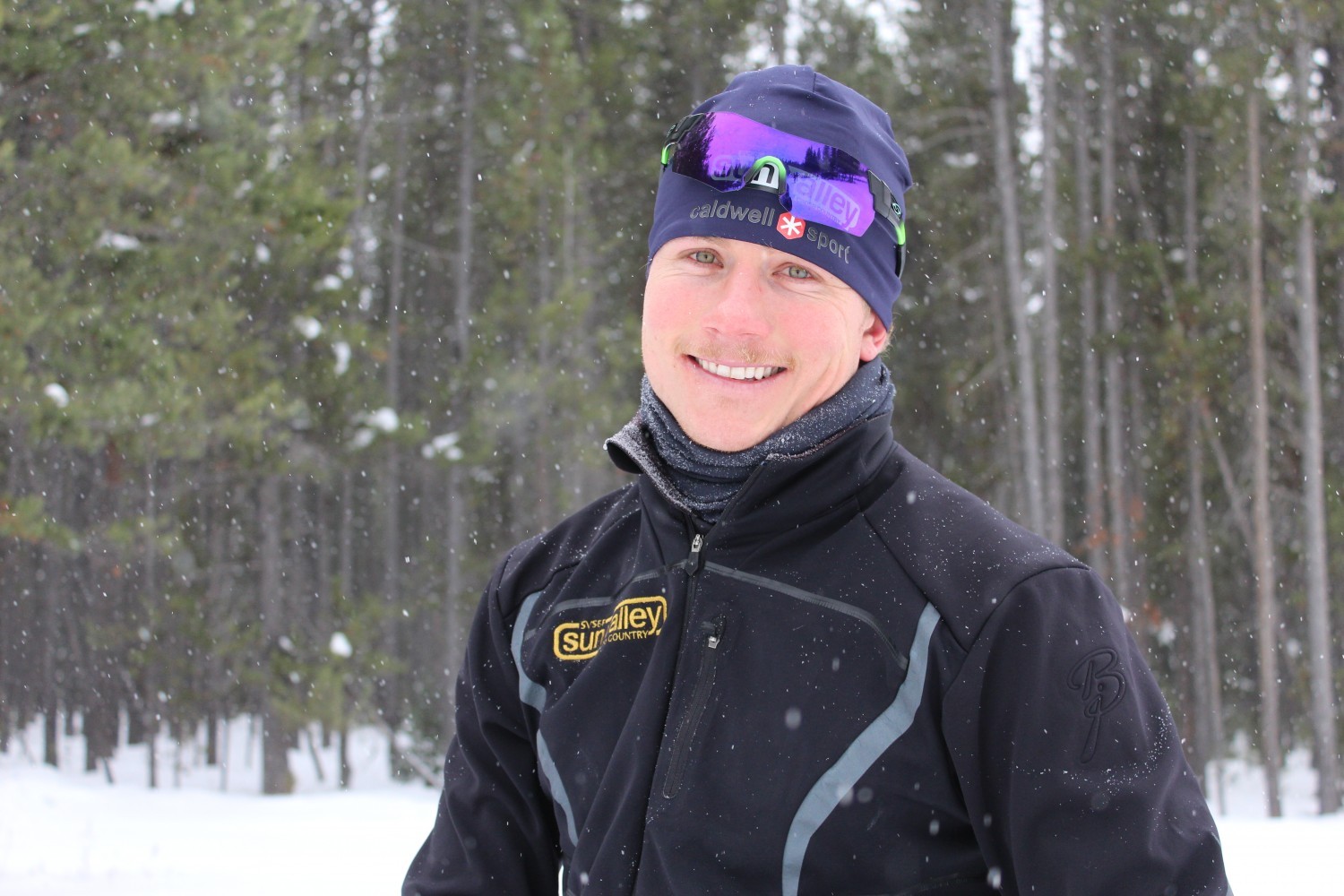
Miles Havlick in November 2015 in West Yellowstone, Montana.
Also at the University of Utah, Miles Havlick: new head nordic coach. In a press release on Monday, the university announced that Havlick, one of its former skiers and a two-time NCAA champion (2012 and 2013), was hired to head up its nordic team for the coming season. Havlick, 28, skied for the the Sun Valley Ski Education Foundation Gold Team after college and won the 42-kilometer Australian Hoppet Worldloppet last August. He delved into coaching last summer in Australia with the Birkebeiner Nordic Ski Club and Victorian Junior cross-country ski team, and last winter, was an assistant coach and wax technician for the Australian junior national team at Junior World Championships. Havlick also waxed for the Australian national team last March in China. He has also assisted the Utes ski team, most recently as an assistant coach at 2018 NCAA Championships.
Eliška Hájek Albrigtsen:from Central Cross Country to the University of Alaska Fairbanks. After spending the last year filling multiple roles with Central Cross Country (CXC) out of Madison, Wisconsin (including CXC Team head coach and junior development coach), Albrigtsen has accepted an assistant-coaching position with the University of Alaska Fairbanks Ski Team, replacing Josh Eide. Albrigtsen was a four-time All-American skier for the University of Colorado Boulder and an NCAA champion in 2011.
Cross Country Canada seeks senior national team coach: Two days ago, the CCC headquarters in Canmore, Alberta, put out an announcement for applications for a full-time senior national team coach. The position indicated it requires both domestic and international travel. “Reporting to the HPD [high-performance director], the Senior National Team Head Coach (NST Head Coach) is responsible for leading the technical delivery and alignment of Senior National Ski Team (Senior NST) programs in order to achieve podium performances at Olympic Games and FIS World Championships,” the job description stated. “The NST Head Coach will have the responsibility to plan, coordinate and monitor the training and competition of NST athletes in line with CCC’s collective goals.” CCC’s senior team includes 10 athletes, five of which are on the World Cup Team. The other five are on the U25 (under-25) Team. View the job posting here.
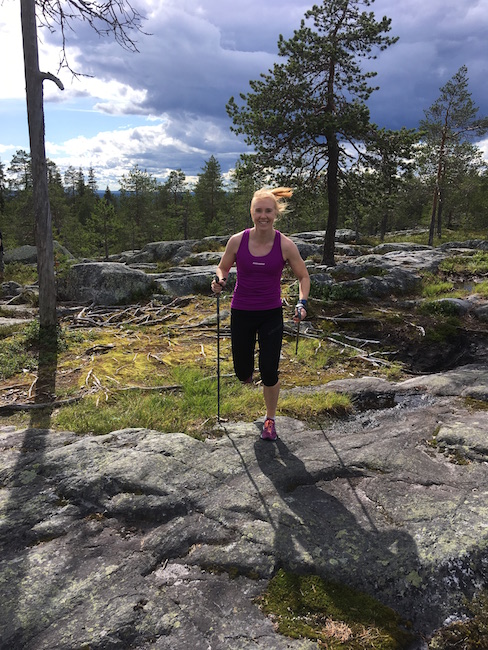
Krista Niiranen doing a workout running with poles in Rovaniemi, Finland. (Courtesy photo)
A World Junior Championships and World U23 Championships skier for Finland who had racked up top-10 finishes in her country’s competitive national-championships field, Krista Niiranen moved to the American Southwest last year.
“I had been studying law in the University of Lapland in Finland, but for the last season I transferred to the University of New Mexico and represented the UNM Ski Team,” she explained.
UNM’s Krista Niiranen racing to seventh in the 5 k classic at 2017 NCAA Skiing Championships at the Jackson Ski Touring Center in Jackson, N.H. (Photo: flyingpointroad.com)
Niiranen made a splash on the SuperTour and NCAA circuits, finishing sixth in the classic sprint and 10th in the 10 k freestyle at U.S. nationals before emerging as the top classic skier on the Rocky Mountain Intercollegiate Ski Association tour. She finished seventh in the 5 k classic at NCAA Championships and was named UNM’s Nordic MVP.
This summer, Niiranen is back in Finland training hard with various friends and teammates from before her time as a college skier. She has taken training opportunities all over her country and shared what it’s like to be a top skier in Finland in the summer.
***
FasterSkier: Where are you based this summer?
Krista Niiranen: My summer training is based in three areas this summer: Joensuu in Eastern Finland, the Vuokatti Olympic Training Center, and especially my current hometown, Rovaniemi, in Lapland on the Arctic Circle.
I have to say that all of these three spots are top for skiers’ summer training. In the beginning of the summer break I was training in Joensuu, the same area I grew up in. If you happen to be a biathlon fan, I stayed within 30 minutes away from Kontiolahti Biathlon Stadium, where is also a great rollerski track for summer training. There is also another track for rollerskiing only in 10 minutes from my family home. Then in June I was training for three weeks in Vuokatti Olympic Training Center, where the majority of the Finnish nordic skiers were gathered up for some good summer training. Currently I am living and training in Rovaniemi in the Northern Finland as a neighbor of Santa Claus.
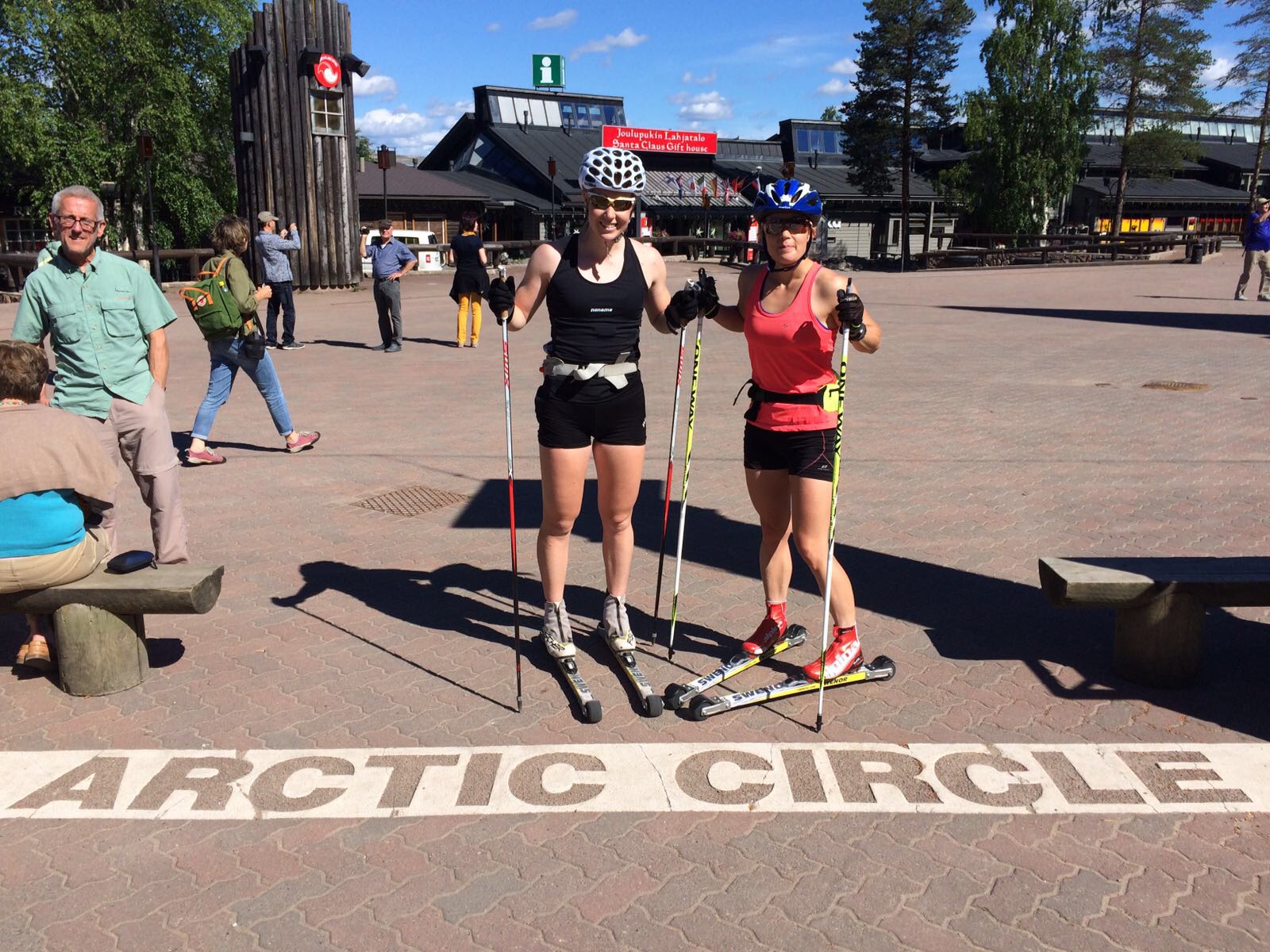
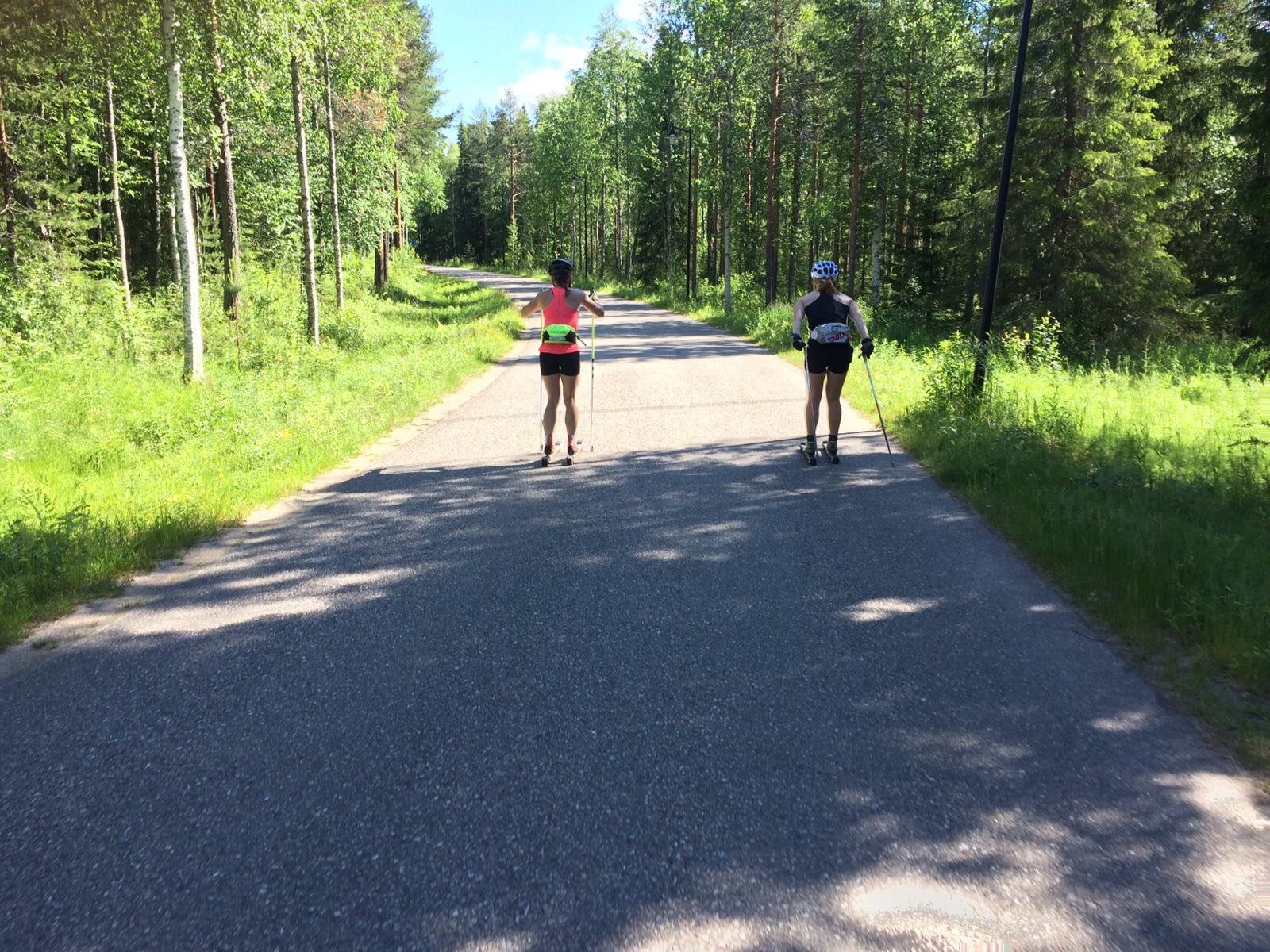
Niiranen (left) and Iina Ahokas rollerskiing in Rovaniemi. (Courtesy photo)
FS: Compared to Ruka or the World Championships venue in Lahti, what is the landscape like where you are training?
KN: For Americans who have watched World Cup races, I would say that Eastern Finland is pretty similar to Lahti, which is four hours drive from my family home to south. The landscape in Vuokatti and Rovaniemi is pretty similar to Ruka with long and some steep hills. But you can definitely find beautiful hills and lakes from all over the Eastern and Northern Finland, where my training has been based for my entire skiing career.
FS: Do you have a team that you are training with, or are most of your training sessions alone?
KN: During summer I have a couple of training camps in Vuokatti and Lapland with a group of athletes who are challenging the skiers in the Finnish national teams. In the beginning of the summer I was training in Joensuu and Vuokatti with a couple of skiers from the same local ski club I represent when I’m competing in Finland. There are also many skiers at my level living in my current hometown in Rovaniemi, so I can get company for training on a daily basis. I really enjoy training with other skiers, but sometimes it is nice to go for a session alone as well.
FS: What is it like to rejoin a group after being away in the US for most of the year?
KN: I was welcomed to participate in trainings and training camps even if I spent most of the year in the US. Of course it was a little bit different situation when I had not raced in any competitions in Finland last season, but I have many good skier friends here in Finland so it was just fun to catch up with them during rest afternoons and easy trainings.
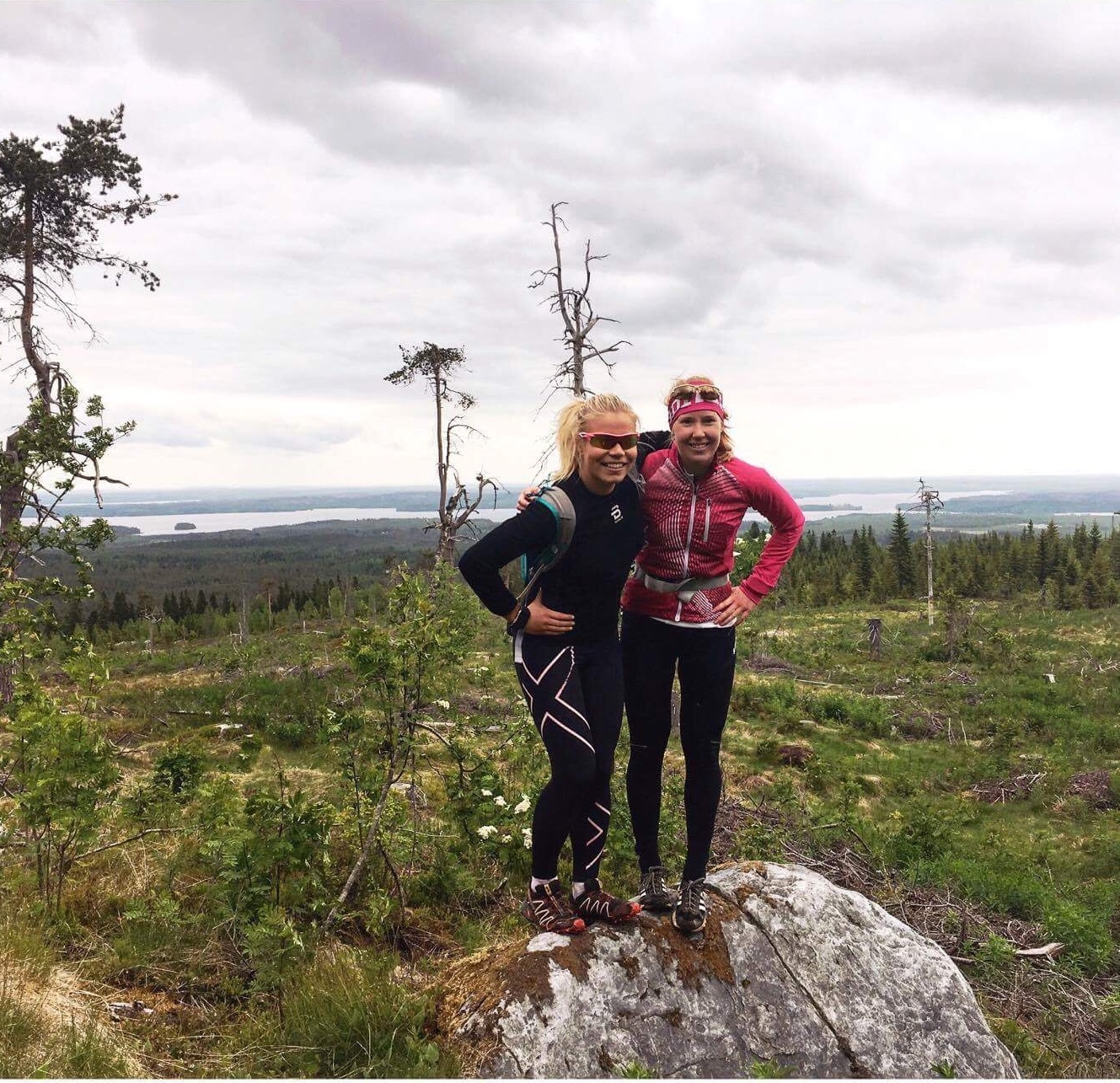
Jasmi Joensuu (left) and Krista Niiranen on a trail run outside of Vuokatti, Finland. (Courtesy photo)
FS: During the summer, how do you design your training – is it based on a plan from New Mexico? Are you adapting it at all to be able to match with your training friends?
KN: This summer I am designing my training plan based on the knowledge I have gained from my previous Finnish coach and during my time as a Lobo. I am adapting my plan to match with the fixed training camps and trainings of other skiers based on the same area. I think that doing intervals and other training in a group is a good way to develop as a skier and learn from each others. I am also trying to listen my body to keep the balance between hard training with lots of hours and rest time.
FS: Are there typical workouts that you do that are different and probably wouldn’t appear on an American training plan?
KN: The training is pretty similar here in Finland than on our American training plan in New Mexico, but the biggest difference is that we are used to do more really easy long distance and level 2-3 training in Finland, but not really level 4-5 training during summer time.
In Finland I am also orienteering weekly basis as a training. I think that orienteering is a more Scandinavian or European thing, because in the US it was mostly an unfamiliar concept for many people. Running and navigating from point to point in the forest using a map and compass is actually pretty hard training. At least for me, a chill orienteering session ends up always being at least level 3 training when running fast in the forest and concentrating on reading a map.
Iina Ahokas (left) and Krista Niiranen rollerskiing in Rovaniemi. (Courtesy photo)
I have also added some elements, like without poles skate skiing, from our American plan to my training plan in Finland. I am also planning on doing some track sessions here in Finland – I was not used to doing that before my time in New Mexico.
FS: What’s the hardest workout you have done so far this summer?
KN: Definitely, a traditional roller ski race in Vuokatti. The event consisted on 1.6 k uphill skate rollerskiing prologue, a 3 k cross-country running race, and 10 k skate rollerskiing pursuit where the final 1.6 k is uphill. The race was also mentally interesting, because I had not raced in Finland for over a year and therefore I did not really have any expectations when it comes to my current shape. After a hard competition, I was happy when I realized that I had set a new personal best in all the three stages after a year in the US.
[Ed. Note: After the final stage, Niiranen was 10th, two minutes and 50 seconds behind biathlon World Champion Kaisa Makarainen, who won the women’s tour ahead of five-time Olympic medalist skier Aino-Kaisa Saarinen. World Champion Matti Heikkinen won the men’s tour.]
FS: Are there any absolute favorite places to run or bike or rollerski?
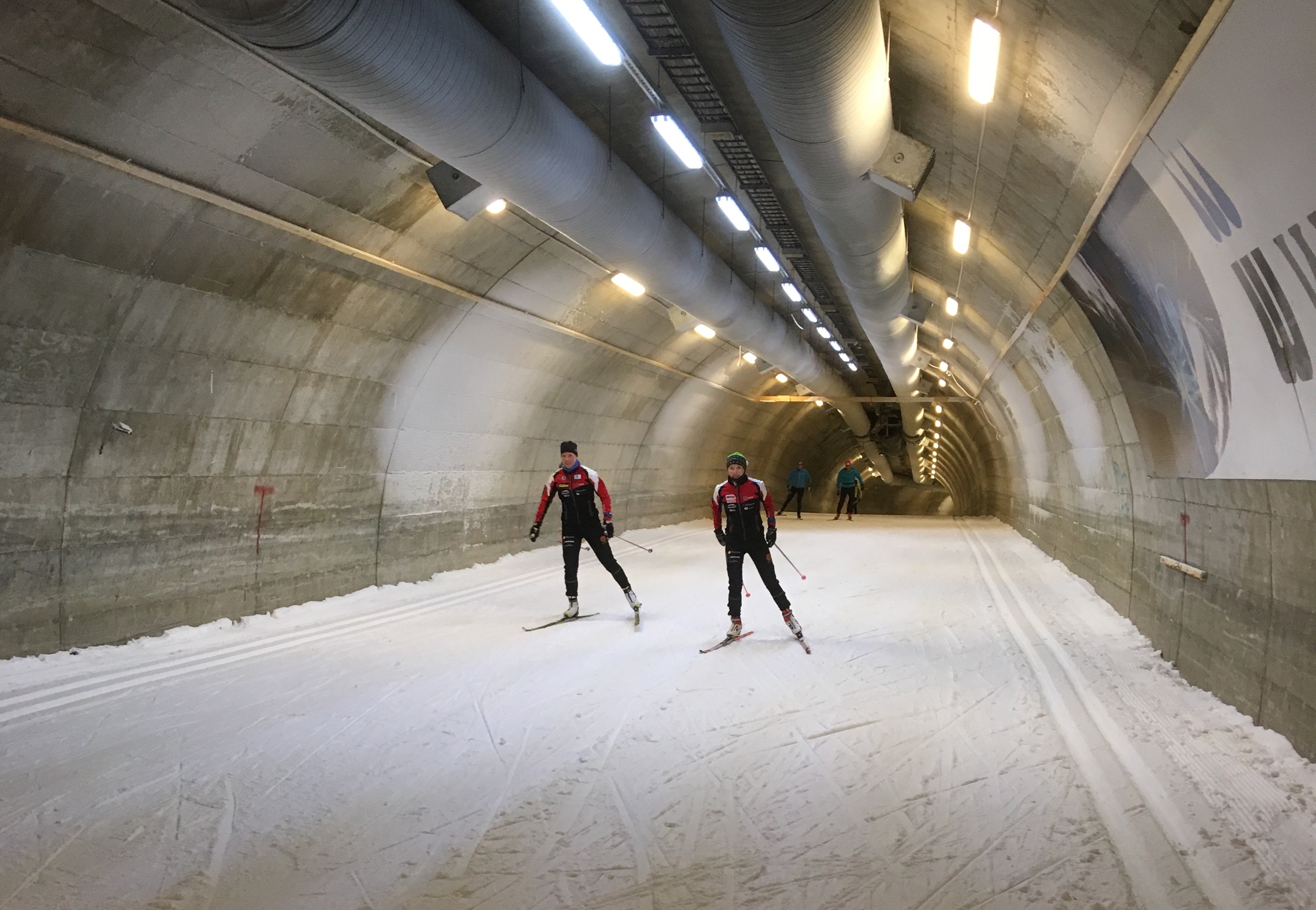
Krista Niiranen (left) and Finnish teammate Petra Torvinen training in the Vuokatti ski tunnel. (Courtesy photo)
KN: All the areas I have been training in this summer are among the best spots for summer training in Finland because the access to rollerski tracks, bike paths and trails is just by the front door. But if I should choose my absolute favorites, I would mention group training on a rollerski track and uphill classic rollerskiing in Vuokatti. Also running with good skier friends (and reindeer) on the countless of trails surrounded by a beautiful scenery in Rovaniemi is one of my favorites. I was also super excited to ski on real snow in a ski tunnel in Vuokatti, even if the scenery there is only a concrete wall.
FS: Maybe related, is your area set up best for some parts of training?
KN: I would objectively recommend all of these three areas for summer training for any skier, but in Vuokatti there is everything what a nordic skier can ask for during summer. There are a rollerski track, long uphills, tens of kilometers of trails for long distance running and hiking, bike paths, a ski tunnel with real snow and beautiful scenery with hills and lakes in Vuokatti. It is not a wonder that there are other national teams in addition to Finnish skiers training in Vuokatti as well.
It is just convenient that especially in Vuokatti and Rovaniemi: all the training possibilities and facilities are right after stepping out the front door, so there is no need to consume time and energy for driving for training.
FS:What is the best part of Finnish summer, aside from training?
KN: The best parts of Finnish summer are midnight sun, going to sauna and swimming in a lake, and everyman’s right to pick up berries and mushrooms to a freezer for the fall and winter.
Midnight sun from an apartment window at the Vuokatti Olympic Training Center in Finland. (Photo: Krista Niiranen)
UNM junior nordic skier Petteri Vaherkoski during the Sand Hills time trial in Albuquerque, N.M., last September. (Photo: Christian Otto)
This week’s workout comes from University of New Mexico (UNM) sophomore Julia Devaux, who recently wrapped up her second season with the UNM nordic team. Devaux, 23, is originally from Grenoble, France, and grew up training in Villard de Lans. She was previously a member of the French national team but sought out new motivation to continue skiing.
“[UNM Head Coach] Fredrik [Landstedt] gave me the opportunity to come at UNM 2 years ago,” Devaux wrote in an email. “I chose UNM because it was crazy and unusual to be part of a Division 1 ski team in the desert! I needed something new, and I totally found it here.”
Devaux is studying business, with a concentration in marketing. She shared the following team workout:
***
“As a member of the University of New Mexico Nordic Ski Team, you are put through workouts that you could have never imagined doing as a skier. Here is one of the craziest, toughest and most unusual workouts that I know: the Sand Hills Time Trial.
We are located in Albuquerque, N.M., and what do we have around us? A desert! This is where Fredrik, our head coach, decided to set up this unusual running time trial.
A few minutes’ drive from campus are some sand hills. Extremely steep hills. Think about some hills you can barely walk up. Add in soft sand and it feels almost impossible (see pictures )
Julie Ensrud doing the Sand Hills time trial during her freshman season with the UNM nordic team last September in Albuquerque, N.M. (Photo: Christian Otto)
This workout is a great reference of fitness for us. We do it four to five times a year, so we can keep track of our performance. Running is a big part of nordic training, so this is a good intensity workout to improve our base.
One lap is about 1.5 k, with five huge hills that we run up and down. We use nordic walking poles (hip height). Using poles is a good way to balance weight and use upper body as well.
Women run two laps, men three. To give you an idea, the women’s record is 20 minutes, 41 seconds (Kati Roivas), and the men’s is 25:43 (Aku Nikander). For 3 k and 4.5 k, this will give you the right idea about how steep and sandy these hills are!
We warm up by walking the course once, which takes about 30 minutes. We usually start individually, but every once in a while, we will do a mass start. We cool down on our way back to the vans, where we dump piles of sand out of our shoes.
I love that the Sand Hills Time Trial is unique to our team, a workout where we push our limits, fight with our teammates and run after the clock as we do when ski racing. Training in such an unusual environment for a ski team makes it so much more exciting!
The Workout: Sand Hills Time Trial
You’ll need: Running shoes, Nordic walking poles (hip height), a hilly course (preferably sand)
Warm up: Walk the course once (should be about 1.5 k long with several big hills)
Time trial: Individual start or mass start. Women race 2 laps, men race 3. Record times and compare each time you revisit this workout.
Cool down: Jog back to your car (or team vans). Dump sand out of shoes.
The decision to cut the UNM ski team program next fall was made a few weeks ago, and we are fighting this decision with all we’ve got. Please help us by visiting saveunmskiteam.com, sign our petition online, share with your friends…
Every piece of support is helping us, we need to show how great we are, and we need you!”
UNM skiers (from left to right) Eva Severrus, Kati Roivas, Brenna Egan, Julie Ensrud, and Julia Devaux getting ready for their team’s Sand Hills time trial last September in Albuquerque, N.M. (Photo: Christian Otto)