It’s May. Yes, really.
For most skiers, the new page on the calendar also marks the beginning of a new training year. Dust off your rollerskis, locate your heart rate strap and drink belt, and make sure your running shoes have plenty of life in them.
With the country still predominantly on public health orders to stay close to home, avoid groups, and keep at least six feet of distance from those outside your home, kicking off a new cycle is happening without hugging our training partners, post-workout high fives, or otherwise gathering to ring in the new season. There also remains abundant uncertainty regarding the feasibility of racing during the upcoming season from the World Cup level to the junior and collegiate circuits to popular skiing. Nonetheless, we open our training logs and carry on.
Last season ended abruptly and the off season may have looked different than anticipated. We may have put our energy into homeschooling children, sourdough baking, binge-watching Tiger King, connecting virtually with our family and friends, or otherwise remaining largely homebound and less active than we’re accustomed. On the flip side, maybe the change in schedule has freed up additional time for long adventures and you’ve logged more hours in April than ever before.
Either way, at the onset of a season, you may be interested in checking in on your fitness and strength, looking for metrics to track improvement over time and to guide your pacing or heart rate zones during future workouts. FasterSkier reached out to Pepa Miloucheva, head coach of the Craftsbury Green Racing Project, to discuss fitness testing that could be done without the support of a facility or coach, making it accessible to any level skier as they begin the new year.
Miloucheva provided the disclaimer that she relies on advanced metabolic testing with her athletes to determine VO2 Max and lactate threshold levels to assess fitness and heart rate zones, and then prescribes training based on this information. With that caveat, Miloucheva holds a masters degree in Sport Science with a focus on physiology and biomechanics and has been coaching for over 20 years, over a dozen of which have been spent with the CGRP elite program.
Before jumping into assessing fitness and blowing up trying to hit a new PR on the SkiErg, Miloucheva emphasized that the most important thing an athlete can do at the beginning of a new cycle is to have a training plan and to understand how the periodization targets different areas of athletic development. This might be a plan from a coach or one found online.
“If someone really wants to establish a baseline and monitor, then they have to have a training plan,” said Miloucheva in a call. “I think everything else is kind of pointless, because all of these tests won’t give you anything if you don’t know what you’re looking for. In general, everything starts with first having a good training plan.”
Once a clear plan is established and you have taken time to understand it, then decide which part of the training process you would like to test.
“If you have 2-3 months of high volume, you want to test your basic aerobic improvement. You do the test, you see if you’ve actually improved. When you start doing a little bit more speed, you want to see if you’ve improved your speed. So you really have to schedule these tests based on your training plan.”
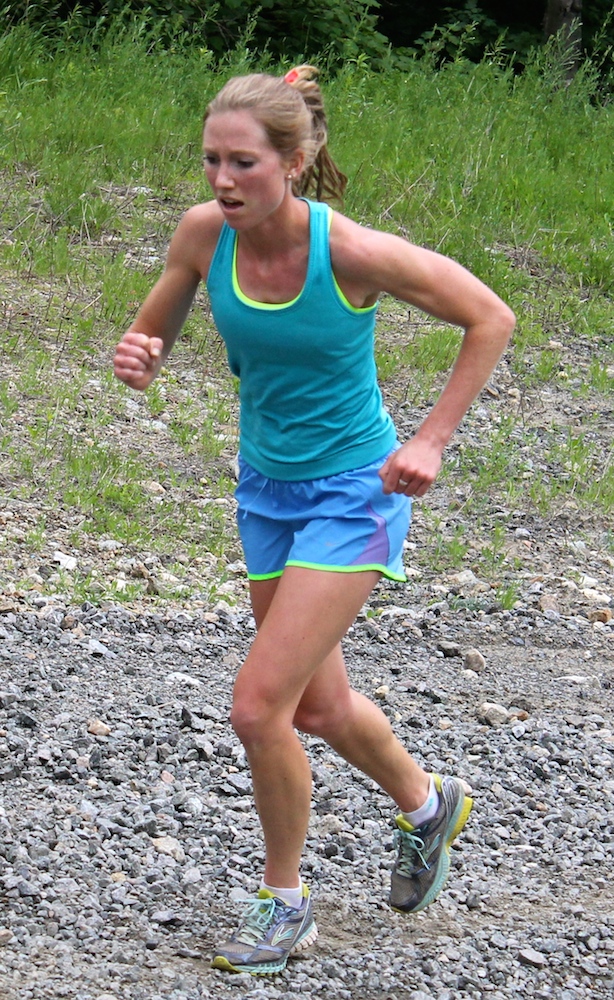
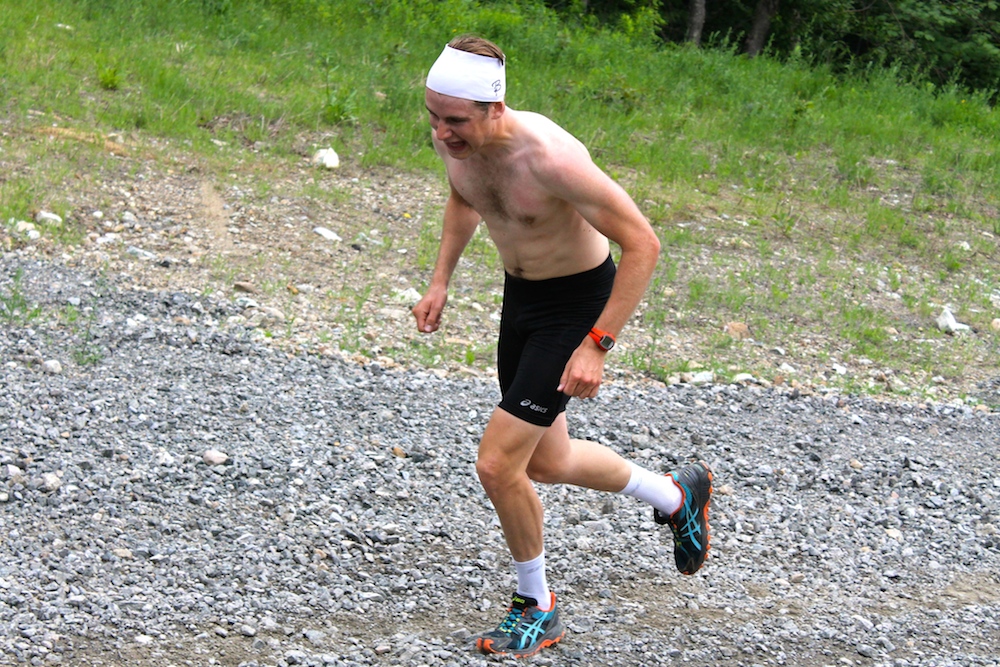
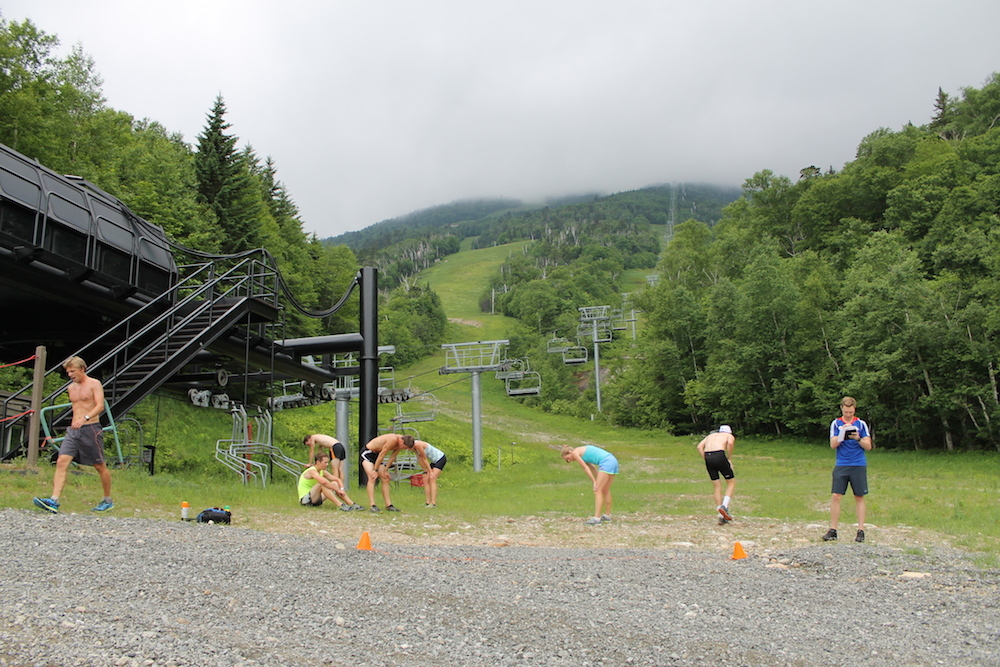
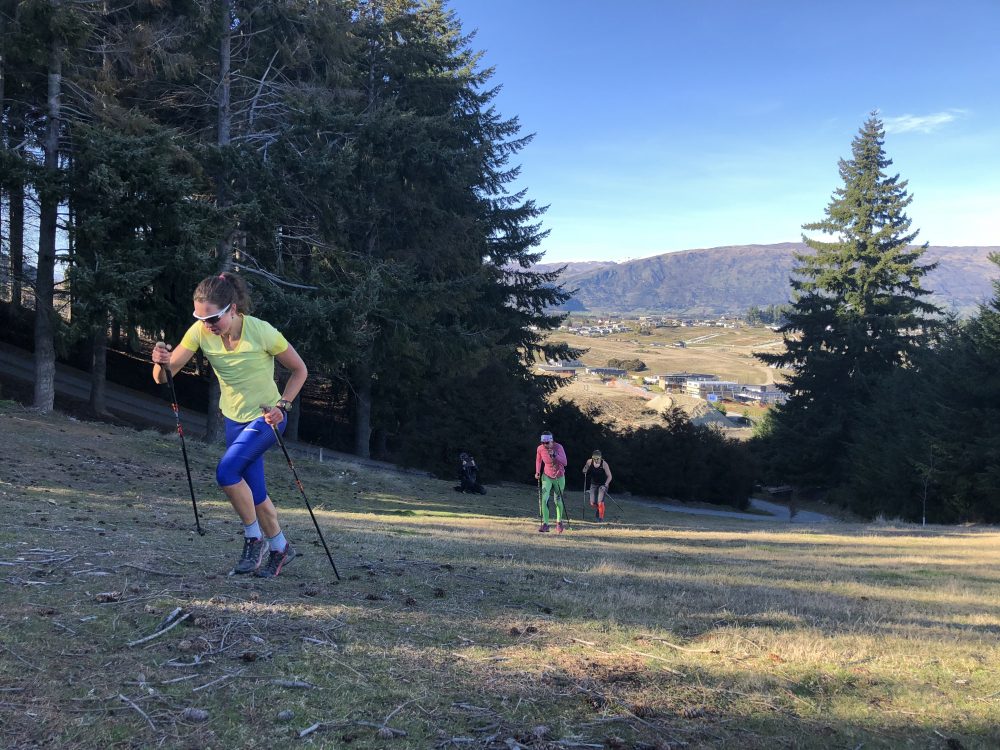
As the typical periodization of the year for skiers focuses on aerobic development during the spring and summer, a good starting place could be an uphill run test, possibly combined with a rollerski or SkiErg time trial, if those are available to you.
Traditionally, a 3000 meter run on the track was commonly used as an aerobic benchmark, but the results can be skewed based on individual running economy. Athletes with more running experience and better form often fare better than those with comparable or potentially better fitness. As such, most ski programs have transitioned toward an uphill run test, as it tends to level the playing field in terms of the impact of running efficiency on results.
In addition to being a good indicator of aerobic capacity, Miloucheva explained that the test has the added benefit of being easily repeatable with relatively few outside variables that might impact performance.
“The uphill running test is probably the most standard around the world. Simply, it’s easier to repeat. It’s a little bit less affected by the weather, but there are still a lot of elements and it is hard to keep it consistent.”
If you’re looking to track your own progress on an uphill course, Miloucheva recommends finding a stretch of road or trail with little traffic that takes roughly 10-12 minutes. The effort should be steady throughout the test and you should finish feeling completely spent.
Be careful not to start out too fast as you want your heart rate to increase throughout the test, rapidly at first then gradually continuing to rise toward your lactate threshold heart rate, which can be estimated as the average heart rate sustained over the last five minutes of the test assuming it was well-paced. (TrainingPeaks has a deep dive on blood lactate and lactate threshold here, or you can read this description of lactate threshold training by Len Kravitz Ph.D., Exercise Science professor at the University of New Mexico.)
As for the course, you’re looking for terrain that is runnable, meaning you won’t need to resort to walking or hiking, and a relatively consistent grade.
Miloucheva later added that many veteran athletes have their own aerobic fitness test piece, which is also perfectly sufficient.
“I’m an old lady and I have this loop around the lake I do every year and I measure my time just for fun. So in general, everybody who has been training for years, they have a place where they can run the test.”
Miloucheva has also used a 1-kilometer uphill double pole test on rollerskis with some of her athletes. Her course starts relatively flat, climbs gradually, then levels off at the finish.
“The biggest thing is that [athletes] need to keep moving, so it cannot be very steep because strength and the resistance become the issue [rather than fitness].”
She has found this test harder to standardize than the run test, meaning results must be taken with a grain of salt.
“The problem using it year to year is that [the athletes] don’t always use the same rollerskis, they change wheels, cold weather and cold pavement changes a lot. So you have to consider all these details with the results.”
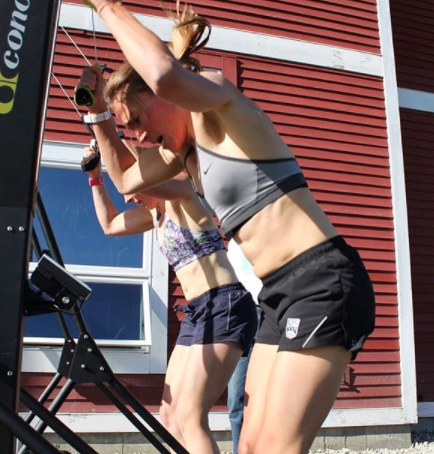
Because of the ease of standardization, Miloucheva prefers using SkiErg time trials, as athletes can repeat the test indoors with a fixed resistance. Her junior athletes complete 1 and 2 k time trials, and her senior athletes additionally complete a 5 k test. The CGRP athletes complete the tests while hooked up to a VO2 Max testing equipment. If these are available to you, these tests could also serve as a benchmark for aerobic fitness with some ski specific strength indicators.
As for strength, Miloucheva is working on developing a test she feels is informative and can be standardized, as she is not satisfied with other tests used previously. She has historically used a version of the Canadian Strength Test (outlined here by Jackson Hole Ski & Snowboard Club), which counts the number of pull-ups, sit-ups, push-ups, box jumps, and dips an athlete can do in one minute with one minute rest between each exercise. Some differences in Miloucheva’s version include the use of single leg squats within a 30 second time period and measures pull-ups to exhaustion.
If you’re completing this test from home, ask a member of your household to help time, count, and keep your form honest so the data reflects your current strength accurately.
Okay, you’ve done an initial test of your aerobic fitness and/or strength. Now what? How soon should you repeat the test to check for improvement?
Miloucheva reiterated that it is essential to plan testing between training blocks to assess whether the block had the intended impact on fitness. She explained that her testing weeks are written into her general yearly plan for athletes at the beginning of the season.
When considering your own plan, space the tests out roughly 6-10 weeks to give the body time to absorb and respond to training. In addition to striving for a faster time, you can also consider trends in heart rate, as more time during the test spent closer to the lactate threshold heart rate is also an indicator of improved aerobic capacity.
To get the most information from a testing period, it is essential that each round is approached the same way, including how the training looks in the days prior and the warm-up performed before beginning the tests.
“You want to have a standard approach into the test, because you don’t want to do the first test after a very exhausting week and the second after an easy week, because it will affect the results.”
For CGRP athletes, this typically looks like one or two days of rest or easy training prior to a test.
There you have it. If you’re looking to assess and monitor progress in your fitness, first select and understand a training plan. Then, determine what factors of your fitness you’d like to assess and decide when a set of tests might fit best between different blocks within the training plan. Finally, do what you can to ensure that when the tests are repeated, the environment is as controlled as possible and your approach is the same so improvement (or lack thereof) between tests provides accurate insight into how your body is responding to training.
See you out there! (from a safe social distance)