From the FasterSkier archive — posts syndicated from athletes’ and coaches’ own blogs between 2004 and 2012, kept online as published. Current coverage is at fasterskier.com.
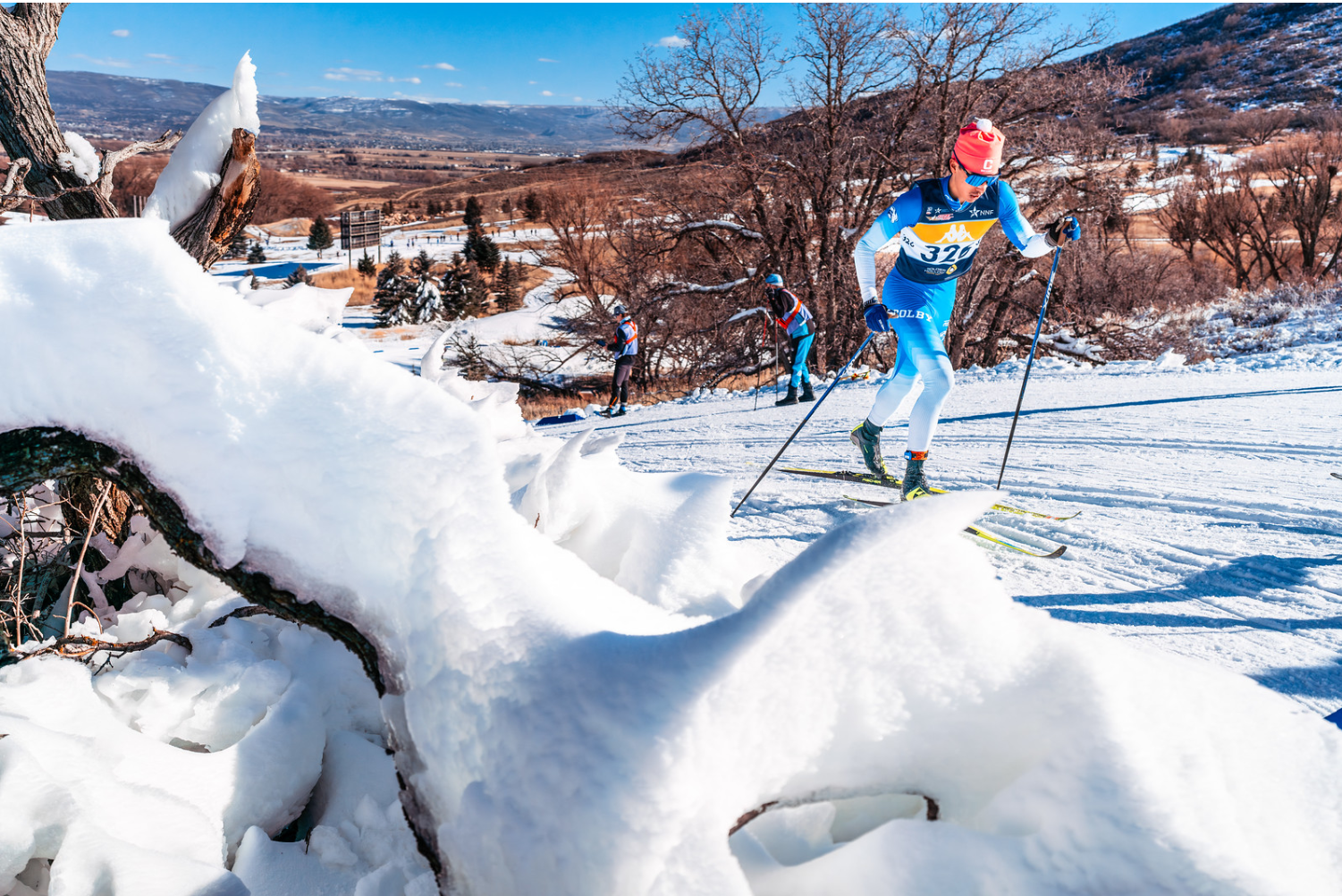
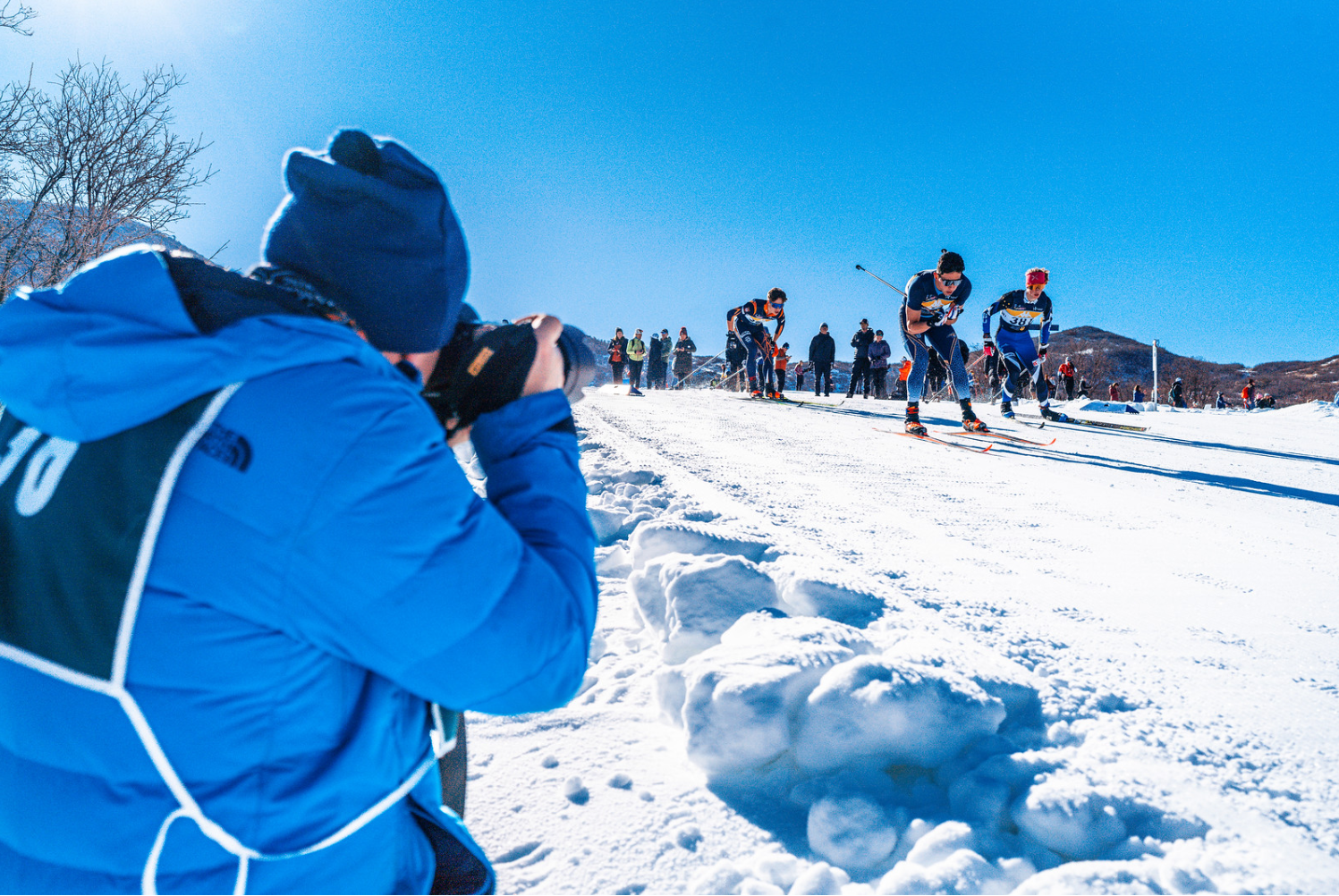
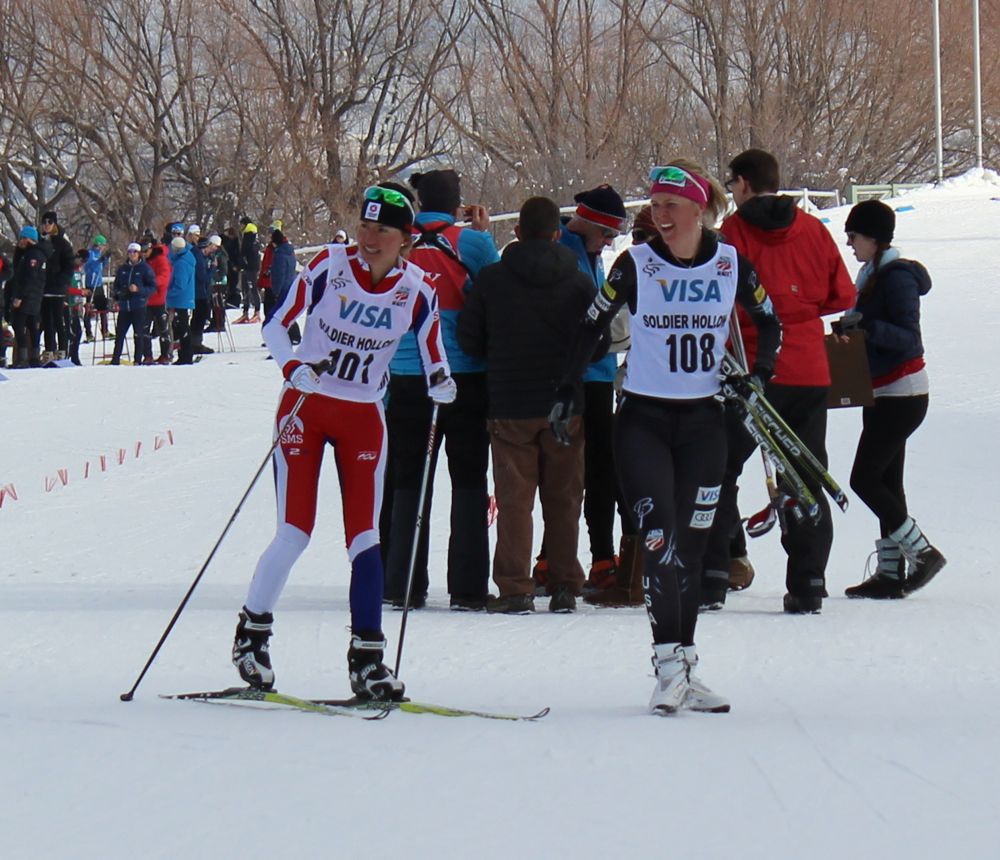
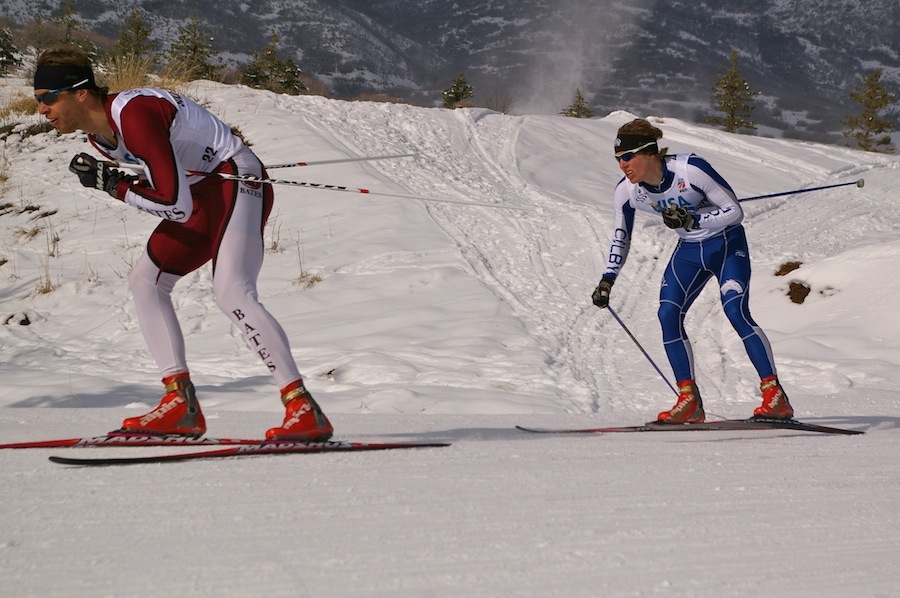
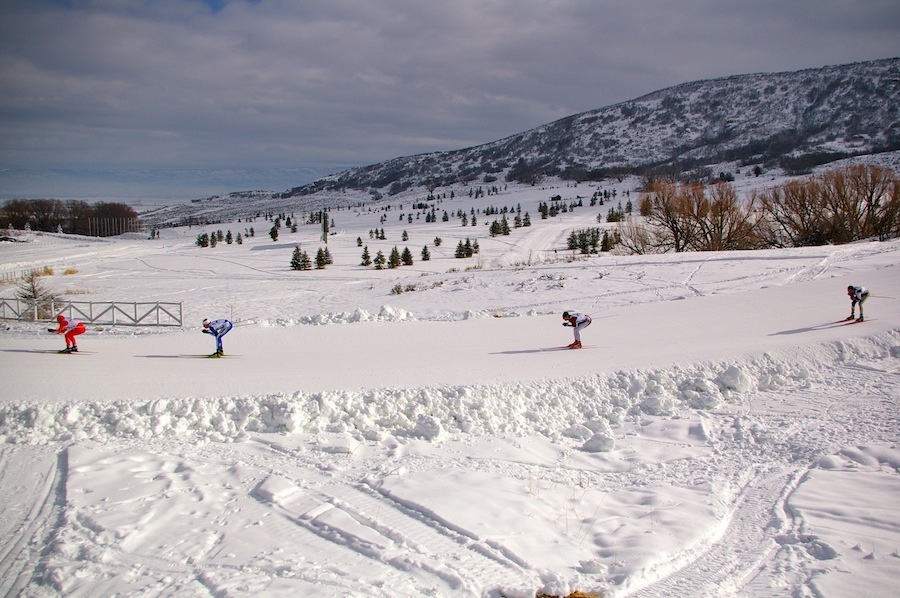
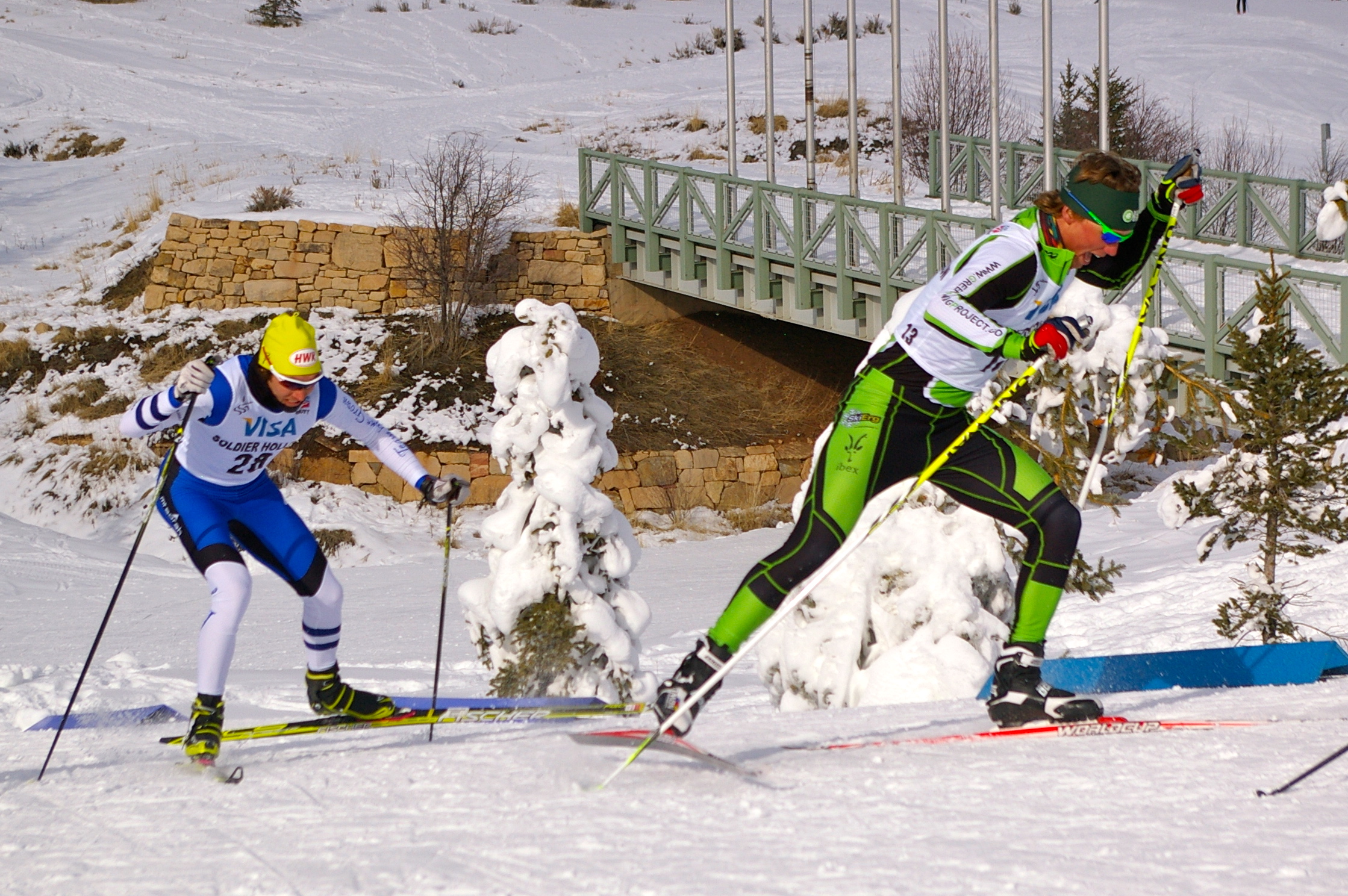
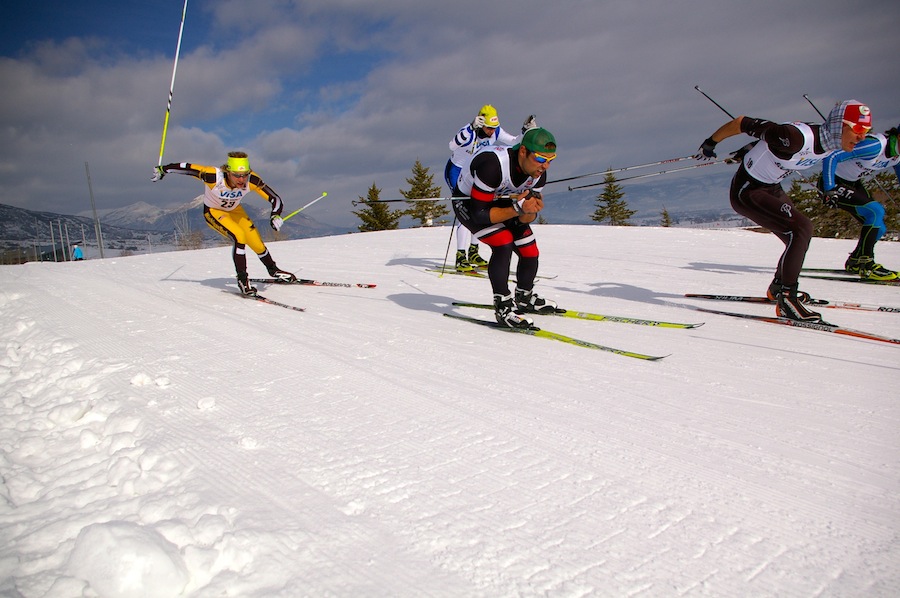
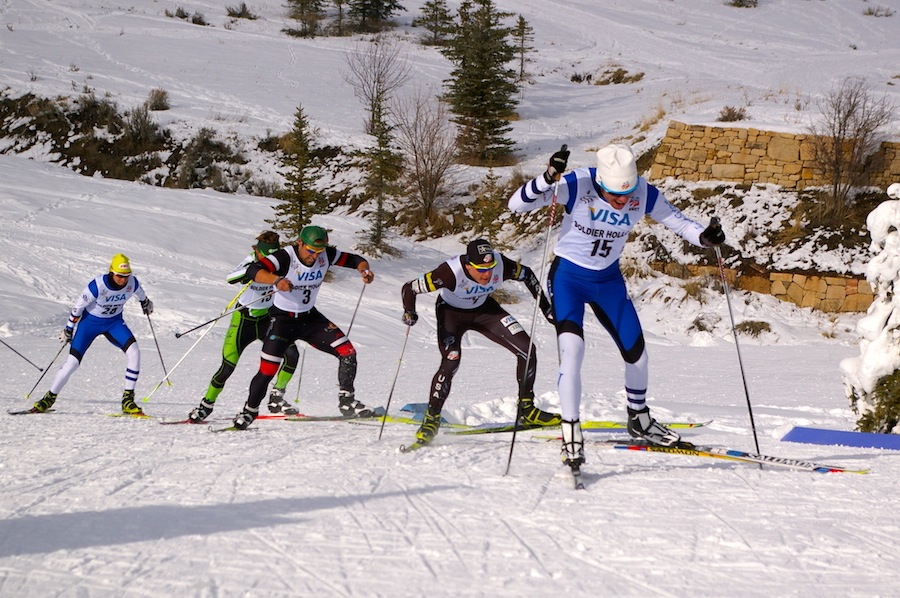
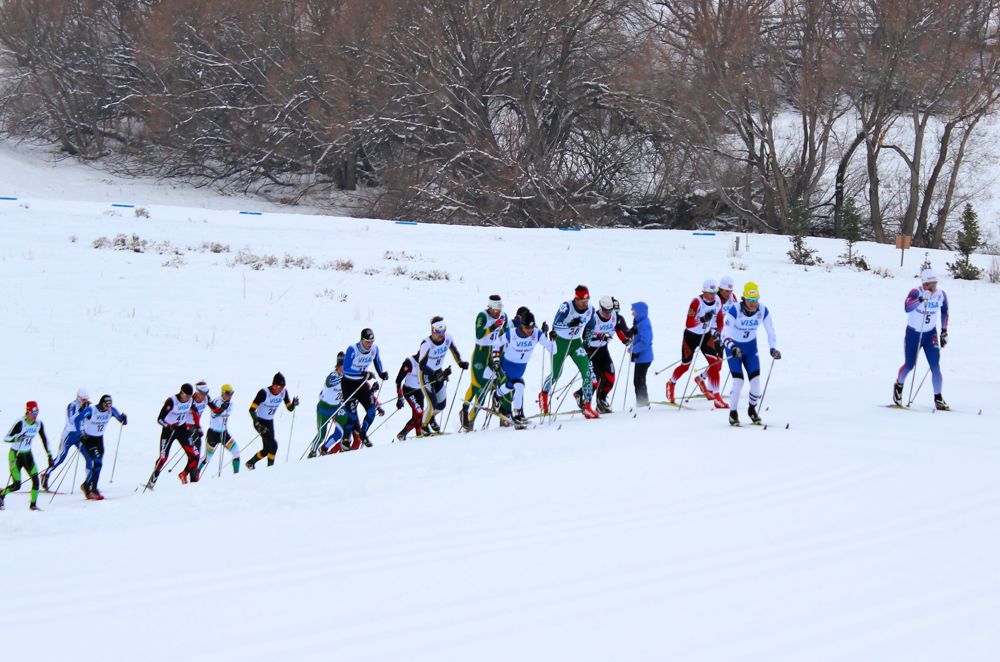
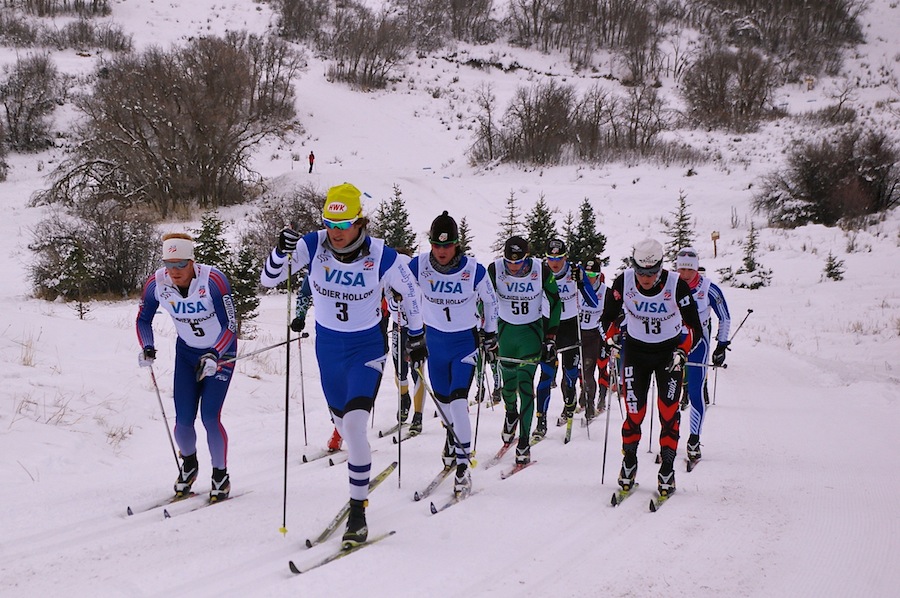
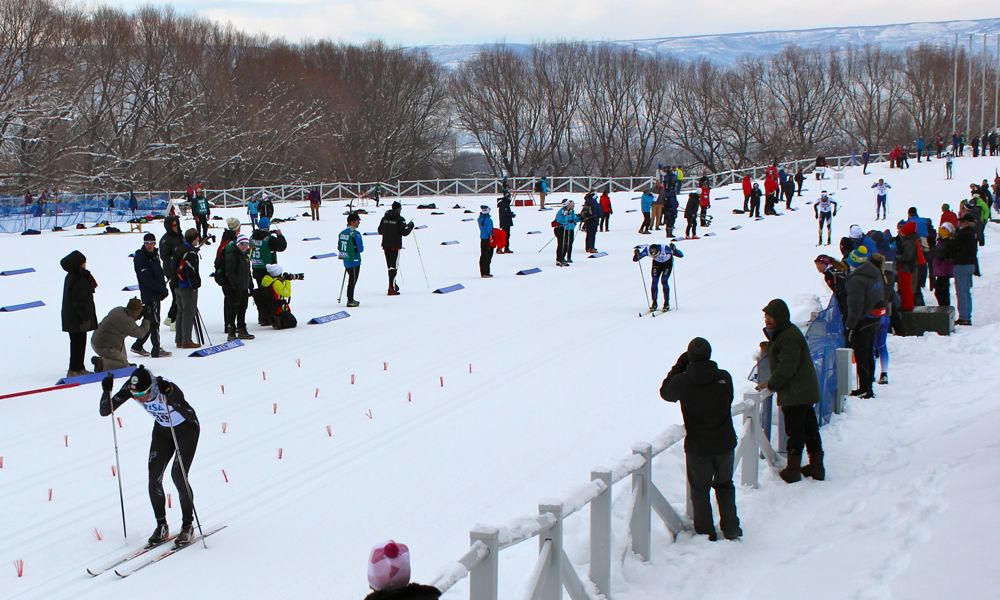
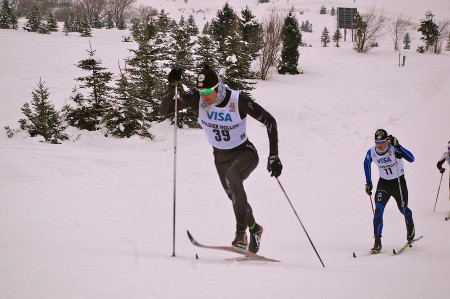
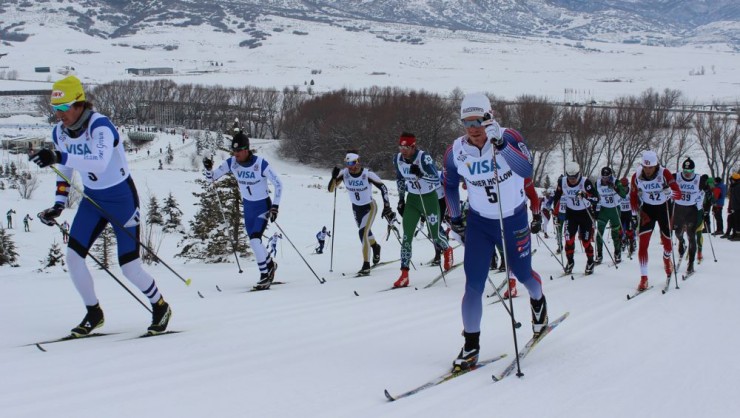
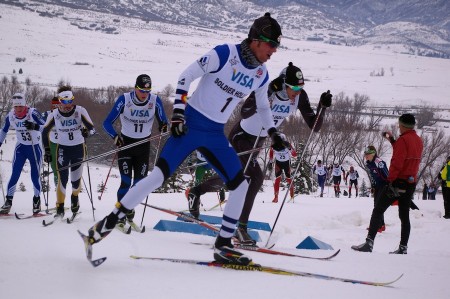
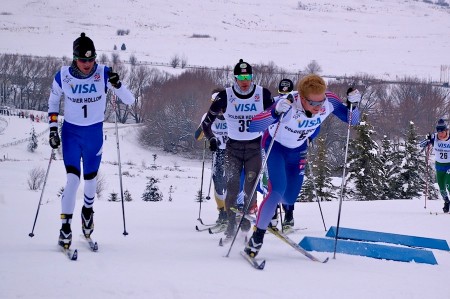
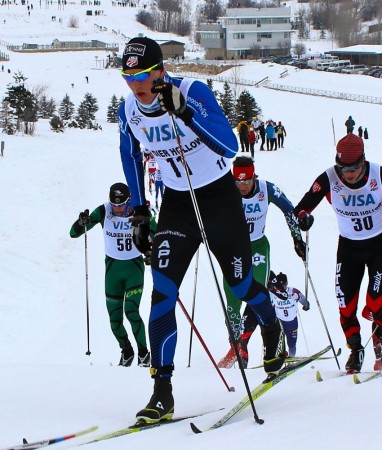
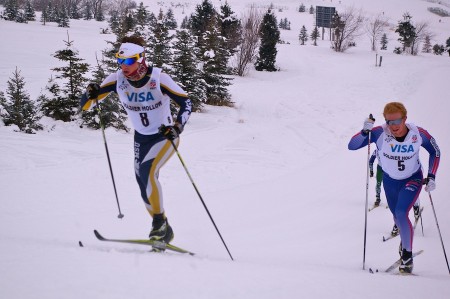
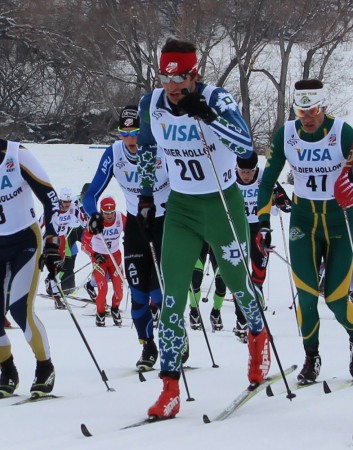
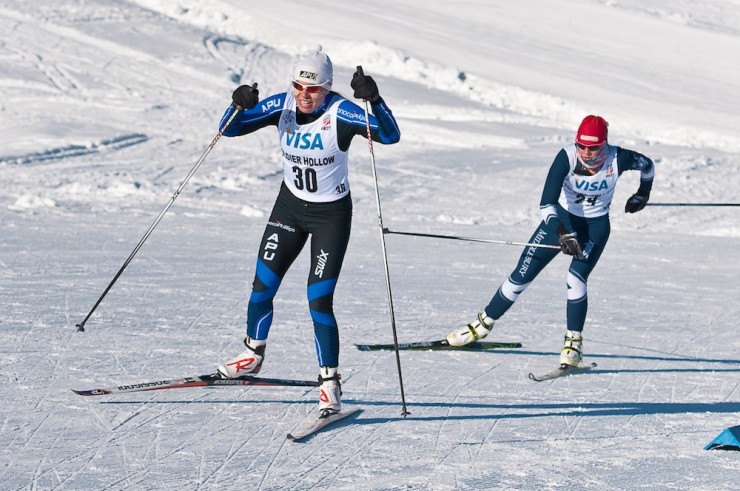
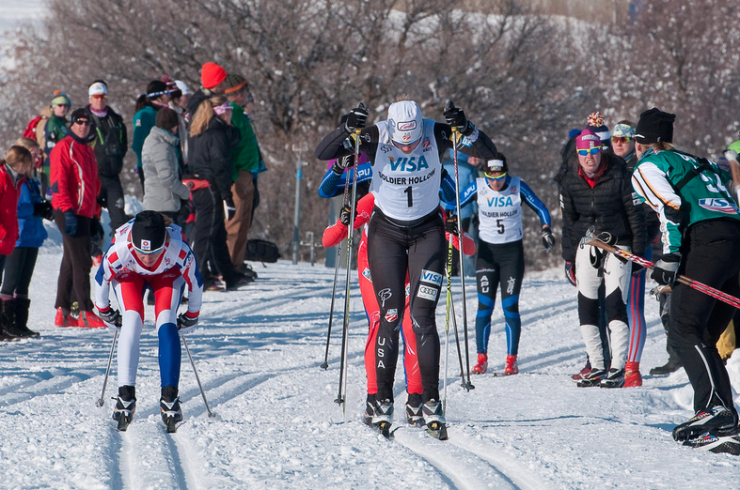
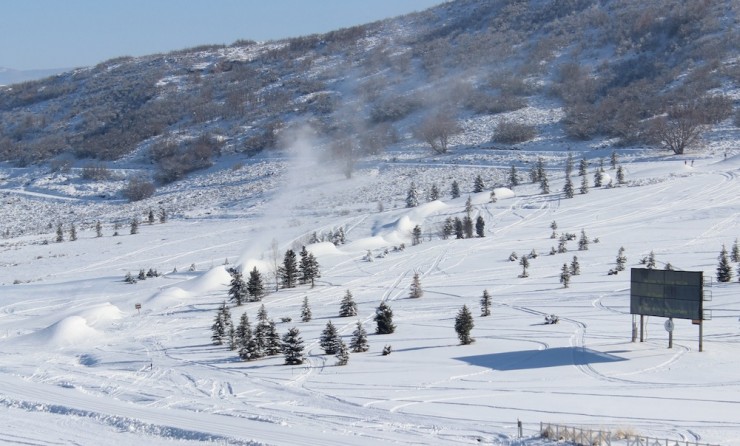
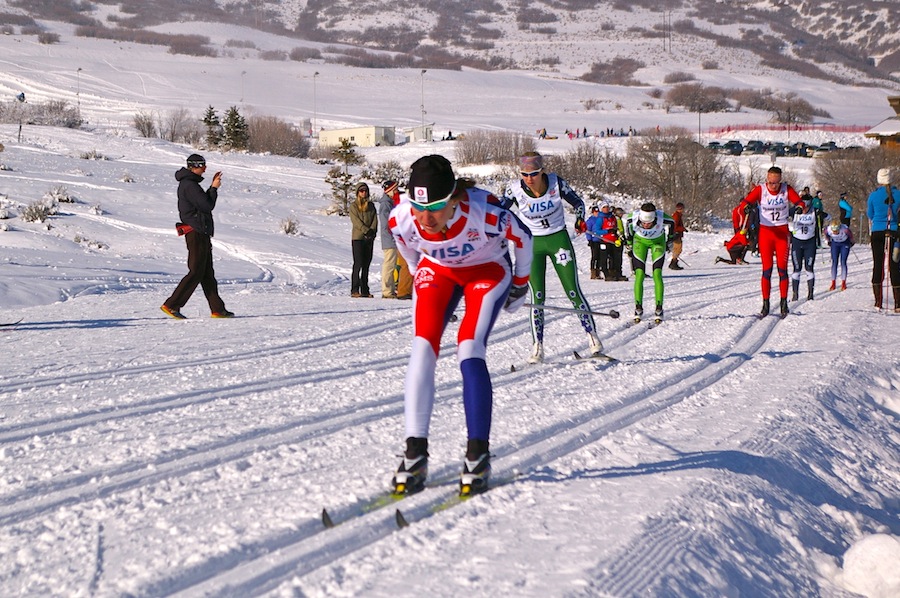
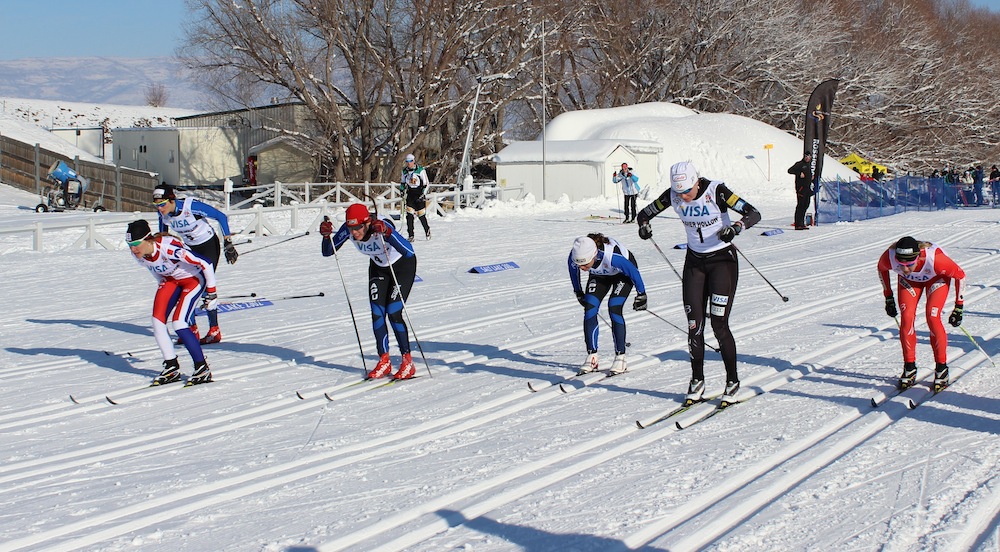
Blue skies and warm conditions greeted racers on the first day of US Nationals at Soldier Hollow, Utah. Rolling terrain and long sustained climbs featured in the 3×3.3 k course skiers completed as they raced a 10 k Classic Individual Start. (Photo: Tobias Albrigsten/UnTraceableGlobal.com)
Race day at Soldier Hollow in Midway, Utah offers a microcosm for the role the venue has played in US skiing. The once, and possibly future, Olympic venue is consistent, stark, and starkly consistent in its conditions, its terrain, and in the quality of the events the crew at the Soldier Hollow Nordic Center put on. The typical SoHo day starts dark, dry and frigid, before the sun crests the Wasatch Mountains and gives way to blue skies, t-shirts on course, and klister on wax benches. The course is undulating, pitched, and constantly rolling. And the venue, which just twenty years ago was cut into a long, open gully, on the Eastern Slope of the Wasatch ahead of the 2002 Salt Lake Olympics, has become the US ski racing communities perennial favorite place to meet up to push themselves, each other, and sport of nordic skiing, forward.
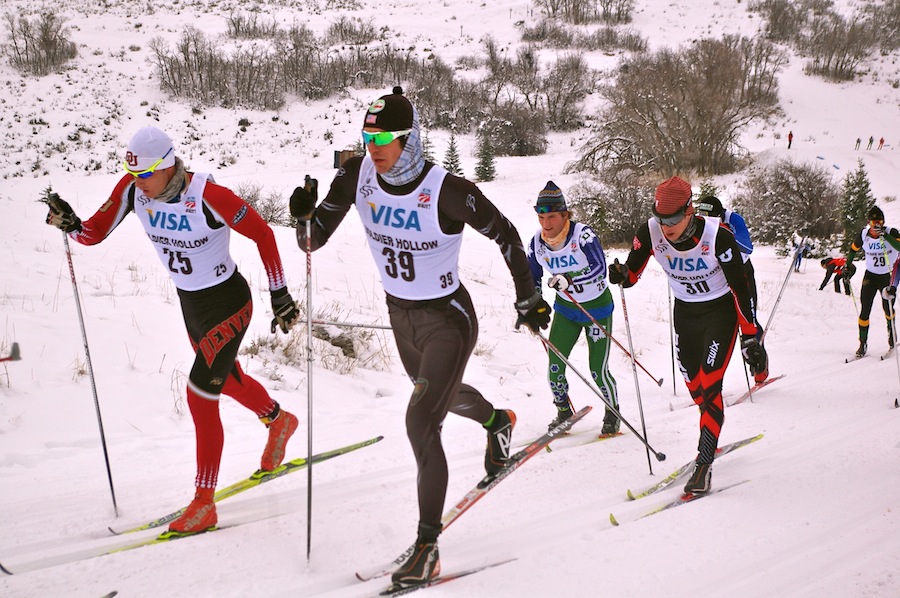
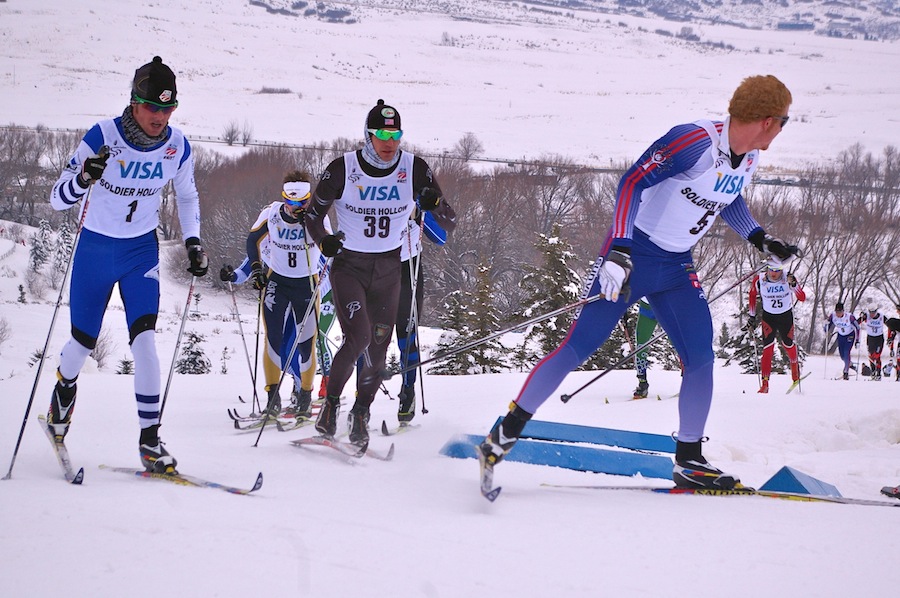
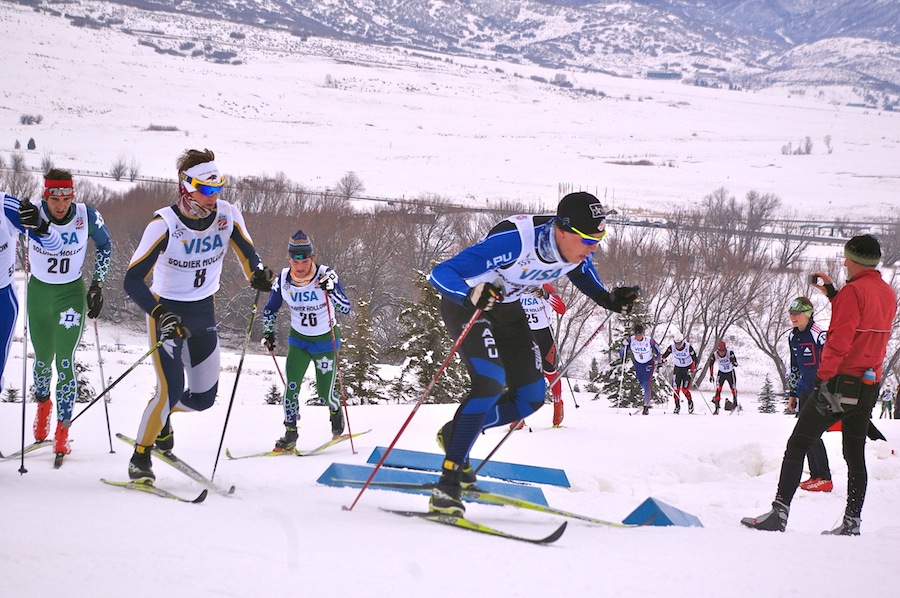
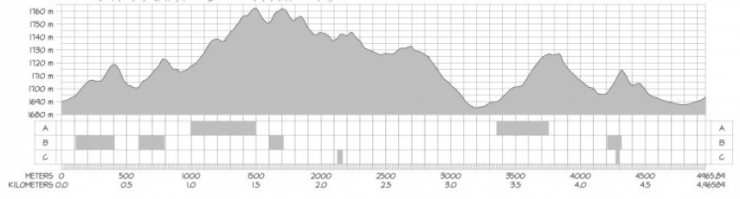
The first day of the 2024 US Cross Country Ski National Championships (colloquially “US Nationals,” or “Senior Nationals”) were classic SoHo. A field of over 400 athletes split between the Men’s and Women’s fields opened the week with a 10 k classic individual start. The three lap, 3.3 km course was a total challenge as a classic race, requiring skiers to be strong within all the nuances of striding, double-pole, and kick-double-pole. Each lap began with a climb “up the hollow,” a consistent pitch that in turn rewarded skiers who could apply consistent power across a double-pole at the bottom of the hill, and a long stride near the top. Then, the course horseshoed into a fast rolling section of the venue’s sprint loop (to be raced Thursday), before finishing with another climb up “cabin hill,” another, steeper consistent pitch that rewarded quick-tempoed striding, and, on increasingly warm artificial snow throughout the day, a well-selected klister from the wax cabin. It was a day that leaned into all the variables that make ski racing unique, underlying results that stand as a testament to the complex nature of putting together a single, great performance.
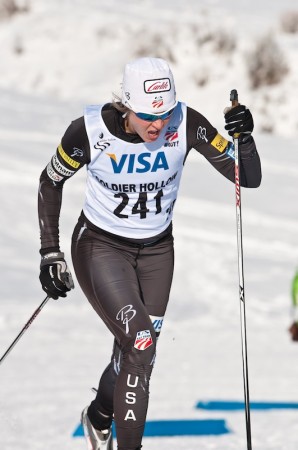
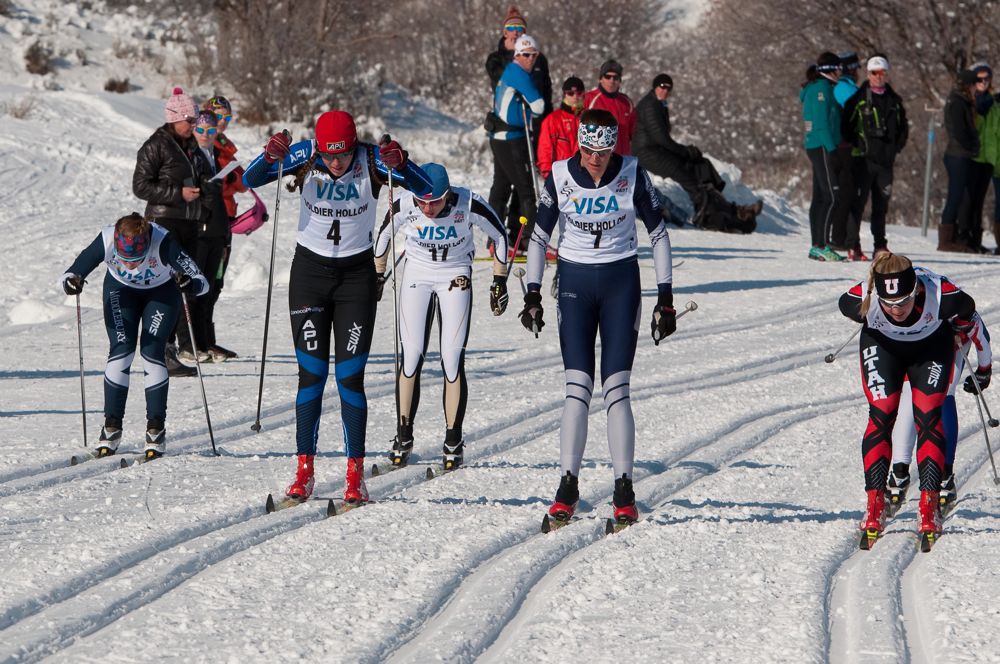
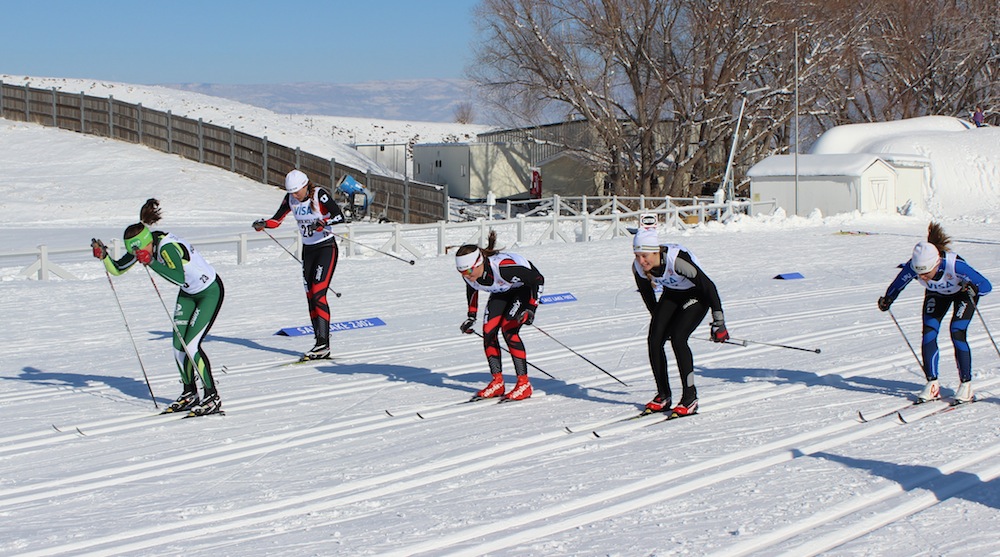
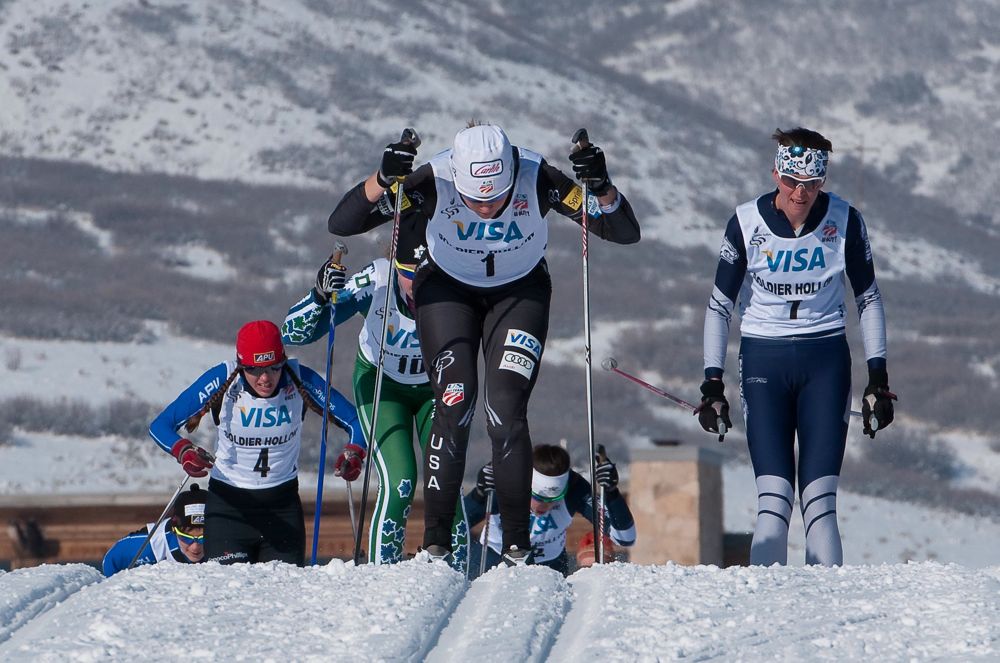
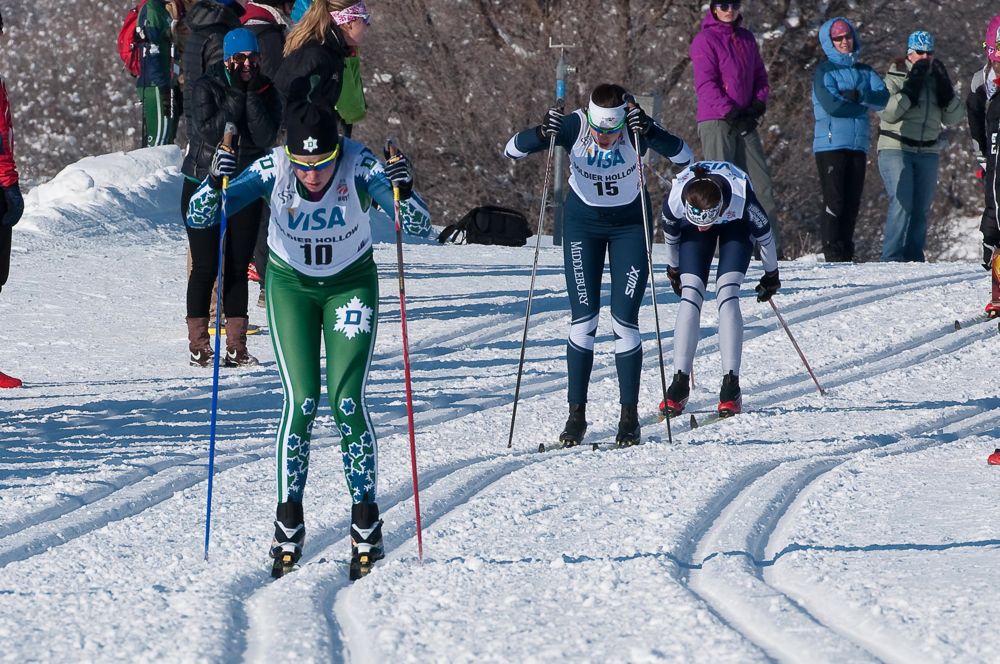
When the Women’s field began, the sun had just peeked over the Hollow, which led to fairly rapidly changing kick conditions over the course of the start order as the course warmed. Early pace-setters included Nina Schamberger (University of Utah) along with her teammates Karianne Olsvik Dengerud and Sydney Palmer-Leger. Schamberger would prove the top junior (U20) on the day, finishing seventh Overall, while Palmer-Leger and Dengerud would finish second and third, respectively.
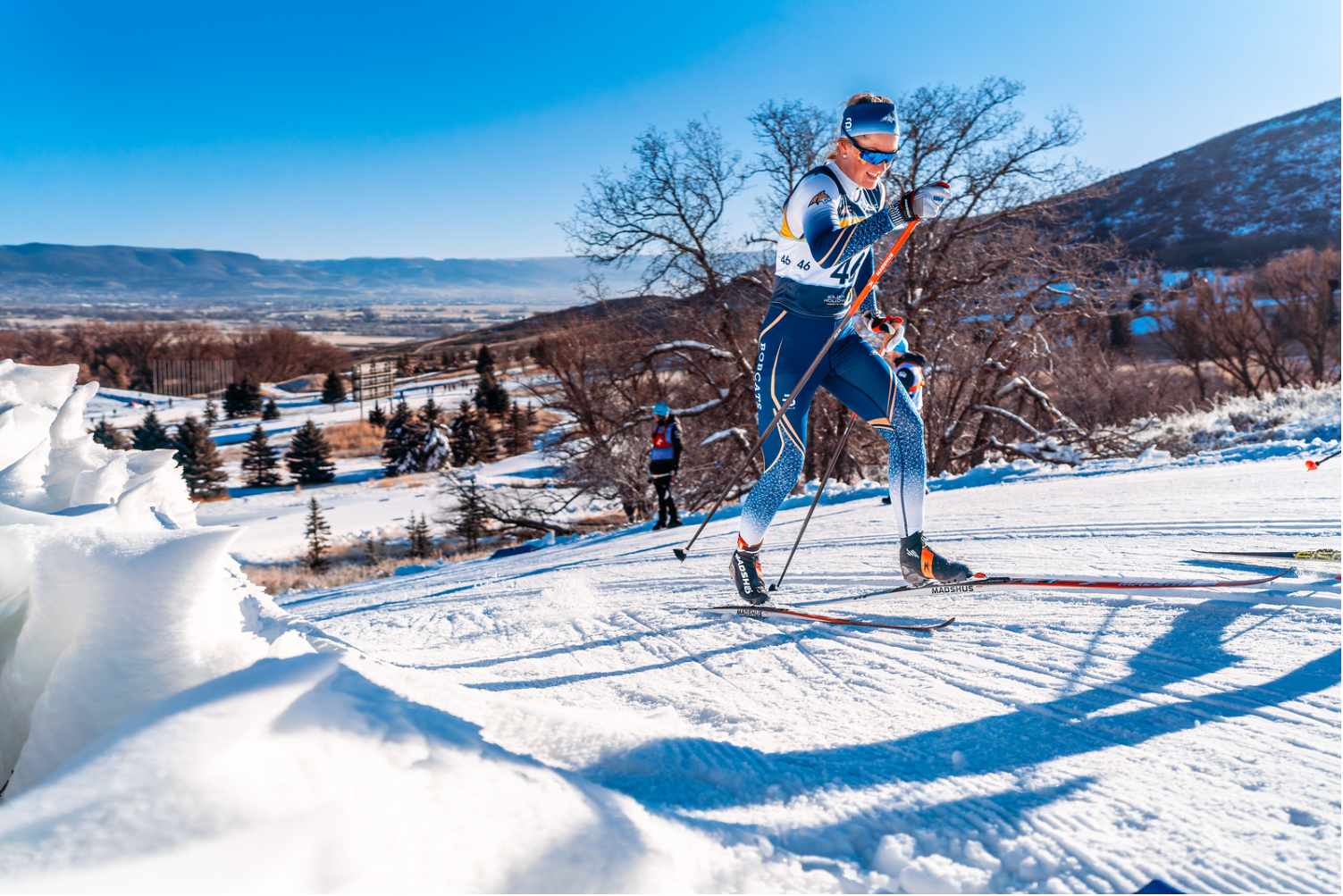
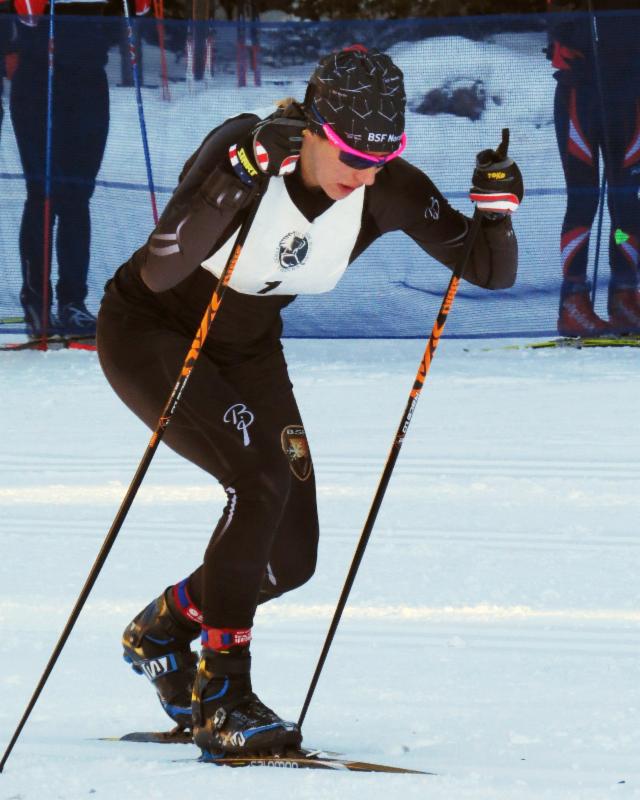
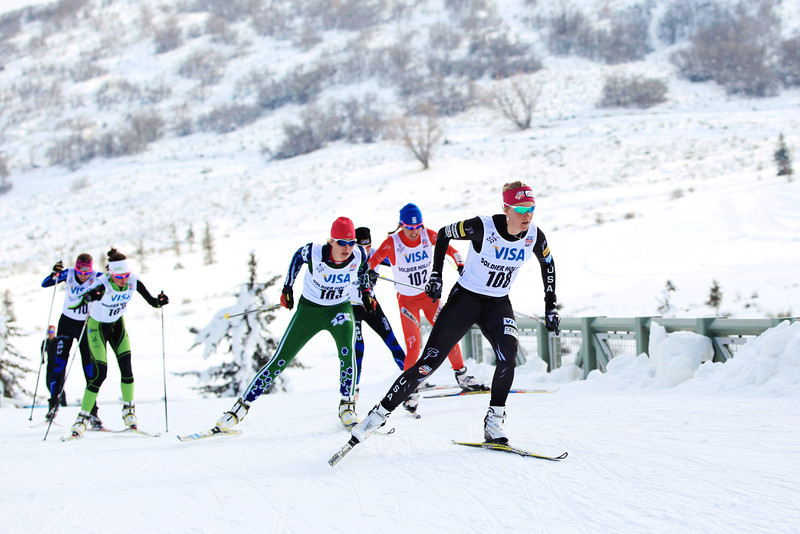
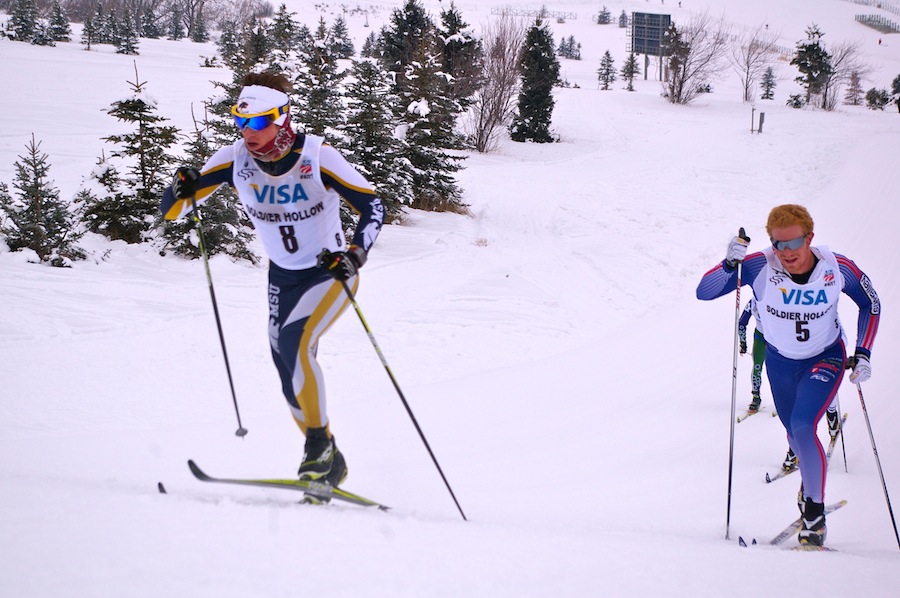
Swedish skier—and Montana State University sophmore—Tilda Baangman started fast and kept a steady pace as she posted the best time of the day in the Women’s 10 k Classic. (Photo: Tobias Albrigsten/UnTraceableGlobal.com)
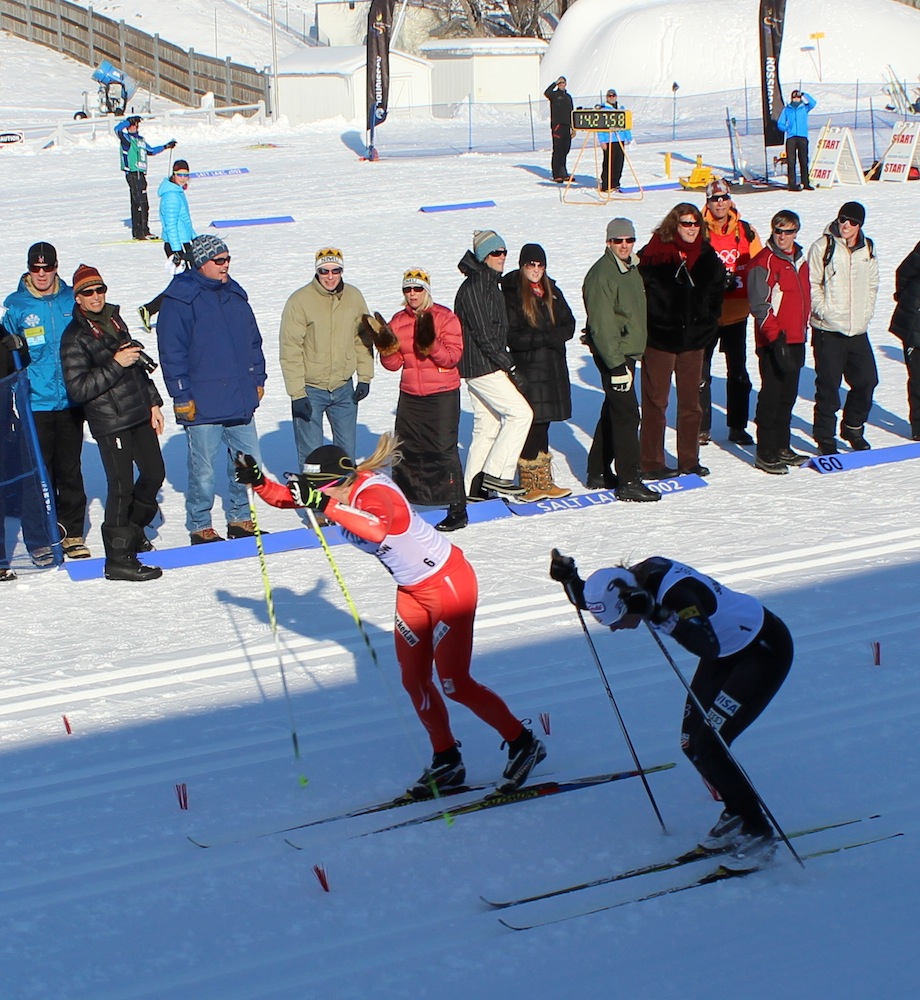
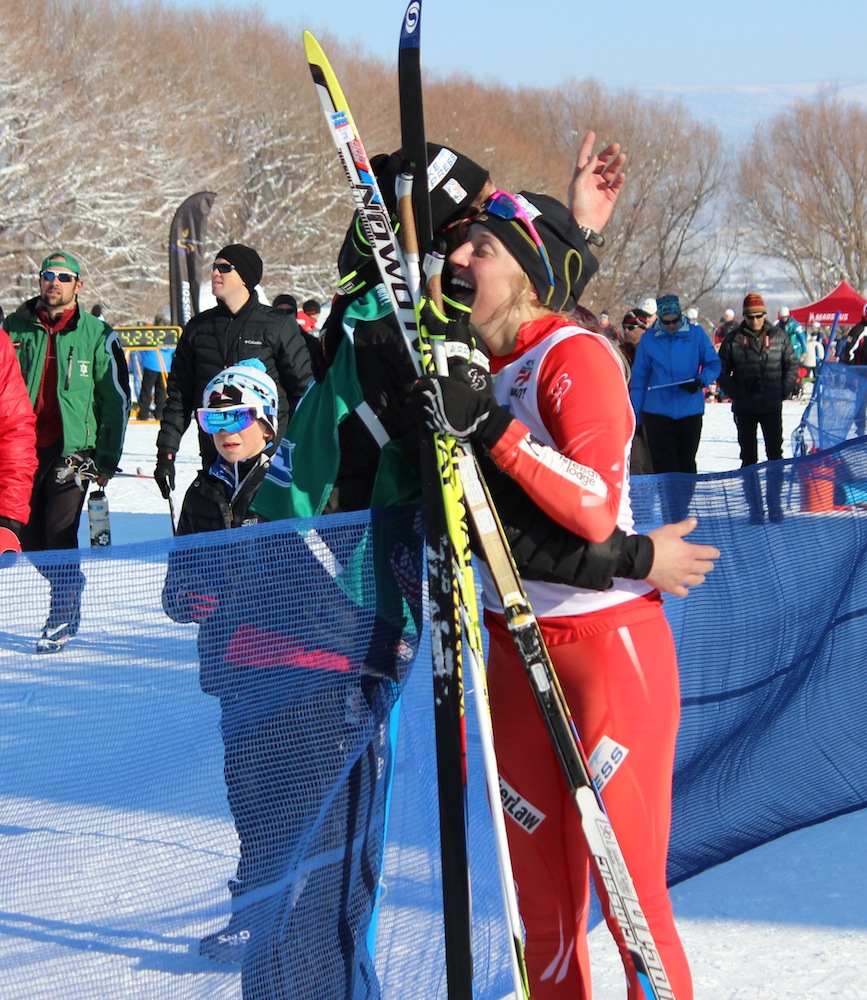
As the busy field of racers continued to wind its way up the hollow though, a blue and gold suit with bib 46 flashed by. Over the radio of Montana State Bobcats Assistant Coach Lizzie Larkins, a voice reported that Bobcats sophomore, Tilde Baangman, had the fastest split through lap 1. Baangman didn’t relent through the rest of the race, and ended up topping the field by nearly 20 seconds over Palmer-Leger. That made things official, with Baangman taking home her first win at Senior Nationals, and Palmer-Leger (second Overall) the American national champion. For Palmer-Leger, the result marked her first national championship, one-upping a second place in last year’s 20 k classic mass start in Houghton, Michigan.
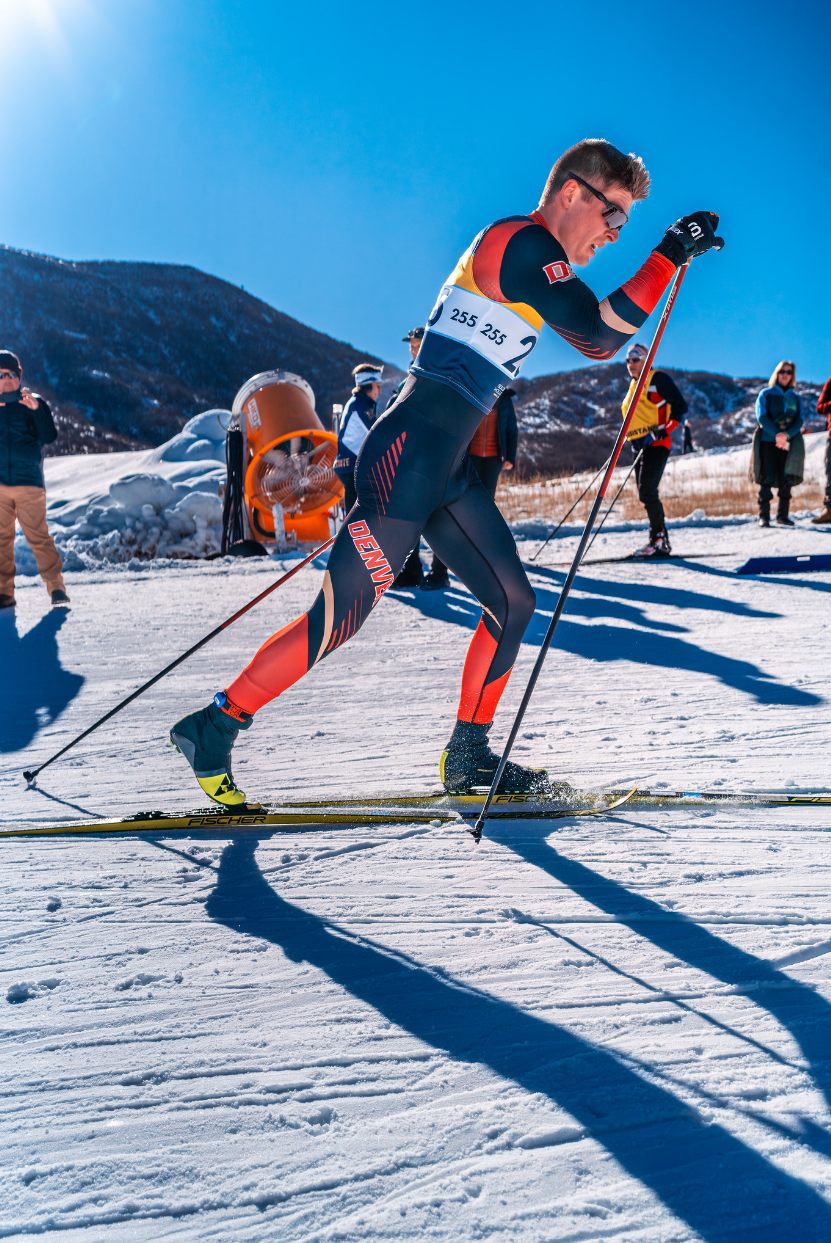
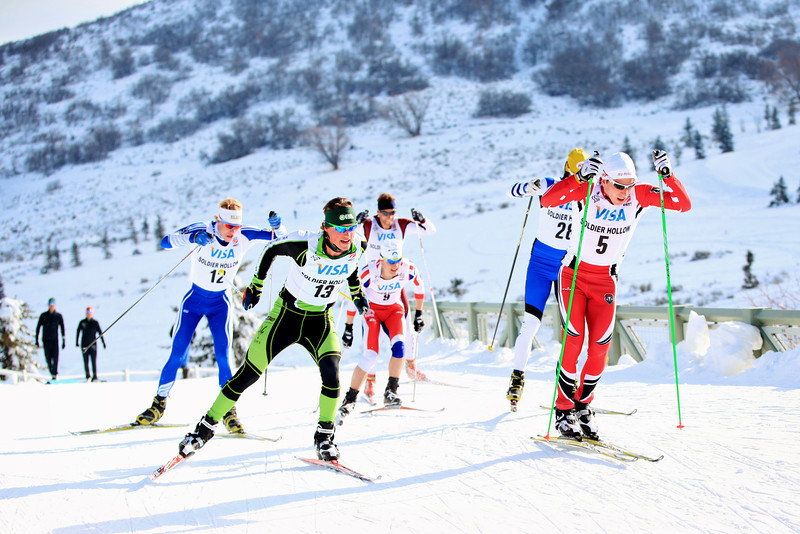
University of Denver Junior, Andreas Kirkeng, posted the fastest time of the day in the Men’s 10 k Classic. The Norwegian took his second straight victory in the US Nationals distance classic race, after wining last year’s 20 k mass start in Houghton, Michigan. (Photo: Tobias Albrigsten/UnTraceableGlobal.com)
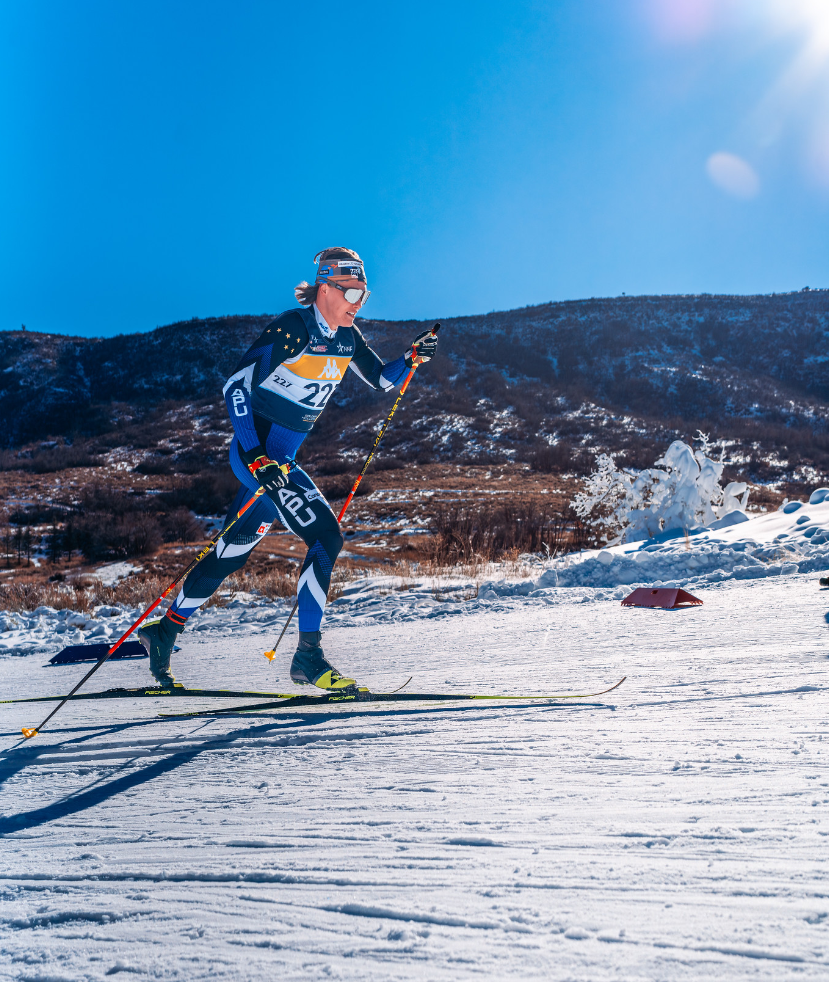
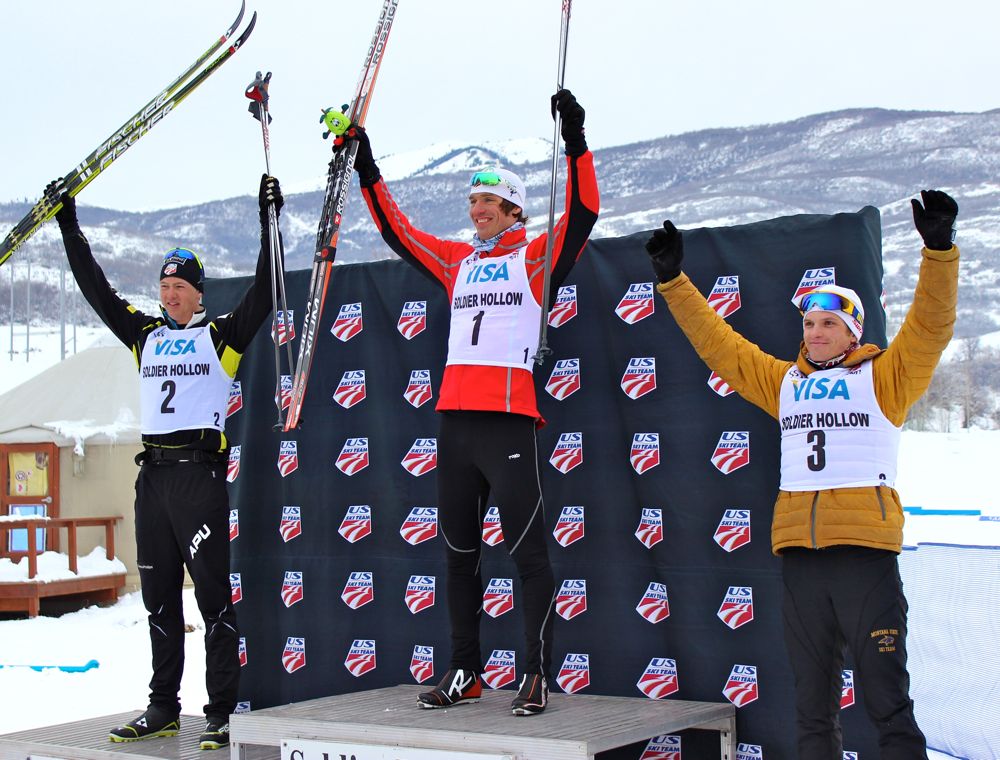
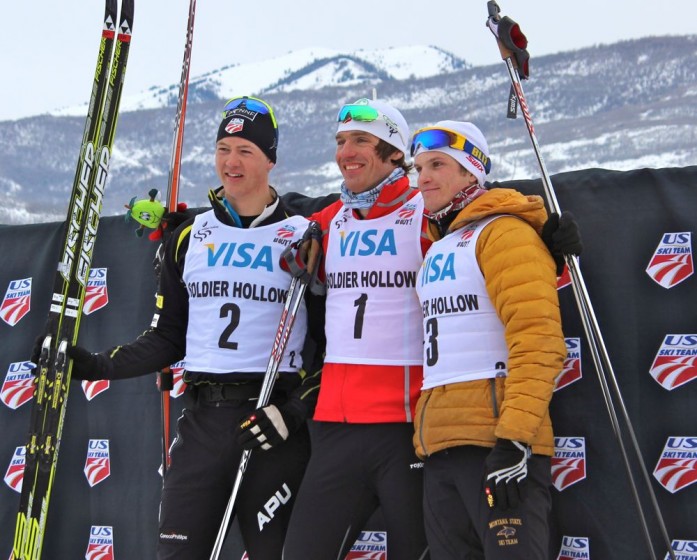
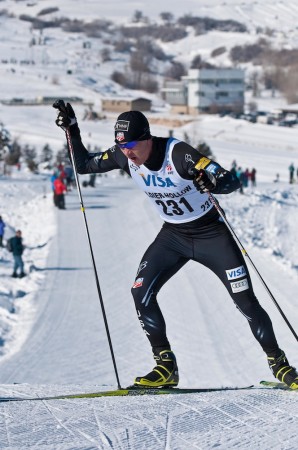
By the time the Men’s field began, Soldier Hollow had warmed up and the snow had started to transform. Whereas in the morning, there were klisters and hard wax covers and hybrids in between, the conditions had definitively crossed above freezing and into klister territory. APU skier Joe Davies set the lead pace. His 23:53.1 10 k would stand as the benchmark as the top contenders continued to push through the course before University of Denver’s Andreas Kirkeng started to trade splits with Davies. Through the entirety of Kirkeng’s race, times swung back and forth between the pair, before Kirkeng burst across the finish line to post the day’s best time of 23:50.8, just 2.3 seconds ahead of Davies. For Kirkeng, the Classic result improved upon a ninth overall in last year’s 20 k classic mass start at Senior Nationals in Houghton, Michigan, and gave him his second win at US Senior Nationals. Kirkeng, who hails from Norway, was followed in the Overall by Joe Davies, who skis under the flag of Great Britain as a British-Canadian skier, which made Luke Jager (third overall) the American national champion. For Jager, the result marked his second national championship in a distance classic race in as many years, and his third national championship Overall after also winning last year’s Classic Sprint. Jager was joined on the American podium by second place (fourth Overall) Peter Wolter (Sun Valley Ski Education Foundation), and third place (seventh Overall) David Norris (Team Birkie). The top junior skier was Dartmouth Ski Team’s Jack Lange, in 17th Overall.
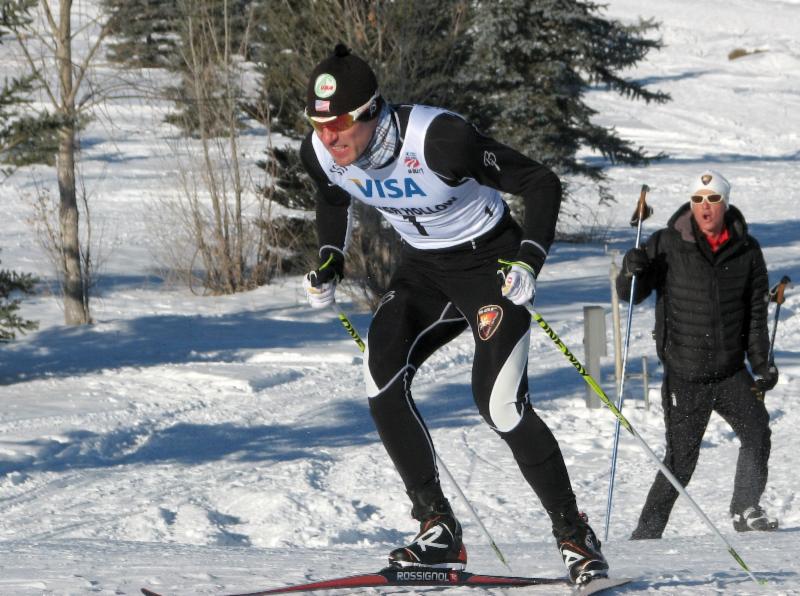
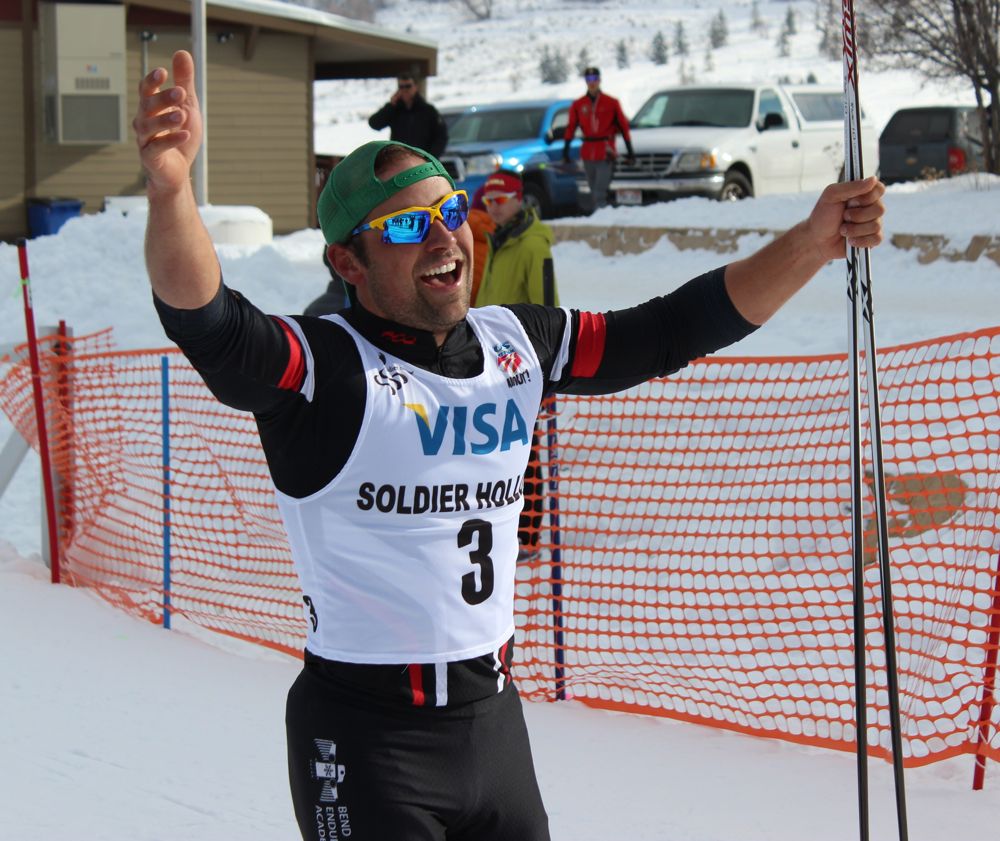
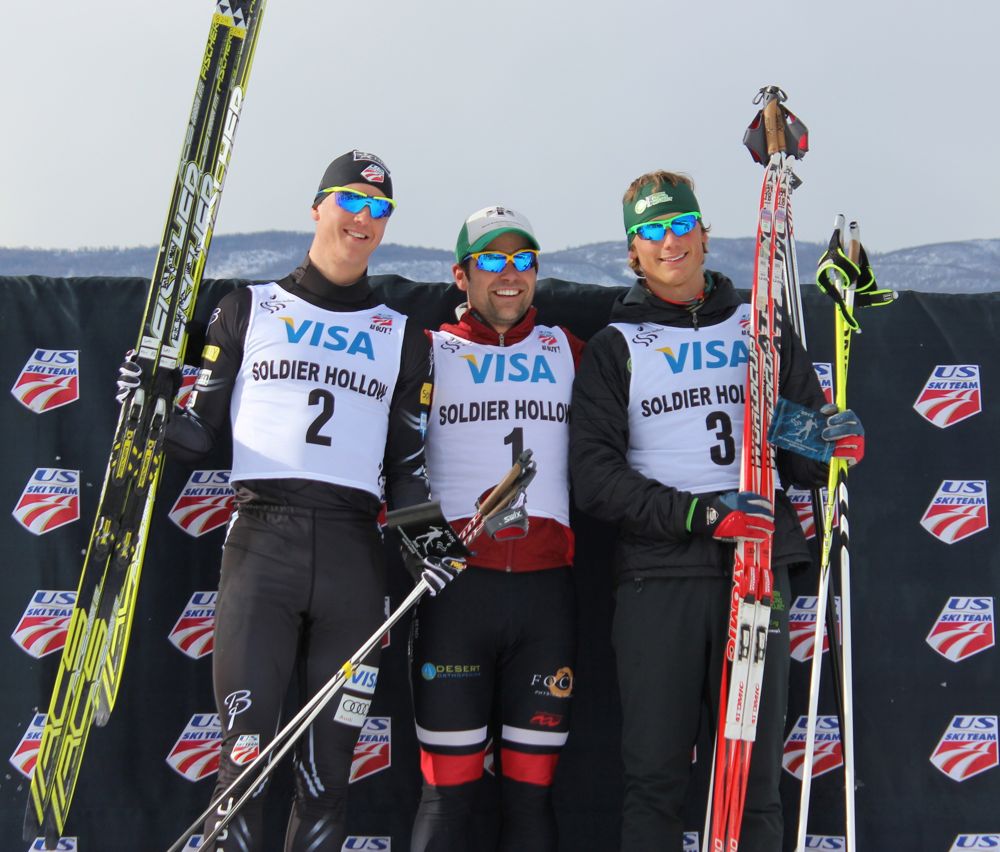
Luke Jager won his third career national title during Tuesday’s 10 k classic. The APU Nordic Center skier was third Overall in the race, behind Norway’s Andreas Kirkeng (first) and Great Britain’s Joe Davies (second). (Photo: Tobias Albrigsten/UnTraceableGlobal.com)
Action continues at US Nationals tomorrow, with the country’s best Para-skiers highlighted in a Sit Ski Sprint. That same sprint course will then play host to a Skate Sprint on Thursday. SoHo looks to be keeping to its trademark weather pattern ahead of the sprint racing action, with low lows and high highs in the forecast. Then though, there’s the possibility of snow. That might not just add to the excitement of the racing come Friday’s Skate Mass Start, but also serve to lift the spirits of the US ski community gathered from all corners of a continent that’s struggled with natural snowfall this year.
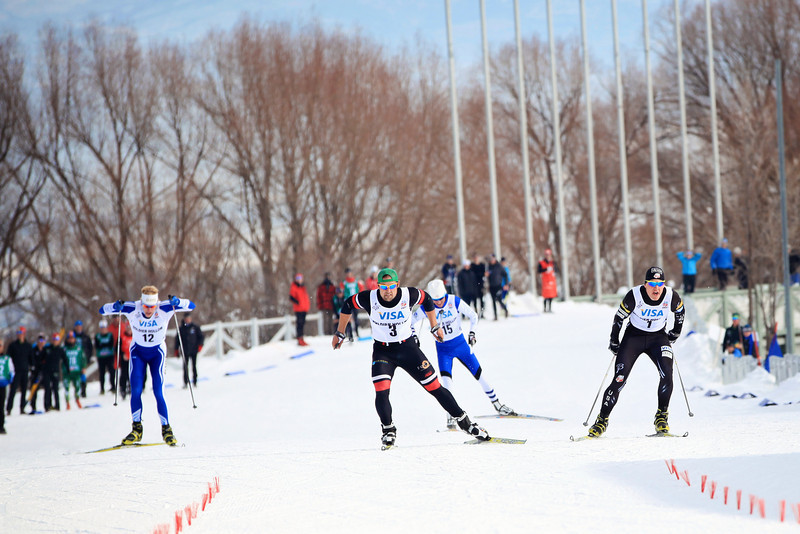
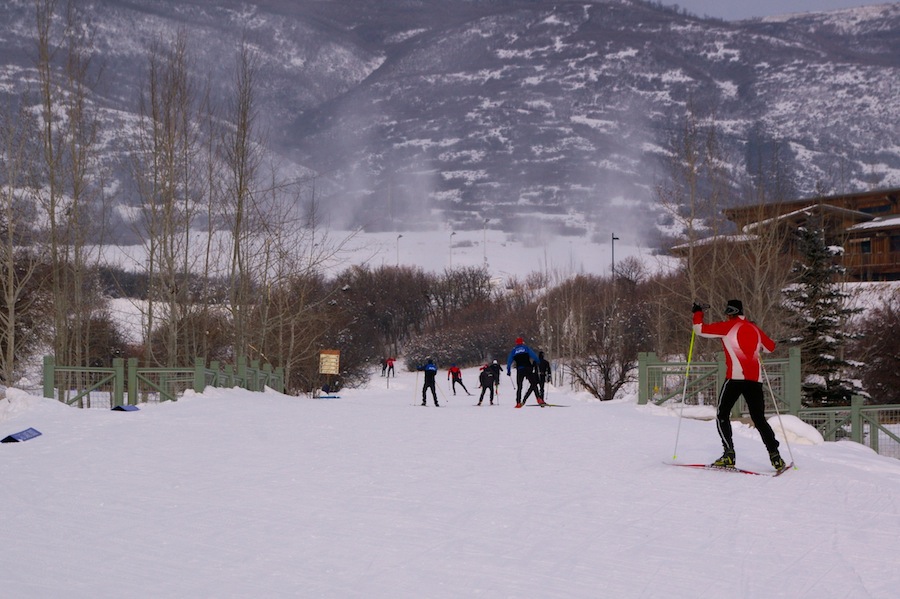
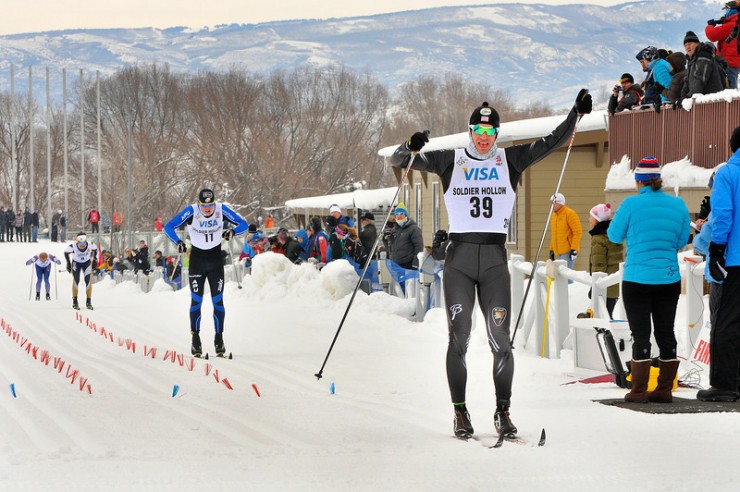
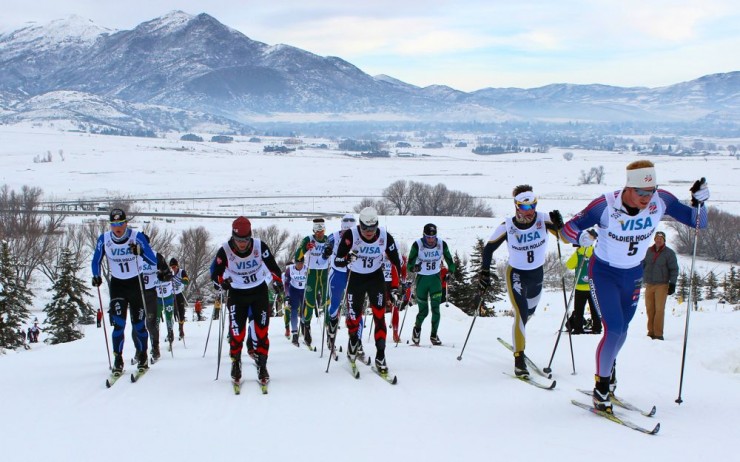
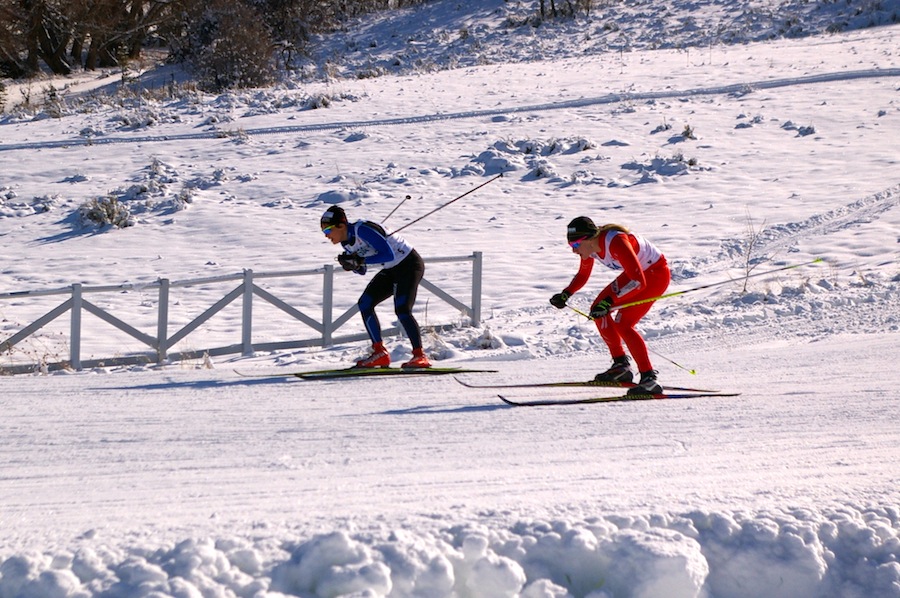
A classic Soldier Hollow day: sunny skies, warm snow, and a large field made for a bright start to US Nationals in Soldier Hollow, Utah Tuesday. Action resumes with a Sit Ski Sprint on Wednesday, before a Skate Sprint on Thursday. (Photo: Tobias Albrigsten/UnTraceableGlobal.com)
Tobias Albrigsten contributed photos to this coverage of US Nationals. A full gallery from Tuesday’s 10 k Classic is available on his website here, and you can follow him on Instagram @UntraceableG.
Quick Recap:We’ll have a full race report up tomorrow, including athlete comments and plenty of photos, but here is a quick recap of the action in the men’s 30k and women’s 20k, which took place this morning at the 2022 U.S. Cross Country Championships in Soldier Hollow, Utah.
Perhaps becoming a theme of the 2022 U.S. Cross Country Championships, the 20/30-kilometer mass start freestyle distance races were both won by athletes who have spent the last six weeks racing in Europe on the World Cup.
In the men’s 30k, Scott Patterson (USST/APU) led the lead pack of men through an eight-lap course to take the win in 1:13.25. David Norris (APU) was next over the line for second (+11.7), with Hunter Wonders (USST/APU) rounding out the podium in third (+27.2) for an APU sweep. This is Patterson’s first national title in the 30k, though he won the 15k interval-start race in 2016 and 2018.
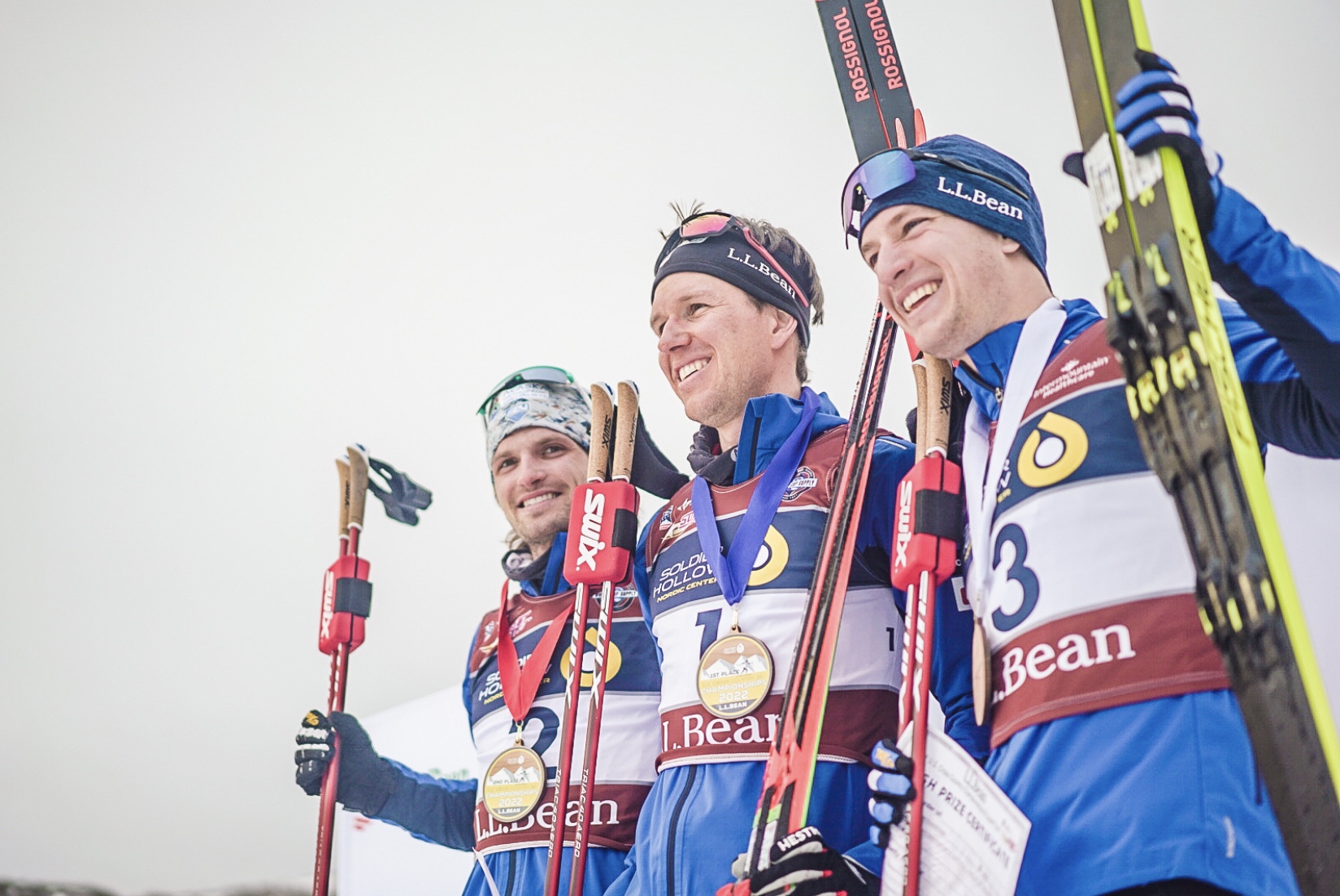
The men’s podium of the 2022 U.S Cross Country Championships 30k mass start freestyle: Scott Patterson took the win ahead of David Norris in second and Hunter Wonders in third. (Photo: Tobias Albrigtsen / @untraceableg)
Continuing the theme of APU dominance, Rosie Brennan (USST/APU) led from the start to win the women’s 20k free in 53:16.9. Her teammate, Rosie Frankowski (APU), won the race for second place, crossing the line 1:20.6 behind Brennan. Coming down to a final sprint, Caitlin Patterson (CGRP) finished 1.9 seconds behind Frankowski to take third.
In the junior men’s race, Walker Hall (Univ. of Utah) won the 10k in 24:29.4, edging out Wally Magill (Dartmouth) who finished second (+0.5), and Brian Bushey (Univ. of Utah) in third (+18.9). In the junior women’s 7.5k, Kate Oldham (Middlebury) took the win in 20:17.7, ahead of Nina Seeman (Dartmouth) in second (+0.7), and Nina Schamberger (Summit Nordic Ski Club) in third (+1.1).
Stay tuned tomorrow for detailed coverage, athlete interviews, and more photos from the action.
Results, including splits from live timing, can be found here.
Jennie Bender is just coming off a dominating performance at US Nationals. She has had some bad luck the past few years with her health (Mononucleosis and back injuries) and it has been so inspiring to see her fight through it all with both patience and dogged determination. Congratulations Jennie!
Toko All Stars: Jennie Bender
1. Who was your skiing role model when you were growing up and why?
I looked up to each person who reached out and helped me learn. Not growing up in a nordic family, I didn’t hear skier names being thrown around, so never really globbed on to anyone. Instead I looked up to those in my life who stepped forward and shared their experience through coaching. Truthfully, Lance Armstrong and the William sisters were more my athlete role models. And now, I’d love to meet Ronda Rousey.
2. What skier inspires you currently and why?
Never met her, but Lindsey Vonn seems pretty rad. She works hard, motivates me to keep at it, to work through it, and rocks the media component of being a celebrity athlete.
3. Favorite race course and why?
I’m a big fan of Theodore Wirth Park in Minneapolis. It’s fluid, good for power athletes, and it’s one of the best cheering demographics around!
4. Favorite workout and why?
Max strength. We workout at an old Golds Gym here in Bozeman, so max strength is the only time I too, can grunt and walk around with my chest puffed out.
5. Favorite place to train and why?
Training in Montana is pretty rad. We have on average cooler temperatures and few to no bugs. After growing up in mosquito haven in VT, and tick city in Wisconsin, I’d way rather carry around the occasional bear spray.
6. Favorite movie line and why?
“Shake and Bake Baby” – Ricky Bobby, Talladega nights
7. Favorite Toko glove model (and/or color) and why?
I really like the Toko Arctic, because Ive gotten frost bite so much, I wear thick gloves all the time.
Buy Jennie’s Favorite Gloves: The Toko Arctic Glove in Flag
This is the warmest 5 fingered glove cross country ski glove on the market. It also is touch screen capable! MSRP $53. Buy at (click for direct link):
Fully Fischer: Caldwell Breaks Through in Oberstdorf // Fischer Athletes Top Podiums at US Nationals
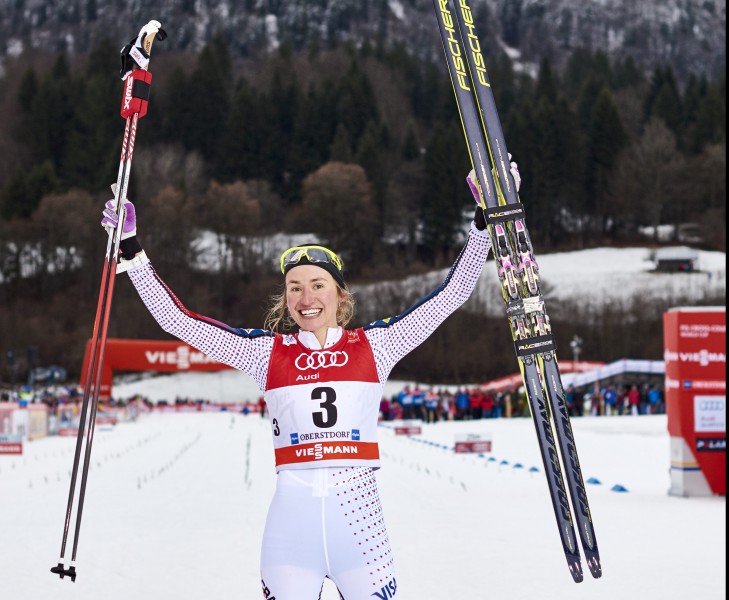
It was a historic day in Oberstdorf for US Ski Team member Sophie Caldwell as she skied to a victory in the 4th stage of the Tour de Ski on Tuesday. This was her first World Cup win, although not her first time on the podium, (3rd in the 2014 Skate Sprint in Lahti) and she was incredibly pleased with the result. Despite challenging weather conditions, and a soft and slushy man-made course, Caldwell was able to stay upright on the tricky downhills and really push on the uphills, staying in the pack until the final flats where she outsprinted Heidi Weng and won by a lunge at the line. Caldwell’s win is only the 3rd World Cup victory by an American woman, and the first win in a classic sprint.
Fischer Athletes have made a great showing at US Nationals this week in Hougton, Michigan, snagging five of the twelve podium spots in the first two races of the weeklong event. Caitlin Patterson skied to a victory in the 10k Classic on Sunday, winning by over 30 seconds and sharing the podium with Chelsea Holmes who came in third. Patterson returned the next day to hammer in the skate sprint races and claim another spot on the podium in third. In the men’s Skate Sprint races, Reese Hanneman notched the fastest qualifier time and held his position throughout the day, eventually sharing the podium with Dakota Blackhorse-von Jess who finished second.
We approached this week of nationals the same way we did last year: to try to find a good under layer, a good binder, and a good top end speed when the days warm to above freezing.
For the distance classic day we went with Toko base green binder mixed with a little hard klister to keep the wax on for 10-15k. Toko jetstream red powder was the ticket for the afternoon racers and our skis were great.
The skate sprint brought similar conditions and Toko HB004 and Toko jetstream red tested great for the heats, but we had another powder come in just ahead.
For the distance skate day the Toko powders were once again the ticket. For the afternoon races we made our first jump of the week into the yellow range. Toko jetstream yellow powder with a good HF and good under layer is almost always second to none when the snow gets saturated.
The classic sprint day was tough day for kick selection and we ended up being about one heat behind the transition from red to yellow hard wax. This was unfortunate, but once we got Toko Yellow on the skis, it performed very well in the later heats. We opted to go a bit bit short and bit stickier, hoping to keep the kick zones off the snow, but still allow optimal kick up the long climb on the sprint course.
Tim Baucom, coach
Team Gregg
We had our best US Nationals ever with great skis every single day. We set up shop in Soldier Hollow in the weeks leading up to the races and were able to gain an understanding for the snow and the snow pack. In testing we found that a lot of waxes ran well on the man made snow, but the big differences were on the natural snow. One of our favorite things about Toko is that the wax works well in a variety of conditions especially HF Blue.
Classic 10/15k
The night before the classic race we put on 2 layers of HF Blue and Fredrik and Pierre from New Mexico took care of the top coat and kick. They ironed then corked JetStream Red powder in the night before so as to be able to focus on kick on race day. Ski choice was key and we went with stiffer skis that allowed for a thin universal klister layer covered with Toko Gripwax Red.
Freestyle Sprint
The sprint loop was entirely on man-made snow and was really fast. We went with a layer of LF Black and then HF Blue hardened with X-Cold powder. In the afternoon we ran the same base layer but covered with a block.
Skate 20/30k
Again we went with HF Blue for its excellent range. We tested powders in the morning and found JetStream Blue to be excellent before the Men’s race. With the temperatures warm, Pierre tested structure all the way up to race start. The Toko Red Structurite roller really sped things up especially as the race progressed. Retesting during the Men’s race, we used JetStream Red in the women’s race. I had my first US Nationals podium with a 2nd place just 2.8 secounds out. With the confidence of having the fastest skis in the field, Caitlin decided to go from the gun and finished with an impressive 3 minute 36 second lead.
Brian Gregg
Here is a breakdown of what we ran at Nationals for Toko.
1/4- 10/15k Classic Race
Toko Green Base
Toko Red Kick
Glide-
DLC Moly
HF Red/ HF Blue
Jetstream Red Guys, Toko HB004 Girls
1/8 Skate Dist 20/30k
DLC Moly as a base
HF Red
Jetstream Red Powder- Both Men and Women
1/10 Cl Sprint-
Yellow Kick
Glide-
HF Orange
Yellow Block
Just we tested a lot of other waxes and Toko was what we ran on all of those occasions. It is definitely running very well and testing Toko waxes in combination with one another (ie mixing red/blue hfs, blue or red with AX 134, red/ blue jetstream) can be very good! Think creatively when testing wax combos and often times they can be very successful!
Colin Rodgers, head coach elite team
Far West Elite Team Senior Nationals 2014 Wax Report
Classic Distance: We started with Toko LF Black then put Toko HF Blue on top. For powders, Toko HB004 was the fastest we tested on race day. We tried a number of binder layers, including thin klister, but found Toko Base Green Binder was the fastest.
Freestyle Sprint: Here we skipped the LF Black layer and just went with Toko HF Blue. HB004 remained the fastest powder we tested, so we stayed with it.
Freestyle Distance: Again we started with Toko LF Black and with Toko HF Blue. In hindsight we should have gone with a warmer HF base layer, either Red or Red/Blue 1:1, as it was slightly warmer that we expected. Across the board ironed in powders were faster then blocks and liquids. The powder combination we like best was Toko HB004 mixed with Jetstream Red Powder 1:1.
Classic Sprint: As in the Freestyle sprint, we forwent the LF Black base layer. We ended up going with a different HF paraffin, which would have been equivalent to a 2:1 Red/Blue mix. For topcoats we liked the Jetstream Red Block best.
Note: if you are interested in the conditions for the races, look at the eBlasts that were sent out and that described the respective conditions. You can find them here.
Click here to read reviews of Toko Textile Proof from hundreds of average outdoorsmen and women who have tried
MIDWAY, Utah — With the first race of the 2014 U.S. Cross Country Championships taking place Saturday, FasterSkier took to the trails of Soldier Hollow to preview the course and get a sense of how racers were feeling about the four-race series. Between wax testing, tactic planning, and pickups, athletes expressed excitement about the 10 and 15 k races.
However, with a challenging 5 k course at altitude, many also said they were wary that skiing hard from the start might not be the best strategy. With possible Olympic bids on the line, everyone is looking to ski their best.
Check FasterSkier for up-to-date results and reports as the championships unfold as well as live timing on summittiming.com and complete results on the event website, uscrosscountrychamps2014.com.
Take a look at our photo gallery to see the Soldier Hollow course from our perspective, and read a selection of quotes from racers in the championships.
The morning fog that often blankets the Hollow makes for many a beautiful and cold morning.
The morning fog that often blankets the Hollow makes for many a beautiful and cold morning.
The bridge that takes racers into the finish.
The finish zone at Soldier Hollow in Midway, Utah, where the U.S. Cross Country Championships will kick off with tomorrow’s 10 and 15 k individual classic races.
The stadium.
A view of Soldier Hollow’s stadium from the highest point of the 5 k olympic course.
The largest climb on the course, Hermods Hill, covered in manmade snow.
Athletes and coaches testing skis in the stadium.
Athletes testing skis and doing pickups in the stadium at Soldier Hollow in Midway, Utah, where the U.S. Cross Country Championships will kick off with tomorrow’s 10 and 15 k individual classic races.
Snowmakers have blow much of the snow used on tomorrows course, and can be seen in the distance.
“I’m pretty excited! It’s a really fun course this year. It’s great to get to stride on so many hills. For me my biggest challenge will be to stay focused on good technique an not getting into that pain cave too early. I have a tendency to want to go really hard really fast and that won’t do so well on this course.” — Heather Mooney (Middlebury College Ski Team, past Junior World team member)
“It’s the first time that I’ve ever skied the olympic 5 k course. It will be fun. There are a lot of big ups and big downs. Pacing is definitely key, and it’s important to find the perfect spot between going hard and not blowing up too soon. Hopefully the conditions will be the same as right now because it’s fantastic.” — Jennie Bender (Bridger Ski Foundation, national champion in the classic sprint and third place in the skate sprint in 2013 U.S. Cross Country Championships)
“It’s always cool to be in SoHo. It’s a great place to race. I’m starting the week with the skate sprint. It’s a new course so that adds a new dynamic. I think it’s going to be really nice that they’re adding some more hill.” — Torin Koos (Bridger Ski Foundation, national champion in the classic sprint and 30 k in the 2013 U.S. Cross Country Championships)
“It’s awesome. It’s one of the best spots I’ve ever been. … The course is really tough. It’s steep uphills and the downhills are very fast so you have to stay concentrated the whole time.” — Moritz Madlener (Denver University freshman, formerly on the German national C-team and Junior World team)
“I’m excited. It’s beautiful weather and great tracks and it’s fun having everyone here so it should be a fun day. …
For me [the biggest challenge is] gonna be skiing in control the whole time and not kind of blowing up and then walking in the last 5 k, so just kind of ski strong throughout the race as opposed to super hard during one specific section.” — Erika Flowers (Stratton Mountain School T2 Team)
Sadie Bjornsen and Sophie Caldwell, waiting for the outcome of their photo finish to come through in the freestyle sprint at U.S. Nationals.
FasterSkier’s coverage of the 2013 U.S. Cross Country Championships is brought to you through the generous support of The Memory Clinic in Bennington, Vt.
MIDWAY, Utah — Skis cleaned, bags packed, flights boarded. The hundreds of athletes, coaches, parents and fans that camped out at Soldier Hollow for the past week have all either gone home to recuperate or are on their way to the next race. As usual, athletes were so verbose in describing their races we couldn’t fit it all into our race reports. The final edition of notes and quotes from U.S. Nationals: skate sprint style. Dakota Blackhorse-von Jess (Bend Endurance Academy), the men’s victor, had particularly interesting things to say about the unusual dynamics of Tuesday’s race.
On the beginning of a ski career:
“I was living in Pocatello, Idaho, and I chased a girl into [skiing]. And when I left Pocatello I kept doing it and I liked it, I don’t know why. I wasn’t especially good at it. I was already a two-sport athlete, I ran cross-country and track, and it just fit really nicely in the winter. It was better than wrestling; I didn’t like wrestling all that much.”
“[Dakota] came to skiing very late. He basically decided his junior year of high school that he wanted to be a ski racer, and I continued to work with him a little when he was at Dartmouth.
“Just in the last few years we decided to make a run at it. We’re a pretty small team on the high-end level; we don’t have a lot of athletes or a ton of resources, but we work well together. Dakota’s unique in the way he approaches racing and training… It’s just been really fun to watch him move from fifth place few years ago to first place this year. He was always fast at qualifying. Most amazing to me was he showed he can ski consistently all the way through heats today on very challenging sprint course. It was obvious the distance skiers fared well and the sprinters had a harder time. This is a testament to his preparation and his commitment.”
— Ben Husaby, Bend Endurance Academy head coach
On the longer men’s course:
“Today was a much different sprint than we’re used to. It was longer course and it starts with a long climb. That’s a lot longer than you can ski maximally… Watching others race and also from my experience out there [I learned] this course is suited towards the distance skiers, especially based on the qualifying results. I knew that the pure distance guys were going to go for it and they did in the semifinal, and I knew if I just went for it and stuck with them everything would be OK.
“But it also changed the race dynamics because if you’re not a, quote, sprinter, you have to take it there [at the start] as we saw with Tad and with Erik to a certain extent — although Erik’s, you know, a good sprinter. But Tad is certainly not known for that, and in the classic race as you probably saw it was very slow, very tactical, because the guys with strong double-pole finishes were just waiting. That’s what it wound up being. But today it was very, very different because no matter how good your V2 is, if you’re not in the race you’re not in the race… And that’s what those guys without — and it’s really not fair to say they don’t have V2s, because Tad is a good skier. But it’s not the same.”
— Blackhorse-von Jess
On strategy:
“Erik told me right before the start, ‘You have to kick extra hard right at the end of the bridge,’ so I tried to think about that.
Sadie Bjornsen skiing through the semifinals. Photo: Sarah Brunson/USSA.
“It’s not necessarily the slingshot so much as just being in the right place. You need to find a place to ski and if you’re behind then it’s hard to move around, so it’s more just positioning coming into the final line. But there’s a lot of time between that final corner and there so there’s places to make it up if you were in the wrong place.”
“I worked on some tactics … I was right behind Tad and then over the top hill I kind of let him get a couple feet and just slowed up to kind of get Dakota to bunch up a little bit. I just hammered over the top, and I’ll be interested to see some pictures and see if that kind of worked. And then he had some momentum in the finish, but I think I had three or four strokes where I just relaxed and that’s where I lost it. As soon as I got out of my tuck I needed to just hammer with all I had left.”
— Erik Bjornsen (APU/USST), 2nd
“Caitlin Gregg took it out pretty fast. I talked to her after and she said she wasn’t as confident in her final sprint. She thought her chance was kind of taking it out from the start and dropping some people, but we stuck with her. I tried — I wanted to be in second or third coming into the downhill because I knew there was a draft. It wasn’t the end of the world if you were in that position but I was just getting really flustered on the downhill and the heats before then because it was harder to pass.”
— Sophie Caldwell (SMS T2), 2nd
Alex Howe coming around the final bend in the quarterfinals. Photo: Sarah Brunson/USSA.
“I really just wanted to hang in and get a good position in the downhill. It really came down to whoever was in 2nd, 3rd, 4th, and if you got enough of a draft you could just slingshot around the corner. So I was just looking for that spot. It worked out pretty well in the quarters and semis and in the finals it was a little rougher because we had to make up a little bit of a gap that they built on us, with Tad hammering off the front.”
— Alex Howe (Craftsbury Green Racing Project), 3rd
“I think I may have been fourth and then I wanted to take the inside of this corner because it’s been working for me so far. I think as long as you assert yourself you usually get it so I kind of made a point of getting in there and tried to hit it really hard going over the top [before the finish].”
— Becca Rorabaugh (APU), 4th
“Every heat it just waited ’til the hill underneath the bridge — the steep one — and I seemed to be able to close some people on that. So I just kinda waited until the end, passed a few and then it was just a drag race to the finish. A little tight in the finishing chute, but that’s racing.”
— Logan Hanneman (University of Alaska, Fairbanks), 4th
“Like this course always does, we all ended up down there again together… All the quarter and semi I was just trying to play it easy in the back here and then really go and make sure I had a good slingshot. Our skis were so fast today, and it was advantageous to be in the back and move slowly through the pack. So that’s what I did every quarter and semi, until the final. For the final I just found myself a little bit further back.”
— Sylvan Ellefson (Ski & Snowboard Club Vail/Team HomeGrown), 5th
“I think it was really key, at least in the qualifier, to just ski so smooth. Especially when you’re at altitude or whatever, the higher tempo, the harder you work and the gains aren’t that significant. So in the qualifier I just tried to stay super smooth and then in the heats just not leading on that downhill was pretty clutch.
“It’s funny, because no one wants to lead on the downhill and I’d just start gaining and I think the further and further into the heats, when everyone starts realizing that’s a really bad idea, it gets kind of funny because everyone’s got the same game plan. So it’s more of a mental battle. Just like, all right, who’s gonna go? Because someone has to. You can’t just like stand on the top of the hill for five minutes and be like, ‘After you.’ ‘No, after you (laughs). I was just so glad and everyone’s awesome and I love Sophie and she did great.”
— Annie Hart (Dartmouth College), 5th
On the final lunge:
“I wanted to be in a good position to take the inside corner, but then Sadie and Jennie came by me and I got even more flustered. I ended up going way outside on the corner but the finish stretch is so long that there is still time to make up. Sadie and Jennie came around, then I think I was in third going into the final stretch. I think I was slowly gaining and tried to do a big lunge.”
— Caldwell
“I didn’t feel as good as I did in the classic, so I’m definitely a little disappointed in myself for not lunging. I think I’m going back and realizing I don’t think I lunged at the finish, but that’s going to be a good finishing picture at least.”
— Jennie Bender (Central Cross Country), 3rd
The lunge.Post-lunge.
“I got lucky in the lunge in the semi and then I got kinda the other end of the lunge in the final. But yeah, it was pretty sweet.”
— Hanneman
On that distance guy in the A-final:
Elliott leading the A-final before the downhill.
“I feel like I was skiing super relaxed all day, and I knew in our quarterfinal I’d have to outkick some of those guys. And it happened! I can’t believe I out-kicked some of those people! It was partly that our skis were really good. It was sweet — I’m a tiny guy, so…
“In the semis, like, those guys are such good sprinters. Like Skyler, Mikey, Tim, Dakota. So I was like, ‘Oh man, I can’t out-kick any of these guys,’ so I just tried to go from the gun and it ended up working good.”
— Tad Elliott (SSCV Team HomeGrown/USST), 6th
“I was really hoping Tad was just going to gun it from the start. I pulled up beside him, which I don’t know if it was kinda like, ‘You go for it Erik,’ type thing. Maybe I just should have sat in from the start.”
— Bjornsen, 2nd
“Tad went really hard up the hollow. He was telling me, ‘That’s my only chance!’ So yeah, he went hard and then I was kinda out the back.”
— Hanneman
“It was good, fast racing. It was awesome having Tad pushing the pace today; it totally different. In my quarter and semi we weren’t going the fastest sprint pace I’ve gone. So in the final he was doing a good job of pushing that pace. Which I think, if he wanted to win today, was what he needed to do. So it was a great tactic by him.”
— Ellefson
“It makes it more — it makes it more like bigger races, more like the World Cup. Because these races here are — they don’t feel the same because everyone’s just siting there waiting for the next guy to do something, because nobody’s gonna, quote, get away. Whereas at a higher level, absolutely they will. And it’s easy for the top five of us or so, over the course of the day, to sit in and do very little and then kick it down at the end. Whereas on the bigger stage I would have to guess that that’s not the case, based on our results. So it actually made it a lot more fun in some ways.”
— Blackhorse-von Jess
On making improvements:
“I think it’s just the stress-free way of life. I might have done a bit too much socializing in college, lets call it that. So I think the laid-back life in Craftsbury is much more suiting to my personality and everything. I grew up on a farm, so Craftsbury is right at home for me out in the backwoods, no cell phones — it’s perfect. So with less distractiosn and a quieter lifestyle I think I do a lot better, apparently.
“For this season, I mean, I’d like to continue. Just use this as a builder and keep racing fast and try to race the whole sason as fast as I can. I’ve had seasons in the past where I race fast at certain points and I’d like to just stay consistent and keep building up. Hopefully that’ll happen.”
— Howe
“Two podiums: I don’t know what that means. It means I’m starting to get better so that’s a plus. It’s better than last year, which surprises … me, that that happened.
“My whole kind of approach is trying to keep a neutral mentality and to leave the option open for anything positive to happen.I definitely was going into this clueless of how things would go, especially after I was disappointed in November about how I was racing. But everyone was like, just — patience. I’m really happy that I’m sprinting well. Distance is my next measure of health comeback so I’ve been kind of saying that if I — when there was a lot of negative possibility or negative mentality, that I would not let that creep in and kind of stay neutral and that’s worked out OK.”
— Bender
“The quarter went pretty well and people relaxed a little on that first turn. So then that went well and then just an avalnche from there. You get feeling better.”
— Hanneman
“It’s funny because in my qualifier, I felt so terrible. But I honestly think it was like a jump start for the day, probably for the rest of the season, who knows.”
— Ellefson
“This is my best finish ever at U.S. nationals. It’s super exciting. I think it helps to be so relaxed.”
— Rorabaugh
“I’m really excited. I really worked on my turnover and hopefully it’ll get working in distance races. I think it was a good step forward.”
FasterSkier’s coverage of the 2013 U.S. Cross Country Championships is brought to you through the generous support of The Memory Clinic in Bennington, Vt.
MIDWAY, Utah — There were a few surprises on Tuesday as U.S. Nationals drew to a close at Soldier Hollow. Distance guys made the final, favorites got eliminated early and at the end of it all, Dakota Blackhorse-von Jess (Bend Endurance Academy) drew on the inspiration of an emotional week to pull off his first career national championship. Our photos from throughout the day:
Dakota Blackhorse-von Jess (Bend Endurance Academy) in qualifying.
Mike Sinnott (Sun Valley Ski Education Foundation)
Erik Bjornsen (Alaska Pacific University/U.S. Ski Team) en route to winning the qualifying round.
Sylvan Ellefson (SSCV Team HomeGrown).
Eric Packer (SMS T2)
Mark Iverson (APU)
Torin Koos (Bridger Ski Foundation/Rossignol)
Tad Elliott (SSCV/USST)
Logan Hanneman (University of Alaska, Fairbanks)
Alex Howe (Crafsbury Green Racing Project)
Eric Wolcott (Central Cross Country)
Brian Gregg (CXC)
Ben Saxton (F.A.S.T. Performance Training)
Mats Resaland (University of New Mexico).
Blackhorse-von Jess skiing through the quarterfinals.
The quarterfinals get underway.
Quarterfinal 1.
Bjornsen and Tim Reynolds (CGRP) advancing from quarterfinal1.
Quarterfinal 2 leaves the stadium; Ryan Scott (SSCV) gets off to a quick start.
2013 U.S. nationals skate sprint men’s quarterfinal 2 at Soldier Hollow
2013 U.S. nationals skate sprint men’s quarterfinal 2 at Soldier Hollow
Davis and Sinnott advance from heat 2.
Quarterfinal 3.
Resaland and Elliott charging.
Elliott corners around the horseshoe in the quarterfinals.
2013 U.S. nationals skate sprint men’s quarterfinal 3 at Soldier Hollow
Resaland and Elliott move on from heat 3.
Quarterfinal 4.
2013 U.S. nationals skate sprint men’s quarterfinal 4 at Soldier Hollow
2013 U.S. nationals skate sprint men’s quarterfinal 4 at Soldier Hollow
2013 U.S. nationals skate sprint men’s quarterfinal 4 at Soldier Hollow
2013 U.S. nationals skate sprint men’s quarterfinal 4 at Soldier Hollow
2013 U.S. nationals skate sprint men’s quarterfinal 4 at Soldier Hollow
Hanneman and Jordan Buetow (Bates College) advance from quarterfinal 4.
Quarterfinal 5 gets underway. Blackhorse-von Jess gets into a good position.
mens q 5b
mens q 5
Saxton, Koos, Blackhorse-von Jess, Ellefson and Raphael Bachtinger (Michigan Tech).
mens q 5c
Blackhorse-von Jess charging down the final straight. He and Alex Howe advance to the next round.
mens q 5d
Torin Koos got tangled with another skier, crashing just before the last uphill turn and finished his quarterfinal on one ski.
Semifinal 1. Skyler Davis gets a quick start.
2013 U.S. nationals skate sprint men’s semifinal 1 at Soldier Hollow
Elliott leads Bjornsen around the horseshoe turn before the downhill.
2013 U.S. nationals skate sprint men’s semifinal 1 at Soldier Hollow
2013 U.S. nationals skate sprint men’s semifinal 1 at Soldier Hollow
Bjornsen, Elliott and Blackhorse-von Jess cruising into the final round.
Bjornsen takes the clear win in the semifinal.
Semifinal 2.
Howe and Ellefson get into position as they leave the stadium.
2013 U.S. nationals skate sprint men’s semifinal 2 at Soldier Hollow
2013 U.S. nationals skate sprint men’s semifinal 2 at Soldier Hollow
2013 U.S. nationals skate sprint men’s semifinal 2 at Soldier Hollow
Howe and Ellefson charging hard.
Howe and Ellefson easily advance; Hanneman and Packer fight for third in a photo finish.
Kornfield and UAF coach Bryan Pepper watch the video screen to see if Hanneman made the final. Hanneman just edged Packer to advance.
The A-final. Hanneman, Elliott, Ellefson, Blackhorse-von Jess, Bjornsen and Howe.
The jockey for position.
Final start 3
Elliott gets in front up the hollow.
Tad Elliott leading the men’s final.
Elliott leading the A-final before the downhill.
2013 U.S. nationals skate sprint men’s final at Soldier Hollow
2013 U.S. nationals skate sprint men’s final at Soldier Hollow
2013 U.S. nationals skate sprint men’s final at Soldier Hollow
2013 U.S. nationals skate sprint men’s final at Soldier Hollow
The field enters the stadium. Blackhorse-von Jess gradually inches ahead of Bjornsen.
The sprinters battle it out.
Almost there…
Blackhorse-von Jess pulls ahead.
Dakota Blackhorse-von Jess (Bend Endurance Academy) digging deep to take the win in the freestyle sprint at U.S. Nationals. Photo: Sarah Brunson/USSA.
Ellefson, 4th, congratulates a friend and competitior.
Blackhorse-von Jess, triumphant.
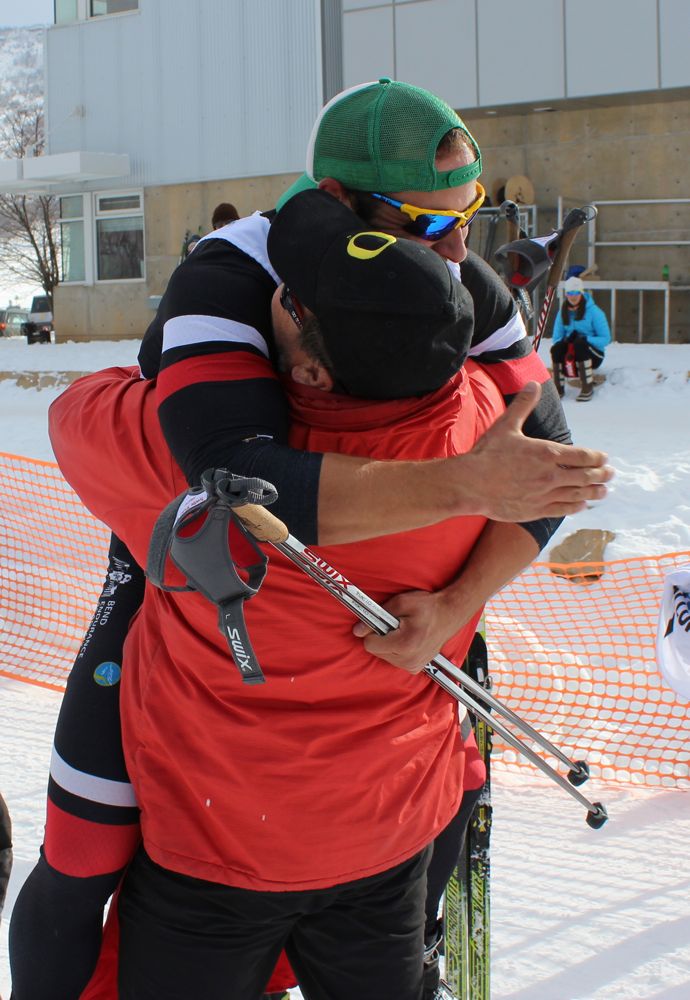
Blackhorse-von Jess and BEA coach Ben Husaby celebrate at the finish.
Bjornsen.
The victor recieves congratulations.
Saxton gives a congratulatory hug.
Blackhorse-von Jess and GMVS coach Justin Beckwith.
Alex Howe, 3rd, and Bjornsen, 2nd.
Blackhorse-von Jess is awarded the winner’s plaque.
IMG_4186
IMG_4192
The men’s freestyle sprint podium: 1. Dakota Blackhorse-von Jess, 2. Erik Bjornsen, 3. Alex Howe.
Dakota Blackhorse-von Jess (Bend Endurance Academy) digging deep to take the win in the freestyle sprint at U.S. Nationals. Photo: Sarah Brunson/USSA.
FasterSkier’s coverage of the 2013 U.S. Cross Country Championships is brought to you through the generous support of The Memory Clinic in Bennington, Vt.
MIDWAY, Utah — At the end of the day, sprint races can come down to any number of things. Raw speed. Positioning. Cunning. Inspiration. For the Bend Endurance Academy’s Dakota Blackhorse-von Jess it was probably some combination of factors that spurred him on to win the freestyle sprint at U.S. Nationals on Tuesday, his first career national title.
“This is really cool,” Blackhorse-von Jess said after he’d had a chance to catch his breath. “Everything is the same as it’s been [this year], I’ve just been smarter and more confident.”
Blackhorse-von Jess skiing through the quarterfinals.
The Soldier Hollow sprint course has ensured repeatedly this week that the field would compress on the final downhill for a closely-contested race into the stadium, and the men’s A-final was no exception. As six men rounded the final corner in almost a dead heat, Blackhorse-von Jess pulled off an unparalleled finishing kick in the final straightaway to edge Erik Bjornsen (Alaska Pacific University/U.S. Ski Team) and Alex Howe (Craftsbury Green Racing Project).
Logan Hanneman (University of Alaska, Fairbanks) finished fourth, Sylvan Ellefson (Ski & Snowboard Club Vail Team HomeGrown) fifth and Tad Elliott (SSCV/USST) sixth.
There’s no doubt that Blackhorse-von Jess demonstrated superior tactical intelligence on the way to victory. He also has some of the fastest pure speed to draw on of anyone in the field. But in addition to the physical factors required to put together a successful sprint, Blackhorse-von Jess had inspiration on his side throughout the day. Charlie Smith, a close friend and teammate, passed away over the holidays, and for this entire week at nationals Blackhorse-von Jess has had Smith in his thoughts. Many in the men’s field did as well; someone told the stadium announcer to say they were all racing in Smith’s memory as the A-final lined up to start.
Blackhorse-von Jess and coach Ben Husaby celebrate at the finish.
“They were very close,” BEA coach Ben Husaby said of Smith and Blackhorse-von Jess. “They mentioned Charlie right in front of Dakota’s race… I had no idea that was coming. I didn’t know if it would be a motivator for Dakota or not.”
It must have been, for Blackhorse-von Jess skied the perfect race.
“We were racing for Big Charlie today,” he said. “There’s so many of us left and we’re such a tight group, and we’ve been such a tight group since I started racing here as a kid, so everybody’s been thinking about him all week. It’s cool, man.”
Blackhorse-von Jess certainly looked inspired as he entered the final few meters. And prior to returning to the stadium for the last time, he played the course perfectly for the field he was up against, putting himself in the exact position he needed to be in order take the win.
The downhill draft on the backside of the course was much discussed after the classic sprint, but the skate course featured a few new challenges. It was longer than it was for the classic event, and at 1.7 k that was long enough to almost feel like a prologue. It added about 200 m of climbing up the hollow out of the start and resulted in finishing times at least 40 seconds longer than the fastest splits from the classic day.
“I know from talking to some of those other guys that were out here that some people skied really hard and really fast over the first minute and a half of this race and that was the end of it,” Blackhorse-von Jess said.
The very people in A-final also made the race an unusual one. Elliott, who is normally a distance-specialist, made it in much to his own bewilderment. Pre-race favorite Torin Koos (Bridger Ski Foundation/Rossignol), who got tangled in the quarterfinals and lost his ski, did not. As a result, the race began hot and fast from the gun, the exact opposite manner in which men’s heats normally begin.
Tad Elliott leading the men’s final around the turn before the big descent.
Elliott directed a quicker opening pace — it was the only thing he could think of to give himself a shot against the likes of Bjornsen and Blackhorse-von Jess. The rest of the field had no choice but to keep up to stay in the race.
“In the final Sylvan and I talked, I tried to help him but he was just like ‘Nah, just go for it from the gun,’” Elliott said. “I definitely could have played it a little differently in the final but I feel like, you know, my day is already done when I hit the final. I was just really excited.”
Bjornsen, who has had a strong week of both sprinting and distance skiing, was the first one in pursuit of Elliott up the hollow, followed by Blackhorse-von Jess and the rest.
“What I needed was for [Elliott] to just go from the gun to tire out those big guys at the finish,” Bjornsen said.
Elliott did exactly that, and he and Bjornsen began to string out the field over the plateau, with Blackhorse-von Jess in hot pursuit. Down under the bridge they went, and by the time they reached the top of the horseshoe Blackhorse-von Jess had closed the distance and was in perfect position to draft off the leaders, gather momentum and overtake Elliott.
But Bjornsen and Howe — the entire rest of the field, in fact — were able to benefit from the same draft effect, and the group that had strung out in the first part of the race scrunched back together for a dramatic finish.
“It came together at the end, for sure,” Howe said. “I knew it was going to come down to this straightaway.”
Blackhorse-von Jess and Bjornsen duking it out in the final meters.
As Elliott shot out the back, Blackhorse-von Jess and Bjornsen began to inch ahead with distinctly more ‘pop’ in their V2 in the last stretch. Bjornsen took a few strokes to relax a little before his kick, and he lost precious momentum. Blackhorse-von Jess blocked out the noise surrounding him, kept up his tempo and narrowed in on each movement he made towards the line.
“I’ve been working on my hundred-meter focus,” Blackhorse-von Jess said. “Because everybody says, ‘Oh, you’ve got the speed, you’ve got the power, you’re the fastest guy out there,’ whatever. But I’ve had a hard time finishing racing and I think it’s because I’ve been focusing on people that are around me and I lose sight of what’s really important. And that’s having your technical mantras and that kind of thing.”
With his coaches screaming at him and skiers creeping into his peripheral view, Blackhorse-von Jess took a moment to remember his technique.
“As soon as we got down to the straits I said, ‘OK. I have 20 seconds left, I just need to relax for a minute and get it figured out.’ And I got behind Erik and two strides later and I was pshht, gone. That’s what I took to the finish line. And honestly, landing on a bent ankle was all I was thinking about, until about two meters from the line and I was like, ‘Holy… Yes, that happened.”
Blackhorse-von Jess, triumphant.
Husaby, who began coaching Blackhorse-von Jess when he first picked up skiing in high school, was on tenterhooks as he watched his athlete race.
“I have a hard time watching him race; I get very nervous,” Husaby said. “When they went by I could see him tightening up less than Erik was, but I didn’t celebrate until I saw his arms go up. I was glad he could race someone head-to-head down the line, he’s very hard to beat in that situation.”
Bjornsen, just missing the top of the podium, was still happy with second. “It’s a learning experience, for sure,” he said. “It’s a great day and I’m still really happy with second.”
* * *
Howe, who was also not far off moving up another place, far exceeded his expectations in finishing third.
“I’ve been skiing better in skate for the last couple years, so I was definitely looking forward to it, but I did not think I would podium. I mean, not a chance,” Howe said. “A top-twelve would have been really cool. So to get on the podium is definitely an awesome feeling.”
Hanneman, coming on strong in the final race of the week to finish fourth, was simply excited to have made the final.
“I definitely wanted to make it out of the quarters but the qualifier was so hard… I was just like, ‘Oh, gosh, this is not going to happen,’” he said.
But he felt better and better through each round, will carry the confidence he gained from this sprint with him to Junior World Championships later this month. “It’s a good way to go across the pond after this race, to get that momentum. I’m excited,” Hanneman said.
In fifth place, Ellefson turned in his best result of the winter and hopes that his season will soon be back on track.
“It feels like things have finally been coming together,” he said. “I’ve been waiting for today for a while… Every round just felt better and better and the last one actually felt really good, I just got a little bit boxed-slash-pinched out at the end.”
And that distance specialist, who broke the sprint-strategy mold and boldly led at the start? He was pretty psyched, too.
“I can’t believe I outkicked some of those people!” Elliot said, referring to the earlier heats that brought him to the final. “I’m a tiny guy!”
Though longer races are still his forte, Elliott will always remember the time he made it to the final at U.S. Nationals. “I’d say I’m a distance guy, but there was that one day in January…”
FasterSkier’s coverage of the 2013 U.S. Cross Country Championships is brought to you through the generous support of The Memory Clinic in Bennington, Vt.
MIDWAY, Utah — On Tuesday the fourth and final national champions of 2013 will be crowned at Soldier Hollow. On an overcast morning before the freestyle sprint kicks off, volunteers work hard on course preparation, coaches dial in wax and athletes arrive at the venue for one more nerve-wracking race. Some images from the final hours before the start:
The stadium: overcast, but still pristine.
Alaska Winter Stars coach Jan Buron.
IMG_3417
IMG_3418
IMG_3419
IMG_3420
IMG_3421
IMG_3422
IMG_3423
The CXC camp.
GMVS coach Justin Beckwith and Bend Endurance Academy coach Ben Husaby testing skis.
F.A.S.T.’s Bill Pierce and HWK’s Kevin Höchtl dialing in the wax.
Maine Winter Sports Center testing skis.
IMG_3431
IMG_3432
Boulder Nordic Sport’s Dave Chamberlain and Nathan Schultz discussing wax test results.
Bridger Ski Foundation coaches Andrew Moorehouse and Tim Baucom testing skis for Torin Koos.
Dakota Blackhorse-von Jess, Patrick Johnson & Co.
CXC athletes arrive at the venue.
Test skis.
Athletes begin to preview the course. The women have the same 1.3 k used in the classic sprint; the men climb a bit further up the hollow for a total of 1.5 k.
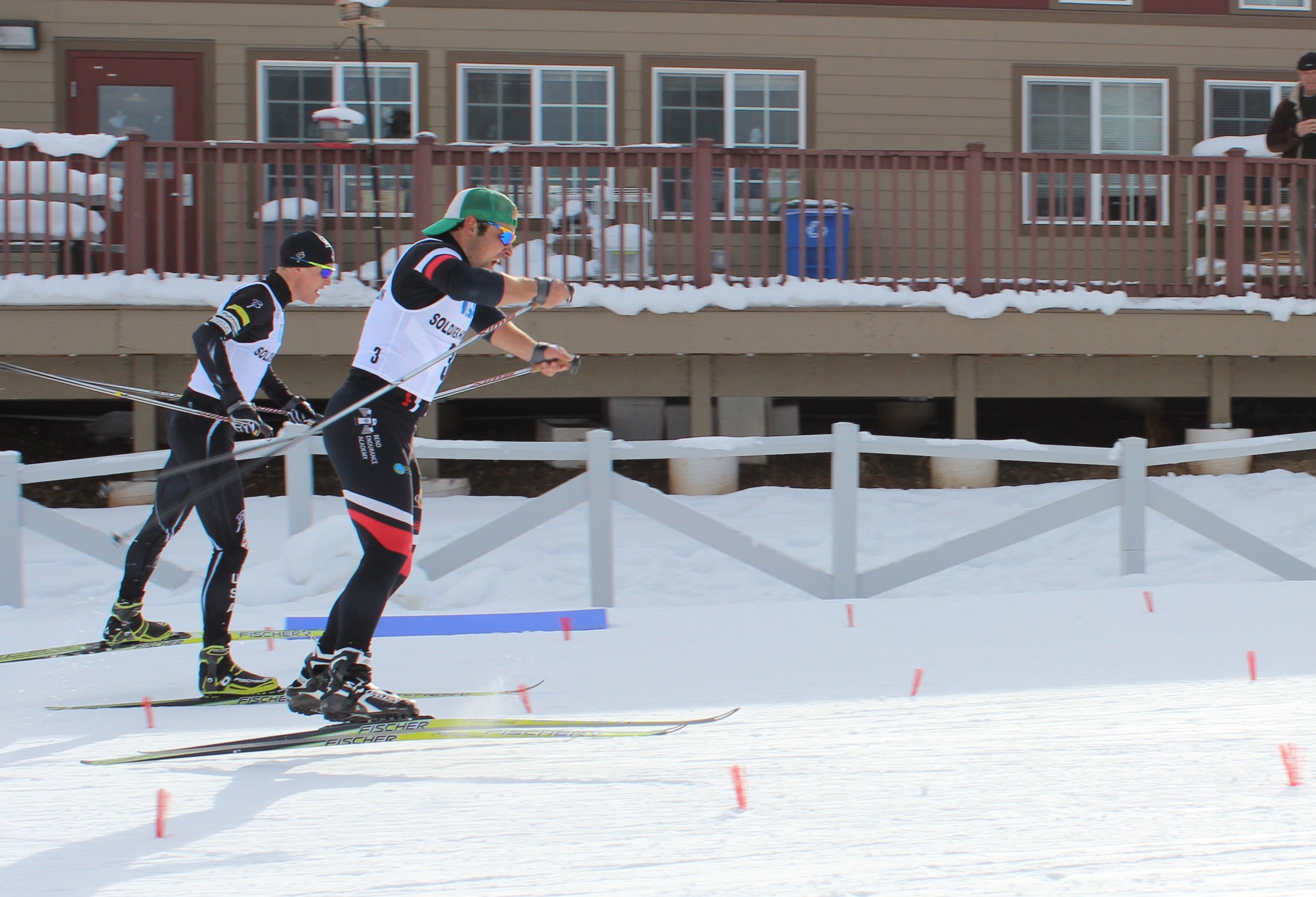
Torin Koos (Bridger Ski Foundation/Rossignol), untouchable in the final stretch of the 30 k classic on Saturday. Photo: USSA/Sarah Brunson.
FasterSkier’s coverage of the 2013 US Cross Country Championships is brought to you through the generous support of The Memory Clinic in Bennington, Vt.
MIDWAY, Utah — This time last year when we sat down to make predictions for the final race of U.S. Nationals, we had all just spent several days witnessing a single athlete steamroll the field to win three titles a row. Jessie Diggins was skiing on a plane far and above everyone else in the U.S. and it was impossible to bet against her.
We’ve seen a similar kind of dominance this week from Torin Koos, the difference this time being that it’s not exactly a surprise. A 22-year-old winning everything is exciting and new and easily hyped into proclamations about the next big thing in American skiing. Diggins is a World Cup skier now. Koos, on the other hand, has been around a long time. He’s got eight national titles to his name. He’s been to six World Championships. And he’s still meeting new career benchmarks at the age of 32: that 30 k win was his first in a distance race at nationals.
To be honest, I was ready to count him out for the season after watching him race in Bozeman. He was sick, yes, but when you see someone like Koos struggle like he did it’s hard not to draw ominous conclusions. That goes to show how much I know. Apparently when you’ve got a base fitness like he does, early season illness is hardly a blip on the radar. One month later and Koos is back to his usual self: winning a lot. Winning more than usual, in fact.
So, our prediction of the mens’ skate sprint outcome? Koos for the win. At this point, it will be shocking if he doesn’t. Whether this would be enough to get him to World Championships, we’ll just have to wait and see.
The women’s podium has seen a bit more variation this year. Now that Sadie Bjornsen has gotten the monkey off her back with a win in the 20 k she appears to be on a roll. She’s an even better sprinter than distance skier and will be hard to beat on Tuesday. Then again, Sophie Caldwell has finished ahead of Bjornsen in two out of three freestyle sprints this season. On the whole about five or six women are fairly evenly matched; Bjornsen will win qualifier, hands down, but the heats will take some brains (and a little luck) to win along with brawn. Races can be ruined by a poorly timed move on the Soldier Hollow sprint course. After the classic sprint everyone knows that, but someone will have to be at the front going down that slingshot-y hill each time. I just hope it’s not the people I’m about to pick.
And so we’ve arrived at the morning of the last event of the 2013 U.S. Cross Country Championships. For our final round of predictions I, Audrey Mangan, am taking on my boss, Matt Voisin. I’m not quite sure if I want to win or lose.
FasterSkier’s coverage of the 2013 US Cross Country Championships is brought to you through the generous support of The Memory Clinic in Bennington, Vt.
MIDWAY, Utah — 30 kilometers. Six laps. 18.6 miles. Ninety-plus minutes. Whichever way you cut it, the men’s mass start classic race at U.S. Nationals was one long race. Our images from throughout the day:
Torin Koos (Bridger Ski Foundation/Rossignol) won his second national championship race this week with his 30 k classic victory on Sunday at Soldier Hollow. Photo: USSA/Tom Kelly.
FasterSkier’s coverage of the 2013 US Cross Country Championships is brought to you through the generous support of The Memory Clinic in Bennington, Vt.
MIDWAY, Utah —Torin Koos (Bridger Ski Foundation/Rossignol) knew he had a pretty good shot at winning another national title on Sunday. Carrying momentum from a classic sprint victory and a distance skate result that made him optimistic for the mass start, he was pretty confident he would have a good 30 k classic.
“I just had a feeling that I’d have the capacity and the moxie to make it happen,” Koos said.
Make it happen he did, skiing patiently tucked into the lead pack for most of the race to make a move at the base of the final climb up Hermod’s Hill. When he came off the top, he had put enough distance on the field to give himself a margin of a few seconds over Erik Bjornsen (Alaska Pacific University/U.S. Ski Team), and when they entered the final stretch it was a practically insurmountable distance. Koos won the 30 k in 1:26:04, 3.1 seconds ahead of Bjornsen and 8.1 seconds over bronze-medalist David Norris (Montana State University).
The 2013 national 30 k champion. Photo: USSA/Tom Kelly.
“I was optimistic going into it,” Koos said as he awaited to step onto the podium. “I won’t say it was a surprise to me.”
For someone who had completed his first distance race of the season only two days prior, the race played out perfectly: tactically and not too fast. The lead pack, instead of gradually thinning, remained 20 men strong as far along as the 20 k mark. Koos began the race in bib 39 towards the middle of the chevron and had time to work his way up a train that refused to dissipate.
“I just said [to myself], ‘If I made it to the top of the hollow, nobody was going to drop me,’” Koos said of his final lap. “I thought I was going to have real good energy at the end.”
He made it to that point and was still with the leaders. Perhaps if anyone had known the prolific sprinter still had energy to burn they would have made a point of dropping him earlier. But they didn’t, or couldn’t, which enabled Koos to hold on, make a move and employ his notorious closing speed in the straightaway.
Koos making his move at the beginning of Hermod’s Hill.
“I was on the bottom of Hermod’s right when he went and he looked unbelievable,” said BSF coach Tim Baucom. “Just really good skiing on his part and I think he was happy to have it come down to the last lap… If those guys had decided to go out early it would have been a bit tougher for him.”
With a main group as big as it was, a handful of skiers had opportunities to control at various points in the race. Miles Halvick (University of Utah), the 2012 NCAA classic champion, took the first move to the front and directed the race for the most of the first lap.
“I was just trying to keep the pack as thin as possible,” Havlick said. “I don’t know, I was just feeling good and relaxed.”
Havlick’s opening pace a bit faster than expected to the rest of the pack. When the group came through the first feed zone at 4 k, he pushed through without stopping while those behind took swigs of Gatorade. Sylvan Ellefson (SSCV Team HomeGrown), Matt Gelso (Sun Valley Ski Education Foundation), Tad Elliott (SSCV/USST), Bjornsen and Norris clustered behind Havlick as he briefly put space between himself and the others.
“The pace was hard the first lap with Miles leading,” Elliott said.
By the time they climbed Hermod’s Hill for the first time, the focal point of the course profile, and descended back into the stadium, the pack had reabsorbed Havlick. Gelso, Ellefson, Norris and Bjornsen moved to the front, and the pace slowed. At that point, it was still anyone’s race. The pack was still over 20 skiers deep on lap two of six.
Ellefson and Gelso leading the pack over Hermod’s Hill early in the race.
One athlete, however, began to set himself apart. Gelso, with ambitions for his second podium of the week, was the workhorse of the day, consistently pushing the pace from the front.
He said afterwards that he decided to lead just to stay out of trouble, not because he was feeling particularly good.
The pack climbing Hermod’s on the second lap.
“I skied towards the front to keep the pace down and do what I could,” Gelso said. “I was just kind of skiing my own race. Lots of times it’s easier to ski at the front of the pace you want to ski instead of in someone else’s stride, screwing around. With some of the turns around here and where people were feeding, it made sense to be in front in a lot of places.”
Gelso’s competitors were impressed with his effort. “He was skiing awesome all day, Gelso,” Elliott said.
Elliot and Ellefson also took turns pulling at the front, and would move into the front for the same reasons everyone else seemed to: the pace was still under control and it was best to steer clear of traffic if possible.
“I feel like every time I led I just happened to be in there,” Elliott said. “I would lead on the downhills to stay out of trouble and I had fast skis. On the steep uphills I got my own track a lot of the time; I would try to take it easy on the uphills.”
Ellefson, meanwhile, was having the race of his season. Plagued by illness and fatigue this winter as he raced on the World Cup in Europe, on Sunday he felt things finally coming back around.
“I was feeling really good,” Ellefson said. “The whole time I was really just skiing my own race, and when I was out in front I was skiing at just a pedestrian level, as the Eurosport announcers would say.”
Gelso leading, halfway through 30 k.
Just as he was relaxing into the pace, however, disaster struck. With the lead group still quite crowded, someone stepped on Ellefson’s skis right before they began to climb Hermod’s for the third time.
“I lost my balance and couldn’t lift my skis out of the track, because he was on top of them, so I went down and the whole pack just blew past me,” Ellefson said. “It’s nice to have coaches and everyone out there telling you to relax and stay calm, you’ll catch back up. That’s kind of where it helped me out today.”
Elliott attempting a surge, with Koos hanging on.
Elliott and Ellefson thought they had some of the best skis in the field. After Ellefson fell he felt the fast wax prevented an unfortunate situation from becoming worse, and he was able to mitigate the loss of time.
At the front of the pack, meanwhile, Elliott was at the front putting on a small surge. “I kind of made an attack when [Ellefson] was just getting back on,” Elliot said, adding he regretted not knowing his teammate had fallen in the moment.
Apart from Ellefson, the pack did not go away when Elliott quickened the pace; its numbers began to dwindle but the contenders remained unbroken. There was still hardly any distance at all between Bjornsen, Norris, Koos and Gelso. Havlick began to lose contact, but Sam Tarling and David Sinclair (Dartmouth) stayed in the mix, having the race of their lives.
“I was a little worried when I was out in front, but I wasn’t working all that hard,” Tarling said. “There were sections where I was feeling a little bit tired but also sections where I was feeling great.”
Lap four is where things started to get serious. Elliott, going for the win, made another surge in an attempt to break away. More skiers dropped off the back.
“Tad tried to make a move with 9.5 k to go,” Koos said. “That could have been a defining move, but I was able to cover him.”
Koos was able to regain 100 m on Elliott to reestablish contact, but he didn’t want to take over the lead.
“I wasn’t interested in pushing the pace and he wasn’t tell me, like, ‘Go, go, go,’ and we let the pack kind of come back,” Koos said.
Gelso, Elliott and Koos the fifth time up Hermod’s.
The surge may have ultimately cost Elliott. “I felt great all day and I think I just went a little too — I was racing for the win and felt like I was really charging, but those other guys were busting it out pretty hard,” Elliott said.
In a race filled with shuffling leads, Koos and Bjornsen were particularly coy. They were almost always just behind the leaders, trying not to draw too much attention to themselves and conserve from the middle of the pack. When it was finally time to go they had more energy than anyone. On the last lap, when everyone was hanging on for dear life, they were able to attack afresh.
“At the base of Hermod’s all of us came over the sprint hill together and everyone took their own lane,” Koos said. “I just started going, not 100% at the base of it, but with a lot of snappy power.”
Koos bounded up the incline and nobody could match it.
“I tried to kind of kick it up to catch Torin, but he was moving at a really fast pace,” Bjornsen said.
Bjornsen.
Down the other side of the hill and into the stadium, Koos skied as if Bjorsen was right on his tail, not knowing if he’d managed to create a break.
“I heard quite a few people cheering for Erik in particular right behind me, so I could tell I was maybe breaking him a little bit but that it was going be tight,” Koos said.
A bunch of powerful double-poles later and the 30 k title was his. Does it get old after the eighth time at the top of the podium? Not really, he says.
“I mean, it’s awesome to win a race like that,” Koos said.
Bjornsen, having climbed his second podium in two days, was feeing pretty good about how things went.
“I practiced some tactics this time and think it paid of well,” he said. “I still felt like I had a kick at the end. I couldn’t quite match Torin’s kick, but felt pretty relaxed going up that last hill.”
His coach thought Bjornsen skied the race flawlessly.
“It’s just exceptional,” said APU head coach Erik Flora. “For Erik, for his age, for a 30 k today, it was tremendous and he played it perfectly. You watched him in the pack and where he made time.”
Norris crossed the finish line five seconds behind Bjornsen to take the bronze. Like Bjornsen and Koos, he played a smart race and let others do the work. He was second in the 30 k in Rumford, Maine, last year, and seemed satisfied with third on Sunday.
Norris and Gelso on the final climb up Hermod’s.
“I expected some of those bigger guys to hammer that last hill,” he said. “I didn’t feel that great during the race; I was trying to just ski along. I kind of felt sick from some of the feeds.”
Gelso, who had spent so much time working out in front, finished fourth (+11.7). In retrospect he admitted he had led “maybe too much.”
“I’m a little bummed I wasn’t in the top three. 30 k is a huge effort so when you lose out by 10 meters you’re like, ‘Aw, God,’” Gelso said. “Whatever. It was a solid day and it was fun racing, so…”
Though Gelso was disappointed with fourth, the next two finishers behind him were ecstatic with huge personal bests. Tarling and Sinclair placed fifth and sixth, respectively, to lead the Dartmouth men.
“I’m just psyched to have one of my teammates up here with me,” Tarling said, who skipped nationals last January due to illness. “I knew if I could hang on over the top of Hermod’s I’d be in a position to do pretty well.”
Tarling climbing early in the race
Tarling finished 18.1 seconds back from Koos’ time and Sinclair came through less than five seconds after Tarling.
“I was just trying to hang in the pack as long as I could,” Sinclair said. “It felt pretty good for the first four laps and then it started to get hard, and I was just hanging on for dear life.”
Elliott, meanwhile, had spent his energy on mid-race surges and slipped to seventh, 23.3 seconds behind Koos. He had hoped for more, and after the race he regretted not being able to deliver a win for his team more than anything else.
“I wanted to deliver a win for those guys,” Elliott said. “It would have been really nice; [Team HomeGrown] works really hard.”
At the end of the day the top 10 were almost all under the age of twenty-five, a demonstration of impressive depth to the up and coming field of American distance skiers. All but one, of course: the seasoned veteran who can still school them all. Koos, 32, has now won eight national titles in his career.
After the podium ceremony, someone asked Bjornsen if he remembered the first time he met Koos. Without a moment’s hesitation Bjornsen recalled asking for Koos’ autograph as a junior skier at the West Yellowstone Ski Festival.
“I went into a West Yellowstone bar to ask if I could have his signature when I was probably, like, 12 or something,” he said. “I saw him playing pool and I asked him for his signature, I had a little postcard of him.
“I’ve learned a lot from him… Every once in a while Flora is like, ‘You’re skiing like Koos!’”
Torin Koos with his 2nd Win of the Week (Toko wax, tools, and gloves)
Last night it was just a bit overcast which kept things from getting as clear and cold as it has been recently, but it was still 4f at the venue 2 hours before the start, so the snow was still cold. Although the conditions were slightly different (no hoarfrost that needed to be skied in for example), our wax tests (both kick and glide) showed that the same products that had been performing the past two days continued to. The snow was quite abrasive and a 30k classic race including climbing up Hermod’s Hill 6 times meant that maintaining kick was critical. Green klister covered by Base Green binder offered the best kick and the best glide and was clearly the most durable as well. Yesterday we did a durability test on this combination and after 20k, it showed only a slight bit of wear on the heel only. The way we applied it was to iron the Green klister and put it outside to freeze well. This improves adhesion and makes it easier to apply the next layer which was Base Green binder. After applying the Base Green, iron the Base Green into the klister creating a mix of the two that has more klister on the bottom and more binder on top. Then create a smooth finish with the iron and let it cool again. Some coaches were covering this lightly in an effort to speed it up.
For glide we went with HF Blue covered by JetStream Blue. We applied the JetStream Blue by ironing in the powder fairly quickly (150C and 10 seconds from tip to tail which heats the powder, but doesn’t leave the ski base black behind it. If black, it’ll be slower in the cold powdery snow). Then we did a speed layer of JetStream Blue corked on top. For the women, it was the same except a HF Blue/Red mix and JetStream Blue/Red mix (and for the rest of the day). The kick recommendation also held up all day – for those who need more kick, have the Base Green application slightly thicker.
Feedback from coaches was very positive and it was a great day.
FasterSkier’s coverage of the 2013 US Cross Country Championships is brought to you through the generous support of The Memory Clinic, Bennington, Vt.
MIDWAY, Utah — Soldier Hollow is getting busy as athletes arrive for the mass start classic race and coaches make last-minute adjustments to kick and glide. Scenes from the stadium:
A volunteer setting up the finish line video equipment.
FasterSkier’s coverage of the 2013 US Cross Country Championships is brought to you through the generous support of The Memory Clinic, Bennington, Vt.
Sadie Bjornsen (APU/USST) hammering in the classic sprint prologue earlier this week. With two silvers under her belt she’ll be looking for gold on Sunday. Photo: Bert Boyer.
MIDWAY, Utah — There’s nothing like mass start classic racing on a perfectly-groomed, hard-packed course, and that’s exactly what awaits athletes at Soldier Hollow for the 20/30 k on Sunday.
The course and conditions will be practically identical to the skate race. The first lap will take skiers up the hollow instead of climbing to the lodge above, and there’s a slight modification mid-course that reduces incoming speed to an icy downhill turn. But apart from that, the course is the same: bulletproof grooming, perfect tracks, bluebird skies, ridiculous climbs — all ingredients for excellent classic skiing.
Prediction-wise, the races are a bit of a toss-up. I’m not just saying that to protect myself when my picks turn out to be horribly wrong, there are simply a lot of people skiing well right now. Just look at how many personal-bests there were at the top of Friday’s skate results.
There are the usual contenders that make easy picks based on consistency, but results from the Bozeman SuperTour, the Canmore World Cups — even Friday’s distance skate — suggest that there’s potential for some more surprises on Sunday. Last year’s championships in Rumford were won by Noah Hoffman and Jessie Diggins, both of whom are now racing the Tour de Ski, so the national titles are at least guaranteed to go to someone new.
I almost gave up on this whole predictions endeavor after Friday’s results came through. Some punk freshman beat my freestyle picks and now I have to eat a bunch of hot peppers before I leave Utah. But for some reason people love predictions, no matter how lousy, and who am I to deny the people what they want?
Erik Bjornsen (APU/USST) is on fire. Take into account that he’s traditionally even better on classic skis and he’s the odds-on favorite to win the 30 k. Nobody looked as strong as he did on the final climb up Hermod’s on Friday.
Tad Elliott (SSCV Team HomeGrown/USST) will badly want to win after just missing gold in the skate race. He did ski incredibly well in that skiathlon in Canmore, but he just hasn’t looked as quick as Bjornsen this week.
David Norris (MSU) was second in this race last year and is usually a safe bet in long, head-to-head classic distances. Recall that he went for the win in Rumford, attempting a breakaway partway through. He tried the same thing in Bozeman. It hasn’t quite worked out for him yet.
Matt Gelso (SVSEF). After taking third in the skate race, his best nationals result ever, he said he’s even more focused on the classic discipline this week. He was sixth in this race last year and should be able to move up a few places given that he’s been skiing well this season.
Torin Koos (BSF/Rossignol). This will only be his second distance race of the season, but now that he appears to be back on form he should be right up there.
Women:
Sadie Bjornsen (APU/USST). Two champions on the same day in the same family? It could happen. After two silver medals this week Bjornsen will be hungry for gold, and by this point knows exactly how the course skis and what positions work best where. Women’s mass starts are not so much about tactics as they are about wearing everyone else down, and nobody can do that like her.
Rosie Brennan (APU). Though she’s a better classic skier and this is a familiar course, I don’t know if she can win two in a row. She’s skiing well right now, though, so I’m guessing it’ll be close between her and her training partner.
Sophie Caldwell (SMS T2) skipped the 10 k skate in order to rest up for these last two races. That will definitely help, and if anyone can break through the APU machine on a classic distance day, it’s Caldwell.
Caitlin Patterson (CGRP) was fifth in the Bozeman 10 k classic and after feeling a bit tired in Canmore seems to be back to feeling like her usual self this week.
Kate Fitzgerald (APU) is pretty consistently in the top five or six on any given day. She was on the podium two days ago and will probably be close to it again.
Rosie Brennan (APU) and Annie Pokorney (Middlebury) climbing during the women’s 10 k freestyle on Friday at Soldier Hollow. Brennan won the race and Pokorney took fourth. Photo: Bert Boyer.
FasterSkier’s coverage of the 2013 US Cross County Championships is brought to you through the generous support of The Memory Clinic, Bennington, Vt.
MIDWAY, Utah — Can’t get enough of the action at U.S. Nationals? Here are some bits and pieces from top performers on Friday that didn’t make the original race reports.
On setting new goals:
“I have some goals. I definitely want to get a podium this week; I’ve never podiumed at Nationals before. It’s exciting. A couple of years ago I was feeling like more of a sprinter, but this year I’m pretty excitied for all four races. It’s hard to say, I don’t think there’s one race I’m more excited for.
“I mean, and I was just thinkng about this, it’s interesting — I’m maybe in a position to be on the podium and I’ve been more consistent this year, but I don’t think much has changed. I guess I just trained harder, got more experince and the results seem to keep improving, which is good. I don’t feel like there’s been some radical change. The training plan has been working an the experience definitely helps.”
— Erik Bjornsen (APU/USST), 1st, the Tuesday before U.S. Nationals began.
“I’ve been rollerskiing the paved tracks here in the summer, doing intervals with Tad [Elliott] up Hermod’s. It helps, but I’ve been skiing quite a bit of altitude this season and that helps as well.
“The last couple seasons everybody’s been like, ‘You’re a classic specialist,’ kind of thing. My goal this year was, after sking all those OPA cups and watching what those Europeans were doing with their V2, I was just going to work on that all summer. So this summer I just did a ton of V2ing up the hillsides in Anchorage, a bunch of trying to feel that rhythm, and it kinda clicked near the end of the off-season. Up on the glacier things were starting to feel really good. So I was exciting for my skating this season.”
— Bjornsen, after winning the 10 k skate.
On the power of a strong team:
“I think the number one thing is team. I started as the head coach here six years ago or so. And that was the first thing I thought … as an athlete I was always searching for a strong team.
“It’s incredible. Yesterday everybody was just in a good, light mood. Some people had great races in the classic sprint, others had rough days, and everyone just kind of make sure that everyone was taken care of. It’s something I think is maybe the most important thing.”
— Erik Flora, Alaska Pacific University head coach
On the conditions:
“It was really cold; I cant feel my toes right now. But it wasn’t too bad. The sun is so warm here and most of the course was in the sun so it was OK. You’re working so hard the whole time and there weren’t too many downhills to get too cold. Yeah, [the snow] was pretty slow, but not too bad though.”
— Rosie Brennan (APU), 1st
“In Alaska the snow is cold, where here it’s manmade snow so it’s not so slow and your skis still move. But we also don’t ski in the cold because I’m never in Alaska in the winter. I mean, I leave in November and don’t come back ‘til April, so I don’t experience the cold, fortunately. But this snow, I mean the snow’s great because a lot of it’s manmade so you can still move pretty well on your skis. Fairbanks is challenging; you think of that when you think of cold. There it’s like ‘squeak, squeak, squeak’ and like, you’re hardly moving.”
— Sadie Bjornsen (APU/USST), 2nd
“It’s a really rough, really hard course. It’s obviously fast, but it doesn’t feel really greasy. It was interesting. Our wax techs did a good job — I don’t think skis were the issue, I think Bjornsen killing it was the issue.”
— Tad Elliott (SSCV Team HomeGrown/USST), 2nd
“The snow was a little bit funny with a mix of manmade and natural snow, and that has a little bit different texture from place to place. And it’s certainly a hard course, a lot of rolling hills and then really quick downhills that don’t allow you a lot of recovery.”
— Caitlin Patterson (CGRP), 5th
“It felt worse warming up. It’s one of those courses where you warm up and you’re doing your level 3 and you’re like, ‘Oh man this is gonna be really tough, and then it’s not that bad. Once you get on step and you’re racing there’s more glide than you’d think.”
— Becca Rorabaugh (APU), 6th
On pacing:
“I think it skied smoother than I thought it was gonna be. If you really worked it good along the top of the course it wasn’t as hard as I thought it was gonna be; you could ski big and kind of relax. My body was there so I could go out hard and not blow up. That was probably the biggest thing; my body was in good enough shape that even if I thought I went a little hard it didn’t matter because my body could respond to it.”
— Matt Gelso (SVSEF), 3rd
“I was just trying to ski as hard as I can, as big as I could. I know this course had a lot of strong V2, and I was trying to focus on really getting as much power into the V2 as I could even up the gradual hills and things.”
— Kate Fitzgerald (APU), 3rd
“I tried not to think about the result, it was more: take it easy out of the start and just stack it up through the entire race. Rosie caught me on the first hill, and in that second it was like, ‘All right, here we go! I’m gonna try to stick with her as long as I can.’ And I think it really helped and she really helped me through. Getting to start between two World Cup starters was pretty awesome, between Becca [Rorabaugh] and Rosie, so I was in a good place this morning and excited and it worked out.”
— Annie Pokorney (Middlebury), 4th
“I think it was a fairly good pace [the first lap], then on the second lap certainly some of the people who were starting out started really quickly. I hope they managed to make it through because they were going quite fast, but I think I felt like I wish I could’ve been a little stronger on the second lap.”
— Patterson
“I tried to hang onto Tad as long as I could knowing he was skiing relally well. It was a nice train going, it was fun, it was fast — just really hard. I’m pretty happy with the start to the season. I’m racing into it, I don’t usually race this well this early, so I’m kind of taking it as it comes. Dylan and I actually tied which is pretty sweet, it’s fun to have the green teamers up there, and it’s fitting that we tied since we train together all year.”
— Bryan Cook (CGRP), 7th
On new training methods:
“I think my training is definitely focused a lot more on distance side of things; a bit more on skiing a little bit faster in my distance workouts, maybe not as hard of intervals. I think that’s good in the longer races, I feel I’m more relaxed.”
— Brian Gregg (CXC), 4th
On skiing a course other than the Olympic 5 k:
“I’ve raced a lot here but almost all of it’s been on the Olympic 5 k, not this course… It’s definitely is not a bad course, it’s just a different course. Which is kind of nice, to ski something different once in a while. Skiing in the western college circuit you pretty much ski here every year.”
– Gelso
“Some people complained about it not being the Olypmic 5 k. I think it was still a hard course because there was lot of V2, which can be tough. If you’re tired you can really burn up quickly on V2.”
— Patrick Johnson (SVSEF), 5th
On finally putting the old Rudys away:
“I decided maybe I had to retire them after about 10 years.”
FasterSkier’s coverage of the 2013 US Cross Country Championships is brought to you through the generous support of The Memory Clinic, Bennington, Vt.
MIDWAY, Utah — Only minutes remain until the first starter takes off on the 5 k course at Soldier Hollow. Thermometers read – 7 degrees F early this morning and were still at -4 with only half an hour to go until takeoff. Some images from the scene:
(Summit Timing plans to have live results available on its website, but should the wifi get overloaded again head to FasterSkier’s Twitter account for intermediate result updates.)
Alaska Pacific University head coach Erik Flora, left, talking with athletes on their way to the wax cabins.
The all-important timing equipment making its way to the start line.
Stratton Mountain School T2 Team coach Gus Kaeding testing skis.
Burke Mountain Academy coach Kate Barton.
University of New Hampshire coaches Dan Guiney and Steve Monsulick prepping skis.
Dan Weiland (SSCV Team HomeGrown) demonstrating a perfect ski fan.
University of Vermont Coach Andrew Johnson, right, turned 35 years old on Thursday. He tweeted that this is his 17th consecutive birthday spent at U.S. Nationals.
F.A.S.T. Performance Training coach Bill Pierce discussing ski test results.
Vintage V-boards.
A University of Utah coach testing skis.
Race volunteers. Temperatures hovered around -7 degrees F this morning at Soldier Hollow.
Technical delegate Eileen Carey (left) talking with race volunteers at an event at Soldier Hollow in Midway, Utah, in 2013.
University of Alaska, Fairbanks athletes arriving at the course.
The stadium filled with coaches and wax techs about an hour before start time.
Sophie Caldwell and Sadie Bjornsen dueling for the lead during the women’s classic sprint on Wednesday. As equally strong distance skaters, they’ll be two athletes to watch for in Friday’s 10 k freestyle. Photo: Bert Boyer.
MIDWAY, Utah — One down, three to go. The opening event of the 2013 U.S. Cross Country Championships was as exciting as they come, but it’s a new day on Friday. The slate is wiped clean and athletes have another shot at redemption, qualifying spots and/or personal bests at Soldier Hollow.
Snow piles wait to be spread on Hermod’s Hill on Wednesday. It doesn’t look like much from this far away, but it’s a killer.
The 10/15 k individual freestyle is up next, and the course is brutal. Race organizers have worked their army of snow guns overtime to ensure that the 5 k loop is absolutely pristine, but no amount of corduroyed perfection will make these climbs any more pleasant. The course is not the Olympic 5 k, but the modification still features an insufferable ascent up the fabled Hermod’s Hill. In Maine they have High School Hill, here they have elevation and that monstrosity to the right. Women make two laps and men circle the course thrice, and with no head-to-head competition to push them it will be important for athletes to transition well, use the downhills and be light on their feet.
Tad Elliott (SSCV Team HomeGrown/USST) is the lone defending champion present this year to attempt going two in a row; he won this event in Rumford last year by less than three seconds against runner-up Matt Liebsch (Borton Volvo XC United). The altitude should work to Elliott’s advantage, as will his slighter build, but there is a full field of hungry contenders that will be breathing down his neck. Mike Sinnott (SVSEF) is determined not to finish second again, Leif Zimmermann (Bridger Ski Foundation) is always a freestyle distance contender, Liebsch is back for more glory after a strong start in Yellowstone and Sylvan Ellefson (SSCV Team HomeGrown) is back to feeling healthy after an illness-plagued December in Europe. Erik Bjornsen (APU) will be hungry for another shot at the podium and Eric Packer (SMS T2), I am convinced, will start showing signs of his 2012 self any day now.
The men’s race could honestly go to anyone but the women’s field is relatively more predictable. Sadie Bjornsen (APU/USST), despite just missing the win on Wednesday, appears to be in top racing shape, as do her teammates Rosie Brennan, Kate Fitzgerald, and Becca Rorabaugh. Caitlin Gregg (CXC) is one of the best climbers out there and will be able to power up Hermod’s like no one else. Chelsea Holmes (SVSEF) is also quick on the climbs, Caitlin Patterson (CGRP) had a strong start to her pro career in Montana and Sophie Caldwell (SMS T2) has had one of the most impressive early season results of anyone this year. Jennie Bender (CXC) is clearly on the upswing, and the 10 k will tell whether her distance chops are also back to normal.
There are a bunch of college skiers that could be in the hunt, too. David Norris (MSU) has already proven himself to be in top-level shape while Miles Havlick (UU) had an impressive classic sprint and is also a good distance skater. Sam Tarling (Dartmouth), who was sick in Rumford last year, has been here acclimating for weeks and could be in the mix. In the women’s field Liz Guiney (UNH) had a strong start to her season in 9th on Wednesday and Corey Stock and Annie Hart (Dartmouth) had strong fall races and should be up there for the Big Green. And forget college kids, how ’bout that Ben Saxton (F.A.S.T.)?
The 5 k course profile. Yikes.
For our predictions we’re doing something different this time. Our own powers of foresight have been wildly inaccurate as of late (two out of six correctly-guessed starters for the men’s A-final? Unacceptable), so we recruited an avid fan from the masses to make things interesting. Charlie Von Thaden, who is racing this week for Colorado University, wants to bet he can guess the top five men and women better than we can. Loser has to eat six chiles rellenos from Tarahumara on Main Street in under ninety seconds, no water.
FasterSkier’s coverage of the 2013 U.S. Cross Country Championships is brought to you through the generous support of The Memory Clinic in Bennington, Vt.
MIDWAY, Utah — The women’s classic sprint at Soldier Hollow was a nail-biter of a race, decided in the final meters of the A-final when Jennie Bender (CXC) eked ahead of Sadie Bjornsen (APU/USST) to take her first U.S. Nationals title. Click through the photos below to relive the excitement. For more photos of the qualifier, senior heats and junior heats, check out Bert Boyer’s gallery.
Quarter 1: Sadie Bjornsen (APU) and Corey Stock (Dartmouth) lead on the plateau. Photo: Bert Boyer.
Quarterfinal 2 on the plateau.
Quarter 2: Becca Rorabaugh (APU), Liz Guiney (UNH) and Rose Kemp (UU) go head to head. Photo: Bert Boyer.
Rorabaugh and Guiney go 1-2 to advance from Quarterfinal 2.
Quarterfinal 3 leaves in the starting lanes.
Heather Mooney (Middlebury) changing lanes.
Quarter 3: Jennie Bender (CXC) leads Kate Fitzgerald (APU), Jessica Yeaton (MSU) and Heather Mooney (Middlebury). Photo: Bert Boyer.
Bender and Yeaton leading Quarterfinal 3.
Quarterfinal 3, led by Bender and Fitzgerald, sweeps down the back descent.
Fitzgerald and Bender.
Bender leans into her poles to take Quarterfinal 3.
Quarterfinal 4: Annie Hart chases down Sophie Caldwell (out of frame).
Quarter 4: Sophie Caldwell (SMS T2) separates from the field. Photo: Bert Boyer.
Quarter 4: Annie Hart (Dartmouth), Clare Egan (CGRP) and Anika Miller (Payette Lakes Sports). Photo: Bert Boyer.
Sophie Caldwell creating a gap on the field in Quarterfinal 4.
Heather Mooney (Middlebury).
Egan and Miller.
Caldwell coasts for an easy advance to the next round.
Heidi Halvorsen (GMVS) gains an early edge in Quarterfinal 5.
Felicia Gesior pulling away.
Quarter 5: Felicia Gesior leads down the hill. Photo: Bert Boyer.
Quarter 5: Heidi Halvorsen (GMVS) and Parker Tyler (UU) on the descent. Photo: Bert Boyer.
Semifinal 1: Bjornsen leads out of the gate.
Sadie Bjornsen and Liz Guiney crest the first hill in Semifinal 1. Photo: Bert Boyer.
Bjornsen, still leading up to the high point before the big descent.
Corey Stock and Liz Guiney lead the chase.
WSemi1.3
Bjornsen cruises to the win in Semifinal 1. Rorabaugh and Brennan advance in 2nd and 3rd for an APU sweep.
Sophie Caldwell gets to a good start in Semifinal 2.
Caldwell leads again over the plateau, with Brennan in the hunt. Photo: Bert Boyer.
Jennie Bender and Felicia Gesior just behind. Photo: Bert Boyer.
Caldwell creating a gap before the descent.
Brennan and Bender catching up.
Bender successfully used the slingshot effect to work her way into the lead by the finish of Semifinal 2.
The women’s B-Final: Stock leading Mooney and Guiney. The trio ended up 1-2-3 in the heat for a collegiate sweep, placing 7th, 8th and 9th overall. Photo: Bert Boyer.
The women’s A-final. Caldwell and Bjornsen get off to quick starts to lead the heat out of the stadium.
Bjornsen and Caldwell fighting for the lead on the plateau, with Bender on their tails.
Bjornsen and Caldwell. Photo: Bert Boyer.
The stadium holds its collective breath as the final comes into the final stretch, Bender gaining on Bjornsen with each pole plant.
Bender pulls event with Bjornsen.
…and starts to inch ahead.
Bender lunges, the finish line catches Bjornsen by surprise, and the national title goes to the skier in red.
Jennie Bender (CXC) receives a congratulatory hug.