From the FasterSkier archive — posts syndicated from athletes’ and coaches’ own blogs between 2004 and 2012, kept online as published. Current coverage is at fasterskier.com.
Where do High School and USCSA programs fit into our development.
In a recent article, I laid out the disconnect between what we say about long-term development in Nordic skiing and what we do and the rewards. “Long-Term Development in Nordic Skiing: What We Say vs. What We Actually Do”. Most people that I talk with agree with the premise of long-term development and keeping youth in sport longer. None of this is particularly controversial. We all understand that endurance development, technical skills and learning how to race takes years. We now see this statement across virtual all endurance sports world, that early results are a poor predictor of long-term success.
So, if we assume there is a consensus then we must ask why the system seems to act in the opposite way. Because systems don’t reflect what we say. They reflect what we reward through early selection, for competition and training opportunities. That’s really the question sitting underneath all of this.
We’ve reached a point where there’s broad agreement on philosophy. Long-term development matters. Early results don’t predict long-term success. Endurance, technique, and racing ability take years to build. You hear that all endurance sports now, not just skiing.
None of that is controversial!
But if that’s true, then we have to be honest about what follows. Because systems don’t reflect what we say. They reflect what we reward. And right now, the system is still rewarding something very different.
The incentives tell the story.
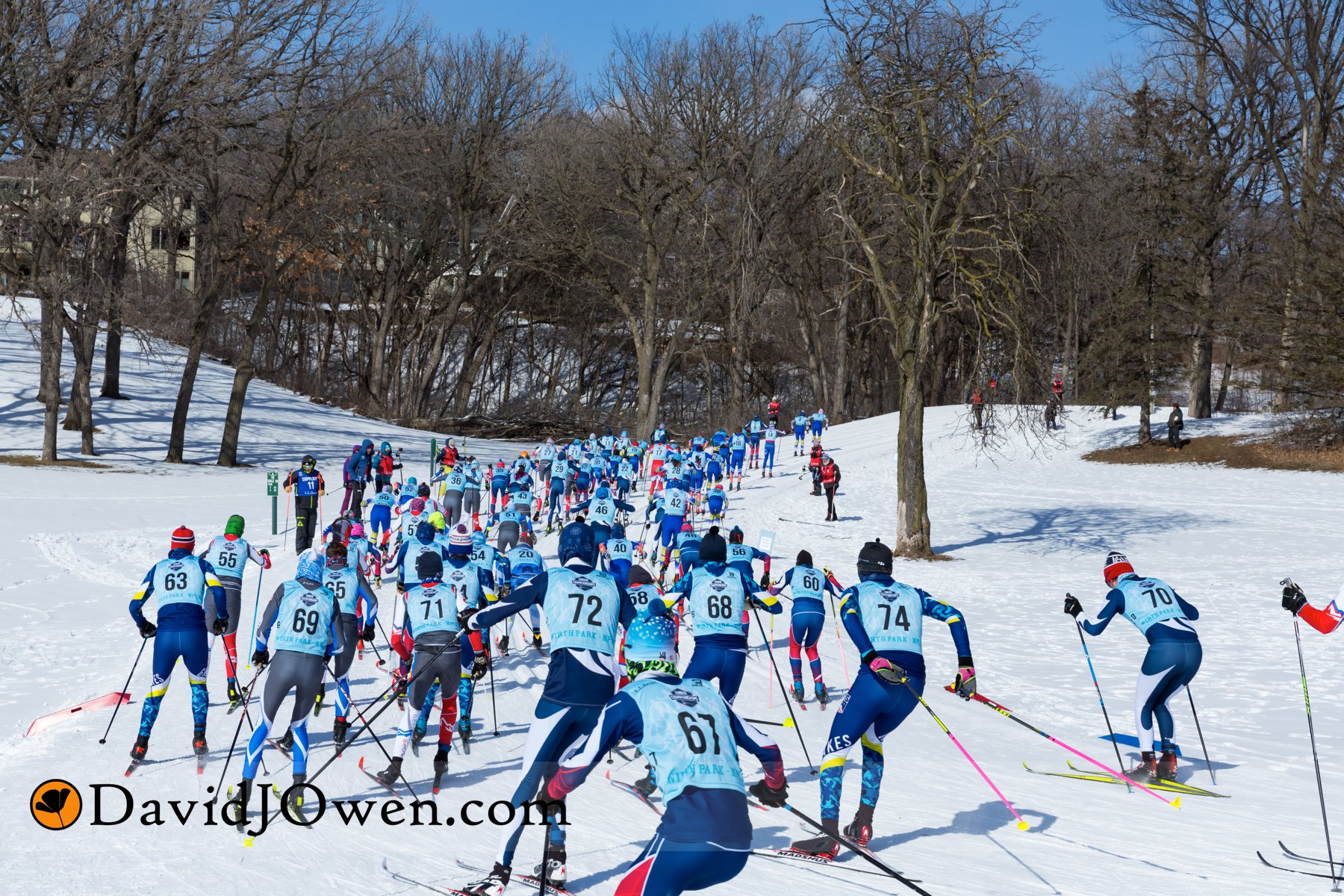
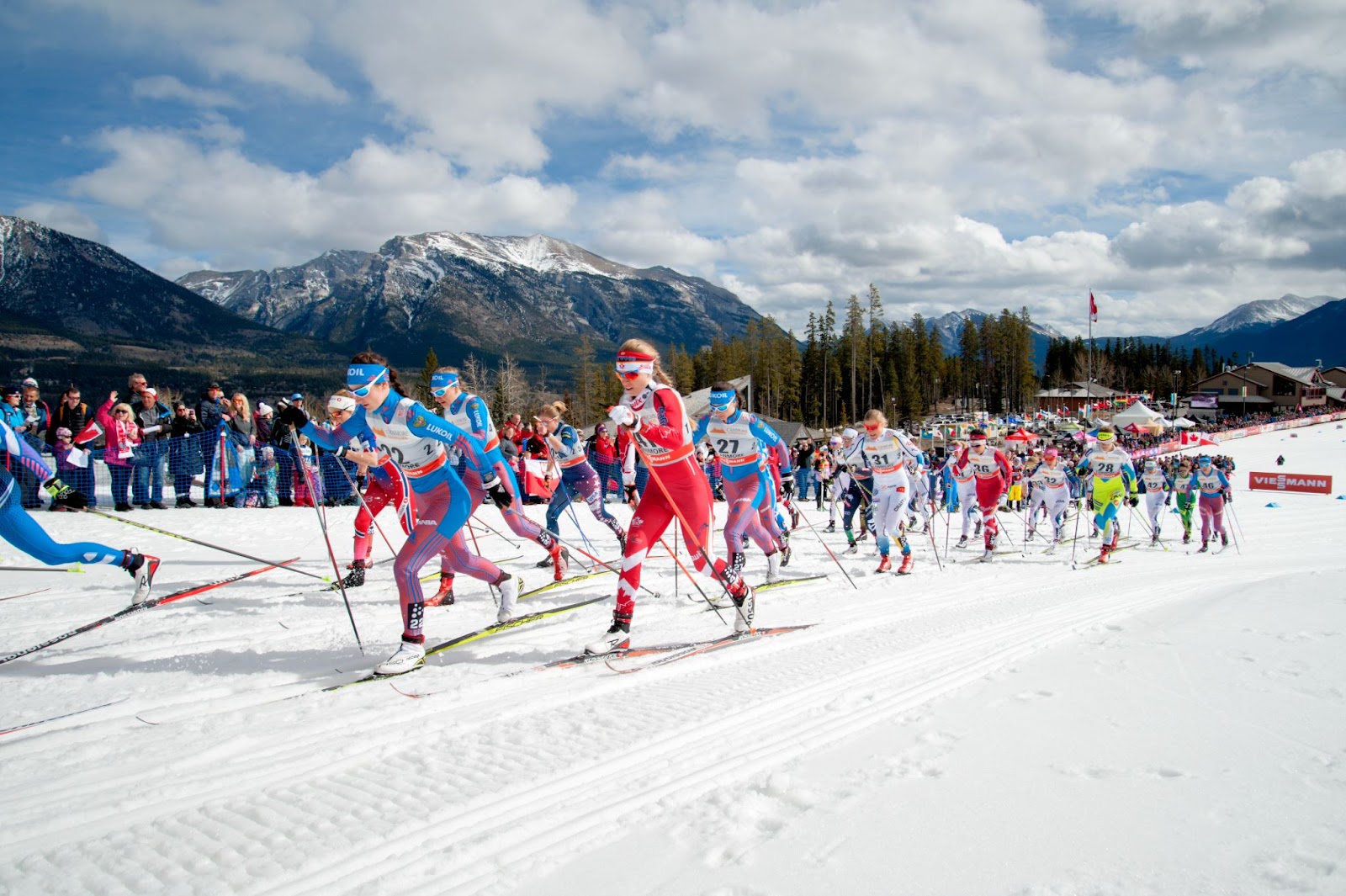
Skiers from all over the country round the first corner of the Theodore Wirth Park course in the U16 Boys 5 k Classic at Junior Nationals in Minneapolis in 2022. (Photo: David J Owen Photography)
Junior skiing in the U.S. is quietly organized around early selection. Qualification for Junior Nationals, especially at U16 and younger, carries weight. Rankings matter. Opportunities follow results. No one would say that’s the goal. But it’s the outcome.
Athletes see it. Parents respond to it. Coaches feel it. And none of that is inherently bad. But when those forces align around early results, the system starts to tilt. Short-term performance carries more weight than it should. And over time, that shows up in participation. The fields in USSS junior races get smaller as the age groups progress. We can debate why, but we can’t ignore that we’re losing athletes along the way.
The earlier we start selecting, the earlier we start excluding, selecting out athletes. And in a sport like skiing, that’s a problem. Development is long-term, non-linear, and tied to maturation in ways we can’t reliably predict. So, when we sort athletes at 13, 14, or 15 years of age, or younger, we’re making decisions on incomplete information, and treating those decisions as if they’re meaningful. They’re not!
What we’re really doing is narrowing the pathway at the exact point where it should be widest. If we believe in long-term development, early stages should include more athletes, not filter them out. We don’t lose athletes because they lack talent. We lose them because they stop seeing a path or opportunities forward.
That loss doesn’t always show up at the top. At the elite level, we can always point to success and say the system works. And in a narrow sense, it does. Every system produces some high performers. But that’s survivorship bias. But even with the perceived success, it is clear that most of those who step onto the World Cup are not prepared and developed for that level of competition, or we see an erosion of their performances over several years.
What matters more is what happens in the middle. Over time, that middle erodes. Fewer athletes stay. Fewer develop later. Fewer are still around when their best years should begin. And once they’re gone, they’re gone. So, how do we grow the sport and improve the development system? Following are a couple of ideas for the integration of high school and college skiing.
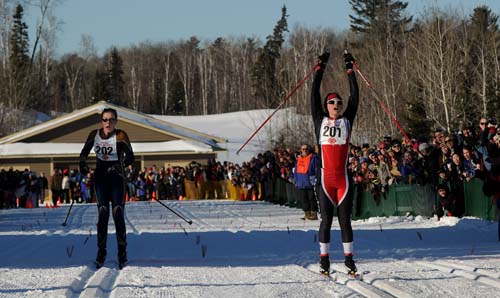
Stillwater senior Jessie Diggins, right, finishes ahead of St. Paul Academy senior Annie Hart in the 2010 edition of the Minnesota State Meet. (Photo: MSHSL Archives)
This is where the high school system should come into focus. Whether we acknowledge it or not, it’s one of the most influential environments in the entire pathway. We’re talking about roughly 6,500 high school athletes, compared to about 2,100 in the USSS junior system. That alone tells you something. Most athletes are not in the club pipeline. And there’s very little overlap between the two, in some regions more than others.
So now you have two systems, often operating in parallel, sometimes in conflict, shaping the same athlete. The club system is year-round, often very expensive, which creates barriers, and it is tied to rankings, qualifications, and progression. Ideally, at least in theory, it is long-term focused. The high school system is seasonal. Compressed. Built around immediate competition, conferences, regional, and state.
Both have value. But they’re not aligned. And when systems aren’t aligned, the athlete’s abilities are often put in difficult positions. High school seasons are short. That compresses everything. Training, racing, recovery, all of it gets stacked into a three-month season.
And yet, high school skiing also gets something right that the system needs more of. It creates a connection. It lowers barriers to entry. It brings athletes into sport who might never join a club. It makes skiing social. It makes it fun. Those values matter!
Athletes who feel connected to a team stay in the sport longer. That alone makes the high school system one of the most valuable pieces of the entire pathway. The issue isn’t that it exists rather it is not integrated, where do those high school skiers go after high school, an assumption may be many go into the non-integrated USCSA programs.
If that gap exists in high school, it becomes even more obvious at the college level.
Because this is where the pipeline either tightens or disappears. On one side, you have NCAA skiing. Roughly 20–25 programs. Maybe 300–400 athletes. Small, but structured, providing consistent coaching, clear expectations, and daily training environments that align with the demands of sport.
On the other side, you have USCSA. Thousands of athletes. Hundreds of active racers. A much broader participation base. So yes, USCSA is far bigger. But the NCAA is more efficient. In NCAA programs, a higher percentage of athletes improve year over year. More reach FIS relevance. More stay on a performance trajectory. That’s not because they’re inherently more talented. It’s because the environment supports development. Training is consistent. Coaching is present. Progression is clear.
USCSA shows the opposite. It’s not only a talent problem. It’s a structural problem. You have hundreds of athletes still in the sport. Many have endurance backgrounds. Many are still within a trainable window. But training is inconsistent. Coaching is variable. Development isn’t systematized. And there’s no clear bridge to higher performance levels. So, the conversion rate stays low.
This is where the pipeline argument starts to fall apart. We tend to focus on the front end, getting more kids into the sport. But at the USSS level that has been ineffective at best. And missing the fact that we already have athletes in the system that aren’t welcome or integrated. High school skiing, USCSA, represents a large participation pool sitting right in the middle of the development pathway. What we don’t have is a system that consistently integrates and develops them.
So, what actually needs to change? Not the philosophy, it seems we already agree on that. What needs to change is how the system behaves across the junior and collegiate level, it means recognizing where the opportunity is not just in the NCAA pipeline, but in the larger, under-structured USCSA system that already exists.
Even if we integrated the high school athletes and the USCSA athletes into the USSS system, the sport is still tiny. But it seems growing the sport significantly beyond this level is unlikely so we should be looking for ways to include these athletes in the system as much as possible for those who have an interest.
There are athletes in the system right now, thousands of them, who could or have the potential to improve dramatically beyond high school. Some who could enter the sport late and still become competitive.
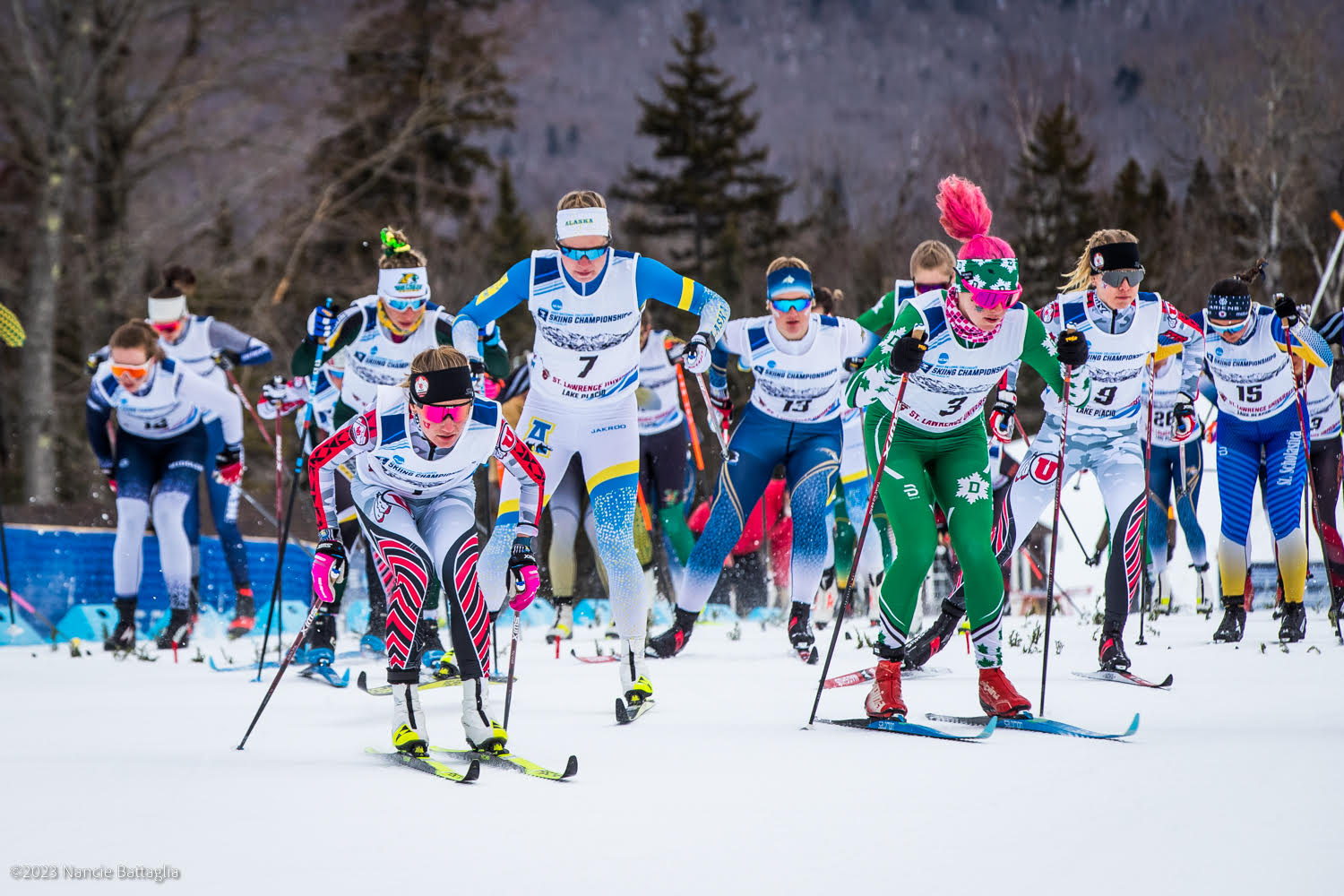
Novie McCabe controlled the pack for much of the 20-k mass start at the 2023 NCAA Championship in Lake Placid, New York. McCabe became just the fifth three-time NCAA Women’s Champion with her win. (Photo: (c) 2023 Nancie Battaglia)
At some level, this comes down to a simple choice. Do we want a system that identifies and benefits early performers? Or one that develops athletes over time? Right now, we say the second. But too often, we operate like the first. And the differences are real; we can see it by who improves, who stays in the sport, and when athletes exit the sport.
We don’t need to overhaul everything. There’s a lot in the system that works. High school brings athletes in. NCAA shows what structured development can look like. Even USCSA shows us how much untapped potential is sitting there.
But without alignment, those pieces don’t add up. So the question isn’t whether we understand long-term development. It’s whether we’re willing to build a system that actually supports it. Because if we are, the path forward should be clear.
And if we’re not, we should at least be honest about what we’re choosing instead.
Help Support Our Olympic Coverage!
If you value the thoughtful work and access FasterSkier provides, please consider becoming a Voluntary Subscriber. Your support directly fuels our work to cover the people, places, and moments that make our sport special.
Park City Ski & Snowboard is seeking a Head Cross Country Competition Coach to lead its U16+ competitive Nordic program. The full-time, year-round position reports to Cross Country Director Emma Garrard.
Below is the full job description.
Reports To: Cross Country Director, Emma Garrard Employment Status: Full-time, year-round, salaried exempt Compensation: Annual salary commensurate with experience, plus benefits Athlete Focus: U16 and above
Position Summary
The Head Comp Team Coach will manage the coaching staff, run the competitive calendar, and represent PCSS in the Regional and National Nordic community. This position requires someone who can coach at a high level and manage staff, budgets, calendars, and travel around the country for training and races, while upholding PCSS core values of Passion, Accountability, Respect, Team, and Integrity.
Program Leadership & Staff Management
Design and execute a multi-year training and competition framework, consistent with US Ski & Snowboard Training System principles
Supervise, mentor, and evaluate XC comp assistant coaches
Lead staff meetings and maintain clear communication
Maintain a strong focus on positive team culture
Collaborate with the Director on program goals, budget planning, and seasonal priorities
Contribute to the recruitment and retention of quality coaching staff
Prioritize strong communication with the Director, staff, and parents
Attend PCSS staff meetings and all-program events as requested by PCSS leadership
Support PCSS-hosted events and fundraising initiatives
Technical Coaching & Athlete Development
Implement and evaluate individual and team training plans on an annual and multi-year basis
Lead on-snow sessions 5–6 days per week during the training season, with full preparation and follow-up
Develop and execute strength and conditioning programs, including dryland
This job description is not an employment agreement or contract. PCSS management reserves the right to alter the scope of work within the framework of this description at any time. All offers are contingent on successful background check completion.
Novie McCabe of APU narrowly winning over Kendall Kramer and Alayna Sonnesyn. (Photo: Tryg Solberg / FasterSkier)
CRAFTSBURY, Vermont — Craftsbury’s SuperTour Finals 40k highlighted some awesome battles amongst the top American men and women. The women started off the day with some extremely fast conditions on the winding and punchy Craftsbury 5k loop. The men took on the course later in the morning and conditions were mostly firm besides the south facing hills.
The women’s race broke into a lead pack of 5 that held strong until a sprint finish. APU’s Novie McCabe narrowly took the win over Kendall Kramer of APU and Alayna Sonnesyn of Team Birkie. Luci Anderson of Team Birkie and Craftsbury’s own Margie Freed, both 2026 Olympic biathletes, finished 4th and 5th.
The early leaders of the women’s 40k heading up Screaming Mimi hill. (Photo: Tryg Solberg / FasterSkier)
In an interview with Craftsbury’s Sheldon Miller after the race, McCabe said that “it was really fun to ski with such a great group of girls.” In regards to her difficult last couple of seasons, McCabe said that “it’s nice to have these good days again. It’s super fun to be back racing this year.”
Margie Freed, mostly a biathlete in the last few seasons, said that “it was really nice to not carry an extra ten pounds on my back, but I was a little sad to not be able to lay down in the middle of my race.” She thanked her coaches for helping her keep track of the lap count.
Alayna Sonnesyn, the Team Birkie athlete that narrowly missed out on the Olympics, said that the top three broke away at the top of the Screaming Mimi climb. When asked how her race went, Sonnesyn said “it was great, it was so fun to be out here. Conditions were fast and furious, kind of like the Birkie this year.”
The men’s 40k leaving the stadium. (Photo: Steve Snider)
The men’s race was tight with the top 14 coming in less than 60 seconds behind the win. Gus Schumacher of APU ended up edging out John Hagenbuch of Dartmouth for 1st. Kevin Bolger of Team Birkie finished 3rd.
Jake Brown in his last race for Craftsbury Green Racing Project taking the lead up Screaming Mimi. (Photo: Steve Snider)
Hagenbuch said that he has been fighting through some illness since the Lake Placid World Cup Finals.“I didn’t win today, but I was still smiling out there and really just taking in what was my last race for Dartmouth.”
Gus Schumacher also said that the conditions were really fast and it was hard to get away from the pack. He and Zak Ketterson were pushing at the front when Zak had an unfortunate fall within the last few hundred meters: “I was given the first place position and just went for it from there.”
The award ceremony’s after the races highlighted the 40k, junior 20k and 2025-2026 SuperTour awards.
Thank you to Sheldon Miller of Craftsbury Outdoor Center for the post-race interviews with athletes.
FasterSkier will have our own Nat Herz on the ground at the Olympics, which, to be honest, is a very big financial lift for us. If you value the thoughtful work and access FasterSkier provides at championships like this one, please consider becoming a Voluntary Subscriber. Your support directly fuels the work we do to cover the people, places, and moments that make our sport special.
The SuperTour Relay start on Saturday afternoon. (Photo: Tryg Solberg / FasterSkier)
CRAFTSBURY, Vermont — The second day of racing at Craftbury’s SuperTour Finals brought on some hard-hitting team relays. The “Club Relay” had a diverse array of club skiers young and old, along with some college teams. In the afternoon, the “SuperTour Relay” featured the North American pro teams along with the top eastern college squads.
Craftsbury groomer, Eric Hanson, captured Anders Weiss of BSF and Jack Young of Craftsbury Green Racing Project skiing in front of the dump truck responsible for keeping the course open. The truck was stuck on course the d prior year and pushed off to the side with one of their Pistenbully groomers. (Photo: Eric Hanson)
The afternoon raced proved to be quite entertaining as conditions held firm. Team Birkie’s first relay squad won, upsetting APU’s first squad by 46 seconds. Alayna Sonnesyn, Kevin Bolger, Lucy Anderson, and Zak Ketterson held off the APU’s four 2026 Olympians that included Kendall Kramer, Zanden McMullen, Novie McCabe, Gus Schumacher. Craftsbury’s home team of Margie Freed, Brian Bushey, Michaela Keller-Miller, and Jack Young finished in 3rd.
Team Birkie, APU and Craftsbury’s relay teams filling the podium. (Photo: Tryg Solberg / FasterSkier)
Team Birkie was ecstatic with their win. Their second team also came within 6 seconds of the podium. BSF’s team came in 4th of the 33 teams.
Luci Anderson’s leg put on a significant gap to the APU team that they would keep through the race. (Photo: Tryg Solberg / FasterSkier)
In the morning, an additional 33 relay teams and 132 racers in total took on the 5 kilometer lap that Craftsbury staff worked hard to keep open through the recent warm spells. Hundreds of dump trucks and many more snowmobile sleds patched thinning spots on a sections of thinning snow. Eric Hanson, a Craftsbury groomer of 25 years, said that they’ve spent hundred of hours moving snow onto the race course over the last month.
33 teams starting the Club Relay in the morning. (Photo: Tryg Solberg / FasterSkier)
The Club Relay showcased the often-mentioned perk of Nordic skiing: it’s a lifelong sport. With the youngest competitors in the single digits and the oldest many decades in, it was a celebration of the sport and the joy that comes from friendly competition. While most teams donned their spandex suits, some teams added some flair with outfits that surely boosted their speed.
Ollie Burruss, Craftsbury’s Nordic Race Director, making the college skiers nervous with his lead in the first leg of the Club Relay. (Photo: Tryg Solberg / FasterSkier)
All but 7 relay teams were pairs of 2 women and 2 men. The mixed relay was won by “UVM Gold” with Owen Young, Molly Moening, Benon Brattebo, and Caleb Boyce throwing down to narrowly beat out their teammates on “UVM Green.”
Benon Brattebo of UVM leading the first leg of the Club Relay. (Photo: Tryg Solberg / FasterSkier)
If you value the thoughtful work and access FasterSkier provides, please consider becoming a Voluntary Subscriber. Your support directly fuels the work we do to cover the people, places, and moments that make our sport special.
Ben Ogden, the Vermonter, taking the cake in the men’s sprint final. (Photo: Tryg Solberg / FasterSkier)
CRAFTSBURY, Vermont — Craftsbury Outdoor Center kicked off the first of the SuperTour Finals races with a classic sprint on Friday. Yesterday’s weather brought gnarly, foggy, and temperatures in the 50s. Craftsbury’s grooming crew has been putting in long hours over the last few weeks to ensure that conditions would hold on through a warmup. Overnight, they prepared the 1.5-kilometer course that baked under the strong spring sun, creating saturated spring conditions even with temperatures below freezing.
Most of the top American competitors came to cap off their long race season, many of whom are freshly off the electric World Cup Finals. Following up huge events like the 2026 Olympics and the World Cup Finals in Lake Placid, one might think that races in the quaint Northeast Kingdom of Vermont would be a quiet, less competitive affair. Today’s competition couldn’t compete with the 10,000+ fans across the state border last weekend, but it proved to be a tight and fierce battle for sprinters to finish off their season.
85 men and 63 women started the qualifier, representing an array of professional domestic teams, Canadians, Eastern Intercollegiate Ski Association (EISA), and junior racers.
Ben Ogden of SMS T2 won the men’s qualifier with nearly 3 seconds over Gus Schumacher of APU. Murphy Kimball, the 19-year-old sophomore at the University of Alaska – Anchorage, qualified in an impressive eighth, only getting beaten out by elder World Cup regulars.
U20 Murphy Kimball heading to an 8th place in the qualifier. (Photo: Tryg Solberg / FasterSkier)
Erin Bianco of BSF won the women’s qualifier by over 3 seconds over second-place Canadian and Alberta World Cup Academy athlete Katie Weaver. Mia Gorman is a U16 athlete for the neighboring Mansfield Nordic Club who finished the qualifier in 27th, beating out all other junior women and making the heats with the big dogs.
Erin Bianco winning the qualifier by over 3 seconds. (Photo: Tryg Solberg / FasterSkier)
Ogden moved comfortably through the heats, eventually winning the men’s final over APU teammates JC Schoonmaker and Gus Schumacher, who finished in second and third, respectively.
Men’s final starting at Craftsbury Outdoor Center. (Photo: Tryg Solberg / FasterSkier)
Ben Ogden of SMS T2 was very happy about racing in his home state. “It’s a bit more chill” he said in comparison to the World Cup and Olympic stages that he’s been prominent on this season. Ogden also mentioned that, even though the race environment was low-key, the competition was stiff with the U.S.’s top skiers duking it out for the top of the podium.
In addition to representation from many different clubs throughout the heats, the women’s side saw a shake-up in the competition when the third qualifier, Lauren Jortberg of Mansfield Pro/NCPH, fell in the final. Canadian Katie Weaver and her Alberta World Cup Academy teammate Olivia Bouffard-Nesbitt finished first and second. In an interview after the race, Weaver said “conditions were fun, crazy and a bit hectic.”
Canadians Katie Weaver and Olivia Bouffard-Nesbitt embrace after their strong finish for first and second overall. (Photo: Tryg Solberg / FasterSkier)
Emma Albrecht took the top domestic position in third place with her first Supertour win in a sprint race. Erin Bianco of BSF and Alayna Sonnesyn of Team Birkie rounded off the domestic podium.
Albrecht crossing the finishing line as the first American and 3rd overall. (Photo: Tryg Solberg / FasterSkier)
Albrecht was very happy with her racing throughout the day: “The biggest feat for me is being competitive this late in the season.” When asked about her tactics in the heats with the warm spring sun softening the track, she said that she had to “find a rut and see it through.”
Logan Drevlov of Loppet Nordic Racing and Claire Serrano of Craftsbury won the junior heat finals.
Temps are forecasted to drop into the single digits overnight before 4 x 5 km team sprint competitions throughout the day. Tune in for more pictures and results tomorrow.
JC Schoonmaker (APU) and Kevin Bolger (Team Birkie) side by side in the heats. (Photo: Tryg Solberg / FasterSkier)
Help Support Our Olympic Coverage!
FasterSkier will have our own Nat Herz on the ground at the Olympics, which, to be honest, is a very big financial lift for us. If you value the thoughtful work and access FasterSkier provides at championships like this one, please consider becoming a Voluntary Subscriber. Your support directly fuels the work we do to cover the people, places, and moments that make our sport special.
This coverage is made possible through the generous support of Marty and Kathy Hall and A Hall Mark of Excellence Award. To learn more about A Hall Mark of Excellence Award, or to learn how you can support FasterSkier’s coverage, please contact info@fasterskier.com.
Johannes Hoesflot Klaebo (NOR) back in action and lifted by the roar of American ski fans during the World Cup 10 k Classic in Lake Placid, New York. (Photo: Dils / FasterSkier)
LAKE PLACID, NEW YORK — Ten kilometers into the second World Cup on American soil in as many decades, and the verdict is already clear: We need more racing in the United States.
That’s the message panted into my microphone by every athlete in the Mix Zone; shouted over the undulating din by every supporter I spoke with on the ice-lacquered walkways lacing Mt. Van Hoevenberg. And it’s the irresistible outcome of the turnout this afternoon in Lake Placid — with a crowd that came out in droves for Diggins, the Schumacher-Ogden’s Silver Medal Squad, and a host of homegrown heroes; that braved five inches of wet, driving snow; and that stayed to see Jessie clinch the Overall Crystal Globe, a reconstituted Klæbo overtake Amundsen in the Distance standings, and to welcome the world’s best to the conclusion of the 2025-26 season.
The reaction to racing in the United States in 2023 was overwhelmingly positive – and, it had seemed, sui generis. With four snowmaking venues spread across the Twin Cities, along with the (purportedly) highest concentration of cross-country skiers outside of Oslo, the energy that embraced Jessie Diggins in her home state and buried a generation of “almosts” for the U.S. Men’s Team in the snow and mud at Theodore Wirth could have been lightning in a bottle.
Jessie Diggins (USA) racing on home soil in Minneapolis and did so again in Lake Placid as she concludes her storied World Cup career. (Photo: Modica/NordicFocus)
I will admit my own skepticism that Lake Placid could field the fans, or the volume, of spectators to match Minneapolis. Perhaps my flight into Saranac Lake Regional Airport on Wednesday morning was my first evidence of error. Of seven passengers bobbing our way through the cloud-laden Adirondacks, four were here for the World Cup: Charlie, from Seattle; Billy (as in, Demong, the Nordic Combined gold medalist) and his son, from Salt Lake City; and myself, from D.C. Bussing to the venue the next day, I’m seated with a dozen of University of Minnesota alumni – they’ve taken off of work, graduate school, and medical school to spectate. “I’m excited just to see the number of people out cheering,” Alex Gude, who organized the trip, tells me. “I think one of the best parts about Minneapolis is just seeing the community come together, and now, away from home, we’re seeing another whole ski community come out and cheer.”
And, indeed, they are – from across the United States, from across New England, from across the Canadian border, and from right here in Lake Placid. Once we disembark, I wade through the corn snow and the first of many falling flakes to Mt. Van Hoevenberg’s sprawling Nordic Center, where the racecourse coils around the podium and snakes below the pedestrian bridge. Patricia Damp is herding thirteen might-be-members of the local ski community across the bridge; she’s a third-grade teacher here in Lake Placid, chaperoning a class field trip to the World Cup Finals.
Are the kids already Diggins die-hards, Ogden acolytes, Gus bus-riders? Not really, Patricia tells me. The class “was out here a couple months ago, cross-country skiing. We get to do the Olympic venues. We were at the museum a month ago. We have a friend who we watched ski jump. So, we’re very Olympic-oriented, and today we’re just out here to support the athletes and get some autographs.” Her students back her up. “We’re excited to get the players’ signatures,” Riley tells me. And while Declan is “excited to see the racers,” there’s no-one in particular he’s cheering for.
Gus Schumacher (USA) during the Men’s 10 k Classic in Lake Placid, New York. (Photo: Dils / FasterSkier)
From the mouths of children, our first – and perhaps strongest – argument for future American World Cups. The glitter-dusted kids in fan club bibs, wielding cardboard-cutout faces as large as they are, make for compelling pictures and undeniable evidence of Team USA’s impact on its next generation. But racing in the United States creates opportunities to draw an entirely new cohort of young people into the cross-country skiing community – kids who may have never tried skiing before; who may not have heard of Kikkan or Klæbo ; and whose parents certainly are not waking up before sunrise to livestream Ruka, Falun or Holmenkollen. They will not see themselves in this sport until they see this sport. What better way to do so than on a Friday field trip with Mrs. Damp?
After bidding them good luck with the signature-hunting, it’s not an easy task to wade against the current of the rest of the Lake Placid Class of 2035. Also threading his way through the third-graders is Niklas Dyrhaug, immediately recognizable even five years into retirement from World Cup racing. He’s on the other side of the v-boards this weekend, broadcasting for Norwegian television. In his first sentence, he tells me: “We are enjoying being back in the U.S. In my opinion, we should be here every year.” He’s not surprised by the number of spectators, either. “Everybody who knows the U.S. crowd knows they are really enthusiastic . . . We know the tradition, the culture, and Lake Placid’s place in that history. So, personally, I’m not that surprised. It’s really cool that we’re back here.”
That’s the sentiment just after Coaster Hill, some four kilometers into the racecourse, where Norwegian national team coach Eirik Myhr Nossum prowls the striding zone. Being back in the United States is “awesome, it’s amazing. I think we should be here every year, because you guys show up; you guys cheer for everyone, and it’s always fun to be in the U.S. and to be overseas to compete.”
And it’s the sentiment at the finish line.
Harald Oestberg Amundsen (NOR) after the 10 k Classic in Lake Placid, New York. (Photo: Thibaut/NordicFocus)
Harald Amundsen (NOR) tells me, “In the outer part of the track, there were so many people I couldn’t hear my own thinking. That’s a really good thing.” Even before he arrived at the venue, “We had a run this morning in the city. Everyone was screaming at us, ‘Good luck!’ It’s a really nice atmosphere.”
For Elia Barp (ITA), conditions were “very tough because it was really slow with this new snow, but it was fun racing for me. So I enjoyed it – at least I tried to enjoy it – it was a pack of people screaming my name so that gave me even more motivation, and was fun . . . I loved racing two years ago in Minneapolis, and here it’s packed with people, even with the snowfall, so thank you to everyone for coming. It’s really good to race here.”
Mika Vermeulen (AUT) admits, “Honestly, this is probably the worst race I’ve done in a long time. But I don’t think I’ve ever had so much fun out on the track . . . on top there, out in the forest, I just heard, ‘MI-KA, MI-KA,’ the whole time. It was insane. I had a bad race and a lot of fun.”
As for how he feels about returning to the United States: “Great, great, actually—and feeling a bit frustrated, because it just gets me pissed that we race these [bad] courses in Europe all the time, over and over and over again, and we have these freaking jewels out here which we never use. It’s crazy. I want to go to the U.S. every year for at least a whole period. It’s called the World Cup. It’s not called the European Cup, right?”
Fans all over the course with custom gear showing their fandom. (Photo: Dils / FasterSkier)
Klæbo’s opinion is a bit more measured – perhaps because he has more microphones hovering around his face. “I heard some rumors that it was supposed to be quite well [attended], and when I searched up Lake Placid and read a little bit about the place, I understood there’s not that many people living [here], but when you see how many people are here, I was pretty shocked.”
A second argument, then, in favor of World Cup racing in this country: the athletes love it. They embrace not just the energy, but the venues that push the World Cup beyond the geographic and cultural confines of Transalpine Europe.
Benjamin Dohlby (USA) at the finish of the Men’s 10 k Classic in Lake Placid. (Photo: Thibaut/NordicFocus)
For the closing statement, Ben Dohlby is among the last athletes I interview. This is Ben’s first World Cup start; a junior at University of Alaska-Fairbanks, he was 3rd in the American Birkebeiner in February. How does it feel to be making his first professional start in the United States?
“It was crazy. I went out so hard. The fans were so loud that I didn’t feel anything, and then I felt it all and got so tired – but it was awesome; a great atmosphere.” It wasn’t too long ago that Ben was skiing laps around the glazed kilometer of manmade snow at Lapham Peak State Park in Delafied, Wisconsin; now he’s here. To his former teammates, to other up and coming skiers, and to novices across similar ribbons of snow in Wisconsin, Michigan, and Minnesota, his message is simple: “Follow your dreams and you can make it happen.”
Most of the fans hiked up on the course, but the stadium filled up as the day went on. (Photo: Dils / FasterSkier)
That, then, is our concluding point: More World Cup starts on American soil means more starting berths for American skiers, and more chances for our most talented young skiers to make it to the starting line. We should savor the privilege of, as a host nation, pitting our athletes against the most accomplished figures in the sport, dreaming that a World Cup podium, an Olympic medal, could be in their future. When a lifetime of discipline and preparation meets the opportunity of a lifetime, the promise of Lake Placid – that miracles can happen – becomes deliverable.
I will leave the invariable complex problems of bidding, organizing, and logistically managing future events to far wiser pundits. But, in the meantime, the verdict is clear: FIS, U.S. Ski & Snowboard, and the American Nordic community should be eager, and determined, to have them here.
Love Stories Like This? Help Keep Them Coming.
Feature stories like this one take time, access, and care to produce. If you value thoughtful storytelling and independent ski journalism, please consider becoming a Voluntary Subscriber. Your support directly fuels the work we do to cover the people, places, and moments that make our sport special.
This coverage is made possible through the generous support of Marty and Kathy Hall and A Hall Mark of Excellence Award. To learn more about A Hall Mark of Excellence Award, or to learn how you can support FasterSkier’s coverage, please contact info@fasterskier.com.
Jonna Sundling (SWE) and Laura Gimmler (GER), (l-r) during the heats of the World Cup Freestyle Sprint in Oberhof (GER). (Photo: Authamayou/NordicFocus)
By the time the stadium lights fully took over in Oberhof, the snow had begun to change its mind.
What started as a pliable winter surface—the kind that both softens and creates mistakes—tightened as the temperature dropped, and each pass of a ski left a polished, glistening trail under the lit German night. The Thuringian Forest, quiet by geography but loud by reputation, had settled into one of those evenings that reward certainty. Edges held if you trusted them. Hesitation showed immediately. And in an Olympic season, there was very little room for either.
Saturday’s women’s Freestyle Sprint marked the World Cup’s return after the Tour de Ski, but the pause had not dulled the stakes. For several nations—and particularly for the United States—Oberhof represented the final sprint in the window that matters most for Olympic selection. That context did not announce itself loudly. It rarely does. Instead, it threaded through the day in subtler ways: in heat selection, in how aggressively athletes protected space, and in the quiet tension between racing for today and building the version of yourself you’ll need in February.
At the front, the results followed familiar lines. Jonna Sundling (SWE) qualified near the top and then won every round she entered, finishing the job decisively for her 15th individual World Cup victory. Coletta Rydzek (GER), fed by a home crowd that never stopped leaning forward, closed hard for second. Maja Dahlqvist (SWE) completed the podium in third, another entry in Sweden’s sprint abundance—a luxury that, paradoxically, can complicate Olympic selection rather than simplify it.
But Oberhof was not only about dominance. It was about positioning, intent, and the quieter victories that occur well outside the top three—where a season can tilt not with a trophy, but with a single, well-timed decision in a quarterfinal.
Hailey Swirbul (USA) take the first corner during her quarterfinal in Oberhof (GER). (Photo: Authamayou/NordicFocus)
A Course That Punishes Drift
Oberhof’s sprint course is deceptive in its simplicity: an out-and-back layout, one major climb, a technical descent, and a finishing stretch that arrives already under load. What separates it from more straightforward sprint venues is how early it demands decisions. The opening stretch funnels athletes into a tight corner almost immediately, compressing the field before it has a chance to stretch. The central climb—long, steep, and increasingly rutted and churned as the day progresses—forces skiers to declare themselves sooner than they might like.
There is little room to hide here. Miss the first corner, and you’re fighting for oxygen before the race has found its rhythm. Drift into the wrong line on the climb, and the surface punishes you. Get boxed entering the final turn, and momentum disappears instantly. Oberhof rewards skiers who are decisive without being reckless, aggressive without being impatient.
Those dynamics shaped the day for the Americans in distinctly different ways, producing four very different American stories inside the heats—plus one clarifying, unfortunate footnote that mattered for selection math and for morale: Alayna Sonnesyn (USA) did start, but crashed and did not finish.
Jessie Diggins (USA) during qualification in the World Cup Freestyle Sprint in Oberhof (GER). (Photo: Authamayou/NordicFocus)
Before the Racing: Compassion, and a Reminder Not to “Try Harder”
On paper, the Olympic selection criteria reads like a legal document—because, in many ways, it is one. It is also, inevitably, a psychological environment: a room everyone lives in, even when no one speaks about it.
U.S. Head Coach Matt Whitcomb described the team’s internal emphasis heading into Oberhof in terms that had nothing to do with points or spreadsheets.
The first message, he said, was simple: have compassion—for yourself and for your teammates.
“This is a stressful job,” Whitcomb said. Some athletes may feel safely “inside” the team; others may feel perched on the edge; others may already feel disappointment. And the team, he stressed, needs to remember that everyone is absorbing the same pressure in different ways. “Read the room,” he said, especially if you have a great race—take care of each other through a stressful period.
His second point was the one that, in a sprint weekend like this, can save an athlete from the most common selection-week mistake: mistaking urgency for a new identity.
Because “this may be one’s last opportunity,” Whitcomb said, it’s tempting to believe you can manufacture something extra—try harder, ski differently, do something dramatic. But that instinct is usually the trap.
“You can’t try something dramatically different,” he said. “What you have to do… is you ski the way that got you here.”
In Oberhof, Whitcomb felt the athletes largely did that. The plans were executed; warm-ups and routines stayed intact. “We qualified a bunch of people,” he said. The day simply didn’t convert into the results they wanted.
That, too, is sprinting: sometimes you do many things right, and the course—plus the speed of the other nations—still asks for more.
Jessie Diggins (USA) during qualification in the World Cup Freestyle Sprint in Oberhof (GER). (Photo: Authamayou/NordicFocus)
Racing as Training: Jessie Diggins
For Jessie Diggins (USA), Oberhof was never meant to stand alone.
Coming off the Tour de Ski, Diggins framed this weekend not as a test of peak form, but as a carefully placed piece of a longer arc: racing as a training stimulus, not a destination.
“Essentially, I’m using these races as training stimulus,” Diggins said. “It’s a chance to get more reps—working on the tactics, working on communication, just working on all the little things that you really can’t practice any other way unless you’re racing World Cup.”
That philosophy has long guided Diggins’ career. She has rarely spoken about “peaking” the way outsiders want athletes to: as a clean line on a calendar, a simple on/off switch. For her, form is something you keep building in public, in the only environment where it truly exists—under the clock, in contact, with consequence.
“So [I’m] keeping the training load really quite high,” she explained, “but just recovering enough that I can still punch some hard race efforts and have that be part of the training and the lead-up. And for me, that’s always been a really important thing.”
She added a line that sounds like personal preference until you watch her career and realize it’s closer to a blueprint: “I think I race well when I am racing pretty often. I might not do every single race, but just enough that I feel like I’m using them as a really helpful part of my lead-up.”
Diggins’ day ended in the quarterfinals—13th overall on the official results sheet. But that early exit doesn’t necessarily conflict with the way she described the weekend. In an Olympic season defined less by accumulation than timing, Diggins tends to measure progress in subtler signals than finish position: how quickly the body responds, how efficiently it recovers, whether the details are sharpening rather than dulling.
Oberhof, in that sense, fits neatly into the plan. Not every race has to be a verdict. Some are simply data—hard efforts taken at speed, recorded by the body, filed away for February.
Samantha Smith (USA) during qualification in the World Cup Freestyle Sprint in Oberhof (GER). (Photo: Authamayou/NordicFocus)
A Wild Arc, Embraced: Samantha Smith
If Diggins arrived in Oberhof as a veteran calibrating form, Samantha Smith (USA) arrived by a far less conventional route—one that still feels almost implausible when you say it out loud.
The last couple of months, Smith said, have been “wild.” She helped Stanford reach the NCAA soccer final. She put her skis on for the first time this season in December. She raced into shape at U.S. Nationals. And suddenly, she was back on a World Cup start line—aware of the stakes, but determined not to let the stakes steal the experience.
“I’m so grateful for the opportunities that I’ve had,” Smith said. “To have a chance to play for Stanford has been such an incredible journey… and now to be back skiing, it feels great to be out here and competing with everyone.”
Smith kept returning to the same theme: presence. She likes the work itself—the daily process—whether it’s skis or soccer.
“I really enjoy the process,” she said. “I love to train, I love to race, I love to play soccer games. So [I’ve] just been trying to focus on enjoying every moment… embracing the opportunities that I have and just trying to be very present.”
That presence mattered on a day when nerves were unavoidable.
“Coming in today, I was definitely nervous,” Smith said. “I feel like the first World Cup races of the year are a bit nerve-wracking, especially when you haven’t had a ton of time on snow or a ton of opportunities to really gauge fitness.”
So she narrowed her goals to what she could actually execute: ski clean; work transitions; be diligent in the “working sections” where Oberhof can hand you time or take it away quietly.
“I didn’t really have an outcome goal,” she said. “It was just to ski hard, do what I could, and if I got into heats, to really compete.”
And then, in her quarterfinal, came the moment that extended her day—and changed, materially, what this weekend could mean.
Smith described herself as not being in the position she wanted over the first big hill. She could see the risk: that the heat would compress into a pure sprint finish, where you either have the lane or you don’t. And then—briefly—she did.
“Into the last climb before the finish, I saw a window on the inside,” Smith said. “I saw the space open up, and I just tried to take it. To be honest, I wasn’t really expecting that it was going to open up.”
It did. She went. And she made the move that sprint racing requires: the one that looks obvious in replay and feels like a gamble in real time.
“I was worried it was going to come down to a complete sprint finish at the end,” she said, “but I think I got pretty lucky… There was a bit of open space, and I was able to make my way up.”
The reward was tangible: Smith advanced to the semifinals and finished 12th overall. Just as important—at least in the language of selection criteria—she also climbed to 42nd on the women’s Sprint World Cup standings after Oberhof.
In a season where criteria can hinge on ranking thresholds, that is not a small detail. It is the kind that turns a good day into a consequential one.
Whitcomb’s reaction captured the strange emotional geometry of selection weekends: elation, paired with an awareness that someone else is hurting.
“We’re absolutely ecstatic with Sammy,” he said—and then, almost immediately, he acknowledged the other side of it: “It’s always bittersweet because on literally every race I’ve ever been to, there have been people that have good races and then people that are really disappointed.”
In sprinting, the margins are often only a few meters. In Olympic selection, those meters can echo.
Hailey Swirbul (USA) during qualification in the World Cup Freestyle Sprint in Oberhof (GER). (Photo: Authamayou/NordicFocus)
Joy Without Illusion: Hailey Swirbul
For Hailey Swirbul (USA), the day began with something rarer than confidence: uncomplicated joy.
“I was genuinely excited just to be back racing and to make the rounds today,” Swirbul said. “It felt like a treat. Honestly, I wasn’t expecting it. I was hopeful that I might have that opportunity, but getting to be in the heats was really fun.”
What stood out wasn’t that she smiled—it was why.
“My smiles were genuine out there,” she said, “and I felt an excitement and joy to get to be part of it, rather than a fear or pressure… to live up to some expectation that I might set for myself.”
Swirbul approached qualifying with a clear-eyed strategy built around her own technical history. She identified the steep jump-skating (V1) section that had dominated the day’s conversation and made a choice.
“There’s a lot of pressure, a lot of expectation around that steep V1 hill in the middle of the course,” she said, “and that’s just historically not my strength… I felt like I was able to do the working sections well.”
The plan worked. She advanced into the heats and finished 22nd overall.
In the quarterfinal, the course delivered its blunt lesson: once you lose contact, you often don’t get it back.
“I maybe tried to ski my own race a little too much,” Swirbul said. “Once you’re off the main pack, it’s really hard to get back on… I was excited to have a strong finish… but it’s just not enough at this level.”
The sentence contains both honesty and optimism—because Swirbul wasn’t treating Saturday as an endpoint. She was treating it as preparation for what, in her case, may be the weekend’s more natural opportunity: Sunday’s 10-kilometer classic interval start.
“I’m excited—really looking forward to the classic 10 k tomorrow,” she said. “I’ve had a couple of good ones this year, so [I] hope I can keep the momentum going.”
And then she said something that explains why so many distance skiers quietly enjoy sprinting before a 10 k: it’s a way to wake the system up.
“I do actually really like racing a sprint, especially a qualifier plus a quarter right before a 10 k,” she said. “I think that’s kind of ideal race prep for 10 k. So I’m hoping that can help power me through tomorrow’s race.”
Swirbul’s mindset for Sunday, she said, would be built on a simple distinction: what she can control, and what she can’t.
“Every course and every day has so many variables… out of my control,” she said. “So I just want to try to control what I can and do my best at those things.”
It’s a professional skier’s sentence. It’s also, in an Olympic season, a survival skill.
Lauren Jortberg (USA) during qualification in the World Cup Freestyle Sprint in Oberhof (GER). (Photo: Authamayou/NordicFocus)
Boldness, Not Regret: Lauren Jortberg
Lauren Jortberg (USA) did not set out to lead her quarterfinal. It happened anyway, fast and almost accidentally—the kind of start that changes your entire heat because it changes your options.
“I took control early… wasn’t necessarily on purpose,” Jortberg said. “I just had a really fast start, and there’s a big corner right away, so I wanted to have good positioning there.”
She connected that early positioning to what she sees as a strength: the major climbs. In Oberhof, you don’t get to drift into those climbs. You arrive either with space or without it.
“I wanted… good positioning for the major climbs,” she said. “I feel like that’s one of my strengths.”
Late in the heat, the day turned on a familiar sprint mechanism: contact and congestion at exactly the wrong time.
“I got a bit of a tangle… into the final turn,” Jortberg said. “I lost all my speed there.”
Importantly, she rejected the clean narrative that would blame her early assertiveness for the late cost.
“I don’t necessarily think that leading… came at a cost,” she said. “I just think… I lost all my speed when we got tangled.”
And then she said what, in an Olympic-selection sprint, many athletes think, but not all athletes will say out loud: she did not come to Oberhof to hide.
“With the Olympic implications, I don’t really want to sit in the back and just chill,” Jortberg said. “That’s not really how I like to race heats.”
She described her approach as an attempt to avoid the passive sprint fate: getting boxed in, stuck behind, hoping someone else would make a mistake.
“I just really want to try to ski well,” she said. “At least [I] tried to move… and try to ski my best out there rather than just… getting boxed.”
Jortberg finished 29th overall. But what she took from the day was not despair—it was proof of belonging.
“A lot of my confidence is just knowing that I really can ski with these women who are really strong,” she said. “That’s important for confidence moving forward.”
Even in a heat that didn’t break her way, she will leave Oberhof with something World Cup weekends can either confirm or erase: the belief that she belongs on this stage.
Maja Dahlqvist (SWE), Jonna Sundling (SWE) and Iris De Martin Pinter (ITA), get set to start their semifinal in the Freestyle Sprint in Oberhof (GER). (Photo: Authamayou/NordicFocus)
The Final, and the Moment That Changed It
The women’s final unfolded at speed—and then, briefly, at the mercy of chance.
Sundling drove the pace as expected, forcing the field into single-file. Dahlqvist tracked smoothly. Rydzek hovered, patient and dangerous. Behind them, Iris De Martin Pinter (ITA) skied with poise well beyond her years, positioned to contend.
And then she wasn’t.
De Martin Pinter fell, fracturing the race at the worst possible moment—the kind of incident sprinting produces with brutal efficiency. Sundling’s growing gap became decisive. In a course that rewards momentum and punishes disruption, the fall functioned like a door closing: abruptly, unfairly, and permanently.
Sundling closed the remaining distance with authority. Rydzek surged for second. Dahlqvist held on for third.
Jessie Diggins (USA), Hilla Niemela (FIN), Nicole Monsorno (ITA), Milla Andreassen (NOR), Samantha Smith (USA), Alina Meier (SUI), (l-r) come around the first corner of their quarterfinal. (Photo: Authamayou/NordicFocus)
Skis, Speed, and the Truth You Can See on a Downhill
No sprint weekend exists in a vacuum. Equipment matters, and in Oberhof, that reality was visible in the most unforgiving place: the downhills where small gaps become facts.
Whitcomb, careful about specifics because he had not yet been fully able to review the race video, acknowledged what many observers sensed: the U.S. skis were close, but not quite at the level of the very best nations on the day.
“I think that’s a safe and fair assessment,” Whitcomb said. He emphasized that the team was competitive—but in sprinting, “competitive” is often not enough.
“You need the best skis to go up against other teams that have the best skis,” he said, citing nations that, on this day, appeared to have exceptional speed.
It’s the part of sprinting that can feel cruelest to athletes: you can execute your plan, hit your cues, make good tactical decisions—and still watch a gap open on a downhill you skied correctly. In Oberhof, where the course magnifies drift, ski speed is not a luxury. It is oxygen.
Samantha Smith (USA) for the first time advanced into the semifinals in the World Cup sprint in Oberhof (GER). (Photo: Authamayou/NordicFocus)
Selection Without Ceremony
For the United States, day one in Oberhof didn’t resolve Olympic selection questions. It narrowed them.
U.S. Ski & Snowboard’s selection language ties nomination, in part, to World Cup standings thresholds, with specific mention of Top 50 (or Top 45 under certain conditions) in the Sprint or Distance World Cup standings on January 18, 2026.
Inside that structure, Saturday’s most significant American movement belonged to Smith.
With her semifinal, she, in just one World Cup race, vaulted to 42nd in the Sprint World Cup standings. That is the kind of number that changes the texture of a season, because it moves her into the zone where the objective criteria has been met.
The other Americans’ days mattered in quieter ways. Diggins stayed on her February-focused arc, treating racing as stimulus and sharpening. Swirbul used the sprint as both a joyful return to the rounds and a deliberate set-up for Sunday’s classic 10k, a race she believes suits her. Jortberg confirmed her willingness to race with intent rather than hide from consequence, even when the margin for error is razor-thin.
And Sonnesyn’s crash—real, abrupt, and emotionally expensive—served as a reminder that selection seasons do not always give you clean data. Sometimes they give you a fall, a DNF, and the long work of resetting.
Jonna Sundling (SWE) comes to the line for the win in the finals. (Photo: Authamayou/NordicFocus)
What Remains
By nightfall, the snow had hardened completely. The course no longer absorbed uncertainty. It reflected it.
Some athletes left with podiums. Others left with confirmation, calibration, or unfinished business. In an Olympic winter, not every race is meant to answer questions outright. Some exist to refine them—to strip them down to what actually matters.
Whitcomb’s framing, in that light, felt less like a coach’s speech and more like a survival manual for the next month: be compassionate; don’t weaponize the criteria against each other; and when the moment arrives, resist the temptation to become someone new out of panic.
You can’t “try harder” into an Olympic team. You can only ski the way that got you here—cleanly, boldly, and with enough self-trust to hold your line when the window opens.
In Oberhof, Samantha Smith did exactly that. And for one night in the German cold, that single choice—one inside lane, one late move—was the difference between a good day and a consequential one.
Feature stories like this one take time, access, and care to produce. If you value thoughtful storytelling and independent ski journalism, please consider becoming a Voluntary Subscriber. Your support directly fuels the work we do to cover the people, places, and moments that make our sport special.
Canmore Nordic Centre Provincial Park hosted World Cup racers during Ski Tour Canada, 2016. Canmore is again scheduled to host FIS World Cup Cross Country events in February, 2024. (Photo: Pam Doyle Photography)
Canmore, Alberta—February 9-13, 2024
The Alberta World Cup Society (AWCS) will host the COOP FIS Cross-Country World Cup for three race days at the Canmore Nordic Centre Provincial Park and one City Sprint in Calgary from February 9-13, 2024. This marks the seventh time that AWCS has invited the world’s best skiers to experience Alberta’s world renowned Canmore Nordic Centre Provincial Park. And a new challenge has been undertaken by the organizing committee, hosting a City Sprint in Calgary! The Calgary City Sprint on Prince’s Island Park will be the first of its kind and all Calgarians will be invited to take part in this exciting event.
“Hosting of international events in Canada is critical for the development of Canadian skiers but also for FIS to truly deliver its mandate as an international federation,” said Stéphane Barrette, CEO, Nordiq Canada. “We are grateful to have another opportunity to partner with FIS in hosting these World Cups next February to continue building the profile of cross-country skiing around the World.”
To request additional information, please contact Nancy Richard at (403) 585-0503 or nrichard@albertaworldcup.com
Minneapolis, Minnesota—February 17-19, 2024
After their events in Alberta, World Cup athletes will travel to the United States for two more races when the Loppet Foundation, Share Winter Foundation, and U.S. Ski & Snowboard will welcome the world to Minneapolis’ Wirth Park for the COOP FIS Cross Country World Cup Feb. 17-19, 2024 (date pending final FIS confirmation). This will also mark the first time in two decades that such event has been staged on American soil
The Loppet Foundation was prepared to host a Minneapolis World Cup in March 2020, but that event was canceled due to the coronavirus pandemic. The Loppet Foundation looks forward to hosting in 2024 while building on preparations made for the 2020 event.
“We are thrilled to work with the Loppet Foundation and Share Winter Foundation to bring back a cross country World Cup to the states,” said President and CEO of U.S. Ski & Snowboard Sophie Goldschmidt. “We know that this event will be a huge success and allow our athletes to showcase their incredible talent in front of a community that has always supported this sport.”
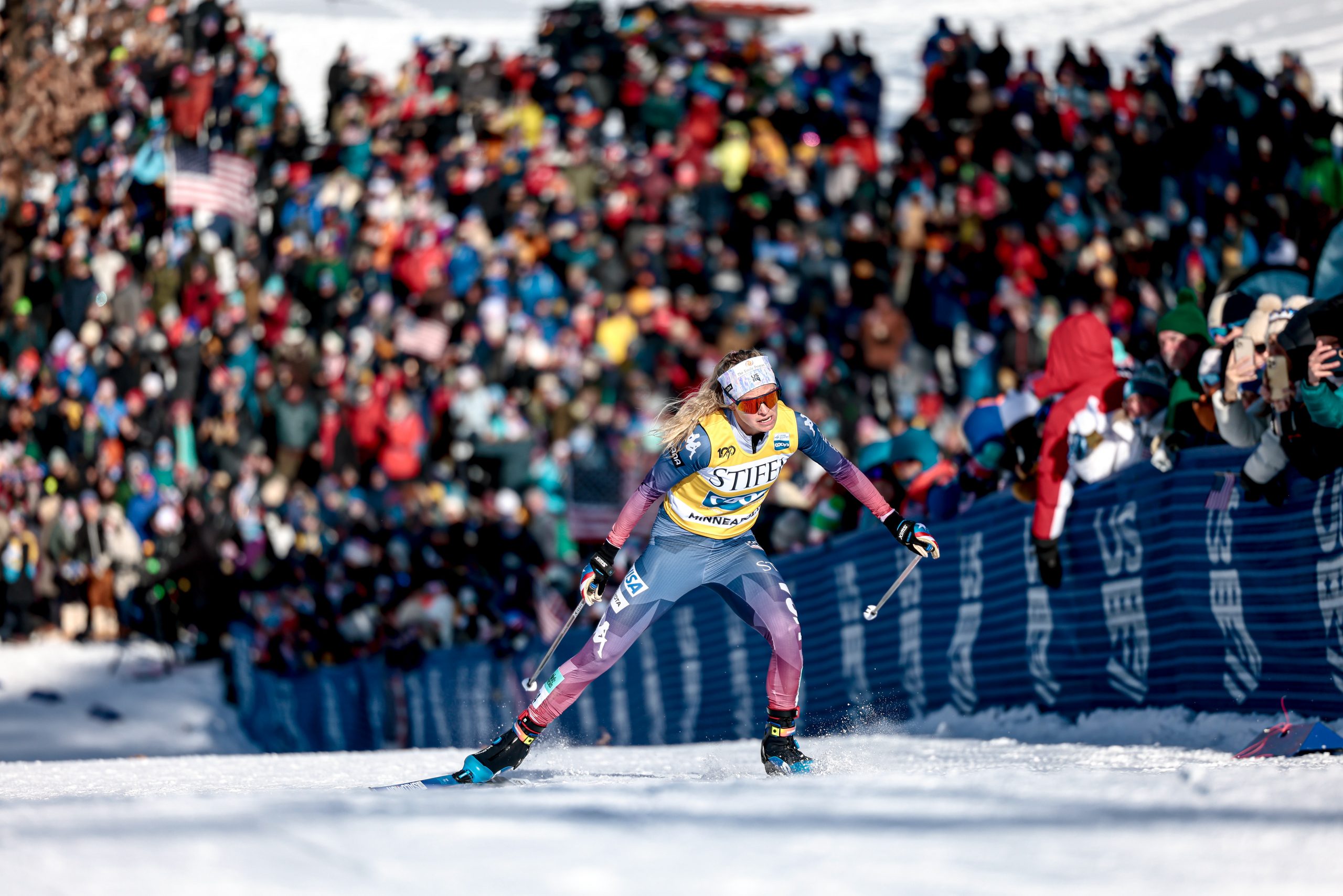
Minnesota native, Jessie Diggins, is the most decorated American in Olympic Cross Country Skiing. (Photo: NordicFocus)
“I’m excited to give ski fans from around the U.S. a chance to see the action up close for the first time in over 20 years,” said US Team standout—and Minnesota native—Jessie Diggins. “I am so proud to represent Minnesota as one of the first American athletes to win Olympic gold in cross country, and now to bring the sport I love to the state I call home.”
The Loppet Foundation is a 501(c)(3) nonprofit organization that connects people to the outdoors through experiences that grow community. Learn more at loppet.org.
Share Winter Foundation (Share Winter) is a non-profit grantmaking organization working to improve the lives, health, and fitness of youth through winter sports, and create a more diverse, inclusive, and welcoming winter sports community. Learn more at www.sharewinterfoundation.org.
U.S. Ski & Snowboard is the Olympic National Governing Body (NGB) of ski and snowboard sports in the USA, based in Park City, Utah. For more information, visit www.usskiandsnowboard.org.
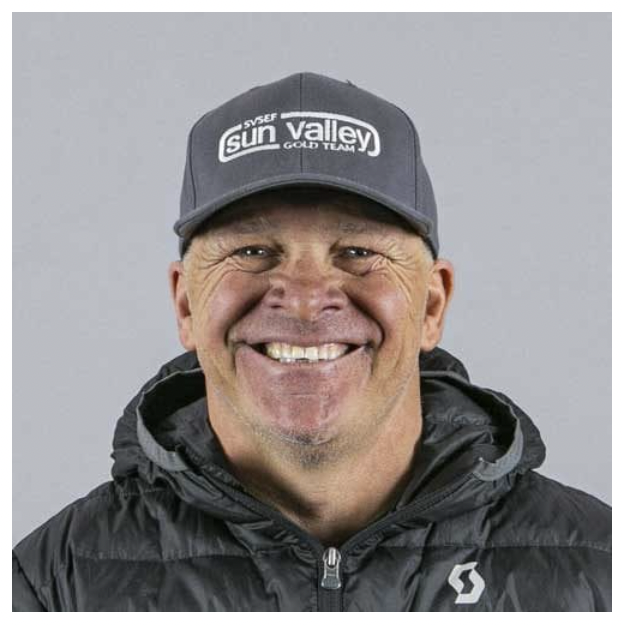
A common sight in the Intermountain West for the past 35 years: Rick Kapala on race day. Kapala is stepping away from coaching, and into sport development, this season. (Photo: Sun Valley Ski Education Foundation – SVSEF).
“I’m sorry, but once I start talking cross-country skiing, I can’t stop,” admits Rick Kapala. Remove the “talking” from that statement, and it’s still a succinct summary of long-time Sun Valley coach Rick Kapala’s career.
This season will mark the first time in thirty-five years that Kapala won’t be manning the wax bench on race day for the Sun Valley Ski Education Foundation. This summer, he turned to a new role at the Sun Valley Ski Education Foundation withthe title “Sport Development Director.” In his stead, formerBates College Coach Becky Woods will take over his former Program Director duties.
For those who have known Kapala during his long tenure in US skiing, his new title signals an exciting prospect. Kapala has been a constant, forward-thinking mind in US Skiing. He has played a role in creating a domestic professional skiing scene, helped start theNational Nordic Foundation, and counts a plethora of key figures in US Skiing as his former athletes, coaches, and mentees.
FasterSkier caught up with Kapala to reflect on his own journey to this point and get a glimpse into some of the most exciting ideas pushing US Skiing, from one of its most passionate minds.
(This interview has been edited for length and clarity.)
FS/FasterSkier (FS): Let’s start with your biography as a coach. Can you give us a summary of your career as a coach and at Sun Valley?
Rick Kapala (RK): Coaching for me started at my alma mater, Michigan Technological University (Michigan Tech), the year I graduated. Then I moved out west and I coached for a couple years in Washington state at a club program run by Pacific Lutheran University.
Then I moved to Anchorage which was where I was really fortunate in my timing. I landed coaching at West Anchorage High School as their ski coach, track, and cross-country coach. And the stable of athletes I had there was full. Nina Campbell, Joey Caterinichio, and Chris Grover are just a few your readers might know. I was really lucky that was my first exposure to sort of an “all-in” type coaching job. Then I came down to Sun Valley in the summer of 1987 and have been here ever since.
FS: What did the Sun Valley team look like when you got to Idaho?
RK: We had a pretty good little program, this being the ski town that it is. The Alpine program was big, but the cross-country team was this small, ancillary program. We had seven to nine on the high school team, and then seven or eight middle schoolers.
FS: How did you approach building out that program back then? Was it adding a younger development program? Bolstering numbers for the high schoolers?
RK: There was a separate, kind of “Bill Koch League” (learn-to-ski) type program in the Valley. We assimilated that and made it our Devo program under the umbrella of our offerings. The program immediately began to grow from there. I attribute that to having really good coaches at that younger age who were really invested in the right way over the course of the first four or five years I was in Sun Valley. That eventually led to steady growth for the Comp (high school) program. That model is the basic infrastructure of a club. The same can be said about New England with theBill Koch League, or in Minneapolis withthe Minnesota Youth Ski League. Really dedicated coaches at the younger level are what end up powering competitive programs.
FS: At what point did Sun Valley grow beyond the junior programming? When did the Gold Team (Sun Valley’s Pro Team) and Post-Grad programs start to develop?
RK: The genesis of theGold Team was a really fortuitous set of circumstances. We had a great coach, Chris Grover (who Kapala had coached at West Anchorage), landed in Sun Valley after the Nagano Olympics in 1998. He had been with the national team, but at the time there were budget cuts. Grover, coming off of that, had a pretty profound instinct that skiing couldn’t just develop within the [United States Ski and Snowboard Association]. He came to me and said, “we should start a pro team [in Sun Valley],” which, in retrospect, was such an important development because it allowed us to imagine a whole new ecosystem for our programming.
Having Grover come off of the national team also made it an easy prospect to get athletes here.Chris Cook, for example, got cut loose from the national team, and Grover was able to step in and give him an obvious avenue to keep pursuing professional skiing. That was key—having an avenue to go down. Cook won a national championship the first year he was at Sun Valley, and then made it to the Olympic Games.
That was a part of the fortuitous nature I talked about too. That the next Olympics were in Salt Lake City [in 2002]. The Gold Team was originally the Olympic Development Program—we got told eventually we couldn’t use that name, but it gave us a lot of visibility from the community here in Sun Valley, and a clear “brand” for talented skiers to know what they were pursuing here.
Ben Lustgarten and Rick Kapala at a SVSEF training session in 2014 (Photo: Ben Lustgarten).
FS:What strikes me as interesting about that “fortuitous” timing is that there was a push around US skiing at the same time Sun Valley’s team got started to have those Olympic Development programs around the country, but most of them weren’t nearly as sustainable as Sun Valley ended up being. In the past few years, we’re seeing a renewed push to introduce more pro racing opportunities across the country, whether that’sBridger Ski Foundation’s team in Bozeman, orTeam Birkie in the Midwest. What are some of the things that have made Sun Valley sustainable that could help make those programs sustainable as well?
RK: Whenever I get a question like this, I always start with a disclaimer. Sun Valley is a really unique place that affords us some big advantages when it comes to building and sustaining new programming. We have one of the richest traditions of skiing in the country, and it is still a ski town—it hasn’t sprawled out in the same way that other places have. It is also a fairly affluent community.
The industry here is skiing too, that always is going to be an advantage. We have an outsized role in our community because of that. When we roller ski in the summer, people are cheering on our kids, that’s not happening in other places, right?
I think we have had to center our approach around the idea that we are a community asset here. We try to have success, just like any sports team, but what we are really trying to be is the highest-quality recreational and competitive opportunity for kids in our valley. That gives kids the resources they need to take skiing as far as they can. Whether that was Morgan Arritola, or now Sammy Smith and Cora Faye Scott. They all came through a program that at the start was really a way to get out and involved in our community and kept true to that impetus. Naturally, that is going to engender warmth and engagement from outside of just the ski community. There is also making sure that the talent that is coming through the Gold Team, for example, is able to invest in the wider community here. We need to make sure they have the chance to do that. And they have.
I am not saying the model here is the model everywhere. What theLoppet Foundation has done to make skiing the big deal it is in Minneapolis—that’s phenomenal—they figured out how to balance programming, events, and facilities in a way where kids might just want to go skiing on Sundays rather than watch the Minnesota Vikings play football. And not every kid will, but they have the option to and feel like it is worth it. That is so important.
Or in Anchorage, right, skiers are on the front page of the newspaper. That’s a big deal. It is the same in Sun Valley, and I think that speaks to creating a community ecosystem that celebrates and invests in skiing.
FS: I am struck by how the skiers that the Gold Team has a pretty consistent mix of kids from your junior program and from other programs across the country . . .
RK: That’s super intentional. There just needs to be a critical mass to be able to inspire and also, provide a high-quality training environment. Johnny Hagenbuch, right now, for example: when he got to a point as a junior, having the Gold Team for him to hop into for training made a big difference in his development.
FS: With regard to “development,” we haven’t covered your new position in detail. You’re moving from individual athletic development to a more club-wide role. What does that look like in Sun Valley, and how do you see what you’re doing in Sun Valley pertaining to US Skiing in general?
RK: Well first, I don’t want to say I have answers beyond the community here. I think keeping my focus here is really important.
My new position as “Sport Development Director” is multi-pronged. I’m still doing the resource development for the Nordic Team and coordinating events like the upcoming SuperTour. Then, there are a few other initiatives that follow along the lines of thinking, “what is the next thing?” in sport development. One of those is coach education. In our organization [at Sun Valley] we have about one-hundred coaches on the payroll during the season. Right now, the coaches certification process they go through is kind of transactional with US Ski and Snowboard, right? Meaning they take this coaches’ course and maybe do a continuing education credit, but that might be it. One thing I think is big incongruency in [American] skiing right now is that we work on cultivating a growth mindset for our athletes, but we don’t have the same mentality for our coaches, let alone the resources to make it possible. I think that’s where we need to go. Like Doctors have the American Medical Association, we need to have an organization—or use our existing organizations—to cultivate a culture of what I’d call “professional development.” As a ski community, we’re past the point where we are simply hiring people to coach based on the merits of their skiing. I think it is a positive development that it is a distinguishable profession, but now we need to do the work to not make it a profession where everyone is kind of self-educating.
Kapala out in the Idaho mountains in 2022. (Photo: SVSEF).
FS: I’ve been thinking about that a lot the past few weeks, coming off of theNational Coaches’ Symposium and off ofDr. Stephen Seiler’s talk with NNF last week (which Kapala was partly the brainpower behind). My operable knowledge of physiology as a coach up to now was based on what I learned at an REG camp presentation as a sixteen- or seventeen-year-old kid, and all of a sudden it was like, “whoa, this whole field has evolved a bunch” and I came away with three or four things I was ready to change in my coaching right away . . .
RK: Yeah, and that coaches conference happens what, every two years? Imagine if we made that part of coaching culture. That collaboration and knowledge-sharing: it is imperative. I’ve been paying attention to the system of coaching in international soccer, for example, where American coaches are going over to Germany and realizing just how beneficial the structure and rigor of coaching education is over there.
FS: As in, the accreditation system?
RK: Not so much the accreditation, but more so just how seriously they invest in all the individual aspects of sport development. Like this American soccer coach I was listening to a podcast with [Jesse Marsch, who came up through the German coaching system and now is the first American coach in English Premier League history with Leeds United]. He said he had a year-long course in sports psychology just to get accredited in Germany. We are no year to making that investment in something as beneficial as that.
One of my other initiatives is on that front: I’d like to create a dedicated professional position at Sun Valley who can work with our athletes on sports psychology and wellness. We have always been great at catering to the physical aspects of our athletes, but not the emotional, or just human, aspect of human athletic performance.
FS: Putting the resources to institutionalize new developments in athletic performance seems to be a theme of your work. I ran across an articlefrom our archives where you talk about making training camps, like the U16 camp system, a regular part of the developmental pipeline in the US. That was a decade ago, and now, that’s well-established across US skiing. Is sports psychology and wellness the next front for that you think?
RK: The U16 camp idea was a collaborative idea that came from a couple coaches at REG camp being like, “this is a great system, why aren’t we expanding this type of incentive and experience to kids at the crucial point where they decide to go all in on skiing or not?” And we could do it quickly with relatively few resources. That is the same thing with wellness and catering to that aspect of our athletes. I actually think it is even more important in the American context, too, because we’re correcting for that persistent “toughness” or “suck-it-up” mentality that is a feature in our athletic culture. That has never worked when you look at skiing.
FS: It was interesting that in Johan Olsson’s presentation at the National Coaching Symposium a couple weeks ago, he citeda study on [UCLA’s legendary basketball coach John Wooden] where the main finding was essentially that his main feedback to his players was positive, rather than negative; that was a revelation in the 1970s.
RK: Yeah, and then a couple years after that, [Indiana University basketball coach] Bobby Knight was throwing chairs at his players! Somewhere it got lost, and so we still have to address it in the landscape of our coaching.
FS: Is the answer doing more coach education and dedicating resources to making it part of our clubs?
RK: Yes, I also think it goes to a base-level of empathy. One of the cool things about skiing now versus when I first started coaching is that there is a critical mass of people—coaches or even just parents of athletes—who went through all the highs and lows of ski racing as athletes themselves. We have a depth of knowledge present in skiing that just did not exist in the 1970s and 1980s, and it is so helpful as an athlete to not just have one coach, but a support network, that can help you navigate a really hard, and really rewarding sport. That is special, and we have that going for us.
FS: How do you incorporate that experience into the practice of coaching?
RK: I actually think it is a community thing. Which enough individuals working together is always going to lead to. At the end of the day, that is what we have that is special. I’ve been in this game long enough to see how skiing connections last. Our kids meet other kids from across Intermountain West at JNQs, and they go on to become their friends, neighbors, teammates later in life. It just lasts.
I think about what drives our community to do this sport a lot. There’s certainly not a lot of money in it, and there is not the capital of a lot of Division One college scholarships on offer. I think the ethos of it truly is that the people in cross-country skiing love it deeply. Love it individually, and together.
FS: That’s a beautiful way to say a really true thing. Just to try and collect some of the themes I am seeing run through this, the “Rick Kapala” philosophy towards skiing development seems to include a community powered by that ethos—that love of skiing you talk about—that provides a “complete ecosystem” in terms of the resources needed for athletes to succeed. And you seem to be very careful to say that needs to match the specific context of the place in which the ski community exists.
RK: I think that is fairly well put. The levers we can pull in Sun Valley are different than what those in Minneapolis—or you in Crested Butte—can pull. So you have to be collaborative and observe what works and what doesn’t in the place you are, and then take in knowledge from other places too. That’s how we ultimately make skiing in this country go ’round.
We can’t just do what the Norwegians or Swedes are doing. We have to think about how we do things soundly, but differently. We have been successful in doing that to some extent, but there is always room to improve—which was the most important lesson of my coaching career.
FS: And that’s the most important thing you’re now bringing to development?
RK: For sure.
Long-time SVSEF XC Program Director Rick Kapala. (Photo: SVSEF)
Convened for the first time since the pandemic, USSS’s biennial coaches National Coaches’ Symposium brings focus to US Skiing’s progress, and highlights the ever-evolving nature of the sport.
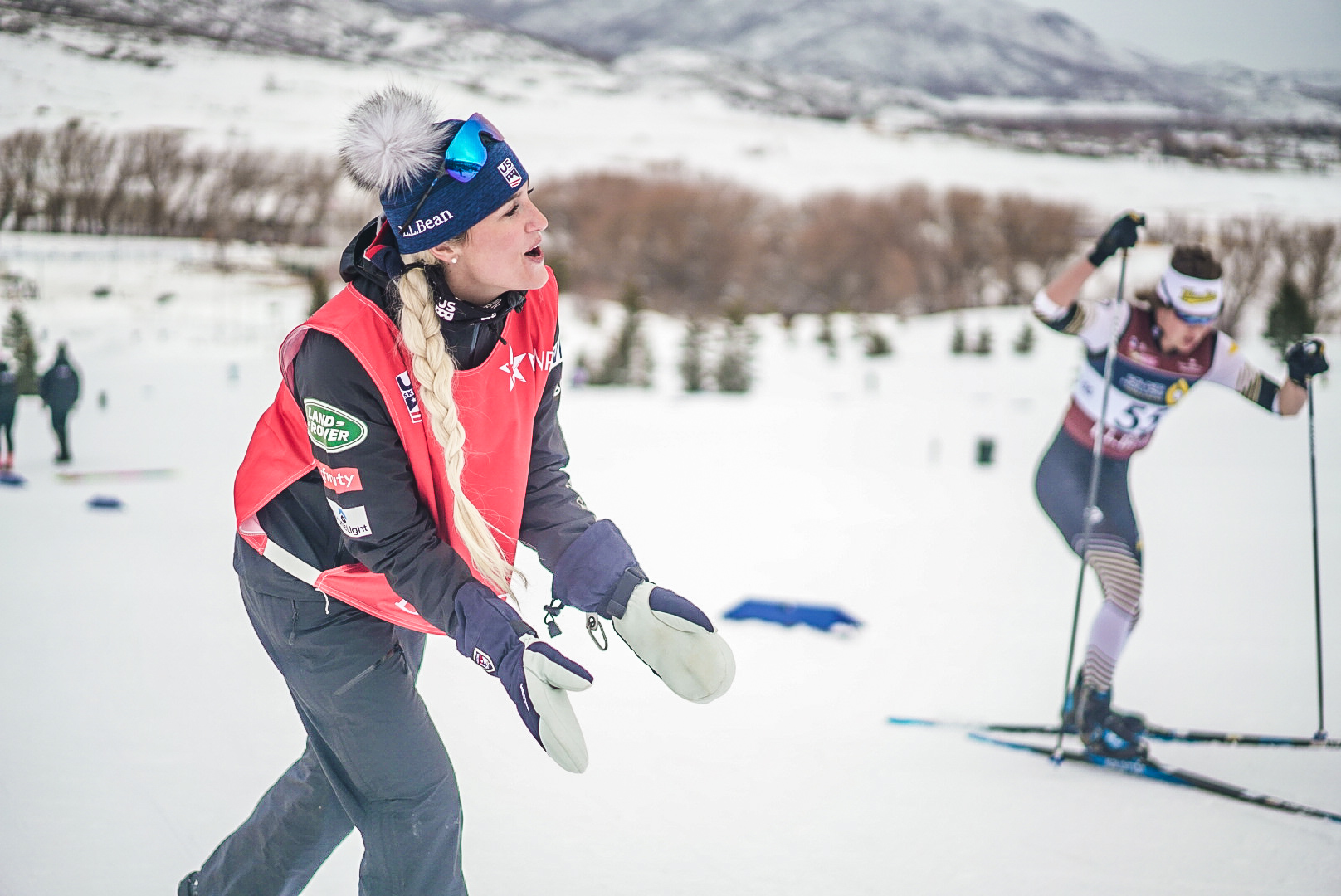
U.S. Ski and Snowboard Development Team Coach Greta Anderson encourages athletes during the men’s 30k distance race during the 2022 U.S. Cross Country Championships in Soldier Hollow. (Photo: Tobias Albrigtsen / @untraceableg)
Last held in 2019, the US Ski and Snowboard’s National Coaches’ Symposium has traditionally provided insight into program priorities and training philosophies of those coaches working directly with the US Ski Team. With in-person conventions having been interrupted by the Covid pandemic, this season’s re-convening of the two-day Coaches’ Symposium represented a welcome return to the dialogue that has typically benefitted the Nordic skiing community. The virtual venue ostensibly helped reduce attendance costs for coaches, but also spoke to a key theme of accessibility and collaboration touched on as a strength of contemporary US skiing throughout the conference.
Friday
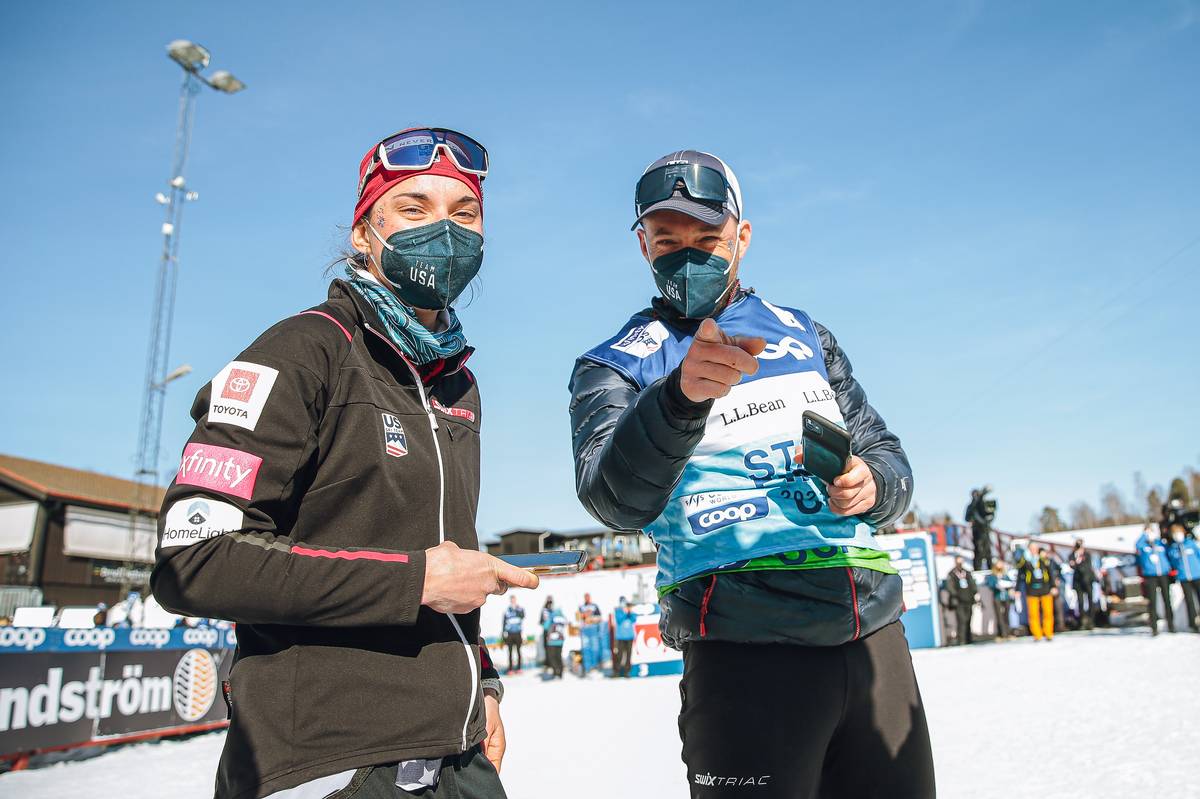
U.S. Ski Team head coach Matt Whitcomb (right) and Julia Kern course-side during the 4 x 5 k mixed relay amidst the 2021-2022 World Cup Finals in Falun, SWE. (Photo: NordicFocus)
Friday’s program began with an introduction from US Ski Team Sport Development Director, Bryan Fish. “There’s 138 people on the call right now,” Fish said, which reminded attendees that the audience was larger than could have fit into the Center of Excellence in Park City where previous symposiums had convened. There was much important information that presenters were to convey, and many eager listeners had gathered to hear it.
Dr. Hans Kristian Stadheim
Friday’s keynote speaker was Dr. Hans Kristian Stadheim, the current British National Team Endurance Performance Director, and a coach long-renowned for his intricate and scientific approach to endurance as it specifically applies to nordic skiing. As Matt Whitcomb commented in his introduction of Dr. Stadheim, “when you’re at the World Cup, Hans stands out as the one who’s really digging into what makes [ski training and racing] work.”
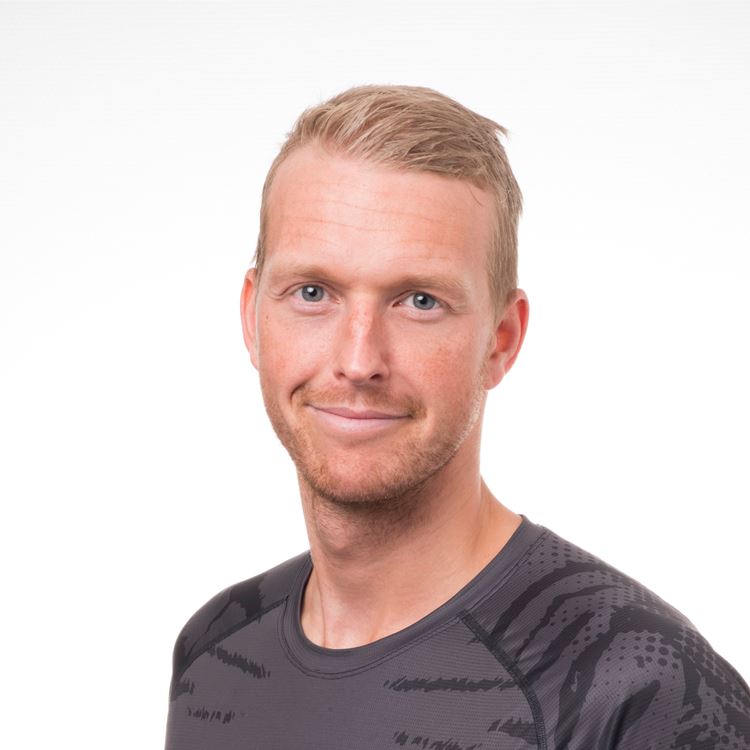
Hans Kristian Stadheim, current Director for the British National Ski Team. (Photo: Courtesy Image).
Stadheim’s presentation, “The Norwegian training method and experiences working with British team,” discussed the evidence behind current trends in nordic ski training, including the principles behind Norway’s dominance that Stadheim applied to building an elite program in Britain. He used his coaching with Simen Hegstad Krüger (NOR) as a case study for pointing out the training trajectory that the Norweigans follow for fostering a skier from junior to Olympic champion. The big takeaway from this example was that, “[The Norwegian] method is a gradual increase in training load with stress on limiting high volume at an early age.”
That point fueled a lively Q and A facilitated by Matt Whitcomb, which focused on implications for coaches working with junior and college athletes. Stadheim—along with useful addendums from Whitcomb—provided thoughts on balancing Threshold and VO2 max work, recovery metrics, and fitting individualized training into a team environment. Key recommendations included:
Intensity work for juniors should focus heavily on increasing VO2 max.
Recovery should be gauged dynamically using analytical tools and athlete perception.
Building a national program requires retention of a robust base of athletes from the junior level through to higher levels of competition.
The remainder of Friday’s program featured discussions and demonstrations by medical and training staff members of the US Ski Team. Jen Kimball and Tschana Schillier, alongside Luke Jager, demonstrated mobility and strength movements that target particular weaknesses seen in cross-country athletes. Dr. Heather Cichanowski and Dr. Tod Olin detailed the medical community’s interest in the high occurrence of respiratory issues among competitive skiers, chiefly asthma and vocal cord dysfunction. Then, Jessica LaRoche wrapped up the program with a talk on athlete wellness.
Saturday
Johan Olsson smiles after winning the 15 k freestyle at the 2015 FIS Nordic World Ski Championships in Falun, Sweden. (Photo: NordicFocus).
Johan Olsson
Saturday’s presentations began with a keynote from Swedish skiing legend Johan Olsson. Since his retirement in 2015, Olsson has developed a career as a TV contributor to Swedish National Television’s (SVT) ski coverage. From a career that included fourteen Olympic and World Championship medals (2nd only to Gunde Svan in the history of Swedish skiing), Olsson shared anecdotes that illustrated breakthroughs in his approach to ski racing, with a special focus on mental preparation. Olsson’s career took place prior to the detailed focus on mental preparation and wellness in training that are common at the elite level today. His anecdotes, therefore, illustrated an innovative individual approach that soon saw parts become common in competitive skiing today.
Johan Olsson during the 2015 World Championships in Falun, Sweden. Olsson won the 15 k skate in Falun. (Photo: NordicFocus)
In one anecdote, Olsson detailed how his development of a dedicated mental approach to racing grew out of his own treatment for anxiety. After a disappointing 15k Classic at 2009 World Championships, Olsson’s wife Anna (also an accomplished Swedish skier) prescribed a self-imposed grieving period for him. “You have until 6pm tonight to be sad,” she said. “But then you will come to dinner and be the same positive Johan you always are.” Olsson popped in a cassette tape of “the saddest Neil Young songs I could find” and went about devising psychological strategies not unlike those found in Sport Psychology books today. A year later—at the 2010 Vancouver Olympics—Olsson’s charge in his relay leg saw Team Sweden win Gold in the event for the first time since Calgary in 1988. It was the culmination of a persistent application of techniques he had devised while wallowing in the saddest songs of Neil Young who—in an ironic twist—was seen passing through the crowd while Olsson stood atop the Olympic podium. Full circle, indeed.
Bryan Fish
Bryan Fish described trends in training and development philosophy on which he and US Ski and Snowboard are currently focused. Fish’s presentation implicitly conveyed the strong progress US Skiing has made, as well as identifying next steps. Strong points identified include a philosophy towards “not training the most, but training really well,” an emphasis on strength training, and a spirit of collaboration among US Ski Team programs, local clubs, and regional associations.
Bryan Fish, U.S. Ski and Snowboard Sport XC Development Manager, at a SuperTour in Duluth last December. (Photo: Jordan Woods/Woods Creek Productions)
Greta Anderson
What Bryan Fish had described as US Ski Team’s “holistic approach” was a continued focus during Greta Anderson’s presentation. Anderson spoke in detail on the number of athletes being reached by international trips, national training/elite groups, and regional elite groups. She further emphasized the ways each region uniquely incorporates its ski resources into this developmental program. For example, Eastern collegiate coaches played active roles in the Eastern/Midwestern U16 camp. In the Midwest, Team Birkie pros and U14 Dream Camp both expanded the region’s Regional Elite Group camp to more skiers. Anderson reiterated that these types of partnerships with clubs and programs feeding the US’ national development pathway were likely to continue. Matt Whitcomb quickly followed with an appeal to mobilize the US skiing community through the National Nordic Foundation, which will hold its annual Drive to 25 from November 21st-25th this year.
US Ski and Snowboard Cross Country D-Team head coach Greta Anderson supports athletes during the Sun Valley SuperTour races in January. (Photo: Tobias Albrigtsen / @untraceableg)
Jason Cork
In the final presentation of the symposium, Jason Cork narrowed US skiing’s development focus from the entire system to just one athlete: Jessie Diggins. In a candid and entertaining talk that considered the ethereal mix of trust, knowledge, and competence required in the coach-athlete relationship, Cork delved into the minutiae of training numbers, and how data derived from Diggins’ training logs reveals pertinent information about peaking. He rattled off Diggins’ history-making results in a casual tone, while being much more serious about the types of workouts, training cycles, and long-term trajectories that led to World Cup Overall wins and Olympic medals. Those accomplishments would tend to suggest that American skiing is doing things right, and that this symposium was a valuable opportunity to describe the knowledge, the practice, and the craft of bringing those performances about.
Jason Cork and Jessie Diggins out on a sunny day in Australia last August. Cork has worked with Diggins for 12 seasons, stretching back to their time on the CXC Elite Team. (Photo: Julia Kern)
“Let’s let this knowledge radiate out to our athletes,” said Bryan Fish in closing out US Ski and Snowboard’s first-ever virtual coaching symposium. It was a call-to-action that resonated on Zoom screens across America, leaving a whole community of coaches ready for the demanding season to come.
Since the opening of the U.S. Ski & Snowboard Hall of Fame in 1956 there have been 448 members inducted, only two of whom are female cross-country skiers. The Hall of Fame website states that, “the honored members voted into the U.S. Ski & Snowboard Hall of Fame represent the highest level of national achievement in America, featuring prominent athletes and snow sport builders whose accomplishments showcase American skiing and snowboarding.”
The first woman cross-country skier to receive this honor was Martha Rockwell, who was inducted in 1986. Thirty-four years later, Rockwell’s teammate and a trailblazer in the sport, Alison Owen-Bradley was admitted to the Hall of Fame as a member of the Class of 2020.
Heading out in bib #1 is Alison Owen-Bradley at the Sapporo Winter Olympics in 1972. (Courtesy photo)
The list of Owen-Bradley’s accomplishments is lengthy. A brief glance at her race results highlights her prowess as an athlete, beginning around 1970 when she competed at World Championships in Czechoslovakia at the age of sixteen. Speaking to this formative experience, Owen-Bradley said, “I was so involved in sport and loved the sports that are now pretty common for girls, but there wasn’t really a place for it [yet], and so we made our own places. I got to go to the national team camp with the U.S. Ski Team and then Europe and see these women racing, and really fit, and loving their sports and it was like, yeah I want this life…
“It heightened my world view of what was possible for a young girl from Washington to pursue.”
Owen-Bradley went on to represent the United States at two Olympics (Sapporo 1972 and Lake Placid 1980). In 1978 in Telemark, WI she won the first-ever women’s World Cup cross-country race (although FIS categorizes this race as a “test” event). At the conclusion of the 1978/79 race season, Owen-Bradley finished seventh in the FIS World Cup standings, the highest ranking for a U.S. woman for the next 33 years. The following season, she finished second in the Holmenkollen 10k in Oslo, Norway. “We had tremendous results [in that era] that I think sometimes aren’t known, or they’re overlooked,” reflected Owen-Bradley.
The first Women’s cross-country Olympic Team. The 1972 Games were held in Sapporo, Japan. Top Row: Marty Hall, Trina Hosmer, Barbara Britch, Martha Rockwell. Bottom row: Gloria Chadwick, pseudo Chaperone, Margie Mahoney, Alison Owen. (Courtesy photo)
But numbers on a page are only half of the story. Owen-Bradley’s contribution to skiing, particularly to women’s skiing, goes far beyond her race results. Growing up in Wenatchee, WA as a member of an active family, Owen-Bradley started nordic skiing after her father saw an ad in the paper for the local cross-country ski team. “He said, ‘Hey, let’s go try that because we love running and hiking and [other outdoor sports],’ so we started that and it was all new,” explained Owen-Bradley. Not long after, Owen-Bradley became the first girl to compete at Junior Nationals. She relayed the story of how at the pre-race meeting the organizers wouldn’t let her compete, stating that “this is a race for boys.”
A team leader from the Pacific Northwest (PNSA) delegation responded, “show me that rule.” Since that rule couldn’t be found in writing, Owen-Bradley was allowed to compete. “I raced and then, the next year, and from then on, they had a place for girls,” she explained. “It was a fun time because women weren’t racing marathons, they weren’t really allowed or incorporated into the endurance sports world, and it was just fun to watch it [explode] like popcorn, it was happening everywhere,” she said, speaking to the rise of women competing in sports. “It was really fun to be there [at Junior Nationals] as the first girl, I think I was like 13 or 14 or something and almost everything you’re doing is new in your life, so that was just one more new thing.”
Owen-Bradley’s coach at the time was Herb Thomas, and it was he who presented Owen-Bradley her medal at the Hall of Fame induction ceremony. Thomas came from Middlebury to start the ski program in Wenatchee which she joined. “He let me do it. You know, he encouraged me. He broke open the door for me to do it,” said Owen-Bradley. In the years that followed, there were other men who played an integral role in Owen-Bradley’s success.
“At the beginning, for me, not having a lot of opportunity in sport, I can say that the opportunities I did have came from men,” she explained. “There were no women breaking trail for me, you know, I didn’t have them as coaches, I didn’t have women cheering me on.”
Herb Thomas and Alison Owen-Bradley at the U.S. Ski and Snowboard Hall of Fame induction ceremony (photo: USSSHOF livestream)
In particular, Owen-Bradley singled out Marty Hall in her acceptance speech, saying he was perhaps the most important person to thank in regards to her success. She shared an example of how when they traveled to Europe to compete, the first U.S. women’s national team coach was given the runaround by the European coaches with wrong addresses, no translator, and the more. It soon became clear that something needed to change and so Hall headed to Europe to take over. “He really made a place for us,” Owen-Bradley explained, “They didn’t hire him in the first place, because he was a bit strong and maybe not sensitive and everything, but he was strong in the coaches meetings. He read the rule books, he knew what was going on, legally, and he made them speak English.”
At a time when women’s racing was just being established this was more important than ever. “He kept a place for us,” said Owen-Bradley, “that we had a possibility to get good and we weren’t on the sidelines, we were right in the middle of it all, he knew what was going on and he made a place for us on the world stage.”
For his part, Hall corroborated this story and added, “my athletes meant everything to me. I would fight to the death for them.” When asked about Owen-Bradley specifically, Hall described her as “a woman before her time.” He said that she “had all the components.”
“Some of the things that she got pushed into or taken to go way beyond when she should have been ready, but it didn’t bother her,” he reflected. “She didn’t crack, never had any problems doing what she was supposed to do.” Hall shared that it is great to coach an athlete like this. “She understands movement real well, she was good at anything she did as an athlete,” he said.
The first U.S. women’s World Championship cross-country team on the way to Czechoslovakia in 1970. From left to right: coach Marty Hall, Coach, chaperone Gloria Chadwick, Trina Hosmer, Martha Rockwell, Barbara Britch, and Alison Owen. The U.S. team took four skiers as the relay at that time was a three-person format. (Courtesy photo)
When asked about important elements in the progress of women’s skiing, Owen-Bradley responded, “I really appreciate the men who said ‘no, come on women do this. It’s really fun. There’s no reason women can’t do this stuff.’” She emphasized the important role these men played saying, “I really appreciate the men in my life, who opened the door, kept them open, kept the naysayers away- and then as things have evolved and grown, obviously, naturally, women are taking more of a role in allowance in helping other girls and women do that.” She went on to say, “and that’s awesome. That’s, you know, the natural progression, and I love to see that. And that’s why, with US NOW, the Olympic women’s group, taking initiative, giving awards, leading the way for other women and showing that we are a leader in sport and with each other. So that’s the natural evolution of it that I see.”
In her acceptance speech at the Hall of Fame ceremony, Owen-Bradley reflected on how much progress there has been in women’s skiing since she first began saying, “where are we going to be in another 50 years?…[it’s] so exciting to think of the barriers we break.” Particularly in light of the recent Olympic results from the U.S. women’s team, Owen- Bradley said, “even now, it makes me so teary eyed, to think about that in in one lifetime, my lifetime, to go from girls not having sports, not having a place, to being a shining star on the world stage of a sport that that was there was no place for girls. It’s so fulfilling.” She gave a shout-out to Kikkan Randall as well, saying, “and the icing on the cake of that was Kikkan doing the absolute best coverage, covering her teammates… She brought so much understanding and furthered everyone’s knowledge.”
Having witnessed the sport achieve these major milestones, Owen-Bradley pondered the future of cross-country skiing, “You know, it just feels like my life journey of being in sport, and being in cross-country especially, where will we be in the next year? That’s for this generation to lead now. And where are we going and what’s next for the women, but also the men, of our nordic community and sports community?”
She continued by saying:
“It’s not an easy road ever, but you know, that’s why we’re in it because we challenge ourselves and if we didn’t want challenge, we wouldn’t be in sport. And what you do is you come up against your weaknesses and you figure out how to get through them or you don’t get better… I mean, that’s the cool thing about sport is you test yourself and then you get better.”
Alison Owen-Bradley racing to first in the inaugural women’s World Cup event in 1978 in in Telemark, Wisconsin. (Courtesy photo)
When asked what it means to both her and to the cross-country sport community, to receive recognition for her achievements and to be the second female cross-country skier inducted to the Hall of Fame, Owen-Bradley replied, “Well, it is interesting that I’m getting the recognition now.” She explained that they give the award for different categories and said, “maybe part of the recognition comes from, you know, a lifetime involvement in skiing. I think maybe I cross over a little bit, you know, my life has been very influenced by and I participate in a lot of ways in cross-country skiing.” She continued by saying, “I think it’s important because it shows where we’ve been, and hopefully, where we’re going. So, it’s fun to get the award.” Owen-Bradley acknowledged that her “life has moved on.”
Though skiing still occupies much of her time, “I’m focused on a lot of things,” she explained, “ I didn’t wait for [the award] to happen to make my life good or anything. I’m doing a lot of really great things that I enjoy.”
Alison Owen-Bradley and her daughter, Kaelin, high in the Bridgers (Courtesy photo)
These days, Owen-Bradley can be found near Boise, Idaho on a small farm she calls her “sanctuary”. Still quite active, she is an engaged participant in a program called, Starting Strength. “It’s a weightlifting program that I have found a lot of benefits for myself,” she explained. Additionally, Owen-Bradley is very involved with her family; she has three grandkids and a daughter who coaches skiing in Bozeman, Montana. “It’s really fun to have that continuity,” she said, referring to generations of skiing families. “I think it really helps to have grown up in it, and [to have] parents that know about it and can pass it on and build it generation to generation.”
Three generations of Bradley skier women. “I wouldn’t have been in a backpack with my Mom and Grandma out enjoying winter when I was my Granddaughters age. Love how it’s normal now” says Owen-Bradley (Courtesy photo)
Speaking more broadly to the growth of a cross-country ski community and culture in the U.S., Owen-Bradley emphasized the importance of recognizing the contributions of those who have encouraged and shaped this growth. “There’s a lot of people that have [put] their life-force energy on building the ski culture in our country, and that’s why I like to see more awards given.” She explained that she is working on nominating another woman for the Hall of Fame to “shine the light that the women’s lives have been growing the sport and yet [we] only have two women in the Hall of Fame after sixty years.” Given the numerous different categories that you can be nominated for, Owen-Bradley has a list of ideas and possibilities.
“There’s a lot of women that deserve a lot of credit for where the women’s program is now. Men too, but I’m focused on the women.”
The Davis U.S. Cross Country Ski Team welcomes two new staff members for the 2020-21 season, including Development Team coach Kate Barton, and to the World Cup Service Team, Chris Hecker.
Kate brings a wealth of knowledge to the team as both a former competitor, and coach, most recently at Vermont’s Middlebury College. Since 2016, Kate has been the assistant nordic coach at Middlebury, and prior to her tenure there, she was the head coach at Burke Mountain Academy for many seasons. Kate replaces former Development Team coach Bernie Nelson, who stepped down following the 2019-20 season.
“I am competitively motivated, and feel lucky to be acquiring this group from Bernie, who obviously did an incredible job of building a strong and successful team,” Kate said. “I’m excited to bring my authenticity as a person, my love for the sport of skiing, and my principled approach to coaching to the Development team. I hope to continue to collaborate with the greater ski community and to inspire and support the athletes as they pursue their goals and dreams.”
Over the past few years Kate has worked with many athletes in regards to development projects. She has led and volunteered the National U16 Elite Camp, the U18 Scandinavian Championships, and the FIS World Junior/U23 World Championships.
“Kate brings a special blend of knowledge, experience, passion for the sport, and nurturing support and care for the athletes she encounters,” Davis U.S. Cross Country Team Program Director Chris Grover said.
Chris Hecker is the newest member of our World Cup Service Team, replacing Jean-Pascal Laurin, who stepped down following the 2019-20 season to dedicate more time to his quickly booming farming operation. Chris Hecker brings a wealth of experience on the World Cup circuit to the U.S. Team, most recently working with Rex Ski Wax. He also worked for U.S. Biathlon in recent years, providing service at the World Champs, World Cup, and IBU Cup level events.
“We are very excited to bring another person that we know, trust, and respect into our service group and overall team family,” Chris Grover said.
PYEONGCHANG, South Korea — In this episode recorded at the Olympics, you’ll hear Part 2 of our conversation with one of the busiest people at the Games … Tom Kelly. Kelly is U.S. Ski & Snowboard’s longtime vice president of communications. After starting with the organization back in 1986, he will be stepping down a few months after the Olympics. Kelly, 65, is the nerve center to U.S. Ski Team’s media and communications outreach. Shepherding athletes through the mixed zone or writing up a press release about Jessie Diggins’s and Kikkan Randall’s latest win — yes Kelly oversees all the sports at U.S. Ski & Snowboard — are just some of his responsibilities.
Tom Kelly of U.S. Ski & Snowboard literally in the back of a bus in PyeongChang, South Korea.
Kelly, who goes by “TK”, is a pro’s pro. He’s mastered the combination of respecting both the athletes’ needs and being an open communicator with the snow sport community. Again, this is a two-part interview. Part 1 explores the early years of Kelly’s career; Part 2 explores his more contemporary experiences including this nugget: how he came to be known as “TK” and where his hallmark hat came from. Kelly also discusses the good work of The Speedy Foundation.
Sadie Bjornsen (U.S. Ski Team) during the classic leg of the women’s Olympic 15 k skiathlon at the 2014 Winter Olympics in Sochi, Russia. She placed 31st in her Olympic debut.
If you read FasterSkier, two aspects of our coverage generates the most reader comments: doping violations and their adjudication, and team-selection criteria. Although here we are, two days away from the PyeongChang Olympics’ Opening Ceremony with Sochi doping still plaguing the news, as the title suggest, this piece is about team selection.
On Jan. 26, U.S. Ski & Snowboard revealed its 2018 U.S. Olympic Team — a list 20 skiers deep comprised of nine men and 11 women. The U.S. Ski & Snowboard press release announcing those selections used this statement to describe the roster: “The team includes 20 athletes who qualified for the team through World Cup results as well as domestic racing results at the L.L.Bean U.S. Cross Country Championship.”
The buzz following Olympic team selection followed two major threads, one focused on team size, the other on the selection of non-U.S. Ski Team (USST) women sprinters.
In considering why team size remains a concern, let’s zip back to 2014 when the USST was allocated a quota of 17 athletes for Sochi. The team that headed to Russia was 14-athletes deep; seven men and seven women. The remaining three U.S. spots were were reallocated to other nations. At the time, U.S. Ski Team Head Coach told FasterSkier that the small team was by design.
U.S. teammates Sadie Bjornsen (l), Kikkan Randall (c) and Jessie Diggins at the finish of the women’s 2014 Sochi Olympic relay, in which they placed ninth with Liz Stephen.
“With seven women and seven men, we have our start positions filled,” Grover said in 2014. “Seven and seven was the magic number for us.”
One line of reasoning is that a smaller team is more easily managed and the potential for medals are higher.
An Olympic cycle later, the current iteration of the U.S. Cross-Country Olympic team is six skiers larger. That’s partly a function of the depth of the U.S. women’s team on the World Cup and partly a function of how the Olympic selection criteria was interpreted during the team nomination process.
In explaining how the team was named, U.S. Ski & Snowboard Chief of Sport Luke Bodensteiner said that U.S. Ski & Snowboard (formerly USSA) was not mandated to use all of its quota spots for the 2018 Olympics.
“That is a decision we made,” Bodensteiner said on the phone. “We received, across all of sports at U.S. Ski & Snowboard, 110 quota spots, and we accepted all 110. However, we have 109 athletes; one athlete is participating in two different disciplines.”
Bodensteiner clarified that the uneven split of nine men and 11 women on the cross-country team was a result of the women’s depth both domestically and on the World Cup. He explained that the selection criteria does not specify how the spots are distributed between men and women.
“It is really based on results achieved on World Cup ranking and then the Olympic selection list points,” Bodensteiner said. “As it worked out, more women scored more points, actually scored more rankings in the World Cup than the men, and then more selection points than the men on the women’s side. So we just applied down the sort of next-best points in most cases, and that is why [we] have two more women than men and that is just a function of the women scoring more substantial points in the tryout events.”
Practically speaking, a larger team means more variables to manage but clear upsides for the broader cross-country community.
“Filling quotas presents clear positive possibilities and also some challenges to both mitigate and maximize…,” Bodensteiner said. “We try to take everything into account like utilizing start positions in the Olympics and how large a team quota we get. There are challenges for a bigger team, in particular, when you exceed the start possibilities. In cross-country, we have a number of athletes that probably won’t compete. That creates challenges like issues with health, waxing skis, and maintaining a positive team spirit. On the other side, there’s the positive: we have a lot of cross-country athletes going to the Olympics. It is a great experience generally, and something the community appreciates, that the athletes have that opportunity.”
Bodensteiner communicated that several athletes are not expecting to start races in PyeongChang are onboard in terms of fulfilling U.S. Ski & Snowboard’s performance outcomes in PyeongChang.
“We have also had quality discussion with athletes that we have no place to start,” Bodensteiner said. “We have been able to share our concerns that with a large team, we’d like dynamics that do not distract from winning medals. We spoken about how we mitigate those concerns and we have oriented those athletes in terms of how to help mitigate and work together to establish the way to go about doing business. They have been good, highly productive discussions.”
Team Selection: Nominations from the World Cup Qualifying Criteria
Let’s start with the low-hanging fruit, the athletes who met the following objective criteria: “Any eligible athlete that posts a top-8 individual final World Cup result during the selection period [Nov. 23, 2017, through Jan. 15, 2018] in the following events will be selected to the Team: Sprint C, individual start 10/15 km F, and 15/30 km Skiathlon.”
Sophie Caldwell (U.S. Ski Team) racing to sixth in the individual freestyle sprint at the 2014 Winter Olympics in Sochi, Russia. (Photo: Fischer/NordicFocus)
U.S. Ski Team members Sadie Bjornsen, Sophie Caldwell and Jessie Diggins automatically qualified for the Olympic team by meeting the top eight in an Olympic event threshold. Bjornsen qualified on Nov. 24 in Kuusamo, Finland, with a second place in a classic sprint. Caldwell qualified in the same race in eighth place. Diggins made the Olympic team on Dec. 12 in Lillehammer, Norway, when she placed sixth in a classic sprint. (Regarding both Bjornsen and Diggins, each scored multiple top-eight results in Olympic events during the selection period; we’ve simply specified the first instance each skier automatically qualified.)
Three skiers down, 17 to go.
The second-tier of the objective criteria reads as follows: “Athletes ranking in the top-50 in the distance World Cup standings or the top-50 in the Sprint World Cup standings as of January 15, 2018 shall be selected to the team.”
Rosie Brennan, Kikkan Randall, Ida Sargent, Liz Stephen, Erik Bjornsen, Simi Hamilton and Andy Newell jumped the top-50 hurdle.
Let’s run through the men first. On Jan. 15, Hamilton was ranked 15th, Newell 36th and Bjornsen 49th on the World Cup sprint list. Bjornsen was also ranked 41st on the distance list.
For the women, Sargent was ranked 13th on the World Cup Sprint list and Randall 19th. We’ll get back to this in a moment, but Brennan was ranked 43rd on the sprint list and 34th on the distance list. Liz Stephen ranked 35th overall on the distance list.
Some of the chatter heard after the Olympic team selection had to do with a portion of the criteria stating that no more than five athletes per gender would be selected based on sprint results, including all of World Cup sprint results, World Cup sprint rankings, and the domestic OWG points list.
So far we’ve discussed six more skiers, bringing us to nine athletes, all current members of the U.S. Ski Team (USST) and all qualified from their World Cup results.
U.S. Ski Team Head Coach Chris Grover wrote in an email that he believed the World Cup-based criteria served the purpose of fielding the most competitive team.
“From my perspective, the objective World Cup criteria worked well,” Grover wrote. “The fastest athletes were selected to the PyeongChang team.”
He also acknowledged that the inclusion of overall results from the Tour de Ski’s (TdS) final hill climb as part of major championship qualification criteria would be revisited.
“One bit of criticism/feedback that we received was that the Final Climb from the Tour de Ski should not be included in the selection period, because it is a special event that is not representative of the races at a major Championships,” Grover wrote. “I think this is a valid point. The Final Climb has been in our criteria for years, and nobody has complained until this season. Although we believe this race has been effectively useful in identifying our aerobically fit skaters, we are very open to removing it from future criteria and closing the World Cup distance selection period one day earlier. This is something we can discuss with the Cross Country Committee this spring.”
Non-World-Cup-Based Nominations
Filling out a team large enough to fill the four-starters-per-nation race quota allowed the coaches and selection committee to refer to the 2018 Olympic Winter Games (OWG) points list (click “2017/2018 SuperTour Points” under “Resources” on right side of page). That points lists kept a running total for the season’s first two SuperTour weekends and weighted results at 2018 U.S. Cross Country Championships in Anchorage. (For sprinters, points were allocated only for qualification results, not the final results.) The rankings were then further organized by an athlete’s two best sprint results and two best distance results in separate columns on the spreadsheet (note: those columns were blank on Monday morning.)
For the men, team selection appears to have been rather straightforward. The top-three ranked distance skiers were selected off the OWG points list. In order, those athletes were USST member Scott Patterson, Alaska Pacific University’s (APU) Tyler Kornfield and former USST member Noah Hoffman.
Patterson, who is in his first season as a USST member, did not score World Cup points in Period 1 and declined an offer to race the TdS as his path to Olympic qualification. Patterson contested U.S. nationals as his potential qualifying route to the Games. Patterson won the 15 k skate and placed sixth in the 30 k classic mass start.
APU’s Tyler Kornfield (126) celebrates as he crosses the line first in the men’s 30-kilometer classic mass start on Jan. 7 at 2018 U.S. Cross Country Championships in Anchorage, Alaska. Eric Packer (118) finished second and Denver University’s Eivind Romberg Kvaale (124) placed third. Kornfield reached the podium in three out of four races at 2018 U.S. nationals.
Second on the OWG list was Kornfield, who won the 30 k classic mass start, placed 13th in the 15 k skate, qualified sixth in the skate sprint and third in the classic sprint. He also placed third overall in both the classic and skate sprints at nationals. Kornfield’s all-around point scoring catapulted him into the team selection conversation.
Third on the list was Hoffman, who placed second in the 15 k skate at nationals and fifth in the 30 k classic mass start. Hoffman also scored World Cup points in 28th in the Lillehammer 30 k skiathlon, a race loaded with home-field Norwegian talent.
Paddy Caldwell, also in his first season as a full-fledged USST member, played his qualifying hand by remaining in Europe and racing the TdS. In his first winter racing full time on the World Cup, Caldwell has popped solid results. His nascent 2017/2018 World Cup resume is highlighted by the 19th-fastest time of day in Kuusamo’s 15 k skate pursuit and the 19th-fastest time of day on the TdS’s final climb 9 k skate pursuit. However, Caldwell landed outside the top-50 bubble on the World Cup distance list.
Patterson was selected as the highest-ranking athlete on the 2018 OWG selection list. As specified in U.S. Ski & Snowboard’s Olympic team press release, Patterson’s selection, according to U.S. Ski & Snowboard, was not a discretionary pick.
However, Hoffman, Kornfield, and Caldwell were all selected to the Olympic team by discretion. Bodensteiner, himself a former U.S. cross-country Olympian, explained over the phone that Hoffman, Kornfield, and Caldwell were nominated to the team by head coach Grover. Those nominations were then reviewed and approved by a three-person committee composed of Bodensteiner, U.S. Ski & Snowboard President Tiger Shaw, and former USST member Holly Brooks as the athlete representative.
Bodensteiner provided firsthand insight into Caldwell’s nomination and approval process.
“Chris Grover presented to the committee whether Paddy was qualified to be part of roster,” Bodensteiner said. “From an athlete-management standpoint, Paddy is somebody we have all agreed has got high potential for the future and the coaches were very interested in getting him into this environment [on the World Cup] and let him race a lot and developing him that way. We could have declined to accept Chris’s nomination of discretion. When I think of developing Paddy, for him it is not necessarily about performance in this Olympics but about future Olympics. Also, in thinking of his development, you don’t want to pull a guy like that out of racing for a month. We agree from an athlete management standpoint we want to make sure he has that experience. On our phone call about Paddy, Chris Grover does get into specifics about [Paddy’s] recent results. Paddy will get a start and maybe more in PyeongChang.”
It should be noted that in an interview about team selection this past summer, Grover stated that development occurs at many lower levels, like Europa Cups, World Juniors, etc., but “It does not and should not come at the World Championships or the Olympics. … It’s not a development trip; it’s a competition trip at the very highest level.”
At the same time, the criteria allows use of discretion for “Indication of medal potential in future Olympic or World Championship competition (such as international age group results and rankings) that would be materially enhanced by selection to the team.”
In the past, that “future medal potential” option for discretionary selection has rarely been used.
“We haven’t used it that way,” Grover said this summer. “Obviously the language is there if we were to choose to use it, but in the past we really have not used it that way, and I don’t anticipate using it going forward into this season. … We want … the fastest skiers on the start line in Korea, and those are the ones that we’re gonna be selecting.”
In PyeongChang, it’s likely that Patterson, Hoffman, Bjornsen and Paddy Caldwell will form the core of the U.S. Olympic men’s distance starts, with Kornfield getting several warranted race opportunities. Hamilton also skied himself into the Olympic distance race start mix by placing 12th in the 15 k skate mass start in the final pre-Olympic World Cup weekend in Seefeld, Austria. The 15 k skate at the Olympics is an individual start.
Factored into the men’s Olympic sprint-start equation are brothers Logan and Reese Hanneman. The Alaskan brothers (both members of APU) were the two highest ranking sprinters on the OWG list. Logan, the younger of the two, placed first and second in the U.S. nationals classic and skate sprint qualifiers. Reese placed third and first, respectively. Older brother Reese also doubled up by winning both the skate and classic sprint crowns. According to the U.S. Ski & Snowboard Olympic team press release, neither Hanneman was considered a discretionary pick.
Depending on Erik Bjornsen’s race schedule, the U.S. coaches will have a core of Newell, Hamilton, the Hannemans, and Bjornsen for the classic sprint. In case of illness, Kornfield has sprinting chops as well. He’s a former two-time classic sprint national champion who reinforced his sprint cred with his double-podium performance in the sprints at the 2018 nationals.
Time to bring the discussion back to the women’s Olympic team selections. To restate, Diggins, Sadie Bjornsen, Sophie Caldwell, Sargent, Randall, Brennan, and Stephen all qualified objectively with their World Cup results. That’s seven female athletes, which leaves four spots remaining on the 11-athlete women’s Olympic cross-country team.
“We acted on the principle that we wanted to maximize start rights in each race,” Bodensteiner explained. “There was an interesting dynamic to women’s team. We have a generous quota and the need to fill spots. Our top women are going to race quite a bit and they ultimately exhaust start options for other skiers.”
In other words, this team is in PyeongChang to medal. Yet even with that caveat, “slam dunk” could be used to describe the nomination of Caitlin Patterson, of the Craftsbury Green Racing Project (CGRP). She was the top American in all four races contested at nationals. She won the 10 k skate, and both the skate and classic sprints, and was the first American in the 20 k mass start classic (and second overall). Patterson was selected off the OWG point list as the highest ranking female athlete.
Caitlin Patterson (Craftsbury Green Racing Project) racing to 52nd in the freestyle sprint qualifier at the last World Cup on Jan. 27 in Seefeld, Austria. The next day, she placed 23rd in the 10 k freestyle mass start. (Photo: Fischer/NordicFocus)
With the exception of Caitlin Patterson, Scott’s older sister, who again reinforced her Olympic readiness with a 20th place in Planica’s 10 k classic, start spots remain scarce for non-USST women skiers at the Games. That said, three more domestic-circuit-based female skiers were nominated to the Olympic team: Annie Hart (Stratton Mountain School T2 Team), Kaitlynn Miller (CGRP) and Rosie Frankowski (APU).
Frankowski was second on the distance OWG points list after placing fourth and second*, respectively, in the 10 k skate and 20 k mass start classic at Nationals (*she was the second American, third overall in the mass start). According to Grover in an email, Frankowski remains an “alternate” for the distance events.
If we don’t include Hart and Miller yet, we’re at 18 athletes total, nine men and nine women.
According to Bodensteiner, initially the U.S. Olympic Committee (USOC) relayed that U.S. Ski & Snowboard had a quota of 18 cross-country athletes.
“Once we get that quota, we are required to make an entry,” Bodensteiner explained. “So we do the selection, in this case on 18 athletes. We do the entry, and then it is a couple days later when you start with this reallocation. It is really hard to determine what is going to happen there. Because you don’t know if Norway is going to give back a spot, or Germany or even a Macedonian. You just don’t really know what is going to happen.”
According to Bodensteiner, the U.S. was reallocated a 19th team spot. Soon after the additional reallocated spot, the USOC informed U.S. Ski & Snowboard that a 20th quota spot was added.
“That creates some interesting dynamics for selection because then you select your team, and couple days later, in this case, a 19th quota drops,” Bodensteiner said of the team-naming process. “And the coaches had done all their nominations about coach discretion that they wanted to do. And when we hit 19, and then eventually 20, and made a subsequent selection, that is a fairly dynamic process as well.”
For both the 19th and 20th spots, which Bodensteiner confirmed were Hart and Miller respectively, the selection committee in consult with the USOC, decided to go strictly off the point hierarchy from the women’s domestic list.
“Ultimately we decided to accept [the 19th and 20th spots], and at that point did not elect to use anymore coach’s discretion and just re-apply the procedure, with the athlete on objective criteria that had the next-best selection points,” Bodensteiner said.
Hart topped the OWG sprint list. Yet, as mentioned earlier, the criteria is written in a way to seemingly cap the number of sprinters at five in either gender. Last year, as a result of the the strict interpretation of those guidelines used to select the U.S. team for the Lahti World Championships, no domestic sprinter was selected to the World Championship roster. (Sophie Caldwell, Diggins and Randall all advanced to the final in that event. Diggins earned silver, Randall bronze.) The requisite lack of sprint opportunities for U.S. based women skiers at cross-country events like World Championships or the Olympics may be the cost of fielding perhaps the strongest women’s sprint team in the world. Sophie Caldwell, Diggins, Bjornsen, Randall and Sargent are internationally recognized sprinters. Even in a best-case Olympic scenario, one of these podium threats will be cheering during sprint qualifications, as only four can start a given race.
Yet the U.S, Olympic team will bring six female sprinters to PyeongChang. Bodensteiner stated that despite the language in the criteria (“will not exceed”), capping the number of sprinters at five per gender is not absolute.
“That is where, as I have explained with the quote-unquote sixth sprinter, that it was not a selection that was made in that allocation of 18,” Bodensteiner said. “That was made basically in consultation with the USOC and an external review to decide what’s the most fair application of the criteria in terms of filling the 19th position. That is where we as a selection committee would have looked at the athlete with the next highest selection points even knowing this athlete would be a reserve but we defaulted to the person who had the highest selection points.
“Annie is an interesting spot in thinking about how deep to get, and looking at outstanding results in sprinting, rather than choose lower on the distance list,” he continued. “It made sense to choose and recognize exceptional results. Discretion allows the committee to fill start rights and use the criteria in the most equitable way possible.”
Miller and Caitlin Gregg were tied for third on the women’s OWG distance points list. With their two best races considered, each athlete earned 56 points. Miller was selected over Gregg by applying the criteria’s tie-break procedure.
As a notable aside, multiple athletes alleged to FS, in writing but off the record, that Olympic team selection had been influenced by internal arbitration, external civil litigation, or the threat of either or both of these. However, both the existence and outcome of arbitration procedures are confidential, and multiple docket searches in state and federal courts revealed no lawsuit that had actually been filed.
Asked whether the USOC had been prompted to begin arbitration to either open up more Olympic team spots or be included on the team beyond the original 18 athletes selected, Bodensteiner stated that the USOC helped guide those particular selections.
“I guess what I will tell you, there is always an opportunity for independent review,” Bodensteiner said. “And that is where the USOC is really involved with us and we have a lot of discussions with them, like what’s the proper application of the procedure in terms of being applied fairly and equitably with the 19th selection and probably the 20th. We had done a lot of consultation with the USOC on both those selections.”
Bodensteiner also made clear that it is in every interested party’s right right to advocate for themselves.
“The athletes have the protection to challenge a selection position,” Bodensteiner explained. “It can be any reason they feel wronged. It is also not part of public record. They have the opportunity to make a complaint to USOC — they oversee the whole process. The USOC also approves the selection criteria, they have influence over it. Yet, they do not tell us to fill our quotas. So, the athlete can file a complaint to the USOC and they, the USOC, will moderate the discussion with the athlete who feels they wrongly have not been selected. If we can not come to terms, it is referred to an arbitrator.”
As far as FasterSkier has been informed, at least one athlete, and potentially more, was involved in official arbitration in connection with the 2018 U.S. Olympic cross-country selections. The USOC is not a government funded agency and it’s arbitration records are not public documents.
“That is not public record, we have dealt with that in the past, that is as deep as I want to get,” Bodensteiner said. “It is interesting when you get into application of criteria. Despite what you write specifically, they are open to interpretation. We maintain fidelity to criteria as much as possible. Some people will feel that wasn’t the right process. I understood to be something different. We will always go on and rewrite if there are any ambiguities and make better criteria.”
As of Wednesday morning, FasterSkier was still seeking comment from the the USOC regarding the reallocated spots — spots 19 and 20 — on the U.S. Olympic cross-country team.
Moving forward, Grover wrote that Hart will be a reserve for the classic sprint and Miller a reserve for the distance events.
It’s full steam ahead with 20 U.S. cross-country athletes in PyeongChang. As the final rosters take shape in what on paper could bring the U.S. its first Olympic cross-country medal in almost two generations, coaches like Grover and the USST women’s coach Matt Whitcomb will be carefully penning out each race’s start roster for the Games.
In the often black-and-white world of elite ski racing, Bodensteiner conveyed he, too, could imagine the pressure exerted on both the athletes and coaches in the Olympic pressure cooker.
“It takes pretty adept coaching to work the athletes through that and deal with the athletes who don’t get selected to race in each competition,” Bodensteiner said about the tough race start decisions facing the team. “That can be a tough thing for athletes for sure. You can imagine the pressure on the team sprint race right now. That is going to be a pretty difficult challenge for those guys. I anticipate it will be a tough one for the athletes. There’s a very high potential to get a medal there and there are certainly more than two athletes that are probably thinking they should be on that team.”
The Games begin on Feb. 10 with the women’s 15 k skiathlon.