From the FasterSkier archive — posts syndicated from athletes’ and coaches’ own blogs between 2004 and 2012, kept online as published. Current coverage is at fasterskier.com.

Tag: US Ski Team D-Team

  • Q&A with US Ski D-Team Coach Kristen Bourne: How her Journey in Coaching Inspired a New Fellowship

    Q&A with US Ski D-Team Coach Kristen Bourne: How her Journey in Coaching Inspired a New Fellowship

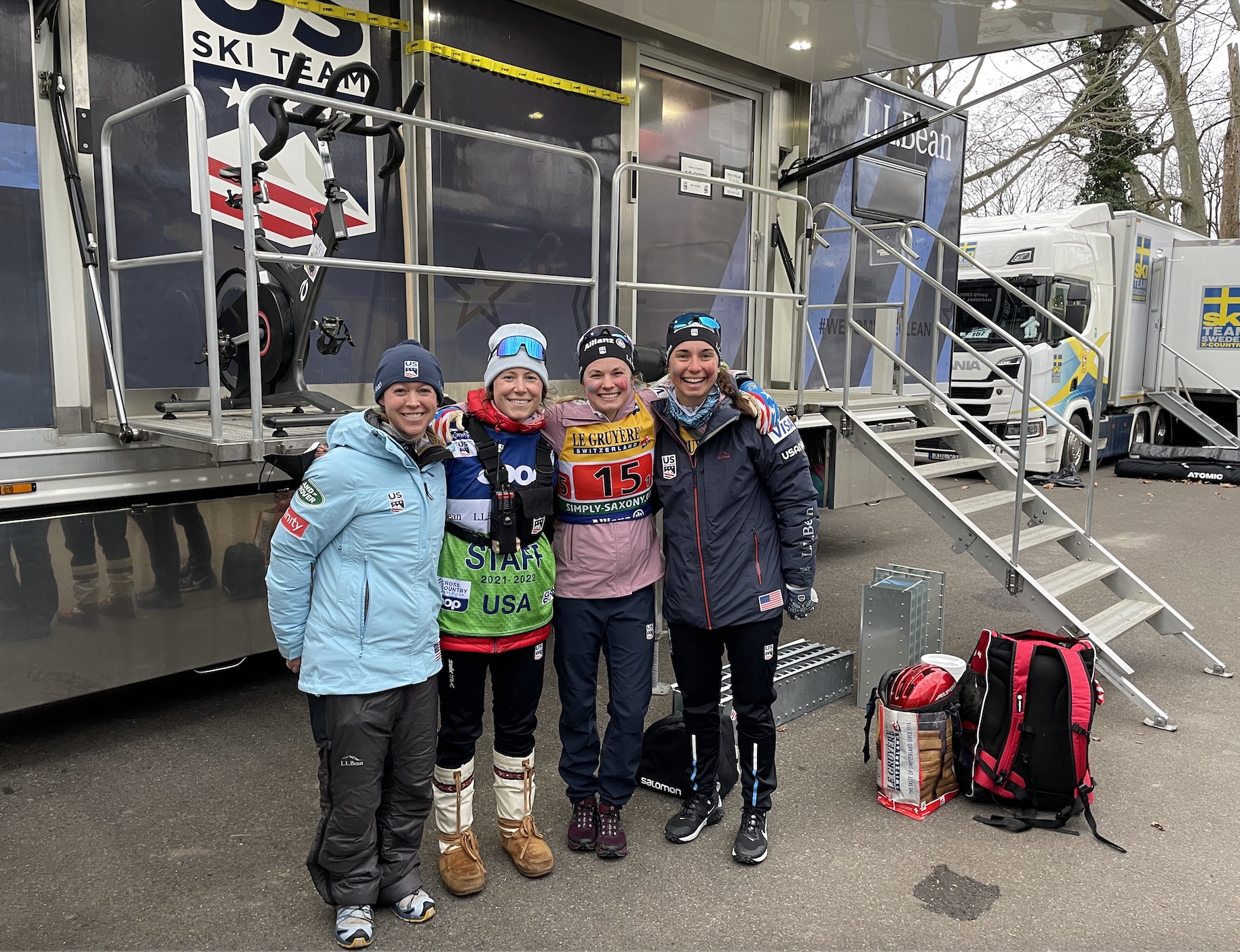
    Physical therapist Ana Robinson, Kristen Bourne, Jessie Diggins, and Julia Kern (left to right), at the Dresden World Cup in December 2021. (Courtesy photo)

    Earlier this month, the National Nordic Foundation (NNF), in partnership with the Women Ski Coach’s Association (WSCA) and the Olympic Women’s Cross-Country Book Project, announced the Trail to Gold Fellowship. The Fellowship aims to correct for a historical gender imbalance in U.S. coaching at the club, collegiate, and international level by providing fellows with funding to complete a two-week internship with the U.S. Ski Team on the World Cup this winter. The Trail to Gold Fellowship was sparked by an idea from the U.S. Olympic Women’s Cross-Country Book Project to dedicate profits from Trail to Gold; the journey of 53 Women Skiers to forward the movement for gender equity within Nordic ski coaching.

    Applications are open until August 31st, interested women coaches are encouraged to apply here. Trail to Gold: the journey of 53 Women Skiers is available here.

    Moving from idea to action for the women involved in the Trail to Gold book turned out to be expedited thanks to an existing template for not only what they wanted their Fellowship to look like, but what they wanted that Fellowship to accomplish. That case study; U.S. Ski Team Development coach Kristen Bourne.

    The story of how Bourne joined the U.S. Ski Team coaching staff is a parable for how success in the sport of nordic skiing should come. In which an extraordinarily talented young coach was paired with supportive institutional structures, relationships, and yes, a little luck here and there, to find her way through the U.S. ski coaching system. It’s also remarkable that Bourne’s whole narrative fits the space of a short story rather than a novel. After a decorated junior and college skiing career at Northern Michigan University (NMU), Kristen Bourne did a stint post-grad skiing that culminated in one last Senior Nationals in Houghton, Michigan in 2020. In an instance where metaphorical resonance became something literal, as Bourne was walking away from her athletic career, College of St. Scholastica (CSS) Head Coach Maria Stuber pulled up in the parking lot and – Midwesterner to Midwesterner – let out a big ol’ “OH Hey there!” which quickly led to a discussion about Bourne coaching, and then, a position as Assistant coach for St. Scholastica.

    From there, it’s been an ongoing whirlwind. Stuber is the founder and leader of the Women Ski Coaches’ Association, founded in 2019 to “develop, retain, and advance women in ski coaching leadership.” Stuber and Bourne worked through existing NCAA coaching development programs, which saw Bourne win the Women Sport’s Foundation Tara VanDerveer Fellowship in 2021, a first for a nordic skiing coach. Bourne’s Fellowship partially helped fund her position at St. Scholastica, but also came with an additional stipend to utilize for professional development in other organizations.

    Stuber reached out to U.S. Ski Team coaches Matt Whitcomb and Chris Grover to see if there would be any opportunity to work with U.S. Ski & Snowboard. That turned into a two-week internship on the World Cup that saw Bourne wax teching and coaching at last year’s Davos and Dresden World Cups. In turn, Bourne received additional offers to work with U.S. athletes making World Cup starts later in the season, all of which culminated in her hiring as a U.S. Ski Team Development Coach earlier this year. To sum it all up, as Bourne did a couple of times when I interviewed her, it’s been a “whirlwind.” Which, to keep to her own metaphor, is a wind that has turned up inspiration among coaches, athletes, and administrators across U.S. Skiing to bring the type of program that put Kristen Bourne in contact with the U.S. Ski Team into the fold of the nordic community. And now, with the Trail to Gold Fellowship, that’s become a reality.

    The energy that’s been infused into making that opportunity a reality is still overflowing at the source. When I caught up with Bourne about the experiences that have made up her journey, she was at the end of a long day working with members of the U.S. Ski Team as they prepared for racing in Torsby, Sweden and at Toppidrettsveka in Trondheim, Norway. She brought the same thoughtfulness to our conversation about what formed her approach to coaching as had just gone into that night’s technique session (which happened to include guests Maja Dahlqvist and Frida Karlsson). We not only talked about her journey, but about her influences, mentors, and outlook as a women coach who, just through her own story, has been a leader in the movement to correct for the historic gender inequity in U.S. ski coaching.
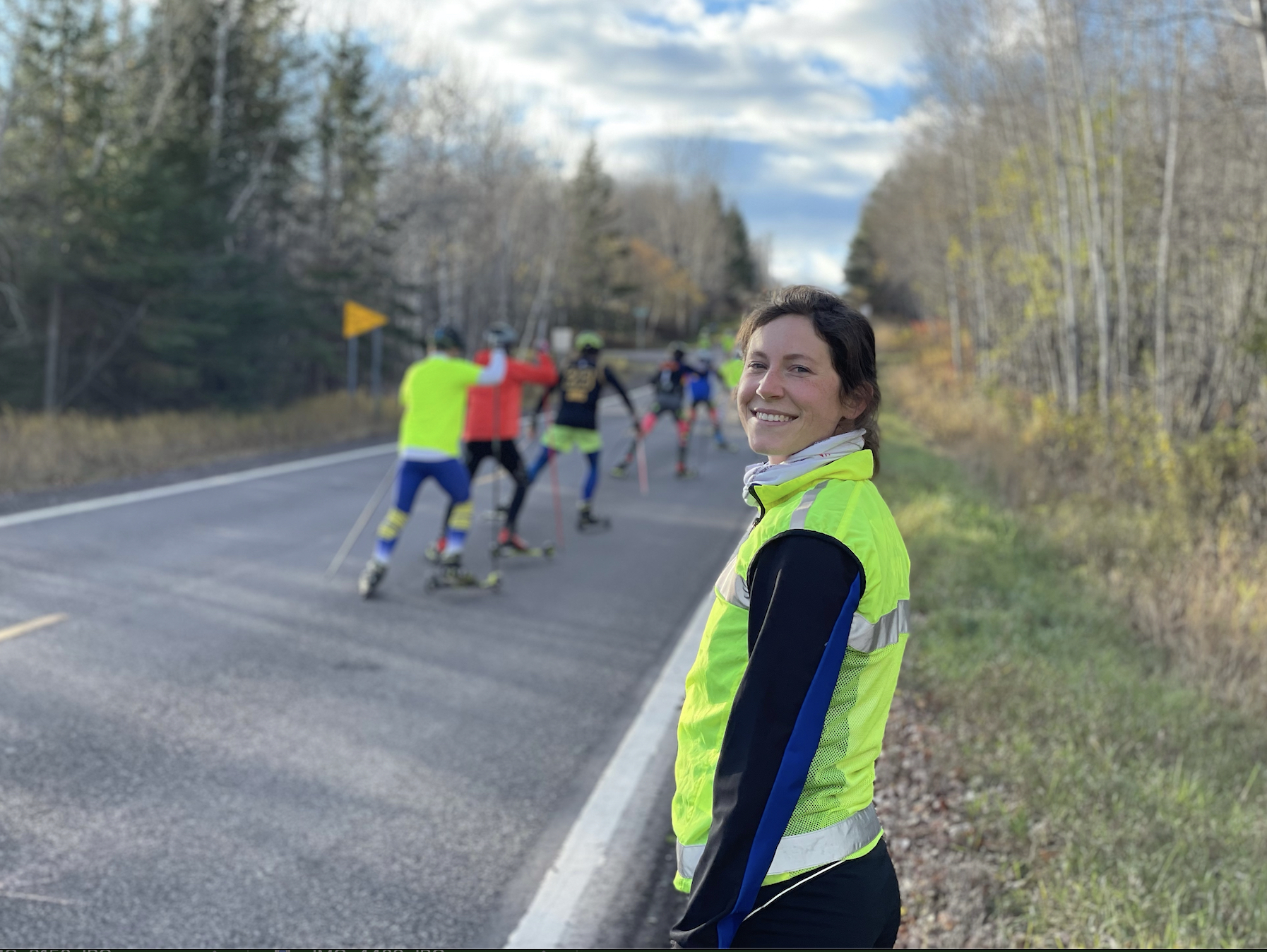
    Kristen Bourne at a CSS practice in Fall 2021 (Photo: Maria Stuber).

    (This interview has been edited for length and clarity).

    Ben Theyerl (BT): Can you start off by giving us a summary of your personal background? What was your journey to your current position with the US Ski Team?

    Kristen Bourne (KB): I’m originally from the Twin Cities [in Minnesota]. I ended up going to Northern Michigan University (NMU) and skied for them for five years. Then, about three weeks after graduation, I packed up my bags and moved to Norway, where I lived for a year and a half [ski racing]. There’s a funny story about that ending – I lost my permit in a friend’s car. I ended up coming back to race US Nationals in 2020, where I met Maria Stuber [Head Coach at the College of St. Scholastica in Duluth, MN]. At the time, I was thinking of calling it quits, and my dad had put out some emails to coaches to really try and pull me towards it. Maria had just started the Women’s Ski Coach Association (WSCA), and my dad had also gone out and signed myself and my sister up for a membership – so between emails and that he was really pulling.

    We were literally in the parking lot when she pulled up and was like ‘I’ve heard about you, you’re going to get an email from me.’ That turned into ‘Do you want to coach with me?’ and she helped set me up with a summer internship coaching with Pepa Miloucheva at the Craftsbury Green Racing Project. Summer of 2020, I started coaching at Craftsbury, and then I was one of Maria’s assistant coaches at St. Scholastica (CSS) for two years.

    When I got to CSS, Maria and I applied for a grant with the Women’s Sports Foundation – the Tara Vanderveer Advancement for Women in Coaching Fund Fellowship. We didn’t get it the first year (2020), and then we applied again, and we got it the second year (2021). That Fellowship partially funded my position at CSS, and then there was an extra $2,500 for professional development outside of that position – which was very broad. Maria nudged me to reach out to the U.S. Ski Team and see if they’d need any help for anything really, and as soon as we did Matt Whitcomb was like yes – ‘we actually could use more help for some World Cups.’ Which was unexpected but made me go, ‘woah.’ So, I went to Davos and Dresden last year.

    Over there, I ended up wax teching for Caitlin Patterson, and learning a whole lot from the U.S. staff. Then I was back in the U.S. for the collegiate season and made one more trip back to the World Cup with Bill Harmeyer as his wax tach. That was actually a really cool moment, as he reached out because I had already had World Cup experience. So that little internship directly translated into another opportunity very quickly. Then two months later, Kate Johnson announced she was leaving her position as the U.S. D-Team coach, and I applied and now here I am. It’s a lot, but it’s been a whirlwind.

    BT: And now you’re back in Scandinavia at the moment…

    KB: Yeah, it’s super full circle now because this is my first time back in Scandinavia since I left and lost my permit. The camp we’re at right now was one of the first ones of a few I had when I was living over in Norway, so it’s definitely a cool thing to be back as a coach this time.

    BT: That’s a really great story in itself. If I can dig a little deeper into your background, what was your earliest inclination that you might want to coach? Was this something you thought about when you were younger? Or was it really just when you were stuck trying to negotiate the next step after being a ski racer?

    KB: I think I always paid attention to people who were like, ‘you should try coaching.’ But I was kind of stubborn in saying that I was going to do something different after skiing. I guess I kept pushing off that idea in my head, but sporadically when I would help out coaching when I was an athlete, I always really loved it. But I guess, it’s one of those things I guess you don’t think of as a career path when you’re an athlete, right?

    As I was ending my ski career and figuring out what I wanted to do I was there with a Bachelor’s in Exercise Science, and I was wanting to do a Master’s in the same, which all just leads me back to skiing. It’s what I love. There was a slow roll towards acceptance that ‘oh man, I think coaching is what I want to do, and then Maria definitely solidified how much I love doing this job.’

    BT: You’ve touched on Maria, which we’ll talk about a little bit more, but I was wondering if now that you are coaching, do you look back on any of the coaches you had as an athlete and go ‘oh, like that was why they did that?’ Like is there an inspiration that’s shaped your coaching from your athlete days?

    KB: Oh yeah. I had a track and field coach in high school, Bev Docherty. I look back and can’t believe she was coaching me in high school based on her accomplishments – (Docherty has a long list of running accomplishments, including having run in the first 6 U.S. Olympic marathon trials open to women). I look back on her style and who she was and how she coached, and she wasn’t super energetic, super loud, or outspoken. She would lean in during the middle of a race though and you could still hear her clearly even when the crowds were cheering all around. I always look back on that because it was so different than anyone I’ve ever been coached by and she was also one of two women coaches that I ever had. I think that I look back to that and try to emulate just how steady she was as a coach. I don’t know if she knows that: she’s been there throughout my racing career and now as I’m going through my own coaching journey, I really do try to emulate her.

    BT: You’ve touched on Maria Stuber a few times. How was that relationship formative when you were starting out coaching, especially given that it was right around when she was taking over at St. Scholastica and starting the Women Ski Coaches Association (WSCA)?

    KB: I mean, do you want to write the book on it? She would shrug this off and say it’s not true, but she is one of the biggest reasons that I’m in this job [as U.S. Ski Team Development Coach] right now. She’s pushed me and knows exactly where and when to push is how I would best describe it. And I think that goes both for coaching and also for which opportunities to pursue. She’s 100% my biggest mentor and I will always look up to her.

    I think the WSCA and her passion for it is also a big aspect of that. She said ‘this is a change that needs to be made and we as coaches can make it if someone is willing to organize it’ and I’m a testament – as are other women coaches – that she is right on that.
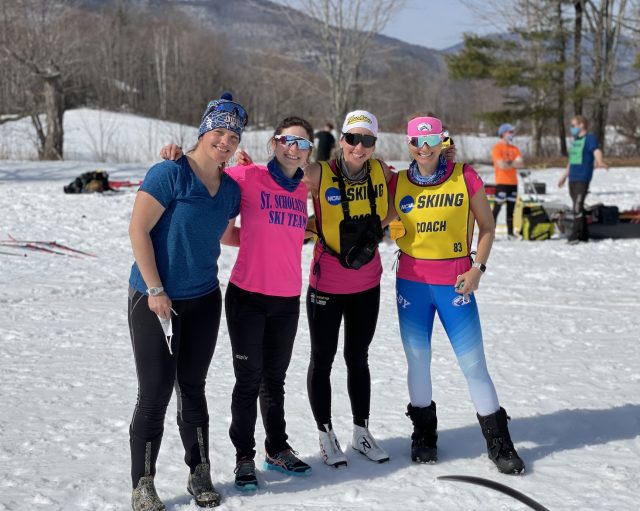
    WSCA members Maria Stuber (CSS), Kristen Bourne (CSS), Kristen Monahan-Smith (Michigan Tech), and Tracey Cote (Colby) (l-r) at NCAA Championships in Jackson, New Hampshire in 2021. (Courtesy Photo).

    BT: Can you describe how the World Cup Fellowship came together, and what you actually did when you were there last year?

    KB: I think the most important part of setting that experience up – because it was really a creation of equal parts myself and Chris Grover and Matt Whitcomb – was that it was a fully immersive experience both on the coaching side and [technician] side, not one or the other. I went over and met up with them right after Lillehammer, which was when the team was on its way to Davos. That gave me three and a half days where I was getting an intensive overview of everything from the wax truck to how [the U.S. techs] do glide-outs, wax application on race day, and the whole process of going from setting up at a World Cup to having our athletes be on the start line.

    Then Saturday came, which was sprints in Davos, and I was fully part of it all. Waxing on the World Cup. Sunday for the Distance race, meanwhile, I worked more one-on-one with Caitlin Patterson. It was a whirlwind, but I never felt like I was overwhelmed, because the coaching staff really from the moment I was there was like ‘we want you to be part of everything, and we also know that you’re doing this for the first time and are here to make our team stronger.’

    That first weekend was a real introduction into the inside process of what goes on with the process of preparing athletes for a World Cup race. When I wasn’t in the wax truck, I was at team meetings where we would watch sprint footage from previous years on that Davos course and discuss tactics. It’s cool to see how the veterans on the team really are thorough about explaining their tactical ideas and are able to make specific suggestions to their newer teammates. You really get a sense of how the ‘team’ aspect of the U.S. Ski Team operates, and it’s pretty special. I would sit in on meetings with Matt and Chris whenever I was allowed, and also got to be part of the team Christmas celebration.

    That was all just in one week. And then we packed up and drove the van to Dresden. Which you know, like I’m driving the whole women’s team from Davos to Dresden and hitting the autobahn and frankly, that was the most nerve-racking part of the entire trip. But we did make it.

    In Dresden, I turned over to more of a coaching role. That’s where I got to go out on course for the first time, with poles and radio – the whole nine yards of what you think of when you’re watching the World Cup and see coaches running alongside their athletes on the course. Everyday was really intense, and exhausting, and most of all fun, just taking in everything and not really processing it until later.

    BT: Was there a moment of realization where you were like ‘holy crap, I’m on the World Cup?’

    KB: I think I tried to process that as much as I could before I got there. Like the moment was really when I had my plane tickets in hand and was like, ‘woah, I’m really gonna go to the World Cup and wax skis.’ But you get there, it was way less intimidating than it looks like on TV. Your years of going to ski races as an athlete of coach kick in and you realize that it’s exactly the same feel and atmosphere – just with the fastest skiers on the planet. Living in Norway and being able to watch World Cups – at Holmenkollen especially – really prepared me for all the extra people, and I think mitigated that feeling you could have when Klæbo or Johaug just skis past you.

    But also, I shouldn’t play it down too much. Like yeah, there were moments throughout the two weeks where I did just look up and go, ‘this is the World Cup!’

    BT: A big part of the Trail to Gold Fellowship that is based off your experience is that there is a value in having World Cup experience cross-pollinate with the coaching back in the U.S. What did you bring back from the World Cup that you felt like you applied to your coaching on the NCAA circuit at St. Scholastica, and now with the D-Team?
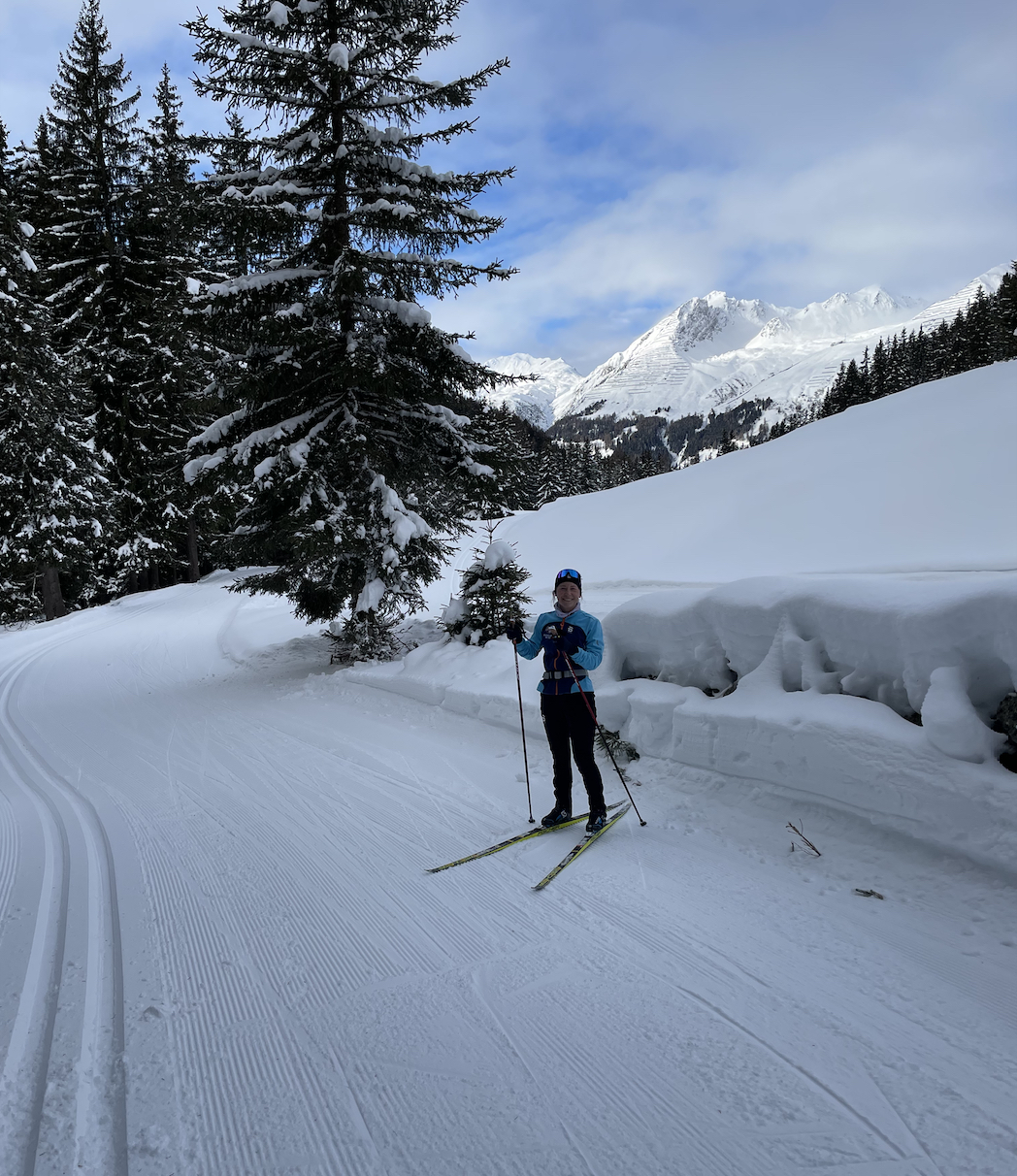
    Kristen Bourne logs kilometers on the stunning tracks of Davos, SUI while teching for the U.S. Team. (Courtesy photo)

    KB: There were a few things immediately. Like at Scholastica we adopted the glide-out system I learned on the World Cup to our team. More importantly, the mentalities and being willing to talk with other wax techs and understand that waxing theory is really – and that’s a weird thing to call it – less science. You’re not driving towards a single answer, but rather using your knowledge and experience to make a better call than you would if you didn’t. I had a big realization for both teching and coaching that you’re not learning the answer in how to ski coach, but instead that you’re trying to develop a sense of confidence in your experience so that you give that to athletes. There isn’t a one size fits all in coaching.

    BT: I really like that idea as a young coach myself. You’re not building towards an answer, but rather you’re building experience to bear so you can make a difference in the really tough situations, you know?

    KB: Yeah, I really think that’s a good way of putting it. It’s kind of that moment you realize that there’s not one way to do the job of being a coach, and that’s what makes it a really challenging and exciting profession.

    BT: What about how that attitude played into your role now with the U.S. Ski Team? What are you excited about looking ahead to this winter?

    KB: For [the D-Team], our athletes are well on their way to hopefully getting World Cup starts soon. And so that’s where I can act as a resource with my experience of what they can expect as they look to make those first starts. I’ll also be full-time on the World Cup this winter, which is exciting. I’m not anyone’s primary coach but will be doing a lot of what I did last winter, so in that respect, the World Cup experience I got will be about as good of preparation as I could get.

    BT: I had one last question pertaining specifically to the Trail to Gold Fellowship. What do you think the role of gender representation on the top-level of skiing is in helping the sport develop?

    KB: I think it has an immediate impact. I think it’s as simple as the fact that the more women that young kids see out on the course the more, they are going to believe that they belong there. I hope that immediate impact spreads to those coaches that are doing this fellowship this year as well. They can walk away with tangible World Cup experience, and also realize that they are part of pushing the movement for gender equity in coaching forward and inspiring girls that are out there at the races.

    I think back to being around wax rooms, at local races, or watching the World Cup on TV growing, and I really do think that if I would have seen more female representation it might have made me realize that coaching could be a viable career for me because I’d seen people like me in that position. Doing this fellowship works to inspire both the women who are coaching and the women who will be coaching one day.

    BT: That’s a really eloquent way to put that.
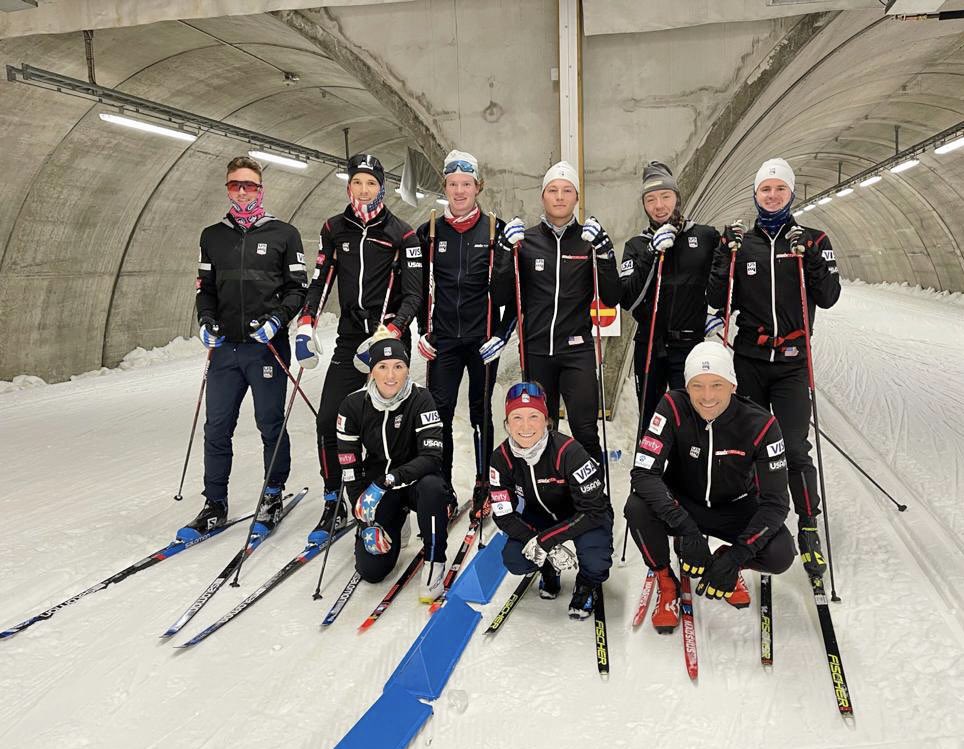
    USST athletes and coaches in the Torsby Ski Tunnel, August 2022. Back row, from left: Johnny Hagenbuch, Kevin Bolger, Finn O’Connell, JC Schoonmaker, Ben Ogden, and Walker Hall. Kneeling, from left: coaches Greta Anderson, Kristen Bourne, and Matt Whitcomb. (photo: François Faivre)

    Applications for the Trail to Gold Fellowship are open until August 31st.

    To buy Trail to Gold, the Journey of 53 Women Skiers, click here. Proceeds are dedicated to funding the Trail to Gold Fellowship.
  • Q&A with New Faces on the U.S. Ski Team: Will Koch

    Q&A with New Faces on the U.S. Ski Team: Will Koch

    U.S. Ski & Snowboard recently announced its U.S. Ski Team nominations for the 2022-23 season. Of the 22 athletes named to the team this season, six were not on the previous year’s roster, either newly named or renamed: Michael Earnhart, Walker Hall, Zak Ketterson, Will Koch, Finn O’Connell, and Sammy Smith.

    To help fans get to know these new(er) faces, FasterSkier is doing a series of interviews, providing insights into the factors that have contributed to development, progress, and growth for these athletes last season. In this installment, we talk with Will Koch following his nomination to the U.S. Ski Team on its D-Team. 

    Koch grew up in Vermont and is now a member of the University of Colorado Ski Team, where he will be entering his junior year this coming fall. Son of Olympic Silver-Medalist, Bill Koch, Will began his racing career in the New England program named after his father (the Bill Koch League) and attended high school at Stratton Mountain School. 

    During the 2019/20 ski season, Koch qualified to compete at the Youth Olympic Games in Lausanne, Switzerland where he earned a bronze medal in the 10 k classic. In 2022, racing at World Juniors in Lygna, Norway Koch finished 13th in the 10 k classic, 15th in the skate sprint, and anchored the 4×5 k relay team, helping to secure bronze for Team USA.

    Ella Hall/Faster Skier: Can you give us a little introduction, where are you from? When did you start skiing? What was your relationship with skiing growing up?

    Will Koch: I’m from Peru, Vermont, which is a tiny little town in Southern Vermont, just like 80 people as a population. And I’ve been living there since I was two years old. I got into skiing when I was super young, because my dad was a professional ski racer, Bill Koch. So I actually started skiing before I was even able to walk – nine months old on a beach in Hawaii was my first time on skis. Since then, I’ve just been pretty much training.

    I grew up in a really vibrant ski community: starting as a youth, then Stratton Mountain School for my high school years, and now I’m at University of Colorado at Boulder. And this is my first year on the [U.S. Ski Team]. So that’s super exciting. 

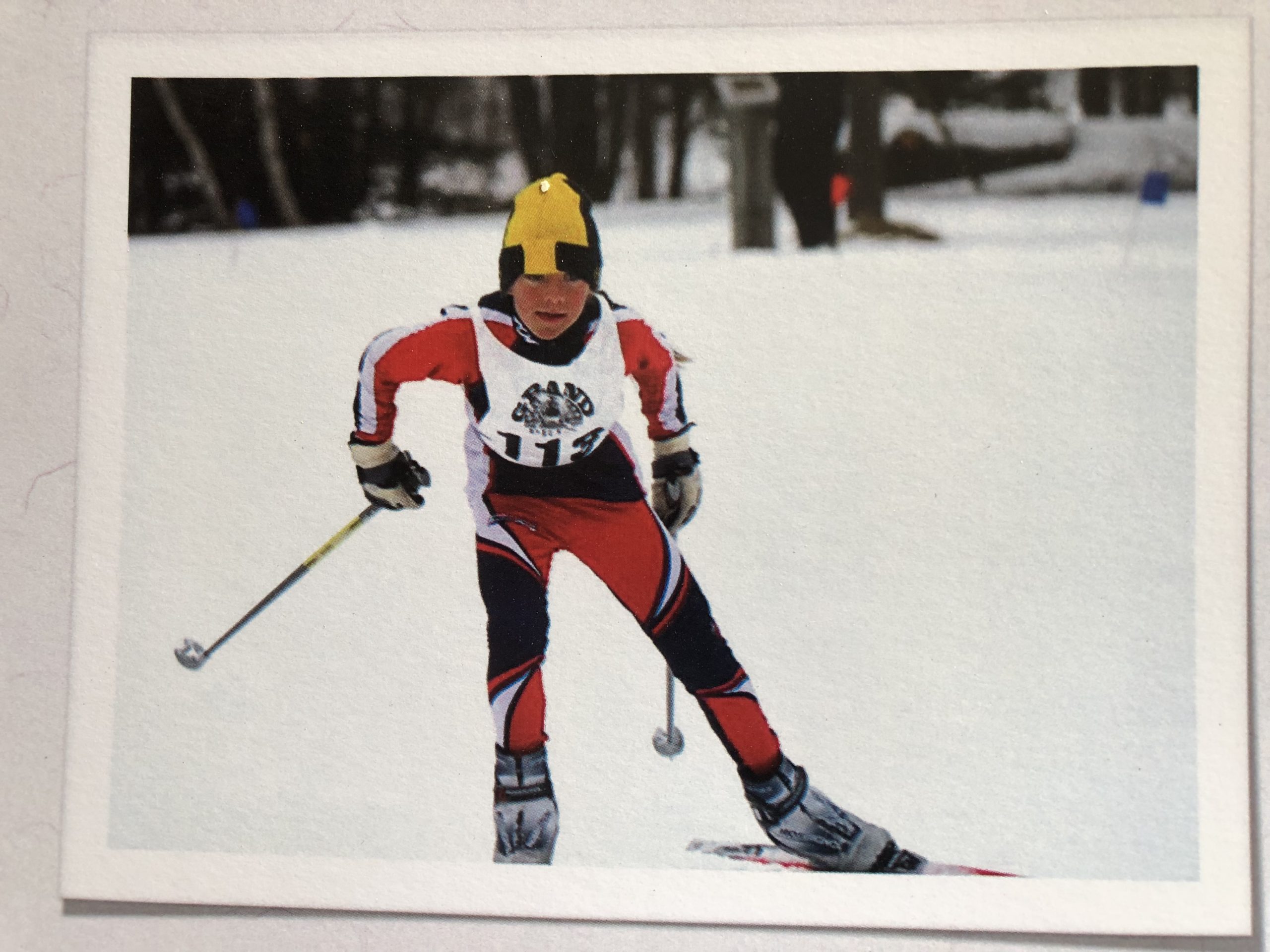
    A young Will Koch hitting his stride in a junior race. (Courtesy photo)

    FS: As the daughter of a three-time Olympian I can maybe relate to the potential challenges of being the child of a successful ski racer… so acknowledging that, can you talk a little bit about your dad’s role in your skiing career? 

    WK:  I definitely get that question quite a bit about like, you know, is it stressful or pressure to have your dad being like, Olympian and everything. Honestly, I think that my dad does a really good job of not having expectations for me, which is really nice. My dad totally recognizes that skiing is awesome and everything, but that there’s a lot more to life than skiing at the same time. He’s very much left the coaching to my actual coaches, but at the same time, he’s always there to give advice when I want it.

    He’s obviously like, been there, done that with everything that I’m given going through in terms of skiing, so I think it’s really inspiring to have a person like that always around when I need it, but it’s really awesome that it doesn’t feel like a burden. It’s really an opportunity.

    Will Koch competing at a junior race in New England (Courtesy photo)

    FS: How was the transition from high school at Stratton Mountain School (SMS) to college skiing at the University of Colorado (CU)? Both in terms of training but also general life changes? What drew you to CU?

    WK: One of the biggest reasons that I wanted to go out west for college was that I loved the mountains out west. And I also really liked the people out there. I think they’re super open and fun. I also think that being at a PAC 12 conference school comes with certain advantages as far the resources available in the athletic departments. On top of that, I think CU had a really top level nordic team compared to certain schools that I was looking at. So those were all factors that made me want to go out there, and I definitely never regretted that choice once I was up there. I’ve been loving it for my two years, it’s a lot of fun. [There’s] a really good mix on the ski team, I think,  of having fun, but also being serious about training. 

    I’d say, as far as training, transitioning from high school to college one difference was the altitude. When I first went up to altitude in Boulder, and was training up there, I really thought that I could just keep doing exactly the same volume and workouts that I was doing in Stratton. But I put myself in a little bit of a hole when I first got out there, and then learned from that and realized that it’s a little more taxing on the body. But once I dialed it back, training wise, I was able to get some real fitness benefits from the altitude. Now that I’ve been out there for two years, I was able to have a really good fitness year this past season and [make] kind of a breakthrough in my skiing. I think part of that is being in altitude and building fitness with a really strong team. 

    In general, I found that the college schedule allowed me to have more flexibility in terms of when I trained and it’s easier to do two sessions a day in college compared to high school, just because you spend a little bit less time in the classroom. You have a little more flexibility in how you structure your day.

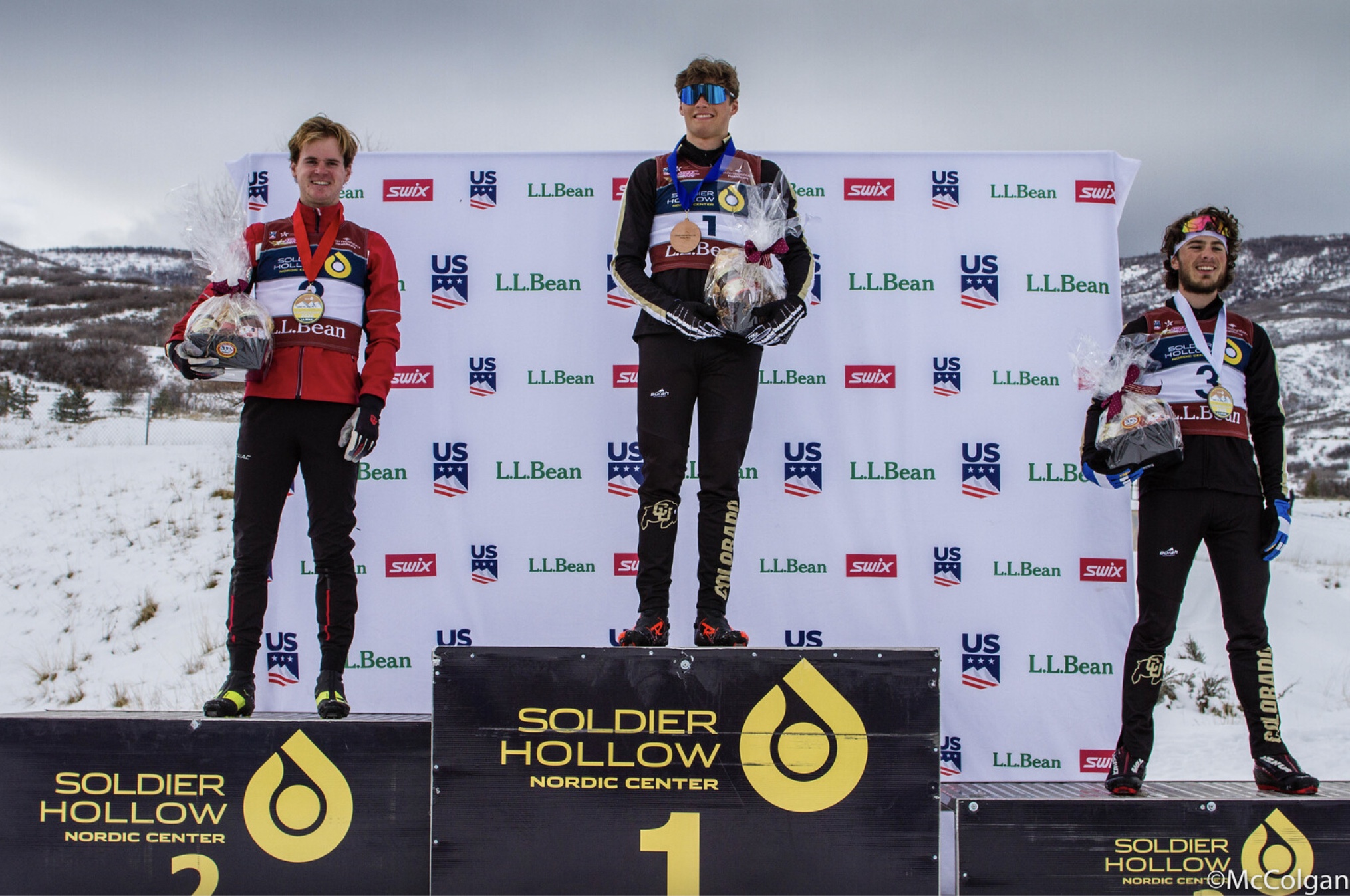
    The junior men’s podium for the 2022 Senior Nationals 15k interval start classic in Soldier Hollow: Alexander Maurer (CU) took the win ahead of Walker Hall (UU)  in second and Will Koch (CU) in third. (Photo: John McColgan)

    FS: By my count you’ve been on five different international racing trips, including the Youth Olympic Games (YOG). What were some of the highlights from those experiences, particularly in terms of how they supported your development and goals? 

    WK: Yeah, of all the international trips I’ve been on, definitely the Youth Olympics stands out as the coolest one and the most memorable. YOG is pretty different from World Juniors, in terms of it’s a fair amount less intense, I would say and more about having fun. And yet, even though it’s less intense, it’s the same level of competition, either way, you’re up against the best people in the world.

    I think that’s what I really loved about the Youth Olympics, it was fun to win the medal there and everything, but it was also mainly just a really cool experience. That was my first time meeting people from a lot of different countriesI still have my friends from Kazakhstan and Australia from the Youth Olympics, which I love. And, of course, that was also before COVID was really a thing, that was also a time when we were able to do a little bit more socializing on international trips. 

    I think that those [international] trips are really crucial in development, just to really see  that next level of competition that you’re going to be up against, and to really see that every second counts. In the Youth Olympics race where I got my bronze, it was two seconds between me and second place, and I was about five seconds from being back in eighth place. It was just ridiculous how tight it was. That just kind of goes to show how you really need to be thinking about getting those small gains where you can, and that the rest of the competition in the world is out there doing the same thing.

    FS: So you’ve just been named to the U.S. Ski Team D-Team, can you reflect on how that feels and maybe what is most exciting to you about this opportunity?

    WK: It’s definitely pretty validating to be named after being kind of on the edge for a few years now. It’s exciting. At the same time, though, it’s also basically almost the same training group that I’ve been training with for years, now that me, Walker [Hall] and Michael [Earnhart] are all on there.

    Being at my first US Ski Team camp (in Bend), I was kind of looking around, and I was like, Hey, this is really not that different from NTG, three years ago, when we all first made that. So it’s really cool to see how we all progress together. I’d say, making the team, it’s nice and everything, but it’s also really just one more step in development that we’re all taking together, which is really fun. 

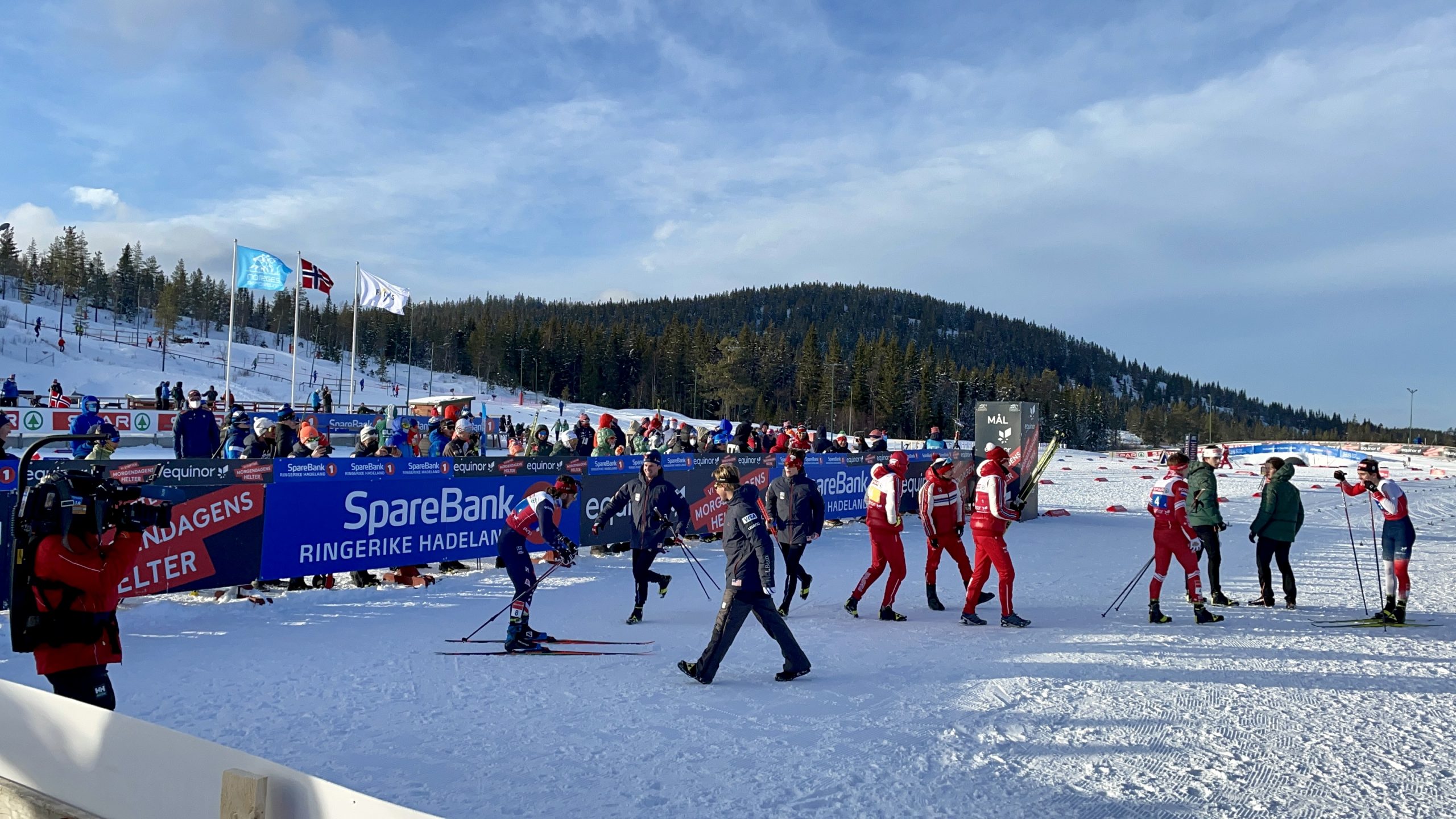
    At World Juniors in Lygna, Norway- a psyched American team congratulates anchor Will Koch, securing bronze in the U20 4×5 k relay. (Ella Hall photo)

    FS: What are some of your goals for the upcoming ski season?

    WK: I would love to make a debut on the World Cup if that worked out. It’s obviously a really competitive scene right now for Team USA to make it there, and getting picked is by no means guaranteed. I think that’d be a really good next level experience to have. I’d also like to get on the podium at NCAA’s. 

    FS: Sounds like you made it out to Bend for the annual spring U.S. Ski Team camp there, and now are you back with SMS. What does the rest of your summer/fall look like?

    WK: For the rest of the summer, I will be in Stratton training with the SMS T2 team. It’s pretty exciting, because we should have a lot of really fast guys on the US Ski Team coming out here to join our training group, which I think will be awesome, having grown up in Vermont, to get to show a bunch of people how we do it over here. I’ll be here until mid-August and then go back to Colorado and start school and training with the CU Ski Team.

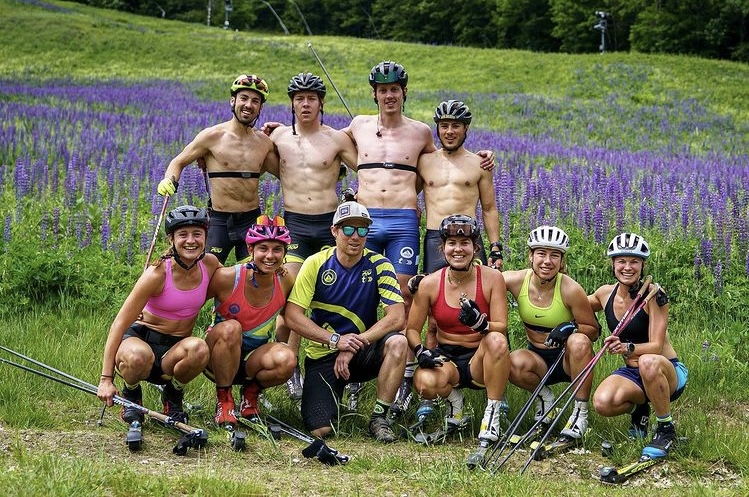
    The 2021/2022 SMS T2 Team. Back row (l – r): Ian Torchia, Ben Ogden, Bill Harmeyer, and Will Koch; front row: Alayna Sonnesyn, Julia Kern, head coach Pat O’Brien, Lina Sutro, Katharine Ogden, and Jessie Diggins. (Photo: SMS T2 Blog)
  • Q&A with New Faces on the U.S. Ski Team: Sammy Smith

    Q&A with New Faces on the U.S. Ski Team: Sammy Smith

    U.S. Ski & Snowboard recently announced its U.S. Ski Team nominations for the 2022-23 season. Of the 22 athletes named to the team this season, six were not on the previous year’s roster, either newly named or renamed: Michael Earnhart, Walker Hall, Zak Ketterson, Will Koch, Finn O’Connell, and Sammy Smith.

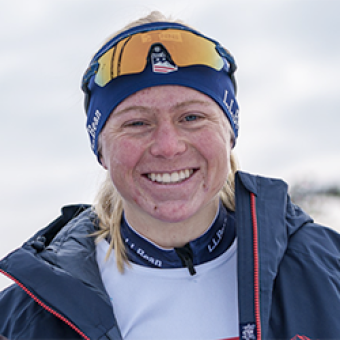
    Samantha Smith is named to the 2022-23 U.S. Ski Team D-Team. (Photo: U.S. Ski & Snowboard)

    To help fans get to know these new(er) faces, FasterSkier is doing a series of interviews, providing insights into the factors that have contributed to development, progress, and growth for these athletes last season. In this installment, we talk to Sammy Smith about her participation and success in numerous sports, the charity she and her siblings founded during COVID, and her nomination to the U.S. Ski Team D-Team. 

    At Junior World Championships in Lygna Norway this past February, Smith finished 5th in the skate sprint and 11th in the 15k skate. She also finished 10th in the skate sprint at Senior Nationals in Soldier Hollow in January 2022 racing amongst the senior women’s field. 

    Not only is Smith a successful cross-country skier, but she has also achieved impressive results in running, soccer and freestyle skiing. During her freshman year of high school Smith won the 1,600 and 3,200 meter events at the Class 5A Idaho state meet, leading her to be a finalist for the USA TODAY High School Sports Awards. 

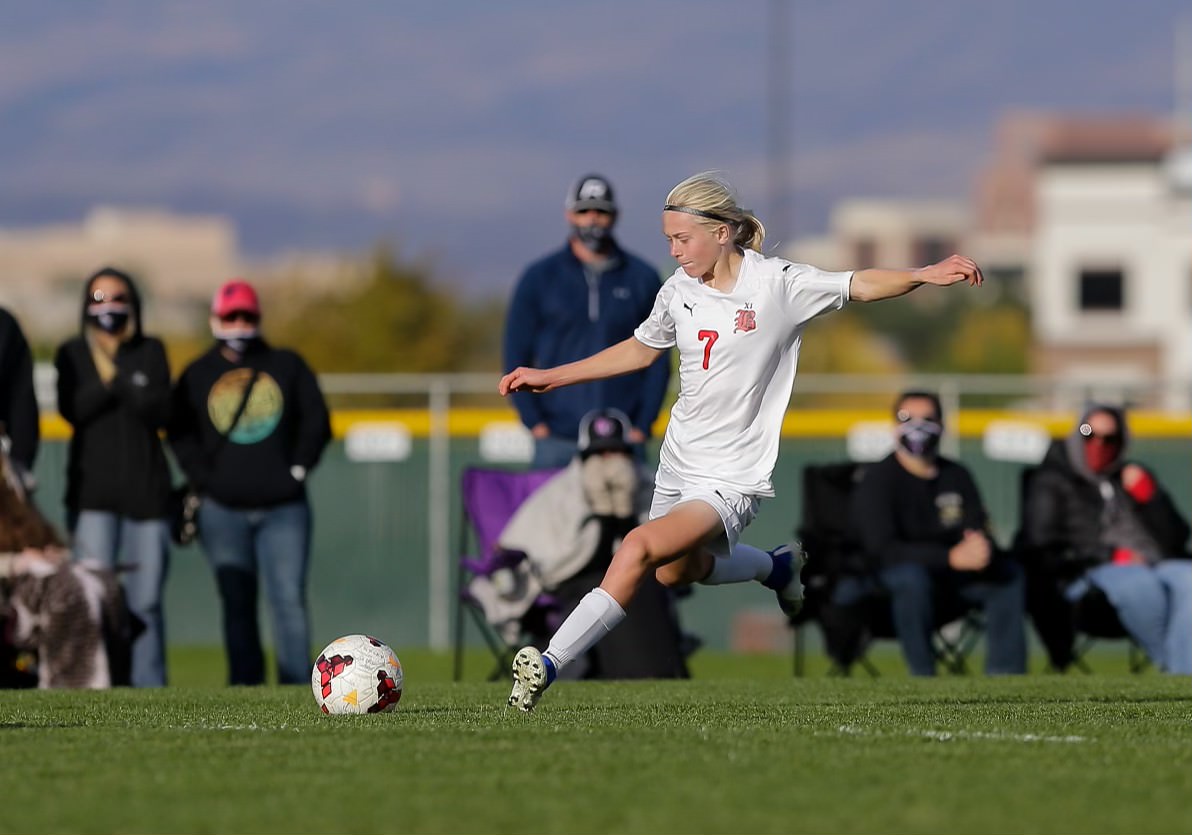
    Sammy Smith competing for a Boise-based soccer team. (Courtesy photo)

    Ella Hall/FasterSkier: You’re sixteen, does that mean you’re a junior in high school?

    Sammy Smith: I actually just finished my Sophomore year of high school (our school got out last week), so I will be a junior in the fall.

    FS: And do you live part of the year in Boise and spend the winters in Sun Valley?

    SS: Yes, I live in Boise for the fall, spring, and summer. Although during the summer I am often gone a lot, and we frequently go up to Sun Valley. I go to Boise High School for the fall and spring, then I move to Sun Valley for skiing for the winters and while I’m there, I go to the (Sun Valley) Community School.

    Sammy Smith competing in freestyle skiing. (Courtesy photo)

    FS: From what I’ve gathered you’re involved in quite a lot of sports, can you tell me which sports you competed in this year?

    SS: Currently I cross-country ski, play soccer, run track and cross-country, and freestyle ski. This year, I competed in all of the above, except freestyle skiing. Unfortunately, I sustained an injury in the late fall that prohibited me from jumping so I was unable to compete in freestyle. My track season was also cut short because of an injury but I’m healthy now.

    Soccer and nordic are definitely my two primary sports. For soccer, I am actually in the US U17 Women’s Youth National Team training pool. I was selected as an alternate for the Confederation of North, Central America and Caribbean Association Football (CONCACAF) tournament this spring. That meant I only participated in the pre-camp, then returned home prior to the tournament kicking off. I aspire to compete for the full US Women’s National Team (WNT) one day, and hopefully will have the opportunity to represent my country in two different sports.

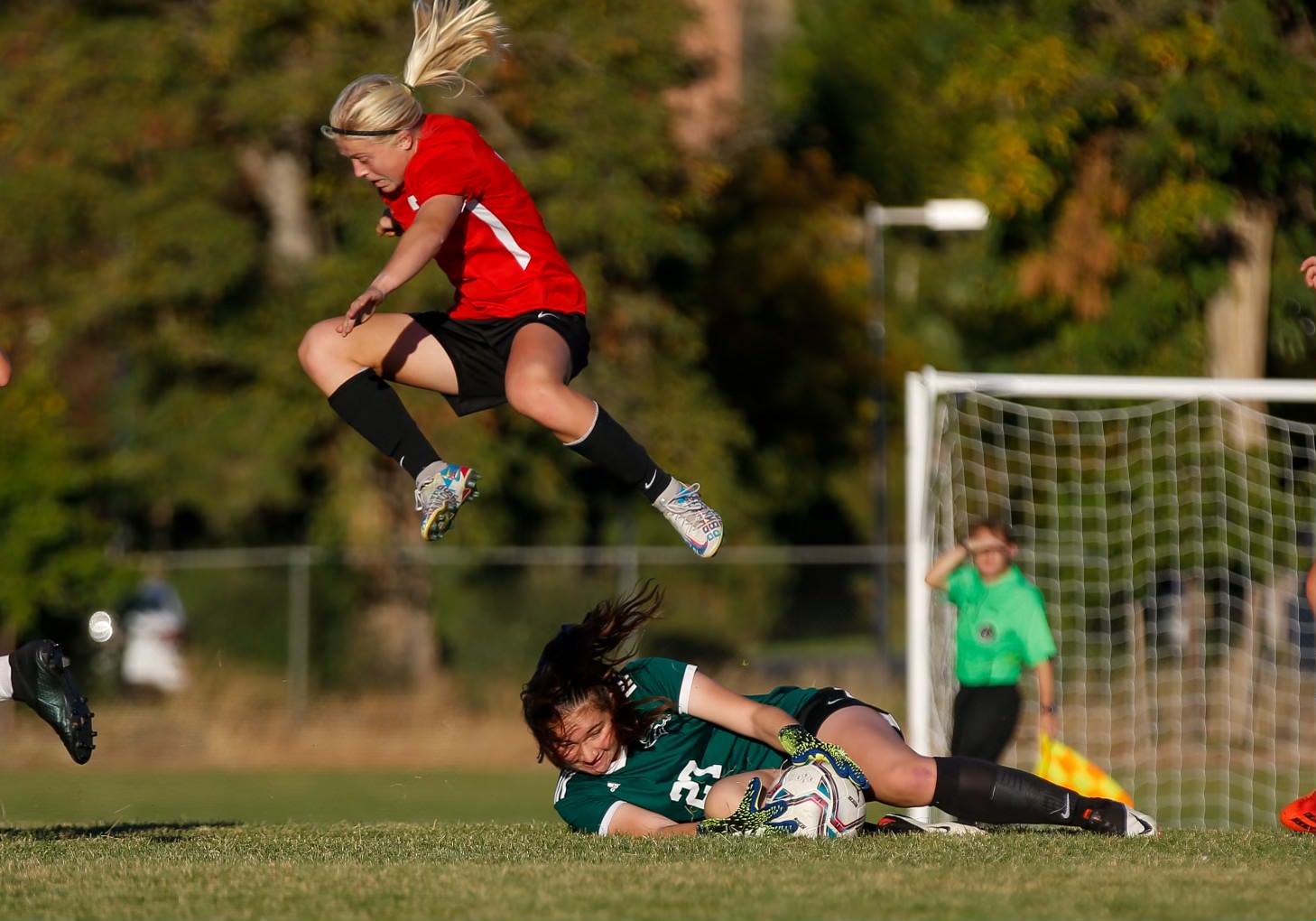
    Sammy Smith gets air in an Eagle vs. Boise soccer game. (Courtesy photo)

    FS: How and when did you start nordic skiing?

    SS: I initially got involved in nordic skiing because of my older sister. When I was five, my parents had signed my sister up for SVSEF’s devo program, and naturally I wanted to do everything she was doing, so I began to pick up the sport as well.

    FS: I read that you and your siblings started a charity during the pandemic, can you tell me a little about that?

    SS: My siblings and I founded GO BIG, a 501 (c3) certified charity, during the spring of 2020. GO BIG stands for Giving Opportunity By Inspiring Gratitude. Through the charity we aim to make a positive impact on less privileged youth in our area. We have been so fortunate to grow up the way we have, we want to help those who haven’t. We work to provide these kids with mentorship, as well as resources to help them – like books and other educational tools, and sporting equipment. 

    Our goal is to inspire a sense of gratitude in these youth because science has shown that those who experience a sense of gratitude are more likely to feel good about themselves and pass that feeling along to others, thus helping spread good through the community and beyond.

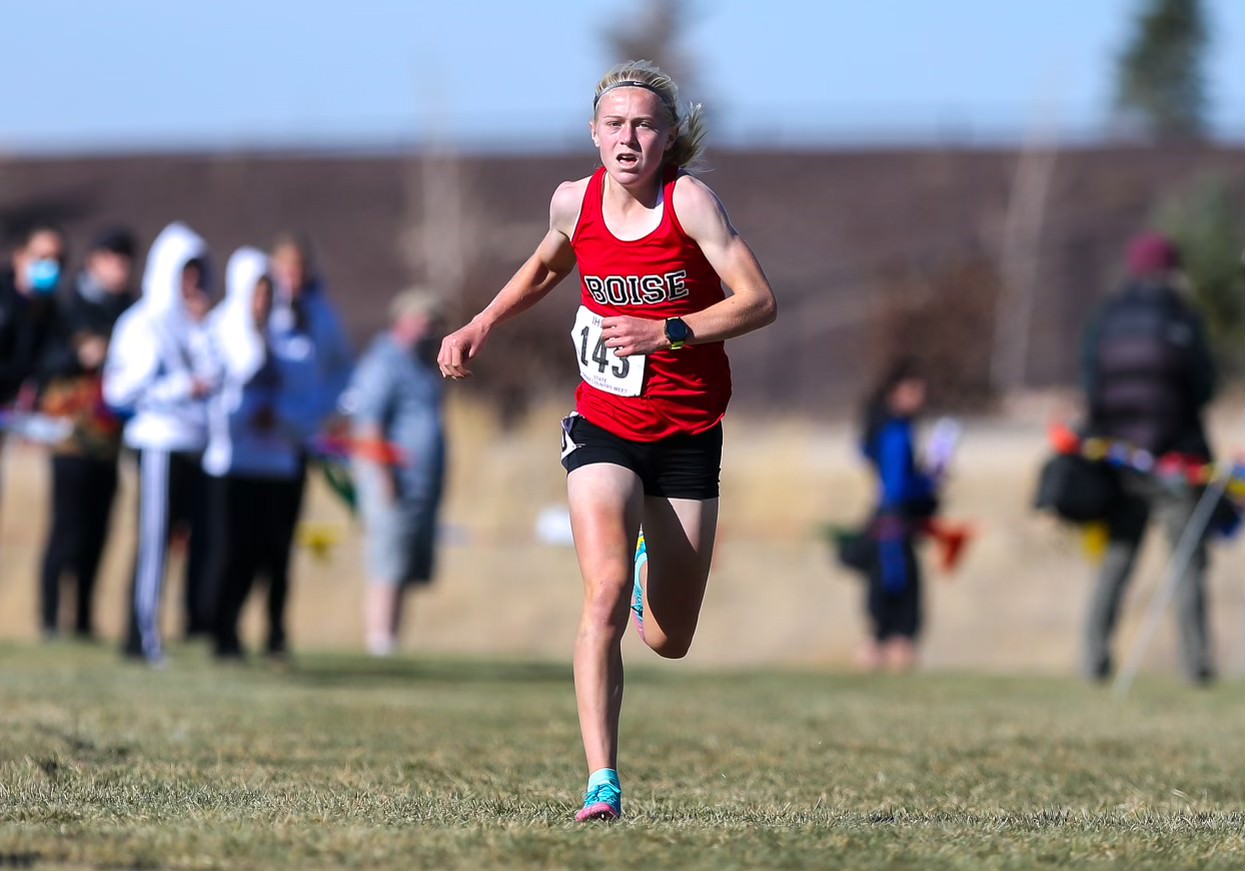
    Sammy Smith runs cross-country for her high school team in Boise, ID. (Courtesy photo)

    FS: You had some pretty exciting results at World Juniors in Lygna Norway this winter, can you talk a bit about the contributing factors/support system that helped you achieve those results?

    SS: I owe a huge thank you to my coaches in Sun Valley, especially Rick Kapala, because he and I made a really thorough and thoughtful training plan going into the Championships. I think having such a detailed plan allowed me to come in more prepared, and in better form than I could have imagined. 

    I was fortunate enough to have Paul Smith as my wax tech who worked a lot with me on ski selection, and taught me what to look for in a pair of skis throughout the season, and how to decide between them when it seems like the glide is comparable. 

    Going into World Juniors, I had a lot of new skis from Salomon, and I didn’t really know a lot about them, but fortunately Paul was incredibly helpful. I relied on him heavily to help me test and decide how to organize my fleet before I left. And once we were in Norway, he made sure I was testing the appropriate skis, and helped me choose which pair I was racing on each day. I’m incredibly grateful for Paul’s help, and the support from Salomon. 

    In addition, the U.S. Ski Team support system was unlike anything I had ever been part of before. Our pre-camp was designed perfectly to help us peak for our races, and once we arrived in Lygna, we had access to even more resources. It truly was a trip designed to help young skiers have the best races of their lives.

    FS: What excites you most about being named to the U.S. Ski Team?

    SS: I’m most excited about the incredible opportunities that come with being named to the U.S. Ski Team. Being able to train with the best skiers in the country, and some of the best in the world, is an unparalleled opportunity for growth and development. I think when you are put in an environment where you are surrounded by people who share a common passion and common goals, naturally you improve. I can already feel the great sense of community and support from the more experienced skiers and it makes me so excited to train and race alongside them in the future. 

    I also think the U.S. Ski Team has invaluable resources and tools to help all the athletes become the best version of themselves, and I love to compete and am always looking to improve, so that’s really exciting to me.

    Sun Valley’s Sammy Smith (right) finished 10th overall in the freestyle sprint during the 2022 U.S. Cross-Country Ski Championships in Soldier Hollow. Smith was the third-fastest junior racing with the senior women, behind Sydney Palmer-Leger (University of Utah) and Kate Oldham (Aspen Valley Ski & Snowboard Club). (Photo: Tobias Albrigtsen / @untraceableg)

    FS: What are some of your goals for the upcoming season?

    SS:  I was really fortunate to have some great results at last year’s World Juniors, and I want to continue to build off of that for next season. So, my primary goal for the season is to finish top three at World Juniors.

    FS: ​​Will you be able to join any upcoming USST camps this summer/fall or will you be primarily focused on your other sports until winter rolls around?

    SS: It is certainly a priority of mine to get to some of the upcoming camps, but it’s always a balance, so right now I’m trying to figure out scheduling for both soccer and skiing.