From the FasterSkier archive — posts syndicated from athletes’ and coaches’ own blogs between 2004 and 2012, kept online as published. Current coverage is at fasterskier.com.
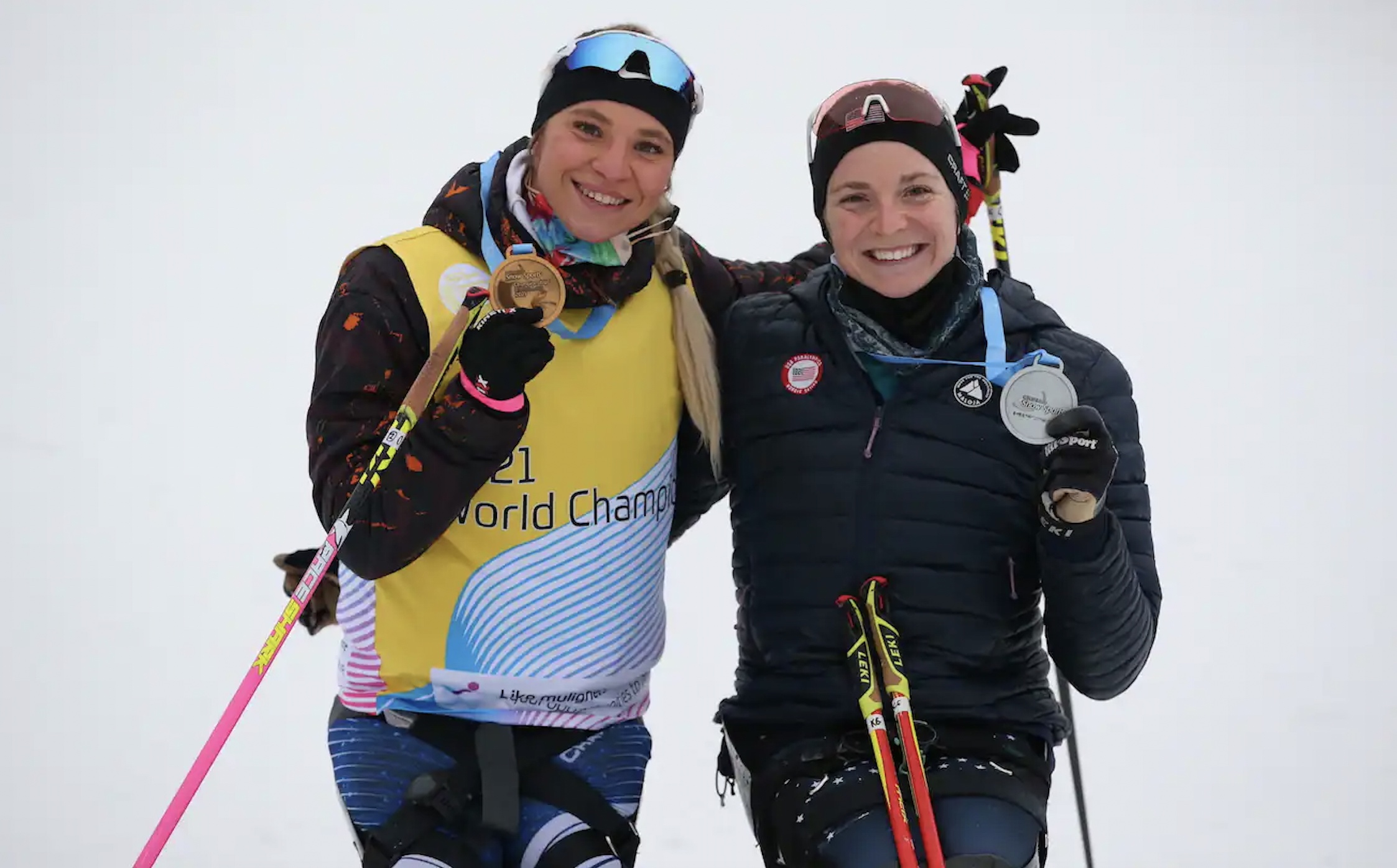
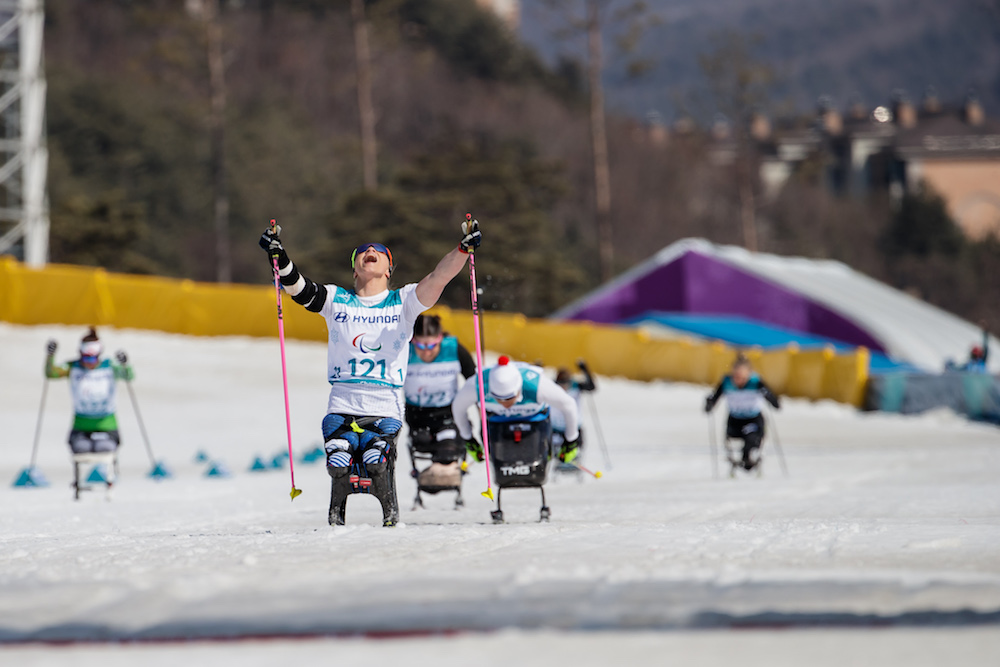
Oksana Masters (left) and Kendall Gretstch (right) go 1-2 in the women’s 15k sitting long distance cross country race. (Photo: Alex Livesey/Getty Images)
It’s late January and we’re deep into the race season. As the Olympics and Paralympics draw nearer, we’ve simultaneously just wrapped up the Tour de Ski, the U.S. Cross Country Championships, and another wave of SuperTour races. Never a dull moment in the racing world, the Para World Championships are currently well underway, running January 13-23rd in Lillehammer, Norway.
Normally occurring on odd years, the World Championships were postponed from last February due to the pandemic. Nevertheless, the event was called the Lillehammer 2021 World Para Snow Sports Championships. It was a hallmark event, as it is the first time that all snow sports have competed together in one location over the same dates.
Led by well-decorated veterans like Oksana Masters, Kendall Gretsch, and Dan Cnossen, the U.S. Para Nordic Team has put together a string of outstanding results at World thus far. Events have ranged from biathlon springs to cross country distance races, with athletes competing – and cleaning up – across all disciplines and distances.
Kicking off the series of events, Sun Valley’s Jake Adicoff took home his career first World Championship medal by winning the men’s visually impaired 10-kilometer middle distance race.
“It feels great,” Adicoff said of his performance, according to the Team USA Press Release. “Lillehammer has been skiing really well so far, I’ve been having a lot of fun here. It feels great to go and get that first podium, and hopefully we can go out and get some more here.”
Jake Adicoff and his guide Sam Wood put together a gold medal performance on the opening day of racing at the Para World Championships in Lillehammer, NOR. (Photo: Alex Livesey/Getty Images)
Adicoff retired in 2018 after earning a silver medal in the 10k and taking 4th in the sprint, however, he is making his return with a bang in this 2021/22 season.
Building momentum throughout the first day, 19-year-old Sydney Peterson earned a silver medal in the women’s standing middle distance race, with Gretsch earning the second gold medal for team USA in the women’s sitting 7.5k middle distance event. That’s three medals, two gold and one silver, on the first day of racing, along with an additional two athletes, Cnossen and Dani Aravich, earning top-10 finishes.
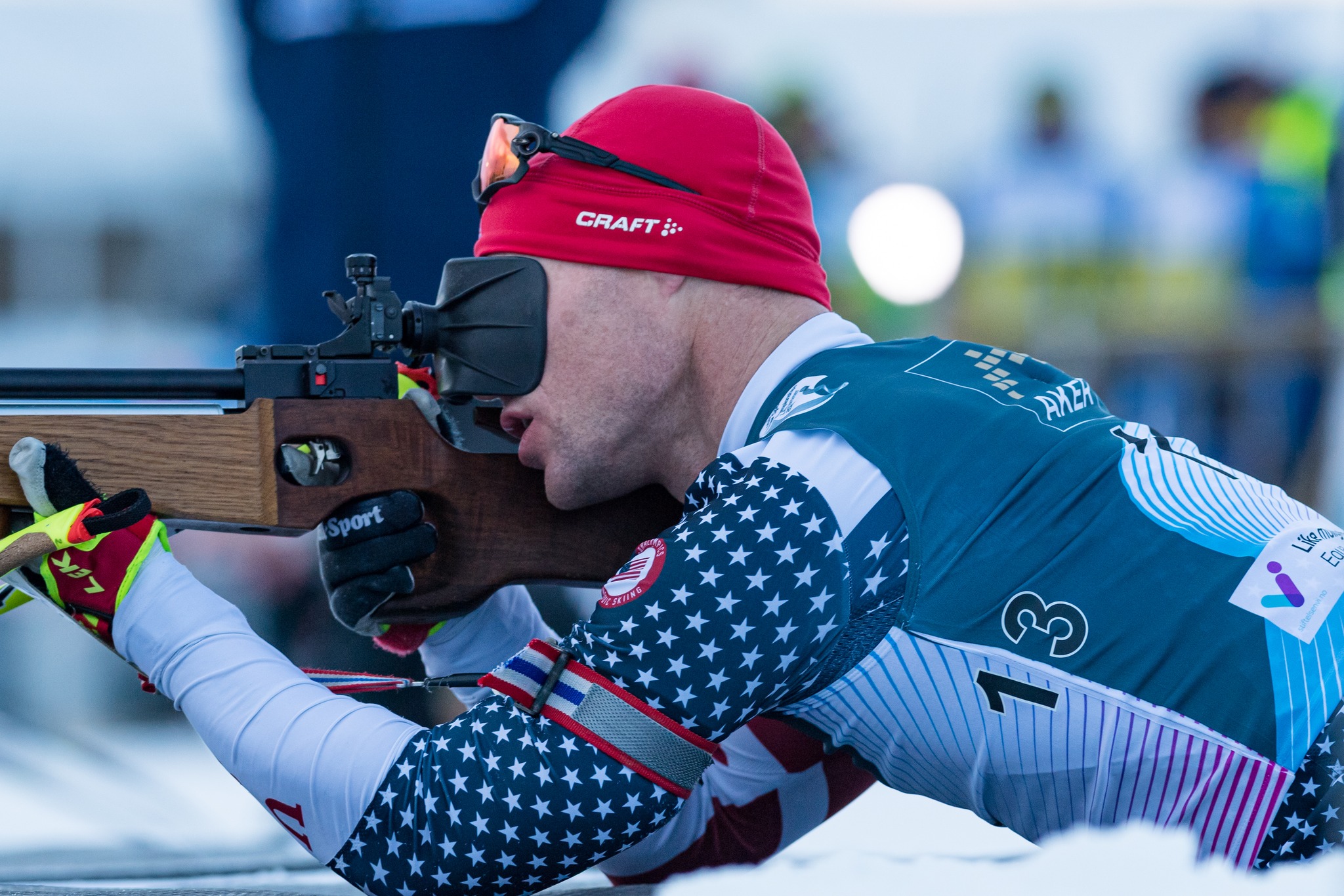
Dan Cnossen hits the range during the individual sitting biathlon event at the Para World Championships in Lillehammer, NOR. (Photo: Alex Livesey/Getty Images)
Joining the team in Lillehammer late after testing positive for COVID-19 on New Year’s Eve, Masters made a smooth return to competition, taking second place in her first race at Worlds, the sitting biathlon sprint on January 15th. The next day, the American women took first and third in the sitting biathlon middle distance race, with Gretsch earning her second gold medal of the week and Masters adding an 18th World Championship medal to her ever-expanding collection.
On point, a perfect shooting performance contributed to Gretsch’s gold, while Masters skied her way out of a significant deficit. Experiencing challenges on the range, Master’s racked up seven penalties, but made up her shooting with her skiing. In the men’s sitting race, Master’s partner, Aaron Pike, skied his way into the Top-10, a rank he has achieved in each of his World Cup races this season, leaving him primed for a medal.
Two days later on the 18th, Masters and Gretch again took the spotlight, going 1-2 in the women’s sitting 15k long distance cross-country race. Now reaching 19 total, this marked Masters’ 10th career World Championship gold medal.
“It’s absolutely incredible,” Masters said in the Team USA press release that day. “It feels like yesterday where I was that new athlete, never thinking that I would be a world championship athlete. So, to have 10 now … is incredible and it’s a testament to our team’s hard work. It’s not just me, it’s the whole team.”
Already an historic day for the U.S., Peterson and Adicoff continued the medal streak in the long-distance cross country races, with each athlete earning a bronze medal in the standing and visually impaired divisions, respectively. Four Americans competed that day, and four medals were won. How’s that for success?
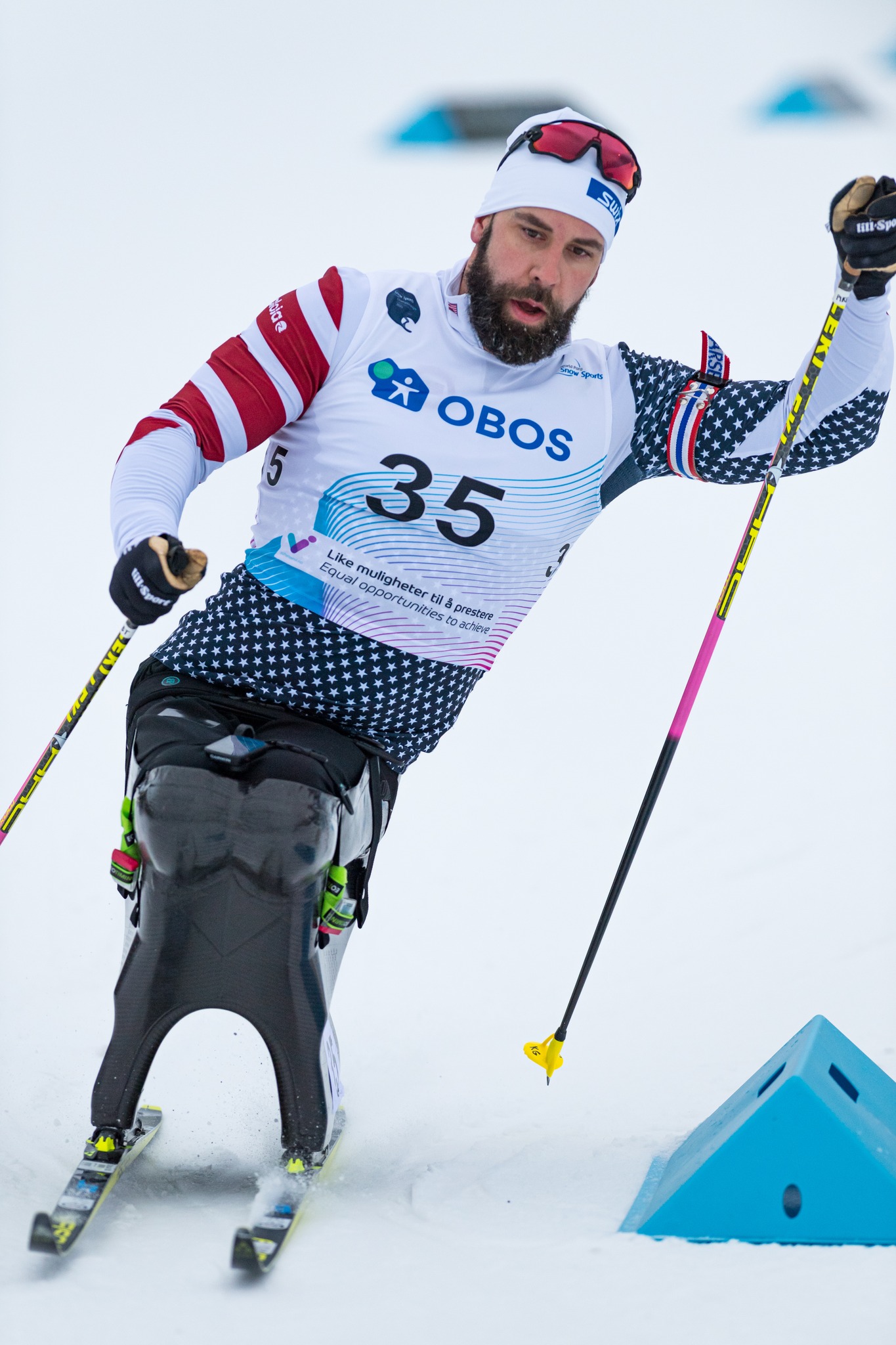
Aaron Pike races the individual sitting middle distance biathlon event at the Para World Championships in Lillehammer, Norway. (Photo: Alex Livesey/Getty Images)
As the final days of World Championship racing kicked off, Pike’s consistency paid off with a silver medal in the men’s sitting individual biathlon event. Missing just one target, matching the best result of the event, Pike finished 24 seconds back on the winner, Pavlo Bal of the Ukraine. This result is both a World Championship and overall World Cup career best for Pike, who is an accomplished wheelchair racer during the summer season.
“It was a tough day to be shooting out there, everybody’s missing so I was happy to come away with just missing one shot,” said Pike in today’s recap. “This is probably the windiest race we’ve had in three years. Every chance you get to put a bib on and race in a biathlon race is experience.”
Racing in the women’s sitting individual biathlon, Gretsch and Masters continued to dominate the field, taking first and third, respectively, to keep their medal streak alive and well.
Again performing well on the range, Gretsch missed just one target in four rounds of shooting and skied the second fastest time on course for a finish time of 52:25.0. While Masters skied the fastest time of day, she again faced challenges in her shooting, incurring five penalties, leaving her 3:00.7 behind Gretsch in the final results. In the women’s standing class, Aravich earned another top-10 finish in eighth.
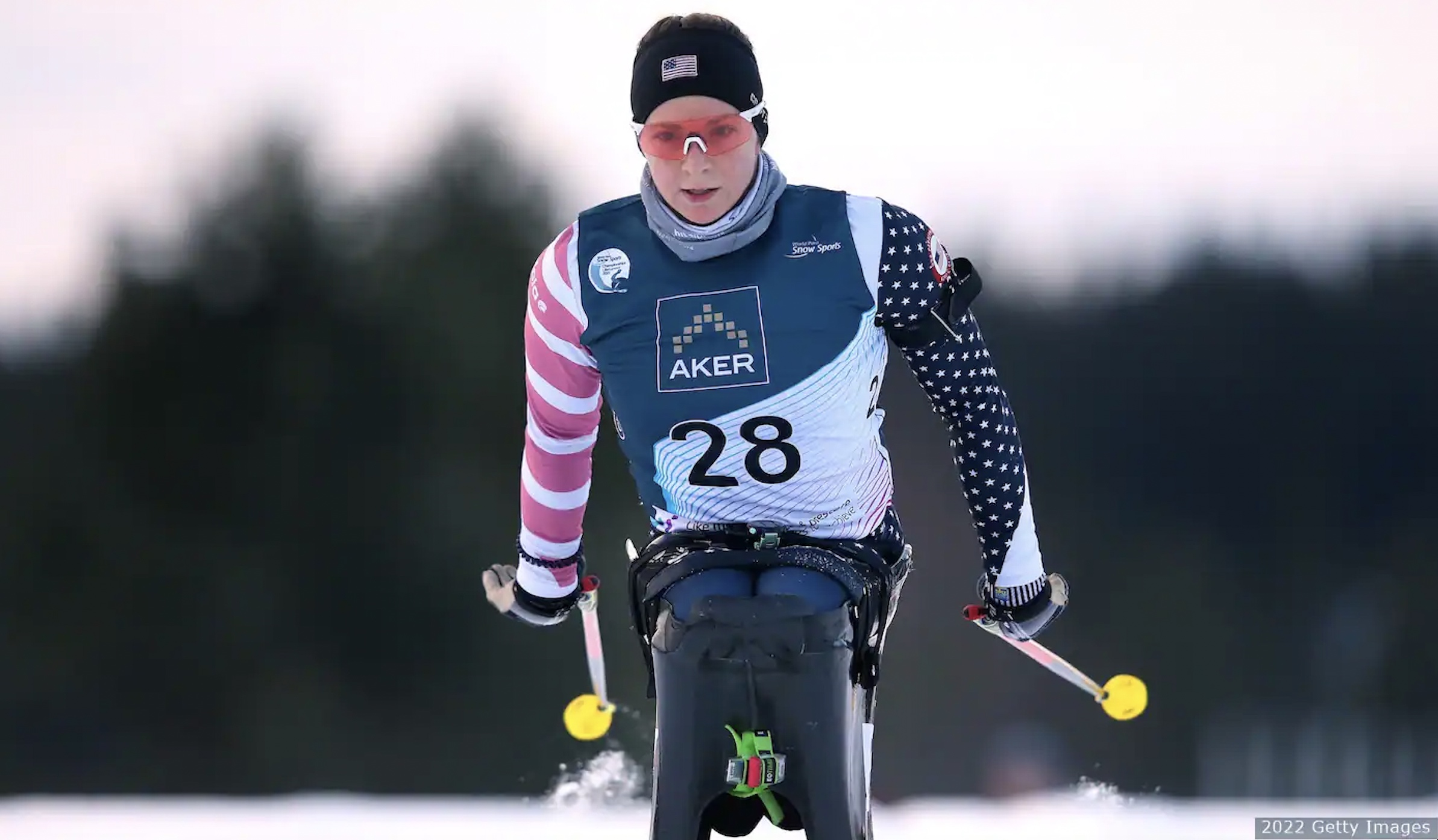
With excellent shooting records, Kendall Gretsch puts together back-to-back gold medal performances in biathlon events. (Photo: Alex Livesey/Getty Images)
After a day of rest, the Para athletes have two final days of racing in Lillehammer on the 22nd and 23rd, which feature a sprint for the standing and visually impaired categories on Saturday and a Mixed Relay on Sunday. Based on the week’s results, it’s clear that they are primed for another medal run in the upcoming 2022 Beijing Paralympic Games, which begin March 4th.
Livestreams of past and upcoming events, along with links to results can be found on the U.S. Paralympics Nordic Facebook page, or you can check out the remainder of snowsport events happening this week in Lillehammer by following along here.
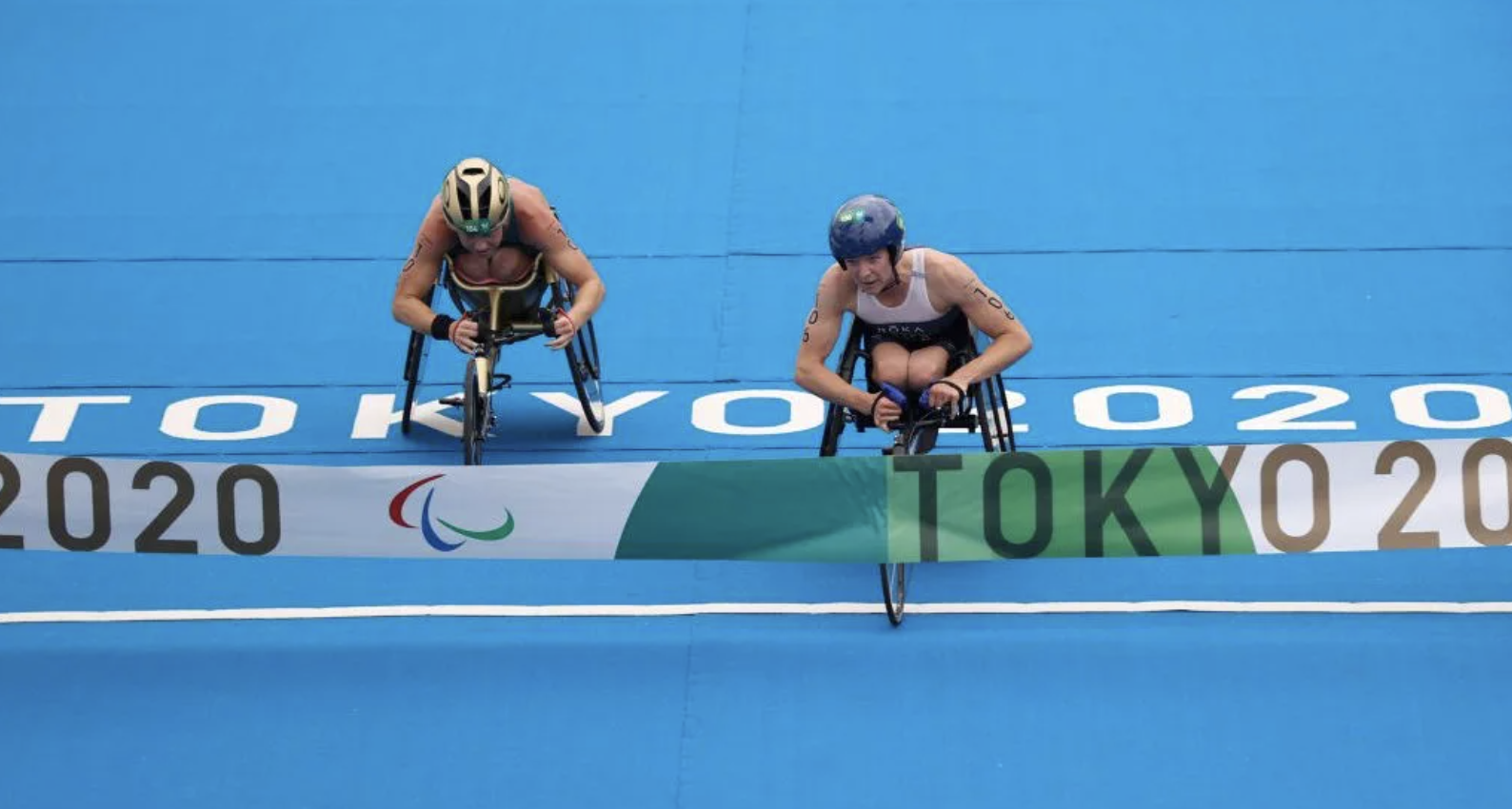
After roughly 26 kilometers of racing, Kendall Gretsch takes Paralympic Gold by just over a meter. (Photo: Screenshot NBC Sports)
If you didn’t catch the ending of the triathlon during the Tokyo Paralympics, prepare for the chills. Spoiler alert: in an all out, last gas effort in the final meters, dual-season athlete Kendall Gretsch edged out Australia’s Lauren Parker by one second for a Gold Medal victory.
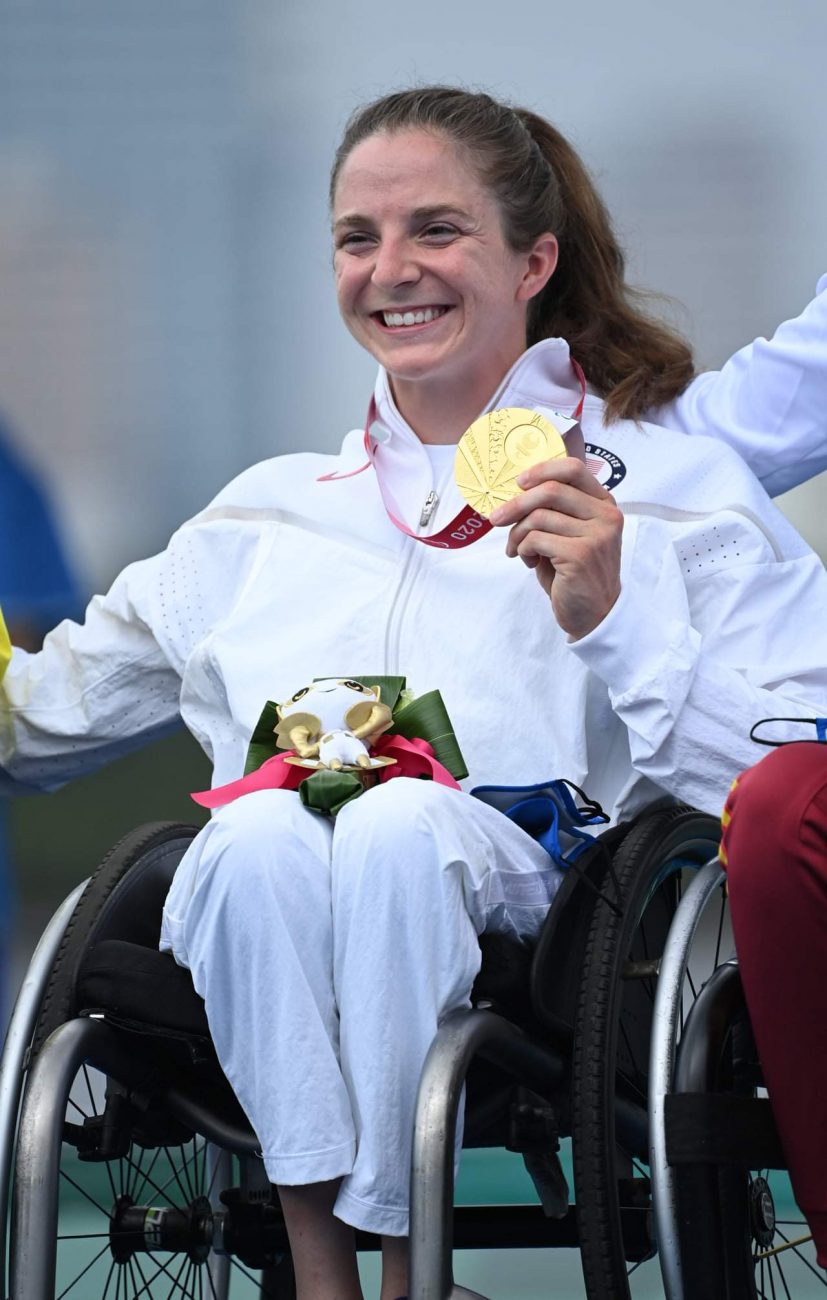
This is Gretsch’s third Olympic gold, alongside the two she earned during the 2018 PyeongChang Paralympic Games, first in the 6-kilometer biathlon sitting sprint and again in the 12 k cross-country distance race. Her achievement in Tokyo makes her the fifth American — third female — to win a Gold Medal at both the summer and winter Paralympic Games.
Taking a step back, triathlon was first added to the summer Paralympic schedule in 2016, however, only a subset of the nine competition classification categories were allowed to compete. Gretsch was born with spina bifida, which is the result of a neural tube defect during fetal development, impairing her spine and spinal cord. While she walks with crutches, she competes in the PTWC2 (paratriathlon wheelchair) division, meaning after the swim, she races the bike leg on her handcycle, before transitioning into a racing wheelchair for the run. The Tokyo games were the first opportunity for the two PTWC categories to compete.
FasterSkier spoke with Gretsch in April of 2020 when the news first broke that the Tokyo Olympics were definitely postponed until 2021 due to the ongoing COVID-19 pandemic. As we discussed, this leaves just over six months for athletes like Gretsch who compete in both winter and summer sports to prepare for the upcoming Beijing Paralympics, which begin on March 4th, 2022. Following up to learn more about her experience in Tokyo, FasterSkier reconnected with Gretsch on a call to hear how she is mentally and physically recharging before ramping up her training for the winter season.
Paratriathlete Kendall Gretsch made history in Tokyo, becoming one of only five Americans to earn a Paralympic Gold Medal in both winter and summer Games. (Photo: Mark Reis)
First, let’s go beyond the highlight reel to learn more about the Gold Medal day.
Because Gretsch is in the lesser impaired category, she starts at a deficit of four minutes and four seconds behind competitors in the PTWC1 division. The clock starts running at the same time for all athletes, and the first woman across the line is the winner, regardless of starting wave. Among the women in the PTWC1 division was Gretsch’s mark, Parker.
The Australian has a lengthy resume in elite triathlon, including a second place finish in the 2015 Kona World Championships as an able-bodied athlete. After recovering from a serious accident in 2017 that left her with permanent spinal cord damage, Parker began competing in paratriathlon, quickly ascending the ranks and ending the 2019 season with a commanding victory at the ITU World Championships.
While Gretsch is accustomed to the staggered start in her event, she explained that it does change the tactics compared to a mass start competition.
“The goal is to consistently make up ground,” Gretsch explained in a call. “So I wouldn’t say it’s a very tactical race, and that you’re like, waiting to time your move, or finding the right spot on the course to make a move. You’re basically just going all out in trying to [catch the earlier starters] by the end of the race, hoping you can make up that four minutes.”
The PTWC race includes a 750 meter swim, a four-lap 20 km bike, and a four-lap 5 km run, which Gretsch completed in a total time of 1:06:25. She explained that the many laps during the bike and run allowed her coaches to regularly provide her with feedback of where she stood relative to the leaders.
On the hunt, Kendall Grestch chases down a Gold Medal during the run in the 2022 Paralympic triathlon in Tokyo. (Photo: Mark Reis)
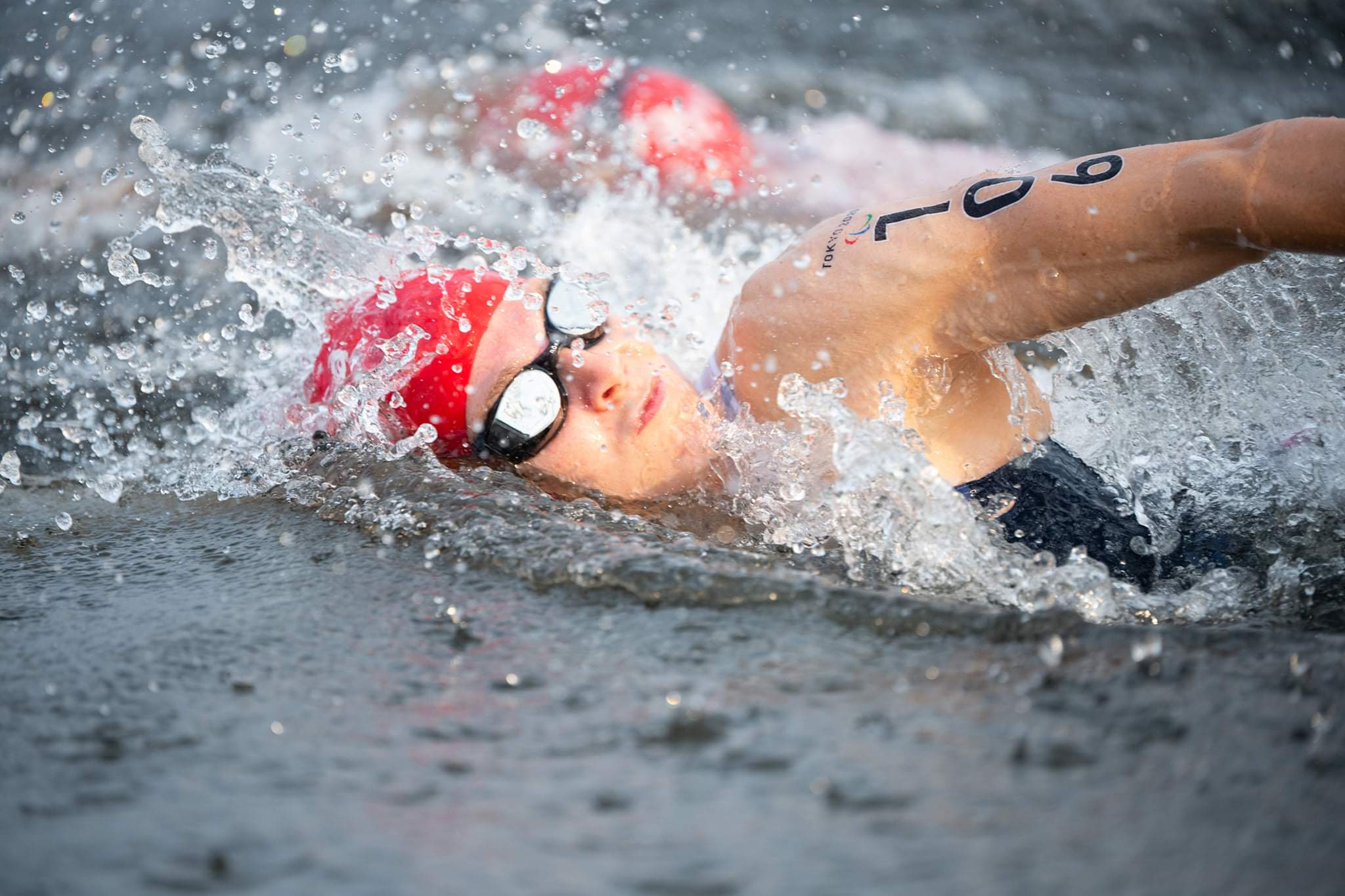
Gretsch began making up time right away. She was 35 seconds faster than Parker in the swim, and left the second transition from bike to run just a minute and twenty seconds back. While she acknowledged that the percentage of the race that happens on the bike makes it an opportunity to make a dent in the deficit, she also explained that her progress during that leg surprised her.
“It did play out a little bit differently, in my mind, than I thought it was going to,” she shared. “Usually I can make up a little bit more time on the swim, and then I know that Lauren is a super strong biker. So going into this race beforehand, my goal was to make up some amount of time on the swim and really just not lose time to her on the bike. So yeah, I was really pleased that I was able to make up as much time out on the bike as I did in this race. Especially because she had an amazing swim.”
Sometimes good results come from races where we never feel our best and may feel surprised by the outcome. Likewise, there are the days we dream about where everything is clicking from start to finish and we know from the gun that it will be a good day. For Gretsch, there were elements of both.
“I would say my swim was average. And then as soon as I got onto the bike, I knew that it was a really good day for me and that I was feeling really strong. So I kind of just told myself throughout the race — I knew that [I was giving] everything I had on that day, and could push really hard. And regardless of what happened, I knew it was gonna be a really close race. If I passed her, if I didn’t pass her; I just knew that it was going to be a really exciting race to watch. So that was kind of cool to have that recognition during the race that regardless of what happens, I wasn’t going to have any regrets about the race because I knew I was going as hard as I could, and that it was going to be an exciting race for people to watch.”
While she felt “average” in the swim, Kendall Gretsch had a well-above-average day competing in the triathlon at the 2021 Tokyo Paralympics. (Photo: Mark Reis)
With three golds and a silver from ITU World Championships, five USA Paratriathlon national titles, and a slew of international podiums, Gretsch is no stranger to high level competition. However, the Paralympics is the Paralympics; held as the pinnacle of sport in the United States.
Grestch spoke about her mindset approaching the Games in terms of managing expectations she feels, whether internal or external, and her approach to the mental strain of competing in Tokyo.
“Going to the Paralympics is something that I’ve wanted to do ever since I got involved in triathlon, so finally having the opportunity this year in Tokyo — this race was just so important to me. And I maybe underestimated the mental drain going into the race. It’s such a mental roller coaster where, you know, you feel great some weeks, and you feel bad on some days. And it’s hard, because it just feels like your whole — everything you’ve done for the past five years, even longer than that has just been leading to this one day. So I think for me, it was just such a huge relief that I did have a day where I felt so strong. And again, if it was first or second, I was going to be happy with the outcome either way, because I knew that I had done everything I could in the preparation leading up into the games, and that was everything I had on that day.”
Circling back to the postponement of the Games, Gretsch reflected on whether or not the decision to move the games to 2021 was a benefit or detriment.
“I think the postponement really worked in my favor. I had gotten all new equipment for my bike and the run in October of 2019. So just having that extra year gave me time to work with that equipment and dial that in, and it also gave me the opportunity to take a step back and maybe rethink how I was training. Specifically, I think, the run and bike became two really big focuses for me. And so just having that extra year to be able to change things up, try something new and not have to worry about risking a race season because if something didn’t work, it wasn’t as big of a risk.”
Considering the elongated buildup for Tokyo and the brief window to take a break before preparing for Beijing, Gretsch explained that her mind more so than her body needed to recharge. Our call took place following a short vacation.
“Obviously, you need the physical recharge, and that’s something that I’m familiar with from going between the seasons every single year. But the mental drain of the Games was a lot bigger, I think, than just a regular summer season. So the mental break that I took was so important for me. Now that I’m starting to get back into [ski training] now, I’m just excited about it and ready to go and not, you know, carrying any fatigue this week from that.”
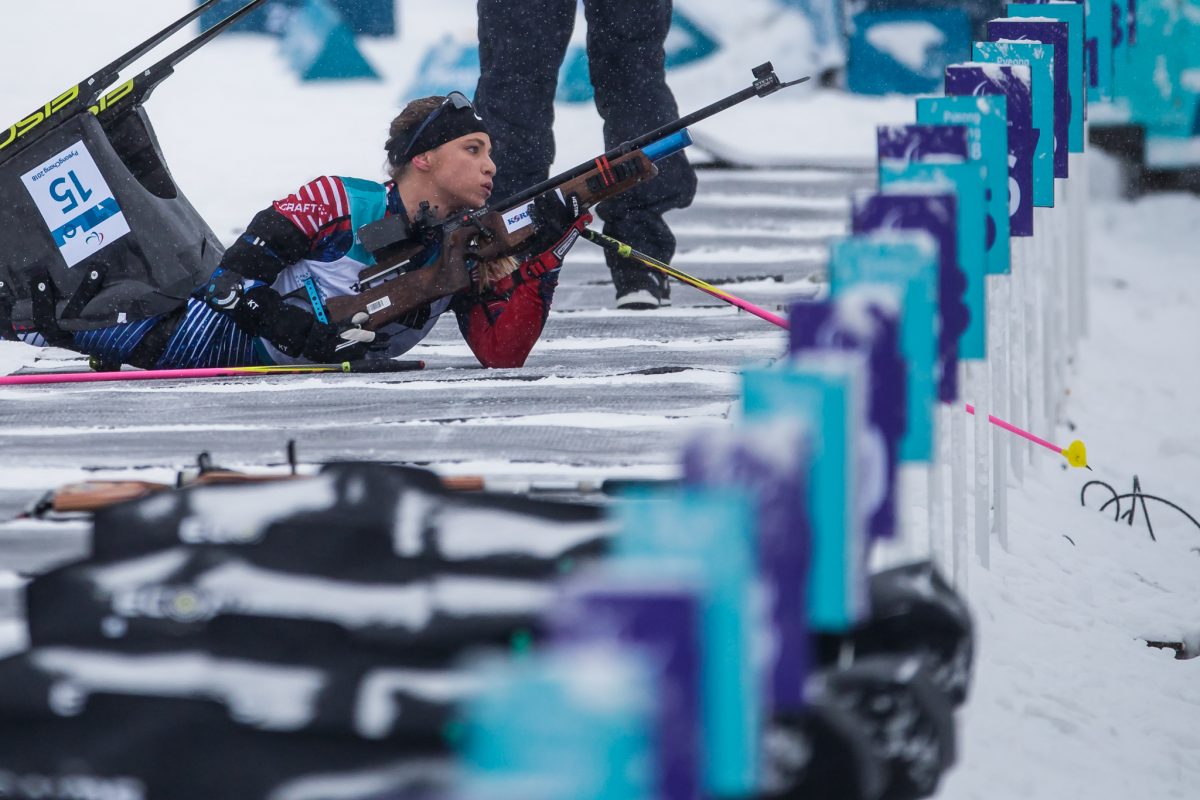
Kendall Gretsch takes aim during the women’s 6-kilometer sitting biathlon at the 2018 Paralympic Winter Games on Saturday in PyeongChang, South Korea. She won the race to become the first American woman to medal in a biathlon event at the Paralympics (or Olympics). (Photo: US Paralympics/Getty)
At the moment, changing gears looks like a steady reintroduction of ski specific elements to her training, including shooting and double poling. Gretsch, who is based at the Olympic and Paralympic training center in Colorado Springs, also attended a 10-day USA Para Nordic training camp in the ski tunnel in Oberhof in late September.
“Since I don’t have access to snow yet [in Colorado], introducing some time on the Ski Erg again, getting range time when I can. So yeah — just trying to get back into the ski motions before leaving full time for the Winter, around the end of October or early November.”
Finally, Gretsch reflected on her experience in the COVID restriction shrouded Games in Tokyo compared to her previous Winter Olympic experiences.
“It’s weird to think about because — if I thought about what the environment was, or if someone told me that this is what it was going to be like four years ago, I think I would have said, ‘Oh, wow! That’s so crazy to imagine.’ But we’ve been living through COVID for 18 months, almost two years now. And so it strangely feels kind of normal.”
FasterSkier will continue to follow the Para Nordic team’s whirlwind build up to the Beijing Games.
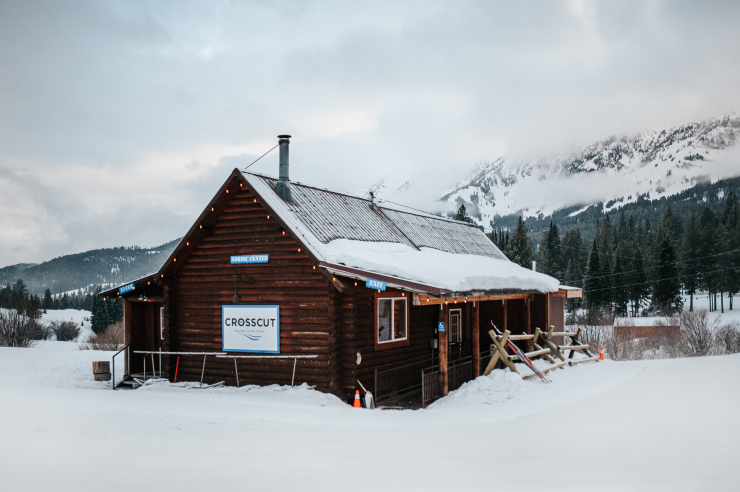
The Crosscut Mountain Sports Center has become the home base for the US Para Nordic Program, while the Crosscut Elite Team supports para nordic development athletes. (Photo: Crosscut Mountain Sports Center / Townsend Collective)
On April 9th, the Crosscut Mountain Sports Center in Bozeman, MT released information and qualification criteria for their newly founded elite team. As you skim what it takes to earn a spot at each tier of the program, it may catch your attention that the cross country, biathlon, and para nordic are housed within the same program. This single team approach reflects the growth and development at Crosscut in connection with its partnership with the US Para Nordic (USPN) program, which has proven beneficial to both parties.
The program at Crosscut is still in its nascent stages, however, in the unofficial first season last year, Crosscut Elite Team members racked up a slew of accomplishments including earning spots at the Youth Olympic Games, IBU World Junior Championships, IBU Cups, IBU Open European Championships, FIS North American World Cup Sprint Tour (these spots were eventually missed due to cancellations), and World Para Nordic Skiing World Cups.
Simply put: the goal of the Crosscut Elite Team is supporting athletes of all abilities as they advance toward the highest levels of ski racing and biathlon, beit a Paralympic team, the US Biathlon Team, or the US Ski Team.
To learn more about the evolution and goals of the elite program at Crosscut, FasterSkier spoke with Nick Michaud, who keeps his hands full as the USPN Development Coach while also coaching the elite program across abilities.
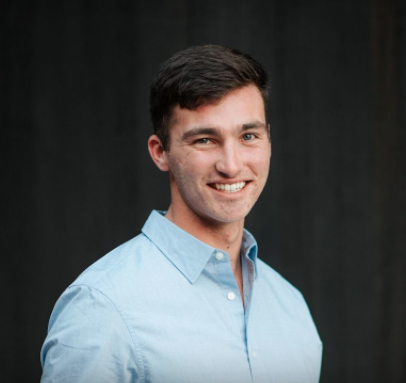
Nick Michaud is a coach for the Crosscut Elite Team, while also working as the US Para Nordic development coach. (Photo: CrosscutMT.org)
Before becoming a coach, Michaud was a member of the Bridger Ski Foundation (BSF) Elite Team through the 2018 Olympic Season where he came up one spot short of making the team for PyeongChang. A native of Fort Kent, ME, he grew up skiing and competing in biathlon with the Maine Winter Sports Center, coached by John Farra and Eileen Carey, who went on to become leaders of the US Para Nordic Team. Farra has since transitioned to the role of head performance general manager of USA Paratriathlon, with Carey advancing into his spot as head coach.
Michaud explained that as his own ski career was waning, he sought advice from Carey about possible next steps, expressing an interest in coaching.
“The motivation has been that the people in my life who impacted me the most were coaches, and I’ve always known that I wanted to teach or coach — to work with people in some capacity.”
In March of 2019, Carey presented Michaud with the opportunity to travel with the USPN team on a World Cup trip in Sapporo, Japan as an assistant coach. Michaud leapt at the opportunity, describing it as “so much fun”, and was offered a position with USPN later that year. Although he lacked specific experience working with adaptive athletes, he explained that the mission of USPN excited him more so than other possible coaching roles.
“I’m even more drawn to the movement of the Paralympic foundation right now to increase access for this sport,” said Michaud. “Nordic skiing is a pretty homogenous group of people, so it’s exciting to be part of an organization that is finding ways to break out of that a little bit.”
According to Carey, Michaud’s personality and growth mindset ready him for the challenge of coaching the adaptive team.
“Nick has a natural curiosity that makes him a great fit for the role,” wrote Carey in an email to FasterSkier. “For para athletes, it is not possible to approach coaching with a ‘one size fits all’ solution. I believe this is also true of all coaching, but it is elemental to coaching athletes who have such different mechanics from one another. When there is no “norm”, you always have to be willing to search and invent.
“I have known Nick since he was 13 and he has always had that curiosity, the willingness to question and try (and fail!) at things in order to progress. More than anything, that seems to make a great coach, so it was natural for me to try to get him some experience in the para coaching world when I found out he was hanging up the race skis.”
The Crosscut Mountain Sports Center has become the home base for the US Para Nordic team while fostering para nordic development. (Photo: Crosscut Mountain Sports Center/Townsend Collective)
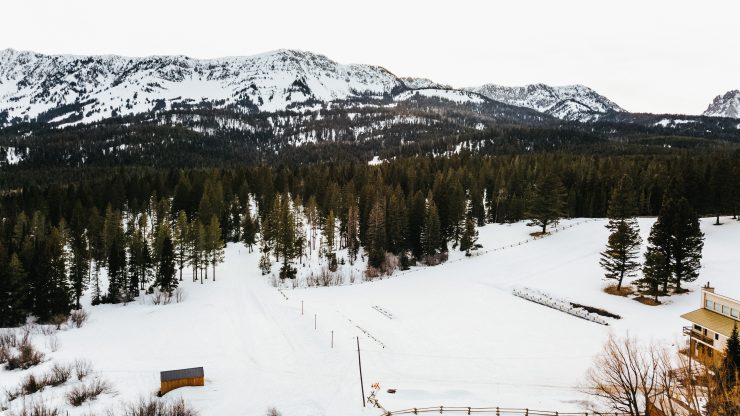
Over the last few seasons, Bozeman has become a home base for the USPN team, who are spread throughout the country for much of the year. The location has proved ideal given its proximity to an airport, and quality skiing that was conducive to sit skiing. This sparked a connection with Crosscut, who Carey explained has repeatedly “gone the extra mile” to support the growth and success of the para nordic program.
In a 2016 interview with the Spokesman-Review in Spokane, WA, Carey wrote, “The single-biggest component to [the rise of the US Para Nordic team] has been our relationship to Crosscut Mountain Sports Center. All of our competitions consist of half cross-country races and half biathlon. Before we moved to Bozeman, we didn’t have a place to shoot consistently. When we arrived in Bozeman and identified that as a need, Crosscut Mountain Sports Center and Bridger Biathlon Club provided the piece we were missing. They built us a range and have supported us in so many ways to make sure our athletes have what they need for success. It has been an incredible experience for our athletes and team and one that will continue to be a huge component to our future success.”
The impact of Crosscut’s support of the USPN program has extended beyond the immediate circle of national team athletes and coaches, promoting access to adaptive athletes of all levels.
“It’s been really cool to see the partnership leech out to other parts of the community,” said Michaud. “For example, Eagle Mount is an adaptive ski program in Bozeman and Crosscut is partnered with them. When we build sit ski trails or sit ski teaching manuals for the Paralympic team, it’s not just for coaches trying to prepare skiers to be the best sit skiers in the world, but it also gets shared with a program like Eagle Mount, or equipment gets passed on to them. So Crosscut is increasing access to skiing, not just for the best sit skiers in the world, but for all adaptive skiers in Bozeman.”
Michaud explained that the USPN team also passes on used equipment to Eagle Mount and other programs. As sit ski and adaptive equipment is highly specialized and expensive, this creates access that clubs may not otherwise be able to afford.
“We’re always getting new sit skis and trying out new models, and all of a sudden, we have a fleet of sit skis that are getting retired and pushed out to other parts of the community, not just in Bozeman but throughout the country.”
He continued that as the USPN program rises and technology advances, they are passing on better and better equipment. They have also worked to develop a sit ski teaching manual, which has been passed on to adaptive programs as a resource to coaches.
Carey explained that the symbiotic relationship between Crosscut and USPN trickles down to supporting the development of new para athletes, as it creates access and opportunity for people of all abilities to try and grow in the sport.
“One of our program’s main objectives is to provide high quality Nordic experiences to para athletes. To do that we need to find ways to increase access to the sport at all levels. Crosscut is committed to providing an outdoor venue that is for all members of the community. We share a vision that sport and the outdoors are for everyone. When that is the starting place, it is easy to find ways to collaborate to build a place that is for everyone.”
To visualize this message, one simply needs to go for a ski at Crosscut.
“This winter the parking lot has been full everyday,” explained Michaud. “And there’s something beautiful about seeing an elite athlete doing intervals, flying around, with kiddos from the education program playing games in the stadium, and sit skiers shooting on the range and getting laps and maneuvering. Just seeing the full spectrum of anyone who could be skiing all in one place at once.”
In turn, by sharing trails with adaptive athletes, Crosscut users get to know them individually and learn more about what it takes to be an elite para athlete, thereby becoming more invested in their success. Michaud explained that this deeper understanding and excitement connects the community at Crosscut, and gives able bodied skiers the vocabulary to encourage para athletes in their training.
“It’s been really nice for the national team to be able to come to Bozeman and have a home, have a place to train, have people that they know who are excited about what they’re doing. To understand skiing enough to be complimenting them on their maneuvering or their double pole, versus just saying, ‘That’s so cool that you’re doing that.’ There’s just another level of understanding.”
Further highlighting the mutual benefit the Crosscut community has received from their support and fostering of the USPN program, Michaud discussed the contributions of elite team member Ruslan Reiter across programs. Reiter, who was born with an underdeveloped right arm, is the only member of the national team that competes in standing events, versus sit ski. Outside of skiing, he is pursuing a degree in aviation at Montana State University in Bozeman.
“He has really embodied this collaboration,” Michaud shared. “I’m also helping run the elite team for Crosscut. Since he’s a standing athlete, he fits into that fairly well on the day to day, then he travels with the Paralympic team in the winter. He’s super fortunate that he gets to be a part of this team of professional athletes in Bozeman and also part of the national team that’s traveling mostly in Europe… Our success is very intertwined with one another. Ruslan has gotten to be a part of that and it’s really benefited both groups in a lot of ways.”
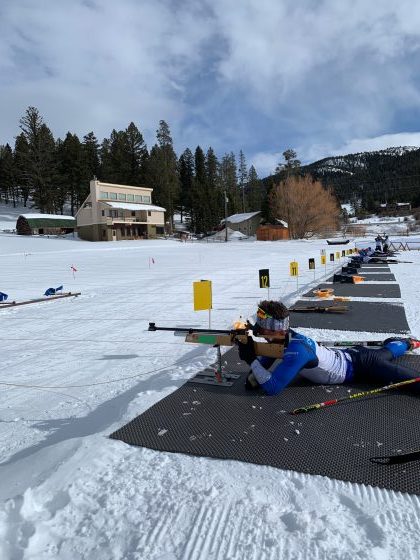
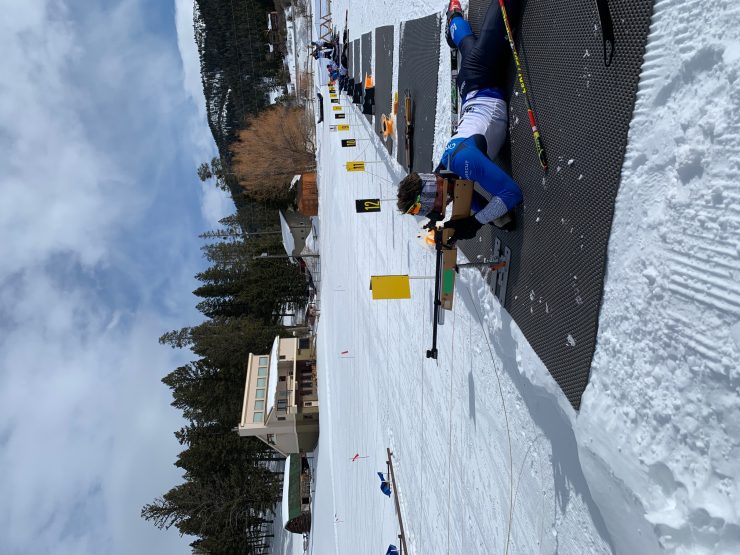
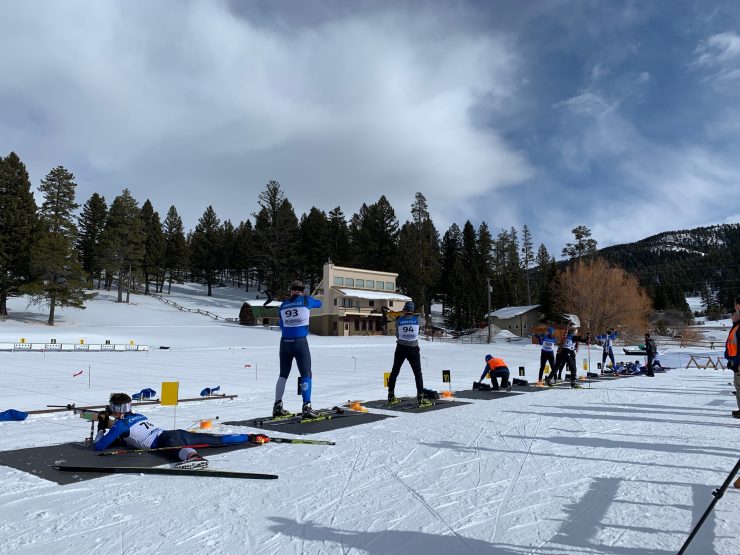
US Para Nordic C-Team member Ruslan Reiter shoots prone during a biathlon event at the Crosscut Mountain Sports Center. (Photo: Eileen Carey)
Ruslan Reiter (left, prone) takes aim during a biathlon event at the Crosscut Mountain Sports Center. (Photo: Eileen Carey)
Reiter was born in Russia but was adopted by a family in Maine, where he began his ski career in middle school. Just after finishing high school, Reiter made the 2018 Paralympic Team, landing just outside the top-10 in his best performance, 11th place in the 12.5-kilometer biathlon event. Michaud explained that Reiter’s presence elevates the motivation and dedication of his teammates.
“We’re in the weight room at the Mountain Project with the Crosscut Elite Team, and we’ve got a strength plan that I’ve been able to put together with a strength coach at the USOPC. These athletes who are in their mid-20’s who have been training for a long time and are really high level are seeing Ruslan doing pull ups with one hand, and there’s just no excuse to step it up, to not find a way to get better, because they’re a part of that culture. So that has been really tangible and awesome.”
Like the elite program and partnership with USPN, the Crosscut Mountain Sport Center is in a stage of growth and development. In the summer of 2017, the organization purchased the Bohart Ranch Property, which was home to a cross country trail system since the 1980’s, with the vision of creating a robust resource for the Bozeman community that doubled as training grounds for the Bridger Biathlon Club and USPN program.
As Crosscut began developing a vision ranch property, the input of those they wished to serve guided the approach. Carey explained that Crosscut’s inclusive and dedicated approach has been paramount to creating a ski center that supports athletes of all abilities.
“They are starting the process of developing programming, events, and a venue with the lens of ‘How are we going to create these things in a way that serves everyone in our community?’. As a part of that community, we are part of all the conversations. In the end, Crosscut’s willingness to have the conversation through that lens has been critical to our program’s competitive success and I think will be central to Crosscut being able to live their mission.”
It is the wish that Crosscut becomes an example for other cross country ski areas, dispelling myths about what it takes to create opportunities and access for para athletes.
“It’s everyone’s hope that this shows that there’s no reason that other clubs can’t have an adaptive component or a para component, and it shouldn’t be that hard,” said Michaud. “It just takes a little bit of intentional work to make it more accessible.”
Carey elaborated on this point, explaining that the increased accessibility additionally benefits the larger community.
“They are helping to show that creating programs and venues that work for para athletes doesn’t have to be a sacrifice or an afterthought,” wrote Carey. “There are many ways to do business that enhance experience for para athletes that also make sense for the larger community. Ultimately, just like anything, having a club that works for para athletes is as simple as deciding it is so. Are there unique challenges and considerations? Absolutely. But I think if you start to look to the clubs and coaches who have had para athletes, they would also tell you there are many benefits.
“If you want to make it happen, you can make it happen. And our program is set up to help with that process in the service of our goal to make Nordic skiing possible for more members of our community.”
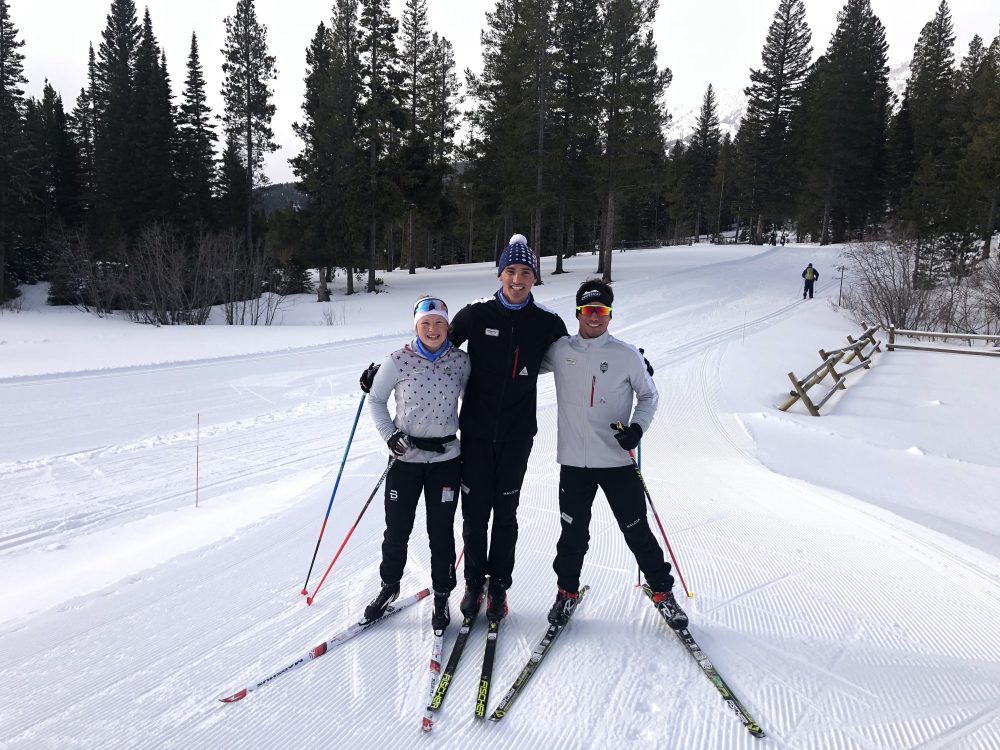
Crosscut Elite Team members Hannah Cole (left) and Ruslan Reiter (right) train with coach Nick Michaud (center) at the Crosscut Mountain Sports Center. Reiter is also a member of the US Para Nordic C-Team. (Photo: Seth Hubbard, Crosscut Elite Team Coach)
Moving forward, the elite program at Crosscut hopes to bring a few new adaptive athletes to Bozeman from outside the national team, supporting them as they move through the development pipeline. Michaud explained that the program aspires to rise alongside the US Para Nordic program.
“We’ll see the program growing at Crosscut in the same way that the development for the Paralympic team around the country has been happening. It will no longer just be a home training site when they’re in town during the winter, but we’ll start to see more development, more para athletes training with Crosscut throughout the year.”
Speaking to the broader vision of US Para Nordic, Carey expanded on Michaud’s statement, including enforcement of the message that other clubs can follow Crusscut’s lead in integrating para athletes into their existing programming.
“We are working to increase the development of our sport especially in the standing and visually impaired categories,” wrote Carey. “US Ski and Snowboard and USBA clubs and coaches are also our development pathways for para athletes and there are many clubs and teams around the country who have para athletes integrated into their programming. Crosscut created para specific criteria for their elite team and named para athletes to their team. In this and many other ways, they are a tangible representation of our vision of how development can work for para athletes. They are showing that it can be done, that they have the tools to do it, and that there are benefits to it for everyone.”
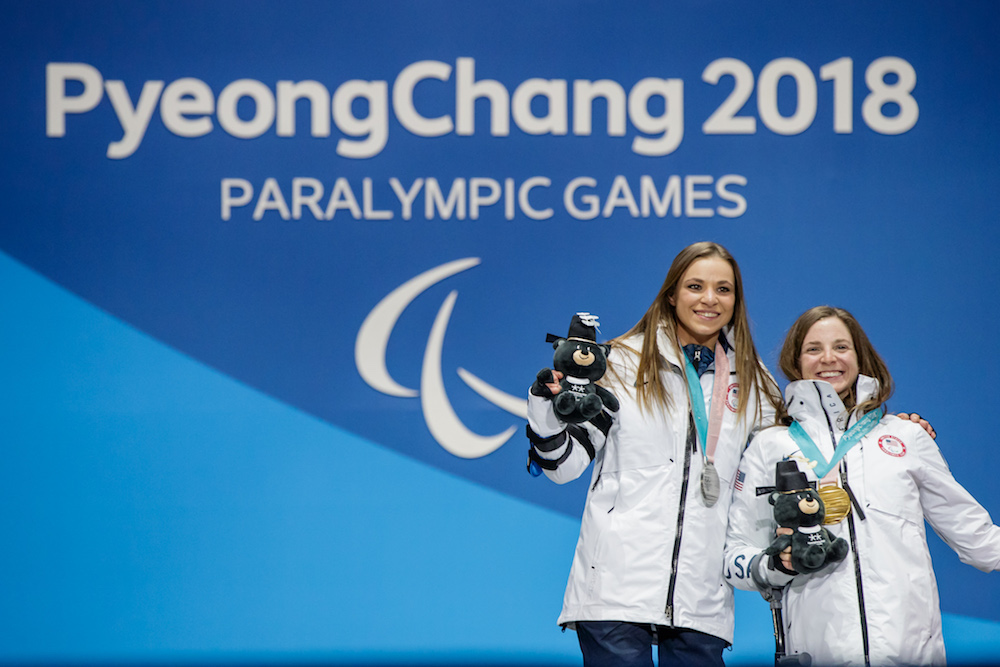
Kendall Gretsch (r) and Oksana Masters at the 2018 Paralympics medal ceremony for the women’s sitting 6 k biathlon sprint after winning gold and silver, respectively, on the first day of competition in PyeongChang, South Korea. (Photo: U.S. Paralympics/Joe Kusumoto)
Of the members of the U.S. Para Nordic team, more than half compete at the highest level in both summer and winter sports. Instead of quadrennial, their training is designed for biennial Paralympic cycles, oscillating between sports each year with an overall focus shift toward whichever Games is approaching fastest.
And the goal is not simply to compete in both rounds of the Games, it is to bring home medals.
Oksana Masters is an elite multisport athlete who competes in hand-cycling, para nordic and para biathlon . (Photo: Screenshot teamusa.org)
Illinois based Oksana Masters is a four-time Paralympian with eight medals; she earned two gold, three gold, and two bronze medals in cross country and biathlon, and a bronze medal in rowing — the first American medal in the trunk and arms mixed double scull category. After a back injury in 2014, she switched from rowing to cycling, and went on to qualify for the 2016 Paralympic Games in Rio de Janeiro, Brazil where she walked away just shy of the medals, finishing 4th and 5th and hungry for more.
Kendall Gretsch is an elite multisport athlete who competes with Team USA Paratriathlon, Para Nordic and Para Biathlon . (Photo: Screenshot teamusa.org)
Her teammate, Kendall Gretsch, took home two gold medals from the 2018 Paralympics in cross country and biathlon and is a three time world champion and five time national champion in paratriathlon, an event that was not part of the Summer Paralympics for her category until the upcoming Games in Tokyo. Gretsch has been living and training at the Olympic Training Center (OTC) in Colorado Springs since March of 2019.
Under normal circumstances, there would be an 18-month gap between the summer Paralympics in Tokyo and the winter Games in Beijing. However, on March 24th it was announced that the Tokyo Games would be pushed back to August of 2021 due to health and safety concerns surrounding the global COVID-19 pandemic. For athletes also competing in Beijing in February 2022, this leaves roughly six months to change gears and prepare to again be at peak fitness, which is no small challenge.
Let’s take a step back. In mid-March when the scope of the pandemic became apparent and Europe and the United States began to rapidly shut down, Masters was in Östersund, Sweden about to compete at the World Championships in biathlon. The team had arrived a few days prior to the start for training, but plans changed at the last minute.
“Instead of waking up to a message from your coach saying, ‘Hey, it’s race day!’ Instead, it was, ‘Bad News: Sweden is cancelling all events that are 500 people or more,’” Masters told FasterSkier in a call.
Oksana Masters focused and in the moment on the range during the 2018 Paralympics in PyeongChang, South Korea. (Photo: U.S. Paralympics/Joe Kusumoto)
She recalled feeling “shocked” as her season ended so abruptly. Her plan had been to leave halfway through the World Championships in order to head to an essential Tokyo qualifying event for cycling.
Her initial reaction was frustration that she had missed valuable training time for cycling by staying with the nordic team through mid-March, but with the understanding she now has of the scope and severity of the pandemic, her perspective has shifted. That said, she is also fully aware of the challenge she now faces to peak for two separate sports in such a short period of time.
“This is way bigger than sports and the Olympics… [The organizers] made the right call [to postpone] and I’m happy with that, but in my ideal world, I wish that this never happened. I’m sure a lot of people do. Because they postponed to 2021 and my focus is to make it to 2022 as well, it made that transition window from Tokyo to Beijing from over a year to basically six months. My sports are two separate sports — they do not go hand in hand, they are complete opposite motions and I have to basically start over with my fitness, minus the endurance.”
Finding the silver lining, she added that the Olympic postponement does allow her more time to prepare for cycling.
“The good side is that because I was competing full-time on the nordic side and did the World Cup season, I missed a lot of training time on the bike where my competitors were traveling to Spain and all these warm places to get on the road and spend those hours on their bikes. So now this is allowing me to work on my bike that I’m building and at the same time just get more time on the bike and get sport specific strength.”
Kendall Gretsch is a three time World Champion in the women’s PTWC classification. (Photo: International Paralympic Committee)
Because she too needed to qualify for Tokyo, Gretsch had ended her nordic season before the World Championships and was in Florida at the main triathlon qualifier when the country began to shut down. She was slated to compete on back to back weekends, both of which were cancelled the day prior to the first race. It is currently unclear what Gretsch will need to do in order to make the U.S. triathlon team for Tokyo.
“At this point, it’s kind of just waiting to see when we’ll be able to race again. Once that’s solidified more, the international triathlon union will have to come up with new qualification criteria and then, from that, the US will come up with new qualification… I’ll definitely have to compete in a couple more international events to solidify earning a country spot for the US.”
Aside from the uncertainty regarding travel and the seemingly impossible challenge of holding the 2020 Olympics and Paralympics without furthering the spread of the coronavirus, many athletes were also unable to access facilities and resources they depended on to practice skills and adequately prepare for their sport. For Masters, the inability to access a gym impeded her training routine.
“As a Paralympic athlete, in my two sports — especially for skiing — I rely on strength training,” Masters explained. “I lift three times a week. So that took a big toll.”
Her normal spring routine would include baseline metabolic testing and training camps with her coach, who is from Germany. Since he is currently unable to leave the country, Masters is not sure when she will be able to meet with him for these measures to evaluate her training. Overall, she is hitting reset on her plan and embracing the time to change gears at a more manageable pace.
“In my case, we’re kind of starting all over and making sure the base is good in cycling,” she said. “So it’s a lot of endurance riding, a lot of time on the bike, and just adjusting back to it the right way, as opposed to coming off the nordic season, trying to make the qualifiers in June, it was going to be shortcutting all that, which is really hard to do.”
Meanwhile, life at the OTC looks significantly different than Gretsch is accustomed to, with less than twenty people remaining on the campus. Apart from not being able to train in the pool or access the biathlon range, she is no longer able to get massage or other sports medicine treatments that she could previously. She does still have access to the OTC cafeteria, but meals are now take-out, meaning the remaining athletes on campus spend much of their day isolated in their rooms.
Not being able to swim has been the biggest impact on Gretsch’s training, as this would normally be a time of building volume for triathlon. She explained that she spends ten minutes per day on a stretch band swim trainer, but it is far from replicating the stimulus of the pool. She also borrowed some kettlebells and weights from the gym so she can do some strength training from her room.
“I think the good thing is that I’m still able to do two of the three sports in triathlon,” said Gretsch. “So even though I’m not swimming right now, I have been able to bike whether it’s inside on a trainer, or outside when the weather is nice here, and the same in the racing chair.”
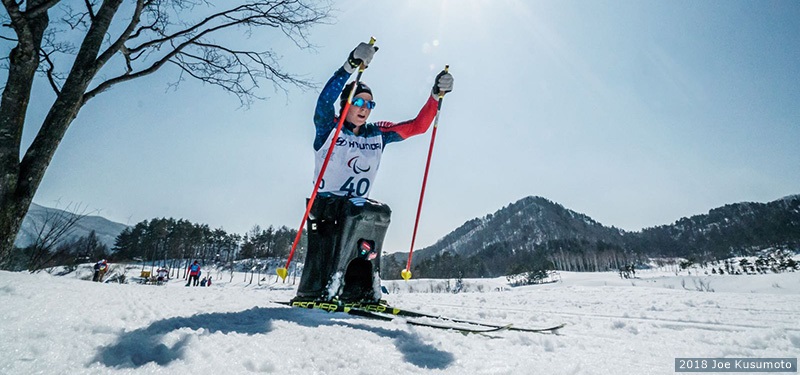
Kendall Gretsch racing to her second gold medal of the 2018 Winter Paralympics on Sunday in the women’s 12 k sitting cross-country race in PyeongChang, South Korea. (Photo: US Paralympics/Joe Kusumoto)
Both athletes are feeling uncertainty about what the 2020-2021 nordic season will look like and how cycling or triathlon qualifying events will fit into the mix. Currently, a cross-country World Championship and an Olympic venue test event in Beijing are scheduled for February and March. But, seasons may need to be cut short for Tokyo qualifiers. Both athletes have found solace in the partnership between their two sets of coaches.
“I think the really awesome thing is that both my sets of coaches for nordic and triathlon are really good about being open and communicating with each other about the situation,” said Gretsch. “It’s obviously a really unique situation that no one expected to be in, but in such an uncertain time, I have a lot of confidence about the situation going well just because I know that everyone just wants to work well together and are understanding that both of these sports are a priority to me.”
Interview with Kendall Gretsch following Tokyo 2020 Paralympics postponement.
Masters echoed the sentiment, adding that no one really knows how to handle the situation.
“They’ve been really flexible,” said Masters. “Knowing each of our different circumstances and just waiting to see what the new race schedule is going to be and what the key events and races are for me to go to before they start sending workouts. It’s a little bit playing it by ear and making it up as you go.”
Moving forward, she is staying positive and doing her best to adapt with the changes as they come.
“I try to keep it in perspective. For the most part, everyone is in the same boat… You can lose energy by focusing on all the things you cannot control. It is what it is. For me, I’m just trying to do my part for this whole coronavirus outbreak and just be home, be smart with my training, and just make each day count still and get stronger in some way.”
Interview with Oksana Masters following Tokyo 2020 Paralympics postponement.
American Oksana Masters reacting to her first gold medal in her third Paralympics, after winning the women’s 1.1 k sitting sprint in PyeongChang, South Korea. (Photo: U.S. Paralympics/Joe Kusumoto)