From the FasterSkier archive — posts syndicated from athletes’ and coaches’ own blogs between 2004 and 2012, kept online as published. Current coverage is at fasterskier.com.

Tag: USA Paratriathlon

  • Kendall Gretsch Makes History With Gold Medal in Paratriathlon

    Kendall Gretsch Makes History With Gold Medal in Paratriathlon

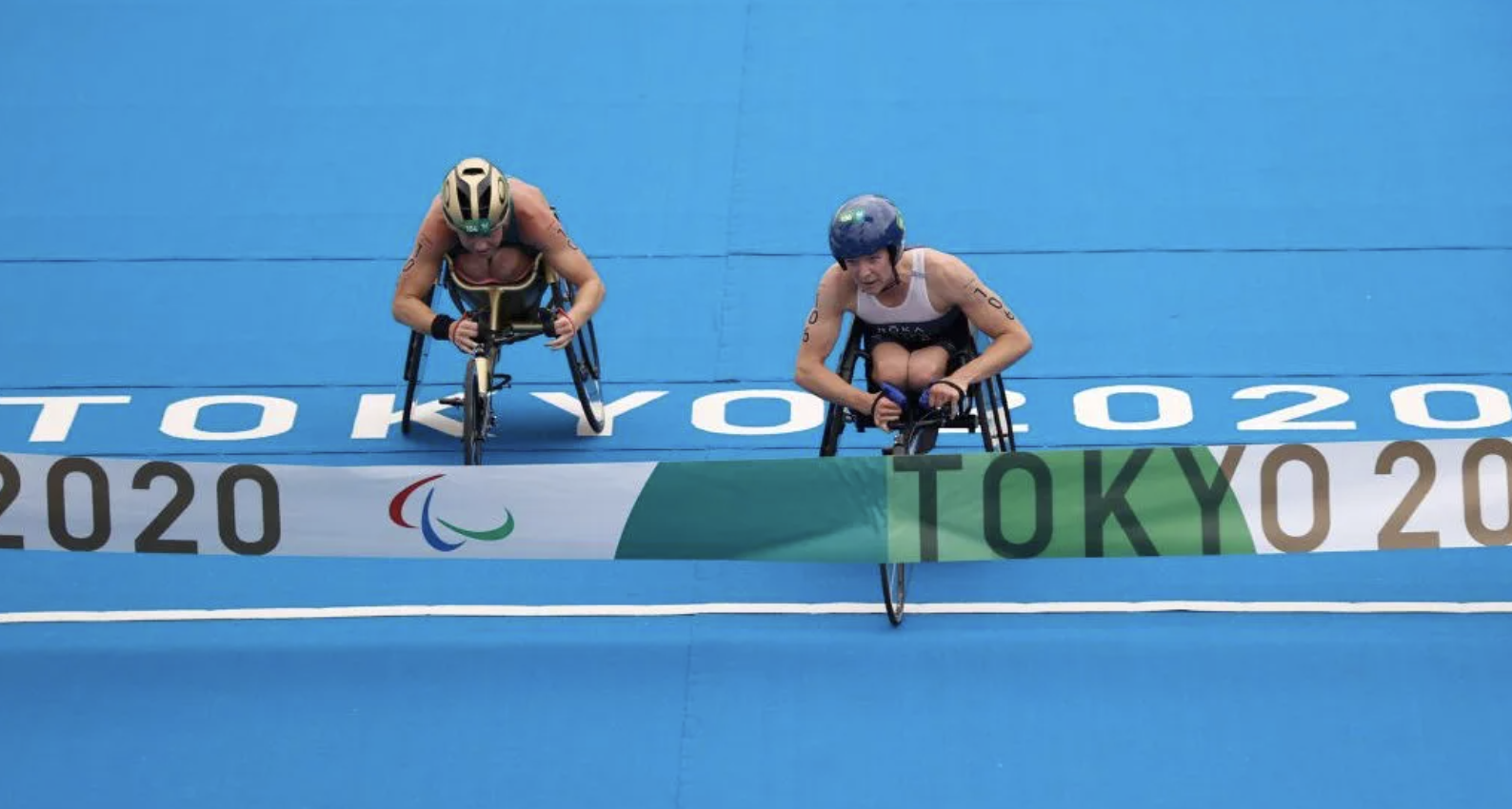
    After roughly 26 kilometers of racing, Kendall Gretsch takes Paralympic Gold by just over a meter. (Photo: Screenshot NBC Sports)

    If you didn’t catch the ending of the triathlon during the Tokyo Paralympics, prepare for the chills. Spoiler alert: in an all out, last gas effort in the final meters, dual-season athlete Kendall Gretsch edged out Australia’s Lauren Parker by one second for a Gold Medal victory. 

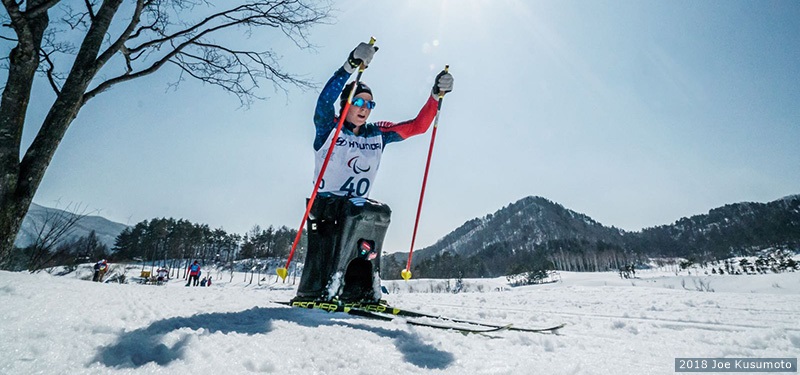
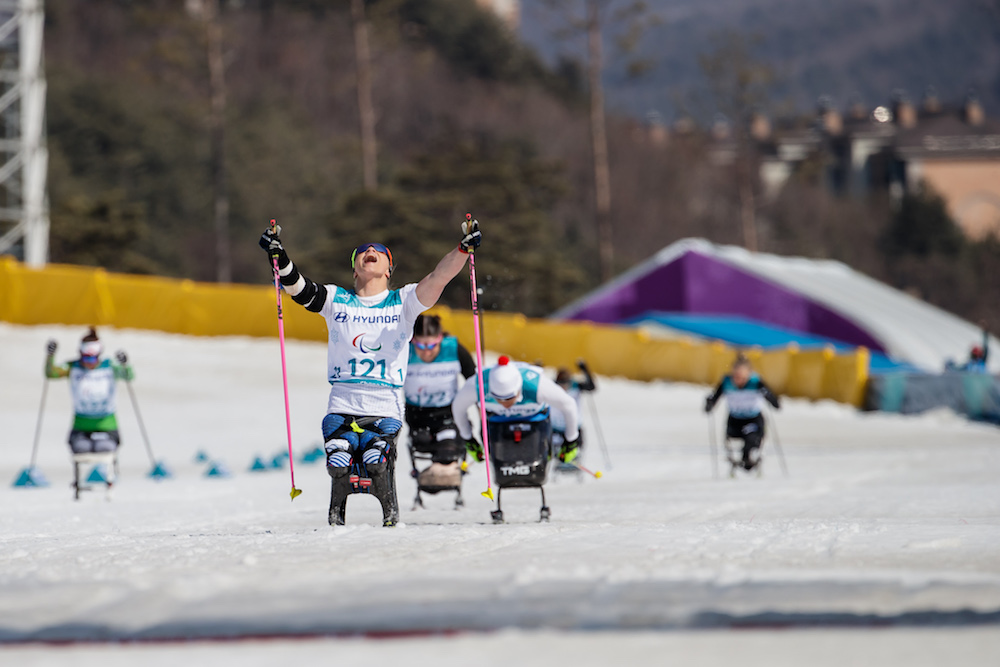
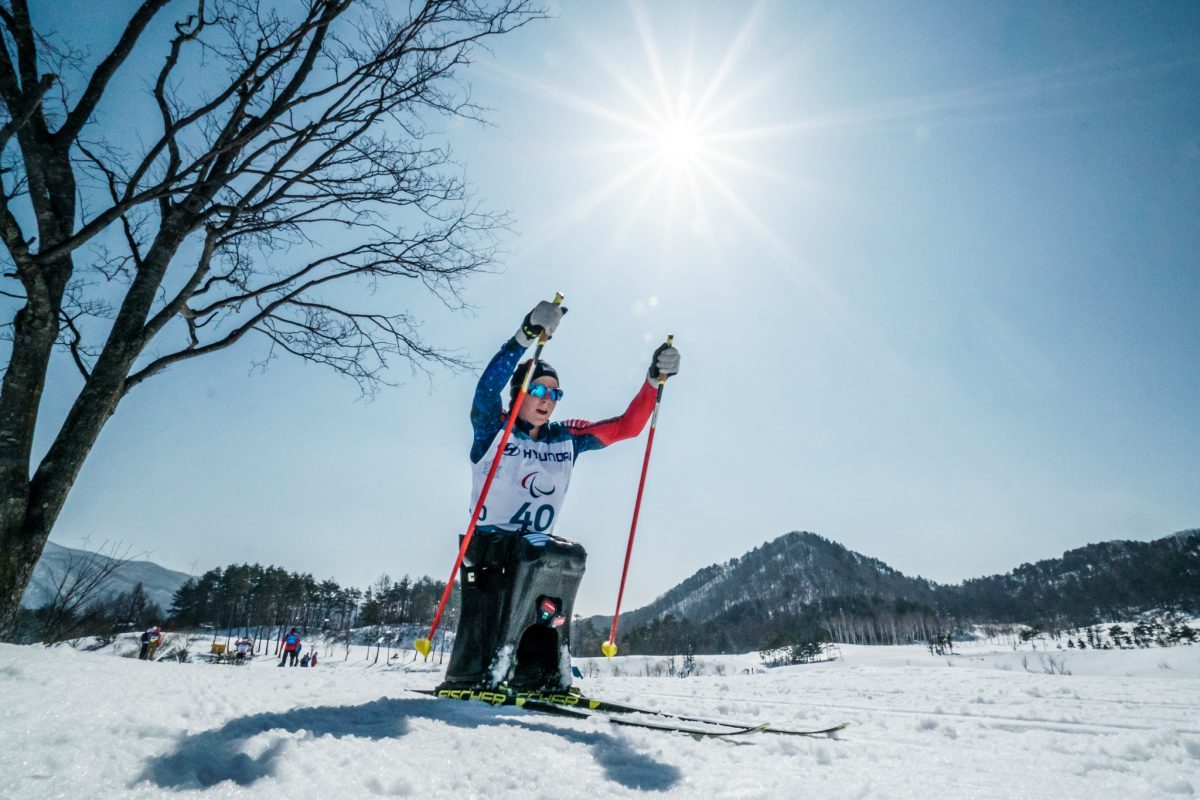
    This is Gretsch’s third Olympic gold, alongside the two she earned during the 2018 PyeongChang Paralympic Games, first in the 6-kilometer biathlon sitting sprint and again in the 12 k cross-country distance race. Her achievement in Tokyo makes her the fifth American — third female — to win a Gold Medal at both the summer and winter Paralympic Games. 

    Taking a step back, triathlon was first added to the summer Paralympic schedule in 2016, however, only a subset of the nine competition classification categories were allowed to compete. Gretsch was born with spina bifida, which is the result of a neural tube defect during fetal development, impairing her spine and spinal cord. While she walks with crutches, she competes in the PTWC2 (paratriathlon wheelchair) division, meaning after the swim, she races the bike leg on her handcycle, before transitioning into a racing wheelchair for the run. The Tokyo games were the first opportunity for the two PTWC categories to compete. 

    FasterSkier spoke with Gretsch in April of 2020 when the news first broke that the Tokyo Olympics were definitely postponed until 2021 due to the ongoing COVID-19 pandemic. As we discussed, this leaves just over six months for athletes like Gretsch who compete in both winter and summer sports to prepare for the upcoming Beijing Paralympics, which begin on March 4th, 2022. Following up to learn more about her experience in Tokyo, FasterSkier reconnected with Gretsch on a call to hear how she is mentally and physically recharging before ramping up her training for the winter season. 
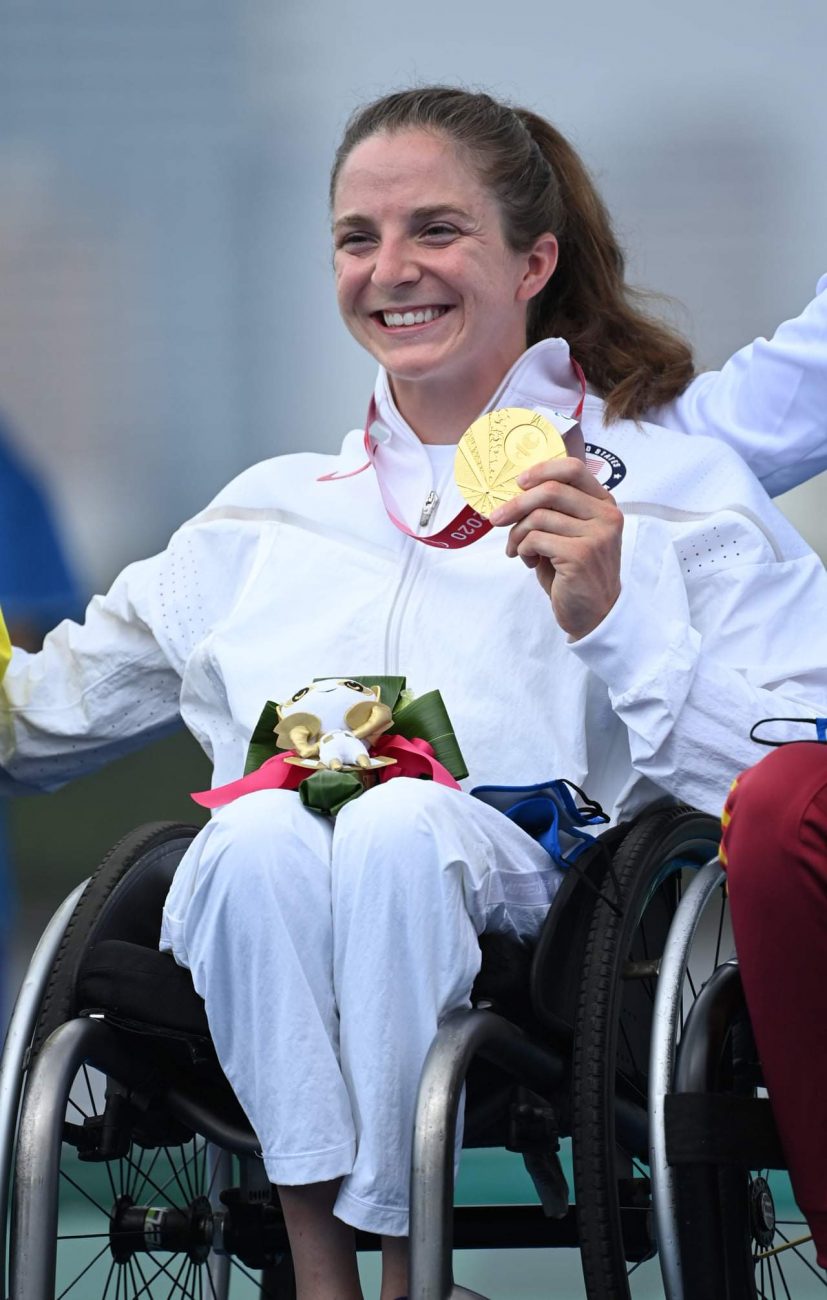
    Paratriathlete Kendall Gretsch made history in Tokyo, becoming one of only five Americans to earn a Paralympic Gold Medal in both winter and summer Games. (Photo: Mark Reis)

    First, let’s go beyond the highlight reel to learn more about the Gold Medal day. 

    Because Gretsch is in the lesser impaired category, she starts at a deficit of four minutes and four seconds behind competitors in the PTWC1 division. The clock starts running at the same time for all athletes, and the first woman across the line is the winner, regardless of starting wave. Among the women in the PTWC1 division was Gretsch’s mark, Parker.  

    The Australian has a lengthy resume in elite triathlon, including a second place finish in the 2015 Kona World Championships as an able-bodied athlete. After recovering from a serious accident in 2017 that left her with permanent spinal cord damage, Parker began competing in paratriathlon, quickly ascending the ranks and ending the 2019 season with a commanding victory at the ITU World Championships. 

    While Gretsch is accustomed to the staggered start in her event, she explained that it does change the tactics compared to a mass start competition. 

    “The goal is to consistently make up ground,” Gretsch explained in a call. “So I wouldn’t say it’s a very tactical race, and that you’re like, waiting to time your move, or finding the right spot on the course to make a move. You’re basically just going all out in trying to [catch the earlier starters] by the end of the race, hoping you can make up that four minutes.”

    The PTWC race includes a 750 meter swim, a four-lap 20 km bike, and a four-lap 5 km run, which Gretsch completed in a total time of 1:06:25. She explained that the many laps during the bike and run allowed her coaches to regularly provide her with feedback of where she stood relative to the leaders. 

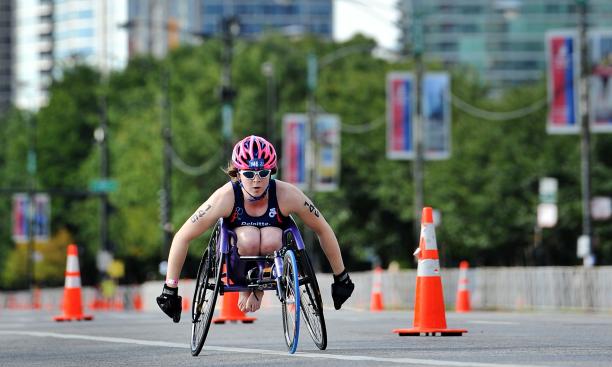
    On the hunt, Kendall Grestch chases down a Gold Medal during the run in the 2022 Paralympic triathlon in Tokyo. (Photo: Mark Reis)

    Gretsch began making up time right away. She was 35 seconds faster than Parker in the swim, and left the second transition from bike to run just a minute and twenty seconds back. While she acknowledged that the percentage of the race that happens on the bike makes it an opportunity to make a dent in the deficit, she also explained that her progress during that leg surprised her. 

    “It did play out a little bit differently, in my mind, than I thought it was going to,” she shared. “Usually I can make up a little bit more time on the swim, and then I know that Lauren is a super strong biker. So going into this race beforehand, my goal was to make up some amount of time on the swim and really just not lose time to her on the bike. So yeah, I was really pleased that I was able to make up as much time out on the bike as I did in this race. Especially because she had an amazing swim.”

    Sometimes good results come from races where we never feel our best and may feel surprised by the outcome. Likewise, there are the days we dream about where everything is clicking from start to finish and we know from the gun that it will be a good day. For Gretsch, there were elements of both. 

    “I would say my swim was average. And then as soon as I got onto the bike, I knew that it was a really good day for me and that I was feeling really strong. So I kind of just  told myself throughout the race — I knew that [I was giving]  everything I had on that day, and could push really hard. And regardless of what happened, I knew it was gonna be a really close race. If I passed her, if I didn’t pass her; I just knew that it was going to be a really exciting race to watch. So that was kind of cool to have that recognition during the race that regardless of what happens, I wasn’t going to have any regrets about the race because I knew I was going as hard as I could, and that it was going to be an exciting race for people to watch.”
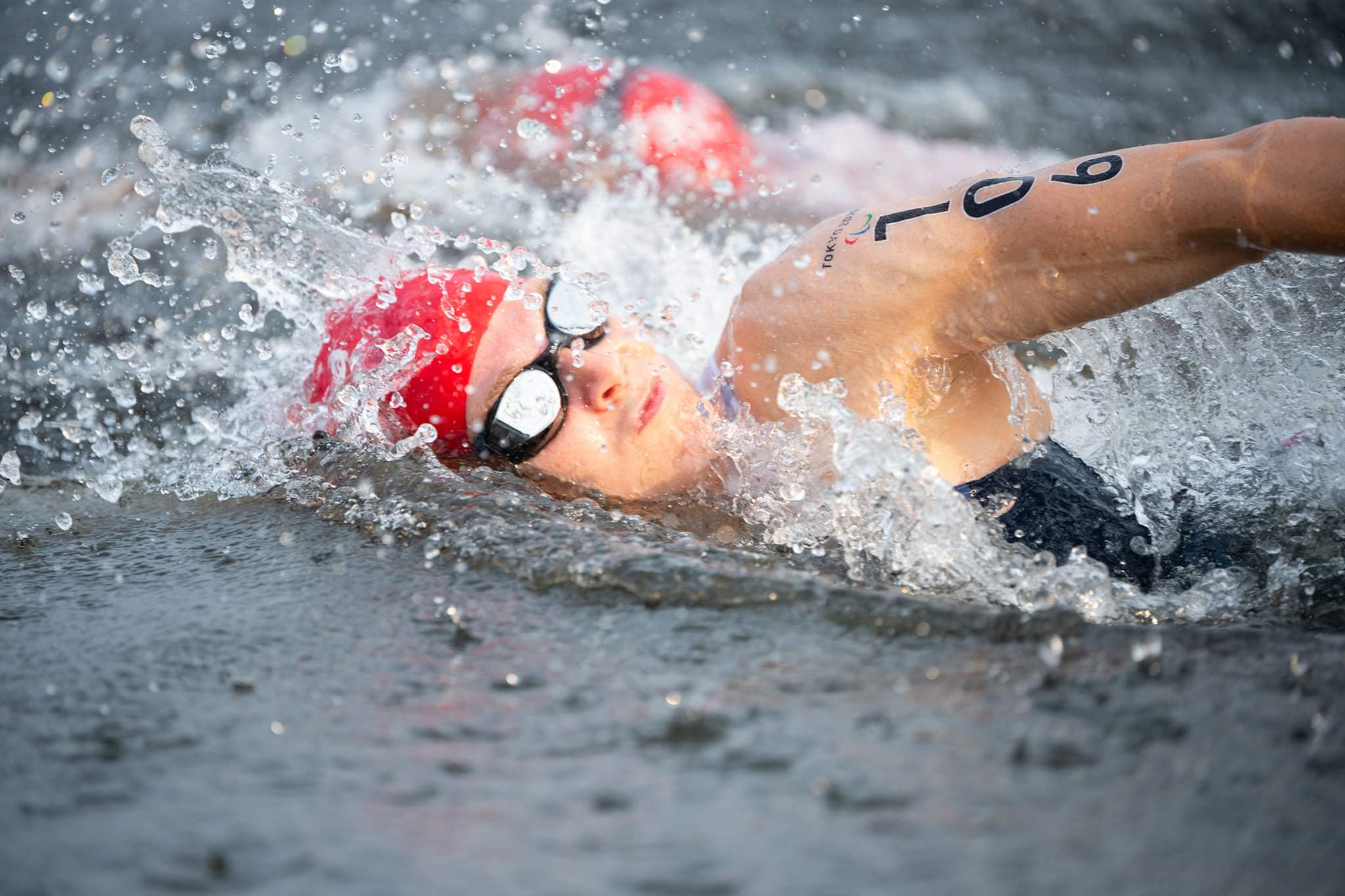
    While she felt “average” in the swim, Kendall Gretsch had a well-above-average day competing in the triathlon at the 2021 Tokyo Paralympics. (Photo: Mark Reis)

    With three golds and a silver from ITU World Championships, five USA Paratriathlon national titles, and a slew of international podiums, Gretsch is no stranger to high level competition. However, the Paralympics is the Paralympics; held as the pinnacle of sport in the United States. 

    Grestch spoke about her mindset approaching the Games in terms of managing expectations she feels, whether internal or external, and her approach to the mental strain of competing in Tokyo. 

    “Going to the Paralympics is something that I’ve wanted to do ever since I got involved in triathlon, so finally having the opportunity  this year in Tokyo — this race was just so important to me. And I maybe underestimated the mental drain going into the race. It’s such a mental roller coaster where, you know, you feel great some weeks, and you feel bad on some days. And it’s hard, because it just feels like your whole — everything you’ve done for the past five years, even longer than that has just been leading to this one day. So I think for me, it was just such a huge relief that I did have a day where I felt so strong. And again, if it was first or second, I was going to be happy with the outcome either way, because I knew that I had done everything I could in the preparation leading up into the games, and that was everything I had on that day.”

    Circling back to the postponement of the Games, Gretsch reflected on whether or not the decision to move the games to 2021 was a benefit or detriment. 

    “I think the postponement really worked in my favor. I had gotten all new equipment for my bike and the run in October of 2019. So just having that extra year gave me time to work with that equipment and dial that in, and it also gave me the opportunity to take a step back and maybe rethink how I was training. Specifically, I think, the run and bike became two really big focuses for me. And so just having that extra year to be able to change things up, try something new and not have to worry about risking a race season because if something didn’t work, it wasn’t as big of a risk.” 

    Considering the elongated buildup for Tokyo and the brief window to take a break before preparing for Beijing, Gretsch explained that her mind more so than her body needed to recharge. Our call took place following a short vacation.

    “Obviously, you need the physical recharge, and that’s something that I’m familiar with from going between the seasons every single year. But the mental drain of the Games was a lot bigger, I think, than just a regular summer season. So the mental break that I took was so important for me. Now that I’m starting to get back into [ski training] now, I’m just excited about it and ready to go and not, you know, carrying any fatigue this week from that.”

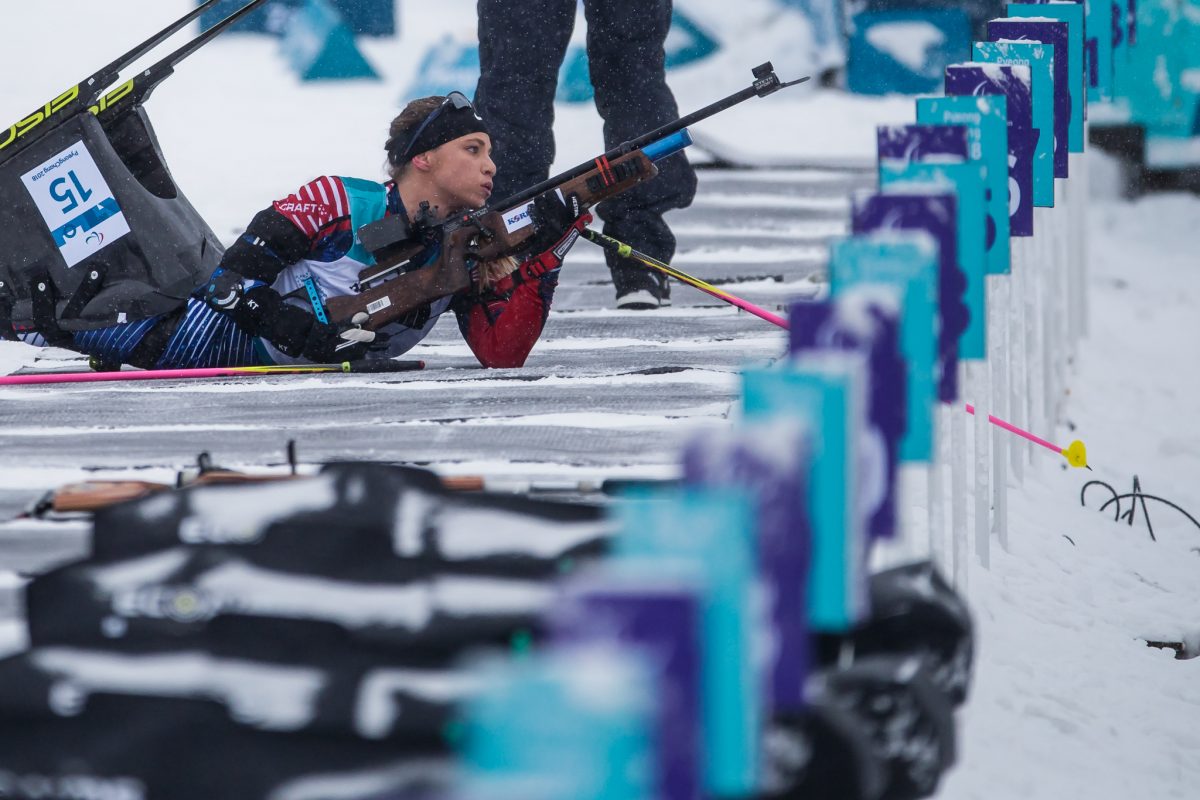
    Kendall Gretsch takes aim during the women’s 6-kilometer sitting biathlon at the 2018 Paralympic Winter Games on Saturday in PyeongChang, South Korea. She won the race to become the first American woman to medal in a biathlon event at the Paralympics (or Olympics). (Photo: US Paralympics/Getty)

    At the moment, changing gears looks like a steady reintroduction of ski specific elements to her training, including shooting and double poling. Gretsch, who is based at the Olympic and Paralympic training center in Colorado Springs, also attended a 10-day USA Para Nordic training camp in the ski tunnel in Oberhof in late September.

    “Since I don’t have access to snow yet [in Colorado], introducing some time on the Ski Erg again, getting range time when I can. So yeah — just trying to get back into the ski motions before leaving full time for the Winter, around the end of October or early November.”

    Finally, Gretsch reflected on her experience in the COVID restriction shrouded Games in Tokyo compared to her previous Winter Olympic experiences. 

    “It’s weird to think about because — if I thought about what the environment was, or if someone told me that this is what it was going to be like four years ago, I think I would have said, ‘Oh, wow! That’s so crazy to imagine.’ But we’ve been living through COVID for 18 months, almost two years now. And so it strangely feels kind of normal.”

    FasterSkier will continue to follow the Para Nordic team’s whirlwind build up to the Beijing Games. 
  • Masters and Gretsch Prepare for Two Paralympic Cycles After Postponement of Tokyo Games

    Masters and Gretsch Prepare for Two Paralympic Cycles After Postponement of Tokyo Games

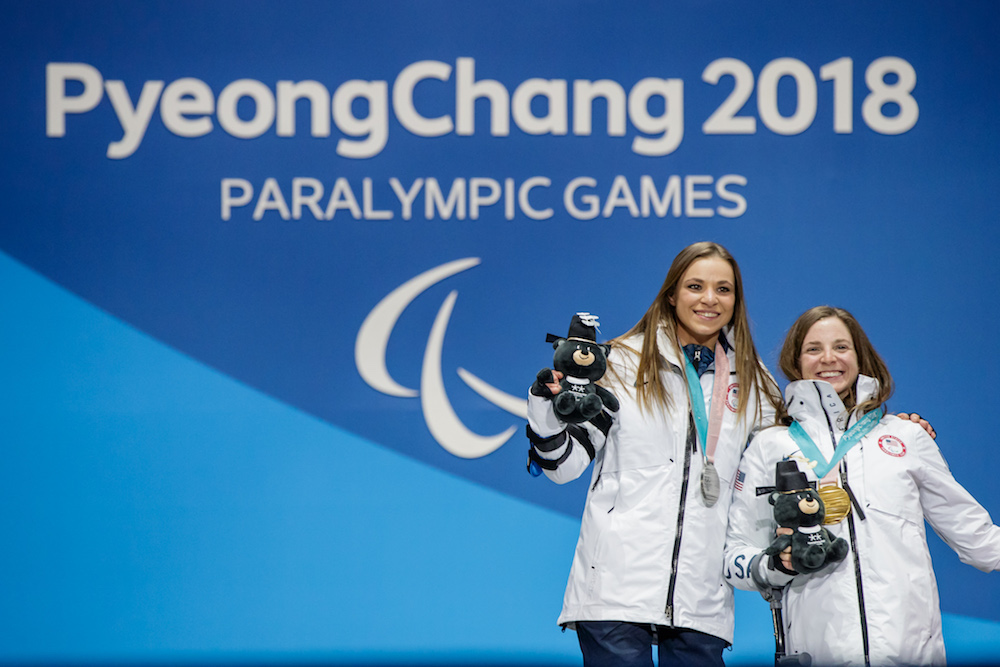
    Kendall Gretsch (r) and Oksana Masters at the 2018 Paralympics medal ceremony for the women’s sitting 6 k biathlon sprint after winning gold and silver, respectively, on the first day of competition in PyeongChang, South Korea. (Photo: U.S. Paralympics/Joe Kusumoto)

    Of the members of the U.S. Para Nordic team, more than half compete at the highest level in both summer and winter sports. Instead of quadrennial, their training is designed for biennial Paralympic cycles, oscillating between sports each year with an overall focus shift toward whichever Games is approaching fastest. 

    And the goal is not simply to compete in both rounds of the Games, it is to bring home medals. 

    Oksana Masters is an elite multisport athlete who competes in hand-cycling, para nordic and para biathlon . (Photo: Screenshot teamusa.org)

    Illinois based Oksana Masters is a four-time Paralympian with eight medals; she earned two gold, three gold, and two bronze medals in cross country and biathlon, and a bronze medal in rowing — the first American medal in the trunk and arms mixed double scull category. After a back injury in 2014, she switched from rowing to cycling, and went on to qualify for the 2016 Paralympic Games in Rio de Janeiro, Brazil where she walked away just shy of the medals, finishing 4th and 5th and hungry for more. 

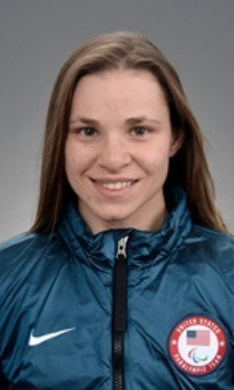
    Kendall Gretsch is an elite multisport athlete who competes with Team USA Paratriathlon, Para Nordic and Para Biathlon . (Photo: Screenshot teamusa.org)

    Her teammate, Kendall Gretsch, took home two gold medals from the 2018 Paralympics in cross country and biathlon and is a three time world champion and five time national champion in paratriathlon, an event that was not part of the Summer Paralympics for her category until the upcoming Games in Tokyo. Gretsch has been living and training at the Olympic Training Center (OTC) in Colorado Springs since March of 2019. 

    Under normal circumstances, there would be an 18-month gap between the summer Paralympics in Tokyo and the winter Games in Beijing. However, on March 24th it was announced that the Tokyo Games would be pushed back to August of 2021 due to health and safety concerns surrounding the global COVID-19 pandemic. For athletes also competing in Beijing in February 2022, this leaves roughly six months to change gears and prepare to again be at peak fitness, which is no small challenge. 

    Let’s take a step back. In mid-March when the scope of the pandemic became apparent and Europe and the United States began to rapidly shut down, Masters was in Östersund, Sweden about to compete at the World Championships in biathlon. The team had arrived a few days prior to the start for training, but plans changed at the last minute. 

    “Instead of waking up to a message from your coach saying, ‘Hey, it’s race day!’ Instead, it was, ‘Bad News: Sweden is cancelling all events that are 500 people or more,’” Masters told FasterSkier in a call.

    Oksana Masters focused and in the moment on the range during the 2018 Paralympics in PyeongChang, South Korea. (Photo: U.S. Paralympics/Joe Kusumoto)

    She recalled feeling “shocked” as her season ended so abruptly. Her plan had been to leave halfway through the World Championships in order to head to an essential Tokyo qualifying event for cycling. 

    Her initial reaction was frustration that she had missed valuable training time for cycling by staying with the nordic team through mid-March, but with the understanding she now has of the scope and severity of the pandemic, her perspective has shifted. That said, she is also fully aware of the challenge she now faces to peak for two separate sports in such a short period of time. 

    “This is way bigger than sports and the Olympics… [The organizers] made the right call [to postpone] and I’m happy with that, but in my ideal world, I wish that this never happened. I’m sure a lot of people do. Because they postponed to 2021 and my focus is to make it to 2022 as well, it made that transition window from Tokyo to Beijing from over a year to basically six months. My sports are two separate sports — they do not go hand in hand, they are complete opposite motions and I have to basically start over with my fitness, minus the endurance.”

    Finding the silver lining, she added that the Olympic postponement does allow her more time to prepare for cycling. 

    “The good side is that because I was competing full-time on the nordic side and did the World Cup season, I missed a lot of training time on the bike where my competitors were traveling to Spain and all these warm places to get on the road and spend those hours on their bikes. So now this is allowing me to work on my bike that I’m building and at the same time just get more time on the bike and get sport specific strength.”

    Kendall Gretsch is a three time World Champion in the women’s PTWC classification. (Photo: International Paralympic Committee)

    Because she too needed to qualify for Tokyo, Gretsch had ended her nordic season before the World Championships and was in Florida at the main triathlon qualifier when the country began to shut down. She was slated to compete on back to back weekends, both of which were cancelled the day prior to the first race. It is currently unclear what Gretsch will need to do in order to make the U.S. triathlon team for Tokyo.  

    “At this point, it’s kind of just waiting to see when we’ll be able to race again. Once that’s solidified more, the international triathlon union will have to come up with new qualification criteria and then, from that, the US will come up with new qualification… I’ll definitely have to compete in a couple more international events to solidify earning a country spot for the US.”

    Aside from the uncertainty regarding travel and the seemingly impossible challenge of holding the 2020 Olympics and Paralympics without furthering the spread of the coronavirus, many athletes were also unable to access facilities and resources they depended on to practice skills and adequately prepare for their sport. For Masters, the inability to access a gym impeded her training routine. 

    “As a Paralympic athlete, in my two sports — especially for skiing — I rely on strength training,” Masters explained. “I lift three times a week. So that took a big toll.” 

    Her normal spring routine would include baseline metabolic testing and training camps with her coach, who is from Germany. Since he is currently unable to leave the country, Masters is not sure when she will be able to meet with him for these measures to evaluate her training. Overall, she is hitting reset on her plan and embracing the time to change gears at a more manageable pace.

    https://www.instagram.com/p/B9IGgiLJSID/?utm_source=ig_web_copy_link

    “In my case, we’re kind of starting all over and making sure the base is good in cycling,” she said. “So it’s a lot of endurance riding, a lot of time on the bike, and just adjusting back to it the right way, as opposed to coming off the nordic season, trying to make the qualifiers in June, it was going to be shortcutting all that, which is really hard to do.”

    Meanwhile, life at the OTC looks significantly different than Gretsch is accustomed to, with less than twenty people remaining on the campus. Apart from not being able to train in the pool or access the biathlon range, she is no longer able to get massage or other sports medicine treatments that she could previously. She does still have access to the OTC cafeteria, but meals are now take-out, meaning the remaining athletes on campus spend much of their day isolated in their rooms.  

    Not being able to swim has been the biggest impact on Gretsch’s training, as this would normally be a time of building volume for triathlon. She explained that she spends ten minutes per day on a stretch band swim trainer, but it is far from replicating the stimulus of the pool. She also borrowed some kettlebells and weights from the gym so she can do some strength training from her room.  

    “I think the good thing is that I’m still able to do two of the three sports in triathlon,” said Gretsch. “So even though I’m not swimming right now, I have been able to bike whether it’s inside on a trainer, or outside when the weather is nice here, and the same in the racing chair.” 

    Kendall Gretsch racing to her second gold medal of the 2018 Winter Paralympics on Sunday in the women’s 12 k sitting cross-country race in PyeongChang, South Korea. (Photo: US Paralympics/Joe Kusumoto)

    Both athletes are feeling uncertainty about what the 2020-2021 nordic season will look like and how cycling or triathlon qualifying events will fit into the mix. Currently, a cross-country World Championship and an Olympic venue test event in Beijing are scheduled for February and March. But, seasons may need to be cut short for Tokyo qualifiers. Both athletes have found solace in the partnership between their two sets of coaches. 

    “I think the really awesome thing is that both my sets of coaches for nordic and triathlon are really good about being open and communicating with each other about the situation,” said Gretsch. “It’s obviously a really unique situation that no one expected to be in, but in such an uncertain time, I have a lot of confidence about the situation going well just because I know that everyone just wants to work well together and are understanding that both of these sports are a priority to me.”

    Interview with Kendall Gretsch following Tokyo 2020 Paralympics postponement.

    Masters echoed the sentiment, adding that no one really knows how to handle the situation.

    “They’ve been really flexible,” said Masters. “Knowing each of our different circumstances and just waiting to see what the new race schedule is going to be and what the key events and races are for me to go to before they start sending workouts. It’s a little bit playing it by ear and making it up as you go.” 

    Moving forward, she is staying positive and doing her best to adapt with the changes as they come.

    “I try to keep it in perspective. For the most part, everyone is in the same boat… You can lose energy by focusing on all the things you cannot control. It is what it is. For me, I’m just trying to do my part for this whole coronavirus outbreak and just be home, be smart with my training, and just make each day count still and get stronger in some way.”

    Interview with Oksana Masters following Tokyo 2020 Paralympics postponement.

    American Oksana Masters reacting to her first gold medal in her third Paralympics, after winning the women’s 1.1 k sitting sprint in PyeongChang, South Korea. (Photo: U.S. Paralympics/Joe Kusumoto)
  • The Life of an Elite Multisport Para Athlete With Kendall Gretsch

    The Life of an Elite Multisport Para Athlete With Kendall Gretsch

    Kendall Gretsch is an elite multisport athlete who competes with Team USA Paratriathlon, Para Nordic and Para Biathlon . (Photo: Screenshot teamusa.org)

    27-year-old Kendall Gretsch is a well-decorated athlete.  A glance at the Illinois native’s bio shows three consecutive ITU Paratriathlon World Championship titles (2014 – 2016) plus a silver medal at this year’s event on September 1st in Lausanne, Switzerland. She is a five-time USA Paratriathlon national champion, four-time gold medalist at the PATCO/CAMTRI American Championships, and has four medals from ITU Paratriathlon World Cup events, two each of gold and silver. And that is just her triathlon trophy case. 

    After entering the sport in 2016, Gretsch took off in para nordic sports. She eventually earned two gold medals at the 2018 PyeongChang Paralympic Games, one in the 6-kilometer biathlon sitting sprint and one in the 12 k cross-country distance race. At the 2019 World Championships, Gretsch skied away with a gold medal in the individual biathlon race, four silver medals, and one bronze. 

    It is uncommon to compete at an elite level in multiple sports. As such, FasterSkier caught up with Gretsch, who was about to head to the first para nordic camp of the year in Sweden, to learn more about how she trains at an elite level for both sports and shifts her focus between the two throughout calendar years and Olympic cycles. 

    At the outset of the 2019 nordic season, Gretsch made made the move from her former home base in Madison, WI to the Olympic Training Center (OTC) in Colorado Springs. She had been working full-time as an engineer for a software company. Although remaining with the same company, she has cut back her hours and works remotely. Gretsch explained that this has been a positive change for her athletic development. 

    “Moving out here to the training center has been super beneficial for me. The biggest part is having my team and coach here,” said Gretsch. “We practice everyday with our team in person, which before, at least for triathlon, I had been doing a lot of remote coaching. When I started with nordic, we did a lot of coaching in person and I realized the benefits of training in person with your coach and also training with teammates.”

    She added that living at the OTC allows her greater access to resources that support both her sports, like a training room where she can bike and run, a cafeteria, a gym for strength training, massage, and physical therapy. Removing the commute to these resources has also benefited her overall life-balance. 

    “It makes it really easy to be an athlete and still have time to work or do something outside of athletics.”

    The effect of this transition is evident. In 2019, Gretsch won two of the five races she entered, took second in an additional two, and placed fifth at the Tokyo ITU Paratriathlon World Cup in August. Her silver medal at the World Championships was the icing on the cake. 

    “Everything came together that day. It was the best performance I could have hoped for and obviously, if you come in second or even if you come in first, you’re always thinking of ways you could get faster. But I was happy with that race and it was a good way to end the season.”

    Gretsch was born with spina bifida which occurs from a malformation of the spine and spinal column in utero. As a result, her leg muscles did not fully develop but she is able to walk with the use of crutches and leg braces. 

    Kendall Gretsch is a three time World Champion in the women’s PTWC classification. (Photo: International Paralympic Committee)

    Gretsch competes in the paratriathlon wheelchair division (PTWC) which is equivalent to standard triathlon except athletes use a handcycle for the bike and a racing wheelchair for the run. The only difference in the swim for PTWC athletes is that they do not need to abide by temperature regulation cutoff for wetsuits; they can wear wetsuit bottoms regardless of temperature to improve the flotation of their lower limbs. 

    She explained that there are two subclasses of PTWC: H1 athletes have less core function and begin the race with a handicap of approximately four minutes, and H2’s like Gretsch have to make up the time difference during the race as the first athlete to cross the finish line wins. Gretsch explained that Rio was the first Paralympic Games where triathlon was contested, but not all classifications were selected. Unfortunately, hers fell into the unselected category. This loss of opportunity, however, led her to nordic skiing. 

    “At that time, the high performance director for triathlon and the high performance director for nordic were in contact and our triathlon director said, ‘Hey, we have these athletes who are endurance athletes and they don’t have a medal anymore in Rio. They might be good candidates to try transferring over to nordic.’” 

    The para nordic high performance director reached out and connected Gretsch with a development coach who was based nearby in Minneapolis and with the CXC program in Wisconsin that worked with adaptive athletes. 

    “From there I tried it out as an avenue of, ‘I can’t go to the Games in triathlon anymore, but maybe I can try this other sport.’ I fell in love with both of them and have stuck with both.”

    [You can learn more about Gretsch’s transition to nordic sports here.]

    Gretsch explained that her training is dichotomous; in the winter, she focuses almost exclusively on cross country and biathlon, though she tries to get into a pool twice a week when she has access.

    “Mainly because the previous winter I did nothing swim, bike, or run, and I found that getting back into the pool was the hardest for me. So I tried to keep at least some contact with the pool and swimming and I think that worked out pretty well.”

    Similarly, during the summer, she primarily trains for swim, bike, and run, though she sometimes heads into the shooting range when she has time. Gretsch explained that this oscillation in focus has not been detrimental to her performance in either sport.

    “Even if I wasn’t doing a summer sport, I think my summer training would probably look pretty similar [to triathlon training]. Even the members of our team that aren’t doing a summer sport, their summer training is usually hand cycling or some other form that is not just nordic skiing.” 

    She added that most other para nordic athletes are training in a similar manner for dry land.

    “From the mental aspect, you don’t feel like you are getting far behind because a lot of the competition even internationally are just doing other training outside of nordic.” 

    As the winter or summer Olympics approaches, the length of her triathlon and nordic seasons fluctuate to prioritize whichever sport is closer to the Games. The PTWC classification was chosen for the Tokyo Olympics in 2020, so Gretsch is currently prioritizing triathlon. 

    “This coming season, triathlon really is the focus, so if there is a triathlon race that I need to go to to help qualify, I’ll make sure I’m there.”

    Like most triathletes, Gretsch logs a multitude of hours swimming, biking, and running during her summer season. She explained that most weeks, she is in the pool Monday to Friday first thing in the morning. After the swim, she has breakfast at the OTC then heads to her room to work. In the afternoon, she heads to either a team workout — biking or running — or strength trains in the gym. Some days she does both. 

    “Typically in the summer we have 2 to 3 workouts a day and in between, it’s eating meals, trying to get some work in. At the end of the day, I’ll try to go to sports medicine to get either massage or meet with a physical therapist or something.”

    On weekends, the team does a longer workout, usually a longer ride or a brick workout to practice the bike to run transition. Most weeks Gretsch trains every day with one of those days being an active recovery day. 

    In the winter, the hours are fewer.

    “Everything is a little bit more condensed because the daylight hours are so much shorter.”

    Kendall Gretsch racing to her second gold medal of the 2018 Winter Paralympics on Sunday in the women’s 12 k sitting cross-country race in PyeongChang, South Korea. (Photo: US Paralympics/Joe Kusumoto)

    She explained that the team trains from roughly 9 in the morning until lunch time during the week. On snow training requires a drive from Colorado Springs, so this start time allows the team to eat and travel to the training venue. 

    “It’s a little bit more relaxed in the morning — waking up, getting ready, having breakfast, and then skiing.”

    After the session, Gretsch has lunch, followed by a session at either the gym or the shooting range. 

    Though she is an adaptive athlete, Gretsch explained that her lifestyle outside of training is not different from that of an able-bodied athlete. She explained that she does her best to restrain herself outside of her training to ensure her body is recovered and ready for the next session. 

    “All my sports activities are just with arms and core and when I’m walking around, it’s a heavier strain on my arms than my legs. So I think you have to be conscious about that. I’d say most athletes are thinking about those same things — just being conscious about how much time I’m going to be out and about doing things that aren’t my sport.”

    Gretsch continued that focusing on recovery may be more important when similar muscle groups are used between sports and just walking around. She added that she makes sure she has time off her feet and limits unnecessary walking, particularly on days when she has multiple training sessions. 

    Like other athletes, Gretsch also has to ensure that she is eating properly throughout the day to sustain her activity. She explained that fueling during workouts is particularly important as the muscles in the upper body fatigue faster than the larger groups in legs. 

    “From a nutrition aspect, your arm muscles are obviously smaller than your leg muscles would be. I take in a lot more carbs during a session than you might think and that’s just to keep my glycogen levels up. You have a smaller source in your arm muscles than someone would in their legs.

    “So keeping [my nutrition] up and preserving myself especially on a day when I have two sessions where, sure I might be able to make it through one session, but really trying to keep my nutrition up and be smart about that so the second session is still a quality session.”

    Overall, her areas of focus as an athlete are universal. She expressed that the only aspect that may be specific to para nordic sport might be an increased focus on exercises that support injury prevention.

    “There are definitely things that we do from a strength perspective to make sure that we’re maintaining the little stabilizer muscles [in your arms and shoulders]. So before we do a strength session or a hard ski session, making sure we do a good warm up. Just making sure those tiny little muscles that help prevent injury are strong too, not just the big muscles.”

    To conclude, Gretsch left other athletes who compete during multiple seasons throughout the year with the advice to truly embrace the time off between seasons to recharge. 

    Kendall Gretsch takes aim during the women’s 6-kilometer sitting biathlon at the 2018 Paralympic Winter Games on Saturday in PyeongChang, South Korea. She won the race to become the first American woman to medal in a biathlon event at the Paralympics (or Olympics). (Photo: US Paralympics/Getty)

    “I think as an athlete you’re so used to training six to seven days a week, you’re just constantly busy. Now I’m in the off season and one of the things that my coaches try to emphasize is that we really have to take advantage of this time between seasons, especially because I’ll have two times within a year that I’m peaking instead of just one.

    “So to maintain your mental and physical durability throughout the season, really taking advantage of the off season and having unstructured time to relax and mentally take a step away from everything. I think that is important for anyone in their off season, but I think it becomes more important when you have these two seasons throughout the year instead of just one.”