Tag: USA Ski Jumping

  • USSA Shares $150,000 Piece of Fundraising Pie with U.S. Nordic Combined

    USSA Shares $150,000 Piece of Fundraising Pie with U.S. Nordic Combined

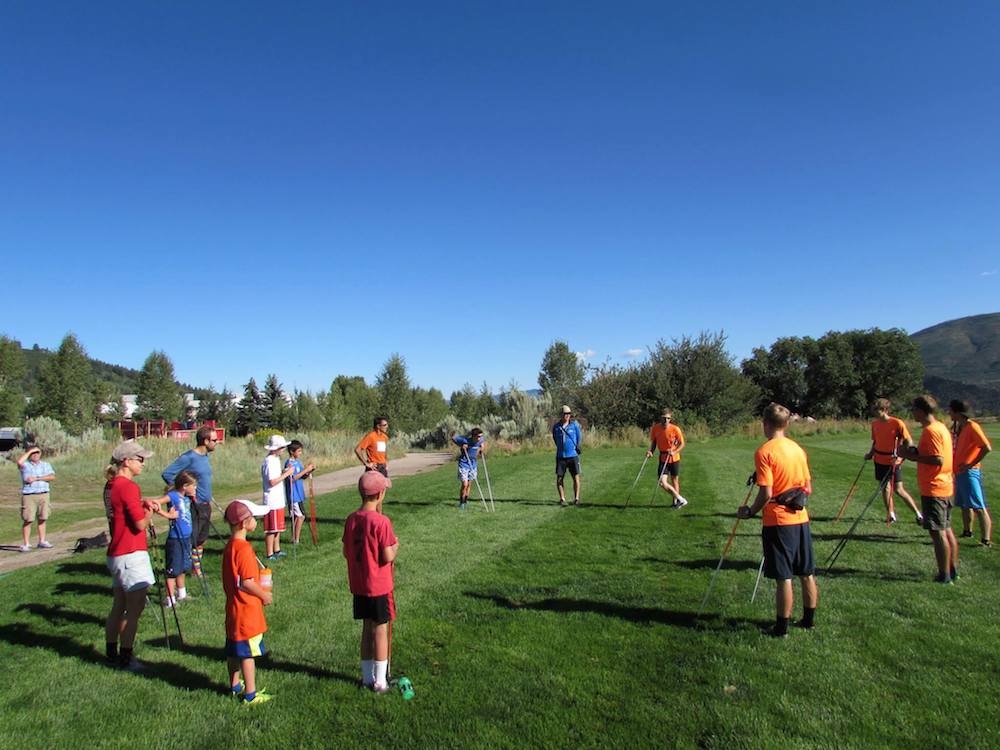
    Several U.S. Nordic Combined skiers, including Taylor Fletcher, Benjamin Berend, Adam Loomis, Bill Demong, and Michael Ward, talk training with a community group in Aspen, Colo., during a mini camp in August. (Photo: USA Nordic Combined/Facebook)
    Several U.S. Nordic Combined skiers, including Taylor Fletcher, Benjamin Berend, Adam Loomis, Bill Demong, and Michael Ward, lead a clinic in Aspen, Colo., during a mini camp in August. (Photo: USA Nordic Combined/Facebook)

    When the U.S. Ski and Snowboard Team Foundation (USSTF) Board of Trustees, the nonprofit fundraising arm of the U.S. Ski Team, met on July 24, Billy Demong had something to say.

    A guest at the annual meeting, the five-time Olympian and current U.S. Nordic Combined Team skier had been given the floor to speak on behalf of his sport and its sustainability in the U.S. What he said was moving enough that it persuaded the board to give U.S. NoCo $150,000 dollars for the next two years, amending its July 31 defunding deadline — in which the U.S. Ski and Snowboard Association (USSA) initially planned to cease team funding for nordic combined.

    Demong could not be reached for comment and U.S. Nordic Combined Head Coach Dave Jarrett wasn’t at the meeting in Park City, Utah, but the outcome was a big deal, Jarrett explained on the phone last week.
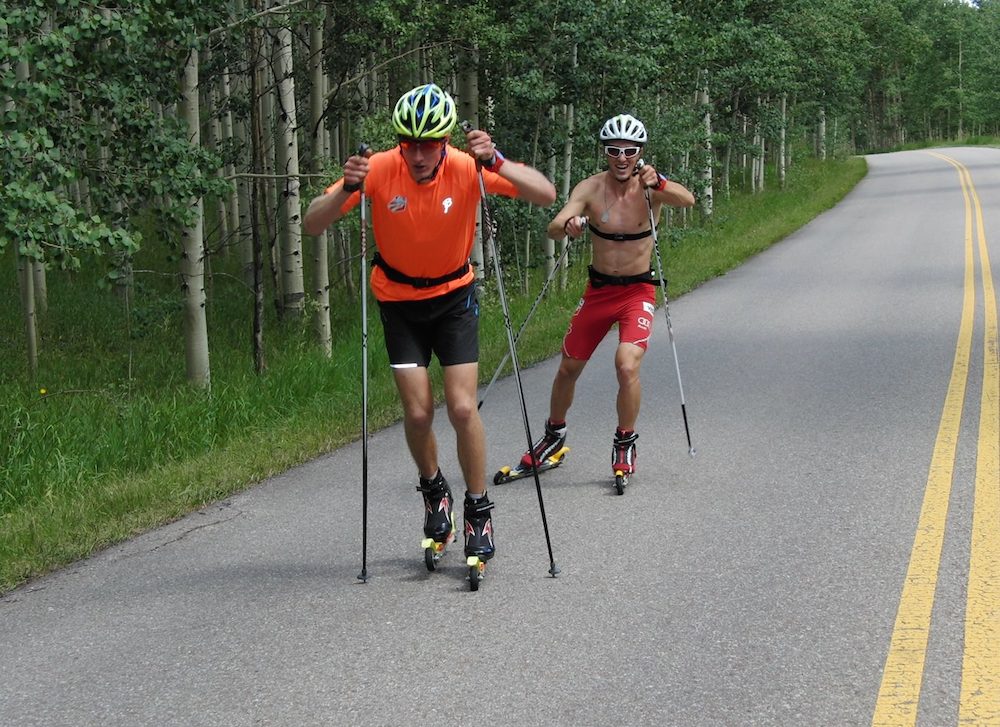
    Adam Loomis leads U.S. Nordic Combined teammate Michael Ward during a rollerski workout at a mini camp in August in Aspen, Colo. (Photo: USA Nordic Combined/Facebook)
    Adam Loomis leads U.S. Nordic Combined teammate Michael Ward during a rollerski workout at a mini camp in August in Aspen, Colo. (Photo: USA Nordic Combined/Facebook)

    “I think they realized that they made a perhaps a hasty decision,” Jarrett said. “… It sounded like all the trustees were not necessarily aware of the way the decision was made and the actual facts involved. They were really ill-informed with what we have in the pipeline…”

    He added that, at the end of last season, USSA did not ask him to prepare a presentation or explain where his team stood for the next four years.

    “They didn’t give us a chance to show that we have this many U16s and U18s and U20s in our pipeline and that our sport is alive … and on a per-capita basis we’re doing a lot with our athletes,” Jarrett said. “… To be honest, even if we won a medal in Sochi, this same thing would’ve happened. I think it was done before Sochi and they just looked at it, that Bill was probably going to be finished and Todd [Lodwick] was finished … and they just classified us as nothing. I don’t know that for a fact; that was just my gut feeling that was going to happen.”

    On Aug. 12, USSA CEO Tiger Shaw sent an email to nordic-combined stakeholders regarding the outcome of the trustees’ annual meeting. He signed it, along with USSTF Vice President Trisha Worthington and another trustee, Greg Boester.

    “This spring we had to make many tough funding decisions as we evaluated our sport allocation along the guidelines of the 2010 Strategic Planning Committee adopted following the 2010 Games in Vancouver,” the email began. “This resulted in our decision to reduce funding for the nordic combined national team to a level far below that of the 2014 Olympic season, despite the previous success of that team four years ago…”

    Jarrett said he would challenge every program under USSA’s umbrella to prove they have the depth to continue performing at the USSA’s ‘Best in the World,’ medal-potential standards, should they lose a couple athletes to retirement, injury or something of that nature.

    “Almost every program within USSA isn’t as deep as you think,” he said.

    “… We have been seeking ways to help bridge this sudden gap in funding and to help the nordic combined community with an alternative funding model,” the email continued. “To further this effort, the USSA and its foundation have agreed with Billy Demong, his teammates and the nordic combined community to forge a partnership.”

    That involved USSA fronting the team $150,000 for this season (and committing to the same amount next year) in exchange for 15 Gold Passes, valued at $10,000 apiece. USSA aims to sell 450 of these passes by the end of the fiscal year (April 30, 2015) to go toward its general fund. The passes are fully transferable and provide lift access to more than 250 U.S. ski resorts, and 85 percent of their total cost is tax deductible.

    U.S. Nordic Combined must sell its 15 passes by next spring to donors the foundation hasn’t previously reached out to. So instead of just asking for money, like it has been, U.S. NoCo will have something big to offer supporters in return.

    “As far as I know, this is the first opportunity where [USSA has] allocated a certain number of Gold Passes to a program,” Jarrett said. “… We’ll see if it works. In light of everything that’s happened, the whole fundraising-revenue paradigm at USSA is perhaps going to be different and probably change for a good thing, but I think there will be some growing pains involved in that. This is certainly a great opportunity for us in light of our situation.”

    As of Aug. 29, Jarrett wasn’t sure how many Gold Passes his program had sold — maybe one, he said. Mostly parents in nordic-combined’s core community were heading up the effort.

    If they sell more than 15 passes, the remaining funds go to USSA’s general fund. Jarrett wasn’t sure if they could revisit the agreement next year and seek more than $150,000 if they exceed USSA’s fundraising expectations.

    “It’s generous for USSA to provide us with this opportunity if they have 450 [passes] to sell,” Jarrett explained. “…That’s taking money out of the general fundraising.”

    In terms of what kind of difference those dollars will make, Jarrett said it’s huge. His position had already been secured, but the extra money from USSA ensured that the team could keep coach Greg Poirier and hire a Continental Cup coach and service technicians for the coming season.

    “It was a real shot in the arm at the very last minute because Greg’s salary was set to end on July 31, so it was a big deal right then,” Jarrett said. “Really, when you’re starting at zero, $150,000 is a big jump on it to get things going.”

    “It was a real shot in the arm at the very last minute. …  Really, when you’re starting at zero, $150,000 is a big jump on it to get things going.” — Dave Jarrett, U.S. Nordic Combined Head Coach on USSA’s recent two-year financial agreement with his team

    At the same time, it doesn’t come close to matching U.S. NoCo’s roughly $600,000-dollar annual budget. By now, Jarrett needs to have plane tickets booked and travel logistics locked down for his team, which starts its international season in November.

    “The question that we’re all struggling with now is, what kind of risk are we willing to assume to get things going?” he said. “If we wait until we get it in the bank, it’s going to be two months too late.”

    The money from USSA will cover the team’s entire staff salaries and some travel expenses, minimizing the risk factor, he added. The rest of its budget will have to be self-raised, which the team and its community are working on. U.S. NoCo partnered with USA Ski Jumping this summer in an effort to collaborate on fundraising and sponsorships, but the partnership is new and funds remain separate.

    In mid-October, after U.S. Nordic Combined Championships from Oct. 11-12 in Lake Placid, N.Y., 17 athletes and four coaches with the team will travel to Europe for their first overseas camp of the season. First, they’ll first compete at Swiss nationals and later train on the jumps in Oberstdorf, Germany. Most of the athletes will be paying their own way.

    “It’s really only the ‘A’ team that’s 100-percent fully covered,” Jarrett said. “There’s definitely self funding going on, almost from the top down.”

    He explained they asked most of their athletes to put down the money they’ll need to cover their individual costs for the season. If fundraising goes as planned, they’re hoping to give as much of that back to them as possible.

    But $10,000-dollar ski passes, with additional incentives like invites to work out with Olympians and a VIP tour of the Center of Excellence, can be a tough sell.

    “At first it sounded like these were going to sell like hotcakes,” Jarrett said. “… But not everybody can afford to do that.”

    He pointed to the USA Ski Jumping website as a means of donating any amount (as of now, all donations go to a general fund for USA Ski Jumping & Nordic Combined) and USSA’s website to find out more about the Gold Pass.

    “No amount is too small,” he said. “We want people to donate with the thought, what can I do every year for the next four years? … like an annual giving to nordic combined.”

  • Defunding Deadline in the Rearview, U.S. NoCo Forges Ahead with USA Ski Jumping

    Defunding Deadline in the Rearview, U.S. NoCo Forges Ahead with USA Ski Jumping

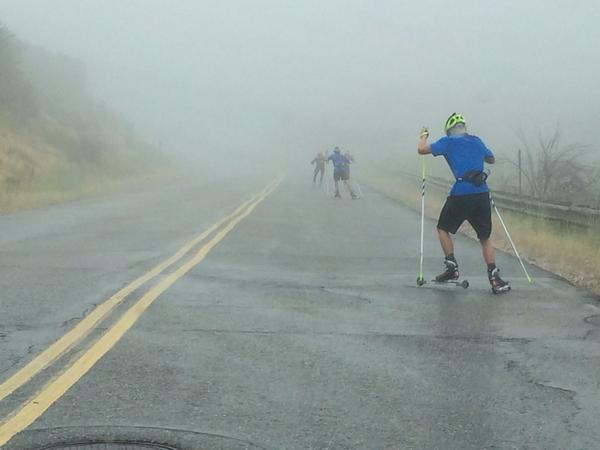
    U.S. Nordic Combined skiers tackle a foggy training session near Park City, Utah (including  Bryan Fletcher, Taylor Fletcher, Ben Berend,  Brett Denney, Michael Ward, and Adam Loomis). (Photo: Dave Jarrett/Twitter)
    U.S. Nordic Combined skiers during a recent, foggy rollerski session near Park City, Utah (including Bryan Fletcher, Taylor Fletcher, Ben Berend, Brett Denney, Michael Ward, and Adam Loomis). (Photo: Dave Jarrett/Twitter)

    July 31 was the day. On Thursday morning when U.S. Nordic Combined Head Coach Dave Jarrett walked into his office at the U.S. Ski and Snowboard Association (USSA) Center of Excellence in Park City, Utah, he knew he’d leave there with his job still in tact.

    That was one takeaway from meetings with USSA in the last few months since the association, which serves as nordic-combined’s national-governing body (NGB), revealed in April that it would no longer fund the team after July 31.

    According to Jarrett, USSA reasoned that if nordic combined wanted to raise money to sustain itself, it needed someone in charge. With help from USSA’s trustees, his position remained “pretty stable,” he said on the phone Thursday afternoon.

    “The whole thing from the beginning was that they were trying to shake the trees and see if they could find more money,” he said.

    Most recently, it was the status of his team’s other coach, Greg Poirier, he was uncertain of.

    “He was ready to turn in his stuff at the office [on Thursday],” Jarrett said. “They came back to Greg and said we have some money for you to take care of you.”

    While Poirier’s position as jumping coach wasn’t finalized, Jarrett said USSA had indicated it could cover Poirier as well for another season. That brought Jarrett to the next item on his wish list: securing a Continental Cup coach.

    “Things are moving forward for sure, and it’s a little bit more hopeful than in April,” he said.

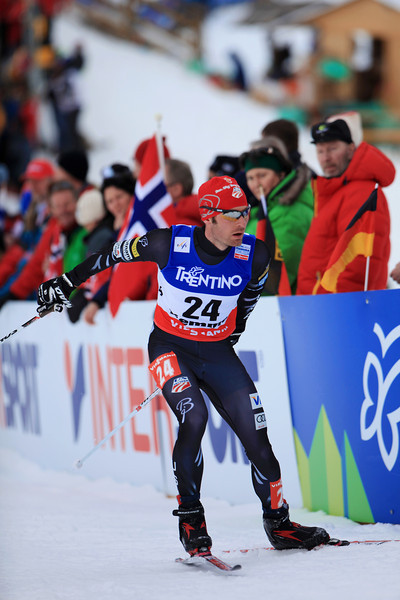
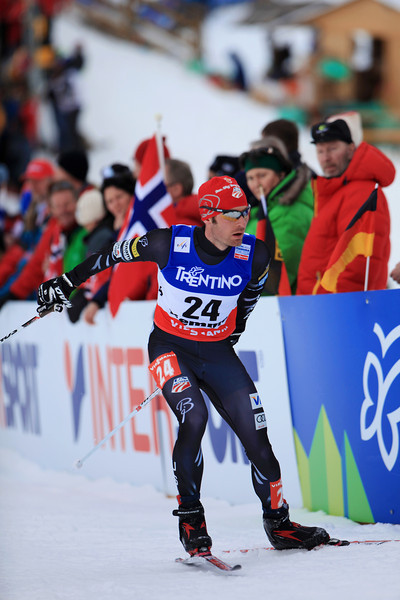
    Bryan Fletcher (U.S. Nordic Combined) jumping to ninth on Day 2 of the Nordic Combined World Cup Triple in Seefeld, Austria. Fletcher improved to sixth in the 10 k. (Photo: Fast Big Dog)
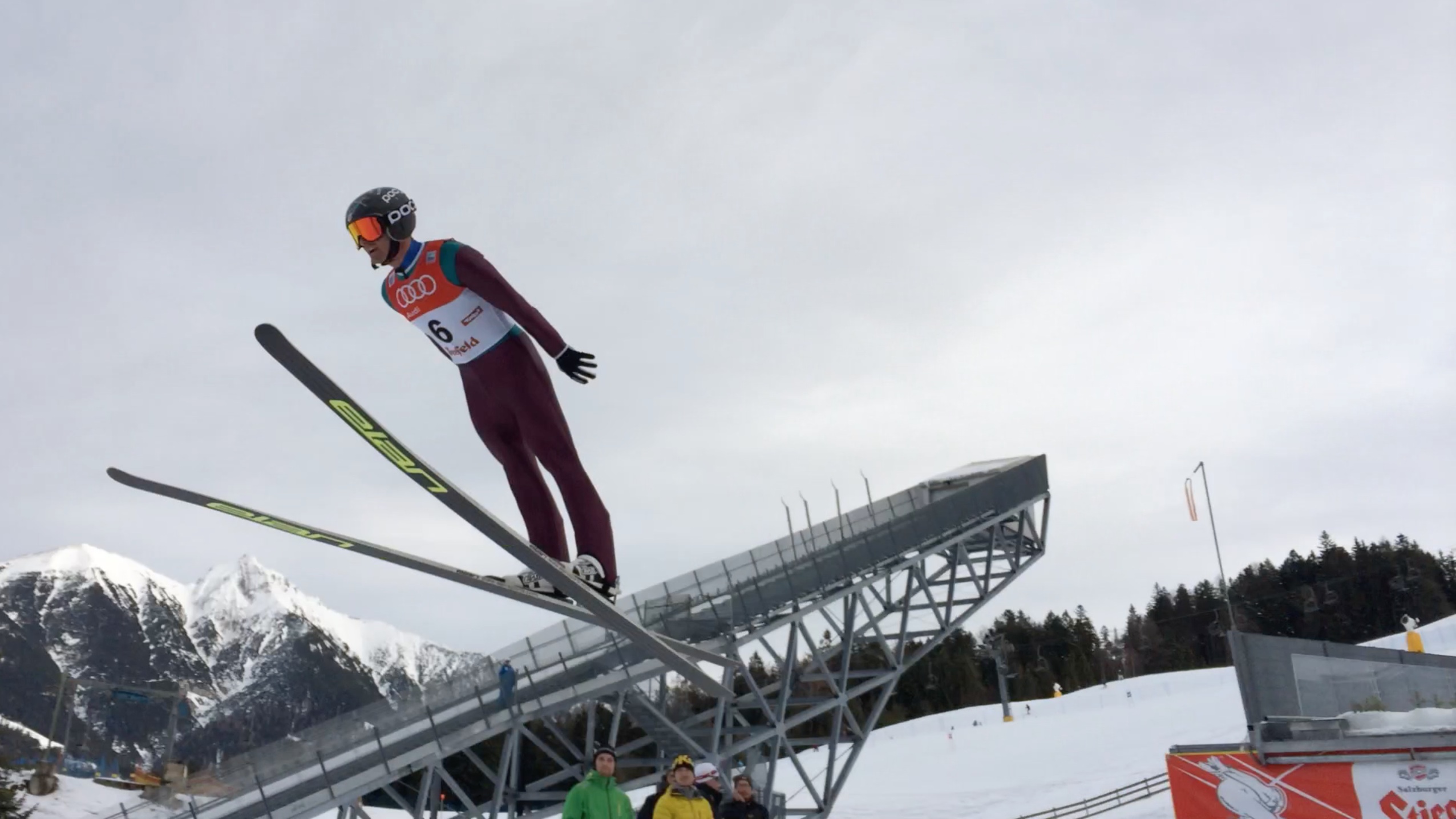
    Bryan Fletcher jumping at the FIS Nordic Combined World Cup Triple in Seefeld, Austria, last season, where he ended up with a season-best fifth overall. (Photo: Fast Big Dog)

    Money Game

    As of Aug. 1, USSA will fund individuals rather than the team. According to Bryan Fletcher, for next season, that means him and his younger brother Taylor. Based on Bryan’s understanding, those two demonstrated the most “podium potential,” and with that came a set dollar amount from USSA to be used toward expenses next season. That amount is payable upon receipt, not a cash advance or stipend.

    “Instead of funding an entire team and giving them a set budget, [USSA is] giving individuals who meet a set criteria for the ski team or based on the executive’s judgement … a set amount of money to pay for their season,” he explained. “Essentially Taylor and I are in that situation, given a little bit of money to fund our individual movements…”

    The Fletchers have already spent their USSA funds on re-hiring the team’s two wax technicians, Andrej Jezeršek and Matjaz Dobrovoljc.

    “There’s no point in showing up for World Cups if you have no support,” Bryan said. “Ideally that would be used for plane travel and [other travel expenses] … We decided that the most important thing was our wax techs’ salaries. It’s much easier to make ends meet while you’re over there.”

    Jarrett agreed: “It’s the most cost-effective place [to compete], because you get paid to be there,” he said of the World Cup and the monetary perks (including comped food and lodging) that come with top international results.

    “We decided that the most important thing was our wax techs’ salaries. It’s much easier to make ends meet while you’re over there.” — Bryan Fletcher, on using his personal USSA funds to pay for his team’s wax techs

    At the same time, he’s optimistic that future arrangements and partnerships, both within and outside of USSA, could be used to pay for those two techs — adding it was essential to lock them down for another season first.

    The team can also count on Switzerland to pay for about 30 percent of their servicemen’s salaries. Jarrett said they teamed up with Swiss nordic combined last season, waxing and testing some of their nordic skis in exchange for reimbursement.

    As for the total cost of the season, with camps and competitions U.S. NoCo has yet to finalize its budget for, Jarrett estimated it amounts to roughly $250,000 dollars. That’s for the entire program, including travel expenses like airfare, room and board, fuel, and rental cars for all team and staff members. It does not include employee salaries or benefits, and equipment costs, such as jumping suits, bindings, wax and supplies — all of which Jarrett described as another huge cost.

    Bryan estimated that waxing and travel expenses in Europe could amount to $2,000 a week per athlete — a figure that could be lower depending on how much other teams, like Switzerland, or race organizers help with defraying costs.

    Regardless, they need cash to train — ideally at international venues — and get to the highest-level competitions.

    That’s where Billy Demong, the team’s veteran and most-decorated athlete, has stepped up. As U.S. NoCo’s point person for marketing and fundraising, he plans to keep training and compete next season, but has already devoted a large part of his offseason to securing finances for his program.

    “He’s pretty well-connected,” Jarrett said. “He really selflessly took that on … It’s a lot, that’s no question, but we know Bill…”

    While Demong has been working out on his own schedule, the Fletchers have been training with the rest of the team in Park City. Aside from Todd Lodwick retiring from the A-team, the program has retained and slightly grown its training group, and Jarrett said all of its members are excited and motivated to make the jump from the development ranks.

    A New Team Structure

    New this season, U.S. NoCo is looking to fill a C-team, which Jarrett described as mainly a junior squad.

    “Our goal now is to take care of the sport from top to bottom: A, B, C, and a development team,” he said. “The clubs really aren’t equipped to handle post-grad in nordic combined … [Athletes] need to be either on the Continental Cup or training.”

    With its budget in flux, the program hasn’t decided how to divvy up funds for athletes among those teams. Jarrett said C-team will likely be unfunded, while providing a sense of national-team belonging and training opportunities for young skiers. At this point, B-team members that don’t make it to the World Cup will likely have to self-fund as well next season.

    The big questions that remain for the U.S. team include its competition schedule and how many world and continental cups it can afford to attend, as well as whether it can swing an international training camp this fall.

    “We didn’t do a camp in July. We’re not doing a camp in August,” Jarrett explained. “We’re hoping to have a big camp together with the Swiss guys, go to Lake Placid [for U.S. Nordic Combined nationals] in October, then go to Europe after that to have a camp [in Germany and Switzerland].”

    Bryan pointed out that the team needs to jump at lower elevations than Park City and would benefit from the ice track in Oberstdorf, Germany.

    “You’ve got to see the level of how everyone’s jumping,” Jarrett said.

    In the past, the team held three summer training camps, most of which were in Europe. This year, its athletes skipped their usual Tour-de-France camp, replacing it with a five-day endurance camp/fundraiser in Aspen, Colo.

    “We had donors come to pay and ride with us for a week,” Bryan explained. “We had an awesome time. …  That was mostly Bill’s idea, just to continue that bike idea in Aspen.”

    Craig Ward is heading up another nordic-combined fundraiser in line with the USA Pro Cycling Challenge from Aug. 14-19 in Aspen, Bryan added. Because of funding uncertainty this spring, the team had to rule out competing at the International Ski Federation (FIS) Summer Grand Prix in Germany and Austria in late August.

    As for the team’s winter World Cup schedule, Jarrett said it will be similar to in the past, with specifics being worked out in the next few months.

    “It’s moving in the right direction,” he said.

    USASJ and NoCo Unite

    By partnering with USA Ski Jumping (USASJ) to form a singular “USA Ski Jumping and Nordic Combined,” Jarrett hopes his sport continues to grow, both in participation and financial stability, for seasons to come.

    The agreement was sort of a natural byproduct of the two sports’ commonalities, he explained. Not only is jumping essential to the success of both, but they also share the few jumping venues scattered across the U.S. Plus, most nordic-combined skiers start out as jumpers — and if they don’t, they have to move to a place with jump hills to learn how.

    “There’s much more in common with ski jumping than there is with cross-country for nordic combined,” Jarrett said. “It’s just a better fit, a better understanding of how this sport works.”

    Since 2006, USASJ has operated independently of USSA (which also remains its NGB), coming up with its own marketing and fundraising strategies. While Demong will continue to work on landing sponsors for nordic combined, the two sports won’t likely combine marketing efforts in the near future — unless a major sponsor wants them as a unit and each slice of the pie is large enough to make it worth pursuing, Jarrett said.

    “There’s much more in common with ski jumping than there is with cross-country for nordic combined. It’s just a better fit, a better understanding of how this sport works.” — Dave Jarrett, U.S. Nordic Combined Head Coach

    “Right now there’s no downside for [USASJ]; they’re not giving up anything,” he said. “They’re just sharing a place for us to raise money. That was the goal that we started with. They’ve already been down this path … they’ve already suffered through all the growing pains that’s involved with getting cut like that. It’s been definitely a good partnership … [and] we’re coming into it with pulling our own weight.”

    In the future, Jarrett said they could revisit collaborating with Women’s Ski Jumping USA, too. However, that program has opted to remain separate for the time being.

    “That could be a really good dream: to have both men’s and women’s ski jumping and both men’s and women’s nordic combined under the same roof,” Jarrett said. “But Women’s Ski Jumping USA is also protective with what they’ve done as an organization and rightly so.”

    The next couple years could be telling for all the aforementioned organizations.

    “We need to keep together to keep our sports alive,” Jarrett said. “I think [Women’s Ski Jumping USA needs] to figure out how they’re going to proceed now that they’re into the Olympics and the suffrage story is over. Hopefully we can talk and figure out what’s the best for our sport. … FIS and the IOC, they really want women’s nordic combined … to flourish.”

    Coaches education, development outreach, jumping equipment and technique are among many elements ski jumping and nordic combined could share, Bryan said. But they’re also different sports and not everything overlaps.

    “We need our own staff and they need their own staff,” Jarrett said of USASJ.

    NoCo and NNF

    A longtime supporter of U.S. NoCo, the National Nordic Foundation (NNF), a nonprofit designed to help fund developing nordic athletes in the U.S., will continue to back nordic combined.

    NNF Director Dave Knoop explained the foundation is currently working on its upcoming “Drive for 25” fundraiser, typically launched in late fall, and intends to include Nordic Combined in that movement.

    “We understand how and why NC has merged with Jumping and what they are doing makes a lot of sense,” Knoop wrote in an email. “The NNF has not abandoned funding NC Pillar Projects and we look forward to funding NC designated projects in the future.”

    Meanwhile, nordic combined will receive support from both NNF and USASJ. NoCo representatives Demong and Kerry Lynch remain on the NNF board.

    “In the past few months we have stepped back a bit to let Billy and others define how Nordic Combined would fit within the USA Ski Jumping [organization],” Knoop explained. “Now that this is clear we will begin defining and communicating NC’s role within the NNF. Specifically the transparency aspect of what we will fund and why so donors know where their donations are going.

    “If anything can be said of this episode regarding USSA’s actions regarding Nordic Combined funding is that I am hopeful that it just made NC rebuild [itself] in a way that eventually will make it a stronger organization,” he continued, “that the sport will grow in numbers and develop great athletes in the future.”

  • Bryan Fletcher Becomes USSA Athlete Rep to Voice Nordic Combined and Jumping Needs

    Bryan Fletcher Becomes USSA Athlete Rep to Voice Nordic Combined and Jumping Needs

    Bryan Fletcher
    Bryan Fletcher racing at 2013 World Championships in Val di Fiemme, Italy.

    Bryan Fletcher has a vested interested in his sport — and that’s an understatement. At 27, the U.S. Nordic Combined athlete was recently selected to the U.S. Ski and Snowboard Association (USSA) Board of Directors as the Jumping/Nordic Combined Athlete Representative. Former U.S. Nordic Combined skier Willy Graves, who retired four years ago, previously held the position.

    “I was mostly interested in just trying to develop myself as a more well rounded athlete,” Fletcher explained in an email. “I felt this would be a great opportunity to learn a new part of the sport.”

    He was one of seven new representatives named to the board on May 18, the final day of USSA’s Spring Congress. The association’s current board consists of 20 members, including chairman Dexter Paine, vice chairman Greg Boester, and treasurer John Bucksbaum, plus four ex-officio members. Fletcher wrote that 20 percent of the board must be made up of athletes. It meets that requirement with five, including Fletcher and two other new athlete representatives — Tricia Byrnes (snowboarding) and Emily Cook (freestyle) — as well as James Southam (cross country) and Charles Christianson (alpine).

    “My role is to meet with the other athlete representatives and report on issues and concerns we see or our fellow athletes see with USSA or their governing decisions,” Fletcher wrote. “This season’s congress was my first opportunity to sit in on the meetings for USSA, I gained a lot of knowledge [that] week and played a lot of catch up on the most pressing issues however moving forward I think this is a huge opportunity for me, the organization is going through a lot of changes right now and it’s very important for the athletes to have a voice at the highest level.”

    In terms of his sport, which USSA will cease to fund after July 31, Fletcher wrote that nordic combined is “moving forward with our organizational structure day by day,” and that overall there were a lot of positives that came out of Spring Congress.

    “The organization is going through a lot of changes right now and it’s very important for the athletes to have a voice at the highest level.” — Bryan Fletcher, USSA Jumping/Nordic Combined Athlete Representative

    “Our sport’s meetings progressed smoothly and a lot of information was exchanged,” he wrote. “I am excited to take a more active role in the development of Nordic Combined as well as the development of USSA.

    “For me the biggest thing that came out of congress was just knowledge of the positive development in our sport,” he continued. “USASJ [USA Ski Jumping] has done an amazing job implementing new outreach projects and development programs. NoCo is looking to help their progress in anyway possible while at the same time helping our own progress. Things at this point are looking like next season will be lean financially but we will have a strong team. The guys have been working hard, the athletes are motivated so the team will move forward one step at a time.”

    USA Ski Jumping, which supports the development of both male and female jumpers in the U.S., has operated on its own budget — separate from USSA — for the last seven years. Yet USSA remains its national governing body (NGB), as it is for Women’s Ski Jumping USA and Nordic Combined, the latter of which was most recently informed it would no longer receive direct funding from the NGB.

    Fletcher expects to sit in on one to two USSA meetings a year as well as some potential phone calls. He did not elaborate on Nordic Combined’s working relationship with USASJ.

  • USSA to Drop Funding for Nordic Combined, Jarrett Accepts Challenge

    USSA to Drop Funding for Nordic Combined, Jarrett Accepts Challenge

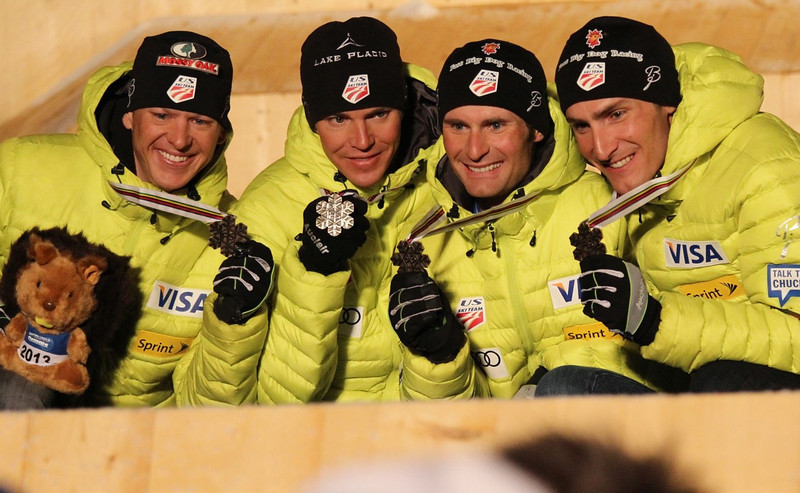
    From left to right: Todd Lodwick, Billy Demong, Bryan Fletcher and Taylor Fletcher with their bronze medals from Sunday's team event at the 2013 Nordic Combined World Championships in Val di Fiemme, Italy. (Photo: Fiemme2013)
    U.S. Nordic Combined’s Todd Lodwick (l), Billy Demong (second from l), Bryan Fletcher and Taylor Fletcher (r) after winning bronze in the 2013 World Championships team event in Val di Fiemme, Italy. (Photo: Fiemme2013)

    When U.S. Nordic Combined coaches Dave Jarrett and Greg Poirier sat down with Tiger Shaw and Luke Bodensteiner of the U.S. Ski and Snowboard Association (USSA) on Monday, Jarrett said he wasn’t exactly sure what they were in for.

    The national-team head coach for the last six years, he had a sense of what was in store for his sport — challenges, big ones, before and after the Olympics. But every nordic “free-heel” sport deals with the same thing, he said.

    By 8 a.m. Monday, it became pretty clear what Shaw, USSA’s new CEO, and Bodensteiner, vice president of athletics, wanted to talk to them about in person. After July 31, 2014, USSA would no longer fund nordic combined’s “traditional team infrastructure,” according to a mass email from Shaw that was sent to Jarrett and several other stakeholders. That would leave U.S. Nordic Combined essentially on its own for financial support, which Jarrett said will most immediately affect the employment of himself and Poirier, the development coach.

    Bryan Fletcher (U.S. Nordic Combined) jumping to ninth on Day 2 of the Nordic Combined World Cup Triple in Seefeld, Austria. Fletcher improved to sixth in the 10 k. (Photo: Fast Big Dog)
    Bryan Fletcher (U.S. Nordic Combined) at the Nordic Combined World Cup Triple last season in Seefeld, Austria. (Photo: Fast Big Dog)

    In the meantime, he said not to worry about the athletes — they’ll train for next season as usual. The ones that were in Park City, Utah, on Monday — Billy Demong, Bryan Fletcher and Taylor Fletcher — also spoke with Shaw and Bodensteiner in a second meeting about the decision.

    “I had a sense for a while that something wasn’t right,” Jarrett said on the phone Tuesday. “Planning started as normal and then it took a slight detour with the timeline of how you get things done. It became clear that something wasn’t right. I knew something wasn’t totally clear. Luke gave us a heads up that this was a scenario.”

    That didn’t necessarily soften the blow, but rather than retaliate, Jarrett said he began to brainstorm. Women’s Ski Jumping USA and men’s USA Ski Jumping did it on their own — they could, too.

    “We haven’t stopped spinning from the news,” Demong told Steamboat Today. “We have to turn that into solution making.”

    “Based on [USSA’s] study in 2010 that eliminated jumping in other sports, they didn’t think nordic combined was a podium-potential sport for 2018 or 2022,” Jarrett explained. “As of July 31st, it’s gonna be the end of my job and Greg’s job, so funding stops then. In the meantime, if we’re able to raise operating capital, they have offered to run [fundraising] through USSA. If somebody wanted to donate or underwrite our needs that they would be able to donate to USSA [which would go] directly for nordic combined.”

    There’s also the possibility of U.S. nordic combined signing sponsors outside of USSA’s contracts. According to Shaw’s email, USSA “will continue to provide direct funding for qualifying elite athletes. … We will work with the nordic combined community to look at alternatives in structure and funding. The USA has an engaged and passionate club-based pipeline, especially in communities of Lake Placid, Steamboat Springs and Park City. The USSA will continue to work with these clubs to provide an infrastructure for athletic success and sport development.”

    “Unless you win the Powerball or something, there’s no way to create a slush fund for a rainy day for this to happen.” — U.S. Nordic Combined Head Coach Dave Jarrett

    Jarrett emailed members of the nordic community on Tuesday morning with the subject heading: “Tall Order”. While many were disappointed and some shocked by the news, he said he encouraged them to think of solutions.

    “I see this challenge as an opportunity for autonomy of our program,” his email stated. “All revenue we generate will go directly to our program. The more we generate the deeper we can reach as a program while at the same time remaining within the USSA.  If we want to have an A-Team, B-Team and Junior Team it is up to us.  We need to think about all options, opportunities and ideas.”

    Jarrett said he’d spent much of the last two days gathering information and talking to people like Dave Knoop of the National Nordic Foundation (NNF), which directly raises money for U.S. nordic combined and cross-country skiing, as well as Alan Johnson of USA Ski Jumping and Robbie Beck of Women’s Ski Jumping USA.

    “‘[We’re] trying to just use this as a rallying cry for the nordic-combined community specifically, but also for everybody that this is around the corner for any program,” Jarrett said. “Instead of being pissed or feeling sorry for ourselves … we need to rally around this and find solutions. I think there’s solutions out there.”

    While he aims to assemble as much support as possible and explore the idea of uniting all nordic sports — men’s and women’s ski jumping, nordic combined and cross-country skiing — into one autonomous entity, Jarrett’s also looking forward to getting nordic stakeholders together at the USSA Spring Congress in a month.

    “We knew that this was always a possibility,” Jarrett explained. “While we wanted to be prepared for this, unless you win the Powerball or something, there’s no way to create a slush fund for a rainy day for this to happen. … I said it a few years ago after ski jumping: everybody now should be looking over their shoulder because you never know when it’s gonna fall. I don’t think there’s any program that’s safe from it, maybe alpine is the only one that they’re never gonna cut out, but that’s the fact of life. And we have to play the cards we’re dealt.”

    As for what it would take to keep the nordic-combined program going, Jarrett said he wasn’t sure whether they’d decide to fund it from bottom up, starting with development, or take care of the elite A-team skiers first. Either way, he said 12 years of experience as a national-team coach had taught him what he can do with a million-dollar budget, half-a-million dollars, or $250,000 — whatever they end up with.

    Bodensteiner told Steamboat Today that USSA had funded nordic combined between $580,000 and $650,000 annually for equipment, travel, lodging, food, coaches and wax technicians. In a four-year Olympic cycle, the cost added up to nearly $3 million. He said the decision was based on a number of factors, including nordic combined’s size, as measured by participation, membership, public relevance, and future potential.

    “The main thing is that we need to be proactive, looking at all options, all partnerships,” Jarrett said. “We’re all in this kind of nebulous state and perhaps there’s a way to organize everybody or at least parts of it. We can be partners with USSA or partners with each other.”

    Stay tuned for follow-up articles and updates.