From the FasterSkier archive — posts syndicated from athletes’ and coaches’ own blogs between 2004 and 2012, kept online as published. Current coverage is at fasterskier.com.

Tag: USBA

  • Biathlon at a Crossroads: Inside the Alliance That Could Reshape the Sport in America

    Biathlon at a Crossroads: Inside the Alliance That Could Reshape the Sport in America

    This article was made possible through the generous support of our voluntary subscribers. If you value coverage like this, please support FasterSkier with a voluntary subscription.

    U.S. Biathlon’s board votes Wednesday on a formal operating alliance with U.S. Ski & Snowboard. Supporters call it the stability the sport has always lacked. Skeptics call it a surrender of independence. Both are working from the same set of facts. Here is what the deal actually says, and what it would and would not change.

    The U.S. Biathlon board of directors is scheduled to meet tomorrow, Wednesday, July 29, at 4 p.m. Eastern. This account is based on interviews conducted by FasterSkier with the chief executives of both organizations, a U.S. Biathlon athlete representative, the U.S. Biathlon head physiology coach, a written statement from the U.S. Olympic & Paralympic Committee, and a review of the alliance term sheet, three community working-group reports, and correspondence circulated by members opposed to the deal. All of these documents were posted publicly by U.S. Biathlon or provided to FasterSkier.
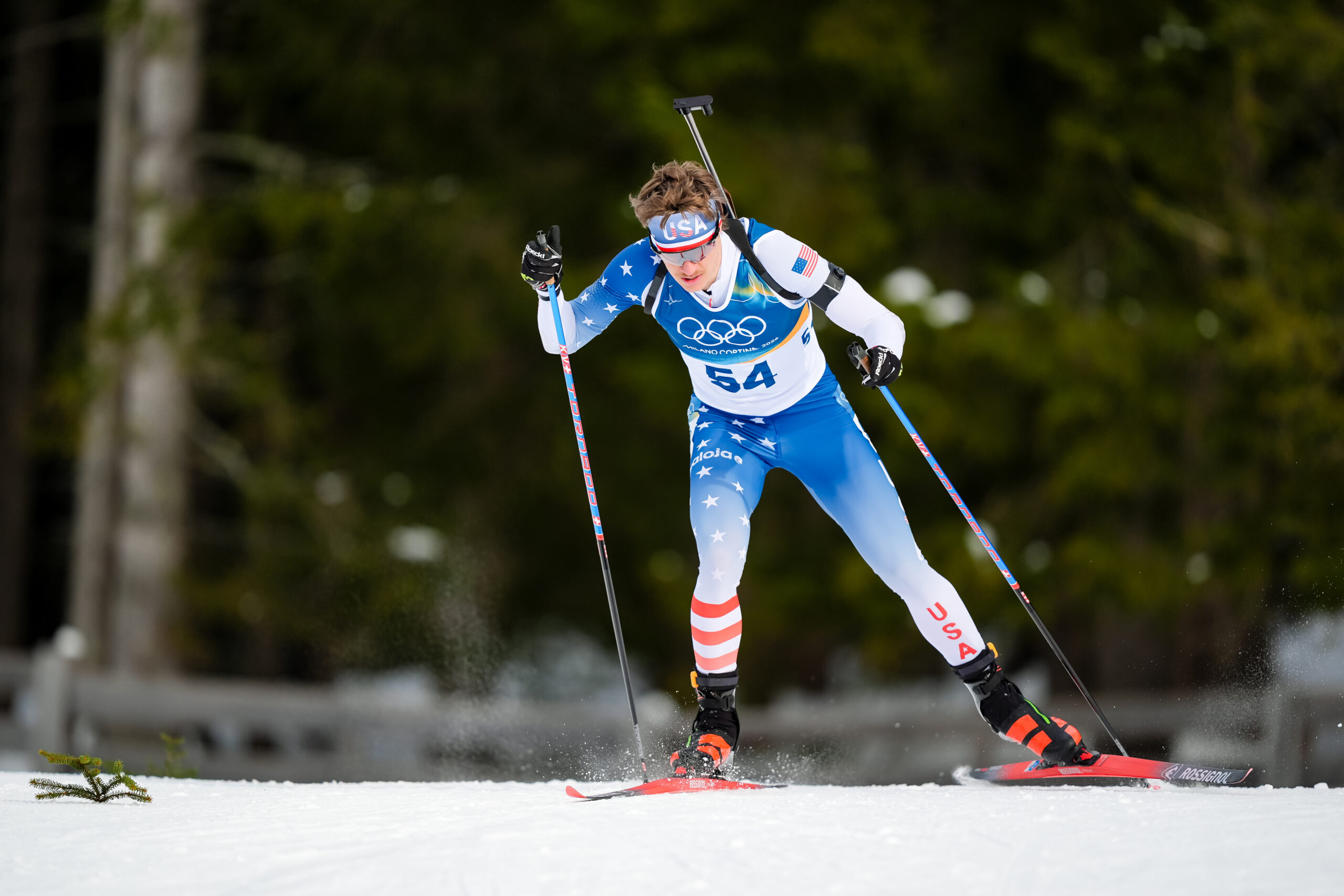
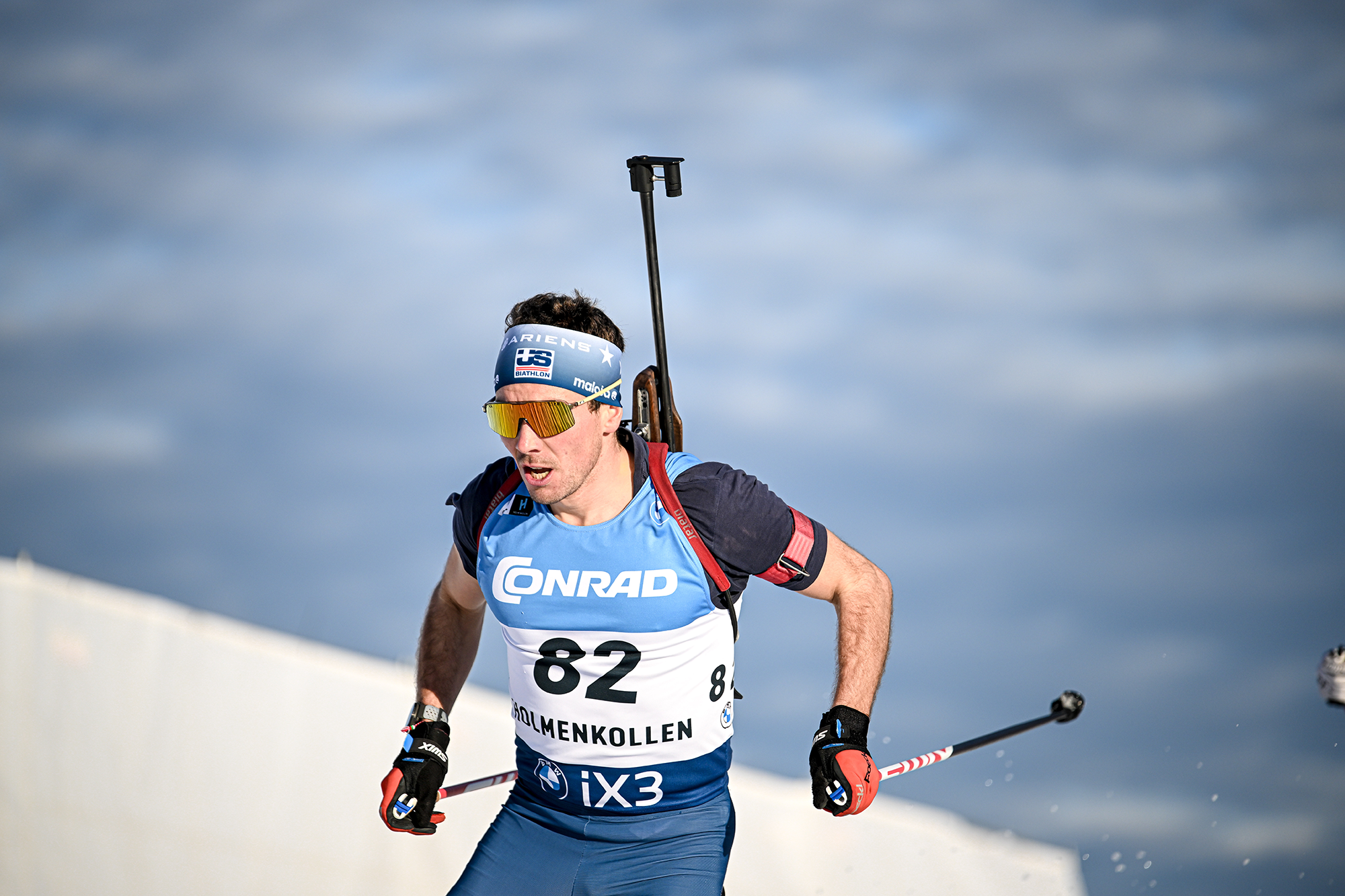
    Campbell Wright (USA) during the biathlon sprint at the XXV Olympic Winter Games in Antholz (ITA). (Photo: Thibaut/NordicFocus)

    Every winter, for a few weeks in February, cross-country skiing and biathlon stop being niche pursuits in the United States. During the last Olympic period, FasterSkier drew more than 180,000 unique readers in a single February, most of them people who do not know the sport’s governance history and have never heard of the Ted Stevens Olympic and Amateur Sports Act. On Wednesday afternoon, a board most of those readers could not name will vote on a decision that could reshape how one of their sports is run for the rest of the decade and beyond.

    The question in front of the U.S. Biathlon board is whether to enter a “Strategic Operating Alliance” with U.S. Ski & Snowboard, the far larger national governing body that oversees Olympic and Paralympic skiing and snowboarding. Under the proposal, U.S. Biathlon would remain a legally separate organization and the recognized governing body for the sport, but would hand much of its day-to-day operation to U.S. Ski & Snowboard under a services agreement. To its architects, it is a way to give a chronically under-resourced sport the stability and commercial muscle it has never had. To its critics, it is the moment a proud, independent program stops steering its own ship.

    The two sides do not disagree much about the facts. They disagree about what the facts mean.

    What is actually being proposed

    Strip away the temperature of the debate and the structure is specific, and it has changed meaningfully since the idea first surfaced publicly in the spring. The current terms, which U.S. Biathlon posted for its members on July 27, describe an alliance rather than a merger in the dictionary sense. No organization dissolves.

    Under the agreement summary, U.S. Biathlon “will remain a separate legal entity,” keeping “its own corporate existence, financials, and independent audit.” It stays the governing body recognized by the U.S. Olympic & Paralympic Committee under the Ted Stevens Act, and keeps its membership in the International Biathlon Union, the sport’s world federation. Its name, logo, and trademarks remain owned by U.S. Biathlon and are licensed to U.S. Ski & Snowboard.

    What changes is who runs the operation. Under a services, or operating, agreement, U.S. Ski & Snowboard would take over “staffing, programs, events, and administration for biathlon,” giving the smaller sport access to a chief financial officer, general counsel, marketing and revenue staff, medical and sport-science support, and technology infrastructure it cannot afford on its own. U.S. Biathlon’s own staff, its leaders say, would remain responsible for running the sport itself. A new Biathlon Sport Committee would be created inside U.S. Ski & Snowboard, mirroring the structure the larger body already uses for cross-country and its other disciplines.

    Jack Gierhart, U.S. Biathlon’s president and chief executive, described the mechanism plainly in an interview. “The mechanics of this are like an operating agreement between U.S. Biathlon and Ski and Snowboard where they take over operations,” he said. “That’s how we’re honoring and satisfying the Ted Stevens Act.”

    Sophie Goldschmidt, president and chief executive of U.S. Ski & Snowboard, framed the same structure around what biathlon keeps. “We would keep the biathlon entity. In fact, we keep the biathlon name, the biathlon logo,” she told FasterSkier. “From a legal perspective, it would also have its own entity. With that, it would have its own board. So very much operating like it does today, but sitting within a larger framework so that it can benefit from the other resources and shared knowledge, extra funding that we can provide.”

    That phrase, “operating like it does today,” sits at the center of the argument, because a great deal depends on how much a board that has delegated its operations still actually decides.
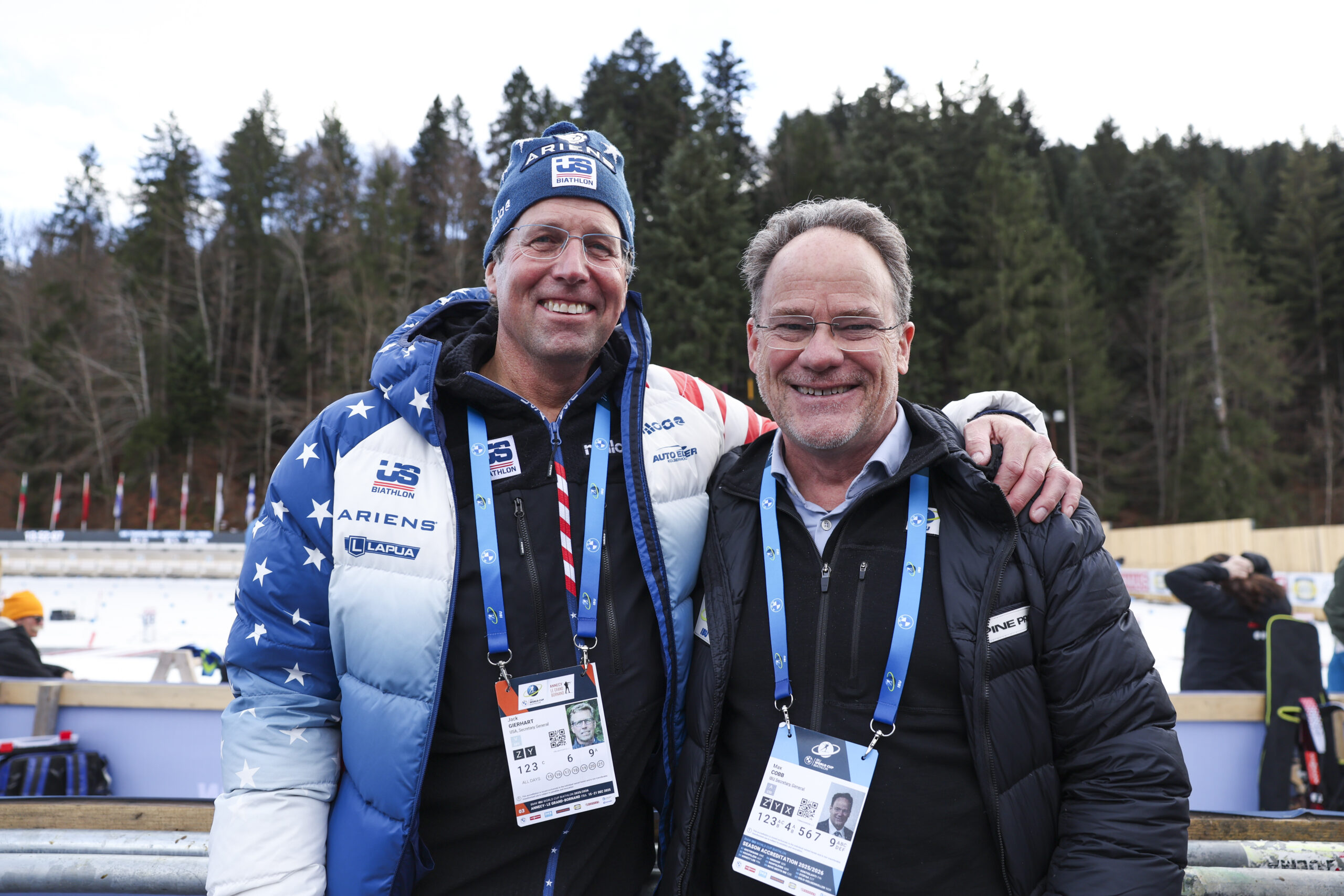
    USBA CEO Jack Gierhart poses with Max Cobb (IBU Secretary General) (l-r) at the IBU World Cup in Annecy-Le Grand Bornand (FRA) last December. (Photo: Manzoni/NordicFocus)

    How the sport got here

    By the account of the people who built it, this did not begin as a takeover. It began, Gierhart said, as an attempt to solve a problem every small Olympic sport shares.

    Gierhart arrived at U.S. Biathlon in September 2022, as longtime leader Max Cobb was leaving for the IBU. The organization was early in a strategic plan aimed at growing the sport, and a central piece of that plan was working more closely with the cross-country community, since most American biathletes come from skiing. “From my experience being in sport for 25 years, when you offer people more options, more pathways, you increase retention and you grow the pie,” he said. “It’s like, this should be a no-brainer, but then you run into the cultures and communities.”

    Those conversations, Gierhart said, drew in the U.S. Olympic & Paralympic Committee, which oversees and funds the country’s Olympic sports. “The USOPC started to suggest, hey, we’ve got a lot of these small NGBs, why don’t you guys think about something a little more formal?” he said. That was roughly a year and a half ago. The organizations sketched the basic terms, paused through the Olympic and Paralympic Games so as not to distract athletes, then brought the concept to a wider audience in the spring.

    Goldschmidt described the same arc and made the case for why her organization wants biathlon at all. U.S. Ski & Snowboard already runs multiple sports under one roof, she said, which means it can absorb the compliance and administrative costs that crush small governing bodies. “The central costs can really be absorbed and be a real cost saving for those organizations,” she said. “Legal, finance, safe sport compliance, all of that, which is quite a big burden, especially on some smaller NGBs. We can absorb that quite easily without having to increase the cost base, which means practically more money is going directly to the athletes.”

    The rollout did not land smoothly. After town-hall meetings drew pointed questions, the two organizations convened three joint working groups, on governance, sport development, and high performance, that met through the back half of July. Twenty-eight to twenty-nine participants, including athletes, coaches, club leaders, and staff, spent two weeks documenting what a successful alliance would require and what worried them. Their reports, posted publicly, have become some of the most revealing documents in the whole debate, in part because they capture both the community’s hopes for closer collaboration and its doubts, in the community’s own words.
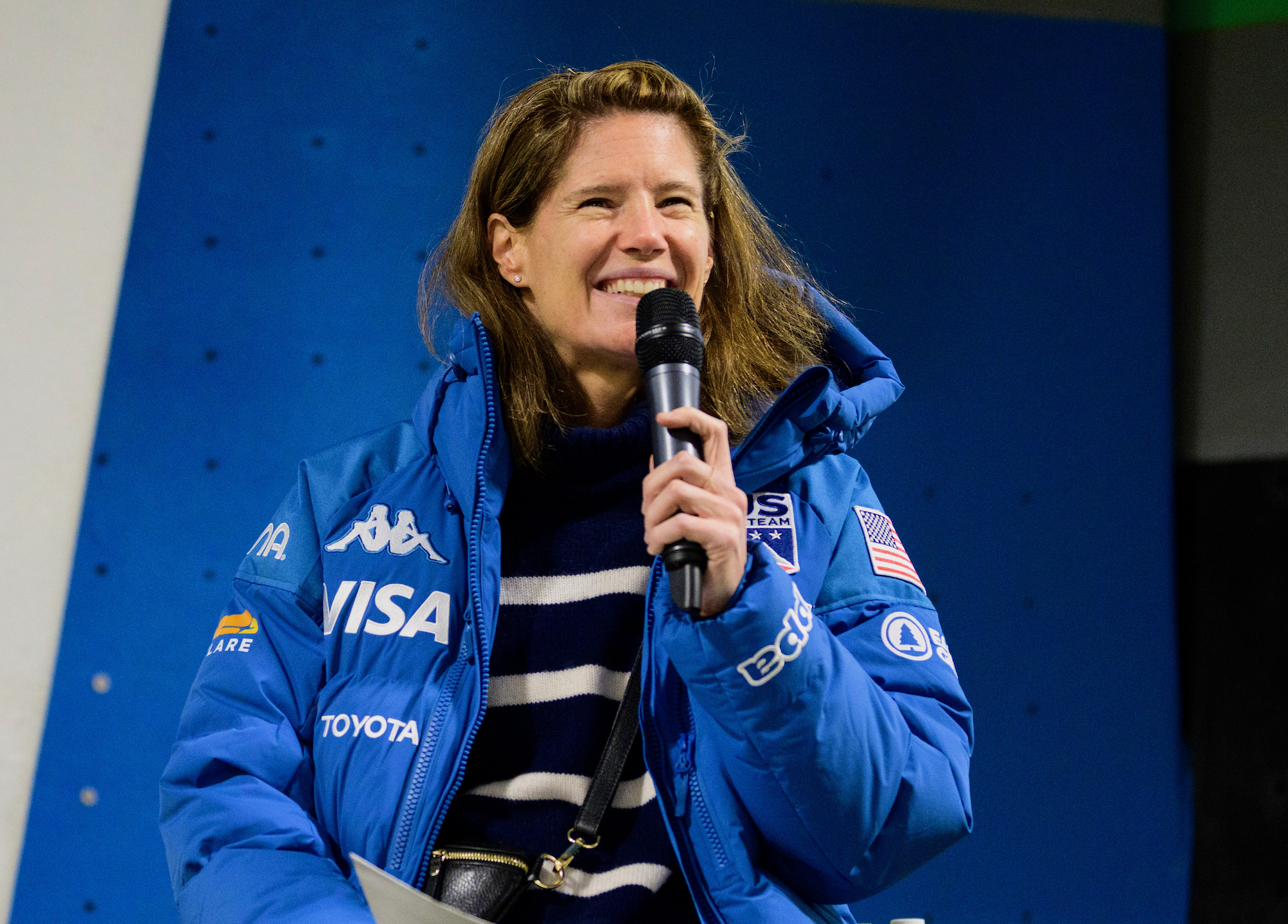
    Sophie Goldschmidt speaking at the Alpine World Cup in Killington, Vermont in 2024. (Photo: U.S. Ski & Snowboard)

    The money, and the question at the center of it

    Almost everyone involved agrees that money is the engine of this deal. What they do not agree on is how to describe the pressure behind it.

    The clearest number comes from Gierhart. For the coming season, he said, the USOPC reduced U.S. Biathlon’s grant by 22 percent. The reason, in his telling, has less to do with the alliance than with a shift in how the USOPC allocates money. Roughly three years ago, he said, the committee created an investment framework weighted toward medal potential. “They told us a couple of years ago, you guys are one of the highest funded sports, you haven’t delivered medals,” Gierhart said. “There’s a good probability you’re going to get a cut. And that’s what happened. They cut us,” a reduction he put at 22 percent for this year.

    Crucially, Gierhart rejected the idea that the cut is a lever to force the alliance. “It hasn’t been like, if you don’t do it, we’re taking away money,” he said. “It was, we’re taking away money because you’re over-resourced from our model standpoint and you’re not delivering. But if you go in this direction, which we believe will be beneficial in the long term, we want to help you do that.” Asked directly in a later FasterSkier interview whether it was a threat, he drew the distinction again. “They gave us our grant for this year, and it’s the 22 percent reduction. But they said that if we move in this direction with this alliance, they want to invest more in us. And they will find a way to do that,” bringing biathlon “back to where we were.”

    Goldschmidt, in interviews with FasterSkier, likewise described the reduction as reversible if the alliance proceeds, and tied it to the USOPC’s belief that a more efficient biathlon can compete for medals.

    The U.S. Olympic & Paralympic Committee, asked to confirm the figures and to say whether restoration of the funding is contingent on the alliance being approved, declined to address specifics. In a written statement, spokesman Jon Mason said the committee “is aware of and engaged in the discussions between U.S. Biathlon and U.S. Ski & Snowboard, and we support them taking a deliberate, transparent, fact-based approach to exploring a future relationship that complies with the Ted Stevens Olympic & Amateur Sports Act.” The committee, he added, is “supportive of outcomes that can build long-term stability and create opportunities for current and future generations of athletes.” The statement did not confirm the size of the cut, and it framed compliance with the Act as a goal the parties must meet rather than a settled fact.

    What the alliance would add is documented. According to the high-performance working group’s summary, biathlon “would receive a ~$600k increase from current FY27 revenue projections” in the first year, with U.S. Ski & Snowboard guaranteeing an increase “from this year-one level through year 4.” Gierhart put the combined total, new revenue and shared-services savings together, at “at least” $3.3 million over four years. That money, in principle, flows back into programs.

    Set against U.S. Biathlon’s roughly $3.5 million in annual revenue, those are not small numbers. And they arrive alongside a promise that biathlon’s existing money stays biathlon’s. Under the agreement, “all funding designated for biathlon, including IBU and USOPC support, existing sponsorship contributions, charitable donations, and other biathlon-specific revenue, will remain ring-fenced and used exclusively to support biathlon.”

    Here Goldschmidt was careful to correct what she called a misunderstanding. The ring-fence, she said, is permanent, not a four-year arrangement. “All of the money that they generate that is ring-fenced for biathlon will continue to go to that program. That will be a contractual commitment,” she said. “Some people have got confused that we’re only committing to four years to ring-fence and provide them funding. That’s not accurate.” The four-year commitment, she clarified, applies to the additional commercial funding U.S. Ski & Snowboard brings to the table, which depends on the sponsorship deals it can renew.

    Gierhart described the same two-part structure, and pushed back on the idea that biathlon falls off a cliff when the four years are up. “This gives us a platform for four years of sort of guaranteed increased revenue to build momentum and to implement the things that we know are going to help us,” he said. “Without that, we’re going to live year to year, and we’re already in maintenance mode as opposed to growth mode.” In four years, he argued, biathlon would be “in no different a situation than we are today. In fact, we’ll be better, because we’ll have a lot more resources to work with over the next four years.”

    That distinction defines exactly where the community’s deepest financial fear lives. The money biathlon already raises is protected by contract. The new money, the actual growth case, is guaranteed for one Olympic cycle, through 2030, and after that depends on the USOPC and on sponsors, the same as it would if biathlon stood alone.
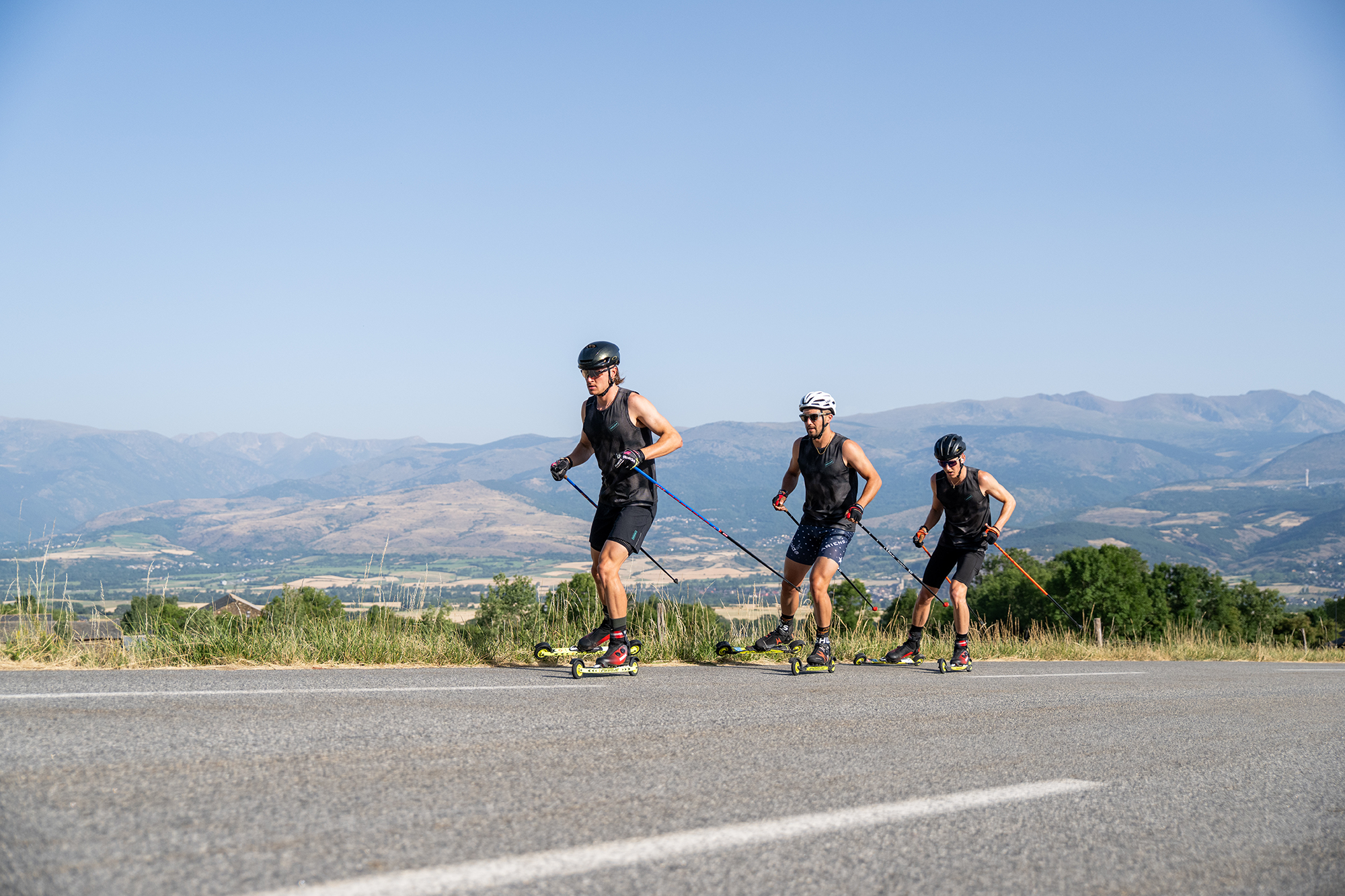
    While much of the US biathlon community debates governance, the USBA’s Campbell Wright, Vincent Bonacci, and Maxime Germain (l-r) gets after their summer training in Font-Romeu (FRA). (Photo: Authamayou/NordicFocus)

    The Ted Stevens question

    No part of the debate has generated more heat than the law. A group of members, some of whom helped establish U.S. Biathlon as an independent governing body decades ago, argue that the alliance violates the Ted Stevens Act. Their case rests on two provisions.

    The first is the single-federation rule. Under 36 U.S.C. 220522, a national governing body must be “a member of no more than one international sports federation that governs a sport included on the program of the Olympic Games.” U.S. Ski & Snowboard belongs to FIS, the International Ski and Snowboard Federation. Biathlon answers to the IBU. Critics contend that if U.S. Ski & Snowboard effectively governs an IBU sport, the arrangement collides with that rule.

    The second is autonomy. The same statute requires a governing body to be autonomous, in that it “independently decides and controls all matters central to governance” and “does not delegate decision-making and control of matters central to governance.” Arthur Stegen, a former U.S. Biathlon board member and part of a group called Team Independent Biathlon, laid out the objection in correspondence circulated to other members and shared with FasterSkier: a services agreement that assigns operational responsibility to U.S. Ski & Snowboard, he argues, is by definition a delegation of control, and reducing the biathlon board to a sport committee “would appear to relinquish its governance responsibilities to another organization.” Stegen wrote that he is “completely against this potential merger.”

    The written terms were plainly built to answer that challenge. The agreement summary includes a section titled “Reserved Governance Authorities,” which states that “notwithstanding any operational responsibilities delegated to U.S. Ski & Snowboard,” U.S. Biathlon “will retain sole authority over all matters required by the Ted Stevens Act or otherwise reserved to the National Governing Body,” including “oversight of the organization, approval of the biathlon budget, and all authorities reserved to the NGB.” In other words, the deal’s authors say operations are delegated while governance is reserved.

    Goldschmidt said the structure was designed to align with the statute from the start. “We’ve worked with the USOPC and others to ensure it fits all of those criteria, which it does,” she said. Gierhart said U.S. Biathlon has already received an opinion on the point. “We’ve gotten the opinion from the USOPC’s legal counsel on the terms as they’re written now, and their opinion is that it meets the requirements and is in compliance with the Ted Stevens Act,” he said.

    He was also clear about sequence, and described it as the normal way such deals come together. Wednesday’s vote is on the foundational terms, the fundamentals both sides have agreed to. “You’ve got to agree on the fundamentals, and then that’s what’s going to drive the detailed operating agreement,” he said. That more extensive agreement, covering licensing of the biathlon trademarks, the function of the board, and the bylaws, would be drafted next, “vetted by independent counsel” to confirm it complies with the Act, and then brought back to the U.S. Biathlon board, athlete representatives included, for a separate vote to approve it.

    That staging is itself contested ground. Supporters see a standard process: agree on principles, then build and independently vet the detailed contract. Skeptics see a board being asked to commit before the full agreement exists and before the independent legal review happens, and some argue a binding vote should wait until both are done. What Wednesday’s vote actually authorizes, the concept or a finished deal, is a distinction worth watching closely as the meeting unfolds.

    The USOPC, for its part, did not put its weight behind a declaration that the current structure is legal. It said it supports the parties “exploring a future relationship that complies” with the Act, language that leaves compliance as something still to be demonstrated.

    There is precedent for the skepticism, and for U.S. Ski & Snowboard’s interest in expansion. The organization previously pursued governing roles in surfing and skateboarding, efforts that critics cite as evidence of a broader ambition to build a multi-sport governing body, the very kind of concentration the Ted Stevens Act was written to prevent. Goldschmidt described those episodes as different in kind. Surfing, she said, “just got too political,” and the organization walked away; skateboarding remains “ongoing” with “no immediate decisions.” Biathlon, she argued, is a natural fit that most European countries adopted long ago. “I get asked all the time, why is biathlon not integrated within your organization,” she said. “It’s a natural fit in many ways.”

    Who controls the board

    Because the autonomy argument turns on control, the composition of the board is more than a technicality, and it is an area where early rumors and current terms diverge sharply.

    Gierhart was emphatic that the U.S. Biathlon board does not shrink or change hands. “The board is going to continue at the same size it is by the bylaws. It’s 12 to 15 members. They’re voted on by the membership,” he said. Those voters remain biathlon’s own roughly 1,500 members, whose categories will be tracked separately even after membership systems migrate to U.S. Ski & Snowboard’s platform in the 2027-28 season. “Our board size is not going to change. The composition is not going to change,” Gierhart said.

    Just as important, he said, is what that board keeps deciding. Among the authorities it retains is control of the budget and the annual plan, meaning that where biathlon’s money is spent would still be approved by the U.S. Biathlon board of directors.

    The new layer is the Biathlon Sport Committee, which the agreement describes as being drawn from the existing board, “6 to 8 members,” and maintaining the 33 percent athlete representation required by USOPC bylaws. The chair of that committee and one athlete representative would sit on the U.S. Ski & Snowboard governance board, giving biathlon two seats and a direct voice in the larger organization. The arrangement runs in both directions: U.S. Ski & Snowboard would, in turn, have representation on the U.S. Biathlon board.

    Athlete voice, a recurring worry, is addressed specifically. Rather than being folded into U.S. Ski & Snowboard’s athlete representation, “biathlon would still maintain its separate voice of athletes on the Team USA [Athletes’] Commission,” Gierhart said. “We’d have our own.”
    Even though Jake Brown officially retired from the IBU World Cup after last season, he has played an active role as an athlete rep throughout this process. (Photo: Authamayou/NordicFocus)

    What changes for the athletes

    For the people who actually race, the alliance is not an abstraction about governance. It is a question about who pays for the plane ticket to Europe.

    U.S. Biathlon funds its athletes to a degree unusual among American winter sports. “Our athletes within biathlon are better funded and supported than in any other winter sport,” Gierhart said, noting that the program fully funds its World Cup athletes and nearly fully funds its IBU Cup athletes. Revisiting the specifics, he said U.S. Biathlon provides its athletes $48,000 in direct athlete support, $35,000 in need-based assistance, and $30,000 in performance bonuses, and secures roughly $36,000 a year for its top competitors. Cross-country, by contrast, does not pay national-team skiers to compete on the World Cup; much of that burden falls to clubs and to community fundraising.

    That gap is the source of the athletes’ most concrete fear. Jake Brown, who retired from biathlon this year and sits on the U.S. Biathlon board as an athlete representative, said the worry he hears most is that biathlon’s funding model quietly converts to the ski-team model once the sports combine. He is careful to add nuance. “There’s nothing guaranteed that U.S. Biathlon will continue funding World Cups either,” he said. “The funding has to be there.” Biathlon also draws money from the IBU for each athlete who starts a race, which makes subsidizing those starts partly self-financing, and the sport has leaned into keeping athletes in the pipeline rather than cutting them early. “We can’t afford to lose them,” Brown said.

    The agreement attempts to lock that model in place, but only for a defined window. The current athlete support model “will continue through the 2030 Olympic quad,” it says, with “National Team, World Cup, IBU Cup, Youth, and Junior athlete support structures” remaining “in place unless changes are jointly approved by the Biathlon Sport Director and the U.S. Biathlon Board.” As with the incremental funding, the guarantee runs one cycle. What happens after 2030 is precisely what no document can promise, though, as Gierhart notes, biathlon cannot promise that to itself every year either.

    No voice in this debate has lived that risk more directly than Justin Wadsworth, the former U.S. Olympian who now is U.S. Biathlon’s Head Physiology Coach (working with both the men’s and women’s national teams) and who spent years coaching in Canada, including a stretch as a high-performance director there. Wadsworth described watching Biathlon Canada’s funding collapse. “Over the last eight to ten years, we’ve seen organizations having funded the athletes for all camps, all trips, everything, to now athletes paying for training camps, paying for trips,” he said. “That’s basically what’s really pulled Biathlon Canada down. The athletes just can’t afford to go on trips or training camps.”

    The damage, he said, was not only financial. “It really changes the dynamic with the team,” Wadsworth said. “As a coach and as an organization, it’s much harder when athletes are paying for everything.” His wife, Beckie Scott, the Olympic champion who now leads Nordiq Canada, made cutting athlete fees a priority for exactly that reason. Asked what U.S. Biathlon should guard most carefully, Wadsworth did not hesitate. “The number one is just, are the athletes going to continue to be getting funded when they’re absorbed with U.S. Ski and Snowboard.”

    Brown framed the same anxiety in a different register, as a question of trust. “There is a strength in independence,” he said. “You have a trust that your leader, when they put their head on the pillow every night, is trying to figure out how to make biathlon better in the country, and not trying to figure out how to prioritize what sport within a larger organization.” That, more than any statute, is the emotional core of the opposition: the fear that biathlon becomes one line item among many, advocated for by executives whose attention is divided.

    The community’s own working group named the same items. The high-performance group’s report listed what “must be protected”: the centralized national team model, athlete stipends and need-based aid, the pathway that recruits skiers into biathlon, the world-class ski-service program, the Montana State University sport-science partnership, and “athlete-centered decision making.” It also warned, in writing, of the risk that unites the skeptics and the supporters, that “differences in stipends, housing, and athlete funding philosophies will be inequities across sports,” and that “the reasoning behind this must be explained well, or there is high risk of tension between sports.”

    The case for

    Set the fears aside and the argument for the alliance is not hard to follow, and some of its most persuasive versions come from people with no stake in the outcome.

    Wadsworth, who says he has “no real skin in the game” and is “just trying to coach right now,” makes the efficiency case from painful experience. A small governing body cannot carry the overhead a large one can. “An appeal, from an athlete and the organization needs to get a lawyer for that, a single appeal can cost 30 to $50,000,” he said, “and if that’s 5 percent of your budget, that’s a big hit.” Fold biathlon into a larger organization with in-house counsel, fundraising staff, a training center, and sport scientists, he said, and those costs largely vanish. “Those efficiencies are really the positive side.”

    Goldschmidt’s version is about scale on the revenue side. U.S. Ski & Snowboard, she wrote to biathlon’s members, generated “more than 900 million social media impressions and 7 billion earned media impressions last season,” counts more than a million social followers, and has “more than doubled our commercial revenue over the last four years,” with “nearly 85 percent of that revenue going directly to athletics.” Biathlon, by her argument, brings a genuinely valuable and telegenic property, the IBU World Cup is among the most-watched winter sports in Europe, that a 35,000-follower organization cannot monetize on its own. “One plus one can equal a lot more than two,” she said, “most importantly for biathlon.”

    Gierhart’s case is about the limits of the status quo. “We’ve been doing the same thing for 60 years,” he said. “We’re a small sport, we have limited resources. We’ve always had a thin bench. But the formula isn’t changing. And if we’re going to try to drive transformational change, we’ve got to look at some things a little differently.”

    And there is the pipeline, the argument that biathlon and cross-country are natural partners that have been kept artificially apart. Today a club that wants to offer both sports contends with two governing bodies, two memberships, two coaching-education systems, two calendars. The sport-development working group’s central recommendation was to merge those tracks, shared coach education, coordinated regional calendars, laser biathlon introduced to youth skiers, so that, in Brown’s words, the “big potential benefit comes in the sport development space.” Wadsworth added the practical constraint that enthusiasm tends to skip past: it comes down to shooting ranges. “The number one thing for biathlon is you need a range, and so that’s probably a limiting factor,” he said. “If U.S. Ski and Snowboard decides they really want to focus on the development side, they’re going to have to build more biathlon ranges. If you build it, they’ll come.”
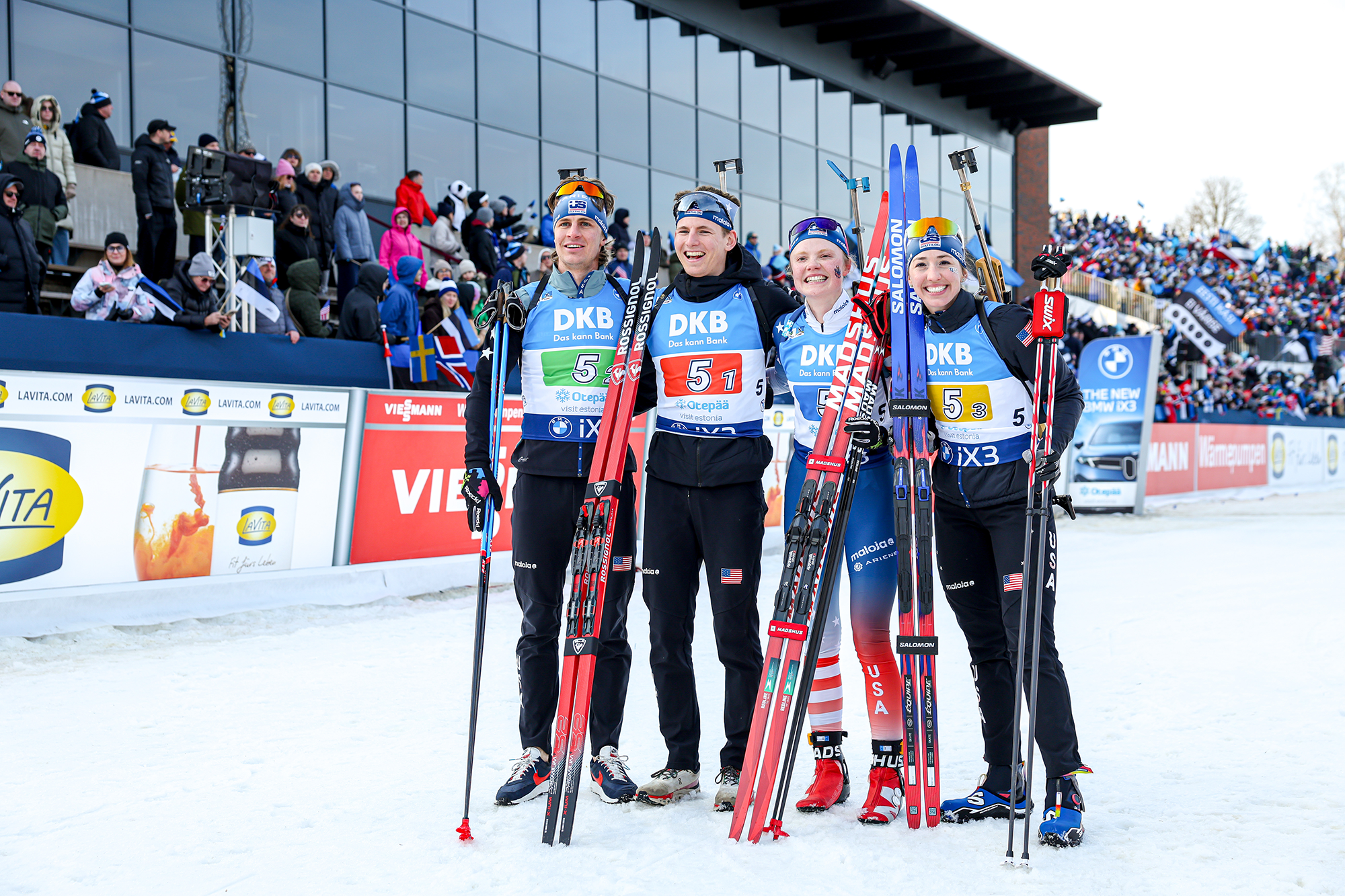
    Campbell Wright (USA), Maxime Germain (USA), Margie Freed (USA), and Deedra Irwin (USA), (l-r) after the IBU World Cup Biathlon mixed relay in Otepaeae (EST). (Photo: Manzoni/NordicFocus)

    The case against, in the community’s own words

    The sharpest questions about the alliance do not come from the members trading accusations online. They come from the process U.S. Biathlon itself ran. The working groups produced plenty of enthusiasm for closer collaboration, and their reports document at length the benefits participants believed an alliance could unlock. But the same reports surfaced a recurring doubt.

    Across all three groups, participants returned to a single question: if the goal is collaboration between biathlon and cross-country, why does it require a formal alliance? The consolidated report notes that “several participants observed that many of these initiatives could theoretically be pursued without a formal alliance.” The sport-development group put it more bluntly in its written takeaway: “Some expressed confident progress could be made without an alliance. It is not accountability that will move this from conversation to action. It is the passion of the people involved in both sports.” (U.S. Biathlon cautions on every page that the working-group notes were “generated during meetings in which judgment was not applied” and “do not represent the decisions or strategies” of the organization.)

    The governance group’s “parking lot” of unresolved issues reads like a checklist of the skeptics’ concerns: “Ted Stevens Act compliance,” “an escape path if integration fails,” “what autonomy does Sport Committee have to direct USSS operations,” and whether a replacement is needed for the athletes’ advisory council “to preserve biathlete input.” The high-performance group flagged “budget flexibility,” asked “which proposed benefits truly require an alliance, and which can already be achieved through partnership,” and wondered whether biathlon could build its own dedicated fundraising vehicle, an equivalent of the National Nordic Foundation, without merging at all.

    U.S. Ski & Snowboard’s answer to the “why not just collaborate” question is that informal collaboration has been tried, and has not delivered. The alliance-alignment document U.S. Biathlon distributed argues that, while the two organizations “have collaborated successfully for many years, this formal Alliance creates a level of commitment, coordination and accountability that cannot be achieved through informal collaboration alone.” Gierhart put it more sharply. He said he disagrees “wholeheartedly” with the notion that passion alone will carry the work forward. “You need accountability,” he said, describing what he sees as a fundamental difference within the community over how things actually get done. Goldschmidt made the same point about incentives: absent a formal structure, she said, no one at a big organization is measured on whether they helped a small one. “Why would I help another sport if that’s not how I’m measured?”

    Then there is the matter of process and speed, which even supportive athletes acknowledge. Brown said the spring rollout caught the community off guard. “It kind of came out in the springtime. It was a little bit surprising, and it took us some time to understand why,” he said. “Most of the membership and the athlete body, we had some catching up to do.” The working groups were themselves a response to feedback that the process had moved too fast with too little consultation, and some members continue to argue that a binding vote should wait for the final agreement and its independent legal review, both of which, by U.S. Biathlon’s own account, come after Wednesday.

    The exit, and what the fine print says

    If there is a single provision that will decide how much reassurance skeptics take from this deal, it is the exit. Gierhart is adamant that it is a last resort, not a trap door.

    He described a defined process. Goals and key performance indicators would be set at the outset, with an assessment after the first year and a comprehensive review at the end of the quad. “If we get to a point where there’s irreconcilable differences,” he said, “then there is an option to move towards a different operating structure, which could mean that U.S. Biathlon becomes an independent operating entity again. And that is a choice that can be made by either party. It doesn’t have to be mutually agreed upon.”

    He was careful to say that does not mean either side can simply walk away on a whim. The written summary describes an interim assessment after the 2026-27 season and a comprehensive review after 2029-30, and says that “should significant challenges arise that materially impair the objectives of the alliance, the organizations will first implement a corrective action plan.” Only “if substantial concerns remain unresolved after those efforts” would “alternative organizational structures, including the return of U.S. Biathlon to an independently operated organization, be considered.” That, Gierhart said, matches what he meant: a process of measuring progress against shared goals, trying to fix what is not working, and only then, if the problems prove irreconcilable, allowing either party to end the alliance without the other’s consent.

    “I don’t want it to sound in any way that in four years there’s an exit ramp that’s most likely going to happen,” he said. It is less an exit ramp, in his framing, than a runaway-truck ramp: an emergency measure, rarely used, that exists only for the case where nothing else has worked. The distinction that matters, he said, is that the eventual decision does not require both sides to agree. “It would probably be the board of directors of U.S. Biathlon that would say, we can’t resolve these differences and we want to make a change. Or Ski and Snowboard would say this is not working.”
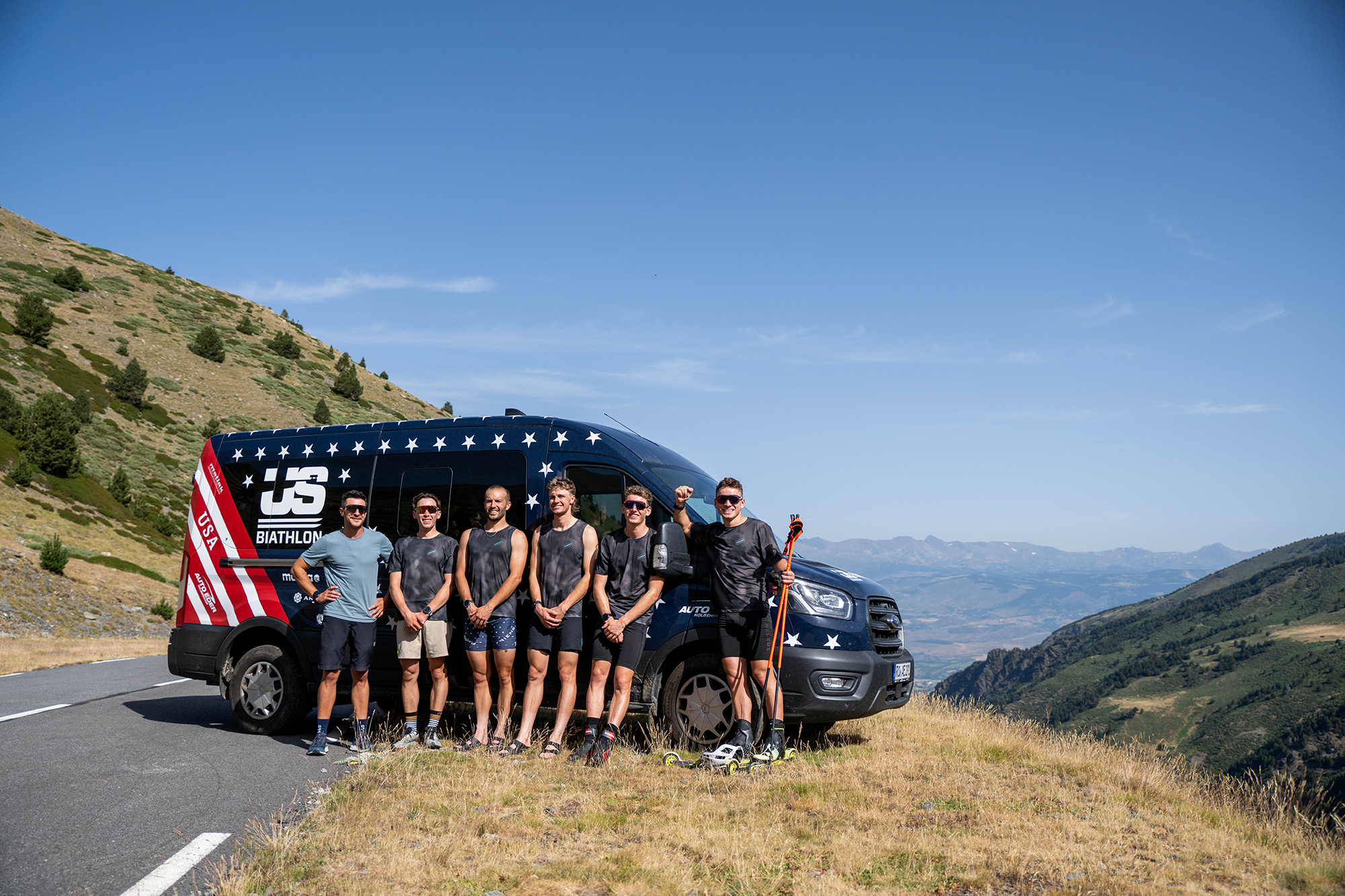
    Emil Bormetti (ITA); Coach Team USA, Bjorn Westervelt (USA), Vincent Bonacci (USA), Campbell Wright (NZL), Maxime Germain (USA), Vaclav Cervenka (USA), (l-r) summer training in Font-Romeu (FRA). (Photo: Authamayou/NordicFocus)

    What happens Wednesday

    The board meets Wednesday at 4 p.m. Eastern. By Gierhart’s account, directors received an extensive board package over the preceding weekend, and the athlete representatives, who under USOPC rules make up a third of the board, have been closely engaged.

    What the vote settles may be narrower than the noise around it suggests. If the board approves the foundational terms, the more detailed operating agreement, and its independent legal review, would follow, along with a further board vote to approve it. If the board balks, or postpones, the timeline slides. Either outcome will be read as a verdict on a process that many in the community found rushed and many others found overdue.

    The stakes are real in both directions, which is why the debate has been so bitter. If biathlon stays independent, it does so facing a documented funding cut and the same structural constraints that have kept it small for six decades. If it joins, it trades a measure of autonomy for stability, resources, and a commercial platform it has never had, and it does so on the promise, guaranteed for four years and asserted in perpetuity, that the sport it has built will not be diminished inside a larger one.

    The people on every side of this insist they want the same thing. “Whichever way the board decides,” Brown said, “I really want to be able to take our membership with us in whichever direction we go, and maintain good relationships with our full community. Because otherwise, we lose.”

    On Wednesday afternoon, fifteen people will decide which way that goes.

    FasterSkier will report the outcome of Wednesday’s vote. Reporting for this article included interviews with U.S. Ski & Snowboard president and CEO Sophie Goldschmidt, U.S. Biathlon president and CEO Jack Gierhart, U.S. Biathlon athlete representative Jake Brown, and U.S. Biathlon head physiology coach Justin Wadsworth, a written statement from the U.S. Olympic & Paralympic Committee, and a review of the alliance term sheet, the July 2026 community working-group reports, and correspondence from members opposed to the deal.

    Because the details of this proposal are complex, quotations attributed to U.S. Ski & Snowboard and to U.S. Biathlon were provided to each organization in advance of publication so they could verify the accuracy of their own statements and clarify technical details. FasterSkier retained full editorial control over the content, framing, and conclusions of this article.


    Help Support Our Coverage!

    If you value the thoughtful work and access FasterSkier provides, please consider becoming a Voluntary Subscriber. Your support directly fuels our work to cover the people, places, and moments that make our sport special.

    Join the FasterSkier community!


    At this moment, we don’t know what is down the road for USA Biathlon, but hopefully we will stay a community that supports the sport and the hard work of the athletes and coaches doing their best to perform at the highest level. (Photo: Authamayou/NordicFocus)
  • Back to Back Silver Medals for Campbell Wright at World Championships

    Back to Back Silver Medals for Campbell Wright at World Championships

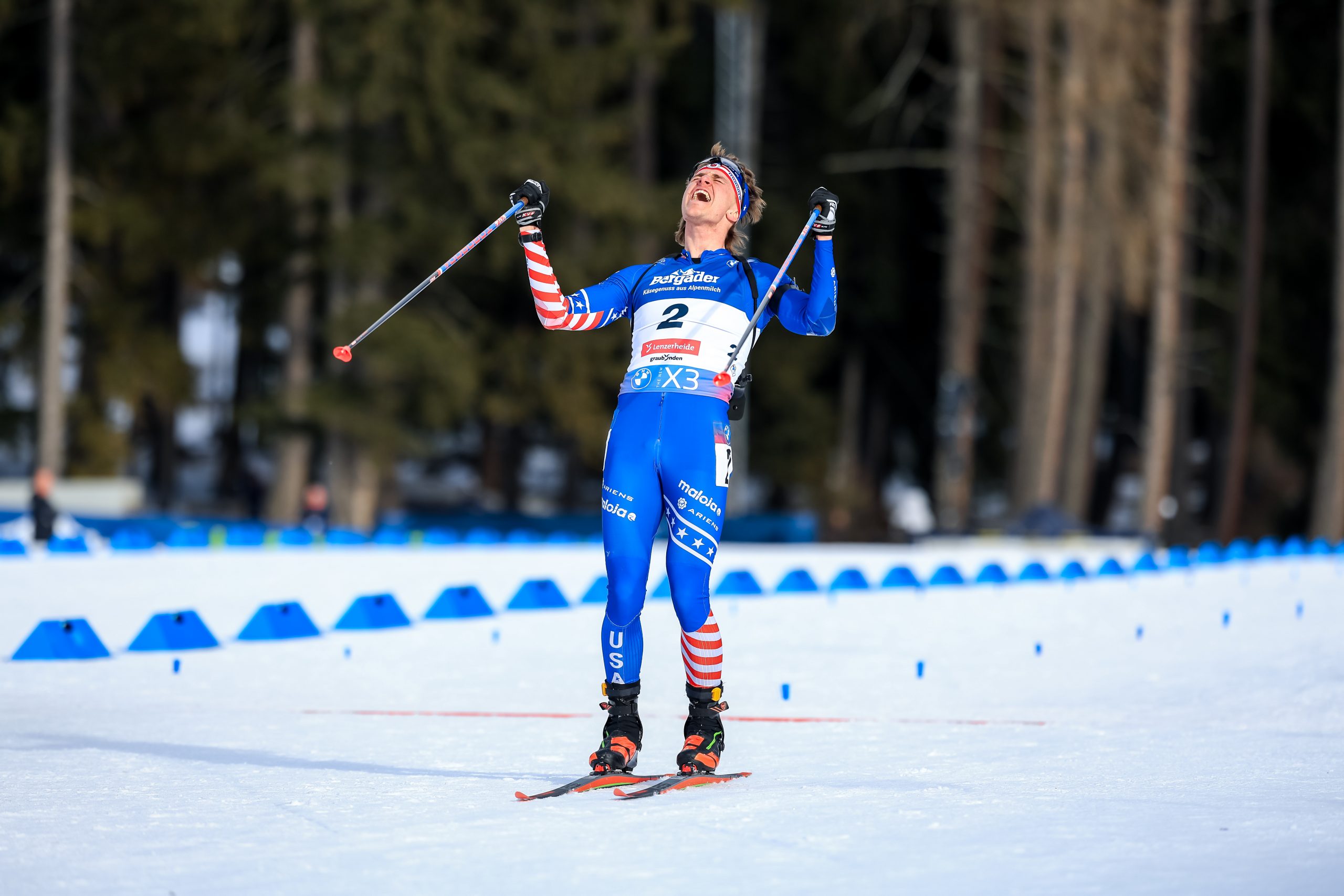
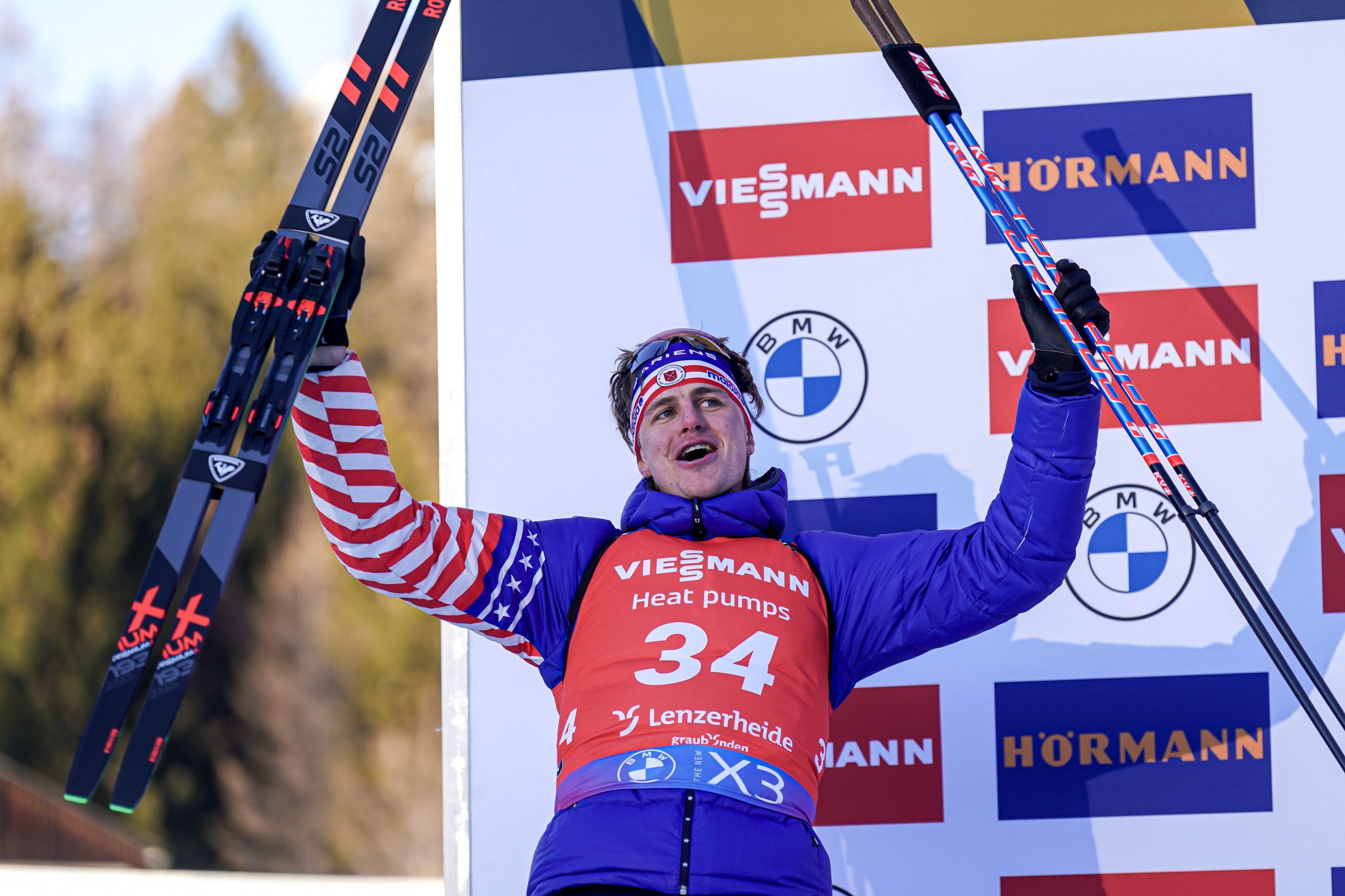
    Campbell Wright (USA) celebrates his silver medal at the IBU World Championships Biathlon in the men’s pursuit in Lenzerheide (SUI). (Photo: NordicFocus)
    By: Sara Donatello

    After a historic World Championship silver medal in the men’s 10km sprint, Campbell Wright (Wanaka, NZL/Waiorau Nordic Skiing) is back on the podium in Lenzerheide, SUI with yet another silver medal in the men’s 12.5km pursuit. Missing just one target in his first prone stage, Wright went on to clean the final three stages of his race and solidify his second place position.

    “Yesterday after the race I was pretty hyped up, I did not sleep very much last night as you can imagine I was pretty excited,” said Wright after the pursuit. “I got on the start line today and said ‘just enjoy every single meter of this race, man’. I’ve already proven what I needed to prove yesterday that I can really race with these guys and I’m not just a tourist here, but I can actually ski well and shoot well on a good day. I just started this race with nothing to lose and that’s the best place to be.” 

    Campbell Wright (USA) on his way to his second straight silver medal at the IBU World Championships Biathlon, in Lenzerheide (SUI). (Photo: NordicFocus)

    Once again, Wright stood on the podium with World Cup overall leader Johannes Thinges Boe of Norway, who held on to his title of defending world champion. The third-place position was filled this time by Eric Perrot of France, who made the impressive jump from 15th position at the start.

    With the seventh overall ski time, Wright crossed the finish line just a mere 8.6 seconds behind Boe, closing the gap between them by seven seconds on the final lap. He noted that it was not in an effort to beat Boe, but more so to ski away from Perrot, who also cleaned his final shooting stage. With speedy skis and support from Team USA staff and teammates on the course, Wright held Perrot to third by +12.2 seconds.

    Maxime Germain (Chamonix-Mont Blanc, FRA/National Guard Biathlon), despite missing four targets on the day, had the 22nd overall ski time to land his third-best result this season in 21st place. Paul Schommer (Appleton, WI/Team Birkie/Ariens Nordic Center) was the biggest mover among U.S. men, jumping 17 positions to land 39th overall. Sean Doherty (Conway, NH/Army World Class Athlete Program) rounded out the U.S. men with a solid 45th-place finish.

    Paul Schommer (USA) during the Men’s Pursuit at the IBU World Championships Biathlon in Lenzerheide (SUI). (Photo: NordicFocus)

    Earlier in the day Chloe Levins (Williston, VT/Unaffiliated) and Lucinda Anderson (Golden Valley, MN/Team Birkie) both moved up in the field in their first-ever World Championship pursuit races. Levins jumped from bib 52 to land in 48th and Anderson from bib 56 to finish 49th.

    A well-deserved training day tomorrow for the U.S. Biathlon Team before the women are back at it on Tuesday, February 18 at 9:05 EST/15:05 CET for the 15km individual. The men’s 20km individual will begin the following day, February 19, at 9:05 EST/15:05 CET.

    Campbell Wright (USA), Johannes Thingnes Boe (NOR), Eric Perrot (FRA), (l-r) – IBU World Championships Biathlon, pursuit men, Lenzerheide (SUI). (Photo: NordicFocus)
  • Campbell Wright Earns Silver Medal at IBU World Championships

    Campbell Wright Earns Silver Medal at IBU World Championships

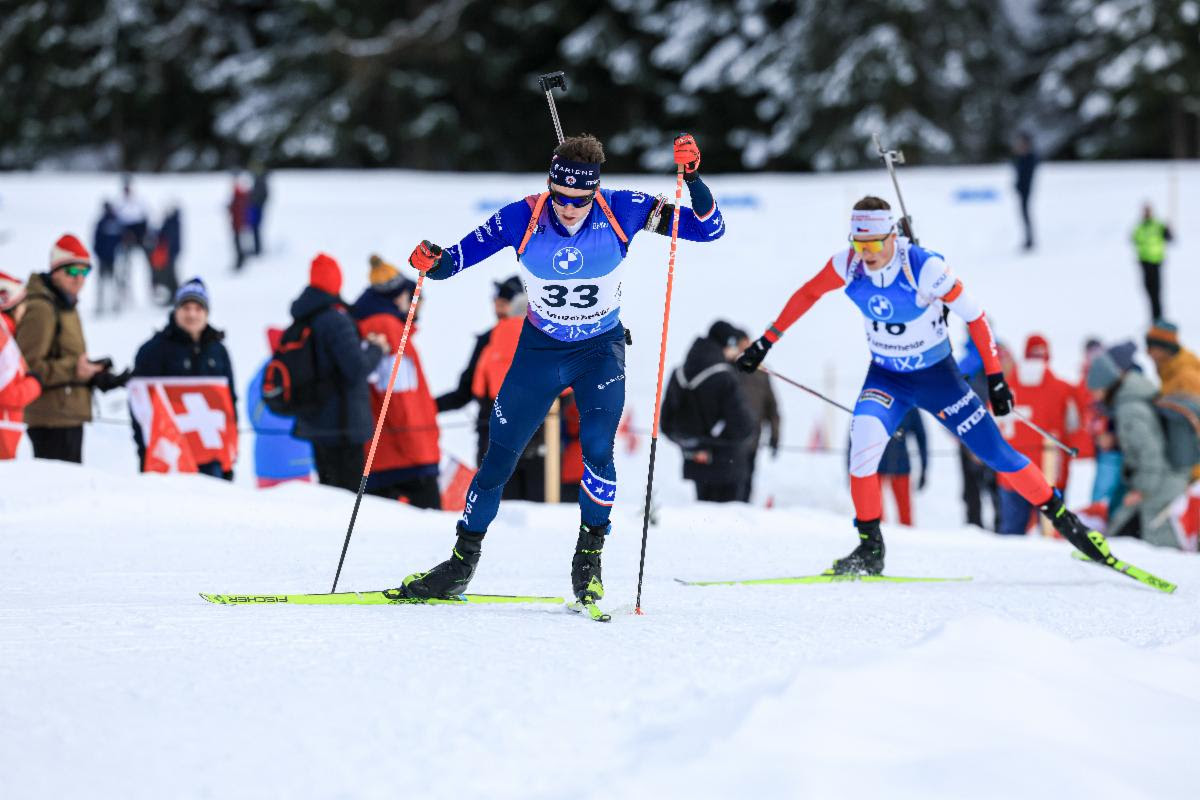
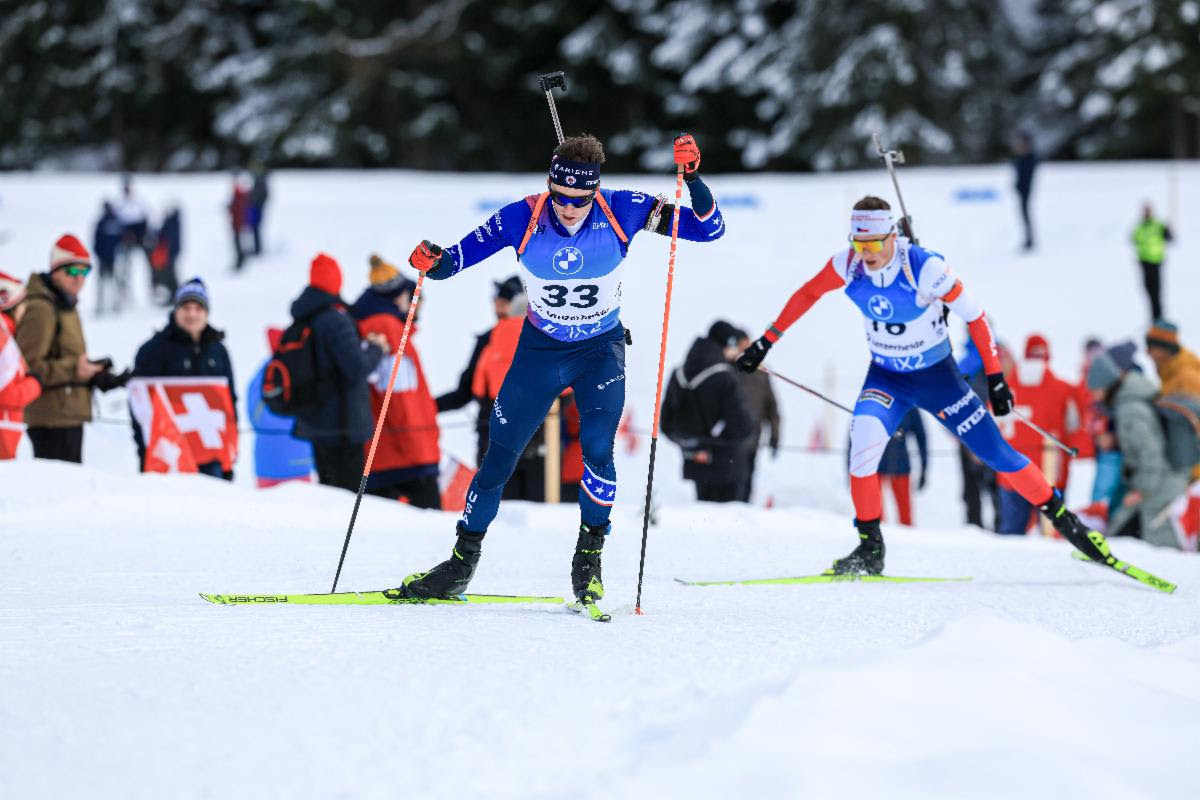
    Campbell Wright (USA) on his way to second-place in the Men’s Sprint at the IBU World Championships Biathlon in Lenzerheide (SUI). (Photo: NordicFocus)
    Crossing the line just 28 seconds behind the World Cup overall leader Johannes Thinges Boe of Norway, Wright took the second stand, with France’s Quentin Fillon-Maillet completing the podium in third.

    “Coming into the day, I just had all the confidence that I could ski with the top guys,” said Wright in an interview with SVT. “I skied with Ponsiluoma that second loop and felt pretty in control to be honest. I just figured I really gotta hit the targets on standing. I managed to do it, and honestly, I have no words.”

    Campbell Wright (USA) pushes for every second in the Men’s Sprint at the IBU World Championships Biathlon in Lenzerheide (SUI). (Photo: NordicFocus)
    Campbell Wright (USA) celebrates with his fans at the IBU World Championships Biathlon in Lenzerheide (SUI). (Photo: NordicFocus)

    Teammate Maxime Germain (Chamonix-Mont Blanc, FRA) also hit a World Championship personal best with his 12th place finish. Germain also cleaned his targets, posting a 22nd ski time to set himself up nicely for the pursuit, just +1:08 back from the leading Boe.

    Sean Doherty (Conway, NH/Army World Class Athlete Program), with a 45th overall ski time, raced to 41st, missing just one target in prone and cleaning his standing shoot. Paul Schommer (Appleton, WI/Team Birkie/Ariens Nordic Center) placed all four U.S. men in the top 60 with his 56th place finish, despite three misses on the day. This was Schommer’s first World Championship start since 2023 in Oberhof, GER.

    Campbell Wright (USA) celebrates the first American Men’s podium at IBU World Championships. (Photo: NordicFocus)
  • Inaugural 2024 U.S. Biathlon Collegiate Nationals Sets the Tone for Future Events

    Inaugural 2024 U.S. Biathlon Collegiate Nationals Sets the Tone for Future Events

    (Photo by Ana Paradis)
    The inaugural U.S. Biathlon Collegiate National Championships took place March 22, 2024 at the Fort Kent Outdoor Center in Fort Kent, Maine, in conjunction with the 2024 U.S. Biathlon National Championships. Twelve collegiate athletes representing six colleges and universities from around the Northeast traveled to Fort Kent to race and represent their respective schools.

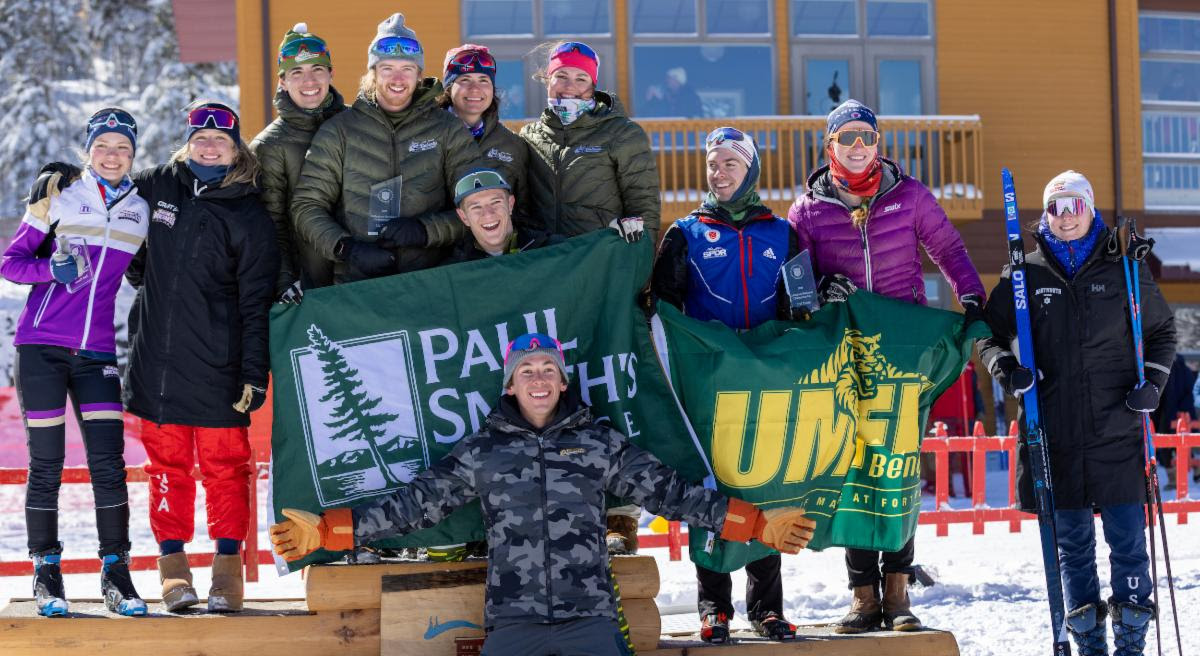
    Friday’s U.S. Nationals sprint race doubled as the Collegiate Nationals sprint race, where athlete standings were counted towards both events. Crystal trophies were awarded to the top three athletes for both women and men, and the top three collegiate teams, determined by combining the best two athletes’ scores from each team.

    “What a great weekend in Fort Kent,” said U.S. Biathlon Director of Sport Development John Farra. “I am very pleased that the Collegiate Championships were a success! The intent was to provide recognition to those athletes who are in a course of study at a collegiate institution and who define themselves as biathletes, as well as provide recognition to the schools that are supporting their sporting efforts. These collegiate institutions are helping us in our sport development efforts, and we got to celebrate that in Fort Kent.”

    Grace Castonguay, currently a senior at Saint Michael’s College in Colchester, Vermont, claimed the historic Collegiate National Championships title for the women. Castonguay raced to a time of 29:43, missing just one target in prone and three in standing. Hannah Chipman of Dartmouth College in Hanover, New Hampshire, took home second place, covering the course in 31:36 with just three misses on the day. Dolcie Tanguay, racing for Paul Smith’s College out of Paul Smith’s, New York, finished in third with a time of 32:32, mirroring Chipman on the range with three misses.

    (Photo by Ana Paradis)
    “It was really fun and special to be recognized as a college athlete, as well as a biathlete, this past weekend,” said Castonguay. “Collegiate ski racing has influenced a lot of my development and progress as a biathlete and has been a major part of my identity for the past three years, so it was nice to recognize its role in my biathlon journey.”

    On the men’s side, Bjorn Westervelt, a senior at the University of Vermont in Burlington, Vermont, won the historic Collegiate National Championships title for the men with a time of 30:50, despite six misses on the range. Paul Smith’s College saw three athletes on the individual podiums with teammates Aiden Ripp and Diego Schillaci claiming second and third in the men’s category. Ripp raced the 10km course in 34:08 with Schillaci on his heels with a time of 35:43.

    (Photo by Ana Paradis)
    Paul Smith’s College continued their podium success in the team category as the team of Tanguay, Ripp, Scillaci, Brady Miller and Kaisa Bosek took home the title with the top collective team score. Saint Michael’s College athletes Castonguay and Evelyn Hudrlik stood on the podium in second place with the local team of Bridget Reusch and Caleb Hunter of University of Maine at Fort Kent raising their flag in third. The University of Vermont placed fourth, Dartmouth College in fifth and St. Lawrence University finished in sixth place.

    Westervelt added, “I think it’s awesome that U.S. Biathlon is highlighting all the student athletes out there that balance being university students and competing in high level athletics at the same!”

    (Photo by Ana Paradis)
    “It was so exciting to not only be a part of the first ever U.S. Biathlon College National Championships but to also take home the National Championship title,” said Paul Smith’s College Head Biathlon Coach Matt Dougherty. “I was so happy not only for the Paul Smith’s athletes but all the collegiate athletes who had this opportunity to compete and be recognized for their hard work, dedication and effort through their college careers.”

    “Getting to share the podium for the overall team score with Evelyn, my college teammate, was really special,” added Castonguay, “and I know it made the rest of our team at Saint Michael’s College very proud.”

    This inaugural Collegiate Biathlon National Championships marked the beginning of what will be an exciting annual event for all current and future collegiate biathletes to represent their respective colleges and universities. For the past four years, U.S. Biathlon has worked closely with Paul Smith’s College as the Official Education Partner of U.S. Biathlon, committed to growing the visibility and opportunity for collegiate biathletes. Not only were they an integral part in the success of the Collegiate National Championships event, but they further proved the success of their own biathlon program in Fort Kent.

    “In late 2020, Paul Smith’s College announced a unique partnership with U.S. Biathlon and four years later we had a Collegiate National Championship. It’s a great reward for the entire community of biathlon,” added Dougherty. “This is also a testament to Paul Smith’s College and everyone who supported the development of the biathlon program at Paul Smith’s. We knew there was a need for a place dedicated to helping biathletes develop and obtain a world class degree at the same time. All the campus’ support made this possible and it’s a testament to what Paul Smith’s College stands for world class results from a small school in the woods. We are excited to help grow the college ranks for biathlon and hopefully serve as inspiration for other colleges to follow suit.”

    “This has become an important initiative as we aim to give credibility to those institutions who recruit biathletes as Nordic ski racers and support their desire to juggle both sports, while also giving credibility to those biathletes who may not be competing for a Collegiate institution in skiing, but are committed to working towards a degree while training and competing in both cross-country skiing and biathlon,” added Farra. “There are many ways to achieve one’s sporting and high education goals and we had a great representation of that in Fort Kent.”

    About U.S. Biathlon

    As the Olympic sports organization centered around the sport of biathlon, the United States Biathlon Association, known as U.S. Biathlon, is recognized by the International Biathlon Union (IBU) and the U.S. Olympic and Paralympic Committee (USOPC) as the national federation for biathlon in the United States. Founded in 1980, U.S. Biathlon exists to support and encourage the development of biathlon in the United States, to work with biathlon clubs and regional centers around the country to organize training and competition from the grassroots to elite level, and to prepare athletes for international competition. U.S. Biathlon staffs and finances the U.S. Biathlon national and junior national teams and is a 501 c (3) non-profit organization. For more information, visit usbiathlon.org.

    U.S. Biathlon Media Contact

    Sara Donatello

    saradonatello@usbiathlon.org

    +1 (518) 524-5354

  • 2023-24 World Cup Season Wraps Up in Canmore

    2023-24 World Cup Season Wraps Up in Canmore

    Margie Freed (USA) – IBU World Cup Biathlon, sprint women, Canmore (CAN). www.nordicfocus.com. © Manzoni/NordicFocus.
    The final weekend of BMW IBU World Cup racing wrapped up in Canmore, Alberta in the heart of the Canadian Rocky Mountains. The clear, sunny skies saw athletes transform their race suits into makeshift shorts and t-shirts, making the heat a bit more bearable for the final sprint, pursuit and mass start races of the 2023-24 season. Team USA ended the season on a high note with much to look forward to for the 2024-25 season ahead.

    The weekend kicked off with the final women’s 7.5km sprint of the season on Thursday, where Deedra Irwin (Pulaski, WI/Army World Class Athlete Program) led the team with a 26th place finish, shooting a perfect 10 for 10, to qualify for Saturday’s 10km pursuit. Margie Freed (Apple Valley, MN/Craftsbury Green Racing Project) landed in 74th with just misses on the range. Chloe Levins (Rutland, VT/Team Crosscut) followed Freed in 81st place, hitting nine of ten targets, and Kelsey Dickinson (Winthrop, WA/Craftsbury Green Racing Project) rounded out the group in 90th place with two misses in standing.

    In Friday’s men’s 10km sprint, Campbell Wright (Wanaka, NZL/U.S. Biathlon) finished in 28th, after putting three shots wide on the range. Jake Brown (St. Paul, MN/Craftsbury Green Racing Project) joined Wright in the top 40 to score World Cup points, racing to 36th place with just one miss on the day. Vincent Bonacci (Salt Lake City, UT/Team Crosscut) and Sean Doherty (Center Conway, NH/National Guard Biathlon) just missed out on Saturday’s pursuit, finishing in 70th and 73rd, respectively.

    Jake Brown (USA) – IBU World Cup Biathlon, pursuit men, Canmore (CAN). www.nordicfocus.com. © Manzoni/NordicFocus.
    Saturday’s pursuit was Irwin’s day. Extending her clean shooting streak to 30 out of 30 on the weekend, she jumped 14 places from bib 26 to finish the day in 12th place, her top pursuit result of the season and first pursuit clean shooting. Wright moved up the leaderboards as well, jumping from 28th to 18th with just one miss in the range. Brown stayed consistent, finishing the day where he started in 36th with four misses on the day and the 18th ski time overall, scoring valuable Nations Cup points in his last start of the season.

    Due to her outstanding performance in the sprint and pursuit, Irwin received bib 29 in Sunday’s 12.5km mass start, her second mass start of the season. She continued her clean shooting streak through the first stage, but three misses in her second stage and one miss in her final standing shoot landed her in 27th. Irwin ended the season in 38th in the World Cup overall standing, her highest placement thus far in her career.

    With the 2023-24 BMW IBU World Cup season in the rearview mirror, athletes now head their ways with many traveling to Fort Kent, Maine for one final race weekend at the 2024 U.S. Biathlon National Championships and inaugural U.S. Biathlon Collegiate National Championships, March 22-24. To find all World Cup results and standings, visit biathlonworld.com/results. For information on the upcoming U.S. Biathlon National and Collegiate National Championships, visit usbiathlon.org/national-events-calendar.

    About U.S. Biathlon

    As the Olympic sports organization centered around the sport of biathlon, the United States Biathlon Association, known as U.S. Biathlon, is recognized by the International Biathlon Union (IBU) and the U.S. Olympic and Paralympic Committee (USOPC) as the national federation for biathlon in the United States. Founded in 1980, U.S. Biathlon exists to support and encourage the development of biathlon in the United States, to work with biathlon clubs and regional centers around the country to organize training and competition from the grassroots to elite level, and to prepare athletes for international competition. U.S. Biathlon staffs and finances the U.S. Biathlon national and junior national teams and is a 501 c (3) non-profit organization. For more information, visit usbiathlon.org.

    U.S. Biathlon Media Contact

    Sara Donatello

    saradonatello@usbiathlon.org

    +1 (518) 524-5354

  • Irwin Finishes 12th in Final Pursuit of the Season

    Irwin Finishes 12th in Final Pursuit of the Season

    Deedra Irwin (USA) – IBU World Cup Biathlon, pursuit women, Canmore (CAN). www.nordicfocus.com. © Manzoni/NordicFocus.
    Deedra Irwin (Pulaski, WI/Army World Class Athlete Program) rounds out this season’s pursuit races with a stellar 12th place finish, just one of two athletes in the pool of 60 to shoot a perfect 20 for 20 in Canmore, Alberta, Canada. Irwin, jumping 14 places from bib 26, crossed the line in 12th, just +1:23.1 behind the pursuit victor Lisa Vittozzi of Italy, who shot 19 for 20.

    “It feels amazing to shoot clean in the last pursuit of the year,” said Irwin. “I’m happy it was enough to get me into the mass start and it’s always exciting to get another opportunity to race and score points. I’m definitely feeling pretty fatigued on the course, but the wax crew is doing an amazing job of giving me competitive skis.”

    Her first World Cup pursuit clean and second clean shooting in a four stage race this season, the first taking place in the mass start in Lenzerheide, Switzerland in December 2023, Irwin has proven mentally tough as the long season is coming to a close. The veteran athlete has shot a perfect 30 for 30 in both the sprint and pursuit races, putting her in a position to race in her second mass start of the season in Canmore.

    ”Armin, Emil and I have been working really hard after a shaky start to the trimester with my standing shooting,” Irwin added. “I’m so happy I’ve been able to get over that mental hump on the range and clean all my stages so far this weekend.”

    Later in the day, Campbell Wright (Wanaka, NZL/U.S. Biathlon) and Jake Brown (St. Paul, MN/Craftsbury Green Racing Project) toed the line for their final pursuit race of the season, wearing bib 28 and 36.

    Campbell Wright (USA) – IBU World Cup Biathlon, pursuit men, Canmore (CAN). www.nordicfocus.com. © Manzoni/NordicFocus.
    Wright, missing just one shot in his final standing shoot, was back up in the top 20 with a 19th place finish, +2:42.3 behind the pursuit victor Johannes Thinges Boe of Norway. Brown, who headed into his final shoot 14 for 15, felt the pressure and ended up missing three targets. Though, with an 18th ski time overall, Brown’s three added penalty loops only dropped him to 36th at the finish line.

    With the final day of World Cup racing ahead, Irwin will start the women’s 12.5km mass start wearing bib 29 at 1:10 ET/11:10 MT, with the men’s 15km mass start to follow at 5:10 ET/3:10 MT. Information on how to watch can be found at usbiathlon.org/how-to-watch. For spectator resources, visit usbiathlon.org/spectator-resources.

    About U.S. Biathlon

    As the Olympic sports organization centered around the sport of biathlon, the United States Biathlon Association, known as U.S. Biathlon, is recognized by the International Biathlon Union (IBU) and the U.S. Olympic and Paralympic Committee (USOPC) as the national federation for biathlon in the United States. Founded in 1980, U.S. Biathlon exists to support and encourage the development of biathlon in the United States, to work with biathlon clubs and regional centers around the country to organize training and competition from the grassroots to elite level, and to prepare athletes for international competition. U.S. Biathlon staffs and finances the U.S. Biathlon national and junior national teams and is a 501 c (3) non-profit organization. For more information, visit usbiathlon.org.

    U.S. Biathlon Media Contact

    Sara Donatello

    saradonatello@usbiathlon.org

    +1 (518) 524-5354

  • Flowers For Campbell Wright At Home World Cup

    Flowers For Campbell Wright At Home World Cup

    Jake Brown (USA), Campbell Wright (USA), Armin Auchentaller (ITA), Coach Team USA, Maxime Germain (USA), Kelsey Joan Dickinson (USA), (l-r) – IBU World Cup Biathlon, sprint men, Soldier Hollow (USA). www.nordicfocus.com. © Manzoni/NordicFocus.

    Campbell Wright (Wanaka, NZL/U.S. Biathlon) rewrites his World Cup personal best for the fourth time this season at home at Soldier Hollow with a sixth place finish in the men’s 10km sprint, a ticket to his first World Cup flower ceremony. Shooting nine for ten, Wright crossed the line just 20 seconds behind the leading Frenchman Eric Perrot and seven seconds back from a podium finish.

    “The home World Cup has greatly exceeded my expectations,” Wright said, “I’ve been on a roll recently, but I am aware that the roll can end aggressively at any point, so I am just enjoying today and look to do the same tomorrow.”

    Perrot was joined on the podium by French teammate Emilien Jacquelin and Norwegian Johan-Olav Botn, with Sturla Holm Laegreid also of Norway and Sebastian Samuelsson of Sweden being the only two who crossed the line with a time better than that of Wright.

    Wright started in bib five today, with World Cup overall leader Johannes Thinges Boe hot on his heels in bib six. “My race plan was when [Boe] catches you, not if he catches you, but when, just hold on,”  Wright said after the race, “So when I looked back and didn’t see him I thought, ‘I am doing quite well right now.’”

    With this sprint result, Wright extends his top-20 streak to 12 races across World Cup and World Championship competitions and jumps to 30th in this season’s sprint standings and 33rd in the World Cup overall standings.

    The rest of the men’s team carried Wright’s momentum, with all four U.S. men qualifying for Sunday’s pursuit, along with Margie Freed (Apple Valley, MN/Craftsbury Green Racing Project) and Deedra Irwin (Pulaski, WI/Army World Class Athlete Program) on the women’s side. Jake Brown (St. Paul, MN/Craftsbury Green Racing Project) finished in 44th, Sean Doherty (Center Conway, NH/National Guard Biathlon) in 50th and Maxime Germain (Chamonix-Mont Blanc, FRA/National Guard Biathlon) in 56th.

    The final day of racing at Soldier Hollow will kick off with the women’s 10km pursuit at 10:00 MT/12:00 ET, followed by the men’s 12.5km pursuit at 11:50 MT/1:50 ET. For information on how to watch, visit usbiathlon.org/how-to-watch. For spectator resources, visit usbiathlon.org/spectator-resources.

    About U.S. Biathlon

    As the Olympic sports organization centered around the sport of biathlon, the United States Biathlon Association, known as U.S. Biathlon, is recognized by the International Biathlon Union (IBU) and the U.S. Olympic and Paralympic Committee (USOPC) as the national federation for biathlon in the United States. Founded in 1980, U.S. Biathlon exists to support and encourage the development of biathlon in the United States, to work with biathlon clubs and regional centers around the country to organize training and competition from the grassroots to elite level, and to prepare athletes for international competition. U.S. Biathlon staffs and finances the U.S. Biathlon national and junior national teams and is a 501 c (3) non-profit organization. For more information, visit usbiathlon.org.

    U.S. Biathlon Media Contact

    Sara Donatello

    saradonatello@usbiathlon.org

    +1 (518) 524-5354

  • U.S. Men’s Relay Team Makes History at Home

    U.S. Men’s Relay Team Makes History at Home

    Jake Brown (USA), Sean Doherty (USA), Vincent Bonacci (USA), Campbell Wright (USA), (l-r) – IBU World Cup Biathlon, relay men, Soldier Hollow (USA). www.nordicfocus.com. © Manzoni/NordicFocus.
    The men’s 4×7.5km relay kicked off the Soldier Hollow BMW IBU World Cup with the U.S. Biathlon Team racing to an historic fourth place finish, the best-ever U.S. finish on home soil in the discipline. The quartet of Vincent Bonacci (Salt Lake City, UT/Team Crosscut), Sean Doherty (Center Conway, NH/National Guard Biathlon), Campbell Wright (Wanaka, NZL/U.S. Biathlon) and Jake Brown (St. Paul, MN/Craftsbury Green Racing Project) each put on world class performances both on the range and on skis to achieve this milestone in front of a home crowd.

    Starting in bib 14,, Bonacci kicked off the race with a phenomenal lead leg, shooting clean and tagging off to Doherty in third place, just 10 seconds off the leaders. Bonacci, who is a native of Salt Lake City, Utah, wanted to “put it on for my city”. The local fans showed up, filling every corner of the course, making sure the team could feel the support.

    “We had more fans than the last time the World Cup was here,” Doherty said after the race, “Real home crowd feeling, I have to say I love it. It was fun, we put on a good show which is what we always aim to do.” 

    Doherty continued pushing, staying with the leaders and, after using just three spares on the range, tagged off to Wright in fifth place. Wright, as we have seen time and time again, had a spectacular leg, only needing one spare round in prone and cleaning his standing shoot to push the team up to second place at the third and final exchange. Brown, despite having to ski one penalty lap, kept his calm and pushed to the limit on his final lap, fending off a late charge from the Swedish team, to secure the team a fourth place finish.

    “My favorite spot was out on cabin hill. I went by the fans and they were chanting ‘Jake, Jake, Jake,’ which was pretty surreal,” Brown said just after finishing, “I had never had something like that before, so that was really cool.” 

    The team crossed the line just +1.30 off the leading Norwegian team of Sturla Holm Laegreid, Tarjei Boe, Johannes Thinges Boe and Vetle Sjaastad Christiansen. Norway was joined on the podium by Italy’s Patrick Braunhofer, Tommaso Giacomel, Didier Bionaz and Lukas Hofer, and Germany’s Justus Strelow, Johannes Kuehn, Benedikt Doll and Philipp Nawrath.

    *The best-ever U.S. men’s relay finish took place in Ruhpolding Germany in 1988, where the team of J. Thompson, C. Schreiner, D. Binning and L. Nelson raced to third place.

    About U.S. Biathlon

    As the Olympic sports organization centered around the sport of biathlon, the United States Biathlon Association, known as U.S. Biathlon, is recognized by the International Biathlon Union (IBU) and the U.S. Olympic and Paralympic Committee (USOPC) as the national federation for biathlon in the United States. Founded in 1980, U.S. Biathlon exists to support and encourage the development of biathlon in the United States, to work with biathlon clubs and regional centers around the country to organize training and competition from the grassroots to elite level, and to prepare athletes for international competition. U.S. Biathlon staffs and finances the U.S. Biathlon national and junior national teams and is a 501 c (3) non-profit organization. For more information, visit usbiathlon.org.

    U.S. Biathlon Media Contact

    Sara Donatello

    saradonatello@usbiathlon.org

    +1 (518) 524-5354

  • Wright Hits First World Cup Top Ten With Eighth Place Finish in Oslo

    Wright Hits First World Cup Top Ten With Eighth Place Finish in Oslo

    Campbell Wright (USA) – IBU World Cup Biathlon, individual men, Oslo (NOR). www.nordicfocus.com. © Manzoni/NordicFocus.
    Campbell Wright (Wanaka, NZL/U.S. Biathlon) rewrites his World Cup personal best for the third time this season with an eighth place finish in the men’s 20km individual to kick off the third trimester of racing in Oslo, Norway. At 21 years old, Wright shot a near perfect 19 for 20, which propelled him to just +0.15 back from a spot in the flower ceremony and +0.54 back from a podium finish.

    “It was tough skiing on the first few loops, but it got better for me and I was able to hit the targets,” said Wright. “It was great, I loved it. Ten out of ten from me!”

    Wright’s time was +1.59.8 behind the individual victor Sturla Holm Laegreid of Norway, who shot a perfect 20 for 20. It was a familiar Norwegian sweep as Laegreid was joined on the podium by Tarjei Boe and Vetle Sjaastad Christiansen.

    Wright’s eighth place finish was his first-ever World Cup top-10 and a 12 spot jump from his 20th place in the individual at World Championships just two weeks ago. It also extends Wright’s streak of top-20 performances that dates back to his single mixed relay ninth place finish with Deedra Irwin in Antholz, Italy. Since then his results have consisted of 11th, 12th, 20th, 7th, 5th, 18th and the most recent 8th in Oslo.

    “Campbell had a great race,” said U.S. Biathlon Head Coach Armin Auchentaller. “He opened up with a good pace and kept his ski speed consistent until the end. On the range, it was a world class performance. The combination of his ski speed and the precise, fast shooting brought him into the top 10. We are all very excited about this one!”

    Jake Brown (St. Paul, MN/Craftsbury Green Racing Project) crossed the line in 53rd with five misses on the day. Vincent Bonacci (Salt Lake City, UT/Team Crosscut) made it three U.S. men in the top 60, finishing 60th, despite having to change his ski during the race. Sean Doherty (Center Conway, NH/National Guard Biathlon) struggled on the range with seven missed targets, but managed to keep up his ski speed and land in 72nd.

    “The ski speed was satisfying for Sean, Vincent and Jake,” added Auchentaller. “Vincent was unlucky with a ski he had to change during the race, but all in all a good race.”

    Earlier in the day, the women battled more fog and rain, making for tough course conditions. Deedra Irwin (Pulaski, WI/Army World Class Athlete Program) landed the top result amongst the U.S. women crossing the line in 51st with four misses. Chloe Levins (Rutland, VT/Team Crosscut) followed suit with four misses and crossed the line in 76th. Margie Freed (Apple Valley, MN/Craftsbury Green Racing Project), finishing 84th, is back to racing the IBU World Cup circuit after taking time to compete in the recent Cross-country World Cups in Canmore, Canada and Minneapolis, Minnesota. Tara Geraghty-Moats (West Fairlee, VT/National Guard Biathlon) did not race in the individual.

    Racing continues tomorrow with the women’s 12.5km mass start set to begin at 7:20 ET/1:20 CET, with the men’s 15km mass start to follow at 9:20 ET/3:20 CET. For information on how to watch, visit usbiathlon.org/how-to-watch. Spectator resources can be found at usbiathlon.org/spectator-resources.

  • 2024 BMW IBU World Championships Preview

    2024 BMW IBU World Championships Preview

    Nove Mesto na Morave, Czech Republic, will host the 2024 BMW IBU World Championships.

    After two training weeks in Italy, the U.S. Biathlon Team is geared up for the 2024 BMW IBU World Championships in Nove Mesto na Morave, Czech Republic. The two week event features 12 different races, giving each athlete multiple opportunities for success and fans a taste of each biathlon discipline. Racing will kick off with the mixed relay on Wednesday, February 7.

    Looking back at past World Championship highlights, only a handful of U.S. athletes have personally experienced the feeling of winning a medal at the event, but Lowell Bailey, U.S. Biathlon Director of High Performance, is the sole U.S. athlete who has stood on top of the podium. Back in 2017, one of the last athletes to start the men’s 20km individual, Bailey had the race of his life, shooting a perfect 20 for 20, and clinching the gold medal by just 3.3 seconds.

    Reflecting on his experience, Bailey said, “World Championships is the pinnacle of the season, but that doesn’t mean that an athlete should do something different from what they’ve done all season long. The key to success at the big events is not varying from what you have spent so much time training to do; all you have to do is go out and execute the skills you’ve already built.”

    The U.S. Biathlon Team has racked up impressive results, continuously improving throughout the season. Deedra Irwin (Pulaski, WI/Army World Class Athlete Program) has built up momentum from personal best results in the sprint and mass start events earlier this season in Lenzerheide, with her top ski speed and shooting accuracy proving to be a consistent piece of the puzzle in relays. Most recently, Irwin teamed up with Campbell Wright (Wanaka, NZL/U.S. Biathlon) to finish ninth place in the single-mixed relay in Antholz, Italy.

    Jackie Garso (Lake Clear, NY/Craftsbury Green Racing Project) will race in her first World Championships after achieving a World Cup personal best in Antholz, finishing 66th in the women’s short individual. Chloe Levins (Rutland, VT/Team Crosscut) is coming off one of her best race weeks, shooting a perfect 100% at the 2024 IBU Open European Championships in Brezno-Osrblie, Slovakia, and racing to a personal best 28th place in the women’s individual.

    Tara Geraghty-Moats (West Fairlee, VT/National Guard Biathlon) will race in her second biathlon World Championships after a strong individual performance at Open European Championships, achieving a season best result. Filling the World Championships spot left by Kelsey Dickinson (Winthrop, WA/Craftsbury Green Racing Project), who will take time to focus on health and recovery, Lina Farra (Heber City, UT/NYSEF) will also race her first IBU World Championships.

    Wright, racing in his third World Championships and first wearing red, white and blue, came out of the second trimester with a World Cup personal best 12th in the sprint and 17th in the pursuit in Ruhpolding, two of his three top results on the circuit. Vincent Bonacci (Salt Lake City, UT/Team Crosscut) had a standout performance at Open European Championships, skiing to sixth place, his second of the season, breaking up a Norwegian top-six sweep in the men’s individual. This will be Bonacci’s second World Championships appearance.

    With an individual 10th place finish at Open European Championships, placing two U.S. men in the top 10, Maxime Germain (Chamonix-Mont Blanc, FRA/National Guard Biathlon) is showing solid ski speed and shooting coming into his second World Championships. Sean Doherty (Center Conway, NH/National Guard Biathlon) leads the U.S. Biathlon Team in international racing experience, competing in his eighth World Championships. Rounding out the roster, Jake Brown (St. Paul, MN/Craftsbury Green Racing Project), racing in his fourth World Championships, currently holds the top World Championships result amongst this year’s U.S. Team heading into Nove Mesto.

    “I think Nove Mesto will be a special one for the team,” said Brown. “I think we’re ready to go!”

    It is guaranteed to be an exciting two weeks of racing, so be sure to tune in to the livestream, follow live results on the IBU app and follow along on social media. For all information on how to watch, visit usbiathlon.org/how-to-watch. For spectator information, visit usbiathlon.org/spectator-resources.

    2024 BMW IBU World Championships – Nove Mesto Na Morave, Czech Republic

    February 7

    Mixed Relay (M+W) 11:20 EST/ 5:20 CET

    February 9

    Women’s 7.5km Sprint 11:20 EST/ 5:20 CET

    February 10

    Men’s 10km Sprint 11:05 EST/ 5:05 CET

    February 11

    Women’s 10km Pursuit 8:30 EST/ 2:30 CET

    Men’s 12.5km Pursuit 11:05 EST/ 5:05 CET

    February 13

    Women’s 15km Individual 11:10 EST/ 5:10 CET

    February 14

    Men’s 20km Individual 11:20 EST/ 5:20 CET

    February 15

    Single Mixed Relay (M+W) 12:00 EST/ 6:00 CET

    February 17

    Women’s 4x6km Relay 7:45 EST/ 1:45 CET

    Men’s 4×7.5km Relay 10:30 EST/ 4:30 CET

    February 18

    Women’s 12.5km Mass Start 8:15 EST/ 2:15 CET

    Men’s 15km Mass Start 10:30 EST/ 4:30 CET

    About U.S. Biathlon

    As the Olympic sports organization centered around the sport of biathlon, the United States Biathlon Association, known as U.S. Biathlon, is recognized by the International Biathlon Union (IBU) and the U.S. Olympic and Paralympic Committee (USOPC) as the national federation for biathlon in the United States. Founded in 1980, U.S. Biathlon exists to support and encourage the development of biathlon in the United States, to work with biathlon clubs and regional centers around the country to organize training and competition from the grassroots to elite level, and to prepare athletes for international competition. U.S. Biathlon staffs and finances the U.S. Biathlon national and junior national teams and is a 501 c (3) non-profit organization. For more information, visit usbiathlon.org.

    U.S. Biathlon Media Contact

    Sara Donatello

    saradonatello@usbiathlon.org

    +1 (518) 524-5354

  • USBA—Standout Weekend In Lenzerheide to Wrap Up First Trimester

    USBA—Standout Weekend In Lenzerheide to Wrap Up First Trimester

    The first trimester of the IBU World Cup concluded this past weekend in Lenzerheide, Switzerland. Team USA’s Deedra Irwin (Pulaski, WI/Army World Class Athlete Program) stepped up and had the best weekend of her career, landing eighth in the sprint on Thursday. The last time U.S. Biathlon had an athlete in the top ten was in 2022 when Irwin skied to seventh place in the individual event at the Olympics in Beijing.

    Irwin, who shot clean in the sprint, was followed by teammate Grace Castonguay (Jackson, NH/Ethan Allen Biathlon Club) in 74th with one miss, skiing to a World Cup personal best after making her debut in Hochfilzen. Jackie Garso (Lake Clear, NY/Craftsbury Green Racing Project) finished in 80th with three misses in standing. Irwin continued to have a strong weekend, finishing 21st in Saturday’s pursuit after only two missed shots in her first stop in prone. In Sunday’s mass start, Irwin shot 20 for 20, the first of her World Cup career, landing her in 13th to round out the weekend.

    “Just incredible to have two of my races go clean. It’s just unreal. It’s really just a dream come true to have all of this come together,” said Irwin. “The wax team did such an amazing job and my coaches did an amazing job preparing me, so to be able to share this weekend with so many amazing people who have helped me get to this point is just so cool. I can’t wait to come back to Lenzerheide next year for World Championships!”

    Friday’s men’s 10km sprint brought a strong showing by the U.S. men’s team. Sean Doherty (Center Conway, NH/National Guard Biathlon) led the group in 27th with one missed shot. Jake Brown (Saint Paul, MN/Craftsbury Green Racing Project) and Vincent Bonacci (Salt Lake City, UT/Team Crosscut) finished neck and neck in 48th and 49th to both qualify for Saturday’s pursuit, Bonacci’s first World Cup pursuit qualification. Campbell Wright (Wanaka, NZL/U.S. Biathlon) finishing just out of pursuit contention in 72nd with two misses on the day.

    In Saturday’s pursuit, Doherty skied to 37th place after one miss in each of his four shooting bouts. Bonacci followed suit, also missing four, finishing 48th. Brown did not start the pursuit.

    The first trimester has brought World Cup debuts, personal bests, clean shooting and stellar performances. During the World Cup premier in Östersund, Sweden, Kelsey Dickinson (Winthrop, WA/Craftsbury Green Racing Project) raced to a personal best 36th in the women’s individual, where Margie Freed made her World Cup debut. Irwin’s 8th place, clean shooting and feature in the mass start, and Bonacci’s 48th place and pursuit qualification in Lenzerheide highlighted the weekend’s results.

    The U.S. Biathlon Team will now head into a well-deserved holiday break before the second trimester of World Cup racing begins in Oberhof, Germany on January 4. Highlighting the new year will be World Championships taking place February 7-18 in Nove Mesto na Morave, Czech Republic, and March 8-10 will bring the IBU World Cup back to home soil for the first time since 2019. The top biathletes will be racing at Soldier Hollow in the second-to-last race weekend of the season, which is sure to be a spectacle. For information on the Soldier Hollow World Cup, check out https://ibuworldcuputah.com/.

    Sean Doherty (USA) leads Vladimir Iliev (BUL) in the IBU World Cup Biathlon, pursuit men in Lenzerheide, Switzerland. (Photo: Manzoni/NordicFocus)
    About U.S. Biathlon

    As the Olympic sports organization centered around the sport of biathlon, the United States Biathlon Association, known as U.S. Biathlon, is recognized by the International Biathlon Union (IBU) and the U.S. Olympic and Paralympic Committee (USOPC) as the national federation for biathlon in the United States. Founded in 1980, U.S. Biathlon exists to support and encourage the development of biathlon in the United States, to work with biathlon clubs and regional centers around the country to organize training and competition from the grassroots to elite level, and to prepare athletes for international competition. U.S. Biathlon staffs and finances the U.S. Biathlon national and junior national teams and is a 501 c (3) non-profit organization. For more information, visit usbiathlon.org.

    Media Contact

    Sara Donatello

    saradonatello@usbiathlon.org

    +1 (518) 524-5354

    Visit our Website
  • First Mass Start of the Season, First World Cup 20/20 for Irwin

    First Mass Start of the Season, First World Cup 20/20 for Irwin

    After two solid days of racing in Lenzerheide, Switzerland, Deedra Irwin (Pulaski, WI/Army World Class Athlete Program) found herself amongst the top 30 female biathletes in the world in the first mass start of the season. Adding to her list of World Cup personal bests, Irwin shot her first perfect 20/20.

    “Emil [Bormetti] and Armin [Auchentaller] gave me an amazing pep talk last night,” said Irwin. “We tried to focus on coming into this race with less nerves and focusing on one thing at a time. It feels incredible to have it all come together. My first 20/20 on the World Cup and in a mass start! I couldn’t ask for a more perfect day.”

    Deedra Irwin (USA) – IBU World Cup Biathlon, mass start women, Lenzerheide (SUI). www.nordicfocus.com. © Manzoni/NordicFocus.
    Irwin crossed the line in 13th, just +1.27.9 behind the leader, Justine Braisaz-Bouchet of France, who swept the weekend by also winning the sprint and pursuit races. Braisaz-Bouchet was joined on the podium by Swedish sisters Elvira and Hanna Oeberg.

    Coming into the mass start, Irwin raced to a World Cup best eighth in the sprint, cleaning both rounds of shooting. In the pursuit, the nerves showed in the first round of shooting with two misses, but she was able to shoot clean the rest of the way and finish 21st. Irwin currently sits in 27th on the World Cup total score with 93 points, which landed her bib 27 in the mass start.

    The coming weeks will be a well-deserved rest period for the U.S. Biathlon Team. World Cup racing will resume after the new year on January 4 in Oberhof, Germany. The weekend will feature another round of sprint, pursuit and mass start races to kick off the second trimester.

    Deedra Irwin (USA) – IBU World Cup Biathlon, pursuit women, Lenzerheide (SUI). www.nordicfocus.com. © Manzoni/NordicFocus.
    About U.S. Biathlon

    As the Olympic sports organization centered around the sport of biathlon, the United States Biathlon Association, known as U.S. Biathlon, is recognized by the International Biathlon Union (IBU) and the U.S. Olympic and Paralympic Committee (USOPC) as the national federation for biathlon in the United States. Founded in 1980, U.S. Biathlon exists to support and encourage the development of biathlon in the United States, to work with biathlon clubs and regional centers around the country to organize training and competition from the grassroots to elite level, and to prepare athletes for international competition. U.S. Biathlon staffs and finances the U.S. Biathlon national and junior national teams and is a 501 c (3) non-profit organization. For more information, visit usbiathlon.org.

    Media Contact

    Sara Donatello

    saradonatello@usbiathlon.org

    +1 (518) 524-5354

    Visit our Website
  • Clean Shooting Propels Irwin to Eighth in Lenzerheide

    Clean Shooting Propels Irwin to Eighth in Lenzerheide

    Deedra Irwin (Pulaski, WI/Army World Class Athlete Program) raced to a World Cup-best eighth place in the women’s 7.5km sprint, kicking off the first-ever World Cup in Lenzerheide, Switzerland. She landed just one spot off her career-best seventh place from the 2022 Olympics in Beijing, an historic finish for U.S. Biathlon.

    “Emil and Armin really helped me put together a good ski plan for the race the past couple of days, and I really felt confident on the range all week,” said Irwin. “Fede, Gio and the wax team gave me amazing skis today. Honestly, we’ve all been saying it since Östersund that I have all the puzzle pieces and just had to fit them all together on the same day. Today was that day. It was a perfect team effort from everyone to keep me motivated and working the course from start to finish!”

    Shooting a perfect 10/10, Irwin crossed the line only 13 seconds behind Germany’s Franziska Preuss and +1.12.6 off the leader, Justine Braisaz-Bouchet of France, who also shot clean. Braisaz-Bouchet was joined on the podium by Norway’s Ingrid Tandrevold and Italy’s Lisa Vittozzi.

    Coming into the sprint race in Lenzerheide, Irwin’s World Cup personal best was a 14th in the sprint in Otepää, Estonia during the 2021/22 season. Jumping six spots to rewrite her personal best as eighth, reiterated Irwin’s place as a top contender amongst the women as they head into the pursuit on Saturday.

    “I am really looking forward to the pursuit,” added Irwin. “I’ve never started this far up before and I’m ready to keep the momentum going.”

    Team USA also had a World Cup personal best from Grace Castonguay (Jackson, NH/Ethan Allen Biathlon Club) with a 74th place finish in her second-ever World Cup start. Jackie Garso (Lake Clear, NY/Craftsbury Green Racing Project) finished in 80th. Kelsey Dickinson (Winthrop, WA/Craftsbury Green Racing Project) did not race in the sprint.

    Looking to feed off the energy of Irwin’s result, the U.S. Biathlon men’s team will race in the 10km sprint tomorrow at 8:15 EST/02:15 CET. Live stream is available at eurovisionsports.tv/ibu/.

    Deedra Irwin (USA) competes in the IBU World Cup Biathlon Lenzerheide, Switzerland. (Photo: Manzoni/NordicFocus)
  • International Biathlon Referee: Sara Studebaker-Hall

    International Biathlon Referee: Sara Studebaker-Hall

    Sara Studebaker-Hall, two-time Olympian and current U.S. Biathlon Director of Operations, became the first U.S. woman to earn her International Biathlon Union (IBU) technical delegate certification in 2022, one of only a handful of Americans to achieve that distinction. Fast-forward to the 2023 IBU World Cup in Hochfilzen, Austria, Studebaker-Hall took part in her first biathlon World Cup as an IBU referee.

    “Hochfilzen is such a great venue – they have such an experienced organizing committee and such great fans that the atmosphere is amazing,” said Studebaker-Hall. “It was where I had my first top-30 result, so it also holds a special place for me personally! I had the opportunity to work with some really experienced TDs from IBU and it was great to be able to learn from them and gain more experience on the biggest biathlon stage.”
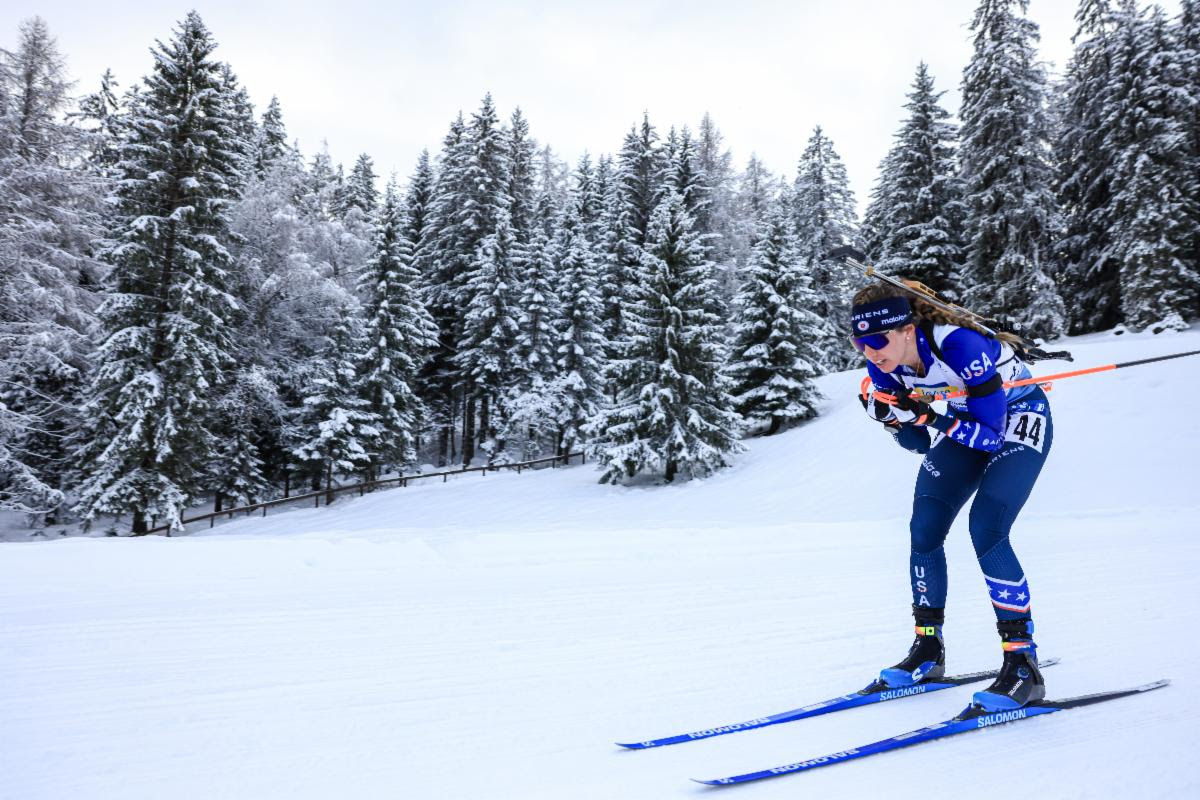
    Hochfilzen, Austria: IBU World Cup Biathlon. (Photo:  Manzoni/NordicFocus)
    Studebaker-Hall began her officiating journey in 2014 after she retired from biathlon. Following the completion of the level one and two officiating courses to be a domestic official in 2014, she spent the next 4 years assisting in various areas to gain experience. After applying for and completing the international referee exam, administered by the IBU, Studebaker-Hall was able to be assistant chief of competition to Tracy Lamb at the 2019 IBU World Cup at Soldier Hollow.

    Though it typically takes four years of experience to become eligible for a technical delegate (TD) certification, Studebaker-Hall was able to get her license in three years given her history as a biathlete and experience as a coach. To become a TD, one must attend conferences with current TD members and take both an oral and written exam, over a two-day period.

    After passing her exam and officially becoming the first American woman with a technical delegate certification, Studebaker-Hall was also elected to the IBU technical committee in September 2022.

    For Studebaker-Hall, the 2022/23 season consisted of officiating at two IBU Cup events in Canmore, Canada, as the start/finish referee, as well as being a shooting range referee at the 2023 FISU World University Games in Lake Placid, NY. It wasn’t until this past weekend in Hochfilzen, Austria that Studebaker-Hall had the opportunity to officiate as the start/finish referee at an IBU World Cup event.

    “Refereeing at the IBU Cup last season helped me gain knowledge, confidence and experience, but there’s nothing quite like the big show of the World Cup! It was such an exhilarating experience and really made me excited for hosting the world at Soldier Hollow in March.”

    As a strong advocate for gender equality in sport, Studebaker-Hall is breaking barriers in the U.S. and being a role model within the international biathlon world. Not only did she officiate her first World Cup event, but did so with her six-month-old daughter in tow.

    “Last year, I was about six months pregnant with my daughter, and this year I was able to bring her along. IBU was so supportive of me having her there with my parents to watch her during the races. I think it’s really important for athletes, especially women, to see that you can stay involved in the sport after competing and still have a life,” she added. “It takes some planning and lots of support, but I’m so glad I was able to continue working as a referee this season despite having my daughter. She won’t remember it, but hopefully someday she’ll also look back and see that I was able to have this great experience of working the World Cup while nursing a baby and feel empowered by that. I really love officiating and am excited about being one of many women coming up as IBU referees!”

  • Östersund Results Built Momentum for Team USA Heading to Hochfilzen

    Östersund Results Built Momentum for Team USA Heading to Hochfilzen

    After ten races in Östersund, Sweden, where the U.S. Biathlon Team saw personal best finishes, strong ski times and solid shooting performances, the team will now make the trip to Hochfilzen, Austria, where the three-day weekend will feature a sprint, pursuit and a pair of relays.

    Deedra Irwin (USA) – IBU World Cup Biathlon, pursuit women, Oestersund, Sweden. (Photo: Manzoni/NordicFocus)

    Racing in Östersund kicked off with a strong performance from Deedra Irwin (Pulaski, WI/Army World Class Athlete Program) and Sean Doherty (Center Conway, NH/National Guard Biathlon) to finish eighth in the single mixed relay only +1.10.9 behind the lead. Kelsey Dickinson (Winthrop, WA/Craftsbury Green Racing Project), Margie Freed (Apple Valley, MN/Craftsbury Green Racing Project), Jake Brown (Saint Paul, MN/Craftsbury Green Racing Project) and Maxime Germain (Chamonix-Mont Blanc, FRA/National Guard Biathlon) followed suit with a 14th-place finish in the mixed relay, Freed’s first World Cup start.

    Dickinson carried the momentum into day two, crossing the line with a career-best 36th in the women’s 15km individual, missing only one target on her last round of shooting.

    “It was really cool to have a huge personal best and score my first World Cup points in the first weekend of racing,” said Kelsey Dickinson. “I’m really grateful to all the coaches, staff, and wax technicians that made it possible. It feels good to have a result that shows improvement over last year.”

    Jackie Garso (Lake Clear, NY/Craftsbury Green Racing Project), Irwin, Dickinson and Freed began the day of relays with another 14th-place finish for Team USA. Doherty, Germain, Brown and Wright, who raced in his first-ever relay, landed in 15th. Germain had a stellar performance, only +10.0 behind the lead in third place after his leg of the race.

    Joining the World Cup for week two is Grace Castonguay (Jackson, NH/Ethan Allen Biathlon Club), who was brought up to fill the vacant spot on the women’s team as Margie Freed (Apple Valley, MN/Craftsbury Green Racing Project) is traveling back to the US to compete in cross-country skiing. In Kontiolahti, Castonguay had the top ski time for the US women in the individual as well as a ninth-place finish in the single mixed relay. This will be her first World Cup appearance.

    Vincent Bonacci (Salt Lake City, UT/Team Crosscut) will also race on the World Cup for week two as Campbell Wright (Wanaka, NZL/U.S. Biathlon) will not be competing in Hochfilzen. Bonacci showed his strength in Kontiolahti with a personal-best sixth place in the individual and ninth in the single mixed relay with Castonguay.

    “After a personal best, and the second fastest ski time in the relay, it is exciting to head down to Hochfilzen carrying momentum,” said Bonacci, “Racing in the mountains and the sun will be a welcome change from the darkness of Scandinavia.”

    The venue at Hochfilzen will be a change from Östersund, with the Austrian Alps providing a stunning backdrop for the races. With a long, hard climb near the end of the lap, athletes will need to pay close attention to pacing to ensure accuracy in the range after pushing at their limit, making for an exciting weekend of racing. Live streams can be found at eurovisionsports.tv/ibu/. Spectator resources for the season can be found at usbiathlon.org/spectator-resources.


  • USA’s Bonacci Sixth in Kontiolahti IBU Cup

    USA’s Bonacci Sixth in Kontiolahti IBU Cup

    Flowers for Bonacci with Sixth Place Finish in Kontiolahti

    Vincent Bonacci (Salt Lake City, UT/Team Crosscut) raced to a personal-best sixth place in the men’s 20km individual on Thursday’s opening day of the 2023/24 BMW IBU Cup season in Kontiolahti, Finland. Bonacci had just one miss in standing and crossed the finish line 13 seconds behind Vetle Paulsen of Norway.

    “I had a bit of a rough fall in terms of how I was shooting, and in the first race of the year it is always hard to predict where the fitness will be, so I am super happy to see everything come together and make something happen so early in the season,” said Bonacci.

    Bonacci’s time was +2.18.1 behind the individual winner, Johan-Olav Botn of Norway, who also shot 19/20. Botn was joined on the podium by his Norwegian teammates Mats Oeverby and Martin Nevland. Bonacci’s sixth-place finish was an impressive jump from his previous individual best 22nd at the IBU Cup in Idre Fjall, Sweden last season.

    “What an exciting day,” said Mike Gibson, U.S. Biathlon IBU Cup coach. “We all have seen Vincent was clearly capable of having a day like this, and it was awesome to see him put in such a strong performance.”

    Team USA also had two athletes place top-40 in the men’s 20km individual. Luke Brown (Saint Paul, MN/Craftsbury Green Racing Project) placed 28th and Vacalv Cervenka (Grand Rapids, MN/National Guard Biathlon) crossed the finish line in 40th. Eli Neilsen (Stehekin, WA/National Guard Biathlon) finished 82nd.

    For half of the US Women’s IBU Cup Team, the individual race was a first. For Cheresa Bouley (Zimmerman, MN/Minnesota Biathlon), the women’s 15km individual was not only her first individual race but her first IBU Cup race. Bouley had the women’s top finish, crossing the line in 49th, shooting 17/20. Lina Farra (Heber City, UT/NYSEF) placed 63rd in her first international race in two years, while Anna French (Plymouth, MN/Team Altius) placed 83rd in her first-ever individual race. Grace Castonguay (Jackson, NH/Ethan Allen Biathlon Club) finished 84th with the US women’s top ski time.

    Kontiolahti, Finland: IBU Cup Flower Ceremony—Vincent Bonacci (far right) sixth place in Men’s 20km Individual. (Photo: U.S. Biathlon)

    IBU Cup racing will continue on Saturday, December 2 with the women’s 7.5km sprint at 5:00 EST and the men’s 10km sprint to follow at 8:30 EST. Live stream is available at eurovisionsports.tv/ibu/.


    About U.S. Biathlon

    As the Olympic sports organization centered around the sport of biathlon, the United States Biathlon Association, known as U.S. Biathlon, is recognized by the International Biathlon Union (IBU) and the U.S. Olympic and Paralympic Committee (USOPC) as the national federation for biathlon in the United States. Founded in 1980, U.S. Biathlon exists to support and encourage the development of biathlon in the United States, to work with biathlon clubs and regional centers around the country to organize training and competition from the grassroots to elite level, and to prepare athletes for international competition. U.S. Biathlon staffs and finances the U.S. Biathlon national and junior national teams and is a 501 c (3) non-profit organization. For more information, visit usbiathlon.org.

    Media Contact

    Sara Donatello

    saradonatello@usbiathlon.org

    +1 (518) 524-5354

  • U.S. Biathlon Season Preview with Lowell Bailey.  Part II

    U.S. Biathlon Season Preview with Lowell Bailey. Part II

    Deedra Irwin (right) competes in the Women’s 15km Individual race during the 2022 Beijing Olympic Games. (Photo: NordicFocus)

    This article is part of a series based on an interview with Lowell Bailey. Mr. Bailey represented the United States in biathlon in four Olympic games, 11 World Championships, and 15 World Cup seasons. He is currently Director of High Performance for U.S. Biathlon. His World Championship gold medal race is one of the most thrilling races ever. If you haven’t seen it, the race is available on YouTube and is a great watch. His continued enthusiasm for biathlon continues, and is contagious.

    This interview has been edited for clarity and brevity.

    Part II:  Perspective on U.S. and International Biathlon.

    How does the U.S. training, support, and logistics compare to other national teams?

    In some ways it’s a David versus Goliath situation, with the Goliaths being the Germanys and Norways of the world, which are government supported, and budgets are not a challenge. I want to make very clear that we receive tremendous support from the USOPC (United States Olympic & Paralympic Committee). We are aligned in our pursuit of excellence. It does a huge amount of the lift. We definitely have the support of our Olympic committee. The USOPC has increased focus on sports that we [the United States] haven’t traditionally excelled in. The conversation has shifted to include focus on sports where there are opportunities in terms of increasing medal count. Biathlon has twenty-seven possible medals in an Olympics. So, it’s a huge opportunity. It’s also one of the most competitive sports. In particular the USOPC’s support for our Lake Placid facility is critical. There are dorms, food, and medical support under one roof for biathletes at every development level. This is critical. Every day we spend there is time we don’t have to spend elsewhere and spend money elsewhere.

    That being said, there are teams out there who really don’t have to worry about budget. Some of the European teams which are government supported have close to a blank check. They have higher staffing levels than we do. They have more coaches and wax technicians, physical therapists, and doctors. So we have to be creative and find ways to highlight our strengths. The Goliaths are more concerned about what’s the winning strategy and don’t really worry about how much the strategy costs. Still, we have better support than many other nations, but if the goal is podiums, the competition is the big programs. We have to find creative ways to be better every year.  But, it’s not all about money.

    Susan Dunklee (USA) racing to 8th place in Nove Mesto’s pursuit. (Photo: NordicFocus)

    What are the expectations long and short term?

    One of the biggest changes has been reassessing goals, not for next year only, but for the next eight years. What is it going to take for a U.S. biathlete to step onto the Olympic podium? This has been part of a targeted plan to focus on areas for sustained excellence. But, we also definitely focus on the present and maximizing the opportunities of success for our current athletes.

    Individual goals are determined by each athlete and the coaches. Athletes are individuals. A good coach understands that some athletes are very goal oriented and want to focus on those goals. Others just want to think about their training plan and be removed from nuts and bolts of goal setting and training plan design. They just want to trust their coach, be given a plan, and execute the plan. Others want to set their own goals.

    The season is long and grueling. How do the athletes manage?

    It’s very individual. For instance, Scandinavia in November is dark (sunlight wise) and challenging for some. For many athletes that’s really challenging. It’s critical for athletes to find joy in the effort. Athletes have to maintain the identity of “why I’m doing this.” If you want to get to the top of the world you have to put yourselves in tough places. You have to maintain the identity that “this is why I’m doing this.” Everyone has a choice to stay excited … finding the excitement against the World’s best. It’s exciting and you have to remind yourself that you’re on that exciting path, competing against the world’s best.

    Is it really possible to race at full intensity every weekend? Do racers intentionally hold back some weekends to save energy or taper for “bigger races?”

    Not really. I can’t speak for everyone, this is my personal thinking, but from my experience, that’s a bad idea. You might be slower some weekends than others. But, that’s more likely a function of fatigue from training or racing, not purposely taking it easy during a race. It’s not physically possible to go at the absolute top of your ability every weekend, but from my perspective, that’s not intentional. To cope with a long season, it’s better to set up a strategy of adjusting workouts instead of adjusting race pace. You can’t have the pedal to the metal every day. You get into a tricky spot when you say to an athlete that you only want them to give 90 percent or 95 percent. There may be athletes that go out and say I’m only going to race at 95 percent today. But, it’s a slippery slope to give less than 100 percent. I don’t think you want to give yourself the option of dialing it back. My way of thinking is you don’t want to have the programing to turn the dial back during racing. There’s more to lose from that than to gain. You adjust to stress and fatigue in ways other than on race day. But, at the end of the day, every athlete’s path to success is individual and specific to that athlete.

    Sean Doherty (USA) – IBU World Cup Biathlon, sprint men, Oestersund (SWE). (Photo: NordicFocus)

    Cross-Country recently adopted equal distances for men and women. Thoughts on biathlon adopting that?

    I haven’t heard anything from the IBU (International Biathlon Union) about it. I’ll be interested to see how it plays out. The athletes should have a very very big voice in that decision about race length. From the Federation’s viewpoint, there’s merit to consider what’s popular, is our sport competitive, are we appealing to fans? On the other hand, the athletes are the ones out there competing. IBU’s decision- making does consider the athletes’ voice as very important.

    How about fluoro bans?

    Athletes’ right now are concerned about the non fluorinated wax situation and how biathlon would deal with fluoro detection. There’s a lot of attention on that issue. There’s enthusiasm for being fluoro free. From the federation’s perspective, the IBU wants to reach a fluoro free race environment, but in a way so that the competition is fair.

    I recently watched your World Championship gold medal race on YouTube. Do you ever bring that up as inspiration or motivation for current athletes?

    I don’t try to highlight that. I trust the athletes with the knowledge that they’re prepared. We create an environment for every athlete to have had the best preparation that they can.  Specifically pointing to certain events, I’m open to discussing what went right. But, it’s more important to let an athlete experience for themselves what their journey looks like. If that means using U.S. biathlon history as something positive, then there’s a long list of success that provides positive thoughts. I lean away from saying, “Here’s what I know or here’s what I did.”

    That’s one of the most exciting biathlon races ever. By the end of the race even the commentators were cheering for you. Is that an event that you look back on a lot?

    I don’t make a point of highlighting that in my present day life.  It was one of the most impactful things that I was a part of. I say “a part of” because the drivers of success had to do with all the pieces of the puzzle coming together … logistics, training plan, ski prep. So, what I take away is how critical team support is for an athlete’s individual success. No athlete succeeds on the World Cup without team support. The margin in that race was 3.3 seconds over a 20 kilometer race.  Success then depends on so many different variables on that day and literally over the course of the preceding year. It shows the importance of being prepared on all platforms. When I look back, I feel our team worked together really well on all levels. I use it as an example of what can happen when you get everything right as a team.

    A healthy dose of perspective is important. Everyone we compete against is talented. How do you get that final fraction of a percent to get on the podium? How do you keep on moving things up a notch until there is a U.S. Olympic athlete standing on the podium? That’s what’s so motivating. The better you get, the harder it is to improve.

    Clare Egan (USA), Linn Persson (SWE), Hanna Oeberg (SWE), Marte Olsbu Roeiseland (NOR), (l-r) – IBU World Cup Biathlon, Hochfilzen (AUT). (Photo: NordicFocus)

    Anything else you’d like readers to know?

    Just our focus on our eight-year strategic plan of how we sustain competitive excellence. We are making very real and very big changes at all levels of our community. We have one of the most talented World Cup teams. We have a lot of forward momentum. We focus on our current team, and we are also playing the long game for sustained competitive excellence. World Cup careers are relatively short. We need to look at sustainability on the long term. We can be up there with the Germanys and Norways!

    Lowell Bailey, Director of High Performance, U.S. Biathlon (Photo: Team USA Biathlon)   
         
  • U.S. Biathlon Season Preview with Lowell Bailey: Part I

    U.S. Biathlon Season Preview with Lowell Bailey: Part I

    This article is Part One of an interview with Lowell Bailey who represented the United States in biathlon in four Olympic games, 11 World Championships, and 15 World Cup seasons. He is currently Director of High Performance for U.S. Biathlon. His World Championship gold medal race remains one of the most thrilling races ever. The race is available on YouTube, ( https://www.youtube.com/watch?v=yguD6SEAAmw) and is a great watch. His enthusiasm for biathlon continues, and is contagious.

    This interview has been edited for clarity and brevity.


    Lowell Bailey is the Director of High Performance for U.S. Biathlon (Photo: USA Biathlon)

    You’re Director of High Performance for U.S. Biathlon.  What does that job entail?

    I maintain programing for our athletes at all levels. That includes World Cup, IBU (International Biathlon Union) Cup, and the National team, and all the resources that go into athlete support. It covers staffing, logistics, and managing coaches. Things like how do you get teams from the U.S. to Europe to compete on international circuits.

    The most exciting part is strategizing about how we as a country can improve. It includes long range planning for U.S. Biathlon. It’s very analogous to any CEO position. I look at what our strengths and weaknesses are, and where are our advantages. We look at other sports and what they do well and gain information from that.

    We are at the highest level of competition and the margins are very small. We ask how do you get the final fraction of percentage which puts you on the podium? How are we going to move things up one notch? We’re constantly looking for fresh perspectives. We can tend to be myopic. There’s a lot to be gained by looking outside of your comfort zone. I don’t want to give away any secrets, but we’ve learned a lot from U.S. speed skating with their approach to innovations. We don’t just look at biathlon, but we look at other sports as well to learn from their approaches.

    What does summer training traditionally look like for the team?

    We generally have camps which last two to three weeks and happen almost every month of the training year, which is broken up by athletes training at home. We manage the entire year for the athletes, 365 days.

    What does a typical plan look like?

    There really is no such thing. Training plans are always changing and are a result of dialogue between athletes and coaches. Each athlete needs different things, and we work to tailor training to those needs.  We are always looking at where we’ve been and how we get better. The best coaches help athletes clarify what comes out of the athlete’s self-reflection. It’s the coach’s job to say whether goals are achievable, and here’s the changes to the plan to achieve those goals.

    Clare Egan races to fourth place in the 15km Women’s Individual competition in Antholz, Italy. (Photo: NordicFocus)

    Are you satisfied with the way summer training has gone?  What’s changed in summer training?

    Yes, I am satisfied.  One of the biggest changes has been the reassessment of goals for the next eight years. We have the singular goal of a U.S. athlete stepping onto the podium, what will it take to get us there, and keep us there. This analysis resulted in a very specific plan to focus on the areas that will have the biggest impact on those goals. Those include focusing on looking at development pipeline for improvement. That’s been one of the biggest changes.

    Coming out of the last two years so much of our work was just keeping the team going during the middle of a pandemic. So, this is a big change.

    The race season starts in a couple of weeks.  What do preparations look like now? What’s it like to make the transition from summer training to the beginning of the season?

    We have staff on the ground in Europe throughout the summer testing skis and wax. So, preparations have begun well in advance of now. Most of our testing is based in Europe since that’s where the ski companies and snow tunnels are. For staff that does ski preparation, they tend to be European based, and that works well for us. When the skiers travel, staff travels with them. We have a big staff that goes with the athletes that manages logistics, travel plans, hotels, skis, and anything else we can to support athletes. Preparation for getting an athlete to the start line in December starts in April.

    We’ve finished our last dryland camp in Utah, which was very intense. We head to Finland on the 12th of November for final preparations and a final two week camp on snow. Right now it’s basically a matter of tweaking things; you’re just putting the icing on the cake.  Most of the hard training blocks are done. There’s only so much which can be done in two weeks. A lot of the next couple of weeks will be getting used to being back on snow. Most of our athletes had one week on snow in September. Other than that, they’ve been on roller skis for the last six to eight months.

    The team has had some big changes from last year: Susan Dunklee, Clare Egan, and Leif Nordgren have retired.  How do you fill that void?

    It’s a big void to fill. But, we’re in a very good place now with new leadership. Every team has ebbs and flows as veterans retire and younger athletes take their place, that’s natural. We have an experienced team.  We do try to intentionally manage team leadership, but it also has to develop organically. You definitely have both an organic and intentional process. It’s our job to manage that process to get the best team culture. I commend the athletes for working through the transition and honoring the athlete leaders they looked up to for years. We have a really good mix of experience levels. Our continuity of leadership is in a good place and a lot of that is due to the job our prior athlete leadership has done.

    Deedra Irwin had a fantastic result in Beijng finishing seventh in the 15 kilometer individual. Does that bring with it the pressure of high expectations?

    Deedra Irwin (right) competes in the Women’s 15km Individual race during the 2022 Beijing Olympic Games. (Photo: Nordic Focus)

    I’ll answer it this way; it does set up internal expectations. I mean that in the sense that an athlete now knows what it takes to make it to the top. The expectation from the athlete internally changes: “I know now what it takes to be seventh place at the Olympics.” It reframes the approach and the mindset. It also changes coaches’ expectations in the sense that they need to know the athlete and whether the athlete thrives under this type of pressure, or whether the athlete needs to downplay those results and not make it the focus. The sports psychologists and everyone around the coach needs to understand these differences. Everyone supporting the athlete needs to know which cue words to say and which cue words to avoid. These are things that an athlete needs to succeed. So, it’s not pressure in the sense you mean.

    Deedra Irwin competes in the Women’s 15km Individual race during the 2022 Beijing Olympic Games. (Photo: Nordic Focus)

    During Covid racing there weren’t fans at the venues.  It was strangely silent.  Was that difficult for the athletes, and do you now have to retrain athletes to get them used to shooting during fan noise?

    What happened with the crowds was unprecedented. We have traditionally had 20,000-30,000 at a venue. Dealing with it varies athlete to athlete. Some athletes thrive on the crowd noise. Others just focus on what can I do on a given day to be at my best. We do use various forms of distraction during training to account for this. Sometimes it’s as simple as loud noise. Sometimes it’s a singular voice which is the most distracting. We practice things such as coming into the range for the final shooting round and putting the athlete in a situation where we simulate that they are leading a high stakes race. We train athletes how to regain focus in moments of distraction whether that’s crowd noise or race pressure. The athlete who can still focus on the fundamentals and adapt to those scenarios will come out in a better position. That’s the secret to success. Being able to refocus in the moment.

    Thoughts on the World Championships in Oberhof, Germany? Expectations of an American being on the podium?

    We’re ready. We know the venue really well. I’m optimistic that we can see podiums. Any given day, any athlete can make it. We’ve shown podiums are within reach. Everyone wants World Championship podiums, so they are hard to come by! Of course World Championships are the focus, but something to remember though is that every World cup race is just as competitive as World Championships because of the limited number of spots for different squads. So, in a sense, stepping on a World Cup podium is just as important as stepping on a World Championship podium.

    How’s the ban on Russian athletes affecting what we see in competition?  Any sense how the participating athletes feel?

    I’m not sure. When the invasion first happened, it appeared there was overwhelming support to rally behind the Ukrainian’s cause. The IBU has made their decision. We need to see how that affects the World Cup.  I can’t really comment on how current athletes’ feel. If I were still competing, I’d have a mix of emotions. There’s no universally right answer.

    FasterSkier will continue its interview with Lowell Bailey in Part Two, including how support for Team U.S.A. compares to other countries, dealing with a long race season, fluoro bans, and the legacy of Mr. Bailey’s World Championship gold medal race.

    The U.S. Biathlon team and staff celebrate Lowell Bailey’s World Championship gold medal in Hochfilzen in 2017. (Photo: USBA/NordicFocus.com/Twitter)
  • Egan Sweeps USBA Rollerski National Championships; Doherty and Schommer Lead Men’s Field

    Egan Sweeps USBA Rollerski National Championships; Doherty and Schommer Lead Men’s Field

    The women’s podium from the 7.5-kilometer sprint competition at USBA Rollerski National Championships. Clare Egan led the way ahead of Deedra Irwin (right) and Susan Dunklee (left). (Photo: Instagram @usbiathlonwomen)

    This post will be updated with men’s comments as available. 

    The 2021 U.S. Biathlon National Rollerski Championships were held this past weekend in Jericho, VT, hosted by the Ethan Allen Biathlon Club. 

    As the annual event was held in a virtual format in August 2020 due to COVID-19 safety restrictions, the weekend marks a welcome return to public national level biathlon competition. Participants from clubs throughout the U.S. made their way to Northern Vermont to race a sprint on Saturday, followed by a mass start on Sunday.

    Apart from the elite senior men and women’s fields, the races saw nearly 50 participants from the U15 youth level to the senior veteran age class. These athletes competed in a 10/12.5-kilometer pursuit stage on Sunday rather than the mass start. 

    “It was great to see athletes and coaches from across the country get back together,” commented US Biathlon team member Clare Egan in an email. “I was also happy to see an increase in numbers of participants — in the past we have had similar numbers, but almost half the field was Canadian. This year without the Canadians we hit those same numbers, so that was exciting. It’s a reflection of the growth happening at the club level in places like Bozeman, Craftsbury, Soldier Hollow, Truckee, Anchorage, Grand Rapids MN, Lake Placid, and others, where there are good facilities, coaches, and training groups now.” 

    Clare Egan celebrates a double at the USBA Rollerski National Championships with a homemade poptart, courtesy of team dietitian Megan Chacosky. (Photo: Instagram @clareeganbiathlete)

    Egan posted strong results this weekend, winning both the sprint and mass start events — and lots of maple syrup, the Vermont classic podium award. In the 7.5-kilometer sprint, she missed one target while shooting prone to finish with a time of 20:33.6. She finished 33 seconds ahead of Deedra Irwin of the National Guard Biathlon Team who missed one target per stage (1+1), with USBA teammate Susan Dunklee one second behind in third (1+2). 

    In the 12.5 k mass start, Egan again missed only one target, this time standing (0+0+1+0), leading her to double up on her victories with a finish time of 37:08.1. Dunklee missed three targets during her standing stages (0+0+1+2) and skied to second place in 38:03.8. Kelsey Dickinson of the Craftsbury Green Racing Project (CGRP) took the third podium spot in 39:22.2 (1+1+2+2). 

    “I was satisfied with my racing this weekend, especially the shooting,” Egan wrote. “I only missed 2 targets out of 30. That’s an excellent percentage for me and definitely what I am aiming for as I head into the World Cup and Olympics season. I had a really hard time on skis, but I think that it was entirely due to the intense heat and humidity.”

    Both days saw temperatures in the upper 80’s with high humidity — which makes for hot radiating pavement and very sweaty ski boots.

    “My training has been going well and I’m confident about where I’m at and the direction I’m headed,” Egan concluded. 

    The men’s 15k mass start podium at the USBA Rollerski National Championships. Paul Schommer took the win ahead of Sean Doherty and Leif Nordgren. (Photo: Instagram @usbiathlonteam)

    On the men’s side, Sean Doherty of the National Guard Biathlon Team shot clean in the 10 k sprint, skiing his way to the top spot on the podium on his home course in a time of 24:33.3. Doherty was followed by Leif Nordgren of the VT Army National Guard who missed two targets (1+1) to finish in 25:24.8. Paul Schommer of the Crosscut Team in Bozeman, MT, rounded out the podium with two misses (1+1) and a time of 25:45.1.

    The men’s podium rearranged itself in Sunday’s 15 k mass start. Schommer improved his shooting percentage, missing one shot in two of the four stages (0+1+1+0) and crossed the line in 38:15.6 for the win. Doherty followed 40 seconds behind with four missed targets (1+2+1+0) and a final time of 37:55.7. Nordgren took the third podium spot with a time of 38:36.8 with five misses (2+0+1+2). 

    “I have been working on some new things this summer and having them come together in Sunday’s race was a huge confidence boost,” Schommer wrote in a post-race email. “I still know there is a lot to work on, but it’s always great to see improvement. As I continue into the fall, I hope to keep the level of focus I have had thus far in the training year and continue to identify and address areas where I can improve. I don’t want to think about the next races, I just want to focus on becoming the best biathlete I can be.”
    Schommer also reflected on the experience of being back on the tracks and range in Jericho with the broader biathlon community, and the contrast in his ability to adequately prepare for biathlon last summer versus the present.
    “Coming back to Jericho after a year off was great! Last year at this time I hadn’t been at a range with a roller loop yet, so to be here this year is a real blessing. It also was great to see the biathlon community with a large turn out. Lots of young biathletes coming up which is great to see!”

    Sprint Results | Mass Start Results | Pursuit Results

  • USBA Announces New Assistant Coach Dana Hatton (Press Release)

    USBA Announces New Assistant Coach Dana Hatton (Press Release)

    Press Release


    Dana Hatton, USBA National Team Assistant Coach. (Photo: U.S. Biathlon)

    New Gloucester, Maine: US Biathlon is pleased to announce the hiring of Dana Hatton as the new National Team Assistant Coach. Dana grew up in Maine and skied with the St. Lawrence Varsity Nordic Ski Team for four years. Most recently, Dana spent two years as the Graduate Assistant Coach for the St. Lawrence Ski Team, where she completed her Masters degree in Leadership.

    “We are thrilled to have Dana onboard as we move into the most important part of the Olympic preparation period!” said Director of High Performance, Lowell Bailey. “She knows the Lake Placid trail system better than I do and will be a great addition to the USBA staff based here. The National Team will greatly benefit from having Dana on the ground during the training camp interims, when our European-based head coaches are not here.”

    Prior to her role as a coach, Dana spent time with AmeriCorps working with middle school students in Boston. Her teaching skills coupled with her D1 athlete and coaching experience will no doubt help Dana in this new role with USBA.

    “I’m looking forward to working with and learning from the National Team and coaching staff” said Dana. “This is an exciting opportunity for me and I can’t wait to expand my knowledge about biathlon and ski racing at the highest level.”

    The US Biathlon Team is currently running their first National Team camp of the year in Lake Placid, NY at the new facilities at Mt. Van Hoevenberg. Dana’s main role will be assisting in the implementation of training for athletes in Lake Placid, attending camps and working with other National Team staff to ready the team for the 2022 Olympic season.