Tag: USSA points

  • U.S. Nationals Open This Weekend at SoHo; World Champs Starts on the Line

    U.S. Nationals Open This Weekend at SoHo; World Champs Starts on the Line

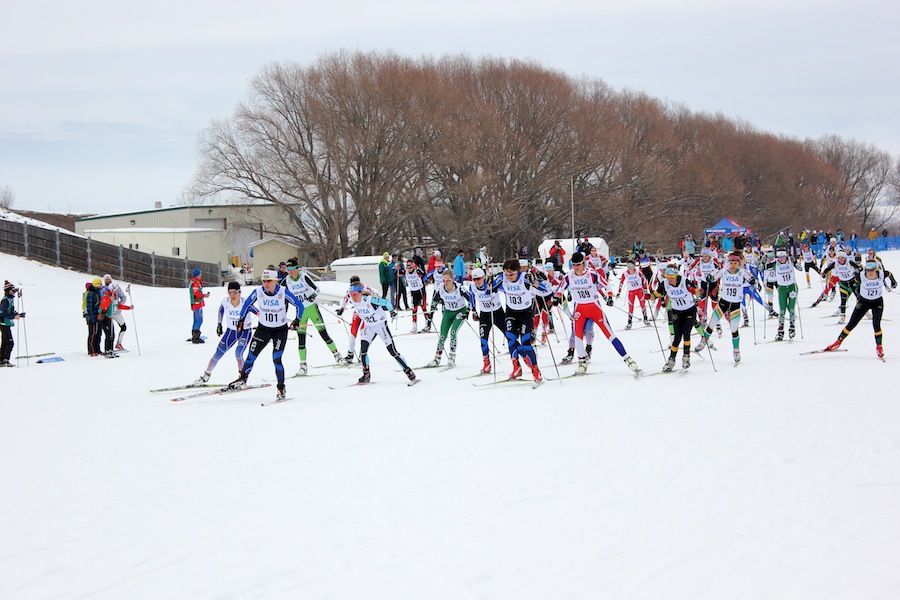
    The last time U.S. Nationals were held at SoHo: Start of the women's 20 k freestyle mass start at 2014 U.S. Cross Country Championships at Soldier Hollow in Midway, Utah. Caitlin Gregg went on to win going away.
    The last time U.S. nationals were held at SoHo: Start of the women’s 20 k freestyle mass start at 2014 U.S. Cross Country Championships at Soldier Hollow in Midway, Utah.

    The domestic trials for the FIS Nordic World Ski Championships team begin at Soldier Hollow on Saturday morning. Not officially, but in practice that’s pretty much the case. That’s one implication of the numbers and points system used to help determine who competes for the U.S. at next month’s races in Lahti, Finland. Here, FasterSkier previews the races and considers the subtle math behind U.S. championship-team selection.

    The races

    The women race a 10-kilometer freestyle individual start at 10 a.m. local time on Saturday, followed by the men in a 15 k freestyle at noon. Sunday brings a full classic sprint (men’s qualifying starting at 10 a.m., women’s qualifying at 11 a.m., and sprint heats starting at 12:30 p.m.). Then Tuesday, Jan. 10, brings classic mass starts, 20 k for women and 30 k for men, starting at 10 a.m.

    A qualification-only, freestyle-sprint type event rounds out the week on Thursday, Jan. 12. (Why no heats? Because of overall demands on local volunteers and an elementary school housed at the venue. The national championship skate sprint will be held at U.S. SuperTour Finals, a.k.a. Spring Series, in March in Fairbanks, Alaska.)

    Social media shows several inches of fresh snow currently on top of a manmade base at Soldier Hollow in Midway, Utah.

    FasterSkier will be on site throughout the week, providing live updates and reports on the races. 

    What’s at stake

    Bragging rights, for one. All racers like to win, and the week’s first three events are all national championships. Also money: $1,200, $600, and $300 for podium spots in each of the distance races and sprint. It’s no Qaniq Challenge money, but it’s no small sum, either.
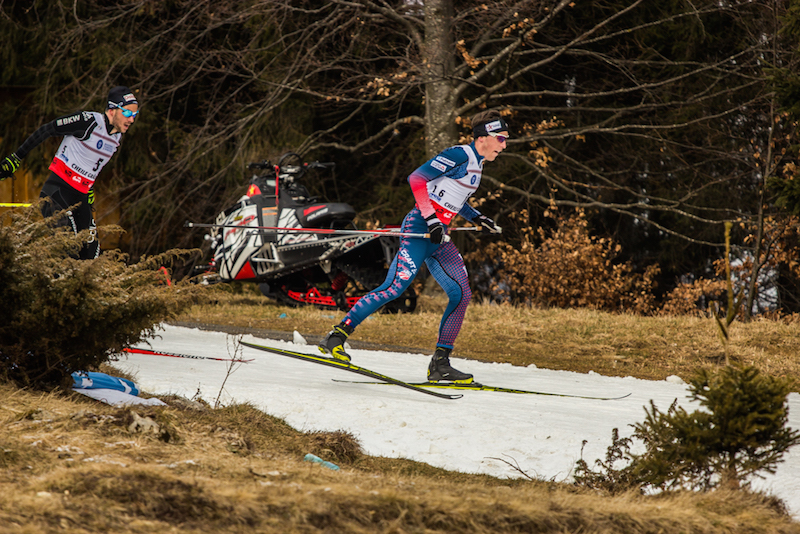
    Paddy Caldwell (Dartmouth/SMS/USST) racing to 21st in the men's 15 k freestyle at U23 World Championships in Rasnov, Romania. (Photo: Logan Hanneman)
    Paddy Caldwell (Dartmouth/SMS/USST) racing to 21st in the men’s 15 k freestyle at 2016 U23 World Championships in Rasnov, Romania. (Photo: Logan Hanneman)

    But beyond who takes home the medals and the money this week, the races are also important for determining who gets to compete in higher-level races later this season. Skiers under 18 are competing for spots on the Scandinavian Cup Team. Skiers slightly older are competing for spots on the U.S. team for U23/Junior World Championships, which will also be held at Soldier Hollow Jan. 30-Feb. 5. And at the highest level, there are spots up for grabs on the World Championships team for Lahti next month. Probably.

    As FasterSkier previously explained, the U.S. Ski and Snowboard Association (USSA) looks first to athletes’ performance on the World Cup in light of objective standards, and then potentially applies discretionary picks. After objective and discretionary selection, then “any remaining positions” for the Lahti team “may be filled by considering the athlete ranking highest on the 2017 Championship Selection List.” (As FasterSkier previously parsed, technically speaking the document says that remaining positions may be filled rather than will or shall be filled, meaning that USSA would not be strictly required to name a leading domestic skier to the team if it did not want to.)

    Filling out the team: Objective and discretionary selections

    So who’s already in from the U.S. Ski Team (USST)? One woman for sure, five more women basically guaranteed, one man basically guaranteed, then one woman and two men on the bubble.

    On the women’s side, Jessie Diggins has automatically qualified for Lahti twice over with her fifth- and sixth-place sprint finishes in Davos and Val Müstair.

    Behind her, five more skiers were well within the top 50 in either the sprint or distance World Cup standings following Wednesday’s pursuit race in Oberstdorf: Sophie Caldwell (12th in sprint standings), Sadie Bjornsen (15th in distance standings and 16th in sprint), Ida Sargent (33rd in sprint), Kikkan Randall (32nd in distance and 38th in sprint), and Liz Stephen (42nd in distance).
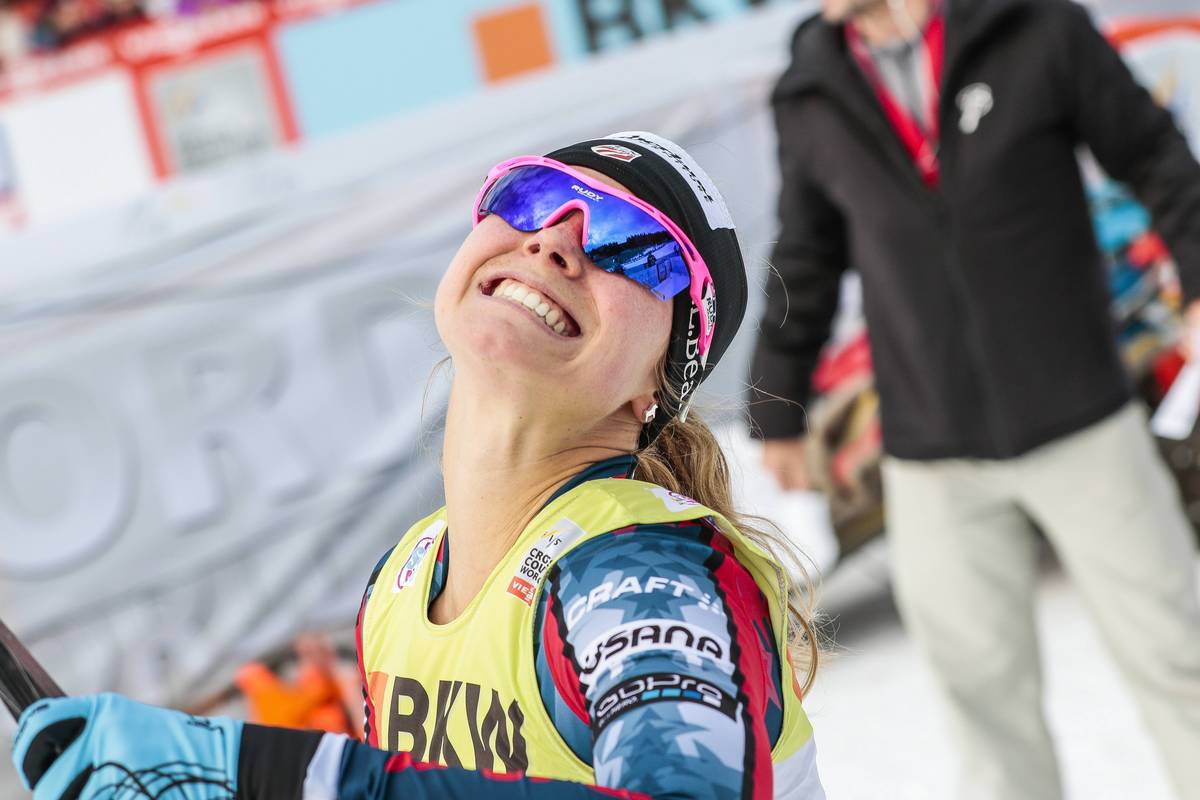
    Jessie Diggins celebrates finishing fifth in the Davos skate sprint. (Photo: Salomon/NordicFocus)
    Jessie Diggins celebrates finishing fifth in the Davos skate sprint. (Photo: Salomon/NordicFocus)

    (In the most strictly technical sense, everyone after Diggins cannot officially qualify this way until they are in the top 50 in those discipline standings that are released on Jan. 16. But – barring some extremely statistically improbable races by all eight women immediately below Stephen in the distance rankings – they should all qualify then with ease.)

    Rosie Brennan was 56th in the distance standings Wednesday, five points – one solid race – away from the top 50. She got that race in Toblach on Friday, moving up to 47th in the distance standings after finishing 23rd in the 5 k skate.

    For the men, Simi Hamilton is currently 41st in the sprint standings, and should be well within the top 50 on Jan. 16.

    As of Wednesday, Erik Bjornsen ranked 53rd for distance, four points out of 50th, and 55th for sprinting. Noah Hoffman was 67th in the distance standings. Hoffman moved up to 60th following his 25th-place finish in the 10 k skate in Toblach on Friday. 

    USST Women’s Coach Matt Whitcomb told FasterSkier in July that athletes who were on the bubble for World Championships selection “going into the Tour de Ski” would “need to make a pretty important decision. And that is whether or not to go back to U.S. championships and qualify domestically, or to take a chance and go with what they know and qualify in the Tour de Ski, and the sprint weekend after the Tour de Ski in Toblach.” Whitcomb added, “And so there are a great number of options both domestically and internationally on the World Cup, that I think we feel is as fair as can be.”

    But in practice, all USST athletes discussed above have remained in Europe rather than race at U.S. nationals. Diggins, both Bjornsens, Stephen, Caldwell, Randall, Hamilton, and Hoffman raced at least the first two stages of the Tour de Ski. Sargent and Andy Newell, joined by Hamilton and Caldwell, will compete in OPA Cup races in Planica, Slovenia, this weekend, USST Head Coach Chris Grover told FasterSkier by email last week.

    APU skier Scott Patterson made roughly the inverse decision in deciding to start the 2016/2017 season in this country (he had hoped for World Cup starts as last year’s SuperTour distance leader, but was not offered them for the first period of racing). Describing conversations between himself, Grover, and APU Coach Erik Flora, Patterson wrote to FasterSkier in November, “One of the most important points brought up was regarding qualification for world championships in Lahti. The selection criteria favors domestic racing for men due to the difficult objective criteria and weaker World Cup performances relative to the women. In accordance with the criteria I will be looking for some extremely strong early season results so that I can hopefully head to Europe in January and not return until after World Cup finals.”

    Regardless of who qualifies off the World Cup via objective standards, USSA may then make discretionary selections. FasterSkier previously surveyed the guidelines for the exercise of this discretion.

    Briefly put, USSA has almost unlimited discretion under the listed criteria. And if those criteria give USSA insufficient discretion, a catch-all provision lets USSA make discretionary selections for nearly any other reason if it feels like the objective criteria won’t work: “Other unanticipated failure of objective criteria to select an athlete likely to achieve competition results consistent with USSA program goals for World Championships.”

    Filling out the team: SuperTour leaders and bonuses for nationals podiums

    After objective and discretionary selections, that leaves this country’s top domestic racers skiing against each other for (probably) one remaining spot per gender.

    Before the season began, FasterSkier wrote in a preview article that “American cross-country skiing does not have a trials system.” Kris Freeman (Team Freebird), a man who has been selected to 12 U.S. Olympic or World Championship teams (up to 15 if you include World Juniors teams) since 1998, politely begged to differ, writing in a comment to the FasterSkier Facebook site after the article was posted (see final two sentences in particular):
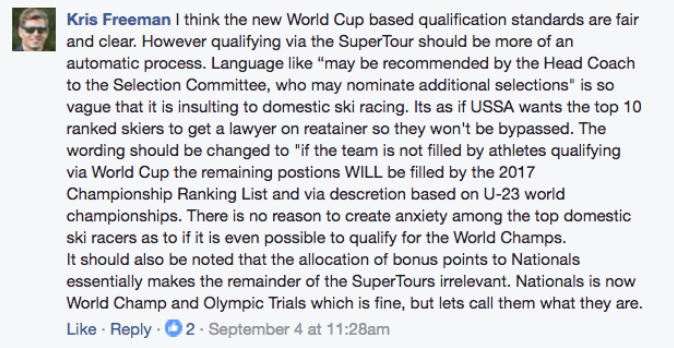
    Kris Freeman comment on FasterSkier Facebook page, Sept. 4, 2016. (photo: screenshot)
    Kris Freeman comment on FasterSkier Facebook page, Sept. 4, 2016. (photo: screenshot)

    Both FasterSkier and Freeman are technically correct. Given the numbers involved, Freeman is probably more correct. That is, there is no official trials system, but U.S. Nationals this year is getting pretty close to one.

    The World Championships Selection List is based on an athlete’s best two finishes in a single discipline, distance or sprint (qualification round only), across the 2016/2017 SuperTour to date, including the four races at U.S. Nationals. But first through third at the December SuperTour races were worth 30, 25, and 21 points, respectively. Because of the additional Nationals-only bonus points that will be awarded this week, first through third in the next four races count for 45, 35, and 26 points, respectively. Best two races, from the entire season to date, wins.

    So Freeman is correct that the “normal” SuperTour events were, if not meaningless, maybe less meaningful in light of the potentially dispositive points available for nationals podium finishes. (There are of course other advantages to being the season-long SuperTour leader, and the December races still count toward that.)

    In practice, two firsts at nationals would be unsurpassable by any combination of other races. Same for a first and second at nationals. Indeed, two seconds at nationals is a better result than two firsts in December. Two thirds at nationals beats two seconds from last month. The bonus points for nationals podiums are certainly significant digits.
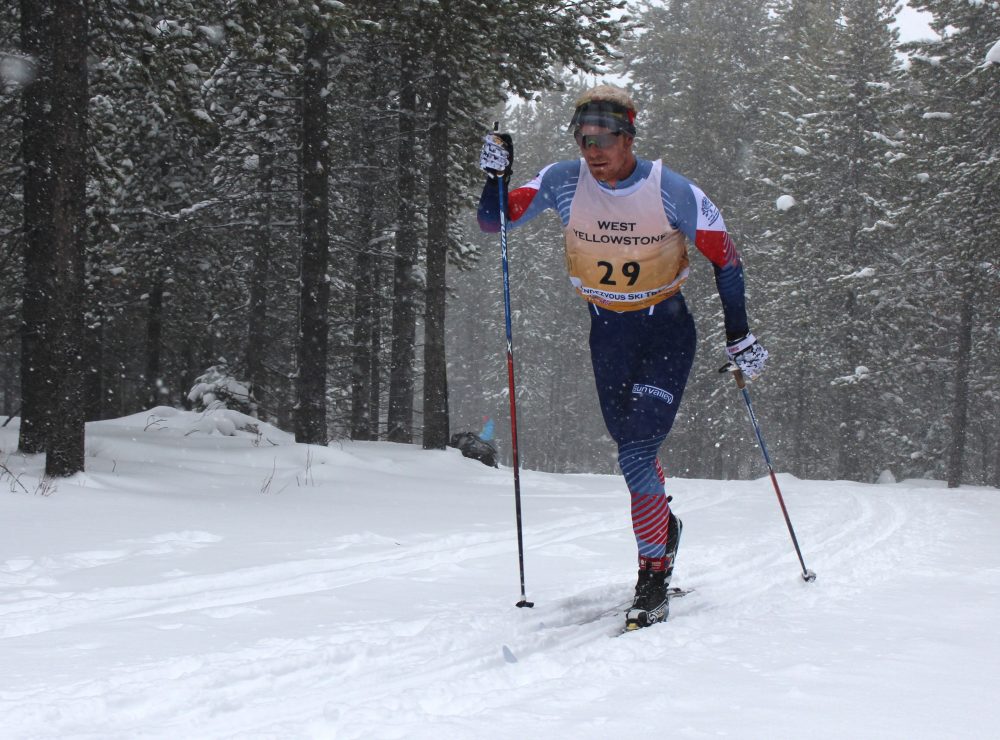
    Matt Gelso (SVSEF) racing to his second-straight victory at the West Yellowstone SuperTour on Sunday in the men’s 15 k classic.
    Matt Gelso (SVSEF) racing to his second-straight victory at the West Yellowstone SuperTour in the men’s 15 k classic in December 2016.

    Matt Gelso (Sun Valley Ski Education Gold Team) and Liz Guiney (Craftsbury Green Racing Project) come into nationals as the SuperTour leaders to date, Gelso by a profound margin. Although both have World Cup start rights in Europe later this month by virtue of that status, both athletes will compete in at least the first three races in Soldier Hollow, Gelso and Guiney told FasterSkier earlier this week.

    The current SuperTour discipline leaders are Gelso for men’s distance, with 55 points, and Ben Saxton (SMST2) for men’s sprint, with 50 points. Jennie Bender (Bridger Ski Foundation) leads the women’s sprint standings with 55 points, while Katharine Ogden (Stratton Mountain School/USST D-Team) has 50 points to lead the women’s distance standings. These are not unimpressive point totals, which may become relevant if no single athlete puts together two podiums at nationals.

    The first race at Soldier Hollow begins at 10 a.m. Saturday morning. The U.S. team for Lahti is tentatively scheduled to be announced on Jan. 23.
  • Looking to Lahti: Inside the USST’s World Champs Selection Criteria

    Looking to Lahti: Inside the USST’s World Champs Selection Criteria

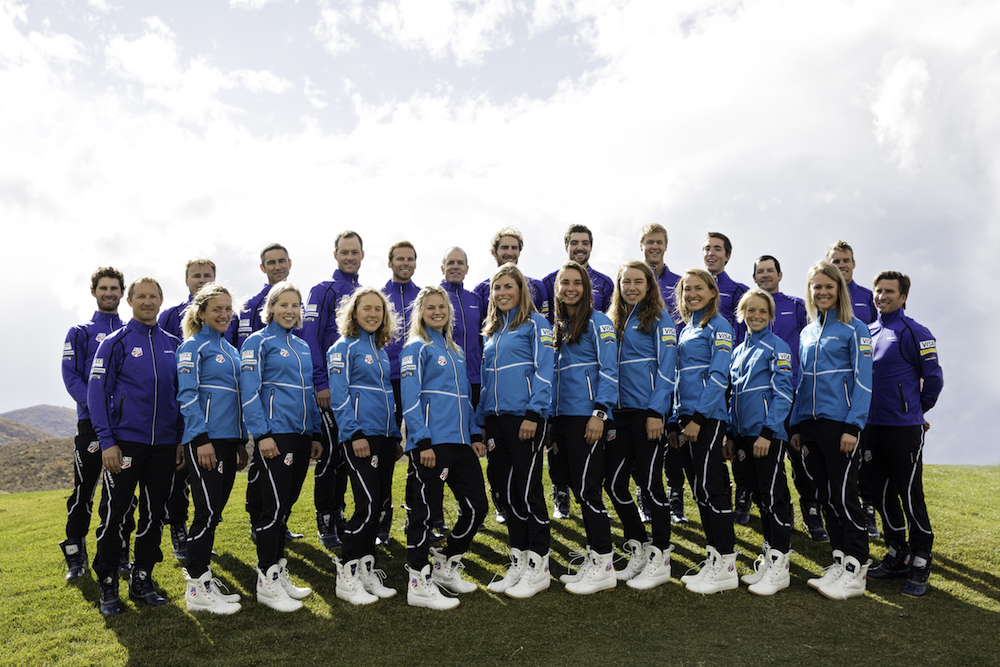
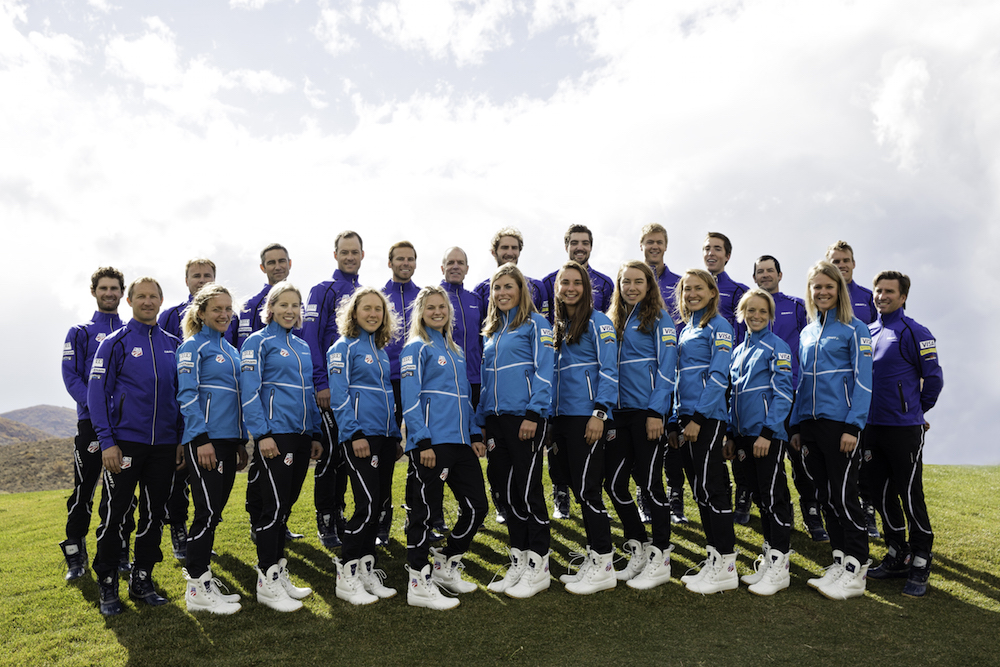
    The 2015/2016 U.S. Nordic Ski and Nordic Combined teams during a team photo shoot in their new uniforms on Monday, Oct. 19, in Park City, Utah. (Photo: USSA)
    Last season’s 2015/2016 U.S. Nordic Ski and Nordic Combined teams pose for a photo shoot in October 2015 in Park City, Utah. (Photo: USSA)

    American cross-country skiing does not have a trials system. That is, selection to the U.S. team for international championship events – the Olympics and World Championships – does not involve having everyone show up in the same race (or race series) on the same day, top finishers make the team. Championship teams used to be picked this way; Luke Bodensteiner writes memorably in Endless Winter: An Olympian’s Journal of his experiences at Anchorage’s Kincaid Park for the 1994 U.S. Olympic Trials. (Spoiler alert: as the subtitle suggests, he made the team.)

    But the current approach is somewhat more elaborate, including ranking lists and points and a variety of criteria that are primarily objective, but are also supplemented by discretionary factors. As we approach the winter of 2016/2017, and the country’s top skiers await the first intervals of fall with dreams of competing at the FIS Nordic World Ski Championships in Lahti, Finland, FasterSkier breaks down the selection criteria that set forth the ways in which a U.S. athlete may be named to the team.

    New selection criteria: Last winter’s results are out, this winter’s results are in

    The U.S. Ski and Snowboard Association’s (USSA) full selection criteria for Lahti are available here. This document reflects the final stage of a long process. In January 2015, shortly after he had shared the selection criteria for the 2015 World Championships in Falun, U.S. Ski Team Head Coach Chris Grover wrote on his blog about his intent to work on updating the criteria before it came time to select athletes for Lahti.

    “I’ve organized a working group of top US coaches this summer and fall to help us create a new selection criterion for Lahti 2017,” Grover wrote in response to a question about the interaction between objective and subjective criteria. “One important aspect of this new criteria is creating a head-to-head format in fall SuperTour racing (including U.S. Nationals) that provides an athlete with a clear path to Championship selection, without the guesswork of looking for races with low points. We are currently running the criteria by our legal department to ensure that, like all of our criteria, it’s fair, clearly understandable, and complies with the Amateur Sports Act.” *

    Eighteen months later, in June 2016, Grover wrote that he was “excited” about the updated selection criteria for the U.S. team for Lahti. He wrote that “the Objective and Discretionary selection procedures in [the new] criteria are very similar to what we have used in the past. The big change, however, comes in how Additional Team Selections are made. In the past, additional selections have been made using FIS or USSA points, which are created by scoring points races on a year-round continuum. This new criteria relies on head-to-head SuperTour and U.S. Nationals racing in the fall/early winter of the season of the Lahti Championships themselves.”

    Grover wrote that the new criteria are intended to reduce the temptation for athletes to chase FIS or USSA points, or even to “willingly manipulate the results of races” with an eye to improving points.

    He added, “This criteria rewards head-to-head competition in the season of the Championships. Athletes who skied fast in the spring of the previous season no longer have a potential advantage over those athletes skiing fast in the current season. The criteria provides a clear path for athletes to the World Championships. The athlete that is winning races is most likely going to make the Team. The guesswork of improving one’s FIS or USSA points is removed.”

    U.S. Ski Team Women’s Coach Matt Whitcomb concurs. As he told FasterSkier earlier this summer, the new focus on results solely from the 2016/2017 race season is “definitely a criterion that focuses more on how athletes are skiing closer to the Championships. It’s a very important concept, I think, that from what I can tell the entire ski community is behind.”

    (Concern over what is effectively a year-long window for the development of USSA points, and the implications of making championship-team selections on this basis, is not of recent vintage. In December 2001, Cory Smith, at the time an elite American skier, blogged about his disfavor with selecting skiers for the 2002 U.S. Olympic team on the basis of the most recent USSA points list, when the relatively low-key races held at Spring Series 2001 ended up having a disproportionate effect on the USSA rankings list used for Olympic selection many months later.)

    Inside the selection criteria: World Cup success as an objective path to selection

    The 2013 U.S. World Championship team poses in Val di Fiemme, Italy, after Kikkan Randall and Jessie Diggins (front right, and left, with flag) won the women’s freestyle team sprint.
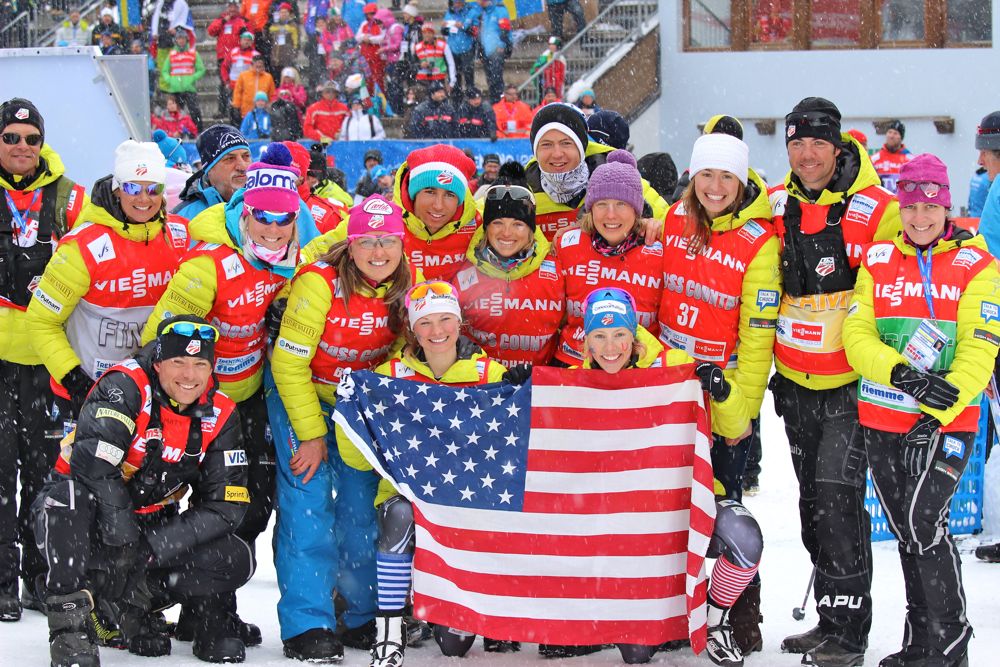
    The 2013 U.S. World Championship team poses in Val di Fiemme, Italy, after Kikkan Randall and Jessie Diggins (front right, and left, with flag) won the women’s freestyle team sprint.

    The selection criteria themselves include a mix of objective standards and discretionary options. Performance on the World Cup is the easiest and most direct way to merit selection to the team, but there is also the option of skiing on via domestic results on the SuperTour. Probably.

    Starting with objective standards: The objective standards look solely to an athlete’s performance on the World Cup. An athlete will be automatically selected to the World Championships team if they have either (1) a “ranking in the top-50 in the Distance World Cup standings or the top-50 in the Sprint World Cup standings as of January 16, 2017,” or (2) a “top-8 individual final World Cup result” in one of three selected race formats between the start of the upcoming World Cup season and Jan. 16, 2017.  (The full document explains various tie-breaking procedures and additional principles; for example, a top-8 individual sprint finish trumps a top-50 sprint points ranking.)

    The three specified race formats in which a top-eight finish will lead to team membership are “Sprint F, individual start 10/15 km C, and 15/30 km Skiathlon.”

    This does not account for all of the individual races in the first half of the World Cup calendar – individual races in other formats include a classic sprint in Ruka, a classic sprint in Lillehammer, a 5/10 k skate in Lillehammer, a 15/30 k skate in Davos, and six of the seven races in the Tour de Ski (all save the opening skate sprint).

    In an email to FasterSkier, Grover explained that this distinction is by design. “Only individual events in the specific format we are racing in Lahti qualify for top-8 automatic qualification,” he wrote. “Classic sprints [which will be held in Lahti in the team sprint format] are not included in this specific part of the criteria because the aerobic and anaerobic demands of team sprint are different enough from individual sprint.”

    Grover addressed the possibility that an athlete could achieve a top-eight individual result on the World Cup, but do so in some race format other than the three designated ones of skate sprint, 10/15 k individual start classic race, and full-distance skiathlon.

    “An athlete that has scored a top-8 in any event will most likely score enough [World Cup] points in that single race to make the top-50 discipline qualification standard,” he wrote. And “at the end of the day, we want any athlete that can finish in the top-8 on the [World Ski Championships] team. We also have discretion to use in the event that a top World Cup performance by a given athlete fails to qualify them outright for the Lahti Team. The top-8 criteria has an element of redundancy in it, but it is important in the event that an athlete only gets 1/2 points for that performance if it comes during the Lillehammer mini-tour [on December 2-4] or the [Tour de Ski].”

    The possibility of discretionary picks

    Grover had alluded to USSA’s discretion to make additional selections. As the criteria document states, “The USSA may select additional athletes to the Team using coaches’ discretion, using factors other than objective criteria.” (This language is unchanged from the criteria that governed selection to the U.S. team for Lahti in 2015.)

    These discretionary factors include everything from results in last season’s races to “attitude,” “illness or injury during the selection period,” and “Indicia of medal potential in future Olympic or World Championship competition, which would be materially enhanced by selection to team.” Finally, a catch-all provision states that USSA may make discretionary selections for nearly any other reason if the objective criteria do not reach the desired goal: “Other unanticipated failure of objective criteria to select an athlete likely to achieve competition results consistent with USSA program goals for World Championships.”

    Whitcomb told FasterSkier in July that making discretionary picks was “one of the harder parts” of his job as a coach, stating, “We love not to do it.” Though he added, “But in any criteria, discretion can often be one of the most important pieces.”

    Inside the selection criteria: SuperTour success as a likely but not guaranteed  path to selection

    After USSA selects athletes via objective criteria based on World Cup performance, then, potentially, via discretionary factors, “any remaining positions” for the Lahti team “may be filled by considering the athlete ranking highest on the 2017 Championship Selection List.” (Technically speaking, the document says that remaining positions may be filled rather than will or shall be filled, meaning that USSA would not be strictly required to name a leading domestic skier to the team if it did not want to.)

    The scoring system for the 2017 Championship Selection List is explained in detail in the full selection criteria document. Briefly put, the list takes an athlete’s two best finishes “in a single discipline (sprint or distance)” and looks for the highest point total, based on awarding SuperTour points on a standard basis plus bonus points for a top-3 podium finish at U.S. Nationals. Notably, the window in which these performances may occur is only the first half of the 2016/2017 season, and does not – unlike the rolling USSA standard points list – include the second half of the 2015/2016 season.

    The highest ranked athlete on this list (who was not otherwise selected via objective criteria or discretionary factors) “may be recommended by the Head Coach to the Selection Committee, who may nominate additional selections.”

    The “Head Coach” is Grover. The “Selection Committee” is not literally defined elsewhere in the selection criteria document, but the document does discuss a “discretionary selection review group comprised of the USSA President and CEO, the Executive Vice President, Athletics, and the athlete representative from that sport who is a member of the USSA Board.” Grover clarified in an email that, in practice, the discretionary selection review group is the same as the “Selection Committee.”

    The USSA President and CEO, Executive Vice President for Athletics, and cross-country skiing athlete representative are currently Tiger Shaw, Luke Bodensteiner, and U.S. Ski Team member Rosie Brennan, respectively.

    Looking back and looking forward

    So how did this all play out in practice when it came time to select the team for Falun? Two years ago, eight athletes qualified objectively via their World Cup results. Another eight athletes were selected based on the most recent USSA points list. Finally, one athlete was selected via discretion.

    Specifically, Sadie Bjornsen, Sophie Caldwell, Jessie Diggins, Kikkan Randall, Ida Sargent, Liz Stephen, Simi Hamilton, and Andy Newell qualified for the U.S. team for Falun via objective criteria based on their World Cup rankings in the 2014/2015 season. Rosie Brennan and Caitlin Gregg for the women, plus Erik Bjornsen, Dakota Blackhorse-von Jess, Kyle Bratrud, Kris Freeman, Matt Gelso, and Noah Hoffman for the men, were then “entirely selected from the fourth publication of the USSA points list,” FasterSkier wrote soon after the selections were released. Finally, Ben Saxton was added to the team a few weeks later following his strong results at 2015 U23 World Championships in Almaty, Kazakhstan.

    “Brennan and Gregg were the top two domestic skiers on both the distance and sprinting lists [as of mid-January 2015],” FasterSkier wrote at the time. “Hoffman, Freeman, Gelso, and Bratrud were the first four skiers in the distance rankings, while Blackhorse-von Jess and Erik Bjornsen were the top skiers (apart from Newell and Hamilton) in the sprint rankings.”

    The U.S. team for Lahti is tentatively scheduled to be announced on Jan. 23, 2017. The first race at World Championships is the skate sprint on Feb. 23.

    * Footnote: The Amateur Sports Act of 1978, officially known as the Ted Stevens Olympic and Amateur Sports Act, 36 U.S.C. §§ 220501 et seq., “establishes a legal framework for protecting the participation opportunities of Olympic sport athletes,” one commenter explains. The Act mandates the creation of an Athletes’ Advisory Council, and describes procedures under which an athlete may submit eligibility disputes to binding arbitration. A related provision, section 9.1 of the Bylaws of the U.S. Olympic Committee (USOC), states that USOC “shall, by all reasonable means, protect the opportunity of an amateur athlete to participate if selected (or to attempt to qualify for selection to participate) as an athlete representing the United States” at the Olympics or World Championships.