From the FasterSkier archive — posts syndicated from athletes’ and coaches’ own blogs between 2004 and 2012, kept online as published. Current coverage is at fasterskier.com.
Soldier Hollow Nordic Center is hiring a Venue Operations Supervisor to run snowmaking, snowcat grooming and trail operations at the Midway, Utah venue that hosted biathlon and cross country skiing at the 2002 Olympics.
The job is full time and year round, and it sits at the center of how the venue works. Winter means building base, setting classic and skate track, shaping the tubing hill and prepping racecourses. Summer means mountain bike trail construction, roller ski trail repair, mowing and fleet maintenance across 31 kilometers of terrain.
Soldier Hollow is operated by the Utah Olympic Legacy Foundation, which also runs the Utah Olympic Park in Park City and the Utah Olympic Oval in Kearns. With the Games returning to Salt Lake City in 2034, the venue crew is preparing trails that have to work for World Cup athletes and first time skiers alike.
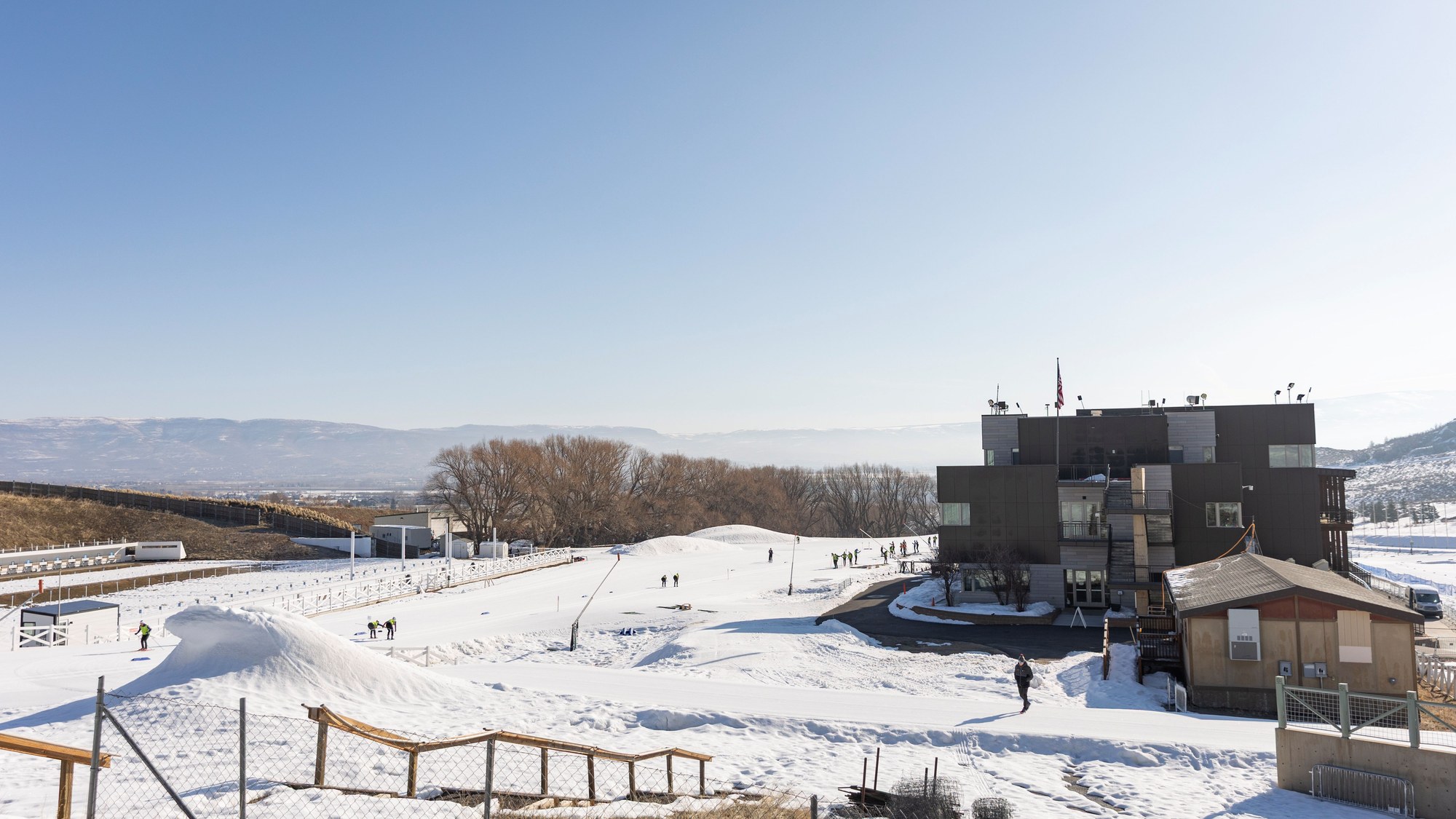
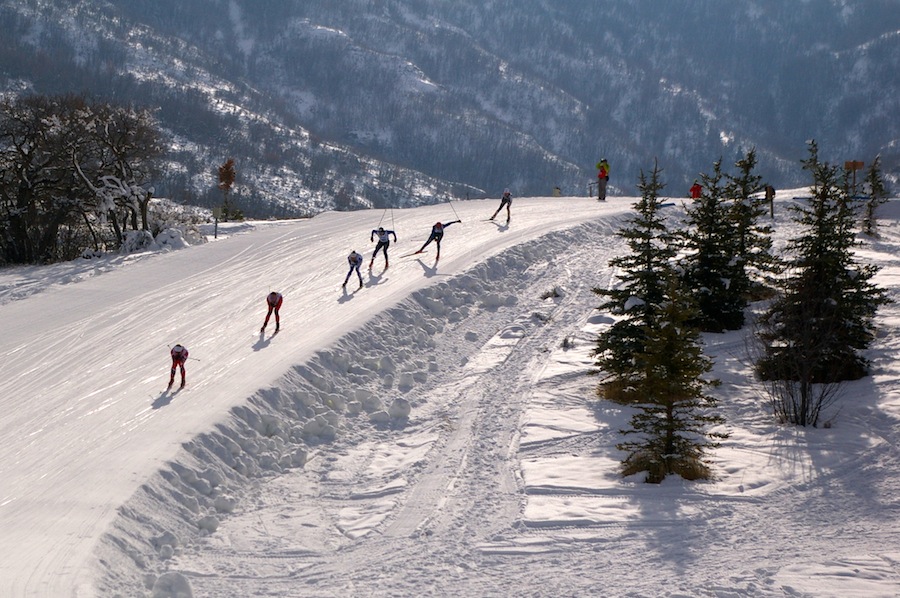
Skiers training near the biathlon range and the Sports Discovery Center at Soldier Hollow Nordic Center in Midway, Utah. (Photo: Tanzi Propst)
The Position
From the posting: “Soldier Hollow Nordic Center in Midway, Utah, is hiring a Venue Operations Supervisor to work in snowmaking, snowcat grooming, and trail operations at the Salt Lake 2002 Olympic biathlon and cross-country venue. With the Olympics returning to Utah in 2034, you’ll help prepare Olympic-caliber trails for daily skiing and events and assist with maintenance and operations of this year-round facility. If you’re a hands-on leader who knows snowcats, snow guns, and trail building, keep reading.”
Schedule, Pay and Benefits
Full time, year round, hourly position
Pay range: $24 to $30 per hour, depending on experience
Overtime eligible and expected during winter operation
Winter: the weather sets the day. Snowfall, temperatures and events shape each shift, and prime snowmaking happens overnight
Spring through fall: Monday to Friday, plus event weekends
Medical, dental and vision
HSA and 403(b) retirement with company matches
Up to $200 wellness credit
Friends and family vouchers for winter tubing, the bobsled experience, a Utah Olympic Park summer gold pass and more
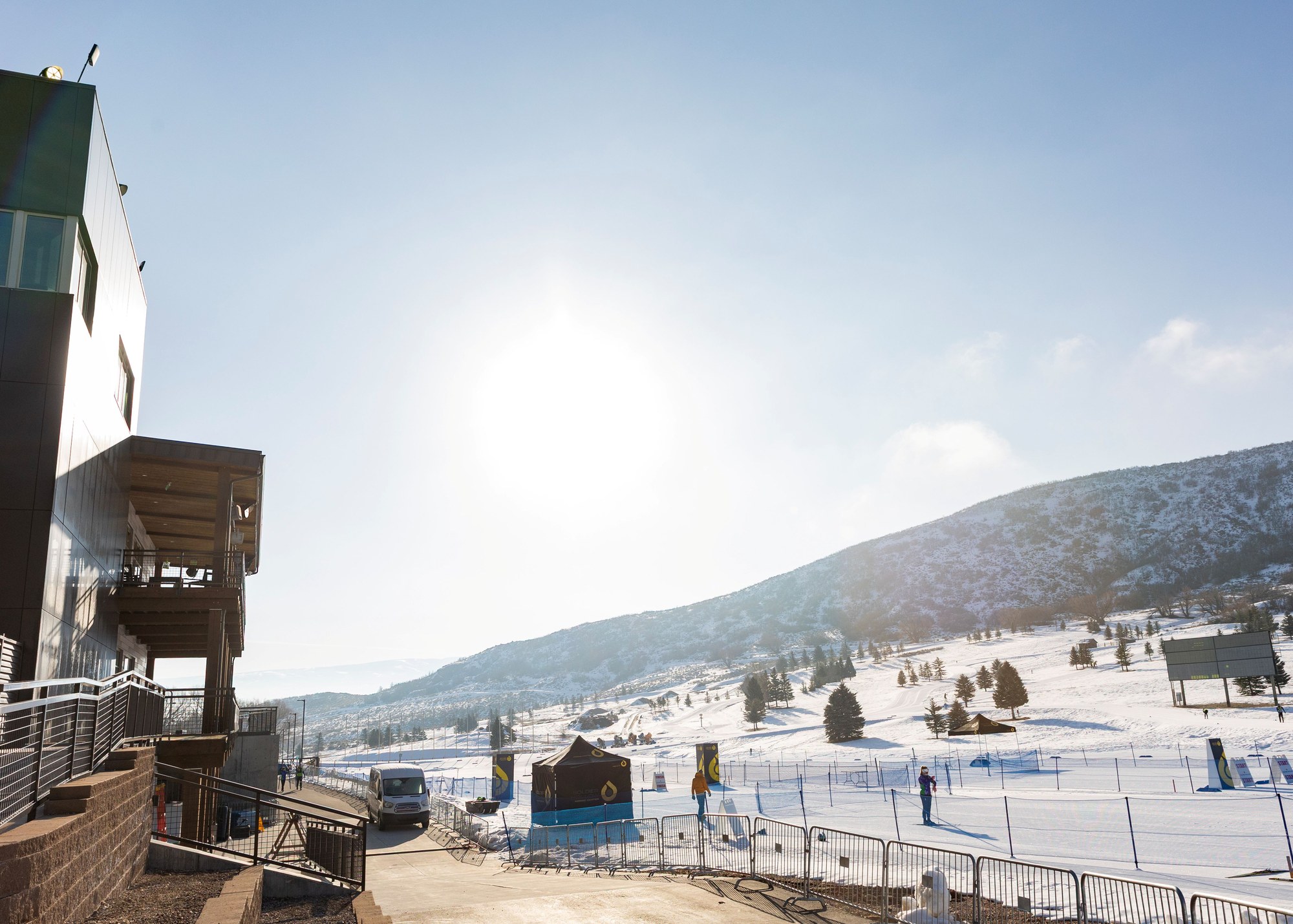
The start and finish area built for a race at Soldier Hollow Nordic Center. (Photo: Tanzi Propst)
What the Job Asks For
Must haves:
3+ years of snowcat grooming and snowmaking experience
2+ years maintaining and repairing heavy equipment, snowmobiles and vehicles
1+ years leading a field crew, including hiring, training and scheduling
Experience preparing venues and courses for events such as mountain biking, cross country skiing or biathlon races
Valid driver’s license
Comfortable with snowmaking software, equipment logs, email and the Nordic Pulse app
Ready to work outdoors in every Wasatch season
Nice to haves:
Chief of Course experience
Welding skills
Three phase electrical experience
Nordic ski area operations background
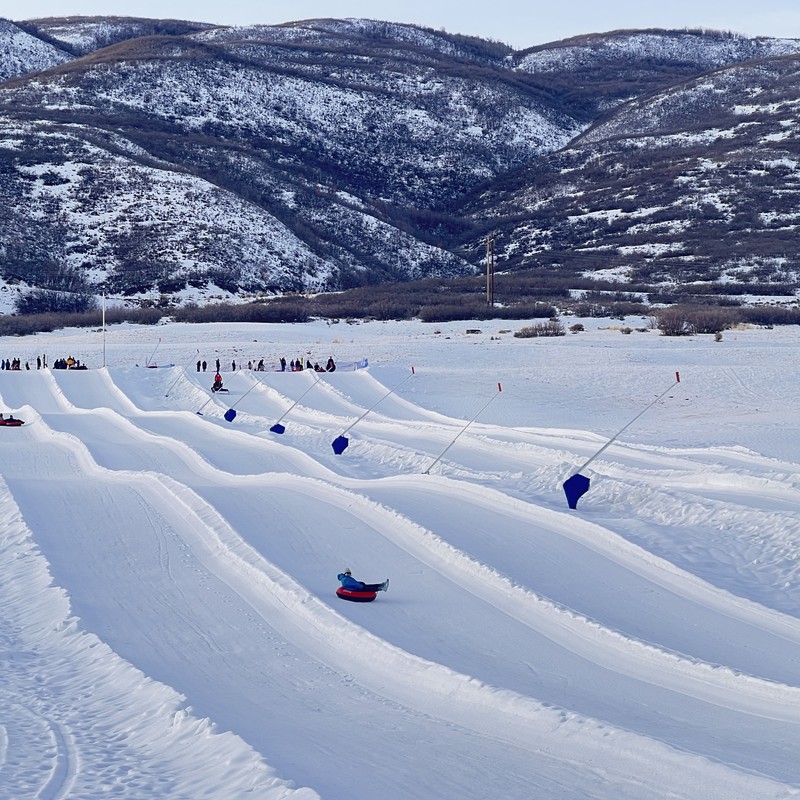
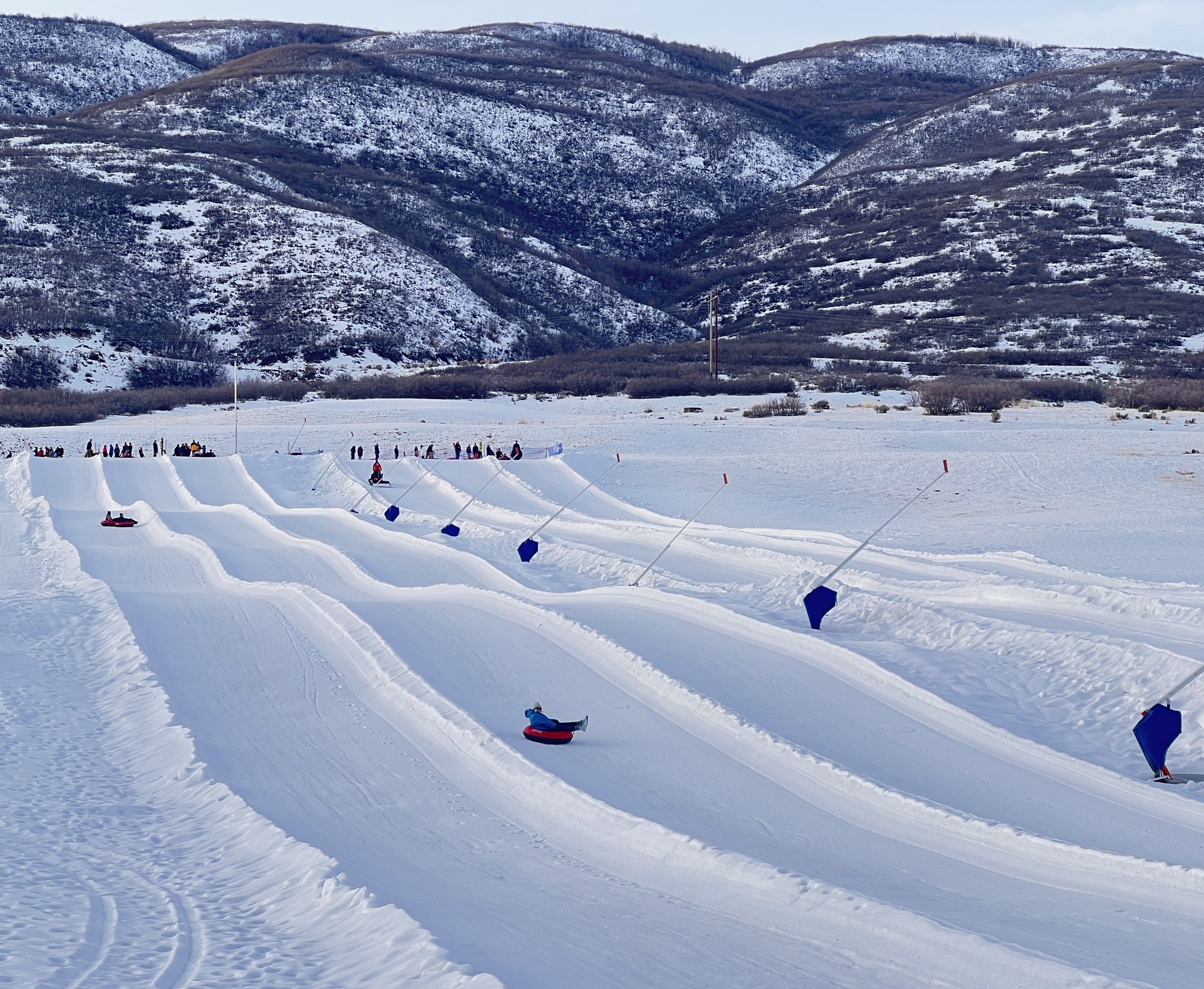
Tubing lanes built and maintained each winter at Soldier Hollow Nordic Center. (Photo: Tanzi Propst)
A Day in the Life
From the posting: “Winter starts with an aggressive snowmaking push. When temperatures drop overnight, you and your crew fire up the system and build base so the tubing hill and ski trails open on time. Once the snow is down, you set classic and skate track, shape the tubing hill, and prep racecourses. In summer, you shift to mountain bike trail construction, roller ski trail repair, mowing, and fleet maintenance. Every day, you lead alongside your crew, and every athlete, family, and racer feels the result.”
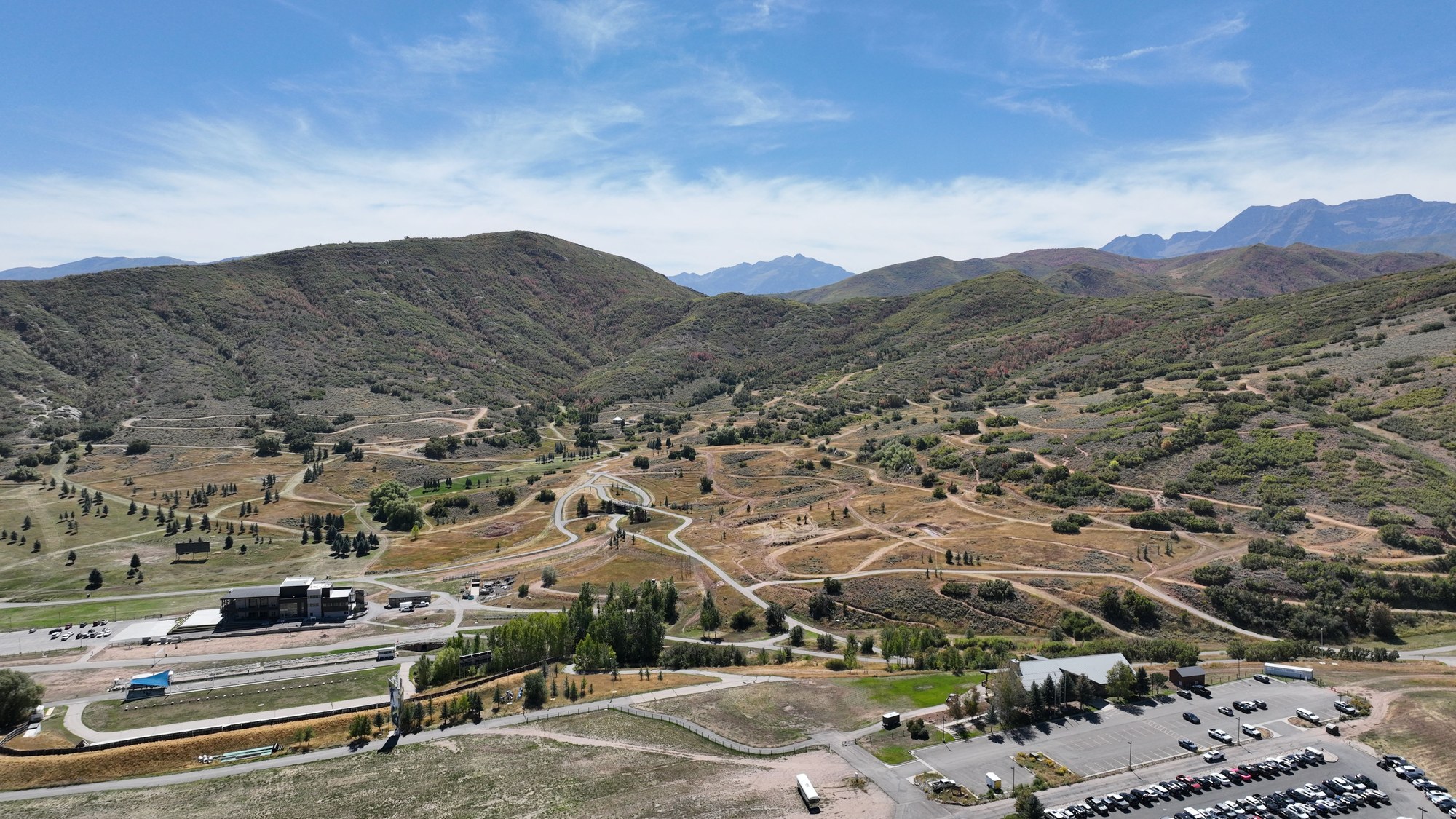
An aerial view of the trail network at Soldier Hollow Nordic Center. (Photo: Utah Olympic Legacy Foundation)
Why Soldier Hollow
“As part of the Utah Olympic Legacy Foundation, Soldier Hollow exists to cultivate champions in sport and in life,” the posting reads. “Our venue crew is preparing for 2034, and we’re not afraid to try new things. Last winter, we stored 12,000 cubic meters of snow to jump-start this season. You’ll join a crew that values fresh ideas, building trails for World Cup athletes, first-time skiers, and mountain bikers across 31 kilometers.”
The foundation describes the person it is looking for this way: “You’re happiest with grease on your hands and a plan for tomorrow’s grooming. You bring Grit to midnight snowmaking shifts and Excellence to every corduroy line, always looking for a better way. You build a strong crew through Collaboration, working right beside your team. You want your work to have Impact on athletes chasing Olympic dreams and on the Community that skis, bikes, and hikes these trails.”
How to Apply
Apply through the Utah Olympic Legacy Foundation listing:
The role is also listed on the foundation’s careers page at utaholympiclegacy.org/careers, alongside a seasonal Snowmaking, Grooming and Trail Crew Lead position at Soldier Hollow. Questions about hiring can go to hr@uolf.org or 435.658.4218.
As the pageantry and athletic performances of Paris 2024 captivated audiences across the United States, a team of organizers had their eyes fixed on a target far beyond the shores of the Seine. Ten years beyond, in fact. The International Olympic Committee announced on July 24th that Salt Lake City, Utah will host the 2034 Olympic and Paralympic Games, with the Cross-Country and Biathlon events returning to the Soldier Hollow Nordic Center, site of the 2002 Games.
Lacking some preternatural power of precognition or comprehensive data from our nation’s youth development programs, this journalist is unable to provide any outcome predictions for the 27th Winter Olympiad. Instead, FasterSkier reached out to the trio of skiers ready to guide Soldier Hollow down the decade-long road to 2034.
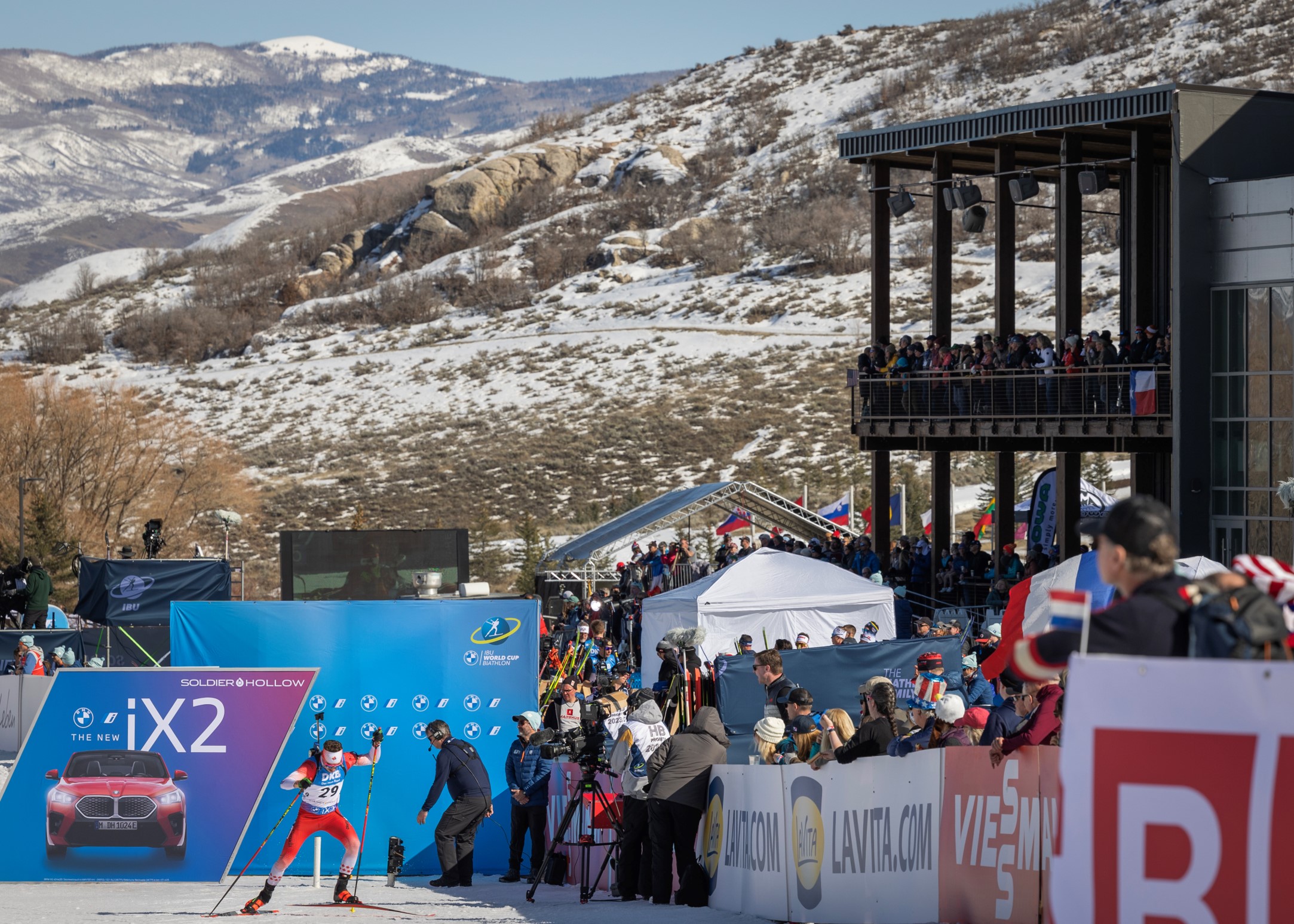
International Biathlon Union World Cup races at Soldier Hollow, 2024. (Photo: Josh Korn)
Salt Lake City’s Two-Boxed Bid
Twice a U.S. National Champion while skiing for the University of Utah, twice an Olympian (Albertville in 1992 and Lillehammer in 1994), and Chief of Sport for the U.S. Ski Team from 2007 to 2019, Luke Bodensteiner is currently the Chief of Sport Development for Utah Olympic Legacy and General Manager of the Soldier Hollow Nordic Center. In this role, he is responsible for both the Solider Hollow venue itself, and the range of Olympic and Paralympic sport programs that contribute to Salt Lake City’s vibrant, active winter community.
In Bodensteiner’s view, Salt Lake City checked two distinct boxes. For the U.S. Olympic & Paralympic Committee (USOPC), with whom the Utah Olympic Legacy Foundation partnered for over ten years to gauge community interest, assess venue capability, and to ultimately make a bid for the 2034 Games, the Foundation’s robust youth programming was a major draw. Over three thousand young athletes participate in winter sports through the Foundation—engagement which the USOPC recognizes as reflecting “the strength of the [2002 Games’] legacy,” and which made bringing the world’s best back to Utah “a really compelling proposition for the USOPC.”
Meanwhile, for the International Olympic Committee (IOC), Salt Lake City’s Olympic infrastructure, which has enjoyed intensive usage at a “regular cadence” since the 2002 Games, and aligns with Agenda 2020—an initiative to ensure “sustainable games” through long-term usage and reusage of venues, among other environmental and financial considerations.
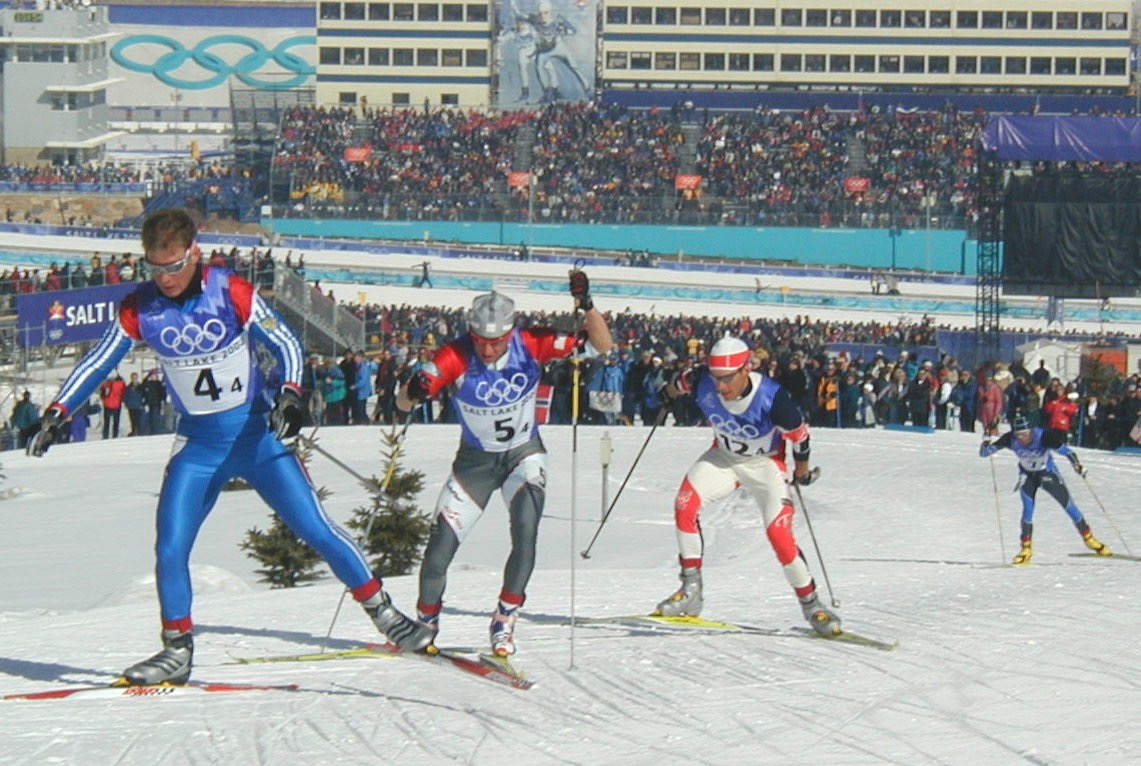
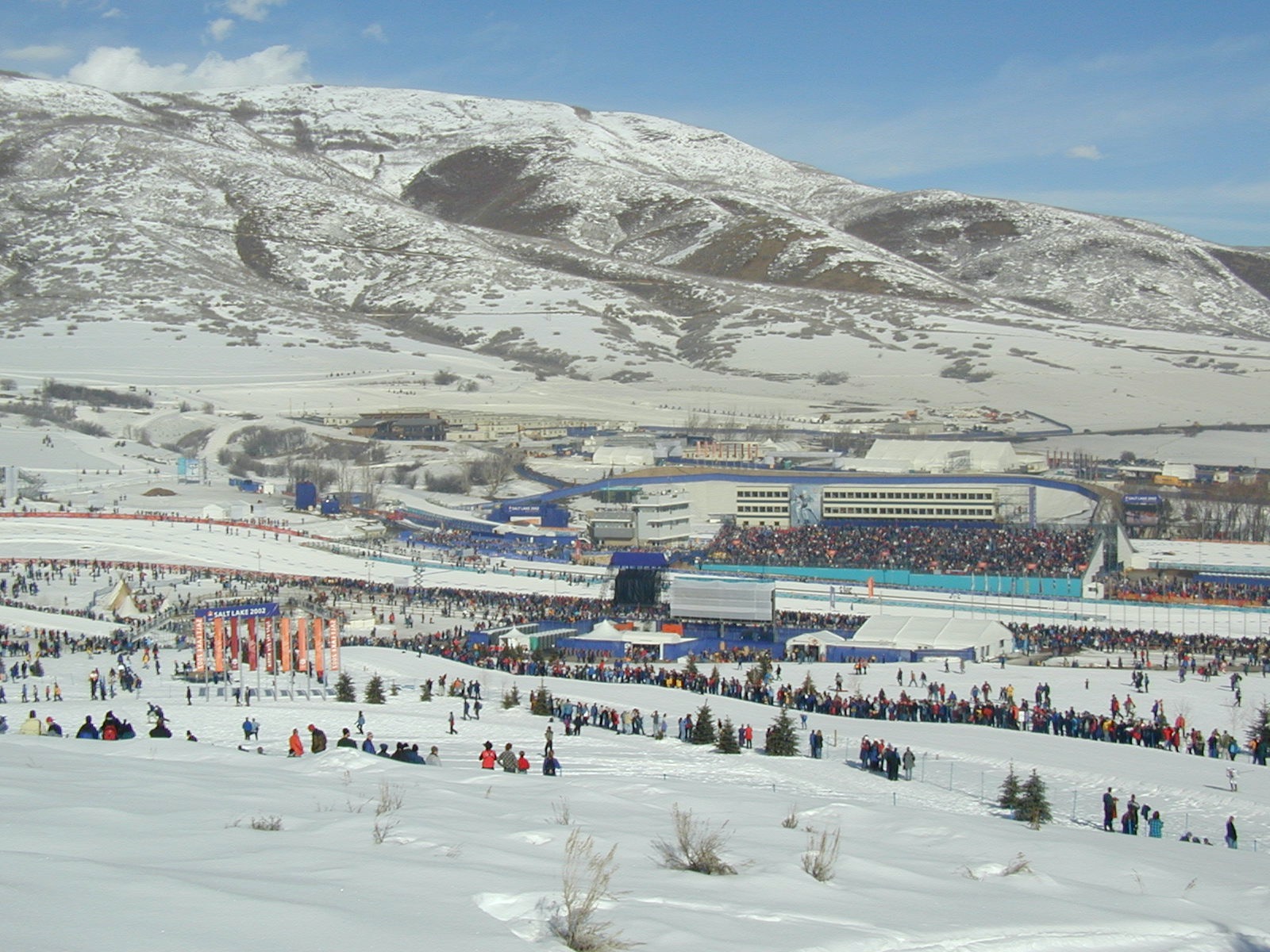
20,000 fans attended the Men’s Relay at the 2002 Olympics in Soldier Hollow. (Photo: Cory Smith)
Josh Korn agrees that Soldier Hollows’ infrastructure has enjoyed “great utilization already,” and heavy engagement with national and international events since ’02. “First and foremost, we are an Olympic venue,” he reminds me. “We’re predisposed to have the terrain and facilities necessary for high-level racing. It’s in our DNA—that’s why [the USOPC and IOC] chose Soldier Hollow” for the games two decades ago. A Wisconsin native (as is Bodensteiner) and UW-Green Bay Nordic alumnus, Korn came on as the Solider Hollow Nordic Event Manager in 2021. During his three-year tenure alone, the venue has hosted an impressive roster of races, including the International Biathlon Union World Cup (2024), the US National Championships (2024), the NCAA National Championships (2022), and the Biathlon Junior World Championships (2022). In the coming ten years, Korn expects Soldier Hollow will conduct at least “six to ten” more major events, beginning with the US Junior National Championships in 2025 (which will be the first event to use Soldier Hollow’s recently-expanded Olympic Stadium in “quite some time”), and likely including the IBU World Cup between 2026 and 2028, as well as the Cross-Country World Cup after 2030.
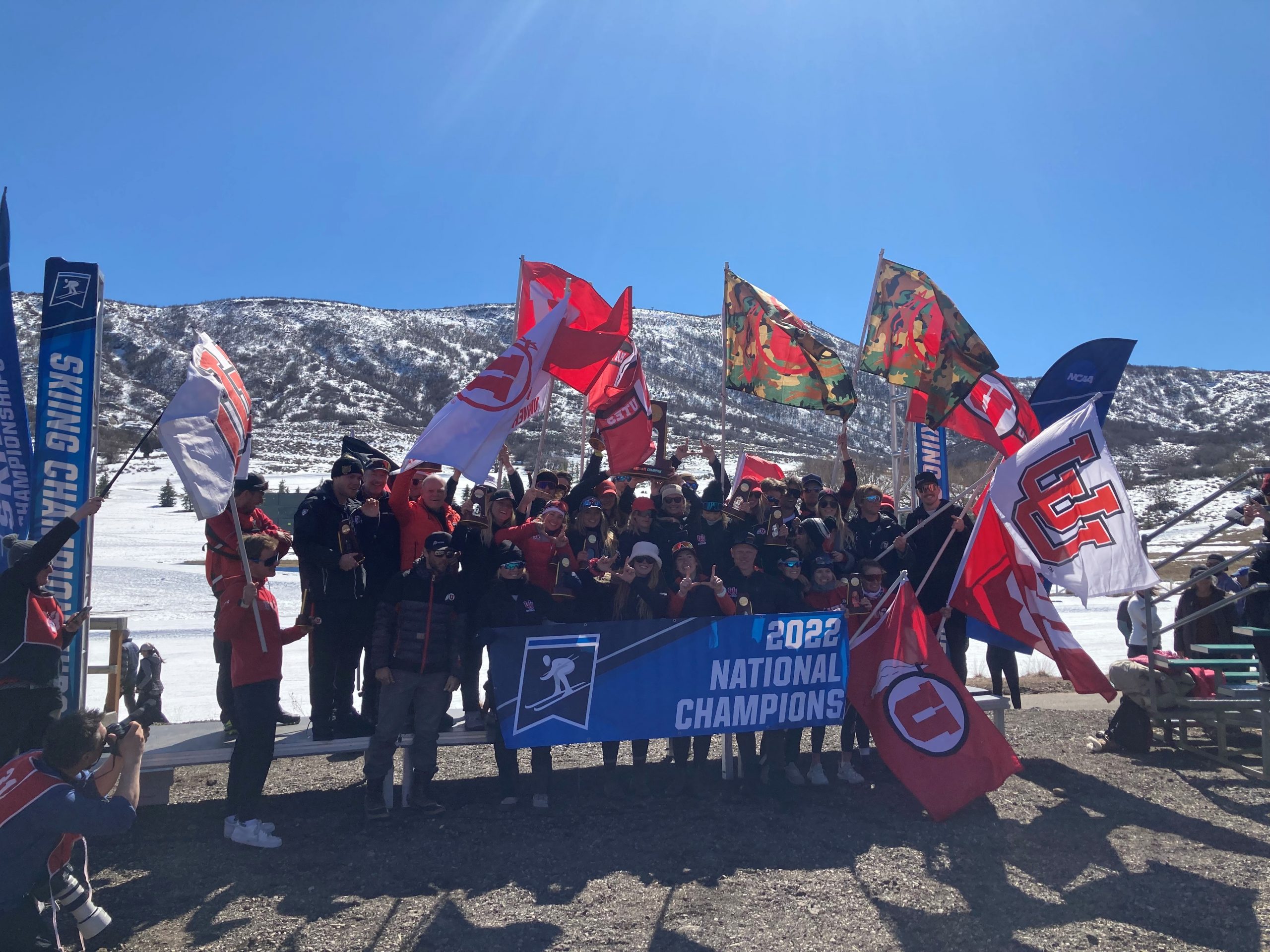
University of Utah skiers celebrate their 2022 NCAA National Championship title at Soldier Hollow. (Photo: Josh Korn)
While these races will serve as crucial pre-Olympic “test events” for Soldier Hollow’s organizing committee and volunteer corps, ensuring they are “savvy enough to work at the highest level,” the teams are already “pretty doggone good at putting on races out here,” Korn concedes. In his estimation, “there’s probably nobody in North America” better equipped to host elite-level Nordic racing.
Two-Week Windows
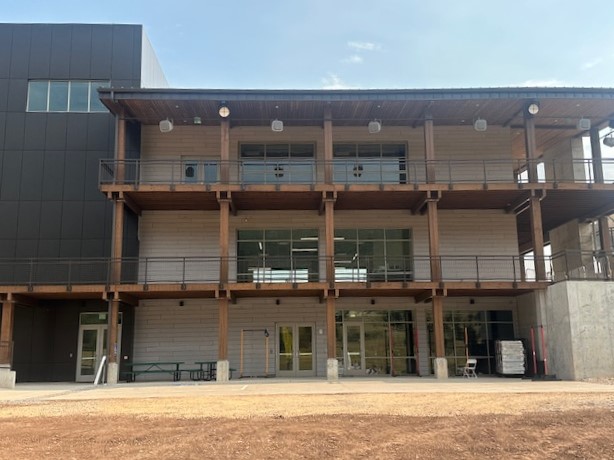
Nevertheless, Korn recognizes there is work to be done, both on and off the trails. Soldier Hollow just completed a 19,000 square foot addition Nordic Center, which brings the building’s footprint to just under 30,000 square feet of training, business, and conference space. Newly-homologated courses for the 2023 FIS Para Nordic World Cup incorporated terrain better suited to sit-skiing than the existing trails—terrain which is also more appropriate for beginning, non-adaptive skiers. “We want to be the go-to place for Utah, for the Mountain West, for people to come as a destination to ski,” Korn tells me. “We’re really trying to expand what we’re doing by allowing more people to get involved.”
With a dramatically-expanded Nordic Center, Soldier Hollow now boasts nearly 30,000 feet of indoor conference and event space. (Photo: Bill Pierce)
That expansion is the “cornerstone” of the thriving Nordic community the Soldier Hollow team hopes will underlie the 2034 Games, and it is underway despite increasingly-adverse climate conditions. Bill Pierce is the current Venue Operations Director for Soldier Hollow, with an impressive resume spanning decades of trail and venue design, twenty years of professional coaching, and management of both the sprawling American Birkebeiner Ski Trails in Hayward-Cable, Wisconsin, and Snow Mountain Ranch in Granby, Colorado. The third of the “three Wisconsin boys running” Soldier Hollow, Pierce has prioritized effectively leveraging the location’s power and water to “bring skiing to a venue that wouldn’t otherwise have it.”
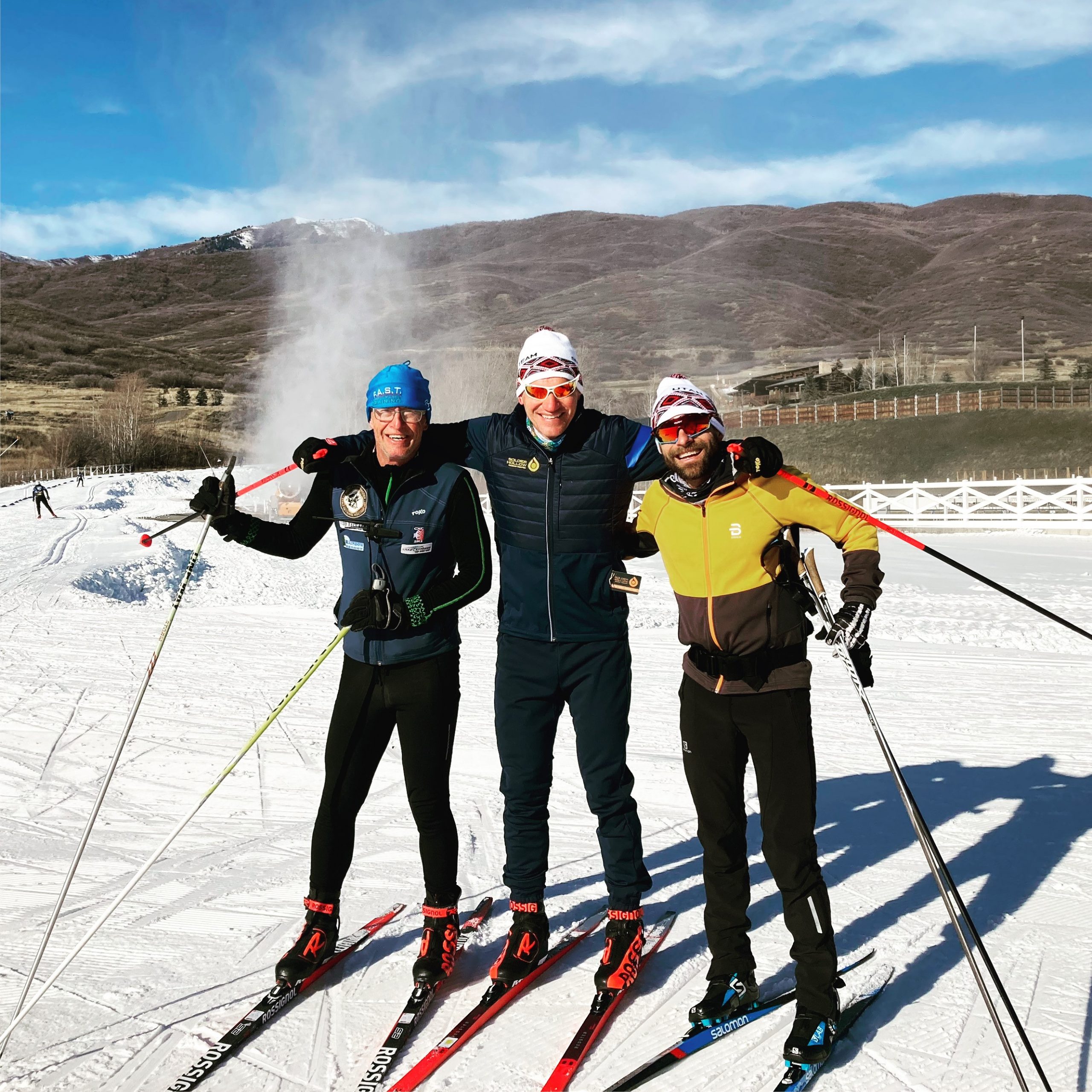
The “three Wisconsin boys” of Soldier Hollow: From left, Bill Pierce, Luke Bodensteiner, and Josh Korn. (Photo: Josh Korn)
Although Soldier Hollow “did not exist before the 2002 Olympics, and was built specifically for those Olympics,” it “wouldn’t exist without snowmaking,” Pierce states. “We’d have a very short season, maybe less than thirty days.” Cold air is the biggest concern: The temperature is rarely low enough to consistently produce snow. In a realistic scenario, Pierce and the trail crews have “a two-week window during which we want to be able to pump the maximum amount of power and water.”
The trails are currently equipped with roughly sixty “stick guns” and ten “fan guns,” all of which are fully automated (“I can run the snowmaking from my laptop at home. That’s how automated it is.”) At present capacity, with two weeks of sufficiently cold air, Pierce can cover 10k of trail in one meter of manmade snow, a base thick enough to “withstand any type of weather through March.” During the last season, he made enough snow in four weeks to cover 16k.
Ongoing expansions are no coddiwomple. By the 2034 Games, Soldier Hollow will aim to cover between 15k and 22k of trail, in a one meter-deep racing deck, in a two-week window—nearly double their current capacity. (For those with a pen and paper, or with a problem visualizing volumes, 15k of FIS-homologated Category D trail, at a depth of one meter, contains roughly 112,500 cubic meters—over 11,000 tandem-axle dumptruck loads—of compacted, groomed snow). This should give Soldier Hollow ample space to enable cross-country athletes to race (and get TV coverage) while biathletes train, and vice versa—an exercise in Olympic stadium-sharing that hasn’t taken place since the 2002 Games, and that Pierce describes as an “art and science” of visual and logistical trail configuration.
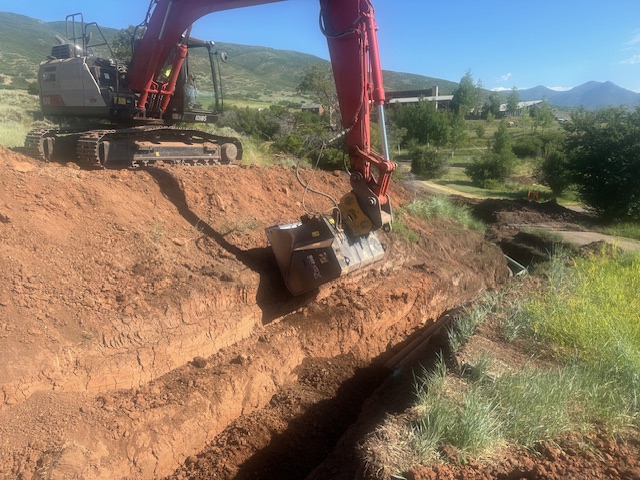
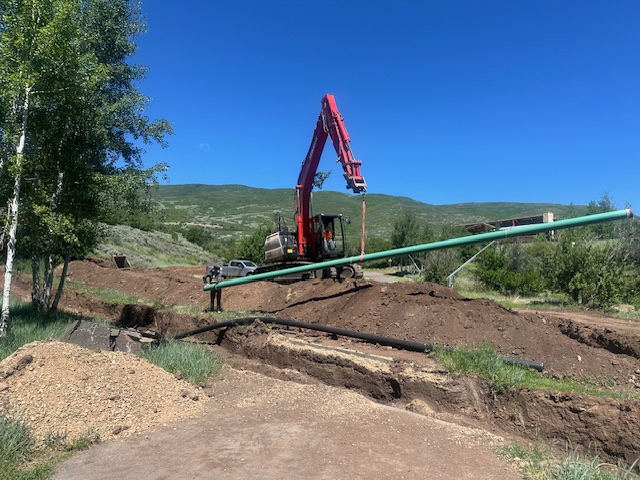
Excavating below-frostline trenches for snowmaking pipe along the Soldier Hollow trails. (Photo: Bill Pierce)
This scheme is an ambitious expansion of the current system, but a necessity. In Pierce’s words, there’s “too much fire, not enough water, and it’s changing fast” in the Mountain West: “When you see the climate history that’s happened in the last forty years, it’s actually very scary.” Today, snowfall totals are erratic. “In 2021-22, we had 32 inches of snow. In 2022-23, we had over 300 inches of snow. In 2023-24, we had a mix of snow and rain, including several seven- to eight-day stretches above freezing. We watch the weather two weeks out, and plan our staffing and snowmaking setup to go as fast as we can to use the cold air while it’s here.”
First on the to-do list is the creation of another water pond and pumphouse. That project will begin in summer 2025, in conjunction with the Soldier Hollow Golf Course. Summer 2025 will also see the excavation of a snow storage depot, which will be operational by the early months of 2026. Between the present date and 2027, the venue will also install an additional 2k of fully-automated snowmaking around the core trails and expanded stadium; from 2027-2030, they’ll undertake a “final touch-up” of the automated system to cover 8-12k of snowmaking (any remaining kilometers will be covered through machine pile-pushing of depot-stored snow and “whales”).
Lowering snowmaking pipe into place. (Photo: Bill Pierce)
A Long and Local Road
With another Crystal Globe for Jessie Diggins, a home-soil World Cup witnessed by 40,000 attendees, and long-awaited US Men’s victory by Gus Schumacher, the winter of 2023-24 brought America’s Nordic excitement to a fever pitch. As Josh Korn summarizes, “the amount of enthusiasm there is for this sport right now—there’s never been more of it.”
Husbanding this energy for the decade ahead seems like a tall order—and the landscape of 2034’s competitive field will be dramatically different from today’s bounty of emergent possibilities. Schumacher will be 33 years old; Diggins will be 42 and may have since storage-waxed her racing skis (although Maurilio de Zolt won Gold over the Norwegian Dream Team at Lillehammer ’94, at the age of 43—so anything’s possible!) Kikkan Randall made her Olympic debut (coincidentally, in Salt Lake City) at the age of 19, so the American star of the 2034 Games might not be spending this autumn rollerskiing and lactate testing—they’ll be too busy with fourth grade.
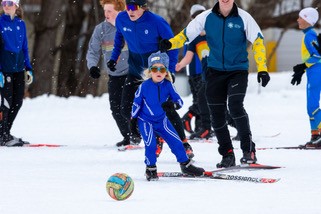
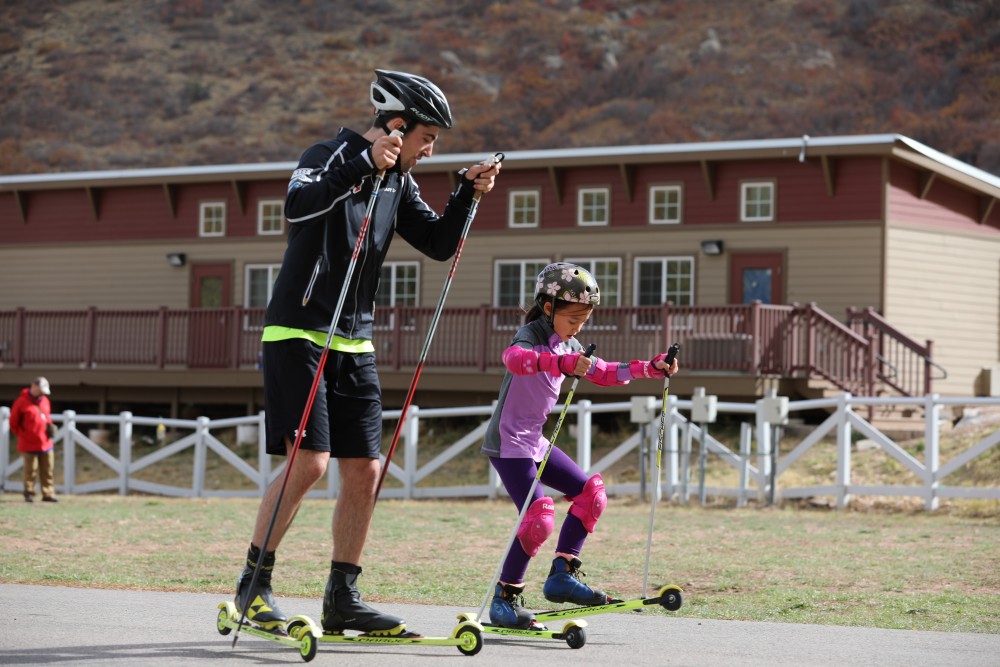
A potential prospect for the 2034 Games (or the 2034 FIFA World Cup) builds skills at the Soldier Hollow Nordic Center. (Photo: Josh Korn)
In Diggins’ opinion, the challenge of maintaining U.S. skiing’s momentum in the years to come is “the single biggest question for the future of our sport”—but the solution is relatively simple: Funding and access. “The pathways to success dry up really quickly in a financial drought in a country that has no government funding for skiing. Without money, we can’t have more World Cups in the U.S., we don’t have SuperTour, we can’t fund our athletes, and it’s pretty much impossible for people to pursue a career in a sport that is largely played out in Europe.”
The friction of distance also has implications for skiing’s American fanbase. “The other thing we really need is access to connecting to the races and connecting to the athletes […] We need it to be easy for people to find our races to stream on-demand wherever they are, and it needs to be straightforward.”
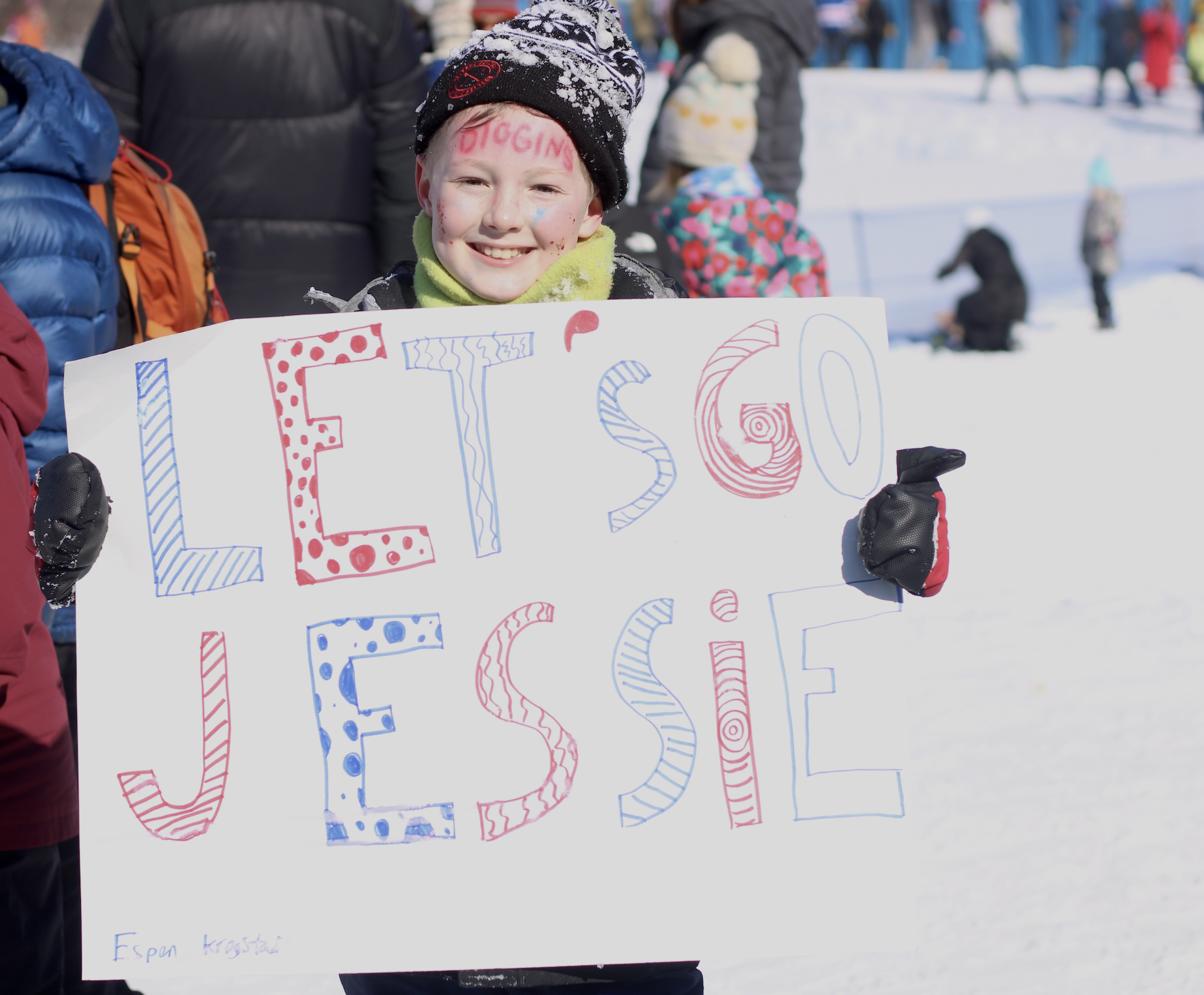
Espen Krogstad, 11, poses with his Jessie Diggins sign at the World Cup race in Minneapolis in February 2024. (Photo: Nathaniel Herz/FasterSkier)
Lastly, Diggins says, “Athletes need to be willing to share themselves, and to post on social media, so kids and fans can connect with athletes when they’re gone and on the road, because when you get to know someone, then you want to hear from them and stay connected when that sport is happening [abroad].”
Luke Bodensteiner notes the progress of the previous decades as he looks ahead. “The sport has grown in leaps and bounds. A lot of people who skied competitively thirty years ago continue to stay involved, and they’ve helped built, and brought expertise to, local clubs. It’s snowballed” as these original, personal investments in team, equipment, and grooming improvements across the country make skiing accessible and “enjoyable for a lot of people. We’re in a great cycle, where new skiers are bringing in additional skiers,” who learn from—and eventually become—local experts, growing the sport in their own towns and trails. “The real story is what’s happening in all these little communities all over the country […] what happens at the local level in all these ski clubs is driving our success.”
Josh Korn agrees. Kids are getting on skis in their own schools and clubs, and seeing that international success in the sport is “doable.” While the US Ski Team’s “hungry young guys are young enough that they’re going to be here in Soldier Hollow in 2034,” it’s essential to keep “putting them in front of as many kids as possible.”
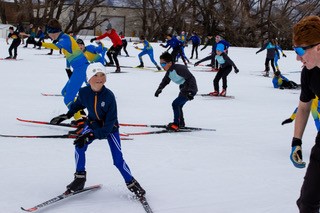
Youth skiers at Soldier Hollow Nordic Center. (Photo: Josh Korn)
It’s a sentiment Gus Schumacher echoes. “I think we need to keep ski racing fun for kids. We also need to keep pushing to make it as accessible as possible, like reducing costs at events when we can, and supporting our local clubs and larger organizations like NNF, that help support aspiring races from the first time they join a group, all the way to the World Cup,” he writes. “As long as we still have skiers aspiring to be the best they can be at every level we’ll be able to keep the enthusiasm. The level sometimes ebbs and flows, but the more we can all push each other to be the best possible, the more consistently good we’ll be. And I’m also planning on being around still in 2034!”
As a graduate of the University of Utah and no stranger to the Soldier Hollow trails, U.S. Ski Team member Sophia Laukli (winner of the 2024 Alpe Cermis climb) also has her eyes on the distant Games. Momentum for the sport and recent American successes go “hand in hand. It’s easy to get motivated and set higher goals when we continue to improve each season as a team, and that makes our team and the sport more known/seen in the country.”
Sophia Laukli secured her first FIS World Cup victory on Alpe Cermis, the final stage of the 2023-24 Tour de Ski. (Photo: NordicFocus)
For Laukli herself, “Originally the concept of racing until 2034 was a bit daunting […] But as I continue to improve myself and, in turn, want to set higher and higher goals, the idea of racing at the Olympics is pretty motivating. It’s a long ways away, but not many people get the opportunity to have an actual home-race Olympics.” It would be “special to race in Salt Lake, especially on a potential relay team with old University of Utah teammates,” but Laukli thinks “the country is already going in the right direction to make those Olympics big, no matter who’s racing. I think all of us skiing today are going to try and be a part of those Games one way or another, whether that be on the sidelines or the start line.”
To Bill Pierce, the key to Nordic engagement lies beyond both the sidelines and the start line. Pierce recognizes that, the success of the past season aside, skiing remains a “very micro-sport in North America.” In the years ahead, he’ll continue to focus on fostering “excitement about wellness” on and off the snow. “Not everyone can ski, but they can hike, bike, whatever. We can use these trails to build inroads and connections with the community, and wellness in that community. This is what the Olympics are all about.”
FasterSkier thanks Luke Bodensteiner, Josh Korn, and Bill Pierce (Soldier Hollow Nordic Center / Utah Olympic Legacy Foundation), and Leann Bentley, Jessie Diggins, Sophia Laukli, and Gus Schumacher (U.S. Ski Team) for their contributions to this piece.
The 2nd annual Schutzenski Festival is set to be held at Soldier Hollow in Midway, Utah from October 10th-16th. This year’s Schutzenski celebrates the culmination of a full offseason calendar for Soldier Hollow and beyond, offering a full weekend of cross-country and biathlon rollerski racing on the world-class Soldier Hollow course. Held amid the beautiful Heber Valley fall colors, and featuring US Ski Team and US Biathlon Team members competing on home soil one more time before heading out for the World Cup in Europe, the Schutzenski promises to be a kind of Homecoming for US skiing; a unique gathering combining a full competition program with a host of other industry and community programs.
The week will feature a suite of top ski industry members showing off the latest innovations in equipment, and a series of athlete meet and greets and scheduled social gatherings will give festival attendees the chance to connect with members of the ski community from across the country. A full updated event schedule can be found here.
Schutzenski Race Weekend – Friday, October 13th-Sunday, October 15th
A full weekend of biathlon and cross-country roller ski races kicks off Friday, October 14th with a series of biathlon sprint races (7.5 k/10 k). Saturday, October 15th features distance biathlon races (7.5 k/10 k/12.5 k Mass Start) and distance cross-country races (6.5 k/10 k Mass Start). A 5 k and 10 k running race will also be held Saturday morning. In between Saturday’s racing, a King/Queen of the range biathlon competitions will be held, and an opportunity to try biathlon for festival participants will round out the day’s events. Sunday, October 16th finishes out the weekend with fast and fun action with a full cross-country classic sprint race.
The whole racing program is one that’s busier than most World Cup weekends, and combines the disciplines of cross-country and biathlon throughout. In each race, a set of matched skis will be available for top-seeded competitors, and racers can compete across Open, Elite, and Junior classifications.
Schutzenski is being held concurrently with US Ski Team and US Biathlon Team Fall camps, and a number of top pro club altitude camps, meaning the Schutzenski is a one-of-a-kind opportunity to participate and watch the top skiers in North America all in the same field. Friday’s US Biathlon races are part of the World Cup Team selection process, and the whole festival will be a unique preview into US Skiing going into an exciting 2022-2023 winter season.
Full details are available on the Schutzenski website.
Olympic champion Johannes Høsflot Klæbo of Norway receives an official Soldier Hollow cap from a young skier after conducting a clinic for local cross country ski racers at the Olympic venue of Soldier Hollow near Midway, Utah. (Photo: (c) 2022 Tom Kelly)
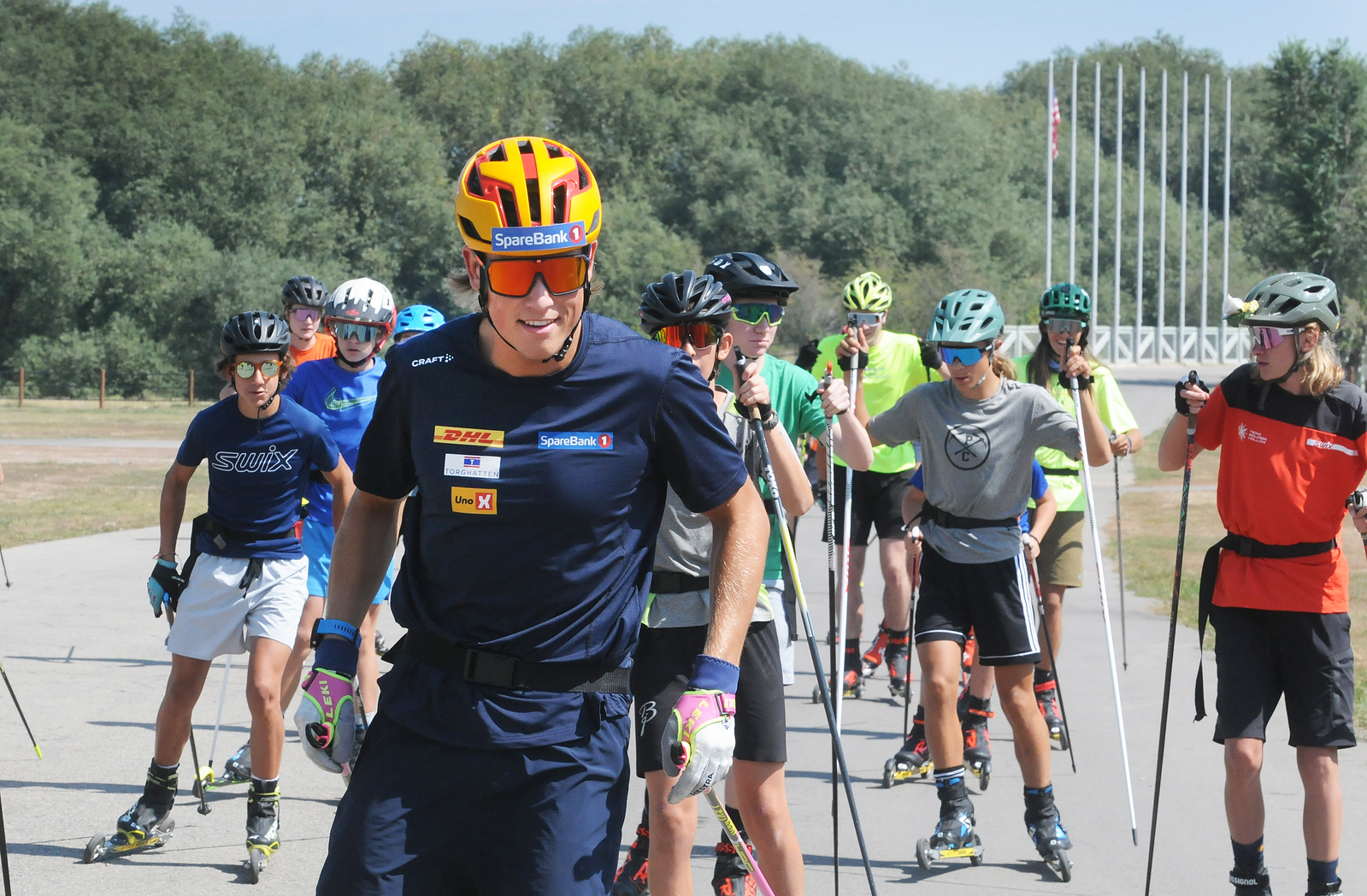
Practice had ended for the Soldier Hollow Comp and Devo teams, but no one went to take their roller skis off. They were waiting for something that didn’t happen everyday; shortly, their patience was rewarded. The winningest male World Cup skier of all time—Olympic Champion, World Champion—glided around a gentle left-hand bend, dragged his wheels to a perfect stop in front of the crowd, picked up a microphone, and smiled a familiar smile: Johannes Høsflot Klæbo had arrived.
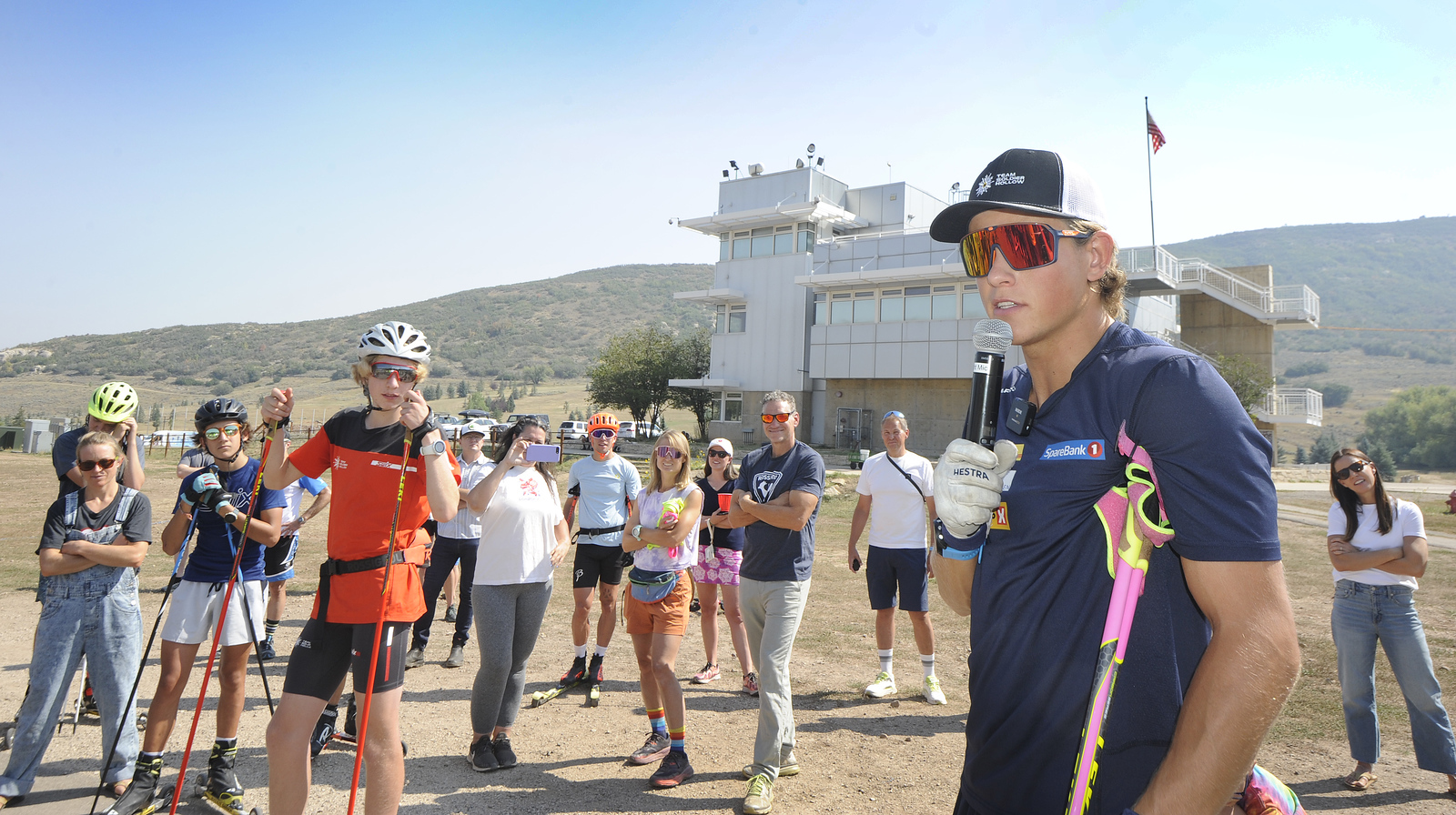
Hosting the day, Tom Kelly asked the questions that each of us in the American ski community might ask if the best skier in the world showed up on our local trail system:
For the kids:
Tom Kelly (TK): What advice would you give to our [youth] skiers here today?
Johannes Høsflot Klæbo (JK): The most important part is to have fun. That was my focus when I was that age, and all the way up until I was starting on the national team. For me also, I was small, like really small, so I tried to really work on my technique to make up for that.
For the (slightly) older kids:
TK: When you were young, which skiers were you looking up to?
JK: The skier I was looking up to was Petter Northug. [I also looked up to] my grandfather – who [is] my coach, but also just there for me and still is here for me and I look up to him for that.
And for the US Ski Community looking forward to the future:
TK: What do you think about [Soldier Hollow] as a venue for the [2030 Winter Olympic games]?
JK: “Yes definitely. This is a venue built for the Olympics and I remember watching some great races here in 2002. 2030 is eight years away, which, I guess I will try to keep [myself] going until then.”
On this day, it became apparent that Soldier Hollow is part of Klæbo’s plan to keep himself going . . . but why Soldier Hollow? Why would Johannes Høsflot Klæbo feel the need for a change? He’s the central figure in ski-obsessed Norway; for Norwegians, Utah is practically the edge of the skiing universe, and Klæbo’s achievements wouldn’t imply the need for rethinking his usual plans and strategies. At the age of 25, he’s already amassed seven Olympic medals, eight World Championship medals, and 48 World Cup victories (more than any male skier in the sport’s history). Ironically, these achievements may be credited to Klæbo’s insistence on doing things his own way (not simply as a member of the Norwegian Ski Team). Klæbo’s athletic support system is almost exclusively his family: his Grandfather serves as his primary coach, and his brother plays an important role in managing everything that goes into being Johannes Høsflot Klæbo. When viewed in that light, it seems less unusual that Klæbo would choose to spend time training in a new environment, and under a new plan.
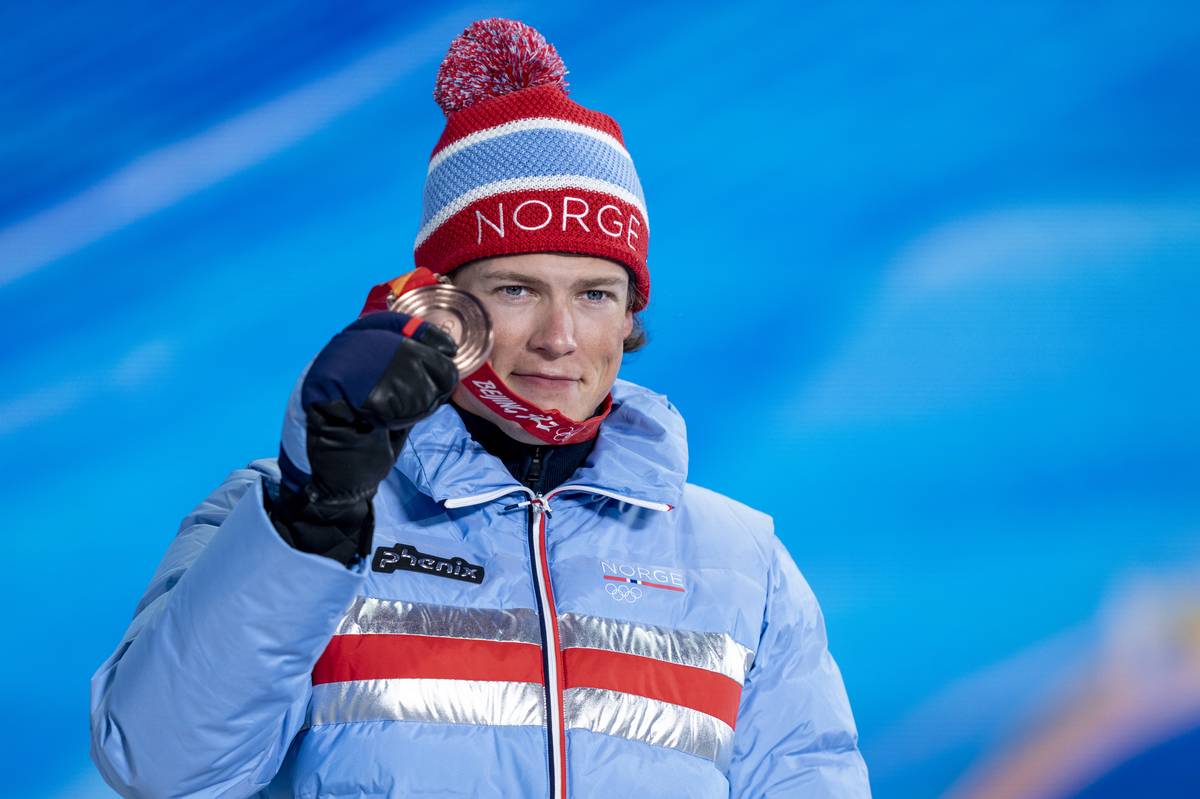
Johannes Høsflot Klæbo holds up one of the 3 Olympic medals he won at last February’s Beijing Games. Klaebo has been in Park City, Utah this month, preparing for the upcoming World Cup season. (Photo: Nordic Focus).
Klæbo is already experiencing a 2022-2023 season that differs from his normal program. His widely publicized mid-summer hamstring injury has necessitated changes to his usual training plan, including the incorporation of pool-therapy and swim-training to maintain fitness while he rehabs the injury. Fortunately, Klæbo seems to maintain a focus on skiing that is total. He likes to push, to experience the thrill of skiing fast, and to prove that he can go faster than anyone else. That persistent curiosity for the sport that is his profession seems to have motivated his trip to Utah. When Tom Kelly asked Klæbo what he knew about Soldier Hollow before showing up to train there last week he responded, “Honestly, I didn’t know much. I just wanted to try something new. [I] knew this was an Olympic venue with a good roller ski track, and I could see what skiing in America was like.”
When details of Klæbo’s 2022-23 plans emerged in June, the key innovation those plans revealed was to institute a program of high-altitude training separate from the Norwegian national team. With training at Soldier Hollow (elevation 5,882ft/1792m) and Park City (elevation 7,000ft/2,134m), Utah is the first of four stays at altitude that Klæbo plans for a season that will also include Livigno, Italy; Davos, Switzerland; and an as-yet undetermined location prior to the World Championships next March in Planica, Slovenia (which will take place at an altitude of 3120ft/951m).
Johannes Høsflot Klæbo pauses in his own training to lead drills for Soldier Hollow Comp and Devo team skiers. (Photo: (c) 2022 Tom Kelly).
Altitude training camps have become commonplace additions to training plans for endurance athletes of all disciplines. The basic principle of altitude training takes advantage of the body’s ability to acclimatize to relatively low-oxygen environments by the production of more red blood cells to help supply the lungs with the oxygen (in-depth descriptions of altitude training philosophies can be found in this episode of the Devon Kershaw Show with Sports Scientist and Outside columnist Alex Hutchinson). With this consistent and well-established reliance on periods of high-altitude training, Soldier Hollow will be a key site for elite skiers from across the country, beginning with US Ski Team, US Biathlon Team, and a number of clubs convening on the Soldier Hollow loop for fall camps and the Schutzenski Roller Ski Festival (Oct.10th-16th).
When Olympic champion Johannes Høsflot Klæbo picks up the microphone, skiers and ski fans are likely to listen closely. (Photo: (c) 2022 Tom Kelly).
Klæbo’s decision to spend this month at Park City bodes well for the reputation of Soldier Hollow as an altitude training destination. That development—along with so much else happening in US skiing—is truly exciting. Klæbo’s appearance at Soldier Hollow provides credence: when the best skier in the world chooses to train here, the rest of the skiing world is likely to follow. As Tom Kelly suggested to Klæbo on Saturday, perhaps this training approach will develop, “A few kids [from Park City] who will be here in 2030 to challenge you.”
Klæbo’s appearance at Soldier Hollow is likely to focus the gaze of the international skiing community on this unique training venue. (Photo: (c) 2022 Tom Kelly).
Zach Hall (far left) the new manager and head coach of team Soldier Hollow’s biathlon programs standing with his athletes during a training session this summer. (Photo: Sara Studebaker-Hall)
Last September, amidst the chatter of others gathered for the 11th annual U.S. Olympic and Paralympic Assembly in Colorado Springs, Colo., Sara Studebaker-Hall and the CEO of the Utah Olympic Legacy Foundation (UOLF), Colin Hilton, shook hands. Studebaker-Hall, a two-time Olympic biathlete, was attending the meeting as an athlete rep for the US Biathlon Board of Directors and was introduced to Hilton by US Biathlon Association (USBA) President and CEOMax Cobb.
The three were partaking in the U.S. Olympic and Paralympic Assembly’s two-day fall symposium, an event that included seminars on athlete rights and anti-doping. At the time of their introduction, Studebaker-Hall had no idea that her conversation with Hilton would evolve into a job opportunity and eventually, her return to the Intermountain region. Originally from Boise, Idaho, Studebaker-Hall was starting her third season as the assistant coach for the University of Alaska Anchorage (UAA).
But last fall, her coaching position and the future of the UAA Ski Team were in question. Financial restraints at Alaska’s state universities had put more than one cross-country ski program in limbo.
Back in Anchorage and also unsure about the future was Studebaker-Hall’s husband, Zach Hall, a former national-team biathlete himself. A native of Nikiski, Alaska, Hall had been working to develop a competitive youth biathlon program in Anchorage and was questioning whether or not it was time to make a career move.
Then Studebaker-Hall learned through Hilton that UOLF was looking to add a new biathlon program to Soldier Hollow, its cross-country ski resort in Midway, Utah. A world-class venue, the Soldier Hollow (SoHo) shooting range had hosted biathlon competitions during the 2002 Winter Olympic Games, yet no biathlon, development (devo) or competition (comp) teams existed in the SoHo or Midway area.
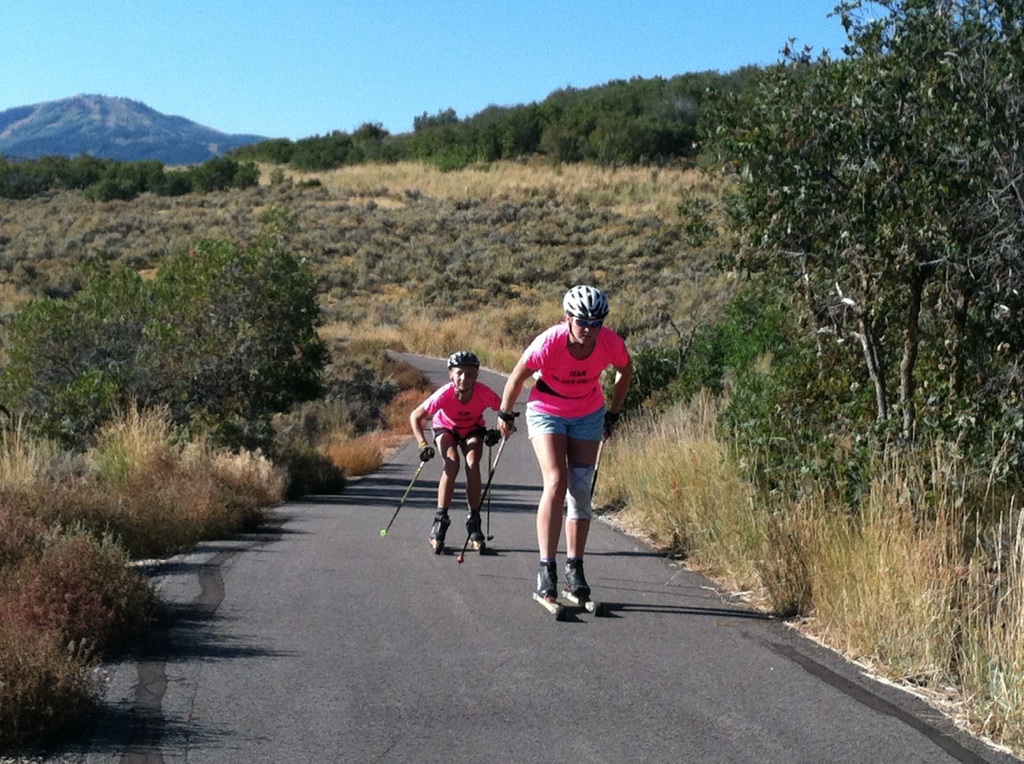
Team Soldier Hollow athletes Ingrid Norton and Pearl Harvey during a rollerski workout two years ago near Heber and Park City, Utah. (Photo: Morgan Smyth)
“One thing I look at is what are we doing with our venues, are we providing the sport we out to provide,” UOLF Vice President of Sport and Venues Marc Norman said on the phone in September. “The fact that we weren’t hosting [biathlon] and weren’t running any programs in it was a quick red flag for me.”
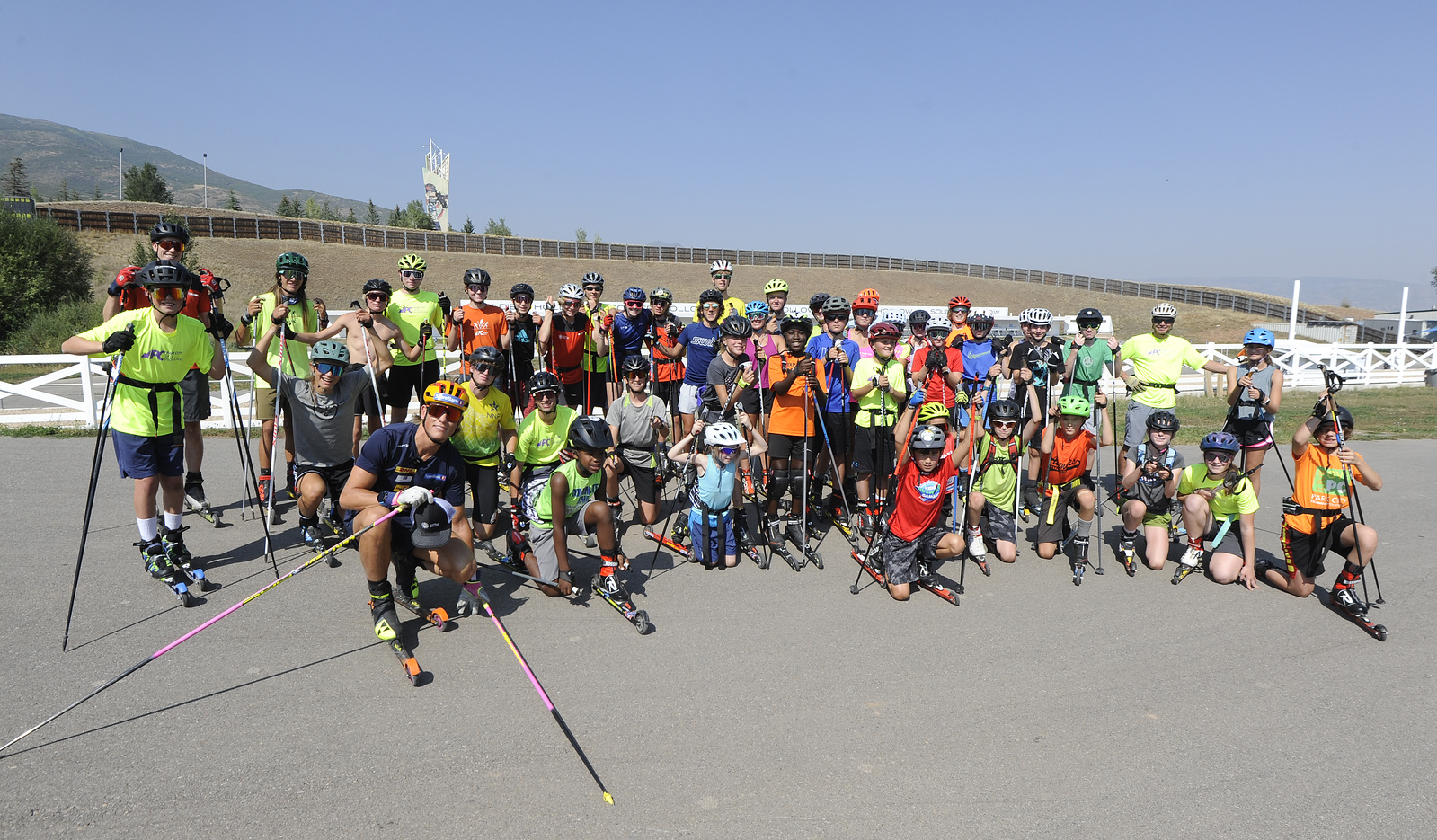
Along with the addition of a biathlon program, Team Soldier Hollow was also in need of a youth coach for its nordic program. From 2012 to 2015, Morgan Smyth served as the program manager, overseeing the Comp and Devo teams, the Youth League and the Charter School Ski Program. At the time of her departure, 145 kids were enrolled in SoHo’s programs — 10 on the Comp (competition) team, a number which has almost tripled since then.
“I left Soldier Hollow to work for Park City Nordic Ski Club [PNSC] as the Nordic Manager,” Smyth wrote in a recent email. “PNSC was part of the Utah Olympic Legacy Foundation. Ironically Soldier Hollow became a part of the Legacy Foundation less than a year later but I live in Park City so it was nice to work closer to home.
“I left Park City Nordic this fall and started a Physical Therapist Assistant program,” Smyth continued. “I am excited to try something new but plan to stay involved in the ski community. Hopefully coaching the younger kids during the winter months.”
Former UAA assistant nordic coach Sara Studebaker-Hall (center, white hat) at the #savealaskaskiing rally in Anchorage, Alaska, on Nov. 10, 2016. Former UAA skier and current USST member Sadie Bjornsen (pink jacket) is to her left. (Photo: Gavin Kentch)
Last fall, after Studebaker-Hall returned to Anchorage, she and her husband were offered the opportunity to work with Team Soldier Hollow, with Hall heading the new biathlon program and Studebaker-Hall leading the pre-existing nordic ones. When the offer was made, theUAA Ski Team’s future remained uncertain, and the two ultimately accepted UOLF’s offer, viewing it too good to pass up.
“It was hard to leave UAA,” Studebaker-Hall explained on the phone earlier this summer. (The UAA Ski Team wasultimately saved three weeks after she and Hall accepted). “But moving to a head-coaching position and managing a program here and getting this off the ground was kind of a once in a lifetime opportunity, so we had to take it.”
Studebaker-Hall is now serving as the head coach and program manager for Team Soldier Hollow’sDevo Plus andComp teams. The competition team alone has 25 athletes, many of which Studebaker-Hall described as being “on the precipice of just getting going”. As she transitions from coaching collegiate skiers to juniors, she expects a few challenges mainly involving the mindset of younger skiers.
For most of the college skiers she’s coached, knowing the fundamentals of being an endurance athlete were automatic: get adequate amounts of rest between training sessions, practice good hydration. In contrast, a majority of her Team Soldier Hollow athletes are still learning the basic principles, such as the importance of recovery, nutrition and getting decent amounts of sleep.
“With youth kids, you’re trying to instill in them this idea that coming to training everyday is really important,” Studebaker-Hall observed, “Even just how to think about training, all these things I think that maybe I took for granted a little bit, that all the kids that I previously worked with knew already. That’s definitely a challenge, but one that I’m really excited about because these kids are so moldable.”
Most of the juniors she’ll coach this winter range in ages from 10 to 20 years old.
“They’re really ready to take in everything you say,” Studebaker-Hall continued. “You have a huge opportunity as a youth coach to do that for kids, maybe even more so than on a collegiate level, because you’re their first real coach.”
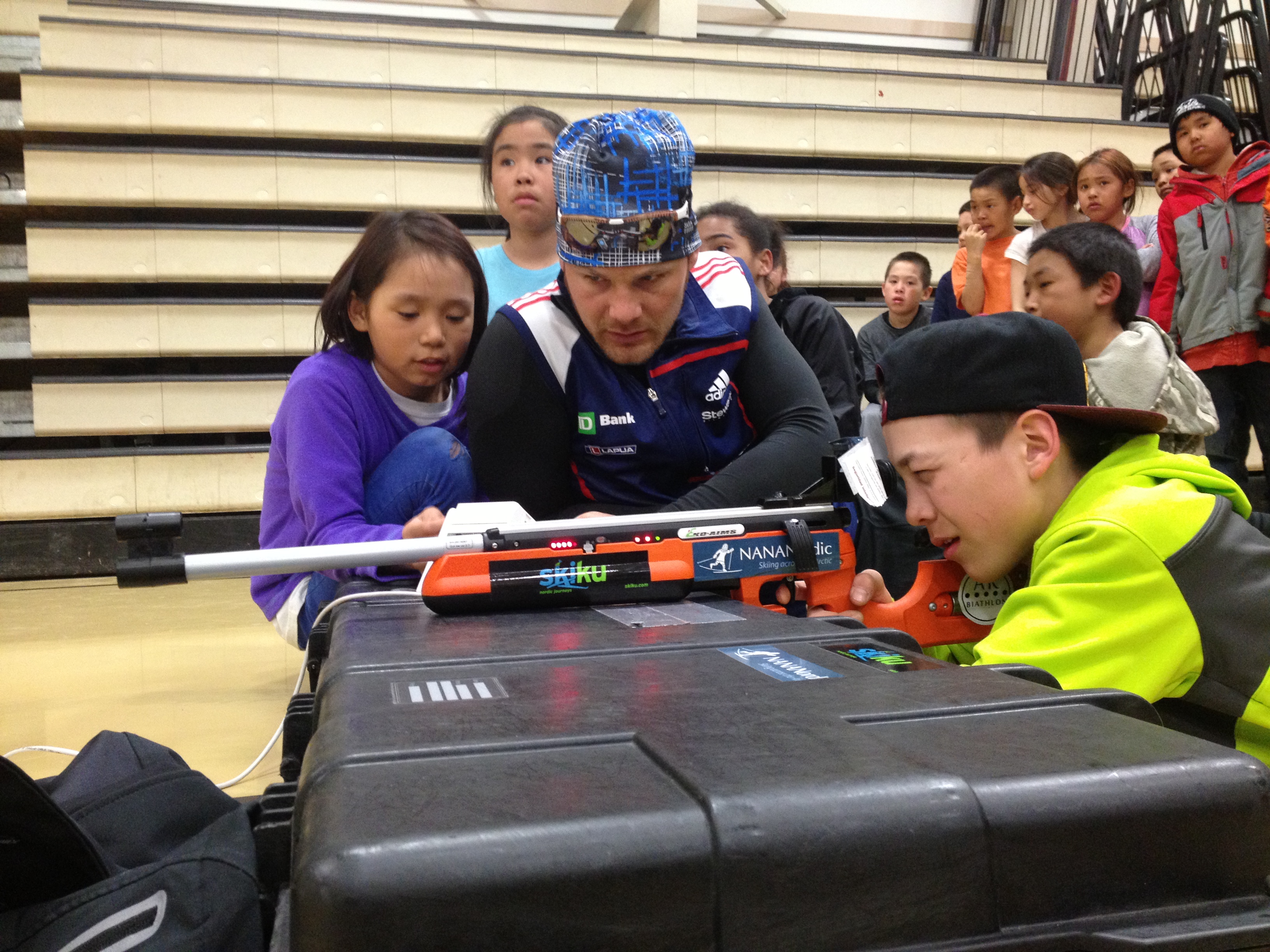
Zach Hall teaching shooting skills in 2014 at an indoor range in Kotzebue, Alaska, as part of the NANANordic program in the state’s Northwest Arctic Borough.
Though Studebaker-Hall only started working with Team Soldier Hollow this summer — Hall arrived last December — she’s already made a positive impression on many of her athletes. Pearl Harvey, 16, who has been involved with Soldier Hollow’s nordic program since she started walking, highlighted Studebaker-Hall’s interest seeing her athletes succeed.
“I have never had a coach so involved with technique and caring about my progression as a skier and a person,” Harvey, who hopes to one day receive a college scholarship for skiing, wrote in an email. “Sara, for me, is a big role model and she is shaping me as an athlete with being more conscious of my technique, eating, drinking and sleeping habits. She is also shaping me as a person and keeping us in check and making sure we are on the correct path.”
As Studebaker heads Soldier Hollow’s nordic programs, her husband is in charge of SoHo’s new biathlon programs: Intro Flex ,Devo Plus Flex and Comp Flex (development team). Hall estimates he has a total of 20 athletes in the biathlon program, though not all belong to Team Soldier Hollow. The Utah Nordic Alliance (TUNA), the Park City Nordic Ski Club or Wasatch Nordic have athletes participating in SoHo’s biathlon program, thanks to what they dubbed a “flex” program option. With this “flex” program, members from any of the surrounding nordic ski clubs can join Team Soldier Hollow for biathlon training without changing their club affiliation.
Racers at 2017 U23/Junior World Championships last February in Midway, Utah. (Photo: Team Soldier Hollow blog)
“We’ve got the only range in the area, so what we’re trying to do is work with all the area coaches to schedule training sessions, so that it works as much as we can with them working with their local nordic clubs, ” Hall said on the phone in July. “A big part of the program is just pushing general nordic development and adding opportunities with biathlon.”
Sparking interest is the first step for Hall, as well as getting the word out about the biathlon program. Having U23/Junior World Championships held at Soldier Hollow last season was also helpful in promoting the biathlon and nordic programs there, as well as giving younger athletes an idea of where skiing could take them.
“This is my first summer trying Biathlon, and I am loving it,” Lina Farra, 16, wrote in an email in September. “Both Zach and Sara have very high-level Biathlon experience, and that combined with their great passion for sport sets this program apart from others around the nation.”
SoHo is currently bidding to host an International Biathlon Union (IBU) World Cup in 2019. According to Studebaker-Hall, an exploratory committee is also forming for a potential Olympic bid — the last Olympics held at SoHo took place in 2002.
“From a programmatic standpoint, we definitely want to see Utah kids participating in this sport,” Norman said. “There’s no reason we shouldn’t have a strong biathlon program. That’s our goal, is to build up and be one of, if not the best biathlon programs in the nation. And have kids of all ages and abilities participating in biathlon.”
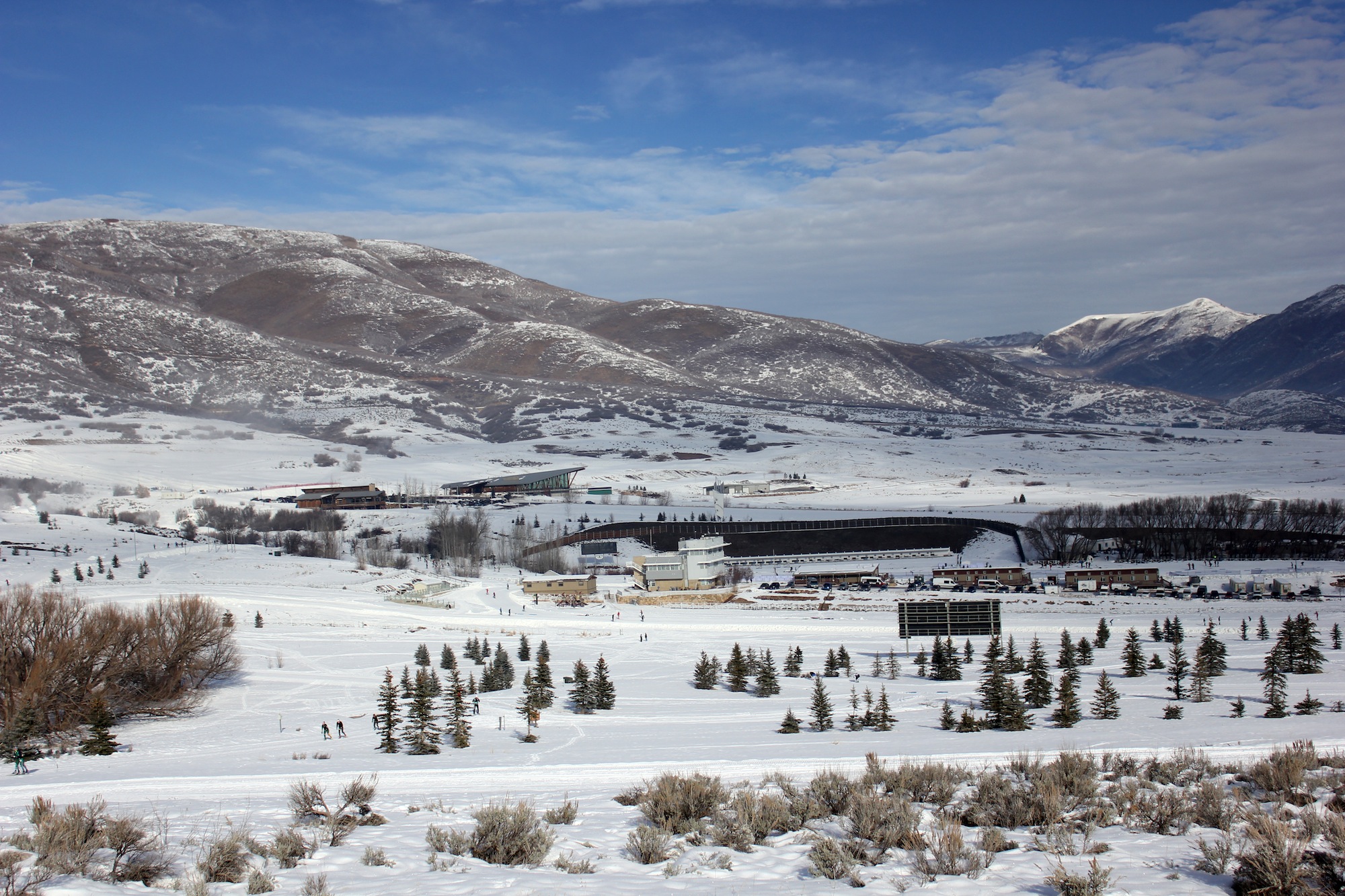
A view of Soldier Hollow’s stadium from the highest point of the 5 k Olympic course as seen in January 2014, with the timing building and Soldier Hollow Charter School (white building) at the center.
As the 2016/2017 race season approaches, plans are proceeding for the International Ski Federation’s (FIS) Nordic Junior/U23 World Championships to return to the U.S. With both the U.S. Cross Country Championships (which take place Jan. 7-12) followed by Junior Worlds (Jan. 30-Feb. 5), the Utah Olympic Legacy Foundation (UOLF) has a full plate this winter.
Scheduled for just two-and-a-half weeks after U.S. nationals at Soldier Hollow, preparations are well underway.
“Without a doubt it’s the largest nordic event we’ve had in Utah since the 2002 [Winter Olympic] Games,” said Greg Poirier, the organizing committee’s technical advisor who has been instrumental in bringing the championships to Park City and Soldier Hollow, Utah. “And it’s been 30 or 31 years since we’ve had Junior World Championships in this country.
“This has been a dream of mine for quite a while, to bring the championships back to the USA,” he said.
The last time Junior Worlds took place in the U.S. was 1986 in Lake Placid, N.Y. Senior World Championships goes back even further to 1950. That year, Lake Placid was supposed to hold the senior championships, but could only host the jumping events due to lack of snow. The cross-country events were moved to Rumford, Maine.
“If it goes well, pat me on the back; if it goes bad, then I had nothing to do with it,” Poirier, who previously coached for U.S. Nordic Combined when his hometown was awarded the upcoming Junior Worlds in 2015, said with a laugh.
According to Poirier, the UOLF and Soldier Hollow are ready to host the championships.
“If we did nothing from now to January 30, facility-wise, we’re ready to go,” he said in early August. “From a technical point of view, I think we’re on schedule. The courses, the ski jumps, the actual competitive side of the event. If athletes showed up tomorrow, we’re ready. We still have to build the stadium and make everything kind of pretty.”
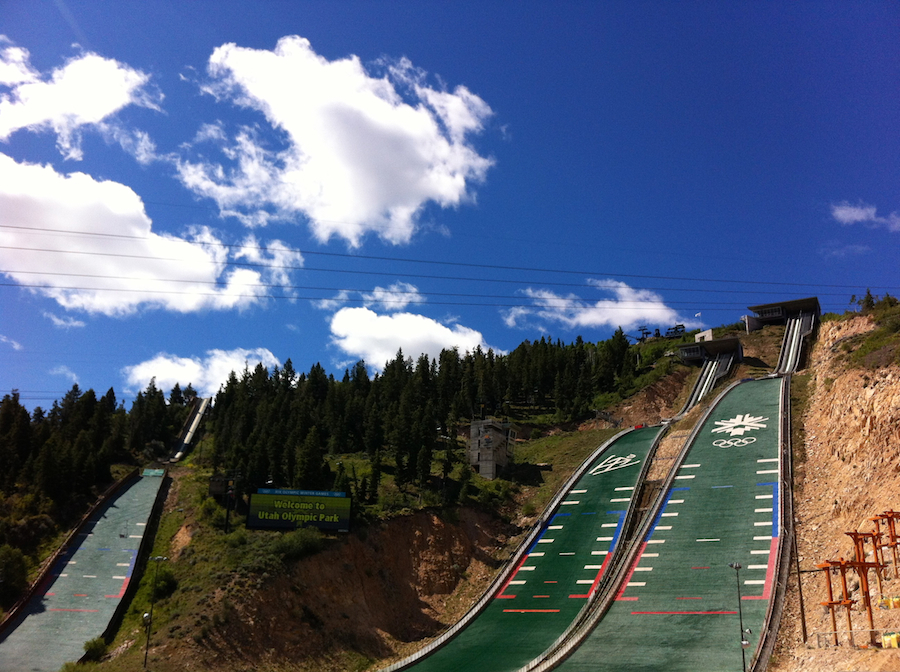
The jumping facility in Park City, Utah, as seen in 2012. (Photo: Mikko Kokslien)
In addition to women’s individual ski jumping and a co-ed team competition, Poirier said that the 2017 Junior Worlds will have a women’s ski jumping team event, which includes four women per team “just like the men’s competition. It’s something the [local] organizing committee wanted to do,” he said.
Poirier initially approached the local organizing committee (OC), seeking approval for this women’s team event. The local OC then asked the U.S. Ski & Snowboard Association (USSA) to ask FIS to add it to the championships program. FIS did so, based on its desire to include women’s ski jumping as a team event for years to follow. Poirier said they were still several years away from women’s nordic combined events.
Logistically, Junior Worlds are a bigger event than U.S. nationals. UOLF Vice President of Sport and Venues Marc Norman expects more than 800 athletes and 400 support staff. The cross-country and nordic-combined skiers and their support staff will be housed in Midway, Utah (near the Soldier Hollow venue), while jumpers and their coaches will stay in Park City (near the jump hills). In contrast, Norman expected about 450 skiers, including some from Canada and Australia, to compete at 2017 U.S. nationals. He anticipated more than 300 volunteers for Junior Worlds, compared to about 100 for nationals.
The Soldier Hollow Charter School, a K-6 public charter school located in the heart of the ski stadium, operates partly in the timing building. Because the school will closed for vacation during Junior Worlds, organizers will have access to the whole building. While school will be in session during U.S. nationals, by agreement, there will be designated space in the building for timing.
Updated Sprint Course
While the distance courses remain the same, there will be changes to the sprint course Soldier Hollow has used for the last several years. The long downhill to the stadium after the last big climb will be broken up.
Racers start their descent on the final downhill of the “old” sprint course at 2013 U.S. nationals at Soldier Hollow in Midway, Utah.
“The sprint is kind of clustered up,” Luke Bodensteiner, USSA’s executive vice president of athletics, said on the phone in August. “It’s become a 200-meter race at times. So they’ve made some modifications … to break up that last long downhill.”
Previously, racers would crest the last climb and descend into a downhill straightaway. That created a substantial draft, helping the tail end of a broken-up group regain contact on that final downhill.
According to USSA Nordic Director Robert Lazzaroni, the revised sprint course will also be used for nationals. Lazzaroni serves as the USSA advisor on the 2017 Junior Worlds organizing committee.
While the facility side of preparation is going well, finding dollars has been a challenge.
“I know they feel they’re behind,” Bodensteiner said. “They’re concerned about how fundraising is going. We remain optimistic it will be a financially healthy event. That’s a concern with any of these events, and Junior Worlds is no exception.”
“The base budget to put on the event is $365,000,” Norman wrote in an email in late September. “We also have an enhanced budget that would allow us to exceed the minimum FIS requirements at a cost of $465,000. Hopefully we can find additional sponsors, suppliers, and donors that will help us close the gap to the base budget and even allow for us to do some or all of the enhanced pieces (more event look, athlete functions, event broadcast, etc…).”
Bodensteiner explained that there was no guaranteed revenue source, and said that organizers would “have to really hump” to raise funds. “Before we decided to bid for the event, we collectively identified enough revenue sources that were reliable that we could make it work. There’s still a little bit of unknown, but it’s not atypical for events to be in that position.”
SMST2 senior skier Ben Saxton, who has been to a total of four Junior/U23 World Championships, paces a young skier during the U.S. Ski Team’s dryland training camp at Soldier Hollow last month. (Photo: Liz Arky)
As of mid-October, USANA Health Sciences, a nutritional supplement company, had signed on as the title sponsor for 2017 Junior Worlds.
“We are still working on sponsorships for the event to fully meet our budget,” Norman wrote on Oct. 12.
“Junior Worlds is a little different beast than other events that we run,” Bodensteiner said. “The World Cup events that we run, you have a broader media footprint. You’re looking at national and in some cases international sponsors for those. They’re easier to get out in front of. With the Junior Worlds here, even though it’s an international event, it’s going to be reliant on local sponsorship. Oftentimes those don’t materialize until the last minute.”
When asked if hosting the Junior Worlds bid would lead to USSA bidding for World Cup events, Bodensteiner hesitated.
“We’re at the point where we’re anticipating it,” he said.
“We haven’t found a financial pathway that makes it realistic,” he said.
Bodensteiner outlined some of the cost differences between hosting Junior World Championships and a World Cup in a follow-up email.
“The main cost drivers are prize money (both for the races hosted and a share of the season overall prizes), lodging and travel cost reimbursement for the top group of athletes and their staff (and a number of Continental Cup athletes), event production (grooming, timing, snowmaking, staffing, wax rooms, course installations, travel costs for various FIS officials, medical evacuation, etc), and TV production (camera installations on course, cabling, satellite truck to send a live signal, production crew to shoot, edit the feed and graphics, etc),” he wrote. “Obviously some of this gets recouped through the sale of sponsorship and TV rights. FIS also keeps a portion of the advertising rights for its own purposes, which do not get passed along to the host organizer.”
If U.S. athletes achieve the goals set by USSA, will there be additional funding for junior cross-country development?
“When we budget for our programs, we always look at results at different levels,” Bodensteiner said. “We look where ‘our best bet is’ and allocate support to be the best in the world. Results at multiple levels including Junior Worlds are always a consideration.”
Park City Nordic Ski Club, located in Park City, UT, is hiring for the following positions:
Comp Team Assistant Coach:
PCNSC is seeking a part-time assistant Comp Team coach. The Comp Team is a year-round training program for high school age athletes. Responsibilities may include but are not limited to implementing and/or participating in a variety of workouts including rollerskiing, running, mountain biking, skiing and weight lifting; attending and driving to/from camps and competitions; and applying glide and kick wax.
Candidate must have good communication and leadership skills. Prior coaching and/or racing experience preferred but not required. USSA Level 100 coaching certification must be obtained by December 1, 2016.
Kickers and Gliders Lead Coach:
PCNSC is seeking a lead coach to run the Kickers and Gliders program for winter 2016-17. Kickers and Gliders is an after school cross-country ski program for 50-70 youth ages 7-10. This is a 13 week position from December to mid-March. Responsibilities include lesson planning and implementation, group organization, communication, and rental equipment management.
Candidate must have excellent organization, communication, and leadership skills. Prior coaching and/or racing experience preferred but not required. USSA Level 100 coaching certification must be obtained by December 1, 2016.
If desired, the above positions may be combined. Interested applicants should contact Morgan Smyth at msmyth@uolf.org