Tag: utah olympic park

  • Luke Bodensteiner Talks New Potential and a Possible New Olympics in Utah

    Luke Bodensteiner Talks New Potential and a Possible New Olympics in Utah

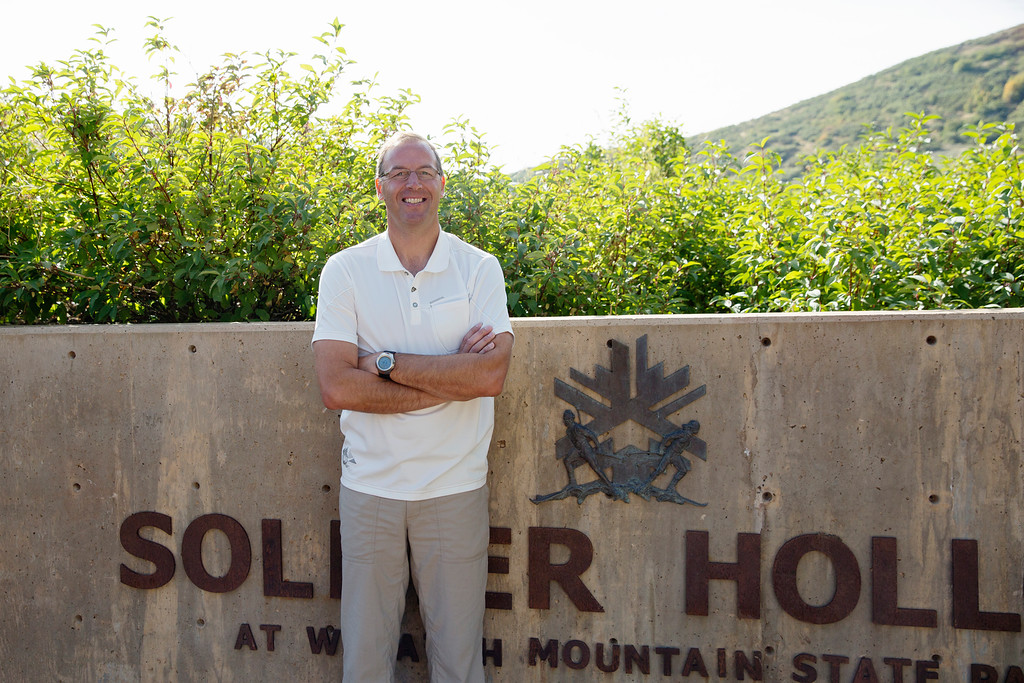
    In the thick of the elite winter sport scene for more than 25 years. That would in part define Luke Bodensteiner. He strung together an Olympic cross-country ski career and ended his over two-decade stint at U.S. Ski & Snowboard as their Chief of Sport. For roughly the past year, Bodensteiner has worn two hats at the Utah Olympic Legacy Foundation (UOLF): Chief of Sport Development and GM of Soldier Hollow (SoHo), the cross-country and biathlon venue from the 2002 Games. The SoHo part of his responsibilities involves managing the complex which includes ski trails, a biathlon range, waxing outbuildings, and an iconic but dated timing building.

    Chief of Sport Development involves broader management responsibilities.

    In Bodensteiner’s words, he “essentially guides all of the winter sports programs across the venues.” Considering this is a former winter Olympic site, the breadth of geography and sport-specific venue types are vast. There’s Utah Olympic Park with its sliding track and six ski jumps, Utah Olympic Oval with facilities for speed skating, and two arenas capable of housing hockey and figure skating, and the assets at Soldier Hollow.

    Salt Lake and the surrounding region, including Park City and the Heber Valley, are again in the Olympic news. The 2002 host city, Salt Lake, is the United States Olympic & Paralympic Committee’s (USOPC) winter Olympic bid city for either the 2030 or 2034 winter Games.

    The bidding and site awarding process was reformed in 2019. Now, the International Olympic Committee (IOC) is tasked with engaging potential hosts in a more transparent dialogue. Further, the IOC also removed its hard timeline of selecting a host city seven years in advance. This came amidst a series of potential host city dropouts. In 2014 Oslo pulled out when Norway’s government declined support for a 2022 Games. Calgary pulled a potential bid when the city’s electorate voted in a referendum that the 2024 Games were an undesirable expenditure

    The reforms allow places like Salt Lake greater flexibility as negotiations unfold, stakeholders determine new costs and benefits, and unexpected social-earthquakes manifest like COVID. The real issue is this: The IOC wants bidders who have community buy-in. 

    This past February it became official, the Salt Lake City-Utah Committee for the Games was formed.

    The prospects of an Olympics both excites Bodensteiner but also adds some complexity to the suite of his responsibilities. And although Salt Lake possesses the know-how and legacy venues, this is no slam dunk. 

    “Optimistic. But it is complicated,” Bodensteiner said when asked about Salt Lake’s prospects for a 2030 Game’s winning bid. “There is a lot up in the air right now. Tokyo is postponed and who knows what happens this year. I would say really optimistic because the IOC, on many levels, needs to present a sustainable Olympics and the budget for a Salt Lake 2030 Olympics is actually less money than was spent in 2002 because of the existing infrastructure. There are not currently that many candidates, but obviously Sapporo, [Japan] is in the mix. They have a nice bid and nice venues and they have this interesting Tokyo situation which could play in their favor or not. Barcelona, [Spain] has made some noise about making a bid but it is not probably real or realistic. Of course, Calgary bowed out in the last go-around which was fortunate for Salt Lake. So there are a lot of really positive factors for Salt Lake.”
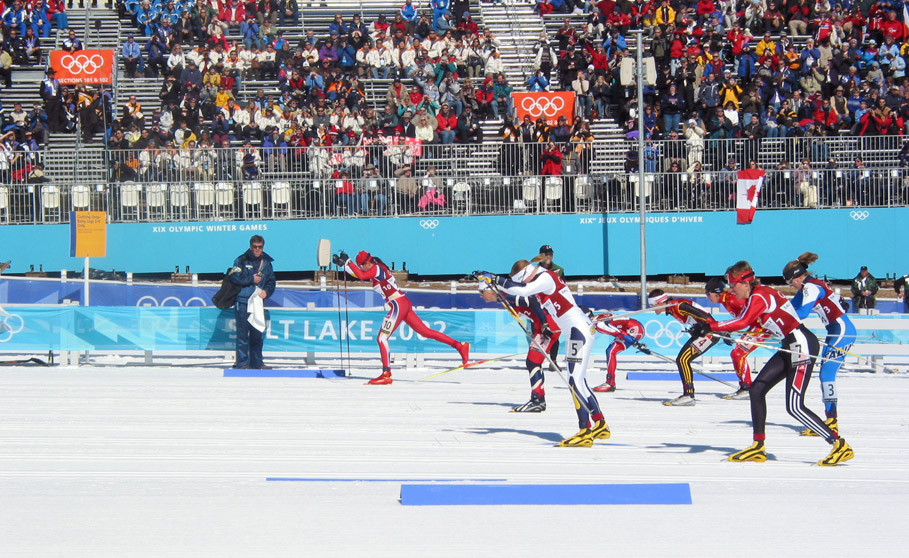
    The start of a women’s race at the 2002 Olympics in Soldier Hollow

    Bodensteiner also acknowledged that LA’s 2028 Summer Games could complicate a 2030 SLC bid. Domestically, there is only so much advertising budget to allocate. Back-to-back Games could be untenable from a marketing standpoint. In that event, Salt Lake could defer it’s bid to 2034.

    Either way, a ten year timeline to a potential Olympics adds a real degree of earnestness to Bodensteiner’s goals as he helps reform sport development at the Utah Olympic Legacy Foundation. From a venue standpoint, the community appears in support of nascent initiatives to fund venue modernization. Something Bodensteiner says is simply rejuvenating venues to a new Olympic standard, not a complete scrape and rebuild.

    I’m going to rewind here to a quote from Bodensteiner’s exit interview with FasterSkier from U.S. Ski & Snowboard back in July 2019. Here’s that exchange: 

    FasterSkier: You are Chief of Sport, but I am hearing you talk like someone who is less focused on medals. Is this something you have learned and absorbed at US Ski & Snowboard over twenty some odd years?

    LB: You are exactly right, you get pigeonholed after you have been known as somebody who is single mindedly chasing medals at the Olympics for twelve years. That becomes your brand or your persona. It is important to, it is better to not let that happen at the end of the day. 

    I think it has been an evolution. And I would say in our work at the U.S. Ski Team, while we have really, I would not say single-mindedly chased performance at the Olympics although that is something that my team thought about and worked on every single day for the twelve years I was there, I think we also built out programs and philosophies and plans on where we were going. 

    We were also recognizing that that is a real short term perspective and there are things that you might do in the short term that will yield those kinds of results that don’t create a sustainable foundation. And so I think we have always had some level of emphasis on club development or coaches education and important things like that.


    Even prior to COVID and the jolt and now sustained tremors to remove structural racism, Bodensteiner had been thinking more holistically about athletes and what success looks like. He understands his mandate involves building equity in sport not simply creating a pipeline that terminates at a single point with medal success.

    “We have asked, should we be hosting the Olympics in 10 years time, what is the story we want to be told about our community through the experience of our kids?, Bodensteiner said. “If the eyes of the world are looking at us what does success look like for us? Our metrics are really focused on broadening the number of kids who are involved in our programs, improving our demographic makeup so that the participation in our programs really reflects our communities from the racial diversity perspective, gender diversity, economic diversity, so that we are not just here for the kids that can afford what we think is affordable.”

    According to Bodensteiner, his first eight months in the job with UOLF were consumed with understanding the foundation’s programs and how they were similarly failing. In his words, “diagnosing where we are creating these kinks that give us effectively the same results that any other youth sports program in America gets and then rolling out the set of initiatives to start to correct those.”

    He cited stats that youth most often leave organized sport at 11 years old for girls and 12 for boys. Bodensteiner says retaining those youth remains a priority while also seeing that they find success off the field.

    Then life was disrupted in mid-March. Good intentions, retooled programming, and any semblance of normalcy evaporated in the short-term.  

    “We had to shift from looking forward to shifting to how do we get through this initial shock here and how do we bring kids back into sports? Bodensteiner said. 

    Harnessing Bodensteiner’s bearish sentiments about a successful Olympic bid, the change he envisions may have a 10-year arc. Yet the change has tangible incremental goals. Better retention. Youth participants reflecting the diverse population in the greater Salt Lake region. Kids who feel valued not simply for a sport result but for engaging in self-improvement.

    Along with a community steering group, Bodensteiner has absorbed and processed what these positive outcomes might resemble in a decade. UOLF, like many in sport, continue to grapple with the duality of participation and performance. The Olympics can be polarizing, especially in an era when the collateral damage of chasing medals is exposed. The human costs have been real. But in Bodensteiner’s eyes, sport can be more humane and foster a culture where participation and performance aren’t fossilized in their pre-2020 form.     

    “We have our eyes set on 2030 and so for us, it is a long term transformation plan,” said Bodensteiner. “We have put our heads together for about three months to think this through and one of the things that really came out was that participation and performance are often viewed as opposing factors. We really want to achieve both. We want to achieve both in a way that those two factors support each other rather than pull each other apart. The ultimate success for us is to provide a high amount of accessibility and have a positive impact on athletes’ lives and have some of those kids go on to have that ultimate sport success of being on an Olympic team in their backyard in ten years time.”

    With the sporting venue assets in place and a dynamic region with the legacy of Olympic hosting know-how, the UOLF might just pull it off. 


  • Tuesday Rundown: Soldier Hollow & Almaty (Updated x2)

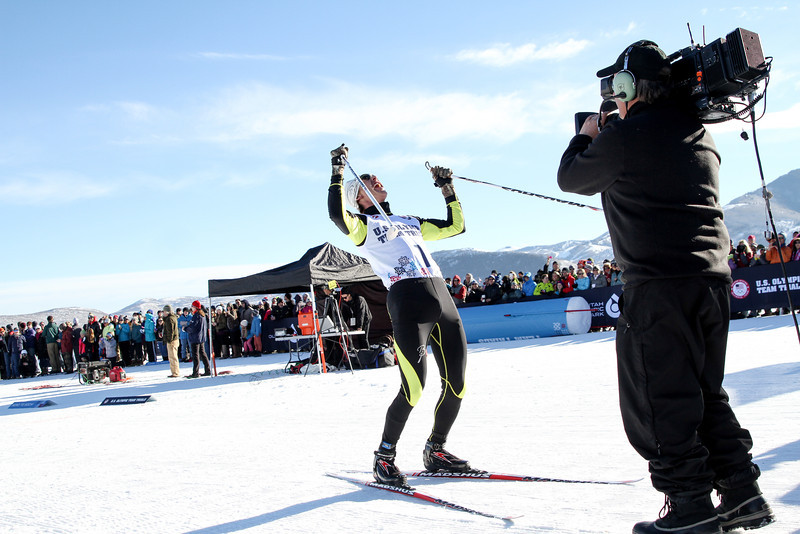
    Norway’s Fredrik Riseth celebrates his win in the men's classic sprint at U23 World Championships on Tuesday at Soldier Hollow in Midway, Utah. He beat out Russia’s Alexander Bolshunov by 1.05 seconds for the victory. (Photo: FlyingPointRoad.com)
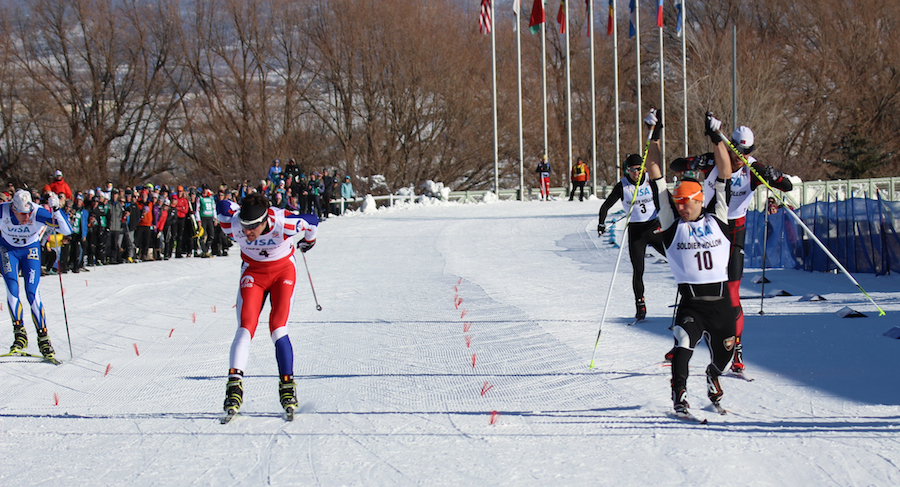
    Norway’s Fredrik Riseth (4) celebrates his win in the men’s classic sprint at U23 World Championships on Tuesday at Soldier Hollow in Midway, Utah. He beat out Russia’s Alexander Bolshunov (1) by 1.05 seconds for the victory and Norway’s Joachim Aurland followed in third (+2.3). (Photo: FlyingPointRoad.com)

    FIS Nordic U23 World Championships (Midway, Utah): Classic sprint

    [UPDATED] All four American women and three Canadians qualified for the women’s classic sprint heats on the first day of U23 World Championships on Tuesday, and in the men’s qualifier, three Americans finished in the top 30 to advance to the quarterfinals at Soldier Hollow in Midway, Utah.

    Kelsey Phinney led the Americans in sixth in the women’s 1.3-kilometer qualifier, clocking in 2.77 seconds off the fastest women’s qualifying time of 3:39.40, set by Sweden’s Anna Dyvik.

    Canada’s Dahria Beatty qualified eighth (+3.85), followed by Nichole Bathe (USA) in 14th (+8.8), Jesse Knori (USA) in 19th (+12.07), Jenn Jackson (CAN) in 22nd (+12.99), Corey Stock (USA) in 26th (+15.11), and Katherine Stewart-Jones (CAN) in 28th (+16.61).

    In the men’s 1.5 k qualifier, American Cole Morgan claimed with the 11th-fastest time, 8.19 seconds behind Russia’s Alexander Bolshunov, who topped the qualifying round in 3:36.52.

    Also for the U.S., Paddy Caldwell qualified 20th (+14.68) and Jack Hegman 23rd (+15.59), while Cal Deline missed the top 30 by 0.14 seconds in 31st.

    In the quarterfinals, Morgan finished second by 0.85 seconds to Bolshunov, and both automatically advanced to the semifinals. There, the Russian finished second to Norway’s Fredrik Riseth while Morgan took fifth, 9.67 seconds out of first. Overall, Morgan placed ninth on the day for his best result at a Junior or U23 World Championship.

    The top North American woman on Tuesday, Beatty finished third in her quarterfinal, 2.45 seconds behind the winner of her heat, Norway’s Thea Krokan Murud. Beatty advanced to the semifinals as a lucky loser, where she ended up sixth, 8.04 seconds behind Murud, who won that heat as well. Overall, Beatty placed 12th for her first top 20 at U23 Worlds.

    Meanwhile, Stewart-Jones raced in the same quarterfinal as Beatty and finished fifth (+12.63) for 24th overall.

    Knori was the top U.S. woman in 15th overall after placing third in her quarterfinal, 7.18 seconds behind Norway’s Tiril Udnes Weng, who won that heat.

    Phinney was right behind in 16th overall after finishing fourth in her quarterfinal, 3.81 seconds behind Weng’s sister, Lotta Udnes Weng, in first. Stock also raced in that quarterfinal and finished fifth (+10.08) for 22nd overall.

    Petra Hyncicova, who skis for the University of Colorado-Boulder but is representing her native Czech Republic at U23s, took 20th on Tuesday. She qualified in 21st then finished fourth in her quarterfinal, 4.33 seconds behind Sweden’s Maja Dahlqvist in first.

    Dahlqvist went on to win the first semifinal and Norway’s Murud won the second semi. Both met in the final, where Dyvik — who had placed second from the first semifinal — dominated throughout to take the win in 3:32.40. Murud finished 3.42 seconds back in second, and Sweden had two on the podium with Dahlqvist in third (+3.76).

    On the men’s side, Caldwell ended up 18th after placing fourth in the same quarterfinal as Morgan, finishing 6.17 seconds behind Bolshunov in first.

    Hegman placed 28th on the day after finishing sixth in his quarterfinal, 5.71 seconds behind Norway’s Chrisander Skjoenberg Holth in first.

    Norway’s Riseth won his quarterfinal and semifinal before taking the victory in the final, by 1.05 seconds over Bolshunov with a winning time of 3:32.78. Norway had two on the podium with Joachim Aurland in third (+2.3).

    Results:

    Women’s qualifier | Women’s bracketsWomen’s overall

    Men’s qualifier | Men’s bracketsMen’s overall

    ***

    FIS Nordic Combined Junior World Championships (Park City & Midway, Utah): Individual normal hill/10 k

    Finland’s Arttu Mäkiaho winning the normal hill/10 k competition on Tuesday, the first day of Nordic Combined Junior World Championships, at Soldier Hollow in Midway, Utah. He won by nearly 22 seconds. (Photo: FlyingPointRoad.com).
    Finland’s Arttu Mäkiaho winning the normal hill/10 k competition on Tuesday, the first day of Nordic Combined Junior World Championships, at Soldier Hollow in Midway, Utah. He won by nearly 22 seconds. (Photo: FlyingPointRoad.com).

    [UPDATED] On the first day of Nordic Combined Junior Worlds, with the jumping taking place at Utah Olympic Park in Park City, Utah, and racing at Soldier Hollow in nearby Midway, Stephen Schumann achieved his first top 10 in the individual normal hill/10 k.

    Schumann jumped to 28th then clocked the fifth-fastest cross-country time to place 10th overall, 55 seconds behind Finland’s Arttu Mäkiaho, who won in 25:54.5 minutes.

    Mäkiaho started the 10 k in ninth, based on his jump, with a 35-second starting deficit to jump leader Laurent Muhlethaler of France. While Muhlethaler dropped to 17th in the 10 k, Mäkiaho clocked the third-fastest ski time to win the first nordic-combined competition of the championships.

    Austria’s Mika Vermeulen finished 21.6 seconds back in second, after picking off 27 places in the ski race. He jumped to 29th and skied the fastest 10 k in 24:48.1.

    Germany’s Martin Hahn rounded out the podium in third (+25.6), moving up from 26th in the jump with the fourth-fastest ski time.

    Four Americans competed, with Ben Loomis landing in the top 20 in 18th (+1:38.5), Koby Vargas in 37th (+3:44.0) and Grant Andrews in 44th (+4:25.6).

    Junior/U23 World Championships continue Wednesday with the junior 5/10 k freestyle individual starts, plus women’s and men’s ski jumping. Complete schedule

    Results: Normal hill/10 k

    ***

    World University Games cross-country skiing (Almaty, Kazakhstan): 5/10 k freestyle pursuits

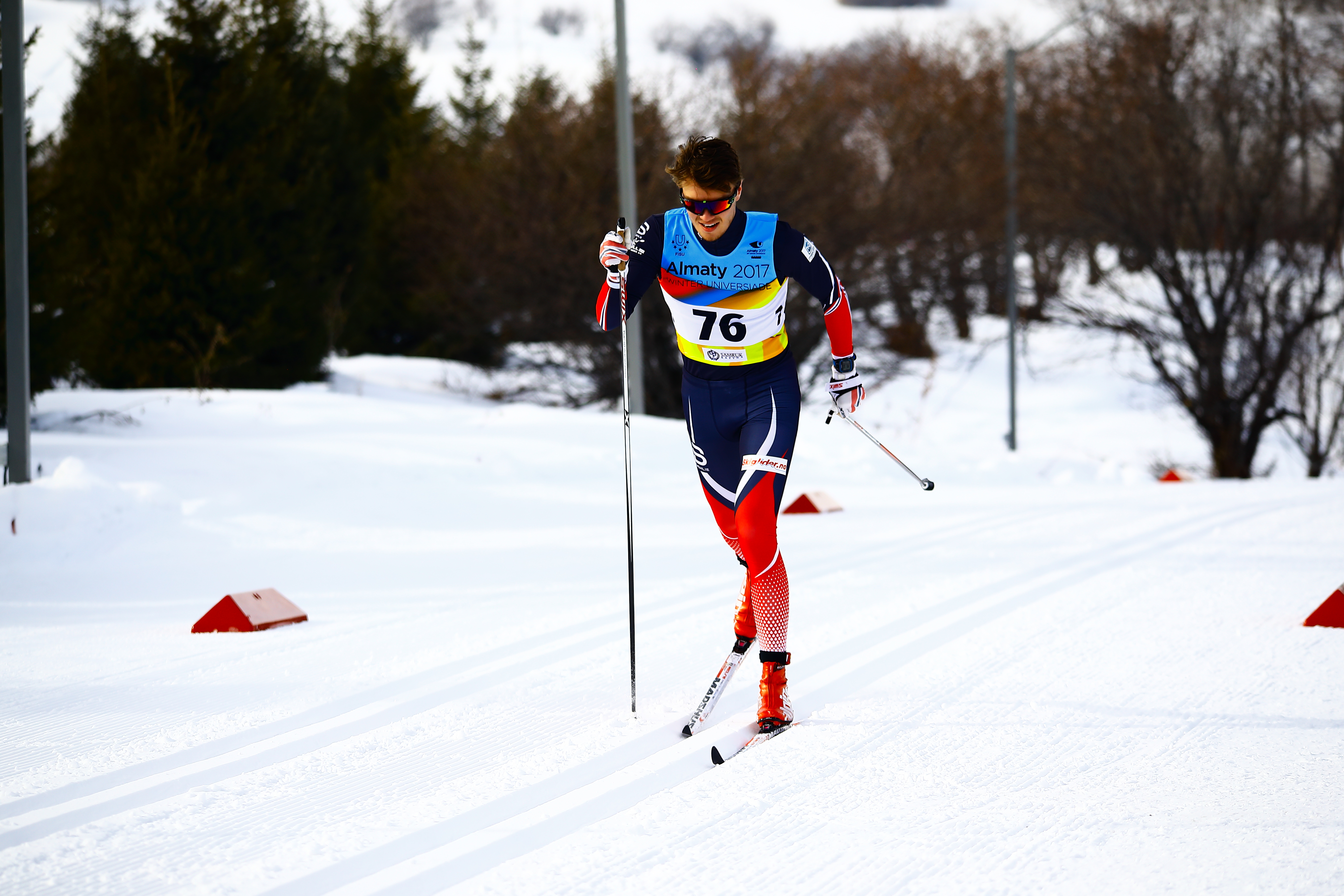
    Jørgen Grav of Ford Sayre competing for Norway at the World University Games in Almaty, Kazakhstan. (Photo: Almaty2017.com)
    Jørgen Grav of Ford Sayre competing for Norway at the World University Games in Almaty, Kazakhstan. (Photo: Almaty2017.com)

    Cross-country ski competitions continued at the World University Games on Tuesday with pursuit races based off the finish times from Monday’s 5 and 10 kilometer classic races.

    In the men’s 10 k pursuit, Dmitriy Rostovtsev overtook Russian teammate (and yesterday’s winner) Valeriy Gontar to win by 14.7 seconds. Armenia’s Sergey Mikayelyan moved from fourth up to third place (+52.0) to claim the final podium spot.

    Jørgen Grav of Norway, a former University of Vermont skier now in graduate studies at Dartmouth College and competing for Ford Sayre, placed 36th, +5:14.4.

    For Canada William Dumas (Skinouk) skied from 48th all the way up to 40th to lead the team and finish +5:26.0.  Carrington Pomeroy (Nakkertok) moved from 57th up to 48th (+6:01.2), Conor Thompson (Université Laval) finished 52nd (+6:33.3), Gavin Shields (Lappe Nordic) 58th (+6:54.6), Jordan Cascagnette (Team Hardwood) 62nd (+7:24.8), and Alexis Morin (Université Laval) 68th (+8:44.1).

    Vincent Mason of the University of Wyoming had the best U.S. finish, clocking in at 55th (+6:36.6). Teammate Will Timmons finished 63rd (+7:29.9) and Sam Wiswell 71st (+9:27.9). Mitchell Hollman (Air Force Academy) 74th (+10:25.1), Kevin Geisen (Western State) 78th (+12:07.6), and Cameron Moore (Western State) 79th (+12:50.0).

    In the women’s 5 k skate pursuit, Anna Nechaevskaya of Russia moved up and stole the lead from Russian teammate (and yesterday’s winner) Lilia Vasilieva (+18.1). Anna Shevchenko of Kazakhstan kept her hold on third place (+21.3).

    Elise Sulser of the University of Wyoming again led the United States, slipping one spot to finish 24th (+3:47.1). Her teammate Meghan Kent was 47th (+6:39.9) and Yara Thomas 50th (+7:20.0). Emma Malmqvist (Colorado Mesa University) placed 53rd (+8:04.7), Sierra Jech (State University of New York) 55th (+8:26.9), and Sierra Foster (Oregon State University) 61st (+10:00.3).

    For Canada, Christel Pichard-Joliceur (Université Laval) finished 31st (+4:35.9). Shelby Dickey (Highlands Trailblazers) followed in 41st (+5:35.9), then Emma Camicioli (Rocky Mountain Racers) in 44th (+5:53.0) and Kyla Vanderzwet (Nakkertok) 45th (+5:54.8).

    World University Games biathlon (Almaty, Kazakhstan): 15/20 k individual

    In the women’s 15 k individual, the first biathlon competition of the Universiade, Kazakhstan took four of the top five places with much of their World Cup team competing on home turf. Alina Raikova won over Galina Vishnevskaya by 2:21.1 thanks to just two penalties to Vishnevskaya’s four. Ukraine’s Nadiia Bielkina was third, +2:23.6 with five penalties.

    The lone Canadian finisher was Jessica Paterson of the University of Alberta, who finished 23rd (+13:06.1) with eight missed shots.

    In the men’s 20 k individual, Baptiste Jouty of France came out on top by 41.0 seconds over Sergey Korostylev of Russia, with two penalties for each racer. Third place went to Semen Suchilov, also of Russia, +1:05.5 with three missed shots.

    Seamus Boyd-Porter of Memorial University led Canada with a 36th-place finish, +13:33.1 and eight missed shots. Taij Isaac Mann of MacEwan University finished 42nd with two missed shots (+19:37.2), and Sasha Eccleston 45th with seven missed shots (+23:07.8).

    No American biathletes competed.

    Results portal

  • Q & A with USSA Nordic Director Robert Lazzaroni

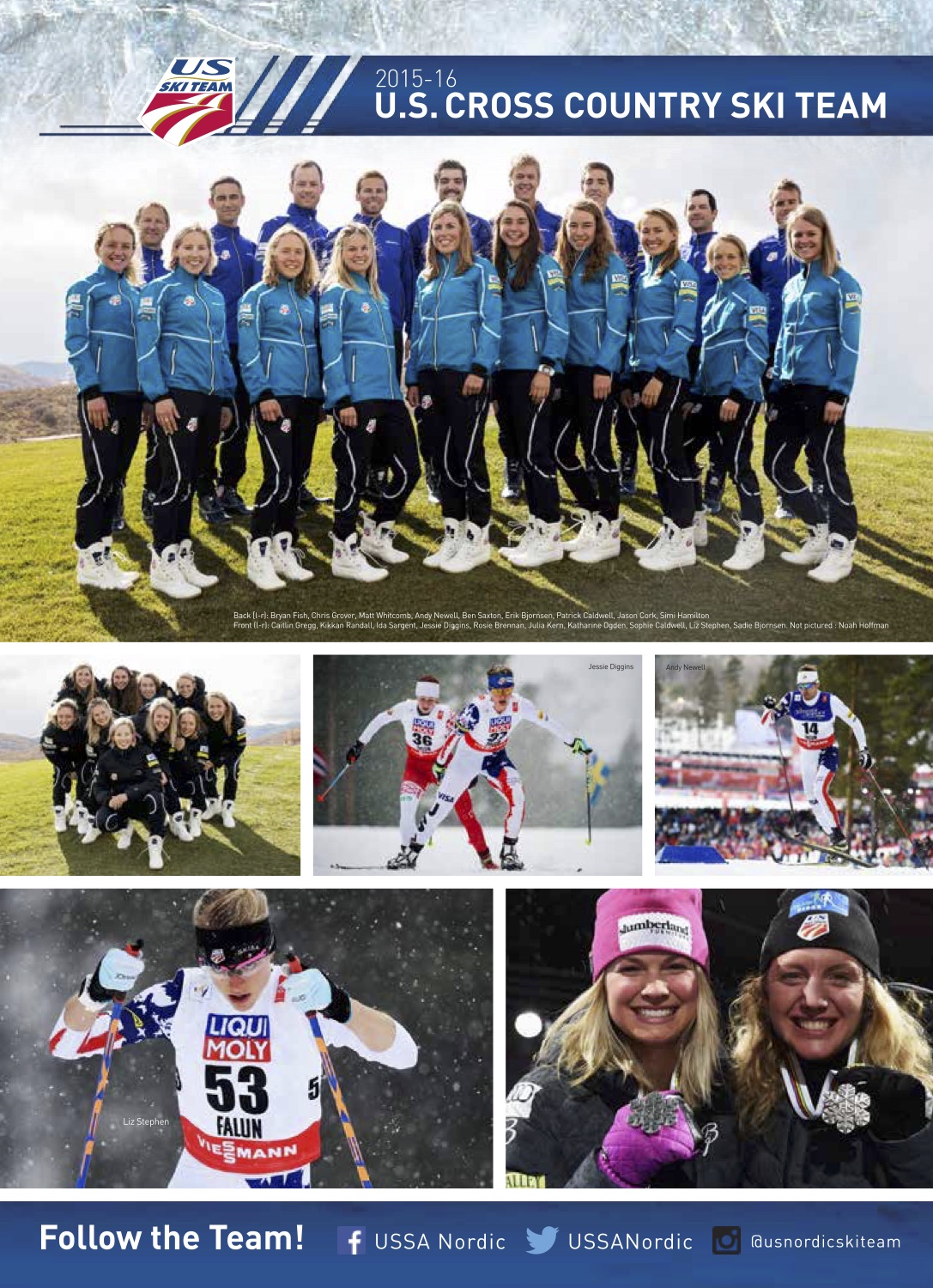
    U.S. Nordic Ski Team membership ad

    (Press release)

    Following a yearlong study by an independent sport task force, the U.S. Ski and Snowboard Association introduced sweeping nordic membership changes with broader offerings and prices as low as $15. This summer the USSA brought on experienced nordic leader Robert Lazzaroni to help grow USSA Nordic programs. A veteran of two decades in the cross country ski industry, he was Rossignol nordic division manager and, most recently, program manager at the Utah Olympic Park where he was instrumental in Park City Nordic being awarded the USSA’s Club of the Year honor last season.

    Robert, welcome to the USSA. You started in August and are starting to roll out new programs already.

    It’s been a smooth transition to bring my skills from the nordic ski industry to the USSA. The membership task force did a good job in opening the door to the possibilities and it’s been fun to start the process of engaging clubs and divisions, ski instructors, touring centers, ski industry, races organizers and retailers to grow our sport.

    What were some of the outcomes of the task force?

    The group represented all areas of our sport from athletes to clubs to industry and more. The key focus was ‘how do we grow our sport.’ We have over 20,000 nordic skiers actively competing but only a small percentage are USSA members. We now have memberships as low as $15 and have lowered the competitor membership from $150 to $95.

    (Interview continues below)

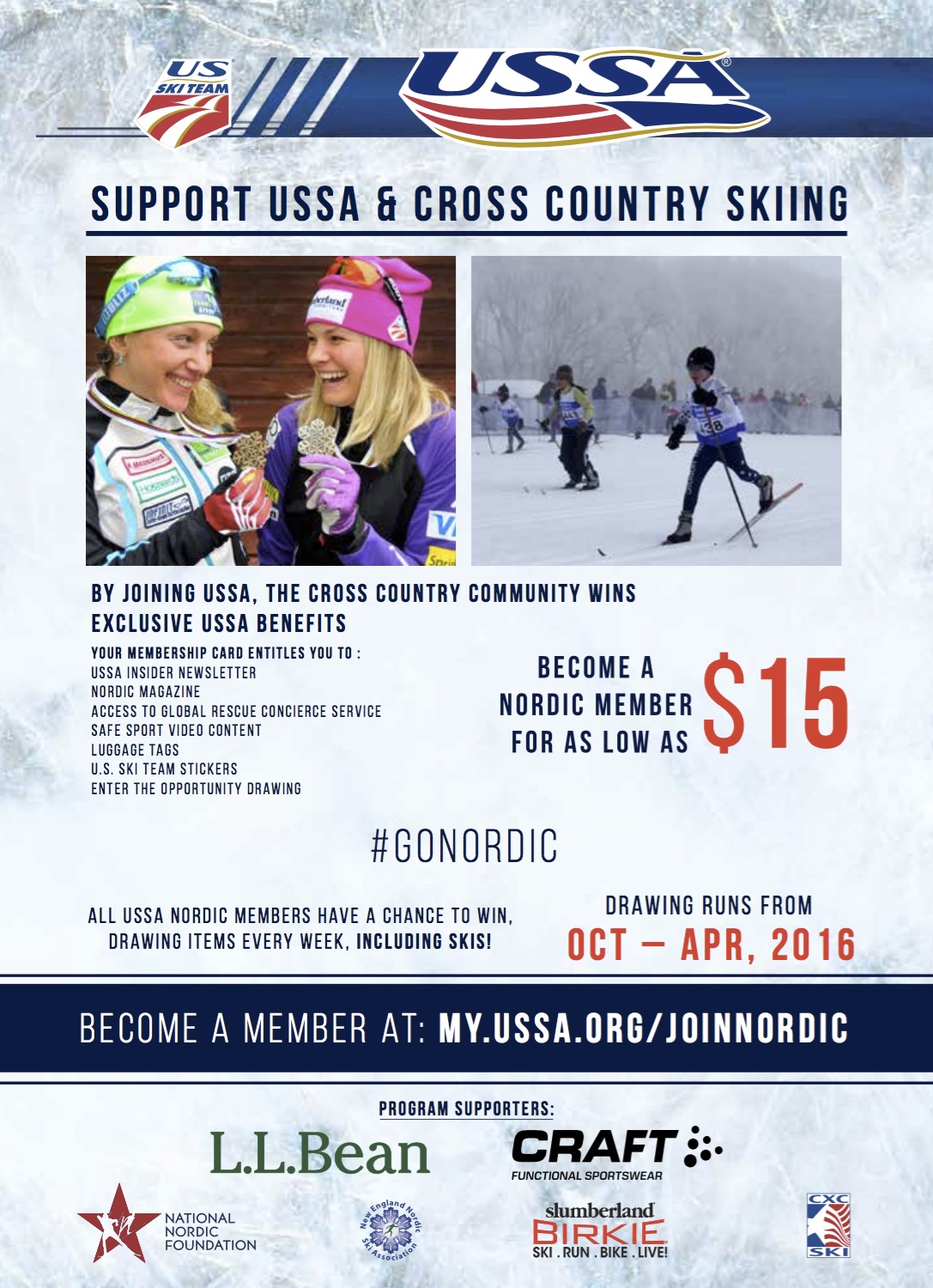
    USSA Poster

    Why is membership growth important?

    Nordic skiing is a family – we’re all very close. We’re proud of our sport heroes. We need to give our entire family an opportunity to feel the pride of supporting our national team and the development system that helped them reach the top. Now, for just $15, you can be a part of their success.

    What’s important for USSA competitors?

    One of the most important elements of a sport program is having high quality, fair competitions. USSA events like Junior Nationals, the nationwide USSA SuperTour and the annual USSA Cross Country Ski Championships are excellent events produced by the USSA and our clubs.

    Are you adding new benefits?

    Last year we introduced USSA Rewards, a great discount program from our sponsors. This season we’re adding a fun program where every week we’ll do an opportunity drawing from all members who have just registered and award a lucky winner with free product from one of our sponsors.

    What are some of the ‘behind the scenes’ programs implemented by the USSA?

    Sport education has become much stronger with excellent cross country level 100 and 200 programs. We’ve modified our Club Liability Insurance Program (CLIP) to offer clubs more relevant coverage and pricing. And we keep a keen focus on SafeSport, with education and background screening, to ensure we provide kids and families with a safe environment.

    How important is partnership?

    The USSA can’t do this alone. We need to grow our partnership with the ski industry. Our new partnership with the American Birkebeiner is thriving. Soon we’ll announce partnerships with CXC (Central Cross Country) and NENSA (New England Nordic Ski Association) to work together on sport growth and membership. Our current partnership with NNF (National Nordic Foundation) is fundamental for the development of our athletes.

    How can America help beyond membership?

    First, we hope fans and skiers alike simply start with a USSA nordic membership for $15. But we’ve also expanded our fundraising efforts with the ability for donors to now give specifically to cross country, for example. We’re also developing a program similar to the alpine Gold Pass – a single pass with access to nordic ski areas nationwide with money going to support our nordic athletes.

    Finally, Robert, where do you see this heading?

    We have a great national team and excellent events here in the USA. There’s a wonderful spirit for nordic skiing. I just think about what we could do to help kids prosper in the sport if we had 10,000 members working together towards their success. Skiers and fans can learn more about USSA Nordic programs at: my.ussa.org/joinnordic


  • Taylor Fletcher’s Three Podiums Lift U.S. World Cup Quota to Five

    Taylor Fletcher’s Three Podiums Lift U.S. World Cup Quota to Five

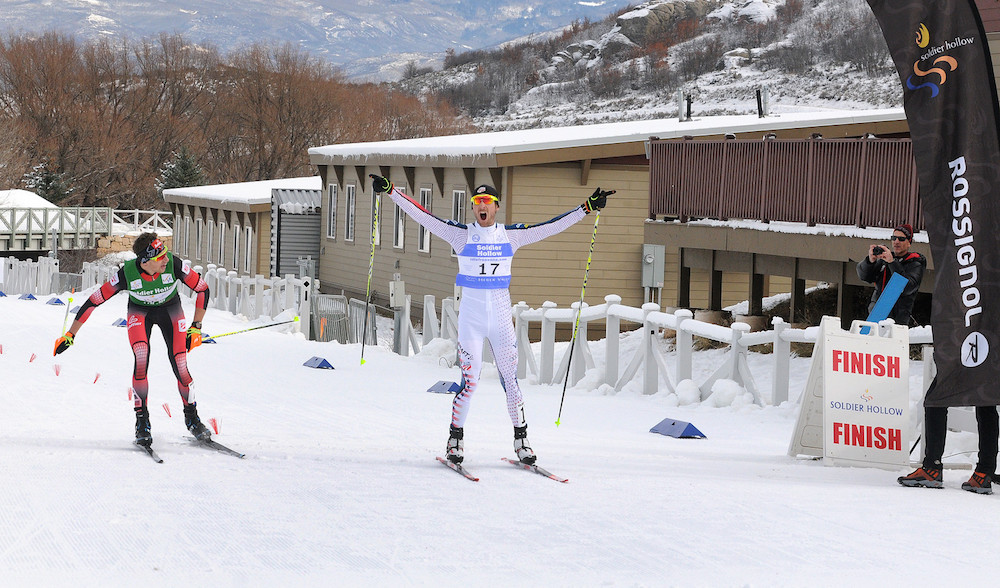
    U.S. Nordic Combined's Taylor Fletcher (r) shouts as he edges Austria’s David Pommer at the finish of Sunday's 10 k Gundersen to win this Nordic Combined Continental Cup at Soldier Hollow in Midway, Utah. (Photo: U.S. Ski Team/Tom Kelly)
    U.S. Nordic Combined’s Taylor Fletcher (r) shouts as he edges Austria’s David Pommer at the finish of Sunday’s 10 k Gundersen to win this Nordic Combined Continental Cup at Soldier Hollow in Midway, Utah. (Photo: U.S. Ski Team/Tom Kelly)

    Jump, ski, repeat. That was the mantra in Park City and Midway, Utah, this weekend as some of the world’s best nordic-combined athletes converged for a series of three Continental Cup races. Continental Cups are a stepping stone for some athletes on their way to the World Cup; it’s also an opportunity for already accomplished World Cup skiers to maintain race fitness and keep their jumping dialed.

    All three of the competitions Friday, Dec. 11, through Sunday, Dec. 13, involved a normal-hill jump at Utah Olympic Park followed by a 10-kilometer ski race at Soldier Hollow.

    Day 1: Taylor Fletcher Third

    Austria's David Pommer leads teammate Bernhard Flaschberger the 10 k Gundersen start on Friday, Dec. 11, at the Nordic Combined Continental Cup at Soldier Hollow in Midway, Utah. They went on to place first and second, respectively, and American Taylor Fletcher (not shown) finished third. (Photo: U.S. Ski Team/Tom Kelly)
    Austria’s David Pommer leads teammate Bernhard Flaschberger the 10 k Gundersen start on Friday, Dec. 11, at the Nordic Combined Continental Cup at Soldier Hollow in Midway, Utah. They went on to place first and second, respectively, and American Taylor Fletcher (not shown) finished third. (Photo: U.S. Ski Team/Tom Kelly)

    With a break in the Nordic Combined World Cup schedule, many skiers from Europe were in Park City. That was evident from the results on Friday, Dec. 11.

    Austria’s David Pommer, who finished in 26:15, narrowly beat teammate Bernhard Flaschberger by 0.2 seconds at the line. The Austrians captured five of the top six places, with U.S. Nordic Combined skier Taylor Fletcher finishing third, 37 seconds after Pommer.

    Starting the day on the normal hill, Japanese high-school student Hisaki Nagamine, 18, recorded the longest jump of 97.5 meters. American Ben Berend leapt to fourth, while teammates Jasper Good ranked 10th and Ben Loomis jumped to 13th.

    Fletcher jumped 88.5 meters to rank 14th going into the 10 k. Pommer tied for the fifth-longest jump at 95.5 meters.

    Fletcher started the race a minute and 20 seconds back. At the race’s mid-point, Fletcher bridged up to Pommer and Flaschberger. At the finish line, the 25-year-old Fletcher held off Austria’s Franz-Josef Rehrl to take third place, with the third-fastest ski time. Nagamine did not finish the race.

    Overall the U.S. team had a solid day. Five Americans finished in the top 16 with six Americans in the top 30. Michael Ward, originally from Aspen, Colo., placed 10th (up from 25th in the jump with the seventh-fastest 10 k).

    Berend, 20, and Good, 19, both from Steamboat Springs, Colo., completed their best Continental Cup races to date in 12th and 13th, respectively. Seventeen-year-old Loomis, of Eau Claire, Wis., placed 16th.

    Final Results Day 1 | Jumping Results

    Day 2: Two-peat for Austria’s Pommer; 4 Americans in Top 10

    The result sheet tells the story: Pommer maintained his lead in the overall Continental Cup standings by 60 points over Taylor Fletcher by winning again. Pommer jumped to seventh then skied to first, winning the event in 24:20.1.

    But unlike Friday’s competition, with the Austrians clogging most of the top six, Fletcher took second just 0.1 seconds back from the win. Loomis captured a career-best fourth — missing the podium by four seconds. Italy’s Armin Bauer placed third (+46.1).

    Michael Ward (U.S. Nordic Combined) placed sixth, 10th and 12th in three Continental Cup competitions Dec. 11-13 in Park City, Utah. Here, he's pictured starting the 10 k race in 25th on Dec. 11 at Soldier Hollow. He went on to place 10th in that race. (Photo: U.S. Ski Team/Tom Kelly)
    Michael Ward (U.S. Nordic Combined) placed sixth, 10th and 12th in three Continental Cup competitions Dec. 11-13 in Park City, Utah. Here, he’s pictured starting the 10 k race in 25th on Dec. 11 at Soldier Hollow. He went on to place 10th in that race. (Photo: U.S. Ski Team/Tom Kelly)

    Ward finished the day in sixth with the third-fastest time, behind Fletcher with the fastest time of the day, and Berend placed eighth for a new career-best.

    The jump leader again was Nagamine. He set the longest jump at 96.5 meters. He was followed in second by Norway’s Audun Hokholt. Jumping highlights for the Americans were two-fold. Loomis jumped to third (96 meters) and Berend ranked fourth (94 meters), putting them in podium contention while starting the race 8 and 24 seconds after Nagamine, respectively.

    On the other hand, Fletcher jumped to 19th and Ward ranked 20th heading into the race. Fletcher needed to close a one-minute-and-40-second gap, while Ward started another 2 seconds later.

    “I decided I had to go for it. I wanted to ski easy the first lap or so and make up some time but not push the pace too much,” Fletcher said in a USSA press release. “I did that and was making up 16 seconds a lap, which is pretty good, but I just ran out of real estate. But I can’t be disappointed in that because I skied tactically almost a perfect race.”

    Pommer, confident after Friday’s victory, knew Fletcher could overcome almost any deficit.

    “I fought from the beginning by running a really good pace, but my coaches kept telling me Taylor was getting closer and closer,” Pommel said in the press release. “At the finish line, I was very lucky with my win — I’m glad it wasn’t one more meter. There was never any contact until the finish and I thought, ‘run, run.’ ”

    Nagamine finished 22nd (+2:40.8).

    Final results Day 2 | Jumping Results

    Day 3 Park City NoCo: Fletcher’s Moment

    Taylor Fletcher after placing second in the Dec. 12 Continental Cup in Midway, Utah, 0.1 second behind Austria's David Pommer. Fletcher came back the next day to beat Pommer by the same margin. (Photo: U.S. Ski Team/Tom Kelly)
    Taylor Fletcher after placing second in the Dec. 12 Continental Cup in Midway, Utah, 0.1 second behind Austria’s David Pommer. Fletcher came back the next day to beat Pommer by the same margin. (Photo: U.S. Ski Team/Tom Kelly)

    The third-and-final day of Continental Cup NoCo scene in Park City was a flip flop.

    Apparently Fletcher needed a challenge. He again began the day behind: on this day it was a 1:16 deficit to Pommer.

    Again, the athlete with the longest ride was Nagamine, jumping 96 meters. But Pommer, proving his all-around skills, ranked second in the jump and notably tied with Berend with a 94-meter jump. The two started the 10 k together, 14 seconds back from the Japanese leader. Fletcher’s distance from the front was the result of a middle-of-the-pack jump: he rode 86.5 meters to rank 17th. In addition to Berend, Loomis also started ahead of Fletcher after jumping to sixth (91.5 meters) and starting 30 seconds back.

    The cloudy conditions at Soldier Hollow kept the ski tracks firm and fast. Fletcher took advantage. (Remember, he had 1:16 to make up and catch Pommer). He pushed it from the start, ticking off one competitor after another. On the third of five laps, Fletcher had skied into second.

    By then, Pommer was off the front solo. With three kilometers remaining, the time back to Fletcher remained 25 seconds. That time gap, in that distance, became a grind-it-out time trial for Fletcher.

    And roughly 2.8 kilometers later, Fletcher could draft right behind Pommer. Rounding the tight 180-degree corner before the finish, the two skiers sprinted for the line.

    “It’s so tight in that final corner. It’s great snow but it’s also icy. Trying to keep that ski under you is difficult,” Fletcher recalled in a press release. “I chose that wide line to carry a little bit more speed knowing he was going to want the center and try to block me. I knew if I took that wider line I would have a lot more speed.”

    With the sprint on, Fletcher toed just ahead of Pommer, beating the Austrian by a tenth of a second in 23:37.3. Once again, Nagamine finished 22nd (+2:45.7).

    “I’m not known for my sprinting, but I put in a hell of a sprint and I’m proud of it,” Fletcher said after posting the fastest 10 k time en route to the victory.

    “Taylor was skiing so well, so fast, he deserved to win,” Pommer said in the press release. “Second place is more than good. Today there was no strategy, it was just running for survival. I just keep saying ‘push your limits, push your limits.’”

    This was the fourth-career Continental Cup victory for Fletcher. More importantly, Fletcher’s three podiums during the Park City Continental Cups have earned the U.S. a fifth quota spot on the World Cup.

    The U.S. had four skiers in the top 15 and six in the points. Berend placed sixth, and Ward finished 12th with the fourth-fastest ski time. Good raced up to 15th (from starting 20th) and Loomis finished 21st.

    Local 15-year-old junior, Stephen Schumann, of the Utah Olympic Park Sports Club, scored points in the top 30 in all three races — his first-ever Continental Cup events — placing 25th on Friday, 27th on Saturday and 26th on Sunday.

    The Nordic Combined World Cup resumes Dec. 19-20 in Ramsau, Austria, with two more normal hill/10 k competitions. Fletcher currently trails Pommer by 40 points in the overall Continental Cup standings.

    Final Results Day 3 | Jumping Results

    Overall Continental Cup Standings

  • USSA Names Lazzaroni New Nordic Domestic Program Director

    USSA Names Lazzaroni New Nordic Domestic Program Director

    Robert Lazzaroni (Photo: USSA)
    On Thursday, the U.S. Ski and Snowboard Association announced Robert Lazzaroni has accepted the position of nordic domestic program director, a new position within the organization meant to fill the vacancy of outgoing nordic manager Joey Caterinichio. (Photo: USSA)

    (Press release)

    PARK CITY, UT (Aug. 4, 2015) – The U.S. Ski and Snowboard Association (USSA) has named longtime nordic business leader and enthusiast Robert Lazzaroni as its new nordic domestic program director. Lazzaroni will be responsible for administering domestic programs in partnership with USSA nordic clubs, including membership, club development, competition management, rankings, judges/officials education and other overall program tasks in cross country, ski jumping and nordic combined.

    Lazzaroni brings over 20 years of nordic knowledge, on both the athletic and sport business side, to the USSA’s team. He spent 17 years as the nordic division manager for Rossignol, helping to grow sales and market share to position Rossignol as one of the top nordic suppliers in the U.S. Lazzaroni most recently managed the nordic programs at the Utah Olympic Park where he doubled the number of participants and increased revenue by 40 percent in the first year.

    “A key focus of this new position is to further grow and develop the USSA’s nordic programs,” said USSA Executive Vice President, Athletics Luke Bodensteiner. “Robert’s experience in this area, complemented by his business and management background, will be of great value as we look to better serve our current members and provide more opportunities for kids to get involved, particularly with cross country.”

    This past season, the USSA empowered special task forces in each sport to look at the best ways to grow membership. A product of these task forces is the new membership structure present in cross country. Lazzaroni will continue to work with the cross country task force and sport committee to further expand membership.

    As a club leader, master skier and parent of a junior skier, Lazzaroni has interacted with a variety of the USSA’s programs in different capacities. He actively engaged in the USSA’s Club Development process this past season, earning the Park City Nordic Ski Club a gold certification as well as USSA’s Club of the Year award. His experience as a club leader, and one that has been through the USSA Club Certification process, will serve him, nordic clubs and the USSA well in continuing to expand this program in the nordic sports.

    “I see a great way to improve our sport by spreading best practices across the nation,” said Lazzaroni. “My ultimate goal is to help develop better programs across the country with well-educated coaches, a good understanding of long-term athlete development, better competition resources and an increased number of participants. The USSA is the legitimate organization in the country to lead these efforts and I’m proud the lead the charge.”

  • Springer Tourney & US Large Hill Ski Jumping/NoCo Championships: July 27-Aug. 1

    17th Annual North American Jindro Mayer Springer Tournee

    &

    US Large Hill Ski Jumping & Nordic Combined Championships

    Utah Olympic Park

    (Press release)

    GENERAL INFO:

    The 17th Annual Springer Tournee will be only 1 event on each ski jump up to the HS-100, in which top Junior and Senior Ski Jumpers and Nordic Combined athletes from all over North America compete. After the events on each hill, an overall winner is crowned the Jindro Mayer Springer Tournee Champion for each hill & U class for Ski jumping and Nordic Combined.

    Overall awards 1-3 in each U class, and Nordic Combined will be given out. Awards will take place Saturday evening following the events in Soldier Hollow, Utah.

    COMPETITION FORMAT:

    The Nordic Combined events will consist of one jumping event, and one cross-country running event U12 and younger and roller skiing for U14/16/18/20. The Nordic Combined events will be Gundersen start format, (U20- Open events will be run like a FIS event only using the 1st jump)

    REGISTRATION:

    Please pre-register using the official registration document included with the invitation. An athlete is only allowed to enter a MAXIMUM OF 2 HILLS, PLUS ONE NORDIC COMBINED EVENT. Send registration forms to AAlborn@uolf.org and please only one entry form per division!! National teams will be separate.

    If you have trouble opening the registration form electronically, please contact AAlborn@uolf.org for a fax or hard copy. Please be sure to fill out all appropriate info.

    (*A valid U.S.S.A. membership is required For the US Championships only)

    REGISTRATION DEADLINE IS Monday, JULY 20th 5pm. ENTRIES MUST BE RECEIVED BY Alan BY THIS DEADLINE TO ENSURE YOUR ENTRY INTO THE EVENT!

    WAIVERS:

    All participants will be required to have a Utah Olympic Park Waiver as well as a Soldier Hollow waiver if competing in the Nordic Combined running/roller skiing races. You can find the waivers by going to the links here:

    http://utaholympiclegacy.org/wp-content/uploads/2015/04/UOP-Waiver-FY16.pdf http://soldierhollow.com/sites/default/files/attachments/releaseform.pdf

    All checks need to be made out to the Utah Olympic Park.

    Other Questions Contact Alan Alborn

    Email: AAlborn@uolf.org

    Phone: 435.513.0987

    REGISTRATION FEES:

    Springer Tournee All HILLS (HS-15 – HS-100) $155.00 for all events and food on Saturday + Ropes course. (Hill Fees included for the week)

    Springer Tournee & US Championships (HS-70 –HS-134) $235.00 (Hill Fees included for the week)

    US Championships Only (HS-134 SJ) $80.00
    The HS-134 US Championship event is separate from the Springer Tournee.
    HS – 134 SJ (Hill Fees not included for the whole week, only official training and competition)

    Awards Dinner (Saturday Aug 1st)

    We will have food on site for the Awards from 6-8PM on Saturday Aug 1st in Soldier Hollow.

    TRAINING FEE: UOP Hill use fees/lift fees are included in the entry fee. Training requests need to be sent to mterwillegar@uolf.org and days outside of the Springer Tournee week fees are $15 Small Hills and $25 Large Hills. Season pass is $110. (HS-134 only entries, hill fees are included in entry for Friday & Saturday only)

    WAXING/CHANGING FACILITIES:

    Each team will be provided the appropriate changing areas/waxing facilities. Please check with the PCNSC office to find out where your team’s facilities are located when you arrive. Please respect other teams’ spaces and utilize only your teams’ facility for waxing and changing.

    HOUSING/TRAVEL:

    Each team is responsible for your own transportation and lodging. Below are several numbers for possible housing.

    (*UOP Partner)

    *Best Western Landmark Inn: Kimball Junction/ right at the bottom of Utah Olympic Park; 800.548.8824

    • Hampton Inn and Suites: Landmark drive/right at the bottom of Utah Olympic Park; 435.645.0900
    • Marriott Hotels: Several locations in Park City;  800.228.9290
    • Reservation Center-Park City: Condo rentals, etc…  800.255.6451
    • Ptarmigan property rentals: Susan Shay (Condos); 435-645-7466

    Utah Olympic Park logo

    17th Annual Springer Tournee schedulePark City Chamber of Commerce

  • Utah to Host 2017 Junior/U23 World Championships (Updated)

    Utah to Host 2017 Junior/U23 World Championships (Updated)

    Torin Koos (BSF) out-lunges Ben Saxton (SMST2) for the win of the 1.5 k freestyle sprint at the U.S. Cross Country Championships. (Photo: Tom Scrimgeour)
    Soldier Hollow in Midway, Utah serves as the cross country venue in the recently submitted bid for the 2017 Junior/U23 World Championships by USSA. With no competing bids, there is a high chance the Championships will come to the U.S. for the first time in its modern form. In this photo, Torin Koos (BSF) out-lunges Ben Saxton (SMST2) for the win of the 1.5 k freestyle sprint at the 2014 U.S. Cross Country Championships at Soldier Hollow. (Photo: Tom Scrimgeour)

    UPDATE: According to the International Ski Federation, Utah will officially host the 2017 FIS Nordic Junior/U23 World Ski Championships. See the pre-decison article from June 5 (below) to learn how the U.S. entered a bid after last hosting in 1986, and what the Championships will look like.

    If everything goes according to plan the world’s best junior and U23 nordic skiers will descend upon Park City, Utah in the winter of 2017. The United States Ski and Snowboard Association announced Tuesday that organizing body submitted a bid for the 2017 Nordic Junior/U23 World Championships at this year’s International Ski Federation (FIS) Calendar Conference, which began June 3 and will continue until June 8. With no other bids, all that stands between the U.S. and the Championships is a stamp of approval from FIS.

    The last time the U.S. hosted a Nordic Junior World Championships was in 1986 at Lake Placid, N.Y. At the time, however, the event only consisted of ski jumping and nordic combined and did not include officially recognized cross country skiing races (although there were cross country races that were coordinated with the event), as is standard in Junior/U23 World Championships since 1991. The U.S. has also hosted the 2004 Cross Country Intercontinental U23 Championships at Soldier Hollow, but the U23 World Championships were not created until 2006, when they were hosted in conjunction with the Junior World Championships in Kranj, Slovenia.

    According to USSA Vice President of Events and IT Calum Clark, there’s a high chance the U.S. will host its first modern Junior/U23 World Championships in 2017. He explained the U.S. bid was the sole entry for the event, and that all that was left for USSA to gain hosting rights was the official go-ahead from FIS.

    “We met with the FIS leadership this afternoon any they were excited for [the Championships] to come back to America,” Clark said from the 2015 FIS Congress in Belgium Thursday. He explained that the only thing left was “a simple rubber stamp from the council.”

    If the U.S. is selected by FIS, the event will be held between the cross country courses at Soldier Hollow in Midway and the jumping complex at the Utah Olympic Park, in Park City.

    An American-hosted Championships has been a dream of U.S. Nordic Combined Coach Greg Poirier for many years, but it wasn’t until 2014 that he decided to jumpstart the project. “It was kind of my idea to bring these Championships to the U.S. I had been thinking about it for years and finally last year I decided to stop thinking about it and get something going,” Poirier said in a phone interview.

    He approached the cross country and nordic combined committees at the 2014 USSA congress and was encouraged to further explore a U.S. proposal. Poirier put together an ad hoc bid committee consisting of officials from Soldier Hollow and Utah Olympic Park, which then presented a proposal to the leadership of USSA, including President and CEO Tiger Shaw, in the fall of 2014. Once USSA was comfortable with the presented budget, it sent a written intent to host the Championships to FIS before the December 31 deadline.

    A view of Soldier Hollow's stadium from the highest point of the 5 k olympic course.
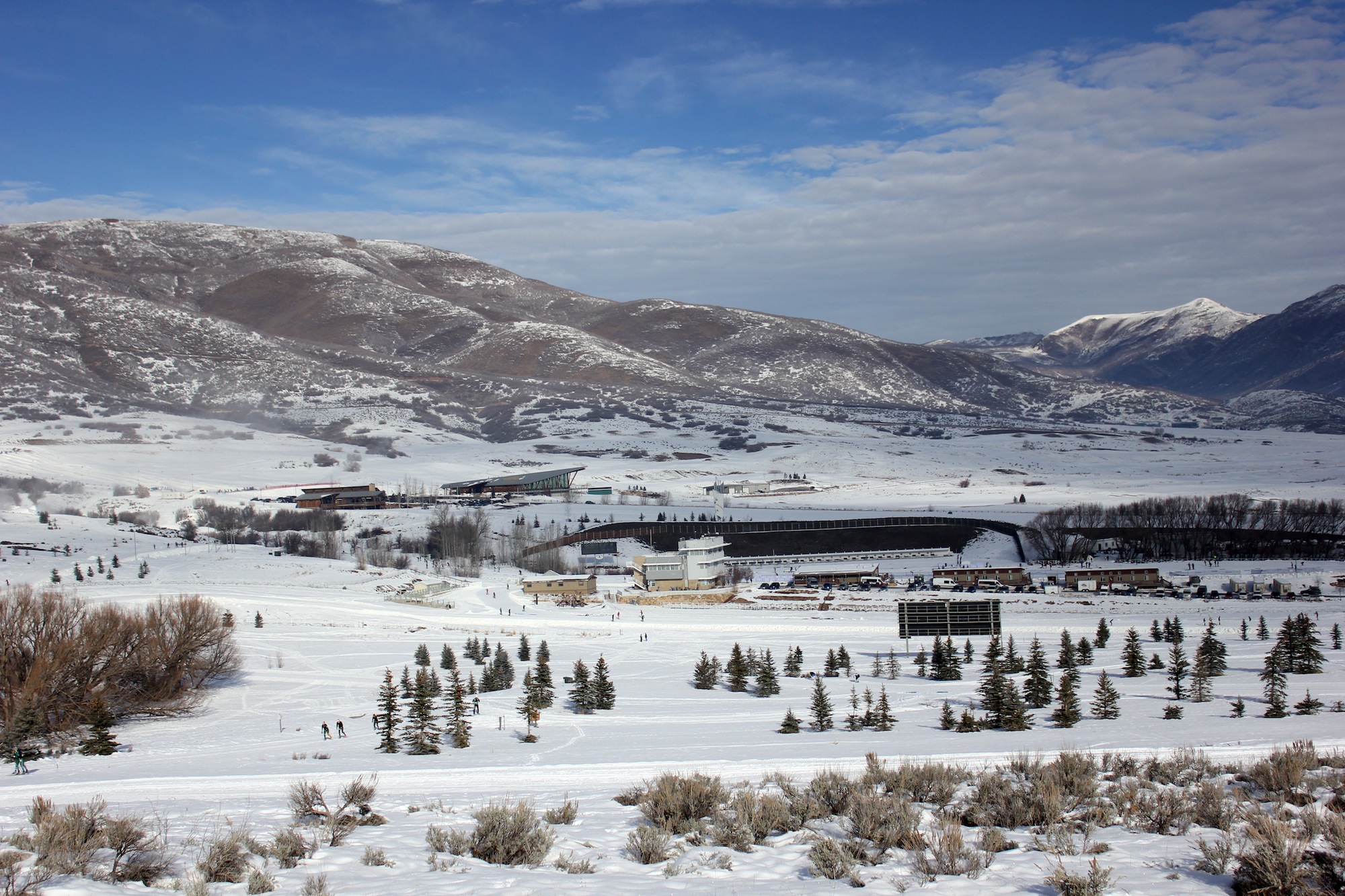
    A view of Soldier Hollow’s stadium from the highest point of the 5 k olympic course.

    According to Clark, USSA supported the proposal due to thorough planning and feasibility.  “So often with these World Championships, the excitement can overwhelm the practicality and you get this aftermath of realizing that this is going to be a whole lot of work that you’re not prepared for,” he explained. “In this case we had such a tremendous group of people with great experience on both sides of the nordic skiing jumping and cross country.”

    Clark said that the financial model of the Championships was within the means of USSA due to various groups who provided “semi-guarantees of strong financial support.”

    According to the Vice President, the most important factor of the bid was the athletic opportunity it provided to U.S. athletes. Over the years USSA has been exploring the possibility of bringing other high-profile international competitions stateside to further such opportunity, exampled by last year’s discussions of a cross country World Cup in New York City. Clark said that in the end, however, a Junior/U23 World Championships made more sense.

    “We went through the process of exploring an urban cross country World Cup and [the nordic leadership] came back to us and said, ‘no, if you’re doing anything Junior Worlds is what we’d like to have.’”

    If USSA receives the pending bid for the 2017 Championships there will be several focus areas that organizers will need to tackle. It will start with the creation of a new organizing committee, consisting of technical delegates from cross country, nordic combined and jumping. Once the committee is created they will work to build a plan regarding marketing, television or live streaming, transportation, and accommodation. Poirier hopes to create an athlete village in Midway, Utah — possibly at the Zermatt Resort — where all competitors, coaches, and staff will stay during the event.

    Organizers will also look into updating Soldier Hollow, the cross country and biathlon venue for the 2002 Olympic Games, to meet the Championships’ needs. Poirier said that a future organizing committee would explore using the original cross country stadium at the venue in addition to creating more challenging courses that feature increased climbing. According to the nordic combined coach, any changes in courses or stadium placement would use existing trails and facilities.

    “It’s already a great center,” Poirier said of Soldier Hollow. “We created this bid with the intent that we wouldn’t have to create a whole lot of dollars for infrastructure improvements. If we can get some and there’s a need then it would be a great opportunity for both the Olympic Park and Soldier Hollow. But if we can’t, we’re confident that we can move forward with the facilities the way they are now.”

    Although the 2014 Nordic Combined Olympic Trials featured the cross country portion of the event at the Utah Olympic Park, Poirier said that it made more sense for the cross country portion of the Championships’ nordic combined events to take place at Soldier Hollow because the venue was already in use by the other cross country races and due to its proximity to the athlete village in Midway.

    Those anxiously awaiting official confirmation of the bid will have to wait until Monday June 8, the last day of the the 2015 FIS Calendar Conference.

    In the meantime, the high likelihood that the U.S. bid will be approved is giving many in the nordic community a sense of excitement. “It gives me goosebumps to think about it and I have butterflies in my stomach,” Poirier said.

    “What I’m most psyched about is those kids that are in our pipeline who are going to be able to compete on our home turf,” he added. “Hopefully they are really going to shine and that will really be the impetus and catalyst for the spark that gives those young boys and girls motivation. That’s going to be the real gem, the real benefit to these games.”

    With just days before official confirmation, USSA officials, Poirier and other organizers aren’t about to relax.

    “The real work begins today,” Poirier said.

  • NoCo Continental Cup in Park City: Day 1 and 2 (Photo Gallery)

    NoCo Continental Cup in Park City: Day 1 and 2 (Photo Gallery)

    Park City, Utah, played host to the FIS Nordic Combined Continental Cup opener last week, Thursday, Dec. 11 through Saturday, Dec. 13, despite balmy temperatures around 50 degrees Fahrenheit and venue changes. The cross-country races were moved to the Gorgoza Park tubing complex, where there was enough stocked up, manmade snow to create a 1.7-kilometer loop with “plenty of spectator-friendly hills and turns,” according to a press release.

    Jumping kicked off on Thursday at Utah Olympic Park with Austria’s Lukas Greiderer besting the field on an afternoon with “subtle, swirly winds,” according to a U.S. Ski & Snowboard Association (USSA) press release.

    Greiderer posted the top jump of 92.5 meters on the 100-meter normal hill, followed by Germans Tobias Simon and Philipp Blaurock, respectively.

    The top American in his first competition of the season, Billy Demong tied Russia’s Timofey Borisov in eighth with an 84.5-meter jump, and Ben Berend notched 22nd while Taylor Fletcher jumped to 26th.

    On Friday morning, Dec. 12, Greiderer started the 10-kilometer individual Gundersen at the Gorgoza Park tubing hill 4 seconds ahead of Simon and 6 seconds ahead of Blaurock. Demong started 1:02 back, followed by U.S. teammates Berend (+1:50) and Fletcher (+2:16).

    “It’s going to be a really tough cross-country event, especially if it’s icy,” Fletcher told USSA before Friday’s race. “But I feel I have the ability to catch the field.”

    Despite what turned out to be icy conditions at the tubing park (with the 10 k races held there because of low snow at Utah Olympic Park), Fletcher ended up posting the third-fastest ski time to finish as the top American in eighth on Friday.

    Austria’s Tomaz Druml won it in 29:17.2 minutes after starting 40 seconds behind and posting the second-fastest time, behind France’s Geoffrey Lafarge, who improved from 28th in the jump to sixth overall. Greiderer took second, 18.7 seconds back, and Marco Pichlmayer placed third (+57.6) to complete the Austrian podium sweep. In fact, Austria occupied the top five with Alexander Brandner in fourth and Harald Lemmerer in fifth.

    Demong placed 13th and Berend finished 23rd, just 0.4 seconds ahead of teammate Michael Ward in 24th.

    “This was perhaps the most difficult nordic-combined race I’ve done,” Demong said of the six-lap course with three hills per lap.

    Japan’s Yuseke Minato jumped the farthest in the second competition on Friday afternoon, giving him a 6-second head start on teammate Go Sonehara. Blaurock started 10 seconds back in third, followed by Austria’s Franz-Josef Rehrl (+14) and Druml (+24).

    Demong posted the best U.S. jump for the second-straight day and started the 10 k race in 14th, 1:20 minutes behind Minato.

    Fletcher jumped to 20th with a 1:36 starting deficit. He made it up quickly, posting the fastest time of the day in the 10 k to finish fifth.

    Druml raced to his his second-straight win in 26:16.9, edging Italian runner-up Lukas Runggaldier by 2.9 seconds. Minato hung on for third, 25.8 seconds behind Druml, and Greiderer was fourth (+33.9).

    Demong placed 17th (+2:53.8) and the U.S. had four in the top 30 with Michael Ward in 28th (+3:52.3) and Colin Delaney (New York Ski Education Foundation) finishing 7.6 seconds later in 29th for his first Continental Cup points.

    Jasper Good (Steamboat Springs Winter Sports Club) just missed the points in 32nd, Ben Loomis (Flying Eagles Ski Club) placed 35th for career bests for both skiers. Ben Berend placed 40th.

    The Soldier Hollow organizing committee hosted the two-day event, and executive director Richard Hodges emphasized the amount of effort it took to pull off the competitions given the warm conditions and lack of snow. He said Soldier Hollow, Park City, Gorgoza and The Utah Nordic Alliance (TUNA) worked together to pull off the cross-country races: making snow, moving snow, and being flexible when it came to schedule changes.

    The Nordic Combined World Cup circuit resumes in Ramsau, Austria, on Saturday, Dec. 20, and Sunday, Dec. 21. Americans expected to compete include Taylor and Bryan Fletcher, Billy Demong, and Adam Loomis. 

    For more photos and full results see the USA Nordic Combined Facebook page.
     

  • IMD Youth Ski Festival February 22nd-23rd

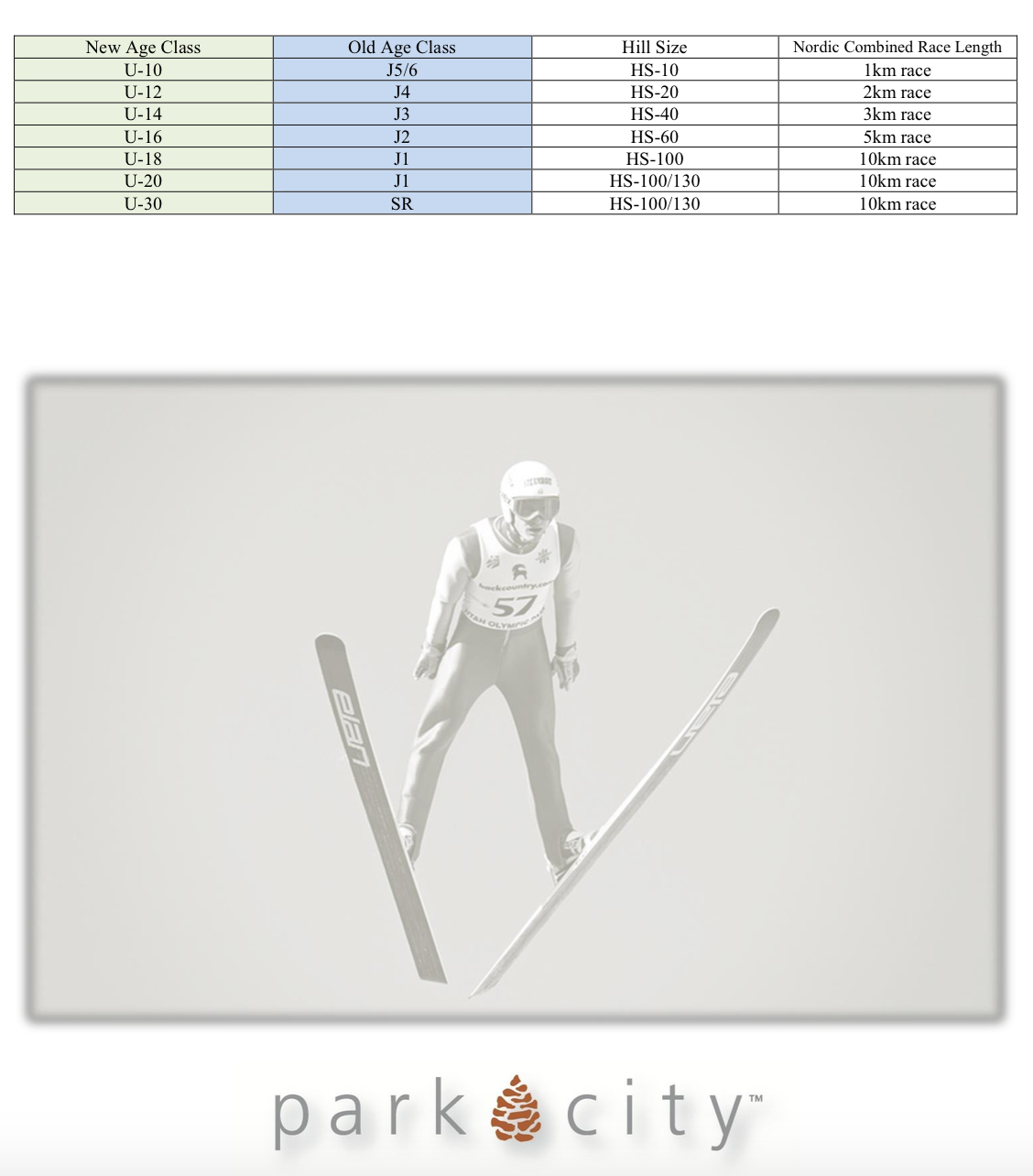
    Park City Nordic Ski Club is hosting the 2014 Intermountain Nordic Division Youth Ski Festival this February 22nd and 23rd at the Utah Olympic Park in Park City. The event is designed for cross country skiers aged 15 and younger. There will be individual competitions for skate and classic, an awesome terrain park, and many more activities for everyone.

    Tentative Schedule:

    Friday, February 21
    1:00PM-3:00PM – Preview IMDYSF courses at UOP
    3:00PM-5:00PM – Check-in with UOP waiver/payment (UOP)
    5:00PM – Team Leaders Meeting (UOP)

    Saturday, February 22
    9:45AM – Warm up on 1k course
    10:15AM – J6/J5 Boys Skate Mass Start 1k
    10:20AM – J6/J5 Girls Skate Mass Start 1k
    10:45AM – J4 Boys Skate Mass Start 2k
    10:50AM – J4 Girls Skate Mass Start 2k
    11:15AM – J3/J2 Boys Skate Mass Start 3k
    11:20AM – J3/J2 Girls Skate Mass Start 3k
    12:00-3:00PM – Terrain/Obstacle Course, Speed Trap, Discovery Ropes Course, Museum
    5:00PM-8:00PM – Award Banquet and Dance (Jupiter Bowl – Kimball Junction)

    Sunday, February 23
    9:00AM – Classic Distance Interval Start (15 second intervals, boys then girls) J6/J5-1k, J4-2k, J3/J2N-3k
    11:30AM – Coaches Race on the Terrain Event Course
    12:00PM – Lunch and final awards ceremony (UOP)

    IMD Poster
    IMD Youth Festival Entry Form
    IMD Youth Festival Lodging Information

    More information: UTAHOLYMPICLEGACY.COM

  • For Lodwick, ‘Passion Still Burns’ for Sixth Olympics, Will Be First American to Do So in Sochi

    For Lodwick, ‘Passion Still Burns’ for Sixth Olympics, Will Be First American to Do So in Sochi

    Todd Lodwick (U.S. Nordic Combined) celebrates a clear-cut victory at 2014 U.S. Nordic Combined Olympic Team Trials at Utah Olympic Park on Dec. 28 in Park City, Utah. First in the jump, Lodwick beat teammate Bryan Fletcher by 17 seconds for the victory, which secured his bid for his sixth Olympics, the most of any American in the Winter Games. (Photo: Sarah Brunson/U.S. Ski Team)
    Todd Lodwick (U.S. Nordic Combined) celebrates a clear-cut victory at 2014 U.S. Nordic Combined Olympic Team Trials at Utah Olympic Park on Dec. 28 in Park City, Utah. First in the jump, Lodwick beat teammate Bryan Fletcher by 17 seconds for the victory, which secured his bid for his sixth Olympics, the most of any American in the Winter Games. (Photo: Sarah Brunson/U.S. Ski Team)

    Todd Lodwick hadn’t felt nerves like he experienced last Saturday in a long time.

    Seventeen years old at his first Olympics in 1994 in Lillehammer, Norway, Lodwick, now 37, was about to see if he could make his sixth Olympic team at the U.S. Nordic Combined 2014 trials on Dec. 28. If he came out on top of the individual 10-kilometer competition in Park City, he’d also make history as the first American to qualify for six Winter Olympics.

    “That’s always on the mind, to break the record books,” Lodwick said on the phone Dec. 30. He was on a personal business trip in the south and planned to return to Steamboat Springs, Colo., Jan. 2 before leaving for Europe on Jan. 6.

    Really, though, Lodwick wanted to prove again to himself and to everyone with an Olympic dream or any kind of lifelong aspirations, that it was possible.

    “For me, I think it was that I’m one of the top athletes in the world and that I’m out there to win,” Lodwick said. “And to solidify the hard work that I’ve been putting in and know that I am still capable of some great things. That passion still burns hot inside of me and it’s something that I wanted to do.

    “It’s not only my doing that got me here,” he said, crediting his sponsors, “teammates and coaches and family and friends that believe in me and believe in my whole journey.”

    With some 5,000 people at Utah Olympic Park (UOP) watching him and nine others compete in the coveted Gold Cup trial, Lodwick posted the best jump of 95.5 meters, giving him a 36-second headstart on teammate Billy Demong in the 10 k, also at UOP in Park City.

    Lodwick not only extended his gap on Demong, a four-time Olympian and 2010 Olympic gold medalist, on the four-lap course, but he held off teammate Bryan Fletcher — just as hungry for a guaranteed Olympic spot — by 17.3 seconds. Lodwick won the winner-takes-all competition in 25:27.6 to prequalify for the 2014 Games in Sochi, Russia. Fletcher placed second, and Demong was third, 56.1 seconds back.

    Eighth in the jump, Taylor Fletcher rose to fourth, 23.4 seconds behind Demong. Adam Loomis of the U.S. Nordic Combined B-team was fifth and his teammates Brett Denney, Nick Hendrickson and Michael Ward placed sixth through eighth, respectively. Ben Berend (Steamboat Springs Winter Sports) finished ninth and teammate Tyler Smith was 10th.

    “It feels pretty good,” Lodwick said two days after. “I put a lot of pressure on myself just like the rest of the athletes and knew that there was some big stuff on the line. … Going to these Games is something that’s always been on my mind since I started to pursue it. I knew it took a lot of hard work.”

    He said he was able to do so because of teammates “that push me as hard as they do and coaches that support me.”

    “If I touch one kid to help them achieve their dream, then I consider my career a success.” — Todd Lodwick, after winning U.S. Olympic trials to prequalify for 2014 Sochi Games

    Lodwick became the first of potentially five U.S. Nordic Combined athletes to qualify for the Olympics. The rest of the team will be decided based off world rankings through Jan. 19, with a complete team naming set for Jan. 22.

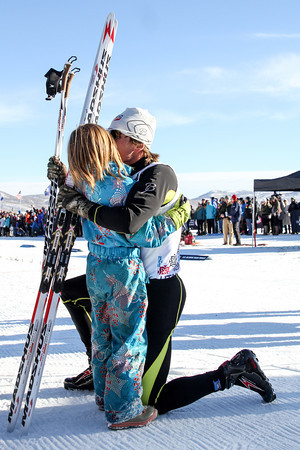
    Todd Lodwick and his 8-year-old daughter embrace after Lodwick won the Gold Cup U.S. Olympic trials on Dec. 28 in Park City, Utah, to qualify for his sixth Olympics -- unprecedented among U.S. Winter Olympians.  (Photo: Sarah Brunson/U.S. Ski Team)
    Todd Lodwick and his 8-year-old daughter embrace after Lodwick won the Gold Cup U.S. Olympic trials on Dec. 28 in Park City, Utah, to qualify for his sixth Olympics — unprecedented among U.S. Winter Olympians.
    (Photo: Sarah Brunson/U.S. Ski Team)

    As soon as he finished, Lodwick’s 8-year-old daughter ran up and gave him a huge hug.

    “She’s probably one of my biggest supporters,” he said. “I’m doing it for my kids. For me [it’s to] show them that dad still has it and can still kick butt. With my son, he’s five and he has some special needs and providing for him is something that I care deeply about. We have a bond that is very special.”

    His oldest understands what’s going on, and as she celebrated with him last Saturday, she enjoyed being in the limelight, just like her dad, Lodwick said.

    “This being my last competition ever in the states, I couldn’t have asked for anything more,” Lodwick said. “I was blown away by the volunteers and the setup crew, the people that dedicated so much time to putting on such an amazing event, and we all had a blast doing it. That was one of the best events that we’ve had in the states in a very, very long time.”

    For Lodwick, it was the start of a pre-Olympic sendoff he can enjoy in the next month leading up to the Olympics. It also confirmed that he’s once again in the best shape of his life.

    “Everyone [was] out there to compete at their best; a few of us had a victory in mind,” he said. “Bill, having it be his adopted home hill and home state, he was rested and training so I think he went into knowing he was the favorite.”

    Bryan Fletcher has led the team this season on the World Cup, notching three individual top 10-results and a program-best fourth with Lodwick in the team sprint Dec. 14 in Ramsau, Austria.

    The oldest guy on the team, Lodwick said this year will be his last, complete with two decades worth of Olympics and U.S. Ski Team experiences.

    “I’m 37 years old and do I feel like I’m capable of going to another Olympic Games when I’m 41? Sure,” he said. “But I think I’m ready to move on.”

    “I still believe in myself,” he said. “Dreams can come true if you work hard enough. … All this work isn’t for nothing and the time spent, sweating and wanting to throw up and legs cramping, looking back on that and knowing that I never gave up on my dream that lives in every single kid that watches on TV. If I touch one kid to help them achieve their dream, then I consider my career a success.”

    And it doesn’t have to be sports related, he said.

    “First step is to dream big and you have to do that to be successful,” Lodwick explained. “And you have to believe in yourself wholeheartedly.”

    He proved that at 2009 World Championships, winning two individual golds, and setting his sights on the 2010 Olympics in Vancouver, B.C. There, he won a silver medal in the 4 x 7.5 k team event. A year later at 2011 World Championships, he decided to commit to three more years and make a run for his sixth Olympics.

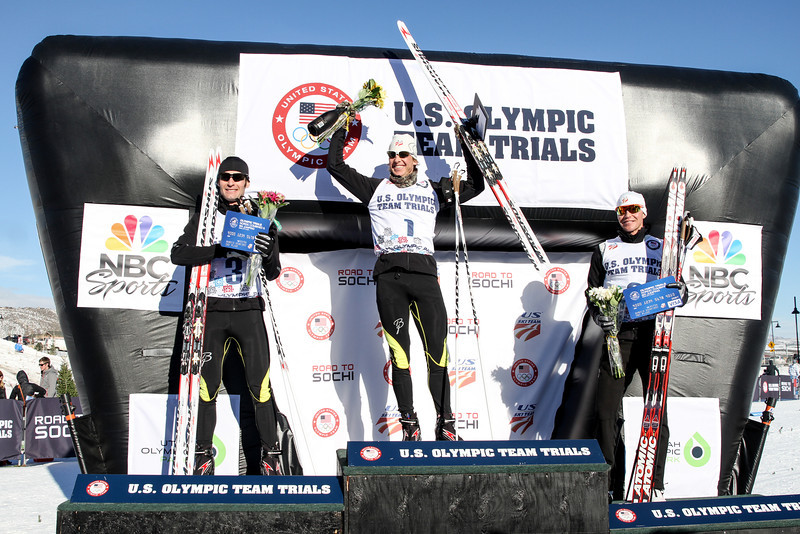
    (From left to right) The 2014 U.S. Nordic Combined Olympic Team Trials podium on Dec. 28 in Park City, Utah, with runner-up Bryan Fletcher, winner Todd Lodwick and Billy Demong in third. (Photo: Sarah Brunson/U.S. Ski Team)
    (From left to right) The 2014 U.S. Nordic Combined Olympic Team Trials podium on Dec. 28 in Park City, Utah, with runner-up Bryan Fletcher, winner Todd Lodwick and Billy Demong in third. (Photo: Sarah Brunson/U.S. Ski Team)

    One of the biggest difference-makers over the years has been the growth and success of the U.S. Nordic Combined team, he said. Last February at 2013 World Championships in Val di Fiemme, Italy, Lodwick, Demong, and the Fletcher brothers earned America’s first medal (bronze) in the team event.

    “I can’t thank Dave Jarrett enough,” Lodwick said. “He has made … sure that we are the best in the world. We started believing in ourselves and came together as a team. Going into these Games we’re going to feed off the inspiration that we had in 2010 and the success we had at World Championships. We rise to the occasion more often than not and surprise the heck out of people.”

    The U.S. Olympic quota is currently four, but they’re hoping to take five men to the Games if they can get five to rank in the World Cup top 50. Before the Olympic trials last month, Demong won two Continental Cup competitions in Park City to secure the team’s fifth World Cup quota spot, allowing them to bring another man over to Europe and try to score some World Cup points.

    “We rise to the occasion more often than not and surprise the heck out of people.” — Lodwick

    A couple U.S. Ski Team members are in Chaikovskiy, Russia, this weekend competing for those points, with Taylor Fletcher placing sixth and Denney finishing 32nd in Saturday’s normal hill/10 k.

    Starting next weekend, Lodwick and the rest of the U.S. A-team will get back to the World Cup in Chaux Neuve, France, then Seefeld, Austria, before heading back to Park City for a two-week training block at altitude for the rest of January. On Feb. 1, they’ll head back to Europe for a brief jumping camp in Oberstdorf, Germany, before heading to Sochi on the sixth.

    Trials results

  • U.S. Ski Jumping, NoCo Nationals This Weekend: What to Know

    For the fifth-straight year, the U.S. Ski Jumping and Nordic Combined Championships are about to take place in the middle of summer with events Saturday and Sunday in Park City, Utah.

    U.S. Nordic Combined teammates working out during a June training camp in Park City, Utah. Defending national champion Billy Demong (c) is seeking his ninth U.S. title at the U.S. Ski Jumping and Nordic Combined Championships this weekend in Park City. Johnny Spillane (l) was last year’s runner-up at nationals, and Bryan Fletcher (r) placed third. (Dave Jarrett courtesy photo)

    The nation’s best, including defending champions Billy Demong and Jessica Jerome, will descend on the Utah Olympic Park ski jumps in Park City and Soldier Hollow ski area in Midway for two days of dryland competition, according to the USSA website.

    Here’s what you need to know about this weekend’s nationals:

    What: 2013 U.S. Ski Jumping and Nordic Combined Championships

    Where: Park City

    When: Aug. 4-5 (Ski jumping starts at 8 a.m. Saturday; nordic-combined rollerski final at 1 p.m. Saturday)

    Favorites: 

    • Demong, an Olympic gold medalist and eight-time national champion who won last year’s nationals in Fox River Grove, Ill.
    • Jerome, who also has eight U.S. titles and won on the large hill last year.
    • Peter Frenette of Saranac Lake, N.Y, large-hill defending champion with three national titles to his name and two top-10 finishes in FIS Continental Cups this summer
    • Anders Johnson of Park City, who won the normal-hill title last year and has three Continental Cup top-20s this summer
    Of note: The reigning women’s ski jumping World Cup champion, Sarah Hendrickson will miss this year’s nationals along with Lindsey Van, the 2009 World Champion, to recover from planned surgeries. Hendrickson won her first U.S. title last year on the normal hill.
    Last year’s results: