Tag: Valcartier

  • Où Sont-ils Maintenant: Audrey Vaillancourt

    Où Sont-ils Maintenant: Audrey Vaillancourt

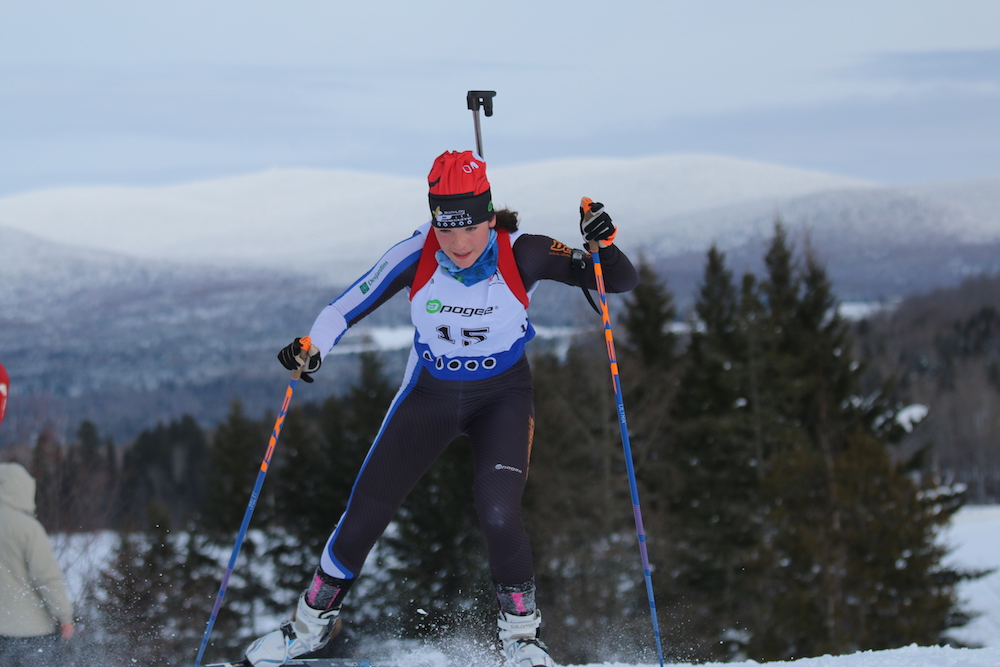
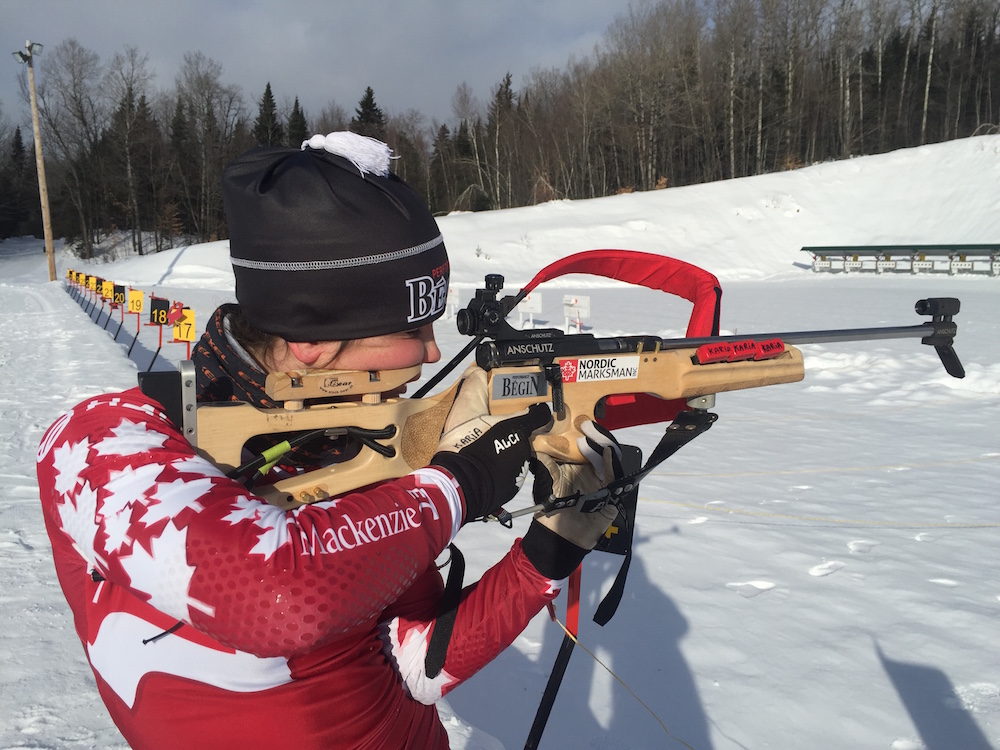
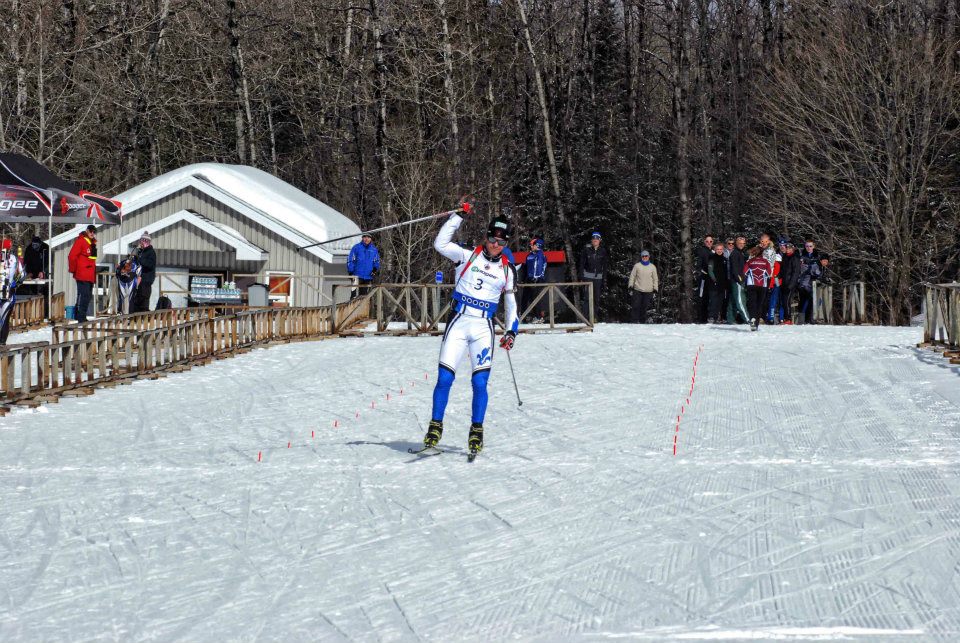
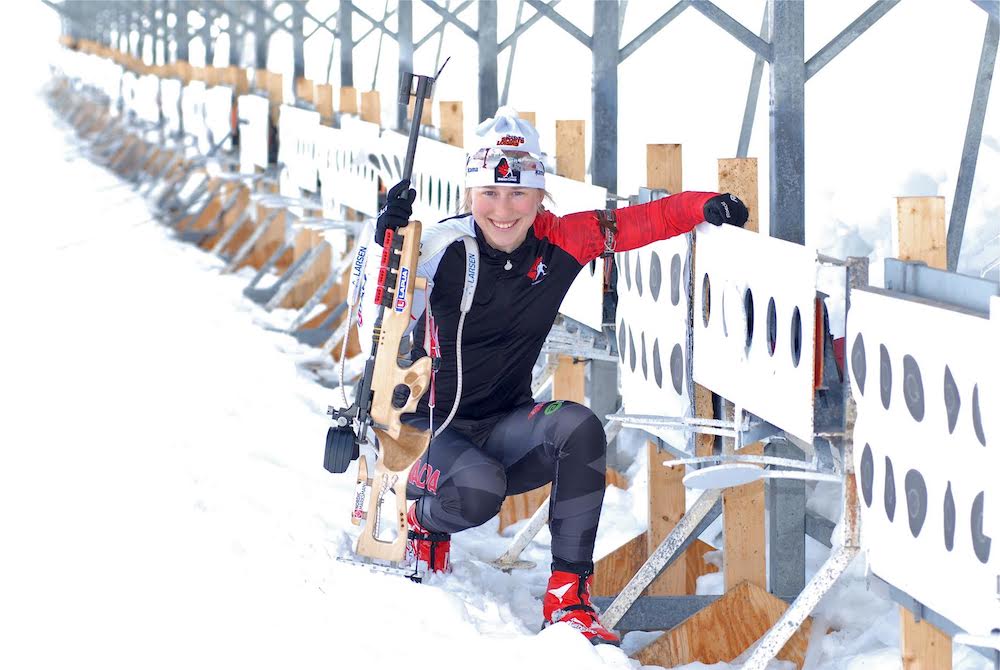
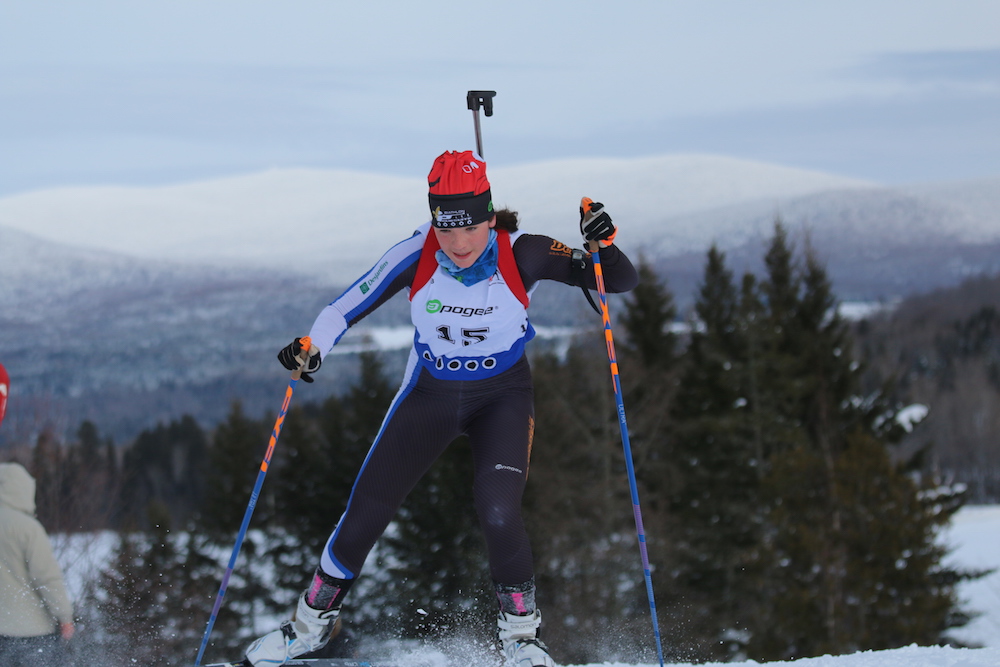
    Audrey Vaillancourt au Centre de biathlon de Valcartier en 2014. (Photo de courtoisie)

    (For English version, click here.)

    Lors du mois de mai 2016, la biathlète canadienne Audrey Vaillancourt annonçait la fin de sa carrière athlétique dans un papier intitulé « La fin d’une grande aventure », publié sur son blogue. Après douze ans – soit près de la moitié de sa vie – consacrés aux compétitions et à l’entraînement, c’est sans légèreté que la Québécoise de vingt-quatre ans, toujours passionnée de biathlon, a pris la décision d’accrocher ses planches et sa carabine.

    Tout a commencé sur les skis à l’âge de six ans, à la traîne derrière ses grands frères Maxime et François Leboeuf (Vaillancourt porte le nom de sa mère). Tous deux sont d’anciens membres de l’équipe canadienne de biathlon, ayant pris leur retraite à vingt-neuf et à vingt-quatre ans respectivement. Sous l’impulsion de parents actifs, Carmen et Pierre, le jeune trio de Val-Bélair a rapidement acquis une brillante réputation à travers la province, dans les cercles rapprochés des fondeurs québécois.

    C’est à douze ans que Vaillancourt fait ses premières armes en biathlon. Un amour du tir s’ensuit instantanément, de même qu’un talent naturel pour cette nouvelle discipline.
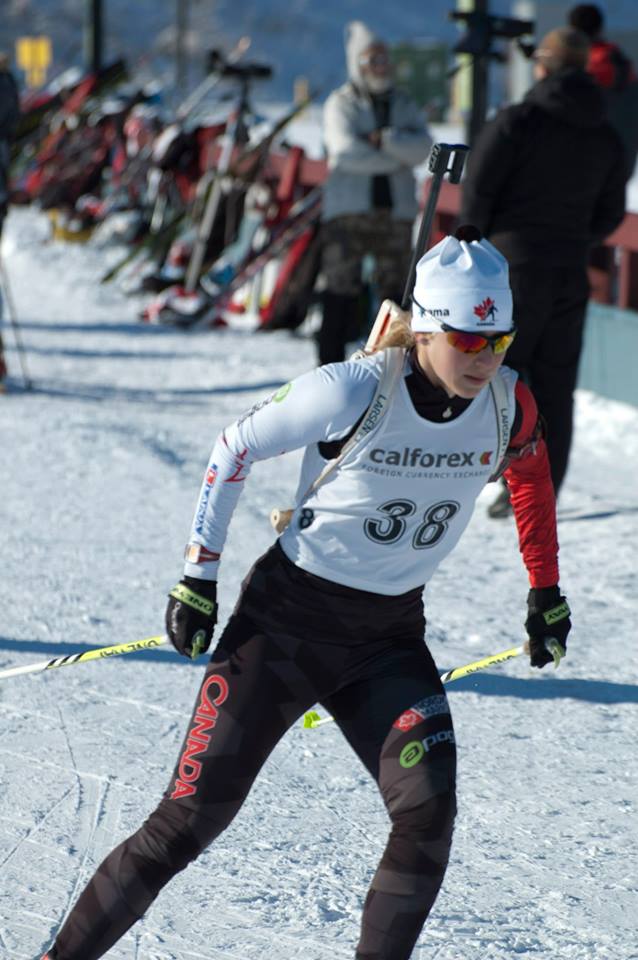
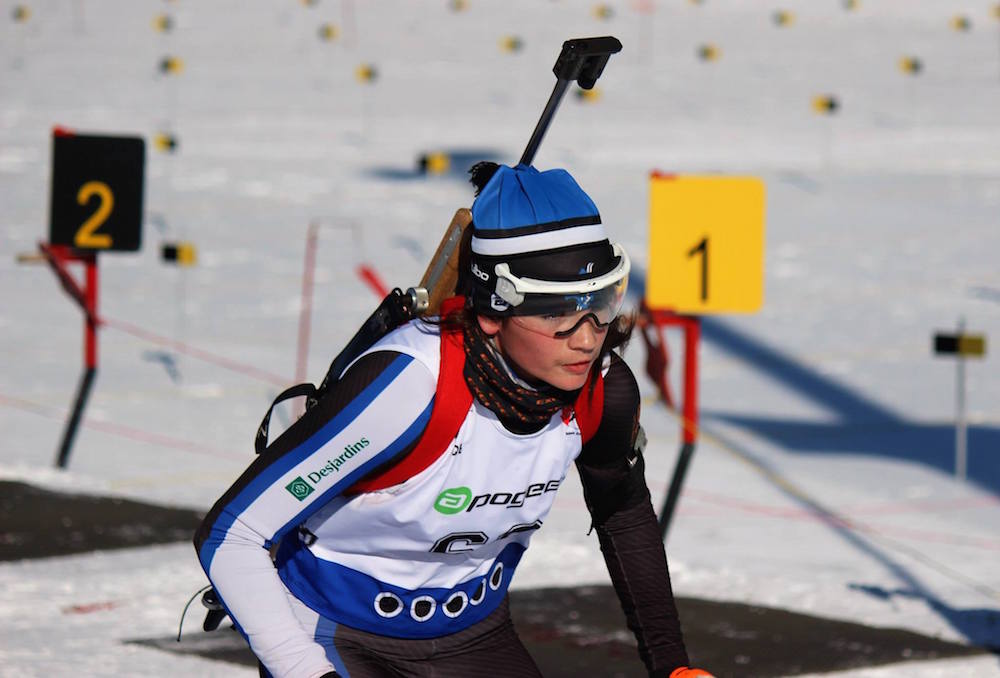
    Audrey Vaillancourt arrachant le deuxième rang au sprint lors des qualifications de l’équipe canadienne de biathlon en novembre 2014 à Frozen Thunder, à Canmore en Alberta. (Photo: Photo: Justin Brisbane)

    « C’était tellement l’fun et différent du ski de fond traditionnel. Le tir présentait un nouveau défi pour moi. Ça rend les compétitions de biathlon tellement plus excitantes que celles en ski de fond », lance avec enthousiasme Vaillancourt, lors d’un entretien téléphonique depuis sa demeure à Québec en janvier dernier.

    Elle rallie rapidement les rangs du Club de biathlon Courcelette, fondé trente ans plus tôt, et s’entraîne au Centre d’entraînement Myriam Bédard – unique en son genre au Québec – sur les terres militaires de Valcartier, non loin de la maison familiale. Alors qu’elle fréquente l’école secondaire, Vaillancourt peaufine ses positions de tir et son pas de patin à raison de trois fois par semaine. Le régime d’entraînement s’intensifie et passe à six séances matinales lorsqu’elle entame ses études cégépiennes. C’est sous la tutelle de Jean Paquet, ex-olympien, puis de Martin Tremblay, l’actuel entraîneur en chef de l’équipe du Québec de biathlon que Vaillancourt déploie ses qualités de biathlète.

    Le saut inévitable vers Canmore, en Alberta, a lieu à seize ans, lorsqu’elle mérite sa place au sein de l’équipe nationale junior. La perspective de progresser aux côtés des meilleurs biathlètes du pays, en plus de s’initier au circuit de compétitions en sol européen, marque une étape importante pour l’athlète québécoise. Une chance en or, que saisit spontanément Vaillancourt, mais qui recèle quelques écueils imprévus.

    « À l’époque, j’étais l’unique athlète francophone de l’équipe. Je ne me suis jamais intégrée totalement en Alberta. Canmore est une ville d’athlètes et de centres d’entraînement, centrée sur la performance sportive. Même si j’étais super motivée à m’entraîner, il me manquait quelque chose. Je me sentais loin de ma famille et de mes amis », admet Vaillancourt.

    Elle ajoute que, malgré l’éloignement, les mois d’hiver passés en Europe lui ont permis de découvrir plusieurs villes (Anthloz, en Italie, demeure son coup de cœur) et de disputer des courses devant de vastes foules endiablées. Vaillancourt a représenté le Canada aux Championnats du monde en 2013 et en 2015 avant de prendre sa retraite en mai 2016.

    « Dans ma dernière saison à titre de senior, l’éloignement a joué pour beaucoup dans ma décision de quitter la compétition », avoue-t-elle.

    Après nombre de podiums accumulés à l’échelle nationale, celle qui a été trois fois championne canadienne atteint le faîte de sa carrière en 2014 à Nove Mesto, en République Tchèque, remportant le quinze kilomètres départ individuel à l’occasion des Championnats européens.

    « C’était fou, une journée que je ne vais jamais oublier », raconte-t-elle. « Mais bon, je pense que c’est l’expérience dans son ensemble dont je vais me souvenir le plus, les centaines d’heures d’entraînement passées chaque année avec l’équipe, les camps d’entraînement, tout le plaisir que j’ai eu avec mes coéquipiers. Ça… et Nove Mesto! »
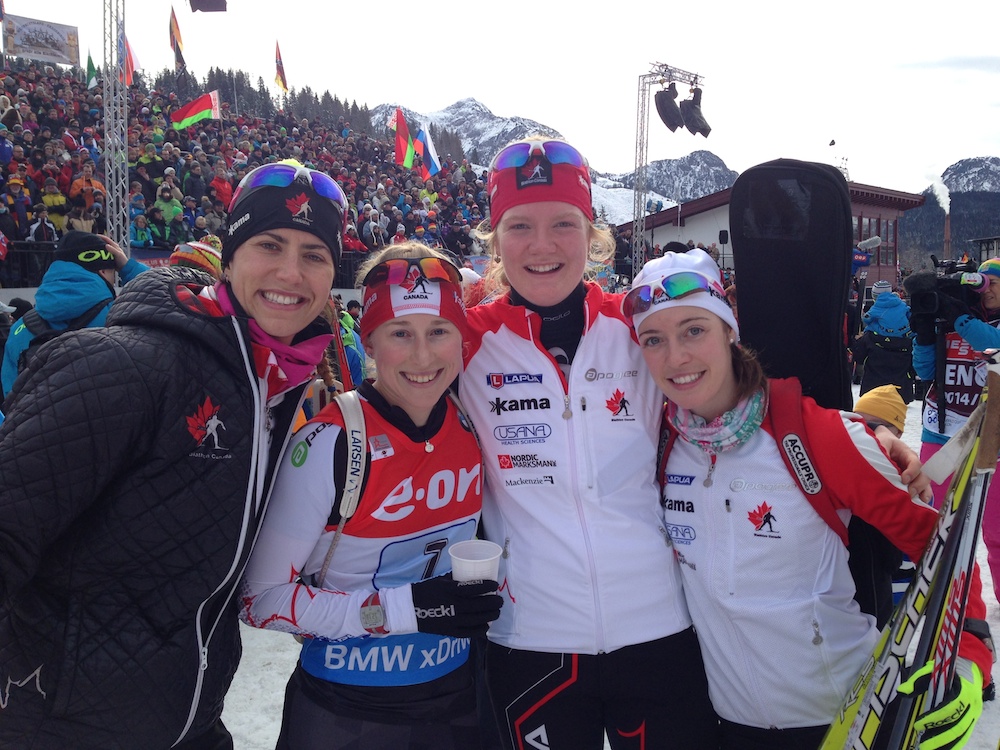
    L’équipe canadienne féminine du relai 4 x 6km après leur onzième position à la Coupe du monde IBU de Hochfilzen, Autriche, en 2014: (de gauche à droite) Rosanna Crawford, Audrey Vaillancourt, Sarah Beaudry et Megan Heinicke. (Photo: Rosanna Crawford)

    Une belle performance aux Championnats du monde junior en 2009 marque une autre étape importante dans son parcours. Devant des partisans canadiens, elle décroche le bronze à Canmore lors du six kilomètres sprint.

    Reflétant sur sa carrière d’athlète, Vaillancourt assure ne conserver aucun regret.

    « J’ai vraiment l’impression d’avoir tout donné. C’est sûr que j’ai rêvé plusieurs fois à une qualification olympique, mais ça aurait aussi voulu dire sacrifier beaucoup. Trop pour moi, en tout cas », concède-t-elle.

    L’idée de quitter l’univers compétitif a germé graduellement lors de la saison 2015-2016. Des résultats en deçà de ses attentes n’étaient pas les seuls responsables de sa résolution finale.

    « La dernière saison a été pénible physiquement et mentalement. Je n’avançais pas. J’étais complètement vidée », explique Vaillancourt. « J’ai obtenu quelques bons résultats, mais rien pour m’encourager à continuer. »

    La retraite à seulement vingt-quatre ans s’est donc imposée naturellement, amenant un grand soulagement après douze années de compétitions. La biathlète a dû se tourner rapidement vers un nouvel objectif, refaire sa vie après le sport.

    « Je comprends maintenant pourquoi plusieurs athlètes souffrent de dépression à leur retraite. Vraiment, je comprends ce phénomène. C’est nécessaire de se préparer, de faire des plans, de remplir sa vie avec des projets. Sinon, on tombe rapidement dans le néant. »

    Vaillancourt vient d’ailleurs de terminer des études en traduction à l’Université du Québec à Trois-Rivières (UQTR). Elle travaille présentement dans le cabinet de traduction Sematos à Québec, mais demeure toujours active au sein du biathlon en tant qu’entraîneuse pour le Club Courcelette et pour le Club Biathlon Mauricie. Elle participe également à un projet appelé « Unis pour le sport », né il y a quelques mois d’une idée de son frère Maxime.

    « Ce projet vient du désir d’aider les athlètes de tous les niveaux à améliorer leurs performances sportives, leur régime d’entraînement, leur technique dans divers sports, allant du ski de fond aux courses à obstacles, en passant par le biathlon et la course à pied », confie-t-elle.

    Le site web du projet (http://unispourlesport.com) vient d’ailleurs récemment de mettre en ligne un plan d’entraînement personnalisable pour coureurs.

    « Les choses se passent bien », écrit Vaillancourt dans un courriel le mois dernier.
  • Where Are They Now: Audrey Vaillancourt

    Where Are They Now: Audrey Vaillancourt

    Audrey Vaillancourt at the Valcartier Biathlon Centre in 2014. (Courtesy photo)

    Note: The following interview with retired biathlete Audrey Vaillancourt was conducted in French and translated to English. For French version, click here.

    ***

    A year ago, in May of 2016, Canadian biathlete Audrey Vaillancourt announced her retirement in a blog post titled, ‘The end of a great adventure’. Having spent 12 years — nearly half of her life — racing in a sport she’s still very much passionate about, the decision to call it quits came at 24 years old, and was not an easy one to make.

    For Vaillancourt (who has the same last name as her mother), it all started on skis at age 6 as she tried to catch her older brothers Maxime and François Leboeuf, both former members of Biathlon Canada’s national team themselves who stepped away from the sport at 29 and 24, respectively. Fueled by active parents, Carmen and Pierre, cross-country skiing started as the central sport in the Leboeuf family, and quickly, the rumour of a brilliant trio of young ski racers from Val Bélair began to spread across the province of Quebec.

    At 12, Vaillancourt once again followed her brothers’ footsteps and gave biathlon a try. An instant love for shooting — and a natural knack for it — immediately followed, and she was hooked right then and there.

    Audrey Vaillancourt racing to second in a sprint at Biathlon Canada team trials in Nov. 2014 at Frozen Thunder in Canmore, Alberta. (Photo: Photo: Justin Brisbane)

    “It was so fun and different. The shooting presented a new challenge, and it really makes biathlon races much more exciting than cross-country skiing, in my opinion,” Vaillancourt said in January on the phone from her home in Quebec City. “A race can totally change in 30 seconds; it’s crazy.”

    She joined the Courcelette Biathlon Club, founded 30 years ago, and trained close to home at the Myriam Bédard Biathlon Centre — the only training centre of its kind in Quebec — located on the Valcartier military base. That’s where she perfected her shooting skills, first training three days a week in high school, then gradually expanding that to six morning sessions a week when she began her CEGEP (Collège d’Enseignement Général et Professionnel) studies. Olympian Jean Paquet was her first coach, then she spent the rest of her career working with Martin Tremblay, Biathlon Team Quebec’s head coach.

    At 16, she was named to Canada’s national junior team, which brought her to Canmore, Alberta. While training amongst the country’s best meant a natural progression in her athletic career and the lustrous prospect of racing on European soil, it also came with a few unexpected hardships, she explained.

    “At the time, I was the only French-speaking athlete on the team. I never fully blended in when I was in Alberta,” she said. “Canmore is a small city that revolves a lot around training, sports and performance. I felt so far from family and friends. Even though I was all in for training and racing, the traveling back and forth from Quebec to Canmore was challenging.”

    She added that she enjoyed visiting different cities in Europe (Antholz, Italy, was her favourite) and competing in front of tens of thousands of fans. Vaillancourt competed at 2013 and 2015 World Championships before retiring last spring.

    “In my final year as a senior, being so often away from home really influenced my decision of leaving the sport,” she said.

    With countless podiums in national races, the three-time Canadian national champion reached the peak of her career in 2014, when she won the 15-kilometre individual at Open European Championships in Nove Mesto, Czech Republic.

    “It was unreal, I will forever remember that day,” she said. “But I think the overall experience of training year-round with the squad, our training camps, the fun I had with my teammates, all that which surrounds racing, actually is what I’ll remember the most. I was so in love with training at the time. That ranks first in my memory … aside from Nove Mesto.”

    The Canadian women’s relay team after placing 11th in the 4 x 6 relay at a 2014 IBU World Cup in Hochfilzen, Austria: (from left to right) Rosanna Crawford, Audrey Vaillancourt, Sarah Beaudry, and Megan Heinicke. (Photo: Rosanna Crawford)

    Her podium at 2009 Youth World Championships was another important stepping stone. In front of a home crowd in Canmore, she took third in the 6 k sprint.

    Looking back on 12 years of racing, Vaillancourt said she had no regrets.

    “I really feel I gave it my all. Sure, qualifying for the Olympics would of been awesome, but it became evident that to get there meant sacrificing a lot, too much for me anyway. The cons outweighed the pros in the end,” she said.

    The decision to retire from competition came gradually during the 2015/2016 season. Disappointing results weren’t solely to blame.

    “What can I say, I just wasn’t in it anymore, physically and mentally. I was totally drained,” she explained. “Despite some few good results, things never improved during that season. It was clear I was on my way out.”

    While the prospect of retiring at age 24 was hard to swallow, it came with great relief, she said. Having a goal to focus on after biathlon was “absolutely necessary,” she said, and made the transition a lot smoother.

    “I understand why some athletes fall into depression after retirement. I really get it,” Vaillancourt said. “You need to prepare yourself, make plans, fill your life with projects. Otherwise, it’s easy to fall into limbo.”

    Just last month, she completed her degree in translation at the Université du Québec à Trois-Rivières (UQTR). She now works at Sematos Translation in Québec City and has remained involved in biathlon as a coach at Courcelette Biathlon Club and Biathlon Mauricie Club. And seven months ago, she became involved in a new project her brother Maxime founded called “Unis pour le sport” (United for Sport).

    “This project is an effort to help athletes achieve specific goals regarding racing, training, technique in various sports, ranging from cross-country skiing and biathlon to obstacle-course racing and running,” she explained. “We already sense a strong demand for such services across the province.”

    Most recently, the website published an example of a personalized training plan for runners.

    “Things are going well,” Vaillancourt wrote in an email last month.

  • 20-for-20 with Frédérique Pérusse

    20-for-20 with Frédérique Pérusse

    Frédérique Pérusse (Myriam Bédard Biathlon Centre) racing earlier this month in La Patrie, Quebec. (Courtesy photo)

    In another 20-something-question, fill-in-the-blanks series, we checked in with the world-class U.S. and Canadian biathletes that will be competing at 2017 International Biathlon Union (IBU) Youth & Junior World Championships Feb. 22-28 in Osrblie (also known as Brezno-Osrblie), Slovakia.

    Here’s 15-year-old Frédérique Pérusse, of Centre De Biathlon Myriam Bédard (the Myriam Bédard Biathlon Centre), who’s representing Canada at her first Youth Worlds. In her first two races of the championships, she’s placed 73rd in Friday’s 6-kilometer sprint and 77th in Wednesday’s 10 k individual.

    ***

    “My full name is Frédérique-Karia Pérusse, but you can call me Fred. I was born in Quebec City, raised in Levis and one thing you should know about my hometown is that it is really charming!

    Frédérique Pérusse (Myriam Bédard Biathlon Centre) racing at Canada’s 2017 IBU Youth/Junior World Championships trials. (Courtesy photo)

    I started cross-country skiing when I was 11-ish and started biathlon when I was 9, thanks to my big sister, Marie-Maxime.

    I currently train in Valcartier at the Myriam Bédard biathlon center.

    If I’m not skiing, you might find me in school.

    If I had to pick a favorite book, it would be ‘Ready Player One’ by Ernest Cline.

    One of the things I’m most excited about Youth/Junior World Championships in Brezno-Orsblie is to get to see/meet biathletes from all around the globe!!

    This will be my very first Youth/Junior World Championships, and this year, I’m competing as a youth. One race I’m especially targeting there is the 6 km sprint.

    The best advice anyone ever gave me about skiing or racing was to not let your personal life disturb your professional one, it’s no time to think about your problems on the range.

    One of the best race memories I have is when I won the silver medal in the 6 km sprint at the 2016 biathlon nationals.

    Frédérique Pérusse (Myriam Bédard Biathlon Centre) at her training base in Valcartier, Quebec. (Courtesy photo)

    If I could meet one World Cup skier, it would be Dorothea Wierer for sure because she is such an inspiration and I look up to her.

    If I don’t end up being a professional skier, I’ll probably be a coach or something else that is related to sport.

    I’m missing 6 weeks of school to be here, and my teachers are probably thinking, ‘Shit‘.

    You can follow me on Instagram @fred_perusse.”

  • Paquet: Deprioritizing Québec and the East May ‘Lose a Lot of Athletes Along the Way’

    Paquet: Deprioritizing Québec and the East May ‘Lose a Lot of Athletes Along the Way’

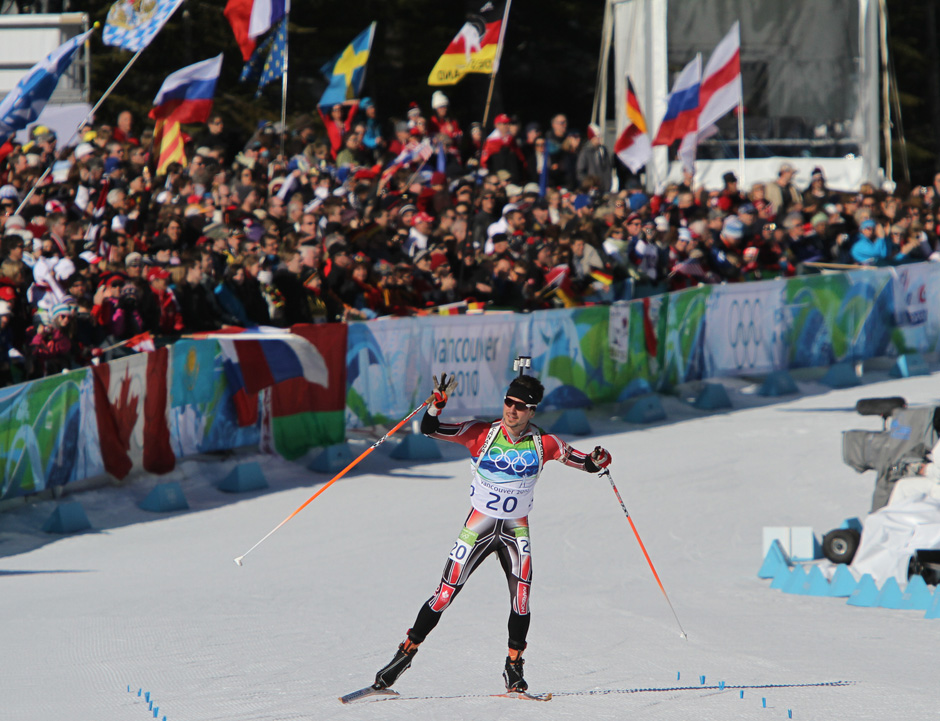
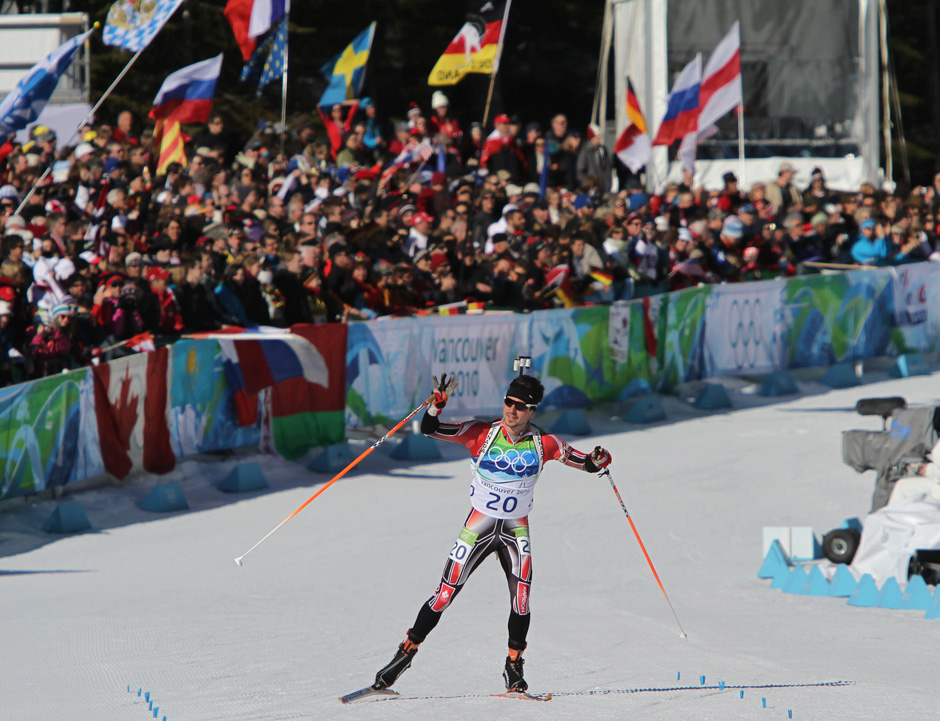
    Jean Philippe Le Guellec waves to the fans as he finishes 11th in the Olympic mass start in Vancouver in 2010. In 2014, he broke his own record finish for a Canadian man, finishing 5th in the Olympic sprint. His longtime coach Jean Paquet has been let go by Biathlon Canada.
    Jean Philippe Le Guellec waves to the fans as he finishes 30th in the Olympic mass start in Vancouver in 2010. In 2014, he broke his own record for a Canadian man, finishing 5th in the Olympic sprint. His longtime coach Jean Paquet has been let go by Biathlon Canada.

    Note: After some miscommunications based on bad email addresses, we got in touch with Jean Paquet. We’ve apologized for the problems which prevented us from including his comments in our original story about the closure of Biathlon Canada’s Eastern National Team Center in Valcartier, which you can find here.

    With Biathlon Canada’s closure of its national-team center in Valcartier, Québec, Jean Paquet’s position as a national-team coach was eliminated. The 1992 Olympian had worked with top biathlete Jean Philippe Le Guellec since 2007, but said that he saw the writing on the wall that his job wasn’t going to exist after the 2014 Olympics.

    “They have been wanting to centralize in Canmore for quite a while,” Paquet said in an interview regarding Biathlon Canada. “Actually I can recall for at least five years they were working hard to centralize and bring Jean Philippe to Canmore. Every year from that time, I had to go a meeting in Calgary with Own the Podium [OTP] and Biathlon Canada to explain why it was good to keep Jean Philippe in Québec, because he didn’t want to move. I had to justify it every year.”

    Much like Alex Harvey in cross-country skiing, Le Guellec was in more of a position to make those demands than others might have been. He turned in Canada’s best Olympic peformance by a male biathlete in 2010, finishing sixth in the sprint, and also became the first Canadian man to qualify for an Olympic mass start. In December 2012, he also became the first Canadian man to win a World Cup competition.

    Le Guellec confirmed as much in an earlier email to FasterSkier, stating that he had insisted on staying in Québec, where he had bought a house with his (then-future) wife.

    “So I knew that when Jean Philippe was done in 2014 that it would be impossible for me to justify it, even if Audrey Vaillancourt kept going I knew it would be impossible to keep the center, and to keep a coach here,” Paquet said.

    A provincial team will still run out of Valcartier, coached by Martin Tremblay. Vaillancourt will train with that group when she is not in Canmore with the national team.

    Paquet explained that he had still hoped to have a role with the organization, albeit in a different position. Le Guellec achieved finishes of fifth and 10th at the Games, which no doubt contributed to Paquet feeling that he was qualified.

    “Chris [Lindsay, Biathlon Canada’s High Performance Director] told me at the Games that there could be a job opening in Canmore, for the second coach,” Paquet said. “I knew that they were going to keep only two coaches and that my position was eliminated. So I knew that. But I thought that there would be an opening in Canmore and that I could have the opportunity, if I wanted to, to apply for it.”

    As of this spring, Biathlon Canada is only planning to have two coaches (Lindsay wrote in an email that OTP may grant them funding for a third coach; the OTP budget for biathlon will be revealed this summer). Current head coach Matthias Ahrens would retain his position. Paquet thought he could at least apply for the second position.

    But in reality, current assistant coach Roddy Ward would be keeping that role.

    “When I came back from the Games, a couple of days later Chris invited me to a year-end meeting in Canmore,” Paquet said. “I thought we were going to discuss something about the plans, but when I looked I realized that I was not in the plan. At all. So there was no future for me in the organization. That’s when I found out, when I realized, okay, what are the other options?”

    Unemployment aside – Paquet said that after a grueling Olympic season, he needed a break and only just began looking for jobs – he is troubled by Biathlon Canada and OTP’s vision of centralization in Canmore. He thought it was a mistake to close the Valcartier national team center.

    “If you don’t have that in the East, you know it takes a lot from the people from the East part to move to Canmore,” he said. “It takes a lot of money and a lot of effort. Québec is a great place for [finding talent]. It is a city of 750,000 people and it’s a great city to have training stuff there. I think that they are losing a big opportunity there…. Canmore, don’t get me wrong, it’s a good center and they have invested a lot in it. It’s a great center. But I think it would be good to have two centers.”

    Paquet acknowledges that currently, Québec has few top senior biathletes. Only Vaillancourt met the national-team criteria this year, which was part of Biathlon Canada’s justification for closing the Valcartier training center: it didn’t make sense to have a training group of just one athlete.

    “For sure, if you look now we are in a downturn,” Paquet said. “We only have Audrey and the other athletes are quite young. So there is a lot of time to go before we get a team or some other good athletes.”

    But among other things, he said, having a national team coach to scout out talent is a big plus. And due to the cultural differences between Québec and English-speaking Canada, as well as the sheer distance between Valcartier and Canmore, retaining that talent might be more difficult in a fully centralized system.

    “You know, Jean Philippe came from a program that went forward eight or nine years ago with Daniel LeFebvre, who went to recruit athletes,” Paquet said. “We got Jean Philippe from that initiative that was taken years ago. So you need to take some initiative, you need to turn some rocks … You are going to lose a lot of athletes along the way who would have been great potential. There won’t be the possibility to uncover them.”

    However, Biathlon Canada has been pushing the centralization strategy for several years, as Paquet had previously explained. He described the interactions at the end of the season as not open to any possibility of maintaining the Québec center.

    “It’s not, can we work something out, it’s not can we find some partnership,” he said. “For example when I was hired in the beginning, there was a partnership between Biathlon Québec and Biathlon Canada, they paid half and half and then we worked on the project with some other people. This is a thing that maybe could have been talked about. But there was absolutely no willingness to even talk about this.”

    Although Biathlon Canada staff like Lindsay and Ahrens discussed the hope that Paquet might continue working with them on a contract basis for World Cup and IBU Cup tours this winter, Paquet seems to consider his relationship with the national team over. Looking back, he said he can be happy with the past, even if his future is uncertain.

    “I’m really happy with the work these last few years,” he said. “I feel really blessed to be able to work with an athlete like Jean Philippe. He was honest, and faithful – he never looked anywhere else, he never questioned about the training. We always did it together. For me it was not a dictatorship, it was all about getting him on board and about discussion. I thought that was the only way to get him to buy into it, and it showed that it worked … I have no regrets.”

  • Québec Biathlon National Team Center to Close, Paquet’s Position Eliminated

    Québec Biathlon National Team Center to Close, Paquet’s Position Eliminated

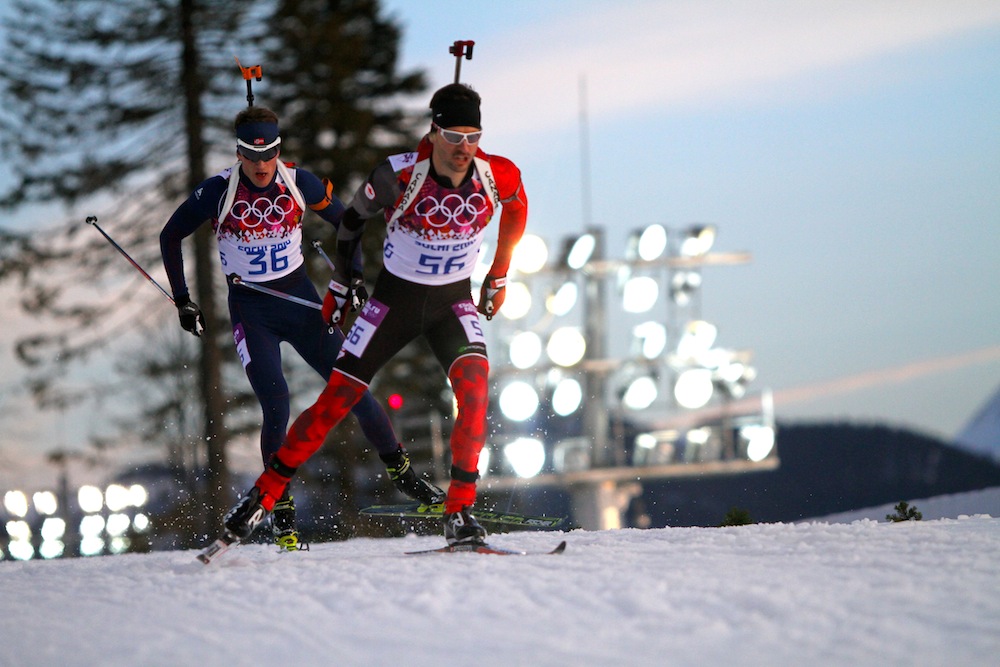
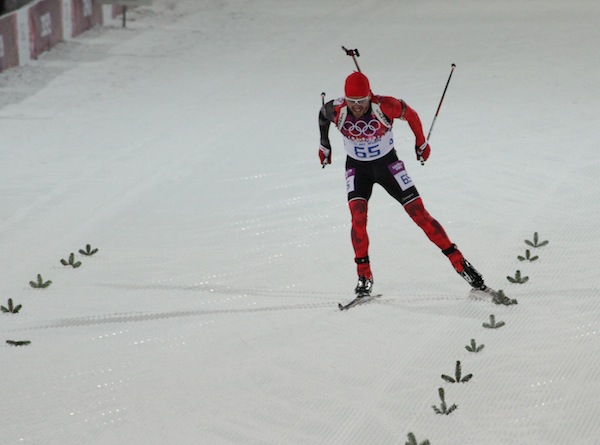
    Jean Philippe Le Guellec of Canada headed in for fifth place in the 10 k sprint at the Olympic Games in Sochi, Russia, this winter. His longtime coach and training center have both been defunded by Biathlon Canada.
    Jean Philippe Le Guellec of Canada headed in for fifth place in the 10 k sprint at the Olympic Games in Sochi, Russia, this winter. His longtime coach and training center have both been defunded by Biathlon Canada.

    Biathlon Canada is closing its Eastern training center at Valcartier and has so far not renewed the contract of Jean Paquet, a coach with the team since 2007.

    During the Sochi Olympics Paquet speculated that he might not have a job after this season. Biathlon Canada High Performance Director Chris Lindsay confirmed last week that the position Paquet formerly held has been eliminated, although Paquet did not respond to repeated requests for comment (Edit: he now has; see the interview here).

    “Following our high performance plan, the program that we had been running under Jean Paquet will no longer continue,” Lindsay said. “With JP [Le Guellec]’s retirement, and with only one Québec athlete making any of our national team criteria, we do not feel that we can justify, unfortunately, having a full-time coaching position there.”

    While Lindsay said that the board of directors and Executive Director Joanne Thompson had been involved in the decision, Thompson declined to comment, writing in an e-mail that decisions on staffing and training centres wouldn’t be finalized until after April 28th.

    However, national team head coach Matthias Ahrens also confirmed the changes.

    “It is correct that the Jean’s National Team Coach position was not renewed based on that we closed the National Training Centre in Quebec which was primarily based on Jean Phillipe LeGuellec who retired this season,” Ahrens wrote in an e-mail.

    According to Lindsay, Biathlon Canada will at the moment function with two coaches, a reduction from the three-man staff of last season. Matthias Ahrens will remain head coach and Roddy Ward will stay as an assistant coach. As with all things Canada, funding relies on Own the Podium, a non-profit which allocates money based on its assessment of a sport’s medal potential.

    “We find out our 2014-15 funding levels this summer, and we are hopeful that OTP will see the benefits of a third coach in the program,” Lindsay later wrote in an e-mail, although he did not elaborate on whether that would be Paquet.

    Paquet’s Work

    Paquet led the training group of senior Québec athletes out of the Centre d’Excellence Myriam Bédard, in Valcartier. The site also houses Québec’s provincial team of junior biathletes and seniors who are not part of the national team, coached by Martin Tremblay.

    Paquet is perhaps best known for his role as the day-to-day coach of Jean Philippe Le Guellec, who owns Canada’s best Olympic finishes by a man with sixth place in Vancouver and fifth place in Sochi. Le Guellec was close to doing even better, but while leading the 2014 Olympic pursuit he crashed on a dangerous corner and broke a ski. He had long planned to retire after the Sochi Games.

    “In the last two years, we covered immense ground to be able to achieve the best performances possible at the Games,” Le Guellec, who had not heard about Paquet’s contract, wrote in an email. “We literally worked on many aspects even up until the last day before the first race. With the way that I was able to ski along the fastest in the world and outshoot the field in many races, it felt like I was at the top of my game.”

    Two other mainstays of Québec biathlon, 2010 Olympian Marc-Andre Bédard and Claude Godbout, did not meet national team criteria after this season. Their plans are not yet concrete, but Bédard told FasterSkier earlier this spring that “we still want to race and we plan on doing a different approach this year, we’ll both do what we want more then what we’re suppose to, so that might be interesting.”

    That leaves Audrey Vaillancourt as the lone Québec athlete on the national team. The Open European Champion at 15 k this season, Vaillancourt wrote in an e-mail from Peru, where she’s spending her spring break from training, that she was unsure what was happening with the Québec center.

    “I don’t know all that much about the ‘official’ status of the training center for next year, but I know for sure that it won’t affect the support I get since my provincial coach/team will still be training there, and I will also spend a lot of time in Canmore with the rest of the national team,” she wrote.

    Vaillancourt and Le Guellec were recently honored as Biathlon Canada’s Athletes of the Year.

    Meanwhile, Paquet – an eight-time World Championships competitor and 1992 Olympian – was nominated for Gala Sports Québec’s international coach of the year award, up against cross country ski coach Louis Bouchard and canoe/kayak coach Frédéric Jobin.

    That underlies the respect he has earned for his athletes’ performances, which Le Guellec elaborated on.

    “Jean retired from racing in 2005,” he explained. “I could imagine making the leap to coaching World Cup athletes is quite the learning curve when he took us up in 2007. He’s very reserved, so he never was one to speak from a first person point of view, or to impose his own point of view as being gospel truth, which I really respect. But I have no doubt a lot of his own experience and learning as an athlete was transferred to his teachings as a coach. I would say he definitely had a big role in my approach to training and psychology of training.”

    Centralization Push

    According to Lindsay, the loss of Paquet’s position is due at least in part to OTP.

    “Jean’s position was funded by OTP for the sole purpose of coaching JP,” Lindsay wrote in an email. “With JP retiring the funding has ended.”

    However, Lindsay also told FasterSkier that closing the Québec training center (and with it Paquet’s position) was not a financial decision.

    “I would characterize this as a performance-based decision,” he said. “We have been over the past two seasons working at centralizing our training system as much as possible in order to provide the best opportunities for success for our athletes, and a significant part of that has been trying to get as many of the athletes centralized as we possibly can.”

    One of the hallmarks of Lindsay’s tenure has been the push for centralization: having all of the country’s athletes together in one place, in this case Canmore, and on one training program. He says is the best ways to make a small group of geographically disparate athletes faster.

    “We’re not dealing with a huge number of athletes period, so having all of our national team athletes together and able to train together on a daily basis, we feel is an important part of continuing to provide a challenging environment,” he said.

    But for Le Guellec, Paquet may have provided some of that fire.

    “He was always slightly more demanding towards me than I was with myself,” Le Guellec wrote. “Which simply showed he really believed in my ability. Being able to see that shared ambition year in and year out really helped me grow … He’s really helped me work even harder and harden up!”

    Lindsay said he believes in the value of a daily group training sessions for athletes at the international competition level – and that group, he finds, may no longer exist in Québec.

    Lindsay said that the organization’s high performance plans for the last two years have been moving in the direction of eliminating the Valcartier center. Some resources, like electronics and equipment, will be transferred to Tremblay’s provincial team, where Vaillancourt will train when she’s away from Canmore and which supports a strong junior community.

    “If we were in a situation where we were in, say, central Europe, we would have the ability to meet up with other athletes on a regular basis, and unfortunately this just doesn’t happen,” Lindsay said. “Centralization can provide that. And the choice of Canmore as the place to do that is pretty easy.”

    Le Guellec does not agrees that centralization is the right approach.

    “Biathlon Canada approached me a few times to move out West,” Le Guellec wrote. “I had already bought a house with my -[future] wife at the time and I wasn’t going anywhere after making that commitment … Too many variables outside of training environment have to be also considered and [I feel] to not consider them is short sighted on the elements that create the big picture. Which is why I chose to train at home.”

    However, there may yet be a role for Paquet with the organization next year. For instance, Paquet was a mainstay on the World Cup circuit, and may be able to gain a position as a coach there if not as a coach of a daily training group. Lindsay wrote that the goal was to have two coaches at each weekend of racing, but that Ahrens and Ward should not have to attend every race through the entire grueling World Cup season and that the organization would be looking for “relief” coaches.

    “Since he was a valued staff member on our World Cup tours, we still hope to have him as a contracted coach on the IBU Cup and some World Cup tours,” Ahrens said of his longtime co-coach on the circuit.

    Le Guellec, for one, also hopes that Paquet can find another meaningul role in the organization.

    “That is really a shame to put someone like him aside,” Le Guellec wrote. “It’s not like we have tons of resources of his level in Canada. Although, this could also be of his own decision. In which case, I feel the same way, but I also respect his decision.”

  • Crawford, Bédard Finish Job at Canadian Championships with Pursuit Wins

    Crawford, Bédard Finish Job at Canadian Championships with Pursuit Wins

    Rosanna Crawford (r) looks back at Claude Godbout before leaving the range to ski one penalty lap on the last stage of the 10 k pursuit at the Canadian Biathlon Championships in Valcartier, Quebec, on Sunday. Crawford went on to win by 11.6 seconds over Godbout.

    VALCARTIER, Québec – As she rounded the penalty loop at Myriam Bédard Center on Sunday, Rosanna Crawford looked up and threw down her headband.

    Winning the pursuit wasn’t going to be a walk in the park at the Canadian Biathlon Championships, and the 23-year-old from Alberta needed all the firepower she could muster.

    Rosanna Crawford soaks up her 10 k pursuit victory at the 2012 Canadian Biathlon Championships in Valcartier, Quebec, on Sunday.

    But the shooting portion was over; Crawford missed one shot in each of the last three stages for three total misses. The final one proved to be the most crucial.

    A few seconds behind, Claude Godbout of Québec had worked her way from starting fourth, 15 seconds after Crawford, to skiing in second in the 10 k pursuit. After shooting clean on the last standing stage, she was in contention for first.

    Watching Godbout emerge from the range, Crawford sped up to exit the penalty and skied out in front of her. The two raced together for about half of the 2.5 k loop, then Crawford capitalized on the long downhill and secured an 11.6-second victory over Godbout.

    “Halfway around the penalty loop, I hear the range go crazy so I knew that she had shot clean,” Crawford said. “Right when I heard them cheer I was like it’s on! … She led up the hill and then over the last little bump, I just hammered ahead of her. I had amazing skis today so I was able to rocket down the downhills and get to the finish line first.”

    Crawford was pleased with making 17 shots, although she would have liked to have matched her performance on Thursday, when she made 18 to win the 12.5 k mass start. She went on to win Saturday’s 7.5 k sprint.

    Canadian pursuit champion Rosanna Crawford (r) congratulates runner-up Claude Godbout on Sunday.

    “Skiing has really felt amazing these past four days,” Crawford said after sweeping each race at nationals. “I’m really happy with it and shooting was really good, too.”

    As for the psychological aspect of starting first in a pursuit with competitors staggered 5 seconds behind, Crawford said she focused on her own race. She successfully dropped Yolaine Oddou (Québec), who started 5 seconds back in second and finished third (+2:16.9) with four missed shots.

    “I just try to … take it one shot at a time, one loop at a time, never really getting ahead of myself,” Crawford said. “It’s just another race but there’s people that are really close behind you.”

    Godbout was the biggest threat, closing the gap on Crawford on each lap on her home course. She knew her skis weren’t as fast as Crawford’s and compensated by challenging her on the climbs.

    “I knew that to win, I had to gain so much time in the uphill and hope that she wouldn’t catch me on the downhill,” Godbout said. “I was pushing really hard to try to stay with her, but then she beat me at the end.”

    Godbout was especially happy to start strong and shoot clean on the first and last stages.

    “Yesterday, I missed three standing, and I was with [Crawford] and she cleaned. At the mass start, same thing happened, she missed one and I missed three,” Godbout said. “Today was exactly the same and I was like, ‘Don’t screw up.’ ”

    After the race, Godbout said her sports psych congratulated her for keeping it together. She said racing 15 minutes from home helped.

    “It’s always fun to race in your hometown,” she said. “We train so hard here and we know the trails perfectly. Just to sleep in your bed is awesome. I think I’m spoiled to do it in my home.”

    2012 Canadian Biathlon Championships women's pursuit podium: 1. Rosanna Crawford (center) of Alberta; 2. Claude Godbout (left) of Quebec; 3. Yolaine Oddou (right) of Quebec

    Bédard Completes Men’s Sweep

    In the men’s 12.5 k pursuit, Marc-André Bédard of Québec started in front and stayed there – but not without a little excitement.

    Bédard missed one shot on the first prone, which would have been fine if Scott Gow (Alberta) wasn’t right behind him. Last year’s national pursuit champion, Gow shot clean on the first stage pass Bédard and force him to play catch up after his penalty.

    2012 Canadian Biathlon Championships men's 12.5 k pursuit podium: 1. Marc-André Bédard (center) of Quebec; 2. Scott Gow (left) of Alberta; 3. Vincent Blais (right) of Quebec

    He did and the two skied together into the second stage, where both cleaned. Fresh off the World Championships in Ruhpolding, Germany, Bédard proceeded to put the hurt on and created a gap that culminated into a runaway victory.

    Bédard beat Gow by 1:46.1 to win the pursuit in 40:57, capping off a perfect showing at Canadian Championships. After flying to Canada last Monday, he won every race from Thursday on. Considering the jet lag, he wasn’t sure how he’d fare.

    “I was expecting to win, but I was definitely trying to do my best,” Bédard said. “I saw from the first race on that I was faster and I felt good, so from there I wanted to bring them all home, I guess.”

    Bédard missed four total shots, including two on the last standing.

    “On my last shooting, I was shaky and I was pretty tired,” Bédard said. “That was kind of playing with fire, but I did my loops quick. I didn’t know where Scott was, but I knew if I was with him or in front of him that I should be all right because I still had some energy to fight.”

    Gow, who fell behind on the third of five laps, missed one shot on the first standing and three on the second. That gave Bédard even more room to breath after opening hard.

    “I had already a good lead so that was fun to be able to finish so easy and enjoy it on the last lap,” he said.

    The best shooter of the day with one miss, Vincent Blais (Québec) finished third, 2:29.8 behind Bédard.

    Gow said it was beneficial to start closest to Bédard (5 seconds behind) and chase him. Even when he built a significant lead, it helped Gow secure second.

    “It kind of just kept me in the race from the get-go,” Gow said. “I think if that hadn’t happened, the race could have been totally different, if I didn’t have him to ski with. When he got really far ahead, I had to push even harder to catch up so it was still good.”

    After his penalty lap on the third stage, Gow realized Bédard might be out of reach. He needed to clean the last standing to come close, and he missed three. Regardless, Gow was happy with his effort in his last biathlon race of the season and pleased with his fitness overall.

    “Second place is still really good so I’m happy to end it with second,” Gow said. “That’s still fine for me.”

    Complete Canadian Championships results

    ***

    Note: Many of the senior men and women will next head to the nearby Canadian Ski National Championships at Mont-Sainte-Anne, Quebec, and participate in strictly cross-country races. 

    Bédard was excited to race against Alex Harvey in the 15 k freestyle individual start on Tuesday and the skate sprints on Thursday. Gow will finish his season with the 15 k skate and skate sprints.

    Crawford said she would do Thursday’s 10 k skate race, the skate sprints and the 30 k classic mass start. She looked forward to racing against her older sister and Canadian National Ski Team member, Chandra, for the first time. 

  • Crawford, Bedard Tops on Opening Day at Canadian Biathlon Championships

    Crawford, Bedard Tops on Opening Day at Canadian Biathlon Championships

    Marc-Andre Bedard crosses the finish line for a big victory in the men's 15 k mass start. Photo: Biathlon Courcelette.

    After spending literally only a few days in North America since arriving home from biathlon World Championships in Ruhpolding, Germany, Marc-André Bédard wasn’t overly confident in himself going into Canadian Championships at the Myriam Bédard Cener in Valcartier, Quebec.

    “I have only just returned from World Championships and I didn’t much know what to expect with the time change and my fatigue,” he wrote in an e-mail to friends, media, and sponsors. “But it seems that my form is showing itself to be good and maybe I can pull a ‘Martin Fourcade’.”

    Quebec's Vincent Blais edges Maine Winter Sports Center's Raleigh Goessling for fourth place. Photo: Biathlon Courcelette.

    At the end of the day Bédard was one step closer to replicating the famous Frenchman’s victories in the sprint, pursuit, and mass start, only instead of being at World Championships, Bedard is on home turf racing in the suit of Quebec, his home province. Despite five penalties in the four-stage race, Bédard skied to a 1:12 win over fellow Quebecois Patrick Côté. It is his first senior title.

    “My victory was sadly not without errors,” he wrote. “The lead changed four times and my form saved me, because my shooting wasn’t 100%.”

    Not only that, but Bédard ended up skiing a little farther than he had to.

    “In my second stage, I wanted so much to leave the range quickly that I didn’t look at my targets very well and I thought I had missed two,” he wrote, explaining that he’d actually only missed one. “Then I did two loops even though I only had to do one. With six loops I won all the same. This race was full of new developments and it finished in my favor!”

    Crawford en route to the win. Photo: Biathlon Courcelette.

    Côté skied two less than that, having only four penalties, all of which came in the standing stages during the second half of the race. Scott Gow of Alberta placed third, 38 seconds behind Côté.

    In the women’s 12.5 k mass start, Rosanna Crawford and Claude Godbout battled for the first four loops, each shooting 0-1-1 through three stages. But when it came to the final bout, Crawford cleaned and Godbout missed three shots, leaving Crawford to ski to a 1:25 win.

    “It’s always nice to shoot well in the important races,” Crawford wrote in an e-mail to FasterSkier. “Claude and I were together all the way to the last shooting – coming into the range I knew that hitting all five was going to be key if I wanted to win. It would have been fun to do battle with Claude on the last loop though.”

    For Crawford, the form she showed today was encouraging, but at the same time tough, as she just missed being named to the World Championships team; despite having strong results at IBU Cup races in Canmore in February, Megan Heinicke and Yolaine Oddou had stronger results and made the trip to Ruhpolding. Crawford wished she could have skied this well in Canmore.

    Godbout on the range. Photo: Biathlon Courcelette.

    “I have been working hard with our assistance coach Roddy Ward,” she said of the time since Canmore. “I really feel like I am getting it and skiing much better than at the beginning of the season or even at the Canmore races. Not making the World Champs team was really hard to swallow and watching the races was pretty tough too, but no matter what I was cheering hard for our girls, hoping for the best results. Being Canadian Champ is bitter sweet, great to be on top, but knowing that if I could have been skiing like this in Canmore I might have made the team.

    “But wondering about ‘what ifs’ is never a good thing,” she concluded.

    Oddou placed third with seven penalties, 1:54 behind Godbout.

    Canadian Championships continue on Saturday with sprint races.


  • Gaiazova Takes First Two Races in Valcartier NorAm Series

    Gaiazova Takes First Two Races in Valcartier NorAm Series

    The men's field laps through the stadium in the classic leg of Saturday's pursuit
    The men's field laps through the stadium in the classic leg of Saturday's pursuit

    The Myriam Bedard biathlon center in Valcartier, Québec, is hosting three races of the  Haywood Noram series, which started this weekend. The races are also serving as qualification for Canada’s U23/Junior World Championships teams, so the field is stacked with top Canadian skiers. In addition there are a number of US skiers present, primarily New Englanders who chose not to make the trip to Anchorage.

    The series started with a continuous pursuit. The men went first on Saturday with a 30 kilometer race that featured six 2.5 km laps each of classic and skate. The loops were tough: a single lap had only one long, steep climb followed by a winding descent that dropped into the stadium. Canadian National Team and Pierre Harvey Development Center (CNEPH) skiers took seven of the top eight spots. Brent McMurtry (CNEPH/NST) edged out Graham Nishikawa (CNEPH) by 1.5 seconds for the win. National Team member Drew Goldsack rounded out the podium while Frédéric Touchette (CNEPH) was fourth and the top U23 finisher. Russell Currier, a biathlete from the Maine Winter Sports Center, was the top American finisher in 22nd place.

    Valcartier NorAm 1-3-Dasha Gaiazova races into the finish of the women's skate sprint with a comfortable lead over Perianne Jones
    Dasha Gaiazova races into the finish of the women's skate sprint with a comfortable lead over Perianne Jones

    Canadian National Team skier and current Continental Cup leader Dasha Gaiazova dominated the 15 km women’s pursuit with a 43.2 second win over Madeleine Williams (Alberta World Cup Academy). Brittany Webster (NST) finished third as the top U23. Colby College racer Lucy Garrec was the top American in 19th.

    Sunday’s race was a skate sprint on a 1.2 km loop. Temperatures were over freezing and snow flurries continued throughout the day, making for interesting conditions on the course. The uphills stayed somewhat soft but the flats and downhills were glazed and very fast. Julien Nury (Skibec/CNEPH) won the men’s qualification in a time of only 1:39.04. Dasha Gaiazova took the women’s qualification with a time of 1:54:04, nearly 5 seconds over the second place qualifier.

    The qualification results were up quickly and the heats got started promptly at noon. The results were divided into separate U23/senior heats and junior heats; even juniors who finished in the top-30 overall were taken out. This changed the heat line-ups considerably in the women’s field – 14 juniors would have qualified for open heats – and caused some confusion as very few coaches seemed to be aware of the protocol, but it was done to allow juniors competing for spots on the world’s team to race head to head in the heats.

    In the men’s heats, top qualifier Julien Nury got knocked out in the quarterfinals but CNEPH/NST skiers continued to lead the field taking the top 5 spots in the A final. Second place qualifier Philip Widmer (CNEPH/NST) took the win with Stephan Kuhn (NST) in second and Lenny Väljas (CNEPH) in third. University of Vermont skier Alex Howe was the top American in 13th, narrowly missing a spot in the semis.

    Dasha Gaiazova continued her dominating ways and won the women’s A final in convincing fashion over Perianne Jones (NST). Andrea Dupont (Rocky Mountain Racers) rounded out the podium. Chelsea Little (Craftsbury Green Racing Project) was the top American woman finishing the heats in 18th.

    Top qualifier Joey Burton (Alberta World Cup Academy) held his position through the junior heats. First-year J1 Raphaël Couturier (Skibec/Equipe de Québec) finished second ahead of Andrew Stewart-Jones (Nakkertuk/Equipe de Québec). Alberta World Cup Academy skiers Heidi Widmer and Marlis Kromm took the top two spots for junior women, finishing ahead of Rebecca Reid (Black Jack Nordic).

    The last race, an individual start classic, will be held on Tuesday. With warm temperatures and light snow predicted, the waxing could be tricky.

    sprint results

    pursuit results

    Canadian National Team skiers take an early lead at the start of the men's continuous pursuit
    Canadian National Team skiers take an early lead at the start of the men's continuous pursuit