From the FasterSkier archive — posts syndicated from athletes’ and coaches’ own blogs between 2004 and 2012, kept online as published. Current coverage is at fasterskier.com.

Tag: Virpi Kuitunen

  • Thus Far, Tour Success is a Tough Act to Follow

    Thus Far, Tour Success is a Tough Act to Follow

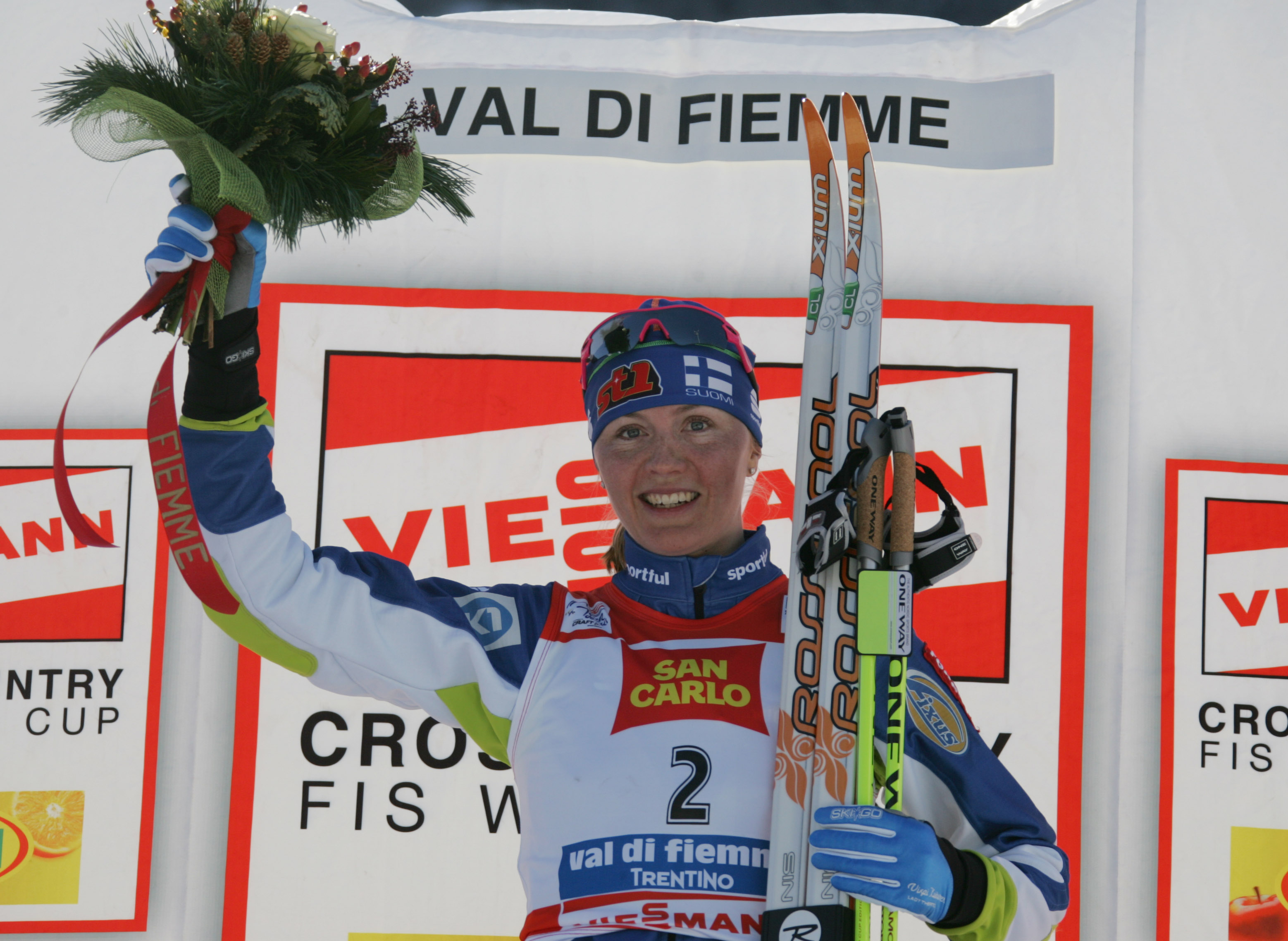
    Finnish athlete Virpi Kuitunen is one of two athletes to win a gold medal at a major championship event after winning the Tour de Ski.

    Want to win a race at World Championships or the Olympics? Then you might want to stay away from the top step of the Tour de Ski podium.

    Of the 32 World Championship and Olympic individual gold medals awarded over the past six years, just two of them have gone to athletes who won the Tour de Ski earlier in the year: Finland’s Virpi Kuitunen, who won the 30 k classic at World Championships in Japan in 2007, and Polish star Justyna Kowalczyk, who won the 30 k classic at the Vancouver Olympics in 2010.

    Other Tour winners, including Germany’s Tobias Angerer and the Czech Republic’s Lukas Bauer, have subsequently collected silver and bronze medals at major championship races, but failed to capture the most coveted prizes.

    The Tour is still a relatively new phenomenon: there have been just four editions—and eight winners, male and female—preceding a major championship.

    As a result, teams are still searching for the best way to keep their athletes at peak form for both events. But they’re “getting closer to a solution,” said Vidar Løfshus, the Norwegian cross-country ski team’s director.

    “It’s possible, but I think what you need is a good plan,” Løfshus said in a phone interview Monday.

    The Tour de Ski hangover is a trend mirrored in another analysis that looked at the winners of the last men’s World Cup races before the Olympics and World Championships.

    The analysis—done by a Norwegian commentator, Jann Post—showed that the winners of the World Cups had failed to win an Olympic or World Championships race since Finland’s Mika Myllylä in 1999.

    When it comes to the Tour, Løfshus said, teams have begun to adjust their training and racing plans to account for the grueling nature of the event, which consists of as many as nine races in 11 days, in two or three different countries.

    After watching several athletes succumb to illness after completing the Tour, Løfshus said that his squad has scaled back the racing schedules for those taking part.

    This year, only two of Norway’s 12 Tour starters also competed in World Cups in Canada earlier this month, Løfshus said; other
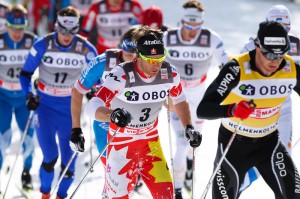
    Dario Cologna (r) came up empty at the 2011 World Championships in Oslo after winning the Tour de Ski that year.

    stars with high Tour aspirations like Switzerland’s Dario Cologna and the Czech Republic’s Lukas Bauer also sat out.

    “A lot of people skipped the World Cups abroad, because it was too exhausting to do all the racing,” Løfshus said.

    Løfshus was adamant that winning the Tour shouldn’t preclude victories at World Championships or the Olympics, and he said that Norway’s two top skiers, Marit Bjørgen and Petter Northug, were both planning to compete in the 2013 edition, before the Sochi Games.

    But Løfshus added that in addition to being careful about racing too much, athletes need to avoid the distractions that stem from Tour success, like parties and commitments to sponsors.
    “The focus needs to be on training and upcoming championships,” he said. “There’s a lot of other things going on after [the] Tour de Ski: press, sponsors…you need to have the plan in your training, and you need to have the plan to handle things going on afterwards.”

    The Numbers

    FasterSkier looked at the results of the podium finishers in the four editions of the Tour de Ski preceding major championships, in 2007, 2009, 2010, and 2011.

    Only two winners, Kuitunen and Kowalczyk, went on to win gold medals. However, out of 27 finishes by Tour winners at subsequent championship events, 11 of them resulted in medals—or roughly 40 percent.

    Kowalczyk fared especially well at the 2011 World Championships in Oslo—after winning the Tour, she went on to capture two silver medals and a bronze, even though she failed to secure a gold. That year, three of the individual races were won by Bjørgen, who had skipped the Tour entirely.

    While Kowalczyk held her own in Oslo, Cologna, her male Tour-winning counterpart that season, had a disastrous set of races, failing to podium in all four of his individual races.

    Second-place finishers at the Tour actually did better than Tour winners at subsequent championships, collecting medals in 11 of 22 races, including six golds.

    Third-place Tour finishers, however, were almost completely shut out of championship podiums, collecting just one medal in 18 attempts. That one was a gold at the Vancouver Games in 2010, which went to none other than Cologna—perhaps some premature karma to balance out his dismal performance in Oslo a year later.

  • New Trial Indicates Extensive Finnish Doping

    A decade after the devastating 2001 doping scandal that surfaced during the World Championships in Lahti, Finland, new evidence are still surfacing.

    The landmark doping case from the 2001 World Championships involved six Finnish racers (Jari Isometsä, Janne Immonen, Harri Kirvesniemi, Mika Myllälä, Milla Jauho and Virpi Kuitunen) as well as former head coach Kari-Pekka Kyrö and three officials in the Finnish ski association administration. During the 2001 World Championships doping tests of the above-mentioned racers revealed traces of the substance Hemohes. This substance can be used to mask other doping substances.

    Mika Myllylä has already admitted to using EPO. He explained that he received EPO as injections, but will not reveal who gave him the injections or if other racers were using the same program.  Myllylä won an Olympic gold medal in 1998, and four World Championship gold medals (1997 and 1999). He had an amazing ability to nail his peaking leading up to the major championships.

    Organized blood doping

    Now, a new trial, which started in the Finnish courts on March 29, 2011, revolves around the details published by the Finnish news agency FNB in 1998. Four Finns are accused of lying during a trial that followed those FNB reports in 1998. The FNB material indicates that the Finnish ski team was involved in organized blood doping even prior to the 1997 World Championships in Trondheim.

    Kyrö says that Myllylä, Kirvesniemi, Isometsä and Immonen received EPO injections during a training camp in Oslo in 1999.

    In the new trial, Kyrö also says that former ski racer Räsänen had blood drawn during the 1997 World Championships in Trondheim. According to Kyrö, they did this to reduce the hemoglobin levels, which had spiked due to the EPO.

    Räsänen and three former team directors from the Finnish Ski Association are being tried for perjury and lying under oath in the case against the news agency FNB. Räsänen claims it is all some sort of revenge by Kyrö.

    Kyrö argues that all of the three national team directors were aware of the organized doping in the team. The former national team coach also claims that he received a bag full of EPO and growth hormones from the cross-country team director Pekka Vähäsöyrinki.

    The bag is said to have been brought to a training camp in Oslo in 1999, where the EPO injections were administered to the racers on the Finnish relay team, consisting of Mika Myllylä, Harri Kirvesniemi, Jari Isometsä and Janne Immonen.

    The team physician Pirkka Mäkelä claims he had no part of the cheating, but did register soaring blood values in some of the racers starting the fall of 1997.

    The prosecutors are asking for prison terms for the four involved: Jari Räsänen and the most prominent officials in the Finnish Ski Association – Pekka Vähäsöyrinki, Antti Leppävuori and Jari Piirainen.

    Räsänen is the one facing the harshest punishment if he is found guilty: prison for 20 months.

    All of the four accused deny any knowledge of doping in Finnish skiing. They claim they are being setup as scapegoats.

    Paid to take the blame for Finnish cheating

    Former ski racer Jari Isometsä was offerend 1 million Finnish marks, or more than 260,000 US dollars, if he took the fall for the Finnish doping scandal in 2001.

    Isometsä was the skier first caught for doping during those World Championships in Lahti, Finland. Shortly after that, five additional Finnish racers were caught: Janne Immonen, Harri Kirvesniemi, Mika Myllylä, Milla Jauho and Virpi Kuitunen.

    Isometsä won the silver medal in the 20K pursuit during those Championships, but was later disqualified. The new winner was Johann Mühlegg, who was caught doping during the 2002 Olympics in Salt Lake City.

    The new trial is expected to last until the end of April, 2011.

    From Langrenn.com, March 30 and 31, 2011. Translation by Inge Scheve

  • Team 5: Finland

    Team 5: Finland

    Finland

    Nations Cup Ranking: 5th (4758 pts)

    Men: 8th (1543 pts)

    Women: 4th (3215 pts)

    2010/2011 A Team

    Men

    Matti Heikkinen

    Sami Jauhojaervi

    Ville Nousiainen

    Lasse Paakkonen

    Matias Strandvall

    Women

    Aino-Kaisa Saarinen

    Riitta-Liisa Roponen

    Riikka Sarasoja

    Kerttu Niskanen

    Krista Lahteenmaki

    Pirjo Muranen

    What you may have missed last season:

    It’s not often a country finishes fifth on the Nations Cup list and can call their season ‘sub-par,’ however Finland managed to pull it off.

    The Finns started out strong – Matti Heikkinen was a pleasant early season surprise earning medals in two of his first four starts on the World Cup, and Aino-Kaisa Saarinen was her consistently strong self all season. However, after that, things went south for Finland.

    You may remember Sami Jauhojaervi from the 2008/2009 season. A small in stature but outstanding classic skier who has an incredibly difficult to spell last name, Jauhojaervi was possibly the greatest surprise on the circuit. In one particular sprint race he squeaked into the heats, and qualified 30th, but managed to hack his way into the A-Final. Unfortunately for Finland, the only surprise he sprung on the World Cup this year was being utterly abysmal. Like dropping from 4th in the Overall in ’09 to 58th in 2010 abysmal.

    He was joined in his slump by some of Finland’s most consistent top tier talent. Virpi Kuitenen had her worst point total on the World Cup since 2001, when she was 25. Pirjo Muranen scored more World Cup points before Christmas in 2009 than she did in the entire 2010 season.

    Things really came to a head for Finland at the Olympics. With no medals to speak of and no top results in the first week (the best was 10th in the sprint, by Kalle Lassila – good for a lot of countries, but just okay for Finland), the Finns came out firing for the pursuit. And it promptly turned into a nightmare. The top three men all DNF’ed, which while it is due to bad skis, is not the way you want things to go. Meanwhile, the women skied strongly – Saarinen finished 5th – but failed to get a medal.

    The Fins finally got their act together in the relay, as the women picked up a bronze medal, and the men finished 5th, far better than either teams individual results would have predicted. And Aino Kaisa Saarinen broke the individual medal drought on the last day, finishing 3rd in the 30 k classic.

    But things weren’t all bad. Female skiers Riita Lisa-Roponen and Riikka Sarasoja picked up some of the slack, as did Ville Nousainen, Matias Strandvall and Lasse Paakkonen on the men’s side, all upping their skiing to another level. However, having a couple of mid-pack skiers move up the rankings a little in no way replaces having three skiers who finished in the top 10 Overall rankings in ’09 drop like lead balloons.

    And luckily for Head Coach Magnar Dahlen it wasn’t all bad, because he’s back for another season.

    What You Should Know For This Season

    There is almost no way for Finland to do worse this season. They still have world class skiers on their team, a proven developmental system, and there is too much young talent to count Finland out.

    Sure, Virpi Kuitunen has retired and now goes by Virpi Sarusvo, so don’t expect her to have a bounce back season, but the rest of the Finns should at the very least be motivated.

    The Finnish public won’t accept another season where their racers are so far back of their Scandinavian rivals Norway and Sweden, to say nothing of their close friends the Russians.

    With the country hosting the second World Cup weekend (with the new mini-tour format) in Kuusamo, and as well as hosting an event in Lahti the second last weekend of the circuit, the Finnish fans will get an eyeful, and a place to vent their frustrations, if need be.

    Also, Aino-Kaisa Saarinen looks really scary when she races, because of her massive visor.

    Saarinen being her usual intimidating self

    Who You Should Watch

    Lasse Paakkonen, who has somehow earned himself the monikor ‘The Hammer’, had a breakout year on the sprint circuit last season. He qualified in all seven of the starts he was given, including two incredibly competitive fields in Drammen and Oslo. He can both classic and skate sprint, and has a variety of pictures, hilarious and awesome, on his blog.

  • World Cup Skiers Say Farewell

    The World Cup season has come to an end, and with it, so have a number of prominent careers.  Retirements always spike at the end of an Olympic year, and 2010 is no exception.  The list includes Virpi Kuitunen (FIN), Sabina Valbusa (ITA), Laurence Rochat (SUI), Reto Burgermeister (SUI), Rene Sommerfeldt (GER), Sarah Renner (CAN), Milan Sperl (CZE) and Anna Olsson (SWE).

    Kuitunen is the biggest name among the group.  She won consecutive overall World Cup titles in 2007 and 2008, and finished in the top-6 for six straight seasons.  She started 147 individual World Cup races, winning 20.  She has two Olympic bronze medals, both in team events – the 4×5 in 2010 and the Team Sprint in 2006.

    Her World Championship record is even more impressive – 6 gold medals (2 relay, 2 team sprint, and 2 individual) – as well as a silver and a bronze.

    Sommerfeldt had a long and successful World Cup career, racing for 14 years at the highest level.  He won the overall World Cup in 2004 and finished 2nd twice, in 2003 and 2008.   He started 190 individual World Cup races and has three championship medals to his name – an Olympic bronze from the 4x10km in 2002 and two World Championship silvers – relay in 2003 and 50km in 2001.

    He has expressed an interest in coaching at some point in the future.

    The 34-year-old Olsson (formerly Dahlberg), ends her career on a strong note, winning the city sprint in Stockholm, and finishing 8th in the World Cup Final overall.  Olsson, married to fellow Swedish skier Johan Olsson, won Olympic gold in 2006 in the team sprint.  A good all around skier, she made her mark in the sprints.  Olsson twice finished 3rd in the Sprint Cup.

    Olsson told FIS that she plans on enjoying family life with her husband.

    Valbusa, at age 36, also called it quits, after 219 individual World CUp starts.  She made her debut in December of 1992 in the 5km classic in Ramsau, Austria, finishing 44th.  A month later she cracked the top-30 for the first time, taking 24th in Cogne, Italy.

    She won bronze at the 2006 Olympics and the 2005 World Championships in the 4x5km relay.  Overall she finished on the World Cup podium nine times and won once.

    Rochat never made it onto the World Cup podium, but she was part of a surprising Swiss relay team at the 2002 Olympics that took the bronze.  She cracked the top-10 on the World Cup just once – in 2005 in Canmore, but she was a mainstay on the Swiss relay team, and started 121 World Cup races.

    “I’ve thought about this decision and am now ready to retire after 15 years of being on the Swiss ski team and in the World Cup squad.”

    She has worked part time for watch manufacturer Audemars Piguet, one of her sponsors.  Starting in May, she will work full time for the company.

    Burgermeister has also been a fixture on the Swiss National Team, racing in three Olympics (1998, 2002, 2006).  In his 99 World Cup starts, he stood on the podium twice.

    According to FIS, his farewell race was at the Swiss National Championships in Sörenberg ,where he took part in 50 km. After the finish Burgermeister was greeted by teammates with a bottle of champagne.

    Sperl at just 30 years old is the youngest of the retirees.  He started the 15km at the 2010 Olympics, his 3rd Games.  He also won a World Championship bronze in Sapporo in 2007.  The FIS site lists his personal comment as “Be lavish with happiness for others.”

    “It is time to move on and do something else” commented Sperl at the Czech National Championships, where he raced for the last time as a professional.  “I will now work for three years as a law assistant.  I am looking forward to that. It will be completely different from what I have been doing until now.  My performance has not been as I wished, but of course I do not leave cross-country skiing for good, I only quit from professional skiing.”

    Sperl was carried across the finish line by his Czech teammates at the conclusion of his final race.

    Renner goes out as one of the top Canadian skiers of all time, trailing only Beckie Scott.  She won silver with Scott in the team sprint at the 2006 Olympics, and took World Championship bronze in the classic sprint in 2005.

    She started 124 World Cup individual races and finished on the podium four times.  In 2006 she was 10th in the overall World Cup, and completed her career with a strong showing in front of a home crowd at the Vancouver Olympics, completing a two-year comeback after having a child.

  • Bjoergen Leads Norway to Relay Gold

    Bjoergen Leads Norway to Relay Gold

    Norwegian Gold!

    Lightning. Bears. Concrete walls.

    Those are a few things that might be able to stop Norway’s Marit Bjoergen right now. Mere mortals from Italy, Finland, and Germany? Fat chance.

    Taking the tag from Kristin Stormer Steira with Italy hot on her heels, Bjoergen laid down a blazingly fast final leg, dropping Sabina Valbusa on the very first climb. She skied away, uncontested, to her third gold medal of these Games—Norway’s first in the women’s relay in 26 years.

    The real battle unfolded behind, as the chase pack of Finland, Sweden, and Germany quickly swallowed up Valbusa. Without a single medal for her country from the 2010 Games thus far, Aino-Kaisa Saarinen (FIN) was out for blood, driving the pace hard for her two laps of the 2.5 kilometer course. Only Germany’s Claudia Nystad could hang on, and she passed the Finn on their final lap to take silver, while Saarinen held on for the bronze.

    How it Unfolded

    With Bjoergen anchoring, Norway may have been the favorite, but their coaches couldn’t take anything for granted until Vibeke Skofterud made it through the first leg unscathed.

    Italy and Germany led things out up the first big climb, with the pack still together. Kikkan Randall was skiing in the second row, just next to Skofterud.

    Skiing aggressively, Randall still sat in the lead group on her second lap, then used a fast pair of skis to gap the rest of the field on the course’s biggest downhill. Anna Olsson (SWE), Skofterud, and Katrin Zeller (GER) made up the ground on the climb before the stadium, but Randall came into the stadium with the leaders, tagging off to Holly Brooks in fourth place—just ten seconds back.

    “I knew that if I could put together a good race, I could bring our team in near the front,” she said. “It’s fun to be ahead of those teams that you know can win medals.”

    Brooks didn’t have the legs today, though, and she quickly fell off the back. She said afterwards that she’s worried her health problems from the summer may have resurfaced, and that she has spoken to the team’s doctor about doing some testing to find out what’s wrong.

    “It was really fun having Kikkan come in in such a strong position,” Brooks said. “There was a little pressure going into that, but I just know that can ski a lot faster than I’m skiing right now, and it’s pretty frustrating.”

    At the front, Norway, Italy, and Germany were still together, while Sweden’s Magdalena Pajala was dropped going up the big climb on her first lap.

    As the three leaders duked it out up ahead, Poland’s Justyna Kowalczyk was working her way back from the 18-second deficit she’d inherited from her teammate, Kornelia Marek. Echoing yesterday’s spectacular second leg by Lukas Bauer (CZE), Kowalczyk made up all the ground Marek had lost, then just kept on going.

    When Kowalczyk caught them, Marianna Longa (ITA), Therese Johaug (NOR), and Evi Sachenbacher-Stehle (GER) couldn’t hold the pace, and the lead group shattered. Kowalczyk’s leg was nearly thirty seconds faster than the next closest, and she tagged off to Paulina Maciuszek with a ten-second lead.

    Which promptly evaporated. Maciuszek was no match for the power of Norway’s Kristin Stormer Steira and Italy’s Silvia Rupil, as that pair caught her and dropped her almost in the same breath.

    Meanwhile, after a miserable first leg, Finland’s Riitta-Liisa Roponen had worked her way back to a chase group, which included Sweden, Germany, and France. Led by Charlotte Kalla (SWE)—who turned in the fastest split of the leg—that group stayed within striking distance of Steira and Rupil, coming through into the final exchange just fifteen seconds behind.

    But with Bjoergen anchoring, the most any of the trailing teams could hope for was silver or bronze. While Italy and Norway came into the exchange together, Bjoergen was gone before Valbusa could say “arrivederci.” Bjoergen gapped the Italian going up the first climb out of the stadium, and was off to her third gold of the Games.

    “In the first climb I took five seconds, and I knew my skis were good and my body was good,” she said. “After the first lap I had 27 seconds, and I knew that this was going to be our day.”

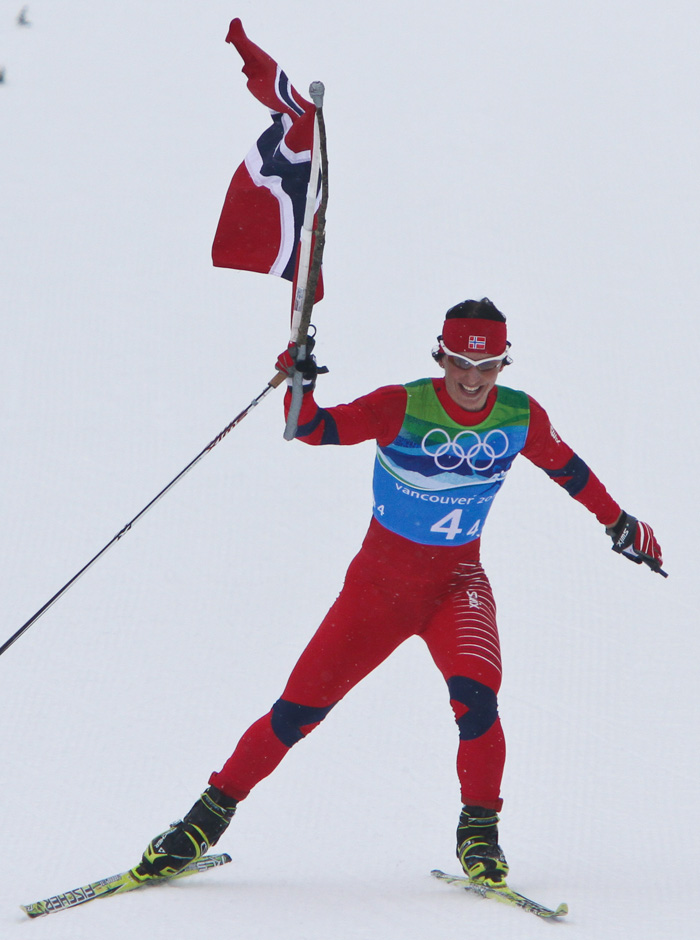
    Despite coming to a full stop before the finish to pick up a Norwegian flag—and skiing the last hundred meters without poles—Bjoergen still had the fastest time of her leg.

    After being dropped by Bjoergen, Valbusa, in second, was fading hard. The chase group behind her was gaining, led by a ferocious Saarinen. As the Finn V2-ed her way up the course’s big climbs, it didn’t seem like there was any way that Germany’s Claudia Nystad or Sweden’s Ida Ingemarsdotter could hold on, and indeed, Ingemarsdotter came off on the last lap, just as the trio caught and passed Valbusa. But Nystad hung tough, just like she did when she was battling Charlotte Kalla (SWE) for gold in the team sprint earlier this week.

    Nystad wasn’t struggling—on the contrary, she said she was comfortable sitting in and saving energy while Saarinen worked herself to the ground.

    Halfway through their leg, though, the German could sense that her rival was waning.

    “In the second lap, she wasn’t skiing the same…I had enough energy to go by,” Nystad said. “The next decision was when.”

    On one of the final corners, Saarinen was a little unsteady, and Nystad seized the opportunity, powering by to steal the silver and relegate the Finns to bronze.

    Anchored by Caitlin Compton, the U.S. trailed in for twelfth place. Like Brooks, Compton said that she wasn’t at her best today.
    “I struggled to find the speed and the snow for the glide—it just felt like one of those wet, sloppy days,” she said.

    The Americans finished 3:38 down, and the Canadian team of Dasha Gaiazova, Perianne Jones, Chandra Crawford, and Madeleine Williams was another minute back, in 14th.