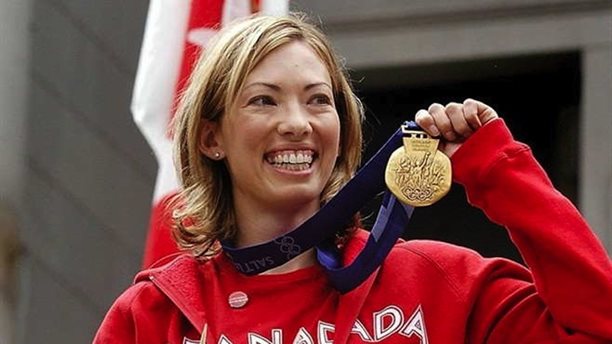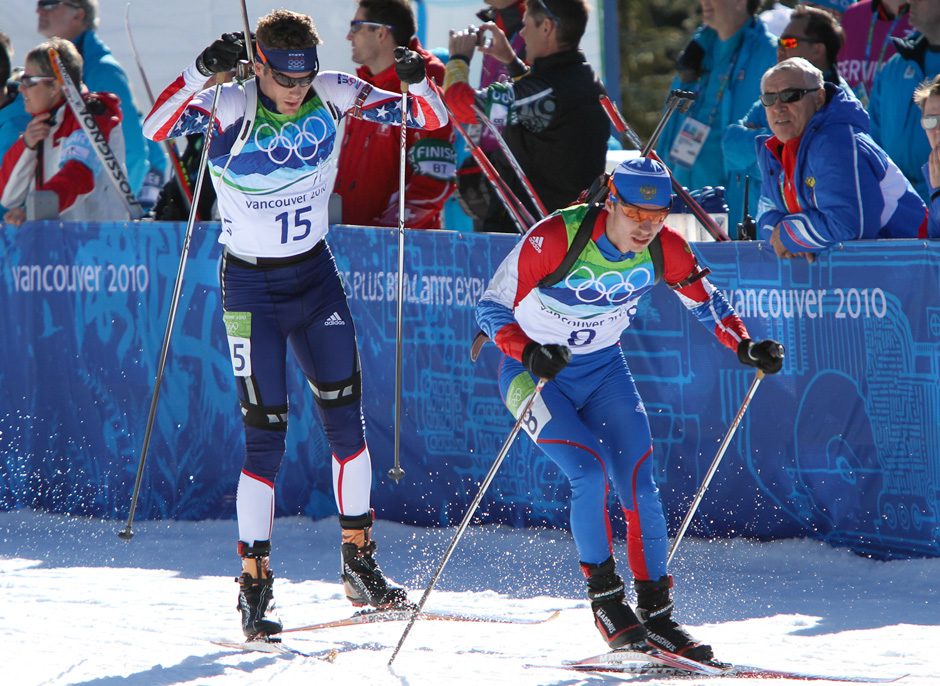
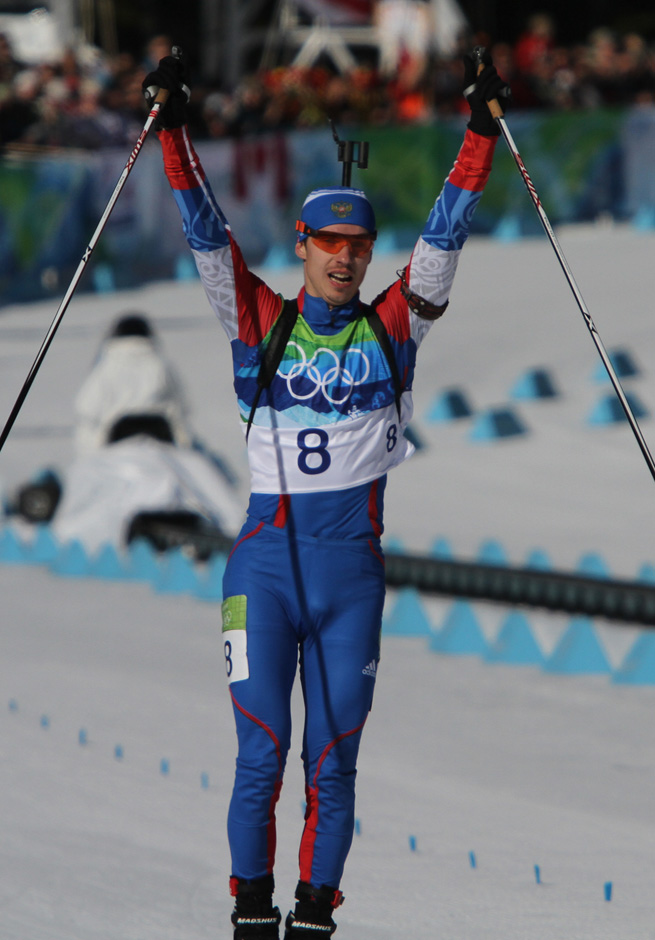
As the extent of the doping scandal enveloping Russian sports grows larger, competition at the 2010 Olympic Games in Vancouver, Canada, may also be tarnished.
More questions are also being raised about why the Moscow anti-doping laboratory was accredited to do testing during the 2014 Olympics despite warnings from a whistleblower that the government agencies were interfering with anti-doping work.
And criticism is growing of they way that the World Anti-Doping Agency (WADA) interacted with whistleblowers, and why the organization did not start an official investigation the claims originally brought to them in 2010 until five years later, in 2015.
Vancouver Olympic Results in Peril?
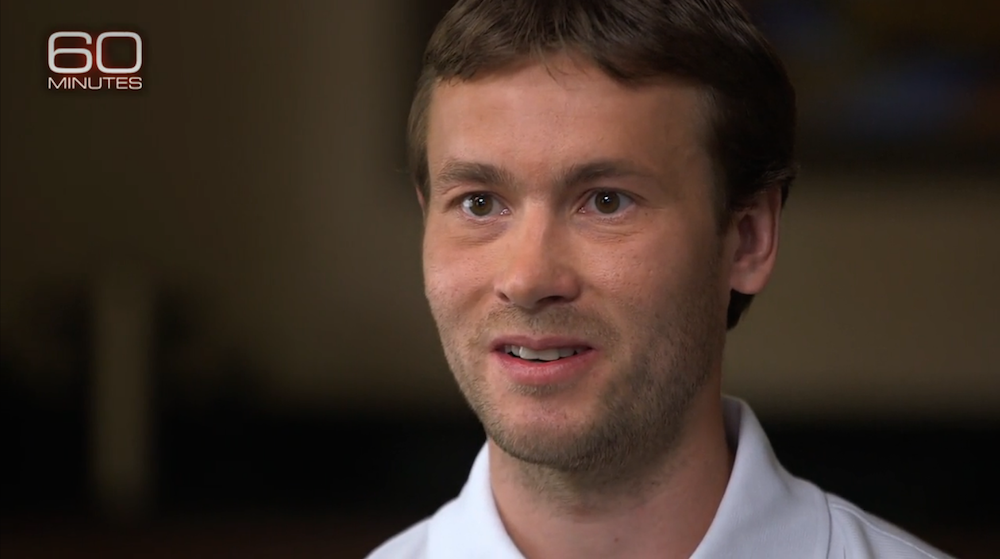
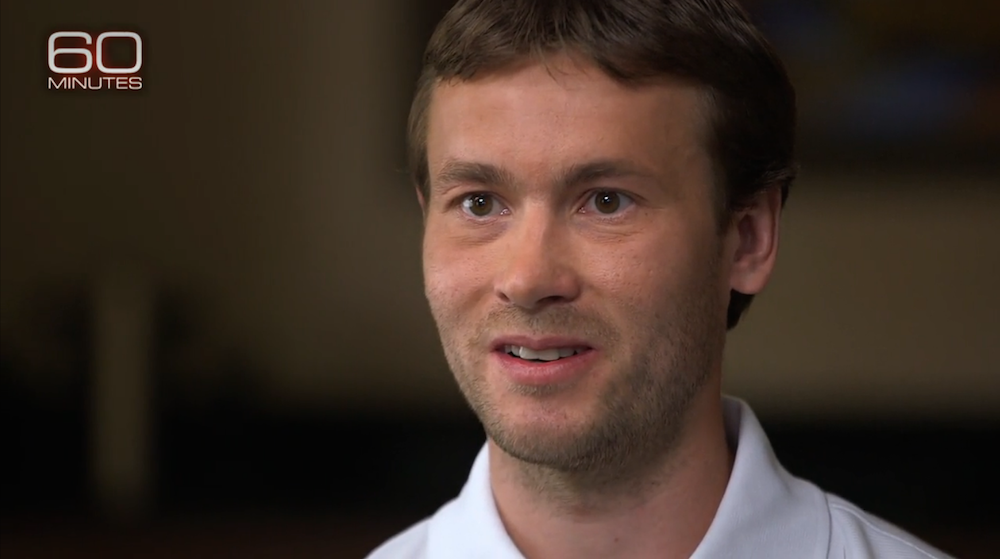
In an article in the Washington Post on Thursday, it was revealed that whistleblower Vitaliy Stepanov – at that time working for the Russian Anti-Doping Agency, RUSADA – initially met with WADA representatives at the 2010 Winter Olympic Games in Vancouver.
Stepanov has been in the news since his evidence was used in a German documentary in December 2014. But there has been little mention until now that he first acted in Vancouver, or that the information he brought was relevant to those Games.
Earlier this spring, another whistleblower had told the New York Times that staff at the anti-doping laboratory at the 2014 Olympics in Sochi, Russia, had manipulated samples belonging to many Russian athletes including 14 cross-country skiers.
That whistleblower, Grigoriy Rodchenkov, was the head of RUSADA’s testing laboratory in Moscow at the time. Because those Games were in Russia, state security officers of the FSB were able to infiltrate the anti-doping laboratory – an allegation which was also mentioned back in November in the WADA Independent Commission’s first report. Rodchenkov said that he colluded with the FSB agents to replace “dirty” samples with “clean” ones and help Russian athletes avoid doping bans.
The 2010 Olympics were not in Russia, and the anti-doping laboratory used at those Games was not, so far, alleged to have been corrupted in the same way.
Instead, with regards to Vancouver, Stepanov had a similar story to that which he presented regarding track and field from the very first German documentary: that star athletes were not tested enough or that their positive tests could be made to disappear.
He said that he had spoken to a colleague about a list of athletes whom RUSADA was forbidden to test in the leadup to the Games, effectively protecting them from anti-doping activities while Russia.
The Washington Post reported that this list had been sent to the laboratory from the government Ministry of Sport.
Vitaly Mutko, the Russian Minister of Sport, is now being personally dragged into the doping scandal. In a new documentary to air on Wednesday evening, ARD will allege that Mutko helped hide the positive test of a top Russian soccer player.
The Ministry of Sport said that it “firmly rejects the allegation that it has failed to take the necessary steps to reform its anti-doping operations”, according to The Guardian.
While a “no-test list” leading up to the 2010 Olympics would have protected athletes who were at home in Russia to a large extent, it would not have necessarily affected testing programs managed by international federations.
Indeed, Russian athletes were caught doping and suspended by the International Ski Federation and the International Biathlon Union in the leadup to the 2010 Olympics. That included Yuliya Tchepalova, a prior three-time Olympic gold medalist skier; 2006 Olympic gold medalist Evgeny Dementiev; biathlon World Champion Ekaterina Iourieva; and Olympic biathlon relay gold medalist Albina Akhatova.
What About Winter Sports?
In a recent press release, the International Olympic Committee (IOC) stated that its Executive Board had pledged more money and resources towards anti-doping investigations before the Summer Olympics take place in Rio de Janerio, Brazil, in August.
A subset of anti-doping samples from the 2012 and 2008 Summer Olympics have already been re-tested using new and improved methods. 31 new positive tests were revealed from the 2008 Olympics, and 23 from the 2012 Olympics.
Samples from the 2014 Olympics are reportedly in the midst of being analyzed, although no results have been reported. On Friday, Time magazine published a story based on a visit to the Moscow laboratory, reporting that the 9,000 or so samples from the Sochi Olympics are still sitting in refrigerators there. This would suggest that re-testing has not yet begun.
In addition, the reporters saw a refrigerator with what acting lab director Marina Dikunets described as 40 positive samples from Sochi. There was a chain around the fridge and a large padlock, the key to which she claimed nobody knew the location.
If true, this certainly suggests that there are more positive tests from the 2014 Games, as only eight athletes were kicked out of the Sochi Olympics for doping.
Neither the IOC nor WADA have mentioned the possibility of re-testing samples from the 2010 Games. Samples from the 2006 Olympics in Torino, Italy, meanwhile have been re-analyzed – but results are not discussed publicly.
There have long been rumors that Estonian cross-country skier Kristina Smigun was snagged by that re-testing program, with the Estonian Olympic Committee telling Norway’s TV2 that they had been notified of a positive test in 2013. However, the International Ski Federation, WADA, the Estonian Ski Federation, and the Estonian Anti-Doping Association all said that the matter was in the hands of the IOC, which has been silent on the issue other than to say that there were many lawyers involved.
Thus while the IOC is hustling to expedite proceedings against athletes who could potentially compete this summer in Rio de Janeiro, progress in finding and prosecuting past dopers is moving much more slowly for winter sports.
People are noticing.
“The IOC last month sped-up their release of results from the Beijing 2008 and London 2012 re-tests in order to detract from negative doping stories surrounding Sochi 2014,” Olympic sports commentator Nick Butler wrote on Inside The Games on Monday.
The Sochi Laboratory
Meanwhile, information from Stepanov is increasingly drawing into question why WADA approved the Sochi anti-doping laboratory – a satellite of the Moscow laboratory – to handle testing at the 2014 Olympics.
In November, 2013, WADA had put the Moscow laboratory (and by association its Sochi satellite) on probation.
The WADA Disciplinary Committee had recommended that the laboratory be suspended, with committee head Dick Pound saying that labwork and results done in Moscow were not “sufficiently reliable”. The recommendation for suspension was referred to John Fahey, at that time the president of WADA.
WADA leadership instead decided to effectively put the lab on probation, asking them to hire independent quality management experts immediately and to address the Disciplinary Committee’s concerns by April 1, at which point the Sochi Olympics had already happened. Thus the samples from the Olympics were tested by the Sochi laboratory after all.
In an interview in The Guardian last week, WADA Director General David Howman implied that he wanted to have the laboratory suspended, but that a committee decision – likely referring to WADA’s Executive Committee, not the Disciplinary Committee – prevented that.
“We thought the lab would lose its accreditation,” Howman said. “It didn’t.”
However, it’s now certain that even at that time, Stepanov – the whistleblower – had been speaking with WADA directly about shortcomings, government influence, and corruption in the Moscow laboratory.
There were other reasons that WADA likely wanted to keep the laboratory accredited for the Olympics, namely convenience.
“It is logistically a nightmare to think about either bringing in lab equipment from somewhere else to set up at the Games in Russia, or to export the samples,” said Max Cobb, the U.S. Biathlon Association CEO who served as the Technical Delegate for the Olympic biathlon competitions in Sochi. “I can imagine that neither one of those prospects was very appealing for the IOC or WADA. So there definitely was a rationale there.”
Still, Cobb questioned how that decision could have been taken given information that Stepanov had shared in three in-person meetings and hundred of emails to WADA at that point in time.
“Reading the recent media reports on WADA’s response to Stepanov’s whistleblowing, and the Daily Mail’s July 6, 2013 story on systematic doping and cover-ups by the Moscow lab, it’s difficult to understand how WADA’s committee did not decertify the lab at their fall meeting in 2013,” Cobb wrote in an email. “Did WADA inform the committee about Stepanov’s whistleblowing? If they did, it’s hard to understand the decision. If WADA didn’t, why [not]?”
Later, after the first Independent Commission report, WADA did revoke the Moscow laboratory’s accreditation. In late May of this year, they reinstated accreditation but only for one specific test, blood work for the athlete biological passport program.
More Questions About Whistleblowers
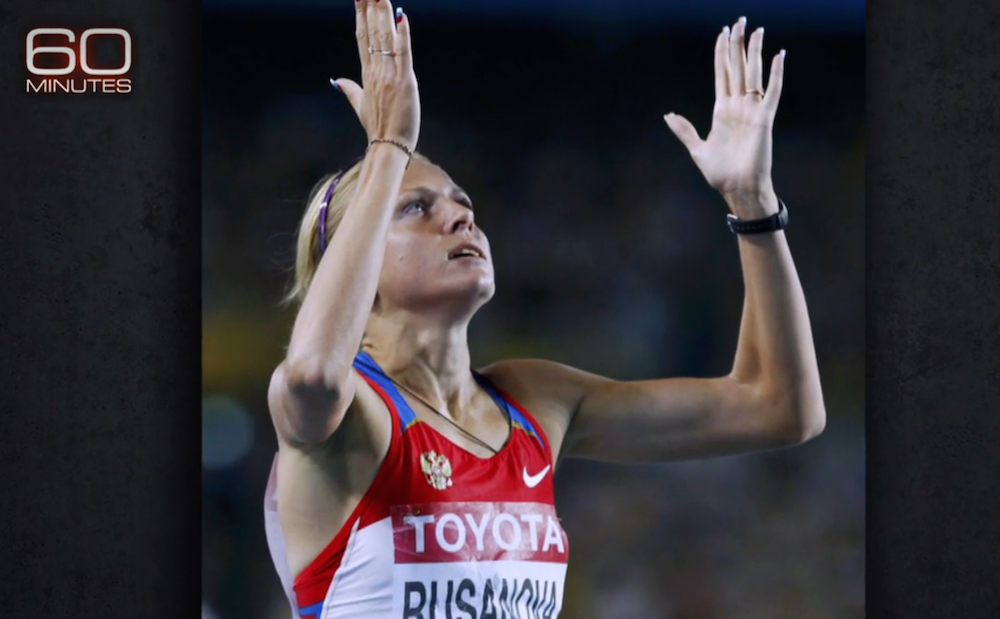
In general, WADA’s dealings with Stepanov and his wife, Yuliya – a former athlete who began recording dealings with coaches, doctors, and officials to help bring light to the doping crisis – are increasingly being brought into question.
After years of sending information to WADA and seeing no progress towards an investigation, Stepanov was beginning to wonder if his efforts had any point.
“I saw that my wife, everyone who was inside the Russian system, they were right,” he told the Washington Post. “There was no doping fighting. It is just politics.”
Eventually, WADA Chief Investigative Officer Jack Robertson referred Stepanov to German journalist Hajo Seppelt in 2014. Seppelt’s work focusing on Russian track and field led WADA to do its first investigative report, issued in November 2015.
Robertson was a former U.S. Drug Enforcement Agency investigator fighting Mexican drug cartels; when he arrived at WADA he helped in the Lance Armstrong investigation. He has since left WADA. Seppelt reported that although officially he resigned, he was actually fired.
Robertson hasn’t commented on the organization’s treatment of whistleblowers. In explaining why there was no investigation in the first five years when Stepanov was in contact with the agency, WADA officials have repeatedly stated that not until a new World Anti-Doping Code was put in place in 2015 did they have investigative powers.
Olivier Niggli will soon take over Director General duties from Howman and recently told Reuters that according to the 2009 Code, which was in place for five years, the agency’s hands were tied in terms of gathering information on their own.
“We could not get more evidence on our own and passing it onto the Russians was not an option,” said Niggli. “We were prudent, we were very careful about moving forward at a pace, that now might seem too slow.”
“In simple terms, it came down to the fact that we, as an organization, didn’t have any investigative powers,” WADA spokesman Ben Nichols told the Washington Post.
However, the 2009 Code does not seem to explicitly prohibit investigations; quite the opposite.
In section 20.7, “Roles and Responsibilies of WADA,” the 2009 Code states that WADA must “conduct Doping Controls as authorized by other Anti-Doping Organizations and to cooperate with relevant national and international organizations and agencies, including but not limited to, facilitating inquiries and investigations.”
That phrase, “not limited to”, suggests that if WADA were to see the need to investigate, it would have the authority to do so.
“WADA’s foot-dragging has raised serious questions about the agency’s willingness to do its job,” U.S. Anti-Doping Agency CEO Travis Tygart wrote in an editorial in the New York Times in May.
So what happens next? The IOC has set aside additional funding for anti-doping efforts leading up to Rio de Janeiro. And WADA as appointed Professor Richard McLaren to head its independent commission looking into the Sochi scandal.
“It’s obviously a good sign that more resources are being put toward ensuring clean and safe sport,” Cobb, the U.S. Biathlon Association CEO, said. “So that is needed. WADA is desperately underfunded. I’m not convinced that the underfunding was the problem when it comes to errors in judgment that were made around the naming of the Sochi lab. But more effort being made is very positive news.”