From the FasterSkier archive — posts syndicated from athletes’ and coaches’ own blogs between 2004 and 2012, kept online as published. Current coverage is at fasterskier.com.

Tag: WADA

  • Beckie Scott: The Olympic Champion Rebuilding Nordiq Canada

    Beckie Scott: The Olympic Champion Rebuilding Nordiq Canada

    This article was made possible through the generous support of our voluntary subscribers. If you value coverage like this, please support FasterSkier with a voluntary subscription.

    The five minutes Beckie Scott spent at the finish line in Soldier Hollow on February 15, 2002, lasted longer than most things in her career. She had crossed the line in what felt like third place. She thought she had a medal. She did not yet know.

    “It was actually a photo finish,” Scott said. “There were about five full minutes where we didn’t know. And then it was announced.”

    Her teammates, her coaches, and the wax technicians were already gathered in the pit, standing in the cold. The result came over the loudspeaker. Bronze. Canada. Beckie Scott.

    “We went ballistic,” she said. “It was magic. By that point, a lot of the coaches and wax technicians had made their way down to the pit. We were sort of standing there all waiting, and then when it was announced, it was just chaos. But in the best possible way.”

    The Canadian flag went up the pole in third position. The bronze, in the moment, was a win.

    “There was no disappointment. We celebrated that medal like it was platinum. This was the first medal for Canada. It was a long shot. It was absolutely incredible and powerful to stand on. In that moment, I got to celebrate that and have that day, and that feeling, and all the joy that comes with it.”

    What happened next is now part of cross-country skiing’s history. The two Russian skiers who finished ahead of her were caught for doping. The bronze turned to silver, then to gold. The flag that had risen for her in third place was wrong, but only because the truth had not yet caught up to the racing.

    It would catch up eventually, though, and so would Scott, now an Olympic champion.
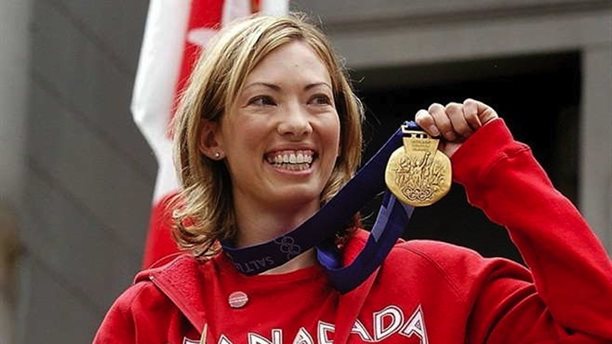
    Beckie Scott with the gold medal she was awarded at a ceremony in Vancouver in June 2004. A former Canadian cross-country skier, Scott finished third in the 5 k pursuit at the 2002 Olympics but was later awarded gold when the two women ahead of her were disqualified for using performance-enhancing drugs. (Photo: Cross-Country Canada)

    Scott grew up in Vermilion, Alberta, a rural community in the province’s northeastern region. Her parents were avid cross-country skiers and members of the local club. The trails started at the back of their property and ran into the provincial park. She could ski out the back door.

    When the Jackrabbit program — the Canadian equivalent of the Bill Koch Youth Ski League in the United States — rolled out across Canada in the early 1980s, her mother adopted it in Vermilion and Scott came up through it.

    “I developed just a real affinity and love for the sport, right from the start,” she said. “I was very inspired by the community. I really loved the community. I loved competing, and I just loved the idea that the harder you worked at something, the better you could do. So as a kid, it was all very exciting, and a lot of fun.”

    The Vermilion club is now more than 50 years old. The trails are well used. It remains a rare facility for a rural Alberta town.

    What was not rare, in the late 1990s, was the experience of a North American woman struggling on the World Cup. Scott was at the front of a group that did not yet exist. She was the best of her cohort, which was a difficult thing to be.

    “Even when we started on the World Cup, when I was there, the results were abysmal. It was very, very poor performances. The results were nowhere near successful, that’s for sure.”

    She remembers it now with a kind of dry humor. “I think it’s good that we had a good sense of humor, because there were a lot of days, if we weren’t laughing, we would have been crying. I do remember being completely devastated, often. Not just by being so far down the list, but by how far behind I was. That, to me, just seemed almost impossible. To see the gaps that I was seeing when I first started, in the era, I think we all know why the Russian women were skiing as fast as many of the men.”

    She did not know that at the time. She thought she was just a weak competitor.

    The way through, she said, started with a single word.

    “The first step was approaching it as a professional. Leveling up the approach to my career as a cross-country skier, as a professional. I don’t think I was doing that in the early days, and I didn’t even understand what that meant, necessarily. So that was a big shift. And then it was increasing training hours, getting serious about strength training, and technique. Taking every single piece of what a performance needs and addressing it separately, and eventually collectively. But the biggest shift for me was the mental, socio-emotional approach. Shifting the paradigm to being a professional.”

    She offers this as the lesson she most wants to pass on. The hardest part, she said, was maintaining belief.

    “In the early days, I just didn’t know at first if this was even possible, or what it was going to take, or how to get there. I had this incredibly aspirational ideal of what I wanted to be, and I was so far from that when I first started.”

    The first glimmer of light came at a World Cup in Val di Fiemme, Italy. She does not remember the exact year when we spoke, but it was in December of 1997. After seasons of trying to crack the top 30, she finished eighth.

    “That was it. That was the moment. It’s like, okay, 100 percent this can be done. And this isn’t going to be a one-off. It was totally exciting and inspiring, and I just wanted more.”
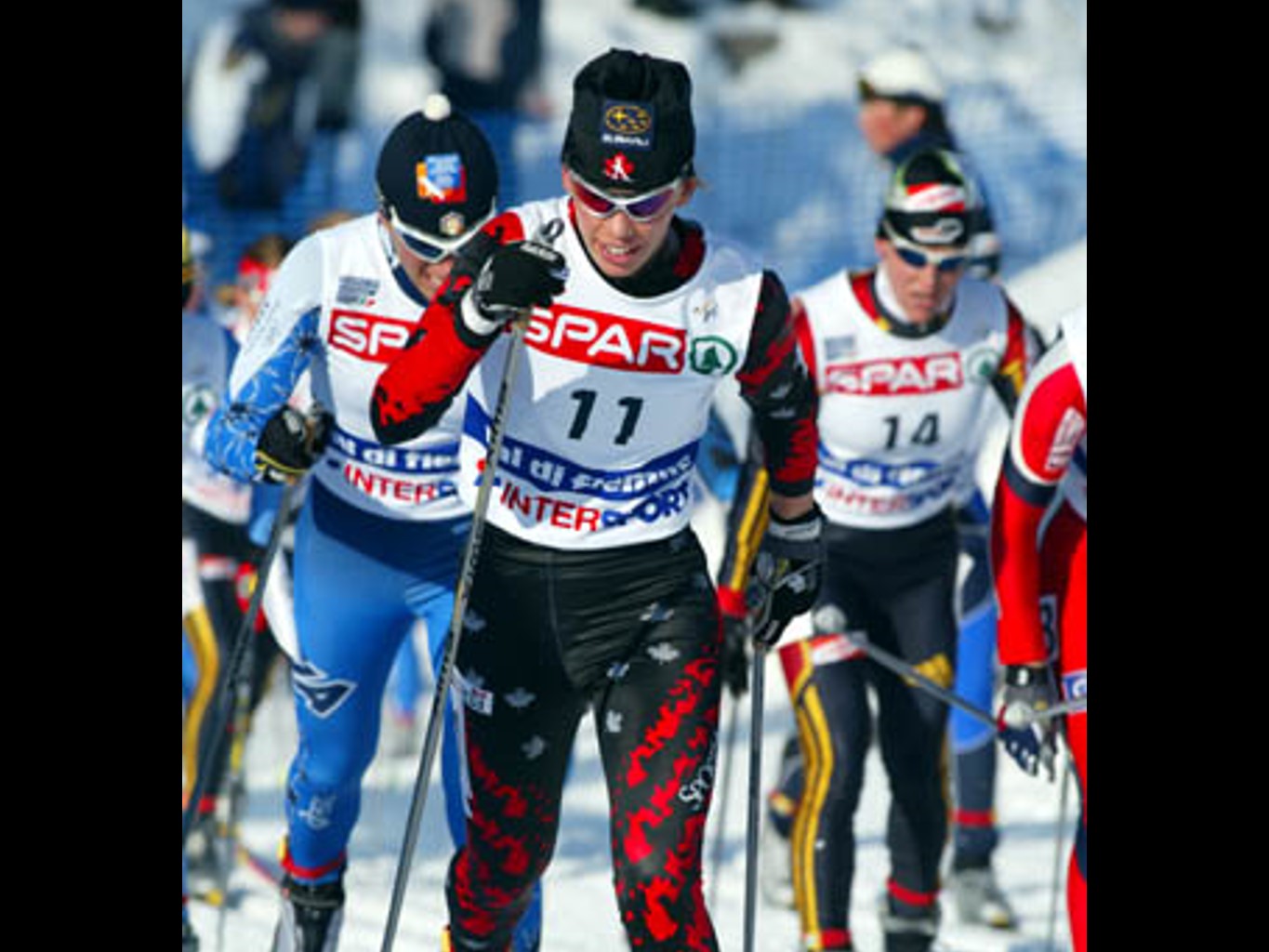
    Beckie Scott racing in Val di Fiemme (courtesy photo)

    By Salt Lake City, she was a contender. Not a sure thing, but a contender.

    “We had the belief, even years leading into Salt Lake City, that this was a golden opportunity that we shouldn’t and couldn’t pass up. We had spent our years living and training in Europe, constantly dealing with jet lag, living in hotels, foreign language, foreign food. And this was a magical opportunity on our doorstep to effectively race at home.”

    The 2002 women’s pursuit was a five-kilometer classic followed an hour and a half later by a five-kilometer skate. The format played to her strengths.

    “I could do both techniques well. There’s this powerful energy that’s created when you have a home crowd behind you. It really does change things for athletes in a way that’s hard to describe. There’s an uplift that’s just incredibly powerful. I felt it. I remember it to this day, twenty years later.”

    Then came the five minutes of waiting, and the chaos in the pit, and the medal that was, eventually, the right color.

    The irony of becoming the public face of clean sport in cross-country skiing was not lost on her. She had been vocal before Salt Lake, after most of the Finnish team was caught for doping at the 2001 World Championships in Lahti.

    “It was deeply frustrating to know that we were doing everything we could do to compete at the highest level in this sport, and we were constantly being thwarted by athletes who were using performance-enhancing drugs. That was incredibly aggravating. And it was shared. Not just by me, but my coaches, technicians, fellow teammates. This was not just unique to me.”

    When the Russians were caught in Salt Lake, her first reaction was surprise.

    “It was an open secret how much performance-enhancing drug use was going on in our sport, in particular by the Russian team. I was surprised because I did not have much belief, faith, or confidence in the anti-doping systems at that time. When I learned later about what actually happened at Salt Lake City to have those tests revealed as positive during those games, it was a remarkable series of events.”

    That path eventually led her to the World Anti-Doping Agency and a long career in sport integrity work.
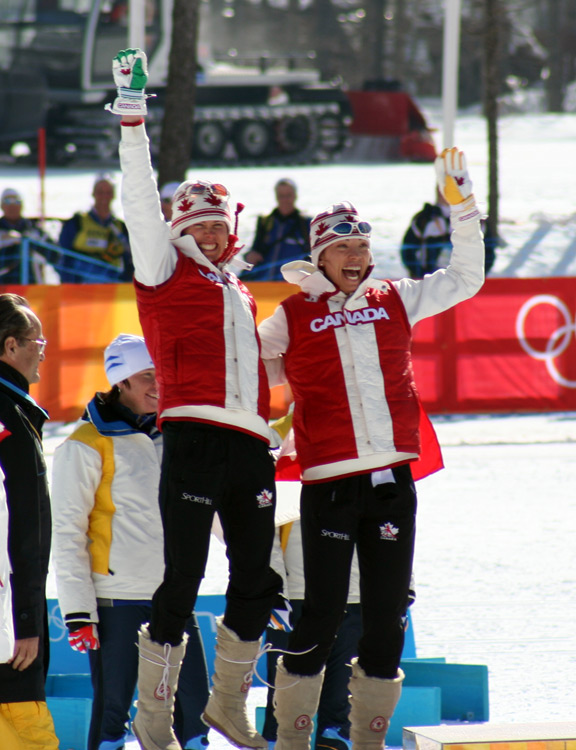
    Canada’s Beckie Scott (right) and Sara Rennner receiving their silver medal in the team sprint at the 2006 Olympics in Torino, Italy. That was two years after Scott belatedly received the gold medal she won at the 2002 Olympics, after fighting long and hard to earn it when the first two finishers were found to be doping. (Photo: courtesy photo)

    In 2006, in Turin, she won another medal. This one is remembered less for who lost it and more for who gave it.

    In the women’s team sprint, her teammate Sara Renner broke a pole. A Norwegian coach, Bjørnar Håkensmoen, standing on the side of the course handed Renner one. Renner finished the leg. Canada finished second. Norway dropped to fourth.

    “It really lived long in the hearts of people, I think, because of the sportsmanship element,” Scott said. “The Norwegian coach giving her the pole, which moved the Norwegians back to fourth and gave us the opportunity to have a silver that day. That piece was so encouraging and heartening, and really in the spirit of what we like to think the Olympics should be about.”

    The other piece, for her, was personal. The team sprint silver was the last medal of her career, won with Renner, with whom she had been racing for eleven years.

    “That was the culmination of 11 years of traveling and racing World Cups, World Championships, and Olympic Games together. And then we could stand on the podium together, in what would be the last year of my career. As teammates, but also very good friends, lifelong friends. We’re friends today. There was a dual component to that experience. It was, I think, lovely and inspiring in a lot of different ways.”
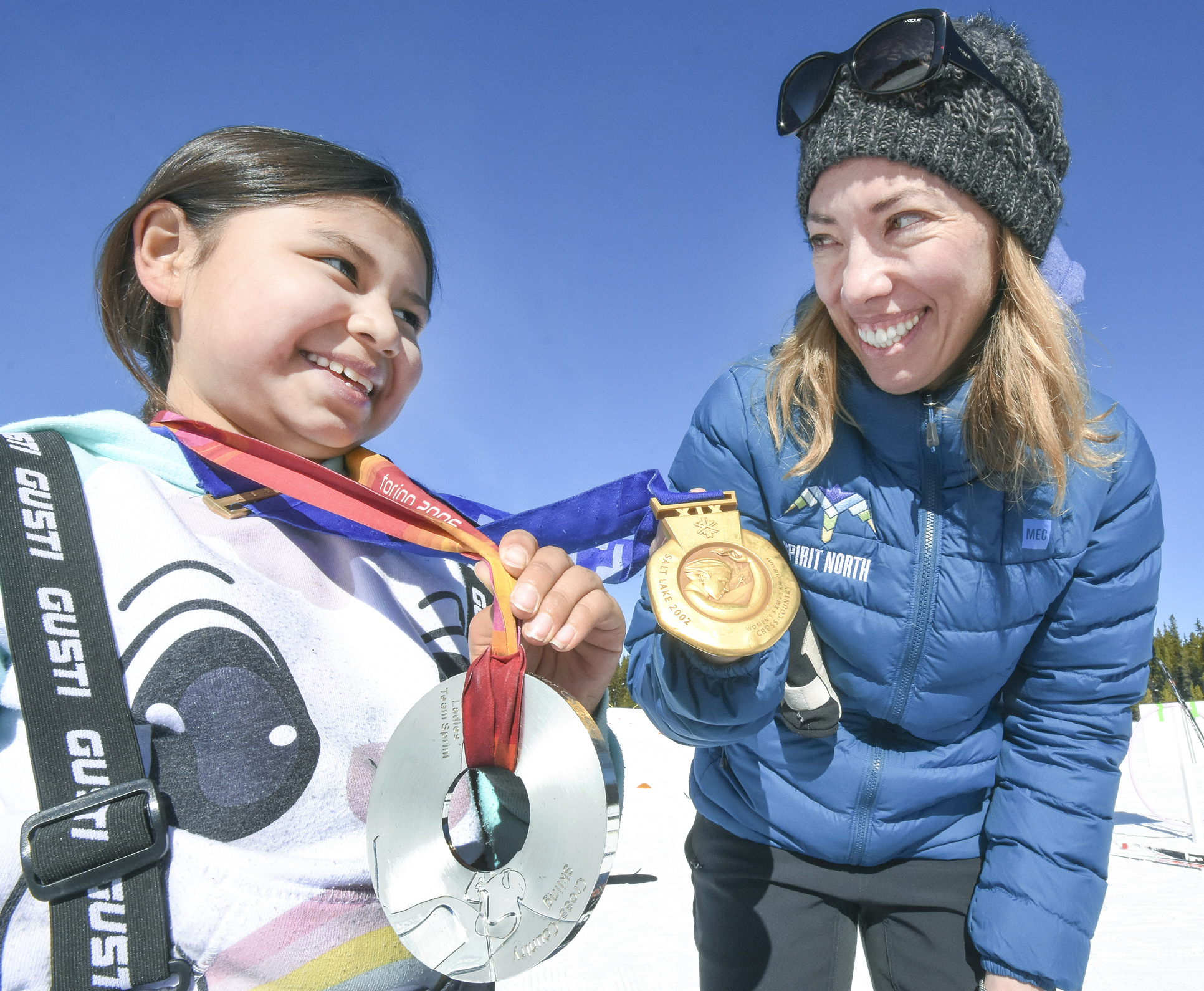
    Beckie Scott shares her silver and gold Olympic medals with a Spirit North participant. (Photo: Spirit North)

    When she retired from racing, she was invited to be an ambassador for a Learn to Ski program sponsored by an oil and gas company in northern Alberta. The program ran in indigenous communities. She would visit a community five or ten times a year, ski with the kids, show the medals, give a talk, then go home.

    She kept going home, and she kept thinking about what she had seen.

    “I began to notice many things. First, the disparity in the socioeconomic conditions of how indigenous people in this country live versus non-indigenous people. The lack of opportunity that kids were really able to access for sport and play. And then just the paradox of my own life and the opportunities that I had through sport, and my own kids were having through sport.”

    It struck her, she said, as deeply unfair.

    “An entire population of people was effectively kept out of that arena, and for no valid reason that I could see or think of.”

    The Truth and Reconciliation Commission published its final report in 2015. Among its 94 calls to action were several related to sport. Scott read the report. She had, she said, a hard time just letting things be.

    “I have a hard time just turning away and saying, not my problem. So I started a nonprofit.”

    She started with four communities in northern Alberta. The organization, Spirit North, is now national. It operates in 160 communities across Canada. It serves roughly 20,000 kids a year. It is among the largest sport for development organizations in the country.

    “The lesson there is that you can make a difference. I didn’t know anything about starting a nonprofit. I didn’t even really know much about indigenous culture and ways of being and knowing. But being open to learning, being super curious, and being driven by a vision of what change could look like, and meaningful action. That resulted in that organization.”

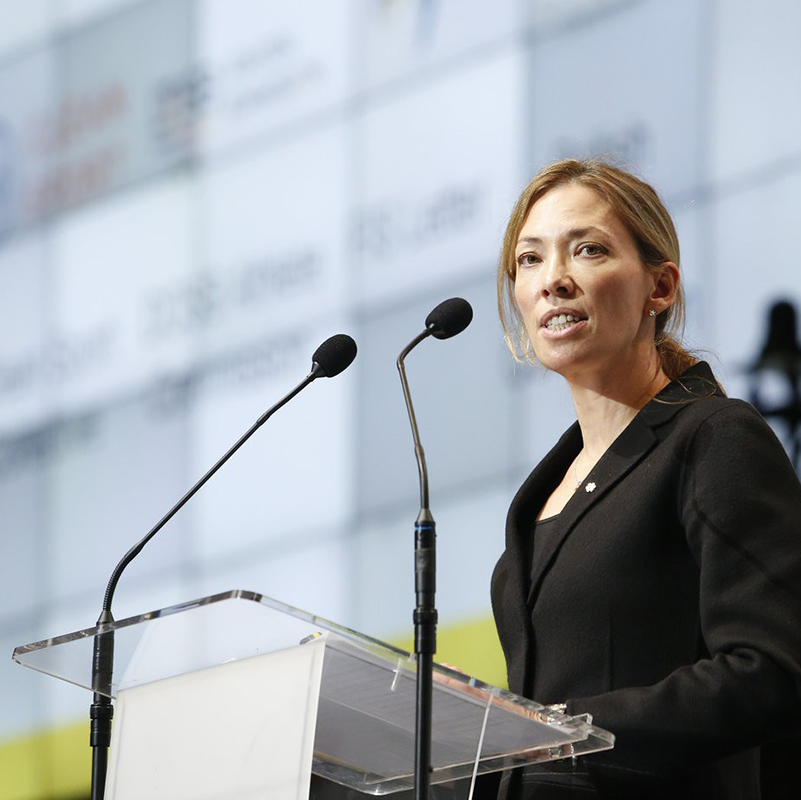
    Beckie Scott gives a speech while she served as the Chair of the World Anti-Doping Agency (WADA) Athlete Committee. She also served on the Compliance Review Committee. (Photo: courtesy photo)

    In March of 2025, Scott started a new job as CEO of Nordiq Canada. The skills, she said, transfer. Spirit North was a nonprofit. So is Nordiq Canada. There is a board, staff management, fundraising, finance, HR, and strategy.

    “A big part of our job at Spirit North was setting the strategy. A big part of our work here at Nordiq Canada is setting the strategy. Putting the activities together. How are we going to get to where we want to go. Many, many parallels.”

    The job she walked into was harder than the parallels suggest. The federal government had frozen its core contributions to National Sport Organizations for 20 years. The core funding that Nordiq Canada received from Sport Canada when she started last year was the same dollar figure as when she was racing two decades earlier.

    “Think about that in terms of the cost of living, inflation, and the rising demands on an NSO. It really crippled the organization in terms of capacity and what it was able to deliver.”

    She brought her CFO, Sian Bolton, from Spirit North with her. They streamlined operations. She went out and raised money.

    “I just started knocking on doors and pounding the pavement, trying to raise money for the organization. The response in the community has been encouraging. We signed on a number of new donors and had some major gift contributions. People recognize that we have a lot of talent right now in our programs in this moment. And if we don’t get behind them, we’re going to lose them. People heard that message loud and clear.”

    Then, after Milano, the federal government announced a $755 million investment in sport over the next five years.

    “It’s transformational. We are going to benefit from that. I am very optimistic about our future financial state because of the government’s recent announcement and because of our fundraising success.”

    The total budget at Nordiq Canada now sits just under $5 million, covering both the Olympic and Paralympic programs. About $2 million of that is core federal funding. Scott would like to add another $1.5 to $2 million.

    She conducted a ‘listening tour’ after taking the role. The thing she heard most often from athletes was a lack of trust in the high-performance system.

    “As an athlete, you want to believe more than anything that your NSO has got their act together and knows what they’re doing when it comes to high performance. That was one of the biggest areas that needed to be addressed.”

    She restructured the leadership team quickly. “It was time to make a fresh start. The organization needed to be right-sized for the budget and the financial situation we were in. But we also needed the right skill sets and the right roles.”

    She has, she said, four near-term goals. Podium results. Financial stability. Restoring trust and credibility. Unifying the community.

    “It’s a bit fractured,” she said of Canadian skiing now. “I think we can do a much better job of pulling together, remembering why we’re all here. Unifying as a nation behind our athletes and our programs and our development and our organization.”

    The fifth goal, on a longer arc, is coaching development.

    “I see a huge opportunity for closing the gap in coaching in this country. I look to the U.S. and what the U.S. has done to generate so many really highly qualified coaches, and not bringing them over from Europe all the time. For me, for the next four to five years, coaching development is going to be a big focus.”

    Beckie Scott and Justin Wadsworth pose with their family. (Photo: courtesy photo)

    Scott is married to Justin Wadsworth, who spent six years as head coach and high-performance director for Biathlon Canada and is now consulting for U.S. Biathlon. They try not to talk about work over dinner.

    “It’s hard. We’re living it every day, and our kids are both in it. But dinners are generally pretty lighthearted. We don’t avoid talking about work, but we certainly don’t do it all the time.”

    She is writing her report for the upcoming Nordiq Canada AGM. When she looks back on her first year, she said, it has been a remarkable one.

    “It was a lot of transformational change. New leadership in finance, high performance, events, athlete support. But at the same time, we managed to do that without destabilizing our teams. Our athlete performances continued to rise at the Olympic Games, at the Paralympic Games, at the World Juniors. We have so much to celebrate and be proud of when we think about this last year in terms of performance. The organization is on solid ground, and it’s really full steam ahead.”

    It could seem strange that the woman who became the first North American to win an Olympic gold medal in cross-country skiing now spends her days raising money, restructuring boards, and writing AGM reports. Alternatively, maybe the trail Scott got on out of her backyard in Vermilion had been leading her all along to this moment, and she has proven she is ready for it.


    Help Support Our Coverage!

    If you value the thoughtful work and access FasterSkier provides, please consider becoming a Voluntary Subscriber. Your support directly fuels our work to cover the people, places, and moments that make our sport special.

    Join the FasterSkier community!


  • Old Scandals, New Suspicions—Russian Athletes Back in the Olympics

    Old Scandals, New Suspicions—Russian Athletes Back in the Olympics

    Savelii Korostelev is one of three Individual Neutral Athletes (AINs) currently competing in FIS World Cup events with the intention of qualifying for the Olympic Winter Games in Milano-Cortina. (Photo: Modica/NordicFocus)

    Russian and Belarusian cross-country skiers are back in the mix to qualify for the Olympic Winter Games in 2026. Does anyone else sense an elephant in the room? And are we all talking about the same elephant?

    The recently overturned FIS ban on Russian and Belarusian athletes was about Russia’s war on Ukraine. Not every sport in the athletic world banned the involvement of those athletes, but the International Ski Federation (FIS) was quick and decisive in its initial rulings: no Russians, no Belarusians, not as long as this invasion lasts. Now—in accordance with the wishes of the IOC—FIS has been compelled to open the entries for FIS sanctioned events to allow the participation of Individual Neutral Athletes (AINs) from both Russia and Belarus. Thus far, the total number of athletes taking advantage of this opportunity (and/or qualifying for this opportunity) in World Cup cross-country events has been three. And while those three possess impressive athletic pedigrees, they have yet to be factors in events they’ve entered. The Russians returned, the sky hasn’t fallen, the war in Ukraine goes on. People remain in a huff over their participation, but I don’t think it’s the war in Ukraine that we’re all mad about . . .

    Sure, there’s a military/imperial elephant in the room—Russian athletes returning to international competition even as the war in Ukraine goes on. But it’s the age-old doping elephant that occupies a larger space in our metaphorical room. By that we mean that no one could seriously trust the Russian ski team, the Russian coaches, the Russian officials, the Russian government. These are organizations and individuals who have spent decades cheating on a large and systematically organized scale. FasterSkier has repeatedly reported the facts pertaining to the FIS banning of Russian and Belarusian athletes. We have also reported on our interpretation of language in both FIS and IOC charter documents that seem to imply (quite plainly and with very little wiggle room) that athletes should never be banned from competition for political reasons. The Court of Arbitration for Sport agreed with that assessment (and with the appeal filed by Russian governing bodies and athletes). So, the Russians (some Russians) are back in.

    Russian Anti-Doping Agency (RUSADA) (Photo: Wikipedia)
    Now What?

    Skiers from Russia have not been allowed to compete internationally since the spring of 2022 (when Russia invaded Ukraine). Since that time, those athletes have continued to train, to prepare, and to compete . . . though they have not done so under the scrutiny of unbiased international watchdog groups like the World Anti-Doping Agency (WADA). True, the Russian athletes have been subjected to occasional drug testing, but only by the same organization that had supervised and undertaken the drug testing during the infamous Olympic Winter Games in Sochi where so many Russian athletes, coaches, and officials had been found to have been involved in an outrageous top-down doping scandal. In investigations that followed those Sochi Olympics, it was revealed that Russian administrators, Russian coaches, the Russian Anti-Doping Agency (RUSADA), and the FSB (Russian Secret/State Police) were involved in a sophisticated (though brutally simple) scheme to evade IOC scrutiny and avoid detection of performance enhancing drugs that had been systematically provided to—and utilized by—Russian athletes. We remember the scandal where Russian Olympic organizers had constructed a secret room adjacent to the space in which urine samples were stored after being collected from athletes (and prior to testing). A hole in the wall allowed a Russian collaborator to pass vials of Russian athletes’ urine through to the secret room where they were opened, emptied, rinsed, replaced with “clean” urine, and re-sealed (a neat trick, considering the considerable trouble IOC had gone through to create tamper-proof lids). It was an audacious and brazen plan—one that started at the top of Russian sport governing bodies and the Russian government. The end result was that 43 Russian athletes were banned from Olympic competition for life, while 13 of those also saw their Olympic medals stripped. Additional suspensions and sanctions followed, including Russia being banned (temporarily, with conditions) from further Olympic competition.

    Well, today our sport enters a situation in which Russian cross-country skiers have been absent from World Cup, World Championships, and all other FIS sanctioned international competitions since 2022. And the Russian program is one that has been known to institute, organize, supervise, and undertake illicit team-wide doping efforts in the past. The organization that took advantage of the outrageous doping scheme during the 2014 Olympics in Sochi is the very same organization that runs Russian cross-country skiing today. Isn’t there a reason for the rest of the constantly-tested field to be justifiably concerned?

    This is a national sport program that’s been so dirty for so very long . . . why should they be trusted now? Wait, you say; those athletes will be tested whenever they compete in FIS and/or Olympic competitions, right? If they’re doping, they’ll be caught, won’t they? That depends . . .

    Dariya Nepryaeva (AIN) is one of the athletes from Russia who—justly or unjustly—will have her name mentioned whenever discussion of Russian participation in the Olympics arises. (Photo: Modica/NordicFocus)
    Doping in the Long Run

    It’s been suggested that there are long-term benefits to the use of certain performance enhancing drugs, benefits that continue to enhance athletic performances long after the use of those supplements has been discontinued. So here’s my thing: If there were an evil-empire sport-colossus intent on dominating endurance events in some future Olympics, their best strategy would seem to be withdrawing their athletes from sufficiently-monitored international competitions for a few seasons, pumping them up with all manner of  otherwise-restricted PED’s (in a closed environment free of drug testing and organizational scrutiny), weaning those athletes off the drugs early enough to have all remnants flushed from athletes’ systems (thereby avoiding detection in subsequent testing), and turning those athletes loose on the competition at the highest-profile moment. That way, those athletes could benefit from artificially-enhanced athletic qualities while still passing as “clean.” That’s how a set of well-organized cheaters could get it done, anyway.

    Here’s what I think I believe:

    • Performance-enhancing drugs work—they make athletes faster, stronger, and better able to endure.
    • Certain performance-enhancing drugs have long-term effects that continue providing performance benefits even after athletes stop using them.
    • Evidence of certain performance-enhancing drugs can be thoroughly flushed from an athlete’s system, rendering undetectable any earlier use of those drugs.

    What we’ve seen in the past has been state-sponsored cheating from the sport organizations of nations that so value the propaganda benefits of Olympic success. It happened in the Olympics of Sochi, and it had happened during many seasons prior. The governing bodies who were caught red-handed are still the governing bodies administering Russian Olympic sport, and the government of Russia is still the same one (still under the same leader) that green-lighted the whole scheme in the first place. What, really, has changed? And why should the rest of the world believe that it won’t happen again?

    If Russia was so systematic and unapologetic in their cheating before—and if their athletes are still allowed to return to Olympic competition—why should we believe they aren’t cheating again? There’s plenty of pressure from the Russian government to produce results following Russia’s return from exile, and no one has been watching what they do behind the curtain. I mean, if I were running a state-sponsored athletic system that had been banned from competing internationally for a few years—and if the drug-testing to be conducted during that ban was the responsibility of my national governing body and my government—wouldn’t I think about cheating again? After all, many of the performance-enhancing drugs that I might administer to our top athletes would have made them bigger, stronger, faster . . . while any evidence of their use would have been flushed cleanly from their systems long before any independent testing agency arrived to test the athletes. If FIS threw us out of competitions for a while (and no one was watching what we did during that enforced hiatus), why not use the un-monitored time to make ourselves better? What better way to exact our revenge on FIS, on the IOC, on the entire Kingdom of Norway when we return?

    Savelii Korostelev (AIN) competing in the recent FIS World Cup 10km in Davos. (Photo: Vanzetta/NordicFocus)
    Preferential Treatment?

    What makes the current Russian issue even harder to swallow is that Russian athletes seem to be receiving preferential treatment, though some bending of WADA’s rules might not be entirely unexpected given the looming deadline of FIS/Olympic qualifying events. The “Anti-Doping Agency Management System” (ADAMS) employed by WADA creates a set of automated records pertaining to athlete drug testing (especially with regard to the whereabouts of athletes that must be regularly recorded and updated for the purpose of unannounced drug testing). One of the stipulations of the ADAMS system is that no athlete may be re-admitted to competition until at least six months of ADAMS data (and subsequent drug testing) is made available. This standard stymied the recent comeback efforts of notable Norwegian athletes, Marit Bjoergen and Petter Northug, who both hoped to exit retirement to enter mass start marathon events. Those particular events being sanctioned by FIS would have required that Bjoergen’s and Northug’s un-retirements be preceded by the six-month ADAMS standard. Neither skier had announced their intentions to WADA early enough, so they couldn’t be allowed to enter those competitions. Bummer for them, but rules are rules . . .

    Except when they’re not . . . unlike the standards that were applied to Northug and Bjoergen, Russian athletes (those returning to FIS and IOC competitions as AINs) received an almost immediate pass-through from WADA. Their return to competition was preceded by only a few weeks of notice, with their prior drug testing protocols having been conducted by organizations in Russia (the same organizations that organized the comprehensive drug cheating scheme in Sochi). FIS, you’ll forgive us if we harbor certain suspicions . . .

    Much of the attention in the sport of Nordic Skiing will be paid to the prospects and the results of former Junior World Champion, Saveliy Korostelev, who spent the last two season skiing through the entire Russian field in all domestic races while also using nearly every event to beat up on former Olympic champion, Alexander Bolshunov. But even Korostelev might meet with additional scrutiny as he approaches Milano-Cortina. Recent articles describe Korostelev’s connections to the Russian military (through his mother, an officer in the Russian military and, herself, a medalist in Vancouver, 2010), a distinction that could render him ineligible for AIN status.

    Keep your eyes open for elephants in the room . . .

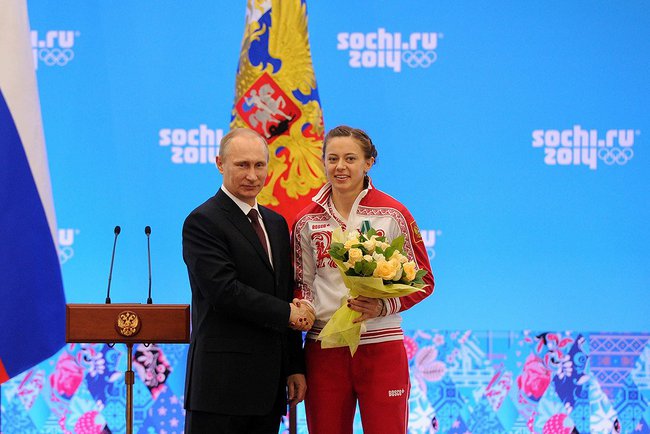
    Biathlete Olga Vilukhina with Russian President Vladimir Putin on February 24, 2014, after the closing of the 2014 Olympics in Sochi. Vilukhina was one of many Russian athletes whose Socki results were nullified, whose medals were stripped, and who received a lifetime ban from Olympic competition (though parts of those penalties were later overturned after CAS review). (Photo: www.kremlin.ru/Creative Commons)
  • Estonia’s Andrus Veerpalu Guilty of Supporting Doping: Banned Two Years by FIS

    Estonia’s Andrus Veerpalu Guilty of Supporting Doping: Banned Two Years by FIS


    Andrus Veerpalu racing on the World Cup during the 2010-2011 season.

    On April 14, the International Ski Federation (FIS) announced former Estonian cross-country skier Andrus Veerpalu was found guilty by the CAS Anti-Doping Division. Veerpalu was involved with “Operation Aderlass”, a blood doping scheme run by Dr. Marc Schmidt in Germany. Veerpalu’s penalty is a two-year ban from FIS sanctioned events ending on March 17, 2023.

    Now retired from skiing, the fifty-year-old Veerpalu in recent years has served as a coach for team “Haanja” in Estonia. According to FIS, the ruling states Veerpalu violated Article 2.9 of the 2016 FIS Anti-Doping Rules which is defined as, “Assisting, encouraging, aiding, abetting, conspiring, covering up or any other type of intentional complicity involving an anti-doping rule violation, Attempted anti-doping rule violation or violation of Article 10.12.1 by another person.”

    (No official CAS ruling regarding the current Veerpalu case is available on the CAS website. We will link to the ruling when it becomes available.)

    In light of the FIS announcement, ERR news in Estonian reported today that Veerpalu has been stripped of two prestigious national awards. Since his 2002 Olympic gold in the 15 k classic, Veerpalu has been revered as a national hero.

    Veerpalu is a two-time Olympic champion. Along with his 2002 Olymoic win, he won another gold in 2006. He also won a silver medal in the 2002 Olympic 50 k and two World Championship gold medals. Kris Freeman, an American cross-country skier, lost out on a medal in the 2009 championship 15 k classic, a race won by Veerpalu.

    This is not the first time Veerpalu’s name has been associated with doping. In 2013, he was acquitted on a technicality after an adverse analytical finding (AAF) in both his A and B samples for recombinant human growth hormone (rhGH) back in 2011.

    Team “Hannja” athletes also serving doping penalties for their involvement in “Operation Aderlass” include Karel Tammjärv, Algo Kärp, Kazakhstan’s Alexey Poltoranin, coach Mati Alaver, and Veerpalu’s son, Andreas Veerpalu.

    The medical mastermind of “Operation Aderlass”, Dr. Schmidt is currently serving a nearly five-year prison sentence after being found guilty of breaking Germany’s strict anti-doping laws.

    “Operation Aderlass” made international news back when at the 2019 Seefeld, Austria World Championships several athletes, including Austria’s Dominik Baldauf and Maz Hauke, were arrested for “blood doping”.

    We are linking two articles from the FasterSkier archives. One explores Estonian cross-country skiing, the other examines the elder Veerpalu’s first doping case from a 2011 perspective.

  • Full CAS Ruling for WADA v. RUSADA Released

    Full CAS Ruling for WADA v. RUSADA Released

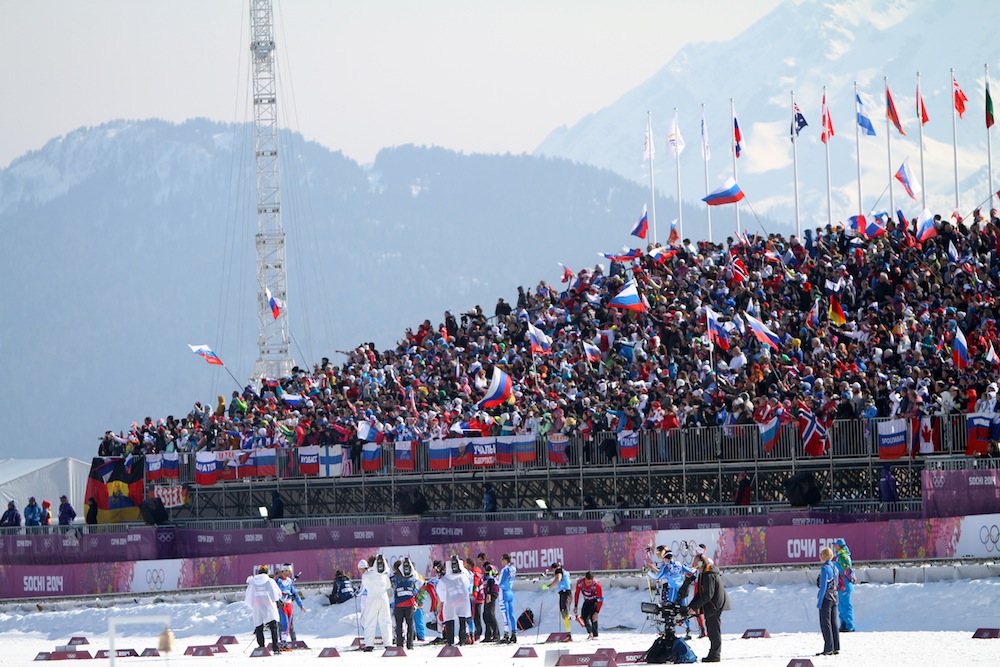
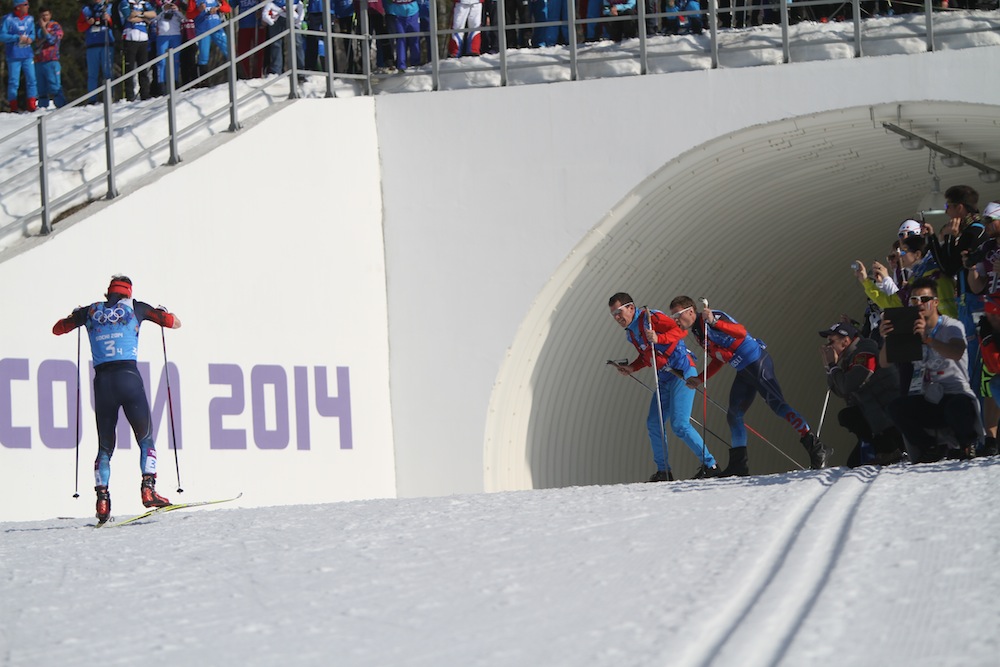
    Men’s relay day at the Laura Cross-Country Ski Center on Sunday at the Olympics in Sochi, Russia.

    This week, the Court of Arbitration for Sport released its full ruling for the case: World Anti-Doping Agency v. Russian Anti-Doping Agency (RUSADA).

    Last month, CAS made a binding decision on the case that received widespread condemnation from clean sport advocates and applause from within much of the Russian sports community. The cliff notes version of the Dec. 17 ruling halved the penalty from four to two years for Russia. WADA had sought a four-year ban from major international competitions (Olympics and World Championships for Russia).

    In clear language, CAS found RUSADA to have manipulated data handed over to WADA as part of its conditional reinstatement as a compliant anti-doping agency. CAS found the data handed over to be manipulated. That much was clear. CAS also made crystal clear back in December that RUSADA had violated the terms of its reinstatement. CAS still ruled to halve the penalty. At the time, no detailed reasoning regarding the reduced penalty was forthcoming.

    Russian athletes can participate in the Olympics and World Championships in the next two years, yet wearing uniforms with a modified logo. If the word “Russia” appears on the uniform, then the words “neutral athlete” must also be displayed in English.

    Hand-slap is one way of describing global headlines regarding the release of the full ruling.

    The New York Times: Three Judges Endorsed Penalties for Russia’s Doping. Then They Cut the Ban in Half.

    The Telegraph: Backlash against CAS as full ruling on halving of Russia ban published.

    AP News: ‘Cover up of cover-up’ still led to downsized Russian ban.

    WADA released a statement on January 14 commenting on the full release of the CAS decision – WADA’s disappointment was palpable.

    “The full CAS reasoned decision shows clearly that WADA successfully proved its case and exposed the Russian authorities’ brazen attempts to manipulate data from the Moscow Laboratory in an effort to thwart our investigations,” said WADA President Witold Bańka. “We are satisfied that this landmark decision also upholds the strong investigative and legal framework put in place by WADA in recent years that underpins the anti-doping system. In particular, the investigative powers WADA was belatedly granted and the introduction of the Compliance Standard in 2018 have proven to be game changers.

    “We remain disappointed, however, that CAS did not agree with all of our proposed consequences, which we felt were proportionate to the egregious nature of the offences committed by the Russian authorities as they sought to cover up the details of their institutionalized doping scheme.”

    In its statement, WADA also posted a legal note which details it’s course of action since the Sochi-doping affair became public, and the recent CAS decision.

    The CAS ruling is a dense 186-page document. However, WADA and others have pulled key portions of the document to illustrate how egregious CAS found RUSADA actions regarding the Moscow Laboratory data.

    • “The Panel finds that, prior to the Moscow Data being retrieved by WADA in January 2019, and during its retrieval, it was subjected to deliberate, sophisticated and brazen alterations, amendments and deletions. Those alterations, amendments and deletions were intentionally carried out in order to remove or obfuscate evidence of improper activities carried out by the Moscow Laboratory as identified in the McLaren Reports or to interfere with WADA’s analysis of the Moscow Data” (para. 614)


    • “In what the Panel considers to be a more egregious act of misconduct, the Panel finds that alterations were made to Forum Messages in the Moscow Data in order to deceptively inculpate certain employees of the Moscow Laboratory (Dr Rodchenkov and Dr Sobolevsky) in a contrived extortion scheme while exonerating others (Mr Kudryatsev) from wrongdoing” (para. 615).


    • “In what the Panel considers to be a more egregious act of misconduct, the Panel finds that alterations were made to Forum Messages in the Moscow Data in order to deceptively inculpate certain employees of the Moscow Laboratory (Dr Rodchenkov and Dr Sobolevsky) in a contrived extortion scheme while exonerating others (Mr Kudryatsev) from wrongdoing” (para. 615).

    The lab data was originally handed over to WADA in January of 2019. After discovering the data was doctored, WADA asked RUSADA for new data in October 2019. The recent CAS ruling stated, “That New Data also had dubious authenticity.”

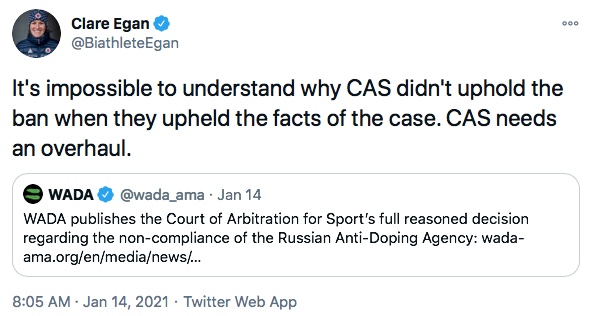
    U.S. Biathlete Clare Egan was stark in her assessment of the ruling and stated via Twitter, “It’s impossible to understand why CAS didn’t uphold the ban when they upheld the facts of the case. CAS needs an overhaul.”


    In the ruling, a section titled “Proportionality” stands out. In a legal context, proportionality is the tenet that the punishment should fit the crime. “The Panel bears firmly in mind at all times the paramount need to consider notions of proportionality in the imposition of Signatory Consequences,” states the CAS ruling.

    The language throughout the ruling is stark in its incriminating tone when referring to RUSADA’s deeds. The Sochi doping case is well-documented. The misdeeds of the Russian authorities are well documented as they danced with WADA seeking to meet the conditions for reinstatement.

    The penalties handed down might appear, in light of the evidence, disproportionate in Russia’s favor.

    Of note was a section on punishment and Russia’s participation in the Youth Olympic Games.

    “Although the history of improper conduct which has ultimately led to these proceedings is long and serious, the Panel considers it would be disproportionate to impose severe restrictions on the next generation of Russian athletes. In particular, as the doping schemes addressed in the McLaren Reports occurred between 2012 and 2016, the Panel considers it very unlikely that any athletes who will be participating in the Youth Olympic Games were involved in those schemes,” wrote the CAS panel in paragraph 731.

    If recent news reports from Russia are accurate, the panel’s reasoning might be spurious. In early January, multiple news agencies reported that 33 athletes at a junior biathlon competition in Russia withdrew from the competition when anti-doping authorities arrived to test athletes. The RBU, or Russian Biathlon Union, claims it is investigating.

  • CAS Ruling: Russia Banned from 2021 and 2022 Olympics

    CAS Ruling: Russia Banned from 2021 and 2022 Olympics

    Today, the Court of Arbitration for Sport (CAS) decided Russia will not be represented or recognized officially at the 2021 Tokyo or 2022 Beijing Olympics. The ruling, handed down on Dec. 17, mostly concludes a long-winded judicial process between the World Anti-Doping Agency (WADA) and the Russian Anti-Doping Agency (RUSADA).

    WADA had originally sanctioned RUSADA to a major competition ban of four years. Today’s CAS ruling, although seemingly in agreement with WADA’s arguments, reduced that penalty to two years.

    CAS found RUSADA to be non-compliant with the WADA code for failing to deliver timely and unadulterated LIMS data from the Moscow Lab. During the ongoing saga between WADA and RUSADA, the Russians continually failed to meet deadlines and eventually handed over manipulated data. These data included anti-doping testing information for specific athletes. The WADA investigation into RUSADA wrongdoing began after the 2014 Sochi Games. WADA eventually concluded Russia was guilty of state-sponsored doping.

    Similar to the penalty for Russia during the 2018 Winter Games, today’s decision allows Russians that meet the CAS standards to compete in or attend the Olympics or Paralympics to do so wearing a “neutral athlete” uniform. In PyeongChang, Russian athletes competed and marched in uniforms emblazoned with “OAR” – Olympic Athlete from Russia. The Russian flag was not flown and their national anthem not played during medal ceremonies in PyeongChang.

    According to CAS, the penalties apply to World Championships “organised or sanctioned by a WADA signatory”. The International Ski Federation (FIS) is a WADA signatory.

    The penalties outlined in the decision come into effect on December 17, 2020, and last for two years.

    Response to today’s ruling was mixed.

    WADA appeared satisfied with the ruling. “This decision confirms in large part the recommendation made in November 2019 by WADA’s independent Compliance Review Committee (CRC), which was unanimously accepted by the Agency’s Executive Committee (ExCo) on 9 December 2019,” claimed WADA’s statement.

    “Today’s CAS ruling is a clear endorsement of WADA’s assertion that data from the Moscow Laboratory were intentionally altered prior to and while they were being forensically copied by WADA Intelligence and Investigations (I&I) in January 2019as part of Operation LIMS, in contravention of critical criteria set by the ExCo when RUSADA was reinstated as compliant, under strict conditions, in September 2018.”

    Global Athlete, an organization bent on reforming international and Olympic sport, had harsh words. In an emailed statement, Global Athlete articulated they were unsatisfied with the water-downed ruling:

    “The decision taken by the Court of Arbitration of Sport (CAS), released today, has dealt yet another damaging blow to clean sport and the athlete community. Through a series of recommendations that include reducing the 4-yr mandatory sanction imposed by the World Anti-Doping Agency (WADA), to 2-yrs, CAS has diluted and weakened an already compromised sanction – demonstrating once again they are unfit for purpose.

    “The fact that Russian Athletes can compete as “Neutral Athletes from Russia” is another farcical façade that makes a mockery of the system. If athletes from Russia can still compete, it is not a sanction. Russia has not been banned; they have simply been rebranded.”

    “In addition to halving the length of the “sanction”, the CAS decision demonstrated clear preferential treatment for members of the Olympic movement, by lifting previous sanctions on Russian members of the International Olympic Committee, International Paralympic Committee and elected International Federation representatives and permitting them to attend the Olympic/Paralympic Games and World Championships.”


  • FasterSkier Explains: Rodchenkov Anti-Doping Act Passes Senate

    FasterSkier Explains: Rodchenkov Anti-Doping Act Passes Senate

    FasterSkier Explains: Rodchenkov Anti-Doping Act Passes Senate

    A new anti-doping bill that criminalizes international doping conspiracies, while pointedly focusing on high-level organizers rather than on individual athletes, and that makes an expansive claim for U.S. jurisdiction over doping occurring at international competitions while excepting the most high-profile American professional sports leagues, is on the verge of becoming law. Here’s what you need to know:

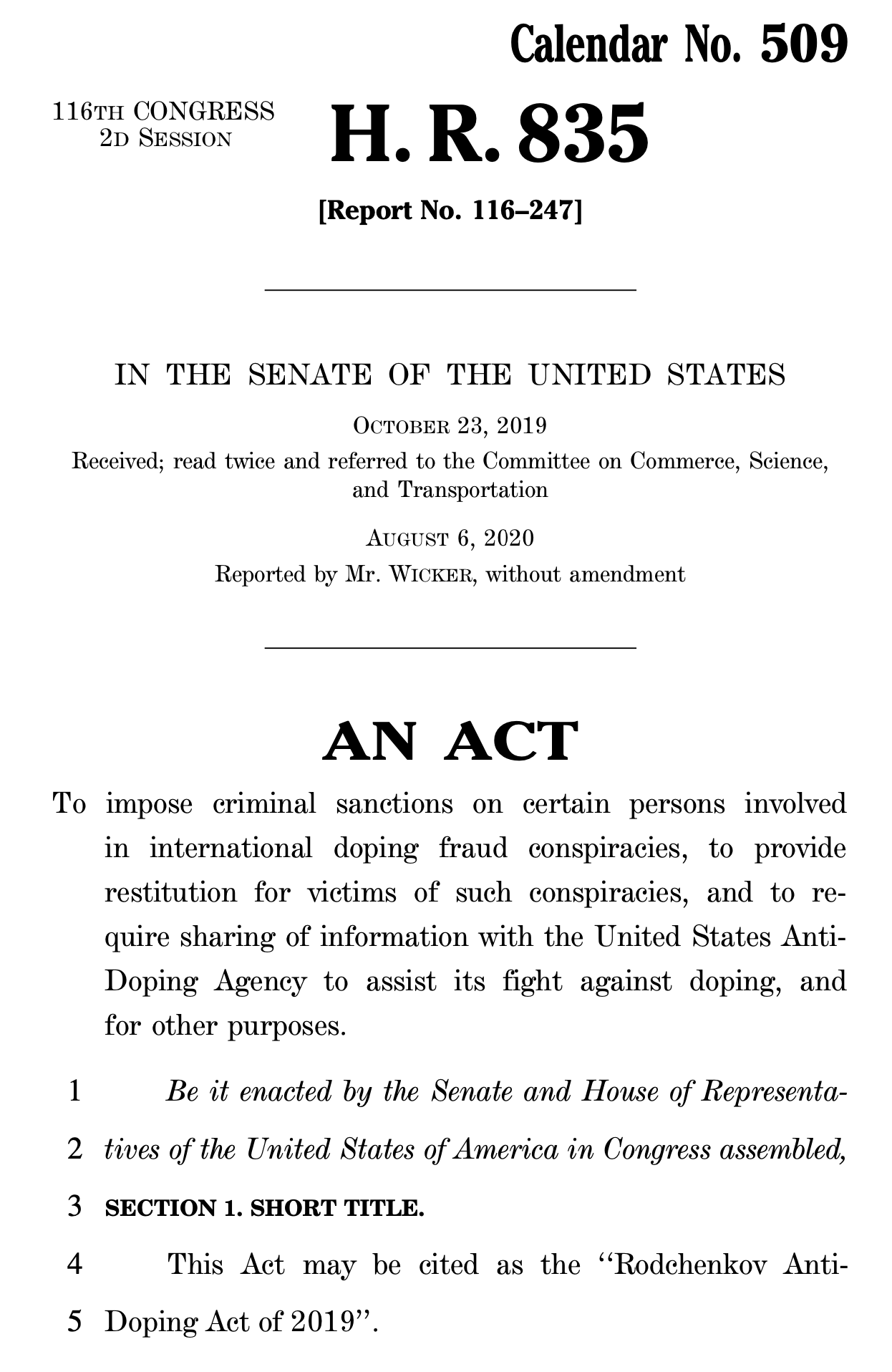
    What it is: “An act to impose criminal sanctions on certain persons involved in international doping fraud conspiracies, to provide restitution for victims of such conspiracies, and to require sharing of information with the United States Anti-Doping Agency to assist its fight against doping, and for other purposes.”

    What you can more casually call it in conversation: The “Rodchenkov Anti-Doping Act of 2019,” or even just the Rodchenkov Act.

    What’s its current legislative status: Passed the House, passed the Senate without amendment, sent to the President for his signature. It will become law when or if he signs it. [Update: The bill was signed into law on December 4, 2020.]

    What the bill does, summary form: Per the nonpartisan Congressional Research Service: “This bill makes it unlawful to knowingly influence (or attempt or conspire to influence) a major international sports competition by use of a prohibited substance or prohibited method. A violator is subject to criminal penalties – a fine, a prison term of up to 10 years, or both – and mandatory restitution. Additionally, property may be seized and forfeited to the U.S. government if it was used or intended to be used to commit an offense or traceable to the proceeds in connection with an offense.”

    What the bill does, actual statutory language form: Here’s the heart of the new law: 

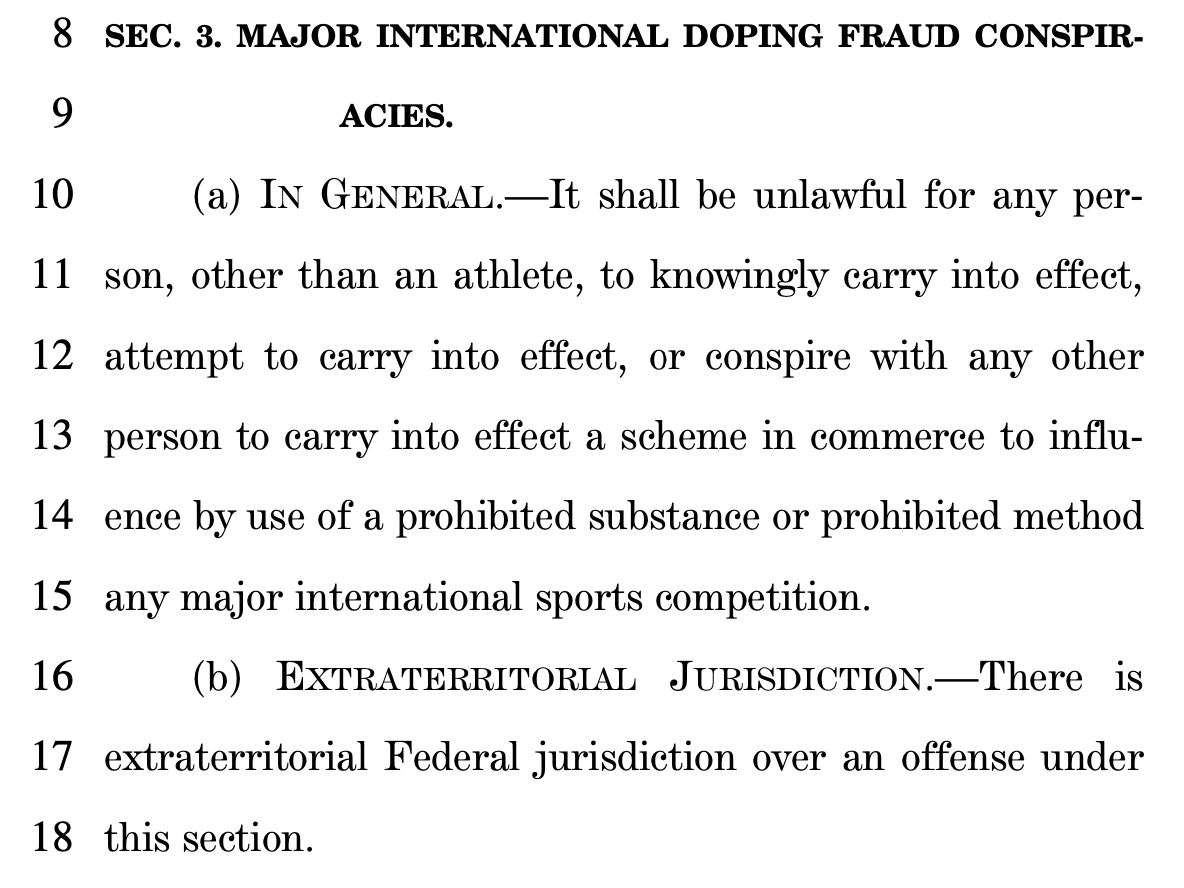
    Section 3(a) of the Act provides, “It shall be unlawful for any person, other than an athlete, to knowingly carry into effect, attempt to carry into effect, or conspire with any other person to carry into effect a scheme in commerce to influence by use of a prohibited substance or prohibited method any major international sports competition.”

    Section 3(b) provides for extraterritorial federal jurisdiction over an offense described in 3(a), i.e., it gives the U.S. Department of Justice legal authority to prosecute alleged criminal conduct that took place outside the physical borders of this country.

    Extraterritorial jurisdiction of American criminal law is the exception rather than the rule. However, there are multiple areas where this exists, at least in theory, although in practice actions are relatively uncommon. As one overview of this issue states, “A surprising number of federal criminal statutes have extraterritorial application, but prosecutions have been relatively few. This may be because when extraterritorial criminal jurisdiction does exist, practical and legal complications, and sometimes diplomatic considerations, may counsel against its exercise.”

    The rest of the Act provides some definitions. Major international sports competition means a competition featuring at least one American athlete, plus at least three other athletes from other countries, which is governed by the World Anti-Doping Agency Code (aka “WADA Code”), and where the competition organizer or sanctioning body receives sponsorship or financial support from an organization that does business in the U.S., or received money for the right to broadcast the competition in the U.S. (“Competition” is defined in this manner so as to provide jurisdiction under the capacious expanse of the Commerce Clause, in Article I of the U.S. Constitution.)

    A scheme in commerce has a similarly broad definition, with the same aim of effecting Commerce Clause jurisdiction: “any scheme effectuated in whole or in part through the use in interstate or foreign commerce of any facility for transportation or communication.” Bottom line, if you send a text or email in support of your doping scheme (at a qualifying, multi-national competition subject to the WADA Code), the U.S. is going to have jurisdiction over you.

    … if you’re “any person, other than an athlete,” that is. (Write your own John Kruk joke here.) If you’re an individual athlete who has allegedly doped, this Act, by its explicit terms – “other than an athlete” – does not apply to you. You obviously remain bound by the WADA Code, as well as by American state and federal law (if you’re an American athlete), but this Act does not apply to you. The title of Section 3 in the Act hints at its true target: “Major international doping fraud conspiracies.” Individual athletes are, well, not off the hook, but also not targeted by this Act.

    Individual athletes are, however, eligible to receive restitution if they are defrauded as the result of someone else’s doping scheme. The Act amends 18 U.S.C. § 3663A, “mandatory restitution to victims of certain crimes,” to provide that someone who suffers financial damage as a result of someone else’s international doping fraud conspiracy is eligible to receive restitution. The Act itself provides for substantial fines for someone found guilty of violating it: $250,000 for individuals, $1,000,000 for associations or other groups. Jail time, of up to 10 years, may also be imposed.

    Restitution provisions are well and good, but as any family law attorney who has ever tried to collect alimony from a former spouse can attest, you can’t get money if it’s not there. Another provision of the Act, regarding forfeiture, provides broad powers for criminal forfeiture to the U.S. Department of Justice, for property used, or intended to be used, to commit or facilitate an international doping conspiracy. At least in theory, the U.S. DOJ could prosecute the bad guys, seize their assets, and financially compensate the American athletes who were harmed. In theory.

    What about whistleblowers: It has been widely reported, including in the New York Times, at Inside the Games, and in a Noah Hoffman op-ed (also this Noah Hoffman op-ed) that the Act “protects whistleblowers from retaliation.” This is true, but only sort of.

    The bill’s drafters certainly intended to provide protection to whistleblowers (that is, people who expose alleged doping conspiracies). The original version of S. 259, when it was first read in the Senate, contained a number of findings, including that “whistleblowers … can play a critical role in exposing doping fraud conspiracies and other fraudulent acts in international sport.” The final finding stated, “These whistleblowers, including Dr. Grig­ory Rodchenkov and Yuliya and Vitaliy Stepanov, often expose major international doping fraud conspiracies at considerable personal risk. By criminalizing these conspiracies, such whistleblowers will be included under existing witness and informant protection laws.”

    On the one hand, it is accurate to state that the drafters of the Act intended to provide some protection to whistleblowers, rather than not to provide such protection. That’s what the final sentence quoted above says. On the other hand, it is also accurate to conclude that the Act itself (that is, the statutory language actually enacted, which does not contain any findings) says nothing at all about whistleblowers, and that anyone coming forward to expose an alleged conspiracy will be protected, if at all, only under general criminal laws as they relate to whistleblowers.

    This reporter has worked as a criminal defense attorney for most of the past seven years (and clerked for a criminal appellate court before that), and retains considerable professional skepticism about the munificence of the federal Department of Justice. In his professional opinion, anyone planning to blithely avail themselves of the assumed generosity of federal prosecutors should carefully consult with legal counsel first, and should not assume that they will be automatically protected from prosecution for their role in an alleged conspiracy in exchange for revealing its existence. In practice, prosecutors have almost unlimited discretion regarding who they wish to prosecute or not. And the general protections of “existing witness and informant protection laws,” in criminal law, are far, far less robust than the explicit protections of whistleblower protection doctrines in other settings, largely civil employment law.

    Bottom line, if you have something incriminating to report, talk with a defense attorney first before you go anywhere near the feds. (But not this reporter; I’m a full-time stay-at-home parent these days, and am truly not soliciting business.)

    So, about those individual athletes: Again, they are explicitly not targeted by the text of this Act, nor are they intended to be. The Act covers only conspiracies, not individuals.

    MLB player Robinson Canó, shown here playing for the Yankees in August 2009, was busted for steroid use earlier this week. He will be suspended for the entire 2021 season, and forfeit $24 million in salary. These punishments come through a scheme reached through collective bargaining by the MLB players’ union, not from WADA. (photo: Creative Commons)

    So, about those individual athletes in major American team sports: Again, they are explicitly not targeted by the text of this Act, nor are they intended to be. The Act covers only major international competitions that are subject to the WADA Code; American college sports and the big four professional sports leagues (MLB, NFL, NBA, NHL) are not signatories to the WADA Code; therefore, this Act does not cover them.

    As the New York Times succinctly put it, “Because drug policies are collectively bargained in the North American pro sports leagues, penalties for doping violations in those organizations are far less stringent than they are for international sports. Professional athletes in the North American leagues who fail doping tests are usually suspended for a portion of a season. International violations usually bring suspensions of at least two years.”

    The exclusion of the most visible American professional sports leagues has raised some eyebrows. For that, and other reasons, let’s conclude with:

    Who doesn’t like this Act (viz., everyone other than America):

    The World Anti-Doping Agency:

    WADA issued a strongly worded statement expressing its concern over the Act. Here’s some sample language:

    “No nation has ever before asserted criminal jurisdiction over doping offences that occurred outside its national borders – and for good reason. It is likely to lead to overlapping laws in different jurisdictions that will compromise having a single set of anti-doping rules for all sports and all Anti-Doping Organizations under the World Anti-Doping Code (Code). This will have negative consequences as harmonization of the rules is at the very core of the global anti-doping system.


    “WADA remains concerned that by unilaterally exerting U.S. criminal jurisdiction over all global doping activity, the Act will likely undermine clean sport by jeopardizing critical partnerships and cooperation between nations. Further, the Act could impede the capacity to benefit from whistleblowers by exposing them to possible prosecution and preventing ‘substantial assistance’ deals in line with the provisions of the Code.”

    The WADA Independent Commission

    The Central European Anti-Doping Organization:

    Sounded similar notes, in a statement largely copy and pasted from WADA. It ended with an original paragraph: “CEADO joins WADA and other stakeholders around the world in asking why this U.S. Act, which purports to protect athletes and claims jurisdiction overseas specifically excludes the main areas of professional and college leagues which are the show cases of sports in the U.S.?”

    Dick Pound:

    The former WADA president and IOC vice-president has expressed strong concerns about maintaining common international standards for testing and enforcement. “To try and destroy WADA does not provide any additional protections to American athletes,” Pound told British Columbia newspaper The Province earlier this year. “In fact, it increases the risk. If you don’t have a harmonized international approach to international doping, you’re going to have more and more doped athletes competing against America.” He claimed that the legislation is based on “intentionally inaccurate and misleading information” from American anti-doping officials.

    Pound added, “It’s unfathomable why they would do that, unless it’s some kind of a takeover bid, an untimely takeover bid, to come and say, ‘Throw your money around, we’ve put in more than anyone else,’ which is of course not true. But that doesn’t seem to bother the executive branch of the U.S. government these days.”

    Ulrich Haas:

    One of the drafters of the WADA Code penned an op-ed entitled, “Flawed Rodchenkov Act risks a return to anti-doping chaos.” Its opening paragraph is, “Be careful what you wish for. Designed to protect clean sport, the Rodchenkov Anti-Doping Act will have the opposite effect.” It gets more caustic from there.

    Haas expressed particular concern that the Act’s treatment of whistleblowers could expose them to criminal prosecution from non-WADA sources, while compromising WADA’s ability to provide them with immunity: “How could WADA carve out an agreement with this [hypothetical] whistleblower in exchange for her collaboration if there existed legislation that allowed for her criminal prosecution? The Rodchenkov Act and other similar laws would leave her exposed to criminal prosecution by various extra-territorial jurisdictions. There is no legal security for these whistleblowers in exchange for coming clean and providing valuable intelligence. The effect of the Rodchenkov Act will be to discourage people from coming forward with information.”

    The Kremlin:

    As a Russian presidential spokesman told an English-language Russian news agency earlier this week (headline: “Kremlin blasts US attempts to extend its jurisdiction to other countries”), “In the context of this document and in general we are extremely critical of any attempts by the United States to extend its jurisdiction to other countries. … This can cause nothing but concern. Such transborder practices do not suit us and we disagree with them.”

    Who likes this Act (viz., Americans):

    United States Anti-Doping Agency:

    USADA CEO Travis Tygart issued a statement earlier this week. Tygart said, “The Act will provide the tools needed to protect clean athletes and hold accountable international doping conspiracies that defraud sport, sponsors and that harm athletes. … The Act establishes criminal penalties for systems that carry out doping-fraud schemes that rob athletes, citizens and businesses. It also protects whistleblowers from retaliation and provides restitution for athletes defrauded by conspiracies to dope. It is a monumental day in the fight for clean sport worldwide and we look forward to seeing the Act soon become law and help change the game for clean athletes for the good.”

    USADA also made the following statement on Twitter on Tuesday: “Myth: The Rodchenkov Act doesn’t apply to athletes at all. Conspiracies to distribute & administer performance-enhancing drugs are already a felony under US conspiracy, narcotics & fraud laws, which carry stiff sentences. In that regard, RADA would have been completely redundant.”

    This is quizzical, because the Rodchenkov Act, by its explicit terms (“other than an athlete”), literally does not apply to individual athletes at all. And the statement regarding a redundancy seems to admit that the Act does not in fact cover athletes, as they are already subject to the criminal laws described in the tweet’s second sentence.

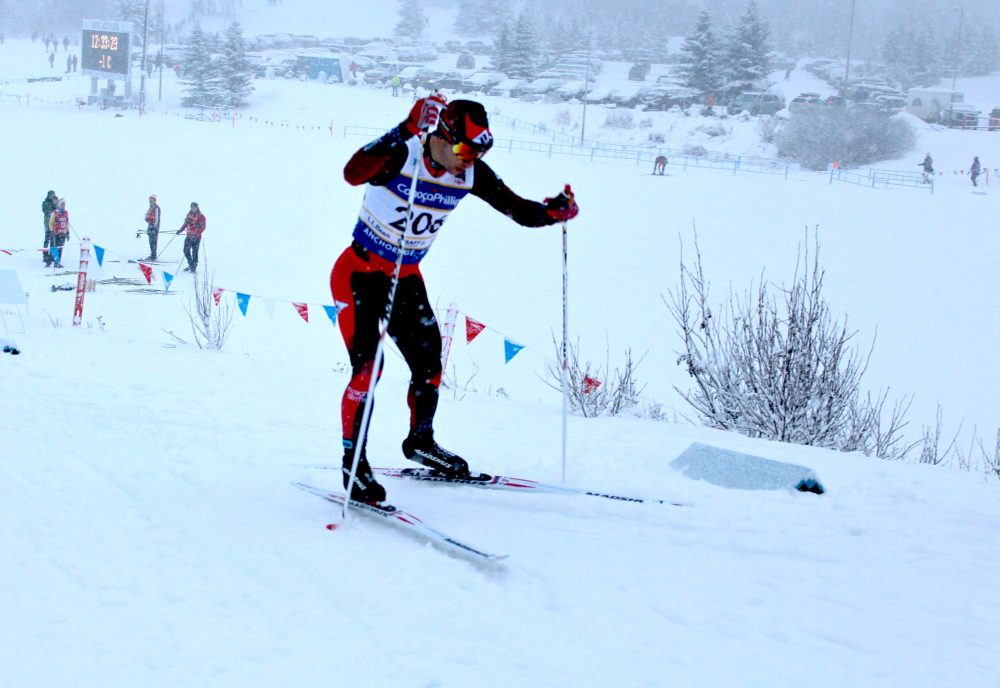
    Noah Hoffman racing to second in the men’s 15-kilometer freestyle individual start on Wednesday at 2018 U.S. Cross Country Championships in Anchorage, Alaska. It was his first January nationals appearance since 2012. (photo: Gabby Naranja)

    Noah Hoffman and Jessie Diggins:

    In an op-ed written in March of this year for the Minneapolis Star-Tribune, the two American Olympic skiers spoke to the importance of clean sport as a force for good. They wrote, in part, “The global anti-doping system, though well-intentioned, has failed to stem the tide of doping conspiracies that have undermined confidence in international sport. The current system does not have the power nor the independence to counter state-sponsored programs that corrupt the Games we hold so dear. The Rodchenkov Anti-Doping Act will bring the power of federal law enforcement to the fight for clean sport. The bill will criminalize international doping conspiracies, protect brave whistleblowers who expose malicious behavior, require information sharing between law enforcement and anti-doping authorities, and allow athletes like us to seek restitution when we are defrauded by cheaters.”

    Hoffman also responded to Pound’s statements in the Province article with a letter of his own addressing some of Pound’s arguments. Hoffman writes, in part, “the article implies that the Rodchenkov Anti-Doping Act will undermine WADA and the global harmonization of anti-doping rules. This assertion disregards the fact that the bill uses the global WADA code to determine what is or is not doping fraud. The bill also mandates information sharing between law enforcement and the U.S. Anti-Doping Agency, the organization that works in partnership with WADA to enforce global anti-doping rules in America.” Hoffman also, accurately, states that the Act “covers both Americans and non-Americans who commit doping fraud at events that occur inside or outside of the United States” – but does not engage with the argument that it only covers events subject to the WADA Code, which rules out roughly 99% of professional sport in this country.

    Grigory Rodchenkov:

    The Act’s namesake, through an attorney, told the New York Times that the law represented “the dawn of a new day. This will be an immediate worldwide deterrent.”

  • Nordic Nation: Building Equity in Sport with Dr. Edwin Moses

    Nordic Nation: Building Equity in Sport with Dr. Edwin Moses

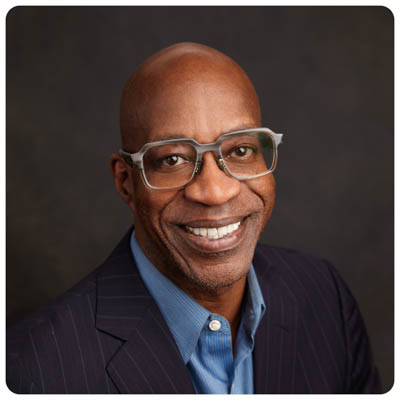
    In this episode, we hear from a familiar voice – someone, in fact, we’ve heard from recently on the podcast, former elite cross-country skier Noah Hoffman. Post-race career, Hoffman has been deeply involved in the anti-doping movement as an educator, lobbyist, and content creator. This conversation is from Hoffman’s content creation side. A few months back the US Anti Doping Agency (USADA) posted a six-plus minute video interview between Hoffman and Dr. Edwin Moses – a famed track and field athlete, anti-doping reformer, and voice for equity in sport.

    This episode features the full unreleased 30 plus minute interview – one where Moses discusses how best to empower athletes and build racial equity. This is an opportunity to hear one of the most fearless voices in sports. Along with his activism, Moses is a two-time Olympic gold medalist in the 400 m hurdles. Those are a few of his storied athletic accolades. He’s an icon.

    Dr. Edwin Moses. (Photo: USADA.org)

    Off the track, Moses speaks for the rights of athletes. His is among a rarefied list of athletes who have chosen to challenge the power brokers in Olympic sport. He served on and chaired WADA’s Education Committee. He held true to his values while serving WADA as an outspoken critic seeking institutional reforms from within. He was a key figure in developing drug testing protocols, and he served on the IOC’s Athlete Commission, Medical Commission, and Ethics Commission. Today, Moses holds an Emeritus Chair with USADA where he continues his fight.

    Below are two Op-eds by Moses:

    WADA’s Credibility Rides on Its Russia Decision

    Challenge to WADA


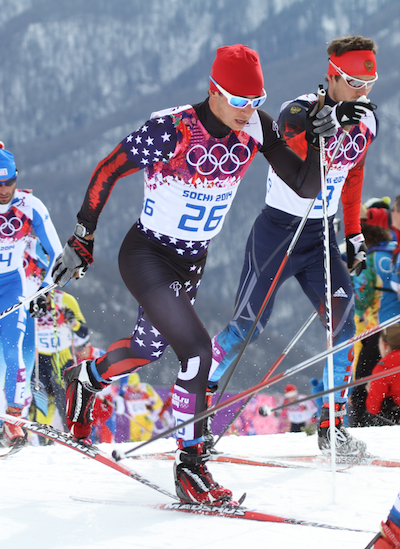
    Noah Hoffman racing on the FIS World Cup. (Photo: Madshus/NordicFocus)
  • Evi Sachenbacher: Sacrificial Lamb on the Doping Altar

    Evi Sachenbacher: Sacrificial Lamb on the Doping Altar

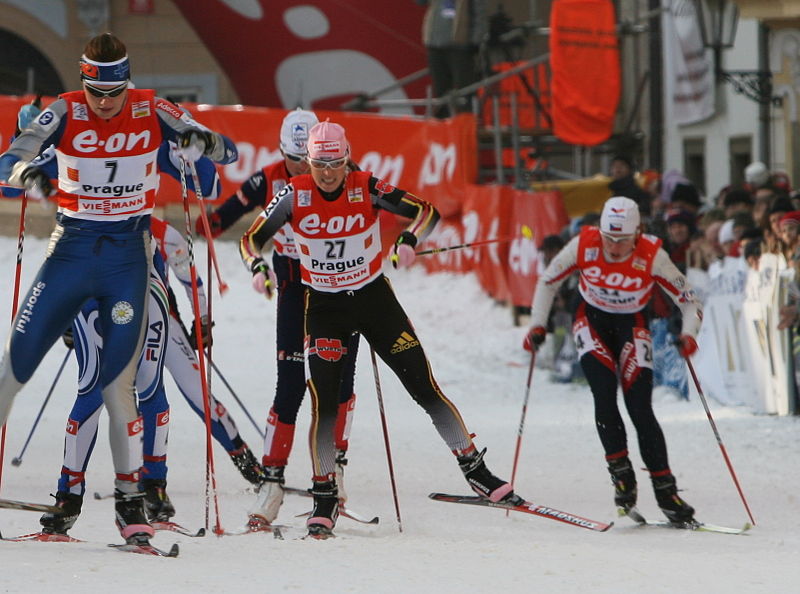
    Germany’s Evi Sachenbacher-Stehle (bib-27) in the quaterfinals of the 2007 Tour de Ski in Prague. (Photo: Wikimedia Commons)


    A career ended prematurely, for no reason.

    During the 2014 Winter Olympics in Sochi, Russia, German biathlete Evi Sachenbacher failed a doping test. Although the ensuing ban was subsequently reduced from two years to six months, it effectively ended her career.

    New information seems to confirm that Sachenbacher’s positive drugs test at the 2014 Winter Olympics in Sochi had nothing to do with deliberate doping. Rather, she was used as a sacrificial pawn by Russian doping authorities, according to an article on rtl.de.

    In his recently published autobiography, doping meister turned whistleblower Grigory Rodchenkov wrote that with no positive doping tests in the first week of the Sochi Olympics, the Russian doping machine needed to expose someone in order to prove that they were doing good work. 

    From 2006 to 2015, Rodchenkov headed Russia’s Anti-Doping Center, the only laboratory in Russia accredited by the World Anti Doping Agency (WADA). At the 2014 Winter Olympics, Rodchenkov managed the anti-doping testing. While he concocted a recipe of three banned substances to administer to Russian athletes, he and others developed a sophisticated system to replace Russian athletes’ drug-contaminated urine samples with clean samples.

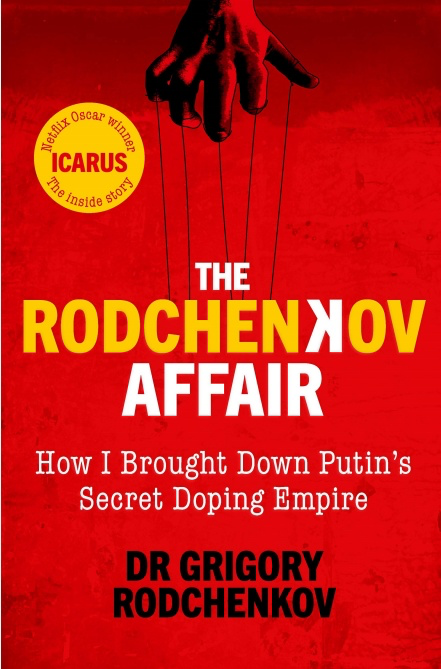
    The July 25 issue of The Daily Mail published extensive excerpts from The Rodchenkov Affair, Rodchenkov’s new tell-all detailing his decades-long involvement with the Russian doping system both as an athlete and an administrator. Rodchenkov was initially exposed to doping as a college distance runner, taking steroids. While a successful collegiate runner – with chemical help – Rodchenkov didn’t turn into an elite athlete. His “enhanced” college running success did spur his study of chemistry.

    In November 2015, WADA identified Rodchenkov as the ringmaster in the Sochi doping scandal. He was compelled to resign. Within days, fearing for his life, Rodchenkov left Russia for the United States. His paranoia may not have been irrational, as two other officials died suddenly in February 2016. In May 2016, Rodchenkov gave an extensive interview to the New York Times about the rigged testing process in Sochi.

    This brings us back to Sachenbacher, the German biathlete who tested positive in Sochi. In one of her two urine samples Sachenbacher submitted during the Olympics, the testing lab claimed it discovered traces of the banned substance methylhexanamine.

    Developed by Eli Lilly & Co in 1948, methylhexanamine was marketed as a nasal decongestant. Although it was withdrawn from sales in the 1970s, methylhexanamine began appearing as an ingredient in various dietary supplements in the early 2000s. Supplements incorporating this drug are generally promoted as fat loss products or for extra energy during workouts.

    In his book, Rodchenkov asserted that methylhexanamine “usually occurred in huge concentrations.” 

    Rodchenkov also characterized Sachenbacher’s result as a “borderline case,” adding “If I had already logged five real violations, I might not have reported her. But we needed blood. She became withdrawn from circulation and the punishment did not really match the violation.”

    When she learned of the positive finding, Sachenbacher protested, saying that she must have unknowingly ingested it in a tea powder. In the summer of 2014, she received a two-year competition ban.

    Sachenbacher appealed to the Court of Arbitration for Sport (CAS), which determined that she didn’t deliberately ingest methylhexanamine. Her ban was commuted to six months from the date of the test

    The Munich, Germany, public prosecutor’s office investigated Sachenbacher following the Olympics. According to Der Spiegel, the prosecutor later deemed that Sachenbacher hadn’t actually taken the drug “because the active ingredient content is too low.”

    After the CAS ruling, Sachenbacher was allowed to immediately resume training and competition. However, the positive finding and subsequent battle to clear her name exhausted her, and she opted to retire.


  • News Round-Up for Mid-July

    News Round-Up for Mid-July


    The Biathlon Integrity Unit Comes Online: 

    Earlier this month, the website biathlonintegrity.com came online. The site is the digital interface of the Biathlon Integrity Unit, an independent arm of the International Biathlon Union. Part of the Biathlon Integrity Unit’s mandate, according to the website, is to provide a mechanism to “investigate and prosecute violations” as they relate to “integrity related matters in Biathlon, including anti-doping, ethical breaches, betting-related issues and any kind of result manipulation.”

    What that means from a practical standpoint is an easy to use portal to locate anti-doping information on WADA doping codes and specific requirements for athletes in the IBU’s Registered Testing Pool which mandates registered athletes abide by specific out-of-competition testing protocols and whereabouts requirements.

    The site also provides access to educational materials pertaining to anti-doping, anti-corruption, safeguarding (which entails protecting all biathletes including minors from mental, physical, or sexual abuse), and diversity. Additionally, an easy to find section allows individuals to file a confidential whistleblower report informing the Biathlon Integrity Unit about ethical and/or anti-doping code violations.


    “Knock-on Effect” comments from Dick Pound: 

    Dick Pound, the former head of WADA and current member of the International Committee member made comments on July 15th in an interview with Reuters linking the potential cancellation of the 2021 Tokyo Olympics and the 2022 Beijing Winter Games. The Tokyo Olympics were slated for this summer but were postponed until July 23 to August 8, 2021, due to the ongoing pandemic. 

    “Taking the political side out of it for the moment say there is a COVID problem in July and August next year in Tokyo, it is hard to imagine there is not going to be a knock-on effect in the same area five months later,” Pound told Reuters.

    The summer and winter events pose a quick-turnaround timetable for the IOC. Practically speaking, it is hard to fathom a scenario where the pandemic impacts a summer 2021 global sporting event, like the Summer Olympics, yet does not affect a 2022 Olympics.   

    In the Reuters piece, Pound posited several scenarios that might impact the 2022 Games. One focused on the pandemic and the notion that a vaccine still would not be readily available by winter 2022. (Beijing is scheduled to host from February 4 – 20.) Further, Pound speculated that some countries who have not curbed the spread of Covid-19 might be banned from travel to China.  

    Pound went further to draw the current icy relations between China and the U.S. into the mix. Both nations have ramped up their antagonism towards one another. The U. S. withdrew recently from the Who Health Organization (WHO), which the current U.S. administration claims is a tool for Chinese propaganda. 

    “At least one part of the U.S. is planning an election campaign which is all anti-China,” Pound said to Reuters. “If you are a conspiracy theorist, you might say well, the WHO is strongly influenced by China and they could probably without smirking too much go to a WHO meeting, from which the U.S. will no longer be associated, and say this isn’t positive health.

    “At least one part of the U.S. is planning an election campaign which is all anti-China

    “If you are a conspiracy theorist, you might say well, the WHO is strongly influenced by China and they could probably without smirking too much go to a WHO meeting, from which the U.S. will no longer be associated, and say this isn’t positive health.

    “That is an extreme supposition. There are all kinds of crazy things that could happen.”


    Athletes as Guinea Pigs

    It was widely reported on July 11th that UK Sport (the United Kingdom’s government agency supporting Olympic and Paralympic sport) was involved with experimenting on athletes to boost performance. The Daily Mail acquired documents revealing that 91 athletes were given the experimental sports drink – called DeltaG – as they trained for the 2012 London Olympics. 

    The DeltaG drink, according to documents, contained synthetic ketones. When endurance athletes run low on fuel, the body can convert fat to ketones for energy. Some theorize that supplemental synthetic ketones can serve as a complement to the body’s natural fat-to-ketone conversion process, known as ketosis, to further prolong endurance.

    The news reports claim that of the 91 athletes testing the substance, 36 experienced adverse side effects. 

    UK Sport had participating athletes sign waivers absolving UK Sport of any wrongdoing as well as sign an NDA to prevent athletes from leaking information or discussing the covert project. 

    The Daily Mail also unearthed a document in which UK Sport could not guarantee the substances in DeltaG were WADA compliant. 

    “UK Sport does not guarantee, promise, assure or represent that use of ketone esters is absolutely World Anti-Doping Code compliant and therefore excludes all responsibility for use of the ketone ester,” was one quoted section of a UK Sport “participant information sheet”. 

    The Daily Mail wrote the information document also included this verbiage: “WADA might exercise … their rights to regulate … [and] collect blood samples or retrospectively test old samples. This may occur if there were pressure of the media if the concept was to leak. However … ketosis is a temporary physiological state and would be difficult to prove or test with any post-event samples.”

    The news report did state that UK Sport notified WADA and UK Anti-Doping before administering the study. At the time, ketones were not on the banned substance list. Ketones remain legal. However, their efficacy and potential for adverse health effects are of concern to some in the sports world. 

    One twist in the story involved the U.S. military. Internal documents obtained by The Daily Mail claim UK Sport scientists read a science journal piece about the U.S. military experimenting on animals with DeltaG. The U.S. military then linked UK Sport with Oxford University to pilot their own study. 


  • News Roundup: WADA in the News Cycle

    News Roundup: WADA in the News Cycle

    WADA Athletes’ Anti-Doping Rights Act: 

    On June 18th, WADA issued a press release announcing its Athletes’ Anti-Doping Rights Act. According to WADA, the act was developed and approved by the organization’s Athlete Committee. Essentially, the document asserts it is an athlete’s “fundamental right” to participate in clean sport. 

    It is a two-part document. The first part focuses on rights established in WADA’s Code and International Standards. The second part consists of recommendations, and according to WADA these rights are “not rights under the Code of International Standards.”

    These recommended rights (which again are not guaranteed fundamental rights) include the following: 

    • Right to an anti-doping system free from corruption
    • Right to participate in governance and decision-making
    • Right to legal aid  


    Part one describes athletes’ rights that are explicitly stated in the WADA Code of International Standards. These rights are considered mandatory and include the following: 

    • Equality of opportunity
    • Equitable and fair testing programs
    • Medical treatment and protection of health rights
    • Right to justice
    • Right to accountability
    • Whistleblower rights
    • Right to education (anti-doping education)
    • Right to data protection
    • Rights to compensation
    • Protected person rights
    • Rights during a sample collection session
    • Right to B sample analysis
    • Other rights and freedoms not affected
    • Application and standing (Nothing in this Act shall change in any way the application of the Code or International Standards, or the standing of athletes under those documents.)

    More on WADA, on June 17th, the U.S. Office of National Drug Control Policy (ONDCP) released a statement recommending the U.S. “consider” withholding its funding to WADA.” The ONDCP asserts WADA has not reformed to its satisfaction. The U.S. is the single largest government funder of WADA, providing $2.7 million annually. WADA has contested the ONDCP’s claims in an annotated version of ONDCP’s June 17th letter. 


    Russia’s Olga Zaitseva leads Canada’s Megan Imre in a 2014 IBU World Cup pursuit.

    Bad Optics for the RBU: Last week, it was reported by TASS (the Russian State News Agency) that the Russian Biathlon Union (RBU) had nominated Olga Zaitseva (42) to its Board. Zaitseva was an unexpected choice as she came with controversy. She was implicated in the Sochi doping affair by the McLaren Report. She was on the silver medal-winning 4 x 6-kilometer relay team in 2014, but that medal had subsequently been stripped. 

    On Monday, June 29, it was reported that Zaitseva’s name had been withdrawn from consideration.   

    Despite her 2014 doping offense, Zaitseva retained gold medals won at the 2006 and 2010 Olympics. Both medals were in the women’s team relay.


  • Nordic Nation: Clean Sport, Testing Gaps, and Virtual Sample Collection with Noah Hoffman

    Nordic Nation: Clean Sport, Testing Gaps, and Virtual Sample Collection with Noah Hoffman

    Noah Hoffman (U.S. Ski Team) racing to 35th in the 30 k skiathlon at the Olympics in Sochi, Russia.

    As we all know, the COVID-19 global pandemic has left the world scrambling to adapt to the many challenges of slowing the spread of the virus. In the world of Olympic sports, the ripple effect has disrupted the efforts of anti-doping agencies worldwide to conduct the athlete testing normally relied upon to hold athletes accountable to abiding by the rules surrounding banned and controlled substances. Most international antidoping agencies have halted testing since mid-March as the invasive and close-contact nature of collecting samples posed a threat to both athletes and testers. 

    This causes concern that athletes inclined to cheat might abuse the situation, taking advantage of the opportunity to use illegal substances to improve their performance potential when competition is able to resume. 

    To address the lack of testing, the US Antidoping Agency (USADA) rolled out a pilot virtual testing program called Project Believe 2020 where athletes could provide a urine sample and blood spot test with an antidoping agent present on a zoom or FaceTime call. 

    For further insight into this topic, FasterSkier connected with two-time Olympian and long-time US Ski Team Member Noah Hoffman, who has become involved with USADA’s antidoping education program since retiring from skiing. Hoffman also recently wrapped up his second year at Brown University and we discuss his academic interests and the experience of being a college student during the COVID shutdown. Thanks for listening.


  • A Glance at Some Anti-Doping Numbers in Cross-Country Skiing

    A Glance at Some Anti-Doping Numbers in Cross-Country Skiing

    A year and more has elapsed since a doping scandal rocked the 2019 cross-country World Championships in Austria. Over that time, we have learned a bit more about what transpired at the micro-level. In the broader picture, those covering doping in sport often scour The World Anti-Doping Agency’s (WADA) annual release of a voluminous document titled “Anti-Doping Testing Figures”. The data dump runs hundreds of pages. Looking for figures on the number of tests per sporting discipline, type of test, governing body administering the test, on and on, it’s in there. The WADA report also discloses the number of AAFs (adverse analytical findings which indicate the presence of a banned substance) and ATFs (atypical findings that warrant more testing and follow up.) Useful information if one is trying to glean how pervasive doping might be in a chosen sport and how effective the tests are. 

    If you’ve ever read those reports and you’re convinced athletes dope in nordic sport, then this much is true: very few athletes produce AAFs or ATFs.

    Link to WADA Anti-Doping Testing Figures. 

    2019-2020 FIS Anit-Doping Numbers

    The International Ski Federation (FIS) released its own annual Anti-Doping Testing Figures on April 15, which it called “detailed FIS testing statistics”. To call this detailed is over reach.

    The information does, however, provide the total number of FIS administered tests and disaggregates the numbers into “out-of-competition” and “in-competition” subcatagories for the 2019-2020 season. FIS catalogs the number of urine tests, ESAs (urine and blood tests which test for erythropoiesis-stimulating agents – think red blood cell boosters), blood tests, and specific tests for athlete blood passports (APB). 

    FIS reports a total of 606 in-competition tests this season with 332 of those specific to cross-country skiing (or roughly 55 percent of the total). In-competition tests for cross-country skiing broke down as follows: 170 urine tests, 112 ESAs, one blood test, and 49 blood passport tests. 

    For out-of-competition tests, FIS conducted a total of 2205 tests, with 1278 specific to cross-country (or roughly 58 percent of the total). For cross-country, FIS administered 302 urine tests, 245 ESAs, 151 blood tests, and 580 blood passport tests. 

    FIS accounts for a portion of the overall testing in cross-country skiing. National Anti-Doping Agencies, like USADA, are also responsible for testing athletes both in and out-of-competition.

    Without running through all the numbers, cross-country accounted for the majority of tests within the FIS family of sporting disciplines: cross-country, nordic combined, ski jumping, alpine skiing, freestyle skiing, and snowboard. Although the data released from FIS tells a story, it really is an intro or first chapter at best. There’s no indication of the number of AAFs or ATFs.

    Although it appears that FIS is doing its job, if that means administering tests, then we have no idea if these tests catch dopers. Although the evidence may be lurking out there, it is our understanding that the skiers caught in Seefeld at the 2019 World Championships who had been practicing autologous blood doping – transfusing one’s own blood – never flagged an AAF. And according to FIS reports, some of those same athletes arrested in Seefeld were concurrently using hGh.  

    We are glad for the testing. We just simply want to know if the testing is effective and does its intended job of deterring would-be-dopers. With the figures released in April by FIS, we simply do not know and neither do athletes who race clean. 

    2018 WADA Anti-Doping Testing Figures

    The 2018 Anti-Doping Testing Figures from WADA, the more thorough analysis of testing metrics, reveals the breadth of testing and the paucity of positives — which may be a good sign. Then again, it might not. (2018 is the latest data set publicly available from WADA.)

    In cross-country skiing, a total of 2916 in and out-of-competition urine and blood tests were administered. These tests found a total of seven AAFs. (From Table 2: Total Samples Analyzed in AIOW Sport/Disciplines (Urine and Blood)). 

    In cross-country skiing, 187 total hGh isoform tests were conducted (blood) with a single out-of-competition AAF. (Table 30)

    In cross-country skiing, 272 total hGh biomarker tests were conducted (blood) with no AAFs. (Table 31)

    In 2018, FIS specifically collected 228 hGh biomarker samples – the vast majority of those were collected out of competition — with no AAFs. (Table 19) 

    A total of 1448 Athlete Biological Passport samples were collected for cross-country in 2018. (Table 4). 


    WADA’s Explanation of their hGh tests, quoted from WADA’s Q & A page. 

    HgH Isoform: “WHAT IS THE HGH ISOFORM DIFFERENTIAL IMMUNOASSAYS (THE ‘ISOFORMS APPROACH’)? 

    Since the total levels of hGH secreted into circulation vary naturally, are widely fluctuating over time and may be influenced by several factors not associated with doping, it is practically impossible to develop an anti-doping test based simply on the measurement of increased total hGH concentrations. However, doping with recombinant hGH (recGH) alters the naturally constant proportions between the different isoforms of hGH present in blood of an individual.  The hGH Isoform Differential Immunoassays were developed to detect these changes in the proportions of different hGH isoforms after recombinant recGH injection.”

    HgH Biomarker: “WHAT IS THE HGH BIOMARKERS TEST (THE ‘MARKERS APPROACH)? 

    hGH affects the expression of many different proteins which may serve as biological markers of hGH activity.  These include markers of hGH action in the liver such as IGF-I, as well as markers of hGH action on soft tissue collagen turnover, such as the N-terminal peptide of procollagen type III (P-III-NP). The measurement of these two hGH markers in serum may serve to uncover the manipulation of the hGH/IGF-I axis independently of the doping substance used, be it recGH or other agents used to increase circulating hGH [for example analogs of GH-releasing hormone (GHRH), hGH secretagogues such as GH-releasing peptides (GHRP) or even hGH gene doping]. The detection and quantification of such biomarkers of hGH activity constitute the rationale of the indirect method for detection of doping with hGH, referred to as the ‘markers approach’.”

    If you want to dig deeper into the trove of WADA’s Q and As, here’s the link.


  • The Devon Kershaw Show (Audio Short): WADA, Russia, and FIS

    The Devon Kershaw Show (Audio Short): WADA, Russia, and FIS

    To the point: thoughts and opinions on WADA’s decision to ban Russia from major international competitions for four years.


  • More on the Russian Ban

    More on the Russian Ban

    Widely reported on Monday was the unanimous vote by WADA’s Executive Committee (ExCo) to ban Russia from specific sport events for the next four years.

    Russia never tip-toed around its desire to dope on an industrial scale. That much has been documented in an Academy Award winning documentary and the more academic reports cataloging Russian doping misdeeds. 

    Many have claimed Russia suffered a mere hand slap from WADA and the International Olympic Committee (IOC) for its transgressions. When RUSADA was reinstated as compliant in September 2018, the world of clean sport made a collective eye roll. At that point, RUSADA and the Russian sport authorities had yet to comply with the conditions set forth by WADA for reinstatement. 

    The primary unmet condition was the handing over of the Moscow anti-doping lab’s raw data. WADA eventually received the lab’s data in April 2019.

    In a report leaked several weeks ago, and then subsequently made public by WADA, it was determined the data had been manipulated. Additionally, it was determined that internal communications had been fabricated to help push blame onto actors like Grigory Rodchenkov, the former lab head who became a whistle blower. The communications were to make it appear that a few rogue individuals were at the core of the doping program.

    This brings us back to today’s vote which made effective a four-year ban — what WADA calls a “period of non-compliance for the Russian Anti-Doping Agency.” 

    Many consequences were laid out in Monday’s press release. In some ways, Russia’s skin will be taken out of the international sporting game. The most publicized penalty remains a ban on Russian Government officials, representatives, and athletes from major international sport events including the 2020 and 2022 Olympics and Paralympics and World Championship events.

    Like in 2018 when the Russian Federation was banned from the Winter Olympics, Russian athletes cleared of any wrongdoing, however, will be allowed to compete at these “Major Events” during the four year sanction. Athletes will do so under a yet undetermined neutral flag. During the PyeyongChang Olympics, Russian athletes were allowed to compete under the IOC umbrella as an “Olympic Athlete from Russia” or OAR. 

    It also appears Russian athletes will be allowed to compete under the Russian flag in such events like the European Football Championships – Euro 2020 – as this is not considered a major event.

    Not all believe justice has been served.

    “Today the World Anti-Doping Agency (WADA) has robbed athletes worldwide of their right to clean sport due to their inability to enforce the strongest possible sanctions on Russia,” claimed the Global Athlete, an athlete centered advocacy group dedicated to clean sport. “Strong sanctions which would include a complete ban of Russia and Russian athletes at all international competitions including the Olympic and Paralympic Games.”

    As a counter, Johnathan Taylor, the chair of WADA’s Compliance Review Committee that recommended the penalties, said innocent Russian athletes and athletes at large are protected.

    “Today, the ExCo has delivered a strong and unequivocal decision. While being tough on the authorities, this recommendation avoids punishing the innocent and instead stands up for the rights of clean athletes everywhere. If an athlete from Russia can prove that they were not involved in the institutionalized doping program, that their data were not part of the manipulation, that they were subject to adequate testing prior to the event in question, and that they fulfil any other strict conditions to be determined, they will be allowed to compete.” A casa de apostas bet365 é legal em Brazil?</p>

    Taylor is quoted as saying WADA possesses the names of 145 athletes who are the “most suspicious” despite the manipulated, and in some cases deleted, data set.  

    Russia has 21 days to appeal the decision to the Court for Arbitration of Sport (CAS).

  • WADA Declares Four Year Ban on Russia

    WADA Declares Four Year Ban on Russia

    In an unanimous  vote Monday in Lausanne, Switzerland, WADA’s Executive Committee imposed a four year ban on Russian participation in major international sporting events. This blanket ban includes the 2020 Tokyo and 2022 Beijing Olympics.

    The list of Russian transgressions is long. According to a press release from WADA on Monday, the tipping point was Russia’s manipulation of the Moscow Lab’s data. That data was to be used to confirm specific doping violations by Russian athletes.

    The ban does leave room for Russian athletes to participate in major competitions under a neutral flag. Russia has 21 days to appeal the decision to the Court for Arbitration of Sport (CAS).

    FasterSkier will have more on this story.

  • WADA’s Compliance Review Committee Recommends Strong Penalties for Russia

    WADA’s Compliance Review Committee Recommends Strong Penalties for Russia

    In a just published press release, WADA has released its Compliance Review Committee’s (CRC) recommended consequences for RUSADA.

    On December 9, WADA’s Executive committee will decide upon’s RUSADA’s status as a compliant entity. Last week, the Compliance Review Committee suggested RUSADA again be declared non-compliant.

    Due to a leak of specific aspects of the Compliance Review Committee’s recommendations and sanctions, WADA has decided to publish the sanctions likely to be handed down on December 9.

    RUSADA was to hand over data from its Moscow Lab and its Laboratory Information Management System (LIMS) database.

    “The Moscow data are neither complete nor fully authentic,” states the CRC document. It claims hundreds of adverse analytical findings have been removed from the database.

    It asserts the LIMS data was doctored to include “planted fabricated evidence.”

    To summarize, it appears WADA will ban Russia from the Olympics/Paralympics, and major championships for the next four years. Russia will be unable to host any “Major Event”.

    Russian athletes will not be able to compete under the Russian flag at these designated events over the four year period. Athletes must prove their innocence as it relates to doping and RUSADA’s non-compliance in order to compete.


    Below are the detailed CRC’s recommended consequences for Russia.

    “CRC recommendation in relation to consequences (abridged)

    The CRC has therefore recommended that WADA send a formal notice to RUSADA, asserting non-compliance with the requirement to provide an authentic copy of the Moscow data, and proposing the following consequences, to come into effect on the date on which the decision that RUSADA is non-compliant becomes final and to remain in effect until the fourth anniversary of that date (‘the Four Year Period’):

    • Russian Government officials/representatives may not be appointed to sit and may not sit as members of the boards or committees or any other bodies of any Code Signatory (or its members) or association of Signatories.
    • Russian Government officials/representatives may not participate in or attend any of the following events held in the Four Year Period: (a) the Youth Olympic Games (summer and winter); (b) the Olympic Games and Paralympic Games (summer and winter); (c) any other event organized by a Major Event Organisation; and (d) any World Championships organized or sanctioned by any Signatory (together, the Major Events).
    • Russia may not host in the Four Year Period, or bid for or be granted in the Four Year Period, the right to host (whether during or after the Four Year Period) any editions of the Major Events.
    • Where the right to host a Major Event in the Four Year Period has already been awarded to Russia, the Signatory must withdraw that right and re-assign the event to another country, unless it is legally or practically impossible to do so. In addition, Russia may not bid for the right to host the 2032 Olympic and Paralympic Games, irrespective of whether the bidding takes place during or after the Four Year Period.
    • Russia’s flag may not be flown at any Major Event staged in the Four Year Period.
    • Neither the President, the Secretary-General, the CEO, nor any member of the Executive Board/Governing Board of either the Russian Olympic Committee or the Russian Paralympic Committee may participate in or attend any Major Event staged in the Four Year Period.
    • Russian athletes and their support personnel may only participate in Major Events staged in the Four Year Period where they are able to demonstrate that they are not implicated in any way by the non-compliance (i.e., they are not mentioned in incriminating circumstances in the McLaren reports, there are no positive findings reported for them in the database, and no data relating to their samples has been manipulated), in accordance with strict conditions to be defined by WADA (or the Court of Arbitration for Sport (CAS), if it sees fit), pursuant to the mechanism foreseen in ISCCS Article 11.2.6. In this circumstance, they may not represent the Russian Federation.
    • Given the aggravating factors that are present in this case, RUSADA must pay all WADA’s costs on this file incurred since January 2019 and, in addition, a fine to WADA of 10% of its 2019 income or USD 100,000 (whichever is lower). This is the maximum fine available under the rules.” Baltic and Lithuania tours


  • Death, Taxes, and RUSADA Non-Compliance

    Death, Taxes, and RUSADA Non-Compliance

    There’s death, taxes, and this: the Russian Anti-Doping is likely to be back on WADA’s non-compliance list. Last week, WADA sent out a press release noting that its Compliance Review Committee had recommend non-compliance for RUSADA. WADA’s Executive Committee will consider the recommendation when it meets on December 9.

    This real world soap opera continues as athletes around the world seek better structural and legal remedies to clean up sport.

    The press release states the Compliance Review Committee based its judgment on “a number of inconsistencies found in some of the data that was retrieved by WADA from the Moscow Laboratory in January 2019. WADA I&I’s subsequent assessment included consideration of responses from the Russian authorities to a list of detailed and technical questions, including follow-up questions, raised by WADA I&I and the forensic experts.”

    After the Sochi Olympic’s doping scandal, RUSADA was first declared non-compliant in November, 2015. At the time, many claimed RUSADA had not met the agreed upon criteria, called the RUSADA Roadmap to Compliance, for reinstatement.

    FasterSkier has reported in the past that the compliance roadmap was more “malleable” than the firm words written in the compliance document.

  • The Rodchenkov Anti-Doping Act and the Power of One

    The Rodchenkov Anti-Doping Act and the Power of One

    American Noah Hoffman (r) racing alongside Norway’s Daniel Stock during Saturday’s 30 k skiathlon at the 2017 World Cup in PyeongChang, South Korea. (Photo: Fischer/Nordic Focus)

    Noah Hoffman, retired athlete, and current sophomore at Brown University is part of the movement to upgrade anti-doping enforcement. On October 28, he posted a blog highlighting why he supported the Rodchenkov Anti-Doping Act (RADA). RADA is federal legislation that will criminalize doping. More specifically, as Hoffman notes, it criminalizes doping conspiracies involving international sporting events like the Olympics and World Championships.

    Here are the details of RADA as highlighted by Hoffman in his October 28 post:

    The Act will

    • Criminalize doping conspiracies that target international sporting events
      • International jurisdiction extends to any sporting events that has
      • 1 or more U.S. athletes and 3 or more international athletes competing
        • AND
      • is a signatory to the WADA code
        • AND
      • has a sponsor that does business in the U.S. OR sells rights to be broadcast in the U.S.

    If the act is passed, the U.S. would be able to apply broad discovery tools when it comes to investigating doping schemes: Tools that carry with them the financial and investigatory weight of the federal government. Although RADA unanimously passed in the House, it has not been voted upon in the Senate. But just the prospect of the pending legislation already has WADA speaking out against it. In fact, the AP reported that the IOC and WADA have hired a Washington D.C., lobbying firm to “discuss” the legislation. 

    It appears WADA and the IOC are concerned about the extraterritorial powers potentially given to the U.S. when it comes to pursuing doping syndicates abroad. 

    Noah Hoffman (bib 26) skiing with Anders Soedergren of Sweden inthe 2014 Olympic 50 k.

    With all the white noise and maneuverings surrounding the issue, Hoffman brings a human face to the topic. And he brings passion, which had this been a podcast, you’d pick up on right away. For many years, Hoffman’s skin in the game when competing against alleged dopers had one degree of separation. There he was in the closing kilometers of the men’s 50-kilometer skate at the Sochi Olympics near the front of the pack. Followers of the sport now know the Russians who swept the podium 1-2-3 had the tailwind of state sponsored doping at their backs.

    This past winter, one of Hoffman’s closest friends, Karel Tammjärv of Estonia, was arrested in Austria during the 2019 World Championships, for his involvement in a blood doping ring. In the following interview, Hoffman refers to Tammjärv as he discussed the details of RADA.  

    We interviewed Hoffman on October 30, a few days after his RADA blog post. The interview has been lightly edited for clarity. 

    FasterSkier: Let’s start with why you are pushing for this piece of legislation to pass?

    Noah Hoffman: At its most basic level, the current system just doesn’t work. The Russian Federation faced no real consequences for corruption in world sport on a scale that we have never seen before, maybe since East Germany. We are seen athletes like Karel and the other athletes that were caught in Austria taking actions that reflect the belief that there are no consequences for disregarding the rules and corrupting sport. We have also see law enforcement as one of the very effective tools to counter this corruption. 

    Pointing specifically at Karel, and I say Karel because he is one of my best friends, but it was really five cross-country athletes and the cyclist and everyone else who was caught up in the Worlds doping scandal from last year — That disrupted doping network was virtually entirely due to the work of Austrian and German law enforcement. 

    Law enforcement has no tools to address this massive state sponsored doping in this country because it is not a criminal liability to dope — or to orchestrate doping more importantly. To be clear, the Rodchenkov Act does not criminalize doping for athletes. There are numerous reasons why that cannot happen and is not actually something that should be desired. 

    This criminalizes doping conspiracies, international and national level doping conspiracies where malicious actors are facilitating the doping of numerous athletes on a substantial scale. 

    FS: Can you advance the argument that addresses why law enforcement should be involved?

    NH: We need law enforcement’s help. Law enforcement has tools that even a really well intentioned and independent anti-doping agency like USADA does not have: the powers to search people’s homes, the powers to have a warrant issued, the powers to subpoena people to testify. Those are all things that we cannot do without law enforcement’s help. 

    And the other thing I will say again is the fact that the exposure of doping that happened in Austria is a direct result of law enforcement. 

    We are also seeing that the whistleblowers are exposing even bigger doping scandals like the Stepanovs and Gregory Rodchenkov, who are the reason we know that the Olympics in 2014 were so corrupted by urine bottles being passed back and forth through a wall and replaced with clean urine. The reason we know all that is because of these whistleblowers. 

    The way the current criminal code stands right now, they are not reporting a crime, so these whistleblowers are not subject to whistleblower protections, which is insane. Because we know Rodchenkov has been indicted in Russia. We know that he is sought, and we know that the Russian power structure, Putin to put a name on it, is not above any means necessary of punishing people who speak out against the Russian Federation. 

    To say that these people are not in danger is insanity. To say that we as a country do not have a responsibility to protect them, I think it is just wrong. And yet Rodchenkov’s protection is entirely privately funded right now. That is another huge point that this Act addresses, it offers whistleblower protections to people that are in grave danger and are risking their lives for the integrity of global sport. 

    FS: Can you discuss the aspects of RADA that have to do with extraterritorial jurisdiction? For many, this aspect of the federal government getting involved with enforcing doping aboard is perceived as overreach. 

    NH: I’d like to answer your question on two different levels. One on a moral ground of extraterritorial jurisdiction and two, on the practical implications.

    I’ll start with the practical implications because those are easier. That is to say, we do this in U.S. criminal code all the time. If a mob in Italy is engaged in dealing cocaine in China but they are laundering money through U.S. banks, we claim jurisdiction over that even though neither of the harms per se are experienced by U.S. persons — if they are routing money through U.S. banks and U.S. dollars, then we claim jurisdiction. 

    This is by no means unique. And it is essentially how the system works. I believe that we as a world sporting movement need the power of law enforcement involved in every country in the world if we can get it to investigate corruption in sport. Because it is a global problem and if you limit U.S. law enforcement to only events that happen in the U.S. you very quickly handicap them in being able to bring any charges because these events that are harming real people in this country are defrauding American citizens worldwide, athletes, and we are limiting our ability to prosecute them. 

    One job of American law enforcement is to protect the welfare of American citizens. For example, the U.S. Postal scandal of the early 2000s was entirely focused on the Tour de France. So if you said that is not within U.S. jurisdiction because it happened in France, to say that Lance Armstrong’s ascension did not have real harm on real people in this country is ridiculous. 

    I would feel personally offended by that claim because watching Lance Armstrong and the inspiration that he gave was basically my reason for getting into endurance sports. So to say the revelation that the whole thing was a scam didn’t harm me is ridiculous and then there’s the real monetary harm that happens to the U.S. government, that happened to the U.S. Postal service an arm of the government.

    FS: State sponsored doping, like we have seen in Russia, rang the alarm bells. How is this playing out behind the scenes with the bill’s passage?

    NH: The state sponsored doping that we are seeing now in relation to Russia 2014, and some more recent revelations, they are in alignment with the corruption of democratic values worldwide that we see from the Russian Federation. They are in alignment with Russia meddling with elections worldwide — democratic elections. They are just one more way Russia is undermining democratic ideals, the ideals of equity and the ideals of national welfare for individuals.

    We need as many tools to fight that corruption as we possibly can. And if we say, “oh, we only care about election meddling when it happens in this country and you can go ahead and interfere in democratic elections in the rest of the world.” That is an irrational stance because it doesn’t consider the fact that the destabilizing of the global Western World and the destabilizing of the global economy which would be the result, has profound implications in this country. 

    This is why many legislators have voted to advance this bill in the House. Organized doping is just one more form of international corruption from the Russians and we need to fight this at every opportunity. And that is not just when it happens in this country. This affects us no matter where in the world it happens. 

    FS: You wrote at length in your blog post explaining why you were against criminalizing doping by individual athletes. Do you care to add anything to that piece?

    NH: To be clear in Austria, that situation would not have happened if the Rodchenkov Act were the law of the land here in the US. I mean, athletes will not have been arrested for doping. I outlined in my summary on my blog many reasons why that cannot be the case. Notably, because it is unconstitutional. Also because, Karel will tell you that any fine or the one day in jail he spent in Austria, that is not the bulk of his punishment for doping. The bulk of the consequence is that Karel faces are from the sports world. They are from the public shaming. They are from how this will affect his future opportunities. People are forever going to associate him with this. Anytime he applies to a job, if people don’t already know his name is associated with doping, it would take just one Google search to find out. Those criminal liabilities in those countries are not the main deterrent for athletes’ doping and nor would it be in this country if it were implemented. 

    Again, I am focused, in this bill, on the actual criminal penalties associated with the act of orchestrating the doping conspiracy which is what is criminalized in this. I am focused on the fact that if it is a criminal liability in any capacity, it allows law enforcement to pursue doping cases and it mandates information sharing between law enforcement and U.S. Anti-Doping. To me as an athlete, the benefit of this bill is to strengthen the World Anti-doping system; the benefit is not to start throwing dopers in jail. That is not the point. I don’t even know if we want to be throwing administrators in jail. 

    What we want to be doing is exposing doping corruption so that we can then take action to prevent it in the future. This is about providing the tools to be able to address the crisis — not about locking people up and throwing away the key. 

    The bill is vague, it is not very long — maybe up to ten years in prison and up to $100,000 in fines or something like that. There are not mandatory minimums. The penalties that would be handed out would be up for a judge to decide. Thank goodness, I am not in the business of administering justice.

    I believe in this bill because it’s a necessary step to give us the tools we need to let sport live up to its potential, not because I am interested in locking everyone behind bars. 

    That was the point of my blog. I hope that I answered some of those questions in my text.

    FS: Can you speak a bit about personal accountability? At the end of the day, many would say it comes down to the athlete…it’s the athlete makes the final choice to dope. 

    NH: One is that in order for Karel to make that choice, he has got to have the knowledge to implement it. That is something that I never would have known how to do. If I had decided at some point in my career, personally, that I wanted to start doping, and I thought hard about this, I would not have known who to approach or where to go to make that happen. Clearly, you need the assistance of a doctor. But, how do you find that person and how do you do so so that it does not expose them to your intentions? 

    And who could I ask for help in that process? I don’t know how I would have answered those questions. I don’t believe that anybody on my direct team, and by that I mean not only my teammates but all of the coaches that I worked with, all of the doctors and physical therapists and administrators that I worked with, I don’t know of a single person on my team that would have assisted me through that process. Who I would have trusted to go work through that– to start the process of doping?

    The first thing, in order for Karel to make that decision, he has got to have the tools to do so. I think that the most effective way that we can curb doping, is limiting the athlete’s ability to dope, not necessarily their decision to do so. 

    That being said, Karel and Johannes Duerr and Max Hauke and Dominik Baldauf have personal responsibility and personal accountability and they made a really bad decision. 

    I believe that those athletes, clearly they have personal responsibility. Especially athletes like Karel who wasn’t having trouble putting food on the table. He doesn’t have kids to feed. This was not a life or death decision for him. This was a decision that he wanted better results in sport and he felt pressure to achieve better results for him personally, for his family, and his network but also for his country and their fall from grace a little bit in terms of cross-country skiing proficiency. 

    Absolutely Karel had personal responsibility in that. And I believe that we can continue to espouse as a sports world the benefit of a strong moral compass and personal responsibility and personal accountability. That is the type of thing that in 30 years, when your sports career is over, that you are going to be proud of. 

    I don’t know what the answer is when it comes to personal accountability. I think those are harder questions to answer than structural ones. 

    FasterSkier: What are your thoughts on lifetime bans for offenders? 

    NH: I recall Matt Whitcomb had those bumper stickers made, “lifetime ban for dopers”, sometime early in the 2010s

    Banning someone from sport for life is not the same as taking away their liberty. And so I think that it is appropriate for people who orchestrated massive doping schemes that were harmful, that caused real harm to many people, many athletes, that they would not be welcome again in the sports world. 

    An athlete, even an athlete with multiple offenses who choose to dope personally, and did not push doping on others, and did not require people to support the doping system or they weren’t welcome on the teams — and I am thinking of specifically of what Lance Armstrong did, Lance to me yes, he was an athlete, but he was also an administrator in the system, as was clearly outlined in the USADA report on his doping — And so, for example, I think Lance should not ever be welcomed back into the international sports world. That is not saying Lance should be locked up and go to jail, you know that is a different question. 

    It may be that I believe that Lance has some criminal liability, but the question of a lifetime ban for an athlete in the case of Lance where someone was acting as both an administrator and an athlete in doping, that yeah potentially a lifetime ban from sport is appropriate. 

    To wrap this into the work I am doing with Global Athlete, I believe that all of these questions would be better answered with input from athlete voices that actually have real power in the process. 

    So far most of what I have said is fairly non-controversial. I am going to say also that I actually think, that that major league baseball anti-doping structure is preferred in my eyes to the WADA and IOC anti-doping structure. 

    It has had lots of instances of doping, it is by no means a clean sport. And people think of the American sports leagues as having no vested interest in anti-doping. And yet, the athletes in Major League Baseball and to an extent, the other professional leagues in this country have real power and real say in what both the rules and punishments are around anti-doping. And as a result, you get a system that has a lot more buy-in from the players than you do on the world system. 

    This comes through the Union, and the MLB players association, and I have been learning a lot about this in the past year. Ans this is where, if I do continue to work in the sports world, after my time at Brown, I think it will be around elevating the athletes’ voice to have real power in decision making. And that is what we are trying to do at Global Athlete. 

    Because I believe that the WADA code is not handed down from some deity or is something that is morally correct. 

    And that is interesting, I am fighting for the Rodchenkov Act which is fighting to criminalize people who conspire against the WADA code, and yet I am not like ‘oh the WADA code is perfect and that is what we should all be aspiring to.’ 

    It is just that I believe in sport with integrity and anti-corruption measures. I think one way to achieve that integrity is to get more buy-in from everyone involved including the athletes. And the way to do that is to give athletes a real voice at the table. 

    The ability for athletes to speak with a professional independent powerful voice 

    There is literally no check on the IOCs and WADA’s power. That power trickles down to the national Olympic committees to the national governing bodies to the IFs — international federations. 

    FS: What’s the next step for RADA and how do folks provide their opinion on the legislation?

    NH: The senate is the next step. Bandwidth is the biggest limiting factor in the Senate, this is not a controversial bill. 

    We need Senate leadership to bring this about. The most effective way to do that is to call their office or write a handwritten letter. In my post, I link to contact info for your Senator. We would love to get this thing done by the end of the year. This is not a long term project.

  • RUSADA Head Confirms Data Manipulation as WADA Asks for More Time

    RUSADA Head Confirms Data Manipulation as WADA Asks for More Time

    The culminating scenes in the RUSADA doping scandal have played out behind closed doors and before live audiences. On September 24, we reported on a three week timetable WADA had given Russian sport authorities to explain if and how it had manipulated information from the Moscow Lab’s data collection system. The data remains a key piece of evidence to determine the extent of Russian doping and its cover-up. 

    It’s now been three weeks. 

    In that time, RUSADA head Yuriy Ganus has made some astounding public statements. On September 30, he wrote a series of open letters exposing some of the internal debate in Russia as reformers and the sporting-apparatchik struggle for control of Russia’s evolving anti-doping narrative.   

    Yuriy Ganus, Director General, RUSADA speaking at the 2019 Play The Game conference. (Photo: Thomas Søndergaard/Play the Game).

    Ganus went further in speculating about Russian misdeeds at a recent conference held in Colorado. The conference was organized by Play The Game, a Danish based outfit “aiming at raising the ethical standards of sport and promoting democracy, transparency and freedom of expression in world sport.”

    As has been widely reported, Ganus served on a panel where he claimed high level sports officials in Russia had made “thousands” of modifications to the Moscow Lab’s data. Regardless of his intent, Ganus’ claim was notable considering the grim fate of outspoken individuals when it comes to doping in Russia. 

    On Wednesday, a WADA committee was supposed to meet with their Russian counterparts to review responses that explained irregularities in the Moscow Lab’s data. The meeting was postponed with WADA stating it needed more time to evaluate Russia’s responses. 

    The stakes are clear. If data manipulations are confirmed, it is likely Russia will be banned from the 2020 Tokyo Summer Olympics and the 2022 Beijing Winter Games. 

    Ganus sat for an extended interview on German television this week where he again claimed the Moscow lab data had been manipulated. The interview was conducted in English. 

  • A Possible New Anti-Doping Tool: Dried-Blood-Spot Testing

    A Possible New Anti-Doping Tool: Dried-Blood-Spot Testing

    Dried-blood-testing overview showing the SeventhSense BioSystems test unit. (Photo: WADA/USADA pdf.)


    Last week WADA sent out a press release with this catchy title: WADA leads exciting collaboration on dried-blood-spot testing. 

    Here’s what this means: WADA signed a memorandum of understanding with seven anti-doping agencies, including the U.S. Anti-Doping Agency (USADA) to further explore the viability of DBS (dried-blood-spot) testing as part of its global anti-doping tool kit. WADA claimed, “A further objective of the project is to develop guidelines for the collection, transport, analysis and storage of DBS as well as to carry out research that may be required to achieve harmonization of practice in the anti-doping context.”

    Harmonization may be a tall order. But it’s worth getting a better understanding of DBS. According to a 2018 USADA publication, the agency said DBS would not replace intravenous (venipuncture) collection methods. And stated in a 2018 slide presentation posted online titled Dried Blood Spot (DBS) Testing & the Potential for the ABP, (ABP= Athlete Blood Passport), by Dr. Matt Fedoruk, the Chief Science Officer at USADA, “DBS is a promising complementary method to increase detection and deterrence; however urine and venous blood remain the gold standard.”

    DBS has some major upsides. It requires approximately five drops of blood. DBS does not require a phlebotomist to administer and test samples do not require a rigid temperature controlled environment. What DBS promises is a simpler, less invasive, and cheaper alternative to intravenous blood testing. It remains to be seen if DBS will over promise and under deliver – but it does appear to be in part fast tracked for implementation at the 2020 Tokyo Summer Olympics.

    WADA cites these “potential” advantages in the October 3, press release:

    • Simplification of sample collection (e.g. a finger prick)
    • Less invasive than current methods of taking urine or blood samples so better for the athlete experience
    • The need for only a very small volume of blood for the test (depending on the type of analysis)
    • Less expensive to collect and transport DBS samples compared with current methods
    • Less space needed to store the samples
    • Potential benefits with regards to sample stability (less degradation)

    Currently, DBS is not used as an official testing method for banned substances. In 2017, according to WADA’s Anti-Doping Testing Figures [for] Samples Analyzed and Reported by Accredited Laboratories in ADAMS, 2971 samples total were tested in cross-country skiing. That includes urine and blood samples, and both in and out of competition testing. Blood samples constitute the overwhelming minority of tests with 42 in competition and 392 out of competition blood test administered. In 2017, not a single cross-country athlete was flagged for a positive test using a blood sample. This was for the testing year prior to the 2018 Nordic Ski World Championships where Austrian authorities arrested several athletes for blood doping.

    Although we are committed to skiing, here goes a leap into the realm of mixed martial arts. Back in 2018, USADA asked the UFC to pilot a DBS testing program. 

    Jeff Novitzky, a former DEA agent better known for his role in investigating BALCO and US Postal for doping violations, now the Ultimate Fighting Championships (UFC) VP of Athlete Health and Performance, provides a useful primer on dried-blood-spot testing in this clip filmed during a podcast interview with Joe Rogan. The relevant information begins at 2:11:00. (UFC and mixed martial arts, in general, have had their share of systemic doping problems.)