Tag: wanaka

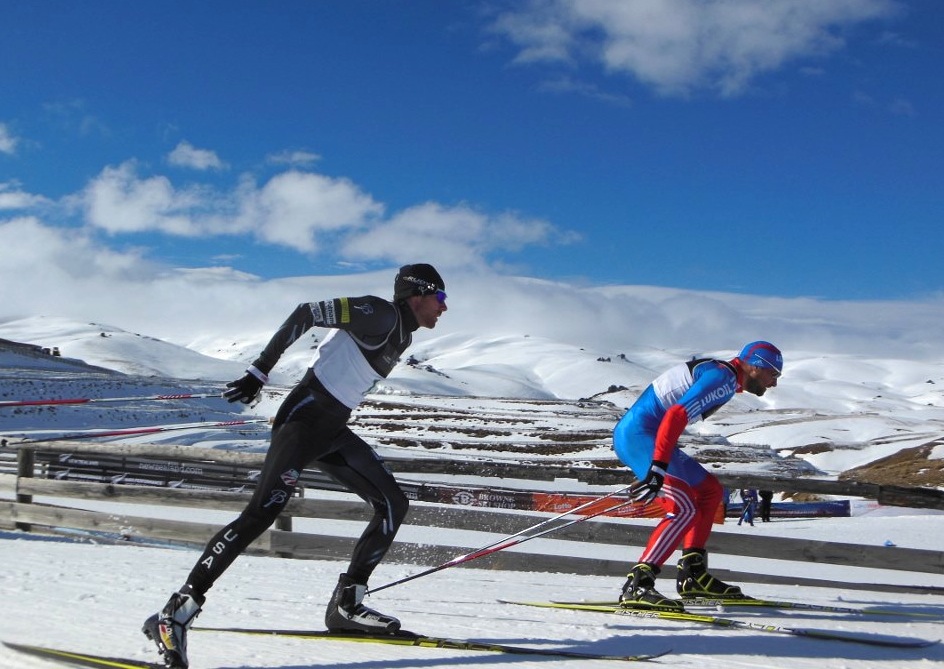
  • Lustgarten, Diggins Double Up on Wins at Winter Games NZ

    Lustgarten, Diggins Double Up on Wins at Winter Games NZ

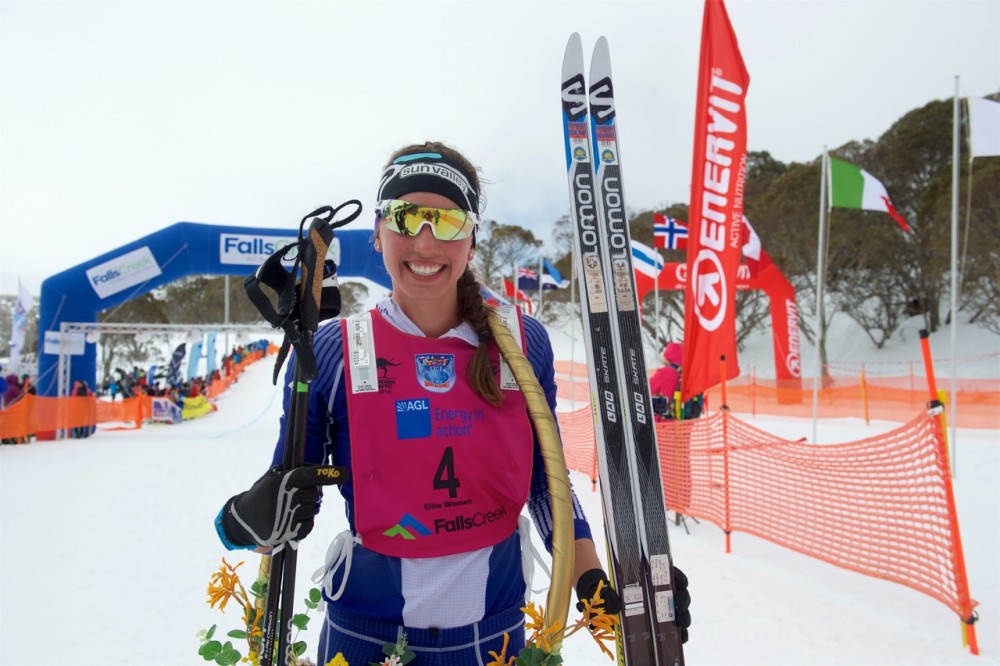
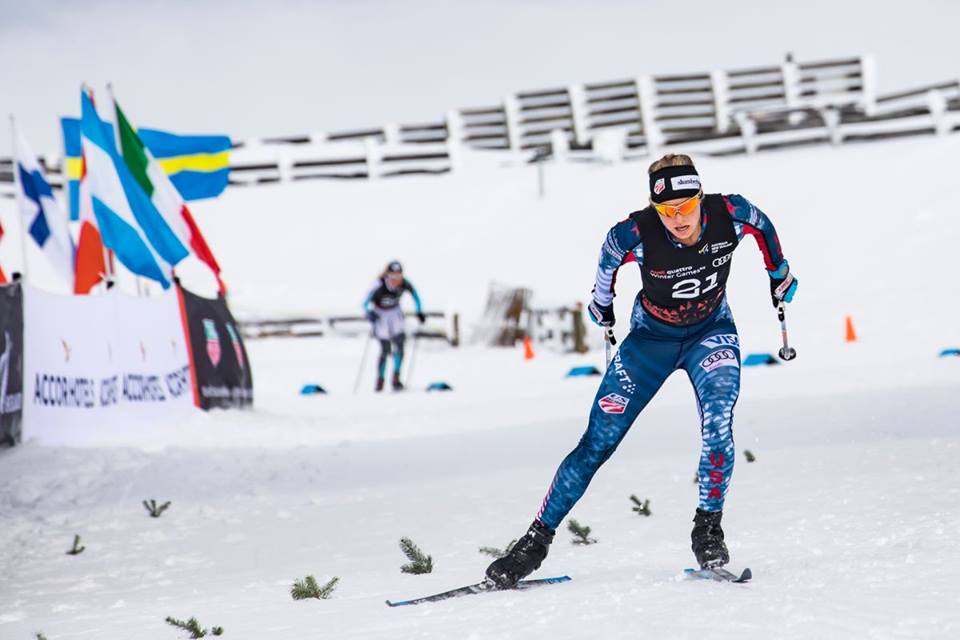
    Jessie Diggins of U.S. Ski Team and Stratton Mountain School Elite Team on her way to win the women’s 5-kilometer freestyle at the 2017 Winter Games NZ hosted by the Snow Farm in Wananka, New Zealand. (Photo: Winter Games NZ Facebook/Neil Kerr)

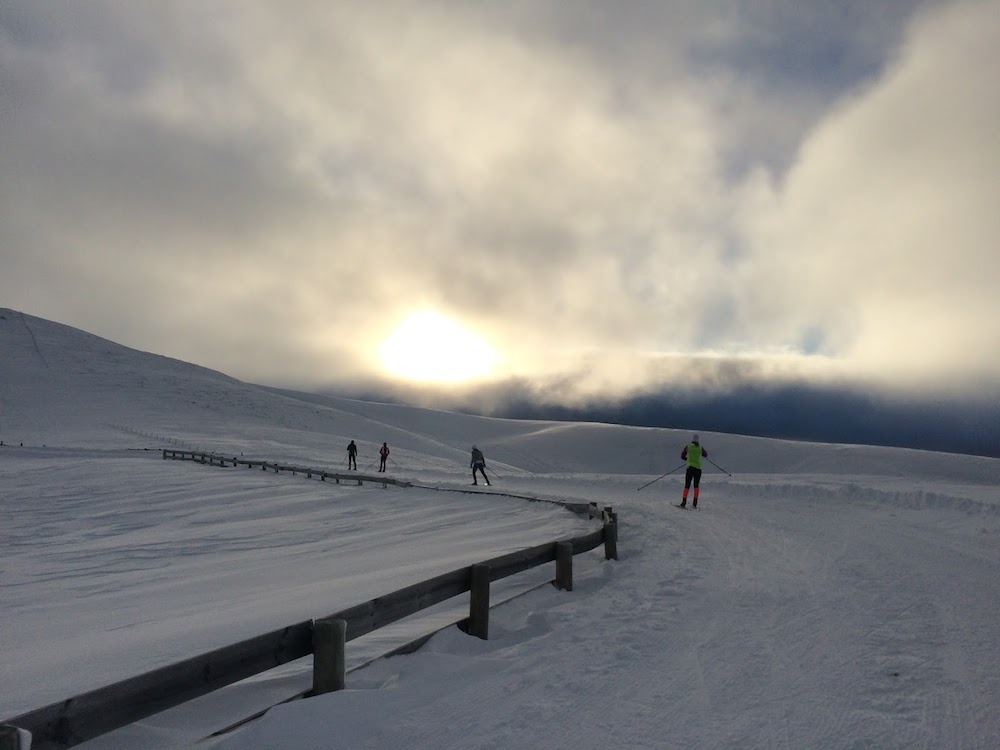
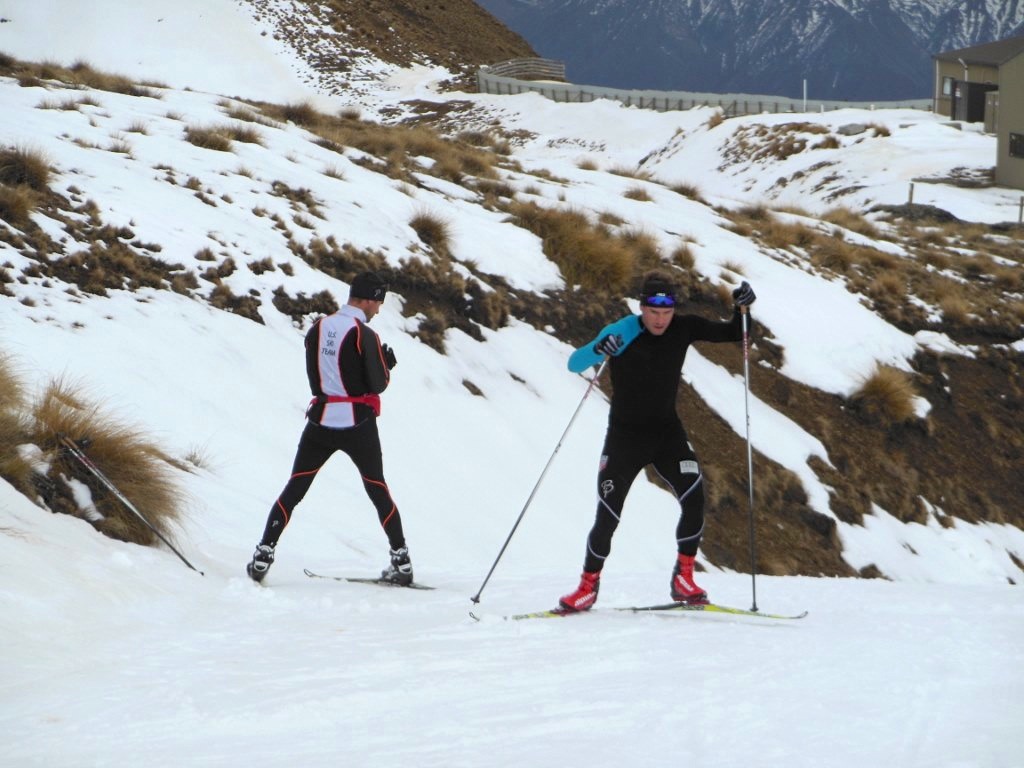
    What if getting to snow-covered groomed trails came in three steps — those literally being from the front door to the trailhead. While recent winters may make this seem like a melting dream for many, a number of Americans made it their reality these past two weeks while staying at the Snow Farm in Wanaka, New Zealand.

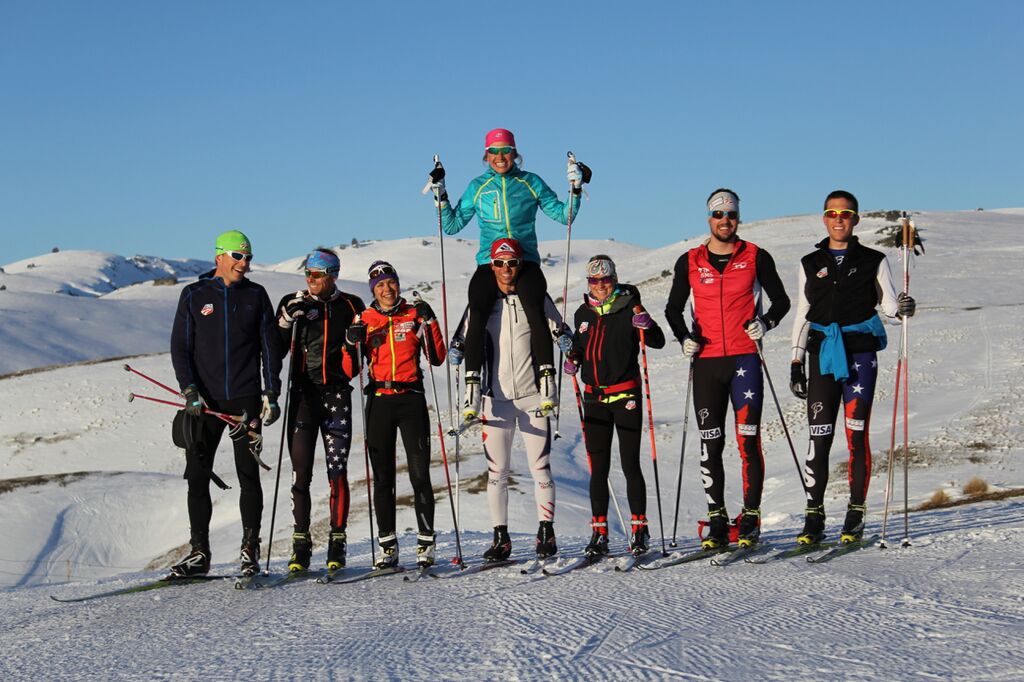
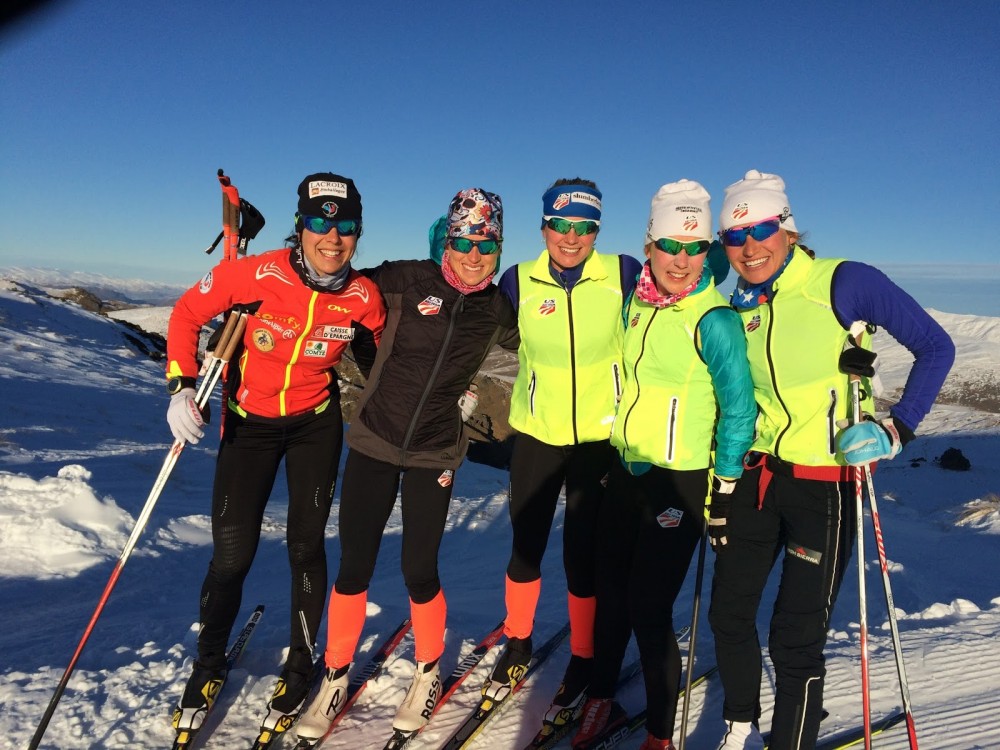
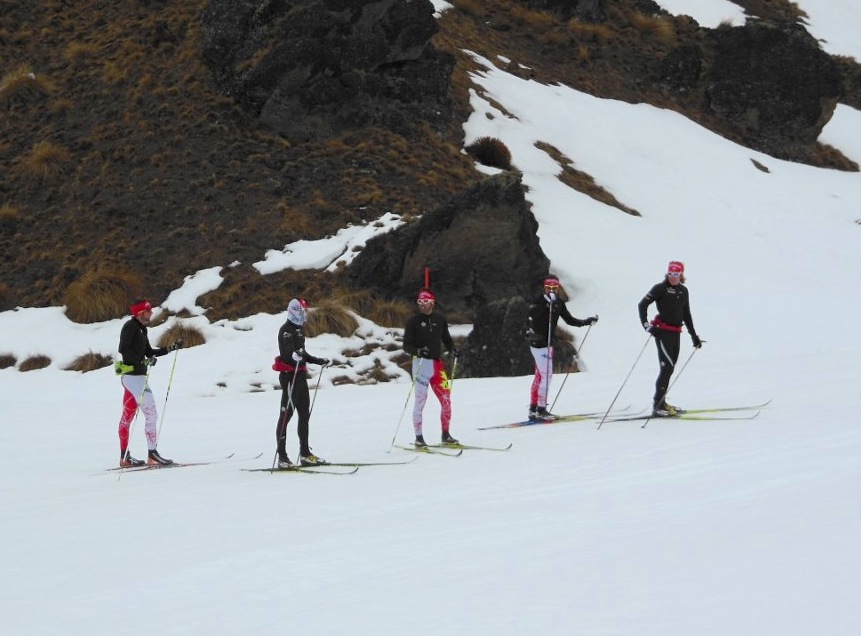
    U.S. Ski Team (USST) members, as well as American skiers representing the Craftsbury Green Racing Project (CGRP), Sun Valley Ski Education Foundation (SVSEF), Stratton Mountain School (SMS), and Team Gregg, flew more than 24 hours to take full advantage of the Snow Farm’s accommodations and 55 kilometers of groomed track for several weeks in late August/early September. While each program held its own respective training camp, the coinciding times made for an American medley of skiers on the farm. Jessie Diggins, Sophie Caldwell, Ida Sargent, Simi Hamilton, and development-team member Julia Kern all made the trip for the USST’s camp, which ran from Aug. 22 to Sept. 11. 

    According to USST Women’s Coach Matt Whitcomb, the New Zealand camp is not mandatory for all team members.

    “Being an Olympic year we want to individually tailor each plan [for each athlete],” he explained in an email.

    Liz Stephen and Kikkan Randall opted to train in Sweden with the Swedish national team earlier this summer, and Andy Newell prioritized summer rollerski racing in Norway.

    “The travel didn’t make sense to do both,” Whitcomb continued. “For snow, Kikkan has glacier time in Alaska and Liz will do Foret Montmorency in early November. The same was true for Andy … [who] wanted to try Norway instead of New Zealand. While Kikkan has come down to the Southern Hemisphere with us, it makes sense for the Alaskans [including Sadie Bjornsen, Erik Bjornsen, Scott Patterson, Rosie Brennan, and Hannah Halvorsen, who train with Randall with Alaska Pacific University] to use the excellent facility on Eagle Glacier.”

    For those that made this year’s New Zealand trip, he said it’s certainly worth it.

    “While the trip to New Zealand means airfare that can cost around $1200-1300, the Snow Farm cooks exceptional food, grooms around 30k daily, and provides cozy lodging,” Whitcomb wrote.

    “We had a strong group of Americans at the Snow Farm this year, which made for entertaining dinners and competitive ping pong matches,” he continued. “[SVSEF head coach] Chris Mallory is very good.  We partnered up with Craftsbury Green Racing Project, SMS Elite Team, and Team Gregg for a bunch of sessions, and that made for some really effective days.”

    Whitcomb further explained that for those USST athletes returning to the New Zealand training camp, a few things were done differently in terms of lodging.

    “We tried something new this year,” Whitcomb wrote. “We live and train at the Snow Farm, which is situated at 5,000 [feet].  This year we trained for 7 days, and then rented a house in a hip little town called Wanaka where we recovered near sea-level for two nights, and cooked our own food.  I think this played an important role in most athletes having strong second and third weeks up on the rock. If week three is too much of a struggle, the training doesn’t get absorbed effectively, and it dampens the benefits of the camp.”

    The opportunity to get on snow, as well as the convenience of its location with regards to lodging, were reasons enough for many non-USST members to also travel to the Southern Hemisphere.

    “Not having to commute to skiing saves a lot of time and energy that we can put into training and effective recovery,” Ben Lustgarten of the CGRP wrote in an email to FasterSkier. “It is also really nice being at 5000 feet instead of 9500 feet like it would be on a glacier in Europe, and the skiing terrain here is much more conducive to a variety of workouts: intervals, specific technique work, races, easy distance, flats, hills, etc. I loved our training camp last year on the Dachstein glacier, but a 3km loop at 9000ft that takes 45 minutes to get to is really hard and doesn’t offer the variety of training that we can do here.”
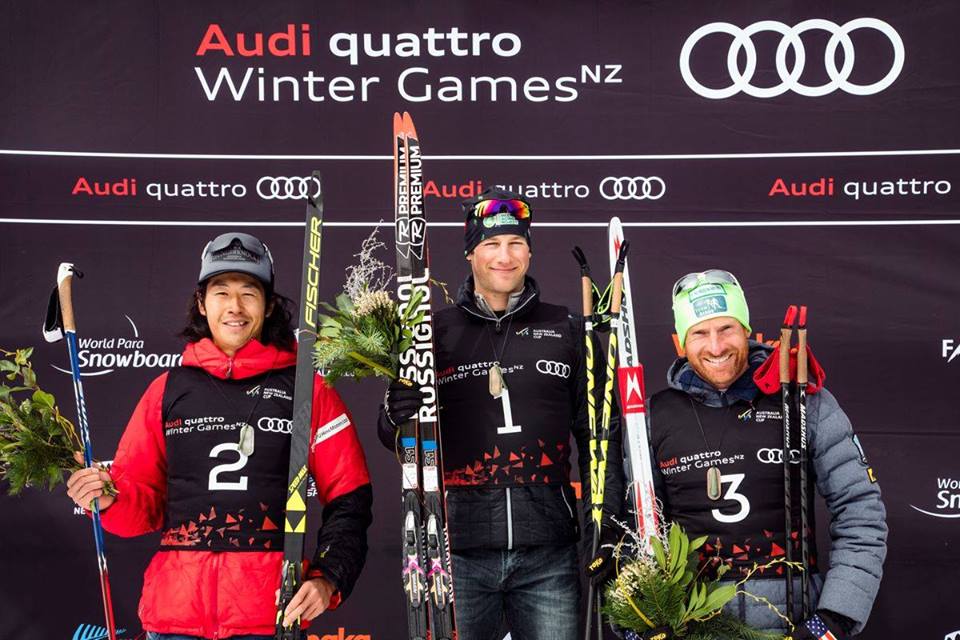
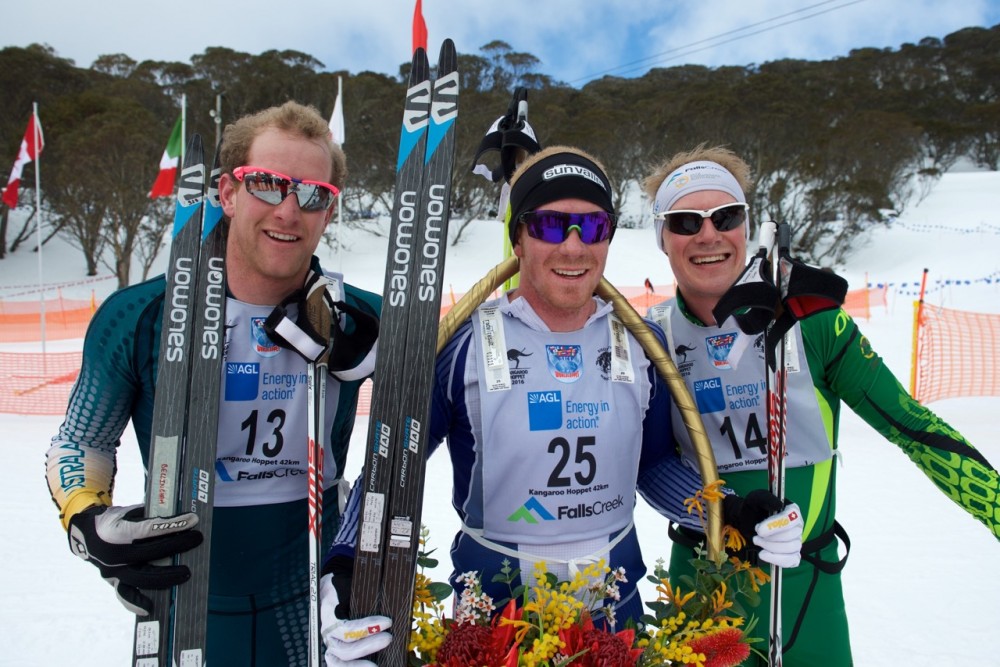
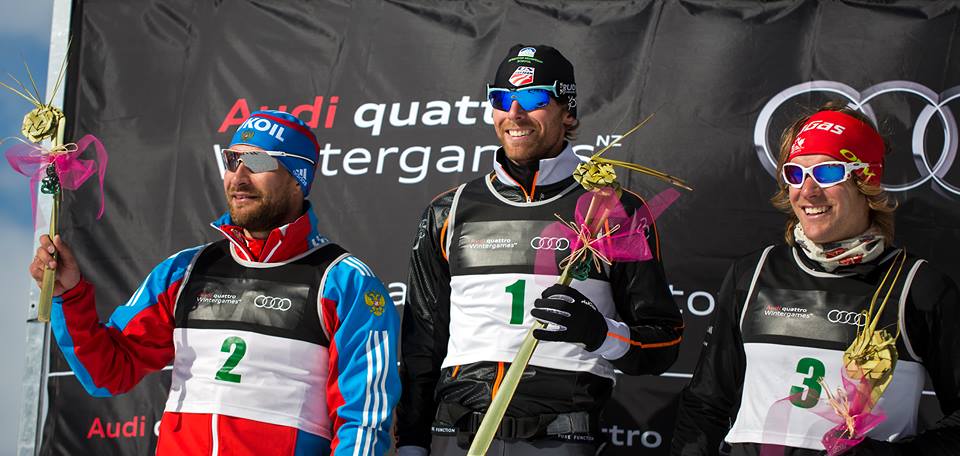
    (Left to right) Japan’s Kaichi Naruse in second place, American Ben Lustgarten (Craftsbury Green Racing Project) in first and American Brian Gregg (Team Gregg) in third after the men’s 10 k freestyle, part of the Australia/New Zealand Cup, at the 2017 Winter Games NZ at the Snow Farm in Wananka, New Zealand. (Photo: Winter Games NZ Facebook/Neil Kerr)

    Several Americans also competed in the Snow Farm’s Winter Games NZ races, which featured a men’s and women’s 1.6 k classic sprint, 5/10 k freestyle races and a 10/15 k classic mass starts, all part of the Australia/New Zealand Cup.

    Some of them had already raced a Worldloppet marathon earlier in their stay, and Whitcomb explained each athlete’s race schedule in New Zealand varied depending on how they absorbed the training load. USST athletes were encouraged to do two to four races, choosing between the 42 k or 21 k Merino Muster Worldloppet and three Winter Games NZ races.

    “When it goes well, we stack it high,” he wrote.

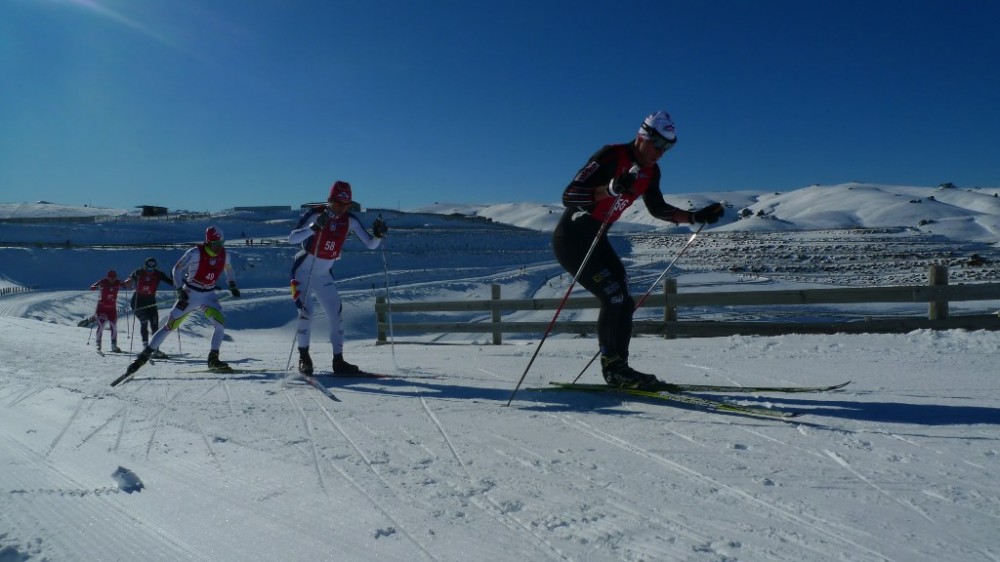
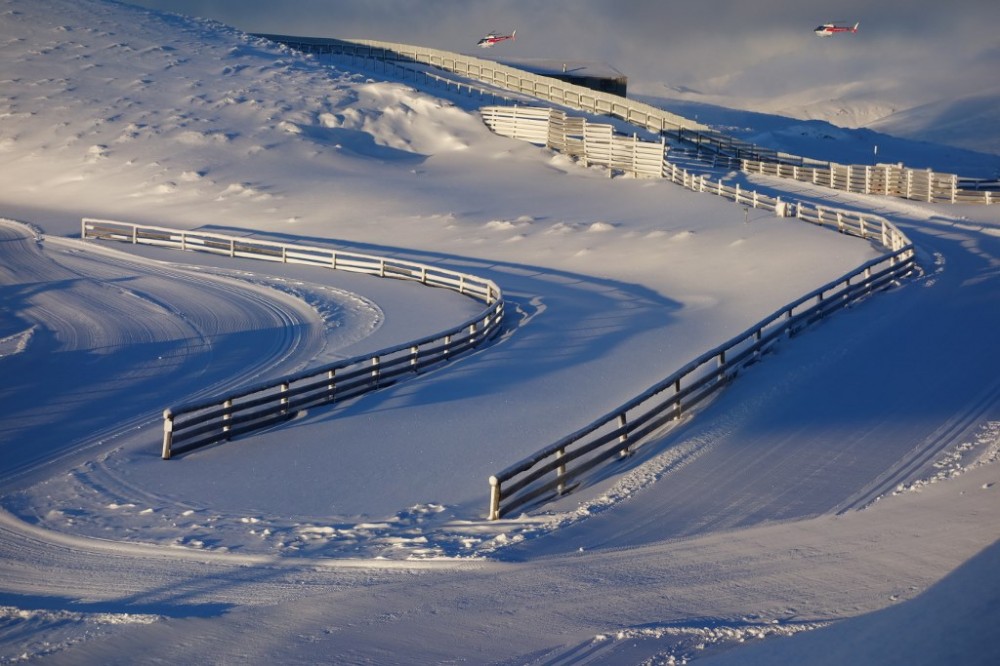
    Racing kicked off on Thursday, Sept. 6, with the men’s 10 k and women’s 5 k individual starts. A light dusting of fresh snow covered the 2.5 k race loop, which challenged racers to a series of short steep uphills and two twisty downhills.

    That didn’t slow Lustgarten, who won the men’s 10 k in 27 minutes, 35.5 seconds. After pacing his first two laps and slowing a bit in his third, the 25-year-old Burlington, Vt., native heard his time was not too far from the win and went for it.

    “I got a split that I was 2 seconds from the lead with a lap to go, which made the last few minutes really painful, but I managed to get the win which was really exciting!” Lustgarten wrote. “I haven’t won a skate race in a really long time, so I was happy about that.”

    Finishing 8.9 seconds back from Lustgarten’s time was Japan’s Kaichi Naruse in second. American Brian Gregg of Team Gregg/Loppet Nordic Racing rounded out the podium in third (+49.7). Also making the top five were Americans Adam Martin (CGRP) in fourth (+51.9) and Matt Gelso (SVSEF) in fifth (+2:02).

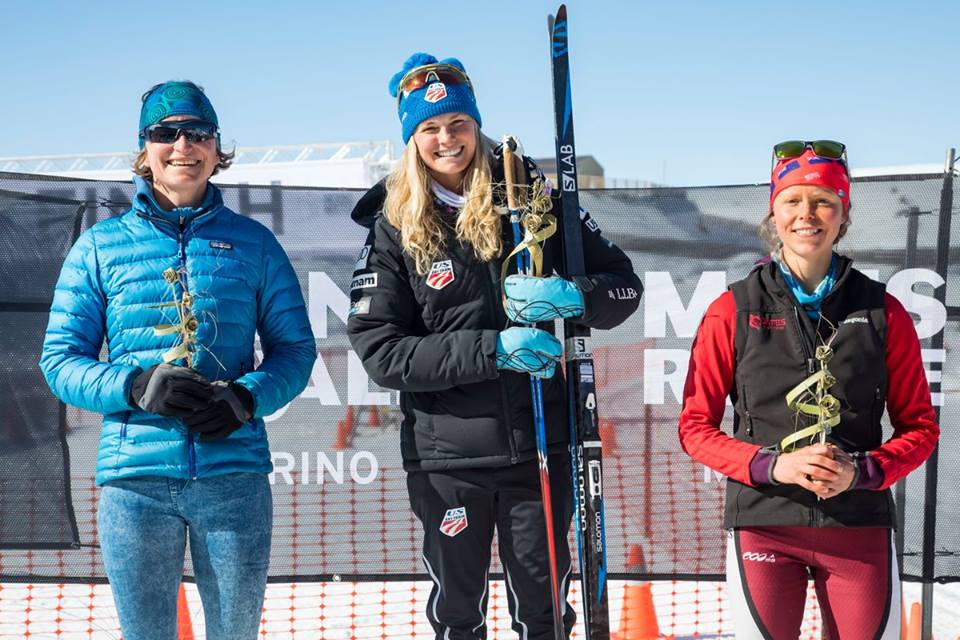
    In the women’s 5 k, Diggins (USST/SMS Elite Team) came away with the win, covering the course in 14:53.8. Australian Barbara Jezersek followed 9.9 seconds back in second place, and Caldwell (USST/SMS Elite Team) reached the podium in third (+10.5). Rounding out the women’s top five were Caitlin Patterson (CGRP) in fourth (+34.7) and Caitlin Gregg (Team Gregg/Loppet Nordic Racing) in fifth (+42.8).
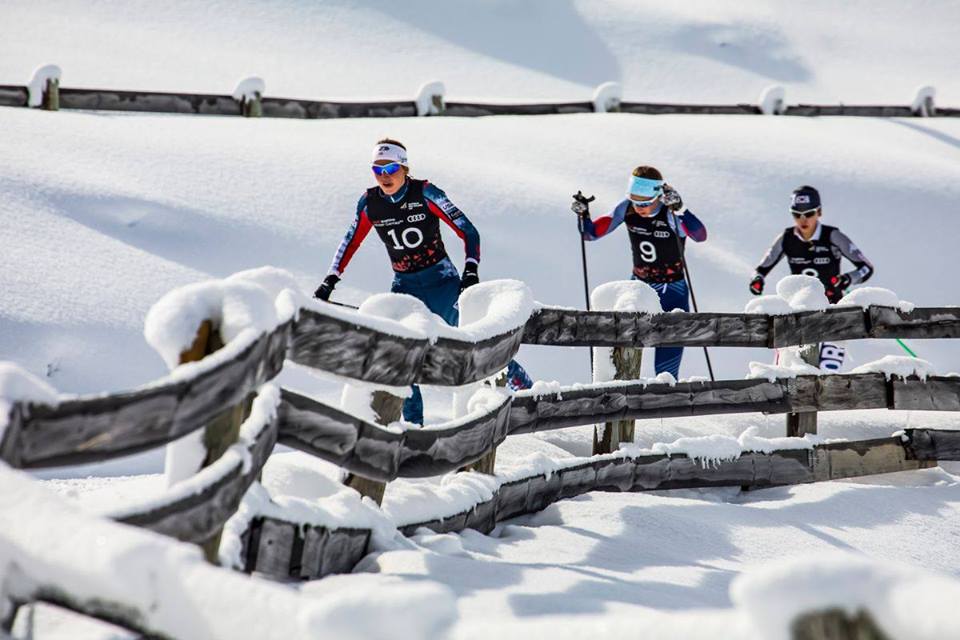
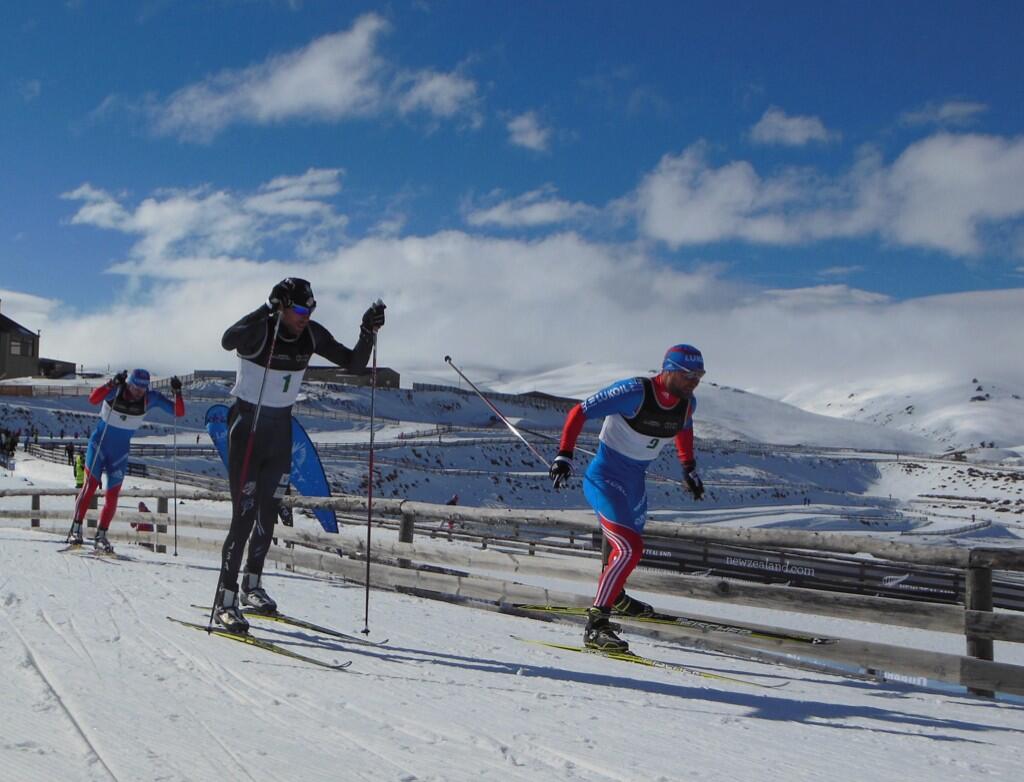
    Sophie Caldwell (10) of U.S. Ski Team and SMS Elite Team racing to third in the women’s 5 k freestyle at the 2017 Winter Games NZ at the Snow Farm in Wananka, New Zealand. (Photo: Winter Games NZ Facebook/Neil Kerr)

    “It was phenomenal!” Diggins said, according to a U.S. Ski & Snowboard press release. “They did so well to find all those hills—I like hills—and it was impressively hard.”

    Skiers returned Friday for the men’s and women’s 1.6 k classic sprints. Caldwell returned to the podium, this time in first, besting her USST teammate, Ida Sargent (USST/CGRP) in second and Patterson in third.

    “It’s only September and we still have two months before we head to Europe, but it’s always nice to have some encouraging races that confirm the training is paying off,” Caldwell told U.S. Ski & Snowboard. “I’ve had a really productive camp and was happy to end it with a win in the sprint and a third in the 5k, which was probably one of my best-ever distance skate results!”

    In the men’s sprint, Ben Saxton of the SMS Elite Team took the win, ahead of Lustgarten in second and Naruse in third. Saxton chose to double pole through the rounds, which were run in four heats of four, seeing the race as an opportunity to try different race tactics. 

    “I just love double poling, and getting a chance to stress and test that technique in a racing situation is always a valuable learning experience,” Saxton wrote in an email to FasterSkier.

    “I thought the trip was a really special opportunity to work on some technical aspects of skiing that don’t totally translate from snow to asphalt,” he continued. “Additionally, the diverse crowd of skiers at the Snow Farm ensured that the quality of training stayed high for all 3 weeks which always leads to big gains.”

    After using classic skis in the qualifier, Lustgarten also opted to double pole the heats, due to what he described as “slick” conditions.

    “Double poling the heats was a good idea with the downhill finish, but I felt incredibly awkward on the herring bone because I was so scared I would accidentally glide using my skate boots and skate skis, so I lost a few seconds on the climb but kept within the rules,” Lustgarten wrote. “Races this early in the season are good to point out what I need to work on, and I definitely need to add herring bone to the list.

    “I managed to make it to the A-Final and was right behind Saxton when he took off over the first long climb, and when he made a gap of 2 seconds or so he secured the win,” he continued. “I was happy to double pole past Japanese racer Kaichi for second place.”

    Lustgarten once again returned to the podium on Saturday, Sept. 9, the third consecutive day of racing, in the men’s 15 k classic mass start. With wind blowing snow into nearly white-out conditions, Lustgarten indicated that half of the battle was simply staying on course. He and his new CGRP teammate, Martin forged to the front joined only by Naruse after lap 1 of 4.

    “I had to snowplow a lot of the downhills and just look for the edges of the track,” Lustgarten wrote.  “It was hard to make any moves because every downhill we hit the leader would have to slow down a bit to see where the trail was, and those following would just rest and catch up.”

    Heading into his final lap, Lustgarten surged during one of the herringbone hills in an attempt to separate himself from Martin and Naruse.
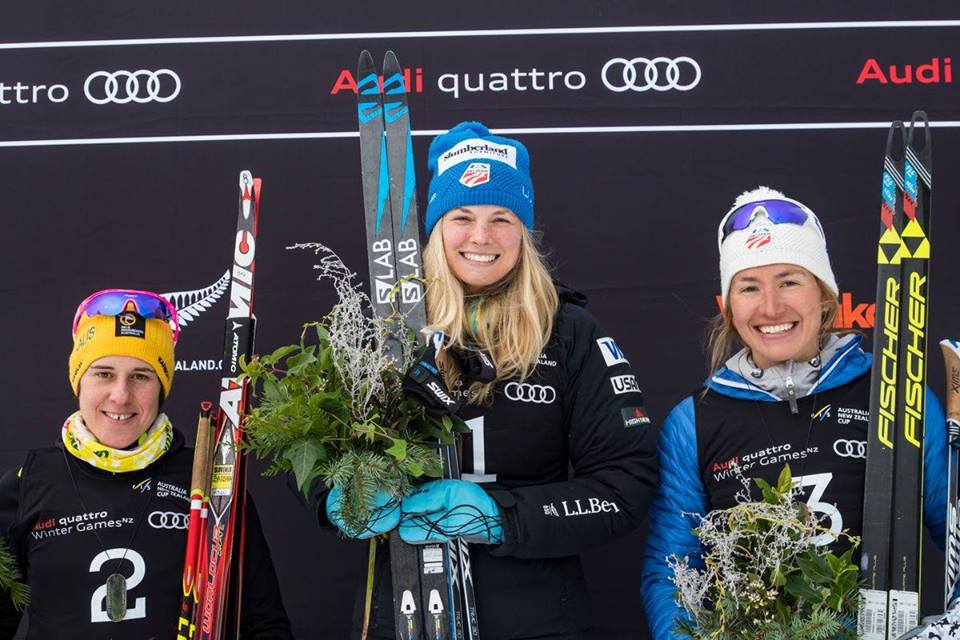
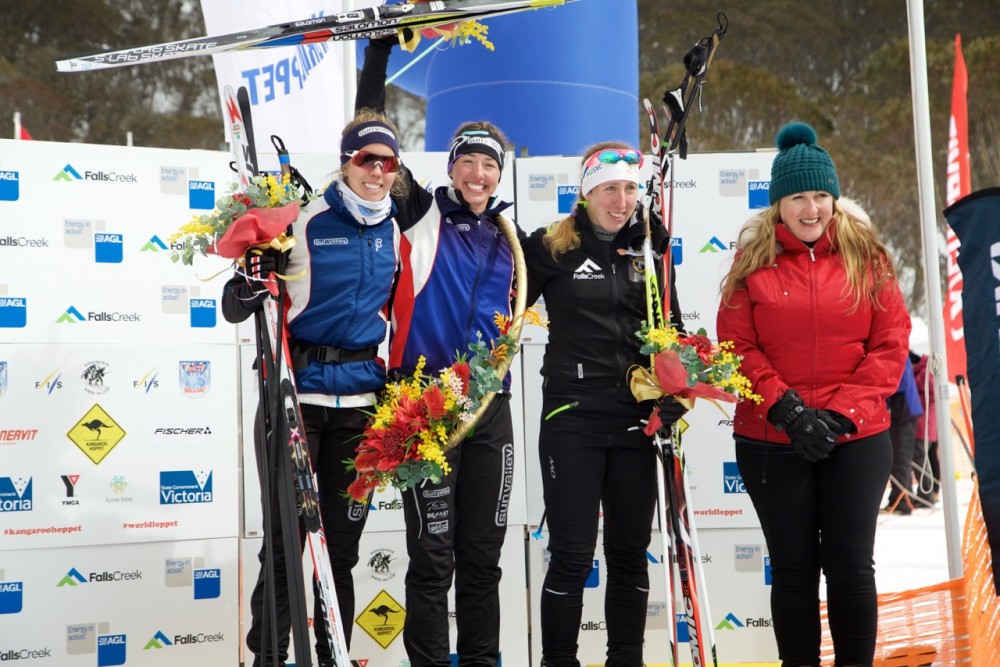
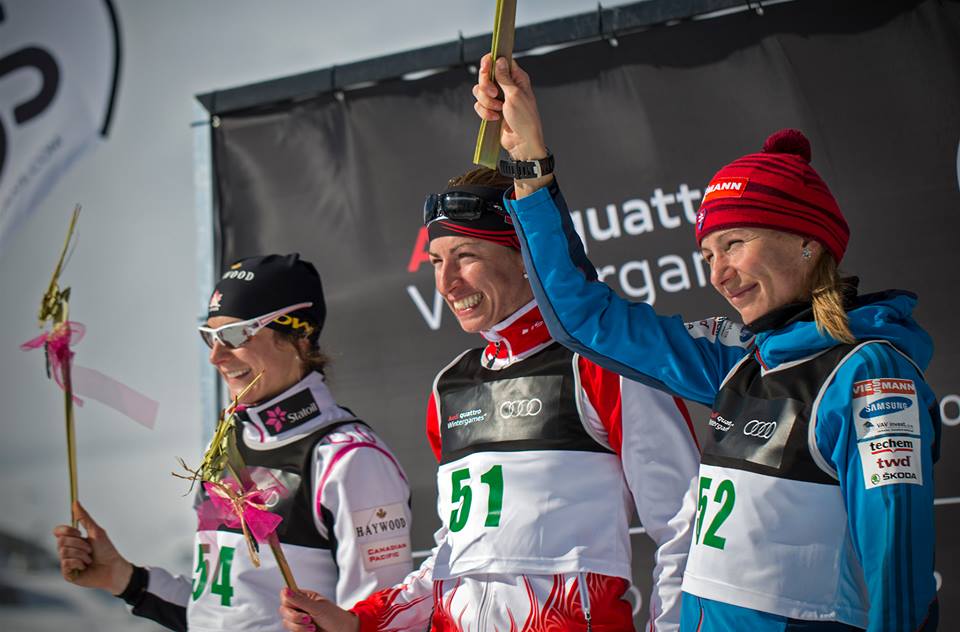
    (Left to right) Australia’s Barbara Jezersek in second place, American Jessie Diggins (USST/SMS Elite Team) in first and American Caitlin Gregg (Team Gregg) in third after the women’s 5 k freestyle at the 2017 Winter Games NZ at the Snow Farm in Wananka, New Zealand. (Photo: Winter Games NZ Facebook/Neil Kerr)

    “I got about 1-2 seconds on Adam and Kaichi, and realized that I had to use that gap to try and win the race,” Lustgarten wrote. “I really did not feel like I had the energy to outkick anyone, so I wanted to see if I could get a gap. I burned all of my matches on the first 75% of the last lap cresting hills hard and climbing hard and making sure to double pole really well on the flats. I was completely exhausted by the last climb but had enough of a lead to secure the win! And I was so excited to see Adam come in second!”

    Lustgarten finished first in 47:50.8, while Martin crossed 23.3 seconds later in second. Naruse claimed third, 32.8 seconds back from Lustgarten.

    In the women’s 10 k, Diggins won in 34:49.9, besting Patterson in second by 26.6 seconds. Sargent snagged third, 1:00.3 back from Diggins.

    After returning to the U.S., USST members are currently training individually or with their clubs, Whitcomb explained. They’ll reunite Sept. 28 to Oct. 13 for a final dryland camp in Park City, Utah, where they’ll have a guest athlete from the German women’s team.

    Results:

    Men’s 10 k freestyle | Women’s 5 k freestyle

    Men’s classic sprint | Women’s classic sprint  

    Men’s 15 k classic mass start | Women’s 10 k classic mass start

  • Americans Dominate 2017 Merino Muster and Half Marathon

    Americans Dominate 2017 Merino Muster and Half Marathon

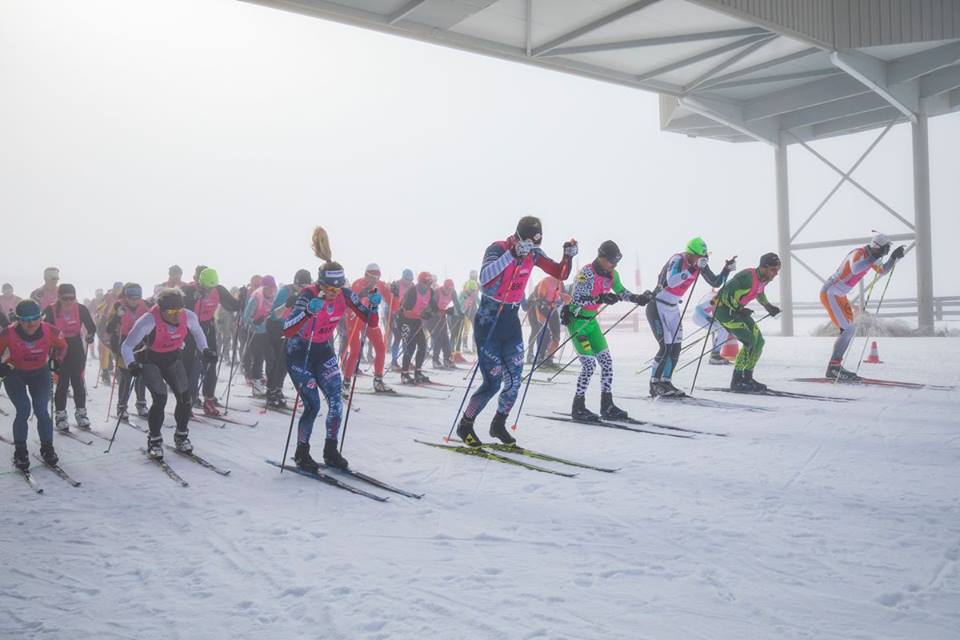
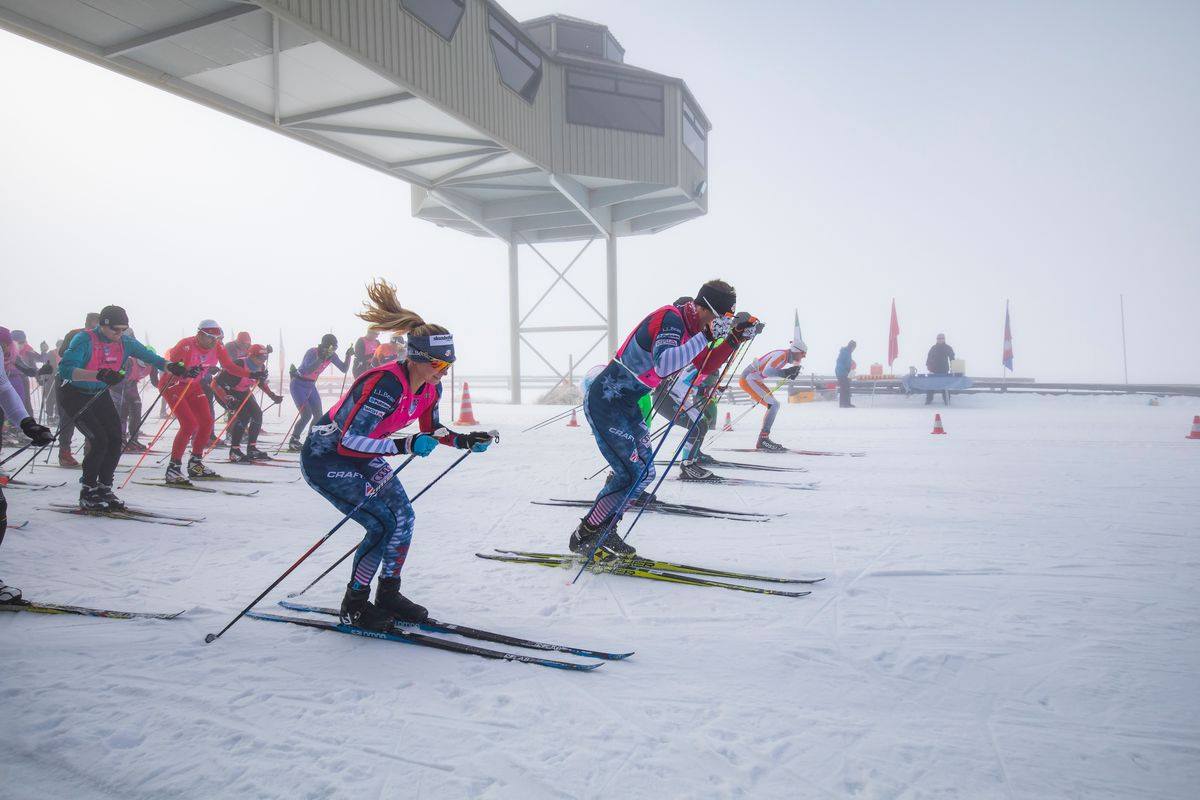
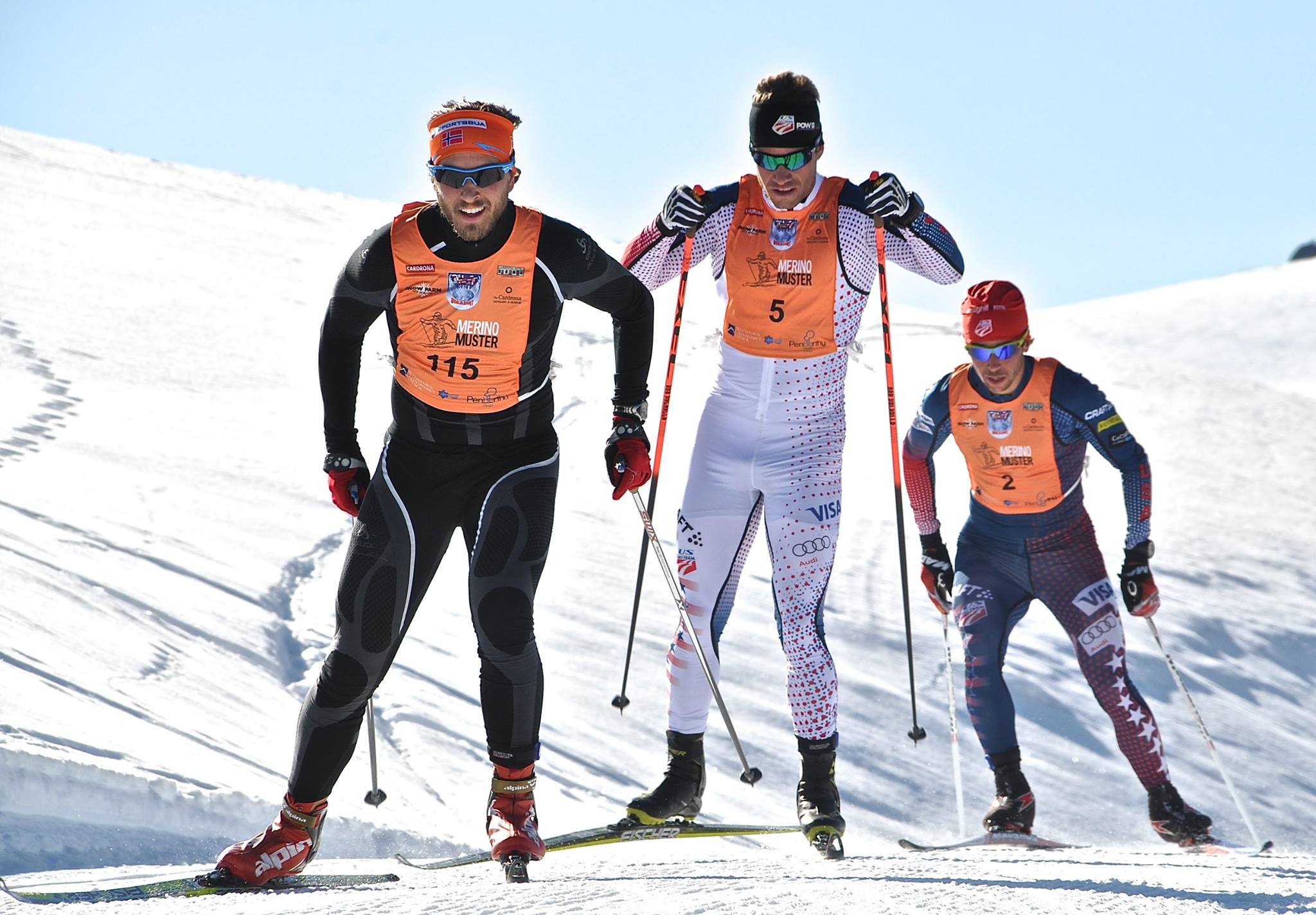
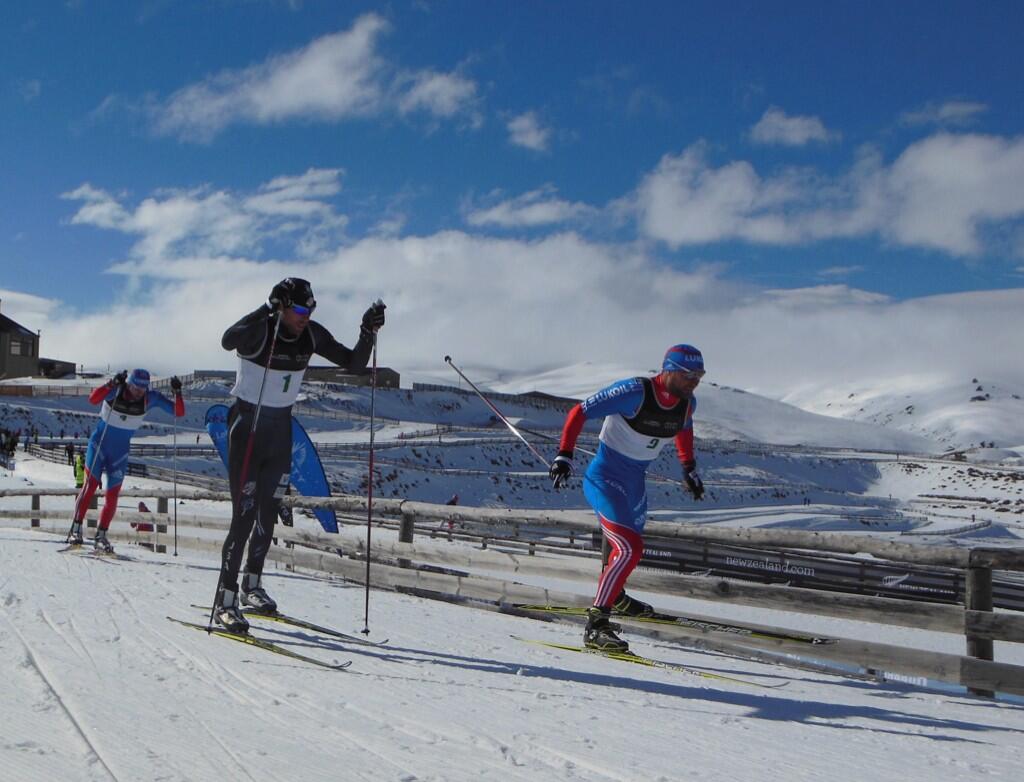
    The start of the 2017 Merino Muster 42-kilometer on Sept. 2 at the Snow Farm near Wanaka, New Zealand, with Americans Jessie Diggins and Simi Hamilton (in blue) up front. (Photo: Winter Games NZ Facebook/Neil Kerr)

    Visibility was thin and temperatures were below freezing last Saturday at the Snow Farm. Opaque white clouds of fog swept over the landscape near Wanaka, New Zealand, showcasing a skyline that seemed to play on the country’s largest historical farm industry: sheep. If bluebird skies and sun had greeted competitors in previous years, racers in the 2017 Merino Muster experienced temperatures around -5 degree Celsius (23 Fahrenheit) and a four-meter radius of visible track, then fog, for most of the 42-kilometer marathon.

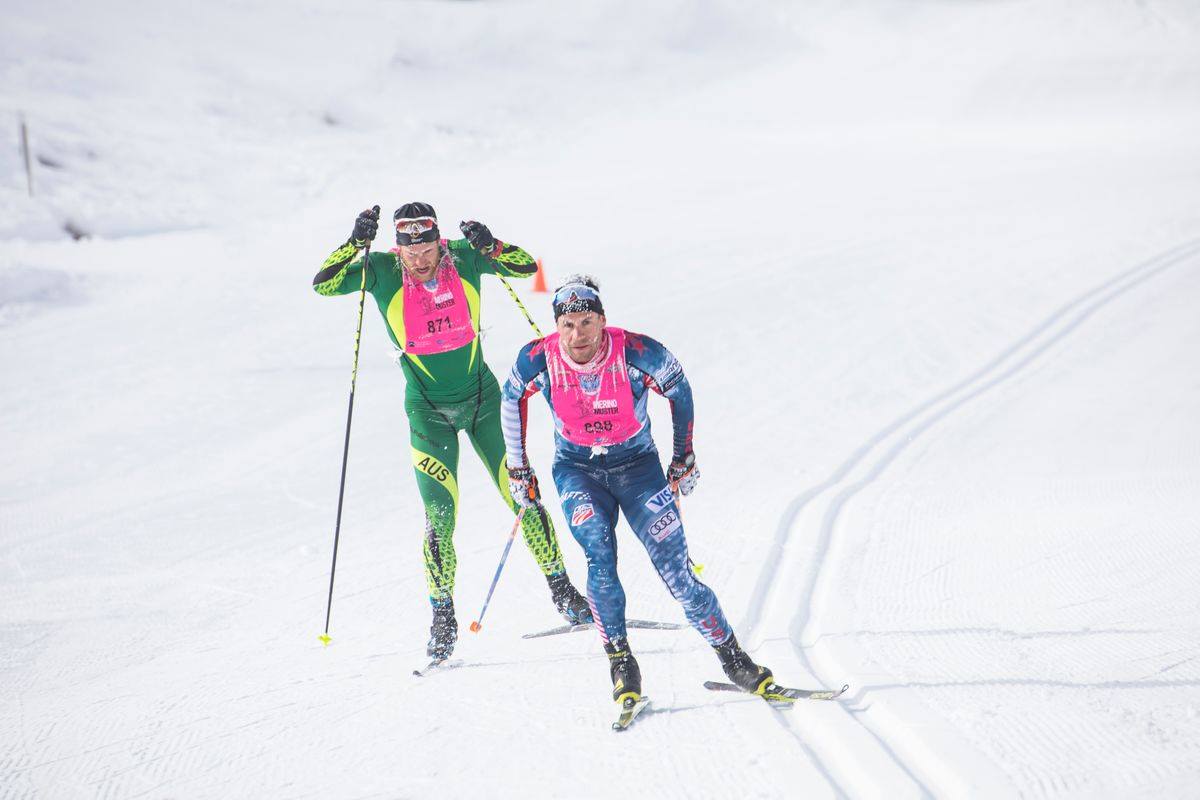
    Simi Hamilton (U.S. Ski Team) leads Phillip Bellingham during the 42 k Merino Muster on Sept. 2 at the Snow Farm in Wanaka, New Zealand. Hamilton ultimately won and Bellingham placed third, 2 seconds back. (Photo: Winter Games NZ Facebook/Neil Kerr)

    The flutter of his own pole grips passing in his peripherals might have been the only company U.S. Ski Team (USST) A-team member Simi Hamilton saw during the race, had it not been for American Brian Gregg and Australian Phillip Bellingham.  

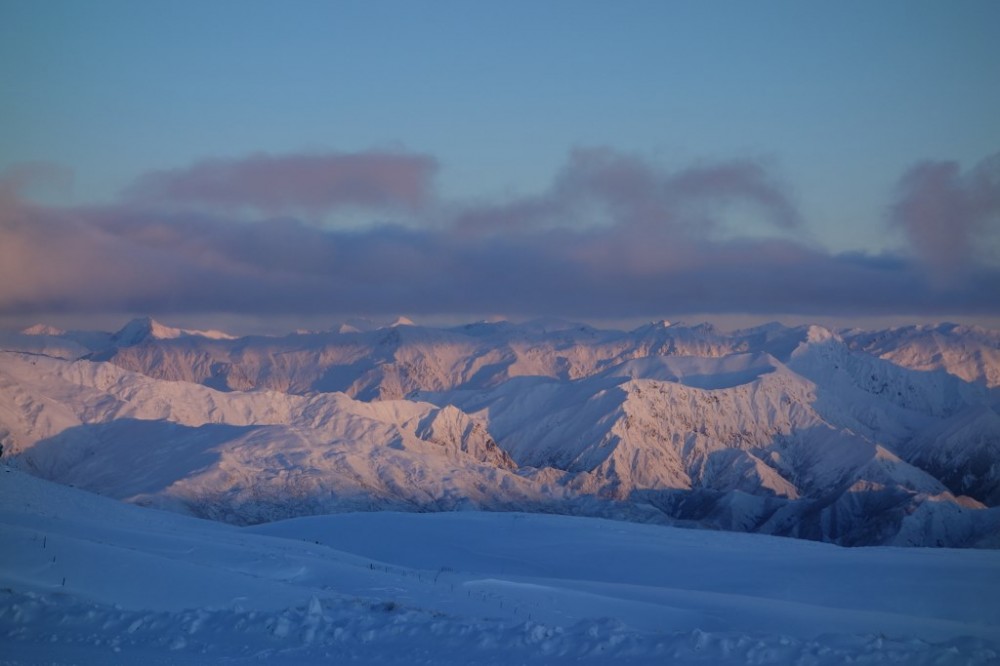
    The two contenders followed Hamilton from the start, and within the first few kilometers, all three had broken away from the rest of the 80+ men’s field to form a lead group. Together, the two Americans and Australian forged through the next 40 k, taking turns leading through the day’s scrim that hid the panoramic views of the Pisa mountain range that surround the Snow Farm.

    “It was incredibly foggy all morning,” Hamilton wrote in an email. “I think we would have all gotten a little lonely out there if we had been skiing on our own.”

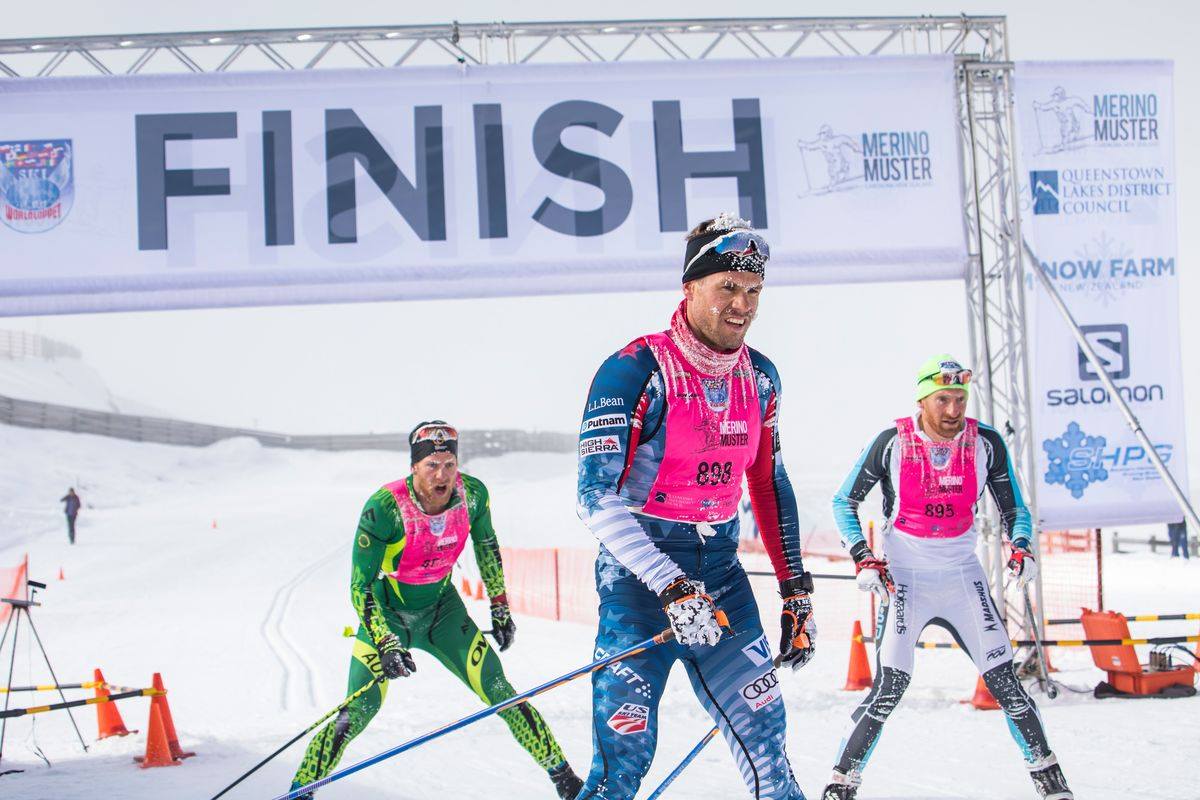
    The trio kept each other company for the entirety of the race, but by the final two kilometers, Hamilton had staked his spot in the front. As Hamilton headed into the finishing stretch, both Bellingham and Gregg pushed to keep up with his pace. He ultimately held off Gregg by a second and Bellingham by 2 seconds to take the win with a finishing time of 1 hour, 40 minutes and 33 seconds.

    “My energy felt good both years, but last year I had trouble accessing my sprint/[Level 4] gear in the final 2 kilometers of the race,” Hamilton wrote. “This year, I felt more comfortable skiing level 3 and I found that it was much easier to access my sprint gear at the very end.”

    The victory is Hamilton’s first in the Merino Muster, which has been running for 23 years, the last three of which its been part of the Worldloppet marathon series. He first raced the marathon last season and finished second to his then-teammate Noah Hoffman (who won in 1:45:08 by 23 seconds over Hamilton). Upon returning, Hamilton had some specific objectives.

    “The primary goal (both last year and this year) is to get in a really solid level 3 workout, with a hard effort at the very end,” Hamilton wrote. “It’s great terrain to be able to do that on because it’s all very rolling and you can maintain a really consistent effort the whole time without burying yourself too deep. And I think it’s always important to put on a race bib this time of year from time to time in order to start getting back into the race routine before the season really starts.”

    Simi Hamilton (c) of the U.S. Ski Team after taking the win in the 2017 Merino Muster marathon on Sept. 2 at the Snow Farm in New Zealand. He held off fellow American Brian Gregg (r) by one second and Australia’s Phillip Bellingham by 2 seconds.(Photo: Winter Games NZ Facebook/Neil Kerr)

    Gregg’s second-place result came at his first Merino Muster, an event he was able to enter since he was in New Zealand for a training camp with his wife and Team Gregg teammate, Caitlin Gregg. The two arrived in New Zealand on Aug. 22 and planned to train there until the second week of September.

    “Our dates ended up aligning with the USST camp dates as well and it has been a lot of fun joining them for workouts,” Brian wrote. “At the start of the second week down here athletes from Craftsbury, Stratton and Sun Valley arrived so we have had a large US representation. My brother and sister in law also made the trip down to race the Muster and help support our training. They both work remotely for their companies and it has been a blast to have them here with us.”

    While he indicated that his summer training had been going well, the race itself was an invaluable opportunity for Gregg to tackle technique. Following Hamilton for an extended hard effort was one of his primary aims, not to mention testing his sprint speed against one of the U.S.’s top sprinters.

    “One of my specific goals for this race was to ski with Simi,” Gregg wrote. “I think he is one of the better technical skiers in the world especially in V2 and following his smooth rhythm has been helpful for my own technique. Technical adaptations on snow has been my biggest goal of the camp and the race offered a focused 1 hour and 40 minutes of that.

    “Swapping leads with Simi allowed me the opportunity to make technical adjustments through mimicry and then I could take the lead and make the technique more my own,” Gregg continued. “Although my goal was also to win the race I can hardly complain about being able to match the finishing sprint of a World Cup Winner.”

    Bellingham, an Australian national team member, rounded out the men’s marathon podium in third, just two seconds out of first. A week prior to the Merino Muster, Bellingham competed in the 2017 Kangaroo Hoppet in Falls Creek, Victoria, where he placed second to American Miles Havlick.

    Diggins 1st Woman, 4th Overall 

    In the women’s 42 k race, which started with the men, USST A-team member Jessie Diggins took the win with a time of 1:51:42 for fourth place overall. Diggins explained that while she was able to ski with the front group of men for the first few kilometers, she eventually settled into a pace that was more her own.

    The all-American women’s podium at the 2017 Merino Muster on Sept. 2 at New Zealand’s Snow Farm, with Jessie Diggins (c) of the U.S. Ski Team in first, Hannah Dreissigacker (l), formerly of US Biathlon, in second, and Britta Clark (r) in third. (Photo: Winter Games NZ Facebook/Neil Kerr)

    “We all started together but after 3-4km I knew I couldn’t hang with the lead guys the whole race, so I dropped back a bit,” Diggins wrote in an email. “I didn’t have to ski alone though, which was really nice!”

    For much of the race, Diggins skied with Estonian Joosep Tammeme, a change from last season when she paired with her USST teammate Liz Stephen for most of the marathon.

    “Last year was super fun because I got to ski with Liz the entire race,” Diggins wrote. “This year I had a really nice Estonian man to partner with but nobody can replace Liz Stephen!”

    Thirty-one seconds behind Diggins, Tammeme, the fourth male, finished fifth.

    With the Merino Muster behind her, Diggins will look to finish off the remainder of the USST’s three-week training block in New Zealand.

    The start of the 2017 Merino Muster 42-kilometer on Sept. 2 at the Snow Farm near Wanaka, New Zealand, with Americans Jessie Diggins and Simi Hamilton (in blue) up front. (Photo: Winter Games NZ Facebook/Neil Kerr)

    “The Merino was a fun way to get a long intensity session in during the week and ski hard while also enjoying the feeling of racing again!” Diggins wrote. “Huge, huge thanks to the entire crew here at the Snow Farm. They always treat us so well and make sure the trails are groomed perfectly for great training. This is my favorite camp so I’m really grateful to them for making space for us down under!”

    The second woman after Diggins, 10 minutes and 17 seconds back, was retired American biathlete Hannah Dreissigacker, who has been working at the Snow Farm over the past few months. Dreissigacker, 30, explained that the race was her first since her retirement in the spring of 2016, and though she had remained relatively active leading up to it, gunning for the win wasn’t a goal.

    “I’ve been doing a variety of work in the office as well as coaching and instructing and I’ve been trying to get out and ski whenever I can,” she wrote in an email. “But I definitely went into the race with low expectations.”

    The Vermont native, instead saw the race — which ended up being her longest workout of the Southern Hemisphere’s winter — as more of an opportunity to do something she loved: skiing.

    “The race split up immediately for me — I knew better than to try to stay with Jessie at all,” Dreissigacker wrote. “I skied with an older Russian skier, and then by myself, keeping the pace comfortable and I was very happy to feel good the whole time! There was some low-visibility off the start but the trails were in great condition and it was a fun first race as a ‘master blaster’.”

    Rounding out the women’s podium in third (+17:24) was American and 2016 Bates College graduate Britta Clark.

    In the 21 k “Snow Rake”, USST A-team member Sophie Caldwell took the overall win in a time of 51:21. Just one second behind her was Caitlin Gregg in second place, while the third woman was U.S. Paralympics Nordic Head Coach Eileen Carey (+5:48). The first man in third overall (+4:44) was U16 skier Campbell Wright, of New Zealand.

    Results: 42 k | 21 k

  • USST Returns From New Zealand Training Camp (with Photo Gallery)

    USST Returns From New Zealand Training Camp (with Photo Gallery)

    Left to right: U.S. teammates Ida Sargent, Jessie Diggins and Katharine Ogden during their first ski of the camp at Snow Farm in Wanaka, New Zealand. (Photo: Erika Flowers)
    U.S. teammates Ida Sargent (l), Jessie Diggins (c) and Katharine Ogden during their first ski of the U.S. Ski Team’s camp at the Snow Farm in Wanaka, New Zealand. (Photo: Erika Flowers)

    Four inches of snow on one day, gray storm clouds and drizzling rain the next, followed the day after by blue skies, sunshine, and groomed trails of corn-snow. When it came to this year’s forecast for the U.S. Ski Team’s (USST) on-snow camp in Snow Farm, New Zealand, the weather was anything but consistent.

    For many American athletes and coaches who spent Aug. 30 to Sept. 14 training on the southern end of the country’s South Island, however, the inconsistency in weather was warmly welcomed.

    “New Zealand is the perfect place to work on technique!” Stratton Mountain School (SMS) T2 skier Erika Flowers, who joined the USST for its 16-day camp, wrote in an email. “The conditions change daily so we also had the opportunity to ski in many different conditions (think fluffy dry snow, pouring rain, wind, sun, icy, soft, slushy, and even some perfect corduroy) and practice adjusting technique based on weather, snow, terrain, etc. ”

    Skiers double pole up a hill during the USST's training camp at the Snow Farm in Wanaka, New Zealand. (Photo: Matt Whitcomb)
    Skiers double pole up a hill during the USST’s training camp at the Snow Farm in Wanaka, New Zealand. (Photo: Matt Whitcomb)

    It was not just opportunity to practice skiing in varying conditions that made Snow Farm — one of the USST’s favorite summer training destinations since 2002 — once again a top pick to return to. In her second visit to the Snow Farm, current USST member Jessie Diggins described the area as also having the perfect mix of training terrain.

    “I absolutely love this training camp,” Diggins wrote in an email. “It’s amazing skiing with 35km of groomed tracks, really fun crust skiing since it’s springtime here, and the terrain includes all the elements I like to work on: steep climbs, rolling tracks, turning downhills!…I don’t think the travel is actually much worse than going to Europe because once I get here, I adjust quickly every year and jump right into quality training!”

    Including Diggins and Flowers, a total of 10 athletes ventured to the Snow Farm with the U.S. team. Ida Sargent, Sophie Caldwell, Liz Stephen, and development-team member Katharine Ogden made up the rest of the women’s contingent, and U.S. men’s team veterans Andy Newell, Simi Hamilton and Noah Hoffman trained with SMST2 skier Ben Saxton.

    While Flowers and Saxton are not current USST members, U.S. head coach Chris Grover explained the team invited them to the camp.

    “We don’t create selection criteria for non-USST athletes to join camps; we simply invite athletes to join camps when we feel they will add quality training partners to the group, the camp will benefit their own development and help them get better, and we have the space and resources to accommodate them,” Grover wrote in an email.

    At New Zealand National Cross-Country Ski Championships, which took place Sept. 9-11 at the Snow Farm, Saxton raced to second in the 15-kilometer classic mass start and third in the classic sprint final. He described being appreciative of the chance to not only get so much time on snow, but spend that time with training partners who can push him.

    “While I’m taking the performance results of the camp as positive indicators of where my fitness is at right now, I know there’s a lot of work left to be done before we get on snow in Bozeman [at the U.S. SuperTour opener] this fall,” Saxton wrote in an email. “I was also very pleased with the technique work I got to do in camp. Being on snow is just so different than roller-skiing and I have so much to work on technically, that getting the chance to work behind World Cup athletes in unique and occasionally unstable snow conditions was, for me, a tremendous opportunity.”

    USST athlete Andy Newell carving a turn during a crust cruise at Snow Farm, New Zealand. (Photo: Erika Flowers)
    USST athlete Andy Newell carving a turn during a crust cruise at Snow Farm, New Zealand. (Photo: Erika Flowers)

    The winner of both the men’s sprint and 15 k classic mass start was Newell, Saxton’s SMST2 teammate. Hamilton (also of SMST2) won the 10 k freestyle individual start and Hoffman placed third the 15 k classic mass start.

    “The sprint, as normal, was a bit of a struggle and the classic race, I’ve always struggled at this time of year really putting down solid race efforts,” Hoffman, a distance skier, said on the phone from Park City, Utah. “I’m impressed with [Andy’s] form. He just easily skied away from me and Ben in the last kilometer or so of that race.”

    The weekend prior to New Zealand nationals, Hoffman won the Merino Muster 42 k freestyle marathon on Sept. 3. He explained that while his training load has been considerably higher this year, his body has been able to adjust fairly well so far.

    “[The 42 k race] came early in the camp so I didn’t feel super comfortable on my skis at that point, but it was a fun opportunity,” Hoffman said. “Simi raced as well and we got to ski together almost the entire race. It was in the last 2 k we were able to race against each other. That was good practice for me. That’s the part of the race that I need to be able to accelerate and be able to really lay it on the line in the World Cup.”

    Hamilton finished 23 seconds behind Hoffman in second place, while Diggins took third overall and won the women’s race. Twelve seconds behind her, Stephen was the second woman in fourth overall.

    Not all of the team was ready for a 42k race that close to travel at the beginning of a camp, so we had half of the team do some lighter threshold in preparation for the FIS [New Zealand nationals] races the following weekend,” U.S. women’s coach Matt Whitcomb wrote in an email. “We talked with the racers – Simi and Noah, as well as Jessie and Liz, about skiing together at a comfortable race pace. We wanted them to take turns leading, to practice pulling as well as drafting, and to not tap the body too deeply so early in the camp. But at the end, everyone agreed to let each other have it in the final part of the race – no hand-holding across the finish line. Noah and Simi hit full-gas at 40k, and Jessie and Liz waited until the 500 meters-to-go mark.”

    Both Stephen and Diggins also reached the podium the next weekend at New Zealand nationals, which doubled as Australia/New Zealand Cup races. Diggins took second to Sargent in the classic sprint, and Caldwell placed third. Diggins then took first in the women’s 10 k classic mass start ahead of Sargent in second and Caldwell in third. Stephen won the final women’s event of the weekend, the 5 k freestyle individual start.
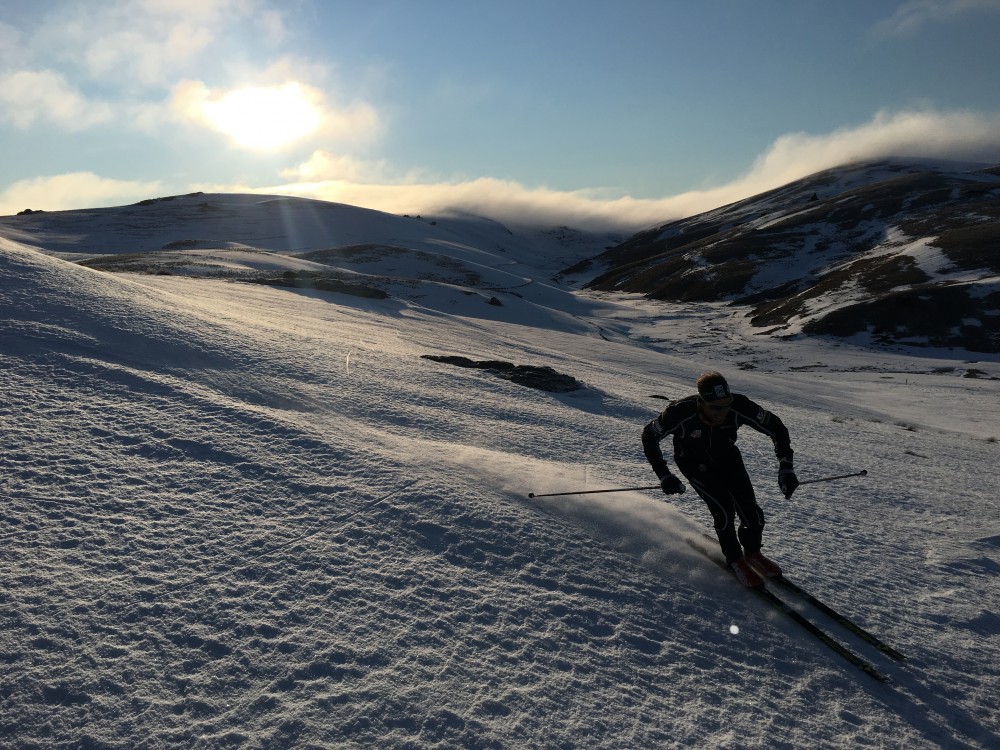
    American Sophie Caldwell skiing through fresh powder at Snow Farm, New Zealand. (Photo: Katharine Ogden)
    Sophie Caldwell skiing through fresh powder at the Snow Farm in New Zealand. (Photo: Katharine Ogden)

    While the USST left with quite a few podium finishes, Grover explained the primarly goals of the camp were not race results, but race starts and time on snow.

    “The primary goal was extended time on snow working on group and individual technique needs,” Grover wrote.  “Another goal of the camp was to touch base with racing.  Besides the Merino Muster, we had 3 AUS-NZ COC [Continental Cup] races.  All athletes had between 2-4 starts.”

    For athletes like Ogden, it was the chance to get race starts on snow without feeling pressure to perform that allowed her to focus on her technique and form during the camp.

    “I think that it was very valuable for my technique having a focused on snow block without the pressure of important races,” she wrote. “As for fitness I’m pretty happy with where I’m at, it was awesome to get some volume in and get to train with some older, more experienced athletes.”

    Ogden also competed in the first two races of the New Zealand nationals and placed fourth in both the classic sprint and 10 k classic mass start. She wrote she was “really happy” with her efforts in both races “optimistic about the upcoming season.”

    After arriving back in the U.S. last Thursday, most of the NZ camp athletes planned to spend a few days recovering before training at full steam again. The USST’s next camp is Oct. 17-31 in Park City, where most of its athletes will take part in high-elevation, dryland training. This year, the team opted out of its annual camp in Lake Placid, N.Y., which typically takes place in September and offers dryland training around sea level.

    “This year we dropped one camp from the schedule (total 4 camps) in order to prioritize high-quality camps followed by solid blocks of training for each athlete at home with their club teams,” Grover wrote. “We have at least 4 weeks at home for each athlete between camps.  I can’t remember the last time we didn’t have a camp in Lake Placid; I’ve personally been there the last 10 years in a row.  It’s a great training location and we love going there, so we will be back there in the future.  It simply didn’t fit this preparation period.”

    New Zealand nationals results: Classic sprint (women, men) | women’s 10 k classic mass start | 15 k classic mass start | women’s 5 k freestyle | men’s 10 k freestyle
    Merino Muster (Worldloppet) results: Men | Women (Complete results)

    — Alex Kochon contributed reporting


  • Irwin and Gelso Win Australian Hoppet; USST Goes 1-2 in New Zealand Marathon

    Irwin and Gelso Win Australian Hoppet; USST Goes 1-2 in New Zealand Marathon

    Left to right: Americans Mary Rose and Deedra Irwin, both of SVSEF, along with Australian Aimee Watson on the podium for the women's Kangroo Hoppet 42-kilometer maration,, on Saturday Aug. 27 in Falls Creek, Australia. (Photo: Kangroo Hoppet)
    Americans Mary Rose (l) and Deedra Irwin (second from l), both of the Sun Valley Ski Education Foundation (SVSEF), along with Australian Aimee Watson on the podium at the women’s Kangroo Hoppet 42-kilometer freestyle marathon on Saturday, Aug. 27, in Falls Creek, Australia. (Photo: Kangroo Hoppet)

    Note: This article has been updated to include official results from the Merino Muster.

    In their first ski marathon south of the equator, a few Sun Valley Education Foundation (SVSEF) Gold Team team members founds themselves on the podium two weekends ago at the Kangaroo Hoppet on Aug. 27. 

    After spending nearly a month training on snow in the land down under, SVSEF teammates Deedra Irwin and Matt Gelso finished their Australian training camp on top of the podium, winning the respective women’s and men’s 42-kilometer Hoppet, part of the Worldloppet marathon race series, in Falls Creek, Australia.

    “Not many people can say that they’ve skied and raced a marathon in Australia,” Irwin wrote in an email. “The Nordic ski community down there is also really supportive and was excited to have us there. There were lots of people cheering for us along the way.”

    Irwin skied most of the 42 k freestyle race alongside her Sun Valley teammate Mary Rose. From start to finish, Irwin explained it was predominately a race between the two of them, with Irwin outlasting Rose by 0.6 seconds with a winning time of 2 hours, 8 minutes and 15.6 seconds. Finishing more than 12 minutes later, Aimee Watson was the leading Australian in third place (+12:17.7).

    “The competition was mostly just Mary and I from the start,”  Irwin wrote. “The race came down to a sprint … I got in front of her at the right time and was able to push through the finish first. Skiing with her during the Hoppet taught me a lot about marathon racing. She is a really strong skier and it was fun to be with her during the race and try to match her moves.”

    Sun Valley's Deedra Irwin after winning the 2016 Kangaroo Hoppet on Saturday Aug. 27, in Falls Creek, Australia. (Photo: Kangaroo Hoppet)
    Sun Valley’s Deedra Irwin after winning the 2016 Kangaroo Hoppet on Saturday Aug. 27, in Falls Creek, Australia. (Photo: Kangaroo Hoppet)

    Rose pointed out that there was plenty of competition besides her teammate.

    “Most of the Australian National Team competed, along with some AUS legends like Esther Bottomley,” Rose wrote in an email.

    Both Irwin and Rose plan to race another marathon this coming winter, the 2017 American Birkebeiner in February, which is also part of the Worldloppet marathon series. And next summer, Rose indicated that she might return to the Kangaroo Hoppet.

    “I don’t have any marathons on my race schedule for this coming year, except the Birkie,” Rose wrote. “I will for sure be returning to Australia to compete in this event, hopefully next year!”

    First across the line in the men’s race, Gelso beat out Australian national-team athletes Phillip Bellingham and Nick Montgomery, who finished in second and third, respectively. Just over the halfway point, Gelso explained the front group gradually began to dwindle.

    “It split up into five guys, maybe with 20 k left,” he said on the phone from Australia. “At 5 k I kind of blew off the front … and in the last 4 k it turned into, like, three separate people.”

    Gelso has raced at least two marathons before, finishing seventh in the 2014 American Birkie and 16th at the 2014 Engadin in Switzerland.

    For winning the Hoppet, both Irwin and Gelso received $1,300 Australian dollars, as well as a wooden plaque, compression socks and a mug. More than 230 men competed, and 64 women finished this year’s edition of the race. 

    “The organizers of the events and the volunteers involved put on a race that I will never forget,” Irwin wrote. “Thank you to the Australian ski community for having us there and letting us enjoy their beautiful winter.”

    American winner Matt Gelso (c), runner-up Phillip Bellingham (Australia), and third-place finisher Nick Montgomery (Australia) on the podium at the men's Kangaroo Hoppet 42-kilometer maration, on Saturday Aug. 27 in Falls Creek, Australia. (Photo: Kangaroo Hoppet)
    American winner Matt Gelso (c) with Australian runner-up Phillip Bellingham (l), and third-place finisher Nick Montgomery (r), also from Australia, after the men’s Kangaroo Hoppet 42-kilometer maration, on Saturday Aug. 27 in Falls Creek, Australia. (Photo: Kangaroo Hoppet)

    After the Hoppet, most of the SVSEF skiers headed back to the U.S. for a recovery week in Sun Valley, Idaho, before resuming training. Gelso and Rose opted to take their recovery week exploring Sydney and Melbourne, Australia, prior to flying home this coming Wednesday.

    “Everybody else is back, it’s just Mary and I here now,” Gelso said. “We’re kind of doing a recovery week right now, but when we get back, we’ll obviously have to get back into time zone … That’s kind of the plan: get back, get recovered and then get back into full training before we head to Frozen Thunder [in Canmore, Alberta].”

    Soaking up the Southern Hemisphere sun and a few last days of rest were also a part of Rose’s schedule.

    “I am hanging out in Sydney for a week visiting a friend,” she explained. “So I am putting in some beach time and being a tourist.”

    2016 Kangaroo Hoppet results: Women | Men

    Hoffman, Diggins Win Merino Muster 42 k

    The U.S. Ski Team took first and second in both the men's and women's races at the 22nd Merino Muster 42 k freestyle, with Noah Hoffman (second from l) winning the men's race over Simi Hamilton (l), and Jessie Diggins (r) outlasting Liz Stephen (second from r) for the women's win. Here, those top finishers pose with Wanaka's Mary Lee at the Snow Farm in Wanaka, New Zealand. (Photo: USSA Nordic/Facebook)
    The U.S. Ski Team took first and second in both the men’s and women’s races at the 22nd Merino Muster 42 k freestyle, with Noah Hoffman (second from l) winning the men’s race over Simi Hamilton (l), and Jessie Diggins (r) outlasting Liz Stephen (second from r) for the women’s win. Here, those top finishers pose with Wanaka’s Mary Lee at the Snow Farm in Wanaka, New Zealand. (Photo: USSA Nordic/Facebook)

    This past weekend in New Zealand, the U.S. Ski Team (USST) swept the overall top four in the 42 k Merino Muster at the Snow Farm in Wanaka. Noah Hoffman beat out his USST teammate Simi Hamilton for the overall victory, and Jessie Diggins was the fastest woman in third overall, 12 seconds ahead of teammate Liz Stephen in fourth.

    U.S. Ski Team members Simi Hamilton (c) and Noah Hoffman during the 2016 Merino Muster at the Snow Farm in Wanaka, New Zealand. Hoffman won the 42 k freestyle race, and Hamilton placed second. (Photo: USSA Nordic/Facebook)
    U.S. Ski Team members Simi Hamilton (c) and Noah Hoffman during the 2016 Merino Muster at the Snow Farm in Wanaka, New Zealand. Hoffman won the 42 k freestyle race, and Hamilton placed second. (Photo: USSA Nordic/Facebook)

    Hoffman won the skate race in 1:45:08 and Hamilton finished 23 seconds later in second place. U.S. coach Matt Whitcomb told the Otago Daily Times that Hoffman, the team’s leading distance skier, was working to improve his sprinting, while Hamilton, who has podiumed in World Cup sprints, wanted to improve his distance skiing.

    Two years ago, Hoffman placed second in the 2014 Merino Muster behind Poland’s three-time race champion Maciej Kreczmer. Canadian Para-Nordic visually impaired legend Brian McKeever won last year’s edition (as well as 2010 and 2011), ahead of his teammate and guide in Paralympic events, Graham Nishikawa.

    Clocking in third at 1:59:12 was Diggins and Stephen followed 12 seconds later as the second woman.

    Of 10 USST members in New Zealand, four raced — finishing first or second in their respective men’s and women’s races. Whitcomb told the Otago Times that the U.S. has held training camps at the Snow Farm for more than 16 years.

    This year, all but six of its athletes are there. Of those six, at least four — Alaska Pacific University skiers Kikkan Randall, Rosie Brennan, and Sadie and Erik Bjornsen — are training at home in Alaska on snow at Eagle Glacier.

    2016 Merino Muster results

  • USST Makes Up for Lost Snow Time in New Zealand; Next Up: Norway

    USST Makes Up for Lost Snow Time in New Zealand; Next Up: Norway

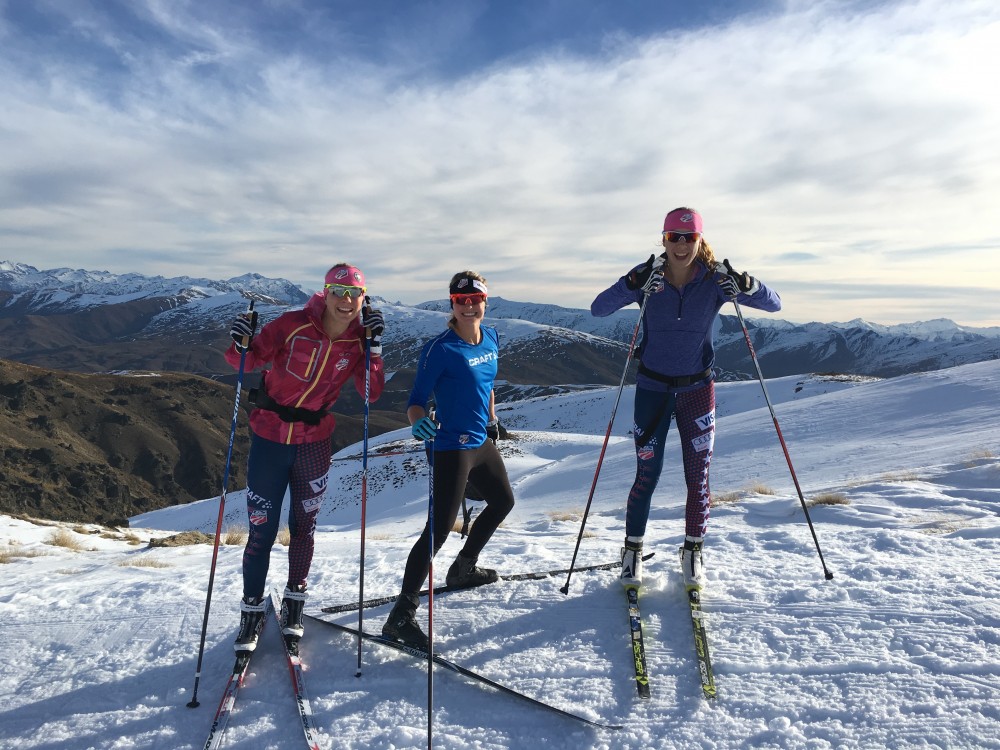
    Part of the USST contingent in New Zealand. From left to right: Matt Whitcomb, Andy Newell, Anouk Faivre-Picon, Sophie Caldwell (top), Noah Hoffman (bottom), Liz Stephen, Ben Saxton, Paddy Caldwell (Photo: Simi Hamilton)
    Part of the U.S. Ski Team contingent in New Zealand. From left to right: Matt Whitcomb, Andy Newell, Anouk Faivre Picon (of France), Sophie Caldwell (top), Noah Hoffman (bottom), Liz Stephen, Ben Saxton, and Paddy Caldwell (Photo: Simi Hamilton)

    On July 7, the U.S. Ski Team (USST) headed south to the Snow Farm in Wanaka, New Zealand, for its first on-snow camp of the offseason. Usually the team would have logged some spring skiing in May in Bend, Ore., but minimal-snow conditions at Mt. Bachelor led the USST to cancel its annual camp there.  Instead, the team relied on its mid-summer trip to the Southern Hemisphere to make up for the lost time on snow.

    “One reason we felt it was important to go to New Zealand this year was that we weren’t able to have our traditional camp at Mt. Bachelor,” USST Head Coach Chris Grover said on the phone. “We wanted to have a longer on-snow camp than we have had the last few years in the middle of the summer to try and make up some of those missed days on snow.”

    Nine USST athletes and three coaches from the lower 48 reported to camp — with A-team members Andy Newell, Simi Hamilton, Liz Stephen, Jessie Diggins, Sophie Caldwell, and Ida Sargent, B-team member Noah Hoffman, D-teamers Paddy Caldwell and Ben Saxton, as well as women’s coach Matt Whitcomb, assistant coach Jason Cork, and Grover. French World Cup skier Anouk Faivre Picon also joined the group.

    Of the 16 skiers nominated to the USST this spring, most of those who didn’t make the New Zealand trip trained with the Alaska Pacific University (APU) Elite Team in Anchorage. Instead, they had three shorter on-snow camps planned for Eagle Glacier, where the USST held a camp last summer and where several of the USST women have returned every year since 2011 for the North American Women’s Training Alliance.

    The women in New Zealand. From left to right: Anouk Faivre-Picon, Liz Stephen, Jessie Diggins, Ida Sargent, Sophie Caldwell. (photo: Sophie Caldwell)
    The U.S. Ski Team women in New Zealand plus France’s Anouk Faivre Picon (l). From left to right: Liz Stephen, Jessie Diggins, Ida Sargent, Sophie Caldwell. (Photo: Sophie Caldwell)

    For the athletes in Alaska, it is easy to take advantage of Eagle Glacier’s location. But for everyone else, a longer trip to New Zealand made more sense this year, Grover explained.

    “Alaska is awesome, but Eagle Glacier really lends itself to about six days of skiing up there and then its time to come down and take a rest with the way that everything is set up, the way the living situation and everything works,” he said. “[The APU skiers] have their plan that they get from [their coach] Erik Flora. … They are getting on Eagle Glacier three times: once in each summer month, June, July, and August. I understand it, I mean, when you have skiing out your back door, it makes it a little bit hard to make the move all the way down to the Southern Hemisphere.”

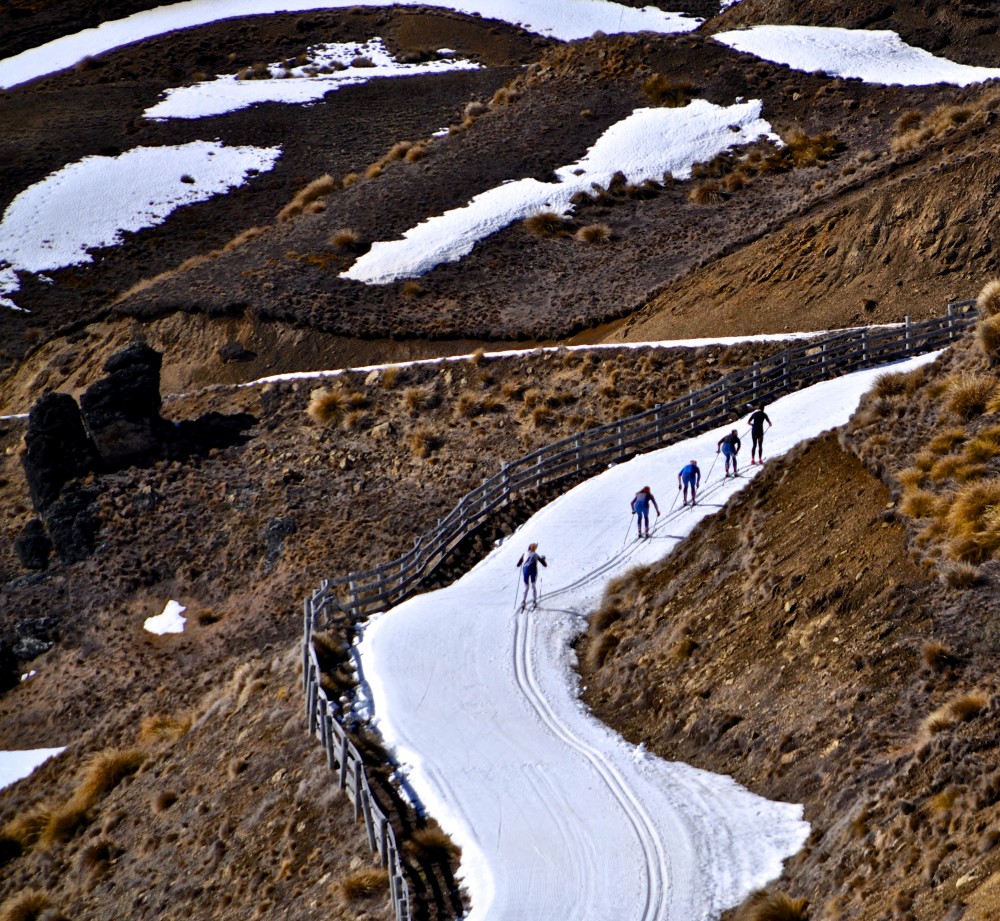
    But for the rest of the USST, the 15-day camp at the Snow Farm was ideal, with easily accessible ski trails along a ridge and an accommodating staff willing to groom specifically for them.

    “It’s a fantastic place for just focusing on training as much as you want and eating and sleeping and recovering in between,” Grover said. “Typical days were breakfast, ski for two and a half, three hours until lunch, [then] lunch, a little bit of recovery time, and then an afternoon workout — that was usually skiing — and then dinner and some technique review and that sort of thing from the day, maybe some PT [physical therapy]-type work in the evening if necessary and then to bed.”

    With so much ski time paired with effective recovery, the athletes accomplished one big goal of the camp: ticking off a lot of kilometers in on snow. Another group goal was to refine technique to make for the kind of technical training it would have normally done at Mt. Bachelor in May.

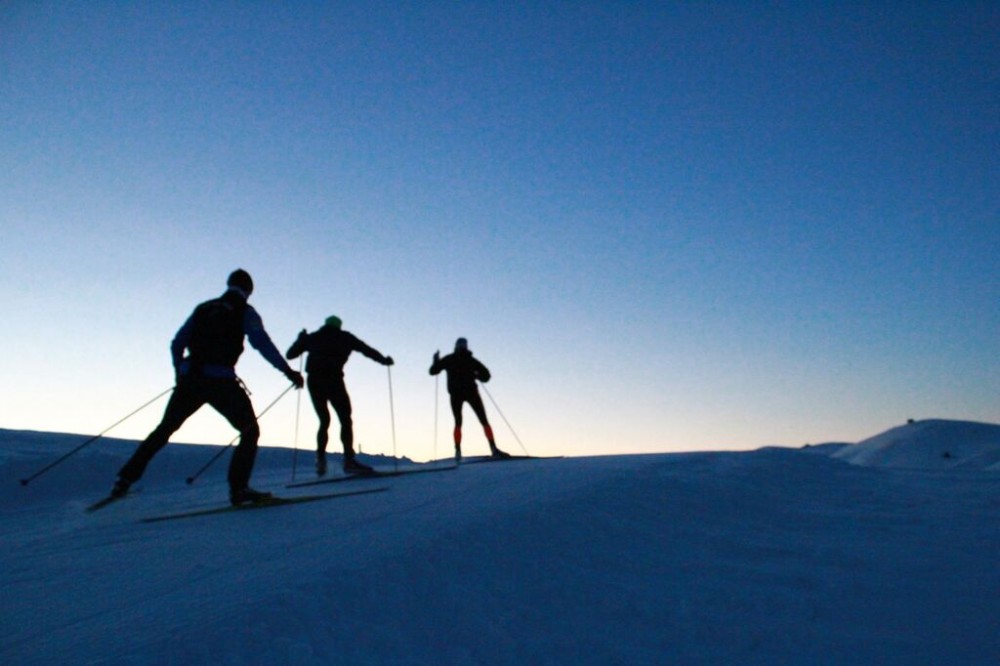
    Skiing during the sunrise (photo: Simi Hamilton)
    Skiing into the sunrise. (Photo: Simi Hamilton)

    “One thing that we spent a lot of time on down there was herringbone technique because it’s not something you can train dryland training on rollerskis,” Grover said. “For the most part, it needs to be trained on snow. The athletes also worked on technique fundamentals, doing a lot classic and skate skiing without poles.”

    While hours on snow and technique remained the main focus, the group also incorporated strength and intensity into its camp.

    “Every third day would be some sort of intensity in the morning and then half the group would go down to Wanaka to either run, or to lift, or to do both whereas the other half of the group might stay up and use the small gym and ski and lift up top,” Grover explained. “As a whole, everyone is kind of making good gains, some really good gains in strength happening right now.”

    The group also made sure to have some fun. One off day, everyone went to Queenstown and went go-carting. They also did a couple photo shoots with new USST clothing sponsor L.L. Bean. Grover said the team had fun with the usual ski camp stuff and “did a great job of supporting each other and taking care of each other.”

    The team was able to trek to New Zealand because of an increased budget from the United States Ski and Snowboard Association (USSA) and some fundraising from the team itself. Last year, the team had to forgo a camp there because of a lack of funds.

    “Luckily, this year we were able to really not even take the budget as much into consideration as we had in the previous year, but to do what we felt was the best program for the team,” Grover noted.

    USST members enjoyed excellent skiing conditions (photo: Sophie Caldwell)
    USST members enjoyed excellent skiing conditions. (Photo: Sophie Caldwell)

    Now back in the U.S., team members are spending time with their local clubs, continuing their summer training before their next USST camp in Norway. Kikkan Randall, Diggins, Caldwell, Stephen, Newell, Hamilton, and Hoffman depart for Norway on Aug. 9, where the main focus will be on competing in the Toppidrettsveka, a three-day rollerski competition in Aure, Knyken, and Trondheim from Aug. 20-22, which several national teams attend.

    The trip is for the more experienced World Cup athletes who are looking to gauge themselves against the world’s best. “For some athletes, that just didn’t really fit in to what they felt like they needed to be doing in August whereas others felt like they really did need to have a measuring stick to see where they were against the competition,” Grover said.

    Reflecting on New Zealand, Grover was positive: “It was a really good camp. We feel like we really accomplished what we set out to accomplish with it,” he said. “I think that athletes, everybody is coming back tired, knowing that they put in about as many kilometers in good snow conditions as they could really hope for.”

  • Hoffman Lone U.S. Ski Team Member to Train in New Zealand

    Hoffman Lone U.S. Ski Team Member to Train in New Zealand

    Polish skier Maciej Kreczmer leads Noah Hoffman in the 2014 Merino Muster at the Snow Farm in New Zealand. Noah Hoffman spent roughly two weeks training at the Wanaka venue. (Photo: Noah Hoffman/NoahHoffman.Com)
    Poland’s Maciej Kreczmer (r) leads Noah Hoffman (c) in the 2014 Merino Muster at the Snow Farm in New Zealand. Hoffman spent roughly two weeks training at the Wanaka venue. (Photo: Noah Hoffman/NoahHoffman.com)

    Noah Hoffman isn’t one to take his training lightly. The way he sees it, a serious-and-dedicated plan will allow the the 25-year-old U.S. Ski Team (USST) member to achieve his lofty career goals, which include winning an Olympic gold medal and an FIS World Cup Distance Globe.

    Given his driven nature, Hoffman is willing to venture outside the standard USST plan in order to bolster his training and address what he’s identified as his weaknesses.

    This summer, that meant participating in a solo camp at New Zealand’s Snow Farm following the USST men’s camp in Alaska.

    From Aug. 9 t0 Aug. 25, Hoffman had 15 full days of on-snow training at the Snow Farm in Wanaka, New Zealand. Over the course of his camp, he trained more than 50 hours.

    For Hoffman, the decision to make the summer trip to New Zealand was easy. He’s been adding the trip to his training plan for the last three years and finds that the often-fast, hard snow is ideal for his technique work. This year, he said conditions were especially favorable.

    The view from the Snow Farm in Wanaka, New Zealand. Accodring to Hoffman, the conditions were the best he's seen in five years at the venue. (Photo: Noah Hoffman/NoahHoffman.com)
    The view from the Snow Farm in Wanaka, New Zealand. Accodring to Hoffman, the conditions were the best he’s seen in five years at the venue. (Photo: Noah Hoffman/NoahHoffman.com)

    “I had the best snow conditions that I’ve seen in any of my five years going there,” he wrote in an email. “I was hard-wax skiing the entire time and had 14 days of beautiful weather.”

    Hoffman explained that his New Zealand trip served as an additional on-snow camp used to supplement the USST camp schedule. For the Colorado native, his continued on-snow training has helped him improve his technique.

    “I think the additional on-snow time has been essential to the technique improvements that I’ve made in the last two years and is critical to my technique goals for this summer and beyond,” he wrote.

    While Hoffman appreciates the value of North-American summer glacier camps, he found that New Zealand’s skiing better replicated winter World Cup conditions.

    “Training at the Snow Farm is significantly more valuable than on-snow time on a glacier in the Northern Hemisphere,” he wrote. “Glacier skiing is slow and soft. It is a different type of skiing than we see at most venues in the winter.”

    Often times during the race season, World Cup venues are hit with warm conditions and organizers salt the course to increase snow speed.

    Even though Hoffman was the sole USST member to travel to New Zealand this year, his coaches and teammates who remained stateside were extremely supportive.

    “They understand my goals and support the plan that my personal coaches and I believe is best for my training,” Hoffman explained.

    The Snow Farm in Wanaka, New Zealand. (Photo: Noah Hoffman/NoahHoffman.com)
    The Snow Farm in Wanaka, New Zealand. (Photo: Noah Hoffman/NoahHoffman.com)

    While most of his training in New Zealand was spent alone, Hoffman was able to connect with Canada’s multiple-time Paralympic gold medalist Brian McKeever and one of his guides Graham Nishikawa for several training sessions. And when he wasn’t training, Hoffman spent meals with the Canadian Para-Nordic Team.

    “That social activity was critical for me to stay happy down there,” he wrote.

    Hoffman’s training also included the 2014 Merino Muster. The 42 k freestyle mass start took place on Aug. 16 and included several international competitors, such as Poland’s Justyna Kowalczyk.

    Hoffman placed second, 11 seconds behind Poland’s Maciej Kreczmer.

    While he would have liked to win the race, he wrote on his blog that he was happy with the outcome and that the race served as an excellent intensity workout.

    The goal is not to be good in August,” he wrote. 

    Hoffman also allotted time for some lighthearted charity work. With the help of his Canadian counterparts, he participated in the Amyotrophic Lateral Sclerosis (ALS) Ice Bucket Challenge, a social-media phenomenon intended to raise awareness and research funding for the illness, also known as Lou Gehrig’s disease.

    Hoffman returned to the U.S. on Aug. 25, where he will continue the remainder of his summer training. This year he will sit out the USST Lake Placid camp in New York (taking place Aug. 26-Sept. 7), as his trip to New Zealand served as its replacement.

    Reflecting on his summer, Hoffman said his training was “almost ideal,” citing his health, happiness, and technique improvement. Looking ahead, he feels prepared for the season ahead.

    “I believe I’m really well set up to transition to higher intensity and more race-type fitness as the fall progresses,” he wrote. “I’m very happy and excited with the way things have gone.”

    The Snow Farm in Wanaka, New Zealand. (Photo: Noah Hoffman/Noahhoffman.com)
    The Snow Farm in Wanaka, New Zealand. (Photo: Noah Hoffman/Noahhoffman.com)


  • U.S. Men, Canadians Get to Work on Snow Farm

    U.S. Men, Canadians Get to Work on Snow Farm

    Andy Newell of the U.S. Ski Team leads Russia's Alexey Petukhov during the men's A-final of the New Zealand Winter Games freestyle sprint last Thursday. (Photo: Noah Hoffman/noahhoffman.com)
    Andy Newell of the U.S. Ski Team leads Russia’s Alexey Petukhov during the men’s A-final of the New Zealand Winter Games freestyle sprint last Thursday. (Photo: Noah Hoffman/noahhoffman.com)

    In his nine-plus years on the U.S. Ski Team, Andy Newell figures he has logged more skiing hours at the Snow Farm on the South Island of New Zealand than any other place in the world.

    An annual training camp destination since 2002, the U.S. men’s team touched down there last week and will stay for the rest of the month.

    Simi Hamilton skis away from U.S. Ski Team head coach Chris Grover after breaking down some video footage of his technique. (Photo: Noah Hoffman/noahhoffman.com)
    Simi Hamilton skis away from U.S. Ski Team head coach Chris Grover after breaking down some video footage of his technique. (Photo: Noah Hoffman/noahhoffman.com)

    Head coach Chris Grover will let Newell, Simi Hamilton and Noah Hoffman take full advantage of the August snow and complete some of their biggest training volume weeks of the year. But it won’t be all slow and easy.

    “The ease of the living/training situation here makes it quite easy to train a lot,” Grover wrote in an email. “We will also run several interval and speed sessions, with at least one interval session being Sochi-specific for the sprinters.”

    The camp coincides with New Zealand’s Winter Games, which served as a fitness gauge for some World Cup skiers last Thursday. Newell beat a small-but-quality field in a skate sprint, while reminding his skiing muscles what all that rollerskiing, running and biking this summer has been for.

    “It’s August, so we never want to be racing too fast in the middle of the summer,” Newell wrote. “But at the same time we want to see positive feedback and improvement in how the training is being absorbed.”

    Hoffman continues to rebuild up his upper-body strength after undergoing shoulder surgery this spring. He did a 2 ½-hour double-pole workout on Friday.

    Hamilton sprained his left ankle a couple of weeks ago during a run with the Stratton Mountain School T2 Team and did not race on Thursday as skating irritates his ankle more than classic. He partially tore all of the ligaments in the same ankle during a terrain-park accident in high school and has had occasional problems with it since. Hamilton wrote in an email that while in New Zealand, he has been working with Canadian team physical therapist Shane Hutchins on re-aligning the ankle and getting it to function normally again. The U.S. did not send a physical therapist to the camp.

    Newell said the extensive trail system is white, but dirt and grass isn’t far beneath his ski bases. He said conditions range day-to-day from awesome to not great, depending on how windy it is and how cold the nights are.

    “I like training here, because you can get the real winter-type conditions that are hard to find in glacier skiing,” Newell wrote, referring to one of the few other places to find skiable snow during the North American summer.

    Hoffman expressed his dissatisfaction with the grooming on his blog.

    “The (Snow Farm) staff has chosen not to groom on multiple occasions,” Hoffman wrote. “The decision not to groom has made training difficult and less productive. We, the athletes training here, don’t understand the excuses, because we have skied all over the world in more adverse conditions than they are experiencing here at the Snow Farm.”

    A short drive down off the mountains brings athletes to the town of Wanaka, with its green grass and lakes, where they run and do strength.

    Following the New Zealand camp, the U.S. men will stop in at home and re-pack their bags before heading to Lake Placid, N.Y, for the next USST camp about a week later (Sept. 3-16).

    Canadian national team members during a training session on one of the first days of their training camp at the Snow Farm in Wanaka, New Zealand. (Photo: Noah Hoffman/noahhoffman.com)
    Canadian national team members during a training session on one of the first days of their training camp at the Snow Farm in Wanaka, New Zealand. (Photo: Noah Hoffman/noahhoffman.com)

    Canada’s entire World Cup team is also in New Zealand, with the exception of Lenny Valjas, who is rehabbing his knee after having it scoped last month. He explained in his blog that he has been racing on a bad knee for nearly five years, but this summer it was getting progressively worse so he finally had it taken care of.

    “[Valjas’] recovery is going really well, but we felt it was better to get him 100-percent before returning to a full training camp,” Canada head coach Justin Wadsworth wrote in an e-mail. “There is no doubt in my mind he’ll be ready this winter. He went into the scope in the best shape of his life and has done a super job of continuing to train while doing the rehab on his knee.”

    Four younger skiers from the Pierre Harvey National Training Centre in Quebec tagged along to train alongside Devon Kershaw, Alex Harvey, Ivan Babikov, Dasha Gaiazova and Perianne Jones.

    Wadsworth and Grover shared their camp plans with each other and the teams will combine for several workouts.

    “The focus down here is just good solid training with an emphasis on technique,” Wadsworth wrote. “It also allows our athletes to take a break from roller skiing and running, so they head into the final part of the summer/fall refreshed and ready to get the work done before the snow flies. We’re not doing anything specific for preparation for Sochi except some work in steep terrain, which we don’t normally get on roller skis.”

    The Canadians have an altitude camp in Truckee, Calif., in early October, before getting on some more preseason snow in Canmore, Alberta.

    “Overall, the team is doing well and it’s fantastic to have more women than men down here,” Wadsworth wrote. “The group here is super motivated and is a nice mix of veterans and younger athletes.”

  • Newell Thrives in NZ, Wins Winter Games Opener at Snow Farm

    Newell Thrives in NZ, Wins Winter Games Opener at Snow Farm

    Andy Newell (l) and Russia's Alexey Petukhov go head-to-head in the men's A-final on Thursday in the Winter Games NZ freestyle sprint in Wanaka, New Zealand. Newell won the race, Petukhov was second and Canada's Devon Kershaw placed third. (Photo: Noah Hoffman)
    Andy Newell (l) and Russia’s Alexey Petukhov go head-to-head in the men’s A-final on Thursday in the Winter Games NZ freestyle sprint in Wanaka, New Zealand. Newell won the race, Petukhov was second and Canada’s Devon Kershaw placed third. (Photo: Noah Hoffman)

    The U.S. Ski Team men’s squad touched down in New Zealand on Tuesday afternoon. Imagine racing in the land down under, a 16-hour time difference from Andy Newell and Simi Hamilton’s base in Vermont and 18 hours from Colorado, where Noah Hoffman primarily trains, two days later.

    Newell and Hoffman did just that (Hamilton ran into major baggage woes on his way over), and Newell came out on top of a relatively stacked, if not small, field on the opening day of Winter Games NZ.

    The Winter Games NZ men's 1.6 k sprint podium, with winner Andy Newell (c), runner-up Alexey Petukhov (l), and Devon Kershaw in third. (Photo: Snow Farm/https://www.facebook.com/SnowFarm)
    The Winter Games NZ men’s 1.6 k sprint podium, with winner Andy Newell (c), runner-up Alexey Petukhov (l), and Devon Kershaw in third. (Photo: Snow Farm/Facebook)

    The ninth-ranked competitor, Newell not only crushed the qualifier of the 1.6-kilometer freestyle sprint at the Snow Farm in Wanaka, but he went on to win his quarterfinal, semifinal and eventually the final over Russia’s Alexey Petukhov and Canadian Devon Kershaw. Top seed Nikita Kruikov of Russia ended up fifth after teammate Anton Gafarov in fourth.

    After spending most of his summer with the Stratton Mountain School T2 Team, Newell clocked a time of 2:52.96 over what he considered a fast course, which was “fairly hard packed,” he wrote in an email. “The course was really fun with a super fast rolling downhill and lots of turns. … Neither of the two climbs on course were too steep.”

    Petukhov was the second-fastest qualifier nearly four seconds later in 2:56.54 and Kershaw qualified third in 3:00.10. Their positions ultimately held steady, with Petukhov placing second and Kershaw third in the final.

    “I felt a lot better than I thought I was going to racing,” Newell explained of his first time on snow in a couple months. “The travel is tough to get down here but adjusting to the time change is actually pretty easy. A lot easier than Europe. So racing two days off the place isn’t that big of a deal.”

    Still, he didn’t feel exactly the same as he would on a World Cup morning.

    “I wasn’t too eager to race in the morning having only had one day on snow but as a warmed up I started feeling pretty good,” Newell wrote. “The sun came out so I had plenty of energy in Qualification. Obviously all the Russian guys here are fast sprinters so I didn’t have any goal for the race other than to make the final.

    “It’s August so we just use these races as training opportunities and use them to gauge how our bodies are responding to the summer training and also identify things that we need to work on technically,” he added. “Especially with sprinting it’s helpful to jump in races like this so you can stay sharp when it comes to heat tactics and race-like accelerations.”

    Newell specifically tried to work on fast accelerations, over the tops of hills and during the final stretches of each heat.

    “I think it worked out well and I was happy with the result,” he wrote. “I was stoked with how the body felt pushing hard. We spend all summer long running, biking, rollerskiing, just training a ton and its good to remind yourself of why you’re putting in all the hard work. It’s good to remind yourself that you’re a ski racer and this is what you’re trying to get faster at.”

    Primarily a distance skier, Hoffman finished ninth ahead of a Russian and six Korean skiers.

    The Winter Games NZ women's 1.6 k skate sprint podium, with winner Justyna Kowalczyk (c), runner-up Dasha Gaiazova (l), and Anastazia Kuzmina in third. (Photo: Snow Farm/https://www.facebook.com/SnowFarm)
    The Winter Games NZ women’s 1.6 k skate sprint podium, with winner Justyna Kowalczyk (c), runner-up Dasha Gaiazova (l), and Anastasia Kuzmina in third. (Photo: Snow Farm/Facebook)

    In the women’s skate sprint, Poland’s Justyna Kowalczyk was the fastest qualifier in 3:27.25, more than 5 seconds ahead of Olympic gold medalist biathlete Anastasiya Kuzmina of Slovakia. Canadian Perianne Jones qualified third in 3:36.42.

    Kowalczyk went on to win her semifinal and top Canada’s Dasha Gaiazova in the final for the overall victory, telling race organizers, “It was a good race on a very good track. I am very happy and racing here at Snow Farm and the Winter Games is very important for me for Sochi,” she said.

    Gaiazova was second, but could not be reached for comment, and Kuzmina placed third. Jones finished fourth in the A-final, topping Japan’s Michiko Kashiwabara and Chisa Obayashi, who were first and second, respectively, in the B-final. New Zealand’s lone entrant and first Olympic biathlete, Sarah Murphy, ended up seventh of eight women. Murphy is trying to qualify for her second-straight Olympics after “a lot of back luck last year,” including illness and a broken rifle, she told the Otago Daily Times.

    “These Winter Games are really very important for me and my bid for the Olympics,” she said.

    Although Thursday marked the start of the Games, it was essentially the only day of true-blue racing for the Americans at the Snow Farm. “We are hopefully going to do a distance time trial with the Canadians later in the camp but that will be the only other racing,” Newell explained.

    Results: men | women

  • Canadian Men Leave NZ ‘Feeling Good,’ Cracking Jokes

    Canadian Men Leave NZ ‘Feeling Good,’ Cracking Jokes

    Canadian World Cup team member Alex Harvey crashes and burns during a head-to-head sprint with one of his teammates at the Snow Farm near Wanaka, New Zealand, where the team recently spent two weeks training. (Photo from XC Canada video: www.youtube.com/watch?v=8roNOx3M0dk)

    Just over two weeks ago, the Canadian men’s cross-country ski team made the long journey to New Zealand in search of some low-altitude, on-snow volume training. According to head coach Justin Wadsworth, they planned to work on intensity and climbing steep hills.

    That was the plan, and after checking in with Wadsworth before the team left for home on Wednesday, he wrote in an email that all went well. In fact, he described the camp as excellent.

    “Overall we are ahead in every aspect from where we were last year,” Wadsworth wrote. “So I’m very pleased.”

    Lenny Valjas (l) and Alex Harvey while being filmed at the Snow Farm in New Zealand. (From: www.youtube.com/watch?v=8roNOx3M0dk)

    While the four World Cup teammates — Devon Kershaw, Alex Harvey, Ivan Babikov and Lenny Valjas — put in some long days at the Snow Farm near Wanaka, they also had some fun. The team posted a YouTube video called, “Snow Farm – New Zealand – August 2012” to sum up their time there, which was mostly a laughing matter.

    In one scene, the four men stand stand on a treeless trail high above the landscape while taking a break during training. Valjas looks to his left.

    “Pop questions for our teammate Ivan Babikov,” he says.

    “Hey Babs, what’s your spirit animal?” Kershaw chimes in.

    Babikov laughs. “Unicorn?”

    Devon Kershaw (l) interviews Ivan Babikov in an XC Canada video at the Snow Farm in New Zealand. (From: www.youtube.com/watch?v=8roNOx3M0dk)

    The camera pans to Harvey: “Hey Babs, can you explain why we see the moon and the sun at the same time?”

    Babikov pauses. “We’re way down deep south. That’s why.”

    They all laughed, and then it was probably back to training. At least that’s what the videos shows. But between jumping out to scare Kershaw at surprising moments and doing penguin-like belly slides on skis, the Canadian men did have a productive camp. Wadsworth pointed out the quality of a couple speed sessions and hefty amount of technique work.

    “Maybe one of the best days was a crust cruise up to the top of the Pisa Range [the plateau where the Snow Farm is located] on a bluebird day,” he wrote.

    Snow conditions were good despite a thin snow year, he added. The team has also never skied in New Zealand this late in the season (they typically travel there about two weeks earlier in August for the Winter Games NZ races with other international skiers).

    “Really the only hitch was 2 of the 4 guys got a 24 hour flu,” Wadsworth wrote about Harvey and Babikov’s illness about halfway through the camp. “This happened on the morning of the classic time trial we had planned, so we had to move things around a bit, Alex and Ivan bounced back quickly and even though they were rooming with Devon and Lenny the flu didn’t spread.”

    Asked how he was feeling, Harvey responded in an email from the airport that he was doing well.

    “I’m coming out of the camp not really tired,” he wrote. “It’s hard to know what [the sickness] was exactly. … It was quick but pretty intense. Probably something we caught down in town, in Wanaka. I was able to ski twice the next day so I didn’t loose any training really. I just ended up skipping a rest day later in the camp.”

    View from the Snow Farm near Wanaka, New Zealand, in late August. (From: youtube.com/watch?v=8roNOx3M0dk)

    Harvey added that having the camp a bit later gave them more time to enjoy summer back in Canada. Once they arrived in New Zealand, he said the conditions were still good, just a bit more spring-like.

    “But there was never a day were we couldn’t ski because of the weather, which is pretty good for the Snow Farm,” he wrote. “We usually get one or two days were we can’t ski up there so we were lucky this time.”

    Just like other team training camps, Harvey focused on completing hard-intensity workouts with his teammates.

    “The training camps are the only time I do Level 4 intensity in the summer so it’s good to be with the boys to do that,” he wrote. “We also worked a lot on technique, classic, skating, uphills, flats. Trying to improve a bit on all aspects. I feel like I was able to put a lot of hours on snow, maintain the strength training while doing 4 solid hard intensity sessions and training kind of at altitude.”

    (Harvey trains at sea level near Quebec City and could feel the difference at the Snow Farm’s elevation at 1,500 meters.)

    “I’m coming out of the camp fitter and faster that’s for sure,” he added. “I feel like the camp didn’t take too much out of me so I should ba able to get two more solid weeks of training before our next camp in Park City, Utah (from Sept. 23-Oct. 4).”

    As for highlights, Harvey picked out three:

    “1. The weather allowed us to ski everyday if we wanted to.

    2. Settlers of Catan. It’s ‘The Game that Defines our Generation!’

    3. Devon’s beard and hair combo. Skyping with my mom, she asked why he tried to look like a hobo and said that he’s a ‘complete disaster.’ “

  • Canadian Men En Route to New Zealand; Plan to Meet Hoffman and Freeman

    The Snow Farm, as seen in July 2010, where the Canadian men’s team will be the lone North-American contingent training for nearly three weeks starting Aug. 22 near Wanaka, New Zealand. According to Canadian head coach Justin Wadsworth, U.S. Ski Team members Kris Freeman and Noah Hoffman will also be there.

    Scattered throughout Canada on Sunday, four World Cup team members and their coaching and support staff started their long journey to the land down under – that is, New Zealand.

    Alex Harvey ate handmade chocolates and sipped a steamed drink while waiting for his 16-hour flight out of Québec International Airport, then got upgraded to business class, according to Twitter.

    Meanwhile, his teammate Devon Kershaw tweeted that he was in coach on another flight, but didn’t mind.

    “It’s awesome in the back,” Kershaw wrote. “Middle of the middle for 15 hours #decent?”

    As head coach Justin Wadsworth stepped off the plane in Denver and awaited his departure for Los Angeles, he took the time to chat with FasterSkier on the phone. The entire Canadian men’s team – Harvey, Kershaw, Lenny Valjas and Ivan Babikov – will arrive in Queenstown, New Zealand, on Tuesday afternoon. They’ll start training Wednesday and spend about two and a half weeks on snow at the Snow Farm near Wanaka.

    ***

    FasterSkier: Last year, you timed the trip with the New Zealand Winter Games so your skiers could race at the Snow Farm. Why did you schedule it later this year?

    Justin Wadsworth: We have a lot of camps. In the summer, it works out to be almost two weeks out of every month the athletes are in camps. I thought this summer it might be nice to give everyone a six-week period with no camps. That’s basically what we did to try to create more of a stay-at-home and get back into a groove where everybody lives. Our last camp was up on the Haig Glacier, you know, as part of our Hawaii camp. [Note: The men’s team was in Hawaii from mid June to July 4, then skied on the Haig Glacier near Canmore, Alberta, from July 5-9].

    It has been a nice break for everybody, including myself, and then it just worked out well. We usually have a two-week break before the Park City altitude camp in September [where both the Canadian men’s and women’s teams will train together in Utah from Sept. 23-Oct. 4].

    FS: What are some training goals while in New Zealand?

    JW: This is kind of a volume camp. We have other periods where we focus a little bit more on intensity. This one is volume-based and obviously on snow. It’s worked very well in the past few years [at creating a base for really good ski technique and working on climbing. We’ve been rollerskiing a lot and glacier skiing where there’s not a lot of opportunity for super-steep uphill training]. It’s just terrain that’s good to be on for working the steep uphill.

    FS: Why else is it important to travel there for snow?

    The men’s 15 k classic mass start podium from 2009 in New Zealand: Canadian winner Devon Kershaw (c) and teammate Ivan Babikov (l) and American runner-up Kris Freeman (r).

    JW: We have opportunities to ski in Canada and right behind Canmore on the glacier, but New Zealand provides us with straight-out-the-door, fairly low altitude, and just really, really good winter snow conditions to train from. I, personally, and I think the athletes really feel like this camp provides them something that a lot of their summer skiing doesn’t.

    I know other North Americans are sort of straying away from going there, but … I think it is a super-high value for us to be down there, and it’s worth the trip even though it’s a long trip down there. It’s a really good place to get some quality training in.

    [Note: For the first time in 10 years, the U.S. Ski Team will not be training in New Zealand this summer. Head coach Chris Grover cited the steep rise in airfare, lengthy travel and 16-hour time-difference adjustment as reasons for skipping the trip. Instead, the U.S. men recently skied in Austria and Germany, and the women just wrapped up two weeks of training in Sweden.]

    FS: Which international skiers will still be at the Snow Farm?

    JW: Right now, the Russians are down there and Justyna Kowalczyk and one other male sprinter from Poland [Maciej Kreczmer], and then Kris Freeman and Noah Hoffman [of the U.S. Ski Team] will be down there a little bit later. There’ll be a few other folks there.

    FS: Do you plan to coordinate workouts with Freeman and Hoffman?

    JW: Hoff gave me an email a couple days ago and asked me what our plan was down there. He said he’d like to at least hook up for some workouts. We’ll probably do a time trial down there so it might be nice to get those guys into that one and probably some intensity with them also. I mean, we’re happy to work with those guys and I’m sure they’ll ski a lot together in the distance workouts. The majority of the sessions down there are distance training.

    FS: It seems like the North American women have been pushing particularly hard to train together. How would you describe the relationship between the Canadian and U.S. men?

    JW: It’s a little bit different between men and women. I think the social aspect on the women’s side is so much more important, and I think that’s a big difference. It’s not that we don’t want to train with Hoff or Bird, it’s just guys in general do a little bit more on their own. We’re not going to force it, but definitely there will be some company on the long workouts that they’ll be welcome [to join at the Snow Farm]. It will be nice to have those guys there.

    FS: Which of your staff members are going?

    JW: Myself and [wax tech] Joel Jaques, [team physiotherapist] Shayne Hutchins, and then [men’s assistant coach] Louie Bouchard … so we have a pretty good staff-to-athlete ratio on this one.

    FS: Will the training sessions be mostly structured similarly or individually?

    JW: Occasionally, we’ll have different workouts, but [at] almost all the camps, guys do all the workouts together. We can vary the length of them and stuff individually, but they do all pretty much the same plan for the camp so it works out really nicely and I think it’s beneficial for all the guys.

    You kind of see that now, Lenny’s coming up and I think Ivan’s doing really well right now. He’s focusing on some things for him on the side leading into this period, so I really feel good where he is and where Devon is, and I know Alex is doing well. Everyone’s doing great. They all train together and hopefully push each other a bit when we need to push.

    [Note: Kershaw and Babikov have been training together throughout the summer in Canmore. In a recent blog post, Kershaw wrote: “After the momentum we gained during the Maui camp – Ivan and I have been working super well together under the watchful eye of Justin. It’s a different set up with the men and women training separately this year which is a big change, but things with the men’s team seem to be going splendid.”

    FS: How are the team dynamics in general?

    JW: We separated the men and the women this year and I think that’s been working well. We’re going to get everybody together in Park City. We’ll be doing slightly different things, but we’re going to be sharing some meals and stuff together.

    The reports on [women’s national-team members] Chandra [Crawford], Dasha [Gaiazova] and Peri [Jones] have been really good, and the vibe on the guys’ team is always good. I’m feeling really good about how things are, and it’ll be good to get the team together in Park City because we’re going to be spending a lot of time together starting in November. It’s good to make sure we’re all on the same page.

    FS: And that camp’s timed slightly before the USST training camp in Park City (from Oct. 8-18)?

    JW: It just didn’t work out timing wise because we want to be back up in Canada for Frozen Thunder starting on [October] 15th. We wanted our men and women to be at the Park City camp together. The U.S. women will be in Canmore so that’s kind of the shared time when our ladies can train with their ladies during that period. It’s important to get the team together in Park City just to make sure we don’t lose contact with that.