This article was made possible through the generous support of our voluntary subscribers. If you value coverage like this, please support FasterSkier with a voluntary subscription.
Most athletes view the warm-up as preparation for the hard part of the workout. The reality is that the warm-up is often one of the most important parts of the session, because it largely determines the physiological response that follows.
The purpose of a warm-up is not simply to get moving. It is to bring the body’s physiology to a level where the intended training stimulus can be achieved while controlling the overall stress of the workout. In endurance training, particularly during high-intensity work, the warm-up is often the difference between controlling the metabolic response and being controlled by it.
Athletes frequently start sessions too hard. They feel fresh, see a target pace or power on their watch, and immediately try to hit it. The problem is that physiology is not yet prepared to support that workload. Oxygen delivery, muscle temperature, enzyme activity, and substrate utilization are all operating below the levels required for efficient steady-state exercise. The result is often a disproportionate metabolic response.
The Oxygen Deficit Problem
At the start of exercise, energy demand rises immediately, but aerobic energy production takes time to catch up. During this period, often referred to as the oxygen deficit, a greater percentage of the required energy must come from glycolytic pathways.
This can be particularly problematic during races and maximal efforts. If the physiology, especially the oxygen transport system, has not been properly activated, lactate oxidation and resynthesis can be compromised. Lactate accumulates more rapidly, metabolic stress rises, and performance can suffer.
The same thing often happens during training. If an athlete begins too aggressively, glycolytic energy production rises rapidly before the aerobic system is fully engaged. Lactate accumulation increases, and the athlete spends much of the workout trying to recover from a metabolic disturbance that was largely created during the opening minutes of the session. Many workouts intended to be primarily aerobic become moderately glycolytic before the real work has even started.

Lactate Is Often Controlled Before the Main Set Begins
Coaches frequently focus on pace, power, heart rate, or lactate during the interval portion of a workout. In reality, much of the metabolic profile of those intervals may have been determined during the first 10 to 20 minutes of the session.
A gradual warm-up allows oxygen delivery and utilization to increase progressively. Muscle blood flow improves. Mitochondrial respiration accelerates. Oxygen kinetics improve. The contribution from anaerobic glycolysis declines relative to the overall energy demand.
As a result, when the athlete begins the primary workload, lactate appearance and clearance are better balanced, and the body’s ability to oxidize lactate is already functioning at a high level. This creates a fundamentally different physiological environment.
When I was racing bikes, particularly time trials and hill climbs where the energy demand was high from the very start, I found that the longer the easy portion of the warm-up, often 45 to 60 minutes, the better I could tolerate high intensity immediately. The effort felt more controlled, and the metabolic response was far more predictable.
Two athletes may perform the same interval session at the same power output. The athlete who started gradually may stabilize at a lower blood lactate concentration and experience less metabolic strain than the athlete who rushed into the session. The difference is not fitness. The difference may simply be the quality of the warm-up.

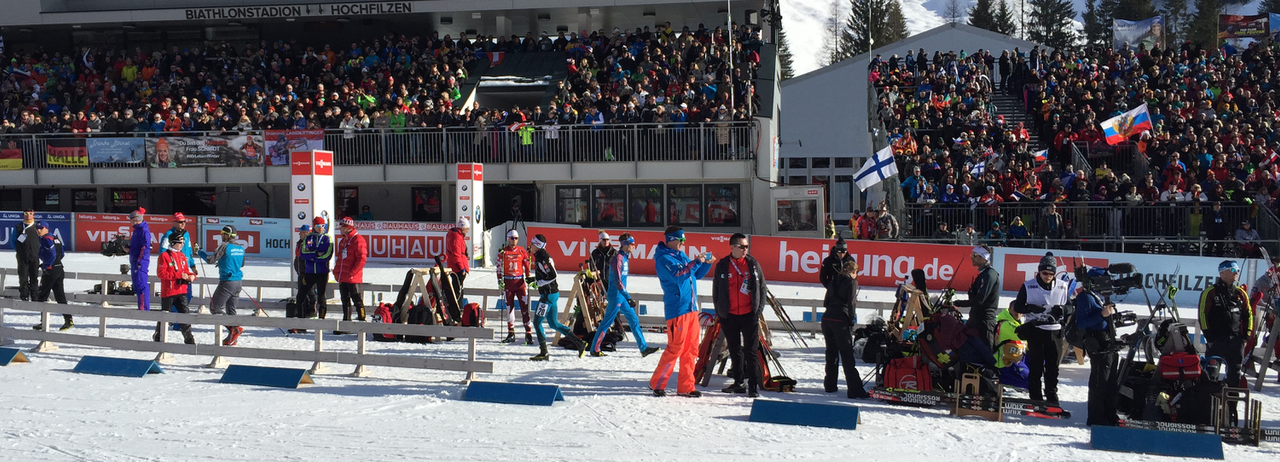
(Photo: Thibaut/NordicFocus.)
Warm-Up as a Tool for Intensity Control
One of the most overlooked benefits of a proper warm-up is improved intensity control. For athletes who struggle to control intensity during endurance workouts, paying close attention to the first 20 to 30 minutes of the session can have measurable benefits.
When athletes begin too fast, they often overshoot the desired intensity. Lactate rises quickly. Respiration and ventilation climb above normal. We have measured lactate during training and repeatedly seen athletes who start too hard spend the next 30 to 45 minutes of the workout significantly slower, simply to bring lactate back down to the intended level.
A gradual progression gives the athlete time to monitor how the body is responding. Heart rate rises progressively, respiration remains controlled, and the athlete gains a much clearer picture of the true physiological response to the workload.
This is particularly important during high-intensity training, where small differences in workload can create large differences in metabolic response. The goal is not simply to reach the target workload. The goal is to arrive there with the physiology prepared to support it aerobically.
The Better the Athlete, the More Deliberate the Warm-Up
Elite endurance athletes often appear to spend an excessive amount of time warming up. They do it because they understand physiology. As aerobic capacity increases, athletes become increasingly sensitive to small changes in metabolic stress. A controlled rise in workload allows them to achieve higher-quality training and produce more predictable physiological responses.
The warm-up is no longer separate from the workout. It becomes part of the workout itself.

Practical Application
For most endurance sessions, particularly aerobic training, athletes should think of the opening 20 to 30 minutes as a transition period rather than part of the main workload.
Start below the intended training intensity. Allow heart rate, oxygen consumption, and respiration to rise gradually. Resist the temptation to immediately achieve target pace or power. The objective is to create the physiological conditions that allow the workout to accomplish its intended purpose.
Final Thoughts
The warm-up is often viewed as preparation for the workout. In reality, it is the first opportunity to influence the metabolic response of the entire session. A gradual start reduces the oxygen deficit, limits unnecessary lactate accumulation, improves intensity control, and creates a more stable aerobic environment for the work that follows.
Athletes often focus on the intervals, the pace, the power, and the volume. Yet the quality of those elements may depend heavily on what happened during the first few minutes of the workout.
Sometimes the most important part of the session is not the hardest part. It is how you begin.
Help Support Our Coverage!
If you value the thoughtful work and access FasterSkier provides, please consider becoming a Voluntary Subscriber. Your support directly fuels our work to cover the people, places, and moments that make our sport special.
Join the FasterSkier community!