From the FasterSkier archive — posts syndicated from athletes’ and coaches’ own blogs between 2004 and 2012, kept online as published. Current coverage is at fasterskier.com.

Tag: warmup

  • Wednesday Workout: The Hetland Speed Drill with Michael Somppi

    Wednesday Workout: The Hetland Speed Drill with Michael Somppi

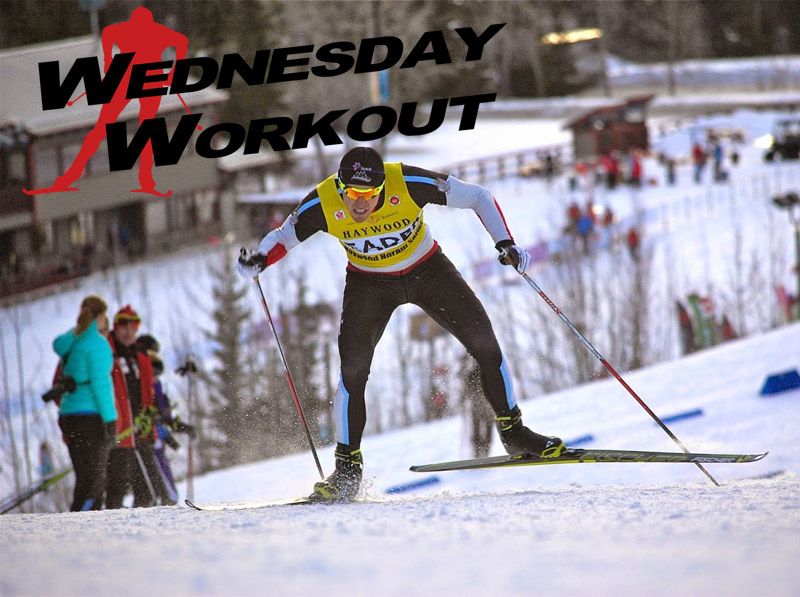
    Michael Somppi, of the Alberta World Cup Academy and Canadian National Development Team, racing to a NorAm freestyle-sprint win last weekend at Western Canadian Championships in Canmore, Alberta. (Photo: Angus Cockney)
    Michael Somppi, of the Alberta World Cup Academy and Canadian National Development Team, racing to a NorAm freestyle-sprint win last weekend at Western Canadian Championships in Canmore, Alberta. (Photo: Angus Cockney)

    This week’s workout comes from Michael Somppi, a 26-year-old Canadian National Development Team skier and Alberta World Cup Academy member. Also the current NorAm leader, Somppi won back-to-back races (a skate sprint and a skate mass start) at Western Canadian Championships this weekend for his first two victories of the season, and after a string of strong results this year, he explains one of his secrets to success.

    ***

    I learned a trick of the trade this spring at a National Team training camp from new Canadian coach, Tor-Arne Hetland.  It’s not a full workout, but more a tool you can use in your race-day warmup or post-interval session cool down.

    When Hetland first introduced our team to this tool, it was after a hard, speed-focused running workout and everyone’s legs were full of lactate.  He said of all the different things he’s tried over his years of racing and training, this was the most effective way he found to help the body flush lactate after a hard workout.  The recipe is four repetitions of 15 seconds on/45 seconds off, and the key to doing this effectively is the pacing.  The 15 seconds on is controlled Zone 4 speed.  It is not full-out sprinting.  The 45 seconds off is easy jogging or walking.  Don’t just stand still, keep moving.

    The Hetland Speed Drill 

    4 x 15 seconds on/45 seconds off (running): 15 seconds on at controlled Zone 4 speed (not full-out sprinting), 45 seconds off = easy jogging or walking.

    30 seconds on/60 seconds off (skiing): 30 seconds on at Zone 4 speed, 60 seconds off = easy skiing

    I used this tool after many hard ski-striding and running intensity workouts this past summer and can report it is helpful for flushing lactate.  I also started experimenting using this tool as part of my warm-up for running races to even greater effect.
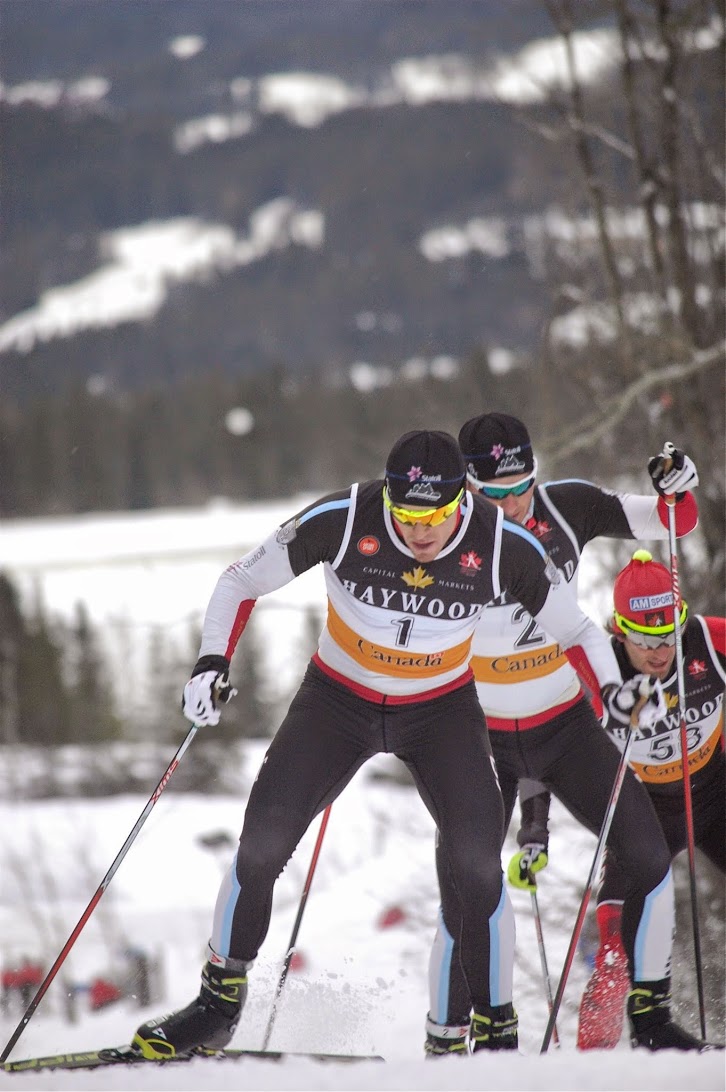
    Michael Somppi leads the pack en route to the win in the men's 20 k freestyle mass start at Western Canadian Championships on Jan. 18 in Canmore, Alberta. (Photo: Angus Cockney)
    Michael Somppi leads the pack en route to the win in the men’s 20 k freestyle mass start at Western Canadian Championships on Jan. 18 in Canmore, Alberta. (Photo: Angus Cockney)

    After doing some Zone 1 and one longer Zone 3 effort, I would finish my warm up with the 4 x 15/45.  It worked so well for me that when I was faced with having to do a partial running warmup for my races at the Rossland NorAm due to lack of snow, I decided to use this tool again.  I felt ready to go when I hit the start line and performed well. [Note: Somppi placed third and fourth in the two classic distance races in Rosalind, B.C.]

    The reason I like using this short interval set for final warmup prep is because it’s a good way to elevate the heart rate and move the body at higher speed without producing much lactate.  With the efforts being short (15 seconds) and not full-out, you aren’t doing enough to build any significant lactate, however with the relatively short rest period (45 seconds) your heart rate doesn’t drop all the way back to where it originally was, so each consecutive effort your heart rate is becoming more elevated.

    Next I wanted to try using it in my race prep on snow.  I don’t generally need to do that kind of higher-speed effort before a distance race, but I thought this could be perfect for a sprint qualifier warm-up.  The problem is skiing is different than running with the whole glide aspect.  I decided 15 seconds would not be long enough for me to get the feeling I want in my race warmup so I altered it slightly to four reps of 30 seconds on/60 seconds off.  I used this formula as the final step in my warmup for the skate sprint qualifier this past weekend in Canmore and it worked out really well for me.

    This little piece of wisdom handed down to me from Hetland has been very useful for me and I hope you can find ways of benefitting from it as well.

  • Wednesday Workout: Gelso’s Throwback Pre-Race Warmup

    Wednesday Workout: Gelso’s Throwback Pre-Race Warmup

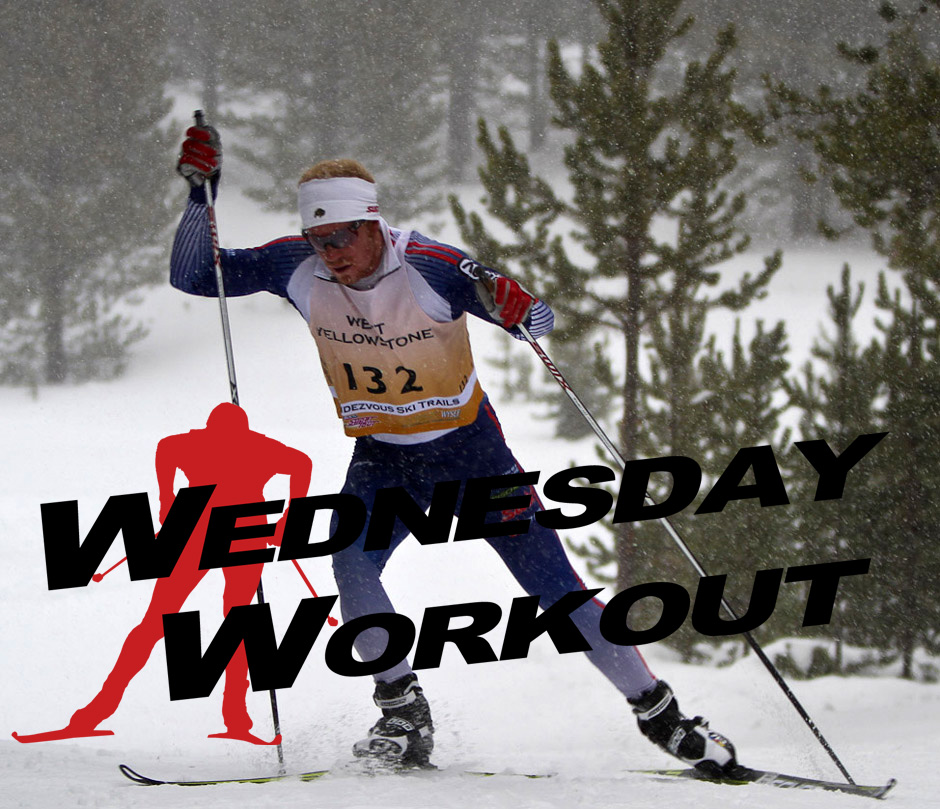
    Matt Gelso (SVSEF) racing in West Yellowstone in November 2011. There, he placed fourth in both the 15 k freestyle and 10 k classic. Last week, Gelso, 26, nabbed his first West Yellowstone SuperTour win in the 15 k freestyle.
    Matt Gelso (SVSEF) racing in West Yellowstone in November 2011. There, he placed fourth in both the 15 k freestyle and 10 k classic. Last week, Gelso, 26, nabbed his first West Yellowstone SuperTour win in the 15 k freestyle.

    This week, we bring back a Pro Workout from three years ago, in which Matt Gelso of the Sun Valley Ski Education Foundation Gold Team shared his pre-race routine. Last weekend, Gelso busted onto the SuperTour scene with a nearly 10-second win in the first distance race of the season. For his original pro workout, published Dec. 14, 2011, click here.

    ***

    When race morning rolls around, it is important to know what you need to do in order to maximize your effort on the race course. For some, that means superstitious traditions, like always wearing a certain pair of socks (or even mismatched socks). For others it means eating exactly two bowls of oatmeal and finishing breakfast precisely two hours before their start time. Regardless of your pre-race routine, it is imperative that a solid, active warm-up is achieved to be sure your body is primed for the strain of a hard race.

    Matt Gelso racing to first in the West Yellowstone SuperTour 15 k freestyle on Nov. 29, 2014. (Photo: Toko)
    Matt Gelso racing to first in the West Yellowstone SuperTour 15 k freestyle on Nov. 29, 2014. (Photo: Toko)

    Everyone is different, especially when it comes to a sport like nordic ski racing. There are many different perspectives about every detail regarding training or racing. I require a longer and very substantial warm-up, some simply need a few minutes to move around. It is important that you find your own unique methods and progression that gets you perfectly warmed up before a race. My process begins with some easy, level one skiing, followed by a moderate intensity portion, and finishing with some short speeds and a little more easy skiing.

    To begin my warm-up, I ski easy level 1 for 15-25 minutes. This is easy skiing to get blood flowing through the body and get the muscles moving easily. This is also a good time to get yourself fully focused on the business of the day. Once I am moving well I will stop for a couple minutes and have a sip of water and stretch a little to continue working out any last bits of stiffness.

    Intensity is the next portion of the warm-up and is very crucial and will be different for everyone. It is important to get your heart rate out of the easy level one zones to make sure your body is ready to respond to hard stimulus. It is imperative to make sure you progress into the intensity properly, touching all your training zones on the way up the intensity latter. After I finish the easy skiing segment I find some rolling or hilly terrain and start my intensity ladder. I begin with four minutes of level 2 skiing, followed by two minutes rest.  Next is four minutes of level 3 skiing, again followed by 2 minutes rest. Lastly, I ski two minutes of level 4 or full on ‘race pace’, followed by two minutes rest.

    This intensity progression provides time for the body to progress through every levels to fully warm up all the systems. It is crucial to work through all these levels to fully warm your body in a controlled manner, and not make huge jumps in levels and build large amounts of lactate.

    Gelso’s Warmup Routine (circa 2011): 

    1. Level 1 for 15 – 25 minutes
    2. Level 2 for 4 minutes (2 min rest)
    3. Level 3 for 4 minutes (2 min rest)
    4. Level 4 for 2 minutes (2 min rest)
    5. Warm-down for 10-20 minutes (with 3-5 speeds for 10-15 seconds each)
    6. Leave 15-20 before race start for last-minute prep

    Please note that the exact time guidelines I use here for intensity on-time length are not set in stone—I vary the on-time length of each interval depending on how I am feeling, whether or not I raced the day before, when I did my last intensity, and the length of the race. Each day is a different situation, so use circumstance (to a reasonable extent) to dictate what needs to be done.

    Once the intensity portion is complete I ‘warm-down’ for 10-20 minutes. This easy skiing after the intensity is to be sure that any lactate that was produced is removed before you being your race. During this easy skiing, I will do three to five accelerations or speeds above race pace. These will be 10-15 seconds. These speeds will help better clear any residual lactate produced during the intensity portion of the warm-up, as well get your muscles up to speed for a race effort.

    Once the warm-up is complete it is important to stay warm before your start and not let your muscles cool down too much. I like to end my warm-up 15-20 minutes before my race start to make certain I have time to get skis and everything else ready to race, but not too much time to let my body cool down.

    My specific race warm-up works well for me and gets me ready to provide a solid effort on the race course. This exact warm-up is not meant for everyone and even I change and adapt it to fit my time, ski, resources, and space/snow constraints. The most important aspect of the warm-up is making sure it gets your body ready to throw down a hard effort on the race course. It should be efficient, fairly consistent each time (at its base level), not resource consuming, and most importantly, adaptable to the plethora of changing conditions and constraints that race day tends to provide.

    A solid warm-up will give you the best chance of skiing your way up onto the podium—or maybe just off it in 4th, like I have been every distance race this year.