From the FasterSkier archive — posts syndicated from athletes’ and coaches’ own blogs between 2004 and 2012, kept online as published. Current coverage is at fasterskier.com.

Tag: wax truck

  • Tim Baucom and the Art of Making Hand-Structured Skis

    Tim Baucom and the Art of Making Hand-Structured Skis

    This article was made possible through the generous support of our voluntary subscribers who have helped put our Nat Herz on the ground at the Olympics. If you value coverage like this, please support FasterSkier with a voluntary subscription.

    Tim Baucom mountain biking with his parents on the Bangtail Divide Trail in Bozeman, Montana. (Photo: Courtesy Photo)

    After a historic day like yesterday, there are so many possible stories, some big, some smaller, but all important. It is easy to get lost in the moment, the history, and the meaning, but we also cannot forget about how it happened. Not just on the race course, but bigger than that, how did the team make it happen, specifically the service team?

    A lot of credit should be given to Eli Brown, who is the tech for both Ben Ogden and Julia Kern. Clearly, Brown, a self-proclaimed golf caddy for his athletes, provided some special magic, as did Oleg Ragilo, who leads the kick team, and Chris Hecker, who leads the glide team, but what makes the US Cross-Country Ski Team service team special is that they know they work best when all of their pistons are firing in sync.

    One of those pistons is their head of hand structure, Tim Baucom. His route to the wax truck bench was less predictable than you might expect.

    Baucom’s first ski race. (Photo: Courtesy Photo)
    Just a Kid Who Loved Sports

    Like many who stay in coaching and the industry, Baucom loved all sports growing up.

    “Sports were definitely my biggest focus when I was young. As soon as I started playing Little League baseball, soccer, and stuff, it was definitely all I thought about, in school too. Gym class and recess.”

    For a long time, Baucom played all the sports he could, but he was definitely into soccer, which was probably his favorite, and he played through high school.

    Middle School State Championships with his coaches Kate and Chris Northcott. (Photo: Courtesy Photo)

    Baucom grew up in Walpole, a small town in southwest New Hampshire, but cross-country skiing wasn’t on his radar as a child. Though he tried it in fifth grade and continued through high school, he did not approach it with the passion one might expect from a story about someone at his current level.

    “I didn’t really have much of a community for it where I grew up. It’s funny because New England’s so small.”

    Little did Baucom know he was just across the Connecticut River from the epicenter of American Nordic skiing.

    “I was 15 or 20 minutes away from Putney… but the communities in New England are so removed from one another. My dad even worked in Putney, and I didn’t really know those kids or race against any of them, or know the coaches.”

    While he loved soccer and other ball sports, skiing seemed to fit best.

    “Once I started skiing, I realized it was probably my best sport, at least the one I was more naturally adapted to.”

    But that didn’t mean he was fully committed to training like the top juniors in the region.

    High School State Championships with teammates Brenden Short, Morgan Brown, and Tyler Westover. (Photo: Courtesy Photo)

    “The first time I roller skied was my freshman year at UNH… There were three or four of us who had grown up in the New Hampshire high school skiing world and played other sports and never thought about roller skiing.”

    And while that might sound surprising to some people, it is not something Baucom regrets at all.

    “In most ways, I’m super thankful that I had a very diverse sports background… competent at ball sports, and alpine skiing—I alpine skied a ton—and telemark skied and ice climbed, and rock climbed. I’m definitely thankful for that.”

    Racing for UNH in Houghton, Michigan. (Photo: Courtesy Photo)
    Moving West and Almost Choosing a Different Path

    After high school, Baucom chose to stay in-state and attend the University of New Hampshire, where he majored in anthropology and had minors in history and music. Skiing became a big part of his life through connections and friendships, but he admits he probably wasn’t fast enough to make the team now.

    After graduation, he spent the summer helping build houses up in North Conway, but as fall approached, he left Durham, North Conway, and southwest New Hampshire behind.

    “I moved out to Bozeman the year after graduating… planning on being a ski bum for a little bit and then probably going back to grad school. I was very interested in public health, and medical anthropology really interested me.”

    But Baucom needed to find a way to support his ski bum lifestyle:

    “I started coaching that winter for Bridger Ski Foundation because it was an easy job. I could go ice climb or ski all day, and then at 4:00 show up at Lindley Park and ski around with some kids for a little bit and get paid a little money.”

    He figured that, between the money he had saved that summer and what he was making as a coach, he would be able to make his lifestyle work financially, but he didn’t expect to enjoy coaching so much.

    “I started dryland training… working with younger kids who were just starting to roller ski and just starting to learn how to bound and ski walk. We played soccer and speedball, mostly, which [was] awesome.”

    Working in Quebec with fellow UNH alumni Nick Brown and Andrew Morehouse. (Photo: Courtesy Photo)
    First Real Exposure to Waxing

    At BSF, Baucom found mentors to guide him in waxing.

    “We had a few coaches and techs who were quite experienced… Floyd Rieshus… he was probably in his 70s when I was working with him, and he was so dialed.”

    But it wasn’t just the technical side of waxing that was appealing; there is something about the physical labor of being a cross-country ski coach that draws in a certain type of person.

    “We’d show up in West Yellowstone, and he’d have his big sled that he’d hauled his elk out of the woods with—still covered in blood—and we’d throw all the waxing tables and gear into that, and the generator, and he would slowly trudge from town all the way out to the stadium.”

    In addition to Rice, Bjorn Bakken was heavily involved in BSF, and Baucom was willing to take on whatever they suggested.

    Baucom must have been doing something right because when the opportunity presented itself, the head coaches threw him into the deep end of the pool to see if he could swim.

    “[U.S. Nationals] was in Rumford, and [my boss] called me, ‘one of the people couldn’t make it,’ and they were like, ‘We really need extra help.’ So I went there and really got thrown into it.”

    When he arrived in Maine, conditions were, to say the least, challenging, but the rest of the BSF service team didn’t question his ability. They put him in charge of kick, even though Baucom felt as if he had imposter syndrome.

    “I think I was honestly in charge of kick—which was a joke at the time—because I had no experience making skis for that quality of athlete and that high level of race.”

    Baucom knew the stakes were high and that he had better figure out what to do quickly, but then the weather of New England did what New England weather does in January and tossed a wintery mix classic race day at everyone.

    It was situations like that that Baucom loved, having to get creative when there was no other option.

    Baucom and Jason Cork on top of Stratton Mt. (Photo: Courtesy Photo)
    How He Made it to the World Cup

    As a parent, you try to teach your child to advocate for themselves, and clearly, Baucom was taught that lesson well.

    “For a few years, politely persistent. I emailed [Chris] Grover a few times, being like, ‘Hey, I’m interested in this job.’ I emailed [Jason] Cork [on the tech side] and was like, ‘Any advice if I want to be a tech on the World Cup?’”

    The message back was simple: keep doing what you are doing, it is really the only way. What Baucom may not have realized about the impression he was leaving wasn’t just that he was skilled when things got unpredictable, but that he brought the right ‘vibe’ with him to the wax trailer.

    “I think if you have the right personality, and enough people see that, I think that helps. That is huge for a team like this. We’re living together for four or five months… one of the most important aspects is to be able to work together.”

    Eventually, that persistence with the right vibe got Baucom to Europe to start lending a hand.

    Simi Hamilton and Baucom in Quebec. (Photo: Courtesy Photo)
    Baucom’s Role: Manual Structure

    For people who don’t know what manual structure is: basically, the base of any ski has structure in it, small etch marks that help move water through the base or over snow crystals, depending on the temperature and the sharpness of the crystal.

    When World Cup skis come from the factory or, more directly, from the brand reps at World Cup races, they are ground, which creates a more permanent structure cut by a machine. What Baucom and the rest of the team are trying to determine on race day is whether adding a different pattern over that grind with a hand tool improves speed compared to the structure already on the ski from the brand.

    “The idea is to find something that’s durable, lasts the duration of the race, doesn’t pick up excessive dirt, works well with the grind that’s under it, and works well with the base material.”

    The US Cross-Country Ski Team has five different ski brands represented, and “they all have factory grinds that are great, and we use them. So we need to find something that works well for everyone.”

    In the days leading up to a race, the team will run a structure test or two and another on race morning before both the men’s and women’s races, “depending on conditions, it could be eight pairs, it could be four,” said Baucom.

    “We’re trying to narrow a giant box of different hand structures down to eight on the morning of, and then from there down to one—or maybe two options—that could work with different grinds.”

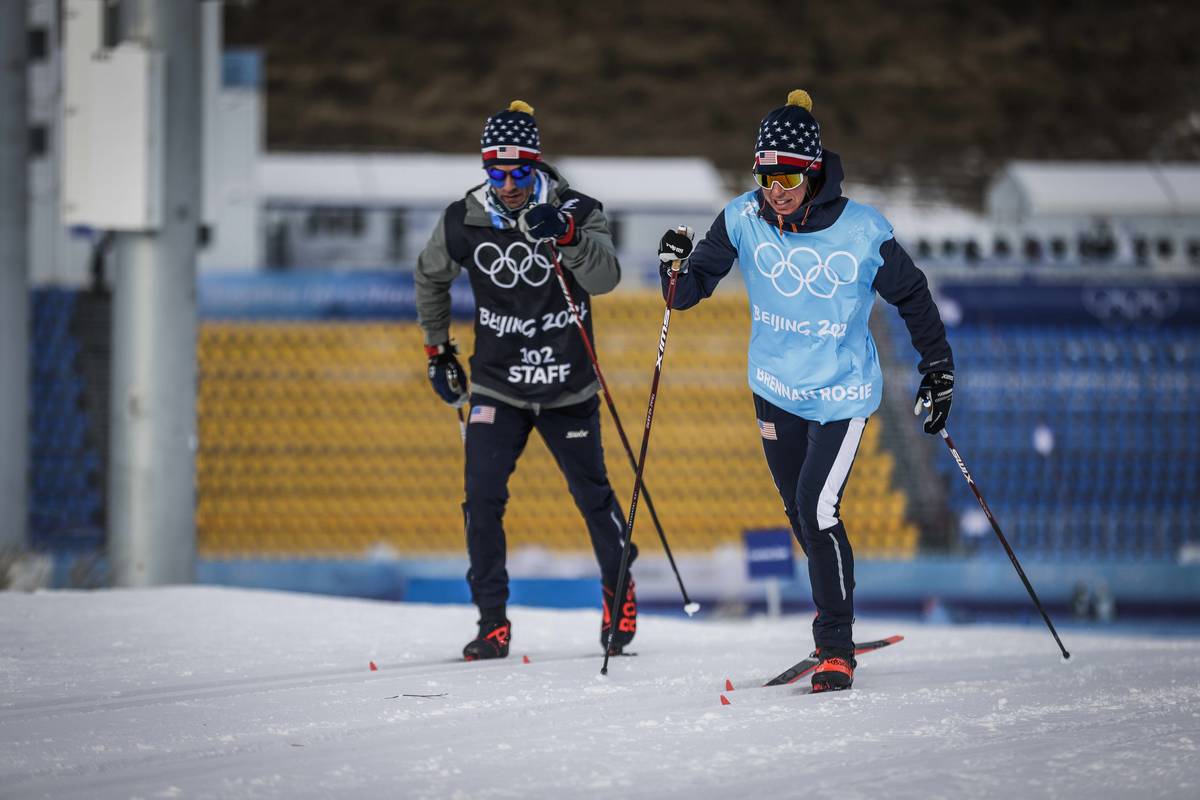
    Hailey Swirbul and Baucom on a ski in China one of their first days on the ground OWG 2022. (Photo: Courtesy Photo)
    Trial, Error, and Evolution

    Not everything Baucom and the team do works, so they have to catalog the results and move on with that knowledge for the next time similar conditions arise.

    “There are certain structures we stay away from that we’ve had bad luck with… and there are certain grinds from different ski companies that we pretty much won’t ever put manual structure on.”

    That’s the tricky part: not all athletes ski the same way, are looking for the same feel from a ski, or ski on the same brand of skis.

    “The most important thing is for each individual tech to have an idea of what works with their athlete’s skis.”

    Baucom and his partner Brooke Segerberg in Davos, Switzerland. (Photo: Courtesy Photo)
    A Historic Day

    Elite skiers train nearly a thousand hours a year, year after year, which is the required ante chip to line up at a race, especially an Olympic one. For Baucom and the rest of the US Ski Team service staff, the skis raced on World Cup weekends and at these Olympics did not come together the way you might prepare them for a Saturday morning ski. It, too, took thousands and thousands of hours of work over decades of involvement for the entire service team to put world-class skis in the athletes’ hands so they could realize their dreams.

    Another historic day might materialize at these games, and one thing we know for certain is that the service staff is working hard to make it happen.

    Help Support Our Olympic Coverage!

    FasterSkier has our own Nat Herz on the ground at the Olympics, which is a significant financial lift for us. If you value the thoughtful work and access FasterSkier provides at championships like this one, please consider becoming a Voluntary Subscriber. Your support directly fuels our work to cover the people, places, and moments that make our sport special.

    Join the FasterSkier community!


  • Making the Grade: A, B, and D Teams. What’s the Difference?

    Making the Grade: A, B, and D Teams. What’s the Difference?

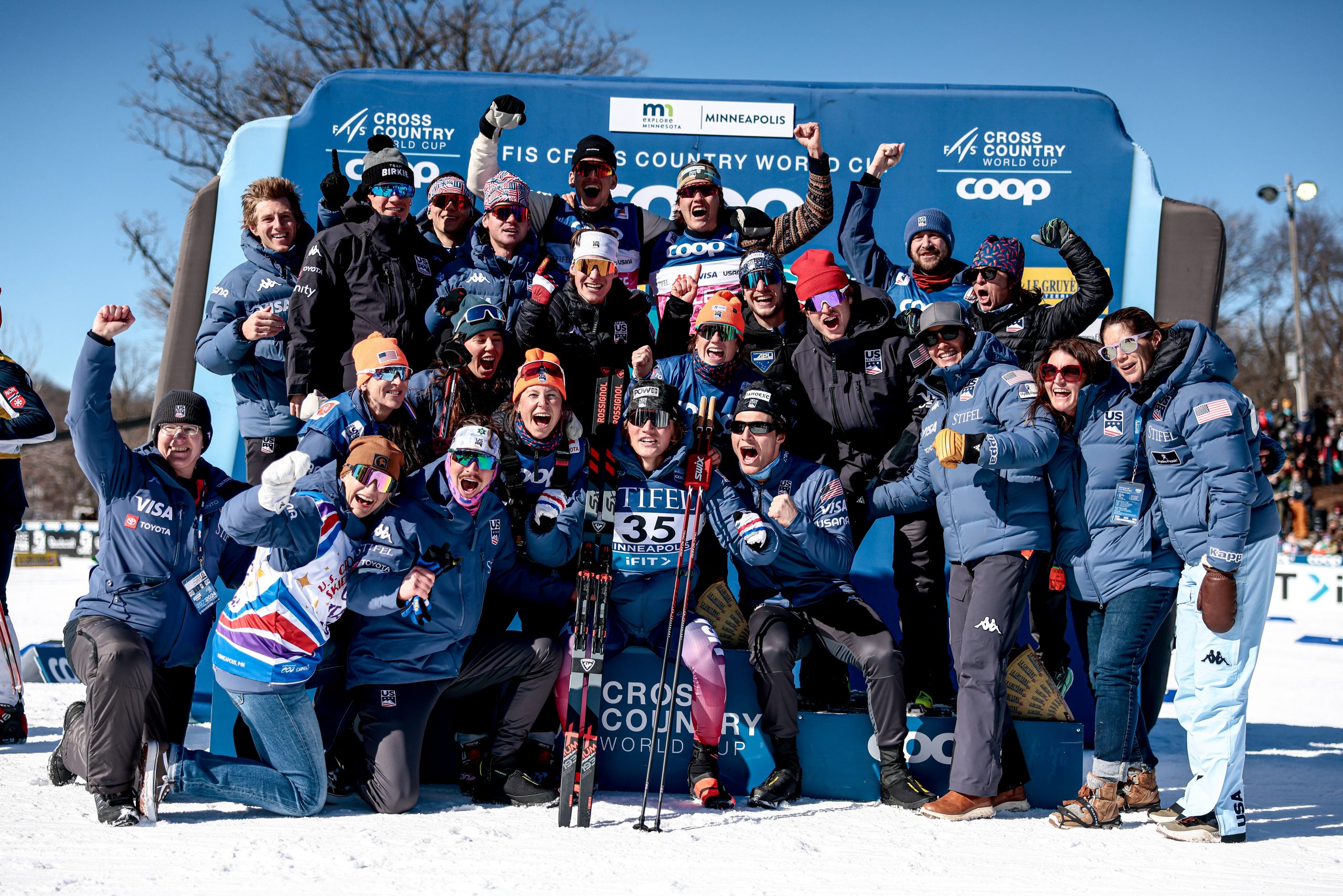
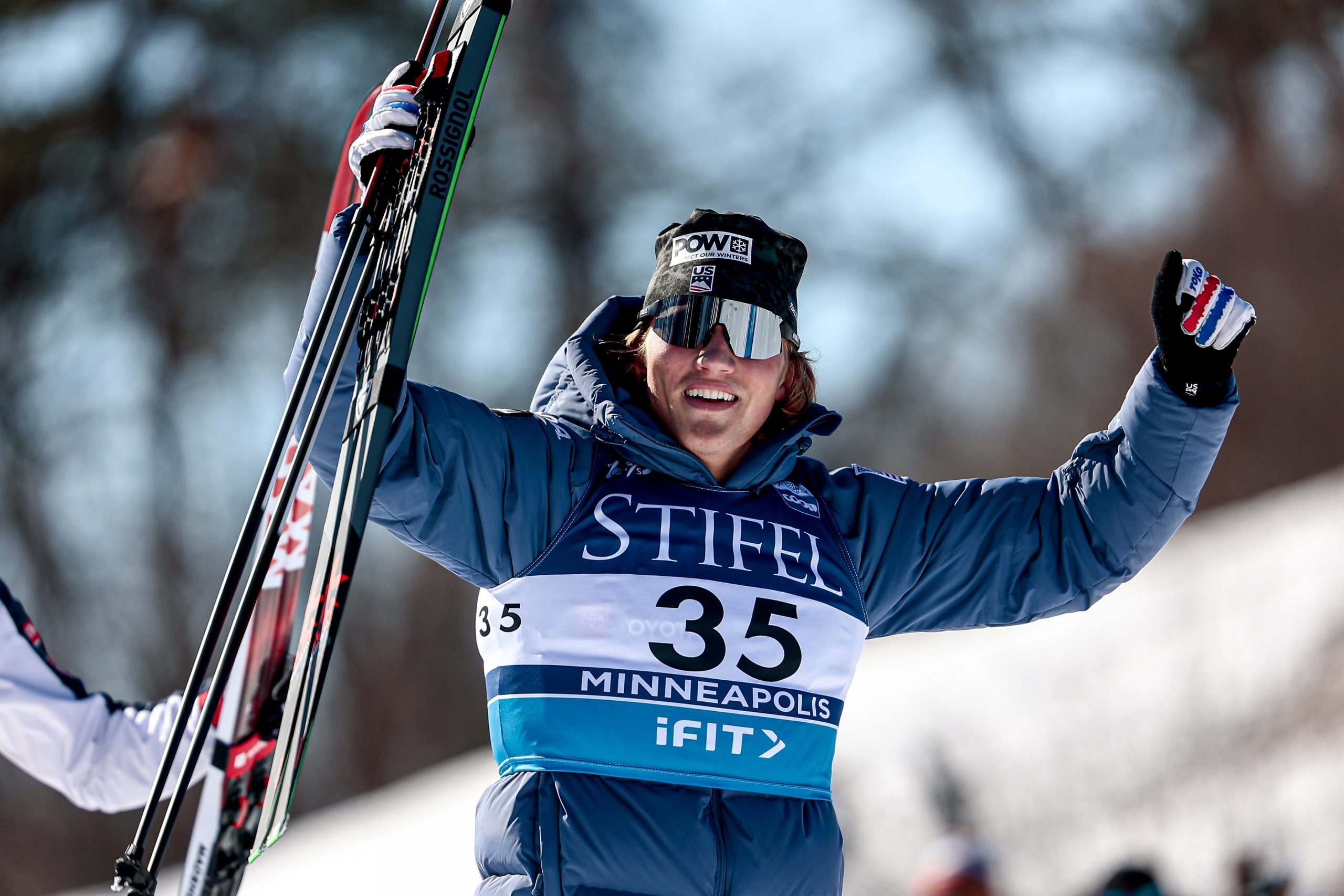
    The U.S. team celebrates Gus Schumacher’s victory in Minneapolis. Even though it’s all the U.S. team, there are teams within the team. (Photo: NordicFocus)

    Every fall the U.S. cross-country ski team announces its new roster. But there are teams within the team which makes it a little complicated to figure out exactly who belongs where. With designations of A, B, and D teams. The method for how members are selected to these teams is well documented, and it’s all contained in a public document on the U.S. team’s website. But as you’ll see, that process is going to change for the 2026 season.

    What’s less well known, and not discussed as often, are the differences from the athletes’ points of view. So, what exactly does it mean for a skier to be chosen to one of the different teams? That and other questions were answered when FasterSkier spoke with Chris Grover, the U.S. team’s head coach, about the team selection process, upcoming changes in that process, and at least one surprise announcement for the upcoming race season.

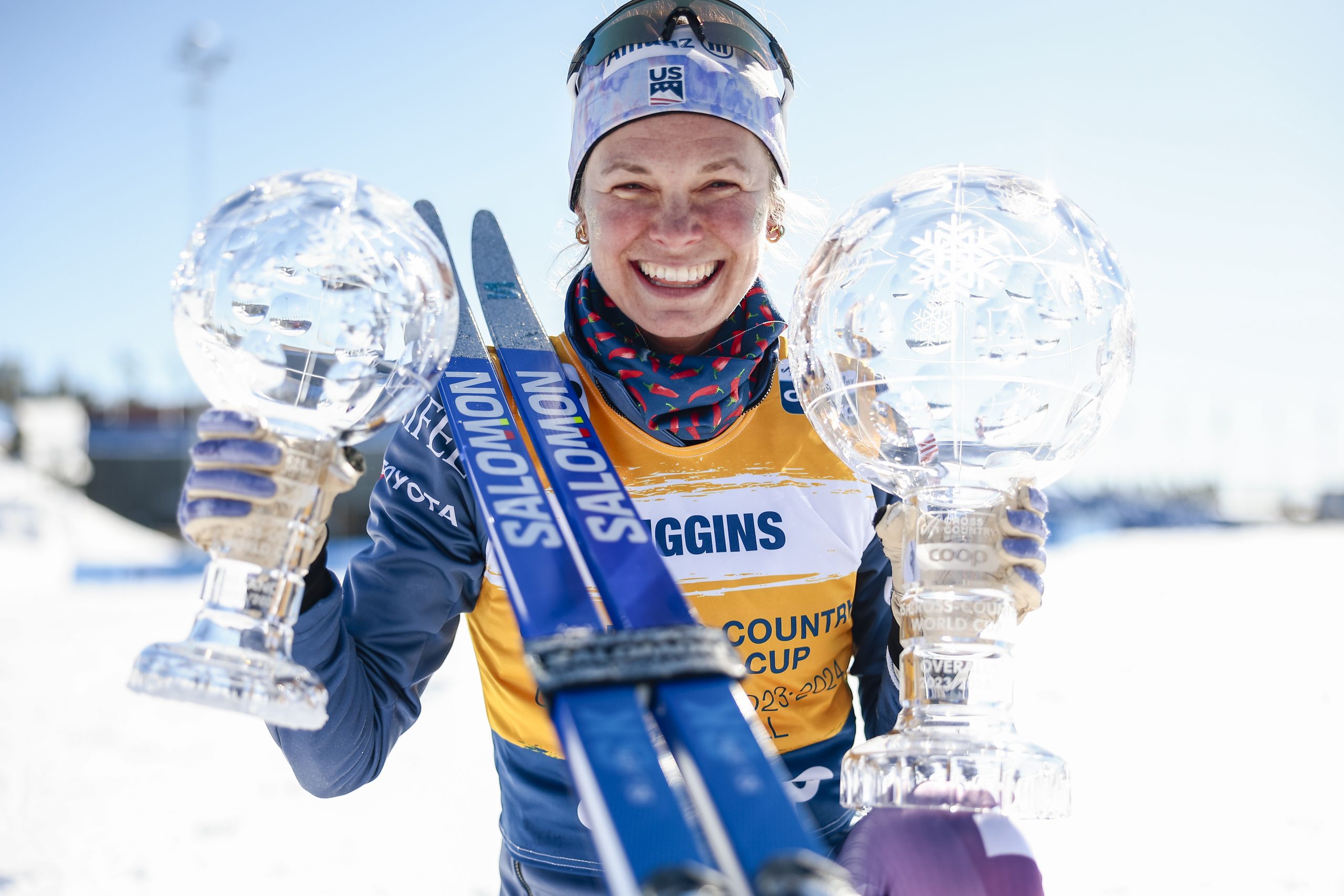
    When you own a couple of Crystal Globes, there’s no doubt about which team you’ve qualified for. Jessie Diggins (USA) celebrates two Crystal Globes and glitter tipped skis. (Photo: NordicFocus)
    What Does it Mean to Be on the A, B, or D Team?

    From the athlete’s point of view, what exactly is the difference between qualifying for the A, B, or D teams? The answer, as far as the differences between being an A team or B team member is easy. As Grover described it, “right now, there’s no difference between A and B team support.” Grover noted that, “it wasn’t always like that. There was a while when the A team was fully funded and the B team was partially funded, but that stemmed from the 2008-09 financial situation. The organization took a big hit and had to cut a lot of staff, and we all took pay cuts. At that point the B team had to fund their own travel to World Cup.” But now, “all of the same resources are available (for A and B).”  Grover hopes that the days of funding gaps are all in the past and that the current differentiation between A and B remains mostly a vestige of historically bad times. That bit of history may explain why some fans think there’s a big difference between being on the A and B teams, when in fact, there really isn’t any today, at least in terms of team support for an athlete.

    Sophia Laukli recently qualified for the A team. There isn’t much practical difference, but it’s still nice to have the label. (Photo: NordicFocus)

    In terms of what the team expects of A and B teamers, there is once again no difference. “All of those athletes (A and B team members) are expected to be racing World Cup. There may be some younger athletes also racing in NCAAs and U-23s, but the A team and the B team are primarily designed to be athletes who are competing and having success on the World Cup.”

    So why even have an A and B team differentiation? Part of the reason goes back to that difficult history around 2008 and to guard against changes in funding. “You never know what’s going to happen in the future, we could have another financial meltdown, and we’d have to be able to prioritize our funding.”

    So, there you have it. The difference between being an A and B team member from the athlete’s view, as of today; none, but don’t kid yourself, it’s still nice to have the title “A team member!”

    James Clinton (JC) Schoonmaker retains his spot on the A team.(Photo: NordicFocus)

    But the world of support for D team athletes is markedly different. “All D team athletes pay their own room, board, and travel. That includes going to training camps and coming to World Cup. We try to support them with coaching, medical, and sports science support. We have athlete career and education services, which includes tuition reimbursement and career placement. We’re obviously paying for coaches and vans, but for the most part they pay their own travel.” When it comes to the impact on an athlete, the big difference is between D team membership versus A or B team status.

    When you’re a struggling skier trying to keep your place on the team, the difference in support is a pretty significant void in financing which can be onerous for your average D team member. To help fill the gap, the NNF (National Nordic Foundation), which is privately funded, and has its own formula to determine how much financial aid each athlete receives, helps provide financial support. “Athletes who race more, have more starts, and have better performances get more money from the NNF,” said Grover.

    Sammy Smith will be moving up from the D team and joining the U.S. A team this year, her Sprint prowess secured her spot. (Photo: NordicFocus)
    Changing Qualification Criteria

    But big changes in the team qualification process are on the horizon, as the criteria for the 2025/26 season will be different from the current method.  Grover outlined the highlights of the changes.

    Fresh off his victory in Minneapolis, Gus Schumacher joins the A team, moving up from the B team. (Photo: NordicFocus)

    “There’s no way to qualify for the A team via world rank, like we’ve had. We’ve made it totally objective, based on World Cup and World Championships. We wanted the A team to be athletes that were meeting a certain standard on World Cup. For the A team, it’s all about World Cup performance (not points) and World Championship performance.” The changes Grover points to were driven by looking back and realizing that “we’ve seen that younger athletes can often make the A team without having much success on the World Cup. This (change) is to indicate that the A team is for World Cup and Championship level performers.”

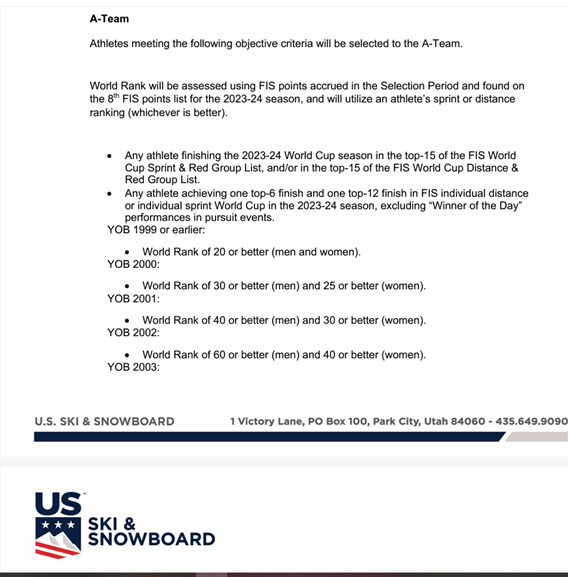
    Current A team criteria include World Cup finishes and World Ranking. World Ranking is eliminated for 2026. (Photo: U.S. Ski and Snowboard nomination document)

    Currently, A team members could qualify based upon World Cup ranking, or high individual World Cup/World Championship race finishes. As part of the calculation, there is a sliding scale formula for qualification based upon a combination of year of birth and World Ranking.

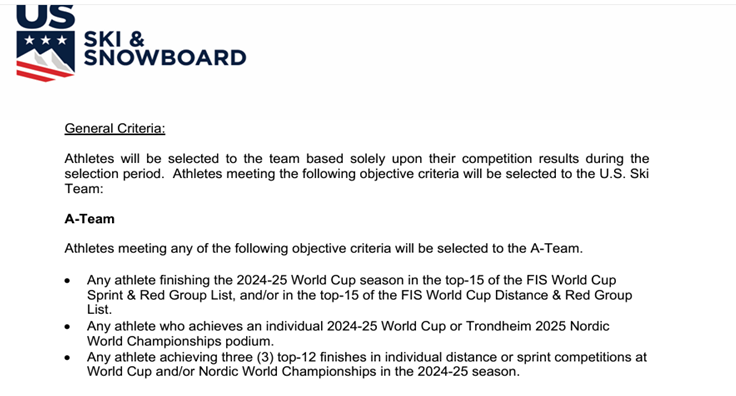
    The new A team qualification criteria for the 2025/26 ski season. (Photo: U.S. Ski and Snowboard nomination document)

    For the 2025/26 season there will only be three ways to make the A team and none of them involve an athlete’s age. Qualifying will be based upon either a top 15 ranking in either Sprint or Distance classifications from the prior season of World Cup competition, achieving a podium in the World Cup/World Championships the prior season, or having 3 top 12 finishes in Distance or Sprint competitions at the World Cup/World Championships from the prior year. Gone from A team qualifying is the convoluted year of birth calculations.

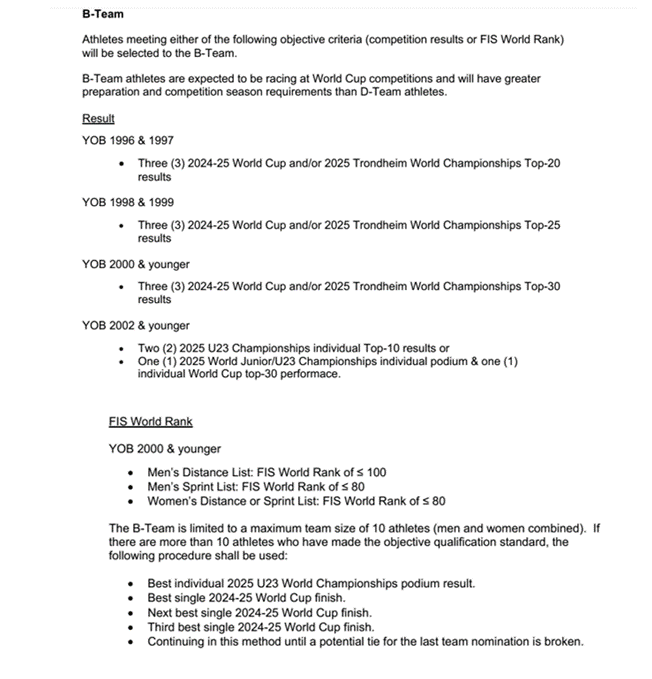
    B team criteria for 2026 will now include the age elements which were present for the A team in prior years. (Photo:  U.S. Ski and Snowboard nomination document)


    Age calculations are now incorporated into B team qualifying and reflect the concerns about younger athletes who could make the A team and have limited World Cup success. B team qualifications will occur through a combination of age and World Cup/World Championship results, and U23 and Junior Championship results. World rankings come into play only for athletes born before 2000. And B team members will still be expected to race at World Cup competitions.

    Another big change will be a cap on the number of athletes on the B team. The team will be limited to a maximum of 10 athletes (men and women combined). There is then a tie breaking procedure in the event that more than 10 athletes qualify for the B team.

    D team qualification will be based upon competition results from World Cup races, U23 World Championships performance, and World Junior Championships. Like the B team, there will also be a pathway based upon FIS World rankings.

    To address any unforeseen inequities, discretionary selections are still allowed.

    Ben Ogden hopes to pick up where he left off after being sidelined by illness. He retains his A team status.  (Photo: NordicFocus)

    Some of the change, particularly with the B team cap, is financially driven. “We have to fund all those athletes’ room, board, and travel, but we also have to provide a staff support network that’s big enough to take care of them all. That includes wax technicians, coaches, and physical therapists.” All of that support takes money and there isn’t a limitless pot.

    Will Koch joins the U.S. B team this year moving up from the D team. (Photo: NordicFocus)

    Grover emphasized that, “being on the U.S. ski team doesn’t give you any kind of start rights on the World Cup, they’re not related whatsoever. Making the U.S. ski team is totally separate from qualifying for any sort of competition trip.”

    Luke Jager will receive the full support of a B team member for this coming winter. (Photo: NordicFocus) downloaded picture is fee-liable.

    Like many aspects of the American squad, the selection process to make the team is different than for most other nations. For the Americans, “you either qualify objectively for the next season or you don’t, we do sometimes use coach’s discretion if we feel somebody has fallen through the cracks—but we don’t use it very often. Often when Norwegians or Scandinavians talk about a purely objective selection method, they will refer to it as an American system. Many other national teams don’t have objective criteria for their World Cup, National, or World Championship teams. They are using a ton more discretion. In the past, some of our main competitors have used almost 100 percent discretion.”

    So that’s what all of the alphabet soup spells out when talking about U.S. team membership.

    New Look For a New Season: Another Truck and Larger Team Quotas
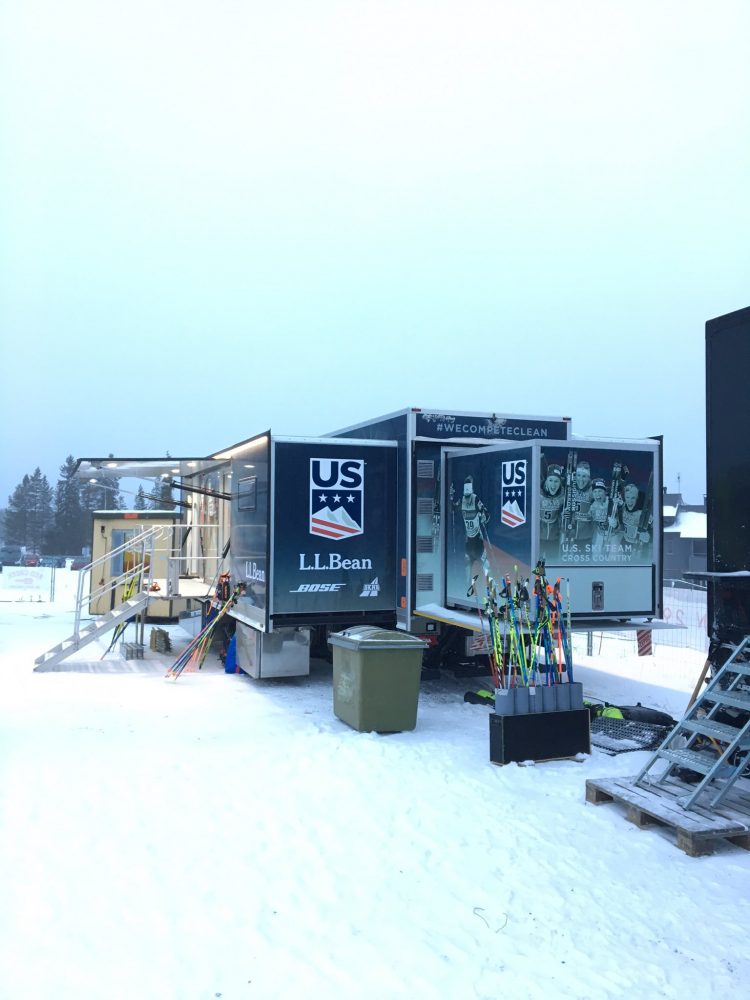
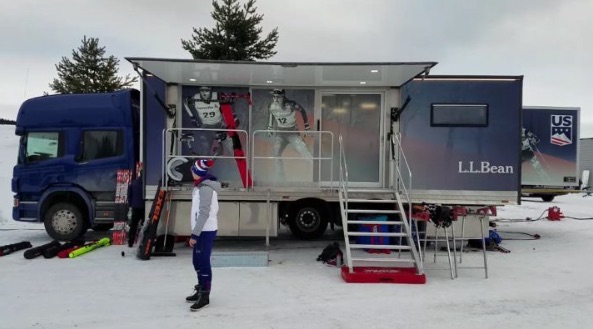
    U.S. Ski Team wax truck during pre-season camp in Rovaniemi, Finland. There’s a little sibling on the way to add to the fleet. (Photo: Matt Whitcomb)

    Grover also gave FasterSkier a head’s up on a team upgrade for this winter’s World Cup season. “We have a second wax truck that will be going on the road with us this winter which is going to carry our Wintersteiger grinding machine … which will also give us four more work stations, which we absolutely need because the team has gotten so big. We and Norway have the biggest quota in the world right now, because they have the men’s Overall winner and we have the women’s, so we can start 15 athletes between men and women, as Norway can, but that’s bigger than every other nation. We have 22 different athletes coming to World Cup in period one. So now we have two trucks.”

    Trucks aren’t cheap, and Grover is quick to express his appreciation to the U.S. Olympic Committee for the funding role they played in purchasing a second truck, in addition to private donors who aided in the purchase. It cost over €200,000 Euros (about $216,00 U.S.D), for just the truck, not including any of the equipment like grinders which go into it. It’s a good upgrade for a team which continues to seek  improvement in every aspect on and off the competition field.

    Thank you to Chris Grover for taking the time to have this discussion with FasterSkier

  • An accountant, a summer flooring salesman and an Estonian helped Diggins deliver bronze. Here’s how.

    An accountant, a summer flooring salesman and an Estonian helped Diggins deliver bronze. Here’s how.

    ZHANGJIAKOU — Patrick Moore is a cheerful accountant from Edmonton, Alberta. Tim Baucom spends his summers working sales for a Vermont plank flooring company. Oleg Ragilo runs a cosmetic shop in Estonia with his wife.

    Jessie Diggins, the American cross-country ski star, couldn’t have won her Olympic bronze without them.

    Jessie Diggins earns an Olympic bronze medal in the 1.5 k freestyle sprint. (Photo: NordicFocus)

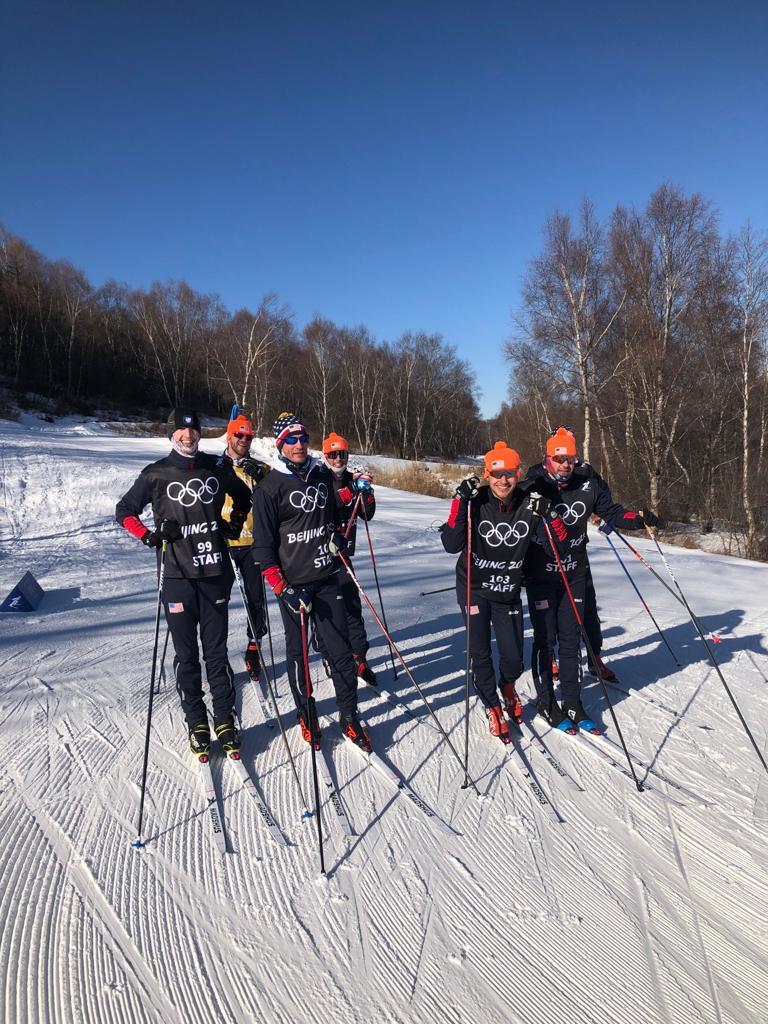
    Moore, Baucom and Ragilo all belong to America’s nine-member ski service team here — a mix of mostly paid staff and a couple of volunteers like Moore.

    “I can’t speak highly enough of their work ethic — they’ve been out here every single day, hours and hours and hours, probably skiing like 50 k a day,” Diggins said after finishing eighth Thursday in her third race of the Games. She added, referring to her medal-winning ski: “They delivered such a clutch performance the other night.”

    The service crew is charged with the complicated, high-stakes work of choosing the right skis and wax for the snow conditions in Zhangjiakou, the mountain resort town outside Beijing where Olympic cross-country events are taking place.

    The task sometimes can make the difference between an average day and a medal. 

    But the work, which happens in drab tan buildings off a corner of the stadium, is relatively anonymous — except when things go wrong.

    “I think it’s sometimes hard for people at my regular job what I look like here,” said Moore, the accountant. “And it’s probably hard for people at this job to understand what I look like there.”

    The U.S. wax staff arrives in Zhangjiakou. From left to right, Patrick Moore, Andrew Morehouse, Bjorn Heimdal, Tim Baucom, Chris Hecker, Jason Cork, and Eli Brown. (Photo courtesy fellow technician, Karel Kruuser)

    The U.S. service team is composed of a mix of Americans and Europeans — including Ragilo, who previously waxed for superstars in Estonia and is something of a legend there.

    To appreciate the crew’s work requires a quick lesson in ski technology.

    Cross-country ski bases — the part that slides across the snow — are generally made of a plastic called polyethylene, or p-tex. The material has tiny pores, somewhat like a sponge, which means it absorbs wax that’s ironed or rubbed in by technicians; the excess can be scraped off to leave what appears to be a smooth plastic surface.

    Manufacturers produce different waxes to help the skis slide faster in different conditions: warmer or colder, natural snow or man-made.

    The waxes are typically layered, and they can be applied in different ways — ironed in, rubbed in with a cork or even a spinning wool cylinder attached to a drill, for example.

    Technicians can also enhance the gliding potential of skis with metal tools that press tiny, intricate patterns into the bases, known as structure. Then there are the skis themselves, which are built stiffer or softer to suit snow conditions. American athletes each brought dozens of pairs to the Olympics — perhaps 300 total.

    Sorting through each of those variables and identifying the best skis, waxes and structures takes hours and hours of testing. U.S. service team members arrived in Zhangjiakou a week before the first race, and got to work.

    “None of us are scientists,” said Baucom. “But we just tinker around with all this stuff.”

    Old entries in a U.S. wax technician’s notebook keep track of the many iterations tested en route to a winning selection. (Photo: Nat Herz/FasterSkier-ADN)

    The crew spends its first day or two skiing the race courses, setting up gear and getting a feel for the place. Then, they start testing the first layers of waxes and the best methods for applying them, as well as durability: How far can they ski before the wax starts losing potency?

    Most of the testing is done by feel, with two technicians gliding down a hill, side by side, on two pairs of skis with different waxes to see which pair is faster. The American technicians can ski 30 kilometers a day or more; some or the Scandinavian teams with larger staffs have workers whose sole job is testing and can ski twice that far.

    When race day arrives, the U.S. team may have tested 50 or 60 types of glide wax, and a similar number of kick waxes, which skiers use to grip the snow and push themselves uphill. 

    Olympic team staff test skis and wax Friday, February 4, 2022 at the Zhangjiakou National Cross-Country Skiing Center. (Nat Herz/FasterSkier-ADN)

    They’ll narrow that number to perhaps 16 waxes to test in the hours before the gun goes off. Athletes, who are paired with the technicians, will also test a handful of pairs of skis before a race to see which are fastest.

    The Americans aren’t typically expecting to find a magic bullet that makes their skis the best in the field, said Baucom, the U.S. team’s head of glide waxing in Zhangjiakou.

    “You always want to have skis that are ridiculous, and make you look good,” he said. “But really, our goal is to have competitive skis. And it seems like in these conditions, as far as I can tell, almost every team has had pretty competitive skis.”

    Rosie Brennan tests skis with her tech, Bjørn Heimdal, before the opening 15 k skiathlon. (Photo: NordicFocus)

    The conditions in Zhangjiakou were the subject of intense speculation before the Games. 

    The area is not far from the Gobi desert and gets minimal precipitation, so skiers are racing mostly on manmade snow. Before the Games, Baucom heard about storms that deposited sand on the trails that ruined skis. 

    But so far, he said, the skiing at the Olympics has been quite good, even if the snow is a little dirty and wears away wax a bit more quickly than usual.

    “It’s not throwing us for a loop as far as being very different from other really cold, dry snow that we’ve raced on,” Baucom said. “It’s abrasive, but it’s not, like, crazy.”

    Ski preparation at the elite level can be something of an arms race: On the European World Cup cup circuit, bigger teams, including the U.S., travel with huge trucks that have been outfitted as roving wax rooms at a cost of $500,000 or more. Those trucks, however, did not make the trip to Zhangjiakou.

    Scandinavian teams spend more money on ski service and have bigger workforces, which can sometimes produce inequities. At the World Championships in Germany last year, the U.S. technicians had an especially tough day in the women’s pursuit race, where the skis they gave athletes were too slow to be competitive. Baucom described the feeling as “gut-wrenching” for the staff.

    Julia Kern prepares for the 15k skiathlon with her wax technician, Eli Brown. (Photo: NordicFocus)

    When things go wrong, the U.S. team will often collect skis after the race and retest, to see what went wrong.

    At the Olympics, though, conditions have been stable and relatively straightforward for waxing, even after a flurry of fresh snow Saturday morning. So far, the American athletes have had few complaints.

    “It feels good to know that everyone has a pretty fair shot,” Diggins said. “I’m just so grateful to our staff, because we win as a team.”

  • U.S. Ski Team Locks In for Waxing, Winning with New Wax Truck

    U.S. Ski Team Locks In for Waxing, Winning with New Wax Truck


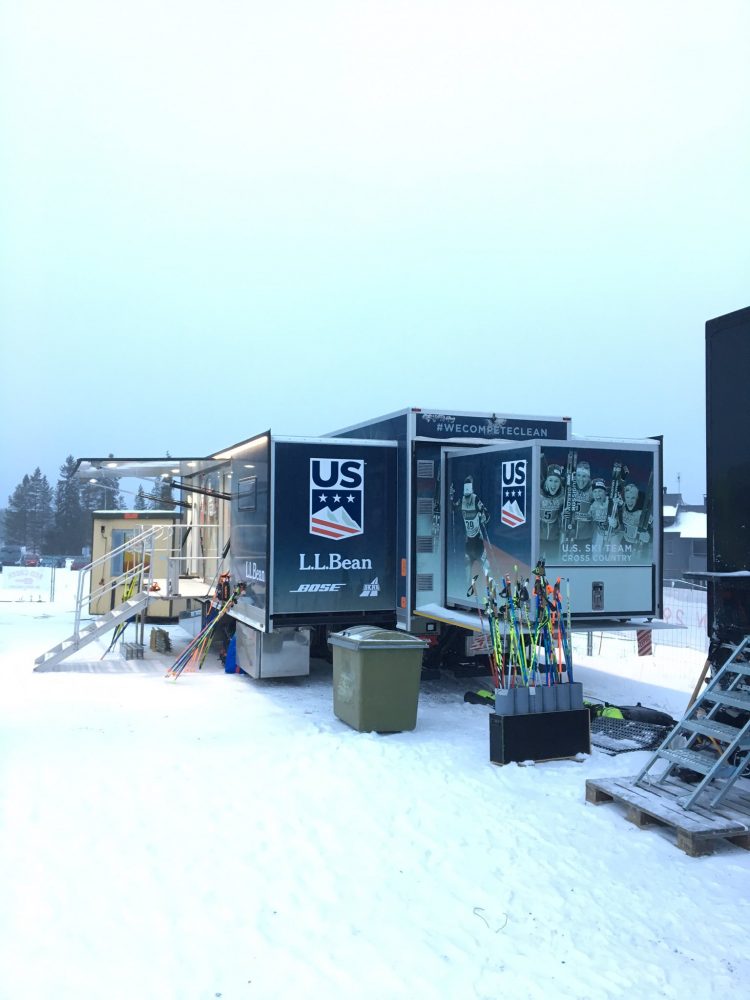
    The new U.S. Ski Team wax truck fully deployed. (Photo: Matt Whitcomb/Twitter)

    Since 2008 when Sweden arrived on the World Cup scene with a full-scale, blue-and-yellow-wrapped wax truck, it didn’t take long for the other major cross-country ski nations to not only keep up with the Joneses but surpass them. 2009 saw Norway arrive and begin lording over the wax-truck world with a succession of vehicles. As only Norway might do on the nordic-resource amenities side of things — Norway out Norway-ed itself. Its World Cup cross-country team began with a state-of-the-art wax truck in 2009, but has since moved on up. These days, Norway’s wax-tech crew arrives at World Cup venues with two wax trucks, each with extendable sides and rears, and a pop-top athlete lounge.

    The benchmark: Norway’s wax truck. (Photo: Noah Hoffman)

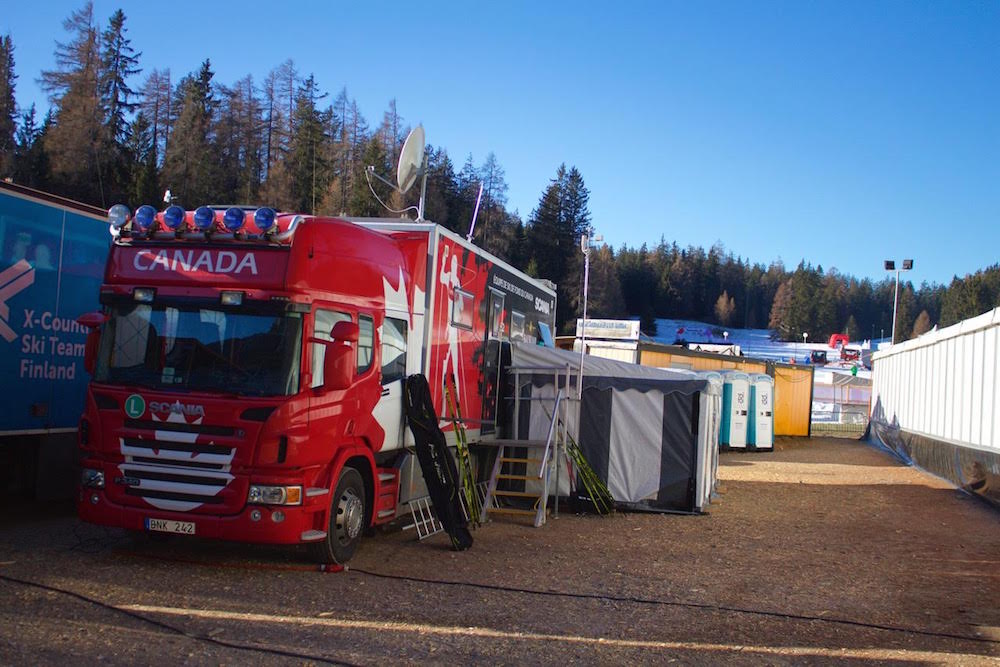
    Even the Americans’ friendly neighbors to the north, Canada, have styled their maple-leaf themed wax truck in World Cup wax compounds since 2013.

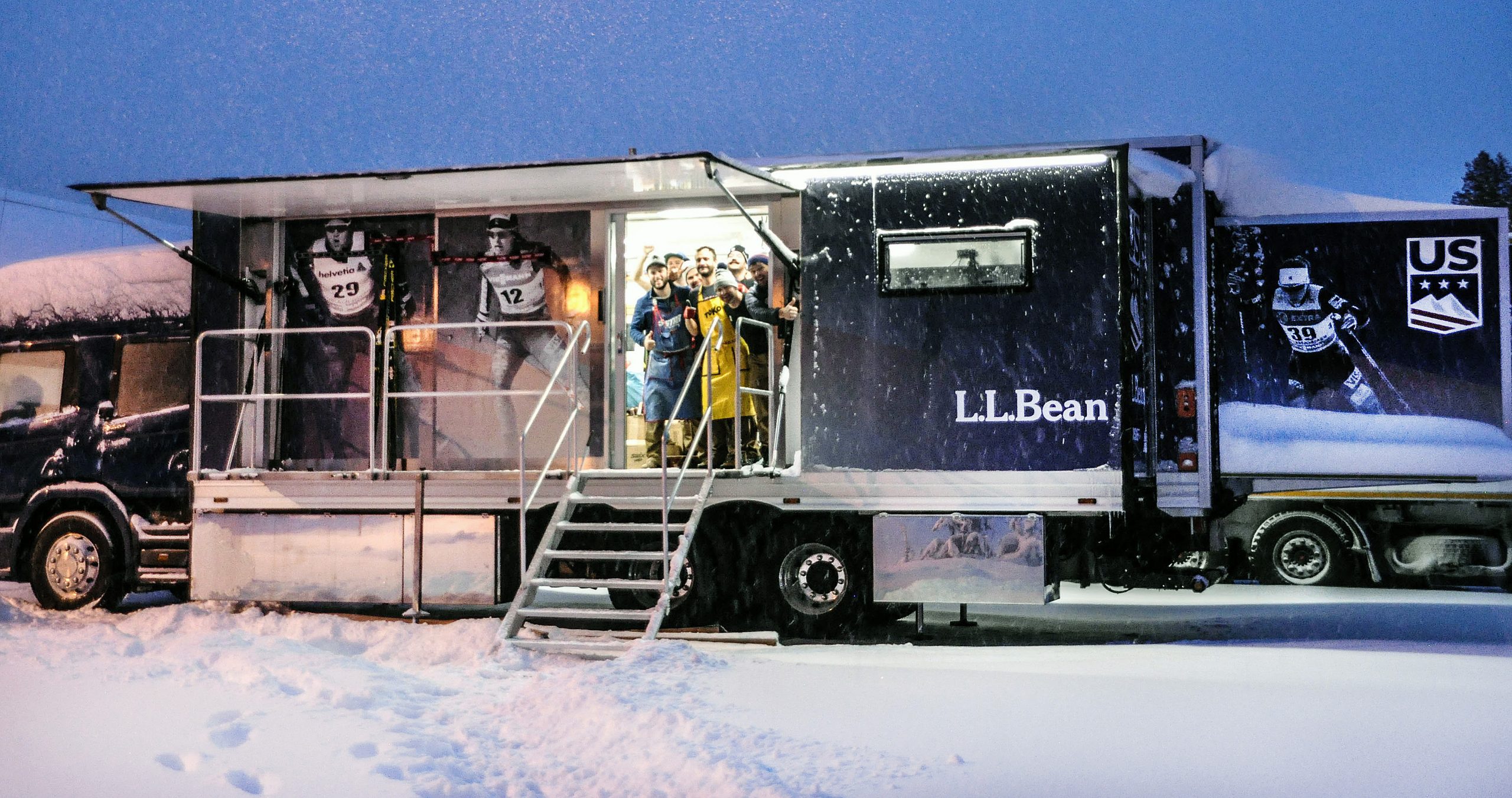
    Of the nine top-ranked teams on the World Cup, the U.S. is the last to meet the benchmark of eschewing wax cabins for a wax truck. This season, the U.S. Ski Team (USST) arrived in Kuusamo, Finland, and Lillehammer, Norway — the first two World Cup stops — with its own state-of-the-art mobile ski waxing facility.

    “It’s been in the works for a couple of years,” USST Head Coach Chris Grover said on the phone last month, before the race season began. “One of our USSA Board of Trustees, now Board of Director individuals, Liz Arky, she was the main catalyst behind the wax-truck project. I want to say two years ago in 2015, she was with the team in Davos at the World Cup, and that was the first time she saw firsthand what we were up against. So at that point she came into the wax compound and saw the trucks from all the other nations and then saw how we were operating in our temporary containers, and so she was like, ‘Oh my gosh, how come you guys don’t have a truck? You guys need to have a truck.’”

    For the past several years, the USST has thrived without a wax truck. There have been Sprint Crystal Globes, World Championship medals, and podiums. But safer working environments, and a more stable and efficient workplace should promote healthier wax crews and in theory, a more competitive team when it comes to the wax equation. Rather than a cyclic and backbreaking process of loading and unloading smaller transport vans as the teams depart and arrive at each new World Cup, a wax truck affords continuity and faster pack up and set up.   

    Arky, along with the help of USST veteran Kikkan Randall and U.S. Ski & Snowboard Executive Director and CEO Tiger Shaw, began the hustle for funds. From Aspen to Vail to the East Coast, eventually, the money was raised. Their two-year fundraising effort came through.

    “This truck with all the taxes we had to pay for on it, is a little more than $600,000 dollars,” Grover said. “And actually, quite a big percentage of that is taxed in Europe, the value added tax that you have to pay on that. This is a 600K plus project for us that, of course, is totally separate from our normal budget.”

    With the money secured, Grover explained his team worked with Swedish custom-bus outfitters Scania and SKAB to dial in the wax truck’s design. These two companies assisted the Canadians, Swedes, Russians, and Norwegians with their wax truck build outs as well.

    The USST’s newly minted wax truck. (Photo: Noah Hoffman)

    “Our truck is the same cab and chassis as the Canadian truck. It’s not a tractor-trailer; it doesn’t articulate like that,” Grover said of the wax truck’s underlying chassis. “You don’t need the highest class of driver’s license in Europe in order to drive it; it is more like a bus when it drives. However, the size of the Canadian truck wouldn’t work for us because it’s too small. It only expands in the back where there is a ski storage box that pops out the back, and it only can accommodate six workstations, but the Canadians carry fewer athletes in the World Cup than we do typically and at major championships, and so we needed something bigger.”

    The U.S. wax truck expands from the back like the Canadian truck. The similarities in terms of expansion end there. The U.S. version extends from both sides, but not vertically like the Norwegian trucks.

    The Canadian “tour bus”, a.k.a. wax truck, parked in Lenzerheide, Switzerland, as seen Dec. 30, 2015, before the start of the 2016 Tour de Ski. (Photo: JoJo Baldus)

    “I want to say it creates something like 30 square meters of workspace,” Grover said. “In addition, we also had a covered porch added, like the Russian truck, and the reason is so we can basically kick wax outside in the cold and have it covered if it’s snowing. That’s a really cool feature like we saw in the Russian truck and we were like, ‘We gotta have this,’ because sometimes you can’t kick wax inside when it’s hot inside the truck and you need to go outside, but it’s nice to have it covered if it’s really snowing or something … It’s quite wide when it’s expanded.”

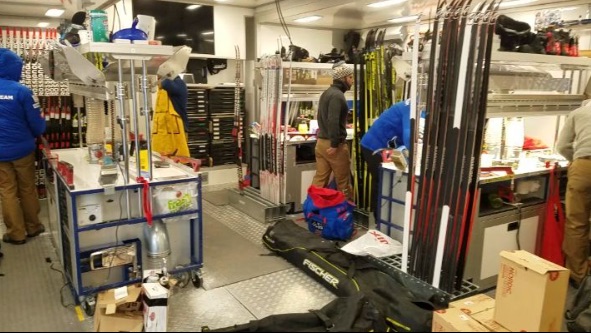
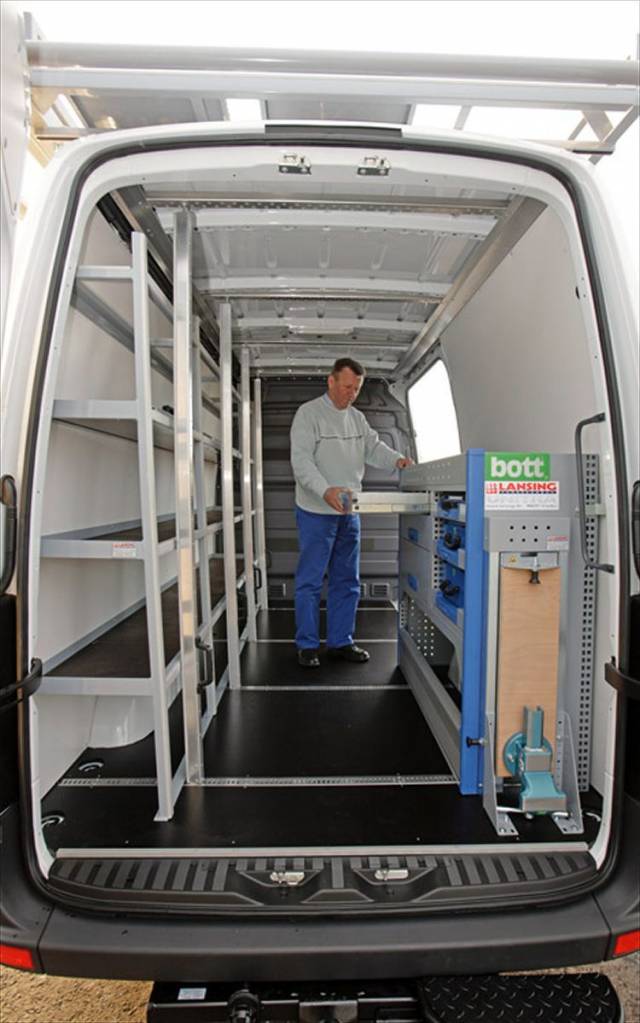
    Inside the truck are four workstations with two functional benches each. Those workstations are mobile in a sense — they are fitted to locking caster wheels making them movable and easily stored when the truck is mobile.

    Interior ventilation is a major concern when considering exposure to toxic fumes and particulates, especially when working with vaporized fluorocarbons. According to Grover, the USST wax truck is fitted with ventilation to mitigate the hazards. Each wax station is ventilated independently with industrial fume hoods.

    “Basically for everyday wax-working, you would not need a [respirator] mask in this setup,” noted Grover. “However, and when people get powdering, we are still going to wear a mask. We are going to be on the safe side. Not only do we have this ventilation that is going, but we are also making sure that every person in the truck is 100 percent safe.”

    The ventilation system is not a single large-scale,vacuum-type system where the expelled air is refreshed with clean air.

    “It is interesting, I obviously learned a lot about this in the process,” Grover said of the technical side of ventilating the wax truck. “You cannot really have one massive ventilation system that is sucking all of the air out all the time, because it creates vacuum locks on the doors, and nobody can get out of the trailer. So that is a challenge.”

    The Norwegian team uses specialized irons with ventilation tubes attached directly to the iron to draw and then expel any vapors emitted from the iron/ski-wax interface. The U.S. truck does not feature these costly irons, however, the workstations are outfitted in a manner that can accommodate these types of venting irons without any modifications to the pre-existing build out.

    Relatively clutter-free and ready for waxing inside the new USST wax truck. (Photo: Noah Hoffman)

    The truck also features storage for the more than 600 pair of skis and an array of coordinated storage compartments that might make an Ikea designer drool.

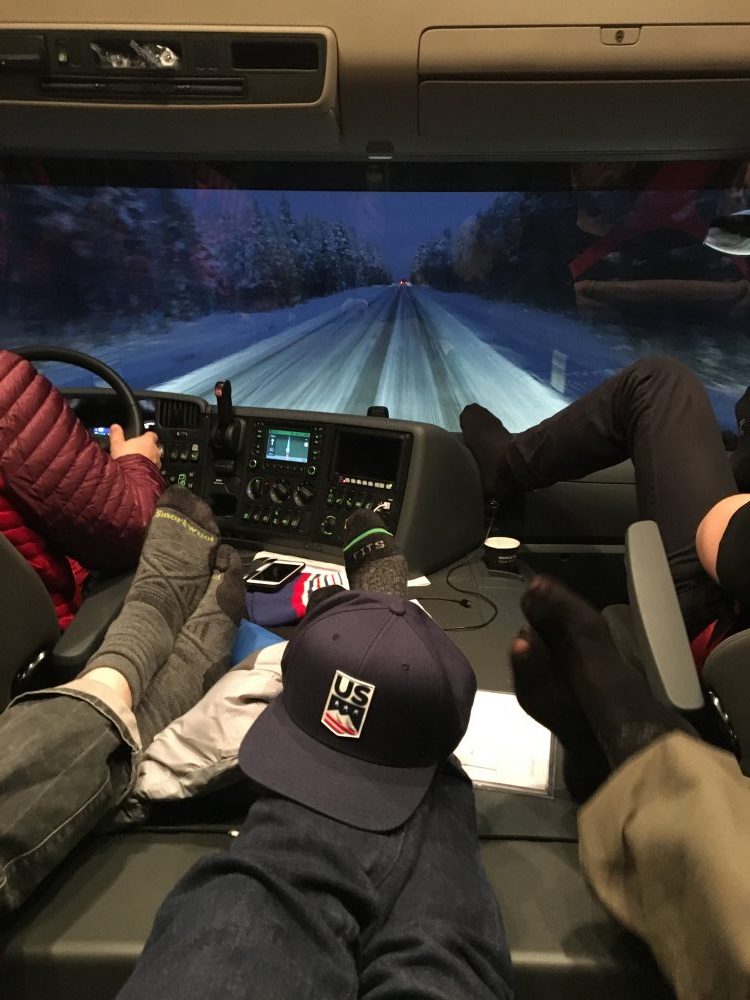
    Five of the U.S. wax techs are certified to drive the truck. They have been trained and certified with CDL’s (commercial driving licenses). And all five wax techs can travel at once in the crew cab, which also features a bed. Grover noted that it is unlawful for anybody to be in the bed while the truck is moving.  

    “This is a total utilitarian, well lit, well ventilated, well lit, open, easy workspace for the techs,” Grover summarized.

    The start to the season has been solid two weekends with two podiums, several top 10’s, and a fancy wax truck to complement the U.S. team. 

    ***

    Related: Check out our off-the-cusp Nordic Nation podcast where we interview U.S wax tech Tim Baucom, who along with Andrew Morehouse, were on the road from Lillehammer, Norway, to the next World Cup in Davos, Switzerland, with $600,000+ of precious cargo.

    — Andrea Potyondy-Smith contributed
  • Nordic Nation: Wax-Truck Road Trip with Tim Baucom (While Andrew Morehouse Pilots)

    Nordic Nation: Wax-Truck Road Trip with Tim Baucom (While Andrew Morehouse Pilots)

    Not exactly planned, and on a whim, it’s the wax-truck road trip — otherwise known as the Bon Voyage episode.

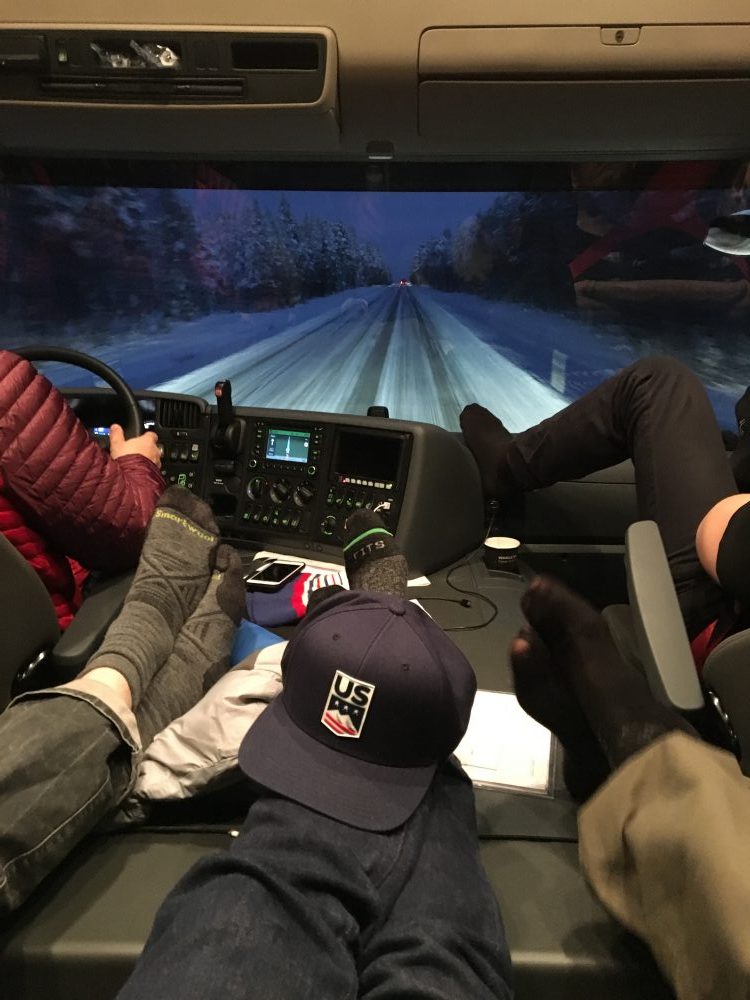
    A full crew cab in the USST wax truck. Presumably on the way from Kuusamo, Finland, to Lillehammer, Norway. (Photo: Tim Baucom)

    Nordic Nation dialed up intrepid wax-truck driver and navigator … and U.S. Ski Team Wax Tech Tim Baucom to check in on the new wax truck’s first big Euro-trip. We caught up with Baucom on Day 1 of a three-day trip a few hours after the duo left Lillehammer, Norway, where last weekend’s World Cup races were held. The two techs were headed to Davos, Switzerland, site of this weekend’s World Cup.

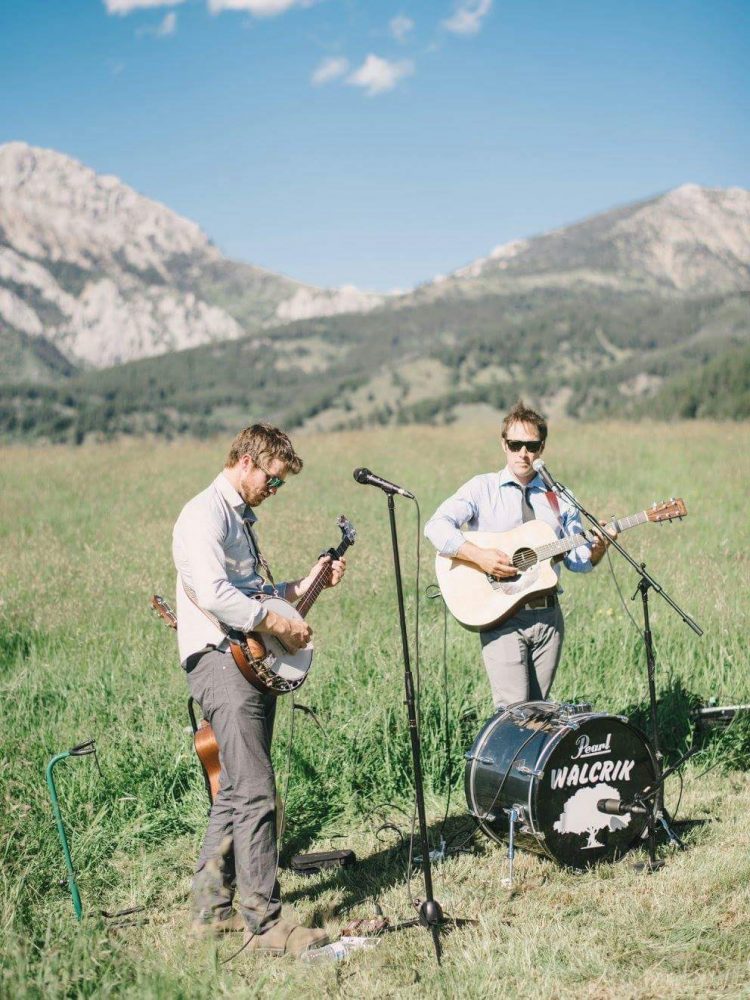
    Waxing World Cup fast skis and backed up with a CDL is not their only gig: Tim Baucom (right) and Andrew Morehouse (left) play the Newell-Flowers wedding outside Bozeman, Montana. (Photo: Jeremiah and Rachel Photography)

    Baucom and Morehouse were responsible for $600,000 dollars of precious wax truck (that amount includes the taxes on the truck), as well as something like 600 pairs of skis.

    That’s a lot of XC schwag. And a lot of eventual ski cleaning. (See below.)

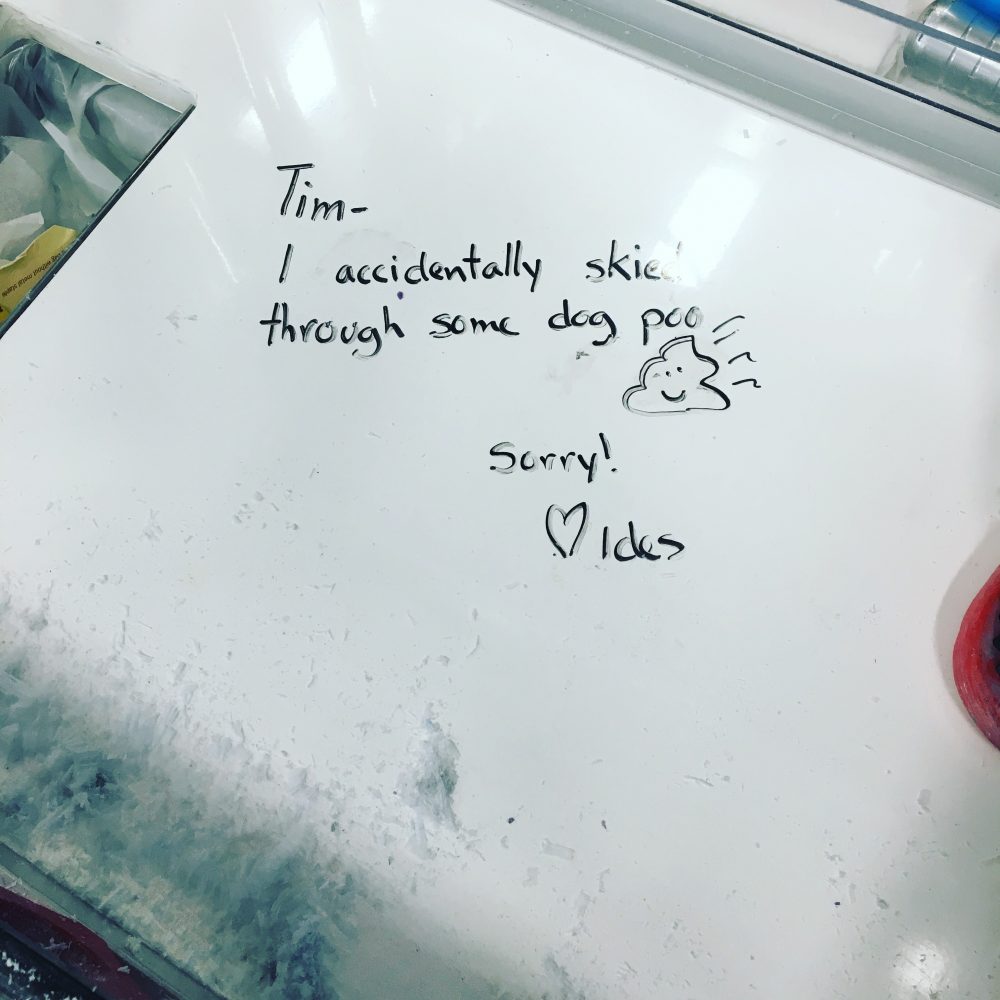
    USST wax techs go beyond the call of duty. Tim Baucom is responsible for Simi Hamilton’s and Ida Sargent’s skis throughout the season. Here, Sargent leaves a note for Baucom (with graphics) detailing the cleanup. (Photo: Tim Baucom)

    And just to be safe, we also dialed up Baucom on Day 2 of their three-day journey to Davos. It’s always a good idea to check back in — new pricey truck, irreplaceable skis and two of the finest wax techs on the circuit — who doesn’t want the whole package to be safe?

    Putting the CDL to good use: truckin’ along in the USST wax truck with the big rigs in Europe. (Photo: Tim Baucom)

    For the record, Baucom and Morehouse are safe, legit and well trained. Don’t believe Nordic Nation? Here’s online proof of their CDL’s.

    Listen to Baucom unbound.

    USST wax tech Tim Baucom testing wax and skis in the early a.m. in Lillehammer, Norway. (Photo: Zach Caldwell)

    (To subscribe to the Nordic Nation podcast channel, download the iTunes app. If you have iTunes, subscribe to Nordic Nation here.)

  • Team Gregg Gets Own Wax Truck, Signs Deal with Reality TV Show

    Team Gregg Gets Own Wax Truck, Signs Deal with Reality TV Show

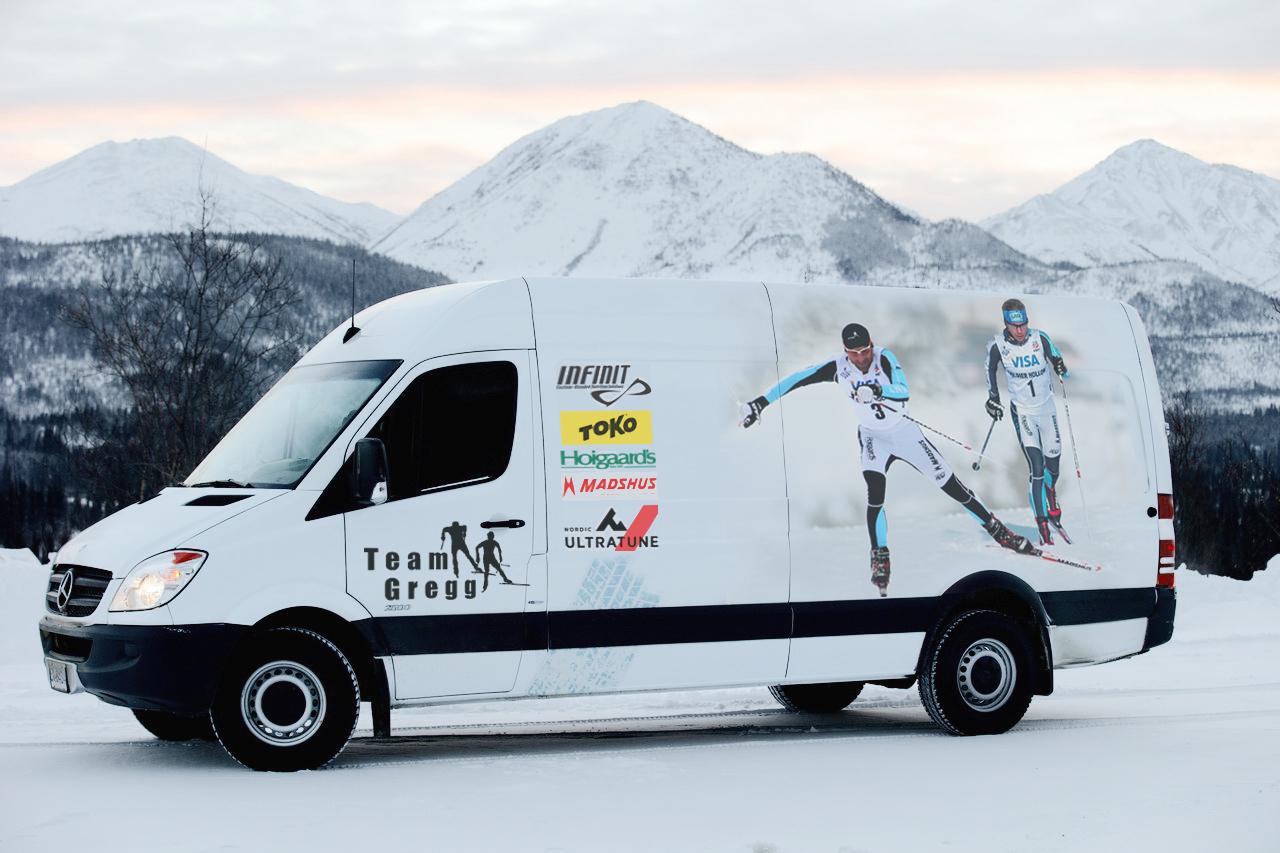
    The Team Gregg wax van, one of which will go on the road with Brian on the SuperTour and another which is being made to accommodate Caitlin on the World Cup to start next season. (Courtesy photo)
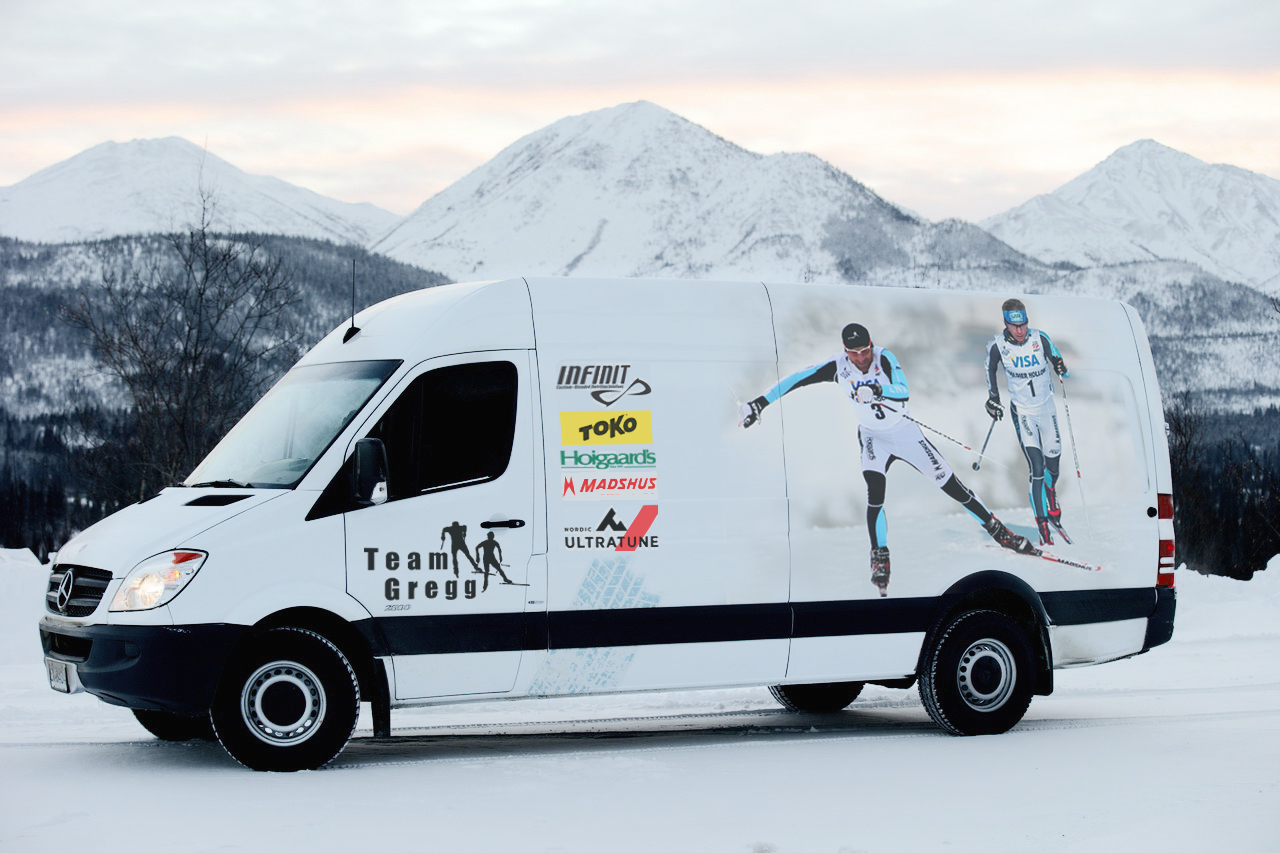
    The Team Gregg wax van, one of which will go on the road with Brian on the SuperTour and another which is being made to accommodate Caitlin on the World Cup to start next season. (Courtesy photo)

    The Gregg’s days of waxing in a bathroom sink of a crash pad they rented through Craigslist for U.S. nationals are over thanks to a reality TV show, which has finally taken notice of the plight of professional nordic skiers and the challenges they face to fund their careers.

    “Pimp My Van” ate up Brian and Caitlin Gregg’s pitch to bring their dream of a wax truck to life, and the married couple are excited to prepare for the season ahead with a spacious van with all the bells and whistles they could dream of — in exchange for a little air time.

    Here is the press release from Team Gregg:

    Team Gregg Adds Wax Truck to SuperTour 

    We are excited to have the Team Gregg Wax Truck on the road this season.  This opportunity is incredible and has been provided by the popular television show, “Pimp My Van.”  Caitlin came across this program where they were looking for unique stories and we were fortunate enough to have our application selected.

    Inside the Team Gregg wax van (Courtesy photo)
    Inside the Team Gregg wax van (Courtesy photo)

    There are two workstations in the back. Brian and Caitlin each have their own side and space. Brian’s side is designated for glide waxing and Caitlin’s side is designated for kick waxing. In addition to the necessary forms, benches and storage the van has several bells and whistles: a state-of-the-art, air-filtration system, localized heater, a built-in Toko Thermo bag allows for hot boxing of 4 pairs of skis at a time. The truck also includes a mini fridge, single-burner stove, espresso maker and a small dishwasher (sanitization is important for staying healthy).  A satellite dish on the roof provides satellite internet to allow streaming of videos and turns the truck into a mobile office.

    One of the more unique technologies incorporated into the truck is a series of cameras on the front, side and back of the van that feed into the three flat-screen televisions on board. These screens may be rotated so that, for example, an individual rollerskiing behind the van may instantly see on the screen on the back of the van what they look like. This technology has been used on rollerski treadmills, but is the first of its kind in a moving vehicle.

    What better way to thank [New Mexico coaches] Fredrick and Pierre and others who have helped us with waxing all season long. We believe in taking good care of our wax techs. We give 10% of our race winnings to our techs, but this will really help us show them how much we appreciate and need their support.

    The van will be an incredible asset for us as we train for the 2015 World Championships.  The van has created a small marital feud in regards to who gets the van when competing in different races as Caitlin will be starting the season on the World Cup Circuit and Brian on the Super Tour.

    This feud was solved when the television show heard about it.  An identical vehicle is being built and will be delivered to the first World Cup.

    Two television crews plan to travel with both Brian and Caitlin during the first few weeks of the season, and plan to air the episode in time for World Championships Feb. 18-March 1, 2015.

    For real?

    Brian Gregg cheers on Caitlin at SuperTour Finals in Anchorage, Alaska. (Photo: Madshus/Facebook)
    Brian Gregg cheers on Caitlin at SuperTour Finals in Anchorage, Alaska. (Photo: Christian Otto)
  • Bjoergen’s Boards and the Olsson Brothers: Inside Norway’s Wax Truck

    Bjoergen’s Boards and the Olsson Brothers: Inside Norway’s Wax Truck

    The interior of the Norwegian wax truck

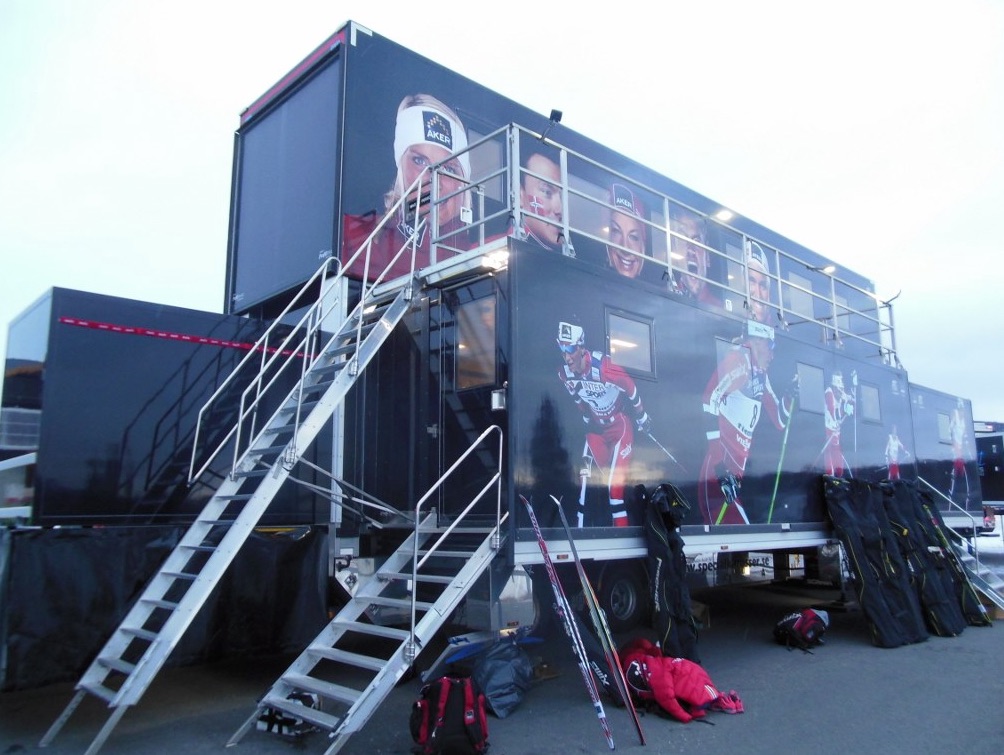
    The Norwegian wax truck is anything but subtle. A jet black tractor trailer with the visages of Petter Northug, Marit Bjoergen, and Therese Johaug painted with the Norwegian tri-colors and twisted into various expressions of comical aggression, the vehicle travels the World Cup circuit, the workplace of 10 to 12 committed technicians.

    Arch-rivals Sweden and Norway are the only two nations to possess such a convenience, the product of a passionate national following (and the associated monetary support), as well as the needs of massive teams. The Norwegian national squad numbers a full 25, and over the course of a season, some 50 different athletes will start World Cup races.

    Knut Nystad, who directs the service team, sees the addition of a wax truck as a function of the challenges associated with providing world class waxing for so many athletes. It provides a level of efficiency that most teams are left to envy, he said.

    Part of the glide department's test fleet.

    Instead of packing and unpacking cargo vans full of waxing equipment and skis, and setting up in yet another new wax room, each Norwegian technician can focus on his work in a space that is consistent – whether the next day’s event is in Estonia or Switzerland.

    One side of the truck extends out, providing plenty of space for a series of work stations. Skis line both walls, and can travel in that position. Like a slow-motion version of a Transformer – a sci-fi machine that can morph from a standard vehicle to an advanced robotic creation – the truck goes from simple transport to a world class waxing facility in just 40 minutes.

    Power is accepted in three different forms, and in a pinch, an on-board generator will provide 13 kilowatt to keep things running. The Norwegians contract with professional drivers to move the vehicle. One of the techs can drive the truck, but Nystad said that it’s better to have all the servicemen well-rested and ready to go. Driving a semi on narrow, icy, European roads, in the middle of the night, is not a good way to get his men to go the extra mile.

    Consistency of space, and extra elbow-room is nice, but the benefits extend further. A full ventilation system that works to capture potentially harmful wax fumes at the source creates a safer work environment. Hot irons are stored in special boxes that draw smoke away immediately, and the air can be completely turned over in five minutes, Nystad said.

    Every service squad has a system, and Nystad describes the Norwegian version as “different, not necessarily better.” He stresses that while that his crew is striving to push the limits within the ski-service world, their way is not the only option.

    Specialty is the name of the game for the Norwegians. There are three main stations within the truck – glide, kick, and athlete specific.

    Perry Olsson, Marit Bjoergen's and Petter Northug's personal ski technician.

    The glide station is manned by a pair of waxers, including Kristoffer Moan, who described his standard race day. Responsible solely for glide wax, Moan and his partner, the “glide-boss,” have a fleet of 90 specially selected test skis. Their job is to choose a single wax combination, optimal hand structure, and stone-grind choices. Gliders and powders are applied and tested through a variety of means: speed trap; glide tests in a track; pairing off and doing a runout with another tester; and simply by feel.

    Their choices are passed along to the team in the middle of the truck – the group that works with the individual athletes. A pair of bald, affable Swedish brothers – the Olssons – occupy the first set of benches. Perry waxes for Bjoergen, Northug and Celine Brun-Lie, while Ulf handles Oystein Pettersen, Therese Johaug and Marthe Kristoffersen.

    For any one set of conditions, each athlete may have 6 to 8 pairs of race-worthy skis. Ulf and Perry work to narrow the choices down before collaborating with their skiers to pick the best possible pair on race morning, and on a skate day, they receive the final glide call just 45 minutes before the start.

    It gets so busy leading up to the start that Perry says there is no time to feel pressure, even if to an outsider, it looks like chaos. And once the race starts, they can merely watch and see if they were on the mark.

    At the far end, just behind the cab, in front of a flat screen television and coffee maker nestled into a nook on the wall, is the third and final set of waxers – the kick team. Like the gliders 10 meters to the back, they have a single focus – to provide the best possible grip wax. Again, this information goes to the athletes’ waxers in the middle of the truck, and they make adjustments based on each individual’s needs – Johaug, for example, always prefers more kick, due to her predilection for climbing.

    The 2011 World Championships gets underway on Thursday with the freestyle sprint. Nystad’s team was hard at work on Tuesday, and Ulf, with just Pettersen contesting that event, was already making preparations for the women’s pursuit on Saturday. The waxers will arrive by 7:00 for a 12:30 start time for the first event, and typically work 14- to 16-hour days.

    If things don’t go well – and sometimes they don’t, notably during the men’s 15 k freestyle at 2010 Olympics, and for at least one race during the 2006 Games – the Norwegians will attempt to replicate the testing process, and identify where they erred.

    “The only way to learn,” says Nystad, “is to go back and figure out what went wrong.”

    According to Nystad, the job of serviceman does not pay well, which can create issues with continuity. And while the travel opportunities are good, there is rarely time to see much beyond the inside of the truck and the test track.

    The athletes don’t spend much time in the truck, but Ulf says it is important to get feedback following a race and “hopefully a high-five.”

    –Nat Herz contributed reporting.