From the FasterSkier archive — posts syndicated from athletes’ and coaches’ own blogs between 2004 and 2012, kept online as published. Current coverage is at fasterskier.com.

Tag: wax

  • USSS Announces Fluorinated Wax Policy for 2021/2022 Season

    USSS Announces Fluorinated Wax Policy for 2021/2022 Season

    A ski technician brushes a ski, Östersund, Sweden. (photo: Modica/NordicFocus)

    Meet the new boss, same as the old boss.

    In fall 2021, following last-minute revelations that a long-promised fluoro-detecting device did not, actually, work as efficiently as planned, FasterSkier previewed an upcoming domestic race season in which U.S. Ski & Snowboard-sanctioned races would ban the use of fluorocarbon waxes, but anything would be fair game at FIS races. (For an overview of the difference between the sanctioning bodies and the rankings lists they generate, see here.)

    Last week, USSS Cross Country Program Director Chris Grover, writing on behalf of the USSS Cross Country Sport Committee, announced identical standards for roughly the first half of this season: no fluoros at USSS races, anything goes at FIS races. The announcement explains that the substance, and the timing, of the decision are an attempt to maintain a level playing field through the selection period for international competition, most notably the 2022 Winter Olympics but also World Juniors and Period 2 and 3 World Cup races. It specifically cites the lack of a quick-turnaround test for detecting fluoros, and an inability to insure the integrity of a ski race in real time.

    That said, once the selection period closes, things will change for the second half of the 2021/2022 race season.

    “Beginning January 17, 2022,” Grover wrote, highlighting a date after the final January SuperTour race in Sun Valley, “fluorocarbon waxes will be banned at all FIS Cross Country races in the USA, and testing will often support that ban.”

    If you are a Masters or citizen racer in this country, none of this announcement applies to you, at least so long as you are not in the very small minority of Masters racers doing USSS or FIS races. You should instead look to the policies enacted by your local ski club for guidance. A quick, unscientific roundup of some prominent citizen racing areas in this country suggests that the Birkie banned fluoros for the 2021 race; that the Loppet Foundation has banned fluoros at Wirth Park and at all Loppet Foundation events; that all NENSA events have been fluoro-free as of June 2020; and that the Nordic Skiing Association of Anchorage has not yet taken a public position on the issue.

    Grover’s announcement was dated September 29th, and was sent to current USSS members on Friday October 1st. It may be found online here, and is reprinted in full below.
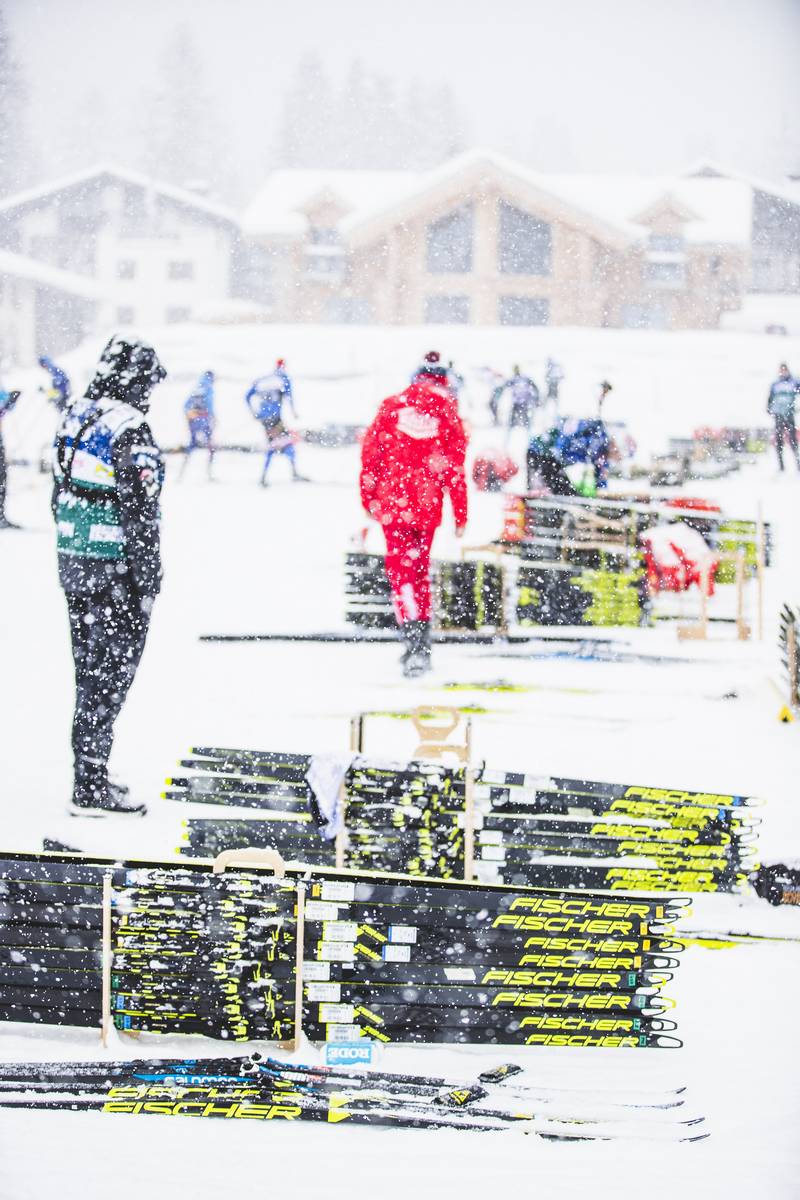
    Wax techs test Fischer skis in the snow in Davos. (Photo: NordicFocus)

    ***

    September 29, 2021

    Dear Cross Country Community,

    This past week, the U.S. Ski & Snowboard Cross Country Sport Committee has voted to support the following fluorocarbon wax protocols for racing within the United States during the 2021-22 season:

    U.S. Ski & Snowboard sanctioned races remain fluorocarbon-free. FIS races will remain open for the use of fluorocarbon waxes from the start of the season through January 16, 2022. This timeframe mirrors the selection period for the Beijing Olympic Winter Games, and also contains team selections for the World Junior and U23 championships, the U18 Nordic Nations team, and selections to World Cup Periods 2 and 3. Beginning January 17, 2022, fluorocarbon waxes will be banned at all FIS Cross Country races in the USA, and testing will often support that ban.

    We realize that the use of fluorocarbon waxes is an understandably contentious issue, and we’ve had months of debate as a community about the best way to balance the transition away from these products with preserving a level playing field for all athletes. Our primary challenge is that the development of fluorocarbon testing technologies has not kept pace with the rapid evolvement of fluorocarbon bans. We do have a proven testing methodology at our disposal, but it requires weeks to get results, a lot of money for each test, and results/penalties can obviously only be applied retroactively. We are in a situation where we wouldn’t have fluorocarbon testing results until well after Championships teams are named, and we may or may not have the ability to remove athletes at that time. This includes the Winter Olympic Games. We are moving in a technological direction that will eventually provide definitive fluorocarbon testing of skis prior to a race start, but we are not there yet. 

    As much as our U.S. Ski & Snowboard staff and our community wants to be fluoro-free immediately, the Cross Country Sport Committee felt it was imperative to guarantee the sanctity of the Olympic selection process, as well as the selection of all of our Championship development teams. We owe this to the athletes, coaches, parents, and race organizers to ensure a level playing field that all participants can feel confident in. 

    Please don’t hesitate to reach out with any questions or concerns you might have.

    Sincerely,

    Chris Grover

    U.S. Ski & Snowboard Cross Country Program Director

    chris.grover@usskiandsnowboard.org

    ***

    Related reading:

    Calendar of 2021/2022 American FIS races

    FS Interview: Chris Grover Discusses the FIS Fluoro Ban and the World Cup in 2020-2021, May 2020

    FIS and IBU Pull Back from 2020-2021 Fluoro Ban, October 2020

    Another Waxing Wormhole: Sanctioning Races and the Use of Fluoros, November 2020

    FasterSkier Explains: How to Clean the Fluoros Off Your Skis So You Can Race the Birkie, December 2020


  • How thick must a wax film be? The Latest Research from Matthias Scherge

    How thick must a wax film be? The Latest Research from Matthias Scherge


    Matthias Scherge.

    GLIDING is a niche science journal spearheaded by Matthias Scherge and a cohort of advisors. Scherge the Fraunhofer MicroTribology Center in Germany. The research institute specializes in industrial lubricants and is assisting the International Ski Federation (FIS) with their fluoro free guidelines.

    Scherge’s side project, GLIDING, as the name suggests, presents findings related to gliding on snow – which means analyzing the interplay of wax, base structure, snow, and other micro-variables impacting ski glide performance.

    GLIDING recently published a paper analyzing the complexities of ski bases and where, in fact, wax bonds on a ground ski base. The authors also compare the thickness of the residual wax layer (post scrape and brush) between powders and sprays. You can find a brief abstract below and the full-length article here.


    Abstract:

    “With physical/chemical surface analytics the layer thickness of wax was measured. The measurements prove that wax as block or powder penetrates the ski base only a few 100 nm and as spray only a few 10 nm. The wax does not use any pores in the ski base but entangles with the molecules of the polymer to form a compact sliding layer. The durability of this layer depends primarily on its thickness, but also on factors such as snow temperature, snow grain shape and the quality of the polymer from which the ski base is made.”

    Introduction:

    “Almost every skier knows the stories that a new ski has to be waxed and scraped several times before it runs well. It is also well known that the ski has to be waxed thickly before the summer break so that it does not turn gray next winter. The base of the ski is usually made of high-density polyethylene (HDPE) or, in the case of competition skis, ultra-high molecular weight polyethylene (UHMWPE). These polymers have different qualities and may also have been produced using different processes, so that the bases degrade to different degrees, i.e. turn gray. High-quality bases show hardly any graying and remain stable over long periods of time. If you have a ski that is prone to graying, multiple waxing and scraping helps, as these steps remove the degraded skin. If the degradation is thick, a steel blade can be used instead of the plastic blade. Wax covers the ski base and prevents the polymer from coming into contact with oxygen. When the ski is worn, it is rubbed by the snow grains, a process that generates local heat. The following article explains to what extent wax offers protection against graying, how long this condition lasts and how it can be improved.”

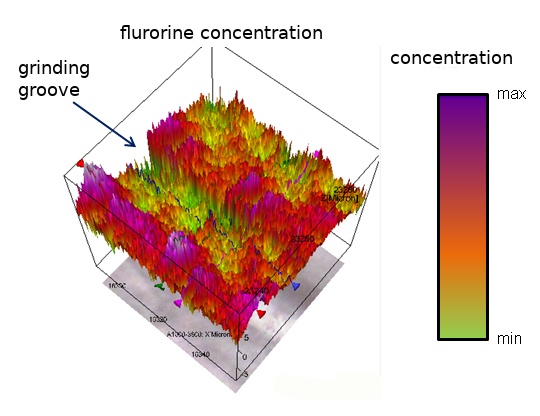
    Figure 1: 3d view of a ski base cube (edge length 100 µm) after application of wax containing fluorine. In the cube, the intense red tones correspond to high fluorine concentrations. A grinding groove runs through the surface of the cube from top left to bottom right.

    Matthias Scherge has been studying the basics of gliding on ice and snow for more than ten years. He heads the MicroTribology Center, a joint institution of Fraunhofer and the Karlsruhe Institute of Technology, where he teaches tribology as a professor. Tribology is the science of friction, wear and lubrication and deals, among other things, with the gliding behavior of skis. Since 2012, Scherge has been advising the Nordic Paraski Team Germany and leads Team Snowstorm, an efficient network of companies and academic partners supporting athletes and ambitious winter sports enthusiasts: http://team-snowstorm.de/index.html

  • How to Have Fast Skis ALL THE TIME, in EVERY CONDITION

    Toko Logo

    (Original e-blast)

    How to have fast skis ALL THE TIME and in EVERY CONDITION

    I love my job. The contact that I have with people in the ski community is pretty much always positive and enjoyable. We have great waxes and other products so of course generally interaction, feedback, and my motivation are very positive. However sometimes at events or otherwise, I have people approaching me trying to get me to guarantee super fast skis if they use a certain wax. A fairly rare thing is also that a person didn’t have the fast skis that they were hoping for. It is important to take a step back and take an overview so you all have the proper perspective on what makes a fast ski on any particular day.

    The 3 main factors to having fast skis are ski flex and design, structure, and wax. You could throw base material in there too, but most people have what they have, so that is more of a World Cup level topic. (Note that many skis have different base material that matches the type of conditions that they were designed to ski in, so this is addressed in the ski selection process. Example: Rossignol S3 or C3 have a “wet” clear base material to match the flex and structure that the skis come with).

    Far and away, the most important factor in having fast skis are the skis themselves. Given a particular condition, the skis need to match the condition in terms of their flex and design as well as match the skier (weight and ability).

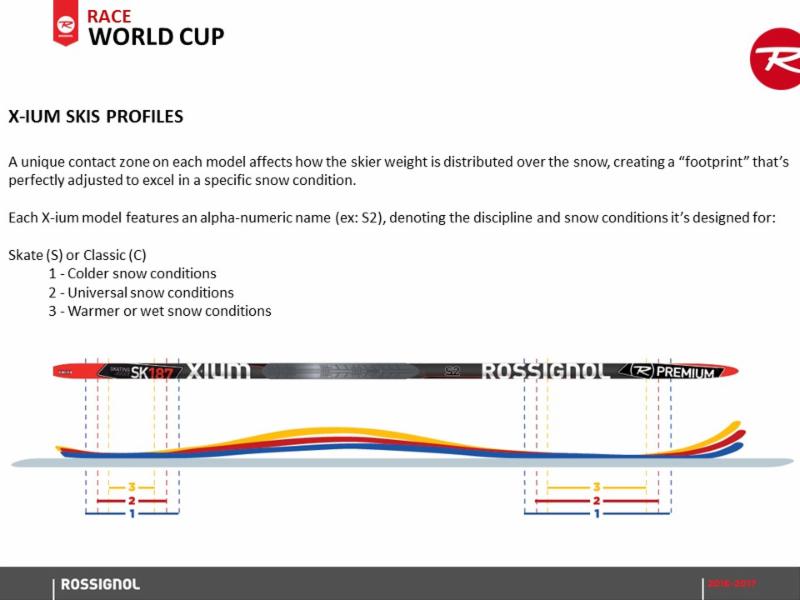
    Let me use Rossignol as an example because I am very familiar with them and confident in them. Below is a quick chart explaining the flex/design of the top Rossignol skating skis, the Xium Premium S1, S2, and S3 skis. In each of these skis, the camber height is different as is the contact area of the skis to the snow if the skis are fitted properly. (The concepts are identical for Skate and Classic skis).

    Rossignol X-IUM Ski Profile

    If snow is cold, dry, and slow snow, a fast ski will generally have a low camber and a relatively long area of contact in the tip and tail sections. Assuming the structure and wax are “cold”, the skis should be good assuming they are fitted correctly. If the skis have a high camber and a short area of contact in cold, dry, and slow snow, the wax and structure can still slow the skis down further, but the skis will not be very good regardless of how optimal the other two factors are.

    It is the same in wet snow. Clearly, having a low camber and more contact between the ski base and the snow will result in more suction and more opportunity to pick up dirt creating more friction and more suction. Minimizing the contact results in much faster skis for the short term and especially after some kms are skied. The disadvantage of using a lower cambered ski with longer contact area can not be overcome with “wet” structure and wax to the point that the skis are really good. This is especially the case in dirtier snow where the addition of a deeper structure to compensate for the increased suction (surface tension) created by having a longer contact area will only result in more dirt attaching itself to the ski base which makes the ski slow due to the added friction of having dirt on the base as well as the increased suction because the structure is filling up with dirt and the previously hydrophobic base material is covered with dirt and no longer hydrophobic.

    In past years with different ski designs, many people including myself liked to err on the soft side, especially in the west where we get a lot of cold dry and slow snow. The current ski designs such as Rossignol need to be fitted properly and I personally lean toward the stiff side to ensure that the skis can function as intended.

    Bottom line is that in order to have fast skis in all conditions, the skis need to be the right flex and design for the conditions and they need to fit the skier such that the contact area matches the intent of the ski design. If you put a 200 pound guy on a ski designed for a skier of 160 pounds, there will be an increase in contact area. Also, the more aggressively a skier skis, the more care needs to be taken to ensure that the skis are stiff enough to accommodate being suspended on the right length contact zones.

    Looking at the chart above, you can see the different colors of the S1, S2, and S3 patterns. They match up with the Toko colors which makes sense because normally when you use one of those skis, you’d be waxing it with the color associated in the chart.

    Structure is often the next most important factor, especially in the two extreme conditions which are cold, dry, slow snow and wet snow. In cold dry fast snow that is for example transformed, a more aggressive structure can be used with success. This is why I keep mentioning “slow”. A base finish that is not a “cold” grind (very smooth) will not run fast in cold, dry, and slow snow regardless of the flex of the ski and what wax is chosen. In very wet snow, a “cold” grind will not run fast even if the ski and wax are optimal.

    All 3 factors in having fast skis need to be considered. Satisfying any one or even two factors will generally not yield fast skis if the third factor is in conflict with the conditions. Most times, the factor that is most in opposition to the conditions determines the speed of the skis, not the ones that are in agreement with it.

    So, my recommendation is to consider skis from a macro level starting with ski selection (should not be too soft!), then structure, and then finally wax. It is not as complicated as it sounds if you are a passionate ski racer (ie, you are willing to invest financially as well as in physical preparation). Have an S1 ski with a fine structure that you generally will wax with Toko Blue waxes (need to wax with a softer wax periodically for the health of the base). Have an S2 ski with a universal or cold universal structure that you will more commonly wax with Toko Red waxes. And lastly have a pair of S3 skis with a warm grind on them that you will mostly wax with Toko Yellow waxes. This way you already have skis optimally suited for each general condition that have a structure that matches the condition where you would use them. Then finally wax is the “icing on the cake” and will then be able to really make the skis fast.

    A ski racer could show up with all 3 of these skis prepared as described with no knowledge whatsoever of the conditions and basically always have good skis. With forecasting, it is possible to eliminate one or even two of the conditions associated with S1, S2, and S3 which makes it even easier and more convenient to have great skis. OK, now you know! Good luck and see you around!

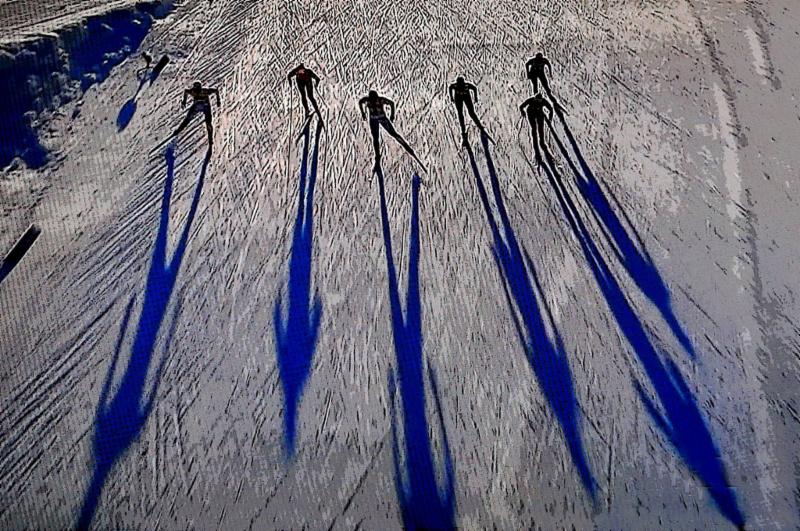
    Photo from Women's Sprint Final at the Davos World Cup (Credit: Jacques Mignerey)
    Photo from Women’s Sprint Final at the Davos World Cup (Credit: Jacques Mignerey)

    Team Gregg

    Silver Star SuperTour Report

    Cold fresh snow racing continued with the Super Tour/ Nor Am at Sovereign Lakes Nordic Center in British Columbia. We raced on a cold hard paraffin with Toko JetStream Red 2.0 powder. It was a bit surprising that the Red 2.0 tested and performed so well considering the single digit temperatures. The range of the JetStream 2.0 Toko powders is fantastic. We covered the powder with Blue 2.0 Helix.

    The races were solid, but off the mark of where we really wanted to be. We are in the Methow Valley to train in prep for Nationals. We are feeling good and our preparation has us still ready to be on at Nationals.

  • Alaska High Schools Call a ‘Wax Truce’

    Alaska High Schools Call a ‘Wax Truce’

    The scene from an Alaska Nordic Skiing State Championships mass start. In Anchorage, high-school nordic coaches recently agreed to ban fluorinated glide wax in non-championship races throughout the 2015/2016 season. (Photo: http://asaa.org/sports/nordic-ski/)
    The scene from an Alaska Nordic Skiing State Championships mass start. In Anchorage, high-school nordic coaches recently agreed to ban fluorinated glide wax in non-championship races throughout the 2015/2016 season. (Photo: asaa.org)

    Anchorage-area schools decided that it had gotten out of hand, so they called a truce.

    “Anchorage region coaches agreed to not use fluorinated glide waxes during all non-championship races,” Anson Moxness, head coach at West Anchorage High School in Anchorage, Alaska, wrote in an email. “Because flouros are expensive and bad for your health. None of the schools really have adequate ventilation systems and many are doing waxing around the skiers.”

    Such bans on fluorinated waxes are becoming increasingly common around the country. Moxness cited various divisions and regions around the country that had agreed to similar bans, including the Eastern Intercollegiate Ski Association (EISA).

    Different coaches had different reasons for supporting the ban, but among coaches interviewed, support was unanimous:

    “I am all for this for many reasons,” Cory Schwartz, head coach of the University of New Hampshire (UNH) nordic team, wrote in an email. “First is the health concerns around putting on powders — even though we all use masks and try to the best of our ability adhere to safety suggestions, none of the college teams have a ventilated wax truck. So we are using masks while ironing on and brushing but the powder gets all over the truck, our skis, and body.”

    Evidence suggests that there are health risks associated with fluoro waxes. Fluorinated compounds are useful in waxes for their ability to repel water, making the skis faster. But they’re also much more expensive.

    “We’re looking at an order of magnitude difference in per gram wax costs of CH and HF waxes,” Moxness wrote. “I don’t see a reason to be spending that much money on waxes for non-championship races.”

    Tools of the trade: Anchorage-area high schools will have one less variable to worry about with the recent decision to ban flourinated glide waxes for all non-championship races.
    Tools of the trade: Anchorage-area high schools will have one less variable to worry about with the recent decision to ban fluorinated glide waxes for all non-championship races.

    He added that the success of this rule depends on coaches’  compliance.

    “If skiers choose to wax skis at home, which some of them do, we have no control over what they put on their skis. If we establish that it is cheating to use anything with fluorination and are consistent in our message, I think it will succeed,” Moxness wrote.

    “Where this will fail is if the coaches aren’t fully behind the fluoro ban, which we all were at our preseason meeting. From what I’ve seen, my skiers realize what we’re doing and the reasons behind it and they respect the ban.”

    “I think the success of the ban lies on the shoulders of the coaches and the parents,” South Anchorage High School Coach Sam Sterling wrote in an email. “If they advertise it as something that is good for the sport, I think it will succeed. If they give their athletes reason to doubt it … then, maybe it won’t. Hopefully, in a couple years the ban will just be a normal part of the AK high school ski scene and nobody will give it a second thought.”

    Chugiak High School in nearby Eagle River is one of the schools involved in the truce. Head coach Cody Priest also supported the ban.

    “Another reason it’s nice,” he wrote in an email, “is that I don’t have to ‘draw the line’ on my team on who gets what wax. With a competitive girls team I would want to use expensive wax on at least my first five, then maybe not the others. How do you explain that to the team?

    “Plus on race day I wont be testing different top coats,” he continued. “I will be just ensuring that I have the correct hardness of base wax.”

    The coaches contacted were also unanimous that the extra time spent testing skis with fluorinated wax was not time well spent.

    “The main thing I see is that [the ban] allows the coaches to actually… coach,” Sterling explained. “The impact of the ban goes beyond the obvious benefits of decreasing exposure to fluoros and reducing overall expenses for high school programs. Each team ranges from junior national champions to foreign exchange students who have never seen snow until coming to Alaska. The more time coaches can spend working with these athletes, and not dealing with waxing, the better off the sport will be.

    Sterling sees it as a simple misallocation of resources.

    “There’s a lot of [coaching] experience and motivation in Alaska high school skiing,” he wrote. “It’d be great to see this resource going more to the development of the athletes, and less towards making a fast pair of skis. It’s a step in the right direction and it was great to see unanimous approval from the Region IV coaches in adopting the ban.”

    Schwartz explained that in the East, there is some concern their region is falling behind others when it comes to testing wax in different snow conditions, “But I do not agree with that,” he wrote. “I actually am more excited to go to the race to see the race instead of being in a wax trailer all day.”

    In addition to being better for individual families bottom lines, Sterling and Moxness explained it’s better for the sport as well.

    “It also lowers barriers of entry into the sport,” Moxness wrote. “If a parent is interested in waxing their kid’s skis and they only have to invest maybe $50 in waxes to have skis that are competitive, instead of $300, they are much more likely to get and stay involved.”

    “That means more growth of the sport and parents who may be more likely to invest that saved money in better quality equipment, which makes way more of a difference than wax.”

  • 2014 Holiday Gift Guide: Under $20
    2014 Holiday Gift Guide: Under $20
    Welcome to FasterSkier’s Holiday Gift Guide! The holidays are here and it’s time to go hunting for the perfect gifts for your favorite cross-country skiers. Whether it’s a fresh pair of socks or a new wax bench we have recommendations for the best gear out there. Take a look and see for yourself. You’ll walk away with some great ideas to make this ski season one to remember.

    We’ve broken up our gift guide into five budgetary segments: Under $20, $20-$50, $50-$100, $100-$200 and $200-and-over. Happy shopping!

  • 2014 Holiday Gift Guide: $20 – $50

    2014 Holiday Gift Guide: $20 – $50

    Welcome to FasterSkier’s Holiday Gift Guide! The holidays are here and it’s time to go hunting for the perfect gifts for your favorite cross-country skiers. Whether it’s a fresh pair of socks or a new wax bench we have recommendations for the best gear out there. Take a look and see for yourself. You’ll walk away with some great ideas to make this ski season one to remember.

    We’ve broken up our gift guide into five budgetary segments: Under $20, $20-$50, $50-$100, $100-$200 and $200-and-over. Happy shopping!

  • 2014 Holiday Gift Guide: $50 – $100

    2014 Holiday Gift Guide: $50 – $100

    Welcome to FasterSkier’s Holiday Gift Guide! The holidays are here and it’s time to go hunting for the perfect gifts for your favorite cross-country skiers. Whether it’s a fresh pair of socks or a new wax bench we have recommendations for the best gear out there. Take a look and see for yourself. You’ll walk away with some great ideas to make this ski season one to remember.

    We’ve broken up our gift guide into five budgetary segments: Under $20, $20-$50, $50-$100, $100-$200 and $200-and-over. Happy shopping!

  • 2014 Holiday Gift Guide: $100 – $200

    2014 Holiday Gift Guide: $100 – $200

    Welcome to FasterSkier’s Holiday Gift Guide! The holidays are here and it’s time to go hunting for the perfect gifts for your favorite cross-country skiers. Whether it’s a fresh pair of socks or a new wax bench we have recommendations for the best gear out there. Take a look and see for yourself. You’ll walk away with some great ideas to make this ski season one to remember.

    We’ve broken up our gift guide into five budgetary segments: Under $20, $20-$50, $50-$100, $100-$200 and $200-and-over. Happy shopping!

  • 2014 Holiday Gift Guide: $200+

    2014 Holiday Gift Guide: $200+

    Welcome to FasterSkier’s Holiday Gift Guide! The holidays are here and it’s time to go hunting for the perfect gifts for your favorite cross-country skiers. Whether it’s a fresh pair of socks or a new wax bench we have recommendations for the best gear out there. Take a look and see for yourself. You’ll walk away with some great ideas to make this ski season one to remember.

    We’ve broken up our gift guide into five budgetary segments: Under $20, $20-$50, $50-$100, $100-$200 and $200-and-over. Happy shopping!

  • Holiday Gift Guide: $20 – $50

    Holiday Gift Guide: $20 – $50

    With the holidays practically upon us it’s time to get serious about shopping for the ski enthusiasts on your list. If you’ve put off this dreaded task for as long as we have, the good news is that shopping for skiers is pretty easy. There are so many products and pieces that go into the whole production, all you have to do is cast around and pick one (or five). And if all else fails, remember: one can never have enough socks.

    We’ve broken up our gift guide into five budgetary segments: Under $20, $20-$50, $50-$100, $100-$200 and $200-and-over. Happy shopping!


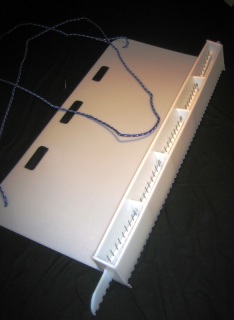
    10. Swix portable Wall Ski Rack ($20). Whether you’re working in an elite team wax room or a weekend warrior’s garage, a little organization can go a long way. It gets a little old to have to re-prop skis on the wall after the second or third time, and that’s where this nifty tool can help keep them upright and organized. Available at Fontana Sports.


    9. Start Wax Oslo Racing Collection ($24). Start has combined klister and hard wax into this kick wax series designed for aggressive, coarse snow. It really shines in conditions that transition from wet snow to powder at higher altitudes like the Far West or Rockie Mountains. Available in blue, purple and green temperature ranges from Gear West, BNS, Skinny Skis and Ski Rack.


    8. Swix Hand Cleaner Paste ($24). Klister works, but it holds a special place on the Periodic Table of Ski Wax as the most persistently sticky substance in the universe. Swix has come out of with this hand cleaner paste for those who don’t want ruin their gloves or soak their hands in toxic wax remover. Available at BNS, Gear West, Skinny Skis and Ski Rack.


    7. Split mittens ($30-$50). Fondly referred to as lobster gloves, split mitts offer a compromise between warmth and mobility for bitterly cold days cheering on the trails. Swix, Toko and Craft both offer their own take on this distinctive class of hand protection. Available from Gear West, BNS, Skinny Skis and Ski Rack.


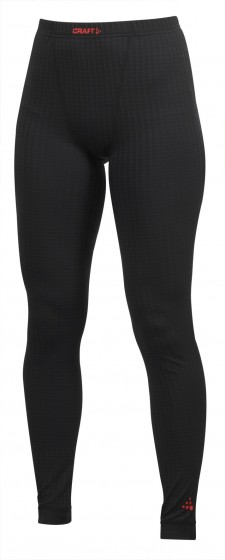
    6. Craft ski boxer ($40). A warm wicking base layer is the key to long-term comfort on cold days out on the trails. An extra layer of wind stopping fabric in the men’s boxer also adds a necessary amount of protection during a cold race. Available in both men’s and women’s sizes from BNS, Gear West, Skinny Skis and Ski Rack.


    5. Bjorn Daehlie Gold Hat ($25). A top of the line racing hat with an aerodynamic fit and extra side ventilation. Available at BNS, Gear West, Skinny Skis and Ski Rack.


    4. Swix new race glove ($36). Swix’s light race glove is a strong choice for racing and spring skiing conditions. Complete, as all gloves must be, with a fleece nose-wipe thumb. Available in men’s and women’s sizes at Gear West, BNS, Skinny Skis and Ski Rack.


    3. Grip Spray ($13 Toko, $20 Swix). The next step in Klister-covered-hands prevention, grip spray prevents your hands from ever coming in contact with the mess. Swix and Toko have both created aerosol versions of their popular kick wax lines. Available at Gear West, BNS, Skinny Skis and Ski Rack.


    2. Sauce Chill Toque ($32). The Bozeman-based athletic headwear company has grown such that its bold, colorful prints are a common sight in the ski community. Sauce’s fleece-lined toque (don’t be confused, it just means ‘hat’ in Canadian) will keep you warm and stylish on the trails. The height of cool. Available from Sauce.


    1. Water Belt ($40). The classic portable hydration bottle may be an oldy, but it’s always a welcome addition. Available at BNS in your choice of Swix, Fischer, Skigo, Oneway, or Holmenkol.


    Looking for a way to make your shopping more budget-friendly? Check out The Hindu coupons! With great deals on top brands like Amazon, you’ll be able to save big on your next purchase. Whether you’re looking for electronics, clothing, or anything in between, The Hindu has you covered. So what are you waiting for? Grab a coupon and start shopping today!

  • FasterSkier Podcast: Tech Roundtable Part 1

    FasterSkier Podcast: Tech Roundtable Part 1

    In what may be a first in the North American skiing, FasterSkier brought together four of the best ski technicians around for a roundtable discussion on a variety of issues.

    Nathan Schultz of Boulder Nordic Sport, Mark Waechter of Nordic Ultratune, Zach Caldwell of Caldwell Sport, and Patrick Moore of the Alberta World Cup Academy digitally joined FasterSkier Editor Topher Sabot and Associate Editor Audrey Mangan from all corners of the continent.

    The discussion is split into two segments. Part 1 focuses mainly on the World Cup and associated issues, while Part 2 tackles topics relevant to racers at all levels.

  • USST and USBA Mull Collaboration For Race Support at Sochi Olympics

    Inside the U.S. Ski Team wax room at the 2010 Olympics: Joakim Augustsson (l) and Peter Abrahamsson (r) were two of the core members of the service staff.

    In the lead-up to the 2010 Vancouver Olympics, Zach Caldwell led a much-discussed, multi-year effort to pin down the best stonegrinds and waxes for the challenging, variable conditions at Whistler Olympic Park. Caldwell’s months and months of hard work even drew the attention of National Public Radio, which profiled him about a week before the start of the Games.

    The problem? Even when so many hours have been spent in preparation, sometimes things go wrong. Case in point: Kris Freeman’s horrific skis in the opening 15 k freestyle in Vancouver.

    When the best skiers and wax techs in the world can be baffled by conditions, grinds, and ski flex, teams need all the help they can get. Which is why the U.S. Ski Team (USST) and the U.S. Biathlon Association (USBA) are discussing a possible group effort to hand their athletes the very best skis possible before each race at the 2014 Sochi Olympics.

    Bernd Eisenbichler, USBA’s high performance director, told FasterSkier that there had already been “a lot of meetings on that theme.”

    “We had plans to collaborate with cross-country on a so-called ‘Sochi fast ski project,’” he said in an e-mail. “We agreed with cross country to keep the concept of the idea confidential from both sides, so all I can say is that we had good and constructive meetings.”

    U.S. Ski and Snowboard Association Nordic Director John Farra was similarly mum on the details of the partnership, but confirmed that something was brewing.

    “We have held some discussions between our organizations, looking for collaboration opportunities, but there is nothing to report on this front,” he wrote in an e-mail, promising to be more forthcoming once the plans were finalized.

    Like the others, USBA President and CEO Max Cobb was tight-lipped about the actual negotiations. However, he was more than willing to discuss the challenges – and rewards – of reaching an agreement.

    “I’ve had conversations with John Farra and Bernd, and [USST Head Coach] Chris Grover has been in touch about it. So I think those guys are looking for solutions for how we can work together in the most productive way possible for Sochi,” Cobb said in a phone interview from Munich, Germany. “We have kind of different programs, different setups, so it’s still not really clear how we’re going to work together and what it’s going to look like.”

    While three years before the next Olympics might seem like too far ahead to begin planning, Cobb said that the early timing was in fact essential to the success of a collaboration.

    “It’s good that everyone is talking to each other now about it,” he continued. “Going into Vancouver, we weren’t talking about it until right before the first World Cup event before the Olympics. There’s an opportunity for us to continue to work together, but we haven’t gotten that nailed down yet, because we’re going a million miles per hour in our own worlds.

    “We’re certainly planning, on our end, to have technicians on the ground in Sochi this winter, if it’s allowed,” Cobb said.

    At the Vancouver Games, the biathlon service team provided structure for some of the nordic combined skis. If talks continue to move forward, then there could be even more collaboration. One challenge, however, is that while the cross-country skiers predominantly receive grinding services from domestic sources, the biathletes have their skis ground by a company in Europe.

    Caldwell said that cooperation on race support would be a step in the right direction for both teams.

    “I think it would be a really sensible thing to do,” he said in a phone conversation. “I think it would be a good use of resources to try to build on each other, and add to the other team’s base and knowledge.

    “It didn’t seem to work prior to the 2010 Olympics–the two teams didn’t seem too interested in working together–so I’m hopeful that they can get something done,” he said.

    Three-time Olympic cross-country skier Kikkan Randall was also enthusiastic, although she hadn’t previously heard anything about the effort.

    “I think it sounds like a really smart plan,” Randall wrote in an e-mail. “They have been having lots of success on the biathlon side, as well, so we might as well join into a SUPER FORCE!! It seems like we have some duplicate resources and personnel at the Olympics sometimes, so this might be a great way to be more efficient.”

    But Randall wouldn’t stop there. The World Championships medalist occasionally trains with Canadian Olympic gold medalist Chandra Crawford, and last summer, she even joined in on a double-pole workout with the Norwegian national team during a two-week trip to Europe.

    For someone like Randall, the obvious next step in a skiing-biathlon partnership is athletic.

    “I would also like to see some collaboration on training camps,” she said. “It would be great if the two teams could be in some of the same places, to do some training together.”

    For now though, the two organizations have their work cut out for them to hammer out the details of a race support deal.

    “The really good news is that we have a really, really good relationship with Chris Grover and John Farra, so we’ll figure out how to make this work in a good, efficient way,” Cobb said.

  • Sweden’s Wax Coach Debunks Rumors

    A Japanese wax has been the hot topic among wax techs in the cross-country community ever since the 2011 Worlds in Oslo. On that note, head wax coach for the Swedish national team Larry Poromaa wanted to take the opportunity to clarify some rumors that have circulated in the community.

    The Japanese wax is one of many brands on the market, and are available both in Sweden and Norway. The Swedish national team was first introduced to the Japanese waxes a few years ago.

    “We are well aware of the products, and we have tested their products several times, just like we do with any other product that shows up,” Poromaa said to the Swedish national team web site Skidor.com.

    While the team is aware of the products, Poromaa debunks rumors stating that the Swedish team used the Japanese wax in competitions this winter or that the Swedish racers won World Championship medals with Japanese wax under their skis this winter.

    “The Swedish wax team never publicly announces which wax or waxes we have used. That is a carefully protected industry secret. In other words, we do not endorse or market any specific brand of wax. That information is nonsense and taken out of nowhere,” Poromaa said.

    Poromaa said such rumors and misinformation can contribute to damage the incredibly good relationship the national team has with all the ski pool suppliers.

    “In competition, we only use products from the official ski pool suppliers. That is a part of the trust agreement we have with the suppliers in the ski pool family. The wax team would never use any products in a race setting other than the ones we have agreements with, and would never do anything to create suspicion about our loyalty,” Larry Poromaa said.

    From skidor.com, April 15, 2011, by Torbjörn Norvall, translation by Inge Scheve

  • Alien Wax Project Takes Off

    Lindsey Van used a new wax produced by Willy Graves and Eric Camerota en route to two national championships last weekend. Photo: WSJUSA

    At 23 years old and without a college degree, Willy Graves does not seem like the kind of guy who could compete with scientists at wax companies like Swix or Toko. But armed with a blender in the confines of his garage, Graves has invented a product that just might eat into those companies’ market shares—at least a little bit.

    Along with his former teammate Eric Camerota, Graves, a recently-retired U.S. nordic combined B-teamer, has concocted a secret homemade formula for summer ski jumping wax. And it works. Better than anything else out there. At last weekend’s U.S. ski jumping and nordic combined championships, Lindsey Van, Peter Frenette, and Camerota’s brother Brett all used it en route to national titles, Graves said.

    “I like it a lot,” said Van, a world champion in women’s ski jumping in 2009. “I don’t want to tell anybody about it, because I don’t want anybody else to have it.”

    Ski jumpers and nordic combined athletes jump in the summer not just to train, but also in competitions in the U.S. and Europe. Instead of sliding on snow, athletes glide down a porcelain in-run and land on plastic shingles.

    To protect their bases and obtain decent glide, athletes leave a thin layer of hard wax on their skis while jumping. But according to Graves, until he and Camerota began tinkering in their garage, only one other small company made a summer-specific product, in a similarly small-scale operation. Most athletes, Van included, used stock winter varieties like Swix’s CH4.

    “We knew there had to be something better,” Graves said.

    He and Camerota embarked on their project this spring. Lacking formal knowledge in chemistry, they went straight to the Web in search of the right ingredients. They knew they needed something that would allow the wax to bond to ski bases while remaining hard and flexible.

    It took more than one try to get the formula right, but after a number of “complete disasters,” they had a recipe. Graves wouldn’t reveal the components, saying only that it was a basic hydrocarbon wax mixed with a few key additives for durability and lubrication. But he was happy to talk to about the advantages it offers over winter products.

    First, it doesn’t chip like CH4 or other cold-weather waxes, making each coat more resilient. Graves said that the lifespan of his wax was nearly twice as long as other varieties.

    It also makes for a smoother acceleration as athletes push off the bar atop the in-run, allowing them to get into an aggressive position more quickly.

    “I felt quite a bit of difference,” Van said. “I was able to sit a little lower—better balance—without being on my toes or my heels.”

    Despite Van’s hopes to keep the wax a secret, word seems to be getting out. Graves sent the product to Europe with the U.S. Nordic Combined Team for their Summer Grand Prix competitions, and he just filled a big order for the Canadians. In the past week, he’s heard from athletes as far away as France and Austria.

    The operation, dubbed the Alien Wax Project–still runs out of the garage, and it’s still small-scale. There’s no website (although a Facebook page may be in the works), and Graves said that the total investment in equipment and materials has been roughly $1,000.  Given the small size of the summer jumping community and the low price they’ve set for their wax, Graves and Camerota have limited ambitions for the product—although they are contemplating an expansion into winter waxes for alpine skiing and snowboarding.

    “The major goal is not really to make money—we just want to make the best product out there,” Graves said. “It’s just kind of a fun little project.”