From the FasterSkier archive — posts syndicated from athletes’ and coaches’ own blogs between 2004 and 2012, kept online as published. Current coverage is at fasterskier.com.
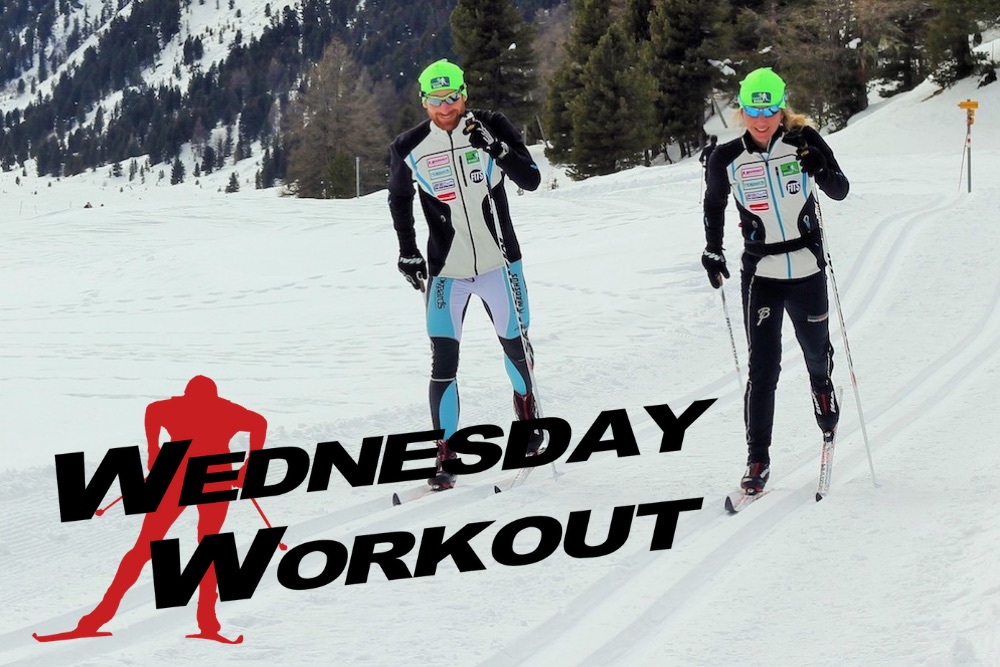
Team Gregg, Brian and Caitlin Gregg, out for an easy recovery ski together. (Courtesy photo)
This week, we’re featuring a workout from the training logs of Team Gregg. These days, husband and wife Brian and Caitlin Gregg are adjusting to life, training and bodily changes as Caitlin is pregnant with their first child (a girl), due in early February. Read the full story here.
Caitlin sent us the following “trailheading” workout, in reference to starting and ending a workout with someone else, which is how they often train together.
***
One of the challenges in training and racing is that it is often challenging to find training partners at the same speed and ability as yourself.I would argue that the best training partner is one who is just slightly faster than you.Brian and I have been blessed with opportunity to be a married couple who have both competed in the Olympics.
Here are a few ways we get creative to maximize our workouts and fun:
Every training partner can offer somethingand we enjoy large training groups.If you don’t have a training group, take it upon yourself to organize one.Utilize a loop so that the group can kind of stay together.If you are really searching, our neighbor’s house is for sale and you can join one of the many each cross-country ski groups in the Twin Cities.
Utilize different ski speeds as equalizers.On snow, put the slower person on the fast Redlines.If you are rollerskiing, give the person who is in the best race shape the slow, soft wheels.Using various rollerski wheels is a great way to prepare yourself for various snow conditions.
Brian and Caitlin Gregg enjoying the fruits (and added weight) of their workout during a hike this summer. Brian carried the watermelon in a backpack to slow him down. (Courtesy photo)
Another tool we use is a weight vest.For intervals, Brian will wear a weight vest and we can ski side by side pushing each other.This summer, I had Brian carry a watermelon during a hike so that we could relate, plus it was delicious.
In preparation for the 2015 World Championships, at 9,000 feet in Colorado we would Jetstream bloc my skis so that I could be skiing at speeds more similar to sea level.Plus, Brian and I could do intervals together.
Although Brian and I might have the same duration for an interval, he will start behind me with the goal of trying to catch me by the end while my goal is to try and hold him off. This also works really well for speed sessions.
Sample Workout: Team Gregg Husband/ Wife Intervals
We have a great hill in Afton, Minnesota, that Brian and I try and get out to about once a week in the fall. It’s steep and long (for the Midwest) but you can also safely ski down between repeats.
Warmup: Ski easy for 30 minutes with 15- to 20-second pickups. We usually start our warmup at the same time, but gradually over the 30 minutes, we separate and meet up again to do some pickups. We then do a set of pickups where Brian starts behind me and we try to finish the pickups together.
Intervals: The workout is usually 5-8 x 4-5 minutes (with 3-4 minutes recovery) depending on how we are feeling and what our goal for week is. Brian will either put slower wheels on or wear a weight vest for the session. I will either put faster skis on or start a little before him.
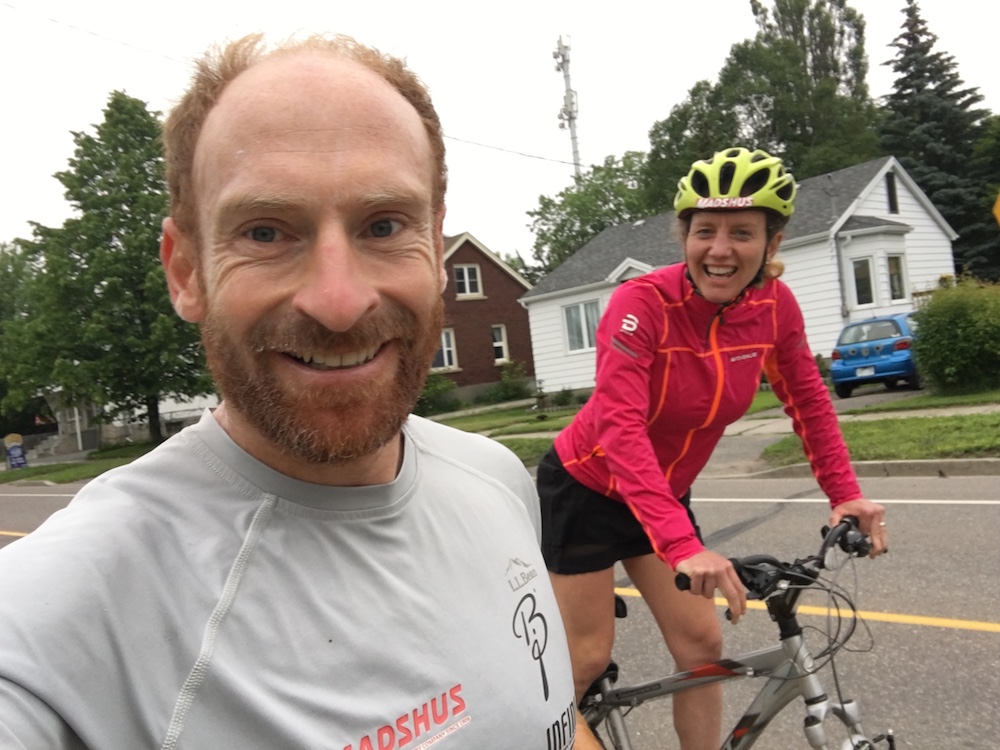
Brian Gregg snaps a selfie during a workout with his wife, Caitlin. (Courtesy photo)
The Game (Goal): If it’s just the two of us, we try and make the intervals more fun and exciting by challenging each other to get to the top first, but also try to maintain or drop our times from the start of the session to the end. For example, getting to the top first on the first interval but then falling back or skiing slower each subsequent interval isn’t the goal.We focus on negative splitting each interval in the set, which requires good discipline early on.
Cool down: We usually ski the cool down together and reflect on the session. Since we are out there together, we don’t always have feedback the way someone watching or filming the entire session from the sidelines would, but we can still be observant of how the other person is moving and offer some technique cues.
After the session: It’s been incredibly fun to travel the world training and racing together as a married couple. We are extremely lucky that we have both been able to follow our dreams. There are still added challenges to this approach, though… One of the hardest parts of finishing a hard race or interval session together is that we are both exhausted at the same time, which means that there has to be some way of deciding who is going to cook or do the dishes at the end of the night. This is where we put high stakes on who executes a workout better or has a better result at a race. The winner gets to relax on the couch while the loser has to wash and dry! Just kidding; we do the dishes together 😉
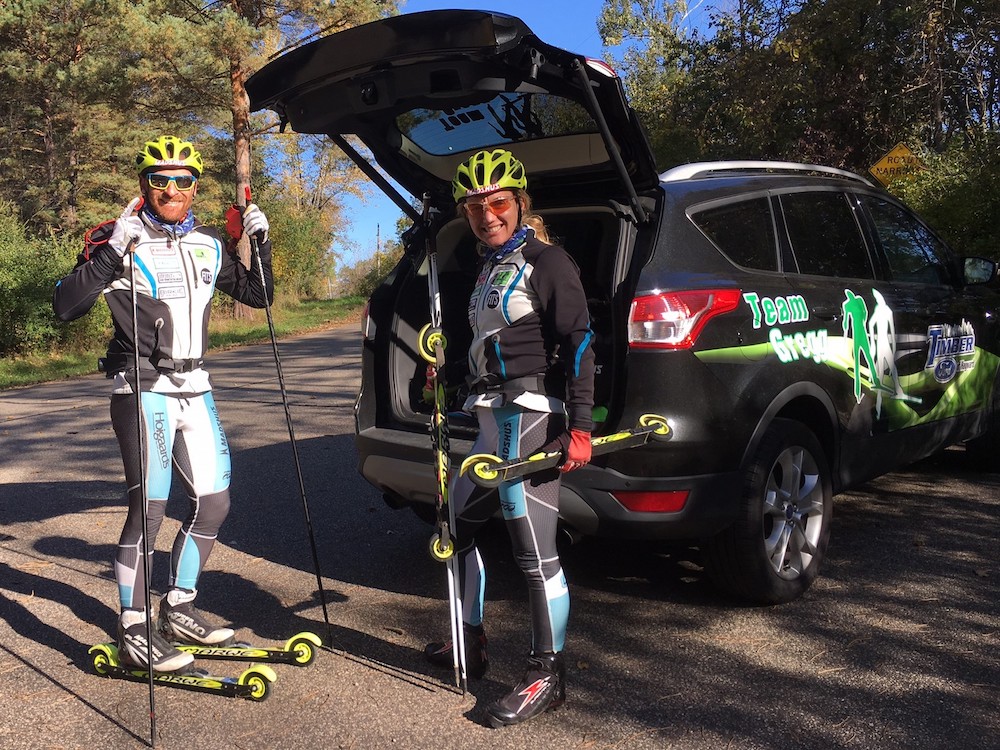
Brian and Caitlin Gregg (Team Gregg) out for a rollerski. (Courtesy photo)
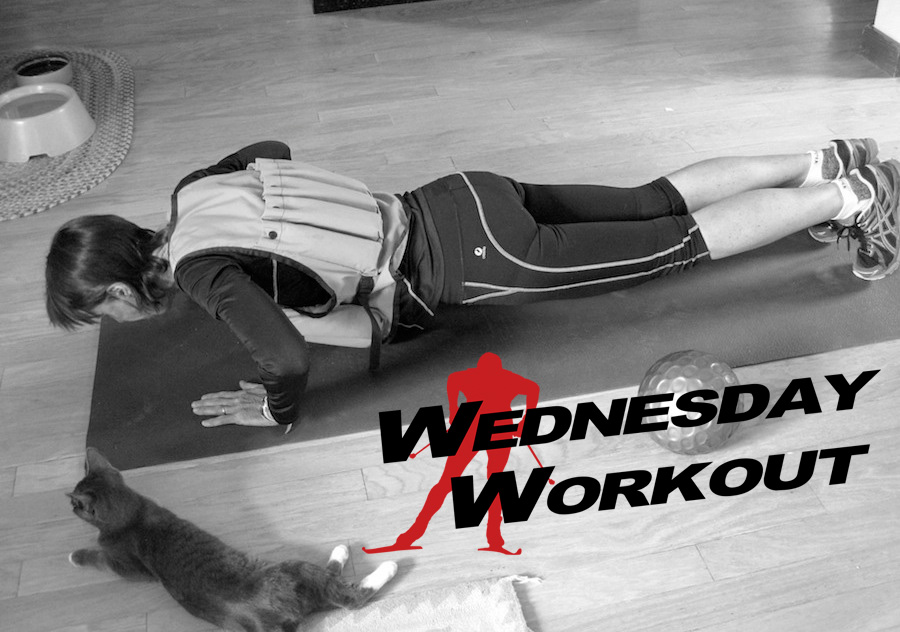
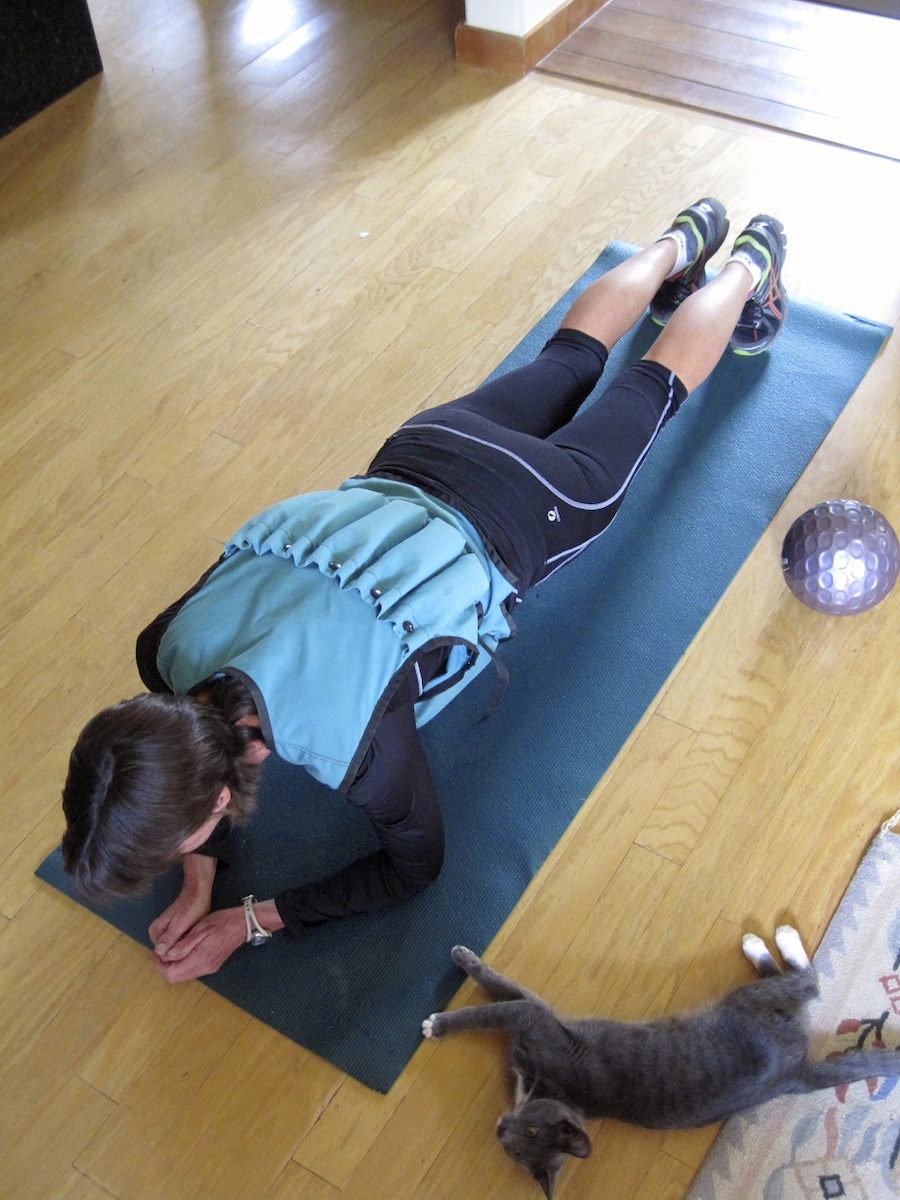
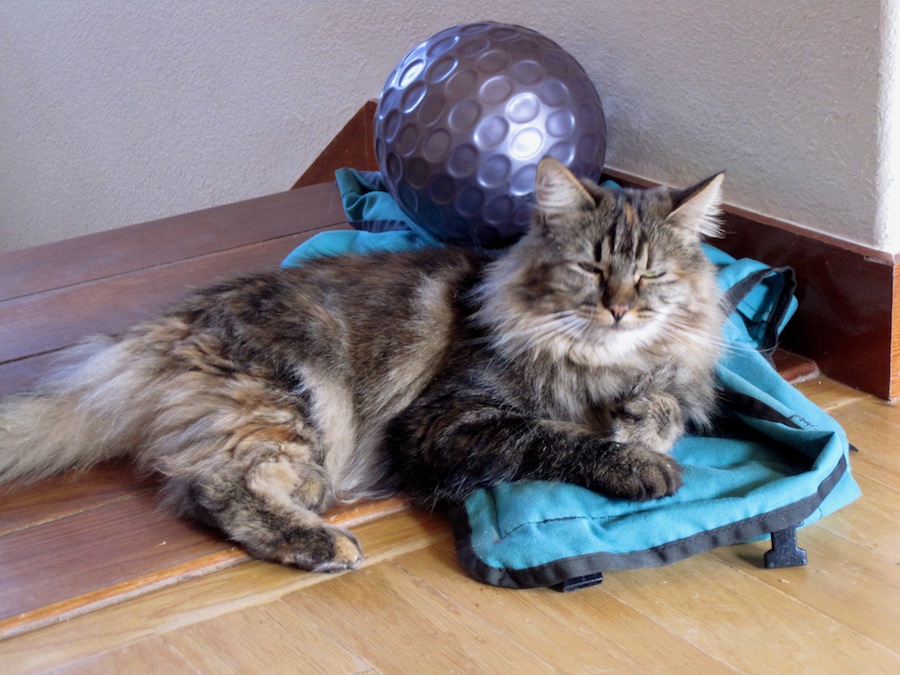
Nancy Fiddler adds some resistance to her push ups with a 10-pound weight vest her coach gave her when she was on the U.S. Ski Team. Her cat Jemima hangs around for moral support.
Walking through the garage the other day, I spied my turquoise weight vest languishing in the corner. I became very excited, not because I wanted to actually use it, but because it was a seemly topic for a Wednesday Workout.
This particular weight vest had, until recently, taken a very long vacation from any kind of work. My former coach TorbjørnKarlsen had generously supplied the vest back in the early ’90s, when I was in full ski training mode. It is made of a canvas-type material and has numerous long, thin pockets that hold sandbags and wrap completely around it. Fully loaded, my vest holds 10 evenly distributed pounds.
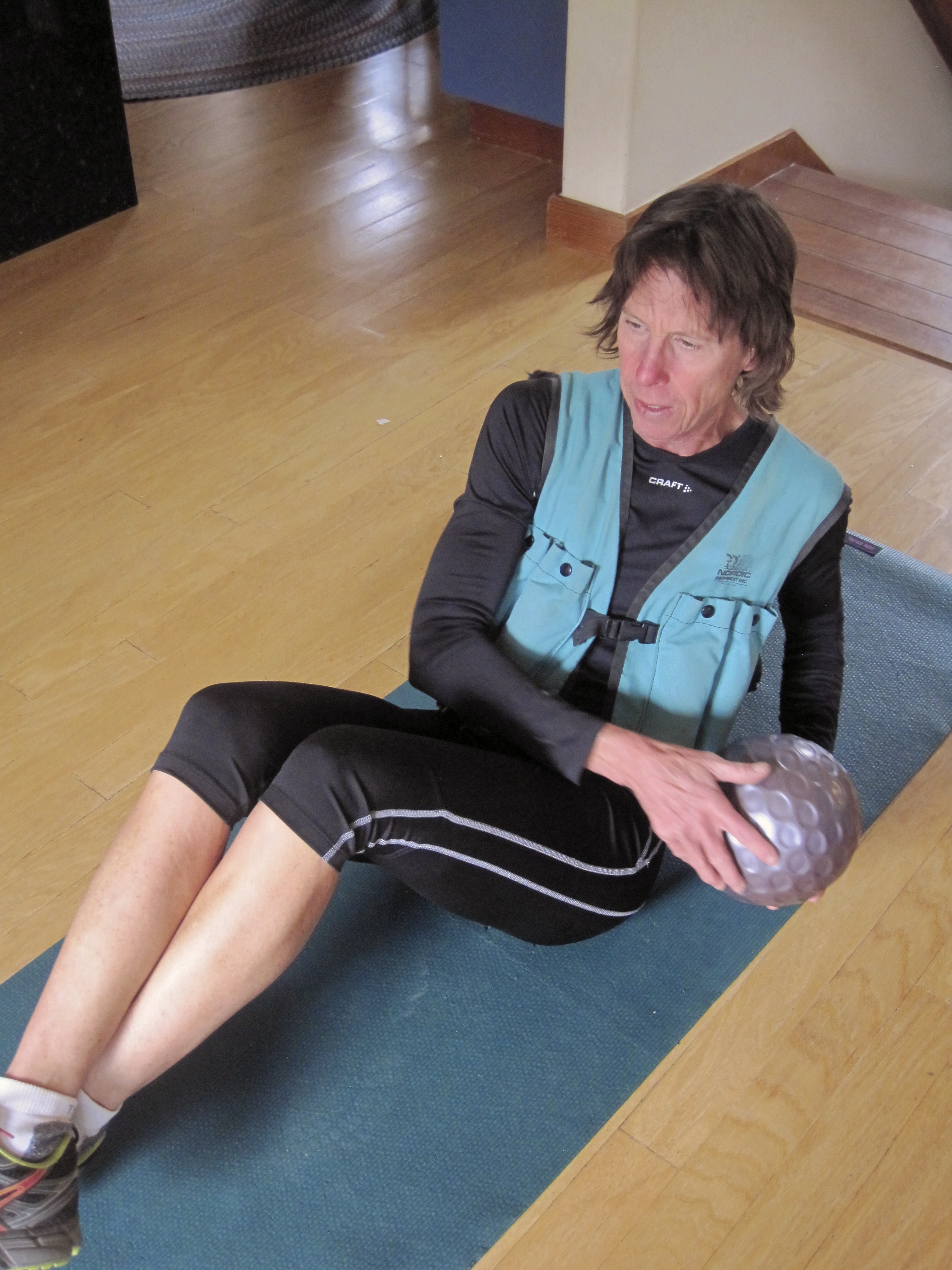
Nancy Fiddler works on balance and core while doing kayakers with a weight vest and medicine ball.
The weight vest had been a staple of my strength training and I had been pleased to pull the thing out a couple of summers ago when my daughter, Laurel, was ready to incorporate it into her dryland training. She was 17 and had been doing a general and specific strength program for several months. It was the perfect way to add resistance to the exercises we had been doing in our outdoor gym. We also added it to some of our specific strength sessions on rollerskis.
When used properly, a weight vest enhances a strength-training program, especially when it is not possible (or affordable) to train in a fully equipped gym. It is a simple tool that provides enough resistance to make some good strength gains! It may be necessary to begin with the vest lightly loaded for the first couple of times.
The Workout: Circuit Training
– Warm up as you normally would for strength training.
– Choose 5 or 6 exercises for your workout.
For example:
Push-ups
Pull-ups
Triceps press
Step-ups
Planks
Kayakers with a ball
Planks with a weight vest
Complete one set of the exercises without the weight vest, then do two more sets with the vest. Pay close attention to proper form when wearing the vest. Wearing the vest, it will be possible to do only half to two thirds of the repetitions as without the vest.
The Workout: Specific Strength
This workout can be accomplished on rollerskis or skis.
– Warm up for 20 minutes.
The following exercises can be done on a variety of terrain, but to start, seek moderately steep terrain that it is possible to double pole or single stick up without loss of technique. It is recommended that the skier have a good base of general and specific strength before attempting weight-vest training.
Double-Pole Repeats
Wearing the weight vest, double pole for 1 minute up the hill.
Repeat the same drill without the weight vest, concentrating on quickness of movement.
Continue to do the 1 minute repeats, alternating wearing the vest and without. Focus on getting hips quickly up and forward.
Begin with 2-3 cycles and work up to 5.
“Locked and Loaded”
Wearing the vest, isolate the initiation phase of the double pole by tapping the poles into the snow or pavement from the high and forward position. This will feel like an upper abdominal muscle crunch. The poles will not follow through, as this is not a full double pole! Try repetitions of 30 seconds.
Repeat the “locked and loaded” drill without the vest.
Begin with 2-3 cycles and work up to 5.
Single-Stick Repeats
Choose a more gradual hill than used for double poling.
Wearing the weight vest, single stick (no legs) for 45 seconds up the hill.
Repeat without the vest, concentrating on speed of arm swing forward.
Continue the 45-second repeats, alternating with and without the vest. Focus on engaging the core and keeping hips up and forward, which will allow a free and swift arm swing.
Begin with 2-3 cycles and work up to 5.
It is possible to mix the above exercises into a single workout, aiming for a total of 12-15 repeats, or to just work on one set of exercises. Finish the workout with an easy cool-down.
My 25-year-old weight vest has been surpassed by newer, sleeker models. There are a number of good weight vests on the market. Choose one that fits snugly to the torso and has even, weight distribution. A final word of advice: don’t begin your weight vest training with a fully loaded vest!