
From the FasterSkier archive — posts syndicated from athletes’ and coaches’ own blogs between 2004 and 2012, kept online as published. Current coverage is at fasterskier.com.

Tag: Wesley Savill

  • World Cup Prep with U.S. NoCo: Cryotherapy Before Seefeld Triple (Video)

    World Cup Prep with U.S. NoCo: Cryotherapy Before Seefeld Triple (Video)

    SEEFELD, Austria — Get up close and personal with three members of U.S. Nordic Combined and Canadian Wesley Savill as they share their first oh-so-cold experience with cryotherapy — essentially a cold sauna at temperatures around -110 degrees Celsius (-166 Fahrenheit) without the dangers of moisture, humidity and windchill.

    “We’re about to get very, very cold,” Taylor Fletcher says to the camera.

    “The science of it is a little shaky; we’re not sure it actually benefits you in any way,” Brett Denney adds. “But it’s more of a team-bonding thing, having a bunch of dudes naked together in a really cold room is gonna help morale a lot I think.”

    For the record, they don’t actually get naked, and Denney wears a sweater.
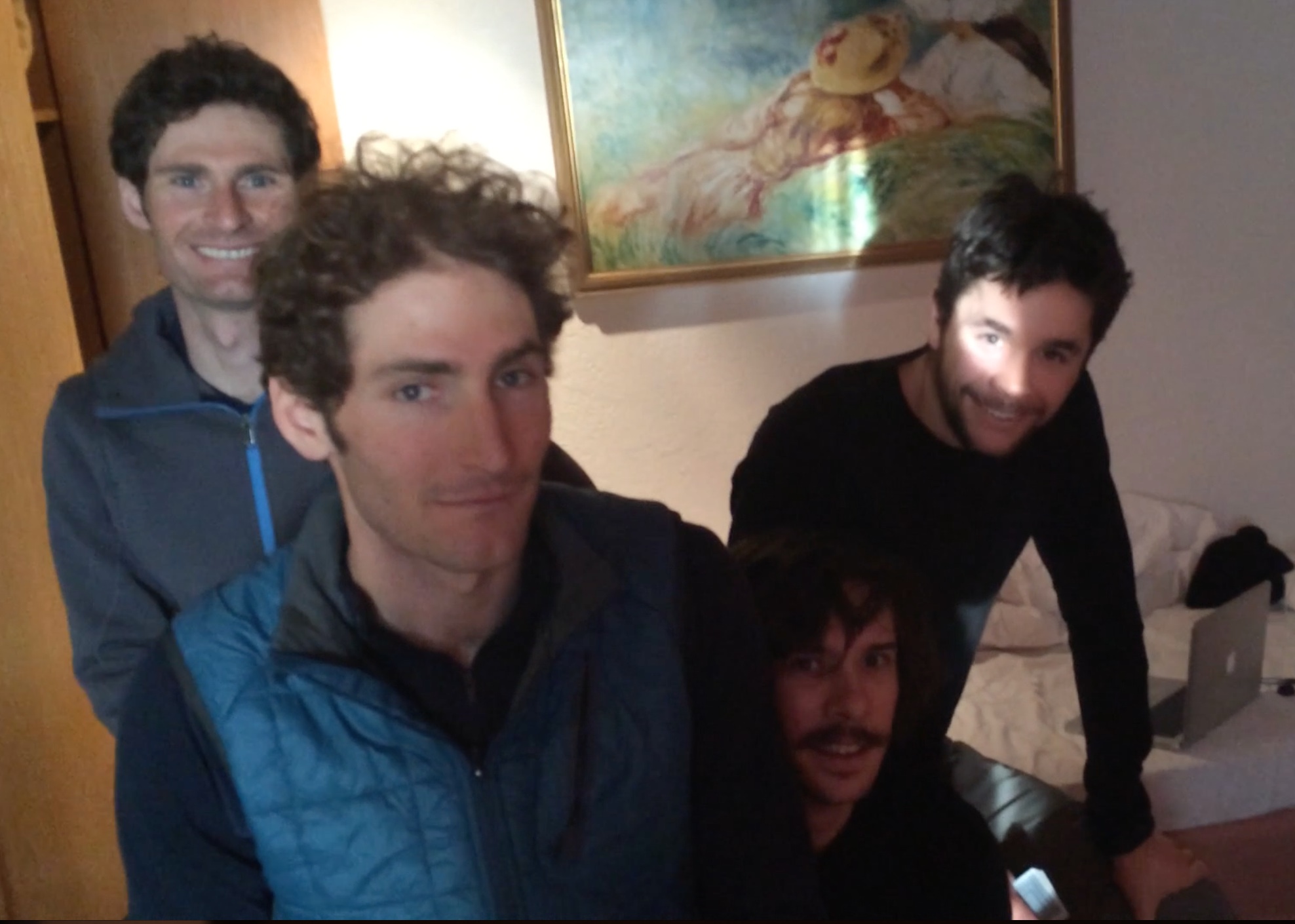
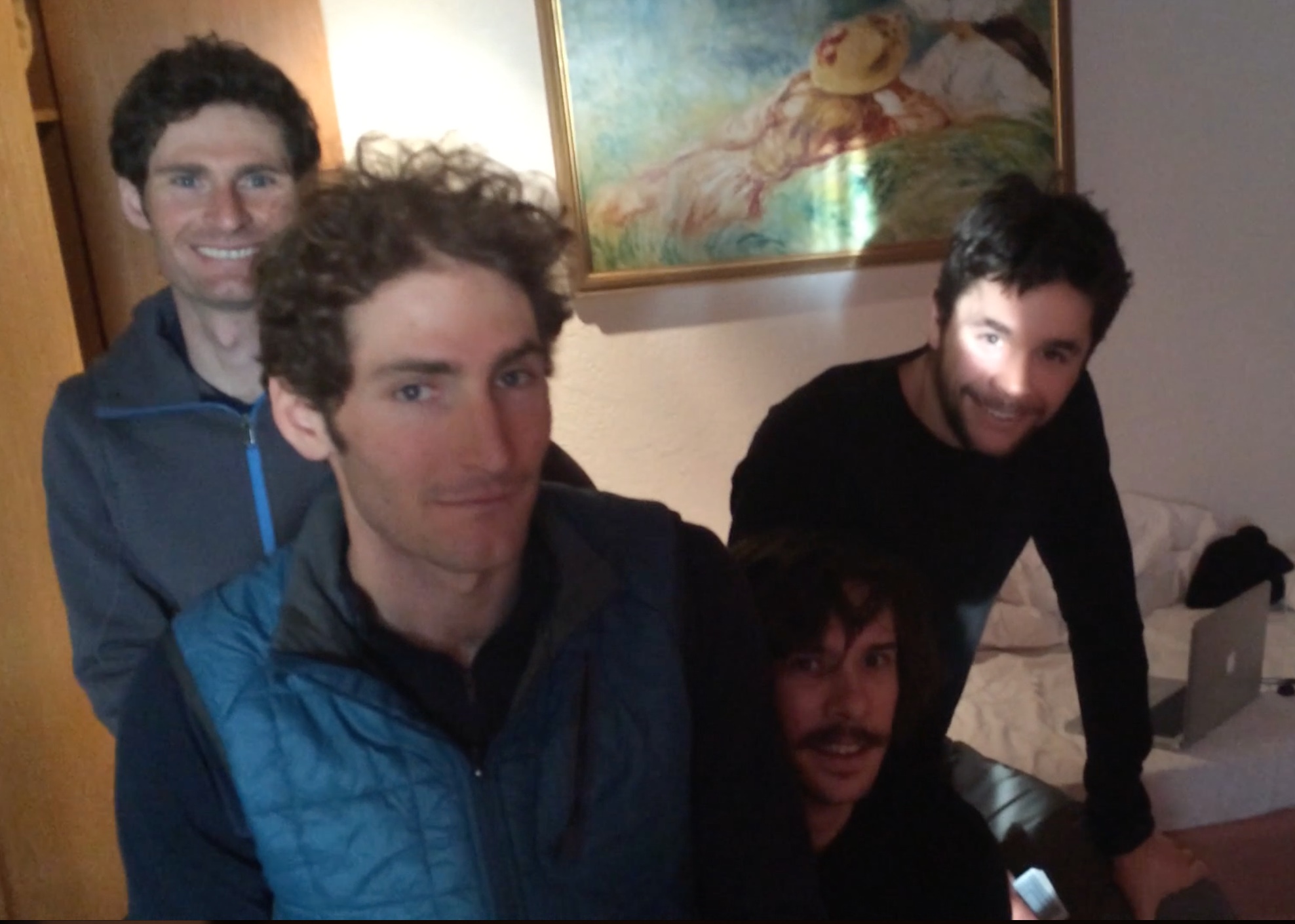
    U.S. Nordic Combined's Bryan Fletcher (l), Taylor Fletcher and Brett Denney (second from r) and Canadian Wesley Savill (r) after their first cryotherapy session in Seefeld, Austria. (Photo: Fast Big Dog)
    U.S. Nordic Combined’s Bryan Fletcher (l), Taylor Fletcher and Brett Denney (second from r) and Canadian Wesley Savill (r) after their first cryotherapy session in Seefeld, Austria. (Photo: Fast Big Dog)

    “Cryotherapy has been around for a while, mostly in the form of ice baths and contrast baths, and this is the latest iteration,” reporter Fast Big Dog (FBD) explains. “The current scientific literature is still mixed on the benefits, though there is a lot of anecdotal evidence from athletes that it is beneficial in recovery.

    “We all use ice baths and contrast baths, but this is the first time any of us have done cryo.  Lots of European special jumpers use it regularly, so we thought we’d give it a try.  Plus, there was a good looking girl at the front desk who kept undressing me with her eyes and I like that.”

    The technician was a good sport and helps film while five of the guys try it out.

    The session takes 10 minutes from start to finish, starting with 30 seconds in a -17 Celsius (1.4 Fahrenheit) “meat locker” pre-chamber, followed by a minute in -57 Celsius (-70 Fahrenheit), and finally, three minutes in -113 Celsius (171 Fahrenheit). Participants listen to music and are encouraged to move around.

    “At the end of the day we all felt like the process mimicked the effects of a good contrast bath session,” FBD writes. “Anecdotally I had crashed in the morning ski at about 100 kph and my neck was all jacked up and after the cryo session I felt right as rain! I believe that the session may have also averted a traumatic brain injury as Billy D said I was totally out of it at lunch following my crash and by the afternoon not even a lawsuit could shut me up.”

    So what’s all this for? The first Nordic Combined World Cup Triple, starting Friday, of course!

    “This is a brand new event on the Nordic Combined World Cup circuit,” explains FBD. “This event is sort of like a pursuit that is based on three days of racing. The first day all competitors jump, then race a 5k. Based on these results, the field is cut to 50 athletes. The second day has one jump, followed by a 10k ski. Based on this results of this second day, the field is then cut to 30. On the final day, there are two jumps, which both count, then a 15k ski which is handicapped by the first 2 days time back as well: the first man across the line wins the overall. All three events are held in Seefeld, Austria.”

    While the longer-term effects of their cryotherapy session are yet to be discovered, the 27-year-old Bryan Fletcher said, “I think I’m a hundred years younger.”
    Trouble viewing video? Click here.
  • U.S. Fifth and Sixth in Final NoCo Individual Comp in Oslo

    U.S. Fifth and Sixth in Final NoCo Individual Comp in Oslo

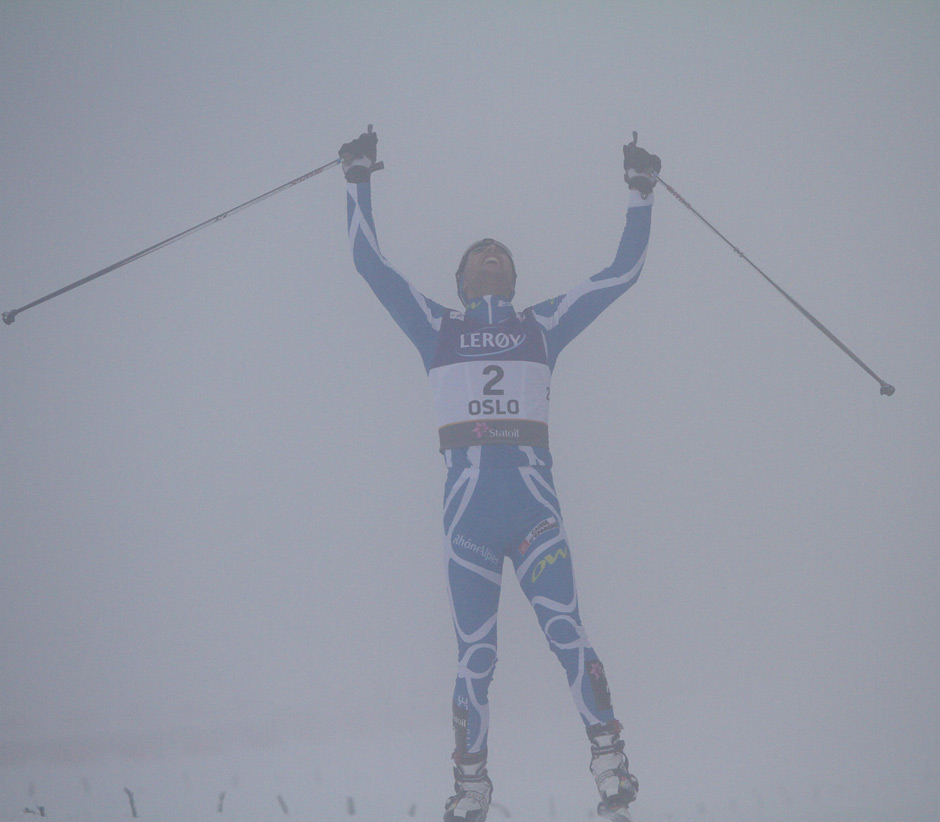
    France's Jason Lamy Chappuis celebrating gold through the fog.

    After just missing the medals in the first two competitions at the 2011 World Championships, an American-born athlete was back on top of the nordic combined podium on Wednesday.

    Billy Demong? Nope. Todd Lodwick? Guess again. Maybe Johnny Spillane? Or the two flying Fletcher brothers, Bryan and Taylor? No, no, and no.

    Todd Lodwick jumping.

    Instead, it was Jason Lamy Chappuis, a French citizen born in Montana, who took the win in the individual large hill competition in Oslo.

    Lodwick ended up fifth, 30 seconds off the podium, while Demong, the defending champion, was sixth, another 10 seconds back. The two were impressive on their skis, with the sixth and second-fastest course times, respectively, but couldn’t overcome jumps that were merely average.

    “I guess that was what I could do today,” Demong said.

    In the individual large hill competition, the athletes each get one shot to launch themselves as far as possible off Oslo’s massive Holmenkollbakken—the iconic jump that just underwent a 300-million-dollar remodeling.

    The Holmenkollbakken normally cuts an impressive, sweeping form that interrupts the Oslo skyline, but during the competition on Wednesday morning, there was no skyline whatsoever, with an impenetrable fog limiting visibility to around 50 meters.

    For the athletes, the weather seemed like it should have presented an insurmountable challenge. But for these guys,

    The nordic combined medal winners.

    who were regularly hitting the take-off at speeds upwards of fifty miles an hour and flying farther than the length of a football field, it wasn’t a big deal.

    “It can be a little intimidating, but it’s not as bad as it looks,” said Wesley Savill, one of the Canadian competitors.

    In fact, Demong said the conditions were challenging, but his gripe wasn’t about the visibility. Instead, his complaint was that the jump’s ramp was running slowly on Wednesday.

    “It’s hard to go far,” he said.

    After spending the morning on the Holmenkollbakken, the athletes moved to the cross-country stadium next door, where the results from the jump were used to handicap the start of a 10-kilometer cross-country ski race.

    Out of the five Americans in the event, Lodwick and Demong had the two best jumps—in a 56-man field, the former was 12th, and the latter 20th. Decent, but not quite of the caliber that got Demong the gold in the same event in 2009.

    Still, the Americans are among the best skiers on the nordic combined circuit, and as soon as the race started, they began working their way up through the field.

    With their results on Wednesday, Lodwick (L) and Demong (R) got to hit up the podium ceremony.

    Demong ended up with the second-fastest cross-country time, though it was hard to tell what was happening in the fog.

    “It’s easy, when you’re skiing fast, to be motivated by catching people,” he said. “But I couldn’t see more than eight seconds in front of me.”

    He caught 14 of the 19 men who started before him, and by the last of four 2.5-kilometer laps, he had managed to close the gap to Lodwick as well. But Lodwick had a little more left, and accelerated to ultimately leave Demong 10 seconds adrift at the finish.

    Lodwick said the fifth place was his “best result of the season” so far, which was gratifying after fighting illness and asthma for the last six months.

    “I have two kids at home, and they bring stuff home from day care, and it’s just really been an uphill battle,” he said. “I finally feel like I can go out, and I can pace myself, and breath and feel power. And I think today showed it.”

    At the front of the race, Norway’s Haavard Klemetsen had started first after a mammoth jump. But despite the exhortations of the home crowd, he was quickly reeled in by Lamy Chappuis, as well as two Germans, Joannes Rydzek and Eric Frenzel, who had started fifth and sixth.

    Lamy Chappuis had a 30-second advantage on the two Germans, and was able to cruise to the win without being truly tested. It was a gratifying win for the Frenchman, who had missed the podium in the first individual race in Oslo despite dominating the World Cup circuit this year.

    “I am so glad to be back,” he said in a press release from the organizers. “My self-confidence wasn’t so good after the first competition, but now it feels great.”

    The Americans, meanwhile, have one more chance for a podium at Worlds in Friday’s team competition—the second one of the championships. In the first team event, held on the smaller hill on Monday, the Americans were fourth.

    It shows just how far the U.S. program has come that anything less than hardware feels like a bit of a letdown, even though Lodwick said that he was “very satisfied” with his result.

    The Americans need slightly better performances in the jump if they want to content for medals, but as Demong put it, the team is “getting closer.”
    “Maybe too little too late for this year, but pretty fired up for next year—and years beyond,” he said.