From the FasterSkier archive — posts syndicated from athletes’ and coaches’ own blogs between 2004 and 2012, kept online as published. Current coverage is at fasterskier.com.
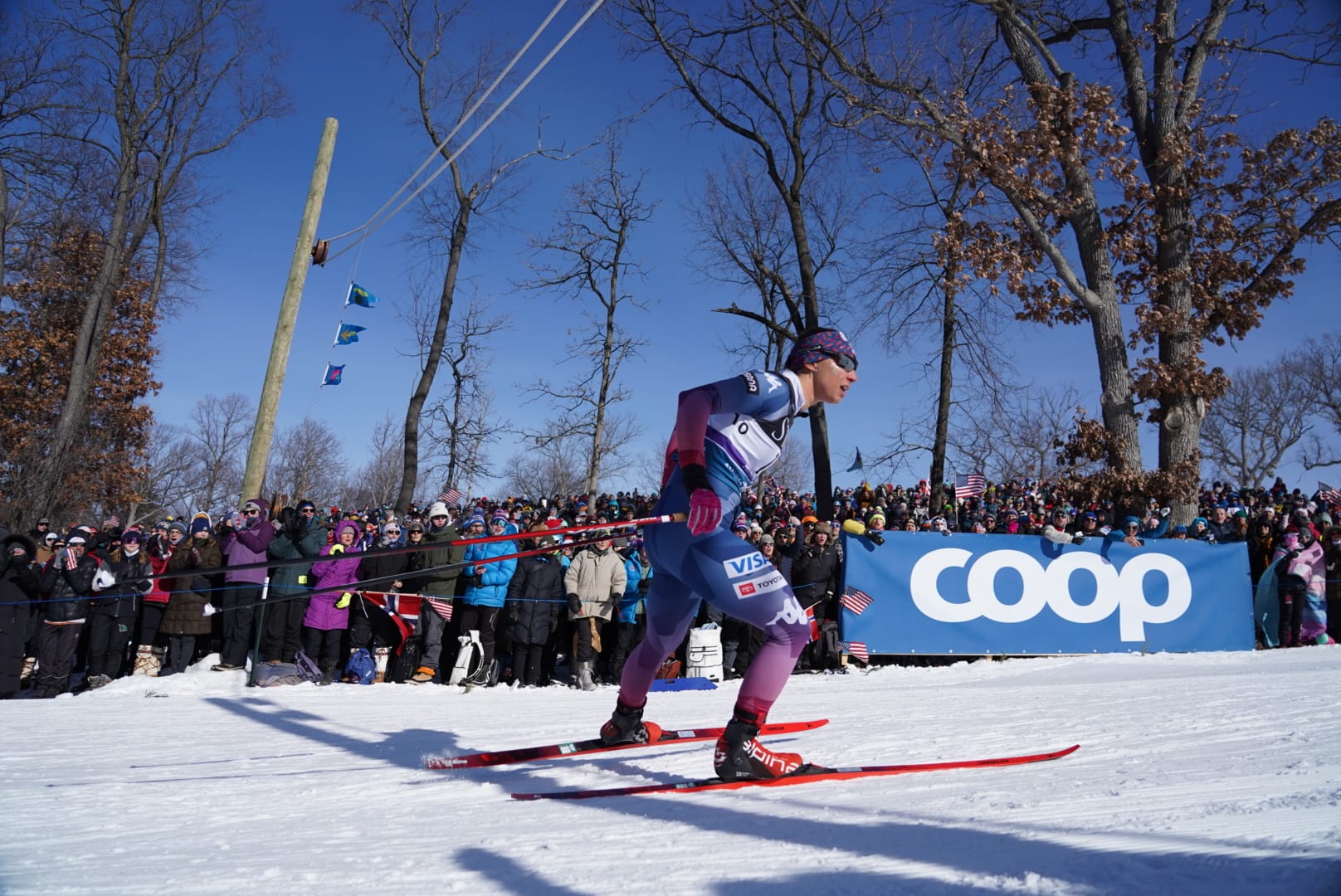
Julia Kern at the Minneapolis World Cup in Wirth Park. (Photo: Lumi Experiences)
It’s been an incredible North American World Cup period in Canmore and Minneapolis over the past two weeks. In Canada, as the excitement was building for the first World Cup on US snow in over 20 years, US skier Julia Kern led the women to the top US finish in the classic sprint and Diggins won the 15 km freestyle. In Minneapolis, the huge crowds of US fans in Wirth Park for the Loppet Cup brought an incredible energy to the event and crowds were treated to several podium finishes for the US!
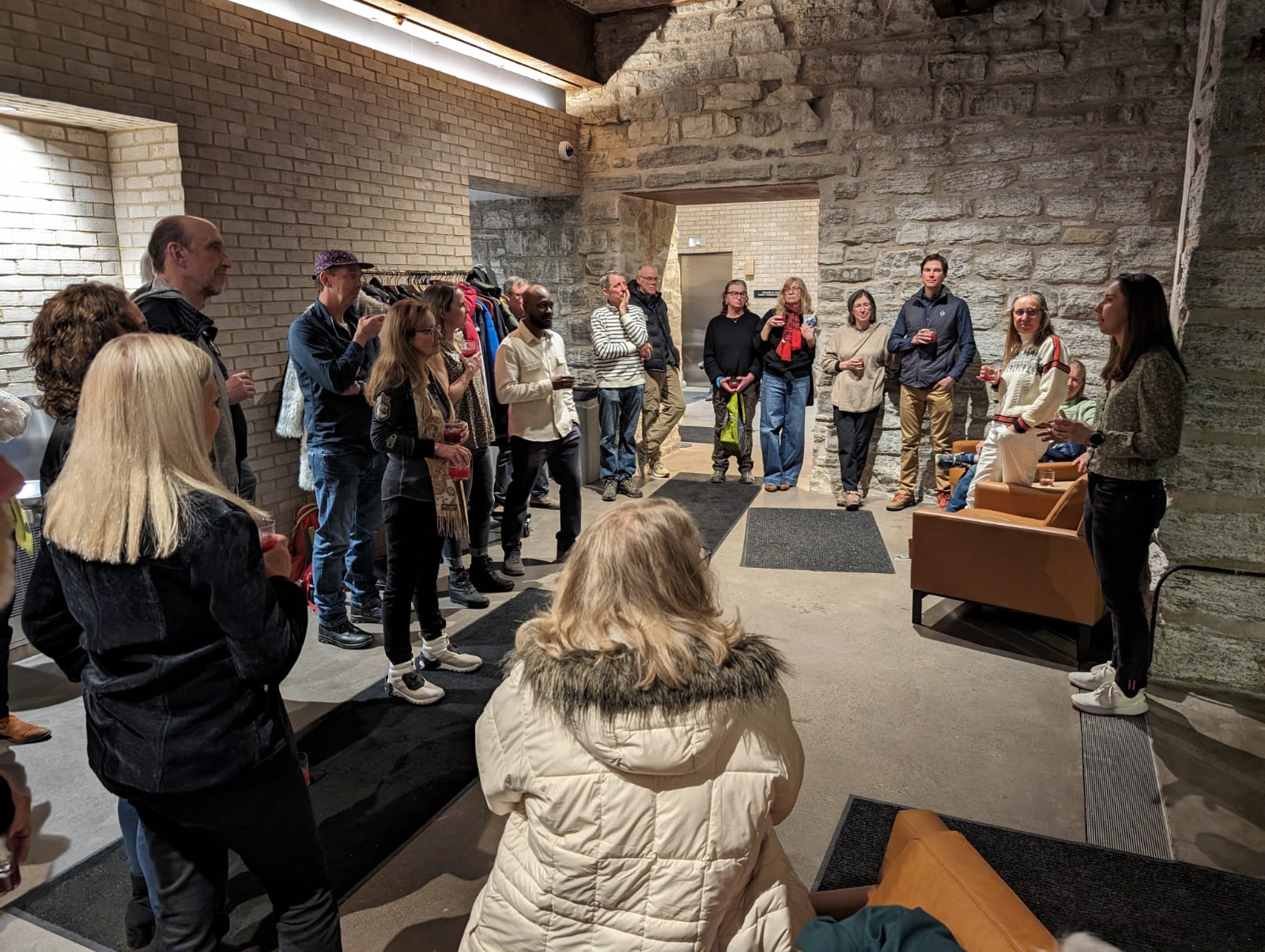
Julia talking with Lumi guests in Minneapolis after the Loppet Cup. (Photo: Lumi Experiences)
On Sunday night after the races, guests on Lumi’s Minneapolis World Cup Trip got to meet Julia and her family. Julia shared parallels between skiing on the Weston Golf Course where she grew up in Boston and the Wirth Golf Course that hosted the Minneapolis World Cup. She also talked about the impact of the Trail to Gold Fellowship, helping to bring more women coaches onto the World Cup. The story of how Julia and Jessie won silver at last year’s World Championships captivated and inspired the group for next year’s Trondheim World Championships in Norway.
Now these next two weeks are the first time in decades that US ski team athletes have been able to head home for some rest time in the middle of their 3.5 month World Cup season.
Before Julia takes off for the final leg of the World Cup in Scandinavia in early March, she prepared a video of what she packs when she travels to the World Cup. In this new video, see what she packs in her bags – both for ski training and her other favorite sport. What sport is that?
Want to experience cheering for a World Championship event in Europe? The 2025 Trondheim World Champs are going to be in Johannes Klæbo’s backyard next February and March. Due to their popularity, there will be two Lumi Experiences trips to Trondheim 2025. Dovetail this with Lumi’s Norway-Birken trip to ski the Norwegian Birkebeiner while you’re in Norway. An additional packing tip from Julia for Trondheim 2025? Bring your stars, stripes and glitter!
Right now we’re offering an early booking discount on all 2025 Lumi trips. Secure your spot before March 31, 2024 and save $300 per person.
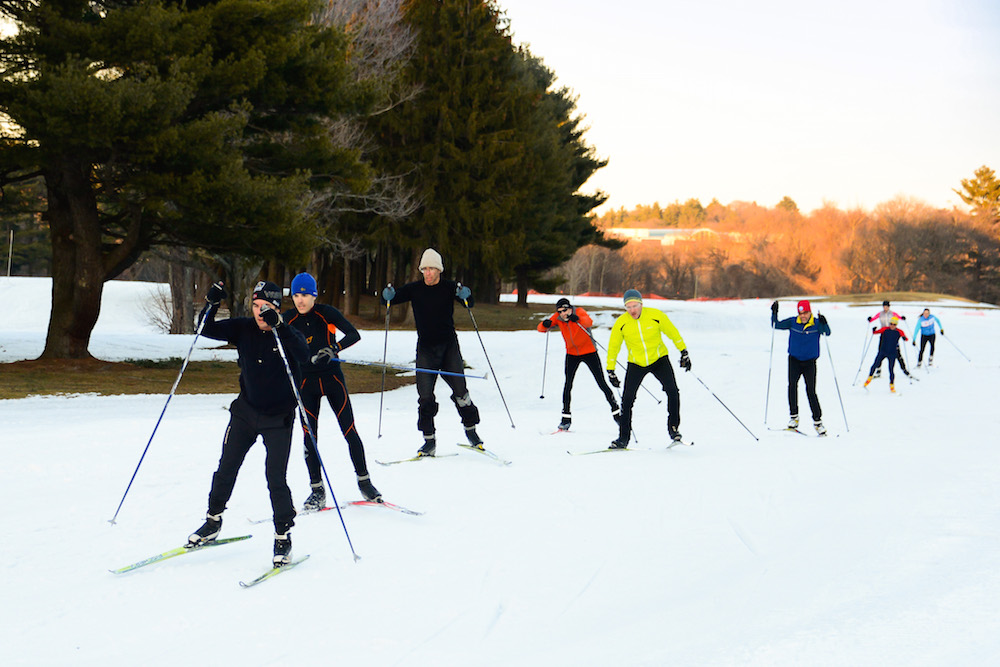
Skiers get on snow at the Weston Ski Track in Weston, Mass. (Photo: Jamie Doucett)
It’s a transition that has some of the Boston ski community nervous. But after initial skepticism, there may be reconciliation as Boston’s most accessible nordic-ski area, the Weston Ski Track, opens this winter under new management.
This winter, the Massachusetts Department of Conservation and Recreation (DCR) will take over the ski operation on the state-owned Leo J. Martin golf course in Weston, Mass.
In a 12-hour span on July 31, the DCR informed both Larry Smith, the owner of Charles River Recreation, which has run Weston for the last 40 years, and the Friends of Leo J. Martin Skiing (FOLJMS), a nonprofit that advocates for Boston-area skiers, that the state would take over ski operations this winter.
“It caught everybody by surprise,” Smith said in a phone interview.
The proprietor for Charles River Recreation (CRR), which also runs Charles River Canoe & Kayak and Community Ice Skating in nearby Cambridge, Mass., Smith has operated his business by partnering with the DCR and local municipalities for decades. While he will no longer be in charge of Weston, he remains a consultant for the DCR.
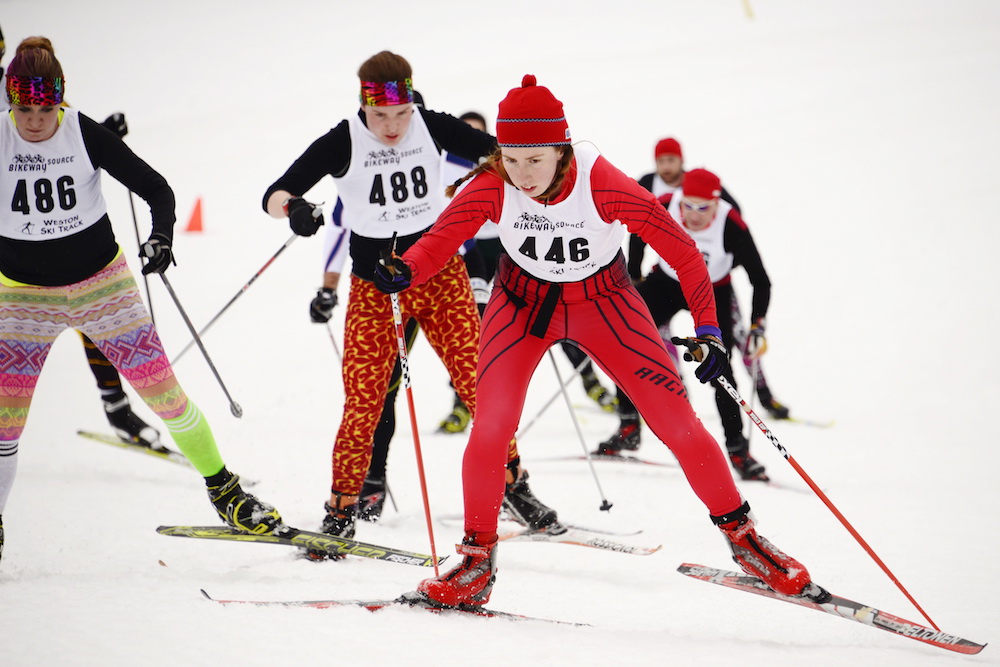
Skiers compete in a nordic race at the Weston Ski Track in Weston, Mass., outside of Boston. (Photo: Jamie Doucett)
With 42,000 skier visits last winter, the Weston Ski Track is a key resource for local skiers. In contrast, New York’s Regional Olympic Development Authority (ORDA) reported 35,000 skier visits last season at Mount van Hoevenberg in Lake Placid, N.Y.
Weston’s 15-kilometer trail system hosts a wide range of skiers, including the Harvard nordic team, the Cambridge Sports Union’s (CSU) juniors and master programs, an adaptive program, a high-school league, as well as thousands of recreational skiers who want to get out and glide after work.
After 40 years of management by Smith and CRR, skiers were concerned about the future. Part of the community’s concern was the DCR’s lack of ski expertise, and part is due to recent history.
“We have been wrestling with the DCR for the past two years,” Rob Bradlee, CSU’s head coach and a member the FOLJMS advisory board, wrote in an email.
“[The previous administration] tore down the old driving range poles and nets and in the process tore down Weston Ski Track’s lights and electric power,” Bradlee wrote. “They did this without any warning or consultation. Weston had to use temporary construction-site lights for the past two years.”
“Last year, they closed off two very hilly fairways that we use with natural snow,” he added. “So, in the best snow winter ever we couldn’t ski on the few decent hills the place has.”
There are concerns about snowmaking. Twelve miles outside Boston, the old Weston depended as much on snowmaking as natural snow.
According to Bradlee, because the DCR failed to sign a contract with CRR in time to allow snowmaking at the start of a warm December, Weston wasn’t open for skiing until after Christmas last year.
The New England Nordic Ski Associaton (NENSA) 2015 Club of the Year, CSU is a powerhouse local club with a strong junior program. The bulk of its winter training takes place at Weston, thanks to its central location and night skiing. If DCR stumbles and the worst happens, there aren’t convenient alternatives.
“There is NO alternative,” Bradlee wrote. “We’d rely on dryland training and driving on the weekends to find snow.”
“I don’t think it’s an option for [DCR] to fail. That’s not to say I don’t think it will be rough.” — Chris City, head coach of the Harvard University nordic team
Windblown in southern New Hampshire is one of the closest alternatives, but it’s a 90-minute drive from downtown Boston and doesn’t offer night skiing. By contrast, Weston is a 30-minute drive for many Bostonians and has illuminated trails at night.
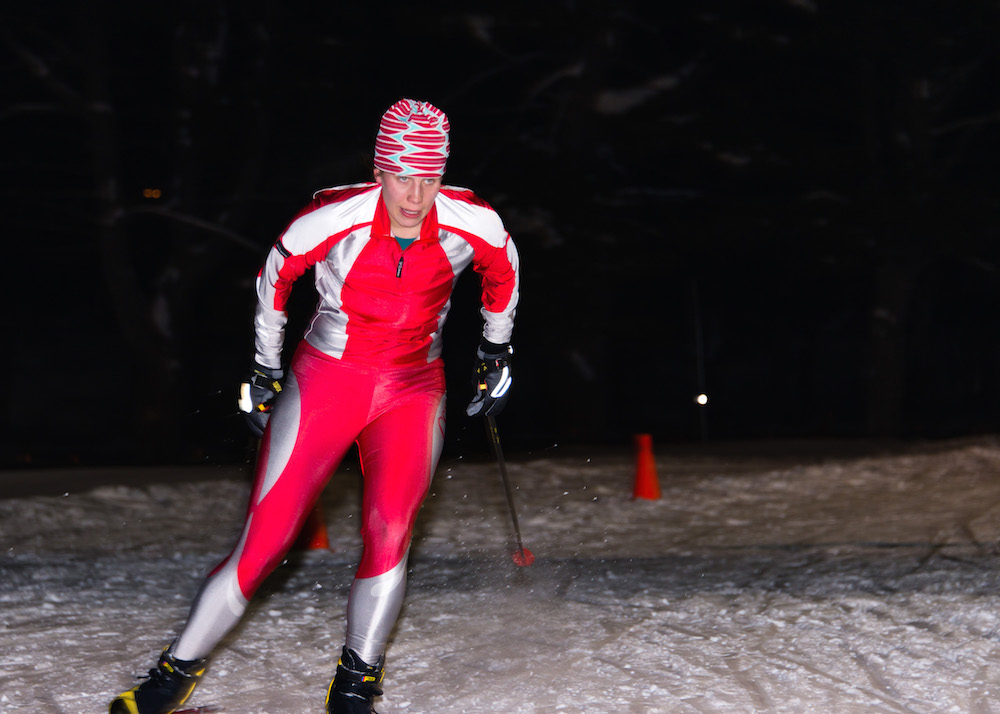
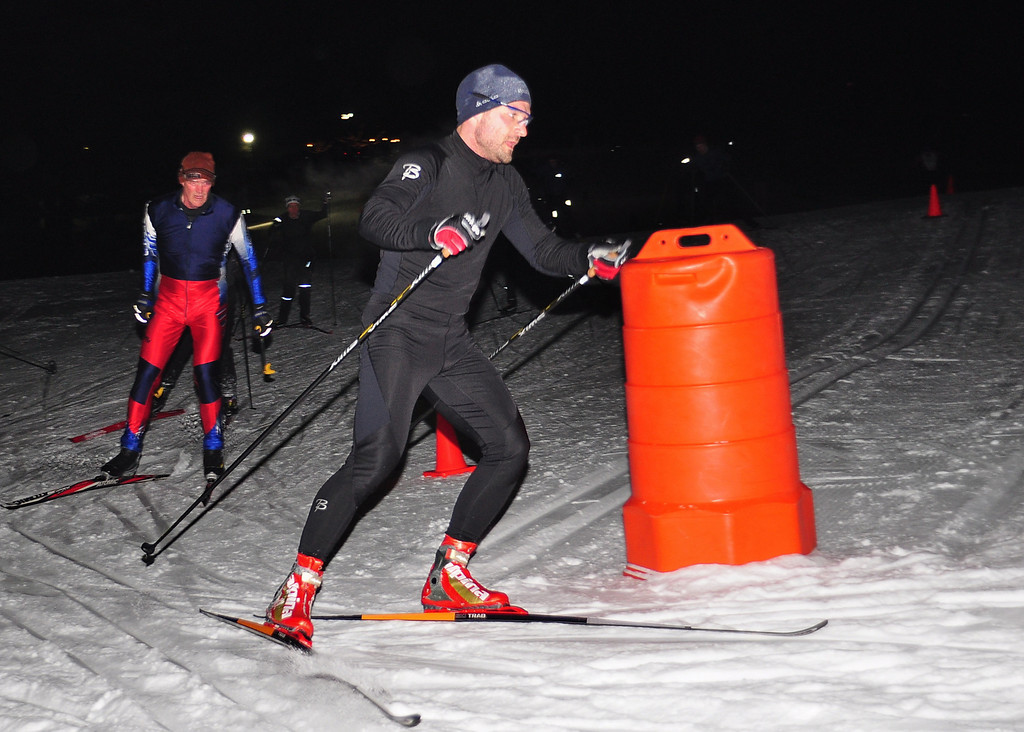
An athlete trains at night on the illuminated trails at the Weston Ski Track in Weston, Mass. (Photo: Jamie Doucett)
“They’re not skiers, they don’t know anything about operating a ski facility,” Chris Doyle, FOLJMS’s board chairman, said in a phone interview. “They clearly were not going to be able to do this on their own without any advice. We’d end up by default with a bad product. We reluctantly decided we had to tell them what’s needed in order to run the place.”
DCR Deputy Commissioner Matthew Sisk said on the phone that the decision to takeover Weston had “nothing to do with protecting the interests of golf and all to do with fulfilling our mission here at DCR, which is to conserve open land, protect and provide high quality recreation opportunities.”
Sisk acknowledged that it was a big change, adding, “This is going to be a good experience. We’re going to have a great season this year, people are going to see an increase in the amount of skiing they have available to them.”
FOLJMS had developed a master plan for skiing at Weston, which they submitted to the DCR in August. They envisioned FOLJMS managing skiing there, and their plan details short- and long-term infrastructure improvements, including new ski trails, a rollerski loop and an expanded lodge. Doyle said that while the DCR was impressed with the scope of the document, it decided to pursue its own course.
Since then, FOLJMS and DCR have met several times to discuss operations.
Asked whether DCR would implement any of recommended improvements, Sisk said, “Speaking specifically to their master plan is not something I’m going to do. I can tell you we’ve actively worked with [the FOLJMS] president, board, and membership to make this a smooth transition.”
This winter, DCR plans to re-open the Mount Weston hills and make snow on three kilometers of track, up from 2.5 k during the CRR era.
“I wouldn’t have discovered skiing without Weston,” said Harvard’s head nordic coach Chris City.
He began skiing at Weston in 1985. While City wasn’t pleased how the change transpired, he said the DCR has been receptive to the ski community’s input on running Weston.
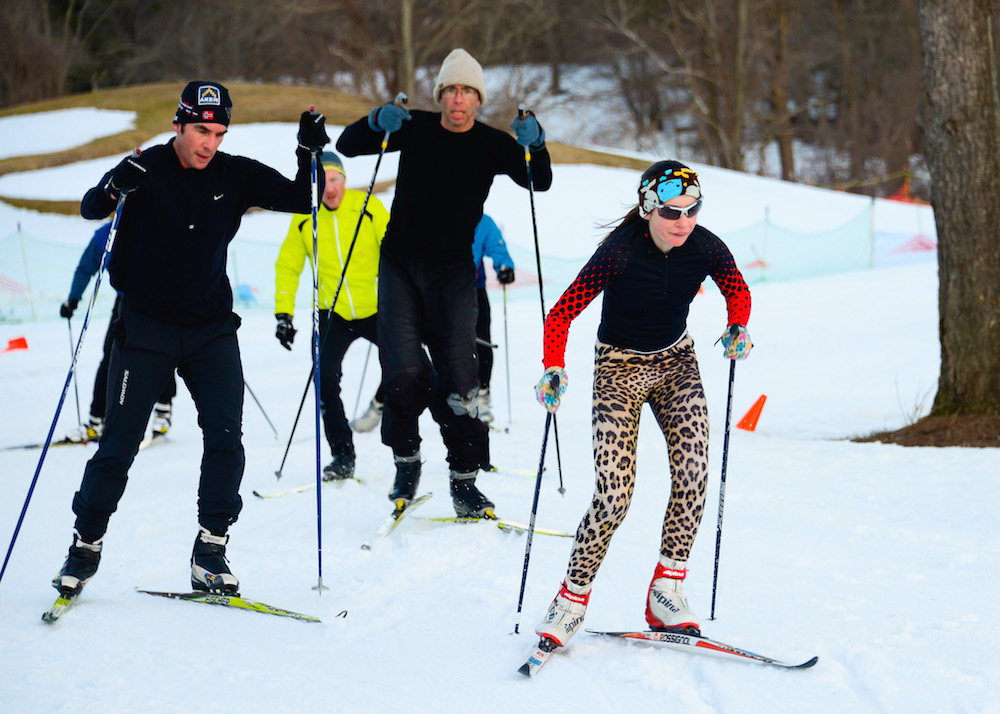
Junior and master skiers share prime-skiing space at at the Weston Ski Track in Weston, Mass., outside of Boston. (Photo: Jamie Doucett)
Like CSU, Harvard depends on Weston as a training venue. Without it, he said they’d have find alternate places to ski, but he doesn’t expect they’ll have to.
“I don’t think that’s in realm of anybody’s expectations this winter,” he said. “[The DCR] has purchased some good snowmaking and grooming equipment.”
Whatever the past history, the DCR appears to be putting its best foot forward. It purchased a new PistenBully and four Snow Machines, Inc. (SMI) Super PoleCat snow guns, and bought CRR’s water supply system.
“We’re going to be doing more night skiing because of the close to $1 million lighting project that we did,” Sisk said.
According to the MetroWest Daily News, the state is replacing older lighting with modern, energy-efficient systems. In addition, trail fees will be lower than last winter. According to a fee schedule forwarded by DCR, adult day passes will be two dollars less than last year, and an adult season pass will be $189 as opposed to $225.
Running Weston with a series of a short-term contracts from DCR, Smith said it would have been difficult to make the sort of capital investment that DCR did.
Although CRR may not run Weston per se, DCR hired Smith to consult on snowmaking. While state employees will make snow and groom trails, Smith will provide training and guidance, and, for this winter at least, CRR will operate rentals and ski instruction.
“I don’t think it’s an option for [DCR] to fail,” City said. “That’s not to say I don’t think it will be rough.”
City added that coming in brand new, DCR don’t have the institutional knowledge Charles River Recreation (CRR) acquired over 40 years.
“With anything this complicated, you expect some bumps in the road,” City said.
“Lots of capital investment, much more willingness to listen to our ideas, but a huge assumption that [DCR] can run the operation,” Bradlee wrote. “It’s going to be an interesting winter.”
In a follow-up interview, Doyle explained, “Given that this is the path that they’ve chosen, we feel like they’re making good progress,” while adding, “It’s not clear to us that they’re going to open on time.”
The lighting project, which will benefit skiers in the long term, may not be completed by the end of November, she explained. It was supposed to open the first week in December, and the DCR is now saying skiing will start in mid-December.
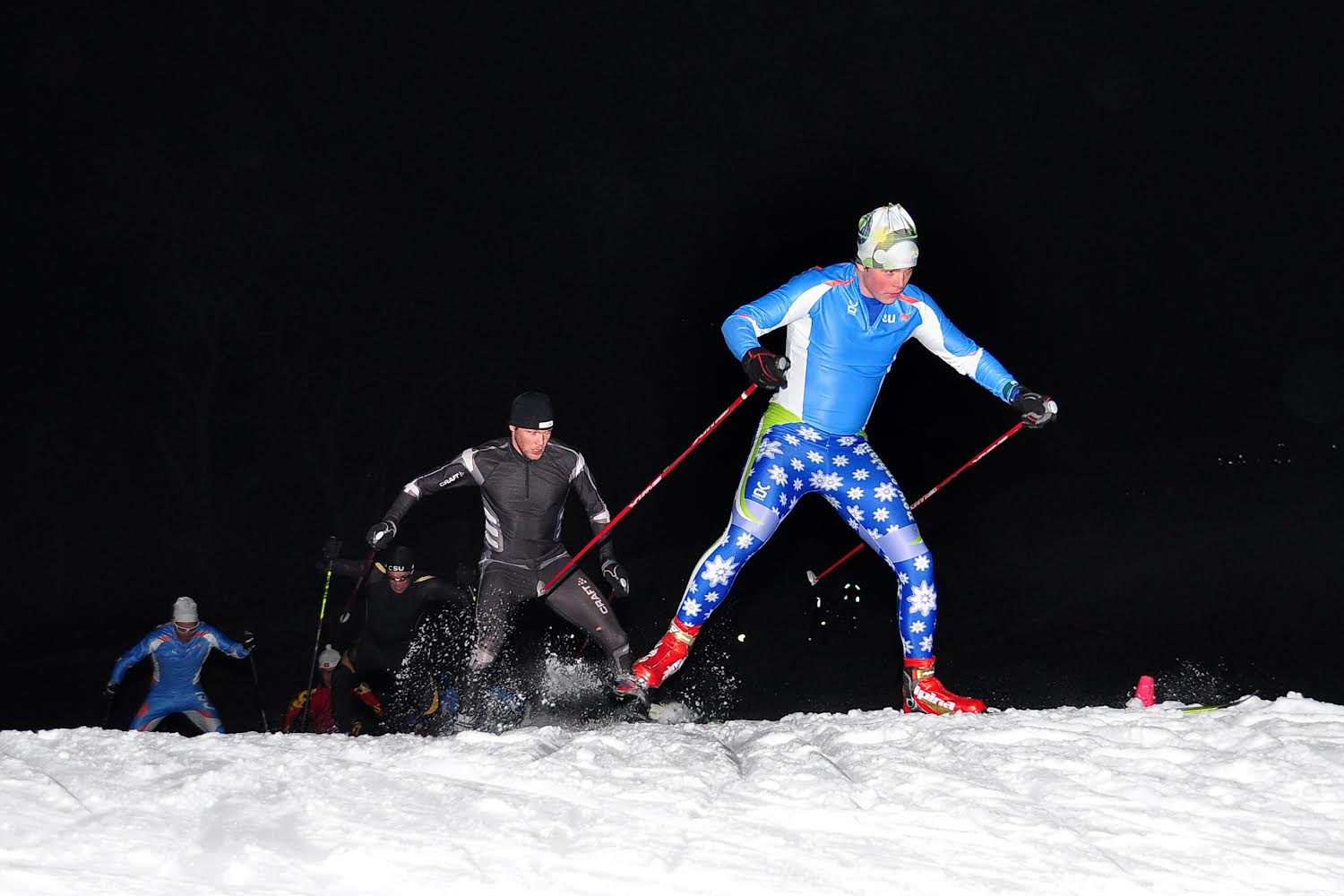
CSU’s Hamish McEwen and Ian Case, and several others, train on the illuminated Weston Ski Track in Weston, Mass. (Photo: Jamie Doucett)
It’s a park with dual personalities.
Owned by Massachusetts’s Department of Conservation and Recreation (DCR), the Leo J. Martin in Weston, Mass., is a golf course during the summer and morphs into the Weston Ski Track when manmade snow flies.
Twelve miles outside Boston, Weston could be considered an unlikely area for a ski center. But with more rural, hilly ski centers at least 1 1/2 hours away by car, it’s a key resource for local skiers. Three million people live within a 30-minute drive of the park. Depending on the weather, between 25,000 and 35,000 skiers frequent Weston each year, and the area boasts 1,100 season-pass holders.
Weston sprang up as a winter expansion of founder Mike Farny’s first business, the Charles River Canoe Service. Larry Smith and Dave Jacques partnered with Farny to run a bike-and-ski shop in Lincoln, Mass., and developed Weston. In the mid 1980s, they assumed ownership of the canoe service and Weston Ski Track. Since then, Weston has become a go-to spot for city and suburban skiers in the Boston area.
With nature’s help, Smith can open 10 to 15 kilometers of trails groomed for both classic and freestyle. But so close to the Massachusetts’ coast, Weston depends on snowmaking, covering two to three kilometers of trails with manmade snow.
In just four months of the 2012/2013 season, Weston Ski Track recorded over 30,000 visits, close to 75 percent of the golf course’s traffic throughout the remainder of the year.
In just four months [between 2012/2013], Weston Ski Track recorded over 30,000 visits, close to 75 percent of the golf course’s traffic throughout the remainder of the year.
And Weston has helped to produce a number of junior-national champions, including Dartmouth’s Corey Stock. A member of the local Cambridge Sports Union (CSU) ski club, she trained extensively at Weston. Later, she earned starts in the 2012 Quebec World Cup and 2013 Junior World Championships in the Czech Republic.
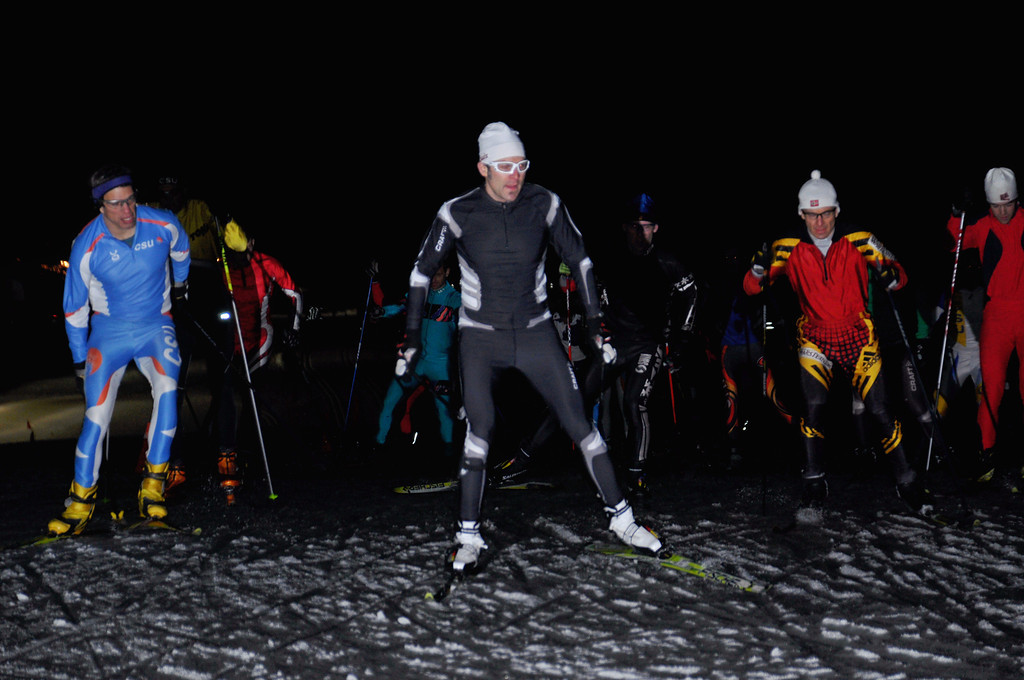
A busy night-skiing scene at the Weston Ski Track in Weston, Mass. (Photo: Jamie Doucett)
Harvard University, Wellesley College and numerous local high schools also train at Weston. In addition, the Eastern MA Bill Koch Club and an adaptive program run by the New England Nordic Ski Association (NENSA) are held there.
But as Smith drove by the ski-area-turned-golf-course one day last summer, he saw that the snowmaking power lines had been taken down.
While making improvements to the driving range, the DCR inadvertently removed power lines and phone poles that supported Weston’s snowmaking and lighting for night skiing.
“It wasn’t a question of being malicious,” said Rob Bradlee, CSU’s head nordic coach. He suggested that the local ski community hadn’t adequately informed DCR about its needs.
“We’ve invested a lot in both snowmaking, lighting and grooming equipment,” Smith said. “We had gotten permission to do it initially, but that was many years ago, and [DCR] personnel change over time.
“I don’t know that the current management knows anything about the history [of the snowmaking improvements,” he added. “They were tasked with upgrading the golf course. … The hope is that everything will be better than it was.”
Last winter, Weston made do with a temporary solution for lighting and power, renting diesel-powered lights.
The DCR will install LED lighting around the driving range and some of the fairways for night use. The new lighting, Smith said, “will be better than what we have.”
The DCR could not be reached for comment.
“The ski community is stepping up and getting organized,” Bradlee added. “[And] looking to see how they can help DCR make the Leo J. Martin a better park.”
To that end, local skiers formed the Friends of Leo J. Martin Skiing (FOLJMS), which aims to publicize information about the metro-Boston ski scene. Their website shares articles on the success local skiers have had at the national and international level. They’ve applied for and are awaiting approval of non-profit status.
According to FOLJMS Assistant Director Elizabeth Wilcox, their aim is to “preserve and enhance cross-country skiing in the greater Boston area.”
With regard to Leo J. Martin, Wilcox explained that they’re endeavoring to get DCR to make golf-course improvements that would enhance, or at least not impede skiing.
Skiers round a corner while night skiing at the Weston Ski Track in Weston, Mass. (Photo: Jamie Doucett)
And DCR has been listening. One of the main ski trails went behind a driving range down a short, steep hill. While upgrading the driving range, DCR changed the steep hill into a “precipitous drop” that made the trail unskiable.
“When we showed them, to DCR’s credit, they brought the contractor back and put in an incline to make it skiable again,” FOLJMS Director Chris Doyle said.
However, limiting the amount of skiing on fairways has been raised as a “point of discussion” by DCR. Although the ski trails avoid the golf tees and greens, “We’ve always skied on the fairways,” Doyle explained.
Due to the volume of skiers, he said it was important to ski the fairways of the four holes closest to the clubhouse, where artificial snow is made. On the other 14 holes, they try to stay off the fairway.
Trail designer and 1976 Olympic biathlete John Morton saw Weston’s potential early on. During his tenure as men’s ski coach at Dartmouth in the 1980s, numerous CSU alumni skied for Dartmouth. He said he “became more and more impressed” with CSU skiers, who competed well despite the “geographical disadvantage” of their location.
Last March, FOLJMS contacted Morton for input on how Weston might improve. Morton attended meetings with the DCR and FOLJMS.
“The DCR is now much more aware of [Weston’s] needs,” Morton said. “We’ve had a number of collaborative meetings about how to make Leo J. Martin more successful,” both in summer and winter.
Morton sees opportunities based on the success Weston has had to this point. With no nearby alternatives, Weston is crowded. He described an idea to create a beginner/novice area separate from more demanding trails. Additional trails on “humane terrain” would require lighting and snowmaking.
If a novice ski trail could be developed, that would open the way for creating longer, more technically demanding trails for advanced skiers.
“It’s a unique recreational facility for cross-country skiing,” Smith said. “[The DCR] should take credit for some of that, which would help them realize they need to work to continue to improve it.”
NEW GLOUCESTER, Maine – In recognition of their ongoing support of the New England Nordic Ski Association (NENSA) Adaptive Program, Weston Ski Track has been honored with the 2013 NENSA Adaptive Achievement Award.
If you have been skiing at the Weston Ski Track, just outside of Boston this year, you may have noticed a growing group of Adaptive Nordic skiers enthusiastically enjoying their new sport. Thanks in large part to their consistent snow and proximity to Boston and local medical centers, Weston has become the focal point in New England for on-going Adaptive Nordic ski clinics. This past season, Weston hosted 20 NENSA Adaptive clinics. The Weston crew understands the unique needs of the program, and always ensures accessibility to excellent skiing conditions for the adaptive athlete. And they do it at no cost to the participants.
“Weston is ideal due to its consistent snowmaking, excellent grooming, and its location near local Rehabilitation and Veteran’s Administration hospitals,” said NENSA Adaptive Program Manager, Patrik Viljanen. “Without the generosity and support of Weston’s staff as well as the volunteers, there are a lot of folks who wouldn’t have been able to enjoy Nordic skiing this year.”
Weston is a hub for all Nordic skiing in the Boston area, not just adaptive programming. This year Weston Ski Track teamed up with the Eastern Mass Bill Koch Club, Cambridge Sports Union and NENSA to host the Boston Ski Party Bill Koch Festival. Their commitment to the great Nordic skiing community is admirable, but it is their generosity and service to the participants of the NENSA Adaptive Program that has earned Weston Ski Track the 2013 NENSA Adaptive Achievement Award.
About Weston Ski Track:
Weston Ski Track is a cross-country ski and snowshoe center located on the Leo J. Martin Golf Course, serving the Greater Boston area. With natural snow, they groom 15 kilometers of trails. Snowmaking on the 2km lighted loop provides consistent snow conditions and reliable night skiing. Drop in for a beginner lesson and then warm up in the snack bar. Learn more at their website: http://www.skiboston.com/skitrack/.
About New England Nordic Ski Association Adaptive Program:
NENSA’s Adaptive Program is targeted to disabled Veterans but is all-inclusive to non-Veterans as well. It partners many different Adaptive organizations throughout New England, VA hospitals, and Nordic centers like Weston. The program’s goal is to provide access and opportunities for Nordic skiing for those with physical or mental challenges. Learn more here: https://www.nensa.net/page.php?id=5758.
An adaptive athlete on a sit-ski in Jackson, New Hampshire. Photo courtesy of flyingpointroad.com.
The New England Nordic Ski Association (NENSA) will launch a new adaptive skiing program this winter, centered in the greater Boston area.
Leveraging a $100,000 grant from the U.S. Olympic Committee, the initiative, which targets disabled veterans, will partner with area hospitals and operate out of the Weston Ski Track for its first season, then likely expand to other ski areas in New England over the next three years. A search for the program’s director was announced Tuesday morning.
According to NENSA Executive Director Pat Cote, his organization was approached earlier this summer about applying for a grant from U.S.A. Paralympics, an arm of the U.S. Olympic Committee (USOC). The USOC had received money from the U.S. Department of Veteran’s Affairs (V.A.), which was seeking to create recreational opportunities for disabled veterans, or fund existing ones.
NENSA was officially awarded the money in September, which covers the salary of the new program director, as well as equipment, travel, and other costs.
While NENSA typically avoids a hands-on approach, preferring to facilitate the work of its clubs, the core of the new initiative will consist of direct coaching at Weston during its first year, since the number of pre-existing adaptive programs and coaches elsewhere in New England are limited.
According to Cote, Weston was selected due to its proximity to two large veterans’ hospitals in Boston and Bedford, and because of the strength of the Cambridge Sports Union—the able-bodied club that already exists there.
Most participants in the program will use sit-skis, Cote said—essentially chairs with two skis attached. While the initial goal is modest—attracting six to ten people to ski at Weston twice a week—Cote said that he hopes to expose a “much, much wider audience” to the sport in general.
Initially, NENSA will purchase a total of 25 sit-skis, and participants will be recruited by therapists at the veteran’s hospitals. Cote said that his organization will also conduct outreach through other adaptive programs, like those that offer rowing or alpine skiing. (While the program will be marketed to veterans specifically, any disabled individual can participate.)
The aim of the program, Cote said, is simply “to get people outside and physically active,” since veterans who exercise regularly will leave the V.A. saddled with fewer medical costs down the line.
For those with interest in competing at the elite level, Cote said that NENSA is “ready with other support that the U.S. Olympic Committee has in place to help someone who wants to go further, in either skiing or biathlon.” But that, he said, “would be a by-product of this program.”
NENSA has secured funding for the first year of the initiative, but Cote said that he was confident that the money would continue to flow in for at least four years—“as long as we reach fairly reasonable benchmarks and do a fairly good job with the program.”
After establishing a group of adaptive skiers at Weston this coming winter, Cote said that he would like to expand to other locations, with the program’s director leading an effort to educate more coaches and volunteers. Cote himself will oversee a group of veterans near his home in central Maine.
“We feel that we can have the most impact if we have a lot of people working on this, as opposed to just one staff member,” he said.