From the FasterSkier archive — posts syndicated from athletes’ and coaches’ own blogs between 2004 and 2012, kept online as published. Current coverage is at fasterskier.com.

Tag: Wildfire

  • Wildfires, Smoke, and Air Quality: A Survey of Programmatic Response in the West

    Wildfires, Smoke, and Air Quality: A Survey of Programmatic Response in the West

    Smoky haze. Not quite the bold and crisp view expected on this ridgeline near Carbondale, CO.

    Spinning past the autumnal equinox into fall, the West looks back on a summer marred by wildfire smoke. Here in Colorado, the Aspens have dropped their golden leaves, snow encrusts the high peaks, and I’m struck by the beauty of my backyard, which spent the majority of June, July, and August muted by smoke that — thankfully — blew in from elsewhere. 

    Over the last six weeks, checking AirNow before training has been phased out of my morning routine, and there is a palpable sigh of relief within my community as rain and high country snow frequent the forecast. The fire danger is not gone, but the threat feels less omnipresent.  
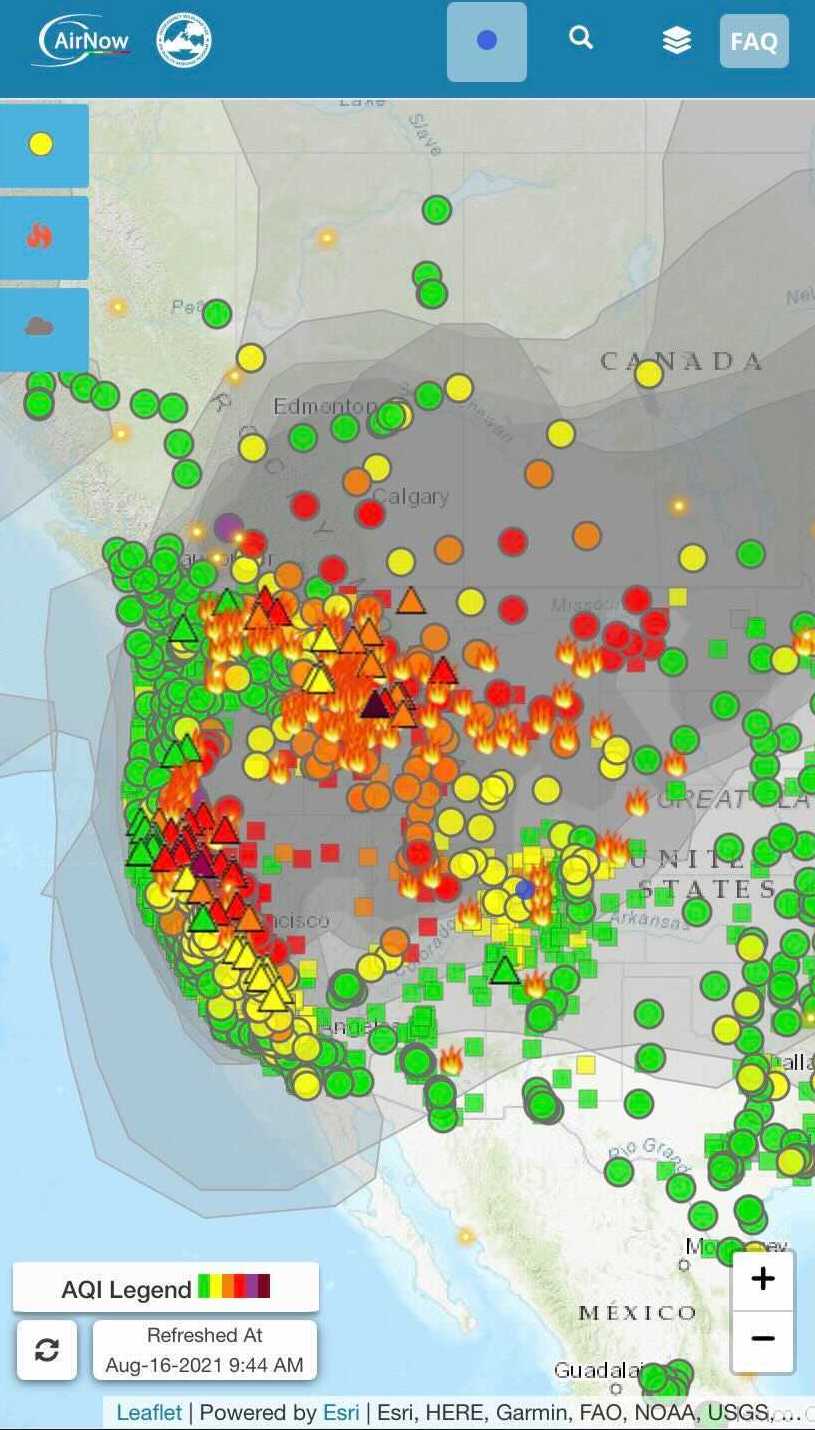
    A screenshot of active fires and subsequent air quality taken in August from Fire.AirNow.Gov.

    While regions like California, the Pacific Northwest, and Montana perhaps faced the longest durations of acrid high-AQI haze, cross country ski communities nationwide experienced its effect. As particulates from these fires were swept across the country, even air quality in the Northeast dipped into unhealthy zones for periods of time. 

    This phenomenon is not new, and as the planet continues to heat up, the West will be faced with longer and more devastating “fire seasons”. While sport might seem insignificant relative to the scale of issues at play, learning more about the modifications teams and athletes might consider can support the cross country ski communities overall health and wellbeing. 

    FasterSkier connected with coaches from areas heavily affected by fires and smoke to hear more about how they managed the impact in terms of protocol and adjustments to training with their athletes. Coaches also spoke to the increased frequency that these decisions will need to be made as climate change progresses. 
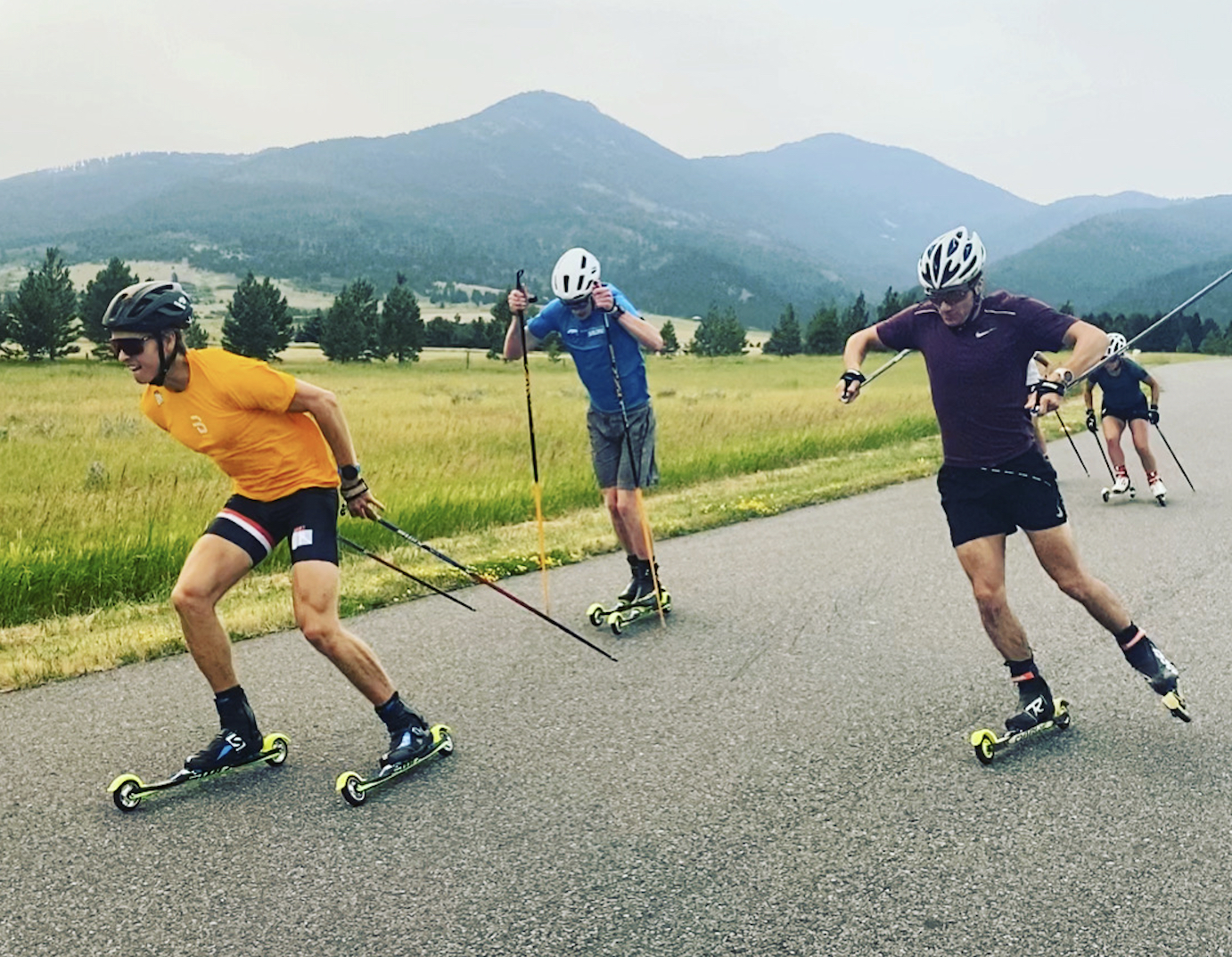
    BSF Pro athletes train in hazy yet safe conditions in Bozeman, MT. (Photo: Andy Newell)

    First up is Andy Newell, head coach of the Bridger Ski Foundation Pro Team in Bozeman Montana. 

    “Air quality and training is definitely a concern particularly because there’s not a ton of research about how smokey air affects high level athletes. We know a little bit about the short term implications but not much about long term exposure for athletes. The reality is this is something a lot of western clubs have been dealing with for a while but now we are seeing a lot of smoke in the midwest and even the east too.

    “On a typical year in Bozeman we usually don’t see smokey air until August and even then it’s not as bad as many other parts of the Northwest. This year we saw smoke earlier than ever, around the middle of July and early August, but much cleaner air than normal in the last few weeks. It really depends on wind, the jet stream, and where the big fires are burning. So far this year we have had to adjust about 3 workouts to bring athletes indoors when the air was bad. I’d say that’s about average for us, 3-6 workouts per year disrupted because of smoke.” 

    Newell continued by discussing the tools his program has used for decision making with regard to air quality and athlete safety. 

    “One of the things I have learned is that air quality can change very quickly and iPhone readings are not always accurate. We use the VisualAir app for forecasts and to find training areas that might provide better air for training. In this app you can see which sensors are gathering data from satellites and which ones from the ground. We’ve found obviously that the ground readings are a lot more accurate. Another thing we notice here in Bozeman is that the air quality can be very different even within the same region depending on high or low pressure, inversions, etc. So if you notice poor air at low elevations we might modify training and go up into the mountains and this can make a big difference.

    “We do use general guidelines at BSF to keep the athletes safe. If the AQI is above 100 we’ll start to monitor things and potentially modify training. If we are between 100-150 we will cut out L4 training or consider bringing athletes inside on treadmills for aerobic training. Also in this 100-150 range we’ll consider using KN95’s while out for easy distance training. Luckily we’ve only had to do this once this year so we’re hoping we make it through fire season without much more disruption.”
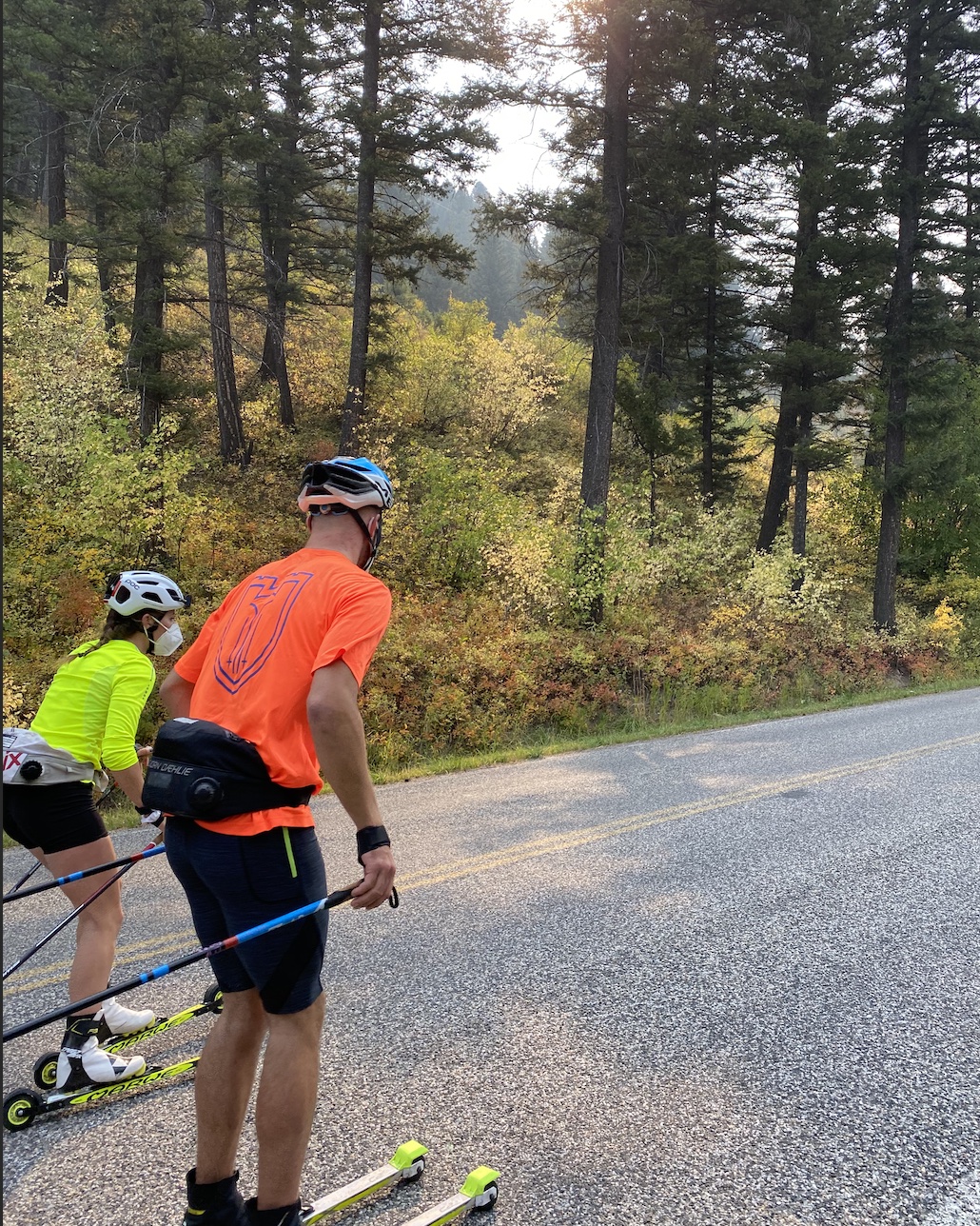
    BSF Pro athletes wear KN95s in order to safely train outdoors when air quality is above the safe threshold. (Photo: Andy Newell)

    A long-time advocate for climate policy and spokesperson for Protect Our Winters (POW), Newell closed with a statement on the impact of an ever-warming planet. 

    “As an athlete that has worked on a lot of climate issues this is definitely a scary reality, it goes to show you we are all affected by climate change.”

    Heading Southwest, FasterSkier also corresponded with Will Sweetser, Director of Nordic Programs for Sugar Bowl Academy (SBA), northwest of Lake Tahoe. The Tahoe region was struck hard this summer, as the devastating Caldor fire ripped through nearly 220,000 acres and destroyed over 1000 structures. 

    Now 98% contained, the Caldor fire remains active, over two months since it began on August 14th. It has burned over 220,000 acres, an area larger than the state of Rhode Island. Although the fire is still active, most evacuations and closures have been lifted. 
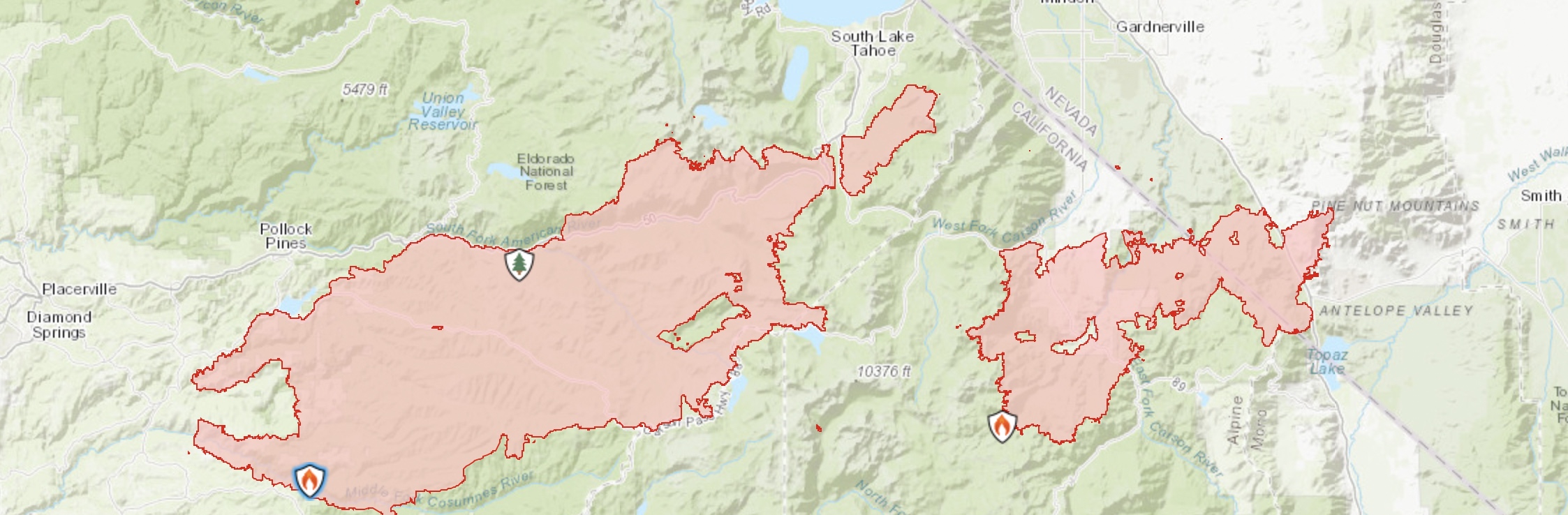
    A map from October 11th of the still-active Caldor Fire south of Lake Tahoe, California. (Photo: Screenshot InciWeb.nwcg.gov)

    Sweetser first outlined the nuts and bolts of air quality considerations. For those unfamiliar, AQI considers the concentration of fine particulate matter in the air. Particulate matter, like wildfire smoke, that is 2.5 microns or less (PM 2.5) is most concerning, as it can penetrate deeply into the lungs. 

    “Train as usual if school is in and AQI is between 0-60; offer optional/slightly modified training — consider shortened length first, and reduce continuous intensity — when AQI is between 60-120. Optional training is reduced, and outdoor training is only recommended for healthy, unaffected individuals when AQI is 120-150. Sessions are capped at 1 hour, and intensity capped at L2.”

    While indoor recreation amidst the COVID-19 pandemic poses its own set of complications, Sweetser explained that indoor training is preferred when the AQI is above 150. To support the health of its athletes, SBA has integrated air purifiers in every indoor space on its campus, including classrooms, common areas, dining halls, and the gym. These filters help maintain an indoor AQI of 25 or below. 

    An SBSA athlete moves his training indoors with an air filter when AQI plummets. (Photo: Will Sweetser)

    “In heaviest smoke events, we encourage families with the capacity to travel to cleaner air for the week to do so within the confines of school requirements. If we are in a remote schooling period, which was precipitated by Tahoe area evacuations last week, many families simply move to second homes in the Bay area or elsewhere in CA. We write individual suggestions for each athlete to meet the training options in that area. Our general week plan (MON–OFF, TUE-WED-THU–heavier training 1-2x daily, FRI–recovery, WEEKEND–high training load/family outings) readily allows families to take weekends away for cleaner air.”

    When Sweetser was first contacted in late August, he responded that he was with the team on the coast enjoying a training block in fresh air. In his email afterward, he included the purpose of this camp. 

    “Last week, we utilized our first planned smoke escape team training weekend. It was in the school travel calendar. Teachers prepared some work in advance. The entire team went to the north coast of California for FRI-SUN. We had 5 excellent training sessions, including 1km L4 repeats, pure speed double pole session, 2 technique sessions and a 15-20-kilometer run. AQI in the Mendocino area varied from 8-43 during that time and was a great reset for us. Extremely valuable to get to clean air, sea level and group training in a pretty stressful time. We are lucky to be able to do so with just 4-5 hours driving.”
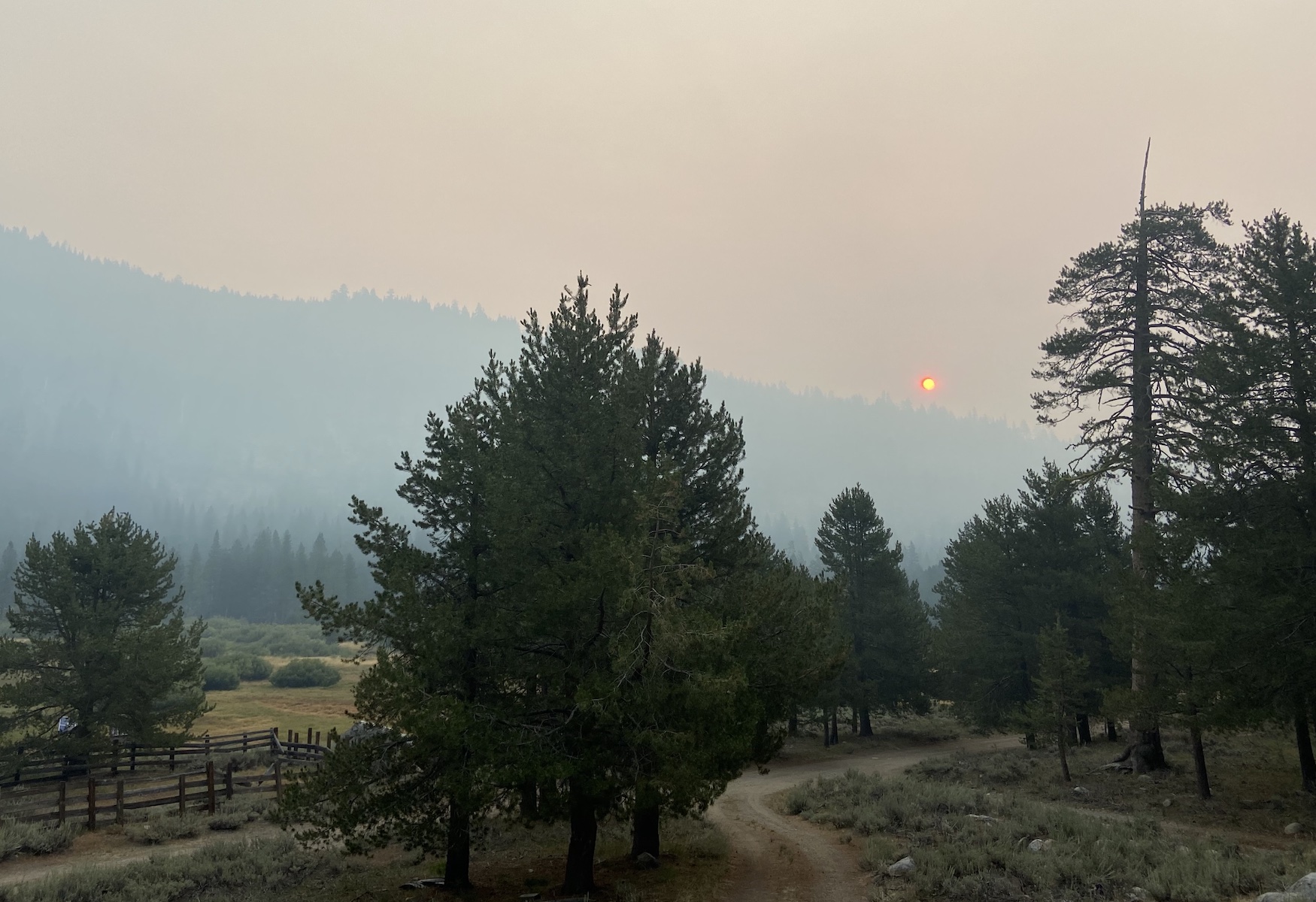
    The smoke filters over the ridge line in Tahoe’s Carpenter Valley last August. This day was relatively mild, with AQI readings remaining below 200. (Photo: Will Sweetser)

    When the team is not able to travel and air quality is poor, Sweetser explained how they approach indoor training to achieve similar stimuli to those they’d seek in “normal” conditions outdoors. 

    “When we are on Donner Summit with poor AQI, we utilize gym time and treadmill/SkiErg sessions to offer modified indoor sessions that still reflect each athlete’s goals — often these sessions are shortened and feature slightly more L2, or intermittent work, than we might normally do outside — although looking at HR data, the planned intermittent nature of these sessions is not totally different than sending the crew for a trail run through rolling terrain.”

    Sweetser also reflected on the learning curve for appreciating how quickly AQI can change based on wind and weather patterns. He recalled leading an OD training run with a couple of his athletes and assistant coach David Sinclair that began at a borderline AQI of 120. As they progressed toward the objective, Hawks Peak, the air quality plummeted.

    “We could see smoke pouring in from the north as we headed across the ridge… We called parents for pick up and dropped down as quickly as we could.”
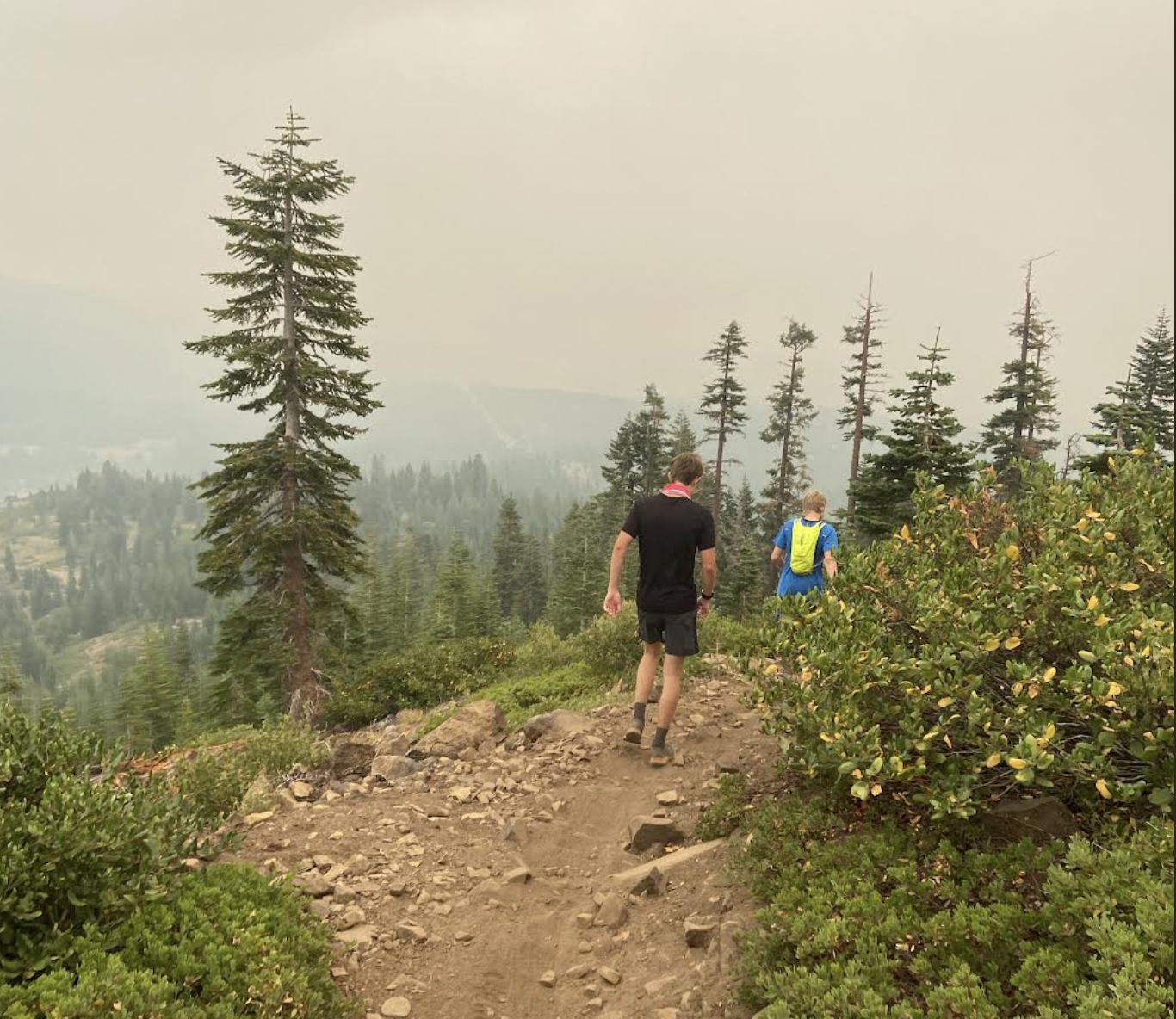
    SBSA athletes climb a ridgeline as AQI shifts rapidly from a safe level. (Photo: Will Sweetser)

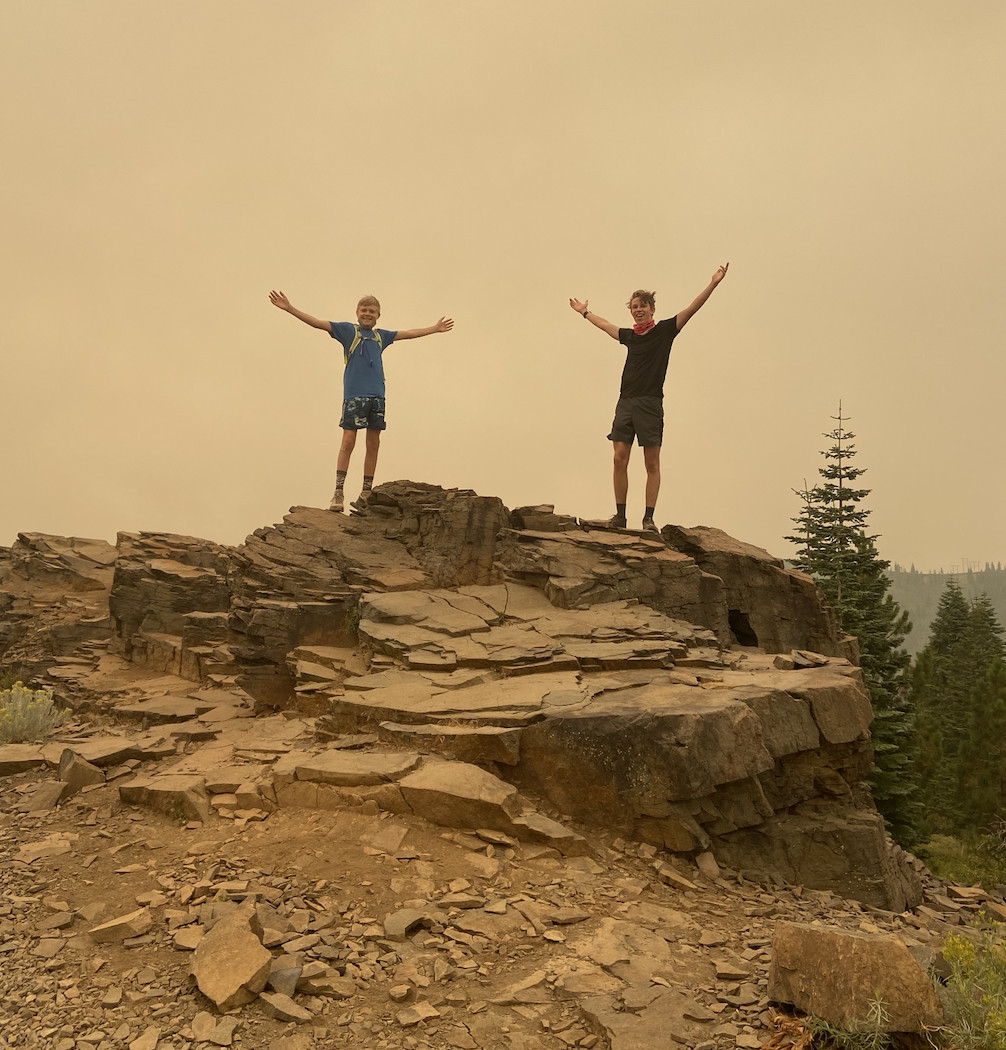
    By the time the athletes reached their pickup point, the AQI was over 400, which is considered emergency conditions.
    “Since then, myself and much of the region have become much more savvy about using real time AQI monitors such as PurpleAir, wind and smoke forecast apps like Windy and Dark Skies, and I’ve purchased a handheld AQI monitor.”
    Sweetser added that he coughed for at least a week after this singular session.
    Brown air and minimal visibility atop Hawks Peak. (Photo: Will Sweetser)
    Lastly, FasterSkier connected with Dylan Watts, new head nordic coach for the Mt. Bachelor Ski Education Foundation (MBSEF) in Bend, OR. At the time of his response, Watts had only been in his role for a month and thus could not speak to the program’s response to smoke levels in Bend throughout the summer. His perspective spoke to a broader philosophy regarding athlete development, particularly at the junior level. 

    “What I keep in mind is that we are really training for a healthy body and mind for the long term. That no one day, week, month, or even whole season is so critical that we potentially sacrifice our long term health for a short term result. In this sport, any short term results we achieve are very unlikely to bring us any benefit other than good health. Cold weather injury is a serious consideration in skiing. Regular exposure to air pollution, wildfire smoke included, is just as — and I would argue more — serious.

    “You don’t know what sort of interruptions you will face in a year. Modifications to training happen for conditions all the time. It is built into our sport. Weather, lack of snow, too cold, not cold enough, smoke. Add sickness, a hard semester, family needs, and so on. For those reasons it is always a good idea to work ahead. When it is good you go and that way when conditions are bad you don’t have too. You don’t need to feel the pressure to make up for something you didn’t do.”

    The MBSEF programs had been following similar guidelines to SBA, however, Watts responded that after the World Health Organization’s release of new air quality guidelines at the end of September, the program further tightened its tolerance of poor air quality. With mounting evidence of the increase in all cause mortality risk due to prolonged exposure to pollutants, the WHO drastically reduced the acceptable levels of PM2.5 and other pollutants individuals should be subjected to in both short and long term settings. The 300 page document also calls for a global response to air quality improvement. 


  • Preparing for a Changing Environment in Grand County, Colorado

    Preparing for a Changing Environment in Grand County, Colorado

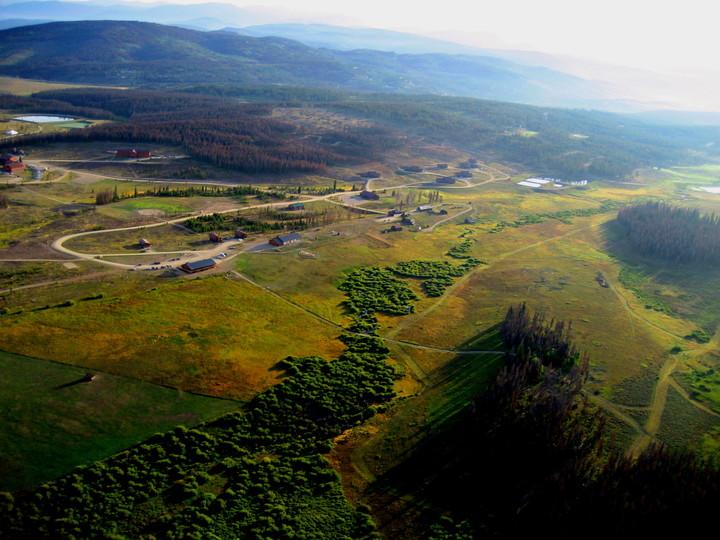
    An aerial view of Snow Mountain Ranch. (Photo: courtesy Snow Mountain Ranch)

    The decade of the aughts witnessed the decimation of wide swaths of forest in Colorado due to a pine beetle infestation. This was no slow drip affair. What was a tree-to-tree process eventually swallowed whole green mountainsides morphing them into a desiccated dead-tree blight. Those dead trees, unable to hold moisture, were hundred-foot matchsticks during wildfire season.

    Over the past few decades, an ominous cycle prevailed. Warming temperatures due to climate change made life easier on pine beetles. Drought made for more combustible forests and extreme wildfire danger. Across the West, cross-country ski areas rely on trees for shade to prevent premature snowmelt on trails. They also serve as wind blocks in mountain-scapes prone to winds. Trees are a skier’s friend when considering trail design, maintenance, and longer ski seasons. Some die-hard skiers might know the climate data suggests winters are becoming noticeably shorter.

    Skiers in Colorado’s Winter Park-Fraser Valley were witness to the pine beetle kill and its inexorable apocalyptic roll. If you skied at Snow Mountain Ranch or Devil’s Thumb during this era, in a few winters, much of the forests constituting those ski areas died off.

    According to Devil’s Thumb Ranch, the kill became apparent in 2005. A larger outbreak in 2007 impacted much of their lodgepole pine. The same was true for Snow Mountain Ranch. The two areas are separated by eight miles or so, as the bird flies.

    2005 Google image of Snow Mountain Ranch’s incipient beetle kill.
    By 2007, much of the forest in and around Snow Mountain Ranch had browned due to the pine beetle infestation. The removal of some of the impacted forests began as early as 2006 at Snow Mountain Ranch.

    Forest conditions across much of Colorado, and certainly in the Fraser Valley, were ripe for wholesale die-offs due to the beetle – it was a perfect storm. Leading up to 2005, Colorado had suffered several drier than normal years. Warmer winters also allowed the beetle to persist: beetles are often killed off by long-duration cold spells of below 20 degrees Fahrenheit. Beetles survived the winter, as they continued their life cycle. Trees were stressed, making them more susceptible to contagion.

    Compounding these variables were fire mitigation practices that promoted unnaturally dense forest. The forests, like much of the timbered land in the West, were managed in a way that suppressed any fire that might potentially rip through and naturally thin it. Dense forest made it easier for beetles to do their thing, and with the now browned forest, the threat of wildfire intensified.

    What ensued was wholesale landscape change. Rust-orange trees, not green lush forest, became the backdrop for skiers. Both Devil’s Thumb and Snow Mountain Ranch had to act. Their assets, trails, buildings, and a back-to-nature experience were threatened by the possibility of tree blowdown and fires.

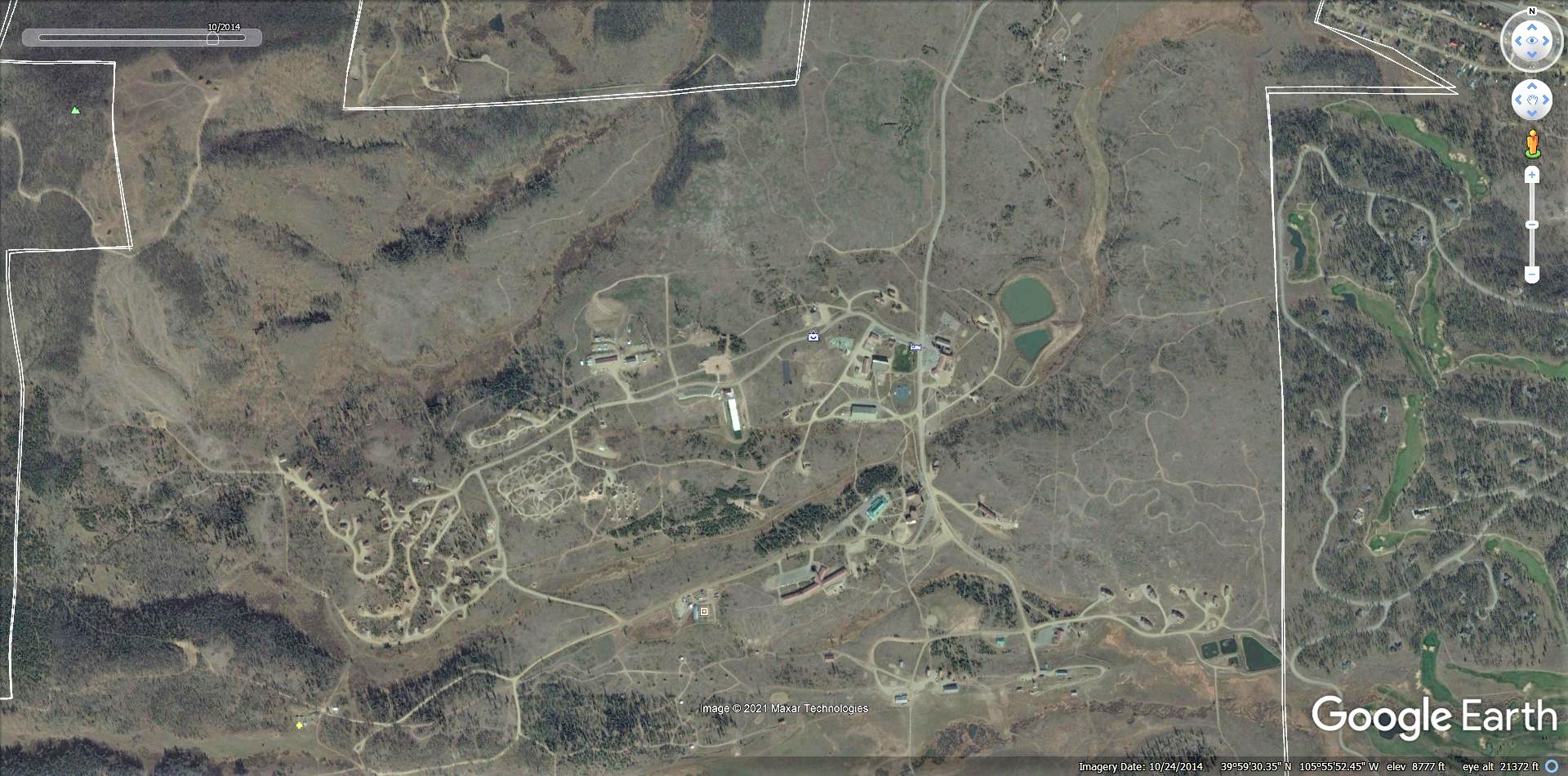
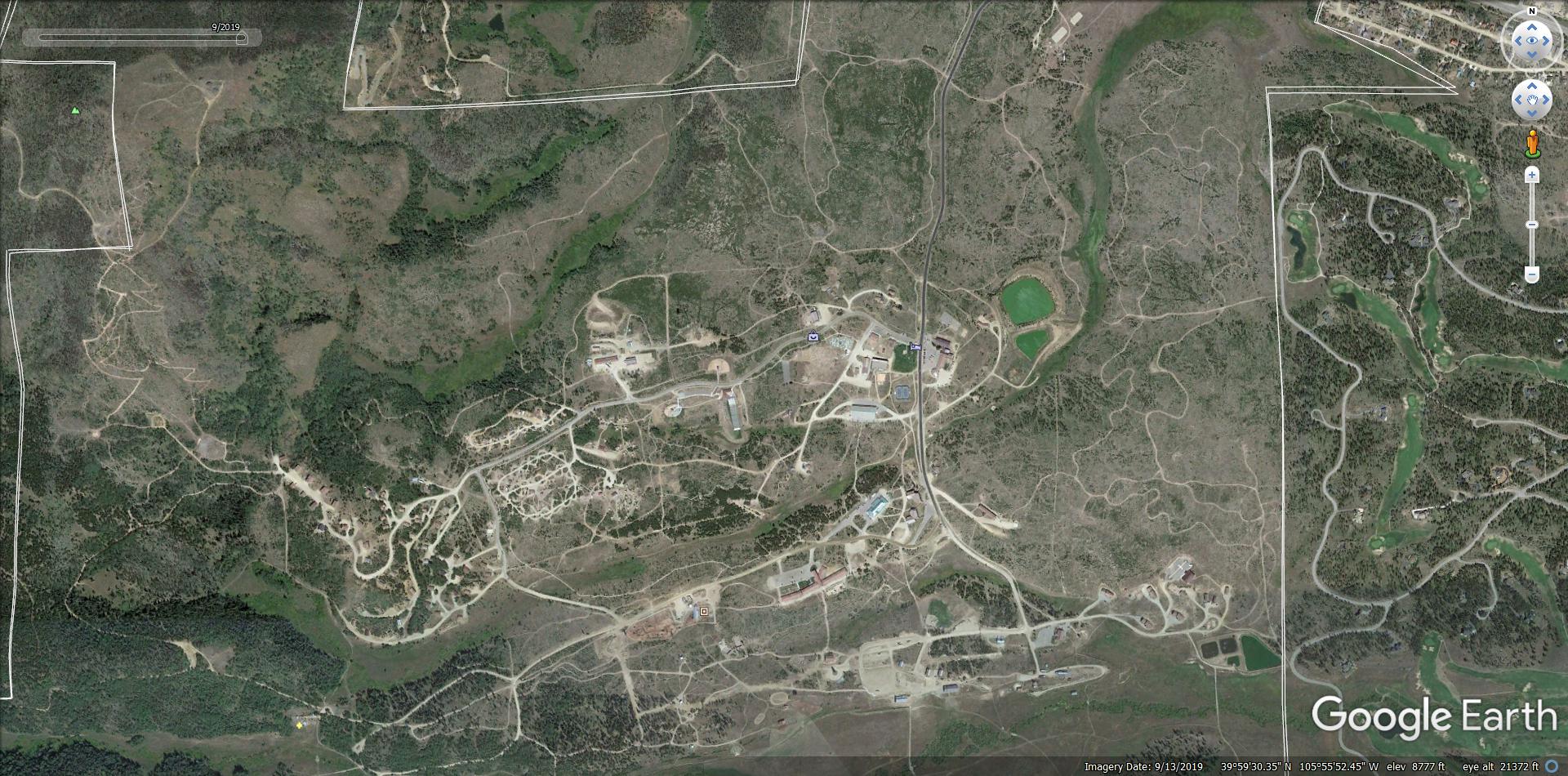
    By 2014 the widespread removal of beetle-infested trees is evident at Snow Mountain Ranch.
    In this 2019 image, taken in mid-September compared to the 2014 image taken in late October, green vegetation appears to be making a comeback.

    Both areas logged heavily to remove potential fuel sources. Devil’s Thumb used some of their beetle-kill timber as they built new outbuildings and housing.

    “We did have industrial level logging that we had to do around 2006 to around 2010,” said Mary Ann Degginger, the Program Director at Snow Mountain Ranch. “We started first with the front of our property just to take out the dead trees and leave the younger healthy ones because there was some research out at the time that said, pine beetles were driven towards trees that were four inches or diameter or bigger – so we left the little trees. They didn’t bother them. And what we found is that because of the nature of pine trees and how they grow, they have very shallow root systems, that they just blew over naturally when we logged around them. The trees we tried to leave ended up dying anyway or falling over.”

    Massive piles of logs built up around the outbuildings at both ski areas. It resembled a full-scale timber operation. Saving trails and ski terrain remained paramount, but bigger issues remained – creating a resort environment where physical assets were not threatened by fire.

    “We had to prioritize from a fire mitigation standpoint — our whole property and operation,” said Degginger. “We determined where we needed to log first. For us, that meant protecting buildings and common areas. Once we felt that we had done that, we moved on to mitigation and cutting trees along our trails.”

    Degginger explained that Snow Mountain Ranch created a buffer along their ski trails as the next step in their risk mitigation plan.

    A decade later, forests in the region have renewed. Areas of new tree growth have allowed the return of a natural windbreak. And in some places, Snow Mountain Ranch has begun grooming trail sections once lost at the onset of the infestation.

    “We’ve learned a lot since 2005, starting with the process of thinning, removing, and harvesting dead beetle kill,” emailed a representative from Devil’s Thumb. “We also cut some of the green timber to allow sunlight for the growth of healthy trees and to prevent greater damage/falls during windstorms.”

    The past few summers in the intermountain West have witnessed a conflagration. In June 2007, hundreds were evacuated from Snow Mountain Ranch due to an encroaching wildfire. In 2020, the area witnessed two historic fires. Snow Mountain Ranch ultimately served as a camp for firefighters battling those blazes. The point remains, fires remain a risk as they burn hotter and bigger than in the past.

    All this leaves ski area managers broadening their scope of expertise. There’s still the marketing and soft goods to order pre-season. But there’s also the responsibility of understanding fire risk, holistic forest health, and planning long-term for cyclic variability that might impact a ski area’s bottom line.

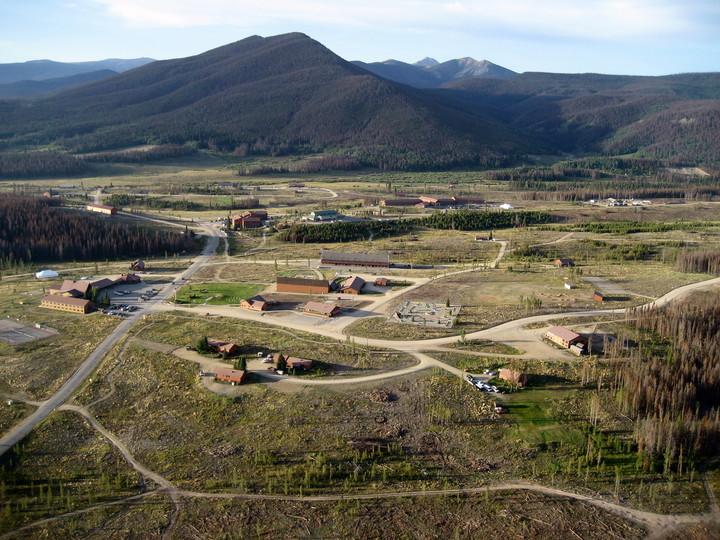
    A post-beetle kill Snow Mountain Ranch. (Photo: courtesy Snow Mountain Ranch)

    Resources have been allocated across the West for forest thinning projects. Here in Bend, Oregon a multi-year thinning project has transformed the overly dense Ponderosa pine forest. To new eyes, the change was stark. Yet after only a few months, with ground fuels reduced through controlled burns and selective tree thinning, more appropriate spacing between trees was re-established and native grasses returned. Locally, there was no wholesale beetle kill or wildfire that decimated the city’s nearby forests — but that was only a matter of time. Stakeholders got ahead of the inevitable firestorm. The recreation economy in places like Bend and Grand County, Colorado where Snow Mountain Ranch and Devil’s Thumb reside, rely on healthy and intact forests. The overriding philosophy now is to be proactive with forest management.

    That’s the case at Snow Mountain Ranch and Devil’s Thumb. These two iconic Rocky Mountain cross-country ski areas are better positioned to weather environmental changes with buildings and ski trails intact. Snow Mountain Ranch’s Degginger understands that as the new forests surrounding the Snow Mountain Ranch complex matures, new, but smaller-scale thinning will take place. The eyes are on the future in the Fraser Valley.

    “We need to manage this forest better and not be in the same position,” said Degginger. “So that’s certainly something we are taking expert advice on. We’re not quite to the point where we’re thinning yet, but that’s on our radar, that’s something that’s going to need to happen for the forest that receded naturally and came back super thick and super. We don’t want to be in the same boat 100 years from now.”

  • It’s Been a Bad Combo Out West: Wildfire Smoke and Training

    It’s Been a Bad Combo Out West: Wildfire Smoke and Training

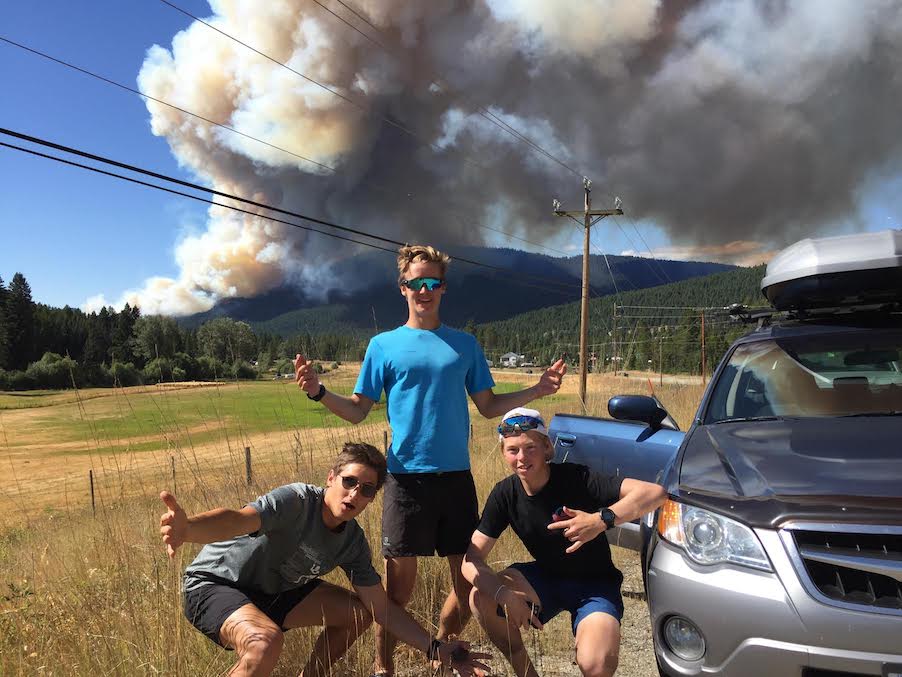
    Fran Vukonic, Tallon Noble, and Ian Williams pose at the end of a bluebird day trail run at Big White in front of the newest Kelowna fire, September 5, 2017. (Photo: Gareth Williams)
    Canadians Fran Vukonic, Tallon Noble and Ian Williams after completing a trail run on Sept. 5 at Big White in Kelowna, B.C.,with the backdrop of the newest Kelowna fire on an otherwise bluebird day. (Photo: Gareth Williams)

    This week’s featured articles are made possible thanks to the generous support of The Loppet Foundation, host of the Masters World Cup 2018. Registration opens in October.

    ***

    Beyond the hundredth meridian, a traditional geographic line demarcating where the West begins, it’s been a hot and dry summer. Wildfires have raged from Washington to California, the Intermountain West, and in western Canada. The conditions remain ripe for extreme fire danger. Even if a wildfire didn’t burn near you, odds are the smoke found its way there. 

    Across the board and across the U.S., it’s been an off-the-charts summer. While many Americans have been consumed with hurricane coverage and concerns over the last several weeks, fires have scorched more than a million acres in Washington and Oregon alone this year, according to Quartz Media. That’s up from 513,226 total acres in 2016, but in 2015 and 2014, more than a million acres were affected.

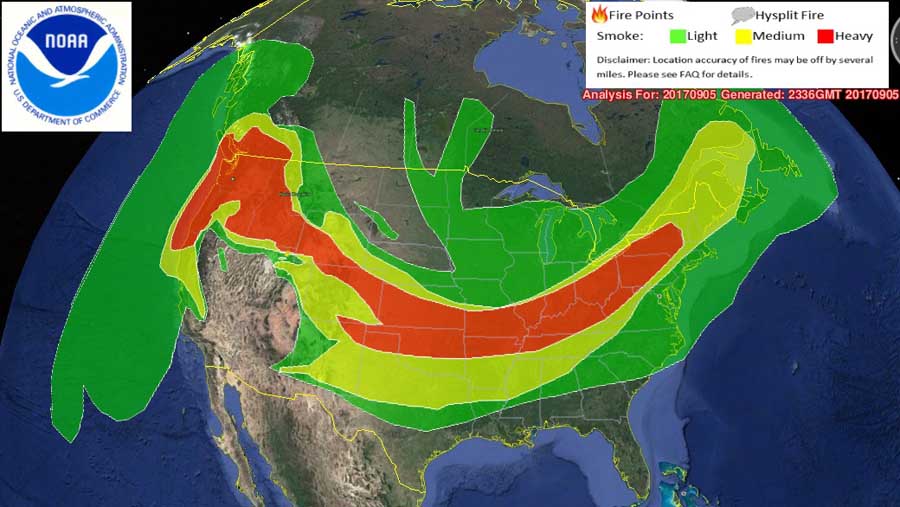
    NOAA wildfire smoke and the correlating Air Quality Index for Sept. 5, 2017. (Photo: NOAA)

    Along with the devastated landscapes and loss, the wildfires’ byproducts of smoke and ash have made for smoggy, poor air quality. We’re talking about seriously hazy days when visibility often wasn’t more than a mile or two.

    Training outside in less-than-ideal quality air can compromise an athlete. To better understand when it’s OK to go out or stay in, many skiers and coaches became intimate with the scientific benchmarks for air quality.

    “I sort of have this rule where if I can see the glaciers on the mountain, I would rollerski but not do intervals,” Dakota Blackhorse-von Jess, who’s based out of the Bend Endurance Academy in Oregon, said on the phone last Friday. “My personal limit for being outdoors is that 75 AQI limit. That’s the unhealthy or moderate zone.”

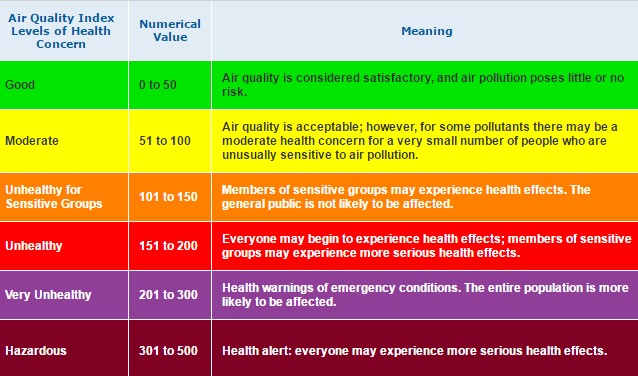
    Here’s a quick primer. The U.S. Environmental Protection Agency (EPA) has developed an user-friendly Air Quality Index (AQI). The index is color coded and provides a numerical value indicative of a region’s air quality. An AQI of 75 means the air has a PM2.5 concentration of 23.5 micrograms per cubic meter. Going further, PM2.5 refers to the size of particulate matter in the air. In this case, the 2.5 corresponds to particulate matter 2.5 microns or less in width. That’s small enough to penetrate deep into the lungs, even the bloodstream.


    U.S. Environmental Protection Agency Air Quality Index (Photo: EPA/AIRNOW.gov)

    That 75 Blackhorse-von Jess limit falls midway into the moderate zone on the AQI.

    “The higher end of moderate,” Blackhorse-von Jess clarified. “You see what the station says and then you walk outside and determine if it is going to work. Honestly, at this point, it’s been five weeks. I’ve done so much training indoors, that now it’s more of a mental break than a training deficiency.”

    In places like Bend, Ore., where Blackhorse-von Jess calls home, some athletes have ignored the warnings.

    “I saw guys out there riding today, I see them every time when I am looking for breaks in the smoke,” Blackhorse-von Jess explained. “I cannot believe that people are out there. I think people living in the smoke have accepted a lower standard and are going about their daily lives and actually, their daily activities in the smoke have come to accept the shittiness of the feeling they are experiencing. And for the professional athlete, it is something that you cannot afford, I don’t believe.”

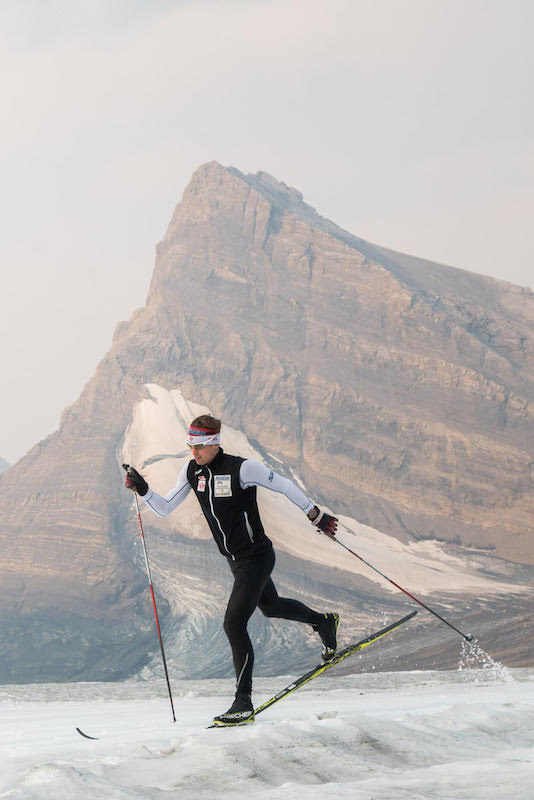
    BlackJack's Julien Locke training at a hazy Haig Glacier camp, August 2017. (Photo: Anthony Killick)
    Julien Locke (Canadian U25 Team) training at a hazy Haig Glacier camp in August. (Photo: Anthony Killick)

    While several fires continue to burn, the smoke cleared in Bend on Sept. 9. During much of August and into the beginning of September, Blackhorse-von Jess relied on a SkiErg, running treadmill and a stationary bike for much of his over-distance training.

    He is not alone.

    “Actually today, it was still dark when I woke up, but when the sun came up there was actually blue sky,” U.S. Ski Team member Liz Stephen said Friday from her home in Park City, Utah. “Where other days, you weren’t even sure the sun was up. It was really nasty.”

    Like other elite skiers across the West, Stephen had made use of indoor training opportunities. The day before Stephen spoke to FasterSkier, she logged four hours on a ski treadmill at U.S. Ski and Snowboard’s Center of Excellence (COE) in Park City.

    The AQI is also careful to note what are called “sensitive groups”. That can mean older adults, children, or people with lung or heart issues. Those populations must take precautions when high exertion exercise and poor air quality mix. Being responsible for junior athletes places a premium on being cautious. 

    For Leslie Hall, director of the Methow Valley Nordic Team in Washington state, dealing with smoke and subsequent air quality issues have been an on-and-off again affair.

    “We had a bad two week period at the beginning of August and it was leading into our annual Methow PNSA [Pacific Northwest Ski Association] Camp … so we had to make the call to move the camp,” Hall wrote in an email. “We ended up going to Oakridge, Ore., for the camp and had a great camp there with 32 kids but a fire started nearby there while we were there so we had one moderately smoky day and it has since gotten much worse there.”

    Like her athletic and coaching counterparts, Hall keeps an eye on air-quality websites to determine if a practice is indoors our out. But kids are kids.

    “It is quite hard to keep the kids motivated and they do not enjoy the gym workouts,” Hall noted. “But during the early smoke time, we knew we were going to go somewhere else to train fairly soon so we kept that in mind.  This past week was good because there are a variety of kids running and different coaches which help.  Also, intensity workouts on the exercise machines help the time go by quicker. There is plenty of complaining and calls to move East, but I think all the kids realize that we are very fortunate in general and it is hard to complain when the hurricanes are decimating the south and we just have bad air for a week or so.”

    Reports from Canada mirrored the smoke-filled experience of skiers in the Western part of the U.S.

    According to FasterSkier’s Gerry Furseth, on Sept. 7, British Columbia’s indices for air quality deemed Fort St John and Terrace as the only locations in the province “safe” for exercise. (The Canadian AQI is based on particulate matter 2.5 microns or smaller, but uses a 1-10+ scale with “1” being low health risk and “+” very high.)

    Air Quality Health Index 5 in Vernon. BC (Photo: Gerry Furseth)
    Air Quality Health Index 5 in Vernon. BC (Photo: Gerry Furseth)
    Air Quality Health Index 1, Vernon, BC (Photo: Gerry Furseth)
    Air Quality Health Index 1, Vernon, BC (Photo: Gerry Furseth)

    Gareth Williams, a member of Canada’s national U25 Team and a native of Kelowna, B.C., wrote in an email that the smoke was a near-constant companion this summer.

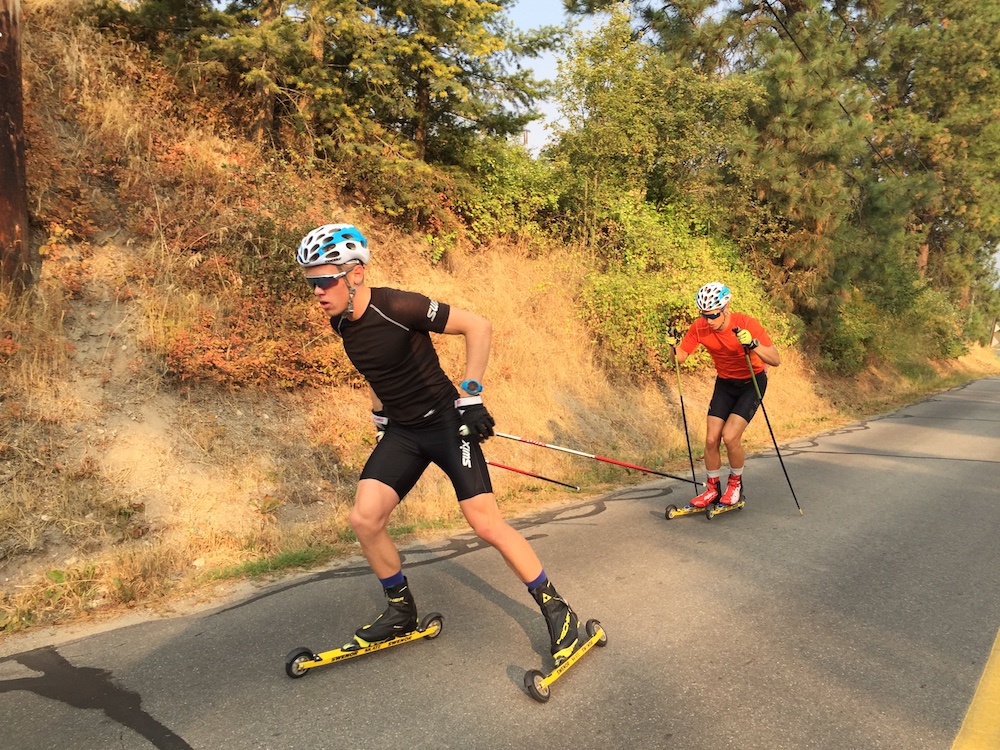
    Gareth Williams leads Fran Vukonic through an orange-tinted rollerski in Kelowna, BC. (Courtesy photo)
    Gareth Williams (Canadian U25 Team) leads Fran Vukonic during an orange-tinted rollerski in Kelowna, B.C. (Courtesy photo)

    “Summer has been great for me, I spent much of it on the Haig [glacier near Canmore, Alberta] in July,” Williams explained. “I’ve been in Kelowna the whole month of August and the smoke has yet to subside, it has actually gotten much worse recently. In past years the smoke has been bad, but I have never seen it like this. …  I think the smoke isn’t as bad as some people have suggested, for me it’s not the greatest worry. I will be happy once it is gone though, getting a little tired of the orange lighting and not being able to see the sun!”

    Michael Somppi, who trains with the Alberta World Cup Academy (AWCA) in Canmore, altered his plans depending on conditions.

    “Personally, I haven’t found the breathing to be too bad,” Somppi wrote. “That said, I am avoiding doing any hard intensity efforts on smoky days.  Today was the first day (in Kelowna) I was forced to alter my training plans, as I had planned to do a rollerski time trial, and instead opted to do zone 3 because of the smoke.  Even breathing semi hard felt sketchy with how bad the air quality is at the moment.”

    Another member of Canada’s U25 Team, Julien Locke has literally trained above the smoke on occasion.

    “I’ve been lucky in that the smoke hasn’t been too thick during most of the important training blocks so far,” Locke wrote. “I was at the Haig Glacier 4 times this summer and while we had some hazy days, for the most part, 2400m elevation was high enough to have clear skies.”