Tag: Will Sweetser

  • The Wrong 30,000

    The Wrong 30,000

    This article was made possible through the generous support of our voluntary subscribers. If you value coverage like this, please support FasterSkier with a voluntary subscription.

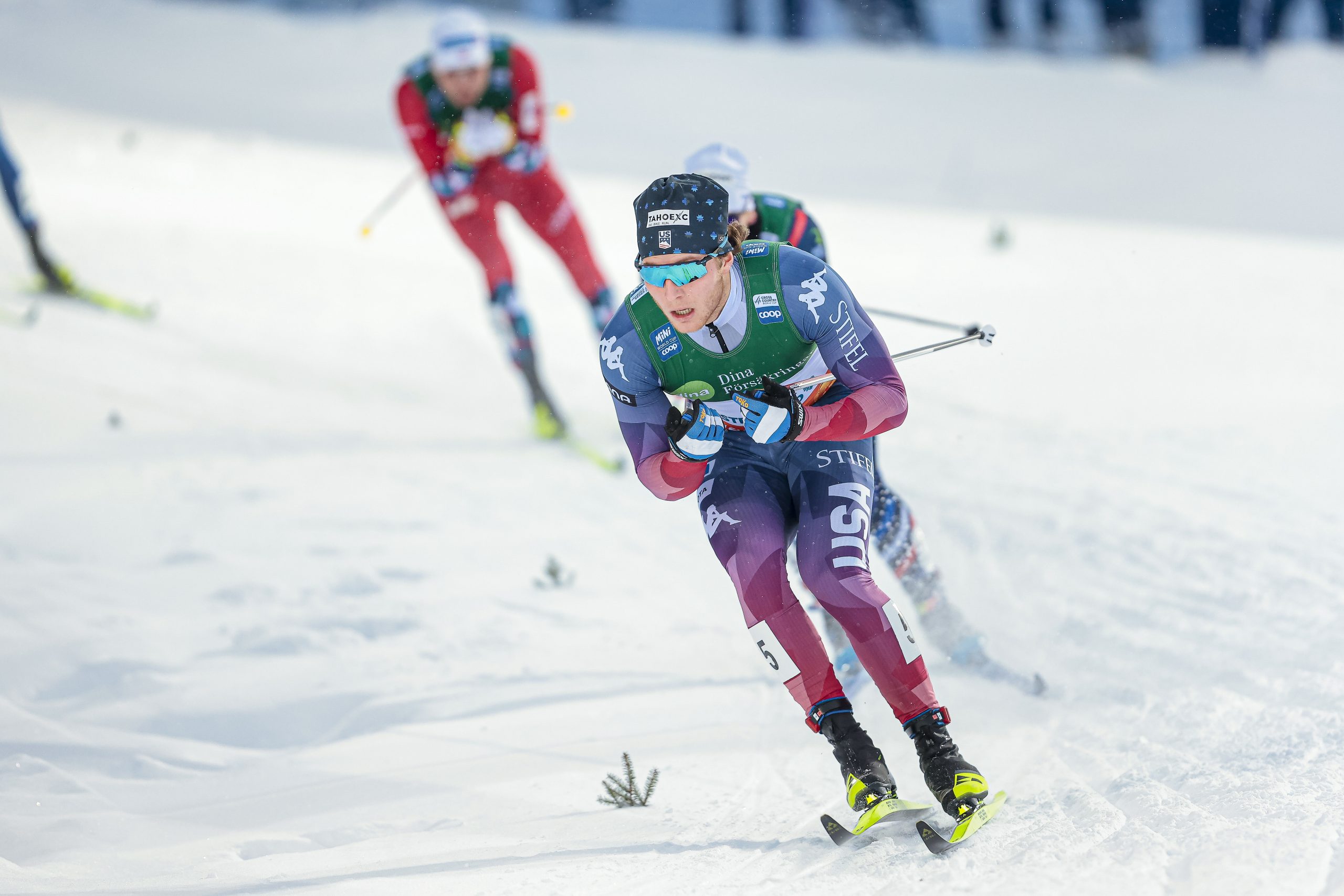
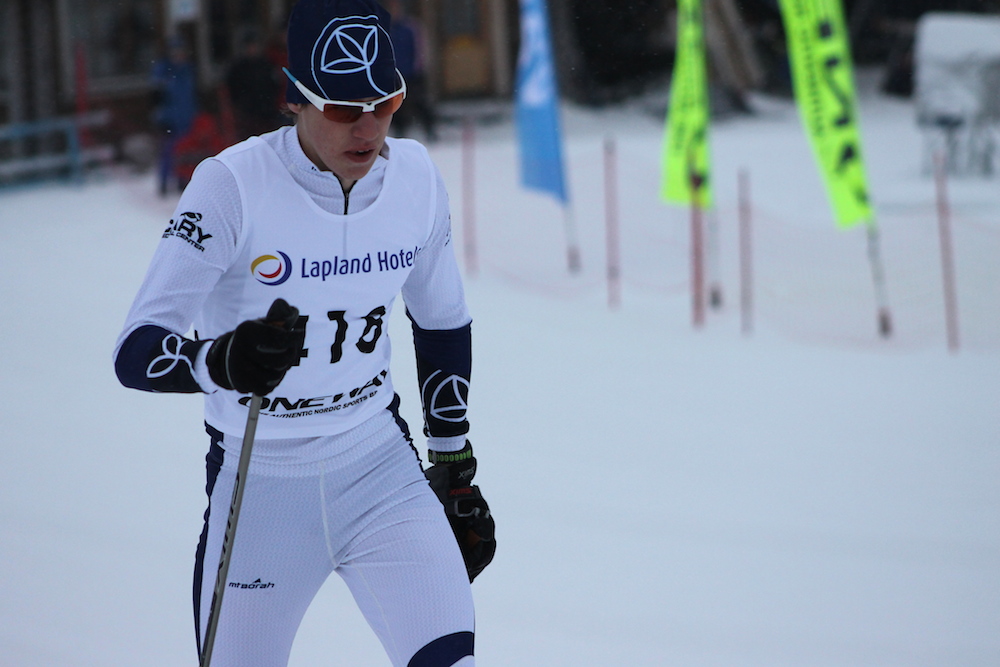
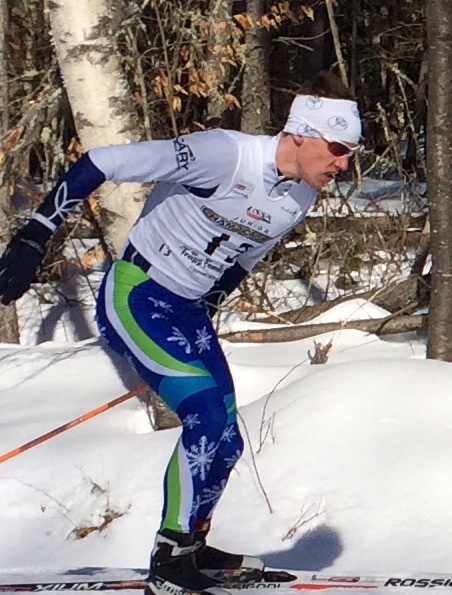
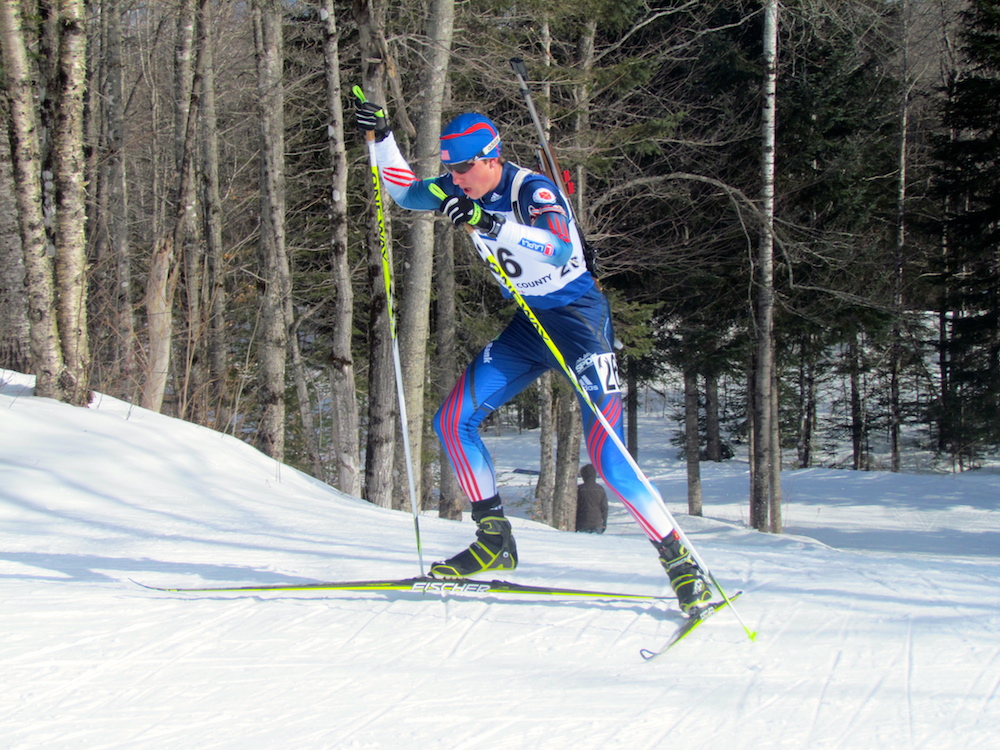
    Quinn Holan on his way to a top 5 junior finish at US Nationals Lake Placid. (Photo: Courtesy Photo)

    Will Sweetser thinks American Nordic skiing is recruiting in the wrong places. Here is what he is building on Donner Pass to prove it. This is the second of two parts — be sure to read part one, to learn about Sweetser’s background and coaching philosophy — Keep Showing Up: Will Sweetser’s Unglamorous First Principle

    The number Will Sweetser carries around is thirty.

    That, he says, is roughly how many development and junior racers a competitive Nordic ski club will produce from any 30,000 Americans with access to snow. The figure does not move much. Aroostook County, Maine, from Houlton to Fort Kent, about that. Stratton, Vermont, about that. Truckee, California, where he lives now, about that. He has been watching the number hold for thirty years.

    “Maybe it’s a little richer in some of these alpine resort towns like Jackson or Aspen,” Sweetser said. “But in general, I think that’s a pretty good estimation of what you’re going to get.”

    If he is right, the implication cuts against how most American Nordic clubs are organized. Truckee has three programs competing for that local pool. Each ends up with roughly ten development-age athletes. Sweetser, who runs the Nordic operation at Royal Gorge on Donner Pass, calls the result “not functional. And actually bad for athlete development.”

    His conclusion is the one most clubs in snow country do not want to hear. He thinks they are fighting over the wrong 30,000 people.

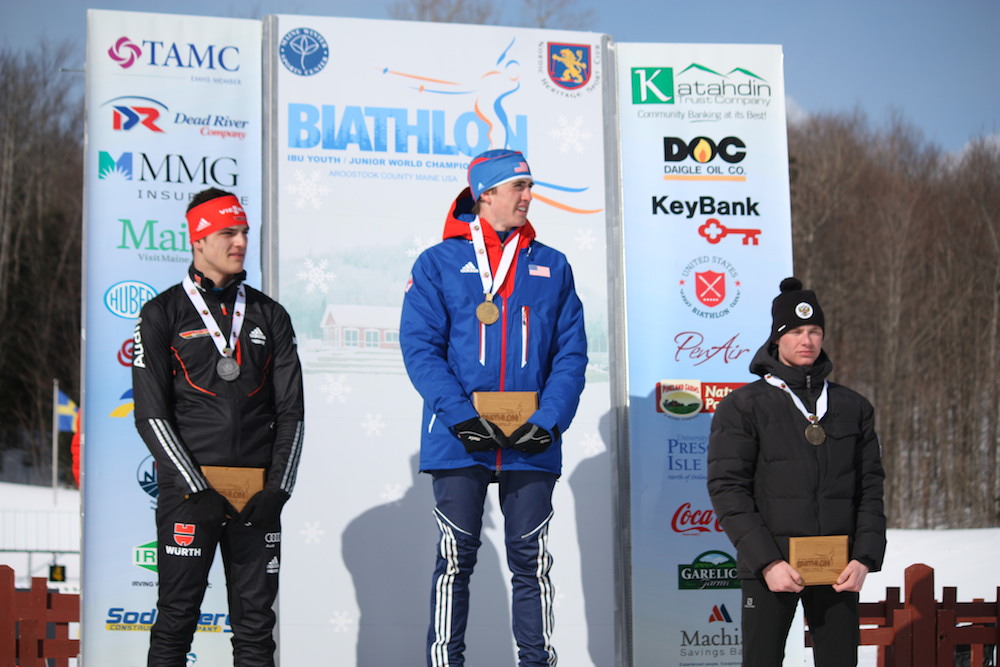
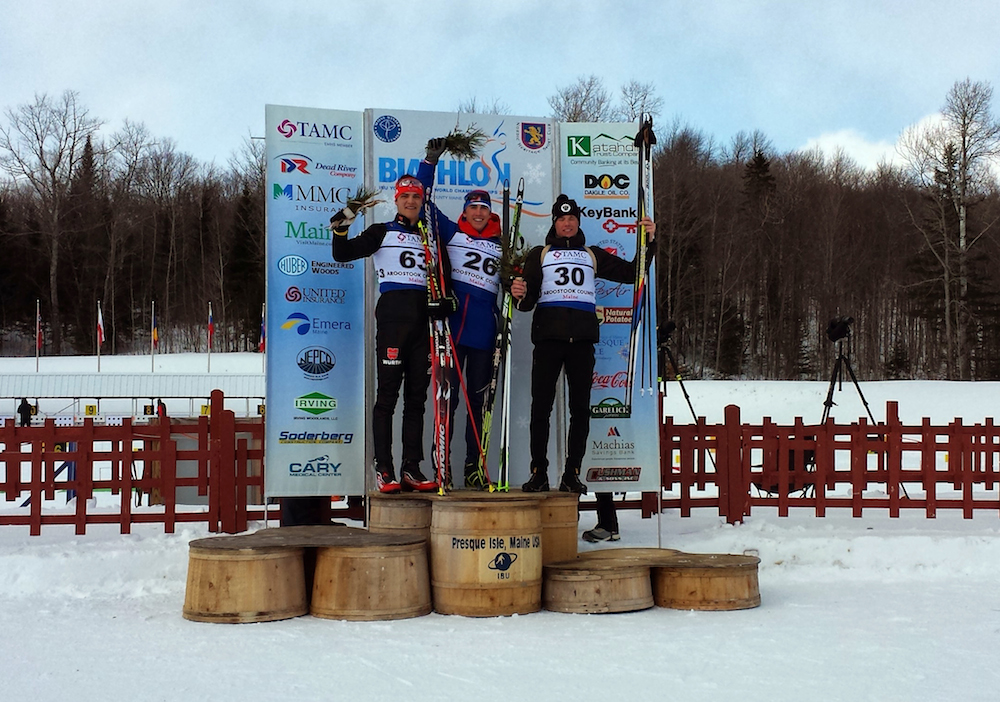
    Quinn Holan, Walker Rawlinson and Cabot Godoy celebrating learning at Jackson Hole International Spring Series 2023. (Photo: Courtesy Photo)

    The 30,000 that interest Sweetser sit on the other side of the Sierra crest.

    The Reno valley, by his count, holds about 650,000 people. The slice he is targeting — the corridor running from Gardnerville up through northwest Reno into Verdi, Nevada — is roughly 140,000 of that. He likes to compare it to the state of Vermont, where the total population is about 648,000. From west Reno to Royal Gorge is under 50 minutes. To Auburn Ski Club, the next program over, it is 40.

    That, he points out, is shorter than what plenty of Vermont families drive to ski on Saturday mornings. It is shorter than what he himself drove from Bates to find usable snow in the 1990s.

    “Why am I fighting over the 30,000 who live in Truckee,” Sweetser said, “who are frankly inundated with sports options?” Lacrosse. Soccer. Dance. Most of his daughter’s friends, he said, are doing two or three sports a season through elementary school. “How do you compete? Do cross-country ski training on top of all of that?”

    There is a second front in the same argument. Truckee is a snow-sport town, but it is also a freeride town, and Nordic, in his telling, is losing the adolescent attention war to a sport that was built for the camera roll. “It’s never going to look as good as huck yourself off of a classic line at Palisades or Sugar Bowl or Heavenly,” he said. “You’re just not going to.”

    Quinn Holan, Walker Rawlinson and Cabot Godoy. (Photo: Courtesy Photo)

    So Royal Gorge is being repositioned. Sweetser describes it as a destination training center, by which he means destination for both racers and resources. The piece that interests him most is the labor pool.

    A generation of Eastern Intercollegiate Ski Association graduates moved to the Bay Area for jobs in tech and finance over the last decade or so. Sweetser, off the top of his head, can name seven or eight. Widen the age range and he says he can name another thirty. They are not coaches by trade. Most of them make considerably more money than coaching pays. But they are skiers, and Sweetser’s bet is that a meaningful number of them would take three and a half hours twice a week — a Tuesday and a Thursday morning, say, or a Tuesday and a Saturday — to be paid by Royal Gorge to run a session in the Bay.

    “The ones who are older don’t care about the money. They’ll do it anyway,” he said. “But the younger guys probably care about the money even less. They’re psyched to be out.”

    He has tried this before with a Bay Area satellite through Sugar Bowl Academy and lost it to a turnover in headmasters. The current effort is being underwritten by Royal Gorge, whose general manager, Tom Miner, took over a few years ago and has been, in Sweetser’s description, the institution willing to write the checks. Bay Area families would still drive up Thursdays and Fridays for weekend training; the satellite sessions supplement, they don’t replace. “Four to five sessions of skiing per week,” Sweetser said. “Which is pretty crazy if you think about it. You can develop a lot.”

    His reference point was his own résumé. He coached at Bates in the 1990s, when the team was off Mondays, didn’t ski Tuesdays or Wednesdays most weeks, and drove an hour each way the rest of the time or just left on Thursday for the next carnival stop. “I don’t think it’s the worst development plan for kids who want to ski in college,” he said. “Nor do I think it’s going to hurt your lifelong love of the sport to ski three or four days a week instead of six.”

    JC Schoonmaker and Emma Ribom giving back at a Far West dryland clinic. (Photo: Courtesy Photo)

    “I think it’s also a thought exercise more than a practicality,” he said. The snow-belt population is small to begin with, he argued, and within it, Nordic competes against alpine, against freeride, against every other thing a kid with a phone can see. He went looking for the counterexample and landed on Great Britain. Their entire cross-country skiing base, he estimated, is “maybe a thousand” people. Three British men finished in the top eight of a World Cup race in the lead-up to last year’s Olympics. The United States, from a population orders of magnitude larger, did not have three.

    “So I think we have to apply both systems simultaneously,” he said. “You want the best possible resource application and preservation, as well as the recruiting.”

    The recruiting, in his version, is what is taking him to Reno and to the foothills around Auburn and Grass Valley, towns at 2,000 feet of elevation, with populations several times Truckee’s, that have a history of ski teams without a current knowledge base. He has also been watching California middle-school track results, the way a baseball scout reads box scores. He is looking for the eleven- and twelve-year-olds who will hit puberty, stop being runners, and still have an engine.

    Long view of program and athlete development. (Photo: Courtesy Photo)

    The institutional pieces have been moving in the meantime, some faster than others.

    Sweetser submitted a bid this month to host the 2028 Junior Nationals at Royal Gorge. The bid still needs approval from the sport committee and the junior working group, and the organizing committee is largely the one already preparing for an earlier event. He said the bid is in part a consequence of another organization having stepped back, and would not elaborate.

    He is also in the middle of homologating four race courses at Royal Gorge — a sprint, a 2.5, a 3.3, and a 3.75 kilometer loop, with options for a 5K and additional sprint variants. Sweetser did the initial mapping himself; a professional GIS contractor is doing the formal version now.

    The third moving piece is administrative. Sweetser owns a company called Ydalir, which is the U.S. importer for the Italian wax brand Maplus and the holding entity for his coaching operation. Ydalir’s junior and weekend programs are being folded into the Royal Gorge brand. “Weekend program up through juniors is branded Royal Gorge cross country,” Sweetser said. The older athletes — gap-year skiers, elite development athletes, masters groups — sit one tier up, with the financial arrangement still being worked out.

    The deal makes sense to him because of what an institution provides. “I can’t just be running around in the woods all the time,” he said. “I need a home.”

    Walker Rawlinson (Menlo CA) in a breakthrough race Jackson Hole 2023. (Photo: Courtesy Photo)

    The home matters because of who he wants in it.

    The NCAA is on the verge of changes that will give skiers a five-year clock from high school graduation, capped at age 24, in which to use four years of eligibility. Sweetser thinks the new rule will quietly squeeze out the gap-year athlete — the kid who could use a year at a prep school, the kid who is simply not ready at 18, the kid who would be a different athlete and a different person at 20. The five-year window is generous in theory and tight in practice.

    What Royal Gorge can offer those athletes, Sweetser said, is a landing pad. Last year the resort gave passes to the three older skiers he was coaching. This year, in addition to the passes, it will offer them paid work with the ability to ski before and after a shift.

    “It’s a pretty decent deal when you’re trying to make it,” he said.

    None of this is new in concept. The Maine Winter Sports Center built something close to it in the 2000s, and produced a long run of national-team athletes from it. Sweetser was part of that operation. The Royal Gorge version inherits the DNA and adds a piece Maine never had: a population base on the other side of the mountains big enough to recruit out of.

    Whether his thirty-out-of-30,000 math holds in California the way it held in Aroostook is the experiment.

    “You take an 18-year-old and go out as a 20-year-old,” Sweetser said, “you’re a different person.”


    Help Support Our Coverage!

    If you value the thoughtful work and access FasterSkier provides, please consider becoming a Voluntary Subscriber. Your support directly fuels our work to cover the people, places, and moments that make our sport special.

    Join the FasterSkier community!


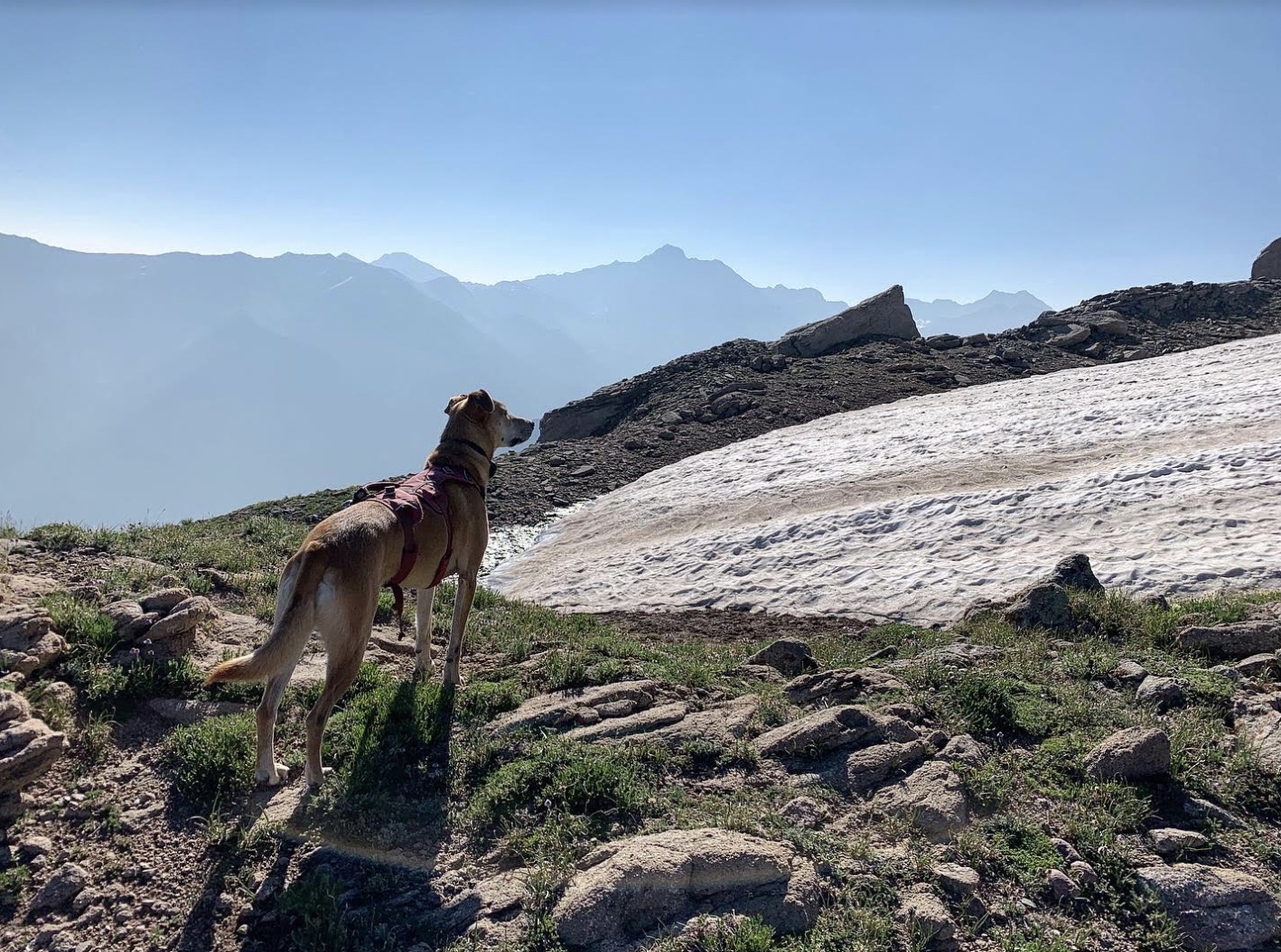
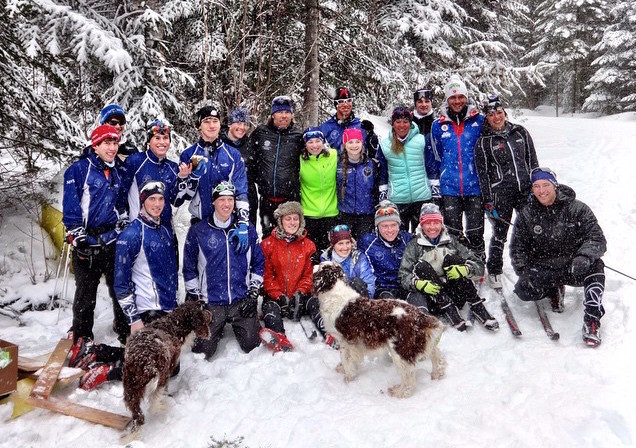
    Superfluous photo of Sweetser’s dogs… but we love dogs too, so had to include this photo! (Photo: Courtesy Photo)
  • Keep Showing Up: Will Sweetser’s Unglamorous First Principle

    Keep Showing Up: Will Sweetser’s Unglamorous First Principle

    This article was made possible through the generous support of our voluntary subscribers. If you value coverage like this, please support FasterSkier with a voluntary subscription.

    Two older girls on the Edward Little ski team went looking for bodies. It was the mid-1980s, the boys’ Nordic program at the Auburn, Maine, high school was thin and not very good, and the girls’ team was strong. The two girls, Becky Flynn (SVSEF) and Sarah Pribram (NWVE), knew a freshman who had skied a little in middle school. They asked him if he wanted in.

    Will Sweetser’s second cross-country ski race ever was the Maine High School State Championship, he finished 34th, the best result on the team.

    The next winter Edward Little won the state title. Sweetser placed seventh in the state — and fourth on his own squad. “I was the fourth guy running, I was the fourth guy skiing,” he said. The sport was tilting toward skating then, and almost nobody his age had figured out how to skate yet. Technique was a wash. So the results sorted themselves out the only way they could.

    “It turned out that engines won,” Sweetser said.

    That phrase could serve as an epigraph for everything he has done since, except for one inconvenient fact. His own engine was nothing special, at least by his own standards.

    He learned exactly how unspecial his was as a freshman skier at Dartmouth, when the team did VO2 max testing. The results put Sweetser, the slowest man on the roster, “squarely in the bottom half of the women’s team.” He ran the numbers on his own future and did not like the answer. “I was already running almost the times they suggest for my VO2 max,” he said. The writing, he decided, was on the wall.

    If the engine couldn’t get bigger, the speed had to come from somewhere else.

    “Wax makes things faster. Strength makes things faster. I better learn technique,” Sweetser said. “Maybe I was a genetic predeterminist, and that’s why I started learning all the physiology.”

    After graduating from Dartmouth, Sweetser took an assistant coaching position at Bates College in Lewiston, Maine, where he went to the library and more or less stayed there.

    At Bates, Sweetser became a fixture in the stacks while living with his grandfather, working into the evening. “I literally was in the library more than the team,” he said. For two years, he averaged four or five interlibrary-loan requests a week. He calls what he built in that period “a self-taught, master’s-level survey course” in exercise physiology. He was also, by his own account, one of the first coaches in the country mailing away for VHS tapes of World Cup races, freeze-framing technique frame by frame because there was no other way to see it.

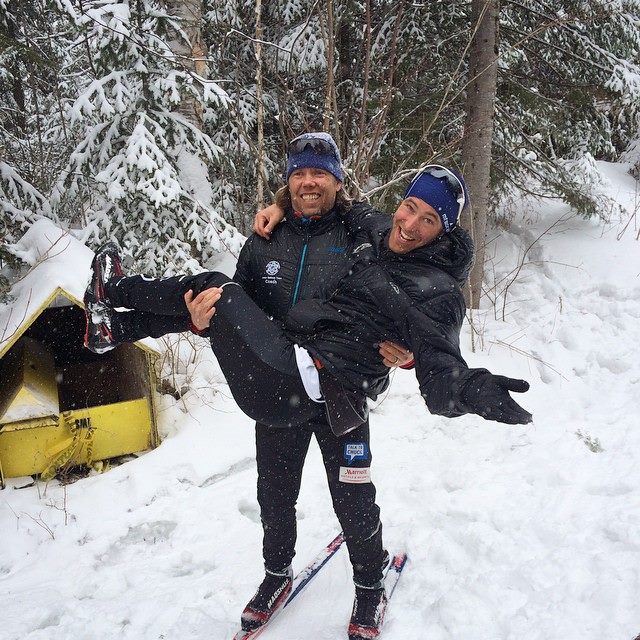
    Will Sweetser (right) has worked with Olympian JC Schoonmaker (left), who now lives in Alaska and races for APU, since Schoonmaker was a young skier.

    Three decades later, that reading has produced one of the more idiosyncratic coaching minds in American skiing. Sweetser is now based in Soda Springs, California, high on Donner Pass, after a long stretch running the program at the Maine Winter Sports Center. And the first principle he’ll hand you is almost aggressively unglamorous.

    It’s consistency. Just showing up.

    Sweetser points to a Norwegian study he came across years ago — his recollection puts it around 2006 to 2008 — that examined the country’s top 14 nationally ranked women, essentially its entire World Cup pipeline. Researchers measured everything: VO2 max, speed broken into 20-second segments, correlation after correlation. The single factor that most cleanly separated the top seven from the next seven, Sweetser says, wasn’t engine size or top speed. It was days lost to illness and injury. The lower group averaged roughly two weeks of missed training a year. The top group averaged two or three days.

    “That seems to be the most correlated thing,” he said. Stretch it across a four- or five-year Olympic cycle and the gap stops being trivial.

    It sounds obvious. It is also not how a great many junior programs actually behave, which is where Sweetser’s second idea comes in, and that one is stranger.

    He builds training around fiber type, and he has a field test for sorting it. He’ll have an athlete — 15 or older — run a 400 meters, rest 20 minutes, then run a 3,000 meter. Then he looks at the ratio. A “normal” distance athlete, he says, holds about 76.5 percent of 400-meter pace over 3k. He can quote the figure to the hundredth. Drop below 68 percent and the athlete is built to sprint; climb above 82 and they’re built to grind. “This is how specific they are,” he said of the research he leans on.

    The athletes all come to the same session. What changes is the leash. The sprinter types get a short one, where Sweetser wants the heart-rate alarm to go off the instant it “faintly whispers” the next zone, because those athletes overshoot every interval.

    Where the distance types might run eight intervals, the sprinters run five or four. Body position stays the same for everyone. Cadence and power output are already different on their own. What he actually teaches, he says, is tactics — where on the course to spend, and where to wait based on each athletes strengths and weaknesses.

    This is also why he keeps reaching for the treadmill. It is measurable and it is controllable, and that combination lets him do something he values more than almost anything: build what he calls “an athlete persona that’s rooted in belief, not hope.”

    The clearest proof he offers was from an athlete he met at Bates, Sarah Dominick — the woman who would later become his wife and is now his coaching partner. At Bates, her running coaches kept pushing her mileage up, and every time she got much past 25 miles a week, she broke down. It made sense to Sweetser: she had a sprinter’s makeup, but was being asked to train like a distance runner. She was miserable enough that she sat out her junior year of competition entirely.

    When she came back as a senior wanting to race the 3k and 5k, Sweetser says her coach called it a waste of time.

    His plan went the other direction. He capped her running at roughly three hours a week and backfilled the volume with cycling and roller skiing. Warm-ups and cool-downs were run on grass, in the opposite direction around the track, to spare the leg that always flared. The key session, twice a week, was deceptively small: two sets of 15-seconds-on, 15-seconds-off at 3k race pace, jogging the corners, six minutes of rest between sets. Start to finish, it took about an hour.

    She went from 11:38 to 10:00 for 3,000 meters in a month. She became a Division III All-American and set a school record. The following year, training off skiing and running on a dirt road at altitude, she ran 9:27.

    The lesson Sweetser took from it is the one he now spends most of his time trying to give away. “Your best training computer is still between your ears,” he said.

    Will Sweetser doing lactate testing during a hill-bounding session two season ago with Quinn Holan.

    You can see what that looks like in Quinn Holan, the 18-year-old Sweetser coaches most directly and has worked with since the athlete was 11. These days, Holan, Far West’s standout U20 skier, writes his own training plans and brings Sweetser the questions, not the other way around. Increasingly, when the two disagree, the athlete keeps his own counsel, which is exactly the point. “You can call me his coach,” Sweetser said, “but it’s sort of like Klæbo’s grandpa is his coach.”

    It is a strange arc for a man who started with so little to work with. Sweetser was the high school freshman recruited because the team needed a warm body, the college skier in the bottom half of the women’s VO2 results, and the coach who had to teach himself the sport one interlibrary loan slip at a time. Thirty years on, the whole project — the fiber-type tests, the treadmill data, the athlete who outgrows his coach — is really just an effort to spare the next kid the loneliness of that library.

    Sweetser never did get the engine he wanted as an athlete, but as a coach, he has built something much more durable.

    Next: why Will Sweetser thinks American skiing is fighting over the wrong 30,000 people — and what he’s building on Donner Pass to prove it.


    Help Support Our Coverage!

    If you value the thoughtful work and access FasterSkier provides, please consider becoming a Voluntary Subscriber. Your support directly fuels our work to cover the people, places, and moments that make our sport special.

    Join the FasterSkier community!


    Will Sweetser and Matt Seline
  • Royal Gorge XC Resort to Offer Expanded Programming for Winter 2026-2027

    Royal Gorge XC Resort to Offer Expanded Programming for Winter 2026-2027

    Thanks to the fantastic success of the redesigned youth programs at the resort this past winter, Royal Gorge XC will offer expanded teams for the 2026-2027 season.

    New team offerings for the coming season will include middle school age racing, junior racing, gap year programming, pro level racing and masters training groups.

    Youth programming will remain the same as offered this past season, with groups comprised of young skiers from Kindergarten through 8th grade with a focus on skill development and fun.

    The new racing and training focused offerings will put into place a full ladder of nordic ski development at Royal Gorge XC, allowing every level of skier to see the complete range of possibilities this life-long sport can offer.

    Programs will be headed by Will Sweetser, now in his 33rd year of professional coaching. An expanded staff of U.S. Ski and Snowboard certified coaches will support programming and lead the Royal Gorge XC Teams as they represent the resort and Far West Nordic in local, regional and national racing.

    All programs will be competitively priced, with both à la carte and full menu pricing options. Registration for programs will open at SkiReg.com by April 1, 2026.

    Royal Gorge XC Programs 2026-2027

    Manzanitas — Grades K–2
    Fun, fun and more fun. Saturdays only. Classic skiing focus. Weekend and seasonal rentals available.

    Aspens — Grades 3–5
    Fun, coordination and skill development weekend program. Classic and skate skiing. Limited racing opportunities for those interested.

    Lodgepoles — Grades 6–8
    Fun, skill development and fitness focused weekend program for middle schoolers. Independent Middle School racing and limited racing opportunities for those interested.

    Devo — Ages 12–15
    September through March programming options, both fall/winter and winter only. Summer camp offered. Coached sessions held 3 days per week. Local and regional race support with experienced, certified coaches.

    Comp — Ages 15–19
    June through March programming options, both full year and winter only. Coached sessions held 4 days per week on average. Local, regional, and national race planning and support with experienced, certified coaches.

    Gap Year — Ages 18–20
    By application only. Program limited to 5 athletes. 4–5 days per week in conjunction with Pro Team. Head coach: Will Sweetser.

    Pro Team — Ages 19+
    By application only. Program limited to 5 athletes. Individual training and competition planning. Job opportunities. Coaching requirement. Head coach: Will Sweetser.

    Senior/Masters Training Groups — Ages 21+
    Multiple training groups offering beginner to expert skate and classic training. From “learn to” to racing level groups. 1–3 days per week. Scheduled in conjunction with youth and junior training groups and offering race/experience travel.

    Registration opens April 1, 2026 at skireg.com/rgxc-nordic-ski-team-2026.

  • The New JC Schoonmaker: Sharper, Calmer, and Ready for the Moment

    The New JC Schoonmaker: Sharper, Calmer, and Ready for the Moment

    When JC Schoonmaker talks about his earliest memories of ski racing, he doesn’t begin with speed or snow conditions, or the particular magic of gliding across winter trails. He starts, instead, with raffles. “I just remember as a kid, there’d be raffles after every race that I would be so stoked for,” he says. “Trying to get a prize, like a new pair of gloves or a hat.” It is an unexpectedly tender snapshot of a skier now known for his explosive starts and the sharp, angular drama of World Cup sprint heats. But it is also revealing. Long before Schoonmaker was on national team radars, long before he was analyzing sprint tactics or refining breathwork, he was simply a boy who loved showing up at races, surrounded by friends, snow, and the possibility of leaving with a hat.

    Schoonmaker grew up in Tahoe, a place where winter sport is woven into the fabric of childhood. Yet unlike many of the region’s rising athletes, he was not funneled into Alpine skiing or a single disciplinary track. Instead, he moved constantly—and in every direction. “Both my parents were super athletic, into sports,” he says. “So from a really early age, I was just doing tons of different stuff: soccer, downhill skiing, and Nordic skiing. I played lacrosse. A little bit of baseball.” The variety shaped him in ways he didn’t appreciate at the time: balance from soccer, strength from downhill, elasticity from lacrosse, and a developing sense of rhythm from all of it.

    Meanwhile, the Nordic community in Tahoe was small enough to feel intimate yet substantial enough to provide him with peers, mentors, and a place to grow without suffocation. “Joining a Nordic team for me was super fun because I got to go out and ski with friends,” he says. “It was kind of my first experience racing.”

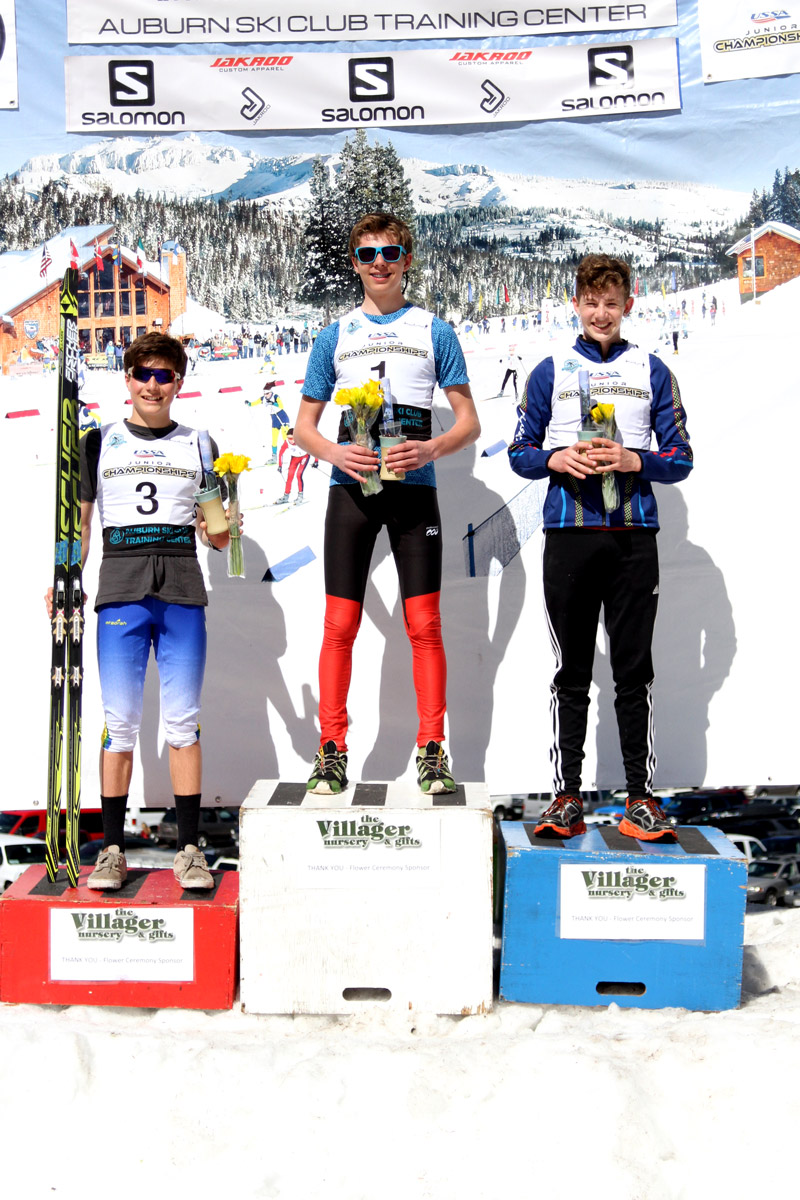
    The U16 men’s podium from the 5 k Classic Mass Start at 2015 U.S. Junior Nationals at Auburn Ski Club in Soda Springs, Californial. JC Schoonmaker took home third place. (Photo: Mark Nadell/MacBeth Graphics)

    Early Validation in Soldier Hollow and Truckee

    It wasn’t until he traveled outside his region that Schoonmaker realized how he measured up. On a Far West trip to Soldier Hollow—his first time racing beyond his local bubble—he surprised himself. “I think I got third in the first race… then I won the second one,” he recalls. “I didn’t even really know it was a big deal, but all the older kids on the trip were… really excited for me.” Their reaction revealed something he hadn’t yet recognized: that his potential extended well beyond his local podiums.

    A similar revelation arrived at Junior Nationals in Truckee, where home snow became a proving ground. He had hoped to earn All-American status, although the early races had gone poorly. “All the first races didn’t really go super well,” he says. “I had high expectations.” Yet in the final individual race before the relay, he stepped onto the podium. “Somehow onto the podium and got third,” he says. “That gave me a bunch of confidence… really helped me.” It was not just affirmation but a directional sign. Skiing was becoming more than an activity. It was becoming a path.

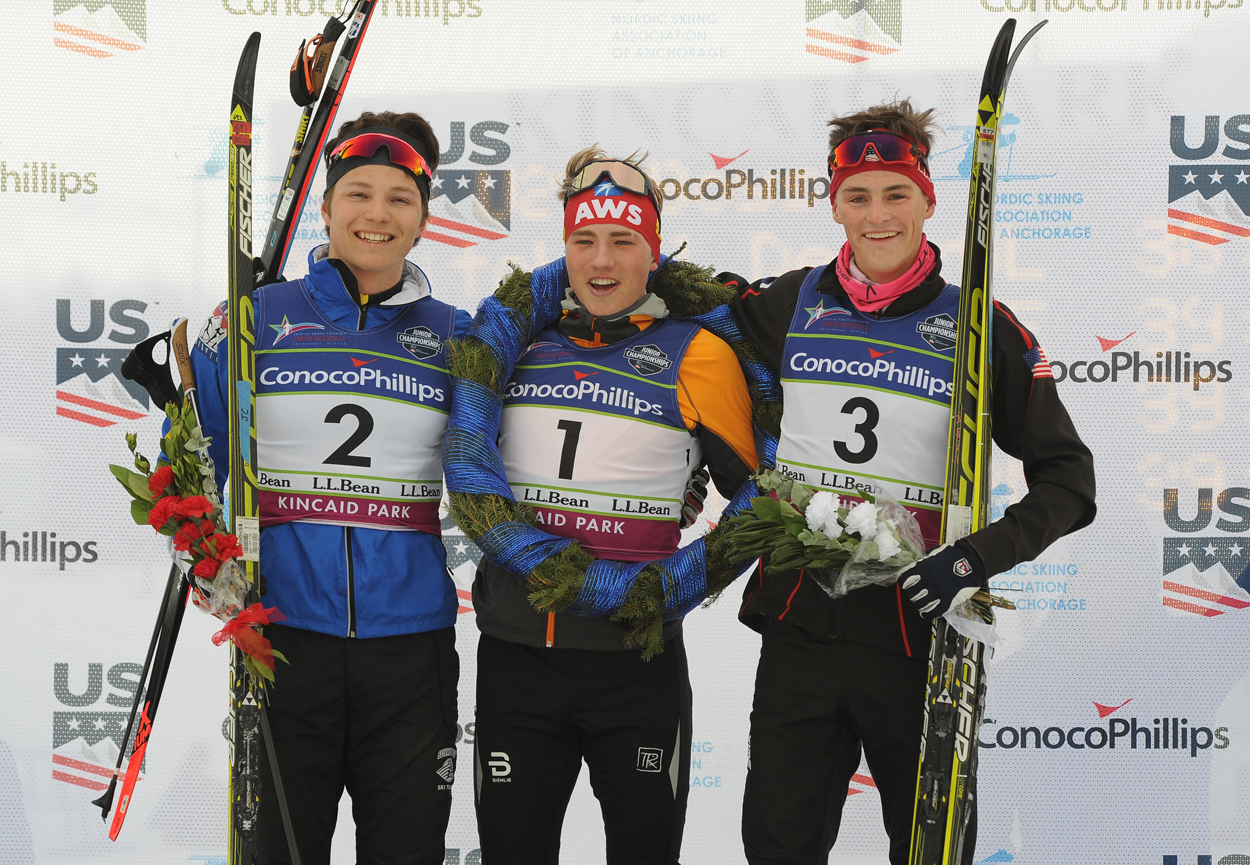
    Gus Schumacher (Alaska Winter Stars/Team Alaska), center, won the U20 men’s 15K classic mass start race at the 2019 U.S. Ski & Snowboard Cross Country Junior National Championships at Kincaid Park. J.C. Schoonmaker (UAA-Auburn Ski Club/Far West), left, was second, followed by Cameron Wolfe (Ski and Snowboard Club Vail/Rocky Mountain), right.  (Photo: Michael Dinneen)

    Choosing Anchorage and the Power of the Right Environment

    Despite his junior successes, Schoonmaker’s college recruiting process was sobering. His age cohort was stacked—Gus Schumacher, Luke Jager, Canyon Tobin—and their achievements overshadowed many strong skiers. “My top choice was UVM, and I just didn’t get a spot there,” he says. “I didn’t have a ton of options.” But an unexpected opportunity appeared when a Tahoe friend encouraged him to consider the University of Alaska Anchorage. He visited, and something clicked. “I’d say that’s the best decision I ever made,” he says. “I ended up coming to an excellent team… It’s an awesome place for skiing.”

    Anchorage wasn’t glamorous, but it was grounding: clear air, big terrain, and a training culture built on consistency rather than spectacle. Under coach Trond Flagstad, Schoonmaker’s skiing matured—his engine, his technique, and his confidence—all while laying the foundation for a collaborative coaching story that would shape his rise.


    A Uniquely Collaborative Coaching Path

    Schoonmaker’s development is defined by the unusually harmonious network of coaches who supported him. In Tahoe, he trained with Will Sweetser, whose workout creativity brought nuance to his summer training. At UAA, Flagstad built his fall rhythm with threshold work and bounding. In the winter, U.S. Ski Team coaches—Matt Whitcomb, Kristen Bourne, and Chris Grover—stepped in with race-day craft and a national pipeline. And now, in Anchorage, he works with Eric Flora at APU, whose daily presence has brought structure and clarity.

    “I feel like I didn’t even really have to do much in the way of balancing that,” he says. “Trond, Will, and Matt… kind of just took that on themselves.”

    That kind of multi-coach collaboration is rare. Instead of conflicting philosophies, Schoonmaker received overlapping layers of expertise, each building on the others. He remembers one of Sweetser’s signature interval sets with particular fondness: “Twenty seconds L5… forty seconds rest… forty seconds L5… then six minutes of threshold. A cool blend… essential for getting you ready for doing sprints on the World Cup.” Flagstad brought heavy doses of fall bounding at L4. Whitcomb and Bourne added race sharpness. Flora, finally, aligned everything. “Having him at World Championships last year made it feel like just a practice in Anchorage,” Schoonmaker says.

    JC Schoonmaker (bib #1) at the 2020 Senior Nationals in Houghton Michigan. (Photo: Reese Brown)

    The Unexpected World Cup Start That Changed Everything

    The first moment when Schoonmaker truly understood the trajectory he was on came suddenly. At U.S. Nationals in Houghton, Michigan, in 2020, he won the sprint qualifier. It was exciting, but he didn’t assume it meant anything beyond that day’s result. Then his assistant coach, Marine Dusser Bjornsen, approached him with unexpected news. “She was like, ‘Oh yeah, you’re gonna get World Cup starts from that,’” he recalls. “And I was like, ‘What? No way.’” His passport was expiring, his bags were unprepared, and within days, he was on a plane to Dresden.

    Stepping into the World Cup for the first time felt surreal. “I wasn’t even really worried about those being my first World Cups,” he says. “I was mostly just hoping to get to go over there.” The qualifiers felt manageable; the heats were startling. “Racing against those dudes in the heats… was just a whole other level. A different beast.” Still, he never felt crushed by the moment. “We were just having fun,” he says. “It wasn’t crazy high expectations.” That experience didn’t instantly transform him, but it recalibrated his sense of where he belonged.

    APU: A Training Collective That Became Home

    When Schoonmaker finished college and committed to training full-time in Anchorage, it wasn’t only because of Flora’s coaching. It was because the environment felt like home. “Luke coming back… Gus joining… Zan and Michael… it was such a good team,” he says. “A lot played into it… but mostly that stuff.” APU is one of the few places in the country where the majority of the national team trains together throughout the year, creating a rare sense of continuity on the World Cup.

    Yet even in a group that suits him so well, Schoonmaker knows he needs occasional solitude to stay balanced. “I definitely find times during the summer where I’m pretty excited to do an interval session by myself,” he says. “I grew up training alone in Tahoe.” Winter, of course, is different. “You’re living with this group of people for the entire winter,” he says. “Sometimes it is hard to find time to yourself.” But the team understands him. “Everyone knows whatever’s best for you is what’s best for the team.”

    A New Kind of Training: Mindfulness and Sprint Awareness

    This year, Schoonmaker added something he had never practiced formally: daily mindfulness training. “Some breath holds… super simple, just five minutes of mindfulness,” he says. “Focusing on my breath, trying not to let my thoughts wander.” The shift wasn’t driven by physical shortcomings, but by an honest assessment of where he needed to grow tactically. “In sprint heats… I’ve tended to have my head down, thinking about my technique… rather than, ‘I need to get this position around this corner.’”

    Mindfulness gave him a way to sharpen his presence during races and training. During intervals, he began noticing moments when his focus drifted. “My mind starts thinking about what I’m gonna have for lunch,” he admits. “I’m getting better at bringing myself back… loosen up, ski relaxed.” The work is subtle, internal, and mostly invisible, yet deeply connected to the kind of racer he wants to become.


    Passing It On: What He’d Tell the Next Generation

    If Schoonmaker were speaking to a group of juniors in Tahoe today, he would know exactly what he would emphasize. “I love this puzzle of trying to get better every day,” he says. “Focus on the small things you can control… let the cards fall where they fall.” But he would also add a piece of training wisdom gained from experience. “I almost feel like I got a little too caught up in L1 and L3,” he says. “Walking up hills on classic skis isn’t getting you better at classic skiing. You have to ski fast to get better at skiing fast.” It is the kind of message that cuts through both trends and dogma.


    Life on the Road: Davos, Oslo, and a Simpler Suitcase

    Schoonmaker’s favorite destinations reflect a balance of beauty and familiarity. Davos stands out. “I’d love to go there when I’m not getting ready for the Tour de Ski… explore it a little more,” he says. He also holds a soft spot for Oslo. “That’s a special spot. I always feel like I’m having a really good time there.” On race mornings, he keeps things simple: “Probably a couple eggs and a few pieces of toast with jam.” And he no longer travels with the heaviest item from his early career. “I brought over an Xbox… took up, like, 12 pounds in my bag,” he laughs.

    Schoonmaker and girlfriend, Emma Ribom (SWE). (Photo: Courtesy Photo)

    Olympic Season: Ambition, Clarity, and the Calm Before the Heats

    Despite the stakes of the Olympic year, Schoonmaker hasn’t reinvented his approach. “I honestly haven’t been doing anything different,” he says. “I’m more excited to be healthy and head into Period 1 feeling good.” But his goals are not small. “My goals would be to win a medal,” he says. “That’s what I’m shooting for.” A chance to race the relay again is just as meaningful. “The relay in Trondheim was super fun,” he says. “I would love to get another chance.”

    As for the individual sprint, his ambition is both grounded and bold. “If I could make the final… that would be a solid day,” he says. “But I do feel like I can win a medal.” Few athletes can express that kind of aim with such composure. Schoonmaker delivers it as calmly as if he were describing a morning ski.

    JC Schoonmaker (USA) had a breakout day in Oestersund (SWE) in 2023, reaching the podium for the first time. The American took third place. (Photo: NordicFocus)

    Where He Stands Now

    What stands out most about Schoonmaker at this moment is not bravado, but clarity. He is no longer the boy who raced for raffle prizes, nor the college skier unsure of his place, nor the rookie dragging an Xbox through European airports. He has become something steadier, more self-aware, and more intentional. A sprinter with composure. An athlete with perspective. A competitor capable of holding his ambition lightly without losing its sharpness.

    Presence, for Schoonmaker, is not stillness. It is an ongoing process of tuning himself to the shifting rhythms of a sprint heat, listening to what his mind and body are telling him, and moving through the season with intention rather than urgency. If he keeps his head up—literally and figuratively—this may be the season when the skiing world begins to see not only what he has built, but why it was built this way.


    Love Stories Like This? Help Keep Them Coming.

    Feature interviews like this one take time, access, and care to produce. If you value thoughtful storytelling and independent ski journalism, please consider becoming a Voluntary Subscriber. Your support directly fuels the work we do to cover the people, places, and moments that make our sport special.

    Join the FasterSkier community!


  • Wildfires, Smoke, and Air Quality: A Survey of Programmatic Response in the West

    Wildfires, Smoke, and Air Quality: A Survey of Programmatic Response in the West

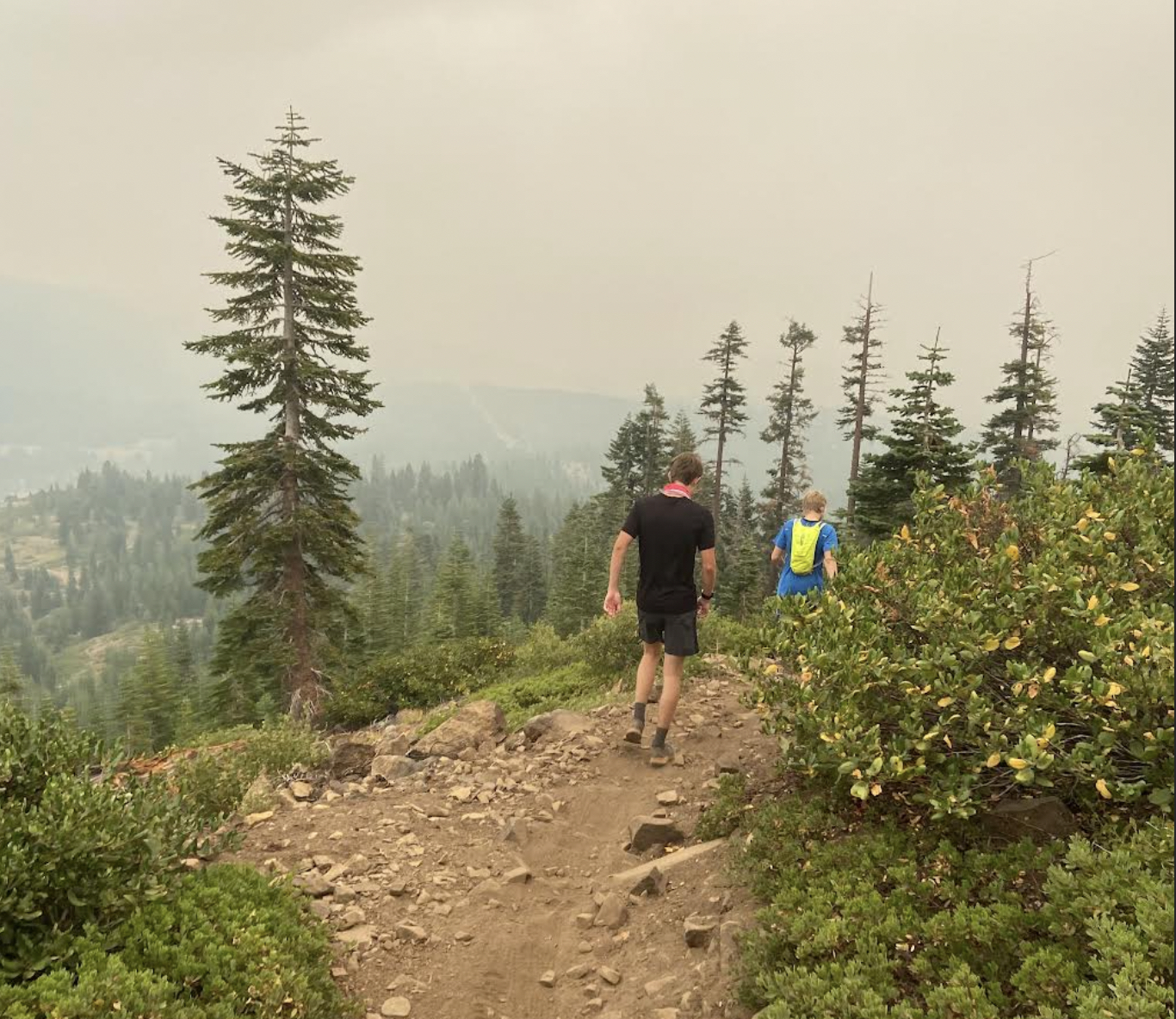
    Smoky haze. Not quite the bold and crisp view expected on this ridgeline near Carbondale, CO.

    Spinning past the autumnal equinox into fall, the West looks back on a summer marred by wildfire smoke. Here in Colorado, the Aspens have dropped their golden leaves, snow encrusts the high peaks, and I’m struck by the beauty of my backyard, which spent the majority of June, July, and August muted by smoke that — thankfully — blew in from elsewhere. 

    Over the last six weeks, checking AirNow before training has been phased out of my morning routine, and there is a palpable sigh of relief within my community as rain and high country snow frequent the forecast. The fire danger is not gone, but the threat feels less omnipresent.  

    A screenshot of active fires and subsequent air quality taken in August from Fire.AirNow.Gov.

    While regions like California, the Pacific Northwest, and Montana perhaps faced the longest durations of acrid high-AQI haze, cross country ski communities nationwide experienced its effect. As particulates from these fires were swept across the country, even air quality in the Northeast dipped into unhealthy zones for periods of time. 

    This phenomenon is not new, and as the planet continues to heat up, the West will be faced with longer and more devastating “fire seasons”. While sport might seem insignificant relative to the scale of issues at play, learning more about the modifications teams and athletes might consider can support the cross country ski communities overall health and wellbeing. 

    FasterSkier connected with coaches from areas heavily affected by fires and smoke to hear more about how they managed the impact in terms of protocol and adjustments to training with their athletes. Coaches also spoke to the increased frequency that these decisions will need to be made as climate change progresses. 

    BSF Pro athletes train in hazy yet safe conditions in Bozeman, MT. (Photo: Andy Newell)

    First up is Andy Newell, head coach of the Bridger Ski Foundation Pro Team in Bozeman Montana. 

    “Air quality and training is definitely a concern particularly because there’s not a ton of research about how smokey air affects high level athletes. We know a little bit about the short term implications but not much about long term exposure for athletes. The reality is this is something a lot of western clubs have been dealing with for a while but now we are seeing a lot of smoke in the midwest and even the east too.

    “On a typical year in Bozeman we usually don’t see smokey air until August and even then it’s not as bad as many other parts of the Northwest. This year we saw smoke earlier than ever, around the middle of July and early August, but much cleaner air than normal in the last few weeks. It really depends on wind, the jet stream, and where the big fires are burning. So far this year we have had to adjust about 3 workouts to bring athletes indoors when the air was bad. I’d say that’s about average for us, 3-6 workouts per year disrupted because of smoke.” 

    Newell continued by discussing the tools his program has used for decision making with regard to air quality and athlete safety. 

    “One of the things I have learned is that air quality can change very quickly and iPhone readings are not always accurate. We use the VisualAir app for forecasts and to find training areas that might provide better air for training. In this app you can see which sensors are gathering data from satellites and which ones from the ground. We’ve found obviously that the ground readings are a lot more accurate. Another thing we notice here in Bozeman is that the air quality can be very different even within the same region depending on high or low pressure, inversions, etc. So if you notice poor air at low elevations we might modify training and go up into the mountains and this can make a big difference.

    “We do use general guidelines at BSF to keep the athletes safe. If the AQI is above 100 we’ll start to monitor things and potentially modify training. If we are between 100-150 we will cut out L4 training or consider bringing athletes inside on treadmills for aerobic training. Also in this 100-150 range we’ll consider using KN95’s while out for easy distance training. Luckily we’ve only had to do this once this year so we’re hoping we make it through fire season without much more disruption.”

    BSF Pro athletes wear KN95s in order to safely train outdoors when air quality is above the safe threshold. (Photo: Andy Newell)

    A long-time advocate for climate policy and spokesperson for Protect Our Winters (POW), Newell closed with a statement on the impact of an ever-warming planet. 

    “As an athlete that has worked on a lot of climate issues this is definitely a scary reality, it goes to show you we are all affected by climate change.”

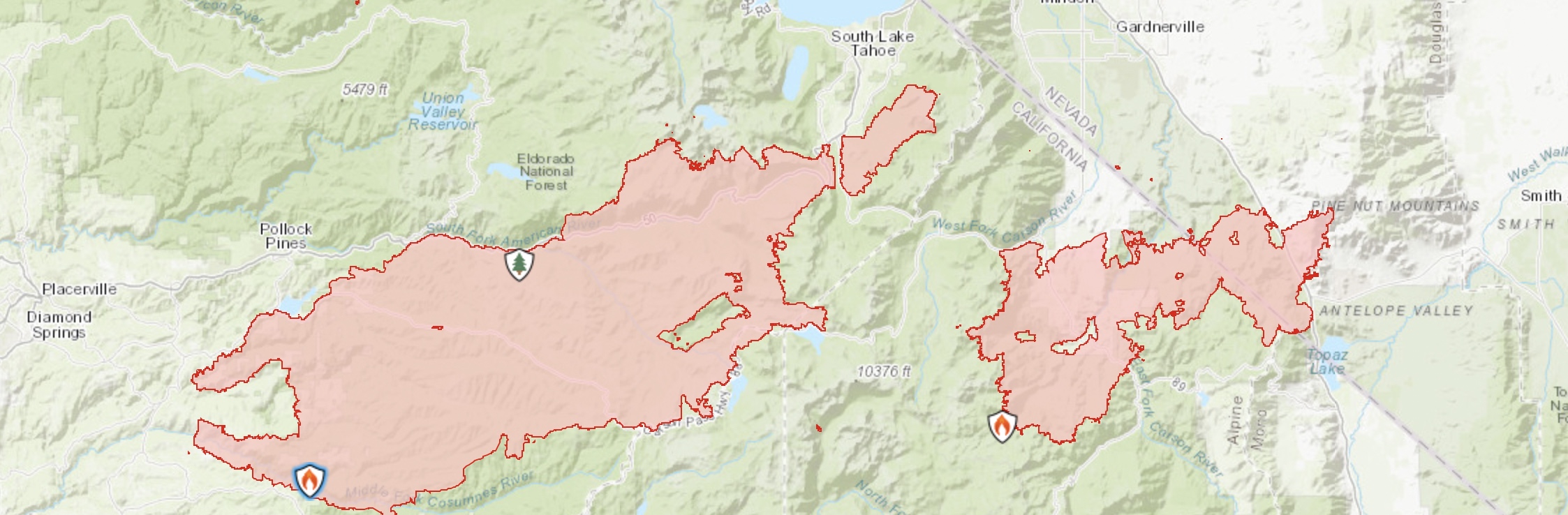
    Heading Southwest, FasterSkier also corresponded with Will Sweetser, Director of Nordic Programs for Sugar Bowl Academy (SBA), northwest of Lake Tahoe. The Tahoe region was struck hard this summer, as the devastating Caldor fire ripped through nearly 220,000 acres and destroyed over 1000 structures. 

    Now 98% contained, the Caldor fire remains active, over two months since it began on August 14th. It has burned over 220,000 acres, an area larger than the state of Rhode Island. Although the fire is still active, most evacuations and closures have been lifted. 

    A map from October 11th of the still-active Caldor Fire south of Lake Tahoe, California. (Photo: Screenshot InciWeb.nwcg.gov)

    Sweetser first outlined the nuts and bolts of air quality considerations. For those unfamiliar, AQI considers the concentration of fine particulate matter in the air. Particulate matter, like wildfire smoke, that is 2.5 microns or less (PM 2.5) is most concerning, as it can penetrate deeply into the lungs. 

    “Train as usual if school is in and AQI is between 0-60; offer optional/slightly modified training — consider shortened length first, and reduce continuous intensity — when AQI is between 60-120. Optional training is reduced, and outdoor training is only recommended for healthy, unaffected individuals when AQI is 120-150. Sessions are capped at 1 hour, and intensity capped at L2.”

    While indoor recreation amidst the COVID-19 pandemic poses its own set of complications, Sweetser explained that indoor training is preferred when the AQI is above 150. To support the health of its athletes, SBA has integrated air purifiers in every indoor space on its campus, including classrooms, common areas, dining halls, and the gym. These filters help maintain an indoor AQI of 25 or below. 

    An SBSA athlete moves his training indoors with an air filter when AQI plummets. (Photo: Will Sweetser)

    “In heaviest smoke events, we encourage families with the capacity to travel to cleaner air for the week to do so within the confines of school requirements. If we are in a remote schooling period, which was precipitated by Tahoe area evacuations last week, many families simply move to second homes in the Bay area or elsewhere in CA. We write individual suggestions for each athlete to meet the training options in that area. Our general week plan (MON–OFF, TUE-WED-THU–heavier training 1-2x daily, FRI–recovery, WEEKEND–high training load/family outings) readily allows families to take weekends away for cleaner air.”

    When Sweetser was first contacted in late August, he responded that he was with the team on the coast enjoying a training block in fresh air. In his email afterward, he included the purpose of this camp. 

    “Last week, we utilized our first planned smoke escape team training weekend. It was in the school travel calendar. Teachers prepared some work in advance. The entire team went to the north coast of California for FRI-SUN. We had 5 excellent training sessions, including 1km L4 repeats, pure speed double pole session, 2 technique sessions and a 15-20-kilometer run. AQI in the Mendocino area varied from 8-43 during that time and was a great reset for us. Extremely valuable to get to clean air, sea level and group training in a pretty stressful time. We are lucky to be able to do so with just 4-5 hours driving.”

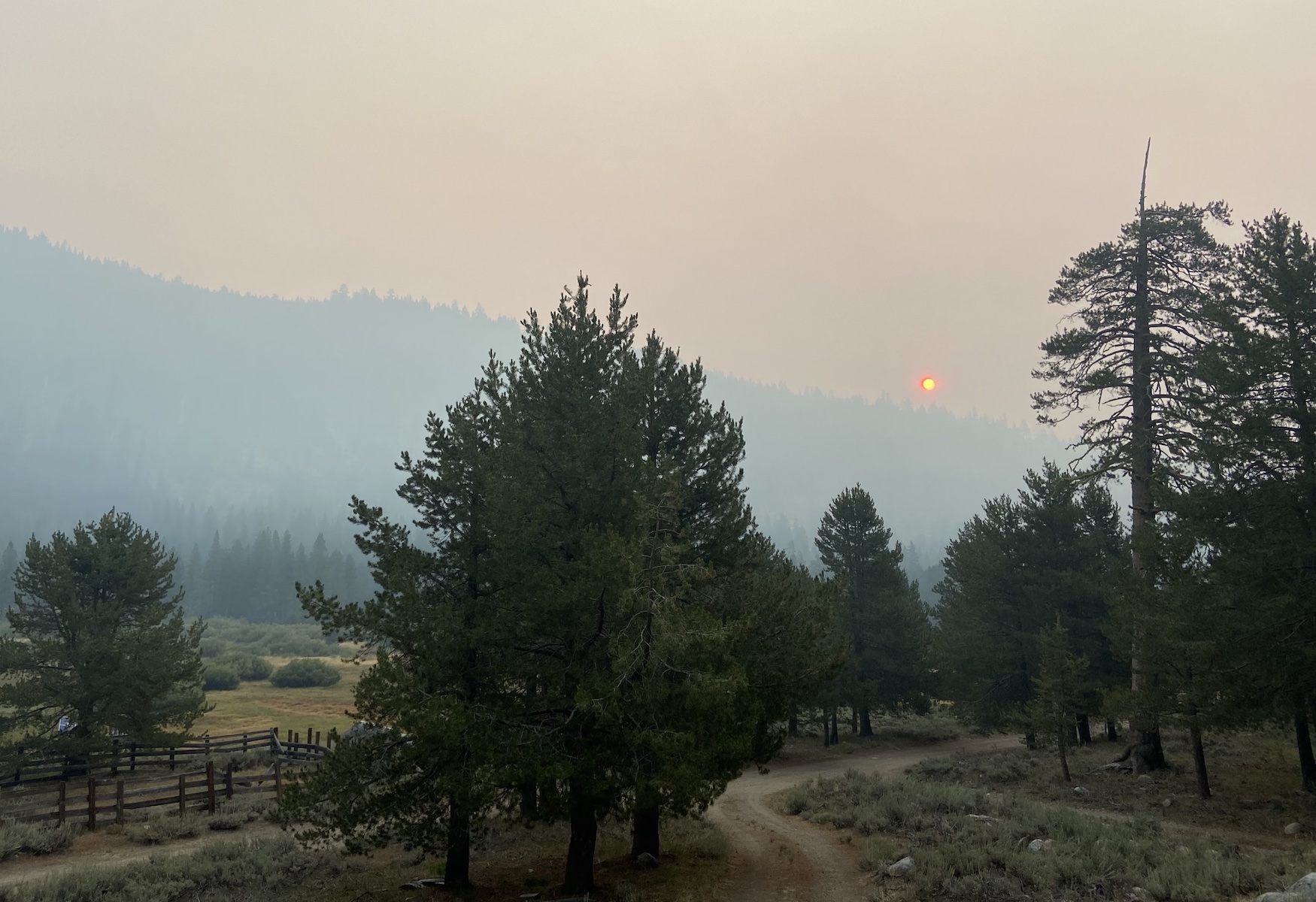
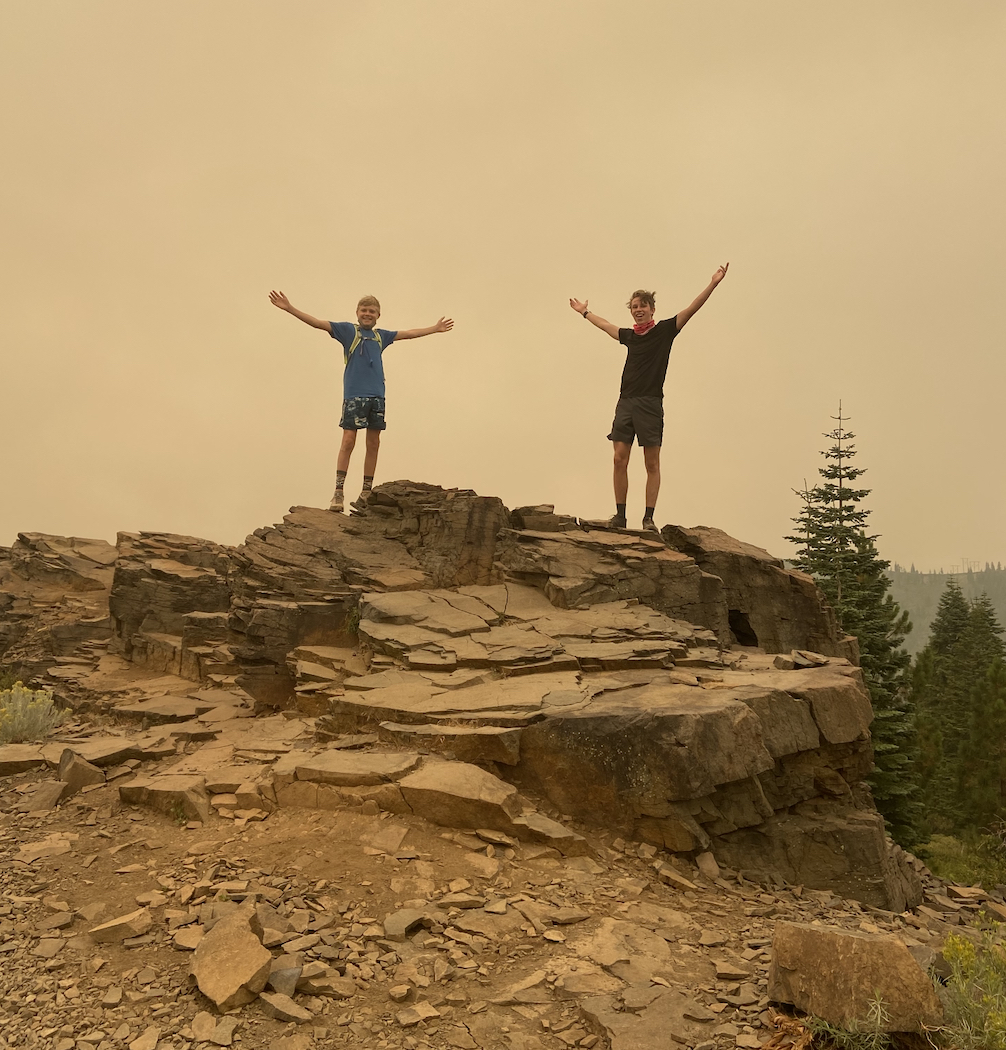
    The smoke filters over the ridge line in Tahoe’s Carpenter Valley last August. This day was relatively mild, with AQI readings remaining below 200. (Photo: Will Sweetser)

    When the team is not able to travel and air quality is poor, Sweetser explained how they approach indoor training to achieve similar stimuli to those they’d seek in “normal” conditions outdoors. 

    “When we are on Donner Summit with poor AQI, we utilize gym time and treadmill/SkiErg sessions to offer modified indoor sessions that still reflect each athlete’s goals — often these sessions are shortened and feature slightly more L2, or intermittent work, than we might normally do outside — although looking at HR data, the planned intermittent nature of these sessions is not totally different than sending the crew for a trail run through rolling terrain.”

    Sweetser also reflected on the learning curve for appreciating how quickly AQI can change based on wind and weather patterns. He recalled leading an OD training run with a couple of his athletes and assistant coach David Sinclair that began at a borderline AQI of 120. As they progressed toward the objective, Hawks Peak, the air quality plummeted.

    “We could see smoke pouring in from the north as we headed across the ridge… We called parents for pick up and dropped down as quickly as we could.”

    SBSA athletes climb a ridgeline as AQI shifts rapidly from a safe level. (Photo: Will Sweetser)

    By the time the athletes reached their pickup point, the AQI was over 400, which is considered emergency conditions.

    “Since then, myself and much of the region have become much more savvy about using real time AQI monitors such as PurpleAir, wind and smoke forecast apps like Windy and Dark Skies, and I’ve purchased a handheld AQI monitor.”
    Sweetser added that he coughed for at least a week after this singular session.
    Brown air and minimal visibility atop Hawks Peak. (Photo: Will Sweetser)
    Lastly, FasterSkier connected with Dylan Watts, new head nordic coach for the Mt. Bachelor Ski Education Foundation (MBSEF) in Bend, OR. At the time of his response, Watts had only been in his role for a month and thus could not speak to the program’s response to smoke levels in Bend throughout the summer. His perspective spoke to a broader philosophy regarding athlete development, particularly at the junior level. 

    “What I keep in mind is that we are really training for a healthy body and mind for the long term. That no one day, week, month, or even whole season is so critical that we potentially sacrifice our long term health for a short term result. In this sport, any short term results we achieve are very unlikely to bring us any benefit other than good health. Cold weather injury is a serious consideration in skiing. Regular exposure to air pollution, wildfire smoke included, is just as — and I would argue more — serious.

    “You don’t know what sort of interruptions you will face in a year. Modifications to training happen for conditions all the time. It is built into our sport. Weather, lack of snow, too cold, not cold enough, smoke. Add sickness, a hard semester, family needs, and so on. For those reasons it is always a good idea to work ahead. When it is good you go and that way when conditions are bad you don’t have too. You don’t need to feel the pressure to make up for something you didn’t do.”

    The MBSEF programs had been following similar guidelines to SBA, however, Watts responded that after the World Health Organization’s release of new air quality guidelines at the end of September, the program further tightened its tolerance of poor air quality. With mounting evidence of the increase in all cause mortality risk due to prolonged exposure to pollutants, the WHO drastically reduced the acceptable levels of PM2.5 and other pollutants individuals should be subjected to in both short and long term settings. The 300 page document also calls for a global response to air quality improvement. 


  • Wednesday Workout: Sizzling Hot 30/30’s with BSF’s Nick Michaud

    Wednesday Workout: Sizzling Hot 30/30’s with BSF’s Nick Michaud

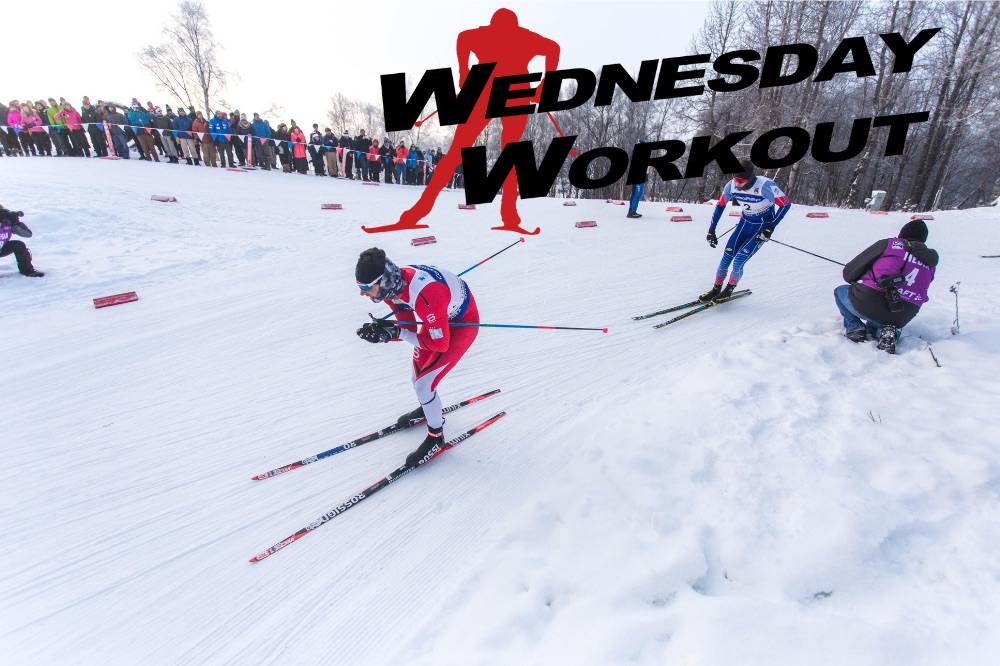
    BSF’s Nick Michaud (red suit) at last season’s Senior National Championships in Anchorage, Alaska. Michaud qualified 4th. (Photo: Gilbert Michaud)

    This Wednesday Workout was provided by twenty-six-year-old Bridger Ski Foundation (BSF) skier Nick Michaud. Bates College educated and raised plumb-line north in Fort Kent Maine, Michaud has emerged as a sprinter to watch on the SuperTour. He’s a gritty, salt-of-the-earth athlete who barely missed a nomination to the 2018 Olympic Team.

    Michaud offered FasterSkier a menu of options for the 30/30 workout — 30 seconds on 30 seconds off. From junior athletes to masters in M8 and beyond, Michaud has you covered with these training session variants.

    Let the gains begin.

    Backstory of the Sizzling Hot 30/30’s from Michaud:

    “Short, explosive movements are like bacon for me. I’m thrilled to eat bacon anytime, anywhere, with anyone. With vegetables, grains, and most foods that are really important for function, it can feel like a chore. That’s what a lot of nordic ski training feels like for me. My body, my mind, would prefer to just do speed work, lift heavy weight, and play basketball — and eat bacon. But in order to meet my performance goals, I have to eat vegetables and grains: aerobic base, lactate threshold, energy management, mindfulness and so much more. For these reasons, I love 30/30s.

    30/30 home terrain for BSF’s Nick Michaud in Bozeman, Montana. (Photo: Max Lachance)

    The execution is very simple: 30 seconds “on”, 30 seconds “off”. The effort and duration can be customized for the purpose of the workout. There should always be a purpose!. For athletes with periodized training plans, 30/30s can be used in different cycles of training to meet different goals. For a more casual athlete, 30/30s can simply be an extremely fun way to get in some higher intensity training.  

    Dragan Danevski, BSF nordic program director, began using 30/30s eight years ago. There was a study in Europe focusing on track and field and how to improve efficiency of running economy, improve aerobic capacity, and reduce the recovery time in a 30/30 workout. The original study tracked mainly 1500m and 3000m runners. Danevski adjusted the workout for skiers here at BSF.

    Danevski said BSF has used 30 by 30s for a few different goals: improving skier’s economy, stimulate good technique, and shortening recovery time for lactate clearance. Originally it was for improving threshold.  For his skiers, Danevski saw the potential to improve anaerobic capacity.

    Throughout summer Danevski follows the study and uses 30/30s to improve threshold.

    For the following age groups, the coach prescribes one 25-30 minute block of 30/30s for U16 and U18s. U20s go for a 30-35 a minute block of 30/30s. Some older skiers are ready for a 45 minute 30/30 session.

    Danevski said these 30/30 training days need to be disciplined by monitoring heart rate.

    tizanidine buy online, buy baclofen online, zanaflex online

    In the past, the 30/30 workouts were used only during intensity blocks. Recently, we’ve started using it throughout the whole training year: on skis, foot, and rollerskis.

    Psychologically, Danevski said the 30/30 is a more tolerable intensity session, especially for kids, since they can focus on high-quality efforts for 30 seconds each time. It’s easier to focus.

    As we transition into fall here at BSF, we also use 30/30s to improve anaerobic capacity. One basic example we use are three to six sets of a 15-minute long 30/30s — with appropriate rest between each set.

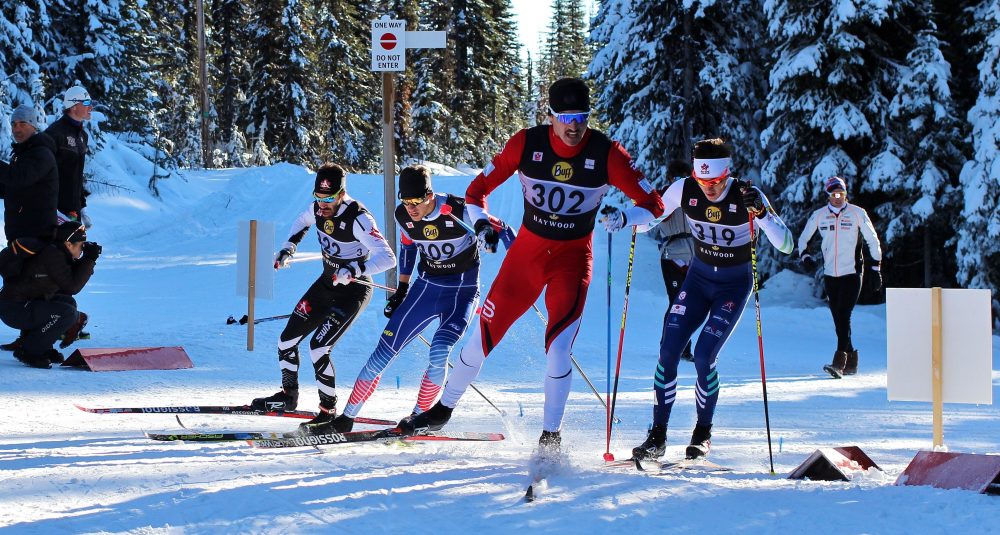
    Nick Michaud (BSF) in bib 302 putting those 30/30s to good use at the Sovereign Lake NorAm in 2017. Michaud was the second fastest qualifier. (Photo: Forrest Mahlen)


    The 30/30 Workout Menu Starting with Michaud’s Favorite Variation:

    Nick Michaud: 3 x 5 minutes, sprint pace. So we are all clear, this means a five minute long  30/30 excecuted three seperate times. During each five minute period, that’s a total of 2.5 minutes “on”, and 2.5 minutes “off”. For the entire session, the athlete is “on” for 7.5 minutes, or half the total elasped time. I rest for five minutes between each set.

    Notes: I use this two days before a sprint race, increasing my effort each set. It’s a great way to get a feel for speed, technique, and effort in all areas of the course. I take five minute breaks between sets. I leave the venue with a good understanding of the course and excited to move fast on it two days later. Using this training sessions at different points of the year is a great way to practice understanding the critical difference between effort and ski speed — which I think is crucial.

    Favorite 30/30 Variations from Others:

    Gary Colliander, US Paralympic Biathlon Coach: 4-8 x 6 minutes. Number of blocks depends on L3 or L4.

    Notes from Colliander: “Focus on quality of movement through the interval and a slightly higher turnover. With the short ‘on’ time I think you can hold the technique together better and because there is a short rest you can potentially push the pace and thus the level a bit. They’re still very tough, but that short rest just seems to offer bit of recovery while allowing the heart rate to remain high.

    Another way to look at the short 30 second rest is like it’s a downhill. Anytime you get a downhill it’s a chance to grab some O2 and recover although for a very short bit. But it always feels good when you come out of that tuck.”

    Lina Hultin, Bridger Ski Foundation Development/Competitive Team Coach: 5×6 minutes.

    Notes from Hultin: “What I like with 30/30s and 45/15s is that it allows the athletes to ski more efficiently. Since you have that shorter break, you tend to have better and more efficient technique since athletes ‘dare’ to push it a little harder when they know they will have a shorter break. Good technique requires strength and power and the shorter interval allows athletes to keep good technique for a longer time.

    The closer you get to the season you can dare to let go of that shorter break and hopefully you can maintain that good efficiency in you technique in a continuous time trial or longer intervals.”

    Akeo Maifeld Carucci: Craftsbury Green Racing Project Athlete: 2-4  x 10-15 minutes at L4+.

    Notes: “Terrain wise, I like small rolling terrain or maybe gradual uphill with some bumps. I believe in keeping it between L1 and recovery pace during the rest phase, but it is important that it keeps moving at the least.”

    Seth Hubbard, Bridger Biathlon Club Head Coach: 15/15s for sets of 4-8 minutes at race pace +

    Notes:This workout is altered depending on an athlete’s age and their work on pacing, and ability to surge and recover.”

    Will Sweetser: Nordic Programs Director at Sugar Bowl Ski Team and Academy: 15 sec/15 sec 6-12 minutes.

    Notes: “I use 6-12 minute repeats with ‘on time’ at either L3+ or goal pace for races 8 minutes and longer. First used this coaching runners in the mid 90’s. Have since had good success with younger athletes developing pace sense.

    Used the 15/15 to help take an athlete’s 3,000 meter time from 11:38 to 10:10 in 5 weeks. The next year this athlete brought their time down to 9:27 using 15/15 session of 2 x 3000m about once every 10 days.”


  • Sugar Bowl Ski Team & Academy Appoints Will Sweetser Director of Nordic Programs

    (Press release)

    Outgoing Director Martin Benes to coach for US Paralympic Nordic Skiing

    Sugar Bowl Ski Team & Academy (SBSTA), a youth development ski team and college- preparatory high school for competitive skiers, announces the appointment of Will Sweetser as Director of Nordic Programs.

    Sweetser, who served as a coach for SBSTA last season, brings over 25 years of coaching experience to the position, including serving as Program Director at Carrabassett Valley Academy, Maine Winter Sports Center, and Mountain Endurance Sports. Sweetser has been personal coach for four Winter Olympians, has helped 22 athletes to US Junior Cross Country and Biathlon medals, and recently helped Lance McKenney, who was named to US Ski Team Development Program, to 20th place at World Junior Championships. In 2018, Sweetser’s first year at SBSTA, student-athlete Lexie Madigan competed Biathlon World Youth Championships, and eight student-athletes earned top 20 finishes at Junior Nationals.

    “It is with great gratitude and tremendous optimism that I have agreed to take the reins as Director of Nordic Programs for Sugar Bowl Ski Team & Academy,” said Sweetser. “Our team has had a fantastic summer of training and should be very well prepared for the coming season.”

    Sweetser replaces Martin Benes, who joined US Paralympics as a coach for US Paralympics Nordic Skiing. Benes served as Head Coach and Program Director for Sugar Bowl Ski Team & Academy for seven seasons. In that time, he developed athletes to the US Ski Team and US Biathlon Development Team, including qualifying athletes for FIS Nordic Junior World Ski Championships, Biathlon Youth World Championships and the Youth Olympic Games.

    “I’m incredibly grateful to the Sugar Bowl Ski Team & Academy community for the time that I’ve spent leading the Nordic program here. I’ve enjoyed the opportunity I’ve had and working alongside such a dedicated and motivated staff,” said Benes. “I will miss the program here and the incredible athletes that I’ve been privileged enough to coach. I know that SBSTA’s Nordic program is well positioned, with Will’s leadership, a great group of student-athletes at Sugar Bowl Academy, growing potential in our Sugar Bowl Ski Team programming, a strong partnership with Royal Gorge and Sugar Bowl Resort, and an incredible staff.”

    Commenting on Benes’ new position, SBSTA’s Executive Director John Horsch said, “It is a fantastic vote of confidence in both the quality of SBSTA’s program and Martin’s abilities that he has been named as Head Coach of the US Paralympic Nordic Team, and we look forward to cheering for his athletes in Beijing in 2020. SBSTA is grateful for Martin’s seven years of service to our student-athletes. He leaves behind a mature program with a strong track record of helping student-athletes succeed at the highest levels of the sport.”

    On the appointment of Sweetser, Horsch continued, “We are overjoyed that Will has agreed to take on the role of Program Director. He was incredibly impactful in his first year at SBSTA, and
    we look forward to future growth of SBSTA’s Nordic and Biathlon programs under Will’s experienced leadership.”

  • Over Before It Really Began: Burke and Sweetser Part Ways

    Over Before It Really Began: Burke and Sweetser Part Ways

    The logo for Burke Mountain Academy in East Burke, Vt., shows both alpine and nordic ski racers side by side in this photo from December 2016. (Photo: @BurkeMountainAcademy/Instagram)

    A recently promised revival of the nordic program at Vermont’s Burke Mountain Academy (BMA) now seems to be on hold, following a recent change in leadership and what appears to be the school’s subsequent decision to cut ties with its recently hired nordic coach Will Sweetser. As the first day of the 2017/2018 school year approaches in less than a month, Sweetser remains in Wyoming, far from northern Vermont. And the school remains without a publicly announced plan for the future for its nordic ski program.

    Revival and retreat?

    For several months earlier this year, the future of nordic skiing at a private school in northern Vermont that describes itself as “the preeminent ski academy” was bright. A press release on the BMA site, dated March 7, proclaimed, “BMA Revives Nordic Program with Olympic-Level Coach.”

    The school announced that Sweetser had been hired as head nordic coach “effective immediately in preparation for the 2017-2018 academic year.” Then-Head of School Jory Macomber enthused about the school’s “revived Nordic program,” and said that the school had “always … aim[ed] at delivering world class alpine and Nordic racers.”

    Two months later, on May 9, the Facebook page for BMA Nordic announced “The first camp of the new era,” to be held in late June, reflecting this nordic revival.

    Later that month, Sweetser was featured in a May 26 article on FasterSkier. “We felt really welcomed there,” Sweetser said of the Burke community. He dismissed concerns that the school’s nordic program had lain fallow during the 2016/2017 season (there were “no athletes and no coaches” on the nordic side that year), saying that “the board of directors seemed totally disinclined to let nordic die, so I feel like there is a tremendous support for nordic at the school.”

    Sweetser appears to have been employed by BMA as recently as late June. An archived version of the school’s coaching staff website (archived on June 21) lists Sweetser as head nordic coach. (The same URL, burkemtnacademy.org/skiing/nordic/coaching-staff/, now redirects to a site ending in skiing/alpine/coaching-staff/. This page lists 17 different coaches, none of them with an explicit nordic affiliation. The total student body at Burke Mountain Academy is 66 kids. The school claims nine “teaching faculty” and 16 “coaching/athletic staff” on its website.)

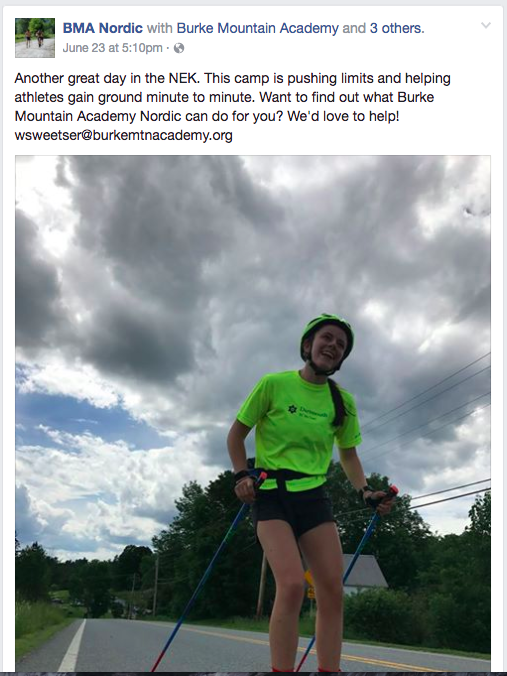
    June 23 screenshot from BMA Nordic Facebook page

    As of June 22, Sweetser was still listed (in both the cached and current versions of the site) as running the BMA Nordic Assessment Camp, held on the Burke campus from June 21-25. And a June 23 Facebook post for BMA Nordic asked, “Want to find out what Burke Mountain Academy Nordic can do for you? We’d love to help!” while giving Sweetser’s BMA email address as the point of contact.

    There have been no updates on the BMA Nordic Facebook page since June 25, when a post described the final day of the Nordic Assessment Camp and looked to the future: “Great finish to a fantastic camp. Yoga, hike up Burke Mountain and some planning for the future. Thanks BMA (especially Dave, our chef), can’t wait to come back!”

    If something then happened between Sweetser and BMA that led to or reflected a relationship souring, it happened fast. FasterSkier spoke with Sweetser by phone less than three weeks later, last Friday, July 14.

    “I am no longer employed by Burke Mountain Academy,” Sweetser told FasterSkier at that time. “And I can’t comment further,” he added, alluding to the possibility of pending litigation.

    No comment from Burke Mountain Academy

    FasterSkier spoke with BMA Director of Development & Communications Jodi Flanagan on Friday afternoon. “I don’t have information on that,” Flanagan said by phone when asked about Sweetser’s employment status. She pledged to provide contact information for someone who could answer these questions.

    Flanagan subsequently provided an email address for Head of School Willy Booker. She stated that Booker was traveling in Europe, but would be glad to answer questions for this story. 

    FasterSkier emailed Booker last Friday (evening European time), and again on Tuesday, with a number of questions. On Wednesday, Booker wrote back, in full, “Thank you for your note. I’m traveling abroad with limited access to email. I will respond upon my return the first week of August.”

    Phone messages left with a number of other coaches within the BMA athletic program were not returned.

    Turnover at the top

    After what the school has described as “15 years of stable leadership” under a single man, BMA has seen at least four different leaders within the last thirteen months.

    Will Sweetser with his wife Sarah Dominick and their 1-year-old daughter, Aesklyn, near their home in Cody, Wyo. (Courtesy photo)

    Former Headmaster Kirk Dwyer left that position effective June 2016, the school announced a full year in advance, vacating a position he had held since 2000. Dwyer was followed by Macomber, in a position that by this point had the job title of head of school. But less than ten months later Macomber was on his way out; a BMA press release dated April 13, 2017, said that he was resigning for “personal reasons.” Steve Berlack was announced as interim head of school for the next few months. 

    Two months later, a June 2 press release announced the school’s fourth leader in roughly a year, Booker. The press release stated that Booker would be the next head of school “effective July 31, 2017.” In practice, Booker is currently listed on the BMA staff directory as head of school, and was media representative Flanagan’s recommendation for an appropriate person to answer FasterSkier’s questions about Sweetser and the school’s nordic program.

    Sweetser “started having conversations with Burke in late February,” he told FasterSkier, and accepted the position at BMA on “March 3 or 4.” Macomber was the BMA head of school at the time that Sweetser would have been discussing his potential employment with the school. By the time Sweetser was no longer employed by BMA in late June or early July, first Berlack and then Booker had assumed that role.

    Booker gave only the polite placeholder response quoted above to a follow-up email asking whether there is any connection between a change in school leadership and a change in Sweetser’s employment status.

    What happens next

    As Sweetser intimated, there may be litigation between the parties in the future. As of Tuesday afternoon, docket searches suggested that no case involving Sweetser and BMA had been filed in either Vermont state or federal court. (There are numerous steps that often precede the filing of a formal civil lawsuit, such as letters between the parties and attempts to reach a settlement without resorting to litigation.)

    The future of the BMA nordic program, which dates back over 30 years and counts U.S. Ski Team athletes Liz Stephen and Ida Sargent and NCAA champion Sam Tarling as its most prominent alumni, is also unclear.

    Sweetser said in May that “Priority number one” for his first year there was “to recruit.” He added, “My first priority is rekindling that core group [of nordic athletes]. We do have interest. Two kids are committed to coming and I am in discussions with several others that I think we will start the year between four and six athletes for next year. My goal is to have enough athletes on campus to have a consistent group of somewhere between 18 to 24 athletes. I recognize that is going to take a while, but that will be a program that is several coaches, full-age cohort in both men’s and women’s high school ages. I am very optimistic about the potential.”

    (FasterSkier has been unable to contact any athletes who were recruited to BMA for nordic skiing with Sweetser this fall. If you would like to speak with FasterSkier about this, you may email gavin (at) fasterskier.com.)

    This potential comes with a steep price tag: annual tuition at BMA is over $55,000 for 2017/2018 (down to $42,000 for a day student needing tuition alone, sans room and board). “Approximately one third” of the 66-person student body received financial aid in 2016/2017.

    The fall semester for the 2017/2018 academic year begins on Aug. 14. 

  • BMA Revives Nordic Program with Olympic-Level Coach

    Will Sweetser was recently hired as head nordic coach of the Burke Mountain Academy in East Burke, Vt.

    (Press release)

    EAST BURKE, Vt. (March 7, 2017) – Burke Mountain Academy is delighted to announce the revival of its Nordic program with the hiring of Will Sweetser as the Head Nordic Coach effective immediately in preparation for the 2017-2018 academic year.

    A Dartmouth College graduate, Sweetser has more than two decades of experience as a Nordic coach, having personally overseen the training of athletes who qualified for the 2006, 2010 and 2014 IOC Winter Olympic and Winter Paralympic Games.

    His coaching career includes working with both the US Ski Team and the US Biathlon Team as part of the ski service team to FIS Scando Cups, OPA Cups, World Cups, IBU World Junior Championships and IBU World Youth Championships, as well as local coaching experiences with Bates College, Jackson Hole Ski Club, Carrabassett Valley Academy, Rangeley Lakes Nordic and the Maine Winter Sports Center.

    “I am truly excited by the opportunity to rebuild Burke Nordic to a position of national prominence,” says Sweetser who also recently founded Mountain Endurance Sports. “In my two decades of coaching, I’ve encountered so many excellent Burke student athletes –including some of my favorite kids from my home state of Maine,” he shares. “Burke is absolutely the right place for my family as I focus on shaping the next generation of outstanding Nordic racers.”

    BMA has a long tradition of developing thriving Nordic athletes. Two current US Ski Team racers, Liz Stephen ‘05 and Ida Sargent ‘06, evolved at the academy.

    “I’m very excited Will is joining our team to bring the necessary leadership and vision to our revived Nordic program,” tells Jory Macomber, BMA’s Head of School and alumnus from the class of 1980. “BMA’s vision has always been to develop the most complete student-athletes and to aim for delivering world class alpine and Nordic racers. With our amazing training sites and USSA designation, we are in a strong position to offer our students the cutting-edge resources they need to reach their full potential during their highly formative adolescent development years.”

    Recently, BMA established a comprehensive partnership with USSA and was recognized as a U.S. Ski Team High Performance Center – in large part thanks to the academy’s superior on snow training venue and new, state-of-art Ronnie Berlack indoor athletic training facility.

  • Fereshetian Takes the Reins as Maine Winter Sports Center Cross Country Coach

    Fereshetian Takes the Reins as Maine Winter Sports Center Cross Country Coach

    Justin Fereshetian representing the University of Maine Presque Isle at the Lake Placid SuperTour in 2011. While at UMPI, he trained with the Maine Winter Sports Center and so knows their program from both an athlete's and a coach's perspective.
    Justin Fereshetian representing the University of Maine Presque Isle at the Lake Placid SuperTour in 2011. While at UMPI, he trained with the Maine Winter Sports Center and so knows their program from both an athlete’s and a coach’s perspective.

    Justin Fereshetian knew from a young age that he wanted to coach.

    “I knew that once I was finished racing, I wanted to be a coach,” the Turner, Maine, native said in a phone interview on Tuesday. “I’ve grown up just going to track meets, going to cross-country meets, and helping out. I was getting to be around that atmosphere all the time and I really enjoyed it. Then I got really into skiing, and I wanted to continue that avenue.”

    After attending the University of Maine, Presque Isle, Fereshetian took his first step down the coaching path when he worked as an assistant for the Maine Winter Sports Center (MWSC) last season.

    This spring, with a reorganization of the nonprofit and the dismissal of head coach Will Sweetser, Fereshetian was handed the opportunity to go one step further: to become the head cross country coach in a program where he had trained and raced himself.

    “I was a part-time assistant, and I really loved it,” Fereshetian said. “Now that I will be full-time, I’m really pumped.”

    He may be just 25 years old, but Fereshetian already impressed fellow MWSC staff last season with his approach to coaching. Sweetser said he had been working to create a full-time position for his mentee, maybe not this year but next year, and encouraged Fereshetian to apply for the new position after his own departure.

    “He’s pretty self-aware,” Sweetser said. “He knew that he would like to have another year or two to work with a more experienced coach to get his legs fully under him. I think that’s pretty cool to have a younger coach with that kind of awareness… I’m pretty impressed with his ability to be humble and open to suggestions. And if you talk to the athletes, he has a great rapport.”

    Fereshetian is now less than a month into his tenure, and still learning what his role is in the organization. With the disappearance of funding for MWSC’s Olympic Development program, most of the senior athletes who were formerly in the cross country team have now left.

    “We don’t really have any nordic postgrads that are staying throughout the fall,” Fereshetian said. “We have a couple who will be here for part of the summer before heading off to college in the fall.”

    He’ll try to rally the experience of those older athletes, while they are around, to motivate and inspire the high school crew which will form the core of the MWSC cross country program this season.

    “It’s really helpful having those guys around, because I can give them advice on what to do but then they can have someone who’s had experience with success and be able to look at what they are doing,” he said. “To have someone there racing and doing a really good job, it’s great to have good role models.”

    MWSC is coming off one of its best years ever for junior cross-country skiing.

    “We had six athletes in attendance at Junior Nationals last year, and we had even more than that qualify,” Fereshetian explained. “That was the most kids that Maine Winter has sent to one JN’s, I believe. That was really special.”

    Three of the athletes (Austin Huneck, Daniel Streinz, and Lance McKenney) turned in top-10 performances in individual races; so did former MWSC athlete Kamran Hussein, who had moved to the Stratton Mountain School.

    “My goal is to continue their development and try to help be able to reach their goals again,” Fereshetian said. “We definitely want to send multiple kids back to JN’s again.”

    Fereshetian is mostly sticking to the MWSC training script that has been written by Sweetser and biathlon coach Seth Hubbard, saying that it has been proven to work. He’ll add his own little twists, though.

    To do that, he has a lot of inspiration to draw on. Fereshetian’s father, Al, is the track and field and cross country coach at Bates College in Lewiston, and has earned Coach of the Year honors in multiple different athletic leagues, including in his previous tenure at Appalachian State University.

    “I definitely learned a lot from my dad,” Justin Fereshetian said. “And I also learned a lot from the great coaches that I’ve had: Paul Stone, Alexei Sotskov, Will. I had a lot of really influential people to gain knowledge and resources from.”

    According to MWSC CEO Andy Shepard, taking young coaches with passion and a good work ethic and turning them into experts has always been the organization’s strategy.

    “A lot of the coaches we’ve hired over the years have been young, and just getting started,” Shepard said. “We’ve given them access to resources and a support network that has helped them turn into some of the best coaches in the country… We believe that we’re capable of developing these coaches with the right attitude and work ethic, into world class coaches. I think our track record would suggest that we have success with that too.”

    Right now, the summer group is training five days a week, and Hubbard has been helping Fereshetian through the process of learning the ins and outs of the job.

    “Right now we have kids all over the place, and the training group is a little bit small right now,” Fereshetian said. “But once we get further into the summer we will get more closer to normal.”

    And Fereshetian is also helping out with a training camp that draws athletes from all across the state: any athlete who qualified to represent Maine at the U16 or Eastern High School Championships, or to represent New England at Junior Nationals, or to represent the U.S. at World Junior Championships, is invited. The camps happen four times a year and this time edition is at Sugarloaf.

    “We work with coaches from around the state to bring shared best practices together, and then all of that is applied to the kids who show up at this camp,” Shepard said. “It’s an awesome bunch of kids. We’re working not only on technique, but there’s also a lot of classroom stuff, nutrition and hydration and physiology. It’s one of my favorite times of the year.”

    In that atmosphere, Fereshetian is being shaped into a leader.

    “Definitely, there are big shoes for me to fill,” the 25-year-old said of his new job. “I in no way expect to be the type of coach that Will Sweetser was right off the bat. He had a lot of experience, and I learned a lot from him this last season. It was great working with him. But I feel confident in my abilities as a coach, and I’m really excited. It’s a little bit daunting, but I’m definitely a lot more excited than nervous.”

  • End of an Era: Sweetser Leaves MWSC After 15 Years; Club Focus Shifts from ODT to Juniors

    End of an Era: Sweetser Leaves MWSC After 15 Years; Club Focus Shifts from ODT to Juniors

    Members of the Maine Winter Sports Center cross-country and biathlon teams on one last ski of the 2014/2015 season in early April in Fort Kent, Maine. (Photo: Facebook/Katrina Howe)
    Members of the Maine Winter Sports Center cross-country and biathlon teams on one last ski of the 2014/2015 season in early April in Fort Kent, Maine. (Photo: Facebook/Katrina Howe)

    Earlier this month, Will Sweetser, competitive sports director at the Maine Winter Sports Center (MWSC), revealed on his Facebook page that his 15-year term with the program had drawn to a close:

    “I can’t thank all of you who’ve made Maine Winter Sports Center and Maine Winter Sports Center Athletes such a success enough. Wish that I could give another 15 years to establishing my dream in Maine,” he wrote.

    “Don’t know yet where I’ll be,” Sweetser, 44, added in a comment. “Sudden news.”

    While the Maine native said in a phone interview he wasn’t able to elaborate on the departure at the time, he noted, “The leadership of Maine Winter Sports Center is shifting a little and we’re moving a different direction. I’m on to my next adventure; I have no idea what that’s going to be be…”

    On April 13, Sweetser was vacationing at a family residence in Florida with his wife Sarah Dominick, an assistant nordic coach at Bowdoin College in Brunswick, Maine. The two live nearly 300 miles north of Brunswick in Stockholm, Maine, between the MWSC’s base in Caribou and Fort Kent.

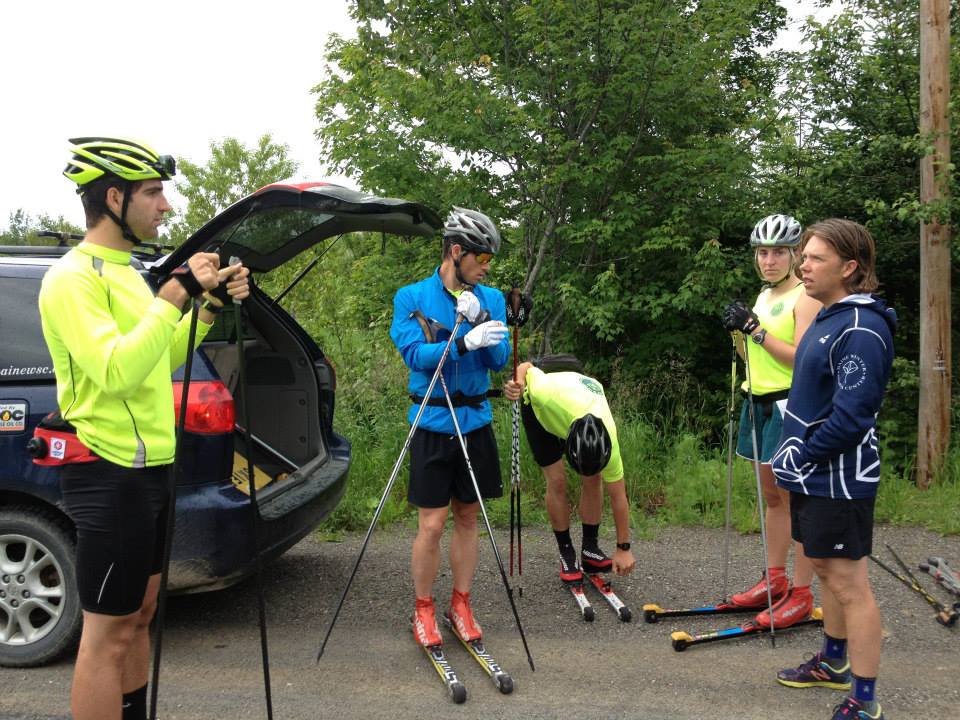
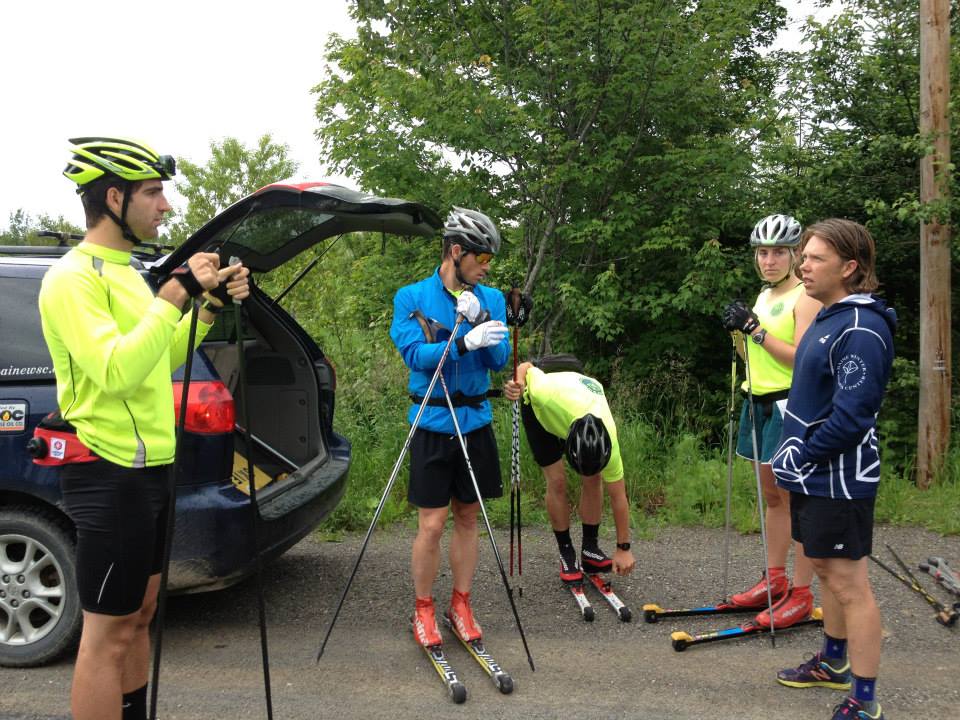
    The Maine Winter Sports Center Cross-Country Olympic Development Team (ODT) gets ready for a rollerski in northeastern Maine, with Kris Freeman (in blue), Welly Ramsey, Hilary McNamee and competitive programs director Will Sweetser (r). (Photo: https://www.facebook.com/maine.Winter.Sports.Center)
    The Maine Winter Sports Center Cross-Country Olympic Development Team (ODT) getting ready for a rollerski in northeastern Maine in 2013, with Kris Freeman (in blue), Welly Ramsey, Hilary McNamee and competitive programs director Will Sweetser (r). (Photo: Facebook/MWSC)

    Originally from Auburn, Sweetser skied for Dartmouth, and Dominick was an All-American skier at Bates College and former MWSC coach. Sweetser has coached at Bates, the Jackson Hole Ski Club in Wyoming, and Carrabassett Valley Academy and Rangeley Lakes Ski Club in Maine.

    “We were committed to raising a family in Maine and it came as a surprise,” Sweetser said of the recent news, adding that he and Dominick “will be searching for something new to do while we’re expecting a baby.”

    Their first child is due in October.

    “I’m really proud of the work that the organization has done in the field of competitive skiing [and] biathlon and I’m very thankful for all the time that I had with fantastic young athletes in the state of Maine,” Sweetser added.

    He started the position as head of the cross-country team in 2000. Along with Sweetser’s departure, the Olympic Development Team (ODT) program is being restructured, according to MWSC President and Chief Executive Andy Shepard.

    That means that ODT athletes, including Welly Ramsey, and biathletes Casey Smith, Russell Currier and Katrina Howe, will have to finance their travel for the coming 2015/2016 season.

    “In the short term — this coming season — the program will be more of a Training Center program,” Shepard wrote in an email. “We will continue to offer coaching for the athletes who want to train with us. We are also looking at opportunities to provide part-time coaching positions to provide some funding for them.”

    For the coming season, the MWSC, which has an annual total budget of $1.1 million, according to Shepard, will shift its focus to its junior and postgraduate programs. In 2013/2014, the center operated with about a $1.4 million dollar budget, supplied by the Libra Foundation.

    “The staffing structure we have had historically is set up to support those [junior and postgraduate] programs effectively,” Shepard wrote. “We have had a lot of success over the years placing kids from our programs on Olympic Teams. We are very proud of that heritage and are committed to continuing that tradition in the future. We just need to find a way to do so in a sustainable way. We hope to have a coach on board soon and will work with that coach to create a new vision for that program.”

    He explained that they were looking to fill Sweetser’s position in the “next couple weeks.”

    “While racing is a part of a much larger outdoor education program structure, we’re very proud of our role in racing in Maine and it will remain a critical part of our programming moving forward,” Shepard wrote. “Maine has some of the top skiers and biathletes in the country and we want them to be able to stay at home to pursue their Olympic dreams.”

    Currier described the ODT cuts as “unfortunate, but it isn’t necessarily unfair,” he said in a phone interview. “Getting athletes on the World Cup is a goal for MWSC, but it’s not the primary goal. If anything, it’s sort of an indirect goal. … Ultimately, the primary goal is to build a skiing community, not just a few fast athletes. So when the budget got stretched a little thin, they had to re-prioritize what is important.

    “While we still have training sessions for really good athletes, most of the resources and development will go toward that younger, local group,” he added. “It’s kind of a double edged sword. It’s fair, but it’s difficult for me.”

    Cash Flow

    In February 2014, MWSC discovered it would lose its funding from the Libra Foundation in April 2014. The program immediately launched two fundraising efforts, the first of which involved asking Maine-based foundations and corporations for three years of support with a goal of raising $550,000 by March 2014. The second spawned from an initial matching gift from Presque Isle native Mary Barton Smith, who pledged $100,000 plus a $400,000 matching grant.

    A few months later, Smith donated another $2 million with an additional $3 million in matching to kick off the program’s $20-million endowment campaign for the long-term sustainability of the MWSC.

    In the last 14 months, Shepard noted that the center has made “significant progress in our fundraising,” raising $3.9 million dollars. Two million of that was toward the program’s $20-million endowment and another $3 million would come from Smith’s pledged matched funding.

    “We still have a lot of work to do, but we are off to a great start,” he wrote.

    This season, the MWSC is increasing its Adventure Initiative Program from five sessions last year to 10 sessions this year, “including the possibility of a month-long program in the Patagonia region next fall,” Shepard explained. “We are increasing our budget for the Junior Race program and we are working on an exciting new biathlon program that we plan to announce in May. We have also launched a new initiative, collaborating with land trusts in Maine to provide trail design, programming, gear and leadership development.”

    But for the program’s highest-level skiers, funding cuts to the ODT (specifically to travel outside the East) and the cross-country coaching void have led many to reconsider their futures at Maine Winter Sports.

    The Initial Shock and What’s Next

    Welly Ramsey (r) in the arms of MWSC Competitive Programs Director Will Sweetser, his coach for the last six years, during a season-ending team ski in Fort Kent, Maine, in early April. (Photo: Facebook/Welly Ramsey)
    Will Sweetser, former competitive programs director at the Maine Winter Sports Center (MWSC), holds athlete Welly Ramsey during a season-ending team ski in early April in Fort Kent, Maine. Sweetser had been Ramsey’s coach for the last six seasons. (Photo: Facebook/Welly Ramsey)

    When Ramsey, one of seven members on the 2014/2015 MWSC cross-country team, heard his coach of six years was leaving, he described it as “quite a shock,” in an online message to FasterSkier.

    “We came close to a breakthrough this season, and I hope any future success of mine will be rightfully attributed to him,” he wrote. “The man has had an amazing impact on my life, playing coach, friend, co-worker, mentor, employer, disciplinarian, and much more. He always went the extra mile and I can unequivocally say that I wouldn’t be here without him.”

    Ramsey added that Sweetser was “responsible for nearly every Maine skier developed in the past 15 years,” and helped propel MWSC’s junior team to one of its most successful seasons last winter despite the loss of its development coach, Amber Dodge. In an email, Dodge explained that she took a job as youth program manger with the New England Nordic Skiing Association (NENSA) last fall after moving in with her boyfriend and ski racer Kris Freeman in Thornton, N.H., last summer.

    “I learned so much as a coach, thanks to Will and [biathlon director] Seth [Hubbard],” she wrote of her three years with the MWSC. “I miss the athletes I worked with dearly as we were able to spend so much time with them year round.”

    Ramsey explained he was “currently in negotiations with the Maine Winter Sports Center about my future with the program, and have contacted other clubs with whom I can see my career excelling.”

    He would like to stay in Maine “and continue helping develop the next generation of athletes, but I do need to make the choices which are best for my career,” he added. “Whether I stay or go will hinge largely on how effectively I fundraise this spring. Later this month, I’ll lay things out and assess my move based on fundraising potential, race and wax support, and training group. I have a big year of training planned and I’m excited for the opportunities this seemingly precipitous event has yielded, both in Maine and elsewhere.”

    His teammate, Austin Huneck described the news about Sweetser as “a huge shock to everyone.” Huneck started as a postgraduate under his guidance two years ago and felt he had made major gains in the time since.

    “It’s very sad for me to see him go after everything he has done to help MWSC and athletes across the state,” Huneck wrote in an online message. “It’s hard to put into words how much Will has done for the ski community during his years with Maine Winter. He has helped me grow so much as an athlete and a person, and I’m not sure I would be were I am today without him. I know whatever he goes on to do next will be a great adventure. I’m grateful to have known him as not only my coach but as my friend.”

    While he had initially planed to return to MWSC for his third season, Huneck explained that his plans are “very up in the air.”

    “Will being gone does have an impact on my decision to return, but I know Seth Hubbard and [program director] Mike Smith at Maine Winter will do a great job to hire a new coach to fill his shoes,” he wrote. “MWSC has seen a loss of funding for the elite level athlete support going into next year, and this is also going to have a big impact on my decision. I am currently looking into attending college next season, and speaking with coaches at other clubs around the country. But at this time, I cannot say what my plans are for sure.”

    For the last two summers, Omar Bermejo of the U.S. Paralympics Development Team has spent his summers training with the cross-country team in Maine. He currently lives in Casper, Wyo.

    “Will Sweetser is a great coach, without him in my corner the year before the Sochi Paralympics I don’t think I would have been as happy as I am with my performance and progression in the sport of Cross Country skiing,” Bermejo, a MWSC cross-country team member, wrote in an email. “It was a shock to me and to other athletes the sudden departure of Will from MWSC.

    “As far as my career, I had spoken to Will about the possibility of returning to MWSC this year but I will not be going due to his departure,” he added. “Lucky for me he will be moving closer to me here in Wyoming, where I intend to seek his help to improve my technique.”

    Sweetser did not say whether he and his wife planned to move from Maine.

    Howe, a biathlete with the program, wrote in an email that she was “devastated to hear about his departure from MWSC. Although he wasn’t my coach … I got to work with him quite often and thoroughly enjoyed it. I haven’t worked with many coaches who love skiing as much as Will does.

    “For Will and his wife Sarah it’s truly a lifestyle, not just a job,” she added. “They will be sorely missed at MWSC … As with the departure of any coach, good or bad, it’s an opportunity for growth and change in the program. Hopefully the position will be filled by someone who shares the love and enthusiasm for skiing that Will has.”

    In the aftermath of the ODT cuts, Howe explained she was unsure of her plans going forward.

    “Ideally I’ll be in a position to continue with biathlon but if that doesn’t happen my backup plan is to get reacquainted with my classic skis and jump into some cross country races this coming winter,” she wrote. “At some point I see myself becoming a coach, but I can’t say how soon that will be.”

  • Postgrad Life: Austin Huneck & the Maine Winter Sports Center

    Postgrad Life: Austin Huneck & the Maine Winter Sports Center

    Austin Huneck of the Maine Winter Sports Center racing in Muonio, Finland, early last season. (Photo: Will Sweetser)
    Austin Huneck of the Maine Winter Sports Center racing in Muonio, Finland, early last season. (Photo: Will Sweetser)

    Editor’s Note: The following interview with 19-year-old Austin Huneck gives a glimpse of what it’s like to be a postgraduate skier and make the transition to full-time training and racing after high school. Have a suggestion for an interesting subject for a similar “Faces and Places” series (could be a junior, postgrad or senior skier from any nation)? Send it to info@fasterskier.com.

    ***

    As a Shenendehowa high-school student in Clifton Park, N.Y., Austin Huneck represented Mid-Atlantic twice at junior nationals. In 2013, he was the New York State distance champion. As his graduation date neared, Huneck, who recently turned 19, enrolled in the Maine Winter Sports Center (MWSC) postgraduate program to focus on skiing before college.

    Austin Huneck of the Maine Winter Sports Center racing for New England at Junior Nationals in early March in Stowe, Vt. (Photo: Will Sweetser/MWSC)
    Austin Huneck of the Maine Winter Sports Center racing for New England at Junior Nationals in early March in Stowe, Vt. (Photo: Will Sweetser/MWSC)

    “Austin has been an excellent addition to our program,” MWSC Competitive Programs Director Will Sweetser, wrote in an email. “A real head down, quiet, lead by doing kind of athlete.”

    Sweetser explained that Huneck joined the MWSC late last summer “a bit behind our first year U18s. That changed quickly,” he wrote. “By race season, he was helping to push the group along. The early season trip to Finland was a real eye opener for him, and he used the experience to boost his training during race season. Kudos go to Seth Hubbard and the biathlon group who spent most of the time training with Austin since he lived with the crew in Fort Kent.”

    Huneck described his trip to Finland last November as a season highlight. He and other MWSC athletes competed in the sprint and the 15 k classic race at Muonio.

    According to Sweetser, postgraduate athletes “must show potential to qualify for USSA Junior Nationals or Biathlon World Youth Teams.” The program is limited to five athletes in each discipline — cross-country skiing and biathlon. Although MWSC focuses on Maine athletes, they consider athletes from other states. In an email, Sweetser wrote that more 60 percent of MWSC postgrads qualify for the New England Junior National team.

    Postgrad skiers collaborate with MWSC coaches to develop their training programs. But MWSC doesn’t just ramp up high schoolers’ hours and send them out to ski. The postgrads also commit 50 hours a year to volunteer work and are required to take two college classes during their program.

    Early last season, Huneck talked to FasterSkier about his experience in Finland and the transition from his home club, the Hudson United Race Team (HURT) in Albany, N.Y., to MWSC.

    FS:  How did the races go in Muonio? 

    AH:  I [did the sprint] and the 15 k skate race. The 15 k result was a little bit better.  The sprint didn’t go very well for me. In the distance race, since I didn’t have any FIS points going in …I started right at back of the junior boys. Then behind me were the men. On course, I got passed by some of the best skiers in the world.


    FS:  Were things different from what you expected over there?

    AH:  Sort of. I expected competition to be a lot tougher than it was. More competitive.


    FS: What can you take away from the races over there to use for the rest of the season?

    AH:  Racing over there, and training over there was a really cool experience.  I got to ski alongside some really great skiers.  The races give me something more to compare to when I race back here in the U.S.  There’s always that next level up from racing in New England and the United States.


    FS:  What made you decide to take a postgrad year?

    AH:  I knew I wanted to continue skiing after high school. I wasn’t sure what I wanted to go to college for, what I wanted to study. I figured that doing a postgraduate year at MWSC would give me an opportunity to better my skiing. Maybe when I go to college I’d have a good chance to ski for my college team.  And also it gives me a whole year to think about what I want to study.


    FS:  Was MWSC the only program you looked at? 

    AH: For me, MWSC far and away the best choice.  It’s a highly regarded program, and really good coaches. I didn’t really look at any other places.


    FS: What was it like going from Team HURT to MWSC?

    AH:  HURT is pretty much the extent of skiing in NY for juniors and masters. It’s one of the biggest clubs in New York. MWSC is the biggest junior club in Maine. MWSC is pretty much close as it gets to a skiing lifestyle.  The interest in New York is not there for cross-country skiing. The fields aren’t as deep in New York. There’s a lot more interest in skiing at MWSC. They also have better coaching at MWSC. David Paarlberg-Kvam of Team HURT does a phenomenal job of coaching, he does all he can. But MWSC has that extra something.


    FS:  Did you have a big increase in hours?

    AH: It was a big jump.  Last year, I trained a little under 400 hours. This year, I plan to be a little over 500. It’s a big jump, but I’m handling it pretty well.


    FS:  Where do you live?

    AS:  I live in Fort Kent, Maine.  We have a house for the athletes [at MWSC]. It’s mostly biathletes. I don’t do biathlon but I do live in the house. There’s six of us. We all have our own room.


    FS: What’s your day like?

    AH: We go rollerskiing or running around 8 a.m. … The middle of the day, we have free time. Then we have a second practice session at 3:30.


    FS:  What sort of community service are you working on?

    AH:  One of the things we do is help out with the development part of the MWSC program, which brings young kids out to have fun, play games and learn what skiing and biathlon are all about. Also, once a month each of the athletes goes into a different elementary school in the surrounding areas to give a presentation and talk to kids about different things such as, what we do at MWSC and what skiing is, healthy living, healthy eating, and so forth.


    FS:  What advice would you give to juniors about a postgrad year?

    AH:  I think it’s a great idea.  Doing a postgraduate year anywhere would put you in good position for college the next year. The level I was at last year, where I could go to a college with a good ski team, maybe I wouldn’t quite be on that team. But after doing a postgraduate year, hopefully I’ll be in a better position for when I go to college, to be on that ski team.


    In early April, we followed up with Huneck to find out how his season turned out.

    FS: How did the rest of your season go?

    AH:  Overall I think I had a good season. I put in a lot of hard work into this year, and produced my best results because of it. I am happy with how everything is going and will return to ski with the Maine Winter Sports Center next year.

    Junior Nationals went well. (A U20 skier, Huneck placed 18th in the 15 k freestyle and 12th in the 10 k classic in the national championships in Stowe, Vt., a set of races he made his primary goal for the season.) I had a couple decent races, but they weren’t quite what I was hoping for. I went in with a goal of a top-10 finish, and ended up just outside the top 10 each race. It was a good week however, great skiing and beautiful weather and many of my teammates had great races and New England was able to win the Alaska Cup fairly handily.


    FS:  What are you planning for the summer and next season?

    AH:  This spring, I’m heading home to New York from mid-April to the end of May to spend time with my family.  I will return to northern Maine in early June to train with my teammates for the better part of the summer. For the 2014/2015 ski season, I hope to continue to improve and produce good results at Nationals in Houghton, Michigan, and at Junior Nationals in Truckee, California. And I will stick with MWSC for the upcoming season.


    FS: What are your summer training goals or focuses?

    AH: Over the summer, my main goal is a lot of volume. In skate, I want to improve my V1 technique. In classic, I want to improve my double pole. And I’ll be working part-time to defray some of my expenses.


    We also asked Sweetser about Huneck’s progress:

    “I can’t wait to see what he’ll do this year with a full summer in our program,” Sweetser wrote. “He will be based in Presque Isle with a new crew of PGs. Most of his morning training will be with Welly Ramsey. The two are a great fit, as Welly is the last guy we had through the program who showed such a meteoric rise in potential.”

  • Doherty Rockets to Gold on Day 1 of IBU Youth Worlds; Maddie Phaneuf Lone Skier to Clean Sprint in Fourth

    Doherty Rockets to Gold on Day 1 of IBU Youth Worlds; Maddie Phaneuf Lone Skier to Clean Sprint in Fourth

    U.S. Olympian Sean Doherty (c) celebrates gold in the first race of the 2014 IBU Youth World Championships in Presque Isle, Maine. Doherty, 18, won Friday's 7.5 k sprint ahead of Germany's Marco Gross (l) in second, and Russia's Dmitri Shamaev in third. (Photo: Craig Cormier)
    U.S. Olympian Sean Doherty (c) celebrates gold in the first race of the 2014 IBU Youth World Championships in Presque Isle, Maine. Doherty, 18, won Friday’s 7.5 k sprint ahead of Germany’s Marco Gross (l) in second, and Russia’s Dmitri Shamaev (r) in third. (Photo: Craig Cormier)

    A little Olympic experience goes a long way. So does home-turf advantage in New England.

    Less than a week after competing in his first Olympics in the 4 x 7.5-kilometer men’s relay in Sochi, Russia, 18-year-old Sean Doherty, of Center Conway, N.H., opened the 2014 International Biathlon Union (IBU) Youth/Junior World Championships on Friday with gold in the youth 7.5 k sprint.

    US Biathlon staff snap a photo of the youth men's podium on Friday in Presque Isle, Maine, as represented in flags after Sean Doherty topped Germany by 1.7 seconds and Russia by nearly 19 seconds for the win. (Photo: Craig Cormier)
    US Biathlon staff snap a photo of the youth men’s podium on Friday in Presque Isle, Maine, as represented in flags after Sean Doherty topped Germany by 1.7 seconds and Russia by nearly 19 seconds for the win. (Photo: Craig Cormier)

    Shooting wasn’t easy in the two-stage race on a windy and frigid day at the Nordic Heritage Center in Presque Isle, Maine, where temperatures hovered slightly above 0 degrees Fahrenheit before the women’s 10 a.m. start, according to an IBU press release. The wind darted from left to right across the range, making clean shooting difficult in both the women’s and men’s races.

    Doherty, a favorite after taking silver in the sprint at last year’s World Championships, missed four shots en route to the win in 19:35. Two came in prone, which quickly put him 35 seconds out of the lead. On the next loop, he skied his way back near the front, hitting the first two shots, then missing the third and fifth for two more penalties.

    An early starter, Doherty’s fast ski time stood up as Russia’s Dmitri Shamaev crossed the line in second with two penalties (both in standing), nearly 19 seconds back. Germany’s Marco Gross, who missed one prone and two standing, bumped Shamaev to third, finishing 1.7 seconds behind Doherty for silver. As Doherty’s win became more evident, a small crowd broke out chanting, “U.S.A., U.S.A,” according to the Portland Press Herald.

    “This is unbelievable,’’ Doherty told the Press Herald. “It means a lot to me. All the people who supported me were here to see it.’’

    His prone shooting worried him at first: “The shots were just not falling,” he told IBU. “But I had super skis thanks to our wax techs and felt great on the tracks. … I have no words to describe how it feels to win a gold medal in a Championship on home soil.”

    None of the 62 men cleaned. This is Doherty’s second world title and fourth medal after winning the youth pursuit last year.

    The IBU Youth World Championships women's 6 k sprint podium on Friday in Presque Isle, Maine, which included Italy's gold medalist Lisa Vittozzi (c), Germany's Anna Weidel (second from l) in second, France's Julia Simon (second from r) in third, and American Maddie Phaneuf (l) in fourth. (Photo: MWSC/Katrina Howe)
    The IBU Youth World Championships women’s 6 k sprint podium on Friday in Presque Isle, Maine, which included Italy’s gold medalist Lisa Vittozzi (43), Germany’s Anna Weidel (17) in second, France’s Julia Simon (35) in third, and American Maddie Phaneuf (39) in fourth. (Photo: MWSC/Katrina Howe)

    In the women’s race, Italy’s Lisa Vittozzi had just one penalty to claim her first sprint gold the youth 6 k in 18:49.9. Like Doherty, she took silver in last year’s event.

    Vittozzi topped Germany’s Anna Weidel, who also had a single penalty, by 13 seconds for the win. Weidel missed one in prone then cleaned standing to finish first, more than a minute faster than anyone else. Vittozzi challenged her with a rapid-fire clean prone stage, then one standing miss to put her 0.4 seconds ahead of Weidel heading into the final loop. There, she picked up more than 12 seconds on the German to bump her to second.

    “I prepared well for this competition and hoped for a top place, but never expected to be World Champion,” Vittozzi told IBU. “On the final uphill, I started to think this might be a very good day for me, so I gave everything I had.”

    Also with one miss, France’s Julia Simon finished 18.4 seconds back from the winner for bronze. Maddie Grace Phaneuf, who trains with the Maine Winter Sports Center (MWSC) in Presque Isle, was the only competitor to clean all day, putting her fourth, 41 seconds off the podium.

    “I was trying to stay mentally calm, and focused on my skiing technique while I was skiing and focused on my shooting while I was shooting,” Phaneuf wrote in an email. “I tried to do what I do when I’m training and nothing different. It wasn’t too difficult to do until I heard that I was doing so well, then I got a little nervous but tried to stay focused.

    “I still can’t believe how close I was to the podium, it’s awesome,” she added. “I never thought that I would be placing 4th in my first ever international competition. I’m hoping I can continue shooting and skiing as well as I did, and maybe I’ll even get a podium in the upcoming races.”

    “I couldn’t be more proud of Maddie, her teammates, and coach Seth Hubbard for all of the hard work they’ve put in to create a culture of belief here in northern Maine,” MWSC program director Will Sweetser wrote in an email. “Maddie showed true confidence today in her first international competition. She was composed, efficient and then, just hammered to keep her 4th place around the entire last lap.”

    Results: Men | Women

    Sean Doherty en route to gold in the 2014 IBU Youth World Championships 7.5 k sprint in Presque Isle, Maine. (Photo: Katrina Howe)
    Sean Doherty en route to gold in the 2014 IBU Youth World Championships 7.5 k sprint in Presque Isle, Maine. (Photo: Katrina Howe)
    Maddie Phaneuf (Maine Winter Sports Center) racing to fourth in Friday's IBU Youth World Championships 6 k sprint. She was the only competitor, male or female, to hit all 10 targets. (Photo: MWSC/Katrina Howe)
    Maddie Phaneuf (Maine Winter Sports Center) racing to fourth in Friday’s IBU Youth World Championships 6 k sprint. She was the only competitor, male or female, to hit all 10 targets. (Photo: MWSC/Katrina Howe)
    U.S. Olympian Sean Doherty (c) tops the podium in the first race of the 2014 IBU Youth World Championships in Presque Isle, Maine. Doherty won Friday's 7.5 k sprint ahead of Germany's Marco Gross (l) in second, and Russia's Dmitri Shamaev in third. (Photo: Craig Cormier)
    U.S. Olympian Sean Doherty (c) tops the podium in the first race of the 2014 IBU Youth World Championships in Presque Isle, Maine. Doherty won Friday’s 7.5 k sprint ahead of Germany’s Marco Gross (l) in second, and Russia’s Dmitri Shamaev in third. (Photo: Craig Cormier)


  • After 10 Years in the Marines, Bermejo on his Next Mission

    After 10 Years in the Marines, Bermejo on his Next Mission

    Omar Bermejo of the U.S. Paralympics Development Team cracks a smile during the 2013 SuperTour Finals hill climb at Sugar Bowl Resort on Aug. 8 in Truckee, Calif. (Photo: Mark Nadell/MacBeth Graphics)
    Omar Bermejo of the U.S. Paralympics Development Team cracks a smile during the 2013 SuperTour Finals hill climb at Sugar Bowl Resort on April 8 in Truckee, Calif. (Photo: Mark Nadell/MacBeth Graphics)

    The wind howling sideways across Sugar Bowl’s alpine slopes in Truckee, Calif., skiers and spectators alike at the U.S. SuperTour Finals hill climb in April grimaced in the cold. The Spring Series skate race was mostly a snow squall, with competitors battling a headwind at times as they pushed toward the top.

    Rounding one of the last corners into a blustery abyss, Omar Bermejo smiled for the camera. He might as well have been back in San Diego, Calif., where he was stationed with the U.S. Marine Corps; Bermejo appeared in his own world, immune to his frigid surroundings.

    Omar Bermejo (U.S. Paralympics) climbs more than 1,000 feet to the top of Mt. Disney at Sugar Bowl Resort for the SuperTour Finals hill climb on April 8 in Truckee, Calif. (Photo: Mark Nadell/MacBeth Graphics)
    Omar Bermejo (U.S. Paralympics) climbs more than 1,000 feet to the top of Mt. Disney at Sugar Bowl Resort for the SuperTour Finals hill climb on April 8 in Truckee, Calif. (Photo: Mark Nadell/MacBeth Graphics)

    “Being a Marine, you kind of crave those little, like, I-hate-my-life kind of moments,” Bermejo said three days later on April 11. “I don’t know, I liked it.”

    Skating was his favorite technique and doing so up a mountain wasn’t awful – even with one arm, the U.S. Paralympics Development Team member explained. A Marine for more than 10 years, Sgt. Bermejo rewarded himself for surviving four deployments in Iraq by buying a motorcycle in 2008. Cruising around that June in San Diego, he hit a patch of dirt on a curve and lost control of the bike, crashed and had his right arm amputated as a result.  

    Four months later, he started skiing for physical therapy, and it didn’t take long for the U.S. Paralympics Nordic Program to catch wind of his new hobby.

    “During my recovery, I had rehab [and the therapists] were like, ‘Hey do you want to try cross-country skiing?’ ” Bermejo, 31, recalled at Spring Series on April 11. “I was like, ‘Yeah, I want to go down some hills.’ And then they were like, ‘All right, go up that hill.’ I was like, ‘Wait a second, you tricked me!’ ”

    His voice fluctuated with excitement as he spoke, not long after racing 20 kilometers on the last day of the season. “Actually I started on classic skis and I was like, ‘Oh wow, this is like running. I feel great!’ ”

    Bermejo was, and remains, a fiercely competitive athlete. Before his accident, he was a road runner, racing 10 k’s, half marathons, you name it, Bermejo explained on the phone in June. He was just about to leave his hometown of Grand Rapids, Mich., to fly east to live and train with the Maine Winter Sports Center (MWSC) in Caribou, Maine.

    Early last season, MWSC head coach Will Sweetser helped Bermejo and Kevin Burton, a U.S. Paralympics visually impaired skier, at the SuperTour in Bozeman, Mont. The relationship continued through U.S. nationals and SuperTour Finals, with Bermejo meeting the team in March for a weeklong training camp in Maine. Ultimately, Sweetser asked Bermejo if he wanted to move there.

    “I really jumped at that,” Bermejo said. “I’m a stand-up athlete so I can sort of keep up with the able-bodied guys.”

    U.S. Paralympics Development Coach Eileen Carey (c) with two of her athletes, Omar Bermejo (l) and Kevin Burton at the 2013 IPC World Cup in Cable, Wis. (Photo: James Netz)
    U.S. Paralympics Development Coach Eileen Carey (c) with two of her athletes, Omar Bermejo (l) and Kevin Burton at the 2013 IPC World Cup in Cable, Wis. (Photo: James Netz)

    By stand-up, Bermejo meant his adaptive category, which allows him to ski just like anybody else with just one arm. His able-bodied teammates include Kris Freeman, Sam Tarling and Welly Ramsey of MWSC’s Olympic Development Cross-Country Team (ODT).

    “We are really excited to have Omar join us as a member of our ODT,” Sweetser wrote in an email. “While working with him last year as a service tech, he and I hit it off. I think that many of the professional clubs can offer a whole lot of help to most stand up adaptive athletes.”

    “Pretty psyched to have Omar join us,” he added. “Our junior group love him and really get pumped to train with him.”

    Not long after settling into Maine, Bermejo presented to the MWSC juniors. In September, he traveled to Italy with top skiers like Freeman, Tarling and U.S. Ski Team member Noah Hoffman to train at altitude in the Italian Alps.

    “Sometimes I feel as if I don’t belong there since in reality I have only been skiing for only two years,” Bermejo wrote in an email. “But whenever those thoughts come around is when I tell myself that I must push myself a little harder or smarter to get through and succeed at my training.”

    ***

    Three days after ascending more than 1,000 feet to the top of Sugar Bowl’s Mt. Disney, nearly 8,000 feet above sea level, Bermejo completed the 20 k classic at U.S. Distance Nationals on a borderline-hot, slushy day. About five kilometers in, he broke his pole. With no one around to hand him a replacement, he skied the next several hills without any use of his upper body. In his first Sprint Series, Bermejo wasn’t about to quit.

    Omar Bermejo during a slushy 20 k classic at U.S. Distance Nationals on April 11 at Royal Gorge near Truckee, Calif. (Photo: Mark Nadell/MacBeth Graphics)
    Omar Bermejo during a slushy 20 k classic at U.S. Distance Nationals on April 11 at Royal Gorge near Truckee, Calif. (Photo: Mark Nadell/MacBeth Graphics)

    “I had to basically no pole the whole thing,” Bermejo said after finishing in just over an hour and a half. “Towards the way back, somebody gave me a pole so I’m like, ‘OK,’ … it was the last [race] so I had to make it count.”

    That kind of grit is what U.S. Paralympics quickly picked up on. Post-rehab, Bermejo moved to Arizona to be with friends and lift his spirits.

    “I was trying to deal with my arm being missing,” he said. “I used to be a strong guy, like great runner, so I wanted to get back to that.”

    He discovered U.S. Paralympics coach Rob Rosser was hosting a biathlon clinic at the University of Arizona and decided to check it out.

    “I was in the mode that I could do anything,” Bermejo said. “[Rosser] invited me to the Empire State Games in upstate New York and I was like, ‘Wow, this is great. I want to continue doing this.’ ”

    Arizona, he soon realized, was not the best place for skiing. Bermejo started shopping around for new places to live and train, and Marc Mast in Sun Valley, Idaho, invited him to check out his Wood River Ability Program. In the summer of 2011, Bermejo moved there permanently.

    U.S. Paralympics Development Coach Eileen Carey, formerly of the MWSC, wrote in an email that she first worked with Bermejo at a development camp in February 2012 in Lake Placid, N.Y., where he traveled for the Empire State Games.

    “Since that time he has been hooked and has dedicated himself to becoming a Paralympic skier and biathlete,” Carey explained. “He has made huge gains in such a short period, which I would attribute to his professional and driven approach. He is introspective and I think that helps him see the small progressions that he makes and keep perspective on the fact that he is not yet the athlete he will one day become.”

    “Being a Marine, you kind of crave those little, like, I-hate-my-life kind of moments, but I don’t know, I liked it.” — Bermejo on the 2013 SuperTour Finals hill climb at Sugar Bowl Resort

    Last winter, Bermejo competed at the International Paralympic Committee (IPC) World Cup in Cable, Wis., and skied well enough to earn points. That gave him affirmation and hope. In a year, he wondered if he could make the 2014 Paralympics.

    Omar Bermejo competed in both biathlon and cross-country events at the IPC World Cup in Cable, Wis., last season. (Photo: James Netz)
    Omar Bermejo competed in both biathlon and cross-country events at the IPC World Cup in Cable, Wis., last season. (Photo: James Netz)

    He decided his best shot would be in biathlon. “With my Marine background and the shooting, it’s something that holds near and dear to my heart,” he said.

    “Right now on the international level, I’m like a nobody, but I want to get there,” Bermejo added. “They’ll be like, ‘Here comes the American guy; watch out for him.’ Eventually that’s what I want to do, I want to be a force.”

    Months after his East-Coast move, Bermejo was already pleased with his progress. Sun Valley was a great start, he explained, but he needed to train with others and follow a specific outline.

    “I asked my Paralympic coaches if moving to Maine would be a good idea and they told me it would be great if I was willing to sacrifice my then current social life and my love for the west of the country,” Bermejo wrote in an email. “I must say it was tough and one hell of a move but I have made huge improvements working with all the coaches at MWSC and I believe I am ready to use my newfound skills to work in the upcoming season.”

    Along with Carey, U.S. Paralympics Nordic High Performance Director John Farra encourages stand-up athletes to train with an elite club with able-bodied nordic skiers.

    “He has made a significant commitment to the sport and it has resulted in impressive improvement for a relative newcomer,” Farra wrote in an email. “We are excited for Omar to integrate into the MWSC program and see how far they can help him progress with his skiing. “

    So far, the best thing he’s learned is to “slow down to go fast,” he wrote. “When I first started skiing just freshly out of the Marine Corps my technique was to go as hard and quick as possible and hopefully I would go fast enough, however, after a couple of races I took a beating and I was not going anywhere.”

    In Maine, he realized if he relaxed and thought more about smooth skiing and glide, he could suddenly go faster and longer without feeling tired.

    Following U.S. nationals in January, U.S. Paralympics will select its national team for the 2014 Winter Games in Sochi, Russia. While Bermejo isn’t a shoe-in for one of the 19 spots, he’s optimistic.

    “Omar is one of the athletes who is Sochi ‘Eligible’ and in a good position to be able to qualify for the Team,” Farra wrote, referring to the Paralympic-team criteria. “I would expect he will make the team if he continues to train in a professional way through next winter.”

    “Omar has been a great part of our program over the last year or so,” Carey wrote. “He is an A-lister through and through. He is one of those people you meet and hope you will know forever.”

    Looking at the strides he’s made since his accident five years ago, Bermejo feels grateful for the opportunities he’s been afforded by the U.S.

    “I am proud to have served under our flag in the military and would like to keep serving my country but this time as an inspiration to never quit and never stop dreaming no matter what happens,” he wrote.

    “I want people to know that it does not matter how fast I can complete a race, how many people I can beat, what skis or waxes I use, or even how many medals I can accrue in my lifetime.. What matters is achieving happiness..  And I know I have already won at that ever since I started Nordic skiing.”

    He has several people to thank for his quick rise within the sport, including Mast, who “was the first person that saw potential in me,” the Hall family in Casper, Wyo., “for opening their doors and allowing me to make my training easier,” and his girlfriend Lindsey Hall “for giving me the inner strength to keep going when the going is tough.”

  • Hoffman, Freeman Take Altitude Training to a New Level

    Hoffman, Freeman Take Altitude Training to a New Level

    Kris Freeman of the Maine Winter Sports Center rollerskiing up Umbrail Pass in the Italian Alps. (Photo: Noah Hoffman)
    Kris Freeman of the Maine Winter Sports Center rollerskis up Umbrail Pass in the Italian Alps. (Photo: Noah Hoffman/www.noahhoffman.com)

    Two weeks of living and training nearly 11,000 feet above sea level can do a lot for Noah Hoffman and Kris Freeman’s preparation for the upcoming season. A lot of help if managed appropriately, a lot of harm if done wrong.

    The two elite U.S. skiers are wrapping up an on-snow camp in the Italian Alps. Hoffman (U.S. Ski Team/Ski and Snowboard Club Vail/Team HomeGrown) joined a trip arranged by the Maine Winter Sports Center (MWSC), of which Freeman is an Olympic Development Team member. A crew from the Green Mountain Valley School in Vermont also trained on the glacier, but lodged separate from the MWSC group.

    Hoffman and Freeman followed separate training plans, but with the same basic camp rule: don’t get too tired. If they come out of the camp needing two or three weeks to fully recover, they will miss out on valuable time reserved for intensity and sharpening before the season-opening races. Neither had previously lived and trained at as high of an altitude in their careers.

    Freeman and the MWSC group are on their way back to the U.S. on Monday, while Hoffman heads to Germany to train for a week with German World Cup skier Hannes Dotzler, who, at 23, remains one of the best skiers in the world in 24-year-old Hoffman’s age group. Hoffman said he wants to learn as much as possible from him.

    Dotzler finished sixth in the 15 k classic at last season’s World Cups in Canmore and La Clusaz, France, and seventh in the 50 k classic at World Championships.

    Freeman designated it a volume-only camp, logging a ton of slow hours. Hoffman did one intensity session each week, to keep in touch with the speed he developed over the summer.

    Noah Hoffman (U.S. Ski Team/ Ski and Snowboard Club Vail) classic skiing on the Stelvio Pass glacier.
    Noah Hoffman (U.S. Ski Team/ Ski and Snowboard Club Vail) strides on the Stelvio Pass glacier. (Photo: Noah Hoffman/www.noahhoffman.com)

    “I have always been able to handle huge loads of volume training and I also have a long history of responding well to high altitude,” Freeman wrote in an email. “I had my best races of [last] season at the Canmore World Cup right after spending two weeks at 8000 feet in Aspen.”

    Freeman had two top-15 finishes in Canmore. He didn’t realize until he got to Italy how close they were to Valdidentro, where he won the 30 k classic at the U23 World Championships in 2003 and placed 16th in a World Cup there in 2009, a week before finishing 4th in the 15 k classic at World Championships.

    “I thought Stelvio was the best option for a September on-snow camp,” Freeman wrote. “Overall, the quality of skiing and quality of life has been much better than other glacier experiences I have had.”

    Freeman reported firm tracks and winter-like weather on the Stelvio Pass glacier, with occasional snowfall to freshen things up. They kicked on hard wax around a two and a half mile loop neighboring an alpine area. Freeman and Hoffman, roommates on the World Cup circuit for the past five years, stayed together in Hotel Livrio, where they skied out the front door.

    It was Freeman’s first time on snow since the spring. Hoffman skied on Eagle Glacier in Alaska and at the Snow Farm in New Zealand this summer. They didn’t have much company on the loop, but last week shared it with the Italian military team and Olympic gold medalist Cristian Zorzi.

    MWSC coach Will Sweetser re-stocked the food supply frequently so the athletes could refuel between workouts. An early start was required to ski twice in a day on the glacier, as the trails closed for grooming at 3 p.m. daily. Sweetser also assisted with ski prep, letting the athletes focus on recovery during a condensed first half of the day.

    Hoffman didn’t check the altitude on the glacier when he was packing for the trip, so he had to adjust his workout schedule with coach John Callahan upon arrival.

    “The original plan with a high load of volume, intensity and specific strength didn’t make sense to pursue at this altitude,” Hoffman wrote. “John and I were not disappointed by the situation. We saw it as an opportunity to earn extra benefit from training, a good test of my ability to handle this altitude, and of course a reality we had to accommodate, not unlike a changed travel schedule, an illness, or difficult weather conditions.”

    Also on the glacier from MWSC were ODT members Welly Ramsey, Sam Tarling and Omar Bermejo. Canadian Brandy Stewart was also with the group.

  • Wednesday Workout: Finding Your Realistic Race Pace

    Wednesday Workout: Finding Your Realistic Race Pace

    FS-WednesdayWorkout-MWSC
    Maine Winter Sports Center (MWSC) biathletes working on uphill pace identification in Fort Kent, Maine. (Photo: Seth Hubbard)

    Welcome to Wednesday Workout, where we round up training ideas on a weekly basis. This week Will Sweetser, competitive programs director of the Maine Winter Sports Center, explains how to identify your personal race pace using his Reality Race Pace Progression rollerski workout. 

    ***

    Like most clubs around the country, our focus here in northern Maine is on youth and junior skier development. We want, first and foremost, to help the next generation of skiers earn spots on college teams, international trips, and the U.S. Biathlon and U.S. Ski Teams.

    While it is quite common for us to hear junior racers vocalize their dreams of representing the red, white and blue, it is equally common to see the same racers destroy any hopes of doing so, through poor pace identification in race after race. The start timer counts down and kid after kid across Maine throws caution to the wind and hammers out of the gate at Level “Go!”.

    Over the course of my time here in Aroostook County, I’ve steadily refined a workout aimed specifically at curing this lack of pace sense. I call it: Reality Race Pace Progression. This workout is aimed at identifying one’s 10 kilometer race pace. The beauty of the system is that it gives athletes a tremendous amount of worthwhile feedback.

    The concept is simple, and shamelessly stolen from track and field sessions practiced in Africa. All that is required is a lightly traveled stretch of road at least 500 meters long. Athletes should warm up as though it is race day — this is a great way to fine-tune race day prep.

    MWSC post-graduate Emily Ramsey racing in the 2012 U.S. Ski Association (USSA) SuperTour at Bohart Ranch in Bozeman, Montana.
    MWSC post-graduate Emily Ramsey (57) racing in the 2012 U.S. Ski Association (USSA) SuperTour at Bohart Ranch near Bozeman, Montana. (Photo: Will Sweetser)

    After warm up:

    • 1 kilometer time trial at maximum effort.

    • 15-20 minutes easy recovery skiing at Level 1.

    • 7-12 x 1 kilometer (over the same course as the time trial) at 15-20 percent slower than time trial pace. 2-3 minutes moving recovery between intervals.

    • Cool down 15-20 minutes.

    The time trial helps identify one’s current performance level. As I said earlier, it’s easy to set a goal of making a team, but most younger athletes do not have any idea of how fast they actually need to ski to do so. With the advent of improved grooming, snow making and sizably better waxing knowledge, most races throughout the year are relatively comparable in terms of per-kilometer times.

    Frequently, I’ve had athletes realize that their current sprint pace is not yet fast enough to compete in 10 k races on the New England Nordic Ski Association (NENSA) circuit. Even more often, I’ve had athletes show up and realize after the time trial that they just aren’t ready for the workout. Time trial times just don’t lie!
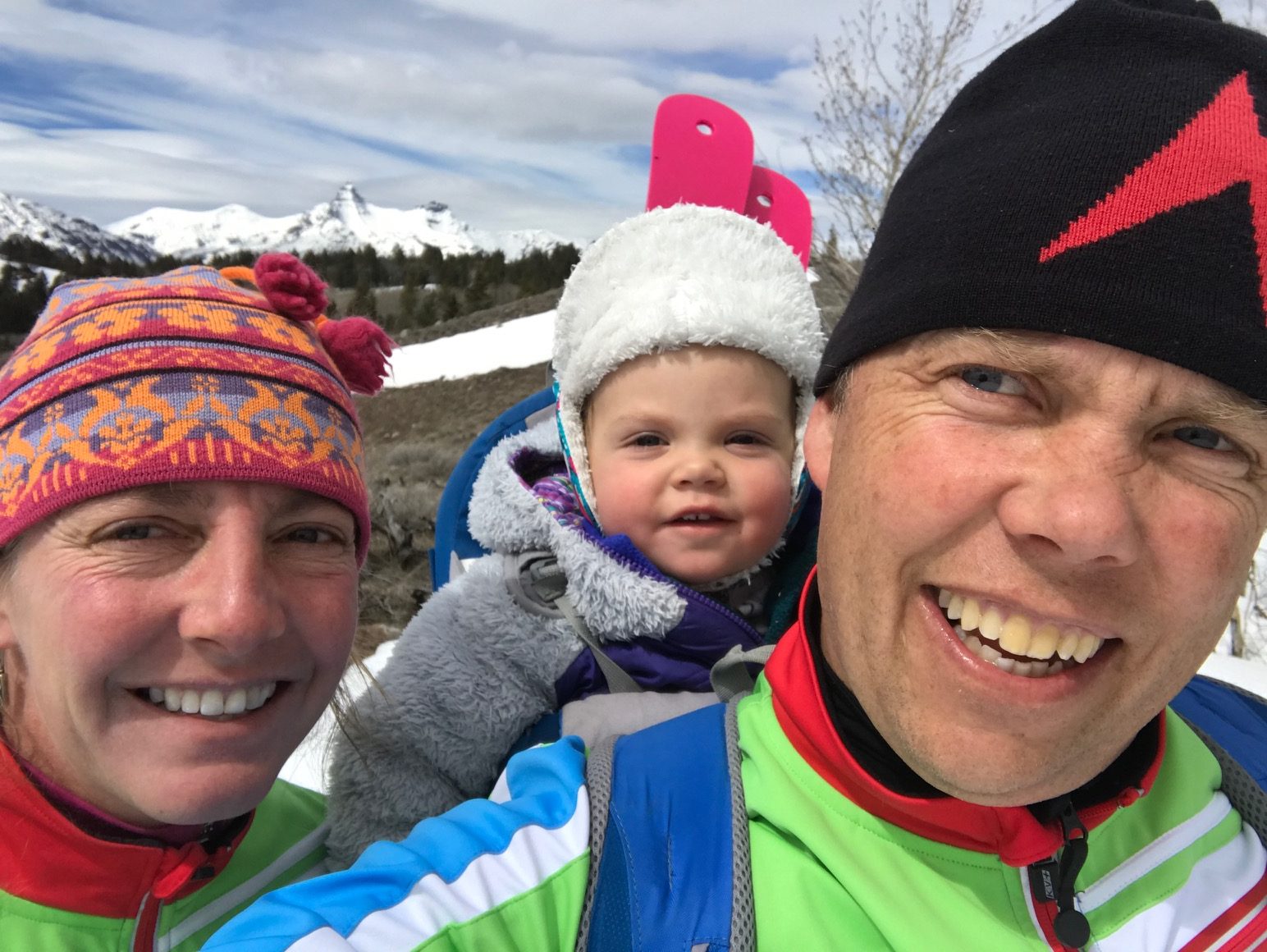
    The repeats, themselves, are aimed specifically at pace averages taken directly from a 10 year sample of International Ski Federation (FIS) sprint and distance races held at the same venue, in the same technique, in stable weather.

    All-around European racers averaged 18-percent slower per-kilometer over 10-15 k than they did in sprints. Distance specialists averaged 12-percent slower. Women tended to keep the gap a bit closer at around 15-percent (likely due to the generally shorter race distances for women and relatively longer early race times for women’s sprints). Interestingly, U.S. racers averaged 22-percent slower across the board in distance races versus sprints.

    Most athletes will claim immediately that the pace for the repeats is far too slow. It is important to keep the recovery times no longer than equal to repeat time. It’s also critical to emphasize that the goal of the workout is to get through enough repeats to accurately reflect race distance. If the athlete can only get through four repeats, he/she has done it wrong! Remember, these are Reality Race Pace Progression pieces. If the athlete can’t perform 10 repeats at the same pace, it’s not 10 k pace.

    With a little bit of research, athletes go into the workout with a goal per-kilometer time in mind. They immediately get feedback from the time trial, and then with each repeat. Athletes can readily identify where they’ve lost or gained time by repeating the same course. Especially with juniors or inexperienced racers, coaches will see athletes able to repeat their time trial time or even improve it through 7, 8, or even 10 repeats. This typically indicates either the need for technique development or an inadequate warm-up.

    At MWSC, we use our rollerski loops (paved ski trails at Nordic Heritage Center, 10th Mountain Ski Center) for these workouts. Since we’ve got an established loop, we don’t always use the time trial, especially if we’re repeating this workout within a week of the last time. As many athletes find this workout a bit of a mental strain, we don’t often use it more than 2-3 times per month during the fall. But, for those few times we repeat this workout, we see some fantastic results.

  • The 12: Maine Winter Sports Center

    The 12: Maine Winter Sports Center

    The Maine Winter Sports Center Cross-Country Olympic Development Team (ODT) gets ready for a rollerski in northeastern Maine, with Kris Freeman (in blue), Welly Ramsey, Hilary McNamee and competitive programs director Will Sweetser (r). (Photo: https://www.facebook.com/maine.Winter.Sports.Center)
    The Maine Winter Sports Center Cross-Country Olympic Development Team (ODT) gets ready for a rollerski in northeastern Maine, with Kris Freeman (in blue), Welly Ramsey, Hilary McNamee and competitive programs director Will Sweetser (r). (Photo: MWSC/facebook.com/maine.Winter.Sports.Center)

    Note: This is the sixth preview in our series on U.S. elite teams, which we’ve dubbed the “The 12.” We asked coaches to tell us what’s new and whom to look out for in the coming season and will publish additional previews in the coming weeks in no particular order.

    Team: Maine Winter Sports Center (MWSC)

    Coaches: Will Sweetser (competitive programs director), Seth Hubbard (biathlon coach), Amber Dodge (development coach)

    Roster:

    Kris Freeman training with the MWSC in northeastern Maine. (Photo: MWSC/https://www.facebook.com/maine.Winter.Sports.Center)
    Kris Freeman training with the MWSC in northeastern Maine. (Photo: MWSC/facebook.com/maine.Winter.Sports.Center)

    Cross-Country Olympic Development Team (ODT): Kris Freeman, Sam Tarling, Welly Ramsey; Hilary McNamee, Anna Van der Rhee (trying to qualify for Sochi Olympics for The Netherlands). According to Sweetser, McNamee is focusing on finishing her studies at Dartmouth and will race primarily in New England.

    XC Post-Grads: Emily Ramsey (New Sharon, Maine), Zoe Chase-Donahue (Freeport, Maine), Sarah Becker (Yarmouth, Maine), Abby Popenoe (Portland, Maine), Austin Huneck (Clifton Park, N.Y.)

    Collegiate Summer Program: Nick Michaud (Bates College), Gabby Naranja (Bates).

    Biathlon ODT: Russell Currier (U.S. Biathlon), Raleigh Goessling, Casey Smith, Annelies Cook (U.S. Biathlon), Katrina Howe

    Biathlon Post-Grads: Brian Halligan (N.Y.), Maddie Pfaneuf (N.Y.), Mikaela Palusek (N.H.)

    Adaptive ODT: Omar Bermejo

    Katrina Howe during skate hill workout. Katrina Howe during skate hill workout. (Photo: Seth Hubbard)
    Biathlon ODT member Katrina Howe during skate hill workout. (Photo: Seth Hubbard)

    Who’s new: Tarling (2013 Dartmouth graduate), Smith (formerly of Montana State University), Bermejo (Grand Rapids, Mich.), all post-grads except Emily Ramsey (second year).

    Who’s missing: None.

    Top results last season: Sweetser intends to send a minimum of four athletes to the Olympic Winter Games or in Bermejo’s case, the Paralympics. The most-obvious four that could make that goal a reality are Freeman, Currier, Cook, and Bermejo. But look out for the new guys, including Tarling and Smith, training with the Caribou-based MWSC on the northeastern tip of Maine.

    A three-time Olympian, Freeman, 32, was not renominated to the U.S. Ski Team for the first time in a decade. He won his 16th national title last January in the 50 k classic, but finished the 2012/2013 World Cup season with with three top-30 results. Sweetser said Freeman and Ramsey have had some very productive training sessions this summer.

    “[Freeman] is nowhere near the crazy specific fitness he had late last summer, however, he is lighter, faster [ran fastest 5 k (15:53) since 2004 in June] and happier than he’s been in years,” Sweetser wrote in an e-mail.

    Sweetser added that Tarling has been an “instant plus” in MWSC’s community programs, which include juniors, high-school skiers and adults. He was a presenter at the Maine Team Camp in Fort Kent earlier this month, which hosted 43 of the state’s best high school skiers.

    MWSC teammates, biathlete Raleigh Goessling leading Welly Ramsey, a cross-country skier, during bounding intervals in northeastern Maine. (Photo: Seth Hubbard)
    MWSC teammates, biathlete Raleigh Goessling leading cross-country skier Welly Ramsey during bounding intervals in northeastern Maine. (Photo: Seth Hubbard)

    The 2011 NCAA 10-kilometer freestyle champion won twice on the Eastern Intercollegiate Ski Association (EISA) circuit in his senior season at Dartmouth and finished fifth in the 30k classic at U.S. nationals.

    “(Tarling) is very professional in his approach to creating a career as a ski racer,” Sweetser wrote. “He is gelling well with our entire team and is a fantastic addition at junior training camps.”

    Van der Rhee (formerly Sprague), a native of Stockholm, Maine, and Utah alum, married a man from The Netherlands and has since established citizenship there. To qualify for the Olympics, she needs World Cup starts, which may be earned with either a sub 100-point distance race or sub 120-point sprint in International Ski Federation (FIS) competition. Last year, in returning to racing after a seven year hiatus, Van der Rhee had one sub 150-point race.

    Cook leapt 38 spots (83rd to 45th) in the biathlon world rankings last year. She tallied her first World Cup top 20 in Italy and two more in the pre-Olympic races in Sochi, Russia. This will be her second year with MWSC.

    Currier, 26, is trying for his first Olympics as a returning member of the U.S. Biathlon Team. The MWSC veteran pulled out a pair of sixth-place finishes on the World Cup in 2012 and was a critical component of the U.S. relay team that finished fifth in January in Oberhof, Germany.

    Smith, 21, is one of the most promising young biathletes in the country. He competed in the International Biathlon Union (IBU) youth and junior World Championships four times each, with his best junior-world finish coming last January in the 12.5-kilometer pursuit, where he was 23rd. Smith got a feel for northern Maine when he competed at U.S. Biathlon Nationals in Fort Kent last March.

    “As expected, Casey has been a great fit with our program,” Hubbard wrote in an e-mail. “He has great energy and focus.”

    Coach’s comment:

    “From my perspective as director, this group is more of a team than we’ve ever had,” Sweetser said of the multi-tiered elite team, now in its 11th year. “We are prioritizing group training twice each week with biathletes and XC skiers together. There is no doubt that our program will have one of the best men’s distance teams in U.S. XC. These guys could easily meet all of their goals this year given the progress we’ve seen thus far.”

    ***

    Other previews: Alaska Pacific University | Bridger Ski FoundationCraftsbury GRPSSCV/Team HomeGrown | Stratton Mountain School T2

  • Elite Team Preview: Maine Winter Sports Center

    Elite Team Preview: Maine Winter Sports Center

    New Maine Winter Sports Center teammates Kris Freeman (l) and Welly Ramsey (r) stand together at Mt. Bachelor on May 23 during a training camp in Bend, Ore. The two teamed up to win a friendly relay, which was 2 x 3 k per member. (MWSC photo)

    Note: This is the third preview in a quick-and-dirty series on U.S. elite teams. We asked coaches to send their 2012/2013 rosters and tell us what’s new for the coming season. We will be publishing additional reports over the next few weeks. Teams are presented in no particular order.

    Team: Maine Winter Sports Center Olympic Development Teams

    Coaches: Will Sweetser (cross-country), Seth Hubbard (biathlon), Amber Dodge (development), TBD (wax tech, intern)

    Kris Freeman leads Maine Winter Sports Center teammate Russell Currier over the preem line during Saturday’s 25km L3 workout. (MWSC photo)

    Roster: 

    Cross-country: Kris Freeman (U.S. Ski Team), Welly Ramsey, Hilary McNamee, Nick Michaud (collegiate summer)

    Biathlon: Russell Currier (US Biathlon), Annelies Cook (US Biathlon), Katrina Howe

    Who’s new: Freeman and Cook (see related story) and, more back than new, Michaud

    Who’s missing: According to Sweetser, Mike Lessard and BethAnn Chamberlain are focusing on careers outside of nordic racing. Fred Bailey moved back to western Maine and will continue to race with MWSC, while transitioning to coaching.

    Top results last season:

    Currier notched sixth at the IBU World Cup 10 k sprint in Nove Mesto, Czech Republic, placed sixth at the Kontiolathi IBU World Cup Sprint, and was seventh in the 50 k  at cross-country U.S. Distance Nationals.

    Ramsey placed 14th in both the 30 k and classic sprint at U.S. nationals, and was 12th and 14th at the West Yellowstone SuperTours.

    McNamee finished fourth in the classic sprint at the Madison SuperTour and 18th in the classic sprint at U.S. nationals.

    Another classic sprinter, Michaud made the Junior Nationals podium a month before he turned 20, placing third in the OJ sprint. At U.S. nationals, he was 26th in the classic sprint.

    Coach’s comment: “Three national team athletes and three more national level athletes working across the state of Maine with hundreds of kids,” Sweetser wrote in an email. “You can literally feel the synergy.”

    Freeman and Ramsey enjoying some county sunshine in northern Maine last week. (MWSC photo)

     ***

  • Freeman, Cook Newest Members of MWSC

    Freeman, Cook Newest Members of MWSC

    U.S. Ski Team member Kris Freeman, who recently joined the Maine Winter Sports Center, during a relay at Mount Bachelor in Bend, Ore., on Wednesday. Freeman teamed up with his new MWSC teammate Welly Ramsey to win the training-camp event.

    The Maine Winter Sports Center (MWSC) officially grew by two on Thursday, adding U.S. Ski Team veteran Kris Freeman and US Biathlete Annelies Cook to its roster. They join another national team member, biathlete Russell Currier, and three others on the Caribou-based club’s Olympic development team.

    While the MWSC’s competitive program took off in earnest 11 years ago and produced several Olympic biathletes and cross-country Olympian Ben Koons, the recent signings mean more good news for the center. In April, L.L. Bean pledged to donate $1 million dollars to the club’s Healthy Hometowns community program.

    US Biathlon team member Annelies Cook en route to a career-best 33rd place in the IBU World Cup sprint on Feb. 2 at Holmenkollen in Norway. (Photo: NordicFocus/USBA)

    The extra cash didn’t exactly translate to more money for the elite athletes; competitive programs director Will Sweetser said he convinced Freeman and Cook to commit because of pre-existing relationships. Born in Saranac Lake, N.Y., the 27-year-old Cook trained with MWSC for two years following high school.

    A true New Englander, Freeman, 31, has known Sweetser for years. The Maine Winter Sports coach previously worked with Freeman’s older brother, Justin, at Bates College, and Sweetser said he knew Freeman since about the mid ’90s when Kris was a teenager. Once in a while, they found time to chat.

    “Occasionally, I’m his punching bag during cool downs,” Sweetser said in a phone conversation from Maine. “I’m a big believer in coaches learning from athletes at least as much as athletes learning from coaches. Any time that the national team athletes are home and I’m at an event where I can go for a ski with one of them, I like to pepper them with questions.”

    Sweetser eventually made Freeman an offer too good to turn down. After casually reaching out to him in late March at Spring Series in Craftsbury, Vt., the three-time Olympian agreed to commit to his first actual club last week.

    Freeman listed Waterville Valley as his club since he started skiing there at age 5, but explained he was the only member of an essentially non-existent nordic program. At the SuperTour Finals in Craftsbury, he skied for Ski & Snowboard Club Vail (SSCV). Since then, Freeman had said he was deliberating between teams.

    “I think it’s been three seasons now where the U.S. Ski Team has stopped sending us support staff to U.S. Nationals and to SuperTours and being in a club is the best way to get that support,” Freeman said in early May. “Also going to domestic races by yourself isn’t much fun. Being in a club last year, skiing with the Vail guys was just a fun time so I think it was time to join a club.”

    The affiliation was mostly based on Freeman’s relationship to three of SSCV’s members: Noah Hoffman, Tad Elliott and Sylvan Ellefson, all of which joined him on the World Cup last season. While the club was appealing, it was also out of Colorado, and Freeman wanted to be in New England.

    Sweetser said it took about two months to get him to sign with MWSC.

    “All I said was, if he found himself in a position where he needed support, that we were more than happy to provide that support,” Sweetser said. “Following the [U.S.] Ski Team nominations, he decided that, one, he needed to be affiliated with a stronger club and, two, he needed some financial support in the lead up to this year’s World Cup season.”

    Freeman would not comment on what level of support he was receiving as an A-team member next season, and USST head coach Chris Grover said that was a private matter that only Freeman could answer.

    After a training session in Bend, Ore., Freeman told FasterSkier he joined MWSC.

    “A lot of their themes and stuff is healthy living and using sport as a means to an end,” he said. “That goes along well with what I’ve tried to get across with diabetes.”

    Considering the club was a six-hour drive from his hometown in New Hampshire, he also liked its local appeal. Between returning from Europe and racing in Craftsbury, Freeman spent time there at the northeastern tip of Maine. Sweetser said he worked with 12- to 14-year-old juniors, demonstrating technique while they chased him.

    At the end of June, Sweetser said Freeman will join the rest of his new teammates in Maine for a five-day camp. Freeman will also work toward some 100 hours of community service by spending a day at a diabetes camp. Meanwhile, Cook will do some public-relations work for MWSC.

    Later this season, Freeman planned to travel overseas to train with the Norwegian National Team and his coach Zach Caldwell (and teammate Noah Hoffman) in Norway. Sweetser said MWSC was supporting Freeman on that trip, along with all of his domestic race support, the time he spends in Maine and attends their training camps, much of his dryland training and at least his first World Cup period and Tour de Ski expenses.

    “In return, he’ll spend more than a month at training camps with us and close to a month doing PR in Maine, youth outreach and diabetes camps and training sessions with the athletes here,” Sweetser said.

    “It’s certainly exciting to have somebody that’s not only an Olympian, but has the potential to medal at the next Olympics,” he added. “We have a couple of really strong upcoming Maine athletes, like Hilary McNamee and Welly Ramsey, and we don’t do them a good service if we don’t have somebody that can mentor them. For Welly to be able to able to ski with Kris or Russ Currier, who went through the same path that Welly’s trying to do right now, is really valuable. For Katrina Howe or Hilary to be able to learn from Annelies is very valuable.”

    On Wednesday, Freeman teamed up with 21-year-old Ramsey to win a friendly relay at their training camp in Bend, Ore.

    “It was a good first workout for us to ski together,” Freeman said. “We’ll see how these camps go. Hopefully I can help raise the level there and in turn their support should help me out in domestic races.”

    — Chelsea Little contributed reporting.

  • Maine Winter Sports Center Reorganizes Staff

    Will Sweetser and Mike Smith named Division Heads. David Chamberlain joins staff.

    Caribou, Maine The Maine Winter Sport Center (MWSC) is restructuring its leadership to align with its programming priorities. The Caribou-based organization has split its curriculum into two divisions— Competitive Programs and the Healthy Hometowns Program.
    Will Sweetser, the current Director of Cross Country Development, will head the new Competition division, and will be responsible for ensuring a consistency of philosophy across all programs, while making sure no athletes fall through the cracks.
    Sweetser, a Maine native and graduate of Dartmouth College, brings with him 11 years of experience within the MWSC. During his tenure, Sweetser has coached every level of programming for the center—experience and perspective that will enable him to ensure a seamless transition for athletes in both the biathlon and cross-country programs. The new director takes over a program that has placed 10 athletes on the past two winter Olympic teams, representing both the United States and New Zealand.
    “Will is internationally respected for his broad knowledge as a coach,” said Andy Shepard, President of the MWSC. “That experience, and his intelligent, creative approach to programming, will lend themselves very well to our goal of being the premiere training site for elite nordic athletes in the US.”
    Mike Smith, a Presque Isle native and University of Maine graduate, is currently responsible for the MWSC’s community development efforts, which include the award winning Healthy Hometowns Program. Smith brings an impressive resume to his new responsibilities, having been actively involved in outdoor leadership and education for the past 11 years. Smith’s training and experience leading kayak expeditions around the world as a guide and outdoor educator, along with the passion he brings to introducing kids to the outdoors, makes him an ideal candidate for this new leadership position. Beyond nordic ski instruction and coaching, Smith’s background in the outdoors includes work as a registered Maine guide, leading four-season wilderness trips, backpacking, mountaineering, canoeing, kayaking and mountain biking.  He has also led whitewater kayak trips and instruction in Maine, the Carolinas and Central America.
    Smith’s promotion is a reflection of the MWSC’s commitment to transitioning the state’s Healthy Hometown ski programs into year-round Outing clubs. ”In order for a child to embrace the healthy, active, outdoor lifestyle we are promoting,” said Shepard, “they need to see a commitment on our part to being in their lives year-round. We are really blessed to have someone with Mike’s unique skills and energy to lead that effort statewide.”
    The MWSC is also announcing the addition of David Chamberlain to the staff as the new Youth Development Coach. “I feel honored to be able to add David to our staff,” said Shepard. “The athletes are very fortunate to have someone of his experience to help them find their way.” “David has been a remarkable role model, carrying himself with such dignity and humility—our Development athletes will be learning from the best.”
    The Bates College graduate, and former US Ski Team member, has seen athletic success at every level of competitive skiing. Chamberlain’s impressive list of achievements includes two Maine Class A state ski championships, two NCAA All American honors, two FIS Super Tour titles and being a three-time member of the US World Championship Team. Chamberlain, who retired as a full time athlete last spring, brings a fun loving nature and world-class experience to his new position.
    The Maine Winter Sports Center is a non-profit economic development company, that exists with annual grants from the Portland-based Libra Foundation. To learn more visit www.mainewsc.org.