From the FasterSkier archive — posts syndicated from athletes’ and coaches’ own blogs between 2004 and 2012, kept online as published. Current coverage is at fasterskier.com.
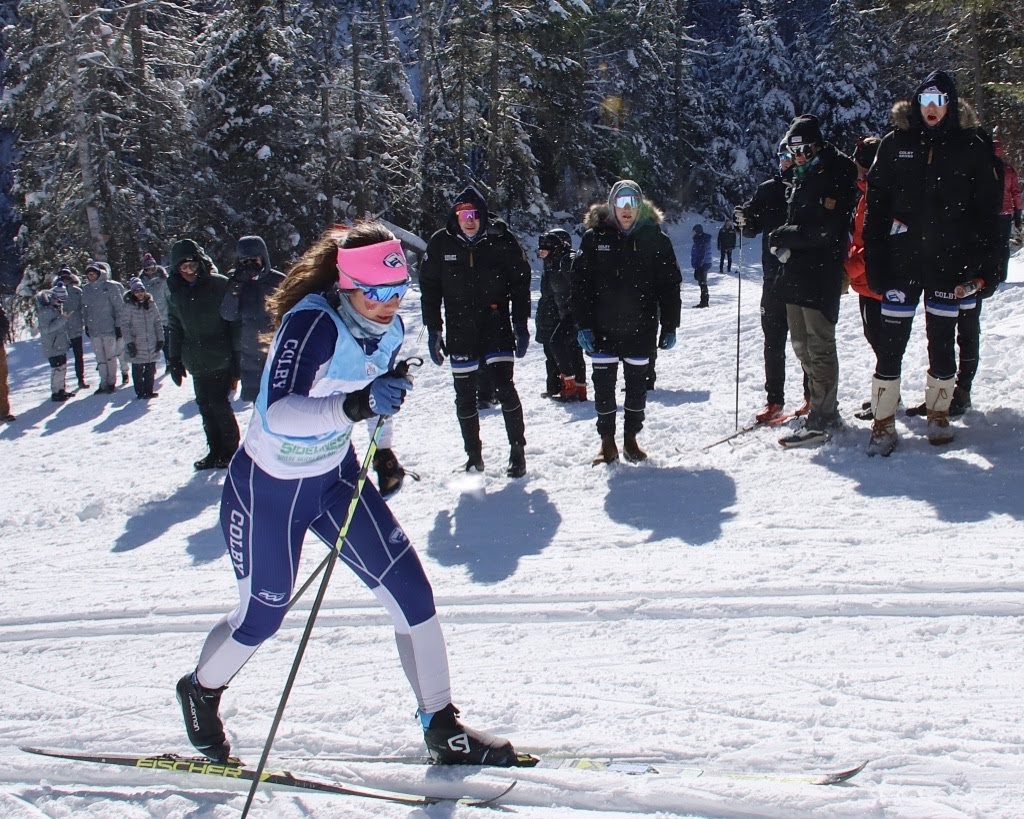
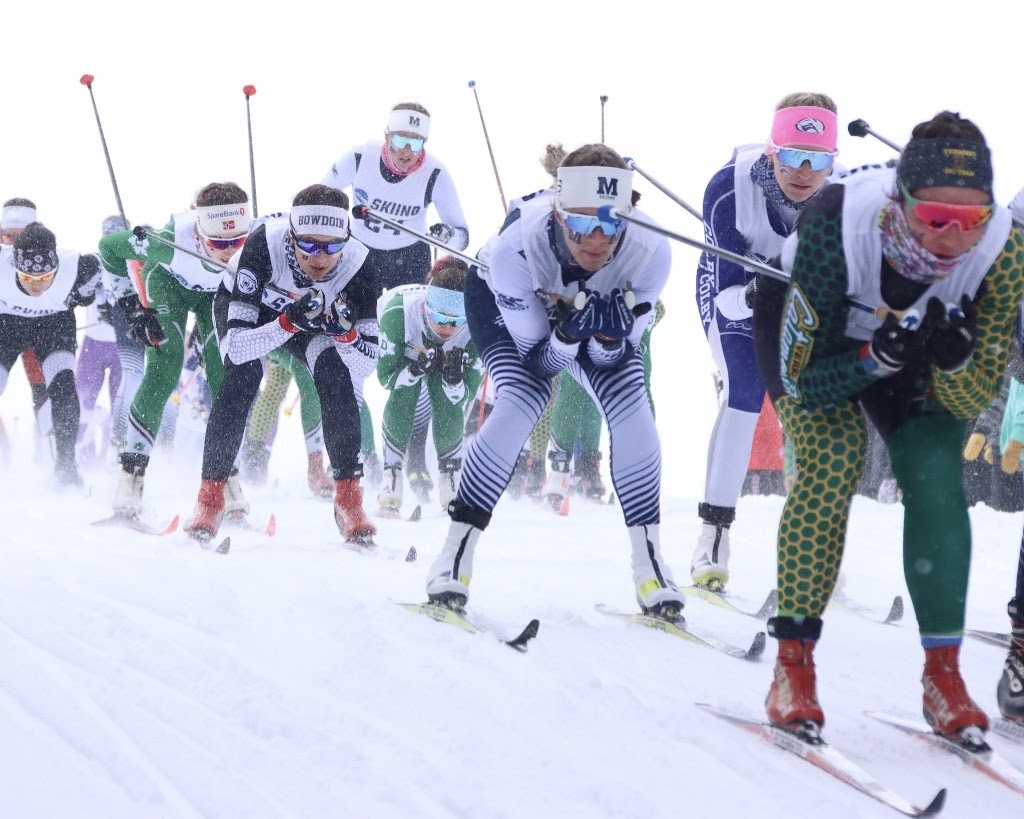
Annika Martell racing during the NENSA club relays, Saturday, March 28, 2026 at Craftsbury. (Photo: Phil Belena)
The Craftsbury Green Racing Project has named Annika Martell as its new Head Ski Coach.
Martell brings a resume that spans nearly every corner of the Nordic skiing world. A Minnesota native, she headed east to ski at Colby College, where she captained the team and earned recognition for her leadership before graduating with a degree in economics and environmental science.
Her coaching career has taken a similarly wide path. Early on, she interned with the US Biathlon Association and coached juniors at Ford Sayre and the Berkshire Nordic Ski Club, before moving into elite-level work as an assistant coach with the Stratton Mountain School T2 Team. She spent four years as an assistant coach at Williams College, during which time she completed two stints as a Trail to Gold Fellow with the US Ski Team and served twice on the wax staff for Team New England at Junior Nationals.
Most recently, Martell was the Head Nordic Coach at St. Michael’s College, where she guided the program to highly competitive results.
Her background extends well beyond the ski tracks. She is a certified weightlifting coach and handled strength and conditioning duties at Williams. She also has experience in finance and operations management, and holds a Master’s degree in Sports Business from Drexel University.
The Craftbury Green Racing Project is still accepting athlete applications for the incoming 2026 snow class — Apply Here
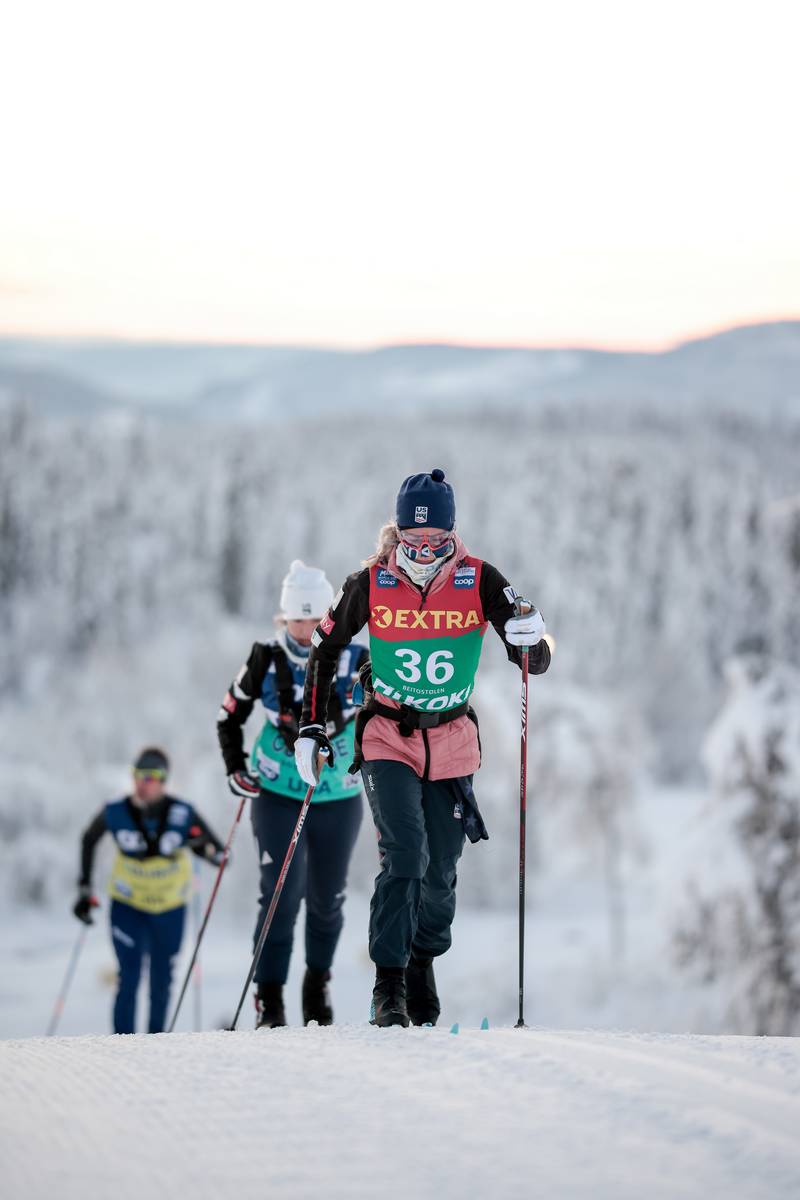
Martell follows Jessie Diggins on course in Beitostolen in 2022. (Photo: Nordic Focus)
As the largest NCAA circuit in the nation prepares for a return to a full schedule, anticipation, anxiety, and lessons from a pandemic year abound in New England.
Carnival, as a noun, has perhaps had its moment. We’ve been building towards ennui, not excitement, for nearly two years now. Maybe it’s time to dispel the anticipation, let the moment fade, and let “Carnival” go along with it.
But then again, calling a collegiate race circuit a “carnival” has always been a bit old-timey. One of those New England-isms – like calling your town park a “common.” My alma mater Colby College hasn’t had a winter carnival, festival, ball, or snow sculpture on its grounds in years. Those memories are confined to dusty old photographs hung in student unions throughout New England — all distractions from another time. Nonetheless, in January eleven New England schools will gather at Colby to start the NCAA collegiate racing season, and it will be all jubilation, camaraderie, and competition. There will be the return of the possibility to mark time by the traces of human emotion that linger on in memories, rather than case counts and travel restrictions.
All-too-well then, that Colby will still call it a Carnival.
The Eastern Intercollegiate Skiing Association (EISA) Carnival circuit is set to return to a full calendar on January 14th-15th, 2022 after a season that saw heavy modifications in response to the COVID-19 pandemic. With it comes lessons learned, appreciation, and excitement from both athletes and coaches across New England.
The 2021 Carnival Circuit
The EISA last year could, at its best, be described as disjointed. Each team was subject to individual state COVID-19 policies — in a region with a lot of states — on top of their own institutional policies. Vermont teams couldn’t travel outside their state for competition due to state restrictions. Colby couldn’t travel out of Maine per school policy. Many of Harvard and Bowdoin’s skiers weren’t on campus at all for the fall or spring semester. Some skiers were being tested daily, others twice a week. The means and ends were shifting constantly.
Athletes responded in different ways. Some pressed on with their education and their athletic career. Some re-evaluated and decided that enjoyment in skiing could be found elsewhere. Others chose to compete in their home regions towards skiing goals separate from the NCAA ranks.
For one, Foss Kerker, who is serving as Colby College’s team captain this year and will graduate in January, the missed season was serendipitous. A shoulder injury left him unable to race what was set to be his senior year, and so he decided to focus on recovering, training, and looking forward to this season. After taking the semester off, he returns this year feeling renewed, saying in an interview with FasterSkier that “On the whole, I am more grateful for skiing and ski racing. Not being able to ski or race last winter has made me refreshed and just excited to get out and race in the fun and competitive environment of the EISA, whatever the results might be.”
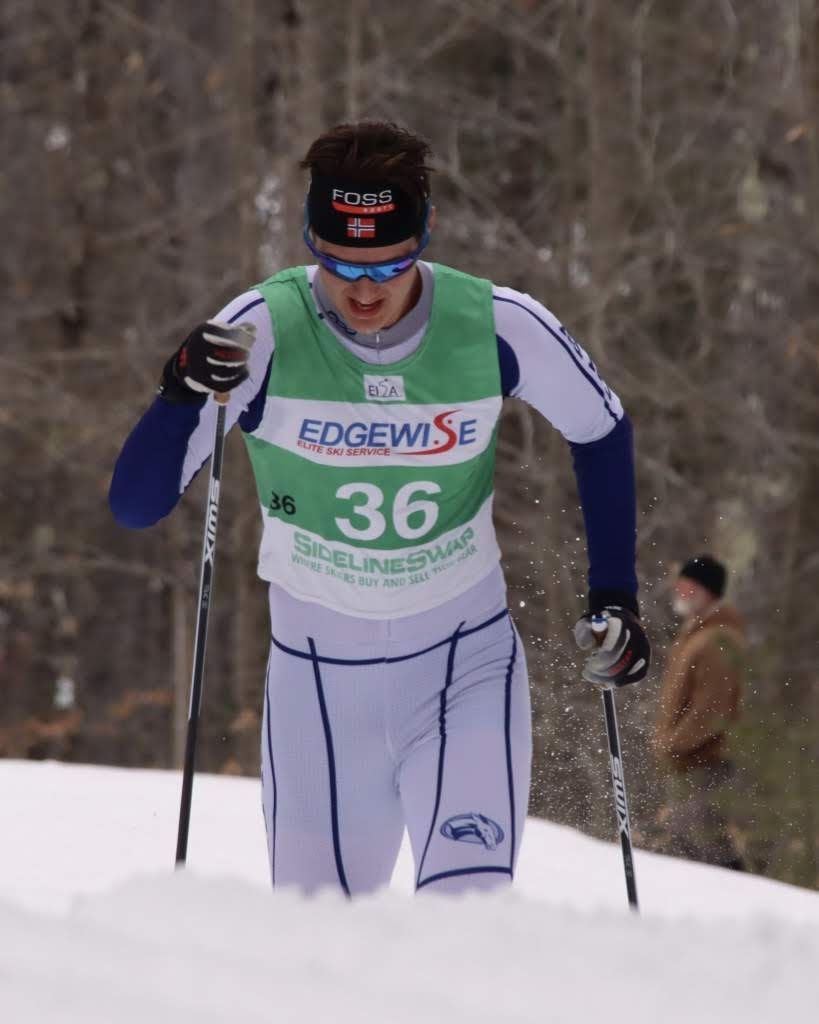
Foss Kerker attacks a climb at the last Colby Carnival, held at Quarry Road in Waterville, ME in Jan. 2020. (Photo: Gary Solow)
Gratitude for Skiing and Ski Racing
Kerker extends this newfound sense of gratitude to how he is helping prepare the Colby team to race. It has been an anecdote to the quick and rapid changes precipitated by the pandemic in skiing, in the world, and in life. As Kerker reflected:
“[Coach] Tracey has talked a lot about this recently – not knowing what is going to happen with schedules, conditions, or travel was something that was really hard to deal with before. That has sort of become the default now and being able to go with the flow and continue to perform is something that is only going to help us in the long run.”
Colby head coach Tracey Cote also touched on how the return of the traditional run-up to the EISA carnival season has helped her team build off of the flexibility that was required in training last season, saying in a response to the author via text that “I’m really excited about my team as we’re off to great start with our Canada training camp and the first Eastern Cups on our home course at Quarry Road.”
As other coaches look back at their own takeaways from last year, the lessons all point back to a re-centering of their roles around the joy of skiing.
Becky Woods, head coach at Bates College in Lewiston, ME, said her team now has a sense of how “important [it is] to embrace opportunities when they are put in front of you, and we see this season as a great big opportunity to come together, race fast and have fun on skis!” While Molly Peters, head coach at St. Michael’s College in Burlington, VT stated that “we appreciate every day we can practice and every opportunity we can race!”
Peters also added that this re-found joy has seeped into her team’s race preparations. “The team spent a lot of time backcountry skiing and having fun on skis last year. We will definitely keep these fun days this winter to take a step back and remember what it’s all about. Fun!”
In a way then, the year off from the carnival circuit looks only to have added to its carnival spirit. With that sense of joy, the EISA looks ready to maintain its traditions and do as its skiers have always done, make the sport fresh and exciting.
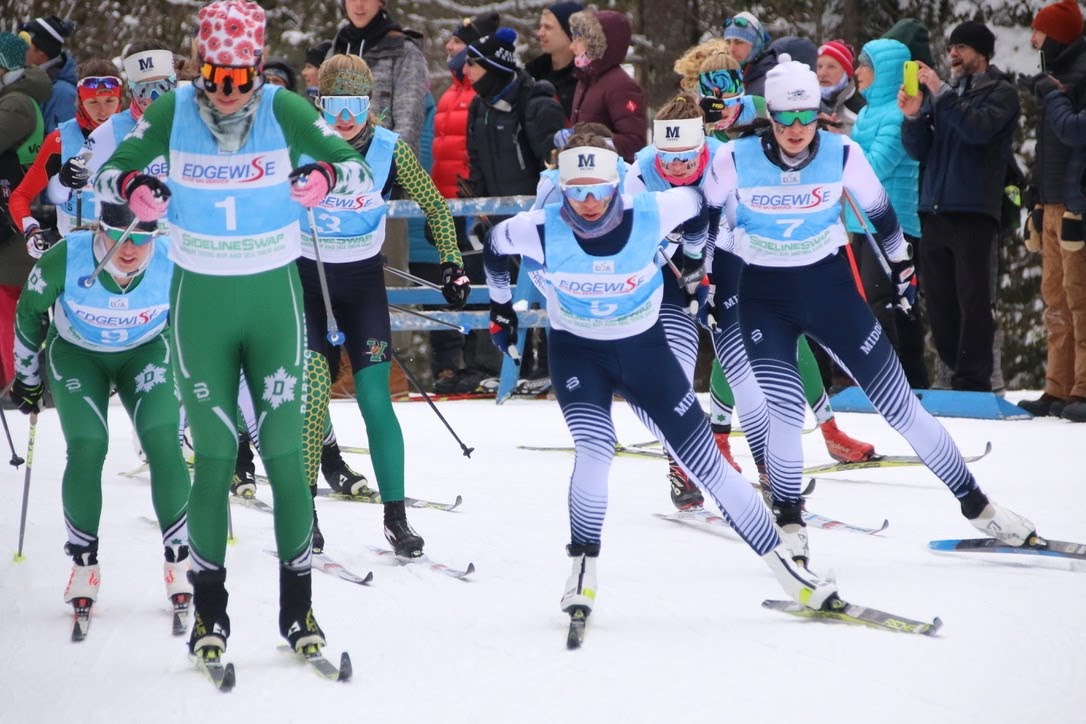
The women’s field, headed by (from L to R) Katharine Ogden (DAR), Margie Freed (UVM), Annika Landis (MID), and Alexandra Lawson (MID), heads out on course at the last Harvard Carnival, held in Craftsbury, Vermont in February 2020. (Photo: Gary Solow)
A New Field with New Faces
That strong spirit though, is accompanied by a sense of anxiety. This is, after all, a different group of skiers than the one that finished the last full EISA carnival at Middlebury in February of 2020.
As Williams College Assistant Coach Annika Martell responded to the question, “How do you think the carnival circuit will look differently this year than it did before the pandemic?”:
“Besides half the field being new to the eastern racing circuit?!? There will be a lot of new faces for sure!”
She has a point.
Martell is uniquely positioned in the EISA. She finished the last full Carnival in 2020 as an athlete with Colby, and now will start the first full Carnival in 2022 as a coach with Williams.
Annika Martell, Colby alumnus and current Williams Assistant Coach, racing at the Williams Carnival, held in Lake Placid, New York in 2020. (Photo: Gary Solow)
Two classes of graduates since the pandemic began, along with athletes like Kerker who have remained on the circuit longer than the traditional four years, mean a shakeup in who is on the circuit, and how familiar they are with one another.
Martell thinks that while this doesn’t change the way that athletes have prepared themselves for the season – the training hours are still high, the periodization the same – but it does change how an athlete might evaluate their performances.
“I’m excited because all sense of expectations have been dismantled with two new class years and a year of not being able to really race each other,” Martell said.
That lack of preconceived order in the field – which individuals and which teams fall where – provides opportunity, but also a unique variable. As Bates coach Becky Woods stated, “[This] brings some challenges as we’ll really have to evaluate performances from a new perspective. Relying on past results is not a method we can really use this year because so many had to take time away from racing.”
That leaves the forecasted results nearer to an unknown than they have been in past seasons. Without continuity comes a chance for individuals to reach with tenacity, grit, and discipline for top placings, without the hesitation that might come from lining up next to more experience collegiate racers whose resume’s have been followed. This combination promises to introduce new characters into the mix of the top collegiate ranks.
Still Not “Normal”
Of course, amidst overcoming many of the obstacles the pandemic has presented looms the reality that we haven’t yet overcome it. The EISA returns not because COVID is gone, but because the organization has been able to put into place substantial measures to control the spread of the virus while engaging in competition.
Martell reflected on this, pointing out that some of the energies that add vibrance to the Carnival circuit will still have to be subdued.
“Prior to the pandemic, I think there was a lot of organic inter-team bonding,” Martell explained. “Athletes had their home, region and team friends that all got to socialize in a unique way that other sports don’t experience. But out of an abundance of caution and in order to keep everyone safe and healthy, there may be slightly less mask-less mingling than previous years.”
That will leave a Carnival with its core intact, but with less of the frills that tend to animate the EISA from week-to-week.
The energies will still be there in some form. There will still be the warmth of seeing friends from far-and-wide all together in the New England woods, the glimpse at the future of US skiing that the top-end of the Carnival circuit consistently provides year-after-year, and of course, the good ol’ fashioned collegial competition whose atmosphere can be best described as, well, collegial.
They may come attached to signs of the time though. Masks to keep each other safe, shouts from slightly further off the v-boards along the sides of the trail, and Carni Crushes (an annual Valentine’s Day tradition whose details will be left fuzzy here) that this year will no doubt include a couple of really bad puns regarding something about social distancing.
Scenes from the sidelines at Bates Carnival in 2020, with Bill Kerker making sure no one lets hunger get in the way of the festivities. (Photo: Gary Solow)
All of those involved, especially those that have spent the most time on the EISA carnival circuit — the coaches — are adjusting to this world in a way that will keep the timeless camaraderie of the circuit alive. As Becky Woods says, “Health and safety first. Always. We certainly focused on that in the past but it has taken on a new level of urgency.”
The best summary though, of what has carried the Carnival Circuit through the pandemic and into its return this year may come from the coach on the EISA Circuit who’s had to transition and grow along with it. Martell ended her reflections by saying that she “[feels] well-equipped to empathize and connect to athletes and what they have been dealing with over the last few years.”
And what we’ve all been dealing with. It’s a poignant message that anticipates the jubilee — the Carnival — that ski racing brings.
Braden Becker at the 2017 NCAA Ski Championships. (Photo: ephnordic.blogspot.com)
U23 World Championships in Lahti, Finland got rolling on Jan. 21 with a classic sprint. In our quest to check in with some of the North American athletes in Finland, with emailed a list of quick-hit questions to touch base. Braden Becker is twenty two years old and a senior at Williams College. He races with the Williams cross-country ski team and hails from Yarmouth, ME. This is his first Junior World Ski Championships.
Do you recall when you first set World Juniors/U23’s as a cross-country skiing goal?Representing the USA has been a goal of mine since I started skiing seriously in high school.
Stress can be tough to deal with as a junior. That said, how do you best deal with stress? For me the best tool to reduce stress is perspective. Small things like missing a session because of travel/ sickness or having to stay up all night to finish a paper can feel devastating. The key for me is to always put whatever happens in the context of an entire training year.
How do you best distract yourself from racing?Being in college has made this easy as there’s always homework to chip away at.
What are some “performance goals” going into the races you are focusing on?Ski competitive early splits and try to hang on.
Who best supports you when a race doesn’t go the way you envisioned? The great part about skiing in the EISA is that on any given day one of your friends or teammates always has an amazing day. It’s easy when you have a bad race to just forget about it and celebrate your friend’s successes.
Who is the first person you call/text/email…etc. when the race goes well? Probably my family and teammates.
Outside of skiing, what would you rather be doing? Napping.
What are some outcomes from your first Junior Worlds that you would consider a success?Seeing the level of speed and intensity of competition firsthand.
Favorite method of recovery when you are racing on the road?Napping.
How did you pass the time on your flight to Europe?Napping
Assistant Coach, Nordic Skiing Athletics Department
Williams College invites applications for the position of Assistant Coach of Nordic Skiing for the academic year 2018-2019. This is a full-time, academic year (10 month) term position with the possibility of renewal.
Our expectation is that the successful candidate will excel at working in a community that is broadly diverse with regard to race, ethnicity, socioeconomic status, gender, nationality, sexual orientation, and religion. We are especially interested in individuals who have experience with diverse populations who can contribute to the diversity and excellence of athletic opportunities at Williams. Candidates from under-represented groups are strongly encouraged to apply. In your cover letter, please highlight your experience with and commitment to supporting diverse and inclusive communities.
Responsibilities include providing assistance to the Head Coach in all aspects of the Nordic Ski program, including, but not limited to student-athlete development, coaching, training plans, travel, waxing, equipment management, driving team vans, video analysis, recruiting, team website updates and other duties as assigned.
Bachelor’s Degree, and collegiate racing experience preferred
Successful candidates will be self-motivated and possess the ability to recruit, teach and coach highly talented student-athletes who can succeed in a challenging academic environment
Knowledge and commitment to NCAA and NESCAC rules
Effective communication skills are required
Review of resumes will continue until filled.
Employment at Williams is contingent on the verification of background information submitted by the applicant, including the completion of a criminal record check, and education when applicable.
To apply for this position, please visit staff-careers.williams.edu. If you have any questions, please feel free to contact us via phone at (413) 597-4247 or email at hr@williams.edu.
Williams College is a coeducational liberal arts institution located in the Berkshire Hills of western Massachusetts with easy access to the culturally rich cities of Albany, Boston, and New York City. The College is committed to building and supporting a diverse population of approximately 2,000 students, and to fostering an inclusive faculty, staff and curriculum. Williams has built its reputation on outstanding teaching and scholarship and on the academic excellence of its students. Please visit the Williams College website (http://www.williams.edu).
Beyond meeting fully its legal obligations for non-discrimination, Williams College is committed to building a diverse and inclusive community where members from all backgrounds can live, learn and thrive.
Williams College invites applications for the position of Assistant Coach of Nordic Skiing for the academic year 2017-2018. This is a full-time, academic year (10 month) term position with the possibility of renewal.
Responsibilities include providing assistance to the Head Coach in all aspects of the Nordic Ski program, including, but not limited to student-athlete development, coaching, training plans, travel, waxing, equipment management, driving team vans, video analysis, recruiting, team website updates and other duties as assigned.
Bachelor’s Degree, and collegiate racing experience preferred
Successful candidates will be self-motivated and possess the ability to recruit, teach and coach highly talented student-athletes who can succeed in a challenging academic environment
Knowledge and commitment to NCAA and NESCAC rules
Effective communication skills are required
Review of applications will begin immediately and will continue until the position is filled. Preliminary queries may be directed to Jason Lemieux (jrl3@williams.edu). Job Group 3-C.
Employment at Williams is contingent on the verification of background information submitted by the applicant, including the completion of a criminal record check, and education when applicable.
To apply for this position, please visit staff-careers.williams.edu. If you have any questions, please feel free to contact us via phone at (413) 597-4247 or email at hr@williams.edu.
Williams College is a coeducational liberal arts institution located in the Berkshire Hills of western Massachusetts with easy access to the culturally rich cities of Albany, Boston, and New York City. The College is committed to building and supporting a diverse population of approximately 2,000 students, and to fostering an inclusive faculty, staff and curriculum. Williams has built its reputation on outstanding teaching and scholarship and on the academic excellence of its students. Please visit the Williams College website (http://www.williams.edu).
Beyond meeting fully its legal obligations for non-discrimination, Williams College is committed to building a diverse and inclusive community where members from all backgrounds can live, learn and thrive.
In Part I of “The Road to Jackson” series, three Williams College skiers — Eli Hoenig, Braden Becker and Jordan Fields, who qualified for this week’s NCAA Skiing Championships — reflect on their team and their season.
“I am so excited for NCAA’s. … This is the first time Williams has sent a full team quite a few years. Probably one of the strongest teams we’ve ever sent.” — Jordan Fields
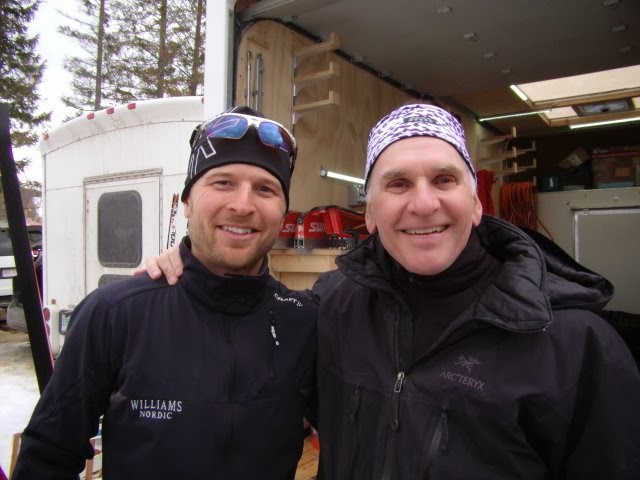
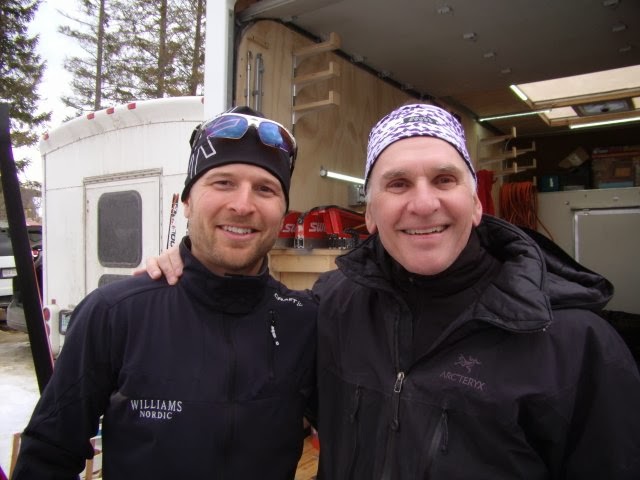
Jason Lemieux (left) and Bud Fisher coached the Williams College ski team together for the last two years. This season, Lemieux has taken over head coaching responsibilities. Photo: ephnordic.blogspot.com.
When longtime Williams College Nordic coach Bud Fisher began to contemplate retirement, he knew someone who might want his job.
He called Jason Lemieux, a former Williams racer who had gone on to ski for the Subary Factory Team before moving to Hood River, Oregon, to be closer to his wife’s family. Lemieux was happy on the West coast, coaching with XC Oregon and working marketing for a carbon fiber manufacturing company.
But he had never given up the idea that it would be nice to coach at his alma mater – which is also only half an hour from where he grew up in Massachusetts.
“It would have been a lot to give up for any other location, or any other school that is farther away from my family,” Lemieux said in an interview last week. “So this was pretty much what we had on the top of our list, and what we were willing to make the sacrifice for.”
Lemieux spent the last two years working side by side with Fisher as an assistant coach. The official handoff – or at least the emotional one – happened over spring break in Sjusjøen, Norway, where the current Williams team and a group of alums took a trip with Fisher to spend a lot of time on snow and celebrate their love of the sport.
“We ended up with a group of about 50 people skiing all day every day,” Lemieux said. “The kids were just all fired up. After such a long season, they still wanted to ski all day every day. It was a once in a lifetime trip. We’re hoping to do it again down the road sometime.”
Fisher always instilled Scandinavian values about the role of sport in a balanced life in his athletes. Having coached briefly at the NTG in Lillehammer, Norway, he knew exactly how much a part of life skiing is in Norway.
And that’s something that Lemieux says he will work hard to keep as a tenet of the Williams program.
“We used to always talk about the lifestyle to income ratio,” he said of Fisher. “That’s the goal, one way to find happiness. We’re definitely about the lifestyle, and it’s how I am too. When people are struggling or trying to balance, it’s all about the love of the sport. It has to be fun. It’s not just about the results.”
Official practice doesn’t start until the first Monday in October, but Lemieux says he has obviously been in touch with the team and it is shaping up to be one of the college’s best years ever.
Williams placed 15th at NCAA Championships last year, with the best cross country performance by Eli Hoenig, who placed 17th in the 20k freestyle. This year, Lemieux belives that the men’s team might be the best the school has ever seen.
He’s particularly excited about 2015 NCAA’s, which are to be held in Lake Placid, New York.
After graduating from Williams in 2001, Lemieux moved to Lake Placid to coach the Nordic combined team at the National Sports Academy. It’s where he made a big jump in his own skiing, after using mornings to train before teaching and coaching in the afternoons and evenings. So he knows the race trails well and says that it’s informing his team’s training this fall.
“Those trails are awesome, they’re great,” Lemieux said. “We’ll be doing some workouts that mimic the Lake Placid courses. There’s big ups and big downs there.”
So what has changed at Williams now that Lemieux is alone at the top?
The Schnellsteigen running time trial awaits Williams skiers this fall. Photo: ephnordic.blogspot.com.
Some things are superficial.
“Well, the average age in the office went down by a lot,” he laughed. “We have a new alpine head coach as well, and of course two new assistants because we both were the assistants before.”
And in a big relief to Ephs fans everywhere, Lemieux is touting a new race suit which more closely resembles the classic purple cow print than the suits of the last few years, which relegated the pattern to a small strip on the sides.
“I don’t think people will see a whole lot of difference from the outside looking in, but we do have new ski suits,” he joked. “They are definitely identifiable as a purple cow suit. It’s a modern world version of the purple cow.”
As an alum himself, Lemieux is intent on upholding the Williams Ski Team traditions, many of which date back decades. This fall, many of the standard workouts and time trials will still be on the schedule.
“We always do a race called the Schnellsteigen, which is about an hour uphill running race,” he explained. “It’s good training, but it’s also just a tradition. There’s 30 or 40 years of data so people can look back on their Schnell time. We’ll of course do that.”
But he is also adding some new variety to the training routine.
“We do a lot more creative agility workouts now, and different ways to train specific technique strength and speed,” Lemieux said. “I’m a little les straight-line focused. I like to have them working on a lot of different things for agility and athleticism. We’re doing some newer tests as well. We never had really a double-pole test, and we started a shorter uphill running test two years ago as well.”
So the updated Williams team? Lemieux hopes that by building on the school’s long tradition of Nordic excellence and introducing a few key new ideas, the Ephs will be able to rise to even greater heights.
“It’s important to be really consistent and have traditions, but at the same time you have to always look for new workouts and always look for new routes,” he said. “You try not to do the same thing every week, just to keep people excited about going to practice.”
The 2013-2014 Williams team, with Lemieux (standing, left) and Fisher (standing, right). Photo: ephnordic.blogspot.com.
Every two years, the Williams College nordic team hosts its Winter Carnival 20 miles north of Williamstown, Mass., at Prospect Mountain in Woodford, Vt. By 2016, it could have a five-kilometer ski loop up to International Ski Federation (FIS) standards.
A scene from the Williams’ College Winter Carnival at Prospect Mountain in Woodford, Vt. (Photo: Jason Lemieux)
“It started with my coach, Bud Fisher,” said Williams senior Will Wicherski. “He’s been at Williams forever.”
Williams’ associate director of athletics, Fisher suggested that Wicherski study Prospect’s trail system to determine whether a homologated trail would be feasible.
“Within the EISA [Eastern Intercollegiate Ski Association], there’s more and more of a move to get all our races on homologated courses,” Fisher said. “We’ve been thinking about it for some time, and we’re taking a probably a little bit more conservative, slow-paced approach to it.”
Wicherski characterized some of the EISA race loops as “really uneven,” pointing to Dartmouth’s Skiway at Oak Hill as an example.
“The climb is way too big and not that wide,” he said. “Our course at Prospect is kind of unfair. It’s old-school, not wide, and there isn’t a lot of climb. We can’t really have mass start races there.”
Homologating race trails evens the playing field, he explained. “Among the coaches, there’s more of a desire to hold races at homologated race sites. They know what they’re getting. There are more schools that want to host carnivals.”
Some New England schools already hold their carnivals on homologated trails, including the University of New Hampshire (which hosts in Jackson); the University of Vermont (at Trapp Family Lodge in Stowe), and Middlebury (at Rikert) and Colby (in Waterville, Maine).
The course will combine existing trails with new sections. Much of Prospect Mountain’s trail network is on U.S. Forest Service land, where the permitting process makes large-scale alterations difficult. As a result, Williams wants its race loop to include minimal new trails.
Ultimately the college would like to create a course that will accommodate interval-start freestyle and classic races as well as team relays. Mass-start skate races require wider trails than interval starts, and Fisher said that while it wouldn’t be impossible to make them happen, it would be “very difficult.”
Interval-start freestyle, classic, and relay events require trails 5 meters wide. Even for interval-start homologation, some sections of trail — all on forest service land — would need to be widened.
Wicherski described southern Vermont/northwestern Massachusetts as “being on the edge of consistent snow,” adding that if the homologation project works out, the college may consider snowmaking in the future.
“Getting the course homologated is the first step towards snowmaking,” he said.
According to Williams’ Nordic Head Coach Jason Lemieux, snowmaking is a “long term goal/dream … it’s a battle we’ll wait to fight until the completion of the homologation project,” he wrote in an email.
Prospect Mountain’s ski roots trace back to 1939, when it started as an alpine-ski area with a rope tow. At 2,250 feet above sea level, its base elevation is the highest of any ski area in Vermont. In the 1970s, Prospect’s owners cut cross-country ski trails to enhance their business, and in 1992, Steve Whitham and Andrea Amodeo purchased the area after its previous owner abandoned it. Instead of reopening the lifts, they focused on cross-country skiing.
At 2,250 feet above sea level, its base elevation is the highest of any ski area in Vermont.
Getting Up is Half the Battle
One of the biggest challenges was designing an appropriate downhill from the main climb. Running under the old lift line, the A-climb diagonally crosses the alpine hill, ending up on a trail called Shay’s.
“We know where the A-climb is, but we don’t have a way to get down off it,” Fisher said.
This summer, they plan to build the descent. Williams will test it this coming winter, after which they plan to finish work on the trail.
The other challenge exists at the opposite end of the course. Prospect’s trail system is bisected by a forest-service road that sees heavy snowmobile traffic during the winter. During Williams’ last Winter Carnival, course workers had to stop snowmobiles 17 times during the races. “It’s a dangerous situation,” Fisher said.
To avoid the road, Williams would need to construct a short connector trail on forest-service land. They’ve applied to the U.S. Forest Service (USFS) both for this and to widen trail sections where necessary. The carnival trail falls into the forest service’s small-projects category, which requires less time, ecological compliance and money than a large-scale endeavor.
Pending USFS approval, construction will start with trail work this summer.
We haven’t actually gotten an FIS [inspector] in yet,” Fisher said. “We wanted to get all the homologation parameters met before we do that. We launched into the project and came up with a number of ideas to us where show we get an A-climb and a B-climb.”
Lemieux estimated the project’s cost to be “easily more than $15,000.”
Approval will give Williams a 10-year permit. If the downhill from A-climb works, they’ll continue work on the land the following summer. At that point, they would bring in a course inspector from the FIS for any tweaks.
Tom Keefe and Sarah Tory with their trophies at the Bascom Lodge atop Mt. Greylock (Photo: Aubrey Smith)
Tom Keefe and Sarah Tory captured the Mt. Greylock Rollerski Race on Sunday, outdistancing their closest competitors by several minutes each. Tory, a senior and the women’s captain at Williams College, defended the title she picked up her junior year, while Keefe, a former UNH and Maine Winter Sports Center standout, took the men’s title in his first rollerski race in four years.
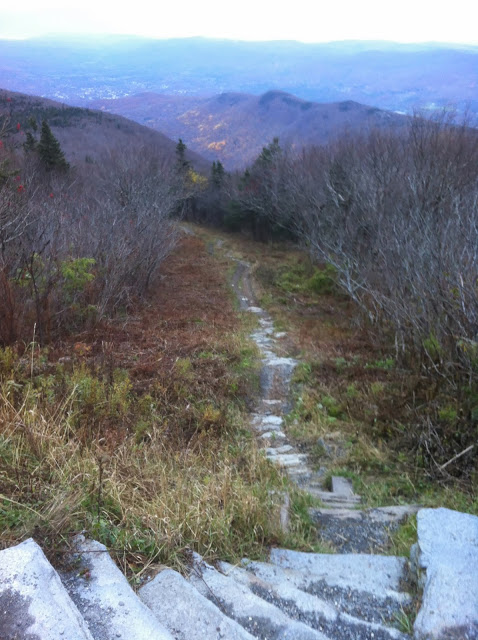
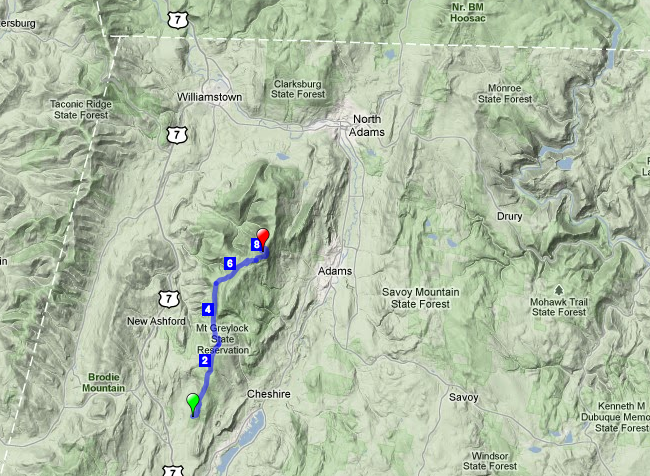
Beautifully paved and featuring a mix of steep switchbacks, steady climbs and, mid-race, even some flat and downhill sections, the eight mile road to the summit of Mt. Greylock gains 2,100 feet in elevation as it winds around the southern shoulder of the mountain. Cool temperatures and sunny skies greeted the 29 competitors on Sunday, with the later stages of the race plagued by slick leaves stuck to the pavement after a day of rain on Saturday.
At the front of the pack, the race was strung out quickly with a hard start from Bret Bedard. A crew of Williams skiers gave chase, with senior Mark Johnson (racing on classic skis), senior Keith Kantack, sophomore Ian Nesbitt and freshman Kalle Jahn, along with eventual champion Keefe, keeping pace with Bedard, leaving smaller pockets of racers to duke it out for mid-pack places.
Keefe used a burst of speed on a steep uphill section to break free of the lead pack and cruised to the win, leaving Johnson over a minute behind in second and Bedard another minute and a half back in third.
The 8 mile road climbs the southern shoulder of Mt. Greylock (3,491 ft) in the northwest corner of Massachusetts.
“It was my first roller ski race in four years,” said Keefe, “so I didn’t know what to expect. [My] goal was just to try and hang on to Bret and the Williams skiers as long as I could before they dropped me, [but] once I got clear, I got excited and it brought back memories of training up in northern Maine – I was having fun out there again.”
Tory, who was quick to acknowledge her “speedy rollerskis” in the wake of her victory, led sophomore teammate Christina Knapp early on, but broke clear of the women’s field with less than two miles down and skied the bulk of the race on her own.
“I had no specific race strategy,” said Tory of her win, “other than to start out conservatively because I knew it was going to be at least an hour to the top. I tried to ski relaxed and focus on my technique.”
Knapp finished a three and a half minutes back in second place with Williams senior Maddy Wendt rounding out the podium with a strong race in third place.
High school racers Josh Harrington (Mt. Greylock Reg. HS/Williamstown, MA) and Hannah Benson (Kennett High School/Jackson, NH) took a weekend off from their cross country running races and competed alongside a field dominated by college racers. Harrington took 14th place overall and Benson placed 4th for women.
FasterSkier’s Nat Herz was tenth and, in case you missed it in his blog, was supported by his mom who captured the roving reporter on the other side of the camera in the following video: