Tag: Winter Games NZ

  • Americans Dominate the Field, Podiums at Winter Games NZ (Updated)

    Americans Dominate the Field, Podiums at Winter Games NZ (Updated)

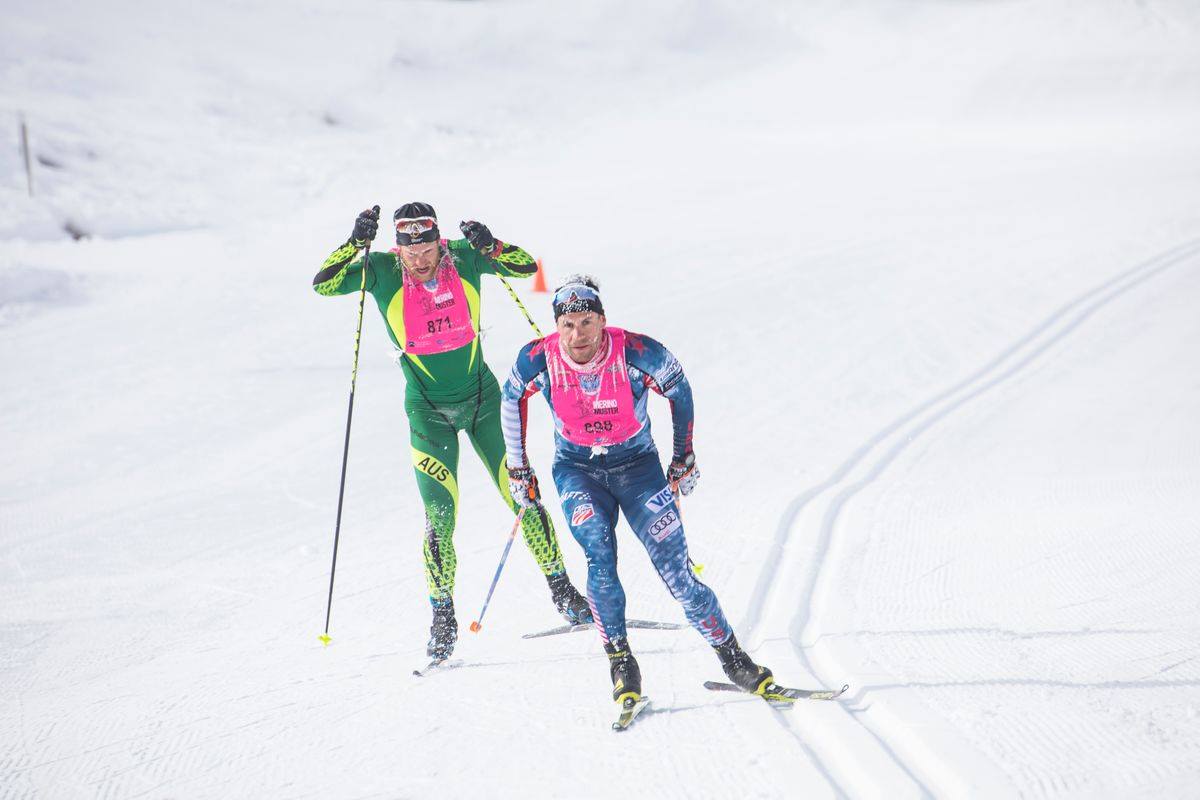
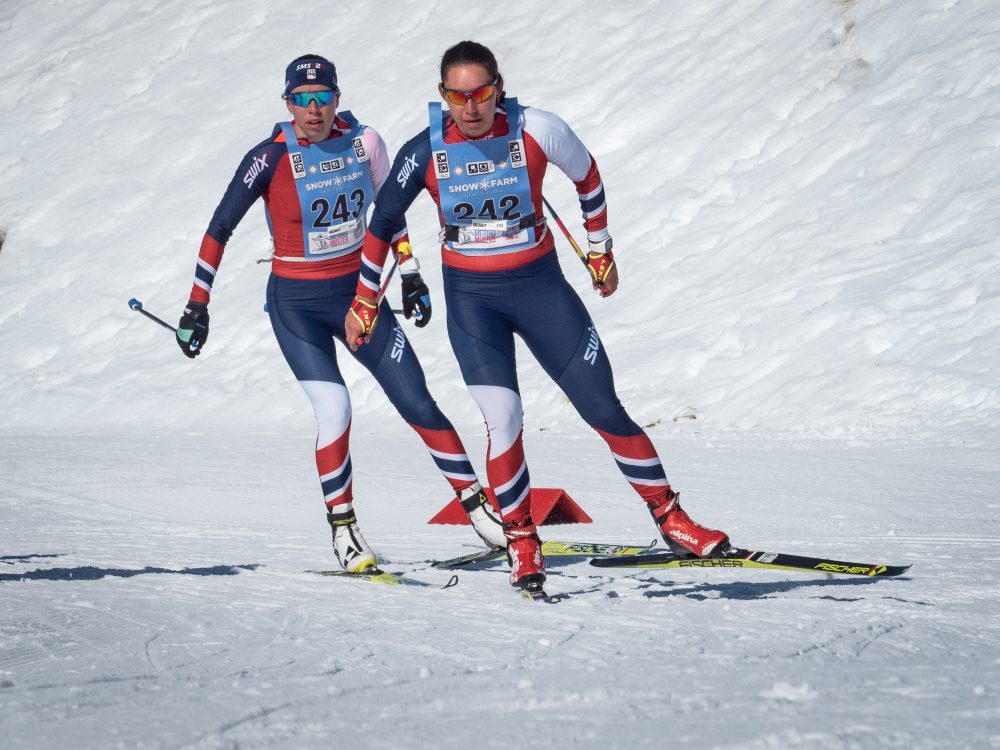
    Julia Kern leads Katharine Ogden, her fellow Stratton Mountain School (SMS) and U.S. Ski Team development team member, during the Snow Farm’s 21 k Snow Rake at the 2018 Merino Muster in Wanaka, New Zealand. (Photo: Garrick Cameron)

    Note: This article has been updated to include comments from Simi Hamilton of the U.S. Ski Team (USST) and Stratton Mountain School (SMS) T2 Team, and Kevin Bolger of the USST and Sun Valley Ski Education Foundation.

    ***

    It’s that time of year again where several members of the U.S. Ski Team, along with top-level skiers from the Craftsbury Green Racing Project (CGRP) and Stratton Mountain School (SMS) T2 Team are training at the Snow Farm above the town of Wanaka, New Zealand.

    The on-snow volume camp, which featured multiple days of racing, started Aug. 20 and continues through Sept. 10, and includes U.S. Ski Team (USST) athletes Jessie Diggins, Ida Sargent, Sophie Caldwell, Katharine Ogden, Julia Kern, Simi Hamilton, Kevin Bolger, and Paddy Caldwell, and coaches Matt Whitcomb, Jason Cork and Gus Kaeding.

    According to Sophie Caldwell, conditions have been “amazing” for the duration of camp so far. “New Zealand had a great snow year and we’ve been lucky to have sunny days almost every day,” she wrote in an email to FasterSkier.

    Japan’s Tomoka Satou (446) leads American Jessie Diggins (428) and others up a climb during the Merino Muster 42 k skate race on Sept. 1 at the Snow Farm in Wanaka, New Zealand. (Photo: Garrick Cameron)

    Diggins called it the annual trip one of her “all-time favorite camps because the living at the Snow Farm is great, the food is outstanding, and you can step out the door right onto the 65+ km of trails!” she wrote in an email.

    I love having the chance to work on my on-snow technique for three solid weeks because that’s when I get to really see progress and make some changes in my striding,” Diggins wrote.

    Apart from logging kilometers on snow and soaking up the vitamin D, the team has also spent time trail running in Wanaka.

    “The highlight [of the camp] will probably be a crust cruise we go on in the next few days, but since we haven’t done that yet, some highlights so far are an awesome distance run down in Wanaka, and pretty much every day of bluebird skiing we’ve had up here!” Caldwell wrote.

    The camp also coincided with the Merino Muster, a 42 k freestyle marathon that is part of the Worldloppet series, and the Winter Games NZ, which doubled as the Australia/New Zealand Cup FIS races and included three days of nordic racing this year at the Snow Farm: a 5/10 k freestyle individual start, a freestyle sprint, and a 10/15 k classic mass start..

    Defending their 2017 Merino Muster titles last Saturday, Sept. 1, were two SMST2 and USST members, Diggins and Hamilton.

    Diggins finished a minute and 21 seconds faster than the second-place woman, Aurelie Dabudyk of France, while Hamilton edged Craftsbury skier Adam Martin by 3 seconds for the overall win.

    The day of the Merino Muster was gorgeous and sunny, with fast conditions,” Diggins wrote. “I loved getting the chance to race a long race, and starting with the men as one big field is really exciting! I hope to get to race the 42km race every year. Huge thanks to the volunteers and organizers for making it such a fun day.”

    Crossing the finish line in 1:52:34 hours, Diggins placed sixth overall. Dabudyk was eighth overall and Alayna Sonnesyn (SMST2) was the third woman, 11th overall, 5:30 behind Diggins.

    Meanwhile, Hamilton finished in 1:39:46, beating his time of 1:40:33 from last year’s race. Martin followed 3 seconds later, while Kyle Bratrud (SMST2) finished 24 seconds after from Hamilton in third, followed by Tomoka Satou of Japan in fourth (+45.0).

    “The Merino Muster is always an awesome race,” Hamilton wrote in an email. “It actually lends itself to the type of intensity we are still mostly focused on in August/late September because the terrain and snow conditions usually make for a really good chance to get in about 1.5 hours of level 3 effort followed by a few minutes of really hard skiing in the last km before the finish. It’s a very rolling course and if you ski it in a pack with people switching leads it’s basically impossible to go much harder than level 3.”


    Also on Saturday, Americans also took the top spots in the 21 k Snow Rake. Ben Saxton (SMST2) ran away with the overall win by more than 12 minutes in 47:48, while Paralympic sit skier Dan Cnossen placed second (+1:12:13) nine seconds ahead of Petr Sykora of the Czech Republic in third (+1:12:22).

    Ogden was the fastest woman and second overall with a time of 50:29. Her SMS and USST teammate Kern finished 56 seconds later as the second woman, and Elizabeth Martin of the University of New Hampshire (UNH) followed in third, 7 minutes and 30 seconds behind Ogden.

    buy allopurinol online, buy motrin online, buy ibuprofen online

    With about 300 participants between three different races at the Merino Muster, Hamilton described the atmosphere as “super fun and light.”

    “But the grooming always rocks and it’s just a really fun course to ski,” he added. “I think that in this day and age of social media being so huge and cross-country skiing gaining more attention in the US and world-wide, we’ll start to see more and more people showing up for the marathon. I feel like in the last few years alone their has been noticeably more attention and attendance each year. The quality of skiing is a small part of the race atmosphere here… New Zealand’s south island is one of the most beautiful parts of the world and the culture is so welcoming and comfortable.”

    Many of the American skiers in New Zealand also competed in the Winter Games NZ races this week.

    “The New Zealand Winter Games are also a huge opportunity to get back into racing mode and test out all the technique work we’ve been putting in so far!” Diggins wrote. “And if you know me, you know how much I adore 5km individual skate races, and we no longer get to do those on the World Cup. So I’m so grateful to the Snow Farm and race organizers for keeping such a fun and hard, fast race alive! I forgot how much it can hurt to go so hard for 5km, but it was fun to really get that lung burn back for the first time since last winter.”

    Three days after her marathon win, Diggins won the 5 k skate at the Snow Farm in 15:02.6. The U.S. swept the top five with Sophie Caldwell finishing 10.5 seconds back in second place, Caitlin Patterson (CGRP) in third (+16.7), Sargent (USST/CGRP) in fourth (+1:02.6), and Kelsey Phinney (SMST2) in fifth (+1:16.6) out of eight women.

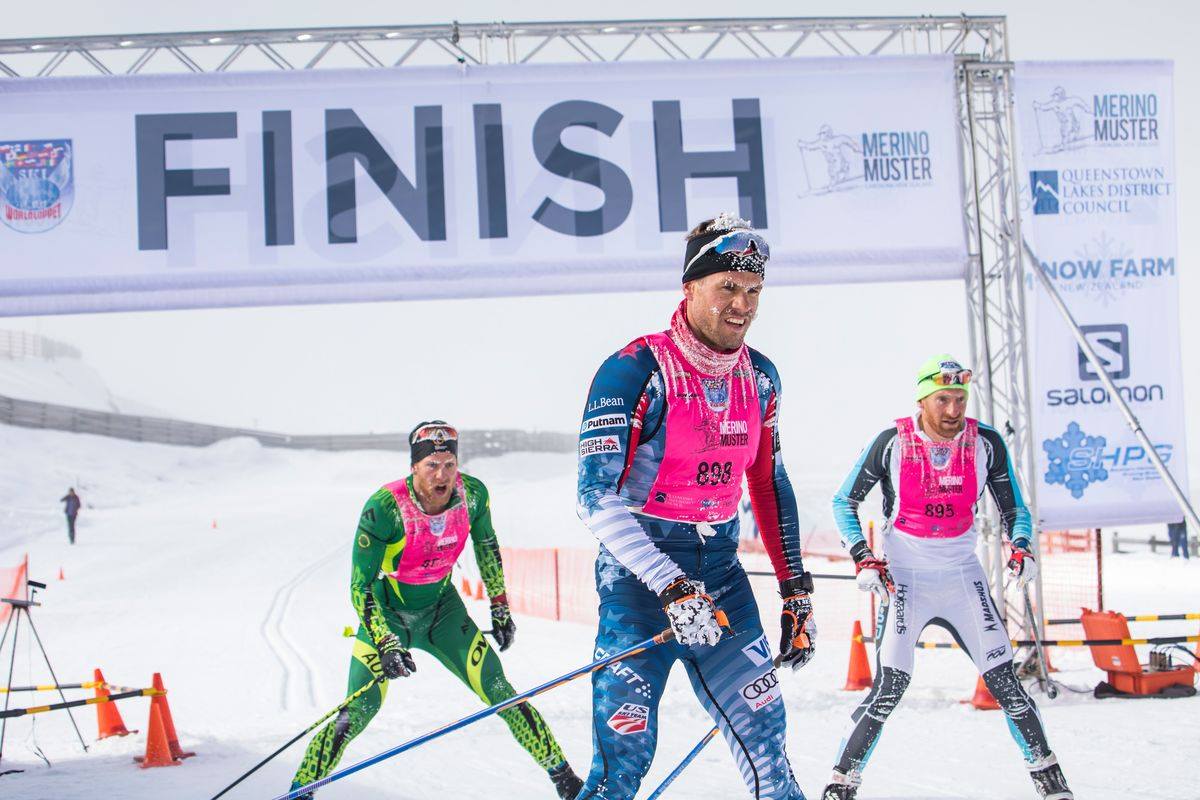
    Kyle Bratrud (SMST2) gets a feed from U.S. Ski Team coach Jason Cork during the 2018 Merino Muster 42 k skate race at the Snow Farm in Wanaka, New Zealand. He finished third behind two other Americans. (Photo: Garrick Cameron)

    In the men’s 10 k skate on Tuesday, Bratrud took the win in 27:48.1, 21 seconds clear of Kaichi Naruse of Japan in second, while Craftsbury’s Ben Lustgarten and Martin (CGRP) followed in fourth (+23.0) and fifth (+44.0), respectively. Eight men competed.

    Wednesday featured 1.1 k skate sprints, which saw Sophie Caldwell take the win in a field of 10 women, ahead of Sargent in second and Phinney in third.

    “The sprint was a short and tactical race that was awesome practice for what’s to come this winter,” Caldwell wrote. “It was really fun toeing the line with my USST and SMS training partners. On one hand, that final could have been any day of summer training, but it also could be a World Cup heat! It’s pretty cool to be pushed by so many strong training partners and friends and we were psyched to throw on a bib and put in a race effort.”

    In the men’s final, Bolger landed the top spot on the podium, ahead of Saxton in second and Satou in third. Eleven men competed in the sprint.

    “I really enjoy these early session races it gives us as races a chance to get in the mindset and practice real race strategy,” Bolger wrote in an email. “I wanted to go out there test myself, I approached every round like a final and attacked from the start getting out in front and leading into the finish, and was very happy to end the day on top, especially after a long camp down here with the US crew.

    “… Coming down here and having a good result in the sprint is of course a huge confidence booster heading into the September/ October training months, but there is still a ton of preparation to be done,” he added.

    On the final day of Winter Games NZ racing, Diggins continued her undefeated streak (after skipping the sprint), winning the 10 k classic mass start, while Patterson placed second and Sargent placed third. Saxton picked up his second win of the week, while Martin took second and Lustgarten third.

    Complete results will be posted once they’re available.

    “We have been incredibly lucky with weather and conditions this year,” Hamilton noted. “Usually, when you’re here at the Snow Farm for 3 weeks in the winter, you’re bound to get an extended period of really nasty weather and wind. But this year we’ve basically had sunshine and cold night time temps every single day, making for amazing skiing for pretty much 3 weeks straight. There is about 40-50 km of trails to ski when everything is groomed, so it’s essentially impossible to get bored. The highlight of our camp every year is a big crust ski up to and around Mt. Pisa. We are planning on getting out tomorrow [Friday, Sept. 7] because the crust hasn’t been great yet while we’ve been here, but conditions for tomorrow look promising. But even when we can’t get out for a huge adventure like that, it’s just one of the best and most fun places in the world to train.”

    Results:

    Sept. 1: 42 k Merino Muster /21 k Snow Rake

    Overall results

    Winter Games NZ

    Sept. 4: 5/10 k skate: WomenMen

    Sept. 5: Skate sprint: Women|Men

    Sept. 6: 10/15 k classic mass start: Women | Men

    https://www.instagram.com/p/BnU4ZSVgG56/?utm_source=ig_web_button_share_sheet

    https://www.instagram.com/p/BnXhCe2lq5m/?utm_source=ig_web_button_share_sheet/

  • Lustgarten, Diggins Double Up on Wins at Winter Games NZ

    Lustgarten, Diggins Double Up on Wins at Winter Games NZ

    Jessie Diggins of U.S. Ski Team and Stratton Mountain School Elite Team on her way to win the women’s 5-kilometer freestyle at the 2017 Winter Games NZ hosted by the Snow Farm in Wananka, New Zealand. (Photo: Winter Games NZ Facebook/Neil Kerr)

    What if getting to snow-covered groomed trails came in three steps — those literally being from the front door to the trailhead. While recent winters may make this seem like a melting dream for many, a number of Americans made it their reality these past two weeks while staying at the Snow Farm in Wanaka, New Zealand.

    U.S. Ski Team (USST) members, as well as American skiers representing the Craftsbury Green Racing Project (CGRP), Sun Valley Ski Education Foundation (SVSEF), Stratton Mountain School (SMS), and Team Gregg, flew more than 24 hours to take full advantage of the Snow Farm’s accommodations and 55 kilometers of groomed track for several weeks in late August/early September. While each program held its own respective training camp, the coinciding times made for an American medley of skiers on the farm. Jessie Diggins, Sophie Caldwell, Ida Sargent, Simi Hamilton, and development-team member Julia Kern all made the trip for the USST’s camp, which ran from Aug. 22 to Sept. 11. 

    According to USST Women’s Coach Matt Whitcomb, the New Zealand camp is not mandatory for all team members.

    “Being an Olympic year we want to individually tailor each plan [for each athlete],” he explained in an email.

    Liz Stephen and Kikkan Randall opted to train in Sweden with the Swedish national team earlier this summer, and Andy Newell prioritized summer rollerski racing in Norway.

    “The travel didn’t make sense to do both,” Whitcomb continued. “For snow, Kikkan has glacier time in Alaska and Liz will do Foret Montmorency in early November. The same was true for Andy … [who] wanted to try Norway instead of New Zealand. While Kikkan has come down to the Southern Hemisphere with us, it makes sense for the Alaskans [including Sadie Bjornsen, Erik Bjornsen, Scott Patterson, Rosie Brennan, and Hannah Halvorsen, who train with Randall with Alaska Pacific University] to use the excellent facility on Eagle Glacier.”

    For those that made this year’s New Zealand trip, he said it’s certainly worth it.

    “While the trip to New Zealand means airfare that can cost around $1200-1300, the Snow Farm cooks exceptional food, grooms around 30k daily, and provides cozy lodging,” Whitcomb wrote.

    “We had a strong group of Americans at the Snow Farm this year, which made for entertaining dinners and competitive ping pong matches,” he continued. “[SVSEF head coach] Chris Mallory is very good.  We partnered up with Craftsbury Green Racing Project, SMS Elite Team, and Team Gregg for a bunch of sessions, and that made for some really effective days.”

    Whitcomb further explained that for those USST athletes returning to the New Zealand training camp, a few things were done differently in terms of lodging.

    “We tried something new this year,” Whitcomb wrote. “We live and train at the Snow Farm, which is situated at 5,000 [feet].  This year we trained for 7 days, and then rented a house in a hip little town called Wanaka where we recovered near sea-level for two nights, and cooked our own food.  I think this played an important role in most athletes having strong second and third weeks up on the rock. If week three is too much of a struggle, the training doesn’t get absorbed effectively, and it dampens the benefits of the camp.”

    The opportunity to get on snow, as well as the convenience of its location with regards to lodging, were reasons enough for many non-USST members to also travel to the Southern Hemisphere.

    “Not having to commute to skiing saves a lot of time and energy that we can put into training and effective recovery,” Ben Lustgarten of the CGRP wrote in an email to FasterSkier. “It is also really nice being at 5000 feet instead of 9500 feet like it would be on a glacier in Europe, and the skiing terrain here is much more conducive to a variety of workouts: intervals, specific technique work, races, easy distance, flats, hills, etc. I loved our training camp last year on the Dachstein glacier, but a 3km loop at 9000ft that takes 45 minutes to get to is really hard and doesn’t offer the variety of training that we can do here.”

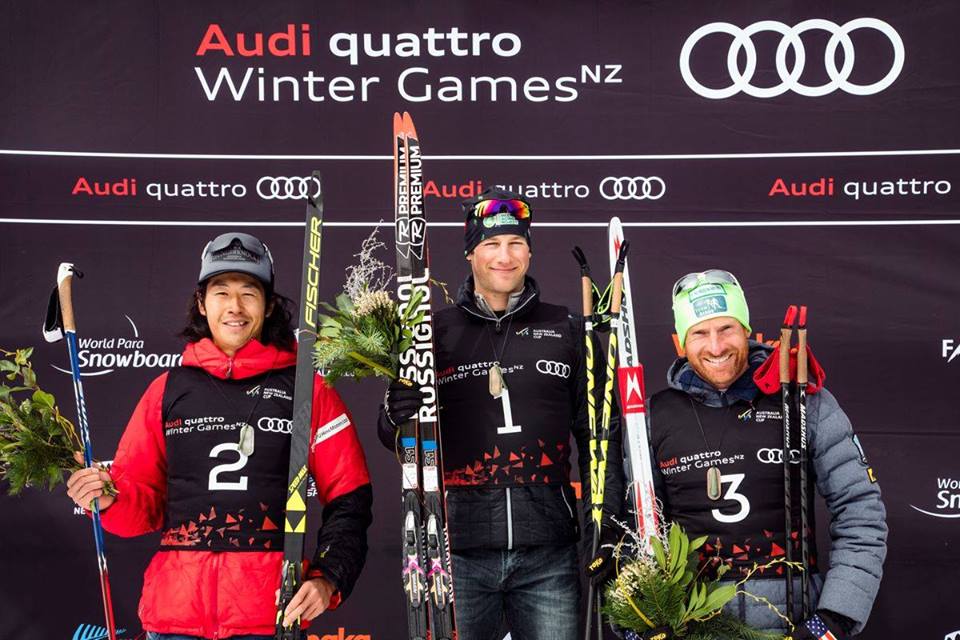
    (Left to right) Japan’s Kaichi Naruse in second place, American Ben Lustgarten (Craftsbury Green Racing Project) in first and American Brian Gregg (Team Gregg) in third after the men’s 10 k freestyle, part of the Australia/New Zealand Cup, at the 2017 Winter Games NZ at the Snow Farm in Wananka, New Zealand. (Photo: Winter Games NZ Facebook/Neil Kerr)

    Several Americans also competed in the Snow Farm’s Winter Games NZ races, which featured a men’s and women’s 1.6 k classic sprint, 5/10 k freestyle races and a 10/15 k classic mass starts, all part of the Australia/New Zealand Cup.

    Some of them had already raced a Worldloppet marathon earlier in their stay, and Whitcomb explained each athlete’s race schedule in New Zealand varied depending on how they absorbed the training load. USST athletes were encouraged to do two to four races, choosing between the 42 k or 21 k Merino Muster Worldloppet and three Winter Games NZ races.

    “When it goes well, we stack it high,” he wrote.

    Racing kicked off on Thursday, Sept. 6, with the men’s 10 k and women’s 5 k individual starts. A light dusting of fresh snow covered the 2.5 k race loop, which challenged racers to a series of short steep uphills and two twisty downhills.

    That didn’t slow Lustgarten, who won the men’s 10 k in 27 minutes, 35.5 seconds. After pacing his first two laps and slowing a bit in his third, the 25-year-old Burlington, Vt., native heard his time was not too far from the win and went for it.

    “I got a split that I was 2 seconds from the lead with a lap to go, which made the last few minutes really painful, but I managed to get the win which was really exciting!” Lustgarten wrote. “I haven’t won a skate race in a really long time, so I was happy about that.”

    Finishing 8.9 seconds back from Lustgarten’s time was Japan’s Kaichi Naruse in second. American Brian Gregg of Team Gregg/Loppet Nordic Racing rounded out the podium in third (+49.7). Also making the top five were Americans Adam Martin (CGRP) in fourth (+51.9) and Matt Gelso (SVSEF) in fifth (+2:02).

    In the women’s 5 k, Diggins (USST/SMS Elite Team) came away with the win, covering the course in 14:53.8. Australian Barbara Jezersek followed 9.9 seconds back in second place, and Caldwell (USST/SMS Elite Team) reached the podium in third (+10.5). Rounding out the women’s top five were Caitlin Patterson (CGRP) in fourth (+34.7) and Caitlin Gregg (Team Gregg/Loppet Nordic Racing) in fifth (+42.8).

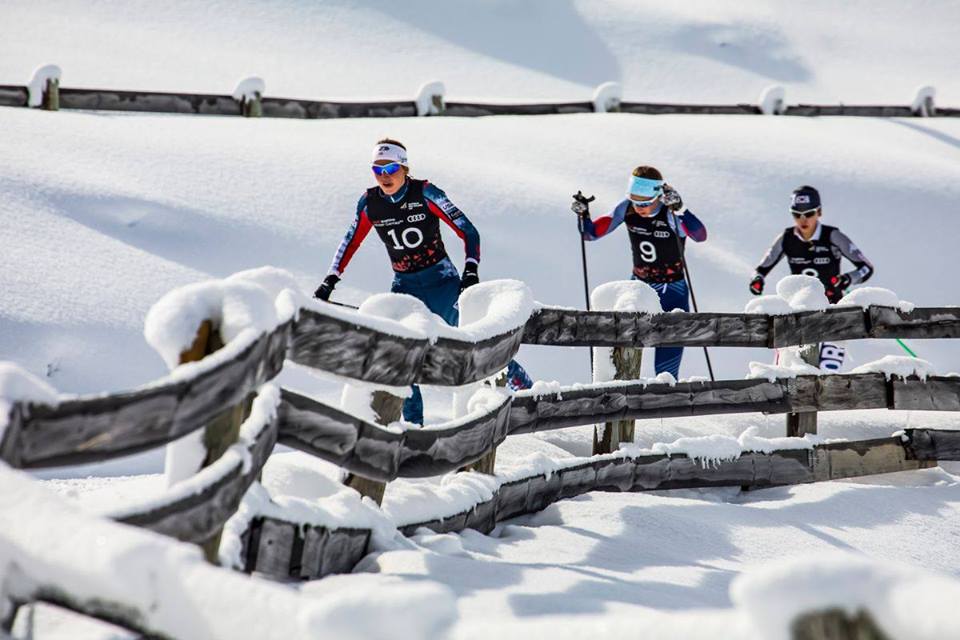
    Sophie Caldwell (10) of U.S. Ski Team and SMS Elite Team racing to third in the women’s 5 k freestyle at the 2017 Winter Games NZ at the Snow Farm in Wananka, New Zealand. (Photo: Winter Games NZ Facebook/Neil Kerr)

    “It was phenomenal!” Diggins said, according to a U.S. Ski & Snowboard press release. “They did so well to find all those hills—I like hills—and it was impressively hard.”

    Skiers returned Friday for the men’s and women’s 1.6 k classic sprints. Caldwell returned to the podium, this time in first, besting her USST teammate, Ida Sargent (USST/CGRP) in second and Patterson in third.

    “It’s only September and we still have two months before we head to Europe, but it’s always nice to have some encouraging races that confirm the training is paying off,” Caldwell told U.S. Ski & Snowboard. “I’ve had a really productive camp and was happy to end it with a win in the sprint and a third in the 5k, which was probably one of my best-ever distance skate results!”

    In the men’s sprint, Ben Saxton of the SMS Elite Team took the win, ahead of Lustgarten in second and Naruse in third. Saxton chose to double pole through the rounds, which were run in four heats of four, seeing the race as an opportunity to try different race tactics. 

    “I just love double poling, and getting a chance to stress and test that technique in a racing situation is always a valuable learning experience,” Saxton wrote in an email to FasterSkier.

    “I thought the trip was a really special opportunity to work on some technical aspects of skiing that don’t totally translate from snow to asphalt,” he continued. “Additionally, the diverse crowd of skiers at the Snow Farm ensured that the quality of training stayed high for all 3 weeks which always leads to big gains.”

    After using classic skis in the qualifier, Lustgarten also opted to double pole the heats, due to what he described as “slick” conditions.

    “Double poling the heats was a good idea with the downhill finish, but I felt incredibly awkward on the herring bone because I was so scared I would accidentally glide using my skate boots and skate skis, so I lost a few seconds on the climb but kept within the rules,” Lustgarten wrote. “Races this early in the season are good to point out what I need to work on, and I definitely need to add herring bone to the list.

    “I managed to make it to the A-Final and was right behind Saxton when he took off over the first long climb, and when he made a gap of 2 seconds or so he secured the win,” he continued. “I was happy to double pole past Japanese racer Kaichi for second place.”

    Lustgarten once again returned to the podium on Saturday, Sept. 9, the third consecutive day of racing, in the men’s 15 k classic mass start. With wind blowing snow into nearly white-out conditions, Lustgarten indicated that half of the battle was simply staying on course. He and his new CGRP teammate, Martin forged to the front joined only by Naruse after lap 1 of 4.

    “I had to snowplow a lot of the downhills and just look for the edges of the track,” Lustgarten wrote.  “It was hard to make any moves because every downhill we hit the leader would have to slow down a bit to see where the trail was, and those following would just rest and catch up.”

    Heading into his final lap, Lustgarten surged during one of the herringbone hills in an attempt to separate himself from Martin and Naruse.

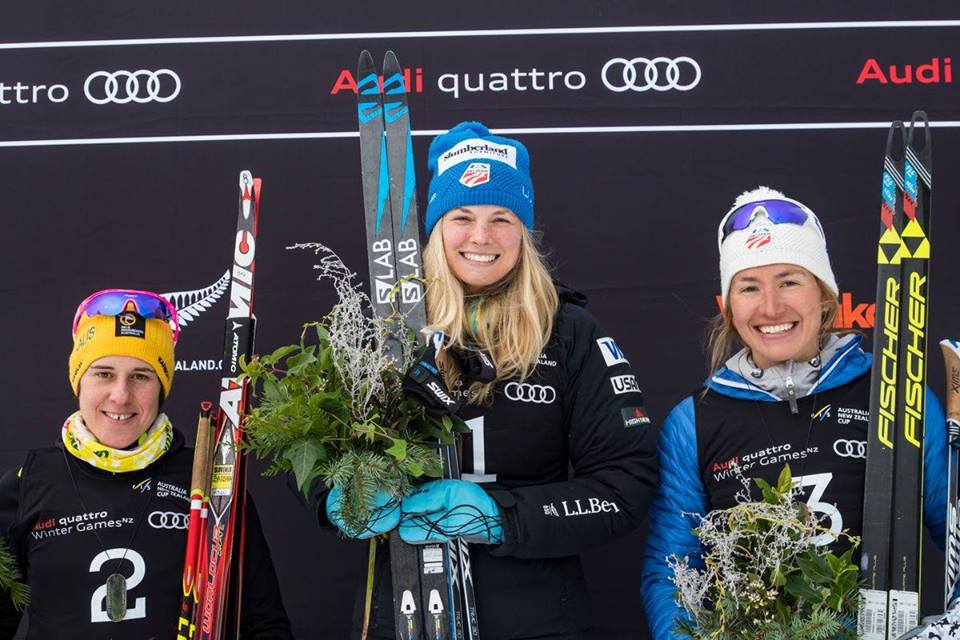
    (Left to right) Australia’s Barbara Jezersek in second place, American Jessie Diggins (USST/SMS Elite Team) in first and American Caitlin Gregg (Team Gregg) in third after the women’s 5 k freestyle at the 2017 Winter Games NZ at the Snow Farm in Wananka, New Zealand. (Photo: Winter Games NZ Facebook/Neil Kerr)

    “I got about 1-2 seconds on Adam and Kaichi, and realized that I had to use that gap to try and win the race,” Lustgarten wrote. “I really did not feel like I had the energy to outkick anyone, so I wanted to see if I could get a gap. I burned all of my matches on the first 75% of the last lap cresting hills hard and climbing hard and making sure to double pole really well on the flats. I was completely exhausted by the last climb but had enough of a lead to secure the win! And I was so excited to see Adam come in second!”

    Lustgarten finished first in 47:50.8, while Martin crossed 23.3 seconds later in second. Naruse claimed third, 32.8 seconds back from Lustgarten.

    In the women’s 10 k, Diggins won in 34:49.9, besting Patterson in second by 26.6 seconds. Sargent snagged third, 1:00.3 back from Diggins.

    After returning to the U.S., USST members are currently training individually or with their clubs, Whitcomb explained. They’ll reunite Sept. 28 to Oct. 13 for a final dryland camp in Park City, Utah, where they’ll have a guest athlete from the German women’s team.

    Results:

    Men’s 10 k freestyle | Women’s 5 k freestyle

    Men’s classic sprint | Women’s classic sprint  

    Men’s 15 k classic mass start | Women’s 10 k classic mass start

  • Americans Dominate 2017 Merino Muster and Half Marathon

    Americans Dominate 2017 Merino Muster and Half Marathon

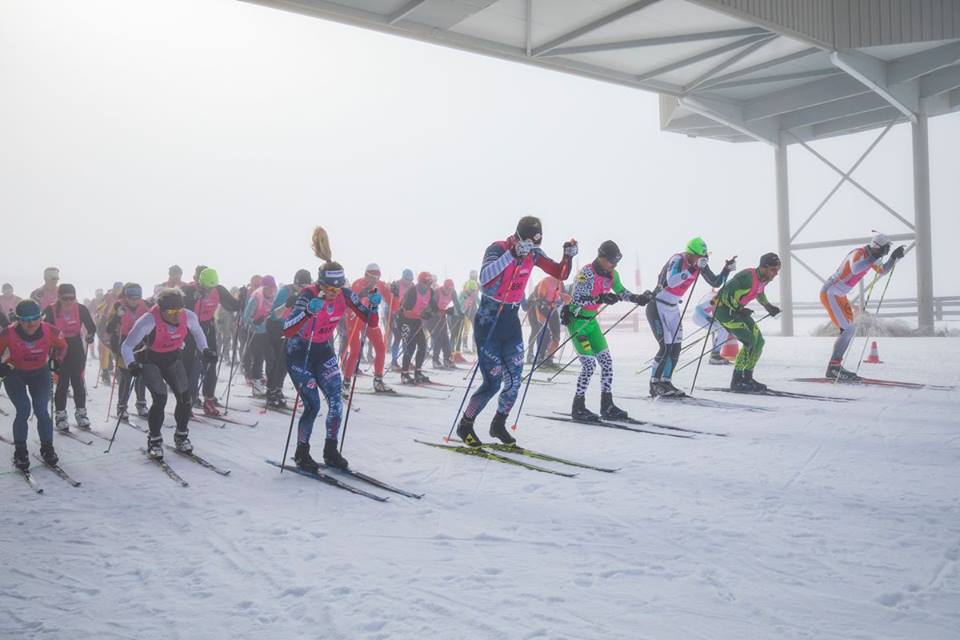
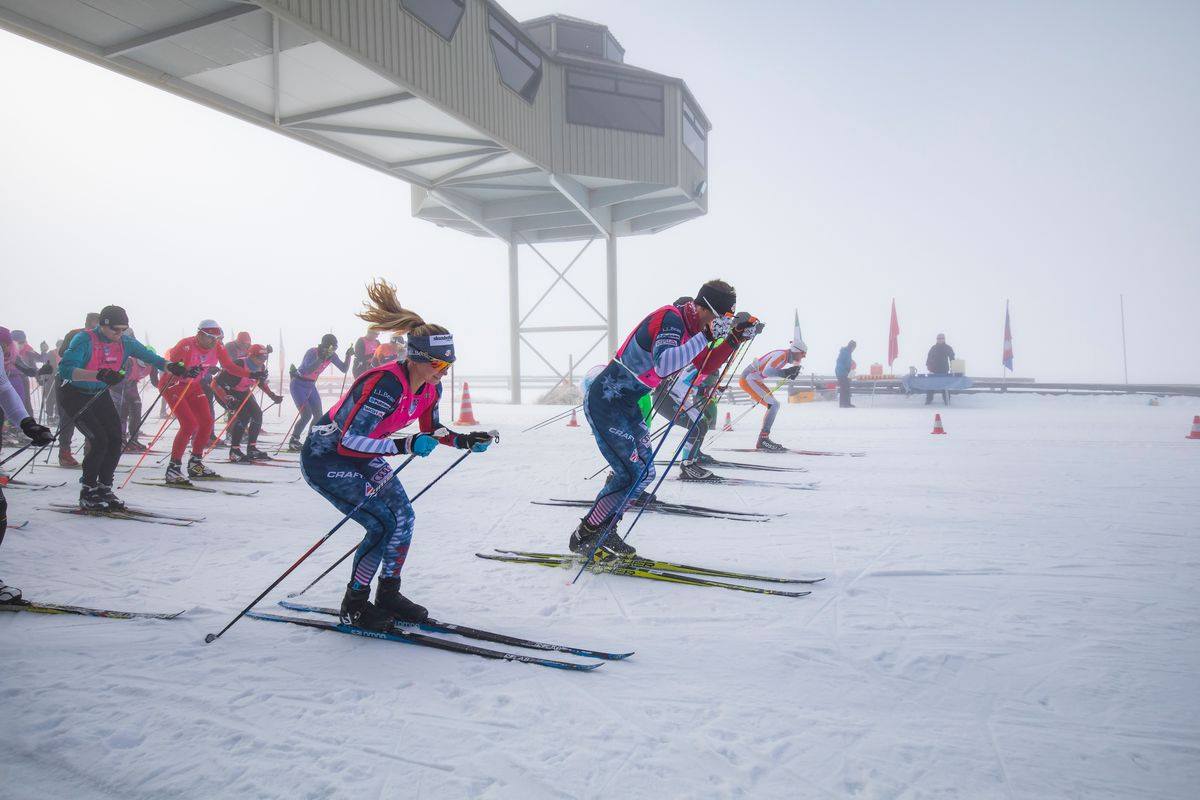
    The start of the 2017 Merino Muster 42-kilometer on Sept. 2 at the Snow Farm near Wanaka, New Zealand, with Americans Jessie Diggins and Simi Hamilton (in blue) up front. (Photo: Winter Games NZ Facebook/Neil Kerr)

    Visibility was thin and temperatures were below freezing last Saturday at the Snow Farm. Opaque white clouds of fog swept over the landscape near Wanaka, New Zealand, showcasing a skyline that seemed to play on the country’s largest historical farm industry: sheep. If bluebird skies and sun had greeted competitors in previous years, racers in the 2017 Merino Muster experienced temperatures around -5 degree Celsius (23 Fahrenheit) and a four-meter radius of visible track, then fog, for most of the 42-kilometer marathon.

    Simi Hamilton (U.S. Ski Team) leads Phillip Bellingham during the 42 k Merino Muster on Sept. 2 at the Snow Farm in Wanaka, New Zealand. Hamilton ultimately won and Bellingham placed third, 2 seconds back. (Photo: Winter Games NZ Facebook/Neil Kerr)

    The flutter of his own pole grips passing in his peripherals might have been the only company U.S. Ski Team (USST) A-team member Simi Hamilton saw during the race, had it not been for American Brian Gregg and Australian Phillip Bellingham.  

    The two contenders followed Hamilton from the start, and within the first few kilometers, all three had broken away from the rest of the 80+ men’s field to form a lead group. Together, the two Americans and Australian forged through the next 40 k, taking turns leading through the day’s scrim that hid the panoramic views of the Pisa mountain range that surround the Snow Farm.

    “It was incredibly foggy all morning,” Hamilton wrote in an email. “I think we would have all gotten a little lonely out there if we had been skiing on our own.”

    The trio kept each other company for the entirety of the race, but by the final two kilometers, Hamilton had staked his spot in the front. As Hamilton headed into the finishing stretch, both Bellingham and Gregg pushed to keep up with his pace. He ultimately held off Gregg by a second and Bellingham by 2 seconds to take the win with a finishing time of 1 hour, 40 minutes and 33 seconds.

    “My energy felt good both years, but last year I had trouble accessing my sprint/[Level 4] gear in the final 2 kilometers of the race,” Hamilton wrote. “This year, I felt more comfortable skiing level 3 and I found that it was much easier to access my sprint gear at the very end.”

    The victory is Hamilton’s first in the Merino Muster, which has been running for 23 years, the last three of which its been part of the Worldloppet marathon series. He first raced the marathon last season and finished second to his then-teammate Noah Hoffman (who won in 1:45:08 by 23 seconds over Hamilton). Upon returning, Hamilton had some specific objectives.

    “The primary goal (both last year and this year) is to get in a really solid level 3 workout, with a hard effort at the very end,” Hamilton wrote. “It’s great terrain to be able to do that on because it’s all very rolling and you can maintain a really consistent effort the whole time without burying yourself too deep. And I think it’s always important to put on a race bib this time of year from time to time in order to start getting back into the race routine before the season really starts.”

    Simi Hamilton (c) of the U.S. Ski Team after taking the win in the 2017 Merino Muster marathon on Sept. 2 at the Snow Farm in New Zealand. He held off fellow American Brian Gregg (r) by one second and Australia’s Phillip Bellingham by 2 seconds.(Photo: Winter Games NZ Facebook/Neil Kerr)

    Gregg’s second-place result came at his first Merino Muster, an event he was able to enter since he was in New Zealand for a training camp with his wife and Team Gregg teammate, Caitlin Gregg. The two arrived in New Zealand on Aug. 22 and planned to train there until the second week of September.

    “Our dates ended up aligning with the USST camp dates as well and it has been a lot of fun joining them for workouts,” Brian wrote. “At the start of the second week down here athletes from Craftsbury, Stratton and Sun Valley arrived so we have had a large US representation. My brother and sister in law also made the trip down to race the Muster and help support our training. They both work remotely for their companies and it has been a blast to have them here with us.”

    While he indicated that his summer training had been going well, the race itself was an invaluable opportunity for Gregg to tackle technique. Following Hamilton for an extended hard effort was one of his primary aims, not to mention testing his sprint speed against one of the U.S.’s top sprinters.

    “One of my specific goals for this race was to ski with Simi,” Gregg wrote. “I think he is one of the better technical skiers in the world especially in V2 and following his smooth rhythm has been helpful for my own technique. Technical adaptations on snow has been my biggest goal of the camp and the race offered a focused 1 hour and 40 minutes of that.

    “Swapping leads with Simi allowed me the opportunity to make technical adjustments through mimicry and then I could take the lead and make the technique more my own,” Gregg continued. “Although my goal was also to win the race I can hardly complain about being able to match the finishing sprint of a World Cup Winner.”

    Bellingham, an Australian national team member, rounded out the men’s marathon podium in third, just two seconds out of first. A week prior to the Merino Muster, Bellingham competed in the 2017 Kangaroo Hoppet in Falls Creek, Victoria, where he placed second to American Miles Havlick.

    Diggins 1st Woman, 4th Overall 

    In the women’s 42 k race, which started with the men, USST A-team member Jessie Diggins took the win with a time of 1:51:42 for fourth place overall. Diggins explained that while she was able to ski with the front group of men for the first few kilometers, she eventually settled into a pace that was more her own.

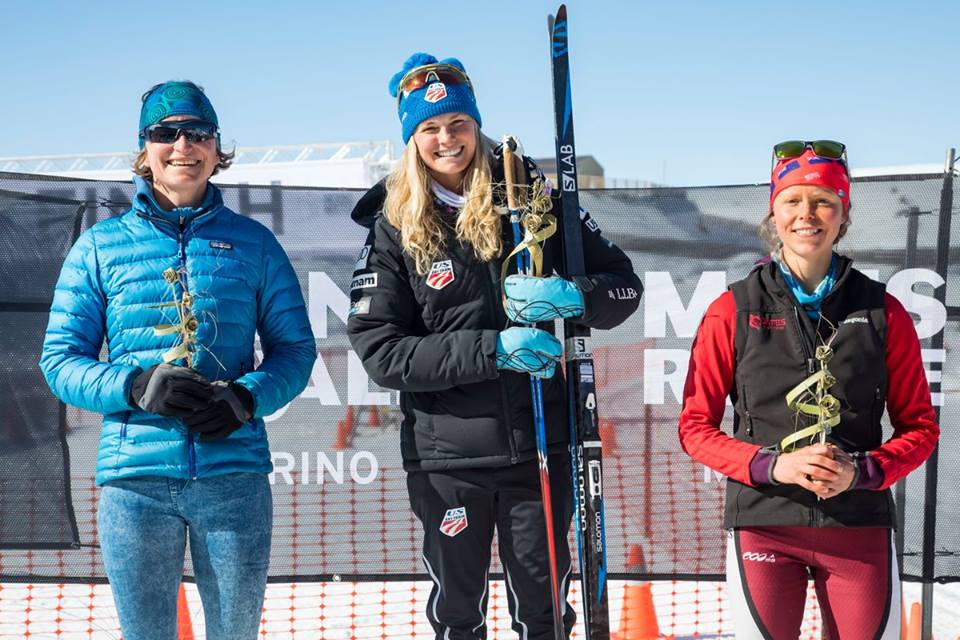
    The all-American women’s podium at the 2017 Merino Muster on Sept. 2 at New Zealand’s Snow Farm, with Jessie Diggins (c) of the U.S. Ski Team in first, Hannah Dreissigacker (l), formerly of US Biathlon, in second, and Britta Clark (r) in third. (Photo: Winter Games NZ Facebook/Neil Kerr)

    “We all started together but after 3-4km I knew I couldn’t hang with the lead guys the whole race, so I dropped back a bit,” Diggins wrote in an email. “I didn’t have to ski alone though, which was really nice!”

    For much of the race, Diggins skied with Estonian Joosep Tammeme, a change from last season when she paired with her USST teammate Liz Stephen for most of the marathon.

    “Last year was super fun because I got to ski with Liz the entire race,” Diggins wrote. “This year I had a really nice Estonian man to partner with but nobody can replace Liz Stephen!”

    Thirty-one seconds behind Diggins, Tammeme, the fourth male, finished fifth.

    With the Merino Muster behind her, Diggins will look to finish off the remainder of the USST’s three-week training block in New Zealand.

    The start of the 2017 Merino Muster 42-kilometer on Sept. 2 at the Snow Farm near Wanaka, New Zealand, with Americans Jessie Diggins and Simi Hamilton (in blue) up front. (Photo: Winter Games NZ Facebook/Neil Kerr)

    “The Merino was a fun way to get a long intensity session in during the week and ski hard while also enjoying the feeling of racing again!” Diggins wrote. “Huge, huge thanks to the entire crew here at the Snow Farm. They always treat us so well and make sure the trails are groomed perfectly for great training. This is my favorite camp so I’m really grateful to them for making space for us down under!”

    The second woman after Diggins, 10 minutes and 17 seconds back, was retired American biathlete Hannah Dreissigacker, who has been working at the Snow Farm over the past few months. Dreissigacker, 30, explained that the race was her first since her retirement in the spring of 2016, and though she had remained relatively active leading up to it, gunning for the win wasn’t a goal.

    “I’ve been doing a variety of work in the office as well as coaching and instructing and I’ve been trying to get out and ski whenever I can,” she wrote in an email. “But I definitely went into the race with low expectations.”

    The Vermont native, instead saw the race — which ended up being her longest workout of the Southern Hemisphere’s winter — as more of an opportunity to do something she loved: skiing.

    “The race split up immediately for me — I knew better than to try to stay with Jessie at all,” Dreissigacker wrote. “I skied with an older Russian skier, and then by myself, keeping the pace comfortable and I was very happy to feel good the whole time! There was some low-visibility off the start but the trails were in great condition and it was a fun first race as a ‘master blaster’.”

    Rounding out the women’s podium in third (+17:24) was American and 2016 Bates College graduate Britta Clark.

    In the 21 k “Snow Rake”, USST A-team member Sophie Caldwell took the overall win in a time of 51:21. Just one second behind her was Caitlin Gregg in second place, while the third woman was U.S. Paralympics Nordic Head Coach Eileen Carey (+5:48). The first man in third overall (+4:44) was U16 skier Campbell Wright, of New Zealand.

    Results: 42 k | 21 k

  • Newell Thrives in NZ, Wins Winter Games Opener at Snow Farm

    Newell Thrives in NZ, Wins Winter Games Opener at Snow Farm

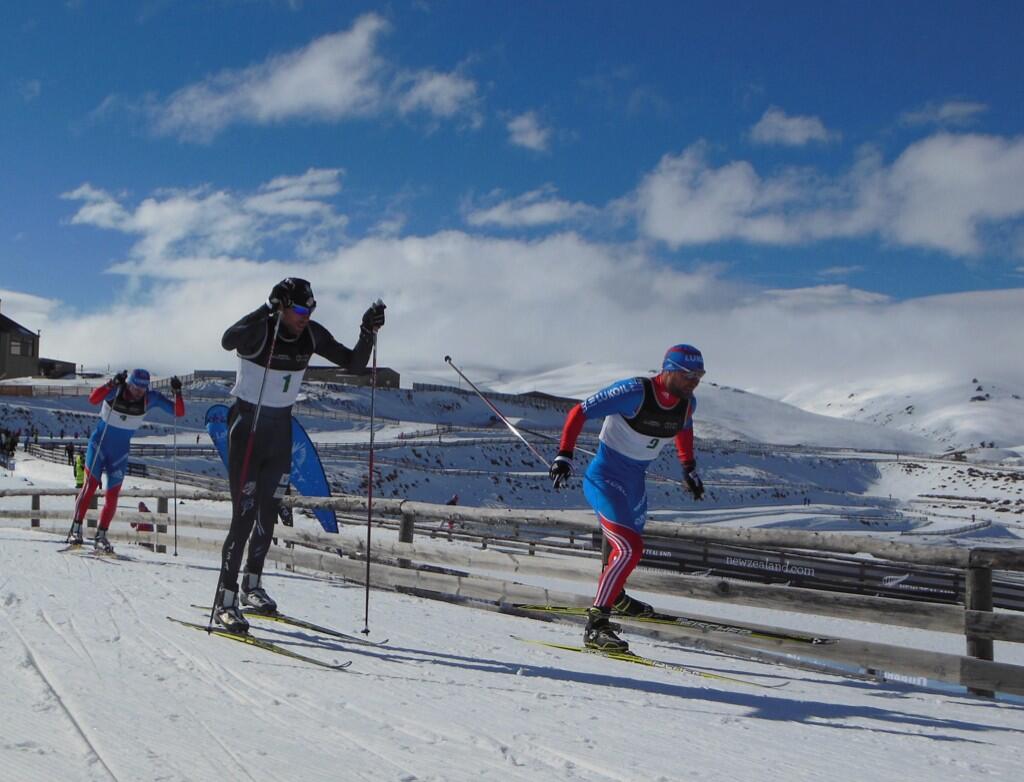
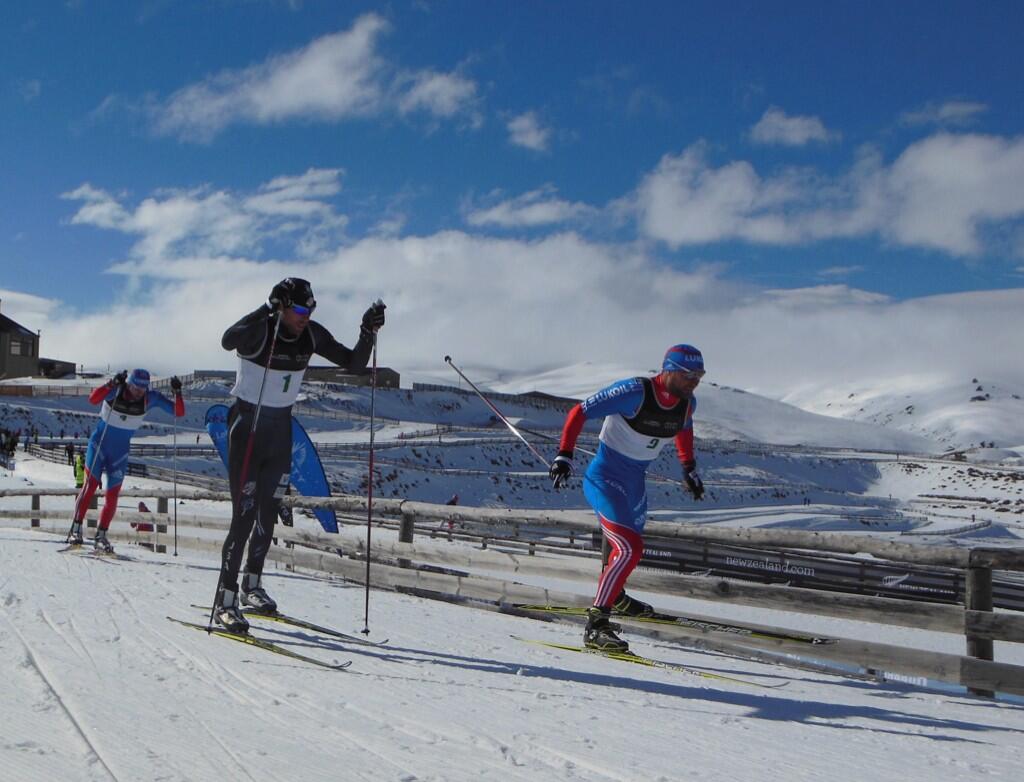
    Andy Newell (l) and Russia's Alexey Petukhov go head-to-head in the men's A-final on Thursday in the Winter Games NZ freestyle sprint in Wanaka, New Zealand. Newell won the race, Petukhov was second and Canada's Devon Kershaw placed third. (Photo: Noah Hoffman)
    Andy Newell (l) and Russia’s Alexey Petukhov go head-to-head in the men’s A-final on Thursday in the Winter Games NZ freestyle sprint in Wanaka, New Zealand. Newell won the race, Petukhov was second and Canada’s Devon Kershaw placed third. (Photo: Noah Hoffman)

    The U.S. Ski Team men’s squad touched down in New Zealand on Tuesday afternoon. Imagine racing in the land down under, a 16-hour time difference from Andy Newell and Simi Hamilton’s base in Vermont and 18 hours from Colorado, where Noah Hoffman primarily trains, two days later.

    Newell and Hoffman did just that (Hamilton ran into major baggage woes on his way over), and Newell came out on top of a relatively stacked, if not small, field on the opening day of Winter Games NZ.

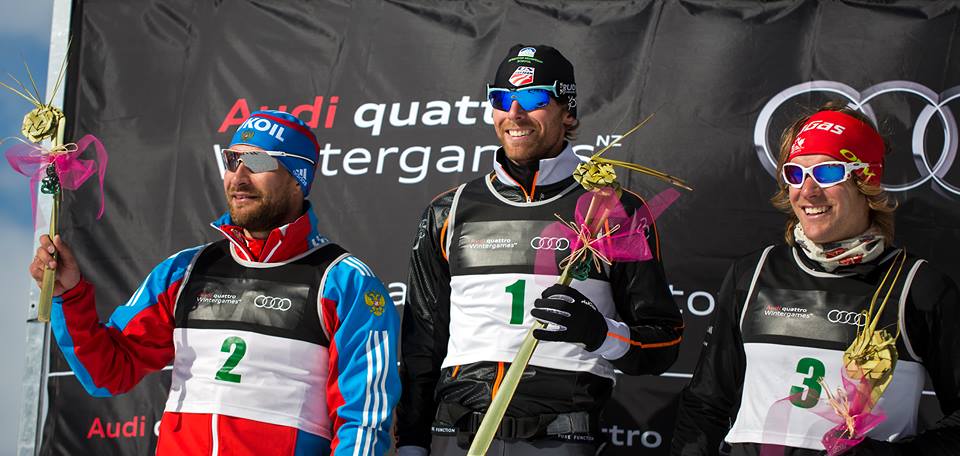
    The Winter Games NZ men's 1.6 k sprint podium, with winner Andy Newell (c), runner-up Alexey Petukhov (l), and Devon Kershaw in third. (Photo: Snow Farm/https://www.facebook.com/SnowFarm)
    The Winter Games NZ men’s 1.6 k sprint podium, with winner Andy Newell (c), runner-up Alexey Petukhov (l), and Devon Kershaw in third. (Photo: Snow Farm/Facebook)

    The ninth-ranked competitor, Newell not only crushed the qualifier of the 1.6-kilometer freestyle sprint at the Snow Farm in Wanaka, but he went on to win his quarterfinal, semifinal and eventually the final over Russia’s Alexey Petukhov and Canadian Devon Kershaw. Top seed Nikita Kruikov of Russia ended up fifth after teammate Anton Gafarov in fourth.

    After spending most of his summer with the Stratton Mountain School T2 Team, Newell clocked a time of 2:52.96 over what he considered a fast course, which was “fairly hard packed,” he wrote in an email. “The course was really fun with a super fast rolling downhill and lots of turns. … Neither of the two climbs on course were too steep.”

    Petukhov was the second-fastest qualifier nearly four seconds later in 2:56.54 and Kershaw qualified third in 3:00.10. Their positions ultimately held steady, with Petukhov placing second and Kershaw third in the final.

    “I felt a lot better than I thought I was going to racing,” Newell explained of his first time on snow in a couple months. “The travel is tough to get down here but adjusting to the time change is actually pretty easy. A lot easier than Europe. So racing two days off the place isn’t that big of a deal.”

    Still, he didn’t feel exactly the same as he would on a World Cup morning.

    “I wasn’t too eager to race in the morning having only had one day on snow but as a warmed up I started feeling pretty good,” Newell wrote. “The sun came out so I had plenty of energy in Qualification. Obviously all the Russian guys here are fast sprinters so I didn’t have any goal for the race other than to make the final.

    “It’s August so we just use these races as training opportunities and use them to gauge how our bodies are responding to the summer training and also identify things that we need to work on technically,” he added. “Especially with sprinting it’s helpful to jump in races like this so you can stay sharp when it comes to heat tactics and race-like accelerations.”

    Newell specifically tried to work on fast accelerations, over the tops of hills and during the final stretches of each heat.

    “I think it worked out well and I was happy with the result,” he wrote. “I was stoked with how the body felt pushing hard. We spend all summer long running, biking, rollerskiing, just training a ton and its good to remind yourself of why you’re putting in all the hard work. It’s good to remind yourself that you’re a ski racer and this is what you’re trying to get faster at.”

    Primarily a distance skier, Hoffman finished ninth ahead of a Russian and six Korean skiers.

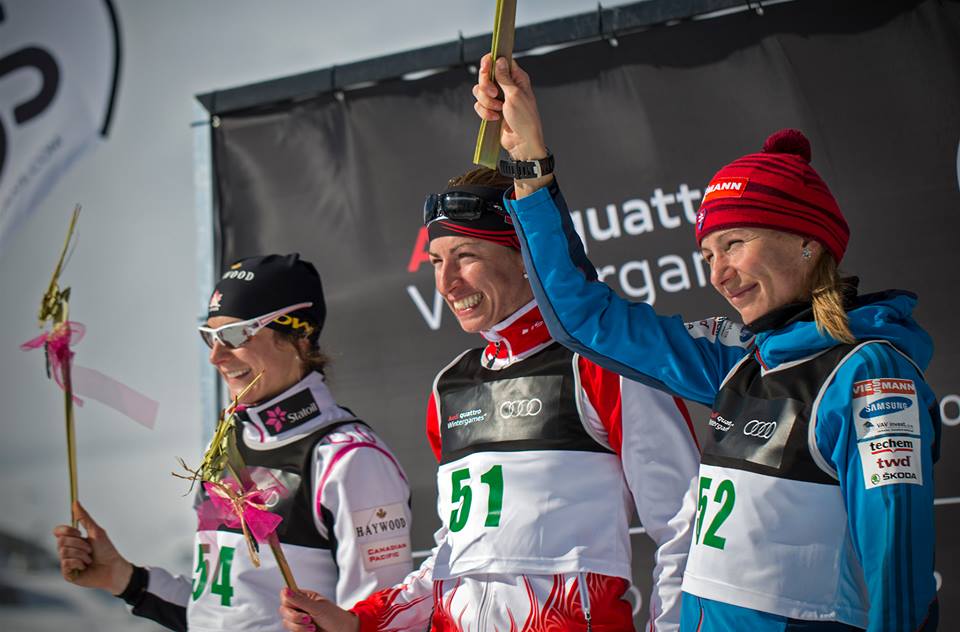
    The Winter Games NZ women's 1.6 k skate sprint podium, with winner Justyna Kowalczyk (c), runner-up Dasha Gaiazova (l), and Anastazia Kuzmina in third. (Photo: Snow Farm/https://www.facebook.com/SnowFarm)
    The Winter Games NZ women’s 1.6 k skate sprint podium, with winner Justyna Kowalczyk (c), runner-up Dasha Gaiazova (l), and Anastasia Kuzmina in third. (Photo: Snow Farm/Facebook)

    In the women’s skate sprint, Poland’s Justyna Kowalczyk was the fastest qualifier in 3:27.25, more than 5 seconds ahead of Olympic gold medalist biathlete Anastasiya Kuzmina of Slovakia. Canadian Perianne Jones qualified third in 3:36.42.

    Kowalczyk went on to win her semifinal and top Canada’s Dasha Gaiazova in the final for the overall victory, telling race organizers, “It was a good race on a very good track. I am very happy and racing here at Snow Farm and the Winter Games is very important for me for Sochi,” she said.

    Gaiazova was second, but could not be reached for comment, and Kuzmina placed third. Jones finished fourth in the A-final, topping Japan’s Michiko Kashiwabara and Chisa Obayashi, who were first and second, respectively, in the B-final. New Zealand’s lone entrant and first Olympic biathlete, Sarah Murphy, ended up seventh of eight women. Murphy is trying to qualify for her second-straight Olympics after “a lot of back luck last year,” including illness and a broken rifle, she told the Otago Daily Times.

    “These Winter Games are really very important for me and my bid for the Olympics,” she said.

    Although Thursday marked the start of the Games, it was essentially the only day of true-blue racing for the Americans at the Snow Farm. “We are hopefully going to do a distance time trial with the Canadians later in the camp but that will be the only other racing,” Newell explained.

    Results: men | women