Tag: Winthrop

  • A New Start For the Methow Valley in its Quest for a Signature Race

    A New Start For the Methow Valley in its Quest for a Signature Race

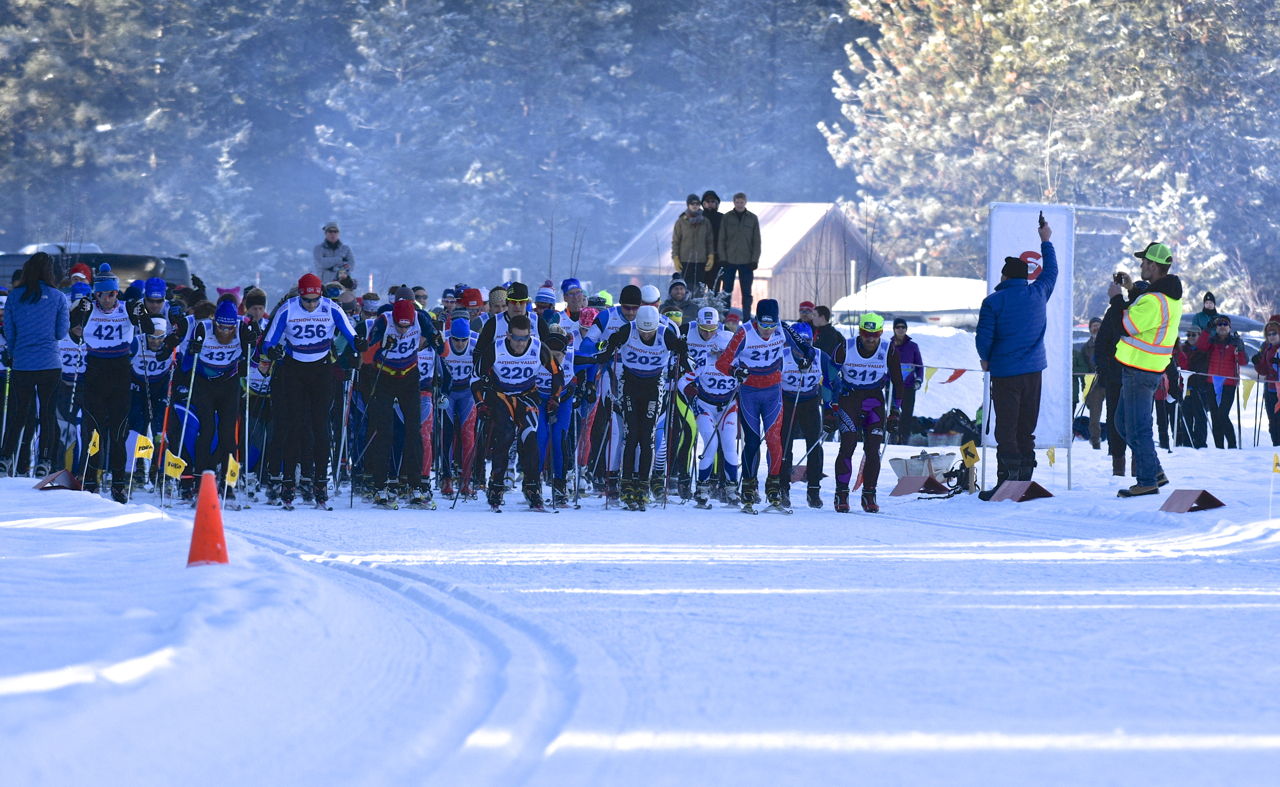
    Ready, set, go: racers at the start of the skate portion of the 2018 Methow Pursuit. (Photo: Methow Trails)

    Washington’s Methow Valley is the literal end of the road in winter. There’s one way in from the south.  There’s route 20, a sinuous side spur plunging down from Omak in the Okanogan Highlands to the Methow’s eastern edge. Otherwise, travel by car terminates just beyond Mazama — the small town nestled in the valley’s north.   

    The Methow’s charm remains its solitude and mellowed pace. Despite the wifi and cell service, there’s the real sense of being unplugged.

    For nordic skiers, that remoteness coupled with the Methow’s epic skiing make it paradise. Regionally, it’s hard to argue any other nordic ski destination matches the raw number of kilometers, terrain, and vibe etched into the Methow’s DNA.  

    Despite those travel brochure-worthy qualities, the cadre of skiers residing in the region have struggled to create a signature cross-country race event. By signature event, we’re talking races like Sun Valley’s Boulder Mountain Tour, Craftsbury’s storied marathon, and the behemoth American Birkebeiner which stands alone in terms of its draw.

    “In the early 90’s is when I think the Methow Pursuit first started,” said Kent Murdoch, a long time Methow skier who bounces between homes outside Seattle and the Methow. “The first iteration of that long distance race was a point to point from Cub Creek, up and over the Rendezvous pass, and dropping down into Mazama to finish.”

    That 42 kilometer skate race featured gut-punching climbs matched with a never-ending technical descent. The second day’s classic pursuit threaded from Mazama to Winthrop on the hallmark Community trail.

    “It was essentially a double pole race,” added Murdoch. “But it was pretty popular for the people that are established racers that knew about it.”

    Periodically, stakeholders within the community have attempted to recreate the concept of a must-race event. In a place defined in winter as much as the Methow is by nordic skiing, one would assume a marathon type race there would be an annual pilgrimage for many.

    That is not to say efforts failed. It is to say a rethink was due if success is measured by drawing a broad spectrum of the nordic community.

    “I knew the event had struggled over the years and as I dove into planning for it, I quickly realized why,” said Adrienne Schaefer, the Partnership Manager for Methow Trails. “In an effort to have something for everyone, the event had grown into a somewhat complicated format, which was fine for skiers who were familiar with racing but seemed hard to navigate for someone who had never entered a race and didn’t actually know what a loppet even was. Numbers for last year’s Pursuit were close to 70 on Saturday and around 35 on Sunday. It was clear that something needed to change.”

    Last spring, the race reboot began.  

    “We had just completed our Sunflower Marathon, Half Marathon and Relay and had 1,100 runners at the event,” Schaefer said. “The question was, why not just do a winter version of the Sunflower?”
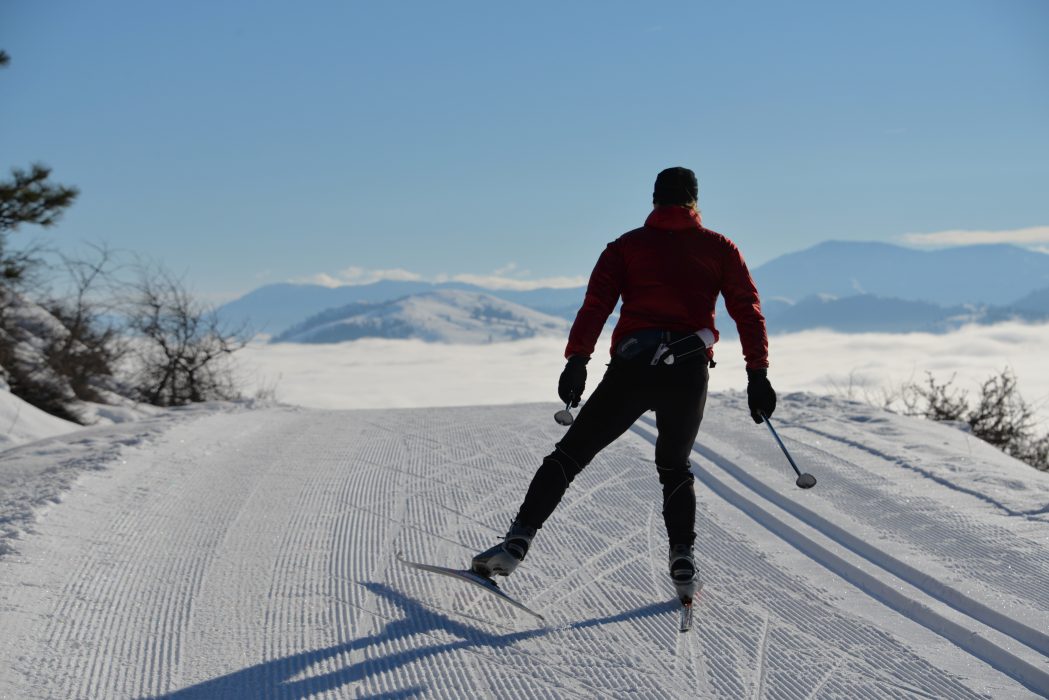
    Skiing above the fog and under a big sky in the Methow Valley. (Photo: Methow Trails)

    The Sunflower is a five-leg trail running race connecting Mazama on the valley’s north end to Twisp in the south. Participants have the option of running the marathon solo or as part of a relay team. Relay teams consist of two to five participants. The half-marathon starts near Mazama and shares the same finish as the marathon. The end result is a race with enough options to draw the hardcore and recreationist.

    What Schaefer saw in the success of the Sunflower was its accessibility. A concept easily applied to the cross-country ski version of the event.

    Murdoch was equally invested in formulating a successful winter-edition model of the Sunflower.

    “The area really warrants putting something like this on,” Murdoch said. “A few friends and I have been envisioning this for a few years and I am now on the Board for the ski team. I Have taken this as my main focus to not just build this race but eventually a week-long festival with multiple events. We want to appeal to people of all ages and skill levels.”

    On January 26, the Methow’s inaugural Ski to the Sun Marathon and Relay kicks off.

    Valley local Laura McCabe, a timeless podium magnet and herself fond of burly skis, along with Murdoch worked to piece together a course appealing to all comers. Beginning in Mazama, the envisioned course runs a solid 40.6 k for individual skiers. The relay is broken into six segments – teams may have between two to six members.

    For the first quarter, the race route streams the middle of the valley floor. At the end of the third leg, at 13 k, the course turns towards the west and trends to the rolling hills buffering the valley’s flanks. After approximately 28 k, the climbing begins towards the finish at Sun Mountain Lodge.

    “It is very skiable,” Murdoch added. “There is nothing in it that is, I think, that is going to turn anyone away purely based on difficulty. And it doesn’t have the technical descents. So technically it should be doable for a very large group of people. And for the people that are not interested in the climb, it is possible to get on a relay team. I think some of the legs are only 2 to 3 kilometers and are totally flat. So there is something for everyone.”
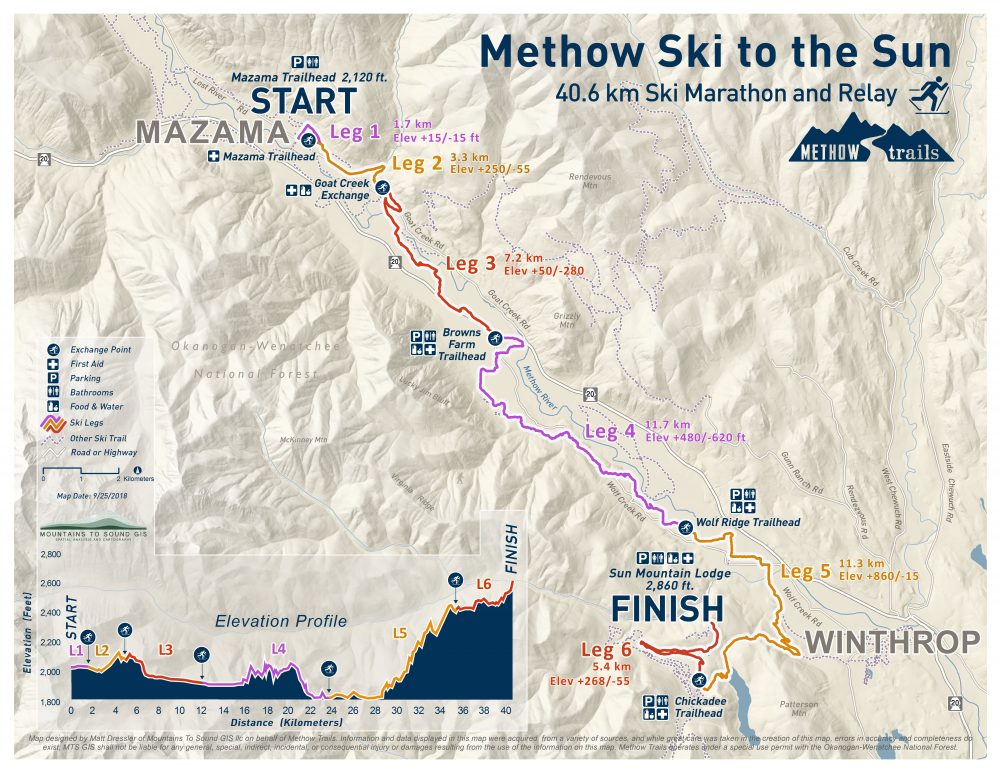
    Course map and profile : Methow Ski to the Sun Marathon and Relay.

    For skiers on the sharp end of the race, keen on fast splits and podiums, Murdoch believes the race will deliver. For those with an affinity for warm drinks and food as they tick off kilometers, organizers plan to staff numerous feed zones along the course to keep participants comfortable. In an appeal to families, racers 17 and under race for free.  The race is freestyle technique, but skiers may skate or classic. 

    “We know this is not going to happen overnight,” Murdoch said of the Methow’s desire to cement itself on the race circuit with the Ski to the Sun Marathon and Relay. “The basic answer to why we lack a signature event is that I don’t think we ever set out, in the beginning, to envision a course and the post-race dinner and award ceremonies and marketing especially. This is new to all of us. How to go about that. In previous years it was never really intended to be that kind of event. Now we have the energy.”
  • After Summer Wildfires, Methow Valley United, Undeterred and Open for Business

    After Summer Wildfires, Methow Valley United, Undeterred and Open for Business

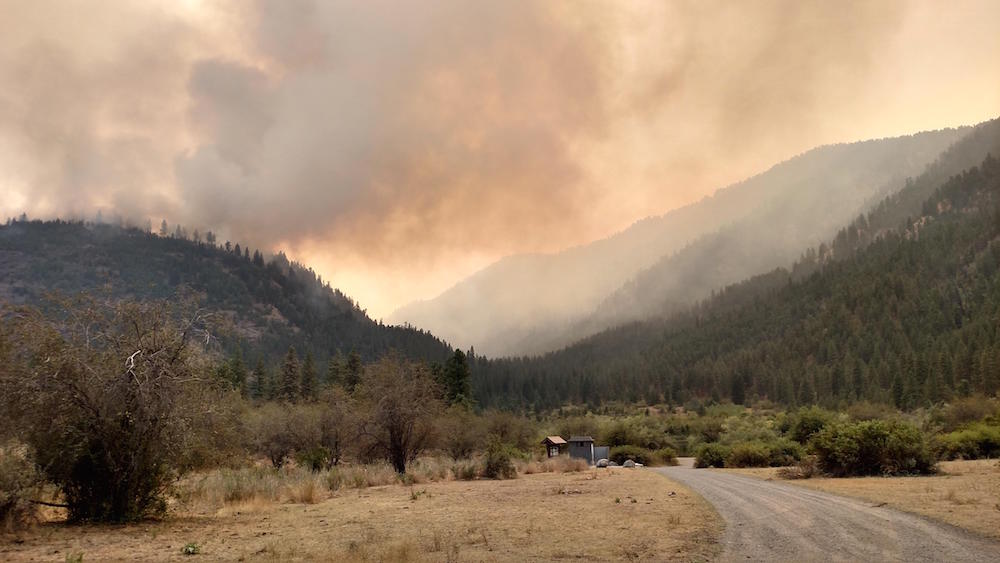
    The Okanogan Complex Fire near Omak, Wash., began with a lightning strike on Aug. 15, 2015 and consumed more than 300,000 acres. (Photo: US Forest Service)
    The Okanogan Complex Fire near Omak, Wash., began with a lightning strike on Aug. 15, 2015 and consumed more than 300,000 acres. (Photo: US Forest Service)

    In late October, snow fell on Washington Pass just outside the Methow Valley in Washington state’s North Cascades. Just yesterday, grooming began on the Methow Trails in anticipation of the earliest opening in the nordic center’s history, set for this Saturday. This kind of start to the season is warmly welcomed by a community that endured two consecutive summers of record-setting wildfires.

    A skiing mecca and home to four 2014 Olympic cross-country skiers (the Bjornsen siblings, Brian Gregg, and Torin Koos), the Methow Valley is also home to the Methow Trails, the self-proclaimed “nation’s largest cross-country ski area.” With more than 200 kilometers of trails in Winthrop and Mazama, Wash., this recreational area attracts visitors from around the country for skiing, trail running, mountain biking, and hiking.

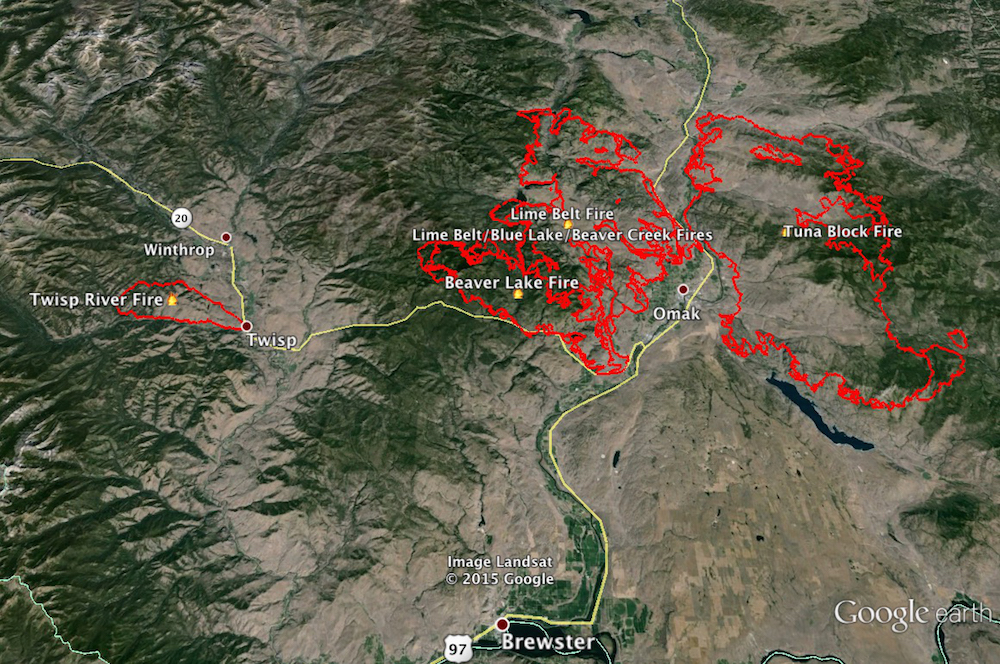
    This past August, lightning strikes ignited what was named the Okanogan Complex Fire, an immense fire that grew to threaten homes, businesses and livelihoods. Actually five fires fought as a single fire due to their proximity to one another, the Okanogan Complex surpassed the previous year’s Carlton Complex Fire to become Washington’s largest wildfire on record. Peaking at 304,782 acres, the fires burned from Aug. 14 through the declaration of 95-percent containment on Sept. 20, according to the National Incident Information System.

    A map of the Okanogan Complex Fire (Photo: Jeremy Blazar/Overlays by InciWeb)
    A map of the Okanogan Complex Fire (Photo: Jeremy Blazar/Overlays by InciWeb)

    Starting just down the valley from the ski towns of Winthrop and Mazama, the Twisp River Fire posed the highest threat to the ski infrastructure of the Methow Trails and Sun Mountain Lodge.

    Roughly thirty miles to the east, the Beaver Lake, Lime Belt, Tunk Block, and Tuna Block fires combined to create a much larger blaze, forcing evacuations of about 5,400 homes in Okanogan County.

    It was this evacuation that drew the attention of U.S. Ski Team athletes Erik and Sadie Bjornsen, who call the Methow Valley their home despite living and training in Anchorage, Alaska. Their parents still live in the valley.

    “For Eric and I it was a bit a scary because we didn’t hear from our parents right away,” Sadie Bjornsen said in a phone interview. Once they made contact with their parents, they learned they had evacuated to Seattle.

    Bjornsen also mentioned that aside from the size and unpredictability of the last two fires, it had been the idea of getting trapped that Methow residents feared the most.

    “The really freaky thing that happened this summer was that there was a fire over the North Cascade Highway … and there was a fire down in Twisp, and then there was a fire in Omak,” she said. “So all three ways of getting out of the valley were potentially blocked.”

    None of these closures coincided for a total road blockage; however, the valley’s entrapment by fire was a conceivable reality.

    This was more of an issue the previous summer when heavy rains created flooding and mudslides in addition to the ongoing fires. From the experience with the Carlton Complex in July 2014, the valley as a whole learned and was “a little better prepared for evacuation and the infrastructure issues,” Mark Waechter, longtime resident and owner of the Winthrop-based ski shop, Nordic Ultratune, wrote in an email.

    Waechter, who wrote about the fires on his blog in August, didn’t feel the affects of the fires on his business due to the shop’s exclusively winter focus and high volume of mailed-in, ski-grinding work.

    While the Winthrop and Mazama townships that many skiers call home were not immediately affected, the blazes quickly captured national attention when three firefighters died on Aug. 19 and four others were injured. These deaths, especially overwhelming for a small community where just about everyone knew or had a connections to one of the deceased, also drew enough regional media attention to spread an exaggerated sense of devastation throughout the valley, potentially dissuading tourists.

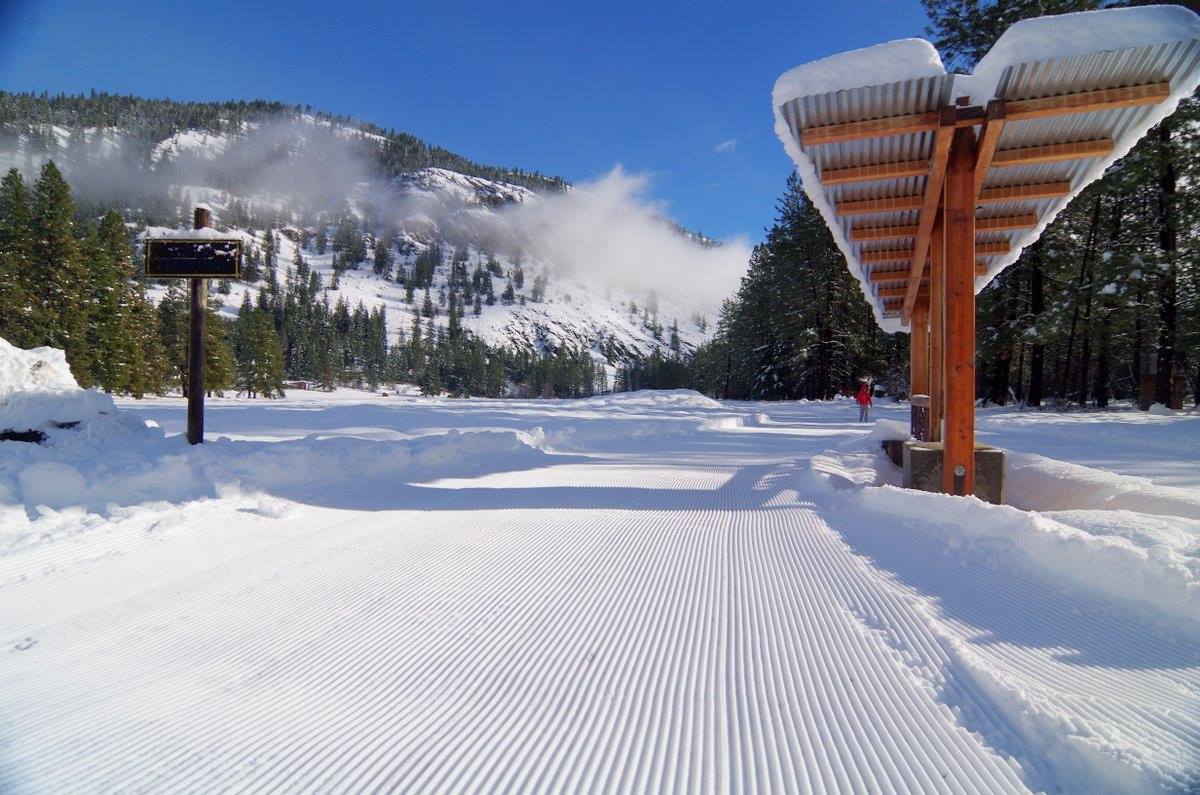
    The first grooming pass of the season took place Wednesday at the Methow Trails. The 200-plus-kilometer trail system is on track for the earliest opening ever on Saturday. (Photo: Methow Trails/Facebook)
    The first grooming pass of the season took place Wednesday at the Methow Trails. The 200-plus-kilometer trail system is on track for the earliest opening ever on Saturday. (Photo: Methow Trails/Facebook)

    “The hardest part about the recovery is convincing people to come visit after the smoke and fire went away,” Methow Trails Executive Director James DeSalvo wrote in an email. “Within a few weeks after this fire took off, the valley was open for business, but our marketing engine can’t compete with national disaster news.”

    All of the skiers and members of the ski community interviewed for this article echoed that sentiment, including Methow Olympic Development (MOD) Squad Head Coach Scott Johnston.

    “If you came here and you drove just up the Methow Valley on the main road, you’d hardly see any damage other than some burned, blackened hillsides,” Johnston said.

    Methow Valley Nordic Team coach Leslie Hall expressed sorrow for the loss of life and property, but explained that her team, “never really missed a beat even with smoke and fire.”

    “The hardest part about the recovery is convincing people to come visit after the smoke and fire went away.” — Methow Trails Executive Director James DeSalvo

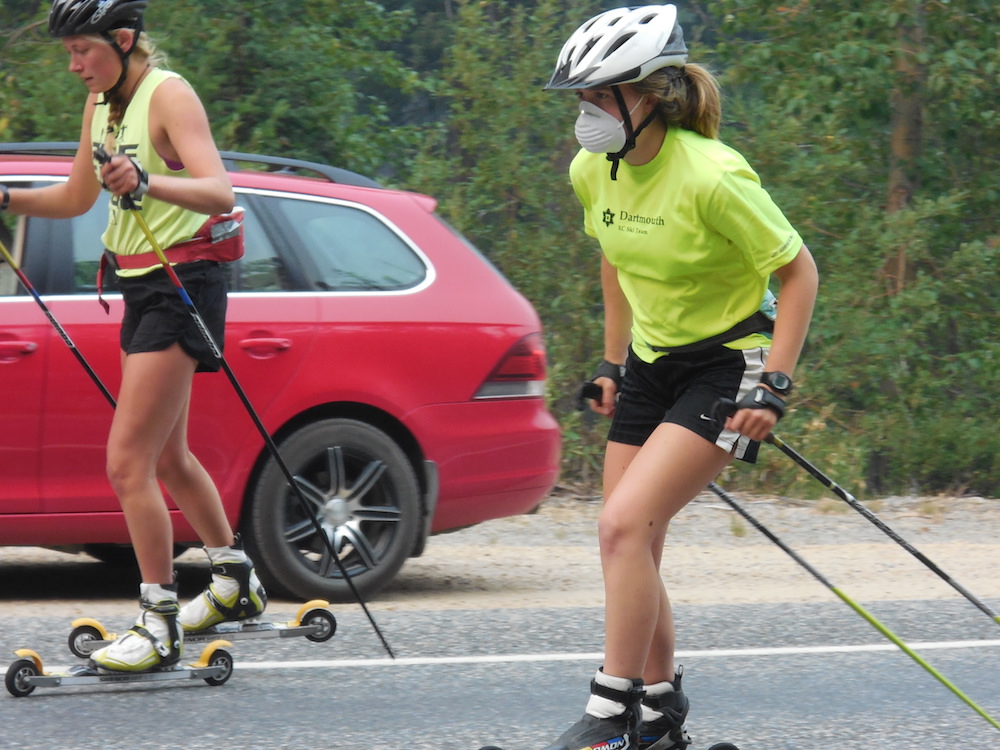
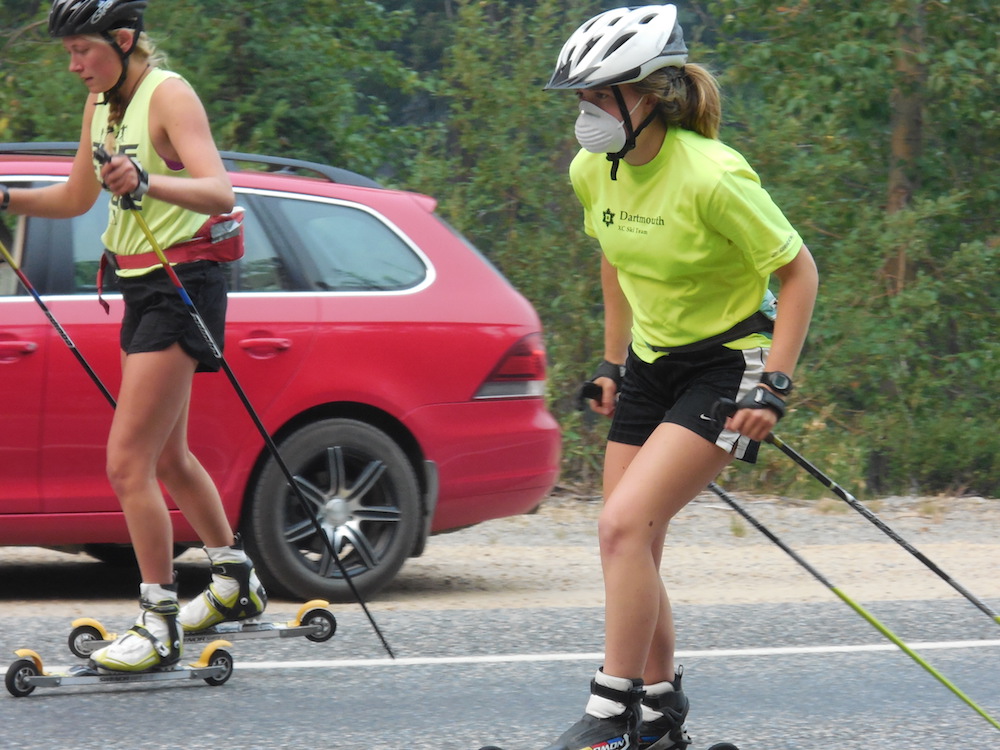
    Training deviated from the planned schedule only when smoke levels hit unhealthy levels. Hall, Johnston and former MOD athlete, Sam Naney, who now runs Momentum Northwest in Seattle, all mentioned the smoke as a training inhibitor, but explained it was easily avoidable by adjusting to the wind and elevation. Bjornsen said her parents still got outside with the use of breathing masks, and she only missed one interval session because of smoke during the week she visited after the fires.

    Methow Valley Nordic Team skiers Ella Hall and Claire Waichler rollerski amidst the smoke on closed Highway 20 this summer. (Photo: Leslie Hall)
    Methow Valley Nordic Team skiers Ella Hall and Claire Waichler rollerski amidst the smoke on closed Highway 20 this summer. (Photo: Leslie Hall)

    From an economic perspective, many agreed that it was imperative for early snow in order to draw tourists back to the Methow. Despite the fires and forest closures, DeSalvo’s staff at Methow Trails has done all of their normal preparation in readying the trails for the winter. On Saturday, they’ll open earlier than ever, right in the nick of time, according to a grooming report.

    To understand the nordic center’s role in the economic recovery of the region, one might consider its return on investment. According to the Methow Trails’ economic analysis published in August, it creates 152 full-time jobs each year, and has accounted for $700,000 dollars in sales tax revenue and $12.4 million dollars in combined direct and secondary expenditures made by trail users. Also, for every dollar spent on trail maintenance, $23 is returned to the local economy.

    Not only do the trails serve the community’s transportation and recreational needs, they are aiding in economic recuperation. Now they just need the snow to cooperate this winter.

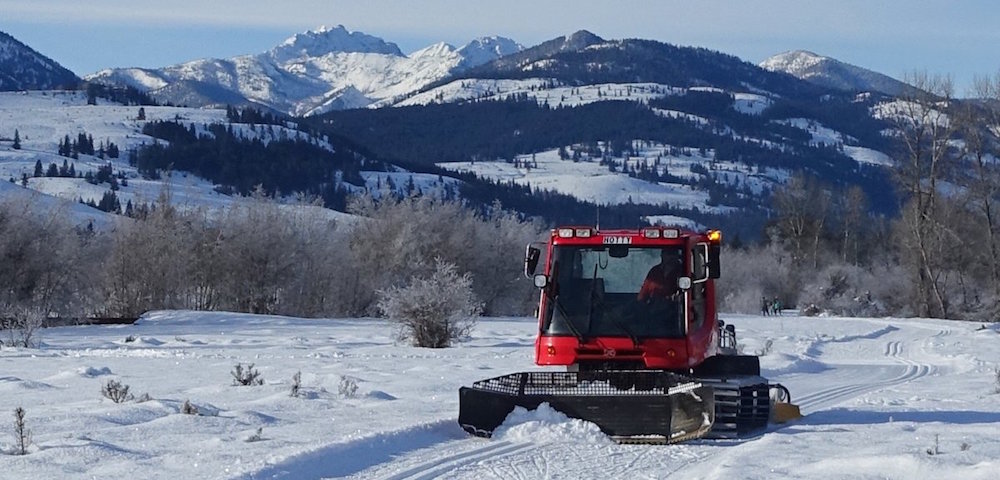
    Winter on the Methow Trails. (Courtesy photo)
    Winter on the Methow Trails. (Courtesy photo)

    Looking toward the future, it’s easy to predict more fires as the snowpack and weather becomes more unreliable, and each year seems to be drier than the previous. Wildfires are natural and essential to the ecosystem; thus this will happen again. However, it’s the severity and relentless nature of these past fires that’s scared the community.

    Naney, who grew up in the valley and lived there until this past year, mentioned that this year’s fires were “essentially burning over areas that burnt last year,” making the entire event “… horrifying for people.”

    On the other hand, the community, and the skiers within it, know that preparation is key. Part of this is trail advocacy and promotion since, “the last three major wildfires in our area have all been redirected away from homes and towns due in some part to the trail network acting as a fire line,” according to DeSalvo.

    Part of it is simply working around what the fire destroyed. The Methow Nordic Team did so by offering free membership to those team members whose families lost property.

    As the snow falls, skiing and tourists will return to the valley, and life as usual will continue for all of Okanogan County.

    “Our official opening will be this Saturday and forecast is for sunny and cold for the foreseeable future,” DeSalvo wrote in an email. “Good news for everyone.”

  • 7 Things You Didn’t Know About Sadie Bjornsen (Birthday Edition)

    7 Things You Didn’t Know About Sadie Bjornsen (Birthday Edition)

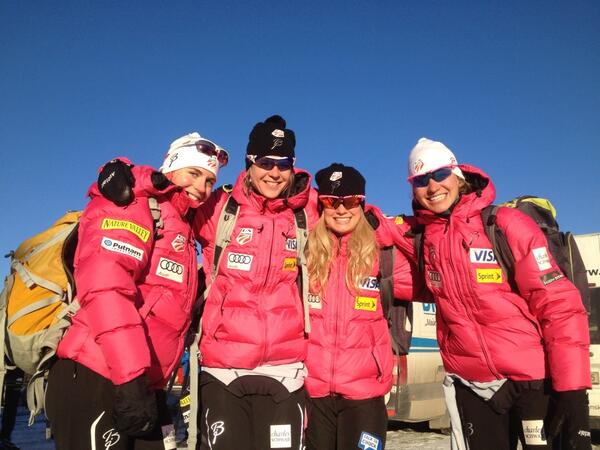
    U.S. women in Beitostolen, including Rosie Brennan, Sadie Bjornsen, Jessie Diggins and Sophie Caldwell (Photo: Holly Brooks)
    Several of the U.S. women in Beitostølen, Norway, including (from left to right) Rosie Brennan, Sadie Bjornsen, Jessie Diggins, and Sophie Caldwell (Photo: Holly Brooks/Twitter)

    To get you excited for 2013/2014 racing season, we asked some of the skiers you’ll be reading about from the U.S. and Canadian national teams to tell us seven things about themselves that most people don’t know. To top off the randomness, we also posed a couple questions related to skiing (well, sort of) and the life of a pro athlete.

    Athlete: Sadie Bjornsen

    Team: U.S. Ski Team (third season); Alaska Pacific University (APU)

    Age: 24 (today!)

    Hometown: Winthrop, Wash.

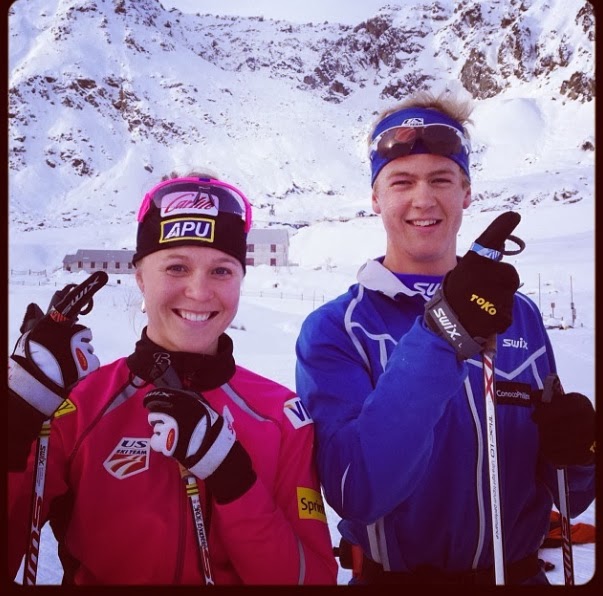
    Sadie Bjornsen and her younger brother Erik with their "Wax Ring" prizes after winning an Alaska Pacific University time trial earlier this month at Hatcher Pass near Anchorage, Alaska. (Photo: http://sadiebjornsen.blogspot.com) http://sadiebjornsen.blogspot.com/2013/11/the-final-countdown.html
    Sadie Bjornsen and her younger brother Erik with their “Wax Ring” prizes after winning an Alaska Pacific University time trial earlier this month at Hatcher Pass near Anchorage, Alaska. (Photo: sadiebjornsen.blogspot.com)

    7 Things:

    1. I take full-time school, and have for the past three years while I race. I am expecting to graduate at some point this year 🙂
    2. I grew up vegetarian until I started traveling to Europe for racing and got sick of eating “fried cheese” that was served to me.
    3. I have an older sister (1.5 years older) – she lives in Seattle and was a skier in her past life
    4. I travel with a frog stuffed animal and his name is Jasper
    5. I have a French boyfriend – and that is where I will spend Christmas this winter, in Meribel, France… first Christmas not at home.
    6. At one point in my life I set the 100-meter World Record on skis…. although I am not sure anyone tried it outside of the US.
    7. Cross Country skiing is new to my family in this generation. My mom grew up in Minnesota, but drove snowmobiles and worked on a farm. My dad was a backcountry and alpine skier.

    Bonus Round:

    • First races of the season? Tomorrow, Beito Classic 10k [in Beitostølen, Norway]
    • Go-to mantra or motto: “Mind is master, body is servant.”
    • What do you miss most while on the road (besides family and friends)? My closet. I love variation in outfits, and that is the hardest part about the traveling circus!
    • Best part about being a pro athlete: Testing your ability to accomplish something you set your mind to. There are so many speed bumps along the way, but perseverance and determination are something you have to test every day as a pro athlete. I love that nothing is given, nothing is “pre-determined.” Every day you have to test your ability, test if you are willing to reach that goal!
    • 3 travel essentials: Ear plugs, my journal, Cold-FX
    • Go-to travel meal or food: PB&J
    • Song that you could listen to non-stop: “What is Love” by Haddaway
    • Song you wouldn’t mind never hearing again: “Gangnum Style”
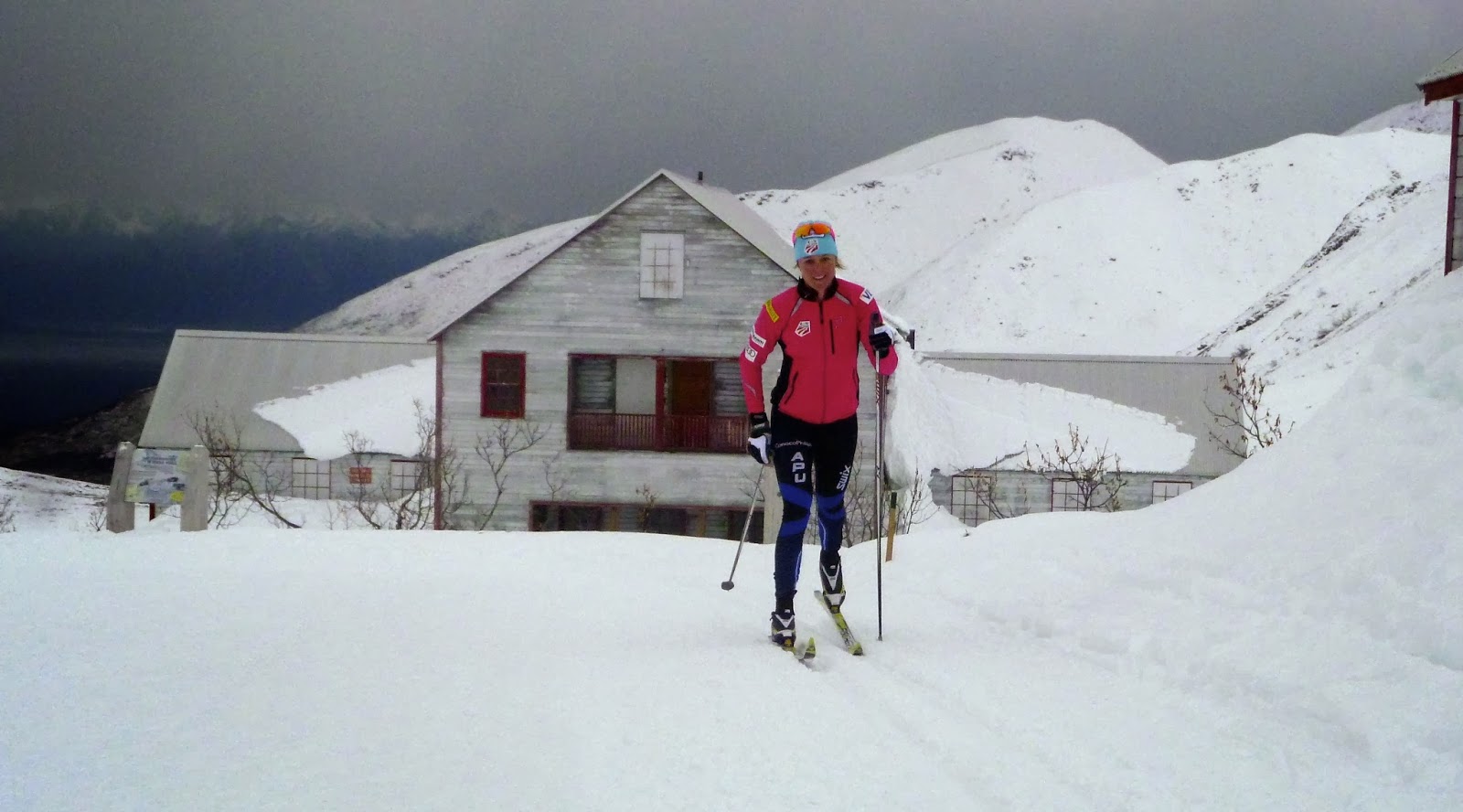
    Sadie Bjornsen at Hatcher Pass. (Photo: http://sadiebjornsen.blogspot.com/2013/11/the-final-countdown.html
    Sadie Bjornsen striding out at Hatcher Pass near Anchorage, Alaska. (Photo: sadiebjornsen.blogspot.com)

    ***

    See also: Sophie Caldwell

  • Elite Team Preview: Methow Olympic Development

    Elite Team Preview: Methow Olympic Development

    Methow Olympic Development skier Sam Naney (left) rollerskiing with Brian Gregg of CXC during a recent training session in Washington state’s Methow Valley. Gregg joins the MOD squad as a training partner this summer, but will continue to compete for CXC. (MOD photo)

    Note: This is the seventh preview in a quick-and-dirty series on U.S. elite teams. We asked coaches to send their 2012/2013 rosters and tell us what’s new for the coming season. We will be publishing additional reports over the next few weeks. Teams are presented in no particular order.

    Team: Methow Olympic Development (MOD)

    Coach: Scott Johnston

    Roster: Sam Naney

    What’s new: Brian Gregg as a training partner. Gregg will spend much of the summer in his hometown of Winthrop, Wash., working with Johnston and Naney in the Methow Valley. Naney tied the knot in June, marrying massage therapist Alison Hanks in his parents’ backyard.

    Top results last season: Naney, 27, notched a career best of 13th at U.S. nationals in the 15 k skate. In the Tour de Twin Cities that followed, he tallied three top-five finishes and ended the season with a slew of SuperTour and NorAm top 10s. He made the podium in St. Paul, Minn., placing third in the 20 k freestyle pursuit.

    Coach’s comment: According to Johnston, last year was an important building block for Naney, a sprinter with aspirations of being a better all-around skier.

    “We chose to take a slightly different approach with his training and focus more on building a better aerobic base training. We did this at the expense of his Sprint specific training and his results bore this out,” Johnston wrote in an email. “We had to make decisions to deviate from his traditional strengths of sprinting and power in the training, and those decisions cost us in the season; despite qualifying 5th in the Nationals skate sprint, Sam did not move on through his quarter and went on to have similar disappointing results in sprinting, usually his strongest event.”

    Sam Naney of the Methow Olympic Development squad working out in northern Washington. (MOD photo)

    This year, they’re working “to bring the whole package together,” Johnston wrote, adding that the progression was already happening.

    “This winter should be Sam’s strongest yet,” he continued.

    In an email, Naney explained that he specifically wanted to boost his speed and anaerobic power by the start of the season.

    “The hope is to carry the training well all the way through to November and the Canadian World Cup trials,” Naney wrote. “Last season we built a great ‘cake’ but didn’t have time to add the finishing touches.”

    It can’t hurt to have Gregg, 28, training alongside him. Entering his seventh year with Central Cross Country (CXC), Gregg will continue to compete for the Midwest’s elite team, keeping his home base in Minneapolis. His wife and CXC teammate, Caitlin, will stay there, training between a series of five-week intensive anatomy and physiology courses at Normandale Community College.

    Reflecting on his performance last year and goals of improving, Brian Gregg decided to return to Johnston, his high-school coach in Winthrop, Wash., as a personal coach.

    “Scott and I have discussed his training philosophies a lot and we have identified a number of areas that I have to improve,” Gregg wrote in an email.

    Gregg detailed the move on his blog, explaining that he’d return to the Midwest for training camps while working individually with Johnston and Naney out West. He aimed to minimize travel, training in long blocks, and liked Johnston’s scientific approach with speed and intensity monitored by GPS, lactate and heart rate. Gregg is currently training most days with the two-man MOD crew and loving the coach-to-athlete ratio.

    “Scott’s coaching style is very hands on and individual and requires a small group,” Gregg wrote. “For Sam and me, our individual strengths complement well with opportunities for the other to improve.  We are able to push each other and are making notable improvements.

    “It is tough to be away from Caitlin but I do get to spend more time with my family, and I believe this will help me make that next jump in performance,” he added.

    His childhood friend, Naney is excited.

    “It’s been a great change from last season in which I spent the whole year training solo,” Naney wrote. “Brian offers distinct qualities as a training partner and his distance skiing focus contrasts well with my sprinting, allowing us to feed off each other and push each other in our weaknesses.”

    As for Johnston’s method, Naney has always liked its unique and out-of-the-box ideas.

    “Scott has made a concerted effort to look outside traditional ski training and into other sports to find better ways to train endurance and speed athletes,” he wrote. “Currently we’re working with a mixture of marathon runner training and swimmer training. Instead of maintaining a cyclical-style training plan where we repeat the same workouts all year, we operate off progressions of workouts, increasing workloads and intensities all the way into the fall. We’ve found that in this manner, we can continue stressing the various physiological systems such that they respond faster and stronger than before.”

    ***

    Other previews: Bend Endurance Academy | Craftsbury GRP | CXC | Far WestMaine Winter Sports Center | XC Oregon