From the FasterSkier archive — posts syndicated from athletes’ and coaches’ own blogs between 2004 and 2012, kept online as published. Current coverage is at fasterskier.com.
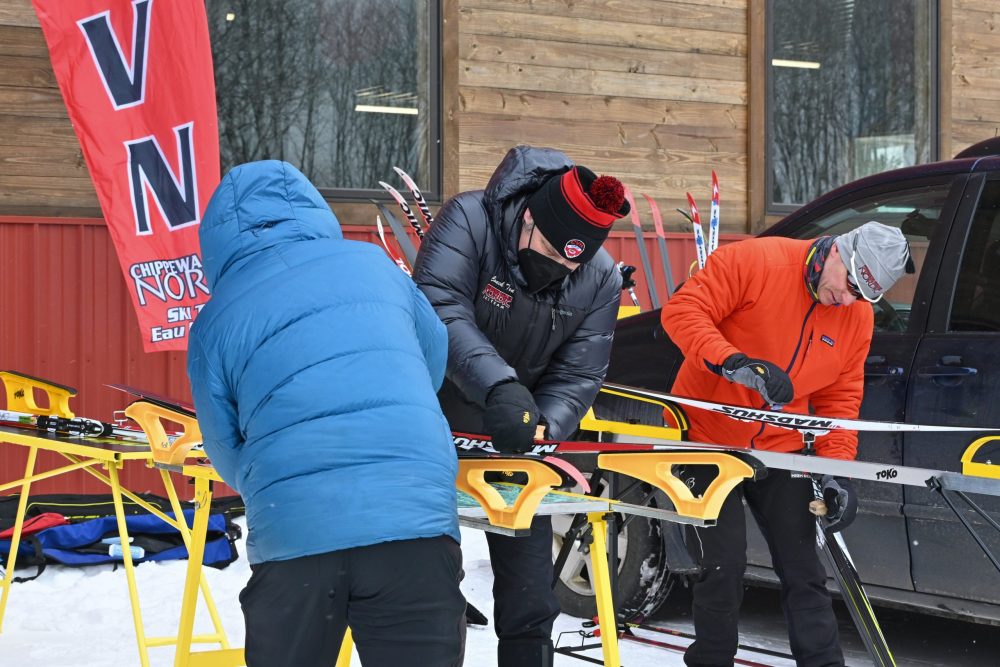
Chippewa Valley Nordic coaches prep classic skis for their athletes at the 2022 Wisconsin Northern Conference meet. (Photo: Chippewa Valley Nordic)
In case you missed it, here’s part 1 and part 2 of this series, in which industry representatives and expert ski technicians discuss ski performance theory and what impact a single-wax policy may have on competitive skiing.
What goes on inside the wax cabins and trucks at high-level competitions from the SuperTour to the World Cup seems, in equal parts, expertise, artistry, and alchemy. And, for those looking to understand to which conditions their pair of race skis might be best suited, the basic insights into ski performance provided in previous installments of this story provide ample fodder for consideration and experimentation on the ski track.
However, these insights may not fully resonate at a meet where coaches are furiously corking in kick wax on benches set in the snow for skiers who only recently took up the sport. Or a league which simultaneously supports competitive racers and participation-based programs, and ultimately just wishes to see the sport grow and thrive at all levels.
In speaking with representatives from leagues that have implemented a single-wax protocol, it is clear that there are a myriad of factors involved in the decision making process beyond ski performance theory that might skew the cost-benefit analysis on any inequity in ski speed derived from putting all racers on Swix HS6.
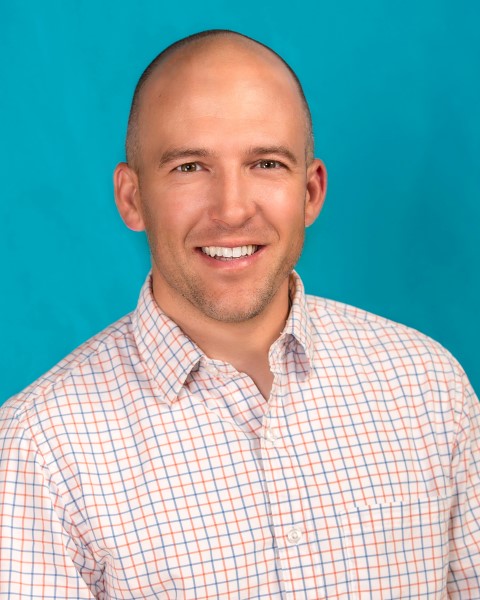
Ben Popp – executive director at the American Birkebeiner Ski Foundation, Wisconsin Nordic Ski League President, and volunteer coach – discusses the wax policy and sponsorship package accepted by the league this season. (Photo: American Birkebeiner Ski Foundation)
To unpack the counterpoints, we’ll begin again in Wisconsin, with a conversation with American Birkebeiner Ski Foundation Executive Director Ben Popp, who also sits as president of the Wisconsin Nordic Ski League (WNSL) and is a volunteer ski coach for the youth program in Spooner, 30 miles southeast of the Birkie finish line in Hayward.
Before jumping into the conversation, a nuanced reminder to readers that will be revisited in subsequent stories: the WNSL wax policy is unique in that the policy was included in a sponsorship proposal from Swix, which offered the league $10,000 per year over a three year period. Under the policy, all athletes would race on Swix HS5, HS6, or HS7 hard wax in cold or moderate temperatures, with HS7 and HS8 liquids used in warmer conditions. In other leagues, there may be special pricing available through this manufacturer, but this was not the origin of the policy.
In what the single-wax policy implies: rather than spending money on a robust wax box, programs would only need to purchase the five aforementioned products for glide. The event hosts determine which wax is most appropriate for the conditions a few days prior to the race, allowing coaches and athletes to wax their skis accordingly before travel.
While questions of the financial impact on other wax manufacturers and the loss of experience for developing high-level wax technicians remain present, it’s also worth noting that this policy only applies to events that are organized by the WNSL; this small list of events includes only the northern, central, and southern conference meets, and the Wisconsin state championship – two races per year for each club or school. Regional Junior National Qualifiers (JNQs) and other local events not organized by the league remain open. Simply put, the wax protocol only applies to what Popp described as “a sliver of all of Wisconsin skiing.”
According to Popp, in considering the proposal presented by Swix, there was one key word on the minds of WNSL board members: opportunity.
“The checkbook for the Wisconsin Nordic league, before this year, never had more than $2,000 in it,” he stated matter-of-factly in the call.
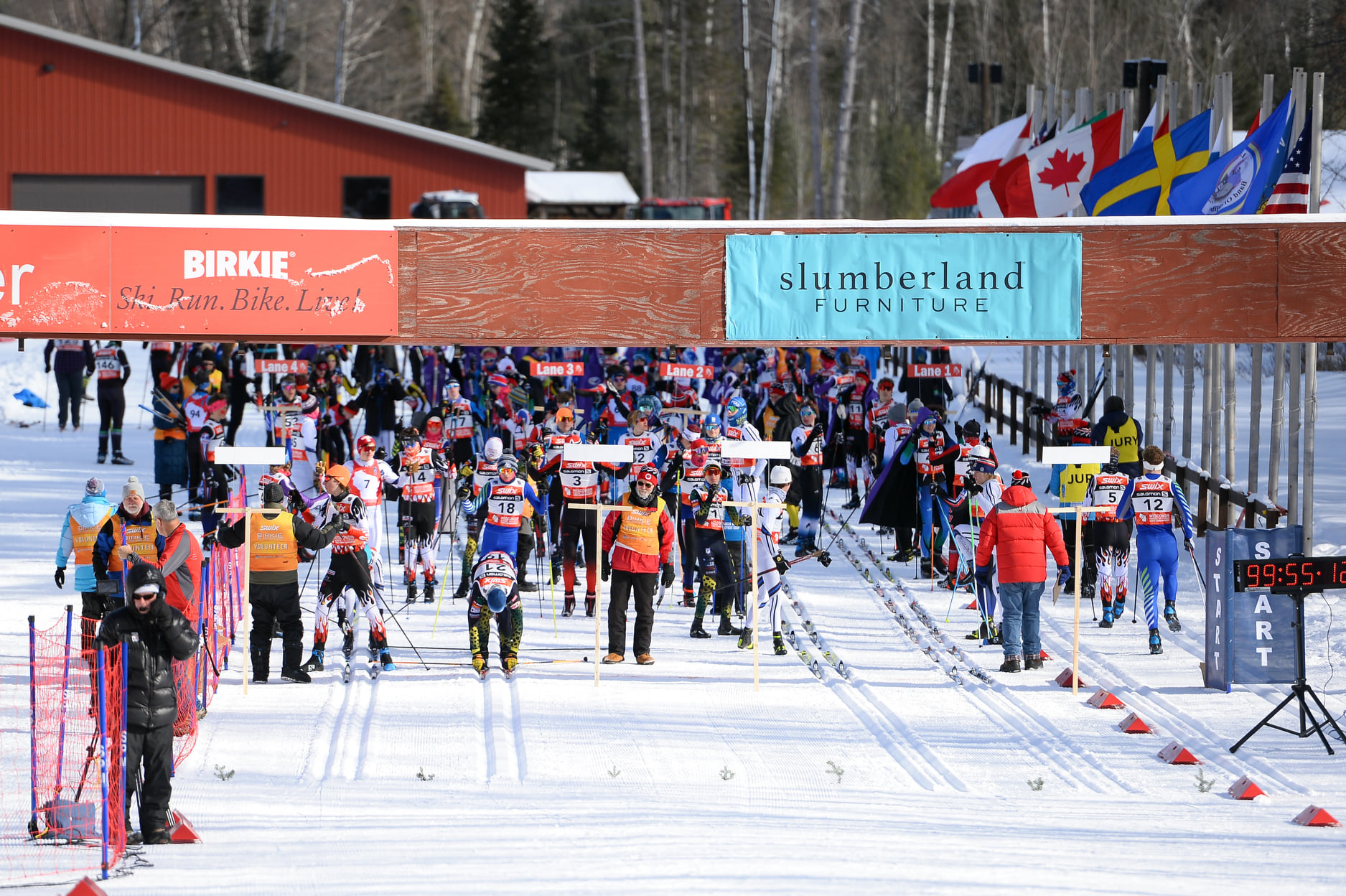
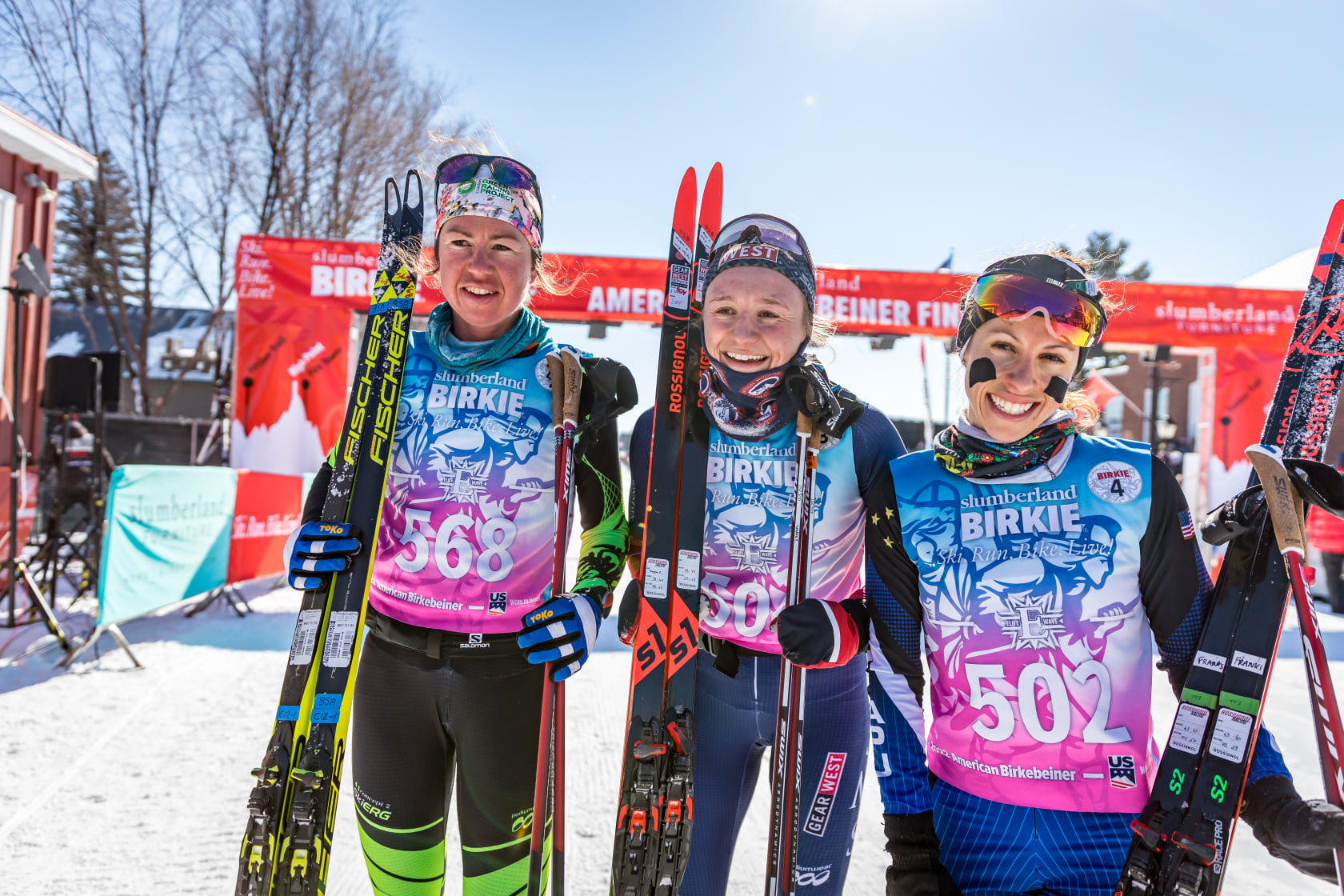
Wisconsin skiers line up at the Birkie Trailhead in Cable for the state championships. (Photo: Once in a Blue Moon Studio / Kelly Randolph Photography)
Another key distinction is that the state of Wisconsin is among the few remaining states in which high school and club level programming fall under the same umbrella, without financial support from the high schools that offer skiing. This means small participation-based programs with volunteer coaches compete against well-established clubs who can support kids whose goals extend to representing the Great Lakes Division at Junior Nationals; it’s a state of vastly different programs with vastly different budgets. And it stands in contrast to Wisconsin’s neighbor, Minnesota, with whom Wisconsin used to compete against for spots on the Midwest regional team for JNs. It’s a nuanced structure that Popp explained has constrained the potential of the league historically.
“Even though the league has been around for a while, I think it’s still in its real infancy. It’s completely volunteer run, but yet we’re in a climate that has metropolitan areas where there is snow, so we’ve got a ton of opportunity. But I think we have to look at, ‘How can we start to grow the league?’”
Under the constraints of the previous budget, the WNSL was limited in its ability to promote development in programming state-wide, and Popp explained that primarily, the board only planned the state meet and agreed upon its rules. That leaves little room for supporting new teams, planning summer camps, and other initiatives that might grow the league and the sport more broadly. A 500% increase in funds would allow the WNSL to hire a part-time administrator, who could improve inter-team communication, oversee a league schedule, and perhaps most importantly, continue fundraising initiatives to support broader development.
“Our goal is to create opportunities for kids to cross country ski and race in the state of Wisconsin. So we have to look at, ‘What is the best way we can do that?’ And we’ve been doing the same thing for a long time, and we’ve gotten the same result. So if we now say, ‘We want to grow the sport in our state’, I think we have to look at a variety of options. We see what the results are in a couple years, and then we’ll readjust from there.”
Athletes from Rhinelander, WI compete at the frosty state championship meet in Cable. (Photo: Rhinelander Nordic Ski Team)
While the WNSL is interested in supporting the upper tiers of youth racing, Popp explained that the main objectives remain at the participation level: improving access to ski programming and helping get more kids on skis.
“I feel that we don’t necessarily have to focus on the high end of development. I think that happens organically and naturally rises… the bigger and broader a base that we can build, it’s just going to build that up much higher of a pyramid.”
In his mind, implementing a wax policy fits with this initiative by removing a potential hurdle for smaller teams and coaches with limited background knowledge.
“In making it simple [to wax], it really makes a small team, the newer teams – it lowers the barrier to entry a little bit. Like, ‘Okay, now, me as a new coach, or as a new team, this waxing thing isn’t quite as overwhelming and doesn’t seem like such a heavy lift that I can actually now get into this without being completely overwhelmed.’ So I look at it as a tool for trying to create growth at the very basic level for newer teams.”
As the Swix sponsorship proposal was accepted in November 2021, last season was the first in which the conference and state championships operated under the wax policy. Popp reflected on the impact of the sponsorship and protocol through the first year.
“I personally think it was beneficial. Obviously, it helped from a sponsorship standpoint to help us grow our league and invest back in the skiers of Wisconsin. Again, personally, I think it helps sort of lower that barrier to entry for some of the newer and inexperienced teams. And whether it does or does not make it fair or unfair, if you will, to the skiers – I think you’re always going to have that in some way, shape or form. There’s a reason skiing is going to be different than track… there’s always going to be a set of variables.”
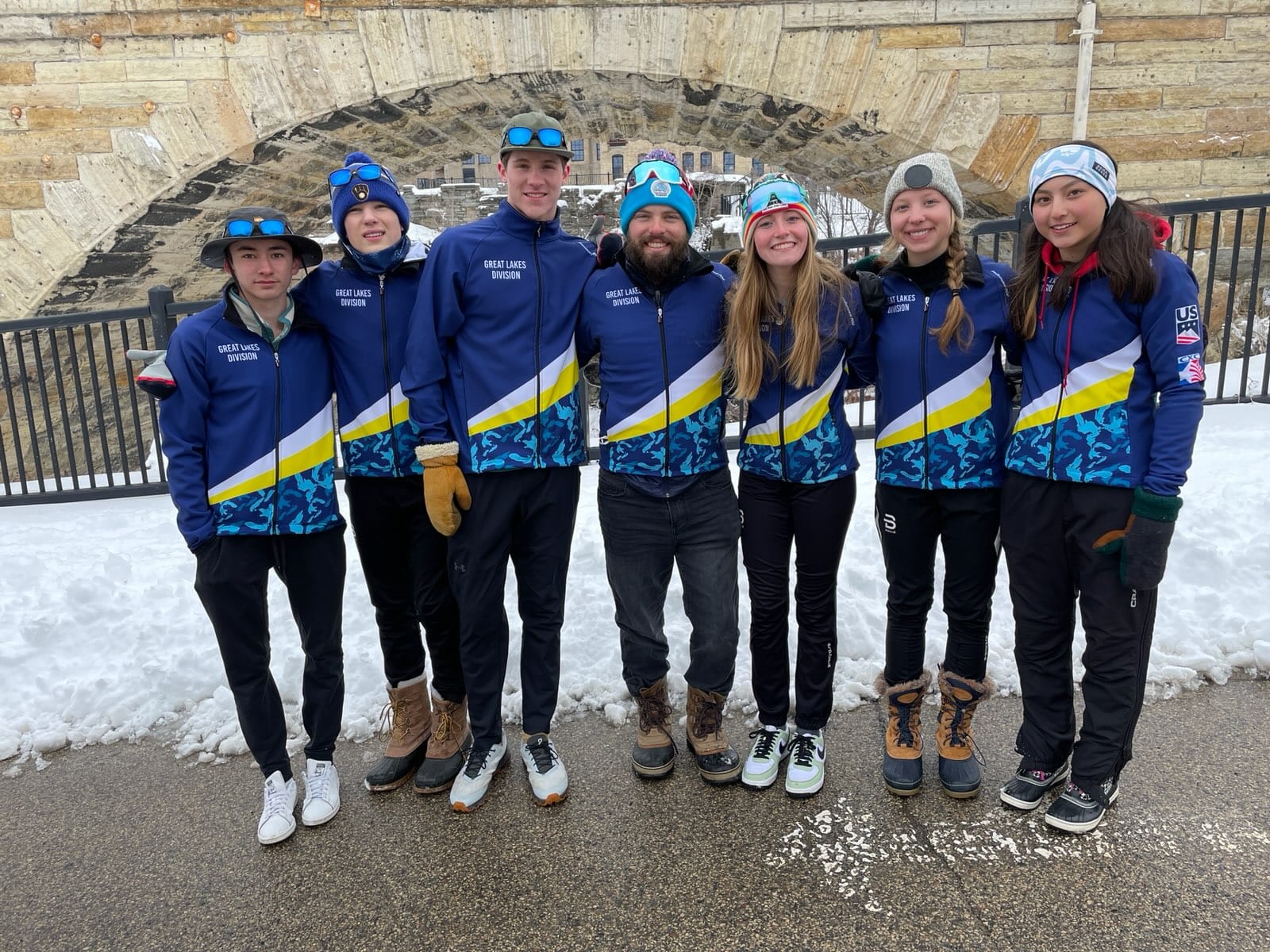
Chippewa Valley Nordic skiers compete for the Great Lakes division team at the 2022 Junior National Championships in Minneapolis, MN. (Photo: Chippewa Valley Nordic)
Speaking to the reception of the policy more broadly by WNSL teams, Popp expressed it was “overwhelmingly supported”. He indicated that a of the larger programs who had already put together well-equipped wax boxes were reluctant initially, but ultimately, those teams were still taking athletes to JNQs and other events where those waxes were fair game, so they would not go to waste.
Mostly, Popp felt that the results seen at the WNSL championship events were as expected, indicating that the wax call likely had minimal impact on the race outcomes.
“Because it was relatively benign in terms of the amount of races [where it was enforced], and then two: there weren’t some funky results at the state meet or the conference meets where [the policy was] used – the best kids still won, so there were no surprising results. And because the amount of wax that people had to buy and the cost level of it was really pretty low – I think the benefit of what this can bring in the future, ‘Let’s see.’ I would say the coaches that I’ve talked to certainly felt like, as a whole, it wasn’t detrimental. And if it leads to some growth and benefit for us in the league in the coming years then… we’ll just have to see.”
Stay tuned for the next aspect of the league-wide wax protocol story, where we consider the evolution and outcomes of policies enacted at the club level by the Rocky Mountain Nordic (RMN), Pacific Northwest Ski Association (PNSA), and Intermountain Division (IMD).
A look at what’s ahead for the Birkebeiner, and its former home at the Telemark Lodge.
When I reached out to American Birkebeiner Ski Foundation (ABSF) Executive Director Ben Popp before Christmas to set-up an interview discussing the Birkie’s plans for the now-defunct Telemark Lodge property, he was already putting plans into action. An interview would have to wait until after the holidays, because that weekend ,the Birkie was hosting a SuperTour race which would serve as a test event for its start-line venue in a bid, along with the Loppet Foundation in Minneapolis, to host an FIS World Cup in 2024.
Bringing a World Cup to Cable, Wisconsin is ambitious, but then again, when Popp is involved with the Birkie, energy and momentum are not the barriers. It’s not a question of “if”, but “how big” the end project will be. Since starting with the Birkie in 2013, he has overseen the expansion of what was already America’s largest race into a year-round docket of endurance programs.
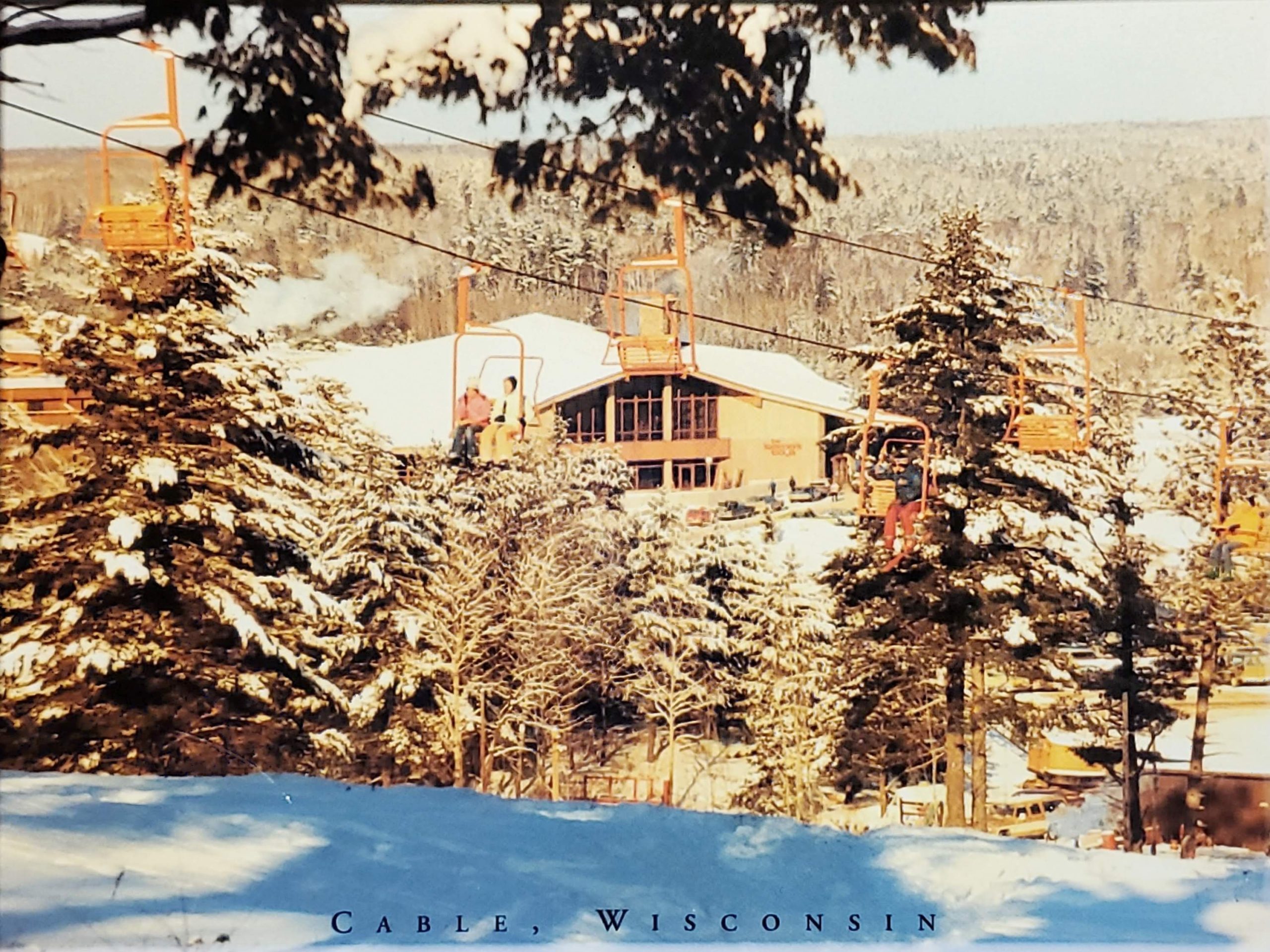
For Popp, that expansion has been done with a forward-looking vision that is deeply rooted in his own history. A son of Wisconsin’s Northwoods, he witnessed first-hand the outsized dreams of Birkie founder Tony Wise, who at the opening of the Telemark Lodge in 1971 invited US Olympic Gold Medalist in Alpine Skiing Billy Kidd, and found his reaction to be simply, “[Telemark] is the only place where the Lodge is bigger than the ski hill!”
Ben Popp, Executive Director of the ABSF. (Photo: ABSF)
For the original Telemark, that turned out to be both an intrepid mantra, and its ultimate failing. Which leads me back to why I initially reached out to Popp – discussing the Birkie’s purchase of the now-closed Lodge and its demolition last year, and the new plans to build a dedicated Nordic Center on the former site.
Our conversation, though, turned into something much more akin to sharing a round of Leinie’s at Seeley’s famous Sawmill Saloon. Which is to say, Wisconsin skier to Wisconsin skier, cheesehead to cheesehead, Ben to Ben, we covered a lot of ground. The result is a conversation that covers the idiosyncrasies of a very specific place in the skiing landscape – Wisconsin – but by doing so gestures towards contemporaneous issues in the development of our sport in the US from a multitude of perspectives, all wrapped up into one professional – Ben Popp.
The excerpts below touch on, among other things: how the Birkie views plans for new infrastructure as supporting their mission; how skiing organizations are planning a sustainable future for the sport; and how Wisconsin skiing can develop the next generation of elite skiers from its ranks.
(This interview has been edited for length and clarity.)
FasterSkier (Ben Theyerl): The Birkie Foundation (the Birkie) now owns the former site of the Telemark Lodge, can you bring us up to speed on what’s happened since you bought the old Lodge last year, and what the plans are for the future there?
Ben Popp (BP): In February 2021, we closed on the property. As part of that agreement, we had to commit to raising the money to remove the building. That turned out to be a challenge, because generally people don’t like to give money to tear things down – that’s not very exciting.
To make up the costs, we decided to sell 250-acres on the far-western edge of the Telemark Property that didn’t have any trails on it, and to try and conserve it into perpetuity. Landmark Conservancy bought that property; it’s now the Telemark Forest Preserve.
That brings us to now. The building is down. We just applied for a $7.5 million dollar grant with the federal government to build a Nordic Center (details here) which will be LEED Platinum certified. We’re also working on a huge solar-array with Dairyland Cooperative, which would help us offset [the carbon emissions] from our snow-making operation [at the Birkie start venue and Telemark].
That’s the the nuts-and-bolts that got us to where we are now, which is the idea that Telemark is vital to: one, the economic activity of this region, and two, for the Birkie to carry out our mission of having amazing experiences while getting people outside, we need a medium, and this is the place for it.
(Photo: Telemark Education Foundation)
FS: As a follow-up, what’s the timeline looking like for the Nordic Center?
BP: The timeline is tricky. We’ll hear back on the grant in June, which with the current construction market would make breaking-ground this year very hard. We have said though, that now is the time to start planning, so that’s what we are doing.
What we’ve already started implementing is additional snowmaking, so that we could successfully host the Super Tour in December (2021). What’s interesting about that is we’ve still only invested $400,000 into it, which, yes, is a lot of money, but in the world of snowmaking is nothing. [For example,]Battle Creek (in the Twin Cities) is going to be about $5.6 million dollars. I give a lot of kudos to our crew for [what they were able to do for the SuperTour], having 3.75 kilometers of trail open before December 10th, but the reality is that was such a heavy lift, and we’re going to have to invest another $1 million into our snowmaking system to make it sustainable and reliable.
FS:The Birkie has a lot of other projects outside of Telemark. How do you see Telemark intersecting with those?
BP: That’s one of the highest priorities for us. If we look at our mission: one, putting on great events; two, being stewards of the [Birkie] trail; and three, providing opportunities for people to be active outside. Getting Telemark ready for events is critical to part one and three. You could argue that this isn’t directly related to how you improve the Birkie Trail, [part 2 of our mission]. But by way of getting more people involved, it gives us the capacity to put resources into the Trail.
FS: There also seems to be more of a faith in the Birkie Foundation to get Telemark right than past attempts at reviving the property. How have you built trust in the local community and gotten them involved in what the Birkie is doing?
BP: I think there’s two parts to it.
One, doing what you say we are going to do. [In the past,] people saying “we’re going to rebuild Telemark!” and then never having it happen just made it worse and worse. For us, starting back in 2013-14 when we said we’re going to raise $750,000 and buy an area for a new Birkie start line and build a bridge over highway 63 at OO, we got reactions of “no way, no way” and then…we did it! I think little steps like that start to prove to the community that you’re worthy of trust.
Two, it’s being really involved in the community and being open to other nonprofits. That allows us to openly invest in the community. We donate over $50,000 to the [Hayward] schools and their initiatives. Instead of us looking at simply how we leverage the assets around the community, we look at how we can partner with them so it’s good for both parties. That example is very local in Cable/Hayward, but we also help with initiatives around Wisconsin/Minnesota that need help get projects off the ground.
Like as an example I was just brainstorming with Claire Wilson (Executive Director of the Loppet Foundation in Minneapolis, MN) – how cool would it be to do some kind of exchange program where we’re going to send kids from the Northwoods to go down and experience living in Minneapolis and skiing at Theodore Wirth, and vice versa, they send kids up here and we can house them at Telemark and they get to spend a week in the woods [and make them say] “wait, where’s the stoplights?!” Those would be opportunities that would be awesome.
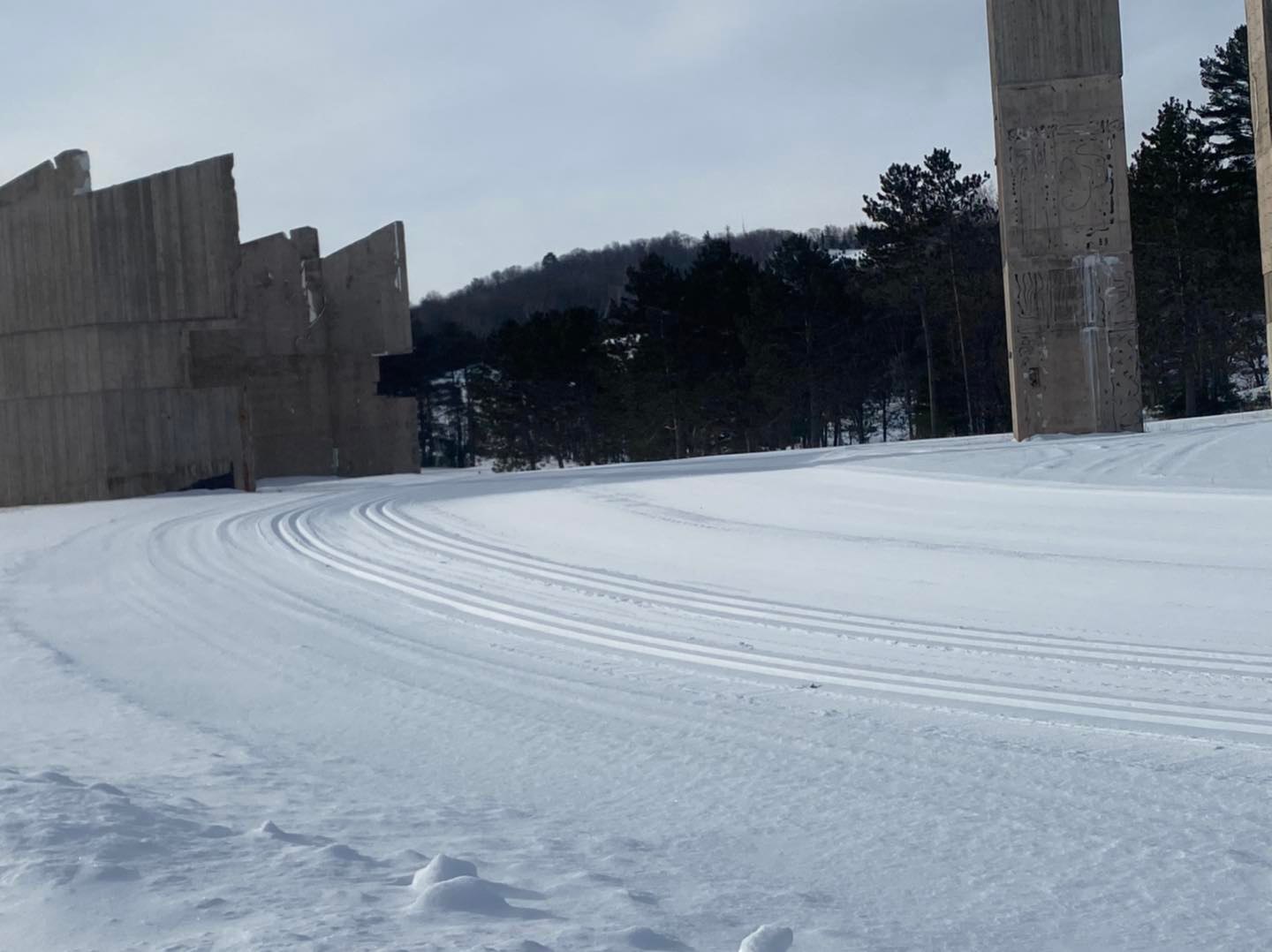
The remnants of the Telemark Lodge lobby in winter 2022. The Birkie has started grooming trails on the Telemark Property from the adjoining Birkie startline just a half-kilometer away. (Photo: ABSF)
FS: You’ve also startedTeam Birkie (a pro-racing development team that launched this summer) that’s already had success getting skiers to the World Cup.
BP: Yeah, we want to bring in the elite athletes to train [in Cable], that’s whatTony Wise (Telemark, and Birkiebeiner founder) used to do. I mean the U.S. Ski Team – Marty Hall and Bill Koch – they were here! They designed our trails! We need to figure out how we get our elite athletes, our role models, to stay in the Midwest and train so that they can inspire our kids here. The next Jessie Diggins can, but shouldn’t have to go out and live elsewhere, which is how it currently stands with Midwestern skiers. But they can’t spend time here if we don’t have roller-ski loops, snowmaking, and the things that they need to get better at their profession.
[Your dad] (Ted Theyerl, former Wisconsin Nordic Ski League President) has a great way of putting it. Trying to teach skiing without reliable snow is like trying to teach basketball if the gym is there only once every other week.
Team Birkie’s Zak Ketterson takes command through the heats to win the classic sprint during last December’s Gitchi Gami Games – the Birkie’s SuperTour event. (Photo: American Birkebeiner Ski Foundation.)
FS: That part is something I look at with a lot of potential based on my experience at Telemark. I intersected with the brief period [around 2010] when CXC (Central Cross Country Skiing) was trying to use Telemark Lodge as a training center. I remember going into what used to be the nightclub at the Lodge, which they were using as our dining hall, and sitting down and Jessie Diggins was at the table, and it made us juniors go “Holy crap!” That’s so inspiring.
BP: You’re right that’s inspiring!
FS: In a similar way, I wanted to get your personal perspective on what Telemark has meant to you, and the community in the Northwoods, and how that drives your plans and the Birkie Foundation’s plans?
BP: I mean I grew up in northern Wisconsin and I remember as a kid going over to Telemark and being like, “Woah, where am I? This is incredible!” Telemark was just an incredible economic and cultural driver.
I think personally my motivation is that this project is going to create a ton of opportunity, and essentially extend the reach of the Birkie Foundation and what we do. I often use a statistic when we are out on the road. If you draw a circle 50 miles around Cable/Hayward, 90% of our revenue comes from outside of that circle. But we spend over 80% of our revenue within that 50-mile Hayward/Cable circle. The bigger the Birkie gets then, the more gets spent here in our community.
FS: And now, to me, the additions of the Super Tour and the World Cup build on that spirit of Tony Wise saying we can dream big, and we can do it in Cable, Wisconsin. I was wondering if you find inspiration in that spirit? What is your “wish list” as an Executive Director for the next 10 years for the Birkie Foundation?
BP: Tony is an inspiration, no doubt about it. TheWorld Cup is a great example. Is hosting in 2024 going to be a ton of work? It is going to be a ton of work. But to do it as a part of the 50th anniversary of the Birke, bringing it full circle to Tony having the first World Cup here back in1978, and his creation of the Worldloppet, well it will: one, shine a light on the sport that we love; and two, on the Midwest, where many times even from a ski standpoint people think you just fly over it.
Then we go, “How do we get to doing it?” Well, we’ll take it step-by-step.
Tony was really vested in making sure Telemark and the Birkie benefitted his community and had a primary focus on getting people outside and being active. While [Telemark] isn’t going to be a lodge with 200 rooms, it is going to be cut from the same cloth of getting people outside, skiing in the Nordic community, and being connected to the world at-large.
That [last part] was especially important to Tony – he was a tank commander in World War II for goodness sakes, and learned to love Scandinavia and Austria along the way – so for us there must be that worldly component of the Birkiebeiner. Being a WorldLoppet and us trying to bring a World Cup here in 2024.
That gives us comfort knowing that where we’re going, well, with the historical vision Tony had, it’s one and the same.
Rosie Frankowki races the classic sprint qualifier in Cable, WI during the Gitchi Gami Games. (Photo: American Birkebeiner Ski Foundation.)
FS: Final question: The Birkie and you have been a leader in sustainability in the sport over the past couple of years, how do you see clubs, organizations, and the sports headed towards a more sustainable future? Especially the shift to going fluoro-free in waxing so it’s sustainable for the environment, but still equitable so that the best skiers are rising to the top?
BP: That’s a great question. For the Birkie, the sustainability piece is at the forefront for everything we’re doing. It’s tough because we balance the environmental, actual sustainability of the sport – skiers getting into skiing and staying in skiing – and the financial. If we go 100% and do everything possible on the environmental front, which would be the ideal, then we’re not going to be able to be financially sustainable and therefore the sport isn’t here in the Northwoods in 5 years. It’s about how you marry those three things in an optimal amount.
At the Birkie, we want to remain at the forefront for years to come.
FS: What’s your dream in that respect?
BP: My ultimate dream often comes when I think about the World Cup.
How amazing would that be to line up Jessie Diggins next to Johannes Høsflot Klæbo, next to your dad, my mom, a kid from Minneapolis who didn’t know what skiing was two years ago, a kid from the Lac Courte Oreilles reservation, and on and on.
I like to think that Klæbo may be just as inspired by a kid out on skis for her first time as I might be sitting at home watching him on the start-line. When we all get to sit at the same table, we all get to inspire each other, and that’s what I’m working towards at the end of the day.
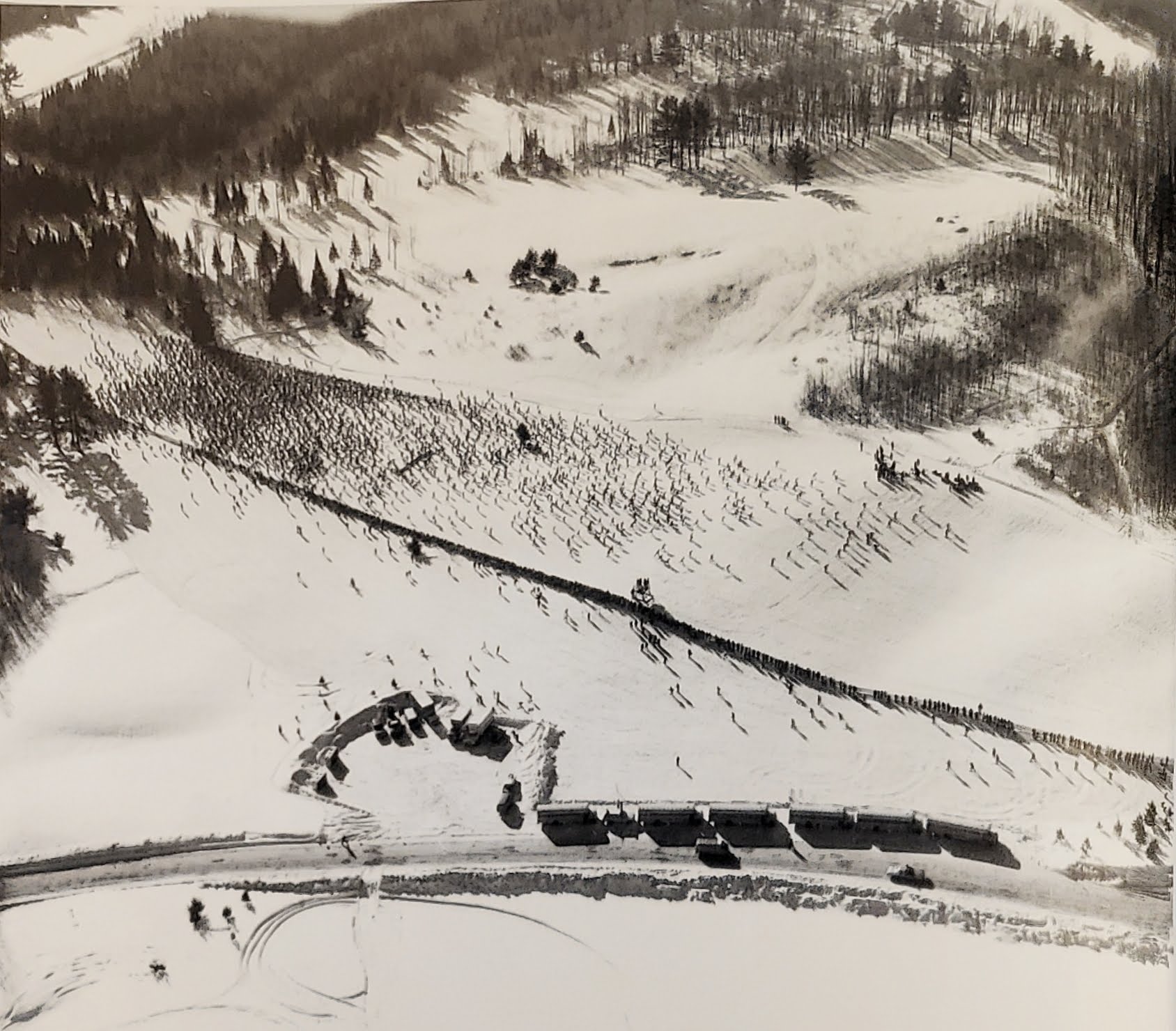
The American Birkiebeiner takes off towards Mt. Telemark in 1978. (Photo: Telemark Education Foundation)
As Birkie Fever is fully here with the 2020 race starting in just eight days, Hayward’s Steve Morales brings us back to the early days of the race and the beginning of New Moon Ski and Bike Shop.
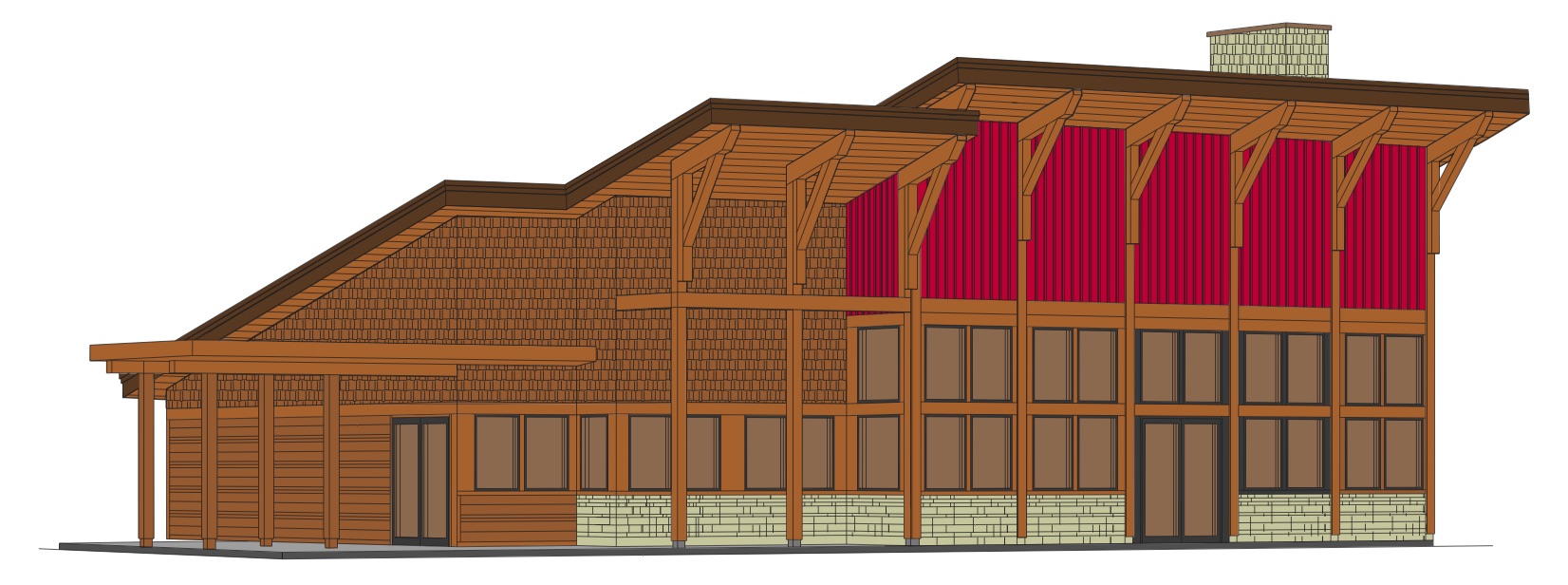
Rendering of the new Samuel C. Johnson Family Outdoor Center at the halfway point of the Birkie Trail near Seeley, Wis. (Photo: ABSF)
(Press release)
2500 Donors from 37 states & Canada Help ABSF to Reach Capital Campaign Goals
Hayward, WI (May 25, 2018) — The American Birkebeiner Ski Foundation (ABSF) has been enhancing the quality of lives for nearly half a century. For generations, ABSF events and the award-winning Birkie Trail system have been motivating adventurous spirits to embrace an active, outdoor lifestyle. In support of providing the infrastructure, spaces, and places to keep that spirit alive, the ABSF is pleased to announce completion of the second and final phase of their Honoring the Legacy – Ensuring the Future capital campaign.The resulting initiatives will change the face of the Birkie Trail for participants, volunteers, visitors, and surrounding communities for years to come.
At the heart of phase two of the capital campaign is the creation of the Samuel C. Johnson Family Outdoor Center. The new 4,000 square foot facility will be located at the halfway point of the Birkie trail at the WI County Highway OO Trailhead near Seeley, WI. With an estimated 100,000+ Birkie Trail users each year, the Samuel C. Johnson Outdoor Center will provide a gateway and year-round hub for people to access and utilize the world-class trail for hiking, biking, running, skiing, and year-round events. Facility amenities will include a gathering hall, heated restrooms, changing rooms, and a waxing and bike repair room. Named in memory and honor of Samuel C. Johnson, the Johnson family from Racine and Cable, WI, respectively, provided the lead gift for the structure through the Johnson Family Foundation. This is not the first philanthropic support the ABSF has received from the Johnson family over the years (SC Johnson Wax, Johnson Financial Group, Johnson Family Foundation). Johnson Financial Group (Johnson Bank) is the longest-standing Birkie event sponsor through their ongoing support of the Barnebirkie youth ski tour, while the Johnson Family Foundation and Johnson Financial Group supported the creation of the Tony Wise Museum of the American Birkebeiner, and the family was personally instrumental in assisting the ABSF with procurement of the land for the American Birkebeiner Trailhead, along with other philanthropic efforts.
“We are extremely grateful to the Samuel C. Johnson Family and the many generous donors who helped us to reach our capital campaign goals,” said Ben Popp, ABSF Executive Director. “We’re humbled by the supportof the Birkie community, by their sustained belief in what we do, and are thankful we can continue to make theBirkie lifestyle dreams a reality for generations to come.”
The groundbreaking ceremony for the Samuel C. Johnson Family Outdoor Center is slated for June 9, at 2:00pm, 3.3 miles East of Seeley, WI, at the County Highway OO Trailhead. The public is invited to attend.
In addition to support from the Samuel C. Johnson Family, a grant for development of the trailhead was approved through Sawyer County and with the help of County Administrator, Tom Hoff. Funding will come from the Stewardship Acquisition and Development of Local Parks Grants program and the Recreational Trails program of the Department of Natural Resources (DNR). In addition, grant funding was made possible through the Huelsmann Foundation and the Judd Alexander Foundation. Funds will be received from the Johnson Family over three years, with DNR funds acquired throughout the construction process. In addition, over 2500 individual donors from 37 states and Canada supported the second phase of the Honoring the Legacy –Ensuring the Future capital campaign. Other donors playing an integral role in the Samuel C. Johnson Family Outdoor Center and associated Birkie Trail infrastructure enhancements include:
Brent Carlson, M.D. Great Room, Classroom, and Entry foyer – Supported by Brent Carlson, M.D., the rooms will provide gathering spaces for groups, clubs, families, and schools, before and after they embark on outdoor adventures on the Birkie Trail.
New Moon Ski & Bike Shop Ski Waxing & Bike Repair Room – Supported by New Moon Ski & Bike Shop of Hayward, WI, this tech room will enable skiers and bikers to prepare and repair their equipment for their Birkie Trail experiences.
Virkus Workout Room — Supported by Gus and Julie Virkus, this room will provide a year-round space for outdoor Birkie Trail users to learn and practice skills to encourage an active, outdoor lifestyle.
GymRage Outdoor Circuit Course — Supported by Thom and Utina Malnourie, this outdoor, multi-station fitness course will adjoin the Samuel C. Johnson Family Outdoor Center.
Key Log Rolling Crossing — Supported by Jay and Judy Hoeschler and located near the new Samuel C. Johnson Family Outdoor Center, this Birkie Trail connecting bridge will allow safe passage over WI County Highway OO for all users of the Trail system.
Becker Law Link — Supported by Becker Law Firm, this recreational tunnel will enable Birke Trail users to travel beneath WI County Highway 77, on race day and every day.
Plans for all projects are underway with completion dates ranging from fall 2018 to spring 2019; final approvals, permitting, and plan revisions are currently in progress.
Previously completed phase two capital campaign projects include an initial investment in snowmaking infrastructure for low snow years; procurement of a new dump truck, snowplow, skid steer, snow bucket, and Arctic Cat snowmobile; construction or renovation of trailside cabins including the addition of running water and solar-powered generators at each. Trailside cabin benefactors include Timber Trail Cabin (Anonymous Family, Cable, WI); Franzen Firetower Trail Cabin (Greg & Marilyn Franzen); Strand-Johnson Gravel Pit Trail Cabin (William Johnson); and Mandli Boedecker Trail Cabin (Mike & Jane Mandli). These gifts are in addition to thousands of donors who made the initial phase of the capital campaign a smashing success.
The American Birkebeiner Ski Foundation is a 501(c)(3) non-profit organization with a mission to promote and conduct the finest international cross-country ski competition and healthy, active lifestyle events; to serve as good stewards of the American Birkebeiner Trail; and to support healthy and active lifestyles among people of all ages and abilities. As the sole steward of the over 100-kilometer Birkie Trail system, the ABSF spends an estimated $350,000 annually on ongoing trail maintenance, mowing, and grooming.
About the American Birkebeiner® Ski Foundation and Birkie® Events
Located in Hayward, Wisconsin, the American Birkebeiner Ski Foundation (ABSF), a 501(c)(3) organization, is known for its signature American Birkebeiner Ski Marathon held each February. Today, the Birkie has grown to encompass a variety of year-round, silent sport events that promote a healthy, active lifestyle for thousands of outdoor fitness enthusiasts. The ABSF also acts as steward of the legendary Birkie Trail, providing year- round grooming, mowing and maintenance to all 100+ kilometers. From the iconic American Birkebeiner ski race, to the Birkie Trail Run Festival, and Fat Bike Birkie, the ABSF and the Birkie Trail attract skiers, runners, bikers, trekkers, and hikers, from around the world. Learn more at www.birkie.com.
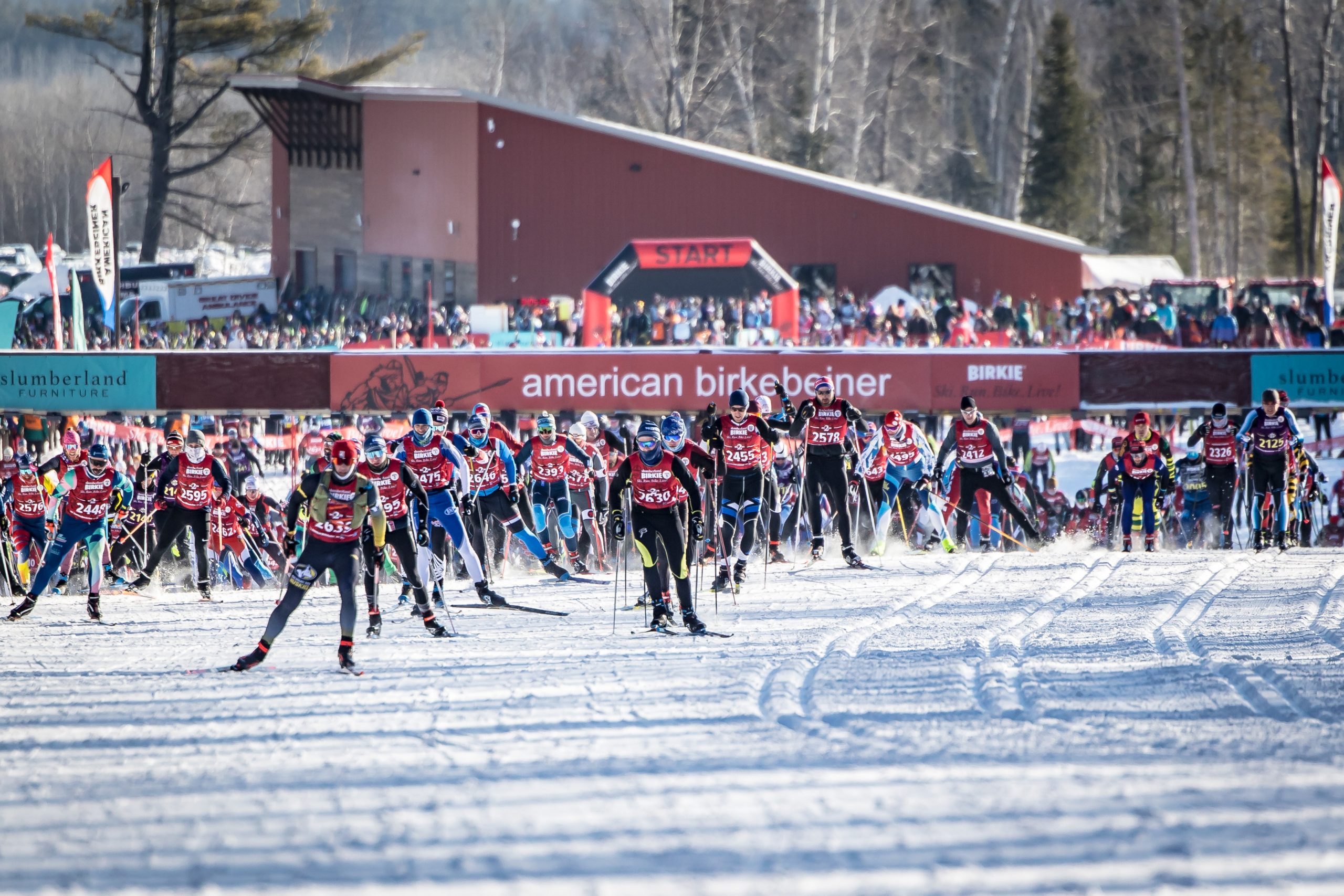
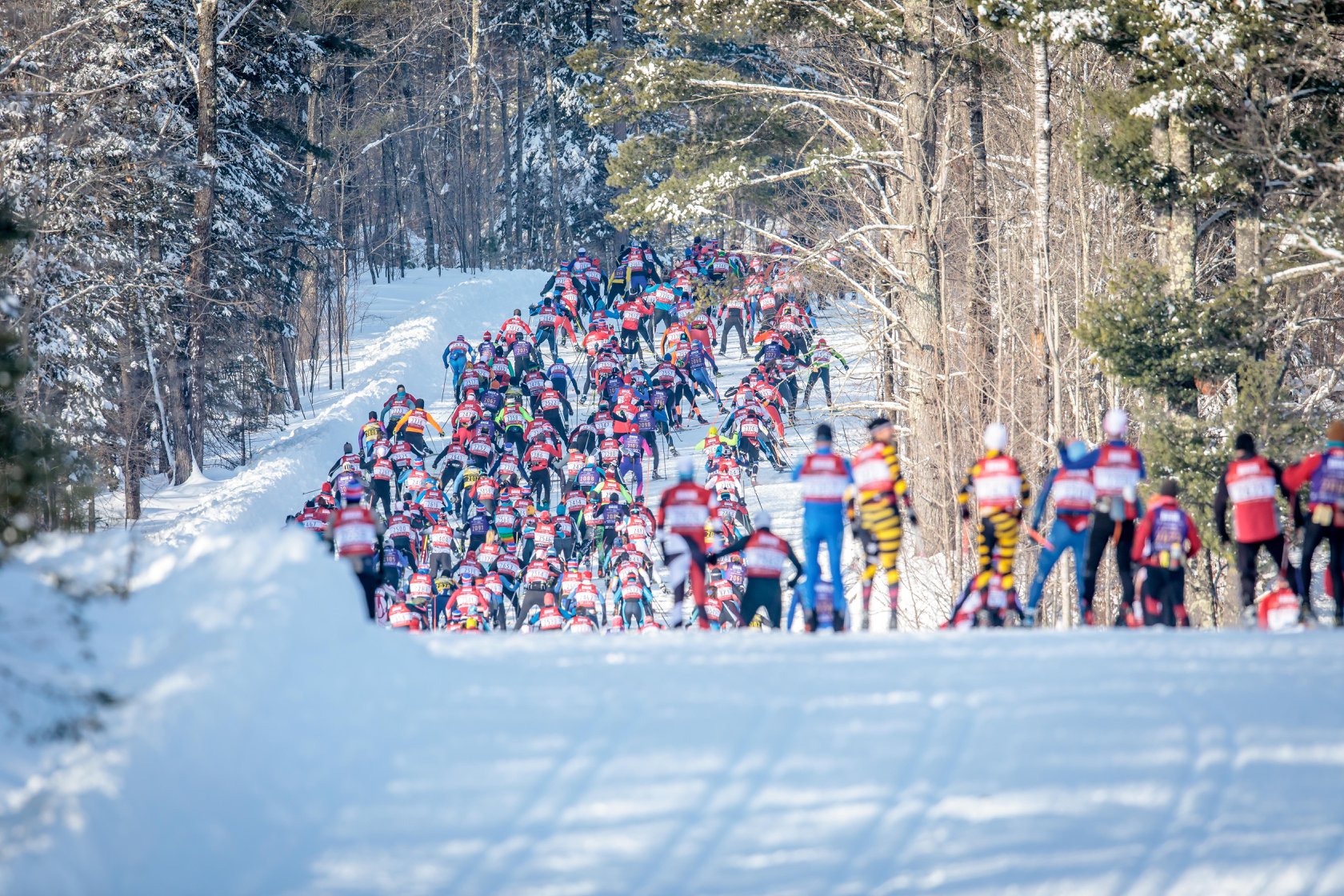
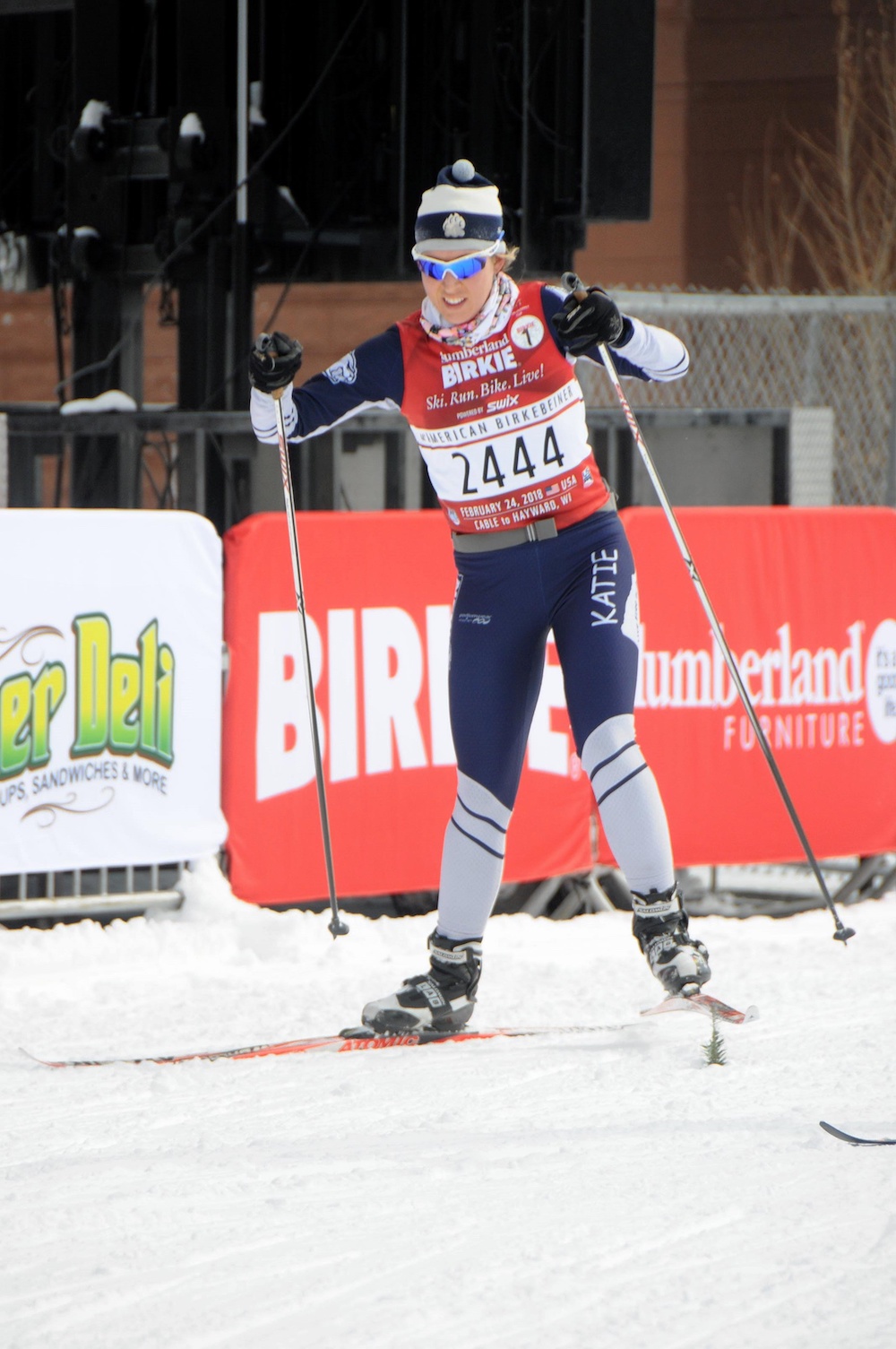
The start of Wave 2 of the 2018 American Birkebeiner 50 k skate race, which author Katie Miller was in. (Photo: American Birkebeiner Ski Foundation)
The following was written by Katie Miller, a former University of New Hampshire (UNH) ski racer who recently completed her first American Birkebeiner and 50-kilometer ski marathon, after registering for the race last year. That race was canceled due to low snow, but Miller returned for this year’s edition on Feb. 24. She currently lives in southern N.H. where she does her best to “juggle a full-time job as a criminal defense investigator with the desire to get outside and ski all day everyday!”
***
The pull of the storied American Birkebeiner brought me to register for the 2017 race. I had heard nothing but positive reviews of the Birkie. I had not even experienced the race yet and I was bummed when it was cancelled in 2017. Fast forward to 2018, my excitement level was high and my expectations of the race were all over the place. This was the largest cross-country ski marathon in North America. This was my first 50K. This was the longest race I had ever done. I had trained as much as I could while working full time. I had skied as much as I could considering the January and February thaw we experienced in southern NH. I rolled my eyes while embracing the New England weather as I ran in 70-degree weather four days before the race. And as I stood in the start pen surrounded by thousands of other people all ready to conquer the 50K it dawned on me that this was F*&%ing awesome.
The view of the Main Street finish the day before the 2018 American Birkebeiner, as seen from the International Bridge. (Photo: Katie Miller)
Now rewind two days, getting to the race in Wisconsin made the finish line that much sweeter. Thursday morning set to travel with my parents, a.k.a. the best support crew, we left for the airport at 4 a.m. Our flight from Boston to LaGuardia went off smoothly and we landed in N.Y. with a three-hour layover ahead of us. Plenty of time to relax, have some food, and get back to the gate. With 45 minutes before our flight departed we got to the gate, sat down, and were informed our departure gate had been changed to a different terminal, forcing us to go in and out of security, again. We got through security for the second time smoothly, apart from a few expletives from my mom as she had to throw out another bottle of water and off we went on our second flight. We landed in Minneapolis at 5 p.m., picked up our bags, got our rental car, and were on our way, seemingly without hitch! After a quick dinner stop at LOLO American Kitchen (yum!) in Stillwater, Minnesota, we started the drive to Cable … in a snowstorm.
Two-and-half hours later, driving on slow, snow-covered roads in a rental car lacking the proper tires for these slippery roads, the car starts to lose power. Fifteen miles outside of Hayward, on the highway, with NOTHING in sight, a rare car passing us every few minutes. We putter along for another 5 miles as I am on the phone with the rental car’s emergency roadside assistance, a lovely woman who is struggling to figure out where we are to send a tow truck. It is 10:30 p.m. and stress levels are high in our failing rental car. We pull to the side of the road, five miles from Hayward. A few minutes later we attempt to continue driving. The power seems to have returned to the car, we can drive over 20 mph now. I feel slightly relieved, but we still have 40 miles to our cabin in Cable. Thankfully, we make it to our cabin, safe and exhausted at 11:30 p.m. I get to sleep after 12 a.m., which would be 1 a.m. in the time zone we started our travel in a long 21 hours ago. Not an ideal travel day.
Pre-race powder ski on Birkie Ridge. (Photo: Katie Miller)
Friday morning, with one day to go before the race, I wake up ready to put the long travel day behind me and get out for a ski. With six inches of new powdery snow and a questionable car, that was not going to be as easy as I planned. Luckily the car made it through the rest of weekend without a problem. I headed to Birkie Ridge for a deep powdery ski on the ungroomed trail. My ski was a mix of skating, double poling, and single sticking trying not to tire myself out in the deep snow. There were a few other skiers as I started and by the end the trail was full of people getting out and getting ready for the next days races.
Every skier I passed smiled or said hi, some asked questions about the trail (not that I knew the answers), but everyone seemed happy to just be there for the race. I skied as easy as I could in the deep snow, just happy to be skiing, anxious for the next day. I had no idea what to expect with the size of the race and the distance. It was exciting but nerve wracking. Post-ski, my parents and I had lunch at the Brickhouse Café in Cable. A friendly, delicious café with breakfast, lunch, baked goods, and coffee, I highly recommend it! With our confidence in the rental car cautiously optimistic we made our way south to the expo (and possibly my dad’s favorite part of the weekend: free stuff! When the Clif wonders why their energy gels disappeared so quickly midafternoon, I know why….). I picked up my bib, explored the expo, bought some Birkie gear, and got my new Birkie gear bag.
With each event moving closer to race time, the stress of travel and the excitement of the race was taking over. The moment we got to downtown Hayward and I climbed the stairs up the Birke bridge and looked down main street towards the finish a huge smile took over my face. I could not wait to be at the top of the bridge tomorrow during the race. Fast-forward to Saturday morning, I had checked, double checked and triple checked my backpack and gear, making sure I had everything I needed. The quality of the organization of the race and entire weekend is better than any event I have ever been to. From busing to the start, volunteers with information everywhere you look, feed stations full of volunteers handing out much needed fuel, to having a place to change after the race, it was simple and stress free. The best kind of race environment for racers and spectators alike.
Author Katie Miller finishing her first American Birkebeiner 50 k ski marathon on Feb. 24 in Hayward, Wisconsin. (Photo: Marathonfoto)
Now back to the race, standing in the start pen, the excitement palpable as thousands of skiers wait to start their race journey that day. The starts guns go off, I wait for the people in front of me to move forward and off I go. The beginning kilometers of the race was a slow accordion of movement down the trail. Doubling poling being more effective, and safer for my poles, than trying spread out and skate. As the kilometers started to tick by, the crowd thinned, and the trek to Hayward was on! Three hours of skiing has never gone by so quickly. I smiled and laughed out of pure bliss the entire 50K. I laughed as I tried to open my GUs during the race without dropping them. I laughed (and tried not to fall) going around the sharp rutted corners lined with snowmobilers, the rowdy crowd cheering and waiting for people to fall. I laughed when my water bottle froze after 20K. I laughed as my quads cramped up climbing “bitch hill”. Why? Because there was a priest with a megaphone telling jokes on the hill followed by two nuns cheering.
I marveled at the beautiful skiing and the other racers that surrounded me as I skied. The feeling of cresting the top of the bridge, like Rocky at the top of the Philadelphia steps, was an indescribable feeling, one of pure joy. Looking down main street towards the finish, the street lined with cheering people, was a feeling that was worth all 50K. I skied up those last 200 meters feeling like I could take on the world. It was the most amazing, captivating race I have ever done. I’ve caught Birkie fever (caution: highly contagious) and I don’t think I’m ever going to shake it.
The love of skiing, the hard work of the Birkie organizers and amazing volunteers (and a big party…) brings all these people together and that is a special thing.
I was smiling the entire 50K and I’m still smiling a week later. I think I can speak for everyone waiting for next year’s race when I say…can we do it tomorrow?
***
Miller, 29, finished 15th in her age group (25-29) in 3:01:44.1 hours.
Wave 2 of the 2018 American Birkebeiner on course. (Photo: American Birkebeiner Ski Foundation)
Hayward, WI (February 25, 2017) – The American Birkebeiner Ski Foundation’s BirkieFest 2017 brought over 10,000 skiers and spectators to the American Birkebeiner Trailhead and new start area near Cable, WI. Skiers from around the world and across the country took to the Birkie Trail for a quick ski on the 5K loop painstakingly saved and crafted by the Birkie Trail Crew for the event.
The American Birkebeiner is North America’s largest cross-country ski race which normally runs from Cable to Hayward, Wisconsin, finishing on the snow-covered Main Street of Hayward. However, after days of unseasonable weather, rain, and snow storms that missed the Hayward and Cable areas, the American Birkebeiner Ski Foundation was regretfully forced to cancel the 44th Annual Slumberland American Birkebeiner, Kortelopet, and Prince Haakon cross-country ski races.
“Of course, we were really disappointed that we weren’t able to host a ski race, but if there is a silver lining, BirkieFest is certainly it. Over 10,000 skiers and their family and friends enjoyed the day skiing, eating, listening to great music and having a great time in the north woods,” said Ben Popp, American Birkebeiner Ski Foundation Executive Director. “I’m really proud of our Birkie team, the Nordic community, and the Cable, Seeley, and Hayward communities – it was certainly an all hands on deck effort! We consider this the first day of training for Birkie 2018!”
Skiers spent the day skiing a 5K loop on the Birkie Trail crafted from snow caches stored in the woods along the trail system. Festival goers enjoyed live music, a beer garden serving Birkie Brew-Ski crafted by Lucette Brewing Company, Birkie Brats by Louis Finer Meats, Norwegian waffles, shopping in the Birkie Store, on-snow ski and fat bike demos, biathlon demos, and more. Skiers and spectators were bused to the brand new American Birkebeiner Trailhead for the day of Nordic fun.
“This past week was a great learning experience, it taught us things that will make us even more successful in the future,” said Chris Campbell, Birkie Trail Manager. “We learned so much about snow management. We’ve never needed a snow cache on the north end of the trail and we used every snowflake we could muster for our 5K course today. It was certainly worth it.”
The 45th Annual Slumberland American Birkebeiner week of events is slated for February 22-25, 2018 with registration opening on May 1, 2018. The ABSF is hosting the Fat Bike Birkie, the world’s largest fat bike race on March 11, 2017 at the American Birkebeiner Trailhead near Cable, WI. “The Cable area was pleased to play a part in helping to host the BirkieFest today. Skiers were really happy with all the hard work that the Birkie staff and countless volunteers put into make this event possible,” said James Bolen, Executive Director, Cable Area Chamber of Commerce.
Loomis racing at U.S. National Championships in Park City, Utah, this summer. (Courtesy photo)
Welcome to “17 Questions for 2017″, where we are catching up with American and Canadian national-team members before the beginning of the winter season.
***
A silver medalist at 2016 Youth Olympic Games in Lillehammer, Norway, 18-year-old Ben Loomis was named this year to the U.S. National Team for nordic combined. He also got his first taste of summer Grand Prix racing in Europe, competing in Germany and Austria with the senior team.
1. Biggest change in your life in the last five or so months since the ski season ended?
I’m gearing up for graduation in a few weeks.
2. Biggest change in your training?
This summer I was named to the USA Nordic Combined Team and therefore have had many more opportunities to train with the best guys! It has been great experience to be pushed harder every session and learn from more experienced athletes.
3. Major areas of improvement you’ve seen so far?
Loomis in Planica, Slovenia, as part of a junior training camp this summer. (Courtesy photo)
My jumping has been on the highest level I have ever seen this summer. Much of this can be attributed to spending more time training in Europe.
4. Whom you’ve been working closest with this offseason (coaches or training partners)?
This summer has been a great mix of training with older athletes as well as many of my old team members. Stephen Schumann and myself are the only two national team athletes in school, so we have been doing a large amount of training together. We also have a new Austrian coach (Nik Huber) who has been a very positive influence on the team.
5. Best trip in the last five months (and why)?
This summer’s Europe trip. It started with a fun couple weeks with just juniors and then finished off with the Summer Grand Prix.
6. Favorite cross-training?
Mountain biking hands down. Park City has trails that never get old.
7. Favorite non-athletic activity or pastime this summer?
Not something I have been able to do much of this summer, but waterskiing has always been my favorite pastime.
8. Song that was your jam this summer?
Chill Bill
9. All time favorite race moment?
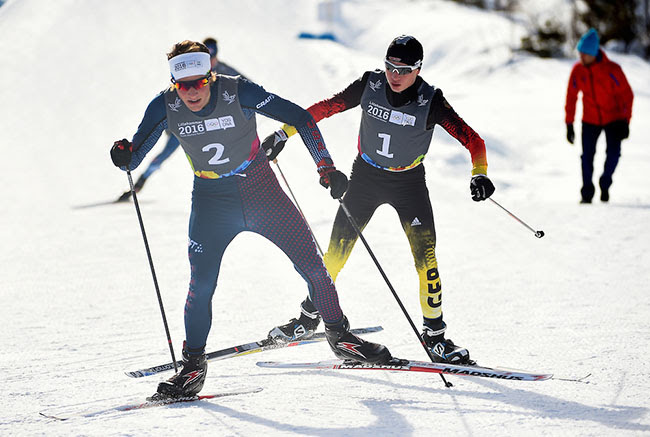
American Ben Loomis (2) leads Germany’s Tim Kopp (1) during the Nordic Combined Men’s Individual Gundersen NH/5 k cross-country race at Birkebeineren Cross-Country Stadium at the 2016 Youth Olympic Games in Lillehammer Norway. Loomis went on to place second behind Kopp. (Photo: Thomas Lovelock for YIS/IOC)
Racing at the Youth Olympic games this winter. Last lap of the race I was in group with myself and two others coming into the last hill. Knowing I would land a podium spot was very special.
10. First thing you pack in your bag when you leave for Europe?
My neck pillow and headphones to make traveling more tolerable.
11. Venue/event you’re most excited to visit this season?
I’m looking forward to competing at home in Eau Claire, Wisconsin. It has been two years since I last jumped in Midwest and having a home crowd is always very special.
12. Who will win the World Cup title this year?
Akito Watabe. He has been on the podium the last five years and should be on top!
13. Biggest sacrifice you feel you’ve made choosing this career path?
Loomis jumping this summer. (Courtesy photo)
Having a normal high school life was something I never really experienced. I attended public school for the first half of my freshman year, and after that I moved across the country to attend the Winter Sports School of Park City.
14. If you could change one thing about your sport, what would it be?
Ben Berend put it right, we need more girls!
15. What did you have for breakfast this morning?
Roll with jam, egg, ham, cheese, and of course coffee.
16. In 5 years, I’ll be ____?
Hopefully still following my dreams.
17. In 50 years, I’ll be ____?
Retired.
Ben Loomis, then 17 years old, celebrates a career-best Continental Cup fourth-place in December in the 10 k cross-country race at Soldier Hollow in Midway, Utah. (Photo: U.S. Ski Team/Tom Kelly)
Record Number of Riders Compete in 2016 Fat Bike Birkie
Ross & Rinehart Repeat & Three-Peat on the Podium!
CABLE, Wis. (March 5, 2015) – It was a glorious, 28º degree day in Cable, Wisconsin for the 4th annual 45NRTH Fat Bike Birkie Presented by Freewheel Bike. The finish of the 2016 47K race was akin to an instant replay from 2015. Will Ross, 2016 champion, repeated his first place 2015 finish, and Jenna Rinehart three-peated her championship podium with wins in 2014, 2015, and again in 2016.
The Fat Bike Birkie is the world’s largest fat bike race and in 2016 offered both 47K (The Big Fat) & 20K (The Chico) race options for riders of all skill levels. With a perfectly groomed, firm trail, riders found near perfect trail conditions resulting in fast finish times for riders in both races.
This year’s winner, Will Ross, from Anchorage, Alaska, cruised in with a time of 1:46:57, shaving nearly nine minutes off of his 2015 winning time. Brad Bingham, Steamboat Springs, CO, placed second with a time of 1:47:06, and Adam Bergman, Lino Lakes, MN, placed a strong third with a time of 1:47:31.
Jenna Rinehart, Mankato, MN, won her third Fat Bike Birkie with a time of 2:02:21, besting her 2015 time of 2:12:27. In quick pursuit, April Morgan, Hopkins, MN, rolled across the finish line with a time of 2:06:15 repeating her second place finish from the 2015 Fat Bike Birkie. Sheryl Loan, Eagle River, AK, secured her third place finish with a time of 2:11:40.
This year’s champs are no strangers to winning. Ross’s technical skill and assertive descents helped him maintain his leader of the pack position throughout the race. While Rinehart’s relentless pursuit of the hills and tenacity on the trail helped her to hold tight to her champion status. Rinehart’s Fat Bike Birkie win is added to her roster of multiple Chequamegon Fat Tire 40 titles.
In its fourth year, the Fat Bike Birkie has grown from fewer than 200 riders in 2013 to just over 1000 riders registered for the event in 2016. Riders from as far away as England participated in this year’s race which attracted racers from 2 countries and 14 states.
“We started the Fat Bike Birkie race in downtown Cable this year, which worked really well and created a terrific festival atmosphere,” said Ben Popp, American Birkebeiner Ski Foundation, Executive Director. “Northwestern Wisconsin has really become the epicenter for the whole fat bike craze. We can’t wait to see how the race grows in the next 10-years.”
Winners in the Chico, the Fat Bike Birkie 20K race include: Christina Hyser, Hayward, WI, 1:04:02; Christina Roberts, St. Louis Park, MN, 1:05:45; and Jennifer Swift, Hayward, WI, 1:06:40. Men’s champions include: Adam Altmann, Chippewa Falls, WI, 54:45; Thomas Meyer, Hayward, WI, 54:50, and Nicholas Hart, Lake Elmo, MN, 54:53.
What was once thought of as a fad or craze is now said to be the fastest growing bicycle sector. The sheer number of fat bike manufacturers grew from an estimated 50 in 2013 to over 100 at the end of 2014. The beauty of the fat bike is that its over-sized tires allow riders to cruise in all types of conditions, year-round, including groomed single-track trails, frozen lakes, firm trails, or fresh powder. Fat bikes have extended the biking season and have added a whole new twist for winter adventurers, families, and friends who are looking for another way to enjoy a healthy, active lifestyle.
“While fat biking may have started as a fad, now even major manufacturers include them in their cycling offerings,” Popp continued. “We’re really proud to promote the sport and to welcome riders to the Fat Bike Birkie to enjoy the beauty of our north woods.”
About the American Birkebeiner® Ski Foundation and Birkie® Events
Located near Hayward and Cable, Wisconsin, the American Birkebeiner Ski Foundation (ABSF), a 501(c)(3) organization, is known for its signature American Birkebeiner Ski Marathon held each February. Today, the Birkie has grown to encompass a variety of year-round, silent sport events that promote a healthy, active lifestyle for thousands of outdoor fitness enthusiasts. The ABSF also acts as steward of the legendary Birkie Trail, providing year-round grooming, mowing and maintenance to all 107 kilometers. From the iconic American Birkebeiner ski race, to the Birkie Trail Run & Trek, and Fat Bike Birkie, the ABSF and the Birkie Trail attract skiers, runners, bikers, trekkers, and hikers, from casual day-trippers to elite athletes. Learn more at www.birkie.com. BIRKIE Ski. Run. Bike. Live!
USSA President and CEO Tiger Shaw warms up for the Slumberland American Birkebeiner, skating on Hayward’s Main Street. (Photo: USSA/Tom Kelly)
When Caitlin Gregg was the first woman across the line in the 51 kilometer 2016 American Birkebeiner, she wasn’t wearing her U.S. Ski Team suit.
Most team members don’t when they are at domestic races in the U.S., and club loyalty is one of Gregg’s trademarks. She instead represented Loppet Nordic Racing.
But just 15 minutes after she finished, there was another guy who was wearing the U.S. Ski Team colors, and he was finally crossing the start line in Wave 9. It was not only his first Birkie, but also his first cross-country ski race.
“I guess I could have pulled rank and asked them to move me up, but I wanted to see what it was like in that group,” U.S. Ski and Snowboard Association (USSA) President and CEO Tiger Shaw said in an interview on Tuesday. “There were tons of people faster than me in that group. The only challenge is on some of the uphills, you have everybody who is falling back from earlier waves who you are catching, so it’s a bit of an escalator. But that dissipated. I was nicely surprised that after 10 or 15 k, everybody had fallen into their speed.”
Caitlin Gregg after winning her record fourth Slumberland American Birkebeiner from Cable to Hayward, Wisconsin. (USSA/Tom Kelly)
There was a veritable contingent of USSA folk at the Birkie this year, including Vice President Communications Tom Kelly and Nordic Domestic Programs Director Robert Lazzaroni, as well as star athlete Kikkan Randall, who didn’t race because she’s pregnant but was on hand to soak up the scene.
And what a scene it was. Shaw, a two-time Olympian and NCAA Champion alpine skier, has attended cross-country World Cup races in Europe, but the Birkie was an entirely different experience.
“It is both a world class event and a Gran Fondo,” Shaw marveled. “Meeting these people who have done the Birkie a double digit number of times, it’s a lot of people. That gives you an amazing perspective… I was able to be there for Thursday night through Sunday afternoon. I got a chance to take in the Barnebirkie and all the kids races and everything that happened on Main Street.”
And then there was the race itself. Although Shaw came to the finish hours after the first men and women, there were still die-hard fans out cheering for him and the others who started in the last wave.
“People had been there since ten o’clock cheering for the elites,” he said of crossing the lake into Hayward. “People are still standing around in their insulated boots, jumping up and down, drinking hot tea or coffee or jägermeister or whatever else, screaming and ringing bells for five hours. It was impressive. That’s cool, and it’s not easy when it’s drizzling in the 30’s, or other years when it’s below zero. I love that.”
USSA has recently partnered with the Birkie, which Kelly said resulted in “dramatic gains” in membership for the national organization this year.
Shaw was pleased to meet some of those new members. While he might be well-recognized at alpine events, this was not the case in Hayward, Wisconsin.
“I had a lot of really fun conversations,” he laughed. “Usually people didn’t recognize me, but if I was in a conversation and I introduced myself, they would kind of say, ‘oh! Well hello!’ Like, what are you doing here?”
And the CEO wasn’t just talking the talk, he was walking the walk – or skiing the ski.
USSA President and CEO Tiger Shaw cheers on kids in the Barnebirkie race of the American Birkebeiner. (Photo: USSA/Tom Kelly)
“It was especially fun when I was wearing my Craft and L.L. Bean gear, either about to race or in the race or after the race, and people realized I wasn’t just there watching,” he said. “I was there competing, if I guess you could call it that. That made a difference. It just drops everybody’s guard, if they have one up.”
After skiing with septuagenarians doing their 30th Birkie and feeling his own small moments of glory when he passed other competitors, Shaw was left marveling at the scale of the event.
“There are some season-ending races for all age groups in alpine,” he explained. “The Sugar Slalom in Stowe is an example, the Loveland Derby. But you’re talking about maybe 500 or 600 participants, not 10,000. There’s no way to do something like that in alpine. I’m not sure if there’s anything equivalent in snowboarding. Jumping, not so much from a participation level, but there are a lot of spectators at the Springer Tourney in summer.”
The Birkie is an entirely different animal.
“This dwarfs anything I’ve ever seen,” Shaw said. “Especially when you think of the cumulative group which is part of it. We just ran a Big Air event at Fenway Park in Boston, where we had 27,000 people watching over two days and a handful of participants because it was an elite event. But the Birkie, if you count support people and the families of people participating, that’s probably 27,000 people there. And that’s not in a metro area.”
Ski racing in America: still packed and enthusiastic, even when it’s 32 degrees and raining. (Photo: USSA/Tom Kelly)
Speaking of elite events, Shaw is still hopeful that USSA can find a way to host a top cross-country competition in a big city. But that would be totally different than the Birkie.
“This was about participating and being part of it, feeling it, whether you are a participant, elite or otherwise, or a volunteer, or you have a kid racing,” he said. “You can see that it’s really part of people’s lives.”
Shaw, who finished in 4:49:23, enjoyed it all, and appreciated how those not racing were if anything more enthusiastic than the racers themselves.
“They were having such a good time despite it being 32 degrees and raining, which it was on Friday during most of the kids’ events,” Shaw said. “It rained half the time when we were in the race too, and nobody cared. The volunteers at all the stops, the medical personnel, the crazy people playing in bands on the side of the trail and cheering for us, the shotski group, it’s hysterical. It was fun.”
The trip illustrated many aspects of why Shaw is eager to work with the nordic community.
“There’s a lot of fans,” he noted. “Cross-country has a bigger group of participants through all the age groups than any of our sports. In alpine we don’t have racers racing their whole life. In cross-country you do. It’s a unique opportunity for the sport to empower those people, and locally they support their clubs.”
Shaw hopes that they will support USSA and the national team as well, but knows that USSA has to offer something in return. He’s working on it.
USSA President and CEO Tiger Shaw is ready to race, posing on Main Street before the American Birkebeiner. (Photo: USSA/Tom Kelly)
“The goal there is to figure out how USSA can best become re-involved on a large scale,” he said. “USSA kind of dwindled in relevance in cross-country below the sanctioned race level and the elite team level. We are working with everybody to see how do we help out again with the efforts that are already happening.”
Shaw also met with Birkie directors, as well as higher-ups at CXC and Loppet Nordic Racing. Those are among the clubs USSA consider models in the cross-country world.
“There’s extremely good coaches, education, and knowledge in the CXC division, especially around Minneapolis,” Shaw said. “One thing that we can do is gather together the best practices from the divisions and clubs, and combine that with what [U.S. Ski Team coaches] Chris Grover and Matt Whitcomb believe are the best practices, and distribute that nationally. We want to standardize it to raise the whole tide of instruction and coaching, technique and preparation, how to keep parents involved and keep it fun. That’s a role that we can play.”
He hopes to see USSA playing a role far greater than it has in the last decade, when the national governing body’s involvement in nordic sport was mainly at the national competitive level and with the national team itself.
“We’d love to see every cross-country skier in the country be a follower of the U.S. Ski Team and to be a USSA member if it makes sense,” he said. “But it has to be an affordable, sensible membership with the right benefits. Maybe we can one day be like USA Swimming where there isn’t a kid in a club that isn’t a member – they are ubiquitous, and they provide a lot of services. That’s what we’re trying to provide.”
As USSA works toward that goal, Shaw seemed to genuinely relish the chance to try cross-country racing out for himself in the continent’s biggest and craziest competition.
“Even though I only raced as a citizen, it helps me appreciate watching the cross-country events at all levels now,” Shaw said. “I get it about stepping on somebody’s pole, and how to get around someone at my own level. If you’re feeling strong and blow by a bunch of people, you start thinking, wow, I’m pretty good. When in fact, you’re just a citizen. But it’s thrilling nonetheless!
“It’s a taste of what it must be like to be a Kikkan or all of those elite athletes,” he concluded. “It reminded me of when I was racing, that feeling of being a contender and being able to turn it on when you want to turn it on.”
Caitlin Gregg (Team Gregg/U.S. Ski Team) en route to winning the Boulder Mountain Tour in Sun Valley, Idaho, earlier this month. (Photo: Toko)
After winning World Championships bronze in 2015 and, after years of racing, a U.S. Ski Team nomination come spring, Caitlin Gregg nonetheless found herself out of sorts when the World Cup kicked off in November.
“Basically since the first weekend on the World Cup I just felt off,” Gregg said in an interview on Wednesday. “I couldn’t really figure out what it was. I had some races where there were good moments, but I just wasn’t able to put it together and I didn’t feel like myself. I felt like something needed to be reset.”
There were good moments: the classic leg of a skiathlon in Lillehammer, or parts of races in the Tour de Ski. Competing in the grueling ten-day race series for the first time, Gregg hoped that as the races piled up she would feel better and better in comparison to the field.
But by the time the Tour was finished, and she crossed the line at the top of the Alpe Cermis in 42nd place overall out of 43 women’s finishers, Gregg was ready to do something differently.
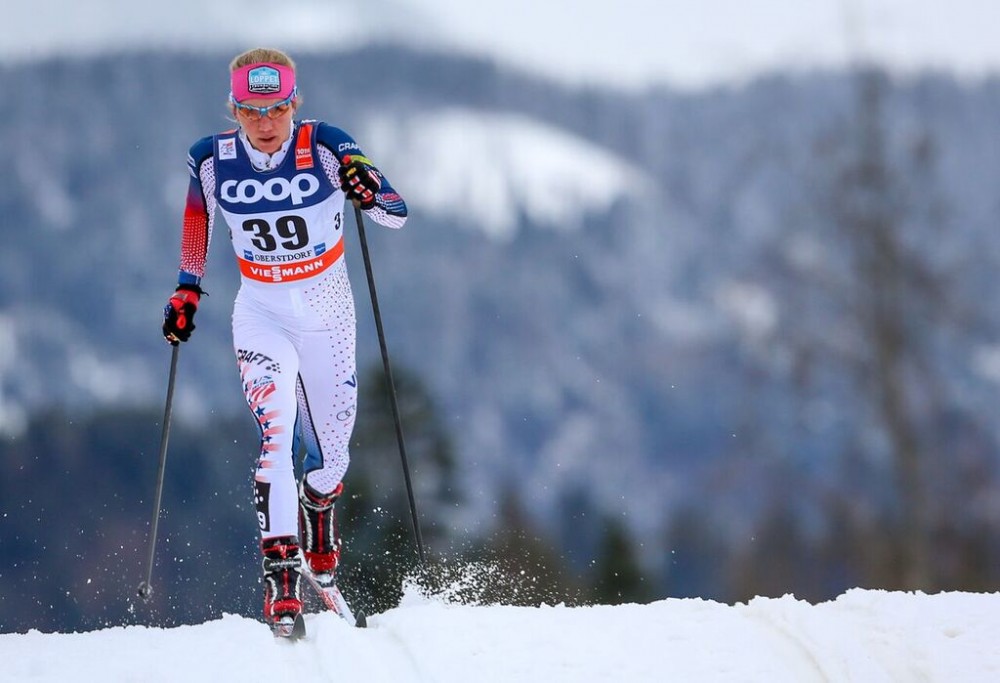
Caitlin Gregg racing to 49th in the 10 k classic mass start at Stage 5 of the Tour de Ski in Oberstdorf, Germany. (Photo: Marcel Hilger)
“I made a tough decision – well, tough but not tough – to come back to the U.S.,” the Vermonter-turned-Minnesotan explained. “Tough in the sense that it’s always hard to leave opportunities for World Cup starts behind, but not so tough because I’m on the ‘B’ team and any extra day I’m over there, I’m paying for it.”
While the other American finishers from the Tour headed to Seiser Alm, a high-elevation training site in Tyrolian Italy, Gregg went home to North Minneapolis.
“I thought it would give me a good boost mentally and would give me the strength I needed for the next month of training,” Gregg said. “So I spent two weeks at home, and I worked at the Boys and Girls Club and skied with my Loppet Nordic Racing teammates and recharged, and then hit the ground running with my training.”
It seems to have worked.
“Since then, everything has been really good,” a relieved Gregg said. “My heart rates and lactates are back to normal and my energy feels great, so I’m pretty psyched.”
The Greggs traveled to Wisconsin, mecca of the American Birkebeiner, to support the Birkie Tour; Caitlin’s husband Brian won the Seely Hills Classic.
Then while Brian headed East for SuperTour racing, picking up three top-10’s in Lake Placid, N.Y., and Craftsbury, Vt., Caitlin Gregg stuck in the Midwest. She entered and won the Three Rivers Rennet in Bloomington, Minn., where she was fourth overall, and trained with her old friends.
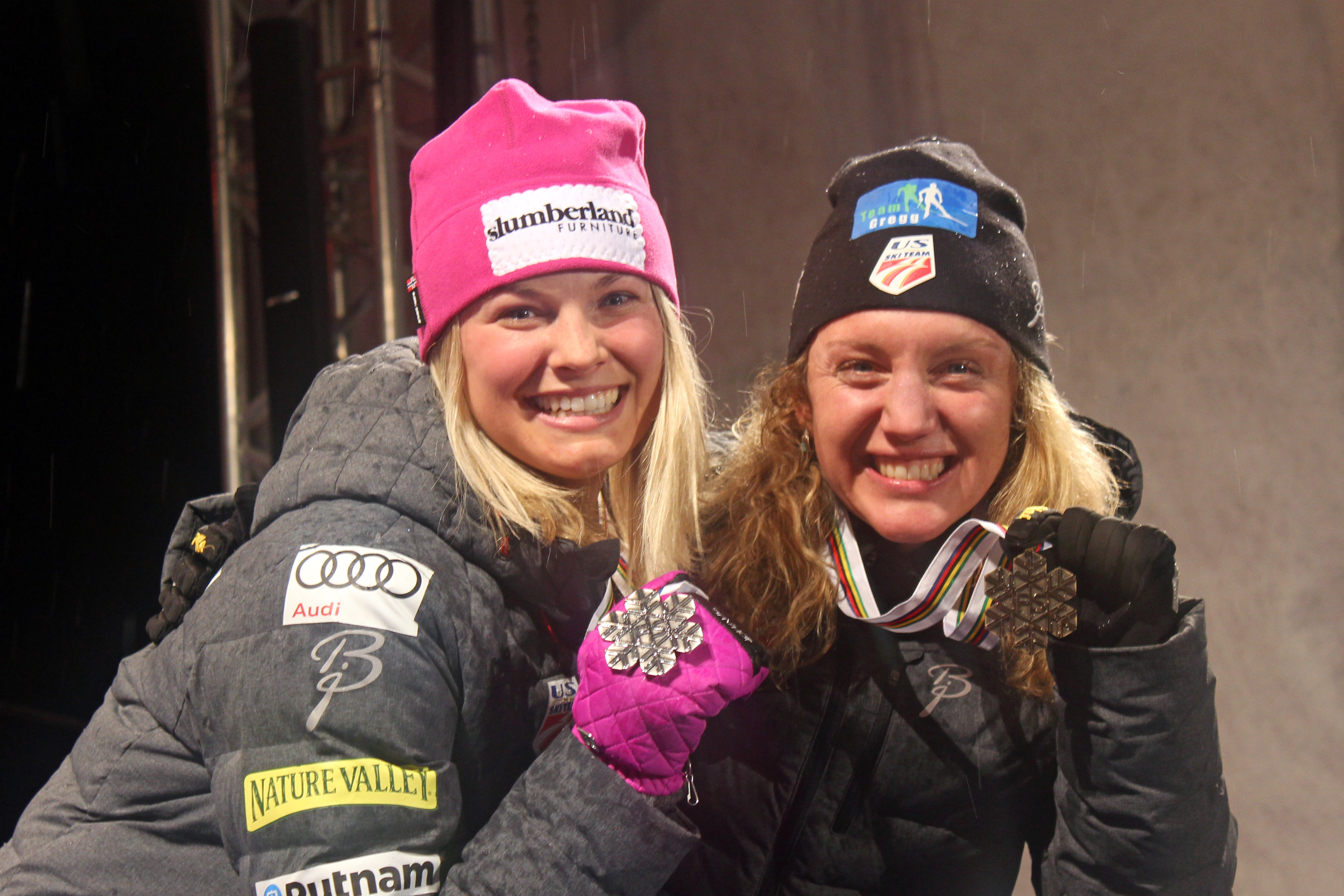
Americans Jessie Diggins (l) and Caitlin Gregg (r) hold up their silver and bronze medals from the 10 k freestyle at the 2015 FIS Nordic World Ski Championships in Falun, Sweden.
“I think I’m a unique athlete in the sense that so much of my career has been through community involvement,” she said. “Not just financial support – that for sure – but honestly, I’ve trained with more juniors and masters than I have with elite racers. Whether it’s early morning intervals or training in the dark, or doing a local citizens’ race, that’s where I get my energy.”
She also made a detour to race, and win, the Boulder Mountain Tour in Sun Valley, first training at elevation in Frisco, Colorado.
Gregg is hoping that energy will carry her to another Birkie win on Saturday, and then on to the Ski Tour Canada, the final period of World Cup racing for the season.
“This year is big because I’m tied with an [Austrian] guy named Manfred Nagel for the most Birkie wins,” Gregg explained. “I think if I win I will be the all-time winningest, which is pretty cool. So I’m going to keep trying to do that for the rest of my life – they’re going to have to pull me off the Birkie trail some day. I’m actually standing on the trail right now.”
Gregg won her third Birkie title in 2014, and missed the event the next year in preparation for World Champs – ultimately a successful move. But coming back to the race is clearly beyond exciting for one of its biggest cheerleaders.
“The Birkie is huge because of the community,” Gregg said. “We’ve spent years here in Hayward… I know some elite racers on the World Cup don’t quite get it. But I think it is an event that brings home why people get excited for us when we have international success on the World Cup. Skiers here are psyched to be on your same equipment, or to know what your latest modes of training are, or the heart rate variability stuff, or what your drink mix is for the Birkie. It really brings home the sense that there’s an awesome ski community here.”
Caitlin Gregg, winner of a particularly frigid 2014 Birkie. (Photo: American Birkebeiner Foundation)
In the end, Gregg plans for this to be one more season where the Birkie fits in well with her World Cup racing goals.
“It’s funny because the Birkie motto is Ski, Run, Bike, Live, and it really is part of my life,” she said. “Sometimes the Birkie is what elite racers do when they are done with their careers. I like that Brian and I have been able to integrate it into our international careers – and other athletes too, like Holly Brooks, Tad Elliott, and Matt Liebsch. It’s not just something that you do when you’re done racing.”
And after Saturday’s race, whatever the outcome, she will focus intensely on recovering and preparing for Canada.
“For the first time maybe in my career, I feel like my age comes into play as a benefit,” Gregg laughed. “I don’t think a 50 k takes as much out of me as someone who is in their early 20’s. Finally there’s a perk to being old and having a zillion hours underneath me!”
But seriously.
“My training leading up to this race has been good, and it’s going to be a fast year this year with the conditions,” she said of possible post-marathon fatigue.
So I think it’s not going to be a problem. I’ve talked to a lot of coaches and gotten some good insight into what to do afterwards for recovery.”
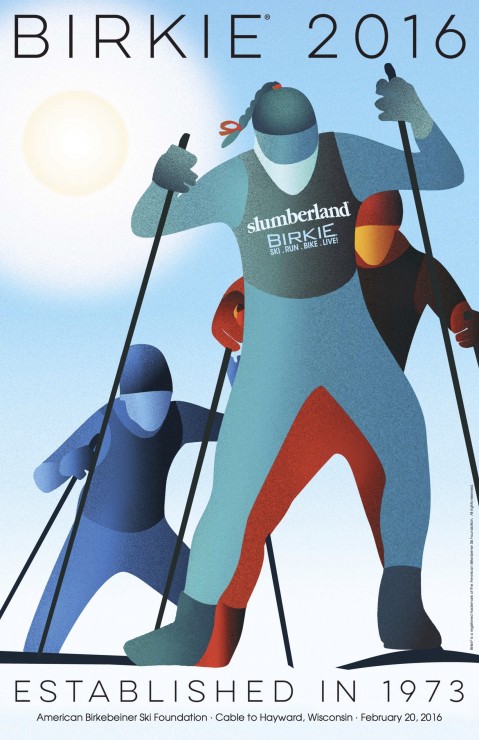
Official 2016 Event Poster and T-shirts Available Now
HAYWARD, Wis. — Earlier this year, the American Birkebeiner Ski Foundation (ABSF), hosted design contests for the official Birkie 2016 event poster and t-shirt. The ABSF is pleased to announce the contest winners and to share their creative designs which will become the face of the 2016 Slumberland American Birkebeiner, North America’s largest cross-country ski race.
Winner of the first official Birkie poster design contest is Christopher Schmidt of Minneapolis, MN. Schmidt’s design was selected by a panel of ABSF judges. As part of Schmidt’s prize package, he will receive two complimentary race registrations for any Birkie skiing event; VIP parking at the Birkie race start; and use of his design on numerous official 2016 Birkie materials. Official 2016 Birkie posters are available at the Birkie Store in Hayward, or online at www.BirkieStore.com.
The official Birkie poster image serves as an icon for each specific year’s race and festivities and its announcement is awaited by participants worldwide. The poster design graces the cover of the ABSF’s pre-race Birch Scroll magazine, the annual ABSF participant race-guide, as well as on official ski stickers given to every participant of the American Birkebeiner race. Not only is the design printed into a full-size poster, it is also printed into a much smaller version for use by area businesses and Chamber of Commerce members throughout Hayward & Cable, WI.
The ABSF is pleased to announce the official 2016 Slumberland American Birkebeiner t-shirt design contest winner is Brooke Wentland from Madison, WI. Wentland’s design was selected through on-line voting at www.Birkie.com. She originally caught Birkie Fever during the Kortelopet in 2011 and plans to compete in her first Birkie in 2016. The official 2016 Birkie t-shirt is available for purchase online at www.Birkie.com/store and will soon be in the Birkie Store in Hayward, WI.
The Birkie Store, located at 10527 Main Street in Hayward, WI, is open just in time for holiday shopping. Birkie Store hours are Monday through Friday from 9:00am to 4:00pm and 11:00am to 4:00pm on Saturday. Shoppers will find a variety of branded Birkie merchandise, including wearables, posters, books, and gift items in the store and will be able to see the future space of the Tony Wise Museum of the American Birkebeiner slated to open in 2016.
The 2016 Slumberland American Birkebeiner Ski Marathon is North America’s largest cross-country ski marathon and the third largest in the world. Spanning 51 kilometers from Cable to Hayward for skate skiers, and 55K for classic skiers, on the 107K Birkie Trail, the race attracts over 10,000 skiers each year. The Birkie is part of the Worldloppet circuit of 20 international ski marathons. Over 250,000 skiers have finished Birkie ski events (Birkie, Kortelopet, Prince Haakon) since the races began. An estimated 45,000 spectators and skiers are expected to gather in and around the Hayward area for the annual Nordic sports festivities from February 18 through Sunday, February 21, 2016.
About the American Birkebeiner® Ski Foundation and Birkie® Events
Located near Hayward and Cable, Wisconsin, the American Birkebeiner Ski Foundation, a 501(c)(3) organization, is known for its signature American Birkebeiner Ski Marathon held each February. Today, the Birkie brand has grown to encompass a year round lifestyle that provides healthy, active events for thousands of outdoor fitness enthusiasts of all levels. From the iconic Birkie ski race to the Birkie Trail Run & Trek, and Fat Bike Birkie race, the ABSF and the Birkie Trail attract skiers, runners, bikers, trekkers, and hikers, from casual day-trippers to elite superstars. Birkie. Ski. Run. Bike. Live! Visit www.Birkie.com to learn more.
One day. Eight events. Introducing NEW Ultra 100K Marathon!
Hayward, WI (September 22) — The 14th annual American Birkebeiner Ski Foundation®
(ABSF) Birkie Trail Run & Trek, Presented by Salomon, will be held on the iconic Birkie Trail this
Saturday, September 26th. From the challenge and intensity of a new 100K Ultra Marathon to
the fun of a 5k run/walk, an estimated 1000 runners and trekkers from around the Midwest will
take to the trails.
The Birkie Trail Run & Trek events start and finish at Birkie Ridge Trailhead, 12.5 miles north of
Hayward, Wisconsin, and 5 miles south of Cable, Wisconsin. The eight Birkie Trail Run & Trek
events place runners and trekkers on some of the most scenic stretches of the famous Birkie Trail and single-track sections of the CAMBA (Chequamegon Area Mountain Bike Association) trail system. With eight events on the roster – including a marathon, marathon relay, half marathon, Nordic Trek, 5K run/walk, youth 5K (12 and under) and 1K (free for ages 9
and under), and this year’s new 100K Ultra Marathon – there is a north woods trail experience
available for every ability level. This year’s new Ultra 100K marathon utilizes all of the marathon
course plus two additional loops, with aid stations and support teams along the course route. Full race course information is available at www.Birkie.com.
“The Birkie Trail Run & Trek event is ideal for runners looking to break free from traditional road
running and provides an ideal crossover race experience and introduction to trail running,” said
Ben Popp, ABSF Executive Director. “Our event is continually evolving and we are excited to
offer the new Ultra 100K marathon to the mix of existing running and trekking events.”
The Birkie Trail Run & Trek welcomes new elite athletes to the marathon, including: Jeff
Quednow, Ogema WI; and Marco Sturm, Neuötting-Bavaria, Germany. Additionally, the 2014
Birkie Trail Run & Trek male marathon champion, Craig Cardinal, Northfield, MN, is back to
defend his title, while 2014 women’s half-marathon champ, Tiffany Karl, Duluth, MN, is returning
and running the full marathon.
“The trail is in great shape, volunteers are ready and we are excited to welcome runners,
trekkers and their families to this weekend’s events,” said Allan Serrano, ABSF Event Director.
“The wide, grass covered, level surface and challenging profile of the groomed Birkie Trail,
along with the smooth and fast CAMBA single-track will give runners of all abilities everything
they’re looking for this weekend.”
The weekend kicks off on Friday with bib pick-up at the Cabin Stop, Hayward, WI, with cheese,
craft beer and wine samples, and exciting door prizes. The new Ultra 100K event starts
Saturday, bright and early, with rolling starting times for all other running and trekking events
(see schedule below). Festivities continue with awards ceremonies, food, craft beer and wine,
vendor displays, and live music by Duck for the Oyster under the big tent. Later that evening,
the celebration moves to Rivers Eatery, Cable, Wisconsin, with live music by Molly and the Danger Band. This year, participants have the opportunity to camp near the start/finish area at
Birkie Ridge Trailhead.
With a focus on youth development, Annie Hart – Birkie Ambassador, 5-time All-American and
professional cross-country skier – will lead the kids warm-up games and race activities. There
will also be an obstacle course for kids and treats following the youth events, hosted by the
Central Cross Country Ski Association (CXC).
“We are very pleased to be the presenting sponsor of the Birkie Trail Run & Trek,” said Josh
Korn, Regional Marketing Manager, Salomon Soft Goods. “The Birkie trail is truly a gem of a
course for both running and Nordic trekking alike!”
Over the years, the Birkie has grown its programming into an exciting array of fitness and
recreational opportunities. The 107-kilometer Birkie Trail system attracts skiers, runners, bikers,
trekkers, and hikers, from casual day-trippers to elite superstars.
Follow us on Twitter #BirkieRun15
###
About the American Birkebeiner® Ski Foundation and Birkie® Events Located near Hayward and Cable, Wisconsin, the American Birkebeiner Ski Foundation, a 501(c)(3) organization, is known for its signature American Birkebeiner Ski Marathon held each February. Today, the Birkie brand has grown to encompass a year round lifestyle that provides healthy, active events for thousands of outdoor fitness enthusiasts of all levels. Birkie. Ski. Run. Bike. Live! Visit www.Birkie.com to learn more.
About Salomon – Designed for Freedom –For more information about Salomon, visit www.Salomon.com
Birkie Trail Run & Trek, Presented by Salomon Schedule of Events
Final Birkie Trail Run & Trek registration. There is no relay team registration
after 4pm on Wednesday, 9/23. There is no registration for all other Birkie Trail
Run & Trek events after Friday, 9/25
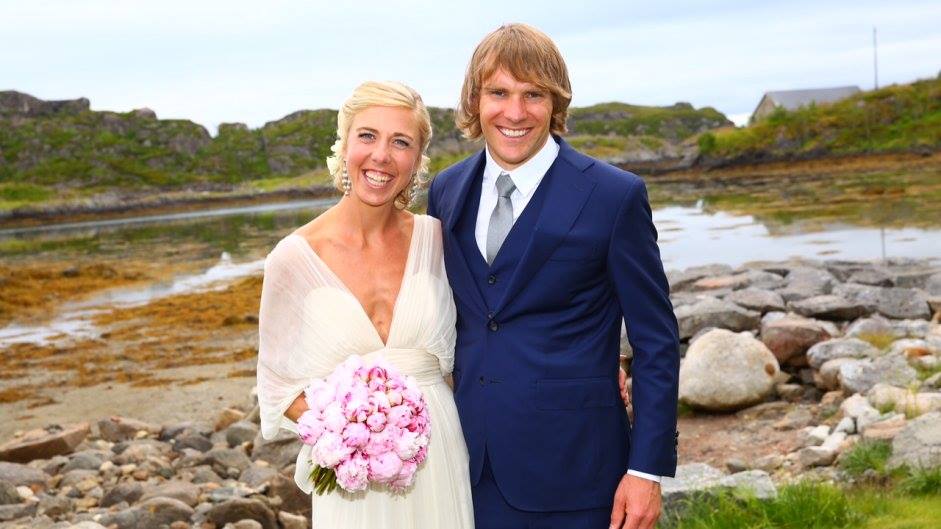
Skiers have been wearing a lot of white lately — or variations thereof. This past weekend, Canadian World Cup Team member Devon Kershaw and his Norwegian girlfriend, three-time Olympian Kristin Størmer Steira, tied the knot in Lofoten, Norway, where Steira has family ties.
Kristin Størmer Steira, of Norway, and Devon Kershaw, of Canada, were married last weekend in Lofoten, Norway. (Photo: CCC/Facebook)
Steira’s teammates, including Marit Bjørgen, Therese Johaug and Ingrid Flugstad Østberg, made the trip to the northern islands for the wedding, along with Canadian skiers Alex Harvey, Jess Cockney, Graham Nishikawa, Drew Goldsack, and Phil Widmer.
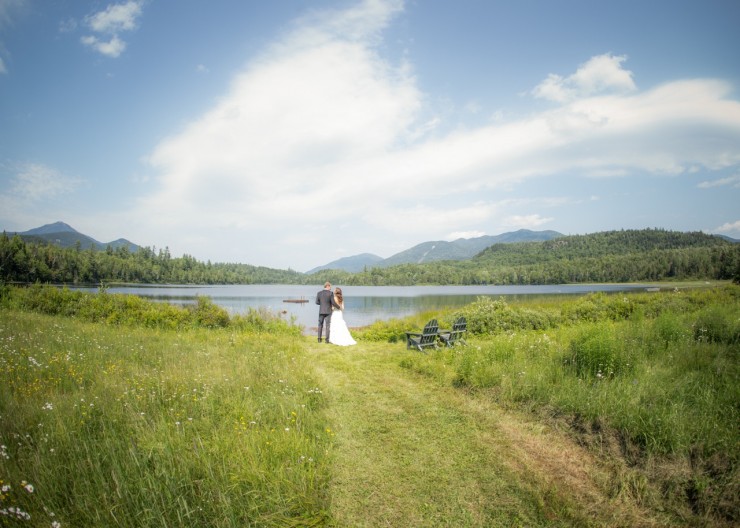
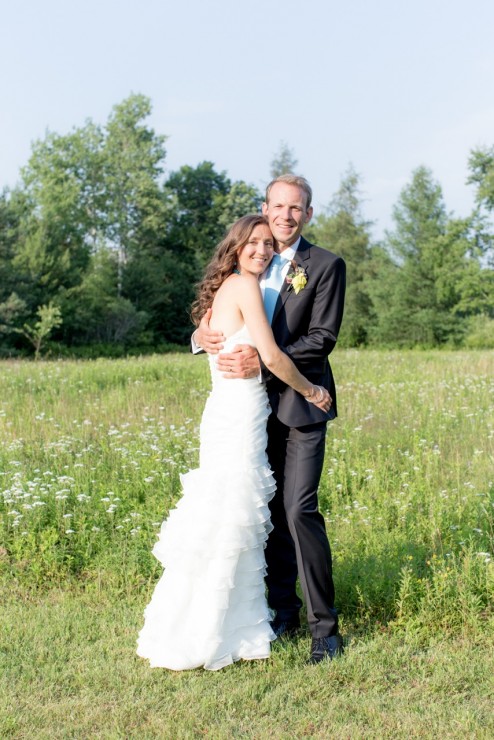
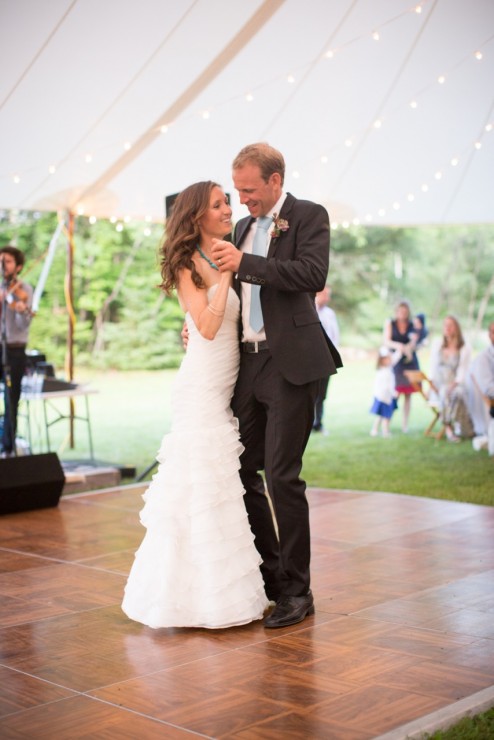
On July 11, US Biathlon’s Lowell Bailey wed Erika Edgley at Connery Pond (photos above) in North Elba, N.Y., then held a reception in front of the house where Bailey grew up in Lake Placid. Edgley is also from Lake Placid. They celebrated with about 120 guests from “all over the world,” Bailey explained in an email. “Americans, Brits, Germans!”
Bailey recently arrived in Stavanger, Norway, for the Blink Summer Ski Festival — a three-day series of rollerski races, starting this Thursday and ending Saturday. His teammates Leif Nordgren and Susan Dunklee also plan to participate.
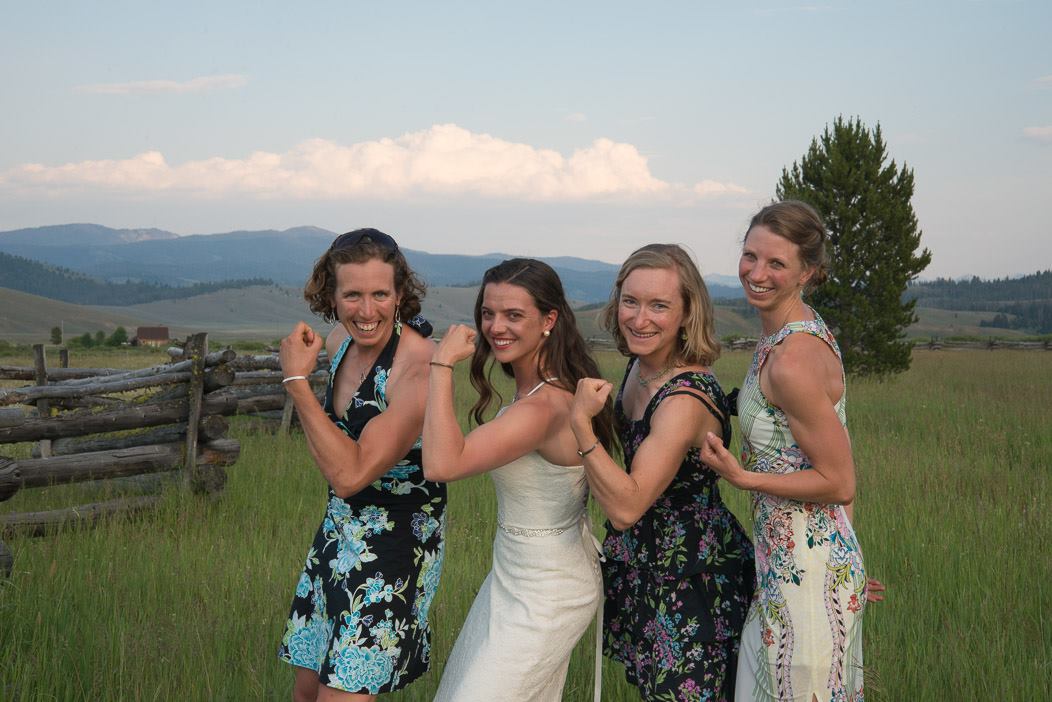
Sara Studebaker (second from l) married Zach Hall in mid July and celebrated with friends and former US Biathlon teammates Susan Dunklee (l), Hannah Dreissigacker (second from r), and Annelies Cook (r) in Stanley, Idaho. (Photo: Sara Studebaker/Facebook)
Also this month, former U.S. biathlete Sara Studebaker married another retired biathlete and current ski coach, Zach Hall, with her 2014 Olympic relay teammates Dunklee, Hannah Dreissigacker and Annelies Cook by her side in Stanley, Idaho.
And on July 18 near Canmore, Alberta, Canadian biathlete and Olympian Scott Perras married Jodi Etcheverry, a former biathlete, at a lakeside ceremony.
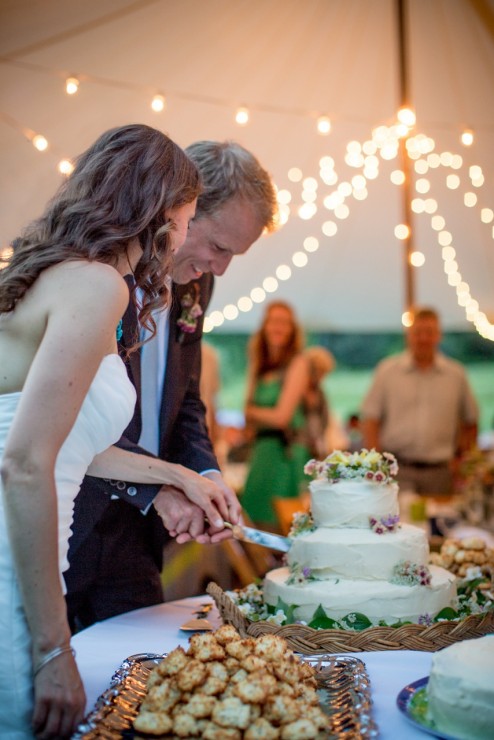
Longtime sweethearts, former U.S. skiers and now development coaches, Maria Stuber and Bryan Cook recently wed in their native Wisconsin.
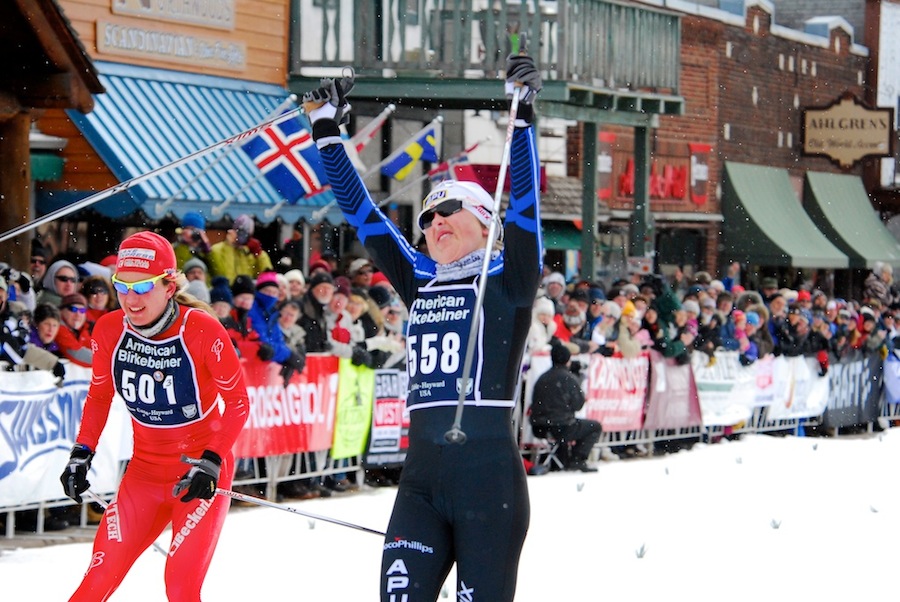
Holly Brooks winning the 2012 American Birkebeiner, four-tenths of a second ahead of Caitlin Gregg (l), for her first Birkie title. (Photo: Darlene Prois/ABSF)
Each year, leading up to the third week in February upward of 11,000 people get sick. It isn’t a sickness that would cause a widespread panic, but rather one thousands of Midwesterners actually looked forward to each year, and it’s called Birkie fever.
The 42nd running of the American Birkebeiner takes place Saturday, starting in Cable, Wis., and ending some 30 miles (or 50-plus kilometers) south in Hayward, Wis. The race filled up in November, with all 10,500 allotted entries accounted for before the first of the year. In total, 10,517 skiers from 18 countries were registered for the three Saturday races, almost 7,000 of them are entered in the 51 k skate race. That’s a big change from 1973, the first time the Birkie was held. Back then, there were 34 men and one woman as race participants.
The race course has gone through several changes since 1973, from the direction skiers raced to the length of the race. This year’s race has a few changes that will add a some interesting twists. For one, the race is longer. The classic race is now 55 k and the skate race now 51 k. The extra distance was due to a relocation of the final aid station and the extension of the finish line, pushing it farther down Main Street.
The International Bridge was a fixture in the Birkie before. (Photo: ABSF)
The biggest change that has garnered some of the most attention is the new bridge the American Birkebeiner Ski Foundation (ABSF) finished assembling on Wednesday over Highway 63, a kilometer from the finish.
The International Bridge adds no length to the race, but it does add a 17-vertical-foot hill before the finish. Previously, once skiers were five kilometers from the finish, it was a flat ski to Main Street. The new manmade hill adds a 10-percent climb to legs that already have some 50 kilometers of climbs in them.
This isn’t the first time the International Bridge has been a fixture on the Birke course. In the late ’70s and early ’80s when the race finished at the Telemark Resort in Cable, the bridge was the last hill skiers needed to climb before they finished. The temporary bridge is 100-feet long and spans 30 feet over the highway.
The bridge was needed to eliminate the traffic congestion problems the race brought during the weekend. Funding for the ramp and other changes is a part of phase one of the ABSF’s multiple-year fundraising program.
The past two years, the Birkie has been a part of the FIS Marathon Cup, a season-long international competition that crowns a winner with the highest points after a series of races of 42 k or farther. This means it attracts some of the world’s best long-distance racers and this year’s women’s field is a reflection of that. In the elite wave, the top four women in the FIS Marathon Cup are entered: Tatjana Mannima of Estonia, American Holly Brooks, Aurelie Dabudyk of France, and Antonella Confortola of Italy. Confortola finished second in last year’s Birkie.
Brooks was leading the FIS Marathon Cup, but skipped last week’s stop at the Tartu Marathon in Estonia to head to Hayward to prepare for the Birkie.
“I’m really excited for this year’s Birkie,” Brooks wrote in an online message this week. “It’s been a couple of years since I’ve been here and it’s great to be back — both at the Birkie and on ‘home soil!’
“I’ve been bouncing from country to country racing marathons and I decided last fall that I would spend two weeks here in Hayward,” she explained. “I have great friends that I’m staying with and it feels fabulous to be in a house [rather than a hotel].”
The new podium awaits for the winner of this year’s race. (Photo: ABSF)
Coming into the race, Brooks ranks second in the overall FIS Marathon Cup standings, just seven points behind Mannima. Brooks won the Birkie in 2012 and knows the course well.
“I‘ve seen the whole thing start to finish… both at distance pace and race pace. That’s more than I can say for some of the courses I’ve raced this winter!” Brooks wrote. “Not sure how much of a true advantage it gives me but it puts my mind at ease a bit. I know where people including myself have made moves.”
Two year ago at the Birkie, Mannima lost a photo finish and placed second to three-time Birkie champion Caitlin Gregg, who is currently in Sweden representing the U.S. at the FIS Nordic World Ski Championships in Falun. American Caitlin Patterson (Craftsbury Green Racing Project) finished third in 2013 and seventh last year, and could prove to be a threat in this year’s elite race.
In an email on Wednesday, Patterson wrote that she was looking forward to skiing part of the Birkie trail on Thursday, refreshing her memory “of some of its notable features, and seeing the new bridge and finish line if possible.
“My preparations have been going well — mostly I’ve been focused on recovering after recent Craftsbury Supertours, building up my energy, and actually keeping my training skis pretty short and easy,” she explained. “At this point in the season I have to trust the endurance and fitness I’ve built up during the past year, and mostly just stay sharp and excited for the race, which I most certainly am!”
In terms of her goals and expectations for Saturday’s race, Patterson felt anything was possible.
“The past two years of racing the Birkie have taught me that it’s a race in which you have to test your limits but where you never quite know what will happen, where you must always be thinking quickly and ready to react throughout all 50+k,” she wrote. “I believe that I’m in very good shape, so my goals are to trust my fitness, ski with confidence and enjoyment of the sport… and to make it onto the podium!”
“I’ve seen the whole thing start to finish … I know where people including myself have made moves.” — Holly Brooks on her Birkie advantage
The men’s field is also competitive. Most of the FIS Marathon leaders didn’t race last weekend’s Tartu Marathon to fly to the U.S. to prepare for the Birkie. Overall FIS Marathon Cup leader Petr Novak of the Czech Republic is racing along with France’s Benoît Chauvet,who sits in second place, only 85 points behind Novak. Second-and-third place finishers from last year’s Birkie, Simone Paredi and Sergio Bonaldi of Italy, are also listed to start. Bonaldi won the Birkie in 2013.
Tad Elliott (119) racing in the men’s 30 k classic mass start at U.S. Cross Country Championships in January in Houghton, Mich. (Photo: Christopher Schmidt)
For the U.S., Birkie winners Tad Elliott (Ski & Snowboard Club Vail Elite) and Matt Liebsch (XC United/Team Strong Heart) will be racing, along with 2014 U.S. Olympian Brian Gregg. Elliott won in 2012 and Liebsch took first in 2009.
This trio has had a pretty intense history in the Birkie. When Elliott won in 2012, Liebsch placed second and Gregg took third. The difference between first and third was only 14.8 seconds.
In a phone interview, Liebsch mentioned how team tactics played a part in previous Birkies, but that would not be the case this year.
“In the past, you would have these teams come over with five or six guys and it would essentially be like a cycle race,” Liebsch said. “The fast sprinters would just sit in the back while his teammates did all the work up front setting the pace and sending guys off the front to disrupt the flow of the race. This year is a little different because there aren’t the multiple-person teams.”
Liebsch added that the style of racing here is different than at European marathons.
The 2011 American Birkebeiner men’s podium (from left to right): with France’s Benoit Chauvet in second, Norway’s Tore Martin Gundersen in first and Russia’s Andrey Tyuterev in third. (Photo: Andy Caniff/Swix Sport USA)
“In Europe, the pace is extremely fast due to the fact that teams have ten or eleven guys,” he said. “Here in the United States, the pace is slower and many of the Europeans don’t like that pace so they would send guys off the front if the pace got to slow.
“Most of the European guys are here to get FIS points to improve their standings for the overall FIS Marathon Cup title,” he added.
Chauvet is currently second in the overall FIS Marathon Cup and has the biggest team entered in the Birkie with four total teammates, while the overall leader, Novak will race solo.
“The strategy for most of the European guys will be to stay up front, in the top eight, get points and then head back to Europe,” Liebsch said. “This could really help out the fast American guys like Tad, Brian, me and Lex [Treinen] because the pace won’t be crazy fast like most European races can be.”
In an email, Treinen predicted that U.S. guys would have a good showing: “Matt looks like he’s in good shape and he and [Brian] Gregg would love to take home a Midwest victory here,” he wrote. ” … I have been training specifically for the Birkebeiner for at least two weeks and I even did some intervals recently, so I feel like I am in better shape than ever before.”
Elliott has spent some time in the Midwest and won last month’s Seeley Classic race that was held on the Birkie course.
“I am excited to race the Birkie,” Elliott wrote in an email. “It will be three years since I last raced here! I am looking forward to a great event. I have had some health issues again sneak in this last month, but I have a few tricks up my sleeve. My twin brother is also my wax tech coming with me from Colorado. Hoping [he] can keep me in the race this year!”
The biggest factor going in the weekend is the weather. There was a concern of a lack of snow but over the last few weeks the area has gotten enough snow to make the course set up nicely for the race. The wind and cold temperatures are an immediate concern. On Tuesday, organizers canceled Thursday’s elite sprints because of the predicted well-below-zero temperatures at the scheduled start time. Early predictions show Saturday morning’s temperatures to be around 4-degrees Fahrenheit.
Volunteers get ready to test snowmaking equipment at Telemark trails in mid-September in Cable, Wis. The IPC Nordic Skiing World Championships will be held there Jan. 22-Feb. 1, 2015. (Photo: CXC Skiing/Facebook)
Northern Wisconsin, home of the Lumberjack World Championships and largest ski marathon in North America (a.k.a. the Birkie), is about to play host to the International Paralympic Committee (IPC) Nordic Skiing World Championships in January 2015.
For the first time in 10 years, IPC World Championships is returning to the U.S. since its last visit in 2005 in Fort Kent, Maine. And it’s coming to Cable, a town with fewer than 900 residents but with a history steeped in skiing since before 1947, when Tony Wise founded Telemark Resort.
The championships are expected to attract 150 of the world’s most competitive para-nordic athletes from 20 nations slightly less than a year after the Winter Paralympics in Sochi, Russia.
Central Cross Country (CXC) is heading up the organizing efforts, working with Telemark’s owners to revamp the trails used for the 2012 and 2013 IPC World Cups — two events that drew international attention to Cable.
“One of the coaches, I can’t remember what country, said we should host world championships because both those world cups were organized so well,” Yuriy Gusev, CXC’s executive director and the Cable 2015 organizing committee chairman, recalled in a phone interview.
Cable’s World Cup organizers first entertained the idea of hosting World Championships in 2012, then, after their second World Cup in 2013, they submitted an official bid that year.
When it comes to arranging an event of this caliber — with eight days of races between the opening ceremony on Jan. 22 and closing ceremony Feb. 1 — Gusev said it’ll be completely different from putting on a SuperTour or national championships.
For instance, in many domestic ski races, fewer than 100 athletes typically participate. While there will be slightly more at IPC World Championships, the level of competition will be significantly higher than even a World Cup, which often attracts development skiers. And teams that don’t usually fly across the pond for non-World Championships events, like Hungary and South Korea, will be in Wisconsin as well.
With more top-level skiers on course, Gusev said perfecting details — from appropriate hill grades for varying abilities, to the biathlon range — has been critical.
“It’s a lot more details than anyone would ever imagine,” he said.
One example: the hill that returns skiers back up to the stadium. As U.S. Paralympics Nordic Program director John Farra explained, it was so steep for sit skiers to ascend, especially those with little to no use of their core muscles, it wasn’t legal. And while it was used in the two previous Cable World Cups, something had to be done before World Championships.
With help from former CXC head coach Bill Pierce, Gusev led the task of taking some chunks out of the hillside, as well as widening, flattening and cleaning up edges alongside the Telemark trails. That includes a homologated 5-kilometer competition loop and 2 1/2 k sit-ski loops.
This past spring, Farra and his co-coach, Eileen Carey, an experienced technical delegate, visited Cable to check on the progress and pre-empt some of the questions they knew the IPC would ask during its site visit in June.
“I’m glad we did it, and I think [Gusev’s] organizers appreciated it,” Farra said. “His new stadium is going to work, and he’s doing some pretty significant trail work … Now [the hill] is an appropriate return to the stadium. He’s done some nice improvements.”
The Hytte Recreation Center at Telemark Trails is going through makeover to be ready for the 2015 IPC Nordic Skiing World Championships and other events this winter. (Photo: CXC/Facebook)
The stadium has been moved slightly to a higher point and is near one of the oldest buildings on the Telemark property, the three- to four-thousand-square-foot Hytte Recreation Center, which Telemark’s owners agreed to let CXC renovate.
According to Gusev, CXC updated and repainted it as an events/activity center. The owners also granted them use of the Telemark trail system.
The lodge itself remains closed, but as Gusev pointed out, “most of the venues anywhere don’t have lodging facilities at the start line.” Rather, Lakewoods Resort a 10-minute drive away will be the official accommodation and site of the closing ceremony.
“It’s not that easy to find a venue with a trail system and a biathlon range,” Gusev explained. “[We had] two world cups there and all the teams really enjoyed the trails and the layout.”
The opening ceremony will be held in downtown Cable in an open area between the grocery store and chamber of commerce.
In terms of spectators, Gusev said it was difficult to predict how many people would come watch the week-and-a-half championships. Regardless, he said his seven-person organizing committee was working hard to generate as much interest as possible in the months leading up to it.
He’s currently trying to lock down corporate sponsors to provide cash flow for hosting the event. The plan was to initially work with donation partners, then use the assistance of the IPC to attract international sponsors.
A few months ago, the organizing committee secured a grant from the state department of tourism as well as support from Bayfield County.
Depending on how fundraising goes, Cable 2015 could cost anywhere from an estimated $500,000 to $750,000 dollars, Gusev explained. While details and budgets will have to be finalized by November, he’s confident they’ll get there.
“If you look at the Paralympic Games in Sochi, twenty-five countries broadcasted and two billion watched it,” he said. “For the state [of Wisconsin] and the sponsors, it’s a pretty big event to be involved in and the media exposure will be huge.”
T.V. coverage will be a combination of small-scale broadcast and live streaming on the event website. Initially, Gusev said they considered a wide-reaching broadcast platform, but found the cost to be around $500,000 for a weekend of coverage. Alternatively, the live stream, which can be accessed anywhere online, will cost the organizers about $75,000, with equipment as the main expense, specifically a satellite truck.
At the same time, that option creates more work.
“If you have half a million and you have someone come in from New York to come do it, you don’t have to worry about it…,” Gusev said. “It’s actually more complex [to do the live stream].”
And in terms of snow, that’s partly why Cable got World Championships.
“In 2013, there was no snow anywhere and the little snow there was got melted by three inches of rain the day before the first official training day,” he said of the IPC World Cup that year. “All the races were on artificial snow so nobody could believe we pulled it off.”
Part of Gusev’s master plan is putting Telemark on the map as a venue that can hold consistently successful, big events. In 2016, Junior Nationals will be held on the same homologated trails in Cable.
“The standing course is [a] legitimate, hard, Sochi-like course to throw at the athletes,” Farra said. “[And Telemark has] similarly challenging courses for sit skiers.”
(Photo: CXC/Facebook)
The Hytte Recreation Center at Telemark Trails is going through makeover to be ready for the 2015 IPC Nordic Skiing World Championships and other events this winter. (Photo: CXC/Facebook)
(Photo: CXC/Facebook)
(Photo: CXC/Facebook)
(Photo: CXC/Facebook)
(Photo: CXC/Facebook)
CXC volunteers cleared the sit-ski finish of several loads of rocks and boulders with Avant Tecno USA on Sept. 30 before the IPC Nordic Skiing World Championships in January. Next task: seeding it and putting down mats. The same trail will be used this winter for the Midwest Junior National Qualifier, Wisconsin High School State Meet and 2016 Junior National Championships. (Photo: CXC/Facebook)
Clearing the Telemark trails for IPC Nordic Skiing World Championships in January 2015.
The newly appointed CXC Team Head Coach Andy Keller (r) works on strength with postgrad Scott Harrison outside a barn near Cable, Wis. (Photo: CXC Skiing/Facebook)
Three years ago, Andy Keller was a college kid looking for an internship toward his exercise-science degree at Michigan Tech. He knew a girl, who knew Jason Cork, and he used the connection to land an apprenticeship at the Central Cross Country (CXC) Ski Association in Cable, Wis.
At the time, Cork was heading up the CXC Team, which executive director Yuriy Gusev established in 2006 to support promising skiers striving for top national and international performances. Keller, who grew up just outside Minneapolis in Chanhassen, Minn., became Cork’s intern assistant.
Andy Keller started as an intern, then an assistant, and finally a junior coach before being promoted to CXC Team head coach this month, following the departure of Bill Pierce. (Photo: CXCnewsfeed.wordpress.com)
Months later, before Keller began his senior year, Gusev offered him a job.
“I said, ‘I kind of want a degree so I’ll talk to you in a little less than a year,’ ” Keller reflected on the phone last week.
He skied for four seasons at Michigan and graduated in 2012, then asking Gusev if there was still a spot for him. There was, though Keller’s job title and responsibilities changed three times before he officially got started, he said.
First, he was hired as sport-development manager, tasked with connecting CXC to youth clubs and high-school programs in the Midwest. Then, CXC’s assistant coach Gus Kaeding left to head the Stratton Mountain School (SMS) elite team in Vermont. Cook needed an assistant, and CXC’s board decided Keller would be it.
“Then there was a little bit of [difference] with coaching styles and athletes on the team, so Bill [Pierce] got brought on to work alongside Igor [and] I took more of a dedicated role to the junior program,” Keller said of last season. “This year started off the same way … I was focused more on the junior program.”
For the next several months, Badamshin oversaw the program and Pierce worked as the elite head coach. In late January, Badamshin died unexpectedly of a heart attack while skiing the Birkie trail between Cable and Hayward, Wis. He was 47, and his passing left CXC and the surrounding community stunned.
“A guy that works his ass off and is willing to do anything for his program … his passion truly lied with working with athletes,” Keller reflected. “[I] was just trying to carry on his legacy — inspiring kids to ski and getting them excited to be out there. If there’s one thing he was good at, it was definitely that, and also carrying on his work ethic. The guy wouldn’t complain. He’d be out there skiing 50 k and waxing…
“There was definitely big shoes to fill when he passed away,” CXC Team’s new head coach continued. “As I’ve come through, I’ve been working under a ton of coaches; my philosophy is I can always learn something. When I was interning under Jason and Gus that was what I loved to do — learning and listen.”
“There was definitely big shoes to fill when [Badamshin] passed away. … As I’ve come through, I’ve been working under a ton of coaches; my philosophy is I can always learn something.” — Andy Keller, CXC Team Head Coach as of September 2014
Keller Becomes Head Coach
That’s right, Keller, in his third season as a CXC coach, was recently promoted to head of its elite team following Pierce’s decision to accept a job in Colorado (he’s becoming nordic director of the Snow Mountain Ranch YMCA near Winter Park this fall) earlier this month.
But “elite” is a term Gusev and several other U.S. nordic directors like to stay away from: it’s about development and helping athletes reach their higher-competition goals. The CXC Team became Team Vertical Limit in 2009 as part of a sponsorship deal, and a year later it had 18 athletes, including a couple Olympians (Garrott Kuzzy and Caitlin Compton — now Caitlin Gregg).
The New: 2014/2015 CXC Team
CXC Team:
Cory Ellertson
Bjorn Batdorf
Bill Bowler
Chris Pappathopoulos
Hilary Patzer
Andrew Brown
Scott Johanik
Natalia Naryshkina (lives in Russia, plans to compete in western SuperTours and U.S. nationals)
Postgrads: (living in Cable this fall/winter)
Scott Harrison
Sam Boardman
College Summer Residency Group:
Nichole Bathe (University of Alaska Fairbanks)
Nicolette Reker (now at Winona State University, competing for CXC Team)
Tom Bye (Postgrad last year, now at Michigan Tech)
Thomas Kendrick (Michigan Tech)
Will Frielinghaus (St. Lawrence University)
Seth Mares (Gogebic Community College, plans to transfer to Michigan Tech)
International Training Partner:
Leandro Lutz (living in Cable this fall, plans to travel to Europe for international races in an attempt to qualify for World Championships; may stay in Cable and race U.S. circuit)
The CXC Team currently has eight members, most of which will be focused on top-10 results in Midwest marathons to attract sponsors. In addition, Keller is overseeing two postgrads, about 10 juniors and an international guest skier.
“All the coaches agreed, the team needs to get back to the roots of developing athletes,” Gusev explained on the phone. “You would have never called our team the CXC Elite Team, it just came later when this word became very popular.
“We always see our team as a development tool for that higher step,” he added. “We don’t see this team as full of stars, but we want to have a team open to athletes of that level. If it can help them great … It’s just like having a child: at some point you need to let them go and see if they can stand on their feet.”
Considering that, Gusev is encouraged by the direction his program is headed, especially with a homegrown coach at the helm.
“It’s exciting to see somebody who went through the original pipeline and became a coach,” he said. “And that’s a goal from the time he applied from an internship.”
Still, the last few weeks — and months — have been busy at CXC, to say the least. Following Badamshin’s passing, Gusev said the organization interviewed a couple people to hire in his absence, but ultimately, Pierce and Keller stepped up and said they could handled the added responsibilities without another coach.
“It was probably more emotional for some of us, but you just move on,” Gusev said. “The programs needed to move on as well and … we had to adjust right away.”
It didn’t take long for everyone to get back “in the groove,” he added. Pierce continued to serve as head coach and Keller as his assistant and junior coach.
Last Friday, Keller drove 300 miles southeast to Madison to test about 10 juniors at a weekend camp at CXC’s administrative headquarters. The group meets about once a month in various places, holding camps with other Midwest clubs, like Loppet Nordic Racing (LNR), May through December, Keller said.
He also helps host monthly CXC master’s camps, and while he’s not scheduled for every single one, he led a recent camp under Pierce’s guidance earlier this month.
“I made Andy run over half the sessions, and I watched him and helped him a little bit,” Pierce said. Then he told him and the rest of CXC about his decision to leave.
“I saw it coming,” Keller reflected. “Bill did talk to me as he found out more about the new position he was taking.”
In Cable, where Keller lives in a condo on the Telemark property, he spent the summer working with six athletes in CXC’s new college summer residency program, which Pierce initiated.
“That overlapped with what you would call our team now, more of a marathon team,” Keller said of his previous and current responsibilities, coaching juniors and now seniors as well. “The athletes that we’ll have competing on the SuperTour is relatively small.”
Those skiers include two postgrads from LNR — Scott Harrison and Sam Boardman — who plan to live and train full time in Cable this fall and winter. Their main races include western SuperTours, U.S. nationals, and the Midwest Junior National qualifiers .
“We don’t see this team as full of stars, but we want to have a team open to athletes of that level. … It’s just like having a child: at some point you need to let them go and see if they can stand on their feet.” — CXC Executive Director Yuriy Gusev
With an overall emphasis on regional competitions, CXC is looking to assemble the best skiers in the Midwest.
The Old: What happened to last season’s CXC Team?
Not returning: Karl Nygren, Eric Wolcott, Dmitriy Ozerski (was flying back-and-forth from Russia for races)
With a single returner from last year’s CXC Team (college skier Tom Bye), Keller explained what happened:
“When Igor [Badamshin] took over there was little bit of communication issues … a little bit of discontent,” he said. Athletes like Karl Nygren, who might have had as many as five coaching changes in seven years, ultimately decided to leave the program.
“If there’s anything the program needs is some stability,” Keller said.
“As the coach now, I’d love to build the program back up to how it was when I interned,” he said, referencing past CXC standouts like Jessie Diggins, Caitlin Gregg, Brian Gregg, and Jennie Bender. “…That was the year they won the NNF Cup so that’s the level I’d like to bring it back to.”
One of Gusev’s priorities is hiring another coach focused on sport development to further connect CXC with grassroots organizations and schools throughout the central U.S. Looking at the big picture, it’s about promoting the sport and coaching development. In the long run, CXC is hoping that will translate into athlete retention.
“Regardless whether the athletes come to us directly or not … it’s a matter of whether we have consistent, easy to follow progressions, like soccer does or swimming does,” Gusev said of two sports he considers domestic successes in the U.S. “[Those sports outline the] steps to high school, college and beyond, which doesn’t exist really in cross-country skiing. We have all the pieces in place, and we can communicate that to parents.”
For Keller, his goal is to help grow the base and competitive nature of skiers in the Midwest, which includes Illinois, Indiana, Iowa, Kansas, Michigan, Minnesota, Missouri, Nebraska, North Dakota, Ohio, South Dakota, and Wisconsin.
“It’s where I grew up,” he said. “[We’re] trying to make the Midwest more of a ski powerhouse, and that’s definitely happening. We’re developing athletes, but we’re having a hard time getting them to stay around.”
He counted eight skiers in elite programs outside their region, including Jessie Diggins (SMST2), Anne Hart (SMST2), Ben Saxton (SMST2), Gordon Vermeer (Craftsbury Green Racing Project), and Rosie Frankowski (Alaska Pacific University).
“It seems like everybody wants to go somewhere else and I’ve got to figure out why,” Keller said. “I think the level of support CXC gives is among the best … It’s just we’re not in the mountains and we don’t have a glacier to [train on]…
“The Midwest might not be the most sexy training site as a Sun Valley or something like that,” he continued. “… [But] it’s not that we’re not producing the athletes.”
“It seems like everybody wants to go somewhere else and I’ve got to figure out why. I think the level of support CXC gives is among the best … It’s just we’re not in the mountains and we don’t have a glacier to [train on]…” — Keller
In terms of coaching styles, Keller said he gained a lot from working with Cork, Kaeding, Pierce, and Badamshin.
Coach Igor Badamshin having some fun on a few patches of snow. Photo is titled “Snowflakes, ice cream and Igor,” by former CXC Team elite coach Bill Pierce. Badamshin was the CXC program head coach until his unexpected death in January 2014. (Photo: cxcnewsfeed.wordpress.com)
“I’d hope I’d be maybe as analytical [as Cork],” he said. “I’m hoping I can be half as enthusiastic and motivating as Igor … I try to pull from all those guys and find out what works for myself and what doesn’t fit my personality. I would say I’m relatively soft-spoken and sometimes it’s a little bit harder for me to put myself out there. I hope I’ve gotten better at that.”
When it comes to managing athletes, Pierce will continue to write training plans for those that started with him at the beginning of the season, including Cory Ellertson, Chris Pappathopoulos, Andrew Brown, and Scott Johanik.
Keller said he’ll take on those that joined the team more recently and will be in Cable the next several months: the two postgrads and guest skier Leandro Lutz from Brazil, who plans to travel to Europe to try to qualify for 2015 World Championships.
As for coaching and waxing for 18 or so skiers throughout the season, Keller said that working alongside other Midwest clubs at races, especially at main events like U.S. nationals, should help. And not all the athletes will compete at the same events, given their varied focuses — from marathons to junior-qualifying races.
At the same time, Keller said he’s looking forward to having an assistant or some kind of helper in the future. Gusev said the new hire would largely help with junior camps.
In the last month since Pierce’s decision, he said he’d been working with Keller on the transition and will continue to offer assistance beyond his final day at the end of September.
CXC Team’s fall/winter crew during a recent workout in Cable, with postgrads Scott Harrison and Sam Boardman, and guest skier Leandro Lutz from Brazil, who will be joining the team for the next couple months. (Photo: CXC Skiing/Facebook)
“I’ve basically given [Keller] my daily responsibilities,” Pierce said earlier this month. That included even the little stuff, like “teaching him how to smooth out a trail and pick rocks and seeds.”
“There’s definitely a lot to catch up on as far as ski selection and things like that,” Keller observed. “Working with Rossignol, getting in contact with those guys, getting up to speed with things Bill might’ve taken care of as far as a team aspect and getting [ready] to compete.”
He’s also tasked with attracting sponsors through top results in Midwest marathons.
“We’ll do fine with that,” he said of his mostly marathon-focused team. “Our postgrads have goals of trying to make World Juniors … definitely a big one is qualifying for Junior Nationals and trying to make top-20 [there]. The goals for the marathon team is being on the podium or top 10 … that should be no problem.”
He’d also like to bring the CXC Team back to an “elite, elite” team, he said, by recruiting recent graduates.
CXC Para Nordic Team member Steve Baskis training with U.S. Paralympics Nordic Program in the ski tunnel in Torsby, Sweden, earlier this month. (Photo: CXC Skiing/Facebook)
According to Gusev and CXC’s mission statement, the 2,000-member organization has four straightforward goals: to build its base, promote the sport, achieve competitive success, and create partnerships through collaborations. The way he sees it, member athletes are part of that as well.
“[The CXC Team] athletes are in a community to be motivation to adult athletes at clinics, to be role models and whatever else comes with it,” Gusev said. “With competitive excellence, we hope to get them to the level [of someone like Garrott Kuzzy or Tad Elliott, who made the U.S. Ski Team]. We hope the athletes that come through our program will eventually contribute to international success…”
Emerging Adaptive Team
CXC is also focused on building its adaptive program under coach Andrew Poffenberger, another Minnesota native who skied as a junior and studied health fitness at Gustavus Adolphus College in St. Peter, Minn.
Augusto “Goose” Perez (sit-skier, cancer survivor, 2014 Paralympian)
John Oman (standing athlete, 2014 Paralympian)
“Emerging Talent” Program:
“People who have tried nordic skiing on several occasions and show promise, interest in competition, and commitment to the sport,” Poffenberger wrote. “This is an area where I am looking to grow in the next few months as people turn their attention from fall sports to winter.”
Junior Para Development: Focused on youth development and coaches interested in instructing adaptive skiers in high schools. “Our annual coaches clinic and certification will include a few sessions on adaptive nordic skiing for those interested this year,” he wrote.
This year, the CXC Para Team has expanded to include five elite athletes, four of which went to the 2014 Sochi Paralympics: Aaron Pike, Travis Dodson, Augusto “Goose” Perez, and John Oman. Its fifth member, Steve Baskis, a blind athlete and veteran, recently joined the U.S. Paralympics Nordic Team at an on-snow camp in Sweden.
Poffenberger also works with three “emerging talent” adaptive skiers — those “who have tried nordic skiing on several occasions and show promise, interest in competition, and commitment to the sport,” he explained in an email.
In addition, he coaches about four or five junior-development skiers, athletes that “can sit ski for 10 to 15 k in a session,” Gusev said. “Andrew’s done an amazing job with them.”
“Ideally we would like to mirror the development structure of able-bodied skiing,” Poffenberger explained. “Possibly the most important component of that structure is youth development. If we expect to be competitive at the highest level, we need to start developing young athletes.”
Among their efforts: CXC has submitted a proposal to include adaptive nordic at the Wisconsin state meet.
“We are also seeking out coaches who are willing and able to coach adaptive nordic skiing at the high school level,” he added.
Last week, Poffenberger attended a conference with The United States Association of Blind Athletes at the Olympic Training Center in Colorado Springs.
“I love working with these athletes because they have perspective of the entire picture, and don’t let small things stand in their way,” he said, now in his second season with the team.
“I hope we can keep having more and more individuals like [Poffenberger and Keller] that get involved with a sport as a profession,” Gusev said. “They understand the way athletes move from one stage to another stage and it’s easier for them to communicate with athletes at the younger level what expectations are. That’s really the goal.”
Editor’s Note: The following training-camp recap was written by Jenn Jackson, a member of NDC Thunder Bay and Canada’s Junior National Team. Last month, her training centre, located in Thunder Bay, Ontario, returned to one of its favorite places south of the border: Wisconsin. To submit your own camp writeup, please email info@fasterskier.com with the subject line: “Camp Recap.”
***
As summer slowly begins to turn to fall, the National Development Centre of Thunder Bay made its way south for its final dryland camp of the year.
From Aug. 16 to 27, athletes of NDC Thunder Bay could be found rolling along the roads near Hayward, Wis. The team has hosted camps in the area before; taking advantage of the quiet, well paved roads, and extensive trail systems, which play host to the American Birkebeiner in late February.
The start of NDC’s swim-run-ski triathlon time trial in Hayward, Wis., which according to coach Timo Puiras “is a bit of a tradition at the Hayward camp.” (Photo: NDC Thunder Bay)
“There was a nice variety of terrain so we could concentrate on exactly the technique and training aspect we were focusing on for any particular training session,” NDC Head Coach Timo Puiras wrote in an email. “Living on the lake at Crest Hill resort meant we could access a wide variety of training venues right from our front door making recovery and rejuvenation post workout ideal.”
Puiras explained that, for most of the team, the focus of the camp was high quality roller ski volume, but that some of the more senior athletes had “ … a more intensity driven camp.”
During the 12-day camp, the group completed three intensity sessions, all involving rollerskiing – a marked change from the NDC’s typical summer intensities, which are done almost exclusively running or ski striding.
One of these workouts was a rollerski-sprint paceline, which the team adopted from Canadian World Cup Team coach Tor-Arne Hetland after a collaborative camp earlier this summer in Bend, Ore.
“We do the paceline to practice good form and speed,” NDC athlete Andy Shields explained. “With the drafting component we get to use very fast movements without it being too fatiguing. When we get to the head of the train, the sprit at the front simulates a sprint to the finish line.”
To ensure everyone was competitive within the paceline, assistant coach Victor Wiltmann inventoried and reassigned rollerskis to athletes according to who was strongest in the sprints and who needed a little extra speed.
For new athletes Julian Smith and Sam Greer, this was their first training camp with the team and was a very positive experience.
“It was incredible,” Smith wrote. “You are isolated, you spend a lot of time with your teammates and you get to learn a lot about all of them.”
Depositing technology for the blackout, which coach Timo Puiras explained was meant “to encourage team building and to prohibit screen time in the afternoon.” (Photo: NDC Thunder Bay)
This isolation was not only geographical, but technological as well.
“The technology blackout was a bit of an experiment,” Puiras wrote. “I had two main goals for the technology blackout: to encourage team building and to prohibit screen time in the afternoon, most importantly just before sleep. I was curious to see if preventing screen time in the afternoon would have any effect on recovery and sleep. Obviously this was a highly unscientific, subjective observation, but no one on the camp got sick and everyone’s mood stayed notably positive.”
Without their electronics, the athletes enjoyed the lakeside facilities, “… spending quality time together, swimming in the lake, playing guitar, and slacklining” Smith wrote. In the evenings, some athletes would do supplementary sprint workouts, dashing from the sauna down to the docks and into the lake.
Midway through the camp, the athletes hit their longest single-session day with a four-hour classic rollerski. Rather than staying to the familiar roads near the Crest Hill, the coaches mapped out a 65-kilometre loop which wound its way up and around Cable – where the team would use CXC’s team gym for strength, then back to the resort.
Guest athlete, Holly Brown during four-hour classic roller ski workout (Photo: NDC Thunder Bay)
On the workout, Puiras commented: “I am fairly certain that this is the first time in my career that after 4 hours of roller skiing every single athlete was still positive and could have easily kept on going for more.”
That positivity wavered slightly for some as the final intensity workout of the camp approached: the swim-run-ski triathlon time trial, which according to Puiras “is a bit of a tradition at the Hayward camp,” and challenged some of the land-loving athletes with a 230-metre lake swim.
In an effort to have men and women finish close to the same time, the men’s run and roller ski courses were slightly longer (4.7 k and 12.8 k) than the women’s (3.5 k and 9.0 k). As the athletes finished the TT, it was the women who seemed to have the edge on the shorter course. For results, click here.
The team has now returned to the north side of the border so the student-athletes can prepare for the start of the academic semester at Lakehead University and Confederation College.
With more than half of the training season behind them, “Everything is on track and looking positive for the fall training season,” Puiras wrote.
The team will train locally in Thunder Bay until mid-October when they head west to Canmore for Frozen Thunder. In the meantime, they have a testing week scheduled, as well as the Pancake Run.
***
The National Development Centre of Thunder Bay is one of three high performance training centres in Canada. Last year the team had athletes qualify for both Junior and Under 23 World Championships, and won numerous medals at Canadian Nationals. They are currently running a campaign to compensate for severe funding cuts to their program, to learn more visit: TeamUpNDC.com and follow @NDCTBay on Twitter.
HAYWARD, Wisconsin (January 29, 2014) – The American Birkebeiner Ski Foundation is proud to announce that its second annual Fat Bike Birkie on March 8, 2014, presented by Freewheel Bike, has been named the U.S. National Fat Bike Championship race. Part of the Great Lakes Fat Bike Series and the Wisconsin State Fat-Bike Race Series, the Fat Bike Birkie is the final race of the season and offers the opportunity for America’s top fat bike athletes to compete in the U.S. National Fat Bike Championship race.
Fat Bike Birkie poster (Courtesy of the American Birkebeiner/Fat Bike Birkie)
The Fat Bike Birkie is a once-a-year chance to ride a fat bike on the world-famous, snow-covered, and beautifully groomed American Birkebeiner Trail system. With distances of 47K or 20K, this is a great event for all abilities. The trail is wide enough to accommodate both expert riders and newcomers to fat biking. The challenging hills of the Birkie Trail will test expert riders for endurance on the long course or speed on the short course. Both distances include great climbs and fast down hills that are perfect for fat bikes.
“We are very excited and honored to have this designation as the U.S. Championship,” said Ben Popp, Executive Director of the American Birkebeiner Ski Foundation. “Riders can expect a world-class biking experience out on the Birkie Trail. We are inviting 15 to 20 top U.S. riders, including a few from Alaska. We’re also offering a winner’s purse for the long race, so expect some great competition!”
Capped at 500 Riders – Register Now
The race is capped at 500 participants. Currently about 150 spots are still available. Riders interested in racing this first ever U.S. National Fat Bike Championship race should register now at www.birkie.com. The entry fee is only $55 if you register by March 1.
“Last year’s event easily reached its cap of 300 riders, and we are expecting to hit this year’s cap of 500 riders within the next few weeks” said Popp. “The winner’s purse will be $500, $250, and $100 for the top 3 men and women in the long race.”
Jorden Wakely of Grayling, MI, was the 2013 winner with a smoking time of 1:48:30 on the long course. He’ll be returning this year to defend his title.
“I am very excited about this year’s Fat Bike Birkie,” said Wakely. “Last year it was one of my favorite races–perfect trails and awesome competition. Very cool to hear it has been named U.S. Fat Bike National Championship. It should draw even faster riders and bigger crowds.”
Awesome Riding Experience
The course this year will be very similar to last year’s big loop course, again starting and ending at the Telemark property. Returning riders will have a chance to beat their previous times. All riders will get a taste of the famous Birkie Trail, including sections of the Birkie Skate Trail, the Birkie Classic Trail, and the Kortelopet Trail. The course will be open Friday, the day before the event, so riders can check out the terrain and the grooming.
Chris Campbell, Birkie Trail Manager for the ABSF, has high expectations for conditions for the 2014 Fat Bike Birkie. “The snow this year has been plentiful, and if the weather continues as predicted, we will have a very compacted base that should be firm and fast and make for great riding in March. The course will be groomed and ready for this event.”
Overall and Age-Class Awards
In addition to the winner’s prize purse, special U.S. National Fat Bike Championship awards, crafted by local artist Sara Balbin, will be given to the top male and female overall winner for each race. Fat Bike Birkie age-class awards will be given to the first place male and female riders in each of five age classes. All participants will receive a great-looking T-shirt and post-race chili feed.
Post-Race Party
Plan to party after your race! Immediately following the event there will be a chili feed with craft beer on tap, provided by the Cabin Stop of Hayward, all in the big heated tent at the finish line. Then, at 7:00, the party continues at Rivers Eatery in Cable. Head over for this fat bike after-party hosted by the crew at Fat-Bike.com.
Thanks to Our Sponsors – The Fat Bike Birkie, 2014 US National Championship Race, is presented by Freewheel Bike. Other sponsors include the Cabin Stop of Hayward, Life Time Cycle, Riverbrook Bike & Ski, Fat-Bike.com, Hammer Nutrition, and GU Energy.
For more information about the Fat Bike Birkie and other American Birkebeiner events, like the Birkie Trail Run & Trek on September 27, 2014, visit www.birkie.com, email birkie@birkie.com, or call the Birkie office at 715-634-5025. * Note that fat bikes and mountain bikes are not allowed on the Birkie trails during the ski season, with the exception of race day.
Karl Nygren (l) and Dmitriy Ozerskiy working Level 3 skate intervals during one of three CXC elite camps this summer near Hayward, Wis. (Photo: Bill Pierce)
Note: This is the 11th preview in our U.S. elite-team series, the “The 12.” We asked coaches to tell us what’s new and whom to look out for this season, and we’ll publish the final U.S. preview as well as Canadian training-centre profiles in the coming weeks.
Team: CXC Team
Coaches: Bill Pierce (elite head coach), Yuriy Gusev (executive and athletic director), Igor Badamshin (high-performance advisor, CXC Team head coach), Andrew Keller (development coach), Andrew Poffenberger (sports manager).
Roster: Karl Nygren, Eric Wolcott, Tom Bye, Dmitriy Ozerski; Corrine Malcolm
Eric Wolcott, Scott Johanik and Andrew Nadler during Level 3 running/ski walking intervals at a CXC Team camp earlier this summer near Hayward, Wis. (Photo: Bill Pierce)
Who’s new: Bye, who raced for Eden Prairie High School and is taking a post-grad year before skiing for the University of Utah, according to Pierce.
Ozerski, a Russian, joins the team as a marathon skier and trained with CXC for nearly 2 1/2 months this summer in Cable and Hayward, Wis. He’s back in Russia now, but Pierce says he’ll return for the opening SuperTour races in November in West Yellowstone, Mont.
Previously on the US Biathlon national team, Malcolm had to do some soul searching this spring when she was not renominated. She moved back to her college town of Bozeman, Mont., to finish her degree at Montana State University. Upon visiting her hometown of Hayward for the CXC Regional Elite Group (REG) camp earlier this summer, Malcolm signed on with CXC, but will continue to train in Bozeman.
Who’s missing: Jennie Bender (now with the Bridger Ski Foundation in Bozeman), Brian and Caitlin Gregg ( joined the Methow Olympic Development team in Washington while continuing to live and train in the Twin Cities), Nichole Bathe (University of Alaska Fairbanks freshman), Adam Martin (Northern Michigan University freshman), Doug Debold, who “went on with life,” according to Pierce.
Top results last season: In a phone interview, Pierce said the team’s in a rebuilding year and moving on after some less-than-stellar results in 2012/2013. Nygren, 26, went from second on the overall U.S. SuperTour standings in 2011/2012 to 19th last season, logging his best results in sprint qualifiers at the SuperTours in Minneapolis and Madison, Wis.
A CXC junior development coach from 2007 to 2010 who went on to lead his own F.A.S.T. Performance Training team, Pierce became CXC’s elite coach in May and started off by meeting with his athletes, including returners Nygren and Wolcottt.
“A lot of them are in flux and weren’t satisfied where they were, Karl especially,” Pierce said. “He has the gifts and the talents to do that, and we’ve already been making big steps in the first three months of training.”
Wolcott, 26, “felt fatigued and not recovered from his workouts,” Pierce explained. “We’re in a rebuilding year with him, too.” He was sixth in the freestyle sprint qualifier at U.S. nationals in January in Midway, Utah, and went on to tie Nygren (and Ozerskiy) for second in the freestyle sprint qualifier in Madison.
Coach’s comment: Coming into the CXC picture in May, Pierce said he didn’t have a chance to recruit, but that’s already on his radar. This season, he said each of his athletes have set realistic goals — not necessarily Olympics-oriented — because there are so many other races and objectives to focus on throughout the winter.
“We’re looking at the top SuperTour spot,” he said. “Our goal is to get athletes to the top of the SuperTour, to get them to the World Cup, to get them to the OPA Cup, and as times goes on we hope [the unit] steps up.”
According to Pierce, “Corrine was about to give up on biathlete and I didn’t think she should do that yet. … She’s got to put in some training and we’ll see what happens when she does some cross-country racing.” He asked her to compete at the North American Biathlon Rollerski Championships (which doubled as US Biathlon overseas camp trials) last month, “just so she stays engaged in biathlon,” he said. After two days of racing in Jericho, Vt., she ended up 14th.
This week, Nygren will join the U.S. Ski Team (USST) and National Training Group (NTG) in Lake Placid, N.Y., then meet CXC in Park City, Utah, for the beginning of another USST camp in late September. CXC will then travel north as a unit to Canmore, Alberta, for some on-snow training in October on Frozen Thunder.
As for the transition, Pierce said he’s impressed with guys like Nygren, who have stuck with the team through several coaching changes in the last few years.
“They’re resilient and they’re patient,” Pierce said. “Karl’s first year was [USST Development Coach Bryan] Fish’s last year and my last year at CXC. He’s seen four coaches in six years. Good or bad people have left for different reasons.
“I look at Karl and I see what he’s got to tweak,” he added. “Physically he’s one of the biggest and strongest there is, but why isn’t he the fastest and why did he decline last year? I think at first, [the athletes] were skeptical to listen to me because they’ve heard this before and results have ebbed and flowed, but I think they’re willing to give it a chance.”