From the FasterSkier archive — posts syndicated from athletes’ and coaches’ own blogs between 2004 and 2012, kept online as published. Current coverage is at fasterskier.com.
In this episode, we have Tara Geraghty-Moats, a trailblazer in women’s nordic combined who made the switch this season to biathlon. As we discuss in this conversation, women’s nordic combined could be put on display as an example of gender inequity in sport. Despite the fact that men have competed in nordic combined at the Olympics since the first Winter Games in 1924 and the FIS has organized a men’s World Cup season since 1983, the women’s counterpart is still not included in the Olympics and only saw its first World Cup season last year.
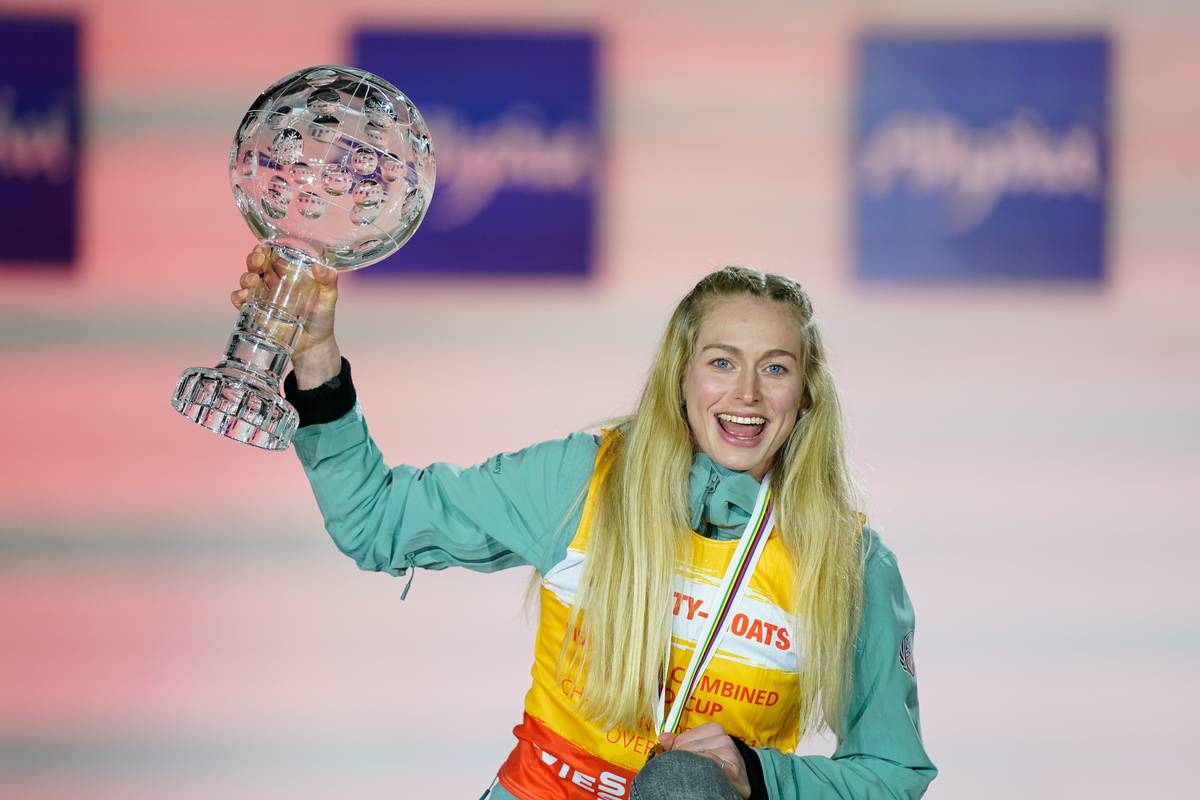
The original 2020-2021 World Cup schedule included four venues, plus the World Championships in Oberstdorf, Germany, but due to COVID cancellations, only one event took place. As Tara won this event in Ramsau, Austria, she was later named the overall World Cup winner and took home the first ever women’s World Cup crystal globe.
Tara Geraghty-Moats hoisting the first-ever awarded overall World Cup crystal globe for women’s nordic combined. (Photo: NordicFocus)
While she has goals remaining in nordic combined, Tara feels the move to biathlon was the right one, which you’ll hear about conversation. Tara also discusses her background in winter sports, the state of women’s nordic combined in the U.S., what her training and travel looked like during the transition, and her goals for the upcoming season.
Thanks for listening.
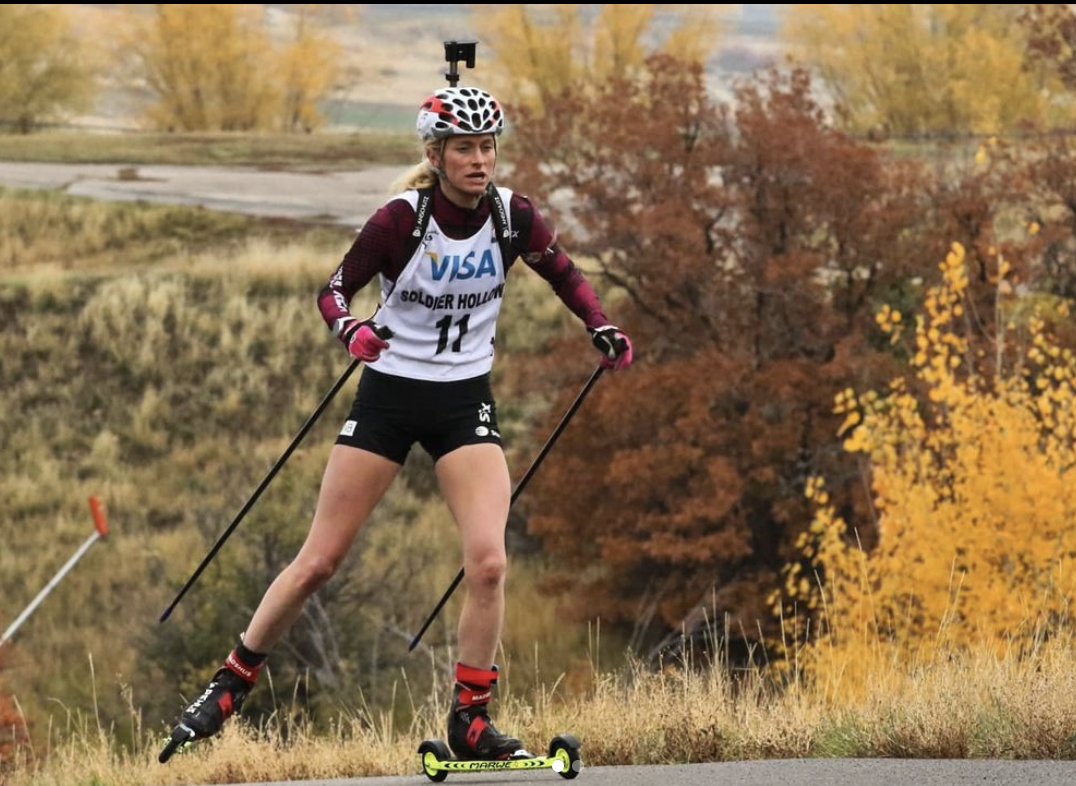
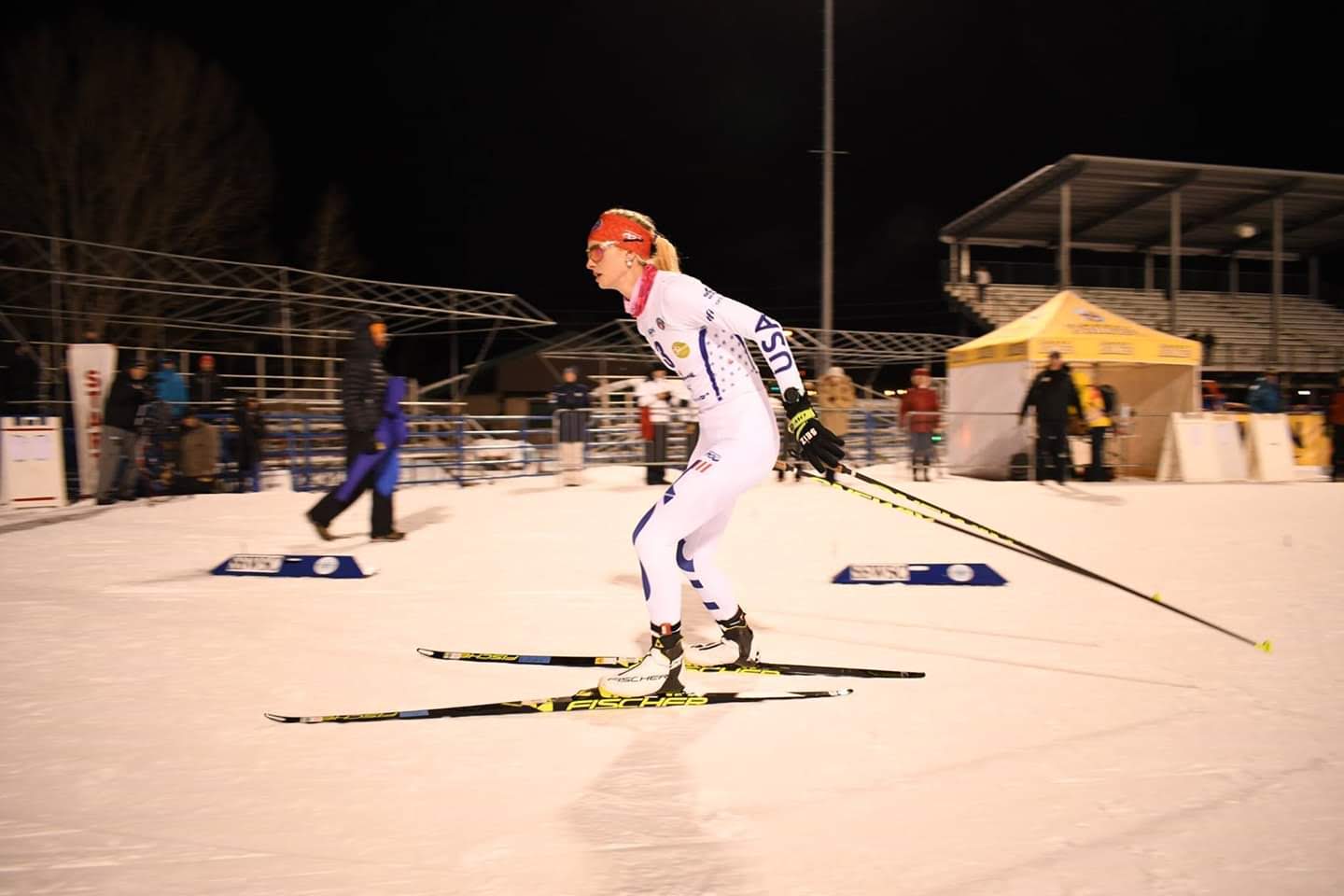
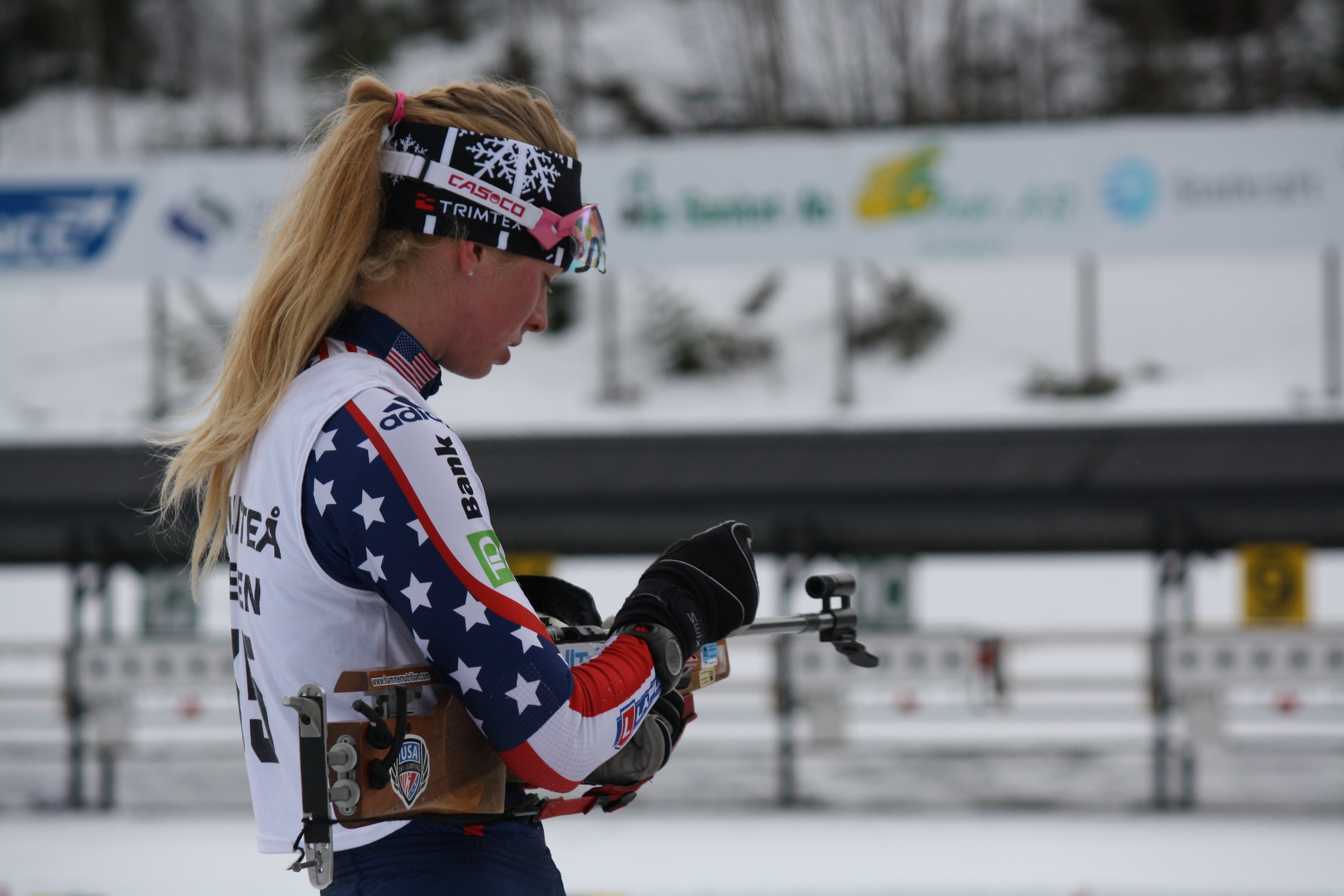
Tara Geraghty-Moats on course in Soldier Hollow during fall biathlon trials, where athlete vie for early-season starts on the World Cup. (Instagram: @tarageraghtymoats)
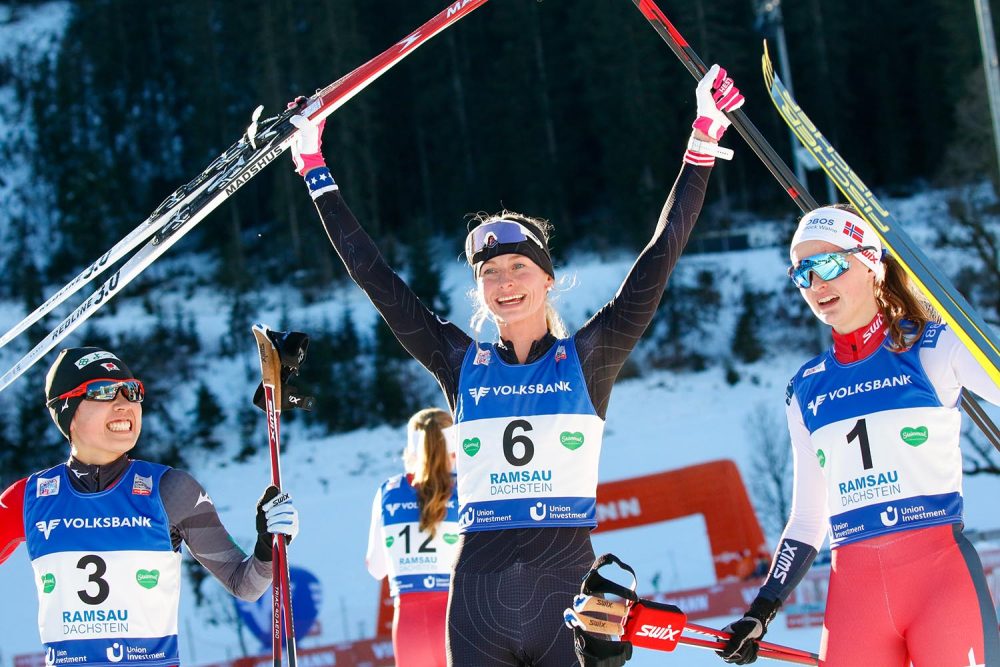
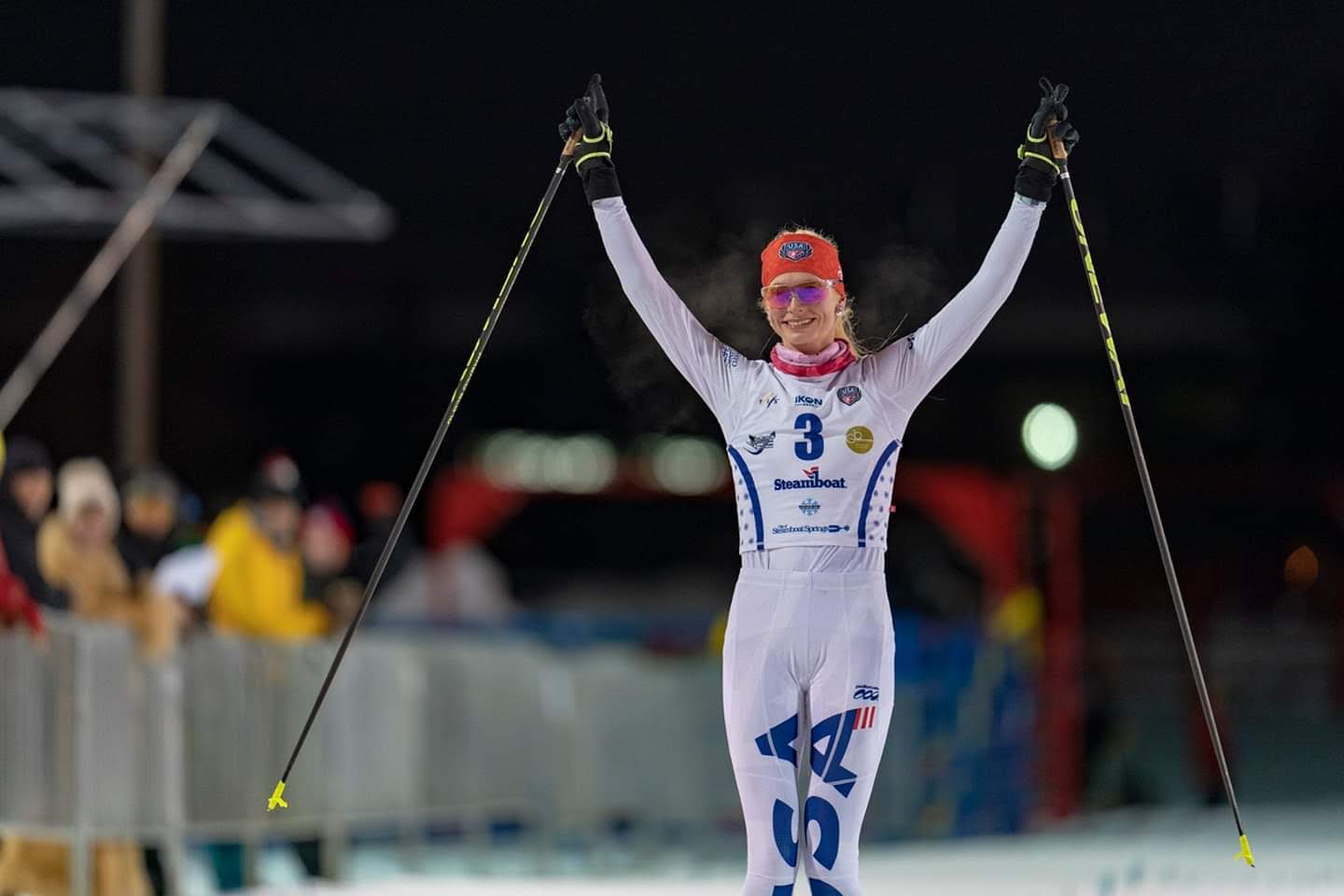
Tara Geraghty-Moats celebrates her historic World Cup win (Volk/NordicFocus)
HISTORIC WIN FOR GERAGHTY-MOATS
Four USA Nordic women take part in debut women’s World Cup
RAMSAU, Austria (Dec. 18, 2020) – American Tara Geraghty-Moats (West Fairlee, Vt.) made history Friday, skiing to a hard-fought victory by just 1.5 seconds in the first ever FIS Nordic Combined World Cup for women in an idyllic mountain setting at Ramsau am Dachstein. It was an emotional win for the 27-year-old who has been a pioneer in the movement to bring women’s nordic combined to the Olympics.
Geraghty-Moats finished sixth in the ski jumping segment of the nordic combined competition, putting her 39 seconds behind Westvold-Hansen to start the 5k cross country race. Geraghty-Moats charged hard from the start, catching the Norwegian near the end of the first of two laps on a hill. Westvold-Hansen fought back to ski even before Geraghty-Moats pulled away again on a hill to hold on for a victory.
The American is the two-time defending champion in the Continental Cup and came into the race a favorite. The women’s World Cup debut had been scheduled in early December at Lillehammer, Norway, but was postponed.
USA Nordic fielded a team of four athletes for the World Cup debut. Annika Malacinski (Steamboat Springs, Colo.) finished 28th with teammates Alexa Brabec and Tess Arnone (both Steamboat Springs, Colo.) 29th and 30th.
An emotional Geraghty-Moats stood atop the winner’s podium, flanked by athletes from Norway and Japan. “Today here in Ramsau was a dream come true,” said Geraghty-Moats. “It was something I’ve dreamed about since I was 10 years old – before it was even a possibility.
“Just a huge thanks to my team and FIS for finally inviting the women to the big leagues.”
There were many unknowns for athletes coming into the first event of the season after COVID-19 wreaked havoc on training and competition schedules.
“Coming into this competition I was really uncertain of myself because I hadn’t put a bib on in 10 months,” said Geraghty-Moats. “And I had only 10% of my ski jumping training I had hoped to have. But all day long I just kept telling myself that I could do it – every step at a time.”
Sports organizations including the International Ski Federation and USA Nordic have been working actively to bring women’s nordic combined into the Olympics. It is the only remaining Olympic event where women do not compete. The historic debut of a FIS Nordic Combined World Cup will be followed this February 27 with the first ever World Championship for women at the FIS Nordic Ski World Championships in Oberstdorf, Germany.
Over the past two seasons, women from 17 nations have scored points in the FIS Nordic Combined Continental Cup tour. Nine nations were represented in the field of 32 in Ramsau.
Geraghty-Moats becomes the first American nordic combined skier in nearly nine years to win a World Cup. The last victory went to Bryan Fletcher, who won the prestigious Holmenkollen World Cup in Oslo, Norway in March, 2012.
On-demand replay of both the ski jumping and cross country segments of the nordic combined World Cup are available on Peacock TV in the USA.
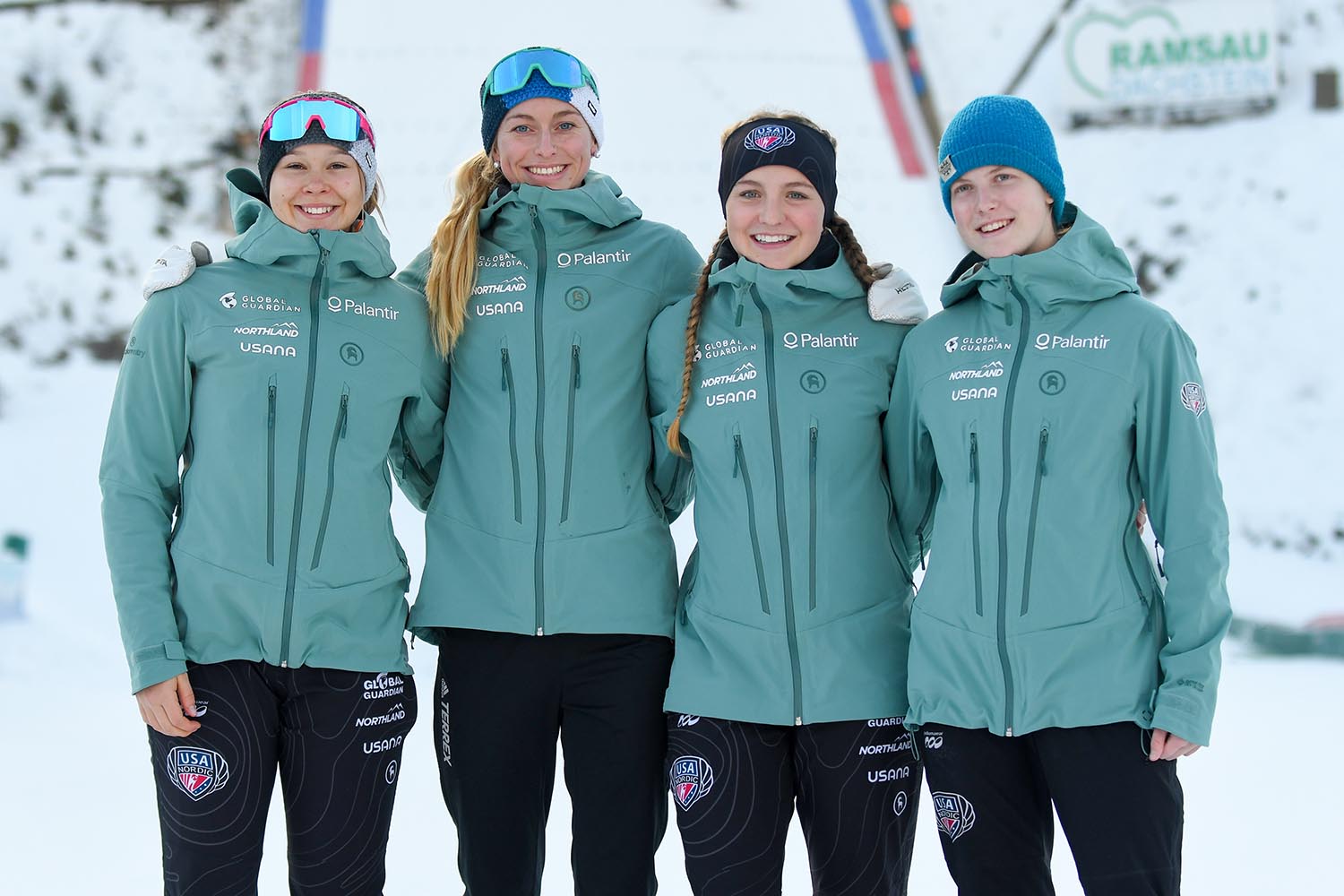
USA Nordic team that participated in the historic debut including: USA Nordic Women’s Nordic Combnied Team at the debut of the FIS Nordic Combined World Cup in Ramsau, Austria, showcasing new team uniforms from Backcountry. Annika Malacinski, Tara Geraghty-moats, Tess Arnone, and Alexa Brabec, left to right (Romina Eggert/USA Nordic)
While men’s Nordic Combined has been a fixture in the Winter Olympic games since the first contests were held in Chamonix, France in 1924, its female counterpart has not existed. Women’s cross country skiing was added to the Olympic program in the 1952 games in Oslo, while ski jumping was not added until the Sochi 2014 games.
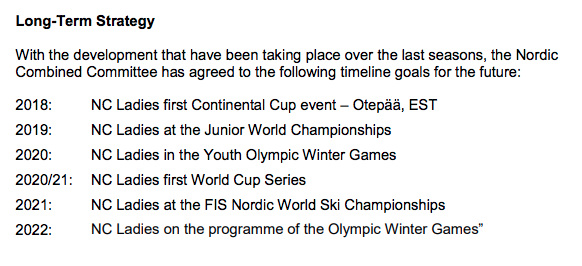
In November 2016, FIS published its “Nordic Combined Ladies’ Strategy Document” outlining a plan presented by the Nordic Combined Committee. The incremental plan began at the development level, encouraging and supporting girls to become elite level NoCo athletes, then creating the opportunity for international competition on an elite stage. Girls were first able to compete in FIS Youth World Cup events in 2014 and over the subsequent two years, participation increased.
The long-term strategy outlined in the Nordic Combined Ladies’ Strategy Document published in November 2016. (Source: FIS-Ski.com) NORDIC COMBINED LADIES’ STRATEGY DOCUMENT, NOVEMBER 2016
In accordance with the plan, NoCo Ladies participated in the 2019 Junior World Championships in Lahti, Finland – the U.S. entered two athletes, Tess Arnone, and Annika Malacinski, both of Steamboat Springs, CO.
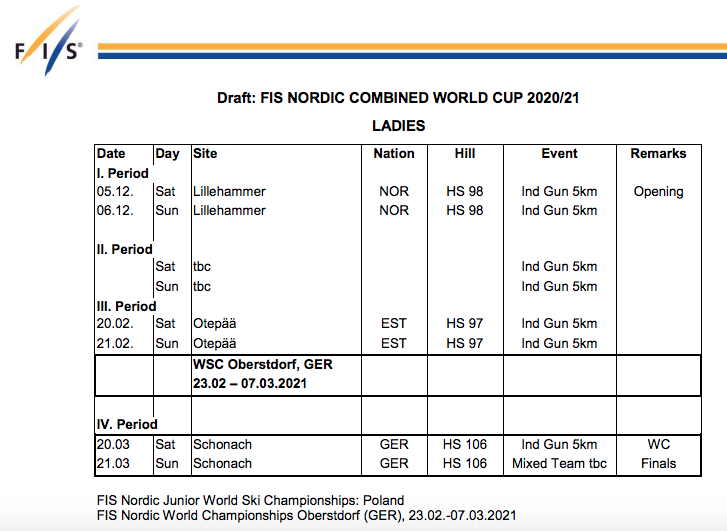
“We are thrilled to present the first draft of a Nordic Combined Women’s World Cup calendar,” race director Lasse Ottesen told FIS. “This is on schedule according to our strategy document and we are looking forward to presenting our women to the world.”
The first competition is slated to be held in December 2020 in Lillehammer, Norway. While the Period II venue(s) remain undecided, the calendar also includes competitions in Otepää, Estonia and Schonach, Germany, as well as the 2021 World Championships in Oberstdorf, Germany at the end of February.
The draft of the 2020/2021 Women’s Nordic Combined World Cup schedule. This is the first series of World Cup events for women in Nordic Combined. (Source: FIS-Ski.com)
The Nordic Combined Committee also approved the inclusion of a mixed team relay during the World Junior Ski Championships in Oberwiesenthal, Germany.
“The Mixed Team is the next step in the Nordic Combined development,” said Ottesen. “We have seen great development with the Nordic Combined Ladies the last years and we are very excited to introduce the Mixed Team already this summer and then as a medal event at the FIS Nordic Junior World Ski Championships in Oberwiesenthal (GER). The Mixed Team will give more nations the chance to enter a team in the future.”
Women’s Nordic Combined did not receive a bid for inclusion at the 2022 Olympic Games in Beijing, but it is likely that FIS will submit another bid for 2026.
“Nordic combined, and women’s in particular, still need to be developed further in terms of universality [the number of countries with Olympic-level athletes], in terms of the level of the athletes,” IOC sports director Kit McConnell told NBC after the decision was made in July 2018.
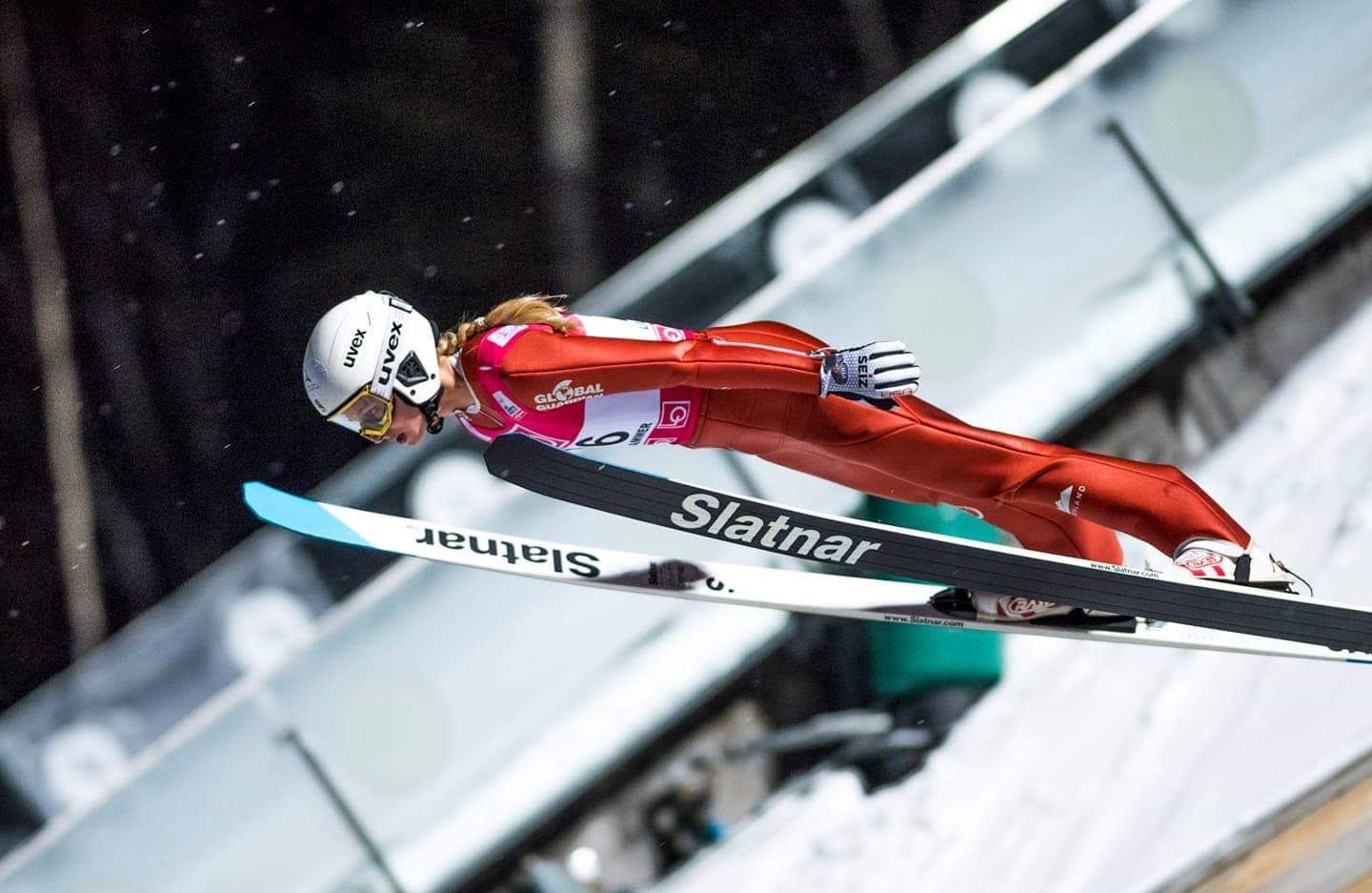
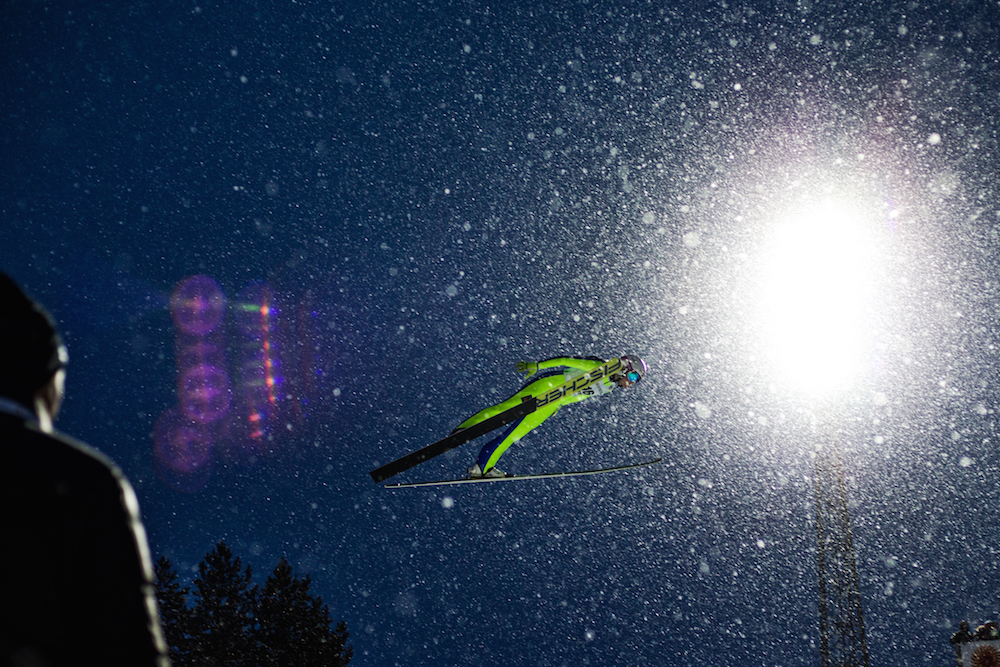
Tara Geraghty Moats ski jumping World Cup in Lillehammer, NOR. (Photo: FIS Ski Jumping)
Tara Geraghty-Moats winning the first 2018/2019 women’s nordic combined Continental Cup held in Steamboat Springs, CO. (Photo: Ben piper)
Tara Geraghty-Moats started ski jumping when she was nine years old. Fearless for sure, but all part of the multisport athlete’s mojo.
But after suffering multiple knee injuries when she was 16, Geraghty-Moats was forced to take a break from ski jumping. That hiatus was a four-year jumping drought that only served to push her into other aspects of nordic sport. During her time away from jumping, Geraghty-Moats competed in cross-country skiing and biathlon where she was highly successful.
At 19-years-old, Geraghty-Moats came back to ski jumping which she has been doing ever since. This summer, she added a well-suited endeavor to her jumping: skiing fast. The reason for this addition was the introduction of an 11 event women’s nordic combined Continental Cup.
“My goal this season is to be overall Continental Cup winner and to be on the World Championships team for ski jumping,” Geraghty-Moats said about her season’s objectives. As far as nordic combined is concerned, she is well on her way to mastering the Continental Cup series.
Tara Geraghty Moats ski jumping World Cup in Lillehammer, NOR. (Photo: FIS Ski Jumping)
In the first race of the inaugural Women’s Summer Grand Prix in Oberwiesenthal, Germany, Geraghty-Moats ski jumped into fourth place and then skied into second place. That was the last race Geraghty-Moats didn’t win this season. She won the second race of the Grand Prix, and took home the Overall Championship title.
Geraghty-Moats has participated in five Continental Cup races so far this winter, she has won them all.
“Winning every race I entered came as a real surprise,” Geraghty-Moats said. “This summer and fall I was focusing on working hard and building my nordic skiing up again after a few years off. I had no idea what to expect. I was hoping for some podiums.”
The first two races of the season took place in Steamboat Springs, Colo. at the beginning of December. In the first race, Geraghty-Moats jumped to third place, placing her seven seconds behind the leader at the start of the ski race. She had no problem making up the time, winning the race by 47.7 seconds. The following day, Geraghty-Moats jumped into fourth place, 26 seconds behind the leader. She skied a solid race and finished 40.1 seconds ahead of the next competitor.
When asked about her favorite moment so far this season, Geraghty-Moats commented, “winning my first Continental Cup in Steamboat with my mom there. She has always supported me skiing nordic combined and is hardly ever able to come to watch me compete, so it was very special.”
This season, Geraghty-Moats plans to start in all 11 of the women’s nordic combined Continental Cups scheduled. She will also be competing in a number of special jumping competitions. This past weekend, she competed in her first international nordic combine race in Otepää, Estonia where again she dominated. Now she will be heading to Japan for a ski jumping World Cup this upcoming weekend.
Tara Geraghty-Moats winning the first Continental Cup of the season in Steamboat Springs, CO. (Photo: Ben Piper)
Currently, Geraghty-Moats is the only women on the U.S. Nordic Combined team.
“I train by myself a lot,” Geraghty-Moats said. “The men’s team is on a pretty different competition schedule so we aren’t able to train together much. I write my own cross-country program and integrate it with the ski jumping program my jumping coaches give me. It seems to be working well so far.”
Regardless of their competition schedules, Geraghty-Moats believes the US Nordic Combined Team has a strong and inclusive team dynamic.
“I’ve competed with some of the guys on the team since my jumping career started,” she said. “They are pretty much the coolest teammates ever. It’s nice they are so supportive of the developing women’s circuit.”
The outlook for a viable women’s nordic combined circuit remains uncertain. Organizations like the International Ski Federation (FIS) and USA Nordic, the NGB responsible for jumping and nordic combined in the U.S., fully support integrating women into the top level of the sport.
As raised in a recent New York Times story on the women’s nordic combined circuit, some major hurdles remain for a fully fledged women’s nordic combined division. First are the number of total participants. Second is ensuring those competitors are in fact competitive. A good problem for Geraghty-Moats is that she remains dominant. Yet the others in her peer group are playing catch up when it comes to her skiing prowess.
Women’s nordic combined will be included in the 2021 World Championships. There was discussion of it being included in the 2022 Winter Olympic Games. However, in July, the International Olympic Committee did not include women’s nordic combined as part of the 2022 Games. The sport will have to wait until 2026 at the earliest to make an Olympic debut to put it on equal Olympic-level-footing.
Bill Demong, USA Nordic’s Executive Director, said in an Oct. 17, 2017 press release that his organization fully supports equity when it comes to developing new pathways for women to participate and excel.
“This is an opportunity that we are fully behind”, Demong said about the first women’s U.S, National Championship in nordic combined. “We know that other nations will begin to turn on their funding and that when this becomes an Olympic event everyone will spend resources we can not match. Right now we have the opportunity and responsibility to take athletes like Tara Geraghty-Moats and Gabby Armstrong and develop them into leaders in the sport. It is our job to continue to innovate and support them so that they can lead Women’s Nordic Combined into the future with our crop of upcoming juniors.”
Geraghty-Moats remains positive. She also embraces her role as a groundbreaker. She knows stumbles will occur. With any breakthrough there are setbacks, but ultimately there is a net gain.
“I think that it will develop fairly rapidly in the next two years,” Geraghty-Moats said of women’s nordic combined. “There are World Championship medals on the line in 2021 so I don’t expect very many countries will pass up the opportunity to support a women’s Nordic Combined team and get some hardware.”
Russian ski jumper Sofia Tikhonova during the women’s 100HS final at 2017 FIS Nordic World Ski Championships in Lahti, Finland. (Photo: Dustin Satloff/dustinsatloff.com)
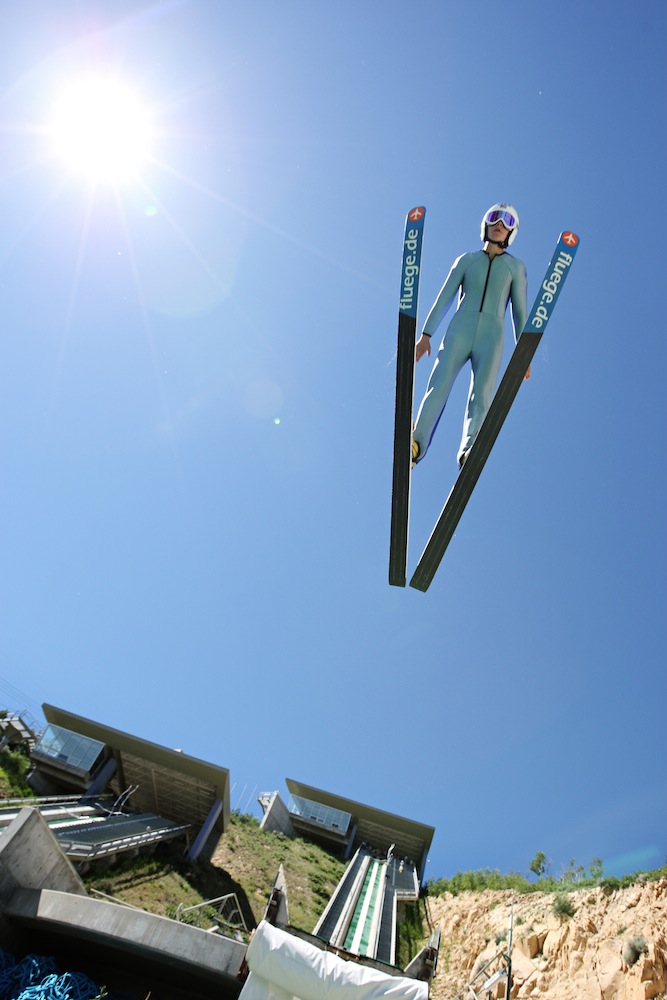
For Tara Geraghty-Moats, nothing compares to the sense of weightlessness she feels and the way spectators appear to sink into the ground when she soars off a ski jump — except maybe the feeling of pushing her physical limits during a cross-country ski race.
The two sports have been a part of the 24-year-old New England native’s life since her grammar-school days — she picked up both at the age of 9 and in both, she excelled.
By the time she was 15, her jumping talents earned her a spot on the Women’s Ski Jumping USA development team, and she captured third place at the 2009 Springer Tournee in Park City, Utah. But within a year of her nomination, due to concurrent knee injuries, she was forced to leave the ski hill and for the next four seasons, she focused on cross-country skiing.
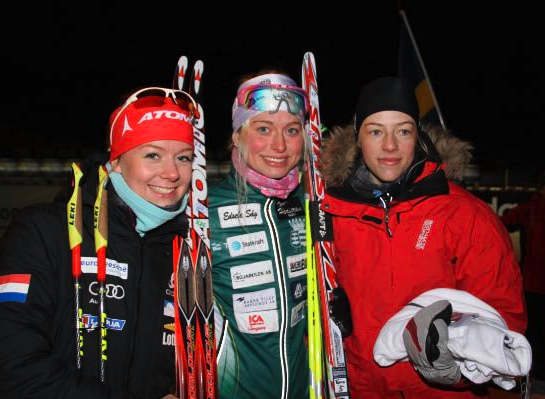
Vermonter Tara Garaghty-Moats (c) after winning the junior sprint at 2013 Swedish Biathlon Championships. (Courtesy photo)
Despite being told she would never jump again, she returned to the hill in 2013. That same year, she jumped to fifth at ski-jumping nationals in Lake Placid, N.Y., which earned her nomination to the Women’s Ski Jumping USA World Cup B-team.
While Geraghty-Moats saw success in both jumping and XC over the years, she never had the opportunity to showcase her combined abilities at an international level. Not because she didn’t want to, but because the opportunity didn’t exist — until this year.
“We have sort of been waiting for the sport to catch up with Tara Geraghty-Moats for quite a while,” Billy Demong, executive director for USA Nordic Sport (the U.S. governing body for men’s ski jumping and nordic combined) said on the phone earlier this month.
Geraghty-Moats on the range at 2011 Swedish Biathlon Nationals. (Photo: Per Nilsson)
Now it appears to be heading in Geraghty-Moats’s favor. Prior to this season, most of the cross-country ski training she did was either for pleasure or to maintain fitness for ski jumping. Now her training will take on a new meaning, as for the first time in history, women’s nordic combined will be included in the International Ski Federation (FIS) Continental Cup schedule. The inaugural women’s Nordic Combined event in the U.S. will be the USSA National Championships in Lake Placid on October 7. Demong anticipates eight to ten women to participate in the event.
“I’ve been wanting to compete on an international level for nordic combined for a long time,” Geraghty-Moats said on the phone this month. “It’s something I’m really invested in long term and something I’d like to see at a World Championships and Olympic-level competition. I’m really looking forward to helping develop the sport and helping mentor the younger girls that are getting into and also performing at a high level internationally.”
Women’s nordic combined has not yet been contested at the World Cup or Olympic level. Since this season marks an Olympic year, Geraghty-Moats will put her focus on World Cup ski-jumping events and enter as many FIS nordic-combined Continental Cups as she can.
“The ideal situation would be that I would qualify [for the 2018 Winter Olympics] in ski jumping and then am able to compete all the nordic combined races,” she said. “But there’s no way for me to tell where I’ll be in the points for the Olympic qualifying competitions … so hopefully I’ll be able to do them all, but I don’t really know.”
According to Demong, incorporating women’s nordic combined into the FIS schedule has been “on the radar for quite a while.” However, one blockade that prevented immediate action was the risk of draining athletes from a developing sport. Women’s ski jumping was added to Nordic World Ski Championships in 2009, the World Cup in 2011 and the Olympics in 2014.
“I think [women’s nordic combined] has really been in discussion since it was obvious that women’s ski jumping was going to be in the Olympics,” Demong said. “At the FIS level, I think one of the biggest challenges is with women’s ski jumping, you still have a developing sport. The ranks just aren’t as large and deep as the men’s side. And so I think there was a lot of fear that if you add another discipline, it could truncate the growth of women’s jumping.”
Sarah Hendrickson (Women’s Ski Jumping USA) taking flight during a summer competition in 2011. (Photo: Dan Campbell)
Over the past few years, the U.S. has seen more junior women participating in ski jumping. According to Demong, some a clubs have doubled their numbers within the last five years.
“The largest increase we saw in any user group was U8 [under 8], U10, and U12 in the Midwest, but also in Park City there was a pretty big increase, too,” he said. “We didn’t have a whole lot of participation before probably because they didn’t see a pathway. There were some diehards, like Tara and Gabby [Armstrong], but there weren’t droves of them and I think now there will be more in the sport because there’s a much more clear pipeline.”
This year will also be the first year that women’s nordic combined will be included at Junior World Championships. To Demong’s knowledge, Geraghty-Moats and Armstrong are the only two senior American women that plan to compete in the FIS Continental Cup competitions. Both will be supported by USA Nordic national-team staff at nordic-combined events, since the women’s events are scheduled to align with the men’s competitions.
“We have some really good 14 and 15 year olds that we’d like to see participate in the FIS Youth Cups again this year,” Demong added.
Also this year, the inaugural Women’s Nordic Combined National Championships will be held Oct. 7 in Lake Placid, N.Y.
With a longtime dream finally coming to fruition, Geraghty-Moats is not ready to let it end there.
“I don’t necessarily schedule things four years out,” she said. “But I definitely know that nordic-combined is going to be in my goals as an athlete for the foreseeable future. Obviously I need to stay healthy and continue doing things in my life, like going to school and staying at a high level of skiing, but I’m 100-percent sure that I will do nordic combined for as long as possible.”