
Tag: Women’s Ski Jumping

  • Ski Flying’s Glass Ceiling

    Ski Flying’s Glass Ceiling

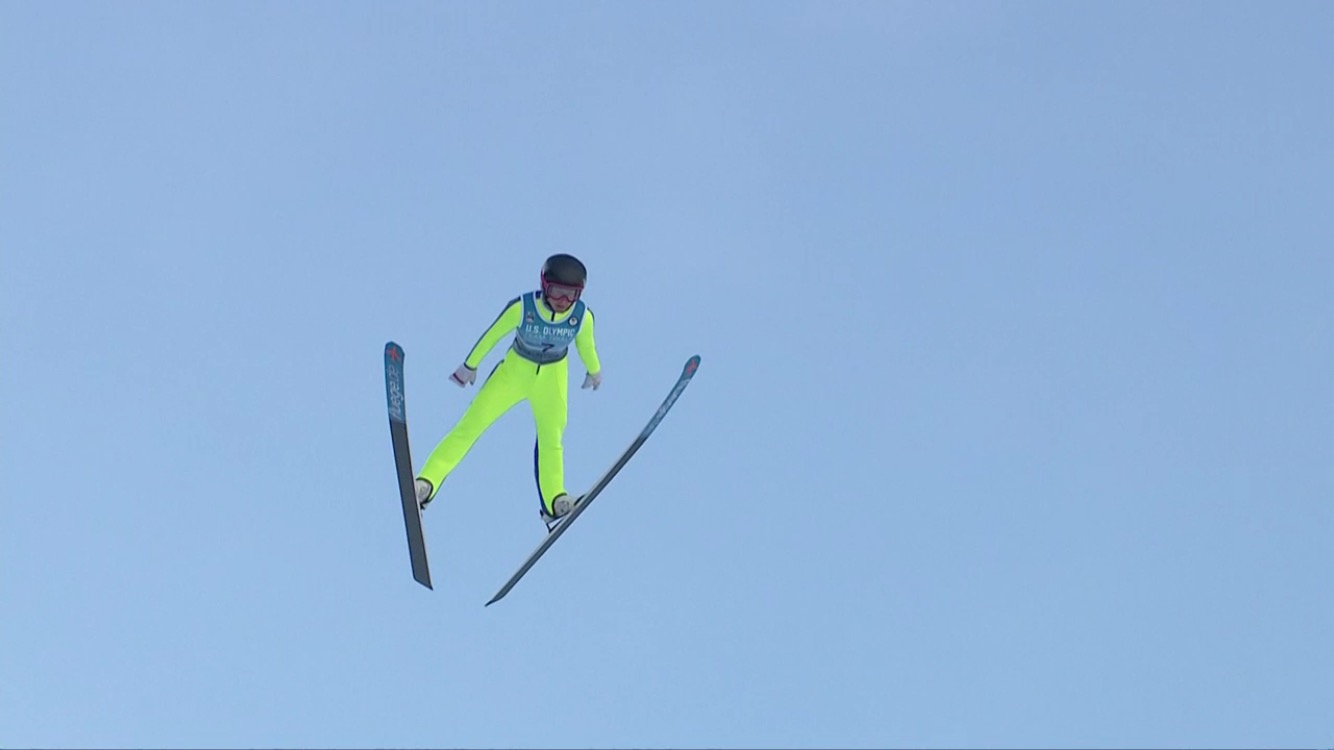
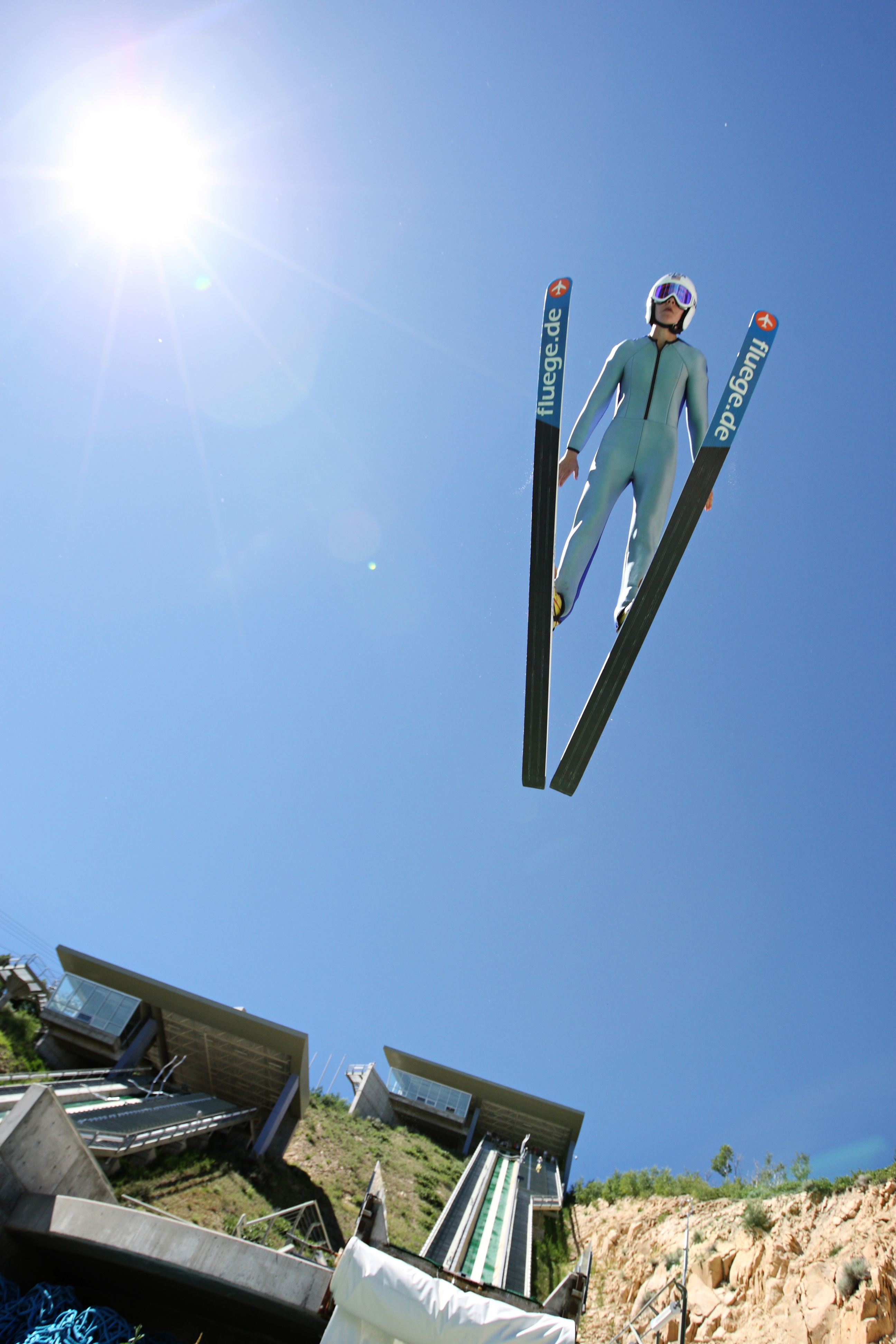
    Sarah Hendrickson, jumping in this photo, is a FIS athlete representative to the Ski Jumping Committee. (Courtesy photo)

    Let’s start with some basic gender equality facts in skiing.

    The first women’s downhill at the Olympics was in1948. Women were awarded Olympic medals in combined (one downhill run and two of slalom) beginning eight years earlier in 1936. FIS has awarded a women’s World Championship in downhill since 1931. The FIS database marks 1967 as the first year for an official FIS World Cup downhill race for both men or women.

    It’s a different narrative in ski jumping. FIS sanctioned ski jumping began for men during the 1979-1980 season. It took three more decades for women’s ski jumping to be recognized by FIS. The first women’s FIS World Cup ski jumping competition for women was held in 2011. American Sarah Hendrickson won. The first World Championships in ski jumping for women was awarded to another American, Lindsey Van, in 2009. Men, on the other hand, have been ski jumping in the Winter Olympics since their inception in 1924. The IOC welcomed women’s ski jumping at the Olympics in 2014.

    This story though is about Ski Flying. But we’ll tie it back into alpine skiing later on.

    Ski Flying is a close relative of ski jumping. Essentially, they are the same beyond the size of the jump. Ski Flying jumps are larger. Athletes soar farther on these jumps. Ski Flying is not an Olympic sport, however, FIS has sanctioned a World Championships in the discipline since 1972 – but only for men.

    “Anybody who knows ski jumping even a little bit, you have a small hill and a big hill, and those are usually around a K90 and a K95 or K125. Ski Flying is jumping off anything that is above a K155,” said Jessica Jerome, a former U.S. ski jumper and Olympian. “There are six of these hills in the world, and only five of them are usable. It’s not a set K point or jump size. Basically, it’s ski jumping but just more of everything — it’s more speed it’s more flight time.”

    Recently, if you’ve been following Jerome on Twitter, her Tweets about Ski Flying may have caught your attention. Here’s one poignant tweet: “Safety is not, and will NEVER be a valid argument @FISskijumping. I have seen some trash ski flying from forejumpers and other small nations. I think what you guys are afraid to say is you must have a penis to fly?”

    Jerome was responding to an April 19 FIS press release and the decision made by the FIS Ski Jumping Calendar Planning Committee to not schedule the first-ever women’s Ski Flying competition next season. “No Ski Flying yet for the women next winter,” claimed the press release. The two reasons given by FIS for not allowing women to participate in Ski Flying were safety and issues with calendering an event.

    One of the five operable Ski Flying hill towers in the world sits above Vikersund, Norway. The local Vikersund organizing committee recently proposed to host a FIS women’s Ski Flying event concurrent with a men’s jump next season. The proposal was voted down 9-7 by the FIS Ski Jumping Calendar Planning Committee.

    “I can not believe that this comes from adults,” said Norwegian National team ski jumping coach, Christian Meyer, in a translated Dagbladat article. “We have jumped a big hill for a long time. Also in Granåsen in Trondheim, you can jump 145 meters. We have been doing this since 2013. For the history-less, I can also inform you that a lady jumped 200 meters in Kulm in 2003. At that time, Daniela Iraschko-Stolz was a test jumper. At that time, both equipment and technology were inferior. Still, it was zero problem to jump 200 meters for a girl.”

    Maren Lundby, a twenty-six-year-old two-time Olympic ski jumping champion, and the 2019 and 2021 ski jumping World Champion, has been an outspoken critic of the decision. Active on Instagram, Lundby released a terse video with a singular message: The Girls Want to Fly.

    The April 19 FIS statement on women’s Ski Flying claimed women would be introduced to Ski Flying incrementally. “The next step will be the women’s World Cup on the HS 147 hill in Willingen in the 2021/22 winter season,” read the statement. “The Muehlenkopf-hill in Willingen, [Germany] is considered a small flying hill, the perfect introduction to Ski Flying hills.”

    That specific jump will be the largest yet used in an official women’s FIS ski jump competition. FIS goes on to claim, “The experts want to have these competitions first and then make a decision concerning Ski Flying events next winter.” FIS does not clarify who the “experts” are.

    The U.S. representative to the Ski Jumping Calendar Committee is Park City based, Alissa Johnson. A now-retired ski jumper, Johnson is a former world top-10 ranked jumper and is a certified international technical delegate (TD). She voted to approve women’s Ski Flying in the 9 to 7 vote.


    A vintage shot of then 2009 World Champion Lindsey Van (middle) celebrating a U.S. Ski Jumping title along with teammates Jessica Jerome (left) and Alissa Johnson (right) in Lake Placid. (Photo:ORDA-Jon Lundin)

    “I think there have been safety concerns, like if you have a full World Cup field,” said Johnson of the sub-committee’s discussion on the issue. “So their safety concern was not so much for the top tier athletes, I think probably it’s safe to say they were referring to the top 10 or 15 depending on their age and World Rank. I think the safety concern is more directed at the back end of the field.”

    The step up to Ski Flying should not be understated. The speeds achieved, and the distances jumped are greater than those on Ski Flying hills. The fact exists that ski jumping has been accessible to men far longer than women. It renders down to simply more opportunities for men and a greater number of male athletes perceived to be capable of Ski Flying.

    With fewer opportunities to Ski Fly, the progression some women need to make technically and mentally to handle much larger hills is restricted. Johnson explained that to her knowledge, only seven women internationally have been allowed to Ski Fly – all as forerunners or test jumpers at men’s events.

    According to Johnson, during the sub-committee meeting, some voting members were against approving the Vikersuznd round of Ski Flying because the field of women jumpers able to competently Ski Fly would be too small.

    “I think women, in general, need advancements, but I also feel like the top-tier women can jump, and can jump safely,” said Johnson. “But I think a lot of the discussion came down to this: can we justify calling a World Cup a World Cup if it has less than 30 athletes?”

    One solution to cull the women’s field for a potential Ski Flying event was to evaluate the women’s field mid-season after they had jumped on the large hill in Willingen, Germany.

    Former U.S. jumper Sarah Hendrickson is one of two athlete reps to the FIS Ski Jumping Committee. (Courtesy photo)

    Sarah Hendrickson, a twenty-six-year-old now-retired U.S. Olympian, and World Champion serves as one of two athlete reps to the FIS Ski Jumping Committee — a role she has served in for five years. Hendrickson explained that Norway’s Vikersund Ski Flying proposal, presented to the FIS Ski Jumping Calendar Planning Committee by Norway’s representative Clas Brede Bråthen, was both supported by Norway’s government and framed as an opportunity to raise the market value for women’s jumping.

    “So BrĂĽthen is stating it from a very business-money point of view, which I think is fantastic because marketing and sponsorship are important factors for FIS,” said Hendrickson. “They’re complaining during this meeting that they need to raise the viewership. BrĂĽthen clearly explained here’s one way to increase the viewership and gain popularity in ski jumping, and some listening in were simply like ‘yeah no’.”

    Hendrickson was further disheartened by the step-by-step approach suggested for women to gain experience on incrementally larger ski jumping hills. Absent from the discussion, according to Hendrickson, was what precise objective criteria the decision-makers were looking for to determine if a woman was capable of Ski Flying. Hendrickson recalls Bråthen trying to clarify what specific criteria the women had to meet to be certified to Ski Fly. Despite Bråthen’s questions, Hendrickson said no answer regarding a more structured method for assessing able-to-Ski-Fly women was forthcoming.
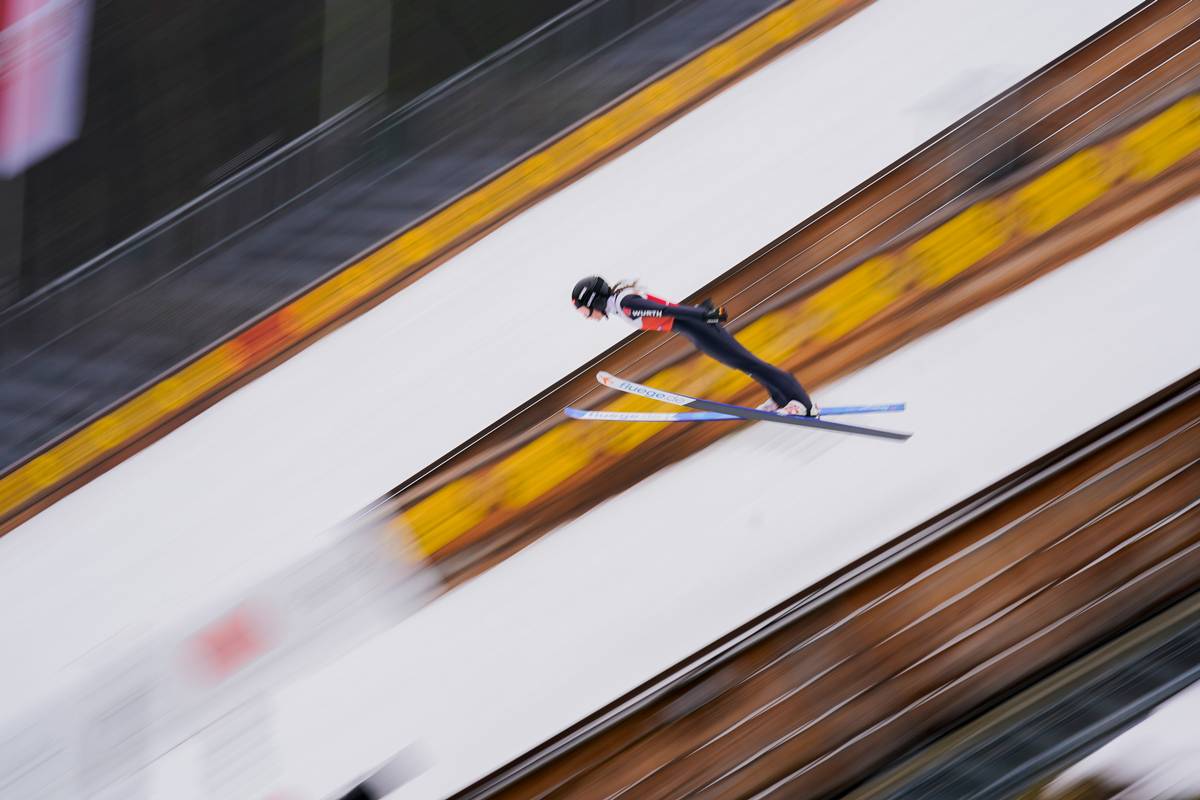
    Cindy Haasch of Germany(GER) – jumping during the FIS nordic world ski championships nordic combined women’s individual Gundersen. (Photo: NordicFocus)
    How Safe is Safe?

    The notion that safety remains a concern falls flat for many athletes and observers of the sport. “I’m female, I didn’t get into the sport because I knew it was the safest sport,” said Hendrickson. “We love ski jumping because there’s a risk of danger, there’s a risk of challenge. We know there’s a risk, there’s just as much a risk jumping off a small hill as a big hill.”

    Johnson, the voting member for the U.S. on the Ski Jumping Calendar Committee, expressed that individual athletes were the real experts in terms of determining Ski Flying readiness.

    “At the end of the day, I think safety concerns should come down to the technical delegates that are appointed to those competitions on any given weekend,” reasoned Johnson. “It should come down to the coaches, but ultimately, it should come down to the athletes. Because regardless of whatever my coaches are saying, if I don’t feel safe, I won’t be safe. I think the safety argument has to come down to those individuals jumping. It’s so individualized. In the broad scheme of things, FIS and our TDs can host a fair and safe event for all athletes.”

    The obvious long-term opportunity cost for limited Ski Flying opportunities for women is clear: fewer women might be ready to Ski Fly. If it is desired to increase the size of an experienced, and therefore “safe”, women’s Ski Flying field, then more women need the chance to Ski Fly.

    “Safety is a non-issue, it’s not a thing,” said Jerome about a women’s ability to Ski Fly. “Because if safety were an issue, then first of all, why are you letting anybody participate if safety is an issue? It doesn’t matter whether it’s a male or a female or whatever. It’s a human being and it’s either going to be safe or it’s not. So if you’ve decided it’s safe for men, then it should be safe for certain women as well.”

    Jerome went on to clarify that women who have demonstrated high technical proficiency and have the appropriate mental calmness to fly off large jumps should be allowed to Ski Fly. “It’s not one of those things where they’re going to fill quota spots for Ski Flying because you have to take it a little more seriously,” said Jerome.

    Let’s circle back to the historical information mentioned at the top. Women have participated in downhill at the FIS World Championships since 1931. Beyond alpine skiing, of which downhill is a sub-discipline, FIS is responsible for sanctioning several winter sports considered to be potentially unsafe. Among them are snowboarding, freestyle, and freeskiing.

    Perhaps FIS has data unavailable to the public regarding the inherent fragility of women compared to men that were rectified for downhill in 1931 but remain current for Ski Flying in 2021? Considering safety, the downhill is still among the diciest of the FIS disciplines. As noted, FIS does not discriminate by gender in that event. Women race downhill. And they race on courses at extreme speeds, over sometimes water injected snow.

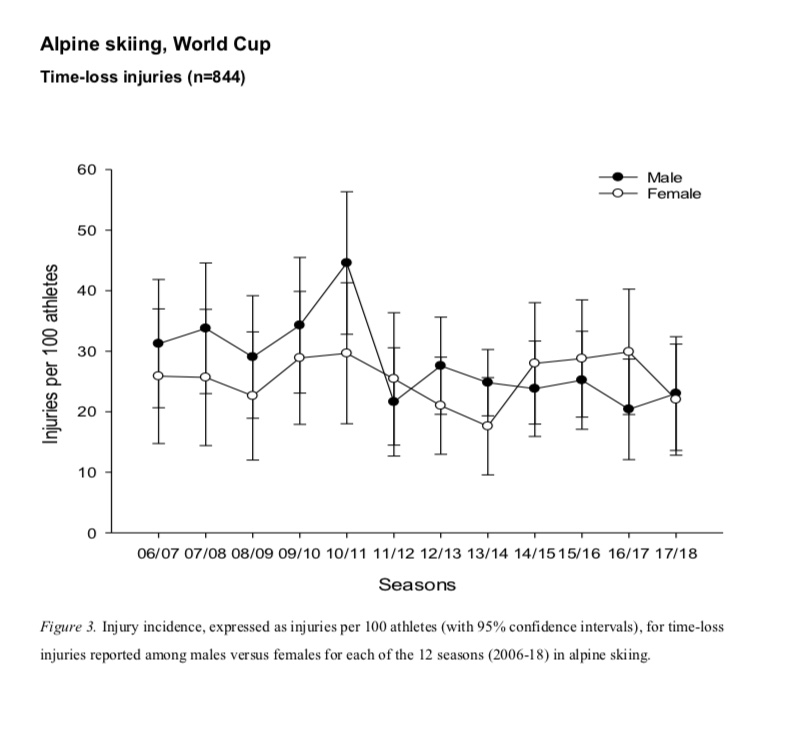
    However, between the 2014/15 and 2016/17 race seasons, data from the FIS Injury Surveillance Ssyetem 2006-2018, found women were more likely than men to suffer time-loss injuries on the alpine World Cup. Ask American stars Lindsey Vonn (retired) and Mikaela Shiffrin, the women played through and they played on. Women were not kept from competing due to safety concerns.
    Over the same period, 2014-2018, FIS concluded men and women suffered about the same number of injuries ski jumping at the World Ski Championships and Olympics.
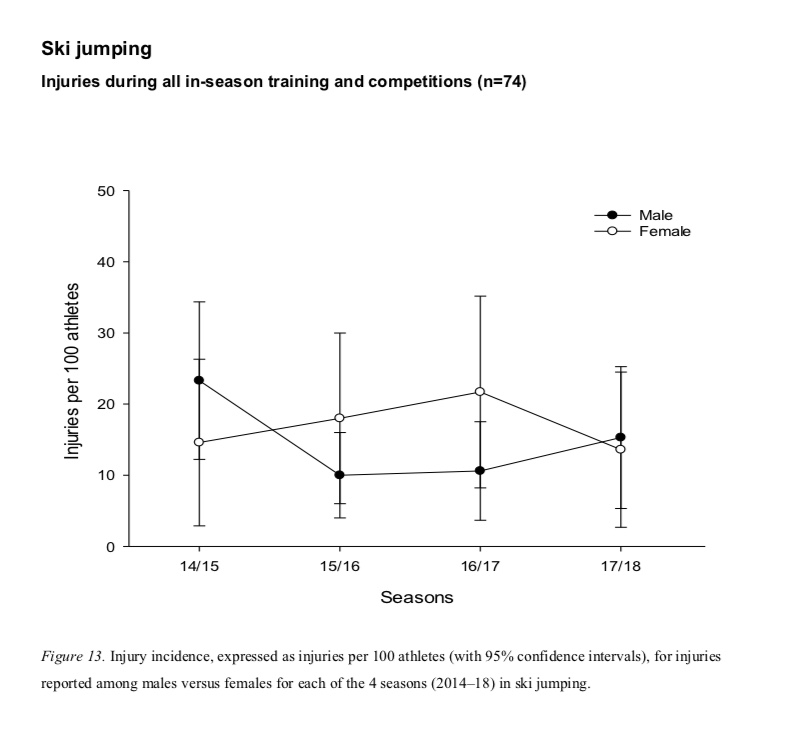
    Of the total number of injuries through 12 seasons of the FIS disciplines (with ski jumping data from four seasons), 7.8% of all injuries suffered on the alpine World Cup were nervous system or concussion injuries. The same category accounted for 6.8% of injuries in ski jumping. Fractured bone/stress injuries comprised 22.3% of all injuries on the alpine World Cup. 14.9% of injuries in ski jumping were fractured bones/stress injuries.
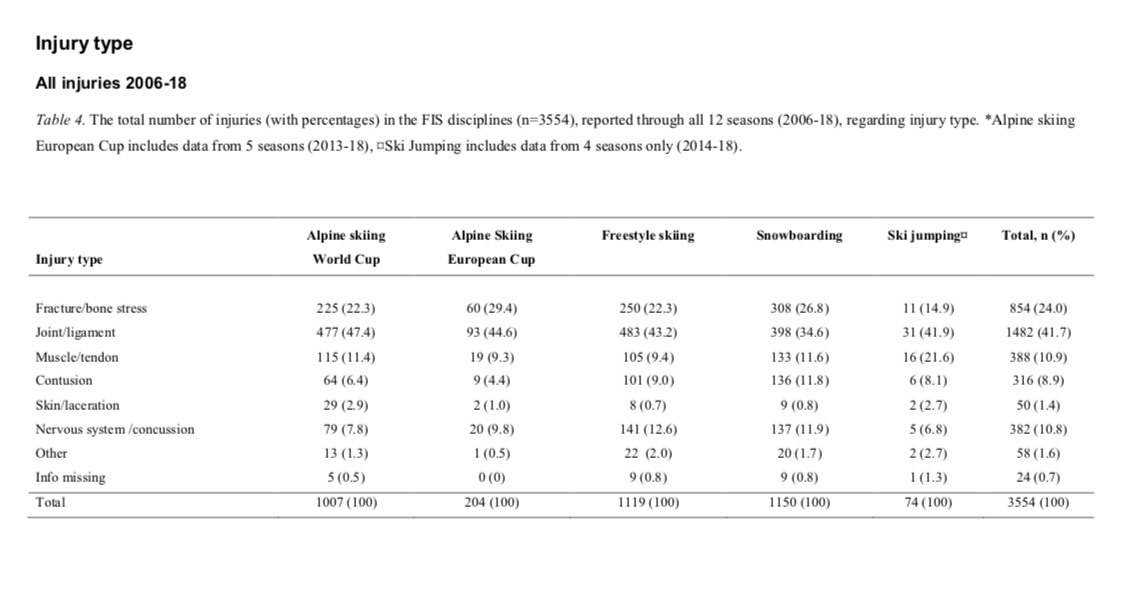
    On the surface, alpine skiing, at this elite level, appears more dangerous than ski jumping. Broadcast contracts for alpine skiing are much larger than those for ski jumping. Considering safety data, or the potential for yard sale crashes, the scheduling of FIS alpine events for men or women has not been deterred.

    Across the spectrum of elite sport, the ceiling remains opaque for female athletes. Considering ski jumping, at the 2018 Winter Games, men had three unique events, the women one — an individual event on the normal hill. The legacy of discrimination extends to the first modern Olympics in 1896. The Games’ founder, Pierre de Coubertin is quoted as saying, “No matter how toughened a sportswoman may be, her organism is not cut out to sustain certain shocks”.

    Again, according to FIS and their World Championships, those “shocks” somehow disappeared in the downhill for women in 1931 but persist for women in 2021 when it comes to FIS sanctioned Ski Flying competitions. FasterSkier requested an interview with a FIS representative. This story will be updated when we receive a reply.

    When it comes to prize money on the ski jumping World Cup, a woman’s jump is worth less than a man’s jump. FIS rules provide at least 10,000 Swiss Francs to be awarded to the men’s winner of a ski jumping World Cup. The winner of a women’s FIS World Cup ski jumping event earns at least 3,800 Swiss Francs. Women, who sometimes fly further than men, earn 62% less for their winning efforts.

    On the men’s side of World Cup ski jumping, the top-30 earn prize money; the top-20 earn a paycheck for women. A quick check of the field size at a joint men’s and women’s competition in Râșnov, Romania in mid-February had 39 women in the field and 48 men, respectively.

    Pay equity and safety aside, which are important issues, women have been allowed to chase the FIS dream in the alpine skiing realm for 90 years. (Although Lindsey Vonn was never granted the right to compete against men.) Women ski jumpers, for the time being, have to wait through at least another winter for the chance to Ski Fly in a FIS competition.

    The wait, no matter how short or long is difficult, said Hendrickson. She explained that during the most recent Ski Jumping Calendar meeting she unmuted her audio and challenged the committee chair when they insisted there was “no rush” to get women Ski Flying.

    “I explained that the Olympics are next year and a lot of women are going to retire after next year and they’ll never get a chance to Ski Fly,” said Hendrickson. “So it might not be a rush to you, but for someone who’s an athlete, that is looking to retire and now could not have this lifelong dream because they’re a girl is pretty devastating.”


    *The latest information posted on the FIS site lists numerous nations as comprising the FIS SKI Jumping Calendar Planning Committee. They include Austria, Russia, Norway, Slovenia, Poland, Japan, USA, Sweden, Korea, Italy, Canada, France, Switzerland, Czech Republic, Netherlands, Germany, Finland, and Turkey.
  • Jump Like a Girl

    Jump Like a Girl

    Sarah Hendrickson taking flight during a summer competition in 2011. Photo: Dan Campbell.

    When talking about women’s ski jumping in 2012, it’s impossible not to frame the discussion within the context of the sport’s long fight to be recognized as an event worthy of inclusion at the Olympics. Lindsay Van and Co.’s failed 2009 legal battle against the Vancouver Games captured the attention of the mainstream media as a strikingly medieval story for the twenty-first century.

    It was announced in the spring of 2011 that women’s ski jumping would finally be included in the 2014 Games in Sochi, Russia, and the International Ski Federation held the inaugural women’s World Cup circuit last winter. Remarkably, or perhaps fittingly, its overall winner had not been part of the original fight to bring her sport to the highest international stage — she had been in the middle of high school at the time.

    That 2012 crystal globe-winner is 17-year-old Sarah Hendrickson, who picked up ski jumping in Park City, Utah, at the age of seven when the sport was still thirteen years away from being an Olympic event. Of course, that fact hardly mattered to Hendrickson at the time; “When you start a sport at that age, you continue doing it because you love it,” she said.

    In less than ten years, however, Hendrickson was competing at the highest international level. At the inaugural World Championship event in 2009, when she was 15, she placed 29th. In 2010 she won bronze at World Juniors at podiumed four times on the Continental Cup, which was then the only international circuit that existed for women. In 2012, she handily won the World Cup overall and led the U.S. women to the Nation’s Cup title. This fall, she graduates high school.

    Injury forced Hendrickson to take a break from the usual round of competitions this summer. She had surgery to fix microfractures in her knee in April and has spent the off-season recovering and finishing up school. As a result, the sequel to her storybook 2012 is largely a question mark. The season starts in Lillehammer, Norway, on November 24. Just a few weeks before her departure for Europe, we asked Hendrickson a few questions.

    FasterSkier: First of all, thanks for fitting in this interview into your last month of high school. How has the summer and fall been?

    Sarah Hendrickson: Good. Right now I’m obviously trying to finish high school; I graduate in November. The training season this summer is kind of winding down, and I’m looking ahead to [a few weeks] from now when we have our first World Cup. We just got snow today, so I can’t believe its already happening again.

    FS: How’s your knee?

    SH: I spent my whole summer recovering; it was an extensive surgery as far as recovery-time goes and I didn’t jump for six months. So while I was doing rehab I was focusing on school. I’ve been jumping for about a month now, so that’s all good.

    I first injured it in the summer of 2011 and it bothered me throughout this winter. It wasn’t super painful but I knew it wasn’t going to get better and it was definitely the best year to get the surgery done. Basically it’s called microfractures. The knee is common place to get injured. It’s more of an overuse thing, and is definitely pretty vulnerable in ski jumping world.

    FS: Let’s talk about last season. Now that you’ve had a few months to think about it, what stands out as the most memorable part?

    Hendrickson with her crystal globe. Photo: Women’s Ski Jumping USA.

    SH: Well, going into the winter season before that first World Cup, I hadn’t compete all summer again because I had school. I’d decided to stay home while the girls went over to the summer competitions. So going into that first World Cup I had no idea what to expect. I knew I was jumping well but I didn’t know how that compared with girls from around the world. So I just put on my skis and jumped like I’d been training and obviously it was good enough to win and I was super pumped.

    People were like, ‘Oh, is it your goal to win the overall?’ And, you know, it was one comp. We still had 13 more; who knows what was going to happen. After that I came back home for Christmas and then went back to Europe for two and a half months, which was pretty crazy; I’d never been on the road for that long and especially for a 17-year-old that’s pretty intense. I didn’t know how my body was going to react, and ski jumping is a huge mental game so I had no idea what to expect.

    Every day I just kept having fun showing up to the hill, each World Cup I got into a rhythm of it, and every day was super memorable and looking back onto the season I had so much fun.

    FS: At what point did you think you could win the overall?

    SH: I don’t know. Like for me, I set my goals pretty high but I never really voiced them just because I don’t want to be disappointed. I have one teammate who’s also the same age as me. And she said, you know, ‘Have you seen the globe? That could be you. You could have that.’ And we kind of had like an inside thing; we’d say that to each other. But I never really would say it to reporters or anything.

    I guess when I got wind I’d finalized it in Japan. It was one of the comps where it was one jump and the weather wasn’t good enough to take a second, and I was in second place [for the comp] and I had created a big enough point distance between me and the next girl that no matter what happened in the next two comps I had still won the overall. And I remember riding down the chairlift from that second jump we didn’t get to take, then my teammates hugging me and realizing that I had gotten it and it was so cool.

    We won the nations cup too, which is a huge accomplishment and pretty cool to share with the girls you spend so much time with. We’re really close, like sisters basically, traveling the world together.

    And then I started up my senior year in April and I went to school all summer. Which was actually kind of nice because I couldn’t jump, so I had something to focus on.

    Hendrickson jumping in training at the 2011 FIS Nordic Ski World Championships in Oslo, Norway. Photo: Women’s Ski Jumping USA.

    FS: Do you feel like your life has changed a lot since?

    SH: No, nothing too out of the ordinary. Ski jumping’s not that popular in the US, but I don’t want glory or fame or anything, I like to go under the radar.

    FS: In the context of your teammates’ fight to get the sport included at the Olympics, and this winter being the first year there was a World Cup, is last season that much more memorable?

    SH: I was a little bit too young for that [fight]. Kudos to the older girls for that; they went up to Vancouver, and Lindsay’s been fighting for that forever. That might have been my first year I started going to Europe for the continental cup circuit.

    FS: Was the absence of Olympic-level competition something you ever thought about as you were starting out in ski jumping?

    SH: I started skiing age of 2; I born and raised in Park City and my parents were both big skiers, and then in 2002 when the Olympics came to town that kind of intrigued me. I’d been skiing for so long I decided to try it, and also my brother Nick did it. He started when he was 8, I started when I was 7. So I kind of followed in his footsteps. I was sick of watching him do it and I wanted to try it. So I tried it one year, and never looked back.

    Starting at that young age when you start a sport, you continue doing it first because you love it. You don’t think about the money or the sponsors when you’re that young. You really have to love it. And as time progressed I realized it wasn’t an Olympic sport and there were some struggles you had to deal with but I couldn’t step away from it. I loved it way too much.

    FS: Do you feel like the level of competition is rapidly improving now?

    SH: Oh, yeah. Just looking over the past four years since when I started, there’s this huge gap. So much has progressed. We have 70 girls now that are at the level maybe 20 girls were at four years ago. It’s really growing. Getting added to the Olympics helped us — there’s interest with sponsors, it’s just going to keep growing in the years to come and it’s awesome to see.

    For the men there’s a lot of attention in Europe; they make a lot of money and national governing bodies fund their teams. The girls are getting the recognition they deserve slowly. We were televised last year which is a huge help and I think it’s all part of the process of a growing sport.

    FS: What are your goals this season?

    SH: It’s hard to say. Going into this first period I honestly don’t know, I haven’t competed since March with the surgery. I’ll just go in like I did last year; do what I do and assess what’ll happen for the rest of the winter.

    As far as results go, I don’t really know. It’s definitely not going to be easy to get the overall again. It’s also a World Championships year, so that’s obviously going to be a big focus. I’ve never really done well at World Champs, so that’s one of my main goals. It’ll be really nice to medal there. I have another year at World Juniors; I’ve gotten silver and bronze there, so winning that would be a huge accomplishment.

    We still have this season and one more summer before the Olympics, which is crazy to think. Anything can happen between now and then, nothing is guaranteed. So we’ll just get through this season and see how that carries into the next.

  • Hendrickson Makes History as First Women’s WC Ski Jumping Champ

    First or second in all but one World Cup competition this year, Sarah Hendrickson of Park City, Utah, capped off her historic season by clinching the overall women’s ski jumping title on Saturday in Zao, Japan.

    In the first season of the women’s World Cup, 17-year-old Hendrickson was the champion. She won Saturday’s first competition with two jumps of 99.5 meters to beat Japan’s Sara Takanashi, who jumped 98.5 and 99.5 meters. Hendrickson went on to place second to Takanshi in the second round with another jump of 99.5 meters.

    Hendrickson started off the inaugural World Cup season with a victory in Norway on Dec. 3. She proceeded to win six more after that.

    “When I think back to Lillehammer, I never would have imagined I would win the overall title,” Hendrickson told the Associated Press. “But I was able to get seven wins and that was a result of being able to jump with the same mental attitude that I had in training.”

    She told FIS News that she understood the significance of the overall World Cup win, especially in regards to the growth of women’s ski jumping.

    “But I will need months or even years to realize what it really means,” Hendrickson said.

    U.S. women’s ski jumping coach Paolo Bernardi couldn’t have picked a better athlete to win it.

    “She deserves this 100 percent,” he told the Salt Lake Tribune. “She’s been the most consistent jumper all season and sometimes she dominated the events.

    “She did something crazy for a 17-year-old,” Bernardi continued. “She left on Dec. 27 for two months on the road and she competed at the highest level possible. She deserves all of her achievements. It’s incredible.”

  • Sarah Hendrickson soars to silver medal at Junior World Championships

    Erzurum, Turkey (Feb. 23) — Sarah Hendrickson added another title Thursday to her long list of ski jumping accomplishments — silver medalist in the 2012 Nordic Junior World Ski Championships.

    In 2010 she won the bronze (the only American, male or female, to ever medal in a Junior World Championship). She began this season by winning the inaugural women’s World Cup opener in Lillehammer, Norway, and she’s the current overall leader on the World Cup circuit.

    Sometimes we forget that she’s just a teenager — only having been on this planet 17 years, but long enough to make a huge impression in the winter sports world and also to feel the stress of being the best.

    “This was hands down the most pressure I’ve ever felt in a competition,” said Hendrickson, of Park City, Utah after her silver-medal performance in Erzurum, Turkey. “I am super happy and very satisfied with my 2nd place.”

    Hendrickson was tied after the first round with Japan’s 15-year-old sensation, Sara Takanashi. The two battled in the final round with Takanashi just edging out Hendrickson for the win by 11.5 points. Carina Vogt, of Germany, took the bronze. U.S. teammates Nina Lussi finished 29th and Nita Englund was 35th.

    “Sarah and Sara (Takanashi) are the two strongest jumpers on the Earth right now. They are both shooting stars,” said Paolo Bernardi, Women’s Ski Jumping USA International Coach. “It was nice to watch a battle to win because it was such a high level of ski jumping.”

    Bernardi said he was proud of his team, their performance, and their ability to handle the stress they were under this week. “Everybody stepped up (Thursday) and got their best results.”

    Lussi’s and Englund’s skis weren’t delivered from the airlines until halfway through the first day of training on Tuesday, causing them to miss valuable time on the hill. The judges also adjusted the start bar frequently during training, which caused some rattled nerves for the young team. But that kind of experience is valuable, Bernardi said, and only makes athletes more mentally strong.

    Lussi had a solid first jump Thursday that catapulted her into the second round. Englund, who crashed in training in September and suffered a serious concussion and cracked ribs, fought back to be healthy and confident enough to make the Junior Worlds team and have a good first jump, just missing the cut for the second round.

    Hendrickson said she struggled in training this week – trying to get used to the new hill and get her head wrapped around the task at hand.

    “I’m still a junior and I wanted to really focus to keep my goals set high for Junior Worlds,” she said. “Being in contention for the overall World Cup title means that some people automatically assume I will win every competition. It’s not that easy because there are great jumpers here and everyone has the same goal, and I put a lot of pressure on myself this week.

    “Sara (Takanashi) jumped amazing and definitely had the best jumps on the hill Thursday and deserved the win 100 percent,” she added.

    Hendrickson rose to the occasion, Bernardi said.

    “It’s not easy to be on top of the world,” he said. “I’m so proud of how she handled the situation and fought back after rough training rounds to get an amazing silver-medal result.”

    There is a team event on Saturday where nations (consisting of four jumpers) compete against each other. The U.S. Team will not be participating since there are just three jumpers at Junior Worlds.

    The World Cup women’s tour continues March 3-4 in Zao, Japan, where there will be three comps (one comp was added to make up for an earlier cancellation in Poland). The World Cup final is set for March 9 in Oslo, Norway.

    2012 Junior World Ski Jumping Championships, Individual Event
    Erzurum, Turkey
    Thursday, Feb. 23
    Women’s Normal Hill, K95

    1. Sara Takanashi, JPN, (108.5  107.5)  276.5

    2. Sarah Hendrickson, USA, (105.0, 100.5) 265.0

    3. Carina Vogt, GER, (102.5, 100.0) 255.5

    29. Nina Lussi, USA, (84.0  80.5)  164.0
    35. Nita Englund, USA,  (79.5)  76.5

    Source: WSJUSA


  • Hendrickson wins 2 World Cups, tightens grip on overall lead

    Ljubno, Slovenia — Sarah Hendrickson’s double fist-pump in the outrun is a modest show of celebration for the U.S. teen who’s been adamantly punching through the ceiling of women’s ski jumping this season.

    With two more World Cup wins this weekend in Ljubno, Slovenia, she’s sitting soundly in 1st place in the overall standings. Sarah has won six out of nine World Cup events and has notched at least two hill records, including Sunday’s second-round jump of 95 meters on the challenging K85 jump in Ljubno.

    “I had one of the best jumps I’ve ever had in competition and it all just came together and worked out so well,” Hendrickson said. “Technically I stayed in balance and my timing was good and in flight I kept my arms closer to my body. It was great coming over the knoll in that second jump — I knew it was good.”

    Coach Paolo Bernardi said Hendrickson is going from event to event, focused on jumping her best — and focused to win. “She’s in the perfect spot now,” he said of her overall 1st-place ranking.

    The Visa Women’s Ski Jumping Team is also No 1 overall — more than 437 points ahead of Germany — thanks to consistent podium, top-10 and top-20 results. Jessica Jerome, who took 5th on Saturday and 8th on Sunday, is jumping super aggressively and strong and is stepping up with more confidence, Bernardi said.

    “Coming into this weekend, I knew what I needed to do in Ljubno. This hill can be challenging and there were a couple of technical things I was able to figure out and fix,” said Jerome, currently 10th in the world. “I was really happy with my results.”

    Lindsey Van, ranked 3rd in the world, was 8th Saturday and 10th Sunday; Abby Hughes was 18th both days; and Alissa Johnson was 22nd and 21st. More than 3,000 spectators came out both days to watch the women jump — some of the largest crowds they’ve had so far this season.

    “It’s been a long six weeks on the road and I’m looking forward to coming home to recharge and prepare for the next World Cups in Zao, Japan,” Jerome said. “Our team is doing amazing and we’re ready to finish out the season strong.”

    Hendrickson, Nina Lussi and Nita Englund will compete in a Continental Cup event Feb. 18-19 in Liberec, Czech Republic in preparation for the Junior World Ski Jumping Championships on Feb. 23 in Erzurum, Turkey. The World Cup tour continues March 3-4 in Zao, Japan, where there will be three comps (one comp was added to make up for an earlier cancellation in Poland). The World Cup final is set for March 9 in Oslo, Norway.

    World Cup
    Ljubno, Slovenia
    Sunday, Feb. 12, 2012
    Women’s Normal Hill, HS95, K-point 85m


    1. Sarah Hendrickson, USA,  (85.5  87.0)  246.5

    2. Sara Takanashi, JPN, (86.5  88.5)  245.2

    3. Daniela Iraschko, AUT, (81.5  90.0)  229.2

    5. Jessica Jerome, USA (85.5  83.5)  220.5

    8. Lindsey Van, USA,  (83.5  83.5)  218.3

    18. Abby Hughes, USA  (77.0  78.5)  199.4

    22. Alissa Johnson, USA, (74.5  80.5)  188.0


    World Cup
    Ljubno, Slovenia
    Saturday, Feb. 11, 2012
    Women’s Normal Hill, HS95, K-point 85m

    1. Sarah Hendrickson, USA,  (91.5  95.0)  259.6

    2. Sara Takanashi, JPN, (90.0  90.5)  246.7

    3. Jacqueline Seifriedsberger, AUT, (87.0  84.5)  222.4

    8. Jessica Jerome, USA  (83.5  81.0)  209.2

    10. Lindsey Van, USA (85.0  80.0)  208.0

    18. Abby Hughes, USA  (80.0  78.0)  191.1

    21. Alissa Johnson, USA, (79.0  76.0)  181.8

    Source: Women’s Ski Jumping USA

  • Stars and Stripes Wave High in Val di Fiemme, Italy Celebrates Sarah Hendrickson

    She did it again, the American teenager Sarah Hendrickson has showed who is the female ski jumper of the hour and grabbed her third World Cup victory out of four competitions so far, today in Val di Fiemme (Italy).

    ‘I’m so happy to get on the first step of the podium once again’, Hendrickson said, ‘I felt great on both jumps and tomorrow I’ll try to race as well as I did today’.

    Under fair weather conditions and in front of many spectators, all wearing a pink piece of clothing, Hendrickson set the recently renewed Val di Fiemme ski jumping stadium on fire from the first jump, reaching 134,8 points and preceding teammates Lindsey Van and Jessica Jerome, Slovenian Katja Pozun and Maja Vtic, French Coline Mattel (not a great day for her today, as she closed 10th) and Norwegian Anette Sagen. Only 2011 World Champion Daniela Iraschko of Austria did better than the young jumper from Park City, showing a jump on 107 meters and reaching 139,2 points. The challenge was on between the young American and the 28-year old Austrian champion.

    Before today’s stage in Val di Fiemme, Hendrickson was in the lead of the overall, but knew very well that the way to the eventual victory was unbelievably long. Her second jump from the Italian HS106 jump has been the longest of the day (107,5 meters) and the judges placed her on the provisional first step of the podium with a total of 277.2 points. Daniela Iraschko had to do better, but the farthest she could jump in the final round was ‘only’ 103 meters and despite the high amount of points collected from the judges, she had to surrender to the American rival and get the silver medal. ‘My goal was to finally grab a medal today’, Iraschko claimed at the end of the race. ‘Hendrickson is in a great shape in this moment and for me it’s not easy to repeat the Oslo performance. However, the World Cup is still very long, and today’s race was my best one for this season’. Iraschko seized her first medal in current season and so did Norway’s Anette Sagen. ‘I’m very satisfied with this third place, but I know I can do better, and tomorrow I’ll try harder’.

    Best Italian in front of the home crowd was Evelyn Insam as 16th. Sarah Hendrickson extended her lead in the overall World Cup ranking. She scored 329 points in four competitions, and is now followed by Iraschko (193 points), Van and Mattel (166 points).

    The FIS Women’s World Cup SJ continues tomorrow with the fifth leg, still in Val di Fiemme. Trial jump at 3.30pm followed by qualification jump at 4.30pm.

    Entry to races is free of charge, and for each person inside the stadium organisers will be donating € 2 to the Italian Association against Leukaemia-Lymphoma and Myeloma (AIL), Unicef, the Fondriest for Children – Fiemme 2013 project (supported by Italy’s former road cycling champion Maurizio Fondriest) and the Paediatric Haematology Oncology Unit at the University of Padua Hospital.

    Source: Fiemme2013

  • Female Ski Jumpers to Compete in First World Cup on Saturday

    Members of the Visa Women’s Ski Jumping Team will make history Saturday by competing in the first-ever International Ski Federation (FIS) World Cup competition held for women’s ski jumping.

    Jessica Jerome, Sarah Hendrickson, Alissa Johnson and Abby Hughes (all of Park City, UT) will represent the U.S. in Lillehammer, Norway. Lindsey Van, 2009 World Champion, is recovering from ankle surgery in October and will not compete this weekend.

    Organizers are expecting nearly 50 jumpers from 15 nations to compete Saturday. Lillehammer is the start to the 14-event season, hosted at nine venues in seven countries. The tour ends in March in Oslo, site of last season’s World Championships.

    Women ski jumpers have competed on the lower-tiered Continental Cup for seven years. In 2010, the FIS approved a World Cup circuit for women to debut in the 2011/2012 season. In April 2011, the International Olympic Committee (IOC) finally added a women’s ski jumping event to the Olympic Winter Games beginning in Sochi, Russia in 2014. Also, the inaugural Youth Olympic Winter Games will be held in Innsbruck, Austria, in January. It will be the first IOC-sanctioned event to include women’s ski jumping on the program.

    “This is a very special time for women’s ski jumping,” said Deedee Corradini, Women’s Ski Jumping USA president. “A World Cup circuit is extremely significant for these talented women and it means better venues, more broadcast time for events, and higher quality all-around.”

    Paolo Bernardi, WSJ-USA international head coach, is expecting a tight competition this weekend as teams from around the world are aiming for victories on the inaugural World Cup circuit. “I’m looking forward to the new challenge this year and helping the team show their potential.”

    After Lillehammer, the Visa Team heads to Notodden, Norway, Dec. 9-10 for a Continental Cup competition.

    Women’s Ski Jumping USA is the primary support group for the VISA Women’s Ski Jumping Team and aims to foster development level athletes throughout the U.S. WSJ-USA, a 501c3 foundation, also advocates for equality for women and girls in sports.

    ###

    Press release: Women’s Ski Jumping USA


    Women’s Ski Jumping USA is the primary support group for the VISA Women’s Ski Jumping Team and aims to foster development level athletes throughout the U.S. WSJ-USA, a 501c3 foundation, also advocates for equality for women and girls in sports.

  • WSJ-USA leaders inducted into Ski Jumping Hall of Fame

    Three Women’s Ski Jumping USA leaders have been inducted into the American Ski Jumping Hall of Fame.

    The Friends of American Ski Jumping named Deedee Corradini, Victor Method and Peter Jerome to the Hall of Fame class of 2011 as part of its fifth annual event on Oct. 30 in Red Wing, Minn.

    Corradini, Method and Jerome were recognized for their influence in helping to grow the sport of ski jumping among women and girls in the U.S. and for their leadership in pushing for a women’s ski jumping event to be added to the Olympic Winter Games program. Women will ski jump for the first time in the 2014 Winter Games in Sochi, Russia.

    The three volunteers for WSJ-USA join 2009 World Champion Lindsey Van and 2012 U.S. National Champion Jessica Jerome as inductees into the Hall of Fame. Van was inducted in 2009 and Jerome in 2010. Other 2011 Hall of Fame inductees include: Ken Anderson, Dr. Phillips (PT) Bland, Tim Dennison, Mike Devecka, Eric Hiatt, Bob Keck, Dave Norby, Barney Riley, and Selmar Swanson.

    Reaction from inductees:

    “I am truly honored to receive this recognition. The three of us are, however, only the tip of the iceberg. The multitude of unsung volunteers and supporters who contributed to this cause, collectively made the difference that tipped the scales to make women’s Olympic ski jumping a reality.”

    — Peter Jerome, Founder of WSJ-USA

    “Receiving this award honors all the women who struggle for equality and justice, not just in the world of sports, but in general. Getting the women ski jumpers into the World Championships and the Olympics was a battle for a just cause, and to have so many people around the world back us has been inspiring. I hope our success encourages others to keep working for equality going forward — determination and persistence can make a difference.”

    — Deedee Corradini, WSJ-USA President

    “It is a tremendous and humbling honor to receive this recognition for the contributions made as a volunteer that made a difference in the dreams of many athletes around the world. The fight was for equality for women in sport and success was reached with the establishment of both the FIS World Championship for women’s ski jumping and the International Olympic Committee’s decision to include a women’s ski jumping event for the first time on the Olympic Winter Games program in Sochi 2014.”

    — Vic Method, WSJ-USA Board Member since 2004

    Red Wing is designated as the Birthplace of American Ski Jumping. The city had one of the first organized ski jumping tournaments in Memorial Bluff and made the first rules for ski jumping tournaments. The Aurora Club was home to the premier jumpers, known as the All-Americans, in the late 1800s and early 1900s. Red Wing also hosted two national ski jumping tournaments at Charlson Hill in 1928 and 1936.

    Learn more about the American Ski Jumping Hall of Fame at www.americanskijumping.com.

    Source: WSJUSA

  • Women ski jumpers win prestigious Women’s Sports Foundation Award

    The Women’s Sports Foundation is honoring the Visa Women’s Ski Jumping Team tonight with the 2011 Wilma Rudolph Courage Award as part of the 32nd Annual Salute to Women in Sports Awards Gala in New York City.

    Team members and their supporting foundation, Women’s Ski Jumping USA (WSJ-USA), are being recognized for their perseverance and courage in fighting to gain Olympic status for their sport. In April 2011, the International Olympic Committee added a women’s ski jumping event to the Olympic Winter Games program beginning in 2014 in Sochi, Russia. Ski jumping (and Nordic Combined) have been the only disciplines in the Winter Games to exclude women.

    Ski jumpers Lindsey Van, Jessica Jerome and Alissa Johnson, and WSJ-USA President Deedee Corradini are in New York to receive the award.

    “To be honored by such a reputable organization with core values in which I truly believe is amazing,” said Jessica Jerome. “This award isn’t just for me and my team, it represents a much larger group of people and all their efforts and beliefs that helped us get to where we are today.”

    The Women’s Sports Foundation (WSF) was founded in 1974 by tennis legend Billie Jean King. Deedee Corradini said it is incredible for the team and WSJ-USA to be recognized by one of the most influential organizations in the world that advocates for girls and women in sports.

    “This is a wonderful day for the team, the sport and all of our supporters and sponsors,” Corradini said.

    Alissa Johnson, who also received a WSF 2010 Travel and Training grant, hopes others find inspiration in their struggle. “I want our story to show young girls that if they believe in something, they can fight for it no matter what’s thrown in their way.”

    2009 World Ski Jumping Champion Lindsey Van said courage helped her and her teammates get through the toughest days. “We stood up as athletes and made it happen,” she added.

    The Annual Salute to Women features the announcement of the Sportswoman of the Year Award winners (individual and team) and the recipients of the Wilma Rudolph Courage Award, the Billie Jean King Contribution Award, the ANNIKA Inspiration Award, and a tribute to the PAC-12 Conference.

    Veteran ESPN sports broadcaster Bonnie Bernstein will host the event. And on stage to present the awards will be WSF founder Billie Jean King; World Champion boxer and WSF President Laila Ali; and Academy Award-winning actress Holly Hunter.

    More about the award:

    The Wilma Rudolph Courage Award is presented to a female athlete or team, who exhibits extraordinary courage in their athletic performance, demonstrates the ability to overcome adversity, makes significant contributions to sports and serves as an inspiration and role model to those who face challenges, overcomes them and strives for success at all levels. This award was first given in 1996 to Jackie Joyner-Kersee.

    Learn more at www.womenssportsfoundation.org/

    Source: WSJUSA


  • Women’s Ski Jumping Event Added to 2014 Sochi Games

    LONDON, April 6, 2011 — For the first time in Olympic Winter Games history, women will participate in ski jumping, beginning in Sochi, Russia in 2014.

    The International Olympic Committee made the announcement today during the IOC Executive Board’s press conference in London, site of the 2012 Summer Games.

    “We are elated and relieved,” said Deedee Corradini, Women’s Ski Jumping USA president. “Sochi, Russia can proudly proclaim that it will be hosting the first gender-equal Winter Games in Olympic history.” Ski jumping (and Nordic Combined) were the only disciplines in the Winter Games that did not allow women to participate.

    In October 2010, the IOC EB said it was “looking favorably” at adding women’s ski jumping to Sochi 2014, but said it needed more time to consider the outcome of the sport’s 2011 World Championships in Oslo in February. In grueling weather conditions and in front of nearly 10,000 spectators, 43 athletes from 15 nations competed in Oslo compared to 36 athletes from 13 nations in Liberec, Czech Republic in 2009. Five of the top six finishers in Oslo were from different countries and ranged in age from 27 to 14.

    IOC senior members Gunilla Lindberg and Gerhard Heiberg, a winter sports expert, both publically praised the women’s event in Oslo — a positive pre-cursor to today’s announcement.

    Christophe Dubi, the IOC’s Sports Director, said Wednesday the main reason a women’s event  was approved for Sochi 2014 is the increase in quality and depth in women’s ski jumping from the  2009 World Championships to the 2011 Worlds.

    The International Ski Federation had recommended twice to the IOC to include women’s ski jumping in Sochi; three World Championships will have taken place before 2014; and a new World Cup circuit starts in 2011/2012.

    “I am thrilled the IOC decided to add our sport. Personally, this means a lot to me. I started ski jumping when there were no international women’s competitions,” said 26-year-old Lindsey Van, the 2009 World Champion. “Women’s ski jumping has been growing over the past 10 years, but inclusion in the Olympics is what our sport needed to take the next step.

    “We’ve worked really hard as athletes fighting for our sport, so this feels like a big success,” Van said.

    Participation in women’s ski jumping continues to increase worldwide. Since 2006, when the IOC turned down a women’s ski jumping event for 2010, at least three more countries have women ski jumpers competing at the elite level including Romania, Russia and China. In that same year, 83 women from 14 nations were registered to compete on the FIS Continental Cup and in 2010, those numbers increased to 182 women from 18 nations.

    “It feels like a huge weight has been lifted off my shoulders. To have it accepted feels amazing,” said veteran U.S. jumper Jessica Jerome, who finished sixth overall this season. “This decision gives our sport more validity in the sense that it can only keep growing from here.”

    Source: WSJUSA

  • IOC: No Decision on Women’s Jumping Until April – Updated

    American jumper Lindsey Van in a competition in Norway. Photo: WSJUSA

    Female ski jumpers have waited 86 years for their sport to be included at the Olympic Games, and now they will have to wait six more months.

    The International Olympic Committee’s (IOC’s) executive board announced Monday that a decision about whether to add women’s ski jumping to the program for the 2014 Olympics in Sochi would not be made until next spring—quashing the hopes of athletes and supporters who had hoped for a definitive ruling.

    While an IOC press release said that the executive board is looking “favorably” at women’s ski jumping, the final word will not come until after the World Ski Championships conclude in Oslo in March. At that point, IOC President Jacques Rogge will have sole authority to approve or deny the sport’s inclusion at Sochi.

    According to Deedee Corradini, the president of Women’s Ski Jumping USA (WSJUSA), the IOC gave no criteria to serve as a basis for Rogge’s upcoming decision.

    “There was no specificity in an answer,” she said. “Presumably, they’re talking about more jumpers [participating] from more countries.”

    In a conference call Monday afternoon, Corradini said that one possible reason for the delay was an old IOC rule that required new sports to have conducted at least two World Championships before they could be considered for entry into the Olympics. That rule, Corradini said, has been removed, but she added that it was likely that it played into the executive board’s decision.

    “Our sources, over the past couple of weeks, have started to filter in, saying that it would be a conditional approval,” she said.

    Corradini said that she looked at the IOC’s decision “very positively,” but she also acknowledged that the delay in approval would make it harder for WSJUSA to attract sponsors and raise the $200,000 that it costs to run the U.S. women’s jumping program for one year.

    “There’s no question that fundraising will be so much easier once we have a final decision that we are in Sochi 2014,” Corradini said.

    WSJUSA raises all the money for America’s female ski jumpers, as the U.S. Ski and Snowboard Association (USSA) pulled its funding from its women’s team last year when the sport was denied for inclusion in the 2010 Olympics. Corradini said that that support probably would not return until at least next year.

    “We are in regular communication with USSA, and what we’ve heard from them is, ‘let’s talk after you are in the Olympics,’” Corradini said. “I’m not sure that they will consider this a definite yes, so we may have to wait to have further conversations with them.”

    In a statement, USSA Vice President of Athletics Luke Bodensteiner said that “we respect the decision making process of the IOC and are pleased that they will continue to consider several new sports for inclusion in the 2014 Olympics. The addition of new events will enhance the relevance and public appeal of the Games and will help to connect the millions of youth worldwide who participate in these sports to the Olympic movement.”

    While the IOC’s decision will make the next six months more challenging for WSJUSA, Lindsey Van, the American who won the first world championship in women’s ski jumping history in 2009, said that she was still confident about her sport’s chances for Sochi.

    “I’m not really concerned about the stipulations they put on it today,” Van said in the conference call. “They said they’re looking for progress in the sport…they will see that progress at World Championships.”

  • Q&A with Lindsey Van, Who Rejoins Continental Cup After Year-long Break

    Lindsey Van of the U.S. Women’s Ski Jumping Team returned to the Continental Cup the weekend of Sept. 11-12 in Lillehammer, Norway, resuming high-level international competition after taking last season off to rest and recharge after a tumultuous yet exciting couple of years.

    Van made history in 2009, becoming the first-ever World Champion in women’s ski jumping. She was also a leader in the fight to include women’s ski jumping in the 2010 Olympic Winter Games, joining teammate Jessica Jerome and 13 other female jumpers from around the world in a lawsuit challenging the discipline’s omission from the Games. Van more often found herself in front of reporter’s microphones and television cameras than on the jump hill as the battle for Olympic inclusion stretched to the highest levels of the Canadian court system. The women were still not allowed to jump in the 2010 Games and the focus has turned toward the 2014 Games in Sochi, Russia.

    Van said she’s eager to put politics aside for the time being and simply focus on flying again. She recently talked about her return to the sport prior to the weekend competitions in Lillehammer:

    Q: With the Vancouver Olympics in the past, has it been refreshing to simply focus on jumping again?

    Van: Ski jumping is a whole new thing for me without the political aspect now. I can focus on jumping and only jumping. It feels like it did when I was a kid, the way it should be. I sure do enjoy it a lot more.

    Q: Describe your emotions as you get back to competition? Excited, nervous, eager to gauge your fitness level?

    Van: I am excited to compete again for the first time in over a year. Honestly, it doesn’t feel like it has been that long. The year off was great, and it feels good to be excited about ski jumping again.

    Q: You’ve had a lot of time off to think about doing other things. Is it hard to come back?

    Van: I needed that break for my brain, and my body. I did a lot of skiing, and was able to have a different perspective on ski jumping. I went to school, and worked during my time off so that was good, too.  I am now back on track with school and look forward to continuing my education in the future. Coming back to ski jumping was not hard. It was a much easier choice having had a different perspective on it. The idea of ski jumping was simple: I am back because it’s fun, I love the sport, and that is the only reason. I had to rediscover my motivation, but taking away the political aspect made that pretty easy.

    Q: How focused are you on getting to Oslo and defending your world championship?

    Van: I am excited the Worlds are there, but I wouldn’t say it’s at the top of my list to go there and defend that title. I just want to jump far, and have fun. I have no expectations, except to make it fun. For me it has to be that way, I can’t have these high expectations, it just does not work for me. I jump because it’s fun to fly, and I am going to keep it simple.

    Q: What are your immediate goals for the competitions in September?

    Van: My goals for September are just to get back into the competition world. I don’t have any expectations. It is what it is, and if I make expectations or high goals, then it feels more like a job to me. The simplified version seems to fit me right now. There is no rush to get back to that same mindset that I had before. I found it very stressful, and I don’t want to feel that. I want to enjoy myself, and keep it fun.

  • Jerome Hits Stride, Podiums in Lillehammer

    Jessica Jerome of the U.S. Women’s Ski Jumping Team found her way back onto the podium, while teammate Lindsey Van made a successful return to Continental Cup competition over the weekend in a pair of events in Lillehammer, Norway.

    The competitions were held Saturday and Sunday on the HS 104 hill in Lillehammer. Jerome, having finished second on back-to-back days on this hill in 2008, found it to her liking once again Saturday, finishing in third place behind Austrians Daniela Iraschko and Jacqueline Seifriedsberger. Jerome posted jumps of 93 and 97 meters and finished with 248.5 points. Iraschko won Saturday’s competition with 268 points, which included a second jump of 106.5 meters, a hill record jump that was “really amazing and really fun to watch,” according to Jerome.

    “Since it was an afternoon comp and a little rainy, the air was doing some weird things and some people weren’t as fortunate as others,” Jerome added. “(My third place) is my best result in about two years now, so I was really satisfied with that. … (Saturday) was overall a pretty good day for the Americans.”

    Van, the reigning World Champion in women’s ski jumping from 2009 — the first time a women’s champion was crowned in the sport — took last season off to give her mind and body a break. Saying it felt good to be excited about ski jumping again, Van posted back-to-back sixth-place finishes over the weekend, the second-best U.S. finisher both days behind Jerome (Jerome finished fifth in Sunday’s competition). Van most recently jumped in competition in late July in Park City, Utah, capturing the large and small hill titles at the U.S. National Championships.

    Abby Hughes, who has been working to gain confidence in tricky wind conditions for the past couple of seasons, punched a pair of top-15 results in Lillehammer (13th Saturday, 10th Sunday). “It’s one of my huge mental blocks, but there are a few things I am doing so that I don’t think about the wind,” Hughes said. “I write notes on my hand, just key trigger words that help me mentally assess what I need to be doing on the end of the take off. (Coach) Kjell (Magnusson) just really wants me to ‘just do it.’ My technique off the hill really impresses him; it’s translating it to the hill that’s really challenging.”

    Alissa Johnson won a Continental Cup event in Lillehammer in 2008, but struggled to uncork a big jump this time, finishing 22nd on Saturday and 17th on Sunday.

    Iraschko completed the weekend sweep Sunday by cruising to victory over France’s Coline Mattel, outdistancing her my more than 20 points. Norway’s Line Jahr finished third. Mattel did grab the lead in the Continental Cup standings with 343 points. Seifriedsberger sits in second with 280. Sarah Hendrickson, who didn’t compete in Lillehammer, leads the U.S. women in fifth place.

    The Continental Cup season continues Sept. 18-19 with two events in Oslo, Norway.

  • Hendrickson Takes Third in Women’s Jumping Continental Cup

    OBERWIESENTHAL, Germany (Aug. 20) – The women’s ski jumping crew were flying through the sky on Friday, competing in the Oberwiesenthal Continental Cup. USA’s Sarah Hendrickson (Park City, UT) stomped on the podium in third. Austria’s Jacqueline Seifriedsberger won the event.

    The women competed on the normal hill Friday with Seifriedsberger landing two consistent jumps of 96.5 meters for a total of 232.5 meters. Second place Coline Mattel of France scored the longest jump of the day with her second jump, 98 meters. The jump would not be enough to claim the win, keeping Matel in second 1.5 meters behind Seifriedsberger.

    U.S. ski jumper Hendrickson, only 16 years old, put down two solid jumps to earn a spot on the podium in third. Hendrickson’s second jump of 94.5 meters, edged her over Japan’s Sara Takanashi in fourth. Hendrickson’s total distance was 218 meters.

    The women jumpers will be in the start again on Saturday, for the second normal hill competition of the Continental Cup series in Oberwiesenthal, Germany.

    OFFICIAL RESULTS
    Continental Cup
    Oberwiesenthal, Germany
    Women’s Normal Hill

    1. Jacqueline Seifriedsberger, Austria, 232.5
    2. Coline Mattel, France, 231
    3. Sarah Hendrickson, Park City, UT, 218
    4. Sara Tanashi, Japan, 216.0
    5. Maja Vtic, Slovenia, 215.0

    19. Alissa Johnson, Park City, UT, 184.0
    28. Abby Hughes, Park City, UT, 169.0

    Source: USSA

  • U.S. Women Ski Jumpers Start Off Season Strong

    August 16, 2010 – Sarah Hendrickson earned the second Continental Cup victory of her career, and Abby Hughes recorded a pair of top-five finishes as the Visa U.S. Women’s Ski Jumping Team began the 2010-11 season over the weekend with summer competitions in Bischofsgrun, Germany.

    Germany’s Jenna Mohr won Saturday’s opener by a point over Hughes; the two recorded identical jumps of 67.0 meters and 66.5 meters on the HS 74 hill but Mohr eked out the win on style points. Hendrickson finished third, just three tenths behind Hughes as the Americans crowded the podium. Alissa Johnson rebounded from a rough first jump to climb into the top 15, finishing 13th, while Avery Ardovino finished 23rd in her first competition in more than a year while recovering from a knee injury.

    Sunday, it was Hendrickson’s turn to shine as the 16-year-old led from start to finish to claim her first Continental Cup victory since February 2009 in Zakopane, Poland. Jumping with a strong tailwind, which necessitated a lower start gate on the hill to scrub some speed, Hendrickson posted jumps of 65.5 and 65.0 meters to beat Japan’s Sara Takanashi by half a point. Hughes finished fifth, Johnson 8th and Ardovino 26th.

    Hendrickson’s win snapped at least a six-jump victory string by German jumpers on their home hill in Bischofsgrun. Hendrickson noted she had not seen jumpers from Romania at a CC competition until last weekend, further evidence that the sport is spreading beyond the traditional jumping nations. She also pointed out the increased depth in the weekend field, as evidenced by Ulrike Graessler’s drop down the results sheet in Saturday’s competition in her home country.

    “She had an OK first jump putting her in fourth place, but her second jump she went short and moved down to 21st place. It just goes to show that you have to have two good jumps to win,” Hendrickson said of last season’s second-place overall finisher in the Continental Cup standings. “It’s awesome to see that our level of competition is getting higher by the year.”

    Hughes, meanwhile, was pleased with her strong start after an offseason of intense training.

    “I have spent hours upon hours this spring working in the gym and on my technique so that my muscles know what to do so I don’t have to try and think so hard,” she said. “Our team is feeling strong coming into this summer.”

    The women’s Continental Cup jumping season continues Aug. 20-21 with a pair of competitions in Oberwiesenthal, Germany. Earlier this summer, the International Ski Federation voted to create a women’s ski jumping World Cup circuit starting with the 2011-12 season.

    Source: WSJUSA

  • U.S. Women Ski Jumpers Finish Strong in Last Comp of 2009

    NOTODDEN, NORWAY — The Visa U.S. Women’s Ski Jumping Team rallied this weekend in the Ladies Continental Cup (COC) in Notodden, Norway to take three places in the top 10. On Dec. 19, Sarah Hendrickson placed 4th, Alissa Johnson 6th and Jessica Jerome 9th. Abby Hughes finished 14th.

    After six COC comps, 15-year-old Hendrickson is ranked 4th in the world just behind veterans Daniela Iraschko, AUT, Ulrike Graessler, GER, and Anette Sagen, NOR. Visa Women’s coach Kjell Magnussen said everything is clicking for Hendrickson so far, including her confidence and consistency.

    For Johnson, 22, the second day of comps in Notodden marked the first time she broke the top 6 in almost a year. “I had an awesome trial jump (Friday) but then lost some feeling in the first round. (Saturday) I decided to skip my trial and go for it,” she said. “I think this worked really well for me because I knew I just had to go up there and do it.”

    All four U.S. jumpers improved their scores from the first Notodden comp to the second. On Dec. 18, Hendrickson was 5th, Jerome 11th, Johnson 13th and Hughes 18th.

    Hughes, who placed third in U.S. Nationals in October, said she’s going to make some mental adjustments in preparation for the next part of the season. “I’ve been having a hard time turning my brain off in competition,” she said referring to over thinking her comp jumps. On Friday, she nailed 4th in 9th places in training, but couldn’t transfer that to comp time.

    The Ladies COC takes a two-week break and starts back up in Baiersbronn, Germany on Saturday, Jan. 2.

    US Women's Jumping Team
    US Women's Jumping Team

    Source: WSJUSA

  • Women Ski Jumpers Write to IOC President About Recent Remarks

    The following is an open letter to Dr. Jacques Rogge, President of the IOC, from the women ski jumpers in response to recent public remarks Dr. Rogge made about women’s ski jumping at a press conference. Below the letter is a transcript from the press conference.

    Dear Dr. Rogge:

    We were very dismayed by the way you elected to answer a question about women’s ski jumping asked of you last week at a press conference on December 10 in Lausanne.  You compared women ski jumpers to their male counterparts – both as athletes in terms of performance and as individual events within the sport of ski jumping.  As you are well aware, men and women athletes do not compete against one another.  They compete within their gender – men against men and women against women.

    Would you compare Usain Bolt to Florence Griffith-Joyner?  Catriona Le May-Doan to Sven Kramer?  Lindsey Vonn to Bode Miller? Olympic gold medalist for women’s hockey Hayley Wickenheiser is never compared to male hockey legend Wayne Gretzky.  These athletes are all admired and respected for their achievements against same-gender competitors.

    You pointed out there are so few women ski jumpers active at the world championship level and you compared that disparagingly to “thousands of male ski jumpers.”  You neglected to mention that those male ski jumpers have participated in the Olympics since 1924, guaranteeing those men funding from their governments, their sports federations and support from trainers, coaches and sponsors, not to mention a fan base that has increased awareness of ski jumping as a sports opportunity for men.  Women’s ski jumping, as a sport, has never had the same level of support and as a consequence has not been able to develop at the same rate as men’s ski jumping.

    Even in 1991, when the IOC agreed to allow for the inclusion of both men’s and women’s events in all new sports at the Olympic Games, women’s ski jumping was puzzlingly left off the list. Isn’t it also significant that in 2006 FIS recommended our inclusion in the Olympics by a 114-1 vote?

    It is far more reasonable to compare us to the numbers of women in facility-based winter sports like bobsleigh, skeleton, luge, skier cross and snowboard cross. In 2006, when you denied our inclusion for the 2010 Vancouver Games, 83 women from 14 nations competed at the elite level in ski jumping, according to our sports federation FIS.  Hundreds more competed in their own countries at the national and club levels.

    By comparison, at the time of their inclusion, only 34 women from 10 nations competed at the elite level in snowboard cross and 30 women from 11 nations in ski cross. You added women’s snowboard cross to the Olympics for 2006 and skier cross for 2010.  Shouldn’t the same concern you expressed for  “dilution of medals” apply to these sports? If you compare the numbers of women and countries competing at the elite level in luge, bobsleigh and skeleton during the 2006/2007 season, when we were denied entry, ski jumping had more women and countries at the elite level than those sports as well.

    It’s time to admit there is no reasonable excuse for excluding women’s ski jumping from the Olympics. This has been found to be discriminatory under the laws of Canada and we are seeking leave to argue our case at the Supreme Court of Canada.

    Against tremendous opposition and well-documented discrimination, we have still achieved amazing results for our sport.  We love what we do, we know we do it well and we know there are enough of us to stage an exciting and competitive event in Vancouver 2010.

    Sincerely,

    Anette Sagen, Norway, Ulrike Graessler, Germany, Jenna Mohr, Germany, Monica Planic, Slovenia, Lindsey Van, USA, Jessica Jerome, USA, Karla Keck, USA, Katie Willis, Canada, Canada, Meaghan Reid, Canada, Zoya Lynch, Canada, Jade Edwards, Canada, Nata de Leeuw, Canada, Charlotte Mitchell, Canada

    —–

    PRESS CONFERENCE BY IOC PRESIDENT JACQUES ROGGE
    DEC. 10, 2009

    To view the press conference question, go to http://www.olympic.org/en/content/Media/?articleNewsGroup=-1&articleId=75396 and click to start the video. It’s the last question and you can skip to “13:40” on the timer.

    David Miller, freelance:  Can you remind or explain, I’m not sure at point there was if any explanation given the principle for developing women’s participation — what was the EB’s stance on the rejection of women’s applications to be involved in ski jumping in Vancouver.

    IOC President Jacques Rogge: That is very clear. You do not have to mix two different issues. If we have more women’s events, we accept women’s event when the quality is there.  The issue is that in women’s jumping we considered that there was too few international jumpers to award three Olympic medals. We did not want the medals to be watered down by too little a pool of very good jumpers.

    There are approximately 164 (inaudible) women jumping around the world at International Skiing Federation. More than 2,500 men are jumping. So you can see the difference. In jumping competition there is clearly for women two groups — there is a group of about 15 women, technically very able, jumping well. And a second group that is quite far from them.

    If you look at the difference and distance from No. 1 and No. 15 in men, distance is very short. In women you have far bigger distances. In some cases,  you have more than 40 percent distance from the first one. So we had considered that there wasn’t enough quality at the time. But we are considering definitely to include them in Sochi should the progress they are making continue. We include them also in the first Winter Olympic Youth Games in Innsbruck in 2012. So I think that generation will hopefully be jumping in Sochi.

    Miller:  Are you worried about the possibility of an Edwina Edwards?
    Rogge: I think in the Olympic Games, that eagles don’t fly anymore.

    Source: WSJUSA

  • Women Ski Jumpers Ask Supreme Court of Canada for Permission to Appeal

    Vancouver – The women ski jumpers denied the right to participate in the 2010 Olympics will apply to the Supreme Court of Canada for permission to appeal the decisions of the lower courts, according to their lawyer Ross Clark, Q.C., a partner with Davis LLP in Vancouver.

    “We believe our argument has been misunderstood and that a matter of national importance is at stake,” Clark explained.  “This case isn’t just about women ski jumpers.  It is about the interpretation and application of the Charter and whether the Vancouver Olympic Organizing Committee, in carrying out an ascribed activity of government, can be forced by a foreign entity to put a discriminatory decision into effect in Canada.

    “Gender discrimination is at issue here and discrimination is something we do not tolerate in Canada.  We hope our highest court in the land will take a look at this case and grant our declaration,” Clark said.  “In our submissions asking leave to appeal, we address VANOC’s previous statements about how it’s ‘too late’ to include the women in 2010.”

    According to Deedee Corradini, president of Women’s Ski Jumping – USA, she is pleased the fight to include the women ski jumpers is continuing.

    “We will not give up until the women are competing in the Olympics,” she said.  “They deserve to be there along with their male teammates.  They’ve earned it through their incredible performances on the Continental Cup circuit and through meeting every standard set by their international sports federation that recommended their inclusion in the Olympics as far back as 2006.

    “We are very grateful that Davis LLP is continuing to provide their services pro bono.  We are also very pleased that Torys LLP, a highly-regarded law firm with offices in New York and Toronto, has offered to assist and Osler Hoskin & Harcourt LLP another highly regarded national firm in Canada has agreed to act as agents, again on a pro bono basis,” she said.  “We have received support from the City of Vancouver in two resolutions passed by Council and from more than 11,000 people from all over the world who have signed our petition.”

    Source: WSJUSA

  • Why women can’t ski jump in the Winter Olympics

    Christa Case Bryant takes a close look at both sides of the Women’s Olympic Ski Jumping Issue.  Her article does an excellent job of synthesizing the arguments, and clarifying the issues.  The recent article on FasterSkier announcing yesterday’s court appeal generated a number of comments, and questions.  This article should answer a number of those.

    Unless a Canadian court decides otherwise, the ski jumper with the longest flight on record at Vancouver’s Olympic facility will not attend the winter Games in February.

    She is not allowed to compete.

    Olympic ski jumping is a men’s-only domain. Since the first winter Games in 1924, men have been swooping down snowy ramps at 55 m.p.h. and springing into flight – human rockets hurtling chin-first, hands thrown behind, and skis angled forward. With nothing but speed and their skis to aid them, they fly the length of a football field or farther – a feat of technical genius disguised in balletic grace.

    But women can do it, too – the best often flying as far as men.

    With women now included in such formerly all-male Olympic events as boxing, wrestling, bobsleigh, and luge, the last Olympic door closed to women is ski jumping.

    But American ski jumper Lindsey Van – who set the record on the 90-meter jump when the Olympic venue opened in Vancouver, British Columbia, last year and is the reigning world champion – hasn’t given up on prying that door open. It’s a logical step for the 24-year-old, who, since age 7, has been soaring over Earth’s mundane limits on what is possible.

    She and more than a dozen other women jumpers from Slovenia to Norway hope to legally force the addition of women’s jumping before the Games open Feb. 12. Their lawsuit against the Vancouver Organizing Committee (VANOC) contends that not allowing women to jump for gold is a form of discrimination under Canadian laws that prohibit gender discrimination in government activities.

  • Women ski jumpers in Court of Appeal today

    Vancouver – The women ski jumpers suing VANOC for inclusion in the 2010 Olympics are back in court today and Friday with arguments that will build on the trial judge’s findings of discrimination and VANOC carrying out a government activity, according to Ross Clark, Q.C., lawyer for the jumpers and a partner with Davis LLP in Vancouver.

    “We will ask the court to consider whether the IOC can force VANOC to discriminate when it’s carrying out a government activity,” Clark explained.  “We don’t agree with the trial judge’s findings that the International Olympic Committee is the final authority.”

    Deedee Corradini, president of Women’s Ski Jumping-USA and former mayor of Salt Lake City, agrees with Clark. “Canada has poured over $2.5 billion taxpayer dollars into the 2010 Olympics and almost daily local, provincial and federal politicians are claiming credit for hosting the games.  Rights to free speech are being curtailed and government will be forced to underwrite any loss,” Corradini pointed out.  “It seems obvious that government is deeply involved.”

    According to Corradini, VANOC’s argument of being supportive of the women ski jumpers is not credible either.

    “This is not what support looks like.  Support would be VANOC taking the jumpers’ position to the IOC itself rather than having the athletes take on the fight themselves,” she explained.  “VANOC could have told the IOC there is a human rights law in Canada which says that a distinction cannot be drawn between men and women, and what it offers to one, it must offer to the other.

    “What VANOC has done is window dressing at best,” she added. “I know from my intimate involvement in the 2002 Olympics in Salt Lake that VANOC has its own board and has tremendous decision making power of its own.”

    A panel of judges will hear the appeal and an expedited ruling, with reasons to follow, has been requested.  The 14 elite women ski jumpers who are plaintiffs – several of whom will attend court this week – are optimistic about their chances to win and to participate in the Games next FebruaryWomen ski jumpers in Court of Appeal tomorrow

    Source: WSJUSA