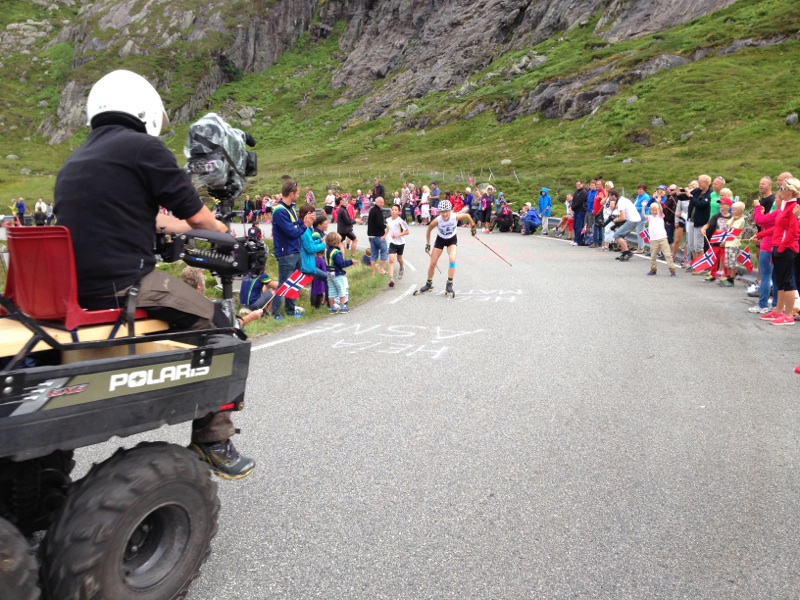
Tag: women’s skiing

  • After the World Cup, Rosie Brennan Still Has More Skiing Ahead

    After the World Cup, Rosie Brennan Still Has More Skiing Ahead

    This article was made possible through the generous support of our voluntary subscribers. If you value coverage like this, please support FasterSkier with a voluntary subscription.

    Rosie Brennan (USA) celebrates in Ruka (FIN) in 2023 after finishing 2nd in Saturday’s 10 k classic race. The result was Brennan’s first classic World Cup podium of her career. (Photo: Nordic Focus)

    Rosie Brennan has stepped away from the World Cup, though she’s still figuring out exactly how to define the next chapter in her life.

    Retirement is the easy word, and in some ways, the accurate one. She is done with the World Cup. She is done with the version of cross-country skiing that demands five months in Europe, constant travel, start lists, team schedules, narrow margins and the unrelenting pressure of measuring a career in seconds. 

    After more than a decade with the U.S. Ski Team, three Olympic appearances, hundreds of World Cup starts, two World Cup wins and a place among the best all-around skiers the United States has produced, Brennan has stepped away from the highest level of the sport.

    But if retirement is supposed to mean the end of something, Brennan is not quite sure the word fits.

    “Retirement has been a tough word for me,” Brennan said. “It feels very black and white.”

    “One of my friends and older teammates called it rewiring.”

    To Brennan, that seems closer. She’s not walking away from skiing so much as trying to build a new relationship with it. The shape of her days may change, and her focus will no longer be “110 percent” on racing, but skiing itself remains too central, too familiar and too joyful to simply leave behind. 

    “I love skiing and ski racing,” Brennan said. “I want to continue to be able to use my body in ways that challenge and push me in the world of skiing and competition again at some point, maybe sooner than later.”

    “Skiing is just not that for me,” Brennan said of the idea of retiring and never doing the thing again. “It’s something that I hope to do till the day I die, honestly.”
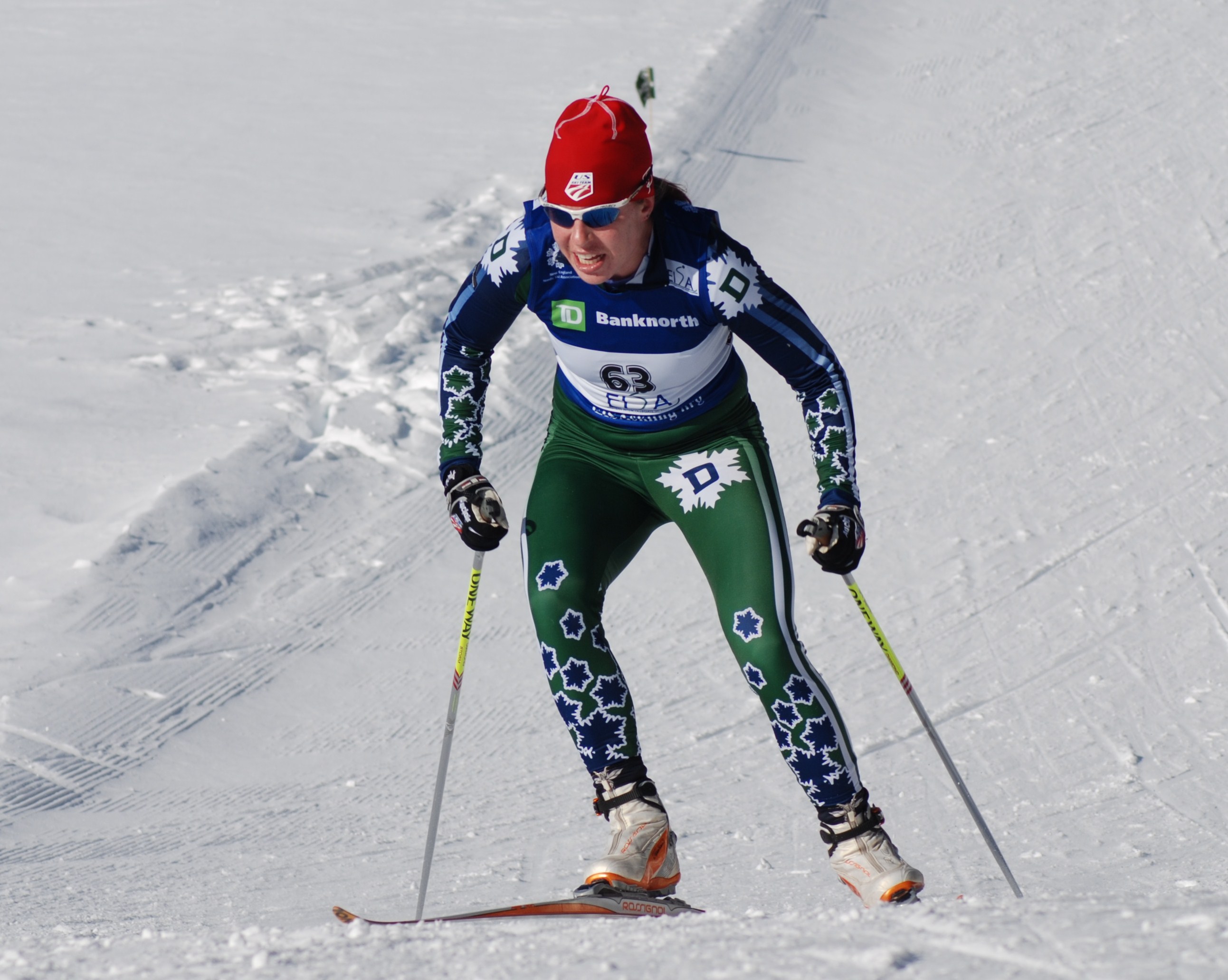
    The first uploaded image of Rosie Brennan in the FasterSkier archives after she won both EISA women’s races in Feb. 2009 (Photo: Ruff Patterson)

    A Career Built on Perseverance

    When Brennan looks back now, the first thing she points to is not a specific race, podium or result sheet, but rather the belief in herself that made all of those things possible.

    “I’m really proud of, I guess, the perseverance of my career,” Brennan said. “It takes perseverance to have longevity in a career, to weather the inevitable obstacles that appear throughout a long career, and to find belief when things aren’t going your way.”

    That perseverance became the throughline of a career that took time to reveal itself. Brennan was not a teenage prodigy who moved smoothly from junior success to World Cup podiums. She came to skiing later than many of her peers, waited longer for the biggest results and had to weather the doubts that creep in when progress slows, injuries interrupt momentum and other paths begin to look more practical. Then when the results did arrive, those earlier years felt even more meaningful. 

    In a career defined by patience and progress, one of the things Brennan says she is most proud of is not just that she reached the top level, but that she continued to expand what she could do once she got there. She never settled into one lane as only a distance skier or only a classic specialist. Instead, she kept working to become more complete, finding reward in the challenge of improving across formats, distances and techniques.

    “I’m also proud of the range that I maintained throughout my career,” Brennan said. “Continuing to be an all-arounder throughout my career and finding some success in all the disciplines and both techniques throughout — that was something that was just, I don’t know, I guess a personal challenge that I found a lot of reward in.”

    That sense of progress extended beyond Brennan’s own results. Her career also unfolded during the strongest era in the history of American women’s cross-country skiing, and as the U.S. team continued to raise its standard internationally, Brennan came to see herself as part of something larger than her own race days.

    “I’m proud to have been part of a really amazing wave of American women skiing,” Brennan said, “and to have done my best to carry that wave forward and to help push things forward and pass things on to future generations as well.”
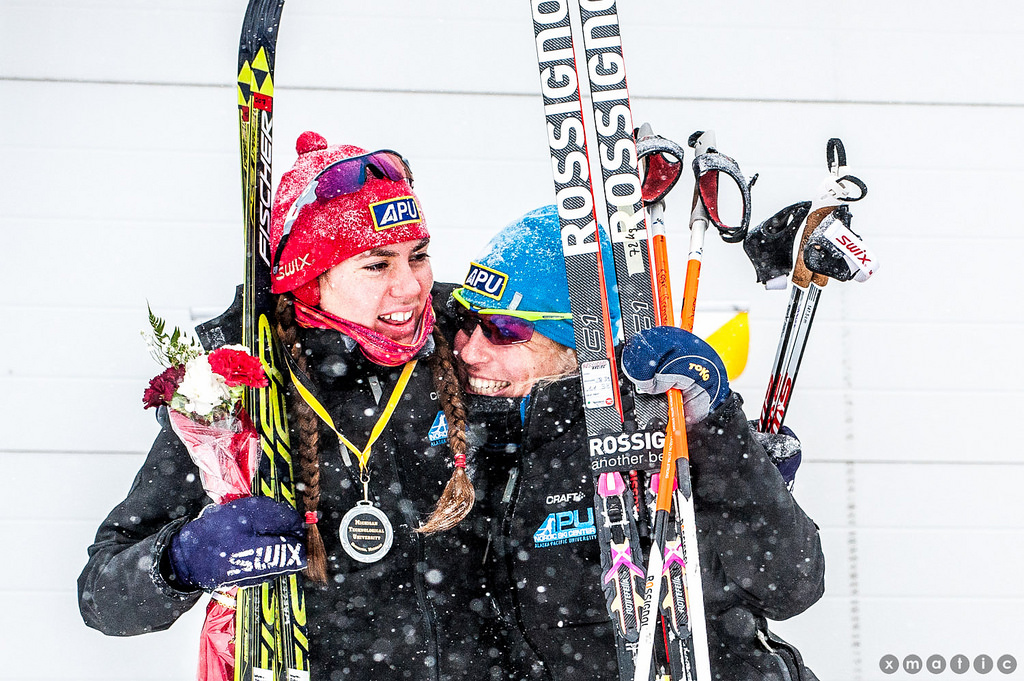
    APU’s Rosie Brennan (r) embraces close friend and APU teammate, Becca Rorabaugh (l), after they finish first and second, respectively, in the Women’s 1.5 k Classic Sprint at the 2015 U.S. Cross Country Championships in Houghton, Mich.

    Starting Late, Staying Long Enough

    Brennan started skiing at 14, late by the standards of an international sport where many athletes first step onto a set of fish scales as young children. But she never saw her development as a simple matter of being behind.

    “I was older when I kind of found top-level success in podiums on the World Cup,” Brennan said. “But because I started skiing so late, I guess I never really saw it that way.”

    In her mind, the clock did not start with age, but when she first found herself on a pair of skis.

    “If you look at when I started at 14 to when I had success, those accumulated hours of skiing and training are probably actually fairly equivalent to somebody who started at eight,” Brennan said. “So I always just chose to look at it that way, as if it was just going to take time to learn those skills, and it was fine that I started late.”

    “I’m not good at being patient,” Brennan said.

    But skiing gave her little choice. It took time to develop the specific strengths required of the sport, to learn how to race and to absorb the small skills that many skiers pick up almost without realizing it when they start young. Brennan had to build the engine and the instincts at the same time.

    There were moments when she wondered whether it was worth it. In college, after injuries and difficult stretches, she decided she was done with skiing when she graduated. She looked toward other paths. At times, she quit, or at least tried to. But the sport kept pulling her back.

    “I think what I enjoyed the most that made me keep coming back was just the challenge of it,” Brennan said. “Waking up every day with some purpose to get a little bit better, and to have the challenge of seeing if it was possible.”

    Eventually, that challenge became a way of life.

    “I just learned to really enjoy and thrive and love the lifestyle of skiing,” Brennan said. “And so that made it a lot easier to just keep coming back.”

    Brennan is quick to point out that she did not do that alone. The support systems around her mattered. At Dartmouth and later at Alaska Pacific University, she found teams and coaches that helped her keep believing when she could not quite do it herself.

    “There were definitely moments that it’s easy to question, and it’s hard to keep going,” Brennan said. “I was really fortunate to be part of some really, really amazing groups, and have coaches that fostered that belief in me, and made me see things in myself that I couldn’t see on my own.”
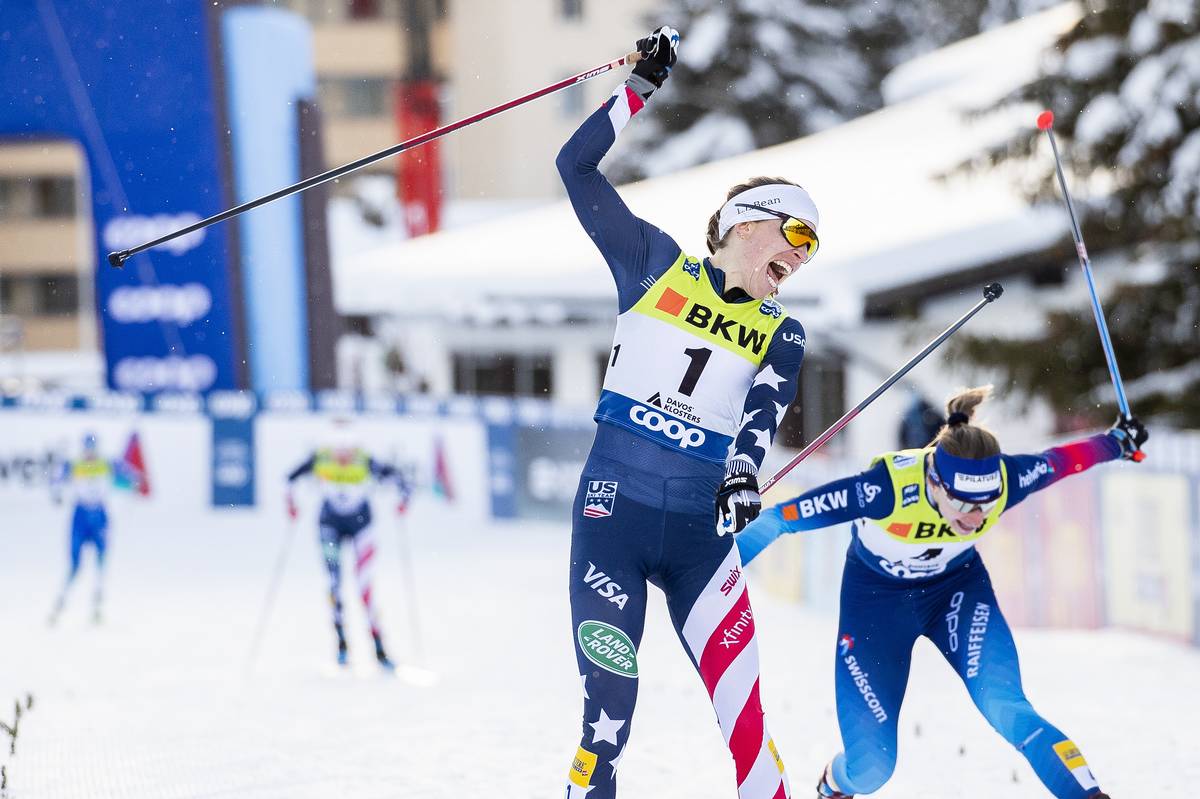
    Rosie Brennan celebrates her victory and first World Cup podium after the freestyle sprint in Davos, Switzerland. Photo: NordicFocus

    When the World Was Put on Notice

    For years, Brennan’s career was a slow and steady build, but then came that famous weekend in Davos.

    In December of 2020, during a World Cup season shaped by the uncertainty of the pandemic, Brennan won twice in two days in Switzerland. On Saturday, she claimed her first career World Cup victory, in a freestyle sprint, and then the very next day, she won again in the 10-kilometer freestyle.

    From the outside, it looked like a breakthrough and a historic moment for U.S. skiing. Brennan does not dispute that. She says what stays with her the most now is not only the winning, but everything she had to manage in order to ski that way.

    “Davos 2020 was definitely a breakthrough moment for me,” Brennan said. “That year was challenging for the whole world, and being a ski racer during that time certainly had its challenges too.”

    The uncertainty of that season weighed heavily. Rules changed, travel was complicated and athletes did not always know whether races would happen. The risk of illness carried not just health concerns, but career implications for athletes whose bodies were their livelihoods.
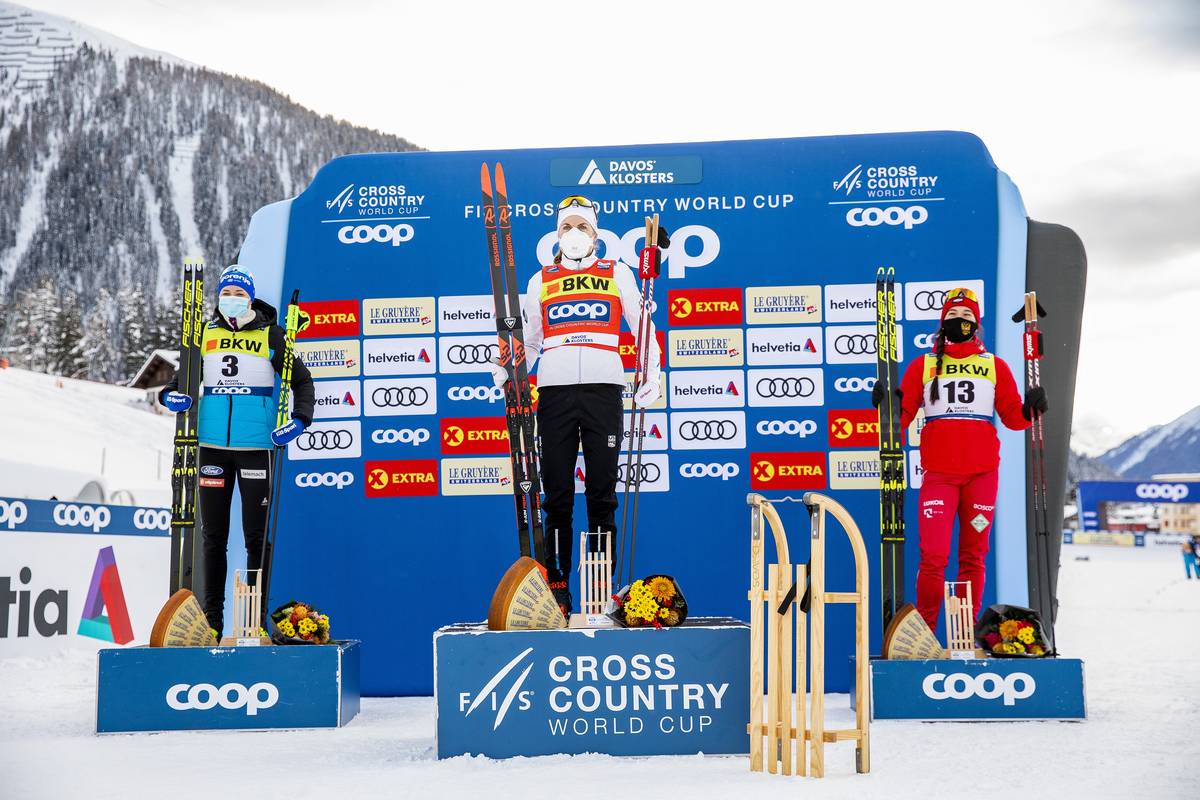
    Taking the victory and the sled, Rosie Brennan stands atop the podium in Davos, Switzerland. (Left to right) Anamarija Lampic (SLO) 2nd, Brennan (USA) 1st, Natalia Nepryaeva (RUS) 3rd.

    “I really struggled with the anxiety of it all,” Brennan said. “Just never knowing — traveling in foreign countries, where the rules were changing all the time, and you didn’t know what would happen if you got sick.”

    Hence why Davos still means something more than two entries on a results page. Brennan was proud of the wins, of course, but she was even more proud of how she managed everything around them.

    “It definitely showed me what I was capable of,” Brennan said, “and that I could manage these really high-stress environments and all the uncertainty and thrive in that setting.”

    That weekend did not just give Brennan her first World Cup wins. It helped confirm the range she had been building toward for years. Later that season, she became the first American to hold the overall World Cup leader’s bib, sprint leader’s bib and distance leader’s bib at the same time. Which was both a major accomplishment and also a fitting reward for all the work she had put in to become a more complete racer.
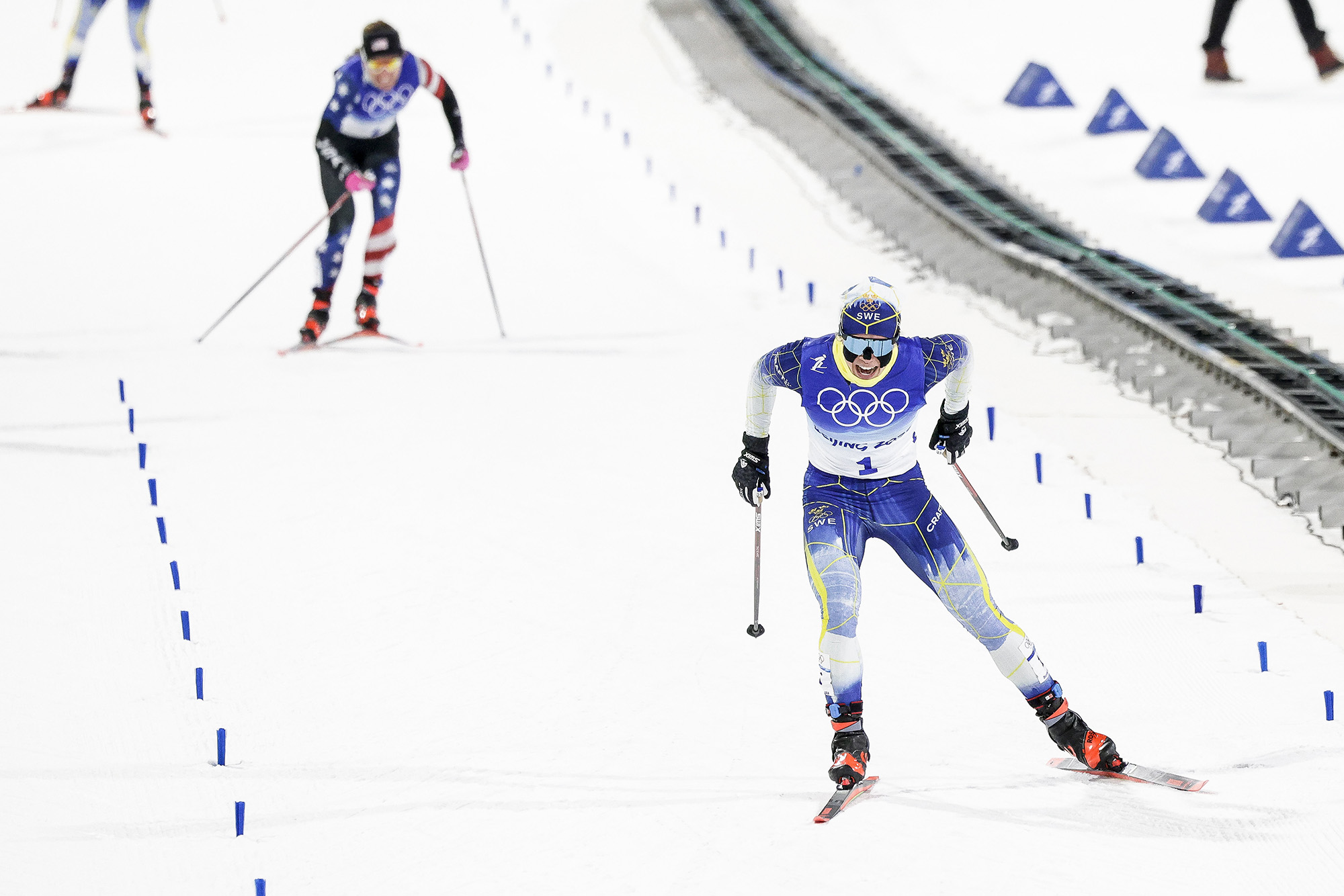
    Jonna Sundling (SWE), with a commanding victory in the 2022 Olympic individual freestyle sprint, comes to the finish with Rosie Brennan (USA) in the background on her way to fourth. (Photo: NordicFocus)

    What the Career Adds Up To

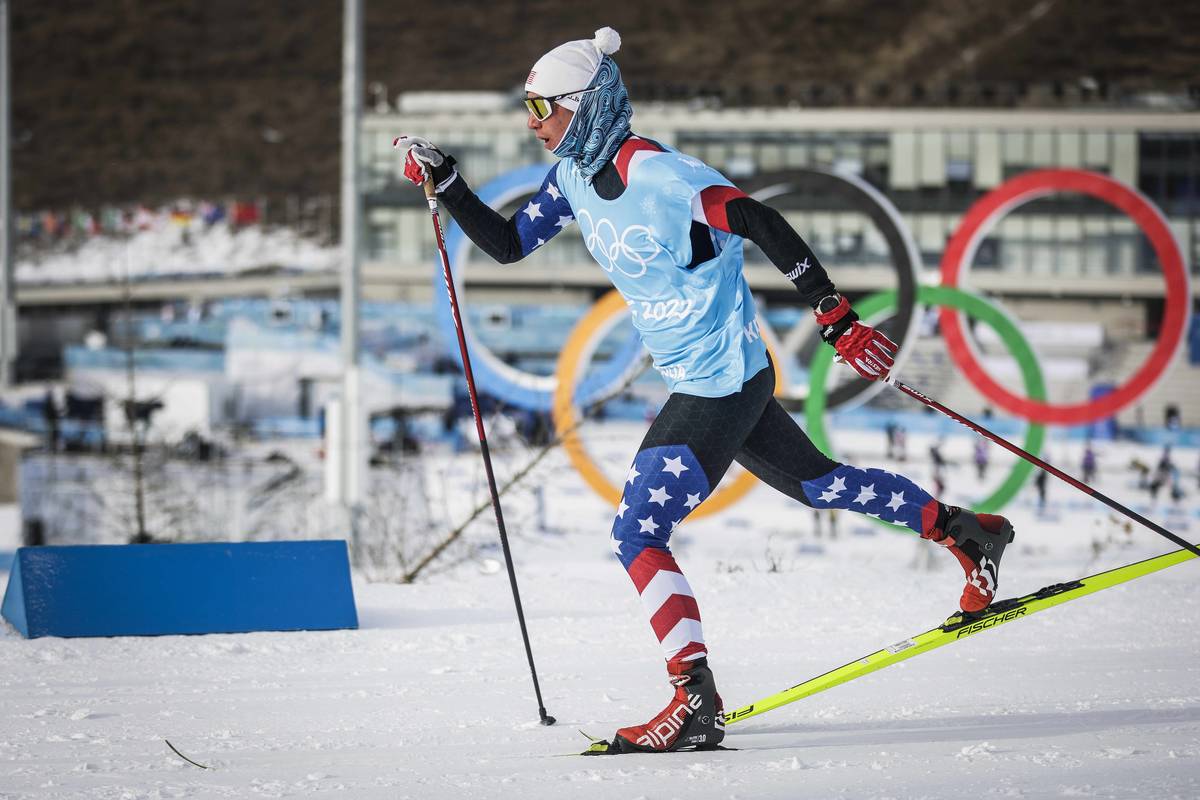
    Brennan will take a step back from her professional career after amassing quite the résumé, representing the United States at the 2018, 2022 and 2026 Winter Olympics. She finished fourth in the freestyle sprint at the Beijing Olympics in 2022, the kind of result that can feel both extraordinary and excruciating, by missing out on an Olympic podium by a single place. She reached World Cup podiums across seasons and disciplines. She became a two-time World Cup winner, a fixture in the American women’s team and one of the athletes who helped move the U.S. from occasional contender to regular presence near the front of international races.

    But Brennan’s own accounting of her career is not limited to the results she garnered over the years. She is proud of showing up. Proud of learning. Proud of becoming competitive in every event. Proud of the people who helped her and the younger athletes she helped in return. Proud that a career that could have ended several times kept expanding instead.

    That may just be why the end of her World Cup career does not feel like a true breakup. For Brennan, skiing was never just a job. It provided her with structure, challenges, community, identity and gave her something to work toward every day and a way to test what was possible. Even now, when she is no longer organizing her life around World Cup racing, she says she’s not suddenly becoming someone else.

    “When you train that many years, it’s hard,” Brennan said. “I’m still going out twice a day most days, because it just feels so normal to me.”

    That may change when she starts school again and other commitments begin to fill the space skiing once occupied. Brennan says she plans to pursue new interests and give attention to parts of herself that the World Cup lifestyle did not always allow. But the habits of a skier are not easy to unwind, and she does not seem especially eager to unwind all of them.

    “I definitely hope to bring forward a lifestyle that’s active, that treats your body well, that’s also willing to push yourself and see where the limits are,” Brennan said.

    Rosie Brennan (USA) during the individual sprint qualification at the final World Cup weekend this past March in Lake Placid, New York. (Photo: Modica/NordicFocus)

    Rewiring, Not Retiring

    That is why “rewiring” works. Brennan is not flipping a switch. She is just rearranging the circuitry.

    There will be no more full World Cup campaign, no more life built entirely around the next race weekend. But there will still be skiing, there will still be movement and there will still be competition. The habits and lessons of her career that she built through years of resilience and patience are not things Brennan expects to leave behind.

    “I’m sure there are countless skills, probably most of the skills I’ve learned in my adult life, that I will have to lean on in any of the various careers that I may pursue, and in my studying as well,” Brennan said. “The lessons that I’ve learned will undoubtedly come with me, along with the character and strength that I’ve built throughout my career.”

    Those lessons were built through the less tidy parts of Brennan’s career, from the late start and the years before the podiums to the injuries and doubts that forced her to keep adjusting. But the same career that asked so much of her also gave her something lasting. Skiing was more than a pursuit or a profession, it was the driving rhythm of her adult life, and one she still feels lucky to have followed for so long.

    “It’s definitely an incredible lifestyle to be a ski racer,” Brennan said. “I feel insanely lucky to have called that my career, and to have done so for so long.”

    That gratitude does not make the transition simple. After so many years of organizing life around training, racing and the rhythm of the World Cup, stepping back from that structure means more than changing a schedule. It means figuring out what skiing looks like when it is no longer the center around which everything else has to turn.

    Rosie Brennan (USA) during her final World Cup of her career — the 20 k Freestyle Mass Start in Lake Placid (USA). (Photo: Thibaut/NordicFocus)


    But there is also freedom in that. Brennan no longer has to prove she belongs. She already did. And now, instead of defining skiing only through the World Cup, she gets to decide what parts of it she wants to keep.

    Maybe that means races. Maybe it means long days outside. Maybe it means testing herself in new settings, with new stakes, away from the circuit that shaped so much of her adult life. Maybe it means all of that.

    What seems clear is that Brennan is not disappearing from the sport. She is stepping out of one version of it and into another.

    She is retired, if that is the word people want to use. But it is not the sunset kind. Not the final-page kind.

    For Rosie Brennan, skiing will always be there, just not in the all-consuming way it once was. Now, she gets the chance to redefine her relationship with the sport as something woven into the life she is building next.

    “It’s truly been a dream,” Brennan said.


    Help Support Our Coverage!

    If you value the thoughtful work and access FasterSkier provides, please consider becoming a Voluntary Subscriber. Your support directly fuels our work to cover the people, places, and moments that make our sport special.

    Join the FasterSkier community!


    Brennan’s U.S. teammates wait at the line to greet her after her final World Cup race, a 20-kilometer start in Lake Placid on March 22. (Photo: NordicFocus)
  • The US Nordic Olympic Women Gold Rush Award: A Closer Look

    The US Nordic Olympic Women Gold Rush Award: A Closer Look

    Julia Kern prepares for her Olympic debut on the tracks in Zhangjiakou, CNH. (Photo: NordicFocus)

    FasterSkier recently shared a press release on behalf of the US Nordic Olympic Women (US NOW) announcing Julia Kern as the 2022 recipient of the fourth annual Gold Rush Award. The release included comments from 2021 winner Jessie Diggins on the qualities that she, along with the other past winners, recognized made Kern deserving of this year’s award, but it became clear that there was a gap in FasterSkier’s coverage on the history of US NOW and the evolution of the award. 

    To learn more, FasterSkier connected with the spark that launched Gold Rush Award into existence: recent U.S. Ski & Snowboard hall of fame inductee and early groundbreaker for American women’s skiing, Alison Owen-Bradley. It was Owen-Bradley who planted the seeds to bring together the generations of women who have represented United States in cross-country skiing at an Olympic Games, bringing US NOW into fruition.

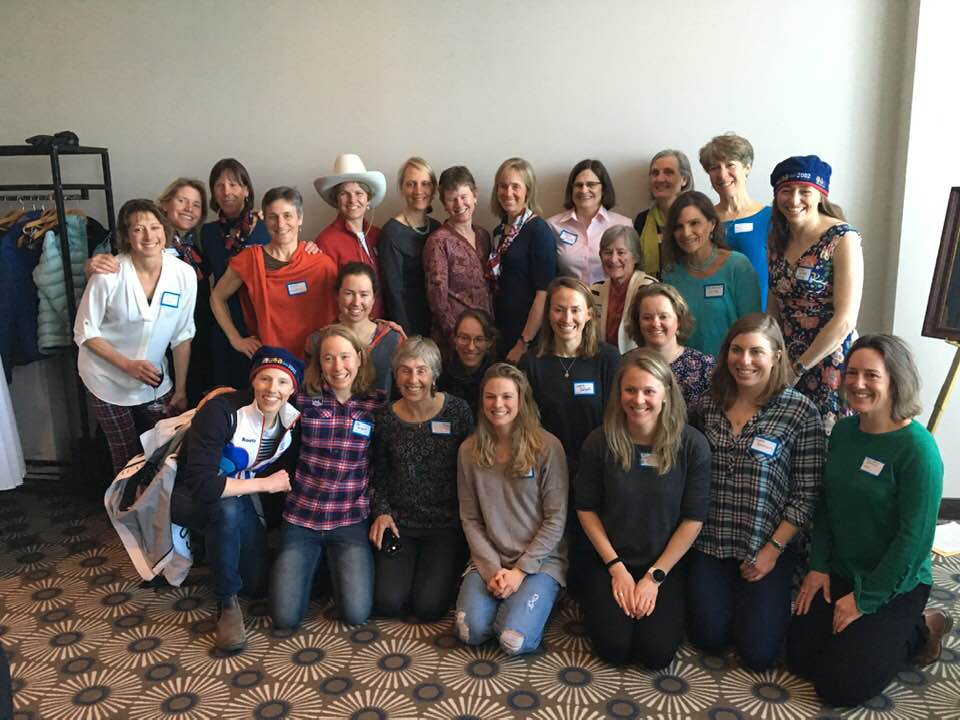
    According to Owen-Bradley, US NOW filled a gaping hole in connection among the women who helped set the foundation for what is now one of the most successful women’s ski programs in the world. Though each of the 53 women Olympians had played a role in propelling the next generation forward, opportunity for connection between the generations had been lacking. With individual efforts, a network amongst these women slowly began to connect sooner, but when the World Cup swung through Quebec City in March 2019, it provided an ideal opportunity to reunite as a collective. 

    “We ended up having quite a few Olympic women there,” recalled Owen-Bradley in a call. “And it was fun because we wore our vintage clothing to the race, so we had all kinds of different eras of Olympic clothes. It was so congruent because we were really cheering on the latest, greatest women racing but we were also together with our teammates from the past, and it kind of just kind of grew from there.”

    An intergenerational collective of Olympic women reunite at the 2019 World Cup Finals in Quebec City. (Photo: Peggy Shinn)

    Having been teammates long before the era of Facebook – in fact, some well before the internet – it had been hard for these women to feel connected and maintain ties after careers ended. Owen-Bradley said that before the reunion, she didn’t have contact information for many of these women, and consequently didn’t feel the relationships had been sufficiently developed among the various generations. 

    With some word-smithing to nail a catchy acronym, the energy and camaraderie established at this reunion evolved into US NOW. But there’s much more to the name than meets the eye.

    “US NOW – being retired from ski racing, who are we now? What have we learned? There’s so much gold in that for mining, in a metaphoric way. All these women, what have they learned? What have they gone on to do? How was it good and bad in their lives to devote their time to this? I don’t think we’ve even come close to exploring that and getting the nuggets [of wisdom] out of what women went through and and got from those experiences. But also, how hard was that? And was it worth it? And what would have made it more worth it? And then to just go forward in a way that uses that wisdom.” 

    And so, the organization was built by Olympic women and for future generations of Olympic women. 

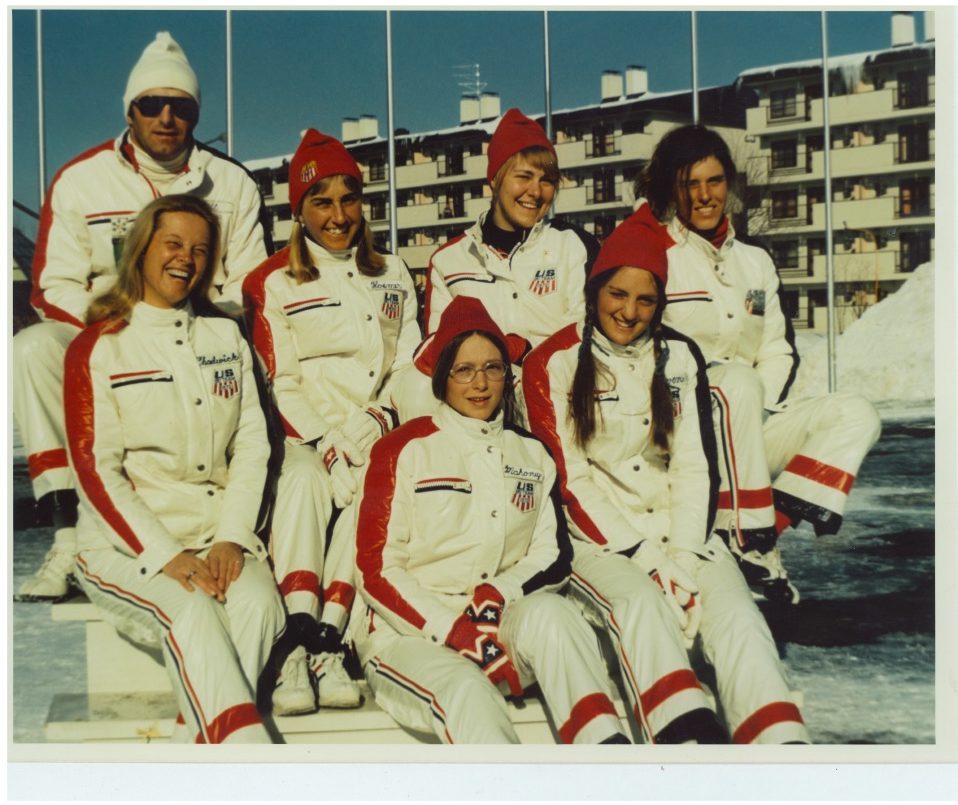
    The first Women’s cross-country Olympic Team. The 1972 Games were held in Sapporo, Japan. Bottom row—Gloria Chadwick, pseudo Chaperone, Margie Mahoney, Alison Owen
    Top Row—Marty Hall, Trina Hosmer, Barbara Britch, Martha Rockwell. (Photo: courtesy Alison Owen-Bradley)

    When the coach of the first women’s Olympic team, Marty Hall, was inducted into the U.S. Ski & Snowboard Hall of Fame in the spring of 2018, he invited Owen-Bradley to attend the ceremony, having been one of his original athletes. While traveling through Norway to race at World Masters, a print inspired by the Birkebeiner story caught her eye; instead of the image she was familiar with, which depicted two warriors valiantly carrying Prince Haakon to safety on their trek through the mountains, it was an image of Prince Haakon’s mother, Queen Inga. She too had made the arduous journey on skis to save her son, and yet, Owen-Bradley had never seen her included in the story’s artwork.

    Finding it symbolic of the emergence of women’s cross-country skiing in the US over the last 50 years, Owen-Bradley purchased the print, and decided it would be a fitting gift to honor Hall at the ceremony. “He had been the first Olympic coach for women and had kind of gotten us on the map.”

    However, the piece of artwork was large. She laughed as she recalled giving it to him, but also telling him it did not need to take up a wall in his home. 

    “We decided that it would be a traveling picture, and we would pick someone every year to give it to, and so out of that came this idea [for the award].”

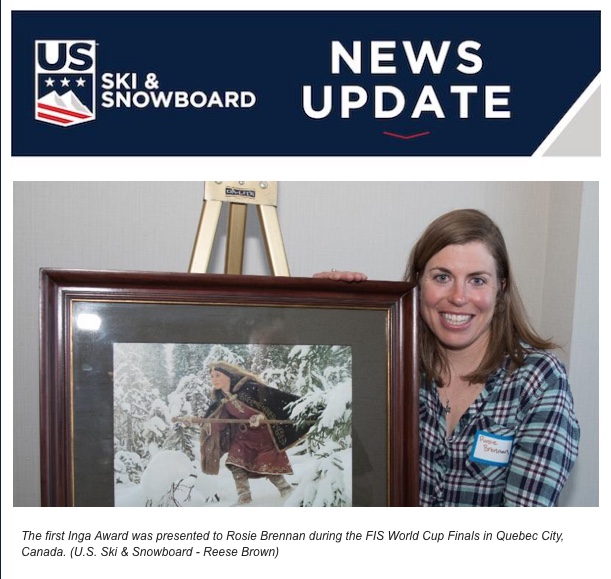
    In 2019, following the World Cup, the Inga Award was presented to its first recipient: Rosie Brennan. Having rebounded from a season impaired by the effects of the mononucleosis virus, Brennan was selected based on the “courage, fortitude, grit, determination and raw talent [it took] to achieve an extremely high level of success on the international ski racing circuit [that] season.”

    Over the next year, however, Owen-Bradley began to dwell on why the image of a Norwegian woman should be the symbol for the efforts of the women in the American cross-country program. She began looking for inspiration closer to home, eventually finding an equally strong, noteworthy, and under-recognized alternative.

    “I changed it to the Gold Rush award because in the High Sierras during the Gold Rush era, women were nordic racing. Not on the same levels that we do it [now], but they had cross country races that that women raced in… So I thought, ‘Oh, what a cool thing — the Gold Rush.’”

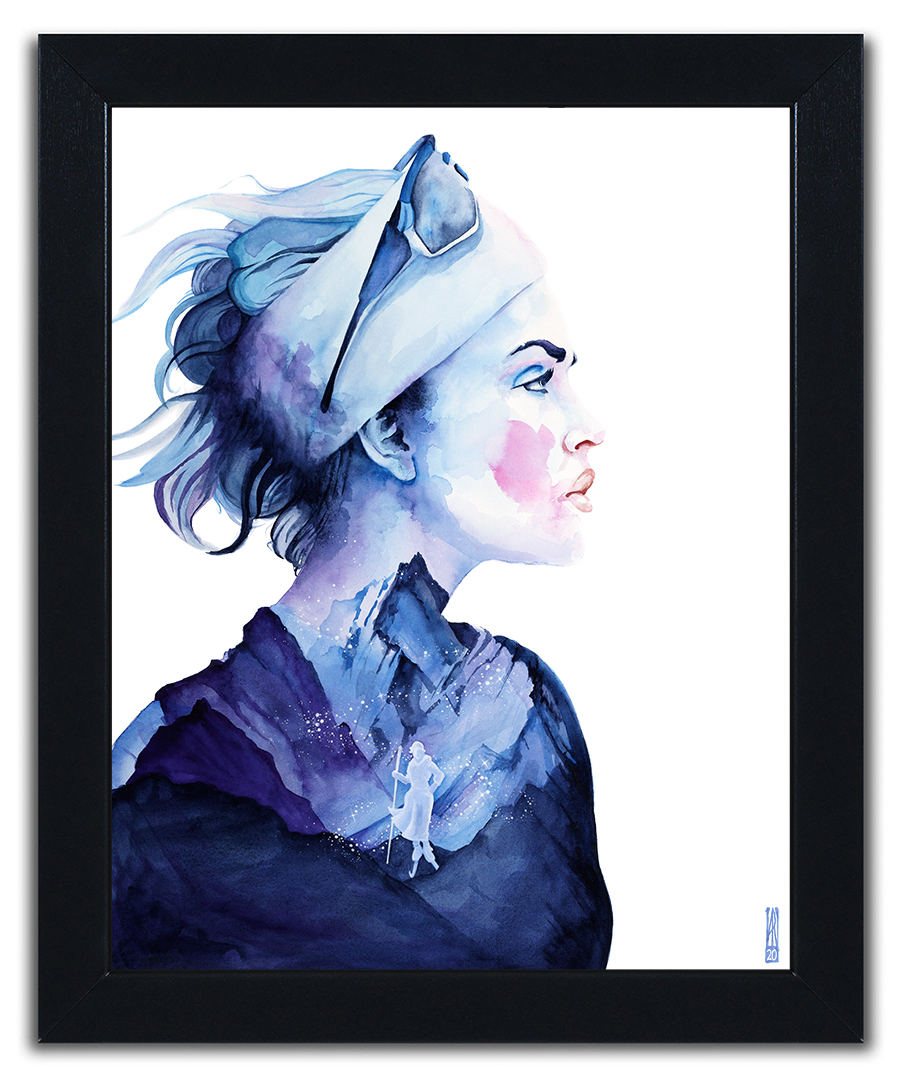
    She also noted the ties between racing for gold medals at the Olympics, which Kikkan Randall and Jessie Diggins achieved in 2018. Working with artist Andy Rogers, a new image was created, superimposing the image of a woman on skis in the High Sierra on the bust and profile of a determined and modern-looking woman in a race headband and sport sunglasses. In 2019, this image was presented to co-recipients Sadie Maubet Bjornsen and Sophie Caldwell Hamilton

    Gold Rush Award: (Artist Andy Rogers)

    While each of the women mentioned to this point have unquestionably racked up an impressive resume of results, the award is not meant to recognize what happens on the race course directly. Rather, Owen-Bradley explained a recipient is selected for the award by “exemplifying and showing the grit and the grace that it takes to be successful.” It’s what happened behind the scenes to get the result, not the result itself. 

    “An example would be Sophie whose mother died [in 2019] and she still went on with such grace and was so successful through all of that. And Sadie because of all the injuries she worked through and kept going… So, to me, it’s been about the grit and the grace of what it takes to be a woman nordic ski racer at that level.”

    Approaching the 50-year mark of her own Olympic debut and now focusing more of her time and energy on her small farm in Idaho rather than the cross-country ski world, Owen-Bradley explained that this year, she felt less directly connected to the potential recipients for the Gold Rush award. She decided the decision should be made collectively amongst the four previous winners, to which she would add a fifth vote. After some discussion, the group voted unanimously for Julia Kern. 

    Jessie Diggins and Julia Kern celebrate a second-place team sprint finish in Dresden, GER in December, 2021. (Photo: NordicFocus)

    A member of the U.S. Ski Team since 2017, Kern’s progression on the international level has been steady, but non-linear. Alongside leaps forward, she’s faced her fair share of injuries and setbacks. Both the 2020/2021 season and her first Olympic appearances in 2022 left her wanting more, but interjecting these lows during the 2021/22 race season were a slew of career highlights. Her top results include two individual fourth-place sprint finishes on the World Cup, a team sprint podium in Dresden, a handful of other World Cup top tens, and finishing the year winning three out of four events at the joint U.S SuperTour Finals / Canadian National Championships in Whistler, BC. 

    And in February 2023, she’s heading into a World Championship which will take place at the venue where she earned her first World Cup podium in December 2019: Planica, Slovenia. 

    Smiles and hugs all-around to celebrate Julia Kern’s first World Cup podium in Planica, Slovenia in December 2019. Kern finished third in the freestyle sprint, with Sophie Caldwell Hamilton just behind in fourth. (Photos: NordicFocus)

    According to the past award recipients on the selection committee, it was the juxtaposition of these celebrations and challenges over the last few seasons that highlighted Kern’s candidacy for the award this spring.  

    To me, what is special about this award, is first that it was voted on by this very incredible group of women who all share tenacity and drive to get through challenges and be better on the other side and second, that it awards just that and not results,” explained Brennan in an email. “Julia exemplifies this in her ability to be a strong teammate, no matter what the circumstances are. She holds her head high and goes out of her way to never bring people down when things are tough, aren’t going her way, or she’s faced with a challenge. When something doesn’t work out for her, she immediately jumps gears and does literally whatever she can to help her teammates have success. 

    “On top of that, she doesn’t lose faith in herself, she continues to fight, look for opportunity and carry an optimistic outlook towards her future. She has shown this many times after coming off a slump, injury, or some other challenge to find herself notching career bests. I think these things aren’t mutually exclusive and that we all have a lot to learn from Julia’s ability to be an exceptional teammate and in turn have that give her energy to continue chasing her own goals.” 

    Smooth and powerful, Julia Kern races through the heats during a classic sprint in Falun, SWE in March 2022. (Photo: NordicFocus)

    Commenting on her nomination, Kern attributed her own success to the efforts of the women who came before her, including those who would present her with the award.

    “​​I am incredibly honored to be given the Gold Rush Award by such an incredible group of women. US NOW is a group of women who have paved the way for U.S. skiing, many of whom have been personal role models and mentors to me in skiing and in life. I would not have had the opportunities, experience and knowledge without their hard work and passion for giving back to the younger generations. The past few years have been challenging for a variety of factors, and it was rewarding to come back stronger with my best season yet.”

    As the list of award winners grows and US NOW builds momentum, Owen-Bradley hopes the award can be expanded to include a monetary prize in addition to the print and tribute. Acknowledging the increase in representation for women across various aspects of skiing, such as coaching and waxing, she would love to see new awards developed to recognize these important examples also. 

    When Owen-Bradley began skiing as a child in the 1960’s, her only option was to join the boys program; Title IX did not pass until June 1972, at which point she was 19 and had already raced at a World Championship. As she reflected on the amount of opportunity for women in cross-country skiing now, and what the creation of US NOW and the Gold Rush Award means to Owen-Bradley personally, she expressed feelings of joy and optimism. 

    “For me to go from not having a place, to having these strong women’s teams – it’s just so fun.” 

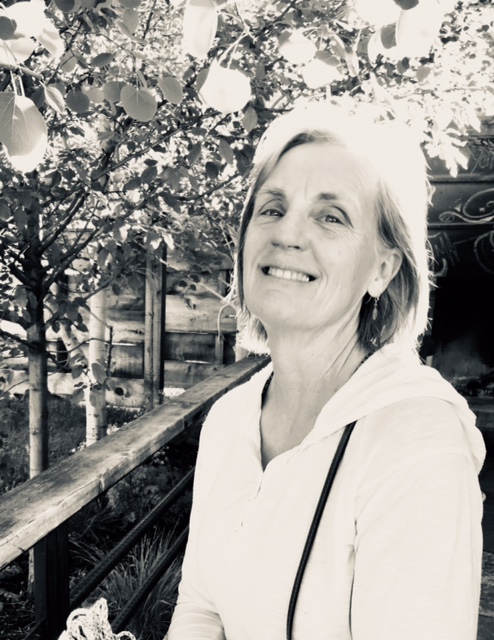
    Alison Owen-Bradley, a pioneer of elite level women’s cross-country skiing in the U.S. (courtesy photo)
  • Unequal Prize Money at Blink Festival Illustrates Challenges for Women’s Distance Racing

    Unequal Prize Money at Blink Festival Illustrates Challenges for Women’s Distance Racing

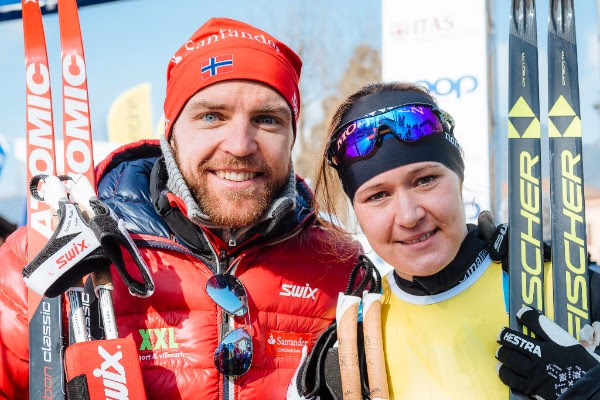
    Tord Asle Gjerdalen (l) and Britta Johansson-Norgren (r) after winning the 2016 Marcialonga 70 k classic. In July, Johansson Norgren won the Blink Classics 60 k rollerski race - but received only 20% as much prize money as Petter Northug got for winning the men's race. (Photo: Visma Ski Classics)
    Tord Asle Gjerdalen (l) and Britta Johansson Norgren (r) after winning the 2016 Marcialonga 70 k classic. In July, Johansson Norgren won the Blink Classics 60 k rollerski race — but received only 20 percent as much prize money as Petter Northug got for winning the men’s race. (Photo: Visma Ski Classics)

    At the end of July, Norwegian professional cross-country skier Astrid Øyre Slind hit the podium in the new 60-kilometer classic race at her country’s Blink ski festival. She faced a payout that seemed unusual: a big discrepancy between men’s and women’s prize money.

    At the competition, called Blink Classics and part of the inaugural summer season of the World Classic Tour rollerski series, the total prize money available for men was 190,000 kroner, or just over $23,000. For women, it was 50,000 kroner — about a quarter as much.

    Accordingly, Slind’s second-place finish notched her 10,000 kroner ($1,200), while the second-place man, Andreas Nygaard, received 40,000 kroner.

    And men’s winner Petter Northug took home 75,000 kroner, which was 50 percent more than the entire pot of women’s prize money.

    “It’s an enormous difference,” Slind told Norway’s NRK broadcaster.

    Sweden’s Britta Johansson Norgren, who won the women’s competition, did not return FasterSkier’s request for comment.

    In most major ski marathons, women receive equal prize money to the men. At Norway’s Birkebeiner, the prize is 40,000 (Norwegian) kroner or $4,800 apiece; at Sweden’s Vasaloppet, the 2015 prizes went up to 91,000 (Swedish) kroner or $10,700; at Italy’s Marcialonga, it was 5,300 Euros or $5,900 for both men and women.

    The American Birkebeiner pays $7,500 to both the men’s and women’s winners.

    But Blink Classics is not one of these established marathons: it is a rollerski competition in its very first year of existence. It did, however, attract the attention of the Norwegian government, which was concerned that the festival was violating the country’s equal pay act.

    “For us it has not been easy to have this situation with the girls,” Blink Festival press secretary Arne Idland told FasterSkier. “And then when they are not satisfied with the money it is really difficult. We will try as hard as we can to find a solution.”

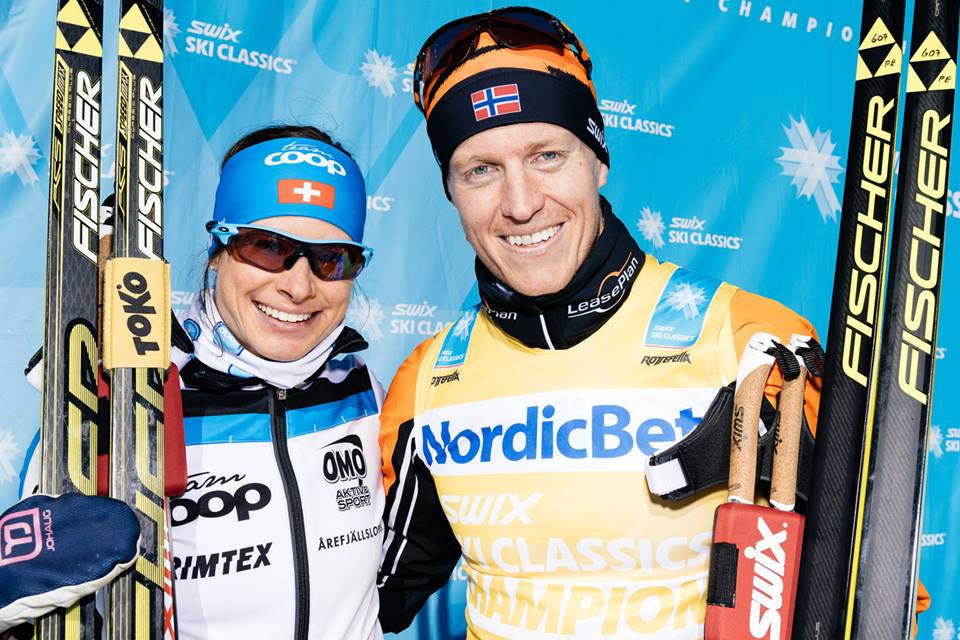
    Seraina Boner (l) of Switzerland and Team Coop and Petter Eliassen of Norway and Team LeasePlan Go won the 2015 Årefjällsloppet, receiving equal paydays. (Photo: Ski Classics)
    Seraina Boner (l) of Switzerland and Team Coop and Petter Eliassen of Norway and Team LeasePlan Go won the 2015 Årefjällsloppet, receiving equal payouts. (Photo: Ski Classics)

    New Race for a Booming Festival

    The Blink ski festival is now a giant on the summer racing circuit, with athletes from all over Europe and even North America coming to compete on rollerskis in cross-country skiing, biathlon, and the famous Lysebotn Opp hill climb. Recreational and junior classes are also a big focus, making it accessible to fans and professionals alike.

    But adding a long-distance race to the mix was not easy for organizers, who still have to make sure that the festival breaks even financially. Idland explained that Blink Classics had been in the works for three years.

    “The main challenge this year is that we, for the first time, were going into car traffic — this race was on ordinary roads with traffic [rather than the city square], and we had to close it to traffic just like they do in cycling races,” he explained.

    That entailed paying for policemen, for one thing. Having a fourth day of racing (previously there had been three, the Lysebotn Opp and two more days in the Sandnes city center) also meant more production by NRK, Norwegian national television, as it followed a long-distance race rather than staying in a set location downtown.

    “If you have live production it has to be in high definition,” Idland said. “Then it’s really expensive.”

    Then last autumn came the news from the Norwegian Ski Federation: none of the national team “A” or “B” team women would compete in the 60 k. The women usually focus on doing all three of the other days of racing, and adding a 60 k at the beginning of consecutive days of racing would be too much volume and intensity during the summer training season. Some of the men, like Eirik Brandsdal and Sjur Rothe, would do the longer race; Martin Johnsrud Sundby was interested but later pulled out.

    Concurrently, Idland said, NRK was telling the Blink organizers that it wouldn’t be possible to broadcast the men’s and women’s 60 k competitions together. It would have meant following two races at the same time — double the filming budget and staffing — and deciding all the time which feed to broadcast and commentate. NRK didn’t have expertise in doing this and said that they needed to develop it. So they would only broadcast one, and with the national team women out of the competition but the national team men in it, organizers agreed it should be the men’s race.

    “When I contacted the teams from other nations, I was open and said that this [women’s] long distance race will not be broadcast on TV and no women from the national team would start there,” Idland said of his communication with other countries’  teams last winter, before registration began. “So I advised them all not to start in this race, but to come do the three other races.”

    As a result just four womencompared to 69 men, finished the 60 k classic race.

    Johansson Norgren, the winner, is a mainstay on the Visma Ski Classics circuit and won the 2016 season title as well as numerous individual marathons. Masako Ishida, who finished third at Blink Classics, was the winter series’ fourth-ranked woman. So the podium at Blink was not so different than a podium one might see at a top winter event.

    But the decision about prize money had been made long before.

    “We said that we need good prize money on the men’s side, because the other competitions that we compare with have good prize money,” Idland said. “We also need some sprint primes. We had a total of 190,000 kroner, or about 20,000 Euros, for the men. And we had just over 5,000 [Euros] for the women. That was decided before we opened entry.”

    Even for the women, it was more prize money than was available at the other competitions in the Blink festival, Idland said. In those other races, prize money is equal for men and women and each total prize-money purse is roughly 2,000 Euros.

    “So it is double amount of money in this women’s class in any of the other races, including Lysebotn Opp,” he said. “We thought we were really doing well for the women. And it’s not every rollerski race having prize money, either.”

    Kaisa Mäkäräinen (FIN) climbs to victory in the Lysebotn hill climb at the 2013 Blink festival. The women's hill climb is televised, unlike the Blink Classics. (Photo: blinkfestivalen.no)
    Finland’s Kaisa Mäkäräinen climbs to victory in the Lysebotn hill climb at the 2013 Blink festival as a cameraman captures the action. The women’s hill climb is televised, unlike the Blink Classics. (Photo: blinkfestivalen.no)

    Building Women’s Pro Fields Takes Time

    But the discrepancy still felt unusual to some of the women, who are used to getting paid the same amount as their male counterparts for a win.

    Prize money is the same for men and women on cross-country skiing’s World Cup. In fact, female superstars like Marit Bjørgen and Therese Johaug earn more than their male counterparts because they are more dominant, grabbing a bigger proportion of the total available prize money for themselves.

    The gulf between men’s and women’s participation is greater in long-distance racing than on the World Cup. As a result, marathon organizers have to grapple with a somewhat different set of considerations as they develop the payout structure for their competitions.

    Most of the biggest ski marathons in Europe — including the Birkebeiner, Vasaloppet, and Marcialonga — are part of the Visma Ski Classics series, where organizers have come up with compromise solution when it comes to year-end rankings.

    Prize money is equal for the top three overall series finishers, but the men’s field also pays out to the fourth- and fifth-place athletes while the women’s field does not.

    “For me it sounds very strange,” Visma Ski Classics CEO David Nilsson told FasterSkier in an interview last week referring to the Blink prizes. “We have in our rules that they must have the same first prize to men and women. It is also important to reflect on the percentage [of field size], and it shouldn’t be so much more difficult for the men to get [prize money] than for the women — but you can never do more than win, so of course that has to be equal for first place.”

    In the winter, far fewer women than men are on Visma Ski Classics professional teams. But women’s races are hotly contested and often extremely dramatic, like Seraina Boner’s come-from-behind win at the 2016 Birkebeiner after passing Ishida and Poland’s Justyna Kowalczyk in the final kilometers.

    In the 2016 season, 39 different women scored points toward the overall titles. There is even an all-women’s pro team, Sweden’s Team SkiProAm, whose top athlete finished eighth in the season rankings.

    According to Nilsson, Visma Ski Classics has carefully tried to promote women’s participation, with equal prize money for first place being one component.

    “We worked very hard on this,” he said. “When I started 6-7 years ago, we had 4-5 women that were competing [professionally] in long distance skiing because it was a bigger step for them from shorter distance [World Cup] skiing than for the men.”

    While they left the women’s competition out of the spotlight this year, the Blink Classics organizers don’t think that should always be the case. Like the Visma Ski Classics, they want more women on the start line.

    “Our aim and our goal is also to have the world’s best women at the start in future,” Idland said.

    One reason for low numbers at Blink might be that long-distance racing just isn’t as popular among women in Norway as it is in neighboring Sweden, home of the Visma Ski Classics brand, said Nilsson.

    “In Norway, which we all know is very strong in cross-country skiing, we don’t see so many female participants in long-distance skiing,” he mused. “They are more from Sweden. We don’t know why the Norwegian women are not coming more.”

    The Blink 60 k is part of a three-race series of long-distance rollerski competitions called the World Classic Tour. Indeed, the second leg of the Tour was held in Sweden. Called the Alliansloppet, it is also a more established event.

    Twenty-five women finished that 48 k race, including several past Visma Ski Classics champions and members of the Swedish national team (Hanna Falk, a three-time World Cup podium finisher, won the race). Prize money was equal for men and women, including a 10,000 Swedish kroner sprint prize ($1,000) for both men and women.

    The World Classic Tour overall awards use a similar idea to the Visma Ski Classics, in that the men’s and women’s title winners earn equal paychecks but the men’s field will pay out to six places and the women’s to just three.

    Yet the series does not appear to have a policy for its constituent races in how to organize prize money at individual competitions.

    If organizers like those at the Blink festival want to develop a strong women’s competition, Nilsson suggested that they need to actually promote the women’s races.

    “We also made sure that there was much more focus on the women [than there had been before],” he said of the Visma Ski Classics efforts. “The women should have be starting [wave] before the men to have their own competition… and have [television] production of the race and their own media. When we created the system, all the attention was on the men. Then we made it so the pro teams had to get points from both the men’s and the women’s classes. This together has made the increase of the women.”

    Idland conceded that with more prize money, they might have drawn a slightly larger women’s field. But he believed the circumstances of the festival, with the three subsequent days of racing, were the bigger reason for low participation.

    On the Blink Festival website, the news story about the 60 k Classics race features five paragraphs and three photos about the men’s race, but only one paragraph and one photo of the women.

    Nilsson believed that some changes could be made without disrespecting the male athletes.

    “When you have 100 men and not so many women registered, it wouldn’t be fair to get the same [prizes],” Nilsson said. “It would be easier for the women. So it has been for us to push the development [of women’s skiing] but not to be unfair to the men’s skiers. That’s the reason we have in the prize money, five men and three women. And that reflects a little bit to the female factor, to be honest, in terms of the number of participants and the amount of professional skiers. It has to be the same difficulty to win a prize in both categories.”

    What Does Equality Mean?

    Race organizers are continuously trying to come to a more perfect solution, and one common thread seems to be that prize money must be earned by quality racing and exciting performances. Until the women’s fields are deemed to have provided that, they might not see as much compensation.

    Visa Ski Classics, for example, continues to make changes. For the 2016/2017 season, women will for the first time be able to vie for a sprint title, worth five percent of the total prize money, just as the men have done for years.

    “The reason it wasn’t the case [previously] is that there weren’t so many women — last year was the first time that there was really a group at the front,” Nilsson said. “Before it was just one or two who went away, so it wouldn’t have been interesting. The same people would have won the race as the sprint bibs. Now both men and women get a sprint bib, which is a step forward. Our goal is to make it equal the number of participants and who gets prizes.”

    Nilsson guessed that the availability of intermediate prize money may also change the tactics of the women’s races and contribute to an exciting spectacle on television.

    For his part, Idland insisted that the Blink organizers’ decision about prize money was not sexism. It could have gone the other way, he wrote in a letter to the Norwegian government explaining the discrepancy in pay.

    “I was trying to give an example with the opposite situation,” Idland said. “If Marit [Bjørgen], Therese [Johaug], Heidi [Weng], Charlotte [Kalla], and maybe some of the Americans said to us that this race we would very much like to do, and the men said they didn’t want to do it and just let the [marathon] specialists do it, then I am quite sure we would have done the opposite thing. We would have led the coverage with the women, if the level was higher.”

    After being contacted by the authorities, the Blink Festival is trying to work together with the government to achieve equality.

    “Our answer was that they would really much like to come in dialogue with us to try to make a plan for the future,” Idland said. “And that we try to build up this competition with a clear aim to have everything on an equal basis in some number of years.”