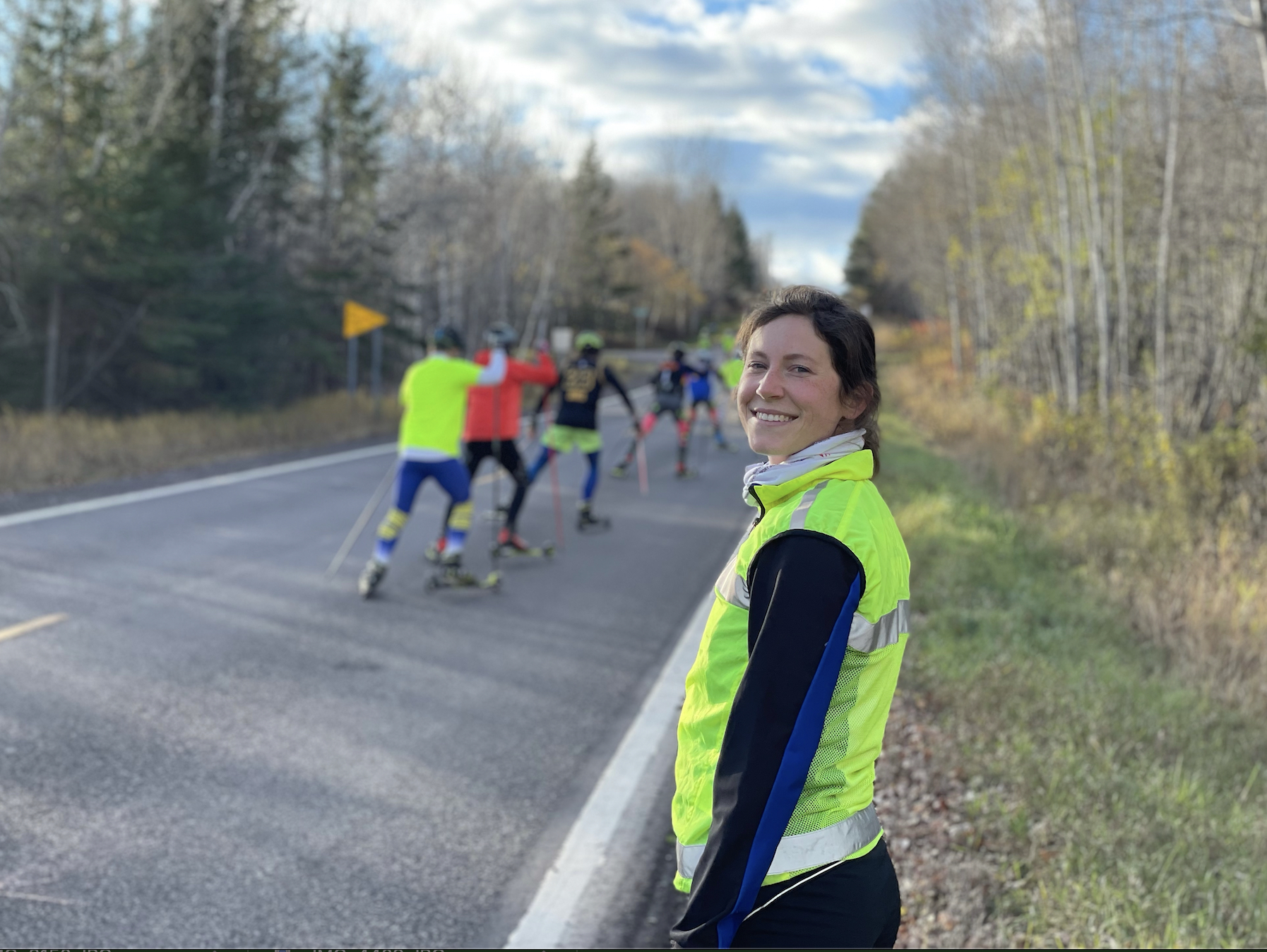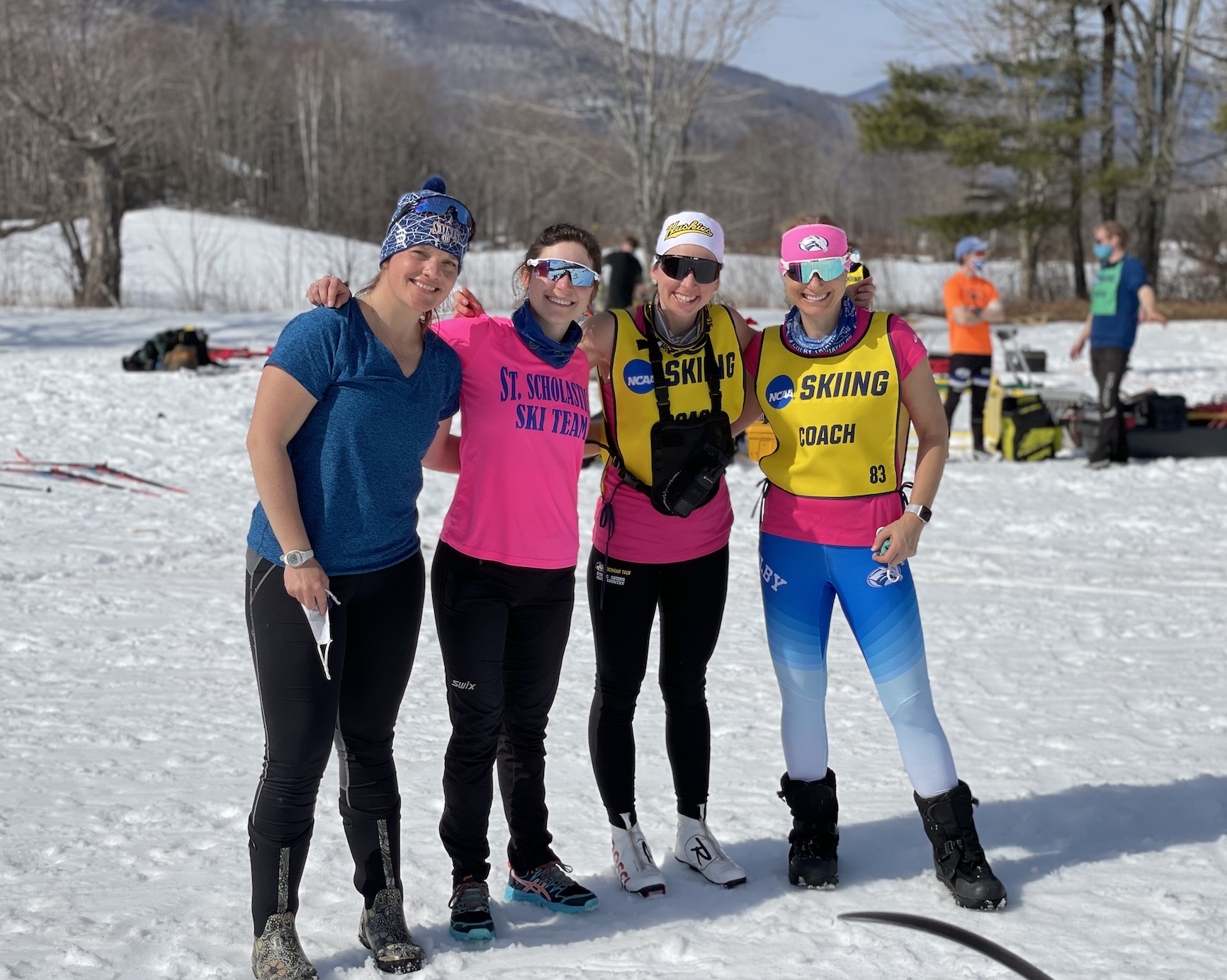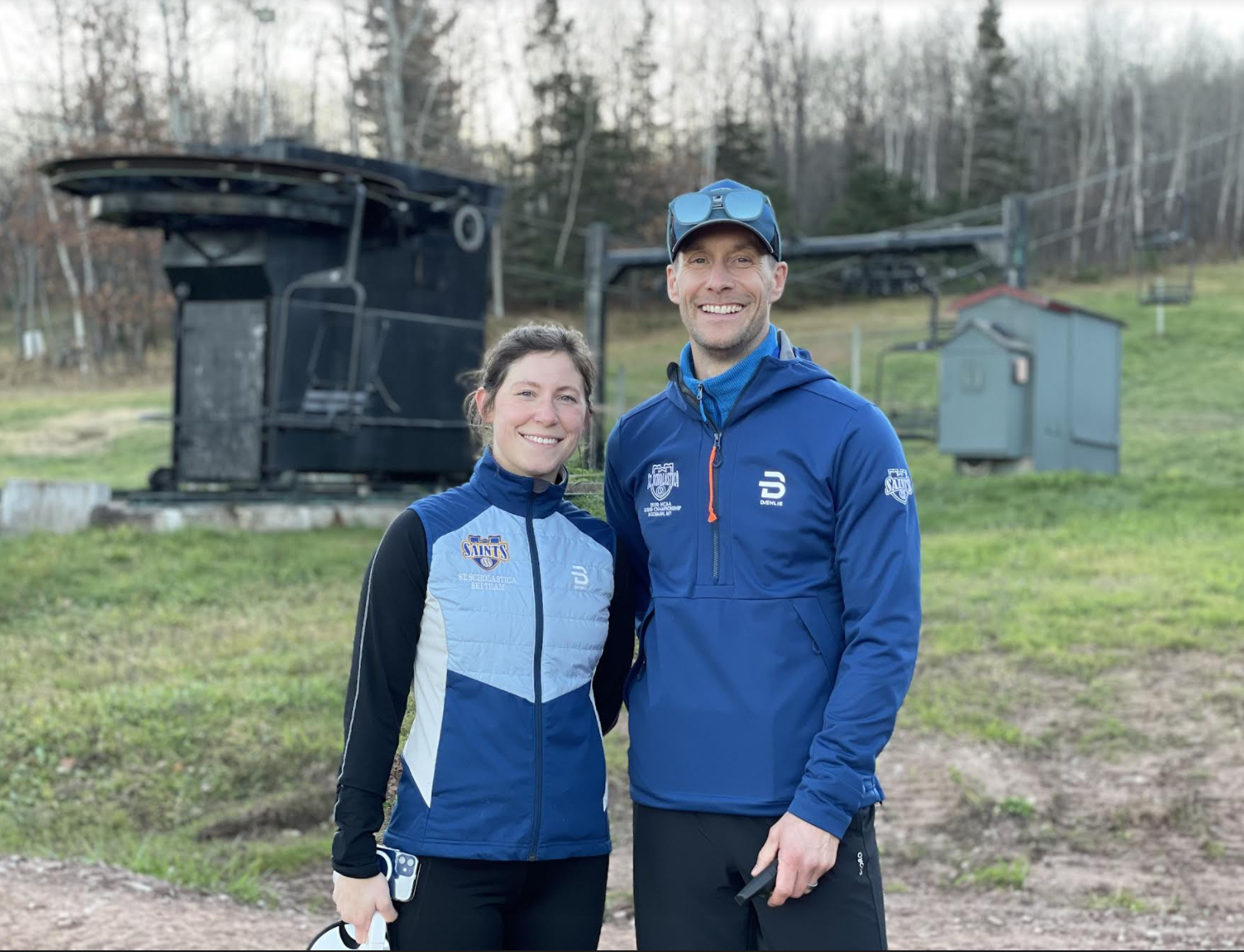
In November, FasterSkier interviewed Kristen Bourne, assistant coach at the College of St. Scholastica (CSS) in Duluth, MN, after she was selected as a Women’s Sports Foundation Van DerVeer Fellow, which came with a grant totalling $17,500. The objective of the fellowship is to improve representation of women in elite level coaching by supporting the development of rising coaches at the college level.
The majority of the funds from the VanDerveer Fellowship went directly to CSS, allowing the university to support Bourne’s position. However, $2,500 of the grant was allocated toward independent professional development opportunities of the fellows choosing. With additional support from U.S. Ski & Snowboard, Bourne recently had the chance to shadow, support, and learn from the American squad of athletes, coaches, techs, and support staff who were traveling the World Cup circuit.
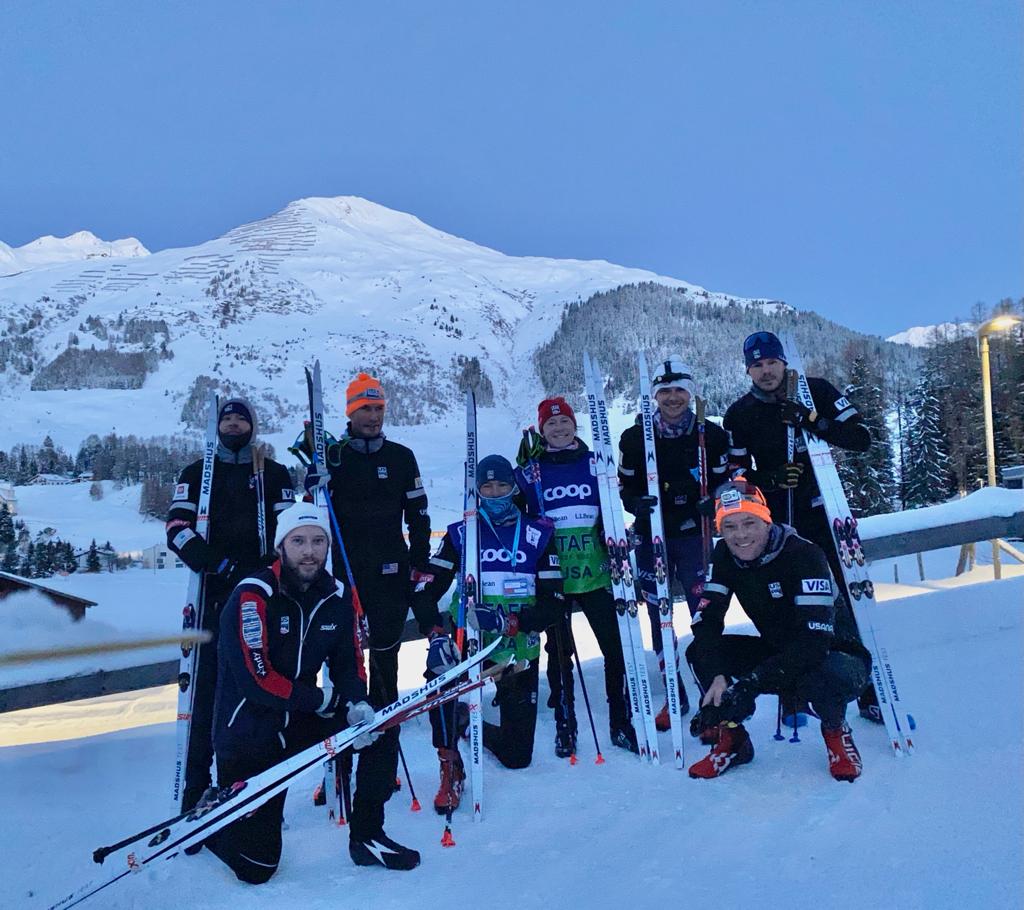
Joining the team in Davos, Switzerland in early December, Bourne was immediately welcomed into the fold and handed responsibilities as both a coach and wax tech, which she described as an “intensive course” on all things World Cup. While this might seem like a high-stakes, intimidating experience for a developing coach, Bourne explained that she was well-supported as she stepped into the role.
“Coming in, the idea was that I was going to get a taste of doing everything,” Bourne explained in a call from Dresden, Germany. “I came in pretty early on in the week before [the races in] Davos, and was able to get a bit of a tutorial and orientation on the wax truck and how everything worked on a day to day basis. It actually turned out that that first weekend in Davos, I was going to be teching for Caitlin Patterson, so I needed to get an idea of what I was walking into, how everything worked, and how to make it as efficient as possible. So those first couple of days, the techs really took me under their wing and showed me the ropes. [They] taught me a bunch of new waxing techniques, and I got to pick their brains a whole bunch — just being in the wax cabin with them and asking any kind of question that I had, and they would take time to answer it.”
On the coaching side, Bourne sat in on pre-race team captains meetings, helped out during intensity sessions, recorded video to discuss technique and course strategy, and supported logistical planning as the team moved from Davos to Dresden and back. Throughout her time with the team, she explained that she shadowed Matt Whitcomb and Chris Grover, listening in and engaging with their discussions regarding what would be important for the team, and each athlete individually week-to-week.
She also took her turn behind the wheel. While not a glamorous part of the job, most coaches would agree it is a significant, and sometimes quite stressful, component.
“I drove a van of athletes from Switzerland to [Dresden],” she said with a laugh. “That was my first European road trip, so that was an experience that ended up being okay… I’ve had an opportunity to at least try everything once if not way more than that, so it’s been super awesome.”
At 25, Bourne is just beginning her career in ski coaching, and though she had done some post-collegiate training and racing in Norway, she was newly minted to the World Cup scene. It’s natural that with such an opportunity would come some self-doubt. Would your 25-year-old self feel comfortable talking World Cup tactics with Jessie Diggins? Yet, Bourne spoke highly of the culture developed on the U.S. Ski Team, and how both athletes and coaches made her feel valued as she stepped into each of her roles.
“Of course, that thought comes into your head. I’m working with people that are several years older than me, who have much more experience being in this environment than I do. But it’s been way easier than I thought it would be primarily because everyone has been really welcoming. When you have athletes who are older than you that then ask for your feedback or your opinion or your help, then all of a sudden it’s like, ‘Oh, they want to hear what I have to say here. They are appreciative of any feedback that they get. Age doesn’t matter so much.’ So it hasn’t been difficult at all, and I think that’s primarily due to the people and the environment that this team has created.”
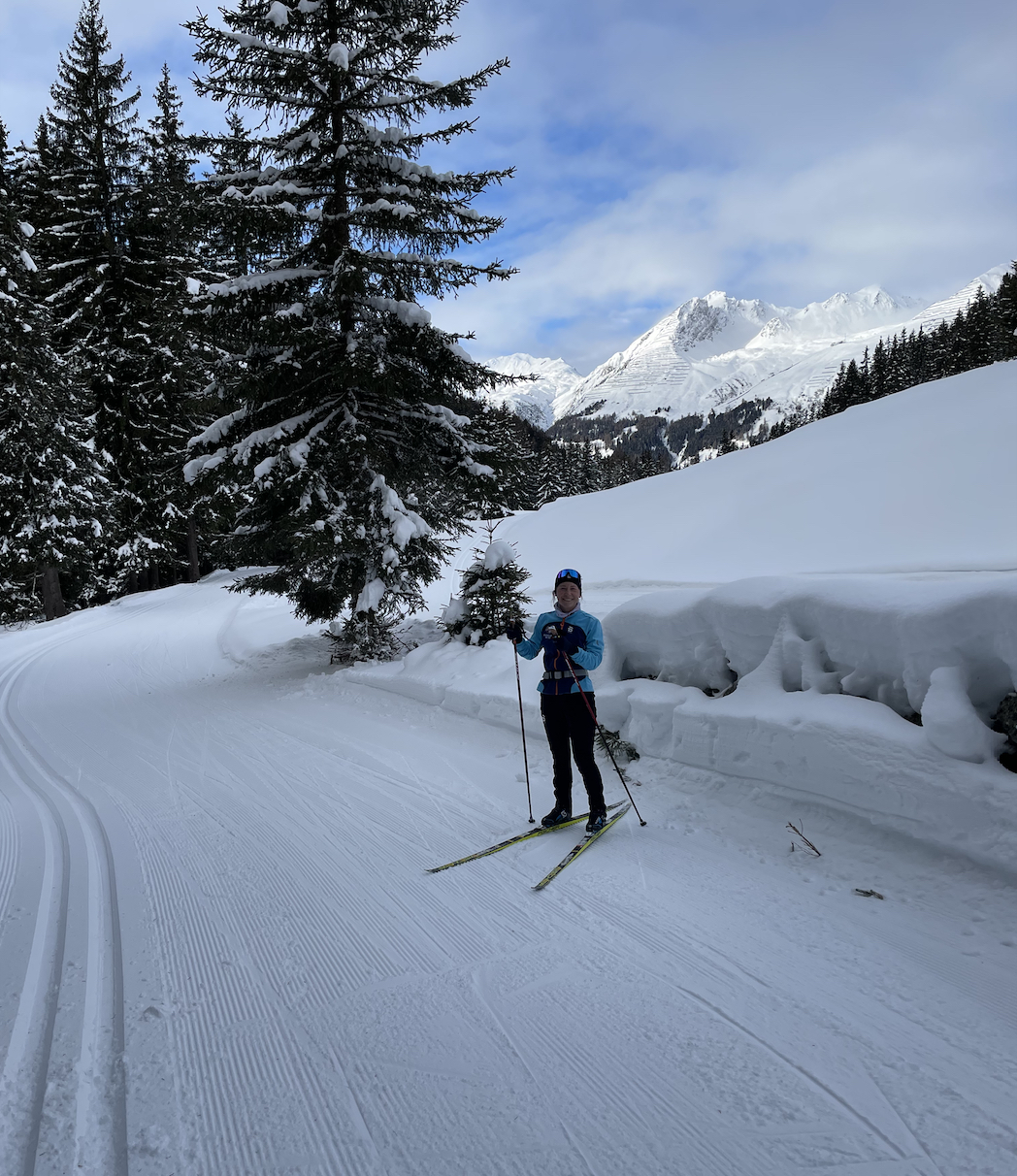
Though there were not established times for her to debrief or ask questions of coaches or techs, Bourne described the communication between herself and the coaches and techs as open. The crew would regularly ask how she was doing, and she felt comfortable asking questions whenever they cropped up.
“We have had this natural agreement where – they know I’m here to learn. And I also know I’m here to learn, but I’m also here to help them. And so, it’s been quite open that way. We have a plan for once this trip kind of wraps up and I get back that we’ll chat again and talk about that whole experience. But I’m hoping that this is something that [the U.S. program] will continue to do with other female coaches in the future, and I’m hoping this at least set the tone for a good experience on their end. It definitely has on my end.”
According to Grover, Bourne immediately demonstrated her capability and potential as she stepped into her roles, and what started as a stand-alone opportunity may just be the beginning.
“Having Kristen on this trip to Davos and Dresden was incredibly helpful, and we are so grateful to the Women’s Sport Foundation and to Maria Stuber and the College of St. Scholastica for making this trip possible,” wrote Grover in an email. “We have a U.S. Ski & Snowboard program-wide goal, and a cross-country-specific goal, to drastically improve gender equity in our coaching and technician staffs, so this opportunity was perfectly aligned with this mission.
“Kristen was an amazing asset to the World Cup group right away, almost seamlessly integrating into both our coaching and service teams, having never met many of the team members. We were really impressed by her skiing ability, her stamina in the test track, her knowledge of the sport and exercise physiology, and her ability to relate so well with each athlete and staff member. She was quick to embrace the team culture, including being thrown into one of the most intimidating team rituals of all – Secret Santa – almost immediately upon arrival, and brought fresh perspective and energy to the Team.”
On all accounts, the U.S. Team had highly successful weekends in both Davos and Dresden. Highlights include: Jessie Diggins taking second in the 10k skate in Davos, with Rosie Brennan close behind in 4th and Hailey Swirbul in 6th, plus Sophia Laukli in 19th and Novie McCabe 28th. The previous day, Brennan had been 4th in the freestyle sprint, while Ben Ogden skied through the semis to finish 12th. Dresden saw another American podium finish with Diggins and Julia Kern finishing second in the team sprint, while JC Schoonmaker made his third World Cup semifinal in the individual sprint. Grover applauded Bourne’s contributions to the team’s success throughout these events.
“She skied an amazing amount of kilometers in the test track in Davos, and was instrumental in identifying the products that we raced on in the 10/15 km F there,” Grover continued. “In Dresden, where we had a smaller staff, I would have really struggled without her support. We all really enjoyed getting to know Kristen and cherish making this professional connection and friendship with her. I know we’ll be looking to get her on another trip as soon as possible.”
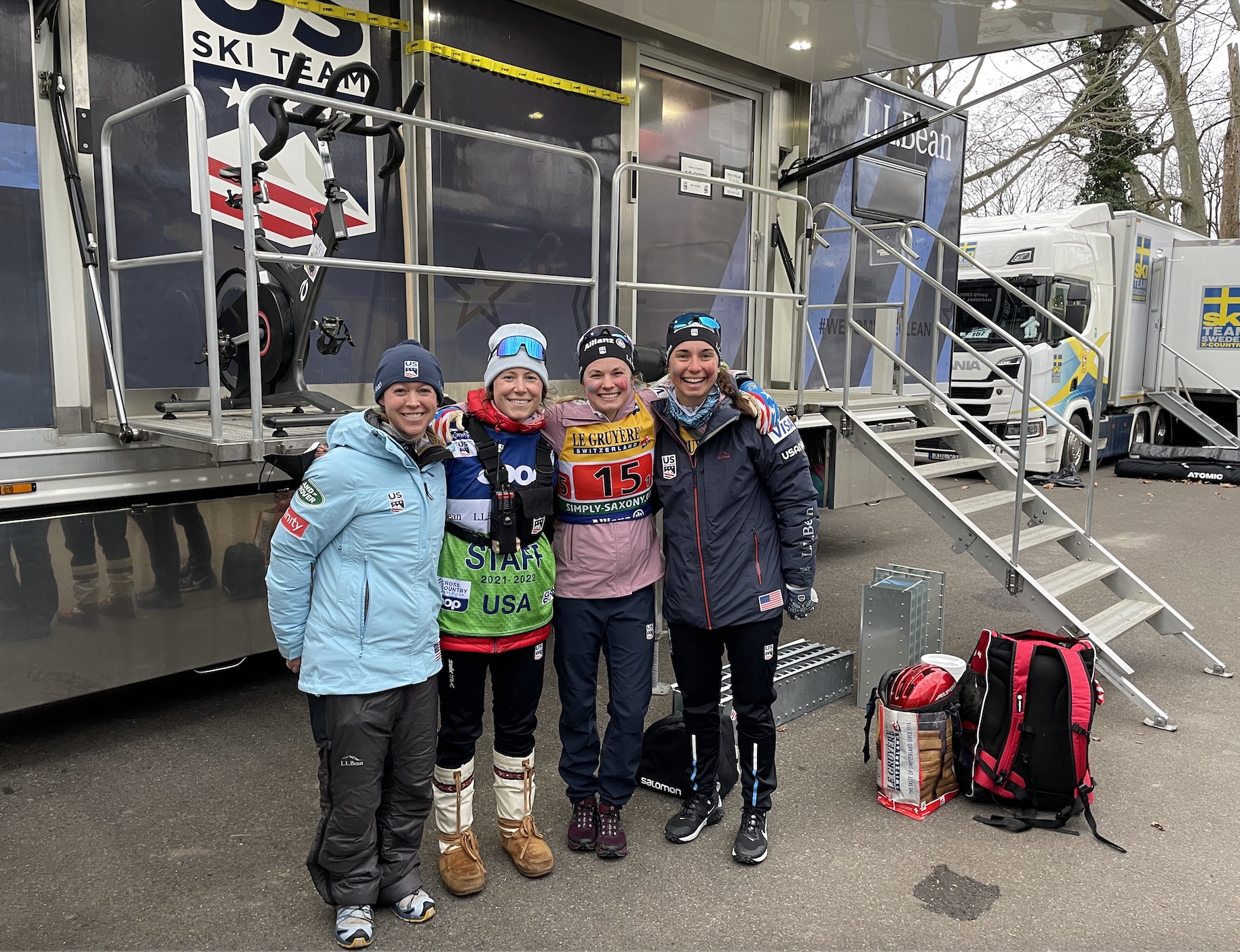
After the World Cup experience, Bourne would return to CSS, bringing back a host of new insights into the highest levels of racing. As she leaves the whirlwind adventure behind, what would stand out as key takeaways from her time in Europe? In particular, Bourne added tools to her belt on the technical side of sport performance.
“The waxing, for sure, [stands out],” she said conclusively. Different techniques, different ideas of what to focus on. It gets really easy to focus on certain aspects of picking skis, but their perspective is so much different. And they focus on things that [I wouldn’t have before], but when they explain it, it makes a lot more sense.”
A specific example that came to mind was a conversation she had with one of the techs, Bjorn Heimdall, regarding ski selection for Luke Jager.
“The skis that he had picked had a colder grind on them, however, It was also a pretty stiff ski. And so I asked, ‘Why would you put a cold grind on such a stiff ski?’ And he explained that, from his perspective, it has to do with the firmness of the snow, not necessarily how cold the snow is. It’s just how firm the track is that makes the difference. The grind does have some effect, but to him, it had more to do with the flex of the ski, and how high the ski was that made the bigger difference overall [in those conditions].”
Bourne contrasted this concept with her experience waxing for collegiate athletes, where she felt there was more focus on the ski’s grind.
Another factor that stood out from her time in the wax truck was the strategy and robust processes used to select the products used on race day and the skis to which they’d be applied. With massive fleets of skis, and an equally massive chemistry kit, finding a winning combination seems like a special brand of magic.
“I also realize that their ability to do that is much different than at the college level where you have only two coaches, instead of five to six wax techs who are able to test all of these powders, structures, topping… That’s pretty intense. But I think that the way they do it with various measurements, I find that to be really interesting. They can do all of these tests and not eliminate a specific ski in the first round. When you do single testing, [comparing pairs of skis] one to one, they have a method for that. I think that’s really cool.”
Bourne also explained how impacted she was by the depth of the relationship between an athlete and their tech.
“[The techs] are just as much coaches in this process as the actual named coaches of the team. They have really close relationships with their athletes. There’s a lot of trust there. And I really admire it. I’ve seen and heard from multiple techs that say, “I want to bring my athlete skis to her or to him.’ Because it’s like this special moment that they get to have before every race and that I just admire a lot.”
Lastly, Bourne revisited the culture within the U.S. program, remarking on how cohesive the group was as a whole.
“It shows that when you have people that you work with that you really enjoy, you can work in a hard environment or a tough environment, you can have long hours. But if you’re around people you enjoy working with, it makes the whole group become successful. It’s just very cohesive. And I’ve been very impressed by that… You hear all the time that this team is really great, and then when you’re in it, you’re like, ‘Wow, this is actually really cool.’ So I’m just really grateful. It’s been awesome.”
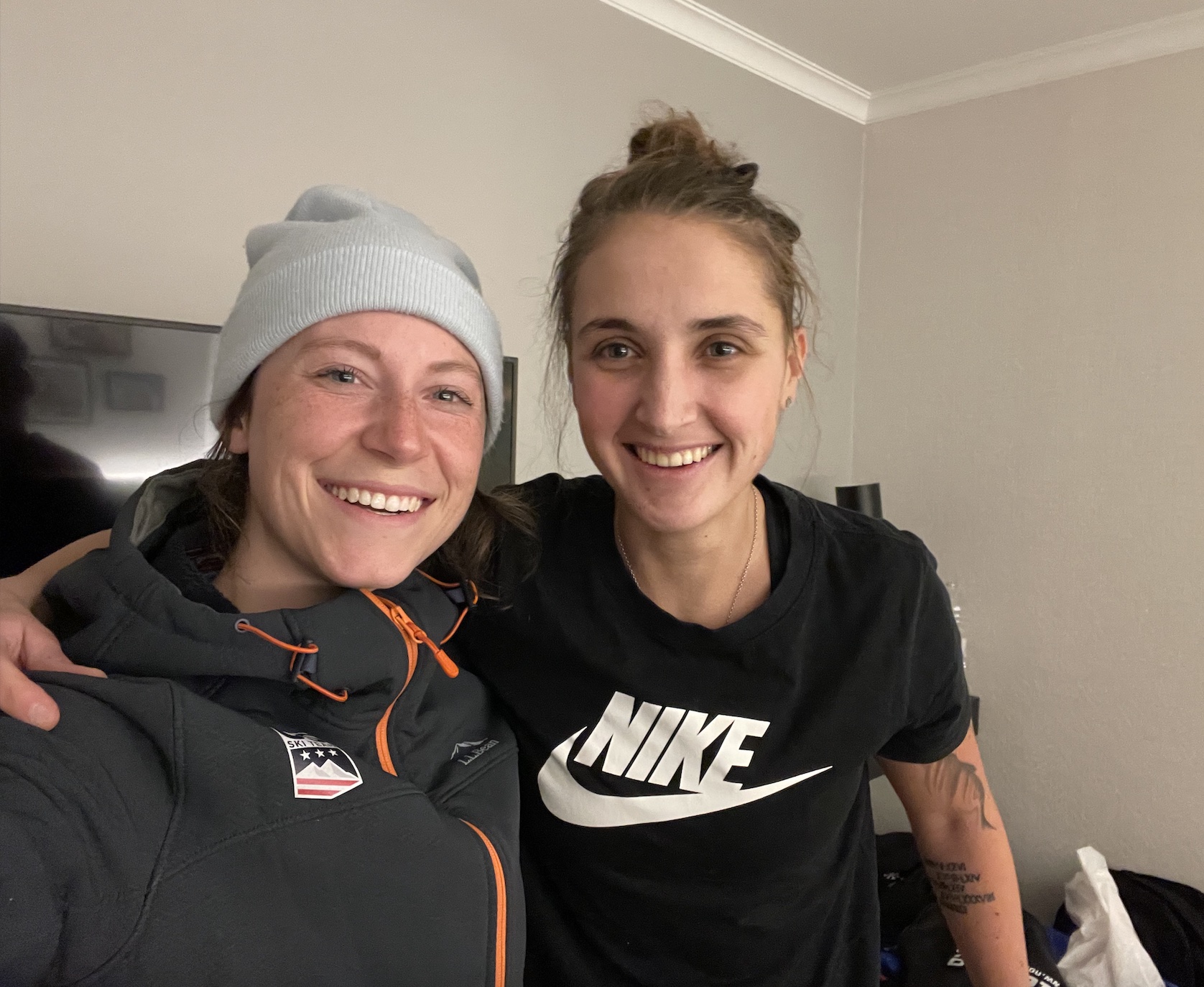
As the conversation concluded, Bourne spoke to the impact this opportunity has had on her career development, opening the door to a level of racing many coaches never truly see up close. Continuing to build on this model, Bourne feels that developing coaches of all genders can gain the skills to continue the elevation of American cross country skiing at all levels.
“I hope that this is something that can be continued. It has been super valuable. And I know that [U.S. Team members and staff] also feel pretty on board with continuing something like this. It’s an interesting conversation that I’ve been having where – when you’re new to something, you don’t know what you don’t know. But with this experience, I’m starting to realize that I do know what I don’t know now. And so it’s very easy to pick out the specific things that I have questions about, and I get those answered really, really quickly. I’m learning from some of the best. So I hope that other people also get to have this experience because it’s incredibly valuable, and there’s a lot that you can take back. If more people have had an experience like this and could learn these types of [skills], it just would progress the development of not only coaches and techs but also the athletes going forward.”