From the FasterSkier archive — posts syndicated from athletes’ and coaches’ own blogs between 2004 and 2012, kept online as published. Current coverage is at fasterskier.com.

Tag: World Cup Period 1

  • Four Canadian Women Aim to Put Their World Cup Team on the Map

    Four Canadian Women Aim to Put Their World Cup Team on the Map

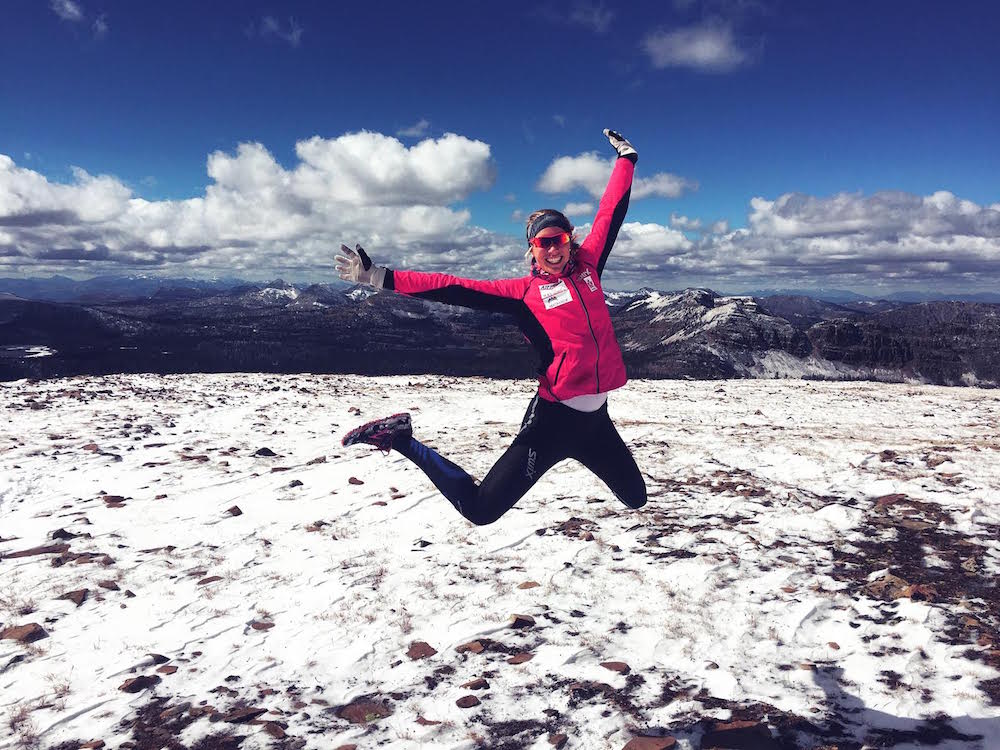
    Dahria Beatty celebrating at snowy peak during an overdistance run near Park City (Courtesy Photo)
    Dahria Beatty (Canadian U25 Team) celebrating a snowy peak during an overdistance run near Park City, Utah. (Courtesy Photo)

    To kick off this World Cup season, Cross Country Canada (CCC) had planned to send four women for Period 1. After its men’s team has gathered most of the attention in recent years, the Canadian women are now in a position to develop depth at the top level of the sport.

    In her third full World Cup season, Emily Nishikawa, of Canada’s World Cup B-team, will be joined for Period 1 by national U25 Team members Dahria Beatty and Cendrine Browne. Maya MacIsaac-Jones was scheduled to make the trip but a minor foot injury at the end of October turned into a longer recovery.  

    “Things have been going well,” MacIsaac-Jones wrote in an email last week, “And I’ve been able to ski pain free while still seeing improvement in my foot.”

    Her plan to test her recovery from sesamoiditis, with pain at the forefront of her foot, in an Alberta Cup last Saturday was derailed by a minor cold, but she remained in good spirits.

    “I used to race in triathlon competitively until I was around 14,” wrote MacIsaac-Jones, a 21-year-old Alberta World Cup Academy (AWCA) skier. “Having that background helped because it meant that I was able to start getting good quality training in the pool right away.”

    For the women’s team, CCC’s primary goal this period is to get top-30 finishes and World Cup nation’s points to maintain its quota for World Cup starts. The Canadian women have four quota spots plus the Continental Cup (COC) leader this season. As Beatty is COC leader, there is one quota spot open. According to CCC High Performance Director Thomas Holland, the top choices for that spot are out: U25 Team member Olivia Bouffard-Nesbitt is “recovering from injury that kept her from doing any weight bearing training until this fall,” Holland wrote in an email. “Doing well in training/racing but not ready for the World Cup yet—needs to be cautious at this point.”

    Then there’s another U25 Team member, Katherine Stewart-Jones, who declined the Period 1 trip to focus on selection trials for U23 World Championships.

    “Our women’s team, they’re developing, but their best chance of getting nation’s points is in the relay, team sprints, those kinds of things,” Holland said in a previous phone interview in early November following CCC’s World Cup team trials. “But we’re not just going [to Europe] just to do the relay. It’s important [for skiers] like Dahria Beatty, who is more sprint-oriented and got her results there last year, they’re chasing World Cup points, is the primary goal.”  

    The World Cup is very much a European tour. North American athletes spend months in hotels scheduling calls home around the six- to nine-hour time difference. European athletes don’t just benefit by keeping the same mobile phone number on the road and avoiding jet lag. At the start of Ski Tour Canada, France’s Maurice Magnificat told FasterSkier that he went home after “every weekend” during the World Cup season. Last season, Nishikawa was the only Canadian woman racing World Cups in Europe for most of the season. While many of the European athletes recovered at their homes, Nishikawa spent time with the American women when possible.
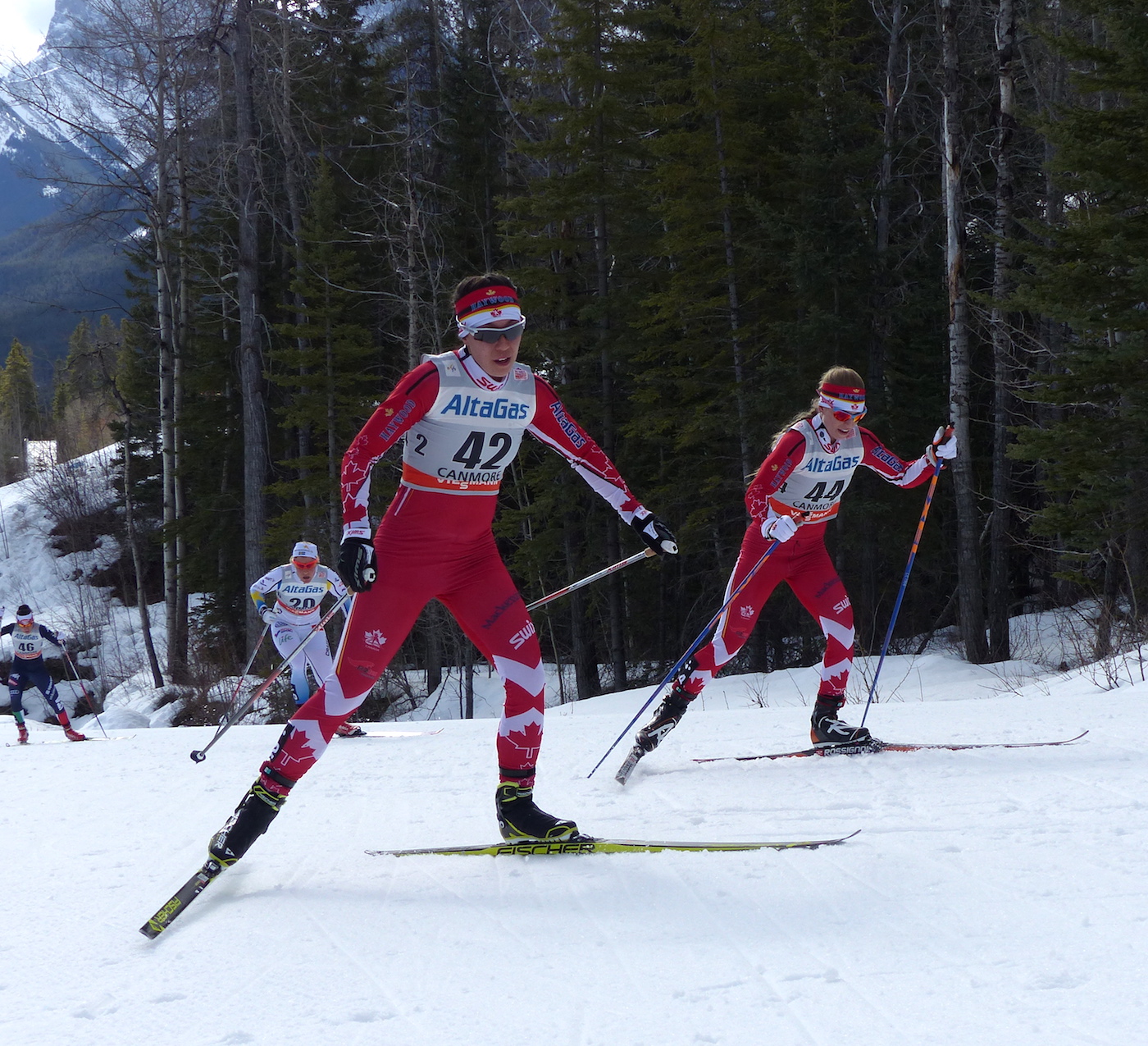
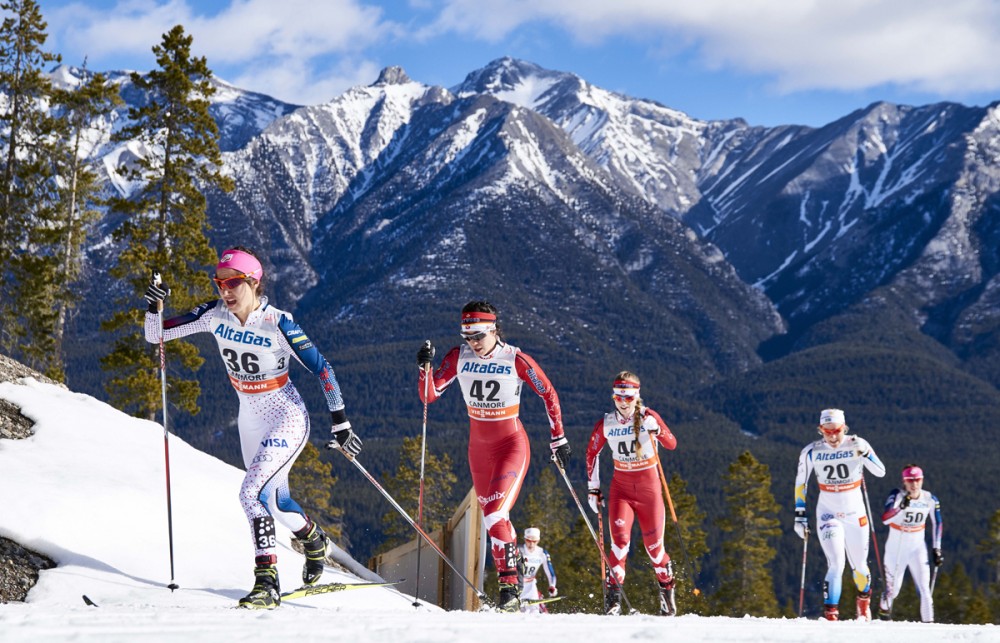
    Emily Nishikawa (42) and Canadian teammate Cendrine Browne (44) in the women's 15 k skiathlon at the 2016 Ski Tour Canada in Canmore, Alberta. (Photo: Peggy Hung)
    Emily Nishikawa (42) and Canadian teammate Cendrine Browne (44) in the women’s 15 k skiathlon at the 2016 Ski Tour Canada in Canmore, Alberta. (Photo: Peggy Hung)

    “It was not super-bad, but I’m excited to have Canadian women there with me,” Nishikawa said in a phone interview in October.  

    When she first spent a few months on the World Cup circuit following 2013 World Championships nearly four years ago, Nishikawa, now 27, had teammate Perianne Jones to look up to.

    “That was great to learn from her and have her there showing me the ropes of World Cup racing,” Nishikawa said.

    This season, she will be sharing her experience with the younger three.

    “I really don’t know how [Nishikawa] did it,” Browne, 23, of the Pierre-Harvey National Training Centre, said on the phone.

    All three said they view Nishikawa as a leader and mentor.

    “She’s much more calm than we are,” Browne said. “We are still all excited and sometimes a little bit stressed out. She brings something else to the group, she tells us some tricks sometimes, or tells us stuff we should do.”

    “Emily’s had a few years of experience now,” said Beatty, 22, of the AWCA. “And she’s been able to bring a wealth of knowledge of what we need to make that jump and help us with that.”

    “To have enough women to fill a relay team is awesome,” Nishikawa said in October of her three teammates (before MacIsaac-Jones was injured). “To improve the women’s program in Canada, we need to have women there [in Europe]. I’m really excited about it.”

    Preparing for Europe

    For Canmore-based Nishikawa, Beatty and MacIsaac-Jones, elevation training is an everyday activity, with an elevation of 1,400 metres (nearly 5,000 feet) at the front door and 2,800-metre peaks (9,000+ feet) visible from the couch. For Browne, who lives and trains near sea level in Quebec, elevation trips are an important development step.

    “This year is my third time in Park City, I feel already much better than the first year I was here,” Browne said during the team’s Utah camp in October.

    She completed two elevation camps this season: first in Park City, Utah, and in mid-November, 10 days in Davos, Switzerland, before the World Cup opener in Finland.

    There has been an increased emphasis on alignment camps this year, with more women training together. A two-week camp in Mont Tremblant, Quebec, was followed by two and half weeks at Park City in October. All the women were happy to spend more time with a bigger group.

    “I would like to train more with them because they’re stronger than the people on my team,” Browne said.

    An additional highlight from the Tremblant camp was the lake. “It was really nice to have the lake right there and go for a swim afterwards,” Beatty recalled. In and around Canmore, the water is colder, and “you just jump in and jump out,” she said.

    Nishikawa, Beatty, and MacIsaac-Jones added a summer snow camp to their schedule, going to New Zealand for three weeks of skiing in August, which they paid for themselves.
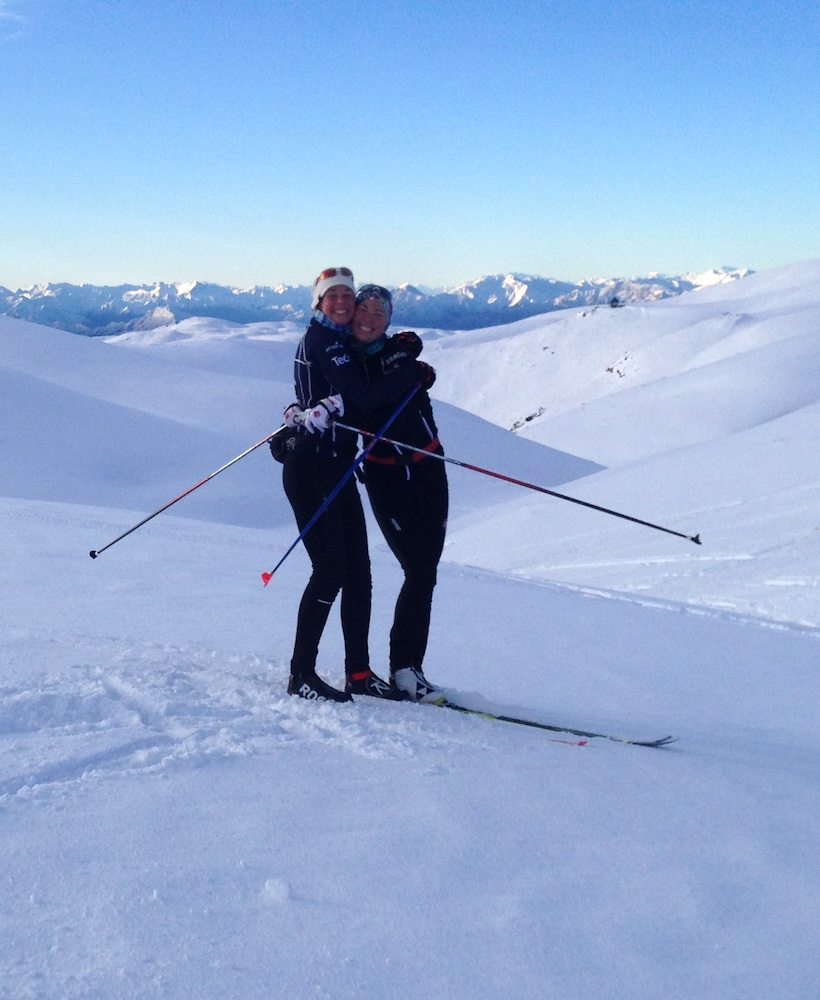
    Beatty and Macisaac-Jones appreciating the 'summer' snow in New Zealand (Photo: Emily Nishikawa)
    Beatty and MacIsaac-Jones appreciating the ‘summer’ snow in New Zealand in August. (Photo: Emily Nishikawa)

    “We rented our own car,” Beatty said. “We kind of were there without a coach, so it was a little bit scary thinking about it, but it went really smoothly and everyone was really helpful.”

    The Canadian Para-Nordic and biathlon teams were also there and provided some external support. For all three women, it was a volume block. “Lots of skiing and less intensity than in a regular block,” Beatty explained..

    “It was incredible,” MacIsaac-Jones reflected. “The conditions were amazing while we there and it was probably my best training camp of the season.”

    “That was my first time to New Zealand,” Nishikawa said. “It’s like the perfect training setup […] staying at Snow Farm Lodge. It was a really successful camp and I definitely want to go back there next year.”

    During the offseason, Beatty said she addressed an injury. She missed the final classic stage of Ski Tour Canada with back problems and worked through the summer realigning her classic posture to prevent a repeat.

    “When I did a classic time trial in NZ, it came back a little bit, but I’ve been working a lot on trying to strengthen my core and the areas around it. It doesn’t bother me for everyday training,” she said.

    The Park City alignment camp in October was fully supported by CCC, with 15 to 18 women training together when possible.

    “It’s nice to have such a big group to train together,” Beatty said of the camp. “To have so many girls all in one place.”

    MacIsaac-Jones made the biggest changes of the four this year, joining both the national team and, for the first time in her career, a training centre.

    “I guess the biggest difference would be having such a big group of coaches and physiologists and strength coaches and people to help me with my training,” MacIsaac-Jones said of the World Cup Academy.

    She estimated that her new program costs about the same as training with Rocky Mountain Racers, also based in Canmore, with the added national-team funding offsetting the higher fees for the Academy. But European travel adds to the costs as well.

    “At this moment, I’m budgeting about, my guess is around $6,000 for the Period 1 World Cup,” MacIsaac-Jones said in October.

    First Weekend
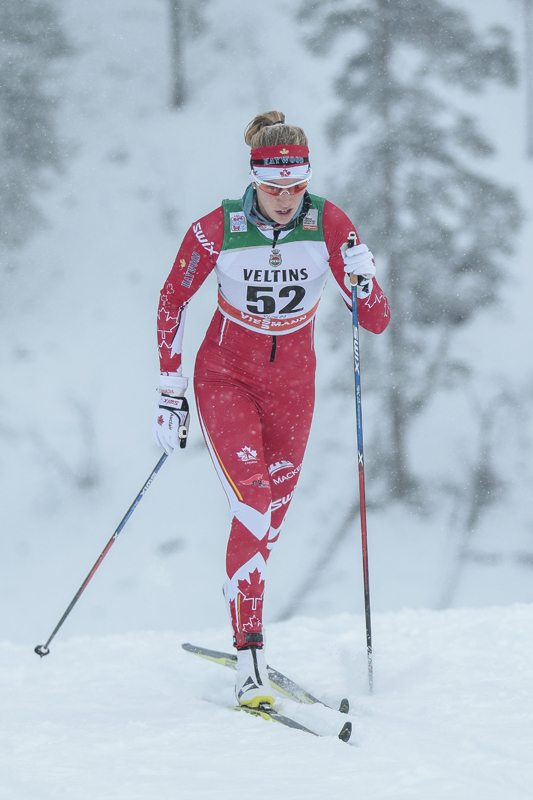
    Dahria Beatty racing to 50th in the classic sprint qualifier last Saturday at the first World Cup of the 2016/2017 season in Kuusamo, Finland. (Photo: Fischer/NordicFocus)
    Canada’s Dahria Beatty racing to 50th in the classic sprint qualifier last Saturday at the first World Cup of the 2016/2017 season in Kuusamo, Finland. (Photo: Fischer/NordicFocus)

    Beatty and Browne opened the season with the classic sprints in Kuusamo, Finland, last Saturday, Nov. 26, placing 50th and 62nd, respectively, in a stacked field.

    After the qualifier, Beatty explained she was “a lot less nervous” and had a better sense of how European World Cup sprints work after experiencing it for the first time.

    Now, “… I feel like I can treat these race starts more like any other race I would do!” she wrote.

    The next day on Sunday, Nov. 27, Beatty described being less-than-satisfied with her 10-kilometer classic race, where she placed 74th. (Browne placed 58th, just ahead of Nishikawa in 59th.)

    “The race didn’t going very well for me but my back’s not a problem, so that’s a big positive going forward,” Beatty explained. “At the start of the season one good race of two isn’t that unusual for me. I was happy with the sprint and I am really looking forward to the mini tour in Lillehammer.”

    Last season at the Ski Tour Canada, which doubled as World Cup Finals, five Canadian women completed the eight-stage Tour. Nishikawa, Browne and MacIsaac-Jones were three of them, along with Bouffard-Nesbitt and Canmore’s Annika Hicks. Beatty didn’t complete the final stage, but she notched a career-best 15th in the Canmore classic sprint.

    Asked how those World Cups starts affected her confidence for this season, Browne wrote, “I feel like I belong here and that I am a World Cup skier like all these other girls. I feel like I’m part of them now.”

    Heading into this season, Browne had 17 World Cup starts to her name, ahead of Beatty with 16 and MacIsaac-Jones with 15. Despite their collective experience, Browne and Beatty were glad to have Nishikawa’s guidance in Kuusamo.

    “I think the best thing Emily helped with this week was suggesting we get breakfast food to make in our condo,” Beatty wrote. “It definitely saves an extra stress on race mornings.”

    Nishikawa skipped the sprint to focus on the 10 k classic the next day.

    “It was great cheering on Dahria and Cendrine, and made me so excited to put a bib on!” Nishikawa wrote after watching the sprint. “It is lots of fun having them here and we are looking forward improving together as a team this season. We can’t wait for Maya to join us when her foot is healed up.”

    Potential Outlook

    All programs in all countries go through phases. Looking back a decade, the World Cup scene was very different.

    In 2005/2006, Norway had a rough year, most notably placing fifth in both genders at the Olympic relays in Torino, Italy. Despite health struggles, Marit Bjørgen did win the Overall World Cup despite (by six points over Canada’s Beckie Scott), but the country was feeling pain after a disastrous Olympics. With his first World Cup podium (in a skate sprint in March of that season), Canadian Devon Kershaw helped elevate a men’s program that had been largely funded by the women’s success. Also that year in Borlänge, Sweden, in the same race that Kershaw broke through, Kikkan Randall recorded her first World Cup top 10, placing fifth in the skate sprint. At the time, she was the star of a tiny U.S. team. Then at the iconic Holmenkollen women’s 30 k freestyle, Italy was the only country with two athletes in the top 10.

    Will 2016/2017 be the watershed year for the Canadian women’s team? As with the continuously emerging U.S. women’s team, we won’t know for a few years, but it will be fun to watch.
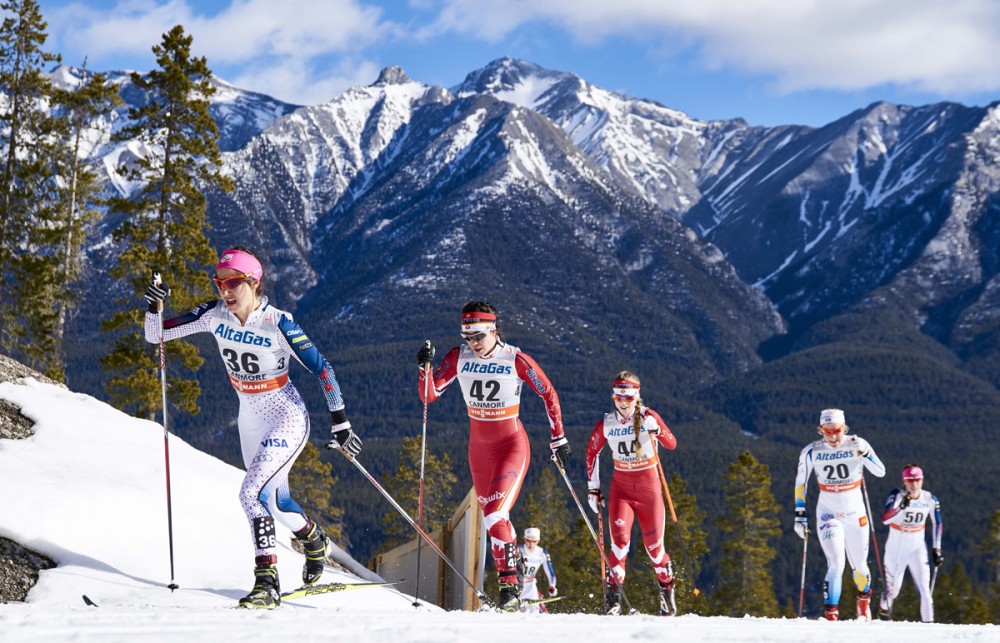
    American Chelsea Holmes leads Canadians Emily Nishikawa (42) and Cendrine Browne, and Hanna Falk of Sweden, during the women's 15 k skiathlon on Wednesday in Canmore, Alberta. (Photo: Fischer/NordicFocus)
    Canada’s Emily Nishikawa (42) and Cendrine Browne (44) on the heels of American Chelsea Holmes, followed by Sweden’s Hanna Falk (20) during the women’s 15 k skiathlon at the 2016 Ski Tour Canada in Canmore, Alberta. (Photo: Fischer/NordicFocus)
  • 10 Questions with Men’s SuperTour Leader Reese Hanneman

    10 Questions with Men’s SuperTour Leader Reese Hanneman

    Reese Hanneman racing at the world-famous Holmenkollen last March, when he placed 56th in the 50 k classic mass start. (Photo: Jennie Bender)
    Reese Hanneman (Alaska Pacific University) racing at the world-famous Holmenkollen last March, when he placed 56th in the 50 k classic mass start. (Photo: Jennie Bender)

    Busy times call for pointed questions. We caught up with Reese Hanneman, the men’s SuperTour leader from last season — which earned him World Cup starts this November and December — shortly after he arrived in Muonio, Finland, 11 time zones away from his home in Anchorage, Alaska.

    To get there, Hanneman, an Alaska Pacific University (APU) skier who turns 25 on Christmas, had layovers in Seattle, Reykjavík (Iceland), Oslo (Norway), and Helsinki (Finland) before finally arriving in Rovaniemi — about three hours south of Muonio by car.

    “I had to pay baggage fees for my three bags twice because they said they couldn’t print that many connections on the bag tags, which I think was bogus,” Hanneman wrote in an email.

    But the defending classic-sprint national champion (who podiumed in all four events at 2014 U.S. nationals) made it and has been training on snow to prep for the first official races of the season next weekend in Kuusamo, Finland. Hanneman spent most of last March in Europe and finished the 2013/2014 season (with the exception of Super Tour Finals) on the World Cup circuit, racing in Lahti, Finland; Drammen, Norway; Holmenkollen in Oslo; and Falun, Sweden, at World Cup Finals.

    ***

    1. What’s one essential you packed for the next couple months in Europe?

    “Hot sauce; I’ve got a full bottle ready to go. It’ll get you out of any potentially bland situation.”

    Reese Hanneman doesn't leave for Europe without a bottle of hot sauce. How to pick just one...
    Reese Hanneman doesn’t leave for Europe without a bottle of hot sauce. How to pick just one…

    2. What part of Euro life or culture are you most excited for?

    “Bathrooms you can’t even turn around in. Oh wait, ‘most’ excited? Sharing tiny beds with Hoff.”

    Shower, sink and toilet all within inches of each other. Everything's tinier in Europe. (Photo: Houzz.com)
    Shower, sink and toilet all within inches of each other. Everything’s tinier in Europe. (Photo: Houzz.com)

    3. What are you going to miss most about home?

    “Being able to get away. Europe is pretty much people just everywhere.”


    Reese Hanneman in Muonio. (Photo: Erik Bjornsen)
    Reese Hanneman in Muonio. (Photo: Erik Bjornsen)

    4. What’s one race/venue that you’re particularly excited for in the next several weeks, and why?

    “The opening weekend in Kuusamo is gonna be pretty sick; classic sprint and 15k classic. But then of course racing in Lillehammer will be epic.”


    5. What’s one thing you’ve been working hard on, technically or otherwise, with your skiing this offseason?

    “I focused on my skating, like I have been for a few years now. Just trying to refine my technique so I can bring my efficiency up to par with my classic skiing.”


    6. What’s your “secret weapon” for a successful start on the World Cup circuit this season?

    “I think I am at a great spot… I don’t really have the expectations of doing really well, but I have enough World Cup experience under my belt and the confidence that I can hang with these guys, that I might be able to put it together. So I would say, I have the potential but not the pressure.”


    7/8. How nervous do you get for the first race of the season? How different is it starting the season in Finland vs. Montana?

    “Usually, I get nervous only if I am putting a lot of pressure on a certain race. But a lot of times for me, the first race of the year kind of seems like it’s too soon, like I haven’t gotten myself fully amped up for it yet. Which actually can end up working pretty well. I am really excited to be here on the World Cup instead of in West, but to be honest, I will try to approach it the same way mentally. I guess that’s easy to say now, but I might start getting psyched when I see all the TV cameras and cable cams and wax semis in Kuusamo.”

    “I am really excited to be here on the World Cup instead of in West, but to be honest, I will try to approach it the same way mentally. I guess that’s easy to say now, but I might start getting psyched when I see all the TV cameras and cable cams and wax semis in Kuusamo.” — Reese Hanneman, APU skier and 2013/2014 men’s overall SuperTour winner


    9. What will you miss about West Yellowstone?

    “Bison burgers and milkshakes after the races. And seeing homies from all over the ski world.”

    Mmm... bison burgers, a West Yellowstone staple. (Photo: BisonBasics.com)
    Mmm… bison burgers, a West Yellowstone staple. (Photo: BisonBasics.com)

    10. If you could ski like any famous World Cup skier (past or present), who would it be?

    “[Swedish four-time Olympic gold medalist and three-time world champion Thomas] Wassberg was a boss. That old school classic technique… unreal.”

    Thomas Wassberg (Photo: Flickr)
    Swedish cross-country legend Thomas Wassberg (Photo: Flickr)

    Bonus: Who’s your World Cup crush?

    “Oh man… haha. I’ve had a thing for [Norway’s] Marthe Kristoffersen since like back at my first World Juniors. She doesn’t even have to try. Six years later, I’m still waiting to be introduced.”

    Marthe Kristoffersen, 25-year-old Norwegian National Team member (Photo: FIS)
    Marthe Kristoffersen, 25-year-old Norwegian National Team member (Photo: FIS)

    Last word: “I’d like to give a shoutout to a couple people who have been crucial in helping me get to this point. Alaska Pacific University has invested a lot into me, and I wouldn’t be here without them and my coach Erik Flora. And then my sponsors at the Allergy, Asthma and Immunology Center of Alaska, The Alaska Community Foundation, Alaska Children’s Eye, Girdwood 2020, PDC Engineers, and the Alaska Club for their support.”

    2013/2014 overall SuperTour leader Reese Hanneman (APU) racing in the classic sprint at SuperTour Finals on March 23 in Anchorage, Alaska. He went on to win the final. (Photo: Rob Whitney)
    2013/2014 overall SuperTour leader Reese Hanneman (APU) racing in the classic sprint at SuperTour Finals on March 23 in Anchorage, Alaska. He went on to win the final. (Photo: Rob Whitney)
  • 10 Questions with Women’s SuperTour Leader Caitlin Gregg 

    10 Questions with Women’s SuperTour Leader Caitlin Gregg 

    Brian Gregg cheers on Caitlin at SuperTour Finals in Anchorage, Alaska. (Photo: Madshus/Facebook)
    Overall women’s SuperTour leader Caitlin Gregg racing at SuperTour Finals in Anchorage, Alaska, while husband Brian Gregg (l) cheers her on. (Photo: Madshus/Facebook)

    Busy times call for pointed questions. We caught up with Caitlin Gregg, the women’s SuperTour leader from last season — which earned her World Cup starts this November and December — before she jetted to Muonio, Finland, nearly 4,000 miles from her home in Minneapolis.

    On Sunday morning, she flew out of Calgary, Alberta, after spending about a month in nearby Canmore (also about 4,000 miles from Muonio), where she trained on snow at Frozen Thunder with her husband and Team Gregg teammate, Brian. She purposely scheduled her first layover in Minneapolis to spend about five hours with Brian before flying to Paris that night.

    In an email, Gregg explained she’d arrive in Paris at 8:35 a.m. Monday morning, leave for Helsinki two hours later and arrive in Finland later that afternoon. From there, she’d fly north to Rovaniemi, Finland, arriving around 5:40 p.m., and then planned to drive about three hours farther north or Muonio. In total, she figured she was in for 36 hours of travel.

    Gregg, who won the U.S. nationals 20-kilometer freestyle mass start and placed second in two other events at nationals last January, celebrated her 34st birthday on Nov. 7.

    ***

    Caitlin Gregg gets a bug hug from her husband at the finish at last year's West Yellowstone SuperTour opener, where she won both the skate sprint and 10 k skate in Nov. 2013. (Courtesy photo)
    Caitlin Gregg gets a bug hug from her husband at the finish at last year’s West Yellowstone SuperTour opener, where she won both the skate sprint and 10 k skate in Nov. 2013. (Courtesy photo)

    1. What’s one essential you packed for the next couple months in Europe?

    “The Samsung phone that Brian got at the Olympics. We got a T-Mobil plan for it so that I can use to keep in touch with him while I am gone! He also loaded videos and movies for me to watch 🙂 I am also bringing a good pencil and a sketch pad. Drawing helps me relax!”


    2. What part of Euro life or culture are you most excited for?

    “All of it!!! Everything still seems new to me so it’s all fun. I am really looking forward to the breakfasts (well all meals!) being prepared and ready to eat when I wake up! I know by the end of the trip I will look forward to making my own meals, but right now nothing sounds better than a pre-made buffet with good bread, jam and cheese :)”


    3. What are you going to miss most about home?

    “This one is pretty easy…Brian! There is nothing like traveling the world and racing on the World Cup with your husband!”


    Gregg’s travel essential: “A good pencil and a sketch pad. Drawing helps me relax!”


    4. What’s one race/venue that you’re particularly excited for in the next several weeks, and why?

    “Lillehammer [Dec. 5-7], I hear it is a hilly course and there is a 5K Skate which is my favorite format. Plus it’s cross country ski racing in Norway which is always incredible.”


    5. What’s one thing you’ve been working hard on, technically or otherwise, with your skiing this offseason?

    “Last year was all about skate altitude distance racing, trying to make the Sochi 30K, so this year I have been much more ‘well-rounded’ in my training approach with more classic and sprint specific workouts! I obviously love skate skiing, but it’s be fun to mix the focus up a bit! So trying to be more well-rounded in my race results.”


    6. What’s your “secret weapon” for a successful start on the World Cup circuit this season?

    “The ‘Fish Factor!’ Those of us from the original CXC Team will all agree that we were at a HUGE advantage having [U.S. Ski Team coach Bryan] Fish as our coach and waxing our skis. I am really excited to be working with Fish again this year and on the World Cup! I have a ton of confidence in my skis and my waxing heading into the season which feels great!”


    Caitlin Gregg (front) with some of her biggest fans at last year's SuperTour opener in West Yellowstone, Mont. (Courtesy photo)
    Caitlin Gregg (front) with some of her biggest fans at last year’s SuperTour opener in West Yellowstone, Mont. (Courtesy photo)

    7/8. How nervous do you get for the first race of the season? How different is it starting the season in Finland vs. Montana?

    “I always get nervous no matter what the race…but I absolutely love racing! I usually start the season pretty strong and have had my best races early on in West Yellowstone. I am looking forward to a new venue and racing at a lower elevation to start off the season. Obviously the competition will be very strong and very deep but I like the challenge and the unknown.”


    9. What will you miss about West Yellowstone?

    “I will miss all the awesome cheering from my Loppet Nordic Racing teammates and all the familiar faces on the trails and at the first races in West Yellowstone. It’s great to start the season with so much enthusiasm for the sport!”


    10. If you could ski like any famous World Cup skier (past or present), who would it be?

    “Charlotte Kalla! I love how smooth and effortless she makes skiing fast look!”

    Sweden's Charlotte Kalla racing to silver in Thursday's 10 k classic individual start at the 2014 Olympics in Sochi, Russia.
    Sweden’s Charlotte Kalla racing to silver in the 10 k classic individual start at the 2014 Olympics in Sochi, Russia.

    Bonus: Who’s your World Cup Crush?

    “Axel Teichmann [a two-time world champion and two-time Olympic silver medalist from Germany]. Brian knows [this] and makes fun of me. The crush goes way back to an elevator ride at the 2007 World Championships with Laura Valaas.”

    Germany's Axel Teichmann after winning the second stage of the Tour de Ski, the 15 k classic pursuit, on Friday.
    Germany’s Axel Teichmann (17) after winning the second stage of the 2011 Tour de Ski, the 15 k classic pursuit.