From the FasterSkier archive — posts syndicated from athletes’ and coaches’ own blogs between 2004 and 2012, kept online as published. Current coverage is at fasterskier.com.

Tag: World Cup Relay

  • Italy Victorious in Italy! Men’s World Cup Relay in Toblach/Dobbiaco

    Italy Victorious in Italy! Men’s World Cup Relay in Toblach/Dobbiaco

    This World Cup coverage is made possible through the generous support of Marty and Kathy Hall and A Hall Mark of Excellence Award. To learn more about A Hall Mark of Excellence Award, or to learn how you can support FasterSkier’s coverage, please contact info@fasterskier.com.

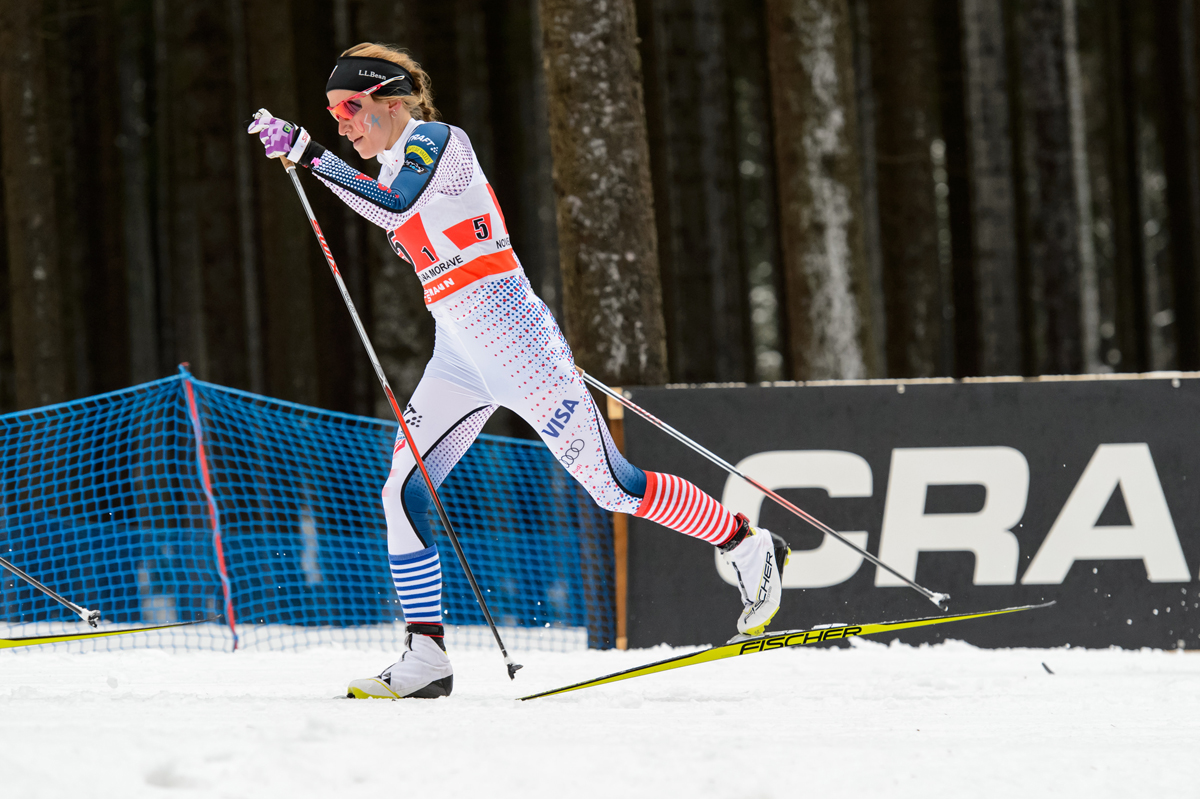
    Federico Pellegrino (ITA) displayed brilliant tactics, unmatched speed, and Latin flare in securing the relay win in front of an adoring crowd at Dobbiaco, Italy. (Photo: © Modica/NordicFocus)

    The FIS World Cup calendar refers to this village as “Toblach,” but there’s more than one name for this wonderful, mountainous place. Located in the Sud Tirol of Northern Italy—a region suspended between Italy and Austria—this is a place where more than one language is spoken, more than one cuisine is served, and each town is known by more than one name (one German, one Italian). FIS may call it Toblach (the German-language version), but Italians, themselves, would likely call it “Dobbiaco.”

    Today, the Italians earned the right to call it whatever they want, as the Italy I relay team of Dietmar Noeckler, Francesco de Fabiani, Simone Dapra, and Federico Pellegrino was victorious in the World Cup 4 x 7.5 k Relay (the first World Cup relay victory for Italy since 2006). They were followed across the finish line by second place Sweden (Eric Rosjoe, Calle Halfvarsson, Johan Haeggstroem, Edvin Anger) and third place Norway I (Sjur Roethe, Didrik Toenseth, Simen Hegstad Krueger, Harald Oestberg Amundsen).

    Nordiq Canada did not enter a men’s relay team in Toblach, but the team from the United states (Hunter Wonders, Scott Patterson, Finn O’Connell, and Kevin Bolger) benefitted from a late race resurgence that saw them press forward to finish ninth.

    Men’s 4 x 7.5 k Relay

    Norwegian skiers may appear to have all the advantages, but each Norwegian competitor does suffer one distinct disadvantage . . . it’s the need to constantly beat the other Norwegian skiers. With the possible exception of current World Cup leaders Johan Hoesflot Klaebo and Paal Golberg, Norwegian skiers always seem to be auditioning for World Championship spots. With two Norwegian teams entered in today’s relay, that seemed like a situation likely to keep the pace high. That sort of aggressive pace-making allows a team like Italy to remain patient, to play defense, to mark the moves of more aggressive skiers, and to put their nation’s premier sprinter into the anchor leg so that he can unleash a sprint. The challenge for Italy, then, would be figuring out how to stay close while two teams of ambitious Norwegians slugged away at each other.

    First Leg

    Erik Valnes (Norway II) pushed the pace in the first classic leg, gapping the main field and establishing an 11 second lead at the exchange. Wonders had fallen off the pace halfway through the first leg, and was already 20 seconds behind by the 6.4 k checkpoint. By the time Wonders tagged Patterson to begin the second leg, USA was 33 seconds back in 11th place.
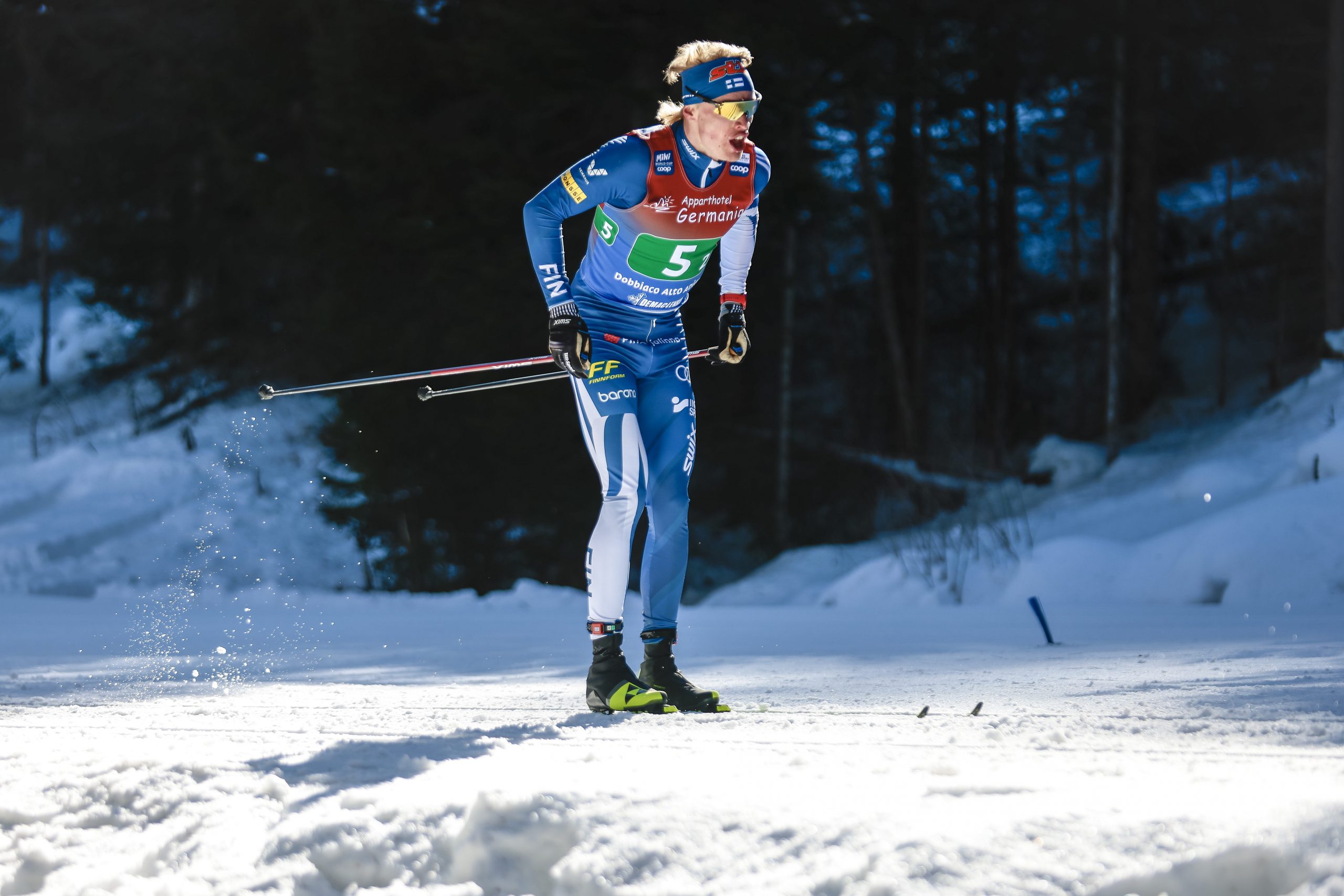
    Iivo Niskanen (FIN) animated the second classic leg, pulling the chase group up to Hans Christer Holund (Norway II) and bringing the field back together at the halfway point. But the Norwegian teams weren’t done slugging it out just yet. (Photo: Modica/NordicFocus)
    Second Leg

    Inheriting Valnes’ lead from the first leg, Hans Christer Holund (NORWAY I) continued increasing the gap ahead of the chase group. Most skiers in the second leg would’ve looked to classic specialist, Iivo Niskanen (FIN) to instigate a chase of the leader, though Niskanen seemed content to linger at the rear of the chase group. The first half of Niskanen’s leg seemed to be more of a training ski for him, but at the end of his first lap he unleashed an attack, setting off in pursuit of Holund. Calle Halfvarsson (SWE) followed Niskanen, and the field began to string out. In only a few minutes, Niskanen was able to close the gap to Holund (leading De Fabiani, and Halfvarsson). Midway through the second lap, all the leaders had come back together.
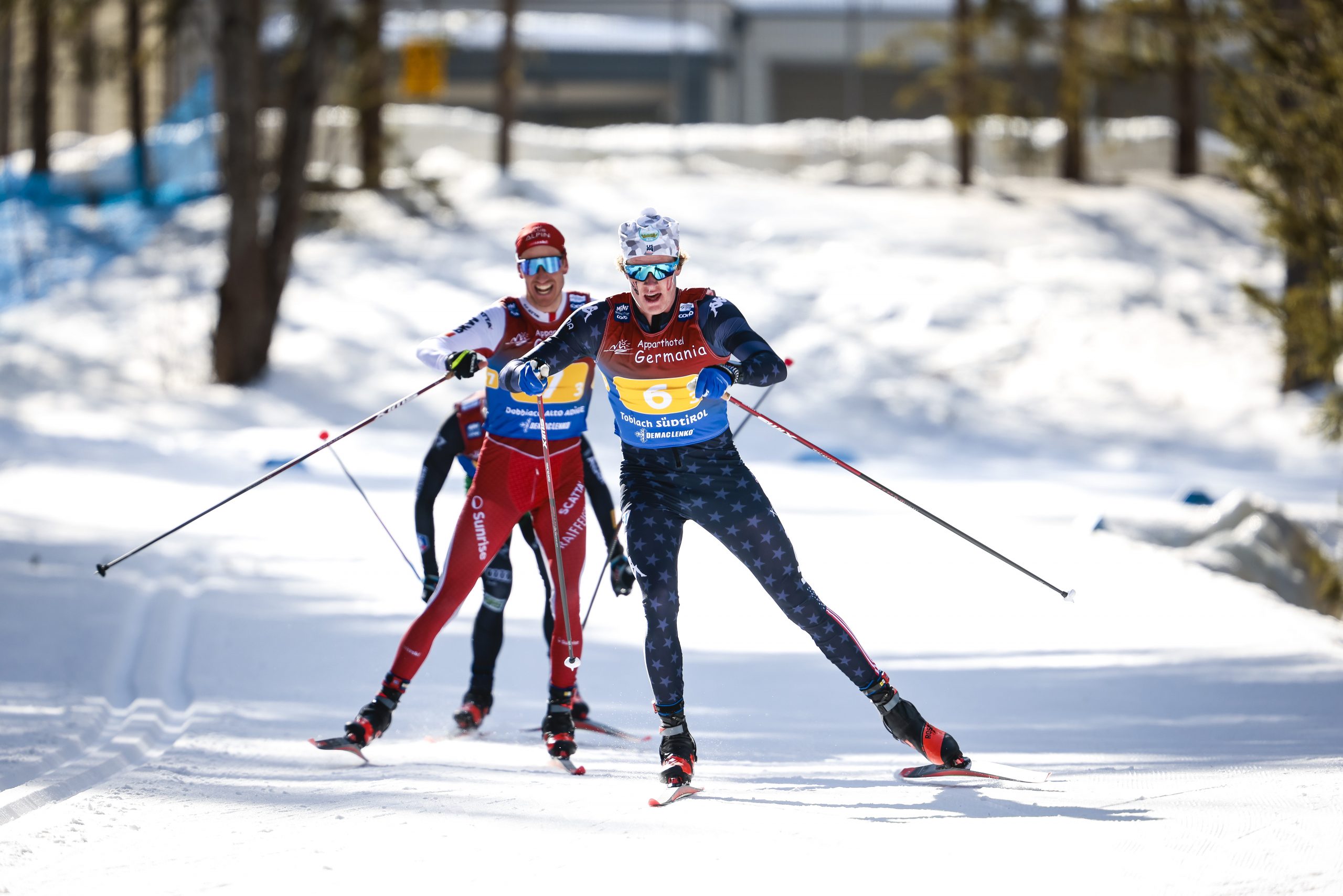
    Finn O Connell (USA) took advantage of a lull at the front of the race to re-establish contact with the chase group. His strong skiing in the third leg brought Team USA up to ninth place. (Photo: Modica/NordicFocus)
    Third Leg

    Norway returned to the front at the beginning of the third leg, led by Krueger who clogged the front and slowed the pace on narrower skate tracks that included the classic tracks of the earlier legs. World Cup skiers are certainly capable of skating right through the classic tracks, but at this point in the race all seemed content to follow a more moderate pace. Norway certainly had skiers fast enough to push the pace, but somehow a decision was made to slow things down. As it turned out, this was exactly the break in the action that the Italian team needed.

    Ultimately, Krueger did markedly increase the pace up the main hill, surprising his Norway II rival, Iver Tildheim Andersson, who struggled to hang on to the rear of the lead group. Despite being a World Cup winner this season, Andersson is most likely being left out of Norway’s World Championship team. That may have inspired him to drive back into contention on the consequential downhill . . . he rocketed into second as the third leg neared its end. Italy fell off the pace, and the lead group had shrunk to six as the racers entered the stadium for the final exchange.

    Anchor Leg

    Norway I handed off a lead of a few seconds to the final skier, Amundsen. Norway II blew the exchange and exited the stadium at the back of the lead group. The cagey veteran, Pellegrino, was able to overcome the gap with which Italy had entered the final exchange; he maneuvered back into contention and settled into the lead group. With two 3.75 k laps remaining, Amundsen found himself in a not-unexpected predicament: a distance specialist surrounded by rival anchor leg skiers who are primarily sprinters: Edvin Anger (SWE), John Maki (FIN), Richard Jouve (FRA), and the always-dangerous Pellegrino.
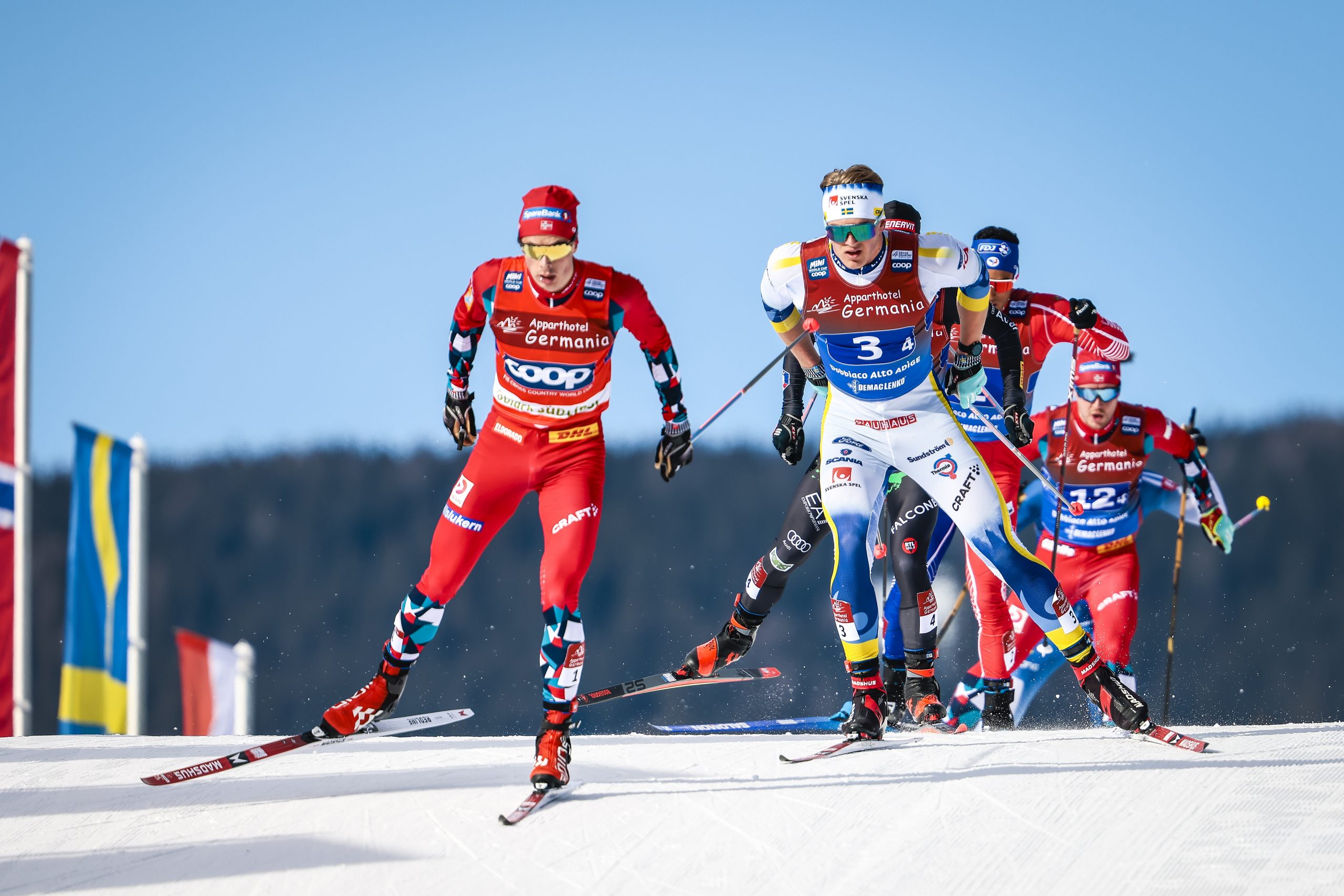
    Harald Oestberg Amundsen (NOR) led most of the anchor leg, hoping to tire the sprint specialists surrounding him. He’s followed by Edvin Anger (SWE), Federico Pellegrino (ITA) Richard Jouve (FRA) and Sindre Bjoernestad Skar (NOR), and Joni Maki (FIN). (Photo: Modica/NordicFocus)

    Amundsen established a significant gap at the beginning of the anchor leg, making it appear as though the finish could be a foregone conclusion. Spectators have seen Norway pull away so many times in the final leg of a relay, why would this day be any different? But Jouve recognized the chance to ski France onto the podium if he, himself, were the only sprinter brave enough to drive forward. Jouve set off in lone pursuit of Amundsen, leaving other strong sprinters in the chase (Maki, Pellegrino, Anger, Skar) to consider their options, to evaluate their strength, and to decide whether or not sprinting for third would be satisfactory.

    Jouve made contact with Norway (Amundsen), putting himself in position to contend in a final sprint (in which he would certainly be the favorite). Responding to Jouve’s presence, Amundsen seemed to sit up a bit, allowing the lead group to come back together with one lap remaining. Amundsen may have hoped to wear out the sprinters, but he had to know that one attack would not be enough. There would need to be more action in the final lap. The only real distance skier among the sprinters, Amundsen would need to go back to the lead: he’d have no choice. Amundsen went to work, gradually ratcheting up the pace, hoping to take the final sting out of the sprinters. Knowing how the final kilometers would certainly play out, Pellegrino marked Amundsen as Jouve came apart (his earlier efforts proving to have been too taxing to keep up with Amundsen’s late-race pace). Likewise, Maki and Florian Notz (GER) also lost contact with the leaders, and the final group had shrunk to four: Amundsen, Skar, Anger, and Pellegrino.

    Who knows why he would have chosen to do so, but Anger—a sprinter whose best strategy would’ve been to let others lead, and sprint at the last moment—led out the sprint with nearly a kilometer left to race. Way too early, way too far . . . and Pellegrino was only too happy to let Anger do the work. The finish of the relay is the same as the sprint course, and Pellegrino knew perfectly well how to construct his finishing sprint. Accelerating up the final hill, Pellegrino surged around Anger, squeezing the Swede into a position that pinched the line available to both Norwegian teams, delaying them just long enough for Pellegrino to get away. It was; of course it only succeeded because of Pellegrino’s unique prowess as both a sprinter and a distance skier. It’s supremely difficult to be in that position, to have that energy left, to know how to do what Pellegrino did, and then to pull it off in front of his Italian fans.

    The relay win in Dobbiaco represented the first Italian victory in a World Cup relay since 2006. It’s unlikely that Italy will be able to pull off a similar win at the World Championships in three weeks when Norway puts all its strongest skiers onto one team, but for the day in Toblach, the sun definitely shined on the Italians.

    Pellegrino revealed how much thinking and calculating goes into racing at this level. He commented that the team needed to ski intelligently and defensively to remain in contention: “And they did,” he beamed. He commented that he hoped his skis would be fast enough: “And they were,” he grinned. “I only needed to stay with the strongest team in the world, and then be the strongest.” He was . . .

    “Victory for us, victory for the whole Italian team,” De Fabiani was heard to say. Let the Italian celebrations commence . . .

    Men’s 4 x 7.5 k Relay RESULTS
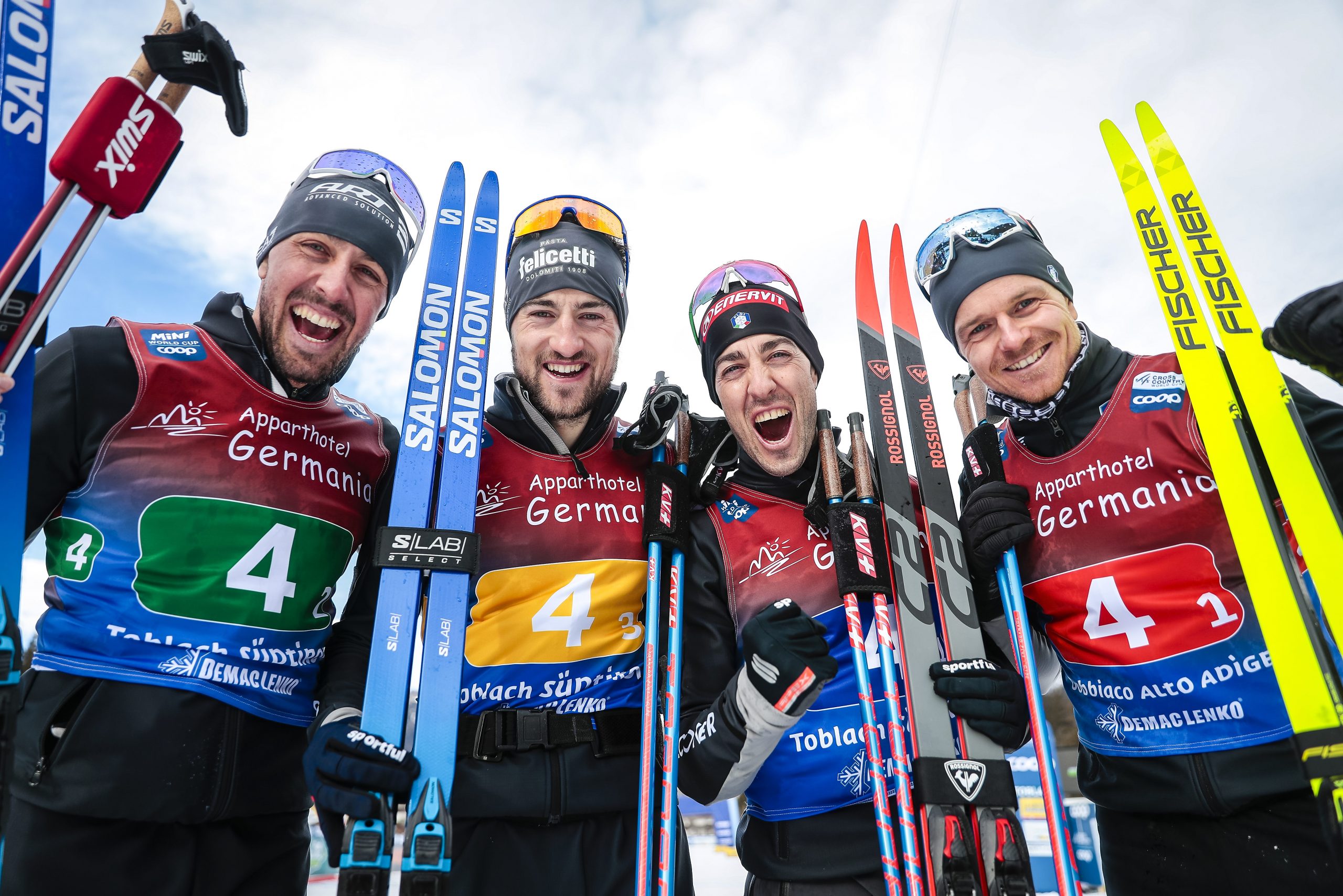
    Toblach, Italy: Francesco De Fabiani (ITA), Simone Dapra (ITA), Federico Pellegrino (ITA), and Dietmar Noeckler (ITA) celebrate Italy’s first World Cup relay win since 2006. (Photo: Modica/NordicFocus)
  • U.S. Women Step Up to Best-Ever Second in Relay; Norway Seals the Deal in Nove Mesto

    U.S. Women Step Up to Best-Ever Second in Relay; Norway Seals the Deal in Nove Mesto

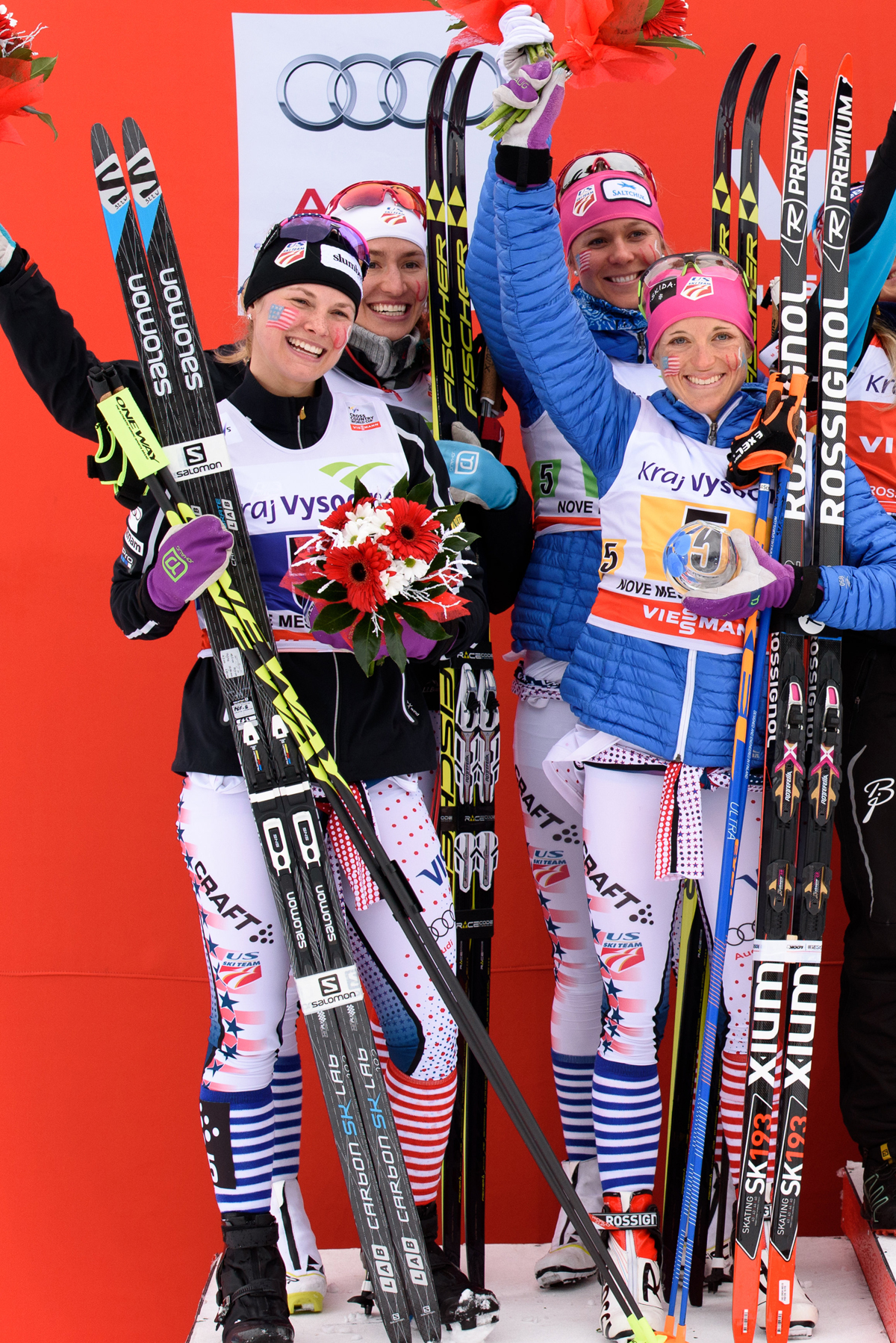
    The U.S. women placed a historic second for their best-ever relay finish on Sunday at the World Cup 4 x 5 k in Nove Mesto, Czech Republic. From left to right: Jessie Diggins, Sophie Caldwell, Sadie Bjornsen, and Liz Stephen. (Photo: Fischer/NordicFocus)
    The U.S. women placed a historic second for their best-ever relay finish on Sunday at the World Cup 4 x 5 k in Nove Mesto, Czech Republic. From left to right: Jessie Diggins, Sophie Caldwell, Sadie Bjornsen, and Liz Stephen. (Photo: Fischer/NordicFocus)

    From a clinical standpoint, the women’s 4 x 5-kilometer relay in Nove Mesto, Czech Republic, on Sunday became a time trial for the Norwegian women. That TT began 2.5 k into the first leg, as Norway’s Ingvild Flugstad Østberg came through the stadium for her second lap, 0.4 seconds back in second place, behind Finland’s Anne Kyllönen. By the time Østberg tagged off to Heidi Weng, she had a 27.5-second gap on the next-closest team. The combination of the four Norwegian speedsters, Østberg, Weng, Therese Johaug, and Astrid Uhrenholdt Jacobsen, won the relay in 50:17.2. Norway, with Sunday’s win, extended their unbeaten relay streak to 10.

    But sport, at it’s best, is about drama and emotion. That type of racing belonged to the U.S. women’s relay team.

    With a combined effort from Sophie Caldwell, Sadie Bjornsen, Liz Stephen, and Jessie Diggins, the U.S. women’s team placed second in a relay for the first time, after having reached the podium three times before in third. Diggins anchored them to the next step up, finishing 42.1 seconds after Norway and 13.8 seconds ahead of Finland, the team that beat them for second in the last World Cup relay in Lillehammer, Norway. On Sunday, Finland fell off the U.S. pace and settled for third, 55.9 seconds behind Norway. (In the last three World Cup relays, Finland has finished second to Norway.)

    Whether or not it was considered an upset is debatable, as podiums for the U.S. women’s relay team have become a staple of their success. But anytime a relay is on the schedule, they are now considered podium favorites. Of the last five women’s World Cup relays, Sunday marked the Americans’ fourth podium.

    Four Legs to Go

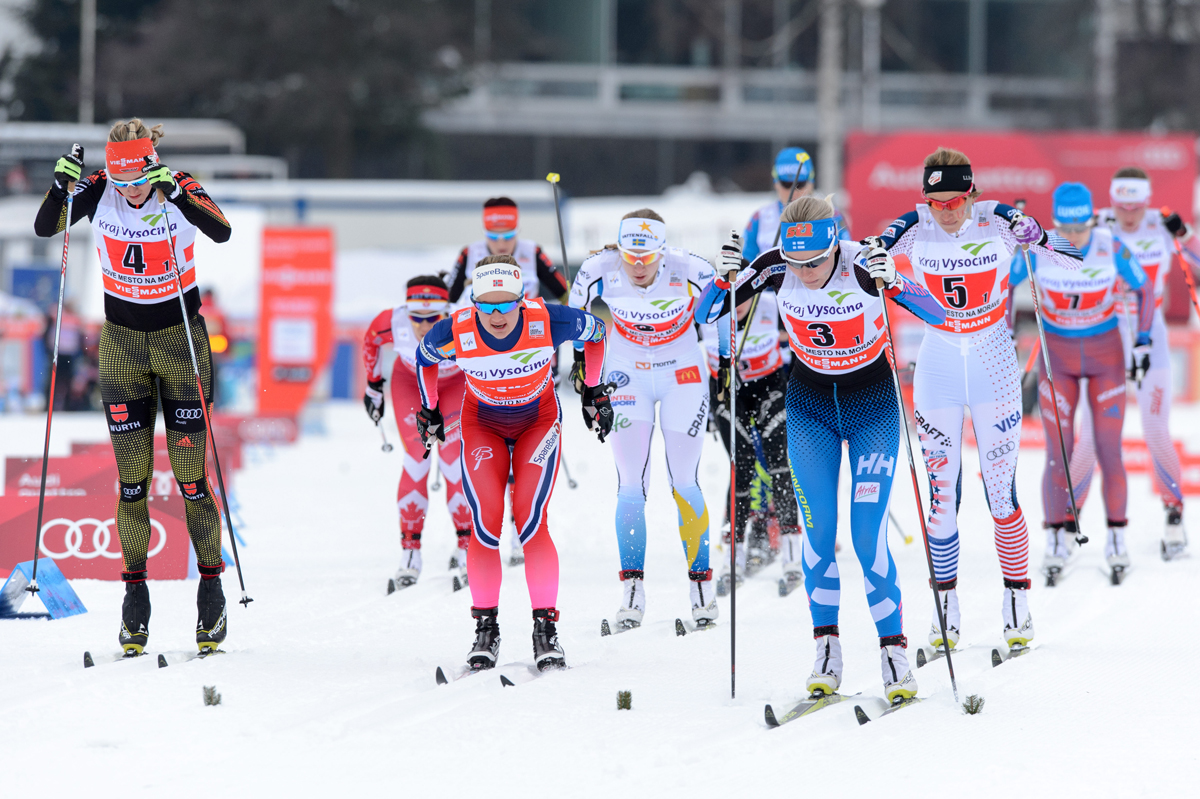
    The start of the women's World Cup 4 x 5 k relay on Sunday in Nove Mesto, Czech Republic, with American Sophie Caldwell (bib 5) following Finland's Anne Kyllönen (3) while Norways' Ingvild Flugstad Østberg (in red) and Germany's Denise Herrmann (4) also lead the way. (Photo: Fischer/NordicFocus)
    The start of the women’s World Cup 4 x 5 k relay on Sunday in Nove Mesto, Czech Republic, with American Sophie Caldwell (bib 5) following Finland’s Anne Kyllönen (3) while Norways’ Ingvild Flugstad Østberg (in red) and Germany’s Denise Herrmann (4) also lead the way. (Photo: Fischer/NordicFocus)

    The newest addition to the relay, Caldwell skied the opening “scramble” classic leg, keeping the U.S. in contention and podium within sight.

    Initially, Germany’s Denise Herrmann and Finland’s Kyllönen set the pace, with a large group of trailing skiers in their draft. Caldwell came through the 2.5 k mark in sixth place, 1.2 seconds back — striding within a long line of teams about to be steadily broken apart.

    Through the stadium, Østberg led a group of nine teams, all within 1.6 seconds of the lead. This is when Østberg made her move, showing her strength at the front. Half a kilometer later, Caldwell was gapped by 7.8 seconds. The U.S. Ski Team (USST) sprinter remained in a tight group, which included Germany I, Finland, Germany II, and Sweden, with the remaining teams following within sight.

    “I assumed that someone was gonna start pushing the pace at some point, but I didn’t anticipate [Østberg] taking off at that speed,” Caldwell recalled during a phone interview with the rest of her relay teammates. “I knew that, while it would’ve been awesome to try to keep up with her, trying to keep up with her and then imploding would’ve been a lot worse than trying to stay with that second-place group and coming in in a solid position. So instead I just focused on staying with those next girls and trying to hold off the people behind us.”

    U.S. Women’s Coach Matt Whitcomb has shepherded the team along as podiums and individual top-20 results have become regular occurrences in recent years. In a phone interview on Sunday, he reduced the team’s relay strategy to what he referred to as a game of contact.

    “When you can hand off to your teammate with one of the key players in contact with you, you do them a huge favor,” he said. “They can just hop in the draft or work with that team … It’s a big piece of relay. It’s not just head down, hammer. You have to know when to hammer, when to strategically sit in and recover, and when to attack.”

    Caldwell kept contact and pace, keeping her sight on the relay’s long-term endgame. She tagged off to Bjornsen in third place, right there with Germany I in second, and 27.9 seconds behind Norway.

    Next up, Bjornsen

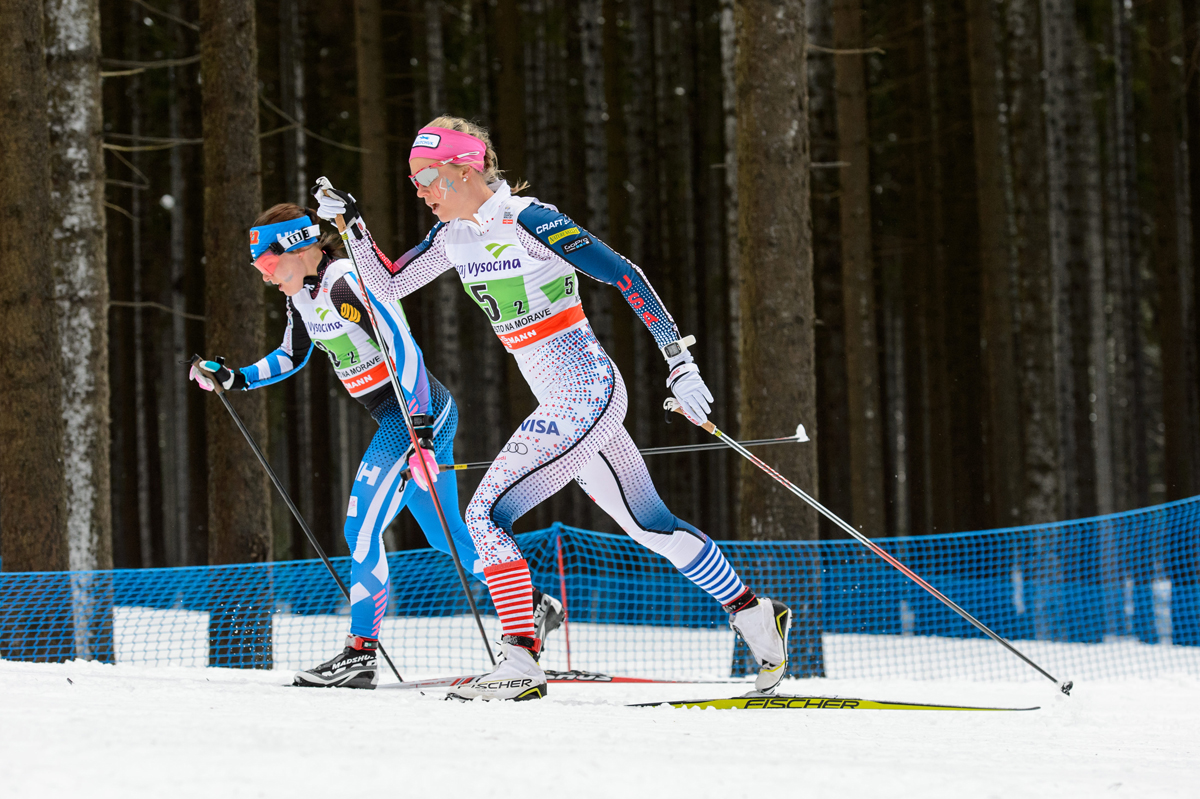
    Sadie Bjornsen (in white) racing with Finland's Krista Parmakoski during the second leg of the women's 4 x 5 k World Cup relay on Sunday in Nove Mesto, Czech Republic. (Photo: Fischer/NordicFocus)
    Sadie Bjornsen (in white) racing with Finland’s Krista Parmakoski during the second leg of the women’s 4 x 5 k World Cup relay on Sunday in Nove Mesto, Czech Republic. (Photo: Fischer/NordicFocus)

    According to Whitcomb, Bjornsen’s classic leg proved to be another turning point.

    “When Sadie got tagged off in the position that Sophie handed it to her, it was just a sensation of confidence, knowing that Sadie was no longer chasing, she was going to be commanding with Finland,” he said. “And they skied a pretty exciting race. When one was going a little bit too slow, the other one would attack and they just spent the whole race trading attacks.”

    Bjornsen skied a leg that provided a simpler overall narrative — her efforts made it a two-team race for second. She lead the hunt early on, setting a tone that her effort would make a statement. At each of her intermediate time checks, Bjornsen, working with Finland’s Krista Parmakoski, broke apart the chase. First the two German teams fell seven seconds back at 2.5 k, halfway through that leg. Half a kilometer later, Germany’s first and second teams were 11 and 14 seconds out of third, respectively.

    “I just tried to go out and stay a little more relaxed in the beginning, but then take the chance to try to break some of the people that were skiing in our group,” Bjornsen said. “Krista [Parmakoski] is one of the better classic skiers, so I was thinking to just sort of work together with her and make some time on those girls behind us and hopefully make some time on the one girl [Weng] in front of us as well. It ended up going really well.

    “That’s the cool thing about a relay day, you’re not racing for yourself. You’re just finding all these crazy extra gears,” she added.

    Stephen’s Turn

    At the second exchange, where Bjornsen tagged off to Stephen, Norway lead by 24.5 seconds, while Finland came through in second (+24.5) and the U.S. just 1.2 seconds farther back in third.

    Stephen’s skate leg was a point where the team could get comfortable with their odds for a podium, or make a kill-shot. With a high-tempo, head down, grind-it-out pace, Stephen kept the pressure on Finland’s Riitta-Liisa Roponen, and distanced any teams with thoughts of working their way back into podium contention. Three kilometers into her leg on the course’s biggest climb, Stephen took charge; she put two seconds into Roponen, but from the looks of Stephen’s determination, it might as well have been twenty. Stephen had broken Roponen down — the Finn had the look of a hanger-on.

    With three top 20’s this season (including 19th overall in the Tour de Ski), it can be argued that Stephen should be popping top 10’s in the World Cup’s more demanding distance races. This season, something just hadn’t clicked for the 29-year-old team veteran.

    “I think I’m beginning to feel a little bit better physically, and kind of like these girls were saying, it’s a little different when it’s a relay,” Stephen said. “In any other race, you have to find your own confidence in yourself and in the relay, you find confidence in the other girls. And the fact that we’re handed off in second or third or whatever it was at that moment, that’s confidence in itself. I’ve been struggling finding that a little bit since part of the season, for me individually, but today I was just working off their confidence.

    “I was determined today,” she added. “You never want to be somebody that’s handed off third in the relay and you blow up. So definitely there’s a little extra motivation there. I tried to ski a smartly paced relay leg. I have a tendency to go flying like a bat out of hell. So Riita-Liisa and I worked together for a lap and then the second lap, you do what you can.”

    Stephen handed Diggins a 5-second margin over the Finns at the final exchange.

    The Difference Maker

    Jacobsen anchored Norway’s team. Like the seasoned veteran that she is, she never relented,  — skiing the fastest skate leg of the day, even besting Johaug’s third-leg time by 16.6 seconds. Out in front, but within site of Diggins on the straights, Norway’s top spot remained secure.

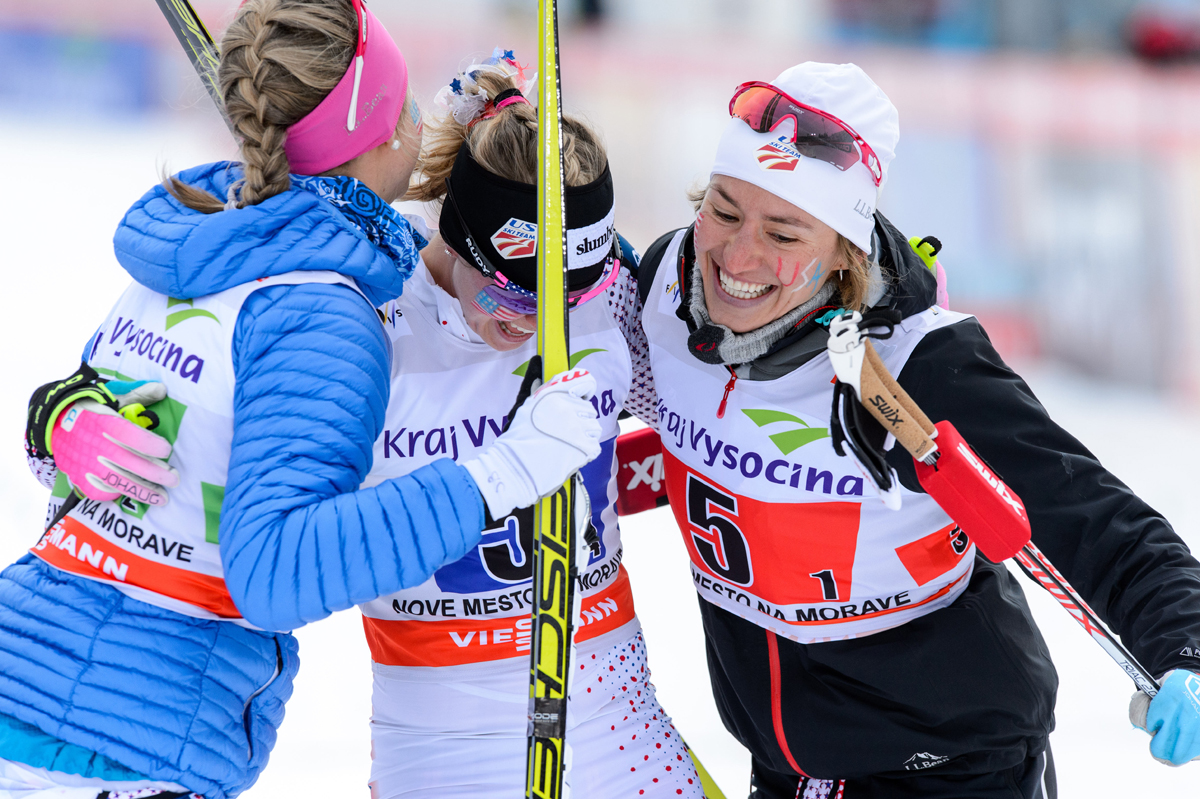
    Jessie Diggins (c) celebrates with teammates Sadie Bjornsen (l), Sophie Caldwell (r) and Liz Stephen (not shown) after anchoring the U.S. women's 4 x 5 k relay to a best-ever second in the Nove Mesto World Cup on Sunday in the Czech Republic. (Photo: Fischer/NordicFocus)
    Jessie Diggins (c) celebrates with teammates Sadie Bjornsen (l), Sophie Caldwell (r) and Liz Stephen (not shown) after anchoring the U.S. women’s 4 x 5 k relay to a best-ever second in the Nove Mesto World Cup on Sunday in the Czech Republic. (Photo: Fischer/NordicFocus)

    Diggins on the other hand, skated out of the exchange zone with Finland’s Kerttu Niskanen close behind. Her first-lap-strategy, go full gas — and she did so a day after achieving her second-career individual podium in the 10 k freestyle.

    “On a windy course like this, my strategy was, if I can put time into [Niskanen] right off the bat, like in the first 3 k and totally drop her, then that’s it. That will decide it right there because when you can’t see someone, that is incredibly mentally challenging,” the 24-year-old Diggins said. “So my goal was to just put the hammer down right away, get far enough that she thinks she has no way of getting to me and then settle in. And the second lap I was just trying to ski very carefully. Like, OK, don’t fall, don’t trip, don’t make any bobbles, because if I can just get across the finish line, we’ve got it. I just have to ski cleanly and make no mistakes.”

    Diggins made no mistakes.

    In the end, Diggins celebrated across the line with several elated fist pumps before her three teammates surrounded her with a group hug. The U.S. team finished in 50:59.3, 42 seconds behind the Norwegian winners and nearly 14 seconds clear of Finland in third.

    “We belong in the race for those medals just as much as any other nation and I think we’re all starting to ski that way,” Diggins reflected.

    More Dissection

    Sophie Caldwell opened for the U.S. women's relay team on Sunday at the World Cup in Nove Mesto, Czech Republic, tagging them in third, immediately behind Finland (not shown) in second place en route to the U.S. women's team's best-ever result of second place. (Photo: Fischer/NordicFocus)
    Sophie Caldwell opened for the U.S. women’s relay team on Sunday at the World Cup in Nove Mesto, Czech Republic, tagging them in third, immediately behind Finland (not shown) in second place en route to the U.S. women’s team’s best-ever result of second place. (Photo: Fischer/NordicFocus)

    In December, when the U.S. women placed third in the last World Cup relay in Lillehammer, Rosie Brennan skied the scramble leg. With Caldwell’s success on Sunday’s first leg, Whitcomb has options.

    “With Sophie, it was one of the interesting components of today,” he reflected. “We had a really difficult decision to choose between Rosie and Sophie for the classic leg. I do believe that we would have been on the podium with Rosie, I know she could have skied a great leg. We just felt that this course and conditions really suited Sophie. But it was one of those things we could have gone either way on. So with Soph, we just talked about conserving as much as possible, using the corners to position herself near the front third of the pack, and to just have a good time out there.

    “She’s a racer, she knows she needs to stay in contact, she knows when Norway makes an incredibly decisive move, whether that move is for her or not,” Whitcomb continued. “I think she skied a really brilliant race today, that was a key component in our success.”

    Caldwell skied the third-fastest scramble leg. Bjornsen skied the second-fastest time among the second-leg skiers, even 2.2 seconds faster than Weng, who was roaring off the front. For Stephen and Diggins — they both posted the second-fastest times for their respective legs as well. (Diggins’ 5 k time of 11:48.2, was second overall for skaters. To put that in perspective, Johaug’s 5 k split took 11:55.2.)

    The Canadian Side

    Sunday’s race was also the first time Canada has fielded a women’s relay since 2009. On that day, the team did not finish.

    In Nove Mesto, it was the first World Cup relay for all four women. Emily Nishikawa, Dahria Beatty, Cendrine Browne, and Maya Macisaac-Jones skied to 12th place (+5:02.4).

    Chris Jeffries, head coach of the Alberta World Cup Academy who assisted the Canadians the last two World Cup weekends, wrote in an email that this was a solid stepping stone for their women’s program.

    “Really happy we could get these girls into a team event. Message to them before the race is that this is the beginning, not the end,” he wrote. “We have a very young group of female skiers in Canada, and a great racer in Emily to help lead them forward on the world stage.”

    Nishikawa opened for the team on Sunday, tagging Beatty, also of the senior national development team, in seventh, 45.3 seconds back. While Beatty slipped to 12th, 2:21.8 behind at 10 k, another development-team skier, Browne brought them back to 11th (+3:05.9). MacIsaac-Jones (Rocky Mountain Racers) anchored them to 12th.

    “We knew it was going to be tough, 3 of the 5 girls were not healthy this week with colds, and you need 100% health if you are a development skier on the World Cup to have a good result,” Jeffries wrote. “Both Emily and Cendrine have been healthy, and both put up very strong races today. Emily fought hard and made up a lot of spots in the second half of her leg, but got taken down entering the exchange and lost contact.  Cendrine put together what I though was one of her best races ever, really close in time to the top girls. We have a lot of hope for future women’s teams in the next few years.”

    What about Germany and Sweden?

    On the first lap of the final leg, Nicole Fessel skiing for Germany’s first team and Sweden’s Marika Sundin literally went astray. About 24 seconds out of third in fourth and fifth, respectively, and a minute behind Norway, Fessel led Sundin as they went off course, following the classic track and missing the skate turn. Several meters later, they realized their mistake (see the video on Norway’s TV2). Fessel estimated in a post-race interview with ARD that it cost them 30 seconds.

    The next time through the stadium, with 2.5 k to go, they were about a minute out of the fight for the podium. Ultimately, Fessel finished fourth for Germany I, a minute out of third and 1:56.1 behind Norway. Sundin placed fifth for Sweden (+2:14.9).

    World Cup racing takes a break until Feb. 3, when men’s and women’s sprints will be held in Drammen, Norway. The next distance events will take place Feb. 6-7 in Oslo, Norway.

    Results