Tag: World Cup sprint heats

  • Sundling Returns to Win Lahti Sprint as Crystal Globe Battle Tightens

    Sundling Returns to Win Lahti Sprint as Crystal Globe Battle Tightens

    This coverage is made possible through the generous support of Marty and Kathy Hall and A Hall Mark of Excellence Award. To learn more about A Hall Mark of Excellence Award, or to learn how you can support FasterSkier’s coverage, please contact info@fasterskier.com.

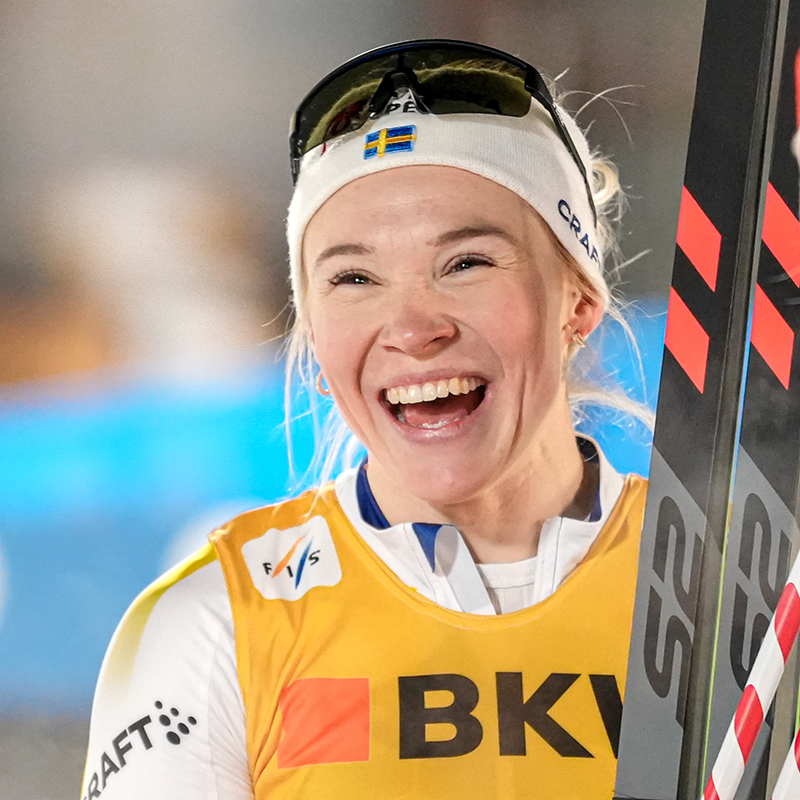
    Jonna Sundling (SWE) during qualification in Lahti, Finland. (Photo: Authamayou/NordicFocus)

    The World Cup season returned to Finland this weekend, closing a circle that began more than three months ago in Ruka. In the time since Olympic teams were selected, dreams realized or deferred, experience forged, and farewells offered week after week as the long winter wears on. If the stakes in Lahti feel slightly lower than they did earlier in the season, they are tightening in another way — especially in the races for the Crystal Globes.

    With only a handful of races remaining in the season, the women’s Freestyle Sprint offered more than just another podium. The fight for both the Sprint Crystal Globe and the Overall Crystal Globe continues to tighten.

    In tricky conditions, Sweden’s Jonna Sundling emerged as the day’s winner, navigating the heats with authority before closing out the final to claim victory.

    “I think all day it’s been difficult with the conditions because it seems so nice, but when you ski it’s like icing underneath,” Sundling said in a post-race interview with FIS on the broadcast. “There were some challenges with the skiing, but I’m glad that I could ski as I did today and go all the way.”

    The victory marked a strong return for Sundling, who said she had recently been dealing with a cold and missed racing in Falun before arriving in Lahti.

    One of the most interesting moments of the women’s race came when Kristine Stavaas Skistad (NOR) was disqualified during the semifinals for what appeared to be a very minor incident.  She received a yellow card for the incident, and because she was already carrying one from a previous violation, she was disqualified. (Photo: Authamayou/NordicFocus)
    A Tactical Sprint Course

    The Lahti freestyle sprint course rewarded patience as much as power. After the individual qualification round, the top 30 athletes advanced into the head-to-head heats — five quarterfinals of six athletes each, with the top two finishers and the two fastest “lucky losers” advancing to the semifinals.

    From there, the field narrowed again: two semifinal heats would determine the six skiers racing for the win.

    While the course appeared straightforward on paper, athletes quickly discovered the conditions made positioning critical. The climb before the final hairpin offered one of the few reliable passing opportunities before the long run to the finish, which saw the race often gather back together around the final corner before the finishing stretch. And throughout the heats, several favorites discovered how narrow the margin for error could be.

    Maja Dahlqvist (SWE) got out well, but was unable to advance from the quarterfinals. (Photo: Authamayou/NordicFocus)
    Globe Leaders Falter

    Two of the athletes who have dominated the sprint standings this season — Maja Dahlqvist (Sweden) and Nadine Fähndrich (Switzerland) — both saw their days end earlier than expected, failing to advance beyond the quarterfinals.

    Their early exits added intrigue to the sprint globe race as the season heads toward its final stretch.

    Meanwhile, Sundling continued to build momentum, advancing smoothly through her heats despite the difficult snow conditions.

    “I’m super motivated,” Sundling said of the final weeks of the season in the broadcast interview. “It’s my favorite time of the year.”

    Hilla Niemela (FIN), Johanna Hagstroem (SWE), and Jessie Diggins (USA) (l-r) charge up the opening climb of the Freestyle Sprint in Lahti, Finland. (Photo: Authamayou/NordicFocus)
    Diggins Attacks, But Falls Short

    For the United States, Jessie Diggins came closest to advancing deep into the rounds.

    In her quarterfinal, Diggins launched a decisive move on the final climb, surging to the front of the group in an effort to create separation before the tight hairpin turn at the top of the hill. Over the crest, she continued the attack, aggressively no-pole skating the downhill in an attempt to open a gap.

    For a moment, the tactic appeared to work.

    But the chasing group quickly organized behind her, the draft pulling them back together on the descent into the stadium. Sweden’s Johanna Hagström surged in the final meters, lunging at the line to edge Diggins and end the American’s day in the quarterfinal.

    Diggins said the Lahti crowd helped make the experience memorable.

    “It was so cool to hear the crowd roaring. There were so many people out, really filling the stadium and along the course. It’s just a very cool environment. It was sunny and beautiful, which made it really fun.

    “I was really happy with my energy today. I feel like I skied a pretty good race and did everything I could. But again this year, I feel like I just don’t quite have that ultimate power, especially in the finishing stretch.

    “I’m excited for tomorrow and just excited to be finishing out my last stretch here in Europe. That feels really special. It’s kind of cool to take a moment to reflect on my many years spent on the road in Europe. That chapter is coming to a close now, which is really cool and really special. I’m just grateful thinking back on all the memories over all the different years.”

    Rosie Brennan (USA) fighting to maintain contact with the group as Gina Del Rio (AND) takes the opening climb out fast during their quarterfinal. (Photo: Authamayou/NordicFocus)
    Brennan Knocked Out in Quarterfinal*

    Veteran American Rosie Brennan also reached the quarterfinals but was unable to advance.

    Lauren Jortberg (USA) on her way to 37th place in qualification in Lahti, Finland. (Photo: Authamayou/NordicFocus)
    Jortberg Reflects on Qualification Miss

    For Lauren Jortberg, the Lahti sprint was a reminder of how thin the margins can be in World Cup qualification.

    Jortberg finished 37th in the qualification, just outside the top-30 cutoff needed to advance to the heats. After the race, she said the conditions on the Lahti course made it difficult to find the right balance between glide and stability.

    “There was kind of an ice sheet underneath with some sugar on top,” Jortberg told FasterSkier after the race. “So it was hard to find skis that were running really well while also being able to push off and plant well. It made the skiing a little tricky, but that’s pretty typical for what we’ve seen in Lahti the last few years.”

    Jortberg also felt she left something on the course in terms of pacing.

    “I think I just didn’t pace it very well,” she said. “I probably paced it too much. I didn’t really finish feeling that tired, so that was a bit of a bummer.”

    Part of that caution, she explained, stemmed from having dealt with illness in the days leading into the race.

    “I had been sick the last week, so I think I held back a little bit,” Jortberg said. “That’s frustrating because I felt really good and I think I could have been competitive today.”

    Even so, Jortberg said the past months of racing have helped build confidence as she continues gaining experience on the World Cup circuit.

    “One of the big takeaways from these World Cup weekends is that when I can put down a really solid qualifier, I’m very much in the mix,” she said. “Even though today wasn’t a great qualifier, I wasn’t that far out of the heats, so I think that’s something I can take confidence from going into the next few weekends.”

    Julia Kern (USA) during qualification. (Photo: Authamayou/NordicFocus)
    Julia Kern Trying to Get Back to Form*

    Julia Kern, returning to racing after illness following the Olympic Games, placed 44th in the qualification round.

    Albrecht Gaining World Cup Experience

    Emma Albrecht, competing in her fourth World Cup weekend, finished 48th in the qualification round in Lahti as she continues gaining experience at the highest level of the sport.

    Albrecht said one of the biggest adjustments to racing on the World Cup has been the razor-thin margins in sprint qualification.

    Emma Albrecht (USA) gaining experience during the qualification in Lahti, Finland. (Photo: Authamayou/NordicFocus)

    “The biggest adjustment to racing at this level is how tight the race margins are,” Albrecht told FasterSkier after the race via email. “The U.S. SuperTour field is obviously not as competitive, and it has been a shift — especially in sprinting — to have to have a fast qualifier. You are no longer guaranteed to make heats.”

    The Lahti sprint course also served as a reminder of the confidence and technical skills required to compete in crowded sprint fields.

    “Today’s qualification reminded me to take up space on the course and not be afraid of a little hop skate,” she said.

    Even with the challenges, Albrecht said the experience is fueling motivation heading into the offseason.

    “This weekend is making me very excited for summer training,” she said. “A field as deep as this really highlights weaknesses on course. I would love to become a more efficient jump skater and be more confident in my high-speed V2. I’m definitely walking away with a lot of motivation to improve.”

    Liliane Gagnon (CAN) charges up the first climb during her quarterfinal, where she narrowly missed advancing to the semifinals. (Photo: Authamayou/NordicFocus)
    Canadian Results

    Canada’s top performance came from Liliane Gagnon, who finished third in her quarterfinal — just short of advancing to the semifinals.

    Teammates Olivia Bouffard-Nesbitt and Katherine Weaver placed 43rd and 46th, respectively, in qualification.

    Jonna Sundling (SWE) celebrates the win while Coletta Rydzek (GER) and Johanna Hagstroem (SWE) lunge for third behind her. (Photo: Authamayou/NordicFocus)
    The Season’s Final Push

    With only a handful of races remaining on the World Cup calendar, the results in Lahti could prove important in shaping the final standings.

    For Sundling, the victory served as both a return to form and a statement heading into the closing weeks of the season.

    “I’m looking forward to the rest of the season,” she said.

    For others — particularly those chasing the Crystal Globes — the margin for error continues to shrink.

    And with more racing still ahead in Lahti this weekend, the battle for the season-long trophies is far from settled.


    Lahti Women’s Freestyle Sprint QUALIFICATION RESULTS

    Lahti Women’s Freestyle Sprint FINAL RESULTS


    *We hope to add more quotes above from athletes if we hear back from them, but wanted to get this race report posted in a timely fashion.


    Love Stories Like This? Help Keep Them Coming.

    Feature stories like this one take time, access, and care to produce. If you value thoughtful storytelling and independent ski journalism, please consider becoming a Voluntary Subscriber. Your support directly fuels the work we do to cover the people, places, and moments that make our sport special.

    Join the FasterSkier community!


    Linn Svahn (SWE), Jonna Sundling (SWE), and Coletta Rydzek (GER), (l-r) share the Freestyle Sprint podium in Lahti, Finland. (Photo: Authamayou/NordicFocus)
  • Fire, Ice, and Belief: Two Vermonters Deliver Under the Lights in Davos

    Fire, Ice, and Belief: Two Vermonters Deliver Under the Lights in Davos

    This coverage is made possible through the generous support of Marty and Kathy Hall and A Hall Mark of Excellence Award. To learn more about A Hall Mark of Excellence Award, or to learn how you can support FasterSkier’s coverage, please contact info@fasterskier.com.

    The lights come on early in Davos, not because they are needed, but because Davos wants them on. By mid-afternoon, the valley is already sliding toward dusk, the alpine light thinning and flattening, and the sprint venue leans into the moment the way it always has: music turned up, cowbells ringing with a little extra insistence, flames licking the edges of the course like stage cues. The effect is deliberate. This is not cross-country skiing as a quiet endurance ritual in the woods; this is cross-country skiing as spectacle.
    “Davos deliberately designs this event to feel like a rock concert,” U.S. head coach Matt Whitcomb said afterward. “They race at night, they bring in fire and lighting and music, and because it’s a two-lap course, you see the athletes twice as much. They invest in the experience, and it pays off.”
    Jack Young (USA) on his way to a fast qualification in Davos (SUI). (Photo: Modica/NordicFocus)
    On Saturday night, it paid off in a men’s freestyle sprint that delivered one of the most compelling American performances in years. Jack Young finished fourth, Ben Ogden fifth — the first time two American men had made a World Cup sprint final together in Davos — on a night when the script cracked open early and never fully resealed. Johannes Høsflot Klæbo was gone before the semifinals. A notoriously slick downhill corner became the day’s silent antagonist. And by the time Lucas Chanavat lunged across the line to win by three hundredths of a second, the story had already shifted: the U.S. men were no longer visitors to the sprint final. They were participants, with opinions about how it might have ended differently.
    For Young, the fourth-place finish marked his first World Cup sprint final — a breakthrough that felt less like a surprise than a confirmation. “This result means so, so much,” he said. “It really feels like proof that I can make it to the top in this sport. If I’d told myself three years ago that I’d finish fourth in a World Cup sprint, I would have thought I was insane.”
    Ben Ogden (USA) during qualification in Davos (SUI). (Photo: Modica/NordicFocus)
    A course that punishes impatience
    Davos is not a long sprint, but it is not a forgiving one. Two laps of just under 600 meters pack in a decisive climb, sustained skating tempo, and — this year especially — a downhill corner that demanded respect. The snow was entirely man-made, hard and fast, and as the temperature dropped through the evening, it glazed into ice. Athletes began to talk about the corner not as a feature, but as a test.
    “That bottom corner was particularly dicey this year,” Whitcomb said. “Man-made snow turns to ice quickly, and that corner claimed a lot of people over the last couple of days.”
    Ben Ogden felt it more than once. “That last corner was really the focus,” he said. “I fell there yesterday, JC fell there in practice, and I stumbled twice in the final and ended up against the boards. It was unfortunate, but every year you learn a little more about how the ice forms there.”
    The corner changed the race’s outcome. The first time through, athletes skied it conservatively, prioritizing stability over speed. The second time, with fatigue setting in and the finish looming, choices became riskier — and more consequential.
    Janik Riebli (SUI), Jack Young (USA), and Lars Heggen (NOR), (l-r) during the heats in Davos (SUI). (Photo: Vanzetta/NordicFocus)
    Qualifying hints, early shocks
    The qualifying round suggested a familiar hierarchy, but with enough irregularities to hint that Davos might misbehave. Lucas Chanavat of France was fastest, Ben Ogden second, Klæbo third. Jack Young qualified sixth — an excellent position that put him squarely in control of his bracket.
    “That’s one of the best qualifying results we’ve ever had on the U.S. team,” Whitcomb said. “Qualifying in the top ten gives you options. It lets you race offensively instead of defensively.”
    Klæbo’s day began to unravel in the quarterfinals. Boxed in and forced wide through the downhill, he finished fourth in his heat and failed to advance. His 16-race sprint win streak ended not with drama, but with traffic — a reminder that sprinting, for all its stars, is still governed by physics and positioning.
    Ogden and Young both advanced cleanly. Ogden won his quarterfinal with authority. Young skied his with the composure of someone who knew exactly what he needed to do — no more, no less.
    Ben Ogden (USA) and the US Ski Team had a lot to celebrate in Davos (SUI). (Photo: Modica/NordicFocus)
    Semifinals: the Americans arrive together
    By the semifinals, the noise in Davos had sharpened. Chanavat advanced. Ogden advanced. And then Young did, stepping into his first World Cup sprint final with the kind of quiet efficiency that suggested the moment had not surprised him.
    “To be honest, the first thing that went through my mind standing on the start line was how tired I was,” Young said. “But I reminded myself that anything can happen in a sprint final. I don’t train just for qualifiers and quarters — I train for the full day. It was time to execute.”
    For Ogden, the significance of sharing the moment wasn’t lost. “Racing with Jack today was awesome,” he said. “He has this infectious confidence, especially here in Davos. Last year we were in the semifinals together, and this year we were in the final together. That’s a big step.”
    Whitcomb saw it as more than a statistical milestone. “To put two guys into the men’s final is a dream,” he said. “When athletes finish a race seeing the podium and knowing they can be on it, that’s when things start to get dangerous — in a good way.”
    Jack Young (USA) had every right to be celebrated after his breakout race today in Davos (SUI). (Photo: Modica/NordicFocus)
    The final: margins measured in inches
    The men’s final unfolded at full speed. Chanavat and Federico Pellegrino established themselves early, both reading the race the way veterans do — not forcing it, but shaping it. Oskar Opstad Vike of Norway positioned himself patiently, waiting for the moment when commitment would matter.
    Ogden and Young stayed connected. Coming into the final corner, Ogden had position. Young had momentum.
    “I was really gunning for that podium,” Ogden said. “I felt like I was pretty close. With fewer stumbles and maybe a little better positioning, I think I could have made it happen.”
    The corner had other plans. Ogden’s line took him over the ice and was forced wide, momentarily pinned against the boards. Young exited cleaner, carrying speed into the finishing straight.
    Chanavat and Pellegrino lunged together at the line, Chanavat winning by three hundredths of a second. Vike took third. Young crossed fourth, Ogden fifth — separated from the podium by seconds, but not by belief.
    “I finally feel like I can truly compete at the top,” Young said. “That’s a special feeling.”
    Results — Men’s Sprint Freestyle, Davos
    1. Lucas Chanavat (France)
    2. Federico Pellegrino (Italy)
    3. Oskar Opstad Vike (Norway)
    4. Jack Young (USA)
    5. Ben Ogden (USA)
    6. Edvin Anger (Sweden)
    Notables: Johannes Høsflot Klæbo (Norway), 17th, and JC Schoonmaker (USA), 27th.
    It has been a tough trail back to the top step on the podium for Lucas Chanavat (FRA) so he was extremely excited to be standing on it today in Davos (SUI). (Photo: Vanzetta/NordicFocus)
    What Davos leaves behind
    Davos has always been good at revealing things. It reveals how athletes handle altitude, manage nerves, and respond when a race refuses to go according to plan. On Saturday night, it revealed something else: American depth at the sharp end of a sprint final.
    Young talked about the atmosphere as something that lifts him. “With all the energy, it’s easy to trick yourself into thinking you’re walking into a big arena,” he said. Ogden talked about validation — not just from results, but from proximity. “My target in these races is the podium,” he said. “It feels good to know I’m getting closer.”
    Whitcomb, standing back from it all, saw the longer arc. “We’re in a really good place with these guys,” he said. “There’s a lot more to come.”
    The flames went out eventually. The music faded. Davos returned to being a quiet alpine town under an early winter night. But for the American men — and for two Vermonters who now know exactly what a World Cup sprint final feels like in tandem — something lingered.
    Not noise. Not spectacle.
    Belief.


    Men’s Individual Sprint Final RESULTS


    Love Stories Like This? Help Keep Them Coming.

    Feature stories like this one take time, access, and care to produce. If you value thoughtful storytelling and independent ski journalism, please consider becoming a Voluntary Subscriber. Your support directly fuels the work we do to cover the people, places, and moments that make our sport special.

    Join the FasterSkier community!


    Federico Pellegrino (ITA), Lucas Chanavat (FRA), and Oskar Opstad Vike (NOR), (l-r) on the sprint podium in Davos (SUI). (Photo: Vanzetta/NordicFocus)
  • Under the Lights in Davos, Sundling Delivers—and the Margins Show

    Under the Lights in Davos, Sundling Delivers—and the Margins Show

    This coverage is made possible through the generous support of Marty and Kathy Hall and A Hall Mark of Excellence Award. To learn more about A Hall Mark of Excellence Award, or to learn how you can support FasterSkier’s coverage, please contact info@fasterskier.com.

    The night sprint in Davos has a way of making the sport feel louder than it usually allows itself to be. The course is short, the laps repeat, the crowd sees the same faces twice, and the organizers lean into the spectacle—music, lights, flames—until the whole thing starts to resemble a winter street festival that happens to include the fastest skiers in the world. “They deliberately design this event to feel like a rock concert,” U.S. head coach Matt Whitcomb said, pointing to the night racing, the lighting, and the two-lap format that keeps the athletes close and visible.
    But the women’s sprint on Saturday didn’t need help finding drama. It had its own: a final that turned into a study in timing and patience, a surprise runner-up, a home-country podium that felt like the whole point of staging a race like this in the first place, and an American women’s team day that—depending on where you stood—looked either like incremental progress or a reminder of how narrow the margins are when you’re trying to turn good skiing into the kind of skiing that survives the heats.
    At the front, Jonna Sundling (Sweden) won the women’s sprint free in 2:31.86, edging Mathilde Myhrvold (Norway) by 0.08 seconds (2:31.94). Nadine Fähndrich (Switzerland) rounded out the podium in third at +2.60, a result made sweeter by the route she took to get there: she advanced into the final as a lucky loser and still skied her way onto the podium when it mattered most.
    Behind them, the final was saturated with familiar sprint power: Maja Dahlqvist (Sweden) finished fourth, Linn Svahn (Sweden) fifth, and Laura Gimmler (Germany) sixth—three Swedes in a Davos final, again, in a venue that has long amplified Sweden’s particular talent for fast, hard, repeated efforts under bright lights.
    Kristine Stavaas Skistad (NOR), Laura Gimmler (GER), Jonna Sundling (SWE), Nadine Faehndrich (SUI), (l-r) during the sprint heats in Davos (SUI). (Photo: Vanzetta/NordicFocus)
    A course that asks for control more than courage
    Davos is not a long sprint, but it’s demanding in the way short races can be demanding: there’s nowhere to hide, and every mistake is immediate. The compact two-lap circuit rewards rhythm and positioning—especially on the downhill into the technical corner that has been a recurring storyline in Davos when the surface hardens.
    Whitcomb, talking about the venue more broadly, framed Davos as a place where experience matters —not only experience racing hard, but racing smart: managing altitude, managing risk, and understanding that “good” in Davos can disappear fast if you’re constantly reacting rather than shaping.
    That’s why Sundling’s win felt so Sundling: not flamboyant, not chaotic, but efficient—an athlete with enough power to force the pace and enough composure to let the final come to her.
    Mathilde Myhrvold (NOR) and Jonna Sundling (SWE), (l-r) lunge for the sprint final finish line in Davos (SUI). (Photo: Vanzetta/NordicFocus)
    The final: Sundling’s patience, Myhrvold’s moment, Fähndrich’s home lift
    If you didn’t know the result, you might have expected a Swedish one-two. Sundling and Dahlqvist were both in the final, and Sweden brought three athletes onto the start line. But sprint finals aren’t always about the most decorated name; they’re about who can keep their speed intact after a day of qualifiers, quarters, and semis—after the accumulation of small sprints that feel, by the end, like one long race done in pieces.
    Sundling and Myhrvold made the final feel like a contest of timing. Sundling’s skiing had the taut confidence of someone who knows exactly what she wants from the last 200 meters; Myhrvold skied like someone who believed she could take it from her. They hit the line separated by less than a tenth of a second.
    And then there was Fähndrich—third, at home, on a night designed for the crowd to matter. If Sundling’s win was clinical, Fähndrich’s podium was emotional in a quieter Swiss way: the sense that the event’s atmosphere wasn’t just decoration; it was fuel.
    Julia Kern (USA) and Nicole Monsorno (ITA), (l-r) in the quarterfinals in Davos (SUI). (Photo: Vanzetta/NordicFocus)
    The U.S. women: progress, frustration, and the line between them
    For the U.S. women, Davos was not the same kind of headline day the men had produced a few hours earlier. But it also wasn’t empty. It was the kind of day coaches talk about carefully: pieces moving in the right direction, while also acknowledging that “right direction” still has to show up in a bracket.
    Whitcomb didn’t sugarcoat the overall result. “Honestly, a little lackluster on the women’s side today,” he said, adding that the athletes themselves would agree with that assessment. At the same time, he pointed to specific positives—the kind that matter in the arc of a season.
    He said Jessie Diggins “skied competitively” and “narrowly missed advancing,” and he emphasized that the difference between making semifinals and missing them is often a single decision in a single corner. He also singled out Julia Kern as an athlete whose level is rising: “Julia is definitely skiing on another level than she has been for the first couple of weekends,” Whitcomb said, framing it less as a sudden leap and more as a build—more weekends of consistent racing, more reps in heats, more time at speed until the pieces become routine.
    Kern’s own description of her day fit that exact narrative: detailed plan, sharper qualifier, more of a feeling of normalcy returning—plus the kind of bad luck sprinting specializes in.
    “I’m proud of making a detailed race plan and starting faster in the qualifier today,” Kern said. “I felt much more like myself out there and was able to play the tactical game with some good moves, even though it ended with an obstruction by another athlete. I’m excited to take this fresher energy into tomorrow and build on the endurance base I feel like I have going into the distance race.”
    It’s a very Kern quote: pragmatic, technical, forward-looking. Not a lament—more a calibration.
    The deeper truth of sprinting is that it doesn’t always reward “feeling better” immediately. Sometimes it rewards it tomorrow, or next week, or in the next venue where a better qualifier and a cleaner first heat finally align. That’s why Whitcomb’s view was pointed but not pessimistic: he sees the level rising, and he sees that the team standard is higher than the day’s outcome.
    “We should be putting multiple women in the semifinals,” he said. “And it’s time to start doing that.”
    Jessie Diggins (USA) during qualification in Davos (SUI). (Photo: Modica/NordicFocus)
    Why Davos matters beyond the podium
    Davos is always a little odd in the calendar. It arrives after the first wave of races has introduced the season’s storylines, but before the season has fully decided what it wants to be. It’s high enough to punish sloppy energy management, tight enough to punish poor positioning, and loud enough to make athletes feel—at least for one night—that they’re racing in an arena rather than on a trail.
    That can be destabilizing, in a good way. It can pull surprise finalists into the light. It can elevate a lucky-loser path into a podium. It can turn a planned, steady day into a messy one. And it can expose the difference between skiing fast and getting through rounds—a difference that isn’t always about fitness.
    For Sweden, Davos once again looked like a venue built for their sprint depth: three in the final, the winner on top. For Norway, Myhrvold’s second place was a reminder that the sport is always producing new sprint threats, even in an era dominated by familiar names. For Switzerland, Fähndrich’s third place felt like the perfect use of home advantage and crowd energy.
    And for the U.S. women, it was a day that asked a familiar question: how close is “close,” really?
    Kern’s answer—embedded in her quote—was that she’s trending toward the skier she knows she is, and she’s carrying that energy forward into the distance race. Whitcomb’s answer was both sharper and more structural: good signs are not the same as results, but good signs are still worth something if they’re backed by consistent racing.
    Recap: Women’s Sprint Free, Davos
    1. Jonna Sundling (SWE) — 2:31.86
    2. Mathilde Myhrvold (NOR) — +0.08
    3. Nadine Fähndrich (SUI) — +2.60
    4. Maja Dahlqvist (SWE)
    5. Linn Svahn (SWE)
    6. Laura Gimmler (GER)
    Mathilde Myhrvold (NOR), Jonna Sundling (SWE), and Nadine Faehndrich (SUI), (l-r) share the sprint podium in Davos (SUI). (Photo: Vanzetta/NordicFocus)
    The quieter ending Davos can leave you with
    By the time the final ends, the flames are still there, the music is still there, and the crowd is still leaning over the fencing as if the night could produce one more surprise. But the athletes are already drifting toward tomorrow—toward the distance race, toward the next chance to turn “better” into “through,” toward the next bracket that won’t care how good your plan was unless it shows up as a place on the right side of the line.
    That’s the strange promise of Davos: it amplifies everything. It amplifies winners. It amplifies near-misses. It amplifies the feeling that a season can pivot in a single night sprint—sometimes in front of flames and floodlights, sometimes in a quiet tactical mistake that only the skier can feel.
    Sundling won because she was the best sprinter on the night and skied like she knew it. Myhrvold took second because she refused to concede the finish until the last step. Fähndrich climbed onto the podium because sprinting still leaves room for the athlete who keeps the door open long enough to walk through it.
    And the U.S. women left Davos with a different kind of narrative—less celebratory, more unfinished. Kern put it plainly: she felt more like herself, she played the tactical game, and she’s taking that energy into tomorrow. In a season built out of weekends, that’s how momentum often begins: not with a single clean headline, but with the gradual return of a feeling an athlete recognizes—and a plan that, sooner or later, stops being interrupted.


    Women’s Individual Sprint Final RESULTS


    Love Stories Like This? Help Keep Them Coming.

    Feature stories like this one take time, access, and care to produce. If you value thoughtful storytelling and independent ski journalism, please consider becoming a Voluntary Subscriber. Your support directly fuels the work we do to cover the people, places, and moments that make our sport special.

    Join the FasterSkier community!