
From the FasterSkier archive — posts syndicated from athletes’ and coaches’ own blogs between 2004 and 2012, kept online as published. Current coverage is at fasterskier.com.

Tag: World Cup Team Sprint

  • World Champions Dominate Team Sprints as Crystal Globe Race Looms

    World Champions Dominate Team Sprints as Crystal Globe Race Looms

    This World Cup coverage is made possible through the generous support of Marty and Kathy Hall and A Hall Mark of Excellence Award. To learn more about A Hall Mark of Excellence Award, or to learn how you can support FasterSkier’s coverage, please contact info@fasterskier.com. 

    World Cup Finals began under overcast Finnish skies Friday, as the circuit looks to settle the questions of a long season over the next three days. Who was—and who wasn’t—racing in Friday’s non-World Cup point scoring event provided evidence that the Crystal Globes remain at the forefront of concerns this weekend.
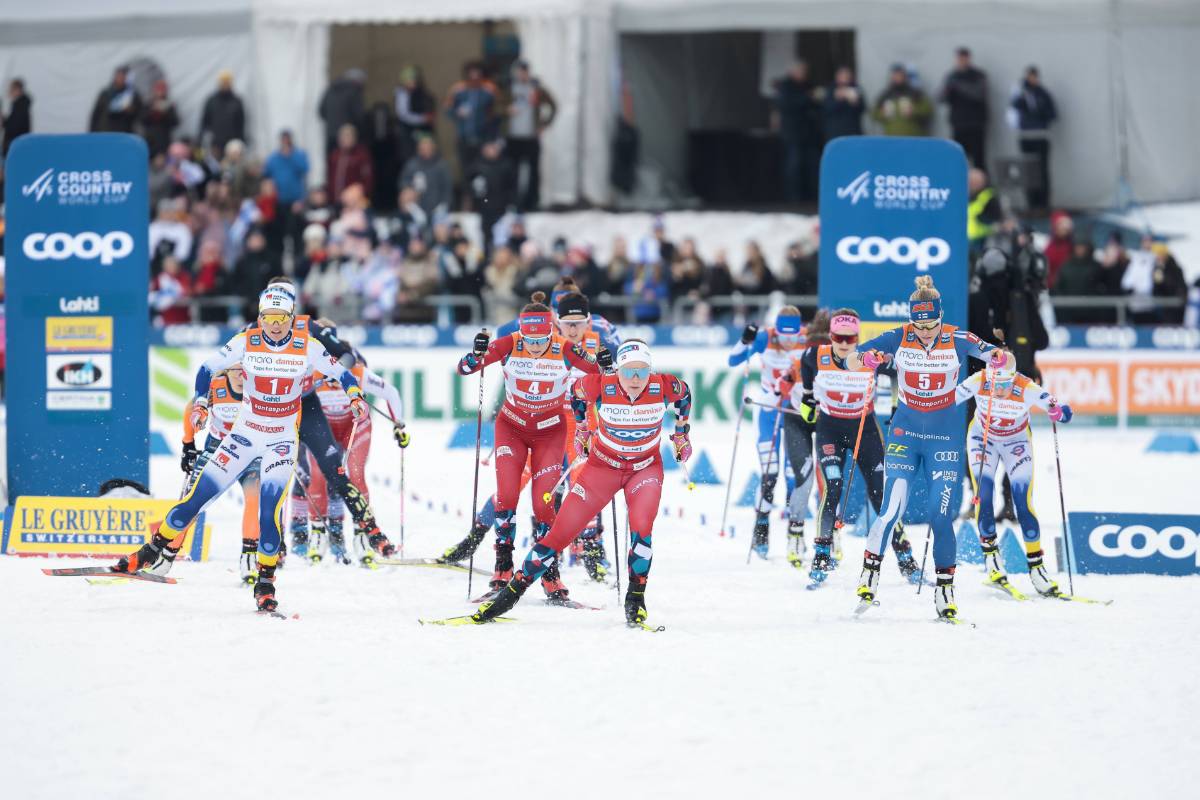
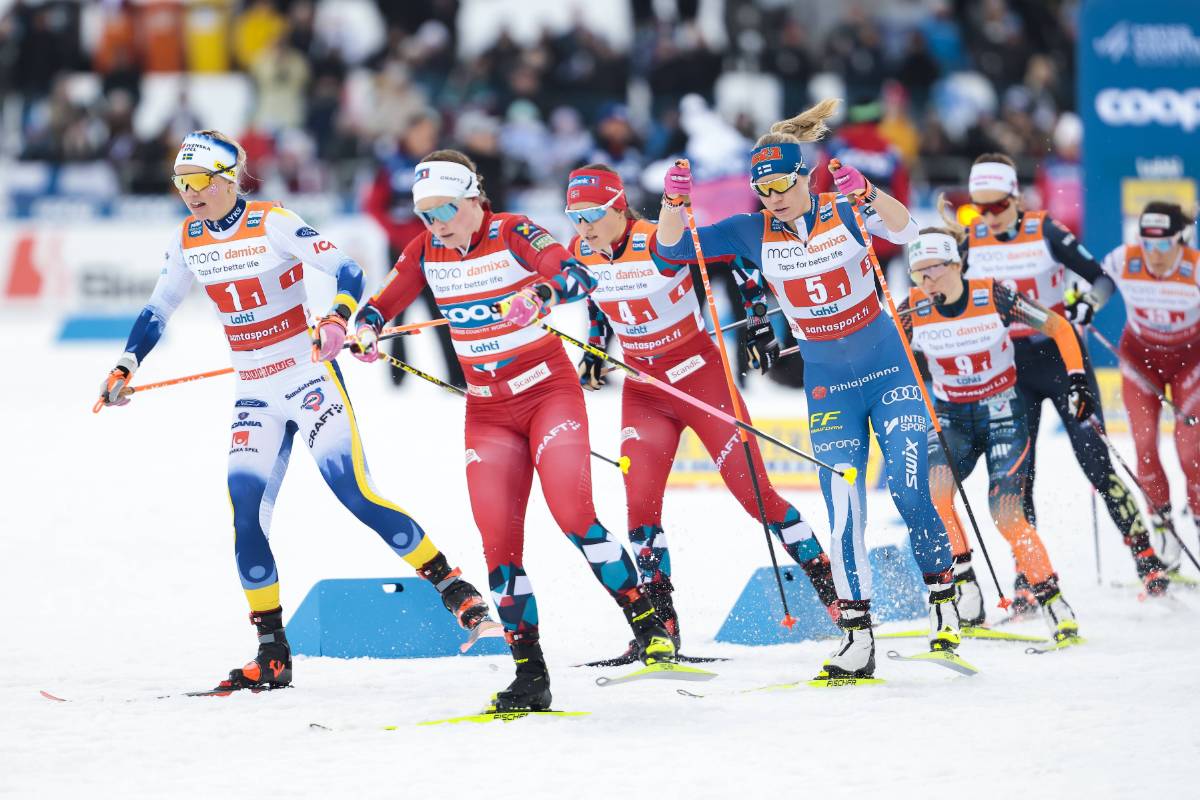
    The women’s Team Sprint as it began on Friday. Notable absences from top Crystal Globe contenders shaped the field Friday as World Cup Finals began in Lahti. (Photo: NordicFocus)

    With the Women’s Overall, Distance, and Sprint World Cup classifications all still undecided going into this weekend, Friday’s Team Sprint was absent any women standing within the top five of any of the World Cup classifications. The most notable absences drew attention straight to the top of the World Cup standings: Jessie Diggins (USA) sits second in both the Overall and Distance classifications, with 110 points separating her from Overall leader Tiril Udnes Weng (NOR), and just 22 points between her and Distance leader Kertuu Niskanen (FIN) ahead of Sunday’s 20 k classic. The gap is also 22 points in the Sprint classification between leader Nadine Faehndrich (SUI) and second place Maja Dahlqvist (SWE). The cascade of absences beyond the top two further revealed the closeness of the Women’s field. With points standings tight and the stakes for gaining an additional place or keeping one high, skiers like Rosie Brennan (USA), four points ahead of Heidi Weng (NOR) for fourth Overall, were absent. Julia Kern (USA) joined that list too, looking to hold onto a top five in the Sprint classification that she holds onto by just eight points over Laura Gimmler (GER).

    The Men’s Team Sprint field, meanwhile, was much more complete. Johannes Hoesflot Klaebo (NOR) holds an insurmountable 421 point lead over second place Paal Golberg (NOR) in the Overall. The same is true in the Sprint, where Klaebo holds a 254 point gap over Lucas Chavanat (FRA). The only Men’s Classification still technically unsettled is the Distance, where Paal Golberg’s 112 point lead on Klaebo would technically be passable if Klaebo were to win Sunday, win intermediate bonuses, and not have Golberg score any points (which appears unlikely). Further down the Men’s field, the majority of points gaps are larger, which played into Federico Pellegrino (ITA), Lucas Chanavat (FRA), Edvin Anger (SWE), and Richard Jouve (FRA) all being present in the field today. There were other who sat out this team event: notably, Ben Ogden (USA) who is pursuing the best American Men’s World Cup Overall finish since Bill Koch in the 1980s, sitting less than 20 points behind Calle Halfvarsson in seventh Overall.

    Women’s Team Sprint

    For all the absences from the Women’s field Friday, the defending World Champions in the Team Sprint—the Sweden I team of Emma Ribom and Jonna Sundling—still made it to the start line. Sweden I made it a good race, and a creative one too. “We wanted to have fun, to make it a more tactical race,” Sundling said to FIS media after the race was over.
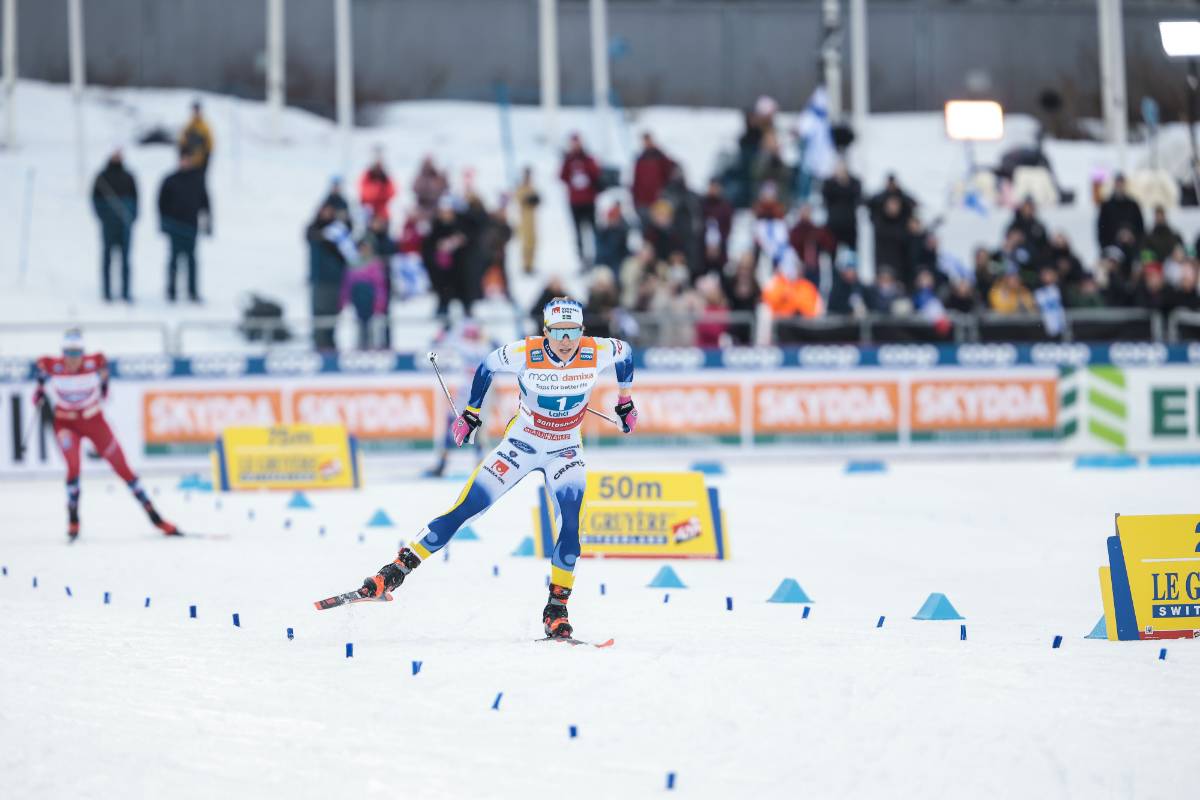
    Jonna Sundling made a clean finishing move to bring Sweden I—reigning World Champions—the win in Lahti, Finland. (Photo: NordicFocus)

    As to how that plan played out, Ribom and Sundling took turns dutifully marking the Norway I team of Julie Myhre and Anne Kjersti Kalvaa at the front of the race. When they reached the final climb on the Lahti course, Sundling simply hop-skated away to victory. It was a crisper, cleaner, version of the tactic that she had used in Planica to win the Team Sprint World Championship, and of the one she made in Drammen to win Falun’s 4 x 5 k Mixed Relay for Sweden last weekend. 

    Behind Sundling’s move, late-race heroics were making for a thrilling finish. The lead pack through most of the race had included the Sweden I team alongside Norway I and the Finland I team of Jasmi Joensuu and Jasmin Kahara. A move from Joensuu in her last leg had created a clean break for the trio of teams; through most of the last lap, Kahara looked like she would hold the separation between her and the chase group. When Sundling went, Anne Kjersti Kalvaa (NOR) was able to stick with her just long enough to win Norway I second place. Behind her, though, two German teams had started to chase down Kahara. As the Finn entered the stadium, Coletta Rydzek for Germany I and Sofie Krehl for Germany II were skiing in tandem, and skiing their way back up to the Finn. The race for third went to the line. Three lunges produced a result that saw Rydzek come across the finish in third place, while Finland I took fourth in a photo finish over fifth place Germany II.

    Men’s Team Sprint

    The Norwegian World Championship Team may have lacked Paal Golberg on Friday, but Erik Valnes would prove to serve as a worthy replacement to pair with Johannes Hoesflot Klaebo for Norway I. With the Italian World Championship runner-up team of Francesco De Fabiani and Federico Pellegrino also present, the Men’s race held promise for a close front-of-pack race, mixed with a field hungry to challenge the prevailing order among Team Sprint powers.
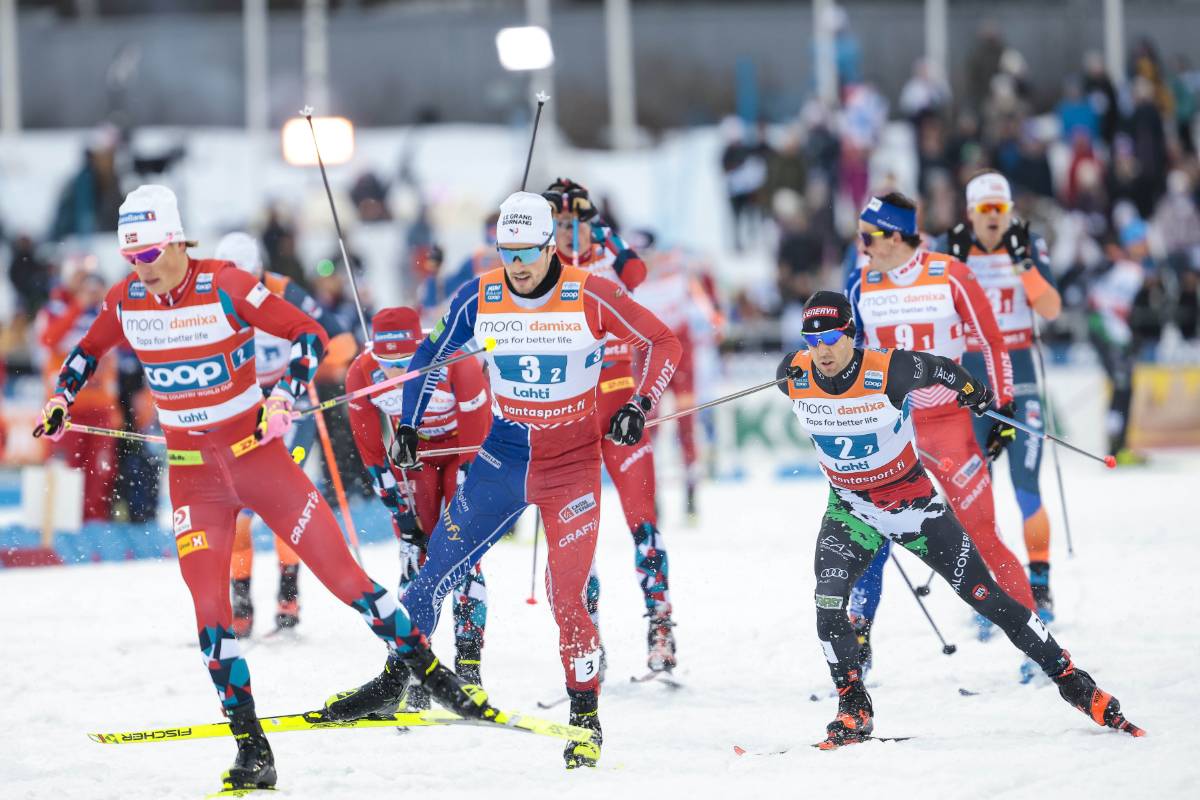
    The men’s field remained tight until Johannes Hoesflot Klaebo moved to bring Norway I the win with Italy I in tow. (Photo: NordicFocus)

    That dynamic was on display through each of the early laps, as Federico Pellegrino and Johannes Hoesflot Klaebo danced around each other in the early part of the course, and a whole pack of teams filed in to try and keep with the two. In the final lap, Pellegrino looked for an opportunity to entice Klaebo into a long-burning attack; it’s no secret that leaving a sprint finish meant facing Klaebo’s finishing kick that none were likely to match. Klaebo, though, responded as he has throughout the season to this tactic, ticking his pace up just enough to keep the pack close, and then forcing the pack back to stasis. Four challenging teams made it to the last climb: Sweden I with Edvin Anger, Norway II with Sindre Bjoernestad Skar, France II with Richard Jouve, and Germany with Jan Stoelben. Then, Klaebo went, and Pellegrino followed. The pair had a gap into the stadium, and the prevailing order of the Team Sprint had held. Klaebo crossed the line to win for Norway I, Pellegrino crossed to take runner-up for Italy I, and Skar won a two-way sprint over Anger to take Norway II to third.

    Americans, Mix, Match, and Push Team Event

    Two American teams qualified for the Team Sprint finals. The USA I team for the Women featured the World Cup relay debut of Sammy Smith, who has qualified for heats in successive sprints in Drammen and Falun. Smith paired with Hailey Swirbul, who has become a relay mainstay for the US. “[I love] the energy of team events,” Swirbul said after last week’s Falun relay. “It really emphasizes how ski racing involves much more than only an individual to make a great day happen.”
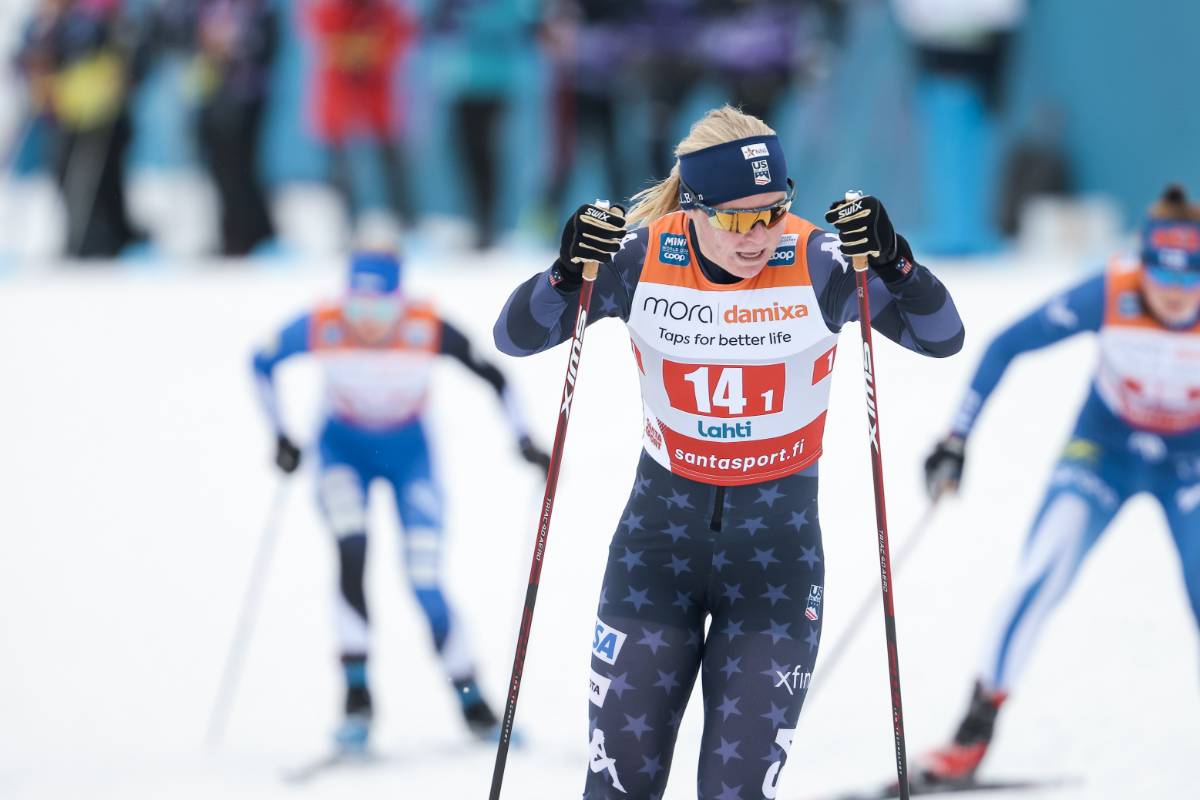
    Sammy Smith and Hailey Swirbul pushed all the way through Friday’s Team Sprint, landing the young USA I lineup in 11th place. (Photo: NordicFocus)

    Smith and Swirbul traded off skiing well within the relay pack early in Friday’s race. As the pack strung out through lap three, Smith slipped to 15th place as she handed to Swirbul for lap four. By the end, the pair had made a resurgent push to finish 11th place on the day, delivering an auspicious effort for the young Americans in a team event.

    “I really enjoyed getting to race with Sammy, and be in a more low pressure team event situation,” said Hailey Swirbul post-race. “It was a really cool way to build experience for Sammy and myself, and she skied really well today.”

    The pairing of Zak Ketterson and JC Schoonmaker held in the tight men’s race through their first couple of exchanges, before pace increases at the front led to a falling off. The pair pushed on to take 13th place on the day.

    “Zak and I were pretty excited to just be able to ski with the pack and make decisions on the fly,” said Schoonmaker in post-race comments. “That’s some of the most fun you can have in ski racing. I definitely wish I could have hung in the main pack longer than I did because Zak was skiing super well, but we did what we could.”

    Schoonmaker added that this year’s team events have come with added joy for the men’s team. “It’s been really cool to get to race with some different guys this winter,” he said. “We have a strong men’s team right now so being partnered with any of those guys is an honor.”

    Sprint Classification Settled Tomorrow

    World Cup Finals continues tomorrow in Lahti, as a classic sprint is set to decide the winner of the Nadine Faehndrich-Maja Dahlqvist Sprint Crystal Globe race in the Women’s field. On the Men’s side, a final act is being planned for the dominant Sprint campaign of Johannes Hoesflot Klaebo. 

    Meanwhile, Jessie Diggins (USA) will begin her final, two-day push to reel back the Overall Crystal Globe, looking to best Tiril Udnes Weng NOR) with her finish tomorrow and net valuable World Cup points.

    Full Women’s Team Sprint RESULTS

    Full Men’s Team Sprint RESULTS
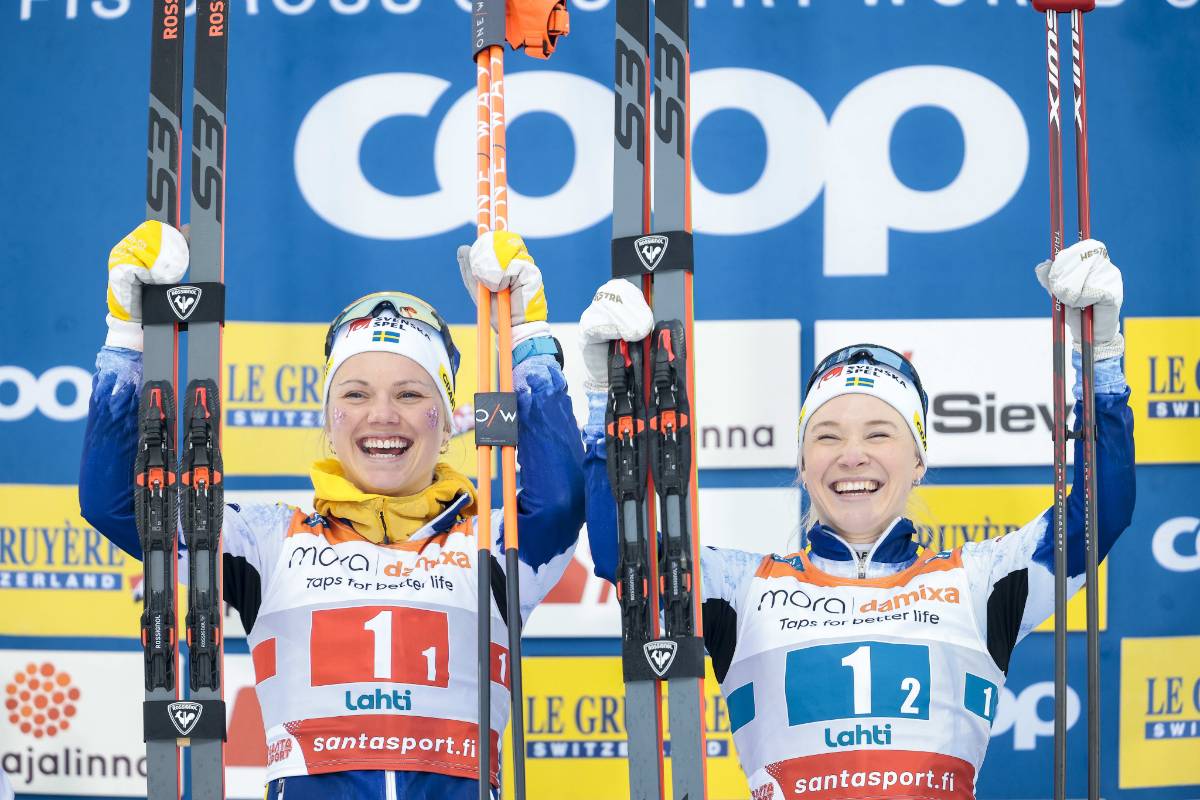
    Sweden I: Emma Ribom and Jonna Sundling, celebrate Friday’s Team Sprint win. (Photo: NordicFocus)
  • Kern and Brennan Combine for 3rd, Sweden and France Win Livigno Team Sprints

    Kern and Brennan Combine for 3rd, Sweden and France Win Livigno Team Sprints

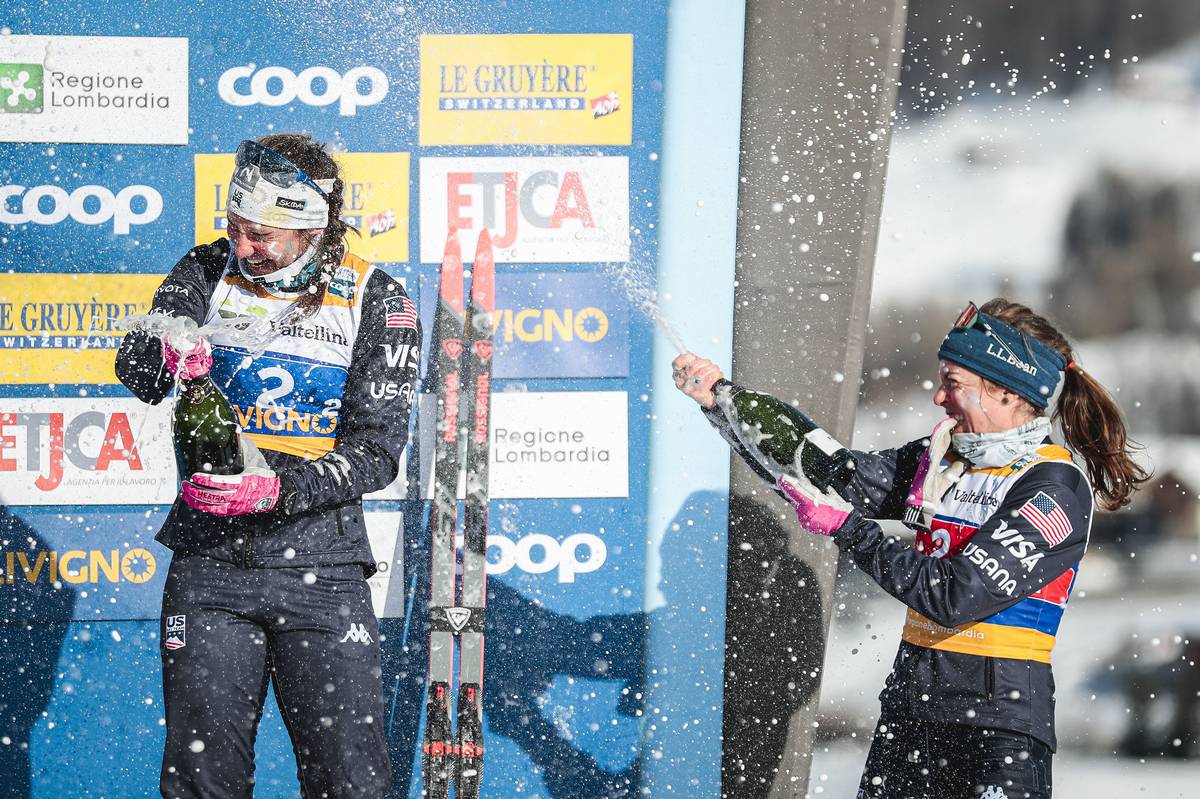
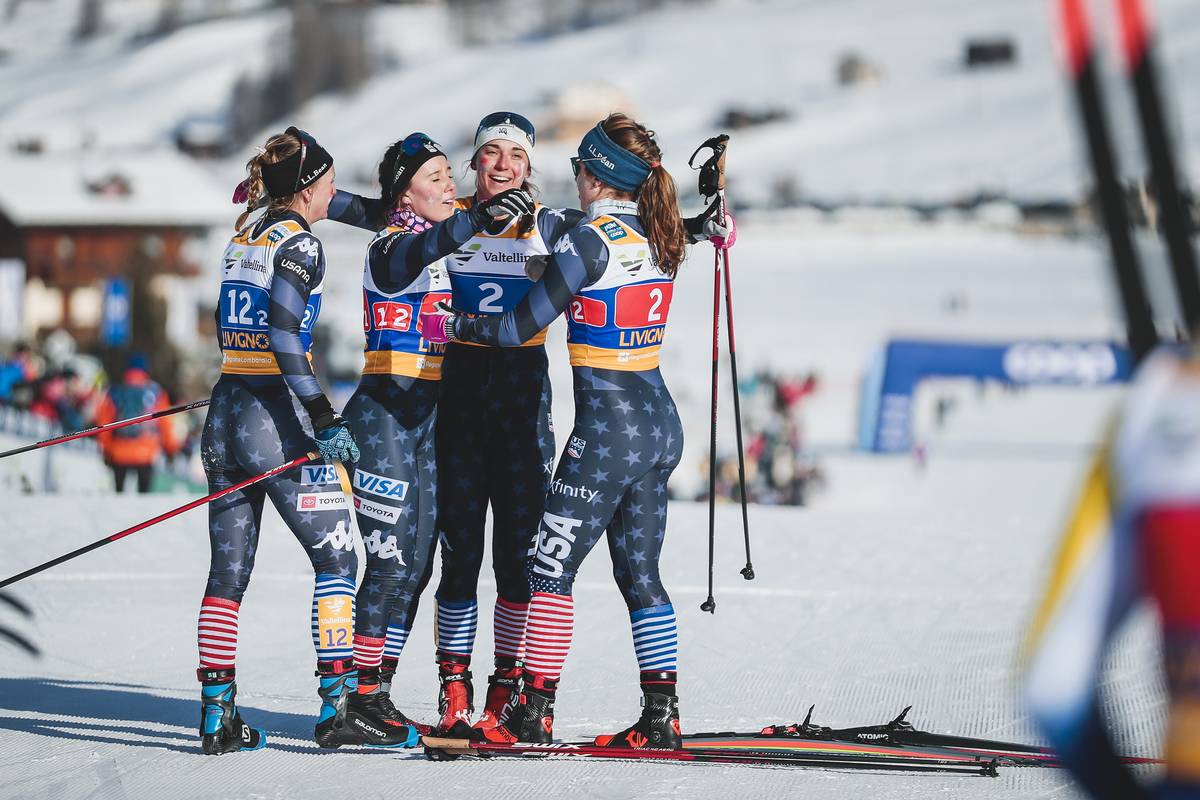
    Julia Kern (USA) and Rosie Brennan (USA) celebrate after a third place finish in Sunday’s Team Sprint. (Photo: Nordic Focus)

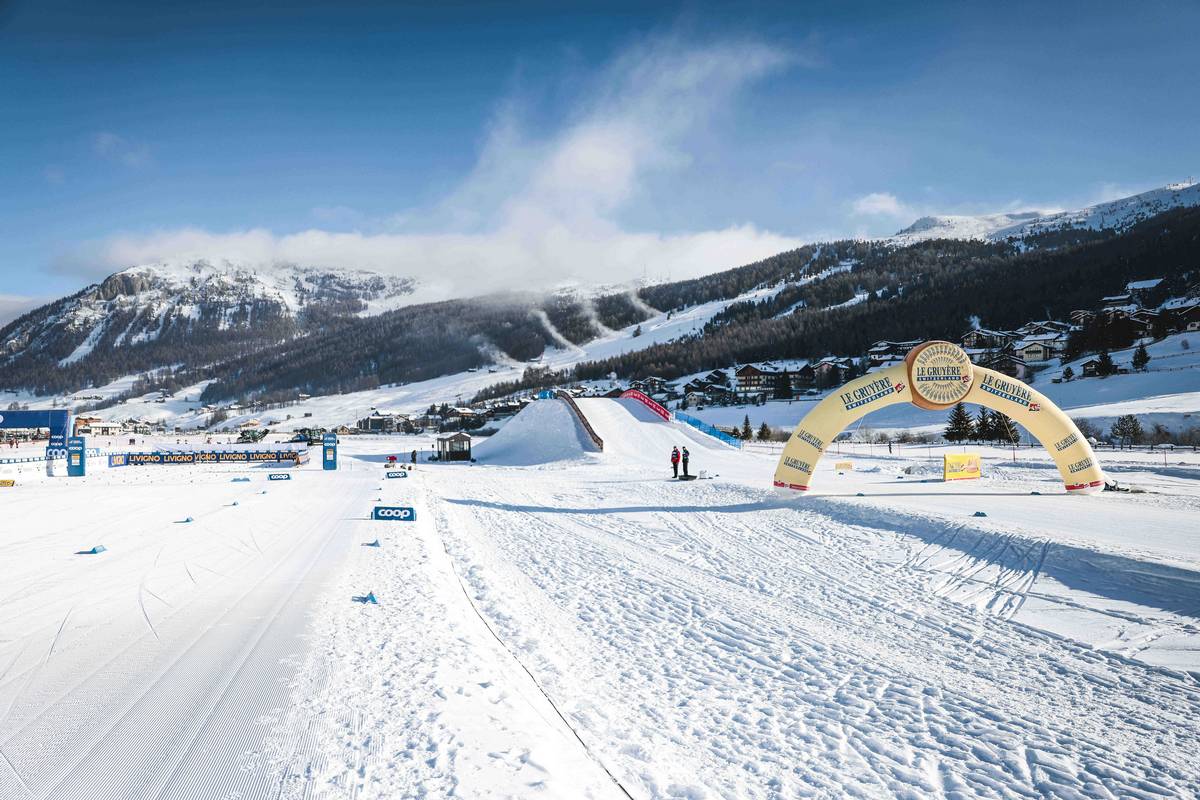
    The high alpine valley containing Livigno, Italy is as beautiful and sublime as any place on Earth, seemingly heaven-sent to feature the high drama of the FIS Cross Country World Cup; for the first time, Livigno was hosting World Cup races this weekend.

    That idyllic scene made Sunday’s Team Sprint all the stranger, since so many of the usual players and storylines were absent from the World Cup. As FasterSkier reported on yesterday’s Sprint, many factors affected the participation in Livigno: the staging of Norwegian National Championships, athletes taking planned breaks in their racing schedules, untimely illnesses, Livigno’s daunting elevation  (Livigno sits at an elevation of 6000ft), and upcoming World Championships in Planica, Slovenia. Johannes Hoesflot Klaebo (NOR) had packed his bags and returned to Norway after his victory in Saturday’s individual Sprints. Jessie Diggins (USA) was taking a break from racing to refine her training. The field of U23 athletes had largely abandoned the World Cup in preparation for U23 World Championships in Whistler starting next week.

    What was left in Livigno then? Well, the mountains towered, the sun shone down without a cloud in the sky, the snow was good, and the Italian fans were ready. It was, in other words, still a perfect scene for a ski race, and so those who had stayed on the World Cup—along with a few who were making their first appearances in it—gathered for a Skate Team Sprint in which partners skied three legs apiece on a 1.2 k loop around the valley floor.

    The Alpine valley of Livigno, Italy hosted its first World Cup this weekend. (Photo: NordicFocus)
    Women’s Race

    In a weekend marked by a lull in the World Cup, there was one glaring irony: the front of the women’s field was marked by top skiers trying to re-establish themselves in the World Cup standings. For all their dominance, it has been a difficult year for the Swedish women’s team. A shoulder injury has kept Linn Svahn out for much of the season, and persistent illnesses have struck Jonna Sundling andEmma Ribom early in the World Cup season. In Livigno, the Swedes were looking for an opportunity to return to high-level competition. In selecting their teams, the Swedes split the Beijing Olympic Team Sprint Silver Medal duo of Maja Dahlqvist and Jonna Sundling, and paired both with new partners. Dahlqvist joined up with Linn Svahn to form Sweden II, and Sundling joined with Emma Ribom to form Sweden I. 

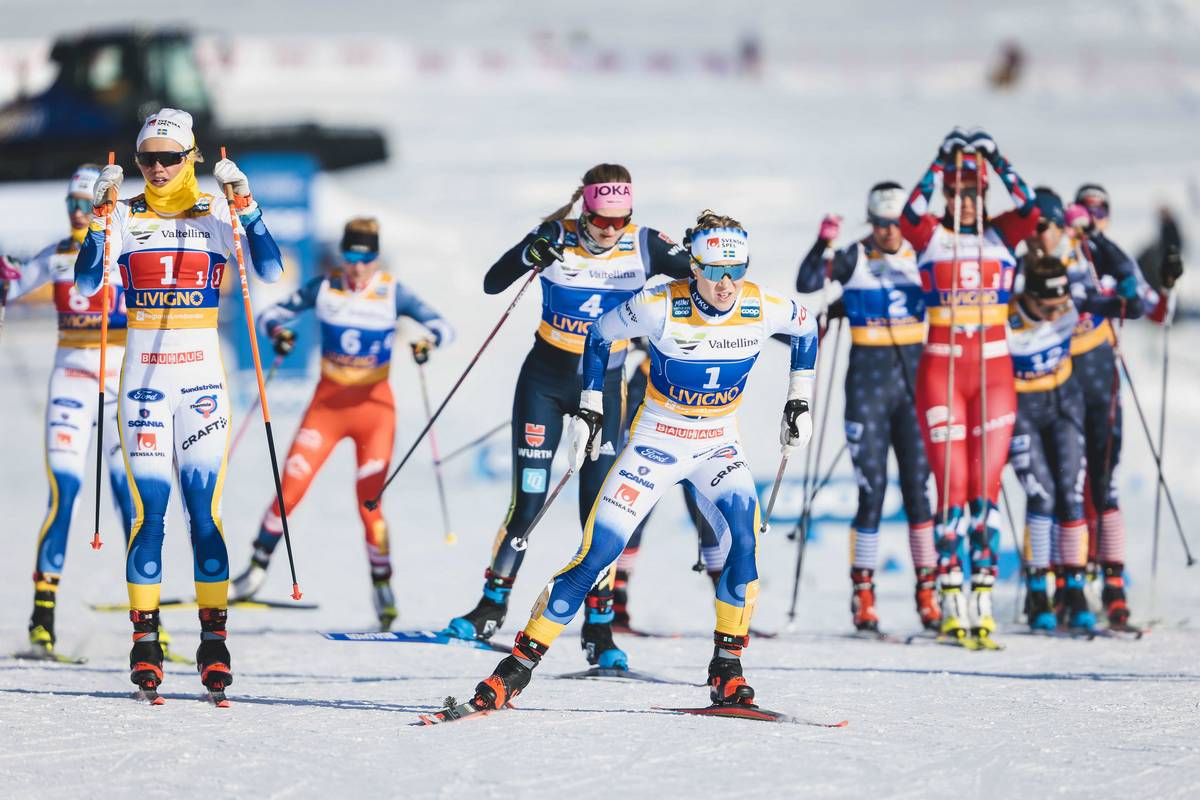
    Jonna Sundling (SWE) heads out from the exchange after the tag from Emma Ribom (SWE). (Photo: NordicFocus)

    There was little to separate the field on the relatively flat Livigno course; through most of the race, the field remained largely intact. Out of the third exchange (entering the fourth lap) the Swedish pair of Dahlqvist and Sundling started to up the tempo on their persistent V2. Only two teams followed: Germany and the United States. The United States I team was represented in the move by Julia Kern, who paired up with Rosie Brennan to form a strong unit for the US. The USA II team of Lauren Jortberg and Alayna Sonnesyn were also in the final today, but had not quite bridged the gap to the front pack. Germany was represented by the pairing of Sofie Krehl and Laura Gimmler.

    The pack of four teams—Sweden I, Sweden II, Germany I, and United States I—held through the fifth lap. The move to win was made by Maja Dahlqvist on the only true feature of the course—a short, steep, pitch where she unleashed a powerful V1 that led her to the win over Sundling who sprinted to second place for Sweden I. Behind the pair of Swedish sprinters, Kern had affected the same high-tempo attack for third, and beat out the German anchor skier, Gimmler. 

    American women celebrate after United States I—Rosie Brennan and Julia Kern—finished third in Sunday’s Team Sprint. (Photo: NordicFocus)
    Men’s Race

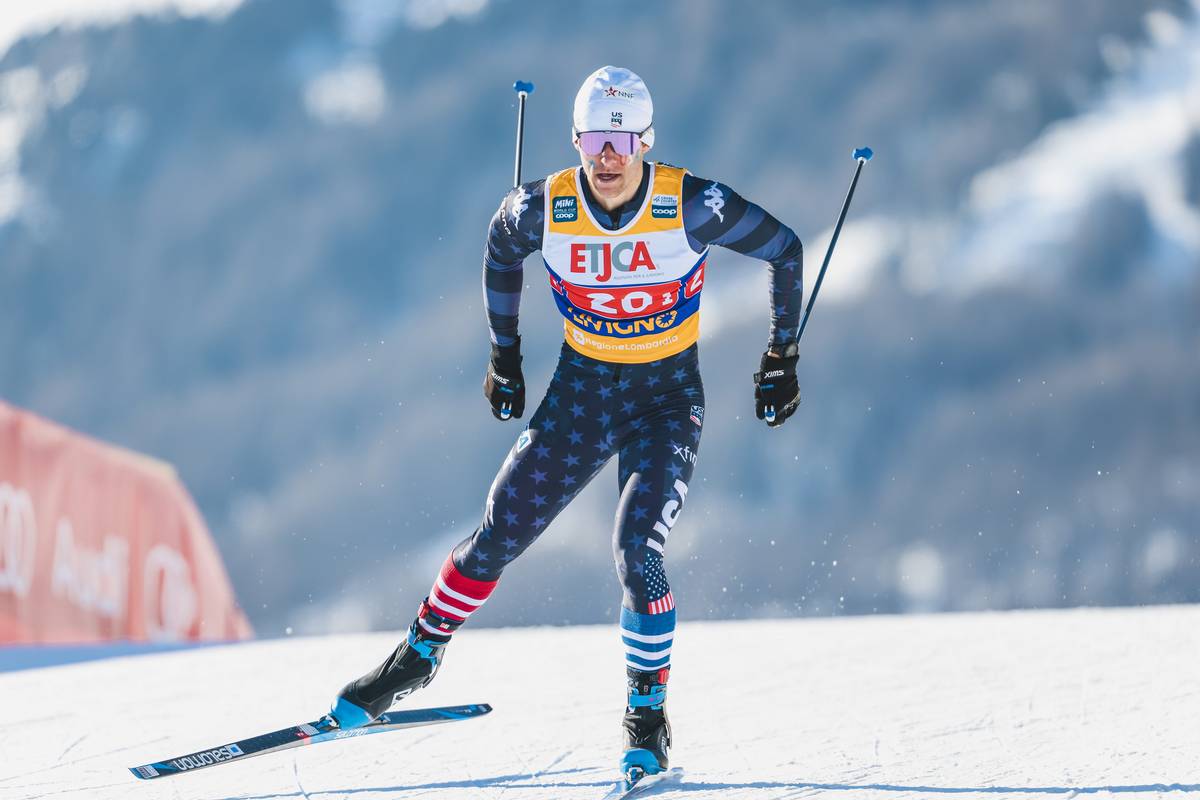
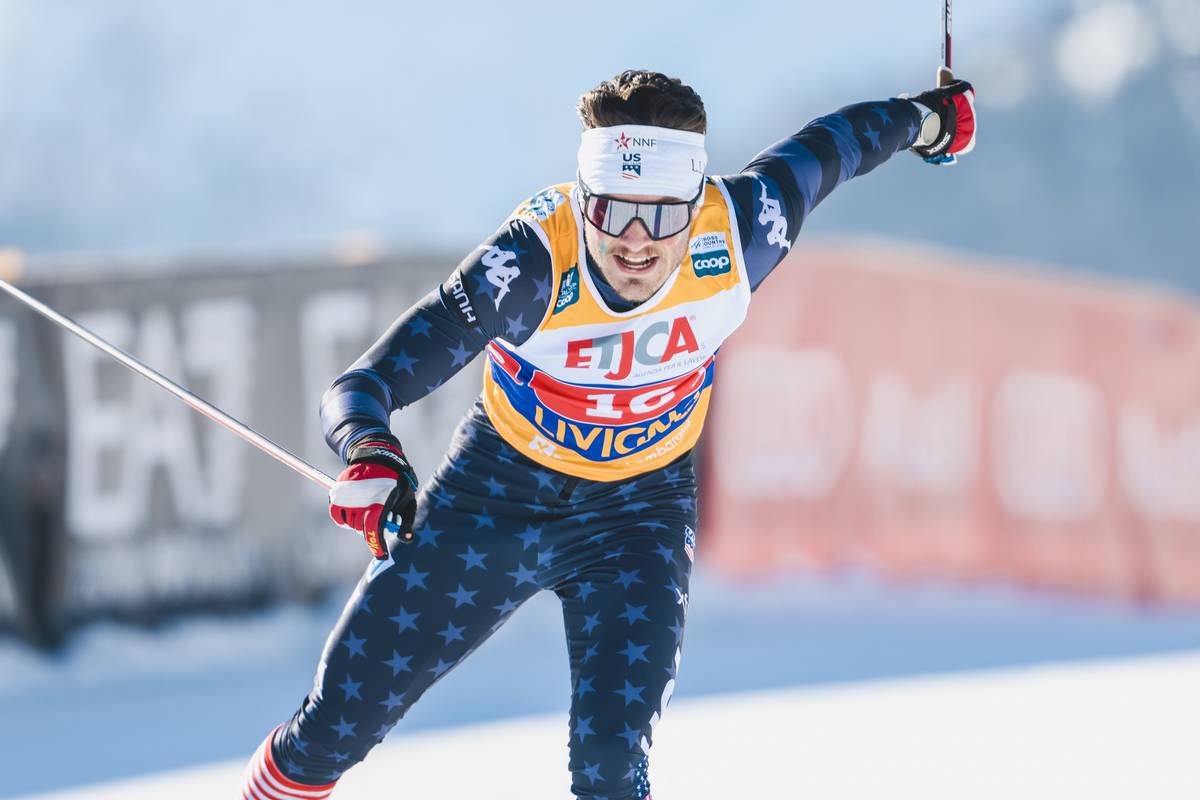
    The unusual scenes of this World Cup brought some welcome novelty, especially for American ski fans, in the Men’s race. A pair of American men even younger than the skiers who are now becoming the familiar faces on the US Ski Team made their World Cup debut in the Individual Sprint yesterday, and paired with more experienced teammates in comprising the Team Sprint duos today. That included Adam Witkowski—a native of upstate New York now skiing for Michigan Tech—who paired with Logan Diekmann to form the United States II team. The team rosters also included Will Koch—the Vermonter and University of Colorado Buffalo—skiing with veteran Kevin Bolger on United States I. United States I advanced to the Final.

    Adam Witkowski (USA) made his first World Cup starts in Livigno this weekend. Witkowski and Logan Diekmann (USA) combined to form USA II in the Team Sprint. (Photo: NordicFocus)

    Focus on who might win the Men’s race was firmly turned towards those teams hailing from the surrounding Alps. The Italians, on home soil, fielded the strong team of Francesco De Fabiani and anchor Federico Pellegrino. The French, too, fielded reigning Sprint champion Richard Jouve in the anchor leg, paired with Renaud Jay. 

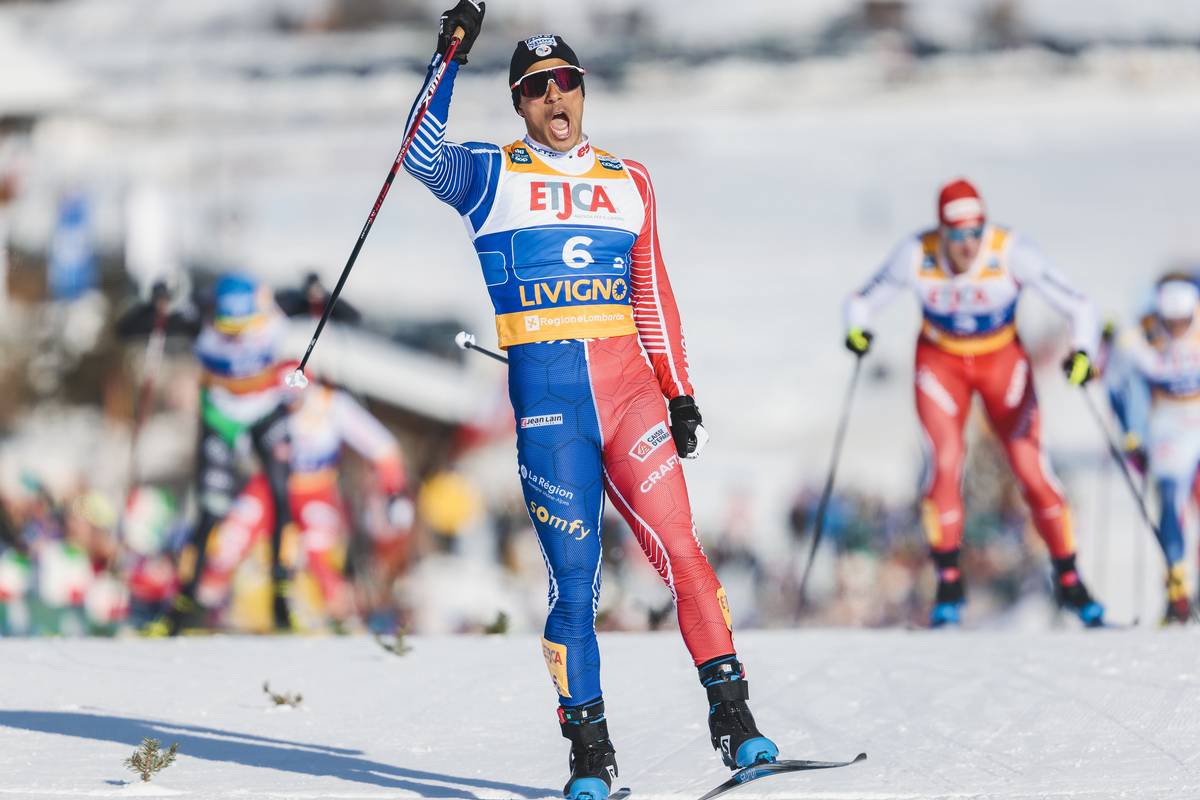
    The men’s field remained tightly woven and tense throughout the course of the six lap race. Skiers looked for a track to gain a place, or test out a high-tempo attack. It wasn’t really until the last leg—the anchor’s anchor leg—that Richard Jouve and Federico Pellegrino moved on the only sharp incline on course and made it a sprint. Jouve gained a slight advantage in doing so, and it was enough to seal the win for France, as Pellegrino brought Italy to a second place finish on the day. Behind the battle for first and second, it was Valerio Grond (SUI) who escaped the pack to earn the bronze with his partner, Janik Riebli (Saturday’s Individual Sprint bronze medallist). 

    Richard Jouve (FRA) brings home the win with teammate Renaud Jay (FRA). The French head towards a race on home soil in Les Rousses next weekend. (Photo: NordicFocus)

    The pairing of Koch and Bolger for the United States finished in 12th place on the day, but just 20 seconds off the leaders. The combination of the experienced Bolger alongside the younger Koch underscored the range and depth that the American program has fostered over the past decade. Koch’s first start on the World Cup extends the scope of that accomplishment across time too, as he joins Novie McCabe in being the second generation of his family to have skied on the World Cup for the United States.

    Will Koch (USA) teamed with Kevin Bolger (USA) in Sunday’s Team Sprint. (Photo: NordicFocus)
    On to Les Rousses

    With familiar pieces of the World Cup scattered to the winds during this weekend in Livigno, perhaps the biggest story going forward is just who might be on the start line next weekend when the World Cup travels from Italy to France. The French will finally be able to host a World Cup in Les Rousses after Covid restrictions and insufficient snow coverage forced cancellation two years ago. It’s a reminder that the World Cup is subject to the whims of life, weather, sickness, and all else. There’s never absolute certainty, which only heightens the experience when the sun is shining, the snow is plentiful, and the best athletes in the world converge to ski race for ski racing’s sake.

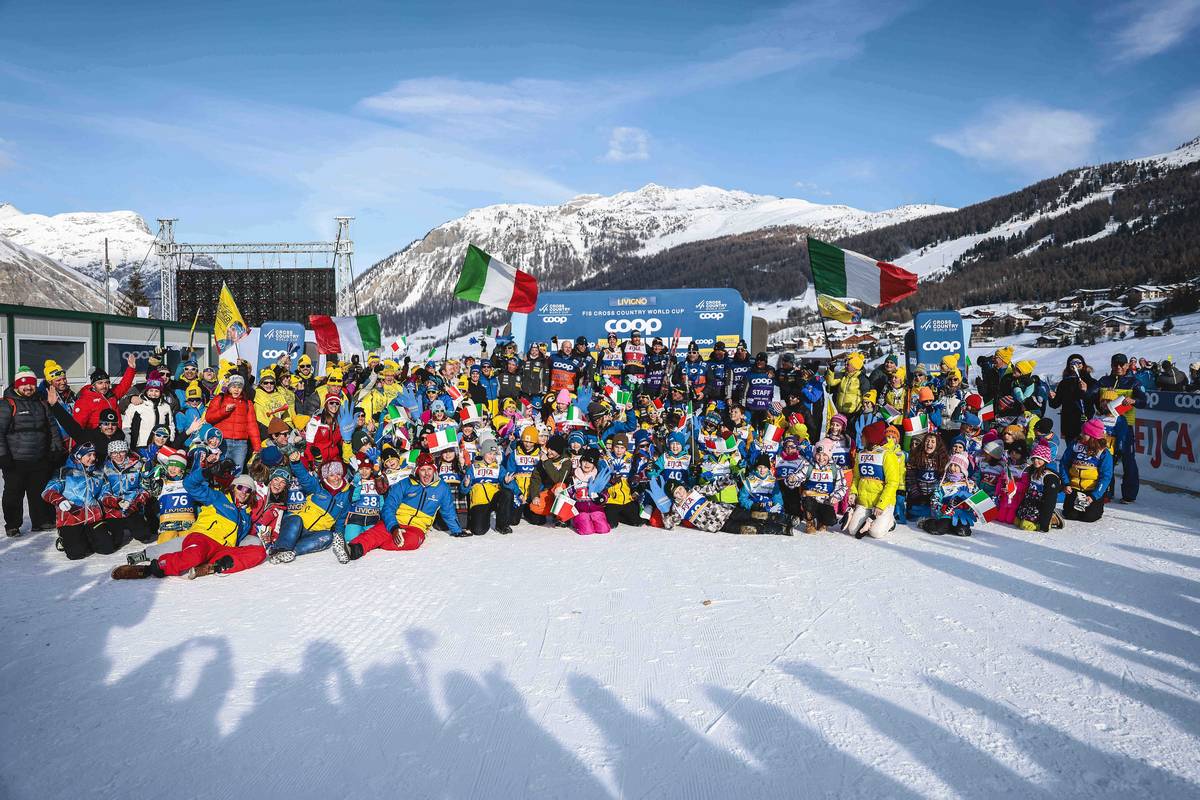
    The Italians celebrate a successful World Cup weekend in Livigno, Italy. (Photo: NordicFocus).
    Full Results from Sunday’s Team Sprint

    Women

    Men