From the FasterSkier archive — posts syndicated from athletes’ and coaches’ own blogs between 2004 and 2012, kept online as published. Current coverage is at fasterskier.com.
MINNEAPOLIS, Minn. (January 5, 2018)– The World Masters Association has approved a motion to extend registrations for the 2018 Masters World Cup, happening January 19-26.
“The WMA Executive Committee decided that the early dates of this particular MWC required additional time for registrations to come in. We understand that some folks — particularly in the Upper Midwest — are still building fitness and having another week to decide to participate in the MWC2018 could be useful,” said J.D. Downing of AXCS.
This extension opens a window for master skiers that may still be deciding if they’re in shape to compete in the cup. The additional ten-day registration extension will give them time to make that call, though the timing will influence their starting point in the races. Competitors who register after the original deadline of January 6 will be seeded in their age and gender category, based on the order in which their registration was received.
As registrations continue to roll in, trails crews at the Loppet Foundation continue working day and night to build out the course for the week-long championship. Mike Erickson, Race and Events Director of the Foundation, said:
“The plan developed over the past five years for manmade snow on the Masters World Cup courses is working perfectly thus far. The cold weather over the holidays has allowed the first 5 km of the core 7.5 km of trails used for the first four race days to be put in place.”
With many other areas of the USA struggling with snow or weather woes, the Twin Cities are increasingly looking great for a fabulous Masters World Cup. It’s not too late to make your plans and join the fun — late registrations will be accepted until January 16, 2018.
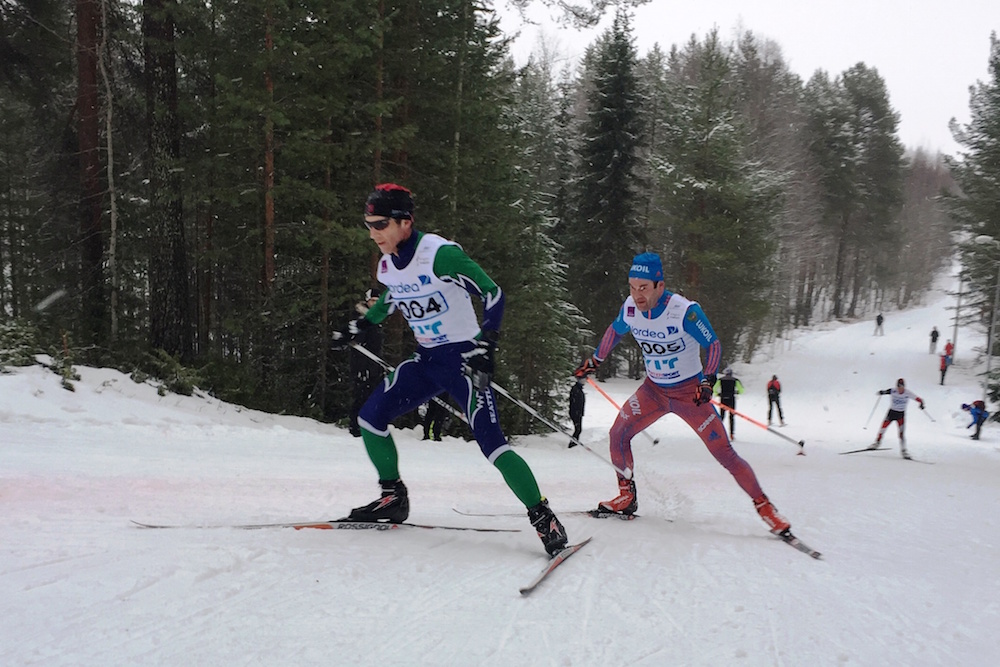
Kent Murdoch leading the pack in the 45-kilometer skate in the M5 category at 2016 Masters World Cup in Vuokatti, Finland. (Photo: Vesa Suomalainen)
Hankering for World Cup-style distance racing?
While most masters tend to aim for the traditional ski marathons, the annual Masters World Cup (MWC) presents an opportunity for skiers 30 and older to ski up to four races of regular World Cup distances in a week.
“It’s so much fun to do a variety of distances within a week, and being able to battle it out with athletes from all over the world is just a really unique opportunity,” says Milan Baic of Traverse City, Mich., who won silver in the final 45-kilometer skate race on Feb. 12 in Vuokatti, Finland.
Baic, 56, has been to every MWC event since 2004, and is planning to be back at the 2017 MWC in Klosters, Switzerland, and beyond.
“With the MWC you get a package deal of a race week. It’s not just a week of really professional and high-level racing,” Baic says. “But AXCS [American XC Skiers] puts together everything with accommodations, race entries and all logistics taken care of, all in a very affordable package. It’s a great value. All you need to do is show up and race.”
More than just races
“You meet so many interesting people, you make genuine friends that you see year after year at the Worlds, and you start looking at people from other countries and cultures in a different way,” Baic says.
He notes that while every year has a different flavor and atmosphere, the events in Russia in 2004 and 2015 have been among the most memorable.
“People in the host communities really take a lot of pride in putting on a really professional and smooth championship week, and are also really excited to share their culture and specialties in everything from opening and closing ceremonies, award ceremonies, medals and awards,” he says.
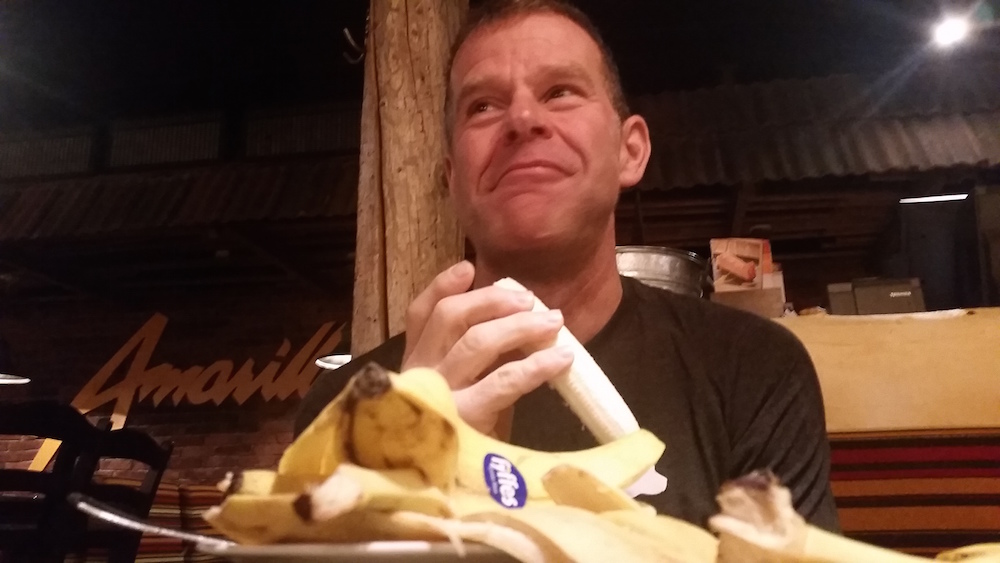
Milan Baic, of Traverse City, Mich., has a well-proven medal strategy for the 45 k event at Masters World Cup: he eats five bananas before breakfast. It usually produces a medal for him, and this year was no exception. He earned the silver medal in the M6 category, one of the most competitive in the Masters World Cup, in Vuokatti, Finland. (Photo: Kent Murdoch)
Also, Baic points out that the U.S. contingent also has a great spirit, good energy and a supportive team environment.
“The racers cheer for each other, help each other out with feeds and wax tips, and it’s fun to travel with the same people, as well as meet new skiers from other parts of the U.S.,” Baic says.
Baic and several of the masters on the US team train systematically for cross-country skiing year-round. He estimates that in an average week, he puts in about 12 hours of training between skiing, strength training and occasional cross training.
While the MWC is the highlight of the season, Baic also races the traditional marathons, and last year, he was 43rd at the American Birkebeiner, the highest ranked to date of any racer 50 or older in the 43-year-old event.
This is the Masters World Cup
Every year, the International Ski Federation (FIS) and the World Masters Association (which is currently under the reign of the first-ever American president, John “JD” Downing) organize a championship-style weeklong competition open to non-professional skiers age 30 and older. The event routinely attracts over 1,000 skiers from more than two dozen countries. This year, the masters World Cup was held in Vuokatti from February 6-12. Roughly 70 American skiers age 40 to over 80 helped themselves to 16 medals in the course of the week in Finland.
If the venue Vuokatti sounds familiar, it might be because it is also home to both FIS World Cup and Continental Cup races every year, as well as one of Finland’s Olympic training centers, home to the 2-kilometer Finnish ski tunnel, and the Angry Birds theme park.
Then, in 2018, the Masters World Cup returns to North America for the first time since 2011, back when the event was held in Silver Star, British Columbia. The 2018 championships will be held in Minneapolis in January 2018, but the exact dates are yet to be announced.
The Minneapolis Masters World Cup represents a very unique opportunity to race several World Cup-style races right in the heart of a big metropolitan area, as most of the Masters World Cup events take place at ski areas that are not necessarily close to big cities.
About the Author: FasterSkier contributor Inge Scheve, a Norwegian native, lived in Fairbanks, Alaska, and Bend, Ore., for a number of years where she became an avid skier and masters racer. Scheve recently competed in her sixth Masters World Cup in Vuokatti, Finland.
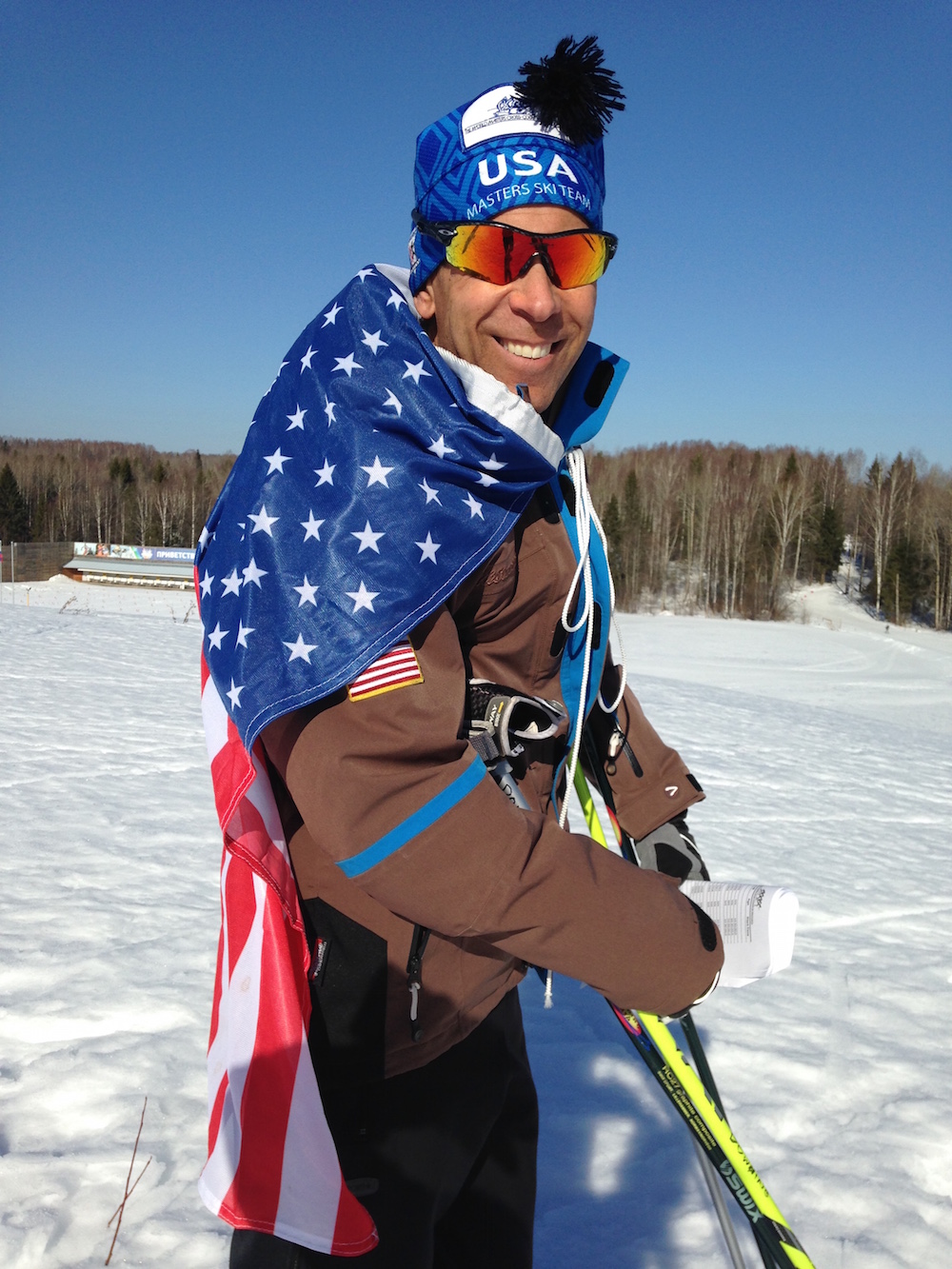
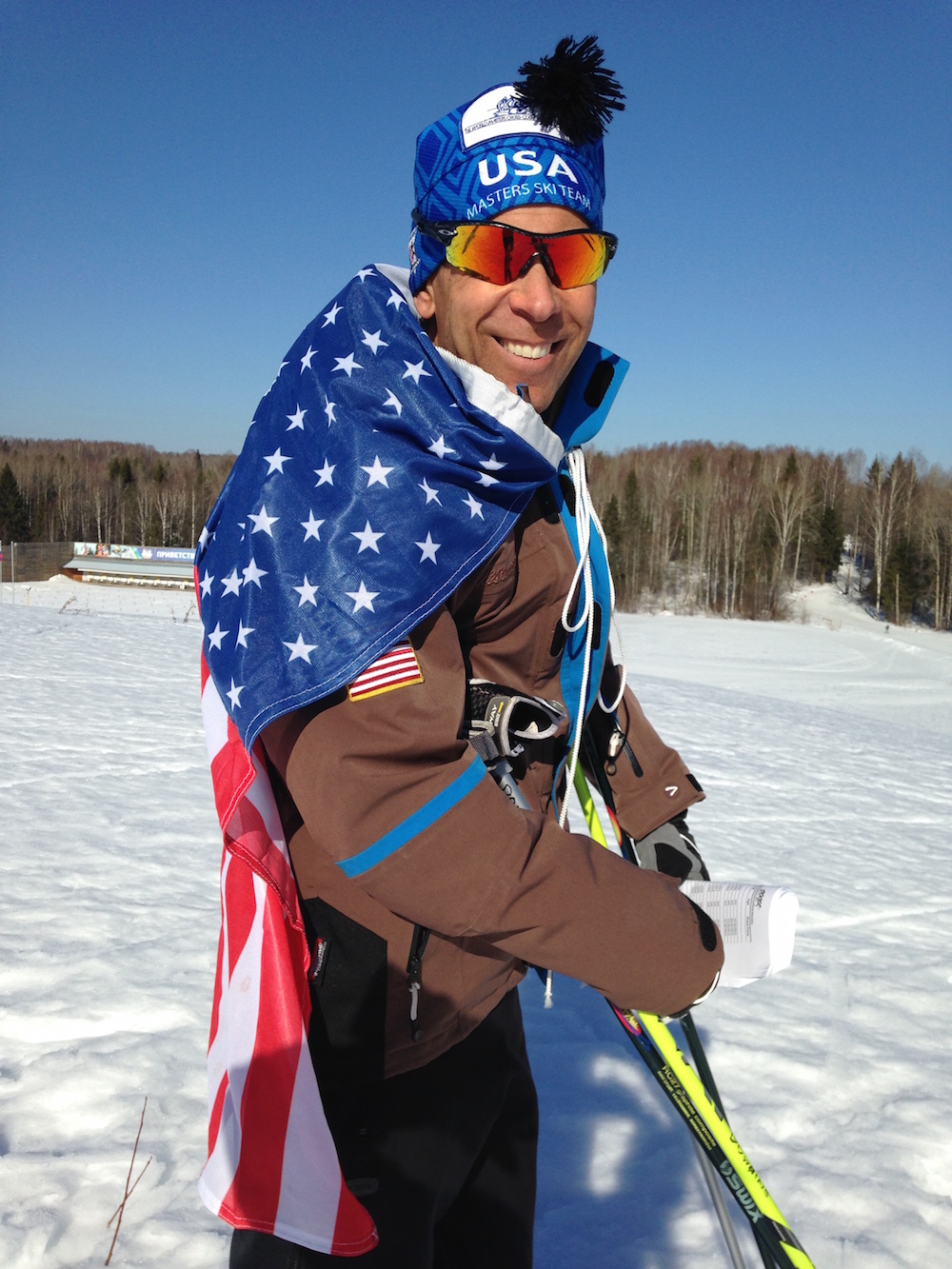
J.D. Downing at the 2015 Masters Word Cup last March in Syktyvkar, Russia. (All photos: Inge Scheve)
Late last month, John “J.D.” Downing of Bend, Ore., was elected president of the World Masters Cross-Country Ski Association (WMA), putting him at the helm of the international organization that governs master skiers in the International Ski Federation (FIS).
Pointing out that master skiing is much more than the big loppet events, Downing, who founded XC Oregon and has been involved in international cross-country skiing for more than four decades, said in a phone interview that he wants to get more masters involved in racing, both internationally and locally.
“In some capacity I’ve been part of just about every type of nordic ski event imaginable over the past 41 years, and I really believe the MWC [Masters World Cup] format is one of the most enjoyable to be around,” Downing said. “You get the fantastic energy of international participation of the big marathons, but with easier logistics and a more intimate ski experience out on the trails. I also love the fact that skiers of any ability can enjoy an annual world championship with their peers, discovering all these fantastic ski places around the world.”
As president of the WMA, Downing, 49, wants to reduce the logistics and organizational requirements necessary for attending and hosting a Masters World Cup, an annual, competitive world championship for skiers ages 30 and older, which attracts more than 1,000 athletes annually from across the globe.
FasterSkier: What attracted you to this position, and what do you hope to accomplish during your term?
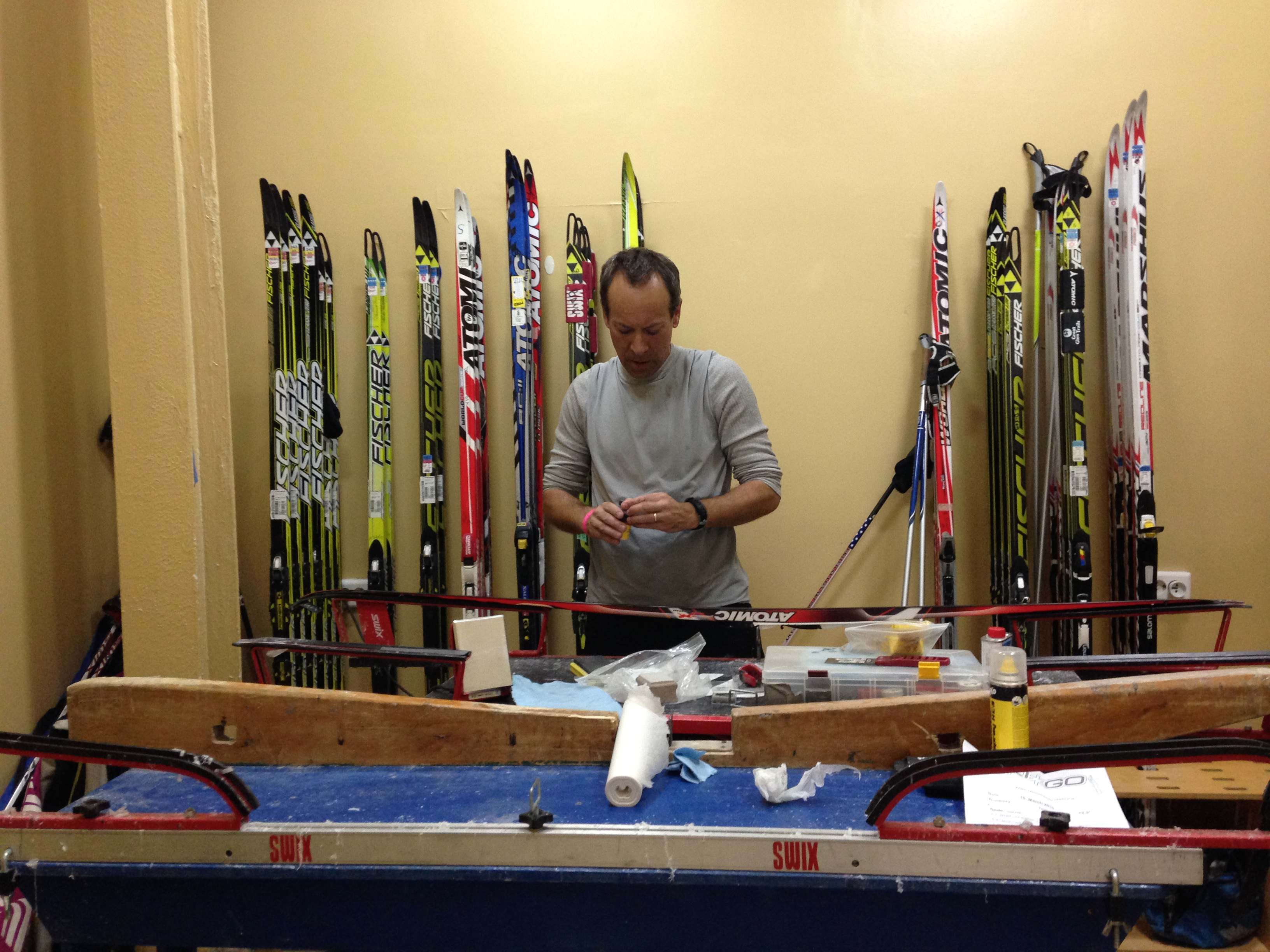
J.D. Downing at work in the U.S. wax room at the Smetanina Sports Complex at 2015 Masters World Cup. (Photo: Inge Scheve)
“I have really enjoyed the past 11 years working with the WMA as the USA national director, and when it became apparent that there wasn’t a long list of directors that were able or willing to step into the president shoes, taking on the added responsibility, it just made sense at this time for me,” Downing said.
“Honestly, the biggest thing I hope to accomplish is having the WMA become more of a team effort with even the minimal administrative functions we have to perform each year. I’ll have a full plate the next several MWC events leading what should be increasingly bigger Team USA contingents, but I’m confident we’ll see multiple other directors and officers embrace different tasks within the WMA, which is exactly the way a non-profit international organization led by volunteers should function.”
He added that the association is already working on a few new elements within the event design for Masters World Cups that will come into play after the 2016 MWC in Vuokatti, Finland, which could make the championships appeal to a wider group of master skiers.
“We would like to reduce the time commitment at the MWC for skiers, particularly younger masters. We also want to keep the event as practical to manage as possible for future organizers, so there are some ideas being worked on in that area as well,” he said.
FS: What are some of the challenges facing the association, and what issues need to be addressed?
“The biggest issue by far is a gradual reduction in worldwide numbers of what I call motivated masters,” Downing said. “The biggest ski events are generally doing very well, and the MWC numbers are holding steady. But we are seeing a clear decline in motivation and numbers of master skiers at the grassroots level around the world. Skiers under the age of 55 are particularly hard to keep ‘in the game.’ ”
He added that some of the underlying issues of this gradual decline are beyond the scope of the WMA, including climate change.
“There are many factors involved in this decline that the WMA can’t really address. Annual consistent snow in ski regions worldwide being first and foremost. But we do need to find ways to motivate and interest more adult skiers in the basic concept that there is more to this sport than just taking part in one or two big loppets every year.
“We’ve got an amazing lineup of MWC events coming up, and I urge every skier over 30 to consider taking part in a future Masters World Cup,” he added. “Vuokatti in 2016, Klosters in 2017, Minneapolis in 2018, and then next fall, we hope to confirm Beitostølen, Norway, for 2019 MWC, which would keep the positive momentum going.”
“We’ve got an amazing lineup of MWC events coming up, and I urge every skier over 30 to consider taking part in a future Masters World Cup.” — World Masters Association President J.D. Downing
The last time the MWC was in North America was in 2011 in Silver Star, British Columbia. In 2008, the MWC was in McCall, Idaho.
Additionally, most of the national masters associations host national championships in varying locations. In the U.S., that organization is American Cross Country Skiers (AXCS), which Downing also heads. This season, the 2016 National Masters Championships will be held at Royal Gorge in California.
Downing has been the U.S. national director since 2004, and will continue to lead the AXCS while being MWA president. He does not anticipate that the additional responsibilities of the presidency to detract from his national role.
“There are some practical economic advantages for both AXCS and WMA in having me do both jobs, especially with the MWC 2018 in Minneapolis coming up fast,” he said.
The WMA Legacy
On Sept. 25, Downing was elected president of the WMA during the the association’s annual conference in Klosters, Switzerland. He takes over for Germany’s Thomas Heckmann, who served as WMA president since 2009, but stepped down this past spring because of business demands. WMA Technical Vice President Klaus Pleyer served as an interim president this spring and summer until the election.
The World Masters Association consists of national directors from every country that fields teams at the Masters World Cup. Every year, the WMA meets to determine business regarding master skiers, review rules and regulations, and select a host and destination for the next Masters World Cup championships, much like the annual FIS general assembly.
The MWC is the biggest event of its kind for age-group skiers, and the bidding process to host the MWC is much like that of the regular FIS Nordic World Championships with potential host destinations submitting their bids to the WMA for review. WMA officials then visit the host destinations and vote on the options.