From the FasterSkier archive — posts syndicated from athletes’ and coaches’ own blogs between 2004 and 2012, kept online as published. Current coverage is at fasterskier.com.

Tag: WW

  • Wednesday Workout: Sand Hills TT with the UNM Ski Team

    Wednesday Workout: Sand Hills TT with the UNM Ski Team

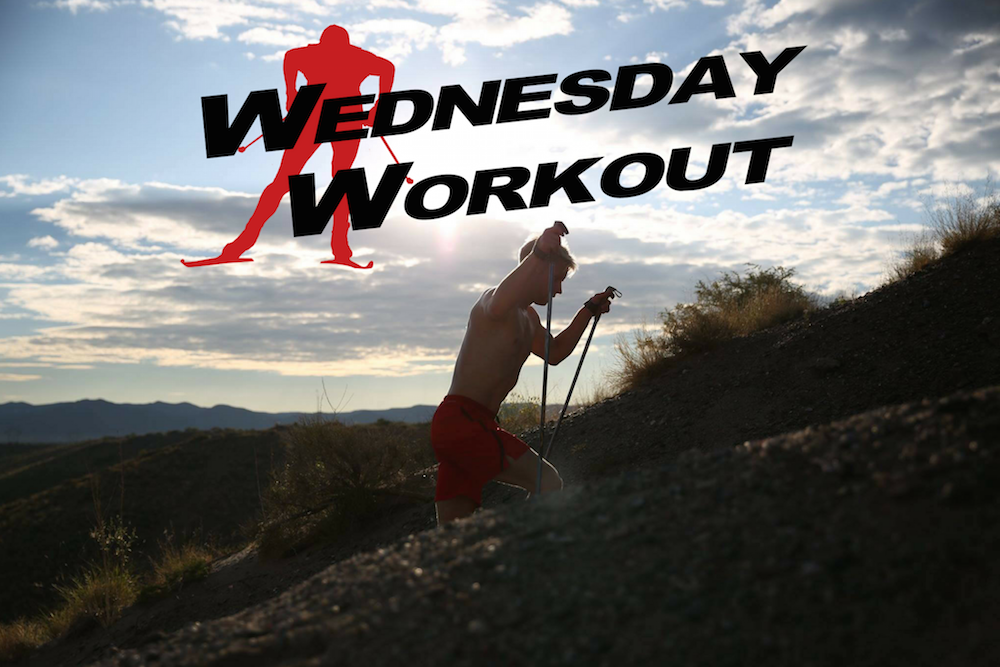
    UNM junior nordic skier Petteri Vaherkoski during the Sand Hills time trial in Albuquerque, N.M., last September. (Photo: Christian Otto)

    This week’s workout comes from University of New Mexico (UNM) sophomore Julia Devaux, who recently wrapped up her second season with the UNM nordic team. Devaux, 23, is originally from Grenoble, France, and grew up training in Villard de Lans. She was previously a member of the French national team but sought out new motivation to continue skiing.

    “[UNM Head Coach] Fredrik [Landstedt] gave me the opportunity to come at UNM 2 years ago,” Devaux wrote in an email. “I chose UNM because it was crazy and unusual to be part of a Division 1 ski team in the desert! I needed something new, and I totally found it here.”

    Devaux is studying business, with a concentration in marketing. She shared the following team workout:

    ***

    “As a member of the University of New Mexico Nordic Ski Team, you are put through workouts that you could have never imagined doing as a skier. Here is one of the craziest, toughest and most unusual workouts that I know: the Sand Hills Time Trial.

    We are located in Albuquerque, N.M., and what do we have around us? A desert! This is where Fredrik, our head coach, decided to set up this unusual running time trial.

    A few minutes’ drive from campus are some sand hills. Extremely steep hills. Think about some hills you can barely walk up. Add in soft sand and it feels almost impossible (see pictures )

    Julie Ensrud doing the Sand Hills time trial during her freshman season with the UNM nordic team last September in Albuquerque, N.M. (Photo: Christian Otto)

    This workout is a great reference of fitness for us. We do it four to five times a year, so we can keep track of our performance. Running is a big part of nordic training, so this is a good intensity workout to improve our base.

    One lap is about 1.5 k, with five huge hills that we run up and down. We use nordic walking poles (hip height). Using poles is a good way to balance weight and use upper body as well.

    Women run two laps, men three. To give you an idea, the women’s record is 20 minutes, 41 seconds (Kati Roivas), and the men’s is 25:43 (Aku Nikander). For 3 k and 4.5 k, this will give you the right idea about how steep and sandy these hills are!

    We warm up by walking the course once, which takes about 30 minutes. We usually start individually, but every once in a while, we will do a mass start. We cool down on our way back to the vans, where we dump piles of sand out of our shoes.

    I love that the Sand Hills Time Trial is unique to our team, a workout where we push our limits, fight with our teammates and run after the clock as we do when ski racing. Training in such an unusual environment for a ski team makes it so much more exciting!

    The Workout: Sand Hills Time Trial

    You’ll need: Running shoes, Nordic walking poles (hip height), a hilly course (preferably sand)

    Warm up: Walk the course once (should be about 1.5 k long with several big hills)

    Time trial: Individual start or mass start. Women race 2 laps, men race 3. Record times and compare each time you revisit this workout.

    Cool down: Jog back to your car (or team vans). Dump sand out of shoes.

    The decision to cut the UNM ski team program next fall was made a few weeks ago, and we are fighting this decision with all we’ve got. Please help us by visiting saveunmskiteam.com, sign our petition online, share with your friends…

    Every piece of support is helping us, we need to show how great we are, and we need you!”

    UNM skiers (from left to right) Eva Severrus, Kati Roivas, Brenna Egan, Julie Ensrud, and Julia Devaux getting ready for their team’s Sand Hills time trial last September in Albuquerque, N.M. (Photo: Christian Otto)


  • Wednesday Workout: Alpine Touring & Backcountry Skiing with NCAA Champs DU

    Wednesday Workout: Alpine Touring & Backcountry Skiing with NCAA Champs DU

    University of Denver (DU) Head Nordic Coach Dave Stewart during a backcountry ski on Berthoud Pass in the Colorado Rockies in 2015. (Courtesy photo)
    University of Denver (DU) Head Nordic Coach Dave Stewart during a backcountry ski on Berthoud Pass in the Colorado Rockies in 2015. (Courtesy photo)

    Looking for a workout that’s been known to produce both NCAA Championship skiers AND a national title? After winning the overall at 2016 NCAA Skiing Championships in March in Steamboat Springs, Colo., the University of Denver (DU) shares a workout that — perhaps to no surprise — combines an alpine skier’s agility and strength along with the cardio fitness and adventure-loving attitude often exhibited among nordic athletes.

    ***

    Who says backcountry skiing and alpine touring are only workouts for the post-season springtime? For a little more than three years, the University of Denver nordic ski team has taken full advantage of the Rocky Mountain Range’s summits, not only as a way to work off the post-season blues, but as a means of in-season training as well.

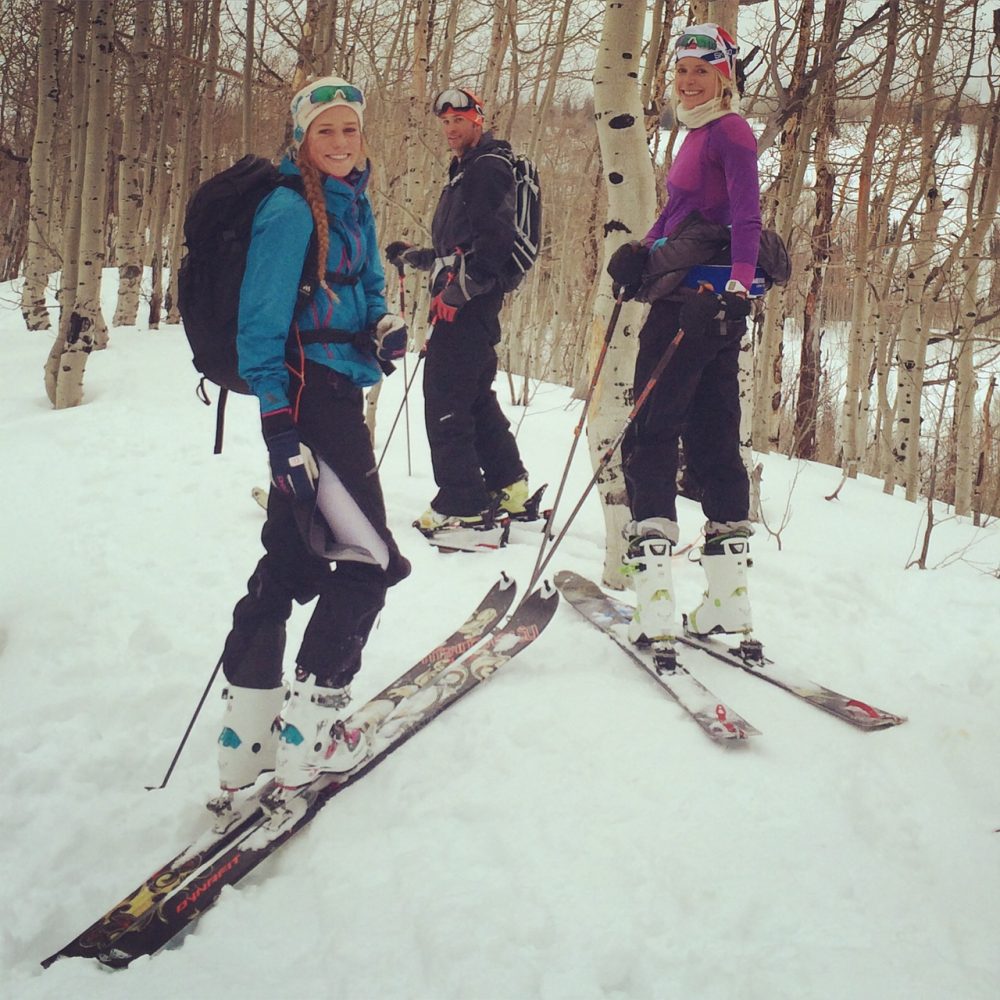
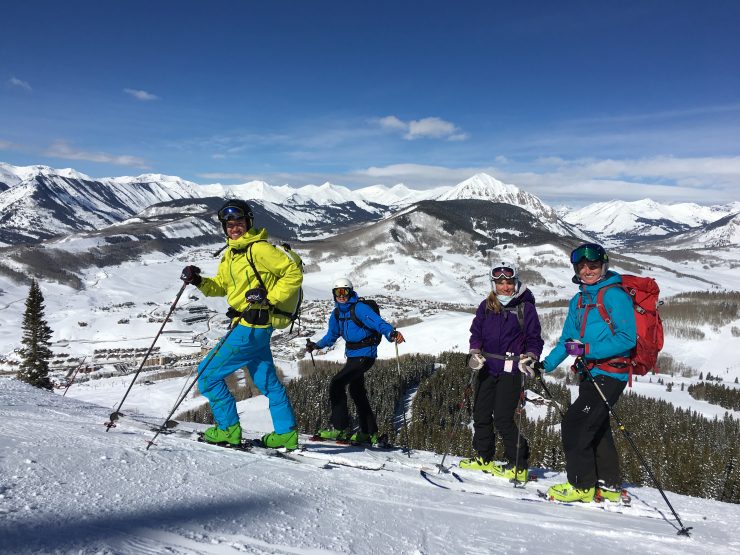
    Denver University nordic skies Maja Solbakken, Josh Smullin, Sylvia Nordskar during a back-country ski on the Buffalo Pass in 2015 (Courtesy photo)
    University of Denver nordic skiers Maja Solbakken and Sylvia Nordskar with Steamboat Springs Winter Sports Club coach Josh Smullin (c) during a backcountry ski on Buffalo Pass in 2015. (Courtesy photo)

    DU Head Nordic Coach Dave Stewart (who helped lead the Pioneers to two individual NCAA titles as well as the overall team title last season) indicated that when packing for training camps, or even ski races, slipping a set of skins into duffel bags and an extra set of touring skis is a must.

    “A few years ago, some of our skiers got really fired up about alpine touring and backcountry skiing,” Stewart wrote in an email. “So we started to bring equipment with us to training camps and race trips as well as getting in some more skinning close to Denver when at home.”

    Taking the opportunity in between race weekends, or even training sessions, to venture up and off-trail on alpine skis also prevents from getting bogged down with the regular routine of training, according to Stewart.

    “Getting out on the backcountry equipment, off the trails and in the mountains is a mini-adventure and a break from the routine,” Stewart wrote. “It’s also outstanding training and adds some more variation, something we are always looking for.”

    The tours combine strength during descents with a low intensity cardio during the climbs. As Stewart pointed out, what makes backcountry skiing a beneficial workout for cross-country skiers is the way it brings together exploration and exercise.

    “We always have a few people on the team who love spending time adventuring in the mountains, so backcountry is a way for us to combine this with race training,” Stewart wrote. “It’s good for the body and mind.”

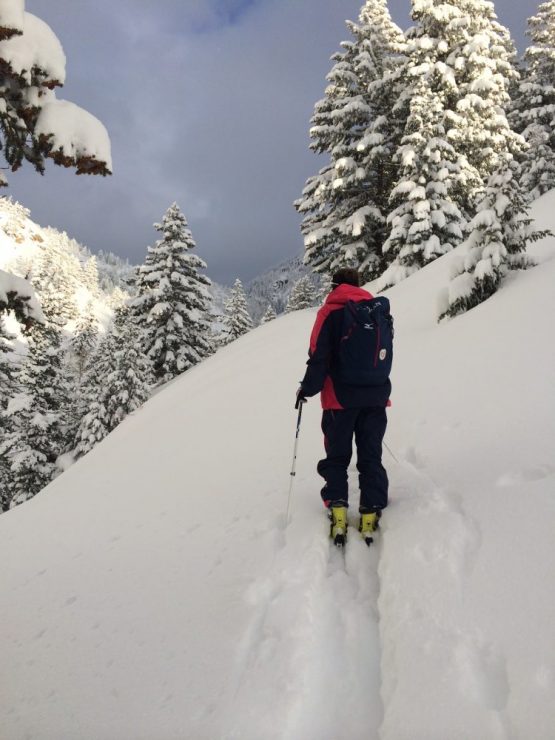
    Denver University nordic skier Trygve Markset during a back-country ski at Fish Creek, Steamboat Springs in 2014. (Courtesy photo)
    University of Denver nordic skier Trygve Markset during a backcountry ski at Fish Creek, Steamboat Springs, Colo., in 2014. (Courtesy photo)

    The Workout

    Purpose: Low-intensity workout that doubles as a break from the occasional routineness of in-season training

    Step 1: Pick a time

    • DU Head Coach Dave Stewart suggests melding alpine touring/backcountry skis into midweek training camps or even as a post-race day recovery workout.
    • “Find a good time for a tour, either the day after a race, on an afternoon midway through a training camp or on a sunny spring morning,” Stewart notes.

    Step 2: Get a Guide

    • Gathering information from someone knowledgeable about the safety of conditions is a priority for DU athletes looking to complete the workout.

    Step 3: Skin and Ski Up

    Stick your skins on and begin the uphill trek. Stewart suggests “see[ing] what you find over the next few hours,” as you work the ascent.

    Step 4: Ski Down

    After a few hours of uphill, dig into the descent.