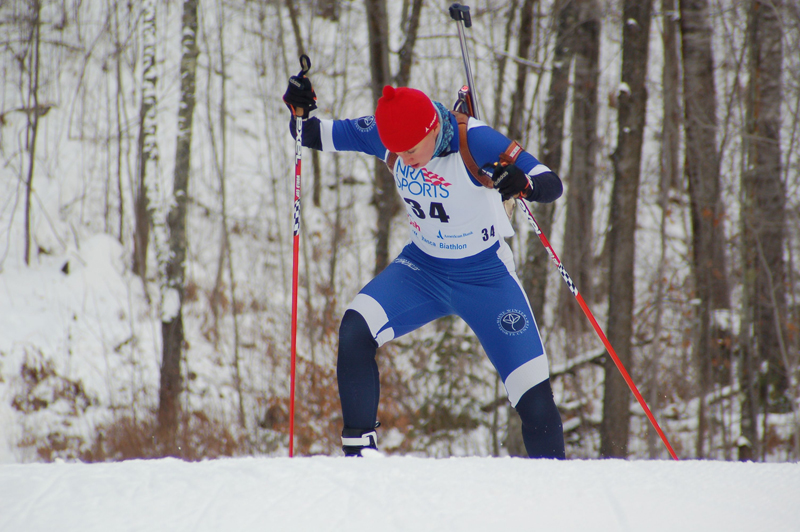
Tag: Wynn Roberts

  • Maine Biathletes Reel from Dual Cuts from MWSC Downsizing, U.S. National Team Roster

    Maine Biathletes Reel from Dual Cuts from MWSC Downsizing, U.S. National Team Roster

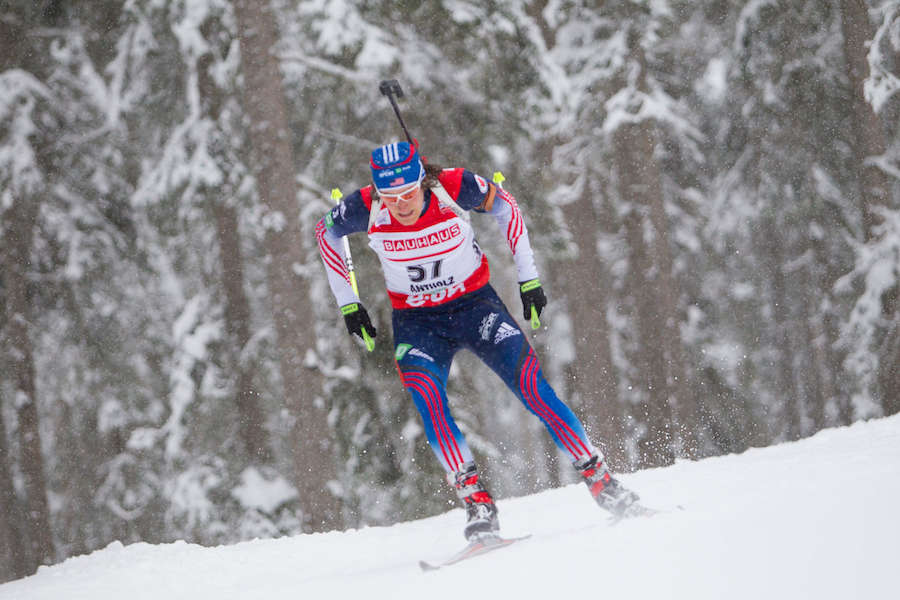
    Russell Currier competing in a World Cup sprint in Antholz, Italy, in 2014. An Olympian in Sochi and a two-time sixth-place World Cup finisher, Currier had his worst season in years and was cut from the U.S. National Team. Paired with funding cuts to his home club, the Maine Winter Sports Center, Currier and his teammates are trying to pick up the pieces. (Photo: USBA/NordicFocus.com)
    Russell Currier competing in a World Cup sprint in Antholz, Italy, in 2014. An Olympian in Sochi and a two-time sixth-place World Cup finisher, Currier had his worst season in years and was cut from the U.S. National Team. Paired with funding cuts to his home club, the Maine Winter Sports Center, Currier and his teammates are trying to pick up the pieces. (Photo: USBA/NordicFocus.com)

    For a group of biathletes based in Maine, two painful announcements came in the last few weeks: first, the news that their home base, the Maine Winter Sports Center (MWSC) would be drastically reducing the support offered to its Olympic Development Team (ODT), and secondly, that many of them did not get re-named to teams by the United States Biathlon Association (USBA).

    When the team nominations came out, neither Russell Currier nor Casey Smith were back on the B-team, and Brian Halligan and Kelsey Dickinson were not re-named to the National Development Group. Only one MWSC athlete, Maddie Phaneuf, retained her spot, in her case on USBA’s upper-tier development squad, the X-Team. Phaneuf, still a junior, got her first World Cup start this past season.

    Smith, Currier and Dickinson had represented the United States at IBU Cup competitions, the circuit one tier below the World Cup. Halligan, a first-year junior, had competed at World Youth and Junior Championships. All four are now struggling to decide whether to stay in Maine for the upcoming training year, and if so how to support themselves both financially and with coaching at trials competitions, since MWSC will no longer send staff to out-of-region races.

    USBA Chief of Sport Bernd Eisenbichler heard about the cuts and has talked to the athletes, but it did not affect the national team selections. He said in a phone interview that while he wishes that he could support the struggling MWSC athletes more, it’s not the job of the federation to take over for the clubs.

    “Maine Winter Sport is a great partner for us,” Eisenbichler said. “Together we must see what we can do for the athletes. But it is also clear that the federation cannot take care of all biathletes in America. So we have to have criteria and we have to have a qualification system to get more funding, resources, and coaching attention along the way. There are not a lot of clubs out there with lots of resources, so it’s not really good for us what happens there right now, I have to say honestly. But I also really want to speak to [MWSC President] Andy [Shepard] to hear more details about it.”
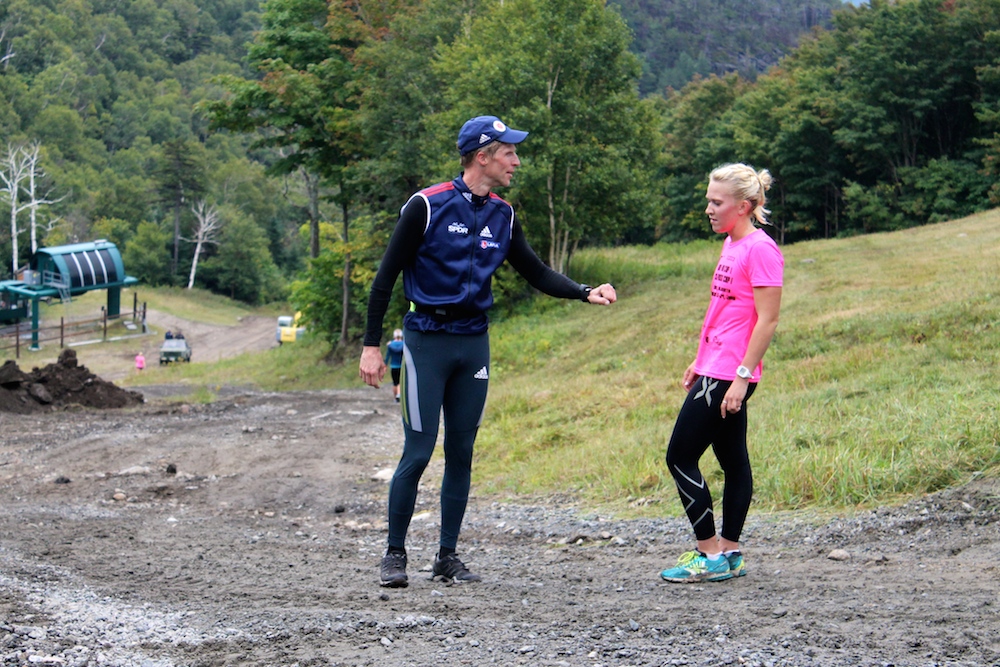
    Kelsey Dickinson talking to U.S. Women's Coach Jonne Kähkönen at USBA's Talent ID Camp last spring. Dickinson was selected to be part of USBA's Development Group last season.
    Kelsey Dickinson talking to U.S. Women’s Coach Jonne Kähkönen at USBA’s Talent ID Camp last year. Dickinson was selected to be part of USBA’s Development Group last season.

    At the time of his interview, Eisenbichler emphasized that he had not yet spoken with the MWSC CEO, Shepard, who made the decision.

    “I don’t want to talk about inside things as I don’t know,” Eisenbichler said. “I just can say that I know Andy and his team did a great job over the last decade being a great development resource for us and our athletes, and getting them ready for the next level. I feel very thankful for that. If there are changes now, there will be a good reason for it. I want to talk to him in more detail.”

    For Dickinson, though, that support from MWSC just gave her a painful taste of what she could have had, before it was taken away.

    “People don’t realize necessarily the commitment that it takes to be a senior level biathlete that’s not getting massive amounts of support from U.S. Biathlon,” she said. “It’s heartbreaking to be in this place where I’m looking at next year and trying to make it work because I want to pursue biathlon. A lot of people are feeling that right now. I’m not the only one.”

    Not Quite Good Enough

    In most cases, the athletes saw it coming that they wouldn’t get re-named to the USBA teams. Currier, a 2014 Olympian who has two previous World Cup top 10’s to his name, had his worst season in several years..

    “The season started out pretty well but by January I was mentally and physically exhausted,” he explained. “Since then I have felt a little better. For me it was a good summer with some big improvement. I just got really stressed out on race day and couldn’t put it together on the shooting range, and that spilled over into the skiing. I never really got going the way I wanted things to go. It just sort of snowballed.”
    Casey Smith (Maine Winter Sports Center/U.S. Biathlon "B" Team) on his way to placing second in a NorAm mass start in Canmore, Alberta, in early December. (Photo: Jake Ellingson)
    Casey Smith (left) on his way to placing second in a NorAm mass start in Canmore, Alberta, in early December. (Photo: Jake Ellingson)

    Neither he nor Smith made the criteria to get re-named to the national B-team. The objective criteria would have been two top-35 performances on the World Cup or at World Championships. While Currier raced the first period of World Cups, with a top finish of 61st, Smith did not appear at the sport’s highest circuit. His top IBU Cup finish was 38th in a sprint in Ridnaun, Italy; Currier placed consistently in the high 30’s in early January.

    While the USBA rules allow for discretion in naming the B-team, Eisenbichler said that none of the athletes made a compelling case for themselves with their non-World Cup results.

    “The B-team for us is really a team that we really want to have people who when they come to the World Cup they would be really competitive there,” Eisenbichler said. “And unfortunately nobody really made the criteria, and for nobody was there an outstanding result where you can say, okay, this is a discretionary thing. We know that all these athletes, Casey Smith, Russell Currier and Wynn Roberts, have the potential to be there, and have already showed that they can be at a much higher performance level than they were at this year. But unfortunately this year was not their strongest year.”

    Roberts, a 2010 Olympian who is a member of the National Guard biathlon program, also had his hat in the ring. He placed in the top 30 of the IBU Cups in Canmore, Alberta, in three different races. But the fields were not deep, with just 45 or 46 finishers, and even when he placed 22nd in a sprint, he was 1:41 back in a race that took the winner just over 24 and a half minutes, or about 6% slower than the winner.

    Smith, an Under-26 athlete and younger than Currier and Roberts, could have also qualified for the B-team by placing in the top third of the field at Open European Championships. But his best finish, 61st out of 98, did not come close.
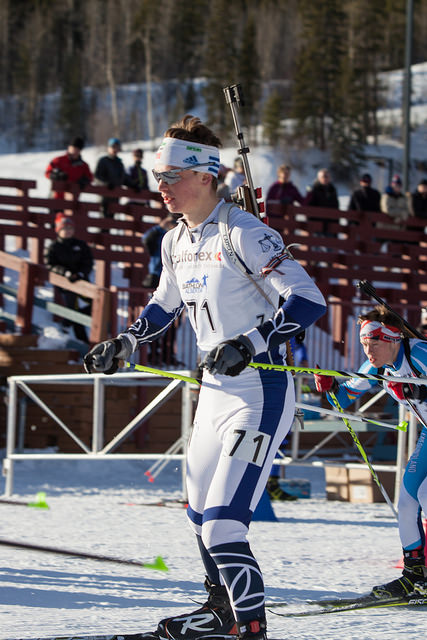
    Brian Halligan (Maine Winter Sports Center/USBA Development Team) competing in the NorAm mass start in Canmore, Alberta, on December 7. Halligan later swept all three junior men's races at World Youth and Junior Trials in Mount Itasca, Minnesota. (Photo: Jakob Ellingson.)
    Brian Halligan (Maine Winter Sports Center/USBA Development Team) competing in the NorAm mass start in Canmore, Alberta, on December 7. Halligan later swept all three junior men’s races at World Youth and Junior Trials in Mount Itasca, Minnesota. (Photo: Jakob Ellingson.)

    Still, Smith, who crashed hard while training on course at the final IBU Cups of the season in Canmore, believes that if he hadn’t had to abandon the rest of his season he could have turned in results that would have netted him a nomination. As it was, he was laid up with broken ribs, bones in his back, and a punctured lung, and will be recovering for a long time before fully resuming training.

    And he also believed that domestic results should have spoken in his favor.

    “I would have thought that after winning the IBU trials two years in a row they would see more potential in me,” he wrote.

    The USBA criteria note that winners of the National Championships – which Smith missed with his injury – would be invited to a summer training camp and evaluated for eventual inclusion on the B-team or another team, although such a naming is not guaranteed. The double victor at nationals, Patrick Johnson of the Auburn Ski Club, was named to the X-team, an intensely-focused training group based in Lake Placid, N.Y., for outstanding juniors and cross-country skiers converting to biathlon. A standout skier, Johnson has been doing biathlon for roughly a year.

    As for why Halligan and Dickinson were not re-named to the Development Group – a lower-tier, non-residential program below the X-team – both understood that they hadn’t raced as well as they had hoped this season. Halligan, for instance, said that he had overtrained.

    “By the time I got to Europe my body was just exhausted and I didn’t have too great of a result,” he said. “So I honestly didn’t expect to get called back to the Development Team this year.”

    As a first-year senior, Dickinson was thrilled to have made the IBU Cup team, a goal she said she hadn’t been confident she could achieve. She hoped that that accomplishment would have been recognized, but at the same time understood why the results themselves were not. She got to race in Poland and Italy, where she had a top finish of 68th, as well as in Canmore, where she twice placed 28th out of 36 women.
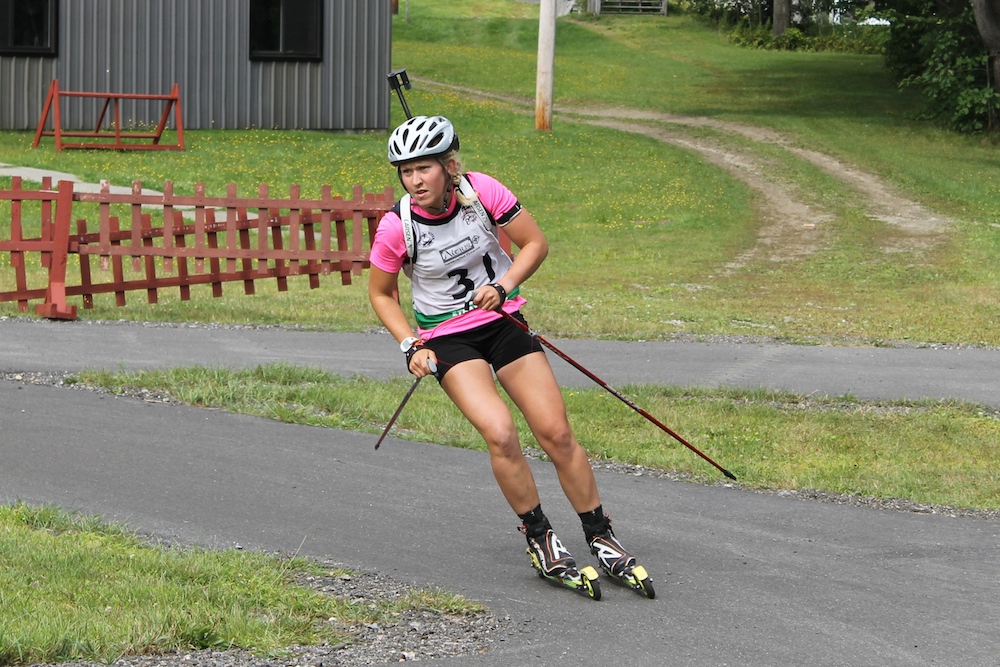
    Kelsey Dickinson competing at the 2014 North American Rollerski Championships at Ethan Allen Firing Range in Jericho, Vermont.
    Kelsey Dickinson competing at the 2014 North American Rollerski Championships at Ethan Allen Firing Range in Jericho, Vermont.

    “There are criteria,” she said. “I didn’t do well when I was over in Europe. It was a bit of a rough trip. The new levels that they have are pretty tough especially because it’s mostly the A1, A2, and A3 teams now I think. I understand… I get why I didn’t get named.”

    In order to be a better biathlete in the future – and biathlon is the sport she intends to follow long-term – she has read the criteria and, metaphorically, the writing on the wall. Incidentally, what she needs to do may not in the long term be incompatible with a return to the College of Saint Scholastica, where she was enrolled before spending a year at MWSC to focus on biathlon full-time.

    “My goal this year is to ski faster,” she said. “That’s why they didn’t name me to anything. It was because I wasn’t skiing fast enough this year. Skiing for the NCAA circuit and skiing for [coach] Chad Salmela, I think I could make some of those advances.”

    Cuts on the Home Front

    Between the dual cuts, the four athlete are looking at a loss of opportunities to train in Lake Placid with other top-level biathletes, reduced contact with national team coaches and other support staff, like sports psychologists, and, perhaps most significantly to their chances of getting re-named to a national team down the road, a cut in both funding and coaching support for national trials races in the summer, fall, and winter.

    That also affects other biathletes, like Katrina Howe, who also represented the U.S. at IBU Cups in Canmore but hasn’t been a member of their development program since 2010, the year after she graduated from the University of Vermont.

    Maine Winter Sports Center athletes and friends enjoying Lake Tahoe on their trip to U.S. National Championships in March. There, Dickinson, Phaneuf, and Katrina Howe shuffled back and forth between places two and four in the combined junior/senior women's results. (Photo: Katrina Howe/Facebook)
    Maine Winter Sports Center athletes and friends enjoying Lake Tahoe on their trip to U.S. National Championships in March. There, Dickinson, Phaneuf and Katrina Howe shuffled back and forth between places two and four in the combined junior/senior women’s results. (Photo: Katrina Howe/Facebook)

    “Last year our trips, like to Canmore and Minnesota for trials, were all covered by Maine Winter as part of being on the team,” said Halligan, who paid to be part of MWSC’s postgraduate training program for the last two years. “This year the trip to Junior World trials will be covered. But all the others, like for rollerski races and IBU Cup trials, you have to cover those on your own. And also since Seth [Hubbard] is the only coach at the moment, they won’t be sending a coach out there either. So you’ll have to go at it alone, or have to hook up with another team.”

    Hubbard did not return a request for comment.

    The financial stretch seemed to trouble some athletes more than others; Halligan didn’t seem overly concerned with the increase in tuition of the postgraduate program, although covering travel expenses was a stressful prospect. For the senior athletes, however, who had not been paying program fees, the vastly increased expense seemed devastating.

    “For me it’s a financial thing,” Dickinson said in an interview. “I can’t afford to fund myself and be completely unsupported next year.”

    With Will Sweetser leaving as the head of MWSC’s cross country skiing program, Hubbard’s responsibilities in northern Maine have changed and increased. Not having him with the team on the road is one of the most daunting changes for the biathletes: there’s additional components to preparing for a biathlon race compared to a ski race, like zeroing on the shooting range.
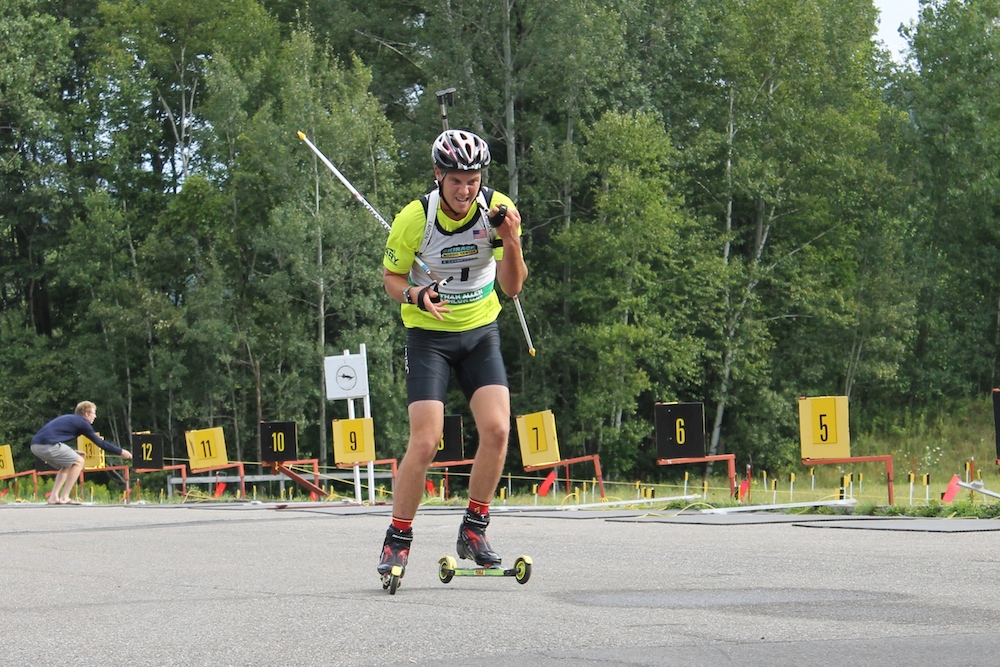
    Casey Smith competing in the men's 10 k sprint at the 2014 North American Rollerski Championships.
    Casey Smith competing in the men’s 10 k sprint at the 2014 North American Rollerski Championships.

    “With me the biggest thing was even if we could hire a part time coach to come with us to Canmore, Minnesota and those different places, it’s a little different in biathlon especially because when you’re working with someone through the whole year they really understand your shooting,” Dickinson said. “It’s harder to just jump in with someone else.”

    Halligan and Smith both said that the support changes are making them look at other clubs and doing some cost analysis. Smith wrote that the change “makes me question if [MWSC] will continue to be the best option for me.”

    For Dickinson, the financial aspect as well as the coaching support is what is making her contemplate a return to college.

    “I qualified for World Juniors in Presque Isle basically training [at College of Saint Scholastica] and doing biathlon on my own,” Dickinson said. “I didn’t have a coach. I was shooting on my own – there’s a range, although I don’t know what the status of it is now that I’m going back. I had a little help from Chad [Salmela, the CSS coach and a former biathlete] but not really because he’s so busy with the team. He supported me going to different races. The problem is that I made this really big jump last year as a first year senior with qualifying for the IBU Cup and that level of training does require have a coach and having higher level opportunities. I see that a little more difficult for me to make that happen on my own in Duluth while I’m going to school. It would just require so much more.”

    While all lauded the training group atmosphere in Maine, which will remain despite the funding changes, Currier is the only one who seemed to be definitely staying, although he said that he is still working out the details of how that can be compatible with international competition.
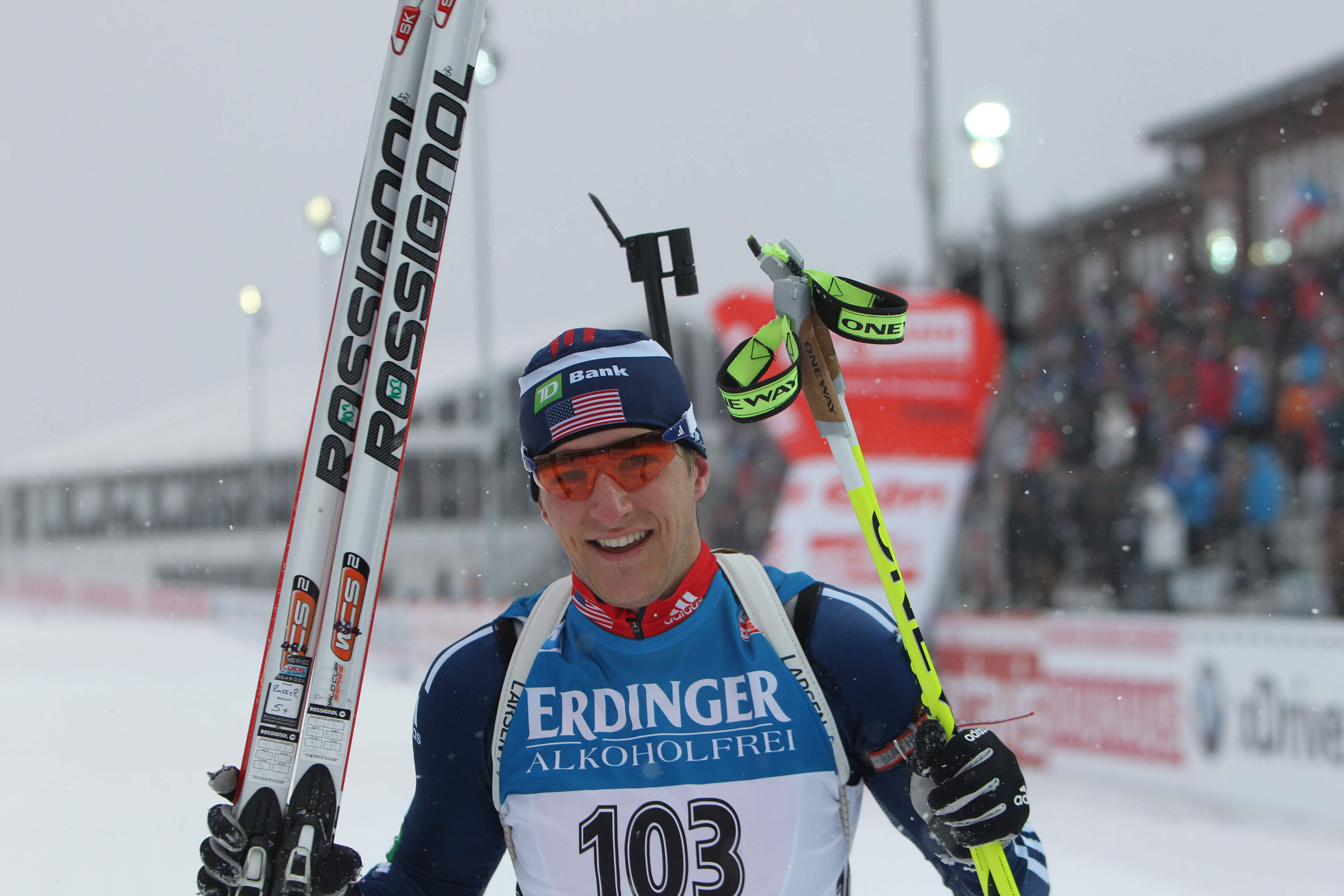
    Currier at the finish of the Nove Mesto sprintin 2012, where he came from bib 103 to place sixth. (Photo: USBA/NordicFocus.com)
    Currier at the finish of the Nove Mesto sprintin 2012, where he came from bib 103 to place sixth. (Photo: USBA/NordicFocus.com)

    “For me, it still makes sense to be there because nobody knows training in the area like I do,” the 2014 Olympian explained. “I know where all the good roads are. For me it’s home, really. From a training perspective that’s a big advantage.”

    An Open Door?

    Eisenbichler said that just because athletes were not named to the national team in the spring did not imply that they would never be named again. In a new strategy, USBA expanded their national team by nominating or promoting six athletes in November last year. According to Eisenbichler, the same thing could happen this year as early as the end of August, after national rollerski championships in Jericho, Vermont.

    “It’s first of all good to have rewards on the way for athletes who are developing in a fast way,” Eisenbichler said. “But also to use the opportunity to say okay, we add an athlete who shows a good performance level right now to the team and make the [national] training group even stronger, so everyone can capitalize on that.”

    For Currier, “that’s the plan,” he says, in terms of getting his national team creds back and all of the coaching and supplementary support that entails. He hopes to still talk to national team coaches in the coming months about changes he is thinking of making to his training, and wishes that he could maintain his relationship with the team’s psychologist and other staff.

    “We’ve talked to all of them individually and it’s really important for me to be clear, and say that the door is not shut for any of the teams during the training period,” he said. “If you show a really good development, or show a really good performance marker during the [rollerski] nationals compared to our A team who are really World Class performers… you have a really good chance to get named to the ‘B’ team end of August, or be invited to some camps in the fall.”

    Smith is more cynical about the offer.

    “With adding people to the ‘B’ team, they said the same thing last year, that there would be more opportunity for training and coaching in Lake Placid after the rollerski races in August,” he wrote in an email. “This turned out true only for athletes trying biathlon for the first time, not existing athletes. I am not holding my breath that this will actually happen and think that it is more just to pacify us for the summer.”

    Dickinson, meanwhile, said that she applied to be a part of the Talent ID Camp for a second year, hoping that by competing with other junior-level biathletes and elite cross country skiers she can prove that she deserves funding or at least the invitation to some national team camps. She indicated that USBA staff had encouraged this move.

    “I had hoped to get more opportunities to work with Jean [Paquet, USBA’s Head Development Coach] this year,” she said. “For people like Maddie who have had complete access to the national team resources, you look at the jump that she’s made this year. It really does make a difference. It’s going to be really hard for all of us that… aren’t getting anything.”

  • After Three-Race Trials Series in Minnesota, US Names Biathlon IBU Cup Squad

    After Three-Race Trials Series in Minnesota, US Names Biathlon IBU Cup Squad

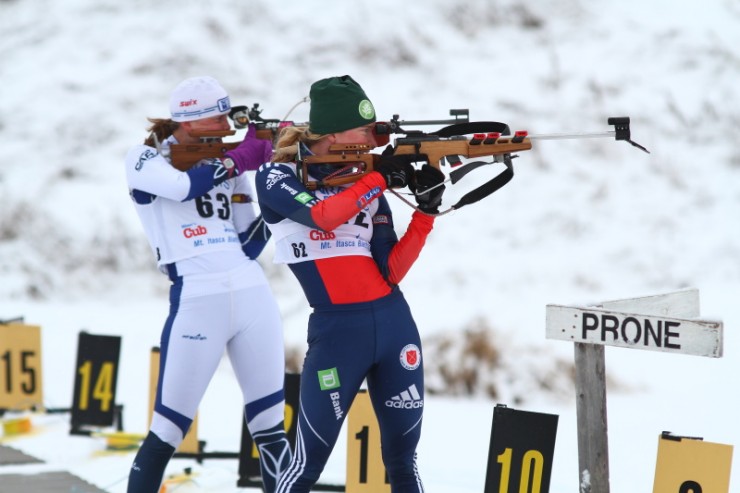
    Hannah Dreissigacker (Craftsbury GRP/U.S. National Team) and Katrina Howe (Maine Winter Sports Center) dueling on the range. Both were selected for IBU Cup races in Otepaa, Estonia, and Ostrov, Russia. Photo: Gregory Haugen/HaugenPhoto.com.

    MOUNT ITASCA, Minnesota – After a winter which had already seen below zero (F) temperatures in Minnesota, no one really expected 33 degrees with rain for Saturday’s Sprint competition at the US IBU Cup Selection Trials, but that’s exactly what they got.

    It rained for hours prior to the start, and only turned to huge, wet flakes of snow mid-way through the race.  Conditions were predictably slow, but Wynn Roberts (National Guard) didn’t let that keep him off the top step of the podium. He finished the 10k course with a time of 23:35.0 after shooting clean in the prone stage, and only missing one in the standing.

    Mark Johnson (Mt. Itasca Biathlon) was hard on his heels however, and if he had not missed one prone shot and another standing, the podium could have looked different as he was only 15 seconds behind (23:50.1).

    Bill Bowler (Biathlon Alberta) was third at 23:54.7 after missing two prone and two standing.

    Corrine Malcolm (US National Team) set the pace for the women as the wet snow continued to fall, with three total misses (2 prone, 1 standing), finishing the 7.5k course in 21:45.3.

    1.1 seconds separated her from second-place Hannah Dreissigacker (Craftsbury GRP/US National Team), which was a great result considering she had one more miss in the shooting stage than Malcolm.

    Also with four total misses, coming across the line in 22:06.3, was Katrina Howe (MWSC).

    The snow continued into the night, and conditions for the Pursuit on Sunday were much more satisfying for athletes and coaches alike, as well as the Mt. Itasca course volunteers. Several inches of new snow had been worked into the trail surface for significantly faster conditions, and morning temps in the low 20s felt perfect.

    Hannah Dreissigacker would be fastest for the women as she covered the 10k course in 31:36.4 and shot the best of any of the seniors, men or women, with only 4 misses over 4 shooting stages. Katrina Howe and Corrine Malcolm joined Dreissigacker on the podium again, with 5 and 7 misses respectively.

    Bill Bowler stood on the top step Sunday with Wynn Roberts in second and Raleigh Goessling (MWSC) in third. Bowler had 7 misses to Robert’s 8 and Goessling’s 10, and finished the 12.5k course in 32:12.

    Monday was make-or-break for the athletesm, as anyone who wanted to travel to Europe as part of the IBU Cup team for race 4 would likely need to notch the win today. Anyone lagging too far behind the first place finisher might be out of the running for a discretionary selection. The overall points winners for the weekend’s three races could count on a spot at the starting line for IBU Cup 4 in Otepaa Estonia on January 4th.

    The format was a 15k Mass Start for the men and 12.5k for the women. Bill Bowler would be the victor today, shooting two better than Roberts, who missed 7 total. Wynn Roberts skied well though, and even with two more penalty loops than Bowler, only finished approximately 30 seconds off the pace. Mark Johnson followed him, with Michael Gibson (Vermont Biathlon) and Raleigh Goessling next.

    Hannah Dreissigacker managed to hang on to first place and finish 8 seconds ahead of Katrina Howe, even with 3 misses compared with Howe’s exceptional results of only 2 misses over 4 stages. Corrine Malcolm joined them on the podium again in third but had a disappointing day on the range with 8 shots outside the black.

    Based on results from all three events, USBA announced later Monday afternoon that the primary selections for the US IBU Cup Team would be Bill Bowler and Hannah Dreissigacker, with Wynn Roberts and Katrina Howe named as discretionary selections. Those athletes will join Jeremy Teela and Tracy Barnes, who qualified for the December period of IBU Cups, and Jay Hakkinen and Lanny Barnes, who raced the first period of World Cups but are moving down to the second tier of racing.

    USBA announced that seven athletes will remain on the World Cup, based on results from the first period of racing: Tim Burke, Lowell Bailey, Russell Currier, Leif Nordgren, Susan Dunklee, Sara Studebaker, and Annelies Cook.

    Full results for the weekend’s races, including Masters, Juniors, and Youth are available at www.minnesotabiathlon.com.

    -Chelsea Little contributed reporting.

  • For Dalberg and Roberts, National Guard Offers Another Route to Ruhpolding

    For Dalberg and Roberts, National Guard Offers Another Route to Ruhpolding

    Jake Dalberg, a member of the National Guard biathlon program, shoots prone during a workout in Ruhpolding, Germany on Monday.

    RUHPOLDING, Germany – When Jake Dalberg made the decision to join the National Guard at age 17, this was exactly what he had in mind.

    “It was tough, but at the same time I felt like it was what I wanted to do and that was the way to do it,” Dalberg, now 19, said of the decision that the National Guard was his best route forward in biathlon.

    In just his third year in the sport, Dalberg is here in Ruhpolding as a sort of adjunct member of the U.S. national team training camp. Although Dalberg and teammate Wynn Roberts are staying in separate accommodations and are supported entirely by their own program, not the U.S. Biathlon Association, they see the national team athletes on the range and the trails every day and have joined in to test themselves in time trials.

    Wynn Roberts checks in with National Guard coach Sarah Lehto.

    “We work together with the national team very well,” National Guard coach Sarah Lehto said as she watched Roberts and Dalberg shoot. “They come to Jericho and sometimes send athletes over to Jericho and we work with them. And in the winter once in a while I’ve gone to World Cups if they need another coach. So we work really well together and I have a good rapport with the coaches.”

    That’s what allowed this trip to happen. Last year, 2010 Olympian Wynn Roberts joined the Guard team; he was the most experienced and high-level athlete to sign up in several years. This spring, Lehto began to think about how to best provide Roberts with the kind of training he needed, which basically meant training with his former national team teammates.

    She asked USBA High Performance Director Bernd Eisenbichler if Roberts if the Guard could bring Roberts to Ruhpolding; only later did she decide to bring Dalberg along. Now, there are two athletes and two coaches from the team in Ruhpolding.

    For Dalberg, it’s an unusual opportunity, and one he’s bent on making the most of.

    “I really just want to learn a lot,” he said as he stretched after a two-hour skating, classic, and shooting combination workout. “I’m still in just my third year of biathlon so I there’s still a lot of learning going on. So just watching the national team, seeing how they do things, and trying to get as much out of it as I can.”
    What is he learning?

    “Just being efficient in skiing, and resting, and all the little things,” Dalberg said. “Sometimes I feel like I’m skiing well, but then I’ll go look at video and go, wow, I really have a lot to work on.”

    Lehto sees the trip serving a different purpose for her two athletes. Dalberg has raced mainly on the NorAm circuit and at a few military races, including one in Italy last year; he seldom gets to compete against the national team. The coach hopes that this will give him some valuable experience.

    Roberts (front) and Dalberg shooting together on the range.

    “It’s good for him to see the next level,” Lehto said. “You know, he sees video comparing himself to some of the top racers in the world and it’s a good way for him to learn. You can talk about these things, but until you’re really immersed in it it’s really hard to know what it’s like. He’s the only U.S. junior getting this type of training right now.”

    Another difference is that while Dalberg has been training more or less all year, Roberts took a break after the race season ended so that he could go through Basic Training and then get married. He’s only been training for part of the summer. But Lehto said that Roberts was taking things well, even when he finished farther behind the national team men in time trials than he usually would. She didn’t think the fact that he was still working on fitness was a major detriment for the camp.

    “For Wynn especially, he needs to be immersed in this environment,” Lehto said.

    Normally, the two athletes train together in Jericho, Vermont. The Guard team typically brings its entire eight-athlete squad together for training camps once a month. While the program has enough funding to do a trip like this every year, it doesn’t always make sense to do so.

    “We have done trips to Scandinavia in the past, but it depends on who you’re working with whether it’s even worthwhile to come over here and be in this environment,” Lehto said. “We have athletes who we didn’t bring, who are not capable of being in this environment. But it will benefit these two, for sure.”

    The spread in ability levels on the team makes her job interesting, but not easy.

    “We just have two coaches but we have eight athletes covering the entire spectrum,” Lehto said. “So that’s really tough. But I feel like we’re rebuilding our program… now that things are calming down in the world, people are beginning to re-look at this option. It’s more enjoyable for me to work with athletes who are closer together, and who are true biathletes rather than looking within the National Guard to find athletes who could potentially be biathletes.”

    As for Dalberg, the Guard is working out perfectly. After just missing the World Youth Championships team last year, he is entering his first year as a junior and aims to make the World Junior team to Obertilliach, Austria.

    “It’s been really good,” Dalberg said of the Guard experience. “I have really great support and good coaching. And it’s a good place to train in Jericho and a good roller loop, so good facilities.”

    After the national team finishes up in Ruhpolding at the end of the week, they will head to Oberhof, Germany, to train and test skis in the ski hall. The Guard athletes, too, will head in that direction.

    “We’ll be three weeks here, which is kind of long, but we’ll be two weeks here and then when they’re kind of tired of this, then they get to go skiing in the ski hall,” Lehto said.

    Dalberg was excited; he had only ever skied in the summer once, and it was a completely different experience. He hopes that this time might be better for training.

    “I was in Chile once in the summer and I skied there, but that was at 10,000 feet,” he laughed. “I think this will be a little easier.”

  • Frustrating Day for U.S. Biathletes In U-26 Relays

    Frustrating Day for U.S. Biathletes In U-26 Relays

    Tyson Smith achored the 10th-place Canadian men's relay team. Photo: Kelly Kjolien.

    As the only senior American woman at Under-26 Open European Championships in Ridnaun, Italy, Susan Dunklee didn’t get the chance to start a relay on Thursday.

    “I’m disappointed, but I don’t want to make a big deal out of it,” she told FasterSkier.

    But while sitting on the sidelines might not have seemed as fun as racing, a couple of her teammates had even more frustrating days.

    The American men’s relay team, after a promising start by Leif Nordgren who had the fastest finishing-loop time of all the leadoff skiers, was stymied by 20 spare rounds and eight penalty loops, the poorest shooting in the field.

    After Nordgren skied two penalty loops in the first shooting stage, he managed not to lose any more time, thanks in part to his furious finishing effort. He left the team in eighth, a minute and 20 seconds behind the leaders.

    But Russell Currier, the next racer, skied four penalty loops and dropped the team to 13th. Wynn Roberts avoided the loop but was only able to move the team up to tenth, despite two very first second and third loops; and Bill Bowler finished things off by skiing two more penalty loops and dropping the team back to 13th.

    The disappointment only continued in the junior mixed relay, where the Americans were pulled from the race – even though they didn’t get lapped.

    “In the end we got pulled from the race for being ‘lapped’, but we never actually got lapped,” Ethan Dreissigacker said. “Apparently IBU rules state that if you haven’t left the range after your last shooting before the winner finishes you get pulled. So we were all a bit frustrated about that.”

    Dreissigacker skied a strong third leg of the mixed relay. After Grace Boutot scrambled the team to ninth place and then Corrine Malcolm had an up-and-down performance, cleaning the prone stage with no extra rounds but then hitting the penalty loop three times in standing and leaving the team in eleventh, the towering Dreissigacker – a natural shooter who also happens to be a former junior national champion in skiing – took over.

    Roberts. Photo: Kelly Kjorlien.

    He cleaned both stages with no spare rounds and had among the fastest shooting times on the day.

    “Things went pretty well today for me,” he said. “My shooting was great. I think being over here getting a lot of racing in has really helped my shooting- I have been shooting very well in practice lately as well. I still wasn’t happy with my skiing though. Part of it may be that I haven’t fully gotten used to the altitude here yet, but I’m not sure.”

    Dreissigacker moved the team up to tenth and tagged off to Raleigh Goessling, who had comparable to better results than his teammate at the recent Junior World Championships. But today it was not to be – Goessling used all three spare rounds in prone and was still stuck skiing around the penalty loop three times.

    “I wish I knew what went wrong in the first shooting, then I could fix it,” he told FasterSkier in an e-mail. “Prone has been a struggle lately. The bottom line is there no excuse for penalties in a relay.

    “My frustration level for the day was put through the roof when I was pulled after standing,” he continued. “I was skiing hard to avoid getting lapped, and I never saw the Russian, so I though I was in the clear. I have a sprint and pursuit this weekend to get some redemption.”

    Canada had a better day, finishing tenth in both the men’s and women’s relays. In the men’s relay, the Canucks used twelve spare rounds to hit the penalty loop just once, fairly standard shooting compared to the rest of the field. Patrick Cote skied an excellent first leg, handing off to Nathan Smith in sixth place. Smith then moved the team up to fourth. Joel Pacas dropped the team to eleventh, but anchor Tyson Smith shot clean with no spare rounds to move up to tenth by the finish.

    The women had an even effort, placing eighth at each handoff until Emma Lodge – a junior racing up to fill the relay team – finished off in tenth place. The team hit the penalty loop just once, but used 13 spare rounds, one more than the men, to do it.

    “I was a little disappointed with how many spares I had to use but was happy with my skiing,” leadoff skier Rosanna Crawford told FasterSkier. “Shorter races are my strong point, so I really look forward to relays. This had to be one of the more fun races I have done this year, where I was in a pack and with in distance of the top 5. Overall we had a good team race. Emma did well for racing against the senior women and it will be exciting to see what she can do in the future.”

    Full results: men’s relay / women’s relay / junior mixed relay

    Leif Nordgren (right) near the front in the relay. Photo: Susan Dunklee.
  • The More the Better: Four More Biathletes Head to Europe after Minnesota Trials

    The More the Better: Four More Biathletes Head to Europe after Minnesota Trials

    Wynn Roberts racing at North American Championships last March. Roberts annihilated the field at the Mount Itasca trials.

    With eleven athletes already racing in Europe – that’s more than the U.S. Ski Team can say – what could the U.S. biathlon community possibly ask for from their governing body?

    Well, if some is good, then more is better. After a second series of trials races in Mount Itasca, Minnesota, the U.S. Biathlon Association (USBA) named four more athletes to the IBU Cup roster (the series one level below the World Cup), as well as reconfiguring the teams across the pond.

    Going into the Mount Itasca trials, USBA had said that they would name up to two more men and two more women. For the athletes, the pressure was on: there was a distinct possibility that only the winners would be sent to Europe, so standing atop the podium would be extremely important.

    Wynn Roberts (USBA B-Team) did just that, winning all three trials races in convincing fashion. In Thursday’s 15 k mass start competition, he had the best shooting in the field and skied to a three-minute victory over Raleigh Goessling of the Maine Winter Sports Center (MWSC). In Saturday’s 10 k sprint he beat Goessling by 15 seconds and in Sunday’s 12.5 k pursuit he led by a minute.

    Roberts was a no-brainer to add to the IBU Cup team, and was named based on his trials results.

    The other man added to the roster, though, didn’t even compete at Mount Itasca. Jay Hakkinen, a member of USBA’s A-Team, was a discretionary selection due to “force majeur” – he was sick for a long time this fall, and missed an entire training block. USBA decided to give him the benefit of the doubt and name him to the January IBU Cup squad without disrupting his December training.

    “Normally this time of year I am traveling and racing on the World Cup,” Hakkinen said on his blog. “However, with the World Championships in March this year, I am glad to be in one place doing good solid training so I am in good shape at the end of the season when it counts.”

    Haley Johnson in the sprint race. Photo: Seth Hubbard/MWSC.

    In the women’s races, Haley Johnson (USBA B-Team) got off to a strong start, winning the opening 12.5 k mass start by a minute over Susan Dunklee (USBA B-Team / Craftsbury Green Racing Project). Then in the 7.5 k sprint, she bested MWSC’s Bethann Chamberlain by 22 seconds. It was obvious that Johnson would be heading to Europe.

    “I actually felt great [at the first trials races] in Canmore and knew that absolutely everything was where I needed it to be to start the season, except for hitting the targets,” Johnson told FasterSkier.

    “The primary change I made was with my rifle. I am using the team’s spare barrel. I was able to transfer over all of my custom pieces to make this temporary set-up work seamlessly. Changing my barrel enabled me to get back to positive shooting training and helped me rebuild my confidence on the range.”

    Last year, Johnson was USBA’s golden girl early in the season, skiing to a top-30 World Cup result in December. This year, she didn’t even make the initial IBU Cup squad; things had changed. Now, Johnson is relieved to be back on track.

    “I see being back in Europe as the next step, which is just one rung of many in this competition season. World Cups and World Championships still remain higher up in the ladder. I have raced in Nove Mesto before, so it will be familiar territory.”

    But if Johnson was going to the IBU Cup races, who would join her? Would it be Dunklee or Chamberlain, or, perhaps, Lanny Barnes (USBA B-Team / Durango Biathlon), who had finished third both days? If Johnson simply skied to another decisive win, would USBA bother naming another woman?

    Susan Dunklee in the sprint race. Photo: Seth Hubbard/MWSC.

    The last day of competition would prove to be decisive. For the first time, “Johnson” wasn’t the first name on the results sheet. Instead, Dunklee skied to a 13-second victory in the 10 k race. She missed only three targets in four shooting stages, tying for the best shooting of the day.

    “I had the ideal starting spot in that last race,” Dunklee said in an e-mail. “I love chasing people down and with only 15 second start intervals I could practically see everybody that I wanted to catch. I knew that I would have be deliberate about turning that mentally off once I got into the range so I would focus on hitting one target at a time and not be thinking about the people around me.”

    Dunklee was a discretionary pick for the IBU Cup squad based on her second-best points ranking from the trials.

    “The women’s team has so much positive momentum right now, and I’m excited for the chance to contribute to that,” Dunklee said. “Our entire group has been very close in races and time trials all fall, and so seeing the other girls tear it up on the World Cup and IBU Cup already has been very inspiring. On any given day, any of us can vie for those high finishes.”

    Besides adding to its roster, USBA reorganized the teams in Europe. Russell Currier and Jeremy Teela were moved from the World Cup squad down to the IBU Cup circuit. Only five athletes will remain on the World Cup squad: Tim Burke, Leif Nordgren, Lowell Bailey, Sara Studebaker, and Laura Spector.

    Even though Annelies Cook and Tracy Barnes had been bumped up to the World Cup circuit from the IBU Cups for one weekend, they will now return to the IBU Cup team, rejoining Zach Hall and Bill Bowler.

    The World Cup will start the new year in Oberhof, Germany on January 5, while the IBU Cup will resume in Nove Mesto, Czech Republic, on January 8.

  • Barnes-Colliander, Simons Win Biathlon Sprint Titles

    Barnes-Colliander, Simons Win Biathlon Sprint Titles

    Casey Simons skiing to victory in the men's 10k sprint at the North American Biathlon Championships

    Neither Tracy Barnes-Colliander nor Casey Simons got what they really wanted this winter, which was a trip to Vancouver to compete in the 2010 Olympics.

    But after today’s 10/7.5k sprint in Fort Kent, those two have pretty good consolation prizes: a North American biathlon title. Pushing through mushy trails, Barnes-Colliander and Simons were the winners of the first event of the three-race championships here, overcoming fields that included Olympic competitors in both genders.

    While Barnes-Colliander had to shoot clean to win her race, Simons found himself still in the thick of things despite three misses in his first of two stages.

    There were just six elite competitors in the men’s race, and none of them shot well in their first round, either. In fact, out of all of them, only one, Russell Currier, could knock down even four targets.  (Currier squandered his chances with three misses in the final stage) Everyone else had a couple of penalties, and the race was still tight as the skiers left the range.

    There’s no scoreboard in Fort Kent, so Simons had no idea where he stood after those misses. All he knew was what he could see, which was a few of his competitors chasing him out on course.

    Then, in his second stage, Simons cleaned, hitting all five targets standing, which he said gave him a big boost on his final lap.

    Hot on his heels, though, was Walt Shepard. Starting a minute behind, Shepard came into the range for his last shooting stage only to see a stoked Simons leaving—without a single penalty.

    Walt Shepard skiing to second place

    “I needed to shoot fast, trying to have a chance to ski with him in the last loop,” Shepard said.

    With retirement on the horizon at the end of the year, Shepard went for broke, squeezing off five rounds, machine-gun style, in the space of about ten seconds. Amazingly, it almost worked, as he hit four of five targets.

    “Not too many races left—gotta go for it,” he said.

    But that one miss left Simons with just enough of an opening, and he held off Shepard by nine seconds for the victory. Bill Bowler was third, 26 seconds back, with two penalties.

    The two Olympians on the start list, Wynn Roberts and Marc-Andre Bedard, were neutralized, respectively, by poor shooting and the U.S. Department of Homeland Security.

    Bedard, a Canadian, was stopped at the border, and without the necessary paperwork to bring his rifle into the U.S., he had to turn around. He still hopes to compete in the races on Saturday and Sunday, according to Pierre Pepin, one of the Canadian coaches.

    Roberts said that he never felt good skiing, and as a result, tried to pick things up in shooting.

    He emerged from the prone stage relatively unscathed, but then felled himself with four penalties in standing, ending up nearly a minute and a half off Simons’ time.

    Tracy Barnes-Colliander on her way to victory in the women's 7.5k sprint. Photo courtesy of Andy Shepard, Maine Winter Sports Center

    The women’s race also came down to a two-person duel, between Barnes-Colliander and Claude Godbout, a 23-year-old Canadian who skis for the country’s national development team. Out of nine senior women in the race, they were the only two who could hit more than six targets.

    Barnes-Colliander’s clean shooting was enough to put her seven seconds ahead of Godbout, who had one penalty in the standing stage. But while that lone miss quashed Godbout’s chances for a win, she had problems during the prone shooting, as well.

    A couple of shots in, the breezy wind that blew all morning picked up into a strong gust. Rather than force her last few rounds and risk missing, Godbout waited patiently until the blowing subsided, then knocked down the rest of her targets.

    The time she took may have cost her the race, but Pepin said Godbout didn’t have any options. While there might not have been a way to beat Barnes-Colliander today, a miss might have cost her third place over Haley Johnson.

    “It’s either [being patient], or spend more time in the penalty loop,” Pepin said. “I think it was a very good move.”

    While there’s no money to be won at the races here, Barnes-Colliander did actually have more on the line today than just bragging rights. She said she has a bet with her twin sister Lanny, who’s currently competing in Europe, about who will miss fewer targets over the last races of the season.

    The competition is called “don’t waste a bullet,” Barnes-Colliander said, and the loser has to buy ammunition for the fall elk hunt.

    Lanny put the pressure on by shooting well at the Olympics (impressively, she hit all 20 targets in the 15k individual race). But now Tracy is firing back.

    “It will be tough [to win the bet], but it motivates both of us,” she said.

    Johnson, in third, was clearly was the fastest skier on the day. She said that she likes the tricky courses in Fort Kent, which aren’t “highway skiing” like

    Haley Johnson skiing to second. Photo courtesy of Andy Shepard, Maine Winter Sports Center

    some others. But she couldn’t overcome her four misses.

    While Johnson wasn’t complaining about the trails here, she was one of few who didn’t struggle. Temperatures here stayed above freezing last night, and the loops were quickly chopped up as 128 athletes made their way around three times each.

    “Really tough conditions out there. It was getting really deep, and so that made the skiing portion really slow and really tough,” Barnes-Colliander said–though she made it clear that it was through no fault of organizers or volunteers. “It was just kind of pushing yourself through it.”

    A few wondered whether the race start could be moved earlier for the next set of races, when the courses might be more firm, but Patrick Coffey, a jury member, said that without a hard freeze at night, a time change won’t make a difference.

    Caitlin Compton, who raced cross-country at the Olympics, struggled through six misses to finish seventh today. Straight off the plane from Norway and using a borrowed rifle, Compton said that the last time she picked up a gun was this summer.

    “I definitely came in a little bit shakey in the range…I’d never seen a rifle shake quite that much,” she said. “But once I settled down, I hit the last two of each stage, so 40 percent isn’t bad for not my rifle, and coming over from Europe, I guess.”

    Numerous other classes raced here today; full results were not yet available. FasterSkier will post a link on the Continental Cup blog as soon as possible. Maine Winter Sports Center CEO Andy Shepard has a photo gallery from the race, available here.

  • Biathlon Championships Set to Blast Off in Maine

    Biathlon Championships Set to Blast Off in Maine

    Wynn Roberts (left) headlines the competitors at North American Biathlon Championships in Fort Kent, Maine

    You can always count on snow in northern Maine. Throw in skis and guns, and you’ve got a recipe for a pretty good week.

    Three days of racing kick off this morning at the North American Biathlon Championships in the biathlon-crazed town of Fort Kent, Maine. The fields are small, but competitive at the top, with four biathletes racing fresh off the 2010 Olympic Games: Americans Haley Johnson, Laura Spector, and Wynn Roberts, and Canada’s Marc-Andre Bedard.

    The dark horse is Caitlin Compton, an American who competed at the World Biathlon Championships in 2008, but switched back to cross country raced for the U.S. team in Vancouver. She arrived yesterday fresh from the cross country World Cup in Norway, drummed up a rifle, and decided to race at the last second.

    There’s nothing on the line but bragging rights, but that was enough to draw 128 elite, master, and youth biathletes out of the woodwork. And the event will be a dress rehearsal for the World Cup that will be held here next year.

    Things get going today with the sprint, which is 10 kilometers for the men and 7.5 for the women, both with two rounds of shooting: prone, then standing.

    Results from the sprint are doubly important, because athletes then start Saturday’s 12.5/10k pursuit with a handicap based on their times from Thursday. Win the sprint, and you’re the first one out on course for the pursuit, with a head start equal to your margin of victory over the second place finisher. Sunday’s 15/12.5k mass start will be the last race of the championships, and for that competition, everyone starts with a clean slate.

    In addition to the Olympians, the fields feature strong contingents from the host club, Maine Winter Sports Center, including hometown hero Russell Currier (he’s not technically from Fort Kent, but nearby Stockholm is close enough to win him some loyalty). Other threats to podium on the men’s side are Casey Simons, Zach Hall, Walt Shepard, and Bill Bowler.

    For the women, aside from Spector, Johnson, and Compton, the challengers are BethAnn Chamberlain, Susan Dunklee, Annelies Cook, Katrina Howe, and 2009 World Junior Championships silver medalist Grace Boutot.

    With the country’s top men and women racing in Europe on the World Cup circuit, the racing should be tight. We’ll have complete coverage of the events—check back later today for results and a report from the sprint.

    Athletes and coaches in the range on Thursday morning before the sprint.
  • LeGuellec Continues Run While US Struggles

    LeGuellec Continues Run While US Struggles

    Jean Philippe LeGuellec (CAN)

    Jean Phillipe LeGuellec (CAN) is making the most of Canada’s first home Olympics in 22 years.  With his 13th place finish today, he has now finished 6th, 11th and 13th on winter sports biggest stage.

    He once again thrilled the home crowd with his strong skiing and solid shooting, finishing 2:24 behind winner Emil Svendsen of Norway.

    LeGuellec overcame a slow third lap to finish strong.  “I slowed down a little and focused on my rhythm…On the fourth and fifth laps I was just behins Svendsen and it gave me a push.”

    His third lap ranked 44th in terms of ski time, but his fifth and sixth were 13th and 16th respectively.

    He missed just two shots, the same as silver medalist Ole Einar Bjorndalen (NOR) – one each in prone and standing.

    “It was most difficult with the wind for shooting. I made no mistakes at the beginning, but even with my two penalties, I am satisfied.”

    Oh Canada!

    LeGuellec will be in a good start position for the mass start, and will look to continue his strong run.

    The day was less successful for the Americans.  Medal hopeful Tim Burke had his third consecutive disappointing finish of the Games.  The first two were a result of the snow squall that hit during the sprint, but today it was poor shooting.

    After three shooting stages Burke was battling for the top-20 with two misses and fast skiing.  But three missed targets in the final stage dropped him back to 49th.  A fast ski loop moved him back up to 45th at the finish.

    “The middle of the race went really well.  I started feeling better and better every lap with my skiing, so I’m happy about that, but the three penalties at the end – that was a bad end of the day.”

    Overall he posted the 15th best ski time, but his range time was quite slow, and the continued shooting issues concerning.  Burke has not shot well in any of his race at the Olympics thus far, and will need to turn things around if he is to compete for a medal in the mass start.

    “The first two days I was pretty frustrated with the skiing.  I felt like I really wasn’t on form and that sometimes makes it harder for me to shoot,” Burke said after his race.

    “He was really pissed off because he was screwed by the weather for two races,” said US Coach Per Nilsson. “But we talked about it the other night – we need to restart from zero and take every opportunity.”

    “Today I felt like I was really starting to pick it up…feeling more normal, but I can’t say why I missed three.  I really wasn’t tired or nervous.”

    And he is quite pleased with how the skiing came around today.  “The positive thing today is how I felt skiing and I have two more days before the mass start, and you will see a man with nothing to lose in the mass start.  It will be go big or go home.”

    Nilsson added “Tim was back in good running shape today, so if there is something positive it is that.”

    With three World Cup podium finishes in the first half of the season, the goal of an Olympic medal seemed within reach.

    Tim Burke and Wynn Roberts come through the stadium.

    Burke told FasterSkier that he has not been feeling any additional pressure and is confident he can turn things around.

    “It hasn’t been easy.  I had really high expectations coming here after a strong season, but things just haven’t been going very well.”

    Unfortunately for the US, Burke’s disappointing performance was the best of the day.

    Lowell Bailey finished 57th with four penalties.  He got off to a good start, ranking 16th after the first shooting and the 31st best ski time.  But he may have started too fast.  He missed two shots the next time through the range, and his skiing slowed dramatically.

    Jay Hakkinen’s Olympic struggles continued as well.  The Alaskan native finished 76th, undone by 7 misses.

    The final starter was scheduled to be Jeremy Teela, but he was a late scratch due to a head cold. Backup Wynn Roberts, who was not scheduled to start any races at the Games got the call at 9:00 AM the morning of the race.

    “It was totally out of the blue this morning [getting the call to race].  I rode the bus up to Pemberton to visit my family and didn’t get back until 12:30.”

    He has been preparing for each race as though he would be competing.  Yesterday was easy training and the day before, intervals.

    Roberts, a key component of US plans for the 2014 Games got his first Olympic race out of the way.  He struggled on the range, missing 8 targets and finishing 86th.

    “When asked if he felt any nerves, Roberts responded “For sure. The first couple of shooting stages I was [nervous], and then on my third shooting I kind of got in a rhythm, but I was getting pretty tired by the last stage and couldn’t focus on it.”

    “It was cool for him,” said Nilsson. “He is one of the guys we see for the next games.”

    But Nilsson would have liked to see better shooting from the rookie. “Eight misses – we would expect a little better.”

    The 21-year-old also got to ski with Burke when the veteran came by later in the race.

    Only 30 athletes race the mass start.  The top 15 in the overall World Cup get spots.  The remaining 15 are filled based on results from the last week.  Burke earned a spot based on his World Cup standing, while Teela squeaked in, taking the 28th spot, despite missing today’s race.

    Nat Herz contributed reporting.

  • USBA Announces Athlete Nominations to the U.S. Olympic Committee

    USBA Announces Athlete Nominations to the U.S. Olympic Committee

    NEW GLOUCESTER, Maine – The International Competition Committee of the U.S. Biathlon Association conducted a final review of results from the IBU Cup races in Altenberg, Germany this morning.  As a result, the U.S Biathlon Association will forward the following list of athletes to the United States Olympic Committee.

    Men’s Olympic Team Nominations:

    1) Tim Burke, Paul Smith’s, NY- prequalification from 2008-2009 season (2 top 15 results at WC)

    2) Jay Hakkinen, Kasilof, AK- prequalification from 2008-2009 season (2 top 15 results at WC)

    3) Jeremy Teela, Park City, UT – qualification from Dec 2009 WC (1 top 30 at WC)

    4) Lowell Bailey, Lake Placid, NY – overall points winner, Altenberg

    5) Wynn Roberts, Battle Lake, MN – discretionary selection. Roberts was 2nd overall (behind Bailey) based on the Percent Back Points from the Altenberg races and lead the Trials races held in Minnesota in December.

    The Women’ selection was more complex because of the cancellation of today’s Women’s Pursuit at Altenberg.  Contingency “C” from the Olympic Team Selection Procedures was required and is stated below:

    Contingencies: In the event one or more of the competitions in a series are cancelled the following will apply as appropriate to the situation:

    a.  If four races are held the best three of four will be scored.

    b.  If three races are held, the best two of three races will be scored.

    c.  If less than three races are held; the top American in each race, not already nominated to the respective team, will be nominated to the IBU Cup team or the Olympic team, respectively, and the ICC in accordance with the USBA Principles of Discretion (see Section II.B.), will determine the remaining nominations.

    Contingency “c” requires winners of the two races (Time Trial and IBU Cup Sprint) to be nominated to the team, with the remaining athlete named by discretionary selection of the ICC.

    Women’s Olympic Team Nominations:

    1) Haley Johnson, Lake Placid, NY- qualification from Dec 2009 WC (1 top 30 result)

    2) Sara Studebaker, Boise, ID- winner Time Trial, Altenberg, Germany

    3) Lanny Barnes, Durango, CO- winner Sprint Event, Altenberg, Germany

    4) Laura Spector, Lennox, MA- discretionary selection, Altenberg, Germany.  Laura was ranked 2nd based on the Altenberg Percent Back points list.

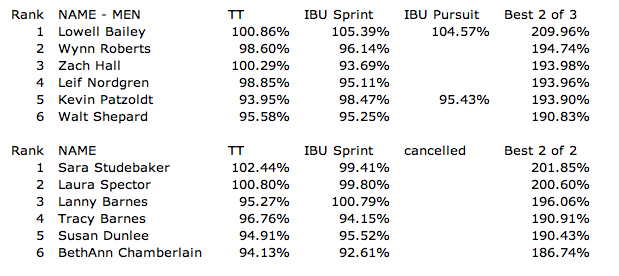
    Below is the Altenberg Percent Back points list:

    USBA Altenberg Percent Back Points List

    The International Competition Committee would like to congratulate the nominees for the Olympic Team and wish them luck at the upcoming World Cup races in Rupholding, Germany and Antholz, Italy.   Also, best wishes for the IBU Cup team athletes who will move on to racing at the IBU Cup in Nove Mesto, Czech, where the U-26 Team Selection process will continue.

  • Second Round of U.S. Biathlon Team Selection Races Continue in Altenberg

    The second phase of U.S. Biathlon Team Selection Races took place today in Altenberg at the IBU Cup Sprint events. The U.S. biathletes competing in Altenburg are vying for two open spots on the U.S. Olympic Team for men’s biathlon and three spots on the women’s team.

    Like their teammates in Oberhof, the U.S. athletes had to deal with similar weather challenges. Lowell Bailey (Lake Placid, NY) put his game together at the shooting range with just one miss overall. Good enough for a ninth place in the overall result list with Toni Lang (GER) winning the race. Kevin Patzoldt (Grand Rapids., MN) also qualified for tomorrow’s Pursuit with a 58th place after two misses.

    Seven U.S. women qualified for the last team selection race tomorrow. Lanny Barnes (Durango, CO) showed the best performance with a 21st place after just one miss, Laura Spector (Lenox, MA) followed just a few seconds behind in 23rd, and Sara Studebaker (Boise, ID) scored another Top 30 ranking finishing 26th in today’s race.

    IBU Cup Racing continues with the mens and women’s Pursuit on Sunday, Jan. 10 at 4am and 7am (EST), respectively. The U.S. biathletes will keep their two best scores and the top man and the top two women will be nominated to the 2010 U.S. Olympic Team and the final athletes for each team will be nominated by the staff. The U.S. Olympic Committee and U.S. Biathlon will officially announce the team on Monday, January 11, 2010.

    Live race data from the Altenberg is available here.

    US Biathlon Team Selection Race Results – Day Two:

    Men’s NAME SHOOTING RESULT %-Back

    1 BAILEY Lowell 0+1 1 29:52.8 105.39%

    2 PATZOLDT Kevin 1+1 2 32:03.9 98.47%

    3 ROBERTS Wynn 1+5 6 32:48.0 96.14%

    4 SHEPARD Walter 2+3 5 33:04.9 95.25%

    5 NORDGREN Leif 3+2 5 33:07.6 95.11%

    6 HALL Zach 3+2 5 33:34.5 93.69%

    Men’s Base 31:34.9

    Women’s NAME SHOOTING RESULT %-Back

    1 BARNES Lanny 0+1 1 26:45.7 100.79%

    2 SPECTOR Laura 1+2 3 27:01.7 99.80%

    3 STUDEBAKER Sara 1+2 3 27:08.0 99.41%

    4 DUNLEE, Susan 4+1 5 28:11.0 95.52%

    5 BARNES Tracy 0+4 4 28:33.1 94.15%

    6 BOUTOT Grace 3+0 3 28:54.5 92.83%

    7 CHAMBERLAIN, BethAnn 3+1 4 28:58.1 92.61%

    Women’s Base 26:58.5

  • Final Round of U.S. Olympic Biathlon Team Trials Begin Tomorrow

    Beth Ann Chamberlain - photo credit: Roy Kjorlien
    Beth Ann Chamberlain – photo credit: Roy Kjorlien

    The IBU Continental Cup , which is the final phase of the U.S. Olympic Biathlon Team selection begins on Thursday, January 7th in Altenberg. U.S. biathletes competing in Altenberg are vying for two available spots on the Men’s Team and three spots on the Women’s Team.

    The roster of athletes competing in Altenberg includes: 2006 Olympian Lowell Bailey (Lake Placid, NY), 2006 Olympian Lanny Barnes (Durango, Co), 2006 Olympian Tracy (Barnes) Colliander (Durango, Co), BethAnn Chamberlain (Presque Isle, ME), Susan Dunklee (Barton, VT), Zachary Hall (Nikiski, AK), Leif Nordgren (Marine, MN), Kevin Patzoldt (Grand Rapids, MN), Wynn Roberts (Battle Lake, MN), Walt Shepard (Yarmouth, ME), Laura Spector (Lenox, MA), and Sara Studebaker (Boise, ID).

    Trials begin with a time-trial Sprint race on Thursday Jan. 7, which will be contested between the U.S. athletes, and will be scored using percent-back – a formula in which the three top times are averaged together to get a base score.

    Racing continues with the start of the IBU Continental Cup on Saturday. The U.S. biathletes will keep their two best scores and the top man and the top two women will be nominated to the U.S Team and the final athletes for each team nominated by the staff. The U.S. Olympic Committee will announce announce the team on Monday January 11, 2010.

    Live race data from the Altenberg races will be available here.

  • Big Wins for Chamberlain and Roberts at Day 5 of Biathlon World Team Trials

    Big Wins for Chamberlain and Roberts at Day 5 of Biathlon World Team Trials

    Mt Itasca, Coleraine, MN –  Perfect corduroy greeted athletes at Mt Itasca for Day 5 of competition of the World Team Trials.   BethAnn Chamberlain  (Grand Rapids, MN) came out swinging and posted the only clean shooting of the day.  So far, the Trial events had not gone well for Chamberlain and she needed a victory in order to qualify for the IBU Cup team.   Though she now calls Presque Isle, ME home, Chamberlain grew up in Grand Rapids and is right at home at Mt Itasca.   With a hometown crowd cheering for her, Chamberlain managed a 5 second victory over Laura Spector (Lenox, MA).  Susan Dunklee (Barton, VT) posted the fastest ski time of the day for 3rd place, 28 seconds out of first.  Dunklee finished in the top 3 in all five races at Mt Itasca.

    Beth Ann Chamberlain, winner Day 5, Sprint 7.5km - photo credit: Roy Kjorlien
    Beth Ann Chamberlain, winner Day 5, Sprint 7.5km – photo credit: Roy Kjorlien

    In the men’s race, the battle raged in the last skiing loop of the day.  The top 4 men went into the last 5km ski loop within 10 seconds of each other.   Wynn Roberts (Battle Lake, MN), had a blazing last loop, pulling out a 3 second victory over Leif Nordgren (Marine of St Croix, MN).  Nordgren had been fighting sickness at the beginning of the race series and needed a big race today.   Hitting 90%, Nordgren pulled himself up in the rankings, but could not quite match his training partner, Roberts, on the ski tracks.  Zach Hall (Nikiski, AK), was on the podium again for five out of five races, shooting 80% and skiing a strong last lap.   Only .8 seconds behind Hall was Mark Johnson.  Johnson, who grew up training and racing at Mt Itasca, tried to squeeze every last second out of the familiar terrain, but the hometown crowd and 90% shooting was not quite enough to put him on the podium.

    In the Junior Men’s race, Nordgren took 1st, followed by Wayne McClure (Anchorage, AK).  Michael Gibson (Burlington, VT) finished 3rd.   In the Junior Women’s Sprint, Grace Boutot (Caribou, ME) won by a large margin, shooting 2 penalties.  Hillary McNamee (Presque Isle, ME) was 2nd, shooting 70%. Corrine Malcolm (Hayward, WI) placed 3rd with strong skiing.  This is Malcolm’s first season of biathlon competition.

    The Youth Women showed some of the best shooting of the day.  Andrea Mayo (Soldier Pond, ME) shot 80% for a 40 second win over 2nd place Kelly Kjorlien.  Kjorlien (Grand Rapids, MN), in her second year of biathlon competition shot an impressive 90%.    Rookie Afton Snyder (Grand Rapids, MN), took 3rd with two penalties.

    Casey Smith (Methow Valley, WA) won the Youth Men’s with 80% shooting and impressive skiing, matching second place Raleigh Goessling on the ski tracks.  Goessling (Esko, MN) finished 21 second back with 70% shooting.   Also shooting 70% was Ben Greenwald (Minneapolis, MN) finishing 3rd, 58 seconds out of first.

    Full results and final series points can be found at www.minnesotabiathlon.com and www.usbiathlon.org.

  • Wynn Roberts and Tracy Colliander Take Day 3 Biathlon Team Trial

    Wynn Roberts and Tracy Colliander Take Day 3 Biathlon Team Trial


    Addie Byrne (Mt. Istasca) - 9th place.
    Addie Byrne (Mt. Istasca) – 9th place.

    On Day 3 of the Biathlon World Team Trials, Wynn Roberts, Battle Lake, MN,  got his act together on the shooting range cleaning prone and missing 2 on standing.  With excellent skiing he finished 25 seconds ahead of Zach Hall of Anchorage, AK.  Only .3 seconds separated Walt Shepard, Yarmouth, ME, in third place, and Leif Nordgren, Marine on St Croix, MN in fourth.  Nordgen is a last year junior and was trying to claw his way back into contention after missing the first race because of sickness.

    In the senior women’s field, Tracy Colliander for Durango, CO put a 90% shooting race together, and with solid skiing finished 27 seconds ahead of Susan Dunklee.  Dunklee has consistently had the fastest ski times at the Biathlon Trials.   Annalies Cook, Saranac Lake, NY missed only one target, and moved up on the podium for the first time during the 5 race series.   Cook was visibly relieved as she crossed the finish line.

    The typically cold Mt Itasca venue was unusually cold, with temperatures in the teens and fast ski tracks a pleasant change from last weekends cold, slow snow.  Today’s Sprint format was the first of the World Junior Trials.  Addie Byrne, Grand Rapids, MN, took first with 90% shooting.   Grace Boutot, Presque Isle, ME matched her shooting, and finished 25 seconds behind.   In third was Corrine Malcolm, of Haward, WI racing in her first major biathlon event.

    In the junior men’s race, Leif Nordgren took first, with Mike Gibson, Burlingon, VT and Wayne McClure of Anchorage, AK in third.    In the  Youth Men’s Sprint, Conrad Roberts made it 2 for 2 for the Roberts family and shooting the same as his big brother, 0, 2.   Casey Smith of Methow Valley placed 2nd with 3 penalties, and in third was Ethan Dreissigacker, Craftsbury, VT, with 4 penalties.

    Kelly Kjorlien, Grand Rapids, MN, shot 80% and took first in the Youth Women’s Sprint.   Andrea Mayo, Soldier Pond, ME had a rough day on the range (3,2) but managed a second place with good skiing.   In third was Mackenzie Wonders of Anchorage, AK.

    Tomorrow’s Pursuit race will start at noon eastern time and will have four shooting stages, placing more emphasis on shooting accuracy.

    Full results can be found at www.minnesotabiathlon.com

    2009 Men's Biathlon Team Trial Results, Day 3
    2009 Men's Biathlon Team Trial Results, Day 3
    2009 Women's Biathlon Team Trial Results, Day 3
    2009 Women's Biathlon Team Trial Results, Day 3