Tag: Wyoming

  • Balancing Books, Labs, and Laps: Inside Newly Named U.S. Ski Team Member Lucas Wilmot’s Routine

    Balancing Books, Labs, and Laps: Inside Newly Named U.S. Ski Team Member Lucas Wilmot’s Routine

    When Lucas Wilmot sits down after morning intervals, there’s no long nap or lazy lunch ahead. “This fall, it’s kind of all back-to-back—training in the morning, then eating, then class, then trying to eat and train again, and then do homework,” he says. “It’s tight.”

    That understatement is classic Wilmot: composed, analytical, quietly focused. At just 19, the Jackson, Wyoming-raised skier is already juggling NCAA racing for the University of Utah, kinesiology labs that might soon shift toward biology, and a new badge of honor—fresh membership on the U.S. Ski Team.

    Lucas Wilmot was keeping it fun from the very beginning. (Photo: Courtesy Photo)

    From Jackson to Utah: A Small-Town Start

    Wilmot’s story starts, like so many in American skiing, with a local club, a hand-me-down pair of skis, and a family that encouraged movement. “I kind of started with my parents—they just put me in skiing in elementary school,” he recalls. “Back then, it was all about hanging out with friends and not really racing.”

    That changed in middle school, when the sport shifted from pastime to passion. “It took a turn where I started to take training more seriously and be more race-focused,” he says. “I remember looking forward to the trips, doing well in races, and having the older guys on the team as idols. Seeing how big and fast they were—I always thought that was really cool.”

    His sister, two years older, was both chauffeur and role model. “She was skiing too—she’s still skiing now at Bates,” he adds. “I started summer training with the older crew in Jackson when I was one of the youngest guys. My sister could drive. I couldn’t. So I’d just spend my time training with the older guys.”

    The big breakthrough came as a sophomore. “Minneapolis Junior Nationals was another big turning point,” Wilmot says. “I had three top tens there, and I never expected anything like that. That was when I realized, if I actually put in the time and effort, I can see results that impress even myself.”

    Lucas Wilmot (#230 – far right) starting to get serious about his skiing racing at a Junior National Qualifier as a U14. (Photo: Courtesy Photo)

    “Welcome to the U.S. Ski Team”

    If Minneapolis was the first turning point, Soldier Hollow was the second. “I got third in the classic 10K at Senior Nationals, Wilmot recalls. “That was kind of a big whoa moment—a big jump up. Will (Wicherski), my coach from Jackson, came up to me and said, ‘Do you know where you are? I said no, and he said, ‘You’re in third. I was just kind of shocked and caught by surprise.”

    That race qualified him for Junior Worlds, where another top result changed everything. “They released the requirements—it was a Junior Worlds Top 10, he says. “When I had the ninth place in Schilpario, Italy, in the skate 10K, I kind of knew I’d made the team. Right after the race, Brian Fish walked by and said, ‘Welcome to the U.S. Ski Team.’

    Wilmot laughs at the memory. “It was at the wax cabin or something. I kind of knew that day. My parents and sister were there, so it was nice to tell them in person, he says. “But I didn’t want to be loud about it. I told my parents, like, this isn’t official, but it’s looking like I might be nominated.”

    Now, being able to put on the U.S. suit still feels surreal. “I definitely feel pretty lucky, he says. “It’s a lot of people’s dream to do that, and it was one of mine. I feel super lucky, and it’s an honor. When I have the U.S. suit on, maybe I’ll go reach out to someone I’ve never met before—they’re all kind of like teammates to me.”

    Lucas Wilmot (UU), Murphy Kimball (UAA) and Tabor Greenberg (UVM) this past spring at the USST’s annual Bend camp. (Photo: Courtesy Photo)

    Structured but Flexible

    Last season Wilmot logged around 500 hours of training; this year he’s targeting about 600. But he’s adamant that numbers aren’t everything.

    “I’m definitely not the number grinder. I just try to keep it fun—never do too much, always quality. It’s kind of my mindset: always having quality in the time you’re training. Make sure it’s worth your time to be there.”

    He recalls finishing a long over-distance session in Park City camp and realizing more minutes would add nothing.

    “I was thinking I could do another 30 minutes, but I’d just be walking. It’s not really how much is that gonna do for me? If it’s not quality, if I’m not putting all my effort in, then I’m not getting the most out of it.”

    That approach—precision over volume—mirrors his team’s philosophy. “Pierre (the Utah coach) kind of switched it to more professional training, he explains. “Every training has a specific outcome goal to it… You’re not just doing it to do it. There’s a reason why, and it’s all part of a broader plan and structured schedule.”

    A Day Measured in Minutes

    In Utah’s mountain light, mornings start early—Wilmot trains, refuels, and hustles to class. “I like to think ahead and plan out as much as I can, he says. “School is my priority, and how can I get it done efficiently so I can rest well. I try to go to bed as early as I can and know that training in the morning is kind of also a priority.”

    The key, he’s learned, is organization—a skill honed on long travel days in high-school racing.

    “Being on trips for skiing taught me that if I get it done ahead of time—get all my schoolwork done or just know that when I have spare time, I should try to get ahead or catch up on school—that’s what I think about all the time.”

    Even with 600 training hours, he squeezes recovery in where he can. “It’s a hard balance between having training in the morning as a priority or staying ahead on work, he admits. “But I think I learned well… just to plan ahead.”

    Wilmot during the 7.5-kilometer classic interval start last spring at the U.S. Ski and Snowboard Cross-Country Junior National Championships in Soldier Hollow, Utah. With a time of 23:12.4 second, Wilmot won his first Junior National title in his fourth appearance. (Photo: Drew Palmer Leger/Courtesy Photo)

    Fueling the Machine

    This semester, recovery and nutrition have become new focal points.

    “This fall I was kind of struggling with recovery after the morning session and my class schedule, he says. “So one of the things I’m trying to do more of is focus on nutrition right after—that’ll allow me to make it through the long school day and then also recover well. That’ll help me get energy for the training and races.”

    Breakfast sets the tone: “Usually a banana, an everything bagel with butter, and maybe a little bit of yogurt… kind of got a little something of everything. It’s pretty yummy.”

    The science-minded athlete is applying classroom theory to real life. His kinesiology background gives him a deeper understanding of performance—how recovery, fueling, and training stress interconnect. “I’m keeping on the science track, he says. “Right now I’m doing kinesiology, but maybe switching to biology or another science-related thing. Not sure yet.”

    Keeping It Fun

    For Wilmot, joy isn’t optional—it’s essential. “I just love hanging out with all the buddies, training with friends. Definitely makes it go by a lot faster, he says. “It’s pretty fun just to crack jokes a lot and mess around, too… You don’t always have to be serious at training.”

    That balance between intensity and levity keeps burnout at bay. Whether it’s running mountain ridgelines or laughing through rollerski sessions, he believes camaraderie fuels consistency. “Sometimes there are places not to focus, he laughs, “and just have a good time.”

    Fun with friends is Lucas Wilmot’s core principle. (Photo: Courtesy Photo)

    The Process of Progress

    Beyond coursework and results sheets, Wilmot’s compass points toward steady growth. “I’d hope to make the NCAA team for the University of Utah this year, he says. “That’s going to be pretty challenging… but I hope to have more stabilized results and less fluctuation.”

    He defines progress through small, controllable actions:

    “In skiing, just being as efficient as I can. If I’m in a race and I feel uncomfortable, I try to find where I’m comfortable and not make myself too jittery. Being comfortable in your own way during a race—knowing how to race your races—is important for me.”

    When he talks about the future, Wilmot’s tone shifts slightly—equal parts excitement and realism. “Within the next four-year span, there’s a good chance the progress track may take me to that level, he says, thinking ahead to the Milano-Cortina Olympics. “If I stick with it, that would be an insane experience and something very special.”

    Wilmot skiing with Murphy Kimball (UAA/Alaska Winter Stars) on Eagle Glacier this past summer during the US Alaska camp. (Photo: Courtesy Photo)

    A Learner at Heart

    Among the national-team veterans, Wilmot sees himself as a student first. “I kind of see myself as a little follower, he admits with a grin. “Everyone’s just a little more experienced than I am. I feel like I don’t have much, so I think of myself as a learner and a listener—someone who tries to take everything I can from them.”

    But even the learner can lift a team. “I love being the guy that gets someone to smile, he adds. “And make them laugh. I love doing that.”

    That mix of humility and humor is why teammates have quickly embraced him. He’s not loud, but he’s steady—the kind of athlete who brings calm to chaos, whether it’s a high-stakes interval session or a late-night study grind.

    Looking Ahead

    Wilmot’s path has never been about a single breakthrough; it’s about accumulation—hours, credits, lessons. “I kind of never saw myself being where I would be right now, he reflects. “It goes back to the open-doors thing—I was just following what was happening, putting in the work, and seeing what opportunities it led me to.”

    That approach—disciplined but flexible—may be his greatest strength. Between lecture halls and ski trails, he’s learning to find balance. And every dawn run, every late-night homework session, is another quiet step toward the next start line.

    “It’s a good, hard balance, he says, smiling. “But that’s kind of what I signed up for.”


    Love Stories Like This? Help Keep Them Coming.

    Feature interviews like this one take time, access, and care to produce. If you value thoughtful storytelling and independent ski journalism, please consider becoming a Voluntary Subscriber. Your support directly fuels the work we do to cover the people, places, and moments that make our sport special.

    Join the FasterSkier community.
  • 20-for-20 with Jake Pearson

    20-for-20 with Jake Pearson

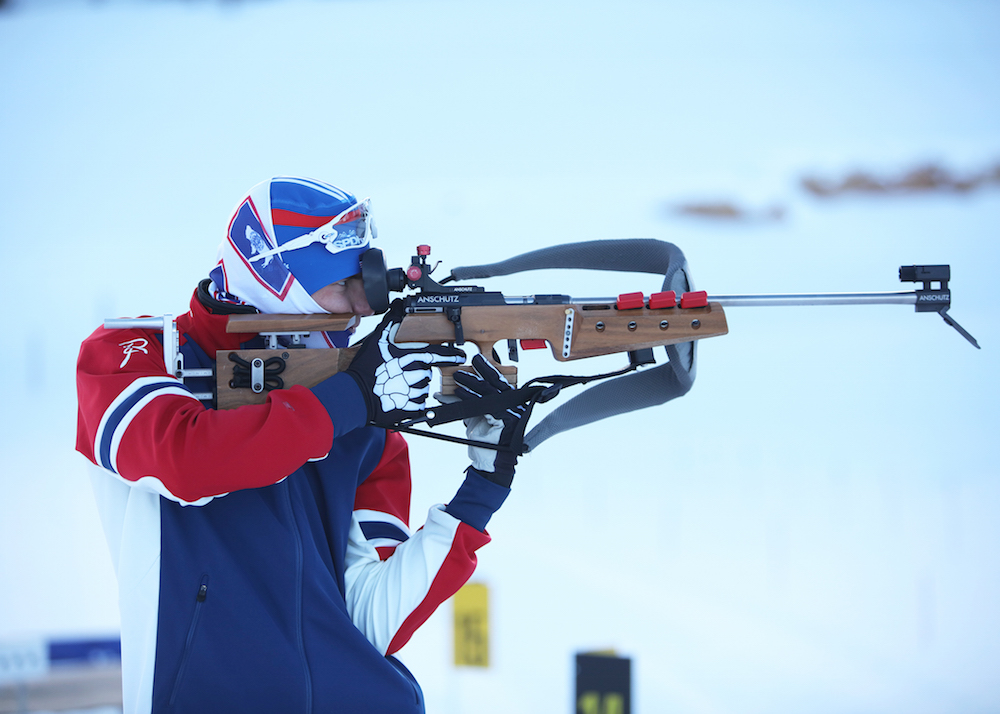
    Jake Pearson (Casper Mountain Biathlon Club) taking aim on the range at Casper Mountain on Feb. 8 in Casper, Wyo. (Photo: Kerrie Pearson)

    In another 20-something-question, fill-in-the-blanks series, we checked in with the world-class U.S. and Canadian biathletes that will be competing at 2017 International Biathlon Union (IBU) Youth & Junior World Championships Feb. 22-28 in Osrblie (also known as Brezno-Osrblie), Slovakia.

    Here’s 18-year-old Jake Pearson, of the Casper Mountain Biathlon Club, who is representing the U.S. at his first Youth Worlds. In two individual races at the championships, he finished 49th in the youth men’s 12.5 k individual and 76th in the 7.5 k sprint.

    ***

    “My full name is Jacob, but you can call me Jake. I was born in Wyoming, raised in Casper, and one thing you should know about my hometown is it’s always windy.

    I started cross-country skiing when I was in 8th grade and started biathlon when I was 15, thanks to Rylie Garner.

    I currently train in Casper with Casper Mountain Biathlon Club.

    If I’m not skiing, you might find me hanging out with friends.

    If I had to pick a favorite book, it would be ‘Shoe Dog’.

    One of the things I’m most excited about for Youth/Junior World Championships in Brezno-Osrblie is the food.

    This will be my first Youth/Junior World Championships, and this year, I’m competing as a youth. One race I’m especially targeting there is the 12.5 k individual.

    The best advice anyone ever gave me about skiing or racing was have fun and relax.

    One of the best race memories I have is having a 2nd place finish in a mass start in Canada.

    If I could meet one World Cup skier, it would be Lowell Bailey.

    If I don’t end up being a professional skier, I’ll probably be a ski bum.

    I’m missing 10 days of school to be here, and my teachers/professors are probably thinking, ‘He is going to fail my class.’

    You can follow me on Instagram @jpears123.”

  • Casper Mountain Biathlon Club Seeks Full-Time Coach

    Casper Mountain Biathlon Club Seeks Full-Time Coach

    Casper Mountain Biathlon Club (CMBC)

    Casper Mountain Biathlon Club (Casper, Wyoming)  is seeking a Full-Time Nordic Coach for the 2016/2017 Season

    Contract/Seasonal Position: The position could start as early as Nov. 20 and go through mid April. 

    Casper, Wyoming, is home to over 50 km of amazing trails and a newly constructed Nordic and Biathlon Training & Competition Center.  CMBC is seeking an energetic and enthusiastic individual to coach and/or lead growing U8 – U20 programs, Nordic Rocks Elementary programs and Paralympic/Adaptive programs. 

    • Advanced Skiing and competition experience required. 
    • Adaptive experience not required, but a willingness to learn is a must. 
    • Biathlon experience a plus, but not required. 
  • Lander Valley HS Seeking Nordic Coaches

    Lander Valley HS Seeking Nordic Coaches

    The Lander Valley High School Nordic Ski Team
    The Lander Valley High School Nordic Ski Team

    There is a good chance that you’ve never heard of Lander, Wyoming, but it is making it’s waves as one of the best outdoor towns in the US. It was recently ranked in the top 20 by Matador Network and has endless potential to meet your every adventurous need.

    Lander Valley High School is seeking several assistant Nordic Skiing Coach positions to be filled for the upcoming season (November 2016-February 2017). Here is the application link.

    The Nordic programs in this town of 7000 are growing with about 40 kids at the High School level, 70 at the Junior High level and a growing youth program run through the Lander Nordic Ski Association. Skiing is available most of the season just 2 minutes from town at the golf course and great conditions can always be found at Beaver Creek about 30 minutes from town.

    The infrastructure is here; we are looking for enthusiastic coaches who love working with athletes of every level. If you have any questions please feel free to contact Head Coach Norm Cessna at norm.fotosport@gmail.com.

  • USSA Ends Affiliation With High Plains Division; Western Leaders Ask Why

    USSA Ends Affiliation With High Plains Division; Western Leaders Ask Why

    When members of the USSA Cross Country Sport  Committee head to Park City next week for the annual USSA Congress, they will be deciding the fate of the High Plains division.
    When members of the USSA Cross Country Sport Committee head to Park City next week for the annual USSA Congress, they will be deciding the fate of the High Plains division.

    Before the 2015/2016 season began, the regional cross-country ski associations around America hammered out a deal with the U.S. Ski and Snowboard Association (USSA): they crafted “affiliation agreements” detailing the relationship between geographic divisions and the national governing body.

    Until that point, regional bodies like Central Cross Country (CXC), Intermountain Division (IMD), the New England Nordic Ski Associaion (NENSA), and the Pacific Northwest Ski Association (PNSA) had been organizing much of skiing on their own. They ran USSA-sanctioned races, placed members on USSA committees, and were represented as teams at Junior Nationals. But in terms of day-to-day governance and regional racing, they were their own non-profits and to a large extent their own bosses.

    15 conference calls later, the divisions are still their own nonprofits but are now legally affiliated with USSA.

    Two weeks ago, the chair of the board of the High Plains division got a call from Robert Lazzaroni, the nordic domestic programs director for USSA.

    “He was asking a few questions about High Plains, and just getting a better feel for how our division is laid out and what we’re made up of,” said Rebecca Watson. “How many U14s do we have coming up? How many NRL races do we have? Details like that.”

    Lazzaroni was hired by USSA in August of last year, and the national governing body has been pushing to make additional partnerships with cross-country ski organizations at all levels and gain members in the nordic world.

    It seemed to Watson like Lazzaroni was doing an educational fact-finding mission about a remote division. High Plains includes all of Wyoming except for Jackson Hole (which is part of Intermountain), and also serves some communities in eastern Montana and western South Dakota which are far from their designated divisions’ resources. It is a geographically large region in a sparsely populated part of the country.

    Then an email arrived in Watson’s inbox.

    “About four days later I got an email from Alex [Natt, USSA’s executive vice president and general counsel] saying that they had decided not to renew our affiliation agreement and that we would talk about it at Congress,” Watson said. “That was a little bit of a shock, that it wasn’t going to be renewed. It seemed like they didn’t give me much of a reason for the non-renewal.”

    Since the affiliation agreement system has only been in place for a year, it’s unclear what ending the agreement will mean for Wyoming skiers and teams — other than, as Lazzaroni made clear in a later email to Watson, no High Plains team at Junior Nationals.

    There’s still a chance that High Plains will be an affiliate of USSA next year, because the decision has to be voted on by USSA’s Cross Country Committee.

    “At Congress, there will certainly be a continuation of the discussion on [High Plains],” USSA CEO Tiger Shaw wrote in an email. “This is a constructive and engaging discussion that is fully in flight, and as such it wouldn’t be right for me to comment on anything about it. I want the players to sort it out.”

    Those in the High Plains region are perplexed, and leaders of other divisions concerned.

    “Let me tell you, I have gotten an incredible amount of support from around the nation, from other team leaders and coaches,” Watson said. “It’s been really amazing. I’m just hoping that we can continue to grow the sport, and to make it accessible to everybody. That’s my biggest thing, is access.”

    Like his boss, Lazzaroni did not elaborate on the reasons for the decision.

    “See below the exact wording,” he wrote in an email on Tuesday. “USSA has decided not to renew the Affiliation Agreement with High Plains which would otherwise auto renew effective May 1, 2016. High Plains’ status as a USSA Affiliate will be considered at the USSA Congress later in May.”

    Why Affiliate?

    According to another divisional leader, one of the main purposes of the affiliation agreements were to cover everyone’s legal backs.

    PNSA is one of the few divisions where alpine and cross-country skiing are still integrated under one governing body. The association’s Director of Nordic Alan Watson – no relation to Rebecca – was able to watch the alpine divisions go through the same process a year earlier.

    “One of the things the McKinsey study had pointed out is that there’s no legal relationship between the divisions and USSA – they weren’t really divisions, they were their own nonprofit organizations,” Alan Watson explained. “They thought it would be good to have a contract … My understanding is that one reason to have the affiliation agreements is to protect us against some sort of unfortunate legal repercussions that could happen, but for practical purposes nothing changes.”

    Indeed, once the agreements went into effect, not a lot changed. One main thing, said Rebecca Watson, is that divisions could now purchase liability insurance from USSA at a lower cost.

    There were also agreements about race organization fees and head taxes, the use of the USSA logo, and communication between USSA and the affiliates, for instance about education and coach and official certification. In many cases, regional races now require a USSA membership, which is more affordable thanks in part to initiatives by Shaw and also to agreements worked out by Joey Caterinichio, Lazzaroni’s predecessor who stayed on with USSA this winter despite resigning last summer.

    “Through all 15 or so conference calls, I most definitely got the feel from Tiger [Shaw, the USSA CEO] that he just wanted to have a better understanding of what the divisions were doing and to help grow the sport,” Rebecca Watson said. “That was the biggest thing that he kept saying: ‘I just want to increase membership and help grow the sport and help the health of the divisions.’ ”

    Shaw confirmed as much in an email, writing, “You are correct in that the goals and initiatives of USSA have not changed. We do want to grow membership, enable competition and foster all of our sports. That is core to our mission.”

    FasterSkier obtained a copy of an affiliate agreement from another division, with the source requesting anonymity in order to protect ongoing relations with USSA.

    Screen Shot 2016-05-05 at 3.21.48 PM

    Screen Shot 2016-05-05 at 3.22.35 PM

    Screen Shot 2016-05-05 at 3.22.49 PM

    The agreement had virtually no references to elite racing, results, or the development pipeline: while divisions were responsible for communicating with USSA when they wanted to schedule USSA-sanctioned races, they were also welcome to continue to host non-sanctioned races (i.e., without points) and allow non-members to enter them. Junior Nationals was never mentioned.

    ‘Bottom of the Ranking List’

    When Rebecca Watson asked Lazzaroni for a rationale about why her affiliate agreement was being terminated, however, high performance and the development pipeline seemed to be the focus.

    Watson gave FasterSkier a copy of an email Lazzaroni had sent her (after also sharing it with other divisional leaders and the Sports Committee), and it focuses mainly on junior programming and racing.

    Among his concerns: the division organizes few races, and even fewer that are USSA-sanctioned National Ranking List (NRL) competitions; there are few year-round clubs, and most of the teams are high school teams; and the region finished at the “bottom of the ranking list” at 2016 Junior Nationals.

    With just 584,000 people and few major population centers in Wyoming, it’s not surprising that there are a limited number of ski teams in the state. As for the matter of most of them being high school teams, Watson said that’s partially a matter of logistics.

    “Because of the distances that we have to travel it would be crazy to have two separate race series,” she explained. “I think people can look at that and say that we’re just high school. But we do have both club and high school, it’s just that we try to work it out so that we can do things together.”

    Watson said that High Plains is looking into hosting more NRL races, but that it’s an ongoing challenge in part because of the expense. According to USSA’s website, hosting a USSA race costs $50 dollars, plus a $3 per person head tax up to a maximum of $300 per gender. That’s potentially $650 in cash to hand over. Hosting a FIS race series carries an additional $500 fee.

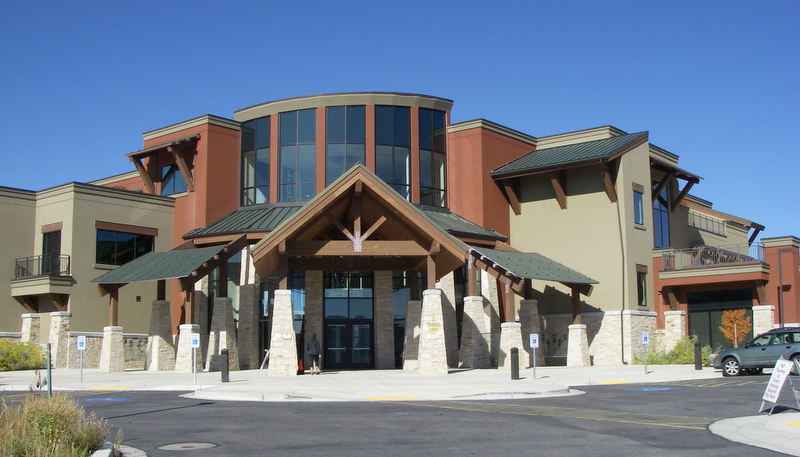
    Several venues in Wyoming are upgrading their race-hosting abilities, including Watson’s hometown of Laramie and, perhaps most notably, Casper — which is using donated land and pouring more than $700,000 into putting up a state-of-the-art biathlon facility.

    But still, in 2016 the 22-member High Plains team was last in the Junior Nationals Alaska Cup scoring, by a wide margin. They had only one skier hit the top 30: Adam Pickett, who finished 23rd in the U16 5 k and 26th in the U16 sprint.

    Mike Elliott, a head of the Rocky Mountain division and a member of the USSA Cross Country Committee, said that during the affiliation agreement negotiations, he had interpreted some of the top goals of the process to be increasing membership and gaining more non-competitive members.

    The process was not as contentious as it had been for alpine, he said, and everyone seemed to be talking in good faith.

    “That is why I was so surprised at USSA notifying [High Plains] that they were not renewing the affiliation agreement,” he wrote in an email on Thursday. “Judging how the conference calls were handled, I would have thought USSA would have reached out to [High Plains] to offer professional help. There was no notification to the USSA Cross Country Committee that USSA was even thinking about not renewing the affiliation agreement that I am aware of, and I am on the Cross Country Committee.”

    Geography

    Another issue Lazzaroni seemed to have with the division was geography: he told Watson that  one-state divisions don’t make sense.

    “One division should represent more than one state (High Plain represent only Wyoming, minus Jackson Hole). Club, state, division, region, national is the map. AK is clearly a unique geographical situation,” Lazzaroni wrote in the email Watson shared.

    In fact, there are other divisions which represent primarily one state. Great Lakes includes Michigan, Indiana, Kentucky, and Ohio, but almost all of its skiers hail from northern Michigan. It is considered a sub-division of Midwest, also governed by CXC.

    Mid-Atlantic comprises New York, New Jersey, Pennsylvania, Delaware, West Virginia, Maryland and the District of Columbia. But its skiers are almost exclusively from New York.

    The reason for High Plains encompassing primarily one state is partly the size of Wyoming (the organization does also include parts of Montana and South Dakota). The state is roughly 280 miles wide and 360 miles long. Cut out and put together, all of the traditional ski regions of Lazzaroni’s native France would easily fit within the borders of Wyoming.

    “Before [2003] Wyoming was split into four different divisions,” Watson explained. “It made it very dysfunctional within the state. Laramie was with Rocky Mountain, Pinedale with Intermountain, Cody went up to what was Northern, but now no longer exists.”

    High Plains teams do travel to the western Super JNQs; to get to Soldier Hollow, Utah, might be a six-hour drive. Sun Valley, Idaho, is over nine hours from Casper, Wyoming.

    “I was actually on that coaching crew which put forward the initial proposal for [High Plains to exist],” Watson said. “One of main reasons was, geographically, it was impossible to get to the IMD qualifiers. One skier attempted it, and was driving 21 hours in a weekend to and from a qualifier. It was just absurd.”

    In his email to Watson, Lazzaroni suggested that once High Plains no longer exists, Wyoming athletes could choose between “geographically close divisions”: IMD, including Idaho, Montana, Utah, and Jackson Hole, or Rocky Mountain, which comprises Colorado and New Mexico.

    This plan has not yet been sussed out.

    “We have not had any discussions within IMD about what would happen to [High Plains] regarding their participation in other divisions,” IMD Competition Committee member Rick Kapala, also the Cross Country Program Director of the Sun Valley Ski Education Foundation, wrote in an email.

    Furthermore, there was confusion as to why this was surfacing now, rather than last year when several of the first conference calls were dedicated to mapping out regions and divisions.

    “[A goal of the affiliation agreements was] clarification of geographic boundaries for all divisions to include states that may have a limited number of participants,” Elliott wrote. “I do not remember any discussion regarding there were issues about High Plains representing only one state.”

    “Why did we go through all this stuff last summer, and why did nobody say, ‘OK, High Plains, you’re sort of a weak division, you’re on probation?’” Alan Watson asked.

    Another Theory?

    There might be one other factor: Jackson Hole. The town stayed part of IMD, but recently a skier who lived in Pinedale, Wyoming, and skied with Jackson Hole as a J3 (U14) decided to compete in the High Plains junior national qualifiers instead, and thus was able to meet qualification criteria where she would have failed in IMD.

    The idea that this could happen provoked strong reaction.

    “What, if anything, does our non-renewal have to do with the border town issues with Jackson?” Watson asked in her email.

    “We do not believe that offering a way for skiers to qualify to junior national Championship that do not require skiers to train more and to become better skier is the right way,” Lazzaroni replied.

    But others, including Alan Watson, don’t see this as a major issue.

    “One thing that Tiger [Shaw] clearly said is that kids in border towns should be able to choose which division they want to compete in,” the PNSA head said. “Which makes sense to me, because we want kids to want to race.”

    What is clear is that if the Sports Committee follows USSA’s recommendation, there will be no more High Plains division.

    That, Watson believes, would be unfortunate.

    “We took [the state] and were able to join it as one division,” she said. “And it’s been huge for Wyoming skiing. The accessibility to skiing, and to skiing at the national level, has increased so dramatically.”