From the FasterSkier archive — posts syndicated from athletes’ and coaches’ own blogs between 2004 and 2012, kept online as published. Current coverage is at fasterskier.com.
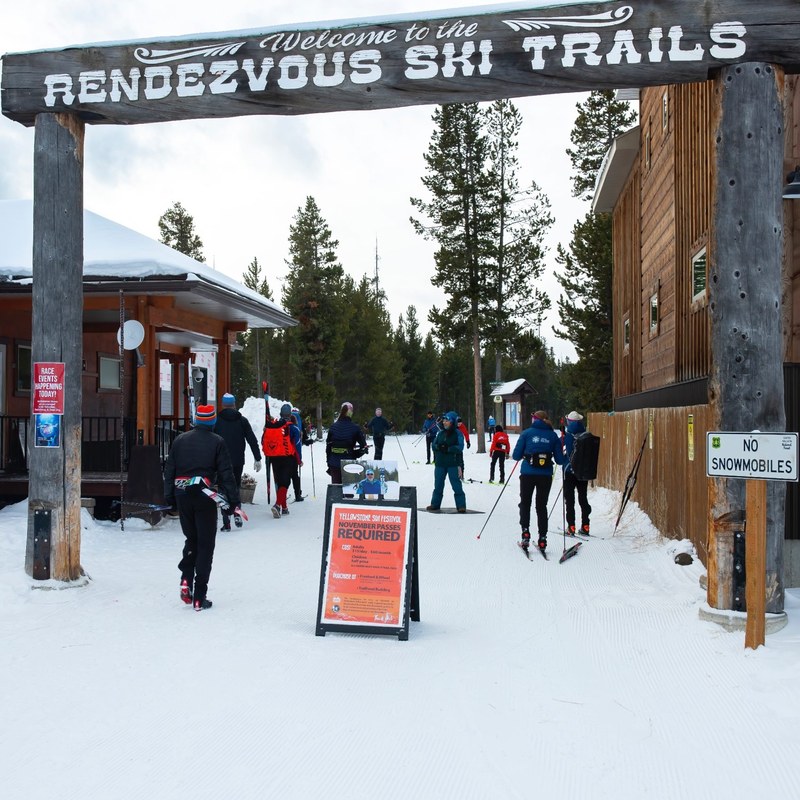
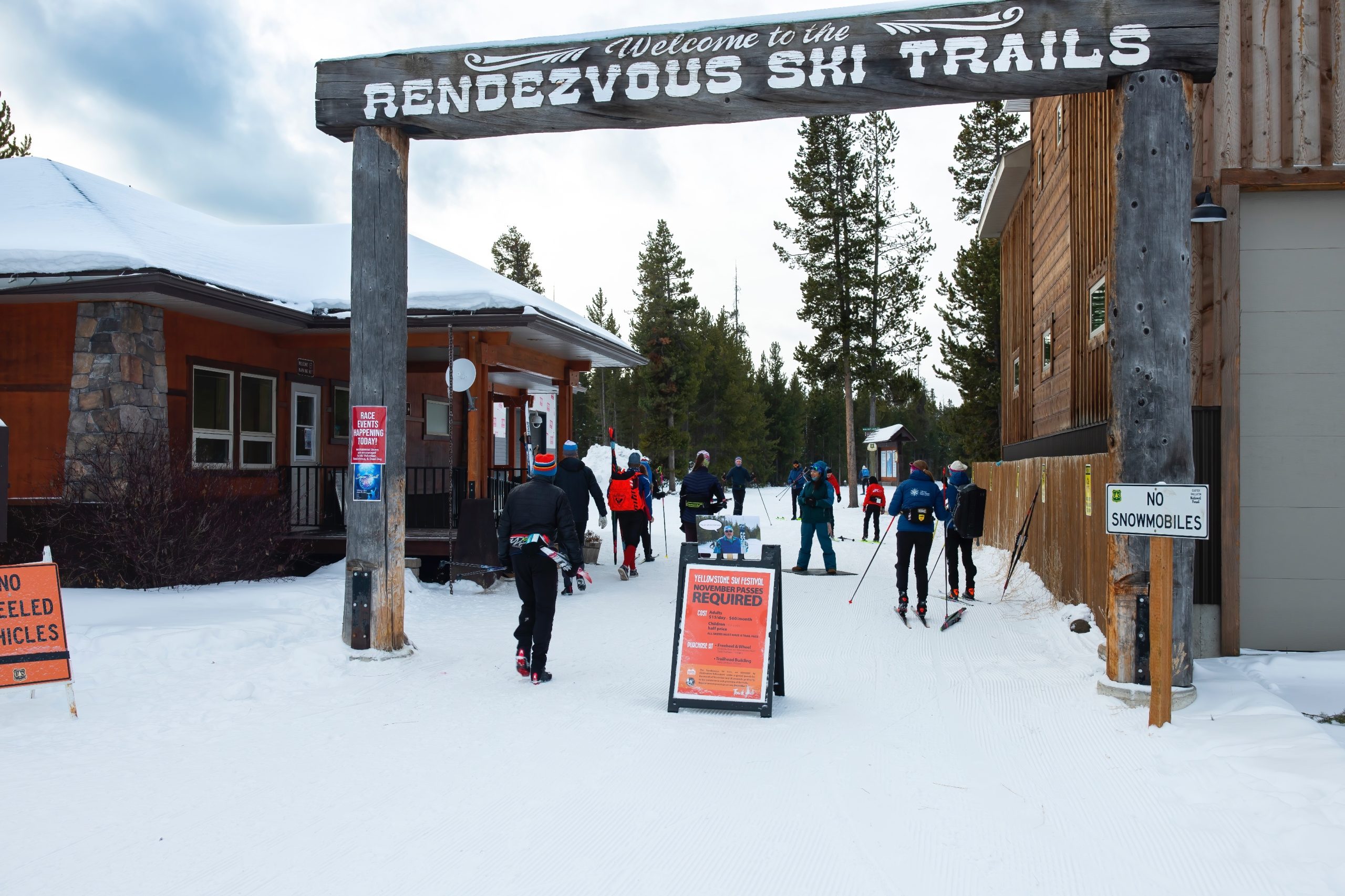
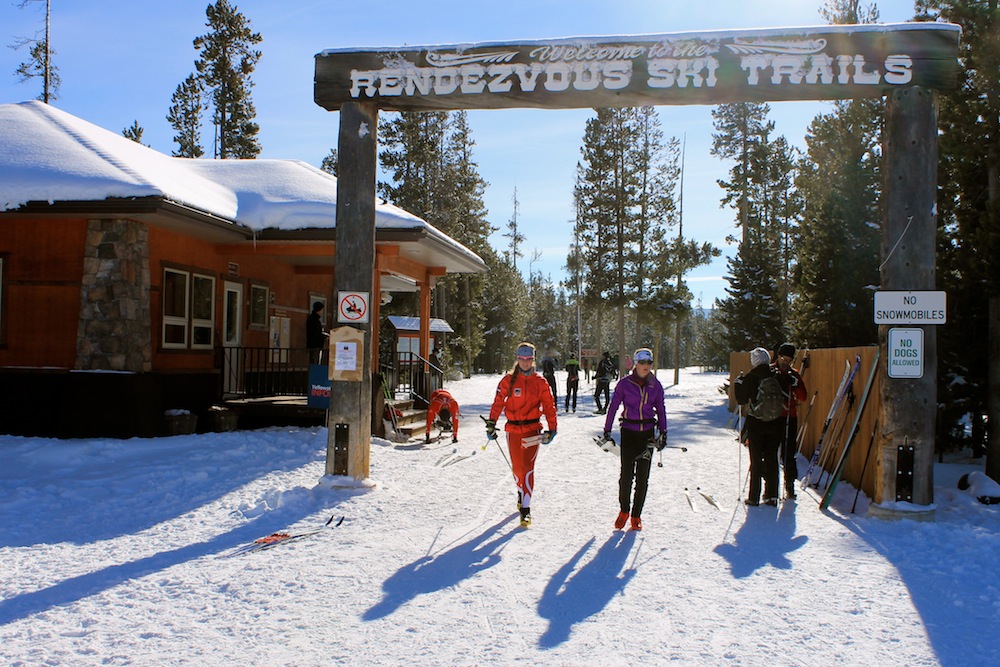
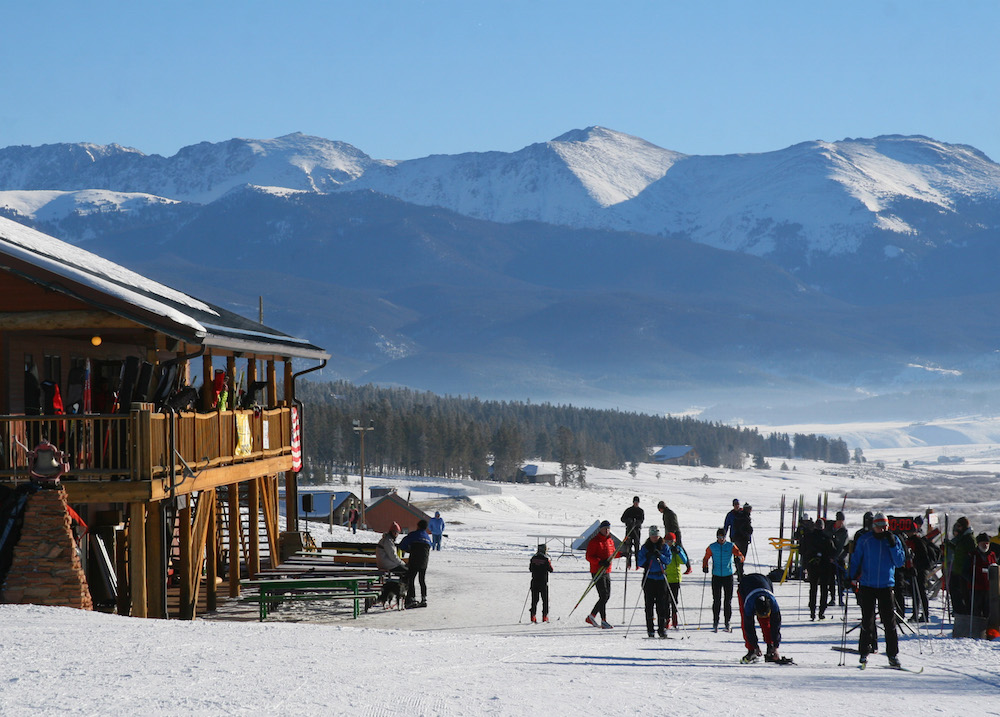
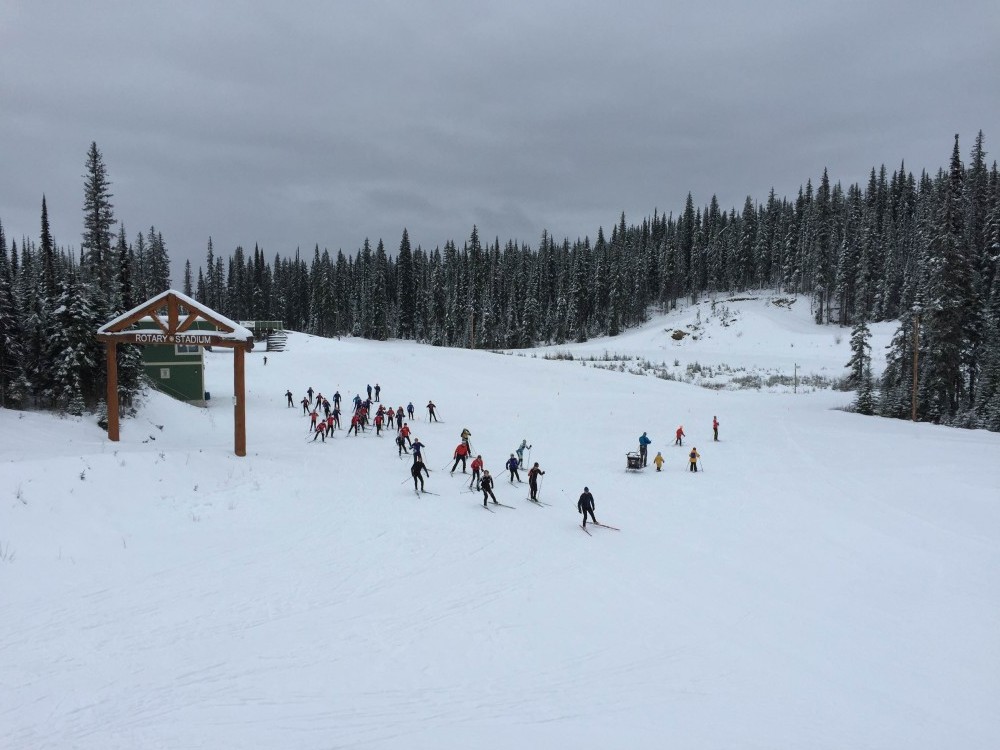
Skiers head under the arch at the Rendezvous Ski Trails, where a November pass is required for festival week. (Courtesy photo)
Hello, XC skiers!
Excitement is building in West Yellowstone after our first snow. It won’t be long before we’re back out on the trails, enjoying the fresh air, great skiing and the start of another season. Now is the time to make your plans for the 2026 Yellowstone Ski Festival, Nov. 21 through 28 on the Rendezvous Ski Trails.
Our trail crew has been working hard to get the trails ready, and we look forward to welcoming everyone back to regular grooming and miles of outstanding skiing. From first tracks in the morning to an easy ski with friends in the afternoon, there’s nothing better than getting out on the snow and enjoying everything West Yellowstone has to offer.
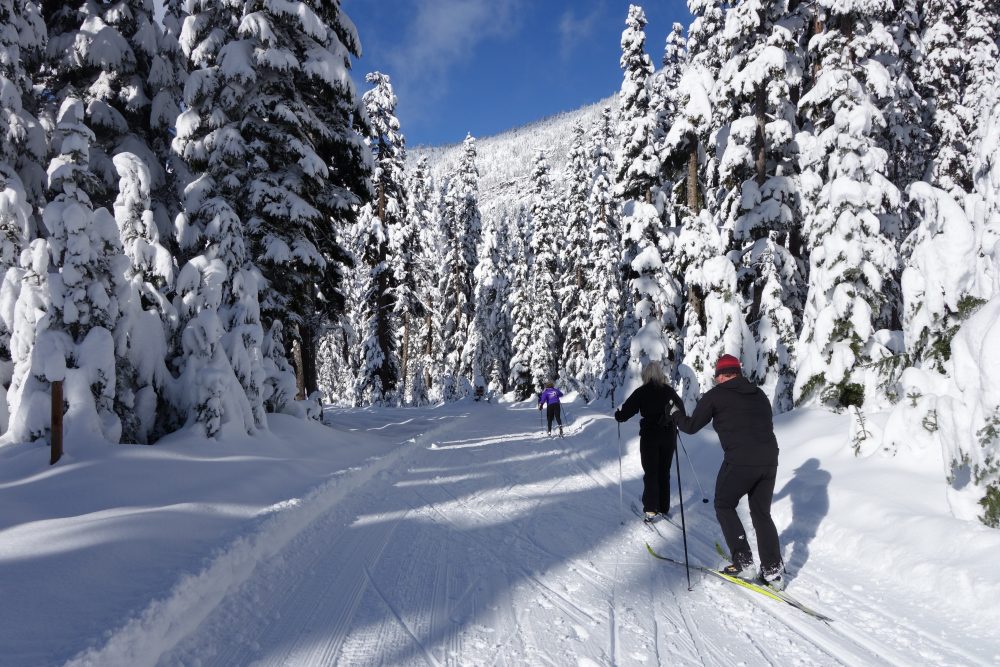
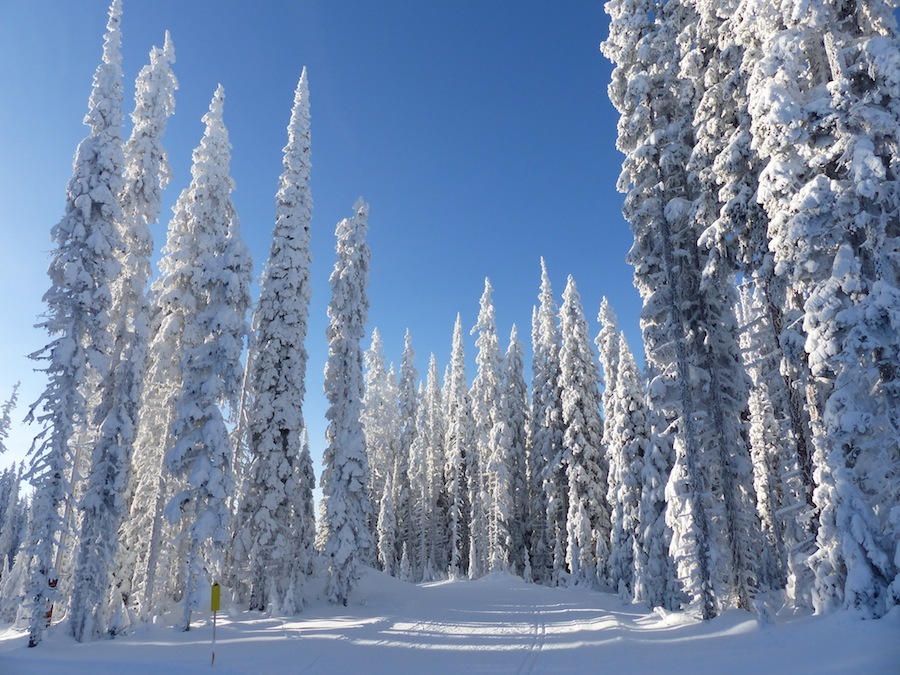
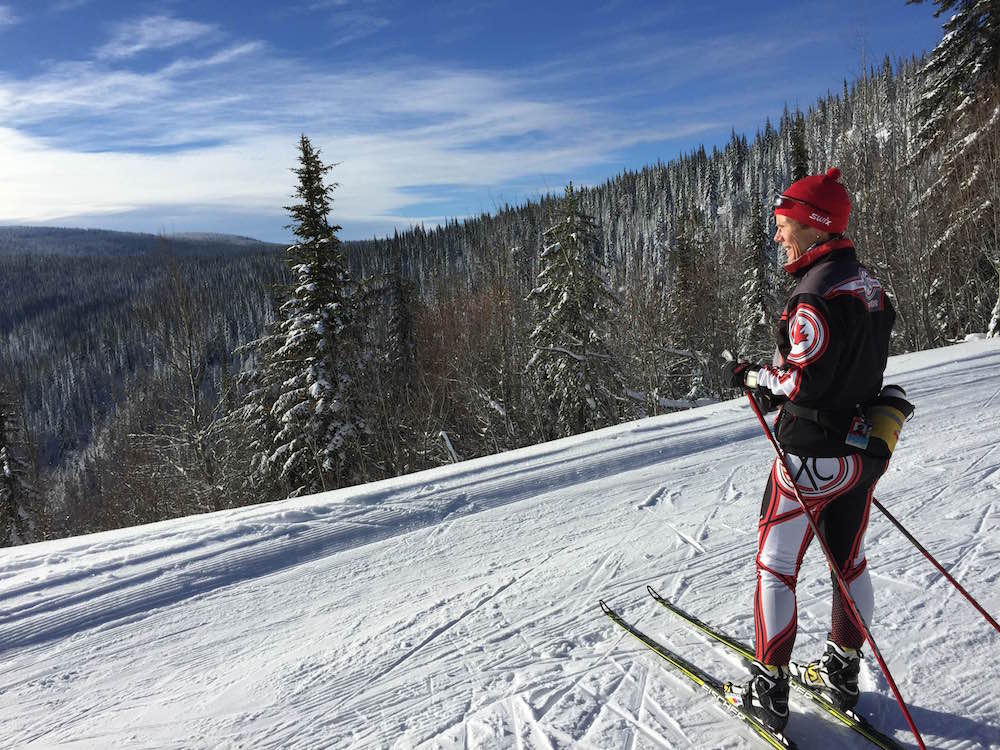
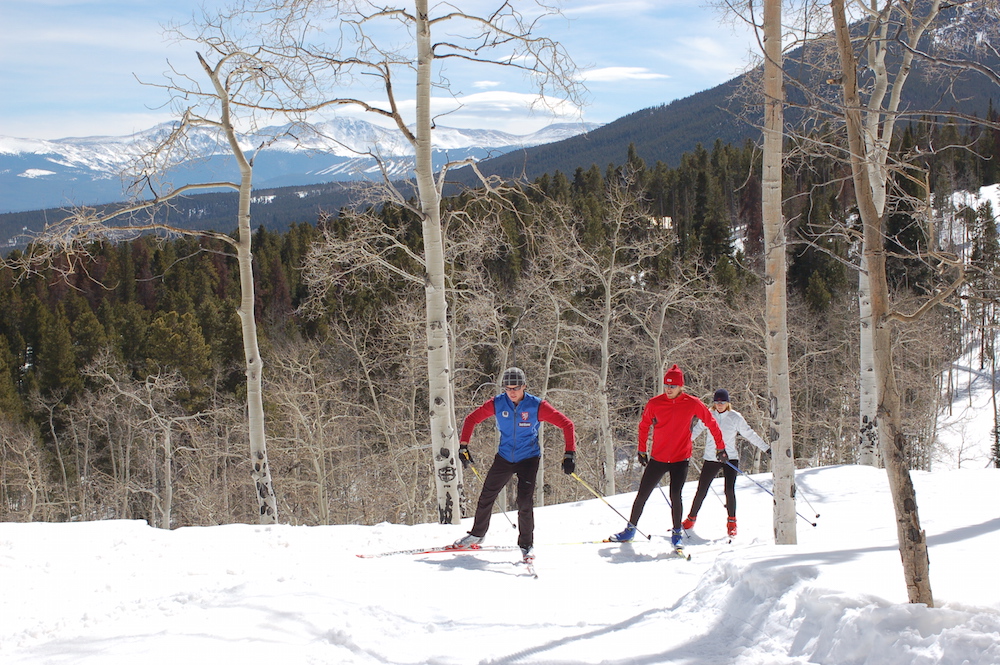
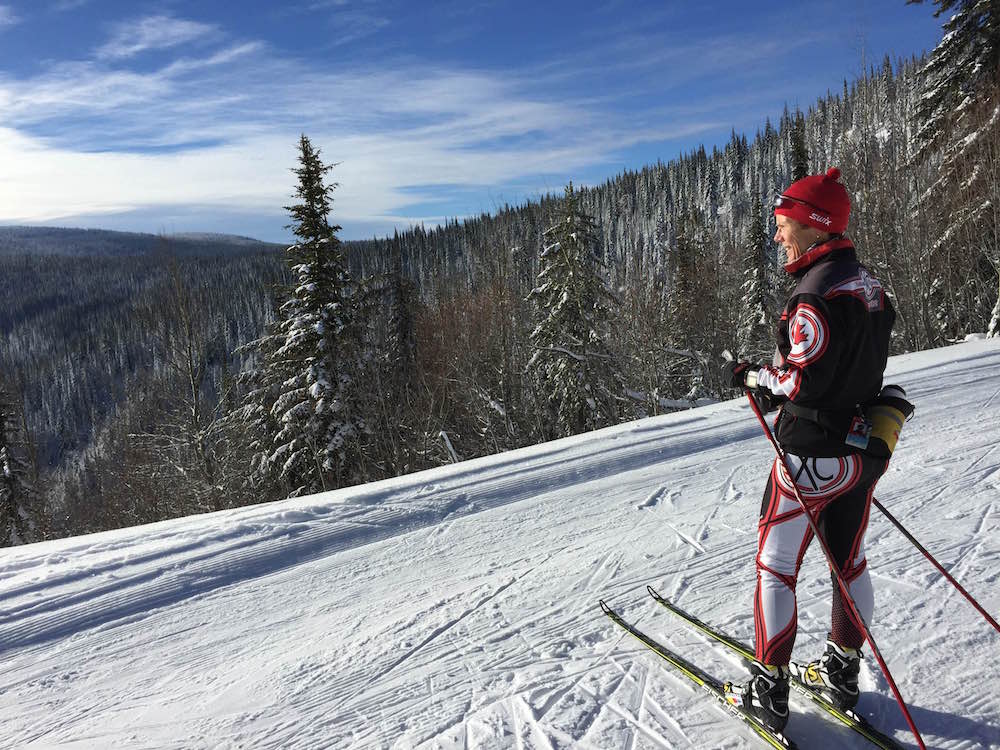
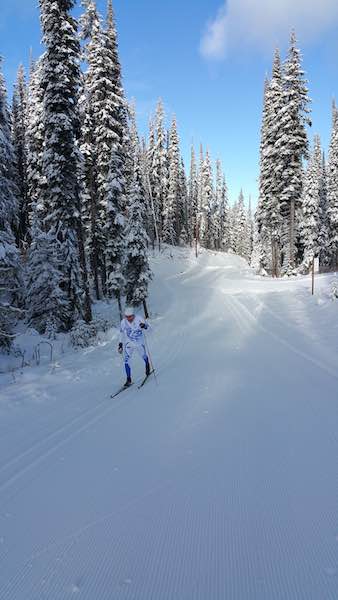
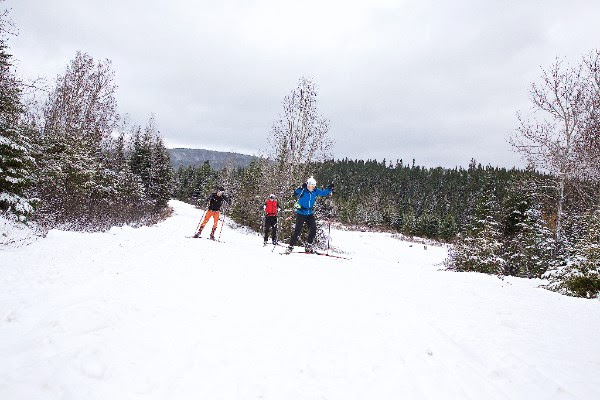
A skier strides through fresh classic tracks on the Rendezvous Ski Trails during the 2014 festival. (Photo: Lander Karath)
Eight Days on Early Snow
Thanksgiving week in West Yellowstone has belonged to skiers for a long time. Competitive athletes, first-timers and whole families come from all over to get on snow while most of the country is still waiting for winter. There is skiing every day of the festival, clinics for every level, biathlon on the range and a race to close out the week.
The tradition reaches back to 1979, when the U.S. Ski Team began bringing coaches to West Yellowstone each November to train them. FasterSkier told that story last fall in a look inside the festival and its clinics, and it is worth a read before you come.
A November trail pass is required for all of November and during the festival, and it is good through Nov. 30. From Dec. 1 through March 31, season and day passes are sold by the U.S. Forest Service at the Hebgen Lake Ranger Station, at Freeheel and Wheel, and at the Rendezvous Trailhead.
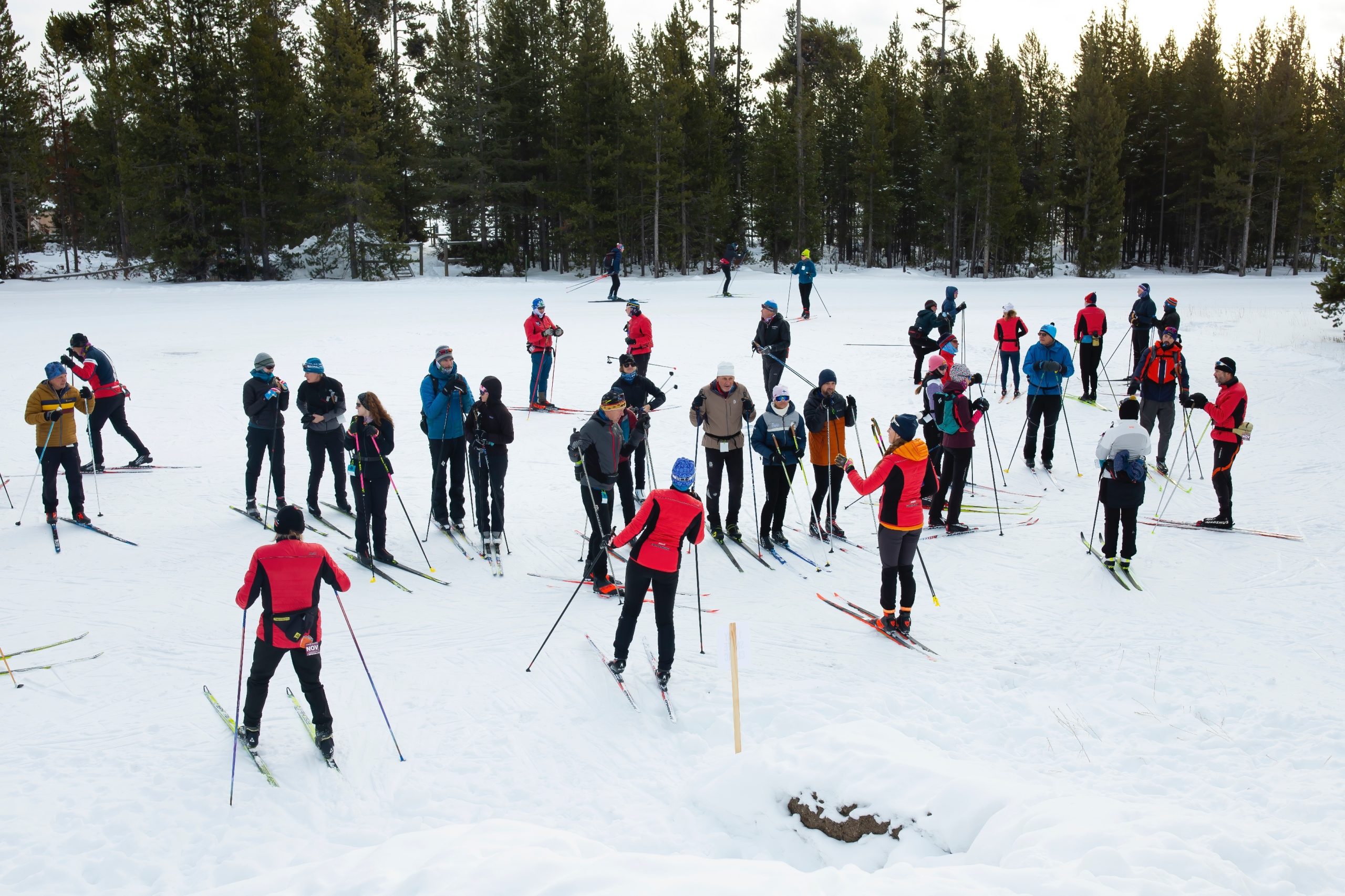
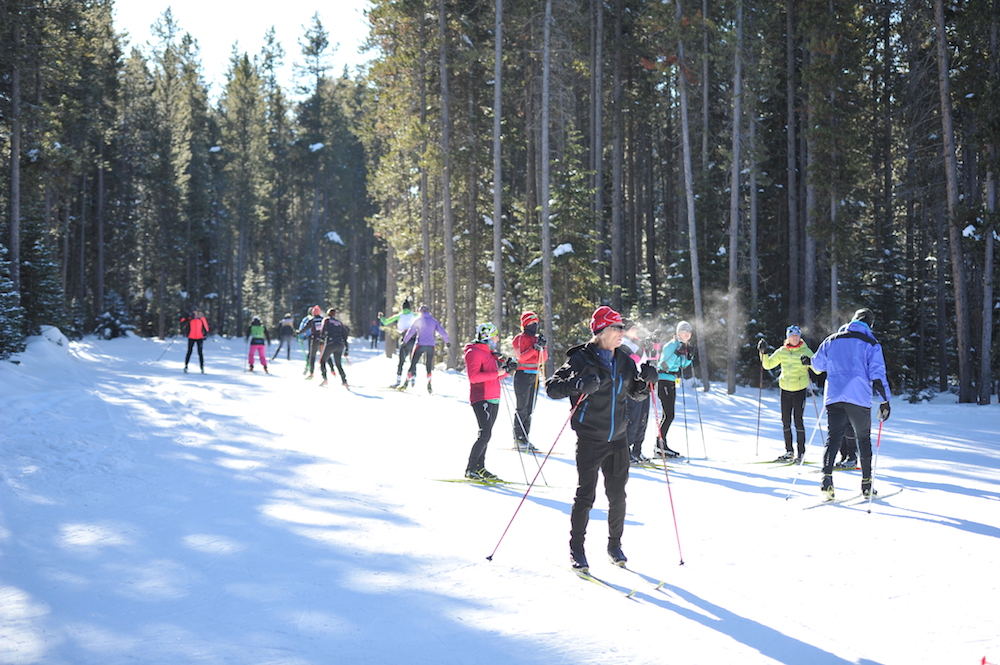
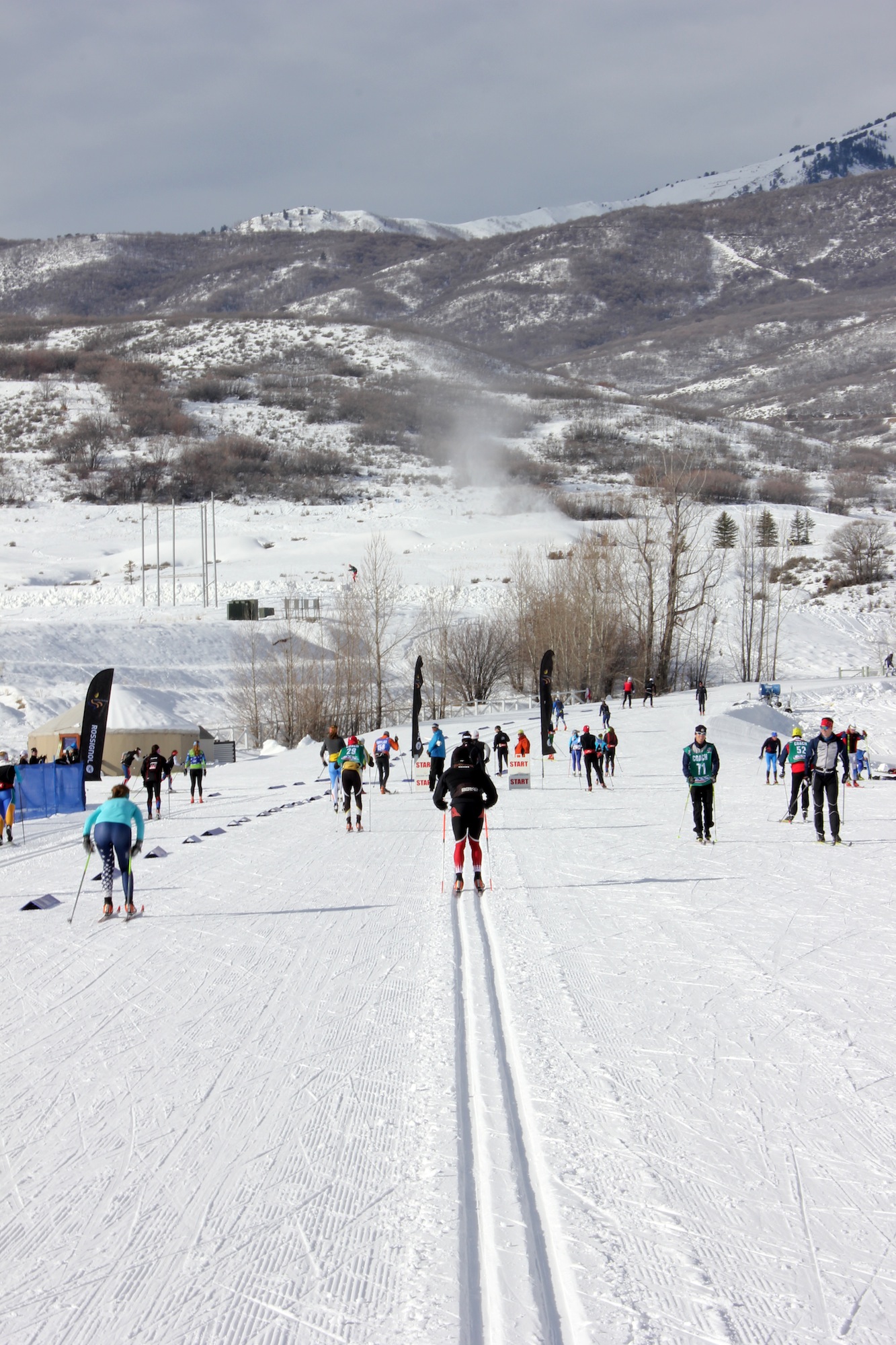
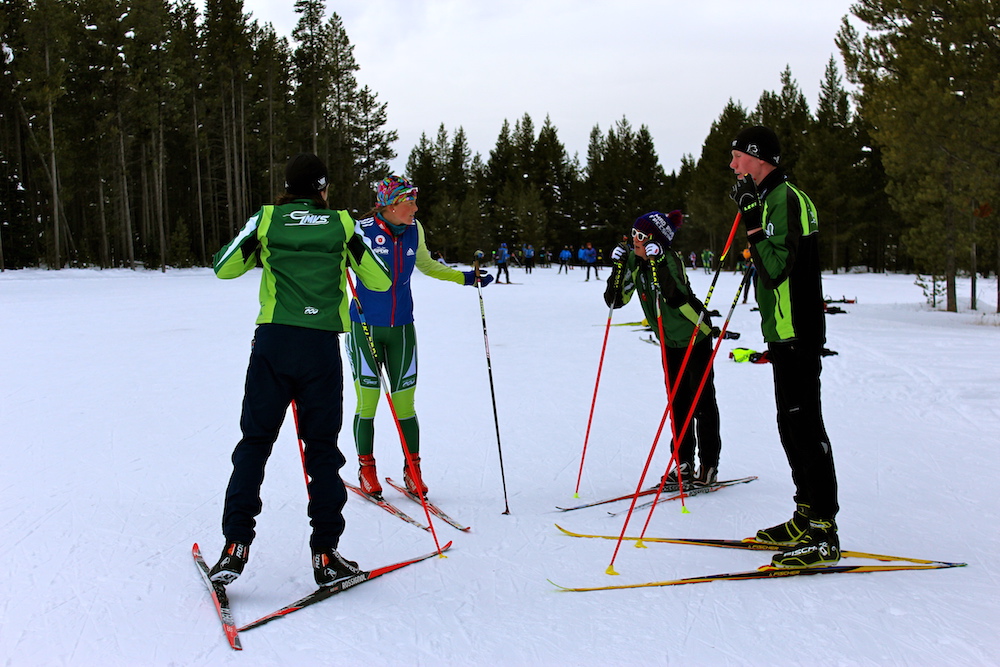
Clinic skiers sort into ability groups with coaches in red jackets at the Rendezvous Ski Trails. (Courtesy photo)
Clinics With Top Coaches
Looking to improve your skiing this season? Our clinics feature top coaches who can help you build skills, clean up your technique and get even more enjoyment out of your time on skis.
Jack Hart will be leading this year’s coaching staff. We place every skier in a group of similar ability, six to eight skiers per coach, and the coaches rotate through the groups each half day so you hear more than one voice over the week. Advanced groups also work on speed, endurance, strength, agility and race tactics.
The three-day Skate and Classic XC Fundamentals for Performance and the two-day Skate and Classic Tune Up both begin Tuesday, Nov. 24, with classic in the morning and skate in the afternoon. One-day technique clinics follow later in the week: skate on Thursday, Nov. 26 or Saturday, Nov. 28, and classic on Friday, Nov. 27.
Don’t wait to sign up. Any clinic with fewer than six skiers registered by Nov. 19 will be canceled. Find clinic details here and register here.
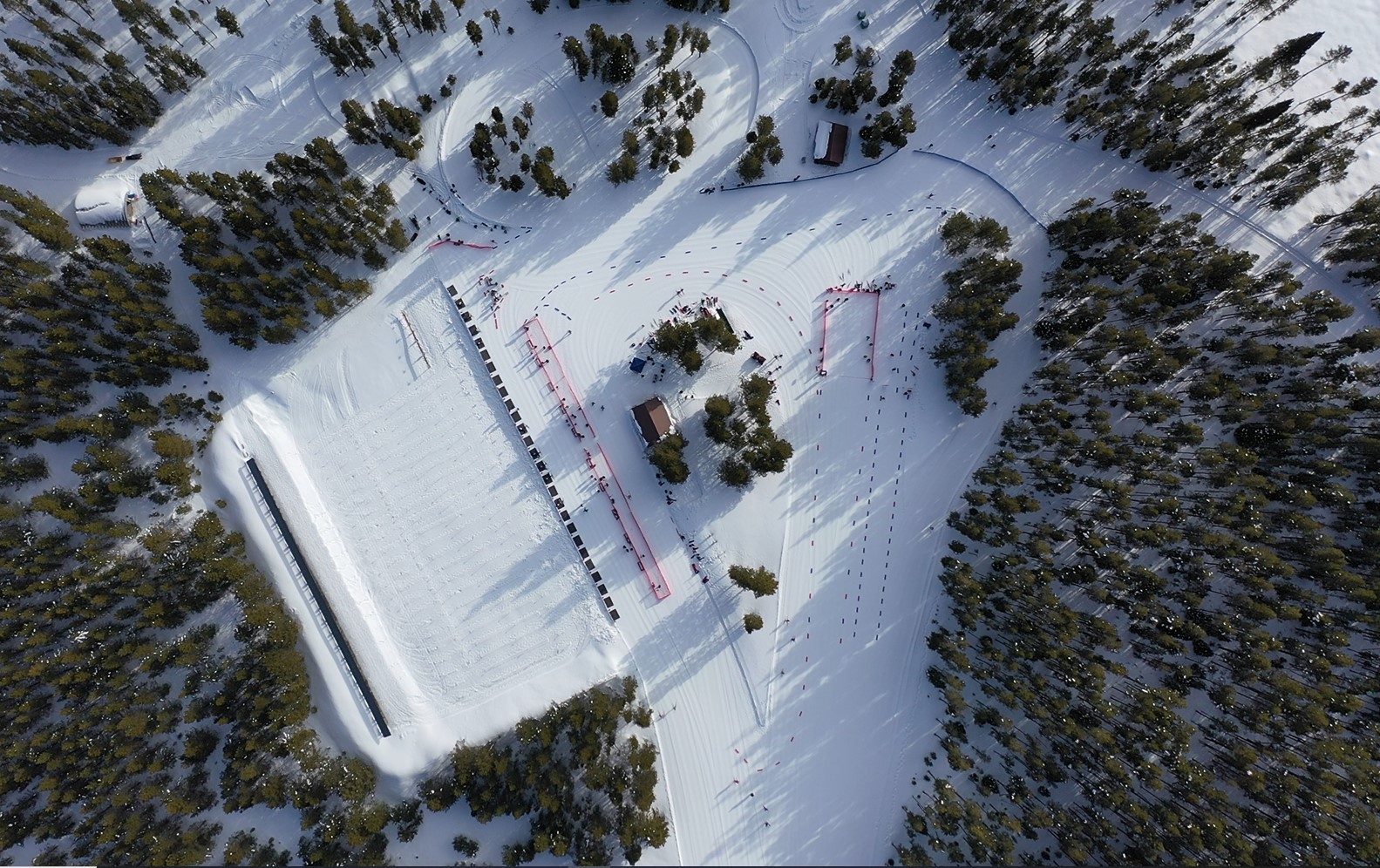
The stadium and biathlon range at the Rendezvous Ski Trails, seen from above. (Photo: WYSEF)
Biathlon, a Race and Après-Ski
Biathlon newcomers get a proper start. A Try-It clinic on Tuesday runs two sessions of up to 50 skiers each, and anyone planning to race the novice biathlon for the first time needs to attend it. The biathlon sprint and novice races follow on Wednesday, Nov. 25, at the stadium and range.
Friday afternoon brings après-ski at the Rendezvous Trailhead. On Saturday, Nov. 28, the week wraps up with a fun 5 km and 10 km freestyle mass start, open to all ages and abilities and capped at 200 skiers. Watch for race registration to open in the coming weeks.
Wax clinics, a mindful movement class and an evening speaker round out the week. Everything depends on snow: low snow means modified courses, and no snow means races and clinics are canceled, with clinic fees refunded less a small administrative fee. The full festival schedule is online and will be updated as November gets closer.
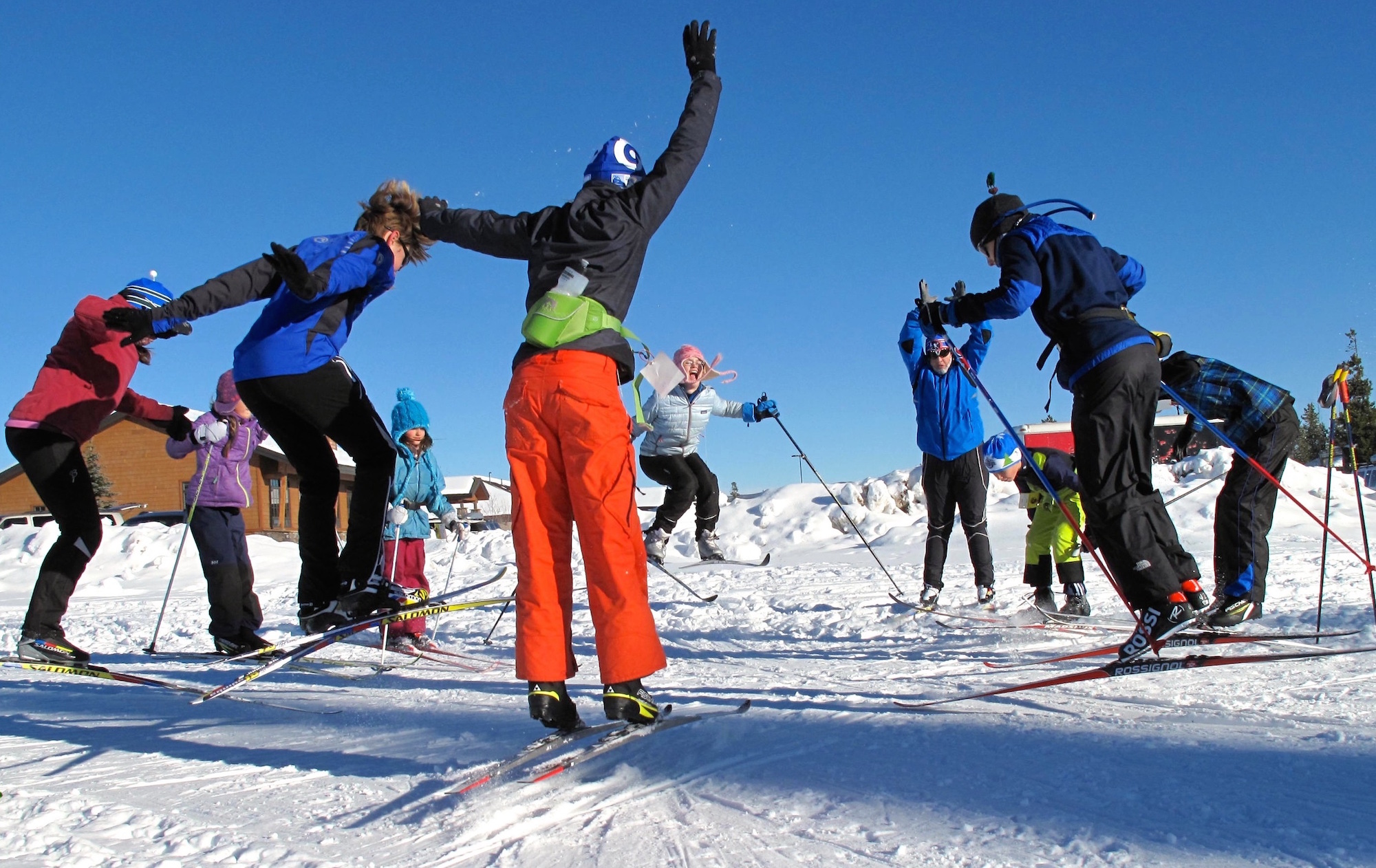
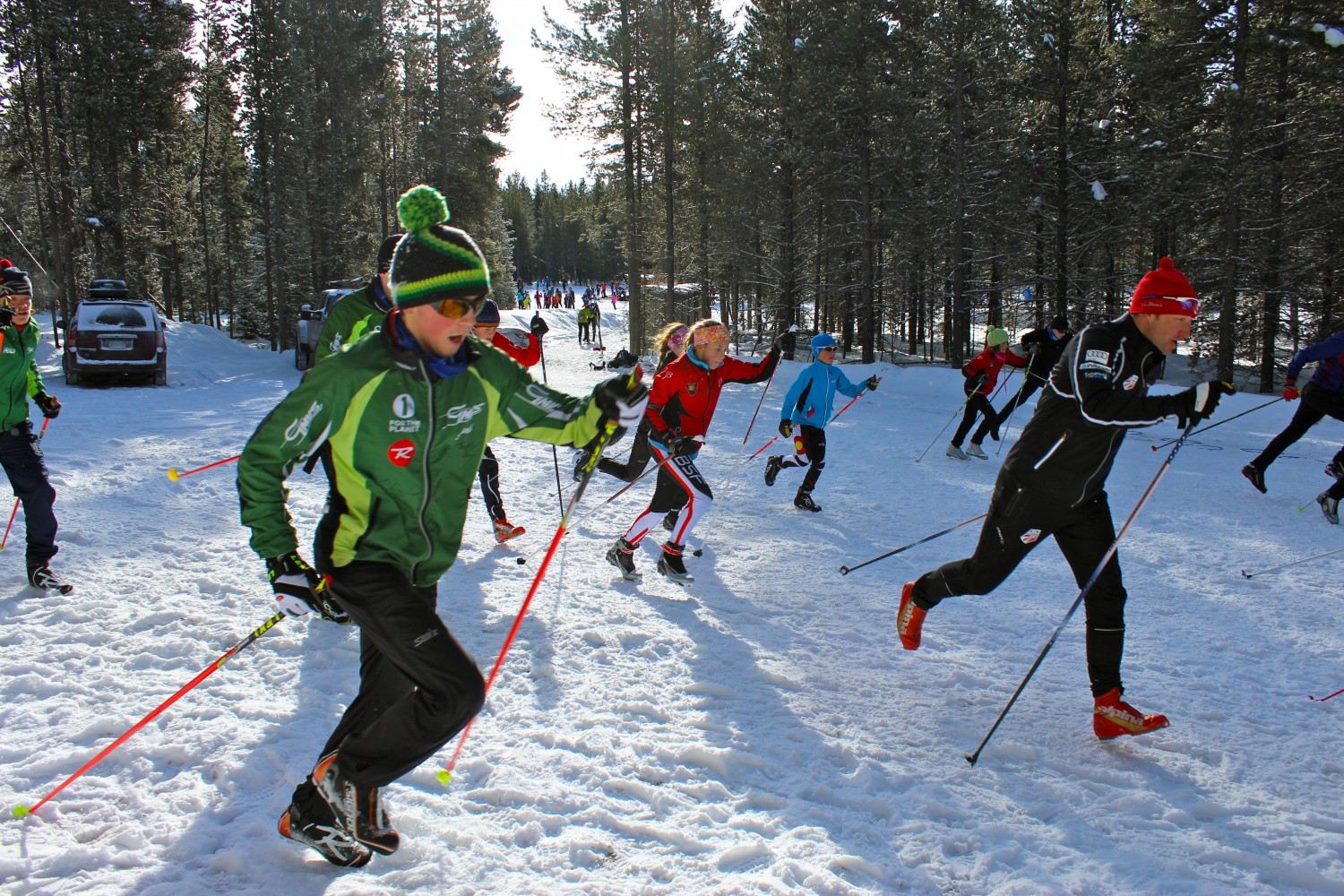
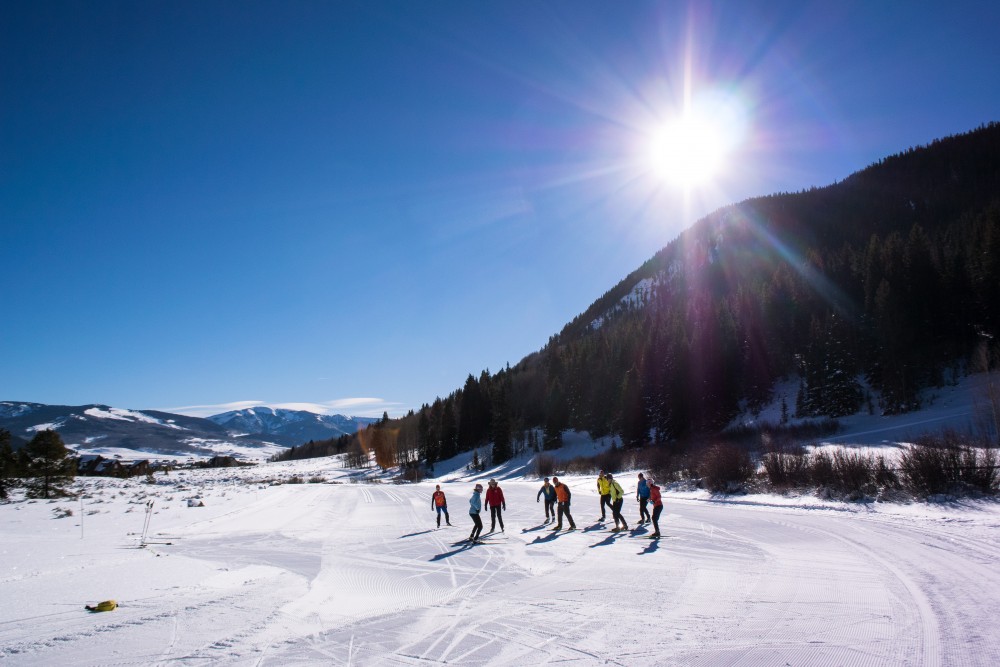
Young skiers warm up together in the sun at the Rendezvous Ski Trails. (Photo: WYSEF)
Places to Stay and Visit
When booking your stay, please consider our festival sponsors. They support our ski community, and we appreciate your support of their businesses.
While you’re in town, stop by Freeheel and Wheel for the latest ski gear, great coffee and a chance to catch up with fellow skiers before heading out on the trails.
If the snow is slow to arrive, there are still great ways to get outside: roller ski or bike the road into Yellowstone National Park, or head out on the nine miles of paved Shortline Trail. Destination Yellowstone has more on what to do around town.
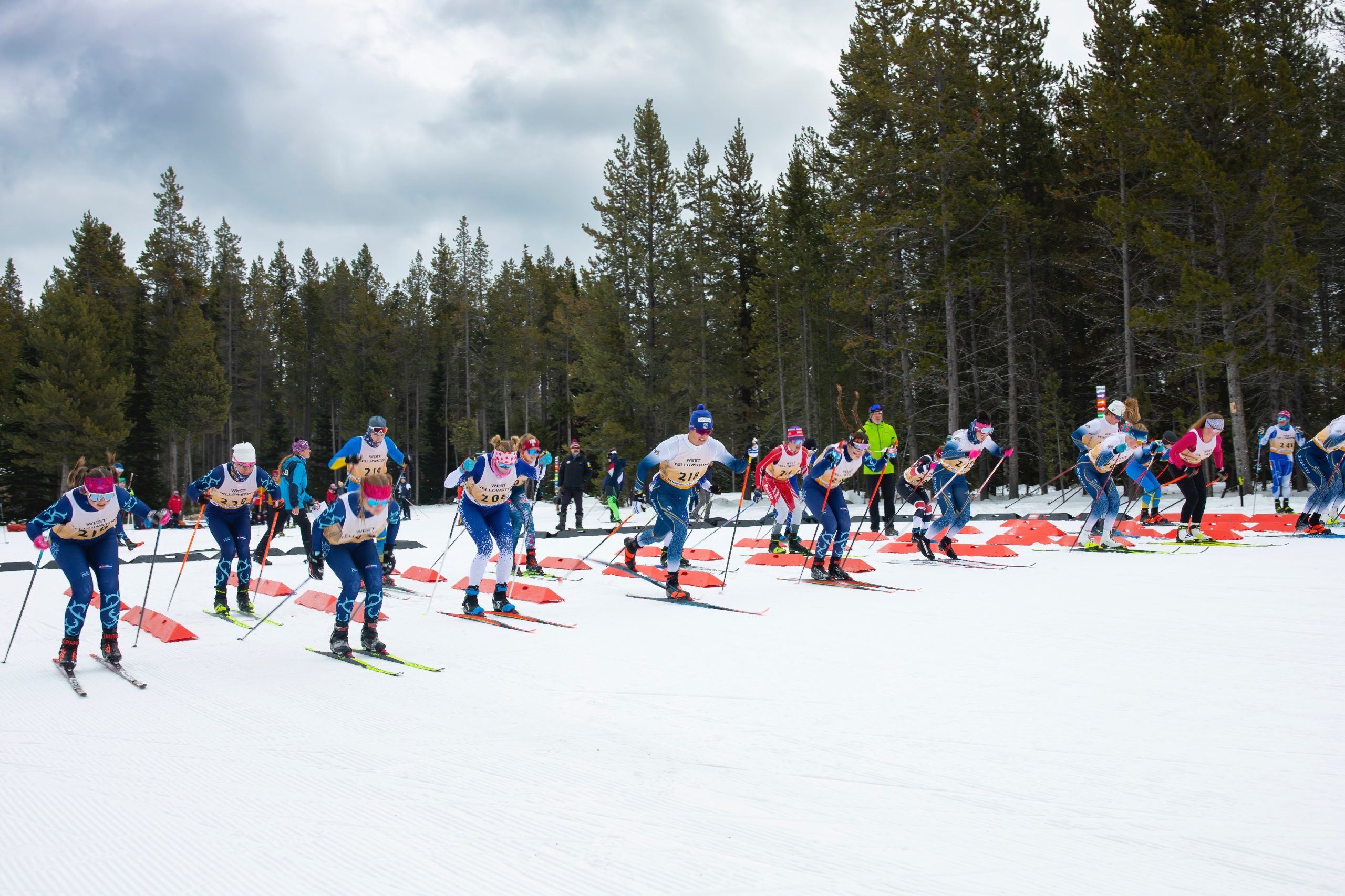
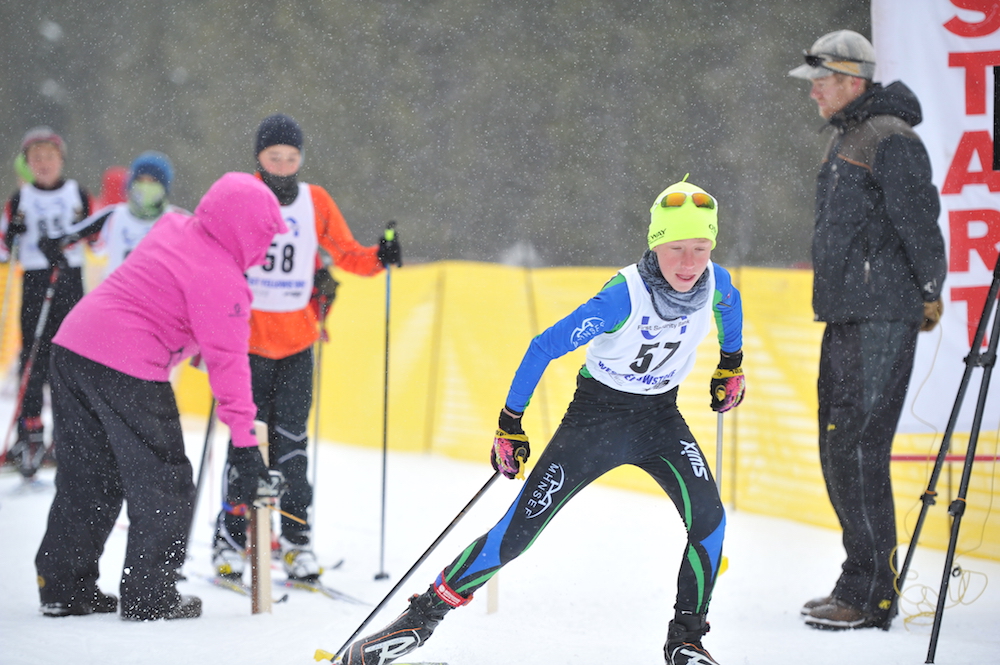
Racers push off the start in the stadium at the Rendezvous Ski Trails. (Courtesy photo)
Back in March for the Rendezvous
The season in West Yellowstone ends the way it starts, with a crowd on the trails. The Yellowstone Rendezvous Race, part of the American Ski Marathon Series, brings more than 600 skiers to town and is set for Saturday, March 6, 2027. Registration opens in November.
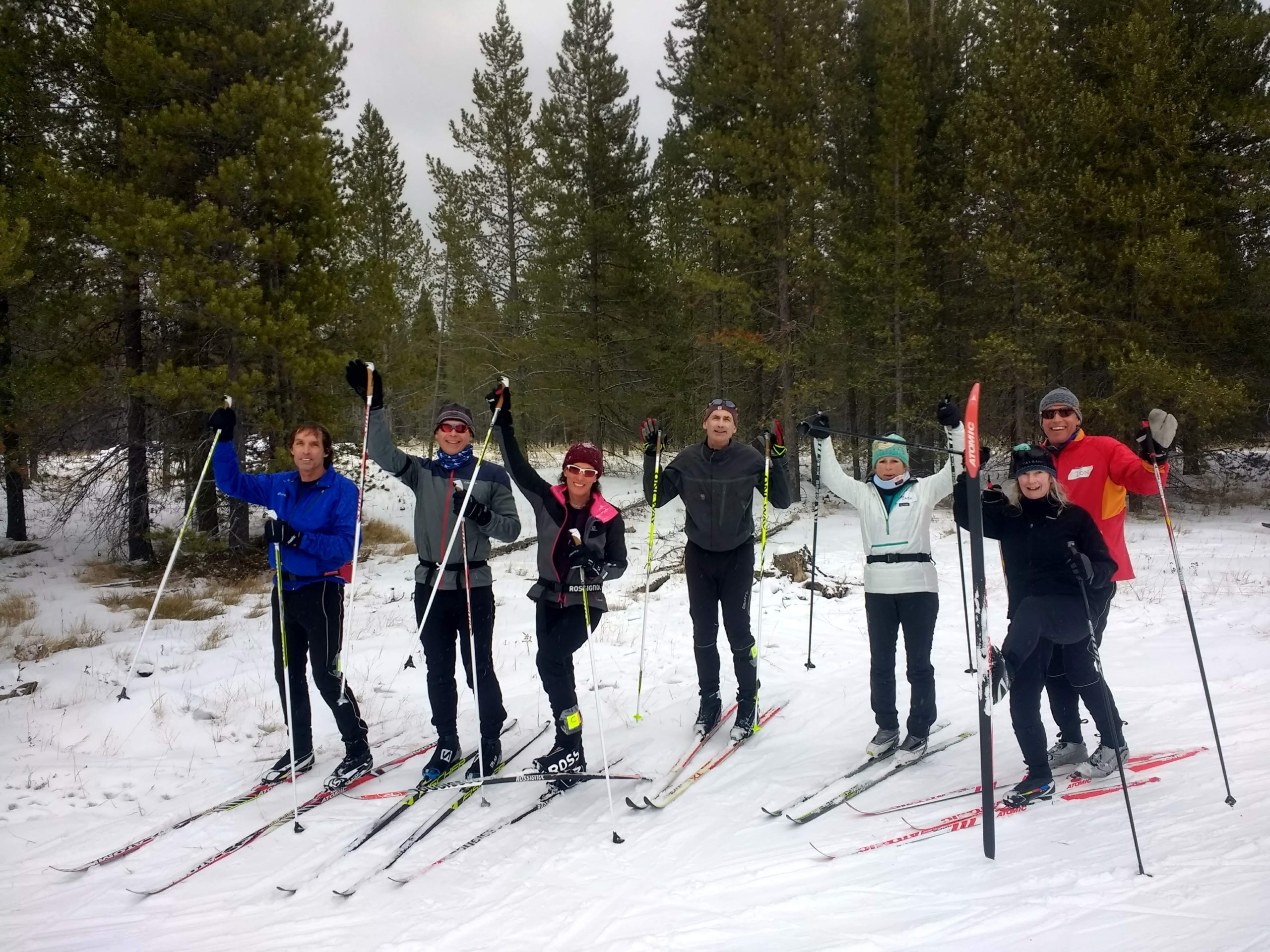
Festival skiers raise their poles on the Rendezvous Ski Trails during Thanksgiving week in 2018. (Courtesy photo)
See You on the Trails
The Yellowstone Ski Festival is a great way to kick off winter, catch up with old friends, meet new ones and get some real Nordic skiing in before December. Whether you’re joining a clinic, taking first tracks on fresh corduroy or just heading out for a relaxing ski, we can’t wait to see you. Start planning your trip, book your room and get ready for another great season in West Yellowstone.
For the latest festival information, visit skirunbikemt.com. Follow @RendezvousSkiTrails on Facebook and @Rendezvousskitrails1 on Instagram for updates and trail news.
Think snow, get excited, and we’ll see you in November!
The Yellowstone Ski Festival Committee
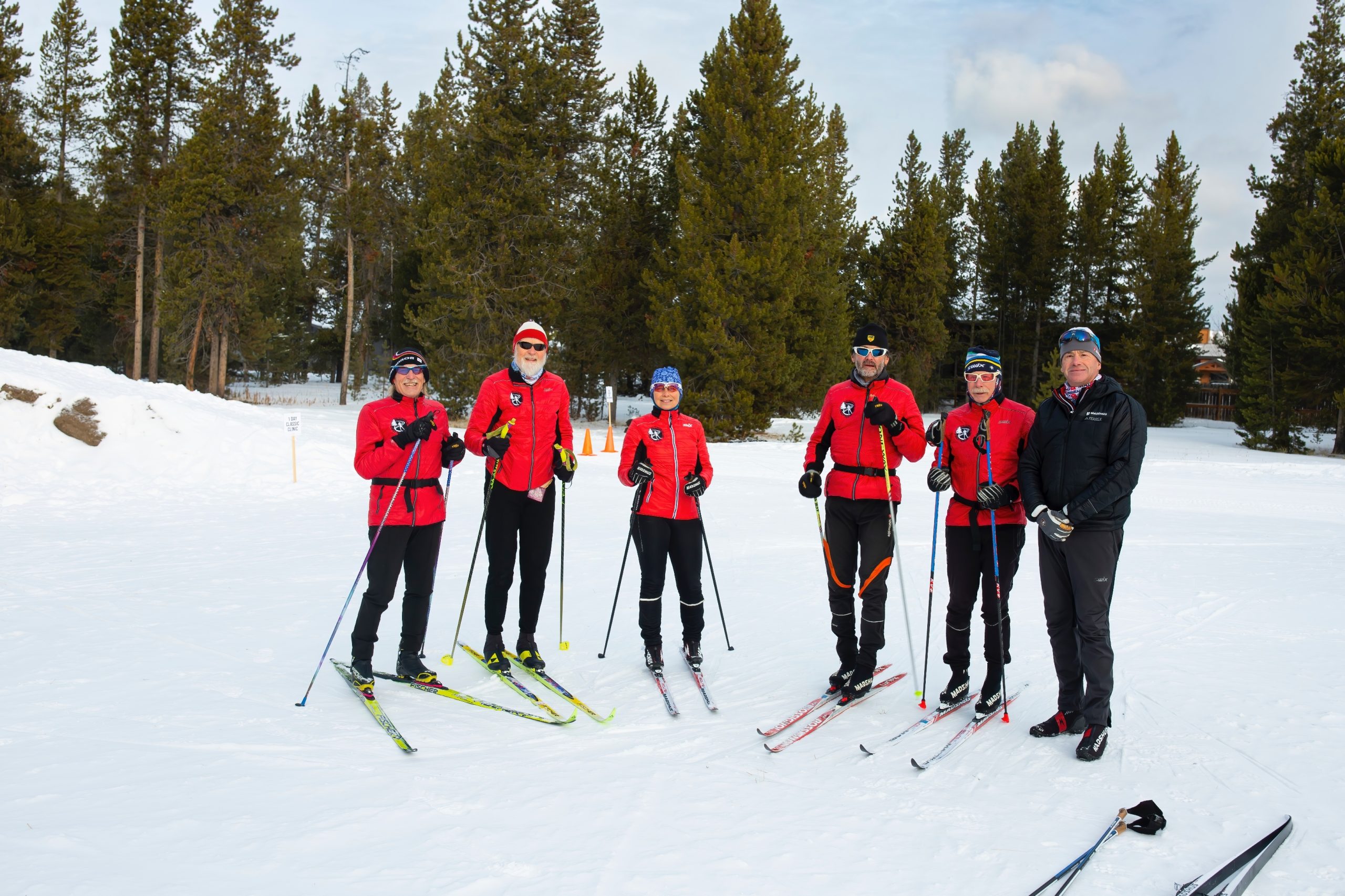
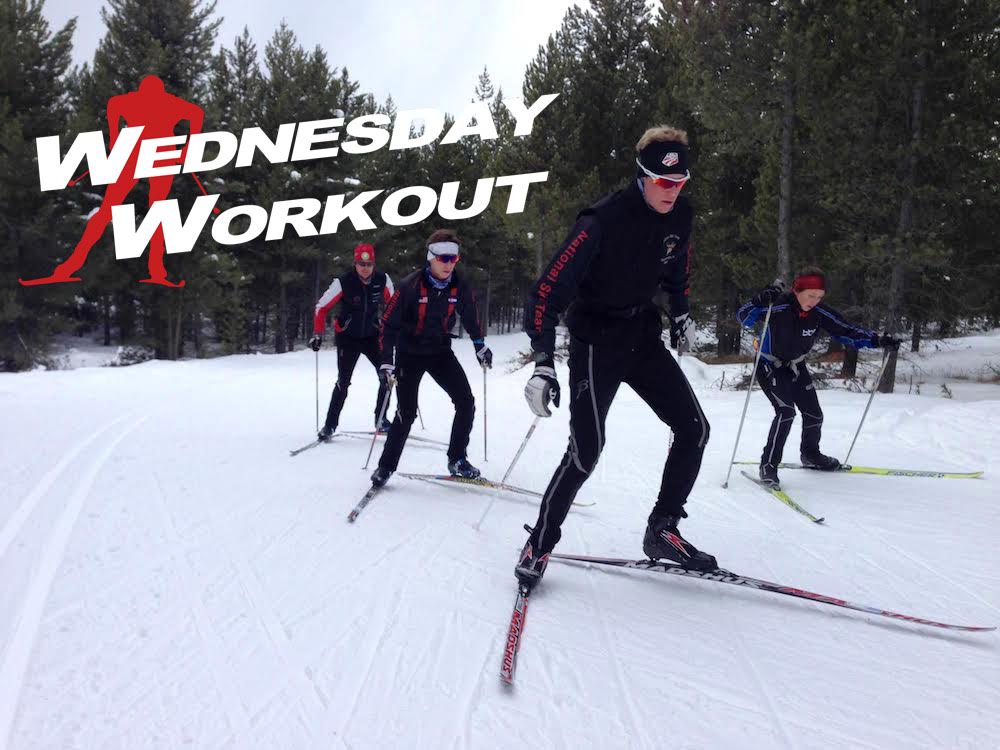
Clinic coaches line up on skis at the Rendezvous Ski Trails. (Courtesy photo)
Come and join West Yellowstone’s professional coaching staff to get a “jump start” on your 2022 – 2023 ski season
during the Yellowstone Ski Festival,November 22-26, 2022.
The staff provides a solid understanding of cross country fundamentals, and gives you the tools and drills to gain efficiency and strength at the camp and throughout your ski season. The coaching staff is composed of an elite group of XC ski professionals which includes retired world class skiers, coaches and professional instructors. The coaches know that the best way to ingrain effective movement is through practice. You’ll also get feedback, in the dose that’s right for you. While some just need a new focus and mileage, others benefit from a more consistent stream of information about whether and how much they’re performing the task to the desired degree. The coaches know how to pace the flow of information, and offer up a great balance of new information, drills, and practice.
Some of the special offerings include:
● 5-day Skate & Classic XC Fundamentals for Performance
● 3-day Skate & Classic XC Fundamentals for Performance
● 2-day Skate & Classic “Tune up”
● 1-day Improve Your Skate Technique
● 1-day Improve Your Classic Technique
Enjoy your First Tracks in West Yellowstone. Whether First Tracks truly means the corduroy and you, or
it is the first time on skis this season, or the first time on skis period; you are invited to take them at the
Yellowstone Ski Festival. Think Snow and make plans now to attend the 2021 Yellowstone Ski Festival.
For more information, http://www.skirunbikemt.com/master-clinics.html and follow us on our Facebook page
(@RendezvousSkiTrails) or Instagram (YellowstoneSkiFest) for up-to-minute news.
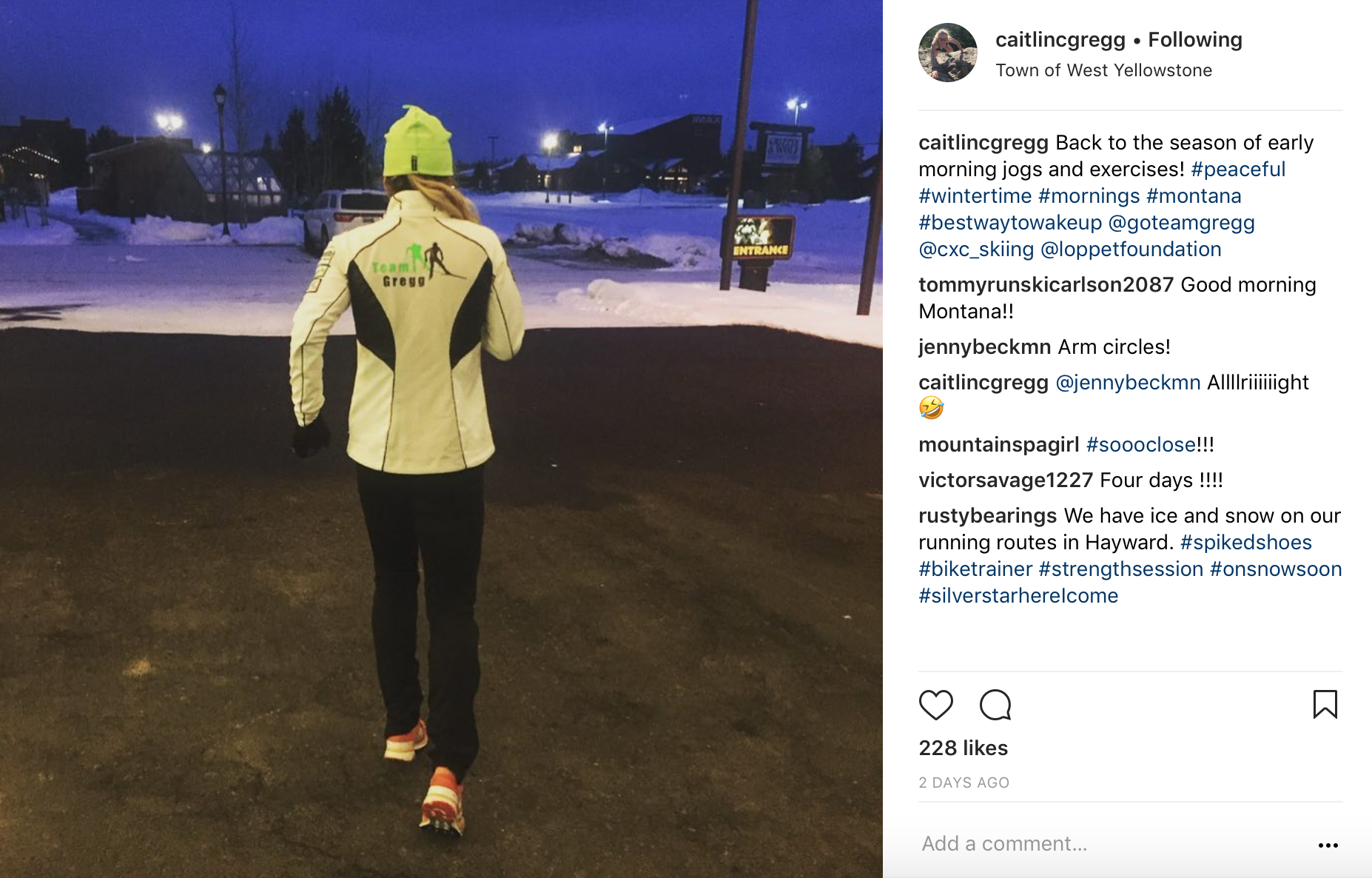
Caitlin Gregg heading out on an early morning jog before sunrise on Tuesday, Nov. 14, in West Yellowstone, Montana. Later that morning, a little before 9 a.m., she was essentially struck by lightning while running to the nordic ski trails there. (Photo: Instagram/@caitlincgregg)
She never heard thunder and never saw lightning before it happened, but in an instant, Caitlin Gregg realized the surge running through her body was a one-in-a-million type of occurrence.
This past Tuesday morning started out like most others for Gregg, who turned 37 exactly a week earlier, during her annual visits to West Yellowstone, Montana. With her skis and poles in each hand, she headed for the Rendezvous Ski Trails on foot — a short jog from the hotel she and her husband, Brian, were staying at.
It was 33 degrees Fahrenheit around 9 a.m. that morning and snow was falling, “a strange grapple type of snow/sleet”, Gregg, a 2015 World Championships bronze medalist, recalled in an email.
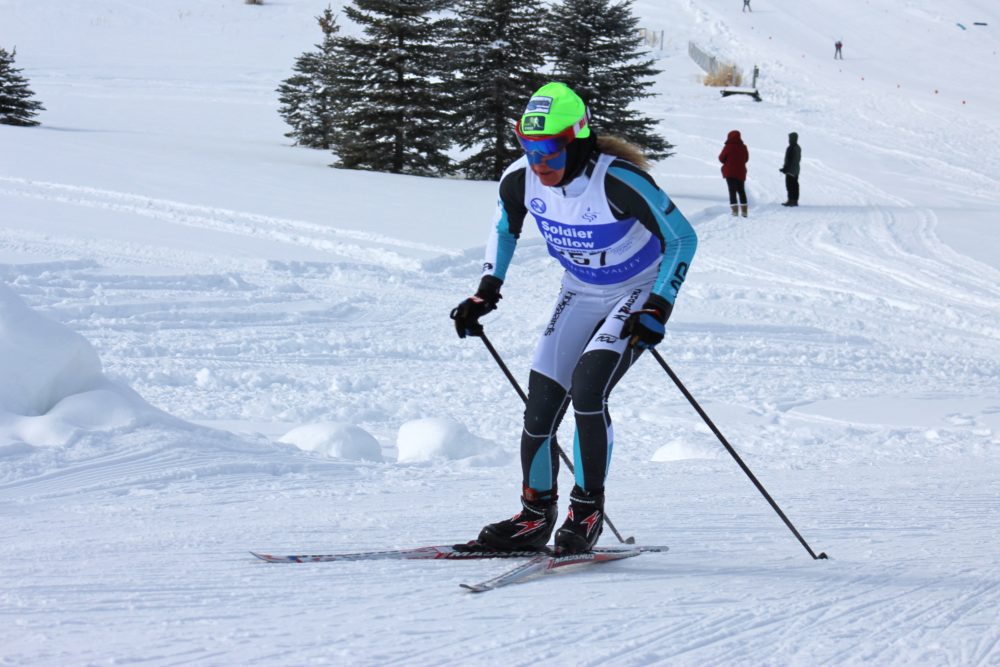
Caitlin Gregg (Team Gregg) racing to first in the women’s 10 k freestyle at 2017 U.S. nationals last January at Soldier Hollow in Midway, Utah.
She hadn’t been aware of any thunderstorms in the forecast. If she had, she would have never ventured out on her own, but rather caught a ride to the trailhead and waited for the storm to pass.
“Many of my teammates throughout the years know how terrified I am of lightning and thunderstorms,” wrote Gregg, a member of Team Gregg and Loppet Nordic Racing, based out of Minneapolis, Minnesota.
But it was just snowing, or so she thought.
As she jogged along the road, wearing metal spikes on her shoes for traction, Gregg reached the corner of Electric Street. Suddenly and without warning, lightning — stemming from a natural phenomenon called thundersnow — struck a nearby tower.
Simultaneously, an electric current surged through her body — up her left leg and out her left arm. She felt the surge followed by her jewelry burning on her skin.
“It felt like touching an electric fence x 1,000,000,” she wrote. “I had no idea what was happening but a split second later I heard the largest clap of thunder. I realized right away that I needed to get help.”
Gregg sought out medical attention at a hospital about an hour north in Big Sky, Montana.
“They checked out my heart’s electrical signal and for any muscle breakdown,” she wrote. “Thankfully all are normal. So, I am a bit shaken but everything seems to be okay.”
Her left hand “had some peripheral neuropathy and a pins and needles feeling for the rest of the day”, she recalled, but her jewelry didn’t leave any burn marks and she was cleared by the doctors to resume training as she felt up to it.
“I have been taking it pretty easy and just being careful if I notice any changes,” she wrote. As of Thursday, she hadn’t.
“I am grateful that I had a great group of teammates and coaches here who could help me out all day and have been skiing with me everyday since,” she added.
“I learned (through this whole ordeal) that the majority of lightning ‘strikes’ on people are from nearby objects getting hit the the current traveling through the ground,” Gregg explained. “Totally crazy experience. There have been a lot of lightning jokes now circulating the team (CXC and LNR) about how my it will give me super powers [smiley face]. We will see but I am pretty happy to have walked away okay.”
The day after, she posted a photo on Instagram of herself skiing with Midwest training partners.
While the odds of being struck by lightning in the U.S. in any one year is about 1 in 1 million (and the odds of being struck in one’s lifetime is 1 in 13,000), Gregg was feeling fortunate to be one of the survivors. According to the National Weather Service, she is one of about 300 Americans who survive lightning strikes each year. Ten percent of all lightning victims don’t make it.
“I have a new perspective on life for sure now,” Gregg wrote. “I looked up some of the lightning statistics and reports and I am feeling very lucky!”
“A lot of people thought I died,” Gregg wrote. “The hotel manager was trying to convince people that I am not dead and still staying at his place :)”
Feeling perhaps more alive or sparky, as she put it, than ever, Gregg is back on the path of trying to qualify for her second Olympics. (She represented the U.S. at the 2010 Winter Olympics in Vancouver, B.C. Her husband Brian, the other half of Team Gregg, raced at the 2014 Olympics in Sochi, Russia.)
The Greggs arrived in West Yellowstone earlier than usual this year to get acclimated to the altitude, some 6,700 feet above sea level. She planned to race the International Ski Federation (FIS) sanctioned race there on Nov. 25 (women’s 5-kilometer freestyle individual start) before starting the season in earnest with the SuperTour opener: a freestyle sprint and 10 k classic mass start Dec. 2-3, also in West Yellowstone.
“Despite this strange start to my season Brian and I are still very focused and driven to represent Team USA at the 2018 Olympics in Korea this February,” Gregg concluded.
— Jason Albert provided reporting
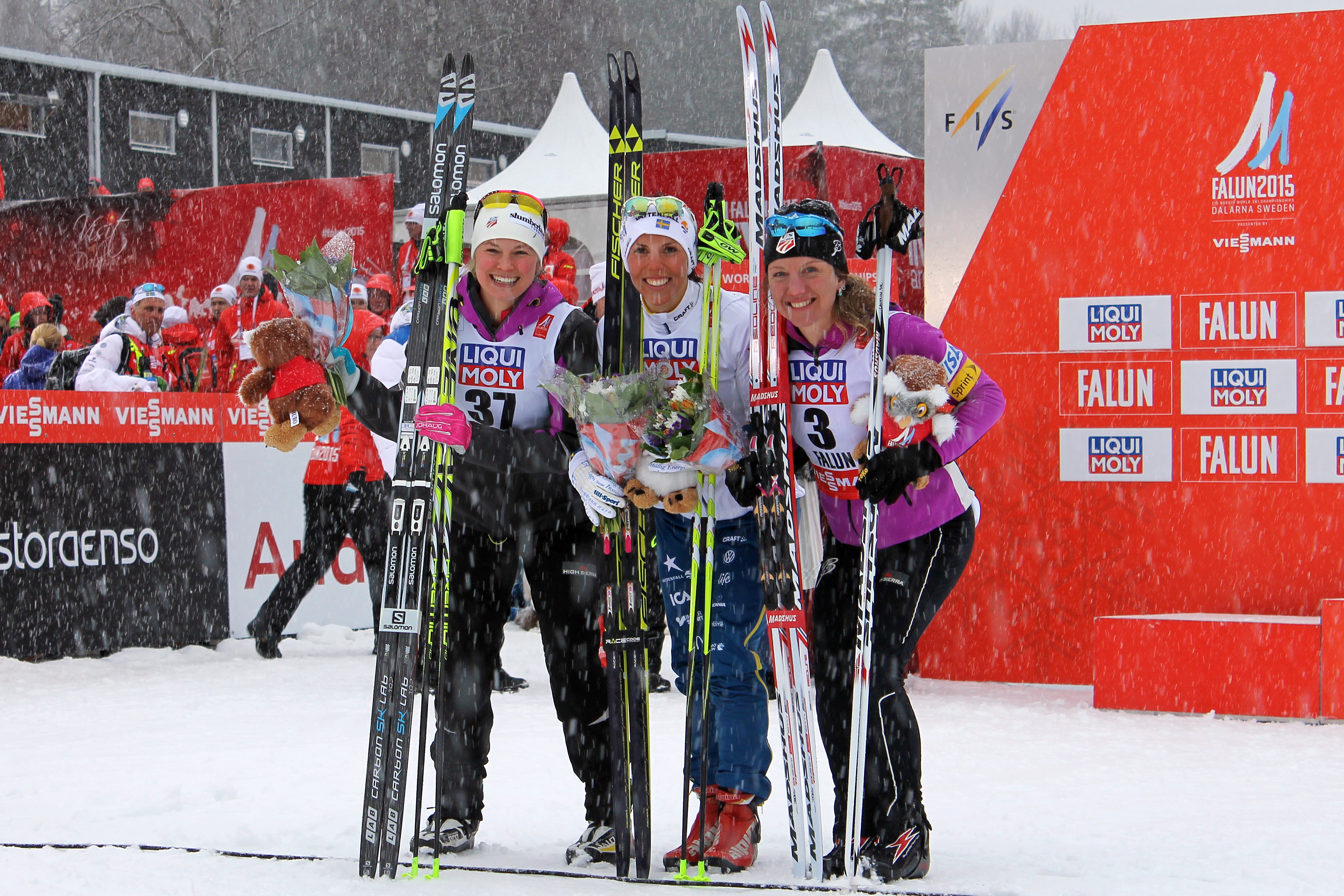
Caitlin Gregg (r) with fellow American Jessie Diggins (l) and Sweden’s world champion Charlotte Kalla after reaching the podium in the 10 k freestyle at 2015 World Championships in Falun, Sweden. Gregg earned bronze, Diggins silver and Kalla gold.
Prepaid trail passes are available October 15-31, 2017 for the Yellowstone Ski Festival. Passes are valid from November 1-30, 2017. Passes can be purchased through the mail or online.
To purchase:
Discounted passes for the month of November are available now. Regularly $55 each, these passes can be purchased by any skier for $45 each. Skiers 10 and younger are $22. Passes purchased via mail must be paid for by check and received no later than October 31, 2017 to qualify for the special rate.
To qualify for this incentive, skiers or coaches must send the attached form containing the following information:
A complete list of skiers attending the Yellowstone Ski Festival
The exact name of the lodging establishment you will be staying in while in West Yellowstone
Your arrival date
Contact info including email and phone number
One check for all your ski passes, received no later than October 31, 2017 to:
The West Yellowstone Chamber of Commerce
ATTN: Yellowstone Ski Festival Coordinator
PO Box 458
West Yellowstone, MT 59758
Trail passes will be delivered to the front desk of your hotel prior to your arrival. Other options for pick-up are listed on the form. Please read carefully. There will be one package of passes delivered and coaches are responsible for distributing the passes to their teams. Please let your team members know that they will have to get their pass directly from you. Prepaid passes for the Rendezvous Ski Trails are non-refundable.
Registration Now Open for Yellowstone Ski Festival Clinics
Come and join our professional coaching staff to get a “jump start” on your 2017 – 2018 ski season during the Yellowstone Ski Festival. The staff provides a solid understanding of technique, and gives you tools and drills to gain efficiency and strength at the camp and throughout your ski season. The coaching staff is composed of an elite group of XC ski professionals which includes retired world class skiers, coaches and professional instructors. Coaches will rotate through groups every ½ day session so you will get exposure to different coaches throughout your clinic. The coaches think snow and skiing just about year round, and are ready to give you just the tips and techniques you need to launch your season with the best focus for you.
This is no stand-around-and-learn kind of deal either. The coaches know that the best way ingrain effective movement is through practice. Plan on logging some k’s. You’ll also get feedback, in the dose that’s right for you. While some just need a new focus and mileage, others benefit from a more consistent stream of information about whether and how much they’re performing the task to the desired degree. The coaches know how to pace the flow of information, and offer up a great balance of new information, drills, and practice.
Not only will you get great instruction and a fitness bump for skiing 1, 2, 3 or 5 days, but you’ll be immersed in a touchstone event for the cross country ski culture, with on snow demos, an indoor expo and lectures in the evening. Event organizers bring in a keynote lecture to entertain and inspire. There’s even sessions called Women, Wine and Wax or Whiskers, Whiskey and Wax.
Some of the special offerings include:
5 and 3-Day Skate & Classic Technique for Performance (all levels)
Enjoy your First Tracks in West Yellowstone. Whether First Tracks truly means the corduroy and you, or it is the first time on skis this season, or the first time on skis period; you are invited to take them at the Yellowstone Ski Festival. Think Snow and make plans now to attend the 2017 Yellowstone Ski Festival. For more information, visit http://www.skirunbikemt.com/yellowstone-ski-festival and follow westyellxcski on Twitter, or friend Yellowstone Ski Fest on Facebook for up-to-minute news.
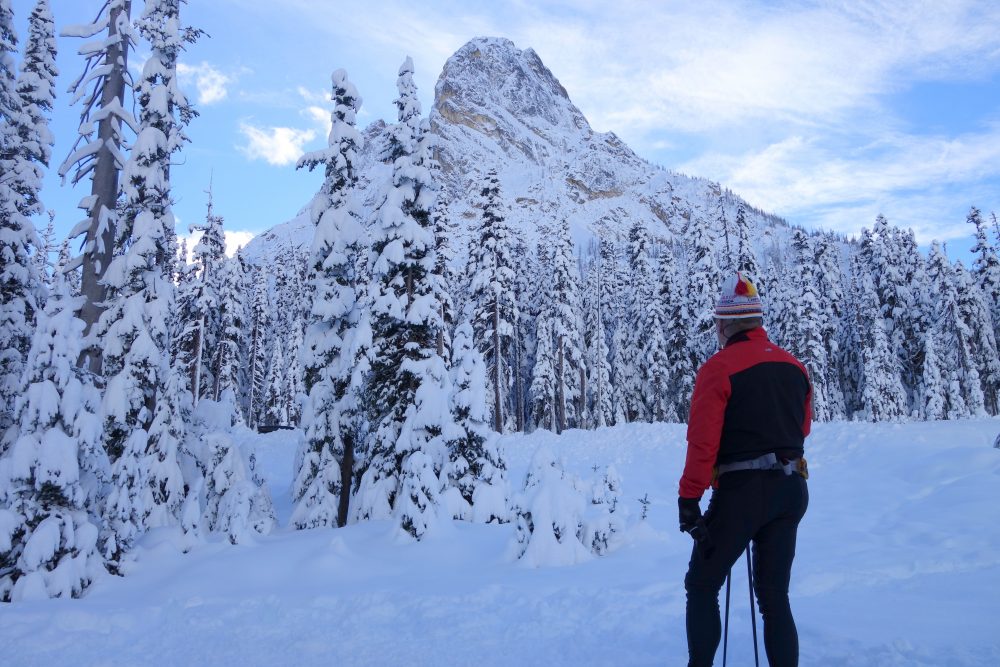
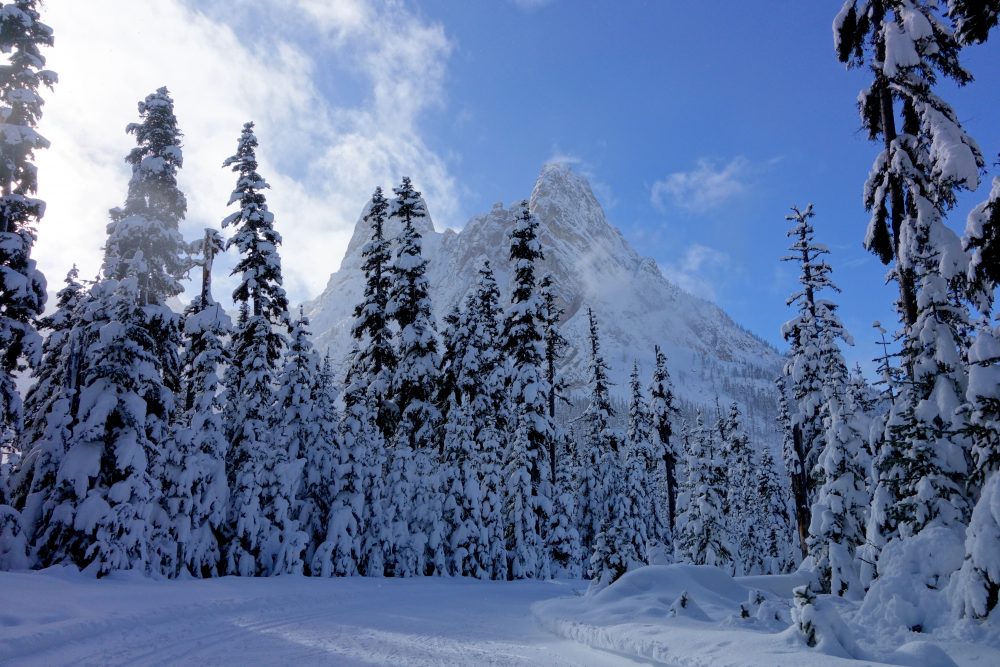
Skiing under Liberty Bell on Washington Pass in November, 2016. (Methow Trails courtesy photo)
Natural snow is where it’s at, unless there’s none to be found. In high-elevation places like West Yellowstone, Mont., (roughly 6,600 feet above sea level) and Crested Butte (nearly 9,000 feet), November skiing is almost always a given — which is why those venues have hosted Thanksgiving-week ski camps for 16 to 30+ years. And they are again this year, while looking to the skies and weather forecasts in hope of more snow — much more.
While there are only two well-known Thanksgiving camps currently being held in the U.S., there are dozens of other places around the country you can likely go skiing. We did our best to present some of the most dependable options, so at the very least you can plan a future trip on snow this time next year. No offense to the in-laws, but wouldn’t you rather be skiing on Thanksgiving? Stay tuned for our Canadian early skiing edition, and feel free to share your favorite November ski spot in the comments section below.
***
What: Yellowstone Ski Festival
Where: West Yellowstone, Montana
A rendezvous point at the Rendezvous Ski Trails as seen last year in West Yellowstone, Mont., during the 2015 Yellowstone Ski Festival. (Photo: 2015 courtesy photo)
How many years running: Over 30 years. “It started with Drew Barney, Torbjorn Karlsen and Dick Hunt back in the 1980s as a Fall Camp, offering clinics for coaches and citizen racers looking to improve their technique,” West Yellowstone Ski Education Foundation Program Director Moira Dow explained. “Over the years, the camp grew into one of the top training camps available to the cross-country ski community.”
Skiers at the trailhead of the Rendezvous Ski Trails in West Yellowstone, Mont., on Monday, Nov. 21, 2016. (Photo: FBD)
Target audience: Open to the public and all levels of skiers.
Anticipated participation: Around 2,500. “We think it might be a little bit lower this year because of the late snow and the lack of the SuperTour,” Dow noted. “Last year we had a lot. We had really really early snow last year. Around 3,500 in years past.”
Advance reservation required? Yes for clinics and races. Online registration only. “The competitive events and the clinics all require you to be pre-registered, but all the evening events are open to the public,” Dow said.
Trail pass rates: $55 for the month of November for adults. $26 for kids, which is 10 and under. Day passes are $12 and $6
Grooming report:Approx. 20-25 k groomed as of Monday, Nov. 21.
A young skier darts out of the start at last year’s Yellowstone Ski Festival in West Yellowstone, Mont. (Photo: 2015 courtesy photo)
What makes this camp unique?
“Good, early, reliable snow,” Dow said.
“Also it’s a place where skiers from all across the country, juniors to seniors to masters, come together,” she added. “… And as a junior, that’s pretty unique to get to be able to do that. And also to see all the equipment from vendors and see wax clinics. To have all of the elements in one spot is one of the most unique things about this camp.
“We’re a tiny town out in the middle of nowhere,” she continued. “Our ability to put on such a big event, is, in my opinion, probably one of the most unique aspects of our camp. We are almost entirely volunteer run. The fact that the people who run the festival have little to no experience cross-country skiing, but put on these races, is just flabbergasting to me. It’s pretty incredible.”
Special events: See website for complete lineup of clinics and more, including:
Presentation: Wildlife photographer Tom Murphy
Yellowstone Historic Center presents The Ski Hero Soldiers of Yellowstone
Whiskers, Whiskey, and Waxing featuring whiskey tasting samples from Willie’s Distillery of Ennis, MT
Branch Beer Bash: Micro and craft beer tasting
Presentation: Kaatsu Training by Doug Barnard
Winter Wildlands Alliance Backcountry Film Festival
Women, Wine, and Waxing
Keynote speaker Ruff Patterson
Yellowstone Ski Festival Social
— Gabby Naranja
***
What: Crested Butte Nordic Thanksgiving Camp
Where: Crested Butte, Colorado
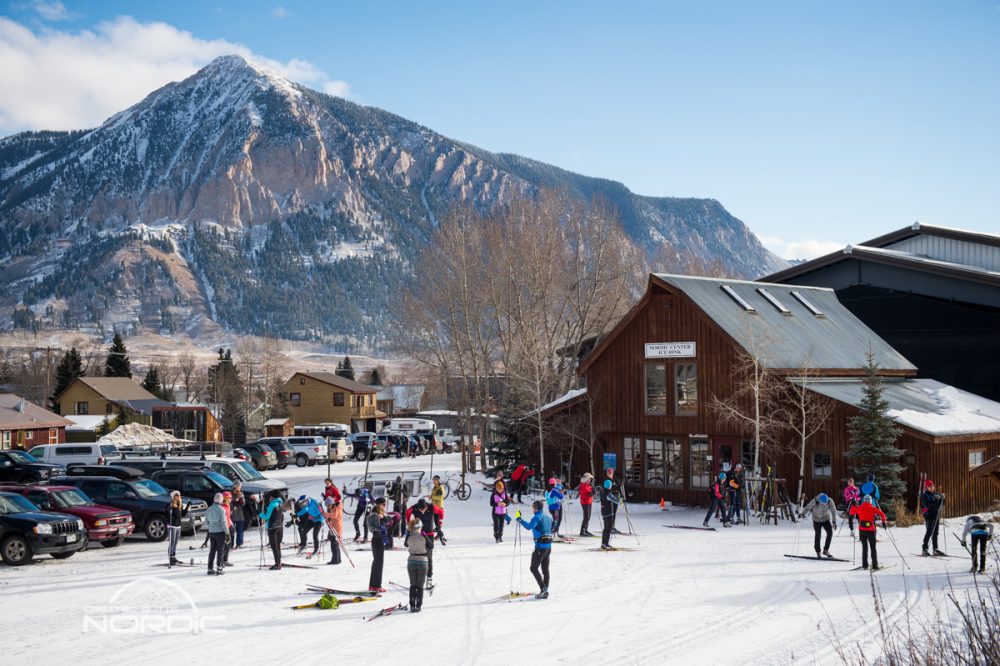
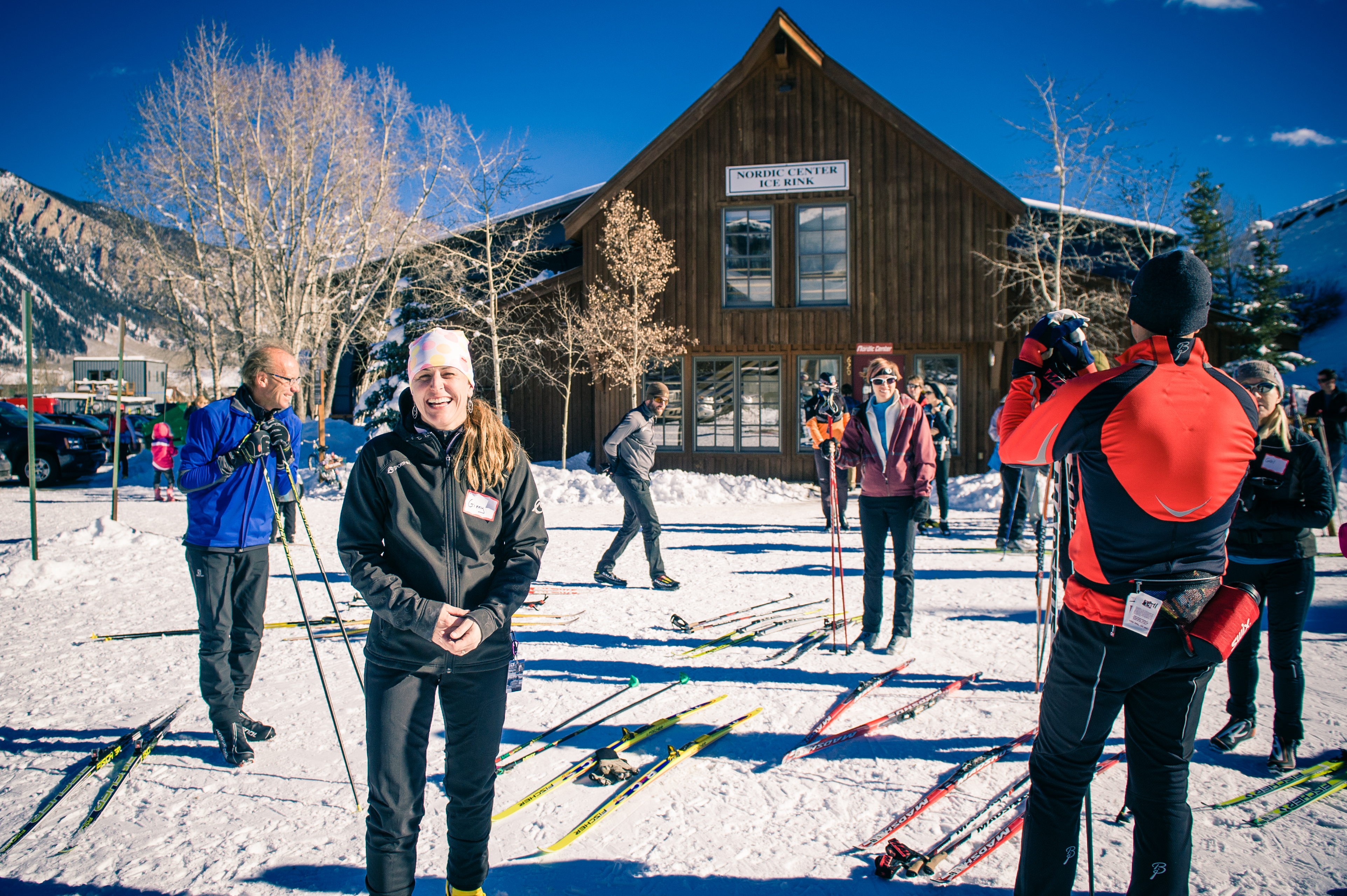
The downtown-based Crested Butte Nordic Center. (2015 courtesy photo)
When: Wednesday, Nov. 23, to Sunday, Nov. 27, 2016
How many years running: 16 as an official, organized camp: “In case of a low-snow year, like our current situation, we have a low-snow venue called Lily Lake and that’s up on Kebler Pass which is six miles West of town,” said Drew Holbrook, marketing director for Crested Butte Nordic.
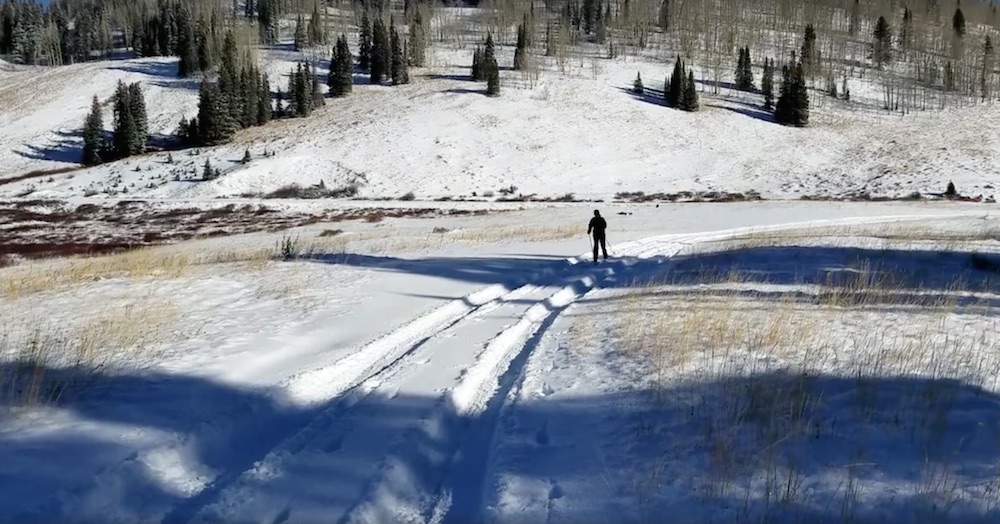
Skiing at Lily Lake in Crested Butte, Colo., on Nov. 18, 2016. (Photo: CB Nordic/Facebook video)
The road up to Kebler Pass is maintained by the county. Individuals or groups can drive up to the pass, but carpooling is encouraged when the low-snow option is in play.
“We have vans to shuttle people up to try and minimize traffic and congestion — it’s kind of like a similar situation in terms of people (but not as and because not quite as many people) as driving up on the South Plateau outside West Yellowstone, so we shuttle people up there. For the people taking clinics we shuttle them all up in vans.”
The Lily Lake area receives 600 inches of annual snowfall and no trail pass is required. As of Nov. 18, Lily Lake had received nearly six inches of snow.
The Nordic Center located in town is also prepared for low snow, according to Holbrook. “Just in the last three years we have had the trail right next to the Nordic Center in town, called Ruthie’s Run, homologated re-engineered. So it’s seeded with grass, it is mowed and basically we can groom that with literally six inches of snow or so. It’s kind of interesting because it snows a lot more up on Kebler Pass at Lily Lake, it might snow two feet up there and only six inches in town, but it’s easier to actually groom on Ruthie’s down in town if we get the snow. Lily Lake is on Forest Service property, so we have to wait until there is a foot of snow before we are allowed to groom up there.”
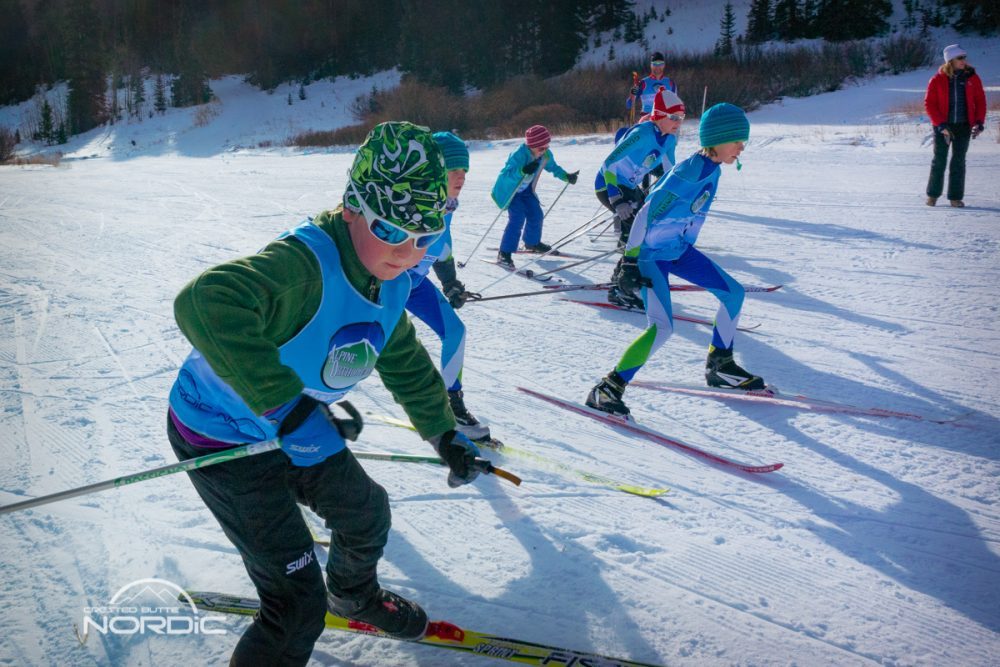
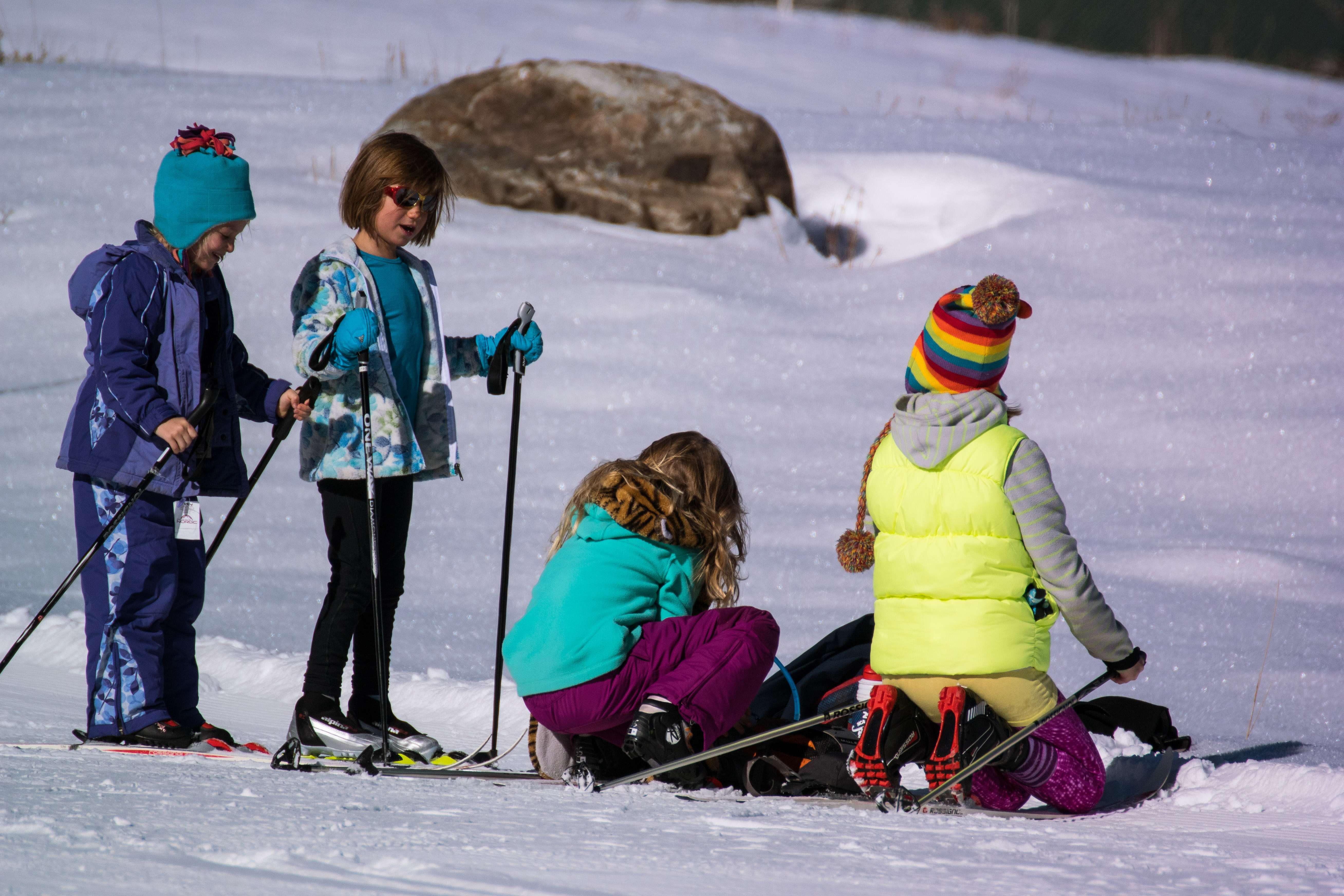
Crested Butte Thanksgiving Camp: not just for big people. (2015 courtesy photo)
Target audience: All ages and abilities. New skiers are encouraged to come try the sport out.
Anticipated participation: Holbrook expects 60 participants for the clinics offered. A round-robin classic “refresher” will be held Thursday, Nov. 25, with full-day clinics on the 26th and 27th.
Advance reservation required? Strongly encouraged. “For the clinics it is best to sign up ahead of time,” Holbrook said. “We never get too many people signing up until it starts snowing, but they do fill up. You might get lucky the morning of and come into the Nordic Center and sign up and get a spot, no guarantees.”
Trail pass rates: $20/day, skiers 17 & younger ski free. $150 for a 10-punch transferable pass.
Grooming report: Lily Lake is receiving snow. The low-snow option looks more than promising.
What makes this camp unique? “One thing that makes it unique, Lily Lakes is a great locals’ place to ski,” Holbrook said. “It’s pristine and scenic. And of course, its great skiing from the Nordic Center in town, too. There is plenty of room on the trails for everybody, you are not getting swarmed by people and not being able to do your workout. It’s easy to get in a good ski.”
Special events:
Ski Free Day: Wednesday, Nov. 23 at the Crested Butte Nordic Center
Crested Butte Mountain Resort “Donation Day”. Donate some money, you decide the amount, and ski with a little help from gravity at the downhill area. All proceeds support the Crested Butte Snowsports Foundation
Round-robin refresher clinic: Thursday, Nov. 24
U16 Junior Training Camp: Nov. 25-27
Alley Loop Race Series (Race #1) 5 k & 10 k skate
Winter Kick-Off Party (Saturday night): Fundraiser for Crested Butte Nordic, tickets $25/adult,$15/children. (Author’s note: Crested Butte throws fun parties.)
— Jason Albert
***
NOT CAMPS, PER SE, BUT YOU’RE PROBABLY WONDERING ABOUT:
ALASKA
Fairbanks
Birch Hill Ski Area, in Fairbanks, is probably the most reliable spot in North America for groomed early-season skiing. This is the venue that once held a FIS race on Nov. 2. Temperatures are reliably cold, and any snow that falls tends to stay. The Nordic Ski Club of Fairbanks grooms approximately 35 k of trails at Birch Hill. The trails are meticulously maintained in summer, if not manicured, and are justly renowned for their ability to provide good skiing after mere inches of snowfall.
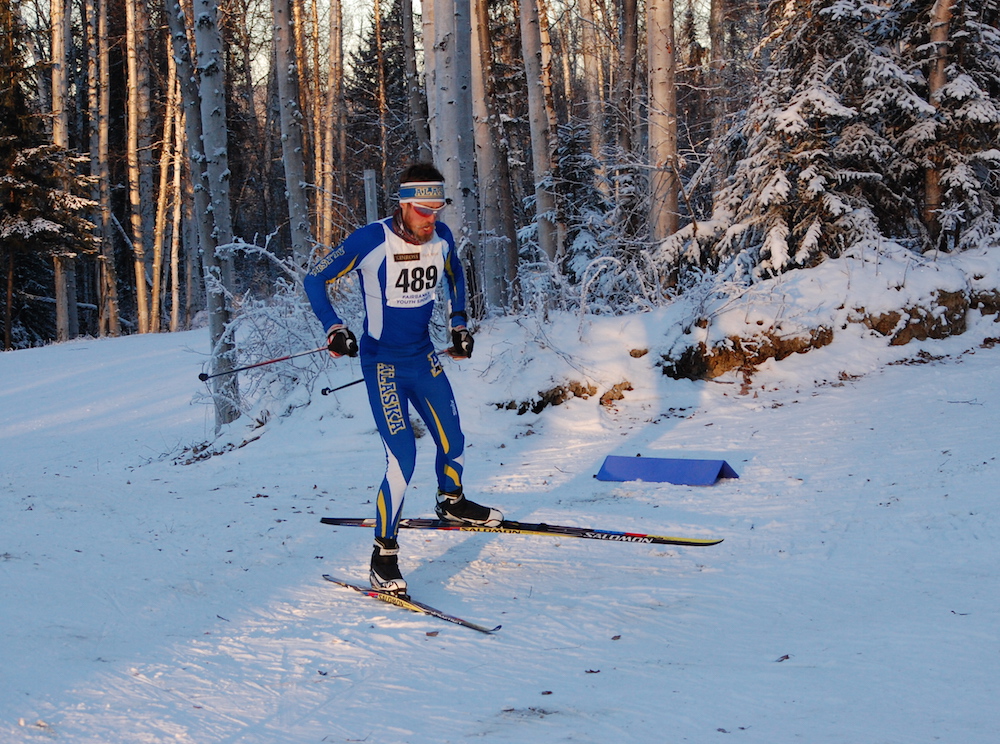
University of Alaska Fairbanks skier Alex Eckert racing in the Alaska Nordic Cup FIS races in Fairbanks, Alaska, on Nov. 19, 2016. (Photo: Max Kaufman)
Birch Hill again held FIS races on the recent weekend of Nov. 19-20. It had snowed approximately 5″ total in Fairbanks this winter by that point. Weekend racers – and there were hundreds of them, from kindergarteners without poles to the APU Elite Team – skied on trails that had been packed and dragged to create a base of approximately 2″. There were admittedly some leaves and dirt showing through in places – but, crucially, it was leaves, not rocks. Most skiers in the FIS/USSA class of the weekend’s races competed on their prior-generation, few-years-old race skis.
Locals consistently described the conditions, which led half the APU Elite men’s team to make the trek north from Fairbanks for the weekend, as among the worst mid-November conditions in living memory.
Anchorage and nearby
Under normal conditions, as measured by a 30-year average, Anchorage around Thanksgiving is a nordic nirvana. There are at least 40 kilometers of groomed trails at Kincaid Park, on the west edge of town, and another 16 k at Hillside, on the east edge of town. (16 k are lit at Kincaid, and 8 k are lit at Hillside.) The two ski areas are connected by a network of dozens of kilometers of additional trails (also groomed, or at least snowmachine dragged), ranging from moose-dense forest to urban greenbelt, including the Coastal Trail, which runs along the shores of the Pacific Ocean for most of its 15 k. You can ski from Hillside up into the Chugach Front Range, and from the frontcountry into true backcountry. Around 20 miles out of town to the north, Beach Lake has another 20 k of groomed trails (nine of them lit). 40 miles to the south, Girdwood boasts a growing trail network of around 10 k total, including a competition-level 5 k loop. All trails are open 24/7, and there is no trail fee for any of them.
Hillside ski trails in Anchorage, Alaska, on Oct. 22, 2016, before the rains came. (Current conditions are far worse.) (Photo: Gavin Kentch)
Judging from the last three winters, however, Anchorage sadly simply cannot be recommended as a viable option for Thanksgiving snow in these days of climate change. While all three winters saw the first snowfall in October or early November, and some period of good skiing immediately thereafter, all three gave way to wind and rain by Thanksgiving week. As of the weekend of Nov. 19-20, 2016, Anchorage has no natural snow on the ground at Kincaid, a 1-2″ base of bulletproof sheet ice at Hillside, and skritchy skiing on a local golf course. On the bright side, the trail running is amazing (bring your Icebugs), and the nordic skating is world class.
Kincaid has limited snowmaking capabilities, which are capable of covering a loop of as much as 3-4 k centered around the main stadium area. (This is where over 95 percent of Anchorage ski races have occurred over the last two winters.) The Nordic Skiing Association of Anchorage (NSAA) turned the snowguns on briefly on Nov. 16, then again on Nov. 18. Recent cold temperatures have allowed them to operate continuously since. NSAA stated on Sunday morning that there were no trails open for skiing yet, but that they were “getting closer” to opening the first loop and had reached the stage where the PistenBully was starting to move snow around. A loop of approximately 2 k was opened amidst single-digit temperatures on Thanksgiving morning, Nov. 24.
In a recent email to FasterSkier, NSAA Program Manager Tamra Kornfield addressed the possibility of, for example, guaranteeing skiable snow by Thanksgiving in exchange for attracting skiers and generating user fees. Kornfield wrote, “The theory of trail fees has been discussed for many years, but currently our ski trails are on Municipal Park land, and we cannot charge to access these parks. However, I can say that the snowmaking system was designed to extend the ski season, not create it from scratch, so I do foresee doing more to fundraise for this great expense that has now saved the last two ski seasons.”
Mat-Su Valley
Archangel Road above Palmer, Alaska, on Nov. 4, 2016 (current conditions are better than this). (Photo: Gavin Kentch)
The Matanuska–Susitna Valley, approximately one hour outside of Anchorage on a major highway (call it up to 90 minutes to the ski areas discussed here), has been described on this website as having “the season of winter that starts in the fall and ends in the spring.” That’s pretty fair.
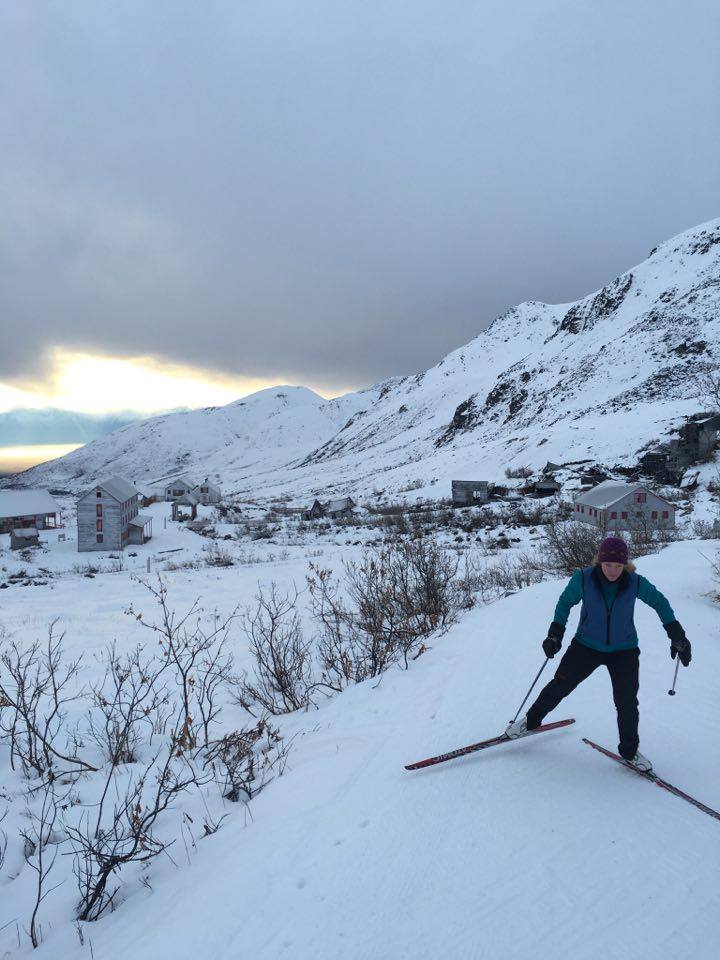
The Mat-Su Ski Club, including the redoubtable Ed Strabel and sometime FasterSkier contributor Jeff Kase, typically groom 7 k of Bill Spencer-designed trails at Government Peak Recreation Area (to be expanded as soon as next summer), 7.5 k (one-way) on Archangel Road, and 5 to 10 k at Hatcher Pass. Archangel Road hosted one of the last North American ski races of 2015/2016 and one of the first of 2016/2017. Hatcher Pass is a truly special place, as the groomed trails wend their way past the historic buildings of an old gold mine nestled in a bowl in the Talkeetna Mountains. “Imagine skiing through an Old West ghost town turned collectible Christmas village,” local Master and English professor Shannon Gramse once wrote in these pages.
Skiing at Hatcher Pass, above Palmer, Alaska, on Nov. 20, 2016. (Photo: Nat Herz)
As of Nov. 19, Government Peak (a one-hour drive one-way from central Anchorage), which is at a lower elevation than the other two areas, did not have enough snow to ski on. Archangel Road (75-minute drive) had a base of approximately 4-5″, but it is bulletproof hardpack that should provide a reliable base until spring. The Mat-Su Ski Club has been grooming there several times a week, and the skiing is good to superb. The Mat-Su Ski Club also groomed Hatcher Pass (90-minute drive) over the weekend.
For the best information on current trail conditions, including formal grooming reports when available: Anchorage (official NSAA and user-generated), Mat-Su, and Fairbanks.
— Gavin Kentch
WASHINGTON
Then there are the possible Northwest options for early season skiing, including the well-known:
Bluebird day on Washington Pass in November 2016. (Methow Trails courtesy photo)
Methow Valley
“I giggle about the current skiing up at Washington Pass which is a the top of the North Cascades Highway,” said Kristen Smith, marketing director for Methow Trails based in Winthrop, Washington. “What they have groomed is almost exactly one mile or a 1.6-kilometer loop. It goes out to the Washington Pass overlook, which is stunningly gorgeous. I mean the whole ski is the most beautiful, their probably can’t be a place anywhere in the world that has more beautiful scenery than this, on this little loop.”
Smith explained the loop is being groomed for skate and classic. “It’s a handful of super-dedicated locals who do the grooming completely on their own and you don’t pay to ski there,” Smith said.
But here’s the important beta: call or check online before you head to the Methow or think you might ski at the top of Washington Pass. The Washington Department of Transportation is closing the pass temporarily due to possible hazardous weather and avalanche conditions as of Monday, Nov. 21.
Skiing at Washington Pass, Nov., 2016. (Courtesy photo)
“It will not mean a loss of skiing,” Smith explained in the event the pass is closed for the season. “If the gate is closed farther down on the road to Washington Pass, they will start to groom different areas that we can still access. So to get the snowfall that is expected, they will start to groom just start to groom a bit lower, but bigger loops than what we have up there at Washington Pass. If we are really lucky we will get a big snowfall here on the valley floor and then Mehto Trails who I work for, we will start grooming our system. And we are all set and ready to go the moment we get six inches of snow we will start grooming our trails here.
Conditions: Pass is closed. SR 20, the North Cascades Highway, is closed from milepost 134 to milepost 171 due to impending weather and potential increasing avalanche hazard.
Restrictions Eastbound: Pass Closed
Restrictions Westbound: Pass Closed
— Jason Albert
EAST-COAST SNOW?
While they’re often among the last to get on natural snow, let’s throw eastern skiers a bone. Wintry conditions exist in New England and northeastern New York. While we can’t list them all (and are obviously unable to cover all the open nordic centers across the country), here are a couple weather-dependent options in this region’s “North Country”.
Snow guns a’blazing at Gore Mountain’s Ski Bowl in North Creek, N.Y., on Monday morning, Nov. 21, 2016. (Photo: Mike Pratt)
Gore Mountain Ski Bowl
According to general manager Mike Pratt, Gore Mountain in North Creek, N.Y., expects to open its newly homologated ski bowl on Friday, Nov. 25. Gore’s new 4.24-kilometer trail network includes 3.19 k of trails with snowmaking.
“We should have quite a bit of terrain for an opening weekend,” Pratt wrote in an email, adding that they’re hoping for trails A, B, C, and G, which would amount to a total of 2.3 k. “The open stadium could accommodate more lanes if needed, but next week’s weather will ultimately determine how much terrain is available.”
This Friday through Sunday at the Ski Bowl, the Hudson United Race Team (HURT) is holding a three-day ski camp for its junior members. Skiers of all ages not associated with the club can buy a day pass and ski on the trails as well.
“We set up this camp as a way to highlight what Gore has been doing,” HURT coach David Kvam explained.
Craftsbury
Then there’s the Craftsbury Outdoor Center, the Northeast Kingdom’s iconic ski center. Although the ski trails were dry as of Nov. 18, the forecast has potential. According to Craftsbury’s Marketing Director Sheldon Miller, the National Weather Service issued a winter storm warning for six to eight inches of snow by the end of Monday. Asked about snowmaking, Miller replied, “We’re looking for cold and dry for snowmaking, but there’s definitely some potential this week. We do need 28 [Fahrenheit] at a minimum, but colder is always better.”
With overnight temperatures forecast for low to mid 20s Sunday through Thursday, the weather looks inclined to support snowmaking.
Elsewhere, Prospect Mountain in southern Vermont received snow. According to their conditions page, they’re closed, but Zach Caldwell posted this photo montage on Sunday:
As of Tuesday, Prospect reported more than 28 inches of packed powder. Current conditions
Mt. Van Ho
A skier skates on fresh powder at Mt Van Hoevenberg last Sunday, Nov. 20, in Lake Placid, N.Y. (Courtesy photo)
In Lake Placid, N.Y., Mt. Van Hoevenberg reported “beautiful packed powder” and 30 kilometers of skiing open on a 7-inch base. Current conditions
Josie’s Cabin, Mt. Van Hoevenberg’s ski-to destination, will be open for Thanksgiving. (Courtesy photo)
“The Olympic Cross Country ski trails of Mt Van Hoevenberg have been graced with just under two feet of snow in the last few days,” nordic program manager Kris Cheney-Seymour wrote in an email. “We have a little over 30k of trails groomed very good skiing. Classic tracks are set on varied terrain.”
The lodge is open with rentals and a snack bar for Thanksgiving, along with Josie’s Cabin, a “ski-to destination.” and a ski-to destination
“Upgrades over the last two summers on the famous Ladies 5k have allowed for the earliest opening of this trail in our history,” Seymour continued. “Our 5k homologated loop will be the primary course for the upcoming 2017 Junior National Championships hosted here this March.”
— Peter Minde & Alex Kochon
***
WE WANT PHOTOS! Share your Thanksgiving week ski photos with us by emailing info@fasterskier.com (please note when and where they were taken). We’ll post our favorites to Instagram, and if you’d like to share a firsthand trail report from your favorite spot or nordic center, do so in the comments below!
SuperTour skiers won’t be starting their season at the Rendezvous Ski Trails in West Yellowstone, Mont., this November. For the first time in the Yellowstone Ski Festival’s history, SuperTour races are not on the schedule. Citing altitude and frigid temperatures, the series is starting north in Bozeman, Mont.FasterSkier previously shared a press release from the U.S. Ski & Snowboard Association (USSA) giving the where and when of the 2016/2017 SuperTour schedule for high-level domestic racing. This article provides the why – why are the season’s first races not in West Yellowstone? Why are some U.S. SuperTour races in Canada? Why are U.S. nationals returning to Soldier Hollow after just two years away? And so on. FasterSkier spoke with various members of the American cross-country ski community to help get some answers about why the country’s top skiers will be going where when this winter.
Period One: Western Swing (but no West Yellowstone)
The single most noteworthy change to this year’s schedule may be the move away from West Yellowstone for the season’s opening races. Skiers have flocked to West Yellowstone in search of early-season snow, and often raced there, for a very long time. For how long? And why the change now?
As FasterSkier previously reported, elite skiers have made the Thanksgiving-week pilgrimage to West for nearly forty years: It was 1978 when the U.S. Ski Team held its first Fall Camp there, “with then-U.S. Ski Team coach Marty Hall and skiers like Bill Koch, Dan Simoneau and Tim Caldwell. Koch didn’t come too many years after because of exercise-induced asthma, which worsened with altitude.” People kept coming back. In 2004, Fall Camp, which had long since expanded to include a range of citizen skiers from around the country, was renamed the Yellowstone Ski Festival, with a full slate of clinics, demos, and a gear expo.
So why the change? Well, here’s another number from our article on the history of early-season skiing in West Yellowstone: “6,663: Elevation of West Yellowstone. The Rendezvous Ski Trails are about 6,800 feet above sea level (2,000 meters), and the South Plateau just outside the park is about 1,000 feet higher.”
The athletes have noticed. Bill Koch evidently noticed in the early 1980s. More recently, as Alaska Pacific University (APU) skier Reese Hanneman blogged in December 2015, “For as long as I have been racing, these first two weekends of elite racing have been held in the high mountain west, at illegally high altitude (according to FIS), which always makes them a little funky.”
USSA and club coaches noticed, too. As Robert Lazzaroni, USSA’s nordic domestic program director, explained in a phone interview, the impetus to move away from opening the season in West Yellowstone “came from the club coaches when we met in Craftsbury” following last season’s SuperTour Finals in March. The decision to move elsewhere was close to a consensus, Lazzaroni said: “It was very clear that the season starts too early. It’s too early – November 23rd – to start to chase points, when we want the athletes to peak at Nationals [in early January].”
West Yellowstone, known as “West” for short, is also at altitude, Lazzaroni noted. And finally, Lazzaroni made the uncontroversial observation that “West can be very cold.”
Putting all that together, he said, it just seemed like too much to ask of the athletes: “When you ask the athletes for the first race of the season to be at full speed, and to be fit, and in a cold place – it can be too much. And it puts their season in jeopardy. The risk was too big in their [the club coaches’] mind – too early, too high and the weather can be difficult. And that’s not good that early in the season.”
Hence the move from West in late November to Bozeman in early December: later, lower, and hopefully a little warmer.
So what will be left in West Yellowstone over Thanksgiving week, without elite athletes eyeing the competition, washing their hands, and chasing SuperTour points? Quite a bit, both USSA and West Yellowstone boosters agree.
As Lazzaroni noted, it was a “bummer” to lose the SuperTour component of the Yellowstone Ski Festival, but the festival “will continue. They will still have the junior race, they will still have the Masters race. It will just not be a SuperTour. … We believe a lot of the clubs will be there, training.”
Moira Dow seemed to agree. The program director of the Yellowstone Ski Festival, Dow said on the phone that she was “disappointed” to lose out on the opportunity to host the SuperTour races, but had no hard feelings toward USSA and appreciated the need to structure a race series to support athlete development.
“We understand that the athletes have to look out for the best of their development on the national stage,” Dow said. “While we recognize that, we are disappointed. We think that having the SuperTour held in a small town of West Yellowstone is fun and exciting. So we’re disappointed, but we understand the need.”
Dow admitted that the schedule change “was a surprise” to the organizers of the Yellowstone Ski Festival.
“Going into the [USSA] Congress [in mid-May] I thought it was still up for debate,” she said.
But given “the way it was presented at Congress,” Dow continued, “the athletes made their statement – I think the schedule was decided before Congress.”
Despite the surprise, Dow underscored that she had no hard feelings, and certainly did not view the schedule change as a personal attack on her or the festival. And she emphasized that everything that citizen skiers have come to expect from West Yellowstone in Thanksgiving week – clinics, demos, etc. – will still be there, including the races: “We’ll be holding just as many races, they just won’t be designated SuperTour” races, she said.
“SuperTours are not the most important part of our festival,” concluded an upbeat Dow. “We hope to see you in West Yellowstone.”
(So will the SuperTour return to West next year? The short answer is that likely nobody knows. In August 2015, quoting then-USSA nordic manager Joey Caterinichio, we reported, “West is the perennial host for Period I and could potentially rotate with Alaska, although, ‘there is no intention of changing West Yellowstone,’ according to Caterinichio.” That obviously didn’t last long. As Dow said when asked about her plans for November 2017, “we’re waiting to see – it changes from year to year.” She added, reflecting the development of this year’s schedule, “we find out in May what the athletes are looking to do to help put them on the national stage,” and then respond to that.)
An early December morning at the Sovereign Lake Nordic Centre in Vernon, B.C.
So the opening SuperTour weekend will be in Bozeman, Mont., starting with a skate sprint on Saturday, Dec. 3. A 10/15 kilometer classic individual start follows on Dec. 4. It will be a short week before athletes return to action with a classic sprint at Sovereign Lake in Vernon, British Columbia, on the evening of Friday, Dec. 9, with another short turnaround before 10/15 k skate interval starts the next day. (A relay that is not scored for SuperTour points will be held at the same venue on Sunday.)
If the move away from West Yellowstone was the first thing that struck many skiers about this year’s schedule, the move across the border was probably the second thing of note. The races in Silver Star will be a joint SuperTour/NorAm weekend (that is, they will be held together with the Canadian high-level domestic race series), an arrangement that has occurred in the past but not for some time. Ski representatives from both countries – which are identified as “children of a common mother” in the inscription on the Peace Arch at the border crossing between Blaine, Wash., and Surrey, B.C. – agree that the cooperation is welcome.
As Cross Country Canada (CCC) High Performance Director Tom Holland said on the phone earlier this summer, “We had a couple of phone meetings this year and there’s a willingness to work more together on a NorAm/SuperTour. Why not? To have more of these North-South relationships in the East and the West so people don’t have to travel so far. We’re sort of repeating history here. We’ve wanted to do this, but we did a lot of it in the ’90s, if you look at the results there were some great races back then. So it’s kind of a common-sense thing to have a North American race circuit where we compete against each other. We went down to West Yellowstone the last couple of years. It would be nice if there was more than that one weekend, but the U.S. has some other commitments in December. It would be nice if we had three or four weekends. The Euros ski more than us before Christmas, so the more we do the better.”
Holland continued, “We have those races every year anyway. It’s more about getting a high level of competition so we’re competing against the best in each nation and get warmed up for the season. There’s lots of examples of it working in the past, but it sort of faded as the SuperTour got stronger at one point. Anyway, we’re totally committed, and the U.S. is making a commitment, and we’re happy about U23/World Juniors being down there. So we’re going to do our trials down there. There’s a lot of cross-border stuff going on this year. I hope that sets a good tone for the future.”
Lazzaroni concurred, explaining that USSA wanted to hold consecutive race weekends relatively close together in order to make transportation somewhat easier. He also said they were pleased to combine with Canada in order to create a larger and more competitive field. Lazzaroni said that he hoped to have more joint SuperTour/NorAm weekends in the future.
Period Two: SoHo and Truckee
Athletes and coaches test skis in the stadium at Soldier Hollow in Midway, Utah, at 2014 U.S. Cross Country Championships.
Athletes will have nearly a month off before racing resumes with U.S. Cross Country Championships in January at Soldier Hollow in Midway, Utah. There is a 10/15 k skate individual start on Jan. 7, a full classic sprint the next day, and a 20/30 k classic mass start on Jan. 10. A qualification-only skate sprint event rounds out the week on Jan. 12.
U.S. nationals visited Soldier Hollow fairly recently. The races were held there in 2013 and 2014, before moving to Michigan’s Upper Peninsula for 2015 and 2016. The move back to Utah after only two years away is atypical.
The “main reason” for the quick return to Soldier Hollow, Lazzaroni said, “is because of World Juniors.”
The U23/Junior World Championships will be held at Soldier Hollow from Jan. 30 to Feb. 5, 2017, and will include roughly 750 athletes from dozens of nations. Some of those athletes will be junior and U23 skiers from the U.S., and Lazzaroni said that USSA wants to provide American skiers with a home-field advantage: “It was very important to us to bring the Championships back to the U.S., to show our commitment to FIS, and also to provide our athletes home-field advantage.” Lazzaroni explained that the best way to give American athletes this advantage was to give them an additional chance to race at Soldier Hollow in advance of the championships.
Therefore, Lazzaroni explained, USSA did not look back to the last time when U.S. nationals were held at Soldier Hollow in setting this year’s schedule. Rather, they looked forward, asking how best to prepare American athletes for Junior Worlds. And the answer was to let them race at Soldier Hollow in January before – for some skiers – racing there again in February.
But there will be something missing from this year’s edition of U.S. nationals: a national championship skate sprint. Instead, in the 2016/2017 season only, the national championship skate sprint will be held at the season-ending SuperTour Finals, as part of a race series colloquially known as Spring Series.
This schedule change, Lazzaroni explained, is due to the overall load on the Soldier Hollow volunteers and local community. It is “asking a lot of the venue” to hold both U.S. nationals and Junior Worlds at Soldier Hollow within the same month, Lazzaroni said. Among other inconveniences, he noted that there is an elementary school at Soldier Hollow, which also serves as the timing building and race headquarters, that has to be shut down when high-level races are held. Lazzaroni said that the local community was unable to commit to a full U.S. nationals schedule, including a full skate sprint day, on top of its other hosting obligations.
A quarterfinal in the freestyle sprint at 2013 U.S. nationals at Soldier Hollow in Midway, Utah. There will be no heats at this year’s national skate sprint; a qualification-only skate sprint will be held instead.The initial solution was just to take away the sprint race, moving U.S. nationals week from four races down to three. But, Lazzaroni said, this created a problem from the perspective of U.S. Ski Team Head Coach Chris Grover, who needs to oversee the selection of the U.S. team for the 2017 World Championships in Lahti, Finland, later this winter.
The races in Lahti include an individual skate sprint and a team classic sprint. The first half of the SuperTour schedule includes two classic sprints, but only one skate sprint.
The compromise, Lazzaroni explained, was a qualification-only skate sprint event at Soldier Hollow on Jan. 12. This was acceptable to Soldier Hollow event organizers and volunteers. And, Lazzaroni states, he feels that this “was a good compromise.” This way, “Grover can still have a qualification to make sure he has the best skiers to go to Lahti, and we don’t burn out the skiers and volunteers at Soldier Hollow.” The result will be a qualification-only skate sprint day, with no rounds contested. Results from the qualification will be used for purposes of qualifying for the U.S. World Championships team, but will not be scored for SuperTour points.
Following the skate-sprint qualification event, athletes have nine days off before racing on the Auburn, Calif., trail system in late January. A classic sprint will be held on Jan. 21, and a 5/10 k skate individual start on Jan. 22.
Period Three: Why not Ishpeming?
Roughly a month later, the SuperTour resumes with two races in Ishpeming, Mich., about 15 miles outside of Marquette on the state’s Upper Peninsula. There will be a skate sprint on Friday, Feb. 17, and a 5/10 k classic individual start on Sunday. (A 15/20 k mass start skate race, which will be a FIS-sanctioned collegiate race but will not be scored for SuperTour points, will be held on Saturday.) The race weekend will be held in conjunction with the NCAA Central Region Championships hosted by Northern Michigan University.
Al Quaal Recreation Area (Photo: Travelmarquettemichigan.com)The trails at Ishpeming’s Al Quaal Recreation Area last hosted a FIS event in February 2016. Before that, the previous and only entry for Ishpeming in the FIS results database is for a race weekend in February 1993. Suffice to say that it’s been a while.
So why Ishpeming? As Lazzaroni explained, repeating part of a reporter’s question, “You say, ‘Why Ishpeming?’ I would say, ‘Why not Ishpeming?’ ”
He said USSA attempts to rotate the SuperTour sites within the regions each year, and that this year the mid-season races are coming to the Midwest. It also recognized that the American Birkebeiner is held in the Midwest in late February, so there is an incentive to keep the SuperTour in the area. And Theodore Wirth Park in Minneapolis is undergoing construction work at present, and so was unable to host SuperTour races this year.
Lazzaroni explained that USSA was looking for a venue that could host SuperTour races for two weekends in a row, but was unable to find any venue that would take on this commitment. He said that they were pleased to get a taker for just one weekend in Ishpeming (population approximately 6,500), which has newly homologated trails and was eager to show them off. When the discussion was opened regarding bringing the SuperTour to the Midwest, Lazzaroni said, Ishpeming jumped on board.
“They have a long tradition of nordic skiing,” Lazzaroni noted, adding that Ishpeming was hosting cross-country races as early as 1905. The National Ski Association of America, a group that would later become the modern-day USSA, was founded in Ishpeming that same year.
Although last year’s Birkie was only scored for half SuperTour points, USSA has since revisited this assumption. At this year’s working group for the SuperTour schedule, Lazzaroni explained, they opened the question of whether the Birkie should count for full points or half points. Although some people had argued over the past few years that the Birkie should count for only half points, because it is often not a “normal” race distance, he clarified that the USSA Nordic Competition Guide makes “no mention that it should be half points.” Accordingly, USSA opted to follow the Comp Guide and restore the Birkie to full-points status.
Something less than a full SuperTour field typically races the Birkie; there were 17 American skiers with FIS points in the men’s elite race last year, and nine in the women’s.
Period Four: Spring Series in the Golden Heart City
A month after the Birkie, racers will travel north to end the season at Spring Series in Fairbanks, Alaska. Races will be held every other day over a week-long period from March 27 to April 2. A skiathlon, a skate sprint, a mixed club relay, and a 30/50 k mass start skate race are on the calendar. With a full skate sprint not being held at U.S. nationals in January, all events save the skiathlon will be national championship races.
Longtime Fairbanks race director John Estle is already excited. In an email to FasterSkier, Estle explained that the races will be held on a series of newly homologated and re-homologated courses at Fairbanks ski area Birch Hill. He noted that the new men’s sprint course will be “between 1500 and 1600m, which seems to be the preferred distance for sprint courses. Guys seem to like them to be about 3:30 in duration.” The women’s course will be “just a bit shorter than the men’s course.”
A 2012 photo from the trails at Birch Hill in Fairbanks, Alaska. (Photo: Lauren Fritz)After explaining the combinations of homologated loops that will be used for the various races, particularly the 30 and 50 k races on the last day of the season, Estle concluded, “The courses for those races will be quite challenging.”
Of the four races at Spring Series the skiathlon stands out, for its presence as well as its non-canonical distance. The suggestion on the official schedule that the distances will be 14 k for the women and 24 k for the men is apparently not quite accurate. Rather, Estle wrote, the distances will be 15 k and 22.5 k, respectively. “That is because we will have two homologated 3.75Km courses, one for the classic leg and one for the skating leg. Two laps of each course for women, three laps of each course for men” comes to 15 k and 22.5 k.
Estle is well aware that, at the Olympic Games or World Ski Championships level, women typically race a 15 k skiathlon and men a 30 k. “But most of the feedback I got from coaches and athletes was that at the end of a long, long World Cup season 30Km would just be too much,” Estle wrote. “At the World Cup finals in Canmore last year they did a 30Km skiathlon on a 3.75Km course and a large chunk of the field was pulled from the race (and hence the tour) after getting lapped. That was on a really tough course on a really warm day, but still. Those were damned good skiers, and they were completely shot at the end of that race.” So 15 k and 22.5 k it is.
A skiathlon, over any distance, is a rare event at the SuperTour level. Estle recalled hosting skiathlons in Fairbanks in both 2008 and 2009, but it is unclear whether they have occurred in this country at the highest levels of domestic competition since then. (The races are often entered in the FIS database as “pursuit” rather than “skiathlon” when they are held in this country, making it difficult to search for them. They are held more broadly at the high school and citizen racer levels.)
Skiathlons may be uncommon at this level of competition, but there seems to be widespread agreement that there should be more of them.
As Estle wrote, speaking as a race director, “One of the reasons that we are doing a skiathlon is that nobody ever does them in the US. … A skier’s first experience in a format contested at the World Championships should not be at those championships: Junior WC or U23 WC. If we are thinking about developing skiers who can compete at the highest levels, and coaches who can support them, then we need to make sure that our domestic schedule (FIS or otherwise) provides the types of experiences that will prepare them for the next highest levels of competition. Our skiers need a broad spectrum of experiences, and right now, because there are very few, if any, skiathlons on the domestic schedule, we are not preparing those skiers as well as we could or should.”
Lazzaroni sounded similar notes on behalf of USSA, saying that the skiathlon is contested at various international championships, and “why not prepare our athletes for that?” Echoing Estle, he noted that athletes reported back from the most recent World Junior Championships that they had never done a skiathlon before, “And that’s not right.” Lazzaroni said that he wouldn’t expect to see “many, many more [skiathlons] in the future” – but he added, “my vision is that, yes, we should train our skiers to be better at skiathlon, to be better prepared to do skiathlon.”
U.S. Ski Team Women’s Coach Matt Whitcomb was in complete accord, telling FasterSkier in a recent interview, “It’s often that at the junior and even U23 level when we go internationally, that we’re scrambling last-minute to find skiathlon boots, or to teach athletes how to load an exchange zone and what the rules are. So we’ll consider this just a quick dose of education for our entire community, and I think it’s going to have a big effect.”
The athletes seem to agree as well. Lex Treinen of APU, a top domestic athlete who has recorded SuperTour podiums but has not yet raced on the World Cup (which sees a handful of skiathlons each year), wrote in an email that he had done a skiathlon in Fairbanks some years ago – but that otherwise, “I have just done a couple at World Juniors and U23s.”
As Treinen explained, “Skiathlons are great and there is a good reason that they don’t do them very often on the Supertour: they are a pain in the ass logistically … for coaches and athletes and as the APU SuperTour team operates right now, we would not have the resources to wax for a skiathlon very effectively most of the season. Fairbanks will surely be an exception, since #1 it is closer to home and #2 it is Nationals which means there is a little bit of extra tech support from our team. Either way I don’t have a doubt that the fittest person will win this March and I really think it is a positive thing to be able to race some new formats. I am very excited that the Fairbanks organizers have decided to do something novel.”
Annie Pokorny, of the Sun Valley Ski Education Foundation (SVSEF) Gold Team, expressed similar sentiments. “The only skiathlons I’ve raced were at U23 World Champs, one in the Czech Republic and one in Italy,” Pokorny wrote in an email. “Despite my slim experience, however, I was incredibly excited to hear that USSA had integrated the skiathlon into domestic racing.”
Pokorny wrote that, “While it will certainly take some adjustment, I am always excited to see a diversified schedule on the SuperTour circuit. The more events we have, the more opportunities there are for varied competition and exposure to certain skills that our World Cup brethren see on a regular basis. Personally, the skiathlon is one of the most fun and exciting races I’ve ever entered. Having a switch in technique changes the rules of the game so there are more chances for comebacks than in a traditional mass start.”
When asked whether she was going to do anything special to prepare for this addition to the schedule, Pokorny wrote, “Few people know this, but in my first skiathlon I literally had the slowest transition time in the world, by many seconds. I don’t think I’ll need to change training much to be ready for the racing part, but it would be in my best interest to spend some time skiing while taking on and off my poles.” (Pokorny, who finished 29th in that race, is correct that her transition time ranked 48th out of 48 skiers.)
Looking to the future: Cross-country ski cross?
While this year’s SuperTour aims at selecting the U.S. team for Lahti and assigning start rights for upcoming World Cup events, USSA is also looking toward the future. And to hear Lazzaroni tell it, the future may involve cross-country ski cross.
Hannah Halvorsen (Far West/Sugar Bowl Academy) qualified 10th in the first-ever Cross-Country Cross event at the 2016 Youth Olympic Games in Lillehammer, Norway. (Photo: Far West/Facebook)“The cross-country cross has been a big success at the Youth Olympic Games in Lillehammer this winter,” he said. “It’s a format that the TV likes, the athletes like, that everybody likes. … I do hear from FIS that this is a format they want to push forward. We don’t know yet where it is going to go, but this is something we are keeping our eyes open [for], and I would not be surprised if you will see cross-country cross at some of the national events in the near future.”
Lazzaroni clarified that, by “near future,” he does not mean right away – “Obviously not next winter.” He added that this could become an important event to prepare U.S. athletes for larger stages: “Again, if this is going to be an event at World Juniors down the road – in two, three, four, five years, I don’t know – at Olympics, down the road – we should prepare our kids. And we have this discussion at Congress with the club coaches at a younger age, and we did encourage them to put some cross-country cross events at the local races. And again, the kids love it, because it’s fun. It’s working on agility, and it’s working on balance, and they become better skiers. It’s not now on the calendar, but I wouldn’t be surprised if in the near future we see more and more of this type of events.”
U.S. Ski Team Development Coach Bryan Fish (r) leads some off-skis “dryland” training during the Yellowstone Ski Festival Junior Development Clinic on Thursday, Nov. 26.
WEST YELLOWSTONE, Mont. — Where does the development of a strong ski programbegin? According to U.S. Ski Team Development Coach Bryan Fish, it’s youth. More specifically, youth who enjoy what they’re doing.
“We have to have the numbers and the people that love the sport, before they’ll stick with it and actually perform at the highest of levels,” Fish said last week.
“My favorite thing about working with youth is, I know when I’m doing a good or bad job based on how quickly I lose them,” he added. “All this monotonous repetition at a young age is not the most positive thing. If we can keep them moving and keep them active, keep challenging them, that’s what brings them back and it also makes them better.”
With this in mind, this year Fish decided to hold a junior development camp on Thanksgiving, Thursday, Nov. 26, in West Yellowstone.
“What I’ve been doing a great deal [this year] is traveling around to different ski venues and looking at how we can we grow our sport,” he said. “And make sure that our athletes have the appropriate venues to get challenged on.”
Part of the Yellowstone Ski Festival, Fish’s camp took what he dubbed the “Constraint-Let Approach.” This approach included dividing the the 60-plus kids in attendance into three separate groups and incorporating various games, such as tag, lunge races, and “dryland” exercises.
All focus and fun. “My favorite thing about working with youth is, I know when I’m doing a good or bad job based on how quickly I lose them,” said Bryan Fish.
“We had them over on the road doing some dryland: Skipping, jumping, jumping backwards, broad jump. All those activities are the foundation of cross-country skiing,” Fish explained. “It’s about coordination and linking the body together. If they can do that well, then they can double pole well, diagonal stride well and skate well.”
The smaller groups allowed Fish, and the coaches helping him, to provide more challenging activities for each group and keep the kids’ interested.
“What we’re doing is we’re changing the task and the environment so that the athletes have to adapt. They’re learning all these skill and agility courses, and activities, without actually thinking they’re learning technique. It’s a much more engaging and a much more athlete empowering way of learning skiing,” said Fish. “To be an artful coach is all about limited talking and more about action.”
One of four coaches on the U.S. Cross Country Ski Team, Fish coaches at national-level camps in the summers and leads international racing trips in the winter. He’s also responsible for fostering coaching education in the development pipeline.
“I did Bryan’s level 100 technique clinic [Wednesday],” said Garrott Kuzzy, a 2010 Olympian, former athlete of Fish’s and most recently, Green Mountain Valley School (GMVS)nordic director. “Every time I do a clinic with Bryan I feel like I learn something new.”
Fish feels the art of coaching takes teamwork and communication. “We’re not trying to tell coaches what to do,” he said. “What we’re trying to do is create a general platform that all of us [nordic skiers] agree upon in our country [to] establish a foundation that we can build, grow and innovate.”
With more active empowered coaches and engaged youth, Fish believes nordic development in the U.S. will continue to grow.
“This is the first time I’ve been back in six years and I think the sport has really grown,” he said of his return to West Yellowstone. “We had to close the [coaches] clinic because it was over capacity. Same with [the junior clinic], there was a limit of 60 and I think there were a little more than 60 out here. But that’s a great problem to have.”
USST Development Coach Bryan Fish goes over the plan for the Yellowstone Ski Festival Junior Development Clinic with former athlete Garrott Kuzzy on Nov. 26 in West Yellowstone, Mont.
More than 60 kids attended the Yellowstone Ski Festival Junior Development Clinic a week ago in West Yellowstone, Mont., with USST Development Coach Bryan Fish.
An attentive crowd surrounds USST Development Coach Bryan Fish at the Junior Development Clinic on Nov. 26 in West Yellowstone, Mont.
A skier at Bryan Fish’s Junior Development Clinic in West Yellowstone practices good hydration while out on the trails.
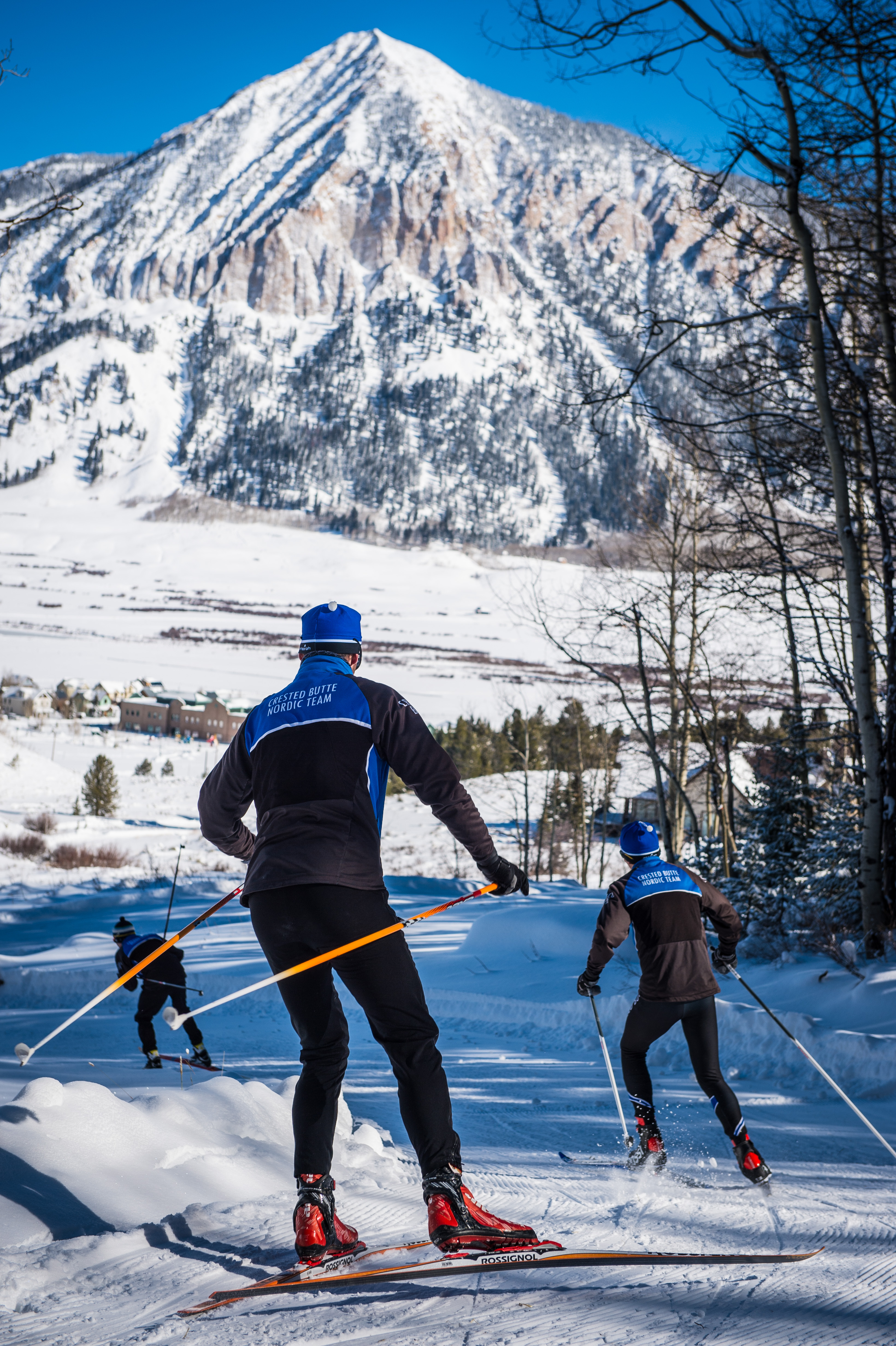
Sun stretches over the hills during a cross-country lesson at Crested Butte in Colorado. The nordic center there is hosting its annual Crested Butte Nordic Thanksgiving Camp from Thursday to Sunday. (Photo: Xavier Fane)
We’ve been hearing about West Yellowstone since, well, the U.S. Ski Team officially started its annual Fall Camp there in 1978. But surely, Montana’s southern tip can’t be the only place to get on snow this time of year…
That’s why we provided a guide to Thanksgiving on-snow camp venues in the U.S. and Canada (we realize this week isn’t Thanksgiving in Canada, but we’re sticking to areas that offer skiing around this week in late November for all intents and purposes). If we’re missing an early season camp, we apologize — it’s a big continent — but let us know so we can feature that camp in next year’s guide.
***
What:Yellowstone Ski Festival
Where: West Yellowstone, Montana
Each year, the Rendezvous Ski Trails see hundreds of skiers each day during the Yellowstone Ski Festival on Thanksgiving week in West Yellowstone, Mont.
When: Tuesday, Nov. 24, to Saturday, Nov. 28, 2015
How many years running? 20+
Target audience: Masters and beginners (clinics available for both), as well as elite racers
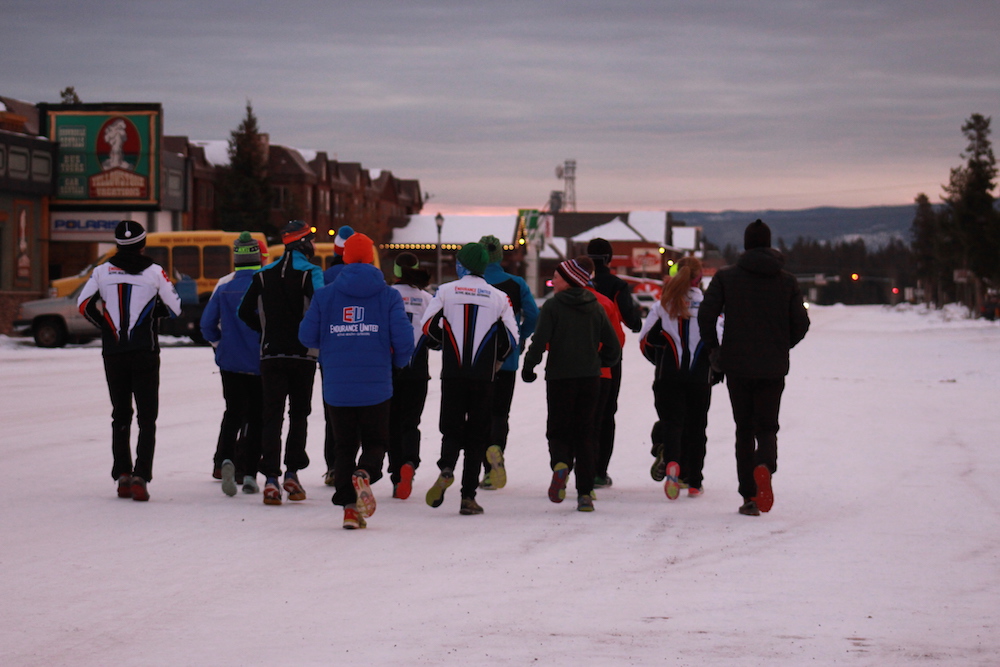
Endurance United team members get ready for a day of skiing during a morning run in West Yellowstone, Mont., at this year’s 2015 Yellowstone Ski Festival. (Photo: Gabby Naranja)
Anticipated participation: An estimated 4,000-5,000 skiers throughout the week. “It varies from year to year depending on the snow conditions and the snow level,” West Yellowstone Ski Education Foundation Program Director Moira Dow explained. “Because we’ve gotten snow early this year and good snow, we have been able to get the word out. Like right now the trails are packed. We will probably have a lot of people coming for longer periods of time.”
Advance reservation required? Racers must preregister. Trails are open to public; trail pass required.
Grooming report: Essentially everything is open. “It’s full-coverage skiing on good skis with full tracks,” Dow said. More details | Webcam
Green Mountain Valley School nordic skiers meet up during a ski on the Rendezvous Ski Trails this week in West Yellowstone, Mont. (Photo: Gabby Naranja)
What makes this camp unique? “The number of trails and the quality of snow that we have. We’re one of the few places in the country that does have consistent, early, good snow. In addition to that, we have a lot of industry participation. And we have great evening programs for people. We have not just skiing, we have the full package for everybody and anyone, from the beginner skier who wants to get out on the snow for the first time, to the SuperTour elite athlete who can train at high altitude, and good snow in the early part of the season.”
Special events:
U.S. Ski Team Development Coach Bryan Fish and the former vice president of Fischer Skis U.S. nordic division, Peter Ashley, will be featured speakers
Freebies: “Everything at the indoor expo at night is free. Anybody who has a trail pass can get into the outdoor demo area for free. In addition, on Wednesday and Friday night we have ‘après-ski’… [with] complimentary adult beverages and junior beverages, sledding, some music, and fun stuff like that. Just a little bit more of a party atmosphere after the sun goes down and before the expo opens.”
***
What:Crested Butte Nordic Thanksgiving Camp
Where: Crested Butte, Colorado
The Crested Butte Nordic Thanksgiving Camp, now in its 14th year, is a fundraiser for Crested Butte Nordic, a nonprofit dedicated to getting people on the local trails. (Photo: Xavier Fane)
Skiing at Crested Butte Nordic in Colorado. (Photo: Xavier Fane)
How many years running? 14 as an official organized camp: “Crested Butte has really good and reliable early season snow so the Nordic Center decided we should try to get folks to come here and get some instruction from our great instructors,” said Drew Holbrook, marketing director for Crested Butte Nordic and the Grand Traverse ski race. “We also have a wonderful venue for early season nordic skiing and we’ve been fortunate enough to have been on-snow every year.”
Target audience: All ages and abilities, “from never-evers to master blasters looking to improve their technique,” Holbrook said. “If parents are skiing along with children, kids ski free. All kids 17 and younger get free passes and rentals. And, actually, all season long we do that — people 17 and younger ski free. At the Thanksgiving Camp we also do free kids clinics. So if a parent is taking a clinic, then they can have their kids taken care of all day.
Anticipated participation: Several hundred skiers on the trails throughout the long weekend. For clinics, projecting 75-80 participants.
Advance reservation required? Pre-registration recommended for clinics.Nordic Center trail passes available any time. Skiing at Lily Lake, a 10 k early season trail system four miles up Kebler Pass Road, is free.
Trail pass rates: $18/day, skiers 17 & younger ski free. $130 for a 10-punch transferable pass.
Grooming report: With about a foot of snow at the venue in town, “it’s looking like in-town skiing for the camp,” Holbrook said. As of Tuesday, Ruthie’s Run (5-kilometer loop at the nordic center and up on the bench) and Lily Lake (six miles west of town up on the pass) were groomed. “We’ll have over 10 kilometers of high quality skiing available,” Holbrook added. More details
Here’s a deal: Kids 17 and under enjoy free rentals, passes and clinics at the Crested Butte Nordic Thanksgiving Camp. (Photo: Xavier Fane)
What makes this camp unique? “As a non-profit, our mission is to get people out on the trails skiing. We are not making a ton of money off it,” Holbrook said.
“We just want people to come here and use our trails and make it affordable. A lot of people come back year after year and work with the same instructor. They get to know each other and get to know the other people that come into camp. So it’s definitely got this small feel to it, it’s kind of personalized.”
Special events:
For the first time, a race (on Sunday): 5/10 k freestyle + kids’ race with new homologated course on Ruthie’s Run. “It’s engineered, seeded, and mowed,” Holbrook said. “Due to the engineering, we are able to groom the race course with a lot less snow than we used to need. That enables us to count on having this race and count on have a good race venue close to town.”
Winter Kick-Off Party (Saturday night): Fundraiser for Crested Butte Nordic, tickets $30/adult,$10/children.
Wax clinic, nutritional talk and Nov. 25 is opening day at Crested Butte Mountain Resort, with free skiing all day.
***
What: CXC Thanksgiving Nordic Festival
Where: Telemark Trails in Cable, Wisconsin
After three nights of blowing snow, CXC Thanksgiving Nordic Festival organizers were ready to groom the Telemark Trails in Cable, Wis., on Nov. 22. (Photo: Facebook)
When: Wednesday, Nov. 25, to Sunday, Nov. 29, 2015
How many years running? First year. “Our goal for the festival is to show the template to other communities, what it takes to make snow … to provide a business and operations template to other places around the Midwest so they can do these festivals in late November and then have a reliable loop for the winter,” CXC Executive and Athletic Director Yuriy Gusev explained.
A 1 k loop was made and groomed for the first-annual CXC Thanksgiving Nordic Festival in Cable, Wis. (Photo: Facebook)
Target audience: All skiers; open to the public
Anticipated participation: Based on the camp’s Facebook page, at least 75 plan on attending, and Gusev estimated that paired with a local turnout would amount to 200-300 skiers. “We don’t want to make it a big deal … just to show the community this is an opportunity to ski,” he said.
Advance reservation required? Yes, for clinics (instructed by Gusev on Friday, Saturday and Sunday).Trails open to public.
Trail pass rates: $50 season passes, good for the festival and the whole winter. Trail passes can be purchased at www.cxcskiing.org/skipass, Telemark condominium office and Cable Area Chamber of Commerce Office.
Grooming report: Skiing on a 1 k loop at Telemark started on Sunday: “Usually there’s no natural snow this time of year, so our plan was to make snow,” Gusev said. “It just didn’t get cold like it normally does.” Once temperatures finally cooled late last week, the snowmaking crew was able to work on blowing and laying out a 1-kilometer manmade loop, some of which will be used for the 2016 Junior Nationals sprint course. More details
What makes this camp unique? “Anytime you have early snow, you stand out. I think it can be a key component to have this … to provide a reliable base for the rest of the winter, especially for youth programs where the snow is critical and also for entry-level participants. We’ve seen already with the couple snowmaking areas in the Twin Cities how much impact these have on the ski industry and local ski shops. They’ve been able to actually do relatively well in snowless winters.”
Special events: Fischer Demo
***
What: Snow Mountain Ranch Nordic Ski Camp
Where: Granby, Colorado
A November day at Snow Mountain Ranch, which opened for skiing earlier this month and remains open with 50 k groomed with a set track. (Courtesy photo)
How many years running? First time in recent years
Target audience: Beginner skiers to seasoned racers
Advance reservation required? Yes.
November skiing at Snow Mountain Ranch in Granby, Colo. For the first time this year, a five-day camp was held for masters. It ended on Tuesday. (Courtesy photo)
Participation: Capped at 24. “Smaller is better from both a coaching and athlete viewpoint,” Snow Mountain Ranch’s Nordic Center Director Bill Pierce explained. In its first year with little marketing, the five-day camp attracted four athletes.
“It was really small, but it was great,” Pierce said. “It’s so early that people don’t expect there to be snow [when] it’s 60 degrees in Boulder. … We just want to put another option out there; a lot of skiers want to be on snow in early November and Denver is really easy to get to.”
Trail pass rates: $350 for the camp, includes all coaching sessions and day passes
Grooming report: 50 kilometers groomed and track-set. Snow Mountain Ranch started grooming Nov. 4 and opened for skiing on the 14th. According to Pierce, they have anywhere from a 4-5 inch base to 10 inches in some places. It was snowing there on Thanksgiving, with four inches of snow expected to fall today. More info | Webcam
What makes this camp unique? “This is the earliest masters camp in North America on-snow as a pre-Thanksgiving camp,” Pierce explained.
The idea was to run a masters camp similar to an elite or junior camp, with two-a-day sessions combining workouts and technique — all at 9,000 feet above sea level. The focus was on transitioning from dryland training to snow skiing, with an emphasis on technique and slow volume at high altitude.
With a small but mighty coaching staff (two of which are USSA certified), Pierce said the ability to work with athletes helps them set, understand and achieve skiing goals.
“We all speak the same language,” he said of the coaches. “You can go to a lot of places, and a lot of places you feel like you’re getting a lesson. There’s a difference between a lesson and coaching.”
“[This camp is] just another opportunity in the country to go skiing all day,” he added.
When: 2 1/2-day weekend and 5-day midweek camps (schedule):
A gaggle of skiers at a junior camp head out on the trails at the Sovereign Lake Nordic Centre on Nov. 14 in Vernon, British Columbia. Roughly 800 skiers took to the trails that day. Each winter, Sovereign Lake hosts a series of weekend and weekday camps, called SuperCamp. (Photo: Gerry Furseth)
Camp #1:Nov. 20-22
Camp #2: Nov. 23-27
Camp #3: Nov. 27-29 (with Pro-camp option)
Camp #4: Nov. 30-Dec. 4
Camp #5: Dec. 4-6
Camp #6: Jan. 15-17
Camp #7: Feb. 19-21
How many years running? 26 (The SuperCamp program started in 1989)
Target audience: All ages and skill levels from beginner to elite racer.
Advance reservation required? Yes.
Anticipated participation: Typically around 225 to 250 participants, hoping for 260 this year.
“In its heyday in the early ’90s [SuperCamp attracted] upwards of 400,” Sovereign Lake Nordic Center General Manager Troy Hudson explained. “We want to get back to those numbers by offering some great new initiatives like focussed Masters Pro camps for racers and more options such as the biathlon camps which are proving to be very popular.”
Trail pass rates: Dual area trail passes included in camp fee, ranges from $339 to $925 Canadian dollars per person (depending on length of camp, and half or full days). Pricing
VR40 blue-wax skiing on Nov. 16 at the Sovereign Lake Nordic Centre in Vernon, B.C. (Photo: Ryan Olson)
Grooming report: Sovereign Lake has 40 kilometers groomed and Silver Star has an additional 40 k open. More details (and webcam)
What makes this camp unique? “I’m often asked, what is Supercamp?” SuperCamp coordinator Shane Landreville wrote in an e-newsletter. “That’s a great question and because Supercamp offers so much more than a traditional ski lesson, it’s a difficult concept to explain and it’s difficult for people to wrap their heads around it. Quite simply, Supercamp is a Nordic experience.”
SuperCamp attracts top-level coaches, as many come from across Canada to get early snow before they start their season at home. Each camp includes lectures and lessons on waxing, how to build a training plan, and sports nutrition, as well as access to the national altitude training centre gym, and best of all, 105 kilometers of trails between Sovereign Lake and Silver Star — many of which are used for World Cup, NorAm, and World Master events.
With half- and full-day options, the camp is at an altitude of 1,600 metres (5,250 feet). Many of the accommodation options are on the nordic trails. You can ski or walk to restaurants and bars in the evening.
Biathlon camps are either five days long or a single afternoon, and a new Pro camp is more racing focused.
The Silver Star alpine area opened earlier this week, as did the separate Fat Bike trail system.
Special events:
Keynote speakers, a sports nutrition lecture, and wax clinics
Stretching classes, body pre-activation sessions, and for 5-day campers, two 30-minute massages. “Skiing for a solid 2 days or 5 days is tough, it really is, so taking care of your bodies is important,” Landreville wrote. “For our 5 day camps, you can also take part in the excursion to the spa and pools at Sparkling Hill Resort.”
***
Also: Canada’s Early Season XC Venues
What: Frozen Thunder
Where: Canmore, Alberta
Fresh snow at the Canmore Nordic Centre: A n Olympic Legacy Venue now a regular host of Canadian based World Cups. (Photo: Pavlina Sudrich)
How much snow: Boreal Glide, a 2.5 k manmade loop, is open for both freestyle and classic. Course map | Weather
Good to know:
According to according to Julie Moffet, the regional operations coordinator at Forêt Montmorency, la Forêt is the only place in North America with cross-country skiing as early as Oct. 30 all the way to Easter in April.
No races or special events are scheduled, simply skiing and snowshoeing for all.
To reserve a room on the trails (with two single beds and a shared bathroom), with access to a cafeteria, two lounges with a fireplace, game room, auditorium, and wax room, visit http://www.foretmontmorency.ca/en/lodging/
For this week’s Wednesday Workout, FasterSkier contributor Hailey Swirbul of the Aspen Valley Ski Club in Aspen, Colo., takes us though a workout she and her team recently did on the snow-covered Rendezvous Ski Trails at the annual season-opening ski festival in West Yellowstone, Mont. (Trouble viewing video? Click here.)
***
The Aspen Valley Ski Club during a hard L3/L4 skate intensity workout in West Yellowstone, Mont. (Photo: Hailey Swirbul)
Every year in West Yellowstone, Mont., thousands of nordic skiers of all abilities flock to the trails for a weeklong training and racing opportunity over Thanksgiving week.
Aspen Valley Ski Club (AVSC) is one team of many here to take advantage of the pristine snow conditions and unbelieveable nordic skiing community during the week.
This festival provides a perfect location for AVSC’s athletes to move fast, work hard and prep for upcoming races this week and this season.
What better way to spend a morning than with a Level 3/ Level 4 combination skate-intensity workout?
AVSC’s West Wednesday Workout
Warmup: Recruit teammates and friends for this tough workout, and skate ski easy for 25 minutes. Pick a flat section of trail to do three build-up speeds, lasting about 10 seconds. Start slowly and work up to a full sprint.
Level 3: After warmup speeds, begin your first 8-minute Level 3 or threshold interval, about 85 percent of max, on gradual rolling terrain to focus on V2 and transitions. Take 2 minutes off after that interval and begin a second 8-minute effort.
Level 4: Now it’s go time. On similar terrain, ski three 4-minute L4 intervals with equal recovery between. On crowded trails like West Yellowstone’s, practice efficient passing!
Cool down: Now that the hard work is over, ski easy for 20 to 30 more minutes. A cool down is a great time to practice maintaining technique with tired muscles or mass start Chinese downhills, and is also a perfect opportunity to catch up with fellow skiers from across the country if you are lucky enough to be surrounded by thousands of them at the Yellowstone Ski Festival!
WEST YELLOWSTONE, Mont.–The list of athletes and clubs is seemingly endless. Skiers from from the elite to the novice cruise the Rendezvous Ski Trails at the 2015 Yellowstone Ski Festival. Though the range of abilities varies greatly from athlete to athlete, one point of contact connects all festival skiers together: Thor Godar.
“I am working for the entire week and I am the pass checker at the main entrance point,” said Godar, the one-way stop for all nordic skiers attending the event. “I’ve been doing this for about ten years; this is my 22nd fall festival. … I’m planning on having my ashes scattered somewhere on the trails. I just haven’t decided [which trail] yet.”
Thor Godar (l), Yellowstone Ski Festival trail-pass checker and West Yellowstone native, chats with Bridger Ski Foundation skier Jennie Bender on Tuesday at the trailhead of the Rendezvous Ski Trails.
That’s dedication in it’s truest form. While most individuals attending the ski festival hit the trails in the morning, head out around 11 for lunch, and return again for the late afternoon, Godar remains at the trailhead from when athletes first arrive until their final departure, for the whole week.
“I have over boots, over gortex hiking boots. I have fleece lined jeans, and I believe I have three coats,” he said after examining his layers of protection for the long hours standing outside. “No matter what I wear on my hands my fingers get cold because I have Raynaud’s syndrome,” he added.
Eight hours in the cold is plenty long, regardless. However, with close to 4,000 people estimated to attend the festival, Godar’s time does not go unwarranted.
“Last year our best estimate was about 4,000 [skiers]. But it’s hard to know how to count them because most people are skiing twice a day and some of them have been here for three weeks already,” he reflected, “I’m going to say 4,000…But I’m the only one who looks them all in the eye.”
Montana State University nordic team captains Cambria McDermott and Lina Hultin in the stadium at the Rendezvous Ski Trails during the Yellowstone Ski Festival in late November.
While the occasional forgotten trail pass may induce Godar’s moralizing look, for the most part, he feels trails users appreciate his service.
“Some of them are very grateful that I’m here every year and they know me. Some of them probably hate my guts because I ask to see their passes — most of the high-end people are in a desperate rush to get to the trail,” he said. “So I would say that it varies. But, I’m kinda famous.”
Despite his claim to fame, Godar deems his return to the festival gates is all part of the atmosphere.
“It’s my favorite week of the year. It’s like a family reunion of a large highly dysfunctional family,” he said. “Everybody knows everybody else and people are hugging all over the trails, some of them propose marriage on the trails and, I love it.
“I’m a highly paid professional, but I might even do it for nothing,” he added.
Prepaid trail passes are now available for the Yellowstone Ski Festival. Passes are valid from November 1-30. Passes can be purchased through the mail or online.
Discounted passes for the month of November are available now. Regularly $55 each, these passes can be purchased by college, high school and club coaches for $45 each. Passes must be paid for by check and postmarked no later than October 31, 2015 to qualify for the special rate.
To qualify for this incentive, coaches must send the attached form containing the following information:
1) A complete list of athletes attending the Yellowstone Ski Festival
2) The exact name of the lodging establishment you will be staying in while in West Yellowstone
3) Your arrival date
4) Contact info including email and phone number
5) One check for all your ski passes, postmarked no later than October 31, 2015 to:
The West Yellowstone Chamber of Commerce
ATTN: Yellowstone Ski Festival Coordinator
PO Box 458
West Yellowstone, MT 59758
Trail passes will be delivered to the front desk of your hotel prior to your arrival. Other options for pick-up are listed on the form. Please read carefully. There will be one package of passes delivered and coaches are responsible for distributing the passes to their teams. Please let your team members know that they will have to get their pass directly from you. Prepaid passes for the Rendezvous Ski Trails are non-refundable.
For individual skiers:
Discounted passes for the month of November are available now. Regularly $55 each, these passes can be purchased by skiers and families for $45 each. Passes must be paid for by check and postmarked no later than October 31, 2015 to qualify for this special rate.
To qualify for this incentive, skiers must send the following:
1) A complete list of skiers in your group attending the Yellowstone Ski Festival
2) One check for their ski passes postmarked no later than October 31, 2015 to:
The West Yellowstone Chamber of Commerce
ATTN: Yellowstone Ski Festival Coordinator
PO Box 458
West Yellowstone, MT 59758
For groups of 5 or more, trail passes will be delivered to your place of lodging, if within the town of West Yellowstone. Passes will be at the lodging facility no later than Sunday, November 22.
All other passes will be available for pick up at one of the designated locations listed on the form. If you will be arriving before these times, please email info@SkiRunBikeMT.com to make arrangements.
Prepaid passes for the Rendezvous Ski Trails are non-refundable.
A Thank You from NNF Executive Director, Dave Knoop
This year the Drive for 25 raised over $215k for Cross Country and Nordic Combined development programs. Every year our Nordic community says YES WE CAN and collectively we come together for our next generation of aspiring athletes. Most importantly the funding is working in terms of getting more athletes more opportunities to succeed at the various key development levels in our sport.
Looking back at some highlights of this year’s D25 and please forgive me if I overlooked something or someone as there are so many people to recognize and thank:
1. Having our generous key donors throw down large challenge matches that our community responds to with enthusiam. Without our key large donors, getting the ball rolling early on would be difficult to build momentum.
2. Watching Athlete and Coach Ambassador pages fill up and seeing the athletes make that ask. It appears our nordic athletes know how to get after fund raising just as well as competing on skis. Special thanks to Katharine Ogden (XC) and Ben Berend (NC) for leading the way this year and programs like Stratton Mountain School and Wasatch Junior Nordic Club show us how it’s done.
3. Seeing the leaders give back to our sport like athletes on the U.S. Ski Team become NNF fund raising Ambassadors. They are no longer funded by the NNF yet know how to give back to support the next generation of athletes. How ’bout the old timers like Marty Hall, John Caldwell, and Craig Ward to name a few, also making their contributions.
4. Our Nordic news media was huge in getting the word out and helping support this cause, i.e. SkiTrax, Skinnyski.com, SkiPost and Fasterskier.
5. Lastly Map Mondays, Perhaps the map says it all, so much fun to watch wow! Our traditionally strong states like Vermont, Alaska and Colorado were joined by Minnesota, Wisconsin, New York California, Washington and yes……. UTAH!
In the near future the NNF Board of Directors will allocate funding to our key Pillar Projects and we will report back to you as to what the NNF funded allocations are, where your money will directly support skiing.
Over the next few week’s we’ll be reaching out to spread the word on skiing development. Share the NNF website and email with anyone that loves skiing. USST Coach, Chris Grover, highlighted why during the Drive for 25.
Plymouth, MN – BeFAST Sportgear, the maker of high performance sport apparel, is proud to announce their fourth year of being present at the West Yellowstone Ski Festival. The festival runs from November 25th to November 29th in West Yellowstone, Montana.
In addition to having a booth at the festival’s expo, BeFAST has custom designed a special souvenir available only at the FreeHeel and Wheel Coffee Shop.
Founded in the spring of 2011, BeFAST Sportgear offers high quality, affordable, athletic apparel geared toward performance and attitude. To find more information, visit www.befastsportgear.com.
YELLOWSTONE SKI FESTIVAL CLINICS – Registration Open
November 25 – 29, 2014
Kick off your ski season at Yellowstone Ski Festival XC Clinics. Great ski conditions, the Rendezvous trail system and the West Yellowstone ski culture make Thanksgiving week in West Yellowstone the best place in America to transition from dry-land training to on-snow skiing.
Train with and learn from an amazing team of coaches (check them out here)
Develop and solidify good ski technique
Learn how to train more effectively
Get excellent on-snow base training to start the season
Whether you are a focused master skier preparing for the race season or a beginner skier wanting to be more efficient on skis, West Yellowstone XC ski clinics is the place for you to be Thanksgiving week. Check out the full list of clinics and register at: http://www.yellowstoneskifestival.com/clinic-options-cost/
The new 5-day race focused training clinic is sure to be a popular this year. World Cup skier Matt Liebsch, Olympian Erich Wilbrecht and former US Ski Team coach Miles Minson are just a few of the top tier coaches working with the clinics this year. Reserve a spot today.
WEST YELLOWSTONE, Mont. — Some of the most competitive skiers in the U.S. SuperTour circuit give thanks and express appreciation for friends and family before, during and after their Thanksgiving Day ski sessions. The first SuperTour of the season starts Friday with the 1.3-kilometer skate sprint at the Rendezvous Ski Trails in West Yellowstone. On Saturday, hundreds of skiers will take part in the 10/15 k distance skate races.
“Super thankful for my family, friends, and my wife Sarah (we haven’t been able to spend a Thanksgiving together yet),” said Sylvan Ellefson of Ski & Snowboard Club Vail/Team HomeGrown (whose video interview was inadvertently lost).
“Thankful for blue skis, fast ski tracks, and great November mustaches!” Ellefson added. “I’m really excited to get this ski season going and I know everyone else is pretty antsy as well!”
Visually impaired skier Nancy Stevens (l) and her guide Tony Neaves race in the 1998 Nagano Paralympics. They are reunited in West Yellowstone, Mont., this week.
Note: The following has been corrected to reflect that Caitlin Gregg approached Nancy Stevens this week.
WEST YELLOWSTONE, Mont. — When Nancy Stevens moved to Summit County, Colo., 21 years ago, her guide dog kept bringing her to the door of the same shop. Blind since birth, Stevens, 52, finally went inside and discovered that the door entered a bike-store owned by Tony Neaves. Her dog knew something. Nancy needed some work done on her tandem bike, and she needed a strong able-bodied person to ride it with her. It turned out the Neaves could do both.
Stevens and Neaves at one of their many races leading up to Nagano. (Courtesy photo)
“Tony was great because he would call me and say ‘Hey, I’m free this evening do you want to go for a bike ride?’ ” Stevens said. “It was so nice because I didn’t have to coordinate it.”
Thus began a relationship that would continue into 1993 when Stevens came to West Yellowstone with Neaves as her guide to try out for the Lillehammer Paralympic Games. “We didn’t know what we were doing yet, and we didn’t quite make it that year,” Neaves said.
For the next four years, the duo raced in the U.S., Sweden and Norway, and by 1998 they had built their racing communication skills to the point where the duo went to Lake Placid where they won gold to qualify for the Winter Paralympics in Nagano, Japan.
They describe the moment as the race of a lifetime, where 4,000 people crowded around a 5-kilometer loop yelling Nancy’s name. It was so loud, she had trouble hearing Neaves’ commands on their electronic communications system.
Fast-forward to May 2013, when several U.S. Paralympics Biathlon coaches approached Stevens. Fifteen years after their last race, Neaves received an “out-of-the-blue” call from Stevens, announcing that she was coming out of “retirement” to compete in biathlon in West Yellowstone. By the way, would Tony be her guide? Neaves, who now lives in Montana’s Bitterroot Valley and operates the Como Ski Trails, three miles west of Darby, agreed, and the racers competed in the adaptive biathlon sprint in West Yellowstone on Wednesday.
The only woman in her class, Stevens won the 6 k race in 36:14 with 4-for-10 shooting. Disappointed with her first round, in which she missed four out of five, Stevens was pleased with hit three targets on the second stage. Overall, she was glad to be back.
The reunited Paralympic pair, Nancy Stevens and Tony Neaves at the finish line of the adaptive biathlon race at the 2013 West Yellowstone Festival on Wednesday.
On her first day in West this week, Stevens and Neaves were in the warming hut when 2010 Olympian Caitlin Gregg walked in. Another reunion was about to happen.
“Hey, weren’t you at Lake Placid in 1998 and aren’t you Nancy Stevens?” asked Gregg, who is racing in West Yellowstone this week. Gregg reminded Stevens that they had met in Lake Placid when Gregg (formerly Compton) was a 16 -year-old junior. Gregg said she would never forget Stevens, the Paralympian, taking the time talk to her give her encouragement to go for her Olympic dream.
“Really, that makes me feel so good that I could make that difference to her,” Stevens said.
Stevens hopes to compete at U.S. nationals in Soldier Hollow in January for a spot on the U.S. Paralympics team, but since she and Neaves live so far apart, she is having difficulty finding strong skiers willing to guide her in training.
“The key for blind skiers is finding a guide,” she said. “I can always find recreational skiers to ski with, but finding a guide to train with is the only thing holding me back right now.”
Interested skiers are encouraged to contact their local ski areas or adaptive sports programs to volunteer to be a guide for skiing or other outdoor sports.
A goal achieved: Paralympians Neaves and Stevens (second row, fourth and fifth from right). (Courtesy photo)A perk of being Paralympians, Nancy Stevens and Tony Neaves meet then-President Bill Clinton. (Courtesy photo)
A view of the Gallatin Range north of the Rendezvous Ski Trails in West Yellowstone, Mont. Hundreds of skiers took trails on Tuesday during the annual Yellowstone Ski Festival.
WEST YELLOWSTONE, Mont. – West Yellowstone is one of those places steeped in history, blessed with snow, and encouraging of all-comers. Come to think of it, there’s not many places in the world like it, which is why U.S. Ski Team coaches like Marty Hall deemed it a perfect fit for their annual Fall Camp starting in 1978.
On Tuesday night, Thor Godar, self-proclaimed keeper of the gates at the Rendezvous trailhead and a historian at the Yellowstone Historic Center, spoke to festival-goers about the history of skiing in West Yellowstone. Several parts of his presentation are woven into the following facts about West Yellowstone – by the numbers.
-66: Lowest recorded temperature (Fahrenheit) in West Yellowstone, on Feb. 9, 1933.
-53: A pretty darn cold low (Fahrenheit) recorded three years ago.
-16: Temperature (F) last Friday.
3: Inches of snow Yellowstone Ski Festival organizers had to work with as a base last November on the South Plateau – one of the lowest on record.
8: The length of the cross-country skis (in feet) locals used to trek around town (and miles away for food and supplies) more than a century ago.
10: Inches of snow in town on Tuesday, Nov. 26, with about 3 ½ feet at higher elevations.
15-16: Inches of new snow at higher elevations on the Rendezvous Ski Trails, thanks to a storm last week.
Windy Ridge Loop, a regional favorite at the Rendezvous Ski Trails, is open, which is somewhat rare for November.
25: Percent chance that Windy Ridge Loop is open during the Yellowstone Ski Festival. It opened on Monday.
32: The previous typical high temperature during winter in West Yellowstone. Back in the day, it rarely got above freezing, Godar explained. Occasionally, warm “Chinook” winds push daytime temps into the 40s, according to National Park Travel.
35: Years since the first Fall Camp, which started in 1978 with then-U.S. Ski Team coach Marty Hall and skiers like Bill Koch, Dan Simoneau and Tim Caldwell. Koch didn’t come too many years after because of exercise-induced asthma, which worsened with altitude.
35-plus: Kilometers open at the Rendezvous Ski Trails – basically all of it.
100: Estimated population of West Yellowstone when it was founded in 1908. By 1910, it was up to 140.
171: Inches of snow fall annually, on average, in West Yellowstone. Nearby ski resorts like Grand Targhee in Alta, Wyo., receive more (around 500 inches per year), but West usually keeps most of theirs. The secret? “Ferociously low temperatures,” Godar said.
400-500: Estimated skiers on the Rendezvous Ski Trails on Tuesday, four days before the season-opening U.S. SuperTour race there (with a freestyle sprint on Friday and 10/15 k freestyle race on Saturday).
600-650: Competitive racers at the Yellowstone Ski Festival last year. This year, participation is expected to reach new highs.
1271: Population of West Yellowstone in 2010.
1807: Part of the Lewis and Clark Expedition, John Colter, becomes the first-known white man to explore Yellowstone National Park (before it was officially established). Native Americans had Colter beat by about 13,000 years, and trappers, including French Canadians, also set foot inside the park before him.
1862: Skiers start to explore the park. Uncle Billy Hofer was perhaps the first to circumnavigate the park on skis in 1979. He later became a scout for the U.S. Army when it came to Yellowstone to discourage poachers.
1872: Yellowstone National Park established, spanning 2,219,789 acres across Wyoming, Montana, and Idaho. Approximately 96 percent of the park is in Wyoming, 3 percent in Montana, and 1 percent in Idaho.
1887: Park opened to winter travel, thanks to Lieutenant Schwatka, who didn’t exactly succeed in his expedition to do so. He and his scouts were severely overdressed and packed way too many supplies. Swatka got sick before entering the park and called it quits at a nearby hotel, but his crew pressed on – including Frank Haines, who dubbed himself the official park photographer.
Bison in winter (circa 2006) in West Yellowstone, Mont. Before 1894, their population was down to 25. (Photo: Wikimedia Commons)
1886: Congress decides to stop poaching (elk, bison, etc.) in the park and stations the U.S. Army there. With troops from Arizona, most of the men weren’t too keen on winter, and enforcement lacked as a result. Scouts from the area ended up showing them the ropes and together they build snow cabins around the park. These men, stationed there by the thousands, became the forerunners of the National Park Service. They skied 15 to 20 miles per day and were in darn good shape, Godar said.
1894: Since there was no law against poaching, the bison population went as low as 25 in West Yellowstone, no thanks to a notorious poacher named Howell. The army eventually caught and imprisoned him, but couldn’t convict Howell of any criminal wrongdoing. That prompted Congress to pass the Lacey Act of 1894 to end poaching in West Yellowstone.
1908: The town of West Yellowstone founded, thanks to the Union Pacific Railroad’s extension of the Oregon Short Line to the west gate of the park. According to Godar, the town started as a tourist trap (with the park as the main attraction) and still is.
Lewis & Clark Exploration’s Yellowstone “Wonderland 1904” flier. (Photo: NPS.gov)
Without any roads, the railroad was the only means of mechanical transportation in and out of West Yellowstone, and was closed November through March (many transporting tourists June-September). That left West in complete isolation during the winter, and skiing was the best way to get around. Skiers first came to the area to deliver products and goods, including mail and food, like they did in nearby mining towns, including Cooke City.
Knowing the railroad was coming, Yellowstone park employee and a local bartender Sam Eagle bought a piece of commercial space next to the railroad’s right of way. Today it remains in the family trust as Eagle’s Store, near the Freeheel & Wheel ski and bike shop – a local favorite (est. in 1996).
Eagle and his wife, Ida, had 10 kids: nine boys, the youngest of which went on to ski for Montana State College’s first-sanctioned team: Walter Eagle. Wally became the first paid ski coach at Gallatin County High School, instructed at the former Lionhead alpine area near West Yellowstone, and was on the board for Bridger Bowl in Bozeman, Mont., according to The Bozeman Daily Chronicle. Part of the U.S. Freestyle Moguls Team, Olympian Heather McPhie is a great-granddaughter of Sam and Ida Eagle.
1935: First plowed streets in West Yellowstone.
1941: With fears of World War II looming, the U.S. Army considers starting first ski division in Yellowstone. Trumpeter swans were nearing extinction at the time in nearby Island Park (the poachers again), and one Congressman exclaimed that they couldn’t bring the military to such a delicate region. Instead, they established a base in Colorado, which became the 10th Mountain Division.
1948: Lionhead, West Yellowstone’s first ski hill, established, but “wildly unsuccessful,” according to Godar. Despite plowed town roads, the dirt routes that led to West were too harrowing to drive in the winter.
1971: High-school ski teams start coming to West for preseason skiing, with camps that started as early as September on the South Plateau.
1978: U.S. Nordic Ski Team comes to town for the first of many Fall Camps, and the Rendezvous Ski Trails, founded by Neal and Grace Swanson, become a go-to destination.
1980: First Ski Rendezvous Race (50 k classic), which reached an all-time high with 900 skiers seven years ago. Next year’s Yellowstone Rendezvous Race (with distances of 2 k, 5 k, 10 k, 25 k classic, 25 k and 50 k) is set for March 8, 2014.
1984: Rendezvous groomer Doug Edgerton starts his own company, Yellowstone Track Systems, which distributes grooming equipment worldwide. Edgerton worked many high-profile events since, including several Olympics like the 2002 Winter Games in Salt Lake City, where he was chief of course preparation. “In my opinion, [he’s] the best groomer in the world,” Godar said.
2002: Many of the world’s best biathletes come to West Yellowstone to train for the Olympics. According to Godar, they racked up 18 medals that year.
3,000-3,500: Anticipated total participants in this year’s YSF, a near-record, up from around 2,000 last year, Godar said.
6,663: Elevation of West Yellowstone. The Rendezvous Ski Trails are about 6,800 feet above sea level (2,000 meters), and the South Plateau just outside the park is about 1,000 feet higher.
Make your first tracks of the year Trails in West Yellowstone, Montana for the Yellowstone Ski Festival, November 26-30th, 2013. Each year thousands of skiers, from Olympic athletes to first timers, descend on our small mountain town for a week-long celebration of cross-country skiing. Perfectly groomed corduroy on the Rendezvous Ski Trails, featuring 35 kilometers of trails, new warming cabin, and an updated skiers map. Full information and registration is available at www.yellowstoneskifestival.com.
The Yellowstone Ski Festival will again offer a diverse schedule of events, with ski clinics, races, on-snow gear demos, evening activities and the USSA SuperTour opener, beginning with the Freestyle Sprints on Friday, November 29. The 10/15 kilometer freestyle distance race will be held on Saturday. One to five day Nordic ski clinics with classic and skate specific options, as well as multi-day combination clinics, will be offered.
A half day adaptive ski clinic & a half day adaptive biathlon clinic with the U.S. Paralympics Nordic Coaching staff is also offered on Tuesday, November 26th, 2013. This clinics are free of charge and equipment will be provided. Pre-registration is required.
Adaptive Nordic Biathlon Clinic (9:00 – 11:00 AM) Meet at the Holiday Inn Adaptive Nordic skiers – come learn to shoot with U.S. Paralympic Biathlon Coaching staff with precision air rifles for standing & sitting classes, or via Audio electronic rifle for those visually impaired skiers. Learn to shoot, then challenge.
yourself to shoot with a heart rate to simulate Biathlon competition
Adaptive Cross Country Skiing Clinic (1:00 – 3:00 PM) Meet at the Holiday Inn: Adaptive Nordic skiers are encouraged to join U.S. Paralympic Nordic Coaching staff for cross country skiing instruction during the West Yellowstone Ski Festival in all three classes: sitting, standing, and visually impaired. Learn classic & freestyle skiing techniques, along with downhill and turning techniques. Some Sit-ski equipment can be made available with advance notice. Meet at the Holiday Inn.
The Rendezvous Ski Trail System, home to the Festival, features perfectly groomed The biathlon range will be featured with a “Try Biathlon Day” on Tuesday Nov. 26, 2013 and Biathlon Sprint held the following day Wednesday November 27, 2013.
The “On Snow Nordic Gear Demo” program allows skiers into the On-Snow Gear Demo area where they can test drive the latest and greatest in skis, boots, bindings, poles and wax. Look for Atomic, Fast Wax, Fischer, Madshus, Rossignol, Salomon, Swix and more. The On-Snow Demo Area will be open from 8:30am to 3:00pm Wednesday through Saturday.
Look for representatives just past the trailhead building at the corner of the In&Out Trail and Purple Haze. There will be a group of booths and tents set up here and all of the newest equipment will be on display. Any November trail pass to the Rendezvous Ski Trails includes access to the On-Snow Demo area.
Following a long day of skiing the expertly groomed trails, join your friends for the inaugural aprèsski events held at the On-Snow Demo area on Wednesday, Friday, and Saturday. Hot and cold beverages will be provided, as well as a bonfire to keep skiers warm and sledding for the kids.
The Yellowstone Ski Festival is also about families and helping kids learn to cross country ski in a safe, and fun, learning environment. Lone Mountain Ranch and the Yellowstone Ski Festival are partnering for two days of kids ski clinics. Clinics will be offered for two different age groups: grades K-2nd and grades 3-6th. Pre-registration is required.
There will be morning and afternoon sessions on Friday, November 29th, and Saturday, November 30th, 2013. Clinics are being scheduled so parents can also attend the adult clinics. The drop-off time for kids will be 15-30 minutes before the adult clinics begin.
West Yellowstone offers a full range of lodging options for the Festival from cabins to full service hotels. All properties are located within walking distance to the Rendezvous Ski Trails and a number offer wax rooms for their guests.
The Holiday Inn and Conference Center is the Yellowstone Ski Festival headquarters. It is also the headquarters for the Indoor Expo where you can visit with company representatives, fine tune your technique at a wax clinic, and enjoy the variety of presentations, lectures, and films.
Bring the whole family; there are lots of options for kids. The Grizzly and Wolf Discovery Center has scheduled daily activities and family-friendly evening presentations,including the Backcountry Film Festival, a Birds of Prey exhibit featuring live raptors, a hands-on lecture from the National Park Service, and a good, old-fashioned S’mores party. Let the Yellowstone Ski Festival become a new family Thanksgiving tradition.
Think snow(!) and make plans now to attend the 2013Yellowstone Ski Festival. For more information, clinic registration, or to find out about early trail pass discounts, visit www.yellowstoneskifestival.com.
Light snow is falling outside and the forecast is calling for more. The Rendezvous Ski Trails are covered and the South Plateau is looking good. A few more inches and the trails in town will be rolled, groomed, and ready for the Yellowstone Ski Festival. There are two weeks to go and almost all of them have a snowflake in the forecast.
With the 2011 Yellowstone Ski Festival in sight, the final details are wrapping up. It is not too late to register for a clinic. Consider a three or five day Nordic clinic to start the ski season off right. Or a one or two day to fit your holiday schedule. Take in an early season race. There are six different races at this year’s ski festival. Online registration is available now. Sign up by Thursday, November 17 to avoid late fees. Check out the schedule of events. Enjoy an array of wax clinics, movies, classes, and presentations. The schedule is updated constantly, so check back often. The Indoor Expo is packed with all things Nordic and free of charge. Visit with those in the know from Rossignol, Salomon, Fischer, Toko, Atomic, Fast Wax, Madshus, Swix, Solda, the National Nordic Foundation, National Guard Biathlon, Sun Valley Nordic Ski Club, Concept 2, Boulder Nordic Sport, SkiFast Ergometer, Cross Country Skier, Ski Trax, Master Skier, and the West Yellowstone Ski Education Foundation. Fill in your wish list at the On-Snow Demo- Your ski pass allows you full access to demo gear on the trails. Be sure to schedule some time so you can sample the latest and greatest from Alpina, Atomic, Fast Wax, Fischer, Madshus, Rossignol, Salomon, and Swix.
Join us for keynote speaker Conrad Anker, catch a fashion show, and win great prizes at the annual WYSEF Raffle, all at the Holiday Inn, Yellowstone Ski Festival’s event headquarters.
Enjoy your First Tracks in West Yellowstone. Whether First Tracks truly means the corduroy and you, or it is the first time on skis this season, or the first time on skis period; you are invited to take them at the Yellowstone Ski Festival. Think Snow and make plans now to attend the 2011 Yellowstone Ski Festival. For more information, visit www.yellowstoneskifestival.com and follow westyellxcski on Twitter, or friend Yellowstone Ski Fest on Facebook for up-to-minute news.