From the FasterSkier archive — posts syndicated from athletes’ and coaches’ own blogs between 2004 and 2012, kept online as published. Current coverage is at fasterskier.com.
YMCA of the Rockies is hiring a Nordic Center Supervisor at Snow Mountain Ranch in Granby, Colorado, a seasonal role leading the day-to-day operations of the ranch’s Nordic Center through the winter.
Snow Mountain Ranch sits on 5,100 acres of meadow, aspen and spruce forest in Grand County, about an hour and a half from Denver and near the western entrance to Rocky Mountain National Park. Its Nordic Center grooms more than 80 kilometers of trail and runs rentals, retail, lessons and Nordic programming for guests and groups, along with larger events across the season.
The supervisor works under the Nordic Director and takes charge of the center when the director is away.
Position Overview
The Nordic Center Supervisor runs daily operations of the Nordic retail and rental center and trains, schedules and supervises the center’s staff and instructors. The role coordinates ski lessons, Nordic programming and guest group activities, works with Bryan Mountain Ski Patrol on safety and emergency response, keeps inventory in order, and helps prepare for the bigger Nordic events on the calendar.
The Details
Seasonal position based at Snow Mountain Ranch, Granby, Colorado
$19 to $21 per hour
Reports to the Nordic Director
Weekend and holiday availability required during the winter season
PSIA Level 1 training, waxing knowledge and First Aid, CPR and AED certification can be provided if needed
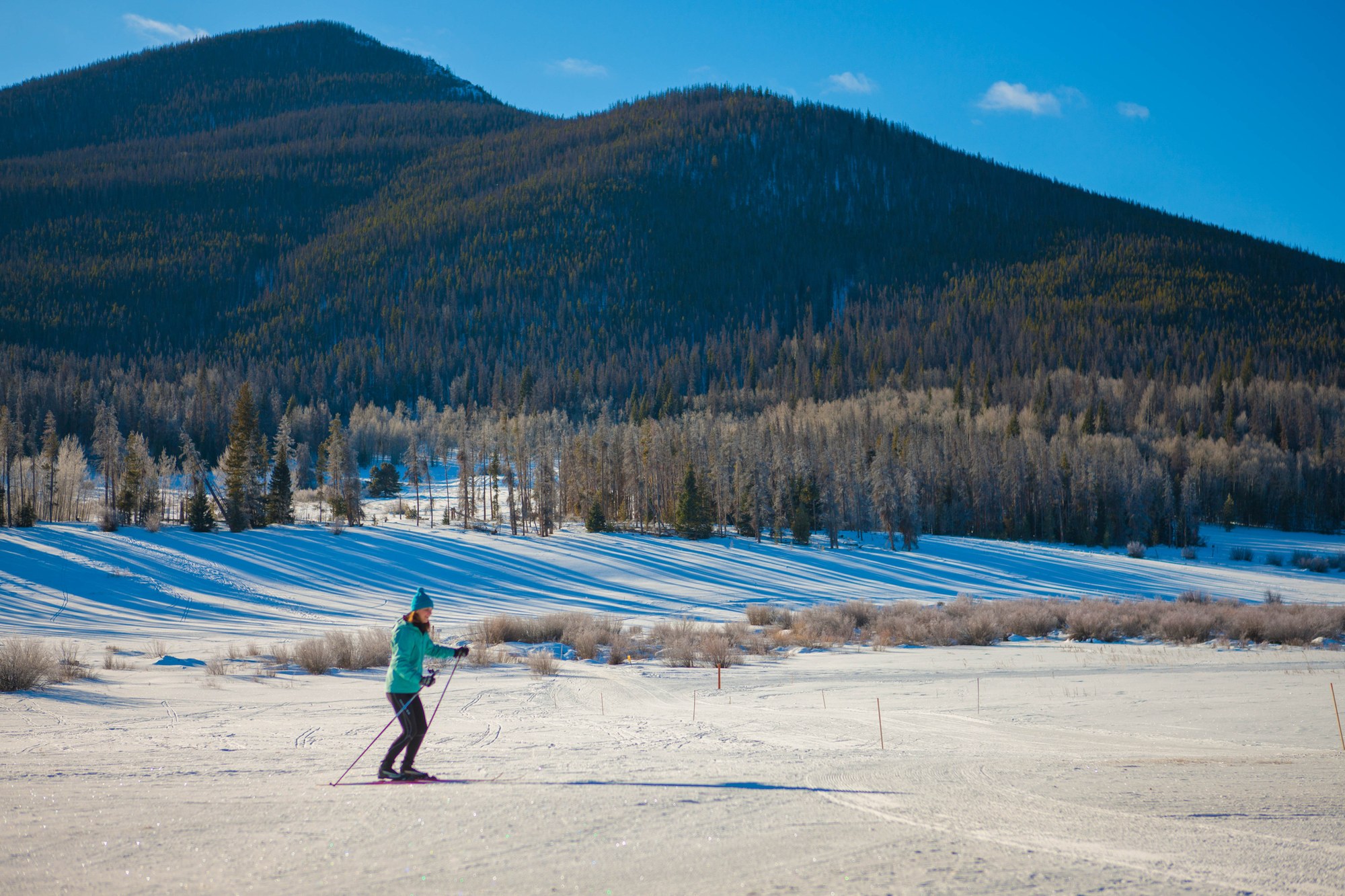
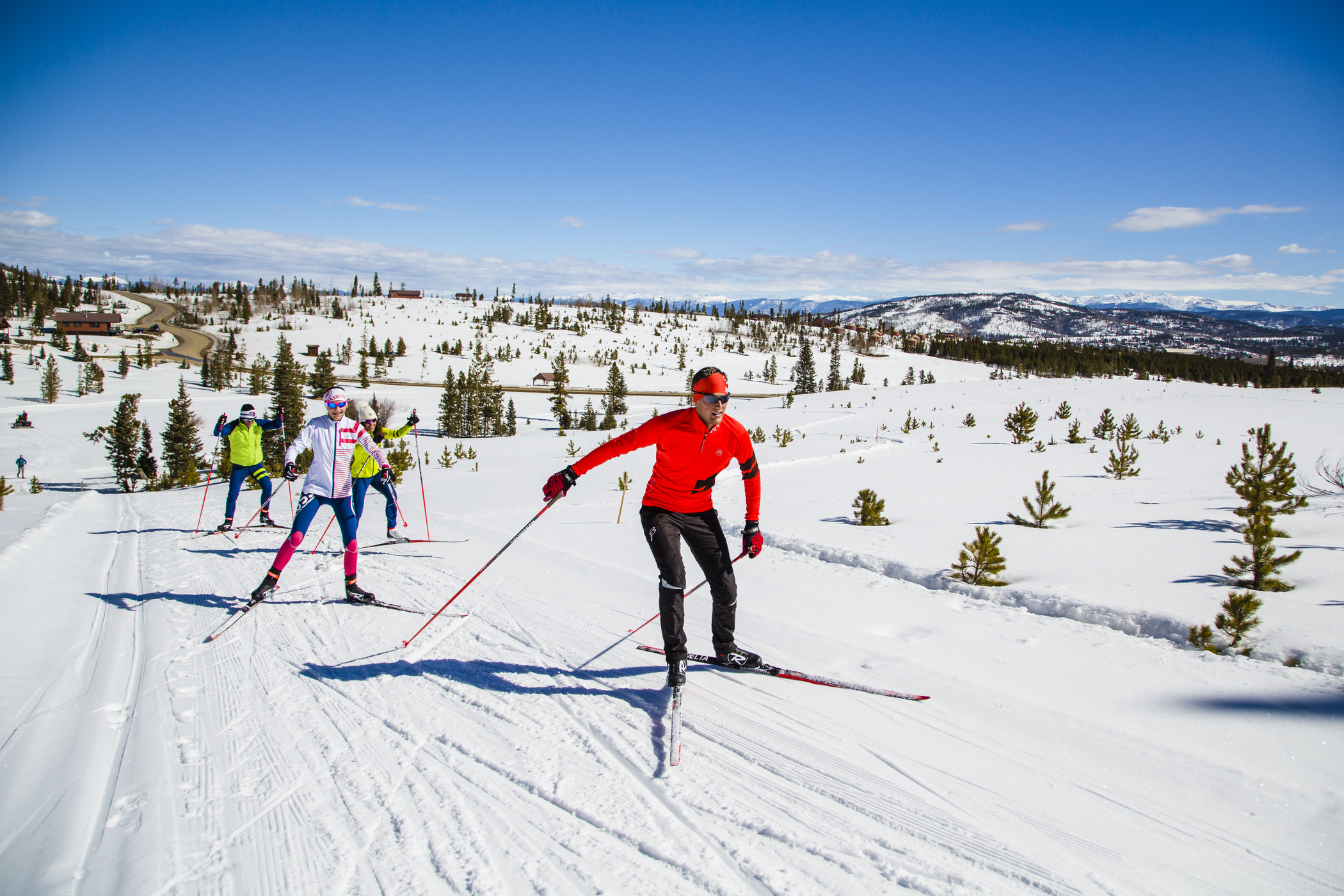
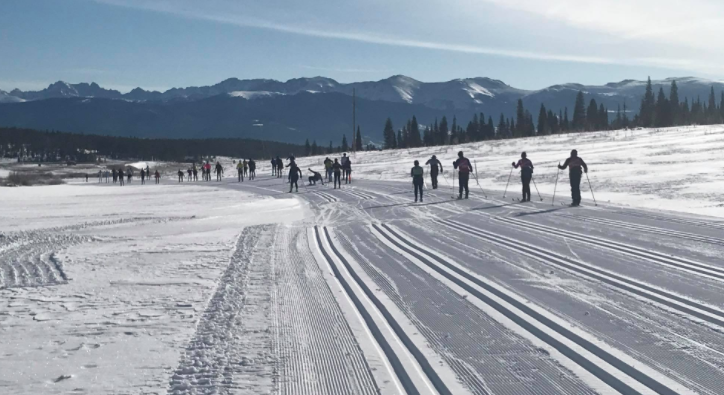
Skiers head out across the meadows at Snow Mountain Ranch in Granby, Colorado. (Photo: YMCA of the Rockies)
What You’ll Do
Lead daily operations of the Nordic retail and rental center
Train, schedule, supervise and support Nordic Center staff and instructors
Coordinate ski lessons, Nordic programming and guest group activities
Teach beginner Nordic ski lessons based on PSIA Level 1 training
Help guests choose the right equipment and offer skiing and waxing advice
Perform and teach practical waxing for classic and skate skis
Maintain inventory and keep the Nordic Center organized and ready for guests
Coordinate with Bryan Mountain Ski Patrol on safety and emergency response
Support larger Nordic events and special programming throughout the season
Step into the leadership role for the Nordic Center when the Nordic Director is away
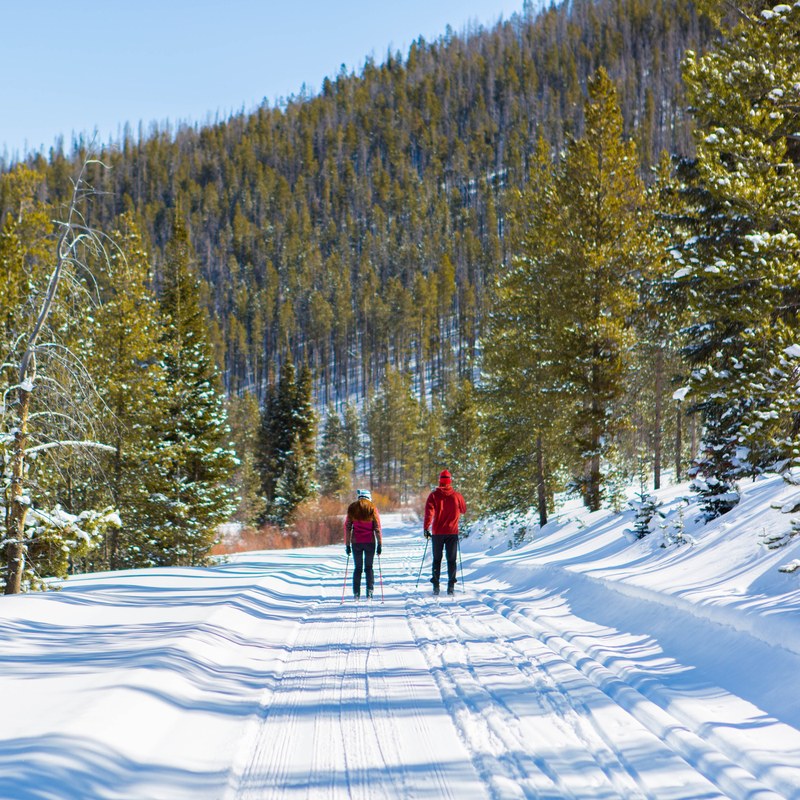
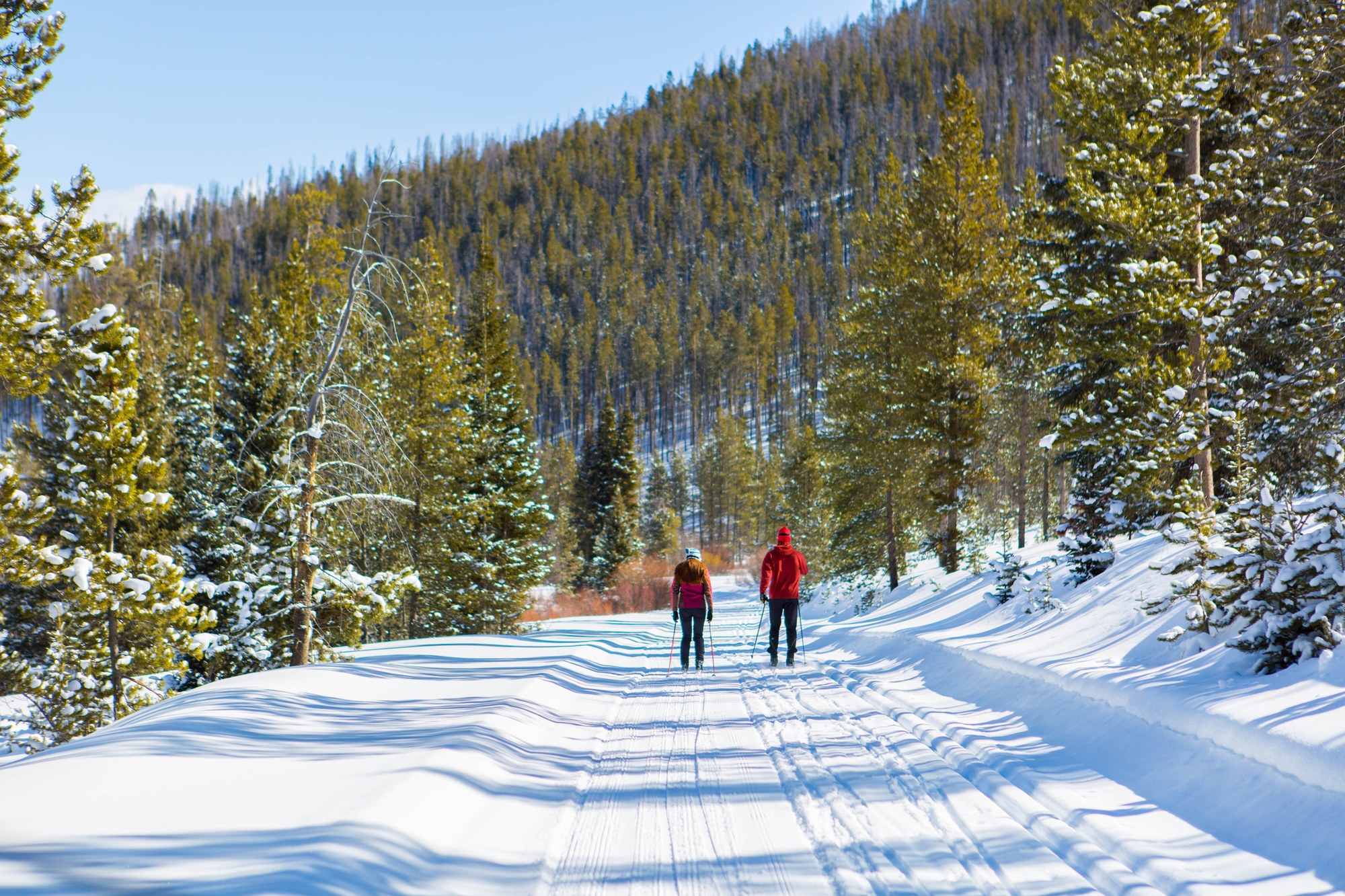
Groomed trail through the pines at Snow Mountain Ranch. (Photo: Brady Robinson)
Why Work Here
The trails start outside the door. The job puts you on skis, in front of guests and in charge of a team every day. At YMCA of the Rockies, staff create meaningful experiences for guests while living out the organization’s values of caring, honesty, respect, responsibility and faith.
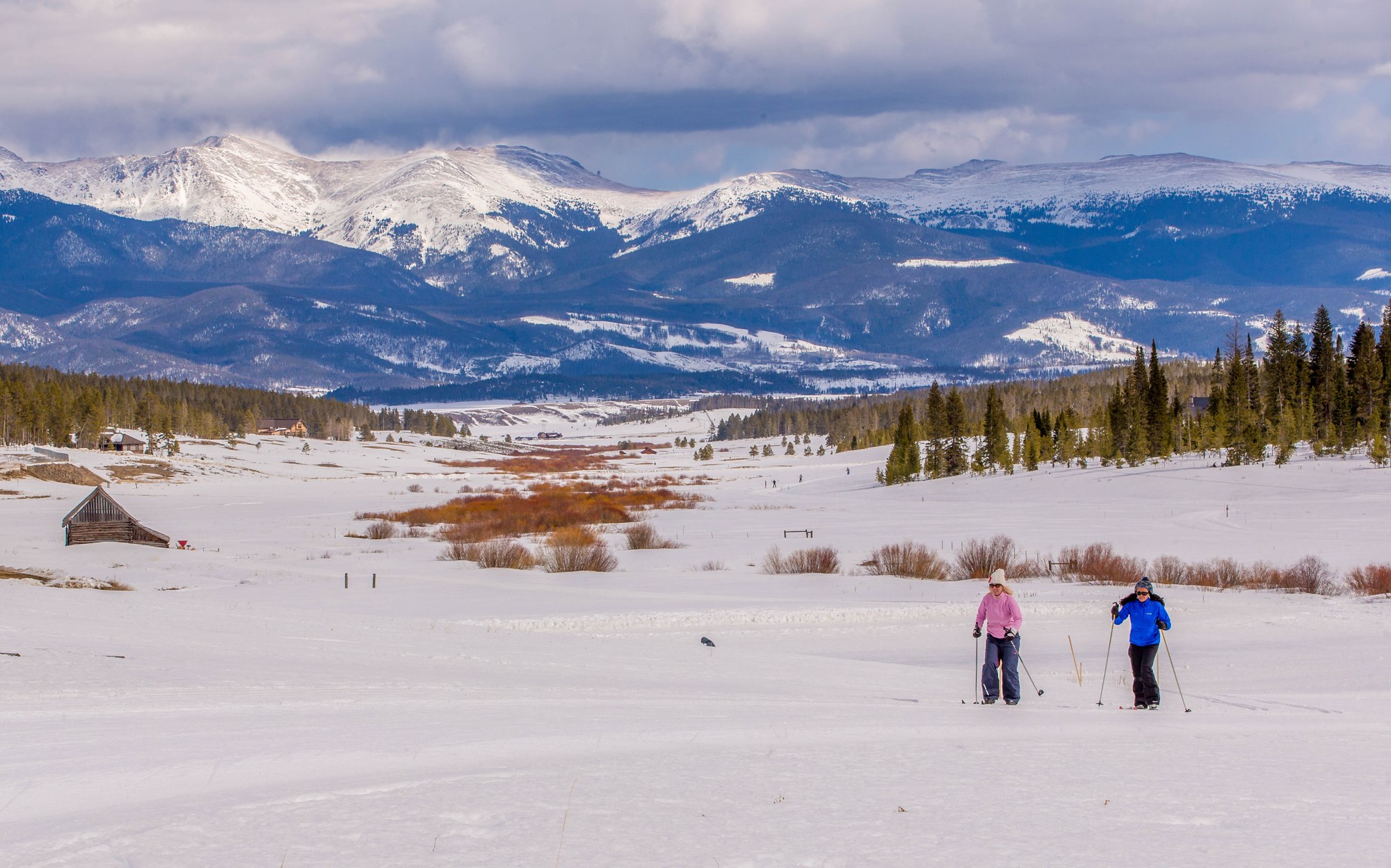
Open meadow skiing below the forested hills at Snow Mountain Ranch. (Photo: YMCA of the Rockies)
You’ll Thrive Here If You
Love Nordic skiing and sharing it with others
Enjoy working outdoors in snow, cold and changing mountain weather
Have strong leadership, communication and customer service skills
Enjoy training and developing a team
Can ski confidently on groomed and ungroomed terrain
Like a job where no two days are exactly alike
Are comfortable working weekends and holidays during the winter season
Bring a positive, professional, problem-solving attitude to a busy environment
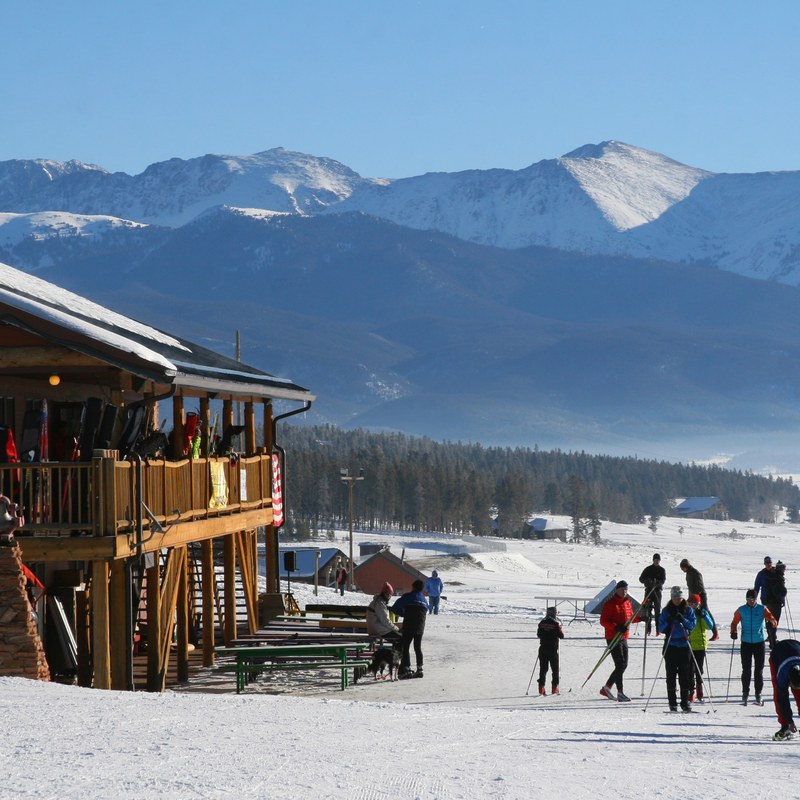
Skiers outside the Nordic Center at YMCA of the Rockies Snow Mountain Ranch. (Photo: YMCA of the Rockies)
YMCA of the Rockies Snow Mountain Ranch and SNØ Racing are joining forces, with Snow Mountain Ranch serving as the Presenting Sponsor of SNØ Racing.
The partnership connects a professional cross-country ski team committed to advancing the sport with one of Colorado’s favorite Nordic destinations. Together, SNØ Racing and Snow Mountain Ranch aim to welcome more people into Nordic skiing, support athletes and the broader ski community, and celebrate a sport built around snowy trails, hard work and the outdoors.
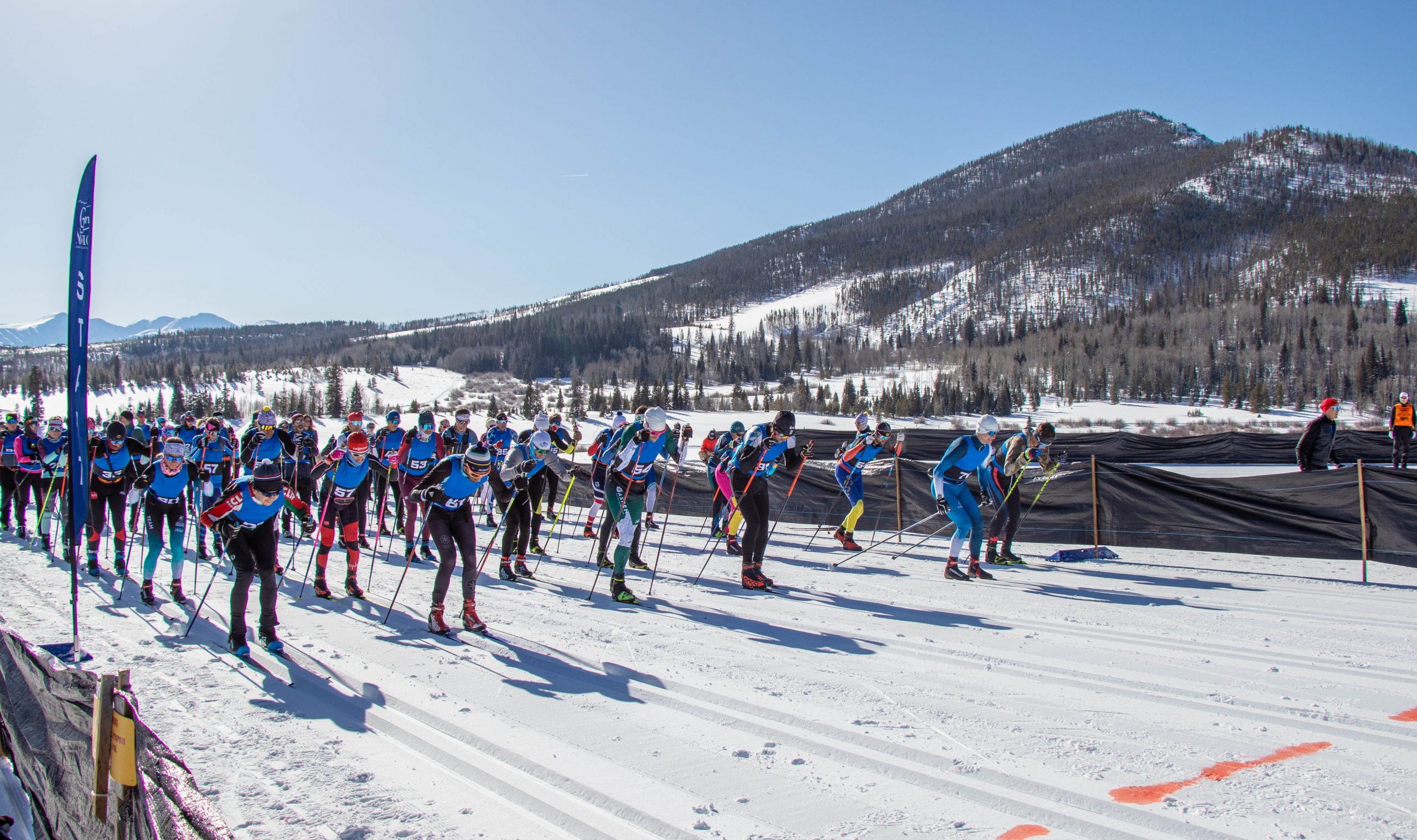
The Stampede mass start at Snow Mountain Ranch in early March. (Photo: YMCA of the Rockies)
What the Partnership Covers
“Snow Mountain Ranch has long been a place where people can experience Nordic skiing at their own pace, whether that means learning to ski for the first time, training for a race, or putting in serious Ks,” said Jeff Paulson, Nordic Director at YMCA of the Rockies Snow Mountain Ranch. “Partnering with SNØ Racing gives us an opportunity to support athletes competing at the highest levels while helping more people see that there is a place for them in this sport, too.”
As Presenting Sponsor, Snow Mountain Ranch will be featured across SNØ Racing’s public-facing team materials and marketing throughout the season. The partnership will also help introduce SNØ Racing’s community of athletes, coaches, clubs, juniors, masters, and recreational skiers to Snow Mountain Ranch as a destination for Nordic training, camps, events, lodging, meals, trail access and meeting space.
Based in Minneapolis, SNØ Racing is a professional cross-country ski team with athletes competing at the FIS World Cup, U.S. SuperTour, and regional levels. The team is focused on advancing skiing in the Central Region while promoting athlete development, partnership, and community engagement.
“Snow Mountain Ranch understands that Nordic skiing is bigger than race day. It’s about the people you ski with, the places that challenge you, the experiences that create lifelong memories, and the community that keeps you coming back. We’re proud to have them alongside our team this season,” said Yuriy Gusev, Chair of the Board of Trustees of SNØ Racing.
The Nordic Center grooms more than 80 kilometers of trail across 5,100 acres at Snow Mountain Ranch. (Photo: YMCA of the Rockies)
Eighty Kilometers at Snow Mountain Ranch
At Snow Mountain Ranch, that community has plenty of room to ski. The Snow Mountain Ranch Nordic Center offers over 80 kilometers of groomed trails across 5,100 acres of terrain, with routes winding through pine and aspen forests, open meadows and challenging climbs with expansive views of the Rocky Mountains. The trail system welcomes skiers across ages and ability levels, from first timers learning classic or skate techniques to experienced athletes looking for big training days.
The partnership also creates an opportunity to connect the Nordic community with the broader mission of YMCA of the Rockies. Snow Mountain Ranch is built around belonging, time together, outdoor experiences, and making the mountains accessible to more people. For both organizations, that shared sense of community is what makes the partnership a natural fit.
“Nordic skiing has a wonderful way of bringing people together,” said Paulson. “You can be chasing a podium or simply chasing a good glide on a bluebird morning. Either way, you belong on the trail. We’re excited to support SNØ Racing and grow that community together. And, stay tuned for the announcement of an exciting new event at Snow Mountain Ranch!”
To learn more about SNØ Racing and follow the team this season, visit snoracing.org. To explore Nordic skiing, lodging, lessons and winter experiences at YMCA of the Rockies Snow Mountain Ranch, visit ymcarockies.org.
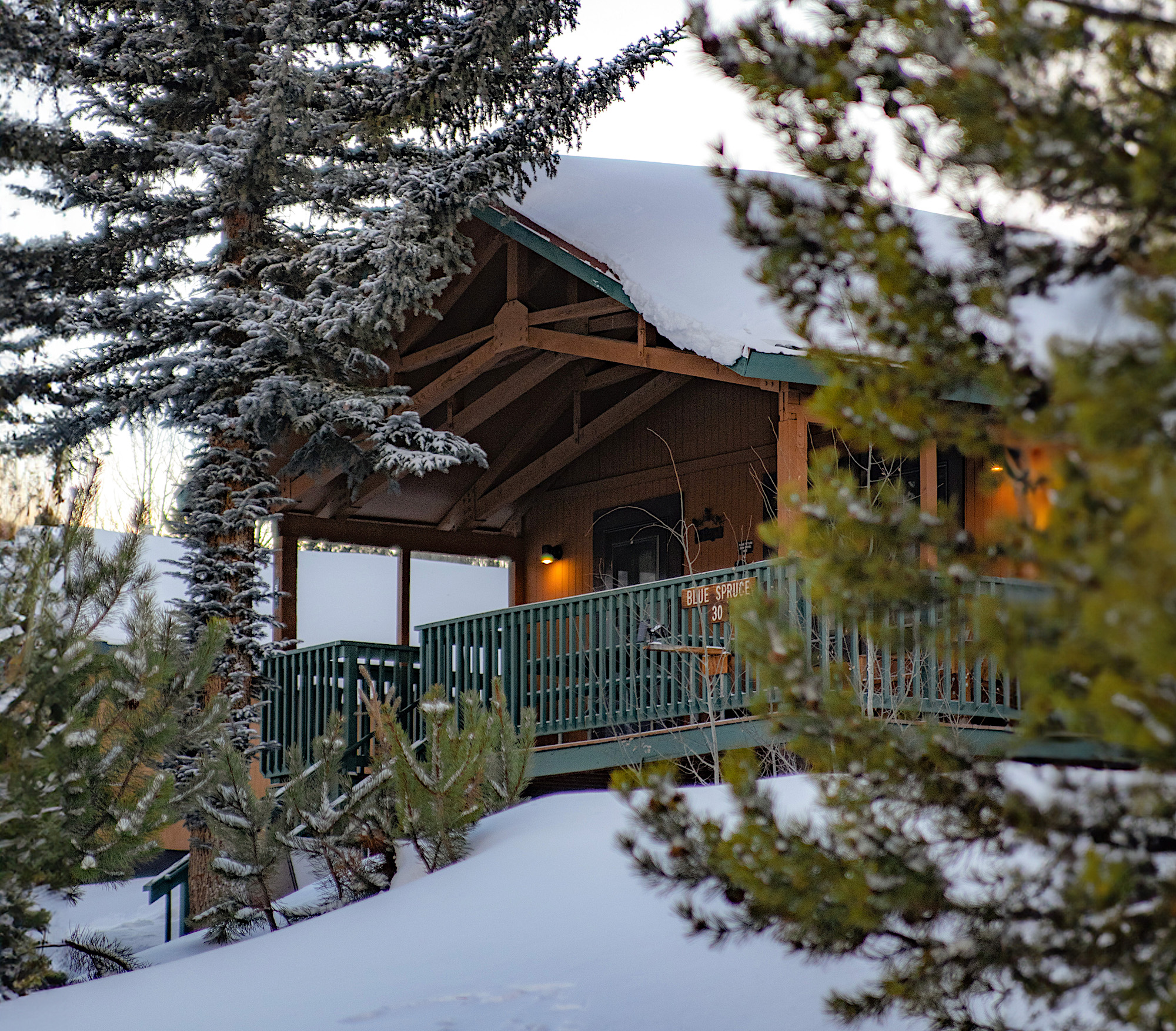
Alongside the Nordic Center, Snow Mountain Ranch offers lodging, dining and meeting space. (Photo: YMCA of the Rockies)
Publishing press releases is a service we offer to the ski community, so please note these articles are not written by FasterSkier and therefore do not necessarily represent our thoughts and standards.
What a gap year it’s been so far for 19-year-old Otis Loga.
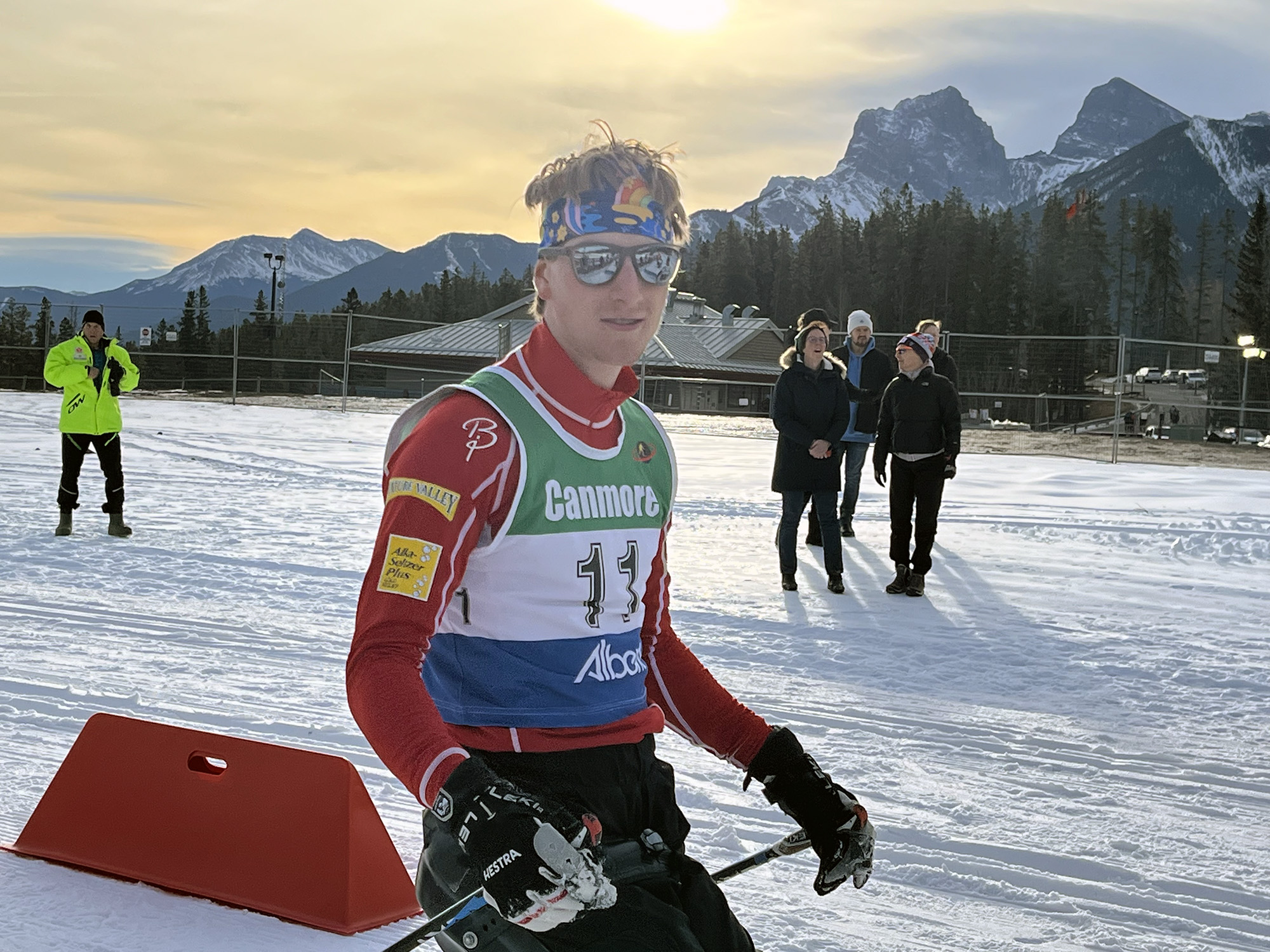
After graduating high school in Montpelier, Vt., in September, the aspiring Paralympian decided to spend a winter skiing and training out West before starting college. He landed at Snow Mountain Ranch, the YMCA of the Rockies, in Granby, Colo.
It was a dream for the relatively new sit skier, who was first invited to a US Paralympic camp in Canmore, Alberta, a year earlier. A three-sport athlete in high school, Loga has cerebral palsy (CP), a movement disorder that makes it difficult for his brain to send messages to the rest of his body. He was born with it, yet he persisted in sports, learning to ride a bike in fourth grade and competing in cross-country skiing, cross-country running, and track in high school.
As a freshman, Logan started skiing as most people do—on two legs—but initially needed skis without wax to give him more control. He worked up to skiing on wax and standing for an entire practice, but the coordination involved with cross-country skiing remained a challenge.
“Standing on one foot, moving on snow is an issue,” Loga explained. I was just falling and couldn’t keep up with anybody, and I came in last or second to last place every single race.”
At the first race of his sophomore season at the Craftsbury Outdoor Center, he encountered a US Paralympics table. He picked up an information card, and his coach encouraged him to follow up with them.
“I checked it out, put my name on their email list,” Loga explained. “Next thing I know, BethAnn Chamberlain sent me a box with a sit ski in it.”
His contact with Chamberlain, the US Paralympics Nordic Skiing development coach, proved fruitful beyond his initial sit-ski setup. As a high-school senior, he attended the US Paralympics Nordic training camp and returned to Canmore for a second time this past winter.
“That’s when I met a lot of other skiers and got to ski with people at a high level,” he said. “[It] was like, ‘You’re double poling, and I’m double poling. Cool.’ ”
Chamberlain also connected Loga with Mark Birdseye, the nordic and biathlon competition coach for the National Sports Center for the Disabled (NSCD) in Winter Park, Colo., who facilitated his move to Snow Mountain Ranch.
Otis Loga at Snow Mountain Ranch.
“[She said] this might be a good training/gap year opportunity for you,” Loga reflected. “And I looked into it, like, great, I can get paid to work at the Nordic Center and ski and get coaching, and I’m already out West closer to people [to train with].”
As the recipient of a $3,000 grant from the Challenged Athletes Foundation, he received a new, custom-built sit ski precisely fit for him that didn’t require “five pounds of duct tape” to strap his legs in, as his old sit ski did. Loga joked that the new sit ski “fit [his] curves.” This past winter, he used it for training at Snow Mountain Ranch and several Paralympic training camps and races.
One of five athletes who trained with Birdseye this winter, Loga embraced his Colorado experience, downhill skiing at Winter Park and working, skiing, and living at the ranch. He worked full-time in exchange for lodging and food, the costs of which were deducted from his paycheck.
According to Loga, he taught lessons, worked on the ski patrol, interacted with customers, cleaned bathrooms, and kept walkers off groomed trails. When he wasn’t working, he trained on an abundance of snow on sit-ski-friendly trails.
“When I’m skiing at Snow Mountain, I feel like, ‘Wait, so I live here, and I ski here, and I get paid? What a dream,’ ” he said.
“He needed a place to live and a place to eat and a place to ski, and we are that place,” said Mary Ann Degginger, program director at the Snow Mountain Ranch. “He’s been a great staff member for us and a delight to work with, and he’s also just a really inspiring, inspirational human being.”
Birdseye, who served as program director at Snow Mountain Ranch from 1985 to 2010, described Loga as incredibly hardworking and coachable.
“He’s got a wonderful sense of humor about where he’s at in life and where he’s going,” Birdseye said. “He’s got a very good aerobic engine and can ski for a long, long time.”
Snow Mountain Stampede Ranch Boss belt buckle.
Loga competed in several distance races this year, including the Boulder Mountain Tour in Sun Valley, Idaho, and back-to-back Stampede races at Snow Mountain Ranch. For the latter, he earned the coveted belt buckle for completing two 25 k races on consecutive days, the first of which was on an untracked skate course—a challenge for any sit skier.
“I am a long-distance person,” Loga proclaimed. “If you say ski, run, or bike, fine. Sprint 400 meters? No, thank you.”
As he packed for his return to Vermont this month, Loga said he was grateful for his time spent in Colorado with Birdseye at Snow Mountain and with the US Paralympics Nordic team. While home this summer, he said he would begin classes at a community college while continuing to train in an effort to make the national team and become a Paralympian. Next winter, he hoped to be back out West—preferably in Colorado at Snow Mountain Ranch.
“Athletically, he’s still a young man,” Birdseye said. “He’s only 19, so he’s still got a lot of maturation to go as a young man and an athlete.”
Birdseye said they had been working on Loga’s hand speed and interval-based training to build speed in shorter-distance races. For the start of the off-season, he explained Loga would be getting back into cycling shape during his cross-country road bike back home.
This Friday, April 19, Loga planned to meet his father at the Denver airport, drive to the Kansas-Colorado border, and ride roughly 2,000 miles back home over the next month or so. After having his legs strapped into a sit ski for most of this winter, Loga realized that riding 100 miles daily would be tough. He said the most he has ever done in one day is about 80 miles.
“My dad’s gonna fly out and be my swag wagon,” Loga explained. “I booked a month, so if I don’t make it in time, then I just hop in the car and drive.”
They planned to camp on the side of the road, stay in hotels when necessary, “or knock on some nice stranger’s door and spend the night,” he said.
“I said, ‘Otis, you’re gonna have to pedal yourself into fitness like they do in the Tour de France,’ ” Birdseye said with a laugh. “… You’re a great nordic skier right now, but the Viking legs will come…
“He’s got a very adventuresome spirit,” he continued. “… And he has such a great heart for people. He’s very caring and really wants to do the best that he’s capable of doing.”
Like most other states, a cross section of athletes racing in the Colorado High School circuit (CHSAA) looks relatively homogenous when it comes to ethnicity. The field is largely white. However, in stark contrast to skiers hailing from affluent mountain towns like Steamboat Springs, Aspen, and Vail, a team from Denver might catch your eye for adding some color. Most of the Ridge View Academy Rams, all male, are Black or Latino, and line up amidst athletes with NCAA or even Olympic aspirations during their first ever season on snow.
“Our guys are like deer in the headlights [at the first few races],” said head coach Greg Townsend, recalling one such day at an interval start classic race in Vail in roughly 2007.
“One of our better skiers was lined up right behind a young Noah [Hoffman] — and Noah is warming up looking like a bunny rabbit: jumping up and down on his skis, and bounding, and doing all this stuff. Two or three of our kids are staring at him like, ‘Holy crap! I don’t do it that way.’”
The athlete came to Townsend feeling terrified to race against Hoffman, wondering what he should do. Townsend encouraged him to follow along with Hoffman’s routine and to remember what the goal is.
“It’s a ski race. Just do your best, go have fun with it.”
Townsend watched his athlete buck up the courage to head back to the start area. As Hoffman slapped his skis in the tracks to keep his wax from freezing, the Ridge View racer slapped his skis. As Hoffman flexed and stretched, so did the athlete from Ridge View.
“And then he got dusted — I think Noah won the race. But our kid came in with a big smile on his face and I asked how it went and he said, ‘It was fun. I think I did alright.’”
The strengths-based academic model at Ridge View Academy provides the framework for programming and services. (Photo: RidgeViewAcademy.com)
To provide further insight, Ridge View Academy, a Right of Passage (ROP) program, is an alternative education charter school that works with court-involved and at-need young men. ROP offers a holistic, strength-based approach to education, treatment and counseling, which focuses on the individual’s positive qualities and skills, and shifts focus away from past transgressions and toward overcoming adversity. Social services are also offered to help improve the lives of the youth served.
In addition to classes to support kids in earning a GED, Ridge View Academy offers skills and trade based classes, and students can elect to follow a vocational tract to learn bicycle shop skills, culinary arts, barbering, metal working, and more. Extracurricular activities and sports also play an integral role.
At the helm of the cycling, mountain biking, and nordic ski programs at Ridge View is Greg Townsend, who has worked with ROP programs since 1984. FasterSkier spoke with Townsend in June to learn more about the Ridge View Academy program and how cross-country skiing plays a role in the educational and therapeutic model.
Townsend is the type of person you could listen to for hours, and it was immediately apparent how his mentorship and support could help countless young men find their way out of difficult situations.
Townsend’s circuitous path to ROP had a waypoint in Japan. After several years of bike racing, Townsend found his way to Japan where he worked as a paramedic at a ski resort. He was looking for a way to stay fit for cycling through the winter season and was eventually introduced to the head coach of the Japanese national nordic ski team, who agreed to teach him to classic ski. He described the experience as an “eyeopener” as he found himself needing to slowly master one skill at a time to earn the respect of the coach, calling it “the Japanese way.”
“I had to double pole for like three weeks straight before they taught me the next step, which was double pole with a kick,” he laughed.
After moving back to the United States, he began working with a California-Nevada based ROP program, leading groups of young men into the mountains on winter camping and telemark ski trips alongside the head coach who was a former Marines mountain warfare instructor. He called this type of travel and skill development “Mount Everest stuff.”
To get kids on skis more regularly, he proposed starting a nordic ski program, and cobbled together enough gear to start a team. When he moved to Denver in 2001 to help start Ridge View Academy, he brought the concept of a nordic team with him. He explained that the first season, because of a lack of equipment, the team completed almost all of their training on dry land. It was not until the day of the first race that the team actually got to ski on snow.
Although most of his kids were born and raised in Colorado, very few came from families with the financial means to provide a ski experience and many had never been out of their home town or city. Consequently, it was not only their first day on nordic skis, but their first day sliding on snow in any fashion. They arrived early and rented ski equipment the morning of the race, spent two hours practicing, then the kids lined up with everyone else.
The best compliment Townsend overheard was, “They’re not very good, but they don’t quit!”
As the years progressed, Townsend helped find equipment and opportunities to support his kids. As he also teaches metalworking classes, he fabricated a fleet of skate skis and slowly collected pairs of classic. Townsend helped locate used equipment and connected with donors and sponsors to find skis, and Ridge View partnered with the YMCA of the Rockies at Snow Mountain Ranch, exchanging community service for trail time. Now ROP student-athletes are able to complete roughly half their training on snow.
Apart from developing as a skier, Townsend explains that the true value of the program is the impact of providing the young men with access to the outdoors and aerobic exercise.
As a self-described “huge believer in experiential education”, he’s led countless long-distance bike trips, including 600 mile tours from campus to the Grand Canyon or even all the way cross country. Along the way, he watches kids work through physical exhaustion and emotional anguish, pedaling under the weight of personal history of being passed through foster care, criminal records, teen pregnancies, or abuse.
Ridge View Academy’s Greg Townsend regularly leads students on long-distance cycling trips as part of the holistic therapeutic program. (Photo: RidgeViewAcademy.com)
Townsend explained that there is research supporting the role aerobic exercise can play in creating changes in the brain that reduce the risk of depression or psychosis, which can lead kids to make negative choices or engage in self-harming behaviors.
“Skiing has somewhat of the same effect… A lot of brain change takes place with aerobic activity, and sustained aerobic activity has more impact than short term activities,” said Townsend.“You get to see that firsthand with kids. Kids that were pretty self-destructive or using type-A behaviors — it can pretty much go away. There’s a lot of permanent change that takes place in the brain with that type of activity.”
Apart from having the cycling and skiing skills to facilitate these experiences, Townsend is able to connect with the young men and help counsel them through their journey at Ridge View. Though he spoke humbly, he acknowledged that some of his success in this realm stems from his own history within the system, which has shaped his ability to listen to and understand the challenges of others.
“Everybody has a story, every one of our kids is different. I get to make an impact everyday. I was a troubled kid when I was younger, and my brother died in the system a couple years back — he never made changes, and I made changes when I was younger. I wouldn’t call it an affinity, but I have an understanding, so I can connect and have a relationship with someone that is struggling. I can’t say better than some, but that would be something that my wife would say.”
Seeing this impact and supporting kids to become successful adults is what has kept him with Right of Passage for over 36 years.
“You have to love the kids, love what you do everyday. For me, some of my best friends were kids that I coached. They have five kids and a family and they’re doing well. They’re not dead, they’re not on the streets, they’re doing well. One of our lawyers was a kid for us… You never know when you have an impact. When you’re good, it’s a chess game sometimes, and I’ve learned how to play a good game of chess, where I’m not always the one who is going to help the kid. But if you know who your chess pieces are and you can set up success for the kid and put all the people in the right place, then that can sometimes come to success.”
He explained that the philosophy he aims to pass onto teachers he helps develop at Ridge View follows an old Chinese proverb: “When the student is ready, the teacher is going to appear.”
Townsend explained that one cannot presume when a young man enters the program whether or not he is capable of making changes. He reminds staff not to fall into the trap of becoming “pessimistic, antagonistic, and detached.”
“Keep being the teacher,” Townsend added. “You’re not going to necessarily know when the student is listening to you… A lot of these kids have had a lot of pain, have a lot of pride, and a lot of stuff they’re protecting themselves with, and they have a hard time making relationships that they trust as far as adult relationships. They may never let you know that they trusted you and they listened to you… I see our job as building the wall strong enough that it can stand on its own. When they get out there in the real world and have these negative influences again and lots of people trying to pull them down, they’re going to have to be able to stand on their own.”
He continued by explaining that not all kids “make it” in terms of making lasting changes in their lives and finding a healthy path long term, but that a large percentage are successful, and those are the ones that keep him hopeful with each new case.
In terms of his coaching philosophy, Townsend’s primary goal is for the kids to enjoy the sport.
“I stress the fun factor — that’s the hook. Once kids get some balance on their skis and have their first downhill without crashing, they tend to start having fun with it… I had a really great cycling mentor who said, ‘This is too hard not to have fun at it. If you’re not having fun, try something else.’”
From there, he encourages the young men to identify how the skills they are honing by overcoming challenges in skiing might transfer into their everyday lives.
“Apply that from the perspective of building the individual… As I tell the kids, it’s not about skiing, it’s not about cycling. It’s a fun thing, but how many of us are going to do it professionally? But we can learn a lot of lessons from it, and apply those same lessons in everything else that we do. Yeah, we need to double pole 20 times around the track, or whatever, but if you finish that workout, you’re going to get stronger and mentally you’re going to be stronger. I think the guys that don’t quit start to catch onto that and start to see the benefit, and that’s the hook.”
His metric for a successful training session on skis? Naps and positive energy on the bus ride home.
“I always know I’ve done a good job when they’re all just passed out on the way back from Snow Mountain Ranch and they wake up in a positive headspace. The only beauty of driving four hours [roundtrip] to go train is they get to talk and we get to do school work and build relationships on the way there, then they get to nap on the way back, or you have these long two-hour talks on the way back from practice. One of the beauties of being able to drive for four hours a day with kids that need a lot of talking with is the drive.”
Skiers take to the course during the March 2018 Snow Mountain Stampede ski marathon at the Snow Mountain Ranch Nordic Center. (Photo: Facebook.com/SMRNordicCenter)
At this point, our conversation headed toward a question I felt some trepidation about asking. I’ve never coached an athlete of color, nor have I trained alongside one. While I’ve typically had great kids, the exclusive private and public schools I’ve taught and coached for are filled with kids who have grown up with a significant amount of privilege. Heck, we race in Aspen Colorado through a neighborhood of homes that are each worth millions of dollars, [Currently, an empty lot is for sale for $3.9 million, and an estate is listed at $14.9 million.] while some of his kids’ entire multigenerational families live in an apartment the size of a one car garage.
How does this make a young man who is a person of color and has faced an incredibly challenging set of obstacles throughout his life feel? Is there bitterness? Anger? Envy?
On the contrary, Townsend explained that rather than looking around at others feeling spiteful, primarily his kids are just self-conscious that everyone else is looking at them.
“And I’m like, ‘So what?’ It’s a race, and everyone is looking at everyone else.”
He explained that the people they do encounter who may look down on the team or seem concerned about their participation typically don’t understand the variety of circumstances that have led the young man to the program. His kids might be “receivers” of broken families or hard situations that they weren’t able to process at a young age.
“Kids come from varied backgrounds and histories. We have kids where mom and dad were meth heads or sold meth, and the kids were taken out of their homes. They never did a crime in their life, but they’re part of the system. Then we have the other extreme where we may have a different level of kid that was a gang kid. To put a rubber stamp that all the kids are the same that we work with doesn’t do justice to the kids.
“People look at our kids from a couple of different lenses: a resource lens, a villain lens, and a victim lens. Some of these kids are going to be lawyers someday, or doctors, or firemen, or business owners… The way that they’re going to change is by looking at them like they’re a resource. I see these kids as a diamond in the rough. You see this dirty little rock on the ground, and if you just walk by it or kick it, you don’t realize that it’s a precious diamond — you just have to have the right cutter to expose the diamond under the dirty little rock. Our kids have the same ability, not necessarily the same choices, but they do have the same ability as anyone else, they just have to believe it themselves.”
Overall, Townsend concluded that his team has been well received and supported by other teams, and although his kids sometimes feel self-conscious about their skiing ability or how different they are from other competitors, racing in the CHSAA league has been a positive experience.
“Underdog is probably a standard. I always have a new team every year, and I enjoy the hell out of it. Once in a while, we have a phenom kid. Once we placed fourth in the state, and we had four guys in the top-10 at a race once.”
He explained that this anomaly took place on the Rams’ home course in Snow Mountain Ranch where kids felt comfortable enough to “let loose and go hard.”
That is not to say he has never coached a standout. He shared that one of his racers, Maxwell Burnell, was one of the fastest CHSSL skiers in Colorado and was able to earn a scholarship to Vail Ski & Snowboard Academy (VSSA) to further develop as an athlete. Burnell was also an accomplished Cat 1-2 cyclist.
“He was probably our biggest success story in terms of his ability to take the sport and run with it. He had a lot of fun skiing and ski racing.”
Townsend became emotional as he added that most importantly, Burnell was able to transform his life. He followed an upward trajectory to Ridge View Academy from a mental health hospital, then to VSSA, and on to compete at the top level of domestic cycling, racing shoulder-to-shoulder with men who went on to make the national team.
He concluded that each year, his goal is simply to develop whatever group of athletes join the team to become as holistically strong as possible at the end of the season.
“What are you going to take from the season? Our guys learn how not to quit. And I take pride if we get through the season and not one of my kids quits a race — they had a good season from that standpoint.”
From that objective, he added that the advantage of going out more to enjoy themselves rather than to focus on performance is that their conversations can revolve primarily around learning a new lifestyle.
“The goal is to enjoy life and learn some lessons. Teamwork is huge, getting along and building a family where these kids support each other is huge. Kids that are from opposite sides of the tracks — one’s from the south and one’s from the north and they’re in different gangs. At the end of the season, sometimes they’re best friends.”
Townsend concluded that overall, the nordic community has been welcoming and gracious toward his kids, and most importantly, have just treated them like kids. Racing hard at altitude ironically levels the playing field. His kids can leave behind their heavier suffering and just race, turning it into the hypoxic singular focus experienced by any other skier on the trails and being rewarded by the same post-race high.
“Everyone who has suffered through a Snow Mountain Stampede — the 42k that went over to Granby — that was brutal! And our kids went out and did the race. When they finished, everyone that finished has the same affinity — everyone went through the same struggle, no matter how good you are at it.”
BOULDER, CO—Boulder Nordic Sport, is excited to announce the first-annual Season Kickoff Party at Snow Mountain Ranch on December 2, 2017. In partnership with YMCA of the Rockies, Rossignol, Fischer, Madshus, Salomon, Boulder Nordic Club and Grand Nordic, this is an opportunity to spend the day trying out the latest gear, connecting with skiing friends, and enjoying après ski fun!
Featuring free equipment demos throughout the day, the Season Kickoff party will include a complementary biergarten with burgers, beers, and brats; afternoon social ski groups, and more.
Want to make a weekend out of it? Snow Mountain Ranch offers lodge rooms and cabins, many of which are a comfortable walking distance from the ski trails. Off-season lodging prices are available the weekend of December 2-3 at snowmountainranch.org/lodging.
Tell your friends, bring your family, and join BNS to welcome the 2017-2018 ski season!
***
About BNS: Boulder Nordic Sport brings World Cup Service to everyone with full-service ski shops in Boulder, CO; Bloomington, MN, Portland, ME and online at bouldernordic.com. BNS specializes in professional ski service using Tazzari stone-grinding equipment as well as sales and advanced fit of cross-country skis, equipment, and technical apparel. BNS imports Holmenkol and SkiGo wax lines and carries a full line of wax and professional tuning equipment from over ten wax brands.
Information about Boulder Nordic Sport and the new BNS Magazine are available at www.bouldernordic.com.
CXC elite-team head coach Bill Pierce recently accepted a position as nordic director of Snow Mountain Ranch YMCA of the Rockies in Granby, Colo. (Photo: CXC/Facebook)
Almost a decade ago, Bill Pierce and Yuriy Gusev took a walk in the Cable/Hayward area of northern Wisconsin, where Gusev, the director of Central Cross Country (CXC) since 2005, decided to root the CXC Team and Junior Program (and later an adaptive program and CXC Academy).
Pierce, who built custom homes at the time through his own company, Pierce & Associates Design/Build, Inc, wanted to show Gusev a thousand-acre parcel — a potential site for a big idea.
A competitive cross-country skier and runner up until the mid-80s, when he studied at the University of Wisconsin-Milwaukee School of Architecture and Urban Planning, Pierce moved to Hayward and found part-time work in 1997, grooming the Birkie trail on a need-basis with one broken-down snowcat.
“When I went to Hayward, my first job to get paid skiing was [as head coach] at Hayward High School,” Pierce said Thursday on the phone. “That was enough money for one month over five to make a living off of so I did other things.”
It wasn’t long before he was chairman of the American Birkebeiner Board of Directors and landed his first full-time coaching job in 2007. He built his home in Seeley and dreamt of more for Hayward: a charter school and training center for nordic skiers — and not just any nordic center: a multi-use events center.
“If you want to be mainstream and survive as a business, you can’t just be nordic,” Pierce reflected.
In his development near the Birkie’s “00” halfway point, ski trails touch every lot. Yet without Telemark Resort open, the area remains without a nordic center.
Thinking back to his idea, he imagined opening the events center to non-skiing attractions: music festivals, beer-and-wine tastings, bike shows, and more. Unless its developers were subsidized, they would have to — selling trail passes four or five months a year wasn’t going to pay the bills, he said. But with the offseason revenue, they could fund their dream of a true nordic-training center.
To this day, Gusev has kept that same goal in sight and taken steps, such as researching the potential of Telemark Lodge, to make it a reality. It’s been on Pierce’s mind for the last two decades, and he said the 1,000-acre parcel remains on the market.
“It’s a soft market and soft economy … [and] we’re looking at another piece of land south of here,” he said. “There’s opportunities.”
An estimated 60 athletes and coaches attended the 2014 CXC/Loppet Nordic Racing/F.A.S.T. dryland camp in Ironwood, Mich., earlier this summer. Here, athletes were caught in action during a bounding workout. (Photo: Bill Pierce/Facebook)
But Pierce, CXC’s elite head coach since May 2013, couldn’t wait on that. In the last few years, he applied for other jobs, including with the American Birkebeiner — which Gusev knew about as a board member — and as executive director at Soldier Hollow in Midway, Utah.
One position near Winter Park in Granby, Colo., stuck. Pierce accepted the Snow Mountain Ranch YMCA’s offer to come on as its first full-time nordic director this fall, and he sat down with Gusev to tell him about it three weeks ago.
“I knew that sooner or later Bill will leave and we were somewhat planning on it,” Gusev wrote in an email. “We have discussions with other staff about possible options if that would happen. We also had plans to add additional staff this fall even before Bill notified us about his leaving.
“It is definitely a loss for CXC and the Midwest Nordic community but Bill is following his passion and I’m glad he found something that he is very excited to be involved in,” he added. “We all at CXC wish Bill the best in his new venture.”
“It was a hard choice,” Pierce explained. “I’d come back in a second to work for [CXC]. It was a lot of factors, some of them were personal…”
In post on CXC’s Facebook page on Thursday, Pierce announced his departure and move to Colorado on Oct. 1.
“… Life is extremely short and we really won’t ever know what the next day will bring,” he wrote. “In the past year, I have seen a lot of loss and it has been a difficult one. I lost my Mom, two very close friends and colleagues in John Hugus and Igor Badamshin, and I lost my marriage. It is time for a change.”
CXC’s former high-performance advisor and CXC Team coach, Badamshin died of an apparent heart attack while skiing on the Birkie trail in January. He was 47.
Hugus, who founded the Knicker Nordic Ski Club in Wausau, Wis. — of which Badamshin was also head coach — and served as secretary of the Central Wisconsin Skiing Association, died last October at 57 after batting multiple myeloma for 17 years.
“With Igor’s death and coaches leaving to do different things, I’m leaving because I feel like I can do something more for developing the sport, to help people enjoy it and enjoy winter,” Pierce said on the phone.
His first job with CXC came in 2007, when Gusev hired him as a full-time head coach of CXC’s Junior Development Team. He worked there until 2010 and went on to co-found F.A.S.T. Performance Training with his wife Kathy, spending the next three seasons working to establish a high-performance mecca in Hayward.
It wasn’t for naught. Athletes like Ben Saxton, now on the U.S. Ski Team’s D-team, came up through F.A.S.T., and Nichole Bathe, a University of Alaska-Fairbanks sophomore and CXC training partner, have already achieved top national results.
Gusev had brought International Paralympic Committee (IPC) World Cups to Cable, and in the last year, landed the 2015 IPC World Championships and 2016 U.S. Junior National Championships. But Pierce said the next step — creating a permanent nordic or training facility — required teamwork.
“Any project of that size takes a group of people and collaboration,” he said. “Everyone wants to be a part of that growth. I think people need to realize more that we need to work together to do that.
“No matter how small, you are just doing the right thing. If you’ve got four or five kids, just coach ’em. … You’ve just got to stick at it year after year and just be consistent what you do. It’s a long, long process.” — Bill Pierce, F.A.S.T. Performance Training founder and CXC elite-team head coach, who recently took a job as Snow Mountain YMCA’s nordic director
“You think of Hayward as a destination,” he added. “You get a few hundred people every weekend.”
Upon a recent visit to Winter Park, he estimated 1,000 people in the area on a weekday.
“That’s a destination,” he observed. “I call it an adventure park or activity park. They’ve done a good job of becoming a true destination.”
While he said Hayward’s not quite there yet, “they’re different animals,” he explained. Snow Mountain’s YMCA of the Rockies has been around for more than 100 years. “The Birkie trail has been groomed for twenty years,” he pointed out.
Birkie racers on the Birkie Trail (Photo: ABSF/Kelly Randolph)
Since then, the American Birkebeiner has grown its fleet to three PistenBullies and roughly four snowmobiles under Pierce. Formerly the Birkie’s head groomer, who oversaw 88 k of trails and 14 pieces of equipment, he retired from grooming last year to return to full-time coaching.
“I love sitting on the groomer at night; it’s a blast,” he said. “[But] I don’t have to sit on it every night for eight hours.”
As for that job: “I felt like I did what I wanted to do and it was time to leave and do something else,” he explained.
Leaving the Midwest, where he was born in southern Wisconsin, went to school in Milwaukee, and spent 14 years in Minneapolis, was about timing as well.
“I’ve always moved around — I haven’t been home in three years,” he explained. “That was actually one of the considerations: when you’re on the domestic circuit, you’re on the road from October to March. … To me, it wasn’t a sacrifice, it’s just hard.”
He began researching other opportunities to educate himself. When he discovered the opening at Snow Mountain, the idea of expanding an existing nordic area with 100 kilometers of trails, adding to mountain-bike terrain and cultivating the fat-bike craze there was too good to pass up.
“Of all the jobs I’ve looked at, this is an accumulation of all the duties in one,” Pierce said. “I kind of look at it as three phases: running the center, overseeing the coaching, and overseeing the trails. It’s a year-round job.”
And while it will be a transition — from elite coaching to building a nordic culture from the ground up — he said he’s ready.
“The relationships that have been formed with many people, colleagues, and athletes cannot be matched or replaced,” he wrote on Facebook. “I loved all aspects of the position but most of all I really enjoyed coaching the Master skiers. They truly are trying to find enjoyment and re-creation in this sport and it was so rewarding to see progression and enjoyment from these athletes and people!
“The hard part is leaving the relationships,” Pierce explained on the phone. “I won’t forget them, I just wont see them as much as I did now.”
At a CXC masters camp late last month, he had CXC Development Coach Andrew Keller run more than half of the sessions. Keller will fill in as elite coach during the transition this fall, Gusev confirmed.
“Of all the years that I’ve coached masters, this was the best,” Pierce said, adding that they have another masters camp next week. “Being a coach … is being able to look at someone and tell them how to change, and … the level of professional and social relationships that you build…
“You’ve just got to be consistent and keep doing it,” he said of his passion and advice to other coaches. “No matter how small, you are just doing the right thing. If you’ve got four or five kids, just coach ’em. … You’ve just got to stick at it year after year and just be consistent what you do. It’s a long, long process.”
In October, he’ll start all over again in Colorado, assessing what is needed there. Unsure of what the future holds, he’s excited by the challenges and possibilities.