From the FasterSkier archive — posts syndicated from athletes’ and coaches’ own blogs between 2004 and 2012, kept online as published. Current coverage is at fasterskier.com.
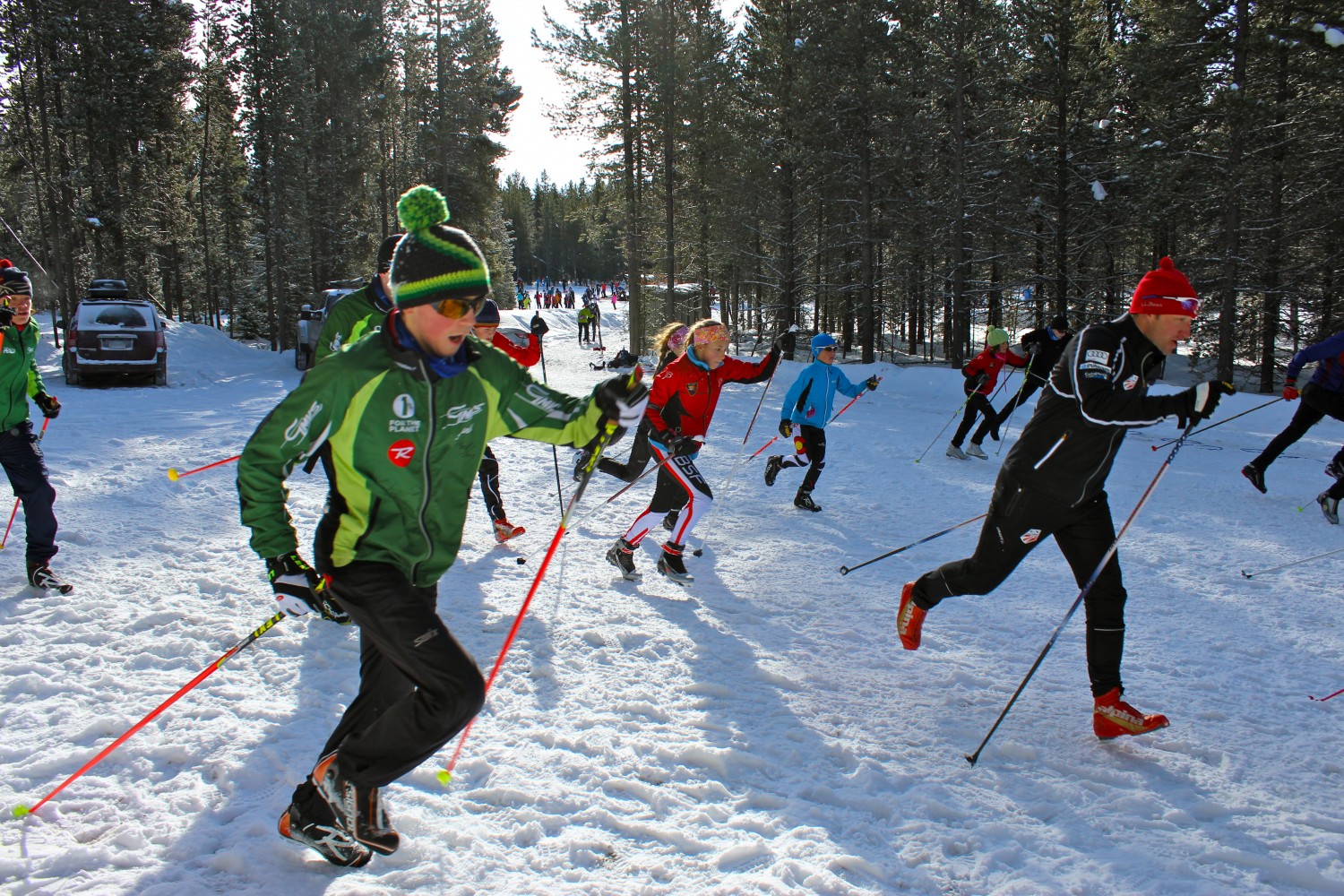
U.S. Ski Team Development Coach Bryan Fish (r) leads some off-skis “dryland” training during the Yellowstone Ski Festival Junior Development Clinic on Thursday, Nov. 26.
WEST YELLOWSTONE, Mont. — Where does the development of a strong ski programbegin? According to U.S. Ski Team Development Coach Bryan Fish, it’s youth. More specifically, youth who enjoy what they’re doing.
“We have to have the numbers and the people that love the sport, before they’ll stick with it and actually perform at the highest of levels,” Fish said last week.
“My favorite thing about working with youth is, I know when I’m doing a good or bad job based on how quickly I lose them,” he added. “All this monotonous repetition at a young age is not the most positive thing. If we can keep them moving and keep them active, keep challenging them, that’s what brings them back and it also makes them better.”
With this in mind, this year Fish decided to hold a junior development camp on Thanksgiving, Thursday, Nov. 26, in West Yellowstone.
“What I’ve been doing a great deal [this year] is traveling around to different ski venues and looking at how we can we grow our sport,” he said. “And make sure that our athletes have the appropriate venues to get challenged on.”
Part of the Yellowstone Ski Festival, Fish’s camp took what he dubbed the “Constraint-Let Approach.” This approach included dividing the the 60-plus kids in attendance into three separate groups and incorporating various games, such as tag, lunge races, and “dryland” exercises.
All focus and fun. “My favorite thing about working with youth is, I know when I’m doing a good or bad job based on how quickly I lose them,” said Bryan Fish.
“We had them over on the road doing some dryland: Skipping, jumping, jumping backwards, broad jump. All those activities are the foundation of cross-country skiing,” Fish explained. “It’s about coordination and linking the body together. If they can do that well, then they can double pole well, diagonal stride well and skate well.”
The smaller groups allowed Fish, and the coaches helping him, to provide more challenging activities for each group and keep the kids’ interested.
“What we’re doing is we’re changing the task and the environment so that the athletes have to adapt. They’re learning all these skill and agility courses, and activities, without actually thinking they’re learning technique. It’s a much more engaging and a much more athlete empowering way of learning skiing,” said Fish. “To be an artful coach is all about limited talking and more about action.”
One of four coaches on the U.S. Cross Country Ski Team, Fish coaches at national-level camps in the summers and leads international racing trips in the winter. He’s also responsible for fostering coaching education in the development pipeline.
“I did Bryan’s level 100 technique clinic [Wednesday],” said Garrott Kuzzy, a 2010 Olympian, former athlete of Fish’s and most recently, Green Mountain Valley School (GMVS)nordic director. “Every time I do a clinic with Bryan I feel like I learn something new.”
Fish feels the art of coaching takes teamwork and communication. “We’re not trying to tell coaches what to do,” he said. “What we’re trying to do is create a general platform that all of us [nordic skiers] agree upon in our country [to] establish a foundation that we can build, grow and innovate.”
With more active empowered coaches and engaged youth, Fish believes nordic development in the U.S. will continue to grow.
“This is the first time I’ve been back in six years and I think the sport has really grown,” he said of his return to West Yellowstone. “We had to close the [coaches] clinic because it was over capacity. Same with [the junior clinic], there was a limit of 60 and I think there were a little more than 60 out here. But that’s a great problem to have.”
USST Development Coach Bryan Fish goes over the plan for the Yellowstone Ski Festival Junior Development Clinic with former athlete Garrott Kuzzy on Nov. 26 in West Yellowstone, Mont.
More than 60 kids attended the Yellowstone Ski Festival Junior Development Clinic a week ago in West Yellowstone, Mont., with USST Development Coach Bryan Fish.
An attentive crowd surrounds USST Development Coach Bryan Fish at the Junior Development Clinic on Nov. 26 in West Yellowstone, Mont.
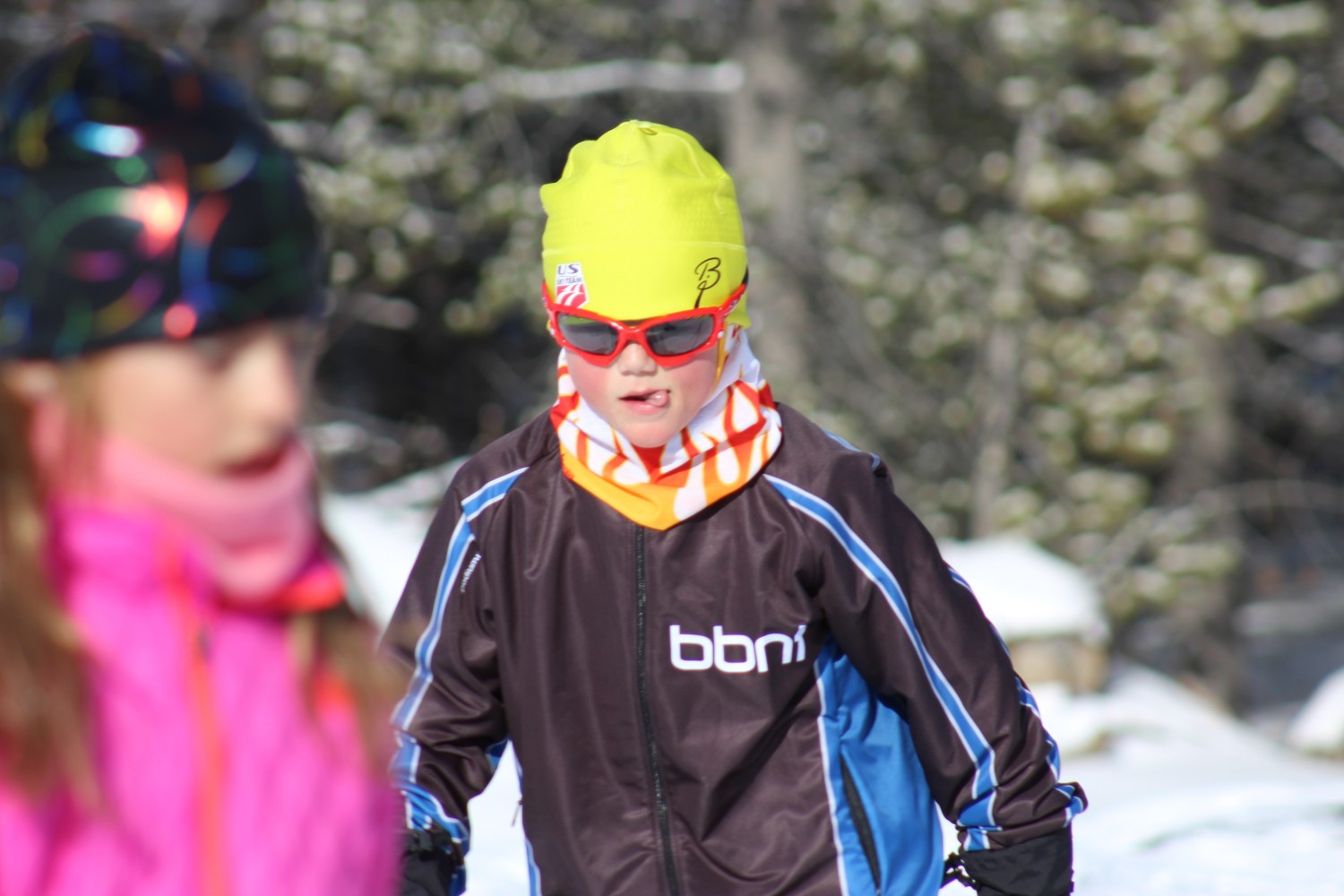
A skier at Bryan Fish’s Junior Development Clinic in West Yellowstone practices good hydration while out on the trails.
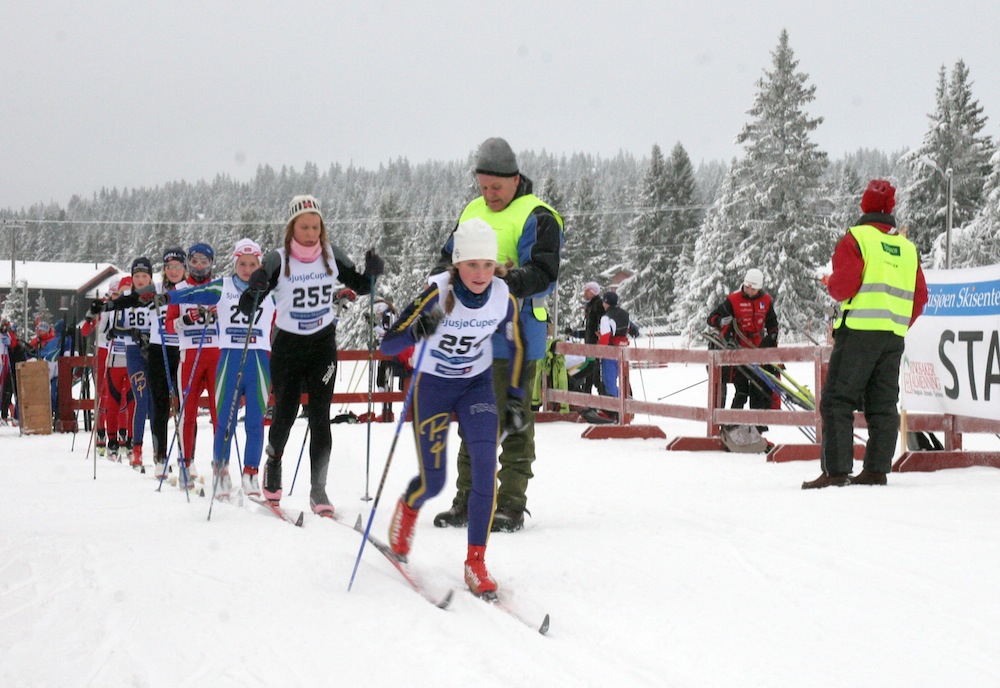
Junior skiers jet out of the start at the Sjusjøcupen, part of the Hedmark state race series in Norway. (Photo: Inge Scheve)
Frode Estil says it’s not how many hours you train. It’s how you train.
The two-time Olympic gold medalist and individual world champion from Norway says skiers are focusing too much on hours at the expense of training quality.
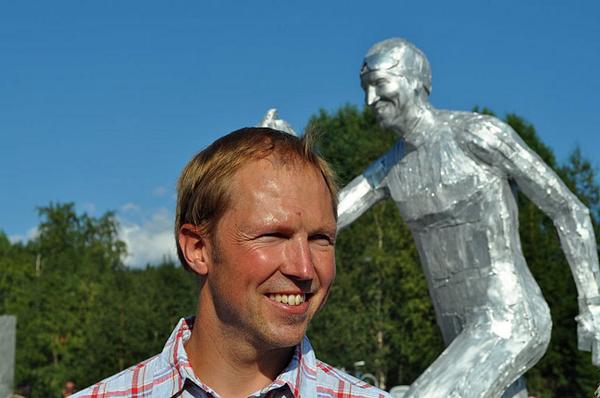
Frode Estil, an individual Olympic and World Champion from Norway, in July after being commemorated with a statue of himself in his hometown of Lierne. (Photo: FIS Cross Country/Twitter)
“I’m afraid focusing too much on logging hours can be counterproductive to the main goal: ski fast,” Estil, 42, told the Norwegian newspaper Namdalsavisa. “How fast you become depends on more than just how many hours you put in.”
Estil, who is currently coaching and teaching at the Meråker ski academy in Norway, blames the media and their excessive emphasis to how many hours the World Cup racers train in a year, as well as coaches and athletes for latching onto the elite skiers’ training programs without critical assessment. Other coaches support him.
Former elite skier Mona Hjellsand, now a coach and coaches’ instructor in the Meråker region north of Trondheim, agrees with Estil. She pointed out that too many training hours can have negative physical consequences.
“Overuse injuries can be hard to heal, and some can last for life,” Hjellsand told Namdalsavisa. “Biathlete Tora Berger has repeatedly harped that you should not train if you feel run down. You should always be in a good flow, she says, and she is definitely onto something.”
She added that focusing on completing shorter workouts with 100-percent attention to the task will increase the training quality.
“It’s important to not burn all your fuel at once,” Hjellsand said. “The younger the athletes, the more important quality is over quantity. The idea is to increase volume over time.”
“The younger the athletes, the more important quality is over quantity. The idea is to increase volume over time.” — Mona Hjellsand, a former Norwegian elite skier who has spent the last two decades coaching in the Meråker region
Hjellsand said that youth and junior coaches have to take their part of the blame for the current trend with extreme focus on logging hours.
“There are still a lot of old-school coaches out there who are focused on training hard and putting in lots of hours. Based on that, I’m really glad that credible resources such as Frode Estil initiate a debate on this topic. It’s an extremely important debate,” she said.
In her opinion, the biggest issue is curbing the drop off and keeping the skiers in the sport.
“When I ask the 16 and 17 year olds why they chose to drop out, the answer is almost always the same. There is just too many training hours, and they’re always tired,” she said. “When the air goes out of the balloon at such a young age, there is something wrong with the way we approach training.”
“When the air goes out of the balloon at such a young age, there is something wrong with the way we approach training.” — Hjellsand
The ski coach, who also travels to visit various clubs and teams and give presentations on training, is certain that the juniors are seeing what they do, and are comparing their own training programs to what the World Cup elite is reportedly doing.
“Skiers such as Marit Bjørgen and Therese Johaug bring the standard for annual volume to a whole new level,” she explained. “The big difference is that these athletes have a support system that takes care of them 24/7. You can’t compare yourself to the full-time elite.
“I’ve seen so many cases where the junior skiers as well as senior level racers lose the joy of training and their passion for skiing because there is such an emphasis on training hard and logging volume,” she added. “It shouldn’t be like that.”
Ultimately, she stressed a single priority: make sure training is fun. “The day it’s no longer fun, there is no reason to stick with it,” Hjellsand said.
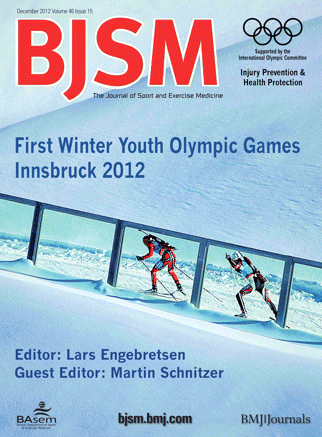
The cover of a recent edition of the British Journal of Sports Medicine, which was dedicated to issues arising from last season’s Youth Olympic Games in Innsbruck, Austria.
Welcome back to our almost-monthly series, this month in journals! One of the most visible developments in the last month has been that the British Journal of Sports Medicinedevoted an entire issue to the 2012 Youth Olympic Games in Innsbruck, Austria. This was the result of the journal’s partnership with the International Olympic Committee’s medical commission. The cover featured biathletes skiing up a hill.
Inside, an editorial explained how the organizing committee is taking an academic approach to examining long-term legacies for athletes and others involved in the event, which is especially important as the Youth Olympic Games is a new series and can be adapted and improved in the future. Specific articles examined how relative age, quality of life, coaching behavior, and parental involvement affected competition.
Most of the health-related research concerned either alpine skiing or snowboarding. However, the journal also published a large-scale review of health services at the Games, which is important because there has been little study of how to deliver medical care at youth sports events of this size, compared to assessing adult athletes.
“As injury risk and patterns of young elite athletes may vary from their older professional counterparts, injury surveillance of young elite athletes is needed to gain knowledge about the injury risk among this highly competitive population,” the University of Innsbruck team wrote.
They found, using the IOC’s injury surveillance system and other techniques, that 11 percent of athletes had an injury of some sort during the Games, while nine percent got sick. Of injuries, 60 percent occurred in competition and 40 percent in training. Most injuries occurred in alpine skiing, snowboarding, ski cross, and hockey; six percent of cross country skiers, six percent of nordic combined skiers, and one percent of biathletes reported an injury.
Nordic skiers were not so lucky in the illness department, with ten percent reportedly getting sick. The overwhelming majority of these cases were respiratory illnesses.
Recommendations included efforts to remove stress and competitive anxiety for young athletes, with the hypothesis that these mental and emotional challenges create an environment where injuries are more likely. The team also asked whether young athletes were as well-equipped to handle multiple high-pressure competitions in a short time span. Finally, they noticed that girls were almost twice as likely as boys to get sick and recommended gender-specific strategies to keep young athletes healthy and competing.
* Elsewhere in news about youth, a Norwegian study in The Scandinavian Journal of Medicine and Science in Sports found that high school students are less fit that they used to be. Using nearly 5,000 test results from 3,000 meter running tests (something intimately familiar to nordic skiers…) collected over 40 years at two high schools, researchers in Stavanger, Norway, found that boys’ running times have increased by 10 percent and girls’ by six percent.
However, all hope is not lost for Norway. The fastest runners are not much slower than they were in the late 1960’s; it’s the slowest decile of runners that has lost the most ground. The authors correlated their findings to other studies showing the similar patterns across Europe, as well as to rising BMI and lower levels of physical activity in some segments of the population.
“The aerobic fitness decline for the least aerobically fit pupils is comprehensive and is alarming as physical activity and aerobic fitness are inversely associated with metabolic risk and low aerobic exercise capacity is a strong predictor of mortality in adults,” the team wrote. “This increasing gap in aerobic fitness among pupils can result in a larger class distinction in physical fitness and health.”
* There has been debate for years about whether stretching before exercise improves performance, and if so, what kind of stretching. This month in the same journal, a team led by Dr. Fabio Esposito from the University of Milan tackled a common target in the debates, static stretching, and used it to assess cycling performance. The team noted that most previous studies had used running, but cycling recruited different muscles and even different types of muscle fibers, and that the impact of stretching might be activity-specific.
Using nine men as subjects, the team administered VO2Max tests and 85-percent effort tests with and without passive stretching. The stretching protocol focused on lower-body muscles and consisted of several rounds of 45-second stretches, using a force (for instance, the assistance of another person) to stretch the muscle to the point of discomfort before allowing 15 seconds of recovery.
The team found that athletes were more flexible after stretching, but that stretching did not affect their VO2Max outcomes. However, the men took less time to reach exhaustion in the 85-percent trials after stretching than they did without stretching – by a whopping 26 percent. Cycling efficiency decreased over the course of the test for both conditions, but more markedly after stretching.
“These results are compatible with stretching-induced alterations of the motor unit recruitment pattern and utilization, and with changes in muscle–tendon unit mechanical and viscoelastic characteristics, leading to a less efficient system,” the authors concluded. “From a practical point of view, these findings suggest that care must be taken in administering stretching immediately before an endurance task… stretching can affect not only maximum strength but also heavy-intensity aerobic exercise.”
* In a study that examined the same general topic – use of different types of muscles and how they affect exhaustion – a team based out of Salt Lake City and Verona, Italy, examined the tolerance level for fatigue when using small muscled versus large muscle groups. In Acta Physiologica, they compared biking to knee extensions, and found that subjects could perform knee-extension exercises for longer than biking before becoming exhausted.
Wait, you might say – that’s clearly because extending your knee is easier than biking. That’s true, to an extent. The team also found, however, greater changes to the muscles’ ability to contract following the knee extension sessions, and using stimulation of the femoral nerve saw that the muscles were actually more fatigued.
The implication, they wrote, was that using small muscle mass exercises, an athlete can achieve a higher workload and level of fatigue before the body’s tolerance limit is reached – the sensory system doesn’t pick up on the fact that it is tired. To get muscles to adapt to exercise, it may be beneficial to sometimes work on muscle-specific activities, not only on doing the entire activity for which you are training.
Previous additions of This Month in Journals: September – October