From the FasterSkier archive — posts syndicated from athletes’ and coaches’ own blogs between 2004 and 2012, kept online as published. Current coverage is at fasterskier.com.

Tag: Yuri Borodavko

  • With eroding control, FIS bans Russia and Belarus in belated reaction to threatened protest-cancellation of World Cup events in Norway and Sweden

    With eroding control, FIS bans Russia and Belarus in belated reaction to threatened protest-cancellation of World Cup events in Norway and Sweden

    Today the International Ski Federation (FIS) banned all Russian and Belarusian athletes and officials from taking part in any remaining FIS competitions. The press release stated, “The FIS Council decided unanimously in line with the IOC recommendation, that with immediate effect, no Russian or Belarusian athlete shall participate in any FIS competition at any level through the end of the 2021-2022 season.”
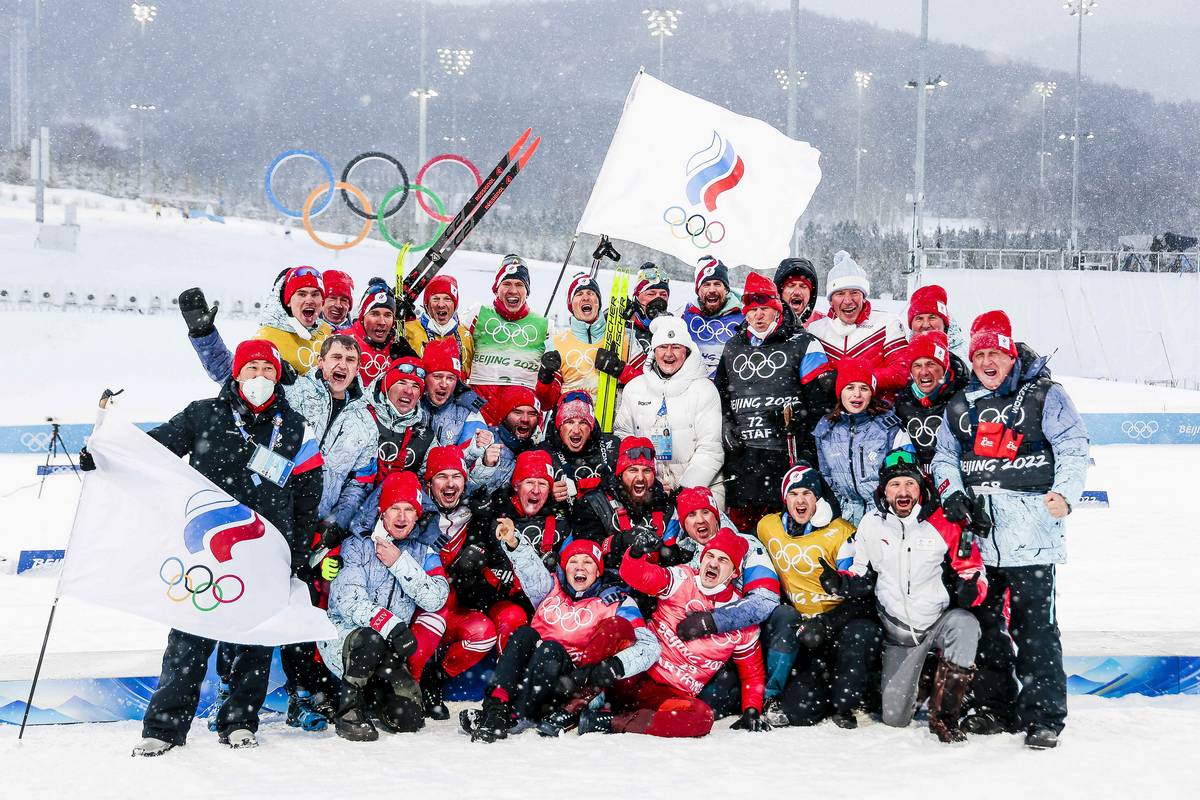
    The Russian team celebrates a dominant performance at the men’s 4 x 10 k relay during the 2022 Olympic Winter Games. (Photo: NordicFocus)

    The belated decision came after a power struggle between the Norwegian Ski Association and FIS, roiling the ski world and casting doubt upon the remainder of the World Cup season. 

    On Saturday, February 26th the board of the Norwegian Ski Association decided in a special meeting to uninvite Russian and Belarusian athletes from its upcoming World Cup races in Drammen and Holmenkollen. The position of the Ski Association was clear: “We do not want their participation.” 

    However, the Norwegian Ski Association and the event organizers lacked the authority to bar athletes, and FIS stood by their position of allowing all athletes to compete, telling NRK “The FIS board has been clear in its approach to Russian athletes in all FIS competitions… national federations and local organizers should not exclude athletes on the grounds of gender, race, nationality or sexual orientation.”

    On Monday, February 28 the Russian cross country ski team arrived in Oslo despite their lack of welcome and were met by Norwegian reporters at the Gardermoen airport. The athletes declined to speak, but Bolshunov’s coach, Yuri Borodavko did. “Well, it’s a terrible situation,” Borodavko told NRK. “War is always terrible. No one has ever wanted a war, not even us. Thank God there are sensible people with common sense, who do not give in to the panic that is now spreading throughout the world, and it is the leaders of FIS.”
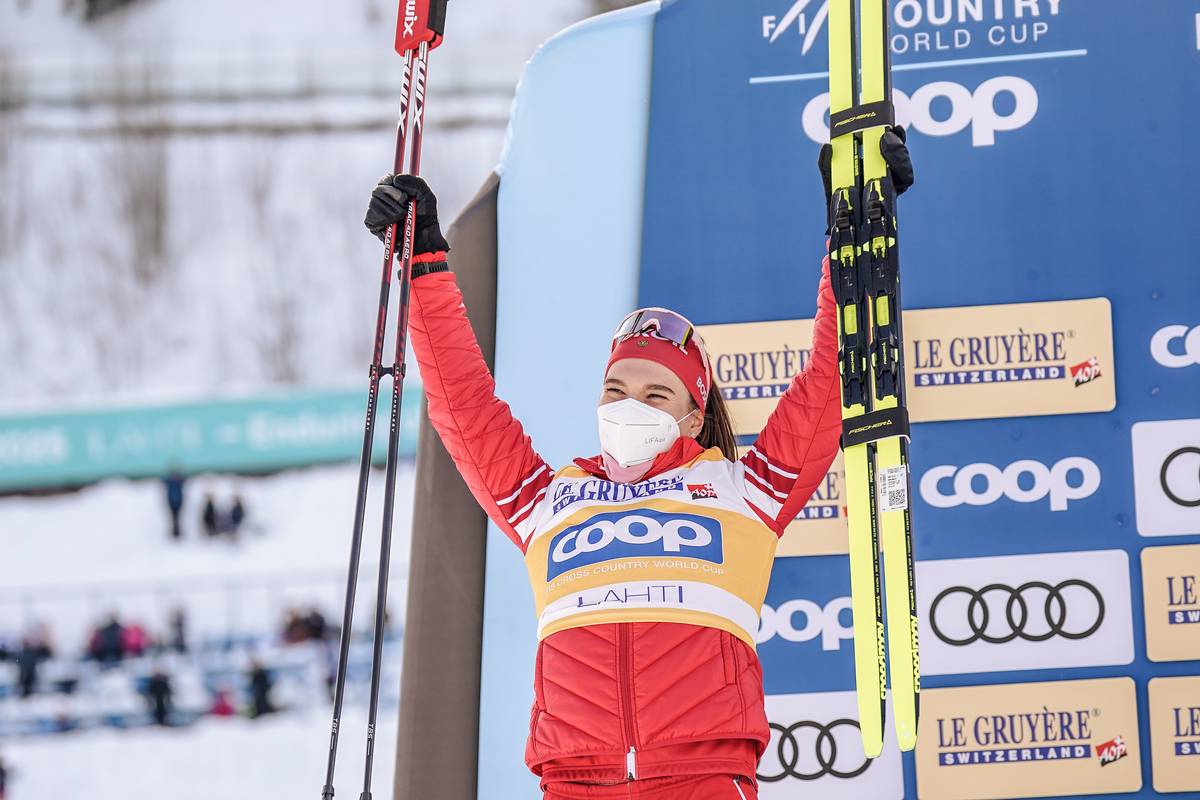
    Russia’s Natalia Nepryaeva steps onto the podium following a second place finish in the 10 k classic in Lahti. (Photo: NordicFocus)

    On Monday the Ski Associations for Norway, Sweden, and Finland wrote to FIS to ask for the exclusion of Russian athletes. Later in the day, the International Olympic Committee (IOC) revised their advice and requested the exclusion of Russian and Belarusian athletes.

    “[The Ski Associations] letter was somewhat surprising to us,” said FIS Secretary General Michel Vion.

    FIS, seemingly unable to move in tandem with events, made no response, and Vegard Ulvang pushed the Norwegian Ski Association to carry through with the refusal to host Russian athletes, saying, “It is a decision that FIS should have made. When they do not take it, it is we [Norway], who own the event, who must take it. If FIS disagrees with the decision, they can take the World Cup from us, it is a risk we should take. Then we will also force FIS to take active action.”

    With no word from FIS, the Norwegian Ski Association hosted a series of crisis meetings on Monday night and early Tuesday morning, during which the organization decided to override FIS and ban all Russian and Belarussian athletes from competing, regardless of the consequences of the action. 

    “We had hoped that FIS would come to that decision on behalf of the entire ski sport,” said Norwegian Ski Association President Erik Røste, “But now the Ski Association can not wait any longer.”

    FIS Secretary General Vion dismissed the position of the Norwegians saying, “We received some emails, with inquiries that were not reality-oriented. The Norwegian Ski Association does not have the authority to cancel anything or to exclude athletes. They express a wish that there will be no Russian athletes, but it was just a wish.”

    The Russian ski team, training in Holmenkollen on Tuesday morning confirmed that they would leave Norway and not participate in the World Cup. “Let our rivals compete,” Borodavko told VG. “Let’s just say they are not our friends and not comrades.” 

    With the decision effectively already taken, FIS seized the moment at noon Central European time on Tuesday and banned the Russian and Belarusian athletes and officials. “I am very happy that FIS ended up in that position,” said Røste, adding, “It has taken too long, it could have come earlier.”
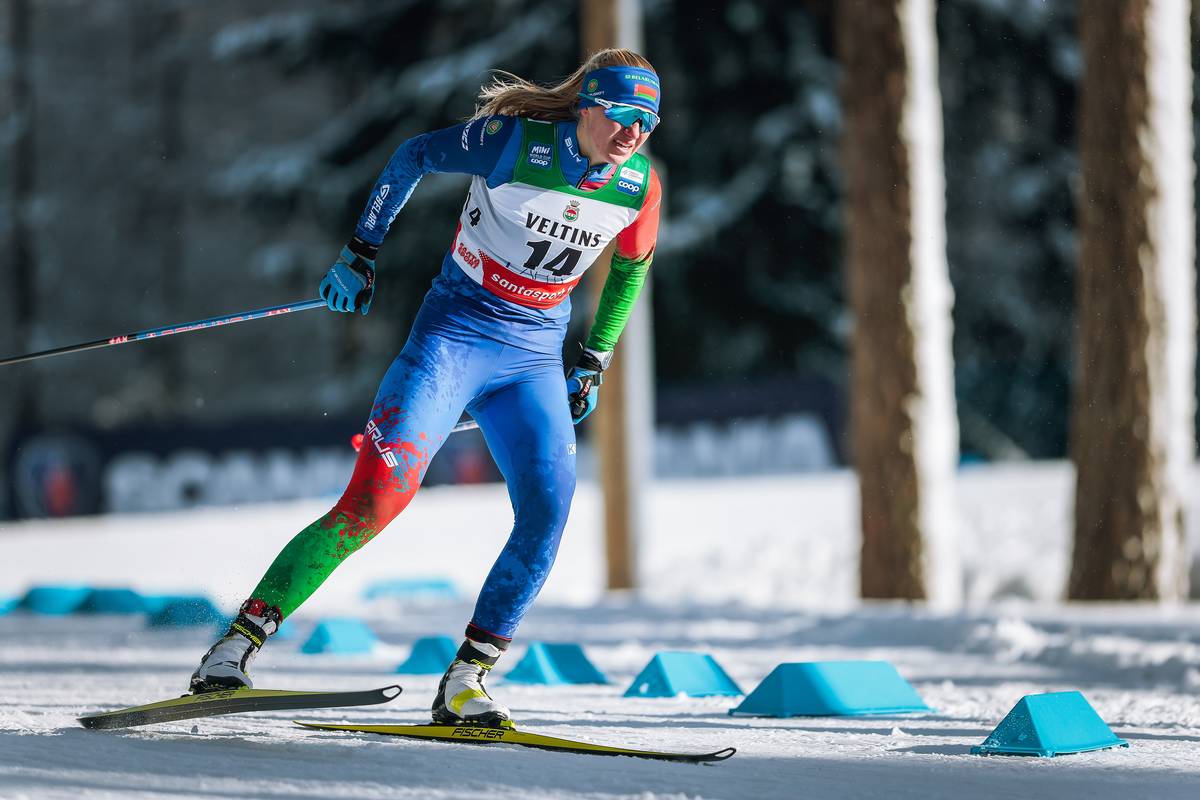
    Belarussian athlete Hanna Karaliova races the freestyle sprint qualifier last weekend in Lahti, FIN. (Photo: NordicFocus)

    The FIS decision narrowly averted the likely cancellation of the remaining World Cup races and the flight of sponsors. 

    Geirr Kihle, the event organizer of the Drammen city sprints this Thursday had urged fans to come to the event in the blue and yellow of the Ukrainian colors. He said he hoped the public’s reception to the Russian athletes would be, “to put it a little simply, sour.”

    On Tuesday morning, Drammen said they would withdraw from hosting the race if the Russian athletes were not banned. 

    Pressure on FIS also came from Coop—the title sponsor of the World Cup. “We have given FIS clear guidelines for what we believe,” said Takle Friis, the Director of Communications for Coop to VG. “They must respond immediately. In sympathy and solidarity with Ukraine, we can not accept that the Russian team will go to the World Cup.”

    Coop will adopt the Ukrainian colors for their logo on race bibs, and are working to change trailside billboards at Holmenkollen to promote donations to the Red Cross. 

    Sponsorship deals for Russian athletes also began to evaporate. Brav, the parent company of Swix and Toko announced on Monday that effective immediately, it will end all business in Russia and sever ties with Russian athletes. 

    The conflict between the sporting associations and FIS is yet another note in a habit of day-too-late decision making by the governing body of world skiing. Following the Russian invasion of Ukraine, the US ski team along with Norway, Sweden, and Finland all declared that they would not send teams to the scheduled World Cup Finals in Tyumen, Russia. After a day of urging FIS to act, the following day FIS canceled all remaining events in Russia. By then, it was already a moot point—no one was going. 
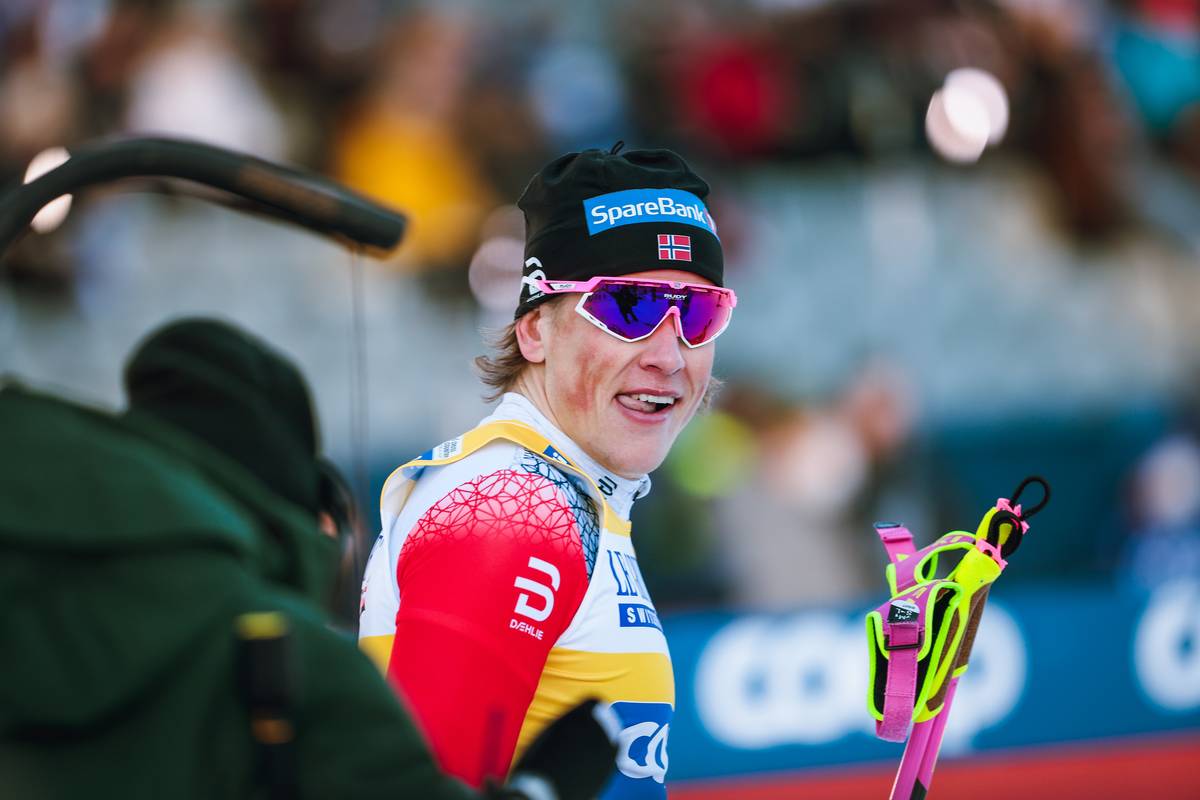
    Johannes Høsflot Klæbo enjoys a victory in Lahti’s freestyle sprint. (Photo: NordicFocus)

    Johannes Klæbo has been perhaps the most outspoken athlete on the issue. On Monday, he told VG “I think it is both cowardly and weak that FIS does not make the decision to deny Russia participation in Norway and in the World Cup. FIS should have done as Ski Classics [did] – and said no to Russia.”

    The Visma Ski Classics, a rival circuit to that of FIS World Cup, moved swiftly on Monday to remove Russian skiers from the Vasaloppet and the season long competition. 

    The FIS decision came too late for some quarters: Ӧstersund announced that there was no longer sufficient time to get a budget and sponsorship ready to host the World Cup Finals. 

    A day earlier, the municipality of Ӧstersund, which owns the ski trails, declared that they would bar the use of the ski trails for the event if FIS did not ban Russian athletes. 

    The World Cup will now likely end a week earlier than scheduled in Falun, Sweden on March 13th. 

    The late decision from FIS stoked grumbles that the federation may be overly beholden to Russian interests. As Drammen race organizer Geirr Kihle put it about sport federations in general, “Those who are called the ‘high lords’ have a hard time deciding. It is very common for Russians to sit on the boards. They are involved in deciding and will probably almost veto if they do not get what they want.”

    Norwegian newspaper Dagbladet also questioned the interests of new FIS President Johan Eliasch, the Swedish-British billionaire and former CEO of the ski company HEAD. Dagbladet challenged Eliasch’s record of supporting Russian tennis star, and HEAD athlete Maria Maria Sharapova, after tested positive in 2016 for banned substance Meldonium. Eliasch at the time said “Has WADA something against Russia? I believe they do.”

    The assertion that FIS is biased towards Russia was refuted by Secretary General Vion who replied to the NRK question, “Of course not! How can you say that?” He pointed out that Elena Valbe, the head of Russian skiing, is the only Russian to sit on the 19 member council. 

    Nevertheless, the situation is far from resolved. NRK ​​commentator Jan Petter Saltvedt rejected the phrasing that FIS used to ban the athletes which focused on athlete safety and in his words, lacked “the essential thing, namely the condemnation of Russia’s invasion.”

    “The whole reasoning is untrustworthy and deficient,” argued Saltvedt. “Many questions remain about what kind of power struggle this has been and what FIS leaders really think about this.”

    The cautious wording from FIS likely has much to do with an expected appeal by the Russians in the Court of Arbitration for Sport (CAS). 
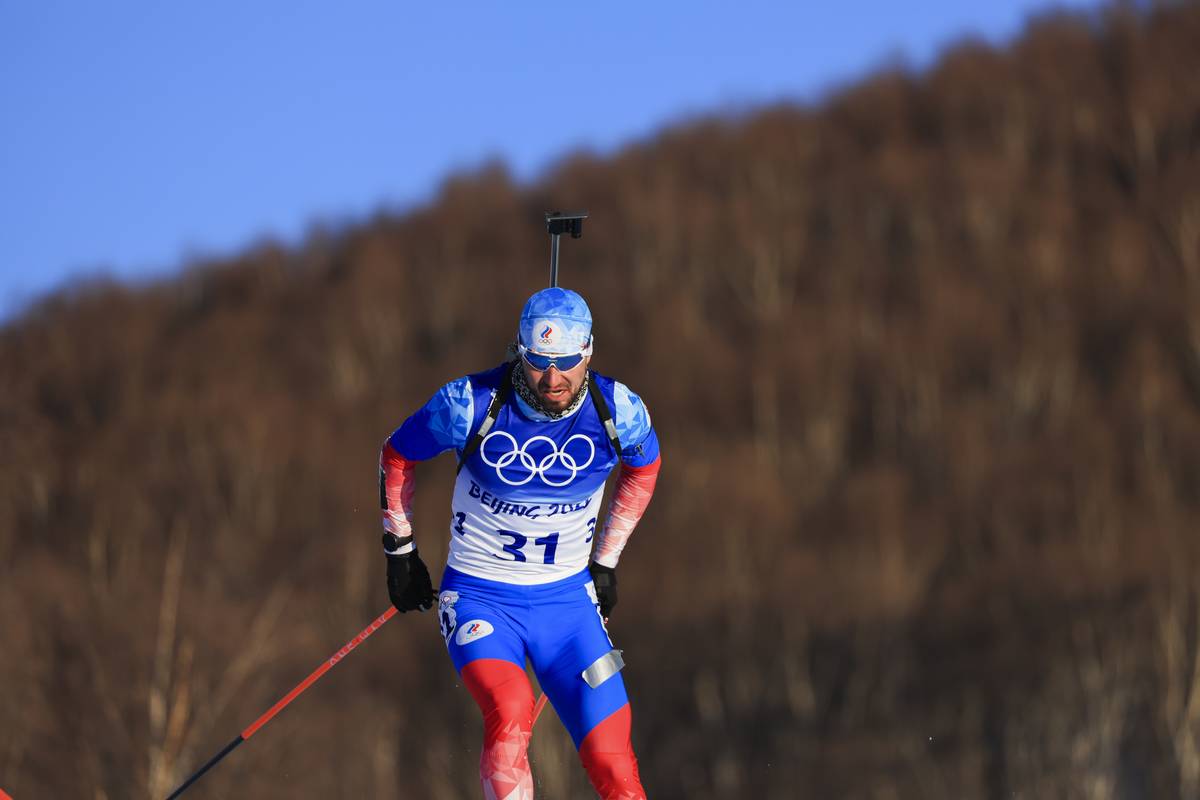
    Russian biathlete Alexander Loginov competes in the men’s individual competition during the 2022 Beijing Olympic Winter Games. (Photo: NordicFocus)

    When the International Biathlon Union decided on Saturday to require Russian athletes to compete under a neutral flag, their team promptly withdrew from the World Cup, stating, “We are furious at these illegal actions of the IBU and will defend the rights of our athletes and the rights of the RBU as a member of the International Federation.”

    The case is expected to end up in CAS, and there is a likelihood that the same will occur in cross country skiing. 

    The Russian team will leave Norway on Wednesday, reported Borodavko to NRK. “When you start to mix politics into the picture,” Borodavko said, “there is something we can not accept, so therefore we go back.” With no flights between Europe and Russia, their journey home will likely route them through Turkey. 

    The manner in which FIS came to the decision will likely deal a blow to its credibility, managing in a single stroke to alienate both its Scandinavian and Russian partners. FIS has struggled to rise to the challenge that this season has presented, with previous misses being the COVID related cancellations of World Cup races in France and Slovenia, an impromptu shortening of the men’s Olympic 50 k, and a belated cancelation of the World Cup Finals in Russia. 

    “Things take time,” Klæbo said on Friday, adding, “But I certainly think we do not have to wait until the longest every single time.” 

    Jens Burman of Sweden may have summed it best to Aftenbladet on Tuesday morning before FIS’s announcement. “In principle, everyone has excluded them, but not FIS. You are almost a little ashamed.”
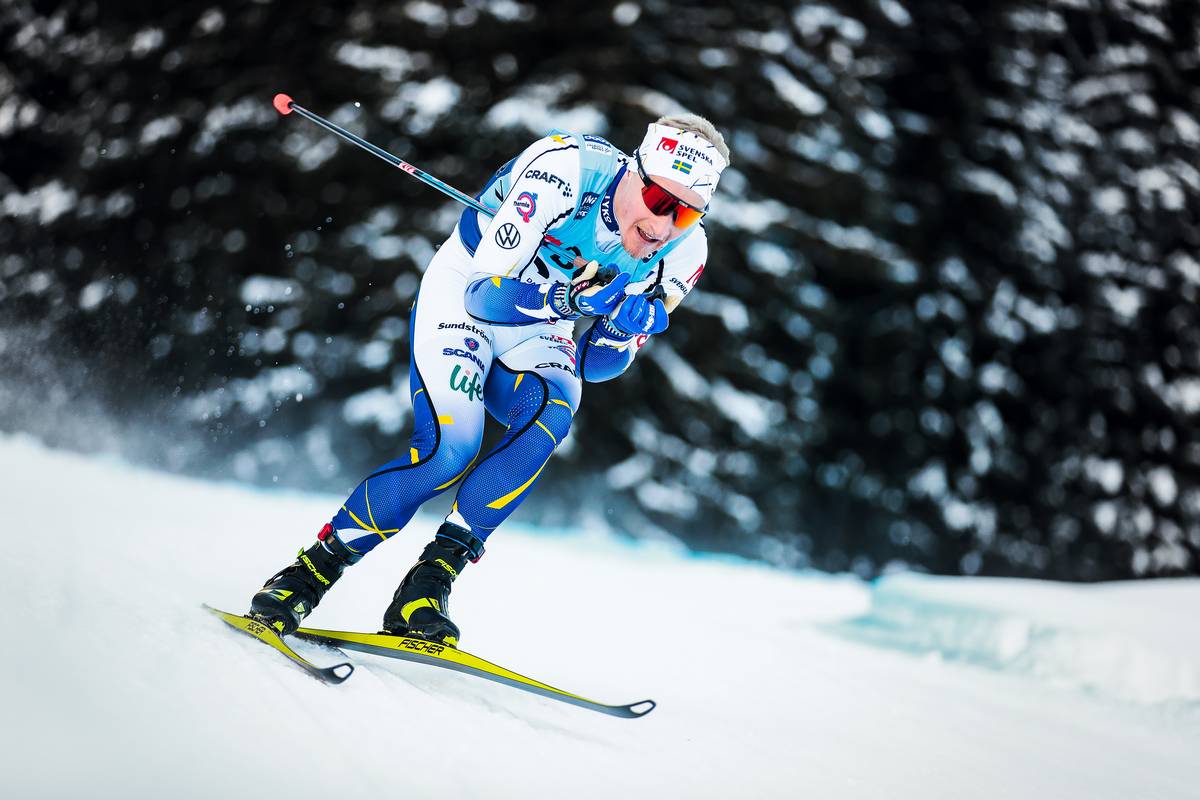
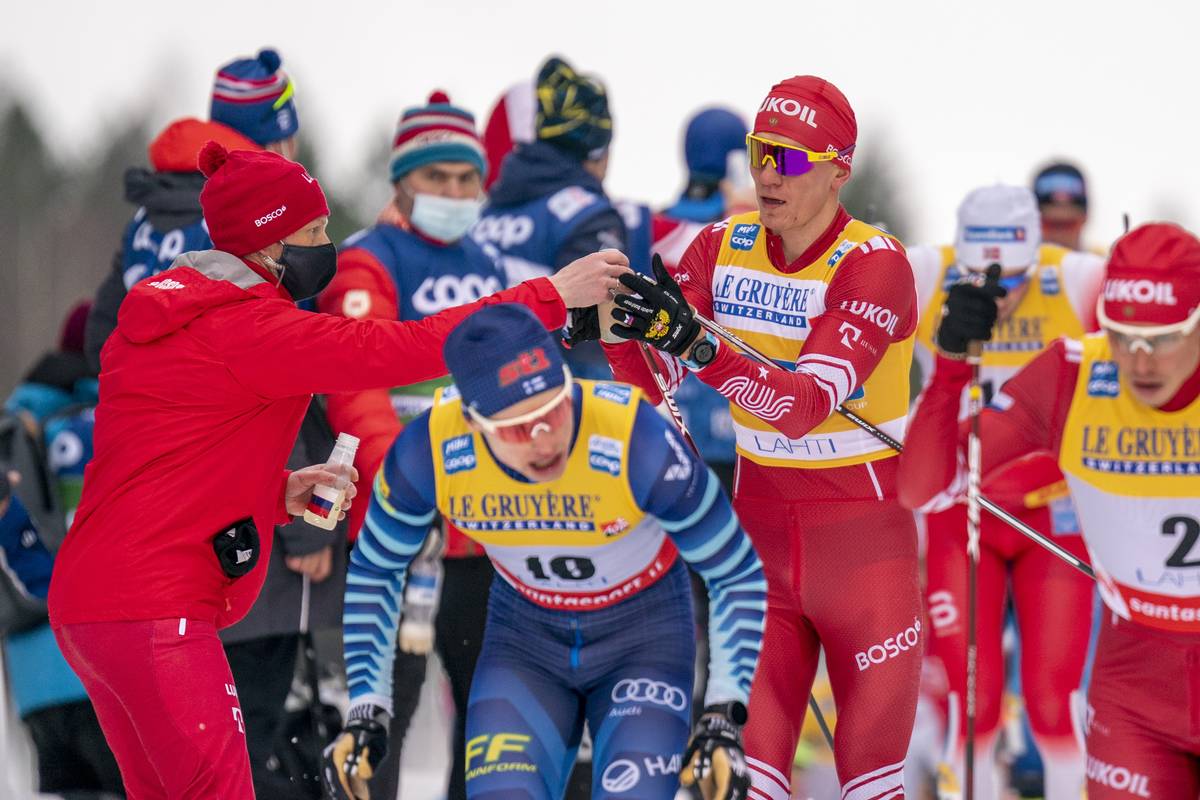
    Sweden’s Jens Burman races the 15 k skate during a December 2021 World Cup in Davos, SUI. (Photo: NordicFocus)
  • Exploring Alexander Bolshunov: A Rumble in Lahti – Part 3

    Exploring Alexander Bolshunov: A Rumble in Lahti – Part 3

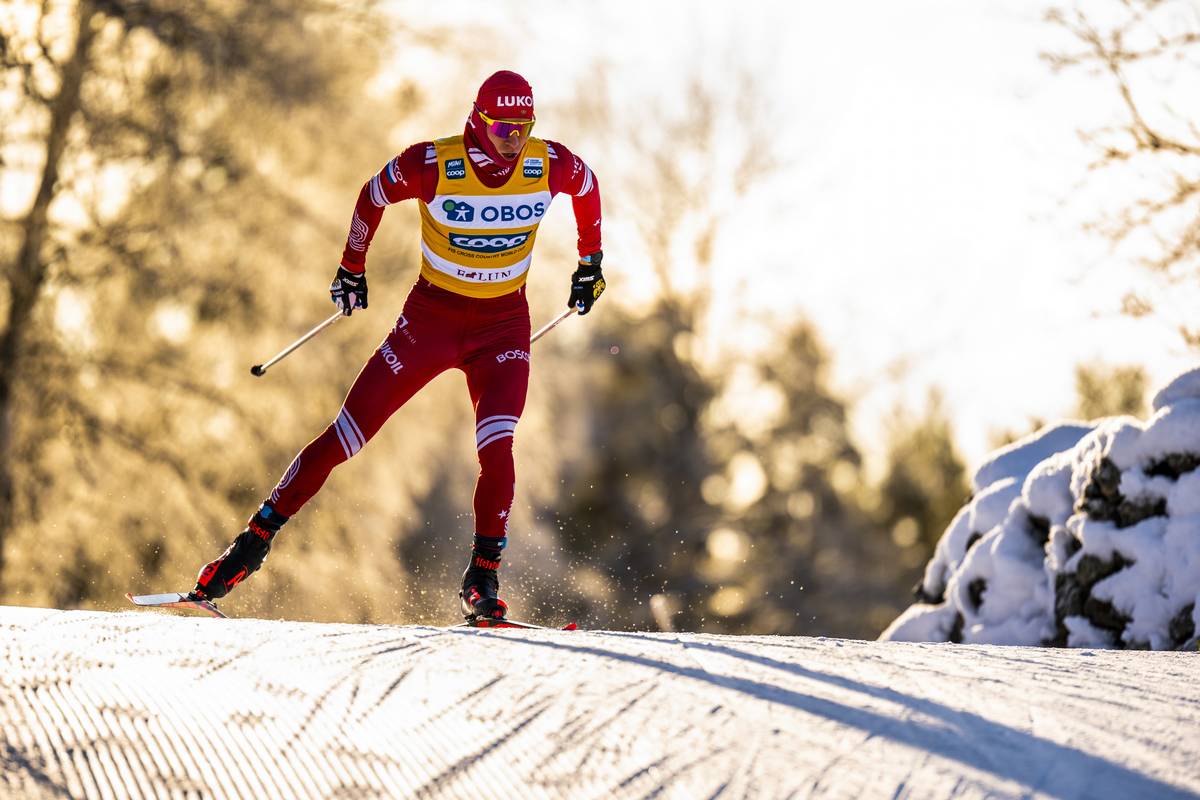
    Bolshunov racing in Falun, Sweden. (Photo: NordicFocus)

    This is the third part of a three-part series on Russia’s Alexander Bolshunov. You can find part one and part two here. 


    This season, the Alexander Bolshunov vs. Johannes Høsflot Klæbo show has been largely sidelined due to Norway pulling from cross-country World Cups due to the coronavirus. When the Norwegians returned to the World Cup in Lahti, the wait proved a pressure cooker of tension. 

    When Bolshunov fell in the closing stages of the skiathlon, taking out Hans Crister Holund of Norway, there was much finger-pointing at the finish. “The Norwegian tactics worked. On the last descent, Holund fell on me, [we] hit the net, so the three ran away. No chance. This is not on purpose, but they can think it over in advance,” said Bolshunov.

    Bolshunov’s coach Yuri Borodavko suggested that he did not fall of his own accord and that it was curious because it happened in “the grey zone” without TV crews.

    Holund, for his part, was angry, “Bolshunov drove into me in one turn there…I just asked ‘why’. What’s the point? That was not where the race was decided.”

    Another Norwegian, Emil Iversen, expressed criticism of Bolshunov’s bullishness in races and suggested it was getting him into regular trouble on the ski courses. “He does not see people and just walks straight through [them].”


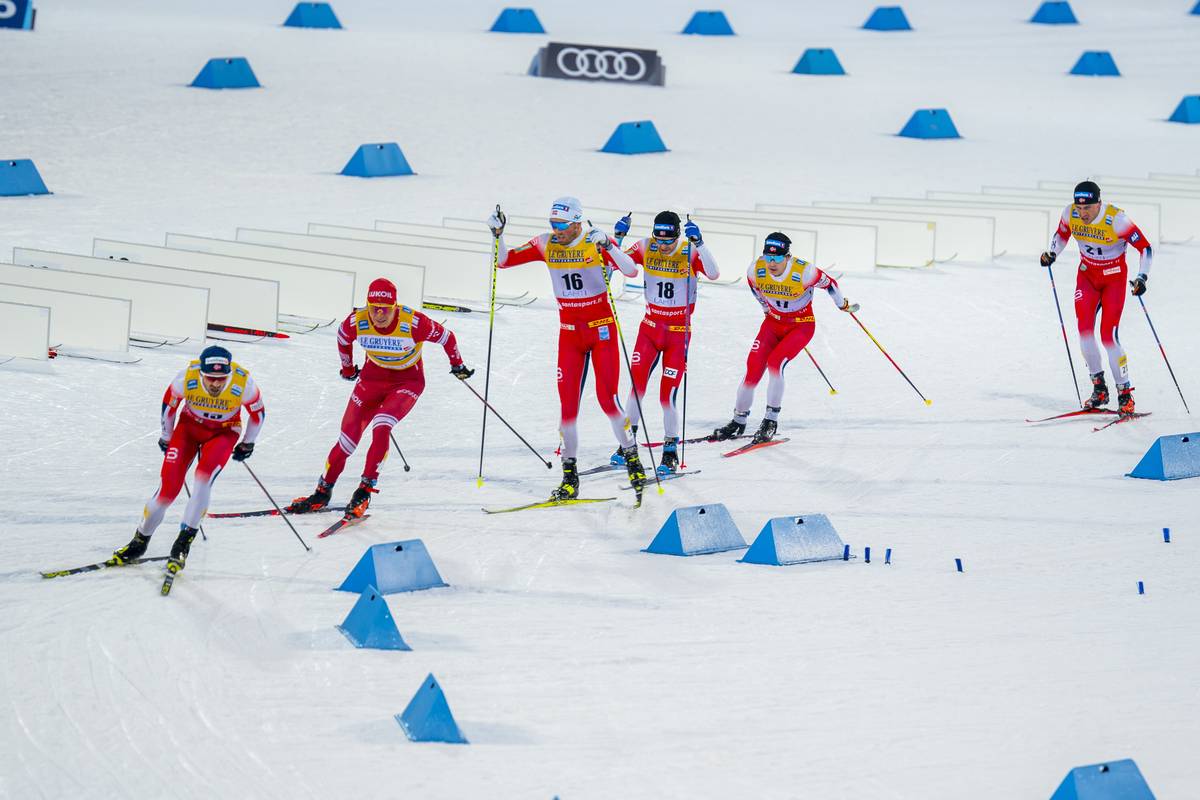
    Russia’s Alexander Bolshunov racing in tight quarters with Norway’s elite during the 2021 Lahti skiathlon. (Photo: NordicFocus)

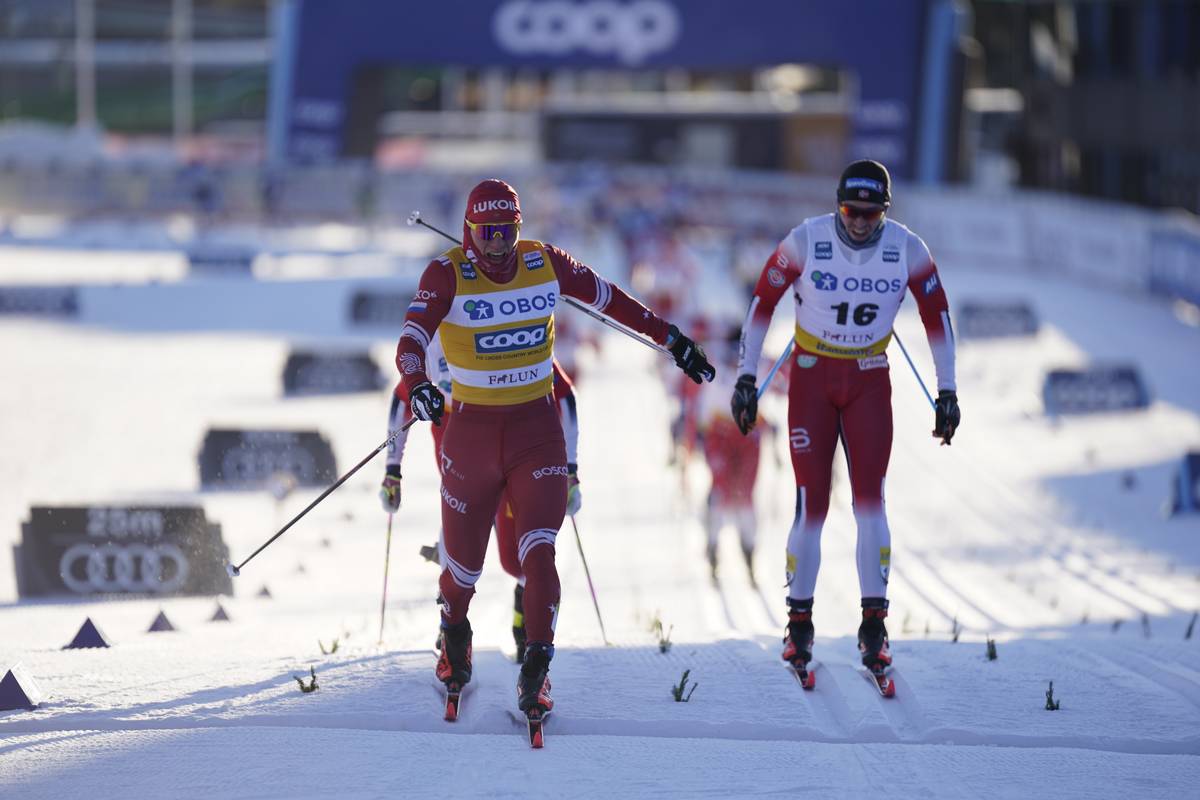
    The relay in Lahti the following day was set to be a pre-World Championship showdown between Russia and Norway. The race instead turned out to be a contest for silver—as Norway dominated—with Bolshunov and Finland’s Joni Mäki coming down to a sprint.  Mäki moved towards Bolshunov’s lane causing the Russian to scrub speed. Bolshunov’s subsequent body check of Mäki at the finish line became the headline. While audiences in North America and Europe found his behavior shocking, Bolshunov’s physicality was supported in some quarters of Russia. (Bolushunov and his team were officially disqualified.)

    Perhaps the strongest words of support came from Bolshunov Sr. who said, “If you don’t answer them, they will humiliate Russia.” He elaborated, saying, “It was all about emotions, I understand him perfectly, it’s okay. For me, these are scoundrels—like he did not see and shifted. He just brazenly removed Sasha from the track and drove him into billboards. The video shows that Sasha did not touch him first. I’m on the side of my son, maybe I would have acted even harder.”

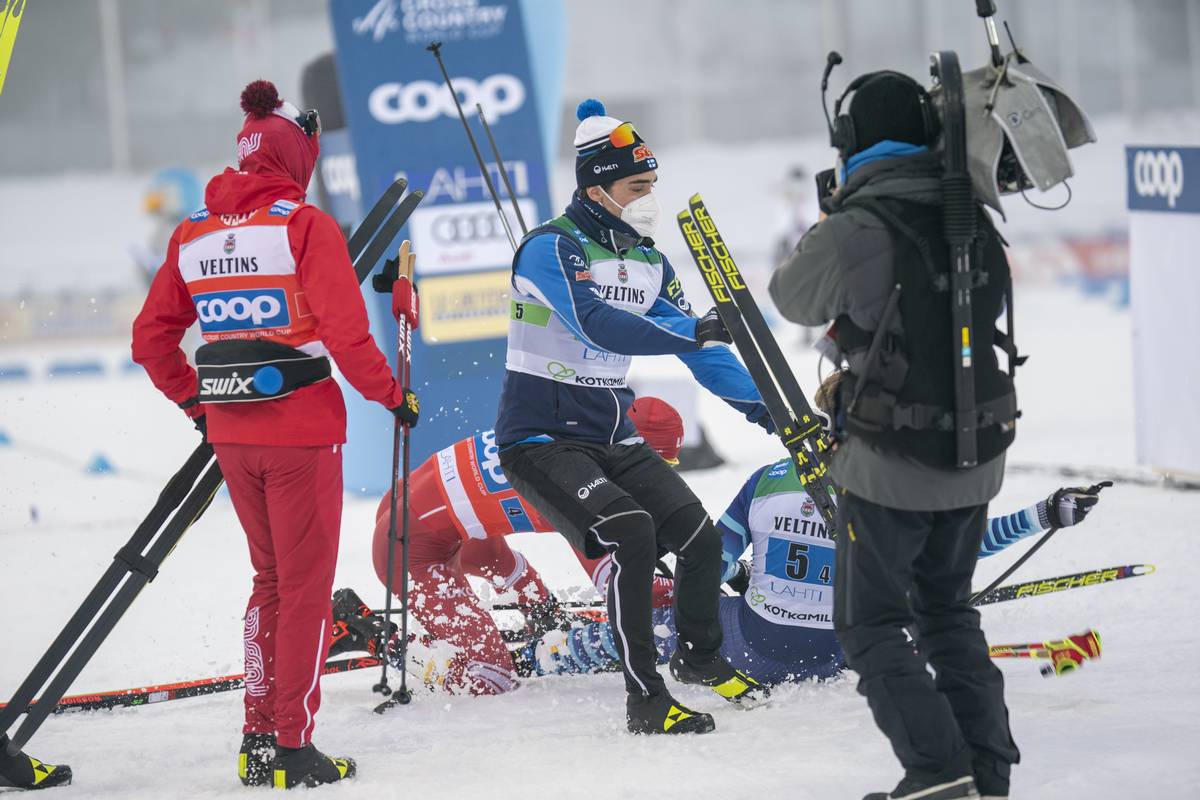
    Alexander Bolshunov of Russia tackling Joni Mäki of Finland. (Photo: NordicFocus)

    “I always stand for pure struggle, and when such bestiality occurs, I understand that it is, to put it mildly, ugly…You just need to approach in Russian and give it [to them] in the face. Unfortunately, this cannot be done.”

    Retired biathlete Anfisa Reztsova said she, “would also hit with a stick! I would give him a stick on the back so that he would not cross my track.”

    Elena Välbe backed Bolshunov but chided him for his actions. “The fact that after the finish line he drove into the crowd where the Finn was – it is clear he did it on purpose. Yes, this is unsportsmanlike behavior, but I’m on Alexander’s side. The Finn acted like a pig, I can’t say otherwise. Of course, there will be no sanctions from our side.”

    Others called for a calming down of the violent rhetoric directed at Mäki. Russian biathlon and cross country commentator Dmitry Guberniev said, “the words of both the entourage, and the veterans, and anyone else…look monstrous. This is the absolute path to a dead end. This is set for Russian skis and set for Bolshunov.”

    While Russian ski fans were supportive of Bolshunov, their sporting journalists were not, calling his action a disgrace.

    While some skiers, such as Iversen, took to social media to condemn Bolshunov, Klæbo was more clear-eyed and remarked that he “recognized myself in him.” 

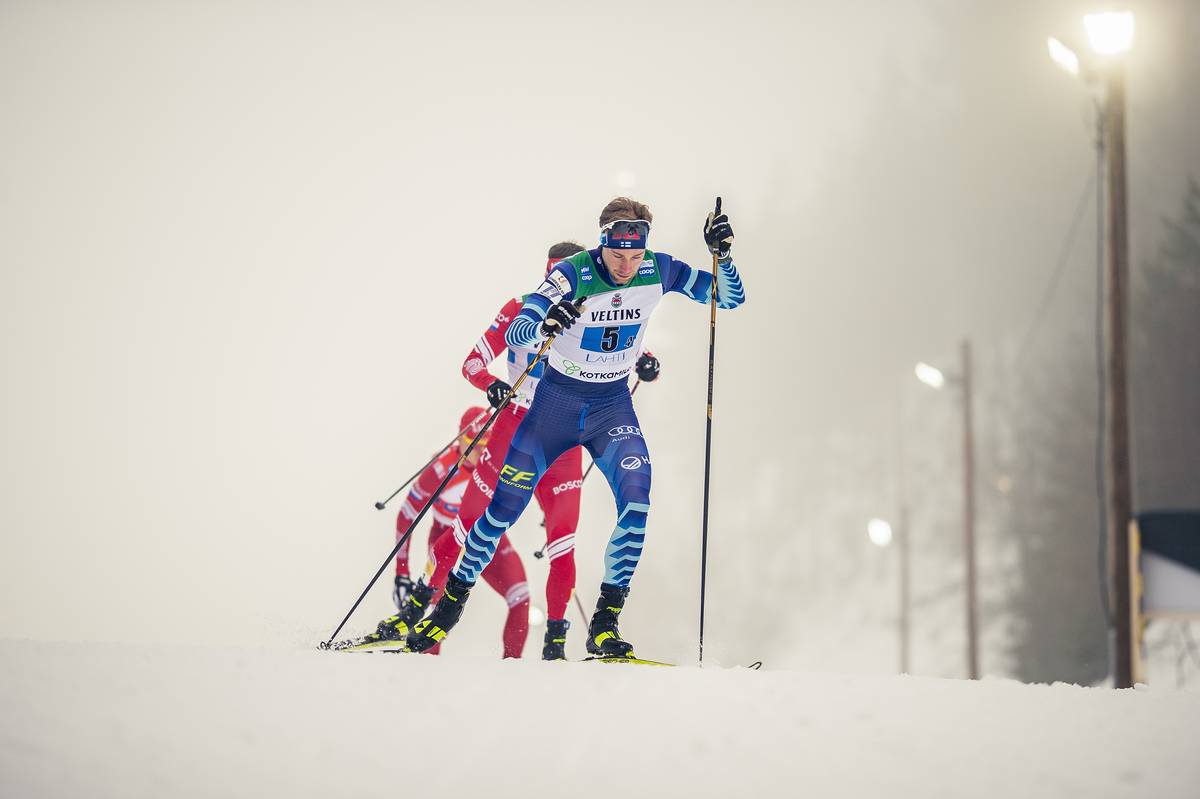
    Joni Mäki of Finland during the 4 x 7.5 k relay in Lahti, Finland. (Photo: NordicFocus)

    Mäki, who celebrated his 26th birthday that day by winning a silver medal for Finland was greeted to a barrage of hostile posts on his social media from Russian ski fans with comments such as, “lucky that this is not biathlon and the athletes do not have rifles.”

    A hallmark of recent years has been the vocal presence of Russian ski fans and supporters taking to social media to vent their frustration and at times disturbing ideas of retribution over sporting disagreements. Natalia Nepryaeva has tried to call off her legion of supporters who continuously harass Johaug. “…it is sometimes unpleasant when Russian fans start writing that she is such and such – a doping player, she won again. It’s low. Why do you write like that?” asked Nepryaeva. “We are then treated badly because of such sofa critics.” Nepryaeva herself never communicates with her fans online, saying that if she did, it would be “a complete mess.”

    To top off a bizarre day for the sport, two Finnish citizens reported Bolshunov’s actions through the Häme Police Departments’ online crime reporting system. An open case against him was confirmed by Criminal Commissioner Martti Hirvonen. When the news broke it was misconstrued in a variety of ways, with confusion over whether Bolshunov had been detained in Finland, and sensational headlines that he faced a nearly three-year prison sentence for assault. Mäki himself did not wish the case to continue, and Hirvonen expected the matter to be resolved soon.  

    Bolshunov offered an apology, and an unconvincing explanation that his binding broke, causing him to accidentally hurtle into the Finn. Mäki for his part accepted the apology and seemed eager to move on from the issue. 

    Bolshunov remarked on the post-relay episode in a brief interview on the subject with Norwegian broadcaster NRK. It was unusual for the Russian skier to speak only to the Norwegian channel, and not Russian or, especially in this case, Finnish TV. It may have been a subtle indication by Bolshunov that in skiing, all roads lead to Norway. Avoiding further punishment required damage control in the Norwegian market, particularly now that Bolshunov was the face of Swix’s new fluoro-free wax. Bolshunov has often been preoccupied with NRK, and his sour comments and theatrics have usually been meant for one audience in particular: Norwegians. 

    After tumbling earlier in the race, Russia’s Alexander Bolshunov clawed back for another World Cup win this season in Falun. (Photo: NordicFocus)

    Another vein opened up in the post-Lahti landscape as well. Bolshunov’s father commented that his son had always wanted to be a biathlete, and hinted he was considering switching sports. This inspired a frenzied slew of speculation and headlines that made Borodavko chuckle about the prank being taken too seriously. A more shrewd reading would see it as a subtle reminder to FIS that they need Bolshunov more than he needs them. 

    Biathlon captures a much higher share of the Russian television market than cross country, despite its less successful team, and would undoubtedly be a profitable move for Bolshunov provided he shoots as well as his father claims.

    Surprisingly, prior to the 2019/20 season, cross-country skiing was only available in Russia via subscriptions. That changed last winter when 15 races were shown on public TV. This year, Match TV!, the state-sponsored sport channel, will show all the World Cup races. One suspects the Bolshunov bump has something to do with this. 

    Without him, the FIS World Cup would lose its marquee event that is likely to last for many more years: Bolshunov vs Klæbo. The comments about switching to biathlon were likely a shot across the bow of FIS as it faced pressure from some quarters to take a stronger stand against Bolshunov’s behavior in Lahti. 

    On February 11th, authorities in Finland announced the case against Bolshunov would not be prosecuted. Without Mäki willing to ask for punishment or compensation there was no cause to proceed. The police had found the incident rose to the level of “mild assault.” The report stated that Mäki’s injuries were minor and that in the context of a competitive sporting event, Bolshunov had acted impulsively. The case is closed. 

    The first rest day at World Championships, February 26, FIS announced a five race probationary period for Bolshunov.

    The aftereffects, however, remain to be seen. Bolshunov’s sponsors have stuck with him for now. He knows he will be closely watched at the World Championships, where any such behavior would, in the words of Markus Cramer, “be a disaster.” 

    The incident has once again highlighted the gulf of understanding between Russian and Western athletes over the rules of the game. One gets the sense there are two ski races happening at once, with different senses of fair play. Even the stakes of the game are perceived differently. The idea that  Mäki’s questionable move was a humiliation for Bolshunov and Russia only makes sense when you consider their aggrievement over the past few years. 

    Bolshunov was untouchable at this season’s Tour de Ski. (Photo: NordicFocus)

    Grievances

    The misunderstanding between the Russian and Norwegian camps stretches back years, but in recent times it has centered on a few issues in particular. 

    One is the World Cup calendar itself. Elena Välbe has railed at the ability of Norwegians, with an outsize presence on the FIS council, to shape the events of the World Cup in ways that suit their skiers, namely more sprints and mass start races, favoring Klæbo over Bolshunov. Conversely, Välbe herself has conceded that these events are favored largely because they’re a more popular product for television.

    The inconsistent enforcement of rules by race juries is seen as grossly biased against their skiers, with warnings and disqualifications against Russian skiers while others, particularly Norwegians, avoid penalties. When asked about whether the judges are always on the side of the Norwegians, Legkov said, “There is some truth to this…the Russian always remains guilty. If the Norwegians have a violation, it is played up in such a way that you really start to think that you were wrong, and not them.”

    Then there is Norway’s immoderate use of asthma medicine. It goes to the core of the contention the Russian skiers feel of a double standard permeating their sport. 

    Välbe has called the therapeutic use exemptions “legalized doping”, saying, “perhaps the whole problem is in the cold Scandinavian air, otherwise how can one explain that 70% of Norwegian champions have asthma?”

    Russians wondered aloud why they were “banned” from the Olympics in PyeongChang while the Norwegian ski team brought a treasure trove of more than 6,000 doses of asthma medicine to South Korea, along with questionable nebulizers and atomizers to speed up the process. It was an amount far in excess of other teams and amounted to hundreds of doses per athlete.

    New research suggests overconsumption of salbutamol can aid performance by as much as 5%, not far off from the 6 – 9% that EPO is often considered to offer elite athletes. 

    In the eyes of Russian ski fans, this approach amounted to little more than the Norwegians own systematic doping scheme, made all the more infuriating by the ease at which their athletes received therapeutic use exemptions (a method that Välbe does not endorse for her athletes) and the righteous indignation of declaring that these practices are necessary to protect their athletes’ health, an idea that has not been consistently supported by research. 

    Russians even began to suspect the credibility of Norway’s publicized training methods. Where the Norwegian team projects an air of being an open book, the Russians saw misdirection. “When they spread new rumors, many thoughts arise,” said Legkov. “Recently it has appeared from them that training indoors with a temperature of 40 degrees [104 F] is the same as training in the mountains. And you subconsciously think: ‘Maybe this is really so?’ But you also think: ‘Or maybe they threw it out on purpose so that others begin to train in this closed room with a temperature of 40 degrees?’”

    They felt belittled by the decision to remove their flag and anthem from the Olympics, a pointless measure for assuring clean sport that has been portrayed in Russia as the cost of a tit for tat political game with the West. The decision to ban Sergei Ustiugov from the 2018 Olympics shortly before they began, and again just before the 2019 World Championship without explanation was seen as an injustice. Välbe has described the rulings against them as symptoms of a larger conflict. “In war, all means are good, and sport is also war,” Välbe said. “Well, cross-country skiing is part of sport.” 

    Since the McLaren report was released, Russians have been suspected of doping rightly or wrongly at every turn and indeed, more revelations continue to be forthcoming.  However, Norway, despite having two of its stars in Sundby and Johaug sanctioned, banned, and in Sundby’s case, stripped of titles for doping offenses, sees no presumption of guilt for its athletes. Despite the team’s acknowledged program of aggressive asthma medication use, in many circles, Norway maintains its sterling reputation as the gold standard in the sport. 

    Finally, the Russians perceive the Norwegian team tactics on behalf of their leader as a violation of the sport’s essence: open competition. Bolshunov clearly believes he is targeted, and occasionally taken out, by Norwegian skiers. Joni Mäki’s closing off Bolshunov in Lahti went too far for Bolshunov, at least on that day. 

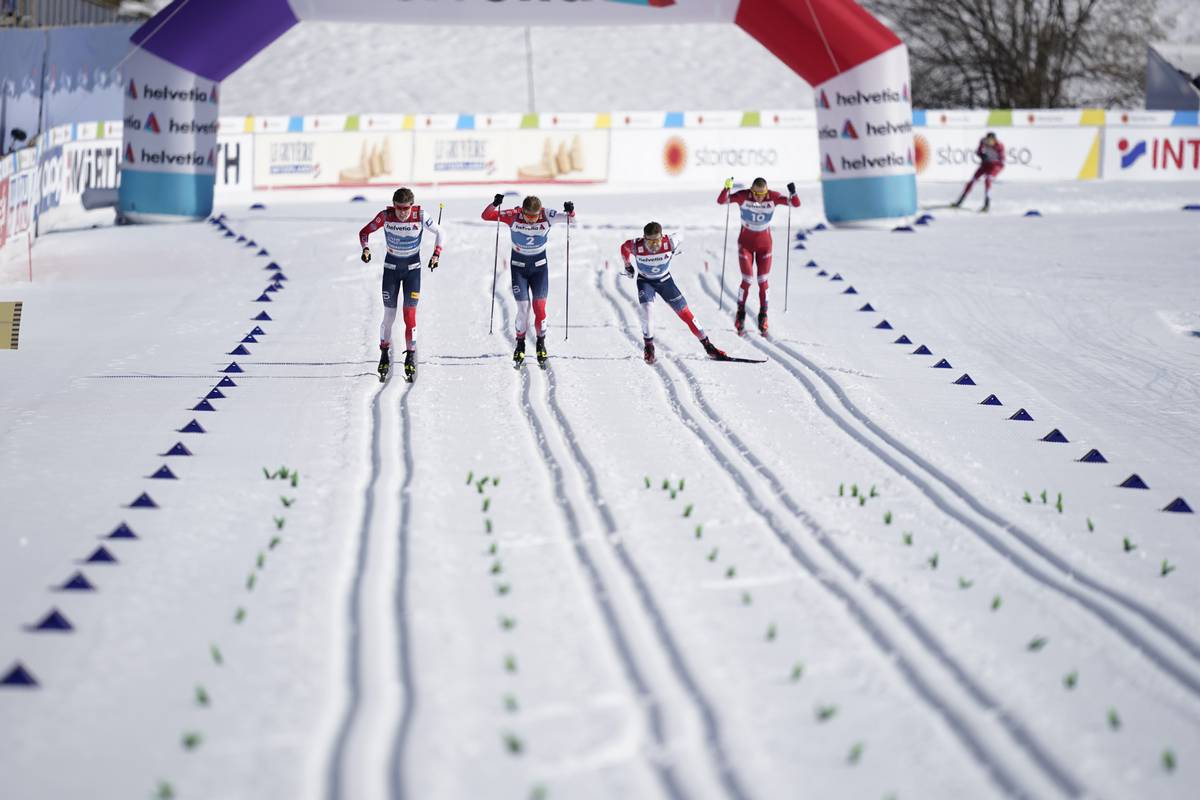
    Charging for the podium in the 2021 World Championship classic sprint. Johannes Høsflot Klæbo (NOR), Erik Valnes (NOR), Haavard Solaas Taugboel (NOR), Alexander Bolshunov (RSF), (l-r). (Photo: NordicFocus).

    Road to Oberstdorf

    Russian coach Alexander Grushin cautions that Bolshunov’s error in judgment in Lahti will cause him further problems with his competitors. “100% that the rivals, knowing Bolshunov’s psychological vulnerability, will deliberately provoke him.” 

    Some in the Norwegian camp have already sensed this opportunity. Eirik Nossum, the Norwegian coach, has continued to prod, saying, “Now we are wolves, whose breath Bolshunov will feel over the next month.”

    The braggadocio from the Norwegian camp heading into the World Championships has proven too shrill for some ears. Simon Fourcade, the French biathlete, has said he will cheer for Bolshunov at the World Champs because he finds Norway’s repetitive boasting to be distasteful. 

    The hype for the World Championships is magnified all the more by the bad blood, the bragging, and the limited opportunities for Bolshunov to test his competitors this season. Rarely has a Championship felt this important. 

    Bolshunov for his part seems ready to deal with what may come at the World Championships. “The difference between the ski track and ordinary life is that there are no friends on the track,” Bolshunov has said. “There is a battle on the track – with yourself and with others, there you tear and sword.”

    Although he had already secured the overall World Cup title in Falun, there was no celebration from Bolshunov. “There was no particular joy,” reported Borodavko. “…it is already a fait accompli, all the attention and spirit is on the preparation for the World Championship.”

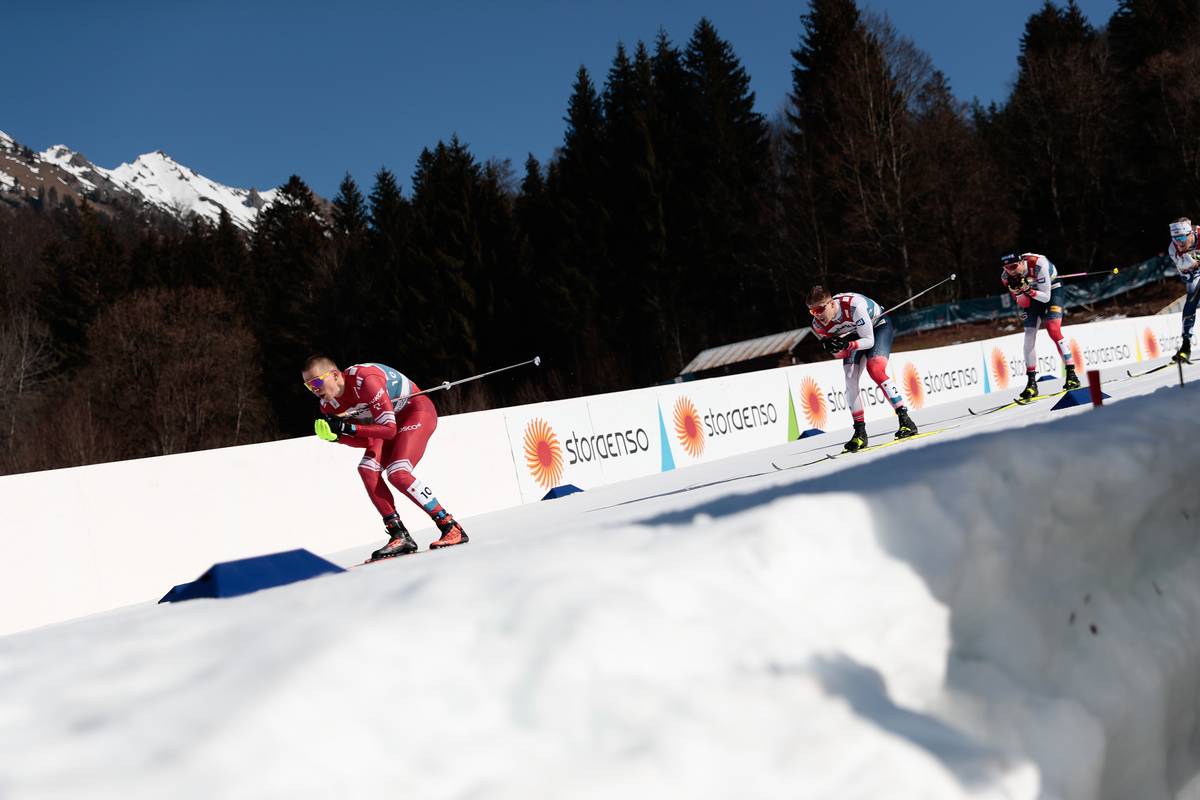
    Bolshunov racing the classic sprint, where he placed fourth, at the 2021 World Championships. (Photo: NordicFocus)

    It is the prospect of a World Championship gold medal that tantalizes, and the opportunity to beat his rivals Klæbo, Iversen, really any Norwegian—even Ustiugov. Everyone else is, after all, a rival. 

    “The biggest thrill is when you cross the finish line first,” says Bolshunov. “Then you understand that everything that was done before was not done in vain.”

    He is circumspect about the journey. “There are many buzzes in this story. To give more than a hundred kilometers per day – a thrill. Then to lie down exhausted in the sauna – also a thrill. Then to jump into the lake – such a thrill that you can’t tell. You just have to be able to find it.”

    There is a bit of zealotry about Bolshunov. His need to suffer daily in training, the disciplined, monastic life that he leads. The unshakeable desire to train more, to win more, and to dominate his opponents. “Everyone is a patient who has been doing the same thing for 25 years with burning eyes,” he says. “But it’s such a pleasant illness, and it’s not offensive. Each person is sick in their own way.”

    On a solo flyer: Russia’s Alexander Bolshunov, Stage 5 of the Tour de Ski.